13th to 16th March 2021
It was time to get away from home and into the bush. Mkuze was our choice. Because our Afrispoor Caracal was not yet ready for collection, rest huts were our only cheap option. The campsite has been closed for a while – no water and it is currently totally overgrown. We wonder if it will ever be open again. There has been talk that the campsite may move to the unused soccer field right next to the main camp. Good option as water and power will be available. the downside will be the lack of shade.
Temperatures were high and the fans in the huts (we took one of our own) were necessary day and night – not much fun especially during the power cuts twice every day – 18h00 to 20h00 and 02h00 to 04h00.
Too much water everywhere due to the recent rains making abundant pools throughout the Game Reserve.
Despite the frustrating conditions we still enjoyed our stay and had some unexpected sightings.
Typical Habitats

Flat area below Camp on way to Mahlahla Hide 
Flat area below Camp on way to Mahlahla Hide with White-backed Vultures in the tree at the back 
Flat area below Camp on way to Mahlahla Hide 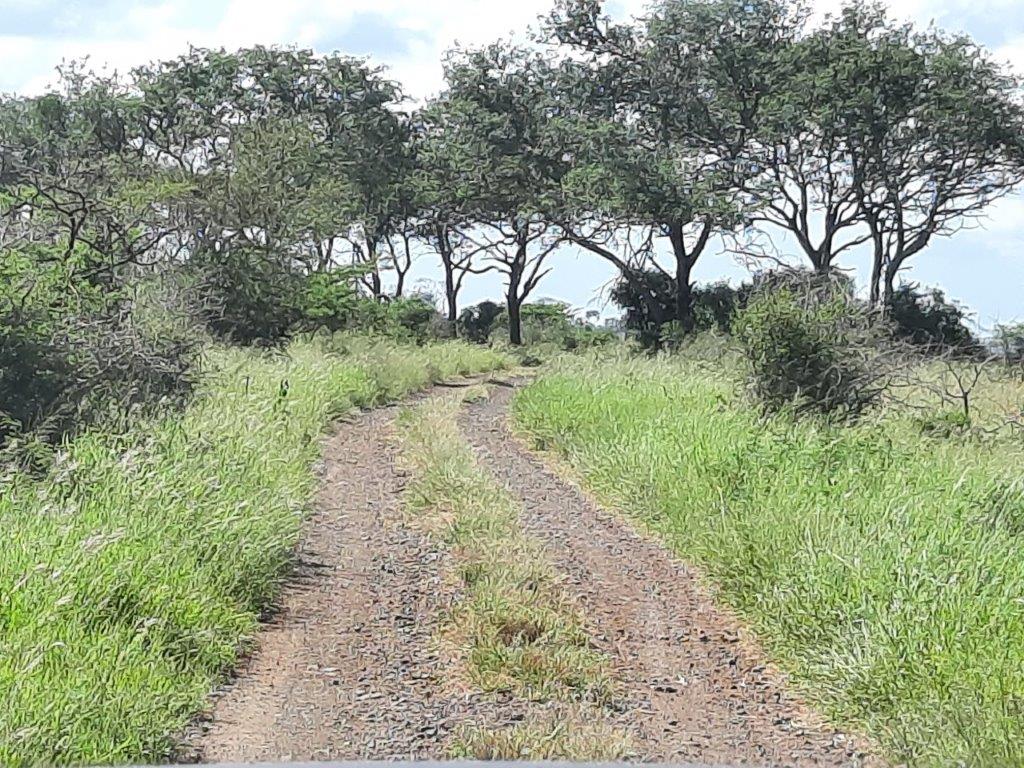
Typical Side Road 
Path to Nsumo Pan picnic area 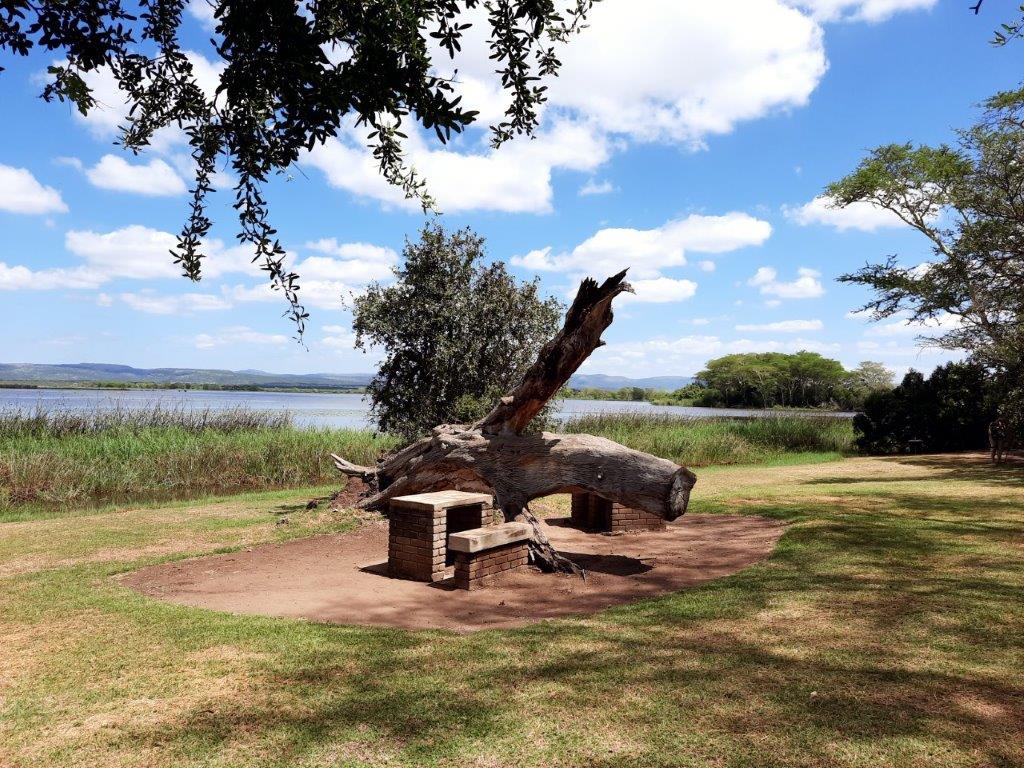
Nsumo Pan picnic site 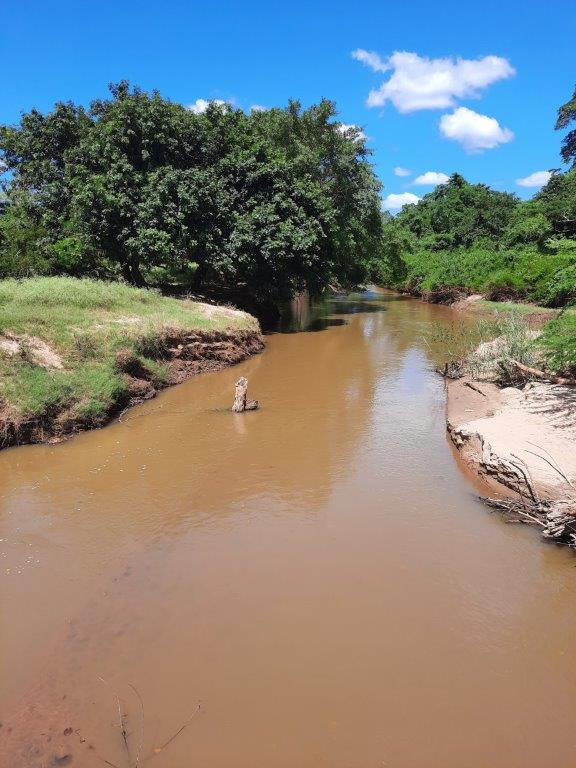
View from Mkuze River Bridge to left as you cross to Opansi entrance gate 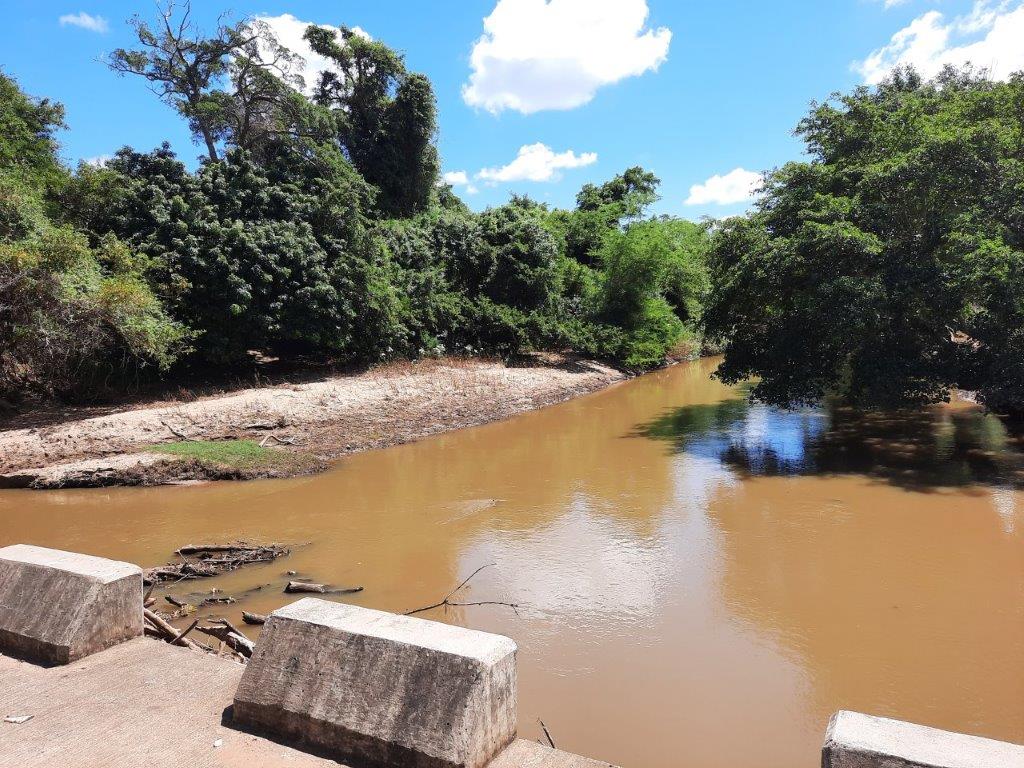
View from Bridge to right as you cross to Opansi entrance gate 
Fig forest as you approach Opansi Gate 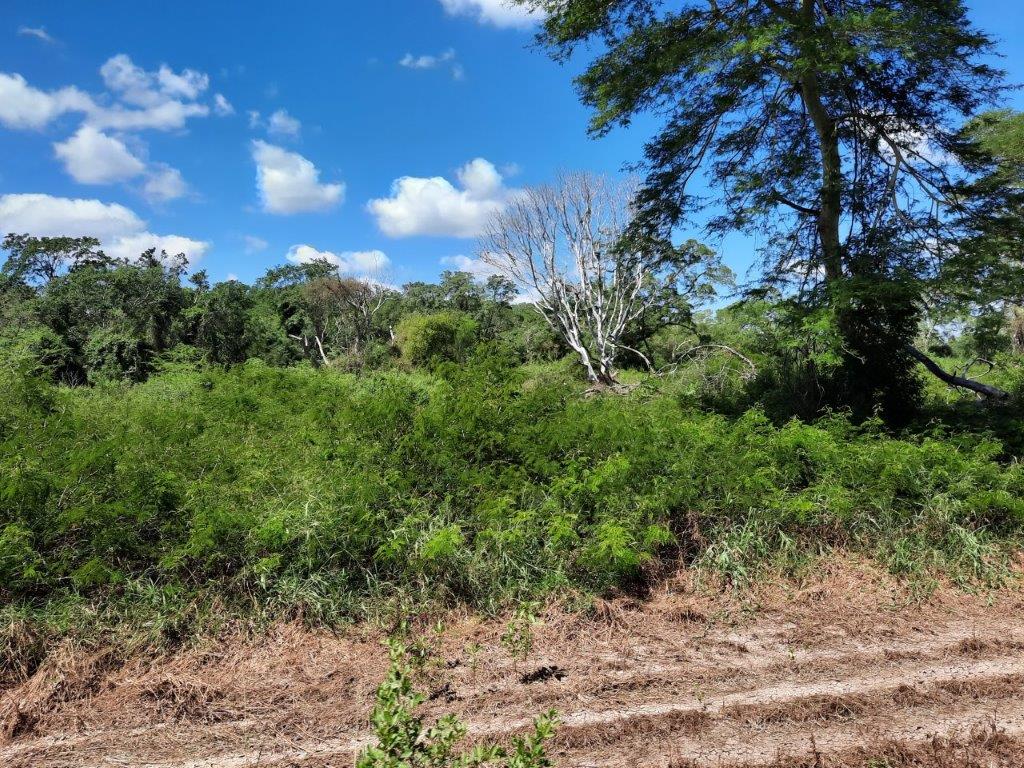
Habitat 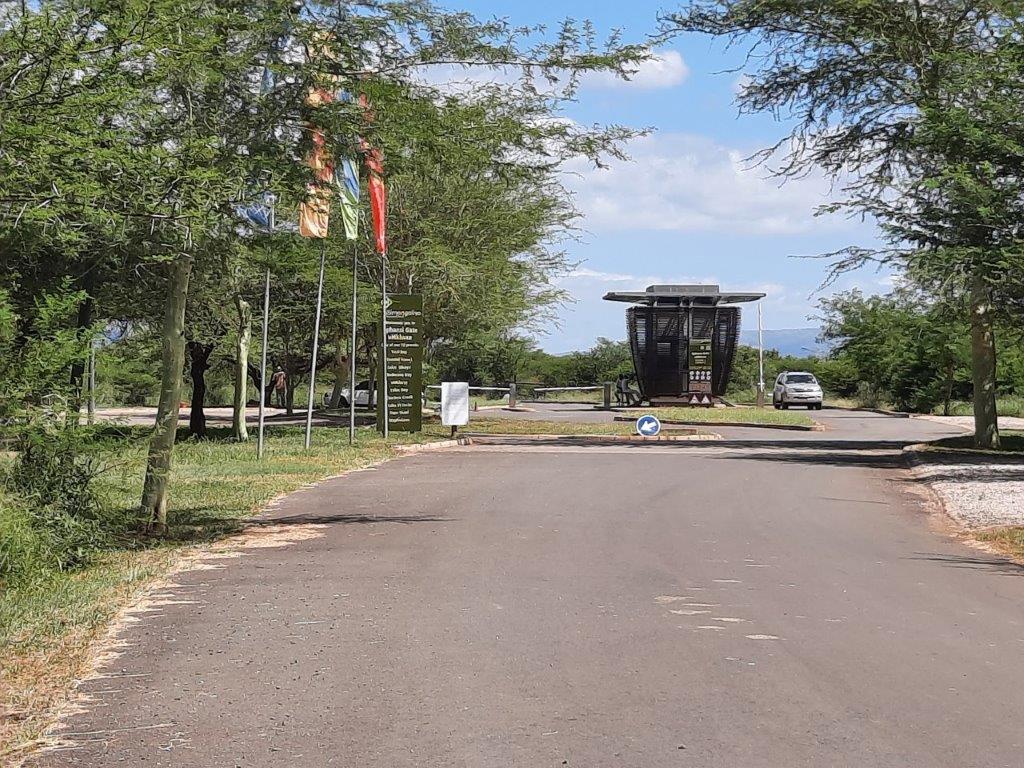
Opansi Entrance Gate 
Malibala Hide entrance 
Path to Malibala hide. 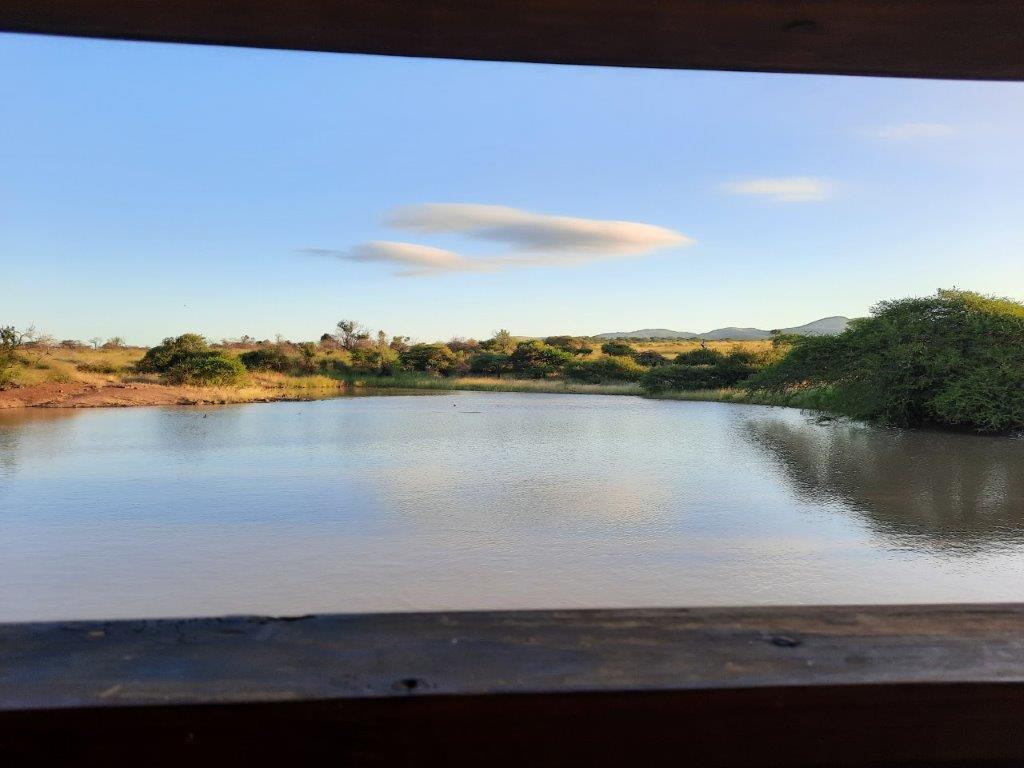
View from Malibala Hide
In the pan at Mahlahla Hide water was present but it was almost fully overgrown and difficult to see anything unless it was really close. We spent half an hour there and saw nothing. But the journey from the camp to the hide is always interesting. In the open area as you reach the bottom of the hill we saw the usual Little bee-eaters and many Black Saw-wings.
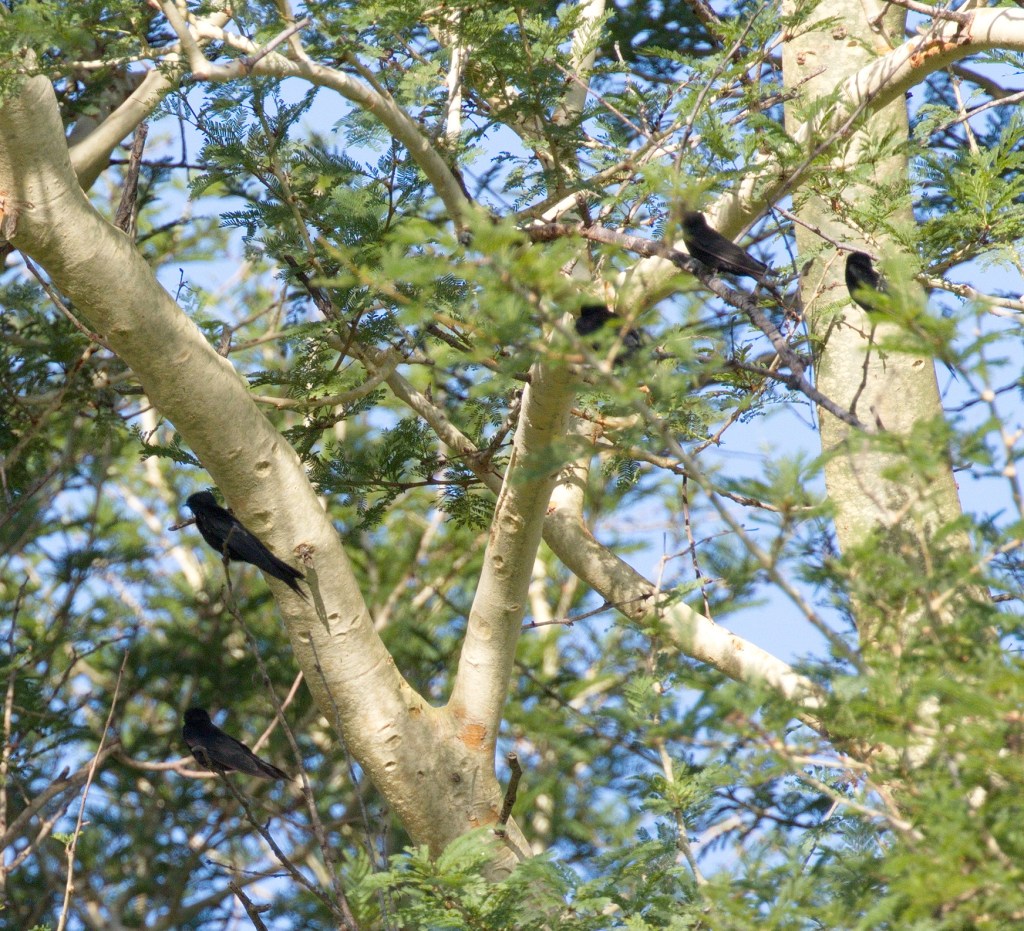
Then there was a Swallow with a lovely red rump hanging out with the Saw-wings..

Carrying on along that road towards the airstrip we came across an obliging Striped Kingfisher.
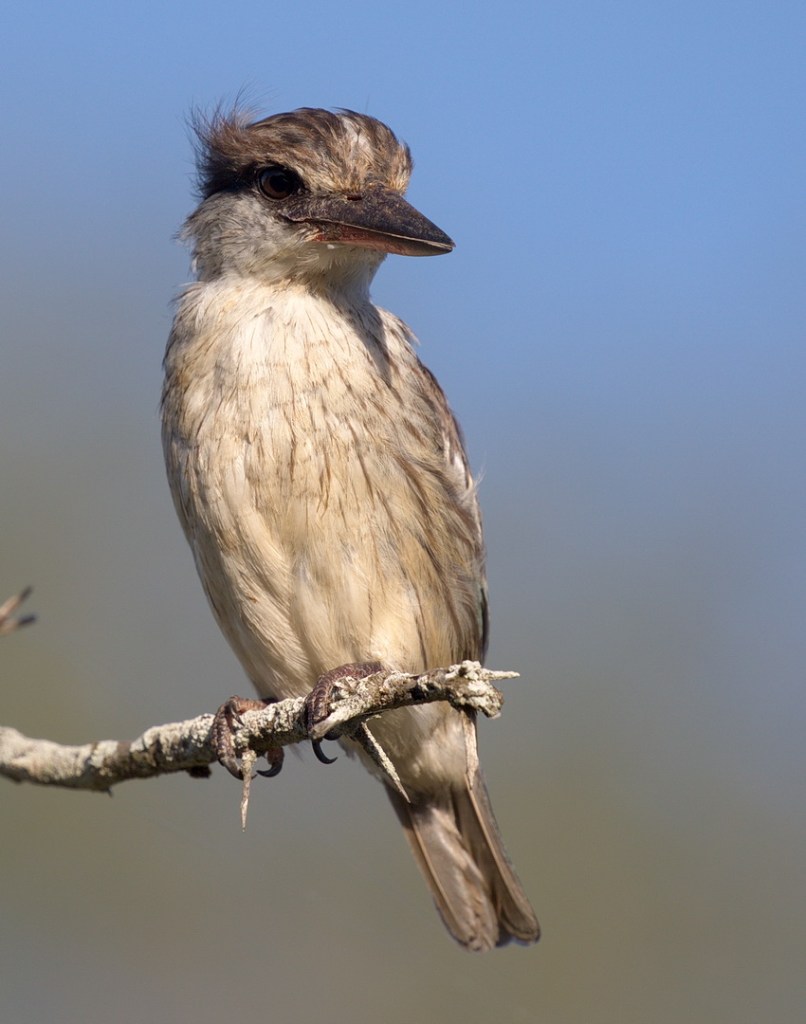
Striped Kingfisher 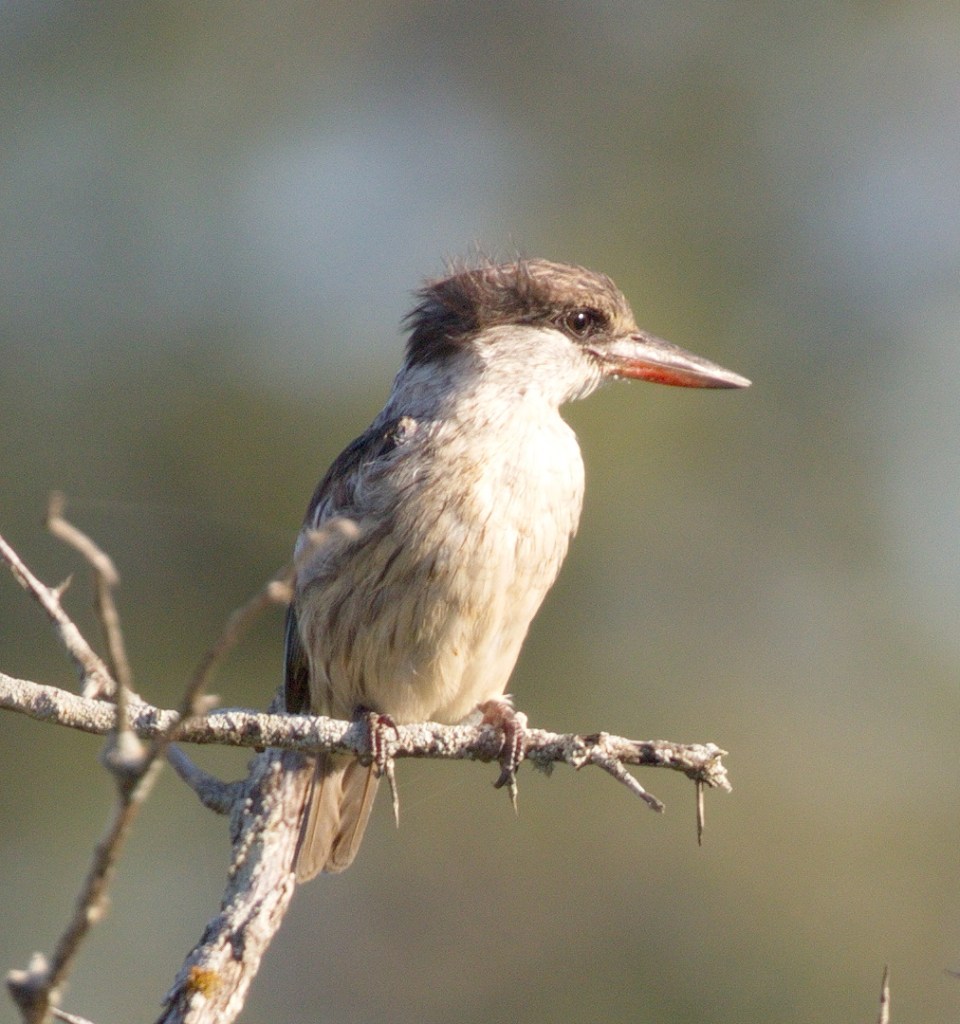
Striped Kingfisher
Then along the airstrip we noticed a number of European Rollers. The most abundant of all the Rollers in the Reserve. And as we expected Crowned Lapwings.
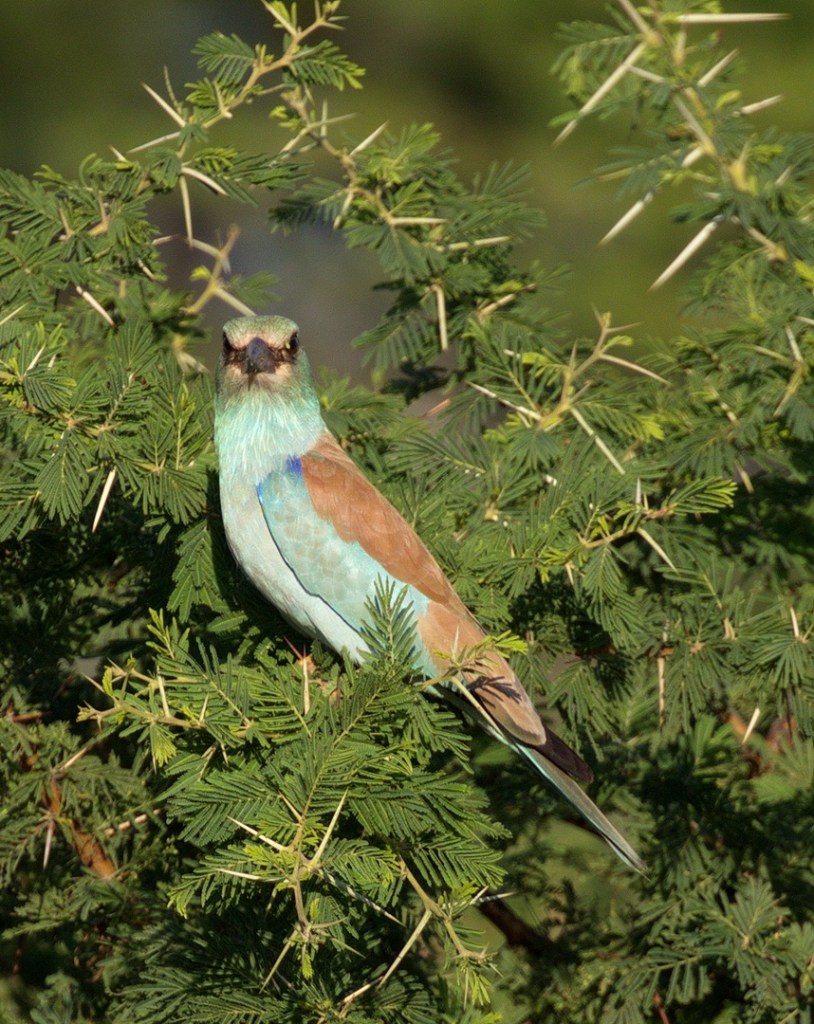
European Roller 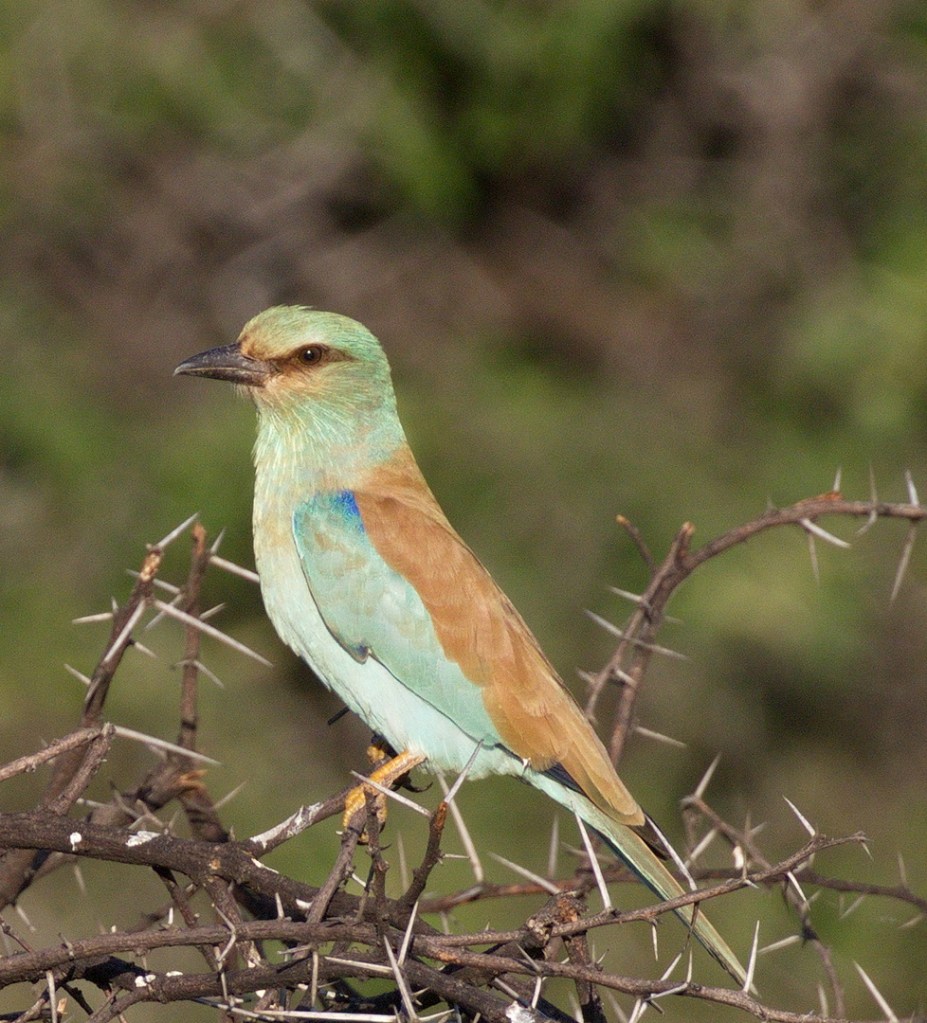
European Roller 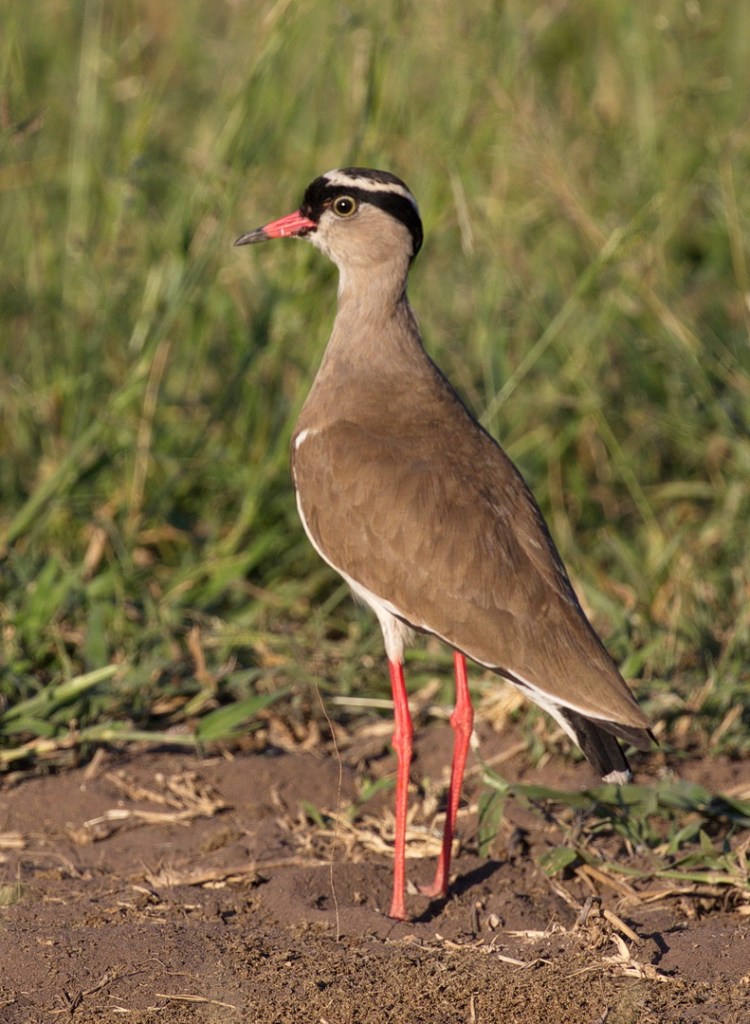
Crowned Lapwing
From the airstrip we headed for the Kumasinga Hide. The hide was very quiet and the normally abundant birds were absent – even the animals were spartan

Red-backed Shrike 
Three-banded Plover 
Red-eyed Dove and Three-banded Plover 
Yellow-fronted Canary 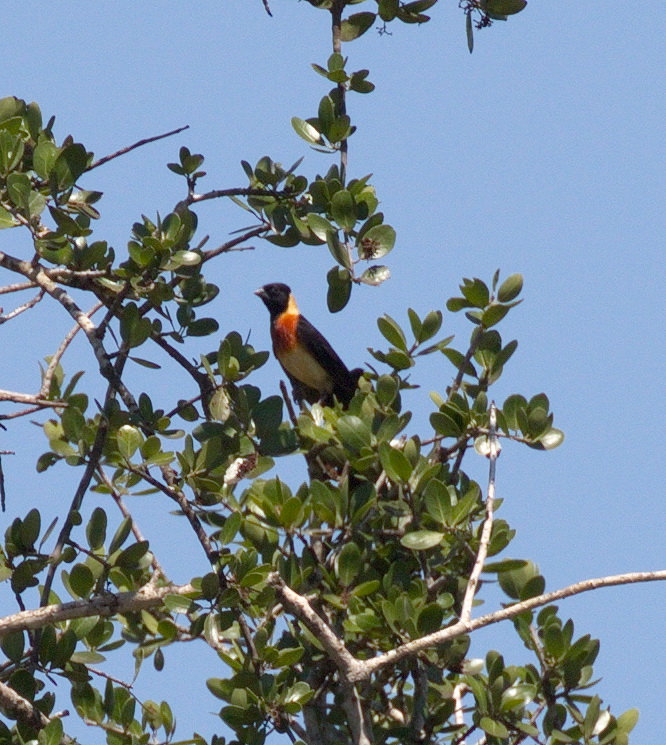
Long-tailed Paradise Whydah 
A fluttering swarm of Citrus Swallowtails 
Red-billed Oxpecker 
Red-billed Oxpecker
Then the Red-billed Queleas arrived – some more brightly coloured than others. One even looked like a red Red-billed Quelea.
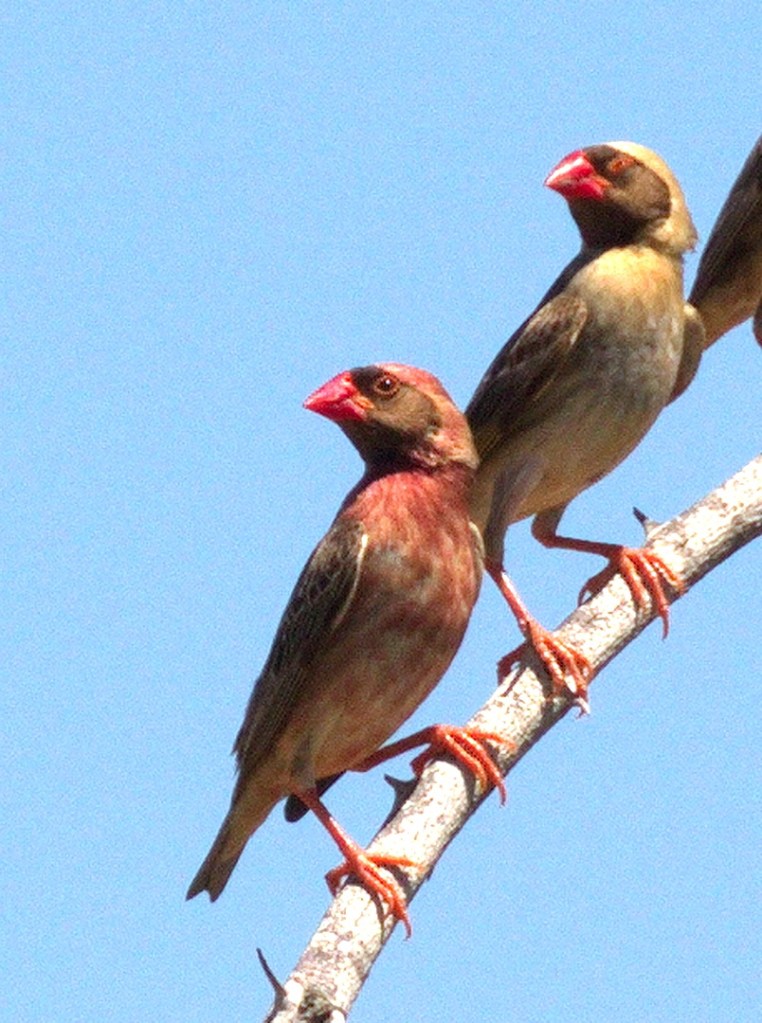


Red-billed Queleas
We stayed at the hide until nightfall only leaving there close to 18h30. (Had to be back in camp by 19h00). When we hit the tar road back to camp we went left instead of right and trolled that road as far as the Tower. On the way we saw a number of Fiery-necked Nightjars and a Spotted Thick-knee. On the way back I managed to get a shot of a Fiery-necked Nightjar and also the Bronze-winged Courser – both in the middle of the road.
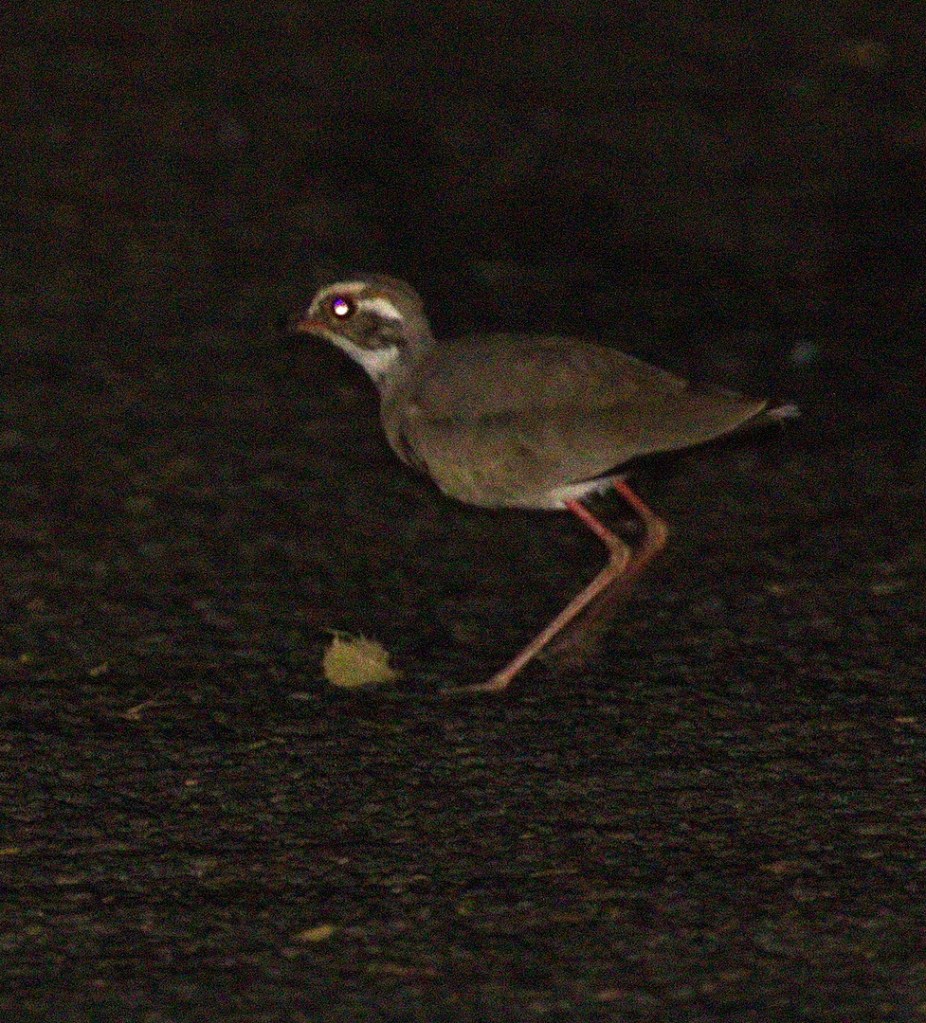
Bronze-winged Courser 
Fiery-necked Nightjar
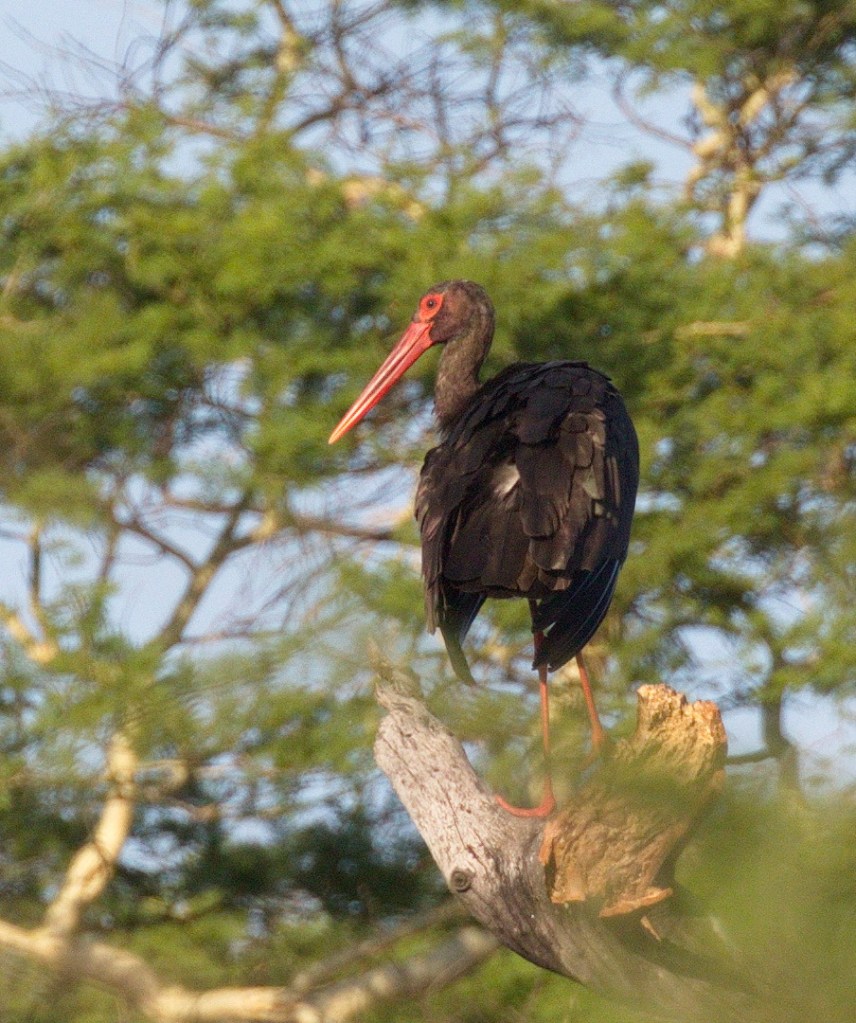
The next day we took a trip towards the Hunting camp, took in the Loop Road and also to the hides on Nsumo Pan, the Campsite and Malibala Hide. As we left the tar road heading towards the Hunting camp , we saw a large bird in one of the fever trees. On closer inspection we were surprised to see a Black Stork.
On the way back from the picnic site (near the entry road to the Hunting camp) we saw a large raptor silhouetted in a bare tree. A juvenile Bateleur with a lovely curly hairstyle.

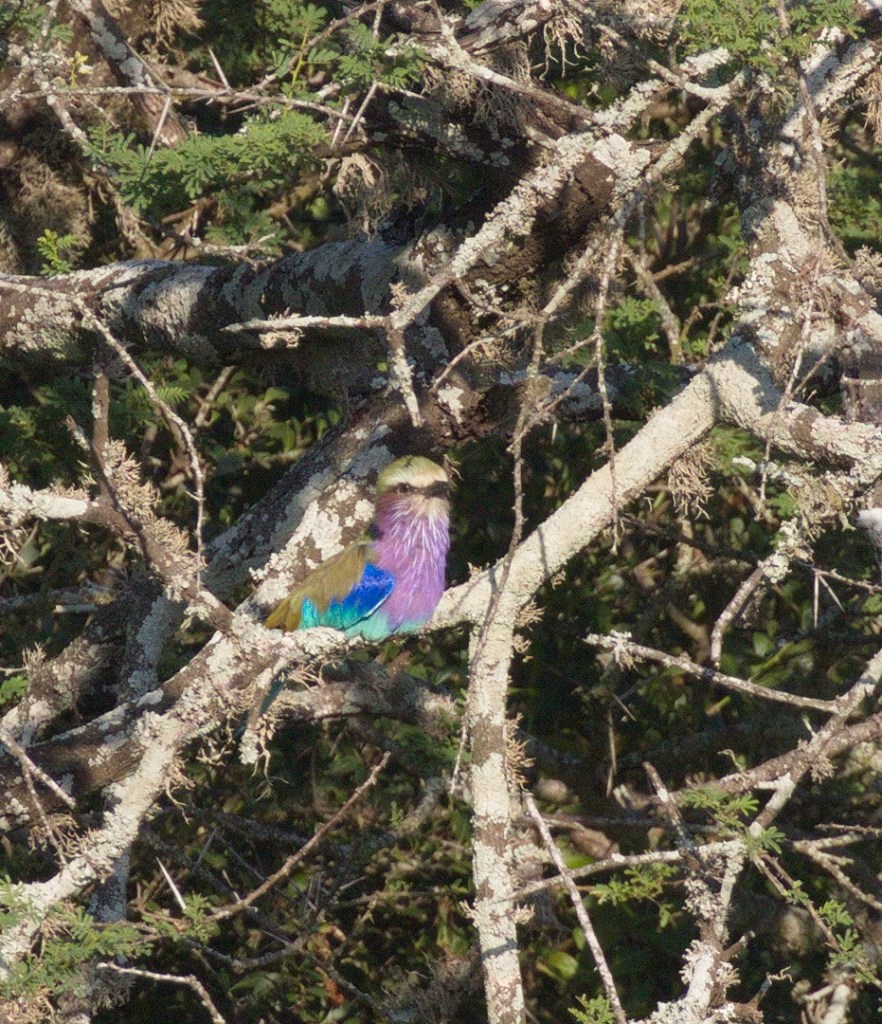
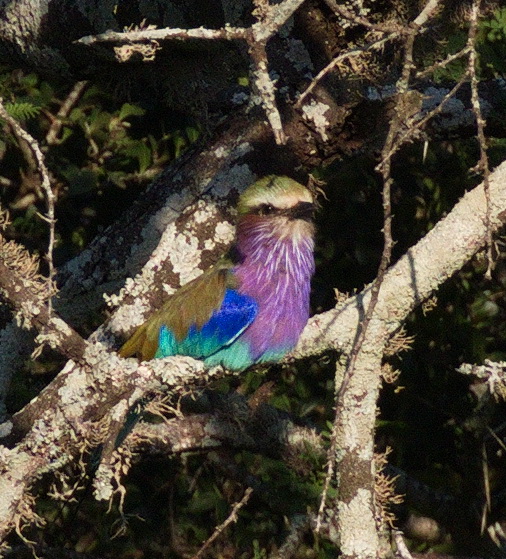
As we turned onto the Loop road we saw our only Lilac-breasted Roller during the time we were in the Reserve.

Following around the Loop road we were in for another surprise – a Lesser Grey Shrike.

Lesser Grey Shrike 
Lesser Grey Shrike
Wildlife seen on the loop.
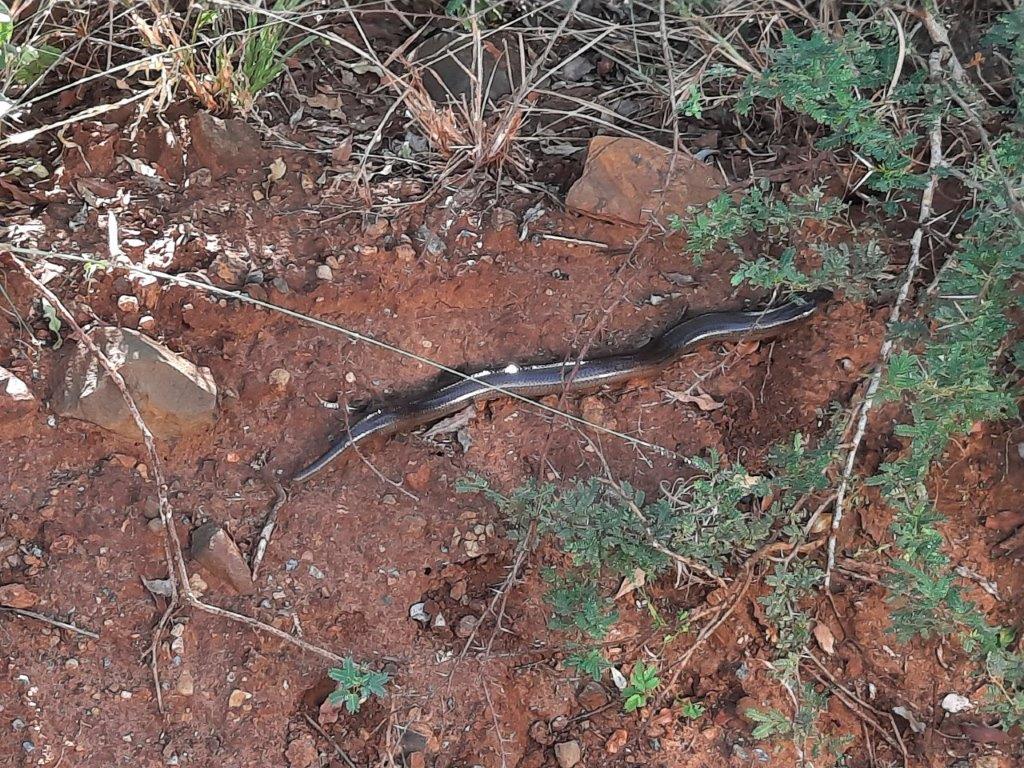
Mole Snake 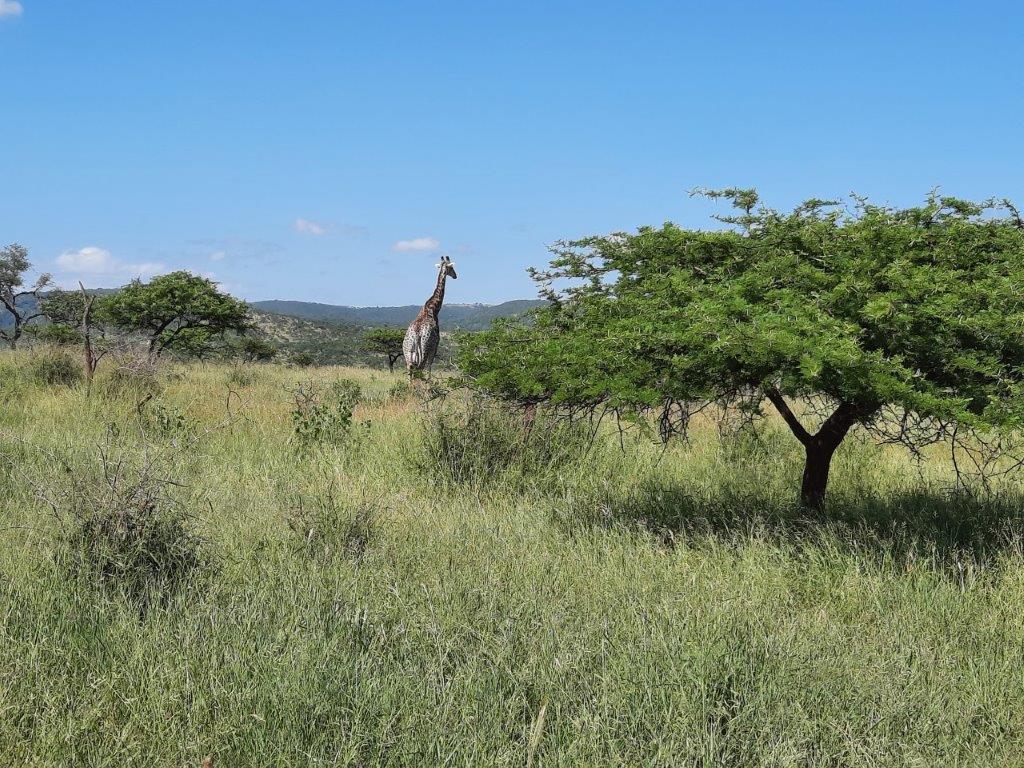
A distant Giraffe
We visited the hides and picnic site on Nsumo Pan. The water level was very high and few birds were seen on the water or on it’s edge. All the birds photographed were in the trees beside the Pan.

Marico Sunbird 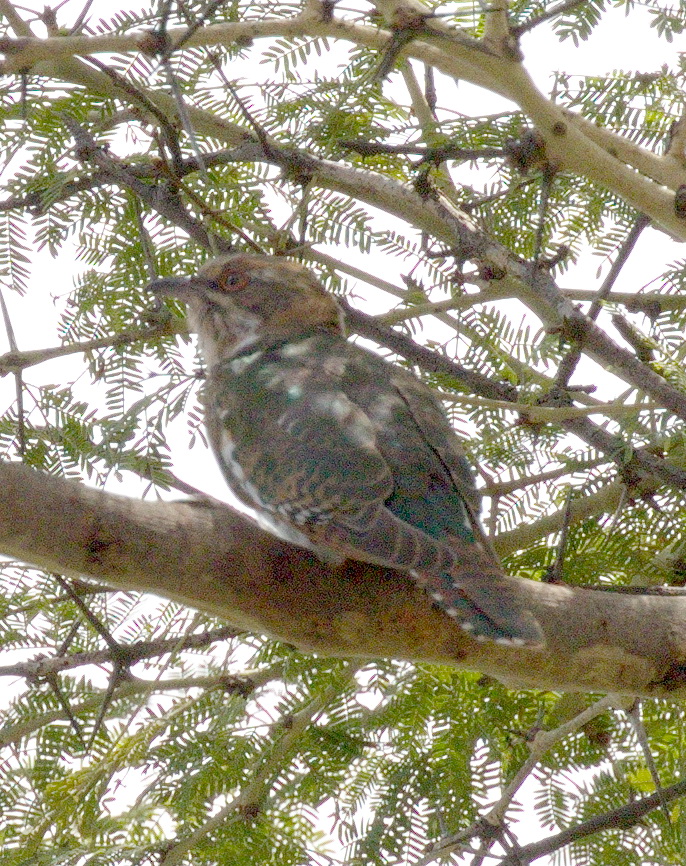
Diederik Cuckoo 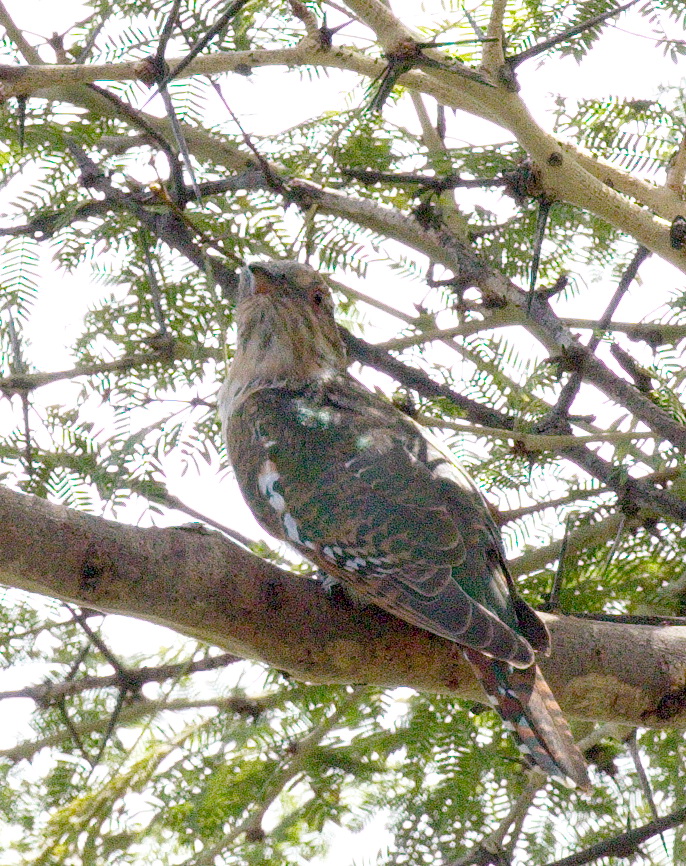
Diederik Cuckoo 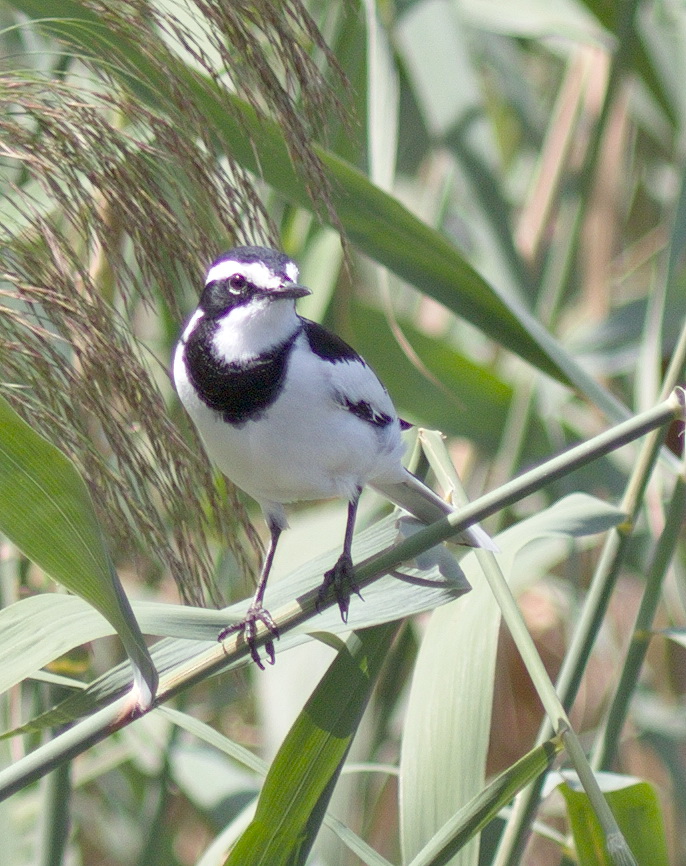
African Pied Wagtail 
Spotted Flycatcher
The pan at Malibala Hide was full and the bird life quiet. Even the campsite was unusually the same.
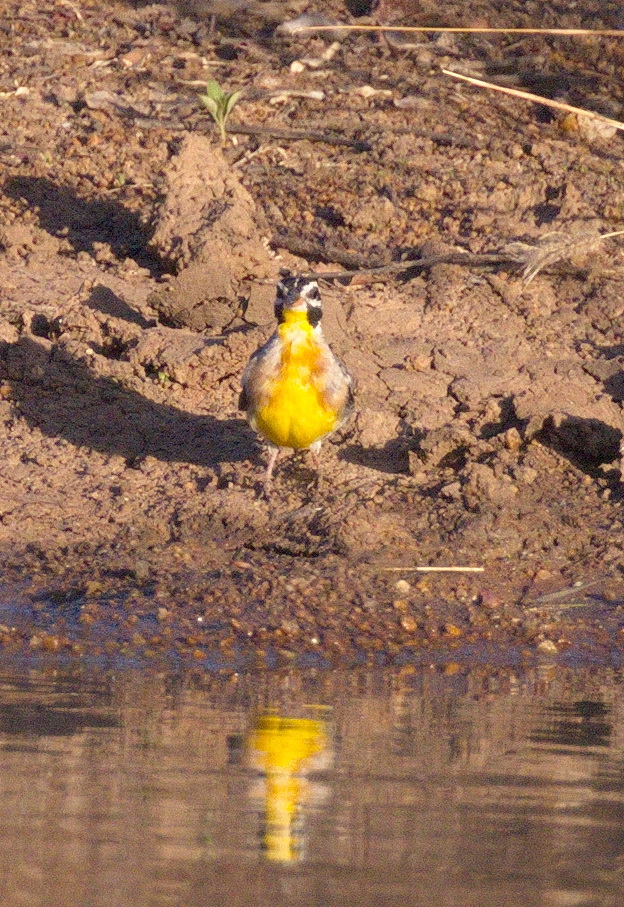
Golden-breasted Bunting 
Three-banded Plover 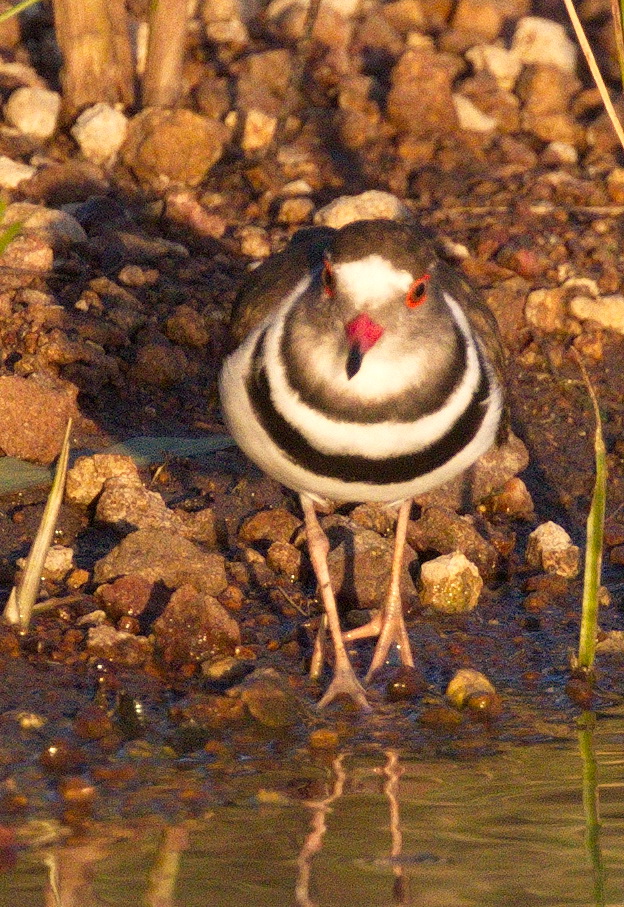
Three-banded Plover 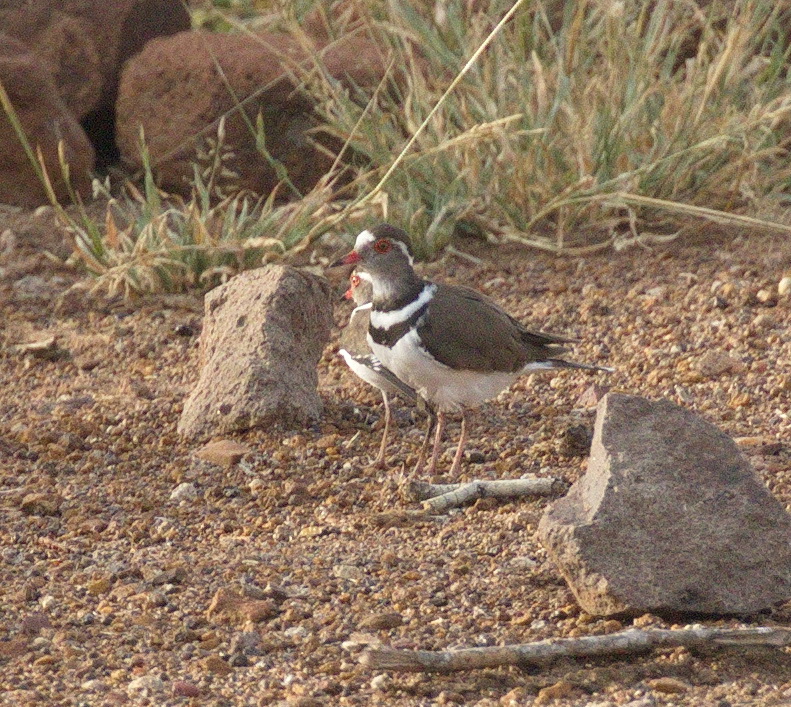
A mating pair of Three-banded Plovers 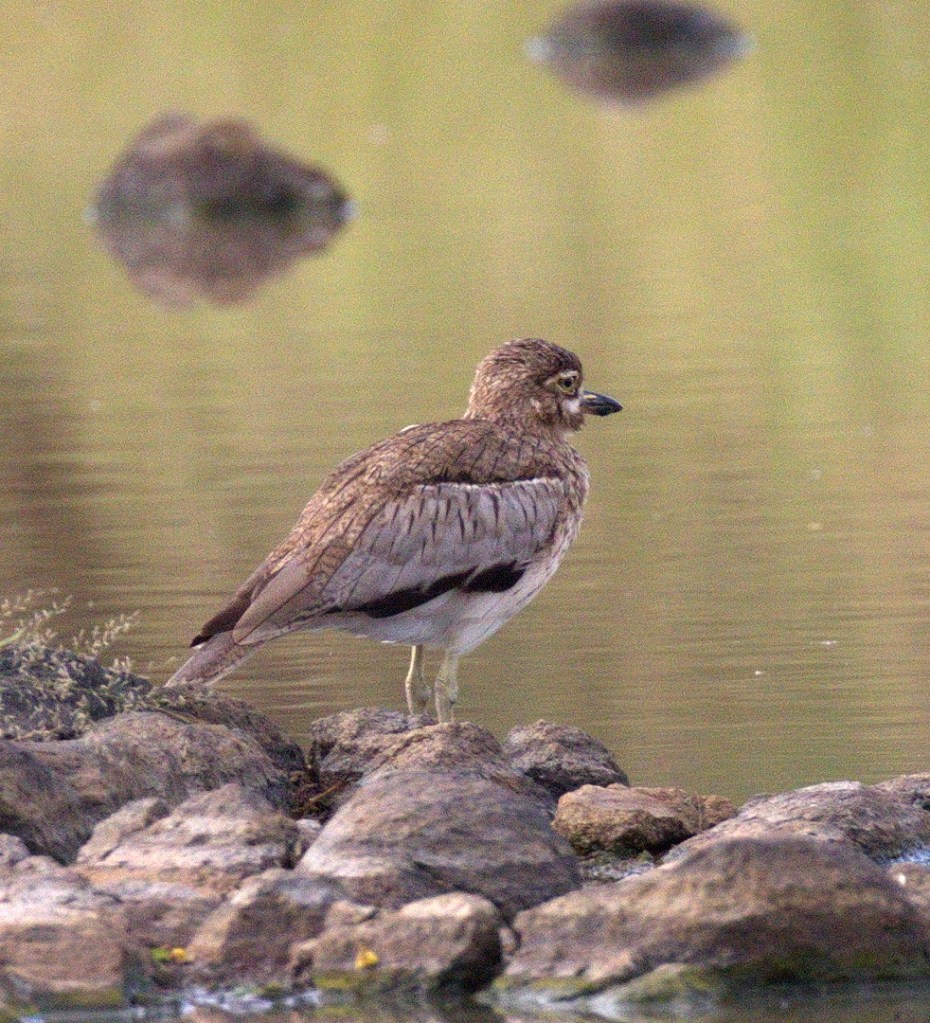
Water Thick-knee 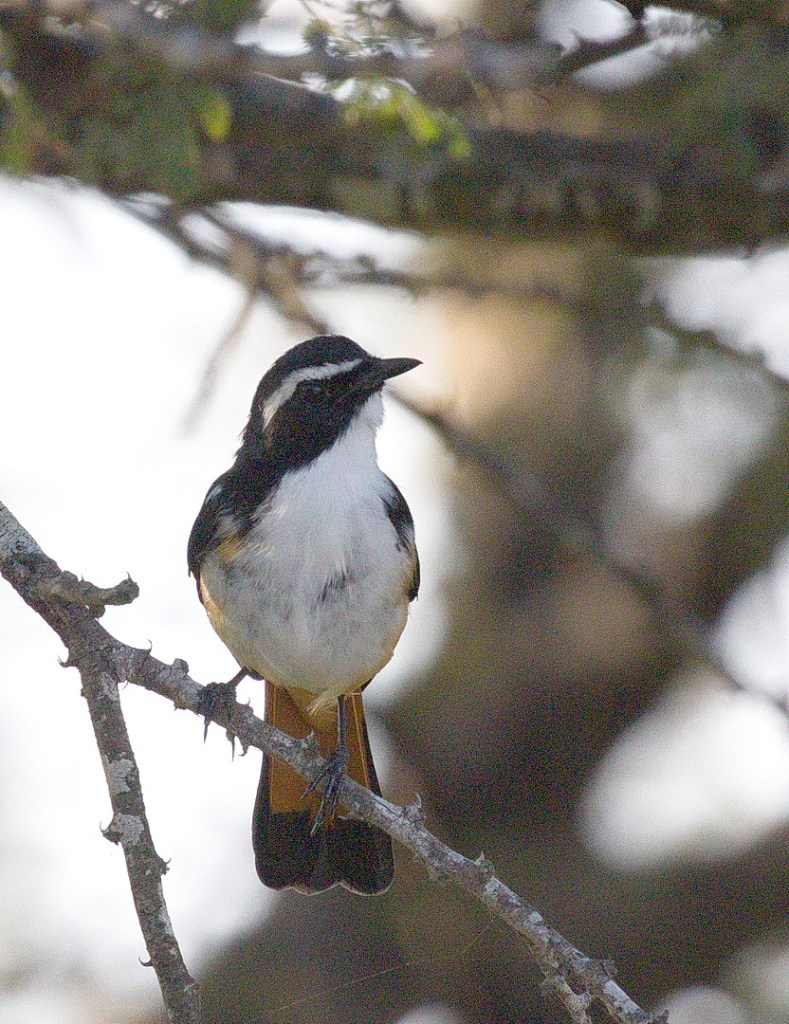
White-throated Robin-Chat 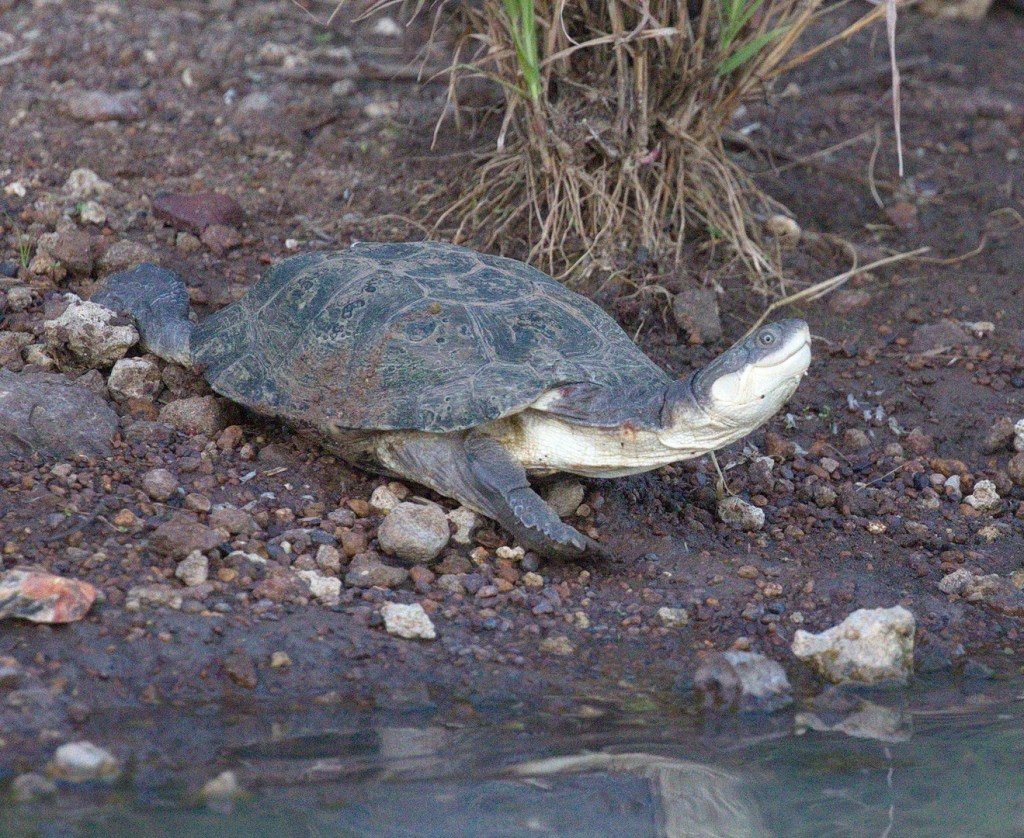
White-throated Terrapin.
Of course being in the area we had to visit Mpempe Pan. Ever hopeful of finding the Buff-breasted Sandpiper. We made our call to advise we were coming and gained permission to do so. That was not the hard part. The hard part was finding the best way to the Pan despite our GPS and the co-ordinates of its location. After following the GPS map into various fields where the tracks ran out, we gave up on the GPS directions and followed our nose instead.
Along the way we saw hundreds of Western Cattle Egrets either side of the road as we approached the Pan. And many other large and small birds were in the air too. Quite a sight considering the paucity of large flocks elsewhere. Eventually we crossed the low level bridge with a huge open flat field to our right full of bird movement. Quite a pleasant surprise.
We parked on the right as we crossed the low level bridge. Out we got, togged up and were ready to check among the Kittlitz’s Plovers for the bird when I decided I wanted to park a little further along the track. Untogged, back in the car and off we set.
After just 20 metres there was the bird right in front of us. What a fantastic chance was that. We watched as it moved about among the Kittlitz’s Plovers before I decided I wanted to take a few photos. The sunlight was coming from the wrong direction not helping with the shots. Taking a circuitous route around I eventually managed to get some more pleasing shots.

Buff-breasted Sandpiper 
Buff-breasted Sandpiper 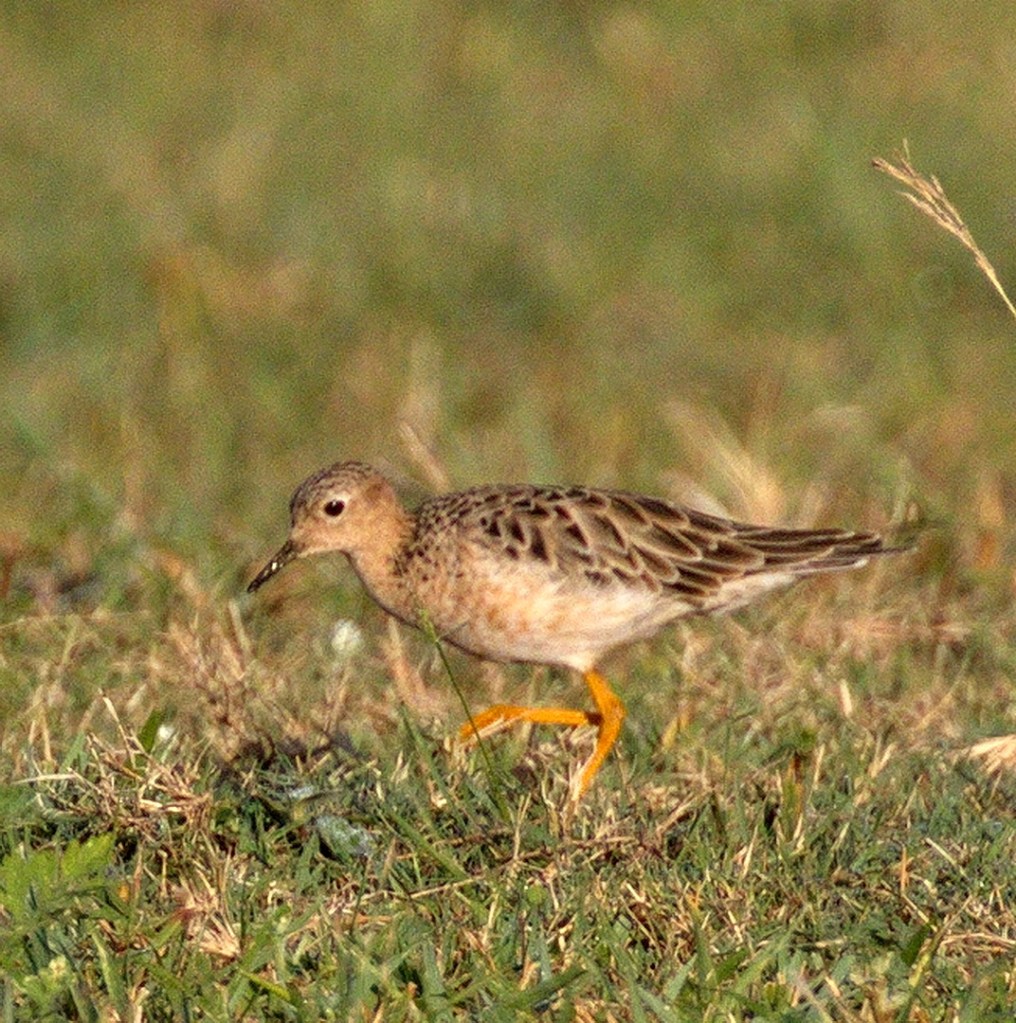
Buff-breasted Sandpiper 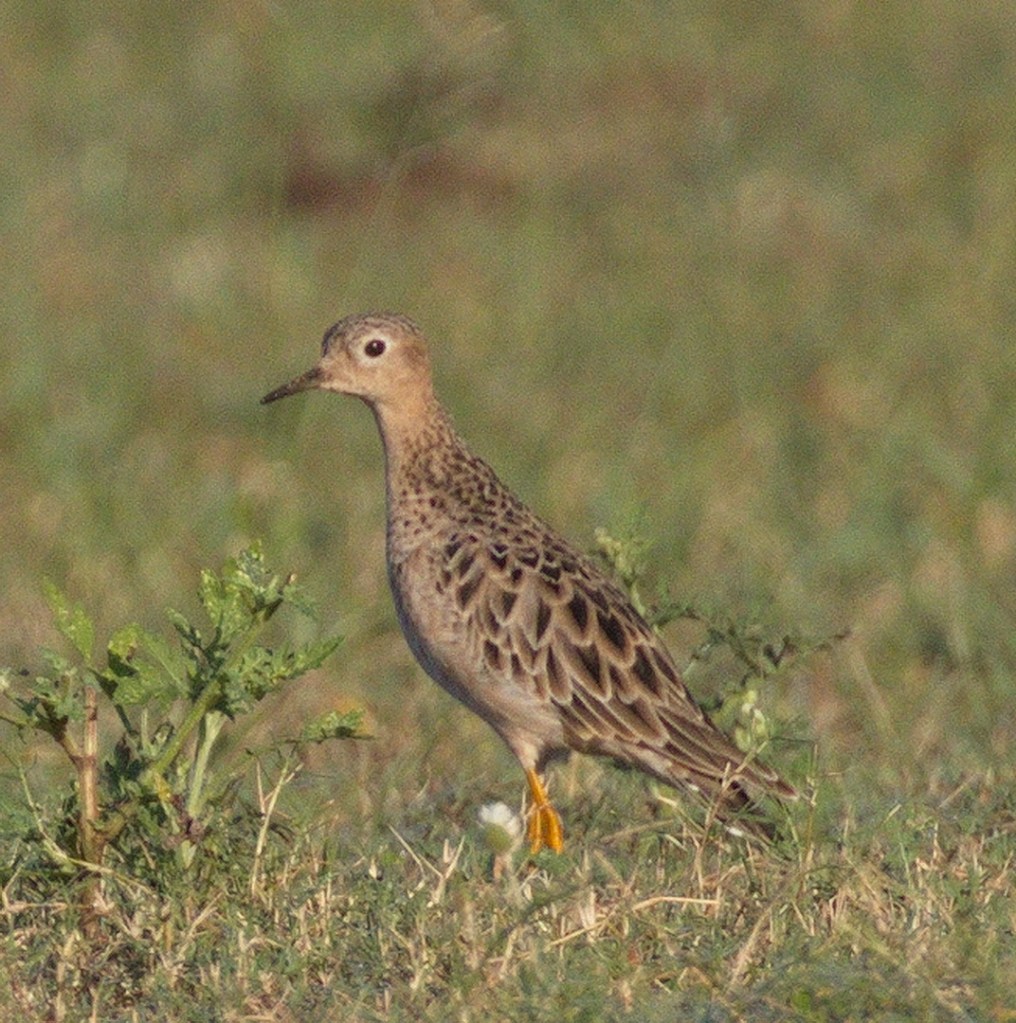
Buff-breasted Sandpiper 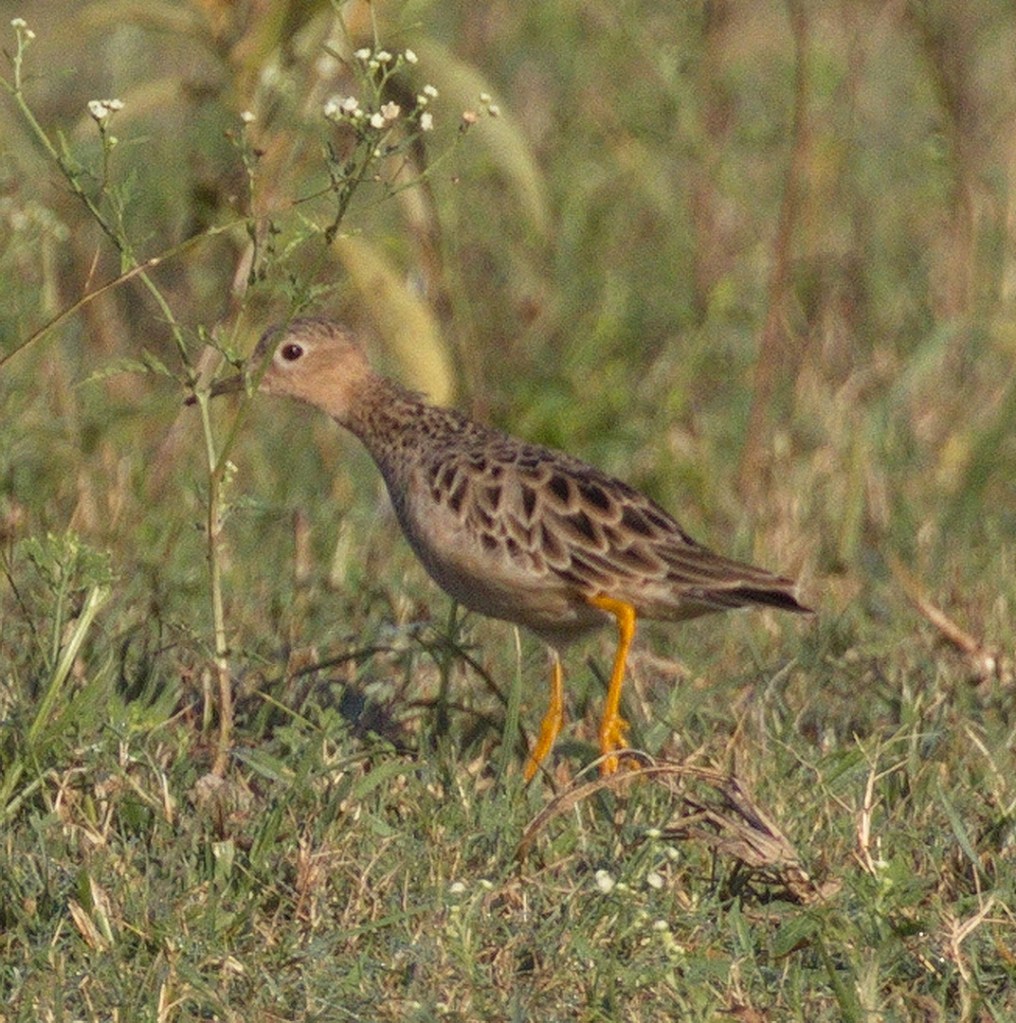
Buff-breasted Sandpiper 
Buff-breasted Sandpiper
Such a great looking bird and just as I had imagined from the photos in Roberts.
Beyond the field was the wetland area. As we walked around to the wetland we walked among flocks of Senegal Lapwings and Ruff. Crowned and Blacksmith Lapwings were also seen.

Mpempe Plain 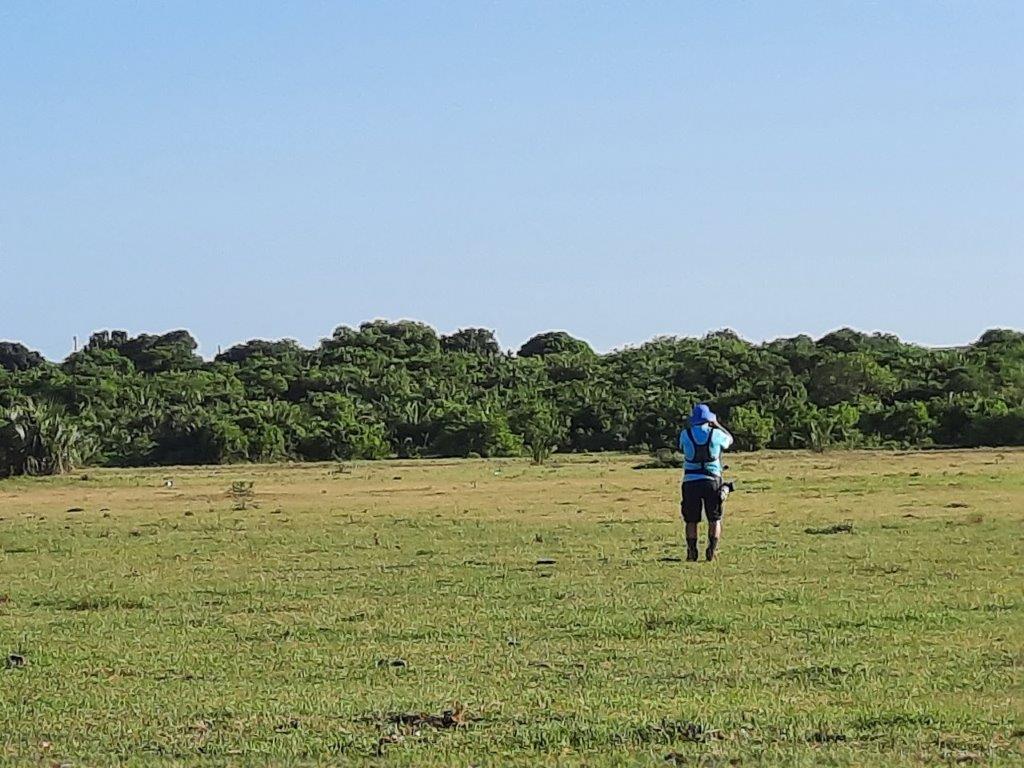
Mpempe Plain 
Mpempe. Looking across to the wetland area 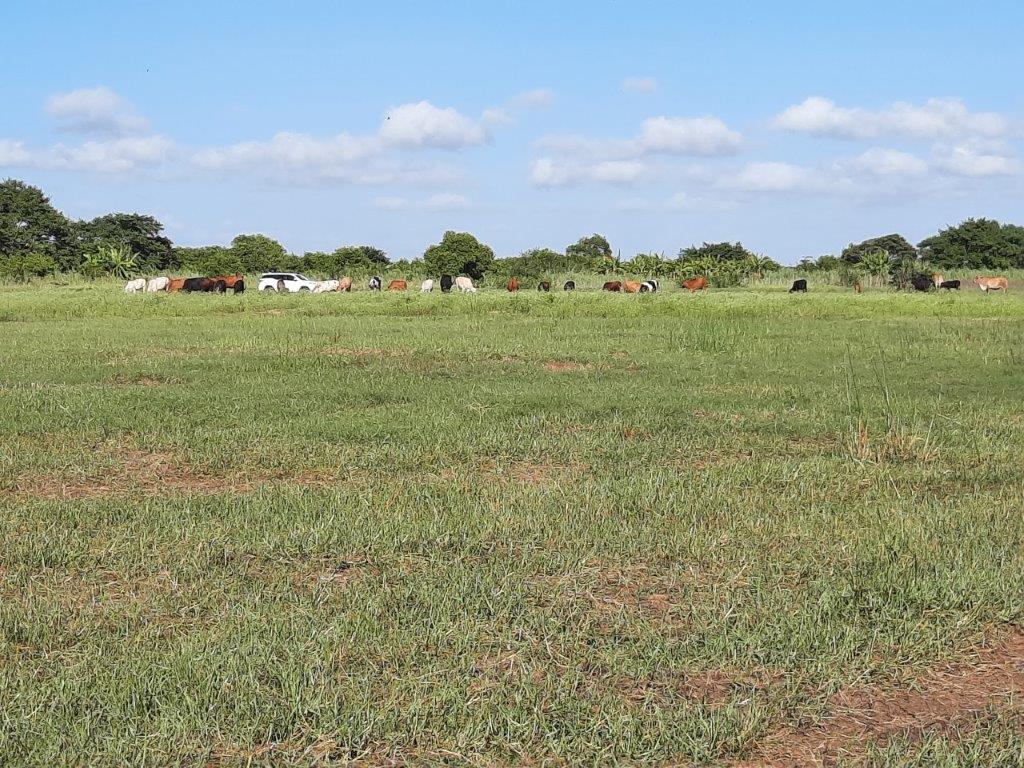
Mpempe. Looking back from the wetland area 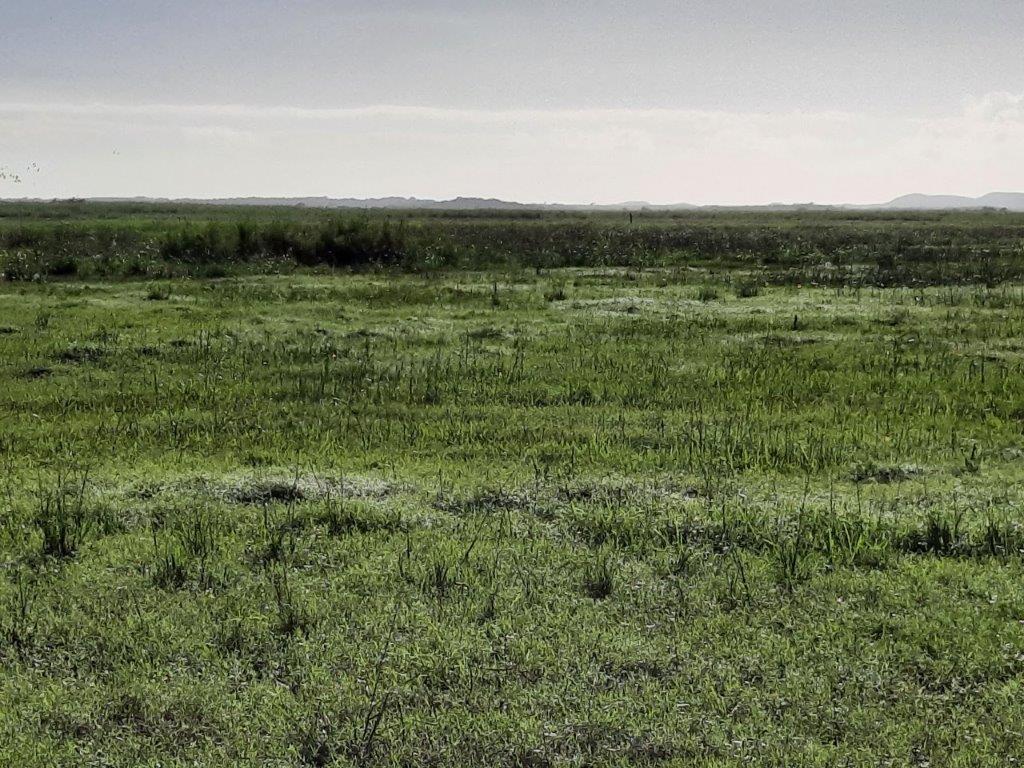
Wetland 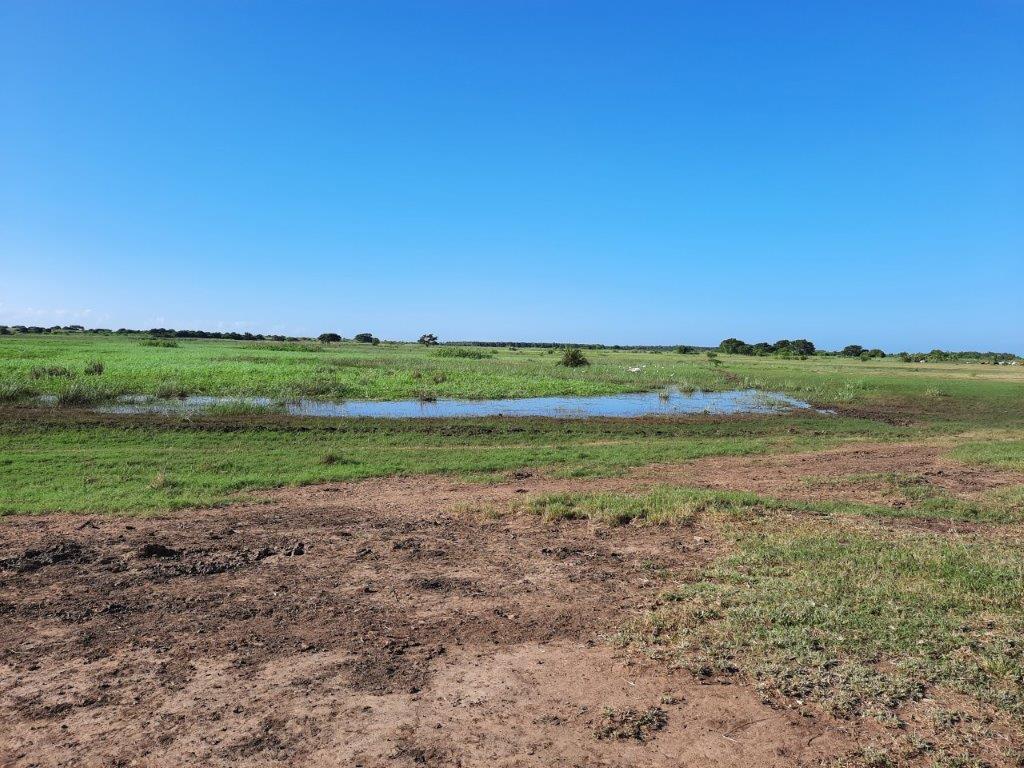
Wetland 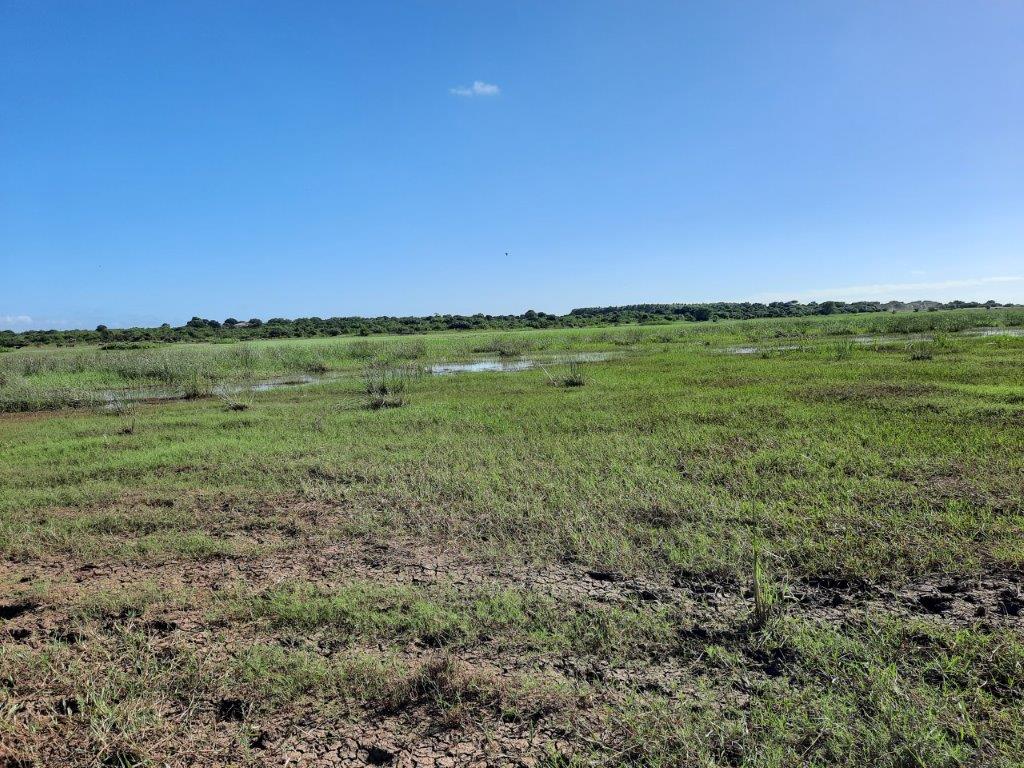
Wetland 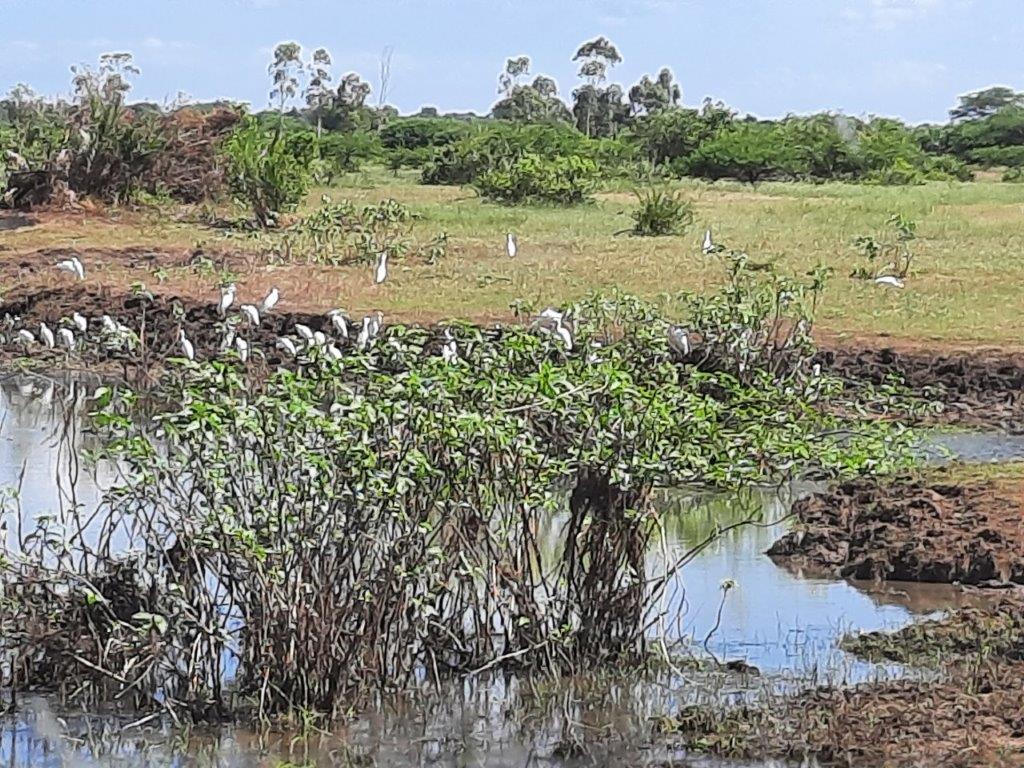
Western Cattle Egrets in the Wetland 
Wetland
On the right of the wetland we noticed Collared Pratincoles on the ground and Glossy Ibis as well, even a beautiful Malachite Kingfisher. And it was there that a Large black waterbird was seen. We approached to get a better look but it flew then a little later it came back to the same spot. At first we had considered it to be a Rufous-bellied Heron, but now that we were closer we realised that it was a Black Heron. Again it flew and returned. As it flew we could see the yellow feet and black bill. On return it was disturbed by a Purple Heron and flew away with yet another Black Heron – a pair.

Black Heron 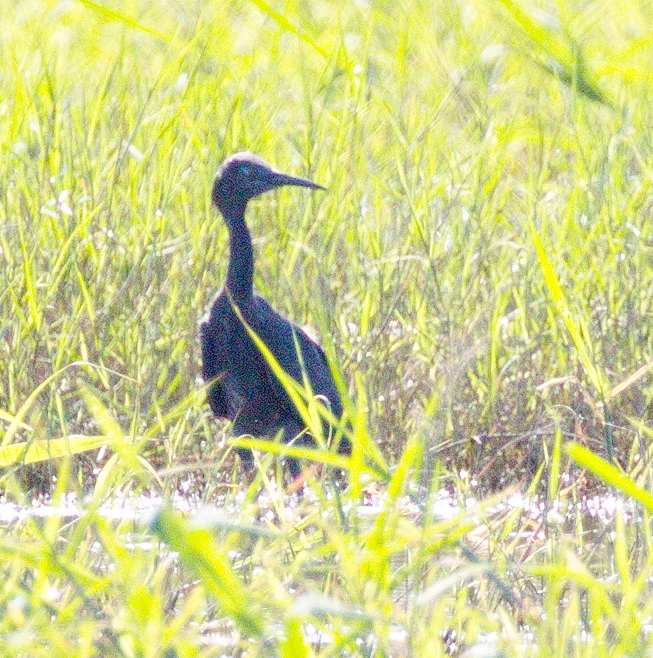
Black Heron 
Black Heron 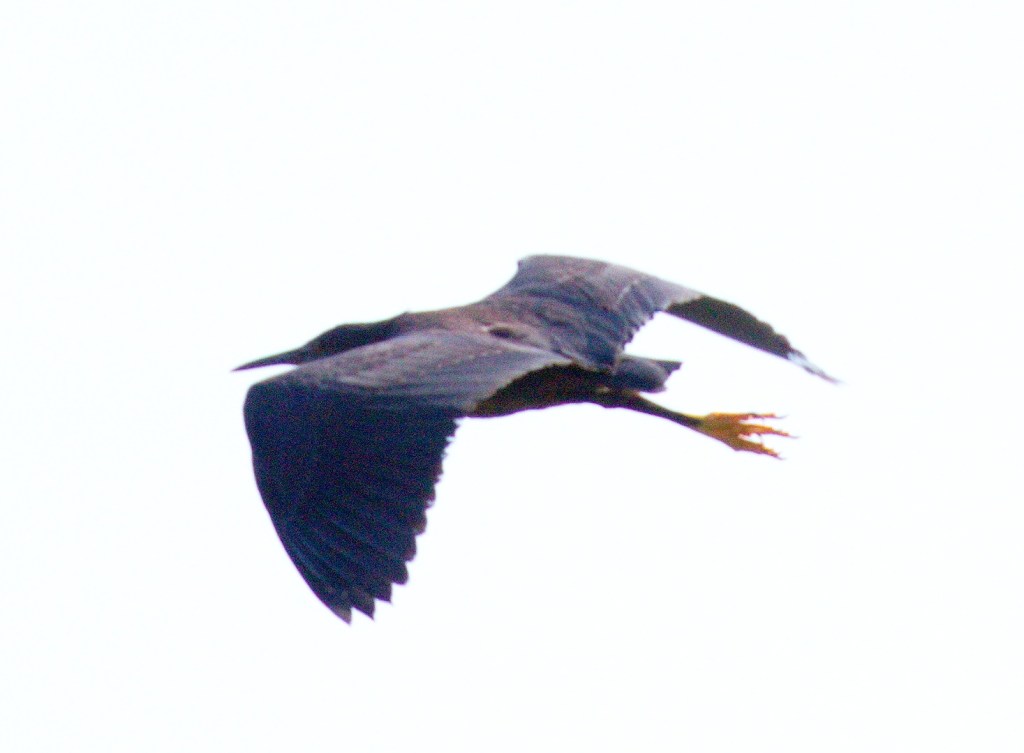
Black Heron
To sum up. We only identified 123 different bird species in Mkuze. Very disappointing as we expected closer to 180 or more – shows the impact of the rain. At Mpempe Pan in the short time we were there we identified 32 bird species. Our list can be seen by clicking on the following link.
Despite the lack of species we had some great and unexpected sightings and as we left early for personal reasons we have 2 days banked for the future.
Cheers
Sally and Paul Bartho


Hello Paul. This is Tarkan. I really liked all of them. Well done. 👍👏👏Kolay gelsin. 😄
LikeLike