A cooler day dawned with no rain and Chris McDonald of Brettenwood Estate guided the BirdLife Port Natal members around the very pretty and interesting birding paths and dams through the Estate.
Bush Brown
Bush Brown
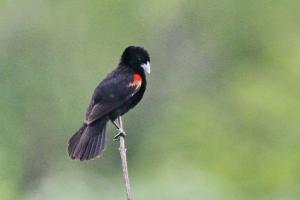
Southern Red Bishop
Southern Red Bishop
Yellow-rumped Tinkerbird
Burchell’s Coucals
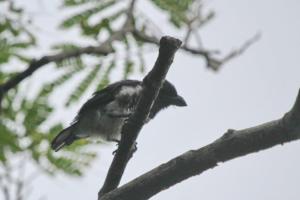
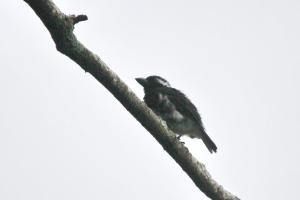
White-eared Barbet
White-eared Barbet
Crested Barbet
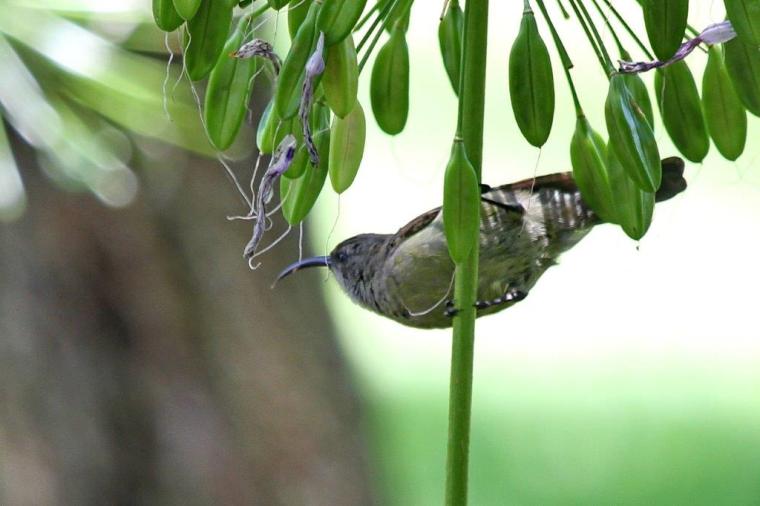
Sunbird
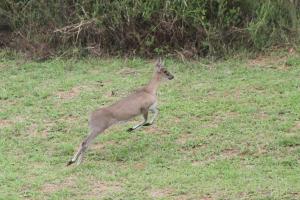
Grey Duiker
Another Grey Duiker
Purple Heron
Purple Heron
White-faced Ducks and Egyptian Goose
Three-banded Plover
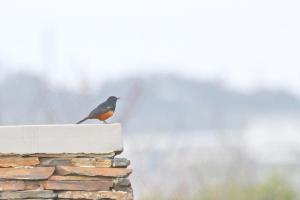
Mocking Cliff-Chat
Brimstone Canary
Sixty two different bird species were identified. Click here to see the Bird List.
We were then taken back to the club house where we were invited to enjoy a breakfast on the deck over-looking the Woodlands Dam. A big thanks to Chris McDonald and the Brettenwood Estate for their hospitality.
Sally and I took a trip to find the Red Phalarope near Himeville in the Midlands. It had been reported as being seen there for several weeks.
Our plan was to meet Trish Strachan at the site at about 08h30. We arrived in the area very early so took a dirt road shortcut to Himeville from the road to Underberg.
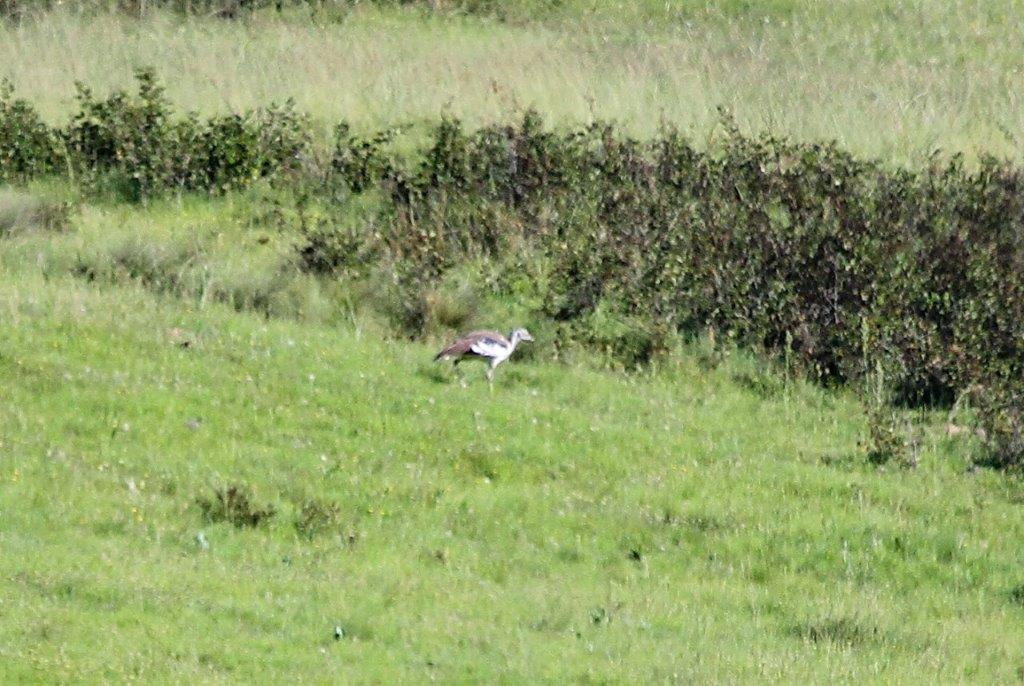
Meandering along the way we noticed a Denham’s Bustard ambling in a field some 200 metres from us. Out came the scope and camera.
Denham’s Bustard
A bit further along we stopped for a pair of Cape Longclaws next to the road.
Cape Longclaw
Cape Longclaw
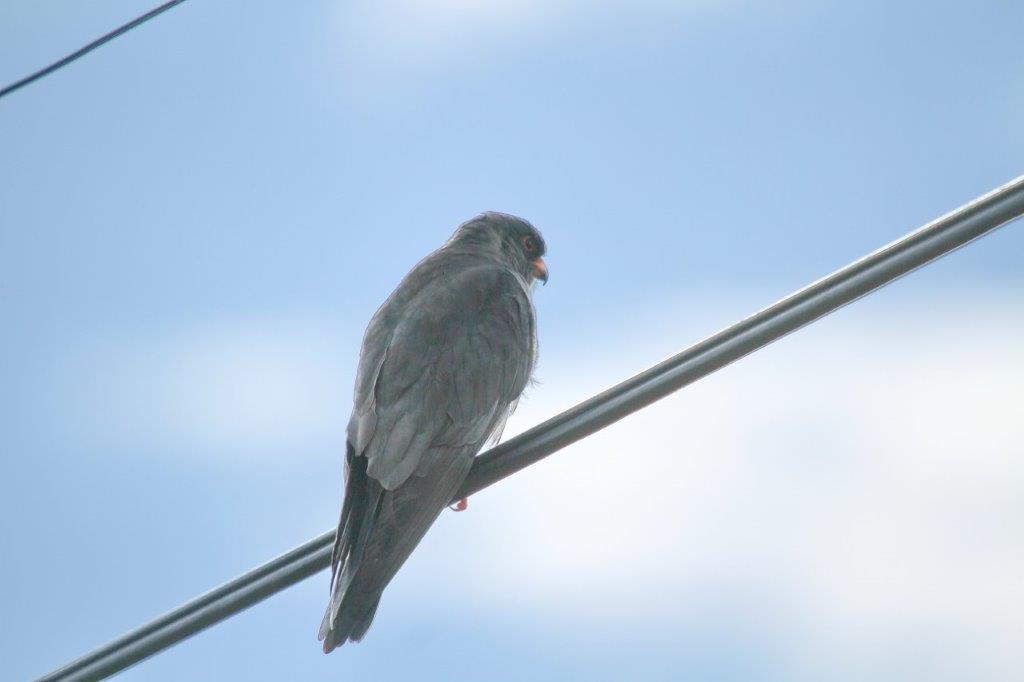
Numerous Amur Falcons were seen on the distant power lines and trees. Even with the scope it was very difficult to identify any possible Red-footed Falcons amongst them.
Amur Falcon
At a bend in the road there were Red Hot Pokers (Kniphofia sp.) with a malachite Sunbird enjoying the nectar.
Malachite Sunbird
Malachite Sunbird
Malachite Sunbird
Further along more Falcons but no Red-footed spotted.
Then we arrived in the wetland area meeting Trish and David. The Red Phalarope was swimming up and down in a channel between South African Shelducks and Egyptian Geese. It was quite distant and was swimming up and down the channel every so often stopping and pecking at something in the water – often behind it.
Red Phalarope
Red Phalarope
Red Phalarope
Red Phalarope
Red Phalarope
We spent most of the rest of the morning driving around the area looking for Red-footed Falcons. However Falcons were few and far between. It seems they leave their roost early in the morning and head for trees and power lines to warm up before dispersing to forage.
There were many other birds of interest which we saw. Five Grey-crowned Cranes and two Blue Cranes in a field together.
Blue Crane
Grey-crowned Cranes
Blue and Grey-crowned Cranes together
Blue Crane
Hundreds of Southern Bald Ibises in one farmer’s field and perched in trees in his dam.
Southern Bald Ibis
White Storks
White Stork
White Stork
And a host of other birds
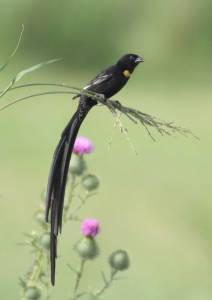
Long-tailed Widowbird
Long-tailed Widowbird
Amur Falcon
Amur Falcon
Wahlberg’s Eagle
Wahlberg’s Eagle
Common (European) Starling
That afternoon Trish and Dave joined us to search for Red-footed Falcons without success. As the afternoon progressed so the sky got darker and darker. And then thunder and lightning all round us. The rain held off while we watched the thousands of Falcons coming in to roost in the tall trees in Himeville. A spectacular sight. Then the rain started – very heavy but much needed.
The next day we spent an hour early morning, again searching for the Red-footed Falcons. no luck so we will have to go again. We went past the Red Phalarope dam but the bird was absent – seems we were lucky to go when we did as I am not sure it has been seen since – however we have read that a Great Bittern was found there recently!
Twenty birders headed out to Sand Forest Lodge near Hluhluwe for our first weekend outing of the year. Some had arrived a day earlier in pouring rain.
On Saturday we set out at 06H30 for False Bay for a 7 Km forest walk. Not all of us lasted the full 7 Km.
We heard a lot of birds but sightings were scarce as it was very dry. The trees and butterflies were amazing.
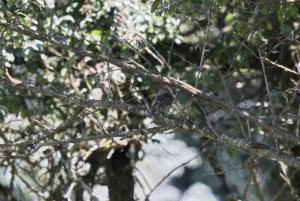
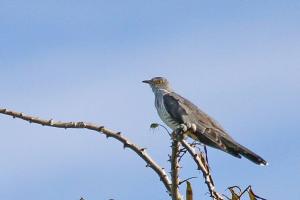
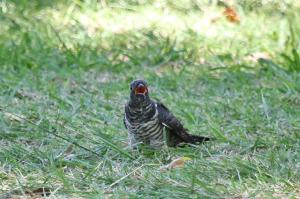
A distant Cuckoo caught our attention – either an African or Common. We managed a photo for you to judge for yourself. Our conclusion was that it was a Common Cuckoo based on the bill being predominantly black. Unfortunately we could get no views of the underside of the tail.
Common Cuckoo
Common Cuckoo
Common Cuckoo
Common Cuckoo
Further along we came across this spoor. Half the size of a ladies size six boot. Any ideas?
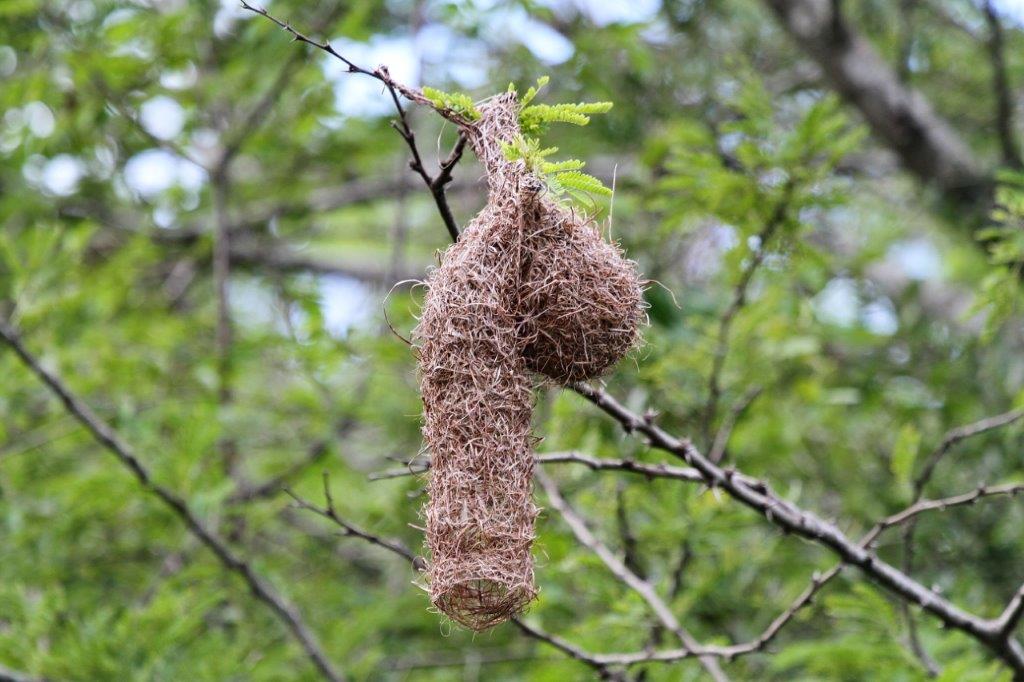
There was also a rather smart Dark-backed Weaver’s nest hanging in the woods.
Dark-backed Weaver’s nest.
After our walk we went to the picnic sight for tea. There was absolutely no water in the bay except in the far distance where we saw a group of flamingos.
Picnicking on the banks of the rather empty False Bay.False Bay looks like this.
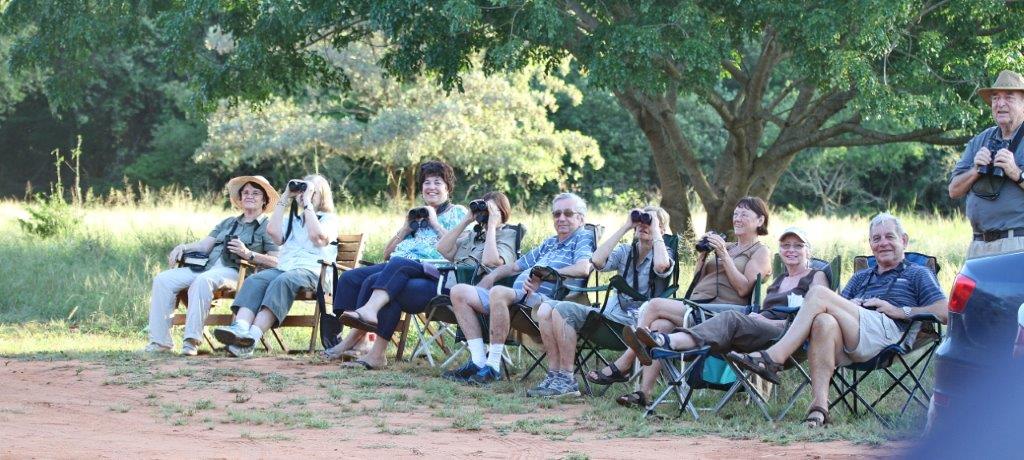
Saturday afternoon John and Paul were chatting when they saw a flock of European Bee-eaters feasting on flying ants right in the campsite. And then the show began. Everyone eventually gathered with their chairs and we were entertained for a good hour and a half with a variety of interesting birds.
Birdwatching in comfort
There were Barn and Lesser Striped Swallows, Scarlet-chested Sunbird, Collared Sunbird, Neergaard’s Sunbird, Long-tailed Paradise Whydah, White-winged Widowbird, African Yellow White-eye, Willow Warbler, Ashy Flycatcher, African Palm, Little and White-rumped Swifts, Klaas’s Cuckoo and African Paradise Flycatcher.
Klaas’s Cuckoo
Klaas’s Cuckoo
Long-tailed Paradise Whydah
White-winged Widowbird
Southern Black Tit
Ashy Flycatcher catching the sun’s reflection off the sand
Scarlet-chested Sunbird – female
Scarlet-chested Sunbird
African Paradise Flycatcher with the sand’s reflection distorting his colouring
African Paradise Flycatcher
Neergaard’s Sunbird
Also observed were the numerous butterflies and trees full of looper-type caterpillars which crawled everywhere including on you. Large hornets carrying and burying Loopers which they had stung.
Large Striped Swordtail
Large Striped Swordtails
Wasp burying a Looper
Wasp carrying a Looper
Either a Boisduval’s or Natal Tree Nymph – probably the latter?
Either a Boisduval’s or Natal Tree Nymph – probably the latter?
Possible Boisduval’s Tree Nymph
Unidentified
A one day wonder.
A lone leaf hanging mid air in the Forest.
Sunday’s early morning walk through the sand forest and grasslands of Sand Forest Lodge brought us Woodward’s Batis, Rudd’s Apalis, African Cuckoo, Diderick’s Cuckoo, African Green Pigeon among many others. For Jane and Mike, they were attracted to the African Cuckoo by a dive-bombing Eurasian Golden Oriole. It transpired that there were two African Cuckoos in the same place – something considered unusual.
Woodward’s batis
Woodward’s Batis
Grey Sunbird
Golden-tailed Woodpecker – seen drumming like a Bearded Woodpecker
Black-backed Puffback
Juvenile African Harrier-Hawk
African Cuckoo
African Cuckoo
African Cuckoo
African Cuckoo
African Cuckoo
Diderick’s Cuckoo
UI Raptor
UI Raptor
Dark-backed Weaver
Spectacled Weaver
African Green Pigeon
What a way to end a fabulous weekend.
Click here to read the bird list of 91 species identified.
Cheryl and John Bevan
Mkuze
Paul and Sally along with Dave and Jenny Rix took a late morning trip to Mkuze on Friday before the weekend started. Nsumo pan was by no means full but the bird life was very active with all sorts of waterbirds to be seen. Mike and Jane had even seen Greater Painted Snipe there earlier in the day.
Great Egret
Openbill with lunch
Greater Flamingos
Amur Falcon
Amur Falcon
St. Lucia
Paul and Sally also spent two nights at Sugarloaf campsite on the way home. Sunday night the rains came in force. The next morning we learned that Lake St. Lucia had gained 6.1 million tons of fresh water from the Umfolozi River. A godsend as they badly need it and more.
As usual the estuary mouth was full of interesting birds. Greater Flamingo; Pink-backed Pelicans; Goliath Herons; Saddle-billed Stork; hundreds of White-faced Ducks; Avocets; Grey-headed Gulls; Swift Terns; a few Little Terns and Lesser Crested Terns; numerous Curlew Sandpipers changing into breeding plumage; White-fronted Plovers; Common Ringed Plovers; Grey Herons.
Also seen was an adult Palm-Nut Vulture flying low over the dunes and also an Osprey circling above with a large fish for dinner.
Curlew Sandpiper going into breeding plumage
Little Terns with lovely yellow beaks.
Grey-headed Gull
Grey-headed Gull
A trip into Eastern Shores, Isimangaliso Wetland Park early morning after the rains was very quiet. Birds were trying to warm up and dry off so not much activity.
Blue-cheeked Bee-eaters
Deceptive Diadems
Deceptive Diadems
Back in camp the Livingstone’s Turacos were often calling above our campsite.
Livingstone’s Turaco
Livingstone’s Turaco
Always a special place to visit at this time of the year (and any other time of course).
Twelve of us ventured to Darvill for the Sunday outing. It was an overcast day on arrival and brightened later.
Darvill was very overgrown but still worth a visit. Many of the waterbirds were absent. Despite that we still identified 92 species. Click here to see our bird list.
On arrival we were greeted with a lot of activity on the open grass above the ponds. White Storks were everywhere along with Blacksmith Lapwings, African Sacred Ibis and Hadedah Ibis.
White Stork
White Storks
White Storks
Pied Crows chased Steppe Buzzards and Yellow-billed Kites.
Pied Crow chasing a Steppe Buzzard
We started our walk along the top of the ponds then went down to the river. It was difficult to see into the ponds and impossible to walk between them – too overgrown. Along the way we had views of Dark-capped Yellow Warbler, Fan-tailed Widowbird, Southern Red Bishop, Common Waxbill and both Diderick’s and Klaas’s Cuckoos were calling.
Dark-capped Yellow Warbler
Fan-tailed Widowbird
At one section we had views over one of the middle ponds. Here we heard African Rail and had views of Cormorants, Yellow-billed, African Black and White-faced Ducks, Yellow-billed Egrets, Little Grebes, Three-banded Plover, Red-billed Teal and several other common waterbirds.
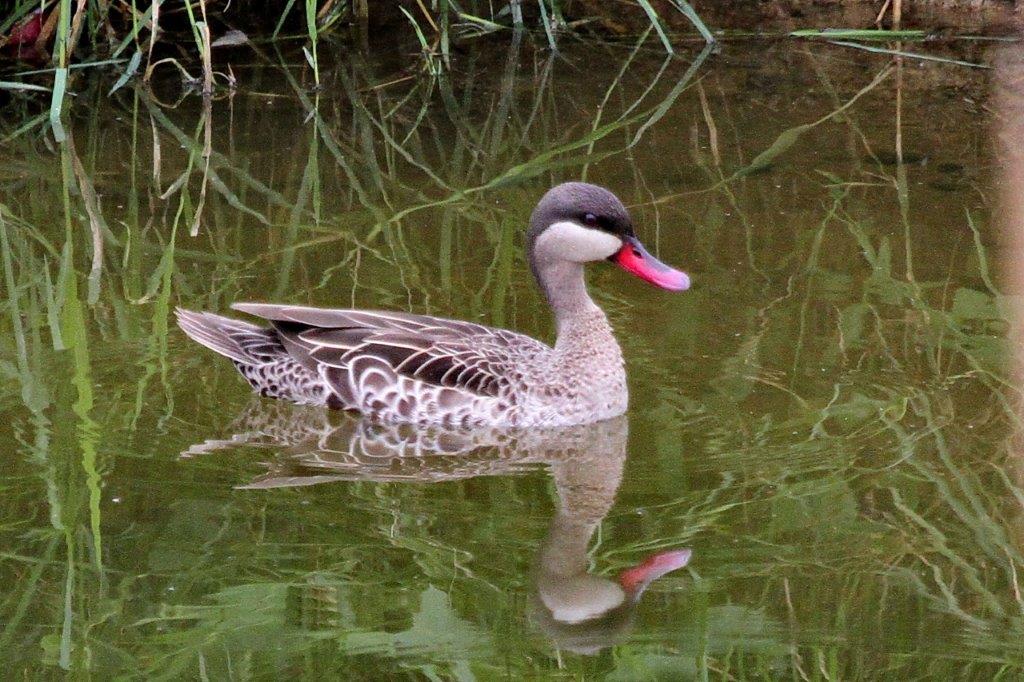
Red-billed Teal
The highlight though was hearing and seeing a (European) Sedge Warbler in the reeds in front of us.
Sedge Warbler
During the course of the morning we saw or heard a number of Warblers – Sedge, Willow, Little Rush-, Lesser Swamp- and an African Reed Warbler.
Paul – Hennie and Decklan Jordaan
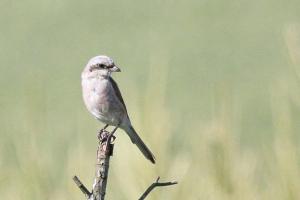
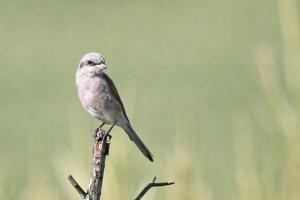
Eventually we reached the river. As we approached we had excellent views of Red-backed Shrikes – male and female along with more Fan-tailed widowbirds.
Red-backed Shrike – male
Red-backed Shrike – female
Looking up the canals we had views of a number of African Black Ducks in each canal – which we considered to be quite unusual.
African Black Ducks
Also in the canals we saw Common and Wood Sandpipers and Brown-throated Martins. Hennie patiently managed to get a reasonable shot of one of the Martins.
Common Sandpiper
Further down in the river there were White-breasted Cormorant and a Grey Heron basking in the river. Alongside was a Brown-hooded Kingfisher and the calls of Terrestrial Brownbuls.
Brown-hooded Kingfisher
Then walking back along the road by the canals we had further excitement. Among the Red-billed Teals and other waterbirds, Decklan spotted a bird which he found difficult to identify.
Mallard – hybrid?
Mallard – hybrid?
Because of its unusual markings it is probably a hybrid Mallard.
Further along we noticed a rather long Spectacled Weaver’s nest and also saw a Lesser Masked-Weaver, Willow Warblers, Cape Grassbird (singing) Barn Swallows perched, White-faced Ducks.
White-faced Duck
Cape Grassbird
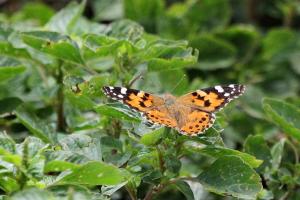
Butterflies were spotted but perhaps the one which got Sandi excited was a Painted Lady.
Painted Lady
Painted Lady
Seen while doing a bit of car birdwatching.
Car Birding – Hennie and Decklan Jordaan
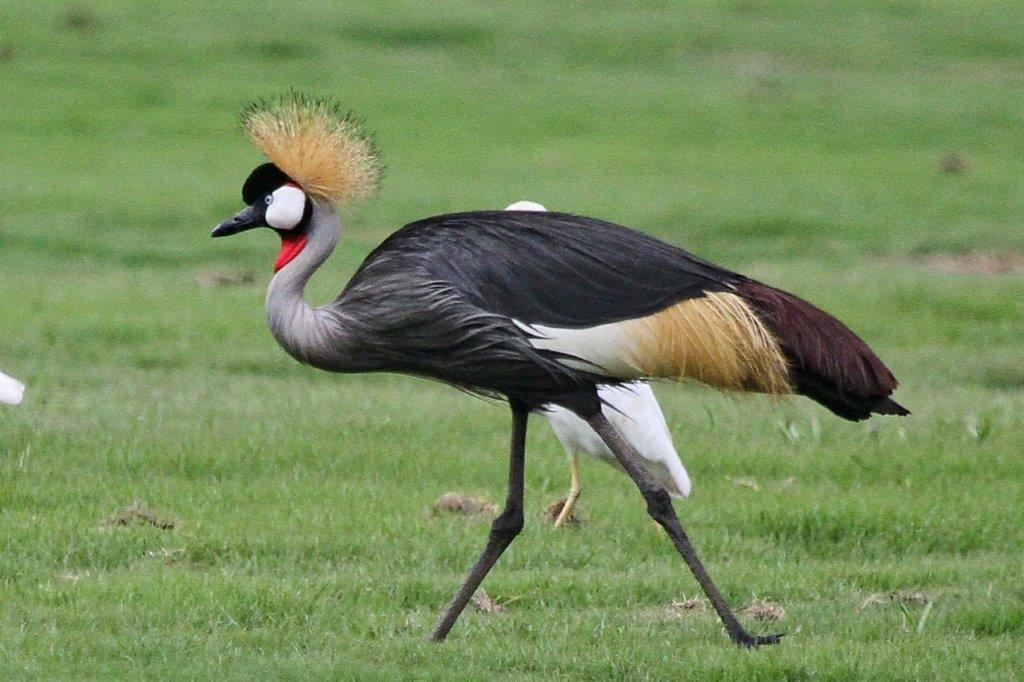
Although the Grey Crowned Cranes were not present in the open grassland when we arrived, one did appear on our return from our walk. Always lovely to see.
Grey-crowned Crane
Passing the rubbish tip next to the sewerage works a different Stork was spotted flying over by Hennie and Decklan. Into the rubbish tip we drove and there on top of one of the distant electricity pylons was a Marabou Stork.
Maribou Stork
Credits are shown on each photo unless taken by Paul Bartho.
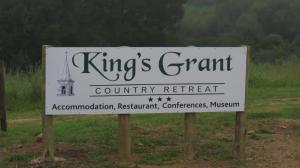
Sally and I went to Ixopo to King’s Grant Country Retreat on request to prepare a bird list for them.
King’s Grant
Entrance on a misty morning
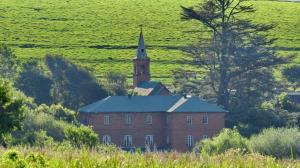
For over one hundred years King’s Grant was run by the resident Mariannhill Monks as the St Isidor Mission and Millworks. The estate also boasts a number of other historical sites such as the solitary Brickfield, Murchison House, the original homestead of Dick King’s daughter and a dam built by Italian prisoners of war. More on the history can be read on the following link: http://www.kingsgrant.co.za/KGhistory.html
Reception and Restaurant
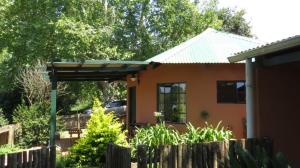
Self-catering Cottage
View of the Mill with the Chapel behind
St Isidore Chapel
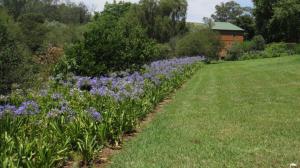
Gardens leading to the Mill
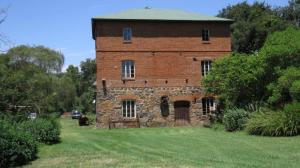
The Mill – still in working order
Chapel Stained Glass
King’s Grant is nestled in the valley of the St Isidore Estate and is surrounded by lush farmlands, dams, bushveld and wetlands.
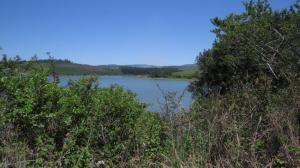
St. Isidore Dam
View of wetland area below dam wall.
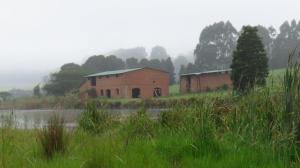
Wetlands looking across at the Brickfield Buildings dated 1891
Brickfield Buildings 1891 and Kiln.
King’s Grant is a BirdLife South Africa Birder-friendly establishment. Its current rates can be seen by clicking here. And members of BirdLife South Africa and its affiliated bird clubs are offered discount rates upon presentation of their membership cards. These discounts are only applicable on Friday, Saturday and Sunday nights and are 20% for one night, 25% for 2 nights and 30% for three nights.
Our birding over the weekend started midday Friday in glorious sunshine. The next morning we awoke to a very misty morning followed by thunderstorms in the afternoon and evening. Sunday morning was clear blue sky.
The farm fell into one pentad for our atlassing.
Pentad 3005_3005 Satellite Map
Most of our birding was done from our vehicle. There were several areas where we could have walked but birds were less nervous of vehicles. As this was a huge farm there were many habitats to investigate. Unfortunately we did not manage to visit the forest and cliff-face area.
In all we did manage to identify 102 bird species. Of which seven were new for the pentad: Amur Falcon; Goliath, Purple and Squacco Herons; Yellow-throated Longclaw; Red-backed Shrike and African Purple Swamphen. In all ADU has listed 202 bird species in the pentad excluding the seven new species we identified. Click here to see the potential bird list for the pentad and the birds we identified.
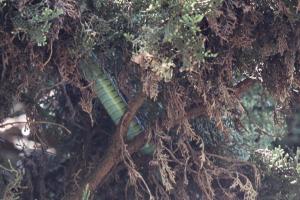
One of the first incidents we had on arrival occurred in a tree near reception. Birds were going crazy. On closer inspection we found out why – a large green snake.
Boomslang
Boomslang
Boomslang
Probably after whatever was in this almost unnoticeable nest.
Nest in Green Mamba tree.
Our next experience was equally exciting. A juvenile Red-chested Cuckoo being fed by a Cape Robin-Chat.
Red-chested Cuckoo – juvenile
Red-chested Cuckoo – juvenile – squeaking for food
Red-chested Cuckoo – juvenile – squeaking for food with foster parent
Red-chested Cuckoo being fed
Red-chested Cuckoo being fed
Red-chested Cuckoo wanting more
Sitting on the verandah of the cottage we watched an array of birds in the gardens below us – some actually rather close. Drakensberg Prinias, Southern Black Flycatchers, Fork-tailed Drongos and Amethyst Sunbirds in the Agapanthus below.
Red-chested Cuckoo – juvenile
Red-chested Cuckoo – juvenile
Red-chested Cuckoo – juvenile
Southern Boubou
Southern Black Tit
Southern Black Tit
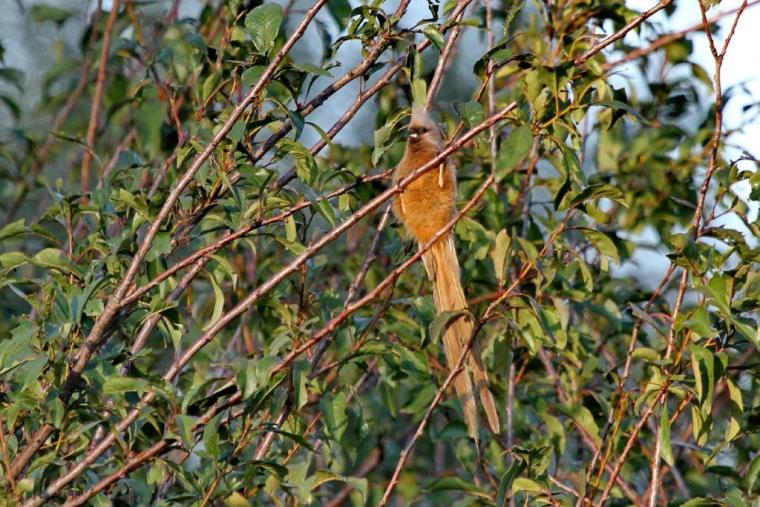
Speckled Mousebird
Three-banded Plover in the Garden pond
Female Greater Double-collared Sunbird
On a drive to Schreibers Dam and the Thornveld area we drove alongside fields of maize. On the other size was a large open wild grassland area teaming with Widowbirds – Fan-tailed, Red-collared and White-winged with their harems in tow. Southern Red Bishops and Common Waxbills were also present. Black-crowned Tchagras and Yellow-throated Longclaws were also calling. And in the distant gum trees a Black Sparrowhawk sat exposed.
White-winged Widowbird
White-winged Widowbird
White-winged Widowbird
Red-collared Widowbird
Black Sparrowhawk
The main Dam – Isidore – was very quiet. We found the most activity at Schreibers Dam. Common Moorhens; Little Grebes; Yellow-billed Ducks; Goliath, Purple and Squacco Herons; Red-billed Teals.
On another dam there were a pair of South African Shelducks.
South African Shelduck – male and female (white head)
Driving around we came across Grey Crowned Cranes on three separate occasions over the time there – probably three in all. A pair together and a single bird on Saturday and a pair together on Sunday. There were also numerous raptors seen – African Fish-Eagles; Yellow-billed Kites, Long-crested Eagles and many Steppe Buzzards.
Grey Crowned Cranes
Grey Crowned Crane
Grey Crowned Crane
Grey Crowned Cranes
Cape Sparrow – male
Cape Sparrow – male
African Harrier-Hawk
Long-crested Eagle
Steppe Buzzard in action
Steppe Buzzard in action
Rufous-naped Lark
Then on our last morning we found two more birds not previously recorded in the pentad. Ten Amur Falcons and a Red-backed Shrike.
Amur Falcon
Amur Falcon
Red-backed Shrike
Red-backed Shrike
Red-backed Shrike
Red-backed Shrike
And just a f final word. There used to be two pairs of Blue Swallows on the farm in the open grasslands above the Isidore Dam until quite recently.
It was a most enjoyable stay in a very attractive part of the Midlands.
On Friday 5th February, Sally and I made an impromptu decision to visit SAPPI over the weekend. We decided to take our off-road caravan to Salt Rock Caravan Park and camp there for two nights. The aim being to get up early and be at SAPPI at dawn each morning – the best time, we understood, to see the Crakes.
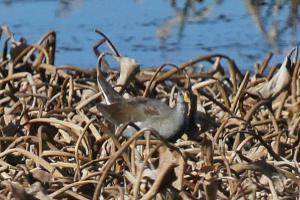
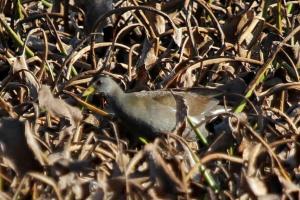
Saturday afternoon we did a recce to see what was about but the Crakes were not obliging. However spending some time in the hide we did spot a Lesser Moorhen rummaging on the treated hyacinth (which is receding thankfully).
Lesser Moorhen
Lesser Moorhen
Lesser Moorhen
Lesser Moorhen
From the hide we had a splendid array of waterbirds. In particular numerous White-backed Pelicans up to 17 at one stage.
View from the hide
White-backed Pelicans
White-backed Pelicans
Goliath Heron
Goliath Heron
White-backed Pelicans and Goliath Heron
Black-winged Stilt – juvenile
Black-winged Stilt – juvenile
Black-winged Stilt – adult
Red-billed Teal
Red-billed Teal
Red-billed Teal
White-backed Pelicans
White-backed Pelicans
White-backed Pelicans
Malachite Kingfisher
Malachite Kingfisher
Malachite Kingfisher
African Spoonbill
Black Crake
Black-headed Heron
Lesser Striped Swallow
There were several Yellow-billed Egrets and Great Egrets – the pictures show well the facial features helping with their ID. Note the gape does not extend behind the eye in the Yellow-billed Egret. Also interesting, was the colour of the Great Egret’s yellow bill with its black tip.
Great Egret
Great Egret
Great Egret
Yellow-billed Egret
Yellow-billed Egret blowing in the wind
Yellow-billed Egret blowing in the wind
The next morning we were there before 05h00 – still dark and dawn was approaching.
Dawn approaches.
Not long after that people started arriving.
With the melee of people watching out for the Crakes we took a walk round the other side through the picnic site.
Wetland
White-faced Ducks
Barn Swallow?
Brown-throated Martin
Cape Shoveler
Glossy Ibis
African Purple Swamphens
African Purple Swamphens
Common Ringed Plover
Common Ringed Plover
African Purple Swamphens
African Purple Swamphens
Little Bee-eater
During the course of the morning we spotted 2 separate pairs of Spotted Crakes. Surprisingly the Baillon’s Crakes were hardly seen but an African Rail made a very public display.
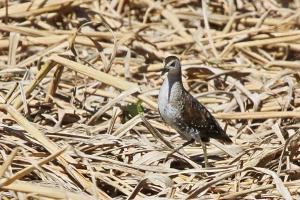
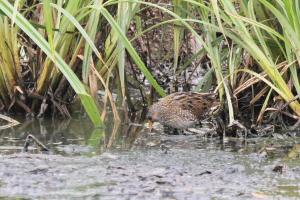
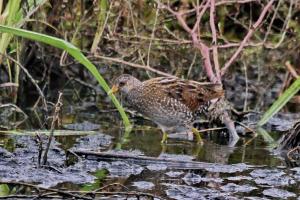
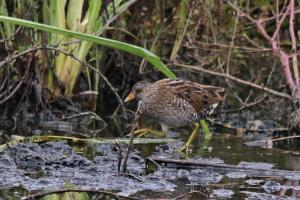
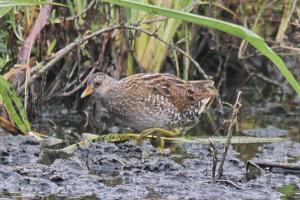
Spotted Crake
A pair of Spotted Crakes
Baillon’s Crake
Baillon’s Crake
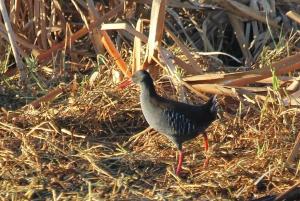
African Rail
African Rail
The Western Marsh Harrier was spotted but we dipped on that one. The Lesser Moorhen was again seen from the hide on the hyacinth. No sign of the White-winged Flufftail, Eurasian Bittern, Rufous-bellied Heron nor the Corn Crakes – not that we expected to be lucky enough to find any of these birds.
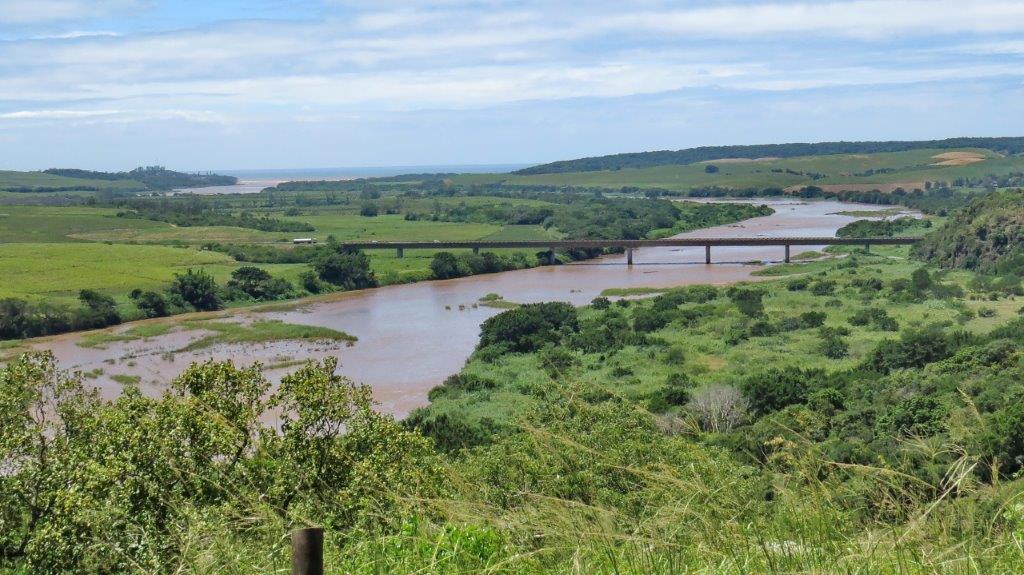
Sunday lunch was spent overlooking the Tugela in Harold Johnson NR. It was good to see the river so full. Apparently the rains were further inland about two weeks ago.
Tugela
Monday morning, we again arrived early at SAPPI and a few people turned up. A pair of Spotted Crakes made several appearances in the scrub but were difficult to see clearly. Baillon’s Crakes were absent. We did however see a Water Mongoose in front of the hide.
The garden at Gramarye farm at Boston in the KZN Midlands benefitted from recent good rains and provided a flurry of feathered activity before we set off for the river.
Birding from the Platform – Decklan Jordaan
Birders – Crystelle Wilson
Pin-tailed Whydah lorded it over the bird table, keeping sparrows and Village Weavers at bay.
Pin-tailed Whydah
Speckled Mousebird, African Dusky Flycatcher, Cape Robin-Chat, Olive Thrush, African Paradise-Flycatcher, Fork-tailed Drongo, Cape White-eye were among the resident birds at their regular hangouts.
Greater Striped Swallows
The Fan-tailed Widowbirds, Southern Red Bishops, Levaillant’s Cisticolas and African Stonechat were noisily busy in the vegetation along the path.
Levaillant’s Cisticola
Then the call went out to check out a Red-collared Widow perched on tall grass. Instead of a red collar, it had a yellow collar, a rare occurrence.
Red-collared Widowbird – bright yellow morph – Crystelle Wilson
Red-collared Widowbird – bright yellow morph
Red-collared Widowbird – bright yellow morph
Red-collared Widowbird – bright yellow morph
Dave Rimmer explained: “This colour anomaly is called Xanthochromism which presents as red pigment being replaced with yellow pigment. It is exactly the same genetic mutation that gives rise to the yellow forms of the Crimson-breasted Shrike or the Black-collared Barbet.”
The Little Rush and African Reed Warblers were very busy and gave good displays.
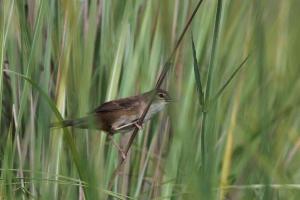
Lesser Swamp Warbler
Lesser Swamp Warbler
Little Rush-Warbler
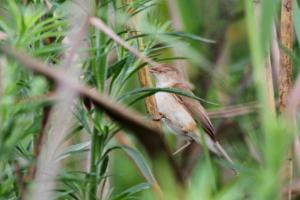
African Reed Warbler
From the height of the platform we had excellent views over the grasslands. Noticing Cape Weavers, Fan-tailed Widowbirds, and a Yellow-crowned Bishop.
Cape Weaver
Fan-tailed Widowbird – Decklan Jordaan
Yellow-crowned Bishop
Yellow-crowned Bishop in flight
Decklan Jordaan built on his reputation as an owl spotter by pointing out a Spotted Eagle-Owl very well hidden behind branches in a willow tree along the river and then spotted a Barn Owl just further along.
Spotted Eagle-Owl
Spotted Eagle-Owl – Crystelle Wilson
A number of other birds were spotted on the walk through the grasslands.
Dark-capped Yellow-Warbler
Dark-capped Yellow-Warbler
Diderick’s Cuckoo
Red-billed Quelea – with yellow bill
There were much by way of plants and other creatures to intrigue people.
African Monarch
Rainforest Brown
Navy Dropwing – Hennie Jordan
Yellowjack -Hennie Jordaan
On the way back the resident pair of Grey Crowned Cranes was seen, but sadly with only one chick. On Friday evening I photographed the family with three chicks. On Monday morning I could confirm that there was only one chick remaining with the parents.
Grey-crowned Cranes with one chick (only just visible between parents)
Grey-crowned Cranes with one chick (only just visible between parents)
Grey-crowned Crane on the lookout.
Once again we finished off the morning with a walk in the forest at Boschberg Cottages. On the way there were about three White Storks in one of the pastures.
White Stork – Decklan Jordaan.
Bush Blackcap was one of the highlights, while Cape Batis, Bar-throated Apalis, Sombre Greenbul and Terrestrial Brownbul also put in appearances as well as White-starred Robin-Chat and Purple-crested and Knysna Turacos.
Bush Blackcap – Crystelle Wilson
Bush Blackcap
Bush Blackcap
Cape Batis – Crystelle Wilson
Bar-throated Apalis – Crystelle Wilson
My SABAP2 atlas list for pentad 2935_3000 had close to 80 species for the day.
Crystelle Wilson
Photos care of: Crystelle Wilson, Hennie and Decklan Jordaan, and the unacknowledged above by Paul Bartho
Sally and I were invited to visit Bird Valley Estate to assess its birding potential.
Wetland paradise.
Bird Valley Estate is at Satellite Dam just north of Albert Falls in the Midlands, KZN. Satellite Dam is about 1.5 kms in length and on average about 250 metres wide. Most of this is wetlands. There is no habitation on the catchment area .
Bird Valley Estate is nestled in a SAPPI forest. It is a small residential area with 30 large plots around the water’s edge – some with water- skiing rights. So far only 10 plots have been developed.
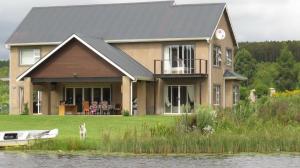
Lakeside Property
Private Hide
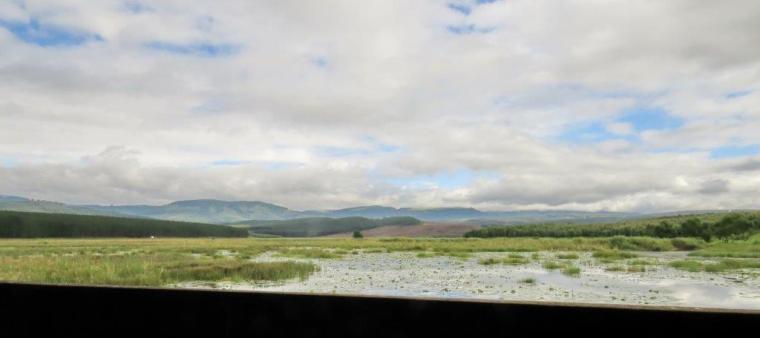
The estate is surrounded by pine forest. The habitat on the estate includes predominantly grasslands and wetlands. The wetlands are no ordinary wetlands – they are huge. The channel through the wetlands is 7 kilometers from one end to the other.
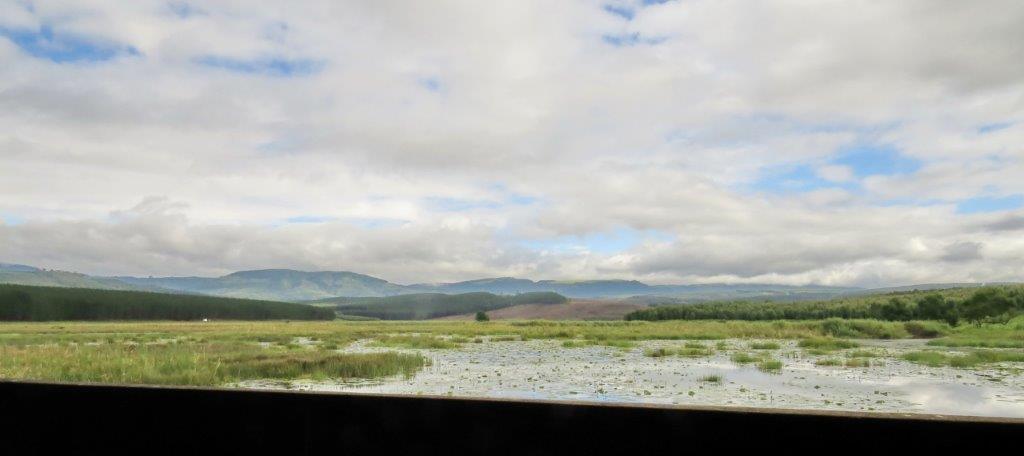
View from the bird hide showing the extent of the wetland area – to the base of the hills in the distance.
There are about 8 level grassy campsites with decent ablutions. Cost per night – R60 per person. Unfortunately no cabins or cottages (though that type of accommodation can be found 7 kms away).
2 level grassy campsites either side of the ablution block
2 Large level grassy sites either side of the community lounge building
2 shady campsites on the other side of the communal building.
Arriving at 06h30, we were met by our host Richard Alcock. We were taken for a ride to the dam wall where we could see into the grasslands below. Then to the bird hide overlooking the extensive wetland area.
Extensive Wetland area
Wetland from the hide
Wetland from the hide
Wetland view showing one of the channels on the right.
And finally on a flat-bottomed boat along the waterways through the wetland area. Most of our time was spent on the water going through the channel so most of our birding was focused on water birds.
In all we identified 60 different species while there. To see our list click here. Many of the birds were in breeding pairs. The Bird Valley Estate’s Bird List is now 115 different bird species (Click here to see their list) and ADU records 219 bird species in the pentad 2920_3025. The ADU bird list can be seen by clicking here.
Some of the specials we saw included: At least 3 pairs of African Pygmy-Geese; White-backed Ducks; African Rail; African Black Ducks; African Marsh-Harrier; numerous Red-backed Mannikins; African Purple Swamphen; Little Bittern and 3 Grey Crowned Cranes.
Grey-crowned Cranes
Grey-crowned Cranes in flight synchronisation
Grey-crowned Cranes in flight synchronisation
Grey-crowned Cranes in flight synchronisation
Grey-crowned Cranes in flight synchronisation
Grey-crowned Cranes
African Pygmy-Goose – male
African Pygmy-Goose – male
African Pygmy-Goose – female
White-backed Duck
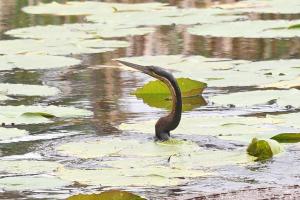
African Darter
African Darter
Black Crake
Black Crake
African Fish-Eagle
Southern Red Bishop
Common Moorhen
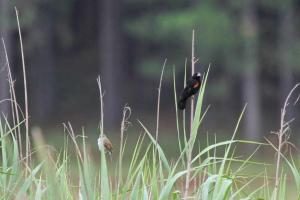
Fan-tailed Widowbird and mystery Warbler
African Purple Swamphen.
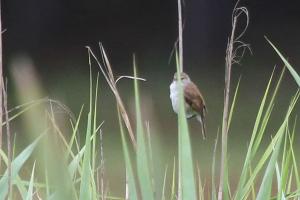
The mystery bird – any ideas?
Mystery bird
Mystery bird
This is a special place to visit and I am sure if we spent more time there we would have come away with an impressive bird list.
As this land is privately owned permission is required before any visit is made. Birders interested in visiting are asked to contact Richard Alcock: 082 903 5187. See their website: http://www.birdvalleyestate.co.za.
Paul and Sally Bartho
View from the bird hide showing the extent of the wetland area – to the base of the hills in the distance.
Sally and I took the opportunity to visit SAPPI again on Saturday 16 January. It was the day of the Dolphin Coast AGM held in the picnic area so there were many people about.
Overnight rains had raised the level of the water moving the mud banks further into the reeds – so the Crakes were difficult to see clearly.
However we were not disappointed. The Spotted Crake was seen several times preening itself low down in the tall reeds.
Spotted Crake
Spotted Crake
The Baillon’s Crakes popped up all around and gave excellent views.
Baillon’s Crake
Baillon’s Crake
Baillon’s Crake
Baillon’s Crake
Baillon’s Crake
The Blake Crakes were mainly heard and rarely seen. Similarly the African Rails.
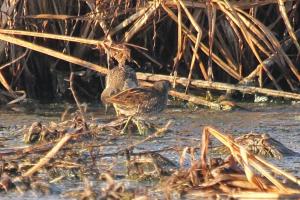
Someone saw a Greater Painted Snipe in the same area and another person spotted a pair of Corn Crakes on the drive out.
It was not a great day for photography but here are just a few of the photos taken.
Greater Flamingo – juvenile
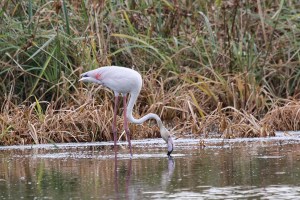
Greater Flamingo
Osprey
African Harrier Hawk
African Fish-Eagle – juvenile
Brown-throated Weaver
Sally and I also spent three lunchtimes at low tide outside Wilson’s Wharf looking for the Franklin’s Gull with no success.
Pink-backed Pelican – from Wilson’s WharfAfrican Fish-Eagle – juvenile at SAPPI
Sally and I set out this morning at 04h45 to try and find the Spotted Crake in at SAPPI, Stanger.
The weather forecast was for heavy rain in Stanger – we were well prepared. Driving down Fields Hill – drizzle; then heavy drizzle as we went through Durban and up to the tolls. However when we got to SAPPI it was overcast but dry – and it stayed that way all morning.
On arrival we headed for the hide. Fortunately other birders had got there first and locked the gate behind them so we could not get in. Instead we headed down the road towards the picnic site. There we met Nicolette and Ticky Forbes sitting quietly waiting for the Striped Crake to re-appear. They had seen it 5 minutes before we arrived.
I returned to the car and fetched our chairs to join them. We sat for some time with no sign of the Crake. However many different birds made an appearance keeping our eyes alert.
More people arrived . We waited. Then after a while some of us trundled down the road to see if we could get a better view. Suddenly out popped a Baillon’s Crake – close by. Big excitement – a special bird. As the morning went on the Baillon’s Crake kept making an appearance. I was told that 4 were seen together yesterday.
Baillon’s Crake with Lapsmith
Baillon’s Crake with Lapsmith
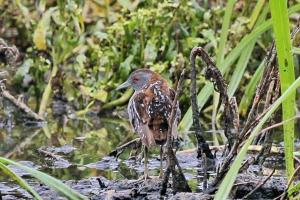
Baillon’s Crake
Baillon’s Crake
Baillon’s Crake
After an hour the Spotted Crake was seen and showed itself well – a lifer for many of us.
Spotted Crake
Spotted Crake
Spotted Crake
Spotted Crake
Spotted Crake
Spotted Crake
Spotted Crake
At times both Crakes were seen together.
Spotted and Baillon’s Crakes together.
Nicolette told us that the Spotted Crake is quite wary of movement and it is best to sit quietly and wait. I think she is right because after our first view of the Crake, with people moving about for a better view, it disappeared for a long time and was only seen briefly once later on.
We then had some more excitement with a small wader which looked unusual. At first it was believed to be a Curlew Sandpiper based on its down curved bill. But questions arose because it did not appear to have an eye-brow and had an unusually plain back for a Curlew Sandpiper. It was on its own and liked to forage away from the mud into the reeds – also unusual. We waited and took numerous photos just in case. Could it possibly crown the day by being a Dunlin. No. It flew and we noticed it’s white not dark central rump – it was as we first suspected a Curlew Sandpiper.
Curlew Sandpiper
Curlew Sandpiper
Curlew Sandpiper
Around us we saw Goliath Herons; Black-crowned Night-Herons; Greater Flamingos and their young amongst the many other typical species usually seen at SAPPI.
Greater Flamingos
Greater Flamingo – juvenile
Goliath Heron
Goliath Heron
African Jacana
White-faced Duck – looking rather brown-faced.
Black-crowned Night-Herons
Black-crowned Night-Heron
Black-crowned Night-Herons
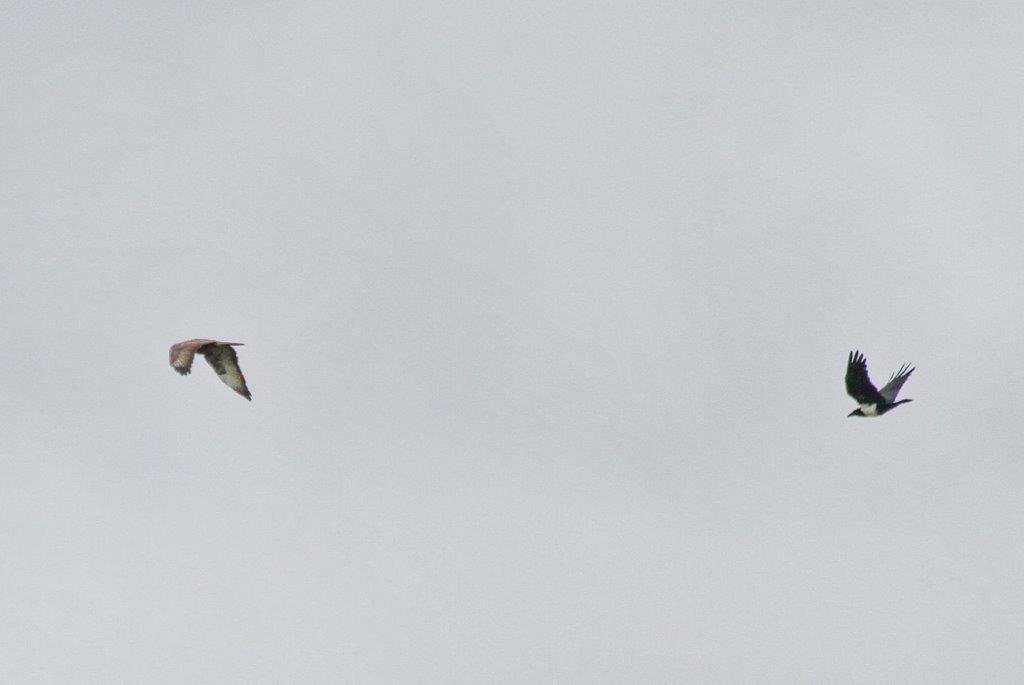
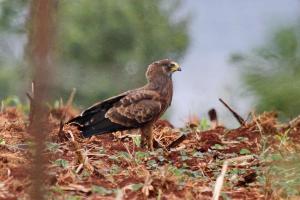
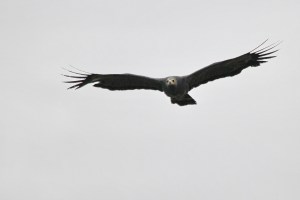
Then as we were leaving we observed 3 raptors circling high above us. One was a Yellow-billed Kite, another raptor was of similar size with a rounded tail and they were bombing a larger bird below which I think may be a Palm-Nut vulture but the photos are rather poor.





























































































































 Birds are our Story