Tala Game Reserve is located in Eston between Durban and Pietermaritzburg.
Directions: Follow the N3 from Durban and exit at Camperdown – exit 57. Turn left at the end of the off-ramp and continue to the T-junction. Turn left and continue for about 20 kms to the entrance of the reserve on the left.
There is an entrance fee of R80 per vehicle and R70 per person. However I have negotiated with the General Manager – Mike – for BirdLife Port Natal members to enter at a cost of R80 per vehicle. The driver must produce their BLPN Membership card. Any passenger who is not a BLPN member will pay R70. Note: no cash will be taken – only cards.
Recently seen on the Reserve: a pair of Blue Cranes and juvenile. Both of the other Cranes – Grey Crowned and Wattled – have also been seen there recently.
Our visit was primarily to show my American relatives the animals in the Reserve. However we did manage to do some birding.
Even before we entered there were many Ostriches to be seen on the hillsides and round the dam.
Ostrich
Ostrich
Our first surprise occurred just after the entrance – on the left by the water’s edge. An African Openbill.
African Openbill
African Openbill
Also in close proximity were numerous Black-winged Lapwings in the shade.
Black-winged Lapwing
Black-winged Lapwing
Black-winged Lapwing
At the water’s edge we observed many Egyptian Geese with several South African Shelduck and Cape Shovelers among them. There were also Red-knobbed Coots; Little Egret; Greenshank and a Wood Sandpiper.
Common Greenshankk
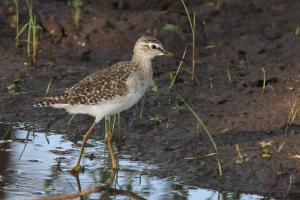
Wood Sandpiper
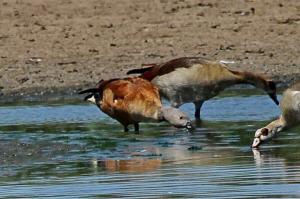
South African Shelduck – female
South African Shelduck – female and Egyptian Goose behind
Cape Shoveler
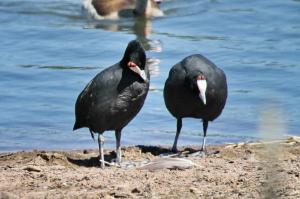
Red-knobbed Coot
Red-knobbed Coot among friends
Red-knobbed Coots
Looking across the water to the hide there were many other waterbirds: Grey and Black-headed Herons; Cattle Egrets; African Spoonbills; Reed and White-breasted Cormorants; more South African Shelduck and lots more Egyptian Geese.
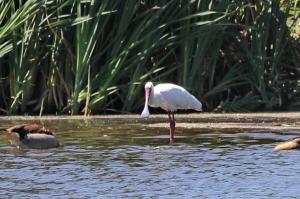
African Spoonbill
African Spoonbills
A pair of South African Shelducks – male and female.
South African Shelduck – male
Black-headed Heron
Black-headed Heron – juvenile
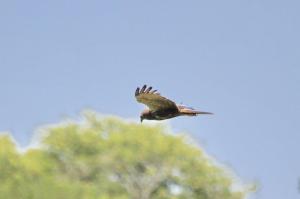
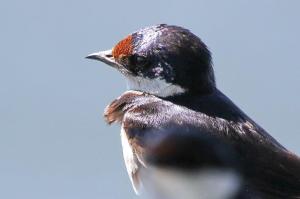
Flying overhead at the hide was an African Marsh Harrier while a family of White-throated Swallows shared unperturbed our enjoyment in the hide.
African Marsh Harrier
African Marsh Harrier
White-throated Swallow family
White-throated Swallow family
White-throated Swallow
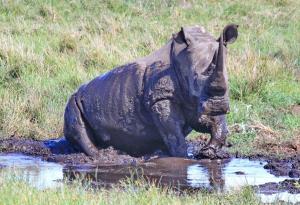
Driving around we came across a small pond with 4 White Rhinos enjoying a rest in the mud and behind them on the far bank was a solitary Southern Bald Ibis.
Southern Bald Ibis
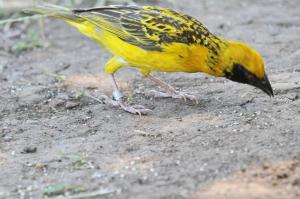
Then in the picnic site sharing a few crumbs were Village Weavers; a lone Red-billed Quelea with a yellow bill; a Southern Red Bishop and a Southern Grey-headed Sparrow.
Red-billed Quelea – with yellow bill
Red-billed Quelea – with yellow bill
Village Weaver- ringed
And on the way out a lone juvenile Barn Swallow with interesting flight feather colouring.
Barn Swallow – juvenile
Barn Swallow – juvenile
In all we identified 55 different species. Click here to view our list.
This is an excellent place to photograph waterbirds. Good for a photographic outing.
This was intended as a family gathering but the location is spectacular and the birding was good so I thought to share the experience with readers of this blog.
Injisuthi is located in the Drakensberg Giant’s Castle Reserve (E29.07.140; S29.26.441). Directions: Follow the N3 from Durban. Take exit 179 to Loskop. After 20 kms turn left at the brown sign for Injisuthi. The camp is a further 30 kms along this quite variable road. The main issue is potholes and it can be narrow in places – mostly tar.
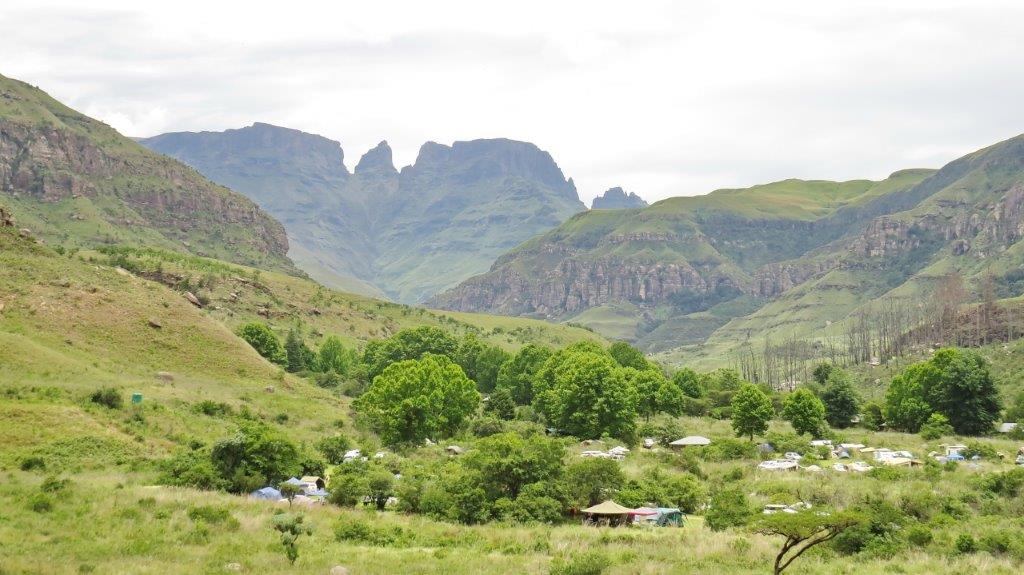
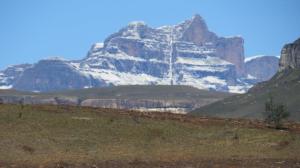
The scenery gets more spectacular as you approach the camp.
Injisuthi peaks- Cathkin, Monk’s Cowl and Champagne Castle.
Injisuthi peaks- Cathkin, Monk’s Cowl and Champagne Castle.
Monk’s Cowl
Scenery from the camp.
There are 16 four bed (2 bedroomed) cottages; one 8 bed cottage in grassy and shady grounds. There is also a large grassy campsite with 3 two bed Safari tents.
Cottages in the camp
Cottages in the camp
Cottages in the camp
Cottages in the camp
For prices and booking visit: http://www.kznwildlife.com/accommodation-rates-in-injisuthi.html.
The camp has numerous walks some quite daunting. The habitat is typical of the Drakensberg: riverine, pools, wetlands, rocky slopes, grassland, forests and mountains.
Rock Pools
Power is only available in the cottages at certain times: 08h00 to 10h00 and 18h00 to 22h00. There is no power in the campsites.
The campsites are grassy; slightly slopey with some shade here and there. Costs R90 per person per night – no discounts which I find surprising. There are 2 ablution blocks – which I would imagine to be inadequate when the camp is full.
An extensive camp site before the well treed cottage area.
Whilst my brother-in-law and my two sisters went for long walks, Sally and I stayed round the camp enjoying the birding. We did take a testing walk to the Yellowwood Forest.
Yellowwood Forest
Yellowwood Forest
Yellowwood Forest
We found a Dusky Flycatcher’s nest with 3 babies.
Dusky Flycatcher babies
Dusky Flycatcher babies
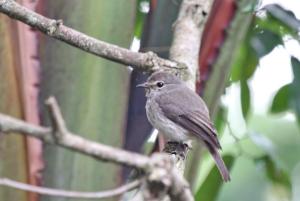
Dusky Flycatcher
Red-chested and Black Cuckoos were calling all the time – with an occasional Klaas’s and Diderick’s joining in.
Black Cuckoo
Black Cuckoo
Klaas’s Cuckoo
Outside one of the cottages was a Red-chested Cuckoo juvenile squeaking for its Cape Wagtail foster parent to feed it. I was lucky to see it catch a caterpillar perhaps for the first time feeding itself.
Under the eves of another cottage there was a Rock Martin’s nest – we saw a parent fly out.
Rock Martin nest
The walk to the Yellowwood Forest was worth it despite the steepness and rocky nature of the path. It did, however, put pressure on Sally’s knees following her double knee replacement 6 weeks earlier. The forest is not too extensive but between us we spotted White-starred Robin, a pair of Bush Blackcaps, Cape Rock-Thrushes and a family of Cape Batises.
Cape Rock-Thrush
Cape Rock-Thrush
Cape Batis – juvenile
Cape Batis – juvenile
Bush Blackcap
The grassland beside the camp gave us good sightings of Southern Red Bishops; Lazy, Levaillant’s and Wailing Cisticolas; African Firefinch; an adult Black Flycatcher feeding its young; Cape Grassbirds nesting; Neddicky; African Stonechat; Red-collared Widowbirds; Malachite Sunbirds; Swee Waxbill; Spectacled Weavers nesting in the trees beside the grassland area and a Dark-capped Yellow Warbler.
Lazy Cisticola
Cape Weaver
Dark-capped Yellow Warbler
Southern Black Flycatcher feeding young
Black-shouldered Kite
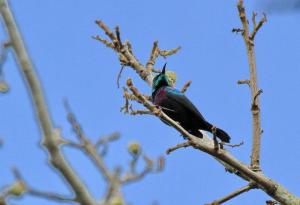
Malachite Sunbird
Greater Double-collared Sunbird
Mystery
Swee Waxbill
Neddicky
Neddicky
Neddicky
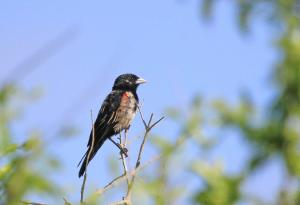
Red-collared Widowbird
Cape Grassbird
Cape Grassbird
African Stonechat
Olive Sunbird
Monkey Business – Baboon style
At a bridge we saw up to 4 African Olive Pigeons.
African Olive Pigeon
African Olive Pigeons
In all we identified 53 different species. Click here to see the list.
This is possibly a good venue for a weekend away – only 2.5 to 3 hours from Durban.
Paul and Sally Bartho
In case you missed it – Click here to read the report on the African Skimmer at Kosi Bay.
This was meant to be a family holiday at Kosi Bay and Umfolozi showing special areas to my sister and her husband from Montana – not a birding adventure.
Doug and Tania went up early with by RSA sister and husband and another couple. Sally and I followed 3 days later. Sally and I decided to break the journey with an overnight stop in Mkuze. We spent part of the afternoon and early the next morning driving around Mkuze.
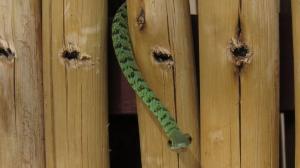
There is now a new enclosed area from the car park to the kuMasinga Hide (the picnic area remains for the more adventurous or foolhardy). Lions have frequently been seen in the area. This green snake was seen in the fencing next to the entrance gate.
Spotted Bush Snake
Spotted Bush Snake
The kuMahlahla hide also has a new entrance tunnel and surprisingly there was a lot of water in front of the hide.
KuMahlahla Hide
Fig trees
The kwaMalibala hide near the campsite remains incomplete. Nsumo pan was not at its fullest.
The weather was quite windy and the birds evasive.
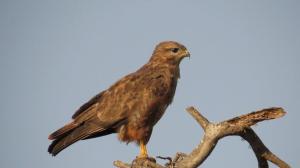
Steppe Buzzard
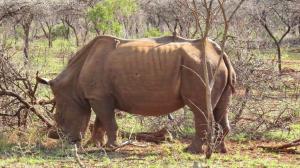
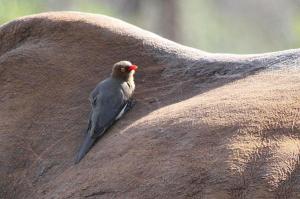
White Rhino with Red-billed Oxpecker
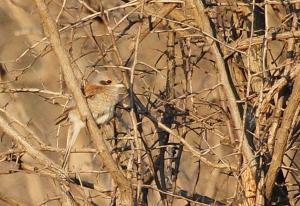
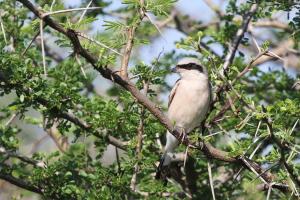
Female Red-backed Shrike
Common Sandpiper
Common Sandpiper
Red-eyed Dove
Steppe Buzzard
Red-backed Shrike – male
Red-billed Oxpecker
Red-billed Oxpecker
Brown-hooded Kingfisher
The next morning we continued to Kosi Bay.
We were staying at the TEBA lodge right at the river mouth past the day visitors parking area. We were fortunate to stay there as it is reserved for Chamber of Mines employees.
Fallen Tree in front of TEBA Lodge
The tree is still alive!
After a windy stormy first night
The Storm approaches
Getting closer
we got up and noticed many terns on the sandbank some 300 metres in front of the lodge. It was still quite windy and the tide was rising. That was the 17th December.
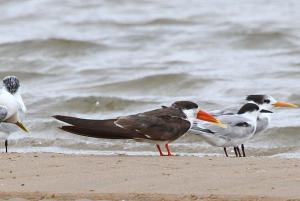
With the scope I noticed an unusual bird amongst them and my immediate thought was African Skimmer but I felt I must be wrong so I called to Sally to run and have a look – not a clever thing to say to her just a month after a double knee replacement. Anyway she hurried over took one look and confirmed my thoughts.
The initial photos were quite ropey in those conditions with the bird so far away but it was enough for an ID. Not expecting a second chance they had to do.
African Skimmer – fully zoomed in
African Skimmer – fully zoomed in
As the tide rose and the day visitors arrived so the terns flew into the centre of the mouth on a distant sandbank. Later as the tide receded I took a chance and waded out to the sandbank – camera and binocs held above my head in places. Eventually on the sandbank with the terns I searched for the Skimmer – and there it was.
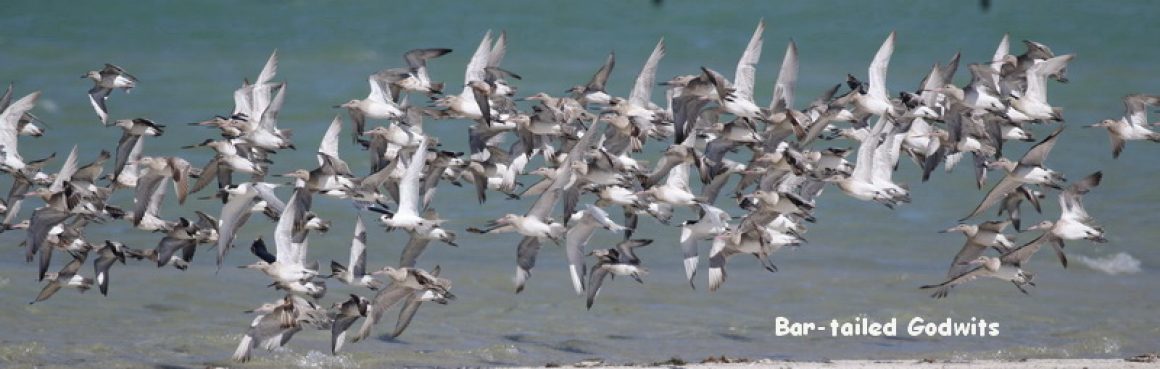
As I approached so I started taking shots. I managed to get up to 50 metres from the terns and the African Skimmer was still among them. Also on the sandbank were numerous waders – Sanderlings, Grey, Kittlitz’s and White-fronted Plovers and a lone Bar-tailed Godwit. The terns included Swift, Sandwich, Common, Little, Lesser Crested and Caspian – a nice variety.
White-fronted Plover
Caspian Tern
Sanderlings
Swift, Sandwich, Lesser Crested and Common Terns
Swift, Lesser Crested and Common Terns
Swift, Lesser Crested and Common Terns
Swift, Sandwich, Lesser Crested, Little and Common Terns
Swift, Sandwich, Lesser Crested and Common Terns
Bar-tailed Godwit
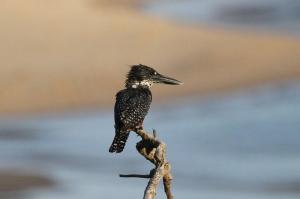
Female Giant Kingfisher
Purple Heron
African Fish-Eagle
Common Sandpiper
Pied Kingfisher
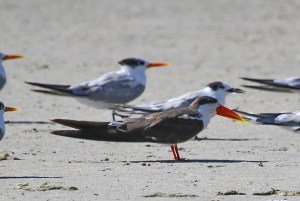
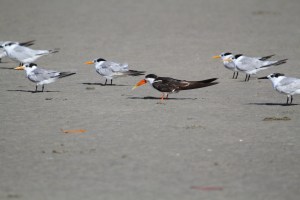
African Skimmer among Terns
African Skimmer
African Skimmer
African Skimmer
African Skimmer
African Skimmer – in flight
African Skimmer – in flight
The next day the weather was calm and hot and the terns did not return to the river mouth. We thought they had gone.
On a short walk in the pristine forest we managed to see and hear a number of forest birds and other critters.
False Dotted Border
Collared Sunbird nest
Purple-banded Sunbird
Purple-banded Sunbird
Grey Sunbird
Brown Scrub-Robin
As an aside my sister’s husband – Doug – from Montana went for an afternoon stroll along the beach towards Mozambique. Over an hour later he returned and mentioned in passing that he had seen a large Turtle going up the beach! We were taken aback by his casualness to such a great sighting. He had no idea how privileged he was to see such a creature in broad daylight. When we retraced his steps the Turtle had long gone. All we got was a photo of the tracks it left behind. Can anyone ID which Turtle it was from this photo?
Turtle tracks
Then on the 19th Sally and I took a short drive round to a lookout point over the fish trap area and spotted a tern roost in the far distance but could hardly ID any of the birds even through the scope.
Fish Trap area on way to mouth
Distant sandbank with Tern roost
So later that day as the tide was receding I took a long walk from the lodge round the headland to the fish trap area, trundling more than half way to the entrance of the first lake – passing through a deep fast moving trench in the process.
On way to the tern roost from one sandbank to the next
At the roost
As I was approaching so the terns were flying overhead and out to sea. I thought I was too late. However many remained and the African Skimmer was still amongst them. I managed to get reasonably close for several more photos.
I believe they roost at the mouth on southerly windy days and in the fish trap area when it is calm. The African Skimmer was content among the terns and not being chased away.
Many different waders were about including Bar-tailed Godwit; Greater Flamingos; Grey, Common Ringed, Kittlitz’s and White-fronted Plovers; Curlew and Common Sandpipers; Grey-headed Gulls; Ruddy Turnstones; Greenshanks; White-breasted and Reed Cormorants; Sanderlings apart from the 6 different terns – Caspian, Lesser Crested, Swift, Sandwich, Common and Little.
Fish Trap area with Greater Flamingos in the background
Fish Trap area with Greater Flamingos in the background
White-fronted Plover
Ruddy Turnstone and Common Ringed Plover
Common Ringed Plover
Common Greenshank
Common Greenshank
Bar-tailed Godwit
Ruddy Turnstone
Caspian Tern
Common Greenshank
Sanderlings
African Skimmer
African Skimmer
African Skimmer
African Skimmer
African Skimmer
African Skimmer
African Skimmer
African Skimmer
Apart from the seabirds we had two special sightings of Palm-Nut Vultures. An adult circled overhead and came down right next to a friend to retrieve a morsel nearby. Later a juvenile visited the lodge landing in a tree not 10 metres from where we were sitting.
Adult Palm-Nut Vulture
Adult Palm-Nut Vulture
Adult Palm-Nut Vulture
Adult Palm-Nut Vulture
Juvenile Palm-Nut Vulture
Juvenile Palm-Nut Vulture
In all we recorded 52 different species without making any real effort to walk through the pristine forest. To see the list click here.
The road from the gate to the Day Visitors parking area is about 3 to 4 kms. It requires a 4×4 vehicle – or you can hike down (don’t fancy the walk back!). Alternatively the Lodge right before the entry gate may be an alternative to try for transport if you don’t have a 4×4.
African Skimmer – in flight
From here our family went to Umfolozi tented camp for 2 nights. We entered at the Hluhluwe gate and drove through the park to Mpila camp on a comfortably cool day.
As we approached the gate and before entering the park we spotted an elephant strolling along a road inside. Then within the first kilometre we saw a pack of 4 lions sheltering in the deep shade of a bush right beside the road. A herd of Buffalo and 2 White Rhinos amongst them were on the hillside behind. A fantastic start for our family from Montana.
African Elephant
And beside us we had a view of this beautiful bird and a sweet young Zebra.
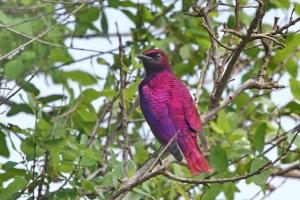
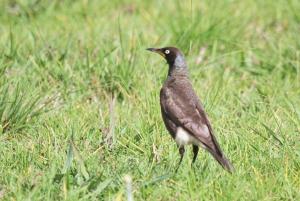
Violet-backed Starling
Violet-backed Starling
Young Zebra and mother
Further along at a viewsite overlooking the Hluhluwe river there was a large herd of elephants with Buffalo and White Rhinos amongst them.
Elephants, Buffalo and White rhinos (in the water at the far end). More elephants with their young were beneath us.
The focus on the time there was on mammals. However we did get a chance to take a few photos of some birds.
Steppe Buzzard
White Stork
Red-winged Starlings
Red-winged Starling
Steppe Buzzard
Woodland Kingfisher
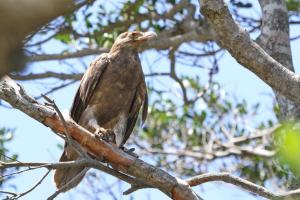
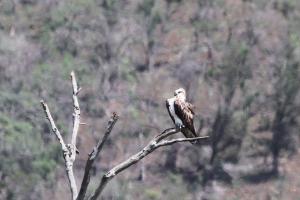
And then there is this bird. We debated its ID. The first impression was that it was a Kite sized bird with white undersides to its head and a black line passing through its eye – suggesting Osprey. However we thought it was an odd bird to see in the bush. We then considered juvenile Martial Eagle – but its shape and size seemed wrong. What do you think?
Osprey or Martial Eagle?
Osprey or Martial Eagle?
The second day there was quite uncomfortable except for the air conditioning in the car. It was registering 44 degrees on the car temperature gauge!
Mfafa hide has a new entrance tunnel from the car park – otherwise quiet except for the Mocking Cliff-Chats.
The Bejane hide was also quiet – perhaps we were too early. Its entrance had also been newly refurbished.
But the most pleasant surprise was that the tar road from Hluhluwe camp right through to Mpila had been repaved! No Potholes!
In the course of the second day we came across a Hyena which popped out as we neared the camp and a pair of mating Lions near the Umfolozi gate.
Lion resting
Lion and Lioness doing their thing.
Lion and Lioness recuperating
Hyena
Leguaan
On the way home we decided to pop in to St. Lucia for a short visit. It was a cool overcast morning. Stopping to chat with one of the game viewing vehicles in Umfolozi we learn that Wild Dogs, a Leopard and the mating Lions had all been spotted along the way to the gate. Unfortunately we were unable to locate any – rats.
And on to St. Lucia to see the Hippos and Crocodiles. Readily visible both at the bridge in to St. Lucia and at the mouth.
Walking along the boardwalk to the sea a snake was spotted. Black end to its tail is all I managed to photograph.
Snake under the board walk.
A few birds were photographed in the car park area next to the board walk.
Rufous-naped Lark
Yellow Weaver
White-eared Barbet with food for its young at their nesting site.
White-eared Barbet with food for its young at their nesting site.
Grey-headed Gulls including a juvenile (I think) showing brown smudges on its neck and wings.
And to finish a repeat of the bird that we least expected to see – An African Skimmer.
On the spur of the moment Sally and I went to stay in a cottage at Glengarry in the Kamberg area – taking advantage of “stay three nights and get the fourth free” which was available at the time.
The weather certainly was very changeable. We had a taste of all four seasons in our time there. On arrival the temperature was over 30 degrees Centigrade with a warm breeze. The next two days were windy and cold (between 10 C and 16 C) and snow appeared on the higher mountains and frost on the ground in front of the cottages. Then the next two days were a pleasant 20 C.
The location is quite central for the birding we wanted to do. Up the road to Highmoor, close-by to Kamberg in the Maloti Drakensberg Park and a short drive to the Crane Sanctuary on the way to Giant’s Castle. We did get another treat – but more about that later.
Glengarry cottages overlook several wetland areas, the river with the mountains as a backdrop – hard to beat as a view to wake up with every morning. There are also several areas for camping.
View from the cottage towards the mountains
View from the cottage towards the mountains – note the snow.
View of the snowy mountains from our cottage
Backdrop of the Little Berg
View from the cottages
View from the lower campsite back to the cottages
View from the lower campsite back to the cottages – note the river
Cottages
Large wetland area
From a wetland area to the cottages
From a wetland area to the cottages
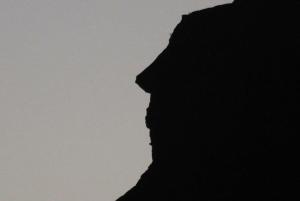
A silhouette of the side of the mountain showing a face much like that of Alfred Hitchcock
In the gloom of late afternoon we had our first treat – an Alpine Swift flying over the wetland in front of the cottage.
Alpine Swift
Alpine Swift
The first full day there we headed up to Highmoor – a slow drive to see what we could find. The snow could be clearly seen on the higher mountains in the distance.
Highmoor entrance
Views on the way up
Views on the way up
Views on the way up
Views on the way up
Views on the way up
Snow on the Berg
Snow on the Berg
On a couple of occasions we actually ventured out of the car despite the cold and biting wind. On one of these occasions we thought we heard the call of the Drakensberg Rockjumper.
At another stop we got out bravely to see Malachite Sunbirds among non-blooming Leonotis. And further up the valley we found Buff-streaked Chats and a Ground Woodpecker and Cape Rock-Thrush.
Malachite Sunbird
Malachite Sunbird
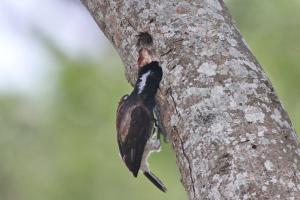
Ground Woodpecker
Ground Woodpecker
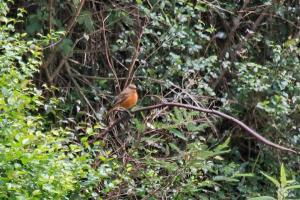
Cape Rock-Thrush – female
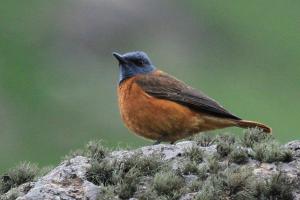
Cape Rock-Thrush – male
Long-tailed Widowbird
Cape Canary
African Stonechat
African Stonechat
Buff-streaked Chats
And in Highmoor on our last day we walked to the first dam and saw and heard Blue Cranes flying in the distance. There were several Jackal Buzzards overhead otherwise the birding was quite quiet. There was a mystery raptor but the photos below are pretty poor.
Sally waiting patiently as I took a hike round the dam
View down to the dam wall
Mountain Reedbuck
Jackal Buzzard
Jackal Buzzard
Jackal Buzzard
African Stonechat – female
Levaillant’s Cisticola
Mystery Raptor
Mystery Raptor
Our second full day we headed for Kamberg Nature Reserve. Again the weather was bitterly cold but the sky clear and snow on the mountains.
Kamberg Entrance
Snowy Mountains
Snowy Mountains
Snowy Mountains
Snowy Mountains
Snowy Mountains
The Kamberg – or comb
The Kamberg – or comb
A pair of Grey-crowned Cranes made an appearance on the way to the Kamberg Nature Reserve.
Grey-crowned Crane
In the Park there were a number of Bokmakierie which did their best to avoid my camera – their success not mine! Long-tailed and Red-collared Widowbirds were seen in the grassland as well as Yellow Bishops and Cape Longclaws. On one of the slopes on a nearby rock a Buff-streaked Chat made an appearance. Overhead we had a sighting of a Cape Vulture.
Cape Vulture
Cape Longclaw
Yellow Bishop
Long-crested Eagle
Familiar Chat
Buff-streaked Chat
African Stonechat
Jackal Buzzard
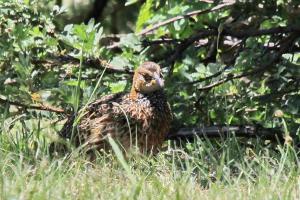
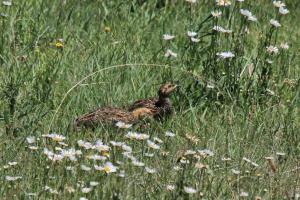
However the excitement for us was seen right in front of the camp amongst the daisies and also next to the closed trout hatchery – in each case a pair of Red-winged Francolins.
Red-winged Francolin near the hatchery
Red-winged Francolin near the hatchery
Red-winged Francolins in the daisies
Red-winged Francolins in the daisies
Red-winged Francolin in the daisies
Red-winged Francolin in the daisies
Red-winged Francolin in the daisies
We did encounter a mystery bird which at first was thought to be a Cape Canary but the pictures in different lights baffled us. Click on them to enlarge.
Mystery 2
Mystery 2
Mystery 2
After a morning in Kamberg we toddled along to pay a visit to the Crane Sanctuary – passing the Glengarry turnoff and heading towards Giant’s Castle. Along the way a view of the Giant.
Head and body of the sleeping Giant.
On the side road to the Sanctuary there were horses and many foals ambling beside the road unattended and not fenced in. The visit to the sanctuary was brief walking round and observing each of the three Crane species and a poor flightless Lanner Falcon.
Wattled Crane
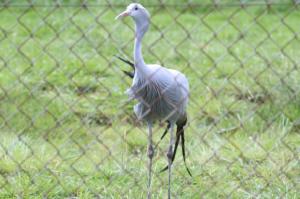
Blue Crane
On the way out we had sightings of obliging Long-tailed Widowbirds, again Yellow Bishops and a Black-shouldered Kite on the power line easily overlooked by the numerous bird deterrents hanging on the line.
Long-tailed Widowbird
Black-shouldered Kite
Yellow Bishop
Then as we approached the main road there was an African Marsh-Harrier quartering the fields and a pair of Southern Bald Ibis.
Southern Bald Ibis
African Marsh Harrier
Beside the nearby dam there were a pair of South African Shelduck among the accompanying Hadedas and Geese.
South African Shelduck – female
South African Shelducks – male and female
Southern Red Bishop
Red-billed Quelea
Pied Starling
White-throated Swallow
Levaillant’s Cisticola
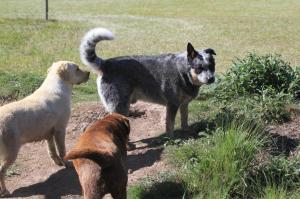
The grounds of Glengarry provided us with the best birding. On each walk we were befriended by two Labs and an Australian Sheep dog. And despite their presence the birds were not shy in showing themselves.
Labs and Aus Sheep dogs
Australian Sheed dog
In the wetlands we heard the call of an African Rail, an African Reed-Warbler and what Sally thinks was a Red-chested Flufftail – although I thought it sounded more like the Striped. Sally is more likely to be correct. Would have been great to have seen either – lifers for me.
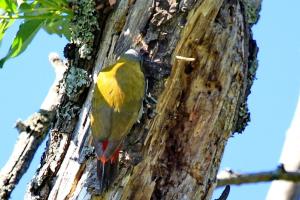
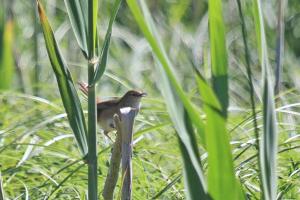
Around the wetland area beside the river there were several sightings of Dark-capped Yellow Warblers, the calls of Lesser Swamp Warblers and a Cape Grassbird, the sighting of a calling Little Rush-Warbler, Forest Canaries. And in the river an African Black Duck. Also present was a Red-throated Wryneck – heard but not seen. And an Olive Woodpecker pecking avidly into the side of a dead branch.
Olive Woodpecker – female
Olive Woodpecker – female
Olive Woodpecker – female
Little Rush-Warbler chirping away
Cape Wagtail
Red-billed Queleas
Dark-capped Yellow Warbler
Dark-capped Yellow Warbler
Village Weaver
Large Hare
Common Waxbill
Fan-tailed Widowbird
Purple Heron
Dark-capped Yellow Warbler
Dark-capped Yellow Warbler
Dark-capped Yellow Warbler
Levaillant’s Cisticola
African Black Duck
Forest Canary
Forest Canary
African Darter
African Darter
African Darter
Bokmakieries called all round our cottage but were impossible to find. And around the gardens there was much bird life.
Green Woodhoopoe
Speckled Mousebird
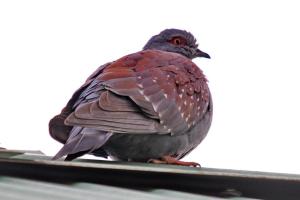
Speckled Pigeon
Common Fiscal with 2 young cosying up close together on the wire
Hamerkop
African Harrier-Hawk passing by
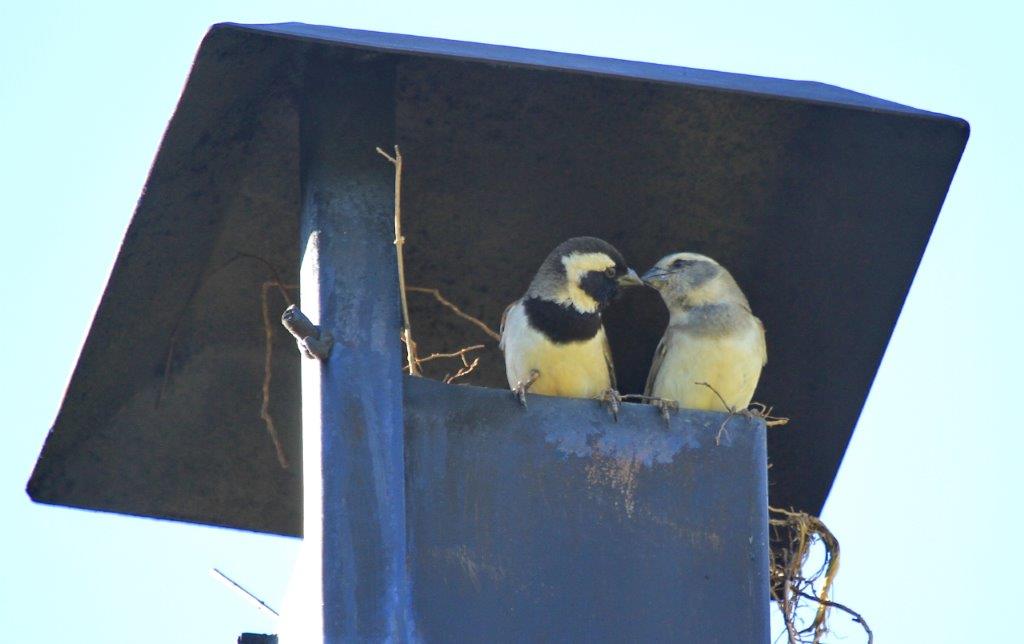
There were a pair of Cape Sparrows nesting in the top of our chimney – so there were no evening fires for us.
Cape Sparrows nesting in our chimney
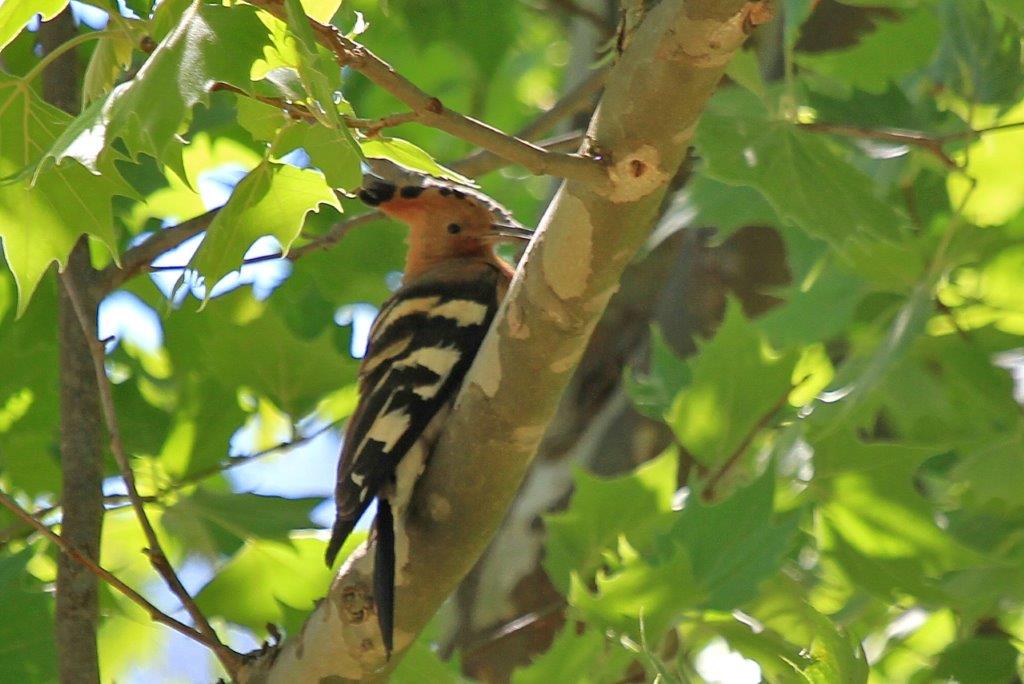
And from our balcony we regularly watched a pair of African Hoopoes taking turns flying from their nest behind, all the way down to the wetlands and back again – we assume with food for their young.
African Hoopoe
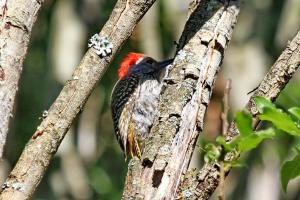
Another perplexing sighting was that of a Cardinal Woodpecker on the roof of the cottage next door. Its head from a back view showed black with a red crown – the front had a brown frons which is not visible in the photo. It was not until we reviewed our field guides that we realised that this is the natural head colouration of a juvenile Cardinal.
Adult Cardinal Woodpecker – male
Juvenile Cardinal Woodpecker
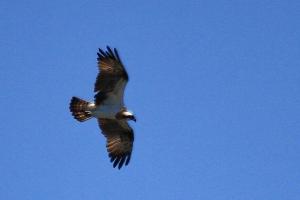
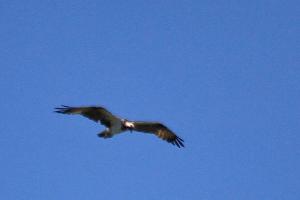
Probably the most unexpected sighting was the appearance of an Osprey flying over the wetlands.
Osprey
Osprey
Osprey
Osprey
Osprey
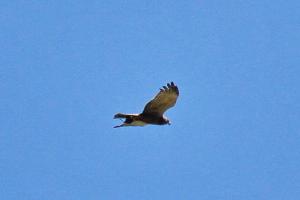
And finally another mystery raptor which we think is an Black Sparrowhawk due to its long tail rather than a Jackal Buzzard because of the rufous appearance in the tail.
Mystery Raptor 3
Mystery Raptor 3
And now for the treat I mentioned at the beginning of this article. We were talking to Gareth (one of the sons of the owner who manage Glengarry) about birds in the area and he mentioned that he would contact a local pig farmer to see if he could take us to visit and see what they were doing. So at 08h30 on the Wednesday we headed to the farm. We left the car in one of the fields and walked several hundred metres uphill to a fenced off area to keep out the Jackals.
Note that this farm is private and can only be visited with special permission – best done through Gareth.
In the fenced off area there were a number of dead pigs (dead from natural causes). And nearby there were three groups of many Cape Vultures. Gareth told us that up to 350 Cape Vultures have been seen there at one time and that there were also six pairs of Lammergeiers in the area. We dipped on the Lammergeiers.
Cape Vultures and White-necked Ravens queueing up for their turn.
Cape Vultures
Another group of Cape Vultures
And yet another group of Cape Vultures
Quite a sight seeing all the vultures waiting while Yellow-billed Kites and White-backed Ravens took turns on the carcasses.
Numerous Cape Vultures were flying overhead and then from a valley below we saw a massive flock of black birds take to the sky – all White-necked Ravens. Quite a sight.
Cape Vulture
Cape Vulture
Cape Vulture
Cape Vulture
Yellow-billed Kite
Yellow-billed Kite
One way to photograph the Cape Vultures
A mass of White-necked Ravens on their way.
The treat did have its downside. The fields were being sprayed with the waste from the pigs – very very smelly. You got used to it while watching the birds but it was ever present. The worst was yet to come. On returning to Glengarry we noticed that the smell prevailed. We realised it was not only on the soles of our shoes but in everything we were wearing! And in the car! Fortunately the stench goes away with time, a lot of scrubbing and several clothes washes. Still it was worth the experience of seeing so many Cape Vultures together.
In the short time we were there with all the weather thrown at us we did manage to identify 106 different species in the area. Click here to see the list of birds we identified in the whole area.
On impulse Sally and I decided to head up to St. Lucia for 4 nights and the same at Kube Yini (between Mkuze and Phinda). Then onwards, wherever, for a further week.
As it happened we ended up staying only 3 nights at Kube Yini then coming home. Everywhere was exceptionally dry. But the deciding factor to return home was yet another side wall puncture.
At St. Lucia we camped in the Sugarloaf campsite. Water was restricted due to the drought but the campsite did not appear to be affected – other than they only opened two of their four ablution blocks.
During our time at St. Lucia we went birding in Eastern and Western Shores of Isimangaliso Wetland Park as well as around the estuary mouth and the campsite. As you can see from our bird list (click here to see it), our time in St. Lucia around the estuary and campsite was the most rewarding.
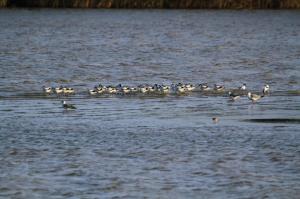
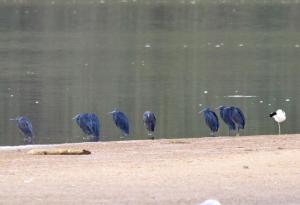
On the first morning we headed for Eastern Shores. However as we left the camp gate we checked the sand bank in front of the Boat Club and restaurant. There were quite a number of Pied Avocets among numerous waders and terns. Most striking, however, were eight Black Herons together.
Pied Avocets
Pied Avocets
Black Herons
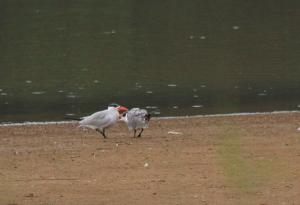
Caspian Tern feeding young
In the Eastern Shores we had two interesting experiences – firstly on three occasions we came across Southern Banded Snake-Eagles. One with a full crop after devouring a green snake.
Southern Banded Snake-Eagle
The second experience was at Lake Bengazi. (An aside – the causeway is still not passable due to the road collapse some years ago). Looking out across the Lake to the western side there were hundreds and hundreds of Pelicans on the shore line – mainly Great White but also Pink-backed.
Altogether in the 6 hours we were there we identified 72 different species.
Fan-tailed Widowbird
Red-breasted Swallow
Large Striped Swordtail
White Rhino at the Mafazana HIde.
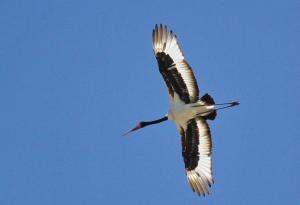
Saddle-billed Stork
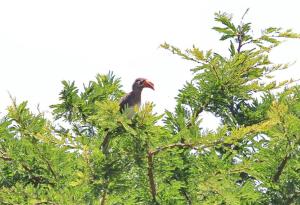
Crowned Hornbil
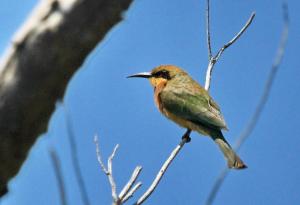
Little Bee-eater
Saddle-billed Stork
White-breasted Cormorants (note the full white underside of the young bird)
Burchell’s Coucal
The second full day at St. Lucia we headed for Western Shores – windy and overcast. Virtually all the dams were empty of water. From the boardwalk overlooking Lake St. Lucia we could see how much the drought had affected the water levels in the Lake.
One of the highlights was stopping next to a male and female African Cuckoo-Hawk on the ground not 20 metres from us.
African Cuckoo-Hawk- female
African Cuckoo-Hawk- female
African Cuckoo-Hawk – male
African Cuckoo-Hawk- male
African Cuckoo-Hawk- male
And then at the main picnic site, we noticed a small dam with some water – probably being pumped in. At the dam there were a number of Collared Pratincoles and a Wood Sandpiper – soon to be scattered when three noisy Spur-winged Geese arrived.
Collared Pratincole
Collared Pratincole
The picnic site is a lovely location however it could do with some tables and benches under the trees. Here we had a good sighting of a Scarlet-chested Sunbird. Altogether only 48 different species were identified in the 5 hours we were there.
Secretarybird
Secretarybird
Violet-backed Starling
Dark-backed Weaver
Variable Diadem
Most afternoons we spent time birding around the campsite and on the beach. Because of the wind the beach was fruitless and the banks of the estuary had few birds.
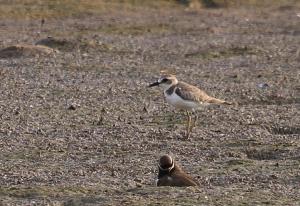
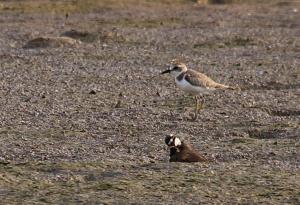
The exception to this was the sand bank in front of the boat club restaurant. Among the numerous waders and shore birds we did manage to find an unusual Plover.
The guide with a group of American tourists said it was a Lesser Sand Plover. However as the photos below show – it was in fact a Greater Sand Plover (unless of course both were present). The greenish legs lead me to question what I photographed.
If we had read the text in the Roberts App more closely we would have known to watch its behaviour. When foraging the Lesser takes about 3 paces then pauses for about 2.5 to 3 seconds. The Greater takes about 9 to 10 paces then pauses for 5 to 8.5 seconds!
Greater Sand Plover
Greater Sand Plover
Greater Sand Plover
Greater Sand Plover
Greater Sand Plover
Greater Sand Plover
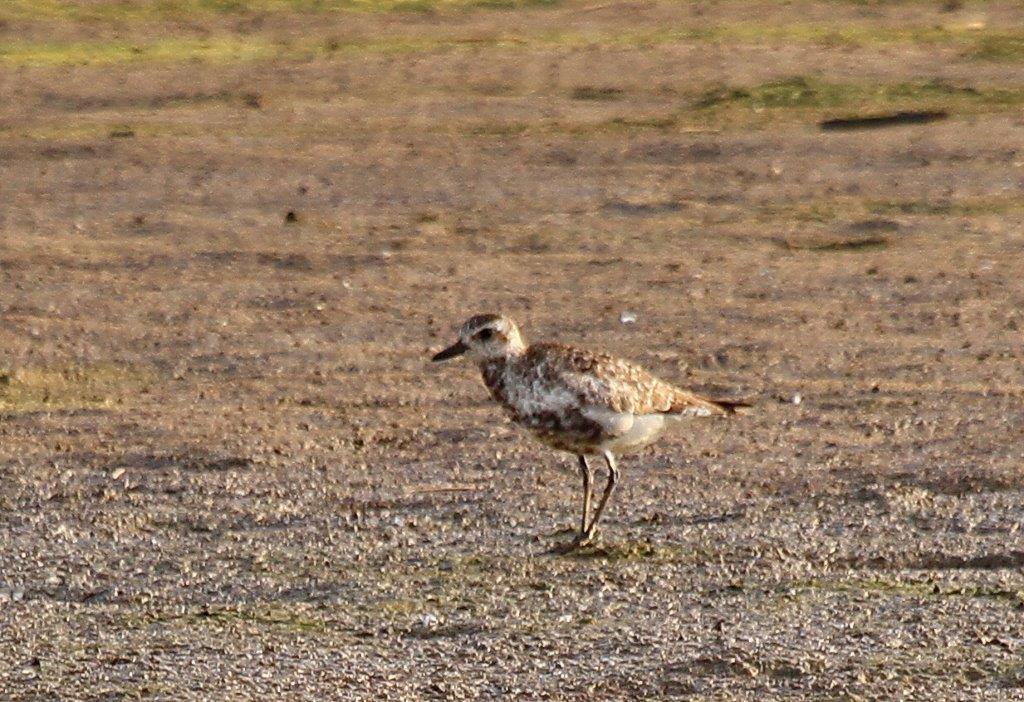
Also present on the sand bank was a Grey Plover in semi-breeding plumage.
The campsite itself as usual had an abundance of different birds – some of the more notable for us were the Livingston’s Turacos, Purple-banded Sunbirds and an obliging Bearded Scrub-Robin.
Purple-banded Sunbird
Purple-banded Sunbird
White-eared barbet
Brown Scrub-Robin
Yellow Weaver
Yellow Weaver – male and female
Livingston’s Turaco
Southern Boubou
Crested Guineafowl
Red-capped Robin-Chat
Orange Cat
But perhaps the most unexpected appearance was that of an African Wood-Owl. We were having dinner when it flew to our table knocking over a handbag on the ground beside the table. It then sat in a nearby tree and kept foraging at the base of a tree not three metres away from us.
Altogether in the camp and nearby estuary a count of 94 different species – not too shabby.
And then it was time to move on to Kube Yini where we stayed in a rather large cottage belonging to a friend of ours. The cottages are all on the top of a number of steep hills. Everywhere was very dry and waterholes empty – except for the two where water was pumped in – both rather small.
It was a decided challenge to back the camper into the driveway!
Here we settled in to the luxury of large space. Checking the map of the area we thought that we should head for the river in the canyon below. So the first afternoon after settling in we headed down to do a short loop. In parts it was steep any very rocky – progress was slow and the birds likewise.
The next day we headed for a longer drive alongside the river. Again steep and rocky everywhere so the drive lasted probably 2 hours longer than we thought. Birds there were, close to the river but nothing that stood out.
Our best birding was around the cottage – Burnt-necked Eremomela, Bearded Scrub-Robin and African Yellow White-eye. In the evening the call of the Fiery-necked Nightjar. And on the plains below next to the clubhouse a Flappet Lark called for our attention. 61 different bird species were identified while we were there.
Bearded Scrub-Robin
Brown-hooded Kingfisher
Steppe Buzzard
Steppe Buzzard
Yellow White-eye
That evening we went to the clubhouse to watch the RSA semi-final along a number of other residents. In one conversation we mentioned that the roads are very rocky especially on the way up and down to the river. They were aghast and surprised that we had ventured there as none of them did.
After the rugby on the way back to the cottage we heard the very unpleasant sound of a tyre giving off puffs of air on each revolution and the piping alarm of the tyre pressure monitor sounding. Somehow we managed to get back to the cottage before it went completely flat.
The tyre took ages to change simply because we have a Fortuner and they have this ridiculous system to lower the tyre beneath the car. The problem being to insert a long bar unsighted into a slot designed for perfect alignment. Much cursing and swearing until by chance it unexpectedly went in.
The next day we only ventured to the clubhouse to watch the final on our own. The next day – home.
Enough adventure for this trip. But altogether 152 different birds identified.
The October Sunday outing was a new venue for BLPN birders, and one I was looking forward to sharing with many of the clubs birders. Unfortunately it was not until road signs went up in mid-September advertising the route of the Amashova cycle race that it dawned on me the cycle race and the bird outing shared the same date 18 October.
In order to get down into the Umgeni Valley one needs to cross the R103 near Inchanga. With the road being closed on race day, and not wanting to cancel the outing it was decided to bring it forward one week to 11 October. Despite notices going out on the net via KZN Birds and a few Facebook groups of the date change the turnout was low with only seven of us assembling at the iSiThumba Cultural Village.
The first birds of the day were mostly of the airborne brigade including African Palm Swifts, Lesser Striped Swallows, Yellow-billed Kite, Black Saw-wing and a pair of Lanner Falcons, accompanied with background sounds of a Crested Barbet vocalizing and a cacophony of chattering from the Village Weaver colony nesting in the trees behind the main building of the cultural centre.
Our accompanying hosts for the day were Jeffery and Shaks who assist with various tours organized through Durban Green Corridor and with support from Kloof Conservancy. Following a brief insight to some cultural facts about the area, we proceeded down to the river with Shaks as our escort for the morning.
The short walk down yielded Blue Waxbill, Rattling Cisticola and White-bellied Sunbird, and not far off came the sounds of a Southern Boubou. Hang on, could it not be an African Hoopoe? After much debate and comparing calls from the Roberts app we agreed to settle on Southern Boubou.
Rattling Cisticola
Rattling Cisticola – love the black mouth
White-bellied Sunbird
White-bellied Sunbird
Pin-tailed Whydah – female
There is some great scenery along the Umgeni River, wild places through Eastern Bushveld Thicket where you are at one with nature, great views from various spots, interaction with the local community and just amazing natural beauty.
Scenery
Scenery
Scenery
Scenery
Scenery
Birders enjoying the scenery
Birders
Admiring the view
We meandered along the river edge picking up on various water birds including Black Crake, African Sacred Ibis, African Jacana, Yellow-billed, African Black and White-faced Ducks, a single Three-banded Plover, and a Purple Heron foraging along the far bank.
African Black Ducks
African Black Ducks in flight
African Sacred Ibis
Black Crake
Yellow-billed Duck
Purple Heron
Three-banded Plover
Three-banded Plover
Egyptian Goose and her brood
Cattle Egret
Cattle Egret
Yellow Weaver
On the far bank we were treated by a pair of Malachite Kingfishers popping in and out of a hole in the river bank.
Malachite Kingfishers – the pair
Malachite Kingfisher – one of a pair nesting in the bank
The river is fringed with Bushveld thicket which gave us good views of Chinspot Batis, Cape Glossy Starlings, African Paradise Flycatchers in abundant numbers, Little Bee-eaters, and Orange-breasted Bush-shrike.
Cape Glossy Starlings
Little Bee-eater
Orange-breasted Bushshrike
Orange-breasted Bushshrike
And on the way back Sally heard and found an Olive Bushshrike. Then we saw a jaw-dropping Golden-breasted Bunting foraging on the ground.
Golden-breasted Bunting
Olive Bushshrike – back view
Olive Bushshrike
Olive Bushshrike
As with all birding trips there are the inevitable birds heard but not seen, including the ever elusive Gorgeous Bush-shrike, as well as Diederik and Klaas’s Cuckoos, Emerald-spotted Wood-dove, Black-headed Oriole, and White-browed Scrub-Robin.
What is this?
Views of the imposing isiThumba Mountain – an iconic spot in the area had us wondering if we’d see any special raptors as Verreaux’s Eagles have been recorded in the area before. Our luck was out but we continued to enjoy the sounds and sights of the valley.
isiThumba Mountain
isiThumba Mountain
isiThumba Mountain
The final tally for the day was 73 species either seen or heard, with all records submitted to SABAP2 on one Full Protocol card and one Ad hoc card.
Our bird of the day was a pair of Long-billed Crombecs entertaining us in the thorn trees whilst enjoying our post walk beverages and nibbles from the picnic hampers.
A worthy mention must be made for the Three-banded Plover due to its sighting being the first SABAP record for pentad 2940_3040!
A full species list for the day can be viewed by clicking here. Many thanks to Sandi, Elena, Ismail, Paul and Sally for venturing out to new territory, and of course to my special birding buddy (Penny) for accompanying me and sharing my passion for birds and the outdoors.
Mhlopeni Nature Reserve is located between Greytown and Muden in KZN. Mhlopeni (Place of white stones) is located in a rain shadow area of the Tugela river basin. Part of the dry valley bush veld, considered to be the most degraded veld type in KZN. It is a Natural Heritage site.
Ancient and modern history provides a glimpse into archaeological sites, from early stone to iron age, findings, dating back to 250 000 years ago. Holding artifacts of these eras is a truly unique experience.
The weekend outing was organised by Cheryl and John Bevan. Five people took the cottage and six of us the campsite (an additional 2 joined the campsite group later).
Once you leave the tar road the route takes you through some challenging tracks – driving over rocky outcrops, and rough ground where high clearance is preferred. Having said that there were several regular cars which made it.
View down the valley
A Rock mushroom – part of the landscape
Intriguing rock formations
The cottage is well located overlooking bush veld to the dry river bed. It is well equipped despite the lack of electricity. It can sleep 8 though the curtained partitions may be off-putting for some. One loo and shower.
The campsite was being completed as we arrived. There is a boma and one loo with shower. Here also there is no power but there was plenty of sun to keep the solar panels busy. Although there was just enough space for all of us it meant those at the far end would have had a challenge on departure – trying to get past the other campers. Fortunately we all left together.
Tight turn down to the campsite
Campsite boma
A couple of campsites at the end
Another make-do campsite
As a Bird Sanctuary, Mhlopeni is abundant with many birds of prey, and being on the confluence of the north, south, coastal and inland species distribution limits over 230 species are recorded on their bird list.
Some of the birds photographed:
White-necked Ravens
Speckled Pigeons
Rock Martin
Cape Rock-Thrush
Cape Batis
African Paradise-Flycatcher
African Harrier-Hawk
African Harrier-Hawk at nest
White-browed Scrub-Robin
Red-fronted Tinkerbird
Red-fronted Tinkerbird
Red-fronted Tinkerbird
Lanner Falcon
Lanner Falcon
Lanner Falcon
Yellow-billed Kite
Green-backed Cameroptera
Fiscal Flycatcher
Cardinal Woodpecker
African Hoopoe
Klaas’s Cuckoo
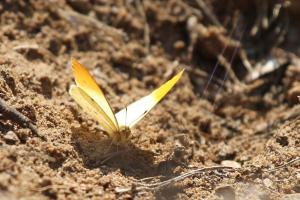
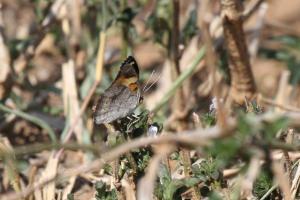
Of course other critters were seen including a gang of what I thought to be hyenas being chased by the camp dog. Butterflies need id.
Butterfly 2
Butterfly 2
Butterfly 3
Butterfly 4
Butterfly 1
Bug – Locust maybe
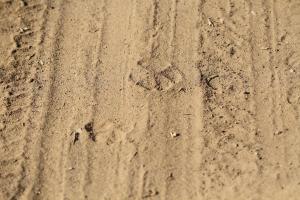
Suspected Hyena footprint
Rustic walking paths provided us with vistas and sounds of the diversity of healthy dry valley bush veld.
Birders on track – John and Cheryl
Birders on track – John, Jane and Mike
Birders on track – Cecil, Paul, Maureen, Jane and Mike and John
Birders on track – Cecil, Maureen, Cheryl and John. Jane and Sally behind
Birders on track – Cecil, Paul, Maureen, Jane and Mike
Most mornings we followed the road and paths along the dry river bed. with its intriguing geology.
Intriguing rock formations
Intriguing rock formations
River bed cliffs
Intriguing rock formations
One afternoon we visited the Mooi River which was flowing and forms part of the northern boundary of the property. This is a dead end track which several people mistakenly took on the way to the camp. It has dreadful dongas and is very narrow with steep sides to the river. Once on this track it is only possibly to turn around at the end – fortunately for those towing a trailer!
Mooi River
Mooi River
The weather was extremely hot after about 9 or 10 in the morning. By then birding was over till later in the afternoon. Most sat around a shady spot enjoying what cool breeze there was.
Much of the birding was done round the cottage and campsite. In the river bed next to the campsite there was a Schotia brachypetala in full bloom.
Schotia brachypetalaat the river bed
Schotia brachypetala
Schotia brachypetalan
Schotia brachypetala
We took chairs and sat in the shade and watched the comings and goings of a wide variety of birds – mostly Sunbirds Amethyst (male and females) Greater Double-collared (male and females) White-bellied (male and female) but there were also Olive Bushshrike, Cape White-eyes, Green Woodhoopoes, Barbets, Weavers, Woodpeckers nearby. Birds were constantly coming and going.
One Sunbird in particular came regularly and called every time it arrived staying at the top of the tree, taking its nectar and flying off. We guess that it was possibly feeding young. The problem with this bird – if it is what we believe – it is out of range. An out of range form with photos has been submitted following our atlas card being sent in. The call of the bird was recognised as that of a Grey Sunbird and you can make your own judgement from the photos below. This was not the only place we had seen and heard the Grey Sunbird while we were there.
Altogether we compiled a bird list of 110 different species. Click here to see our list.
Last year it took us 3 attempts to bird Tanglewood Farm Nature Rerserve before we had decent weather. This year we had a perfect sunny day, the hillside had been burnt with wild flowers everywhere. We had an excellent turnout – must have been over 30 people: members, visitors and a few latecomers. Our bird count wasn’t too shabby either in the region of 88 – things are hotting up for summer.
We split up into 2 groups and on entering the forest the one group had wonderful views of a pair of Narina Trogon unfortunately the second group dipped but we got to see the photos!!
Narina Trogon – female – John
Narina Trogon – female
Narina Trogon – female
Narina Trogon – male
Narina Trogon – male
Narina Trogon – male
Natal Robins (Red-capped Robin Chats) called from hidden depths within the forest and very occasionally seen. Olive Thrush fossicked around in the fallen leaves, African Paradise-Flycatchers in abundance, not too many Black and a few Dusky Flycatchers.
Dusky Flycatcher
Dusky Flycatcher – John
A pair of Dark-backed Weavers had made their nest overhanging the forest path, much time was spent watching the pair bringing in nesting material and listening to the lovely call (the Afrikaans name is so evocative ‘bosmusikant’).
Dark-backed Weaver’s nest
On the forest walk Cape Batis, Bar-throated Apalis, Southern Boubou, Klaas’s & African Emerald Cuckoos, Tambourine Doves, Dark-capped Bulbuls, Cameropteras, Sombre Greenbuls, Purple-crested and Knysna Turacos, Black-collared Barbets, Yellow-rumped Tinkerbirds – sunbirds: Amethyst, Olive, Collared and Greater Double-collared – plus lots of bird calls.
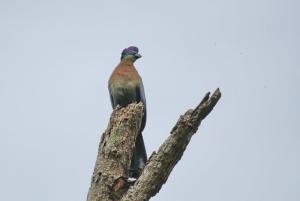
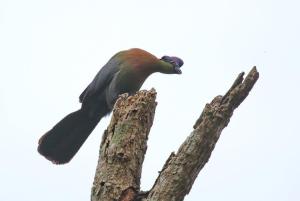
Purple-crested Turaco
Purple-crested Turaco
Greater Double-collared Sunbird
Purple-crested Turaco
Walking up to the Cabin (aka the Boathouse) for morning tea, a pair of Crowned Eagles put on a magnificent display.
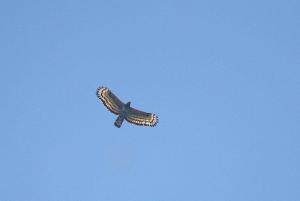
Afrcan Crowned Eagle
Afrcan Crowned Eagle
Afrcan Crowned Eagle
Earlier on we had African Goshawk, Yellow-billed Kites all day long, plus White-necked Raven, a Black Sparrowhawk and a Long-crested Eagle also put in an appearance.
Black Sparrowhawk
Black Sparrowhawk
Yellow-billed Kite
Yellow-billed Kite
Around the dams we had Grey and Black-headed Herons, Hamerkops and Hadeda Ibis everywhere. In the skies there were White-rumped, African Palm, African Black and Little Swifts, as well as Lesser-striped Swallows and Black Saw-wings.
Hamerkop
After tea we walked the grassland area and down to another dam where the Yellow Weavers are nesting.
Yellow Weaver nest building
We also had Cape, Village, Spectacled and Thick-billed Weavers. The grassland yielded some good birding, Yellow-throated Longclaws, Streaky headed Seedeaters, Croaking Cisticolas, Grassbirds, Red-backed and Bronze Mannikins, Pin-tailed Whydah, Fantailed Widowbirds, Rufous-naped Larks and again lots lots more!!
Black-headed Oriole
Bronze Mannikin John
Cape Weaver – female
Yellow-throated Longclaw
Lots of butterflies and other critters:
Gaudy Commodore WSF f. natalensis – John
MILLIPEDE – Sandi
SCORPION – Sandi
SCORPION – Sandi
and some really wonderful wild flowers. Just before entering the forest we came across a ground orchid Disa Woodii (looks like a glowing candle – Elsa Pooley) – birding can be such fun!!.
Disa woodii
Disa woodii – John
DISA WOODII – Sandi
We returned to the cabin for a braai-brunch and the bird list – much hilarity and mirth- especially when we got all excited over a Black Stork that actually was a Woolly-necked Stork (can you believe it was going to be ‘Bird of the Day’).
Woolly-necked Stork
Thanks to the guys who got the braai going, thanks to Sandi, John and Paul for the pics and a mega thank you to Caryl for allowing us to visit Tanglewood Farm.
Jenny lost a lens cap (if anybody picked it up) and I have a very nice bright blue camping chair in my boot – any takers? The striped pink hat has been claimed!!
Four of us decided to visit Weenen Game Reserve on Saturday 26 September. It was very dry but there was water at their hides. Although we drove around most of the reserve we spent the most of our time enjoying the central hide.
A pair of Cape Wagtails have a nest right above the entrance to the left part of the hide. They kept us entertained coming back and forth to feed their young – skittish at first.
As we arrived at my brother’s home in Gaillac after a 45 minute drive from Toulouse, we were greeted by several Pied Flycatchers enjoying a meal in the tree right next to his deck.
Pied Flycatcher
Pied Flycatcher
A fine start we thought. However birding in the area around the sterile vineyards proved more testing. The time of year did not help. It was nice to see Black and Common Redstarts in a nearby field. Great Spotted and Green Woodpeckers were calling nearby along with Nuthatches pecking away like woodpeckers. Blue, Great and Long-tailed Tits were everywhere. Here are some photos of local birds.
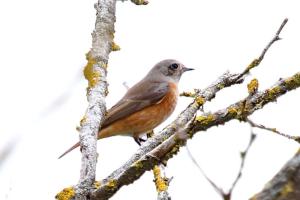
Common Redstart
Common Redstart
Common Redstart
Black Redstart – male
Black Redstart – female
Black Redstart – female
European Turtle-Dove
European Turtle-Dove
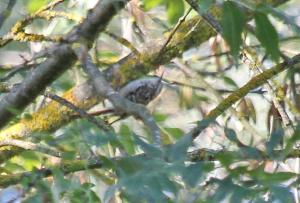
Short-toed Treecreeper
Short-toed Treecreeper
Spotted Flycatcher
Spotted Flycatcher
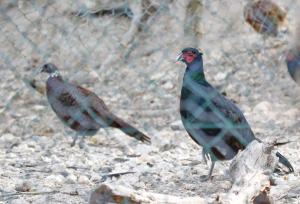
Reared Pheasant – cock
Reared Pheasant – cock and female
Common Kestrel
Common Kestrel
House Martin nest with young
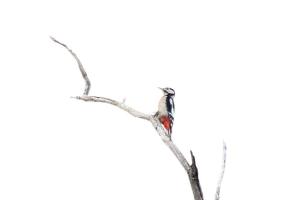
Great Spotted Woodpecker
Dragonfly
Dragonfly
Deer
Chiffchaff – black legs
Butterfly
Butterfly
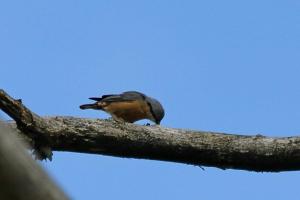
Nuthatch
Blackcap – female
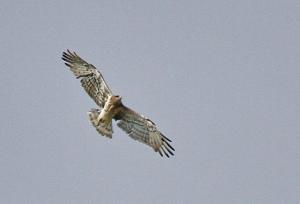
Anyway we did have several pleasant experiences. The first was close-by. As we drove to the top of the local hills we noticed birds in migration. They came over in batches of 20 or more. Predominantly Black Kites. There were also a few Short-toed Eagles.
European Honey-Buzzard and Black Kite
Common Buzzard
European Honey-Buzzard
Short-toed Eagle
Short-toed Eagle
Short-toed Eagle
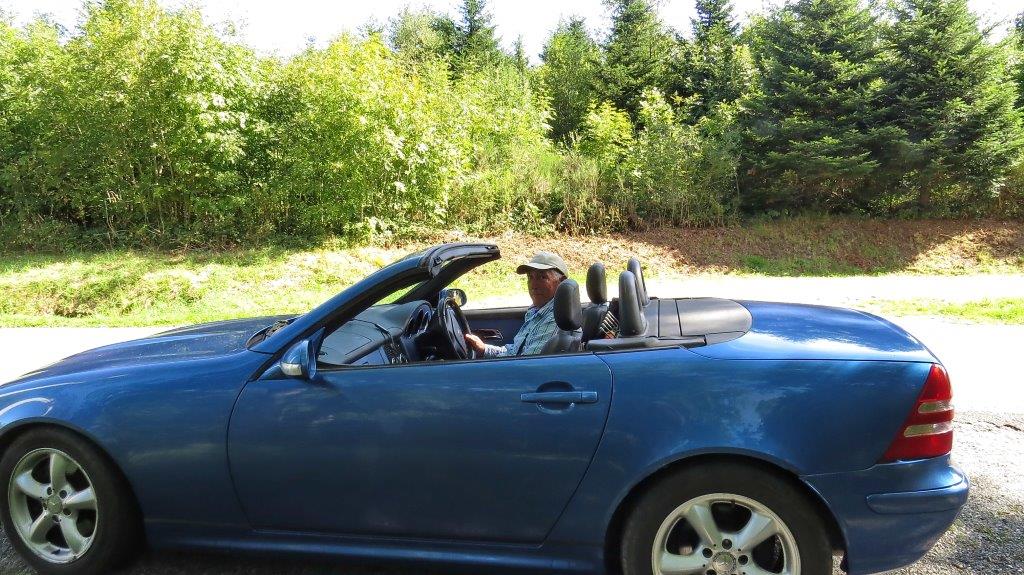
Another exciting experience was a bit further afield. We left early in the SLK that my brother lent me and arrived some 180 kms away.
SLK
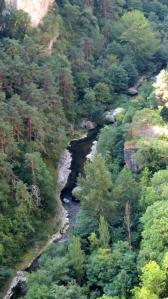
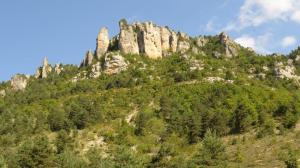
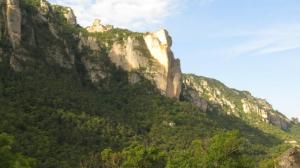
We went to Le Rozier where the rivers Le Tarn and La Jonte meet. The rivers are at the bottom of very steep gorges. Gorge de La Jonte was our goal. Here we were told there are many Vultures.
Gorge de la Jonte
Gorge de la Jonte
The way down
Cliffs
Cliffs
Village on the slopes
There is an excellent Vulture Viewing Point. The viewing point has an impressive multimedia exhibition, including live video transmission from the nesting sites of what must be the world’s most heavily researched vultures.
Viewing platform
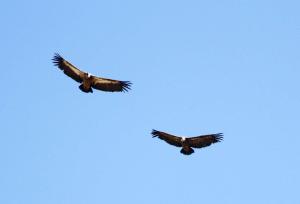
Seen in the gorge are a few Egyptian and Black Vultures as well as Lammergeier. However the most abundant Vultures are the Griffin Vultures – and there were plenty to be seen.
Griffin Vultures
Griffin Vulture
Griffin Vulture
Griffin Vulture
Griffin Vultures
Griffin Vultures
On the way back we were lucky to see a Red Kite quartering next to the road.
Red Kite
Click here to find out what species we saw on the trip.















































































































































































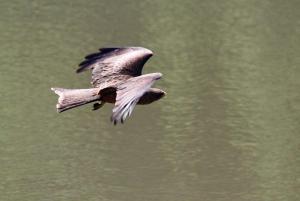

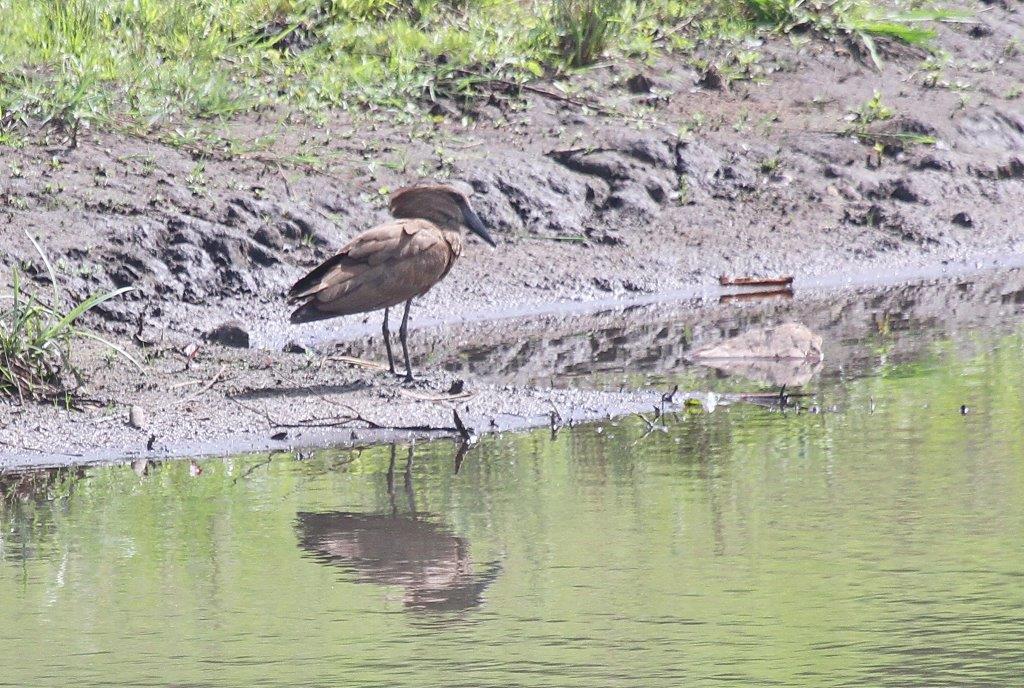






































 Birds are our Story