Diedrick’s Cuckoo (juvenile) & Amethyst Sunbird by Paul Bartho.
The following is a series of excellent photos taken by Frank Kihn in LeDomaine.
As you will see the Diedrick’s Cuckoo juvenile is being fed by a female Southern Red Bishop. In one photo the cuckoo’s eye’s are closed as it is being fed. Frank asked if that was a sign of pure bliss.
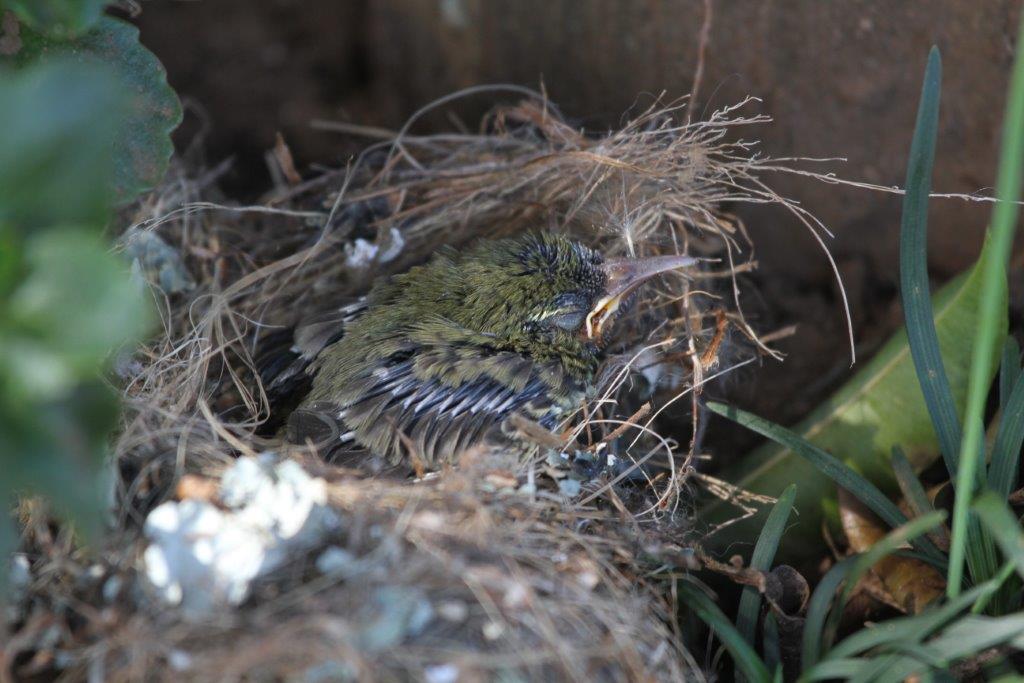
The other photo below is of an Amethyst Sunbird chick which was found straying on the road in LeDomaine. Its nest had fallen out of the tree. Some residents returned it to its nest and put the nest up against the tree trunk and informed us.
On investigation, Sally and I noticed that the little bird was covered in ants. Painstakingly the ants were removed from its body. The nest too was infested in ants so Sally retrieved one of her woolly sox and sewed it on to a nearby Aloe. The chick was placed inside and happily cheeped away until the parents returned to feed it. Five days later we presume it left the nest.
Please note that the following photos stand corrected with respect to their ID. Thanks to those readers pointing out the errors. Also to those who helped with some of the IDs of the UI (unidentified) bird photos.
Yellow-billed Stork (not a Spoonbill – quite doff!)
Bennett’s Woodpecker, Ndumo (not a Bearded)
Long-tailed Paradise-Whydah, Mkuze in transitional plumage (UI Bird)
Long-tailed Paradise-Whydah, Mkuze in transitional plumage (UI Bird)
Common Fiscal – juvenile, Mkuze (UI Bird)
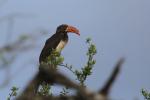
Yellow-billed Hornbill,Mkuze (NOT a Red-billed!!!)
Marico Sunbird, Mkuze (Not a Purple-banded)
Klaas’s Cuckoo, Mkuze (Not a Klass’s!!)
Klaas’s Cuckoo, Mkuze (Not a Klass’s!!)
Klaas’s Cuckoo, Mkuze (Not a Klass’s!!)
Klaas’s Cuckoo – female, Mkuze (Not a Klass’s!!)
Black Cuckooshrike showing all his colours, Bonamanzi (Not a Cuckoo!!)
Painted Reed Frog, Bonamanzi (Tree Frog)
Luna Moth, Bonamanzi (Not an Emperor Moth)
One Raptor (2 photos) still remains a mystery – see below. It had a pale rump – seen in Bonamanzi. We were told that Bonamanzi sports both Steppe and Forest Buzzards at this time of the year. I don’t know if that will help. I have also been told that Forest Buzzard is unlikely in Bonamanzi as the habitat is not suitable.
Sally and I decided to spend the New Year camping away from home. Northern Zululand was our destination. Our program:
3 nights in Bonamanzi
4 nights in Mkuze
4 nights in Ndumo
3 nights in St. Lucia
Bonamanzi.
At Bonamanzi we stayed in Campsite 5 and joined friends who were already there. Campsite 5 is huge and can accommodate 4 camp groups easily – however there is only one toilet/shower and one wash-up area. As pensioners it cost us R90 pppn.
In Bonamanzi as you may know you are able to walk anywhere on the property except in their Game viewing area. This is great for birding. However elephants do use the area as well. One morning when driving to the office we found a huge branch across the road and elephant tracks confirming who was the culprit for this roadblock. Beware.
The first night we had a lot of rain. So the next morning we (our friends and ourselves) decided to visit Hluhluwe rather than bird in the rain around the campsite. It continued raining.
Taking the shortcut to the freeway we went through numerous muddy pools past the Hakuna Mutata accommodation until we got to the bridge. The approach to the bridge was up a short steep bank which looked muddy and badly cambered – so down I went into Low range 4×4 and up we went – well actually did not make it. About a third of the way up the Fortuner slowly drifted off the road onto the trees on the left. Fortunately I was able to reverse out of trouble without damaging the car. Now the long way round to Hluhluwe.
The rain persisted. However we decided to look for the Finfoots (Finfeet?) which our friends had seen the previous day. Taking the immediate right turn as you enter the park we drove round to where they had seen them basking next to the river crossing – no luck! About the only excitement we had were 7 White Rhino crossing the road in front of us. They were the first aminals we saw since entering! Aminals were scarce and the birding was not much better. Eventually we decided to return to Bonamanzi for lunch. Altogether we had seen 35 species of birds in the 3 hours we were in Hluhluwe.
Croaking Cisticola
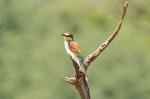
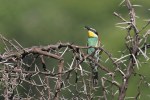
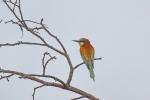
European Bee-eater
Dusky Indigobird
Fan-tailed Widowbird
Red-backed Shrike
The following day we walked around the camp area and went on a drive to explore other parts of Bonamanzi. In one section we had heard an African Broadbill on a couple of occasions (Pathway E to F). Later we went back with our friends and another couple who had arrived to see if we would have any better luck.
Sally mentioned to Irene that you needed to look on cross branches about head height in the bush. We had not gone more than 20 metres when Irene spotted a Broadbill – unbelievable. I managed to get a few poor shots which you can see in the gallery below. On the way back I popped into the bush to see if I could get a few better shots – no luck finding the Broadbill but I did surprise a Narina Trogon – see pics in Gallery.
After that we visited the office area and drove back in the dark spotting a Shikra on the road munching on its prey – unconcerned with the car’s headlights on him. Poor pictures in the gallery.
Painted Reed Frog, Bonamanzi (Tree Frog)
Emperor Moth, Bonamanzi – lovely leaf feelers
Luna Moth, Bonamanzi (Not an Emperor Moth)
UI Buzzard
Same UI Buzzard
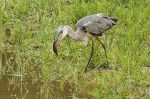
Twisted Grey Heron
Spear fishing – great catch
Almost got it all in!
Pied Kingfisher waiting patiently
Pied Kingfisher about to go for it.
One exponent in the Nyala dance.
What a mouthful for a Malachite Kingfisher
Little Egret and Common Greenshank
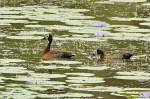
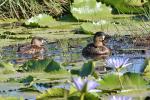
White-faced Ducks
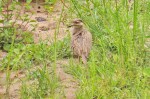
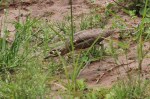
Water Thick-knee
Water Thick-knee in ambush
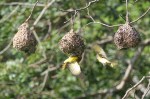
Sunbird Nest – but which one – reach for your books
Thick-billed Weaver. All pics of weavers in same pond.
Lesser Masked Weaver
Village Weavers
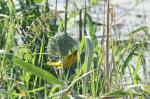
Yellow Weaver
Yellow Weaver- I need food! Now!
African Jacana
African Pied Wagtail
Common Scimitarbill
Diedrick’s Cuckoo
Black-bellied Starling
White-browed Scrub-Robin
White-browed Scrub-Robin
Black Cuckooshrike showing all his colours, Bonamanzi (Not a Cuckoo!!)
Shikra
Shikra
Shikra
Narina Trogon
Red-fronted Tinkerbird – peek-a-boo
Red-fronted Tinkerbird
African Broadbill
Bonamanzi yielded 89 species plus one UI (Unidentified) Raptor – have a go there is a pic in the gallery. Most of the Cuckoos were heard as well as the Green Malkoa. A Black Cuckooshrike in magnificent breeding plumage gave a great display round the campsite – yellow gape and epaulets very strident. A Red-fronted Tinkerbird and a Bearded Scrub-Robin also gave us great displays in the campsite.
Mkuze.
Surprisingly the tent was dry as we packed to leave Bonamanzi. We headed for the new gate to enter Mkuze. On the way we passed Muzi Pan. The water level was so high that it was a raging torrent beneath both bridges along the Muzi Pan dam wall. Not surprisingly there were few bird species about – we saw only 9 in the 10 minutes we stopped there. The Knob-billed Duck being the most interesting.
Mkuze Campsite. Still has water problems – the boreholes run dry regularly and the water is unfiltered so not only is it inadvisable to drink but the silt that comes with it is damaging all their taps – water leaks all the time.
Trying to book a campsite at Mkuze is often difficult because of this. Also they try to restrict the number of bookings to 10 campsites as that is all their one staff member can handle. They have over 30 potential sites. When we arrived on 31st December one man was still trying to cut the knee high grass in 50% of the sites!
On top of this the Ezemvelo Parks Board have fixed the campsite rate at R230 for 3 people – an increase from R180 last year (almost 30%) with no improvement in facilities and no way to get a rate for 2 people. Like Sodwana who charge for 4 people irrespectively, this is a total rip off.
During the 3 full days in Mkuze we never managed to find the newly released Lions perhaps because they are still happy to return to their boma where they were kept originally and also because all the rain the grass was high everywhere.
Some of our more interesting bird sightings include:
Black bellied Bustard
Lemon-breasted Canaries
Cuckoos vociferously calling – Black, African Emerald, Diedrik’s, Klass’s, Jacobin, Levaillant’s and Red-chested. A pair of the latter chasing each other round the main office.
Namaqua Doves
Lesser Spotted Eagle.
Burn-necked Eremomelas
Grey Go-away-bird
a juvenile Greater Honeyguide around our camp being fed by Black-bellied Starlings.
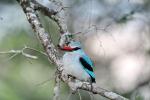
Woodland Kingfishers
Common Quail obligingly walking ahead of us on the road to KwaMalibali Hide
Red-backed Shrikes – everywhere
Neergaard’s Sunbird – always a pleasure
Grey Penduline-Tits in the trees above our campsite
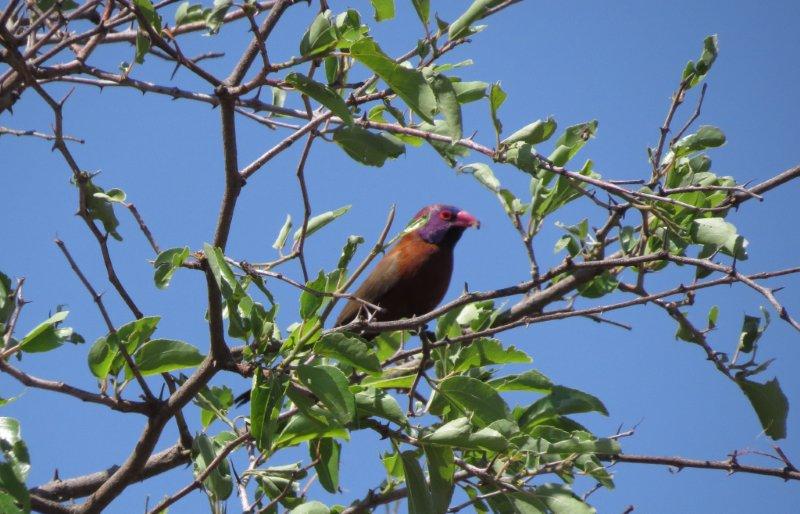
Red-throated Wrynecks
European Bee-eater
European Roller
Grey Go-away-bird
Golden-breasted Bunting
Greater Honeyguide – immature
Greater Honeyguide – immature
Green-winged Pytilia
Green-winged Pytilia
Grey Penduline-Tit
Grey Penduline-Tit
Helmeted Guineafowl
Klaas’s Cuckoo – female, Mkuze (Not a Klass’s!!)
Klaas’s Cuckoo, Mkuze (Not a Klass’s!!)
Klaas’s Cuckoo, Mkuze (Not a Klass’s!!)
Klaas’s Cuckoo, Mkuze (Not a Klass’s!!)
Lappet-faced Vulture,
Lesser Striped Swallow,
Lesser Striped Swallow,
Lesser Striped Swallow,
Lizard Buzzard
Lizard Buzzard
Lizard Buzzard
Long-tailed Widowbird
Long-tailed Widowbird
Mkuze campsite
Namaqua Dove
Nsumo Picnic site – beware Lions!
Pale Flycatcher,
Pied Kingfishers,
Marico Sunbird, Mkuze (Not a Purple-banded)
Purple-crested Turaco,
Rattling Cisticola
Red-backed Shrike – female,
Red-backed Shrike – female,
Yellow-billed Hornbill,Mkuze (NOT a Red-billed!!!)
Red-billed Oxpecker
Red-billed Queleas
Red-chested Cuckoo
Red-chested Cuckoo
Red-chested Cuckoo
Red-throated Wryneck
Red-throated Wryneck
Red-throated Wryneck
White Rhino minus one horn
Rufous-naped Lark
Sabota Lark
Sabota Lark
Spotted Flycatcher,
Striped Kingfisher
Three-banded Plover
Common Fiscal – juvenile, Mkuze (UI Bird)
Long-tailed Paradise-Whydah, Mkuze in transitional plumage (UI Bird)
Long-tailed Paradise-Whydah, Mkuze in transitional plumage (UI Bird)
Dusky Indigobird
Violet-Backed Starling – female
Violet-Backed Starling – male
Wahlberg’s Eagle infant on nest
Wahlberg’s Eagle
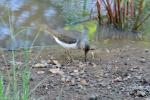
Water Thick-knee
Western Osprey,
White-browed Scrub-Robin
White-faced Duck
Willow Warbler
Yellow-fronted Canary
Yellow-throated Longclaw
African Firefinch
African Hoopoe
African Pied Wagtail
Barn Swallow,
Black-bellied Bustard
Black-bellied Bustard with ticks!
Black-shouldered Kite,
Blue-cheeked Bee-eater
Broad-billed Roller
Cardinal Woodpecker
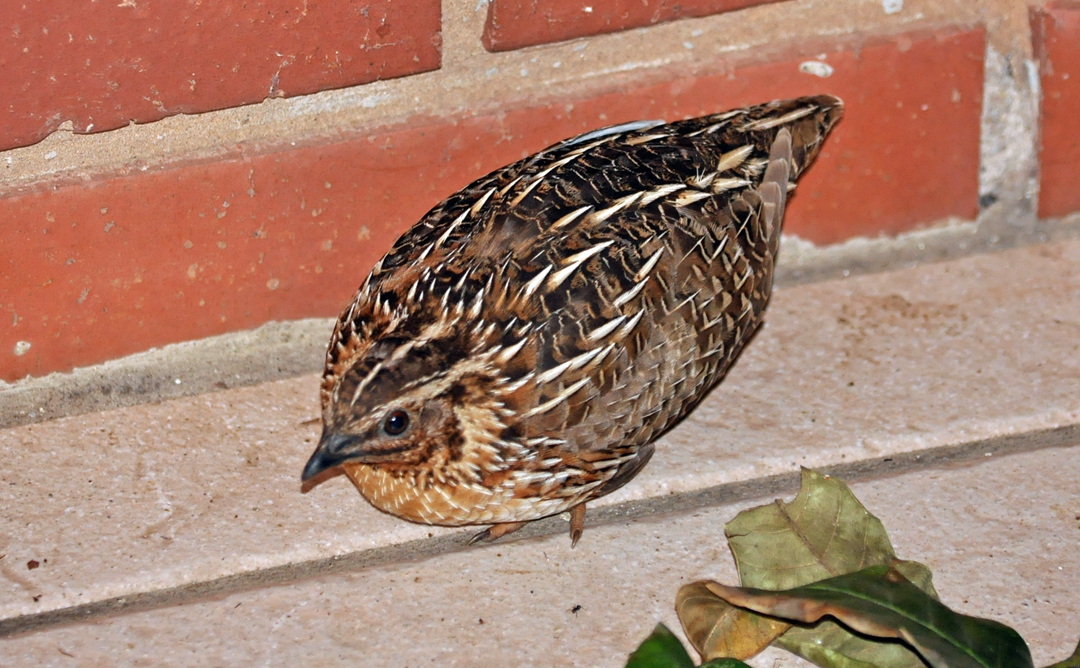
Common Quail
Common Quail
Common Quail
Common Quail
At the end of our visit we had identified 140 bird species – the pans were very full discouraging many water birds otherwise we would have expected many more.
Ndumo.
Ndumo is always a special place to visit and the local guides have a reputation of excellence. It is always a pleasure to take advantage of the early morning walks which at R110 pp is really good value.
Again we had 3 full days in the Reserve. On one of these days we spent the morning in Tembe Elephant Park.
Tembe was full of elephants – fortunately in the open swamp area so we could easily see them and not be chased by them as happened twice the last time we visited.
Although it felt like birding was quiet, we managed to identify 66 species in the 4 hours we were there. We were rewarded with sightings of an African Cuckoo-Hawk juvenile and an African Harrier-Hawk – the only place where we saw each of them. The other special sighting was of a pair of Woodward’s Batis. No Plain-backed Sunbird.
African Cuckoo-Hawk – immature
African Cuckoo-Hawk – immature
Upside Down or downside up.
African Cuckoo-Hawk – immature
African Cuckoo-Hawk – immature
Croaking Cisticola
European Bee-eater
Big Boy
We like the sign
Swamp elephants
Little Bee-eater
Rufous-naped Lark,
Serendipidy
Steppe Buzzard
UI Warbler – what am I?
Woolly-necked Storks
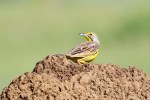
Yellow-throated Longclaw
The rest of our time spent in Ndumo. We went on a morning drive and 2 early morning walks and of course explored the Reserve on our own. In all we identified 142 species including an Eurasian Hobby.
On the last morning I went on the Southern Pongola walk. There were 3 of us and our guide, Sontu. His skills are superb. On the walk we heard the Narina Trogon and an African Golden Oriole – however the highlight was spotting a Black Coucal in the wetland area.
Trumpeter Hornbill,
White-eared Barbet
White-winged Widowbird
Wildebeest – juvenile,
Woodland Kingfisher
Woodland Kingfisher
Yellow Weaver being given a hand
Yellow Weaver building his nest
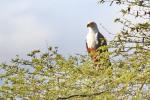
African Fish-Eagle
Yellow-billed Stork (not a Spoonbill – quite doff!)
Sugarloaf Campsite in St Lucia was our base for 3 nights. It is a huge camp with 100 sites ideally located right by the sea. It was only about 20% full and the fishermen were well behaved. Watch it on weekends as they can be quite raucous. The three nights was R432 for both of us – very reasonable.
We birded in 3 areas: Eastern and Western Shores and around the campsite.
Western Shores is the newly opened area of the iSimangaliso WetlandPark. It has been very well developed. The habitat is predominantly flat open grassland with outcrops of woodland and forest. There is currently a lot of freestanding water with many wetland areas. There is one hide and a boardwalk to a lookout point overlooking LakeSt Lucia. The picnic site is large, shady and well situated. We spent almost 6 hours there covering the whole road network.
As we approached the hide a herd of elephants – about 15 – saw us and calmly walked away allowing us access. Then at the hide, just as we were about to leave, Sally saw a raptor flying over the pan in front of the hide. Small head and quite barred underside. We got excited. Sally immediately pronounced what she thought it was. The bird then landed in one of the large broad-leafed trees opposite us about 100 metres away. Out came the scope and luckily the bird was not secretly hidden within. On further inspection we had a clear sighting of its head and tail and it was clear that Sally was correct. A lifer for me – a European Honey-Buzzard.
I include some pictures of the habitat and a few of the birds we were lucky enough to photograph. In all we saw 72 species in the 5.5 hours we were there.
Steppe Buzzard
Crested Guineafowl
Crested Guineafowl
European Honey-Buzzard
European Roller
Hamerkops
Hamerkops
Malachite Kingfisher
Red Bishop
Purple-banded Sunbird
Boardwalk
View from the boardwalk deck
View from the boardwalk deck
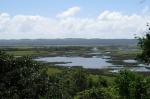
Western Shores Habitat
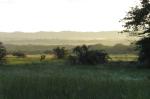
Western Shores Habitat – early morning, eerie light
Western Shores Habitat
Western Shores Habitat
Western Shores Habitat
White-backed Ducks
White-eared Barbet
Ashy Flycatcher and young
Black-breasted Snake-Eagle
Black-headed Heron,
Blue-cheeked Bee-eater
Blue-cheeked Bee-eater
Burchell’s Coucal – juvenile begging
Burchell’s Coucal – juvenile
Burchell’s Coucal
Burchell’s Coucal
Eastern Shores. Similar in habitat to the WesternShores but more hilly with coastal forest and the sea and shore. There are 2 bird hides and several lookout points and picnic sites as well as a number of side loops off the main road to CapeVidal. In the past we have seen both White and Black Rhino and Leopards (one right next to the car park for the large new Mafazana hide).
On the Vlei Loop we saw our first raptor – a Southern-banded Snake-Eagle. It was sitting prominently in a bare tree with the sun directly behind it. We had to work hard to get the right angle to see it clearly enough to identify it.
At the Mafazana hide Sally spotted 2 Saddle-billed Storks on top of a distant tree. We wondered if they were starting to breed early!
The other sighting worth mentioning was surprisingly that of a Lilac-breasted Roller. It was the first and only sighting of one on our whole 2 week trip – most unusual.
In all we identified 73 species in the 6 hours we were there.
Southern Banded Snake-Eagle
UI Raptor – have a go at its ID
View from Mafazana Hide
Cape Wagtail
Lilac-breasted Roller
Saddle-billed Storks – could they be nesting so early?
St. Lucia, Sugarloaf Camp and the immediate shore.
On setting up camp the monkeys arrived. There were also a couple of Grey Duiker close by. It was hilarious to watch them interact. One approached the other and the next minute they were all chasing each other around the site. Other aminals seen in the camp included Bushbuck, Red Duiker and interestingly Reedbuck – often paying little attention to us Humans.
Right next to the camp is the boardwalk to the sea and the mouth of LakeSt Lucia. Hippos and Crocs were very evident – just waiting for one of the fishermen to get too close.
On the first afternoon after setting up our camp we headed for a walk on the beach. We were surprised by a Palmnut Vulture which flew over our heads and landed on the inland side of the beach at the mouth of LakeSt. Lucia. We approached slowly watching it nibbling on the base of some of the spindly grass protruding from the muddy edges of the lake – managing to get with 15 metres of it. An unexpected waterbird!
Campsite birding was very good. One R-C R-C (Natal Robin or as Sally says Cossypha Natalensis) joined us for a sundowner doing good imitations of an African Emerald Cuckoo. An African Goshawk landed in the tall pine trees above us to sing his good-bye as we prepared to leave. But probably the highlight was a wonderful view of a male Green Twinspot in vivid plumage.
In all we recorded 57 species in and around the campsite including the walk along the waterfront.
Palmnut Vulture
Palmnut Vulture
Palmnut Vulture
Palmnut Vulture
Palmnut Vulture
Palmnut Vulture
African Goshawk
Common Ringed Plover
Livingston’s Turaco
Livingston’s Turaco
Sadly we returned home to a chilly welcome in a not so sunny Hillcrest.
In total we identified 235 species on our two week odyssey.
If anyone would like a copy of our excel spreadsheet showing which birds we identified in each of the 9 different reserves we visited, then click here to contact me.
We had a good turn out for the walk (18) and our bird count was 69. The weather was a bit odd to start with as there was a heavy mist hanging above the reserve and there was almost a slight drizzle at times but then the sun came out and it was hot, hot, hot and the birding got much better. From the top path we had great views of Cape Rock Thrush, Yellow-throated Longclaw and Golden Weaver. Plenty of sunbirds, various weavers both Olive and Kurrichane Thrush. Diederik, Klaas’s and Red-chested Cuckoos called – a few people managed to see the Diederik. Raptors – maybe not as good as usual, Common Buzzard, Crowned Eagle, African Harrier Hawk and African Gos; the Fish Eagle was heard.
The flowers are always a delight at Springside and this year the ground orchids were superb, Disa , Eulophia and Satriuyms, also lots of flowering trees.
The pic of the mating Rain Forest Brown butterflies is Sandi’s, the rest of the pics are from Cheryl (the Golden Weaver is fabulous).
Springside glory
It is a…..
Mating Butterflies
Springside Blooms
Golden Weaver
We collected R300 for the Hillcrest Conservancy – thanks to your generous donations.
The next day was overcast and a little cooler which was not a bad thing as I had one very burnt arm from the day before. Niall was off to Peru so was absent (imagine choosing Peru over Pretoria!) but Kerry Fairley joined us. We had been together on a birding trip to Finland earlier in the year so it was great to see her again.
We head off for the Seringveld Conservancy, near Roodeplaat Dam, east of Pretoria. It consists mainly of broad-leafed woodIand interspersed with some grassland. I was sitting on 498 so the big question was which would be my 500th bird? The birding in general was a little quieter due to the overcast conditions. This was a slight relief after the overwhelming number of new birds I had seen the day before.
Southern Masked Weaver
The first new bird we heard first, a White-throated Robin-chat. We then saw it on top of a tree – what a beauty. Most of the birding is from the road as many of the properties are private.
We drove and stopped, drove and stopped quite a few times all the while heading towards a rocky outcrop where Fawn-coloured Lark is known to occur. Allan called it up and sure enough, it popped up, flying from tree to tree and then landing on a wire. I have included a picture as this is my 500th bird but it is very far away so not too clear.
Fawn-coloured Lark
Once I had stopped high-fiving, we headed off to Centurion. Before leaving the conservancy, we bumped into a group from the Wits Bird Club. It was lovely to meet people like Helen Biram who I had previously only connected with on Facebook.
We arrived at a field seemingly in the middle of nowhere, west of Raslouw, Centurion where we had so much fun. It was one of those experiences one will always remember. We were targeting Desert and Cloud Cisticola as well as Melodious Lark.
Kerry and Allan
These birds are best identified by their calls and displaying behavior. It was amazing seeing these birds flying so high in the sky and then displaying by flapping their wings and staying in one place. The Cloud Cisticola eventually swooped down to earth and I was able to take a photo. Allan seemed to see the birds long before I did when it was nothing but a little speck in the sky; quite difficult to pick up with a grey sky behind them.
Birding in the Wider Gauteng (100km) Area Nov/Dec 2013 Part 2
The Melodious Lark has the most stamina and displays in the sky for ages all the while singing away, partly its own song and then mimicry – it must have mimicked about 5 different birds while it hovered above us.
Melodious Lark
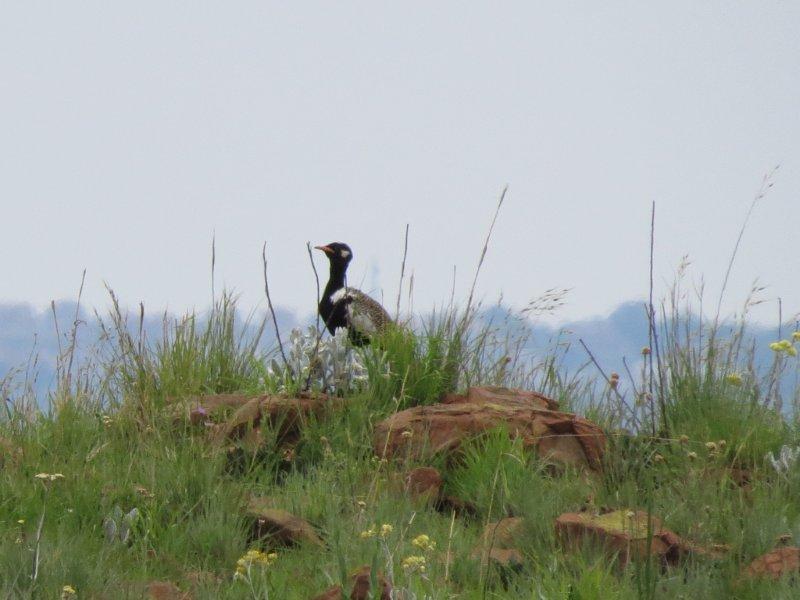
Before we left we spotted a Northern Black Korhaan in the long grass on the crest of the hill.
Northern Black Korhaan
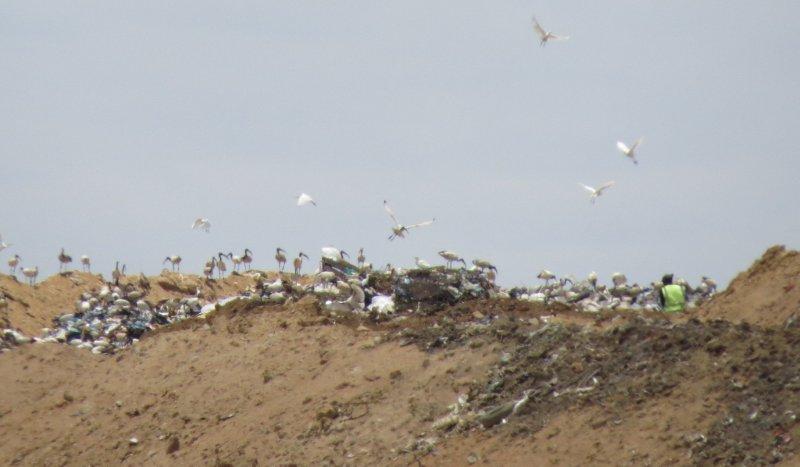
Next we were off to the dump to see if we could find a Black Kite but to no avail. We did see an enormous amount of Sacred Ibis and White Storks scavenging to their heart’s content.
Scavengers
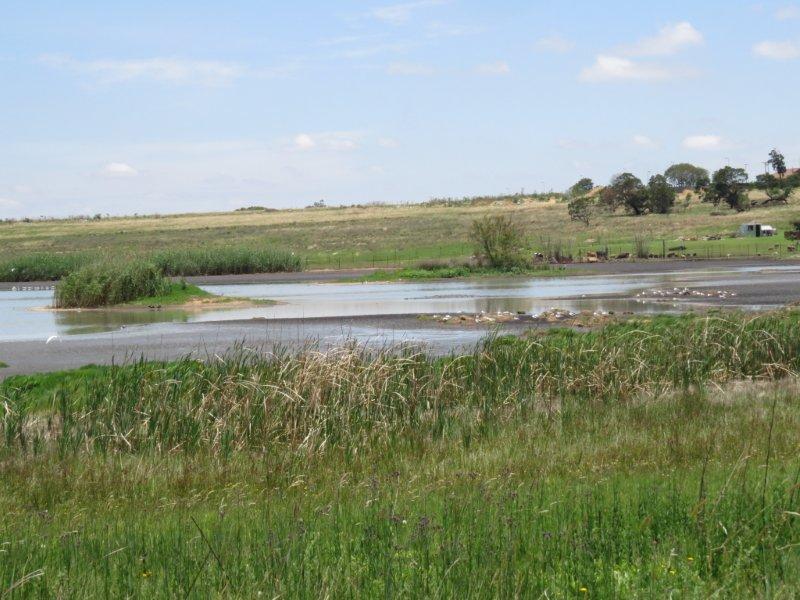
From there we visited the Glen Austin Bird Sanctuary.
Glen Austin Bird Sanctuary
where we were treated to both Lesser and Greater Flamingo.
Flamingoes
as well as the usual variety of water birds with one Fulvous Duck amongst them.
Water birds
Just before dropping me at my friend’s house in Blairgowrie, Allan thought we should pop into Delta Park which is around the corner. The African Reed Warbler was very active and with a little encouragement it was soon showing itself – my last lifer for the day.
It was a fantastic two days and I was privileged to be with such good birders. Be warned, Allan and Niall, I am certainly penciling this in for next year.
Two days of whirlwind birding in Gauteng offered up 150 species, 25 lifers and extra 18 birds for my year list, on top of the lifers. I had no idea of the diversity of this area. I was particularly fortunate to go birding with Niall and Debbie Perrins and Allan Ridley, without whom I would not have seen half of the birds. There was much banter between Allan and Niall about the pressure of having to find 20 lifers in a day so I could hit the 500 mark. I thought they were joking as I was hoping for about 4 or 5 new birds.
We set off at 4am on the Saturday and headed for Kgomo-Kgomo which is north-west of Pretoria past Hammanskraal. We stopped at the bridge over the vast floodplain which goes on as far as the eye can see.
Floodplain
There had been a huge storm in the area a few days before which swelled the water levels; the consensus was that the area would be humming with crakes in a few weeks’ time. The Amur Falcons were back and there were many Lesser Kestrels too.
Lesser Kestrel female
From there we continued driving through the area stopping at the side of the road whenever it looked interesting.
Signpost
Roadside birding
At one point I was positively overwhelmed by all the new (to me) species that were there seemingly all at once. Lesser Grey Shrike, Black-throated Canary, Black-chested Prinia and Great Sparrow to name but a few.
Lesser Grey Shrike
Black-throated Canary
Some of these were on private property. I felt a little intrusive with my binoculars and camera zooming in on a bird while a very smartly dressed lady came out of her front door.
Birding a stranger’s back garden
Flocks of Speckled Pigeon and Wattled Starling swirled around the sky while at ground level we saw Southern Pied Babbler, Chestnut-vented Titbabbler and a beautiful Shaft-tailed Whydah.
Chestnut-vented Titbabbler
Shaft-tailed Whydah
We drove on through the Acacia woodland and stopped every now and again at active spots, of which there were many. The sun was beating down and there was not a cloud in the sky; Bushveld birding at its best.
European Bee-eater
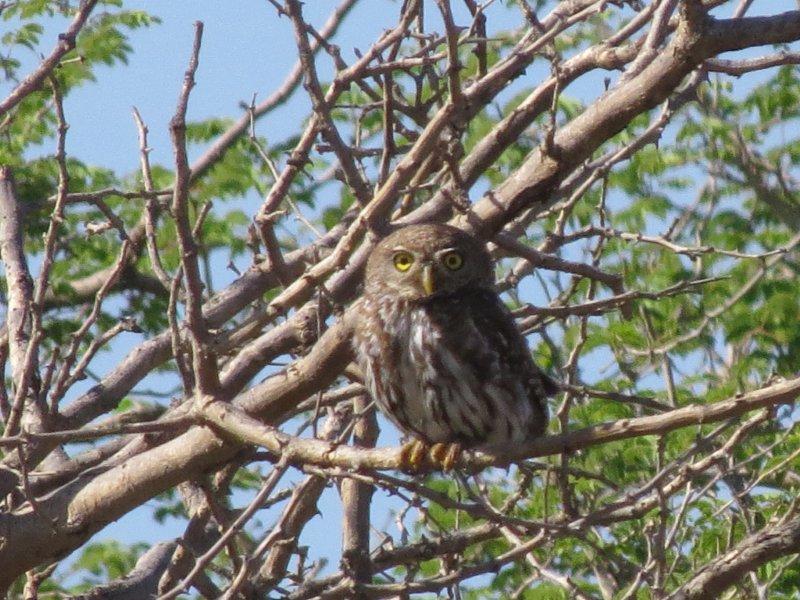
The call of the Pearl-spotted Owlet, most ably rendered by Niall and Allan, not only brought forth quite a few birds but also the ‘pearlie’ itself. I was delighted because I have only seen one once before.
Pearl-spotted Owlet
While the Barred-Wren-Warbler led us on a merry chase, darting from one side of the road to the other, the Marico Flycatcher was far more obliging.
Grey Hornbill
Lesser Grey Shrike on tree
Marico Flycatcher
One of my favourite birds of the day was the Violet-eared Waxbill.
Violet-eared Waxbill
We turned off the road and went over a bridge where we got out and had a lovely sighting of a Jacobin Cuckoo.
Jacobin Cuckoo
We then headed back the way we had come when a Common Swift was spotted. I was desperate to get a good view of it as I have not seen one in SA before but soon they were swarming all over the place so it was easy. Further along, at the pans a few km east of Kgomo-Kgomo town along the Zaagkuildrift road, we not only saw a Dwarf Bittern but also the largest concentration of bullfrogs I have ever seen in one place. They were all full of the joys of spring, to put it mildly.
Bullfrog Boudoir
We then headed towards the Rust de Winter dam where we stopped at a bridge outside the resort. I felt at home because I recognized all the bird calls as this habitat was more like KZN; Puffback, Black-headed Oriole, Paradise flycatchers and Woodland Kingfishers to name but a few. The Woodland Kingfishers were on a branch displaying beautifully by fanning out their tails.
Woodland Kingfishers
From there we were about to head for home when Niall said he knew a spot where Monotonous Larks have been known to occur. We travelled down yet another dusty road through Thornveld when suddenly we heard them. It was amazing to see them perched on top of a tree with their white throats bulging as they called.
Monotonous Lark
Just before being dropped off at my friend’s house, we saw Karoo Thrush which abounds in this area but was a lifer for me; much to the surprise of all. 18 lifers for the day put me on 498 but more importantly, I had a fun-filled day and learnt a lot.
This is an account of our holiday in the Eastern Cape from 8th to 21st October 2013.
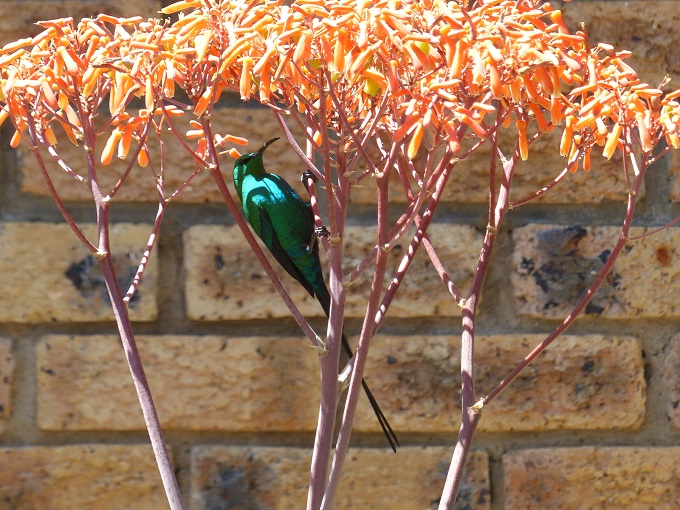
We started our holiday to the Eastern Cape from Pretoria so the first port of call was the Mountain Zebra Park for 3 days. It is a beautiful park with very friendly people and good accommodation. The animals are all easy to see on top of the mountain. It was very dry when we were there so the birding was not so good. I was busy photographing an aloe and a Malachite Sunbird arrived to feed. A number of sunbirds were around the reception area, very difficult to photograph being so quick but a Double-Collared Sunbird was also very obliging.
Malachite Sunbird
Greater Double-Collared Sunbird
There were lots of Pied Starlings in the caravan park, about the only green grass in the whole park.
Pied Starling
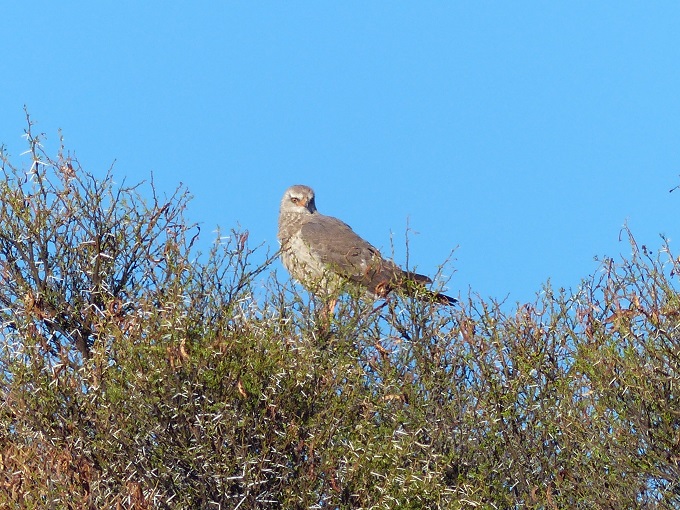
This juvenile Pale Chanting Goshawk was a bit far away but with a bit of cropping I managed to get a reasonable photo. Altogether we saw about 120 birds in the park.
Juvenile Pale Chanting Goshawk
We left the Mountain Zebra Park after three peaceful days and moved on to the Addo Elephant Park. It is also a lovely park. The elephants seem to be much more placid than the Kruger elephants and we saw lots of them. We were also lucky enough to see a lioness sitting in the grass by the Domkrag dam. The birding was much better and I managed to photograph a few more birds on the Nzipondo Loop and at the Domkrag Pan.
Pale Chanting Goshawk
Cape Weaver
Karoo Scrub-Robin
Lesser Flamingo
Rock Kestrel
Cape Robin-Chat
We were only there for the day as we could not get any accommodation. It has become a very popular park.
On we went to Port Elizabeth to a timeshare for a week on Brookes Hill, right on Kings Beach with a lovely view of the sea. We visited Cape Recife and saw a Black Oystercatcher on the sands, also Sanderlings, and lots of Swift and Common Terns.
African black Oystercatcher
It was Marine week unbeknown to us so when we visited SAMREC we got a free conducted tour around the rehabilitation centre. It was very interesting. I photographed some of the inmates.
African Penguins
Our outing with Birdlife P.E. was unfortunately on one of those hugely windy days where all the birds took for cover. We had to bird from the car as the wind almost knocked you over. We were trying to find the White-Bellied Korhaan but unfortunately had no luck. They were a very friendly group and I enjoyed being with them.
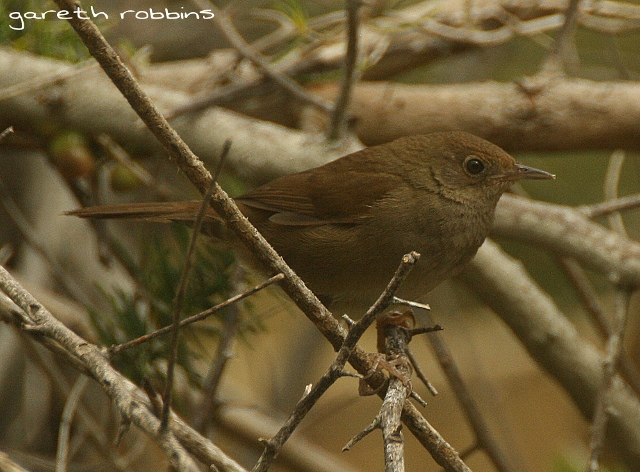
We had weeks timeshare at Plettenberg Bay which was lovely. It is such a beautiful part of the country and has remained unspoilt. I organised a birding trip with Gareth Robbins and we managed to see a Victorin’s Warbler in the Fynbos at Hartenbos and then very exciting – a lifer for me – a Knysna Warbler in a garden in Plettenberg Bay.
Knysna Warbler
Knysna Heads was also visited and we saw a number of birds on a little pan along the way.
Cape Shoveler
Black-Winged Stilt
Kittlitz’s Plover
Pied Avocet
All in all it was a wonderful holiday.
Jenny & Dave Rix
If you have a story to tell please send it in to me and I shall put it out on our website – pictures (less than 200kb in size please) help to tell the tale.
At about 8pm last night Anne and I heard a commotion on our patio and as I looked up I thought I saw what looked like a small Owl grab a little Gecko off the wall. I ran outside to have a look but it had disappeared. About 10 mins later it flew back so I grabbed my camera and slowly went onto the patio and there, sitting on the floor, was a Common Quail. It then jumped / flew about 6 ft into the air up against the wall, obviously trying to catch a gecko , but after having no luck in then wandered off into the garden.
The 3rd Sunday outing for November took place in the Midlands, kindly hosted by Crystelle Wilson at her charming country home on the Dargle road just outside Boston.
A group of 15 keen birders assembled at 8am with a welcoming mug of coffee with rusks for those that made the journey on the morning. Others had made it a birding weekend and overnighted in the area. Gum boots of all sorts, shapes and colours were kindly on offer for those without, and off we set for a gentle walk to the river with paths running through the wetland and along the Elands River.
Boots ‘n All, Boston
A good number of birds were seen and heard including warblers (Little-rush, African Reed, and Dark-Capped Yellow Warbler), cisticolas (Levaillants), widows (Red-collared and Fan-tailed), weavers (Spectacled and Village), water birds (Yellow-billed Duck, Spur-winged Geese) and a few raptors (Steppe Buzzard, Black Sparrowhawk). Unfortunately the cranes were not on offer which will mean a return trip next year, but also seen were Cape Grassbird, Drakensberg Prinia, Southern Red Bishop, Common Waxbill and Giant Kingfisher.
Once out of the wetlands and back at the house, a few birds seen in the gardens surrounding the house included Cape Wagtail, Cape Canary, Amethyst Sunbird and a lovely pair of African Hoopoe.
Gum boots were soon discarded as next up on the agenda was a short drive to a farm further north for a spot of indigenous forest birding. Here we were treated to wonderful views of rolling farmlands, small dams and quaint cottages – the latter perfect for a week end away of quiet birding and fly-fishing away from the bustle of city life. A leisurely stroll through the indigenous forest yielded cracking views of Bush Blackcap, Bar-throated Apalis and Yellow-Throated Woodland-Warbler. A few other birds seen included Olive Thrush, Blue-Mantled Crested Flycatcher, African Paradise Flycatcher, Forest Canary and Jackal Buzzard. Not to be outdone by the birds, a pair of Common Duiker also put in a brief appearance.
Once done with the forest walk, we proceeded down to a second fishing cottage overlooking a small dam – picnic time and time to discuss events of the day. En route a few picked up Plain-backed Pipit, Yellow Bishop and Cape Robin-Chat. The final tally for the week end was approximately 70 species seen, to be confirmed by Crystelle once her atlas card has been submitted to the SABAP2 database.
All three species were photographed within half and hour on Thursday AM, and within 50 metres of each other. Locality: Maputaland – just south of Kosi Bay lakes (Longclaw capital of the world!).
Yellow-throated Longclaw
Cape Longclaw
Rosy-throated Longclaw
Rosy-throated Longclaw
Yellow-throated, Cape & Rosy-throated Longclaws
Photos by Hugh Chittenden. Message from Peter Hughes.










































































































 Birds are our Story