Mike Roseblane, Jane Morris, my wife Sally and I visited Kenneth Stainbank NR last Sunday. Here are some photos taken while there. The bird of the day was a very obliging Red-fronted Tinkerbird.
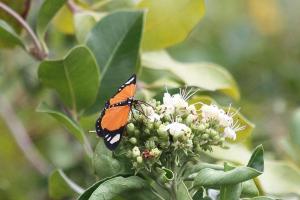
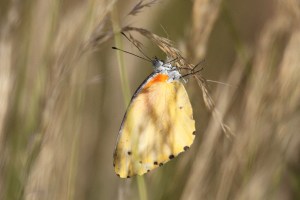
African Common White
African Common White
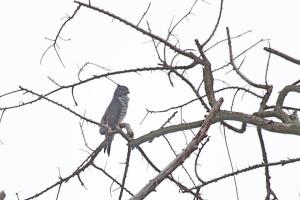
African Harrier Hawk
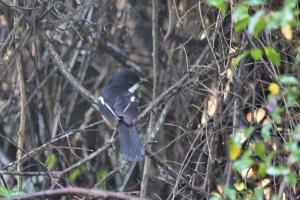
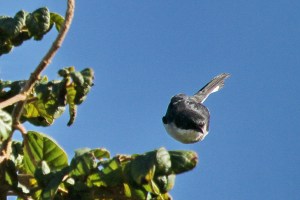
Chinspot Batis
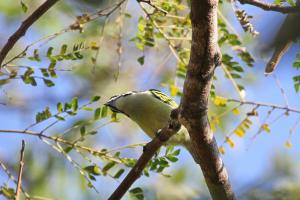
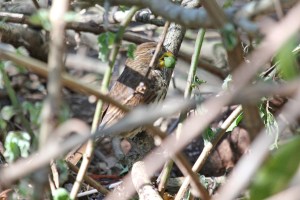
Yellow-rumped Tinkerbird
Yellow Blossom
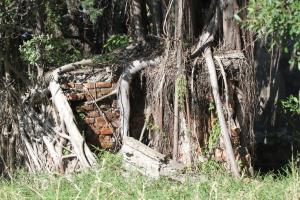
Slave Quarters
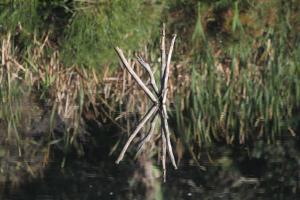
Topsy Turvy in 3D. Note the background grass is growing downwards.
Sugarloaf campsite in St Lucia was not too busy. School holidays had ended. There was water rationing in St Lucia which meant that one day we had no tapped water but the rest all day. Water bottles were laid out at each of the ablutions blocks. Power cuts were from 5 to 6 pm several nights – yes only one hour.
We spent a morning in each of the two parts of the Isimangaliso Wetland Park – Eastern and Western Shores. And one morning in the Gwalagwala trail. Time was spent on the beach too, though the gulls and terns were mostly down the coast chasing the sardines. No Franklin’s Gull!
The weather was mostly kind to us and we did have rain on several nights which helped to bring out the birds the following mornings.
In all we identified 63 birds in Eastern Shores, 64 birds in Western Shores and 82 birds in and around the campsite, Gwalagwala trail and on the beach. In total 125 different bird species were identified. Click here to see the lists.
Here are some photos of the birds seen.
Blue-mantled Crested-Flycatcher
Black-winged Lapwing
Senegal Lapwing
Black-bellied Bustard
Ashy Flycatcher
African Fish-Eagle
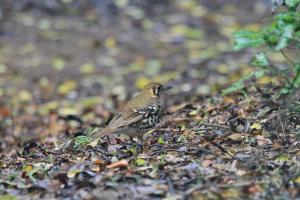
Spotted Ground-Thrush
Spotted Ground-Thrush
Spotted Ground-Thrush
Terrestial Brownbul
Trumpeter Hornbill
African Cuckoo Hawk
Southern Boubou
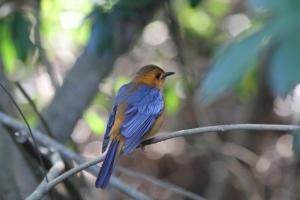
Red-capped Robin-Chat
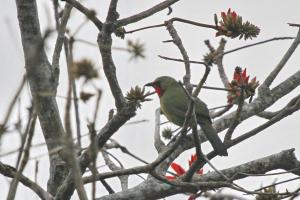
Olive Bushshrike
Common and Swift Terns
One footed Grey-headed Gull
Whiskered Tern
Pied Avocets
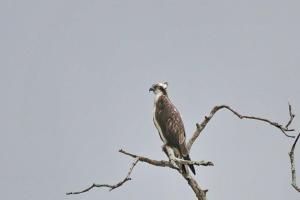
Osprey
Osprey
Saddle-billed Stork
Gorgeous Bushshrike
Croaking Cisticola
Collared Pratincole
Collared Pratincole
Brown Snake-Eagle swallowing breakfast whole.
Brown Snake-Eagle swallowing breakfast whole.
Chorister Robin-Chat
Chorister Robin-Chat
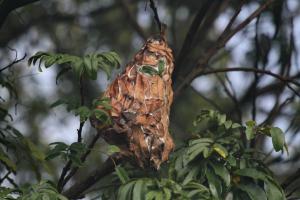
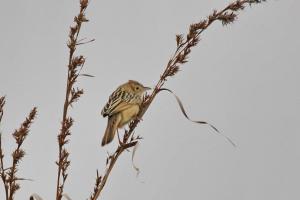
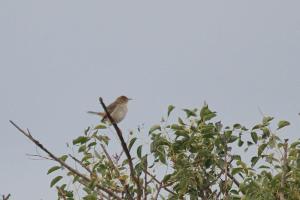
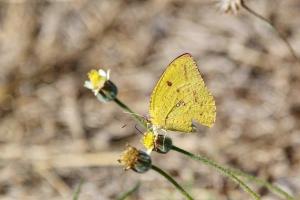
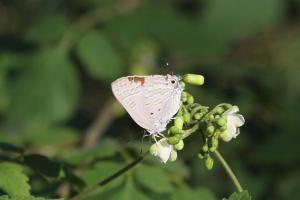
And a few butterflies and mystery Cisticolas for ID.
We had a lovely sunny day for our outing to Simbithi on Sunday the 19th July
Eighteen birders came including two environmental ladies from Simbithi. Margi Lilianveld organised all our security codes so that we could get through the security. Many thanks to her.
We drove down to the Fish Eagle dam and met up with Elayne Tranter who was the other environmental lady. We decided to do the Mfuleni Trail and split into two groups, the one doing the trail clockwise and the other anti clockwise.
Birding around the Fish Eagle dam was rewarding with Village Weavers very busy building their nests and collecting nesting material. We saw the Goliath, Black-headed, Grey and Purple Herons, the Common Moorhen, Burchell’s Coucal, the White-eared Barbet and lovely views of the Malachite Kingfisher.
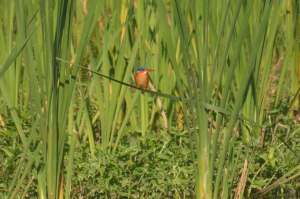
Malachite Kingfisher
Birding along the pathway was quiet as it was still in shade but as we reached the beginning of the pathway into the forest the sun was shining and the birds were all there. We had wonderful sightings of the Red-fronted Tinker Bird, White-browed Scrub-Robin, Tawny-flanked Prinia, Olive Sunbird, Black Cuckooshrike and a very fast flyby of the Grey Waxbill.
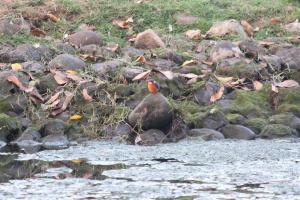
Red Fronted Tinkerbird
The mature riverine forest growing along the stream was beautiful with many trees over 100 years old. A lot of the trees were named and along the path a camera had been placed to capture the night animals. Sunbirds were plentiful and we saw Amethyst, Collard, Grey, Olive and Purple-banded Sunbirds. The Black-collard Barbets, Crested Barbets, Sombre Greenbul and Yellow-bellied Greenbul were calling and we had a quick fly past of the Tambourine Dove.
Juvenile Tambourine Dove
When we reached the other side of the Fish Eagle dam there were a lot of Bronze Mannikins and we saw two nests and then another three built under the eaves of a house – just like the swallows do. It had us all fascinated.
In the open grassland area we heard the Neddicky and saw the Lesser-striped Swallow – that was a surprise, White-rumped Swift, Little Swift and African Palm Swift. Walking alongside the dam we saw the Black-throated Wattle-eye, lovely sightings as the bird sat still for quite a while.
Black-throated Wattle-eye
In the next patch of grasslands we saw the Yellow-fronted Canaries and the Dusky Flycatcher. The next part of riverine forest we saw a lot of orchards growing on the trees but unfortunately they were not flowering.
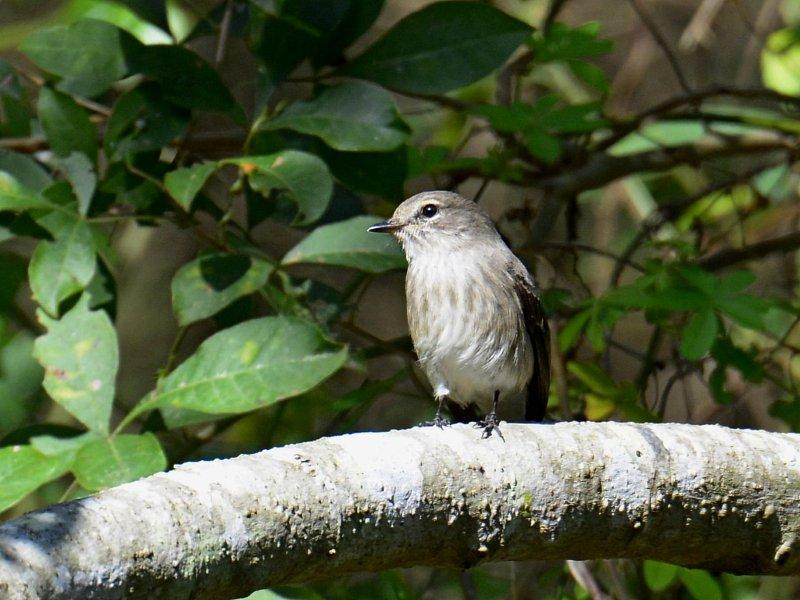
African Dusky Flycatcher
We met up with our other group there and they had seen an African Crake at the Heron Dam. Elena was delighted as it was a lifer for her.
We eventually reached the dam but the African Crake had disappeared but we did see the White-throated Swallow, Little Rush Warbler, Spur-winged Goose and heard the Fish Eagle calling.
Black-bellied Starling
White-browed Scrub Robin
White-breasted Cormorant
Thick-billed Weaver
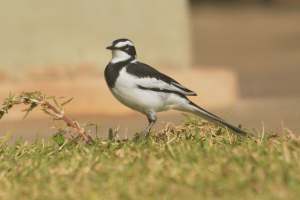
African Pied Wagtail
African Pied Wagtail
On the way back to the Fish Eagle dam we heard Yellow-breasted Apalis and saw a Kurrichane Thrush. We had tea at the Fish Eagle Community Centre, very civilized with table and chairs provided and whilst having tea we saw the Red-capped Robin Chat, two sparrow species, the Yellow-rumped Tinker Bird and another good sighting of the Purple-banded Sunbird.
We managed to see 78 birds altogether which is not too bad for a winters birding. The bird of the day – African Crake.
African Crake
Photos courtesy of Decklan Jordaan and Dave Rimmer.
Sally and I took a stroll around Beachwood Golf Course with Cecil Fenwick. Although this is not a club outing Cecil and friends usually have a stroll around either Beachwood or Royal Durban golf courses on the last Saturday of each month.
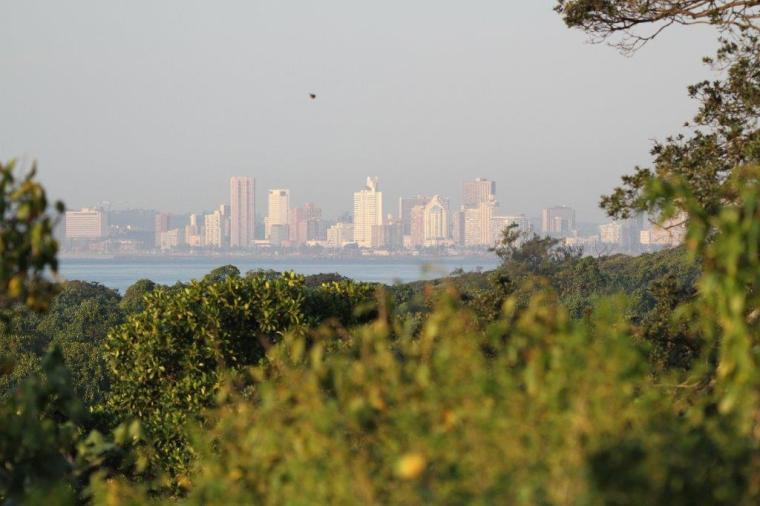
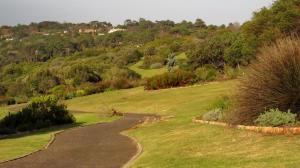
View of Durban from one of the Beachwood tee boxes
Here are some of the photos of birds seen on our visit.
Eleven birders gathered at the entrance to AECI in Amanzimtoti. The plan was to bird in Vumbuka. However Barry suggested we visit Umbogavango first as his reconnaissance the previous week had revealed that Vumbuka was quiet by comparison.
Barry took us into the grassland area behind the ablutions and then around the site visiting the bird hides and through its many various habitats.
Altogether 77 bird species were recorded including a number of raptors – African Crowned Eagle, African Fish-Eagle, Long-crested Eagle, Lanner Falcon and Black Sparrowhawk. To view the list click here.
Here are photos of some of the birds seen.
Yellow-billed Duck and Hadeda Ibis getting familiar
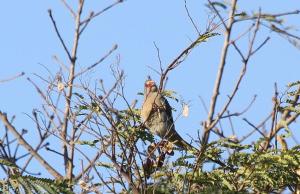
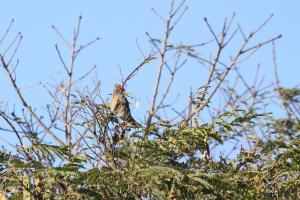
Yellow-rumped Tinkerbird – obliging
Black-bellied Starling
Dusky Flycatcher
Yellow-rumped Tinkerbird
Yellow-rumped Tinkerbird trying hard to ascertain where our call was coming from
Chinspot Batis
African Paradise-Flycatcher
Spectacled Weaver
Southern Grey-headed Sparrow
Red-faced Mousebird
Red-faced Mousebird
White-eared Barbets
Long-crested Eagle
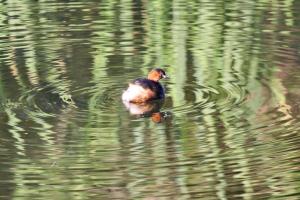
Little Grebe all in a swirl
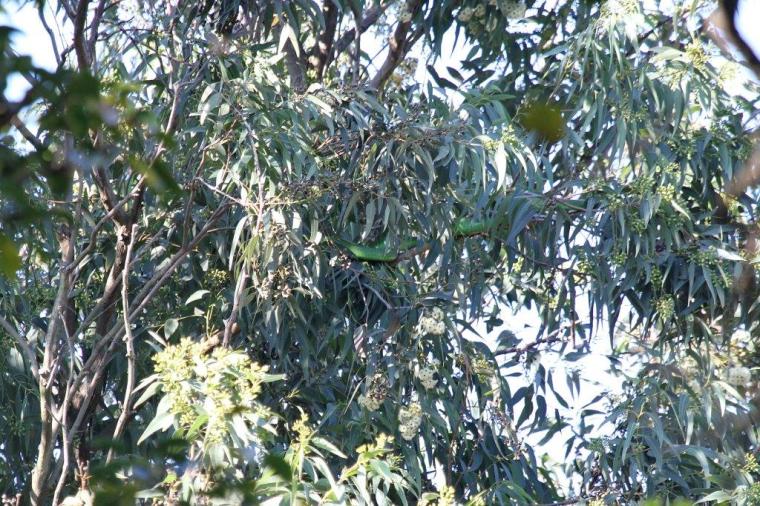
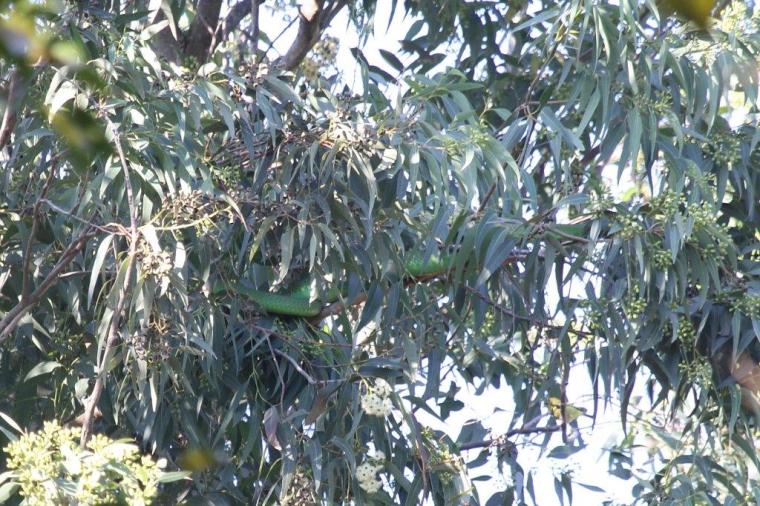
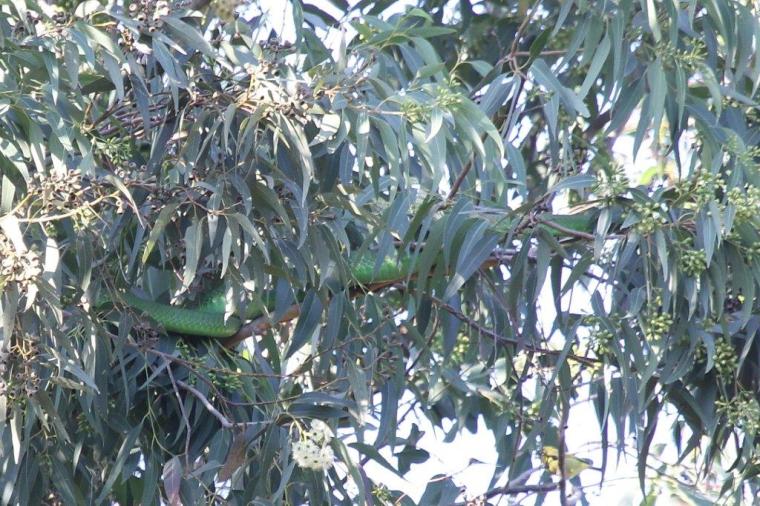
The most interesting sighting was not that of a bird. Sally searched for why birds were going crazy in a distant tree when she spotted a rather large Green Mamba in the tree next to all the action.
Green Mamba
Green Mamba
Green Mamba
After several hours at Umbogavango we headed for tea at the newly refurbished Lapa in Vumbuka. The Lapa has been extended and can seat many more people under shelter. There are also braai facilities available.
Several of us took a stroll around a section of Vumbuka after tea. Birds were calling but were few and far between – probably as it was already midday. However a number of butterflies were photographed and are included here to challenge your skills at IDing them.
First it was Black River and the Snowy Egret then Stranfontein and finally Kirstenbosch – the third and final part of our quick visit to Cape Town.
Kirstenbosch
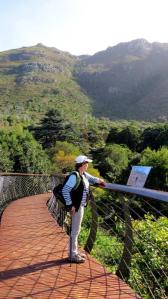
Kirstenbosch National Botanical Gardens is one of those special treasures any country would be proud of. Recently they added an aerial boardwalk.
Kirstenbosck aerial boardwalk
Kirstenbosck aerial boardwalk
We had a number of pleasant surprises with birds that we saw.
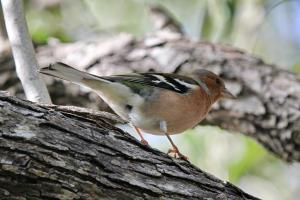
The first was a Common Chaffinch. Stopping for a sit-down Sally noticed a bird in a distant bare tree. Unable to see exactly what it was, she took a photo and zoomed in. It became obvious that it was a Common Chaffinch. So we went to see if we could get a closer look and it obliged.
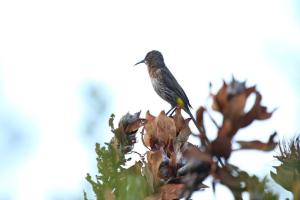
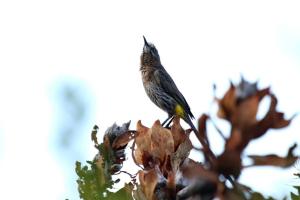
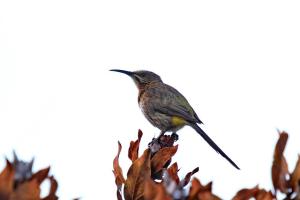
Towards the end of our visit and still quite high up, we heard a call which Sally did not recognise. On investigation it turned out to be a pair of Cape Sugarbirds. Another pleasant surprise.
Cape Sugarbird
Cape Sugarbird
Cape Sugarbird
Cape Sugarbird
Cape Sugarbirds singing
Cape Sugarbirds
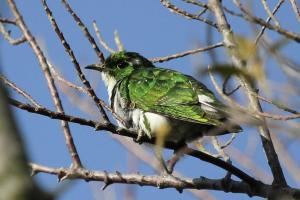
Then as we started to head down we were surprised by a Klaas’s Cuckoo.
Klaas’s Cuckoo
Klaas’s Cuckoo
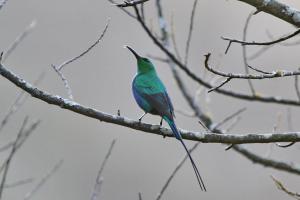
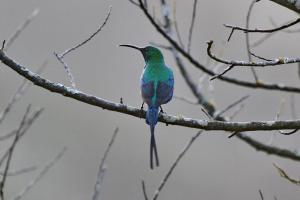
As if that was not enough we turned round to watch another bird settle in a bare tree beside us – a Malachite Sunbird.
Malachite Sunbird
Malachite Sunbird
Malachite Sunbird
As we reached the Protea garden we kept our eyes open for an Orange-breasted Sunbird – a species we rather hope to find. Very elusive. We had seen dozens of Southern Double-collared Sunbirds so were optimistic. Then playing its call we realised why they are so elusive. The Southern Double-collared Sunbirds made it clear that they did not want to hear that species on their turf. We weren’t exactly dive bombed but their calls in response to the call and their closeness made it obvious.
Some photos of other birds seen at Kirstenbosch:
Olive Thrush
Dusky Flycatcher
Souhern Double-collared Sunbird
Southern Double-collared
Karoo Prinia
Karoo Prinia
Cape Bulbul
Bar-throated Apalis
Forest canary.
Eventually it was time to return home but we left with a strong desire to return. Lets hope for another Mega and a lot more Avios points!
Following on from our viewing of the Snowy Egret, we took time to visit Strandfontein and Kirstenbosch.
After a wet and overcast previous day it was a pleasant surprise to have a bright sunny day for birding – albeit a wee bit cool.
Strandfontein wetlands are massive. Ponds and ponds of birds and a good road infrastructure to get around.
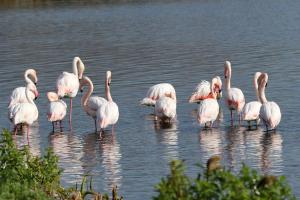
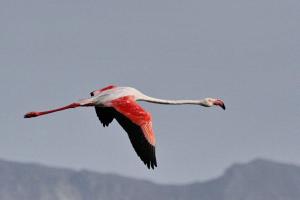
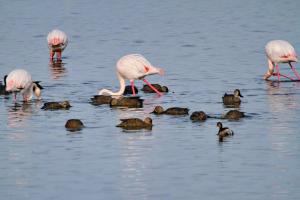
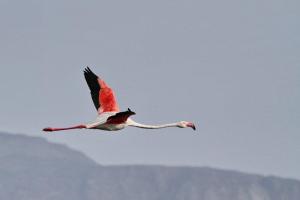
Greater Flamingos were everywhere.
Greater Flamingo
Greater Flamingo
Greater Flamingo
Greater Flamingo with Cape Shovelers
Greater Flamingo
Greater Flamingos ruffled by a breeze
It was satisfying to be able to review a number of species which we don’t often find in Natal and some other “Cape” birds.
Cape Bulbul
Cape Longclaw
Cape White-eye – capensis
Cape White-eye – capensis
Cape Spurfowl
Cape Shovelers
Common Starlings
Common Starling
Hartlaub’s Gull
Hartlaub’s Gull
Black-necked Grebes
Black-necked Grebes
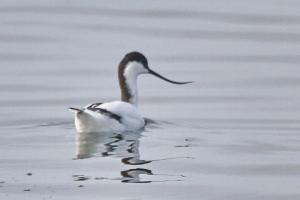
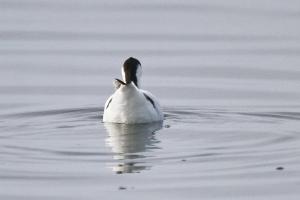
African Pied Avocet
African Pied Avocet
Southern Pochard
Black-necked Grebe
Yellow-billed Egret
Here are some photos of other birds seen as we drove around Strandfontein.
Glossy Ibis
Glossy Ibis
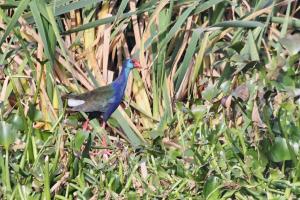
African Purple Swamphen
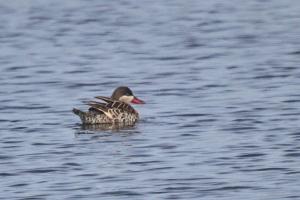
Red-billed Teal
Little Rush Warbler
Little Rush Warbler
Zitting Cisticola
Zitting Cisticola
Lesser Swamp Warbler
Lesser Swamp Warbler
Kelp Gull
Little Grebe
Cape Shovelers
Of course there is always one bird that perplexes. In this case it was a group of about 3 or 4 birds together in a low shrub – head height. It appeared to be perhaps a tad smaller than a Bulbul with a plain dark back. Have a look and see if you can Id it.
Lesser Swamp Warbler
Lesser Swamp Warbler
Lesser Swamp Warbler
And then we were on to Kirstenbosch – see next instalment.
Saved Avios points enabled us to go to Cape Town to see the Snowy Egret. Unexpectedly there were flights available for departure the following day. And we were able to use the Avios points to book a hotel in the centre of town for 2 nights. So off we went Tuesday 16 June. Very early departure.
Arriving in Cape Town we hired a car and headed straight for the Black River where we were told it had been seen regularly.
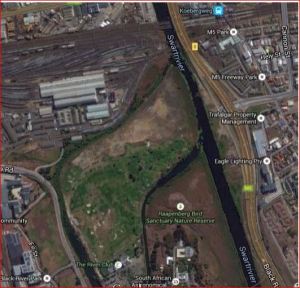
Black River showing areas where it had been seen
Black River – aerial photo
On arrival at Black River there was only one car there. Not a good sign. We scoured the river bank and saw nothing. Then we spotted an egret further down on the grass so we headed down by car. And as we drove down so did another vehicle – straight at the egret. Of course it flew. Rats.
Back we went towards the railway bridge. Perhaps the bird was there. And sure enough it was – on the river bank between the two railway bridges. Here we met another couple who had arrived earlier.
The Snowy Egret waded along the bank – constantly on the move. Occasionally flying to a new area one side of the bridges or the other. Sometimes directly beneath us and sometimes down the inlet towards the golf course and away from us. However it seemed happiest around the bridge.
We spent almost three hours on the bridge and before we left an additional 15 to 20 other people had come and gone. Here are some of the many photos taken.
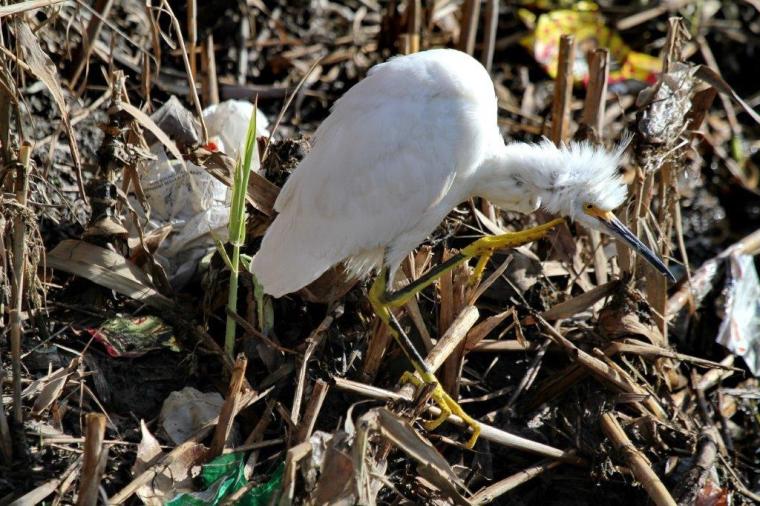
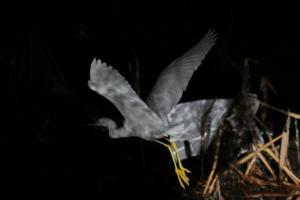
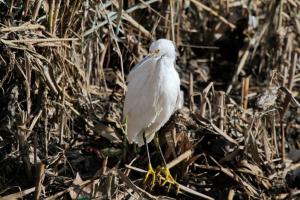
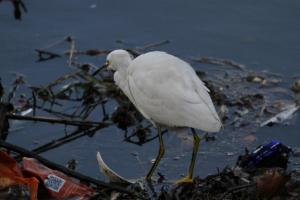
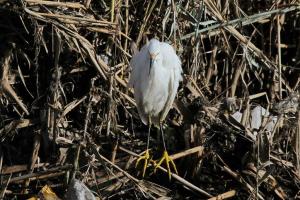
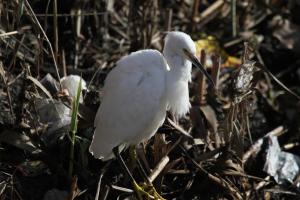
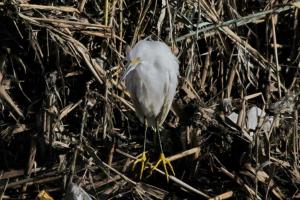
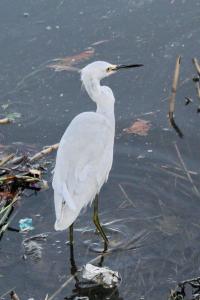
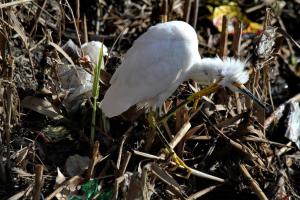
Snowy Egret
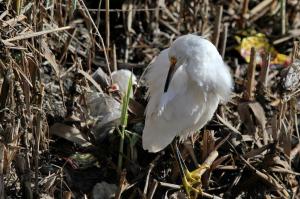
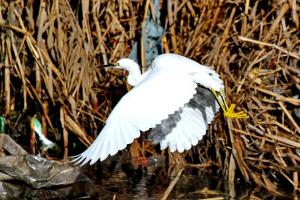
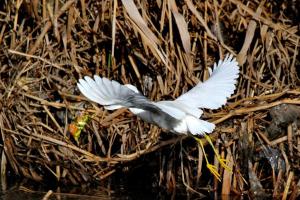
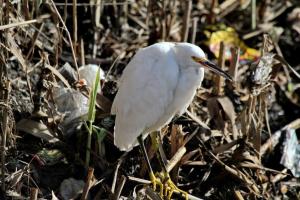
Key features are the yellow lores (top of the upper bill near the face) and bright yellow feet (like the Little Egret). Interestingly the legs appear to be bi-colour – black on the front and a pale yellow on the backs. Compare these two photos below.
Snowy Egret showing yellow back to the legs
Snowy Egret showing black front to the legs
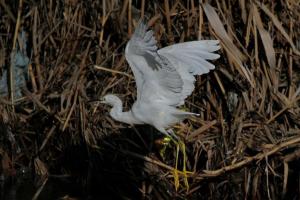
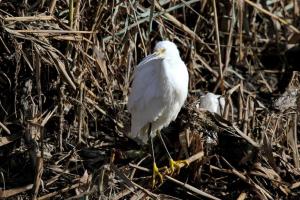
Some more of the Snowy Egret photos.
Snowy Egret
Snowy Egret
Snowy Egret
Snowy Egret
Snowy Egret
Snowy Egret
Snowy Egret
Snowy Egret
Snowy Egret
Snowy Egret
Snowy Egret
Snowy Egret
Snowy Egret
Snowy Egret
Snowy Egret
Snowy Egret
Little Egrets and Yellow-billed Egrets were also present – great for comparison with the Snowy.
Little Egret
Yellow-billed Egret
There were many other birds about as you might expect – including African Darter, numerous White-breasted Cormorants fishing, Hartlaub’s Gulls, herons, and other water birds. A Malachite Kingfisher also made an appearance directly below us. However the bonus was undoubtedly a Little Bittern also directly below us.
Greater Flamingos
African Darter
Malachite Kingfisher
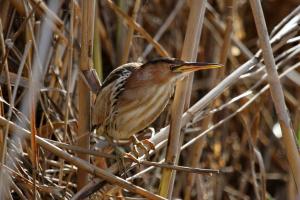
Little Bittern
Little Bittern
Little Bittern
The following day we checked in here again and Snowy was still present. Then we spent the rest of the day visiting Strandfontein and Kirstenbosch. See the next instalment.
A good Winter’s morning birding at Pigeon Valley on Saturday 6 June – there were 20 members and non-members plus a few late-comers and our bird count was 59.
Birders Pigeon Valley – John
We started off by looking for the Spotted Ground-Thrush and were not disappointed in our search – in fact SGT’s were seen on a number of occasions. Our hunt for the Buff-spotted Flufftail was unfortunately not successful, we must wait for Crispin to keep us updated on any sightings. We then broke up into 2 groups; my thanks to Dave Rimmer for leading one group.
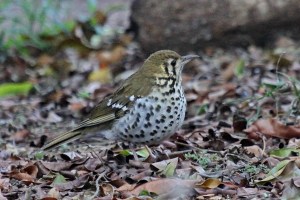
Spotted Ground Thrush
Spotted Ground Thrush
Spotted Ground Thrush at top of tree eating berries
Spotted Ground Thrush at top of tree eating berries
Spotted Ground Thrush at top of tree eating berries
The Blue-mantled Crested-Flycatchers were seen near the ‘broken dam’ wall. We dipped on Honeyguides/birds which we normally do see at Pigeon Valley but our Sunbird tally was excellent; Amethyst, Collared, Grey, Olive and Purple banded. Raptors were rather scarce, mainly heard with a few brief glimpses of Crowned Eagle, Black Sparrowhawk and African Goshawk.
Blue-mantled Crested Flycatcher
Blue-mantled Crested Flycatcher
Purple-banded Sunbird
Purple-banded Sunbird
Purple-banded Sunbird
Olive Sunbird – Decklan and Hennie
Collared Sunbird
We had some excellent birding up by the reservoir, where the veldt grasses have been allowed to grow and various fig trees and the Apodytes are fruiting in abundance!! Fiscal Flycatchers, Black-headed Orioles, White-eared Barbets, Village & Spectacled Weavers, Speckled Mousebirds, Dark-capped Bulbuls, and then the piece de resistance a Zitting Cisticola (due no doubt to the grasses being allowed to grow tall and thick).
Twin Dotted Border
Black-bellied Starling
Black-headed Oriole
Fiscal Flycatcher – with undercarriage up
Fiscal Flycatcher
Fiscal Flycatcher
Grey Waxbills, African Firefinch, Bronze and Red-backed Mannikins, Yellow-fronted Canaries, Cape White Eyes, Tambourine, Red-eyed and Laughing Doves, Southern Black and Dusky Flycatchers, Fork-tailed and Square-tailed Drongos, Purple-crested Turacos, Terrestrial Brownbuls, Olive Thrush kept the list ticking up very nicely.
The reason why Pigeon Valley is protected.
Red Duiker
Staghorn Fern
Fork-tailed Drongo
Purple-crested Turaco
Olive Thrush
Red-capped Robin-Chat
Thick-billed Weaver
White-eared Barbets
The last bird of the morning was the Palm swift which came swooping overhead as we had our picnic tea.
Thanks to Decklan, Paul, Dave and John for their pics.

















































































 Birds are our Story