This is an account of our holiday in the Eastern Cape from 8th to 21st October 2013.
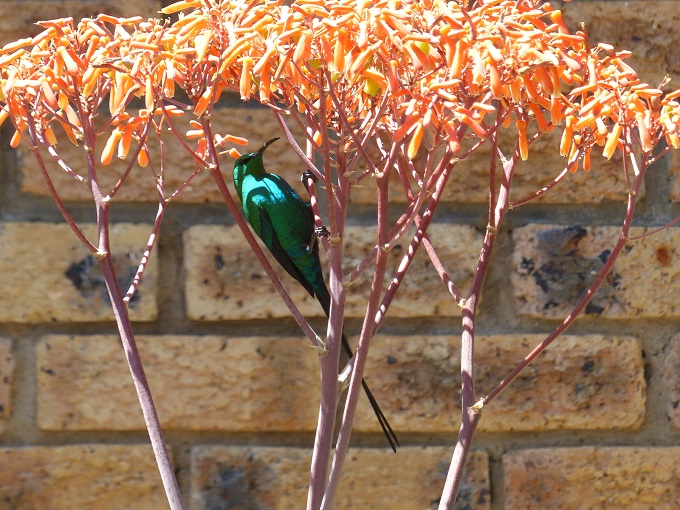
We started our holiday to the Eastern Cape from Pretoria so the first port of call was the Mountain Zebra Park for 3 days. It is a beautiful park with very friendly people and good accommodation. The animals are all easy to see on top of the mountain. It was very dry when we were there so the birding was not so good. I was busy photographing an aloe and a Malachite Sunbird arrived to feed. A number of sunbirds were around the reception area, very difficult to photograph being so quick but a Double-Collared Sunbird was also very obliging.
Malachite Sunbird
Greater Double-Collared Sunbird
There were lots of Pied Starlings in the caravan park, about the only green grass in the whole park.
Pied Starling
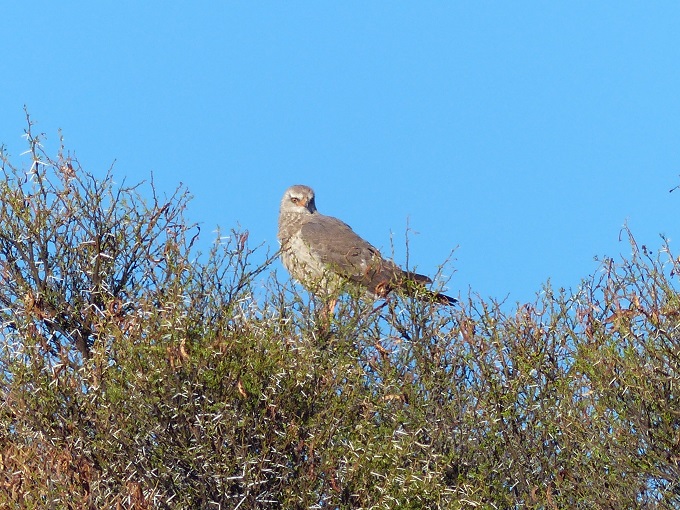
This juvenile Pale Chanting Goshawk was a bit far away but with a bit of cropping I managed to get a reasonable photo. Altogether we saw about 120 birds in the park.
Juvenile Pale Chanting Goshawk
We left the Mountain Zebra Park after three peaceful days and moved on to the Addo Elephant Park. It is also a lovely park. The elephants seem to be much more placid than the Kruger elephants and we saw lots of them. We were also lucky enough to see a lioness sitting in the grass by the Domkrag dam. The birding was much better and I managed to photograph a few more birds on the Nzipondo Loop and at the Domkrag Pan.
Pale Chanting Goshawk
Cape Weaver
Karoo Scrub-Robin
Lesser Flamingo
Rock Kestrel
Cape Robin-Chat
We were only there for the day as we could not get any accommodation. It has become a very popular park.
On we went to Port Elizabeth to a timeshare for a week on Brookes Hill, right on Kings Beach with a lovely view of the sea. We visited Cape Recife and saw a Black Oystercatcher on the sands, also Sanderlings, and lots of Swift and Common Terns.
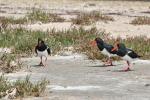
African black Oystercatcher
It was Marine week unbeknown to us so when we visited SAMREC we got a free conducted tour around the rehabilitation centre. It was very interesting. I photographed some of the inmates.
African Penguins
Our outing with Birdlife P.E. was unfortunately on one of those hugely windy days where all the birds took for cover. We had to bird from the car as the wind almost knocked you over. We were trying to find the White-Bellied Korhaan but unfortunately had no luck. They were a very friendly group and I enjoyed being with them.
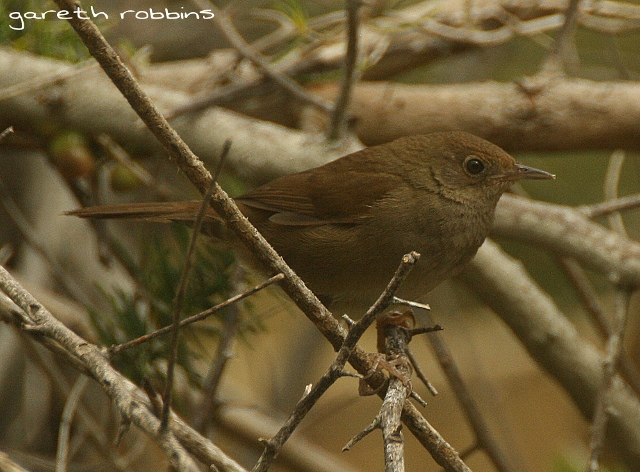
We had weeks timeshare at Plettenberg Bay which was lovely. It is such a beautiful part of the country and has remained unspoilt. I organised a birding trip with Gareth Robbins and we managed to see a Victorin’s Warbler in the Fynbos at Hartenbos and then very exciting – a lifer for me – a Knysna Warbler in a garden in Plettenberg Bay.
Knysna Warbler
Knysna Heads was also visited and we saw a number of birds on a little pan along the way.
Cape Shoveler
Black-Winged Stilt
Kittlitz’s Plover
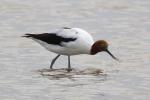
Pied Avocet
All in all it was a wonderful holiday.
Jenny & Dave Rix
If you have a story to tell please send it in to me and I shall put it out on our website – pictures (less than 200kb in size please) help to tell the tale.
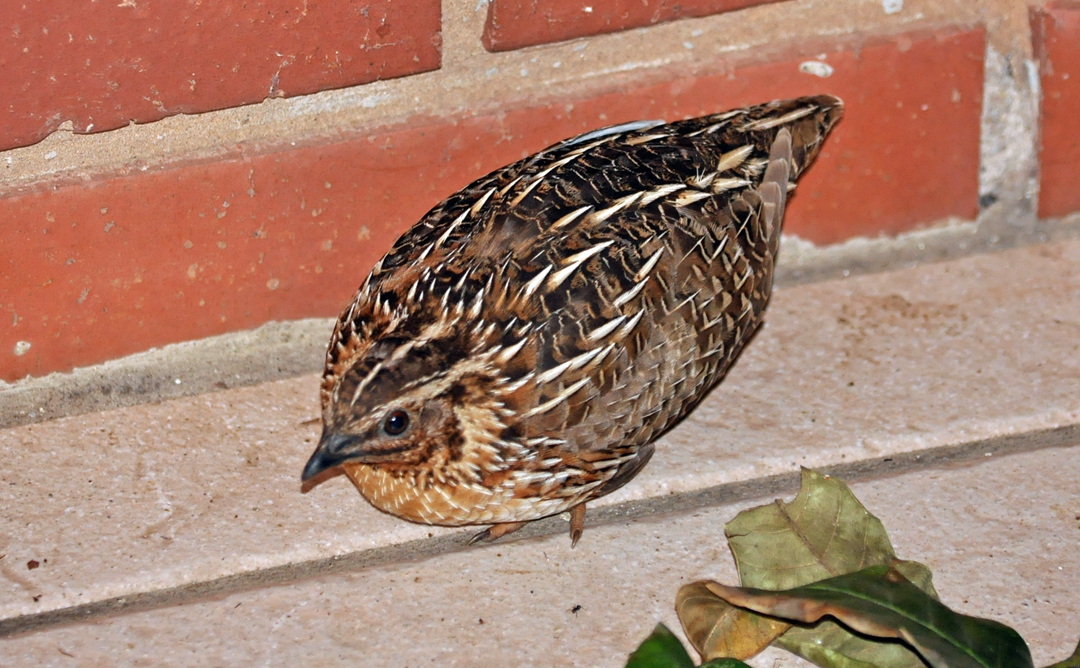
At about 8pm last night Anne and I heard a commotion on our patio and as I looked up I thought I saw what looked like a small Owl grab a little Gecko off the wall. I ran outside to have a look but it had disappeared. About 10 mins later it flew back so I grabbed my camera and slowly went onto the patio and there, sitting on the floor, was a Common Quail. It then jumped / flew about 6 ft into the air up against the wall, obviously trying to catch a gecko , but after having no luck in then wandered off into the garden.
The 3rd Sunday outing for November took place in the Midlands, kindly hosted by Crystelle Wilson at her charming country home on the Dargle road just outside Boston.
A group of 15 keen birders assembled at 8am with a welcoming mug of coffee with rusks for those that made the journey on the morning. Others had made it a birding weekend and overnighted in the area. Gum boots of all sorts, shapes and colours were kindly on offer for those without, and off we set for a gentle walk to the river with paths running through the wetland and along the Elands River.
Boots ‘n All, Boston
A good number of birds were seen and heard including warblers (Little-rush, African Reed, and Dark-Capped Yellow Warbler), cisticolas (Levaillants), widows (Red-collared and Fan-tailed), weavers (Spectacled and Village), water birds (Yellow-billed Duck, Spur-winged Geese) and a few raptors (Steppe Buzzard, Black Sparrowhawk). Unfortunately the cranes were not on offer which will mean a return trip next year, but also seen were Cape Grassbird, Drakensberg Prinia, Southern Red Bishop, Common Waxbill and Giant Kingfisher.
Once out of the wetlands and back at the house, a few birds seen in the gardens surrounding the house included Cape Wagtail, Cape Canary, Amethyst Sunbird and a lovely pair of African Hoopoe.
Gum boots were soon discarded as next up on the agenda was a short drive to a farm further north for a spot of indigenous forest birding. Here we were treated to wonderful views of rolling farmlands, small dams and quaint cottages – the latter perfect for a week end away of quiet birding and fly-fishing away from the bustle of city life. A leisurely stroll through the indigenous forest yielded cracking views of Bush Blackcap, Bar-throated Apalis and Yellow-Throated Woodland-Warbler. A few other birds seen included Olive Thrush, Blue-Mantled Crested Flycatcher, African Paradise Flycatcher, Forest Canary and Jackal Buzzard. Not to be outdone by the birds, a pair of Common Duiker also put in a brief appearance.
Once done with the forest walk, we proceeded down to a second fishing cottage overlooking a small dam – picnic time and time to discuss events of the day. En route a few picked up Plain-backed Pipit, Yellow Bishop and Cape Robin-Chat. The final tally for the week end was approximately 70 species seen, to be confirmed by Crystelle once her atlas card has been submitted to the SABAP2 database.
All three species were photographed within half and hour on Thursday AM, and within 50 metres of each other. Locality: Maputaland – just south of Kosi Bay lakes (Longclaw capital of the world!).
Yellow-throated Longclaw
Cape Longclaw
Rosy-throated Longclaw
Rosy-throated Longclaw
Yellow-throated, Cape & Rosy-throated Longclaws
Photos by Hugh Chittenden. Message from Peter Hughes.
A small band of seven enthusiastic birders headed out to the ponds below the Eston Sugar Mill on Sunday 10 November. That said I have yet to come across an apathetic birder! All the same, the lure was great photo opportunities of African Snipe (Gallinago nigripennis) emanating from a shot I had taken on a visit there the previous week end on a personal recce. As Murphy would have it, they were elusive to our group all day, despite Barry Swaddle sighting up to 8 birds on his wanderings around the ponds. Bumping into Barry and his friends was a blessing in disguise as he provided invaluable tips on being able to do a full loop around the wetlands without having to back track, as well as other places to visit in the general area. We parked our cars and proceeded along the eastern side and headed towards the dam wall. En route we picked up Wood Sandpiper, Ruff, Little Stint, Yellow-billed Duck and Hottentot Teal, along with the sounds of Burchell’s Coucal, Diderick Cuckoo and a plethora of Little-rush Warblers.
Little Rush Warbler, Eston Ponds
As we neared the dam wall we were treated to a fly past of a pair of Spotted Thick-knees who settled not far from us and gave good views – particularly rewarding as lifers for some. All the while we had distant views of three African Marsh-Harriers which we desperately tried to turn into Westerns, as well as trying to convince a few Wood Sandpipers to evolve to be of the Green variety! As we got to the end of the dam wall we observed a trio of Grey Crowned Cranes flyover close by and then settle in the shallow waters of the dam below among the Egyptian Geese. This was followed by a second trio of cranes, but this set included a single Wattled Crane (Bugeranus carunculatus). A truly privileged sighting for all of us, particularly so considering their listing as Critically Endangered in Southern Africa. Sadly, gloomy light hampered chances of getting decent photographs.
Wattled Crane & Grey Crowned Crane at Eston Ponds
We proceeded along the western flanks of the ponds and were treated to brief views of a Common Cuckoo that flew out from cover of the reeds, landed briefly out in the open and then disappeared into the cane fields. Efforts to coax African Rail from within the reeds using playback only gave us a return call! Other good birds included Black-winged Stilt, Southern Pochard, Squacco Heron, African Purple Swamphen and Wahlberg’s Eagle. Nearing the upper ponds, we were treated to cracking views of six adult and two juvenile Black-crowned Night Herons (Nycticorax nycticorax).
A total of 61 species were recorded during the morning, with a full protocol card being submitted to the SABAP2 database – my first ever card!! We returned home with a detour to the Toyota Testing Centre as Barry had indicated prospects there were good for Penny to add Black-winged Lapwing to her life list –and right he was.
Well our trip to the Top End of Australia ended just over a week ago and we are still trying to assess what we have seen.
366 species have been recorded in the area – however quite a number are either vagrants or migrants which we had no chance to see. Realistically there were about 280 species we could have seen.
All in all we saw some 185 different species of which 49 were Australian lifers for Sally and 56 for me. Most of these lifers are only to be found in the north of Australia.
However the satisfying part for both of us was that we were able to get photos of most of the new birds we saw. In many instances the photos enabled us to identify or confirm our identification.
Rather than list the lifers we saw, the following gallery does the job for me. A few new birds escaped before the camera could get a shot in – the most disappointing being the Black-tailed Treecreeper, the Red-browed Pardalote, the Green-backed Gerygone and the Little Curlew.
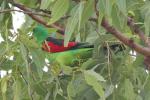
Varied Lorikeet, Katherine
Rufous-throated Honeyeater, Katherine
Banded Honeyeater, Buntine Highway
Budgerigar, Buntine Highway
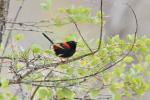
Purple-crowned Fairy-Wren – male, Victoria River
Purple-crowned Fairy-Wren – female, Victoria River
Crimson Finch, Victoria River
Masked Finch, Timber Creek
Oriental Plover, Timber Creek
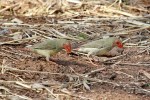
Gouldian and Long-tailed Finches, Ferguson River
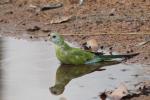
Hooded Parrot – male, Ferguson River
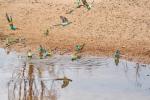
Hooded Parrots, Ferguson River
Horsefield’s Bushlark, Timber Creek
Broad-billed Flycatcher, Adelaide River
Northern Rossella, Tumbling Waters
Northern Fantail, East Point
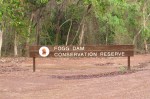
Grey Whistler, Fogg Dam
Long-tailed, Crimson & Double-barred Finches, Ferguson River
Goudian Finch, Ferguson River
Goudian Finch, Ferguson River
Diamond Dove, Ferguson River
Yellow-tinted Honeyeater, Ferguson River
Rufous-throated Honeyeater, Ferguson River
Barking Owl, Gagudju
Spotted Harrier, en route to Pine Creek
Leaden Flycatcher, Edith Falls
Rufous-banded Honeyeater, Gagudju – Yellow Water
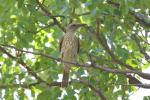
Pacific Baza, Gagudju
Pacific Baza, Gagudju
Bar-breasted Honeyeater, Gagudju
Australian Pratincole, Gagudju – Yellow Water
Arafura Fantail, Gagudju – Yellow Water
Collared Sparrowhawk, Gubara
Torresian Crow, Nourlangie
Pied Heron, Mamukala Wetlands
White-gaped Honeyeater, Kakadu
Little Corrella, Mary River Camp
Rose-crowned Fruit-Dove, Fogg Dam
Radjah Shelduck, Fogg Dam
Broad-billed Flycatcher, Fogg Dam
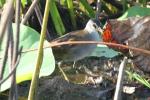
White-browed Crake, Fogg Dam
Paperbark Flycatcher, McMinns Lagoon
Wandering Whistling-Ducks, McMinns Lagoon
Rainbow Pitta, East Poin
Rainbow Pitta, East Point
Striated Heron, East Point
Eastern Reef Egret – white morph, East Point
Collared Kingfisher – contentious, East Point
Rainbow Pitta Howard Springs
Grey-crowned Babbler, Lee Point
Silver-crowned Friarbird, Knuckley Lagoon
Black-winged Stilts, Knuckley Lagoon
Little Shrike-thrush, Charles Darwin
Grey Falcon, en route to Timber Creek
Lesser Crested Tern, East Point
Lesser Crested, Crested & Gull-billed Terns, East Point
Sanderling, Buffalo Creek
Star Finch, Victoria River
Black Falcon, Victoria River
That concludes our Darwin escapade. Hope you have enjoyed the read and photos.
This will conclude the final leg of our 3 week trip to Darwin in search of the Top End birds. It moves on from Katherine and continues to Victoria River and Timber Creek before returning to Darwin. So our 3 weeks is up – 3rd to 24th Oct 2013.
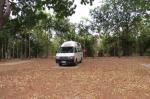
Our campsite in Katherine is Shady Lane. It lives up to its name and with the facilities it offered it is probably the nicest of the campsites and the best priced.
Shady Lane Campsite, Katherine
Shady Lane Campsite, Katherine
Shady Lane Campsite, Katherine
Shady Lane Campsite, Katherine
Before we leave Katherine we spend an early morning in town in search of the Yellow-rumped Mannikin. Instead we find the Chestnut-backed Mannikin and 3 Buff-banded Rails. Then as we are about to start off again Sally spots several Varied Lorikeets amongst the Rainbows.
Varied Lorikeet, Katherine
Varied Lorikeet, Katherine
Buff-banded Rail, Katherine
Buff-banded Rail, Katherine
Chestnut-breasted Mannikin, Katherine
Chestnut-breasted Mannikin, Katherine
Chestnut-breasted Mannikin, Katherine
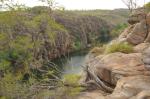
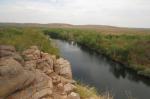
We took the advantage of being in Katherine to visit Katherine Gorge. There was quite a steep climb to the top for the view. At 9 am we were going no further than 2/3rds of the way up – hot and hectic – see photos. We also visited Mike Reed’s home along the night before. He was kind enough to invite us in to check out the birds in his property and to offer us a delicious tea.
Great Bowerbird nest, Katherine
Great Bowerbird, Katherine
Eastern Koel – male, Katherine
Eastern Koel – male, Katherine
Eastern Koel – female, Katherine
Eastern Koel – female, Katherine
Australasian Figbird, Katherine
The gorge was interesting and we saw some special birds along the way.
Katherine Gorge
Katherine Gorge
Katherine Gorge
Katherine Gorge
Katherine Gorge
Katherine Gorge
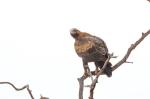
Wedge-tailed Eagle, Katherine
Wedge-tailed Eagle, Katherine
Wedge-tailed Eagle, Katherine
Red-tailed Black-Cockatoo, Katherine
Rufous-throated Honeyeater, Katherine
And then it was time to move on. We headed West towards Konunurra with the intent of stopping at Victoria River roadhouse and Timber Creek along the way. We got as far as Timber Creek (290 kms west of Katherine) before deciding it was time to return to Darwin. In retrospect this was a poor decision as we ended up having too much time on our hands at the end. It would have been more interesting to have continued the extra 220 kms to see the area and get a taste of the Western Australian birds.
Mike had given us info of places to stop at along the way to find some key species. However it seems that everywhere we went had been burnt out – which was rather a pity. However we were rewarded with several nice sightings along the way – and in particular on the Buntine highway 125 kms west of Katherine. We were told we were unlikely to find Banded Honeyeater this year but Sally found one – see photos, along with Budgerigars and Cockatiels.
Katherine to Victoria River
Katherine to Victoria River
Katherine to Victoria River
Red-backed Fairy-Wren, Buntine Highway
Red-backed Fairy-Wren, Buntine Highway
Red-winged Parrot, Katherine to Victoria River
Red-winged Parrot, Katherine to Victoria River
Red-winged Parrot, Katherine to Victoria River
Rufous Whistler, Buntine Highway
Rufous Whistler, Buntine Highway
Apostlebird, Katherine
Apostlebird, Katherine
Banded Honeyeater, Buntine Highway
Banded Honeyeater, Buntine Highway
Banded Honeyeater, Buntine Highway
Black-faced Woodswallow, Buntine Highway
Budgerigar, Buntine Highway
Budgerigar, Buntine Highway
Cockateil, Katherine to Victoria River
Cockateil, Katherine to Victoria River
Galah, Katherine to Victoria River
Olive-backed Oriole, Katherine to Victoria River
Olive-backed Oriole, Katherine to Victoria River
Have you ever seen a Road Train – well here is a poor picture – all of 120 metres long! Not something to pass with a Campervan and certainly scary when one passes you – it seems to go on forever.
Road Train
Victoria River was one of our favourite stopping places – from a birding point of view. We had a long road with a flat bare field on the way to the boat launch which seemed to call in a number of different species – Australian Pratincoles and Bustards as well as different Falcons and Goshawks. The bridge over the river served as a great vantage point to look for the elusive Purple-crowned Fairy-Wren which we eventually found. Also it was from there that we were lucky enough to watch Brown Quail scurrying about.
Katherine to Victoria River
Katherine to Victoria River
Victoria River
Katherine to Victoria River
Victoria River
Victoria River
Victoria River
Little Corella, Victoria River
Black Falcon, Victoria River
Australian Pratincole, Victoria River
Rainbow Bee-eater, Victoria River
Pheasant Coucal – male, Victoria River
Pheasant Coucal – male, Victoria River
Pheasant Coucal – male, Victoria River
Purple-crowned Fairy-Wren – female, Victoria River
Purple-crowned Fairy-Wren – male, Victoria River
Purple-crowned Fairy-Wren – male, Victoria River
Brown Quail, Victoria River
Brown Quail, Victoria River
Dollarbird, Victoria River
Dollarbird, Victoria River
Rufous Whistler – female, Victoria River
Rufous Whistler – female, Victoria River
Nankeen Kestrel, Victoria River
Nankeen Kestrel, Victoria River
Brown Quail, Victoria River
Brown Quail, Victoria River
Crimson Finch, Victoria River
Australian Bustard, Victoria River
Australian Bustard, Victoria River
Australian Bustard, Victoria River
Australian Bustard, Victoria River
Australian Pratincole, Victoria River
Nankeen Kestrel, Victoria River
Victoria River
Our next stop was only 90 kms further – Timber Creek. Lookout in the town sprinklers for Finches, go to Policeman’s Point to find the Fairy-Wrens and don’t forget the airstrip for Oriental Plovers and Pratincoles expected at this time of the year. Good advice but mostly unlucky with habitat change. However we did take the scenic lookout over the town and found our first Black-tailed Treecreepers. The Timber Creek campsite was well treed and not bad for some birds – albeit birds we had seen previously. Gregory’s Tree was just up the road – a large Baobab of significance to both the Aboriginals and the early settlers. We were told Gouldian Finches were often seen there but we found none! However the site was interesting.
Victoria River from Policeman’s Point, Timber Creek
Timber Creek
Timber Creek
en route to Timber Creek
Victoria River from Policeman’s Point, Timber Creek
Mistletoe
Red-winged Parrots, male female, Timber Creek
Victoria River, Timber Creek
Yellow Oriole, Timber Creek
Variegated Fairy-Wren, Timber Creek
Variegated Fairy-Wren, Timber Creek
Variegated Fairy-Wren, Timber Creek
White-winged Triller, Timber Creek
Yellow-throated Miners, Timber Creek
Gregory’s Baobab Tree, Timber Creek
Gregory’s Baobab Tree, Timber Creek
Gregory’s Baobab Tree, Timber Creek
Gregory’s Baobab Tree, Timber Creek
Gregory’s Baobab Tree, Timber Creek
Gregory’s Baobab Tree, Timber Creek
Gregory’s Baobab Tree, Timber Creek
Horsefield’s Bushlark, Timber Creek
Horsefield’s Bushlark, Timber Creek
Horsefield’s Bushlark, Timber Creek
Masked Finch, Timber Creek
Masked Finch, Timber Creek
Whistling Kite, Timber Creek
Oriental Plover, Timber Creek
Oriental Plover, Timber Creek
Timber Creek Camp
Timber Creek Camp
Timber Creek Camp
Timber Creek Camp
Timber Creek Camp
Timber Creek Camp
Timber Creek Camp
Decision time. On to Konunurra or back to Darwin. We chose the later and now regret not exploring beyond as we had too much time on our hands at the end in Darwin. We probably would not have found many more species but it would have been good to see the area. Certainly we were expecting Katherine to Konunurra to be dry hot and barren but we found it far from that. The Victoria River which we followed was as large as any in in South Africa and still flowing strongly at the end of the dry season. The journey was through sandstone escarpment and the habitat varied and well treed.
From Timber Creek after a late start we headed straight back to Katherine. We popped in to several of the birding spots we had visited along the way but mostly it was too late in the day. One or two birds were photographed.
Red-backed Fairy-Wren, Buntine Highway
Blue-winged Kookaburra, Victoria River
Red-tailed Black-Cockatoos, Buntine Highway
Red-tailed Black-Cockatoos, Buntine Highway
So back in Katherine to Shady Lanes camp site. The plan to visit Ferguson River again very early. We arrive there at 06h30. The Hooded Parrots are all around us. We quickly take our position right next to the waterhole – this time I took a chair for comfort!
The Hooded Parrots soon started coming down to drink – there must have been close to 50 of them. Once they had had their fill it was the turn of the finches – Long-tailed, Masked, Double-banded, Crimson and a couple of Gouldians.
Comfort right next to the pond
Family statuette
Collared Sparrowhawk, Ferguson River
Gouldian and Long-tailed Finches, Ferguson River
Gouldian and Long-tailed Finches, Ferguson River
Gouldian and Long-tailed Finches, Ferguson River
Hooded Parrot – male, Ferguson River
Hooded Parrots, Ferguson River
Hooded Parrots, Ferguson River
Hooded Parrots, Ferguson River
Long-tailed and Masked Finch, Ferguson River
Brown Falcon -Mystery noisily raucous Raptor, Ferguson River
Assorted Finches, Ferguson River
Black-necked Stork, Ferguson River
Double-banded Finches, Ferguson River
Double-banded Finches, Ferguson River
Sacred Kingfisher, Ferguson River
Sacred Kingfisher, Ferguson River
After an unintended detour to Lichfield Park we headed for Darwin – a long haul in the heat of the day – fortunately the air-conditioner in our campervan worked extraordinarily well.
Once back in Darwin we stayed at a different campsite – Oasis. It was closer to where we wanted to revisit the next day – Fogg Dam. Early start as usual. The Dam seemed much quieter than when we visited 2 weeks earlier – perhaps because of all the rain they had (which we missed). Anyway we were rewarded with several new species which we had yet to see.
Forest Kingfisher, Fogg Dam
Golden-headed Cisticola, Fogg Dam
Golden-headed Cisticola, Fogg Dam
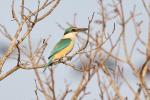
Grey Whistler, Fogg Dam
Grey Whistler, Fogg Dam
Horsefield’s Bushlark, Fogg Dam
Horsefield’s Bushlark, Fogg Dam
Shining Flycatcher – male, Fogg Dam
Shining Flycatcher – male, Fogg Dam
From there we headed for Adelaide River bridge along the Arnham Highway – hoping to find a Mangrove Golden Whistler. This was not to be although we did find a bird which we were almost sure could have been a female – picture taken and later told it is a Lemon-bellied Flycatcher.
Lemon-bellied Flycatcher, Adelaide River
Arafura Fantail, Adelaide River
Broad-billed Flycatcher, Adelaide River
Broad-billed Flycatcher, Adelaide River
The following day we returned to Lee Point. A walk along one of the tracks flushed 50 to 100 Chestnut-breasted Mannikins – which obligingly posed for photos. The waders on shore were abundant – thousands. A great many were Great Knots.
Chestnut-breasted Mannikins, Lee Point
Pied Oystercatchers, Lee Point
Pied Oystercatchers, Lee Point
Pied Oystercatchers, Lee Point
Pied Oystercatchers, Lee Point
Great Knots, Lee Point
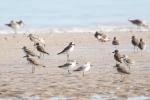
Mixed Waders, Lee Point
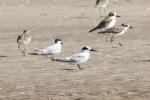
Little Terns -Mystery Terns, Lee Point
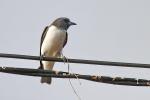
White-bellied Woodswallow, Buffalo Creek
We also re-visited East Point and found that the Northern Fantails had completed their nest and were sitting for us.
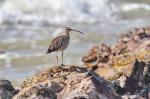
Whimbrel, East Point
Whiskered Terns, McMinns Lagoon
Whiskered (Leucistic?) Tern, McMinns Lagoon
Rufous-banded Honeyeater, East Point, Darwin
Northern Fantail, East Point
Northern Fantail, East Point
Northern Fantail, East Point
That night we headed south to a campsite we had heard about – Tumbling Waters. Very attractive and with quite an active camp bird population. Sally even spotted one elusive Northern Rossella right next to our campsite. We had been looking everywhere to find one.
While there we visited Darwin River Dam but heard lots and saw little (that we could ID anyway).
While there we visited Denise Goodfellow – whose book we had been using throughout our travels. We were very impressed with her knowledge of all things flora and fauna. She helped to set us right with several of our mystery birds.
Our last day (morning) was spent initially on Tiger Brennan Drive, Darwin looking for the Chestnut Rail without success – tide was too high. Afterwards we returned to where we started – Charles Darwin NP. We tried the mangroves for Mangrove Golden Whistler – which we could not find despite it calling within metres of us. Otherwise a quiet day with sightings of a number of birds including Pheasant Coucal and a Grey Shrike-Thrush.
Red-winged Parrot, Charles Darwin NP
Grey Shrike-Thrush, Charles Darwin NP
Olive-backed Oriole, Charles Darwin NP
Forest Kingfishers, Charles Darwin NP
So that concludes our 3 week trip around the Top End of Darwin. We hope you have enjoyed the stories and photos. We are waiting at the airport for our flight at one in the morning – back to Melbourne.
After six nights in Darwin we set off for Kakadu and beyond – with no program. As usual we depart early at 6am -a lot cooler, yet light enough to keep a look out for animals crossing the road.
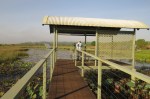
Our first stop – Fogg Dam. We arrive just as the sun is rising and the place lives up to its name – quite foggy over the wetlands. We have been advised to be careful on the causeway as the crocs have been seen basking there. The drive along the causeway is very productive with several bird hides along the length and one at the end.
At our first stop we are quickly rewarded with an obliging White-browed Crake.
White-browed Crake, Fogg Dam
White-browed Crake, Fogg Dam
White-browed Crake, Fogg Dam
White-browed Crake, Fogg Dam
White-browed Crake, Fogg Dam
Red chested Flufftail captured by Wayne Sykes at uMzinkulu River Lodge
Along the way we see a number of waterbirds but also a few other specials.
Fogg Dam
Fogg Dam
Fogg Dam
Fogg Dam
Brolga, Fogg Dam
Brolga, Fogg Dam
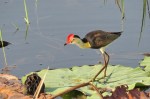
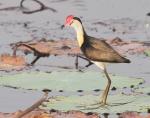
Comb Crested Jacana, Fogg Dam
Comb Crested Jacana, Fogg Dam
Comb Crested Jacana, Fogg Dam
Common Greenshank, Fogg Dam
Crimson Finch, Fogg Dam
Crimson Finch, Fogg Dam
Darter, Fogg Dam
Fogg Dam
Lotus Lilly, Fogg Dam
Fogg Dam
Mystery Raptor, Fogg Dam
Radjah Shelduck, Fogg Dam
Paperbark Flycatcher, Fogg Dam
Rose-crowned Fruit-Dove, Fogg Dam
Shining Flycatcher- female, Fogg Dam
Varied Triller, Fogg Dam
Whiskered Tern, Fogg Dam
Broad-billed Flycatcher, Fogg Dam
Green Pygmy Goose, Fogg Dam
Then a walk in the woodlands beside the wetlands is surprisingly active – and Sally sees a Pheasant Coucal much to my dismay as it was readily visible.
After several hours there, we head for Mary River. The campsite is reasonably priced, shady and it has a good cookhouse. We are greeted by Little Correllas everywhere bathing in the spray and puddles as the grounds are watered.
There are several good walks in the camp which is beside the Mary River. On one that evening we had good views of a pair of Dollarbirds amongst others.
Mary River Camp
Mary River Camp – ablutions
White-bellied Cuckooshrike, Mary River Camp
Torresian Crow, Mary River Camp
Yellow Oriole, Mary River Camp
Blue Winged Kukaburra, Mary River Camp
Blue Winged Kukaburra, Mary River Camp
Dollarbird, Mary River Camp
Dollarbird, Mary River Camp
Dollarbird, Mary River Camp
Dollarbird, Mary River Camp
Dollarbird, Mary River Camp
Double-banded Finches, Mary River Camp
Double-banded Finches, Mary River Camp
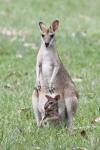
Joey and Mum – Wallabies, Mary River Camp
Little Corrella, Mary River Camp
Black-tailed Cockatoo, Mary River Camp
The next morning we were up early and headed for Bird Billabong about 8 kms from the camp. We arrive at 06h15 – it is almost an hour’s walk to the billabong and we see a number of Wallabies and their kin along the way.
There is a good bird hide unfortunately on the west side of the billabong – meaning we are facing into the rising sun. An hour spent there was very productive for waterbirds. And we even saw a large family of feral pigs wallowing in the billabong.
Bird Billabong – Mary River
Bird Billabong – Mary River
Bird Billabong – Mary River
Bird Billabong – Mary River
Bird Billabong – Mary River
Bird Billabong – Mary River
Bird Billabong – Mary River
Bird Billabong – Mary River
Bird Billabong – Mary River
Pink-eared Duck, Bird Billabong – Mary River
Whistling Kite, Bird Billabong – Mary River
White-bellied Sea Eagle, Bird Billabong – Mary River
Feral Pig, Bird Billabong – Mary River
Feral Pig, Bird Billabong – Mary River
Feral Pig, Bird Billabong – Mary River
Afterwards we return to the campsite and enjoy a good cook up at the cookhouse.
Next stop is Kakadu. Along the way we stop at several places and the Mamukala wetlands just off the highway and a short way from the car park (for a change) was teeming with waterbirds.
On to Jabiru – the main town in Kakadu NP – and to the Kadadu Lodge campsite. Kakadu is about 20000 sq. kms (1/3 the size of Tasmania). Over 10% of the surface area is constantly under water. It is probably the only National Park worldwide which houses an entire river system – the Alligator Rivers of the Top End.
Kakadu Lodge, Jabiru
Kakadu Lodge, Jabiru
Kakadu Lodge, Jabiru
Kakadu Lodge, Jabiru
Kakadu Lodge, Jabiru
Kakadu Lodge, Jabiru
A morning was spent in Gubara looking in vain for sandstone specials. However we were lucky enough to find Red-winged Parrots and a Collared Sparrowhawk.
Nourlangie
Road to Gubara
Gubara
Nourlangie
Nourlangie
Red-winged Parrot, Gubara
Red-winged Parrot, Gubara
Torresian Crow, Nourlangie
Collared Sparrowhawk, Gubara
Collared Sparrowhawk, Gubara
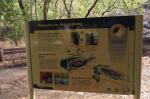
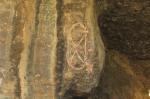
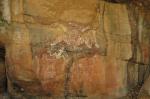
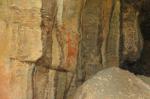
We tried Nourlangie before doing the tourist bit and going to Ubirr to see the Aboriginal Rock Art – quite impressive despite the heat.
Nourlangie:
Nourlangie Rock
Rock Art – Nourlangie
Rock Art – Nourlangie
Rock Art – Nourlangie
Rock Art – Nourlangie
Rock Art – Nourlangie
Rock Art – Nourlangie
Ubirr:
To Ubirr
Aboriginal Rock Art at Ubirr
Aboriginal Rock Art at Ubirr
Aboriginal Rock Art at Ubirr
Aboriginal Rock Art at Ubirr
Rock Art – Nourlangie
Hennies Crossing – Crocs go wild fishing with the estuarial tidal swings
Hennies Crossing – Crocs go wild fishing with the estuarial tidal swings
Hennies Crossing – Crocs go wild fishing with the estuarial tidal swings
That night we head for Cooinda and Gagudju campsite for 2 nights. The intention here was to go on their well known early morning boat cruise where birding is a prime part. We were not disappointed – the wildlife was teeming, thousands of Magpie Geese and hundreds of Green Pygmy-Geese amongst a vast array of ducks and herons – even saw a dingo – albeit fleetingly. Despite the $100 per person the trip was brilliant. Many lovely Kingfishers and even a GBH as they call it – a Great-billed Heron.
Yellow Water Cruise
Board Walk – Yellow River Cruise
Gagudju – Yellow Water Cruise
Board Walk – Yellow River Cruise
Gagudju – Yellow Water Cruise
Gagudju – Yellow Water Cruise
Gagudju – Yellow Water Cruise
Gagudju – Yellow Water Cruise. Nathan playing the Digiary-doo (exceptionally good)
Magpie Geese – 1 of many skeins, Gagudju – Yellow Water
White-necked Heron, Gagudju – Yellow Water
Willie Wagtail, Gagudju – Yellow Water
Arafura Fantail, Gagudju – Yellow Water
Arafura Fantail, Gagudju – Yellow Water
Australian Pratincole, Gagudju – Yellow Water
Australian Pratincole, Gagudju – Yellow Water
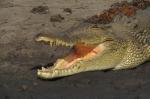
Australian Sea-water crocodile, Gagudju – Yellow Water
Australian Sea-water crocodile, Gagudju – Yellow Water
Azure Kingfisher, Gagudju,Yellow River
Azure Kingfisher & Restless Flycatcher, Gagudju,Yellow River
Dingo, Gagudju – Yellow Water
Azure Kingfisher, Gagudju,Yellow River
Azure Kingfisher, Gagudju,Yellow River
Azure Kingfisher, Gagudju,Yellow River
Bar-breasted Honeyeater, Gagudju
Gagudju – Yellow Water Cruise
Blue-faced Honeyeater, Gagudju
Forest Kingfisher, Gagudju – Yellow Water
Forest Kingfisher, Gagudju – Yellow Water
Forest Kingfisher, Gagudju – Yellow Water
Golden Tree Snake, Gagudju – Yellow Water
Great Bowerbird, Gagudju
Great-billed Heron, Gagudju – Yellow Water
Great-billed Heron, Gagudju – Yellow Water
Great-billed Heron, Gagudju – Yellow Water
Great-billed Heron, Gagudju – Yellow Water
Great-billed Heron, Gagudju – Yellow Water
Little Kingfisher, Gagudju – Yellow Water
Little Kingfisher, Gagudju – Yellow Water
Pied Heron, Gagudju – Yellow Water
Pied Heron, Gagudju – Yellow Water
Little Pied Cormorant, Gagudju – Yellow Water
Mistletoebird, Gagudju
Mistletoebird, Gagudju
Nankeen Night-Heron, Gagudju – Yellow Water
Pacific Baza, Gagudju
Pacific Baza, Gagudju
Pacific Baza, Gagudju
Pied Heron, Gagudju – Yellow Water
Purple Swamphen, Gagudju – Yellow Water
Rufous-banded Honeyeater, Gagudju – Yellow Water
Sacred Kingfisher, Gagudju – Yellow Water
Sacred Kingfisher, Gagudju – Yellow Water
Sacred Kingfisher, Gagudju – Yellow Water
Shining Flycatcher – male, Gagudju – Yellow Water
White-bellied Sea-Eagle, Gagudju, Yellow Water
White-bellied Sea-Eagle, Gagudju – Yellow Water
White-bellied Sea-Eagle, Gagudju – Yellow Water
Gagudju – Yellow Water Cruise
Gagudju – Yellow Water Cruise
Breakfast at the lodge after the cruise was included – and we royally dug in. Even at breakfast the birds still appeared – Mistletoebirds and a Great Bowerbird robbing guests’ plates.
The campsite has a very welcoming pool and birdlife in the grounds is abundant – check out one of our first sightings:
Pacific Baza, Gagudju
Pacific Baza, Gagudju
Pacific Baza, Gagudju
We also went on the late evening cruise which was not so bird orientated however we did find the Little Kingfisher although the captain nearly did not bother to stop!. This second trip is at a discount $25 each. If I had realised that we could have gone on the early morning cruise the next day for that price then that is the choice I would have made – even if it meant paying an extra $11 to cover the cost of breakfast again.
And that concluded our stay in Kakadu. Perhaps we should have gone to Gunlom early one morning to have another go at seeing the sandstone specials – however 40 kms each way on a dirt track was a bit risky especially as we were told that we were not covered by any insurance if we went off road.
And so we headed for Pine Creek and an overnight stay in an unpowered but cheap campsite at Edith Falls. Along the way we bumped into a few interesting birds.
Kakadu NP south entrance
en route to Pine Creek
Shining Flycatcher – female, Gagudju
Shining Flycatcher – female, Gagudju
Barking Owl, Gagudju
Barking Owl, Gagudju
Brown Falcon, Gagudju to Pine Creek
Brown Falcon, Gagudju to Pine Creek
Dollarbird, Pine Creek
Grey Butcherbird, en route to Pine Creek
Spotted Harrier, en route to Pine Creek
Spotted Harrier, en route to Pine Creek
The swim in the pools were a lifesaver – however the Falls were not that impressive except that they were still flowing rapidly for the end of the dry season.
We did have several good sightings in Edith Falls including a late night Bush Stone-Curlew and I got my sighting of a female Pheasant Coucal.
Edith Falls
Edith Falls
Edith Falls
Edith Falls
Edith Falls
Pheasant Coucal, Edith Falls
Pheasant Coucal, Edith Falls
Great Bowerbird, Edith Falls
Leaden Flycatcher, Edith Falls
Leaden Flycatcher, Edith Falls
Monday morning – real early start – meeting Mike Reed (a Birding Pal based in Katherine) – what a superb morning he gave us. We went to a secret site of his to find the elusive Hooded Parrots and Goudian Finches. Of course it drizzled which dampened the birds spirits. However after a very patient wait we were rewarded with both – along with a number of other species we had yet to see.
Ferguson River Pools
Ferguson River Pools
Ferguson River Pools
Ferguson River Pools
White-faced Heron, Ferguson River
Yellow-tinted Honeyeater, Ferguson River
Assorted Finches, Ferguson River
Collared Sparrowhawk, Ferguson River
Crimson Finch – male, Ferguson River
Crimson Finches, Ferguson River
Diamond Dove, Ferguson River
Diamond Dove, Ferguson River
Finches &; Honeyeaters, Ferguson River
Goudian Finch & Diamond Dove, Ferguson River
Goudian Finch, Ferguson River
Goudian Finch, Ferguson River
Goudian Finch, Ferguson River
Hooded Parots, Ferguson River
Hooded Parrot – female, Ferguson River
Hooded Parrot – male, Ferguson River
Hooded Parrot – male, Ferguson River
Hooded Parrot – male, Ferguson River
Hooded Parrots, Ferguson River
Hooded Parrots, Ferguson River
Hooded Parrots, Ferguson River
Little Friarbird, Ferguson River
Little Friarbirds & Long-tailed Finch, Ferguson River
Long-tailed & Double-barred Finch with Brown Honeyeater, Ferguson River
Long-tailed Finch, Ferguson River
Long-tailed, Crimson & Double-barred Finches, Ferguson River
Magpie-lark – female, Ferguson River
Magpie-lark- male, Ferguson River
Masked & Long-tailed Finches, Ferguson River
Masked Finches, Ferguson River
Nankeen Night-Heron, Ferguson River
Rufous-throated Honeyeater, Ferguson River
Masked Finch, Ferguson River
Next it is the Katherine region and perhaps down to Konunurra.










































































































































































































 Birds are our Story