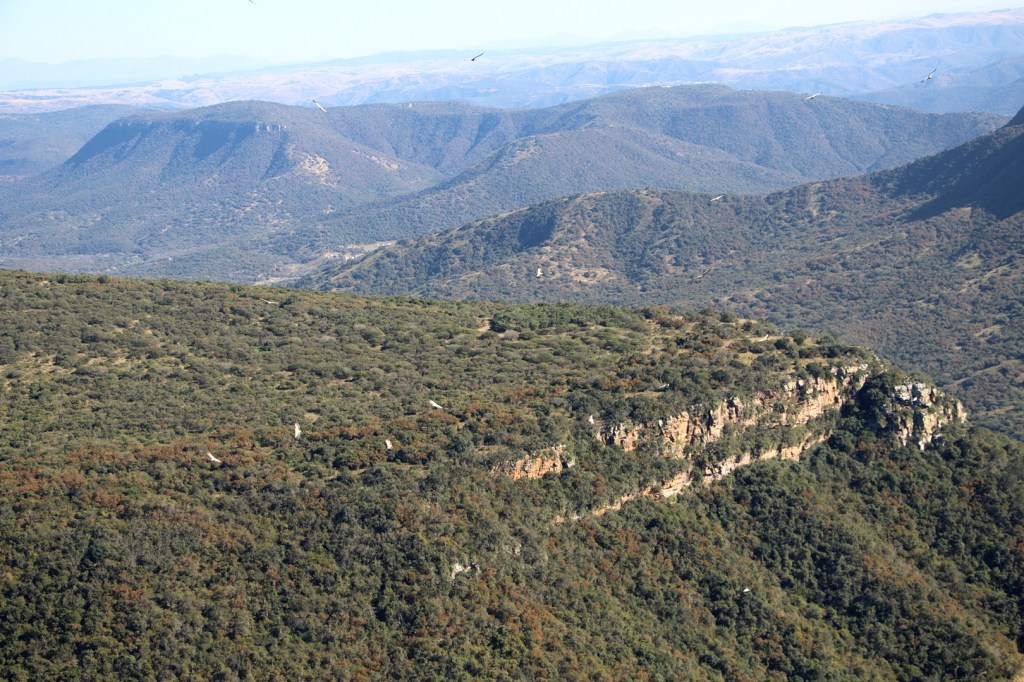
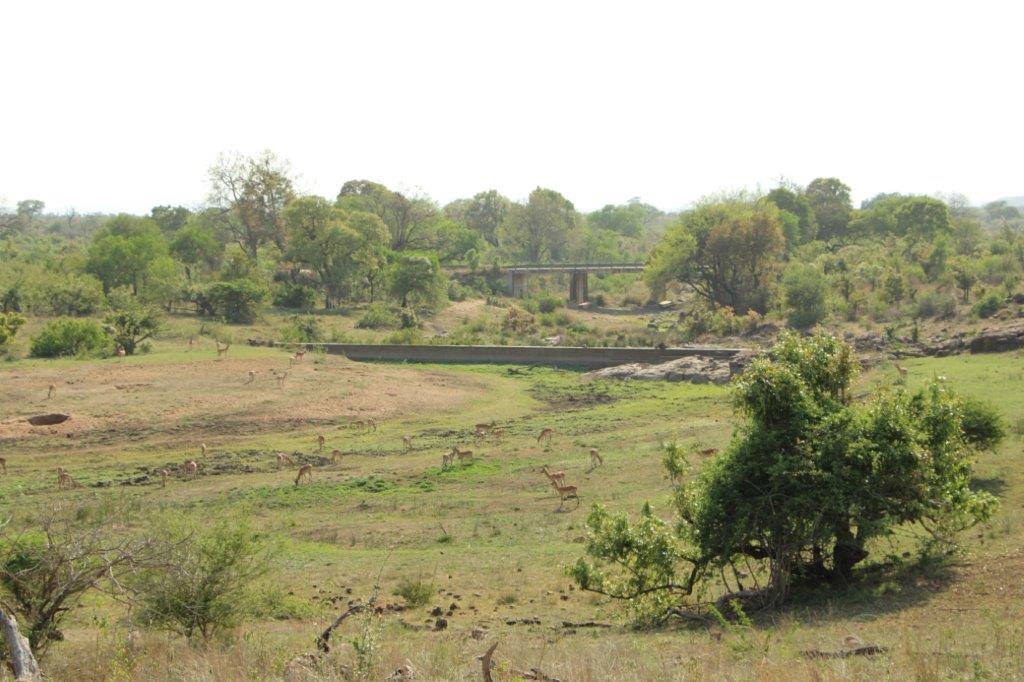
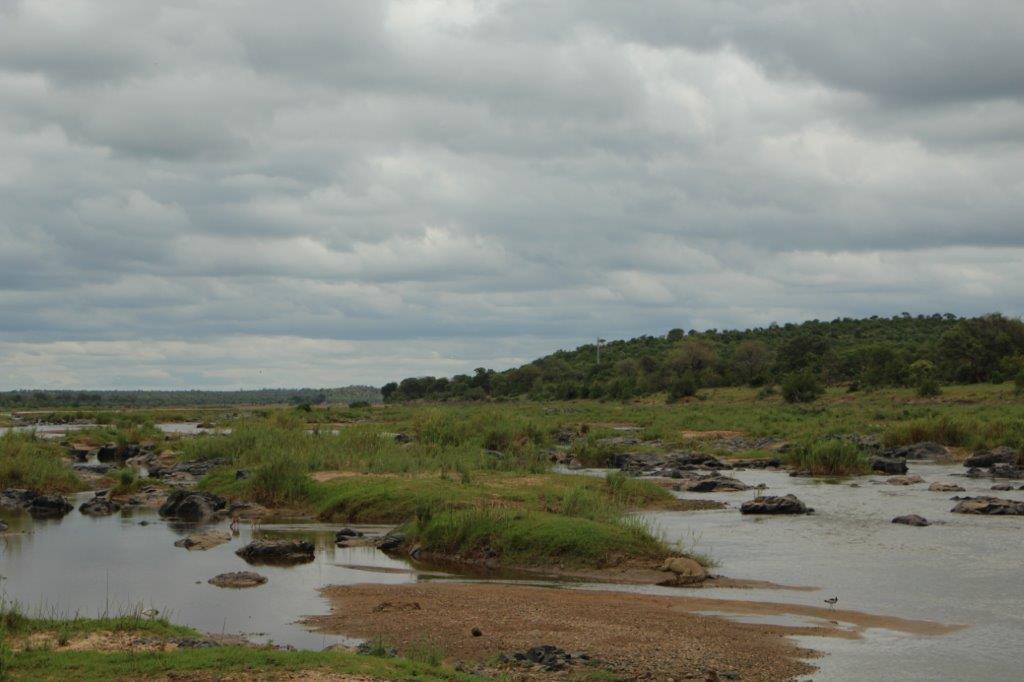
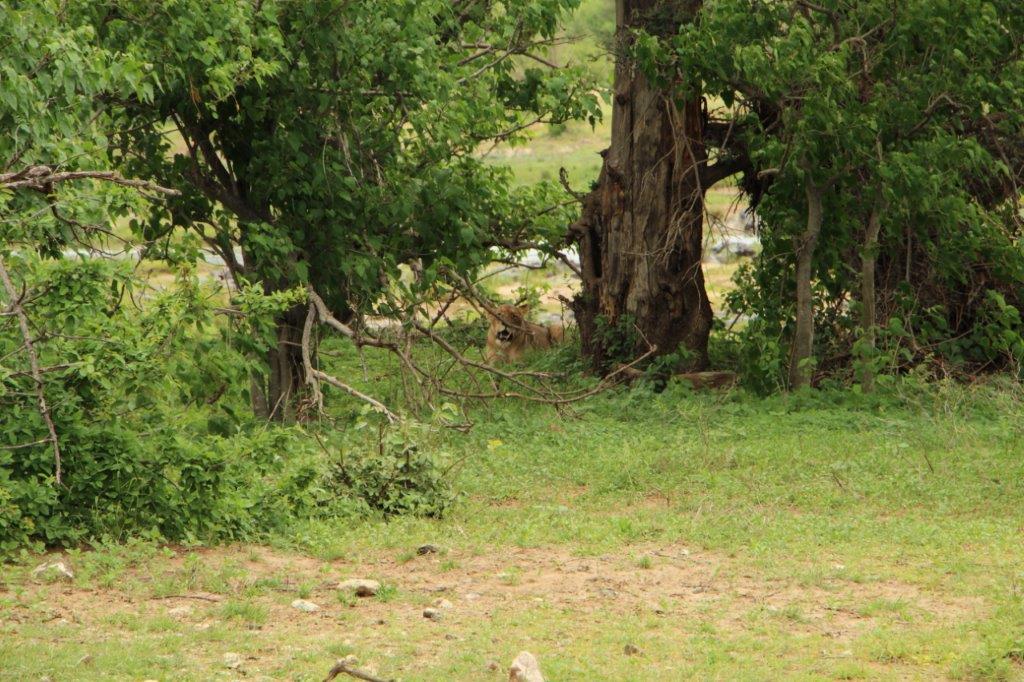
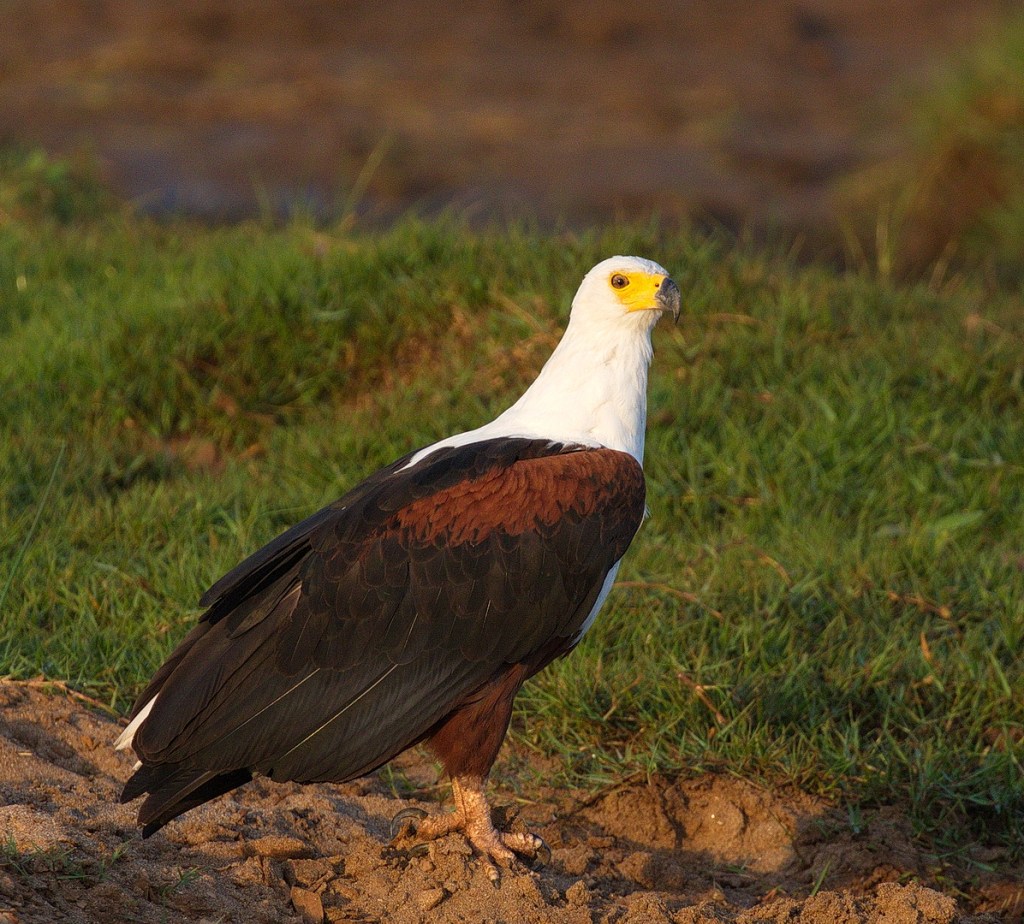
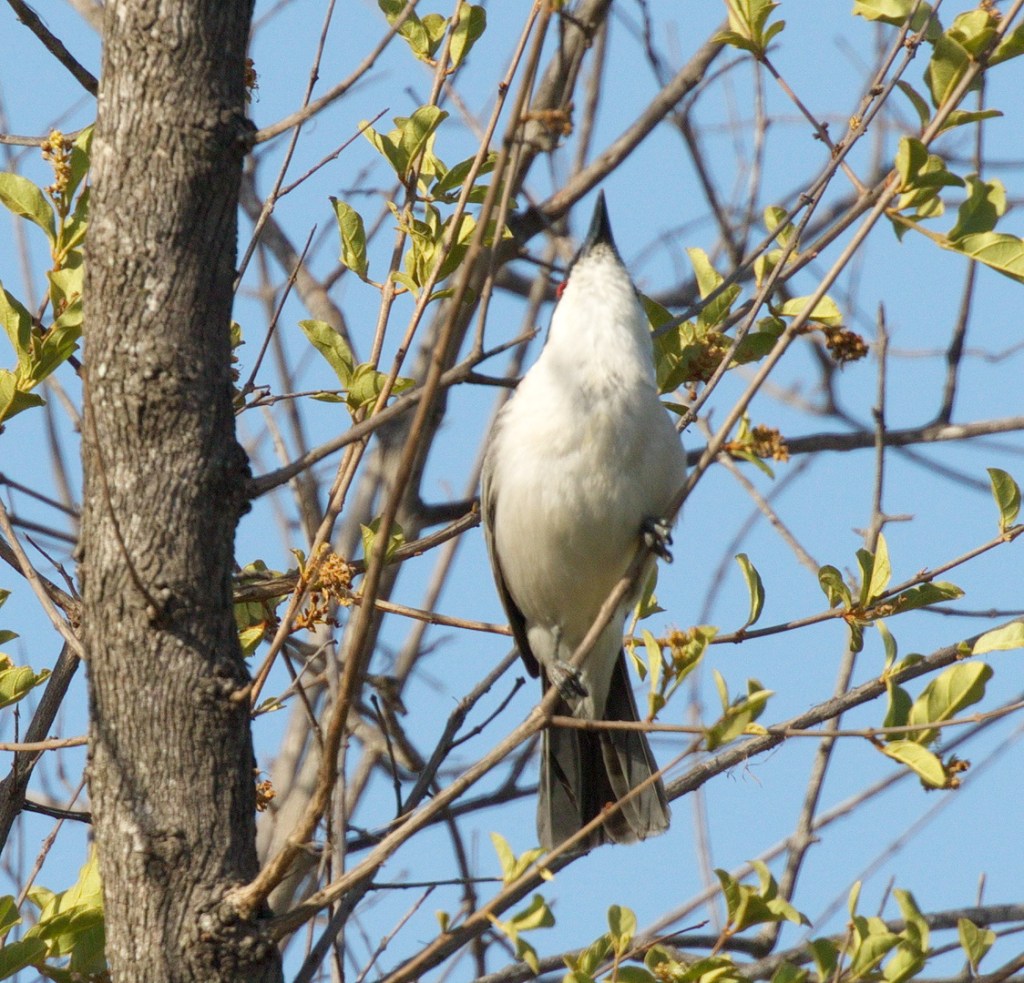
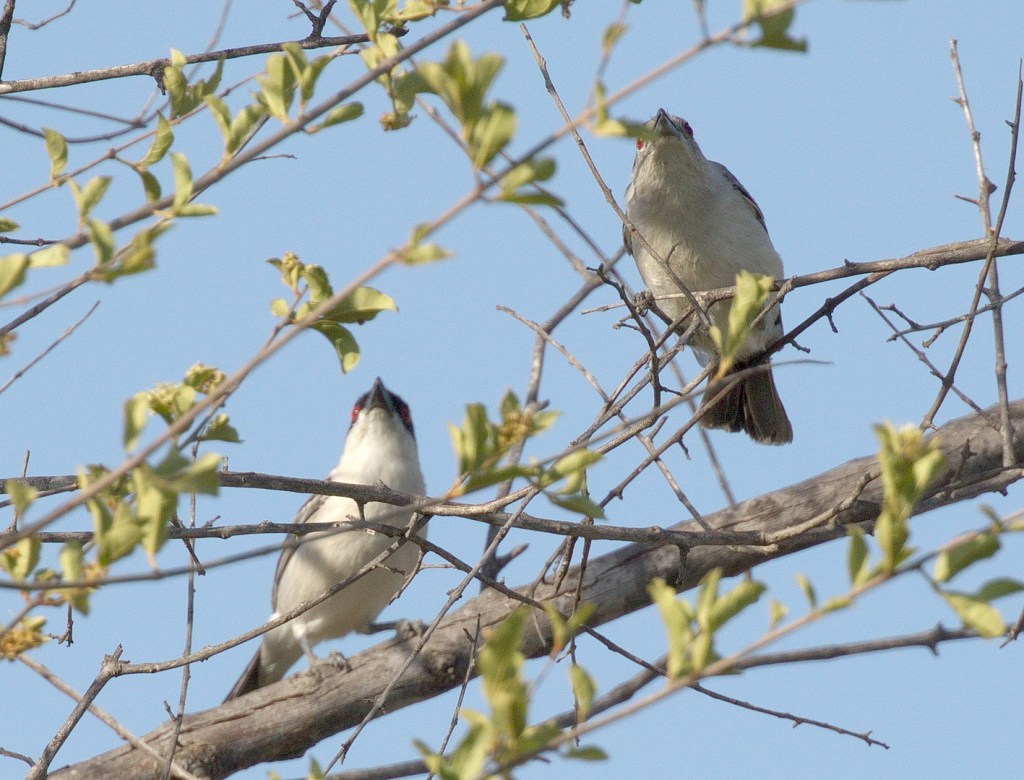
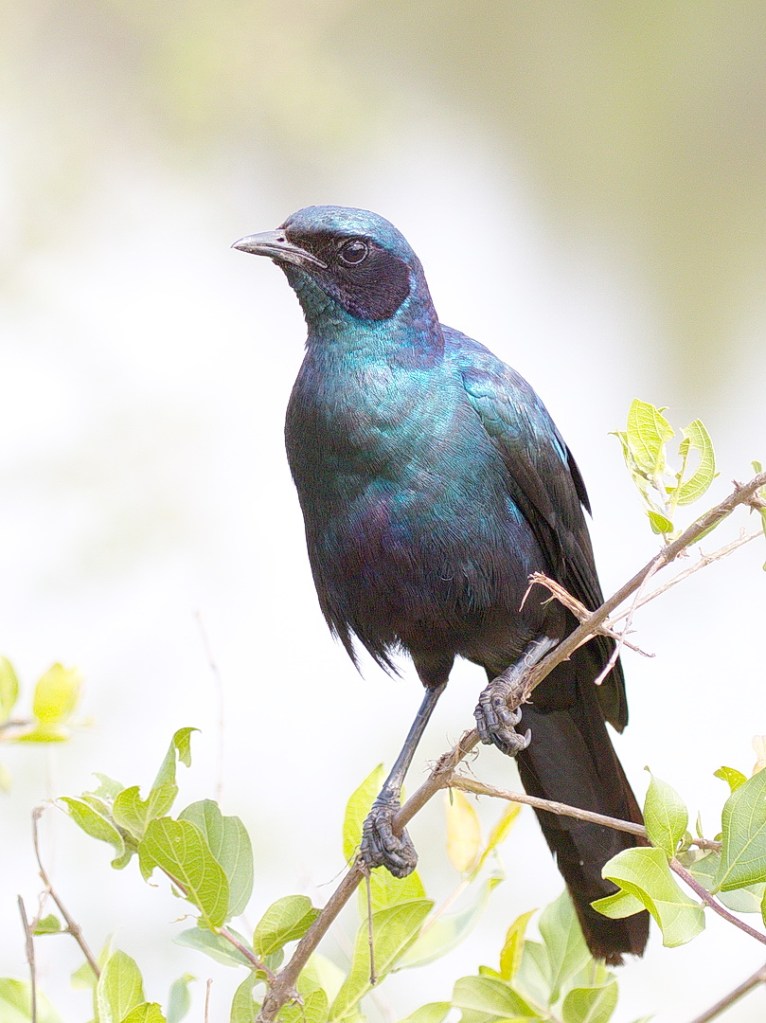
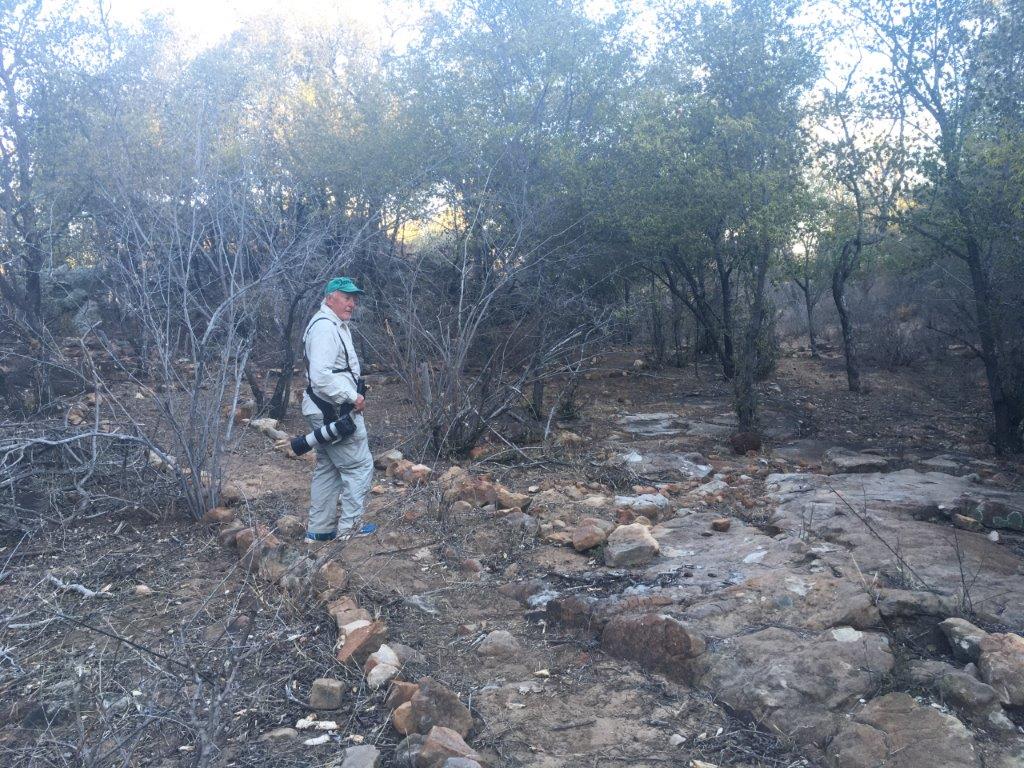
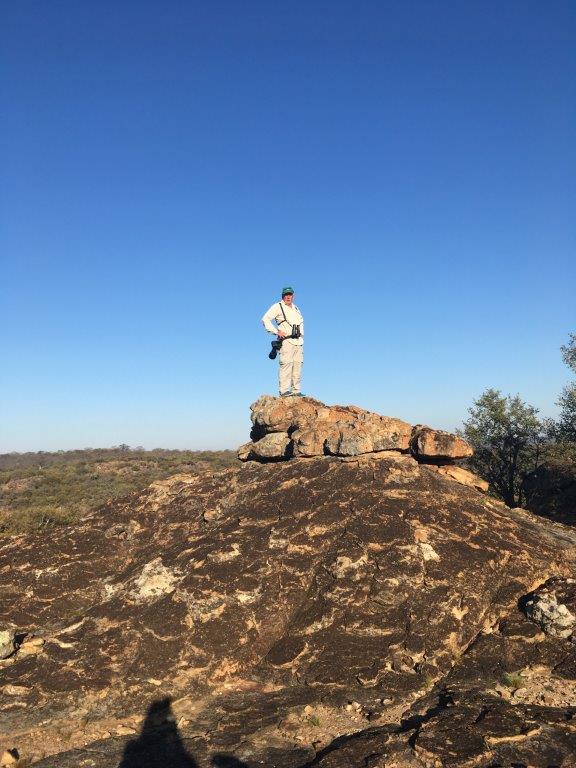
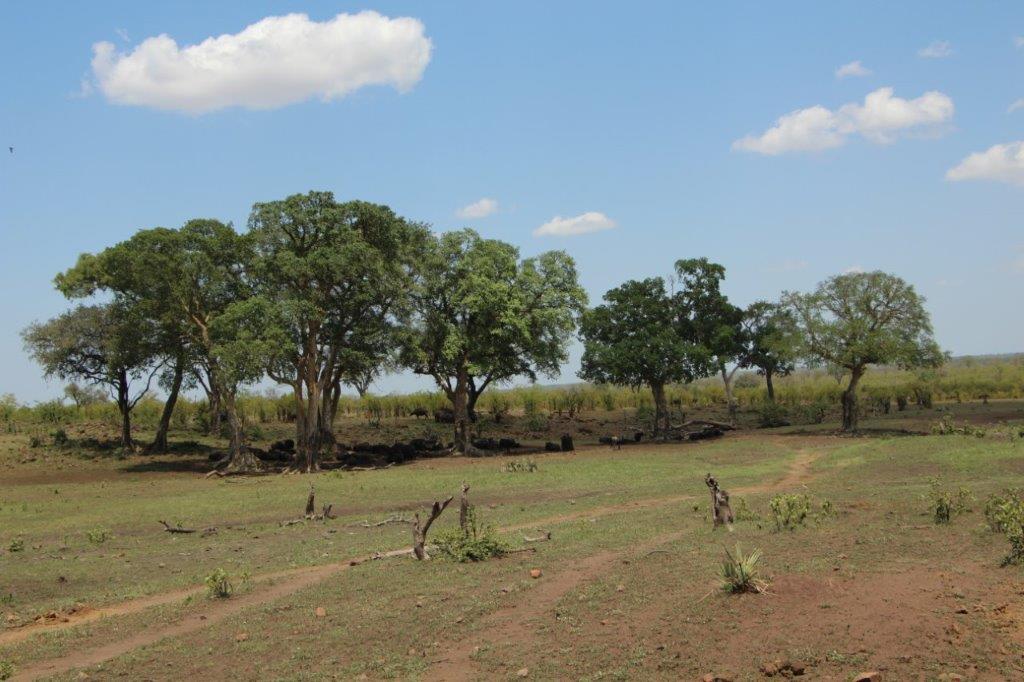
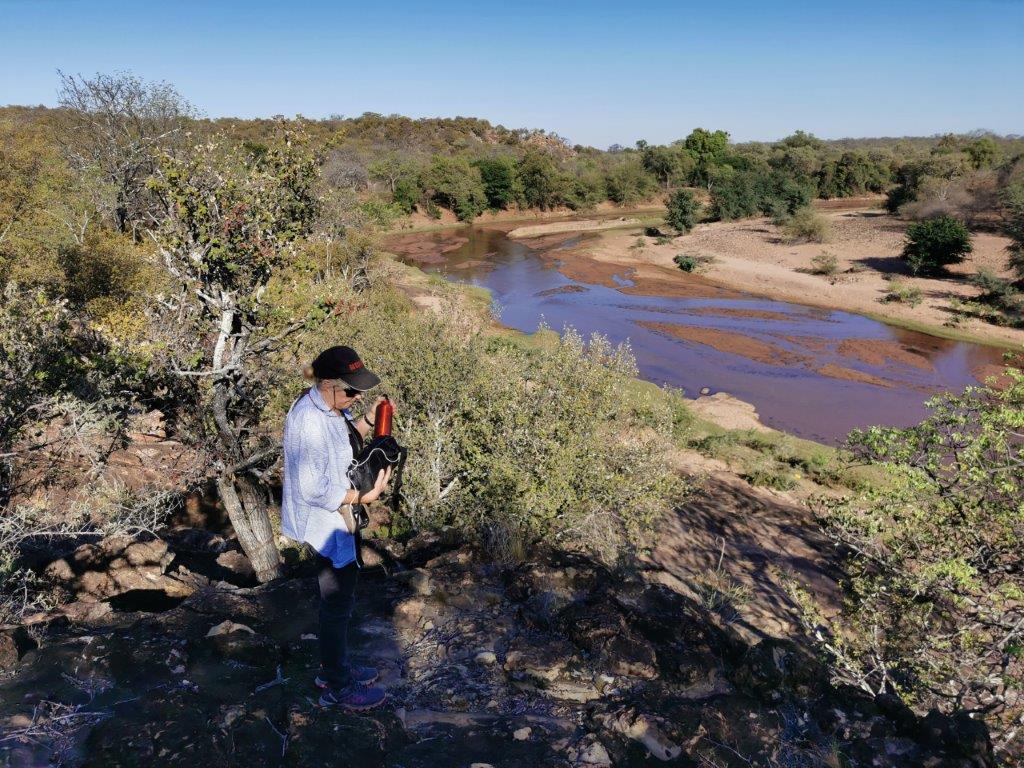
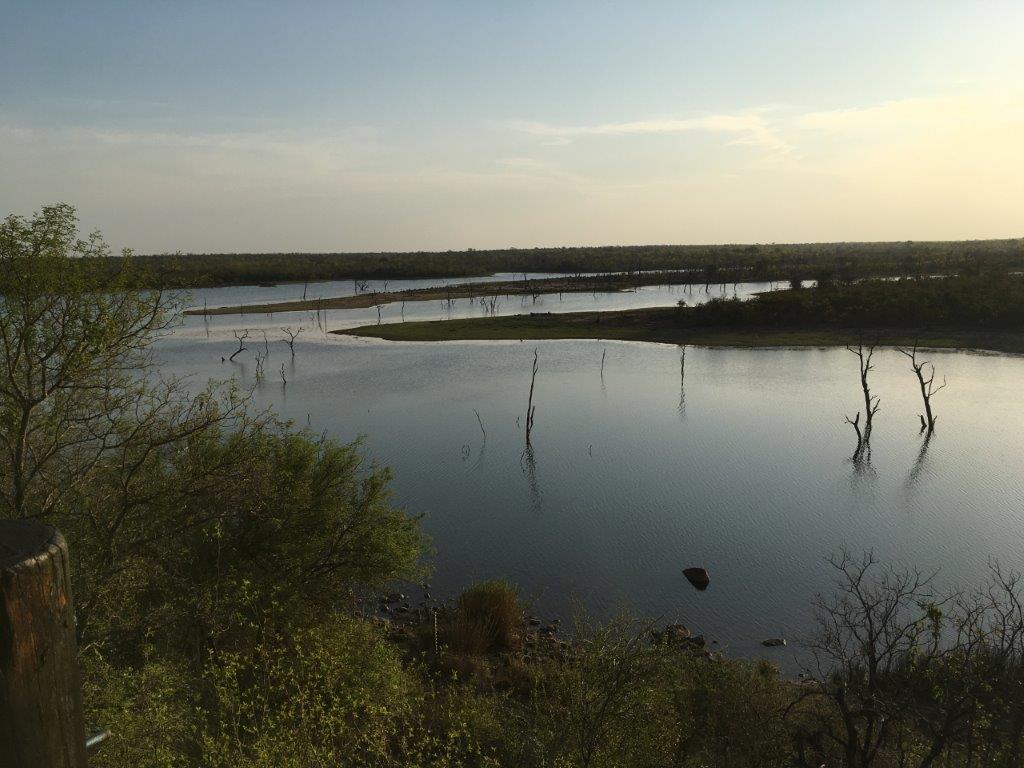
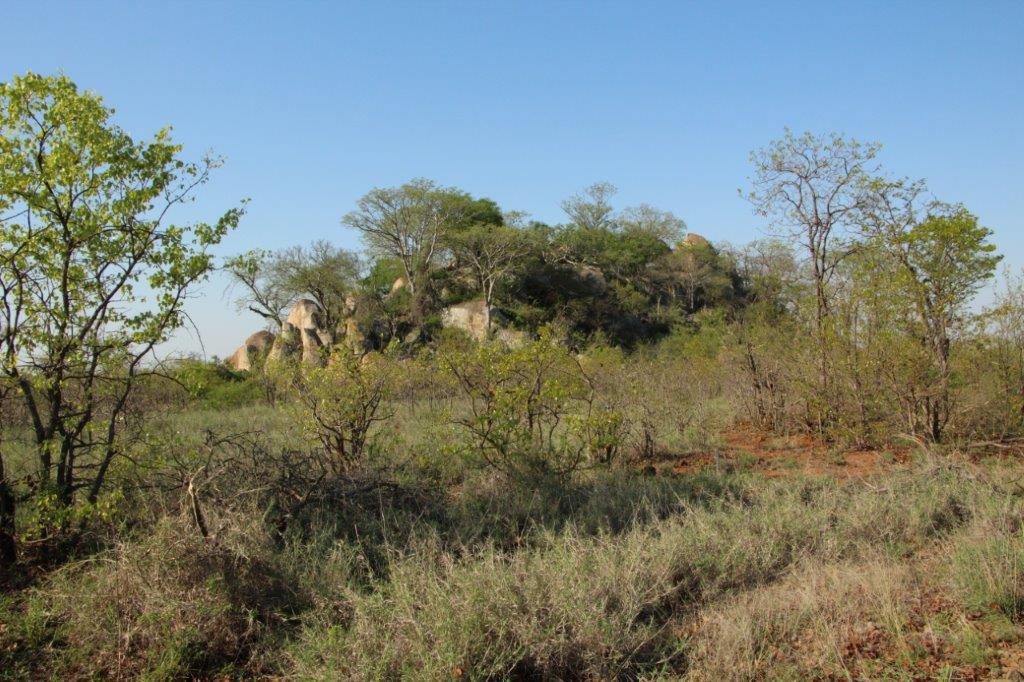
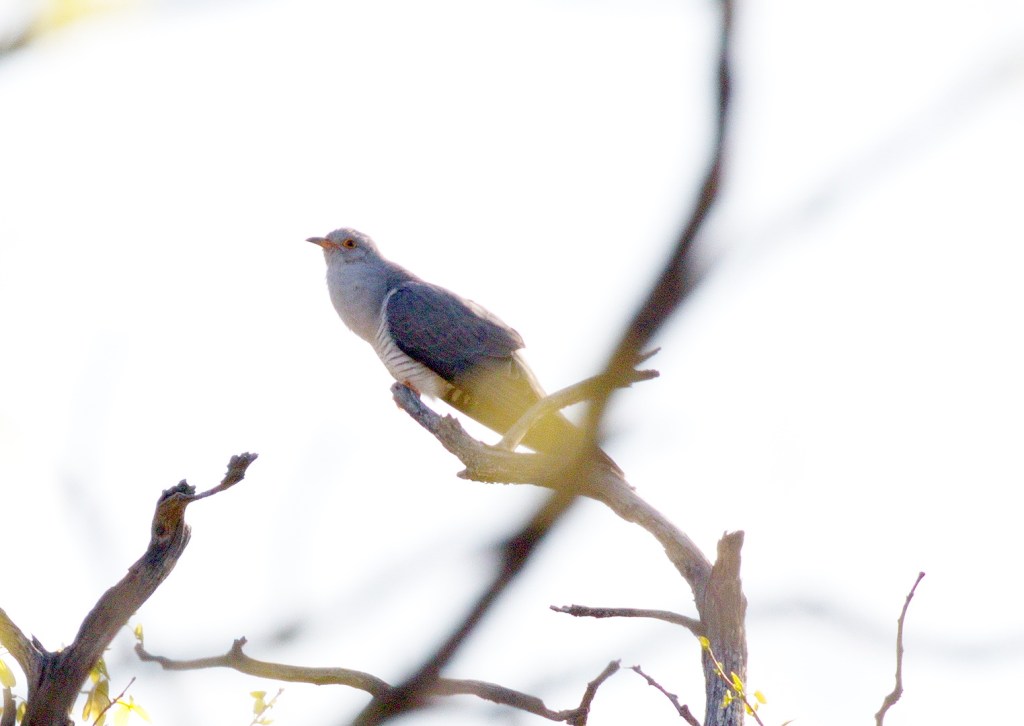
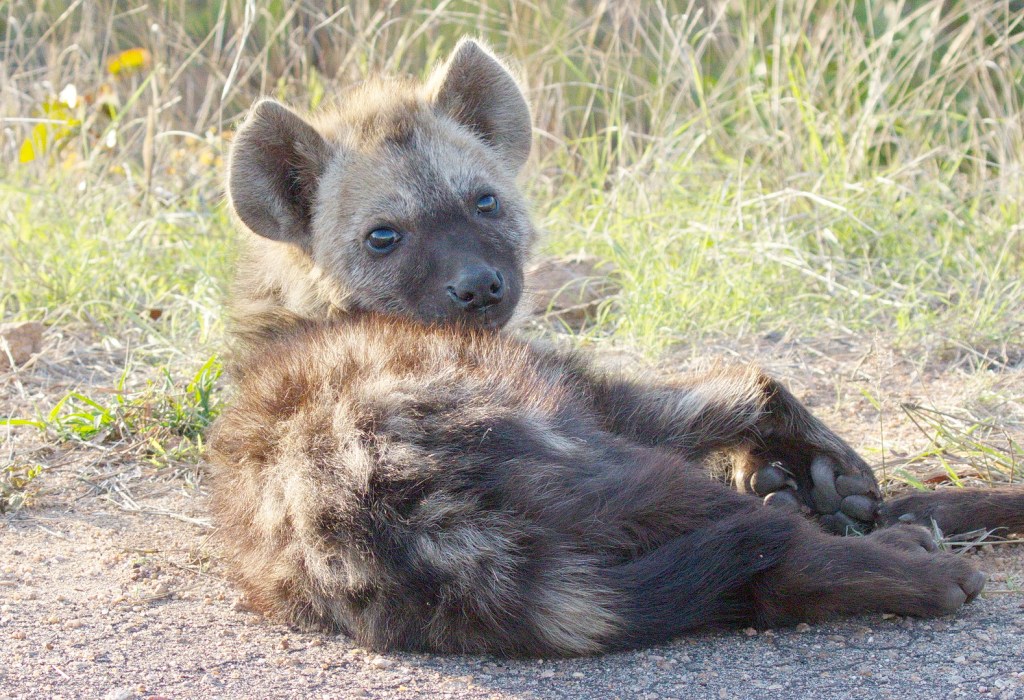
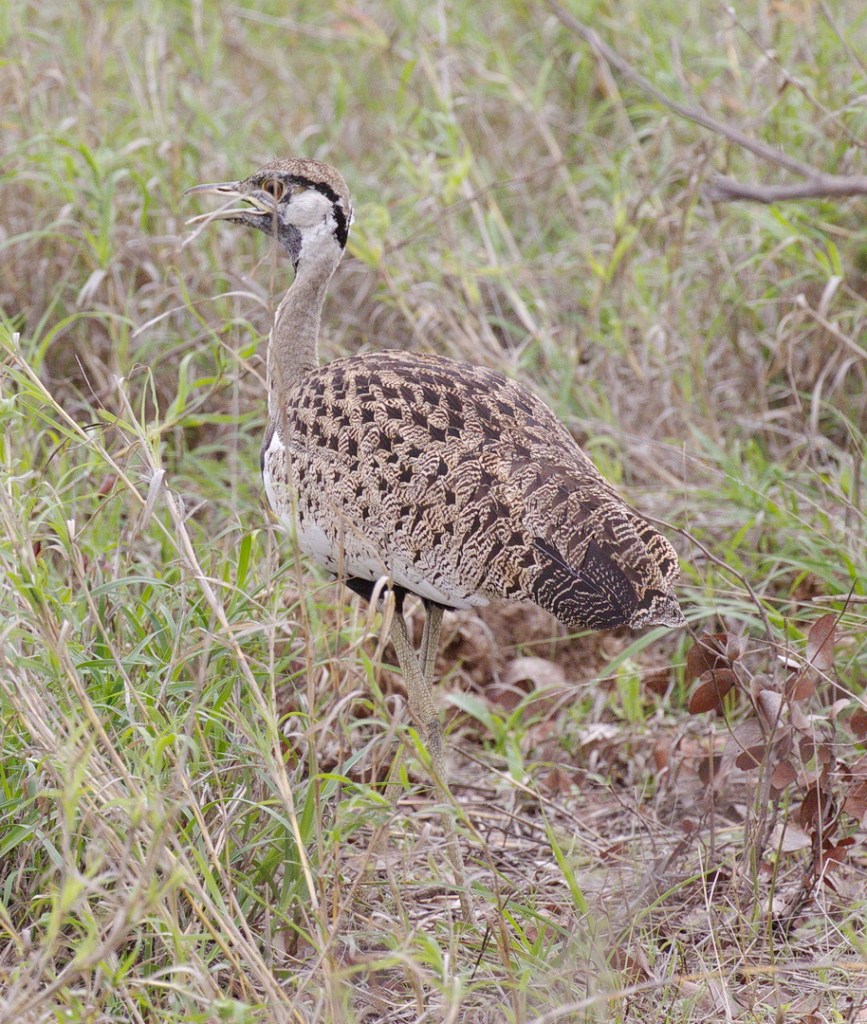
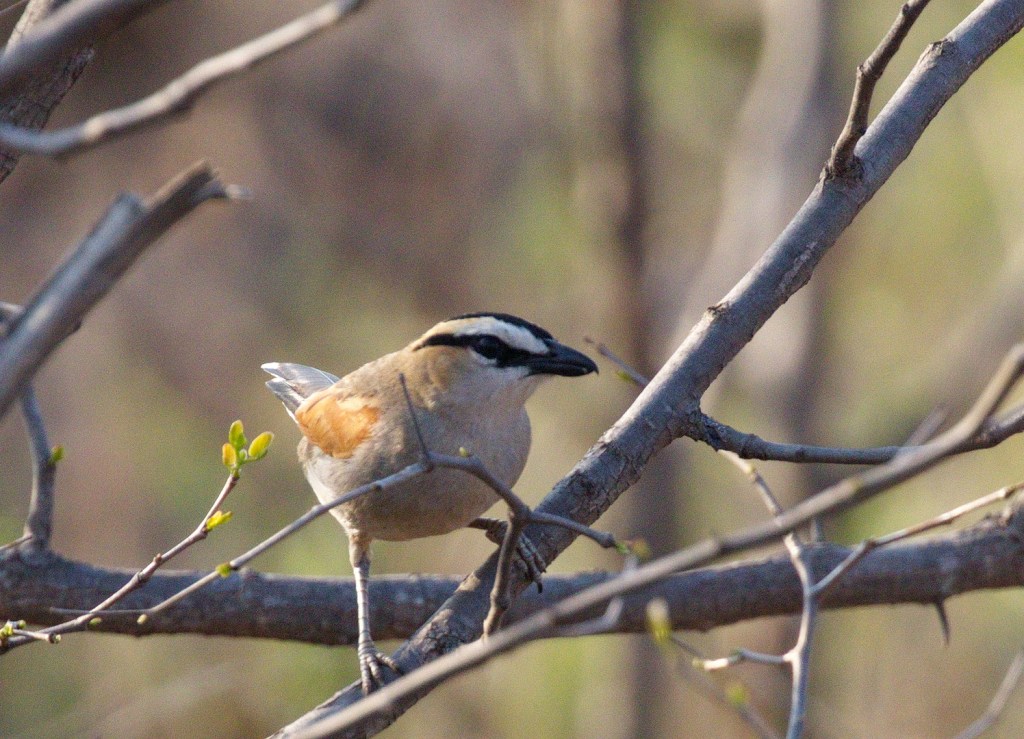
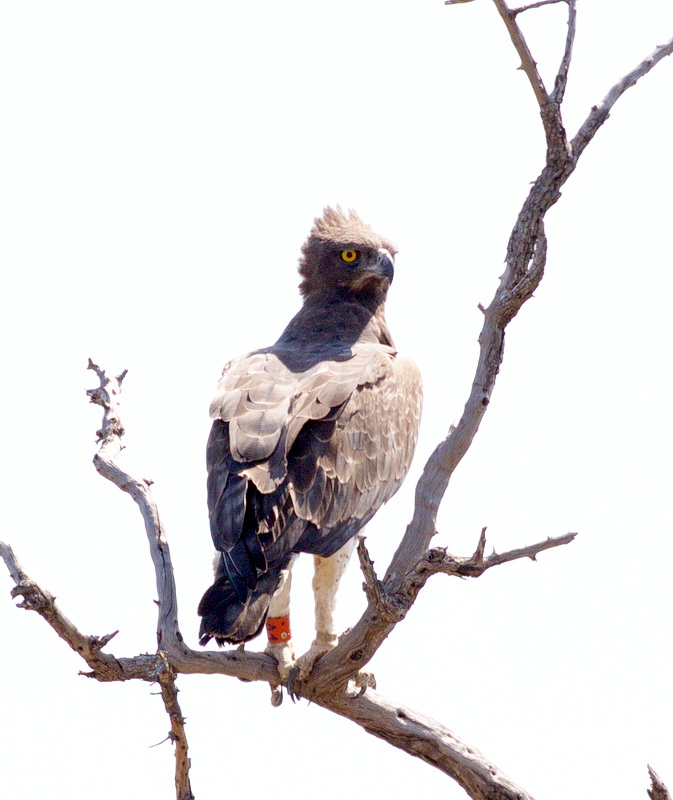
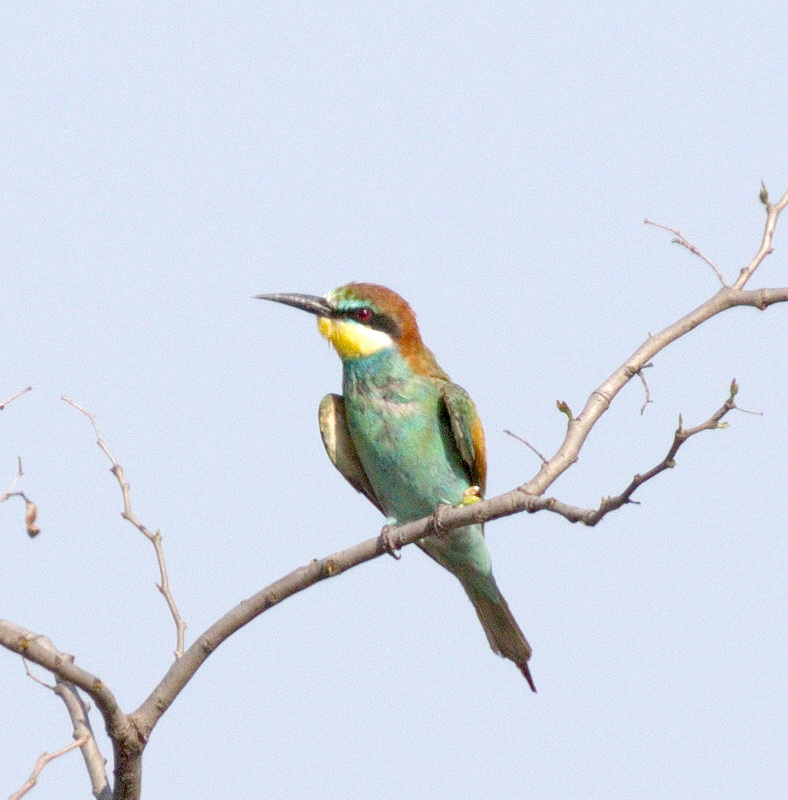
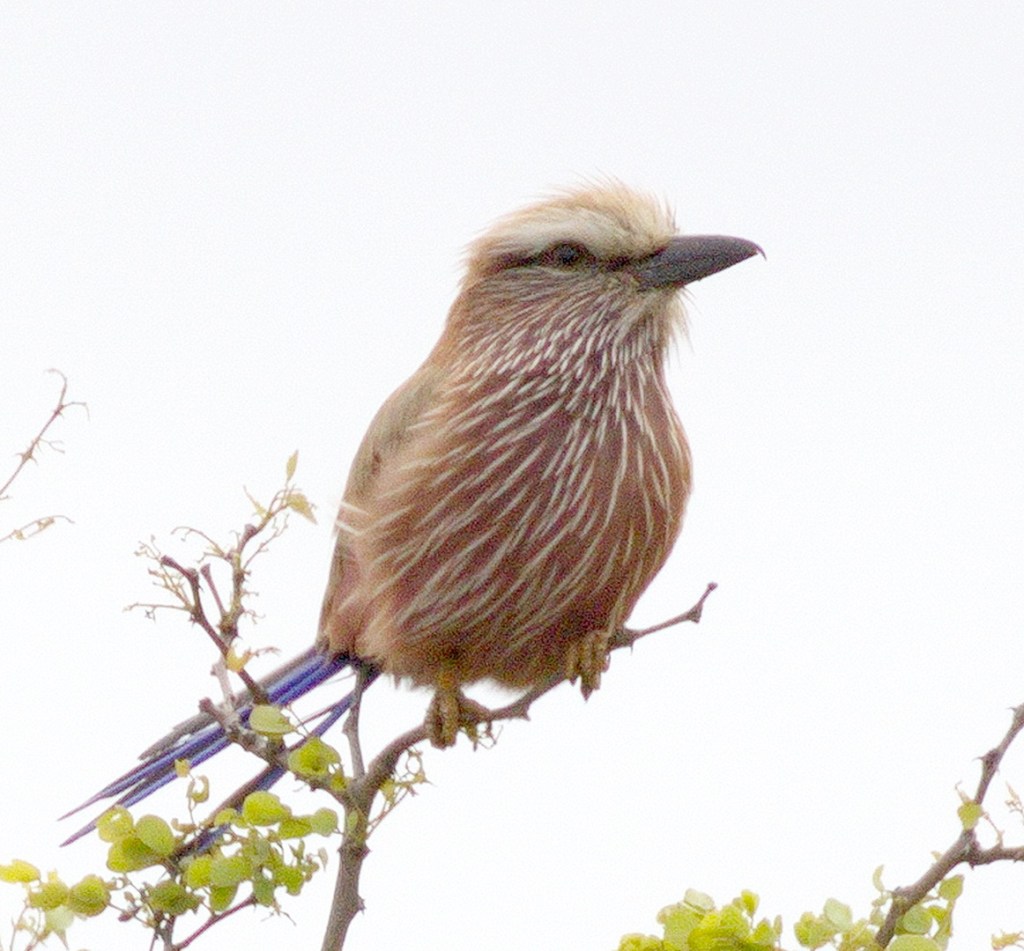
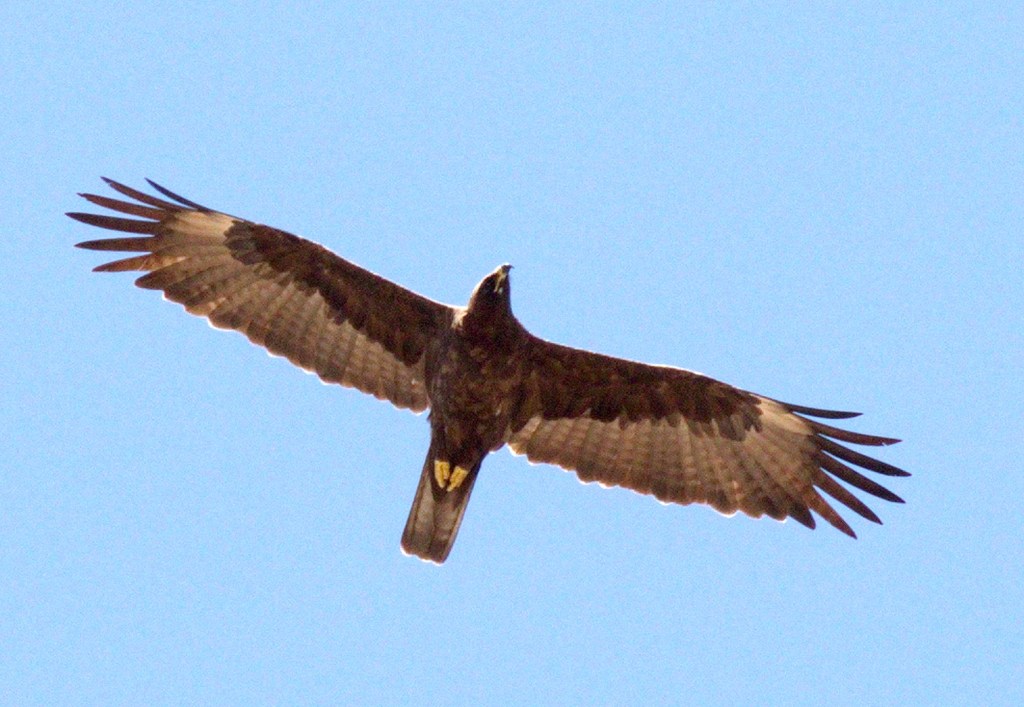
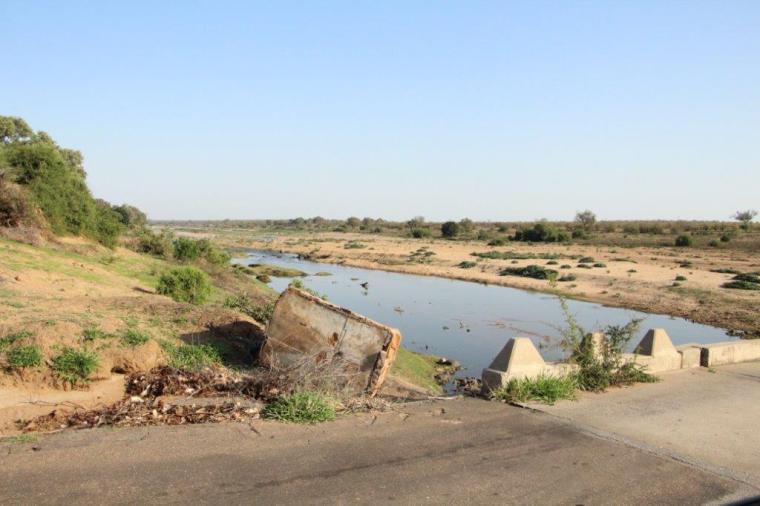
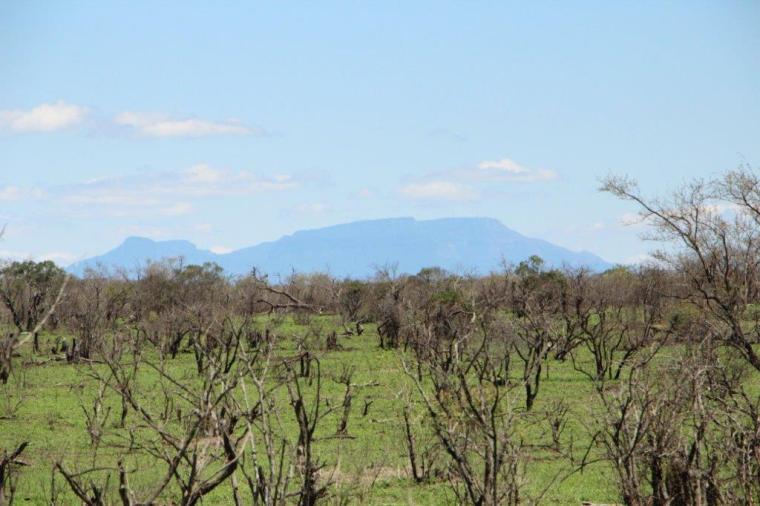
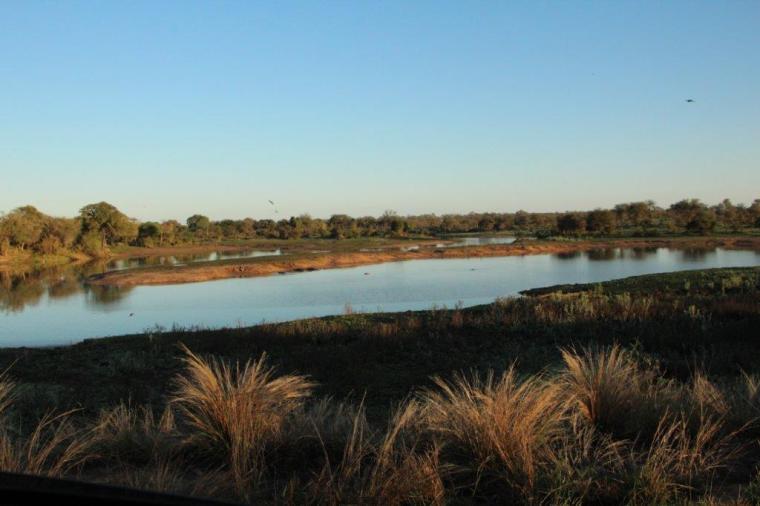
Sally and I took my sister, Natasha and her husband, Dick to the Oribi Cape Vulture Colony. The colony is situated on farm property. We booked the 2 hour session (09h00 to 11h00) through Andy Ruffle 072 893 3794.
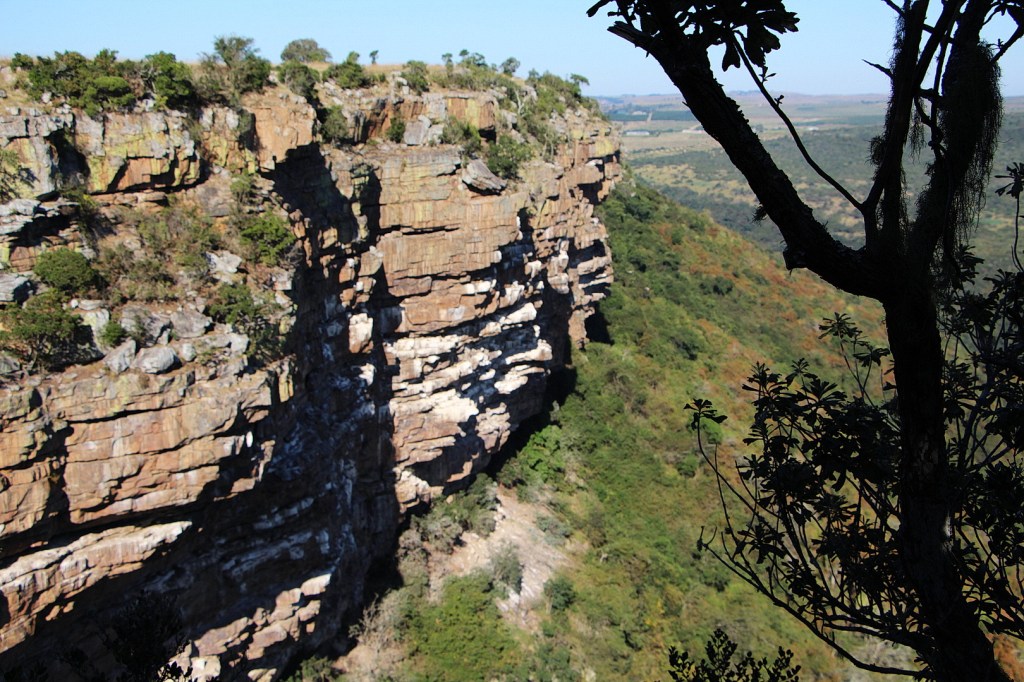
As you drive through the cane fields you have no expectation of the gorge ahead. Even when you have parked you only have a short walk to the site and it is only when you get to the top of the cliff face that you realise that you are there. The colony is situated on a steep cliff face with panoramic views over and beyond.
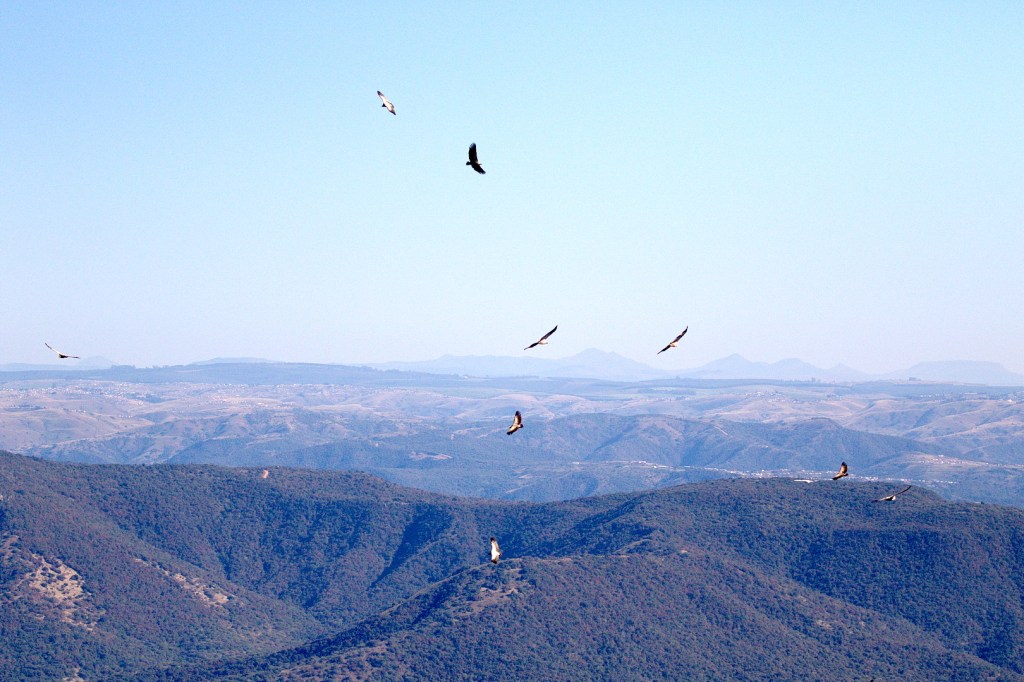
We arrived with clouds blanketing the hills and valleys – a spectacular sight. The day was perfect – blue skies (a bit cool) and little wind. Gradually as Andy was telling us about the history of the site and the habits of the Cape Vultures, the clouds dispersed. It was only then that the Cape vultures started to test out the flying conditions.
Jumping off the cliff face they hope to go straight into gliding mode. If the conditions are not suitable they return flapping strongly in the process. Once the conditions are right they are off to their feeding grounds – gliding all the way. They have no need to flap their wings accept on takeoff after feeding. Once in the air they need no energy to get home.
First Impressions
The colony nest site
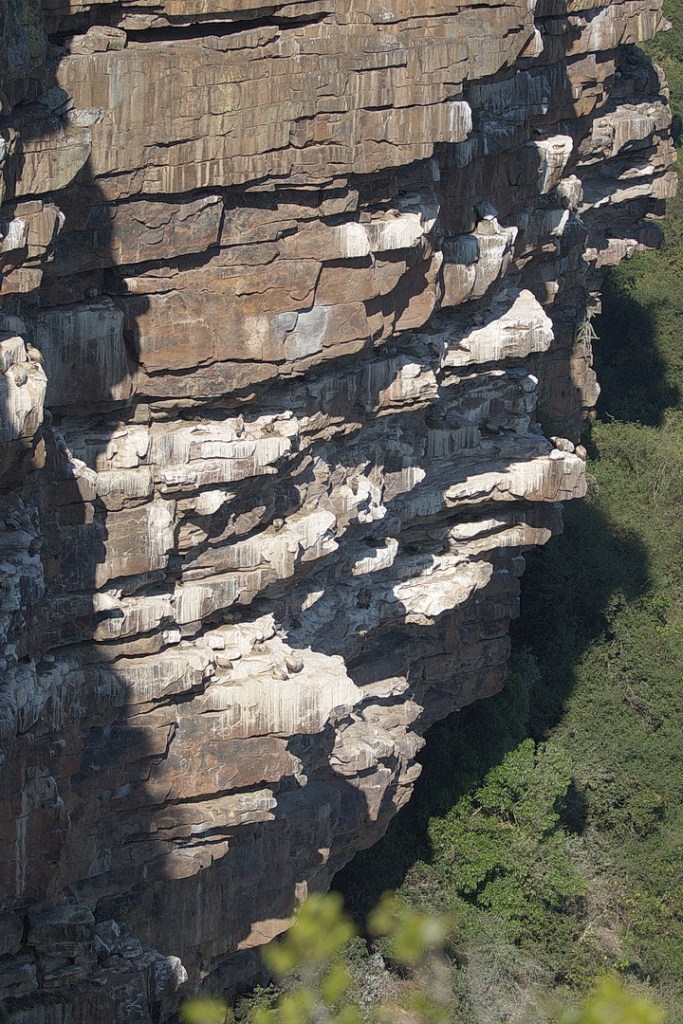
Part of the cliff face with nesting birds
Cape Vultures waiting to launch
Nesting cliff face.
Probably the most interesting feature of the birds is their wingspan – up to 2.6 metres. That is approximately a metre more than the length of your outstretched hands. Try it and see how impressive that is.
An impressive wingspan
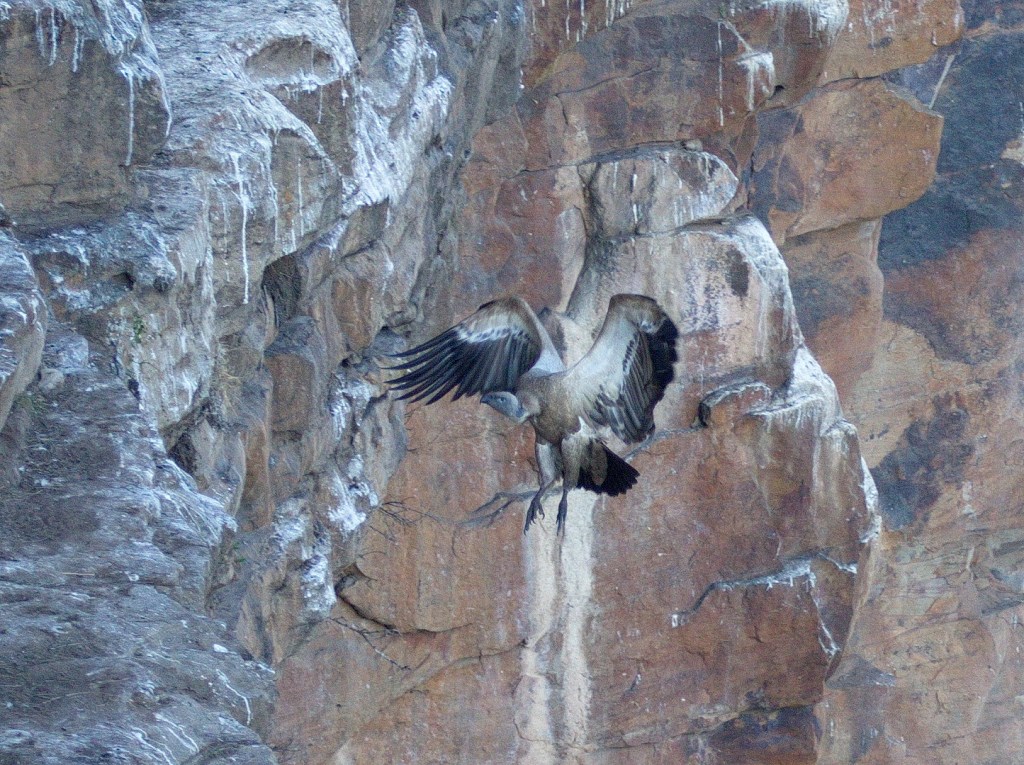
Here are a few photos of a vulture returning to the cliff and one of the photos gives the impression that it is a vulture wall painting.
Wall painting or for real?
About three decades ago the farmer encouraged the colony of about 30 Cape Vultures to flourish. Today there are 94 known pairs of Cape Vultures using the cliff face to breed. A highly successful program. This is attributed to the an increase in supply of food which mainly comes from the carcasses of animals living in the rural communities as well as new vulture restaurants.
The rural communities move dead animals away from their farming areas. They do not eat the meat fearing they too may become affected by whatever caused the animal’s death. And without people about the vultures thrive on the carcasses.
A new feeding station – vulture restaurant – was relatively recently started in Kamberg at a large pig farm. Pig carcasses mainly – which the Oribi Vultures sometimes visit.
The Oribi colony site also has a vulture restaurant and hide. Local farmers bring their carrion to the site for consumption by the vultures. Arrival of the carrion is not only erratic but whatever is brought is not there for long – a pig will be stripped bare in less than 7 minutes.
The Oribi Vulture Hide – rather smart.
It is not only the Cape Vultures that have been seen at the site. Ruppell’s, White-backed, Palm-nut and Lappet-faced Vultures have also been recorded there infrequently. As yet the Bearded Vulture has not been reported despite the proximity to the Berg.
There is another larger colony of about 200 pairs of Cape Vultures further south – about 150 kms away in the Umtamvuma Valley region. On occasion the birds visit the Oribi vulture restaurant. On the whole both colonies appear to have their own feeding grounds.
Breeding season is currently underway. Each pair takes turn to sit on the eggs for about a day and a half at a time with nests often close together.
Typical proximity of nests
Nesting sites
Once in the air, they circle over the valley below.
Occasionally they give you the eye ball by flying at eye height within metres of you.
Eye ball to eye ball.
The Oribi Cape Vulture colony is thriving and is a must visit for everyone. We were all blown away seeing the spectacle of the vultures flying so close to us at eye height. Pictures only give an impression of the place. Visiting and experiencing it for yourself is mind-blowing – as my sister said.
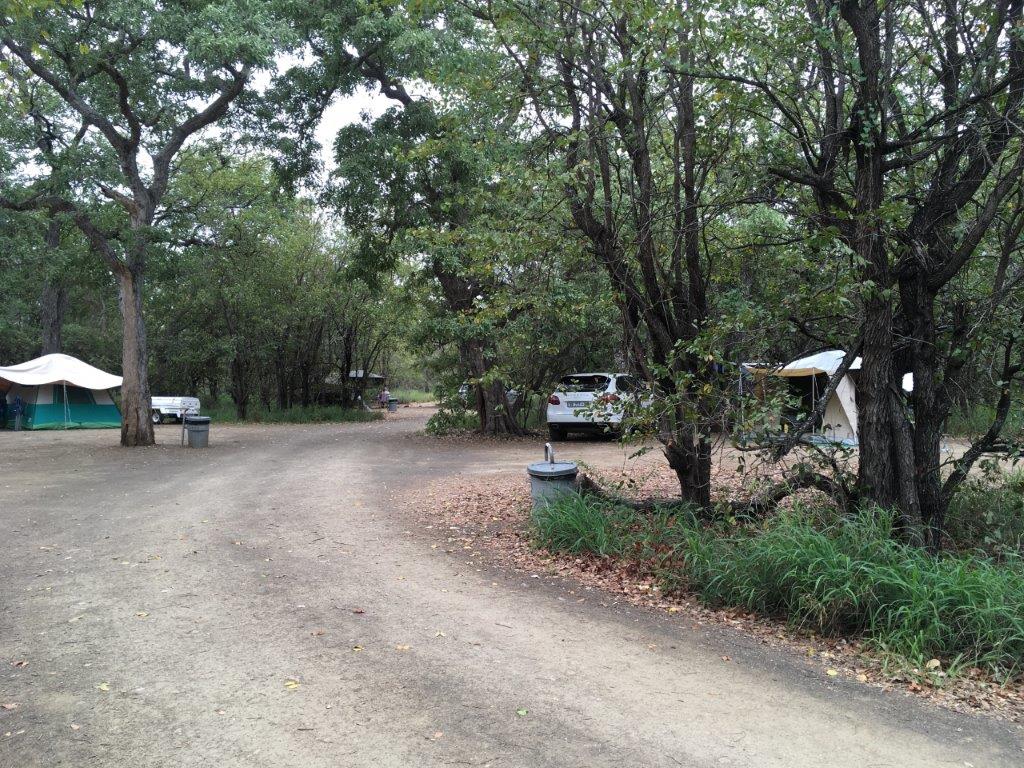
It was time to get away from home and into the bush. Mkuze was our choice. Because our Afrispoor Caracal was not yet ready for collection, rest huts were our only cheap option. The campsite has been closed for a while – no water and it is currently totally overgrown. We wonder if it will ever be open again. There has been talk that the campsite may move to the unused soccer field right next to the main camp. Good option as water and power will be available. the downside will be the lack of shade.
Temperatures were high and the fans in the huts (we took one of our own) were necessary day and night – not much fun especially during the power cuts twice every day – 18h00 to 20h00 and 02h00 to 04h00.
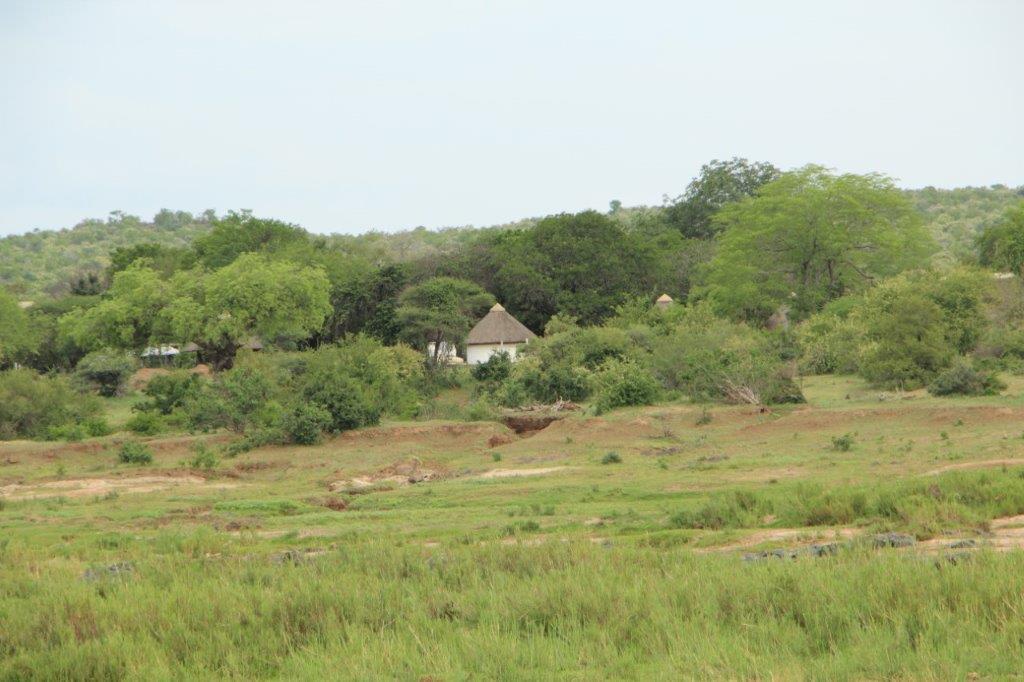
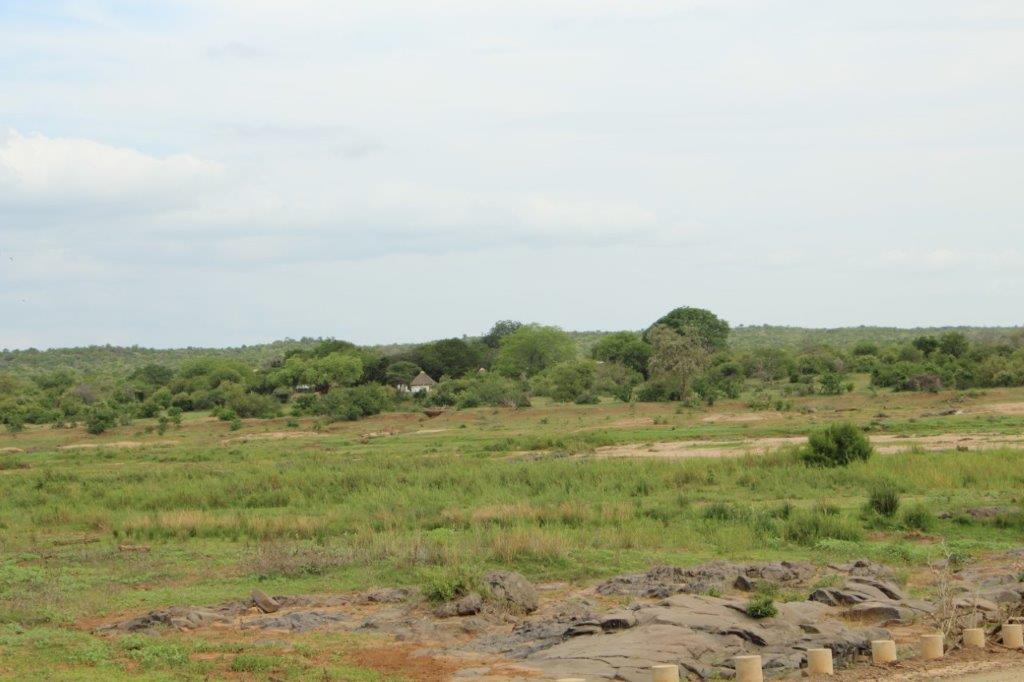
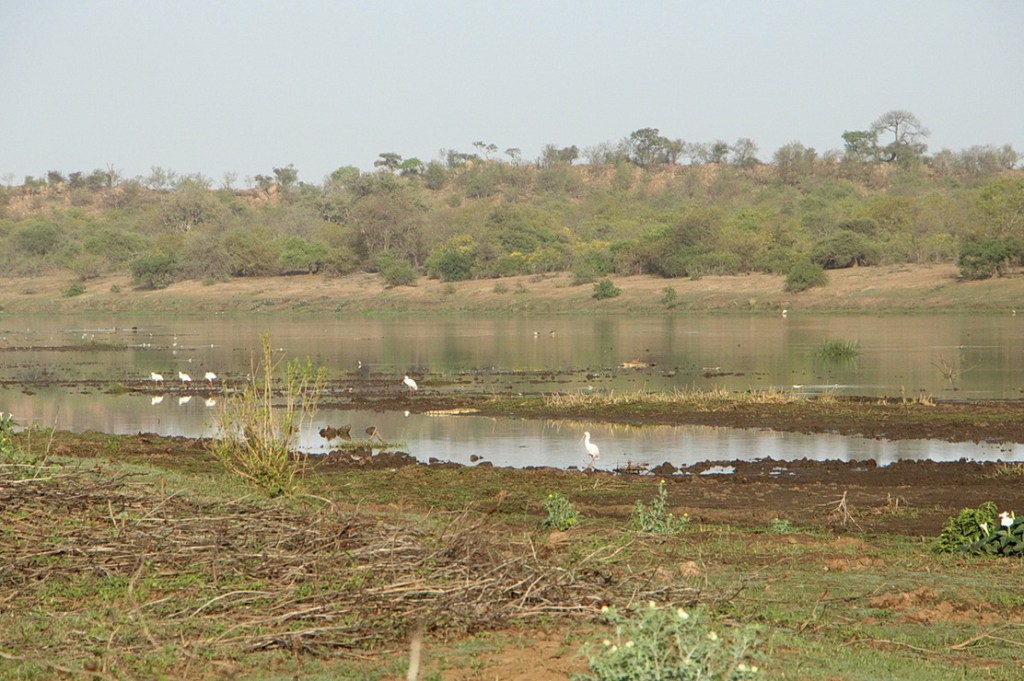
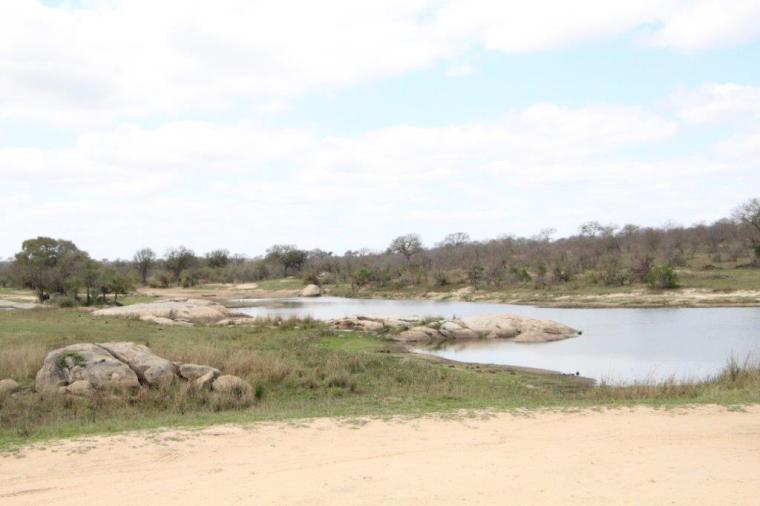
Too much water everywhere due to the recent rains making abundant pools throughout the Game Reserve.
Despite the frustrating conditions we still enjoyed our stay and had some unexpected sightings.
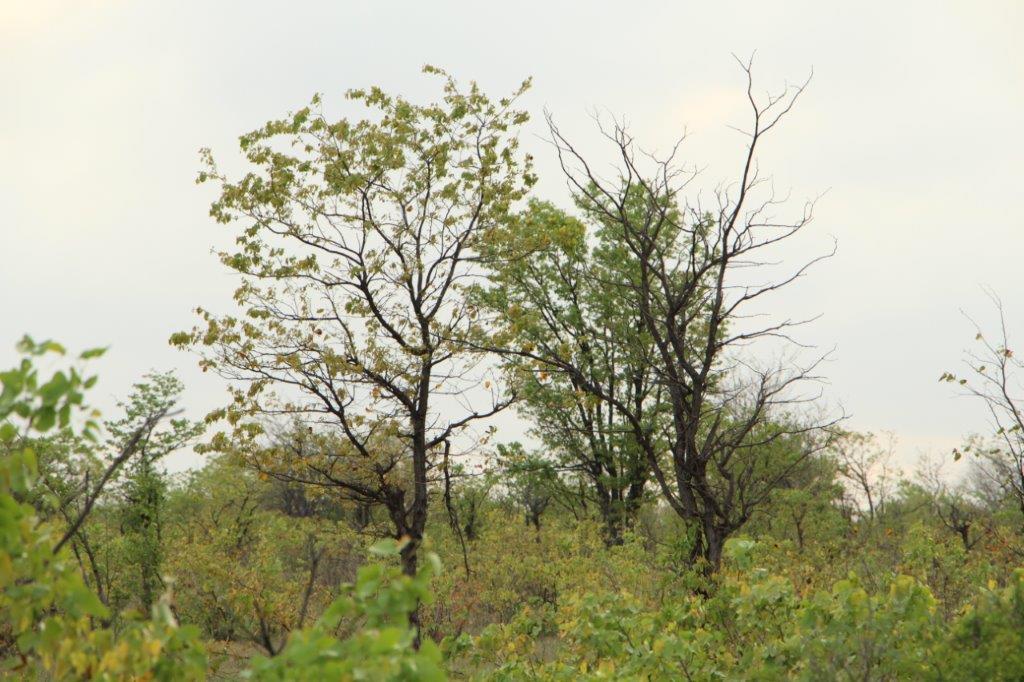
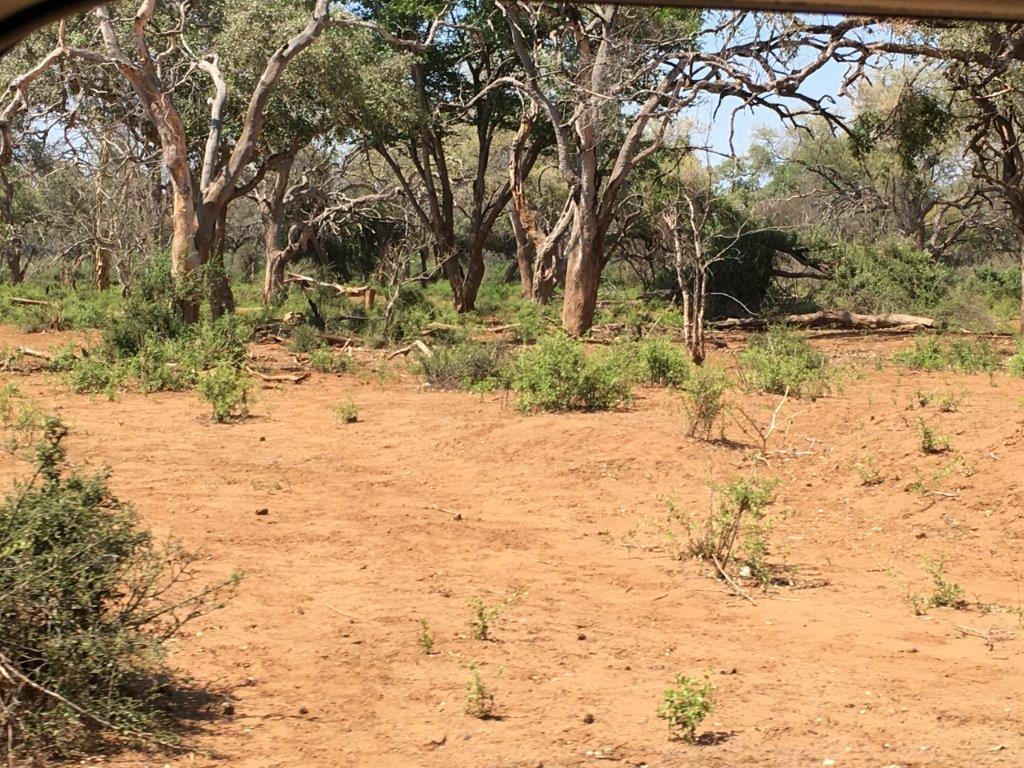
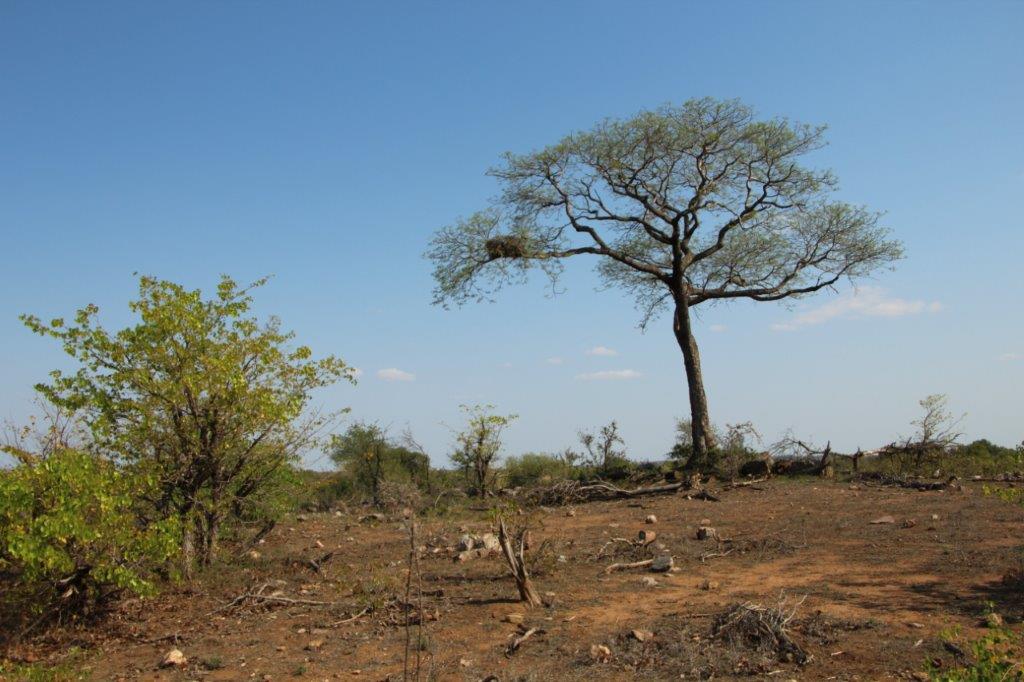
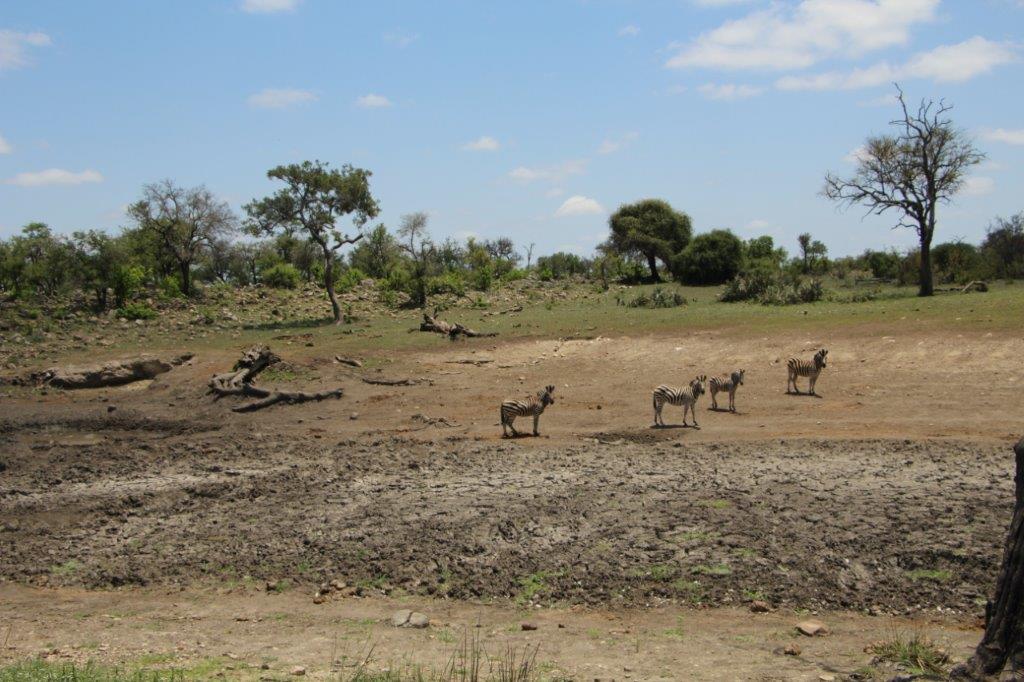
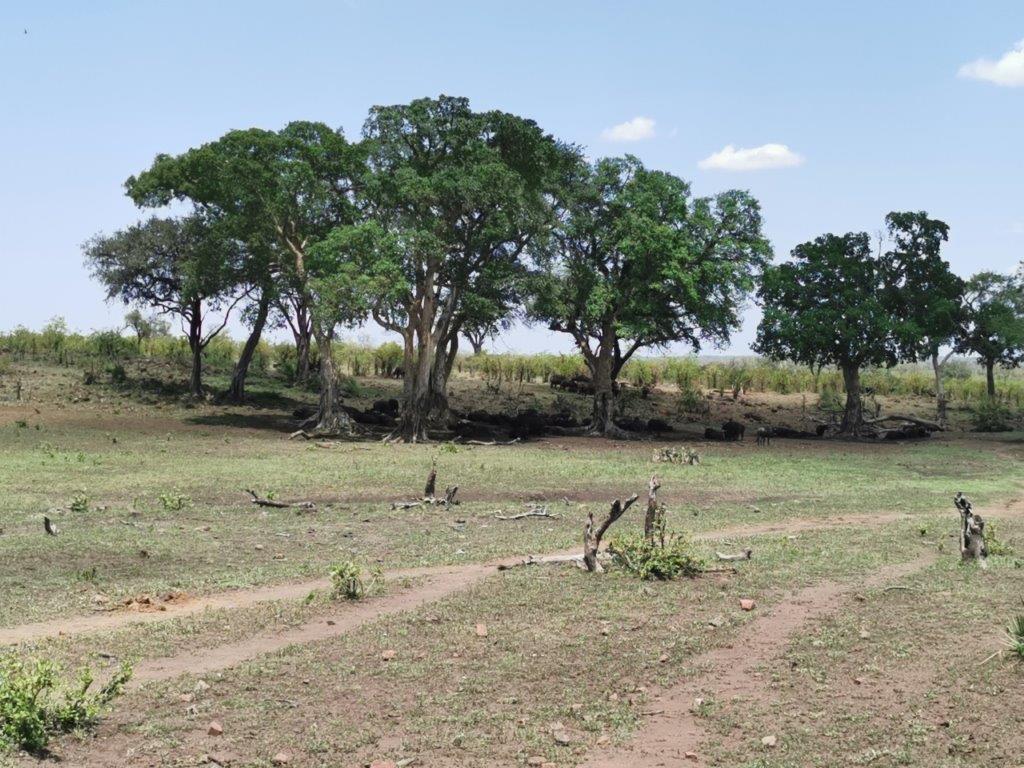
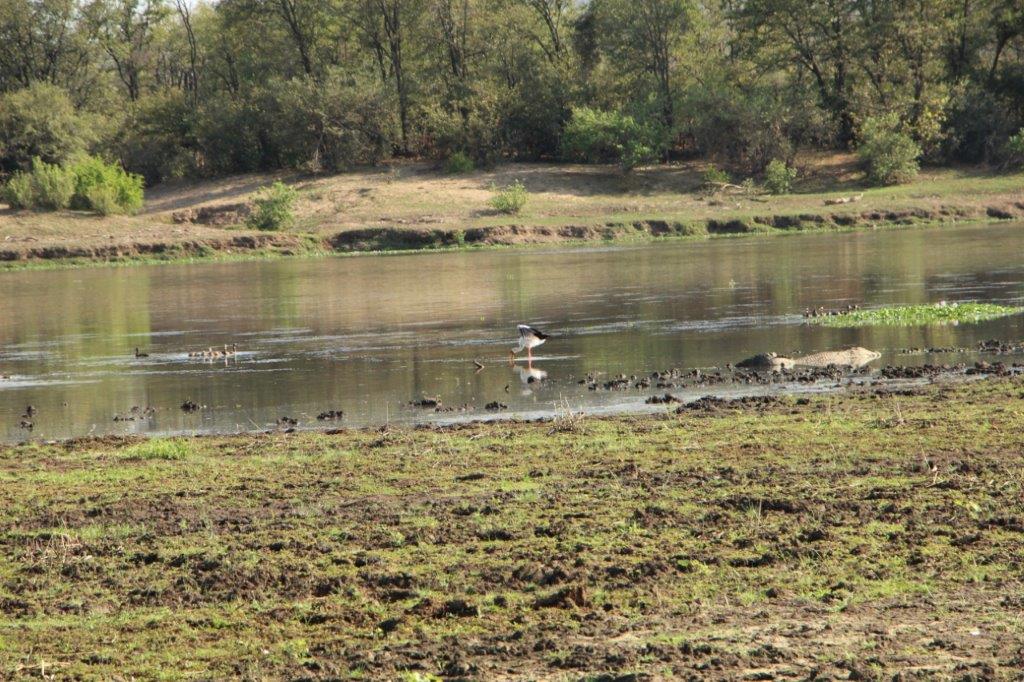
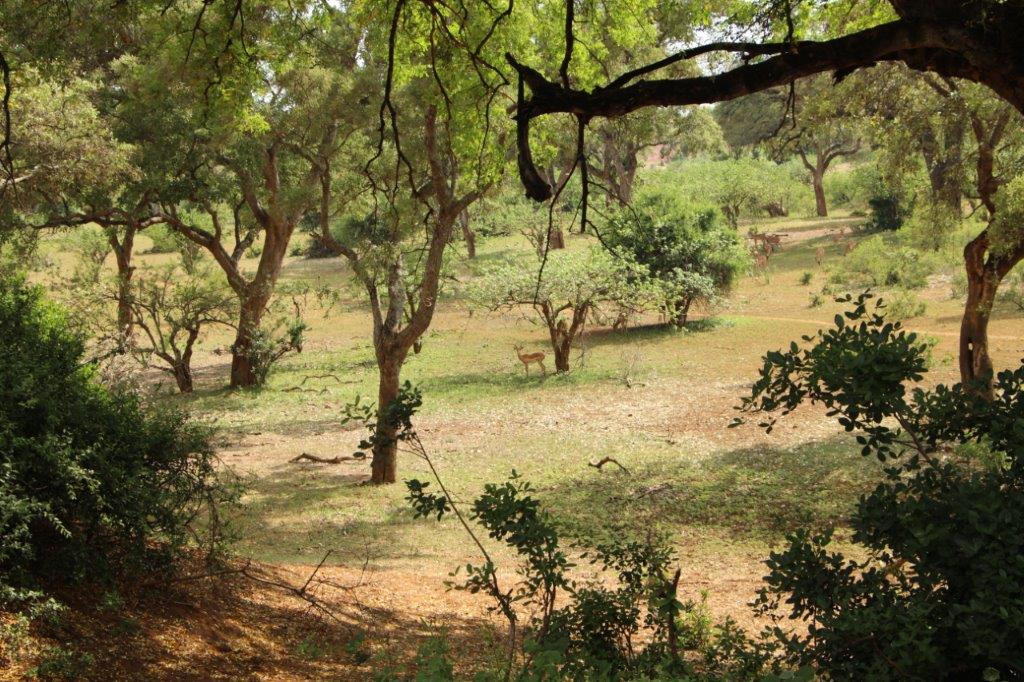
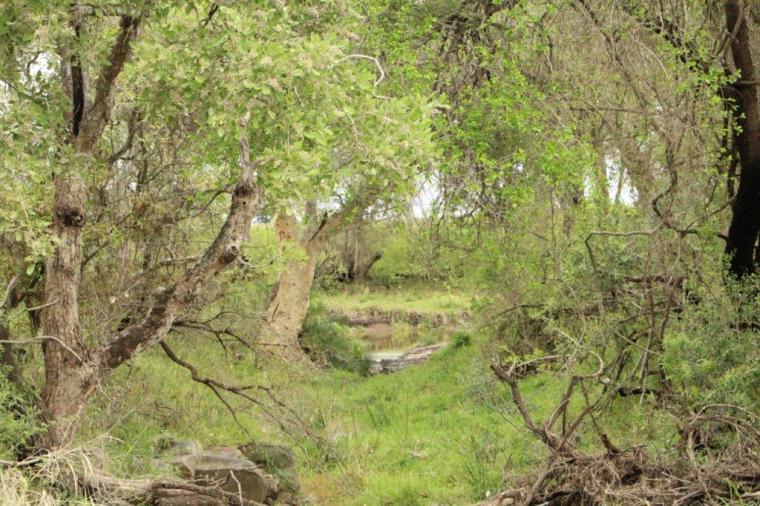
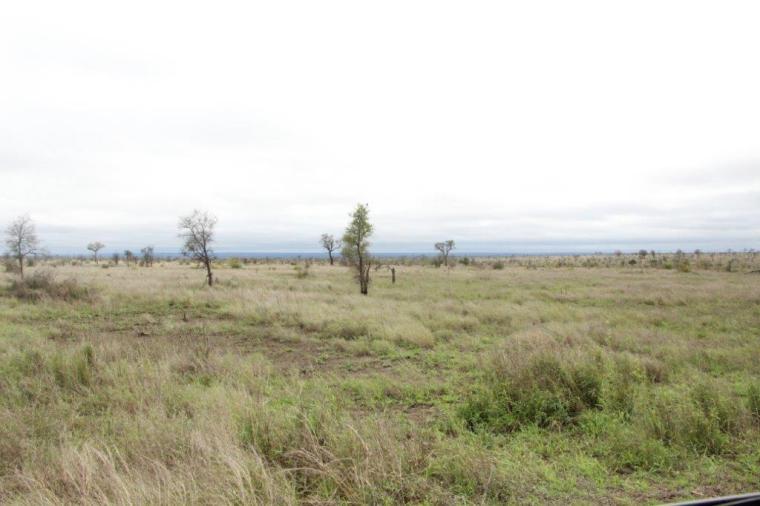
Typical Habitats
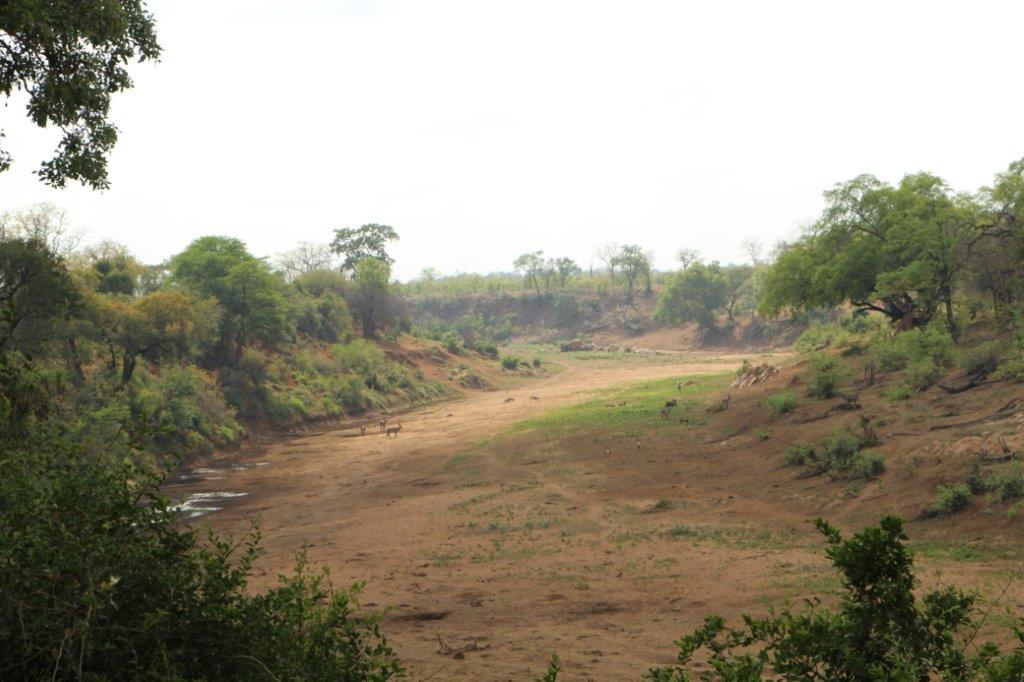
Flat area below Camp on way to Mahlahla Hide
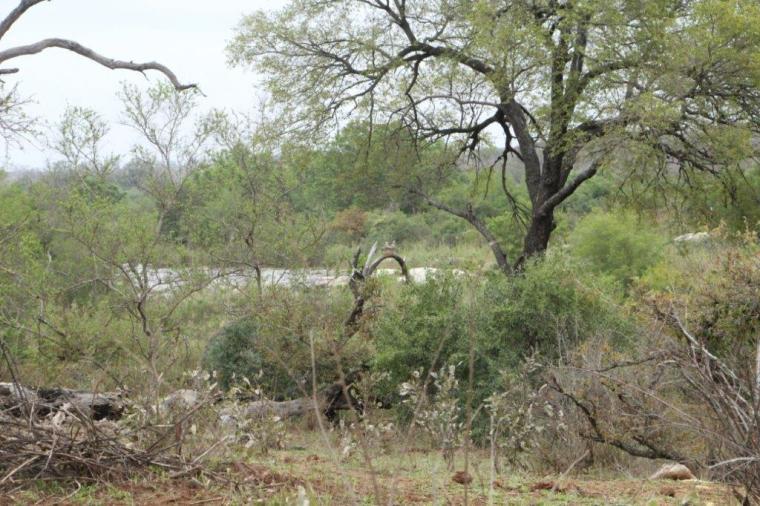
Flat area below Camp on way to Mahlahla Hide with White-backed Vultures in the tree at the back
Flat area below Camp on way to Mahlahla Hide
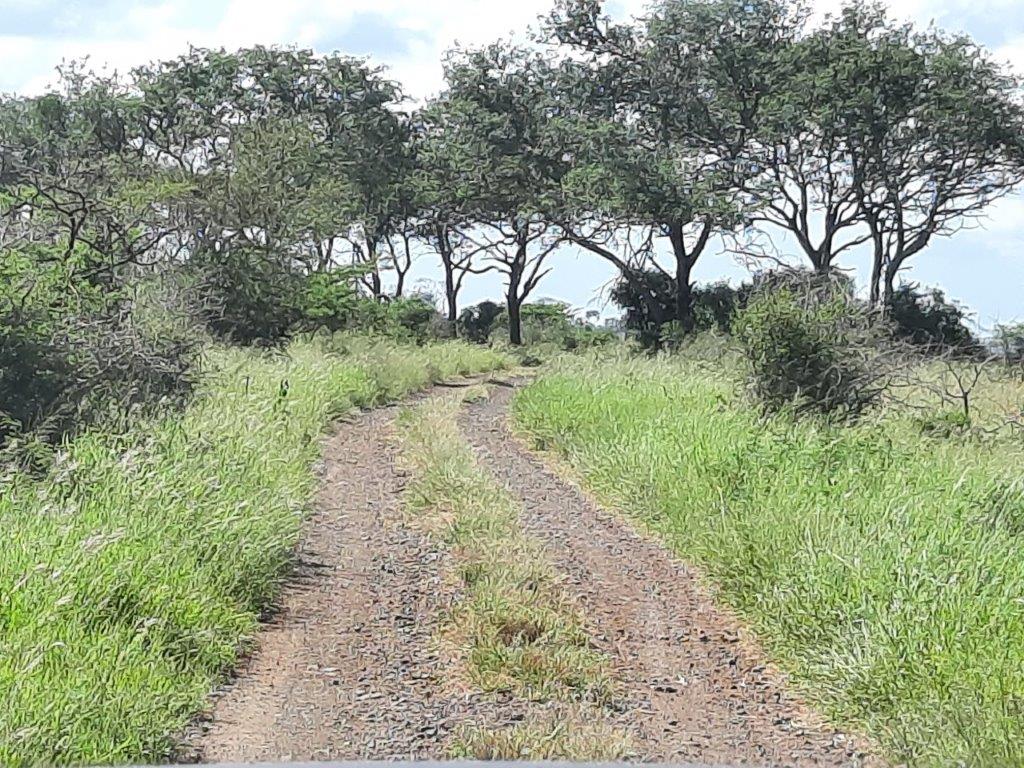
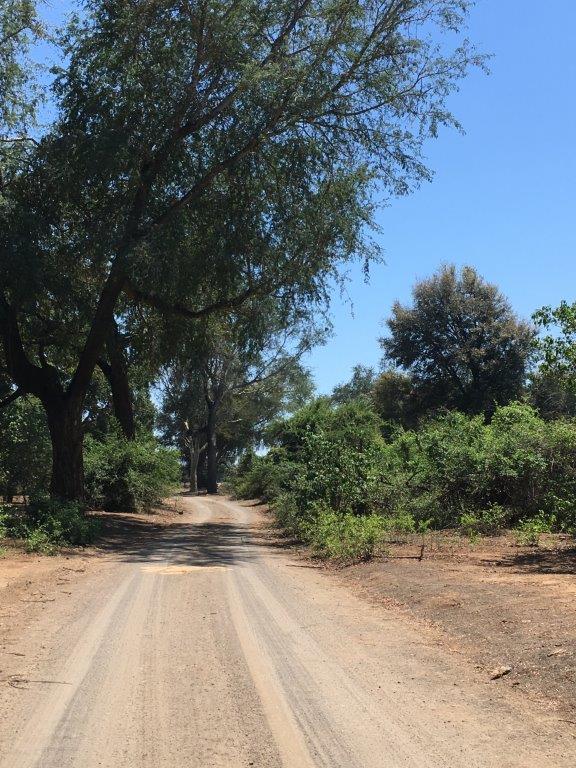
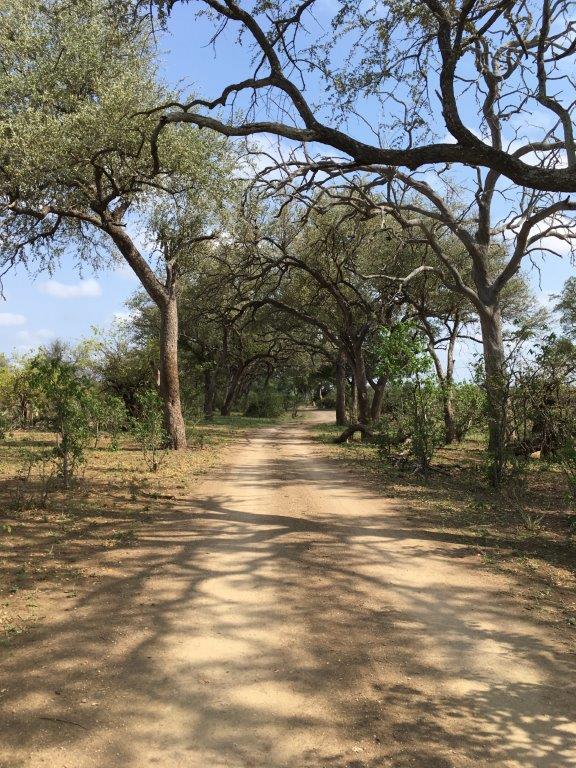
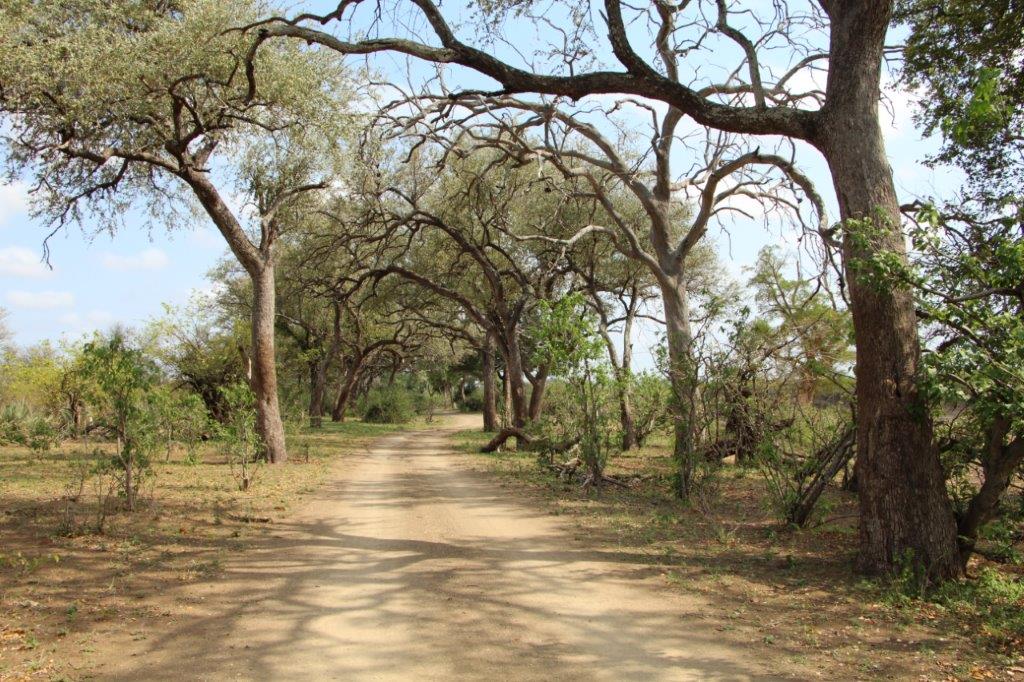
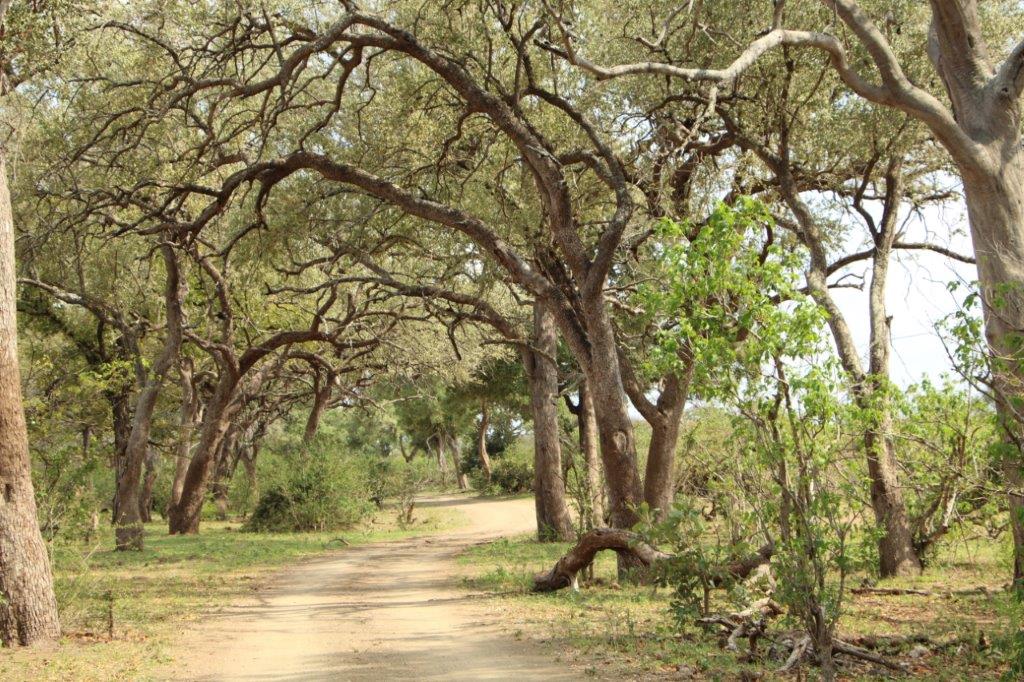
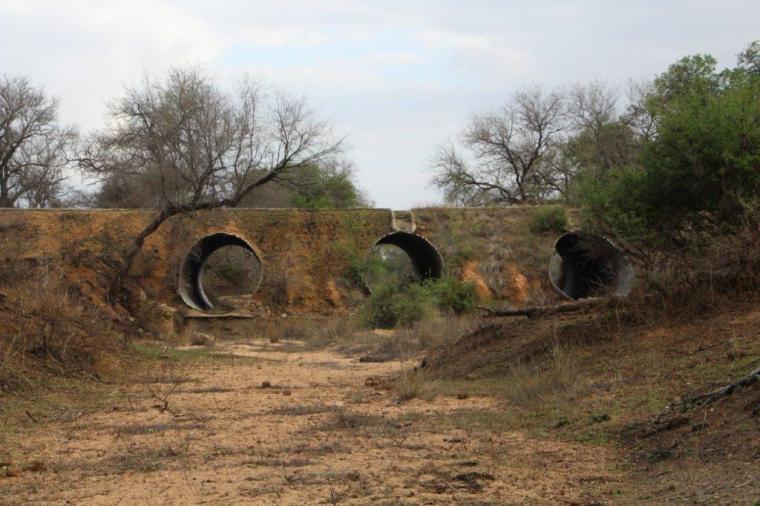
Typical Side Road
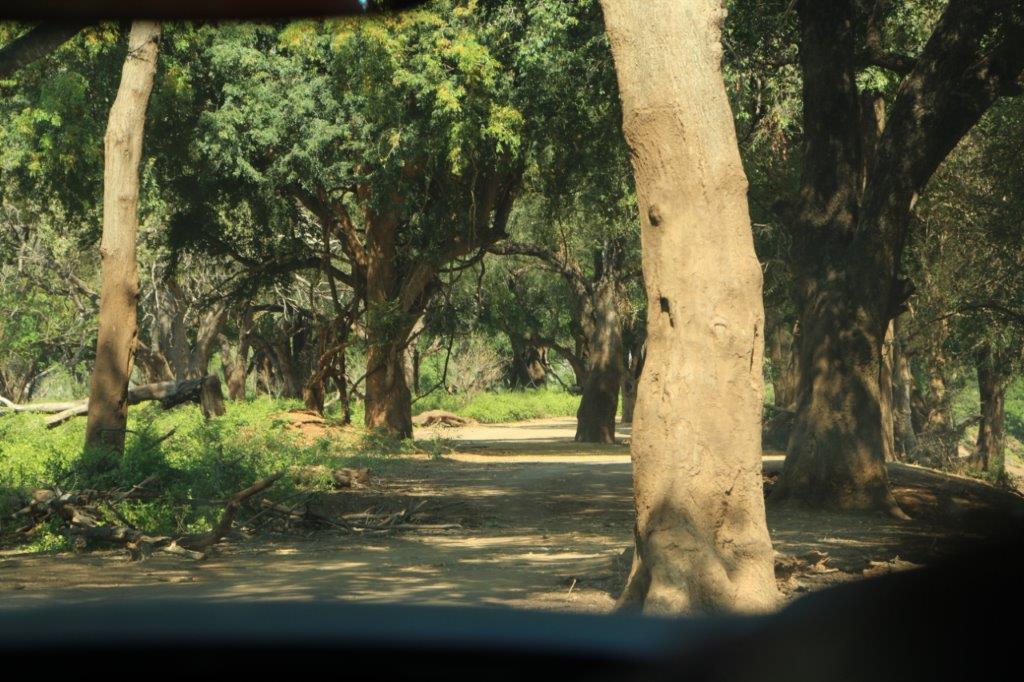
Path to Nsumo Pan picnic area
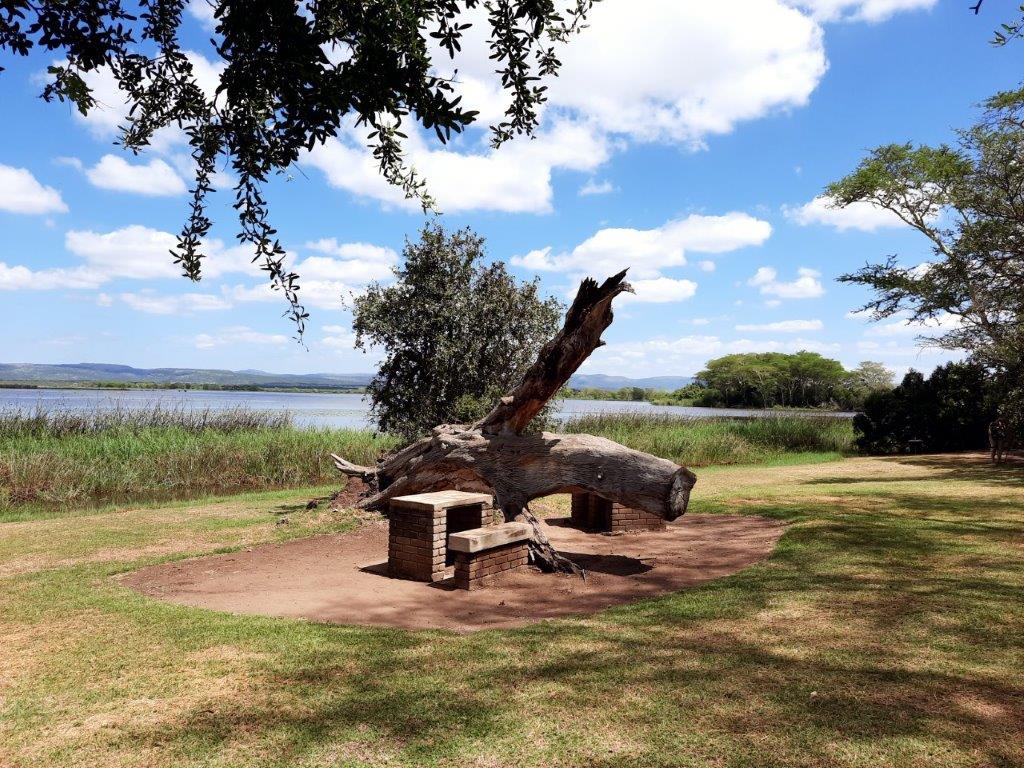
Nsumo Pan picnic site
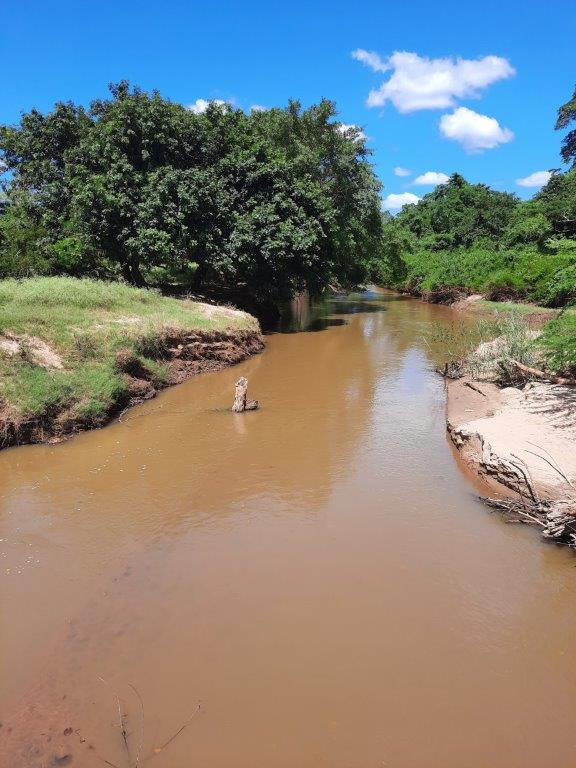
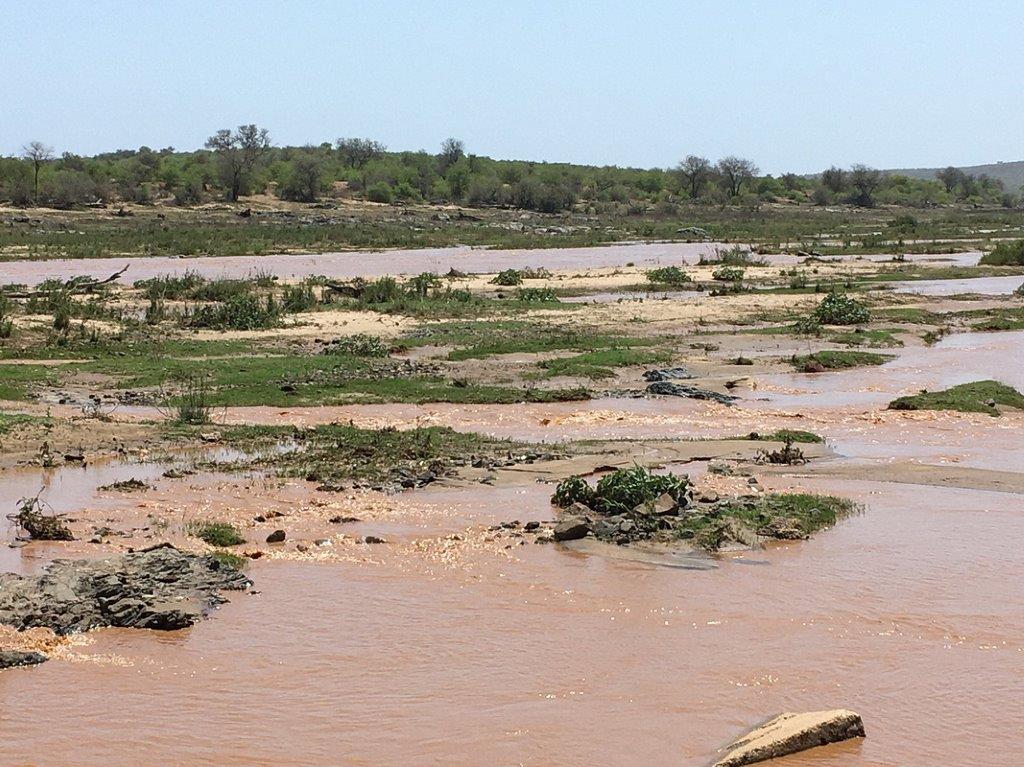
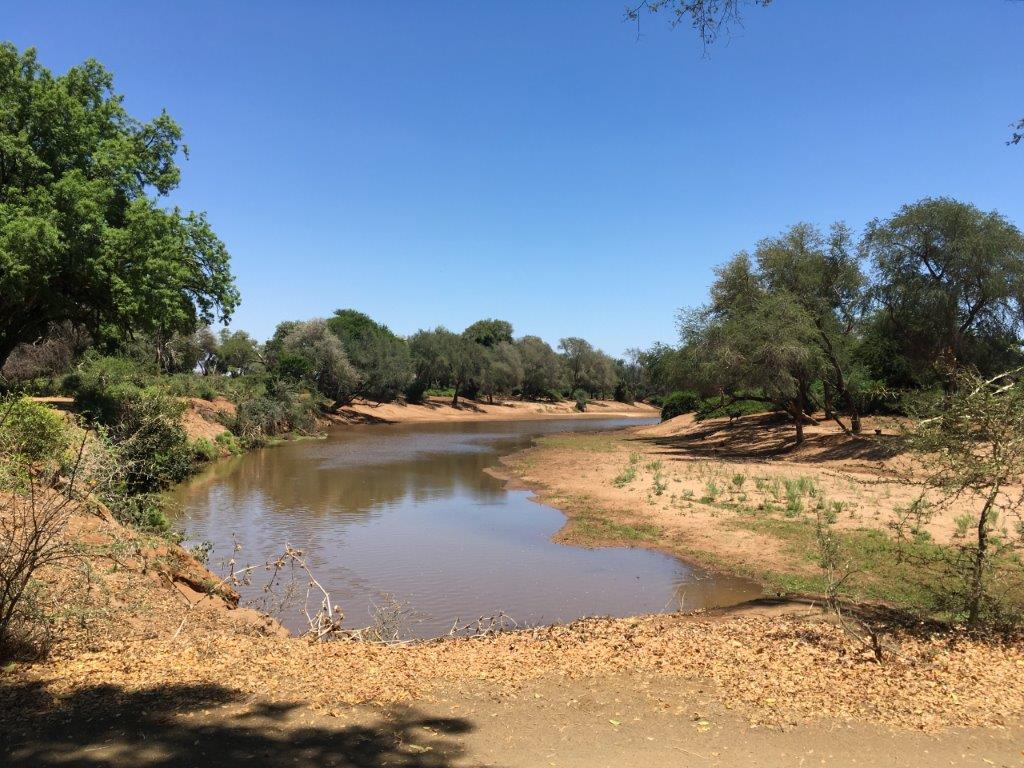
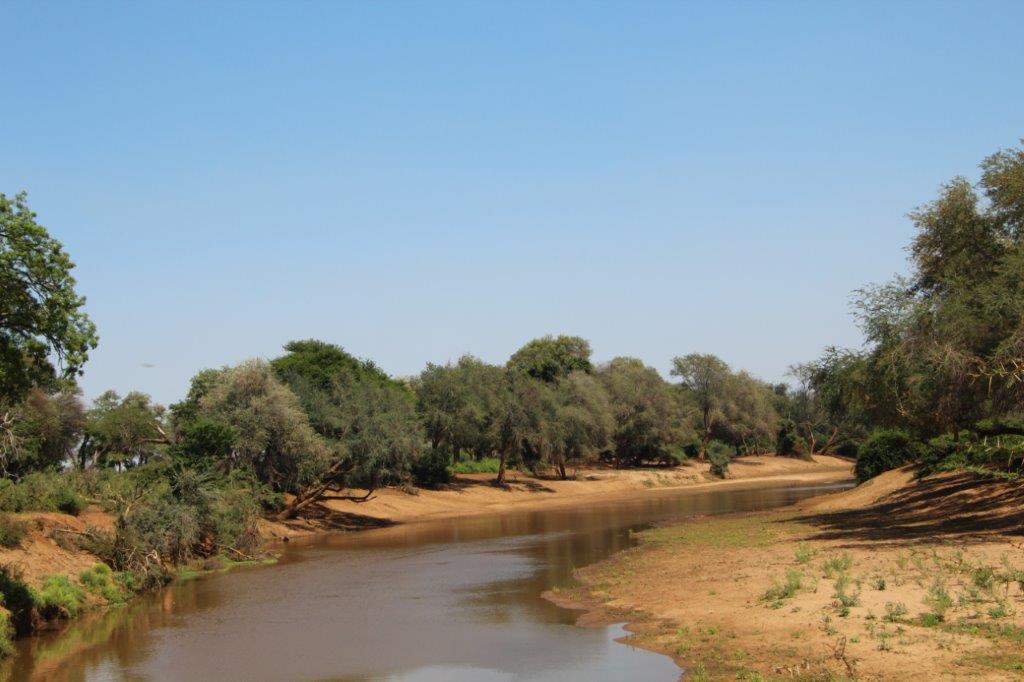
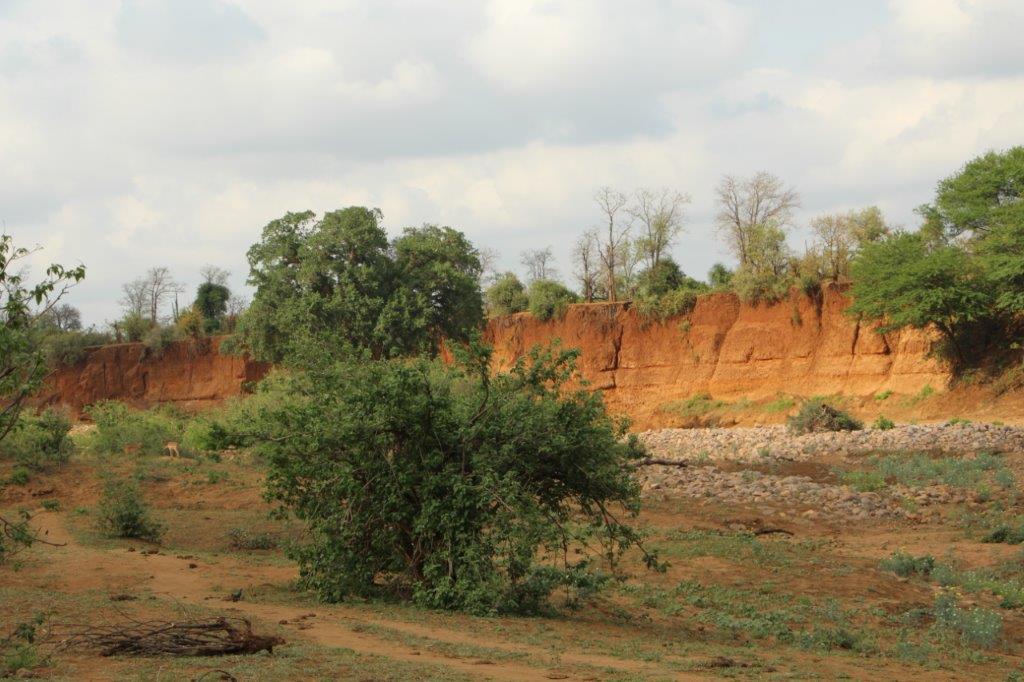
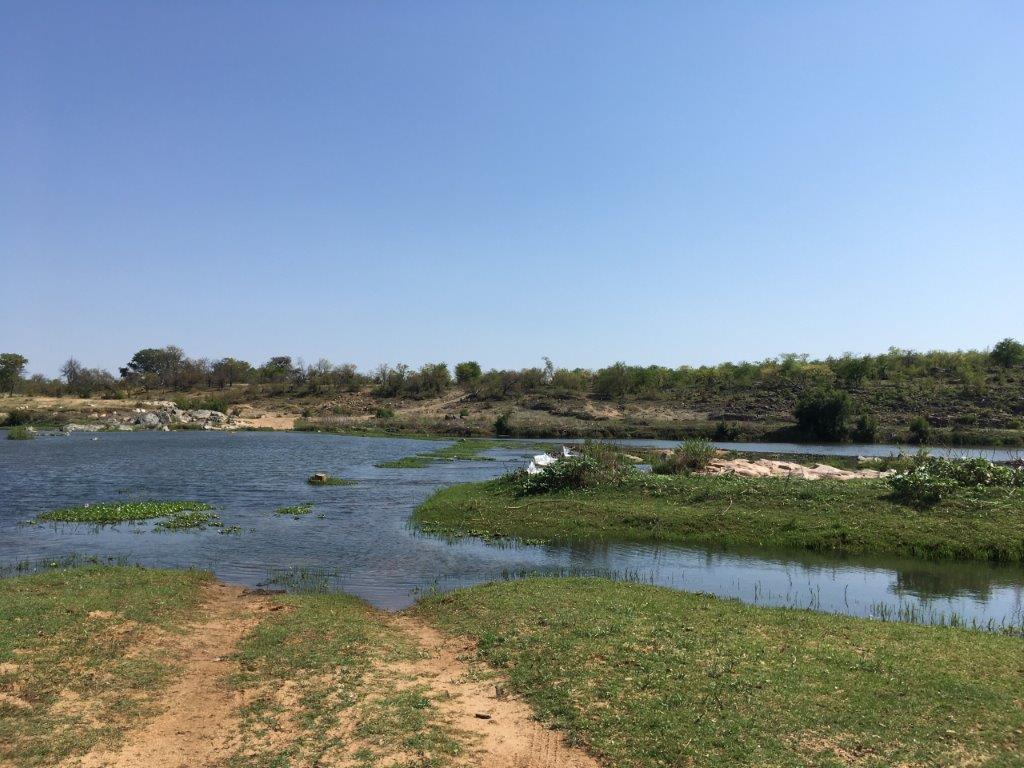
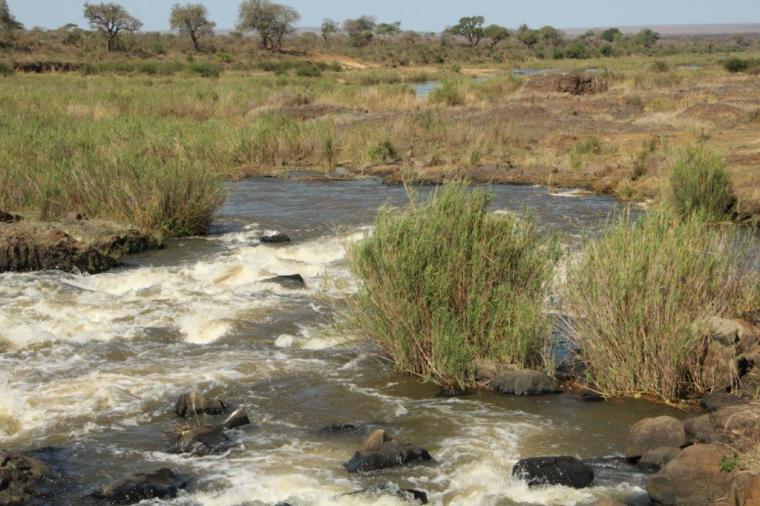
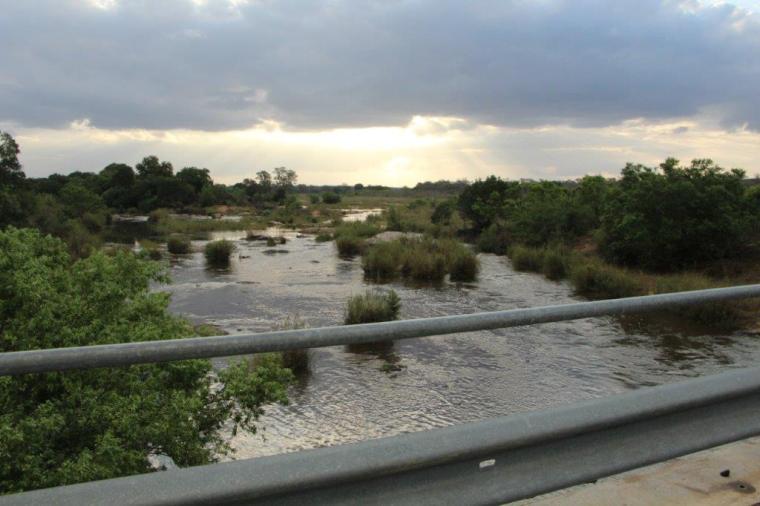
View from Mkuze River Bridge to left as you cross to Opansi entrance gate
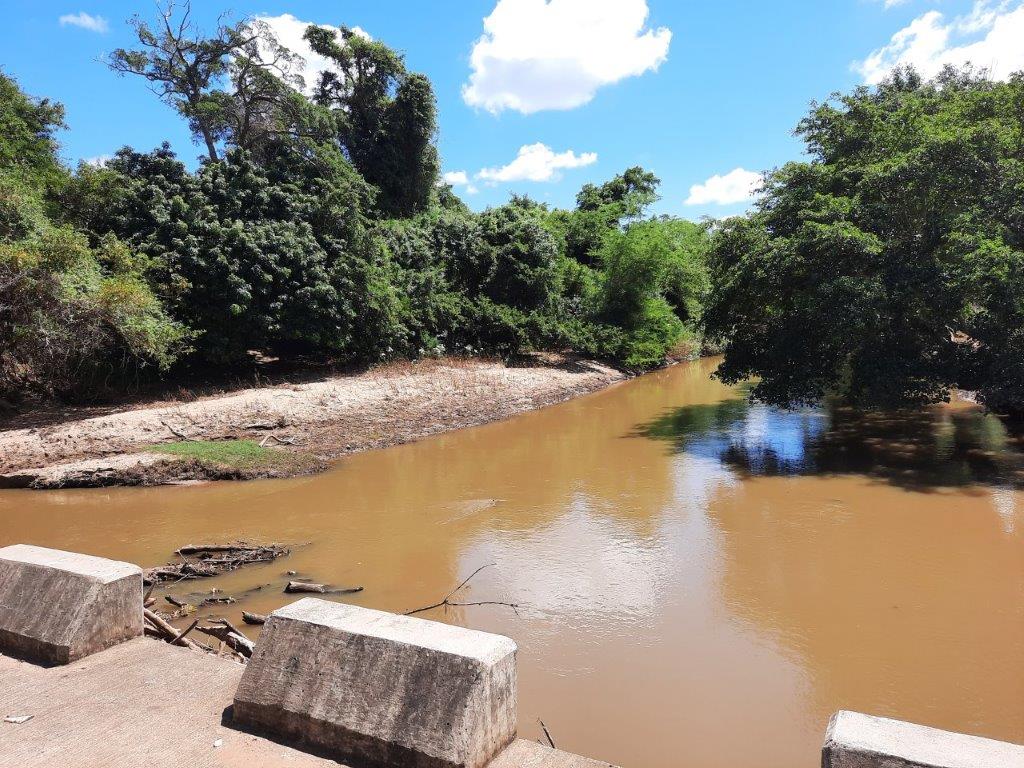
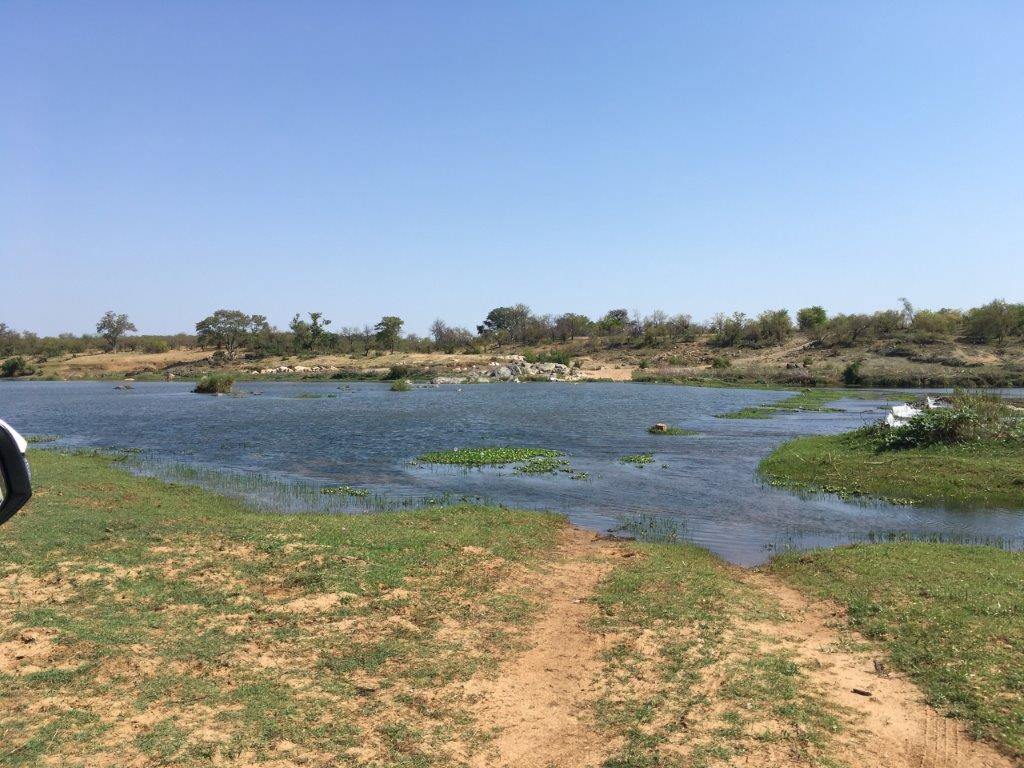
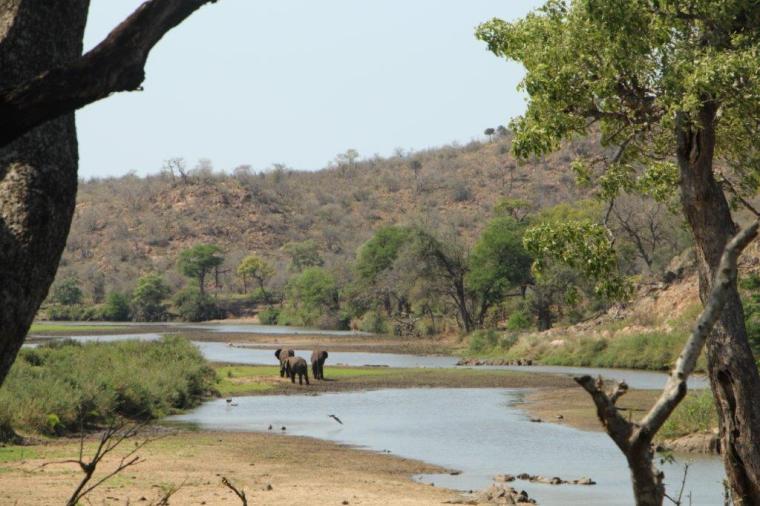
View from Bridge to right as you cross to Opansi entrance gate
Fig forest as you approach Opansi Gate
Habitat
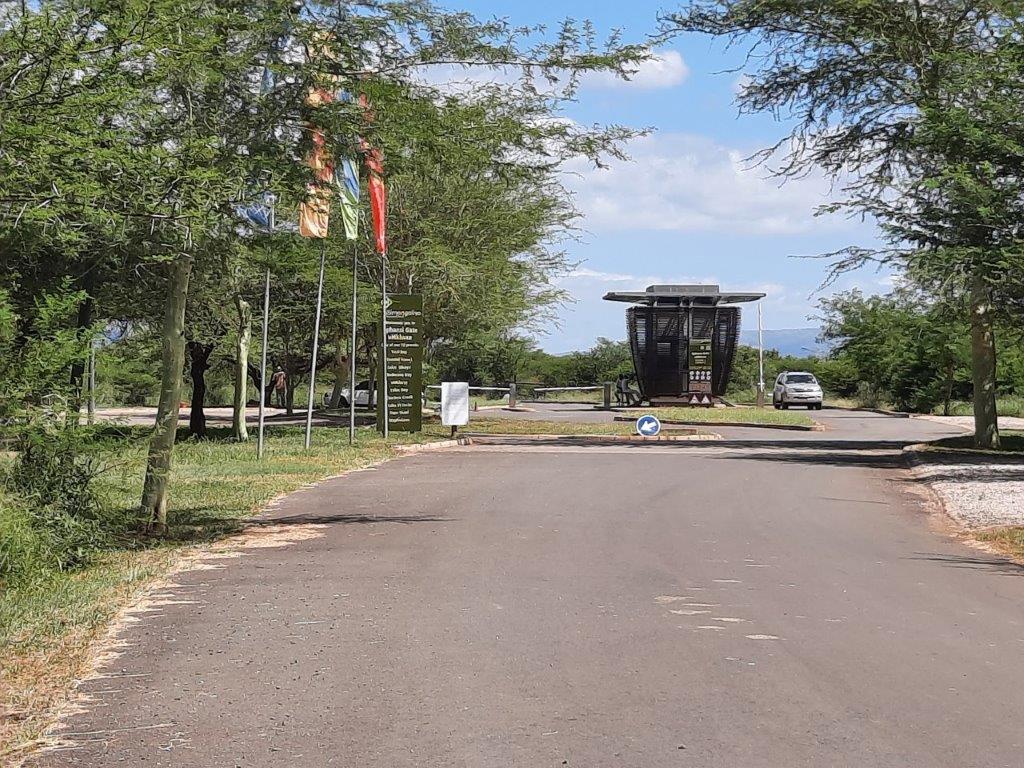
Opansi Entrance Gate
Malibala Hide entrance
Path to Malibala hide.
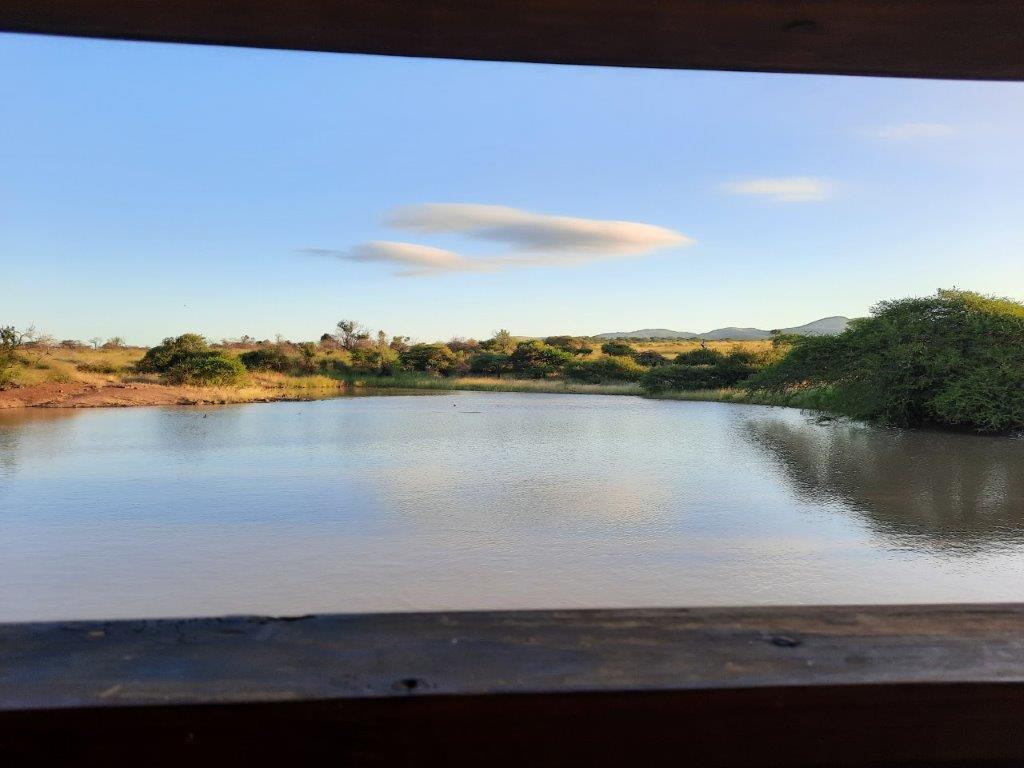
View from Malibala Hide
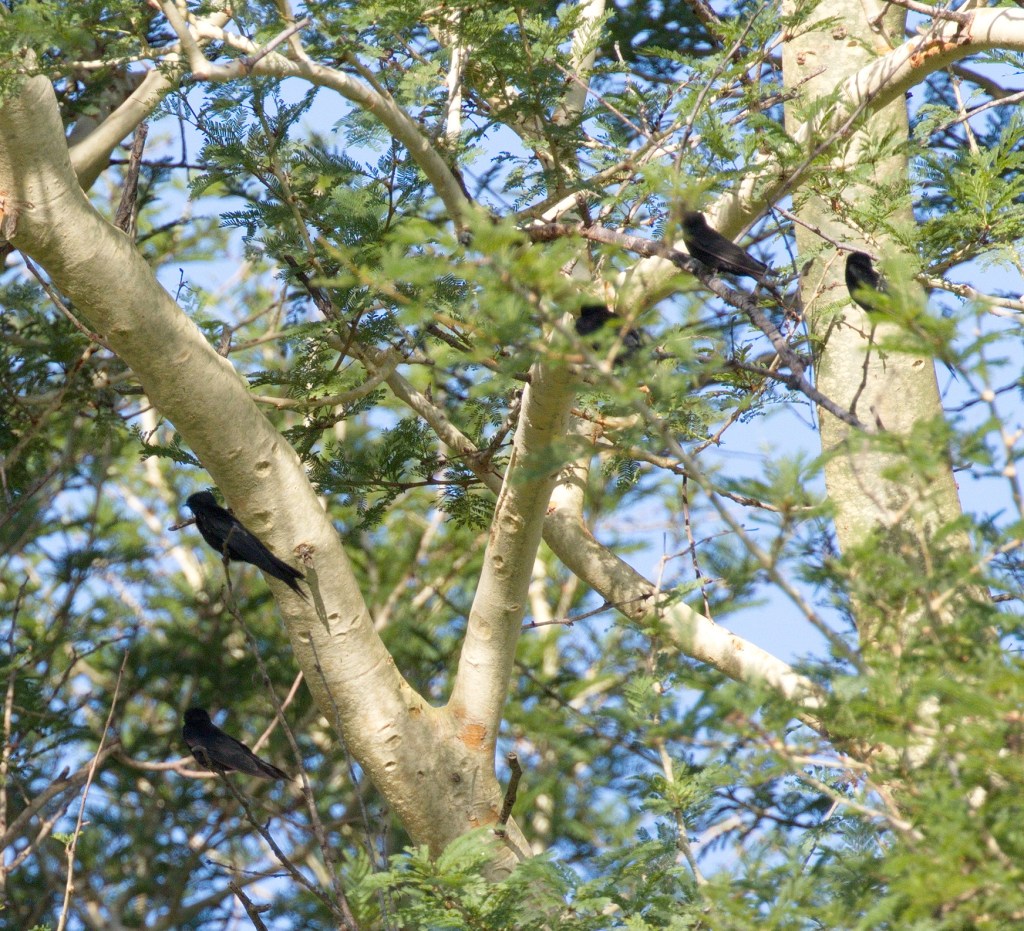
In the pan at Mahlahla Hide water was present but it was almost fully overgrown and difficult to see anything unless it was really close. We spent half an hour there and saw nothing. But the journey from the camp to the hide is always interesting. In the open area as you reach the bottom of the hill we saw the usual Little bee-eaters and many Black Saw-wings.
Black Saw-wings
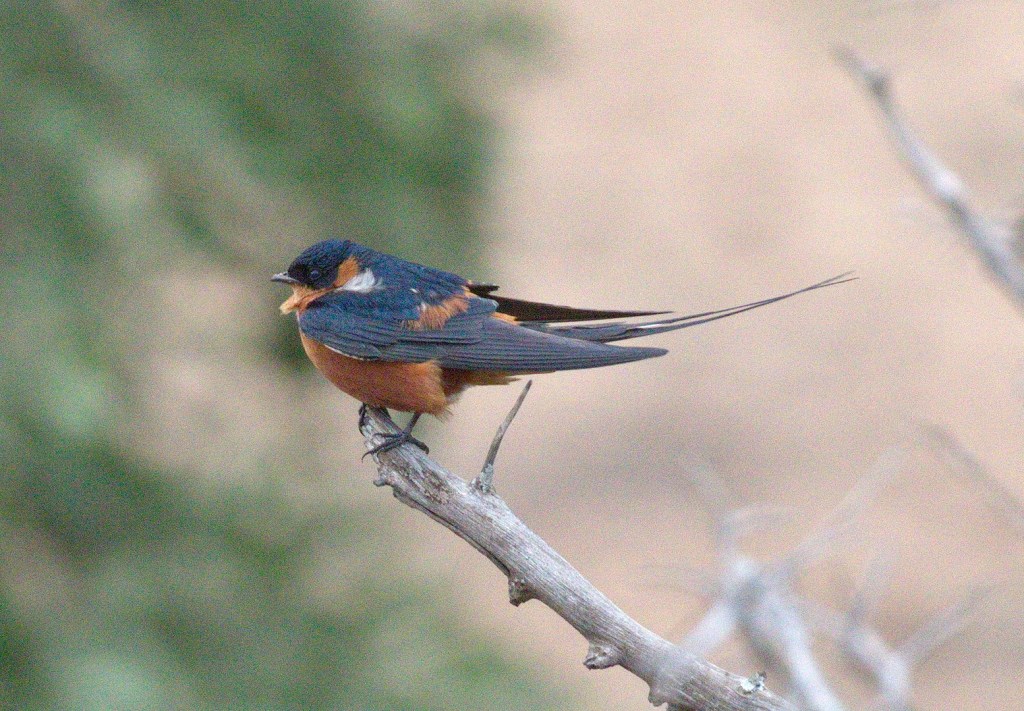
Then there was a Swallow with a lovely red rump hanging out with the Saw-wings..
Swallow with lovely red-rump.
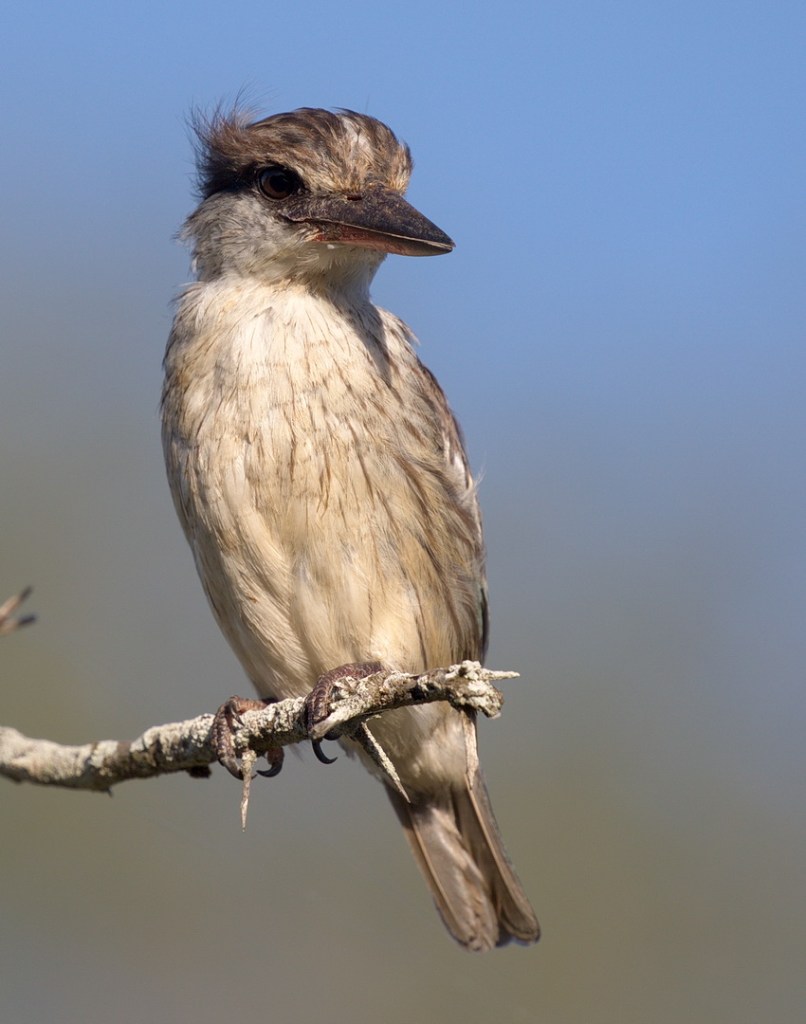
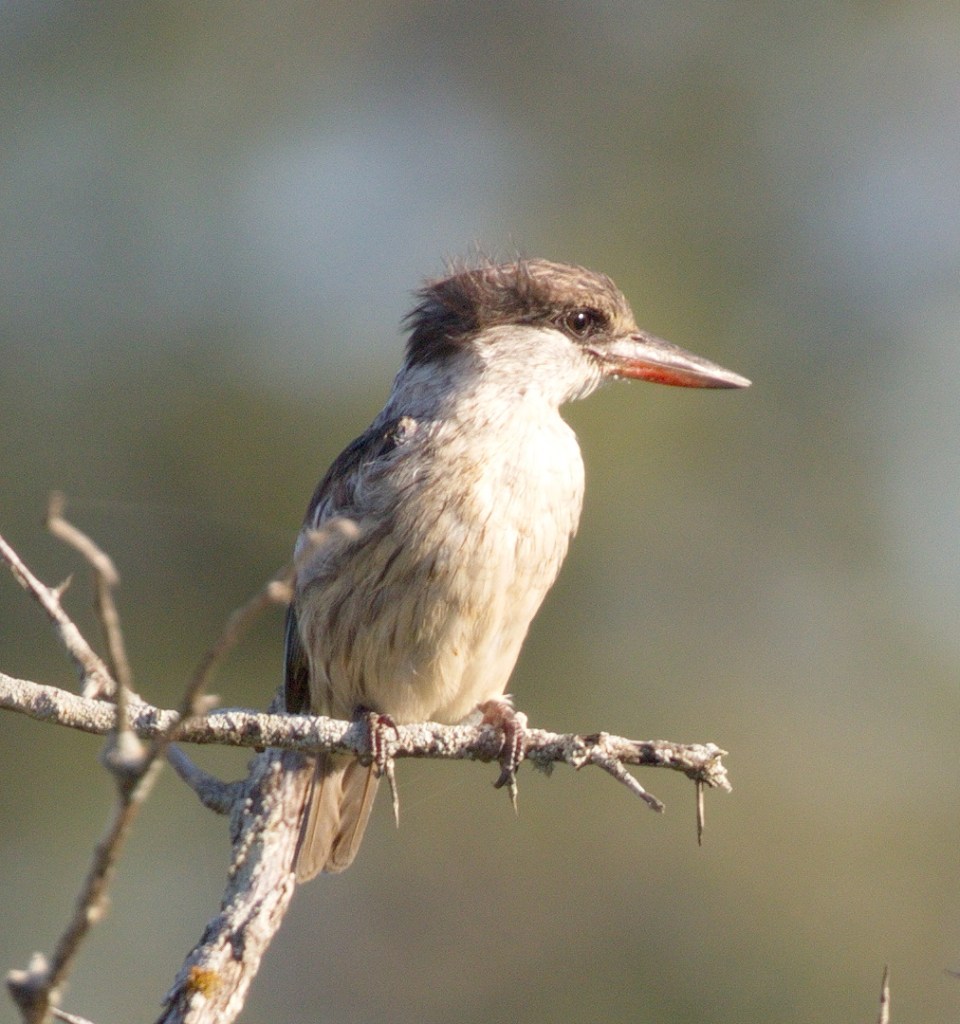
Carrying on along that road towards the airstrip we came across an obliging Striped Kingfisher.
Striped Kingfisher
Striped Kingfisher
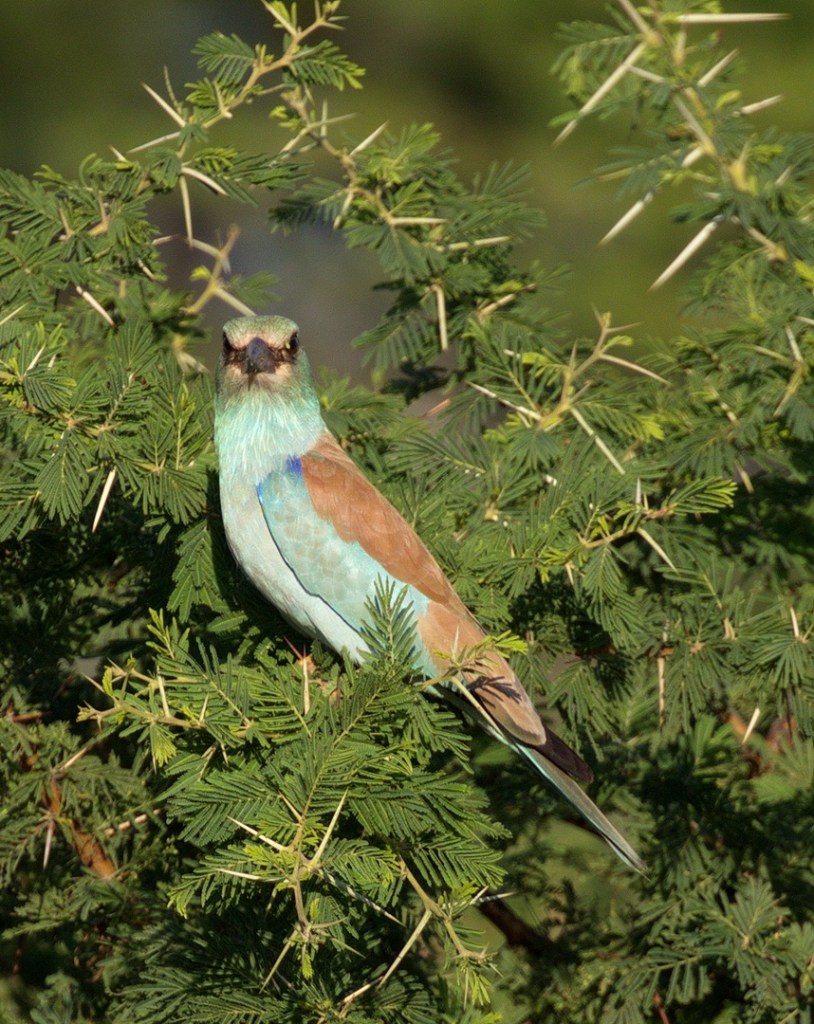
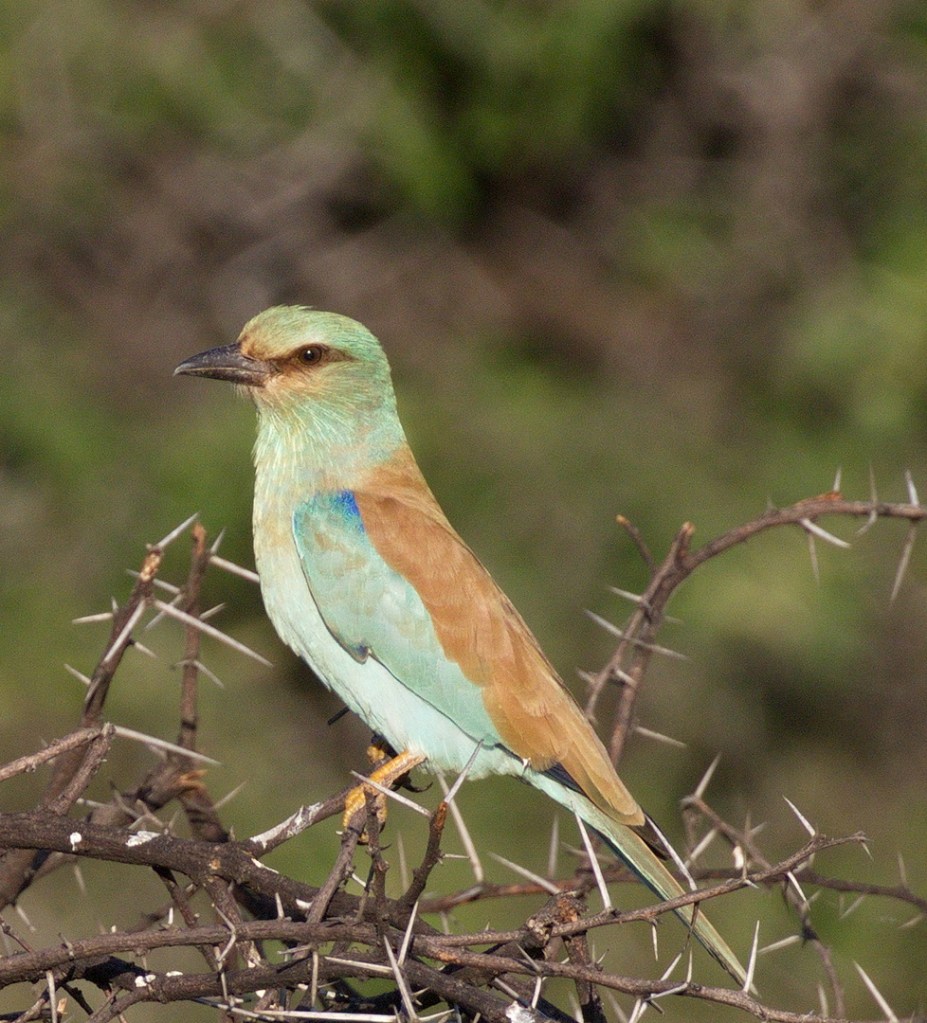
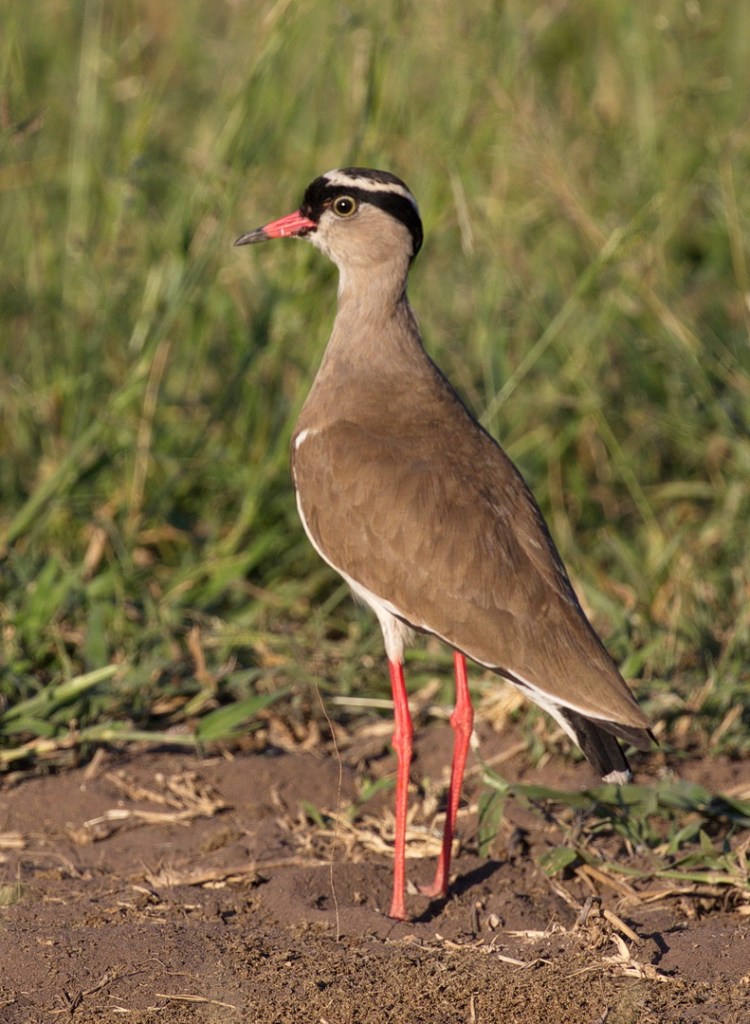
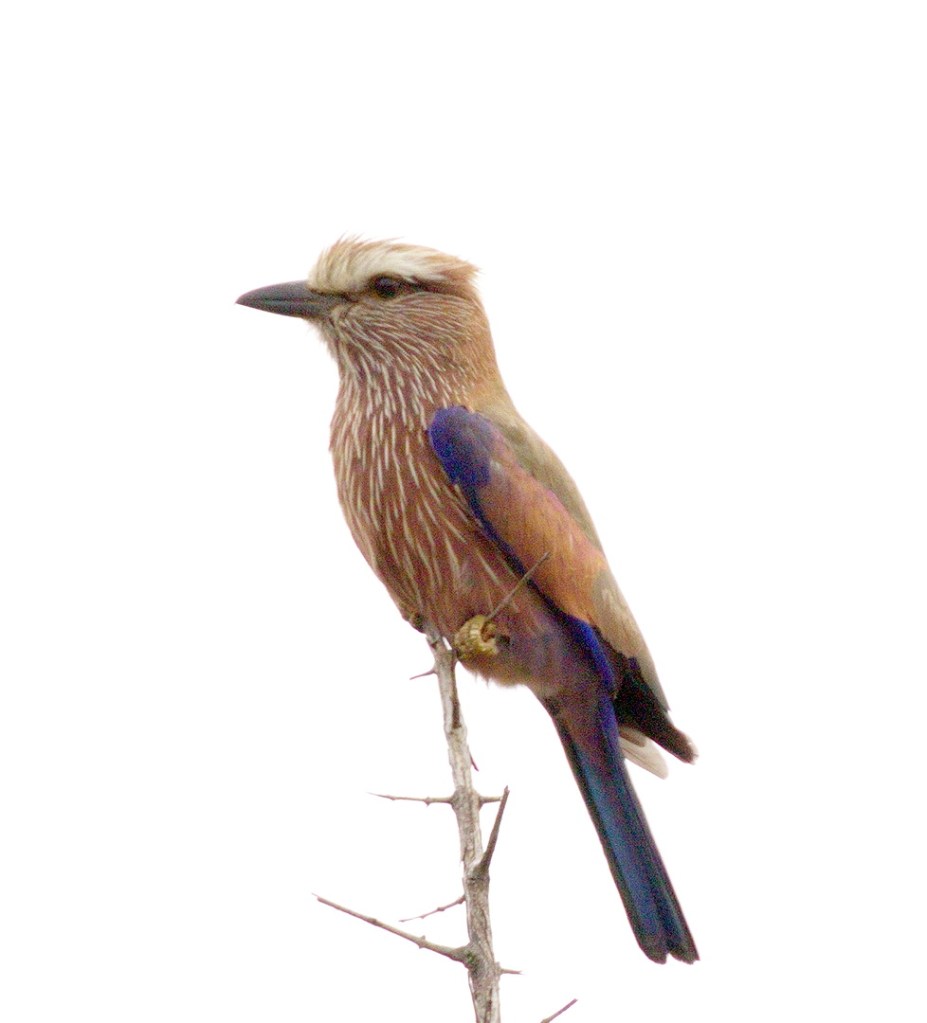
Then along the airstrip we noticed a number of European Rollers. The most abundant of all the Rollers in the Reserve. And as we expected Crowned Lapwings.
European Roller
European Roller
Crowned Lapwing
From the airstrip we headed for the Kumasinga Hide. The hide was very quiet and the normally abundant birds were absent – even the animals were spartan
Red-backed Shrike
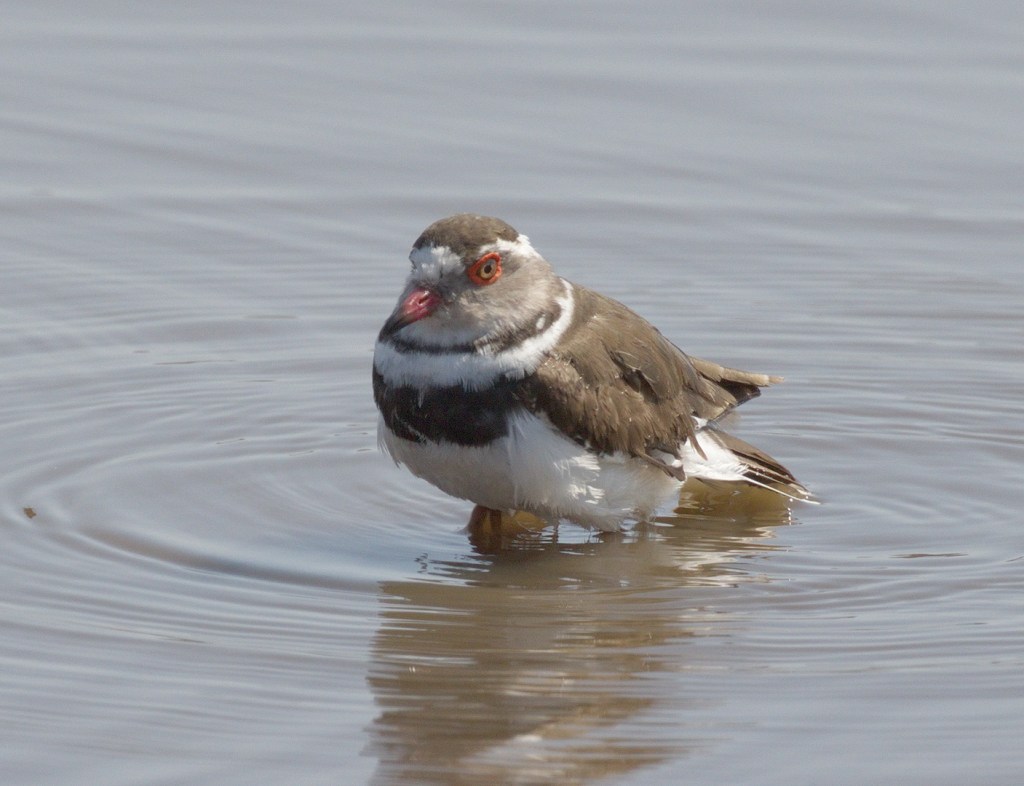
Three-banded Plover
Red-eyed Dove and Three-banded Plover
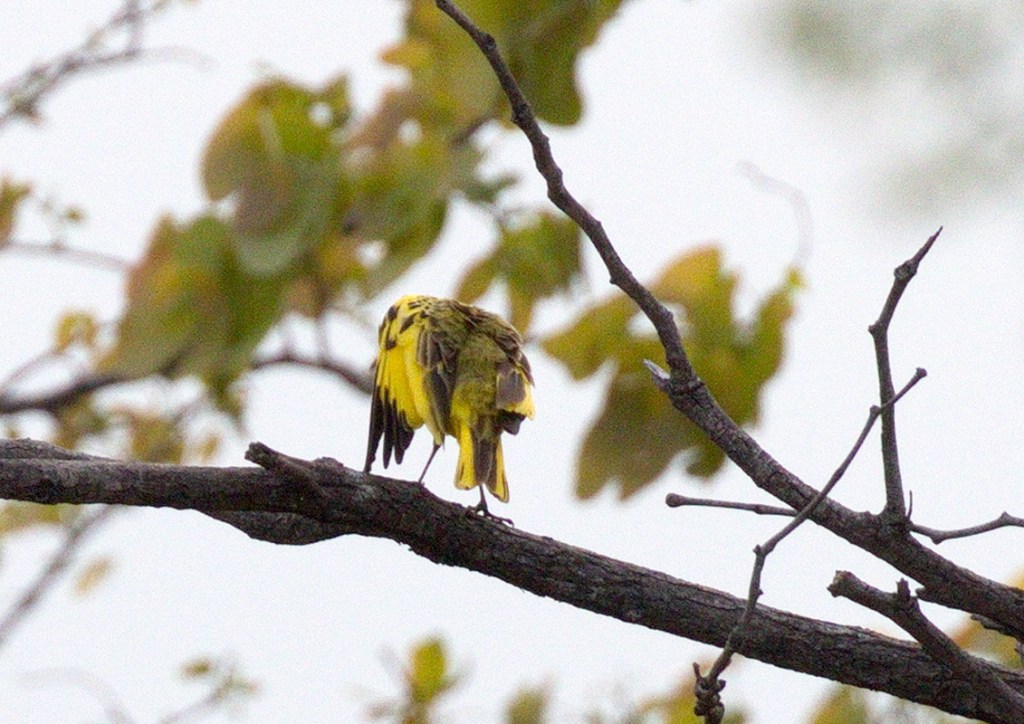
Yellow-fronted Canary
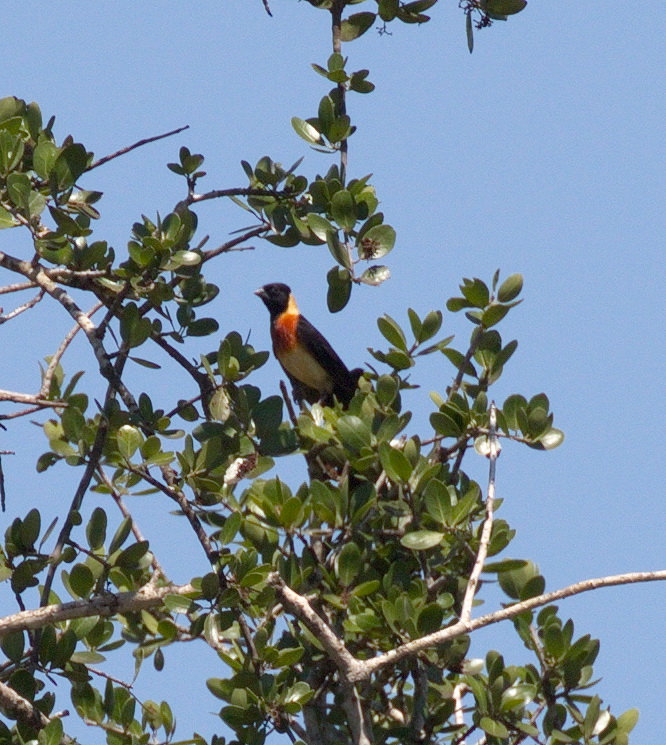
Long-tailed Paradise Whydah
A fluttering swarm of Citrus Swallowtails
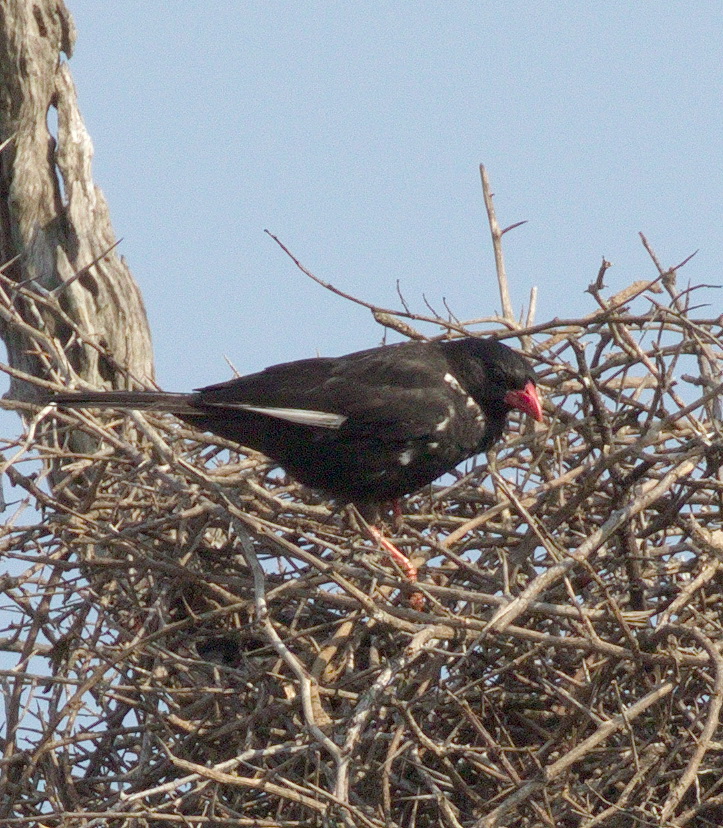
Red-billed Oxpecker
Red-billed Oxpecker
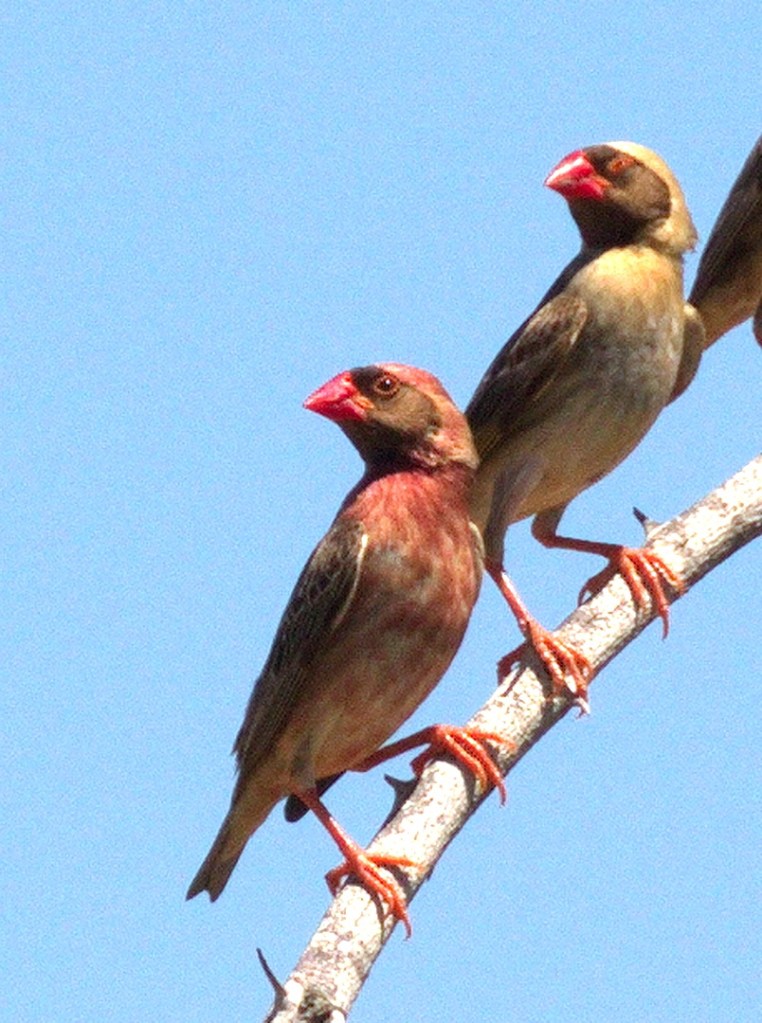
Then the Red-billed Queleas arrived – some more brightly coloured than others. One even looked like a red Red-billed Quelea.
Red-billed Queleas
We stayed at the hide until nightfall only leaving there close to 18h30. (Had to be back in camp by 19h00). When we hit the tar road back to camp we went left instead of right and trolled that road as far as the Tower. On the way we saw a number of Fiery-necked Nightjars and a Spotted Thick-knee. On the way back I managed to get a shot of a Fiery-necked Nightjar and also the Bronze-winged Courser – both in the middle of the road.
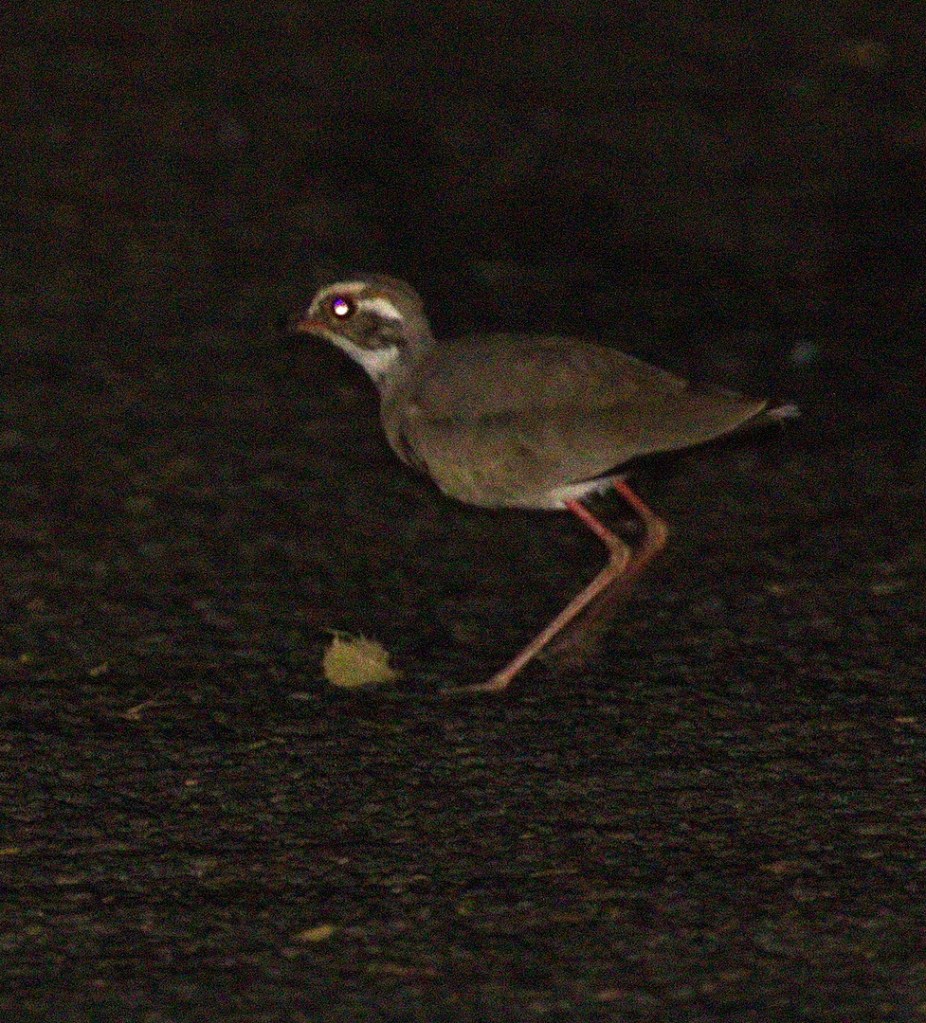
Bronze-winged Courser
Fiery-necked Nightjar
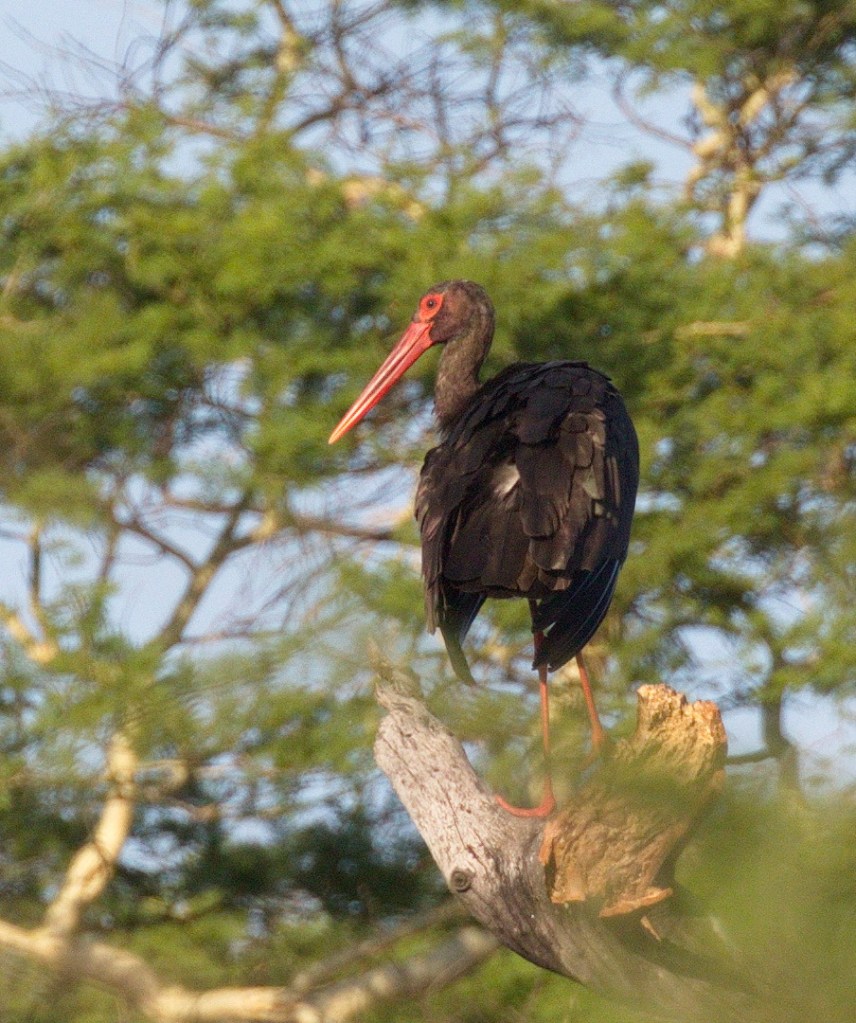
The next day we took a trip towards the Hunting camp, took in the Loop Road and also to the hides on Nsumo Pan, the Campsite and Malibala Hide. As we left the tar road heading towards the Hunting camp , we saw a large bird in one of the fever trees. On closer inspection we were surprised to see a Black Stork.
Black Stork
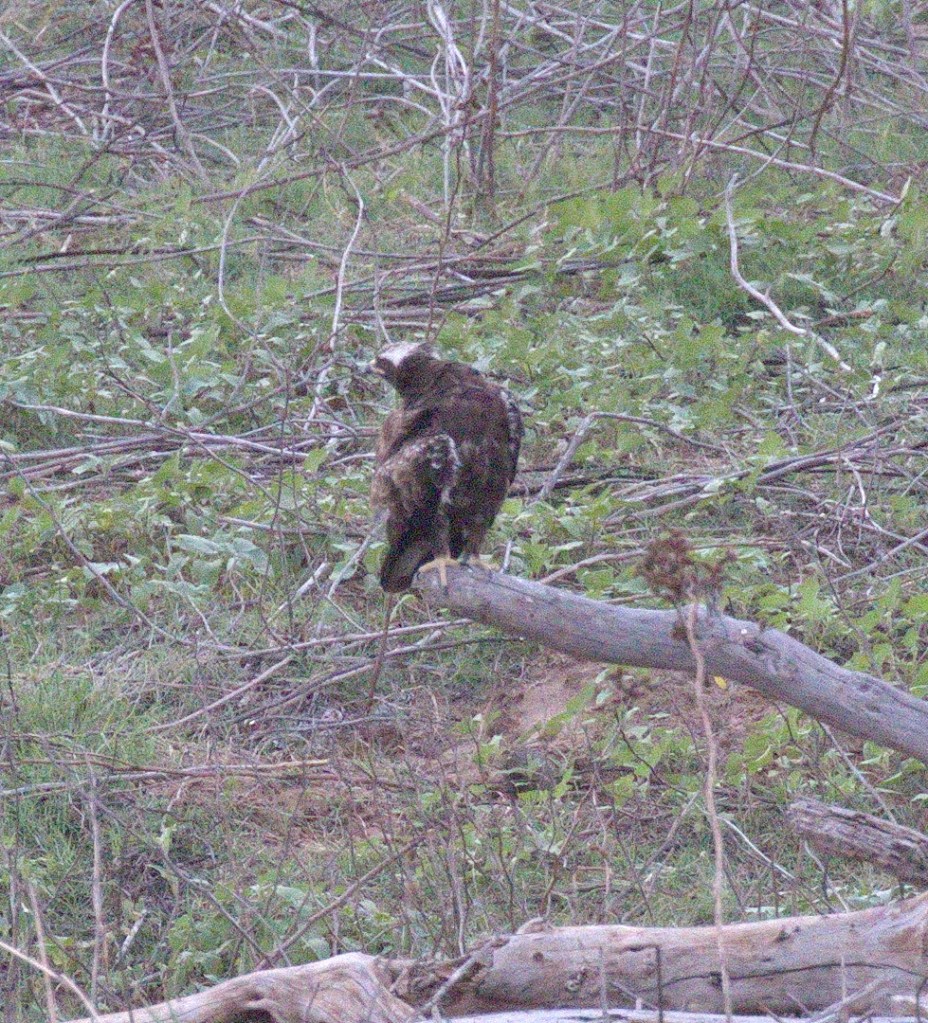
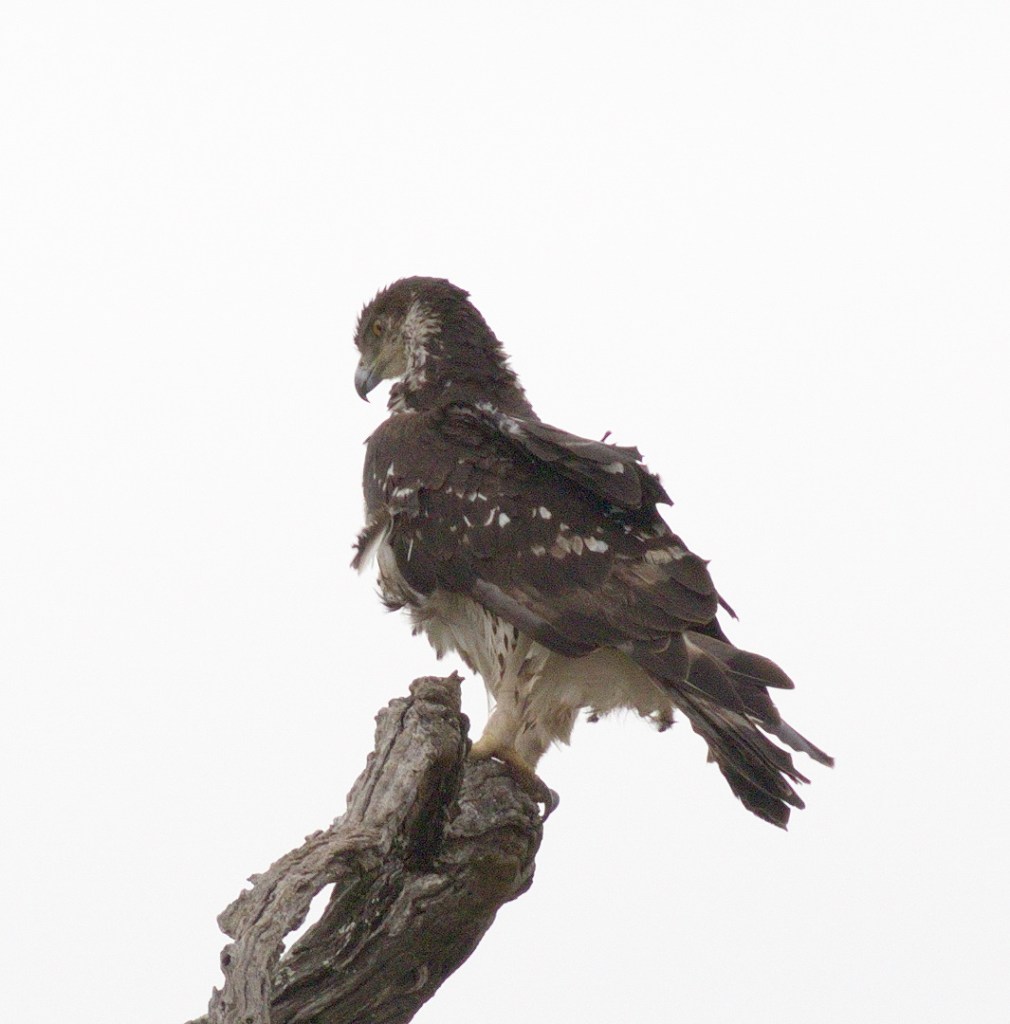
On the way back from the picnic site (near the entry road to the Hunting camp) we saw a large raptor silhouetted in a bare tree. A juvenile Bateleur with a lovely curly hairstyle.
Juvenile Bateleur
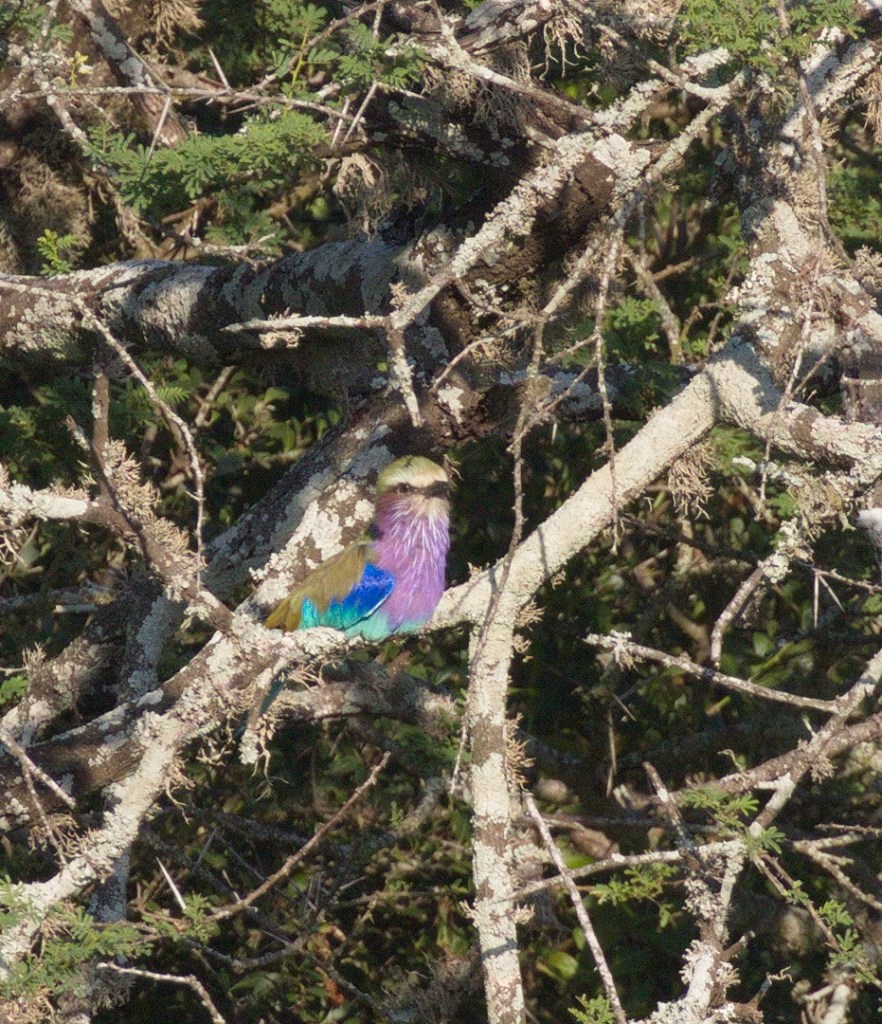
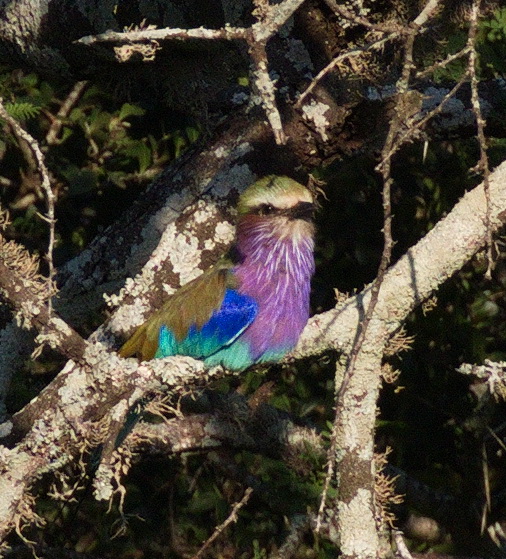
As we turned onto the Loop road we saw our only Lilac-breasted Roller during the time we were in the Reserve.
Following around the Loop road we were in for another surprise – a Lesser Grey Shrike.
Lesser Grey Shrike
Lesser Grey Shrike
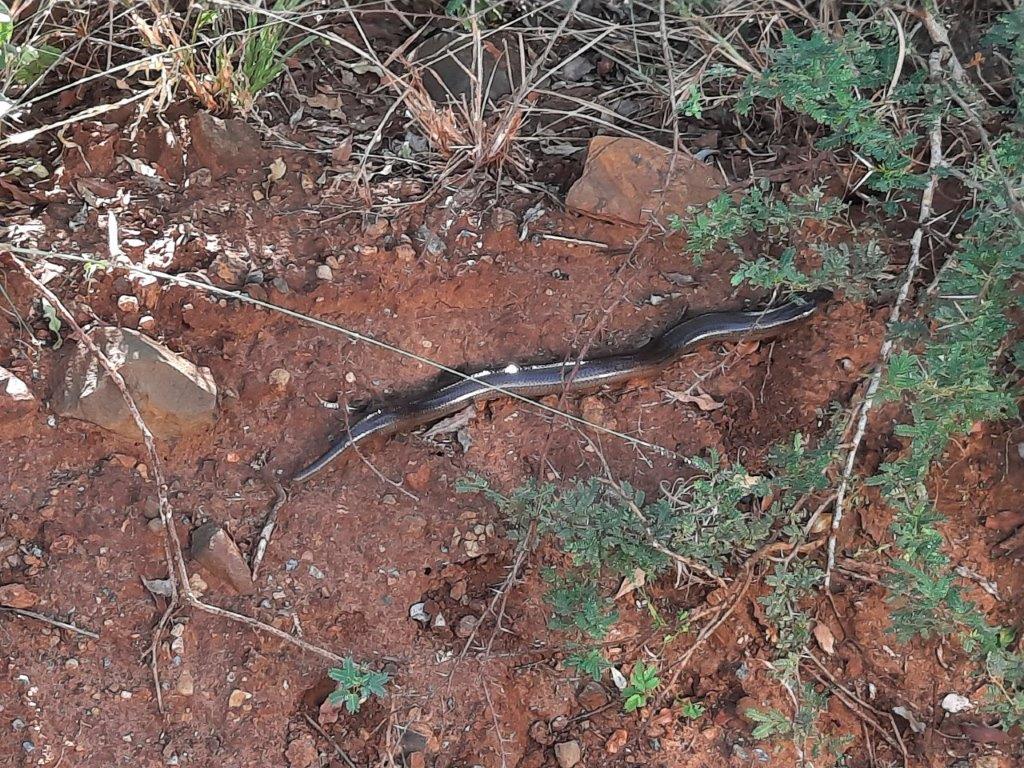
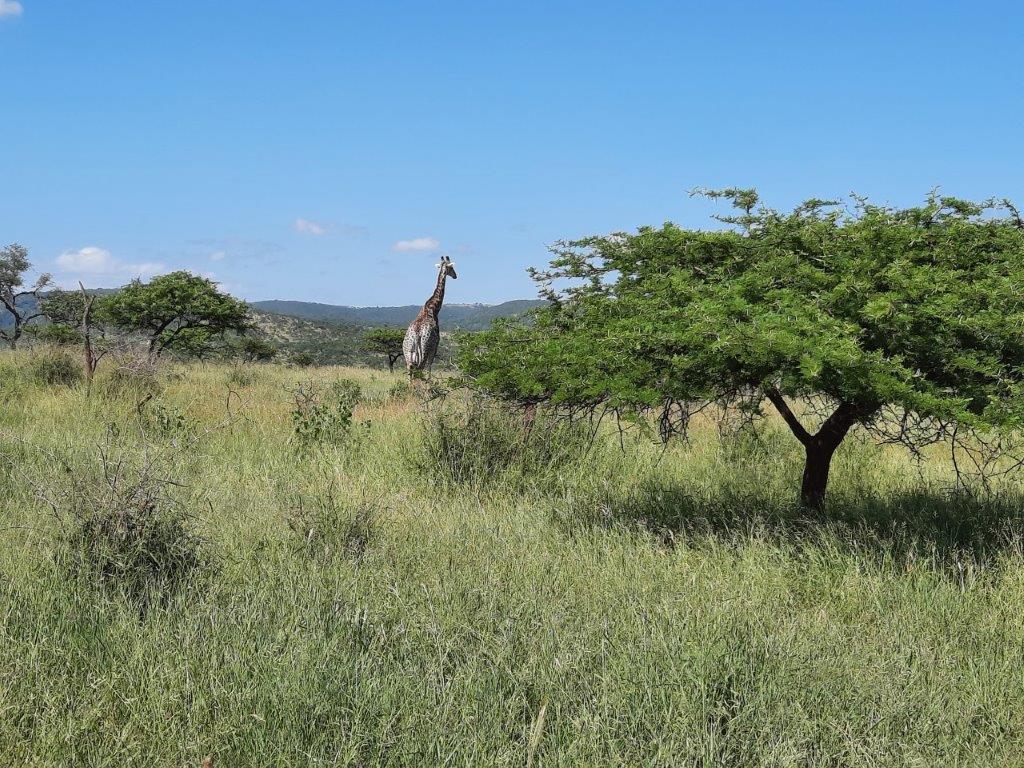
Wildlife seen on the loop.
Mole Snake
A distant Giraffe
We visited the hides and picnic site on Nsumo Pan. The water level was very high and few birds were seen on the water or on it’s edge. All the birds photographed were in the trees beside the Pan.
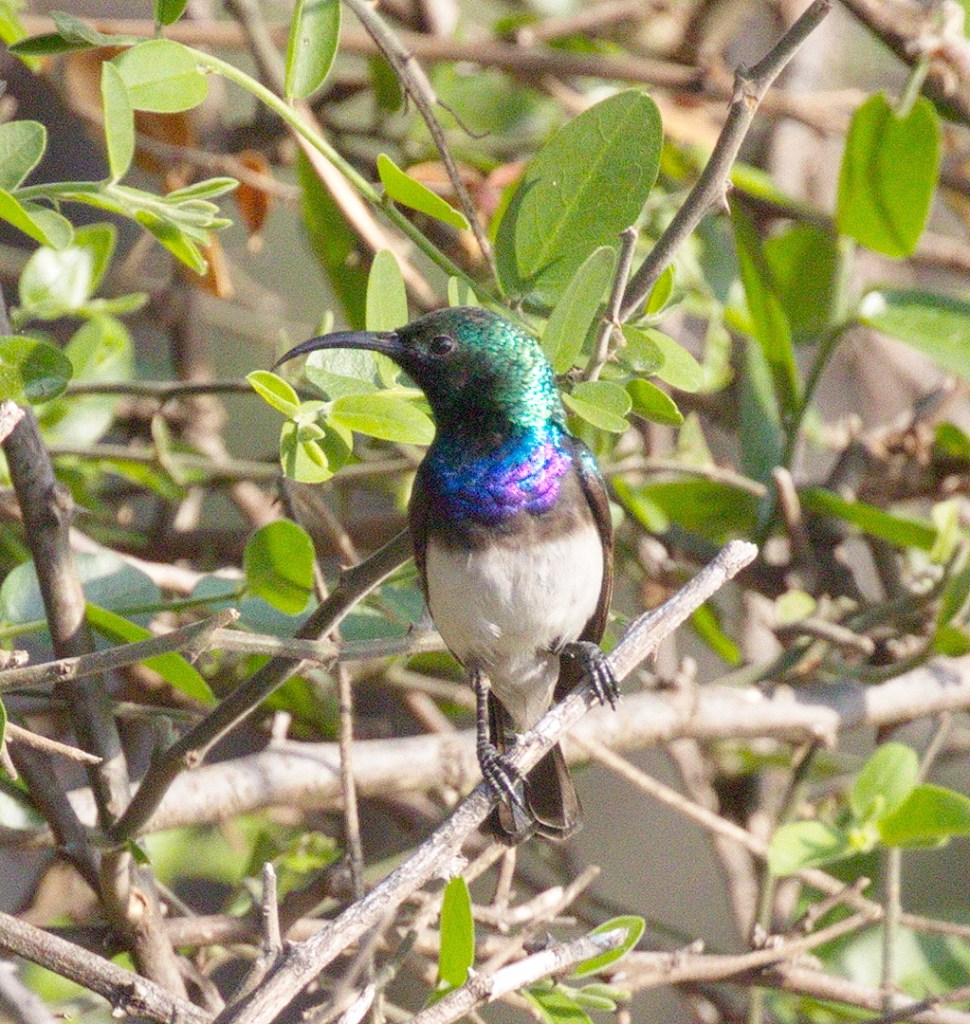
Marico Sunbird
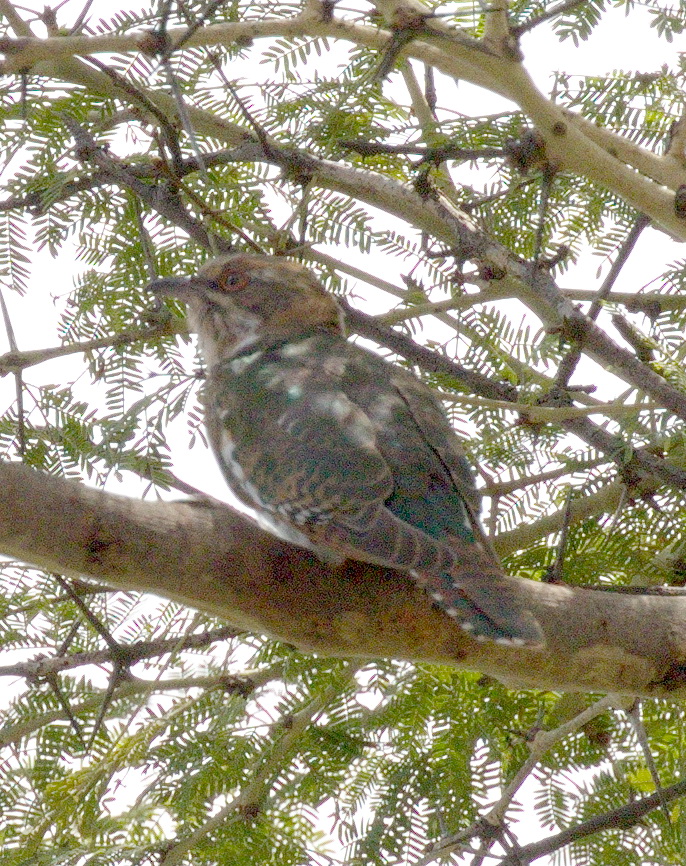
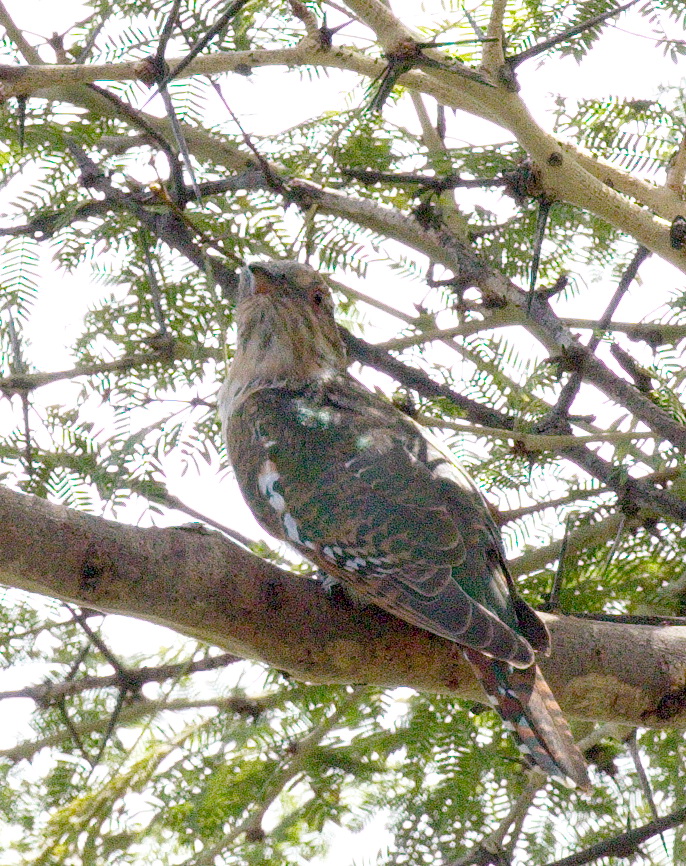
Diederik Cuckoo
Diederik Cuckoo
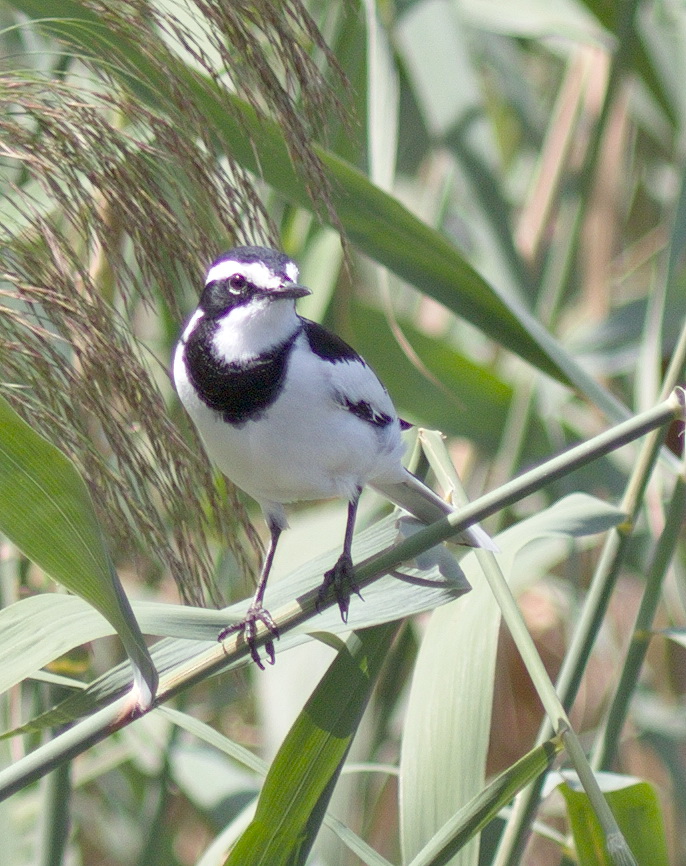
African Pied Wagtail
Spotted Flycatcher
The pan at Malibala Hide was full and the bird life quiet. Even the campsite was unusually the same.
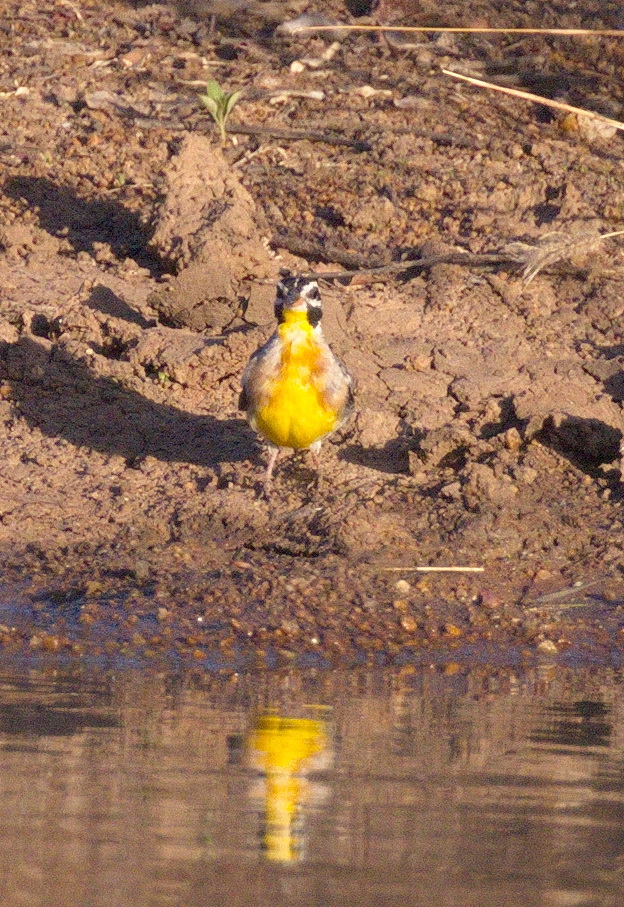
Golden-breasted Bunting
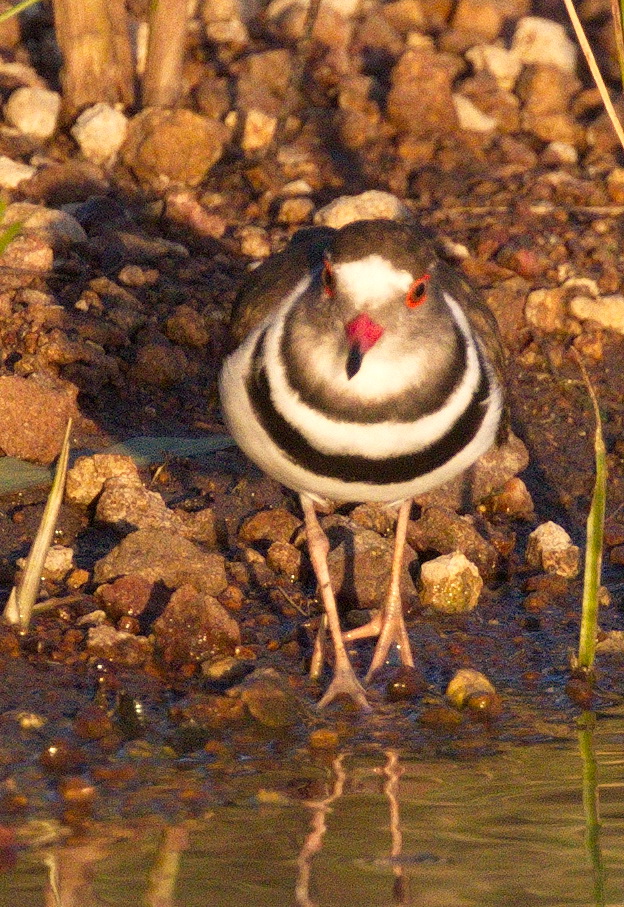
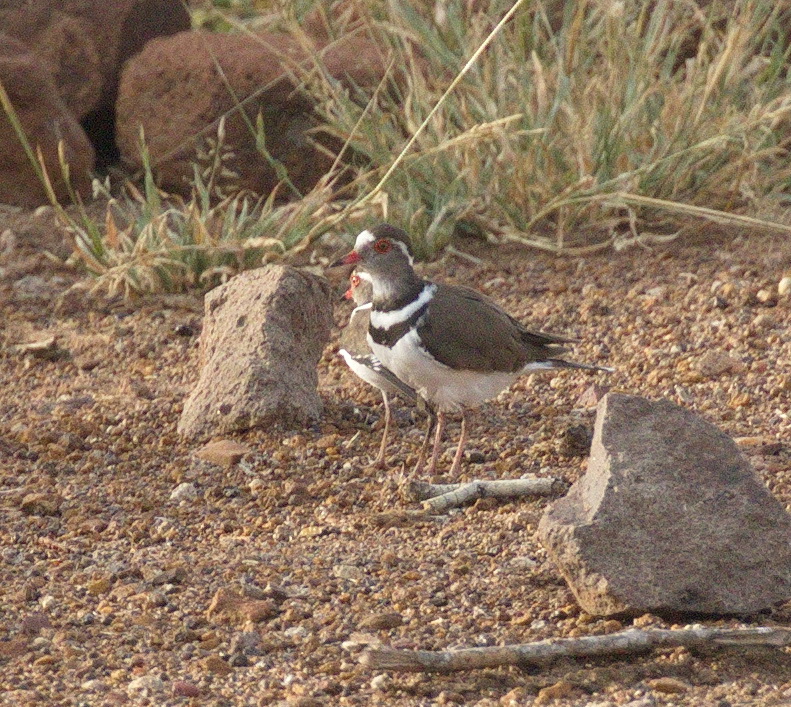
Three-banded Plover
Three-banded Plover
A mating pair of Three-banded Plovers
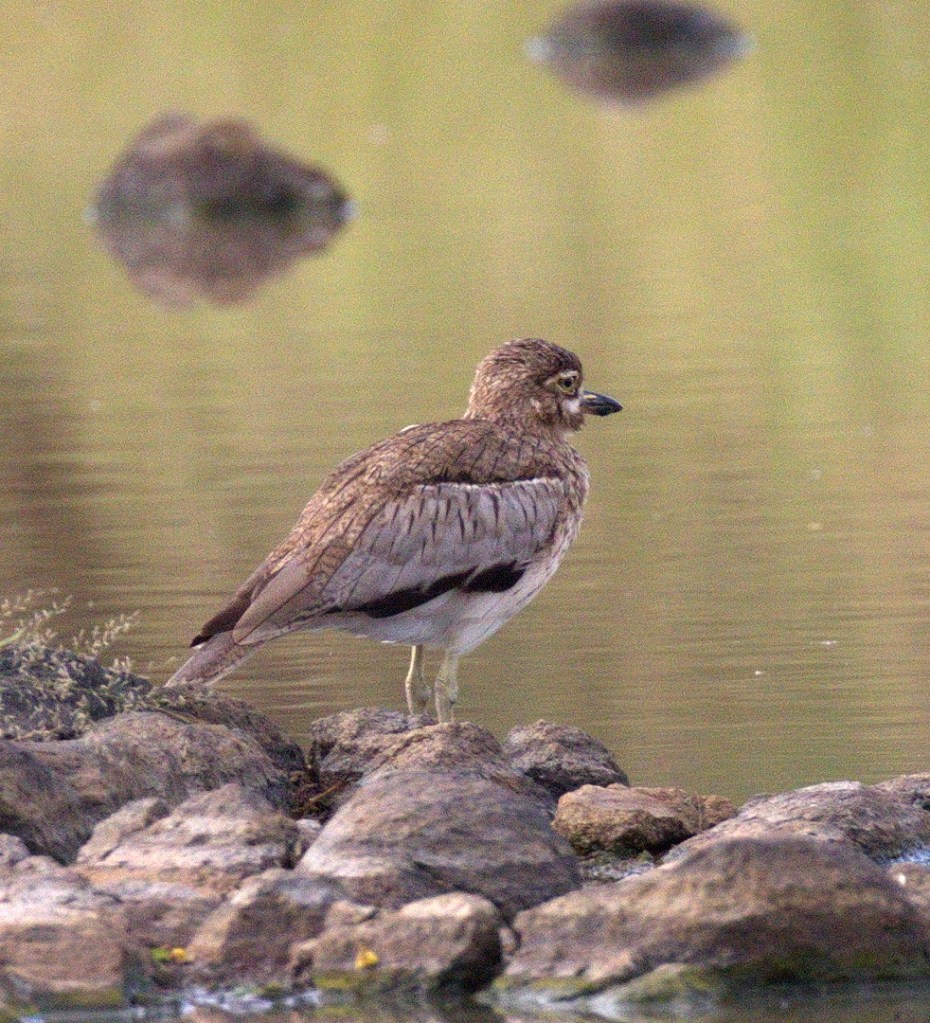
Water Thick-knee
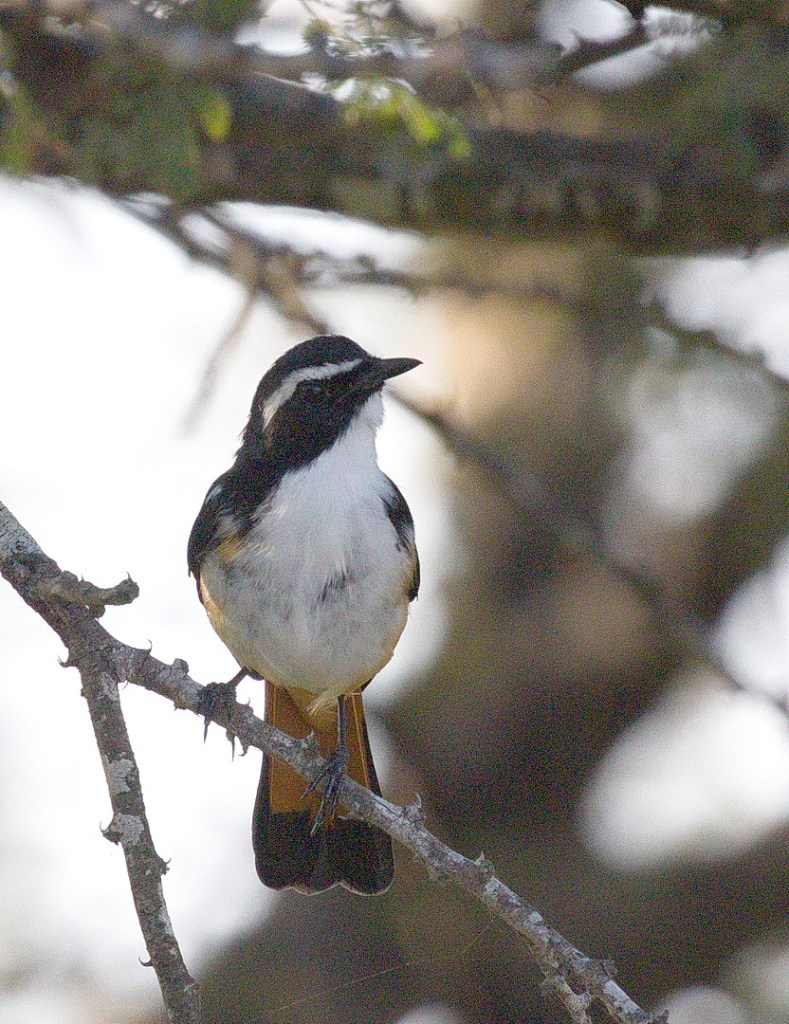
White-throated Robin-Chat
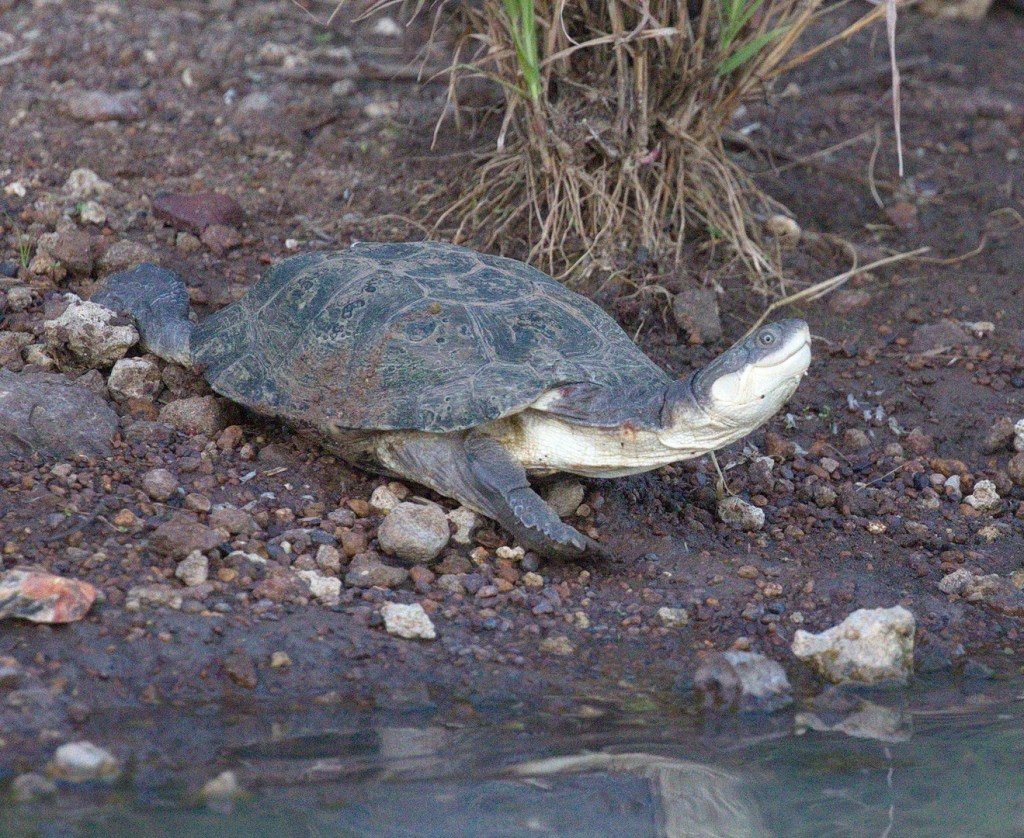
White-throated Terrapin.
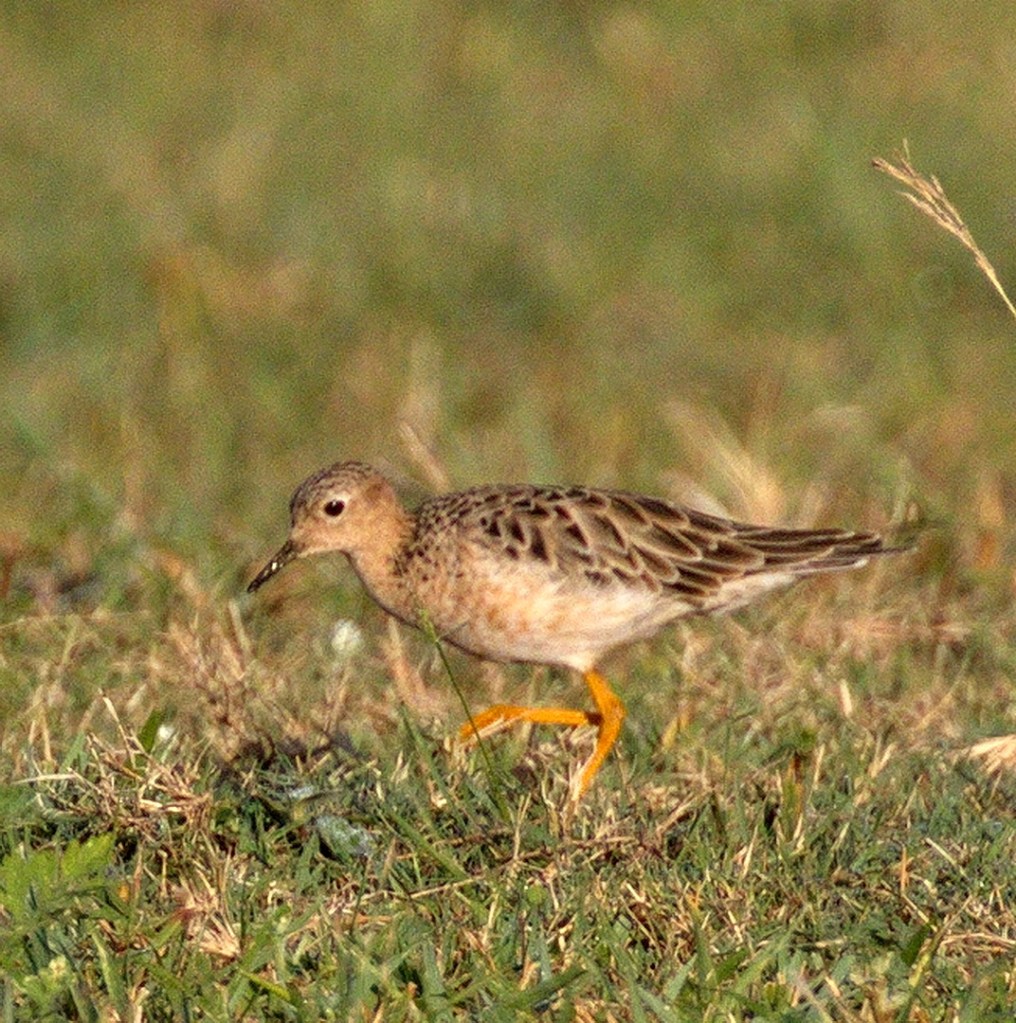
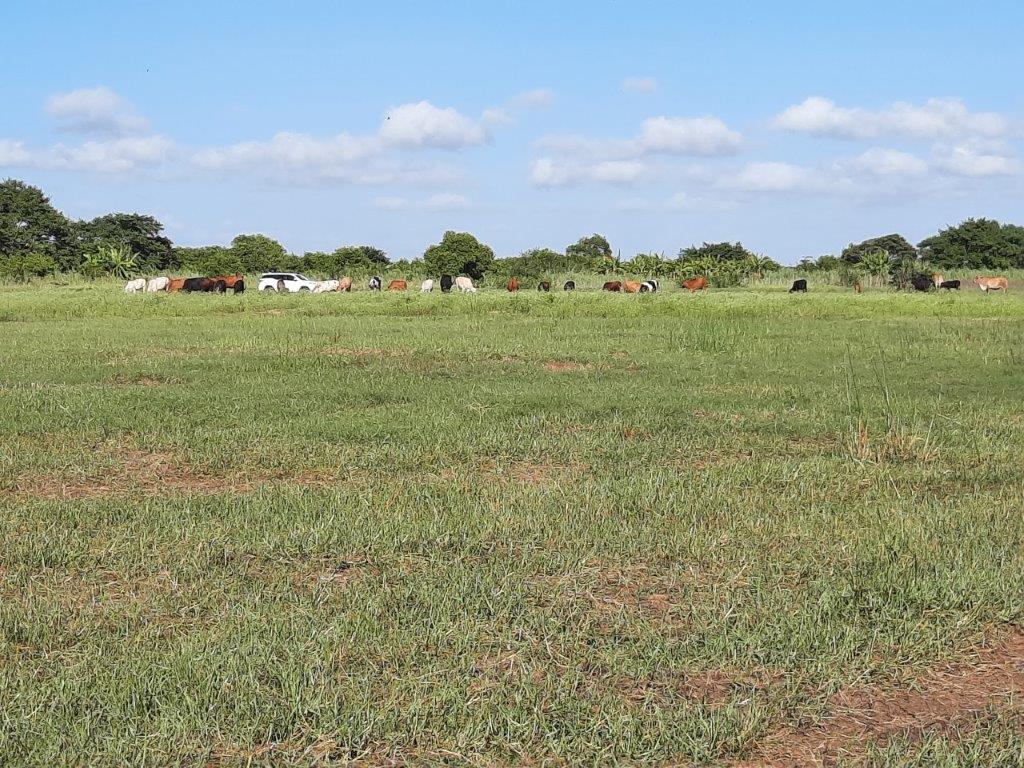
Of course being in the area we had to visit Mpempe Pan. Ever hopeful of finding the Buff-breasted Sandpiper. We made our call to advise we were coming and gained permission to do so. That was not the hard part. The hard part was finding the best way to the Pan despite our GPS and the co-ordinates of its location. After following the GPS map into various fields where the tracks ran out, we gave up on the GPS directions and followed our nose instead.
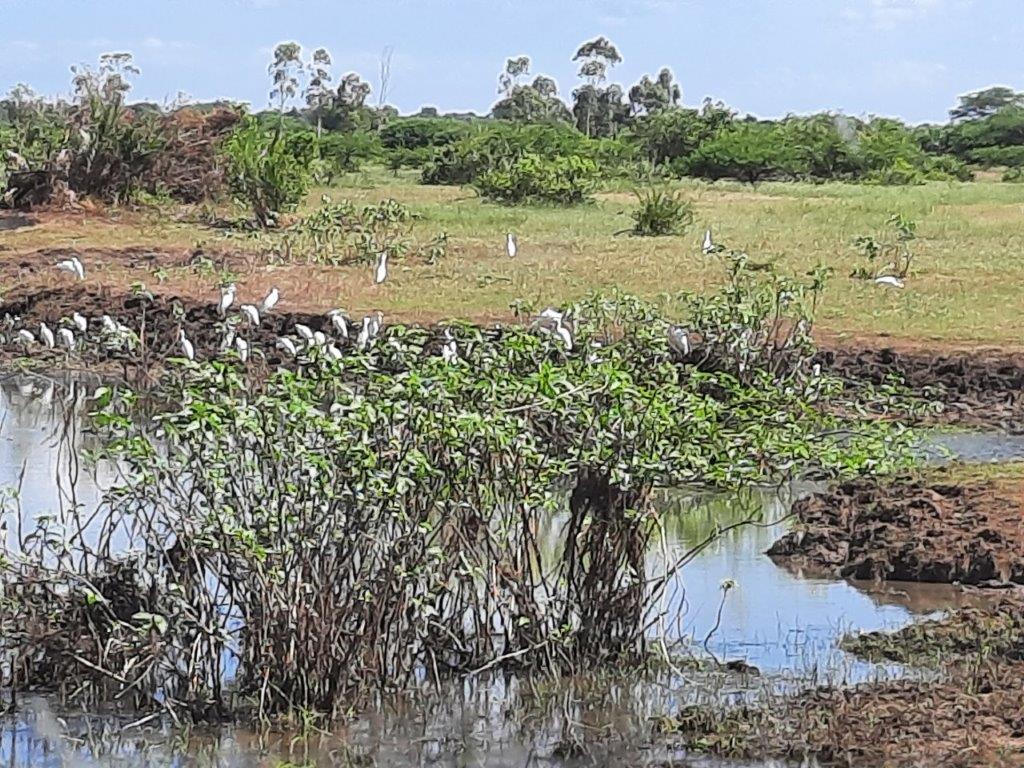
Along the way we saw hundreds of Western Cattle Egrets either side of the road as we approached the Pan. And many other large and small birds were in the air too. Quite a sight considering the paucity of large flocks elsewhere. Eventually we crossed the low level bridge with a huge open flat field to our right full of bird movement. Quite a pleasant surprise.
We parked on the right as we crossed the low level bridge. Out we got, togged up and were ready to check among the Kittlitz’s Plovers for the bird when I decided I wanted to park a little further along the track. Untogged, back in the car and off we set.
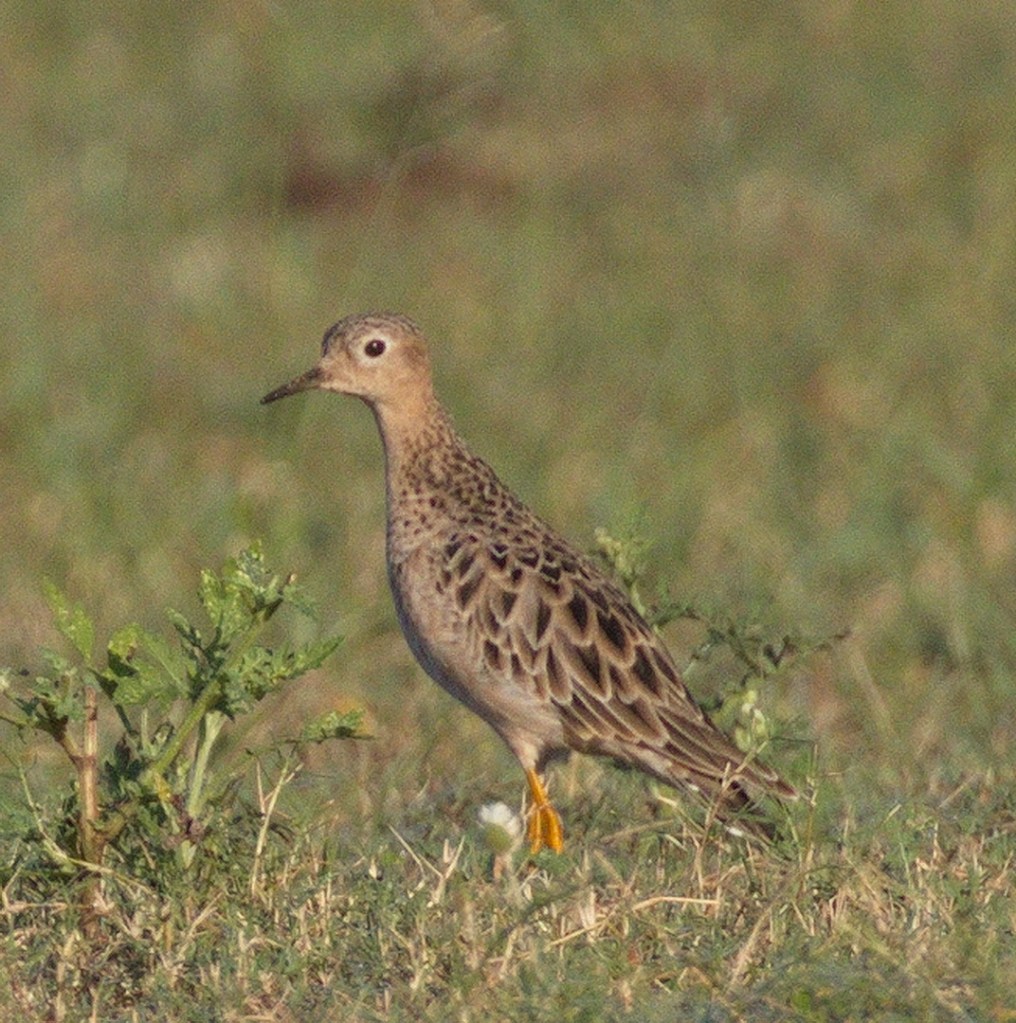
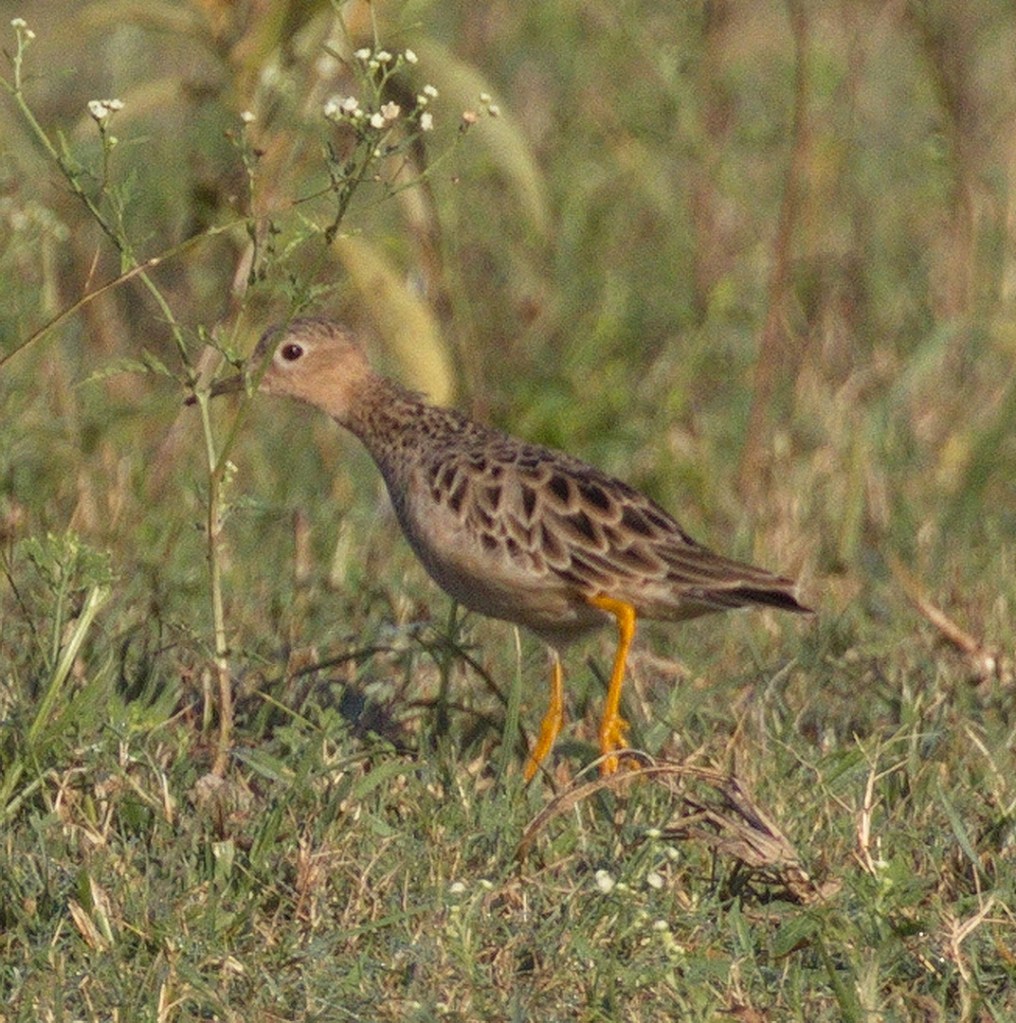
After just 20 metres there was the bird right in front of us. What a fantastic chance was that. We watched as it moved about among the Kittlitz’s Plovers before I decided I wanted to take a few photos. The sunlight was coming from the wrong direction not helping with the shots. Taking a circuitous route around I eventually managed to get some more pleasing shots.
Buff-breasted Sandpiper
Buff-breasted Sandpiper
Buff-breasted Sandpiper
Buff-breasted Sandpiper
Buff-breasted Sandpiper
Buff-breasted Sandpiper
Such a great looking bird and just as I had imagined from the photos in Roberts.
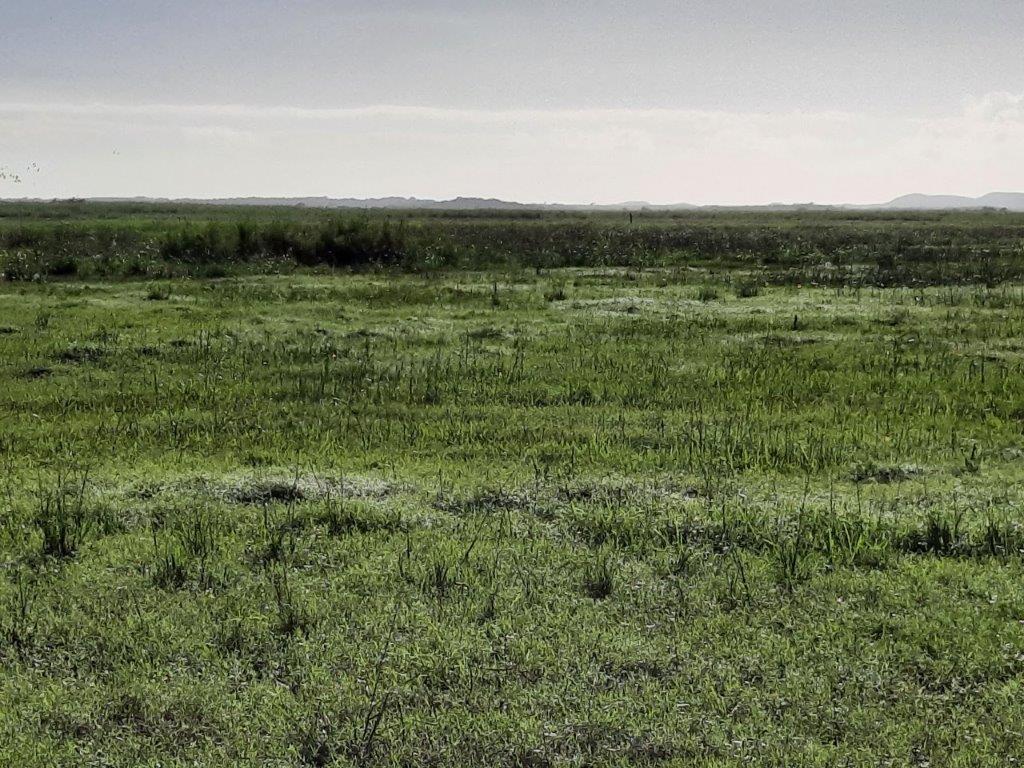
Beyond the field was the wetland area. As we walked around to the wetland we walked among flocks of Senegal Lapwings and Ruff. Crowned and Blacksmith Lapwings were also seen.
Mpempe Plain
Mpempe Plain
Mpempe. Looking across to the wetland area
Mpempe. Looking back from the wetland area
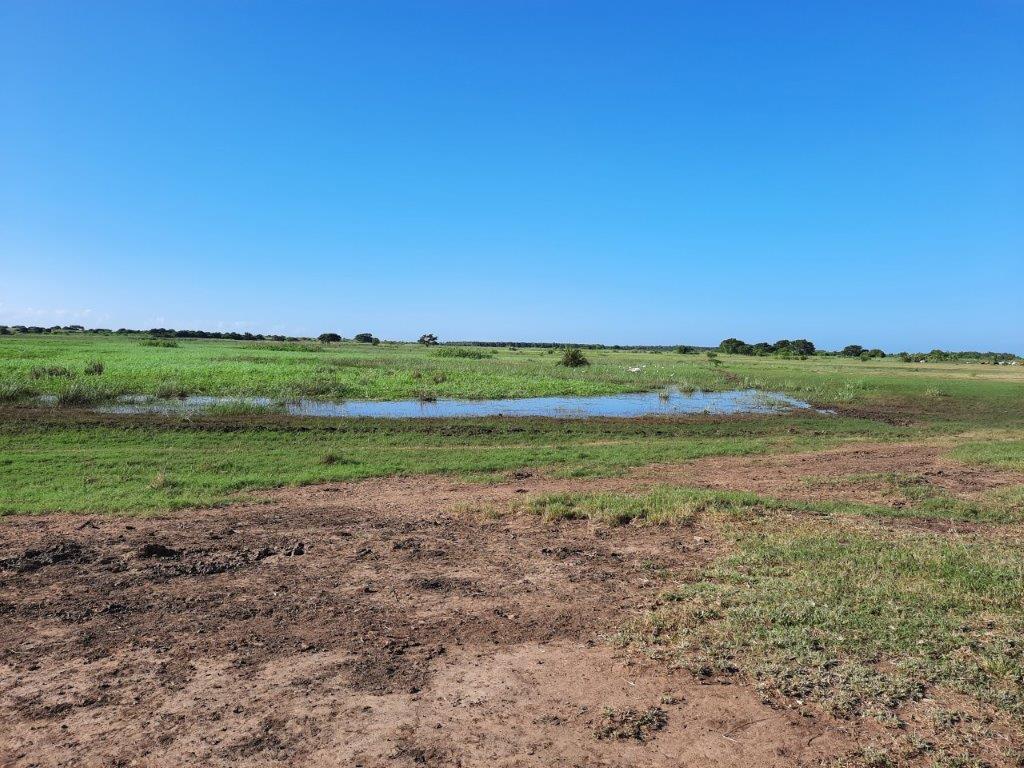
Wetland
Wetland
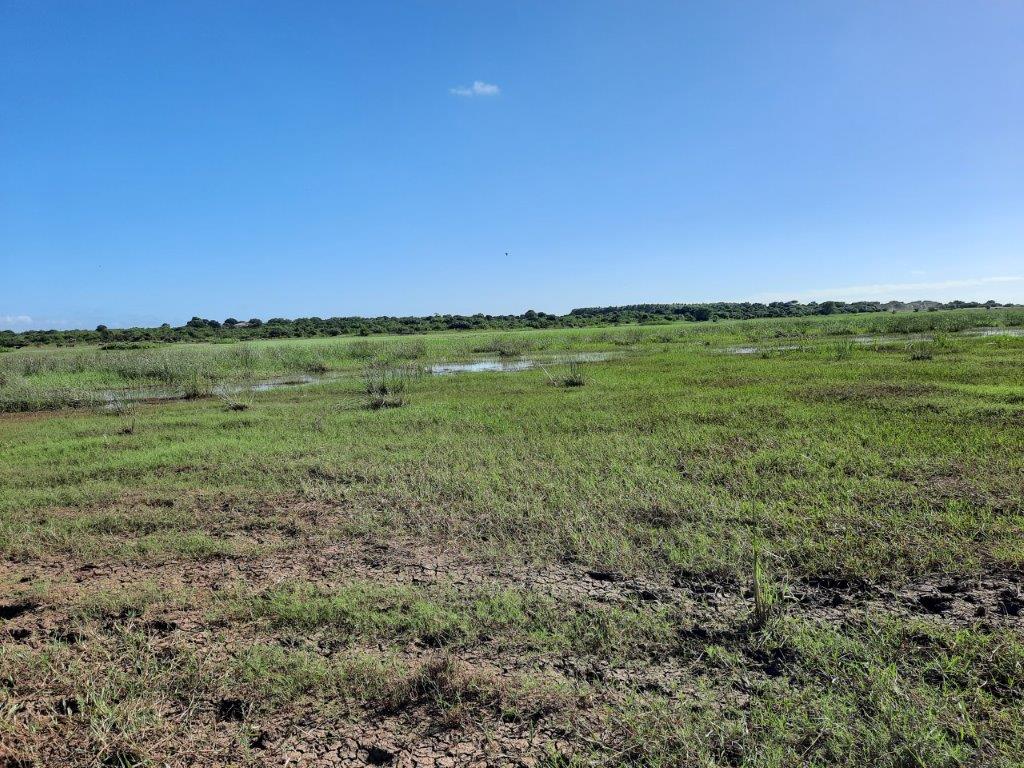
Wetland
Western Cattle Egrets in the Wetland
Wetland
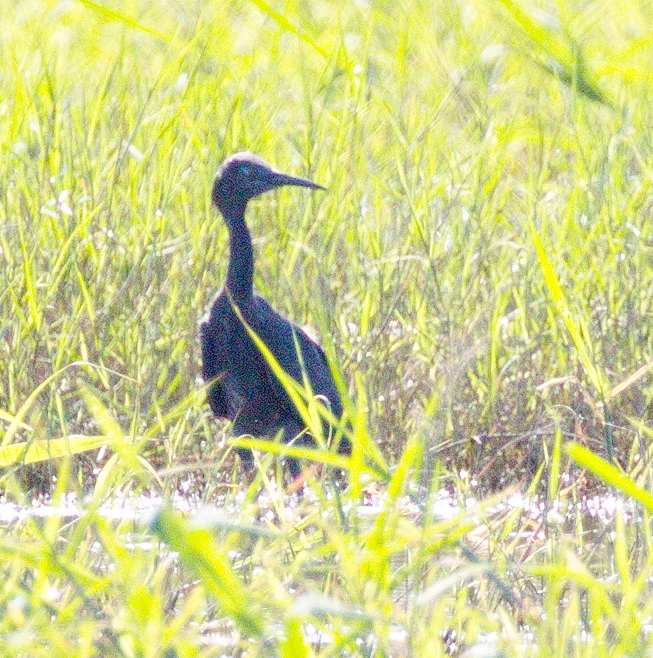
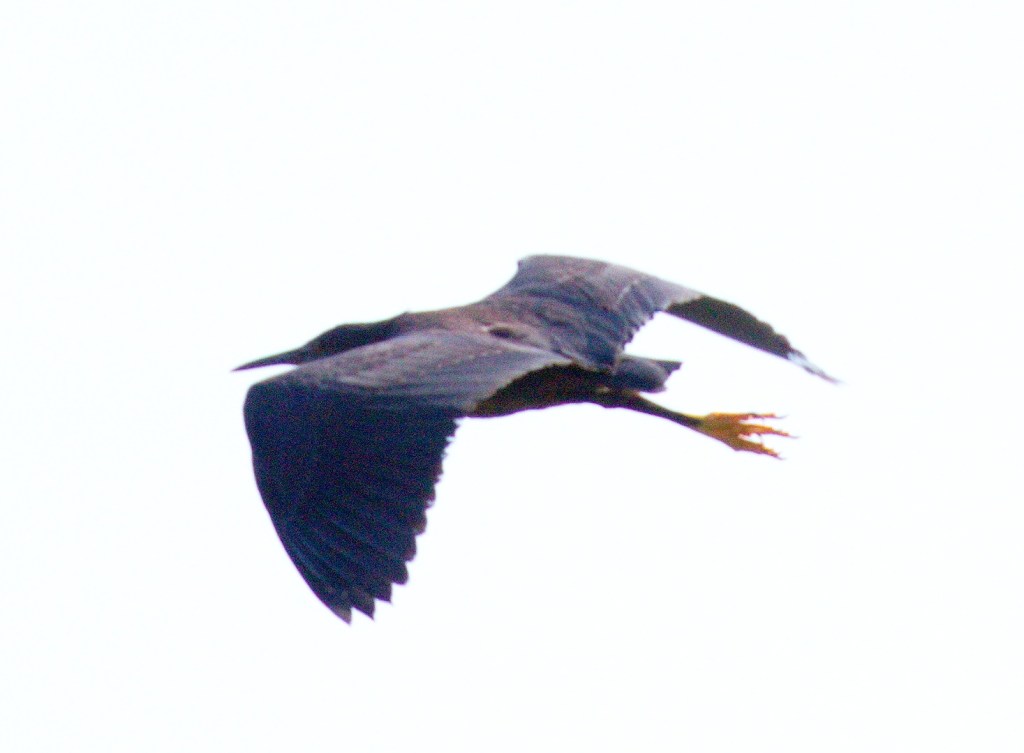
On the right of the wetland we noticed Collared Pratincoles on the ground and Glossy Ibis as well, even a beautiful Malachite Kingfisher. And it was there that a Large black waterbird was seen. We approached to get a better look but it flew then a little later it came back to the same spot. At first we had considered it to be a Rufous-bellied Heron, but now that we were closer we realised that it was a Black Heron. Again it flew and returned. As it flew we could see the yellow feet and black bill. On return it was disturbed by a Purple Heron and flew away with yet another Black Heron – a pair.
Black Heron
Black Heron
Black Heron
Black Heron
To sum up. We only identified 123 different bird species in Mkuze. Very disappointing as we expected closer to 180 or more – shows the impact of the rain. At Mpempe Pan in the short time we were there we identified 32 bird species. Our list can be seen by clicking on the following link.
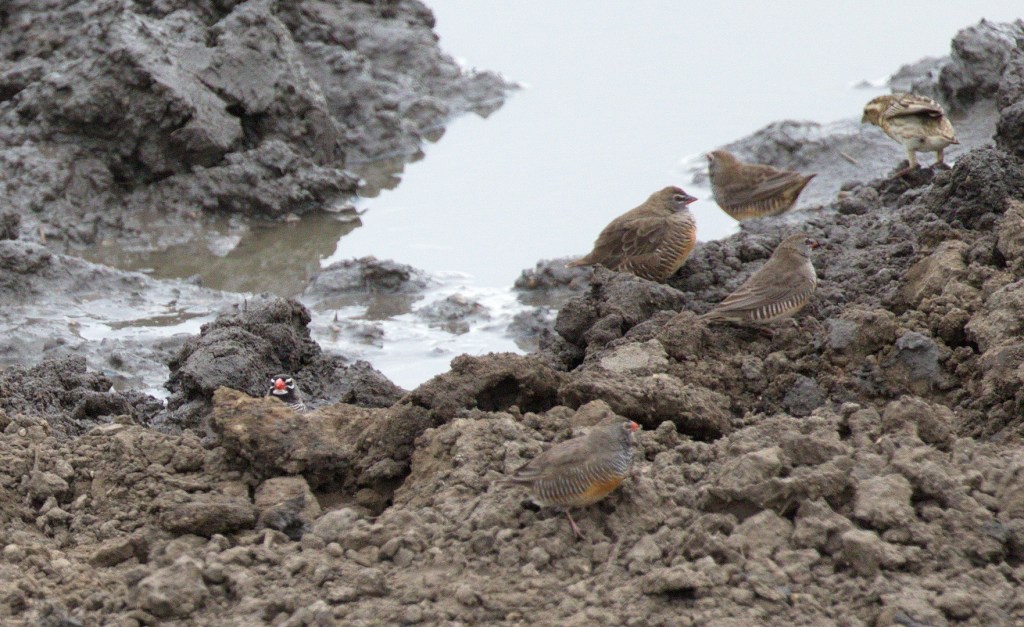
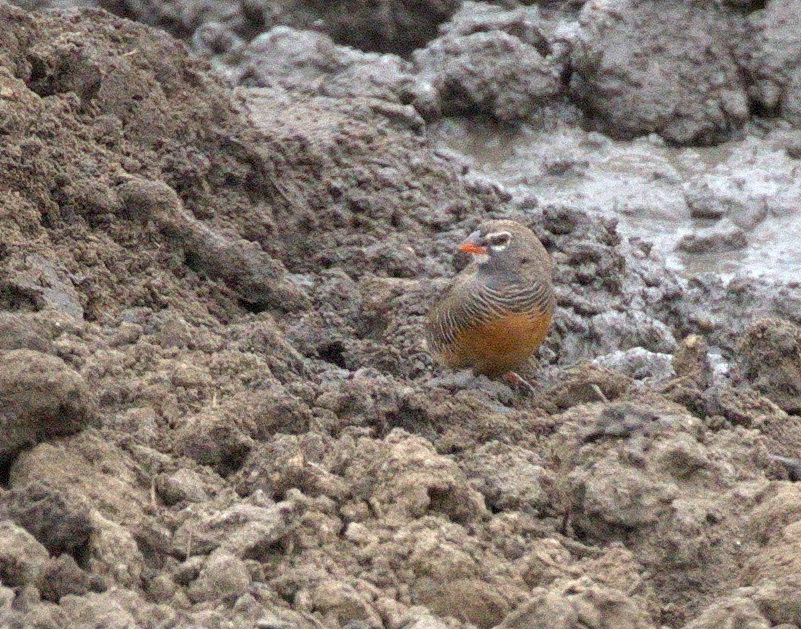
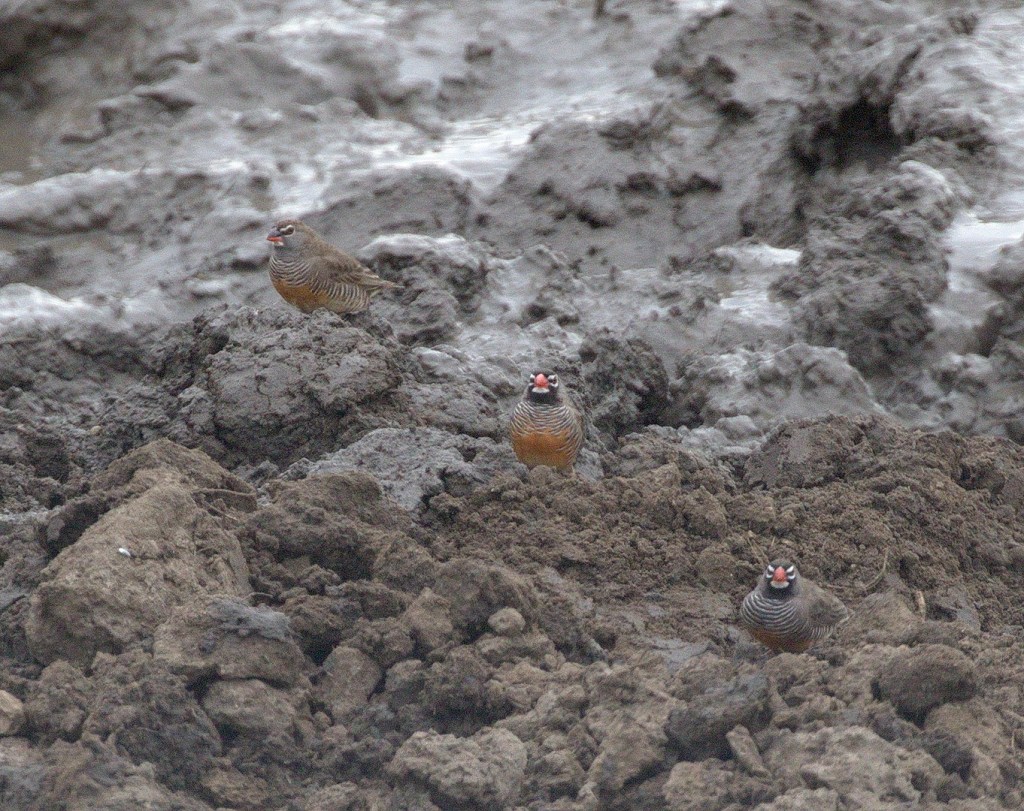
On our way through the park we always stop at roadside water and especially at some of the larger pans just off the main roads. It was no different this time as we drove down from Balule to Lower Sabie. Most of the pans had a decent amount of water in them. It was at one of these pans that not only were there a number of animal species as well as birds. By chance I looked down to the edge closest to our car. And what did we see. Some beaurtiful little birds which we had not seen for quite a few years – African Quail-finch.
African Quail-finches
In the sweltering heat and humidity that was a great sighting.
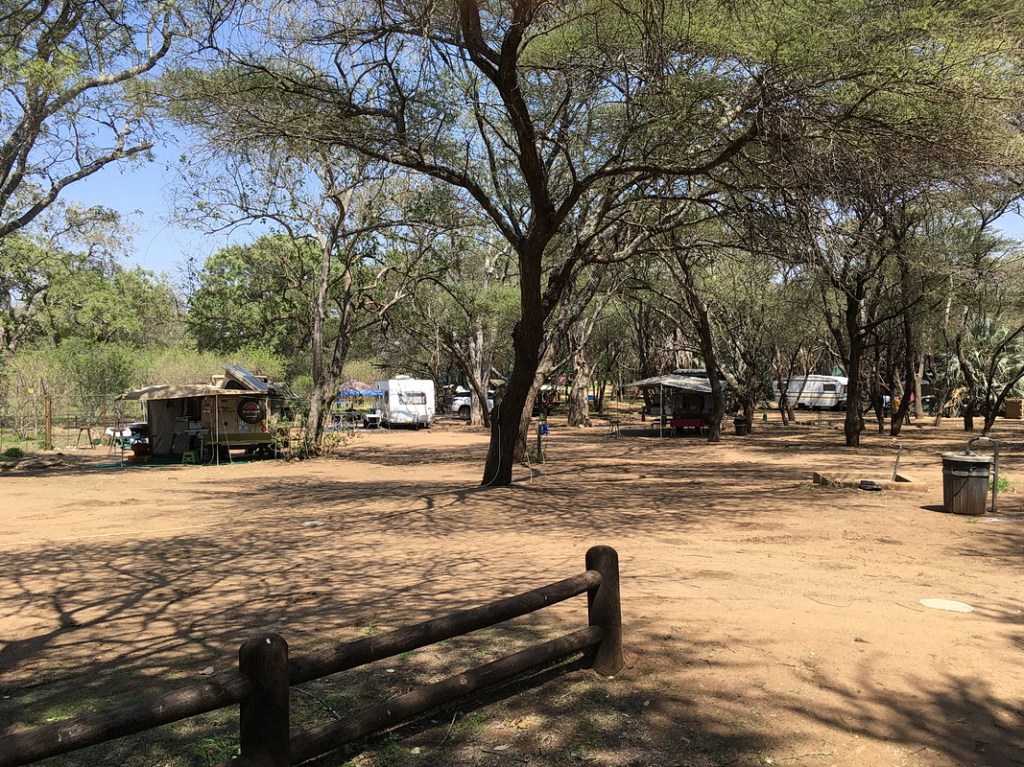
At Lower Sabie we found the campsite we had used previously to be empty so we set up camp there. The campsite was busy so we were happy to have found this spot.
Lower Sabie Campsite
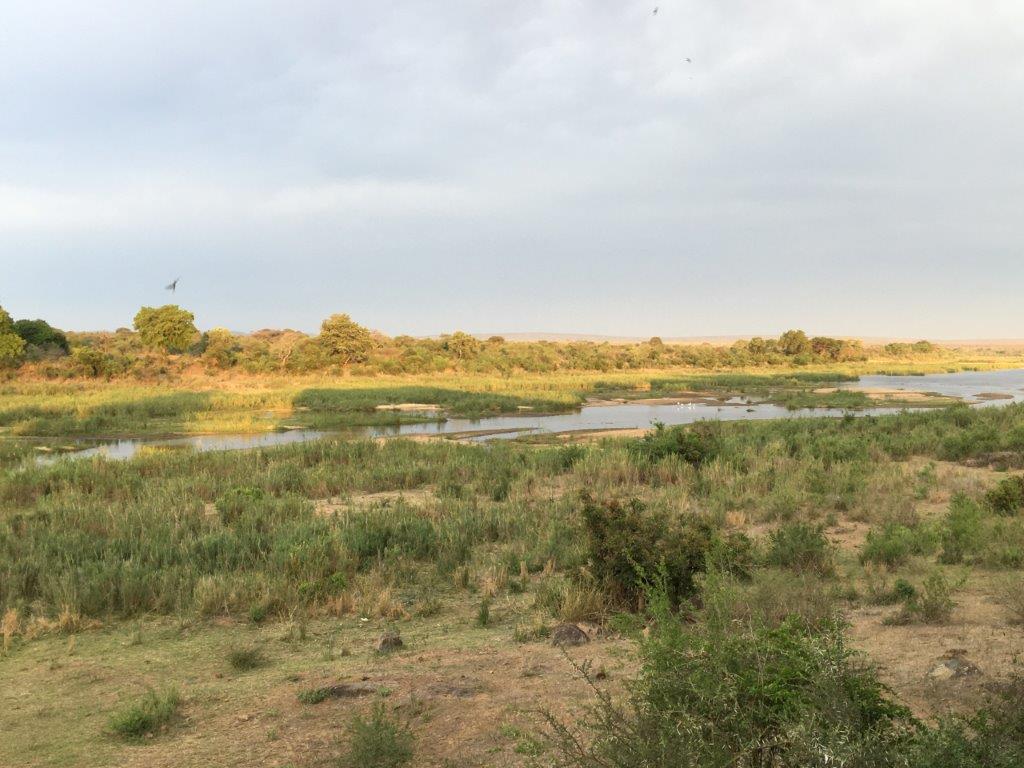
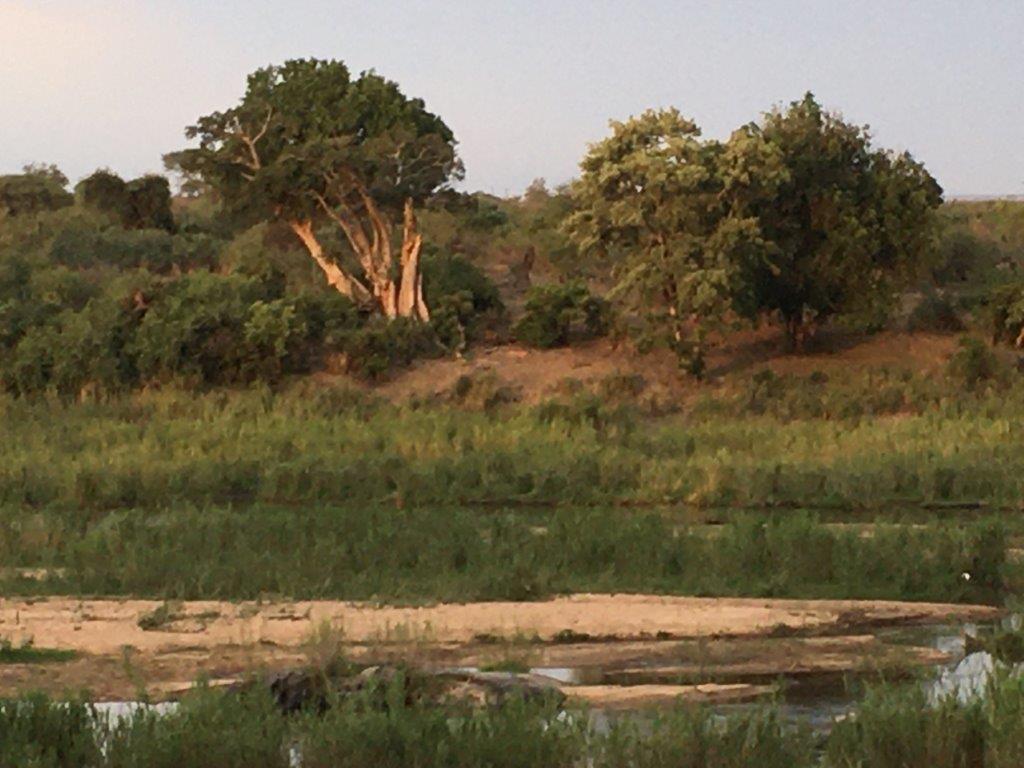
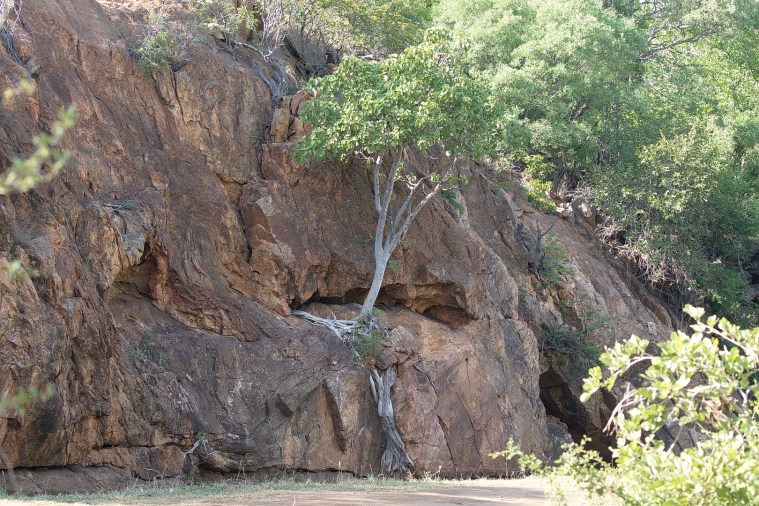
A few habitat photos of the area.
The weather followed us down from Balule – hot (39 to 41 C) and humid. No fun at night despite the use of a fan. Much of our time was spent lolling in the pool. Eventually it got to us and we left the Kruger 2 days early
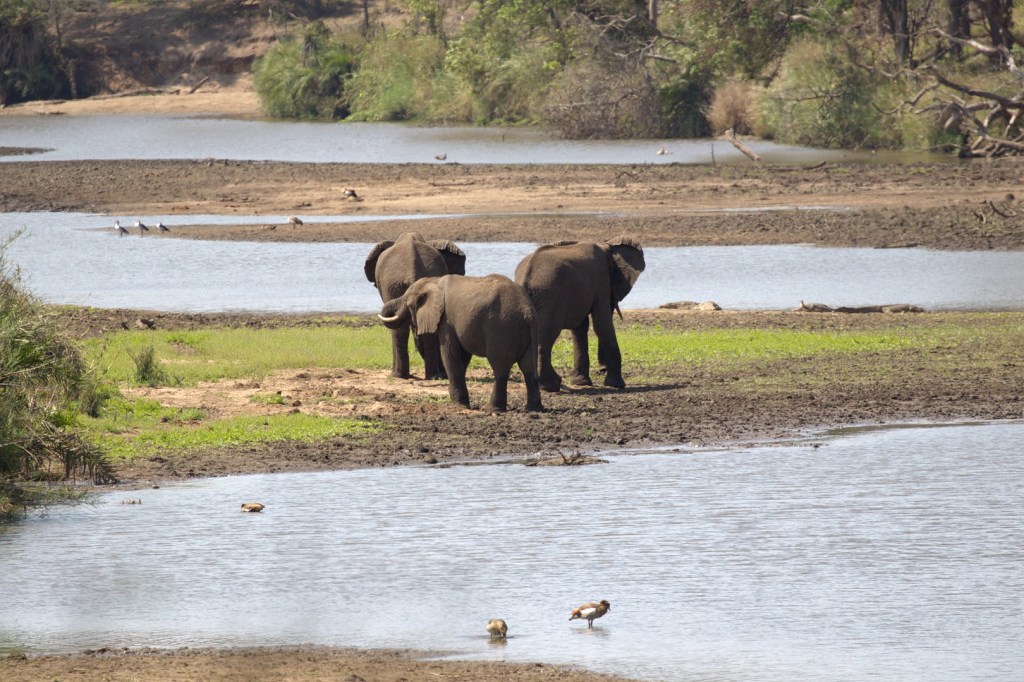
We tried to visit the Ntandanyathi Hide but it was closed so we continued to Crocodile Bridge and then on to Mpondo Dam. Too hot for many of the animals except elephants having fun at Mpondo Dam.
We also went north to Mlondozi Dam but again the bush was quiet.
The best viewing was both along the main road to Skukuza and Sunset Dam right outside Lower Sabie gate.
Here are some of the sightings which we photographed as we drove around.
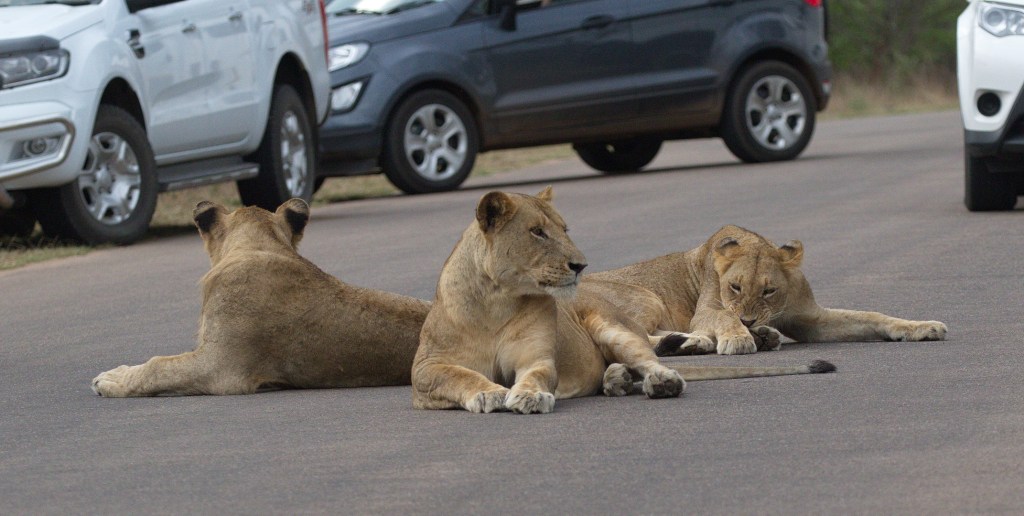
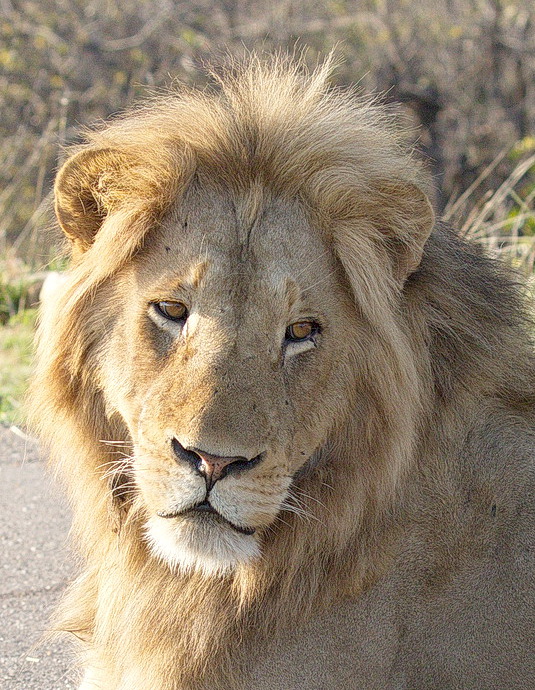
The Lions are protesting.
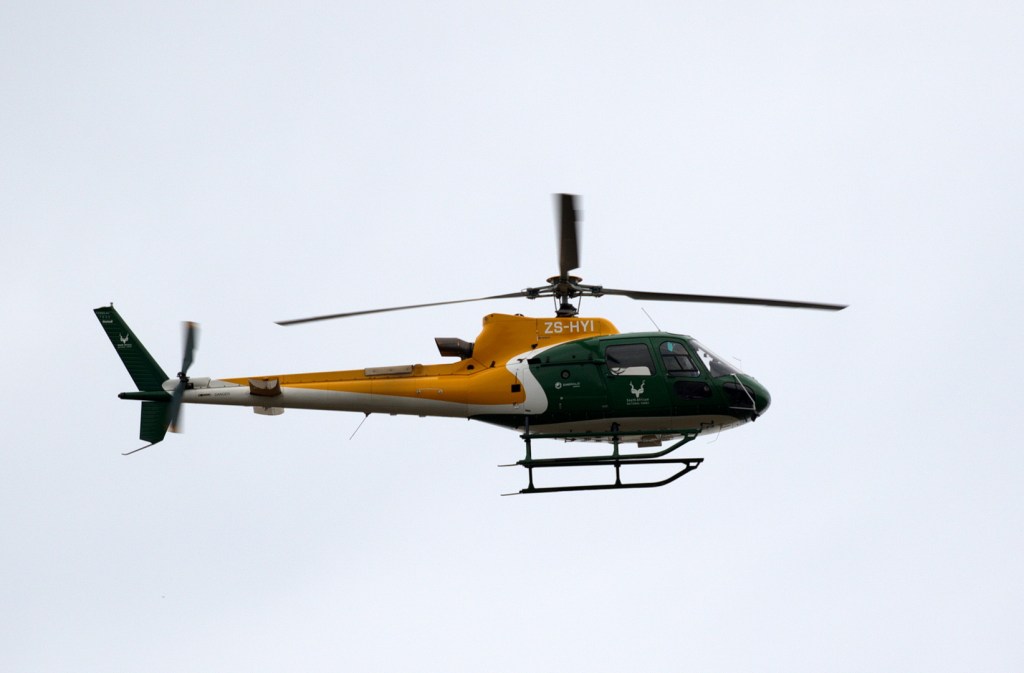
Anti-poaching aircraft
Jacobin Cuckoo
Klipspringer
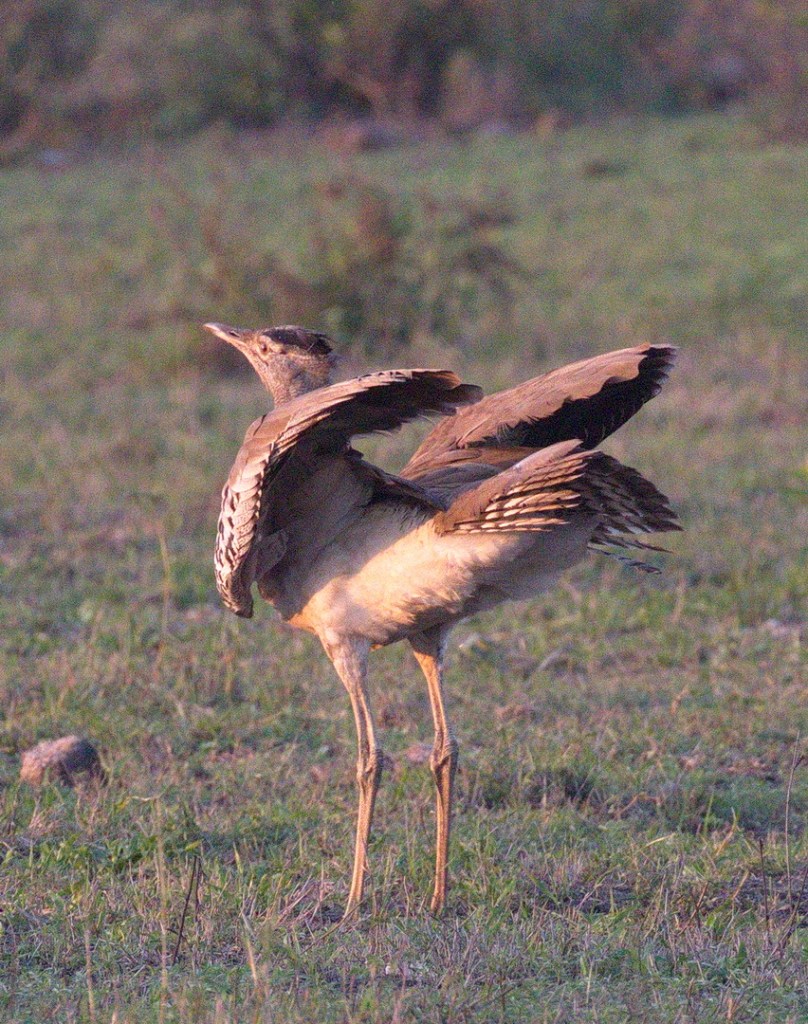
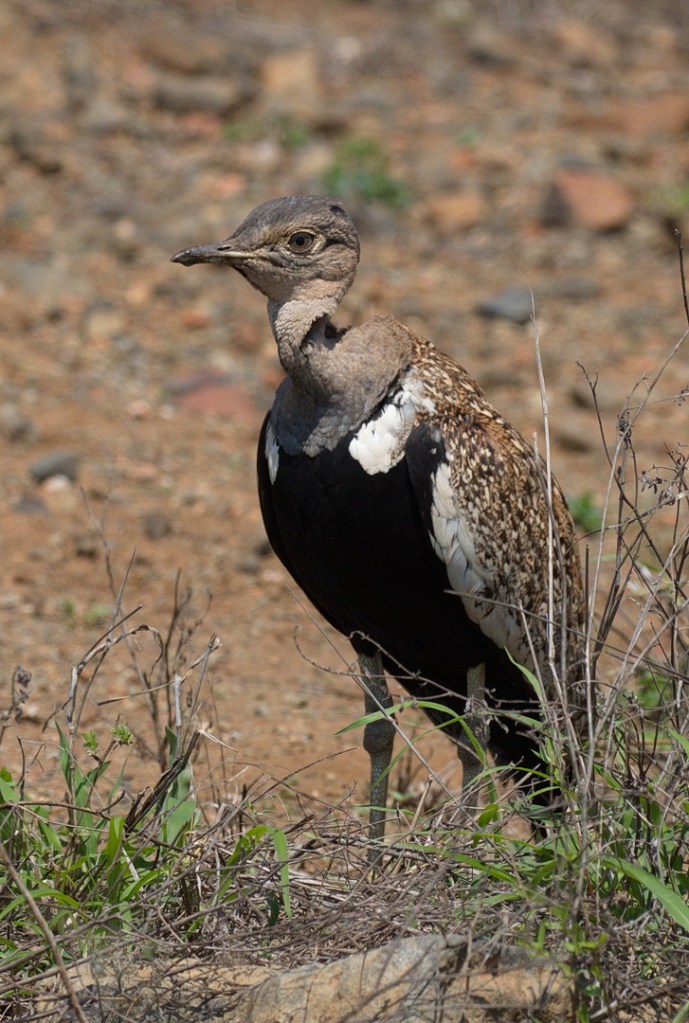
Kori Bustard
Spot the Leopard sleeping
Maricao Sunbird
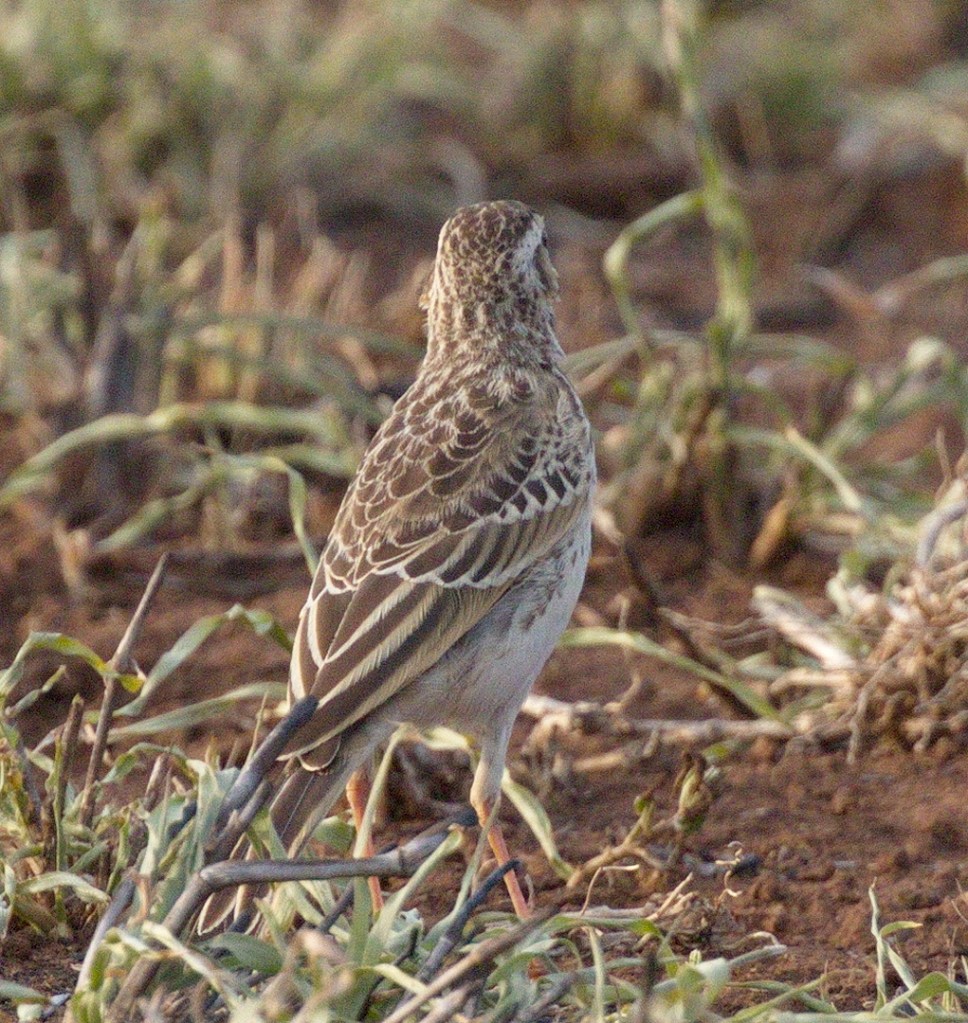
Sabota Lark
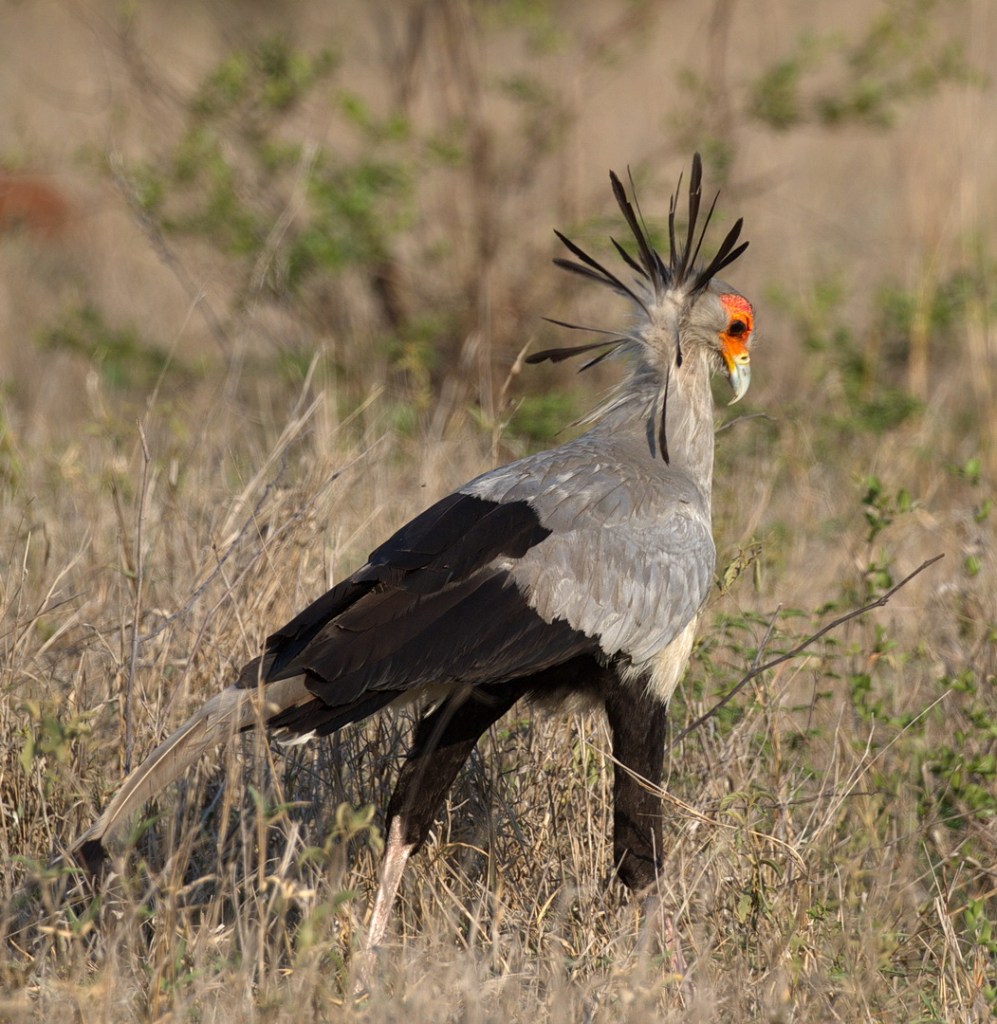
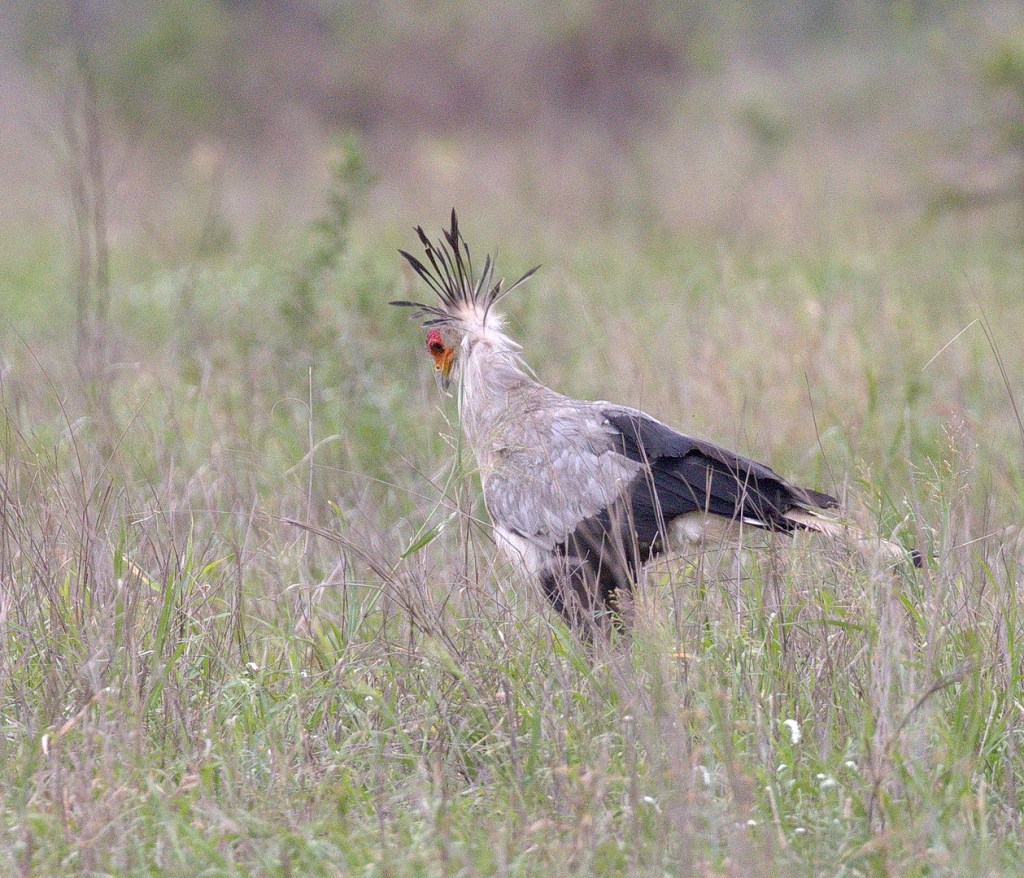
Secretarybird
Warthog
Family of African Fish-Eagles
A male Steenbuck was very interested in performing with a female but she would have none of it.
We had an odd encounter with a Red-billed Hornbill. It was in the middle of the road and would not move out of the way as we got closer. Eventually we drove right up alongside it and it still would not fly or move. I opened the car door and it stayed put. I got out to make it fly but it would not. Eventually I picked it up and placed it on the verge with no resistance. I could not leave it in the middle of the road where it was likely to be hit by a car. Looking back we surmised that it may have been stunned or else bitten by a snake.
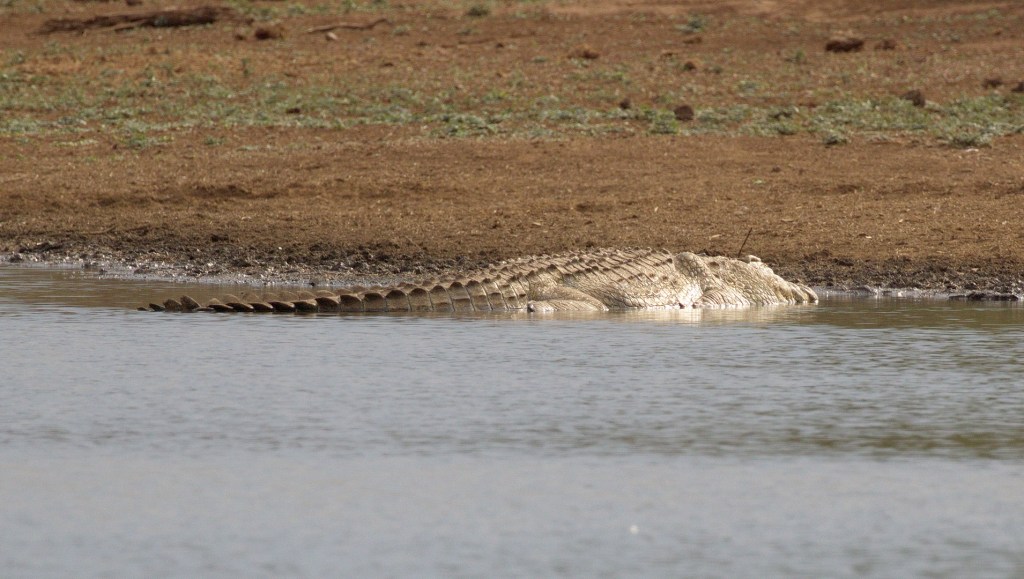
Sunset Dam is probably the most frequented Dam in the Kruger. Not only because of its proximity to Lower Sabie Camp enabling quick access to early morning and evening viewing but also because there are resident Crocodiles and Hippos always to be seen. It is also one of the favourite Dams where other animals and birds frequent.
Large Crocodile
There appears to be a resident Black-crowned Night-Heron there as well. We saw one in the same place previously.
Black-crowned Night-Heron
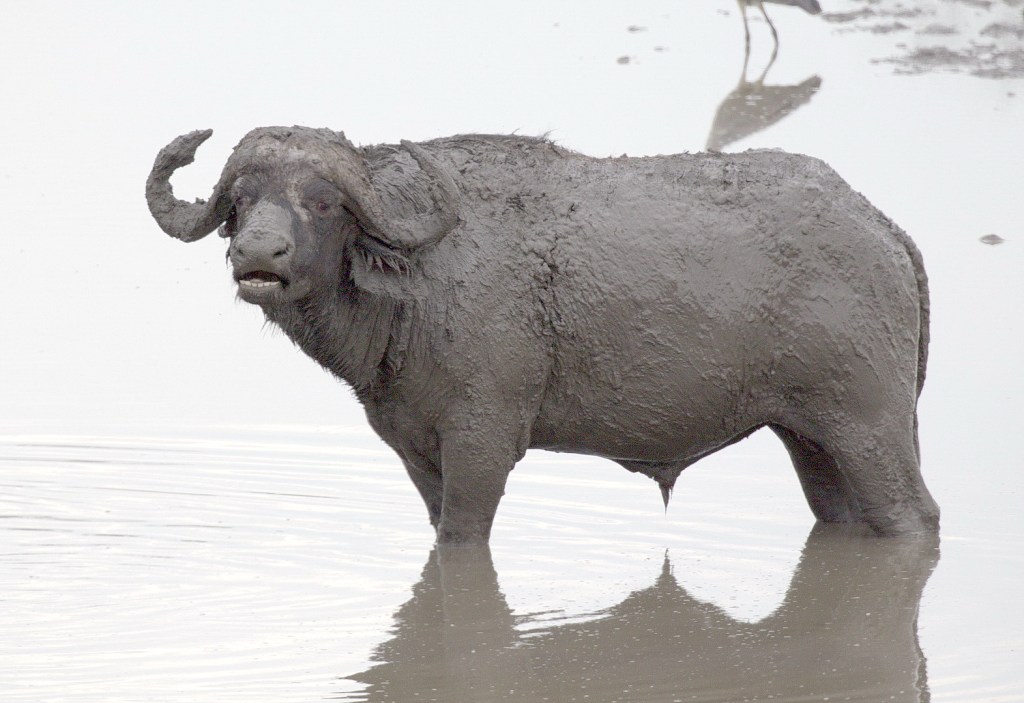
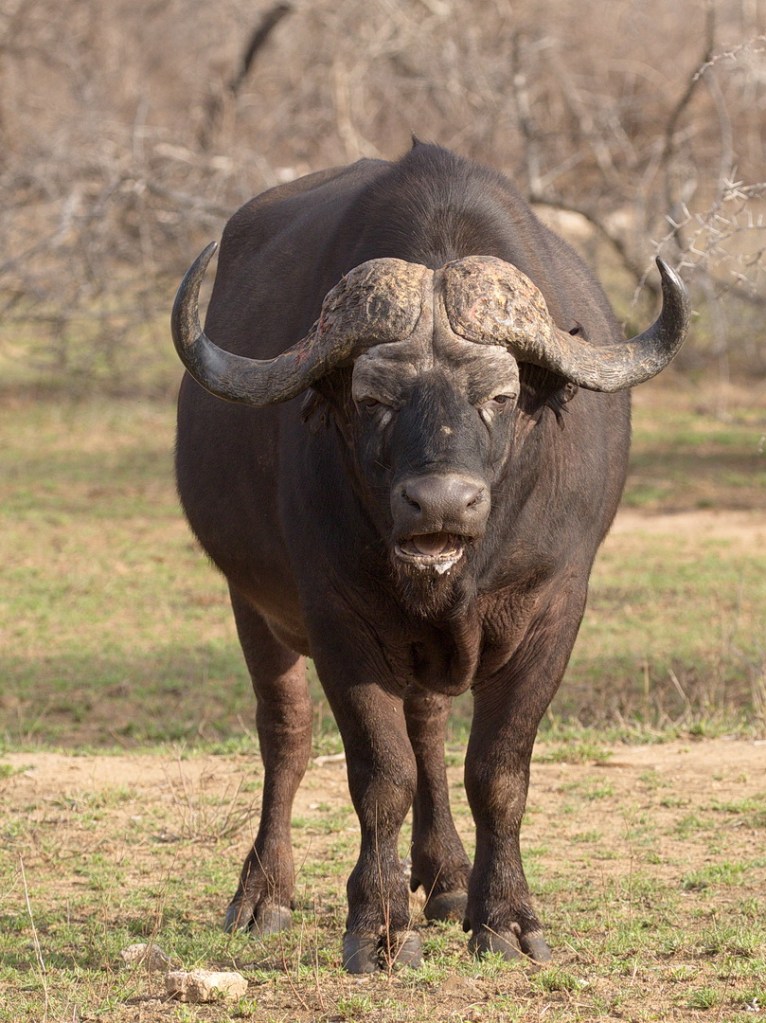
Buffalo sometimes visit – like this one having had a complete mud bath.
Muddied Buffalo.
Then for something different there was this Grey Heron hitching a ride.
Grey Heron piggy-backing a Hippo.
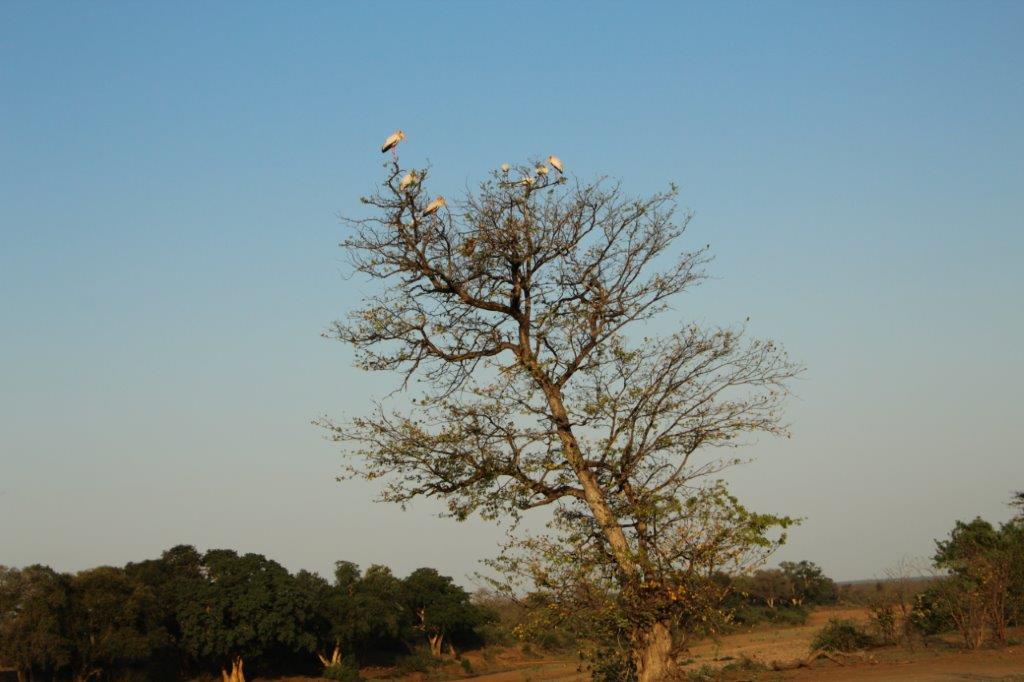
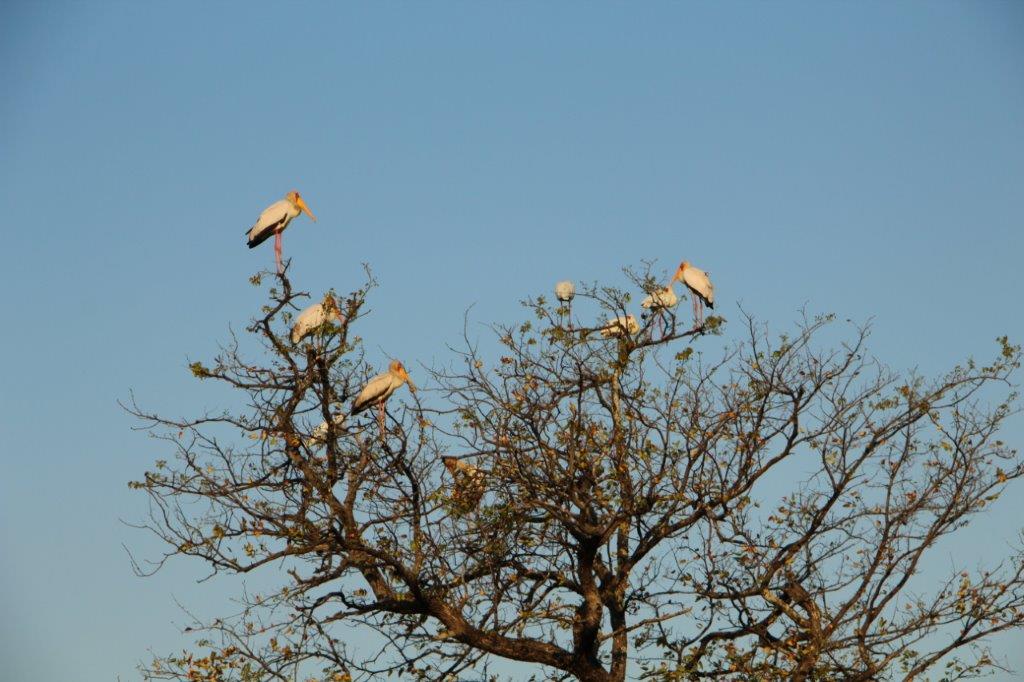
Yellow-billed Storks seen opposite Sunset Dam in the Sabie River late one evening.
Yellow-billed Storks gathering before going to roost.
In all we identified 103 different bird species in the short time we were there. To see the list click on the link below. The spreadsheet will also show you what we identified in each area we camped. In total for the whole trip we identified 254 different bird species.
Balule is one of our favourite camps in the Kruger NP. It is a relatively small camp without power consisting of about 20 campsites and several huts.
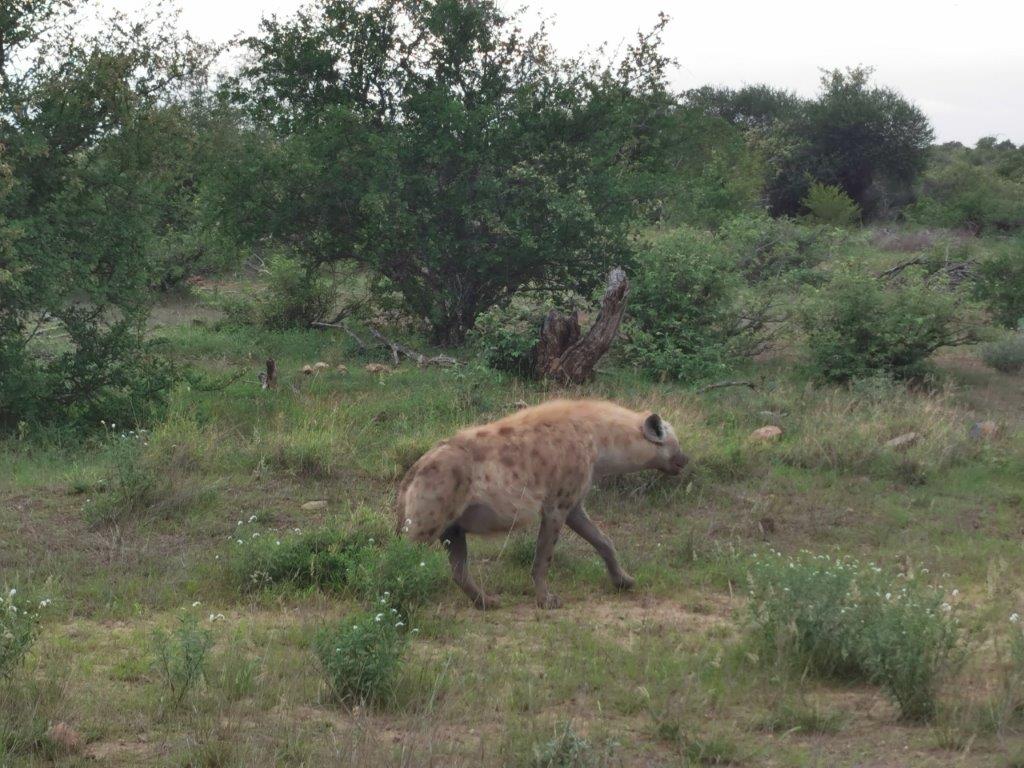
At night the hyenas patrol the fence line often lying down quietly within metres of you and staring with their pleading eyes while resting their head on their front paws. A cute deceptive look of innocence.
On arrival we were greeted by the raucous sounds of hyenas battling just outside the entrance gate. The kerfuffle went on for quite some time.
One of the noisy Hyenas
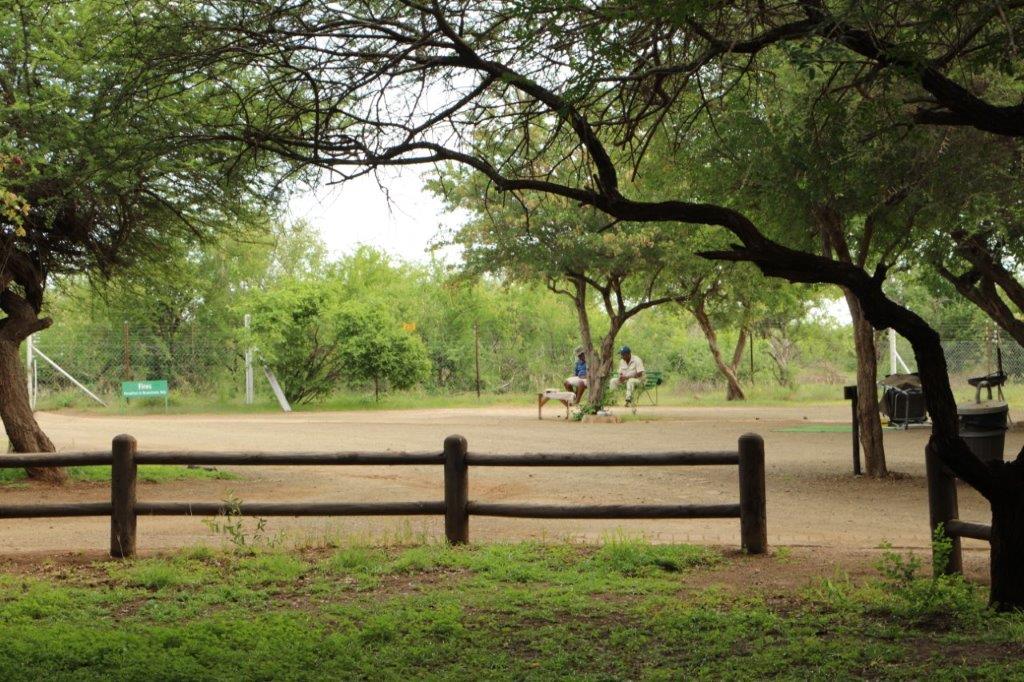
We chose not to camp along the open fence line but rather in a large shady spot close by and using our solar panels to keep our batteries charged.
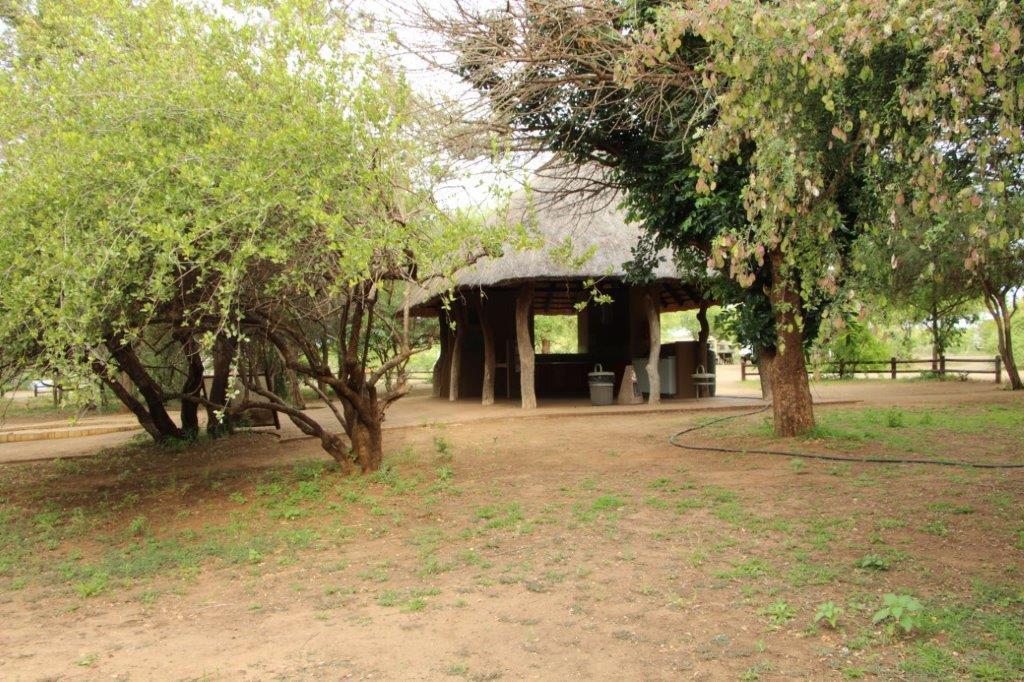
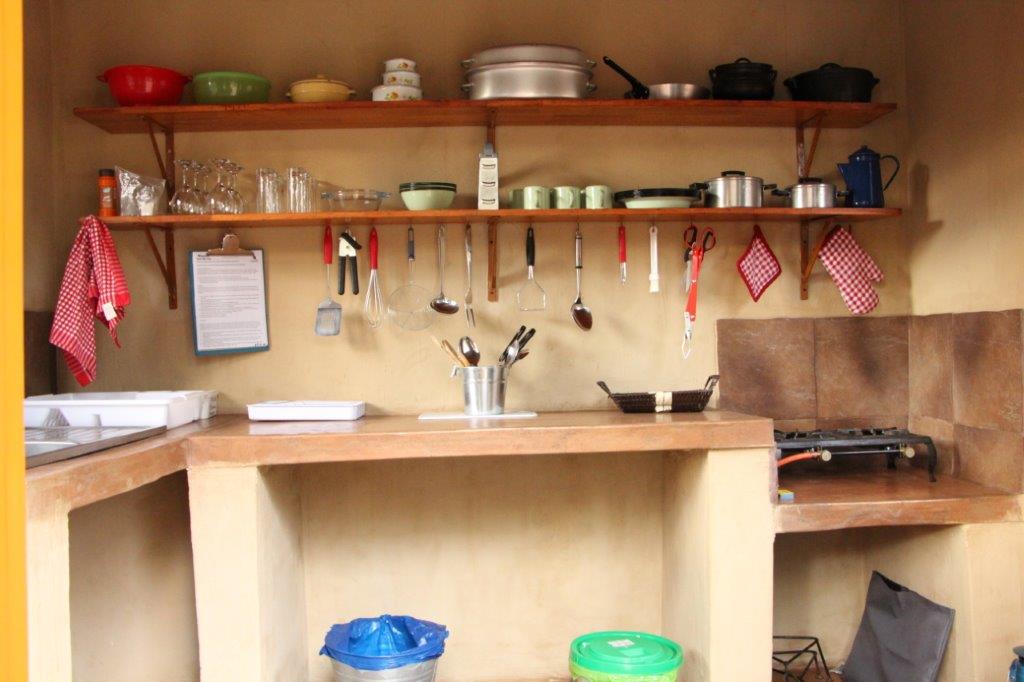
Kitchen Block
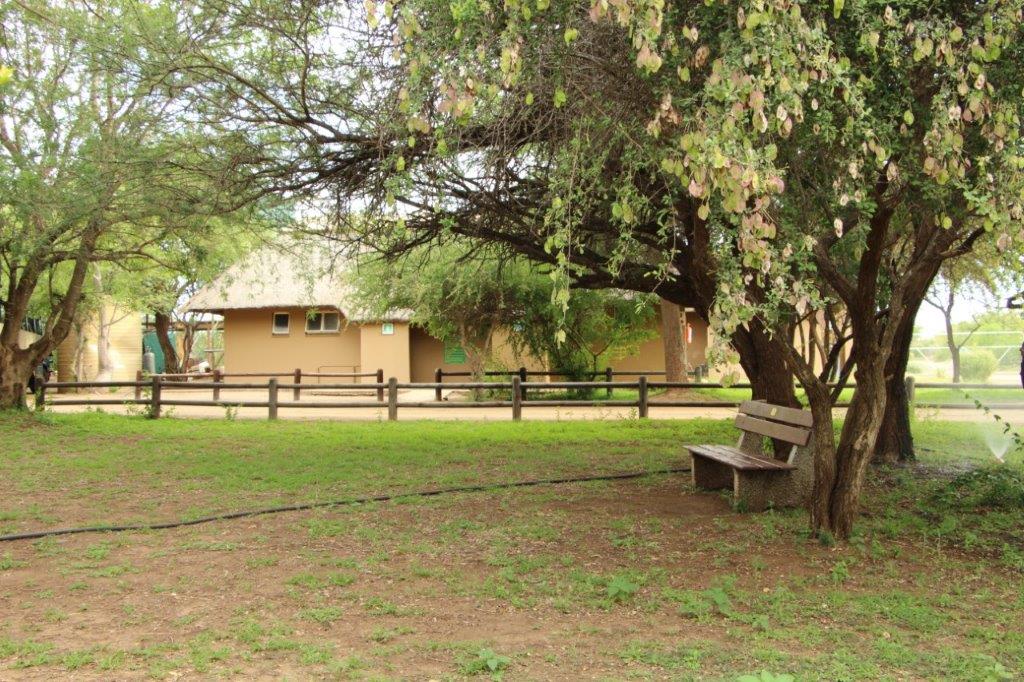
Ablutions
Balule camp is located close to the Olifants River and to get to the Olifants Camp you cross the river over a low lying bridge.
Balule Camp from across the other side of the river.
And on this visit the muddy water was flowing swiftly quite close to the level of the bridge.
Olifants from the low lying bridge
On one occasion later in the day we observed more than 50 Openbills flying downriver.
Some scenery shots around the area.
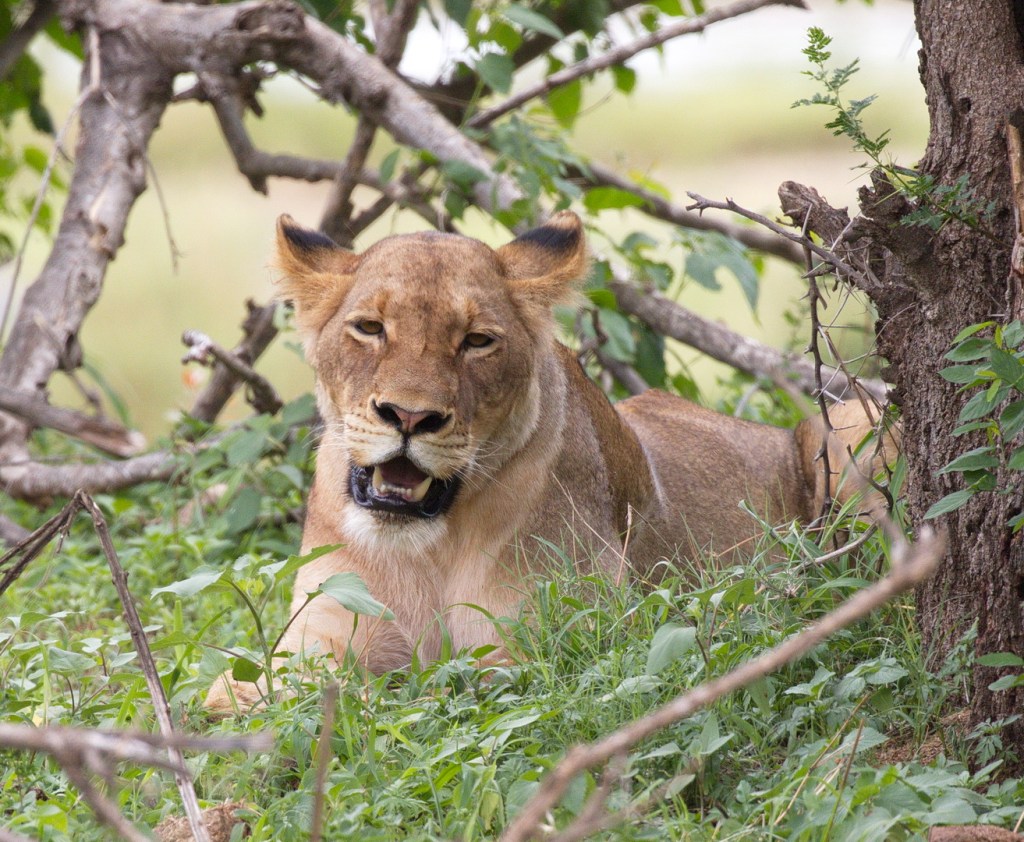
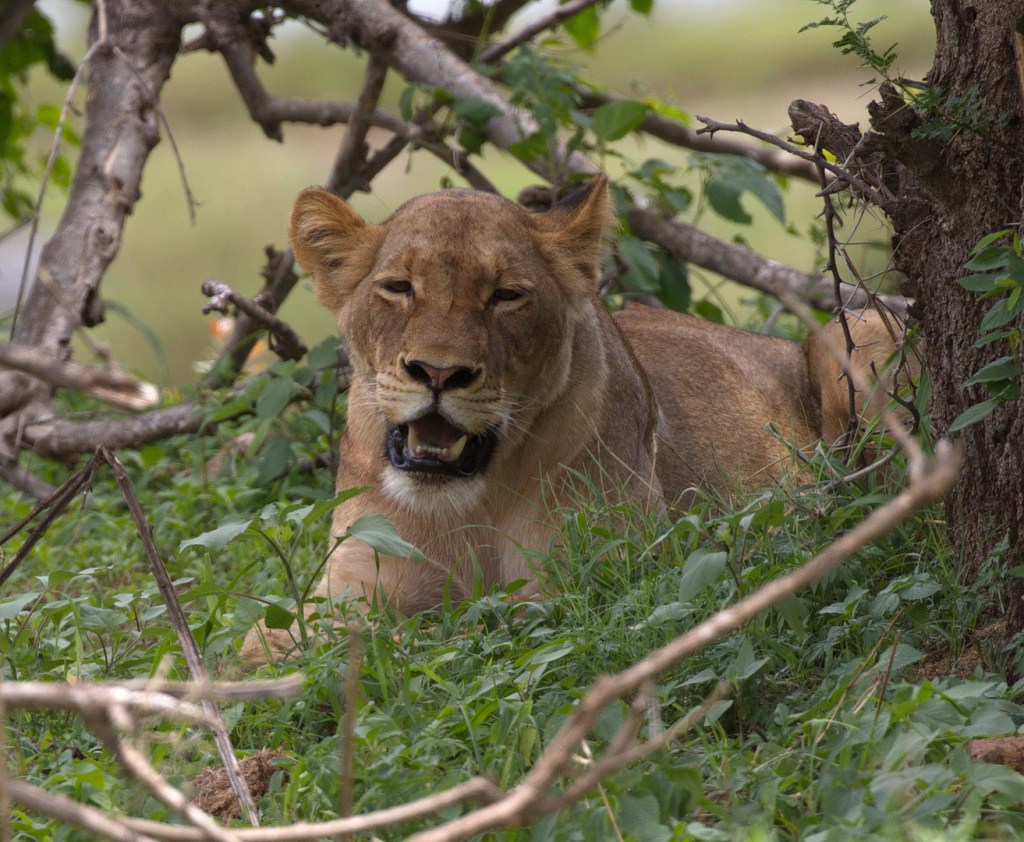
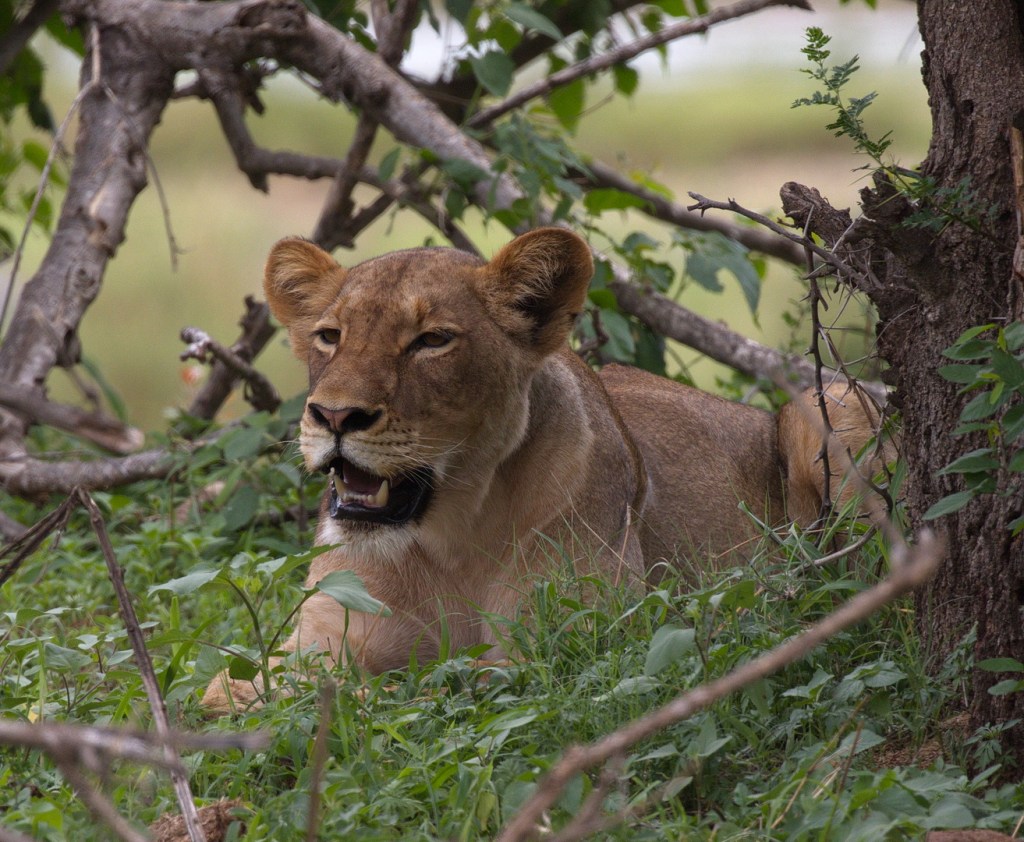
Venturing out one day to visit Olifants Camp and just as we approached the low level bridge we noticed a cat lying under a shady tree. We had heard them during the night so it was a thrill to see them too.
Lioness
Lioness
Olifants Camp is set atop of a hill overlooking the Olifants river. It has a great lookout over the river. And from there you can often see herds of Elephant and Buffalo below and in the distance.
Camp entrance
Views from the Camp’s lookout.
View from the lookout at Olifants Camp
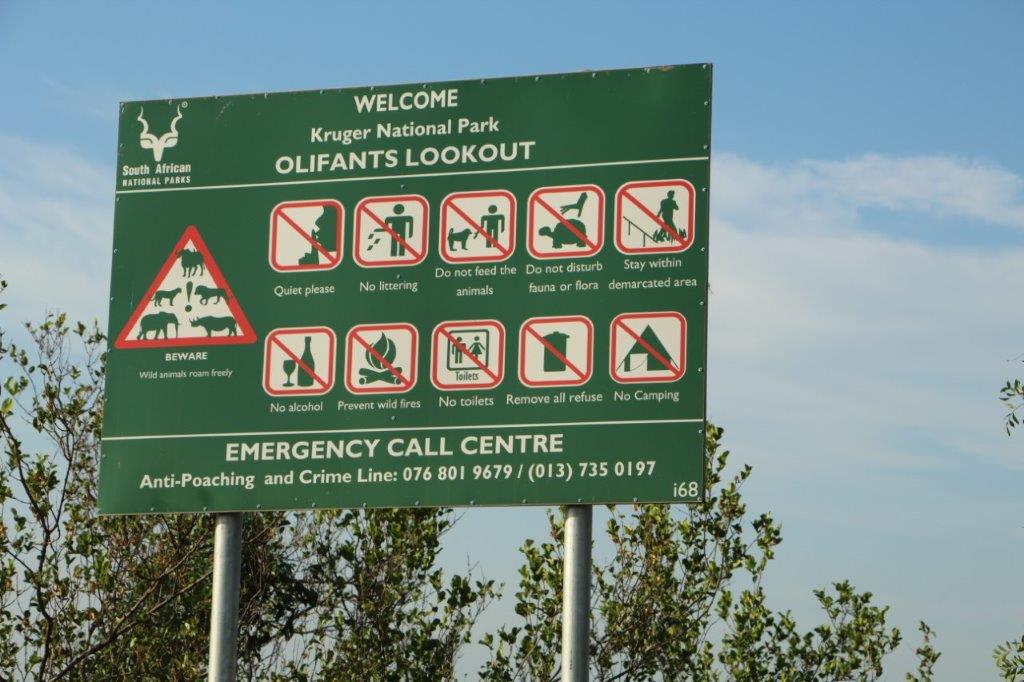
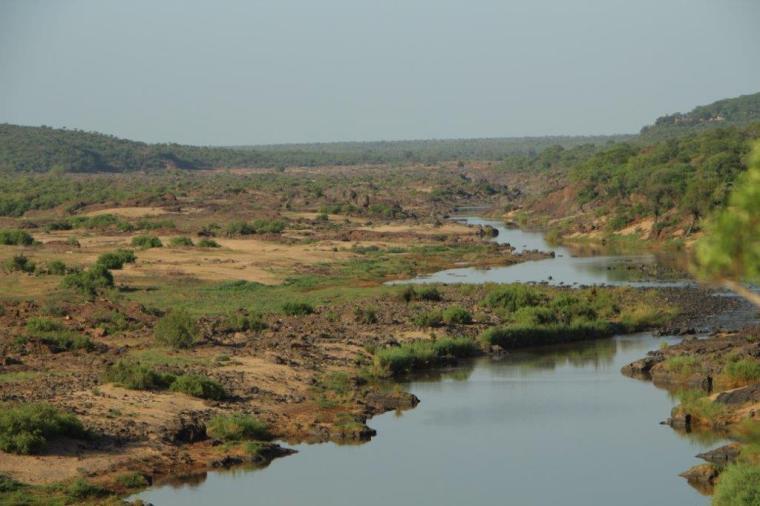
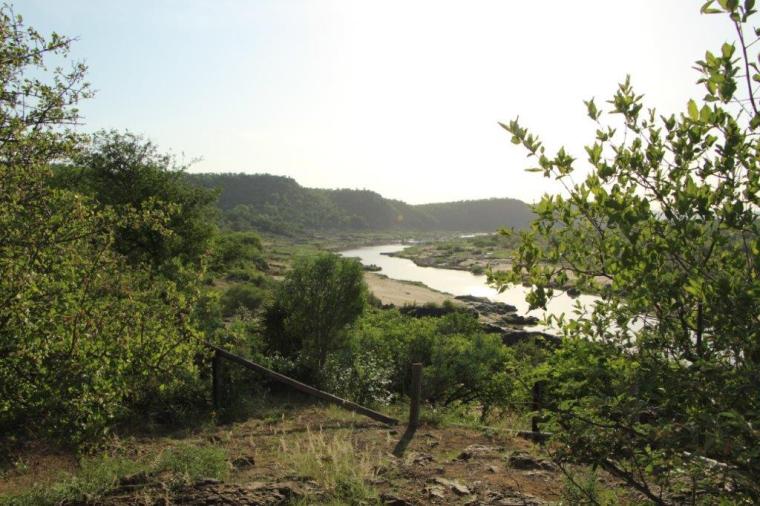
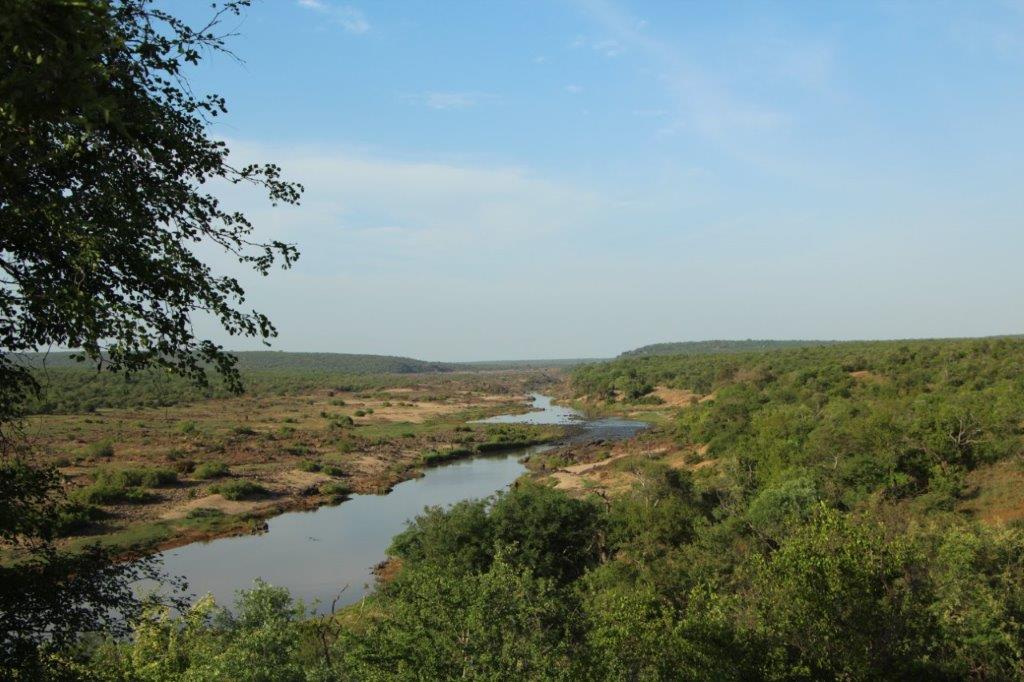
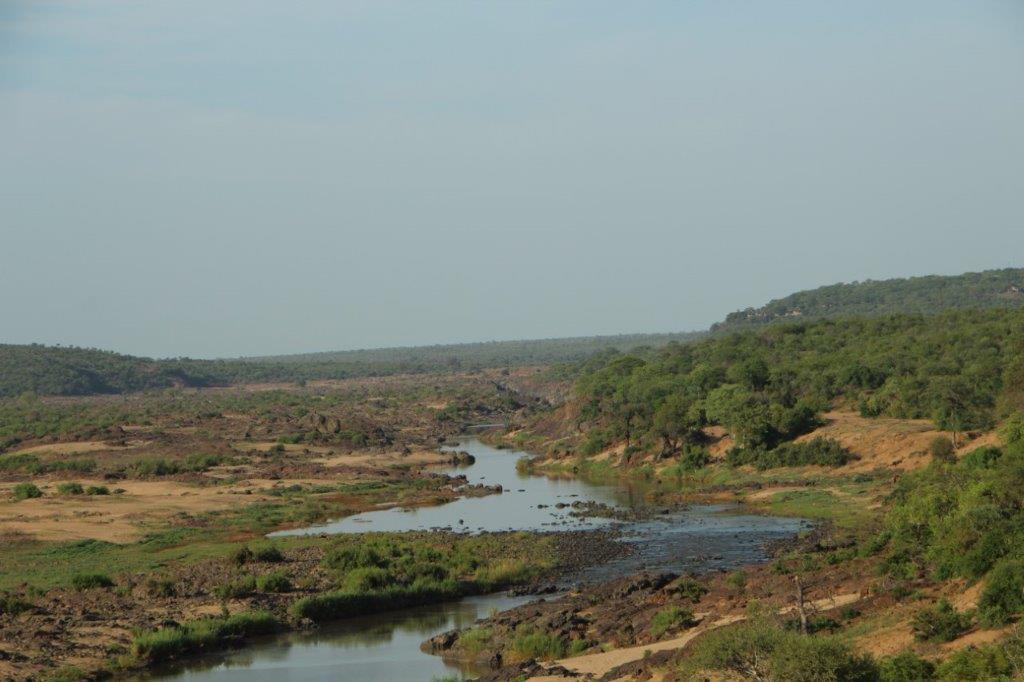
Taking the S44 from Olifants Camp, there is another Lookout Point overlooking the river below.
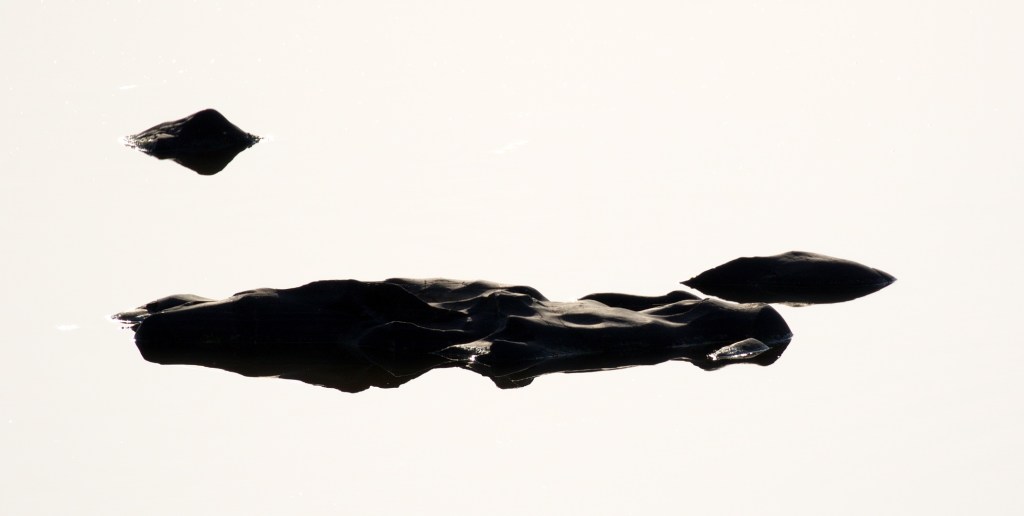
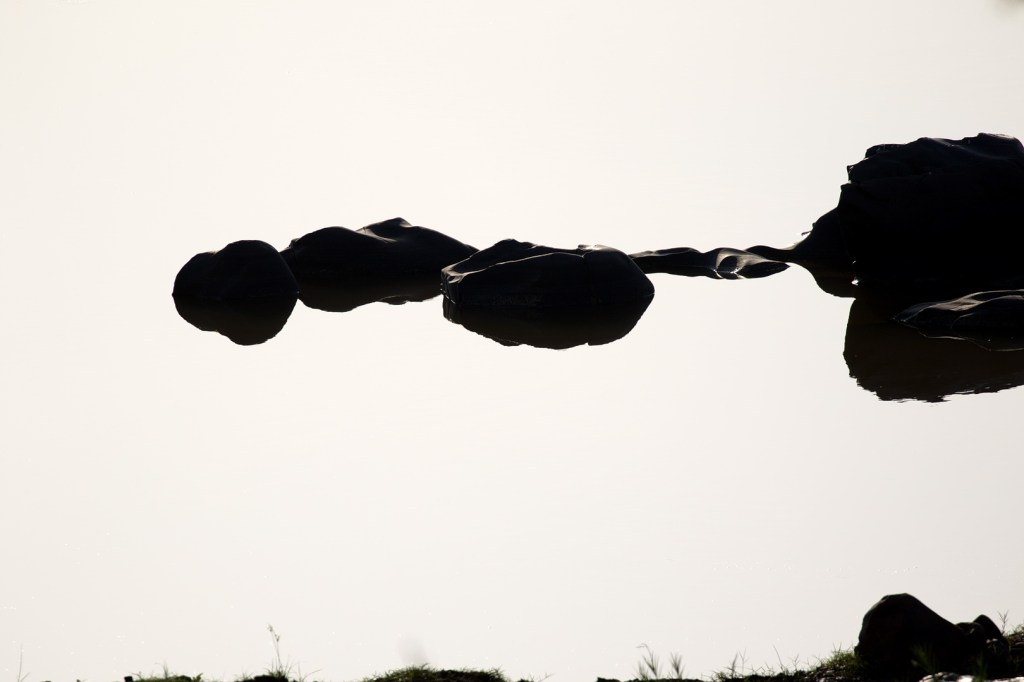
An unusual sight looking over the river on a cool overcast and mistyish morning – looking at some rocks in the river. The photos are as we saw them.
From Balule we went as far afield as the Sweni Hide next to the N’wanetsi picnic site. We went in hope that it was open after being disappointed when we were staying in Satara. We were not disappointed and although there were not many birds we watched young elephants having fun in the water.
Here are some photos of the lovely birds and beasts that we saw while at Balule – some in the camp like the Blue Waxbill.
African Fish-Eagle
African Fish-Eagle
African Fish-Eagle overseeing Yellow-billed Stork and various Sandpipers
Black Crake
Black-backed Jackal
Black-backed Puffback
Black-backed Puffbacks
Blue Waxbill
Blue Waxbill
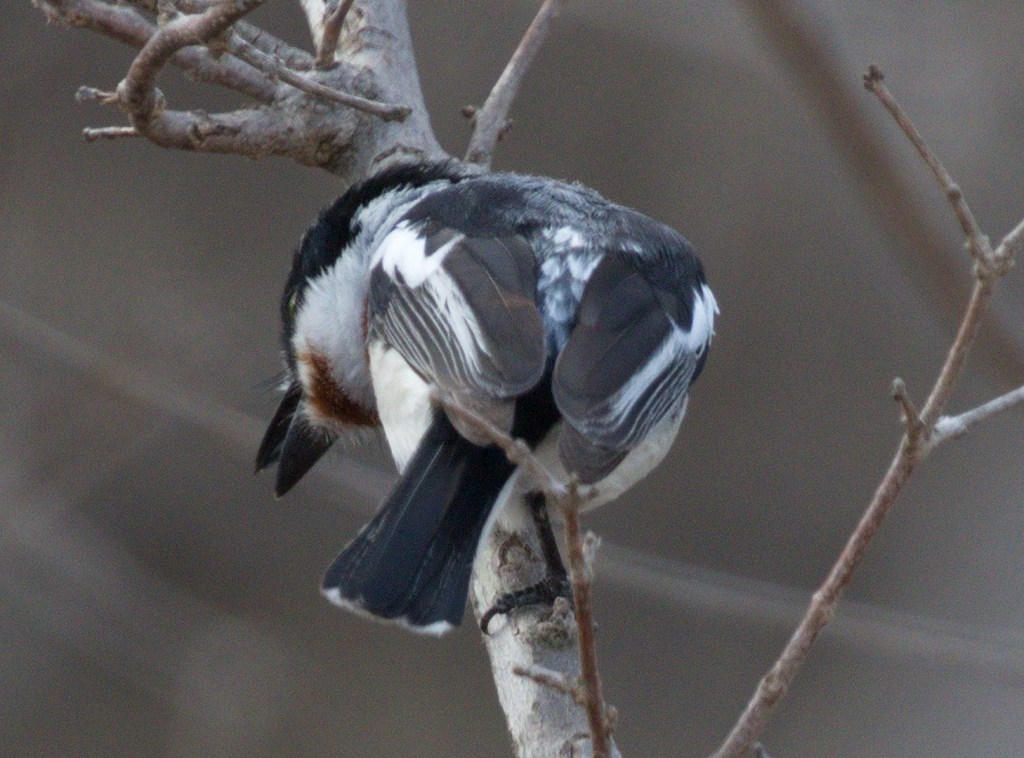
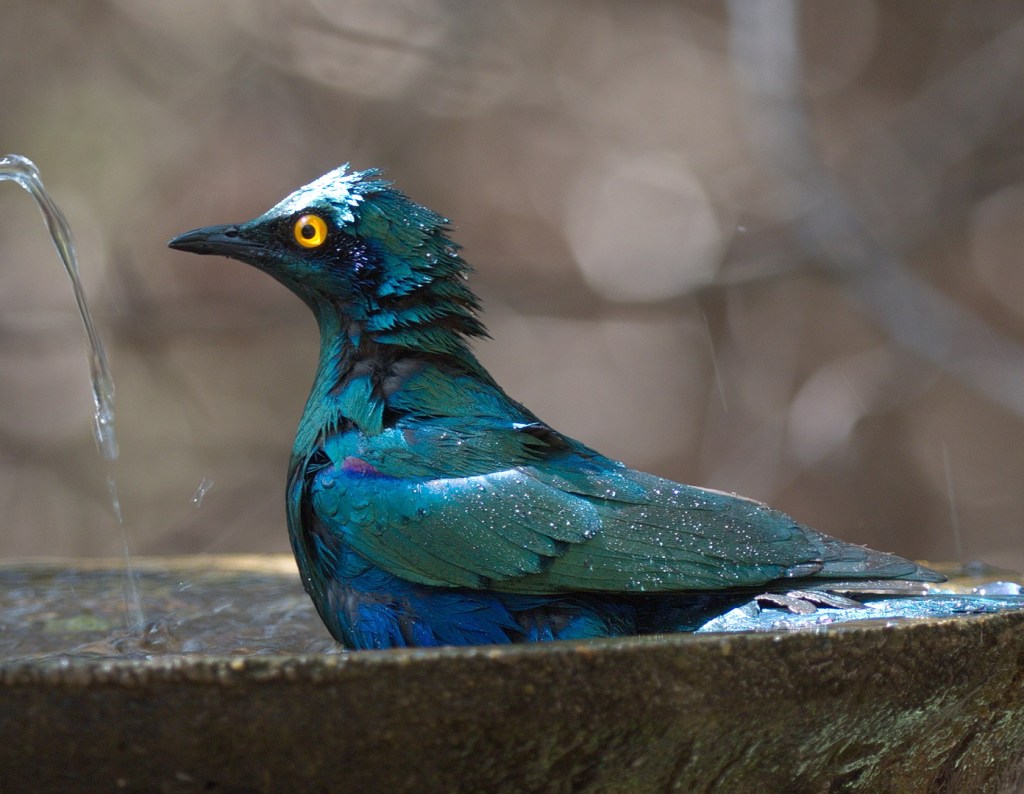
Burchell’s Starling
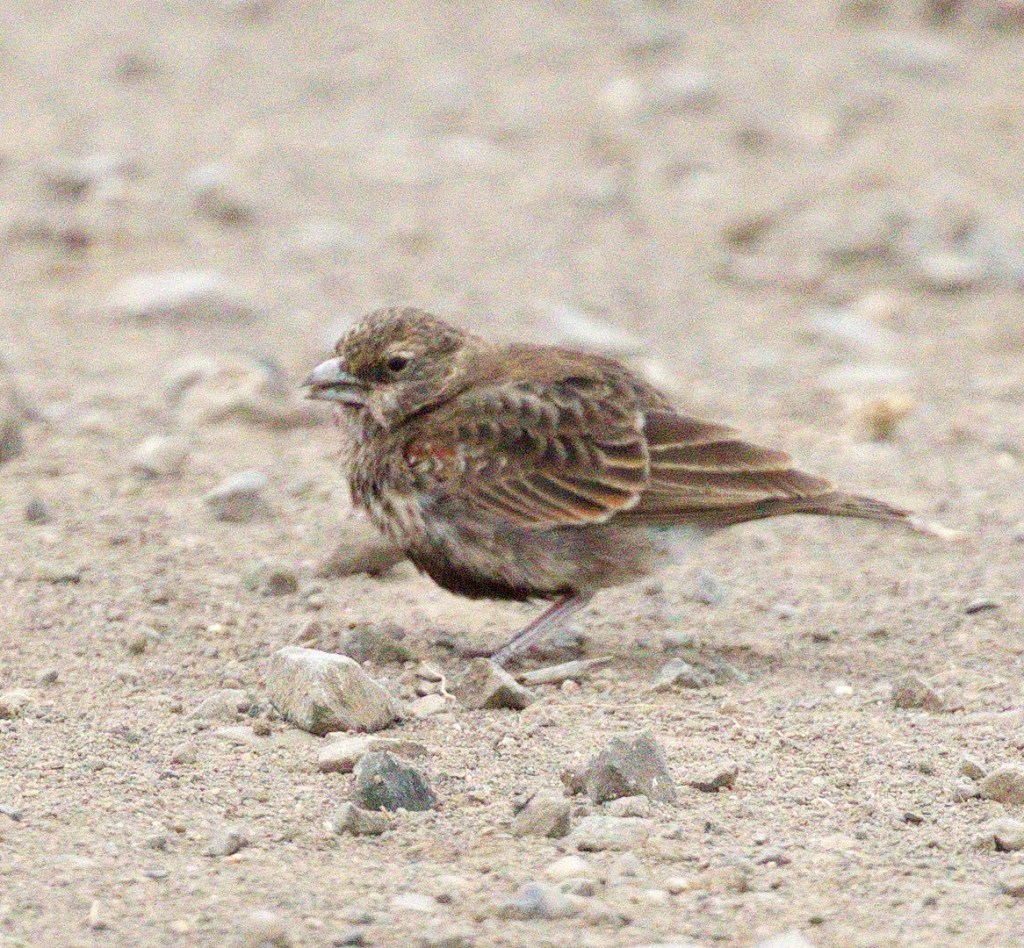
Chestnut-backed Sparrow-Lark
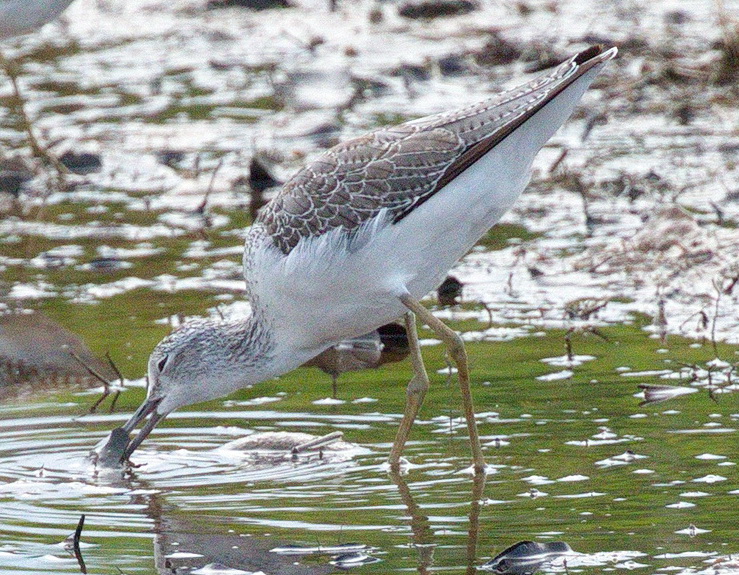
Common Greenshank
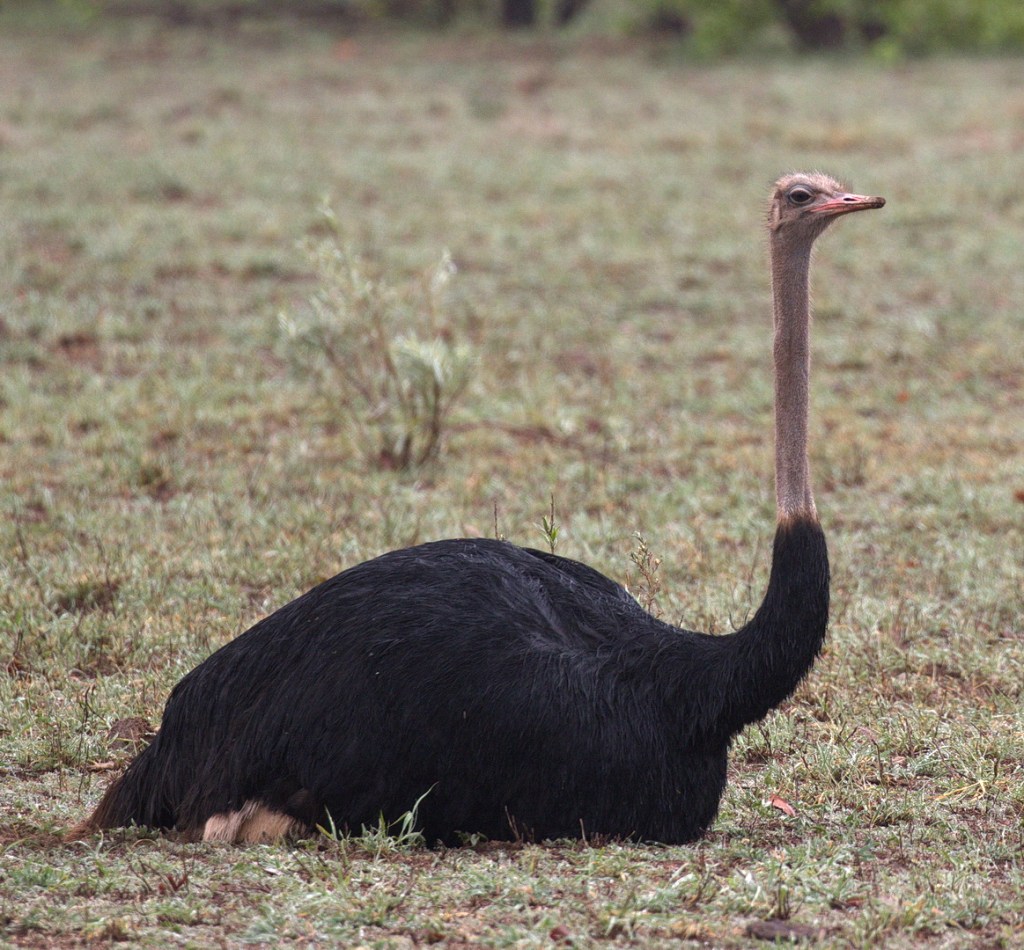
Common Ostrich
Common Ostrich
Common Ostrich
Common Sandpiper
Common Sandpiper
Common Scmitarbill
African Fish-Eagle
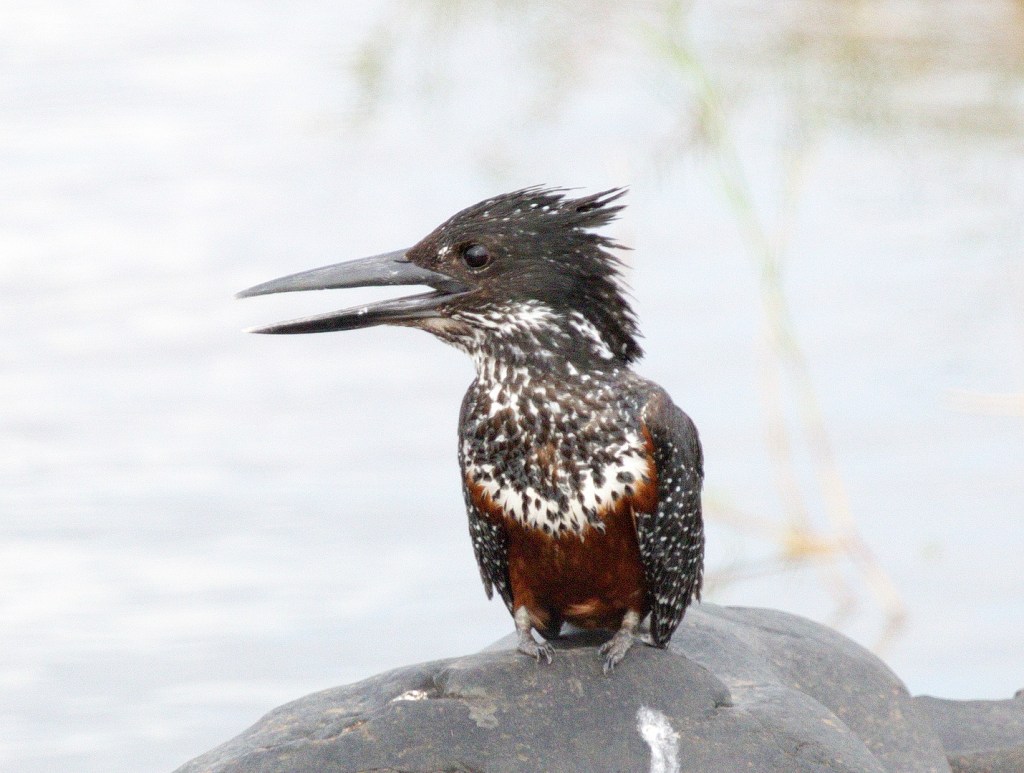
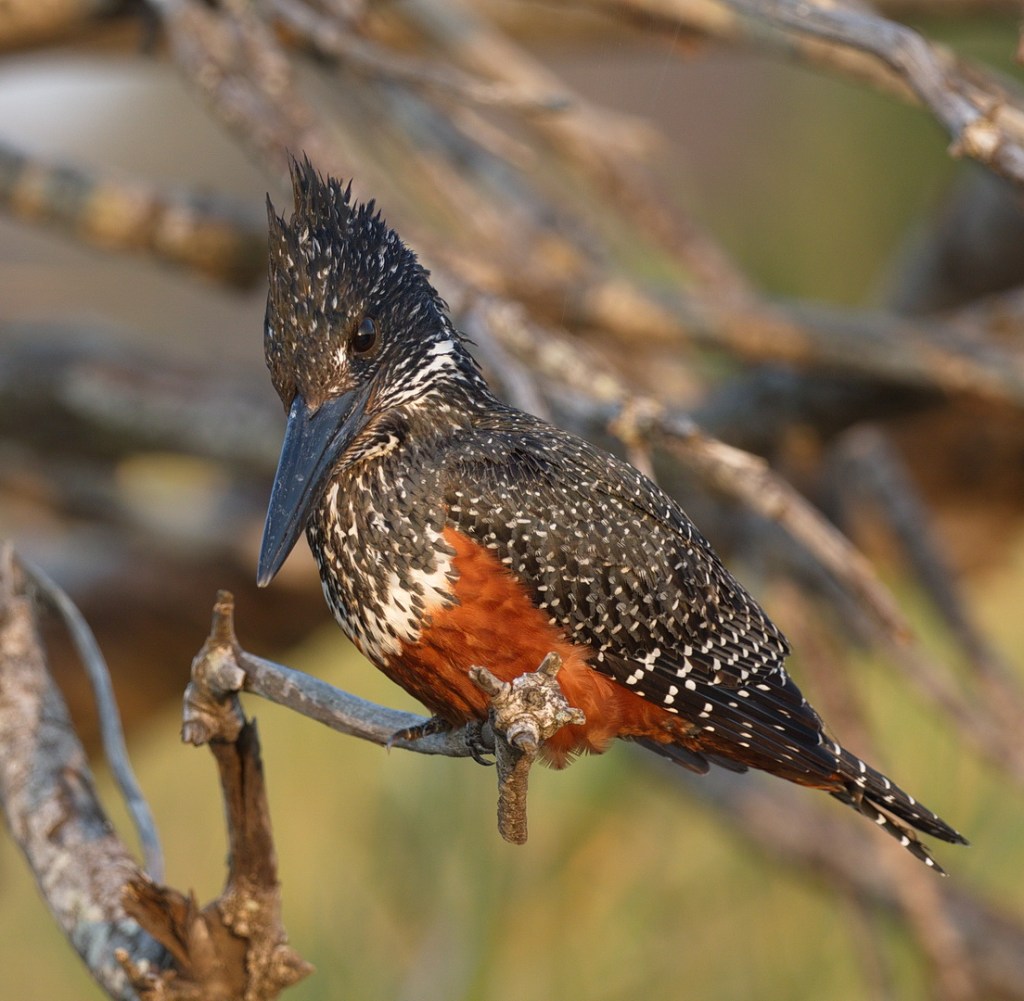
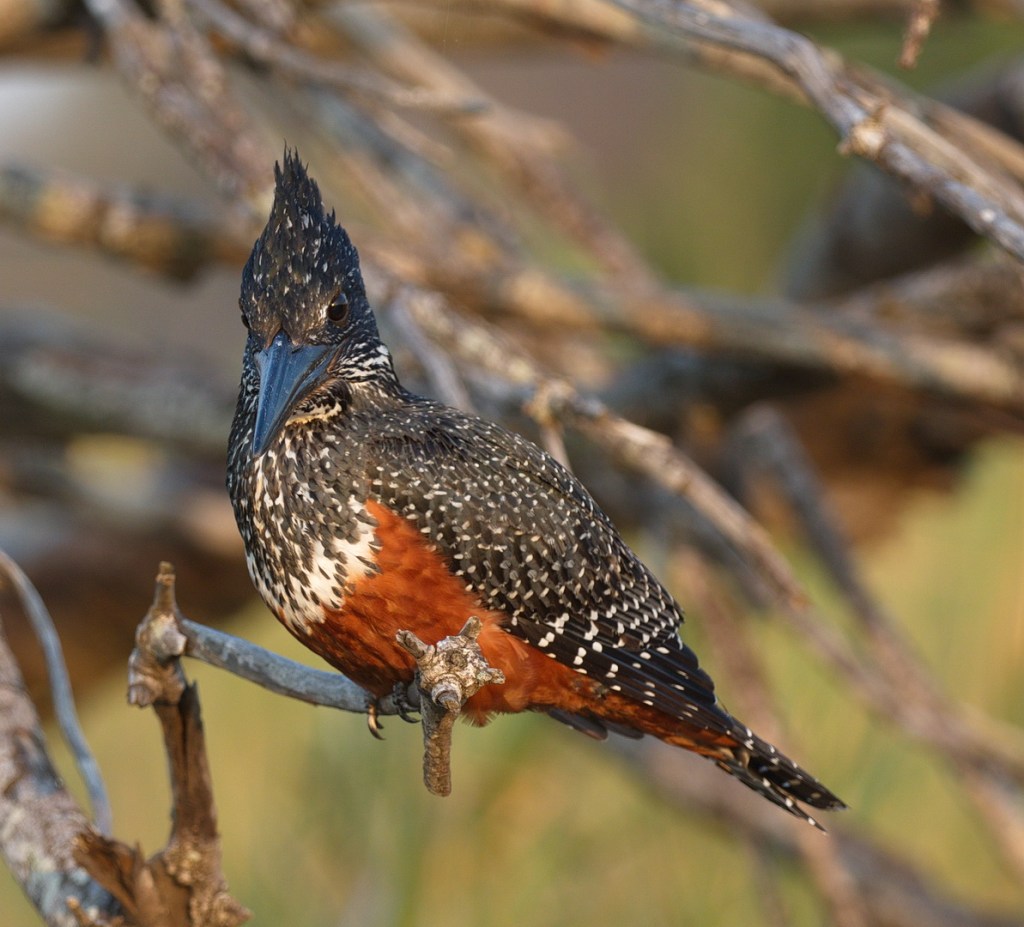
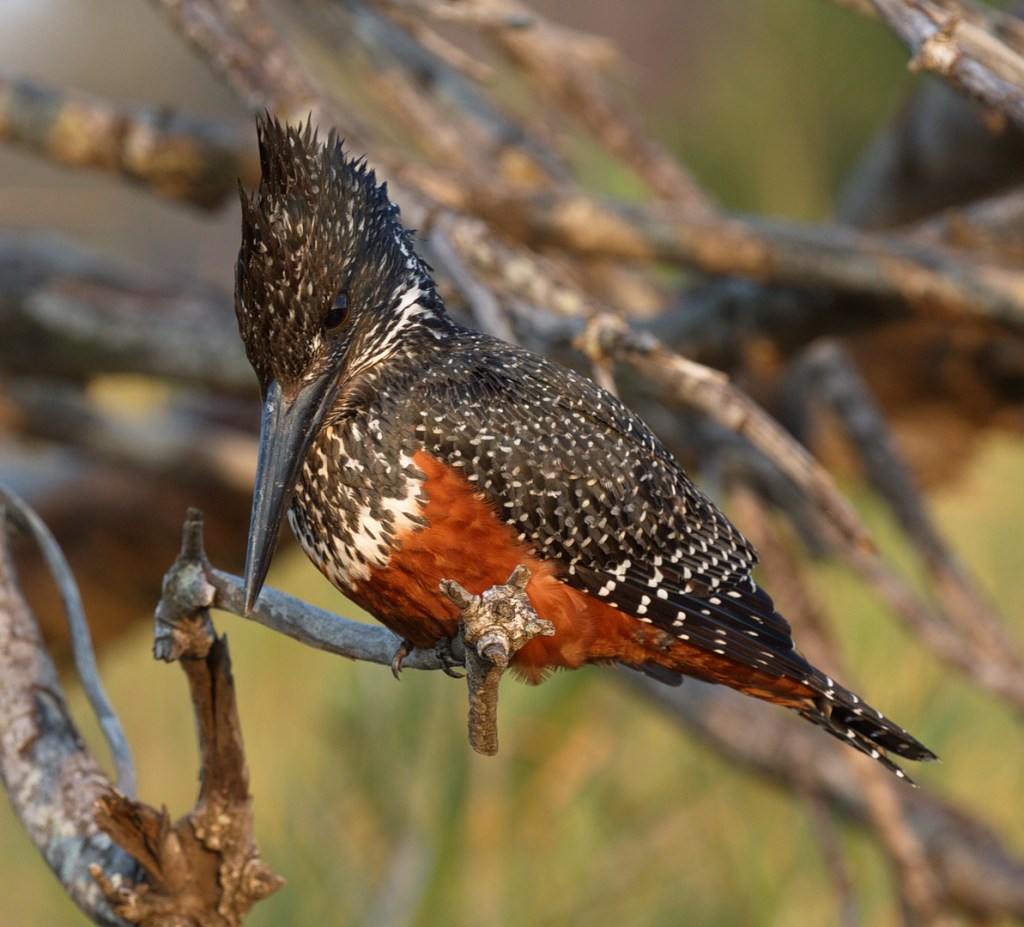
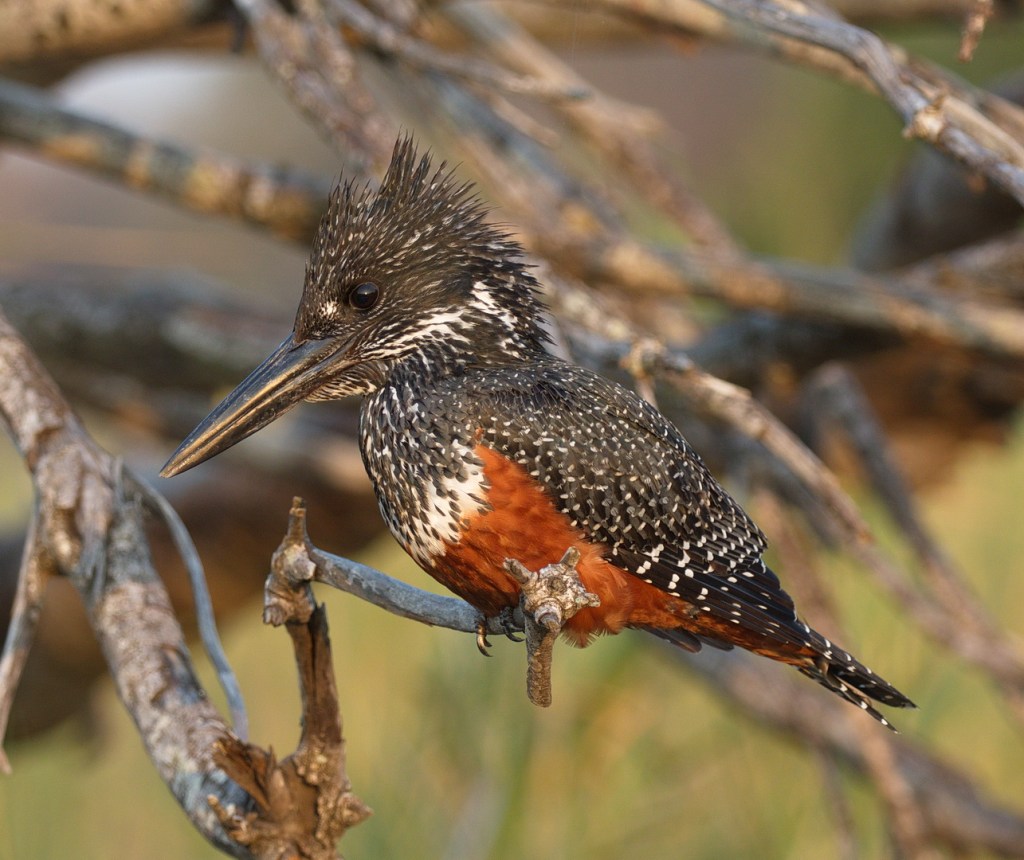
Giant Kingfisher
Giant Kingfisher female
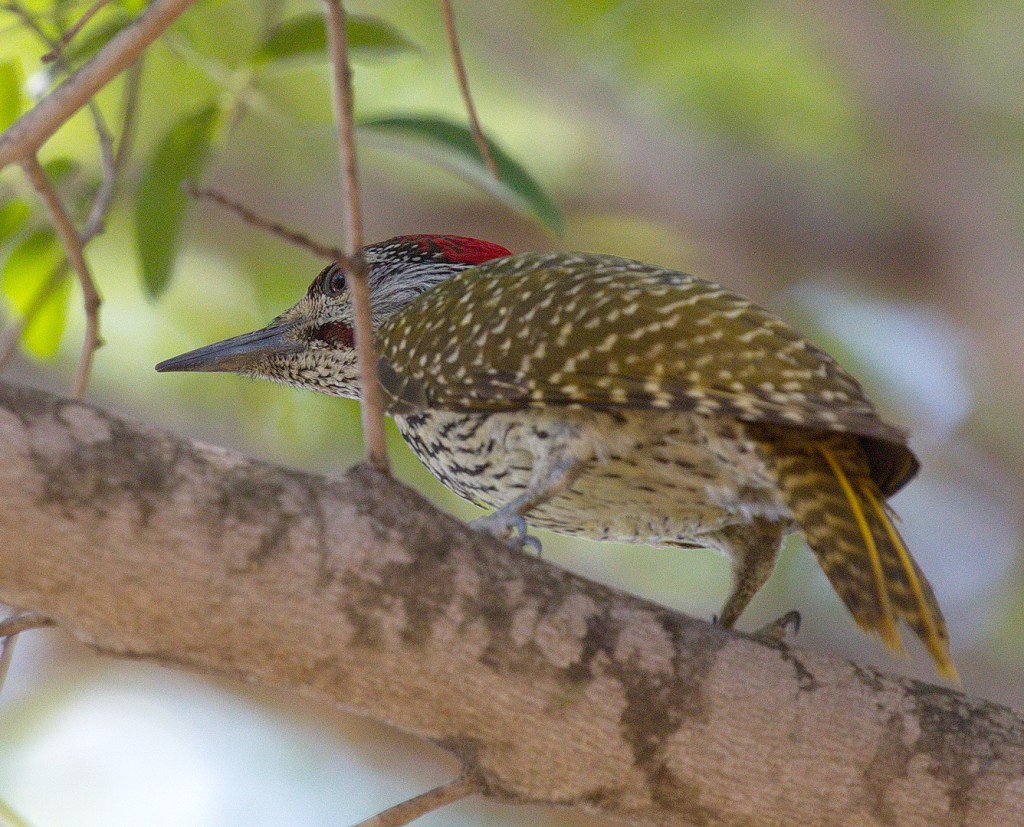
Golden-tailed Woodpecker
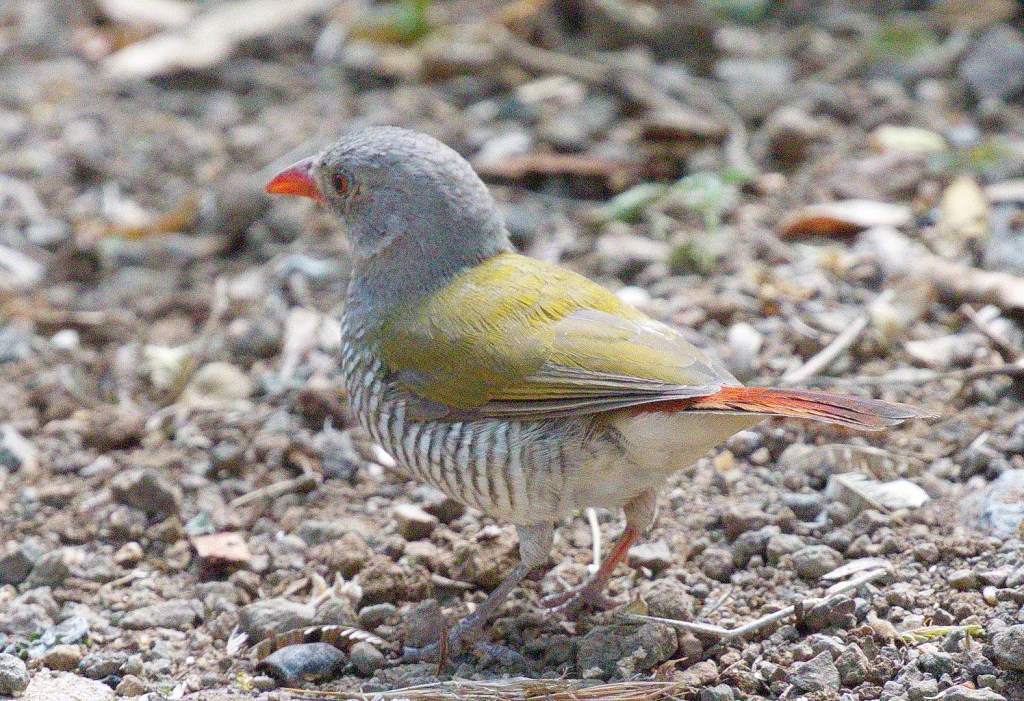
Green-winged Pytilia
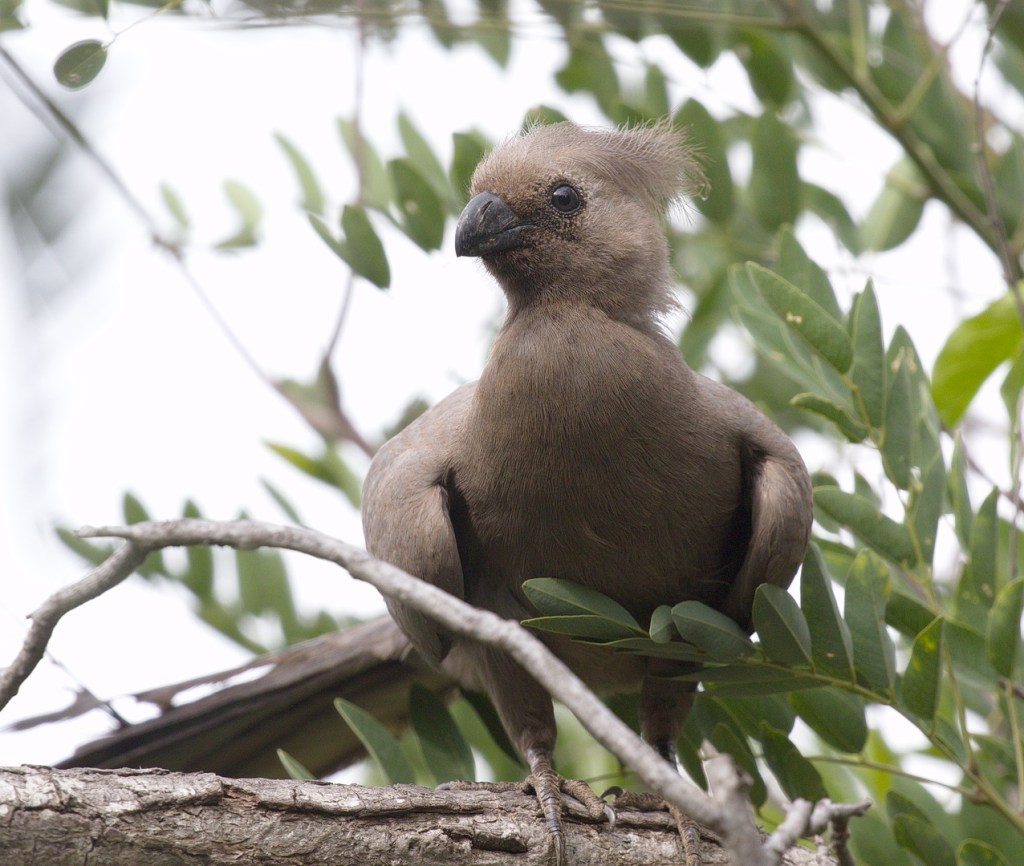
Speckled Mousebird
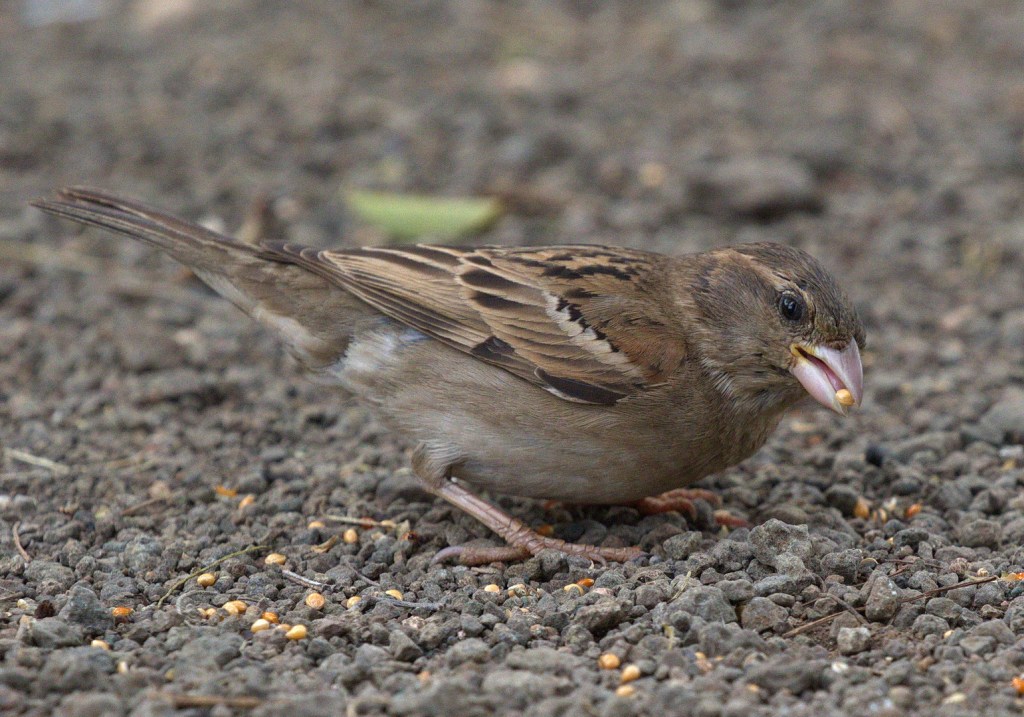
House Sparrow
Buffalo herd
Sweni Hide Elephants playing
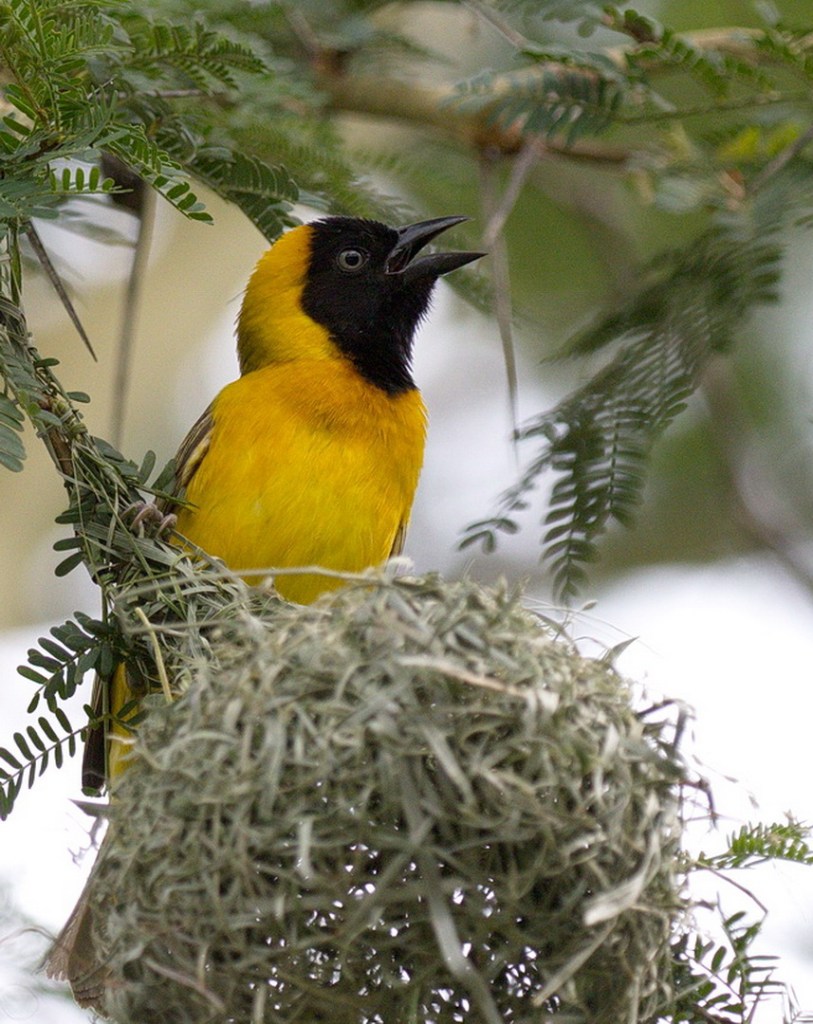
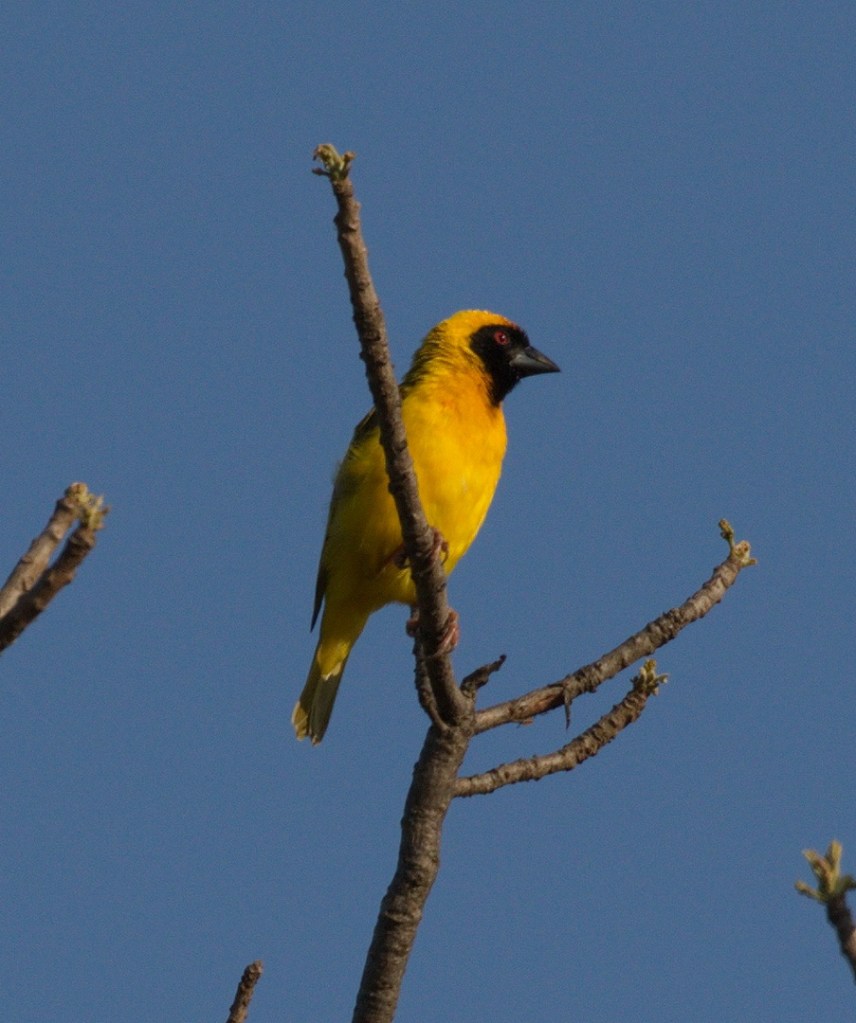
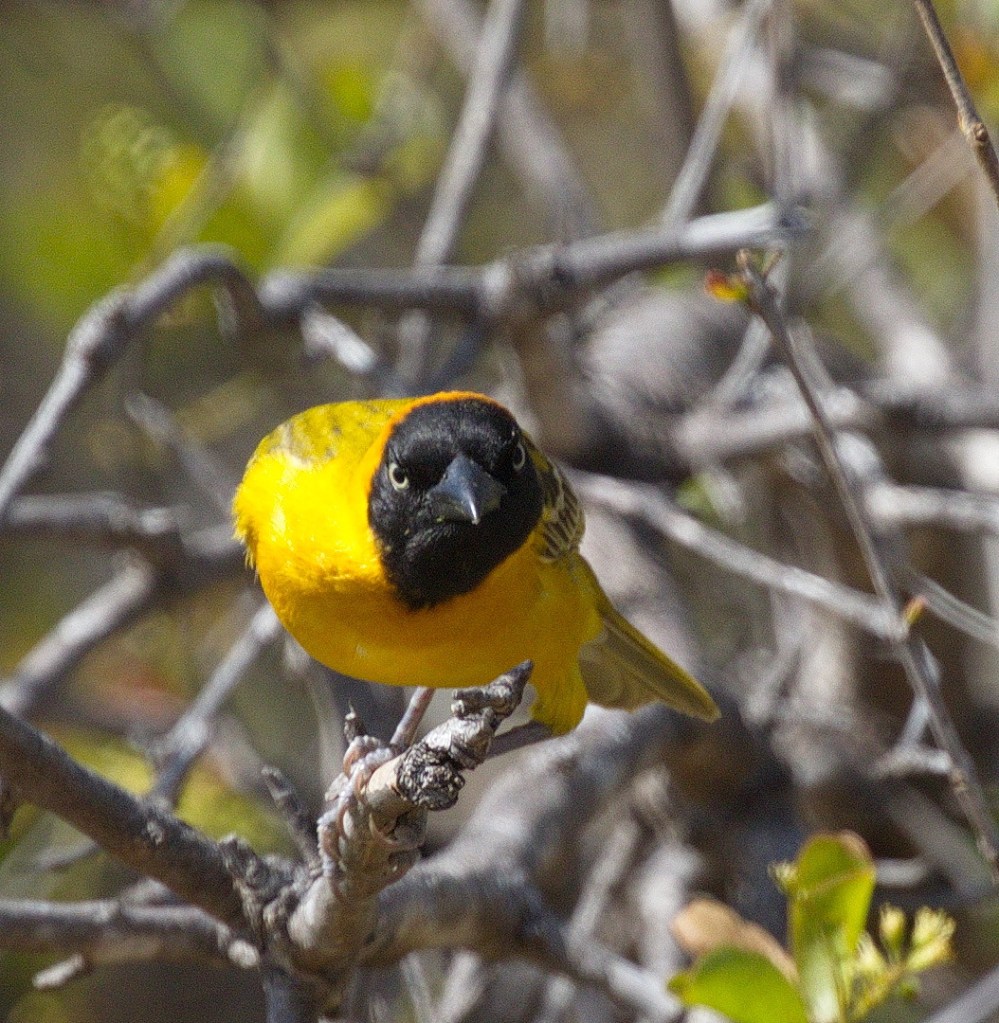
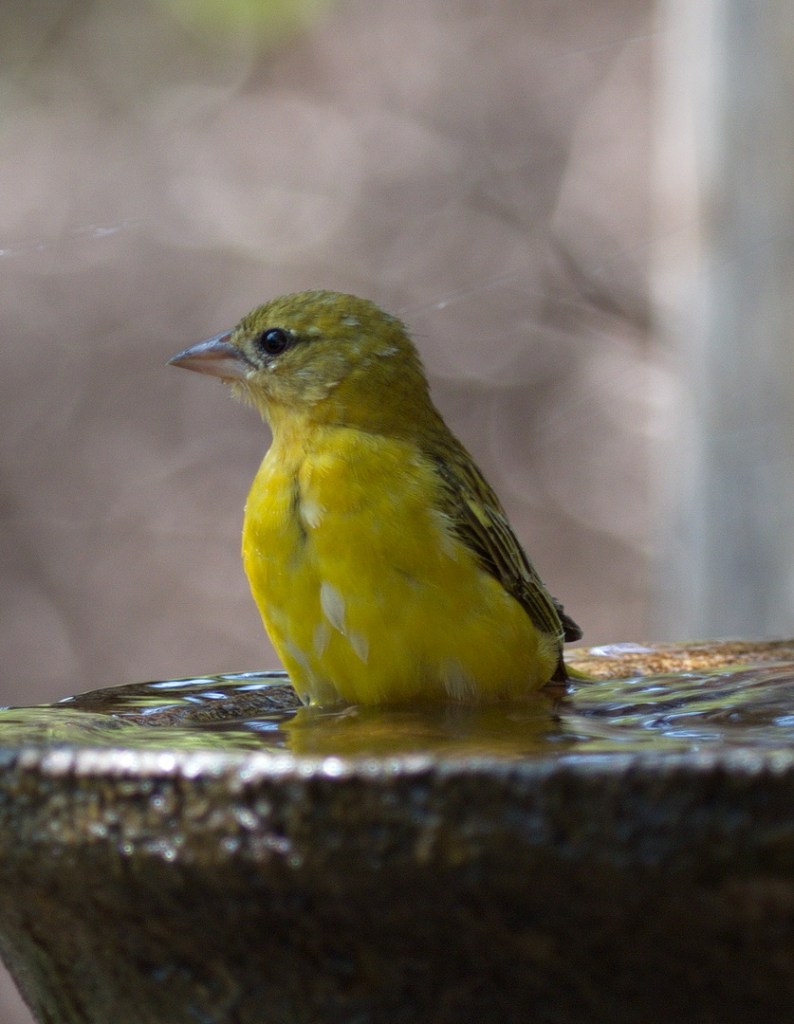
Lesser Masked Weaver with the biggest mask
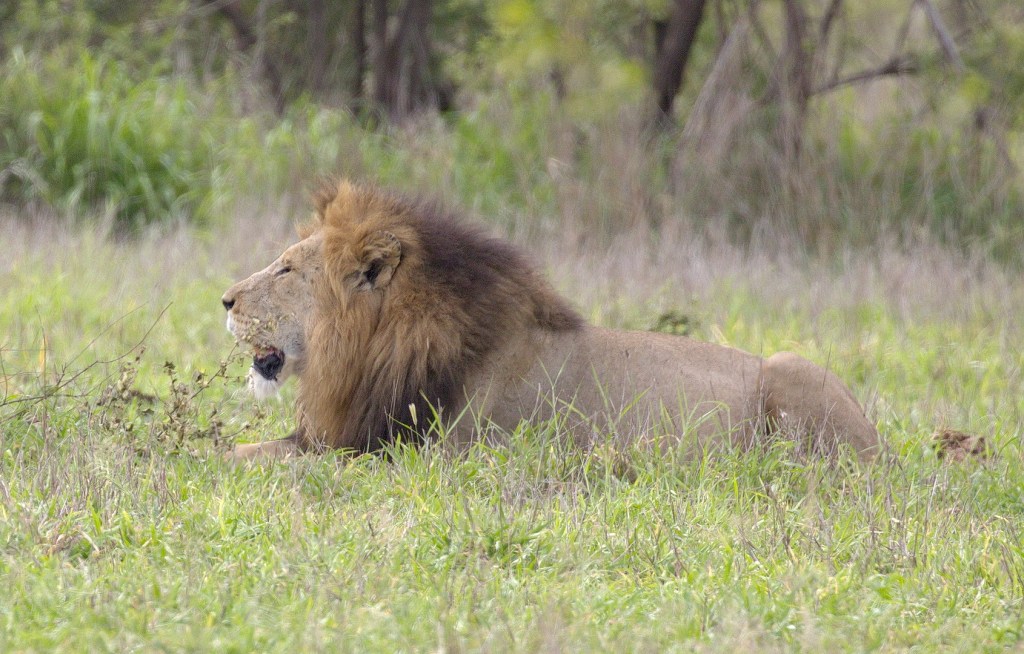
Lion
Lion
Little Bee-eater
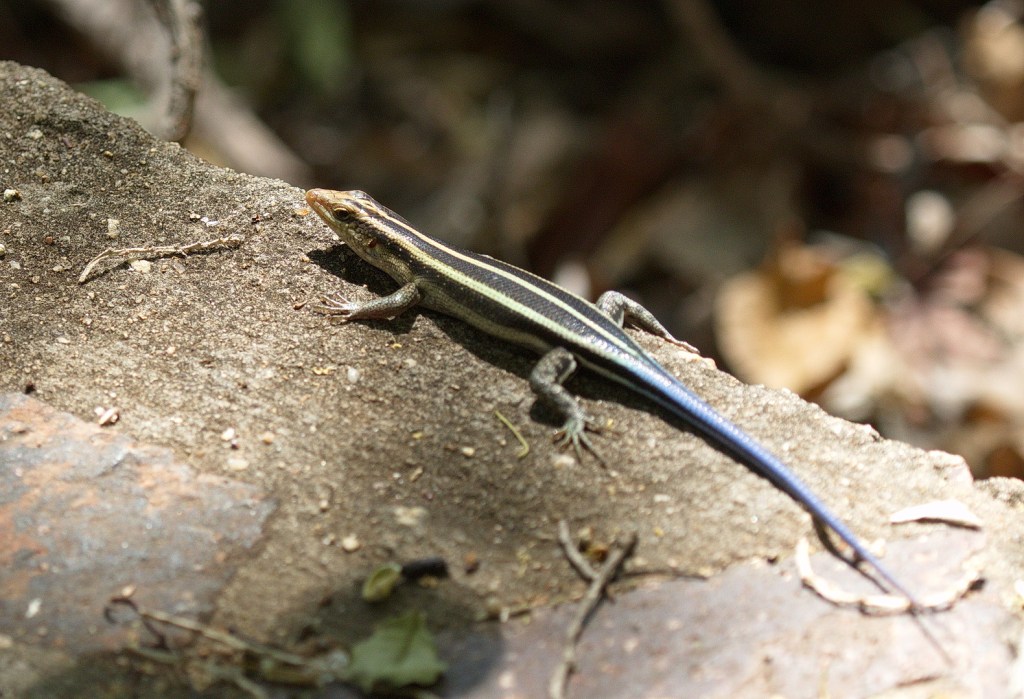
Blue-tailed Lizard
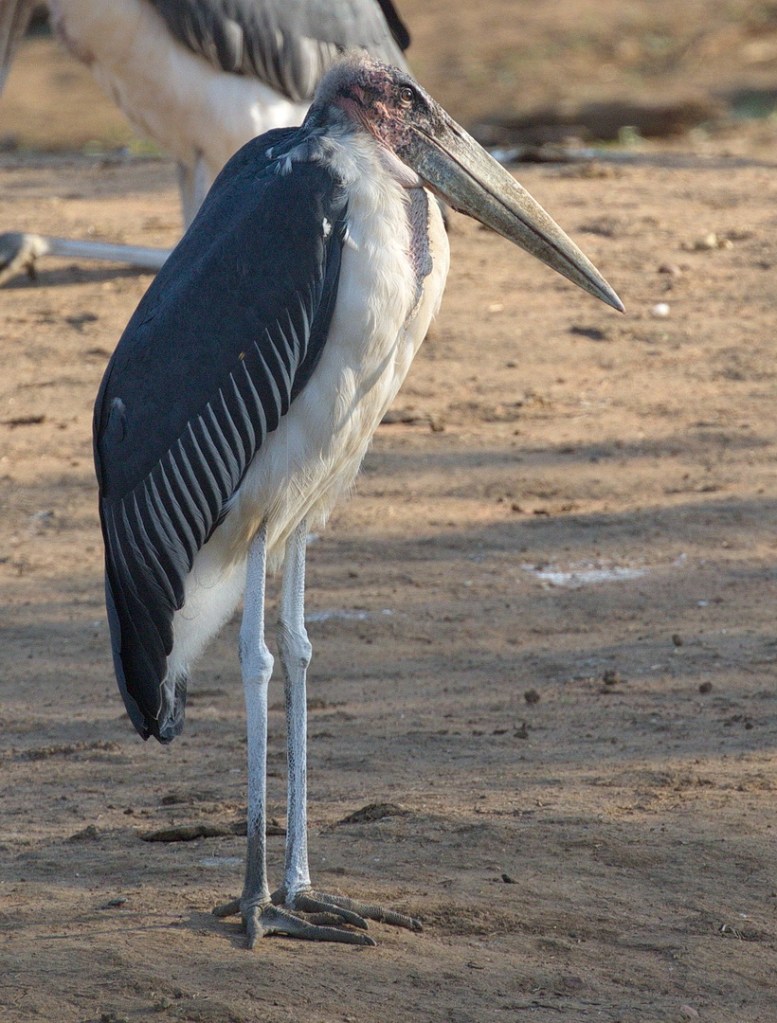
Marabou Stork
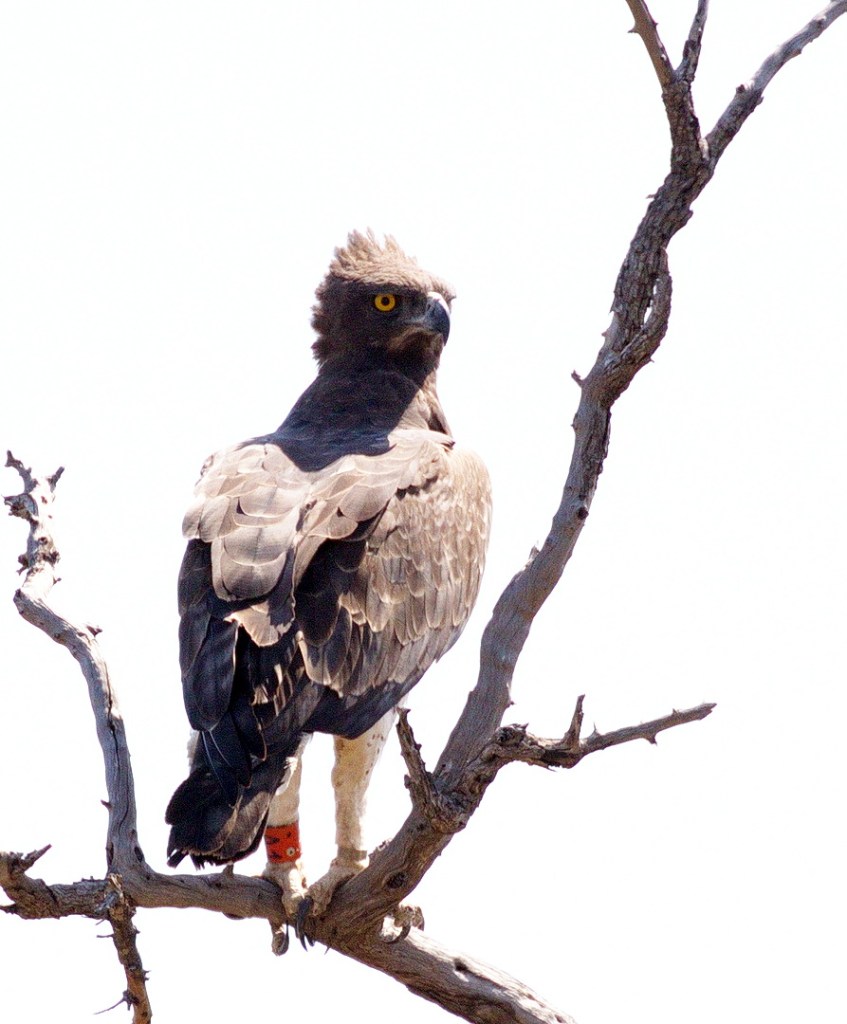
Martial Eagle juvenile
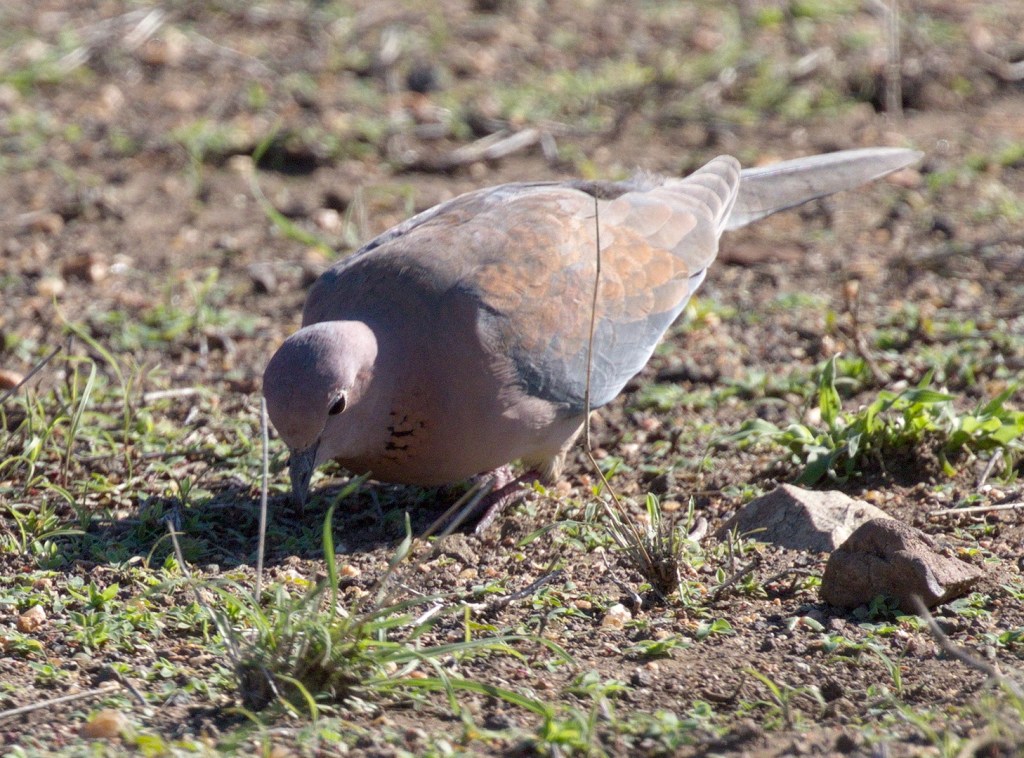
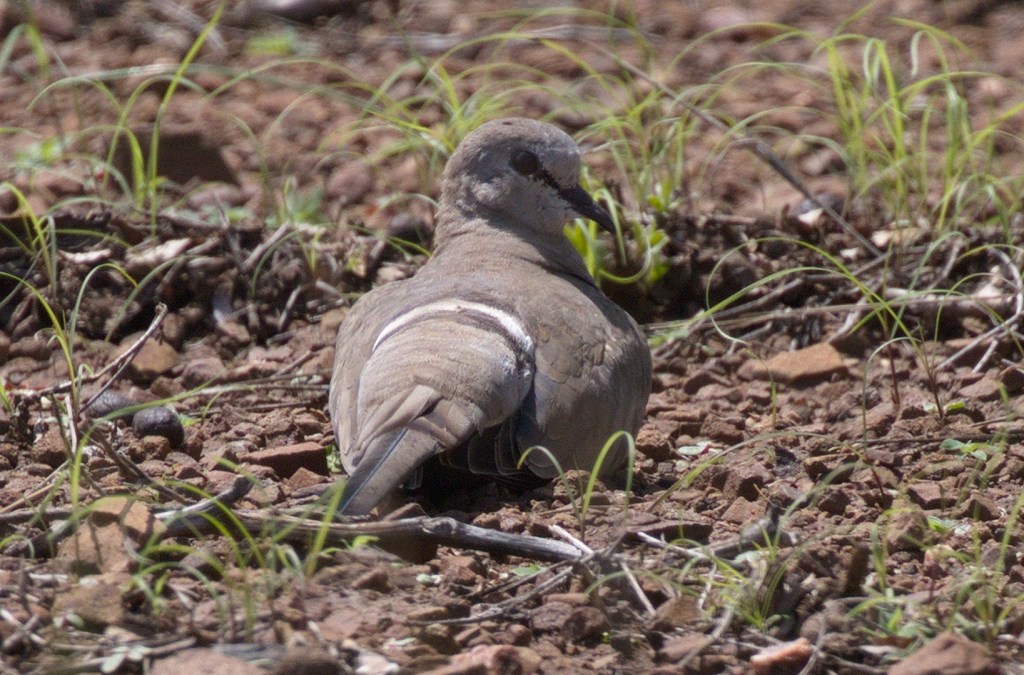
Namaqua Dove
Namaqua Dove
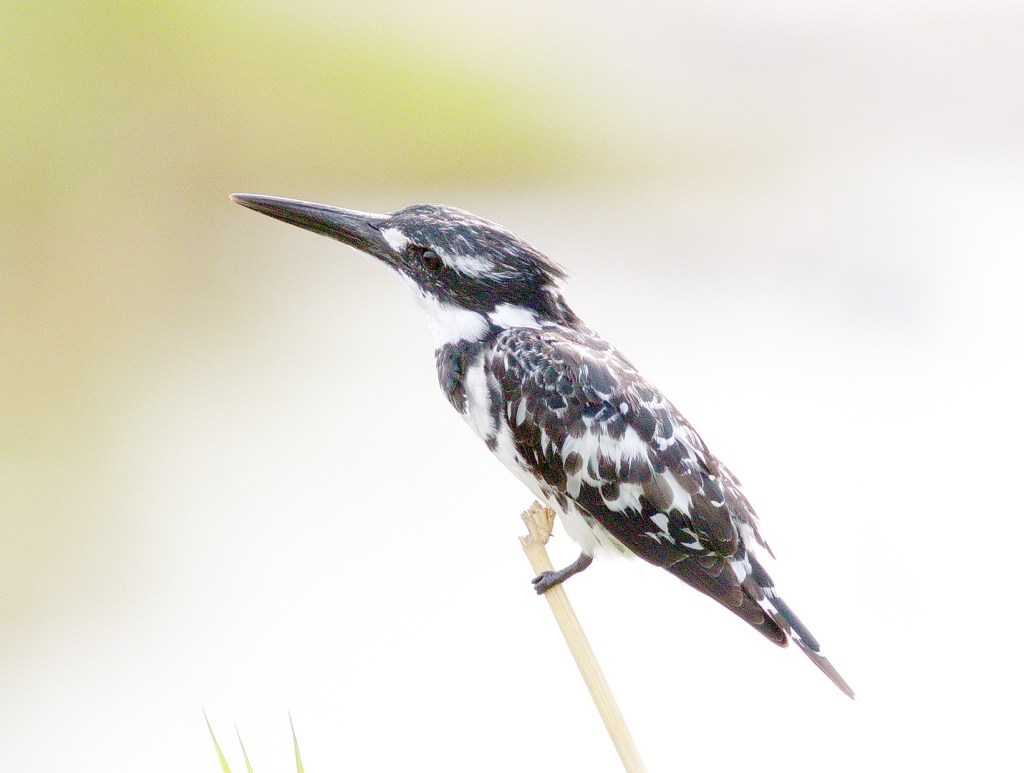
Pied Kingfisher
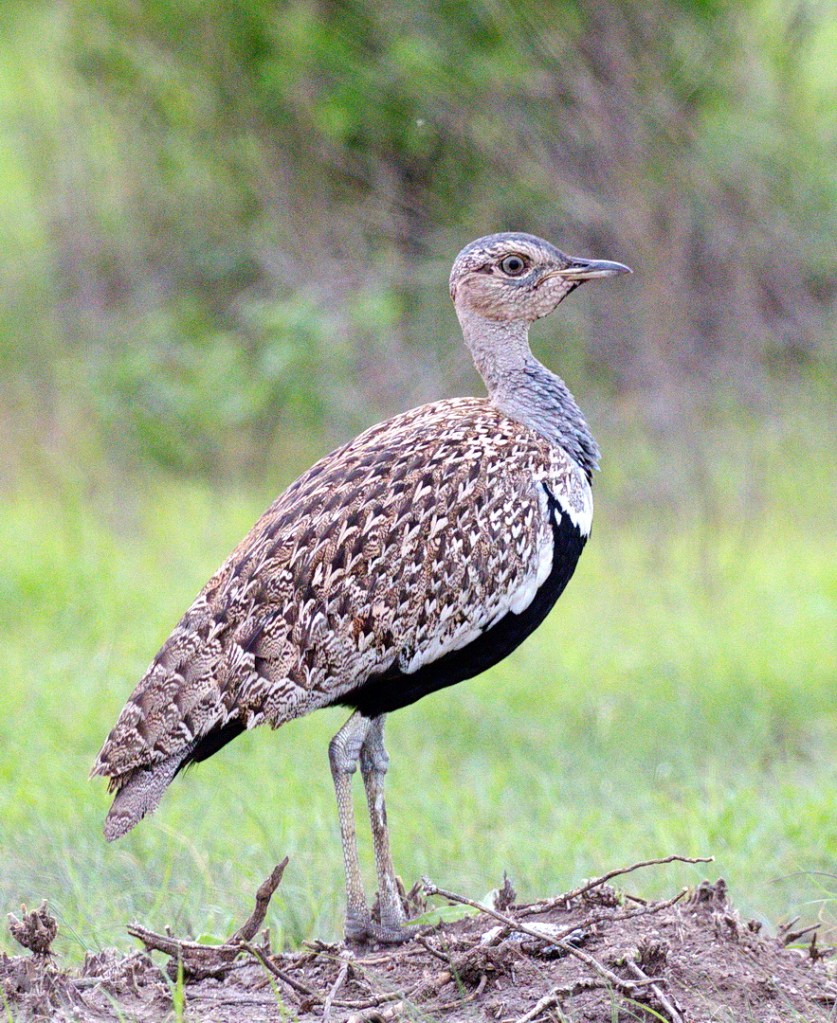
Red-crested Korhaan
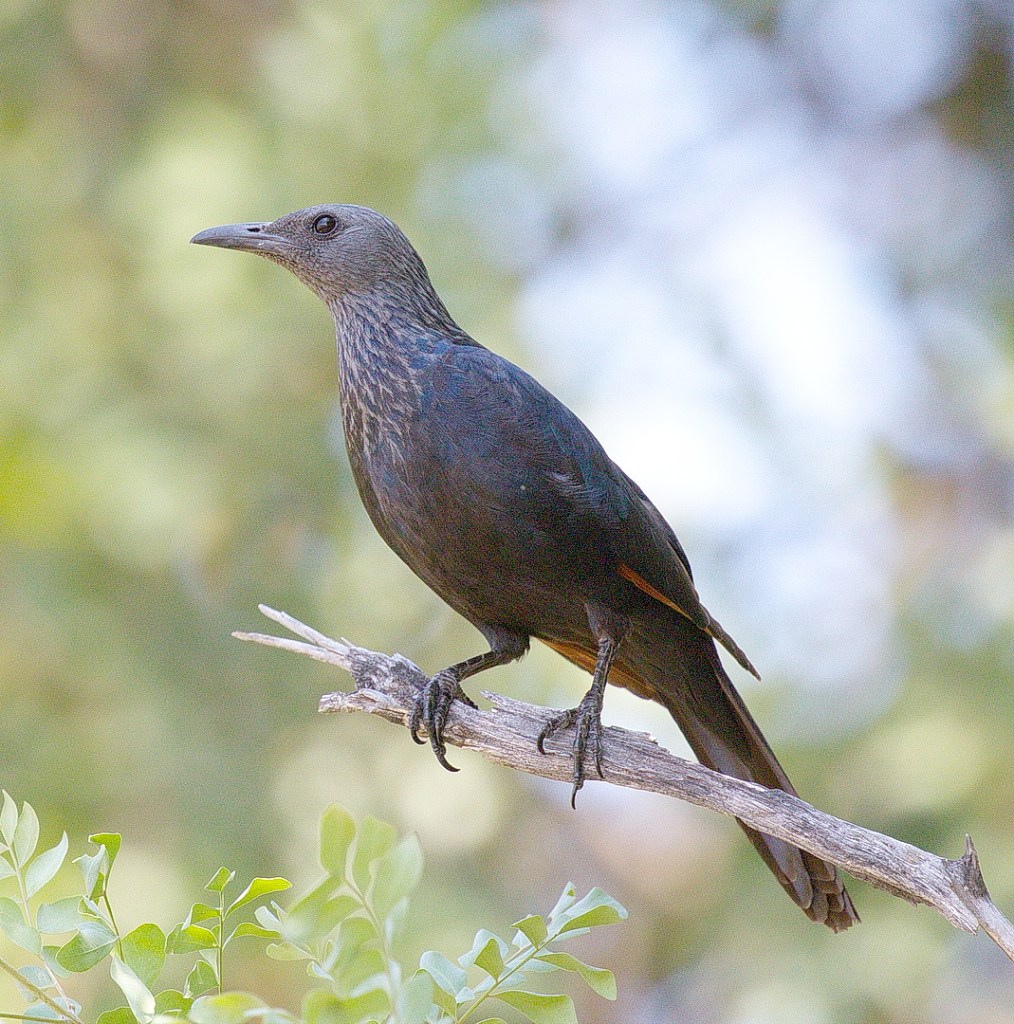
Red-winged Starling female
Sabota lark
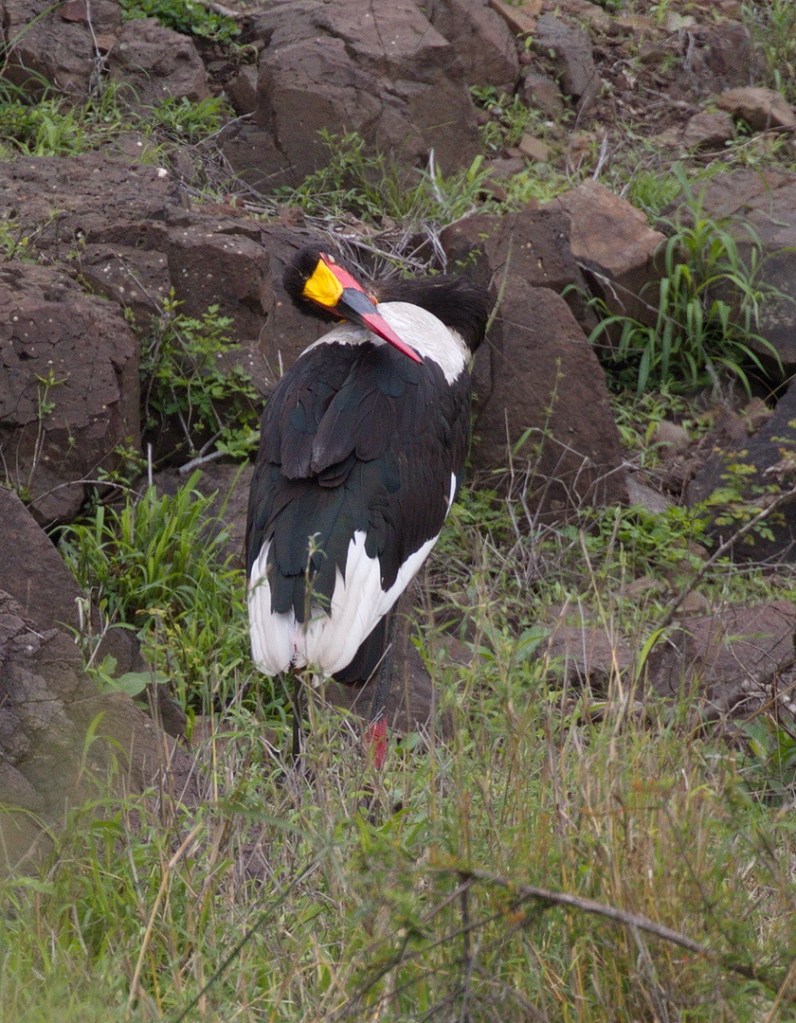
Saddle-billed Stork
Three-banded Plover and chick
Three-banded Plover and chick
Secretarybird
Wire-tailed Swallow
Wire-tailed Swallow
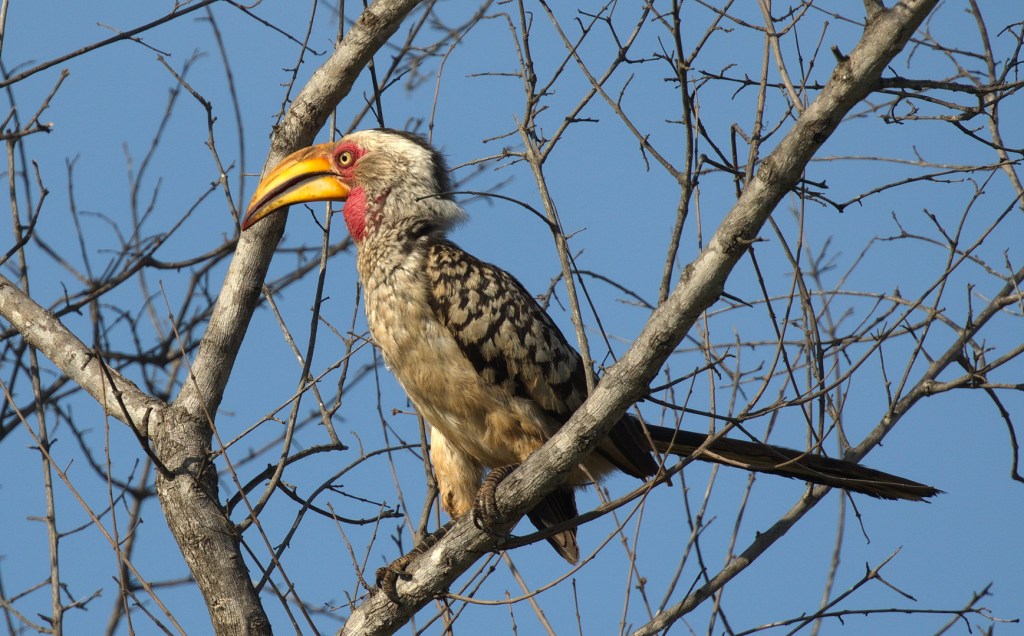
Yellow-billed Hornbill
Yellow-billed Hornbill
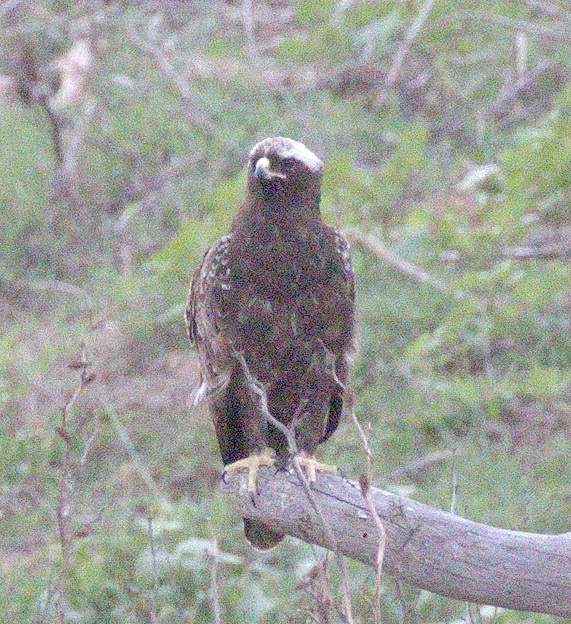
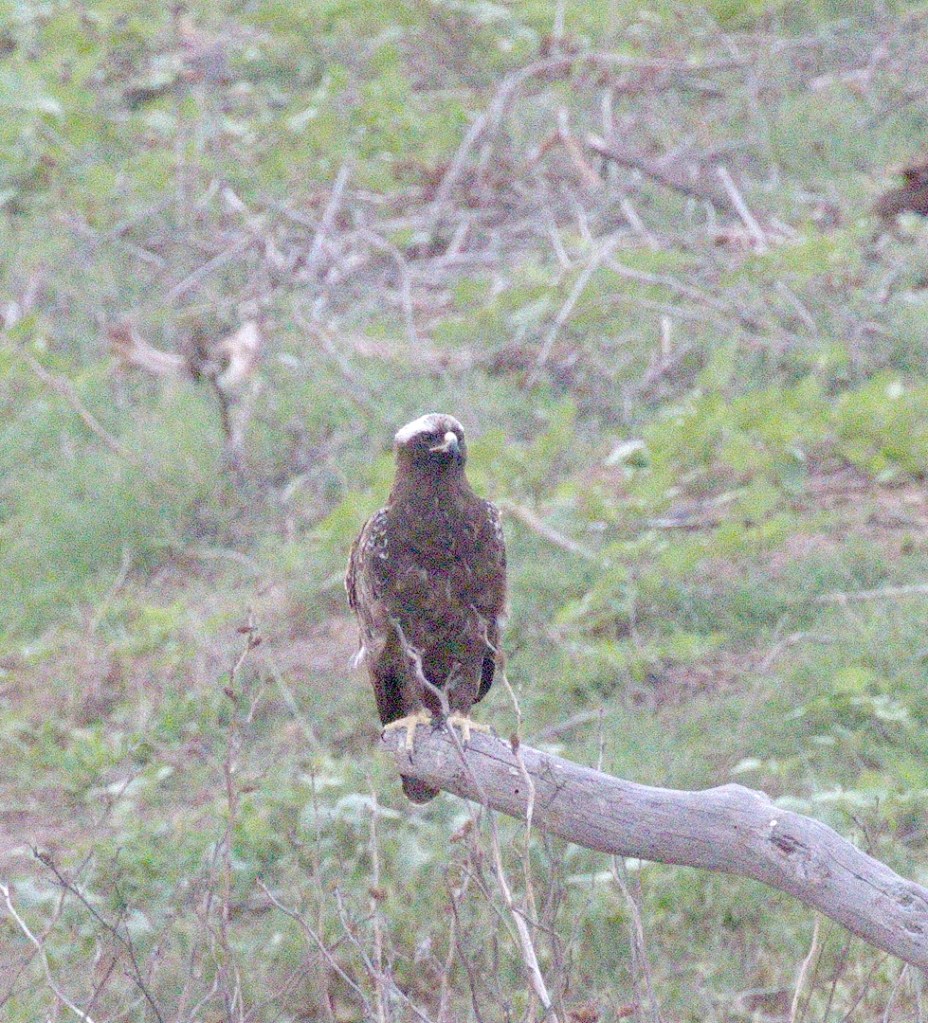
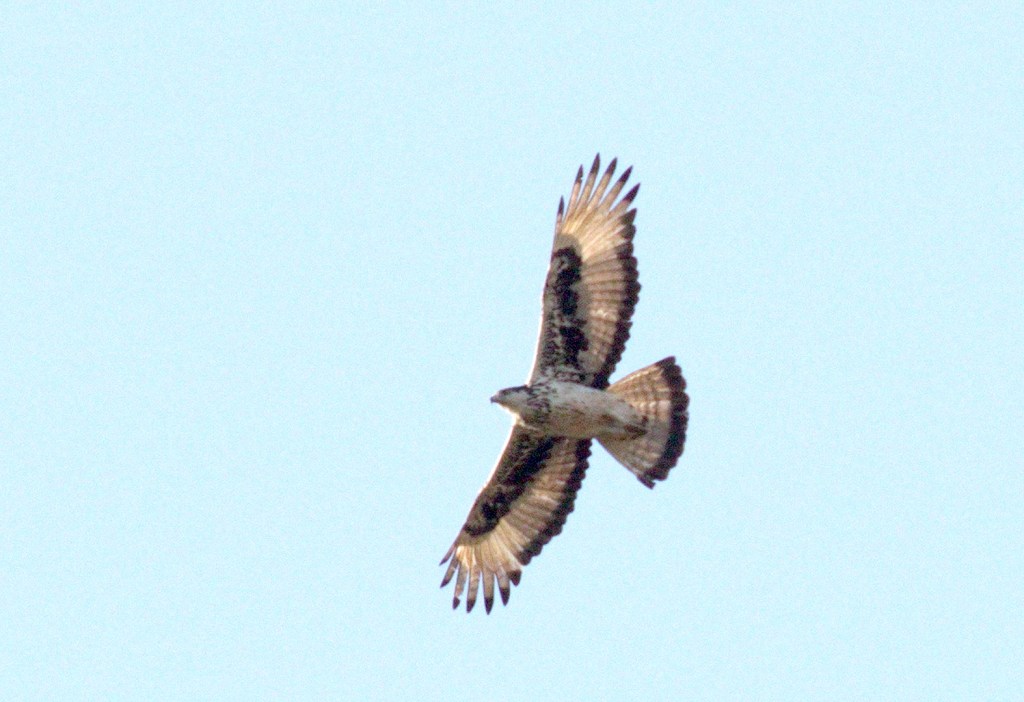
There was one confusing Raptor which we saw late one evening. We believe it to be a Lesser Spotted Eagle. See what you think.
Lesser Spotted Eagle
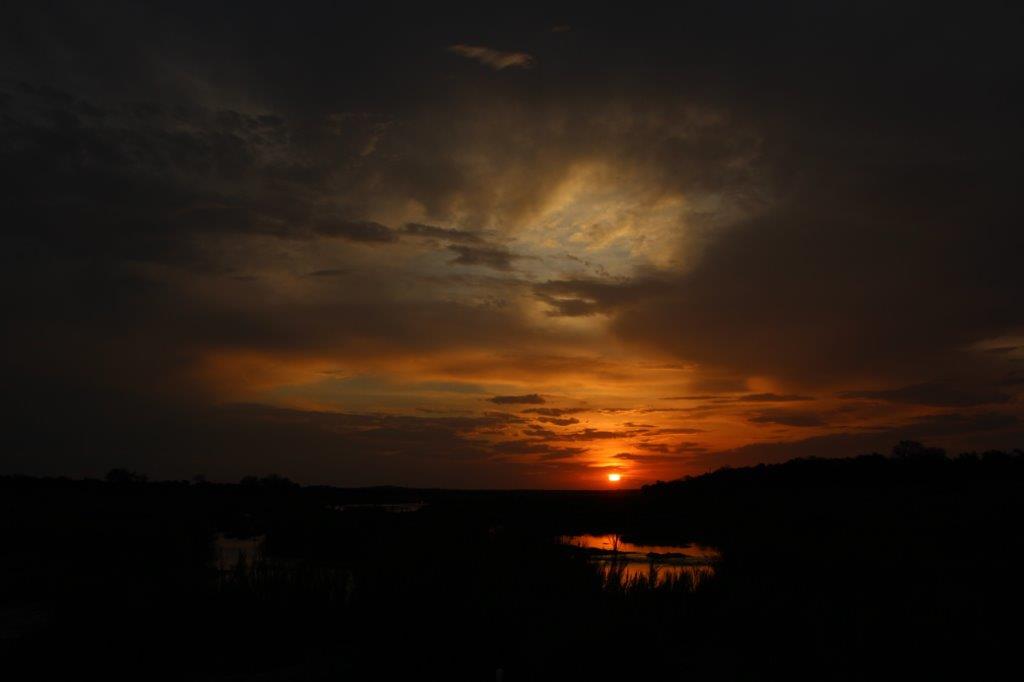
At night we were treated to some glorious sunsets.
Packing up to leave was hell. Despite the early hour there was not a breath of wind and the humidity was high. By the time we had finished I had a heat rash all round the back of my neck which took weeks to heal.
Then we were on our way heading South to Lower Sabie for the remainder of our stay in the Kruger NP. That will be Part 9 and the final part of our trip to the Kruger NP.
To see our bird list for Balule then click on the link below.
Pafuri is a long drive from Punda Maria making it difficult to reach the area early in the morning. As we had previously stayed at Pafuri River Lodge just outside of the Pafuri Gate so we attempted to stay there again but had no response. Eventually someone called us and told us that it had closed down but we could camp at – Nthakeni.
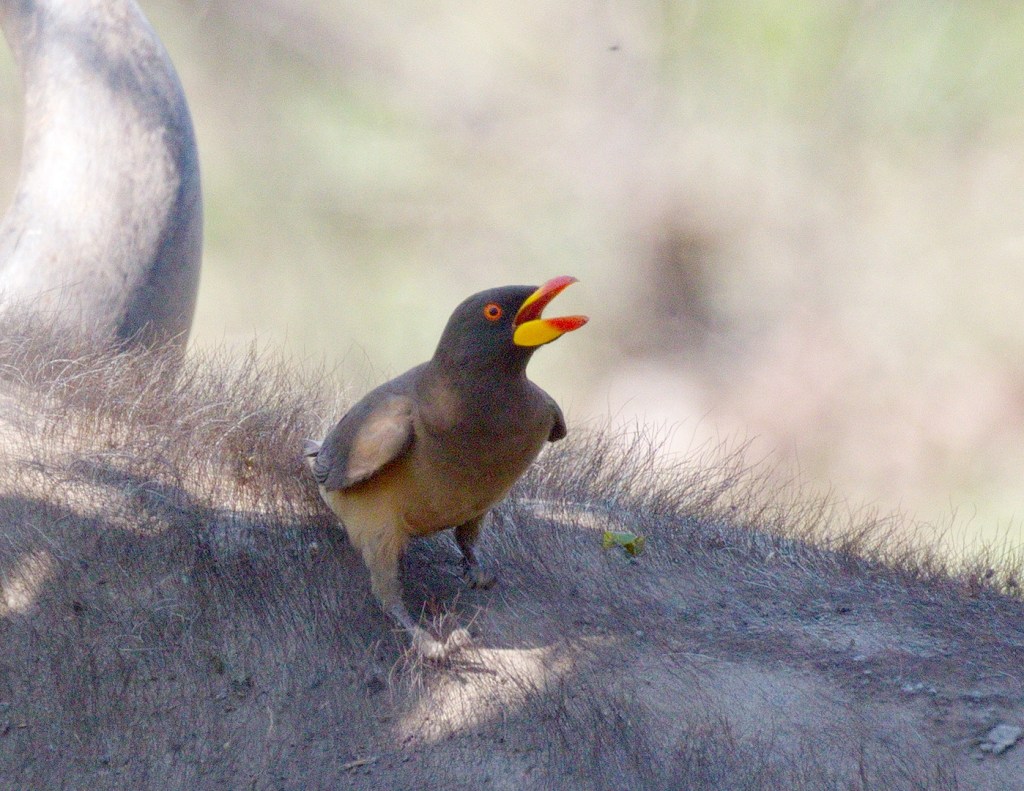
Leaving Punda Maria we headed north. Passing large herds of Buffalos and finding it difficult to spot Red-billed Oxpeckers. Yellow-billed Oxpeckers were everywhere that there were herds of Buffalos or Impala.
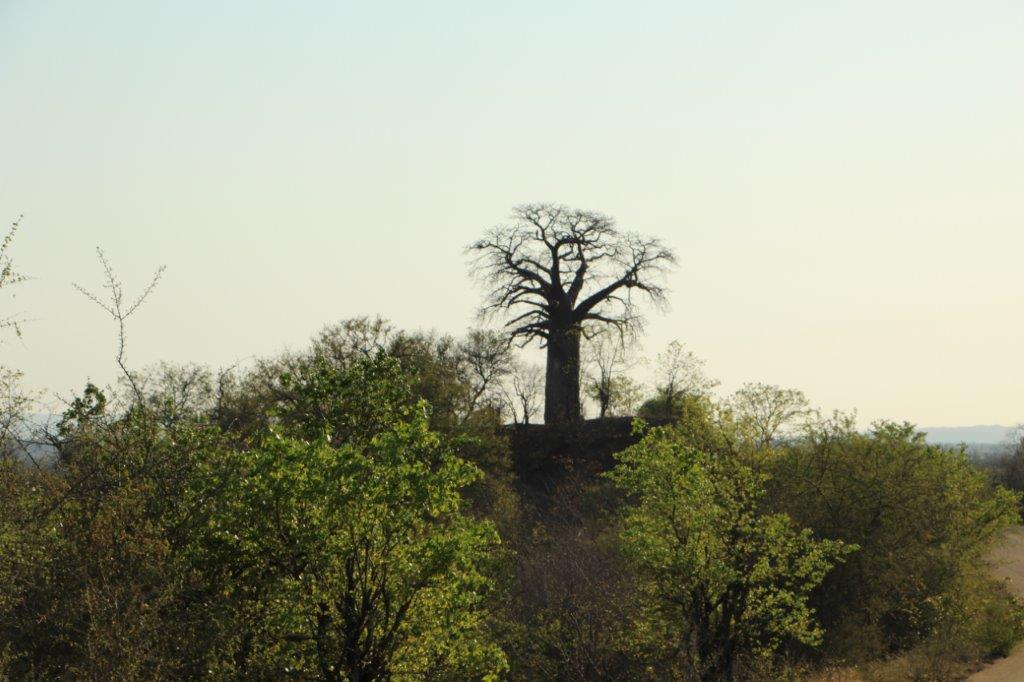
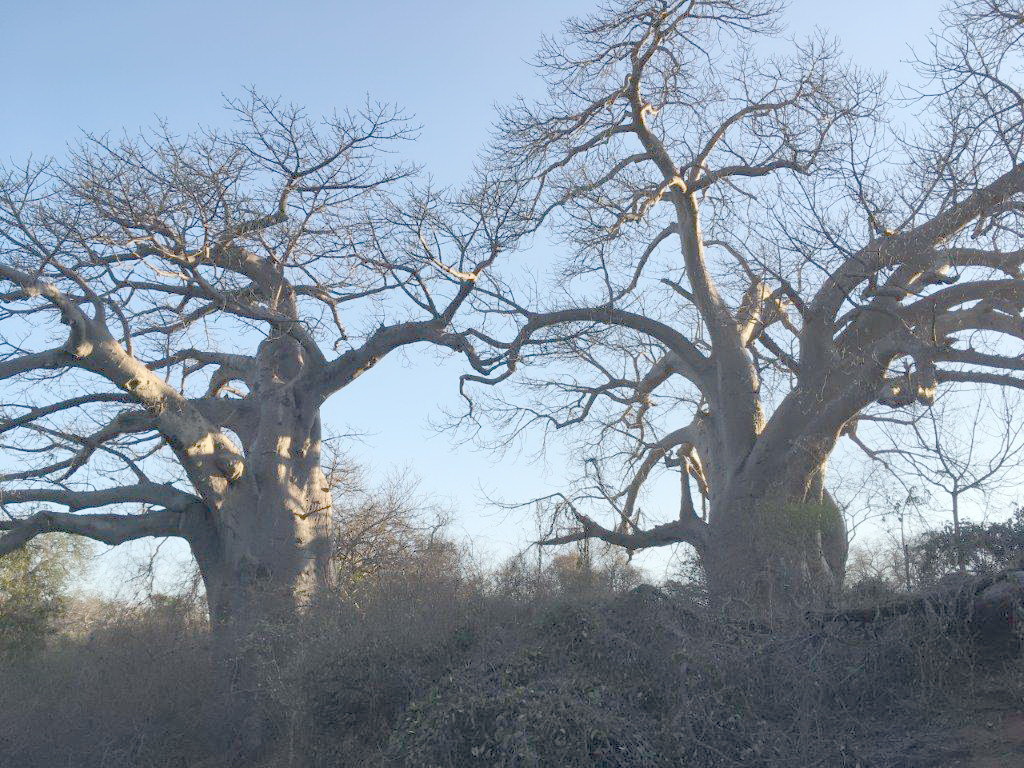
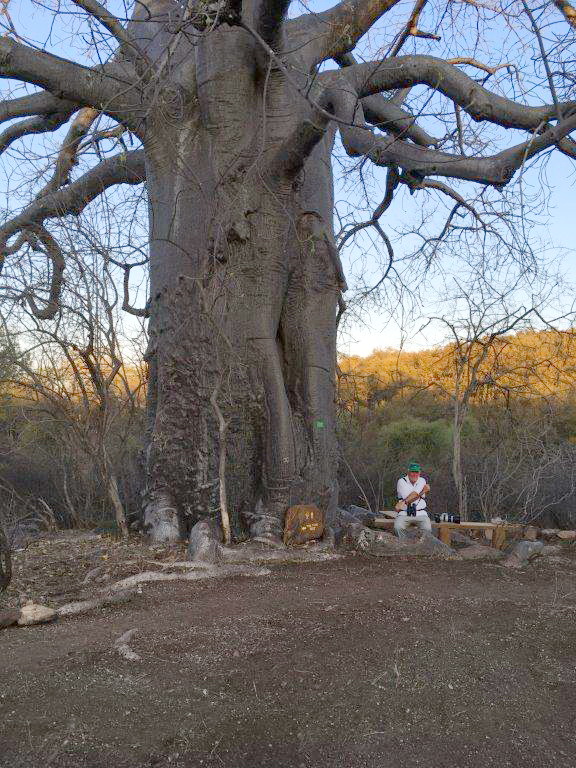
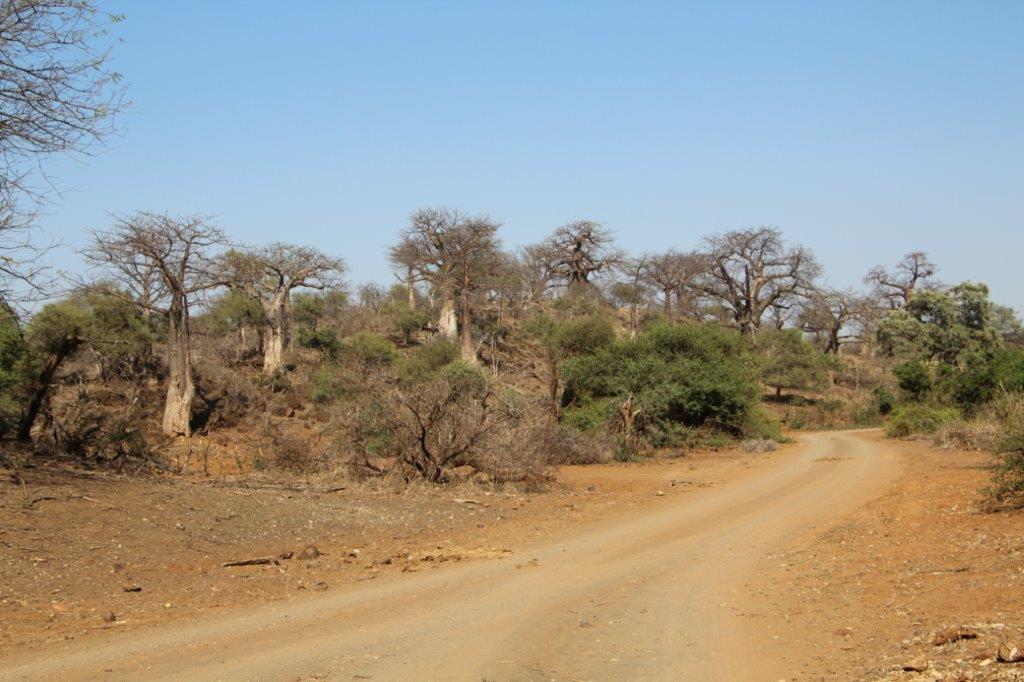
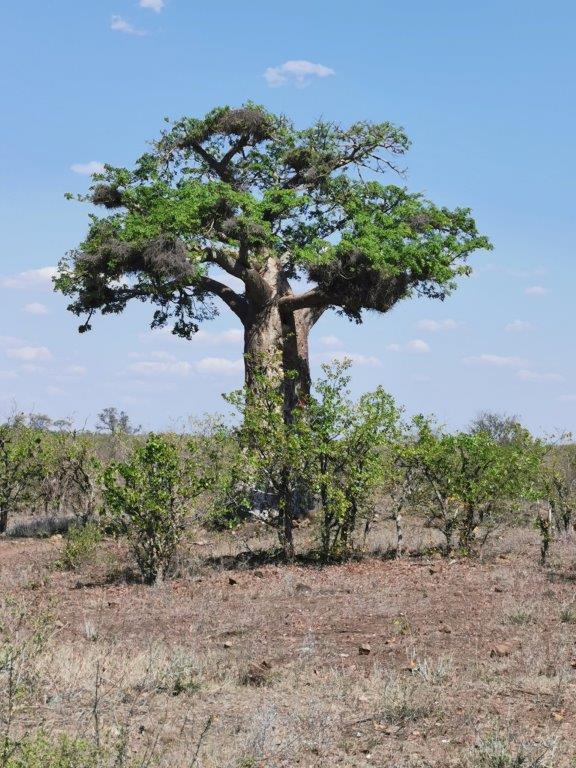
There is a large Baobab on top of a hill overlooking the Pafuri plain beyond. Very majestic and noticeable from all around.
The big Baobab on Baobab Hill
Nthakeni is near the village of Nkotswi and about 6 kms from the Pafuri entrance gate. About 4 kms on tar then turn off to the left for 2 kms past the village, across a river through dry pastoral land to the camp. Nthakeni is a concession from the local people who have created the camp.
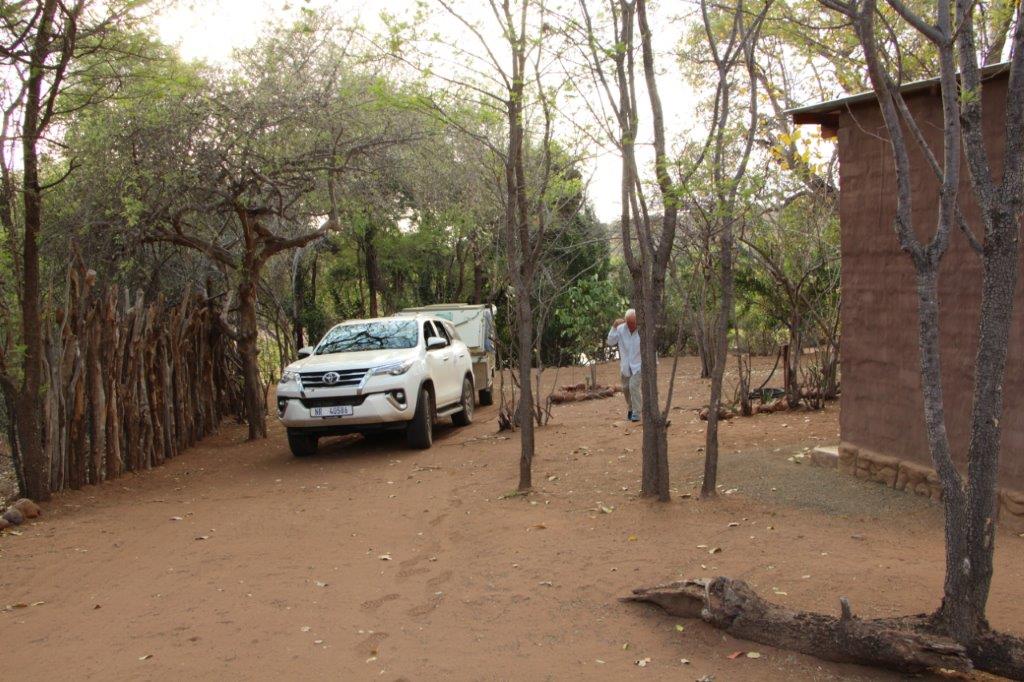
Upon arrival we were met by a very friendly host and hostess – Annelise and Kobus – and directed to our campsite – Mashato. Annelise and Kobus manage the site with help from the local population. The goal is to make it ecofriendly and comfortably rustic. Cottages run on solar power.
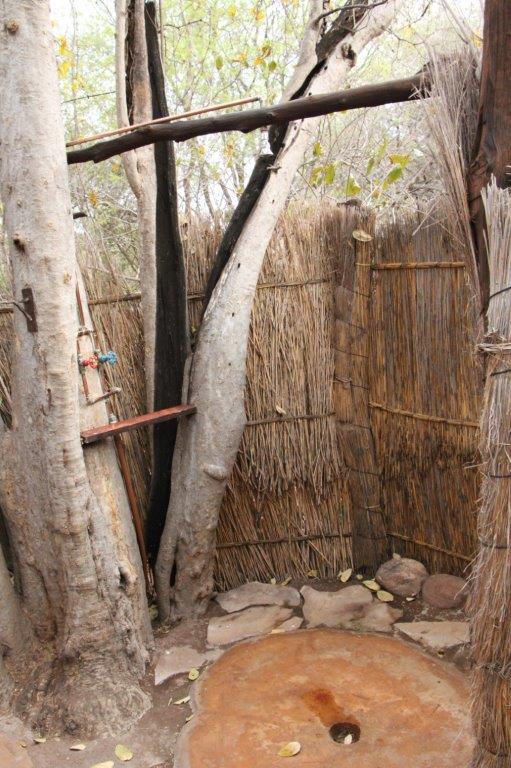
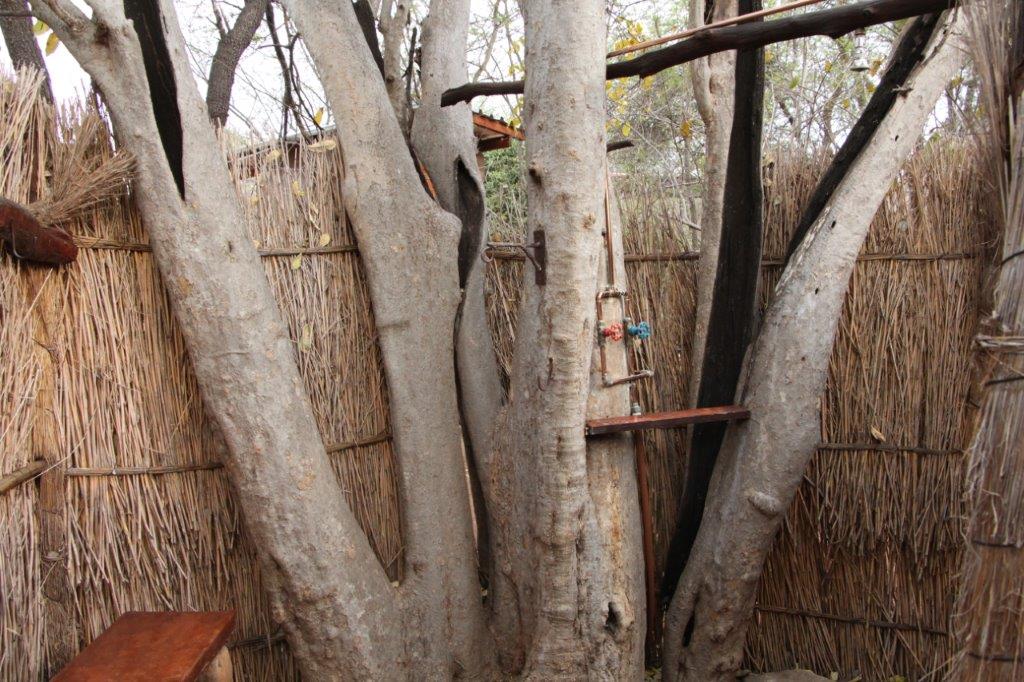
The campsite was right on the river bank and surrounded by trees – much like the setting at Pafuri picnic site. The entry was down a steep slope with a sharp turn to the right. Facilities in our camp included our own Ablutions with hot water and a kitchen fully equipped but without a fridge. No electric power but a donkey boiler. And a great river view.
Some photos of the communal facilities:
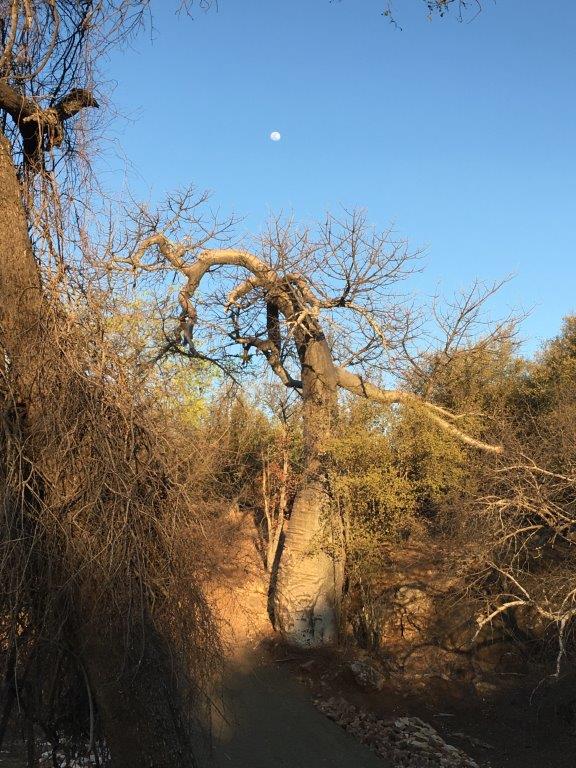
Road to the new Baobab campsite
Pool
To sit and view the river
Bar and reception – comfortable inside
Shade cloth helps keep the leaves out of the pool
And our view of the Mutale river:
Unfortunately in the future the two campsites by the river will be converted to Tented camps and camping will be found in and around the great baobabs nearby – no river views sadly.
Cows and a donkey roamed up and down the river ringing their bells.
Birding was excellent in the campsite – many different species to listen to and observe flitting about.
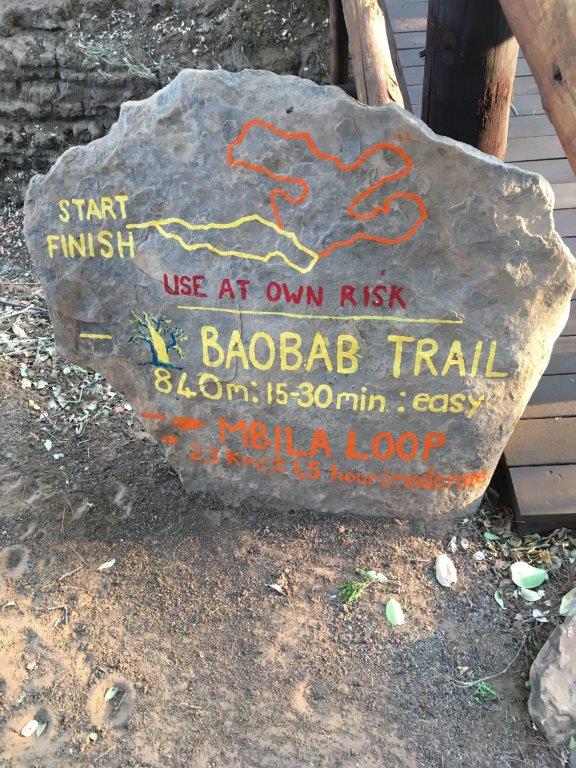
There are a couple of trails to enjoy: –
When we went to explore the trails, two of the camp dogs joined us and led the way.
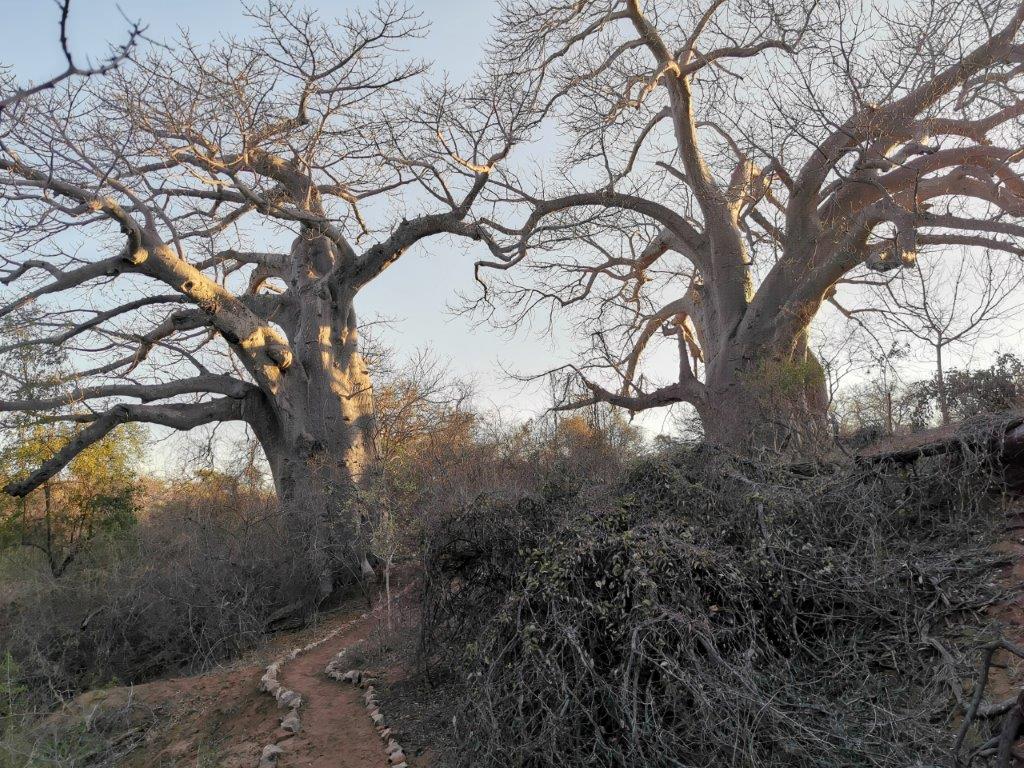
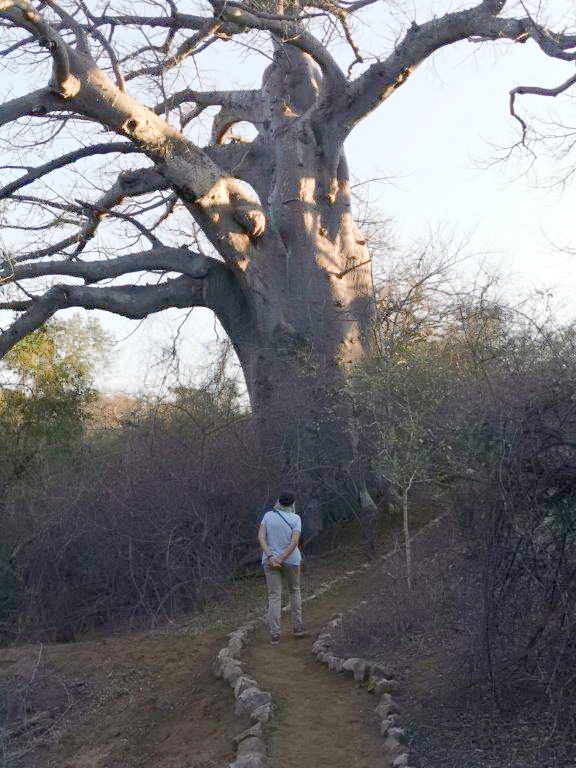
Hats off to this massive majestic Baobab
No, Sally is not. She is exiting a tunnel through the rocks.
Camp dogs.
What a wonderful life for these dogs. They know how to stay fit as this video shows.
Dogs will be dogs
A few of the special birds seen at Nthakeni
Saddle-billed Stork
Saddle-billed Stork
Saddle-billed Stork
Black Stork
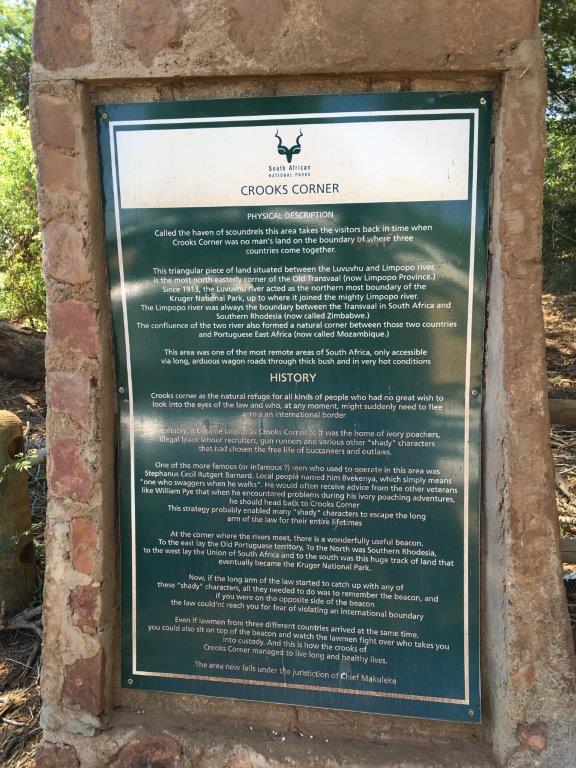
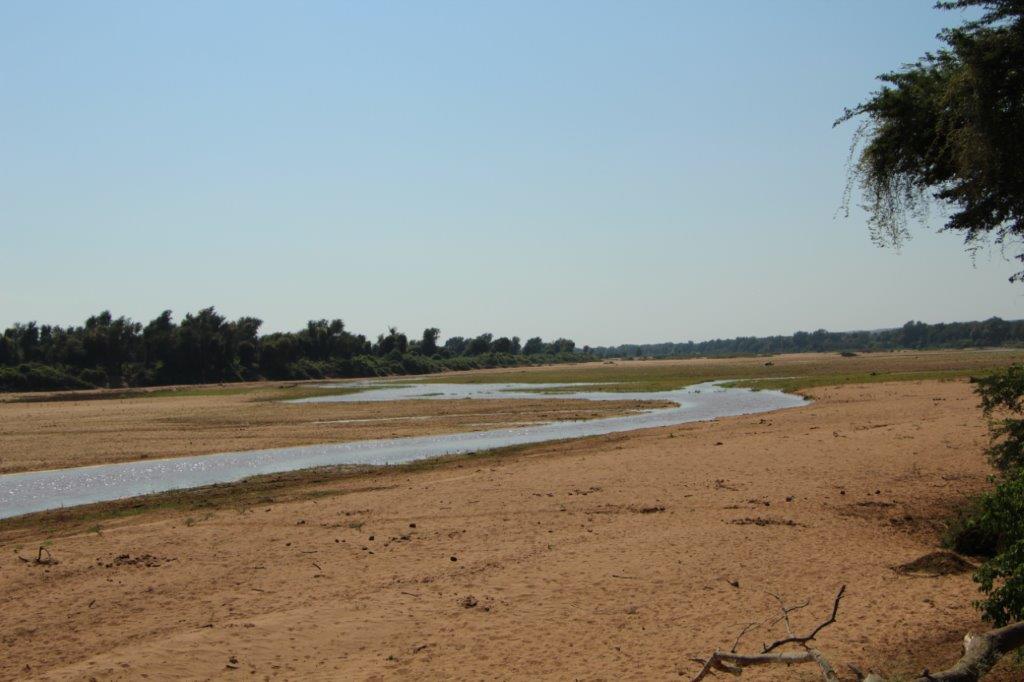
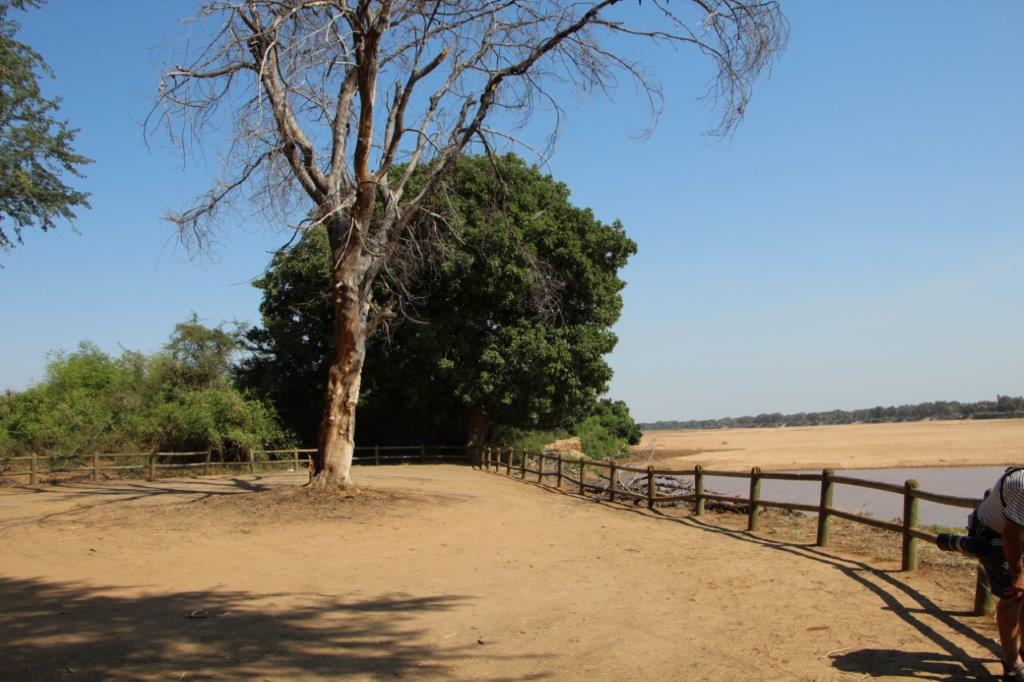
We spent a couple of days traversing the Luvuvu River at Pafuri, from Crooks Corner, past the Picnic site, the bridge and on to the Thulamela Archeological site. The area was quite dry although there were some lush treed areas around the river bed as these photos will show.
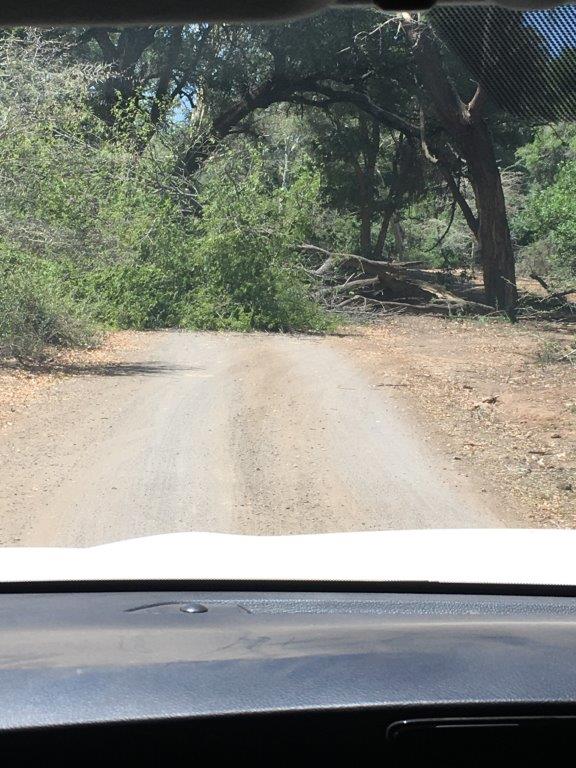
The drive between the bridge to Crooks Corner is always variable and interesting. The riverside trees are massive and full of life. No sooner had we turned off the S63 heading for Crooks Corner we ran into a road block – a tree had fallen across the road and we had to find a way around it. We looked for Lemon-breasted Canaries in the palms but probably it was too dry for them.
While there we noticed people on the opposite side walking along the river side. And as we were there a police patrol arrived and shouted at the men opposite. Crooks Corner still lives up to its name.
Road block
Hippo Pool
Down river
Shiny Spur-winged Geese
Hippos
Up river
The picnic site is always a great place to see and listen to birds. We were not disappointed. There were a couple of Black-throated Wattle-eyes attending to their nestlings in one of the very large trees in the picnic site – very hard to spot and impossible for photos unfortunately. Here are some of the birds we did manage to photograph.
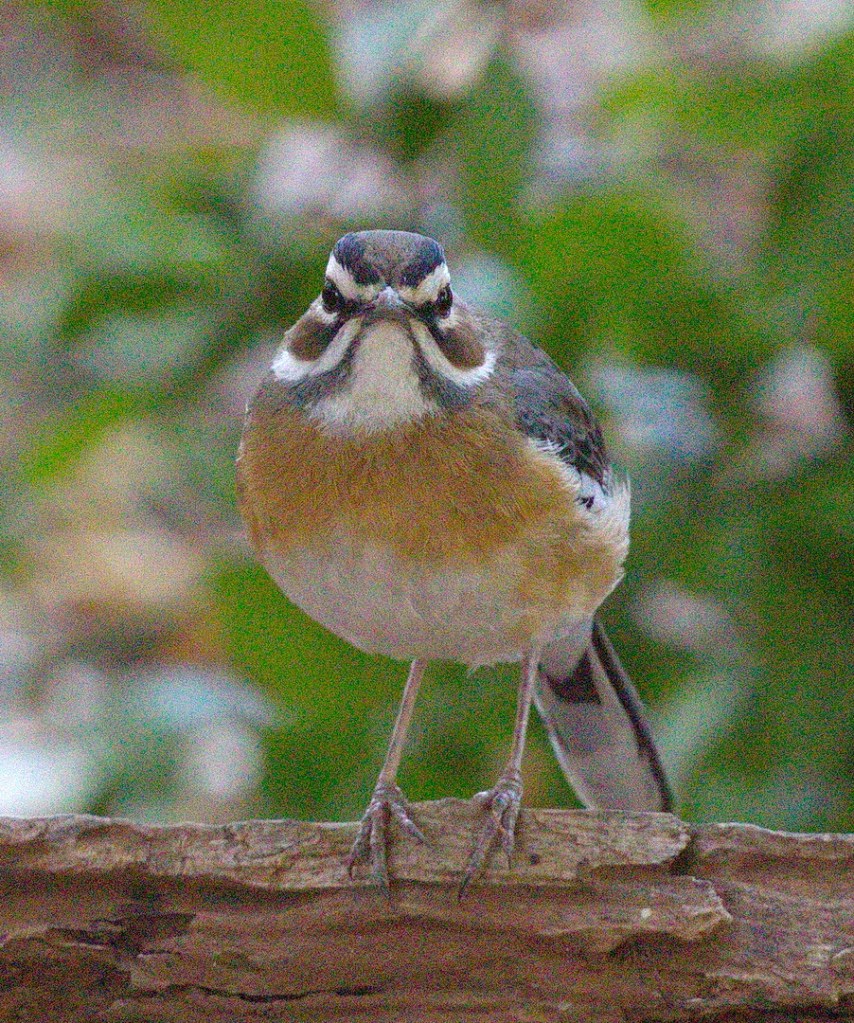
Bearded Scrub-Robin
Bearded Scrub-Robin
Grey-backed Cameroptera
Grey-backed Cameroptera
Kurrichane Thrush
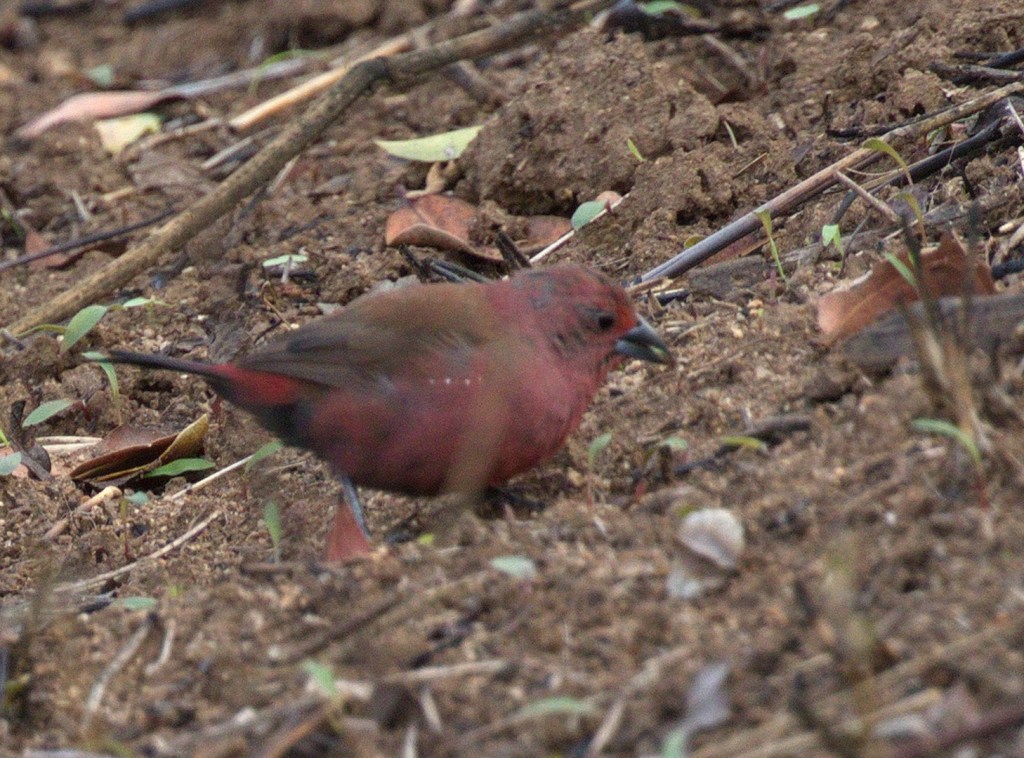
Red-billed Firefinch – male
Red-billed Firefinch – female
Tropical Boubou
The bridge is a great place to look for birds and there is often animal life below. This time was no different. It is one of the bridges where you are allowed out of your vehicle but you must stay between the yellow lines on the bridge surface. Unfortunately there are people who wander over the lines sometimes going off the bridge. If that habit persists then this privilege will cease.
It was here that Sally spotted a Bohm’s Spinetail amongst the Swifts and Swallows overhead.
Giant Kingfisher
Holy-eared Elephant
Looking up stream
Up Stream
Elephants coming for their mud bath
Elephants mud bathing
Looking down stream
Approaching the bridge
Splat and friend
Bridge lookout
Up Steam
Splat with Sally
Splat with Sally
Splat
Tambourine Dove
Tambourine Dove
Mud Fun:
As we drove around the area we had sightings of birds and animals. A lone Eland youngster, a pair of mating Lions, a Leopard below a treetop full of Baboons, Crocodiles as well as Meve’s Starling, Marsh Sandpiper, Red-headed Weaver, Squacco and Striated Herons, a pale phase Wahlberg’s Eagle, White-browed Sparrow-Weaver to name a few.
Yellow-billed Storks minding the crocs
Crocodile yawn.
Crocodile
Lone Eland youngster
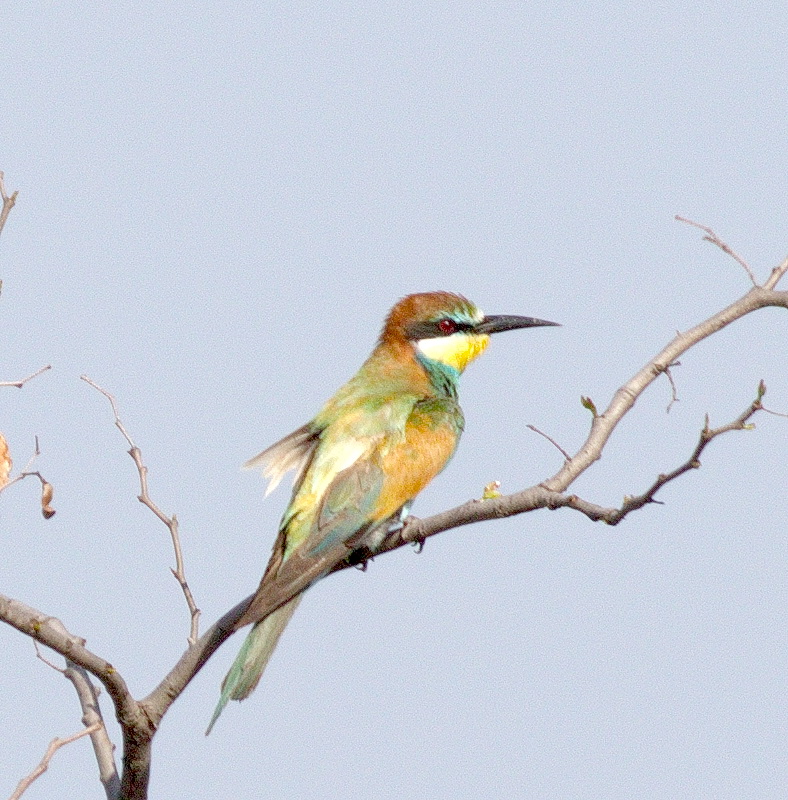
European Bee-eater
A pair of mating Lions
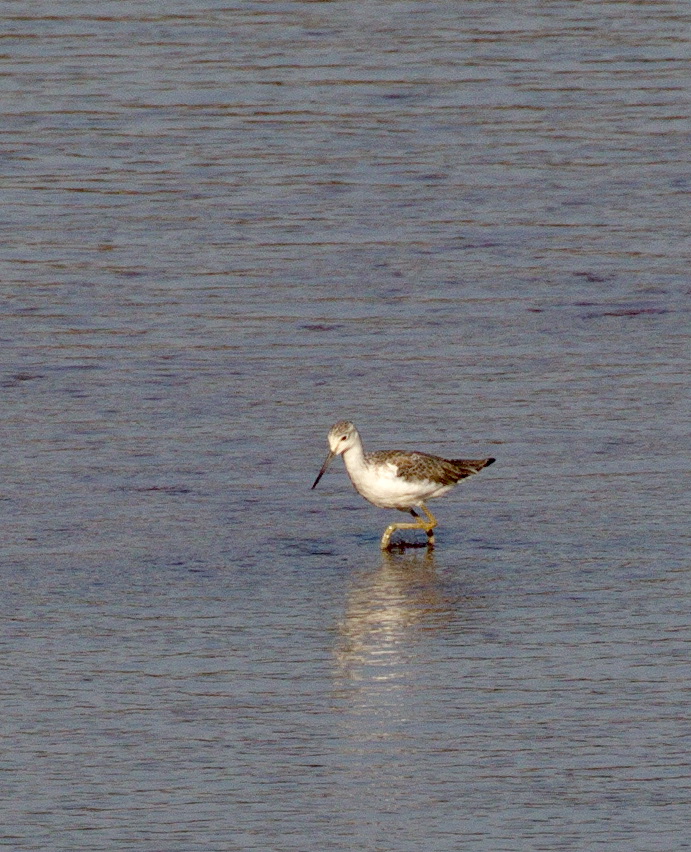
Marsh Sandpiper
Meve’s Starling
Meve’s Starling
Meve’s Starling
Red-headed Weaver
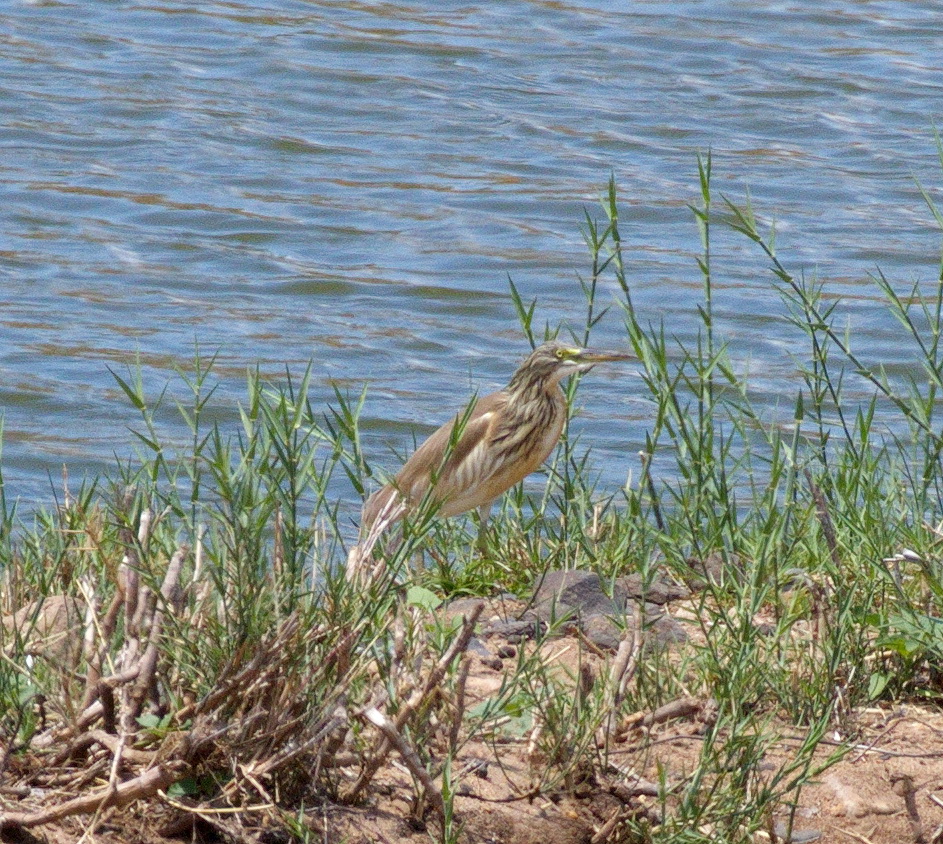
Squacco Heron
Striated Heron
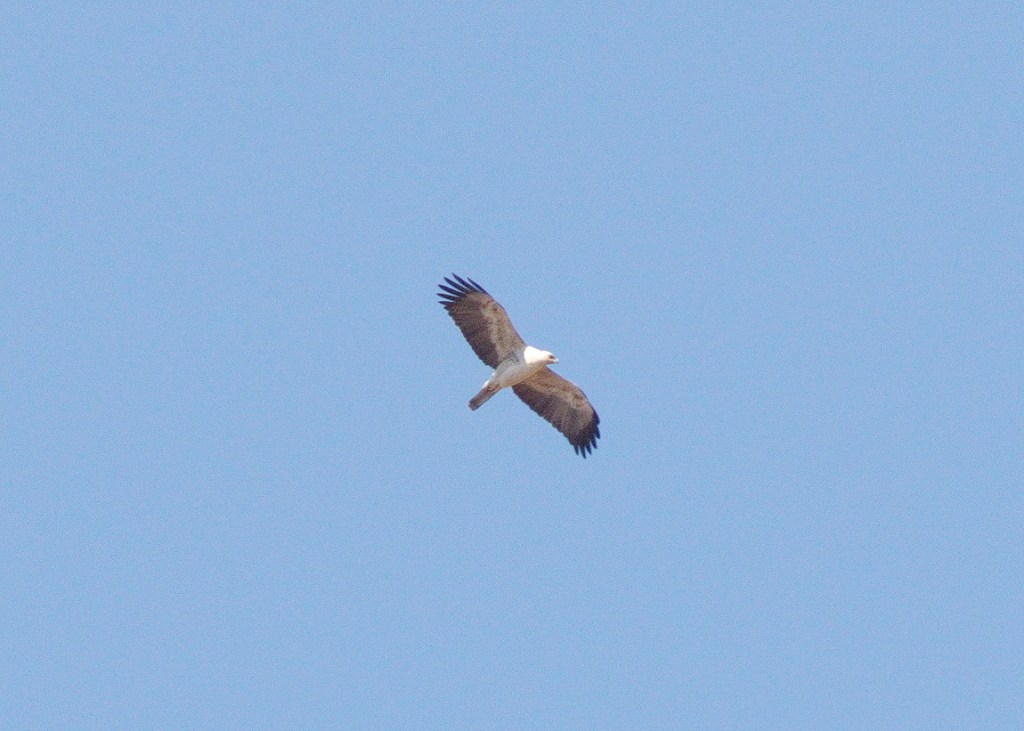
Pale phase Wahlberg’s Eagle
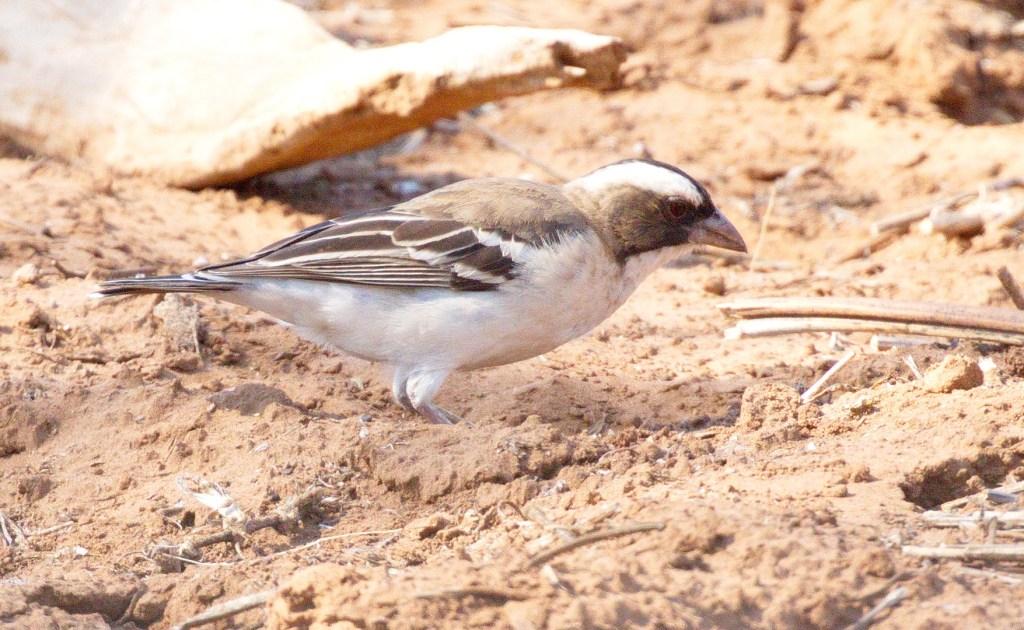
White-browed Sparrow-Weaver
A pair of mating Lions
Bath Time for a White-crowned Lapwing.
And then there was the Leopard lying next to the road among some dead tree trunks. At first we passed by without noticing it but something caught our eye. We reversed and there was the Leopard – keeping an occasional eye on the nearby Buffalo.
Leopard
The next part of our trip was to be spent at Balule. On the way we overnighted at Shingwedzi. Most of our experience at Shingwedzi has been included in Part 5 of this series. Balule is Part 8 of this series which will follow shortly.
Our bird list for Nthakeni and Pafuri can be seen by clicking on the following link:
From Shingwedzi we headed north to Punda Maria to continue birding. Our friends left us and returned south through the Park. On the way up we had a delightful experience with a pair of Kori Bustards. They were prancing on a hillock by the road.
Kori Bustards
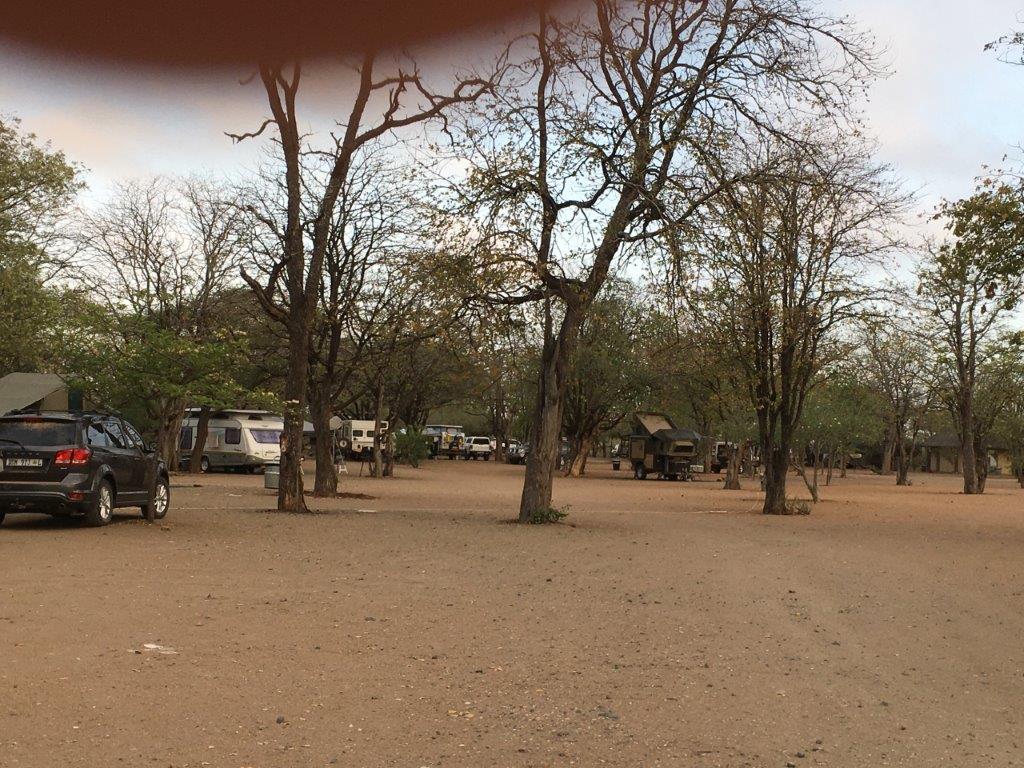
The camp in Punda Maria was very busy at the bottom near the fence and the hide overlooking the waterhole just over the fence. The ablutions there were over worked and had an unseemly odour.
We headed for our preferred location nearish to the ablutions at the top and overlooking the campsite – away from people.
Entrance to the camp
Grounds
Camp Waterhole
Our site
Our site
The waterhole can get very busy at times with small herds of Elephants and hundreds of Buffalo – especially late afternoon going into the night. Often trumpeting quite loudly and for long periods – presumably to let others know that this is their waterhole.
Fresh water is added closest to the hide and as a result the elephants vie for this spot making for good photo opportunities.
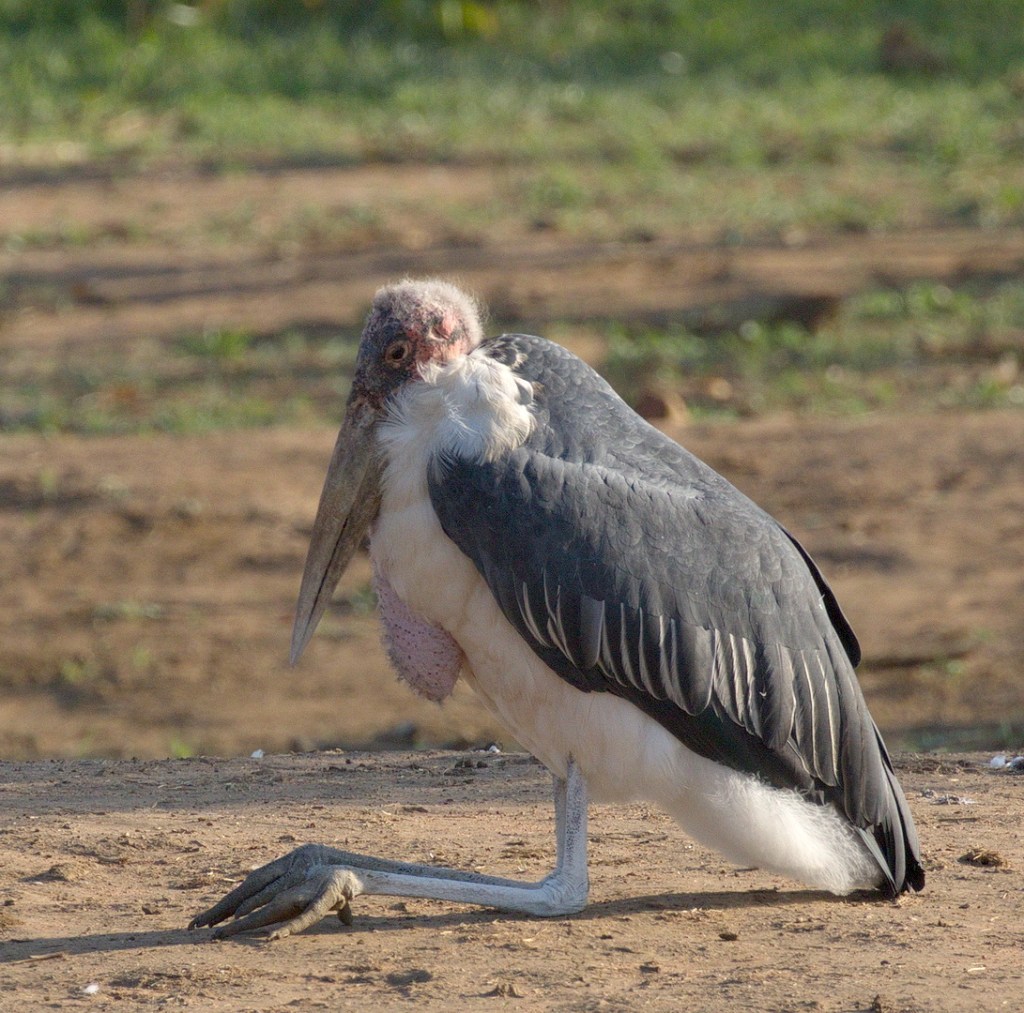
Marabou Storks sometimes visit as this one did. It sat down in a posture resembling a person playing the piano.
Piano playing Marabou Stork.
On occasion a Leguaan passes by. But it is not often that you get to see it doing press-ups.
Leguaan on the up stroke.
Several times we drove the 25 kms Mahonie Loop around the camp. Birds were disappointingly quiet. However we did come across a leopard once – making up for it – a bit.
While we were there we got a message from Trevor Hardaker that a Golden Pipit had been seen and he gave us the co-ordinates. The Pipit was seen approximately 10 kms south of the turnoff of the H13-1 heading on the H1-8 to Shingwedzi. We got up very early to find it. And we did. The co-ords were perfect. Sally spotted it on the verge as we drove slowly towards it. It went up into the trees by the road and moved about from tree to tree and branch to branch. Lovely bird – seems to float like a butterfly as it flies. A calling Monotonous lark also appeared at the scene.
Golden Pipit and Monotonous Lark.
The next day we needed diesel – however the petrol pumps at the garage at Punda Maria had unfortunately been smashed into by a car which had lost control on the drive up to reception. That meant a trip back to Shingwedzi (70 kms away) to fill up. This was not an inconvenience for us. We had the opportunity to look for the Golden Pipit again, a bit of breakfast at the Babalala picnic site and another drive on the S56 side road which we had so enjoyed when staying at Shingwedzi.
Damage control
As we reached the end of the H13-1 to turn south on to the H1-8 a family of Cheetahs ran across the road. The mother heading left and the two sub-adults to the right across the road. We stopped to look at the youngsters as the mother disappeared into the bush. Eventually she re-appeared, crossed the road and united with the youngsters. Nice sighting.
Cheetah family
On the way we stopped again when we found the Golden Pipit. Lovely bird. As we left so the bird flew away but we heard it later returned. At Babalala picnic site we stopped for tea then took the S56 loop road to Shingwedzi. We had not gone far when a pair of Coqui Francolins – Sally’s recent bogey bird – crossed the road ahead of us.
Coqui Francolin
Further along we came across the Elephants digging for water while the Leopard watched. Another Leopard further along was hanging out lying in a tree by the road. Then as we approached the Shingwedzi Gate we noticed about a hundred Buffalo taking advantage of a large pool of water in the river bed below. Closer inspection of something odd in the water revealed a pair of crocodiles holding on to something. With the scope out we realised it was the head of a buffalo.
Buffalo demise at the hands of a couple of crocodiles very close to other bathing Buffalos.
The Klopperfontein waterholes were virtually dry, however an Elephant and a few Buffalo were taking advantage of what was left in one of them. While camping in Punda Maria we refrained from visiting Pafuri as we intended to spend three nights at Nthakeni at a community camp just outside the Pafuri Gate.
Here is a selection of the birds photographed in the area.
African Hawk-Eagle
African Hawk-Eagle
African Hawk-Eagle
Ashy Flycatcher
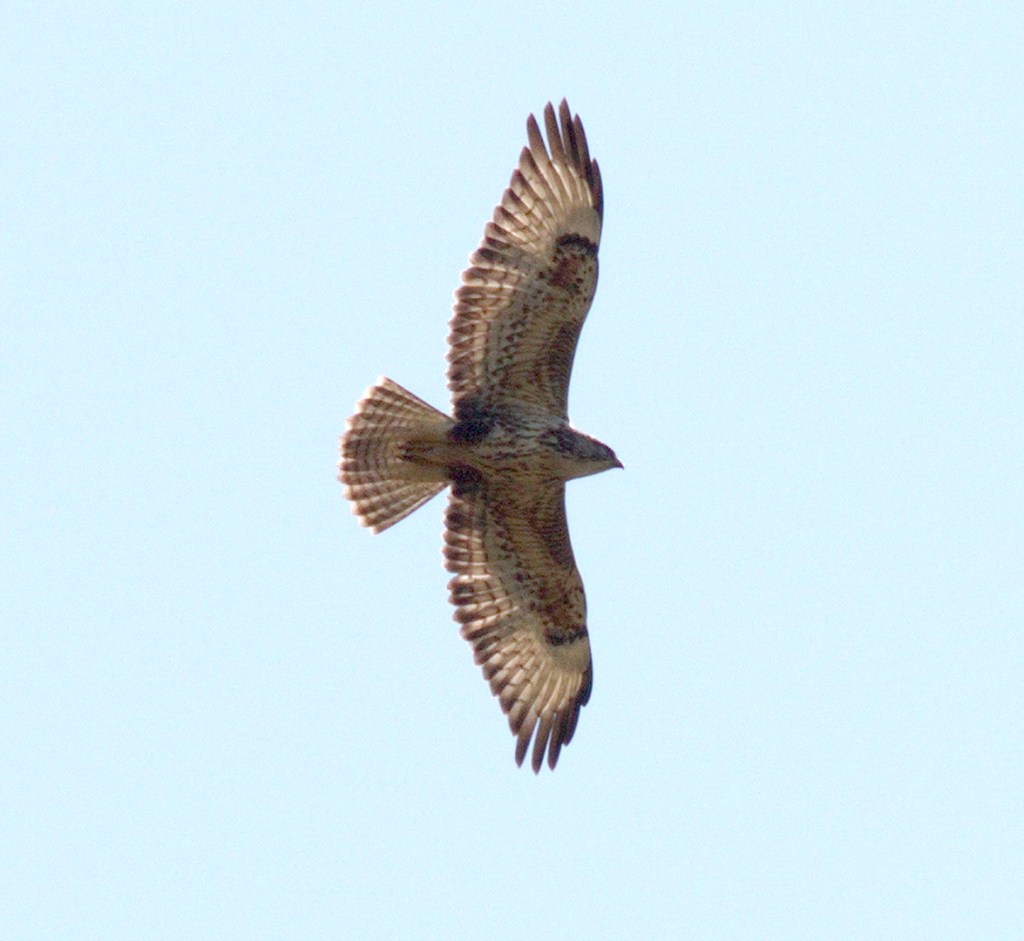
Common Buzzard
Common Buzzard
Gabar Goshawk
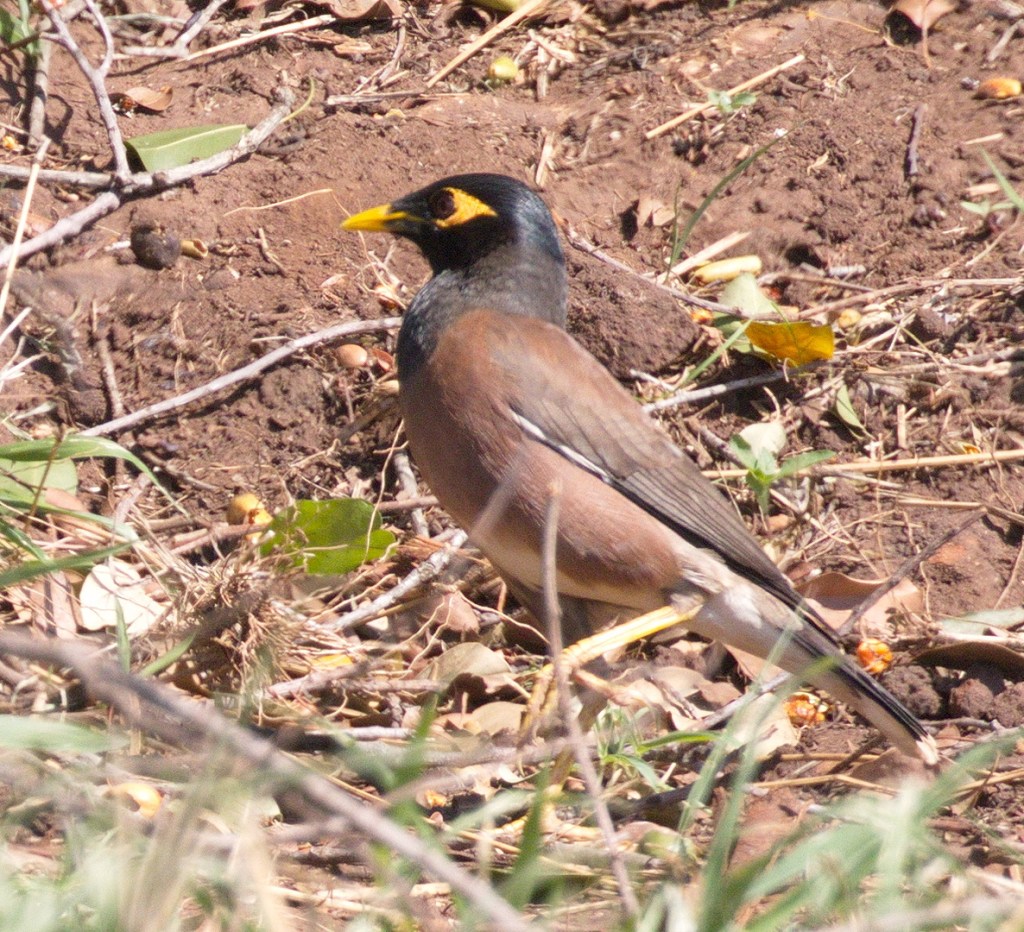
Common Myna
Gabar Goshawk
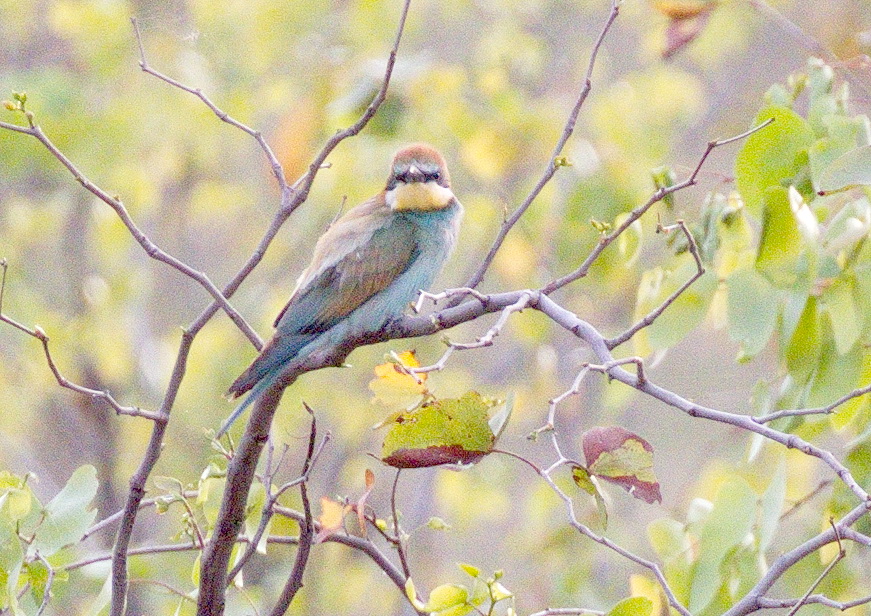
European Bee-eater
Golden-breasted Bunting and Fork-tailed Drongo
Golden-breasted Bunting
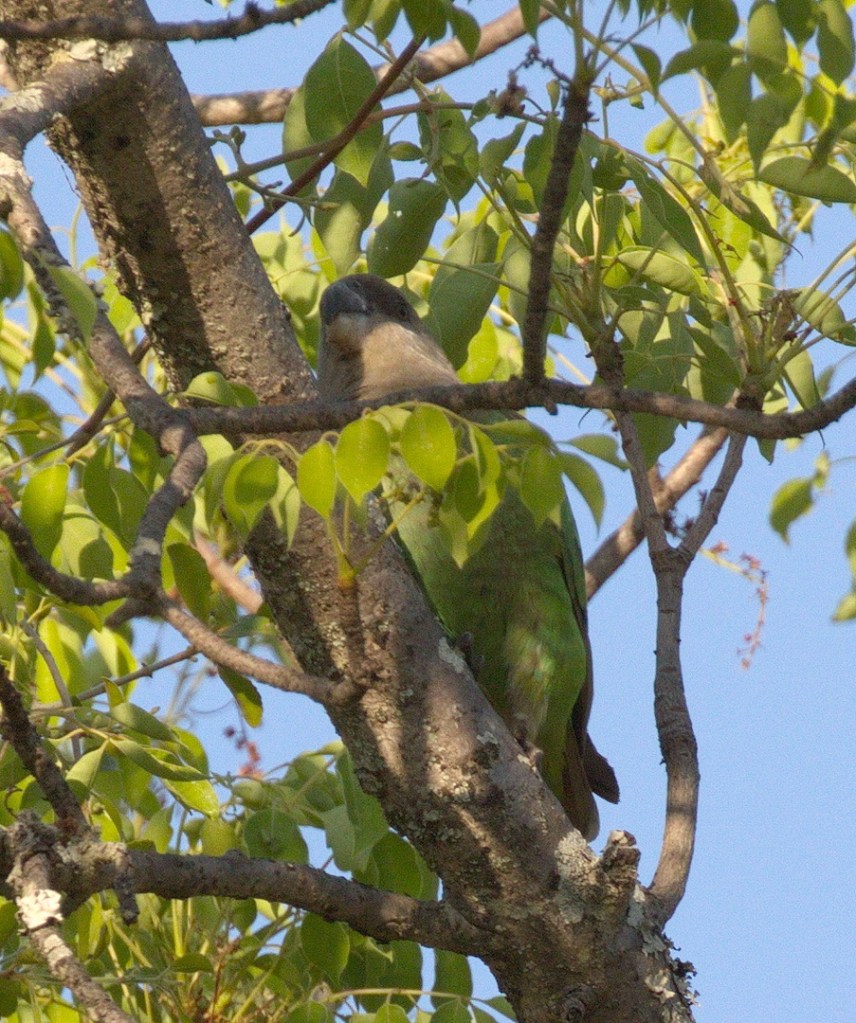
Meyer’s Parrot
Randy elephant
Red-crested Korhaan showing its chevron pattern to its back
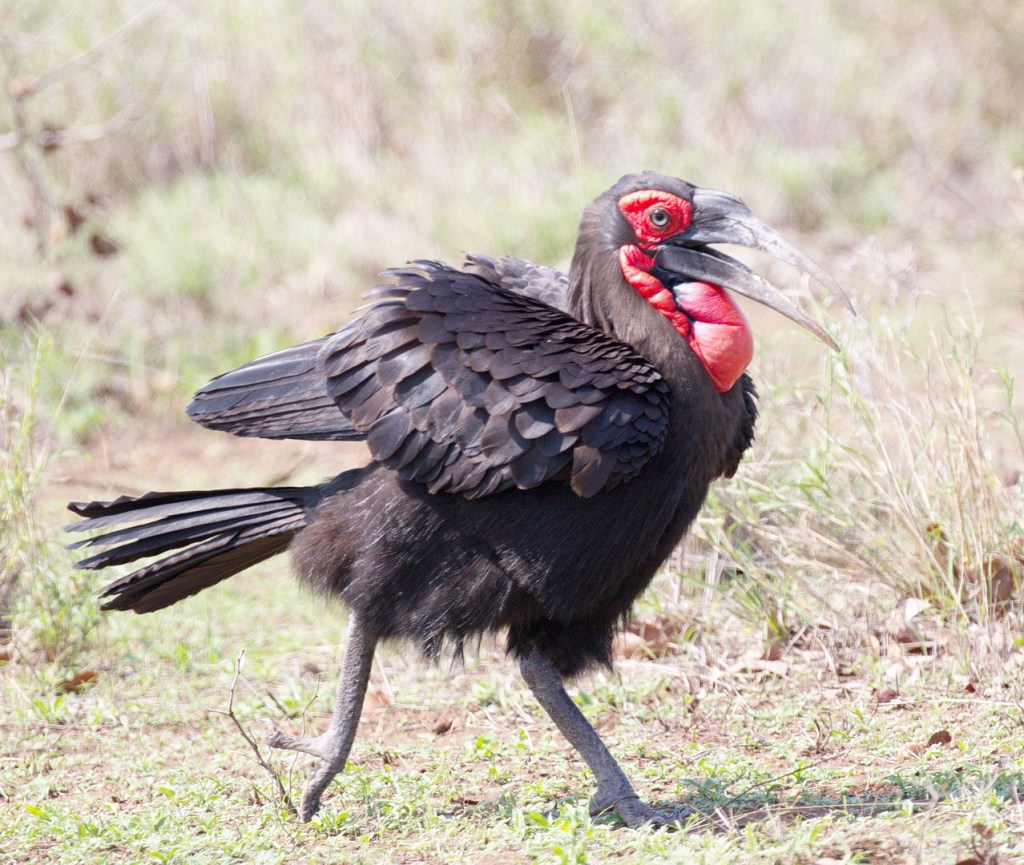
Southern Ground Hornbills
Southern Masked Weaver
Striped Kingfisher
Violet-backed Starling
White-backed Vulture
Violet-backed Starling
White-bellied Sunbird
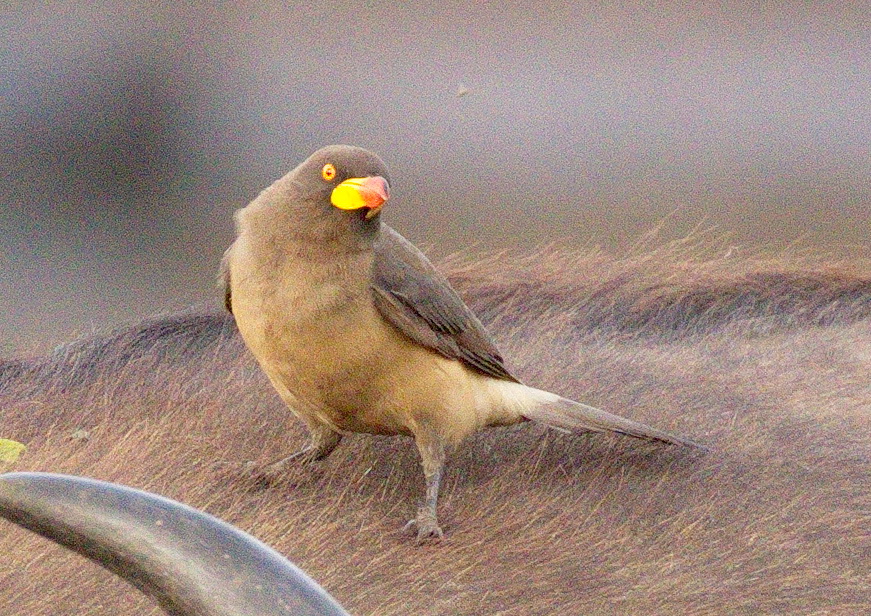
Yellow-billed Oxpecker
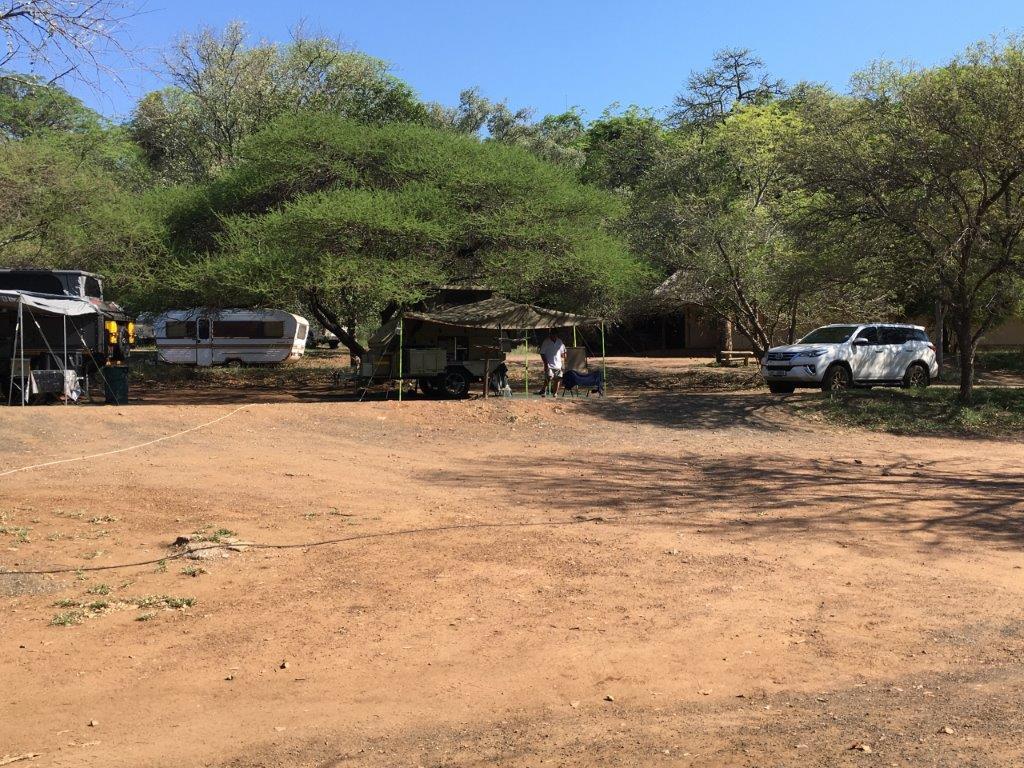
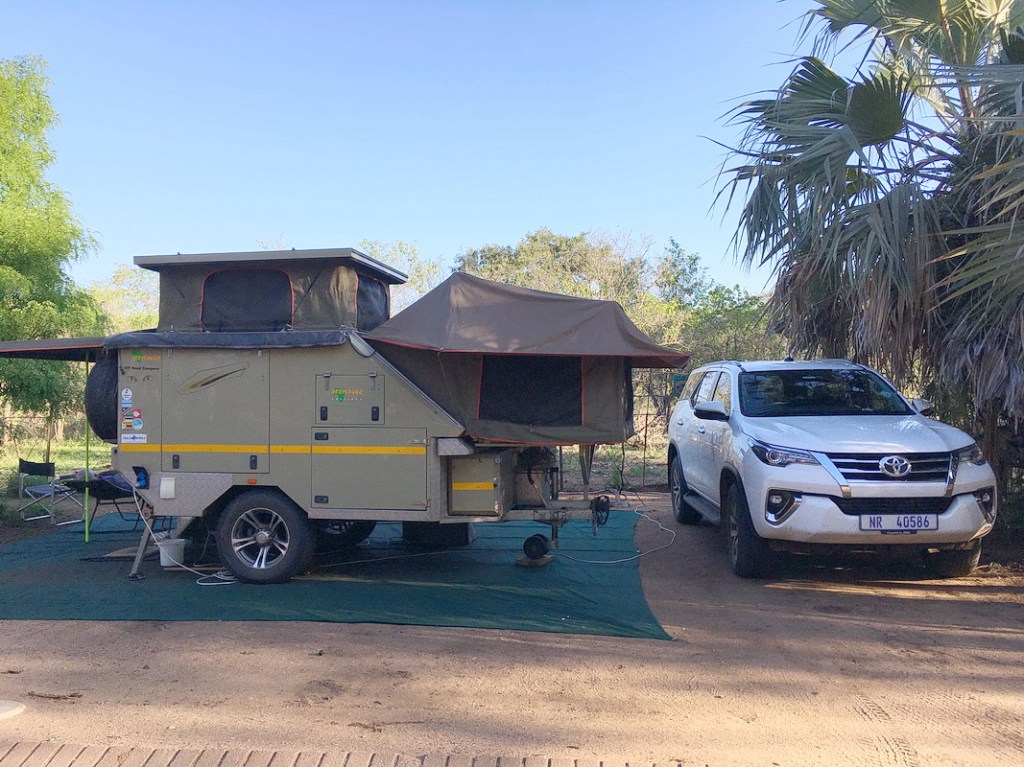
The day before we left we returned from a drive to find we had new neighbours. They had put their Campervan up so close to us that it was impossible for me to hook up our car to the front of our trailer when we left – without having to drive over their ground sheet and under their awning. Turning our Serval was not an option as we were on a ledge.
Neighbours to the left
Anyway we managed – with a use of their space unfortunately.
Our bird list amounted to 104 different species identified. To see our list please click on the link following.
Then we were on to the top of the Park and to a community run Camp – Nthakeni near the village of Nkotswi – about 6 kms from the Pafuri entrance gate. From our base in Nthakeni we explored not only the area around Nthakeni but also Pafuri. Our time there will be reported in the next part of our Kruger saga. Part 7 to follow.
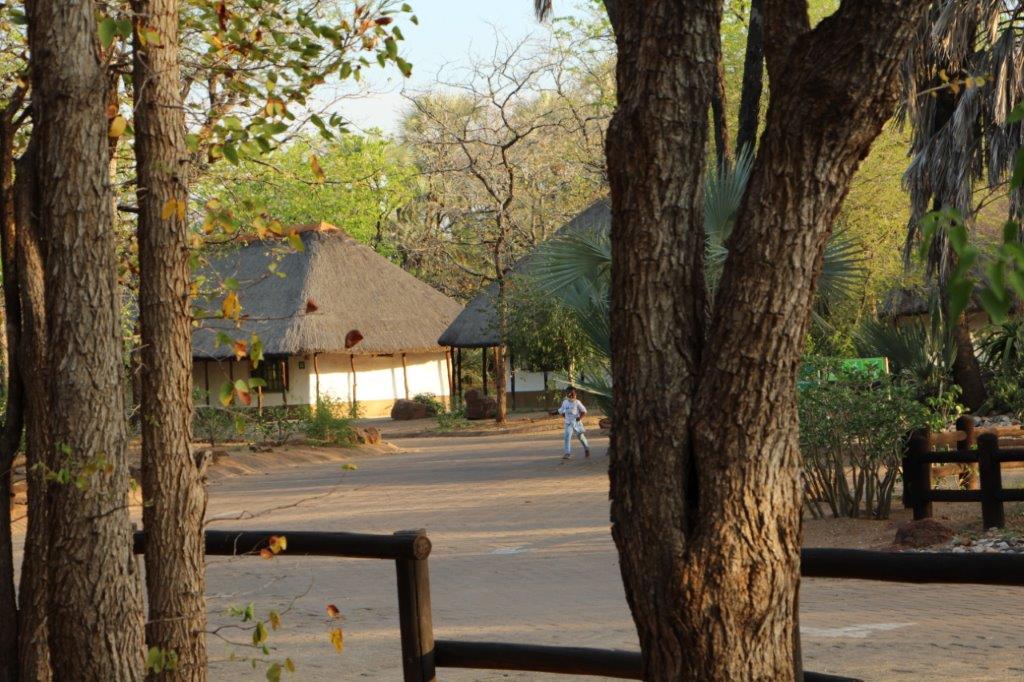
It is a two kms drive to the Shingwedzi gate once you exit the H1-6. You drive alongside the river bed with many tall trees either side. When we were there the river bed had a number of pools in it. The water was not flowing. It is difficult to imagine that the river sometimes overflows its banks. The volume of water would be immense.
River view
A very dry patch next to the camp.
Elephants and Buffalo herds are often seen in the pools
By the entrance gate – Yellow-billed StorksEntrance
Our friends had arrived before us and were in the process of putting up their camp by a spot along the fence. When we had checked-in they told us not to do so as one has to book those sites in advance and all were booked. We mentioned that to our friends and they told us that they had not been told. After much hoohah with check-in they decided to move. Shame.
Our setup.
The campsite was far from full.
Wash up block
Shop and reception
Towards the exit
Photos to show what the camp is like.
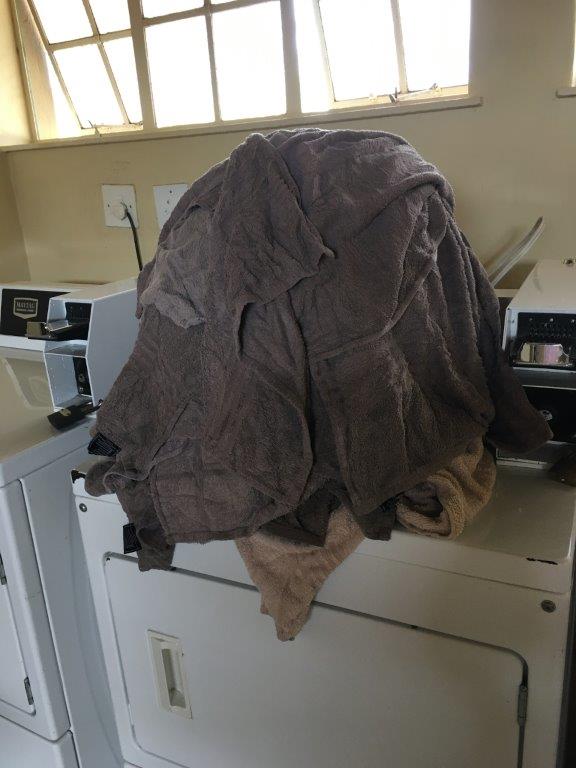
After all our travels it was time to do some washing – except the camp’s laundry machines had broken down so the staff were using the one laundry machine to wash hutted guest towels – piling them in to fill the machine completely.
Overload.
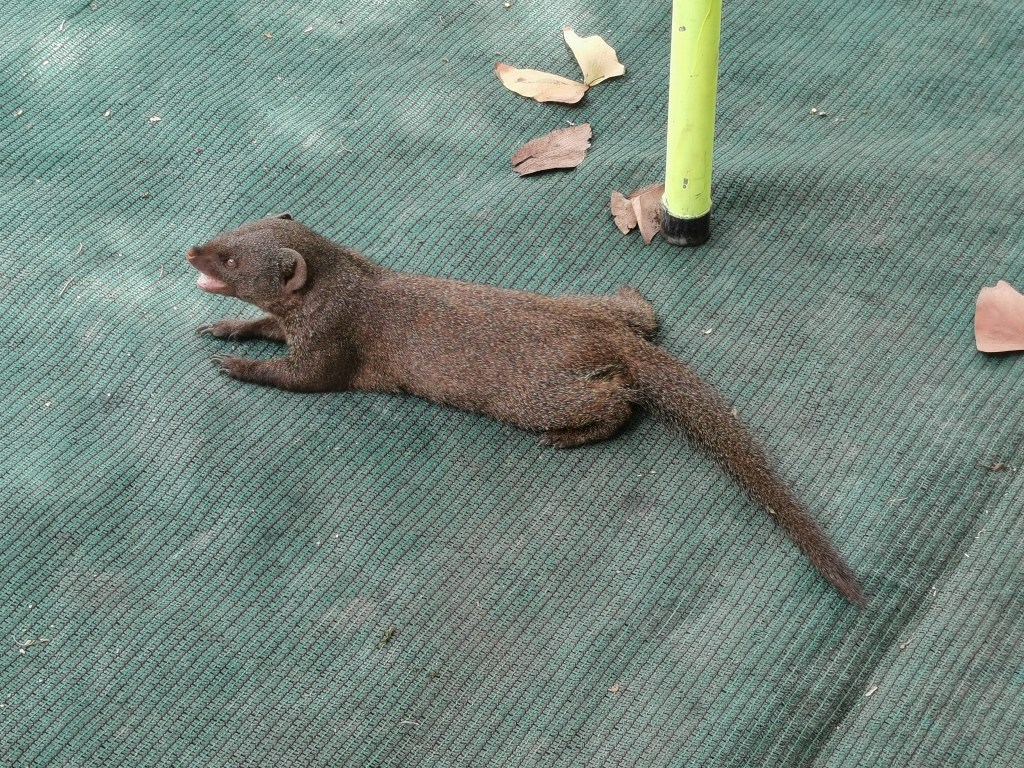
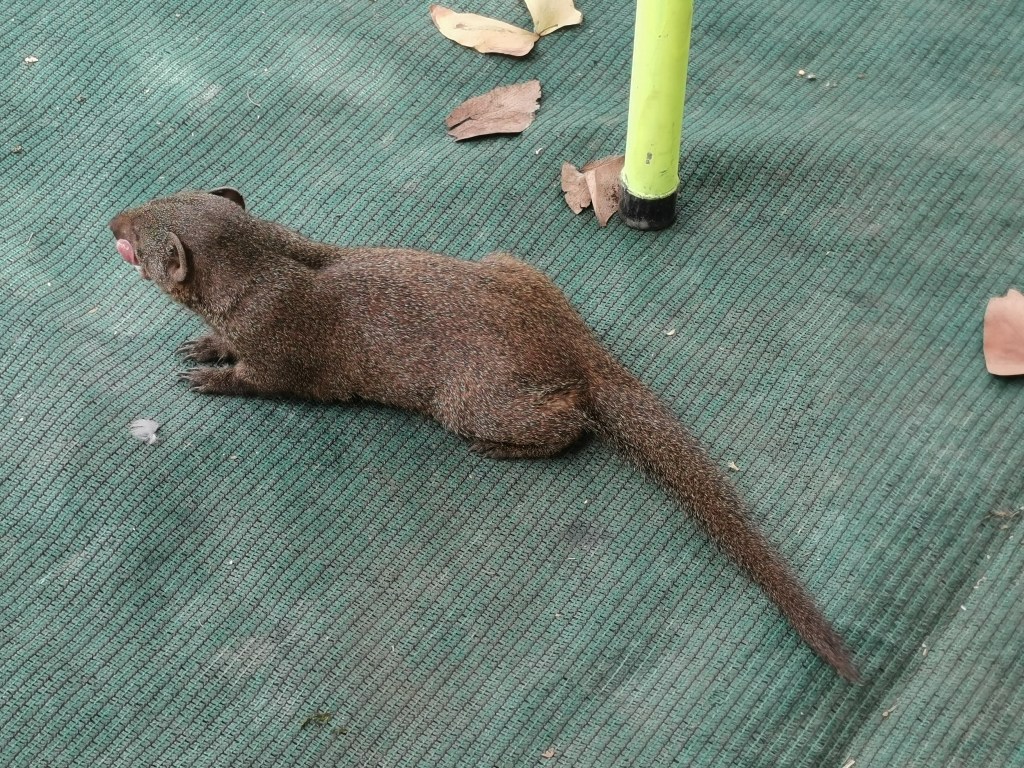
We had a friendly Dwarf Mongoose visit us one day looking for food no doubt. Bird wise the camp was very quiet. Not surprising after 6 months of lockdown they went elsewhere to find food.
Crying for food.
Licking its chops
Dwarf Mongoose
Some typical habitat in the area.
Buffalos in the shade
River bed
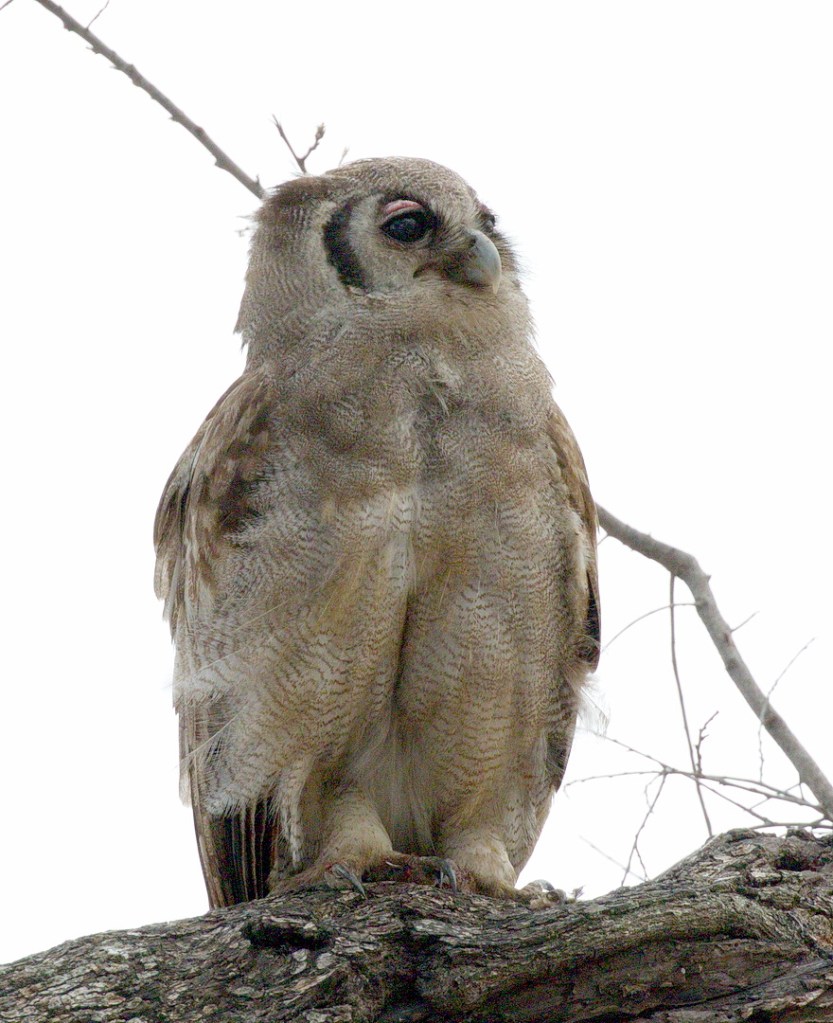
A Lion kill had been reported. A Waterbuck lying in the riverbed along the S50 heading south. We took a drive out to see what was left. We passed the breached Kanniedood Dam passing a number of good water bird pools- even coming across a Saddle-billed Stork in the bush and a pair of Verreaux’s Eagle Owls.
Hippo and Yellow-billed Oxpecker hitching a ride
Yellow-billed Stork and an Egyptian Goose and goslings
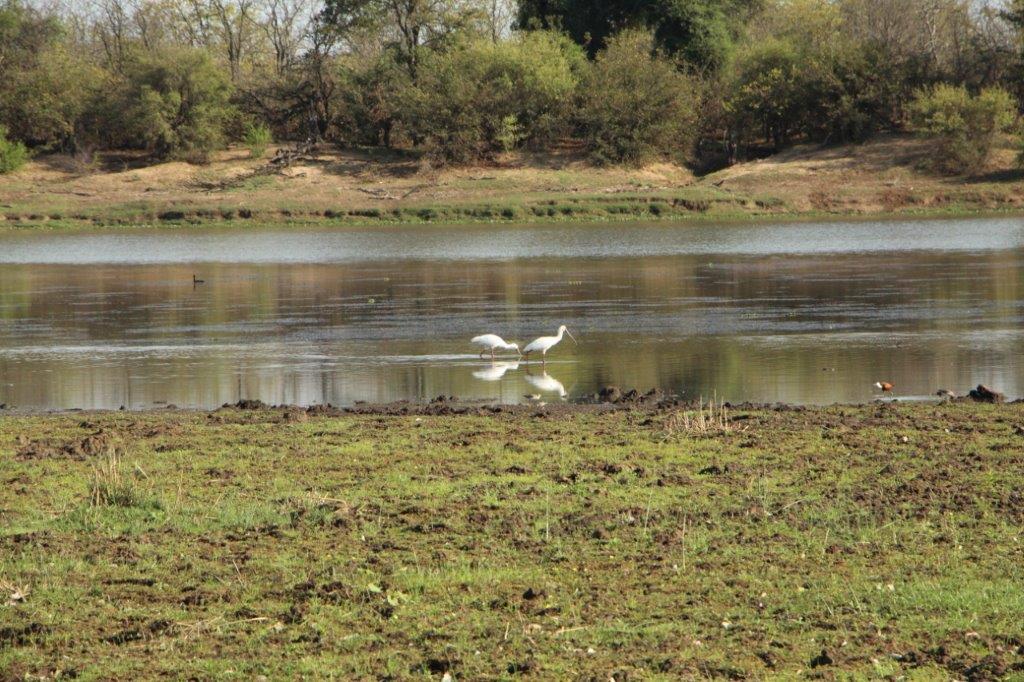
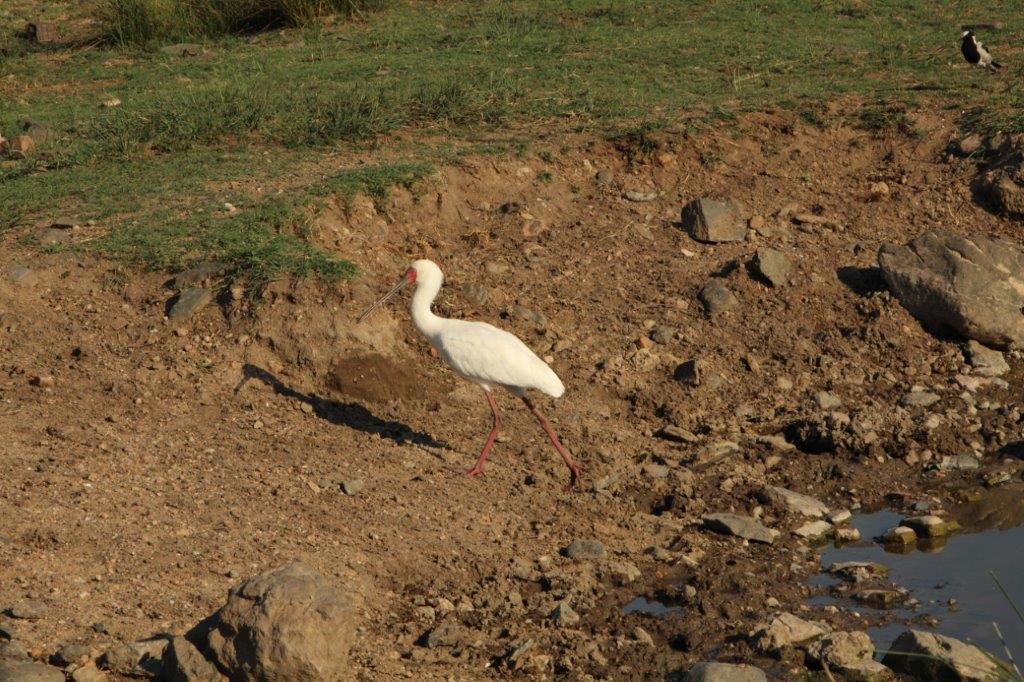
Spoonbills
Lapsmith aka Blacksmith Lapwing
Yellow-billed Stork
Three-banded Plover
Striated Heron
Saddle-billed Stork
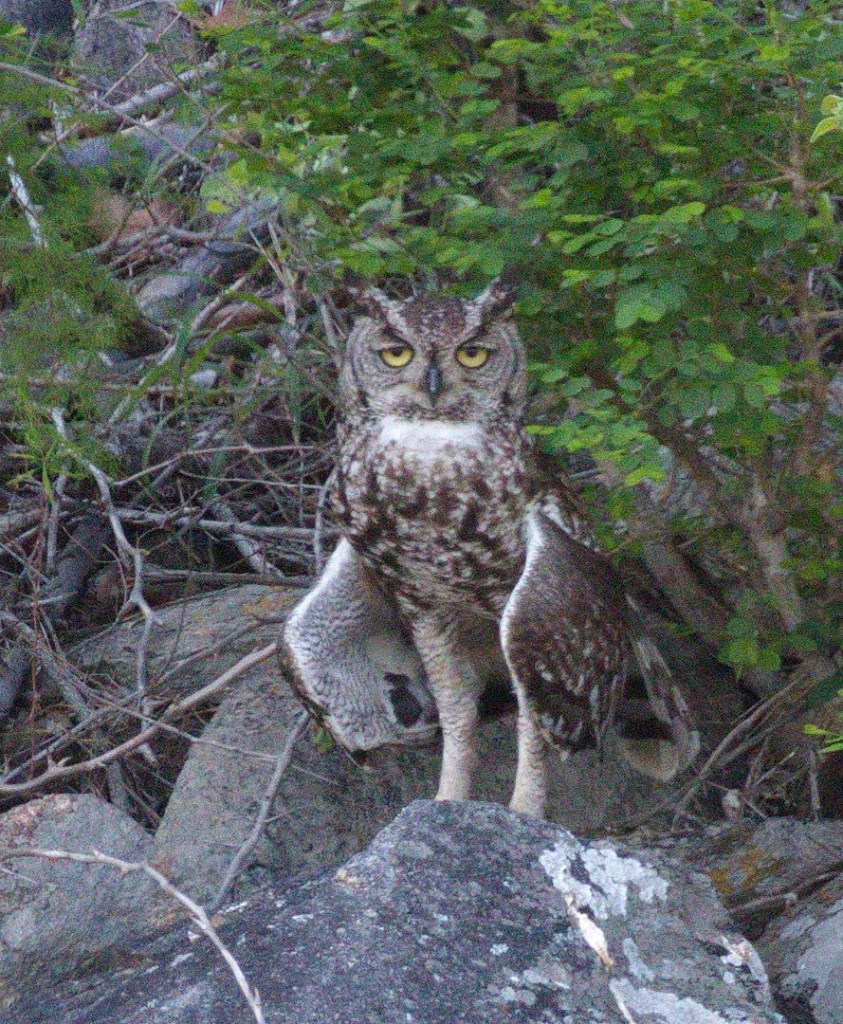
Verreaux’s Eagle-Owl
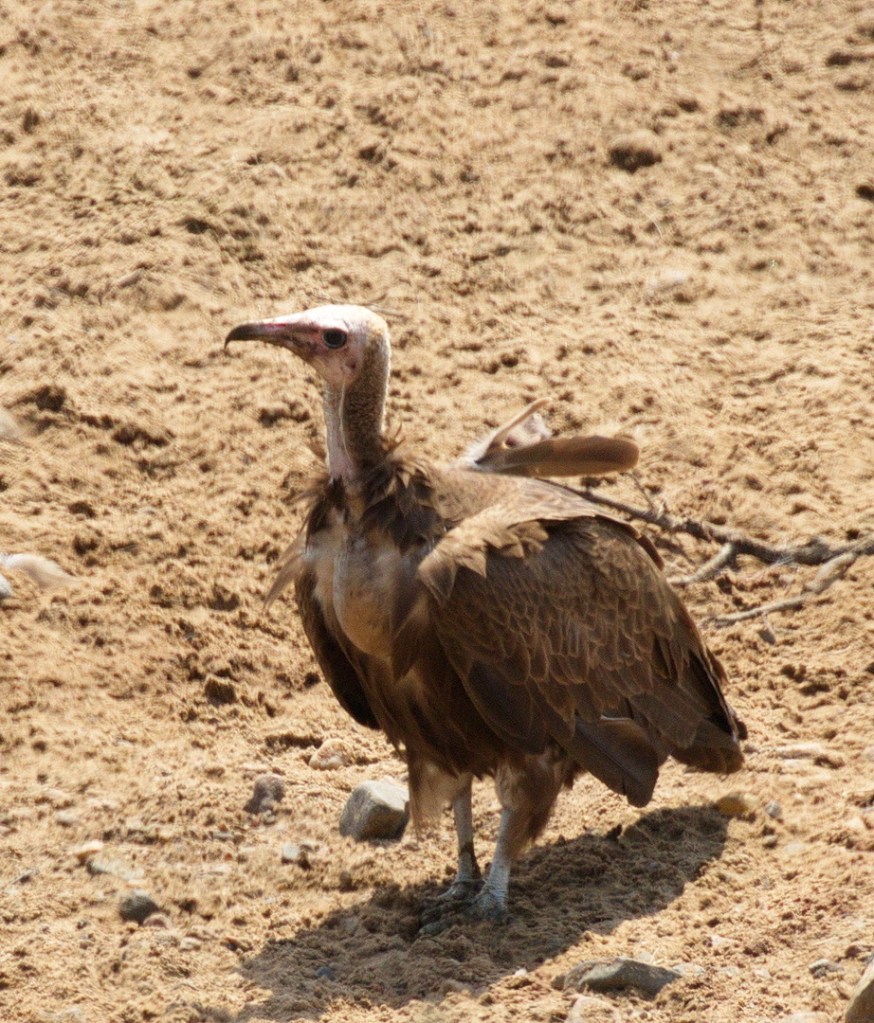
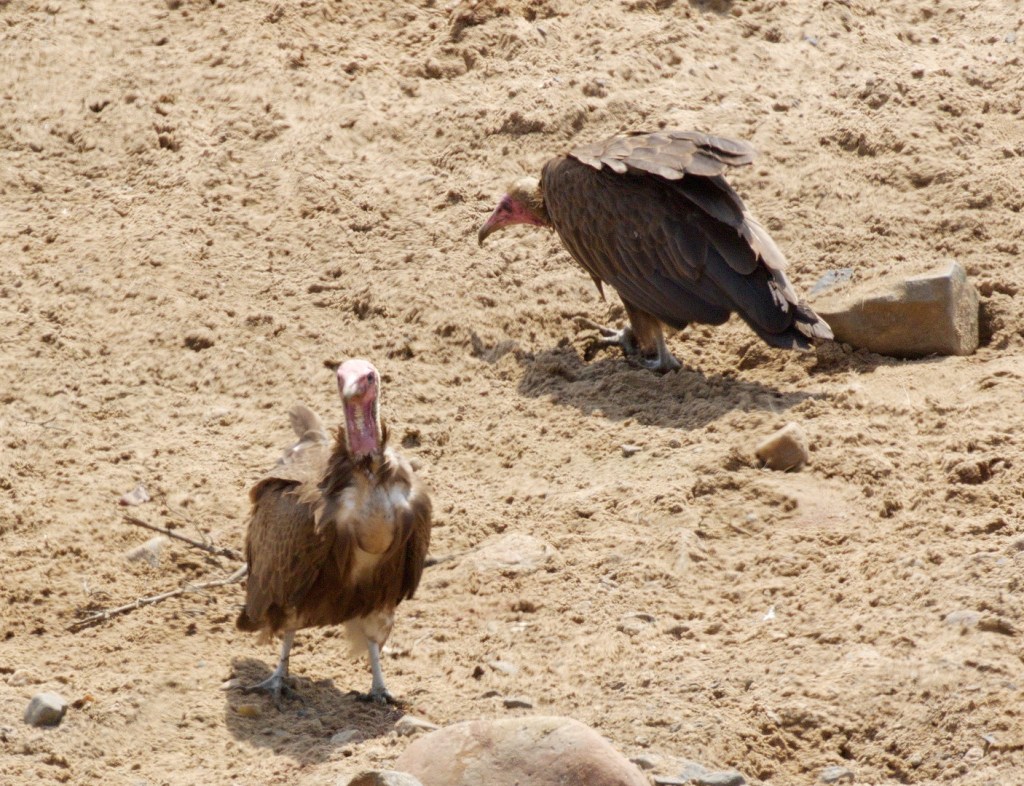
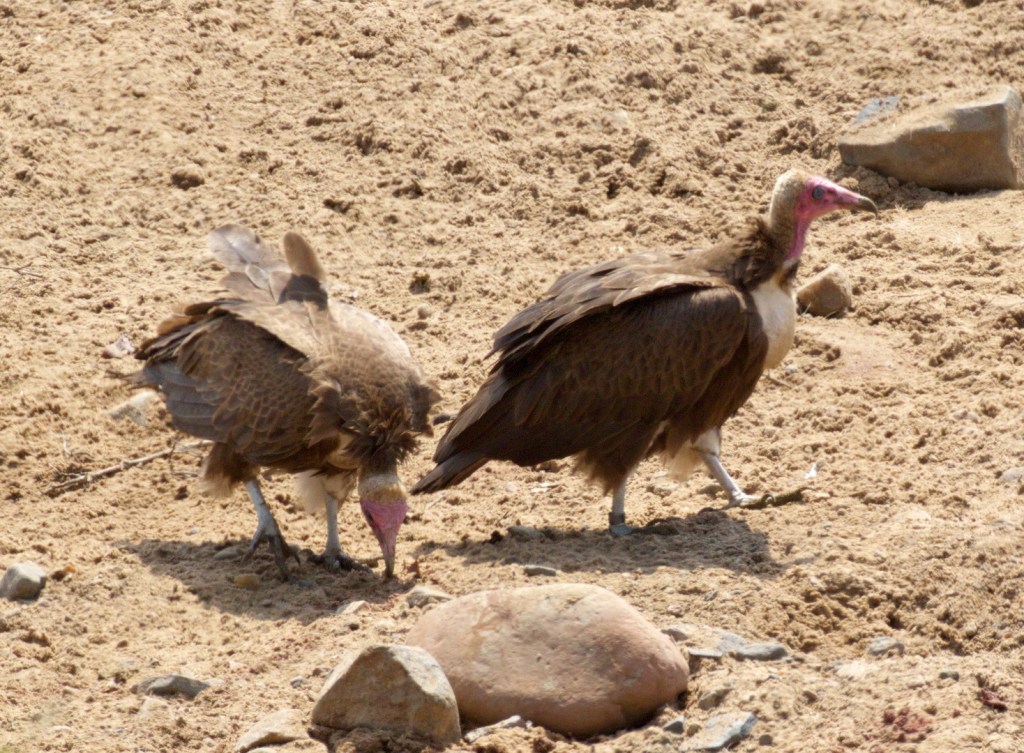
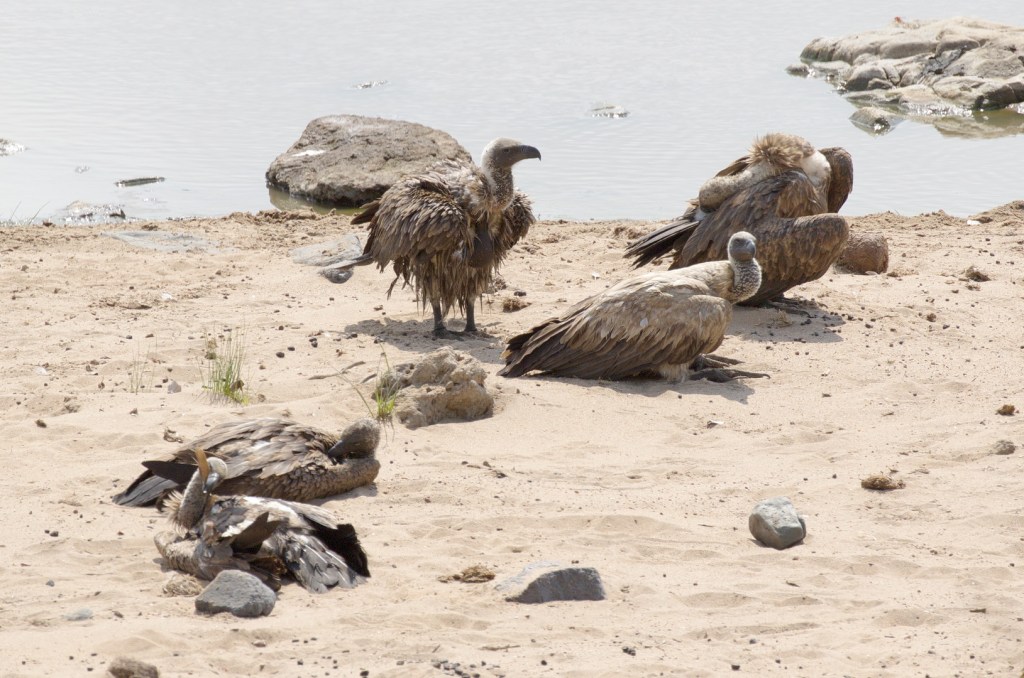
Just before reaching the Lion kill we spotted 5 male Lions clambering away from us on the opposite side of the dry river bed. Eventually we reached the spot. The poor waterbuck was lying close to our edge of the river bed – just visible through the foliage. Vultures were everywhere but on the carcass – a lioness was lying on the sand close by – perhaps that was the reason. Suddenly the vultures all piled in one on top of another. The stomach was pulled out and carried away much agro as to who will keep it. However once open it looked a soggy mess and most vultures gave up on it. There was a goodly variety of Vultures – Lappet-faced, White-backed, White-headed and Hooded. And then the hyenas arrived,
Lioness
Hooded Vulture
Hooded Vultures
Lappet-faced and White-backed Vultures
Hooded Vultures
Lioness
Vultures having a go at the stomach
White-backed Vultures
White-backed, White-headed and Hooded Vultures
White-headed Vulture
And when Hyenas arrive then chaos.
Hyena carnage
Vultures at it
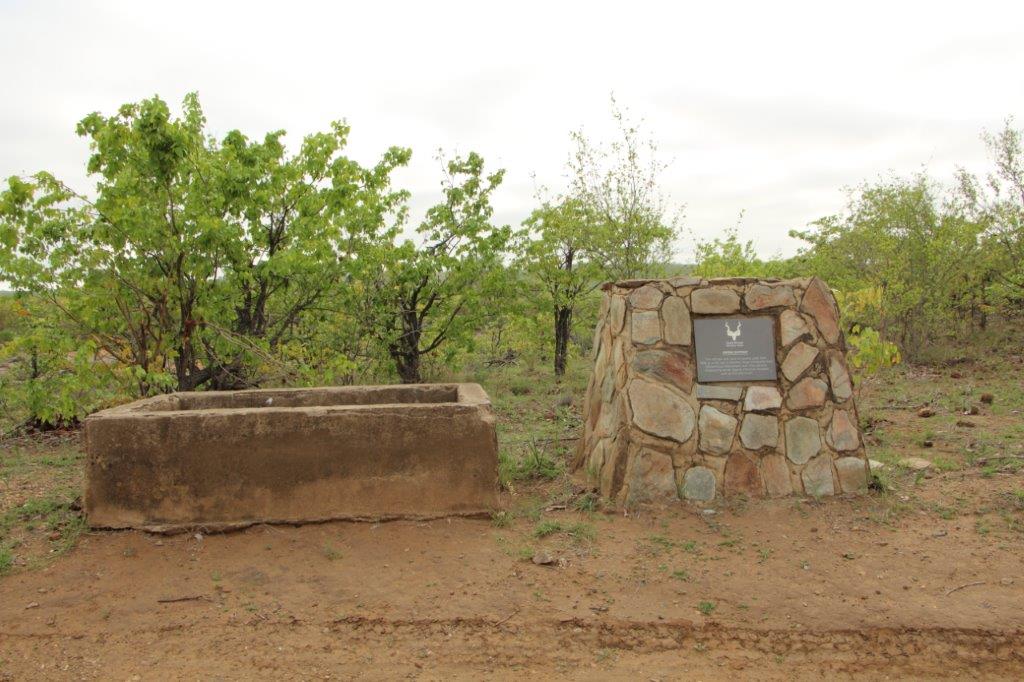
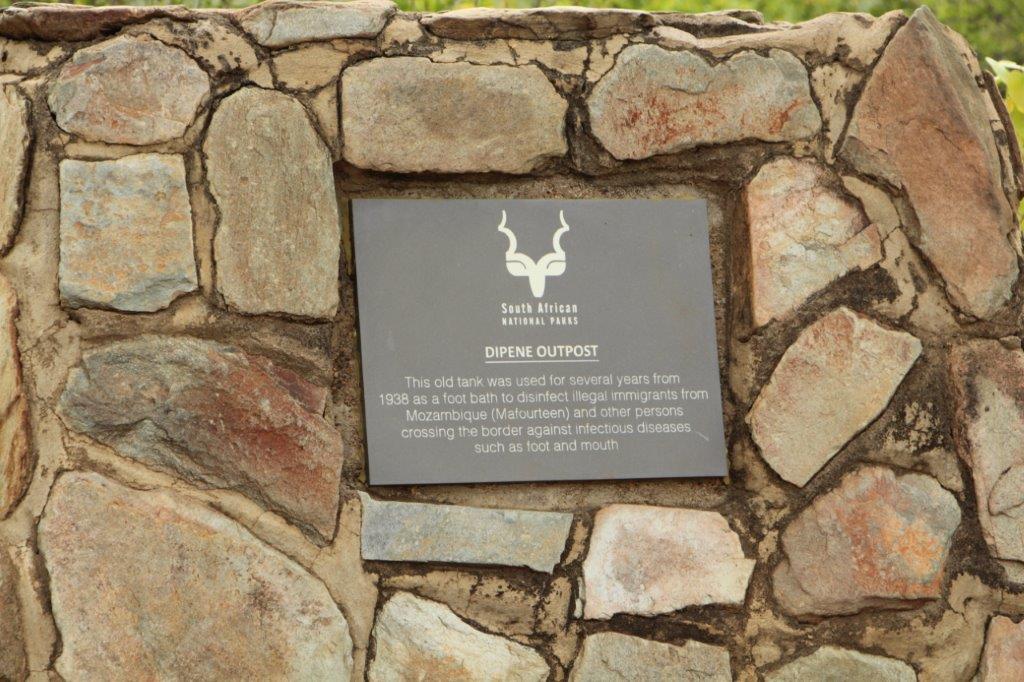
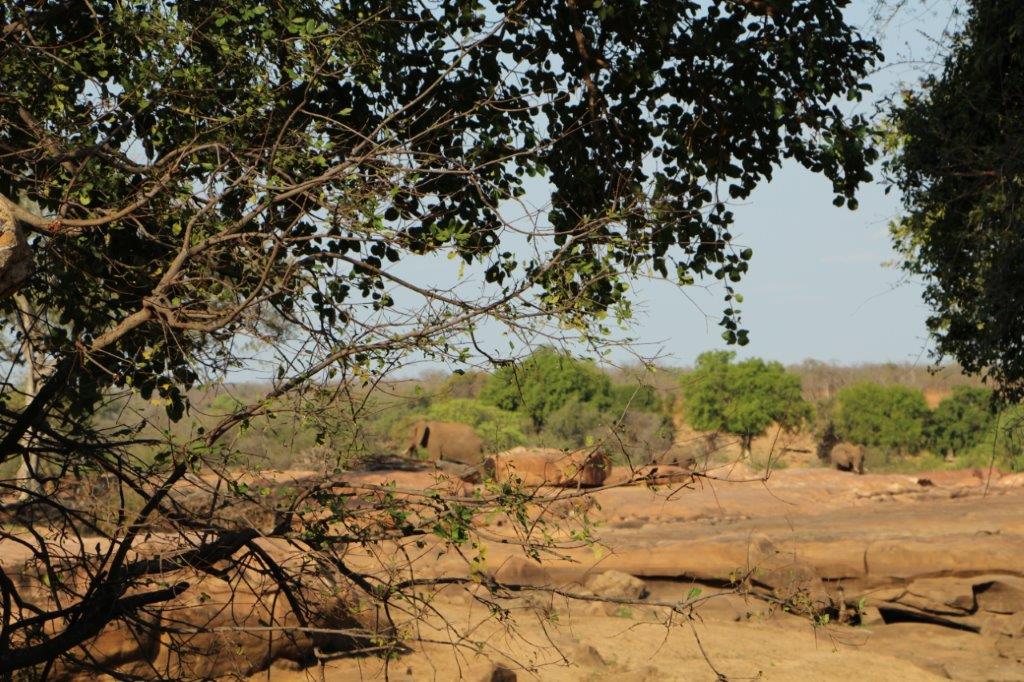
Further along the S50 you pass Dipene Outpost monument on the way to the Nyawutsi Hide. Elephant were there and so was an African Fish-Eagle. The Eagle was fluttering between branches and posing for photos.
Dipene Outpost
Dipene Outpost
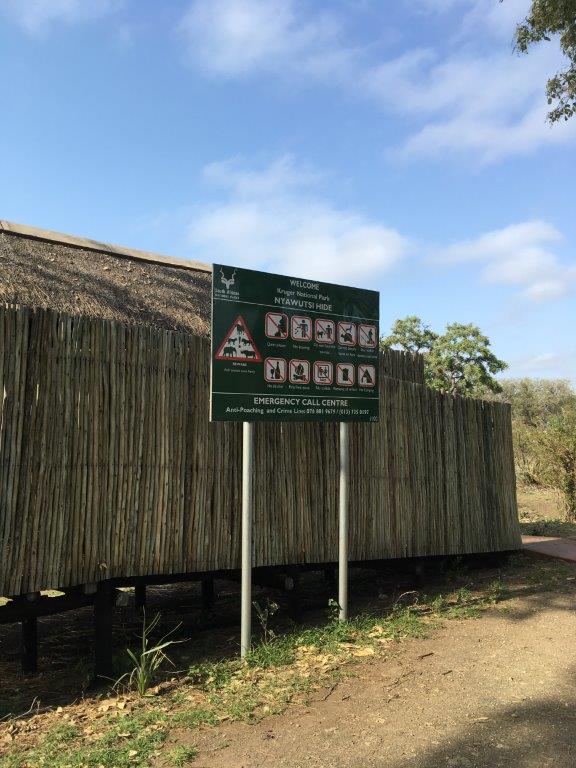
Nyawutsi Hide
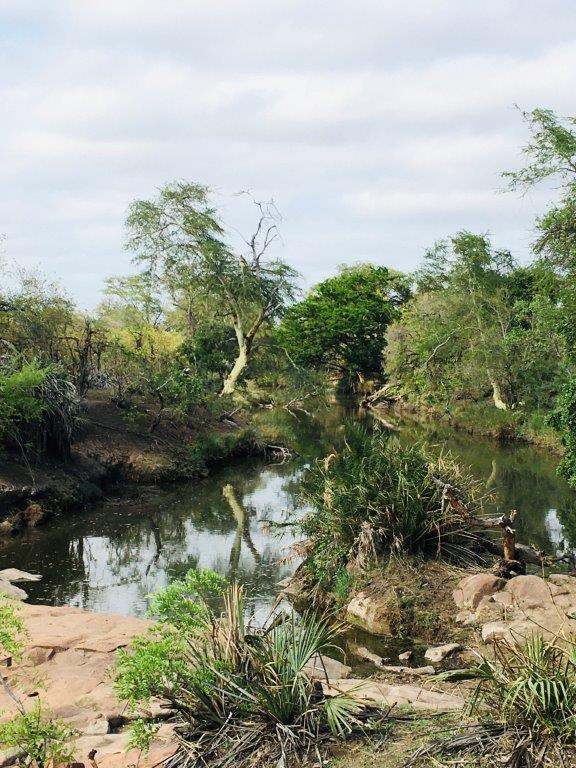
Water at Nyawutsi Hide
African Fish-Eagle
The R52 – SW of the camp is a double loop road either side of a (usually) dryish river. The Red Rocks lookout is found on the first loop. The second loop goes further to the Tshanga Lookout. The second loop is well vegetated with large trees following the both sides of the river. It was along this loop that we saw some interesting birds. One such was a raptor which challenged us to recognise. Eventually we decided it was a Booted Eagle with an unusual lump on its chest..
Booted Eagle
Other birds seen along this loop:
Broad-billed Roller
African Green Pigeon
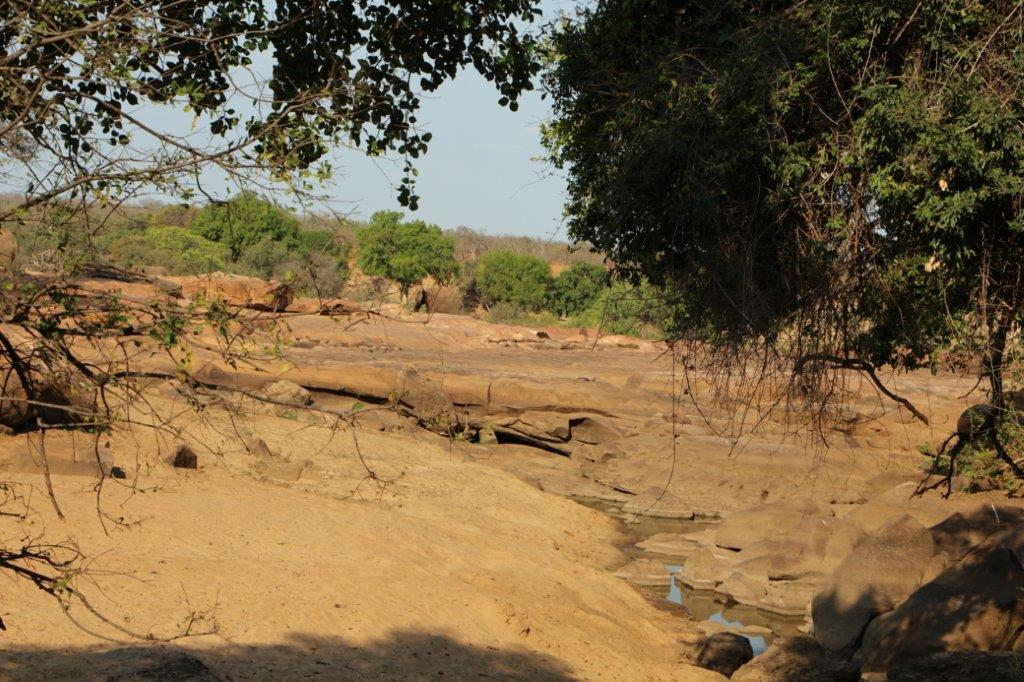
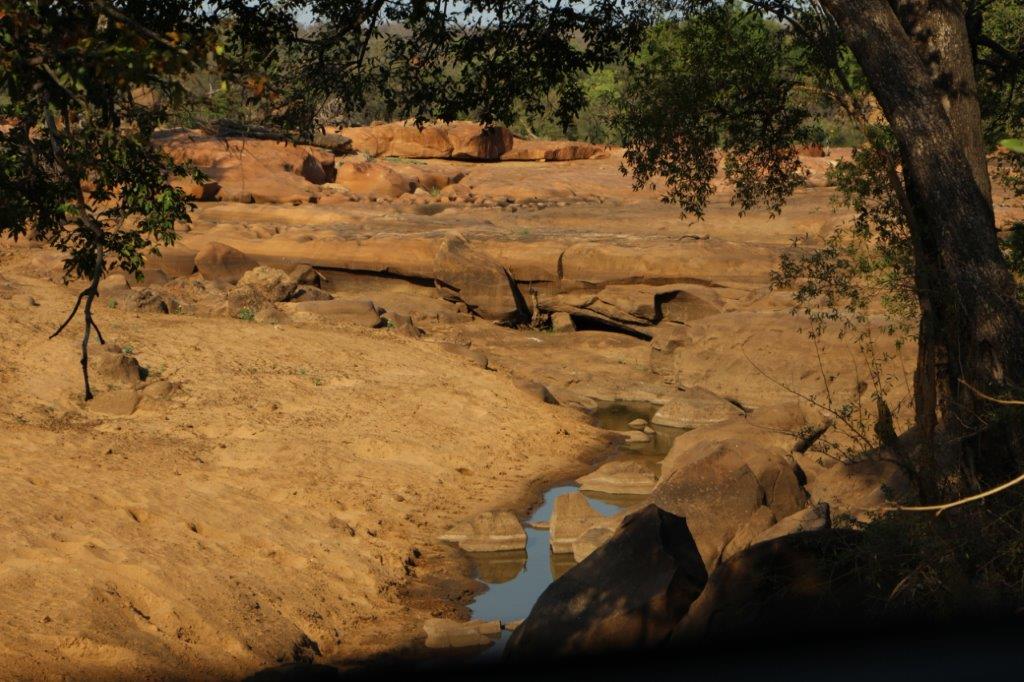
Habitat
Habitat
Habitat
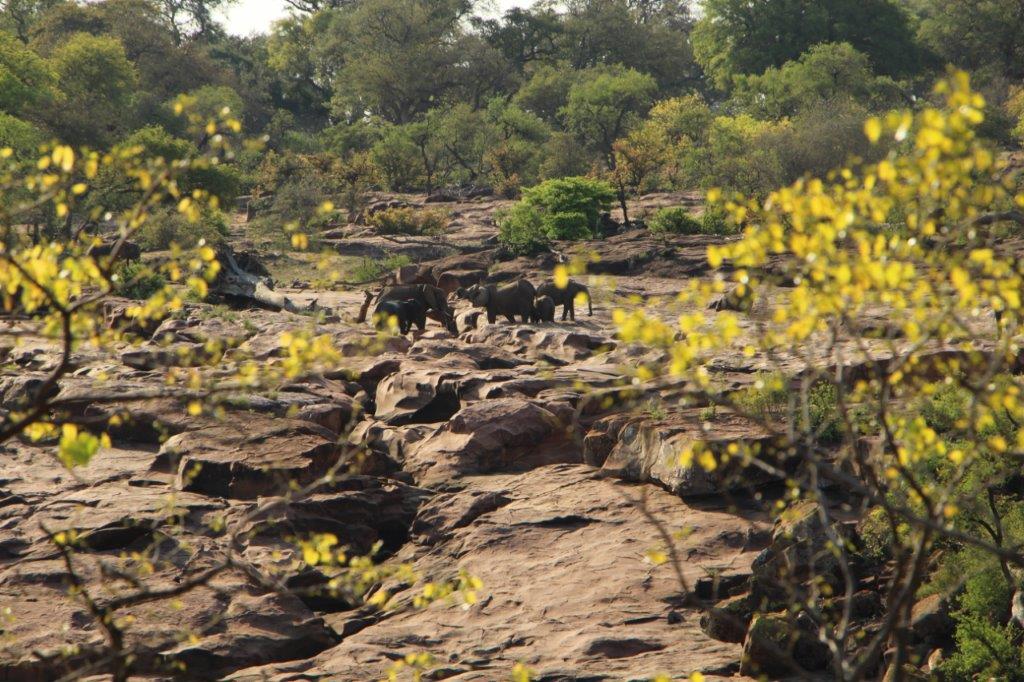
A couple of birds and the habitat. Spot the Elephant!
We visited Red Rocks on the first loop as well and saw a small herd of Elephants walking on the rocks.
Elephant on the rocks
Just north of Shingwedzi is a dirt road – the S56 – going up to the Babalala Picnic site. For many people this road is considered one of the most scenic in the park. It was certainly that for us, as well as just as exciting.
Variety of Habitats from almost pastoral meadows to steep river banks, lush with trees.
As we drove along we found Buffalo and Elephant ambling in the river bed. In one area there were over 150 Buffalo enjoying a largish pool of water. Elephants were digging for water.
Buffalo Galore
Further along there were elephant scattered in the dry river bed digging for water. Sally took a video of one Elephant at work and was surprised what she saw. Have a look. And be surprised.
Birds too were lovely to see
Arrow-marked Babbler
Purple Roller
Crested Barbet
Green-winged Pytilia
White-browed Scrub-Robin
White-bellied Sunbird
Red-billed Oxpecker
We ventured along the S56 several times and came across leopards each time. We found the one in the video several times in the same place and another in the same general but resting on a branch. Our favourite cat.
Puss ‘n Boots
In the three days we were in Shingwedzi we recorded 112 different bird species. Click on the link to see our list.
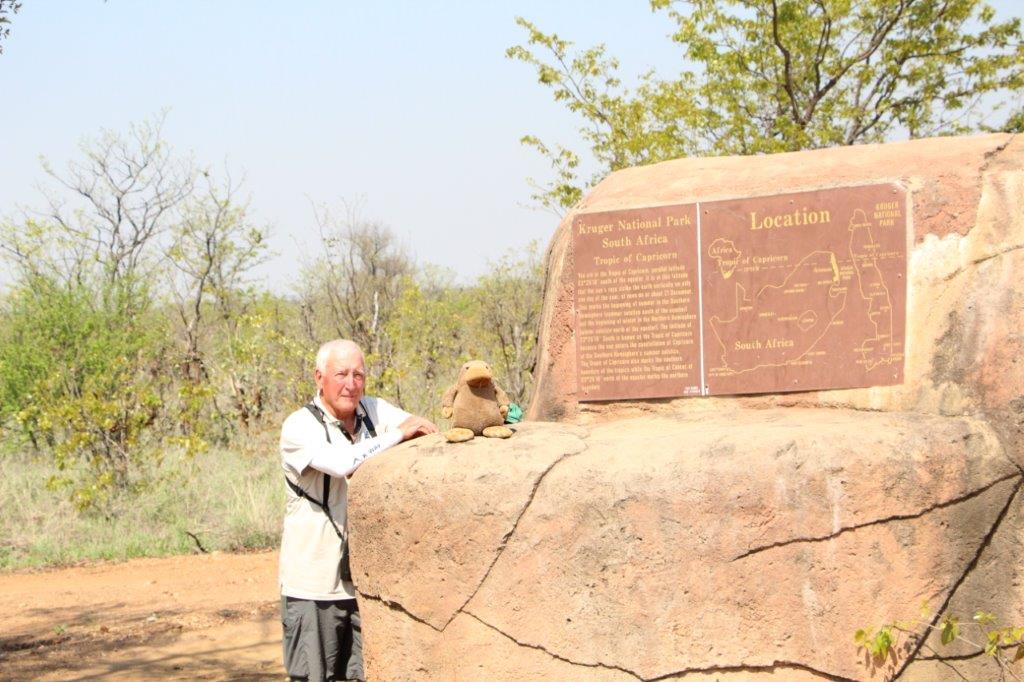
Splat at the Tropic of Capricorn near Tsendze camp.
Our next camp was Tsendze. A well treed campsite only. No electric power but solar power for hot water and a shared freezer.
The camp is right next door to the Mooiplaas picnic site and about 8 kms from Mopani where check-in takes place. It is possible to pre-book a campsite we are told and we would argue that some of the best sites are Numbers, 1,14,17,18 22, and 25. However much depends on whether you need sun for your solar panels. Some sites are large and suitable for 2 or 3 off-road trailers or caravans.
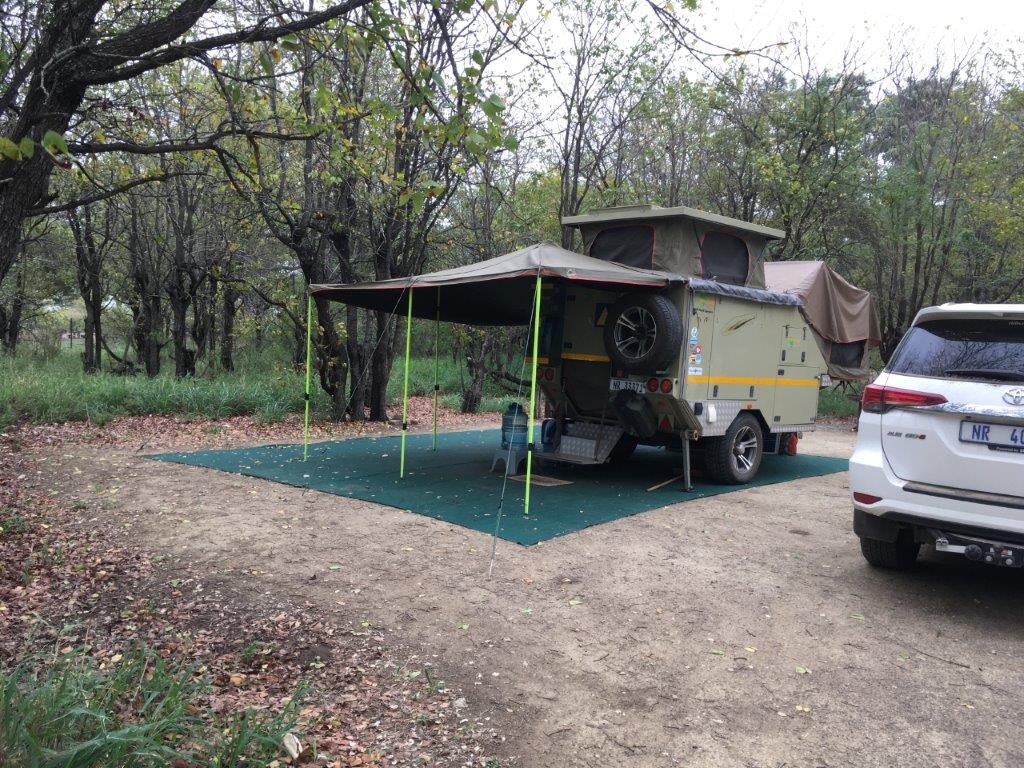
The following photos show our site among many others and gives you an impression of the vegetation in the camp.
Our site – not too shaded so we can use our solar panels
One of the 2 ablutions – each male and female.
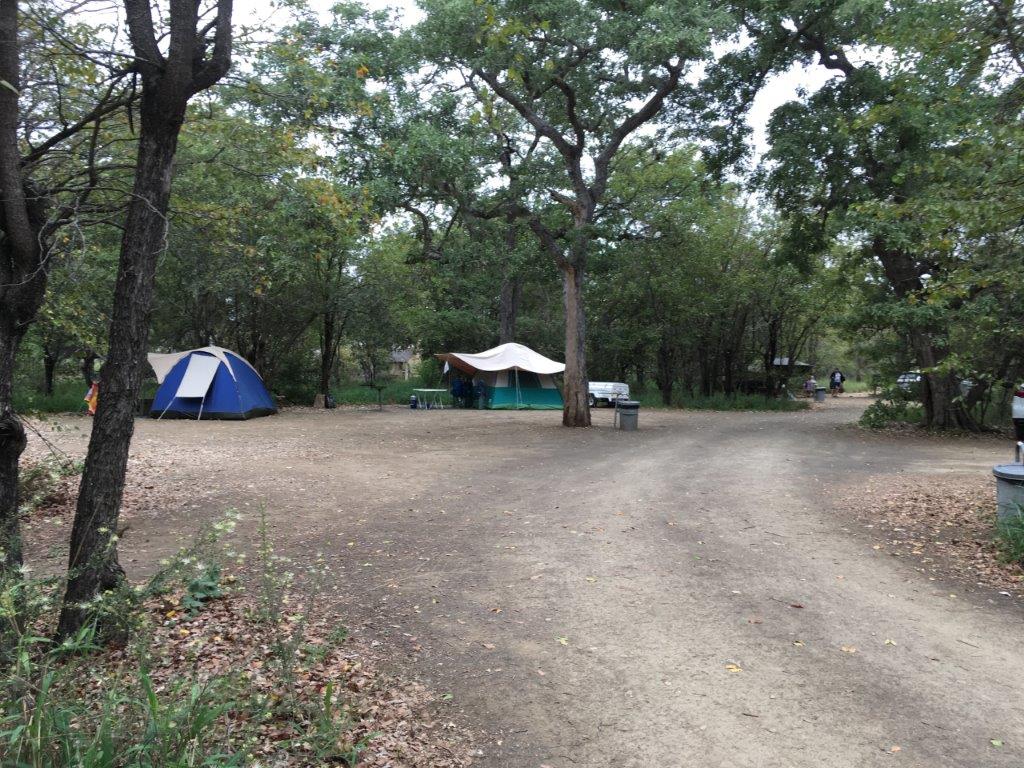
Neighbouring site
Habitat in the camp grounds
Habitat in the camp grounds
Habitat in the camp grounds
Habitat in the camp grounds
The camp is managed by Elena Mona and Rodgers Hobyane. They are the best managers in the Park by far – in our opinion. Every evening they come round to check everything is ok. They are social and helpful.
Tsendze camp is famous for its owls. We have seen and heard African Barred Owlet, Pearl-spotted Owlet and African Scops Owl there in the past.
This time was no different. In fact we were greeted by an African Barred Owlet as we set up camp – number 25. The Owlet came with 3 metres and watched us set up. Magic welcome. It checked in on us every day we were there.
In fact there were a pair breeding in a tree quite close by. At night we heard their call as well as that of the African Scops Owl and occasionally the Pearl Spotted Owlet.
African Barred Owlet
The Mooiplaas picnic site, literally next to the camp, is one of our favourite tea stops. It is run by Phineous – another very helpful person and well knowledged on the birds there. Again well treed and shady with a shaded lookout over the Tsendze river.
One morning we visited and Phineous showed us where to see the African Scops Owl. He had heard it early morning and had searched for it till he found it. Such a small Owl and well camouflaged to hide next to the bark of any tree.
African Scops Owl.
It was not till we got to Tsendze that we saw our first Kori Bustard – being bombed by a Crowned Lapwing as it so happened.
Kori Bustard
Kori Bustard and bombing Crowned Lapwing
Kori Bustard trying to look big – or is it fighting back.
Here is a quick slideshow of some of the habitat in and around Tsendze.
Driving along the H14 towards Phalaborwa gate, Sally heard a bird call which she recognised but could not quite put her finger on it immediately. We stopped and it kept calling from a distance. Eventually moving back and forward the bird was spotted and we immediately knew what it was – the familiar Coocuk sound which did not immediately identify – An African Cuckoo.
African Coocuck.
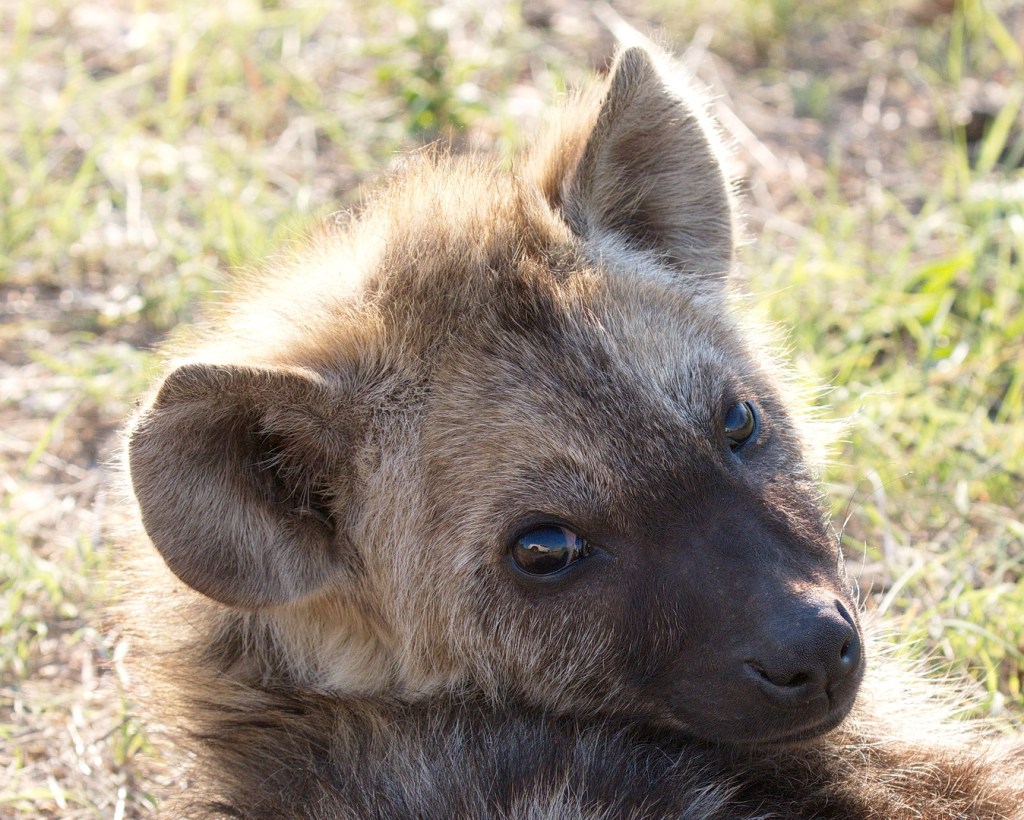
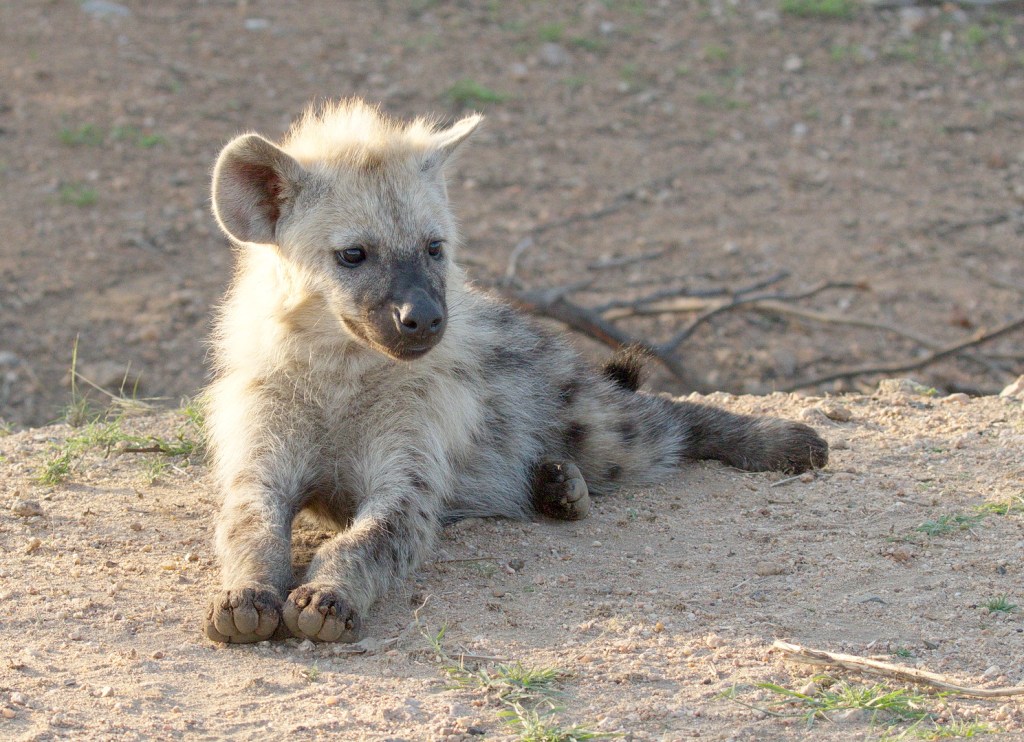
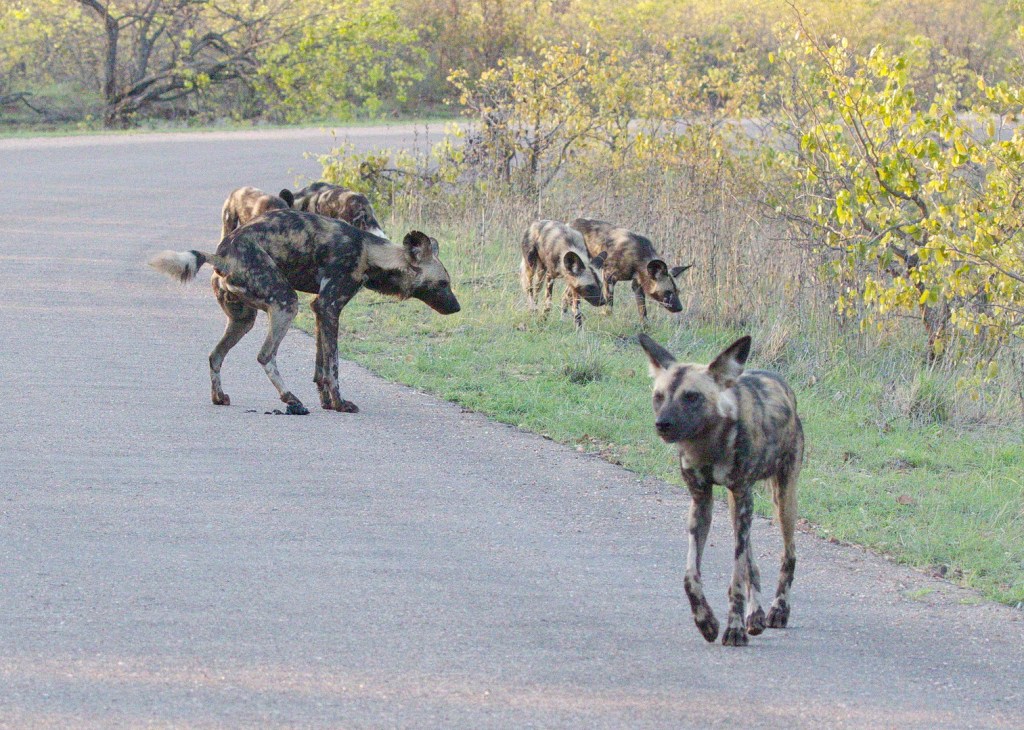
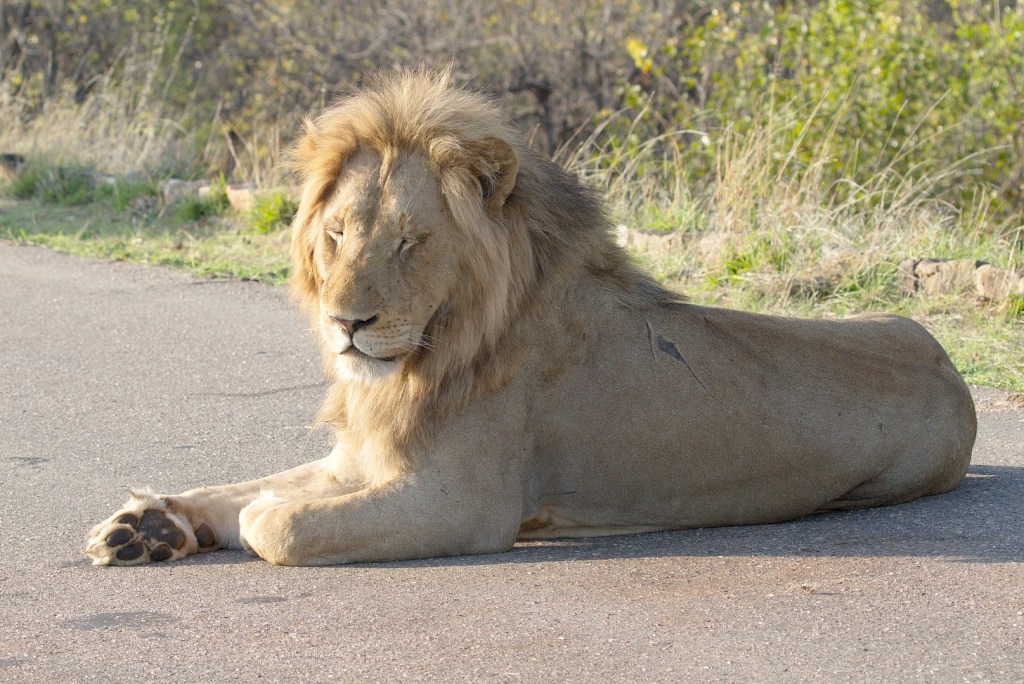
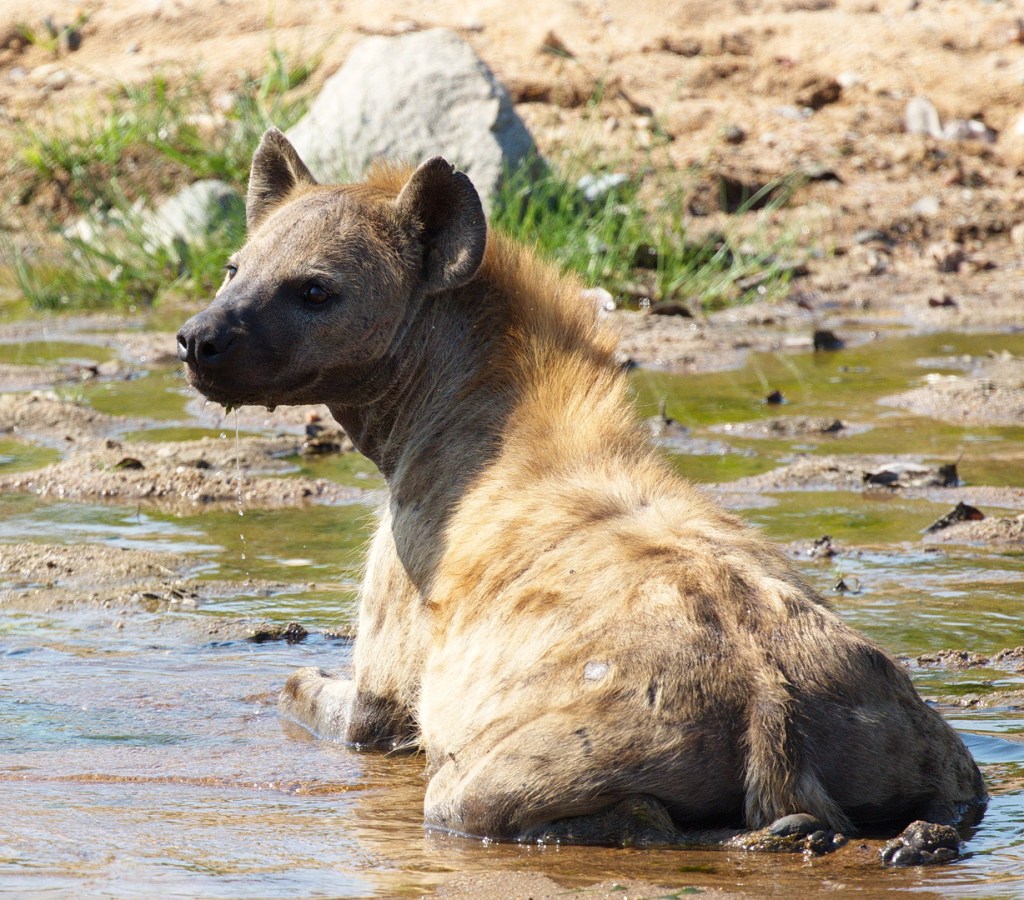
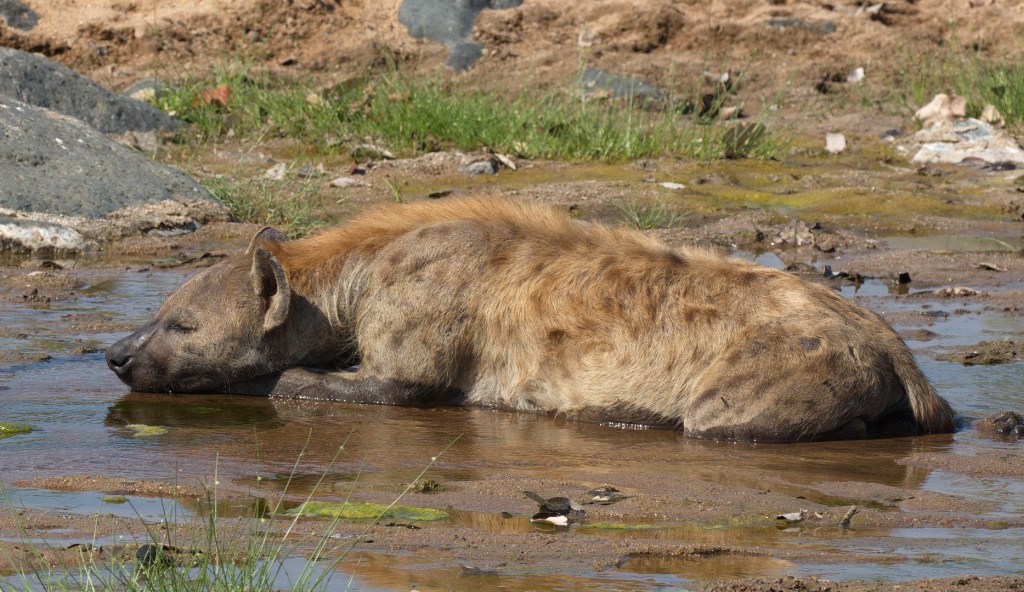
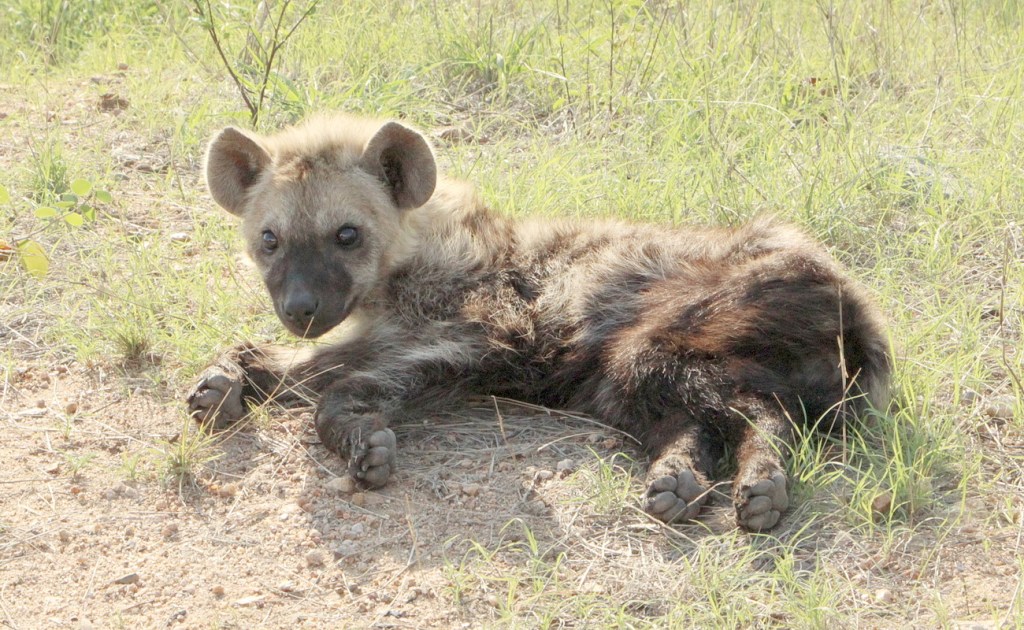
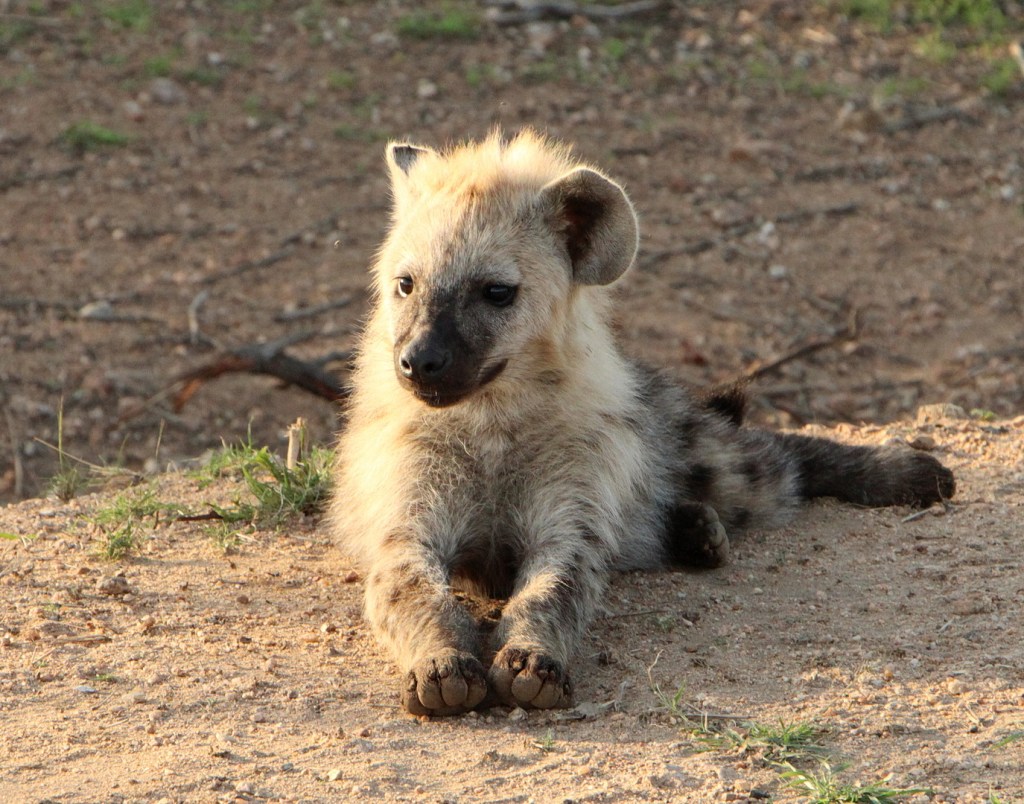
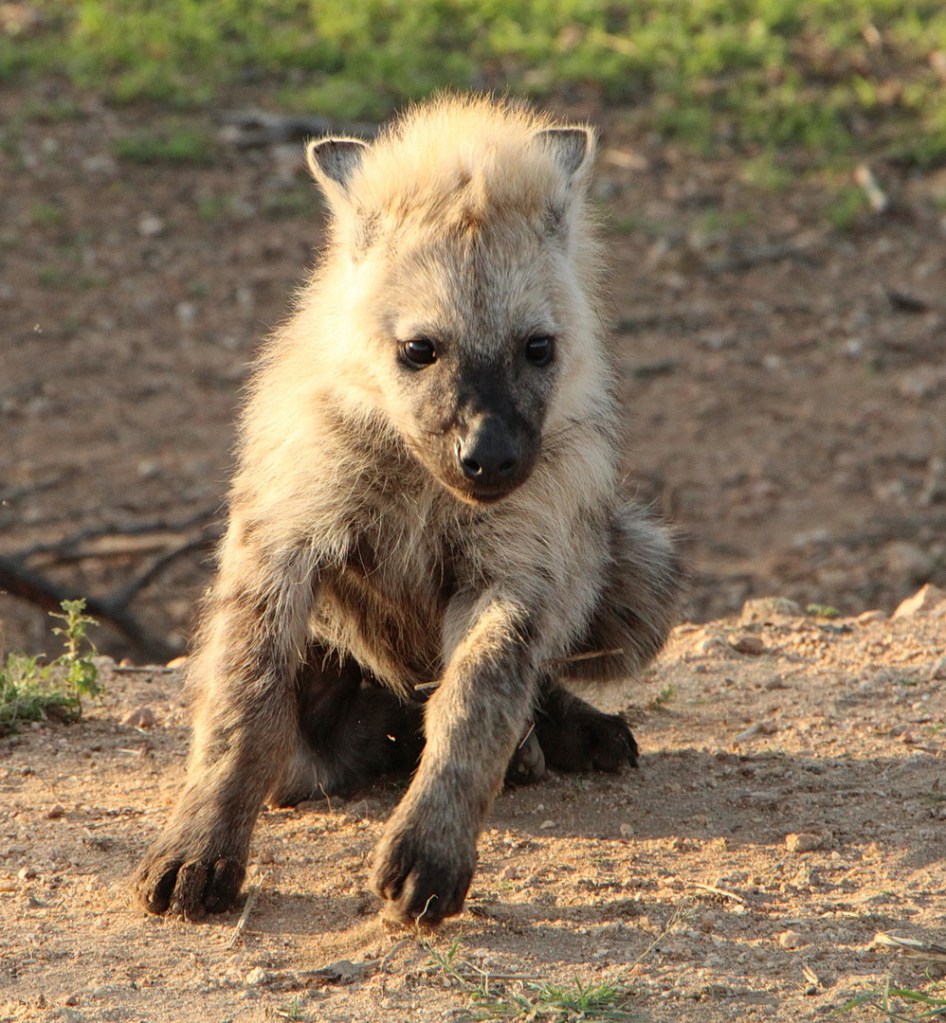
The H14 at that time provided us with some interesting memories. At separate places – quite close to each other – there were Hyenas – mainly curious pups. Very cute looking and very inquisitive – even inspecting the underside of our car. Further along seven Wild Dogs appeared on the road and the leader took them alongside our car on their way to somewhere. Then there was a Grand-daddy of a Lion imperiously lying on the road daring anyone to pass. After that we took a loop down next to some water and there in the water were Hyenas having a relaxing bath. On the way back another pair of Lions were seen in the foliage by the road sleeping off a wild night by the looks of them – well zonked out.
Hyena pups, Wild Dogs, Lion, Bathing Hyenas and more Lions.
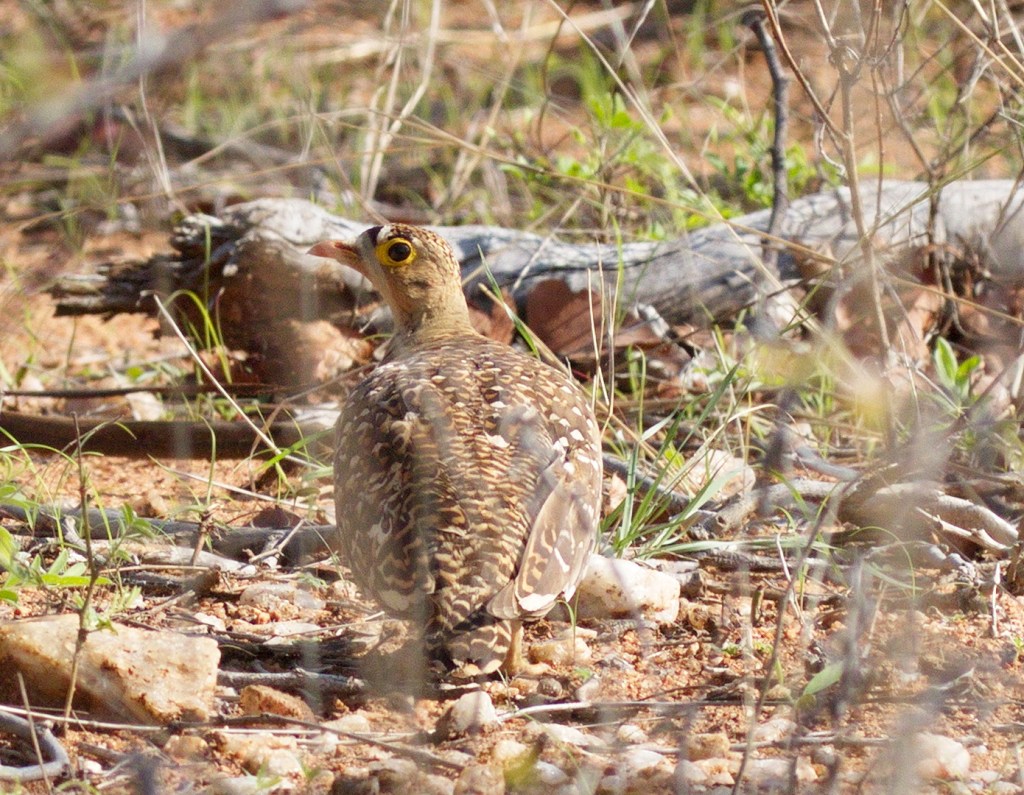
Just after we turned around to come back we ventured off on a side road. Not far along Double-banded Sandgrouses popped across the road in front of us. The road eventually dwindling out at a river crossing which we were not prepared/supposed to take. Returning we had sightings of some raptors too.
Double-banded Sandgrouse
Double-banded Sandgrouse
River Crossing
Tagged Martial Eagle
U.I. Eagle
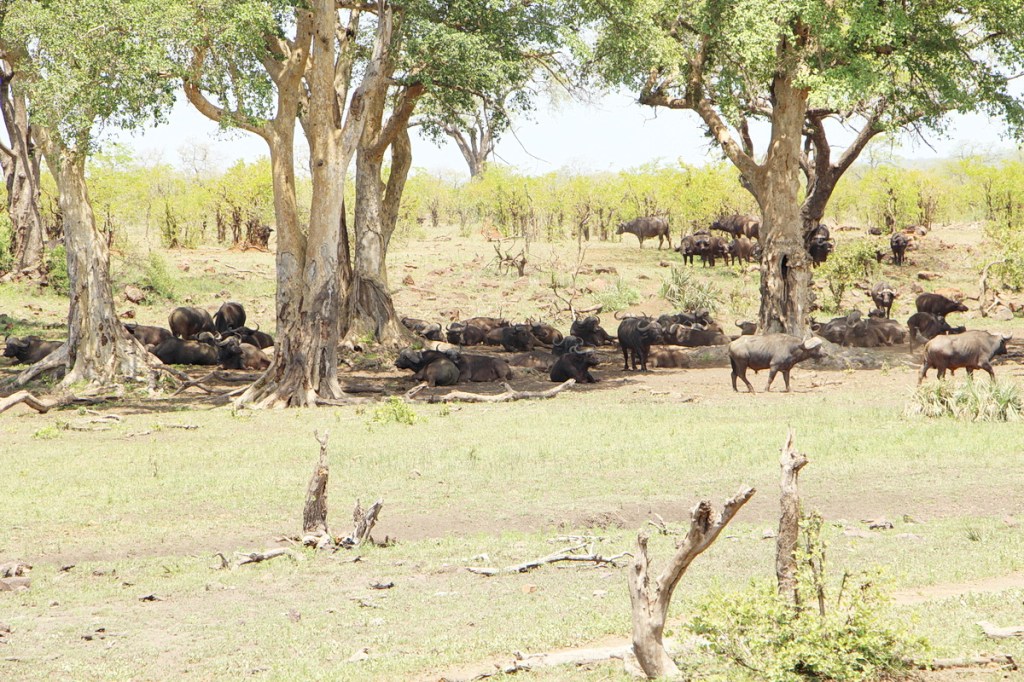
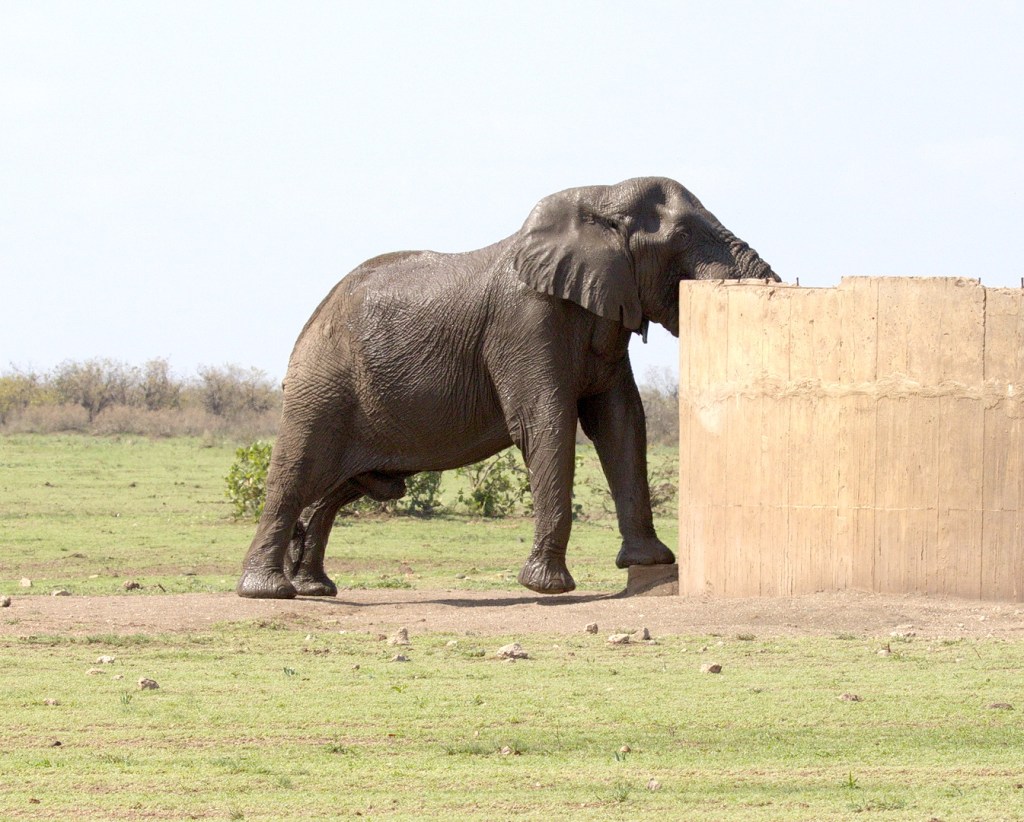
There were many Buffalo and Elephant sightings alongside all the roads we explores. The Buffalo in large herds. One Elephant also took advantage of a stepping stone to access water from a storage tank. Another a nearby tree to have a good scratch and yet another with a forward facing floppy ear.
Buffalo and Elephants
One morning we went to Mopani to walk below the camp alongside Pioneer Dam. As we turned off the main road we spotted three Cheetah – a mother and two youngsters. Lovely unexpected sighting. They had obviously been drinking at a waterhole right by the road up to Mopani. They were trotting off at a distance so we enjoyed watching them disappear and no photos were taken.
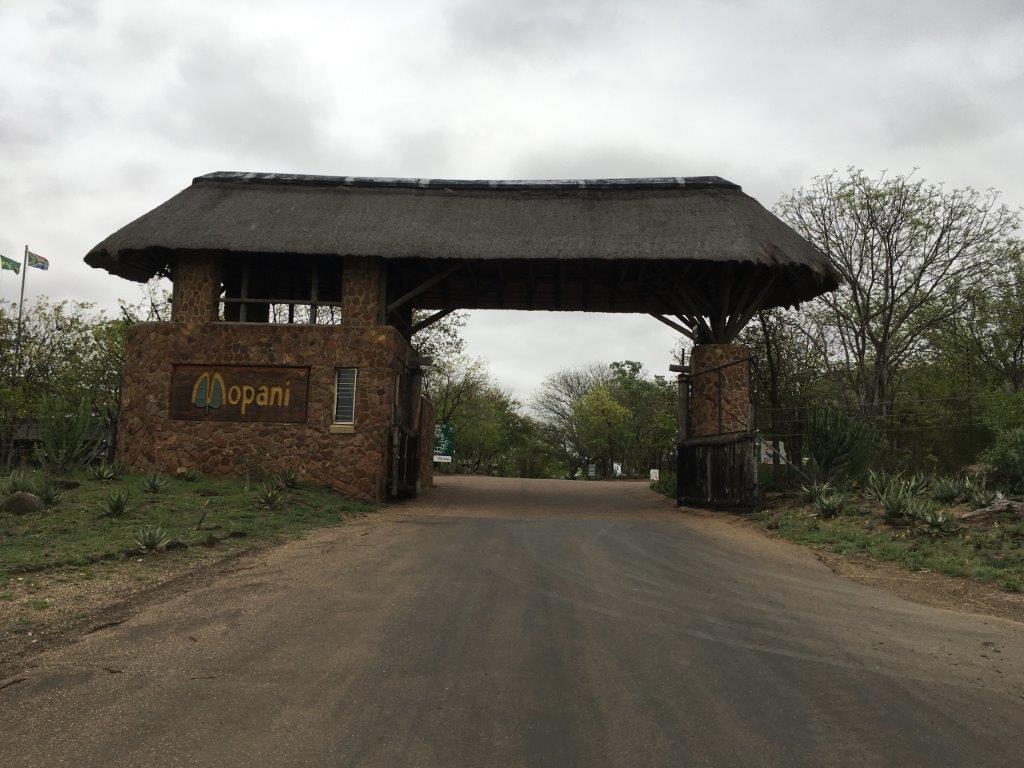
Entrance into Mopani camp
Mopani pool
Pioneer Dam from Mopani Camp restaurant
We also visited the other side of Pioneer dam and the hide there. Unfortunately there was little to see from the hide. On the way you cross the Tsendze river on a low level bridge. At the bridge we have often seen Black Crake scurrying around on the bridge and in the vegetation beside it. Again they were there and also a Lapsmith (try the mouthful Blacksmith Lapwing) chick. A Marabou Stork was also hanging around with the Hippos on the other side.
Lapsmith chick
Marabou Stork
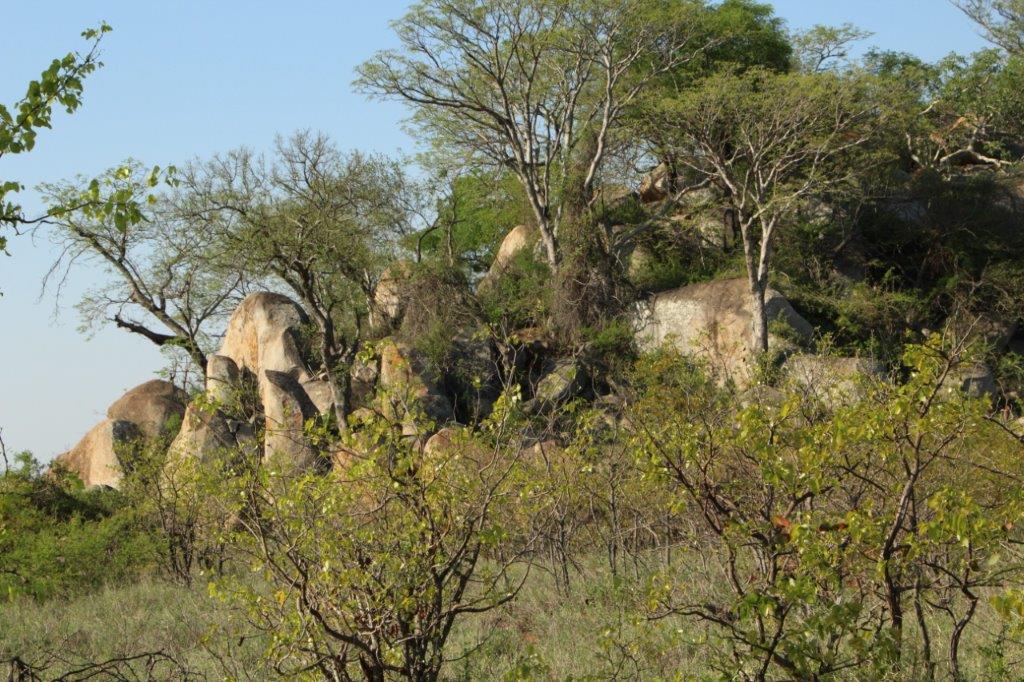
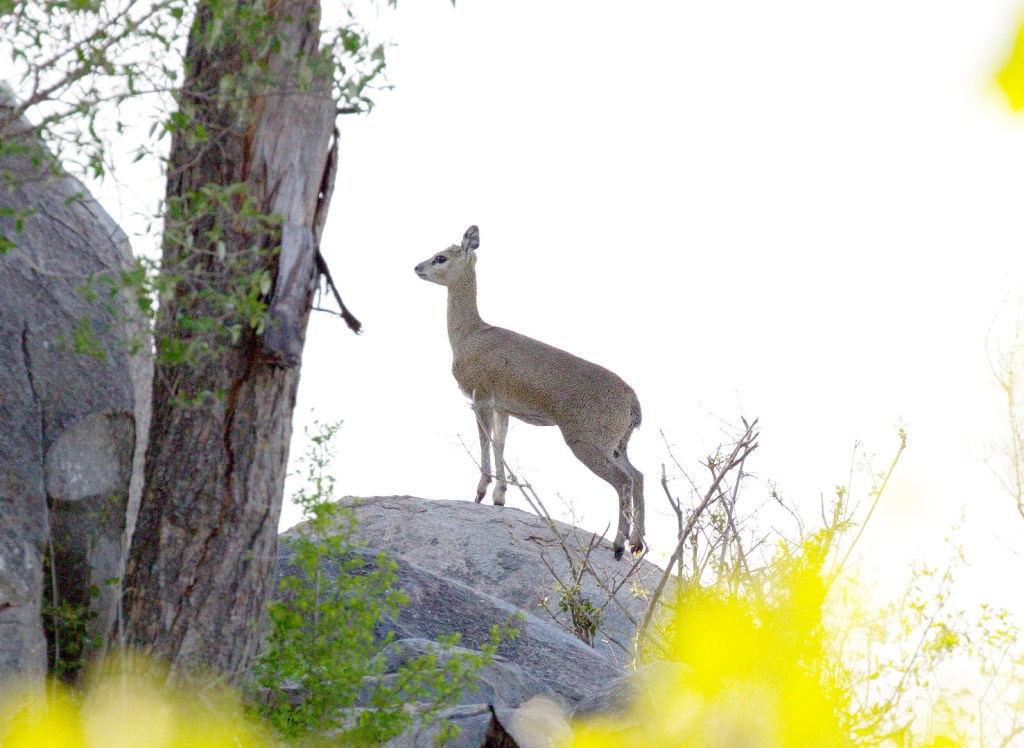
One late afternoon we followed this same road down to its dead end at Stapelkop Dam hoping to see lots of water birds. The vegetation along the way is pretty flat except for an outcrop of boulders about half way along. We always stop there to have a good look for birds and the occasional Klipspringer. A Red-headed Weaver was seen but little else. We had the same scenario at the Dam – just a Water Thick-knee. It was on the way back that we had an unexpected sighting at the boulders. I don’t know how Sally saw it as it was well camouflaged – a Spotted Eagle-Owl. And then we found the Klipspringer that we were looking for earlier.
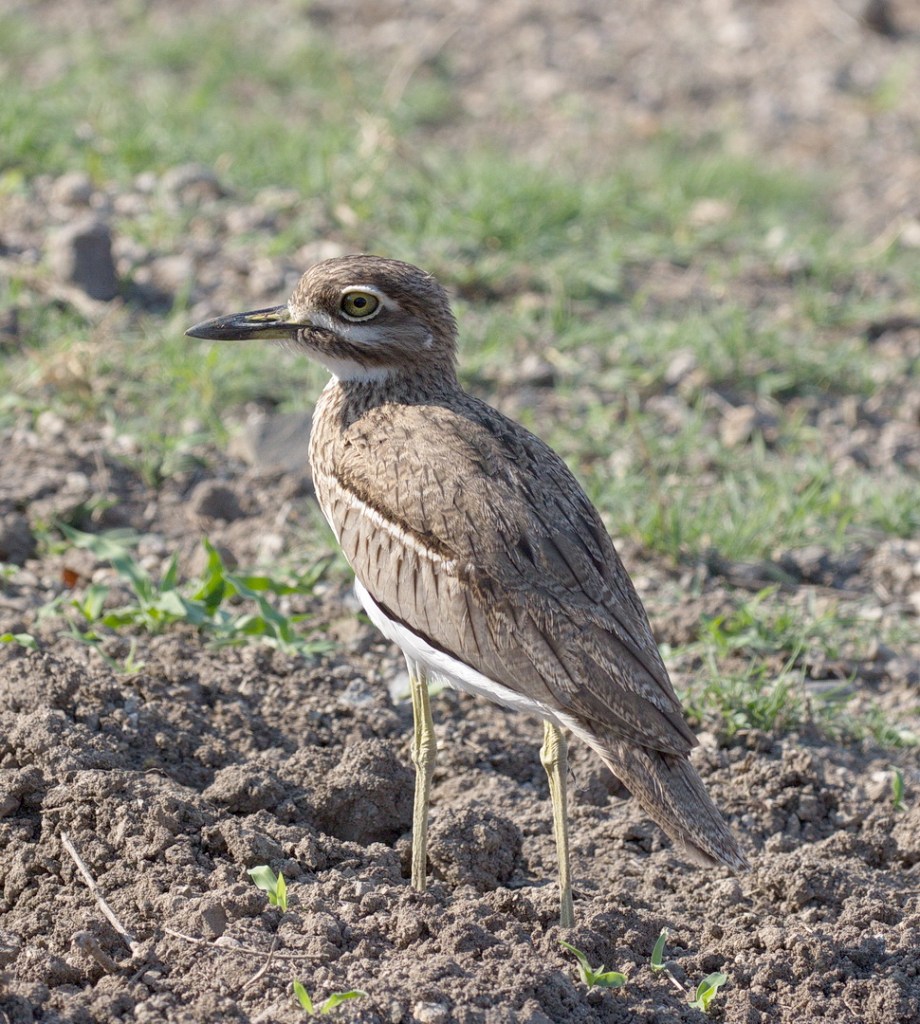
Water Thick-knee at Stapelkop Dam
The granite outcrop
The side of the granite outcrop where Sally spotted the Owl
The granite outcrop
Klipspringer silhouette
Klipspringer
Klipspringer
Spotted Eagle-Owl giving us the evil eye.
On another morning we took the S50 along the wetlands up to the Shibavantsengele Lookout and then to the Grootvlei Dam. We always enjoy this section of the road. Buffalo and Elephant along the wetland section. Further along we always seem to come across Red-crested Korhaans often making their call (the click song as I call it) and sometimes their flight display. Now that is special. At the end of their call they suddenly take flight – vertically and then at about 10 metres they drop out of the sky like those acrobatic airplanes falling erratically to ground. At the last second they pull out of their dive and land. We were not fortunate to see that display this time but we did video their click song.
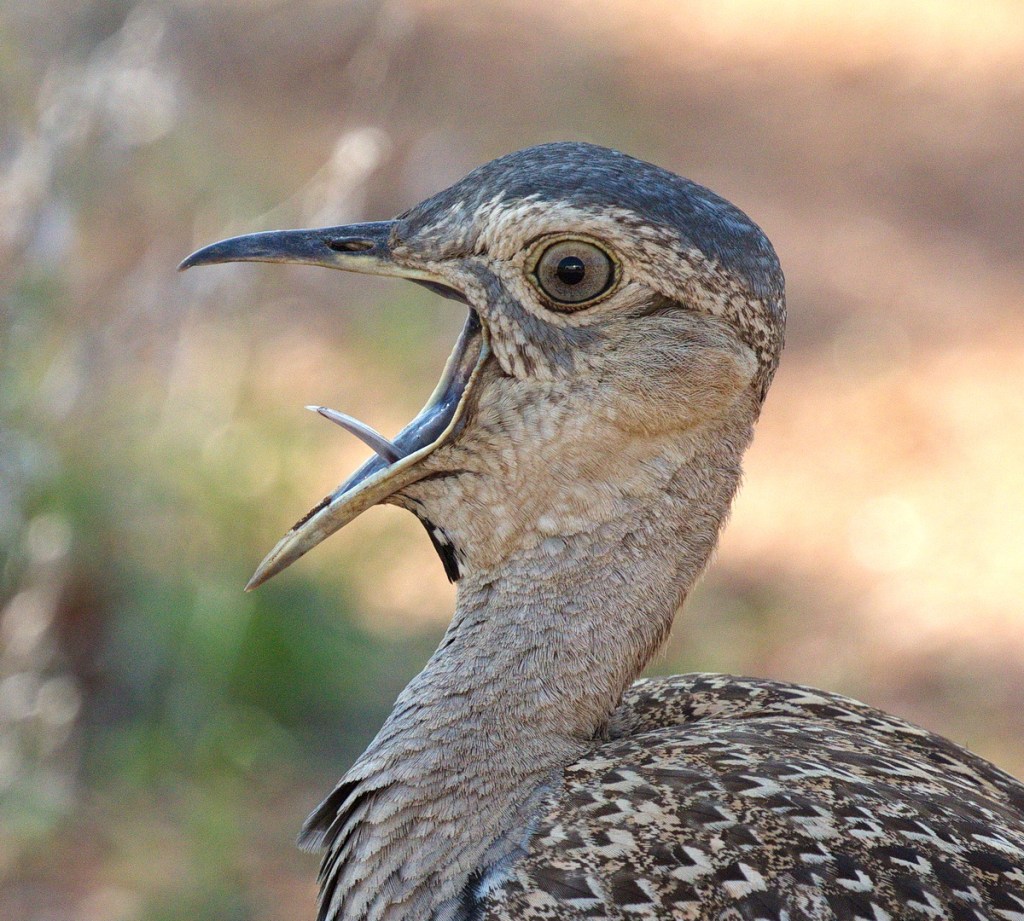
Why it is called the Red-crested Korhaan
Its use of tongue to make the sounds of the Click song
Red-crested Korhaan
Red-crested Korhaan and its version of the Click song.
Grootvlei Dam is off the beaten track – one of those places we like to visit. Here we saw a Grey Heron flying over, African Spoonbills, Curlew Sandpipers, African Pied Wagtails, an African Spoonbill between an African Openbill and a Yellow-billed Stork.
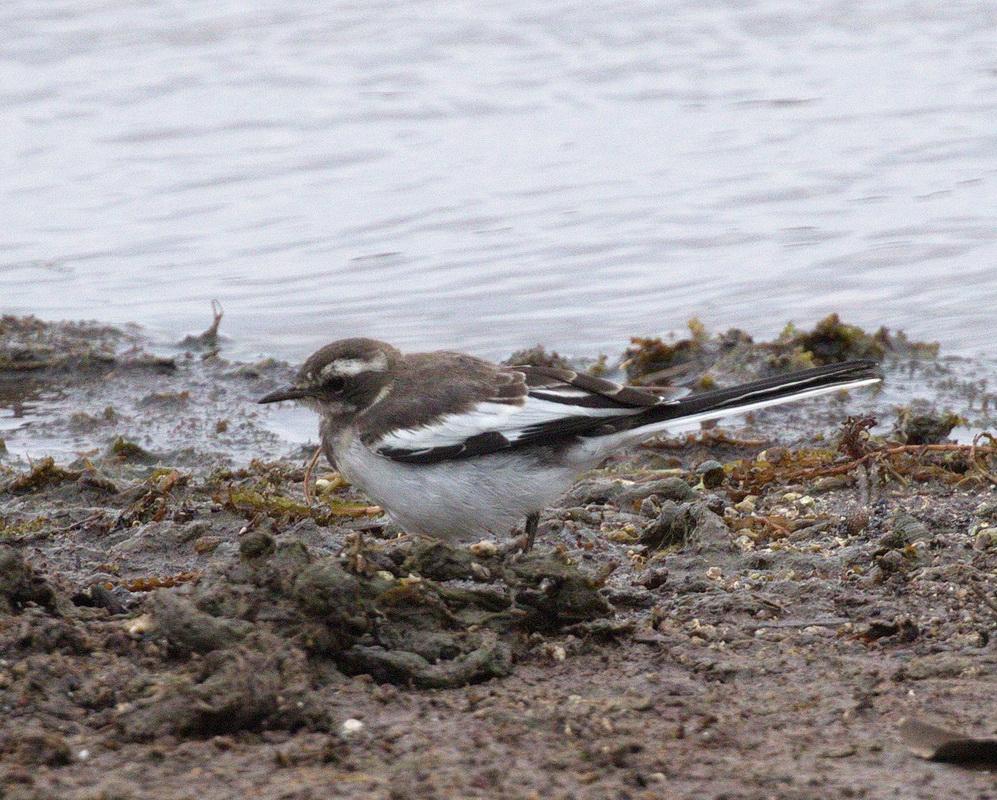
African Pied Wagtail
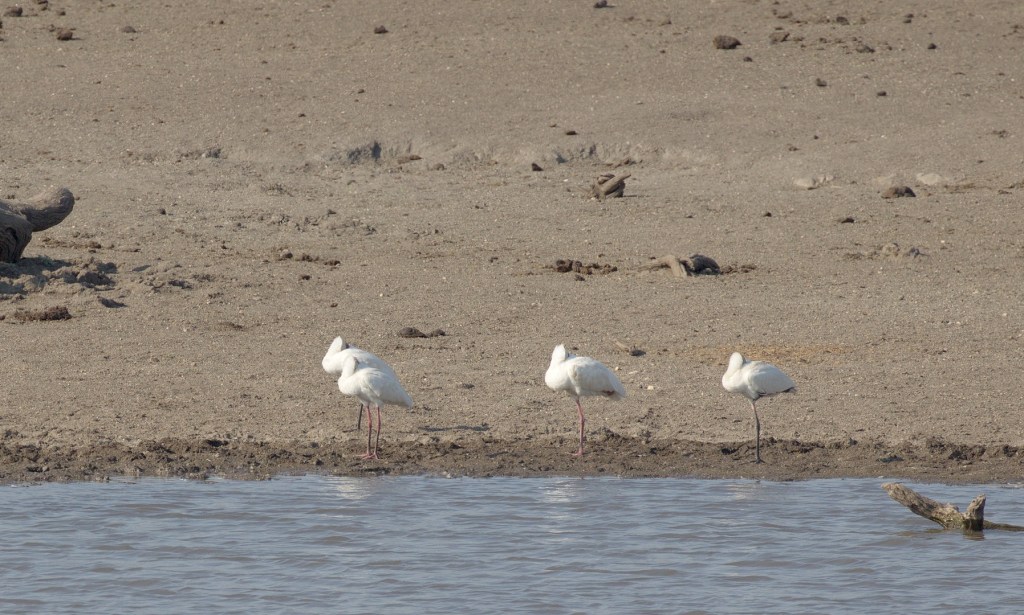
African Spoonbill
African Spoonbills
Curlew Sandpiper
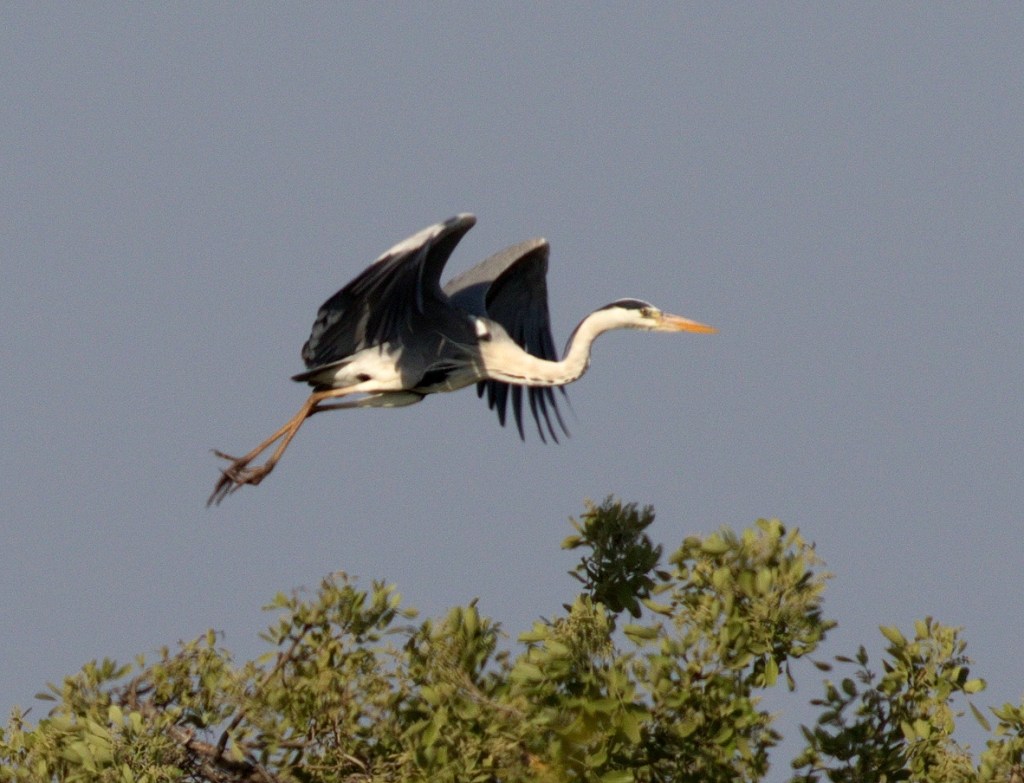
Grey Heron
L to R: African Openbill African Spoonbill and a Yellow-billed Stork
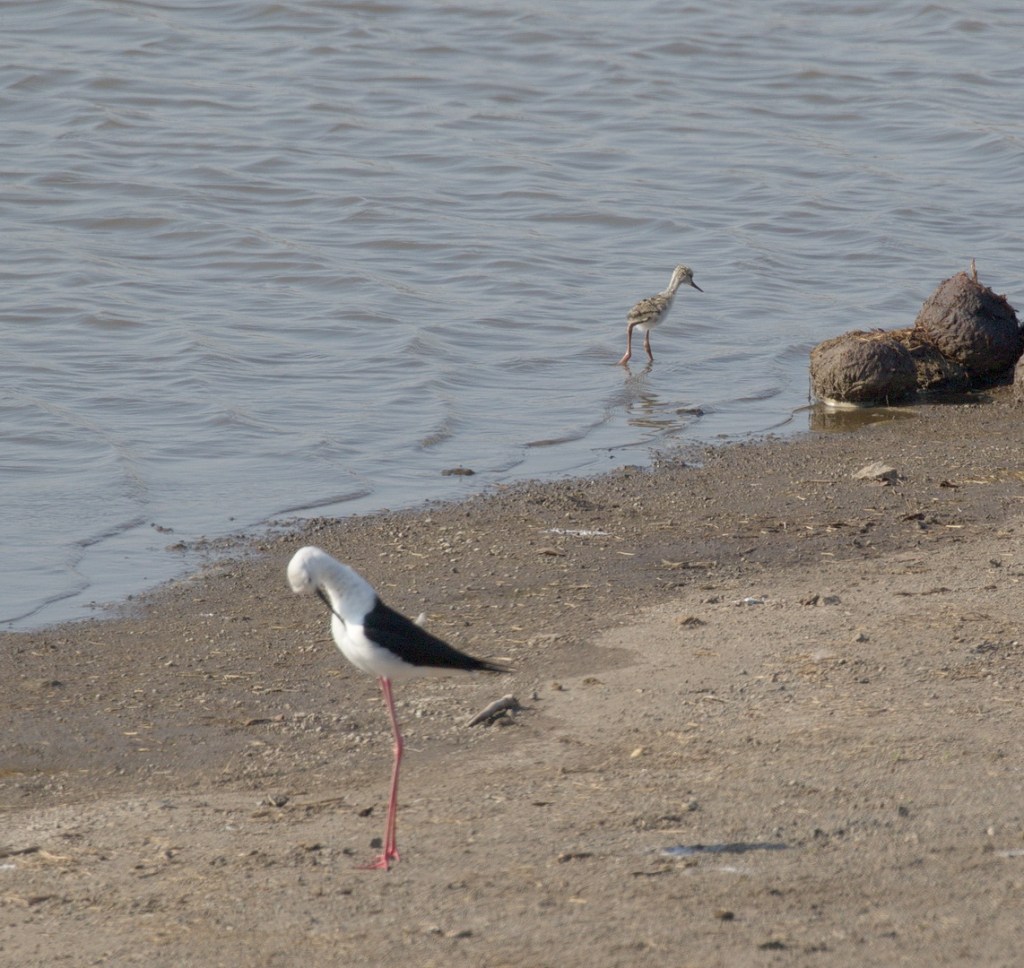
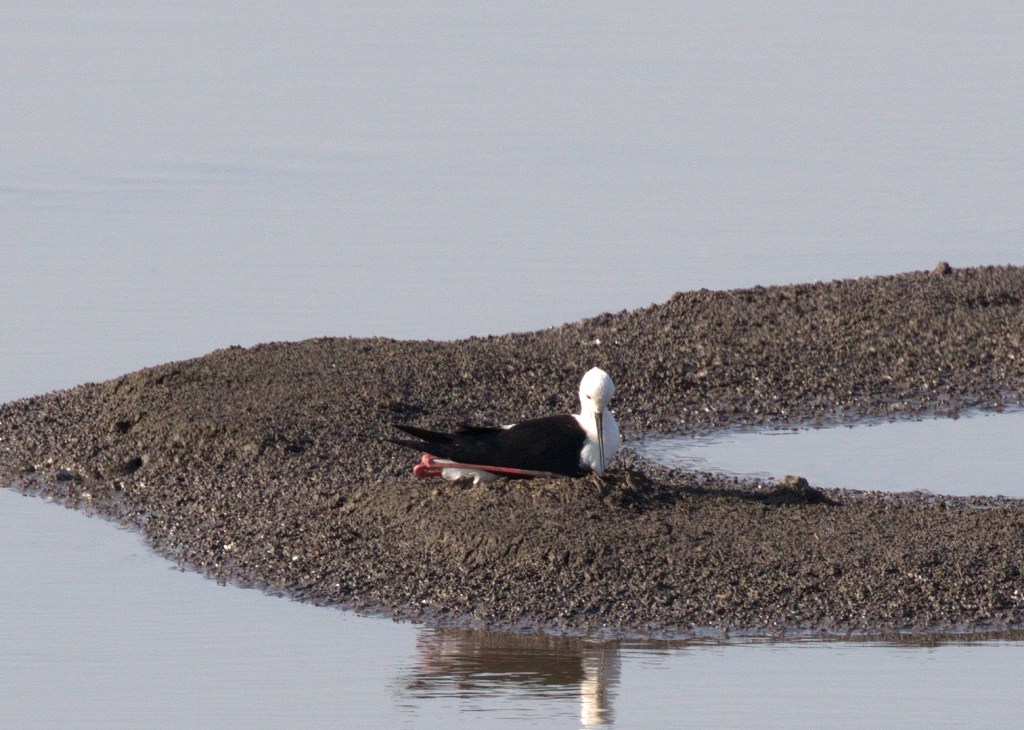
A pair of Black-winged Stilts were interesting to watch as they swapped over nest duties.
Photos of birds seen in the area include:
Black-bellied Bustard
Black-bellied Bustard
Black-crowned Tchagra
Ringed Martial Eagle
Chestnut-backed Sparrow-Lark
Chestnut-backed Sparrow-Lark
European Bee-eater
European Bee-eater
European Bee-eater
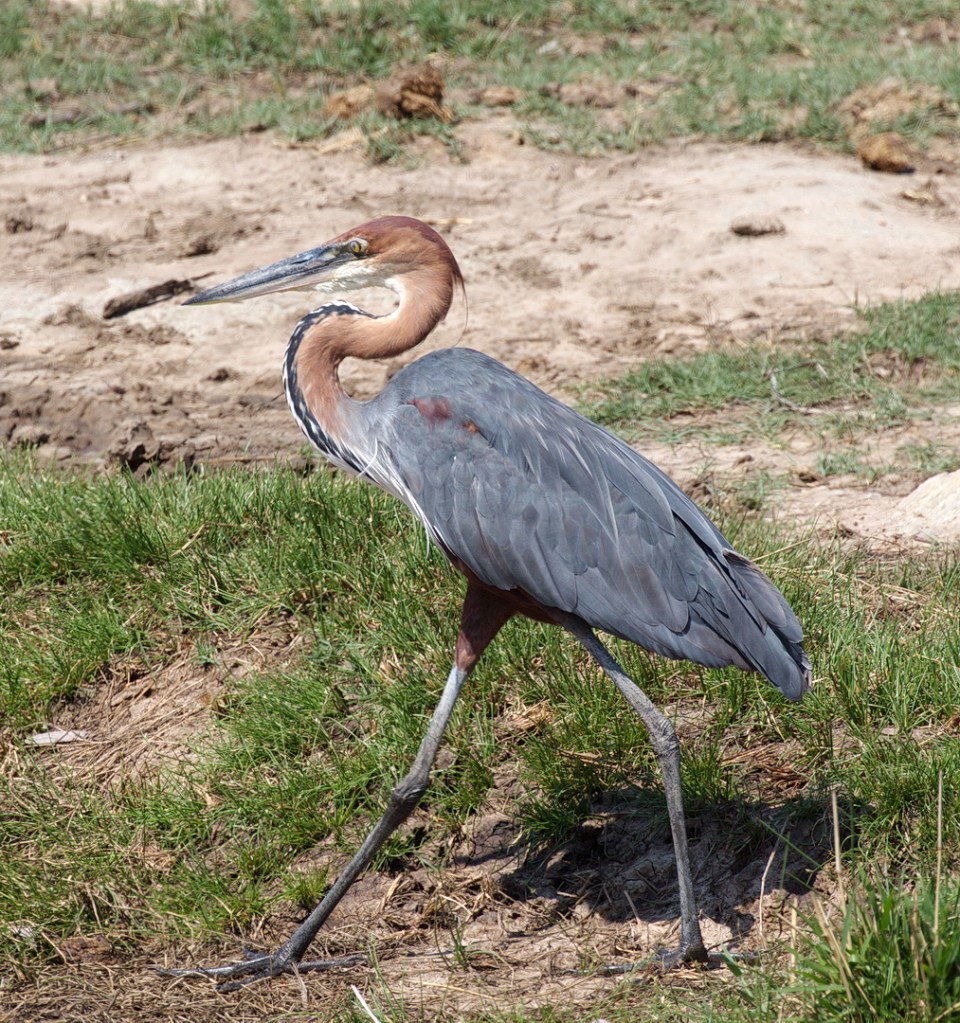
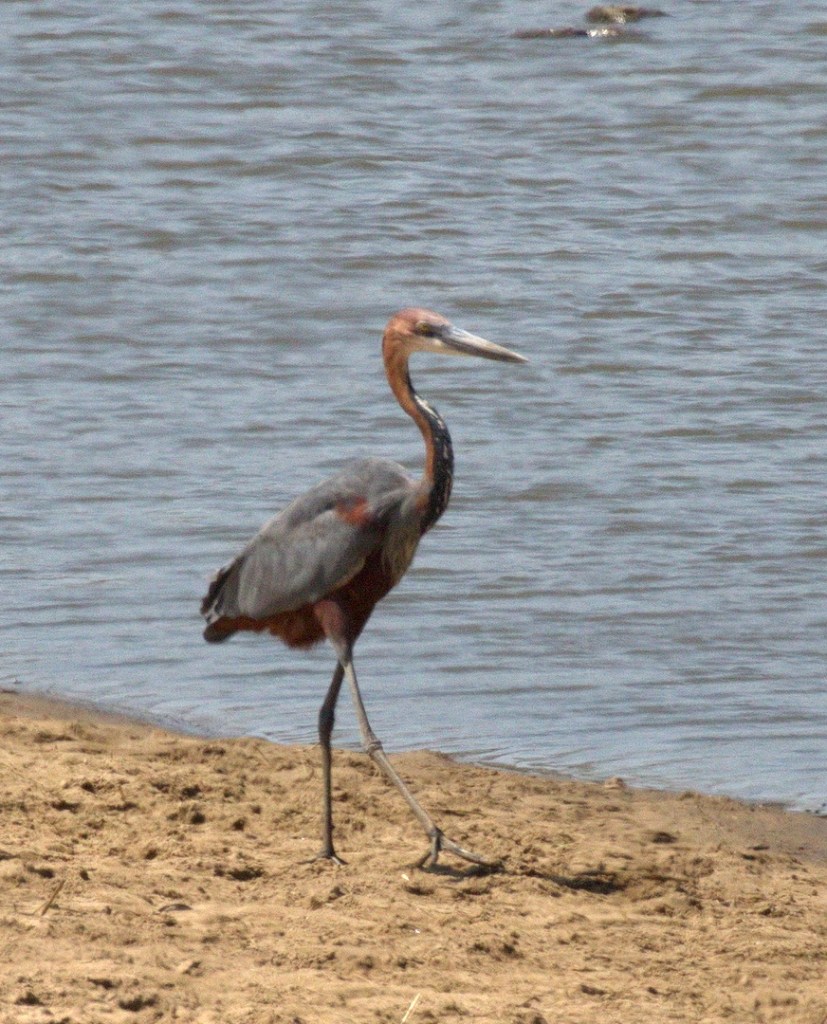
Goliath Heron
Green Wood-Hoopoe
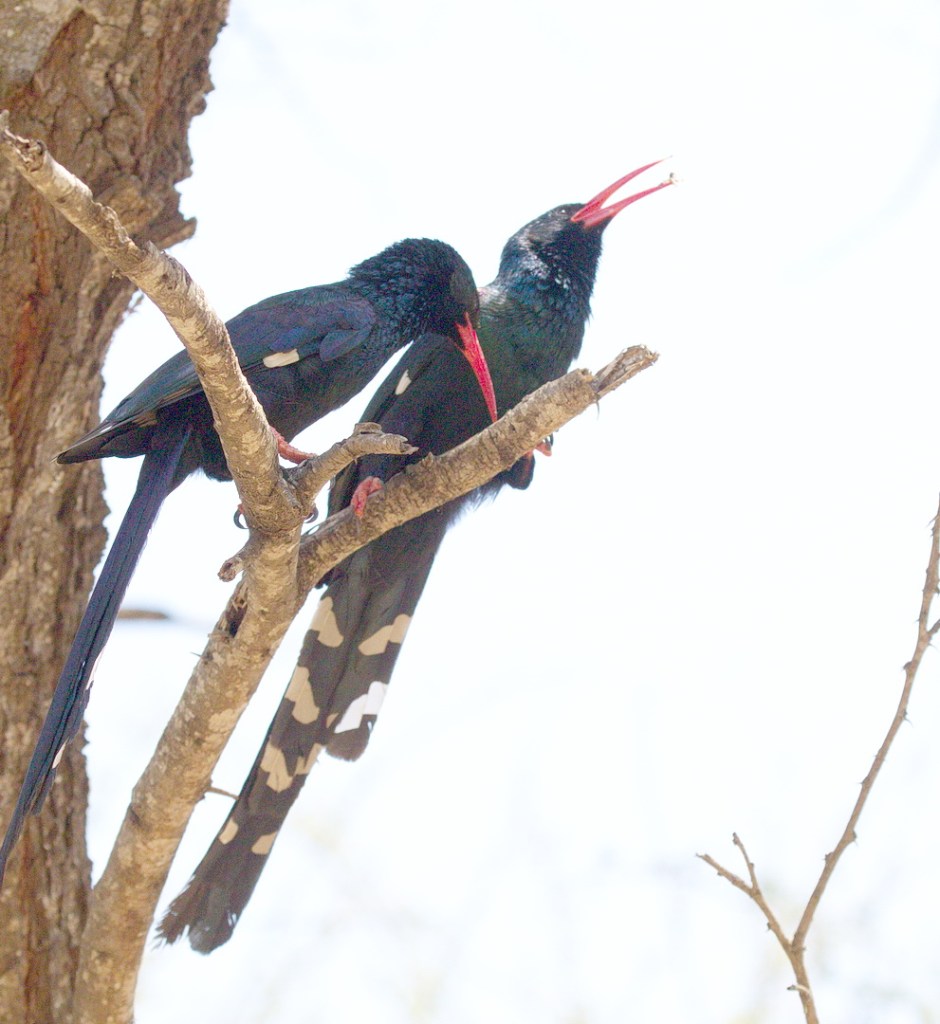
Green Wood-Hoopoes
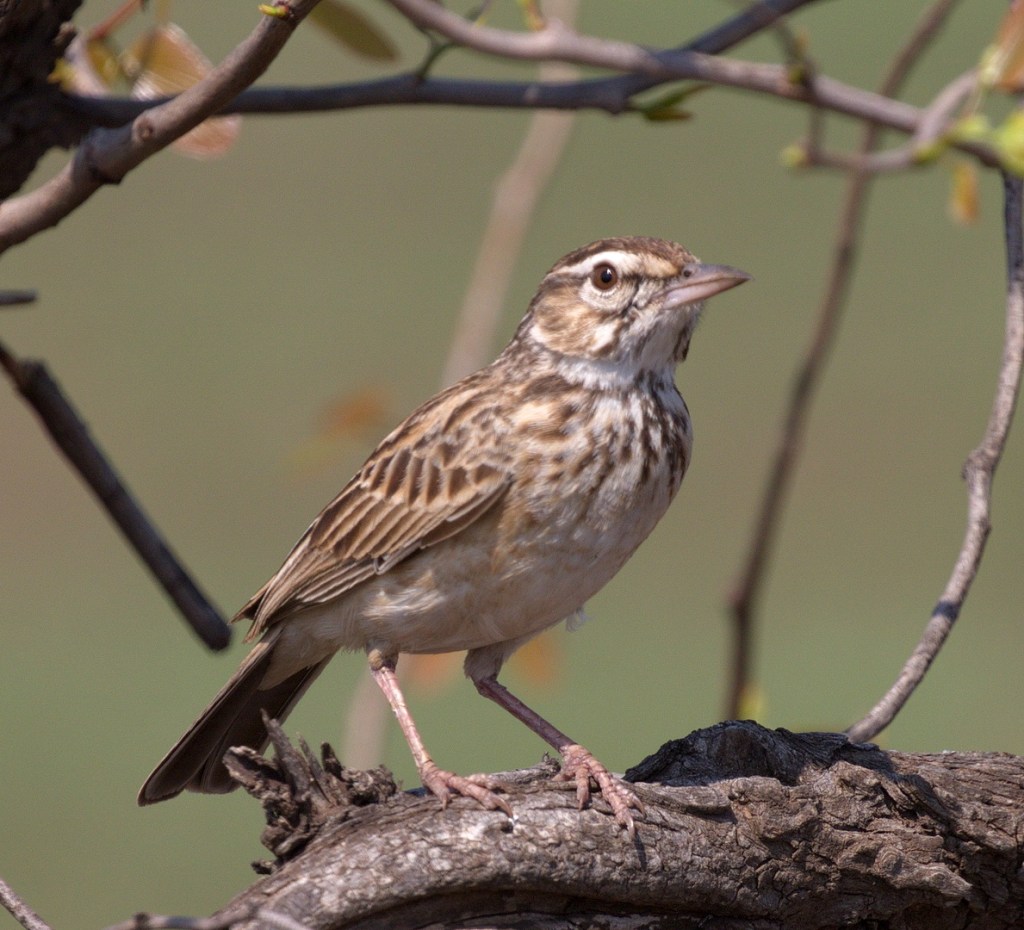
Sabota lark
Southern Ground Hornbill
Yellow-billed Oxpecker
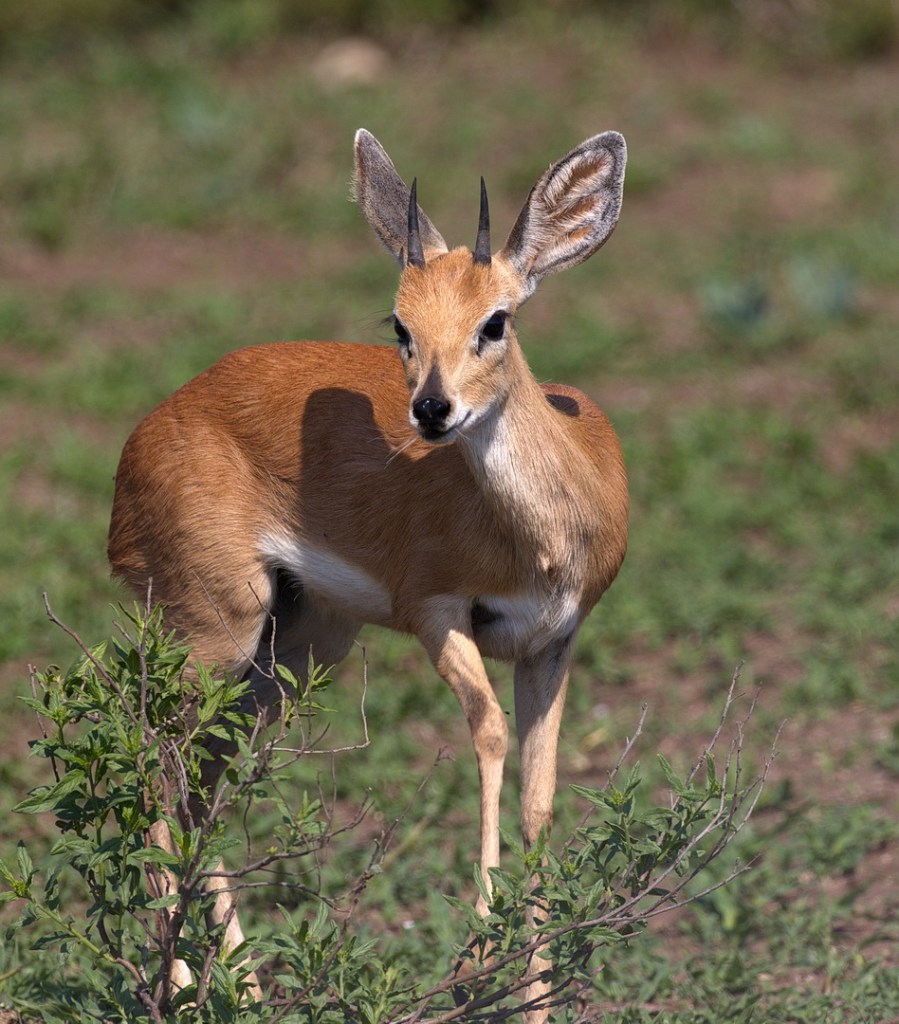
On the way back to camp, an amorous Steenbok made numerous attempts to seduce its female companion but she was having none of it. Amusing to watch her antics and his persistence.
The said male Steenbok
Tsendze is probably our favourite place to camp in the park. The campsite is well run, the staff are friendly, the ablutions maintained. It is well treed and has awesome birds. Its location provides a variety of habitats to explore.
In all we identified 108 different bird species in this area. To see our list, click on the following link.
Our friends went to Satara a day earlier than us. We arrived as the rain paused making our life easier in setting up in the campground. Our friends had experienced some rather heavy rain during a big storm that night. We don’t normally put our sides up but we did while here in Satara in case there was a combination of wind as well as rain.
Exploration round the campsite was limited due to the heavy rain. It seemed the lions were enjoying the cooler weather. There were 6 lions close to camp – as usual lying down – beside the road in a rather bedraggled wet state.
The following morning we decided to drive along the S100. However when we got there the road was closed. We later learned that our friends had got there at opening time and the road was open. So we headed along the H6 to the N’wanetsi picnic site with the intention of visiting the Sweni hide close by. Not to be, the road to the hide was closed too.
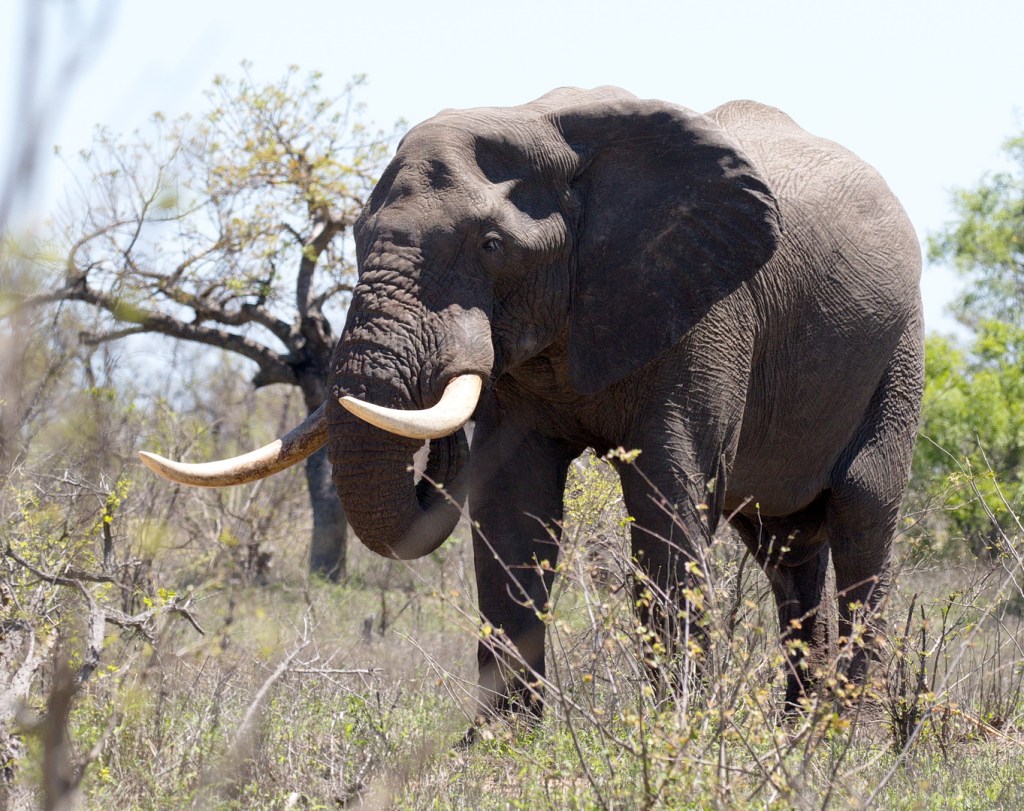
However we did get a slight (maybe more) fright as a lone bull elephant came crashing out of the bushes.
Tusker
Having travelled thus far into the Kruger, we at last had our first sighting of a Black-backed Jackal.
Black-backed Jackal
From there we went to Gudzani Dam along the S41 and enjoyed having the place to ourselves.
Gudzani Dam and African Openbill
As we passed the S100 we noticed that the road was open so we went back that way only to find it was still closed at the other end much to our annoyance. Somehow we managed to drive round the blocked road.
It was along the S100 that we had some good sightings of a variety of birds.
African Hawk-Eagle
African Hawk-Eagle
Greater Blue-eared Starling
Brown Snake-Eagle
Red-breasted Swallow
Saddle-billed Stork
Saddle-billed Stork
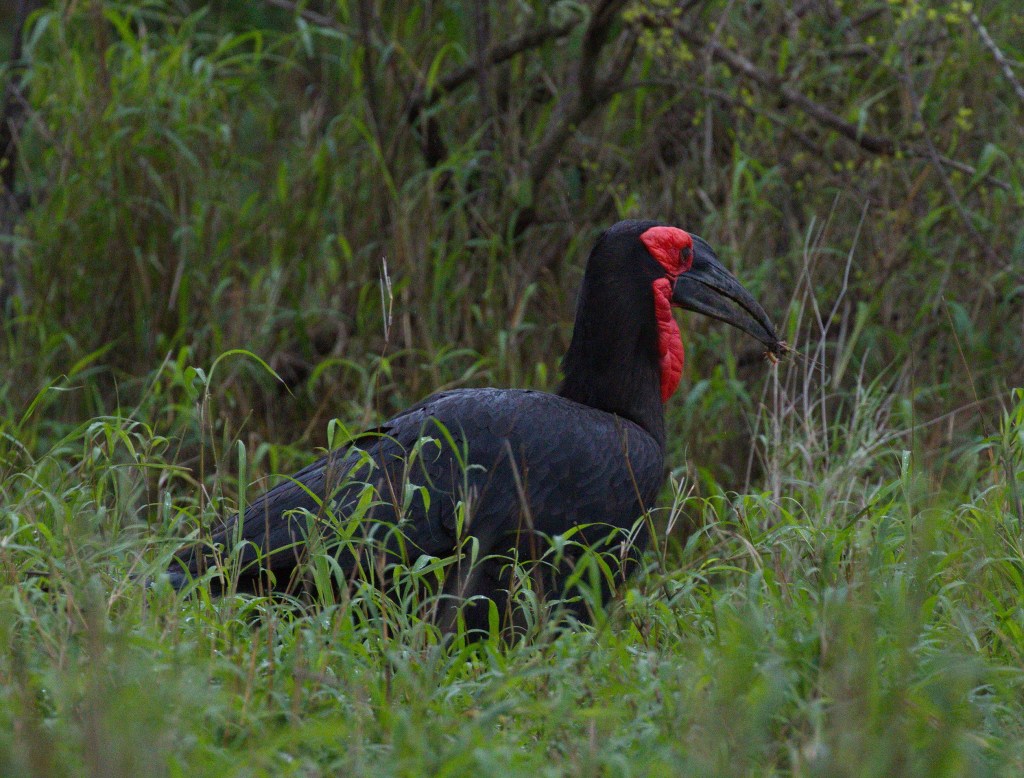
Southern Ground-Hornbill
Southern Ground-Hornbills
Southern Ground-Hornbill
Purple Roller
There was even an African Harrier-Hawk searching for food.
African Harrier-Hawk
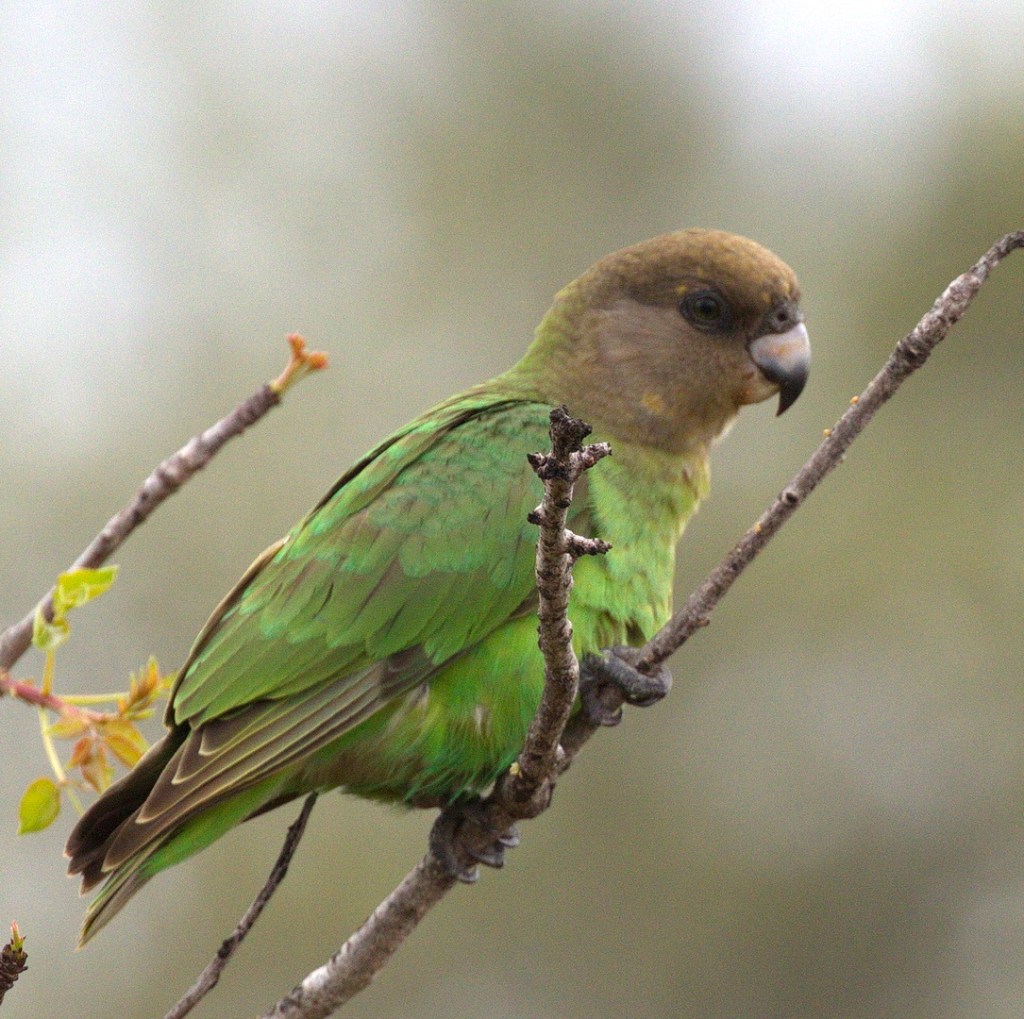
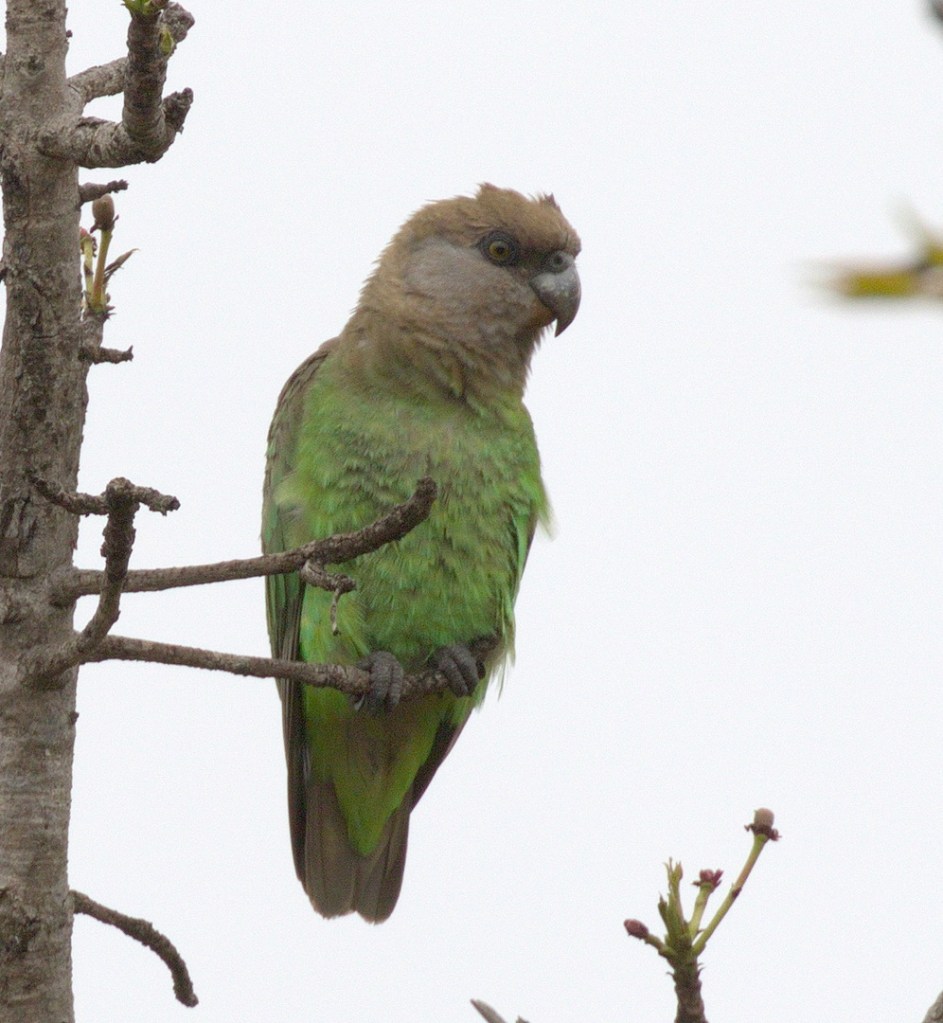
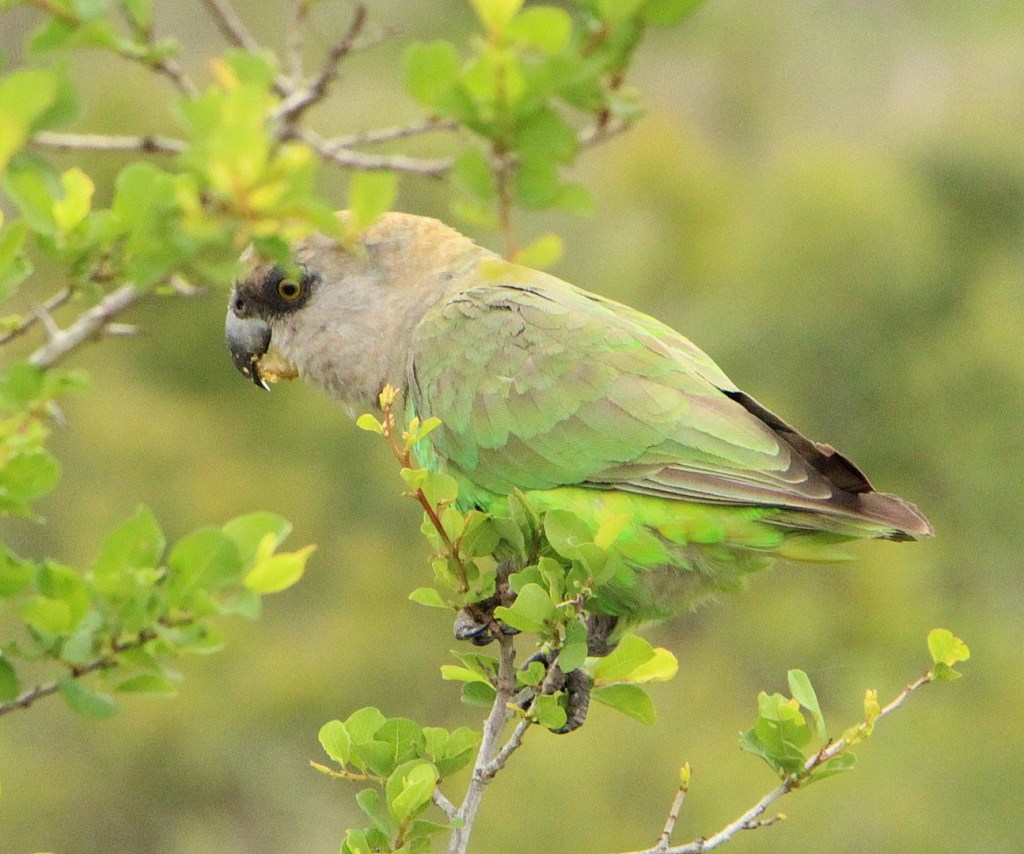
Driving along the H7 we stopped at the Nsemani Dam with Brown-headed Parrots flying alongside the road right next to us.
Brown-headed Parrot
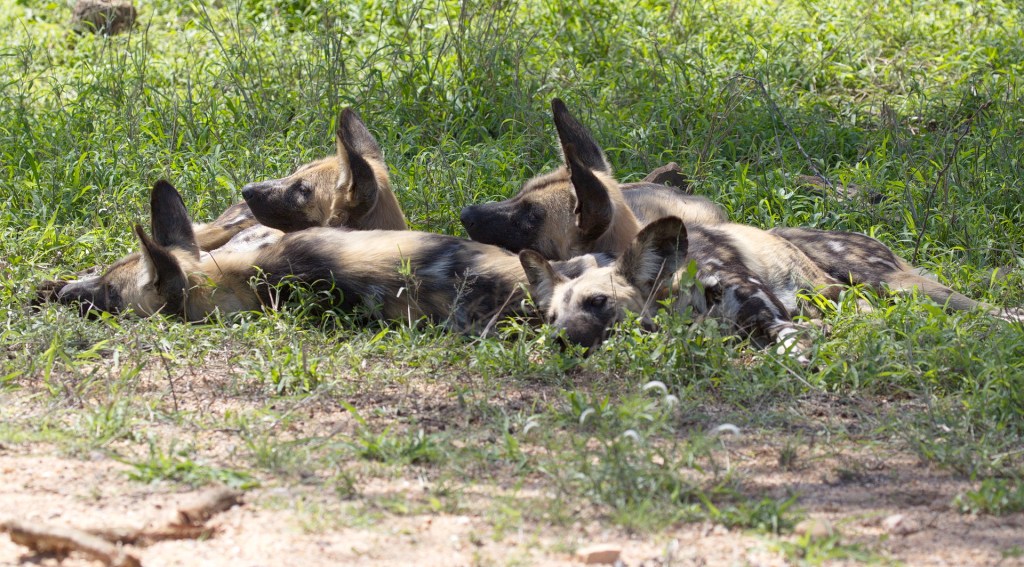
Further along on the Timbavati Road we were fortunate to see 7 wild dogs. They were lying beside the roar in all sorts of contorted positions. One rose and promptly flopped down again.
Wild Dogs
We had heard good reports about a locally run campsite in Manyeleti. A reserve adjacent to the Kruger near the Orpen Gate. The next day we all decided to check it out. We were under-impressed. Bare stony and open campsite. However there was a large dam close by with numerous Collared Pratincoles flying about.
On the way photos were taken of several animals and birds.
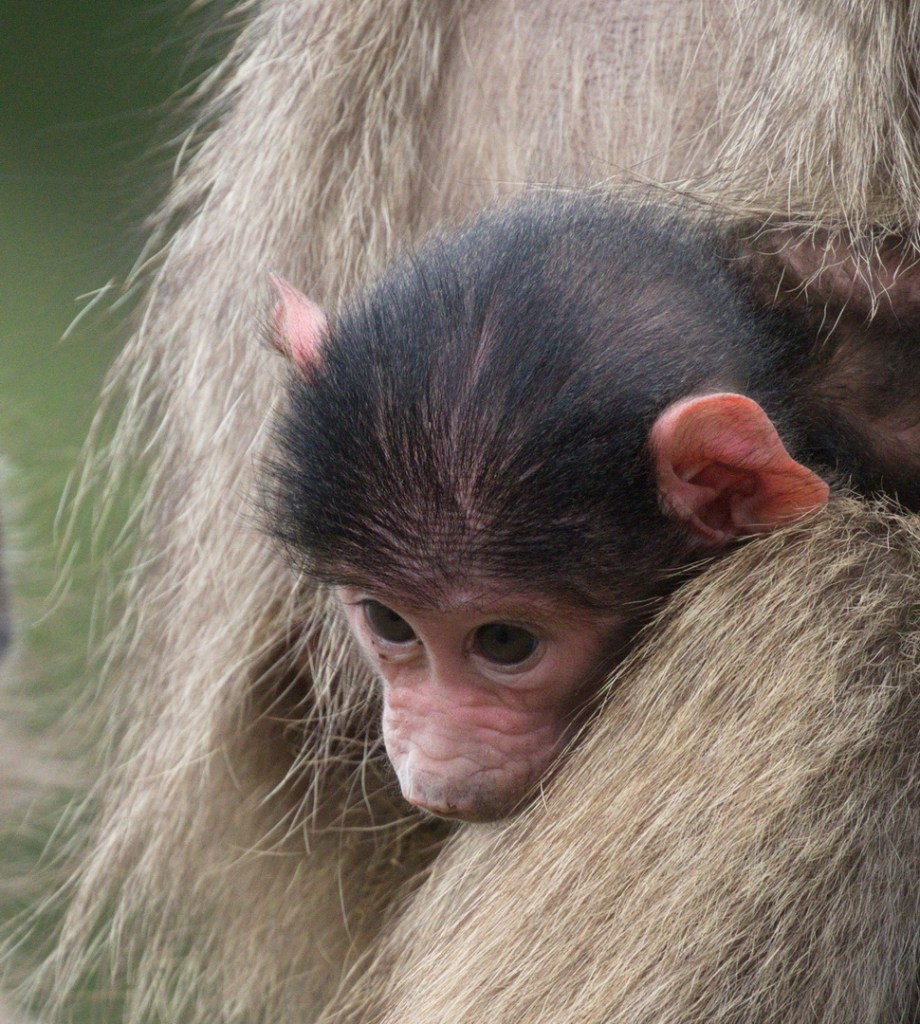
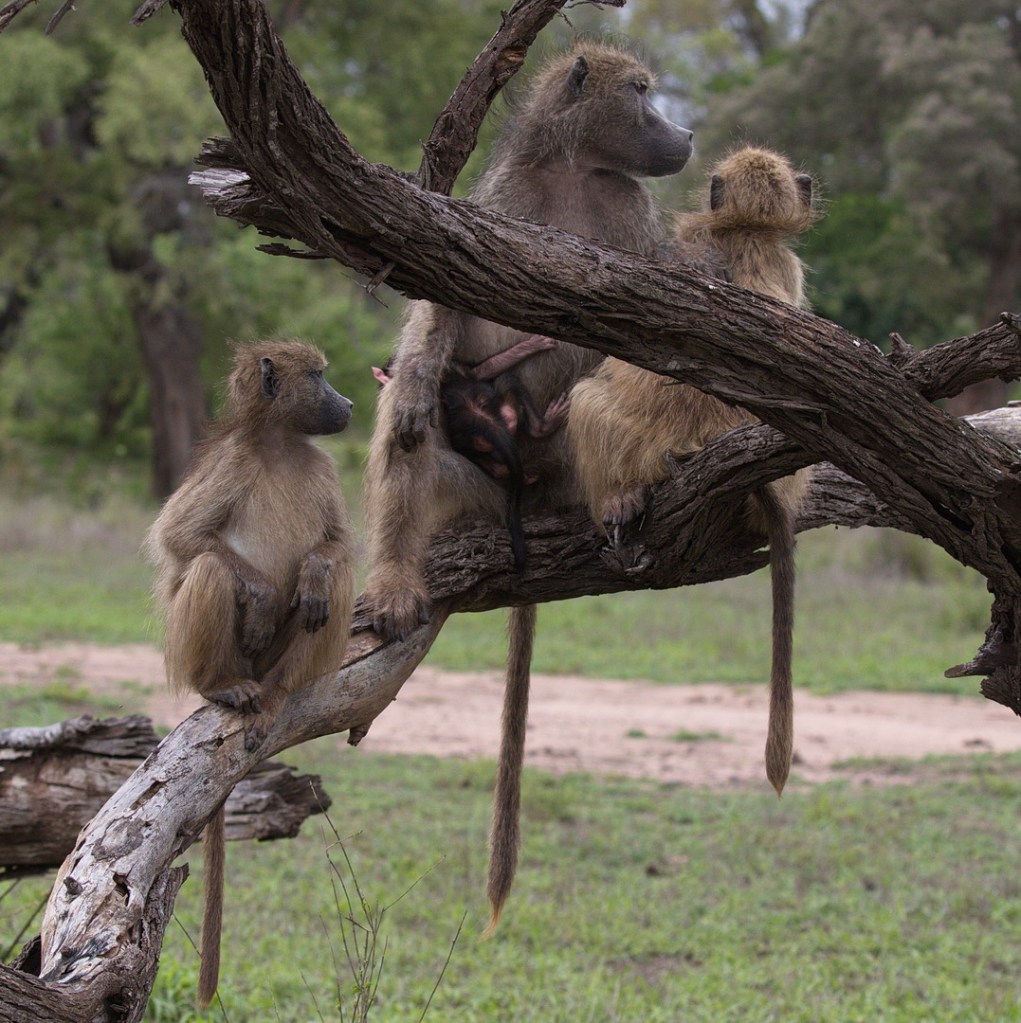
Cute baby Baboon
Three tailed Baboons
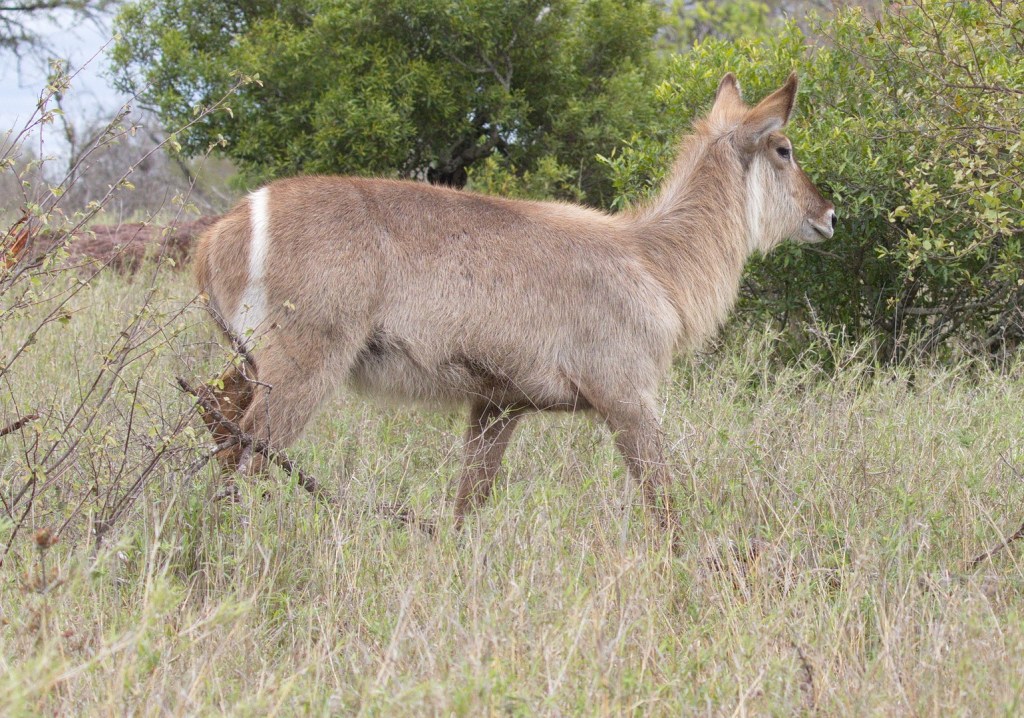
Waterbuck female
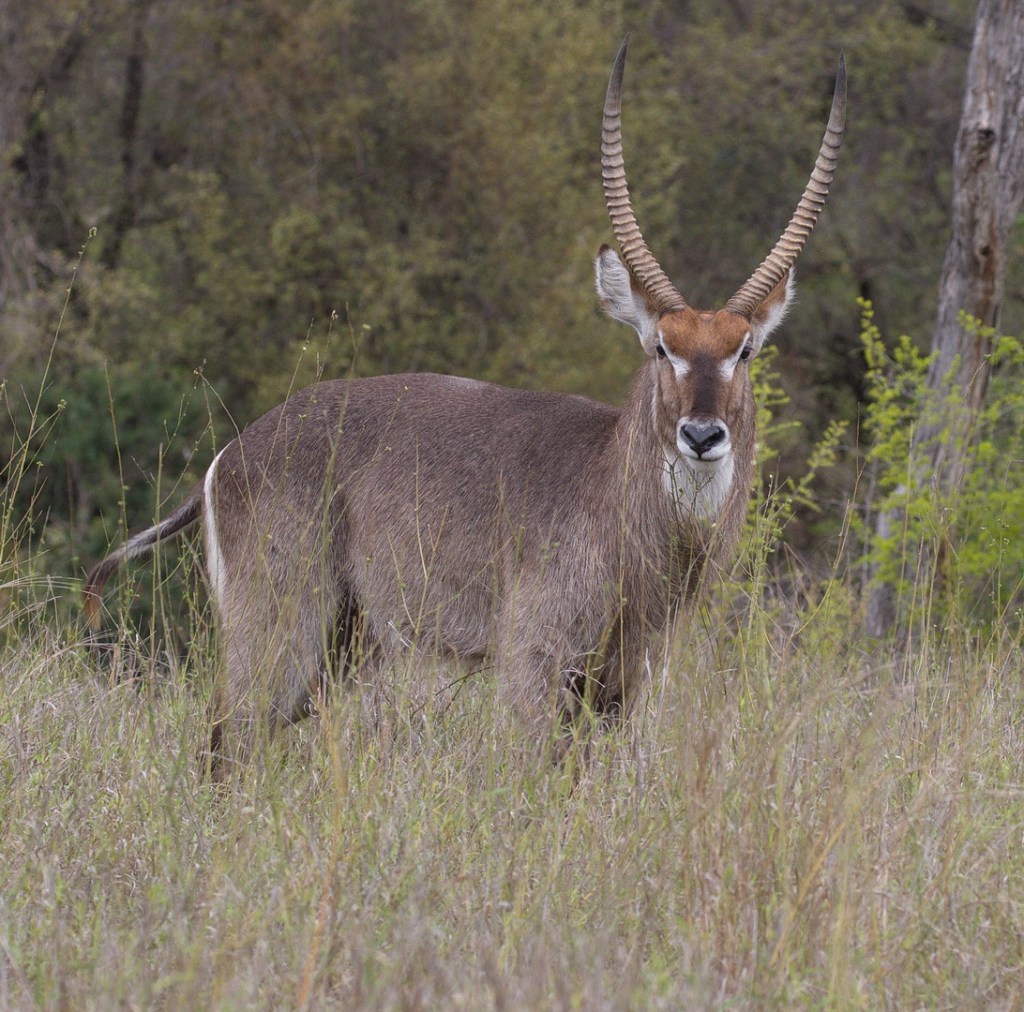
Waterbuck male
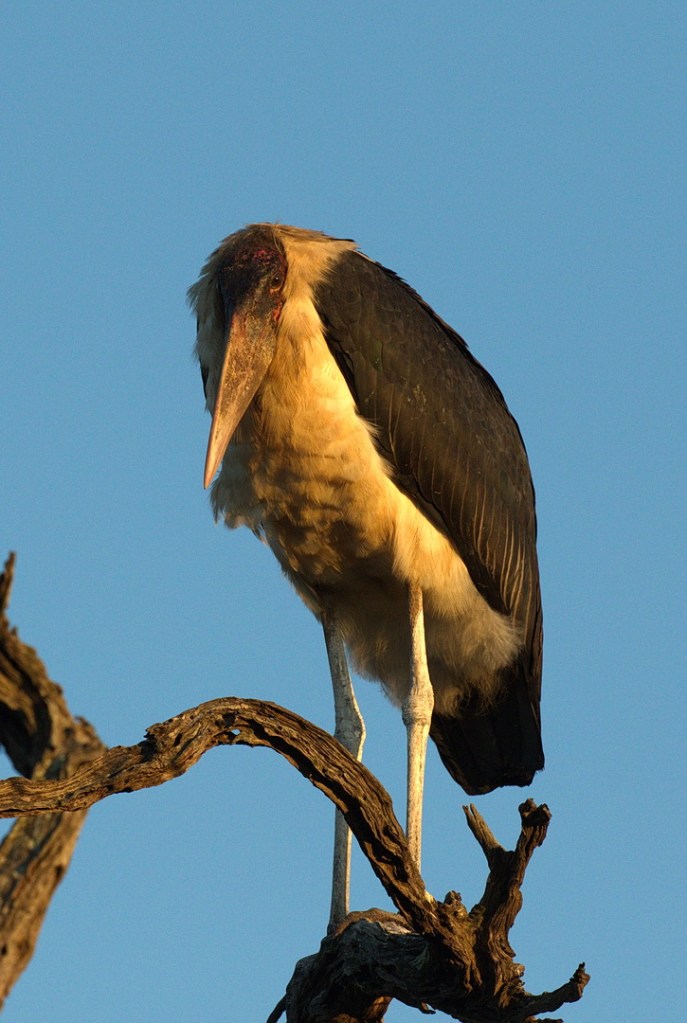
Marabou Stork caught in the early morning sun
Black-chested Snake-Eagle
Common Scmitarbill
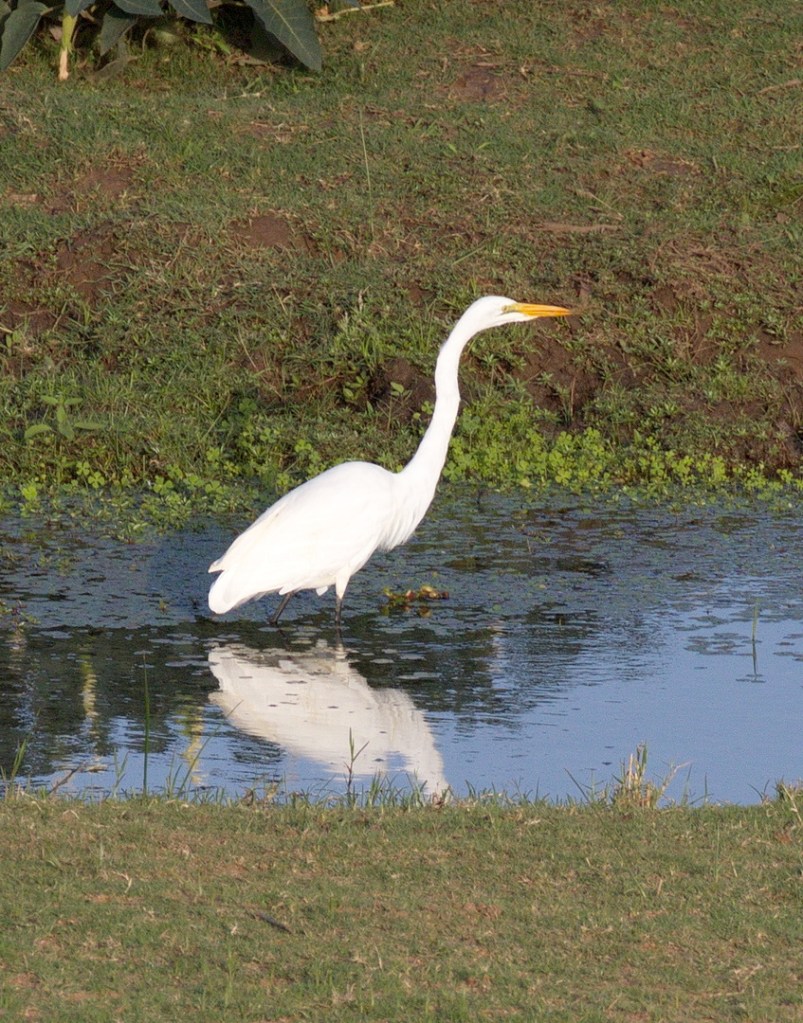
Great Egret
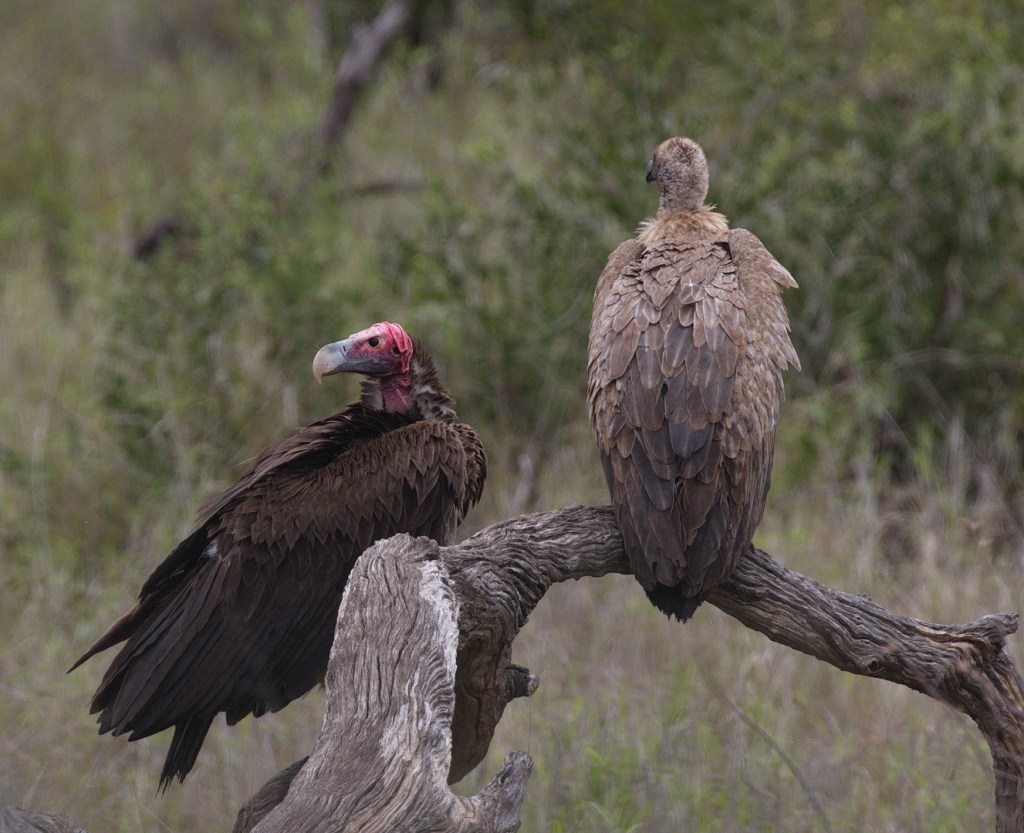
Lappet-faced and White-backed Vultures
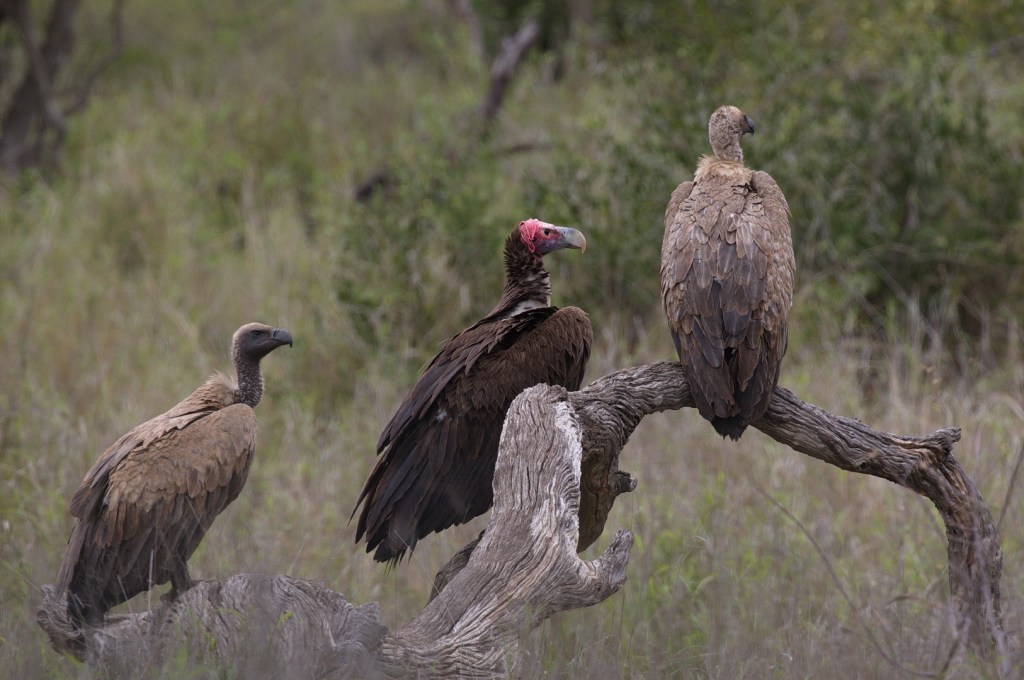
Lappet-faced and White-backed Vultures
Laughing Dove
Namaqua Dove
Red-headed Finch
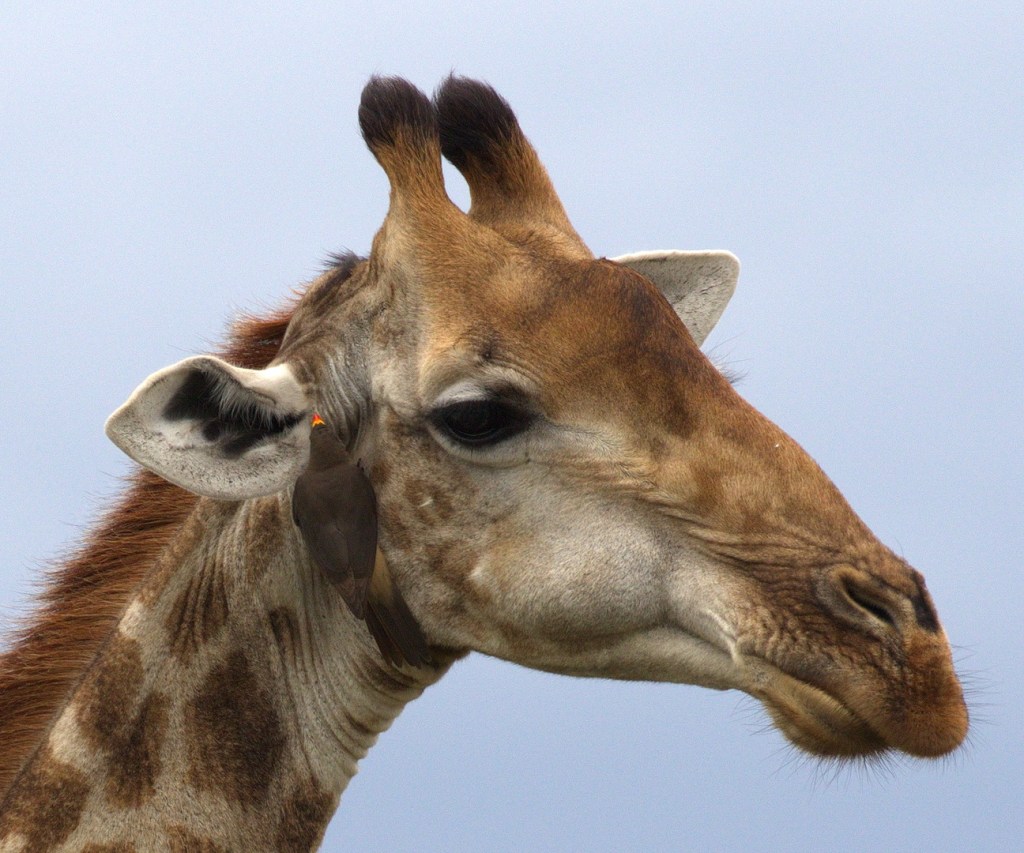
Giraffe with a Yellow-billed Oxpecker about to probe the Giraffe’s ear
In the 2 full days we were there we did identify 106 different bird species. Click on the link below to review our records.
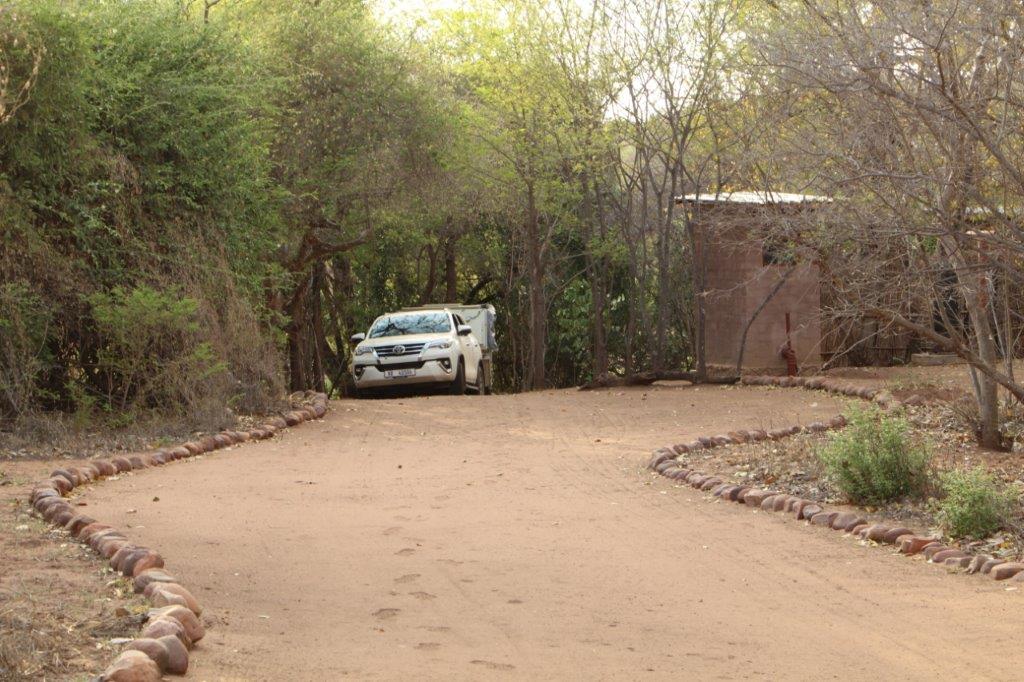
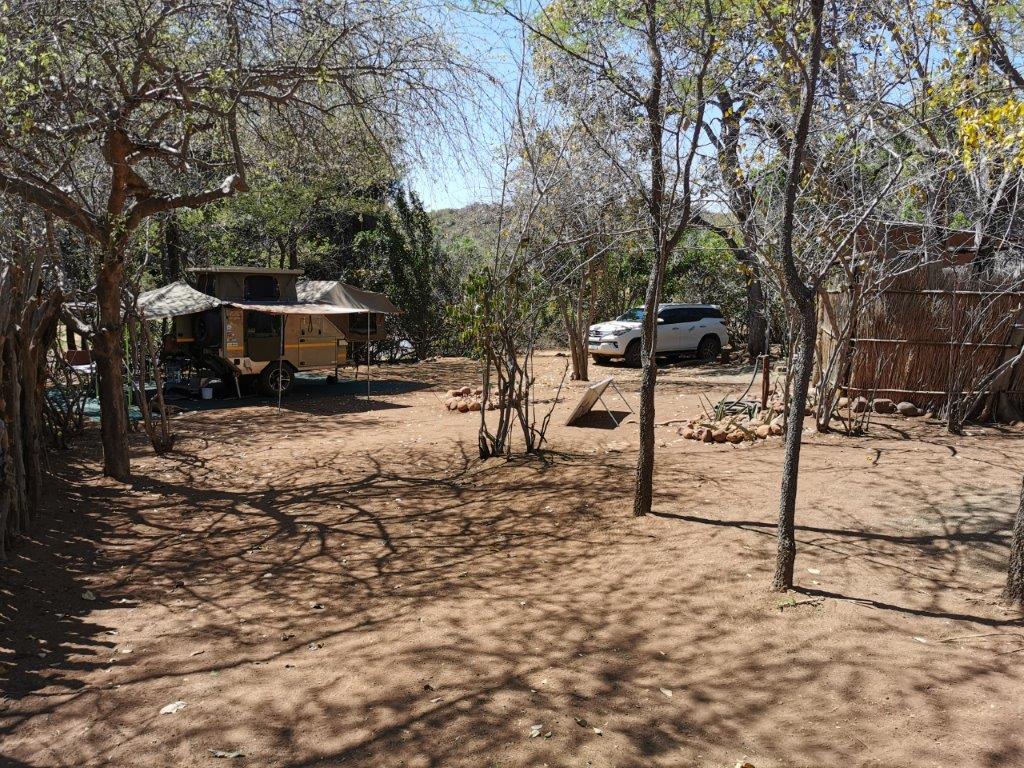
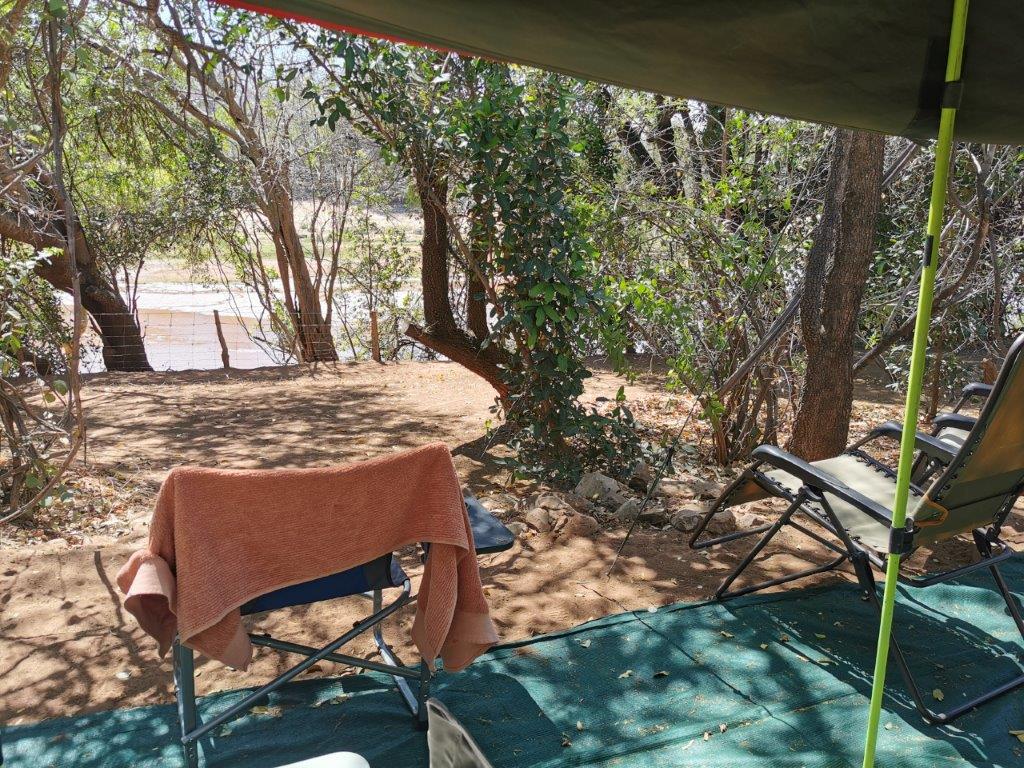
The campsite at Lataba was only half full and we camped on the fence line for a change with bushes either side so although it was not necessarily that shady it was private from neighbours.
Our site by the fence.
Areas of the camp completely empty
Our crowded area !!
Campsite
Both game and birds were unusually scarce in the area.
One of the animal highlights at our time in the Letaba area was seeing inquisitive Hyena pups alongside the car.
Hyena pups and a large Leguaan
The African Scops Owl called each night in the camp – a magic sound.
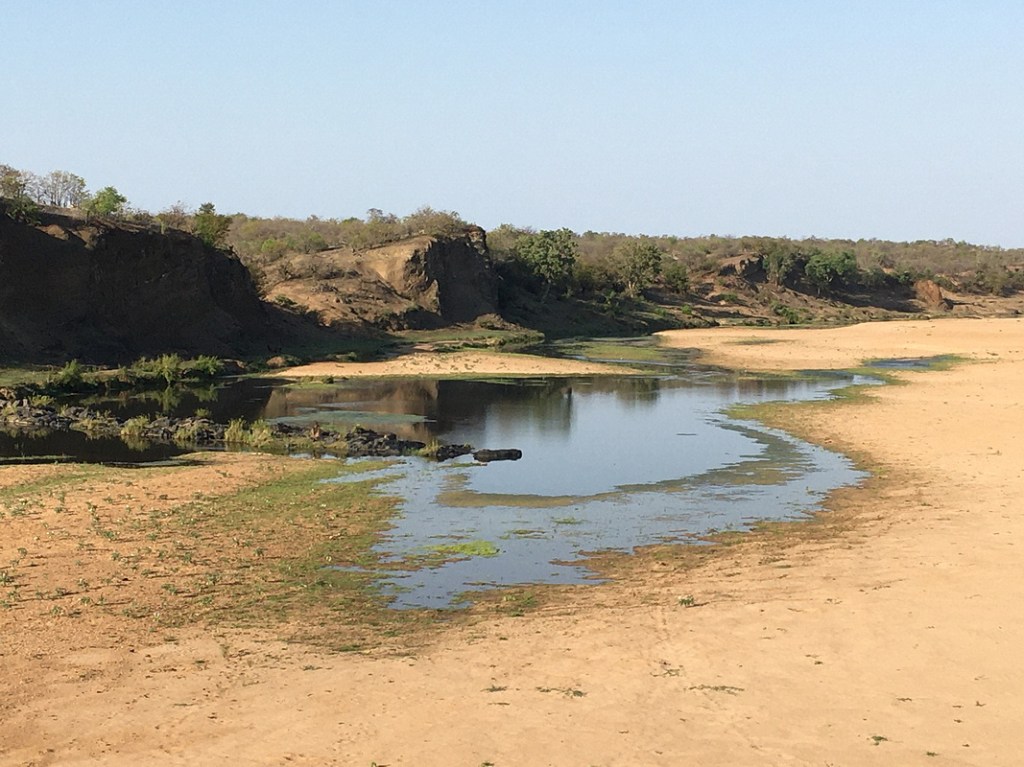
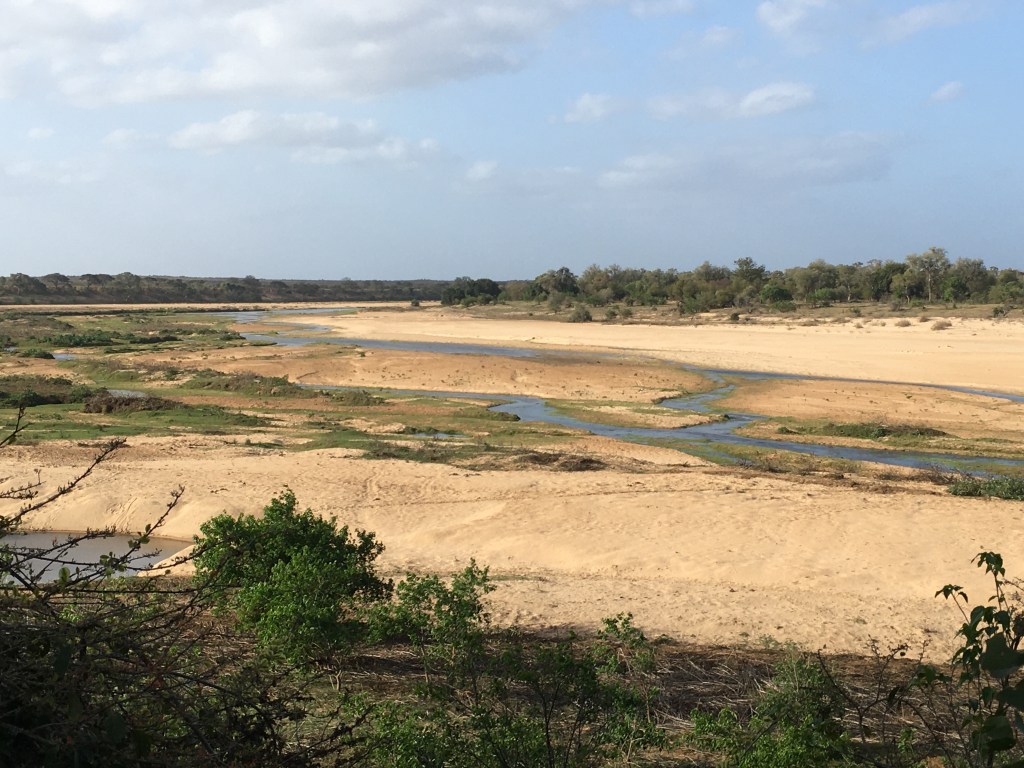
This was well before the recent floods so the rivers were not that full and the landscape was parched.
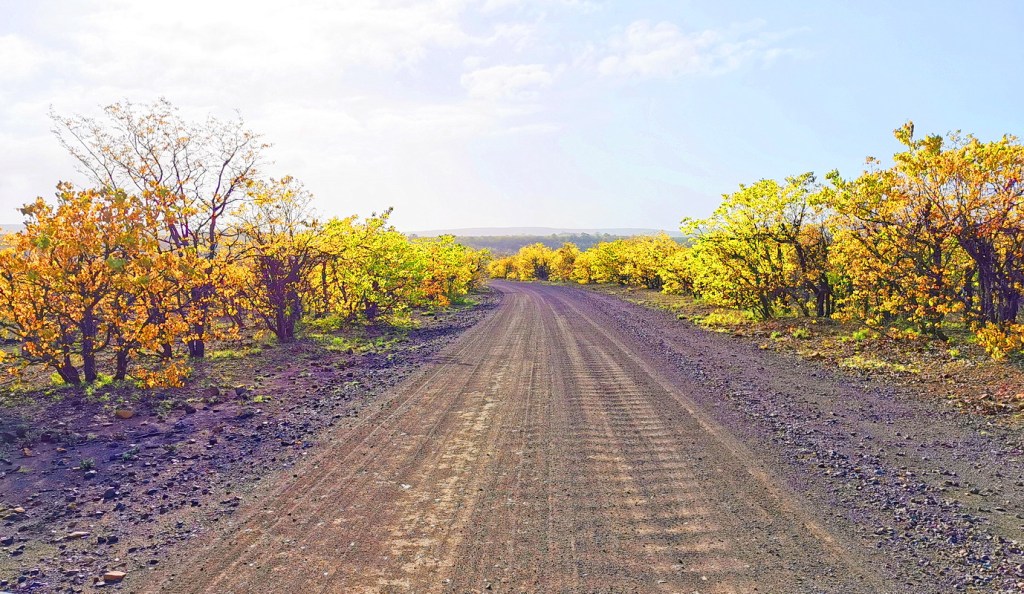
The roadsides were lined by bright yellow bushes creating a colourful impression especially in the early morning light.
There were few campsite birds. Not surprising perhaps due to C-19 and the closure of the camps and the birds having to forage elsewhere. No easy snacks for them.
Stopping at Mingerhout Dam for a tea break we noticed a Black Egret below the dam wall and loads of Hippos frollicking in the water below.
Mingerhout Dam
Here are a few bird photos from our time in Letaba.
Goliath Heron
Lesser Masked Weaver
Lesser Masked Weaver
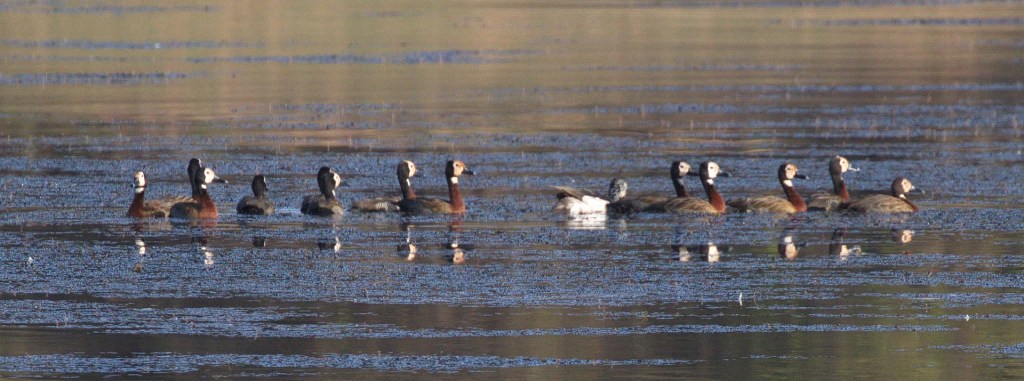
Odd Duck out – Knob-billed among White-faced
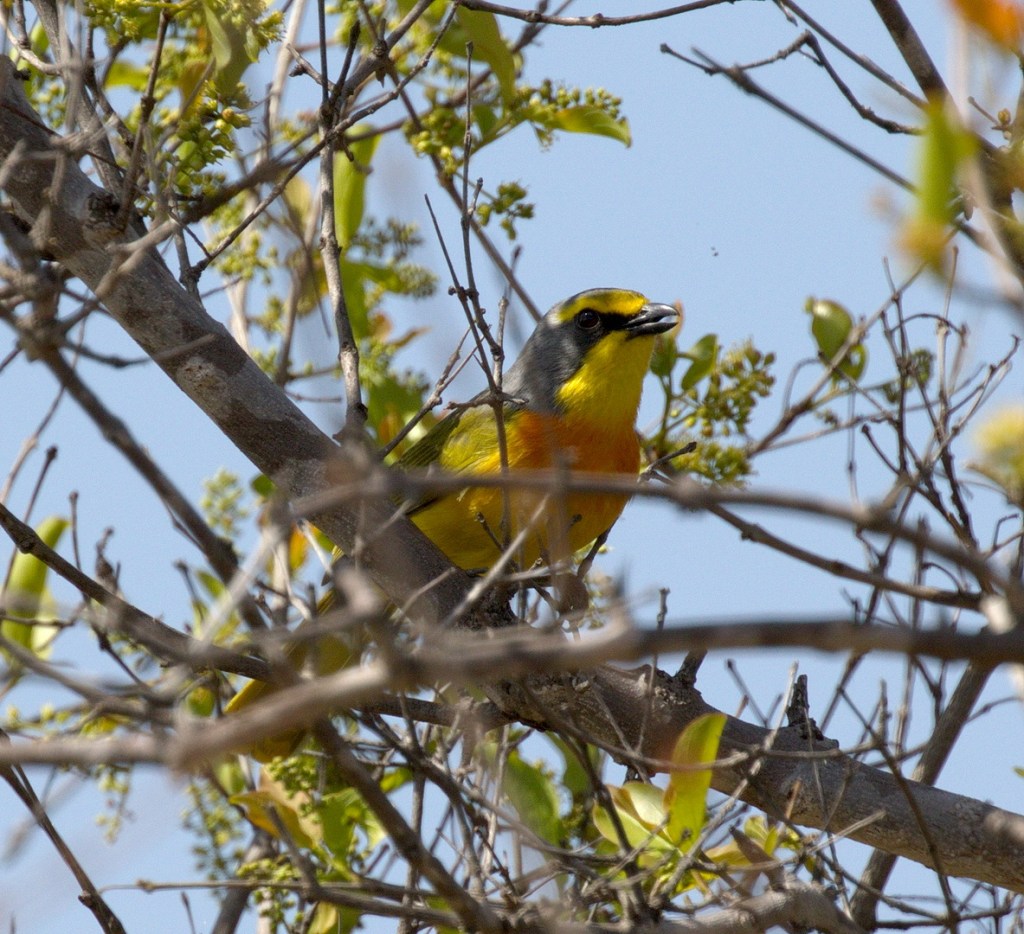
Orange-breasted Bushshrike
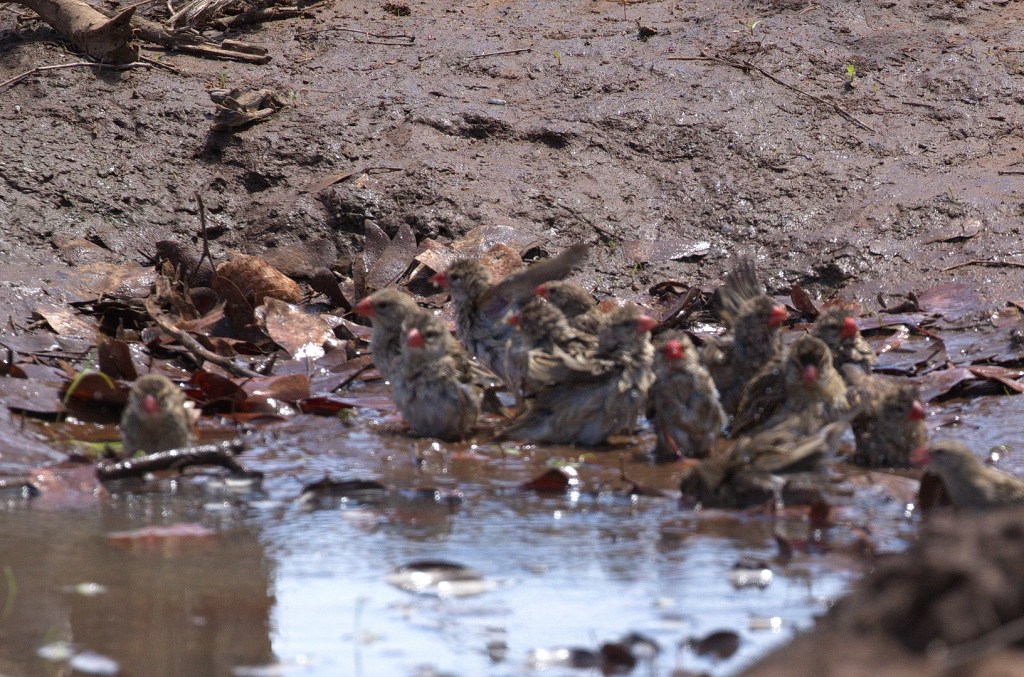
Red-billed Queleas
Southern Ground Hornbills
Southern Ground Hornbills
White-crowned Lapwings
Thought to be a Steppe Eagle – gape behind eye and large beak
Despite the lack of many bird sightings, Sally managed to record 111 different bird species – seen and or heard. Click here to see the list.
With Malelane behind us on a cool Wednesy morning with rain threatening, we headed for Skukuza. On arrival we were told the campsite was only 50% full. That was definitely not the case as we struggled to find a spot for our off-road trailers. Our friends found a tight spot where they could set up together and eventually we parked in a spot where others were leaving. Fortunately on level ground.
The camp birds were very vocal and some quite friendly too. Lovely to hear their call especially first thing in the morning.
During the four days we were there we made good use of our time and birded as far afield as Tshokwane, Orpen Dam, Pretoriaskop, Lower Sabie and Crocodile Bridge. The weather remained overcast but the rain had abated for now.
Some photos of the terrain:
Lake Panic was virtually dry so we wasted no time there. Sabie river was flowing strongly – presumably from all the rainfall up river. The river side was very quiet bird-wise but hordes of Buffalo enjoyed a good soaking.
On several of the bridges Giant Kingfishers hung about. On one bridge a Kingfisher let us get right alongside.
Giant Kingfisher female
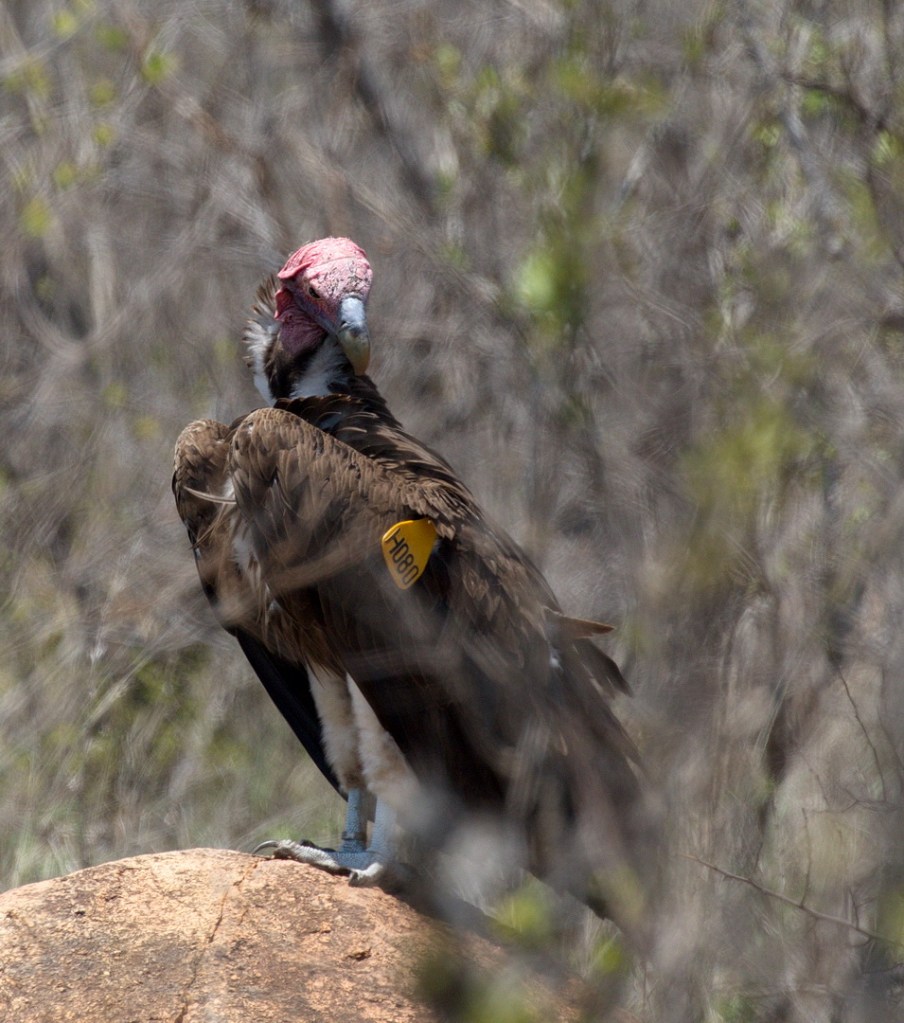
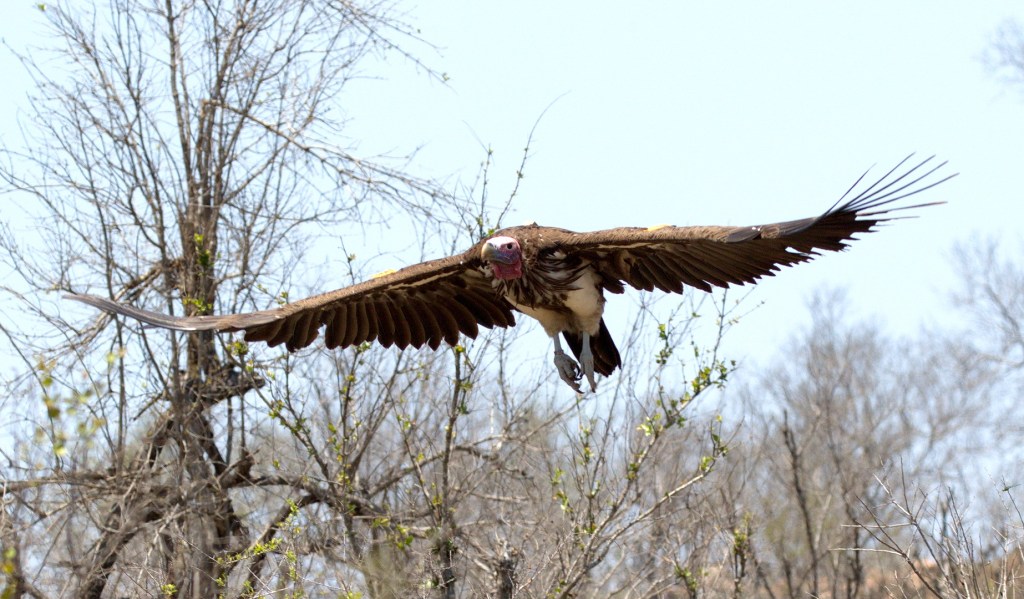
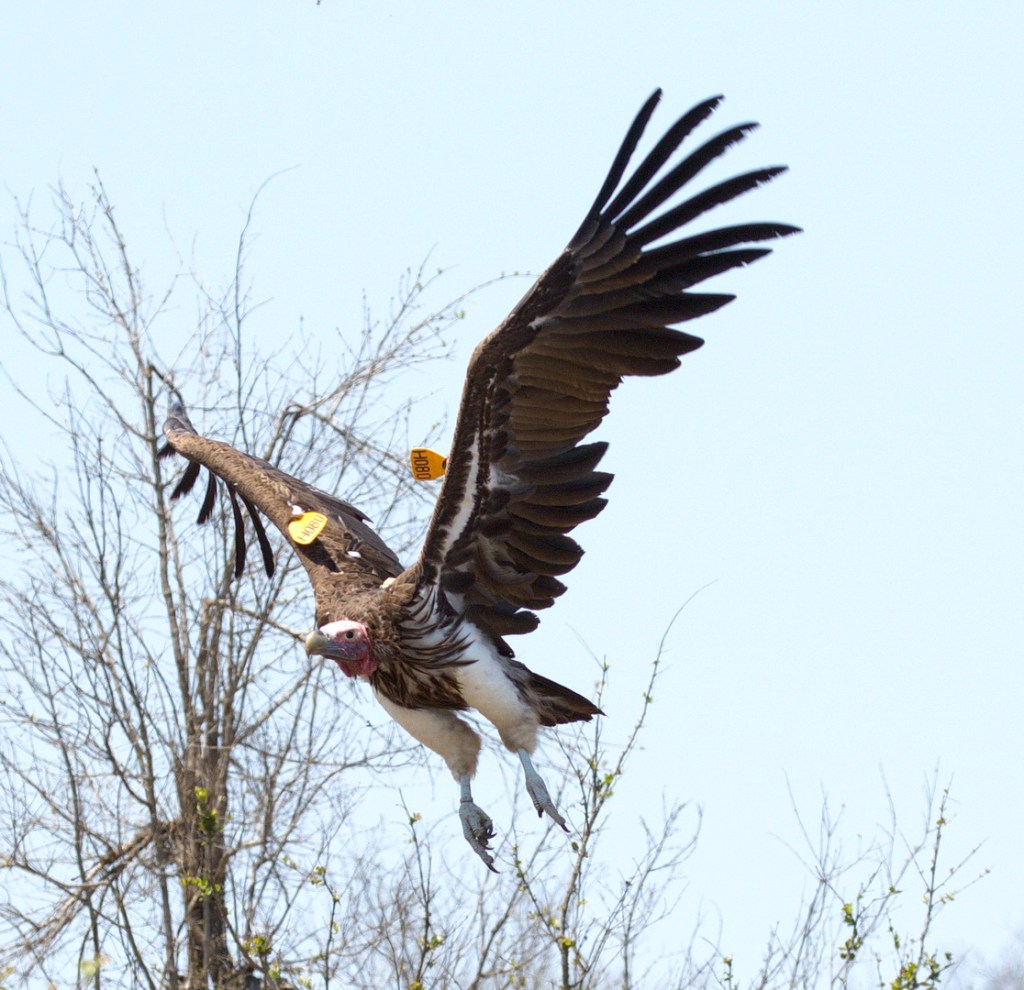
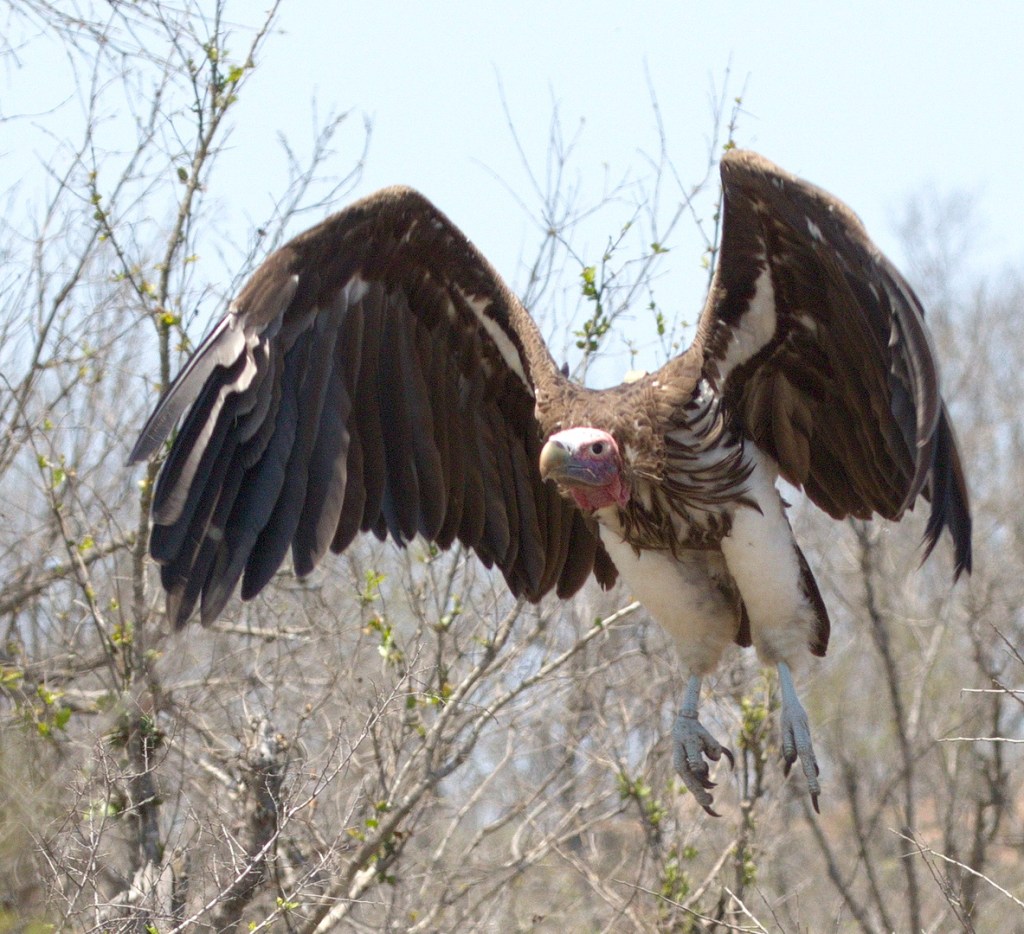
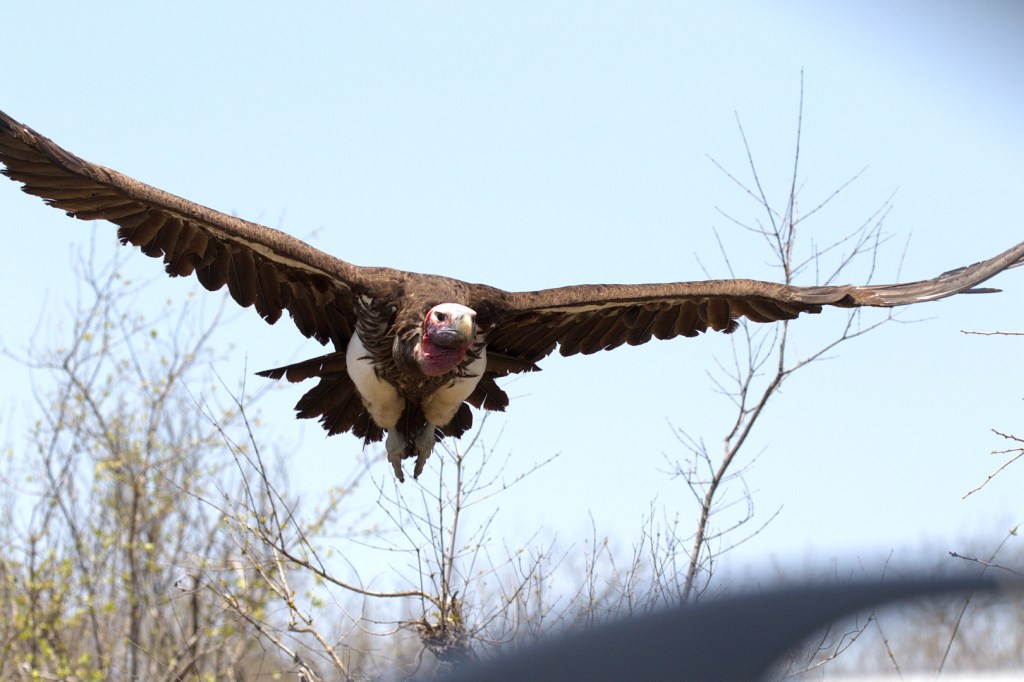
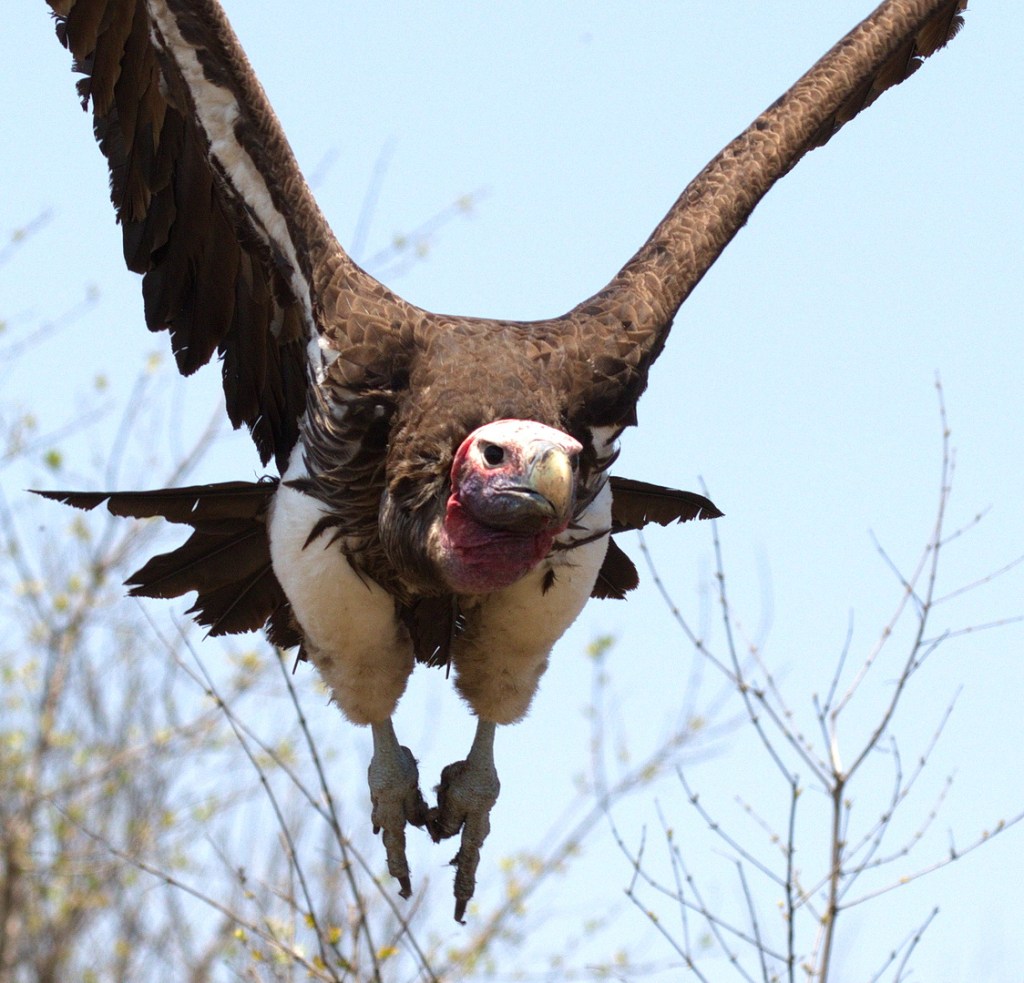
Elsewhere a Lappet-faced Vulture took off and headed straight at us.
Lappet-faced Vulture
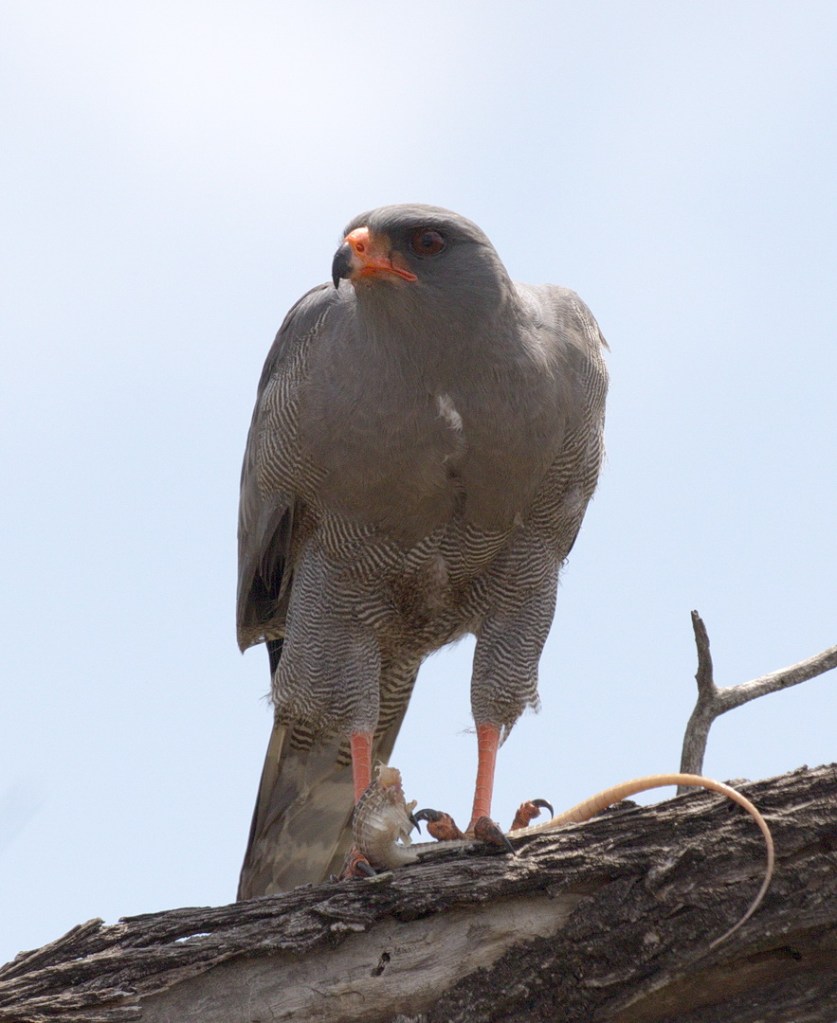
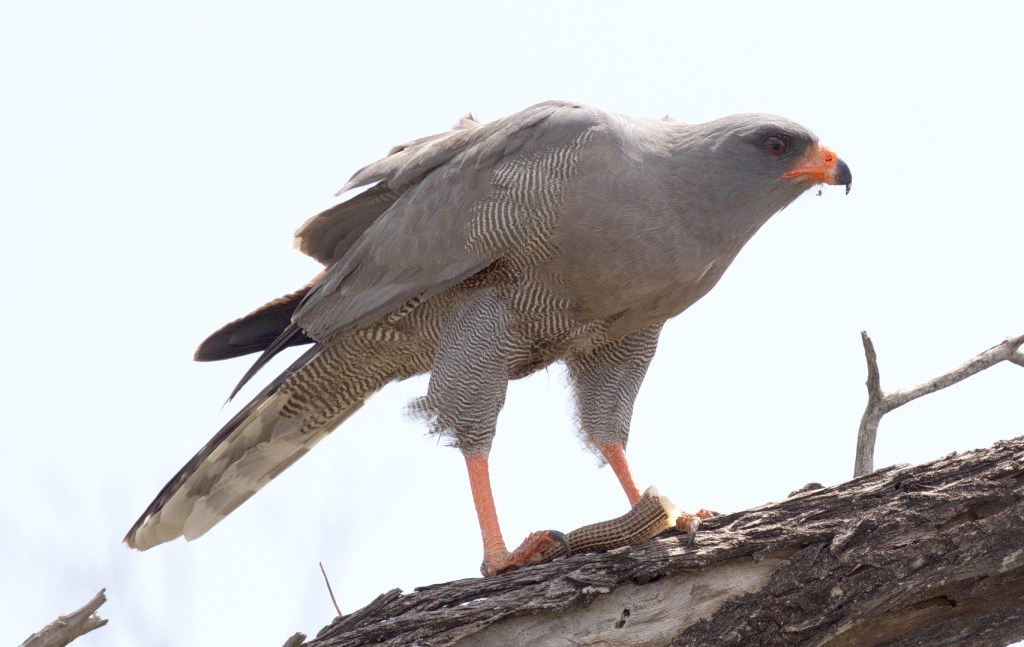
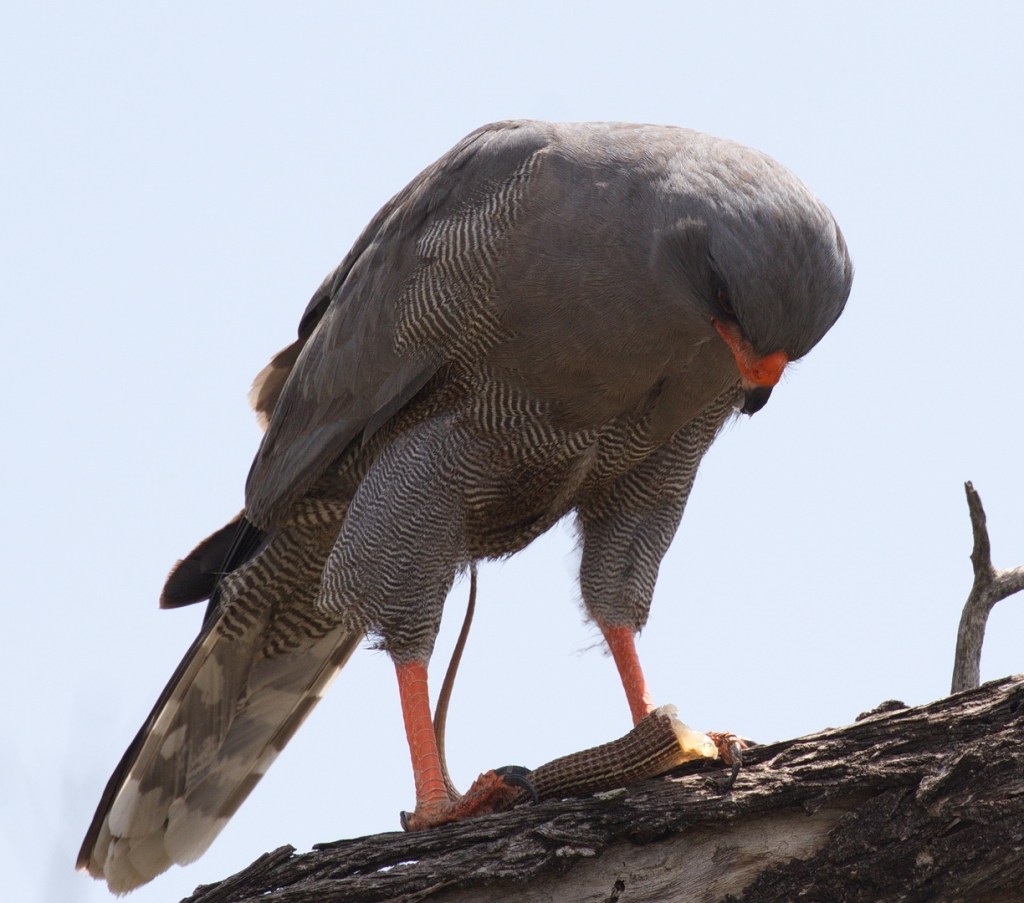
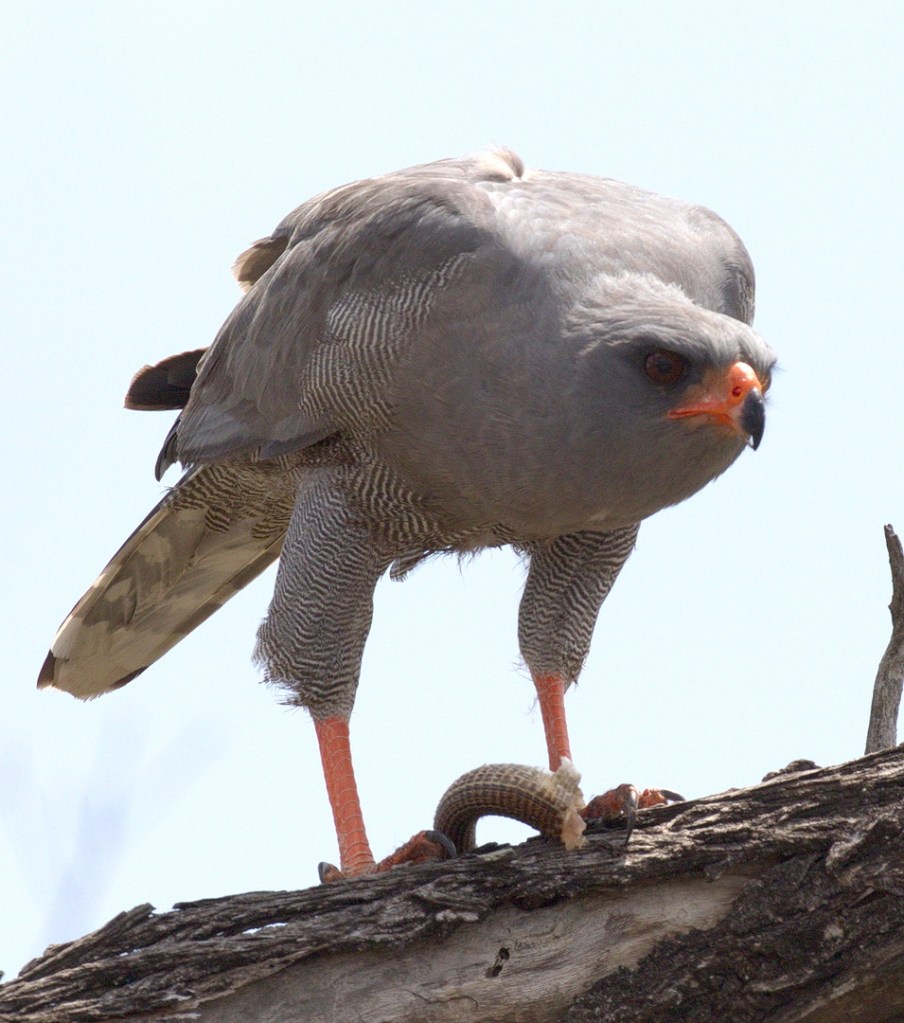
And a Dark Chanting Goshawk was seen polishing off what looks a bit like the tail end of a snake.
Then there were the waterbirds we saw:
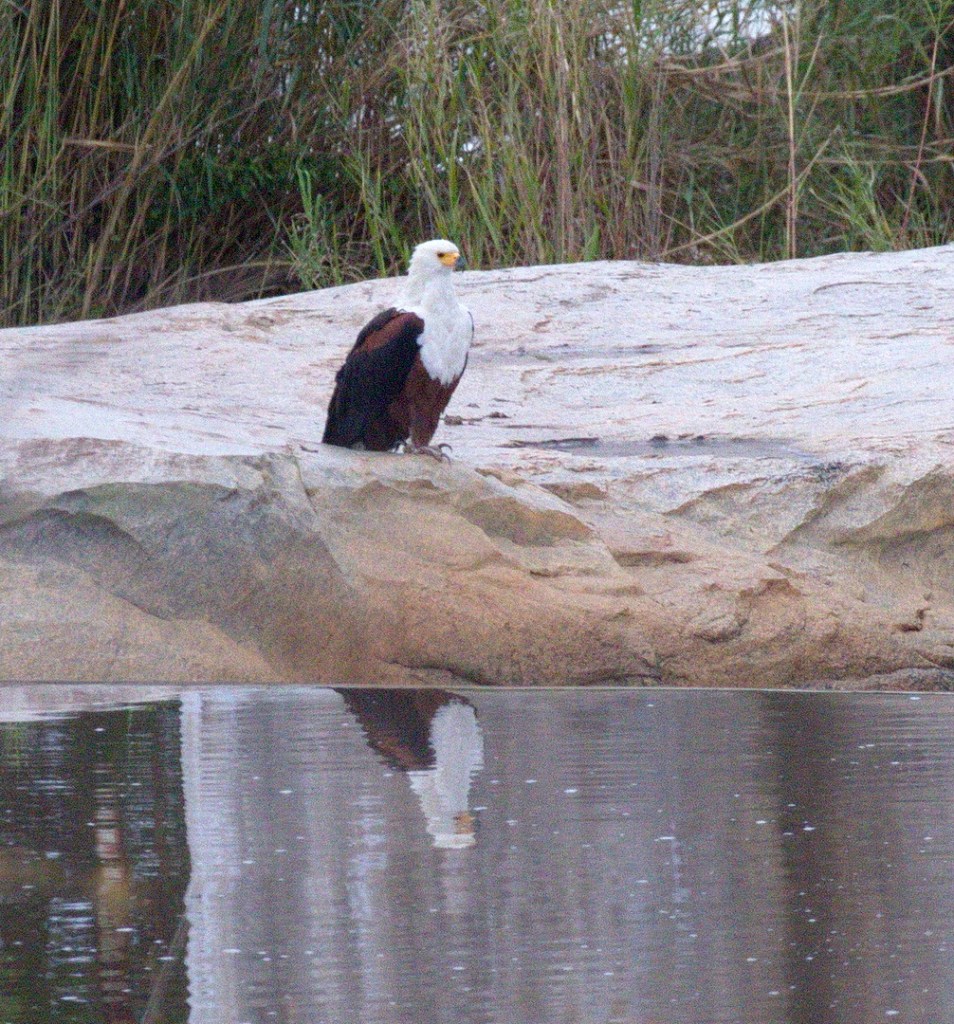
African Fish-Eagle in reflection
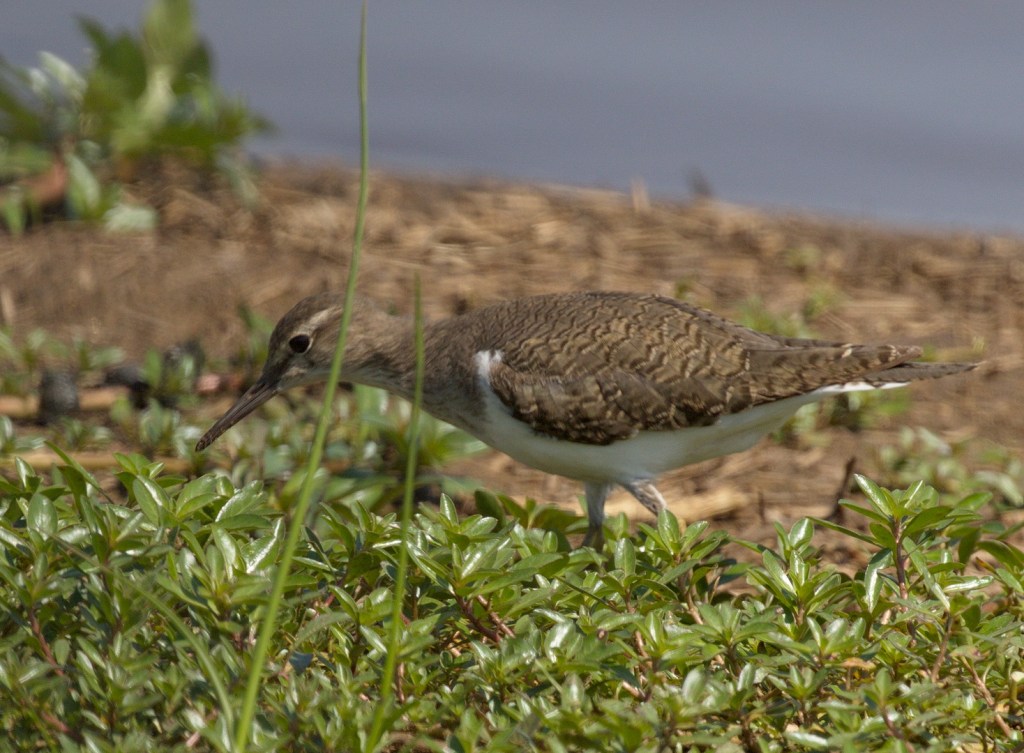
Common Sandpiper
Goliath Heron
Hamerkop
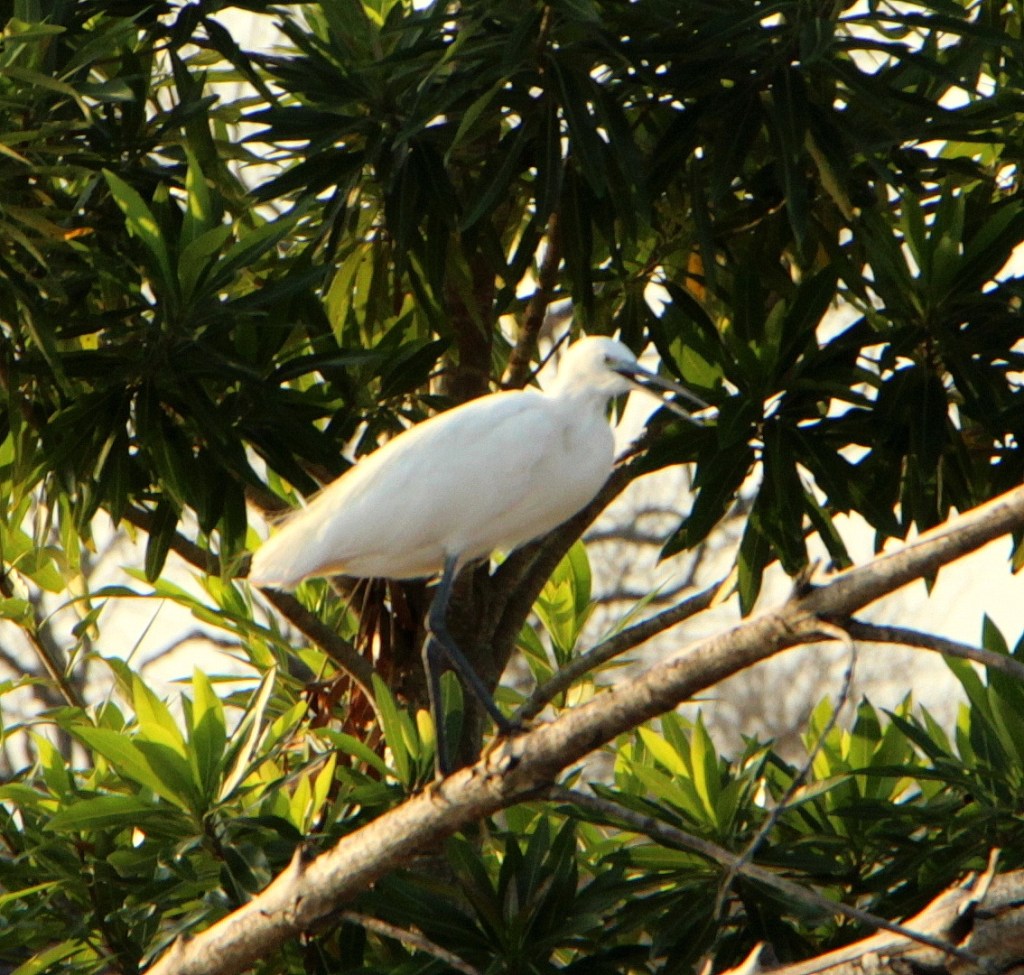
Little Egret
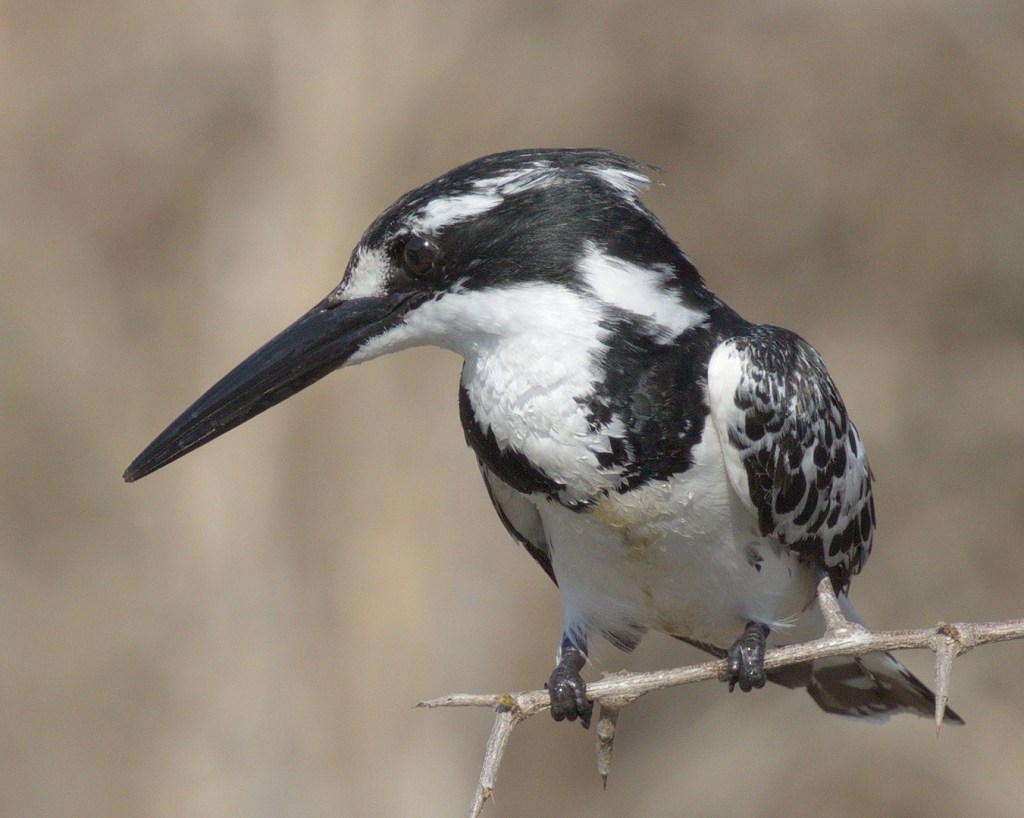
Pied Kingfisher
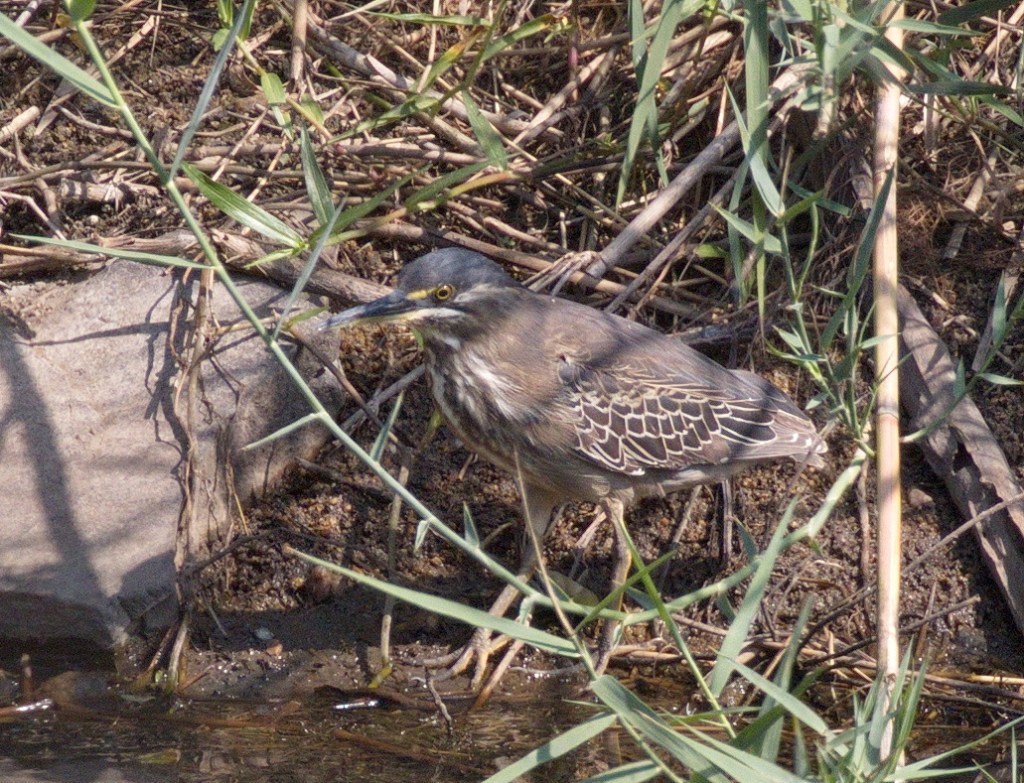
Striated Heron
Three-banded Plover
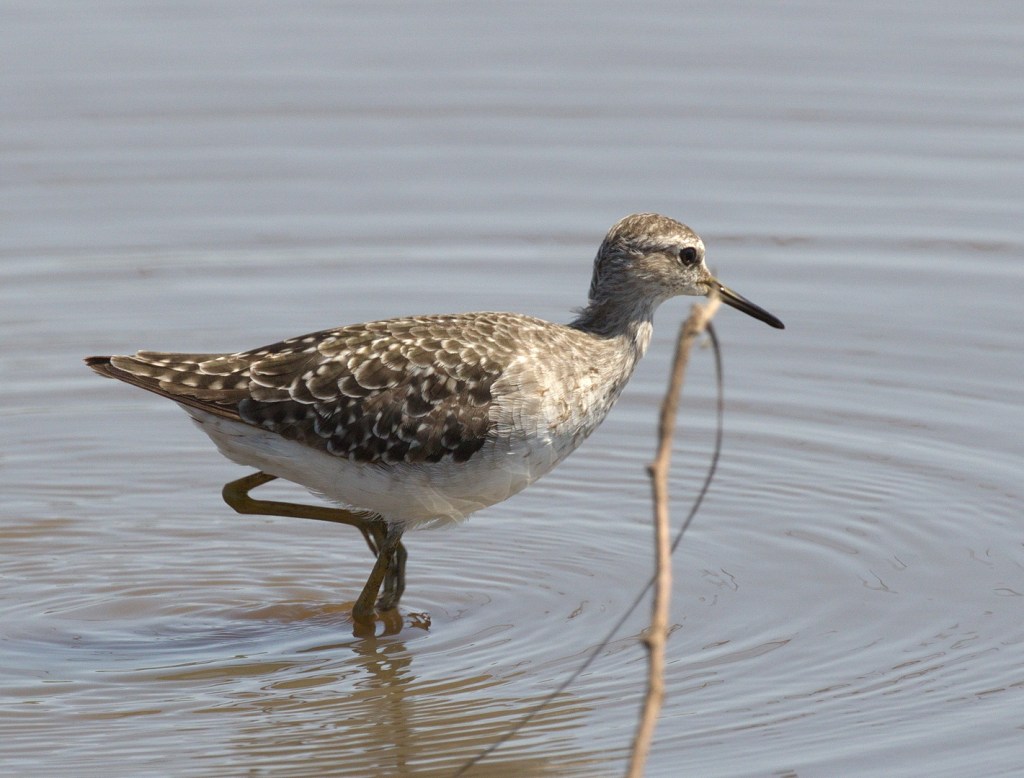
Wood Sandpiper
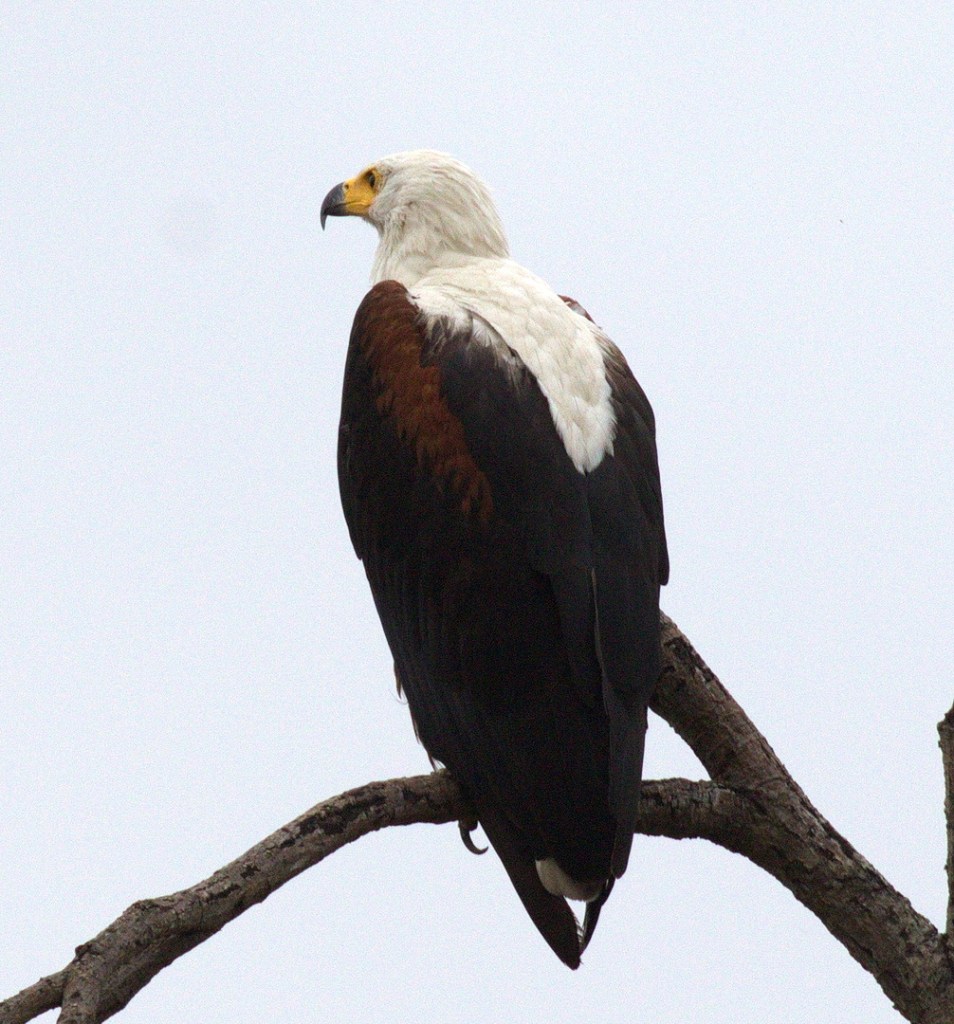
African Fish-Eagle
Of course there were animals too:
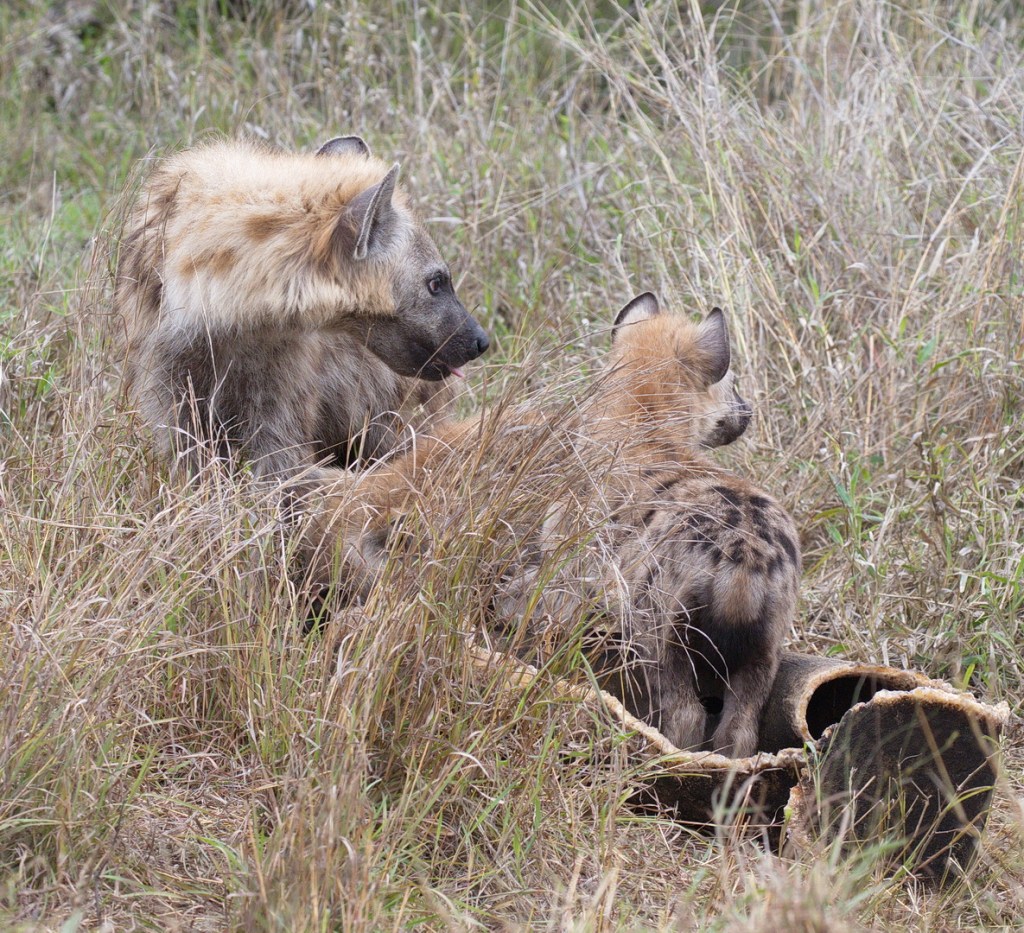
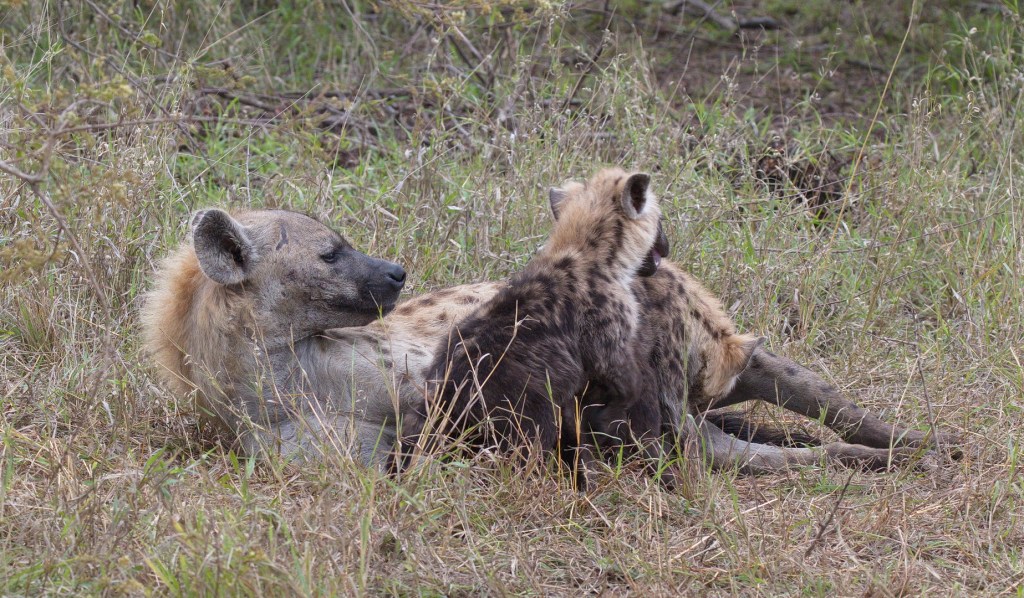
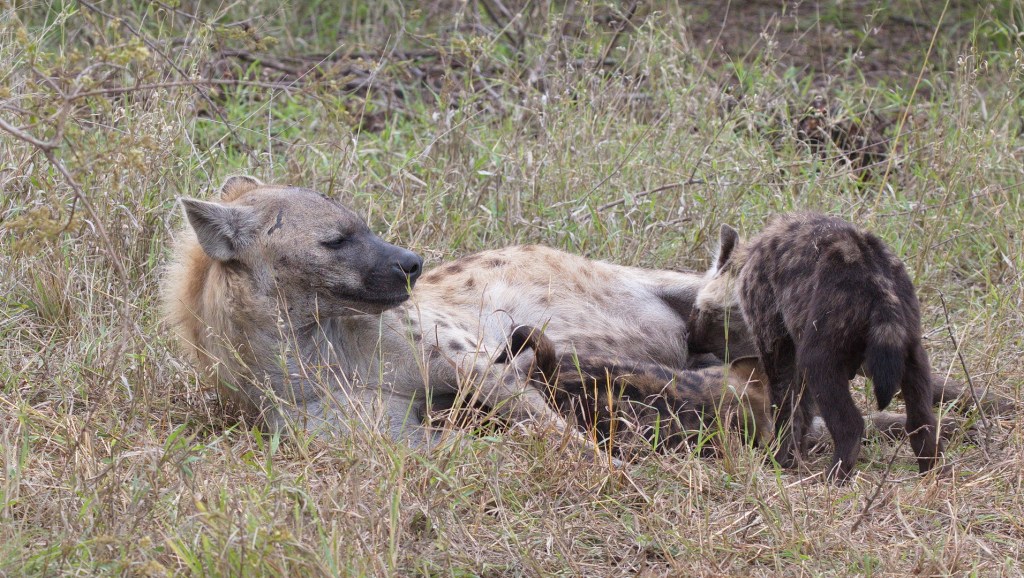
Hyena and pup
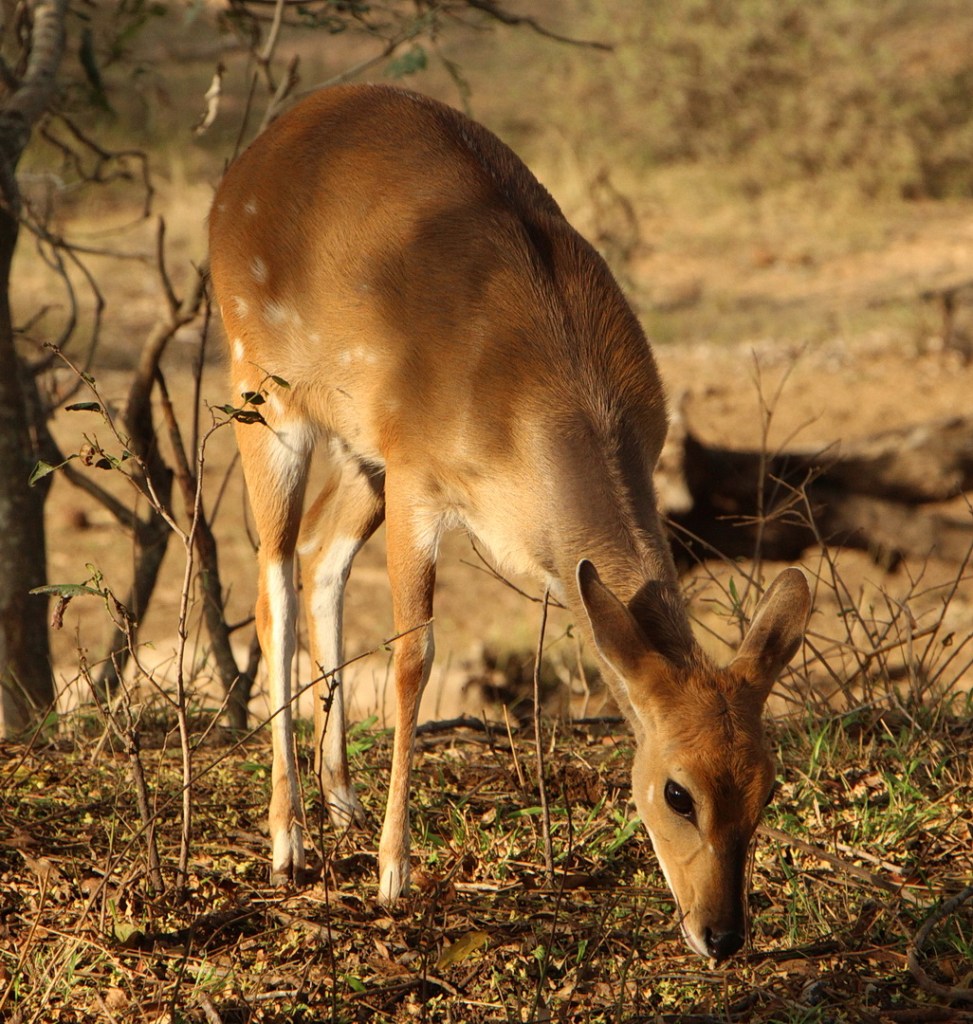
Bushbuck
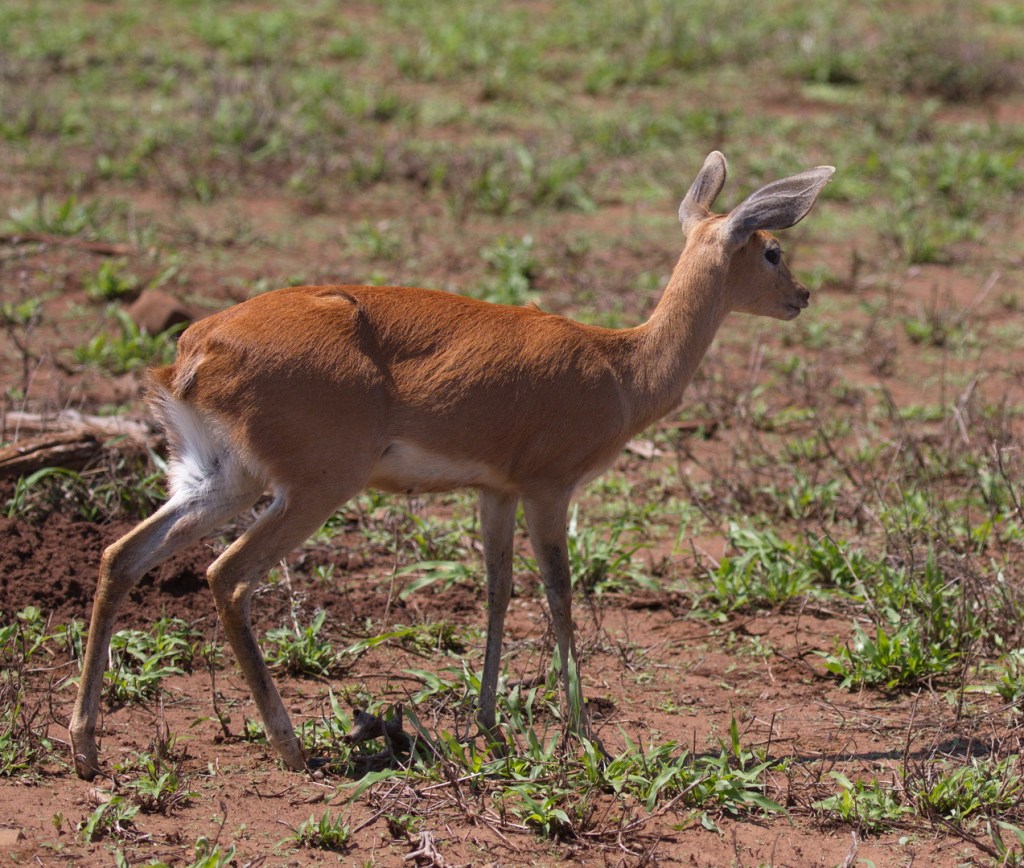
Steenbuck
Ellie
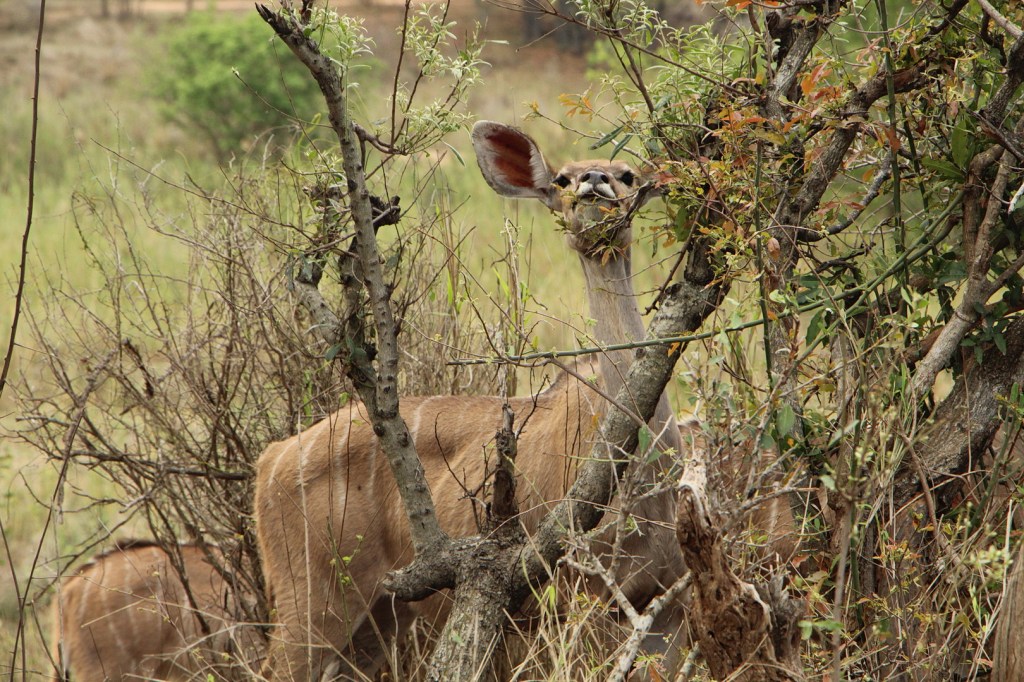
Kudu at a stretch
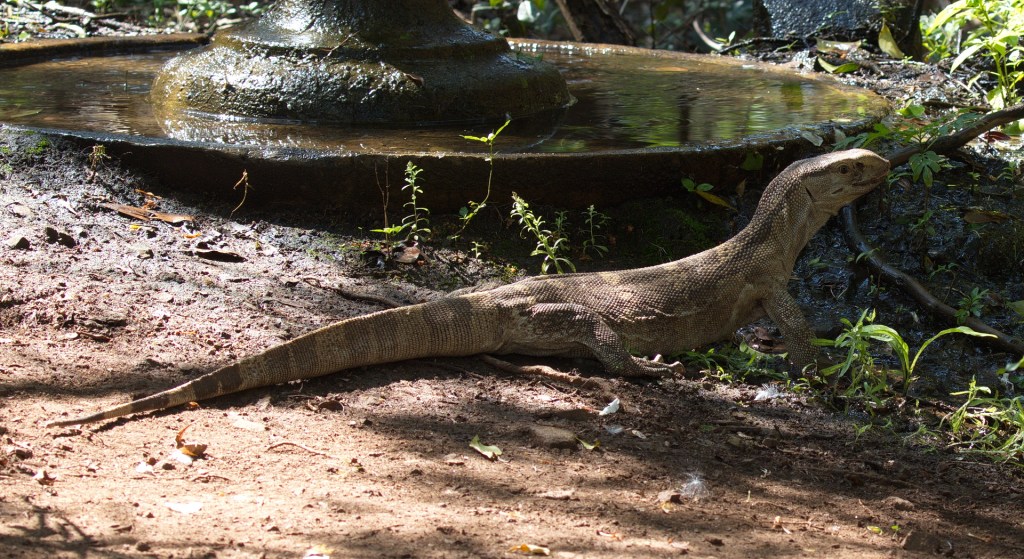
Leguaan
Sleepy Leopard
Dagga Boy
Ellies in a scenic view
Hyena and pup
Suckling
Crocodile cooling down and a Water Thick-knee getting too close.
Lazy Lions
There were many bush birds about. In Pretoriuskop there were Red-headed Weavers and Brown-headed Parrots. It was there that we heard unusual calls from a flock of very small birds in an open tree. Sally was convinced they were Green-capped Eremomelas. We had fleeting views of them as they bobbed around in one of the trees. Pity I was unable to get a photo.
Red-headed Weaver
Brown-headed Parrot
Brown-headed Parrot
Here is a gallery of bush birds we photographed as we travelled around:
Chinspot Batis
Eastern Golden Weaver
Greater Blue-eared Starling
Grey Hornbill
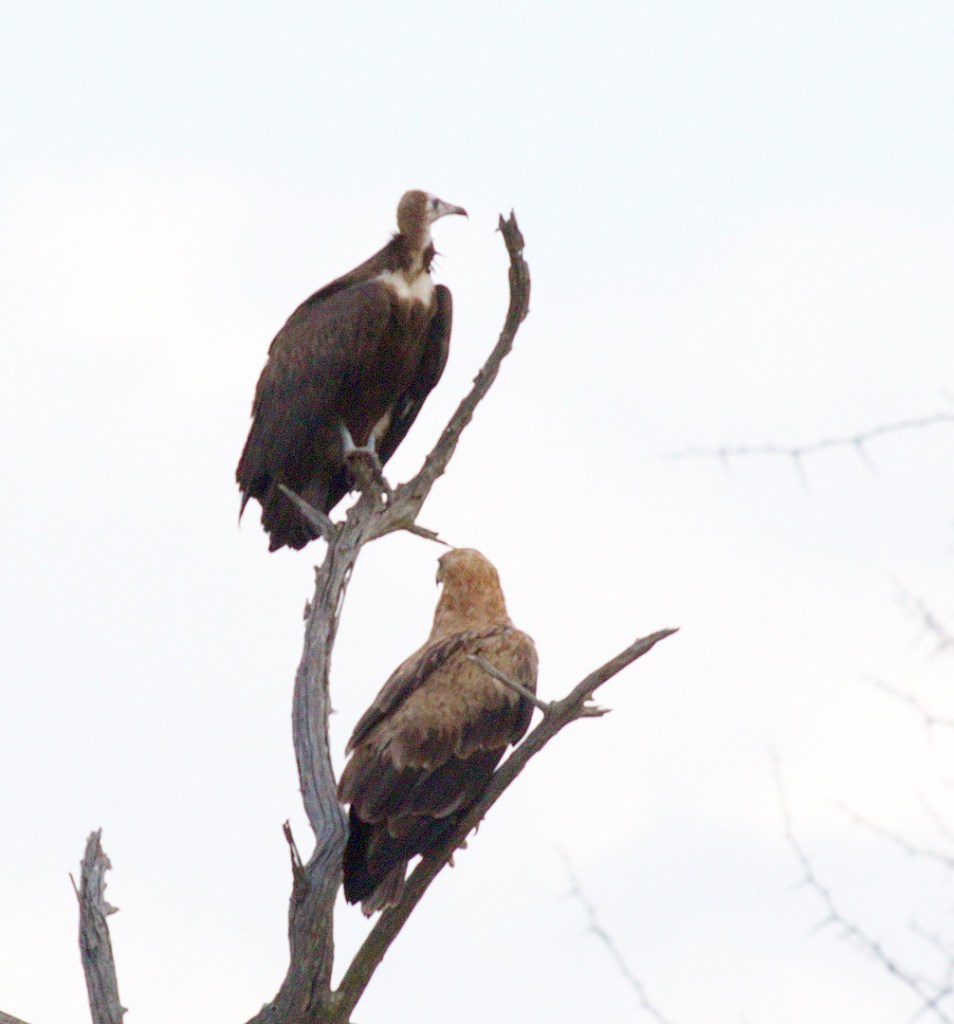
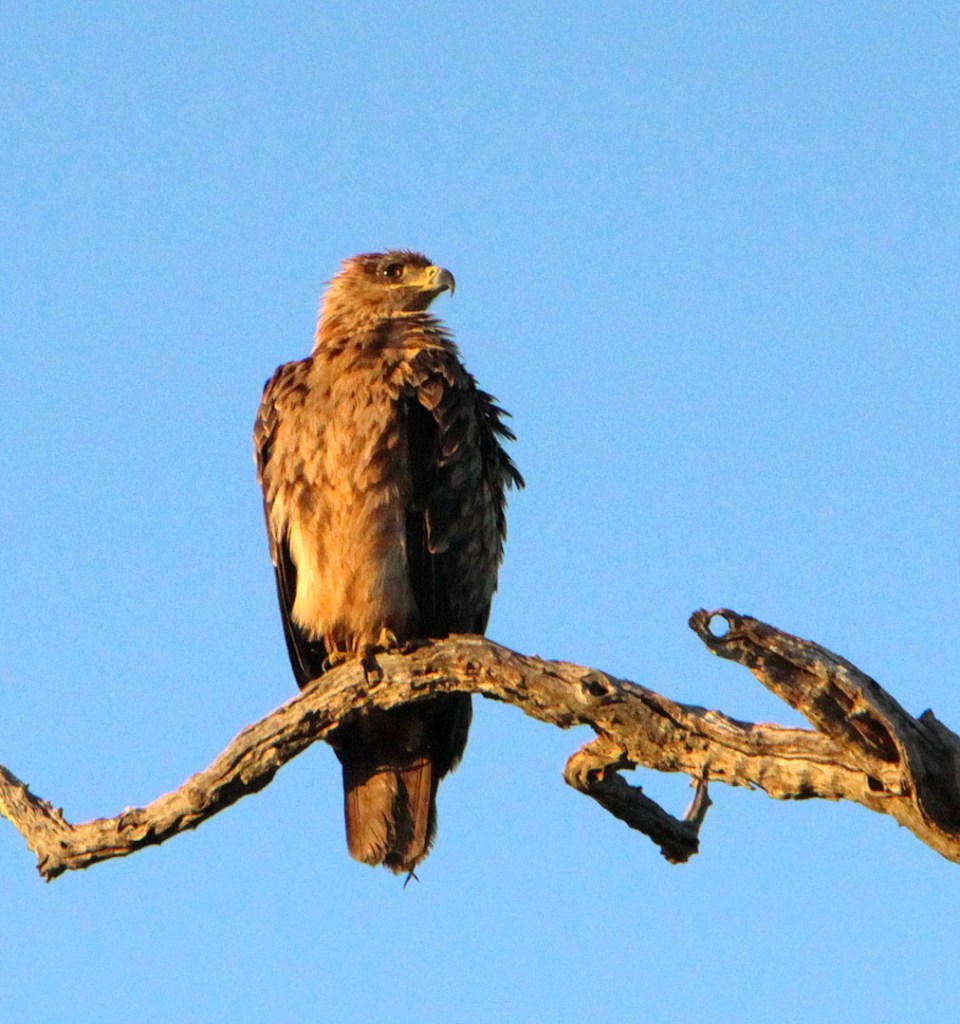
Hooded Vulture and Tawny Eagle
Black-bellied Bustard
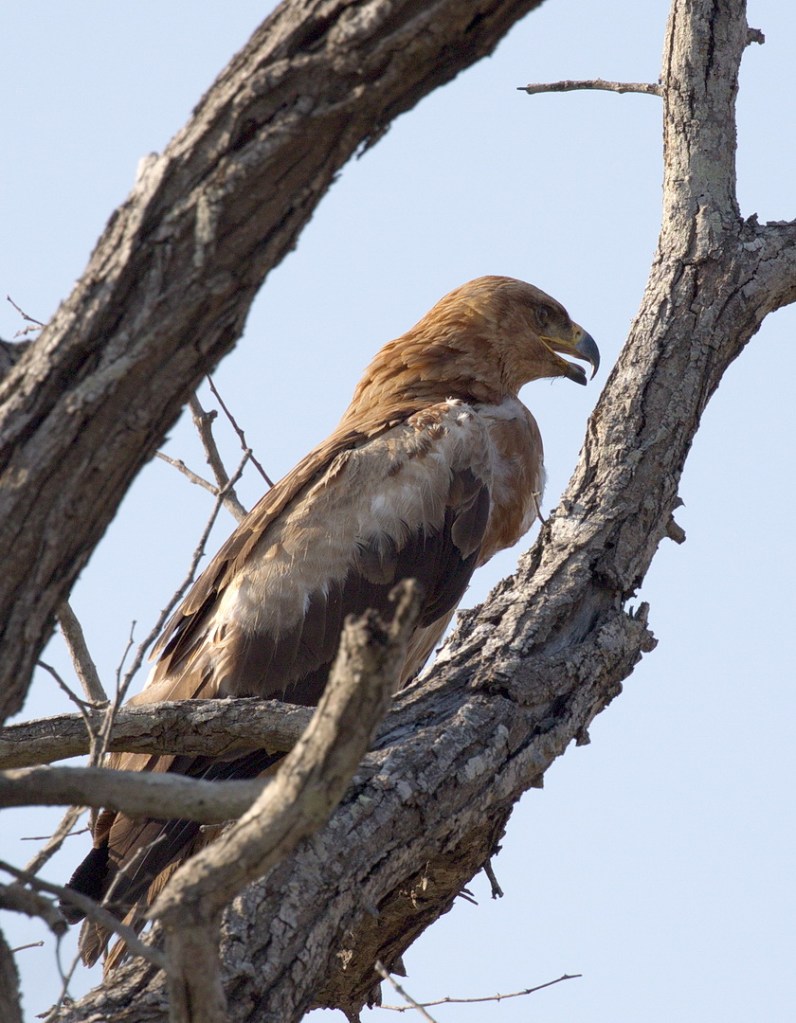
Tawny Eagle
Red-billed Buffalo-Weaver
Black-bellied Bustard
Secretarybird
Eastern Golden Weaver
Jameson’s Firefinch
Tawny Eagle
Tawny Eagle
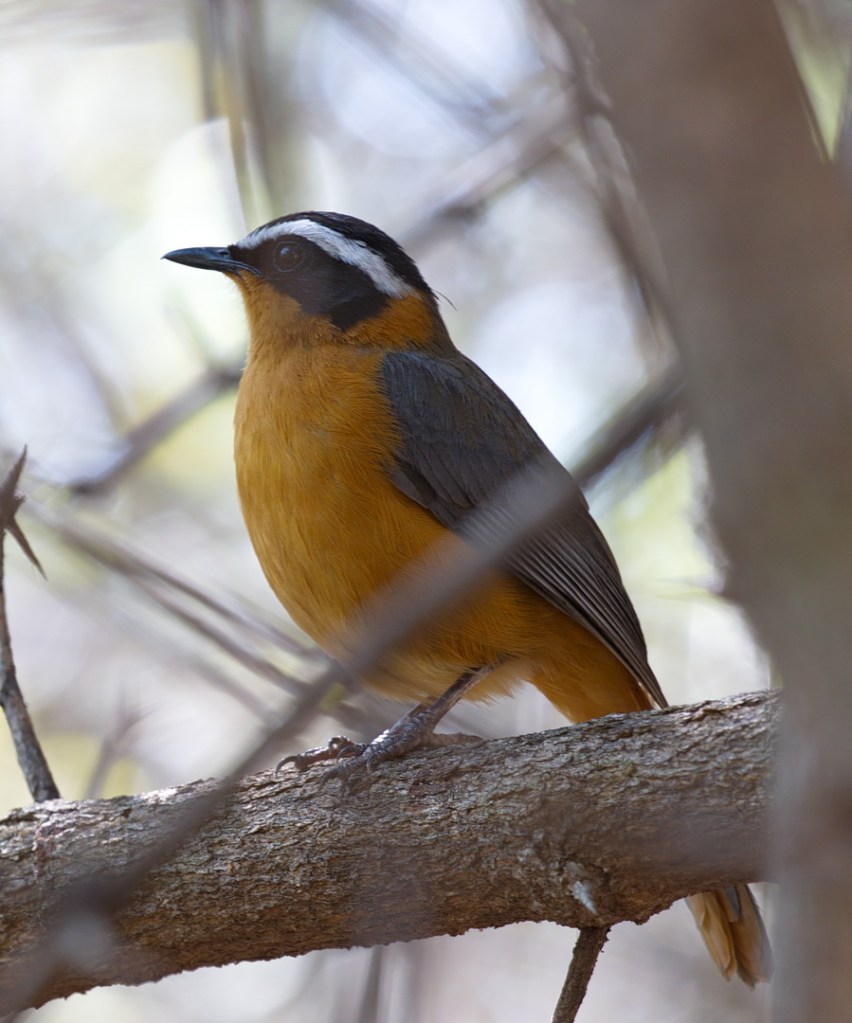
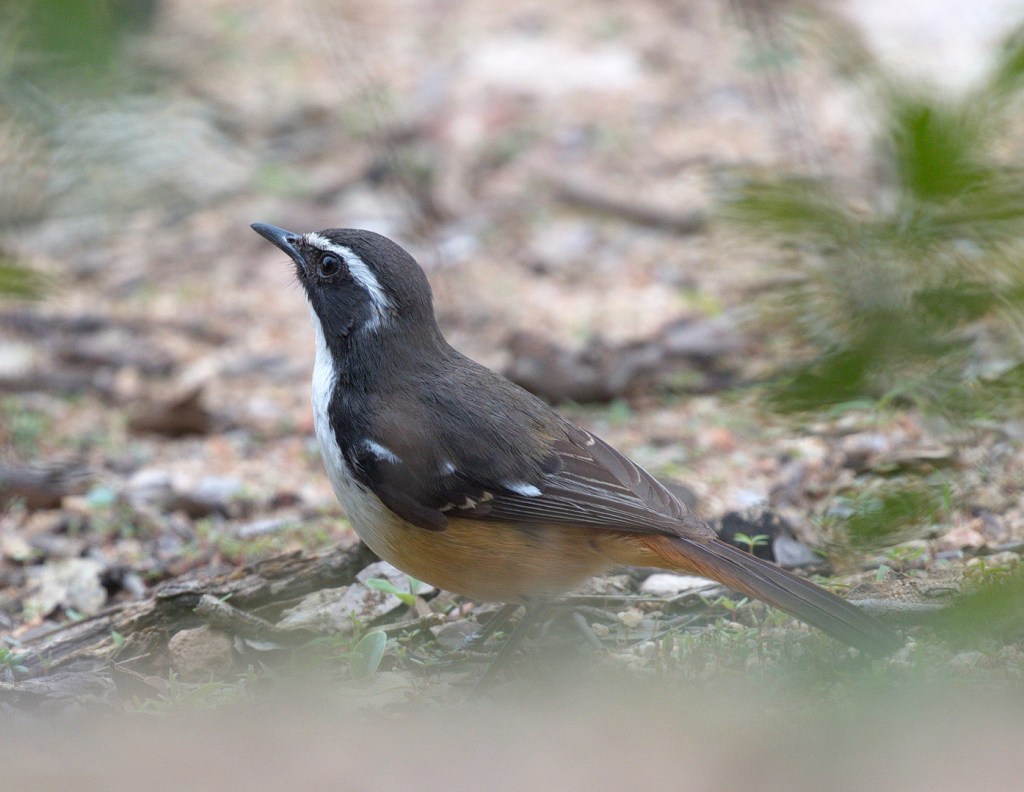
White-throated Robin-Chat
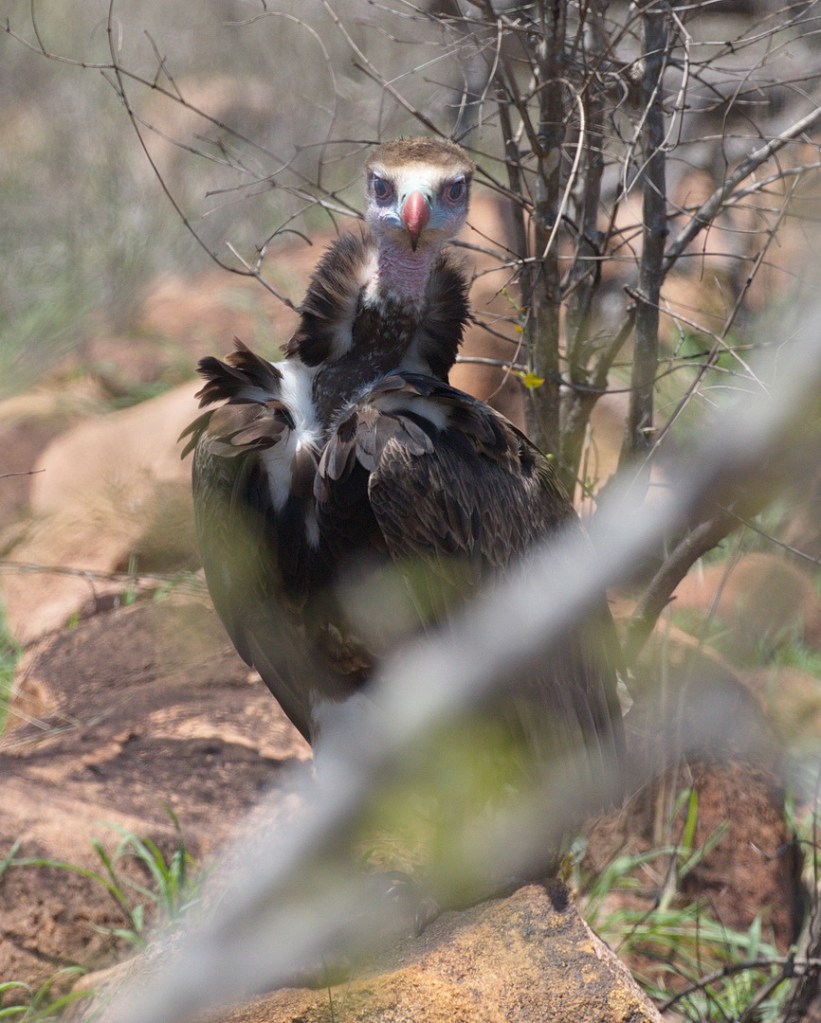
White-headed Vulture
White-headed Vulture
White-throated Robin-Chat
Another surprise for us was to see a YELLOW-billed Oxpecker so low down in the KNP. On a buffalo at S 24.87; E 31.748.
Altogether in our time at Skukuza we identified 144 different bird species.