On the afternoon of the 2nd of February, Sally and I went down to Durban and up to the La Mercy estuary. Our goal to see the White-cheeked Tern which had appeared there. This was only the 5th time one of these Terns had appeared in South Africa.
We arrived about 15h00 only to be told that the bird had just flown out to sea. We were also told that it had being doing this regularly throughout the day and then returning.
So we waited and waited enjoying the birds on the beach – and keeping a close eye amongst the Terns with which it had been roosting. Mainly Common and Little Terns with the occasional Sandwich Tern. Even a Grey Plover made an appearance.
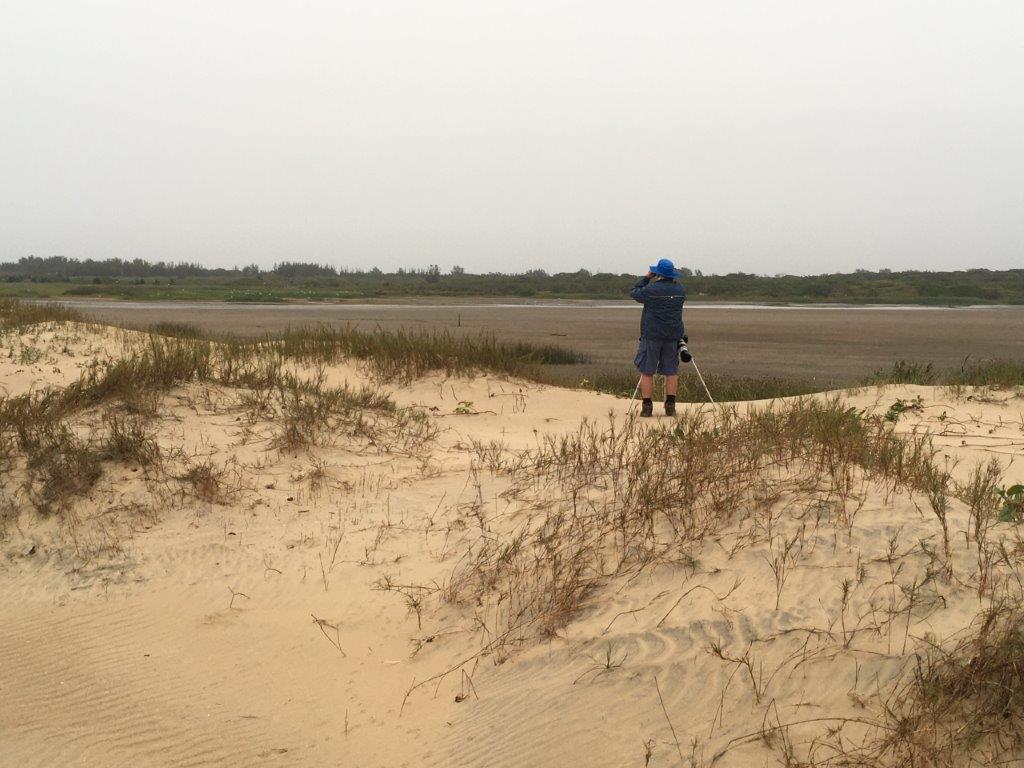
Just a few of the expectant and hopeful.
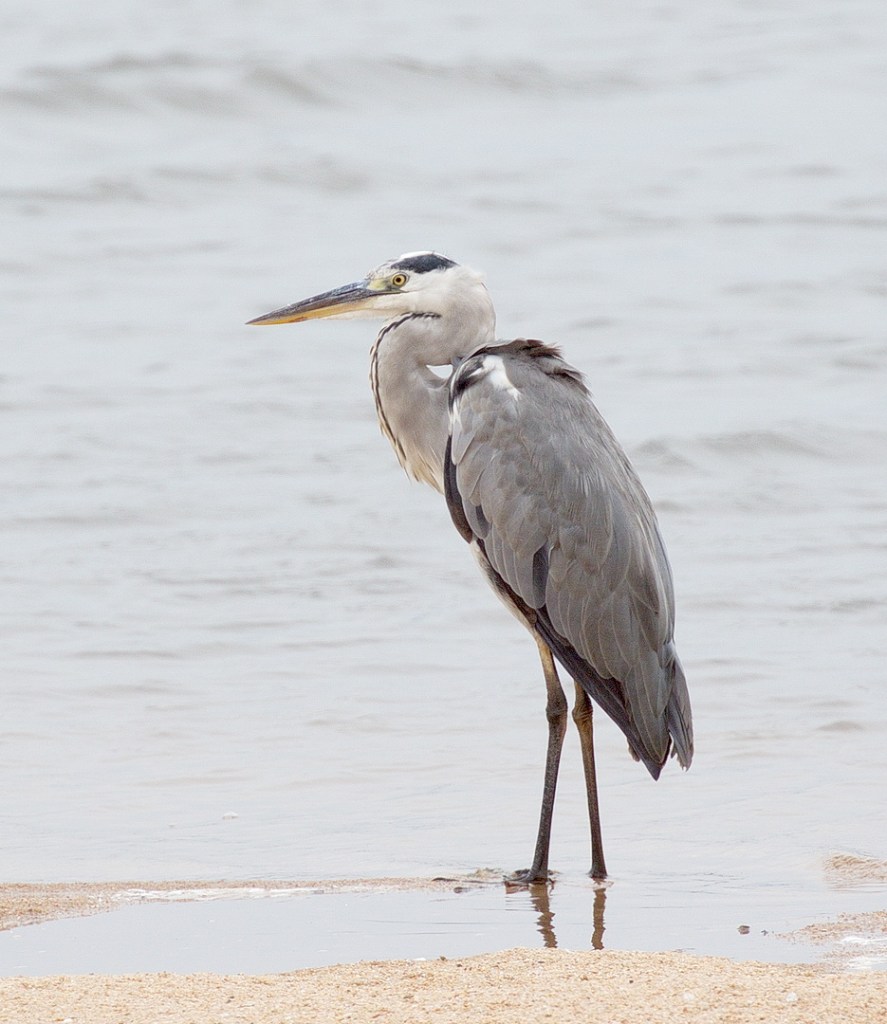
Grey Heron
Grey Plover
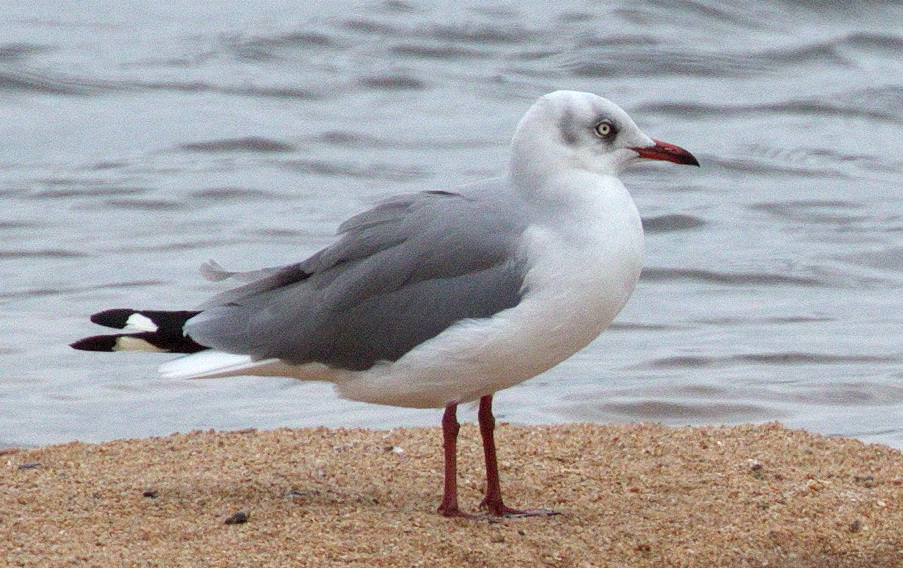
Grey-headed Gull
Little Tern in partial breeding plumage (yellow on the bill) with Common Terns behind
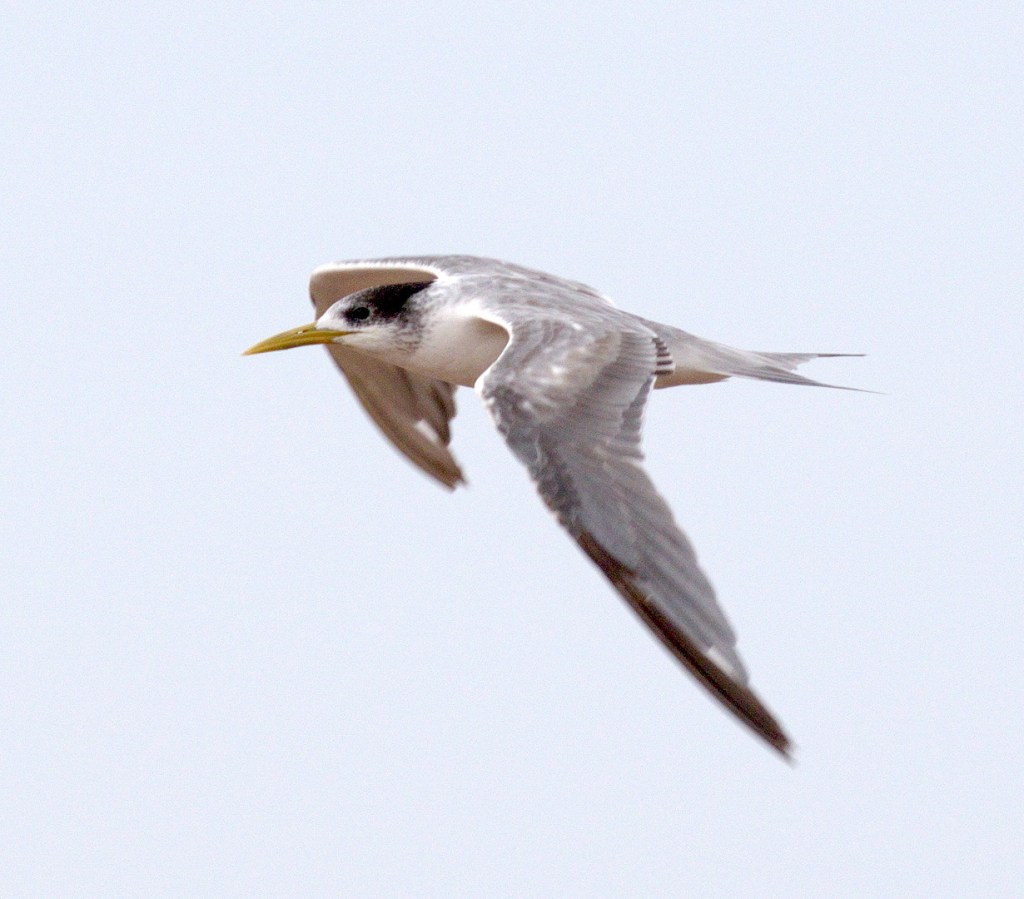
Swift Tern
Swift Tern
Swift Tern
Grey-headed Gull with breakfast among Common Terns
Sadness . Cruise ship sitting waiting for C-19 to be over.
Down she comes
Another on the way down
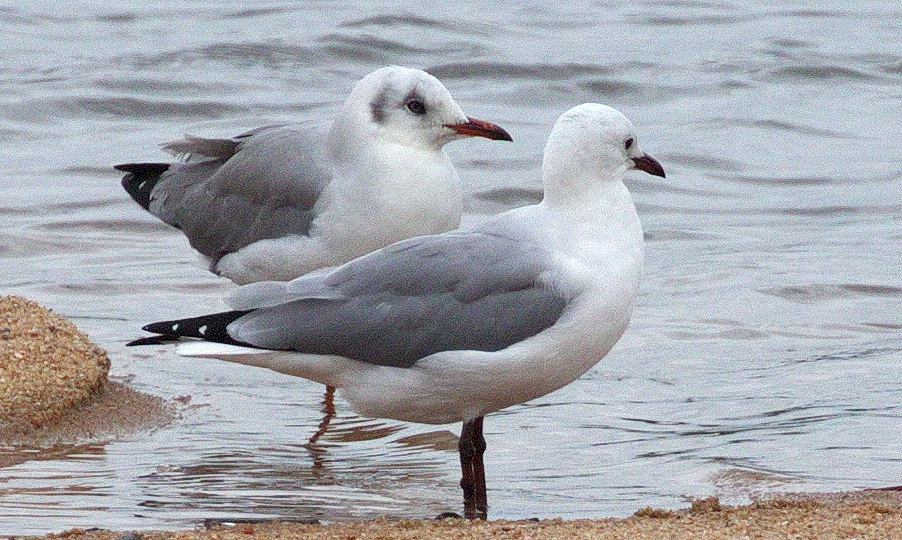
As we waited an uncommon bird appeared among the Terns – a Hartlaub’s Gull – which we were very happy to see.
Hartlaub’s Gull in front with a Grey-headed behind
Hartlaub’s Gull in front among Grey-headed Gulls
We waited and waited peering closely as the Terns took flight and returned – ever hopeful the White-cheeked Tern would appear amongst them.
After 3 hours we gave up, intending to return very early the next day.
At about 05h45 the next day we were on the beach only to be told that the bird had just flown. Another stretch of waiting and watching. Eventually as 09h00 approached we said goodbye and we returned to Sally’s son’s home for some brekky and to pack up and head home. At 09h10 we got a message on the KZN Rare Birds Alert WhatsApp group to say the bird had re-appeared. We quickly packed up, forgot about breakfast and headed back to the site.
As we arrived we were told the bird had just flown out to sea and one chap there said he had watched the bird as it flew way over the ocean. Just our luck.
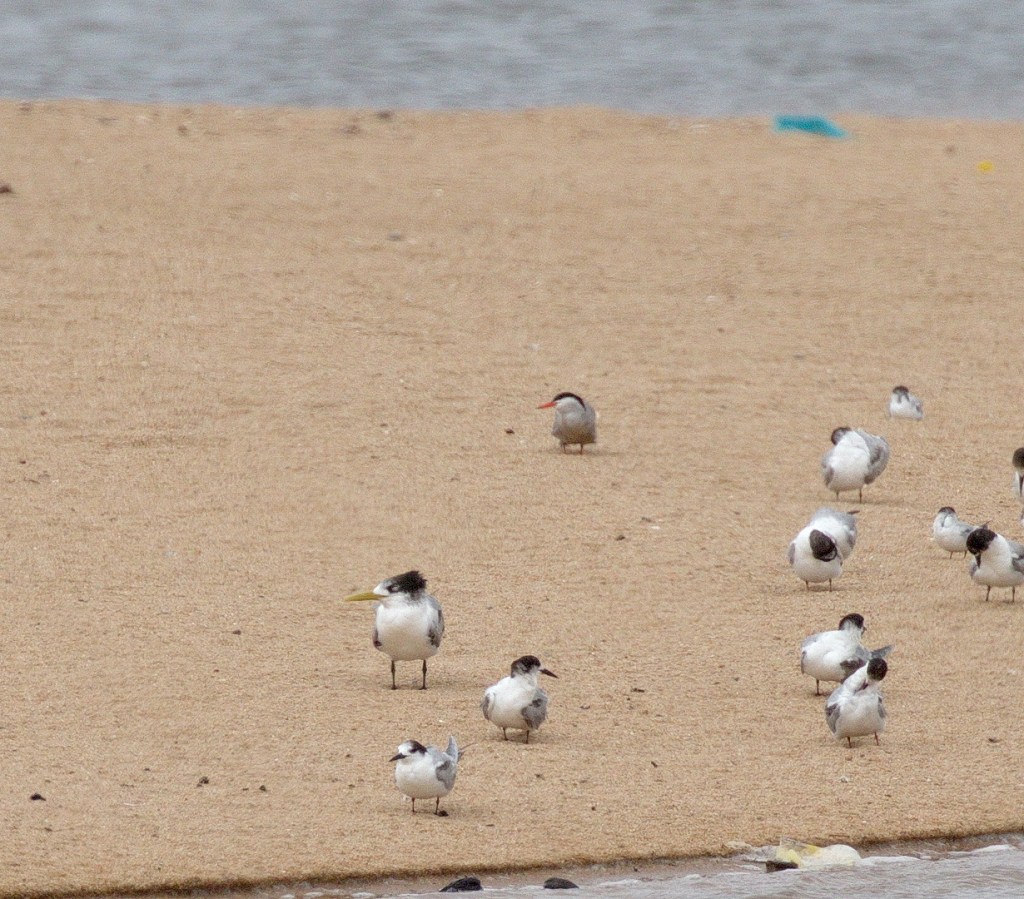
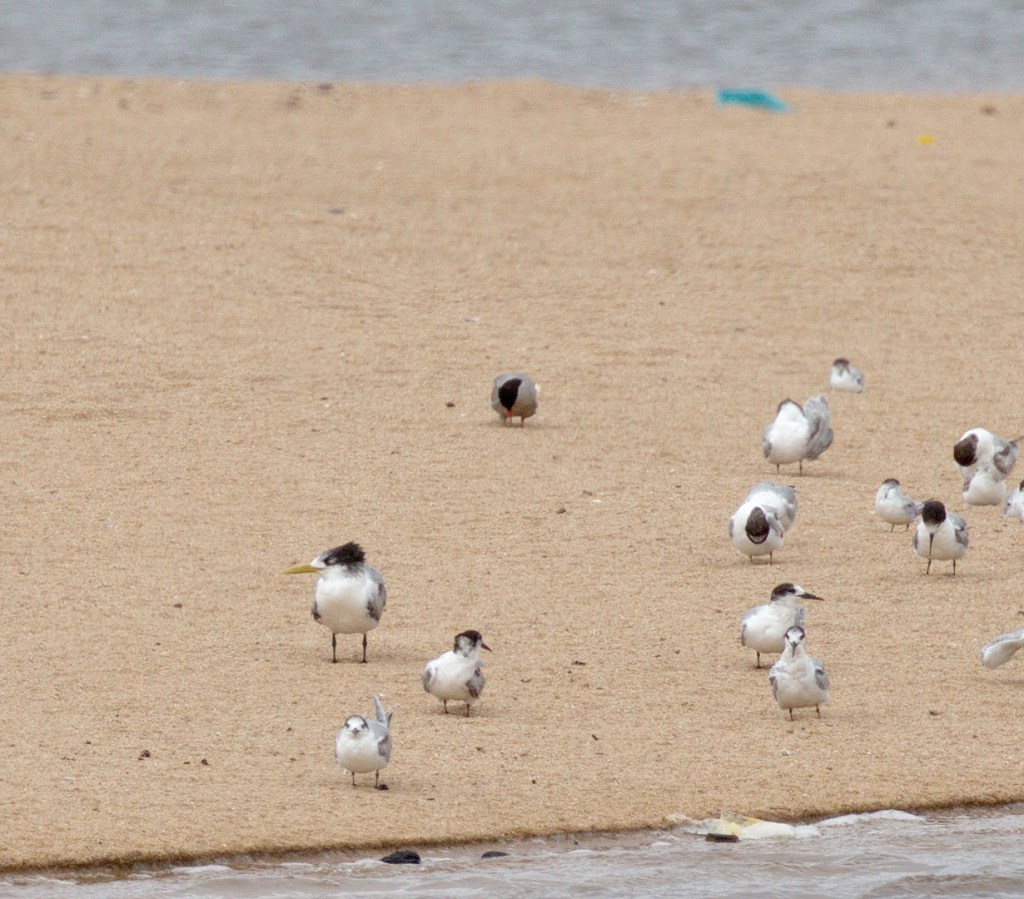
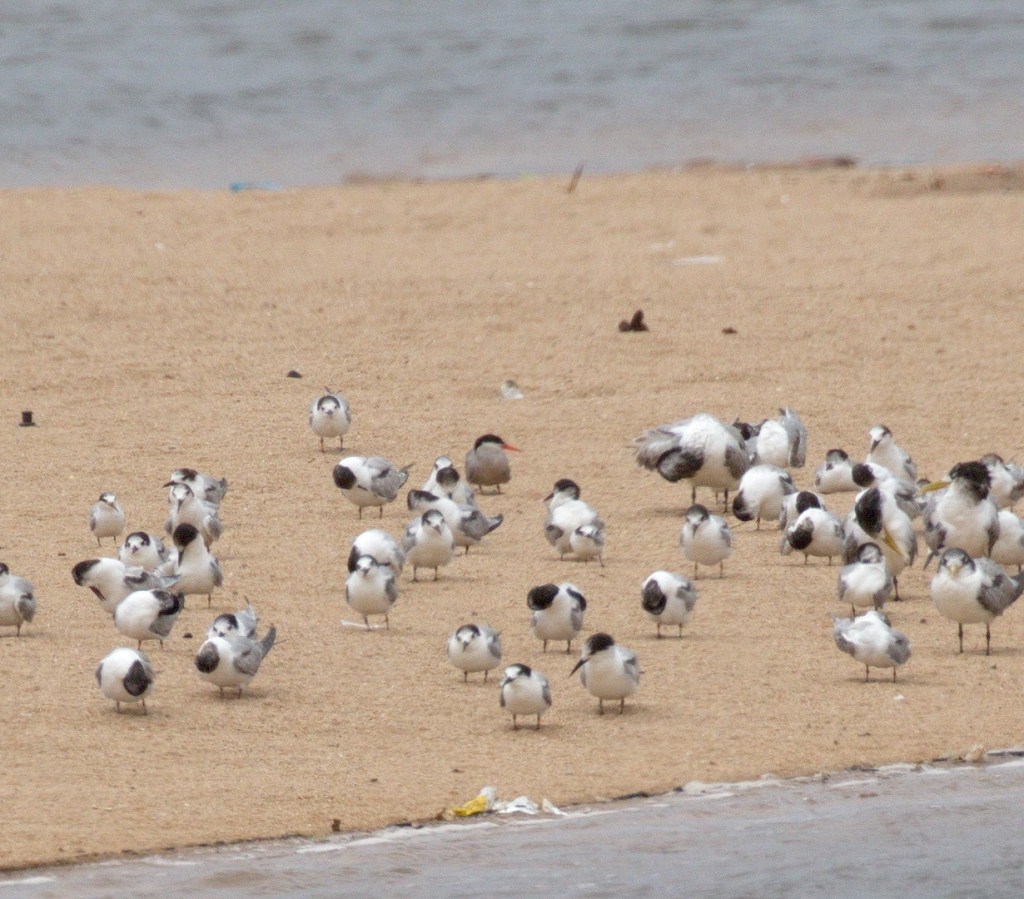
Anyway, I got out the scope and peered into the Tern roost to see what was there – and there it was with its distinctive dark colour (compared to the other Terns) and its red bill and feet. Showing off its white cheek from which it got its name. Were we ever happy to see this distinctive and handsome bird.
In the background
In the background
Among the other Terns
White-cheeked Tern
Unfortunately we were too far away for any decent photos but we snapped away anyway.
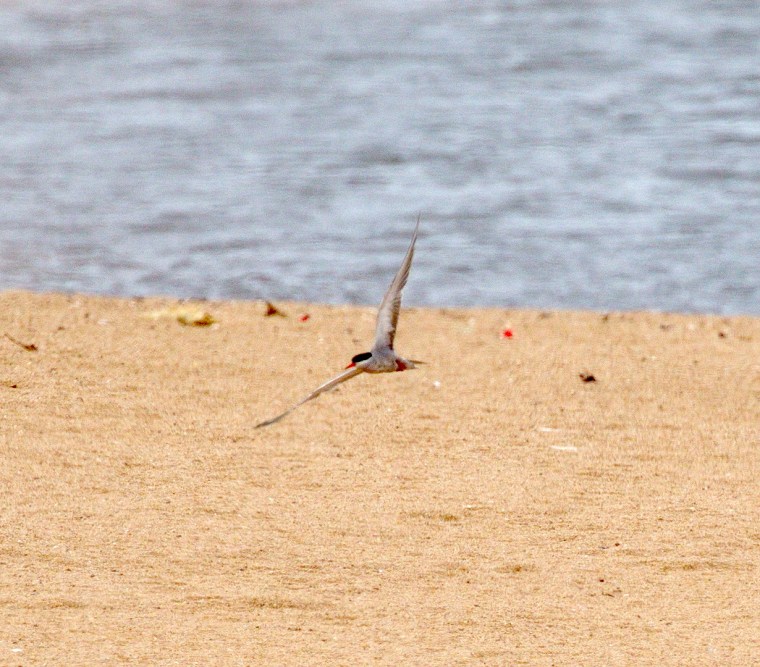
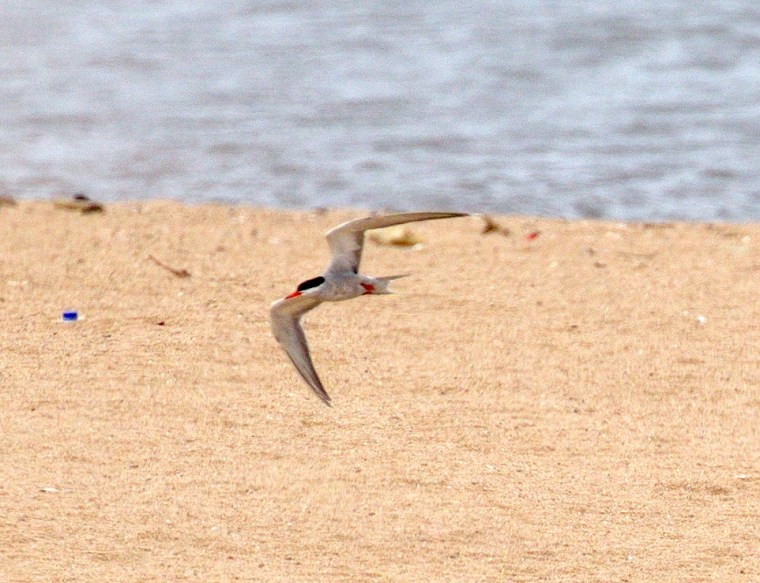
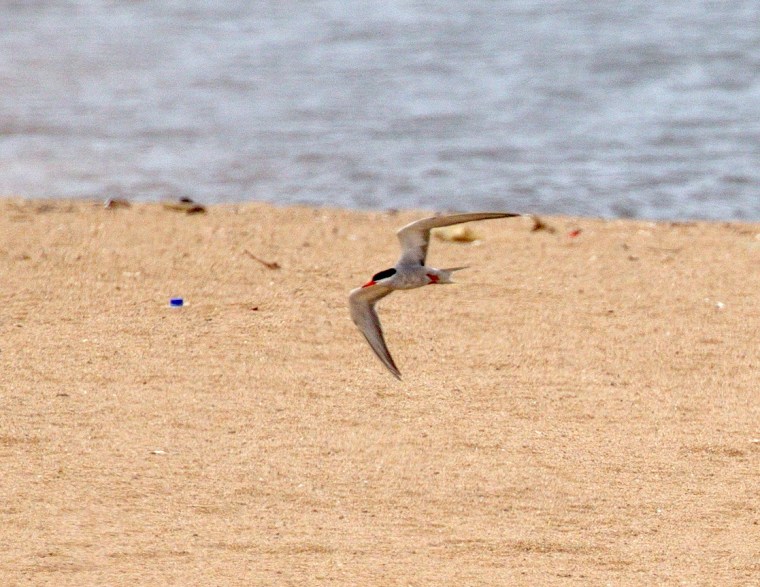
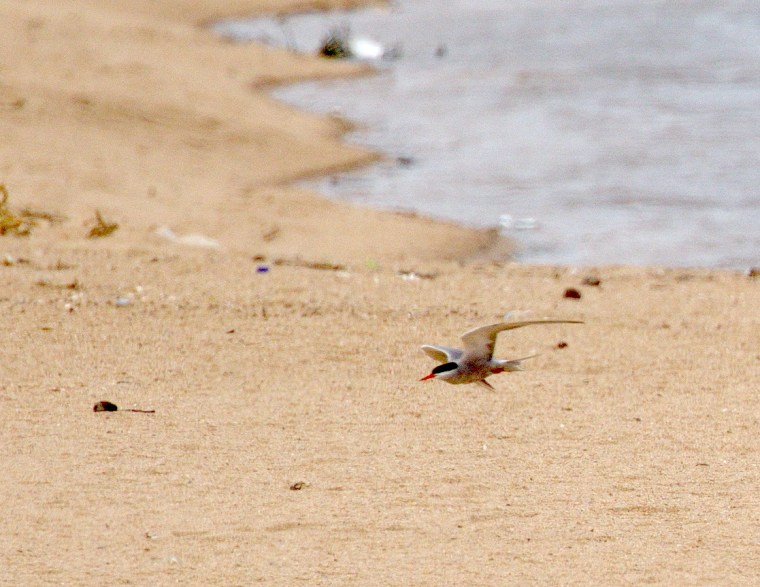
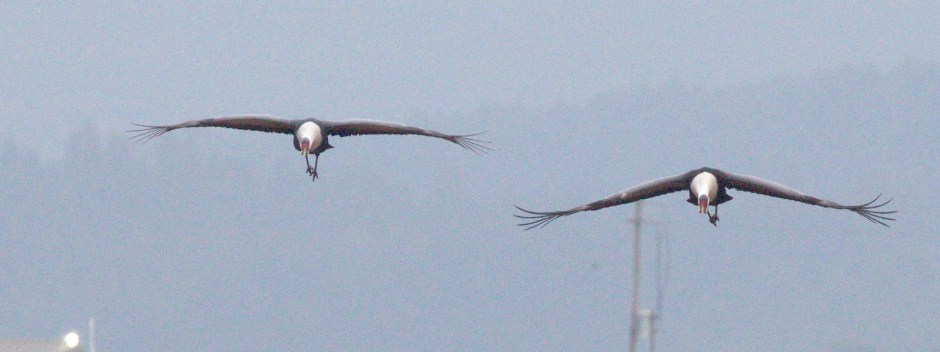
The bird hung around for a while and then it flew out into the ocean – it seems for the last time as there have been no reports of it at La Mercy since. Here are a few shots of the bird as it flew away for the last time (for now).
White-cheeked Tern heading out to sea for the last time.
December has been a crazy month for unusual birds in Zululand. Madagascan Cuckoo, Black-tailed and Bar-tailed Godwits, Terek Sandpiper, Greater and Lesser Sand Plovers, Caspian and American Golden Plovers to name a few.
Sally and I eventually managed to go up there for 3 nights – staying at Sand Forest Lodge just north of Hluhluwe. We drove up early on Wednesday morning going straight to the Madagascan Cuckoo site in Hluhluwe Game Reserve.
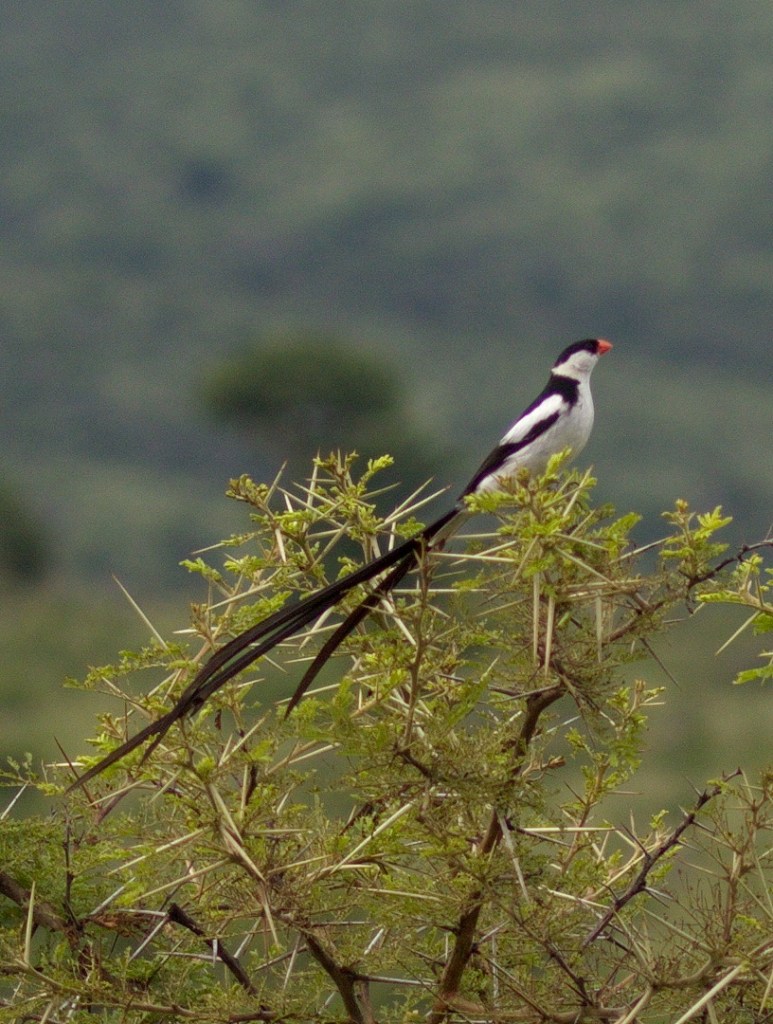
The bird was calling well but down in the valley. A pair of White Rhino were in the muddied pool right beside us – keeping us inside the cars. Pin-tailed Whydahs were also on display.
Pin-tailed Whydah
White Rhino calf and unconcerned mother
After a few hours waiting for it to make an appearance we mossied off elsewhere in the park before returning at about 13h00. Again the bird was calling but did not visit us at the top of the hill. Eventually we gave up and checked in to the cottage at Sand Forest Lodge.
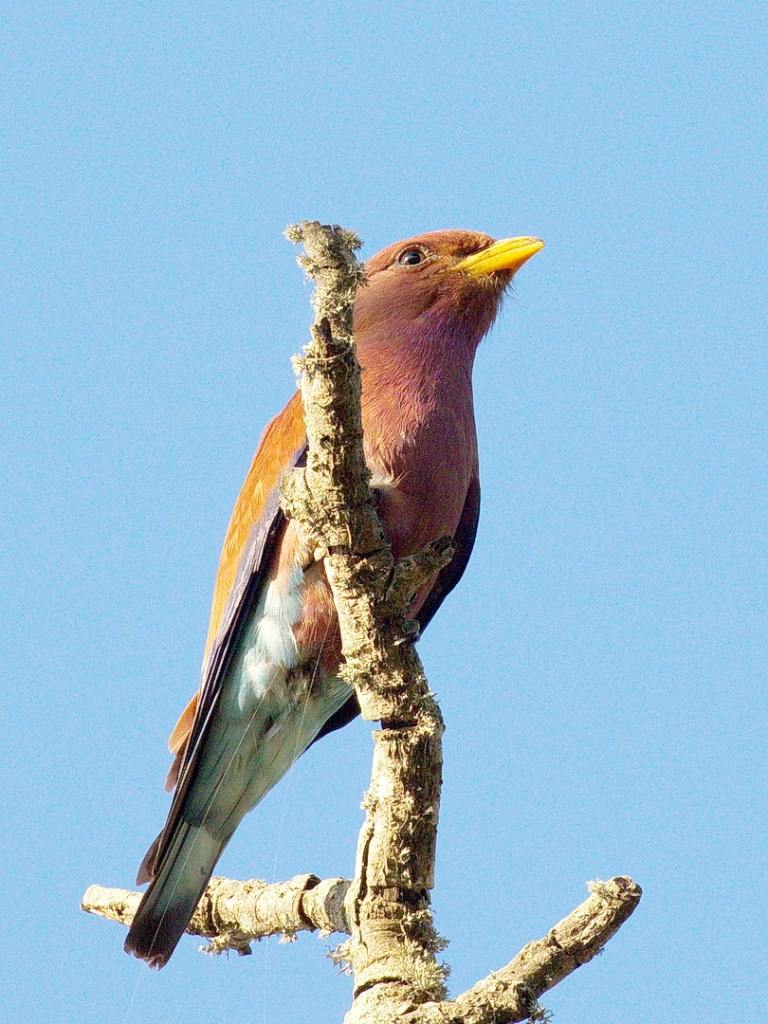
Sand Forest Lodge itself is a great place to see Zululand birds. We wandered around the grounds catching sight of a number of specials. Particularly nice was the call of the Broad-billed Roller….”Naarr”.
Broad-billed Roller
Broad-billed Roller
White-eared Barbet
The following day we visited Nibela and Mpempe Pans with Ian Gordon. Nibela is a vast floodplain with coastal forest along one side – fever trees and bush. A great contrast to the floodplain with a whole different variety of birds calling.
Our goal here was to find the Black-tailed Godwit – a lifer for both Sally and me. However it was not to be. Many hours were spent at the different pans, forever hopeful. There were a goodly variety of waterbirds to keep us entertained. Hundreds of Flamingos and Pelicans, Curlew Sandpipers, Little Stints, Ringed Plovers, Grey Plovers, Black-winged Stilts, Marsh Sandpipers, Ruffs, some Terns (some too far away to positively ID) and the occasional Lesser Sand Plover.
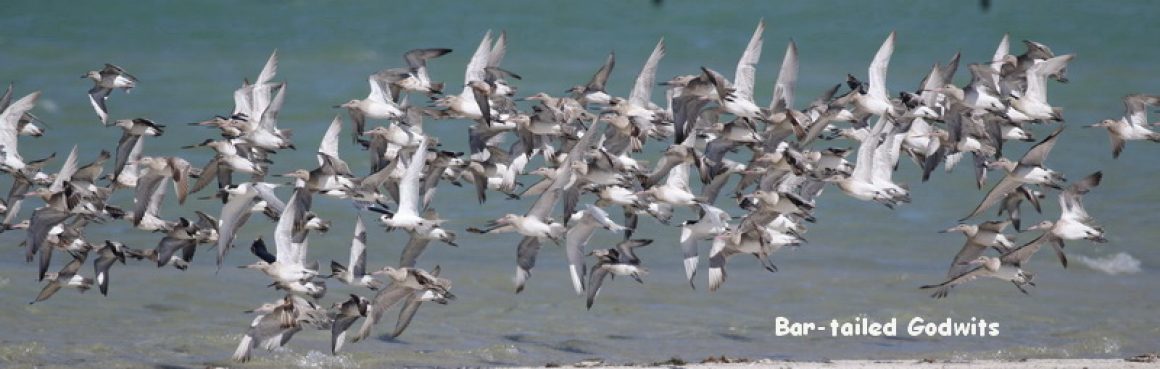
Bar-tailed Godwit
Bar-tailed Godwit
Grey Plover
Grey Plovers
Grey Plovers
Grey Plover and Ruff
Marsh Sandpiper
A very white Grey Plover
We took a 3 – 4 km drive along the side of the floodplain and the bush seeing and hearing an array of different species. In particular there were numerous Bee-eaters – predominantly Blue-Cheeked and some European.
Longclaw
Blue-cheeked Bee-eater
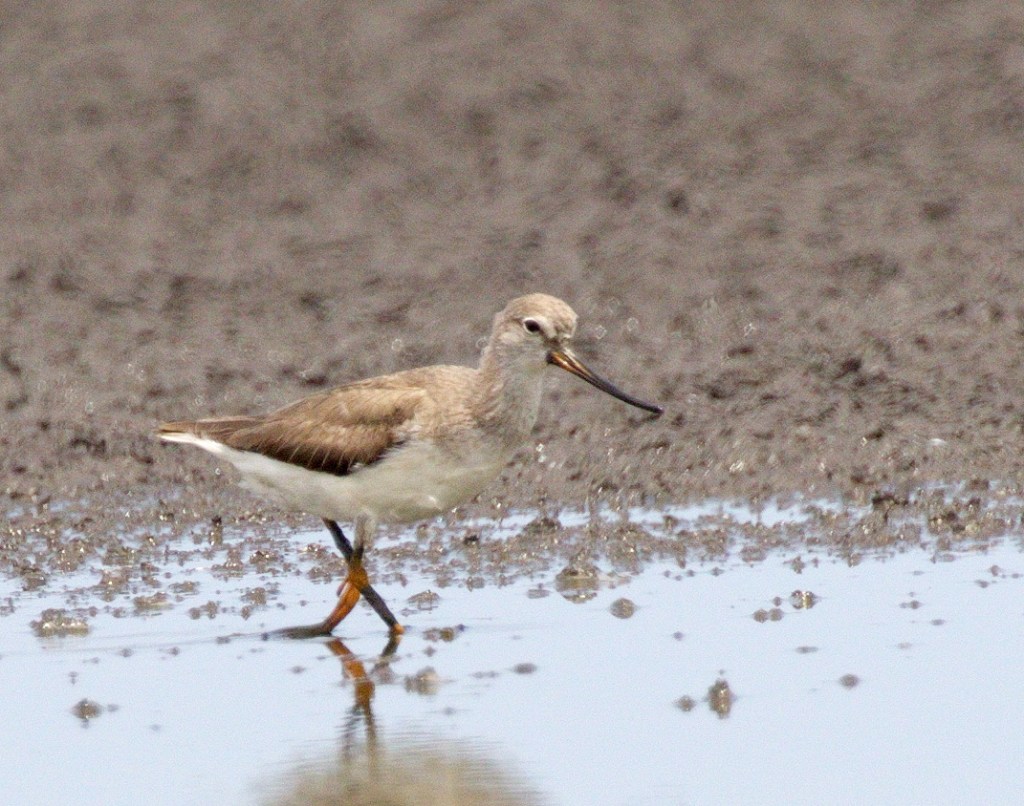
Returning to one of the pans we saw a Terek Sandpiper – a bird which we could not remember when nor where we last saw one.
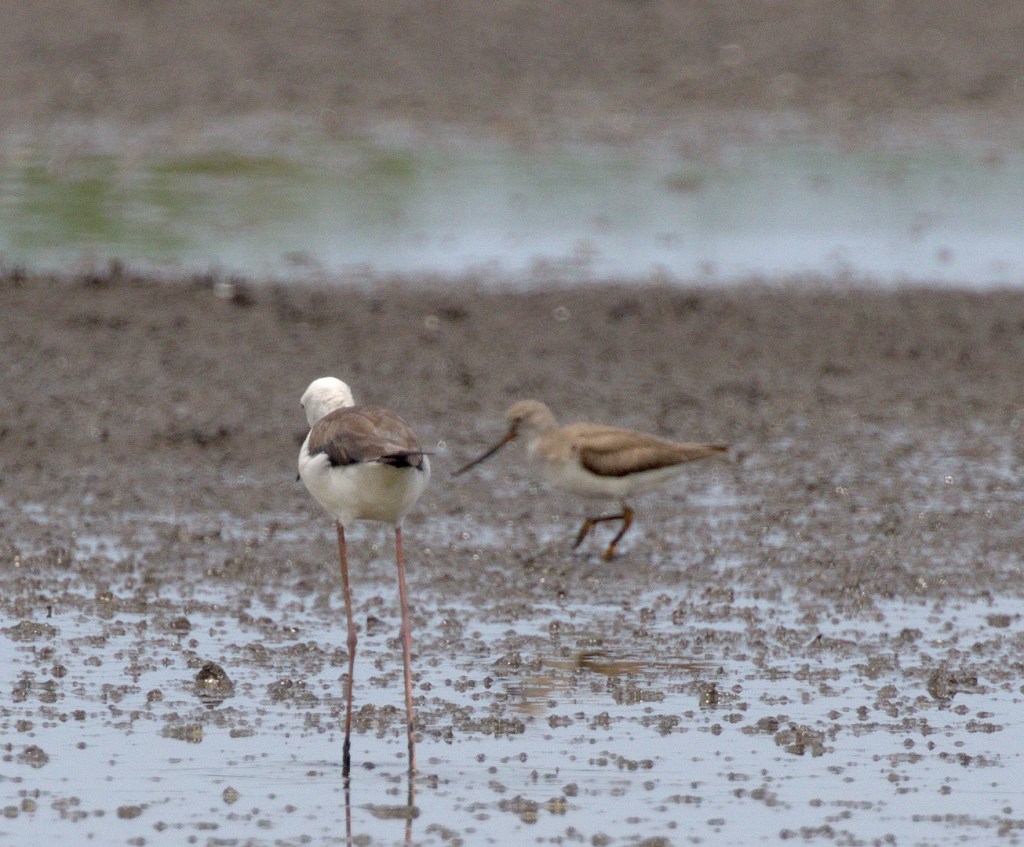
With Black-winged Stilt.
Terek Sandpiper
We then visited Mpempe Pan and drove round the surrounding open grassland. Here, we found Crowned, Black-winged and Senegal Lapwings some with young. Sally saw a Greater Sand Plover and there were at least 4 Caspian Plovers with two in partial breeding plumage.
Caspian Plover in partial breeding plumage
Caspian Plover in partial breeding plumage
Caspian Plover
Caspian Plover
Senegal Lapwing
Black-winged Lapwing
Black-winged Lapwing chick
Black-winged Lapwing chick
On the Friday we went back -very early- to Hluhluwe to find the Madagascan Cuckoo. This time we had partial glimpses as it traversed from one valley to the next over our vehicles. After many hours waiting we headed off into Hluhluwe birding.
Rufous-naped Lark
Rufous-naped Lark
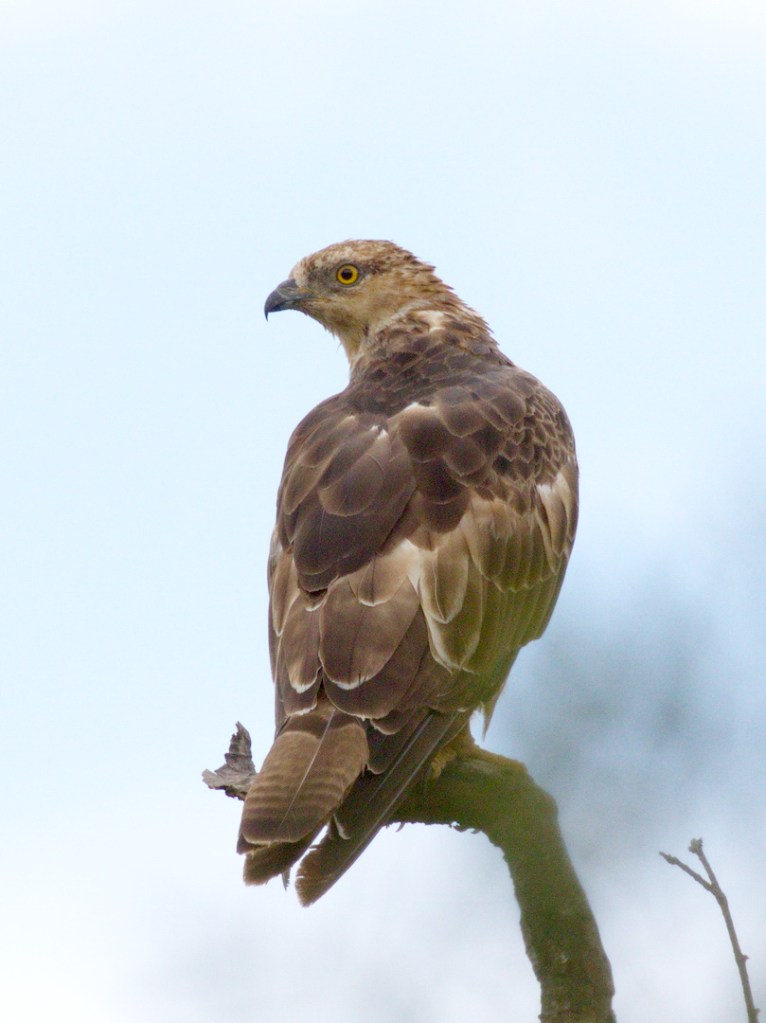
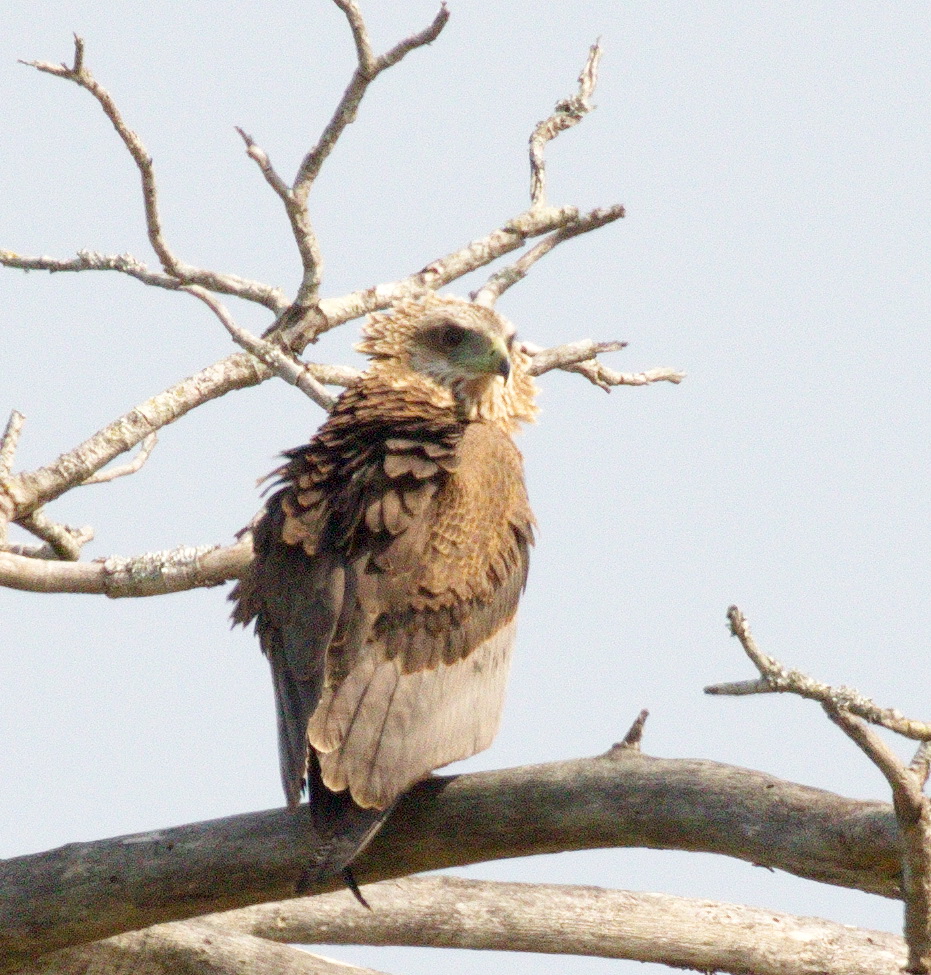
We got lucky and came across a European Honey Buzzard.
European Honey Buzzard.
That day we made one last effort to find the Cuckoo. Calling from down the valley. As we were about to leave one of the Rangers ascended from the valley with a group of youngsters . They had great sightings of the bird. On impulse Sally organised for us to take a walk with the guide the next morning at 06h00 on our way home.
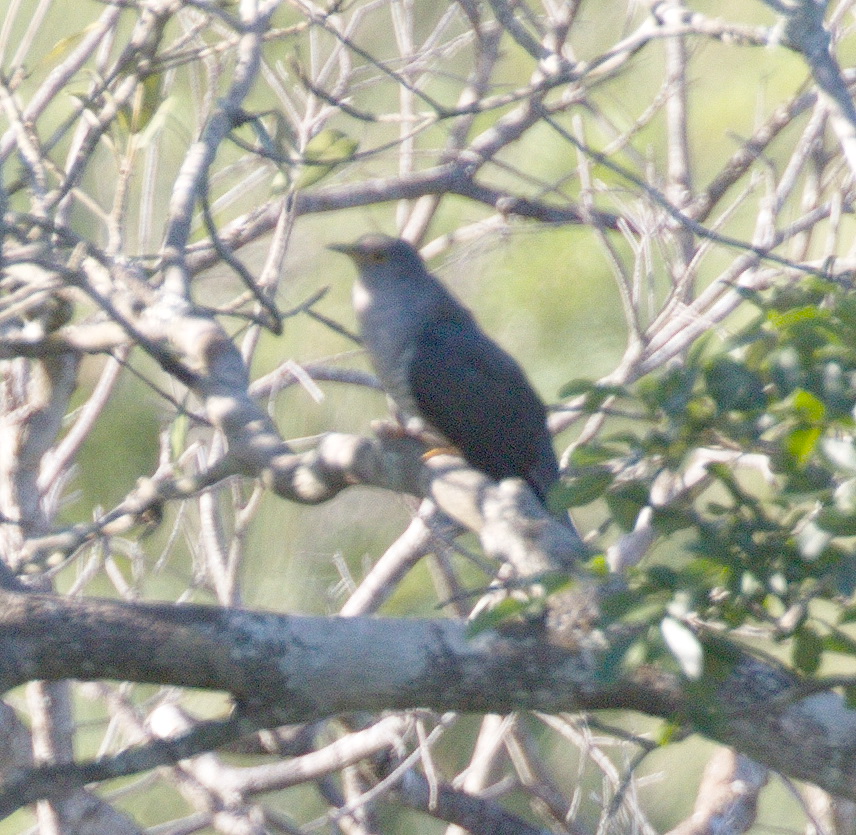
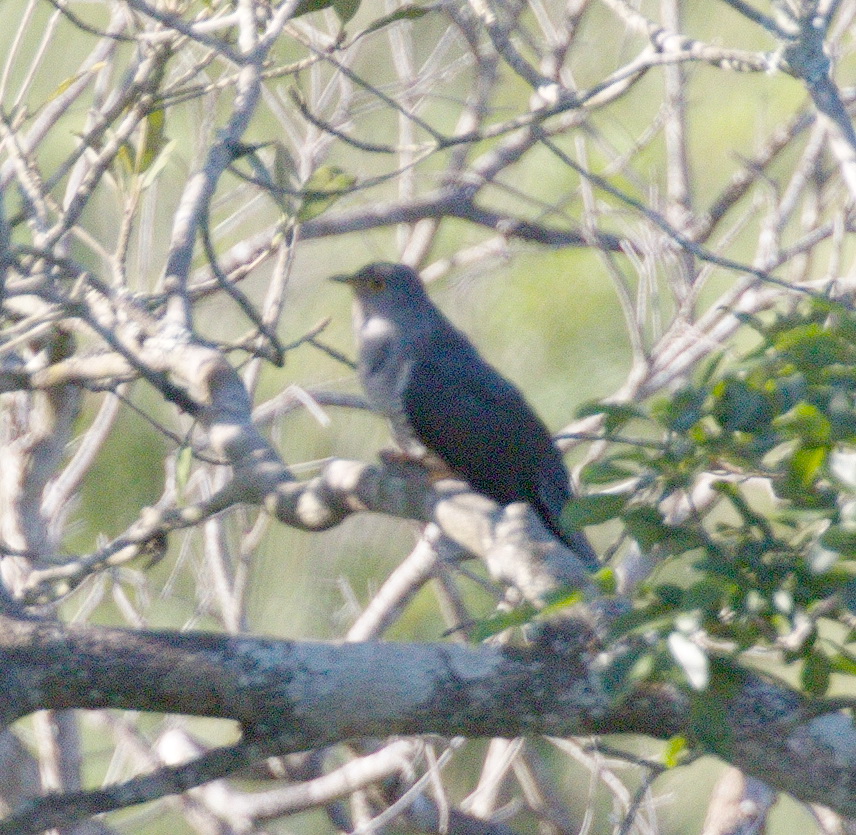
On arrival the next morning we could hear the Cuckoo calling close to the top of the hill. The rangers led a group of seven hopefuls down through the rugged prickly bush and we managed to get several fleeting sightings. The light was terrible so we continued following it and had several more close calls. Then it decided it needed to head back up the valley. We followed. This time back up to the top and following it down the other side. At one point we hung about a tree it was happy in – eating the caterpillars. As we heard it calling below it took off and flew straight at us landing in the tree above our heads – in the sun of course. After several more efforts to see it well it headed back up the valley – calling as it went.
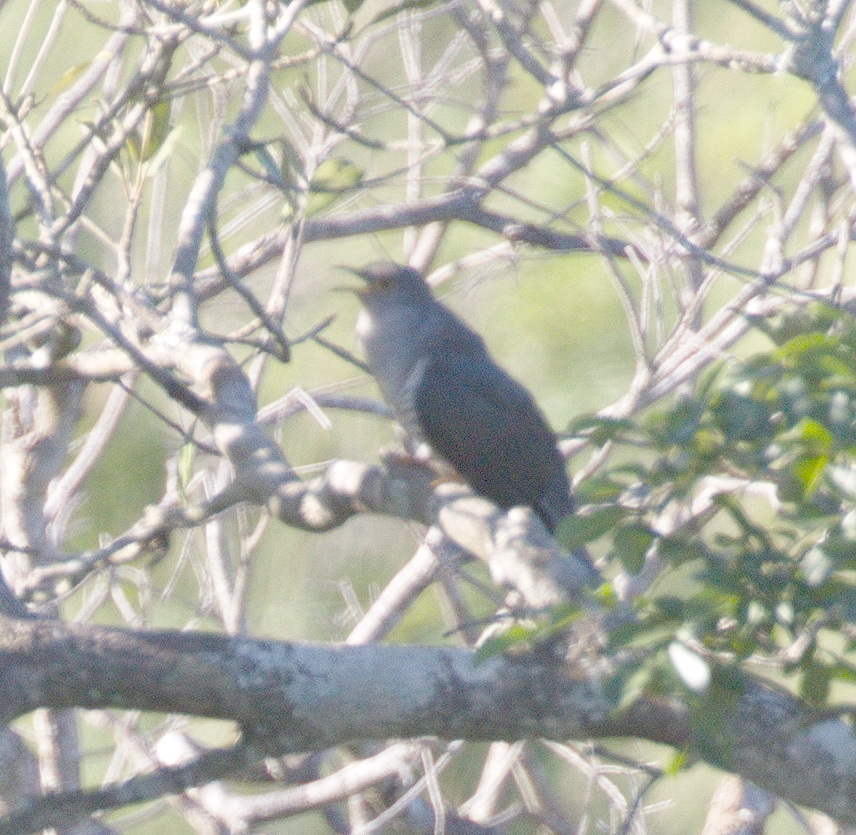
Not the best of sightings and certainly terrible photos.
Calling
Madagascan Cuckoo
Over the three days we were in Zululand we notched up identifying 168 species of different birds. Click below for list.
After our 5 days at Mapila Camp in iMfolozi we headed to St Lucia for a further 4 nights. We stayed at Sunset Lodge at the suggestion of Sally’s son and wife who used to live there. The owners Rich and Shelly are friends of theirs – a really friendly couple.
The accommodation was excellent. It was a log cabin done very tastefully. Everything kept in “as new” condition. We had a one bed flatlet with lounge/kitchen, bathroom and a stoep.
During the time there, we visited Eastern Shores a few times, Western Shores and a walk through the Gwala Gwala trail with Ian Gordon and of course the beach for waders and seabirds.
The weather was a bit unfriendly – cool, windy and misty at times with the occasional splatter of drizzle.
Sally made contact with Ian Gordon and we met early one morning to visit the Gwala Gwala trail and then to visit Western Shores. Another cool day.
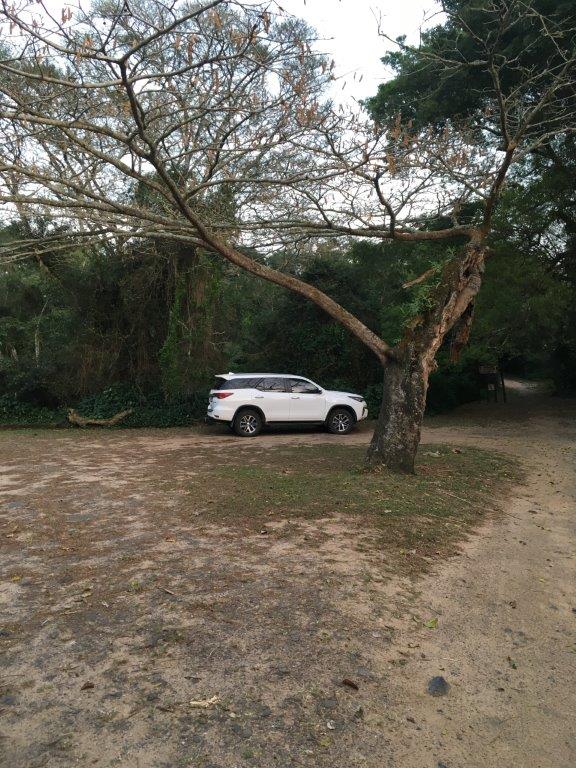
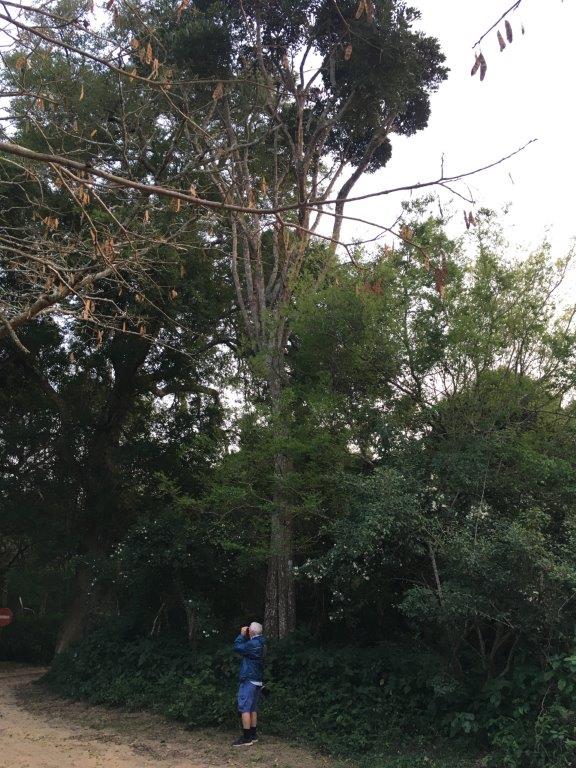
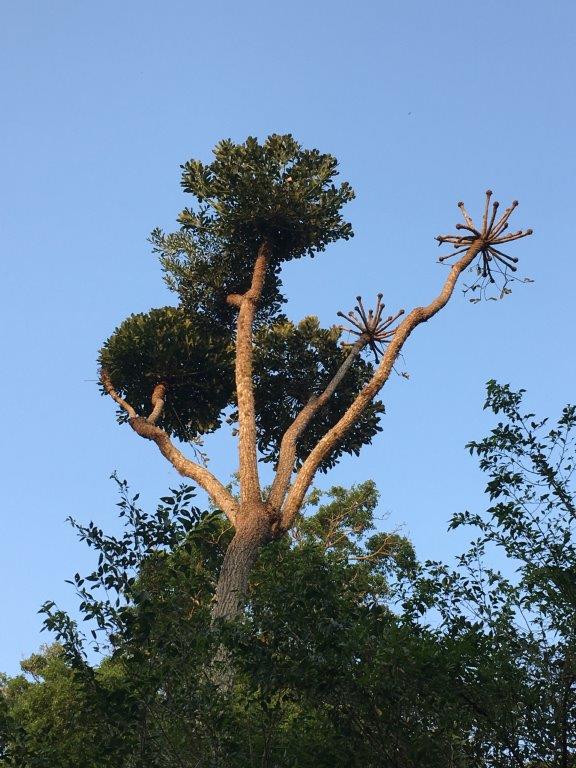
We parked at the entrance and were greeted by several friendly Crested Guineafowl. In the clearing there is probably one of the largest and tallest “Cabbage” trees that I have seen. We then entered the trail.
Entrance parking
Crested Guineafowl
Crested Guineafowl
Along the trail
Next to the “Cabbage” tree
Another huge “Cabbage” tree
Ian and Paul
Sally
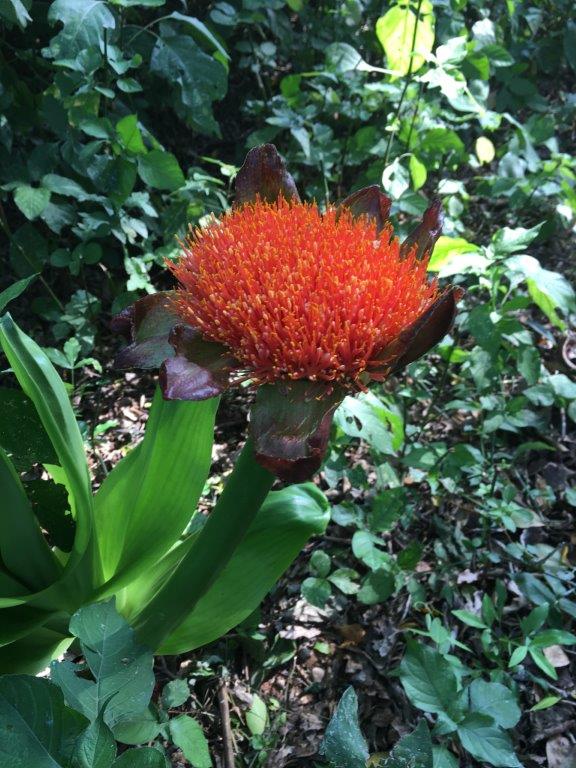
There was a fair bit of calling along the Gwala Gwala trail but few birds actually seen. Forest birding. September Bells were everywhere in bloom.
Western Shores was a bit quiet too as we arrived quite late in the morning. However we did have some puzzling excitement along the way. On entry we took the uMphathe loop road to the picnic site. Then went to the eMgadankawu Hide at the north end of the park followed by a climb up to the uMthoma Aerial Boardwalk on the way out of the park. Slides of the eMgadankawu Hide.
Some animals and birds seen along the way.
Bateleur
Bushbuck
Long-crested Eagle at the picnic site
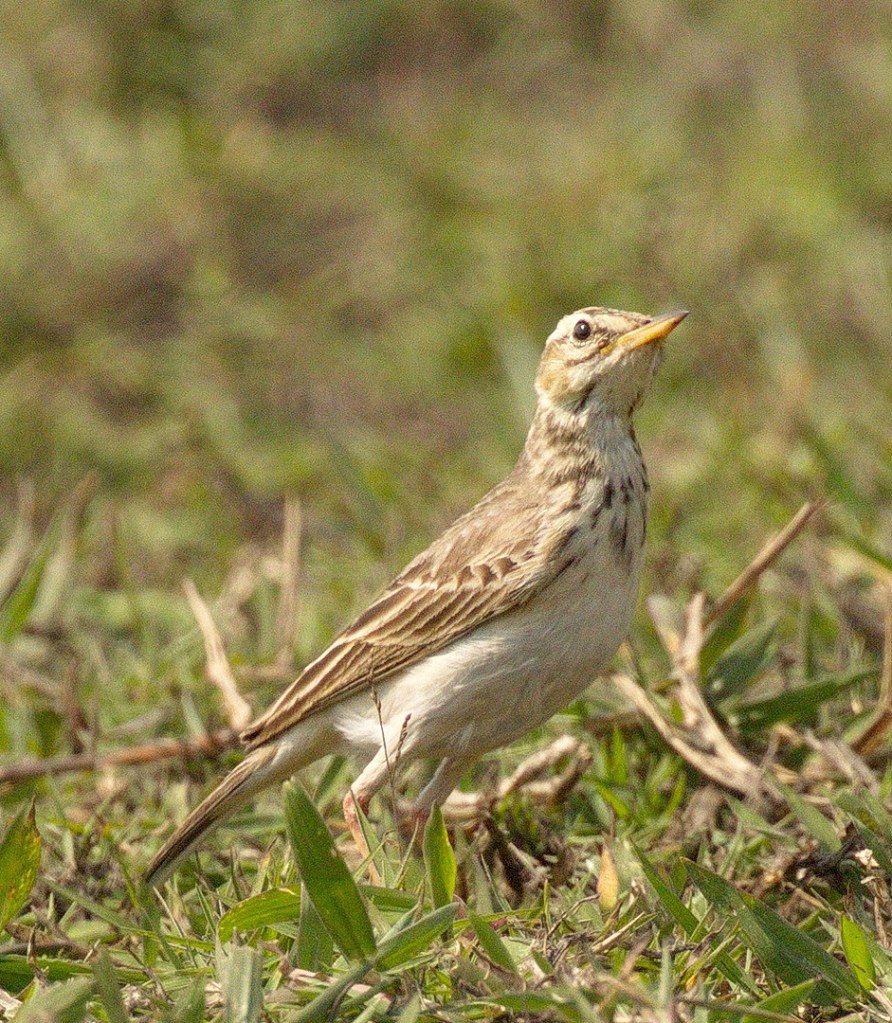
UI Pipit.
Lone elephant seen as we exited the park
The puzzling excitement came as we passed the picnic site. Looking back we noticed a raptor flying towards the picnic site. It appeared to have a ring tail and that excited us. We turned around and set about trying to find it which we did. It was in the reeds at the waterhole just before the picnic site.
Sadly in the end we identified it as an African Marsh Harrier after all. Still it had us pondering for a while.
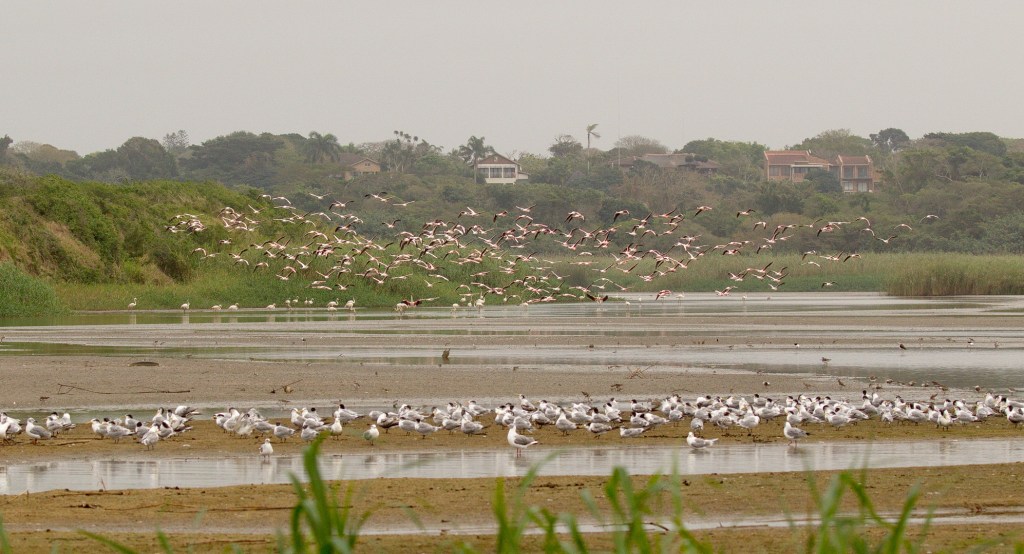
We spent a morning on the beach looking for waders and seabirds. Very noticeable were the hundreds of Lesser Flamingos on the mud flats. The first day we arrived in St Lucia they were right beside the entrance to Sugarloaf camp site. While there we saw them rise into the air like a swarm of Quelea before settling back down.
Lesser Flamingos and a few Greater.
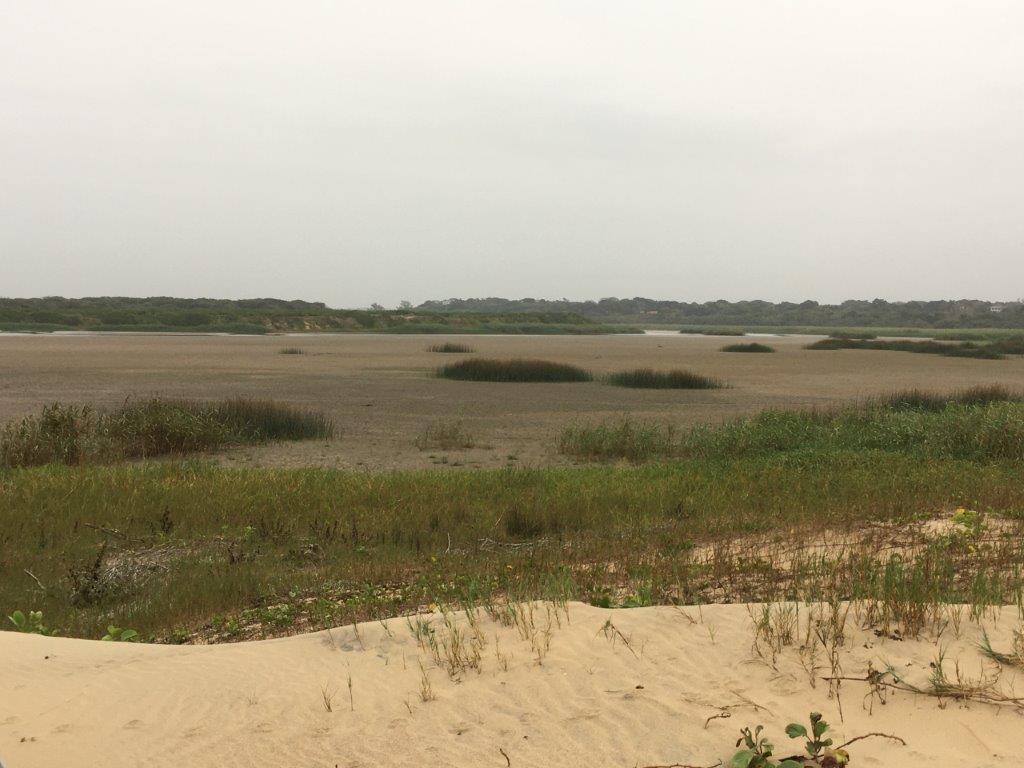
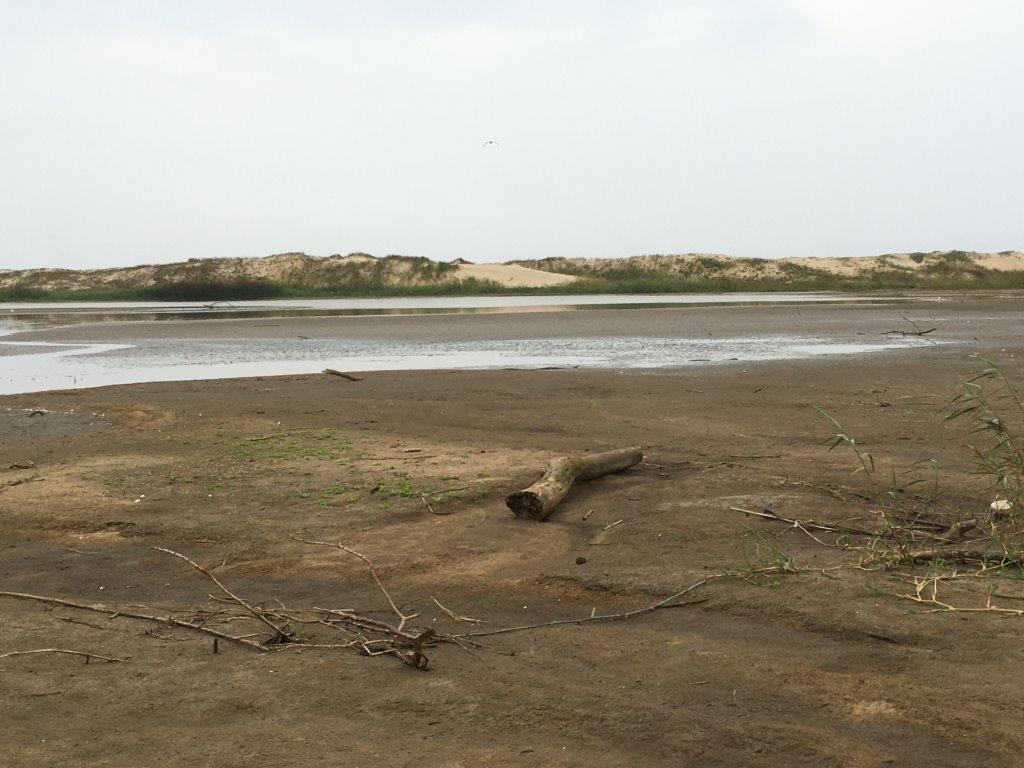
It was hard to recognize the changes to the estuary. Tall reeds intruded onto what were mud flats making it impossible to see the far end close to Maphelane.
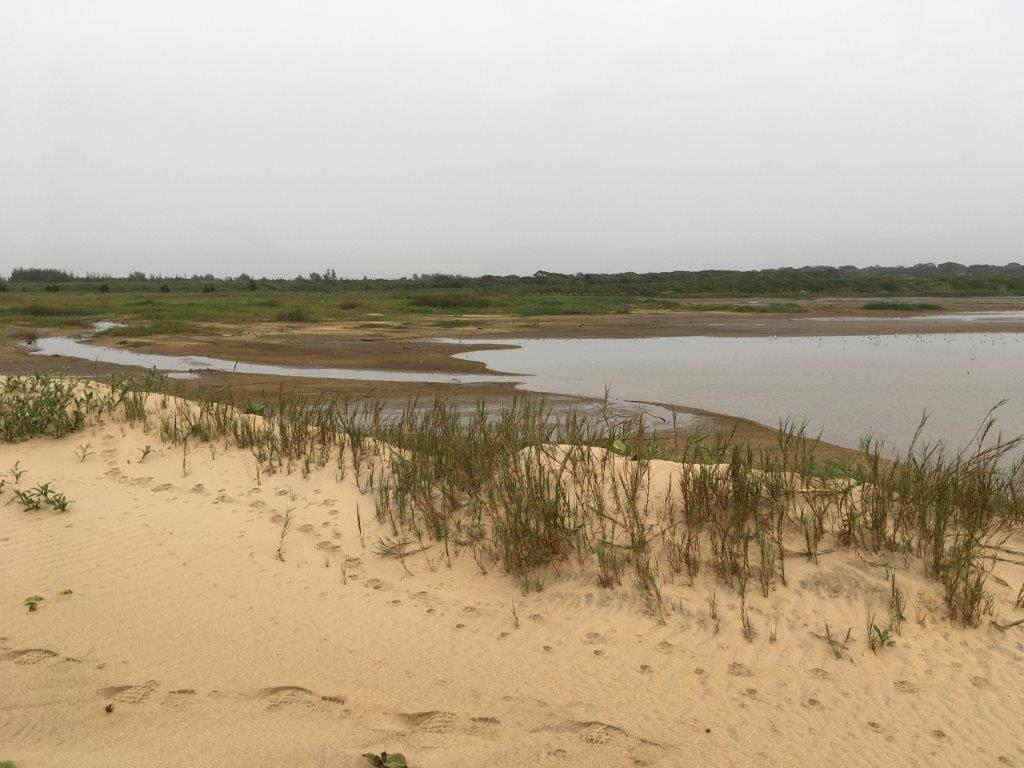
Showing the reeds blocking the view of the end of the mud flats from the car park.
A few other water birds were spotted in this area.
African (Purple) Swamphen
Water Thick-knee.
We started early to get to where the birds were. Our goal was to head to the Tern roost. So off we set down the boardwalk to the sea to walk around the reeds and hopefully find them on the mud flats. There they were at the extreme end of the mud flats – a very long walk carrying scope, camera and binoculars.
Looking for the Terns. They were in the distance
Vegetated Dunes
Looking back across the mud flats to Sugarloaf camp in the trees.
Getting closer to the Terns
Almost there
Need to cross the mud without being sucked down.
Still further to walk
Now to find a way to get closer
On to the mud flats we head
On the mud flats with the Terns behind us looking to the dunes from whence we came.
A look back to the trees where we had come from – about 3 kms.
Almost back to the boardwalk.
To get to the Tern roost we had to walk right to the far end of the mud flats and then negotiate our way to a spot where we would get a closer view of the birds. A tricky scenario as with each step you did not know how far you might sink. However we managed, eventually finding a firm place to stand and get the scope on the birds.
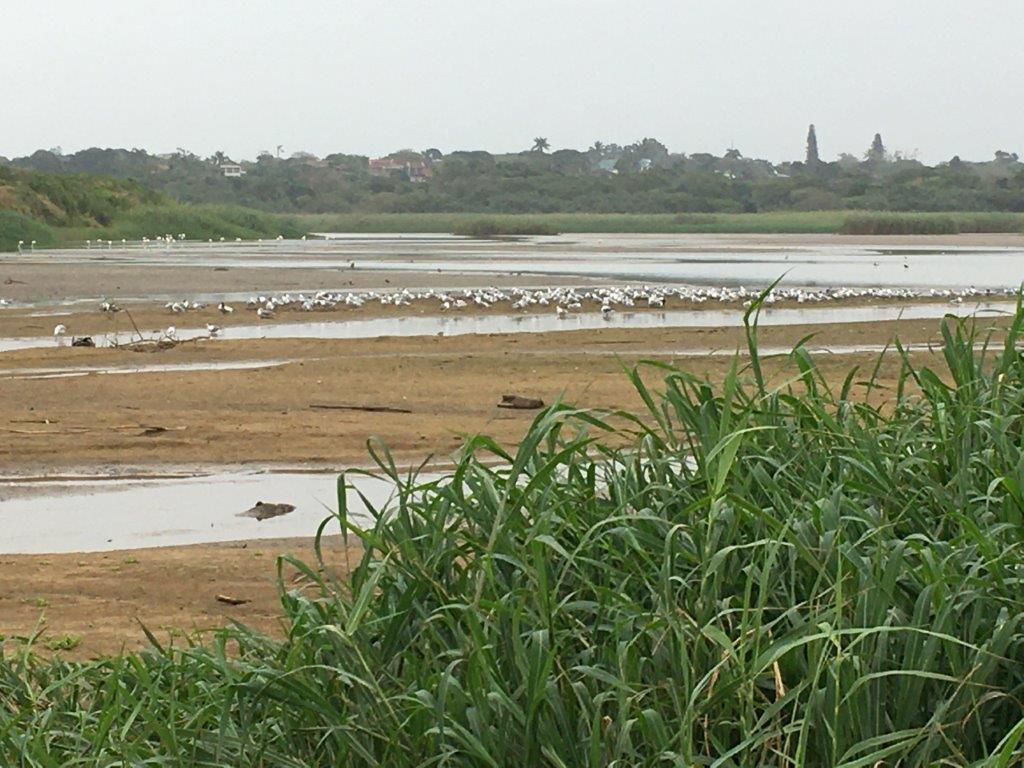
There were many terns but all were (Swift) Greater Crested Terns except for a lone Caspian Tern. A few Grey-headed Gulls were present and quite a lot of different waders including Ruddy Turnstones, White-fronted, Ringed and Three-banded Plovers, Curlew Sandpipers, Common Whimbrels, Little Stints.
Caspian Tern
Ruddy Turnstone
White-fronted Plover
Grey-headed Gull
Common Whimbrel
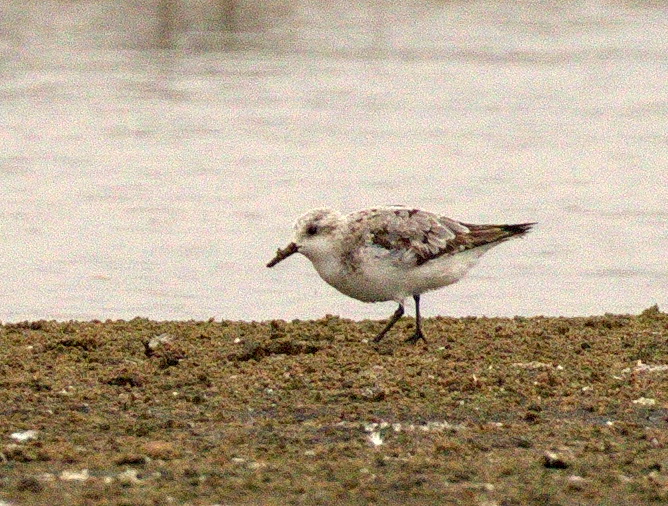
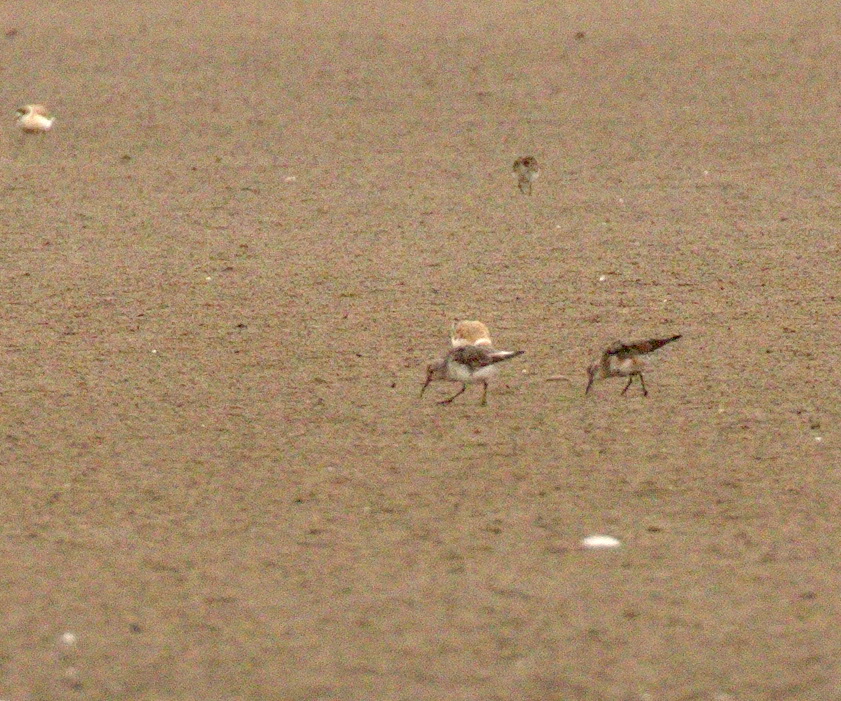
There were a few mystery birds – too far away even with the scope to positively ID. One that looked like a Plover or Sandpiper seemed to have a white rump – see poor photos. Even some of the Stints looked unusual.
Interesting Stint
Interesting Stint
Interesting Stint
Plover/Sandpiper with a white rump.
Plover/Sandpiper with a white rump.
Plover/Sandpiper with a white rump.
Behind the Terns and much further away were all the Flamingos which we had seen on our first day. An African Fish-Eagle flew over and they took to the air.
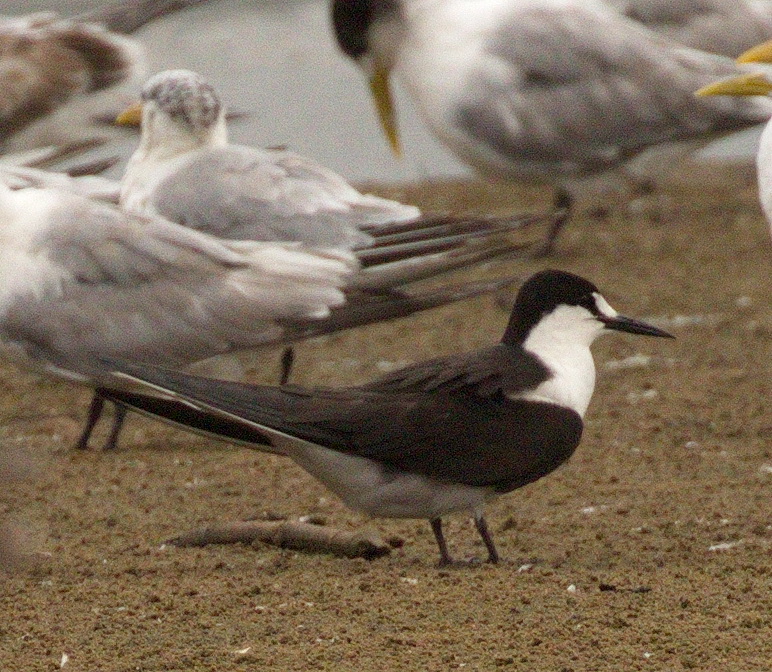
After about an hour or more there we decided to leave. We did not get far. Literally as we turned to go we heard this raucous “wide-a-wake” call from above. It was the Sooty Tern arriving. It sure made its arrival known and quickly took its place among the Greater Crested Terns.
On our first afternoon we went into Eastern Shores. First to look for the Rufous-bellied Heron. No luck. In fact we went three times before realizing that we had gone to the wrong place. We had gone to iMboma Pan.
But still no luck when we found the Amazibu hide overlooking the wetland where the Rufous-bellied had been seen – and was seen again several times after we left..
Just African Jacanas.
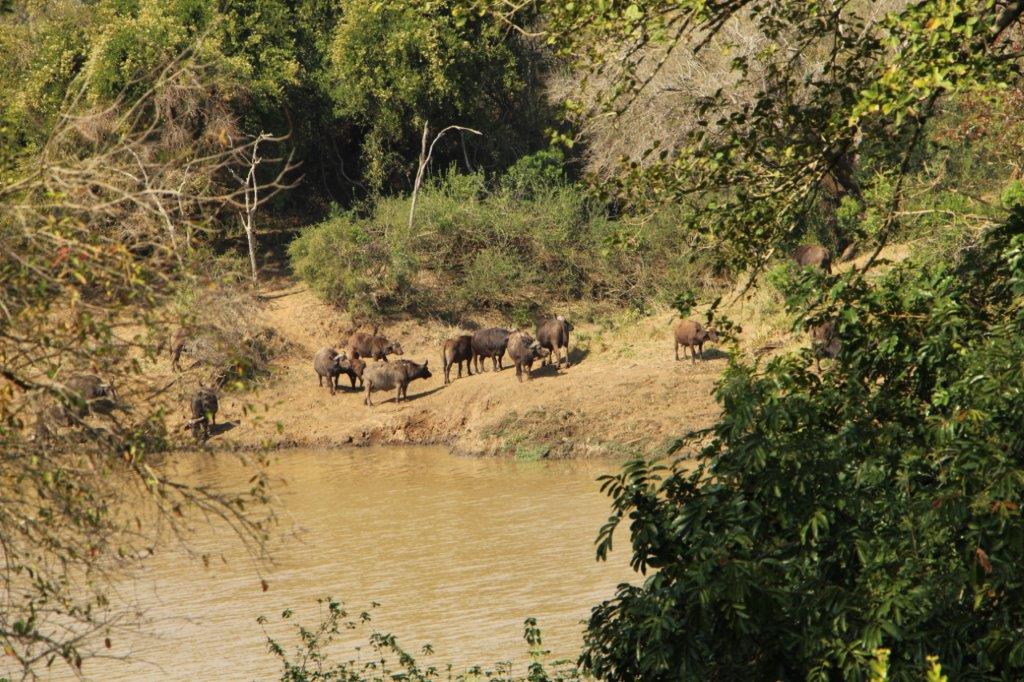
On the Vlei Loop we had several interesting sightings – a large herd of buffalos in the wetland area as well as two White Rhinos fighting for dominance. And they were serious. We were pleased to see that their horns had been removed leaving a bulbous stub. If not, then one of those Rhinos would have been badly injured. One Rhino had its head and horn beneath the other’s back left leg and raised him clear off the ground.
Fighting Rhinos
That first afternoon had another exciting sighting. Driving at the end of the Vlei Loop just before we hit the tar, suddenly popping out of the scrub came a Leopard walking straight towards us. Time maybe for a few shots before he disappeared so I turned off the engine, lent out of the window and got a quick blast. Then I realized I ought to close the window – but cannot do that with the engine off. The leopard was due to pass by my window in hands reach. But for some reason the Leopard crossed the road virtually touching our car and then disappeared into the bush.
Lucky LeopardLucky Lucky
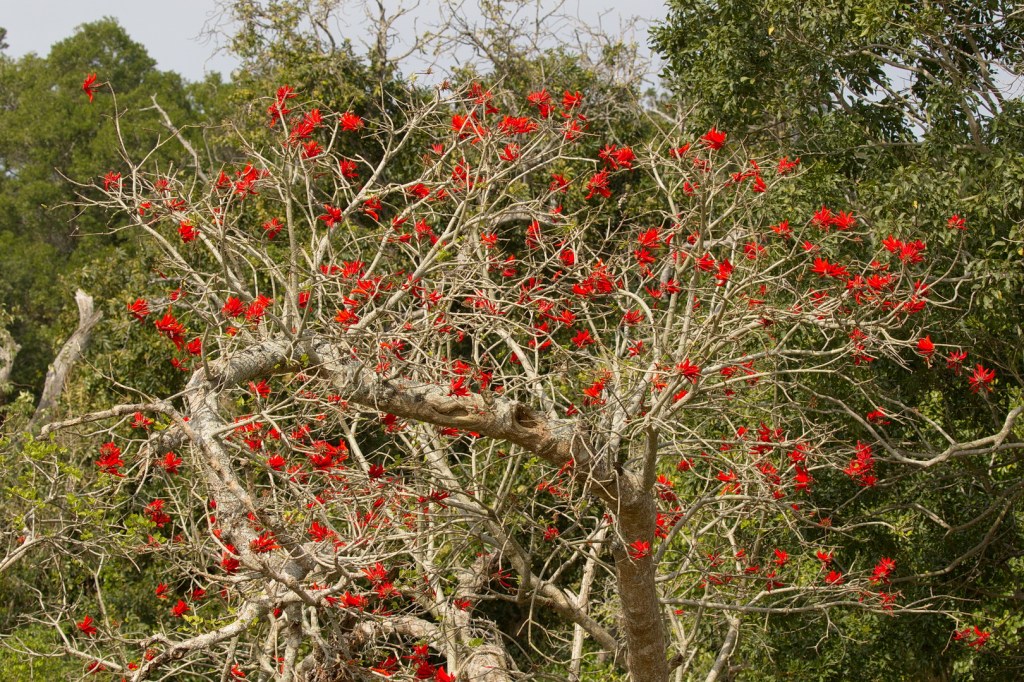
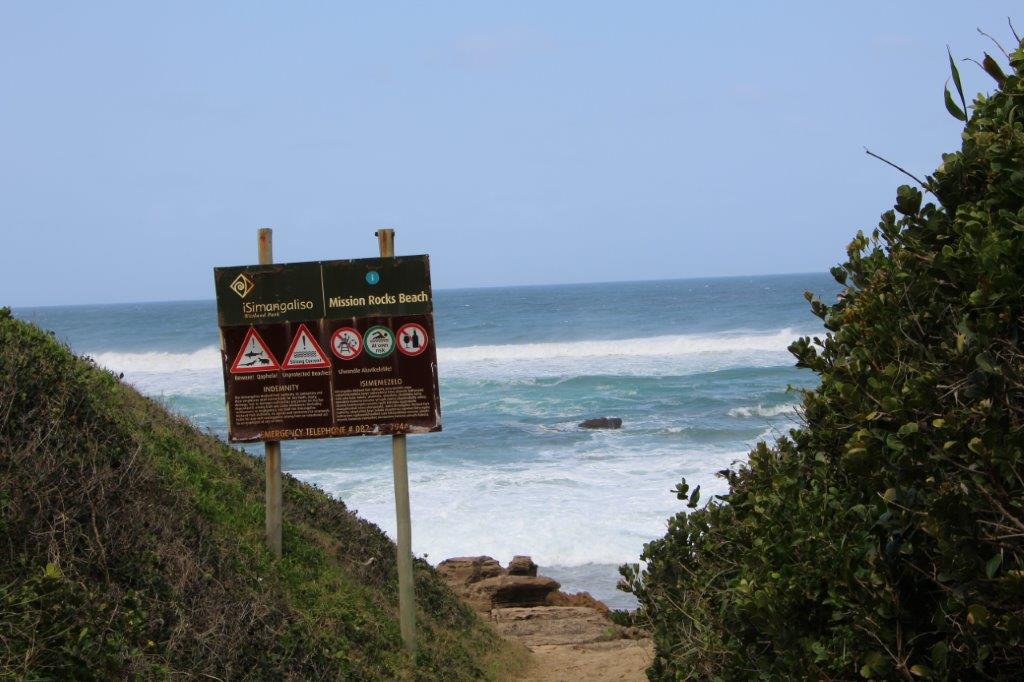
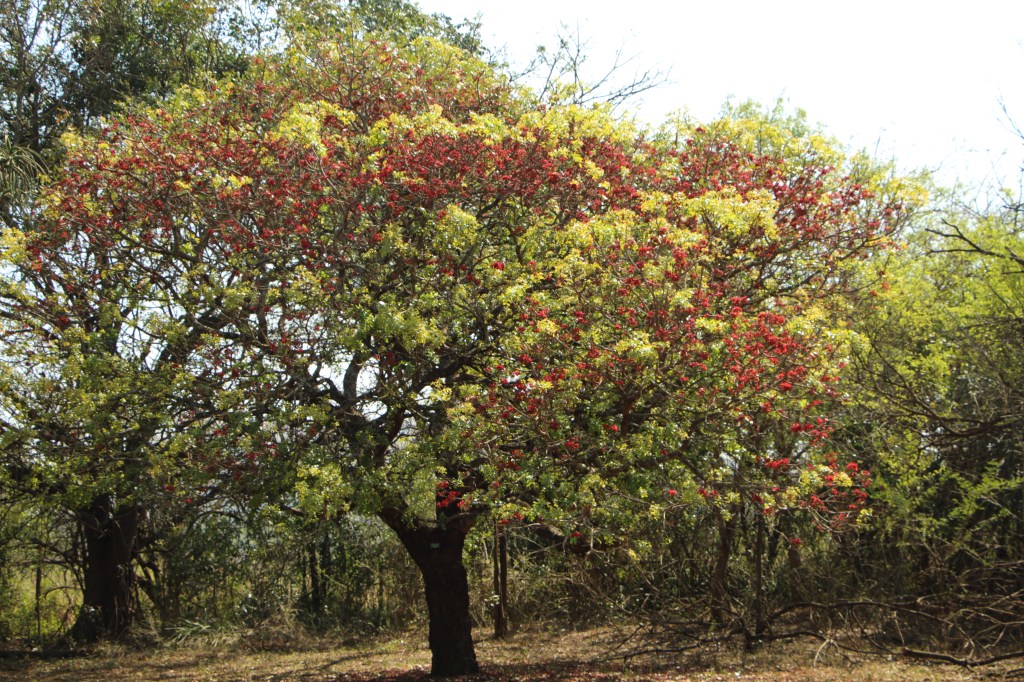
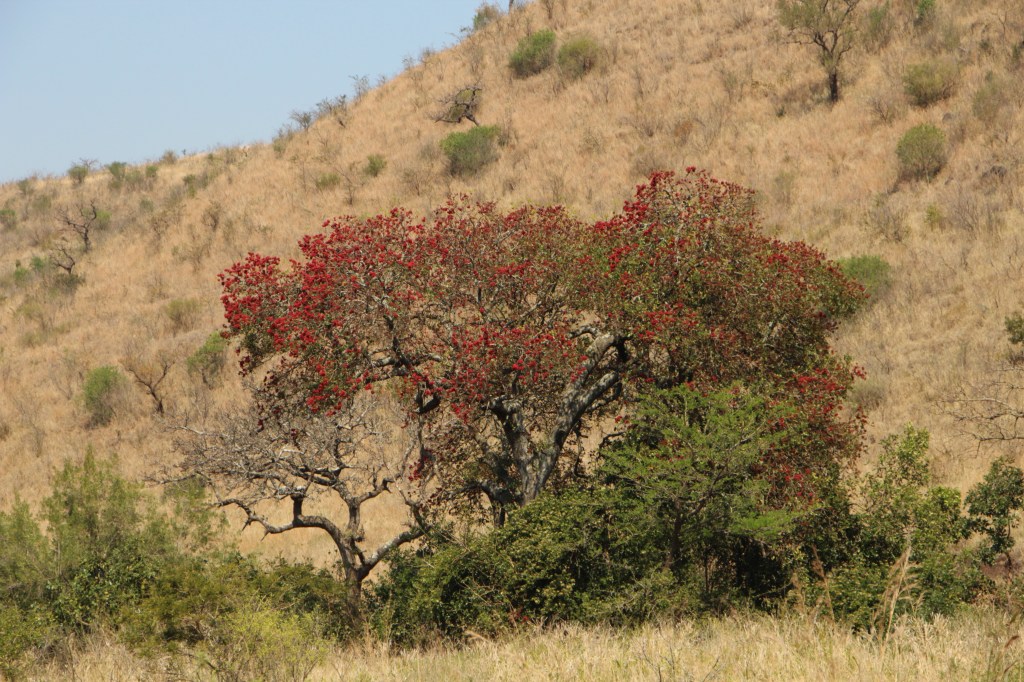
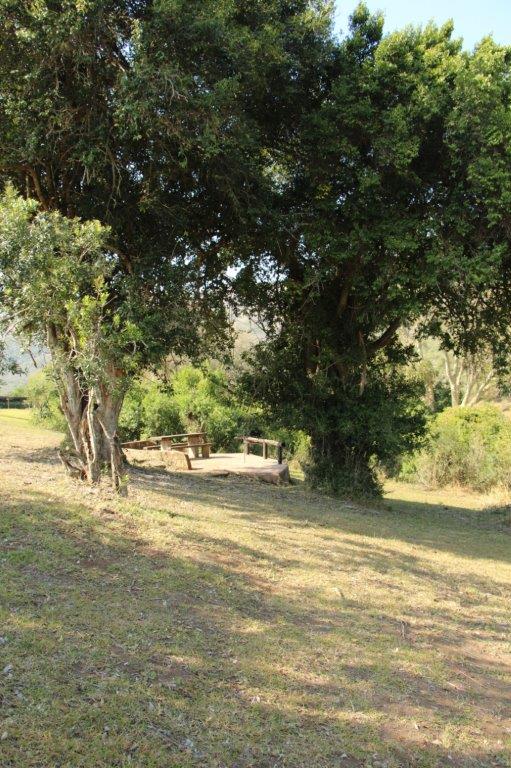
We visited Mission Rocks. Stopping at the picnic site before heading to the end of the road and the beach. The picnic site had some lovely flowering Erythrina [Coral] trees.
Erythrina flowers
Erythrina tree
Erythrina
At the end of the road at Mission Rocks we took the passageway to the rocks and looked out along the coastline.
On the way out we stopped at a convenient place to look out over the ocean where we noticed Hump-backed or Southern Right Whales passing by, blowing away and splashing their tails.
The pan at the kuMfazana Hide was dry and at Catalina Bay (Jock’s Mess) the vegetation below was fully overgrown and extremely difficult to spot any waterbirds therein. There was nothing to see out in Lake St Lucia either as it was very windy.
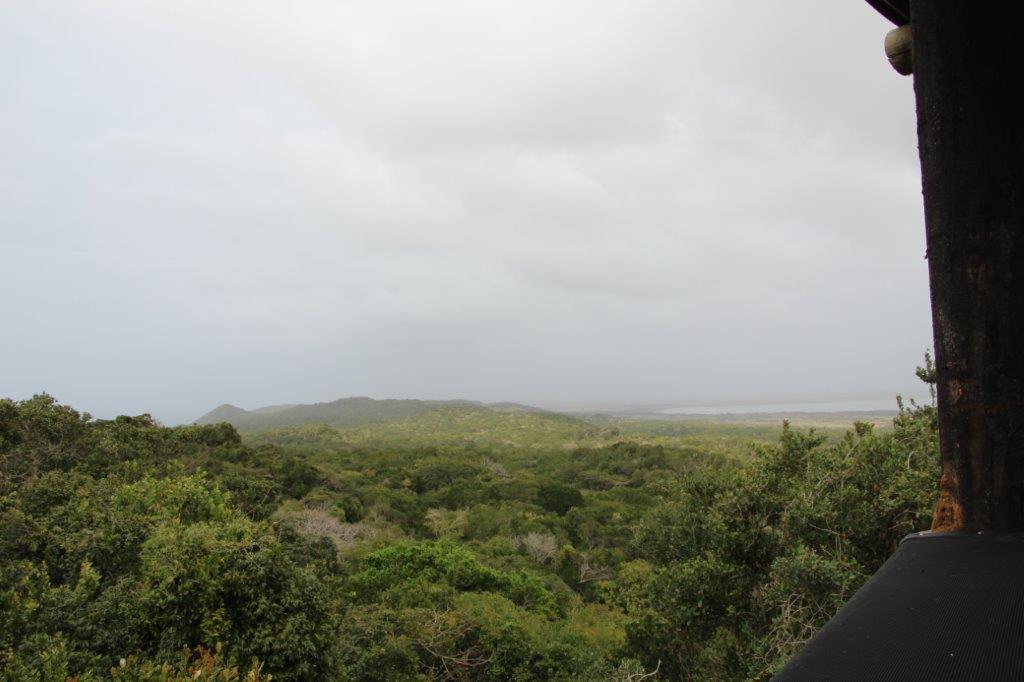
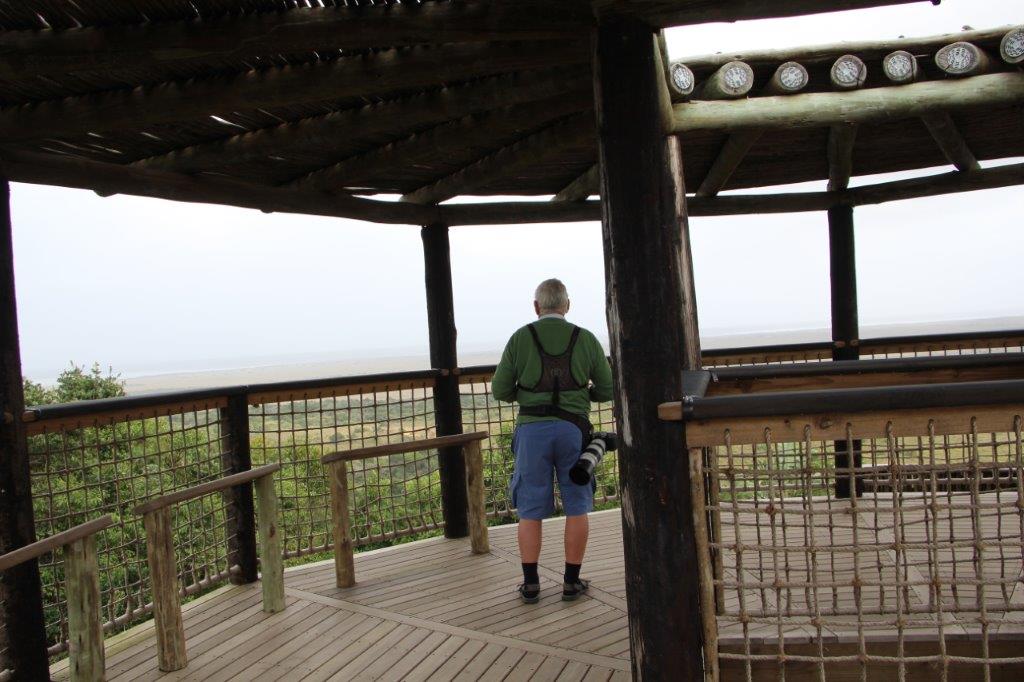
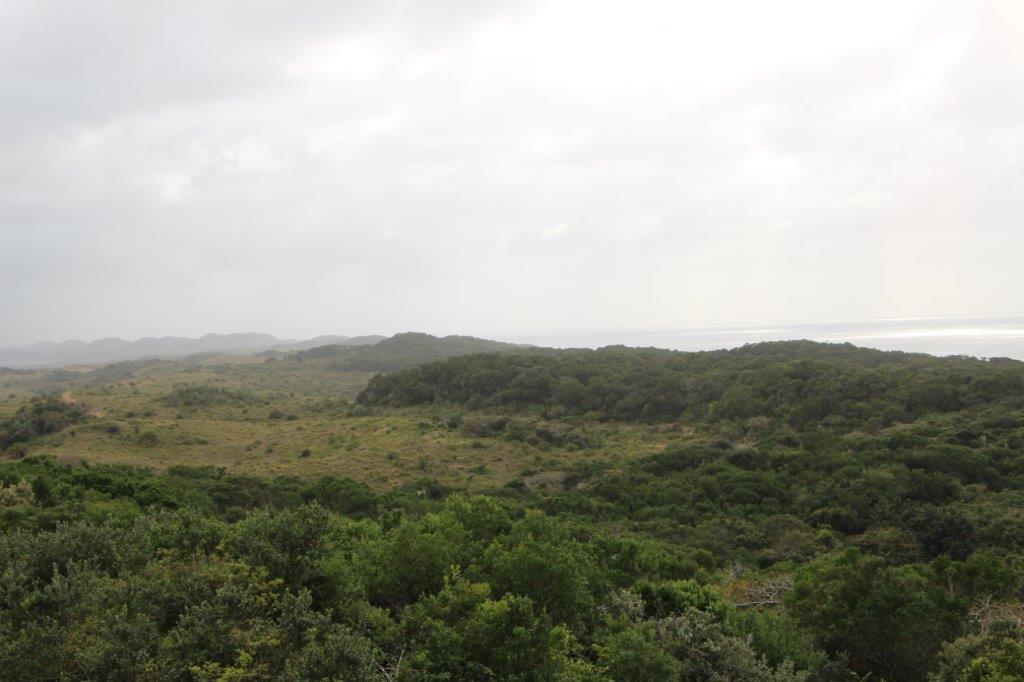
The Kwasheleni Lookout post is set atop the Dunes and gives a 360 degree view. Overlooks the sea, Lake St Lucia and the grasslands and dune forests below.
At Cape Vidal we wandered along the beach and saw a few birds – mainly White-fronted Plovers and Grey-headed Gulls. A Yellow-billed Kite made a close appearance – possible to see if we had anything it could snatch.
Grey-headed Gulls
White-fronted Plover
Yellow-billed Kite.
As we drove alongside Lake Bhangazi there were very few birds to see.
However on the opposite side there were Kudu.
Kudu.
That led us to the grassland area of the Bhangazi Grassland Loop. Here we encountered Collared Pratincoles virtually one every 100 metres. Strangely they were not prepared to fly off until we were right on top of them. Our journey for many kilometres was a slow one.
Grassland
One of the many Collared Pratincoles along the Grassland Loop.
Driving through the park we had a number of pleasant bird sightings. There was a Juvenile Crowned Eagle seen from a distance – as were the two Secretarybirds on a nest. Red-breasted Swallows on the road side. A Brown Snake-Eagle and Vervet Monkeys as well as an obliging Yellow-bellied Greenbul.
Vervet Monkey
Two Secretarybirds – one up ended
Yellow-bellied Greenbul
Yellow-bellied Greenbul
Vervet Monkey
Red-breasted Swallows
Brown Snake-Eagle in an unusual stance
Juvenile Crowned Eagle
Despite the weather we thoroughly enjoyed ourselves in all the many places to bird. In total we identified 138 different bird species. Our list is downloadable, click below.
We left St Lucia with the rain. And on our way home What’s App messages kept being received saying that not only had the Rufous-bellied Heron been relocated but other special birds had turned up – Gull-billed Tern and Chestnut-banded Plovers. We considered doing a U-turn except that we were already half way home.
As soon as lockdown allowed us, we booked for 5 nights in Umfolozi staying in Mpila camp. Unfortunately they do not have camping there so we had a choice of the tented camp or a chalet. Both the same cost. The friends we went with seemed to prefer the idea of the tented camps. However Sally and I were not that keen as we had been in late winter before staying in the tented camp and froze.
Our friends, Arthur and Rose Douglas capitulated. The advantage of the tented camp was that it was more like camping and you can easily hear all the night noises. The advantage of the chalets was warmth and staying out of the wind in the kitchen if it blew – and it did on several occasions while we were there.
Surprisingly one of Arthur’s cousins was staying in the tented accommodation while we were there and they froze. I think Arthur and Rose were happy with our eventual mutual choice.
As we were unloading our cars, I mentioned to Arthur that the monkeys are alert to newcomers and hang around for opportunities. Arthur acknowledged. However on my way back to the car for my second load I noticed Arthur had put down an open ammo box containing food next to the car as he was getting out more to carry. So I retrieved my second load, closed the boot just as I saw a monkey on the ground some distance away but with its beady eyes on the ammo box. The monkey saw me and took off for the box. I called out and raced to the box swinging all in my hand. The monkey arrived a split second before me and whipped off with a packet of crisps. Arthur looked on askance and Rose was not too happy!
iMfolozi was very dry. The Ubhejane Hide had no water but the Mphafa hide had a little. The temperatures during the day ranged from 25C to 32C at midday and around 9C at night. It would be very windy early morning and on another day very misty.
Here are some photos showing the dryness of the habitats.
As we had diverse interests, Arthur and Rose went their separate way from us. We got together in the evenings for a meal or braai and told our daily stories.
Some incidents:
After unpacking and some late lunch we set out for the Sontuli loop. A few white rhinos were passed along the way to the start of the loop. We had not gone very far along the loop road when we ran into a disturbed Black Rhino very close to the road. As we started to pass it, the rhino got agitated and showed its intent on coming our way. Quick photo and we escaped trouble.
A rather close and agitated Black Rhino
On the way round the Sontuli loop over the period we were there we enjoyed the birdlife and Sally compiled a healthy Atlas list of birds.
Coming round one corner of the loop we noticed a raptor flying very low at speed. We watched it until it landed and the scope verified it was a Martial Eagle.
Martial Eagle
Here are a few of those we photographed around Sontuli Loop.
Brown-hooded Kingfisher
Green-winged Pytilia
Groundscraper Thrush
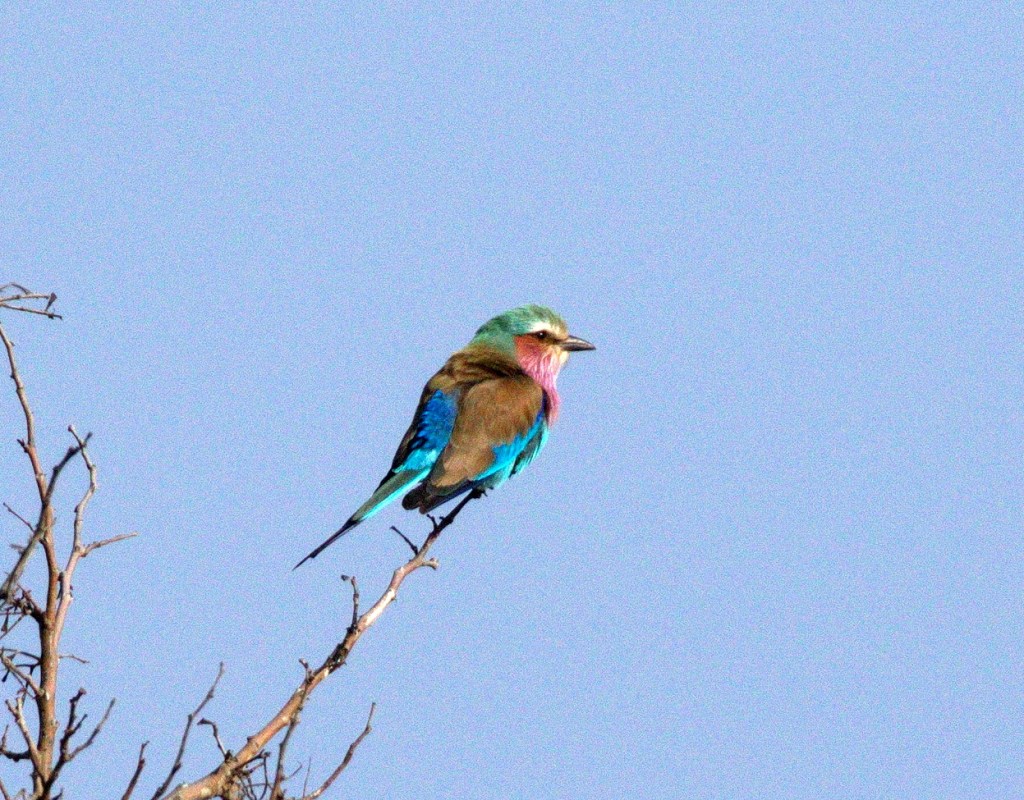
Lilac-breasted Roller
White-crested Helmet-Shrike
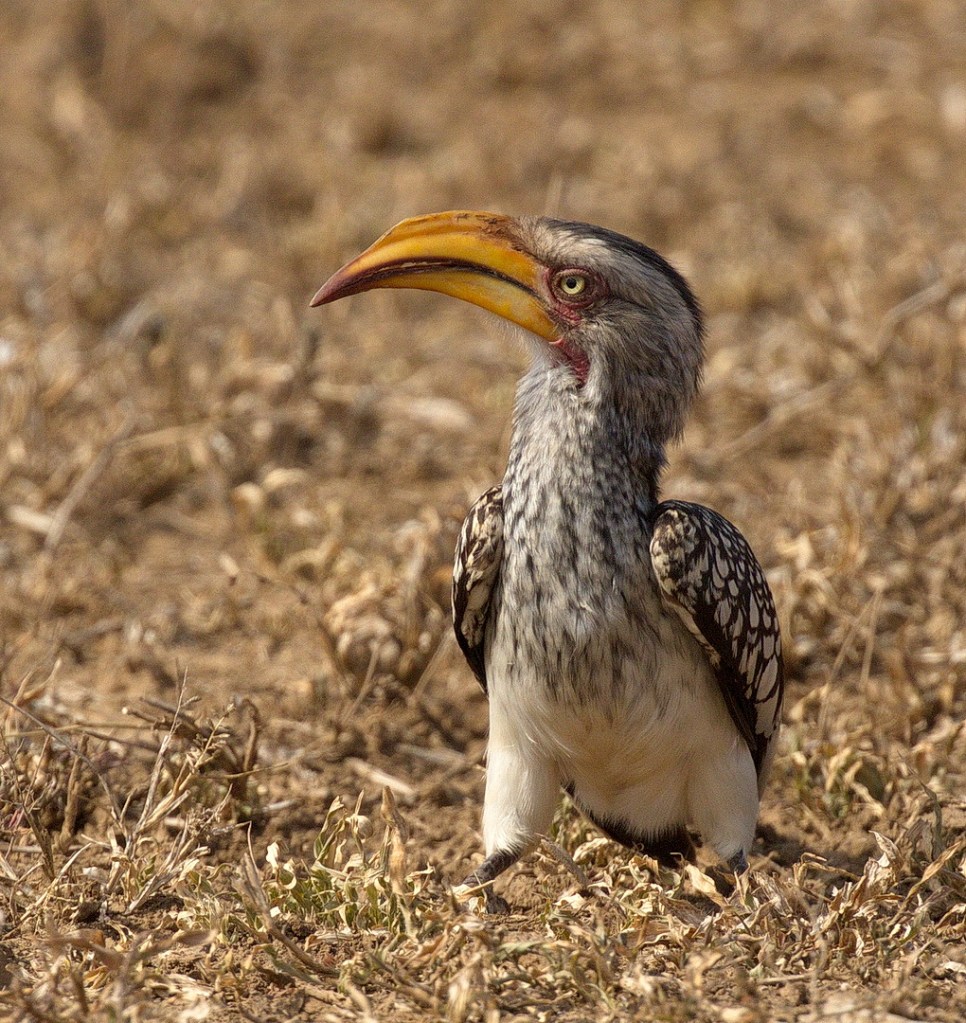
Yellow-billed Hornbill
Unusual colour -Yellow-billed Kite
Yellow-billed Kite – rather grey
Quite late in the day we arrived at the Lookout point just after the end of the Sontuli Loop. The Lookout point overlooks a bend in the Black iMfolozi river and has extensive views either way. There were several cars already there and everyone was watching two White Rhinos fighting. They clashed heads, they ran back and forth from one side of the river to the other. And all the while the loser was squealing – a sound we had not heard in the bush before.
Fighting White Rhinos
One White Rhino dominated and as it chased the other across the sandy river bed, its long pointed horn was poking the other’s backside. We later learned that it drew blood.
The next day we bypassed the Sontuli Loop and headed for the Lookout point. On the bypass we came across another agitated Black Rhino close to the road and when we checked the other side of the road there two more much further away thankfully. Again we managed a few quick photos before moving on.
Black Rhino giving us his evil eye look
Open-mouthed.
At the Lookout point we scoured down the river bed to see if there was any evidence of the fighting Rhinos. There wasn’t. However we had good sightings of a number of bird species.
Black-crowned Tchagra which was calling
Cape Starling enhanced by the sun
Cape Starling enhanced by the sun
Red-throated Wryneck
Tawny Eagle drinking (seen in the river several days later)
Tawny Eagle drinking (seen in the river several days later)
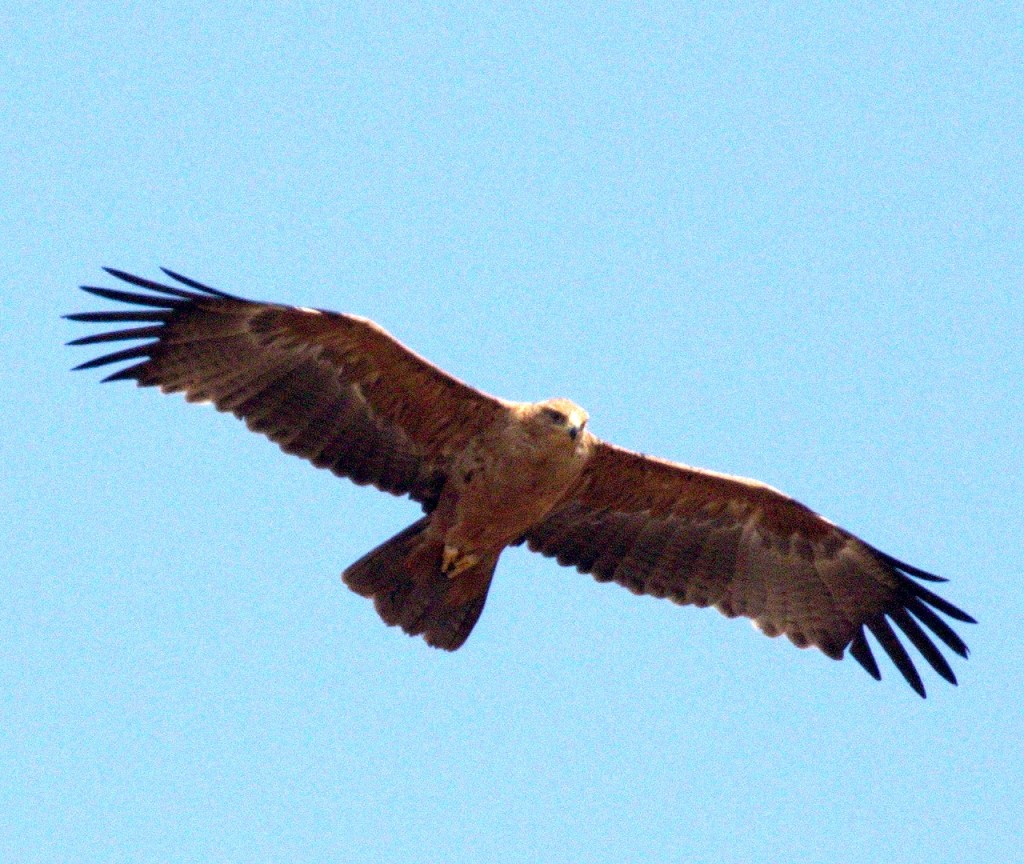
Tawny Eagle
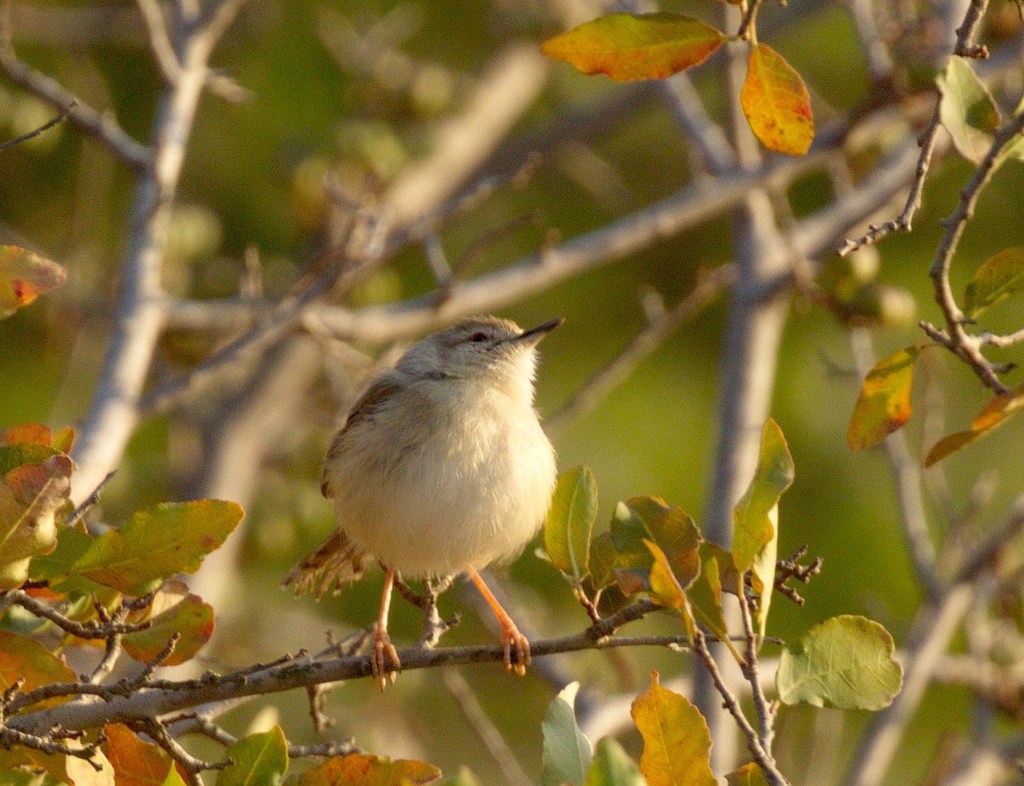
Tawny-flanked Prinia
African Pipit
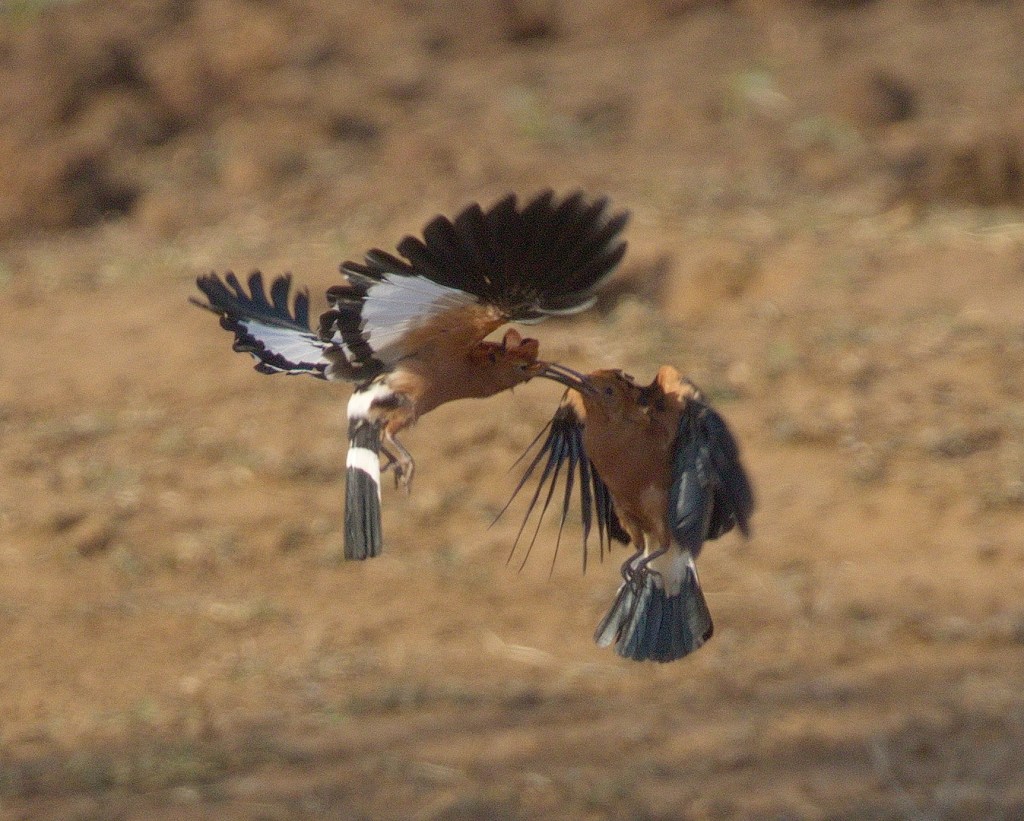
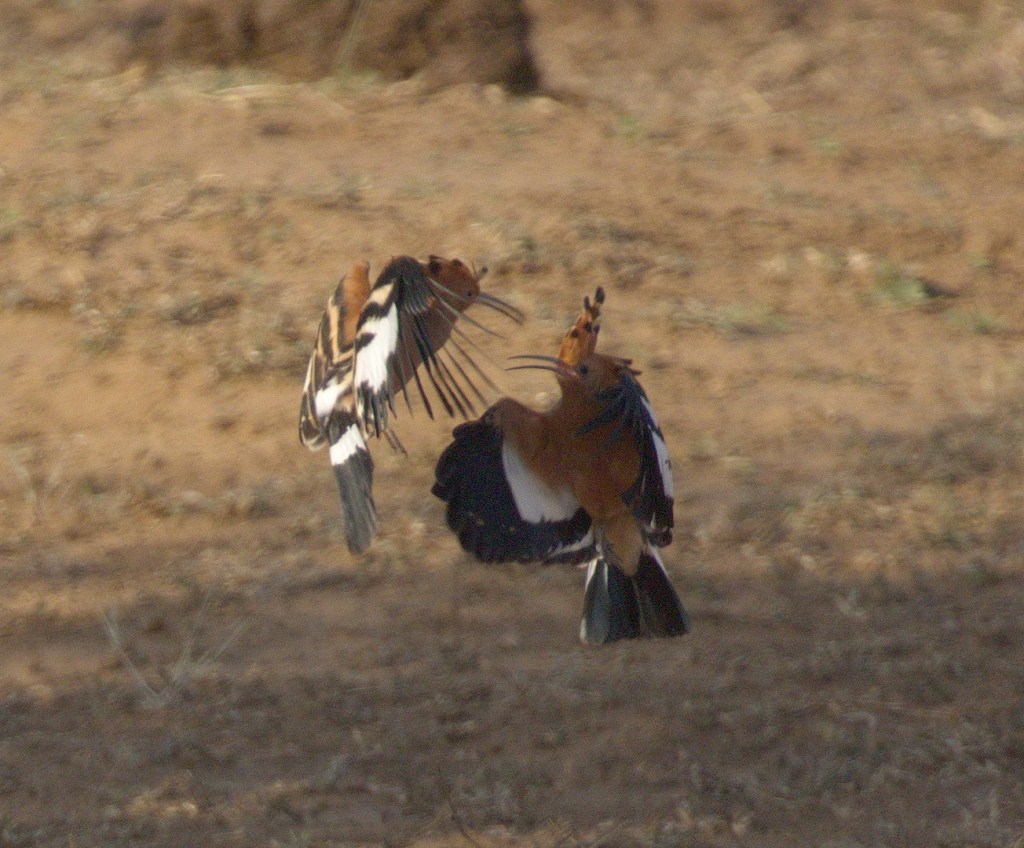
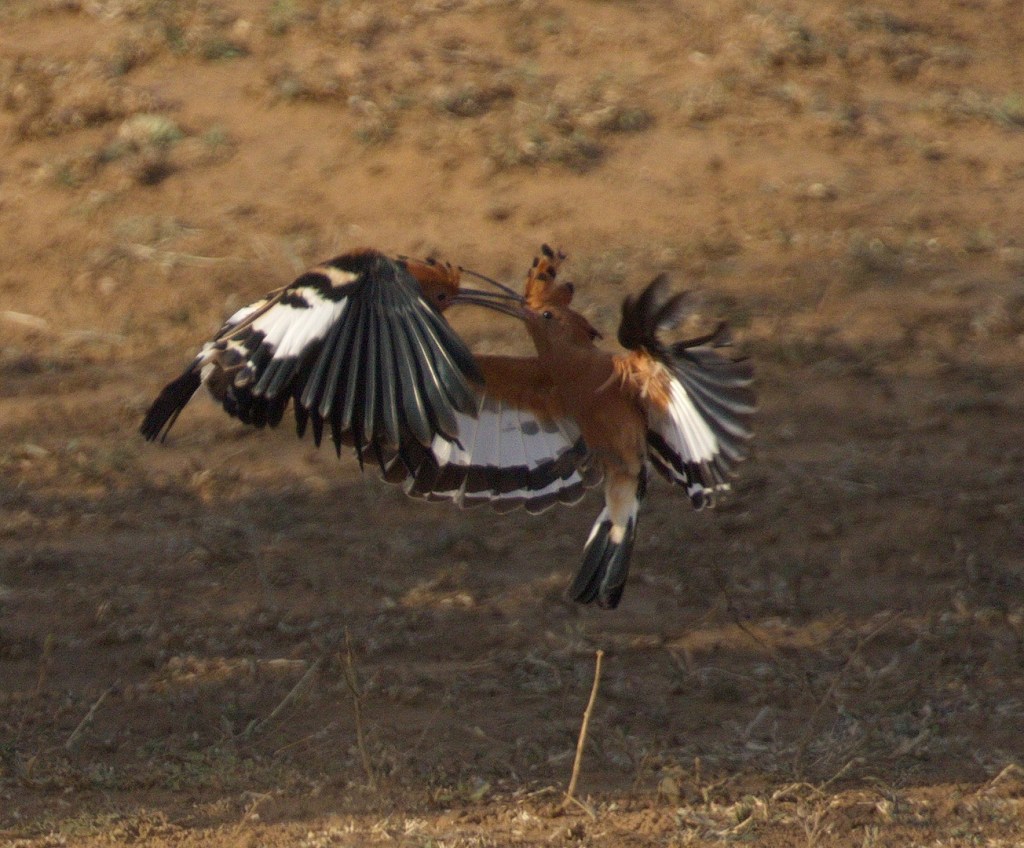
We continued towards the Ubhejane Hide and had not gone far from the Lookout point when we came across what looked like a mating pair of African Hoopoes.
Hoopoe and Mate.
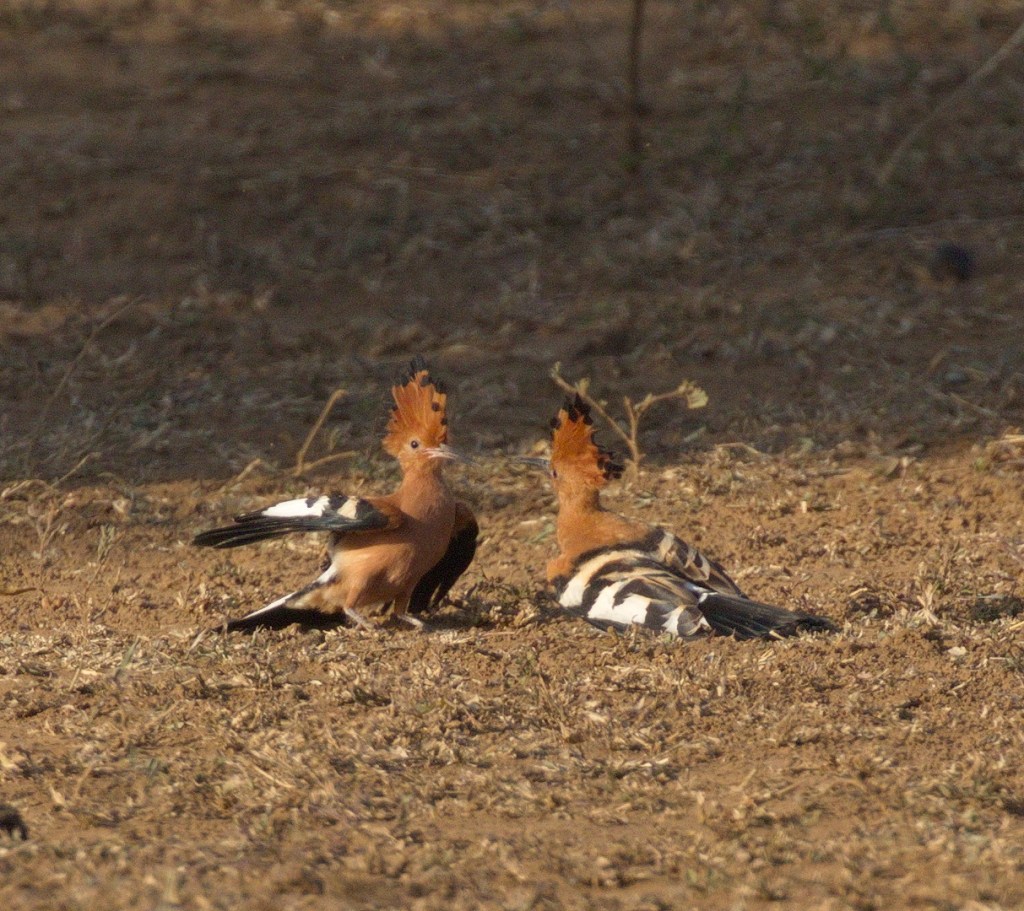
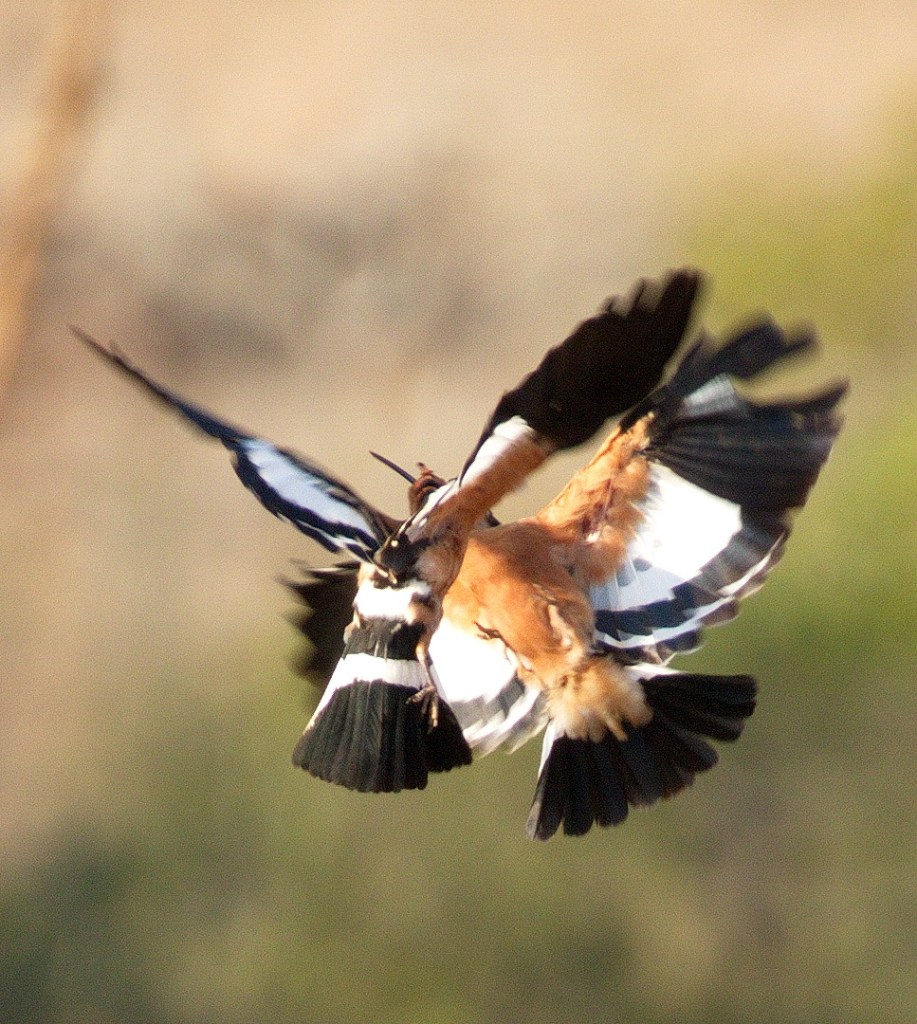
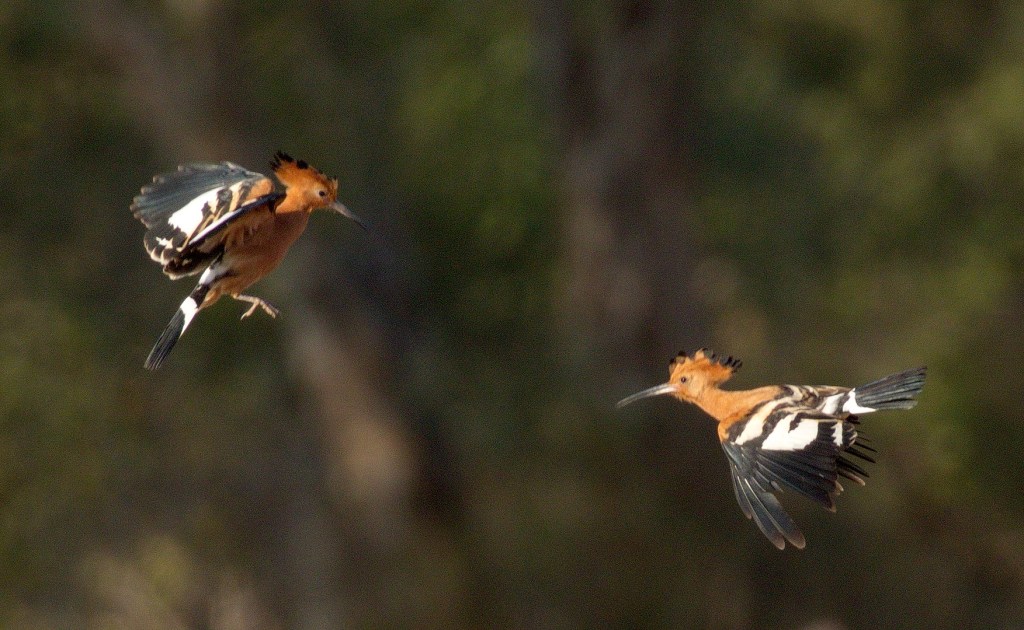
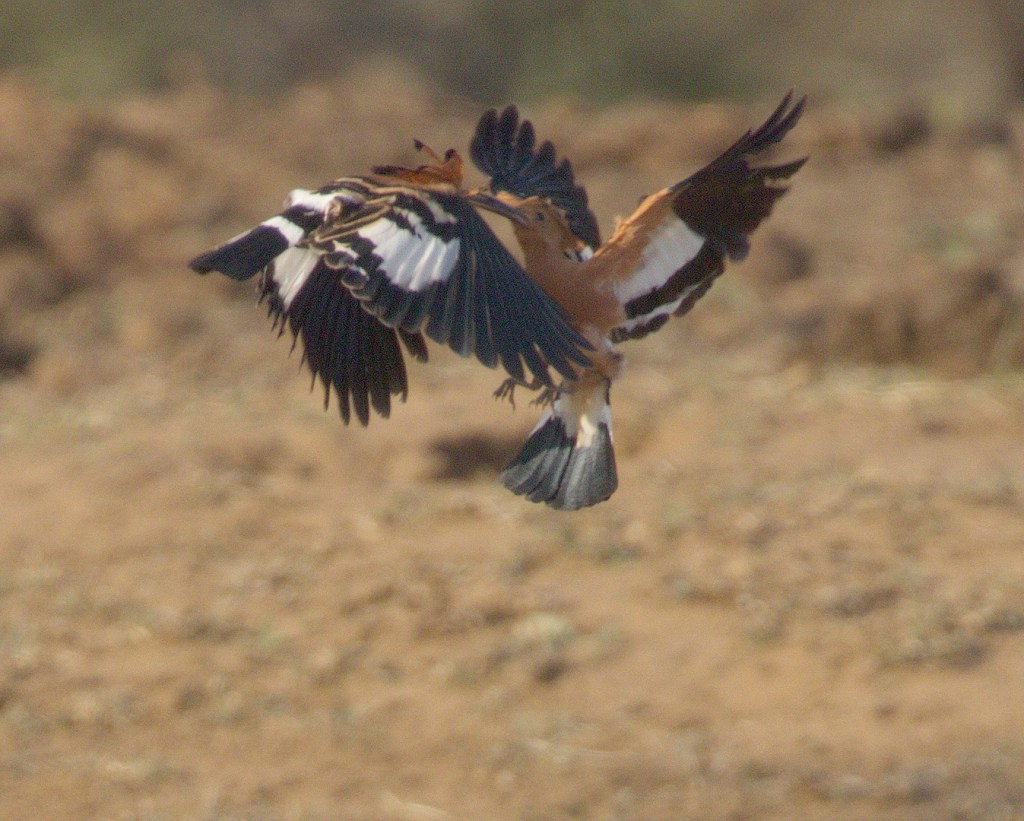
Just as they were getting friendly, another male arrived and they had a face-off before combat began. The sequence of events that follows was repeated several times before a winner was declared.
African Hoopoe Face-off
African Hoopoe Face-off
The ground battle began.
Ground Battle begins
Ground battle intensifies
Suddenly they were in the air about 2 metres off the ground and the battle became more intense.
At times they would fly up a further 2 metres and battle would commence again sometimes with clashing of bills.
Eventually the challenger flew off admitting defeat.
Another place where we had some minor excitement was the low lying bridge crossing a parched river on the way up to Mpila camp. On the right as we started crossing the bridge heading for the camp we noticed a large tree leaning on the bridge. It looked like the top had been sawn off. In fact it was a stump which had been washed down when the river was raging and had lodged up against the bridge.
Bridge and tree to its left from this view.
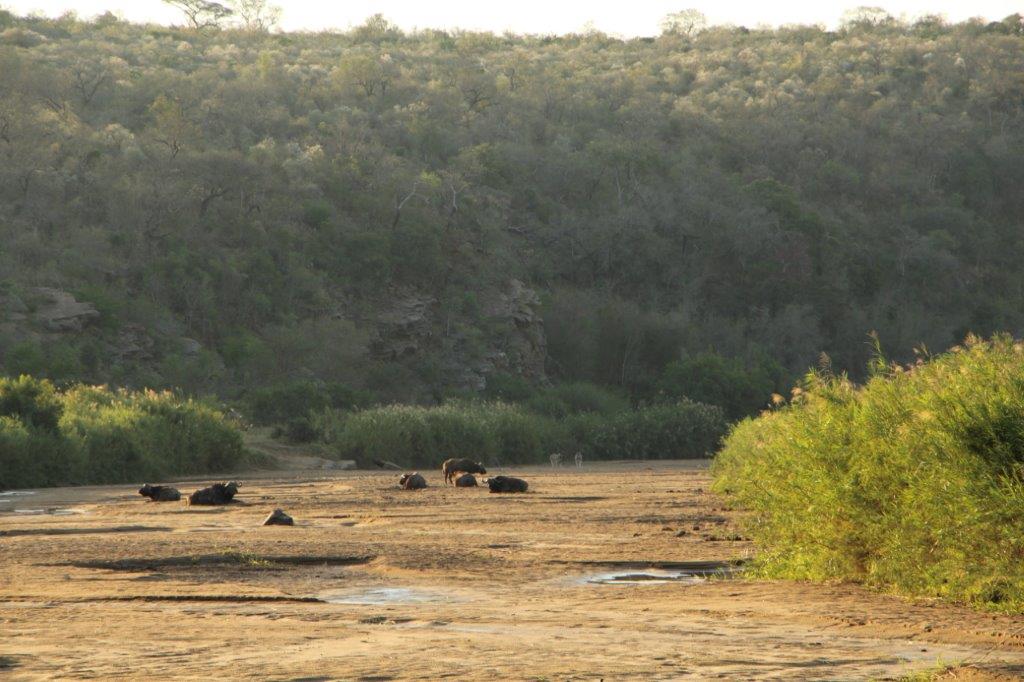
One day we noticed what looked like lumps of rock in the river bed – Buffalos lying down as it turned out on closer inspection. And on another day looking down river there was a large herd of buffalos ambling down river. Several passed close to the reeds on the left as we looked on. Suddenly those closest were startled by a huge elephant poking its head out of the reeds as they came close. On another occasion there was an Elephant crossing the river and further down a Rhino. It was only when I processed the photo that I realised it was another Black Rhino (our 5th).
Rocky lumps in the river
Ahhh Buflalos
African Pied Wagtail
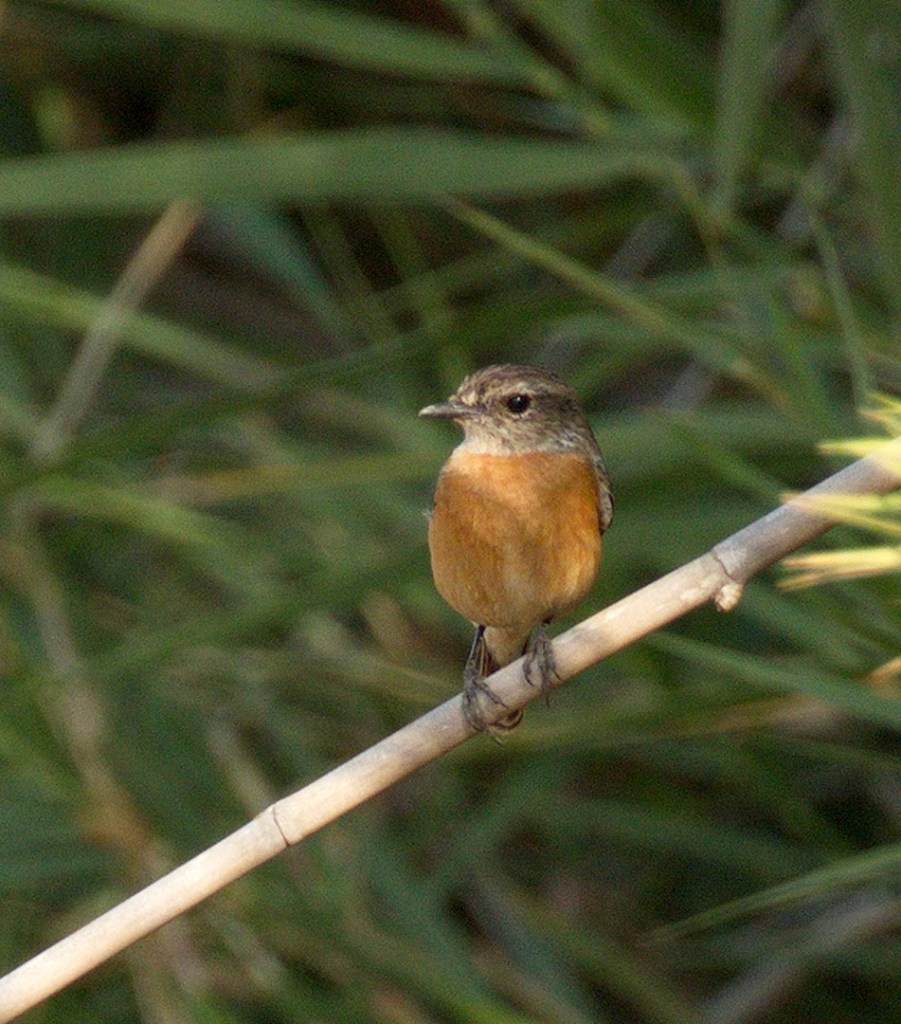
Female African Stonechat
Herd of Buffalos
Buffalos shocked by the presence of an Elephant as they walked past.
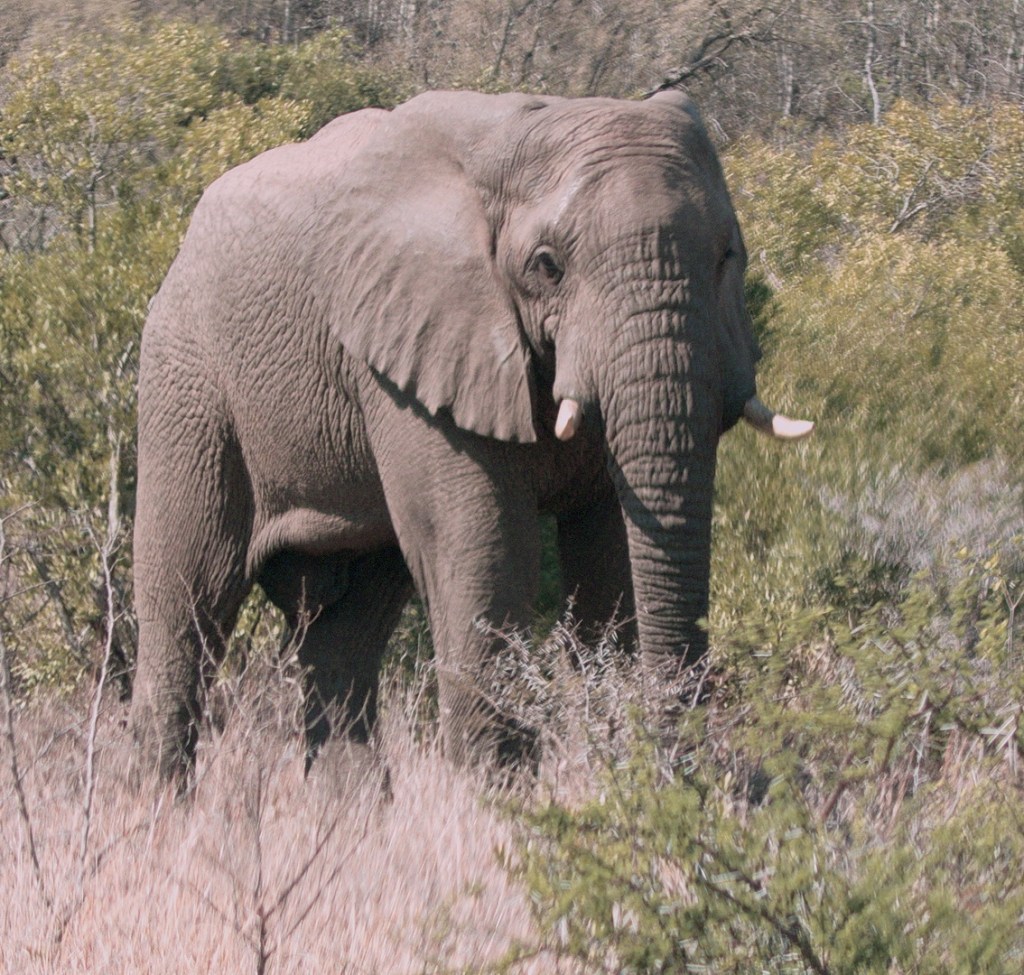
River Elephants
Black Rhino .
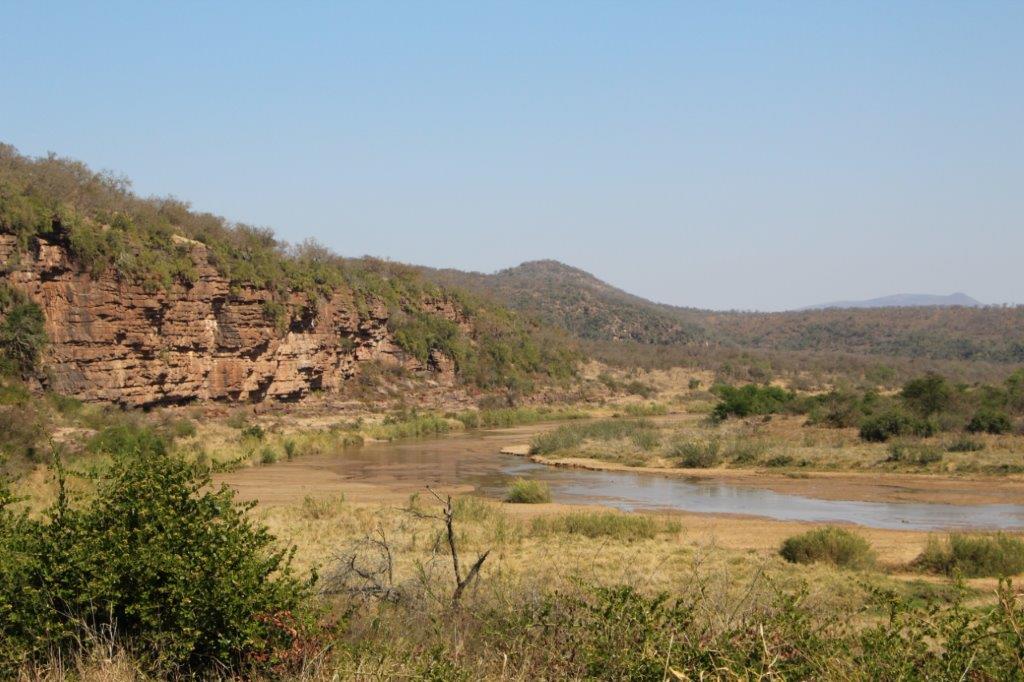
Another area we enjoy in the park are the cliffs at the end of the road as you pass the Cengeni gate entrance/exit. The cliffs are a boundary to the White Imfolozi river. The lookout point overlooks the river and the cliff faces. This time the river was dry with a few pools here and there where the odd Pied Kingfisher and African Stonechat were taking their chances.
Lappet-faced Vulture overhead
Spectacled Weaver
White-backed Vulture overhead
Cliffs over the White iMfolozi river
In one area in the north west of the park there were numerous White-backed Vultures including several on nests with chicks.
At one point we stopped next a Burchell’s Coucal. Photos were taken as the bird hissed at us – a new sound for me. It sounded how I would expect a snake to hiss. In another area a well ruff hair-styled Bateleur posed in the mist for a photo shoot. A Red-crested Korhaan made an appearance. So did a pair of Crested Francolins, a rather pale-looking Fiscal Flycatcher, a Pale Flycatcher, several lone elephants and odd looking ant-hill mushrooms.
Ant-hill Mushrooms- odd looking
Bateleur
Bateleur – Coiffed
Burchell’s Coucal
Burchell’s Coucal
Burchell’s Coucal
Crested Francolin
Crested Francolin
Crested Francolins
Lone Elephant
Lone Elephant
Fiscal Flycatcher
Pale Flycatcher
Red-crested Korhaan
Red-crested Korhaan
On another occasion we went to the Centenary Centre and through the tunnel after the iMfolozi Park entrance. Coming down one of the side roads movement was spotted right by the car – about 6 Senegal Lapwings – much to our surprise. Then after the tunnel we climbed up the hill a ways but everything was quiet so we looked for a safe place to turn around. Just as we were about to turn round we heard a Gorgeous Bush-Shrike calling. Ever hopeful to actually see it we stopped. There it was in the tree beside us hopping from branch to branch. Then we noticed another Bush-Shrike even closer but its identity was not immediately obvious. Sally told me it was a juvenile Gorgeous Bush-Shrike – something I had not seen before and which if I were on my own I would probably never have identified.
Senegal Lapwing
One morning wandering around Mpila camp we came across some Vervet Monkeys and one of them showed us how the Monkey Apple tree got its name.
Hands in the jar
Yum yum
Also around the camp there were Schotia trees in bloom and the birds were in and out all day. Apalis and Crombecs, Bulbuls and Drongos to name a few. From the front verandah of our accommodation we had a view over the cliff. Each day we noticed a White-throated Robin-Chat dancing at the edge in the scrub.
Yellow-breasted Apalis in the Schotia.
White-throated Robin-Chat
Golden-breasted Bunting
We spent a lot of time in the Mphafa Hide overlooking a small pool of water below the rock face.
View from the Mphafa Hide- elephant to the right.
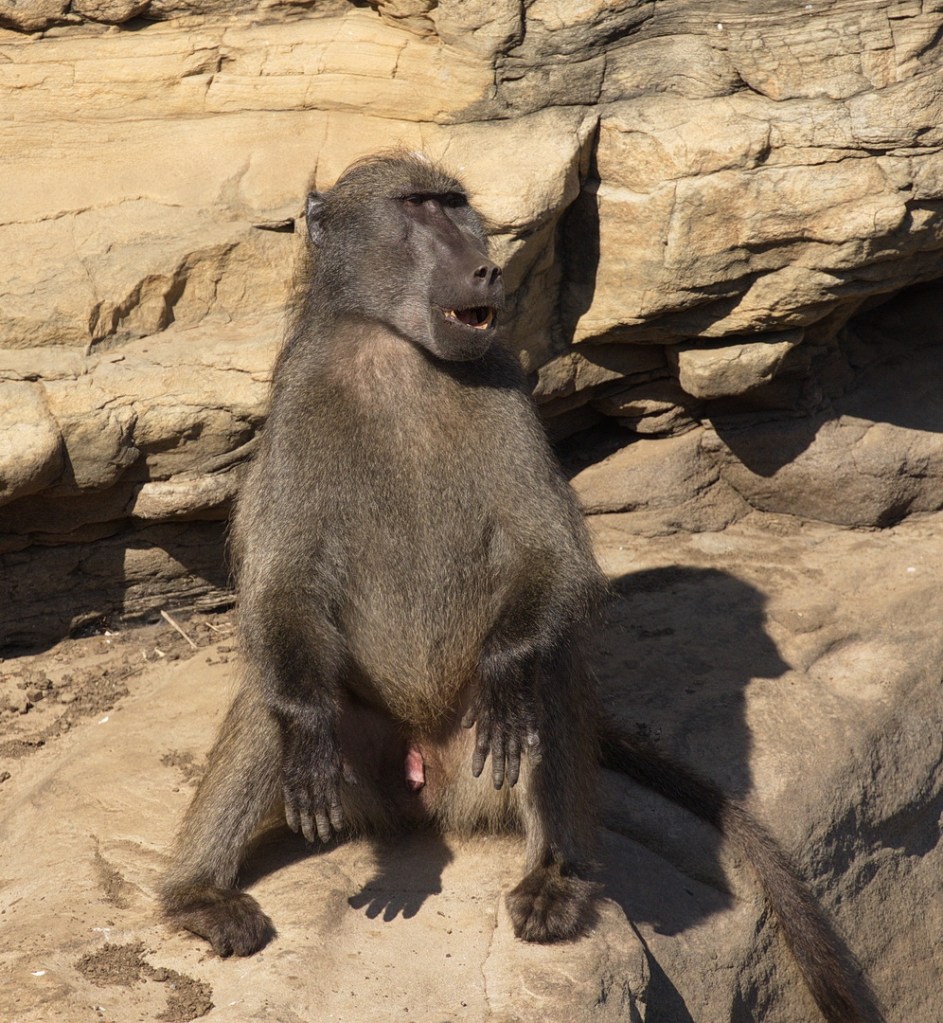
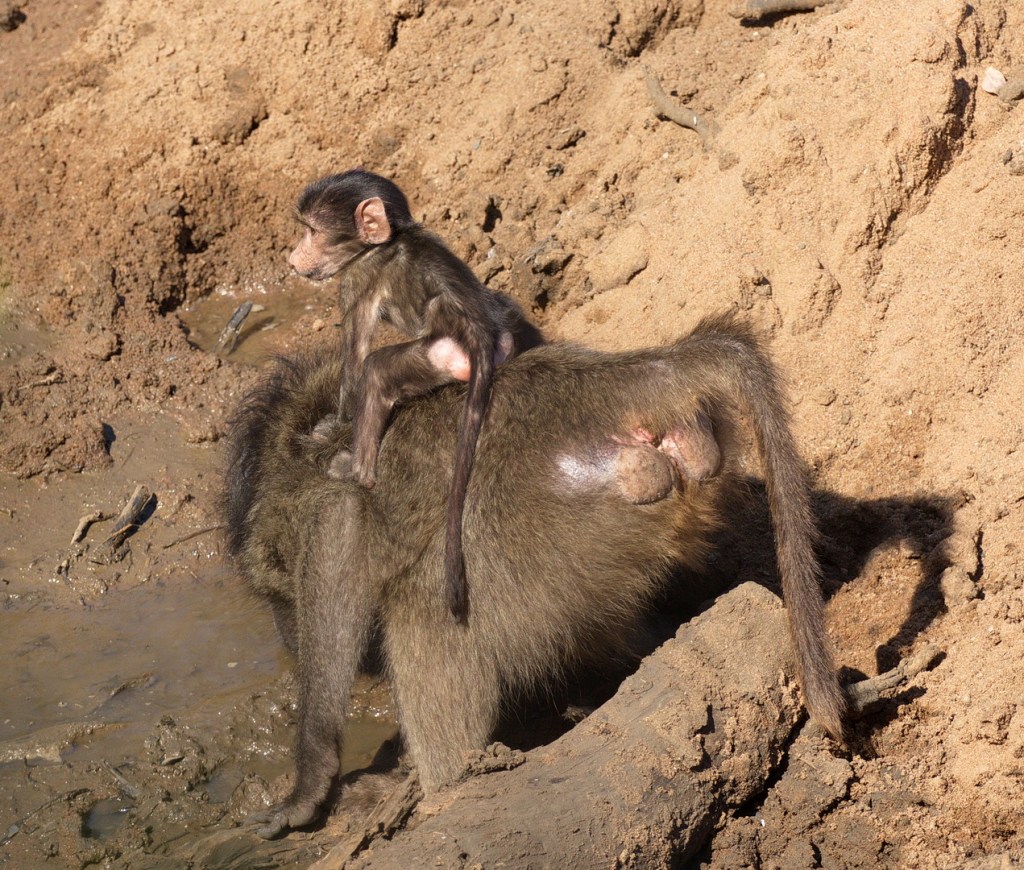
Baboons came and went, so did Impala, Nyala, Elephant, white Warthogs and numerous birds. The friendly Mocking Cliff-Chats came and visited us in the hide, White-throated Bee-eaters were hawking all day long showing their lovely colours. Even a Greater Honeyguide came for a drink.
The Boss
Scared of its own reflection – hesitant
Jockey
Bed time
Brown-hooded Kingfisher
Blue Waxbill
Chinspot Batis
Chinspot Batis
Chinspot Batis
Chinspot Batis
Golden-breasted Bunting
Greater Honeyguide
Jameson’s Firefinch
Jameson’s Firefinch
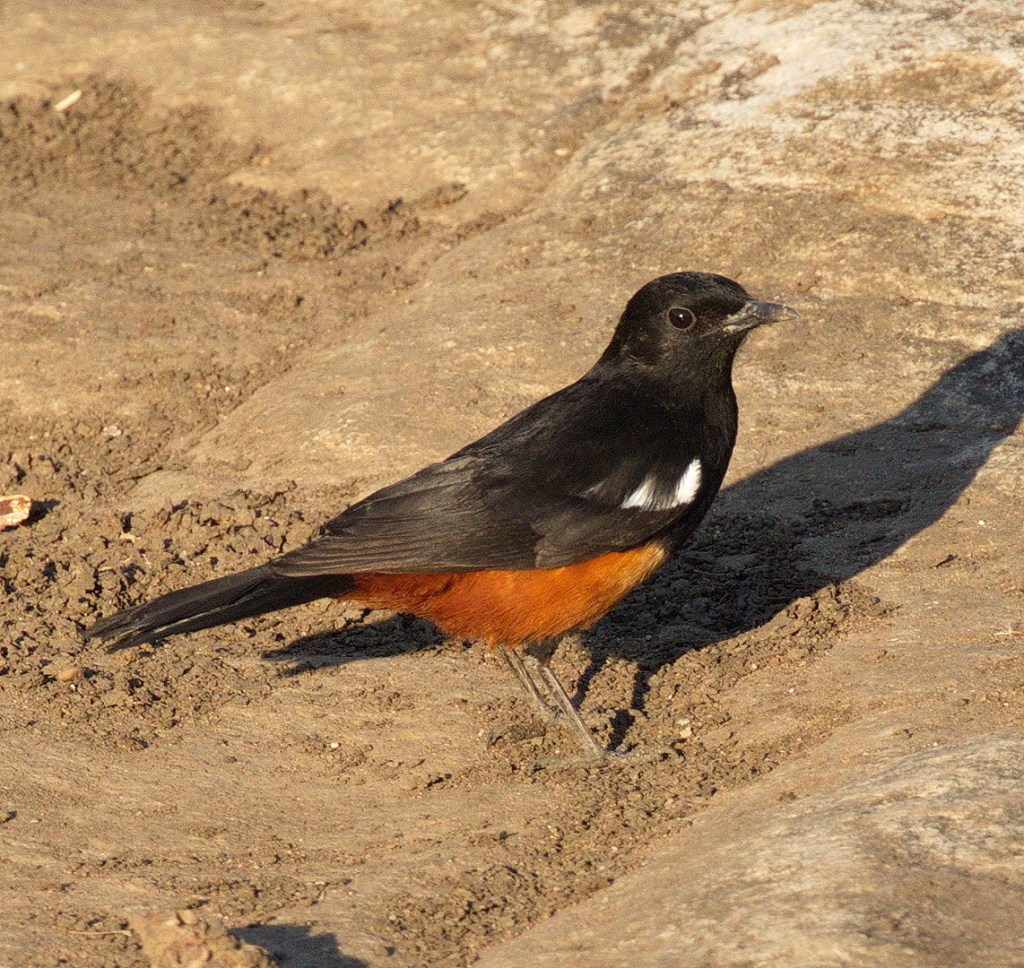
Mocking Cliff-Chat
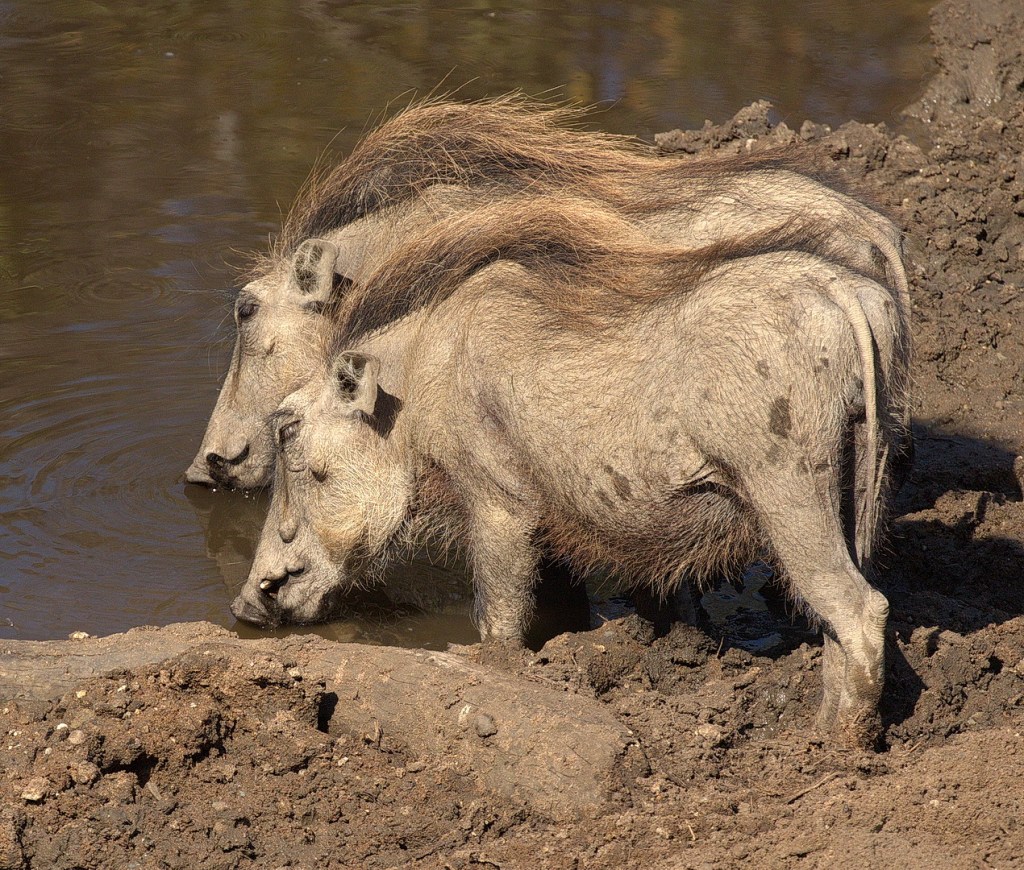
White Warthog
White Warthog – well hairy
White Warthog – well hairy
White-fronted Bee-eater
Yellow-throated Bush-Sparrow
On one very misty morning we set off early to visit the other side of the park – Hluhluwe.
We tried not to stop long anywhere on the way as it is a two hour drive to get to the game area by the Memorial Gate entrance/exit to Hluhluwe.
Once through the “Corridor”, we were into Hluhluwe. Here we noticed that the signage had just had a new coat of paint. Unfortunately the manager had not told the painters that the Thiyeni and Seme Hides were no longer in use. We did find the entrance to Thiyeni Hide but it was closed and in the same dilapidated state it was in many many years ago. We followed the signs for the Seme Hide but it was no longer there.
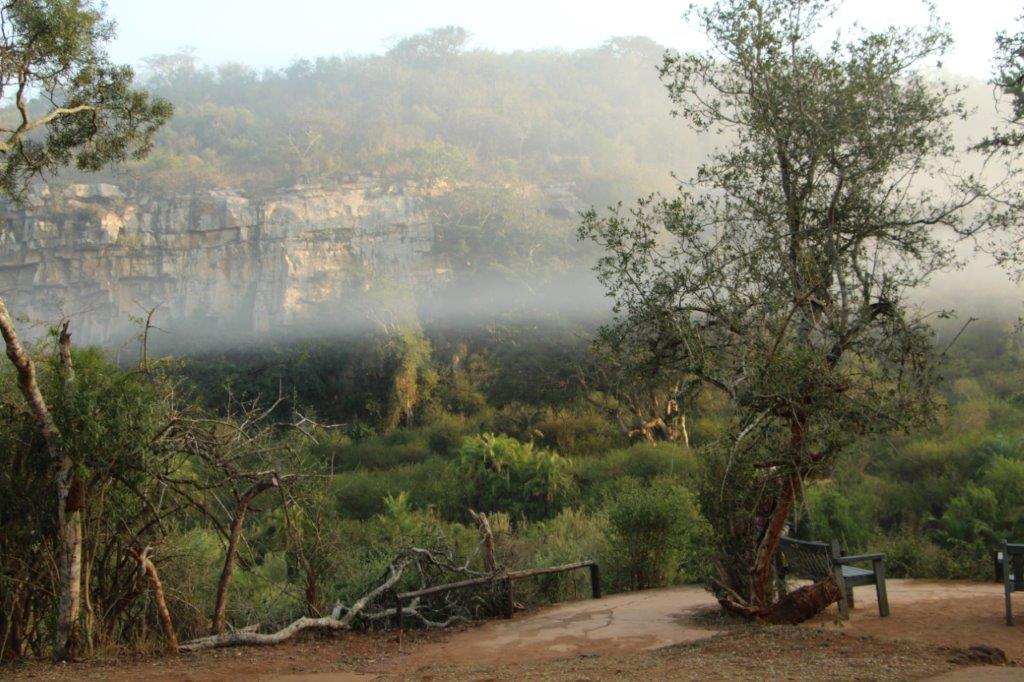
As we drove down the dip to cross the Hluhluwe river, with the mist all around, it looked like we were entering a tropical paradise.
Hluhluwe river crossing
After crossing the dry river we stopped at the picnic site overlooking the Hluhluwe river and the cliffs opposite. Always a scenic place to stop for a cup of tea and a wee.
River bed
View from Picnic site.
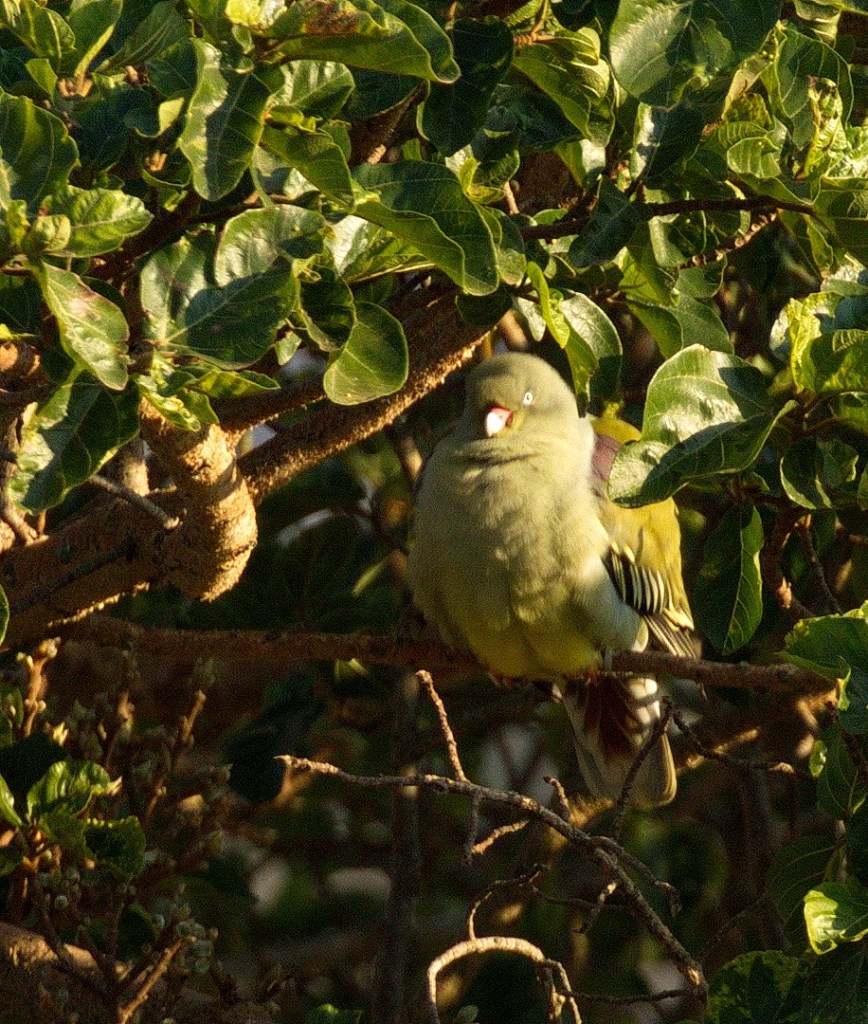
There was a lovely chorus of bird sound – quite eerie in the mist. And the odd Green Pigeon poked their heads out of the fig trees.
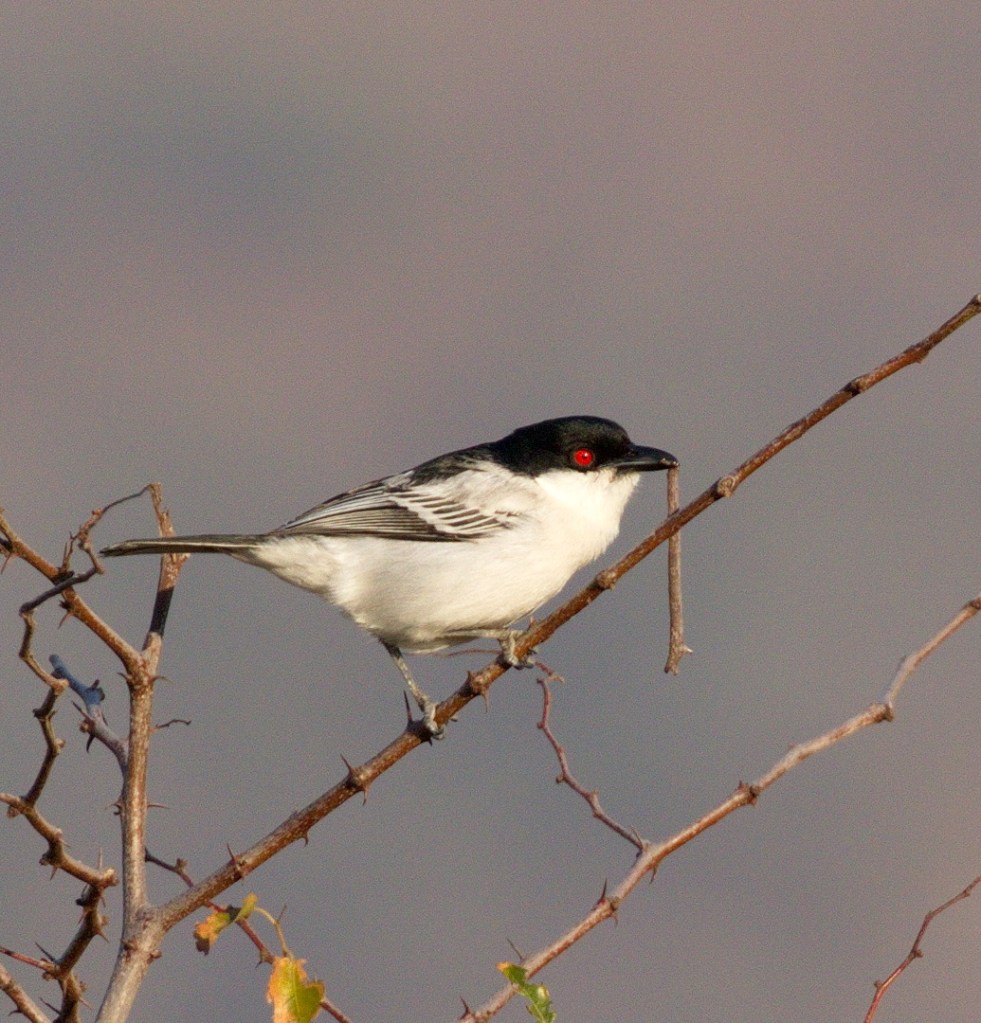
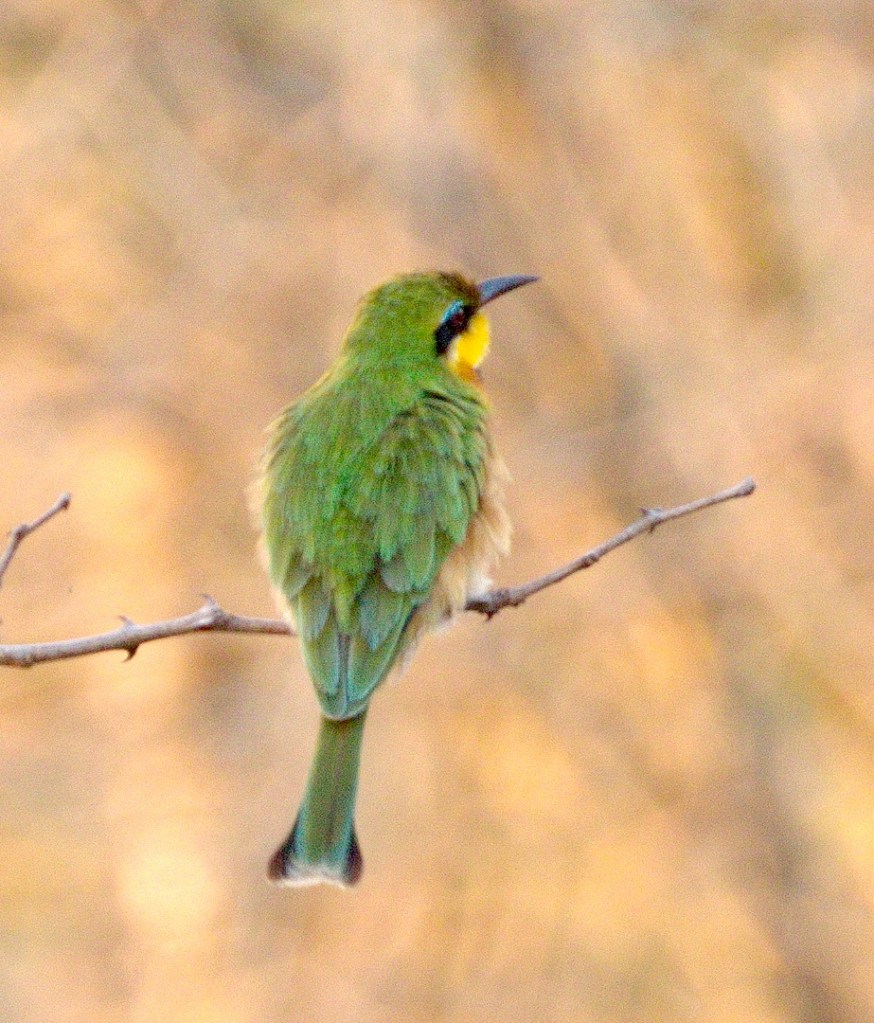
At the iSivivaneni Stones monument we turned right along the dirt road to the east of the park heading to the Memorial Gate. Along the way we came upon a number of bird species which we had not seen in iMfolozi. Including Black-backed Puffback, Crested Barbet, Crowned Lapwing, Red-breasted Swallow, Little Bee-eater and Yellow-throated Longclaw.
Black-backed Puffback
Black-backed Puffback with worm
Crested Barbet
Crowned Lapwing
Little Bee-eater
Red-breasted Swallow
Crowned Lapwing
Yellow-throated Longclaw
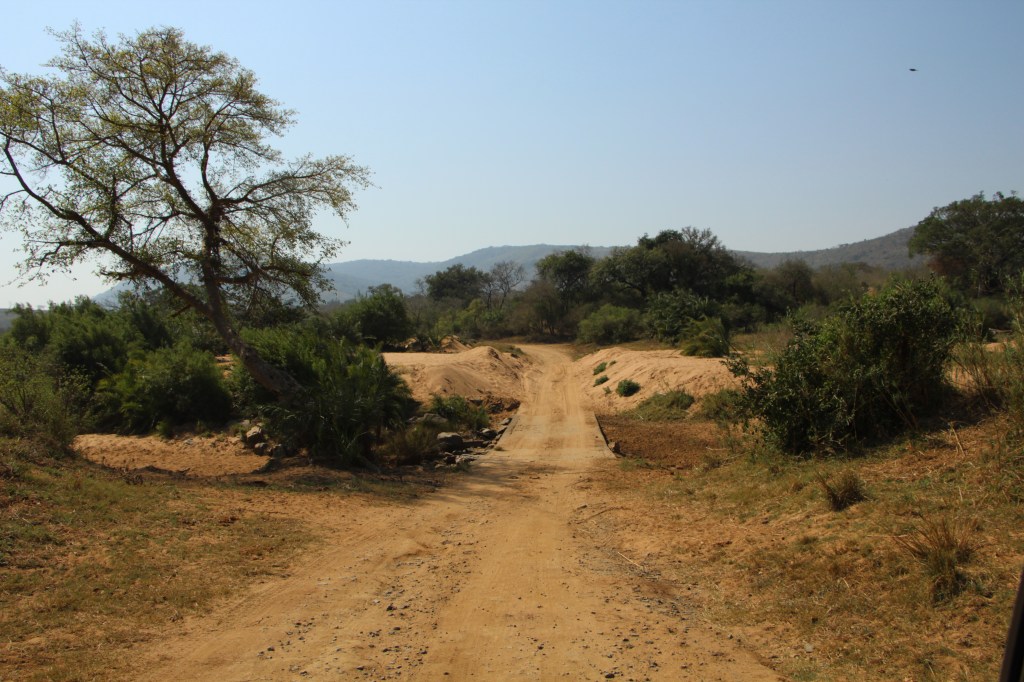
We also checked out the road below Hilltop camp along the Nzimane dry river bed. We did not go far as the area looked so arid.
Nzimane River crossing
We also enjoyed the flowering Schotia trees and the busy birds in them as we drove around.
Flowering Schotia Trees
At the Maphumulo picnic site we met up with our friends Arthur and Rose for some lunch and a wander around enjoying the freedom of being out of our vehicles.
Some rather nice special birds in the picnic site.
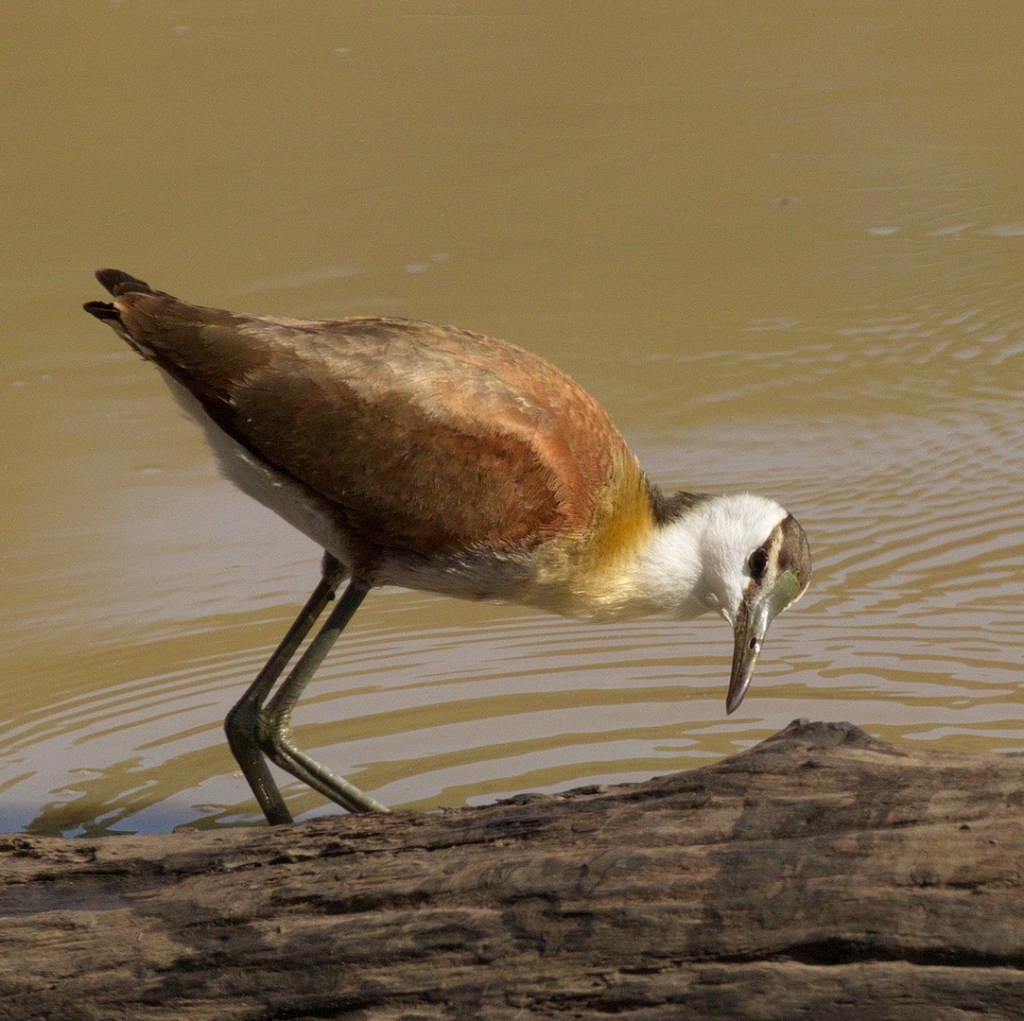
African Jacana
African Jacana
African Jacana
Grey Waxbill
Grey Waxbill
Grey Waxbill
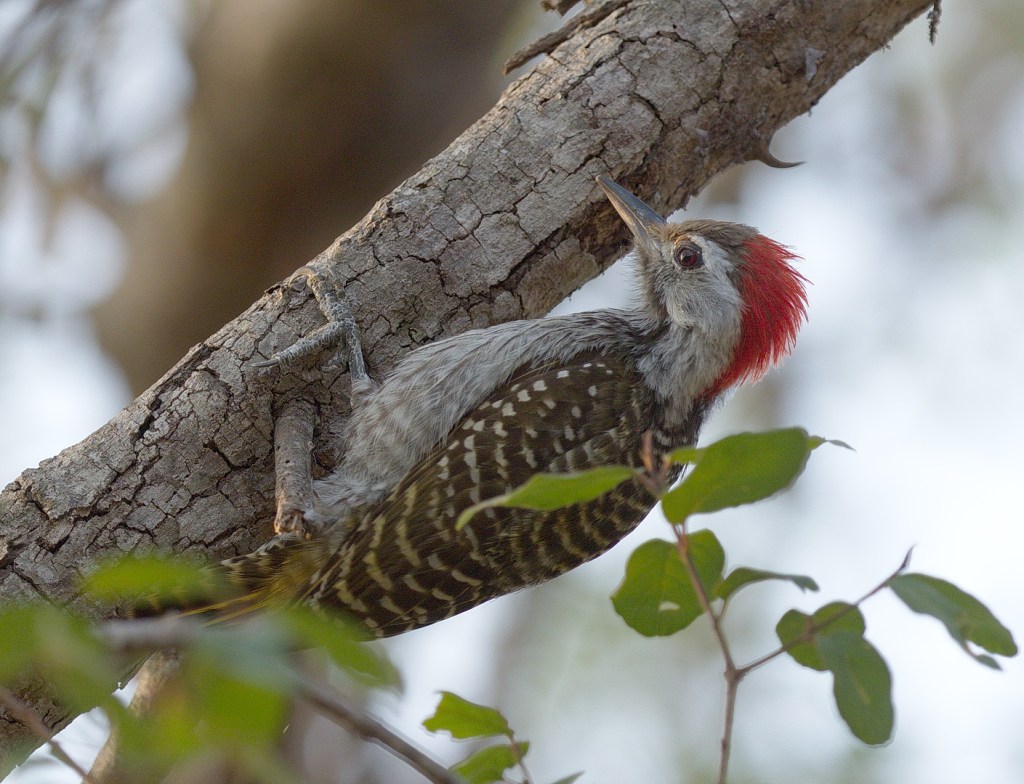
Cardinal Woodpecker
White-bellied Sunbird
White-bellied Sunbird
Our bird list is available for download below. In all we identified 121 different bird species.
On impulse Sally and I headed to Albert Falls to do some birding.
Fortunately we arrived early and got in before the hordes of day trippers arrived. Having said that, the really early birds were the fisherpersons. And there were a lot of them. When we left just after midday there was a long queue of cars to get in to join the hundreds already there. Rather popular it was.
The day was lovely and sunny if not a bit cool though.
Below are a few images to give you an impression of Albert Falls.
Hmmmm…..
There was one sad sighting of a bat tangled in barbed wire over a pond. Not sure what purpose the barbed wire served.
Sad to see.
In all we recorded 77 different bird species in two pentads.
Eventually we got round to book an afternoon 15:30 slot at the Wattle Crane hide at Karkloof Conservancy to observe the cranes coming in to roost. We were not disappointed.
Oribi Gorge and Umtamvuma were visited in consecutive days recently. On both days we started our birding quite late in the morning. A case of re-familiarising ourselves rather than full on birding.
Having read about Cattle Paths on the Howick Buzz, Sally decided we should visit. Cattle Paths is located on the road from Estcourt to Weenen. It has numerous habitats for birding and the trails cannot be completed all in one day. As it was, we walked 12 kms and did not cover half of the potential trails.
Sally has been keeping her eye on places we could visit close by to do some birding. Mount Park caught her eye as a place of indigenous mistbelt forest, climbing up the Inhlosane Mountain between Dargle and Boston, KZN. It is on the district road 132. There are kilometres of trails through the forest following streams up to the peak. Day visitors are welcome there. Do contact to advise you are coming. Tel: 033 234 4601.
On impulse, Sally and I decided to visit Weenen Nature Reserve which was open for day visitors.
We arrived at 07h30 – an hour and a half hour drive from home.
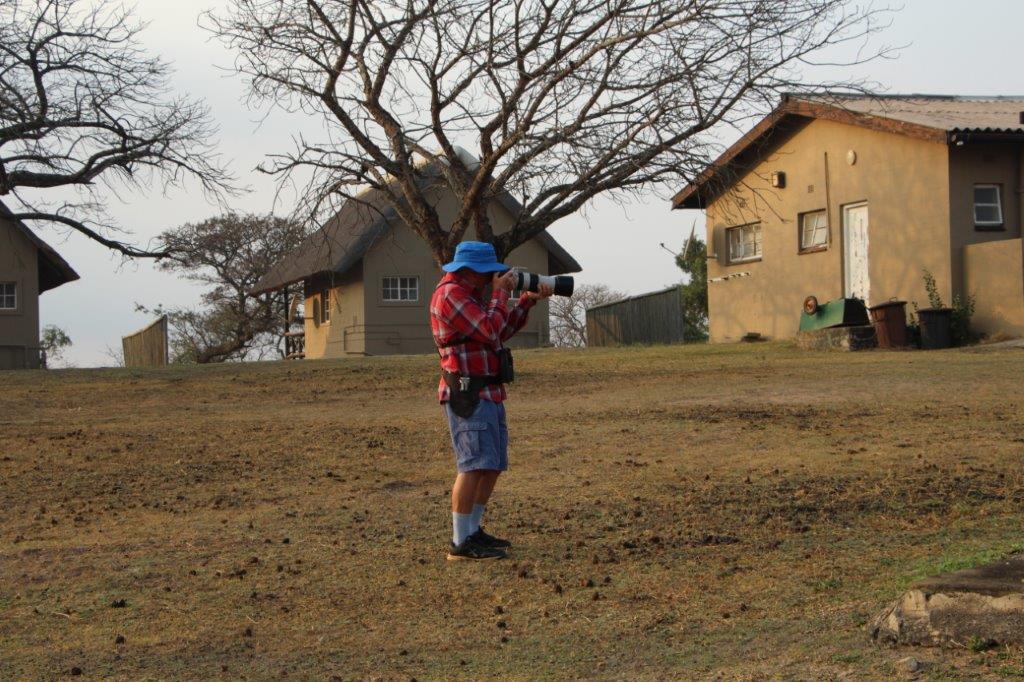
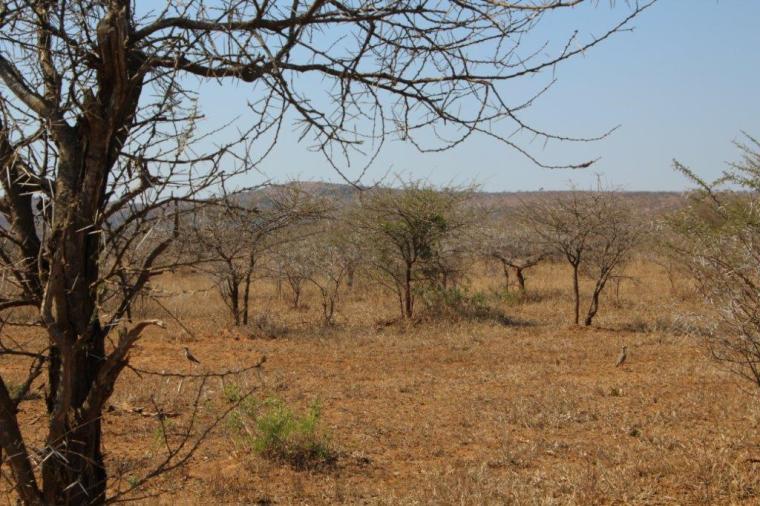
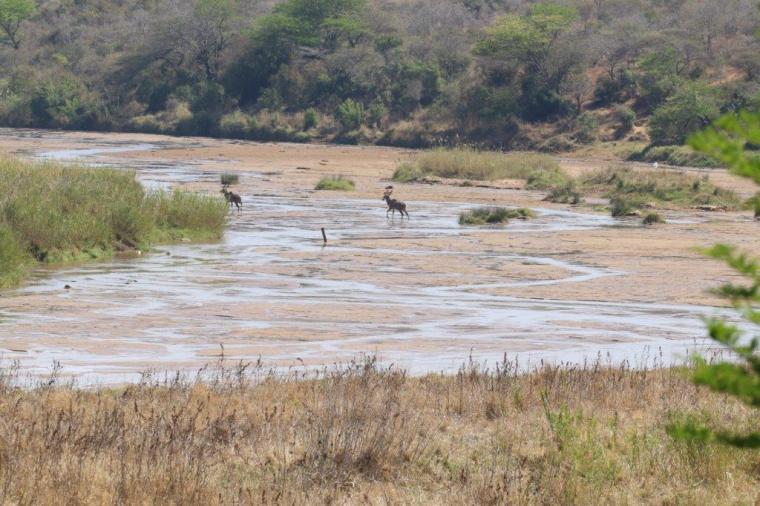
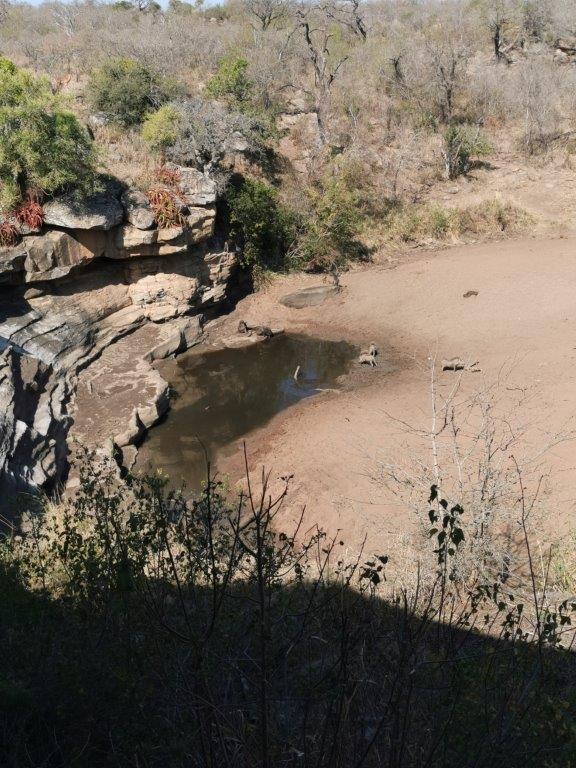
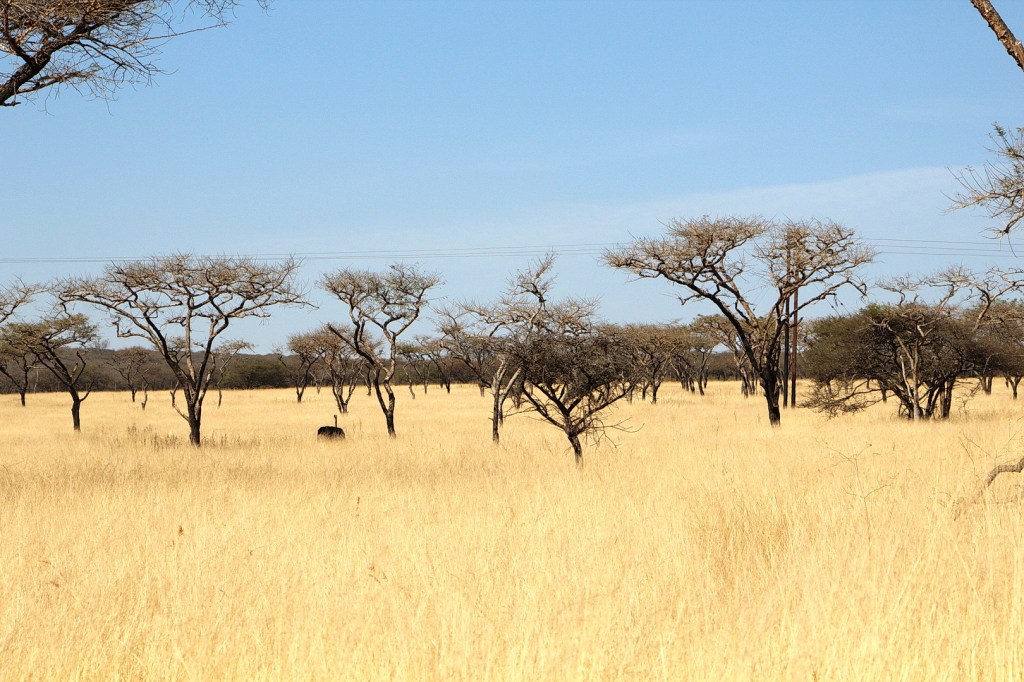
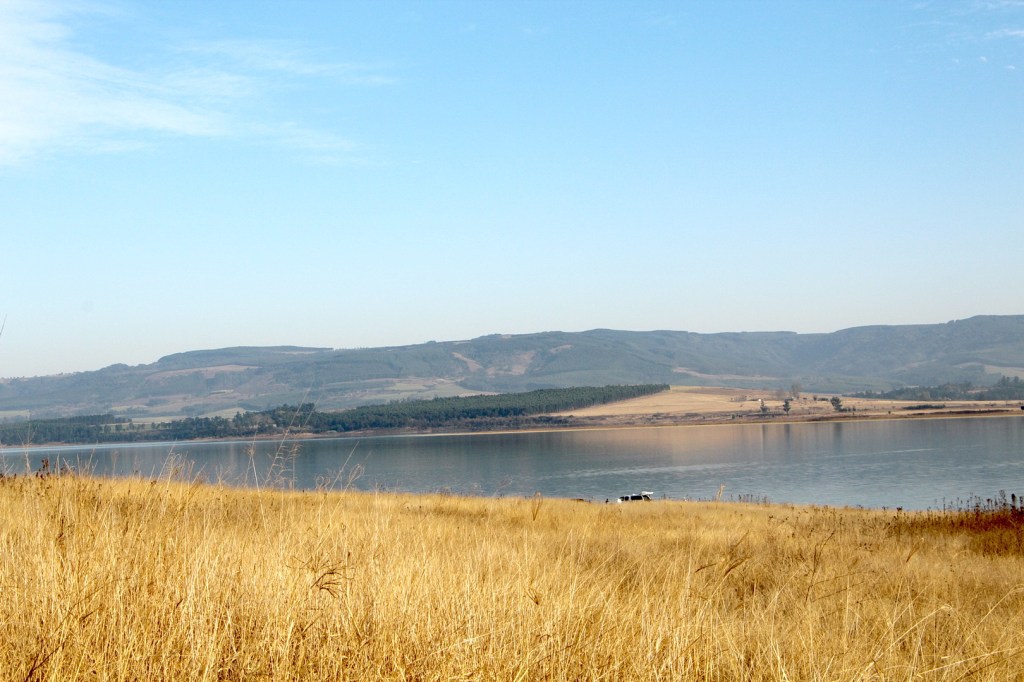
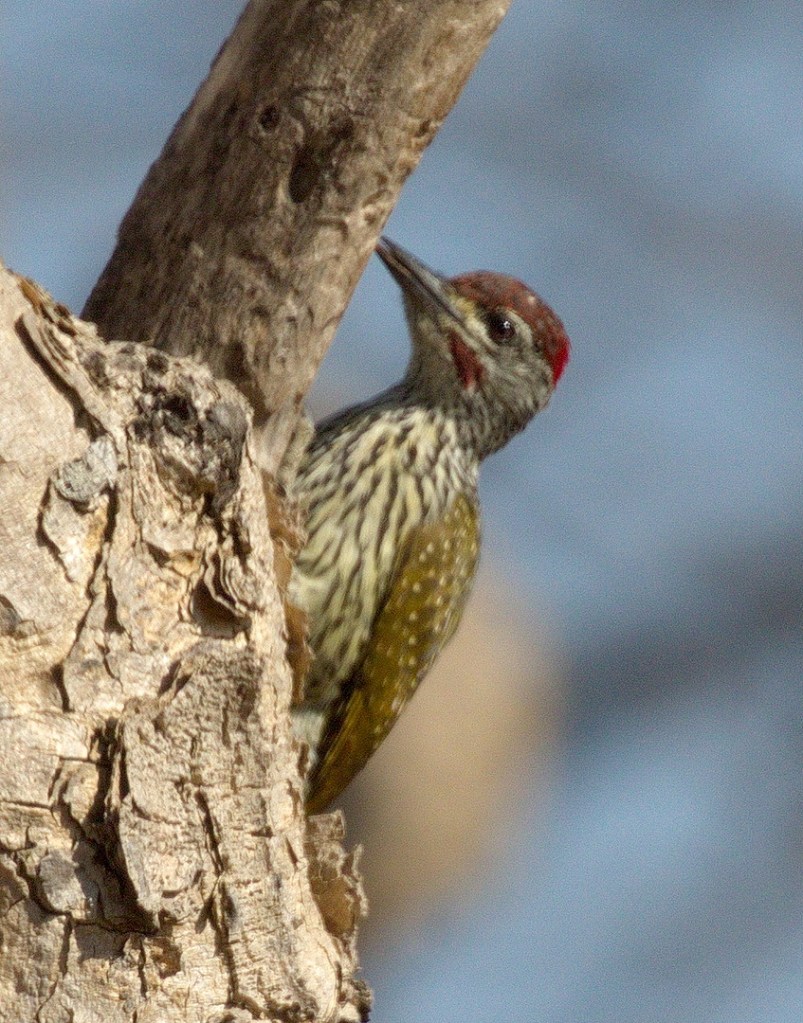
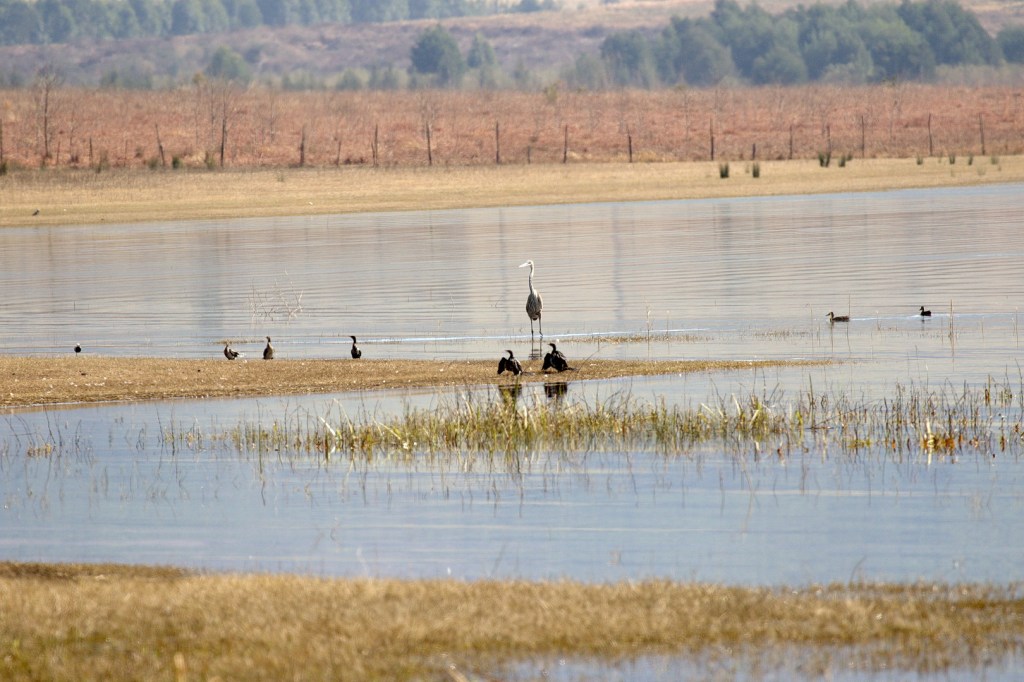
After checking in and doing all the Covid-19 paperwork we headed into the reserve. Almost immediately we saw three special species all together. A common Quail, Chestnut-rumped Warbler (aka Tit-Babbler) and a Fiscal Flycatcher. The latter turned up everywhere we went during the day. Of course as we watched them along came two vehicles and we had to move off. Typical.






















































































































 Birds are our Story