A week’s break in Zululand was called for – missing nature. We timed it so that we could go to Zamanga on Saturday 13th July which was opened for members of the bird club to see their huge array of Aloes.
We booked 4 nights at Mkuze from the 12th to 16th and a further 3 nights in St. Lucia on the way home.
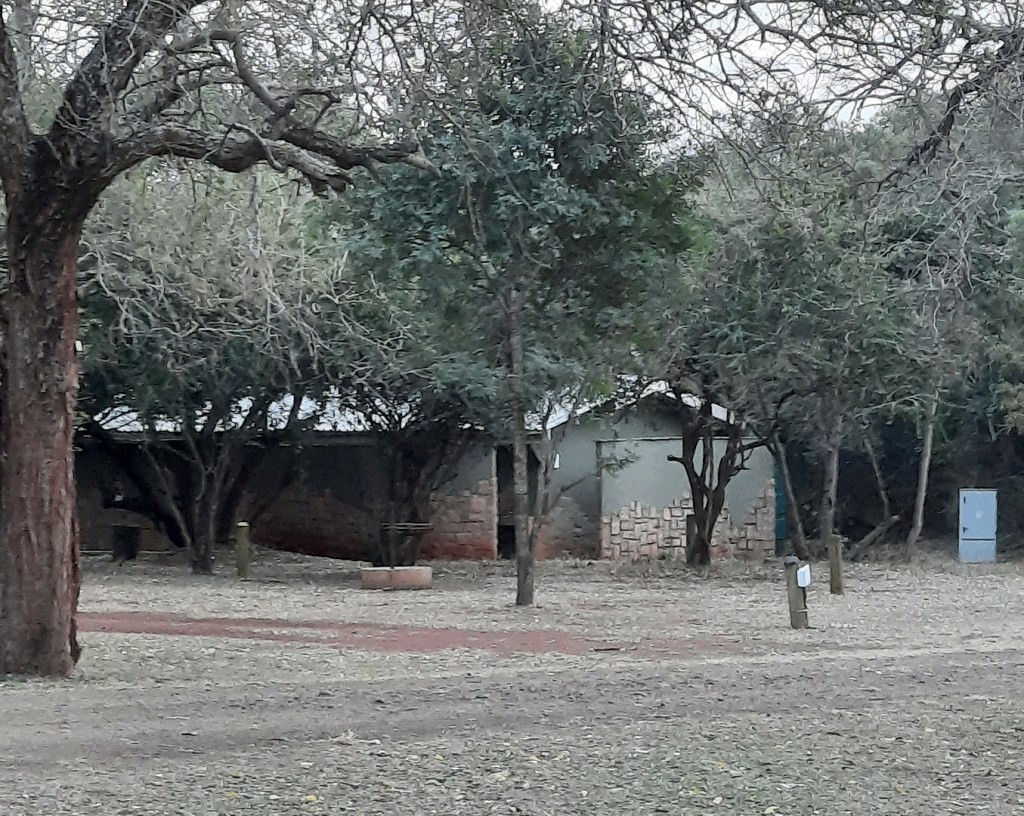
Our Mkuze Campsite
We always enjoy the Mkuze campsite as it is never full. There is always a shady spot to find, and the ground is flat. The ablutions are passable – just need to chase up about hot water at times. Power is erratic too. Sometimes it is available 5am to 8am and again at 5pm to 10pm – depends on reminding them to run the generator.
The lower ablutionsSpaceAnimals are welcomeAfrispoor WildcatAfrispoor Wildcat
The Park has 2 entrances. One on the east (Opansi Gate) and another on the west side (Mshopi Gate).
The campsite is at the entrance on the west of the park at the Mshopi Gate entrance. Other accommodation is at Mantumo – almost halfway between the two gates. Other accommodation includes Chalets, Huts and a Fixed Tents with your own ablutions and cooking facilities.
The campsite always has loads of birds. Calls to wake you up in the morning. There are also some special species and on occasion you get a bird party close-by in the scrub next to your camp.
Now this was mid-winter yet the car did not agree.
34C mid-winter – unbelievably hot. I wonder what summer temperature has in store for us.
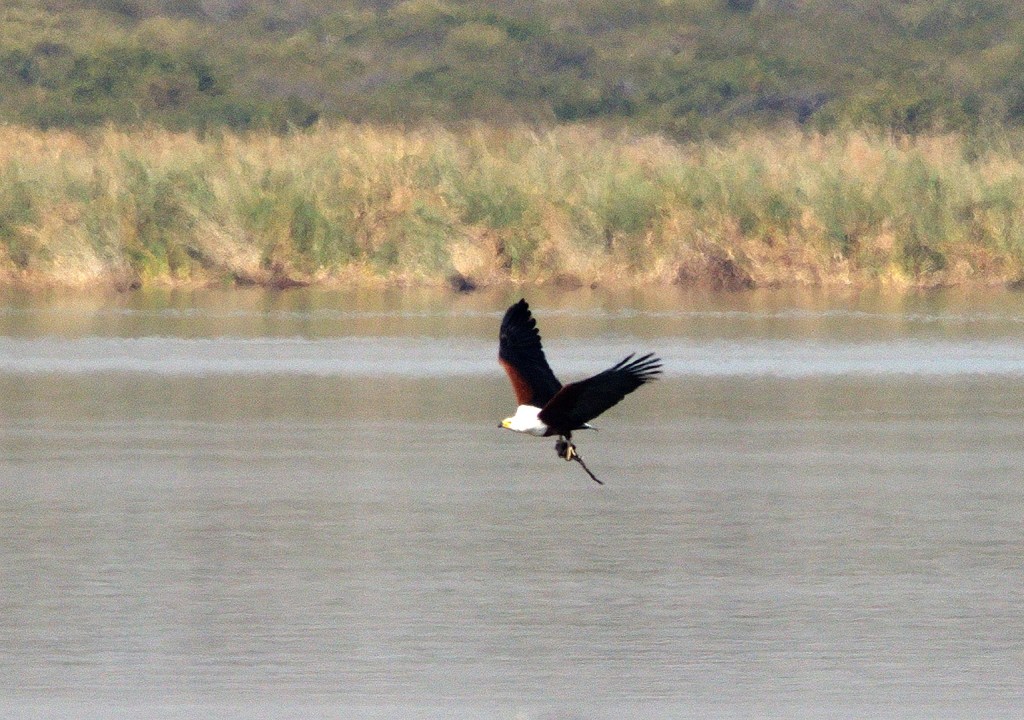
So, we spent time driving around (with aircon on to keep cool) and stopping at the various hides. Nsumo Pan was full and windy so there was not much to see there. But a lone Lesser Flamingo was seen on the far side. An African Fish-Eagle flew over with its catch. A White-breasted Cormorant checked out the lesser Flamingo and a Goliath Heron and a Great Egret glided past.
African Fish-Eagle with lunchLookout Tower Just south of Mantumo CampGoliath HeronWhite-breasted Cormorant and Lesser FlamingoLesser FlamingoGreat Egret
Elsewhere on our drives around the Game Reserve we saw a number of inteeresting birds.
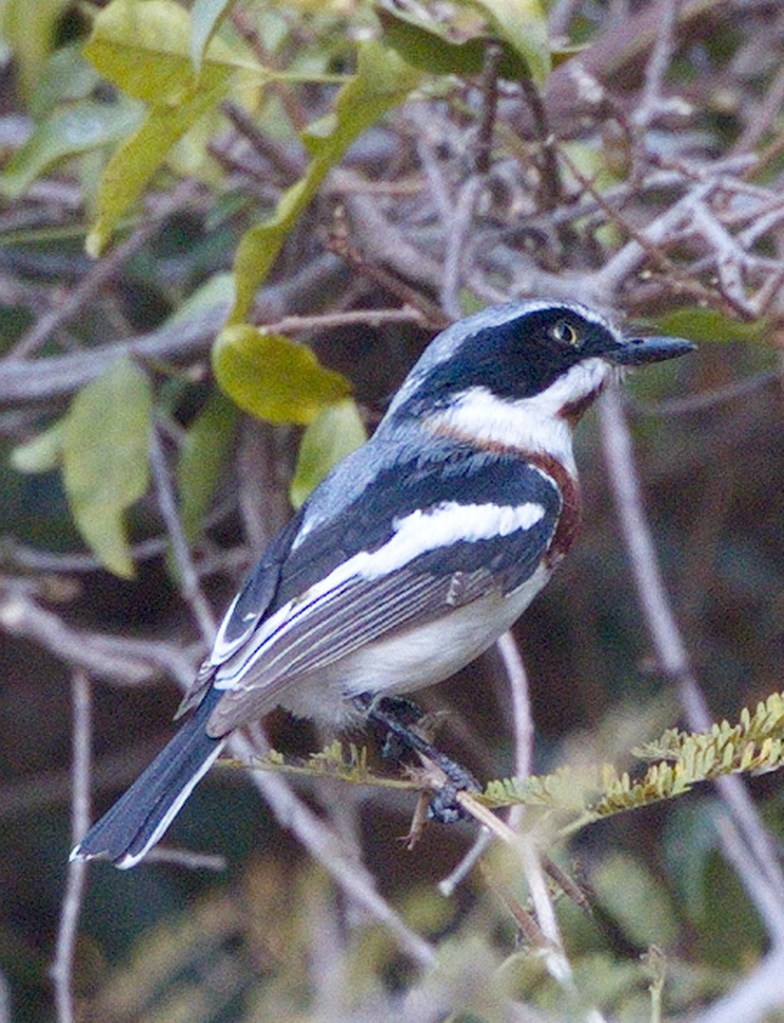
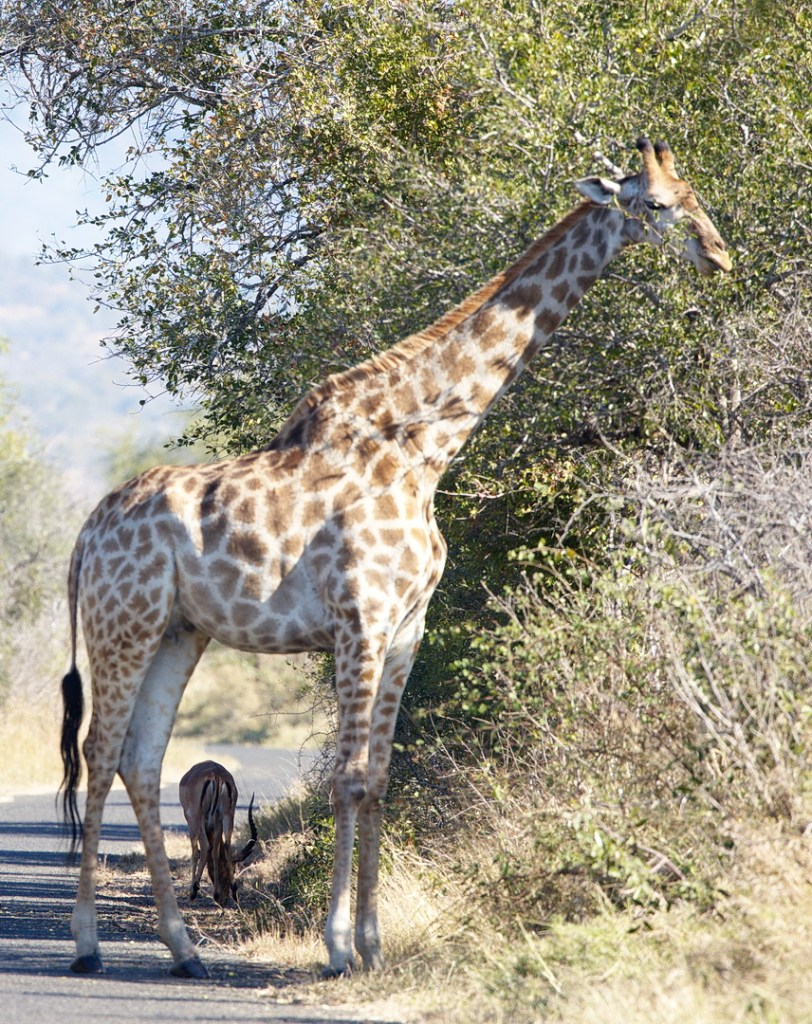
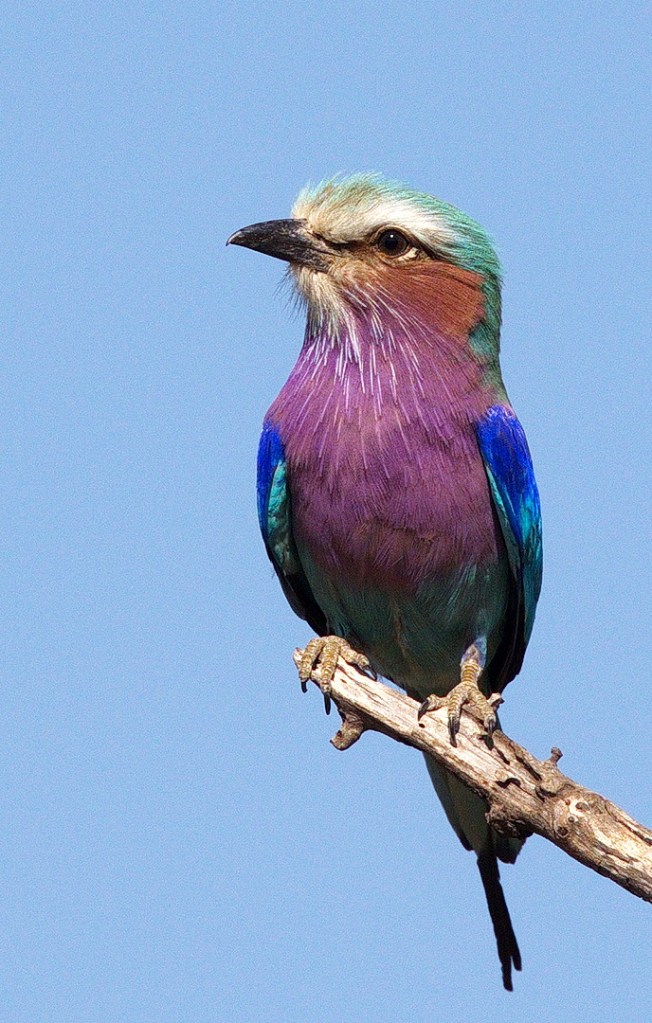
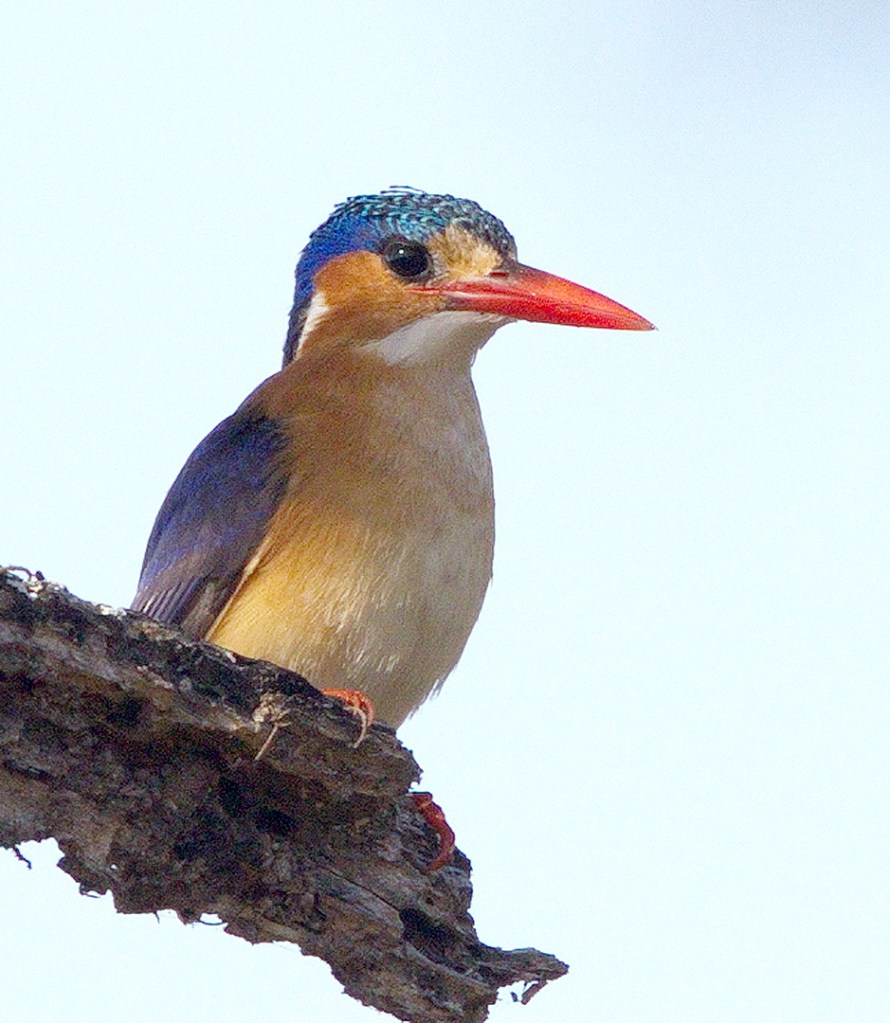
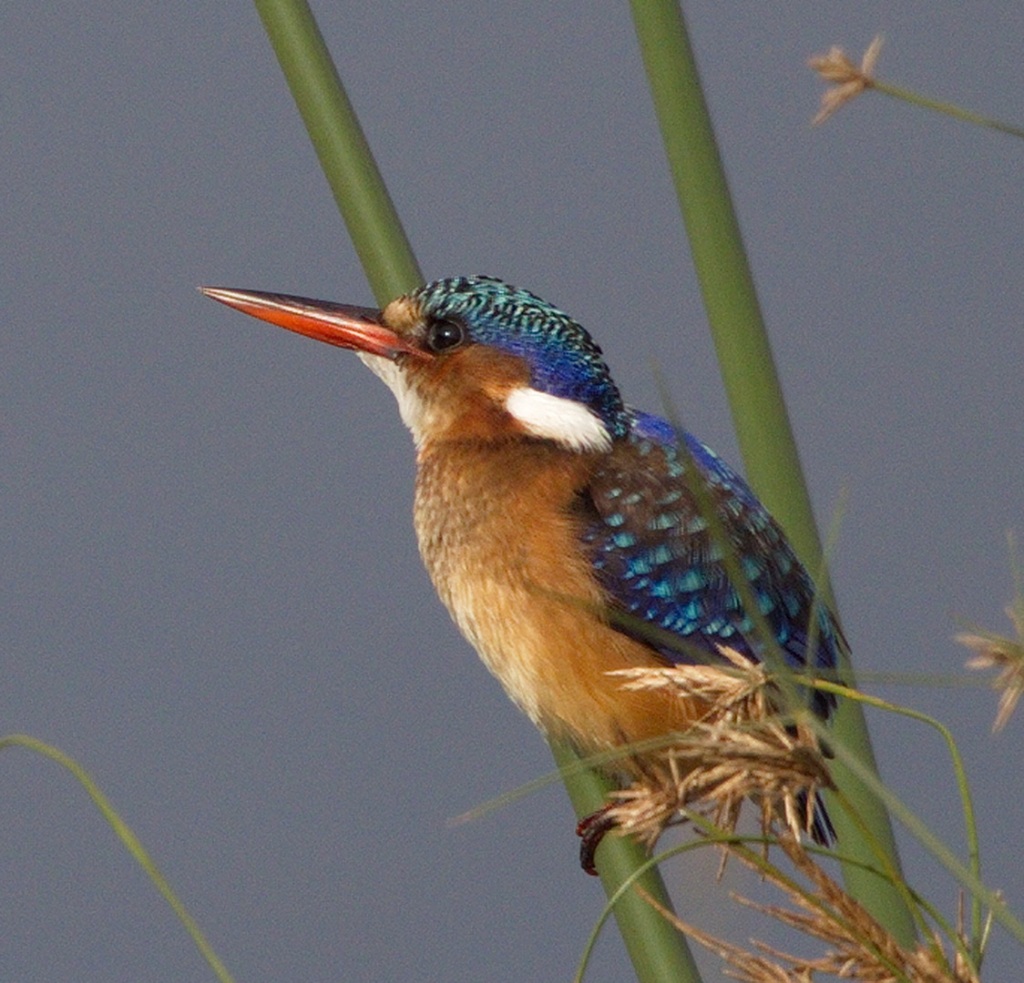
African HoopoeAfrican HoopoeAfrican StonechatBateleurBlack-winged KiteCape StarlingCape Starling looking angryCape StarlingFiscal FlycatcherGiraffe encapsulating an ImpalaThis is an Ootheca – egg capsule of a praying mantis. Thanks Dave Rimmer.Little Bee-eaterLilac-breasted RollerMalachite KingfisherStriped kingfisherStriped KingfisherBurchell’s Zebra being groomed by Red-billed Oxpeckers
There are two hides where we spend a lot of time. They are very active with both aminals and birds at various times of the day. The two hides are kuMasinga and Malibala. The latter is closest to the campsite. Ku Masinga is quite central and is south of the Mantumo main camp.
We have found that the birds are most active at kuMasinga hide around midday. Aminals appear at any time when they are thirsty.
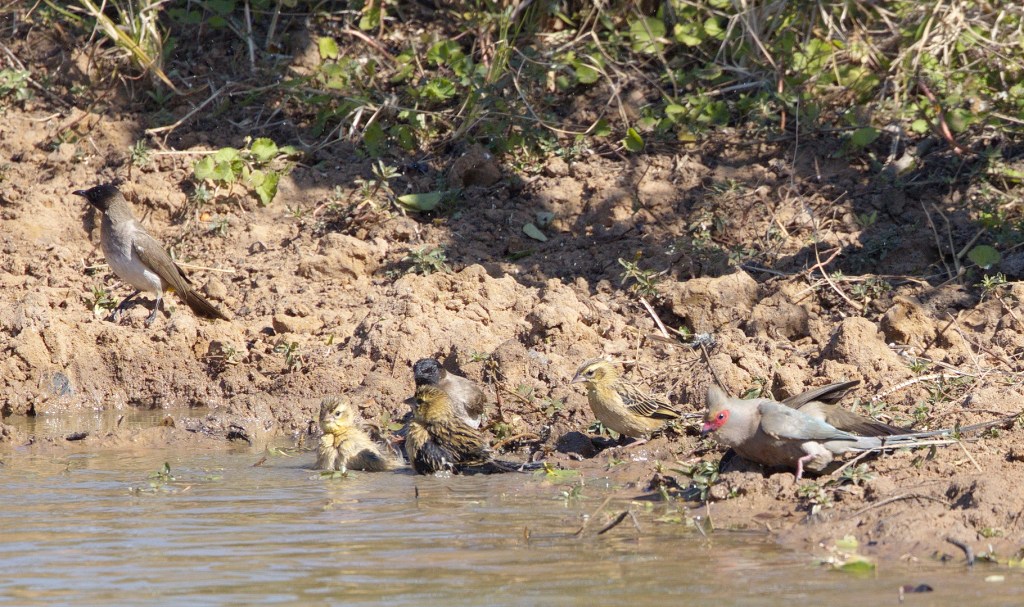
As you enter the hide, looking left, there is a small tree/bush- leaning right – close to the water’s edge. This is the secure waiting spot for the birds (especially the small ones) before they chance a drink at the water’s edge. They congregate at the water’s edge together for safety.
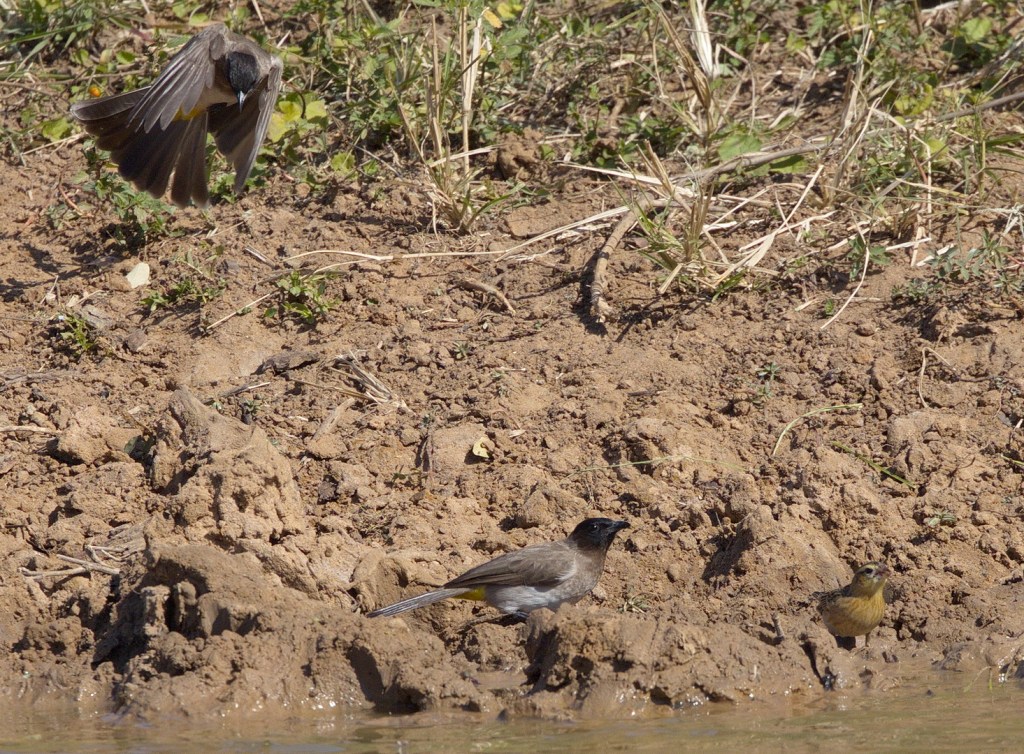
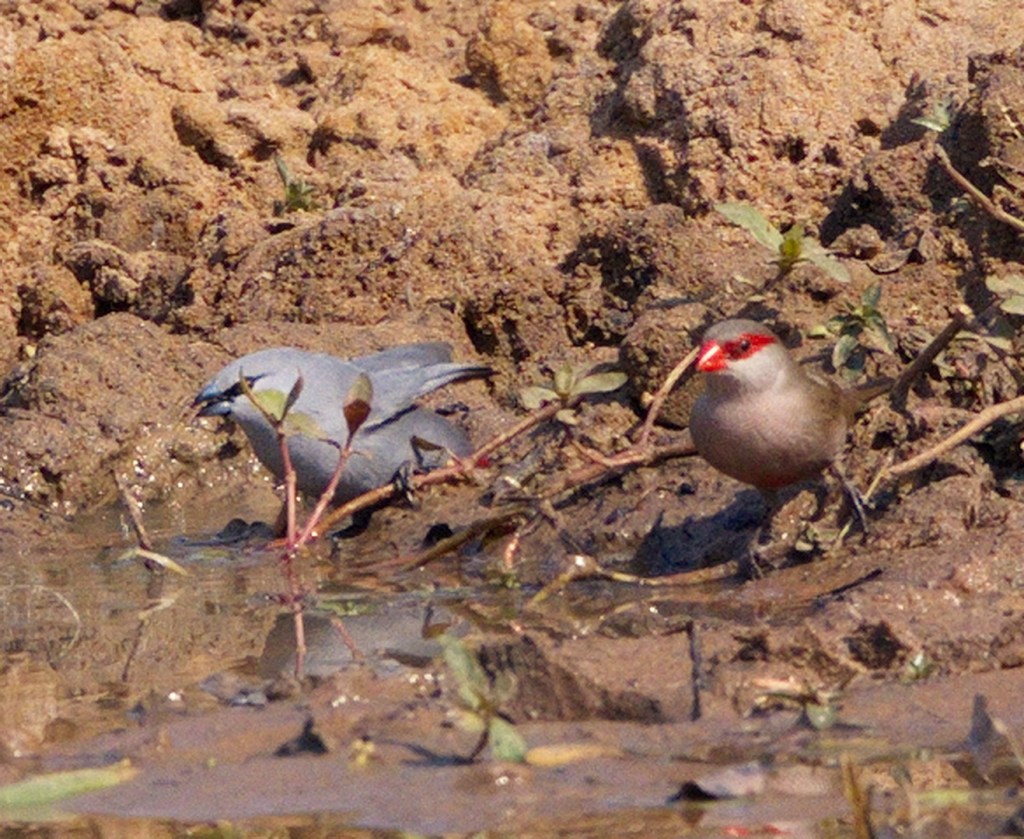
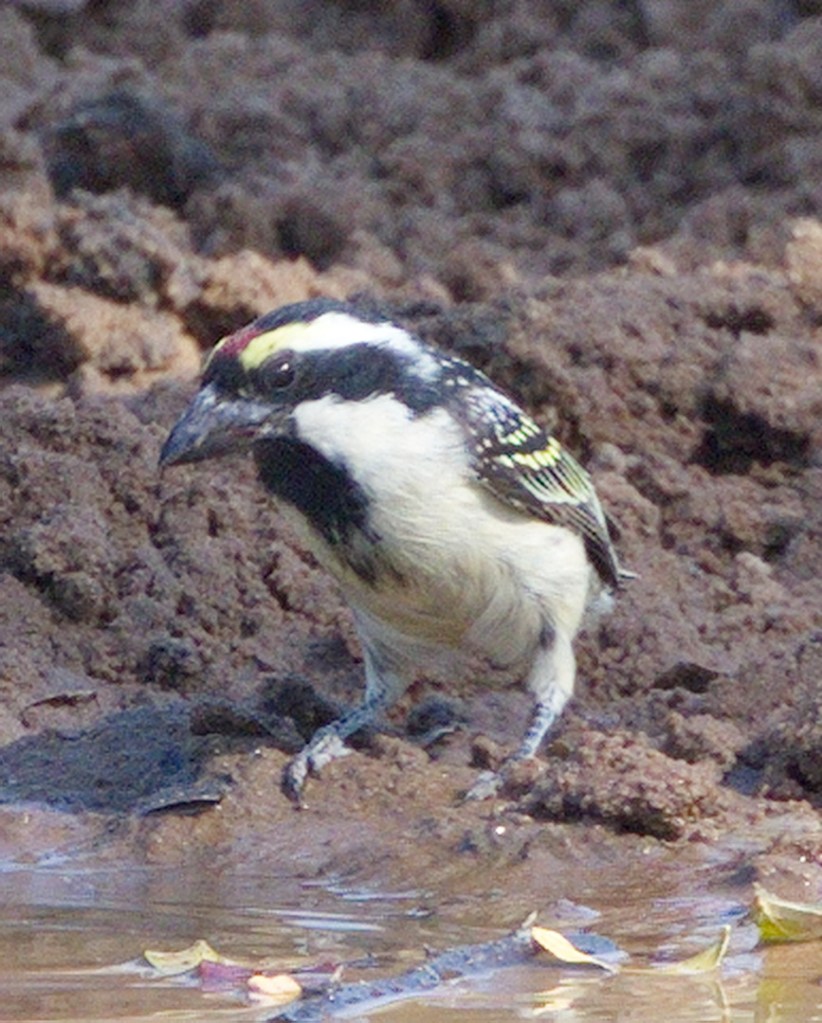
Blue, Grey and Common Waxbills and an unidentified SunbirdGrey HeronAfrican HoopoeCape Starling and a Common WaxbillGreen-winged PytiliaPurple-crested TuracoRed-billed Oxpeckers – bath-timeBlue and Grey Waxbill, a pair of Green-winged Pytilia, Collared Sunbird Southern Masked WeaverRed-faced MousebirdsDark-capped Bulbul, Jameson’s Firefinches and Common WaxbillsRed-billed Oxpeckers drying offRed-faced Mousebird, Dark-capped BulbulDark-capped Bulbuls and Eastern Golden WeaverPurple-crested TuracoGrey Waxbills, a pair of Green-winged Pytilia, Collared Sunbird Red-faced Mousebird leading a Blue Waxbill and Yellow-bellied GreenbulGrey WaxbillCommon WaxbillPurple-crested TuracosCrested BarbetGrey and Common WaxbillAcacia Pied BarbetCommon and Grey Waxbills, Green-winged Pytilia Blue WaxbillGrey Waxbills, a pair of Green-winged Pytilia, Collared Sunbird and Dark-capped BulbulRed-faced and Speckled MousebirdsAccacia Pied Barbet – often hard to get close to for a photo.Red-faced MousebirdView from Hide showing the broken bush on the left where the birds congregatedGrey WaxbillSouthern Red Bishops
And then there is the Malibala Hide. We enjoyed this hide often as it is the closest to the campsite. Midday and late afternoons were the best for both birds and aminals.
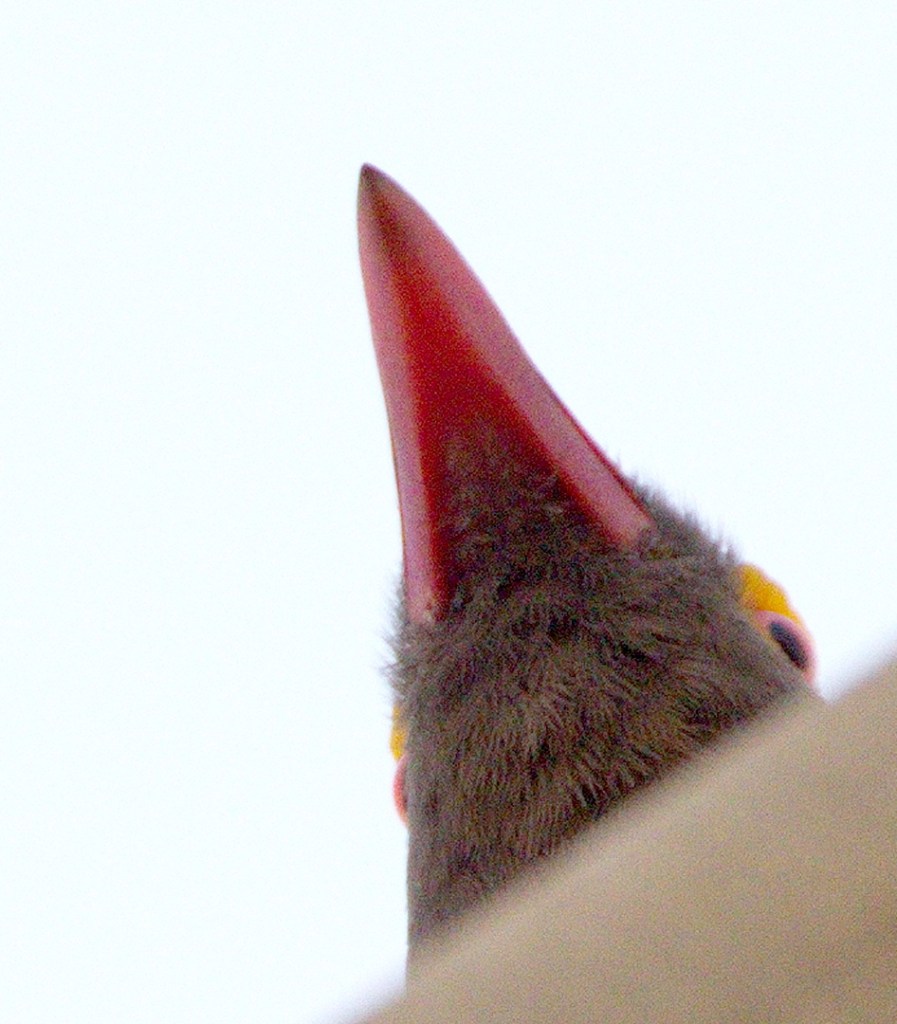
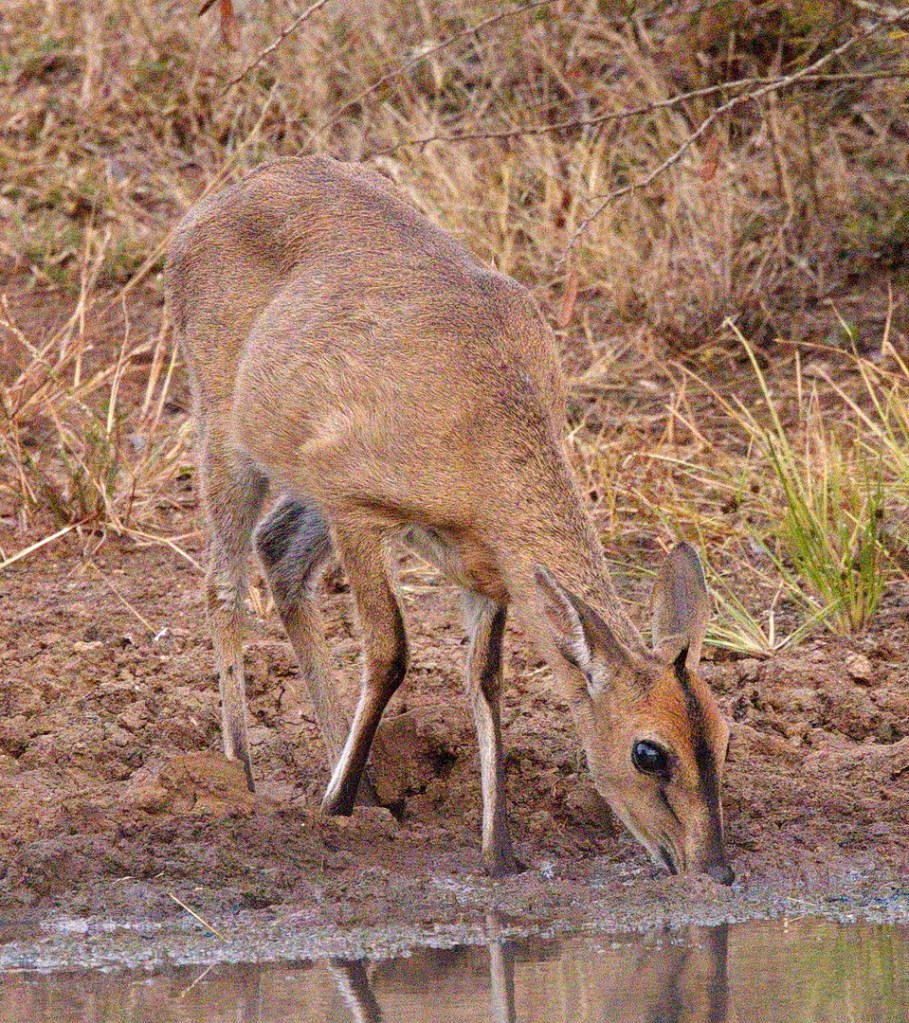
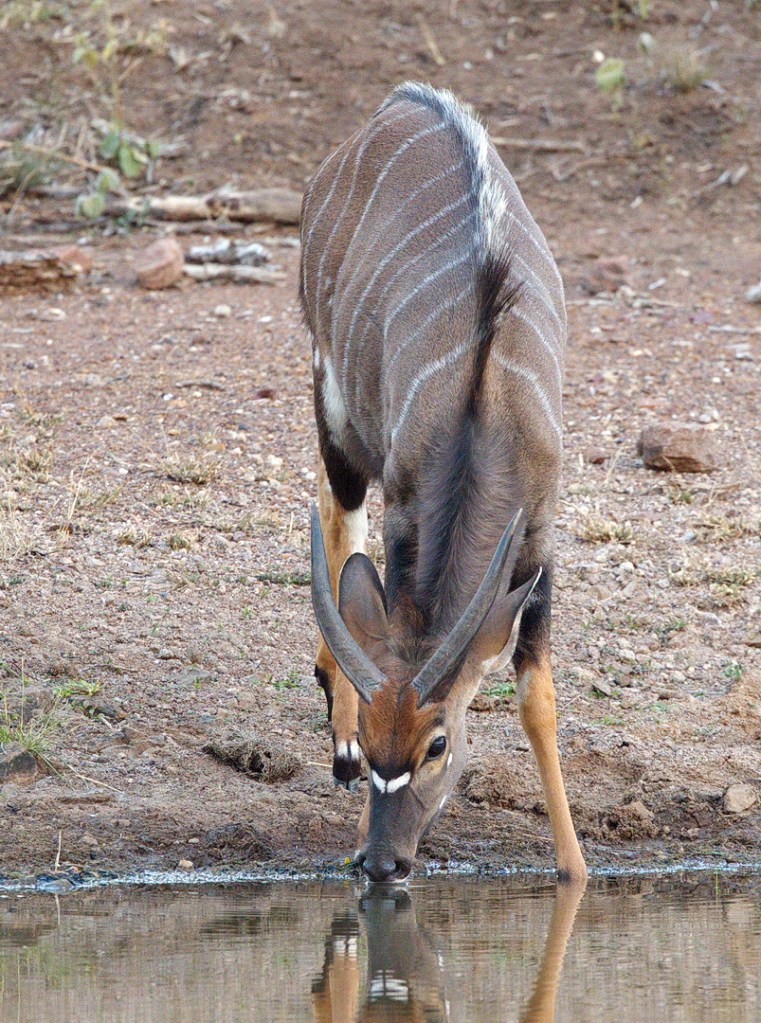
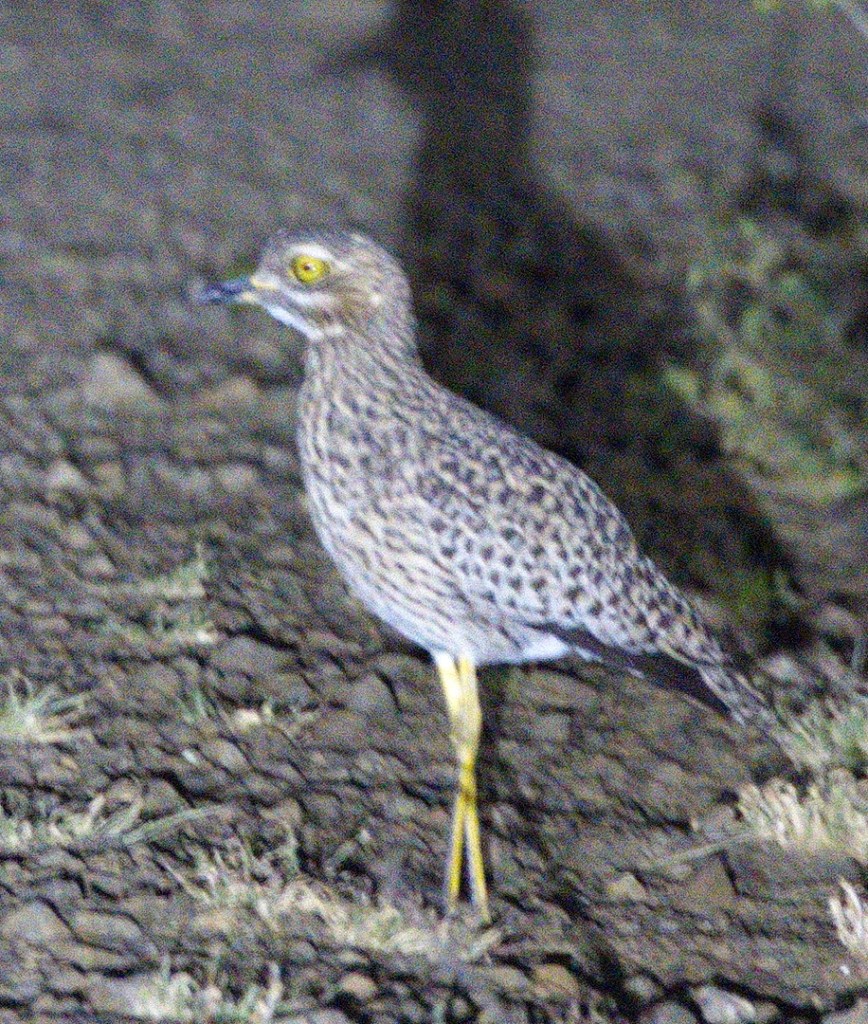
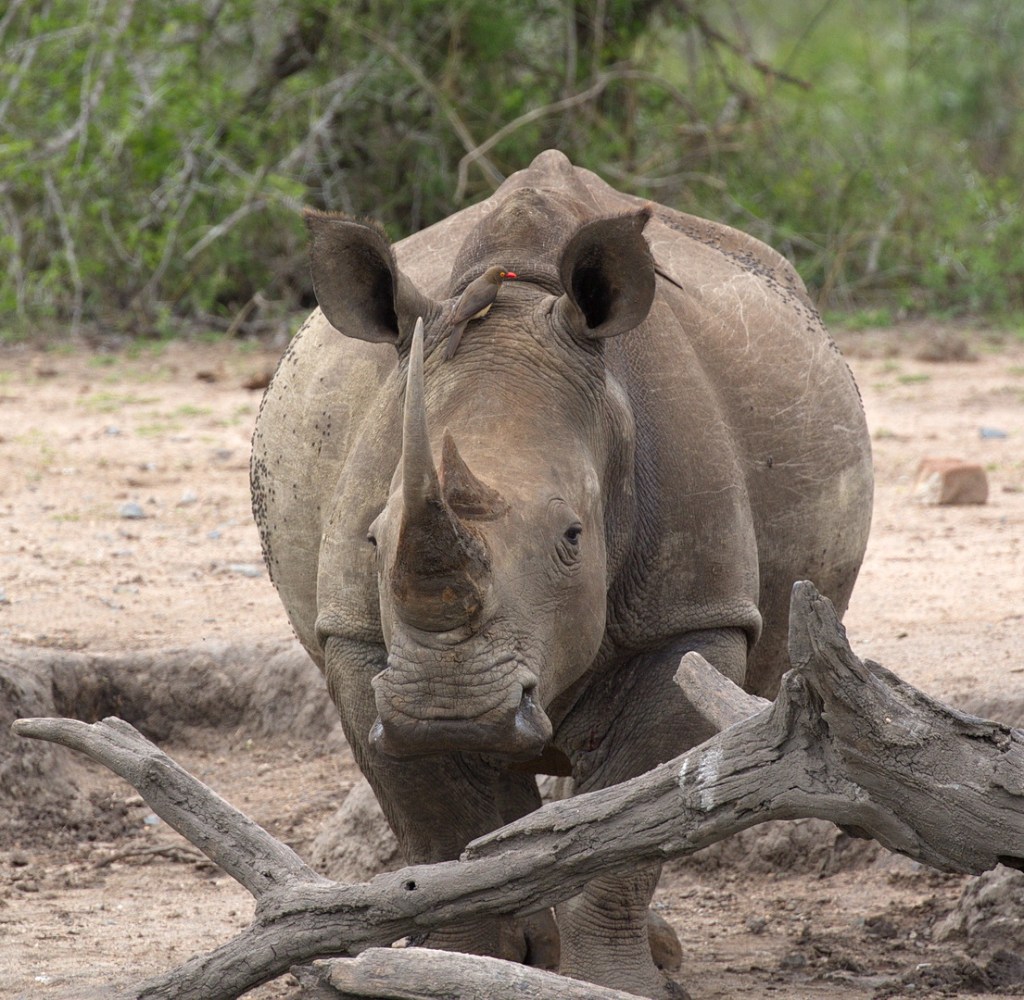
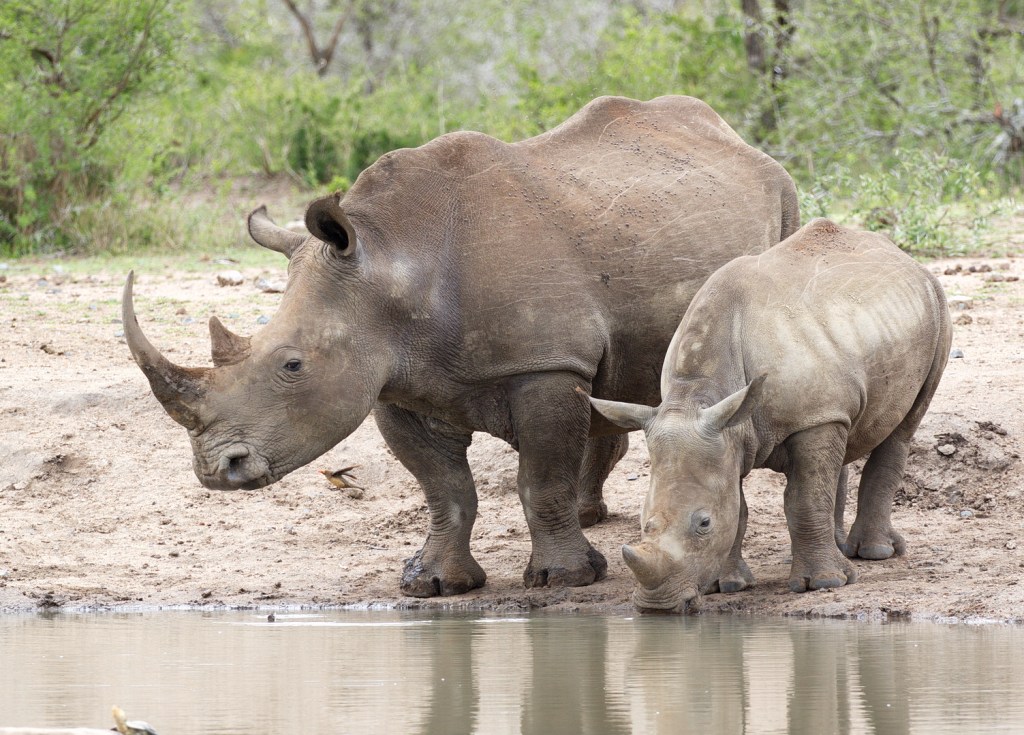
What are they?Spotted Thick-kneeNyala – young maleNyala – young male and femaleWhite RhinoKuduWhite Rhino arrived late one eveningA stack of TerrapinsKuduView from Malibala hideRed-billed Oxpecker beak Yellow-bellied GreenbulAfrican Black Duck – very unexpectedGrey DuikerNyala – young maleSpotted Thick-kneeNyala – young male and femalesWater Thick-kneeWater Thick-kneesYellow-billed HornbillKuduAfrican Black Duck appeared at dusk as we were preparing to leave the hide.Goodbye sunWater Thick-kneeView from Malibala hide
Then one morning we had the unfortunate sighting of a Nightjar which had been run over during the night.
That summarises our experiences in Mkuze Game Reserve during our stay. However, one morning we visited Zamanga Gardens – some 6kms north beyond the turnoff to Mkuze Town on the M2.
Zamanga Gardens
Saturday 13th July 2024
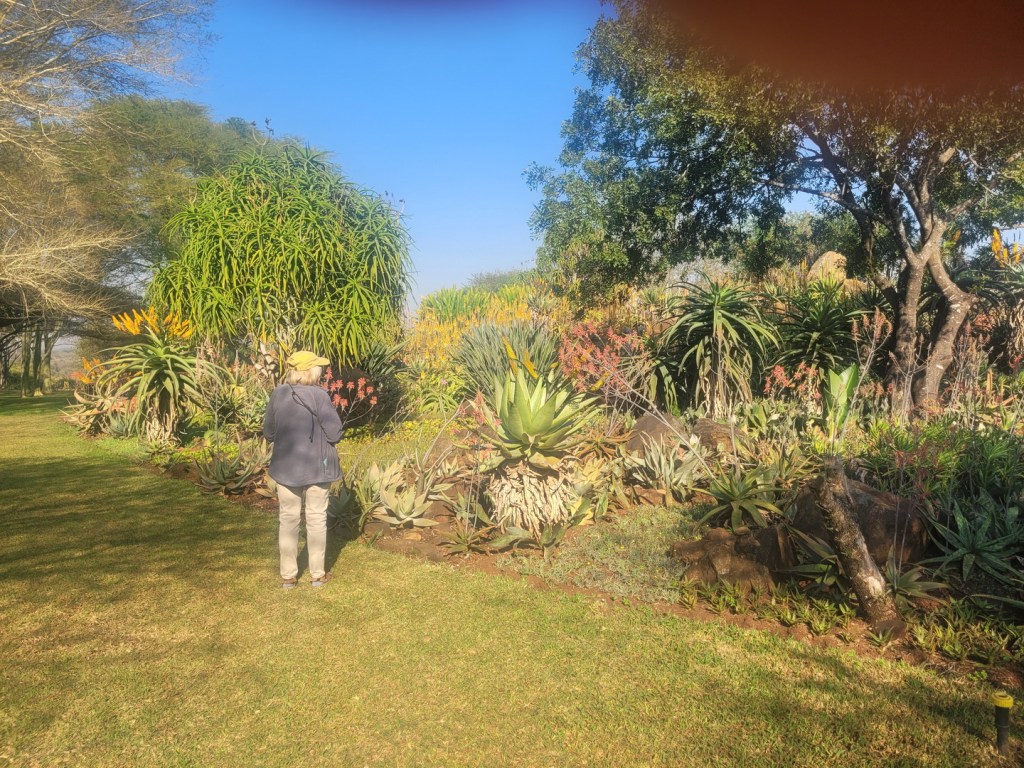
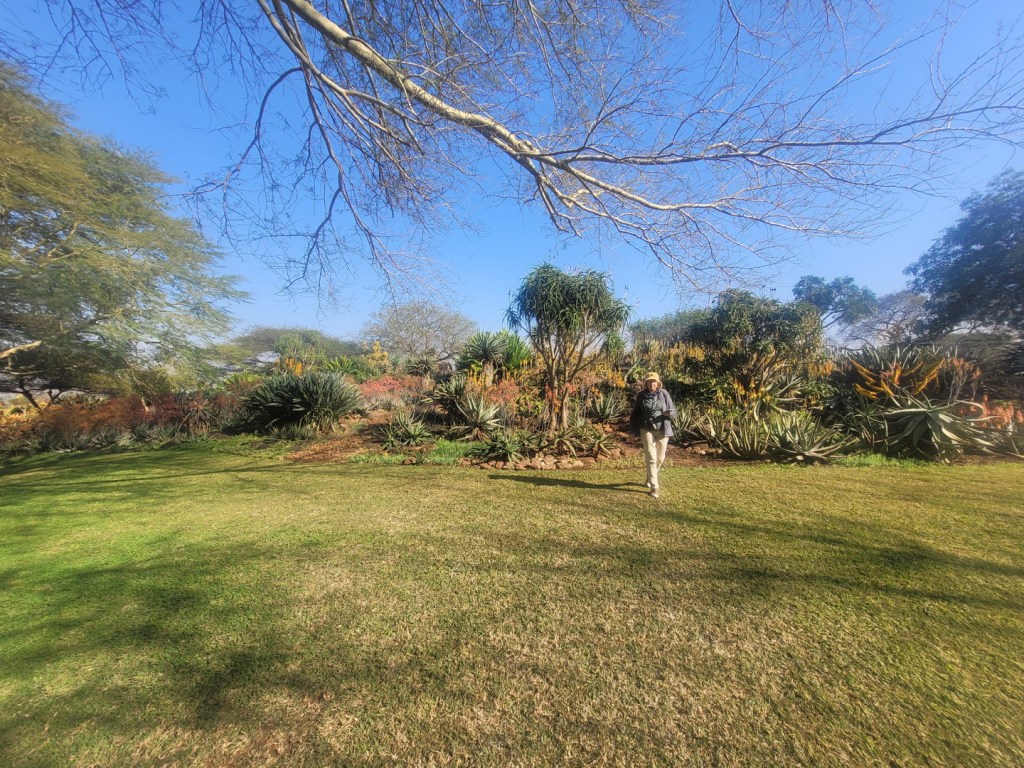
Such an impressive display of Aloes. The garden is huge approximately 6 hectares I would guess. There was also a large variety of Sunbirds in their different stages of plumage amongst the aloes. And because of this, positive identification of the Sunbirds was a big challenge.
Here is a video trying to show you the extent of the gardens. Clusters of aloes are everywhere.
And here is a slideshow of the aloes.
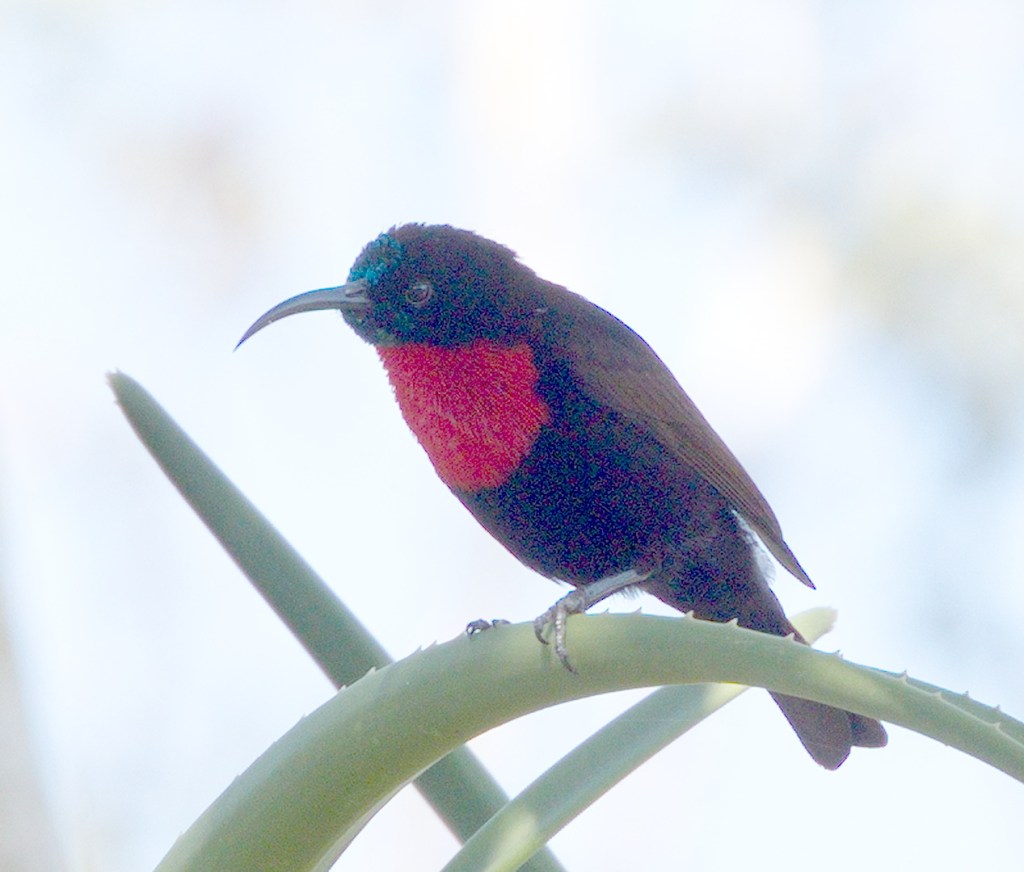
Birds making an appearance among the aloes were in constant motion, moving quickly between one flower and the next. Various Sunbirds and a Thick-billed Weaver shown here. Photos of the Neergaard’s Sunbird male were too poor to show.
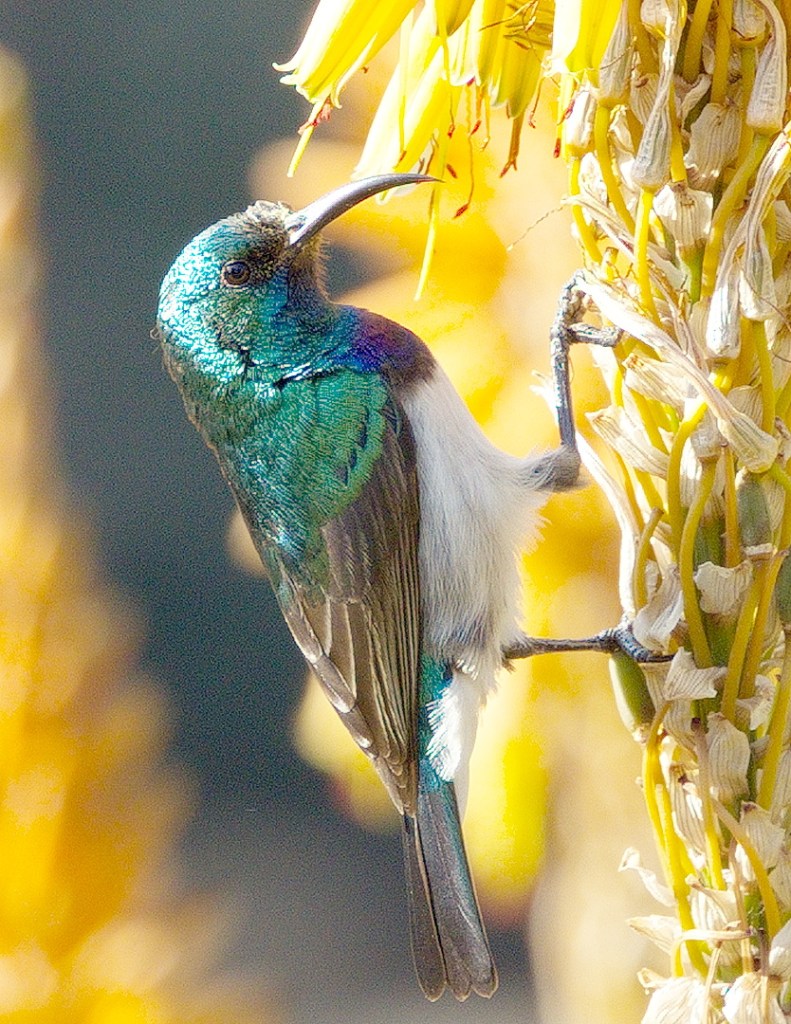
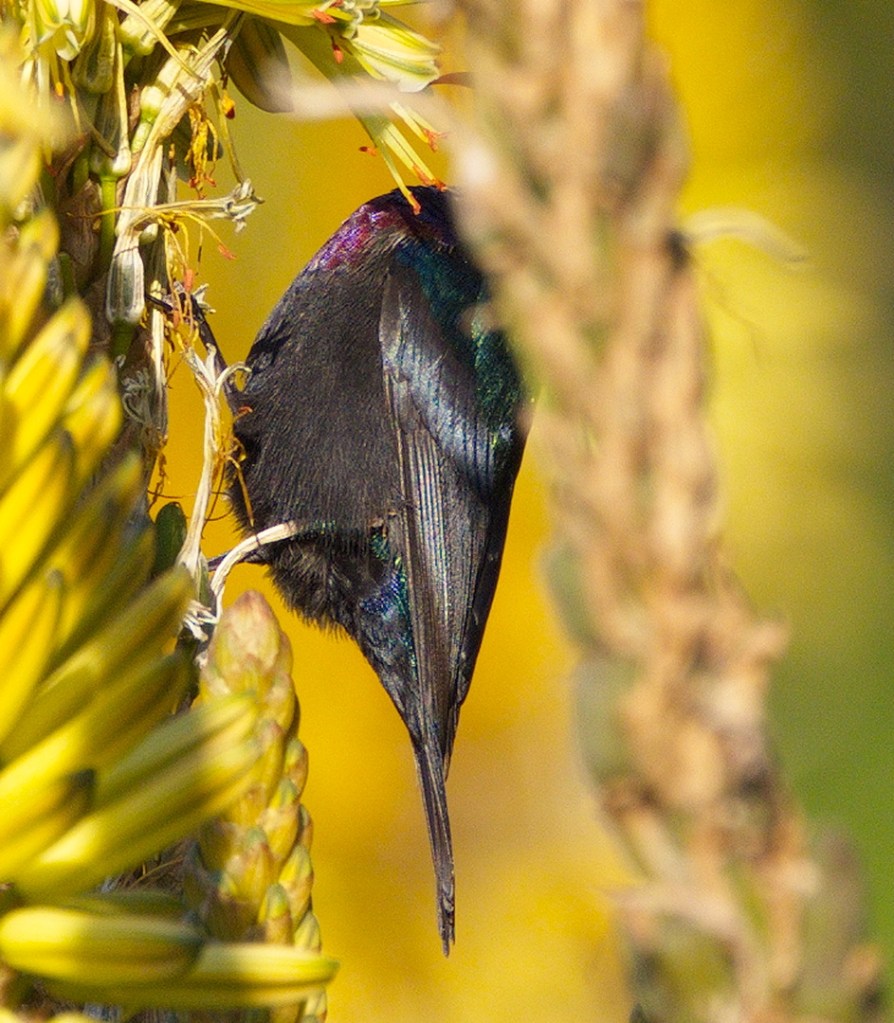
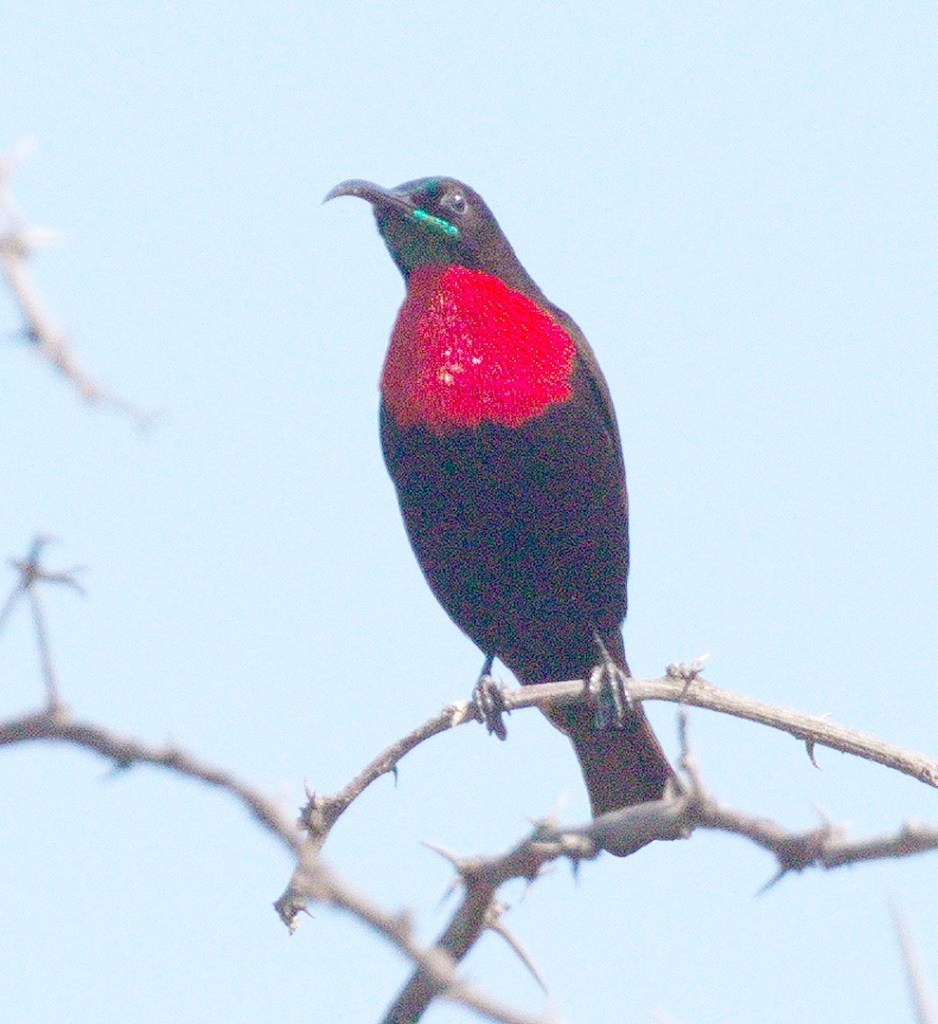
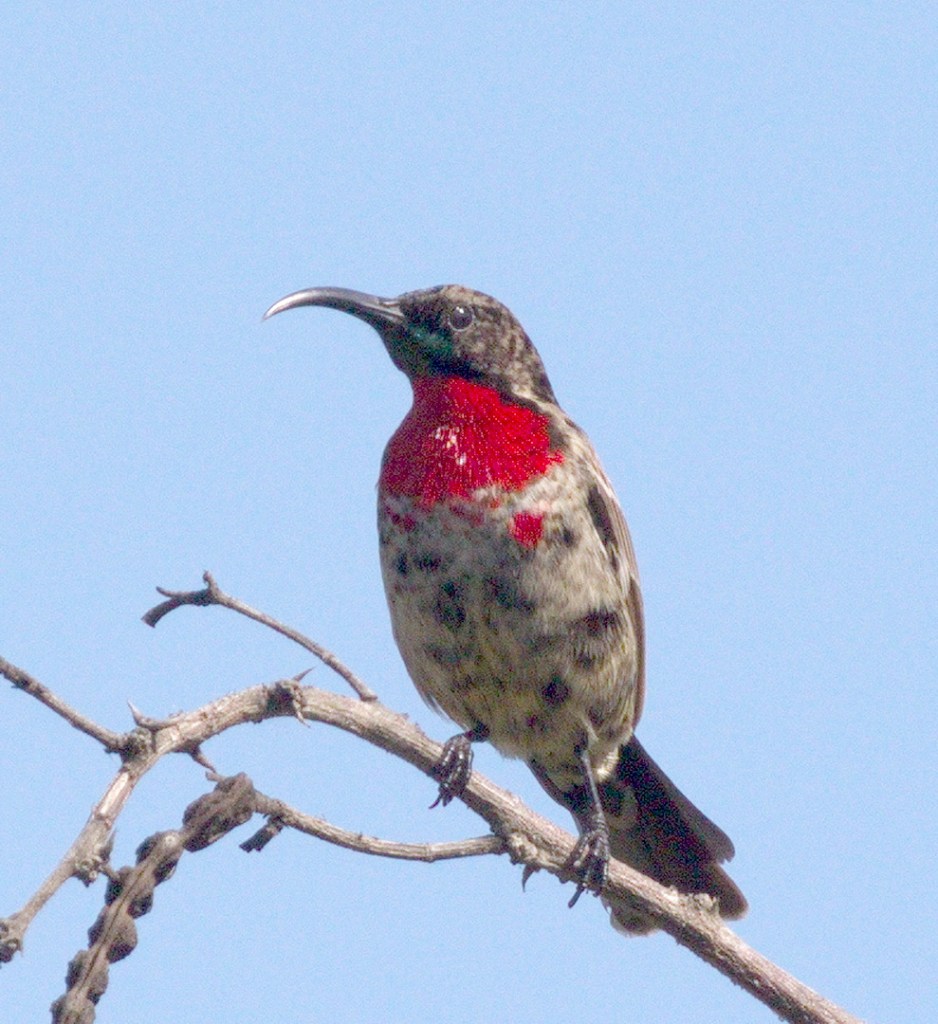
?? Juvenile male Variable Sunbird???Marico Sunbird – long beakThick-billed WeaverPurple-banded Sunbird – short beakScarlet-chested SunbirdMarico Sunbird – long beakScarlet-chested SunbirdWhite-bellied SunbirdFemale Marico Sunbird??Thick-billed WeaverWhite-bellied SunbirdPurple-banded Sunbird
In total we identified 106 different bird species in Mkuze and Zamanga Gardens. Click on the link following to see our list.
On our way back to Howick and home, we stopped off in St. Lucia for 3 nights. Camping at Sugarloaf in St. Lucia.
Sugarloaf camp.
Birdlife in the camp is always good. It is a pleasure to wake up and hear such a variety of bird calls. The challenge is to ID the calls. Animals are spotted too, Banded Mongooses and Small Buck in particular.
Banded MongooseRed-capped Robin-Chat – otherwise called the RC RC bird.Banded Mongoose
Since the Rhino Card is no longer accepted to enter Isimangaliso Wetlands, it is more expensive to enter on a daily basis. Cheaper to stay at Cape Vidal campsite if you intend to stay 3 nights or more as you only pay entry fees once. The advantage of camping at Sugarloaf in St. Lucia is that you are very central with much quicker access to the estuary, Western Shores of Isimangoliso and the Gwala Gwala trail.
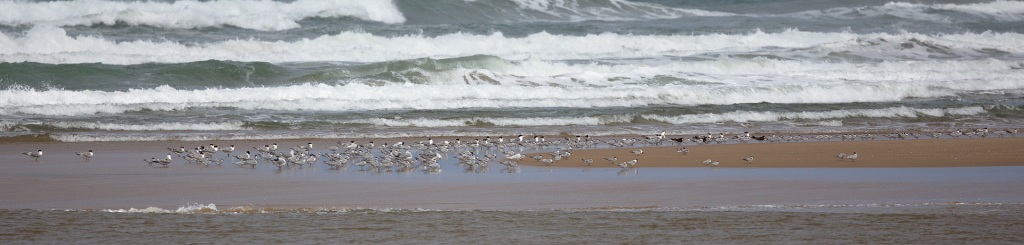
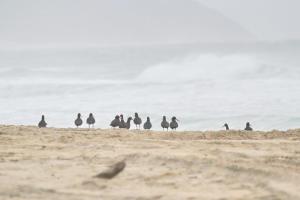
At the estuary there were a large number of Swift Terns (Greater Crested Terns now) but they were the only Terns present. Among them there were a few Kelp Gulls and six African Oystercatchers.
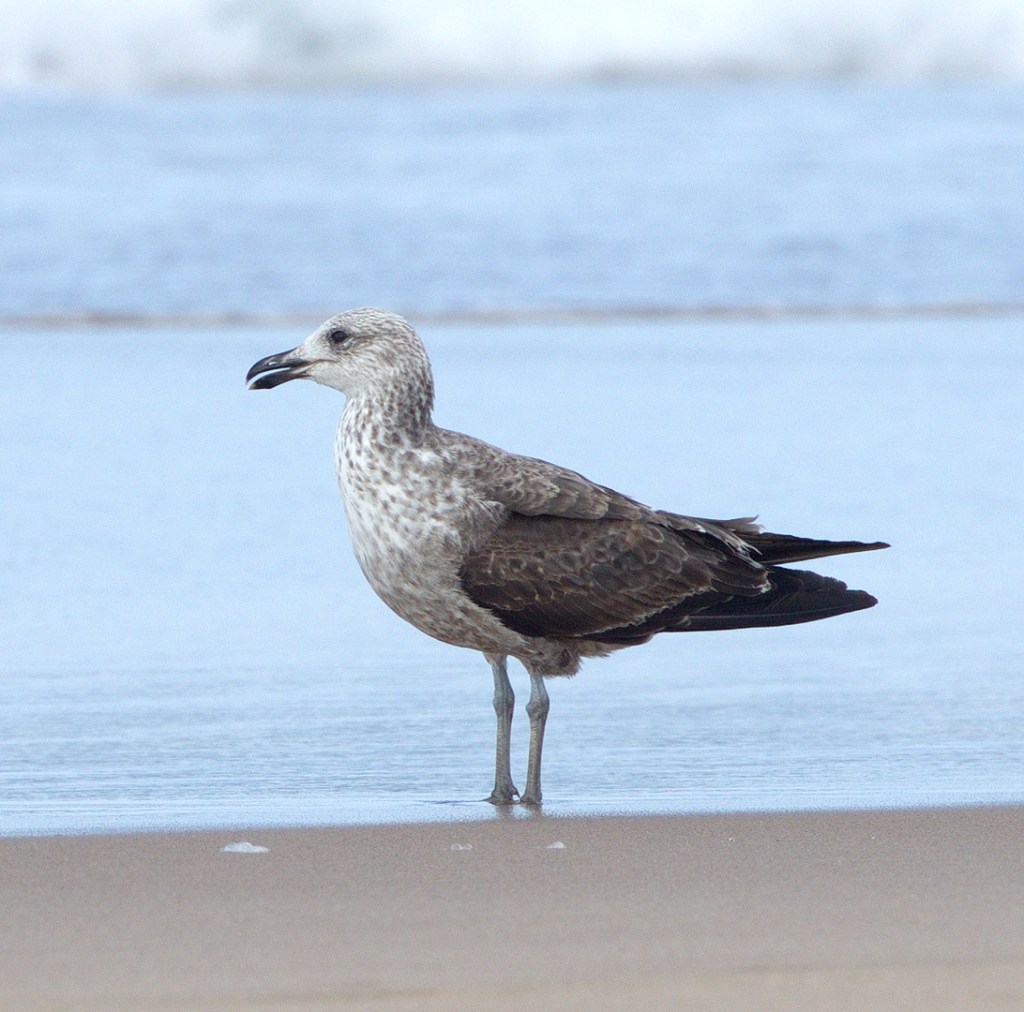
The Tern roost across the estuaryCloser to the roost with the Terns in the air5 of the 6 African Oystercatchers5 of the 6 African OystercatchersGreat Crested TernsGreat Crested TernsKelp Gull – juvenileKelp Gull – adult with a Great Crested Tern in front.
On the way to the roost, we had some interesting sightings. The first of which was a lone Cape Cormorant.
Cape Cormorant.
Looking out to sea we observed a pair of Cape Gannets flying past. An adult below the juvenile.
Cape Gannets
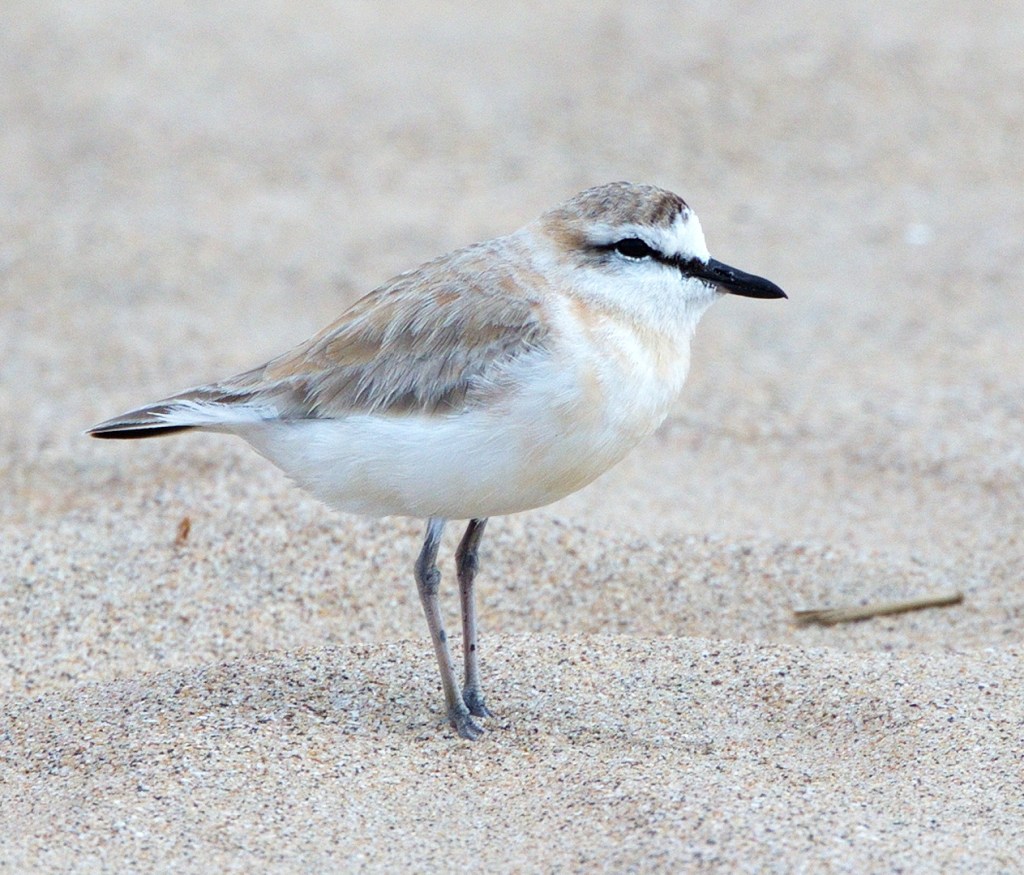
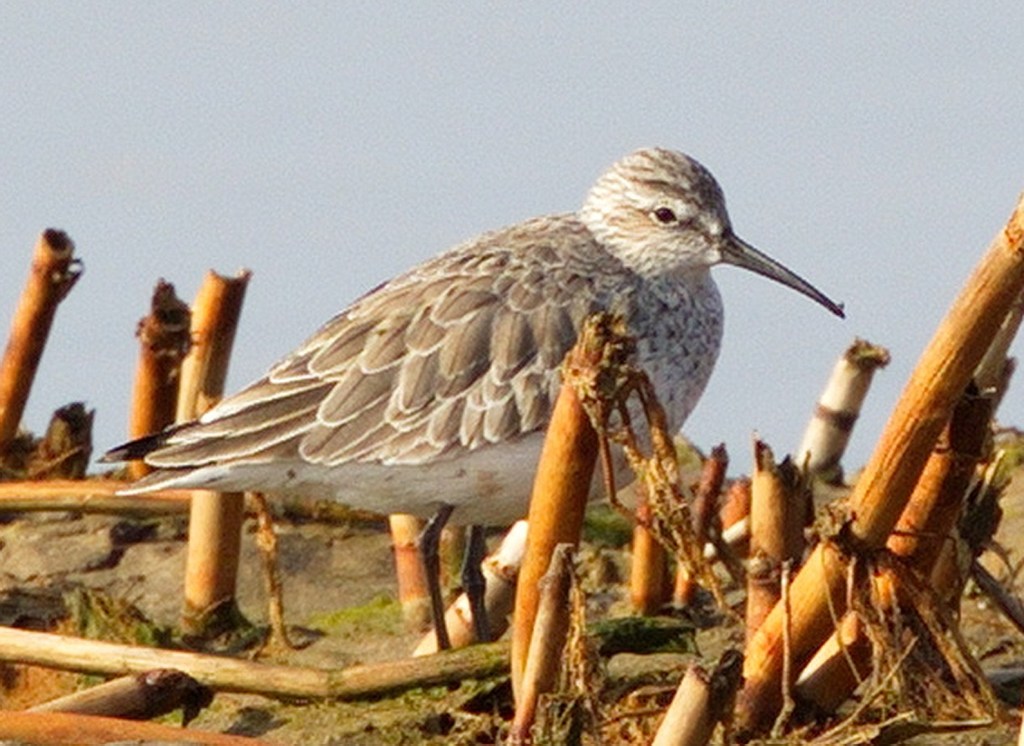
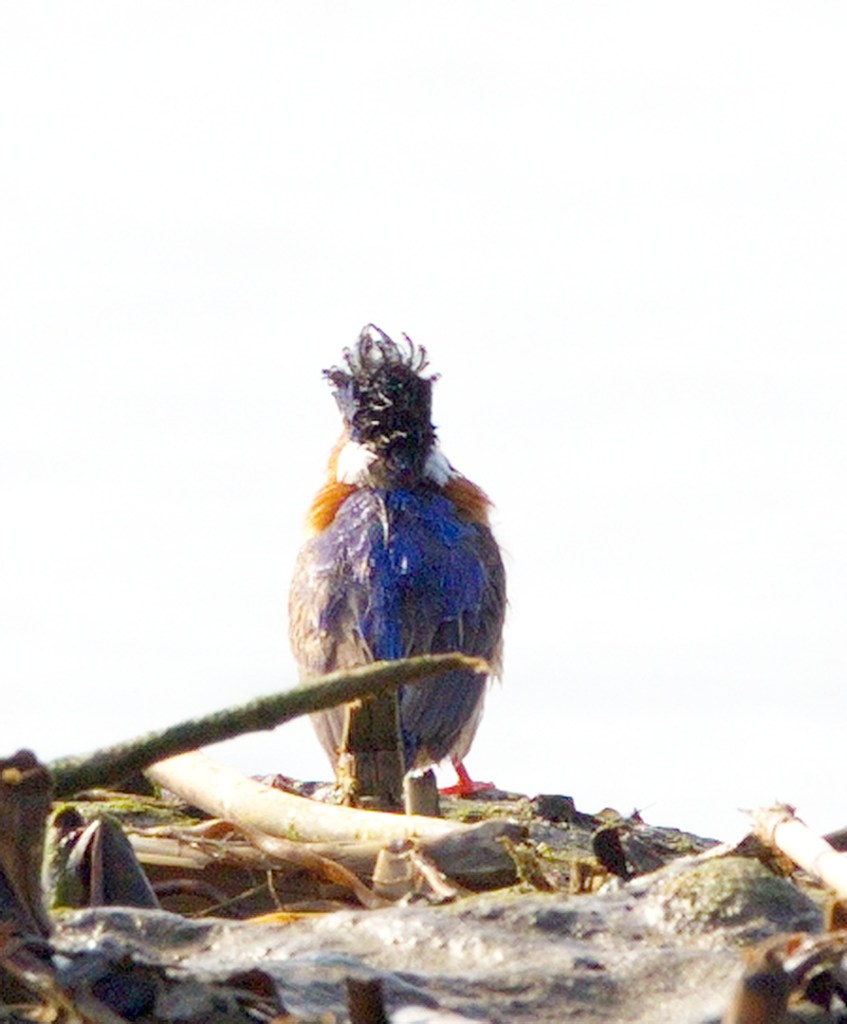
Along the shoreline we spotted a Little Egret, White-fronted Plovers, and among an area along the estuary showing a reedy edge, there were Curlew Sandpipers and a Malachite Kingfisher with an erratically unique hairstyle.
Looking northReedy edge along the estuaryLittle EgretLittle EgretWhite-fronted PloverWhite-fronted PloverCurlew SandpipersCurlew SandpiperMalachite KingfisherMalachite Kingfisher with a mad hairdo
Then we had another aerial display from a Western Osprey.
Western Osprey
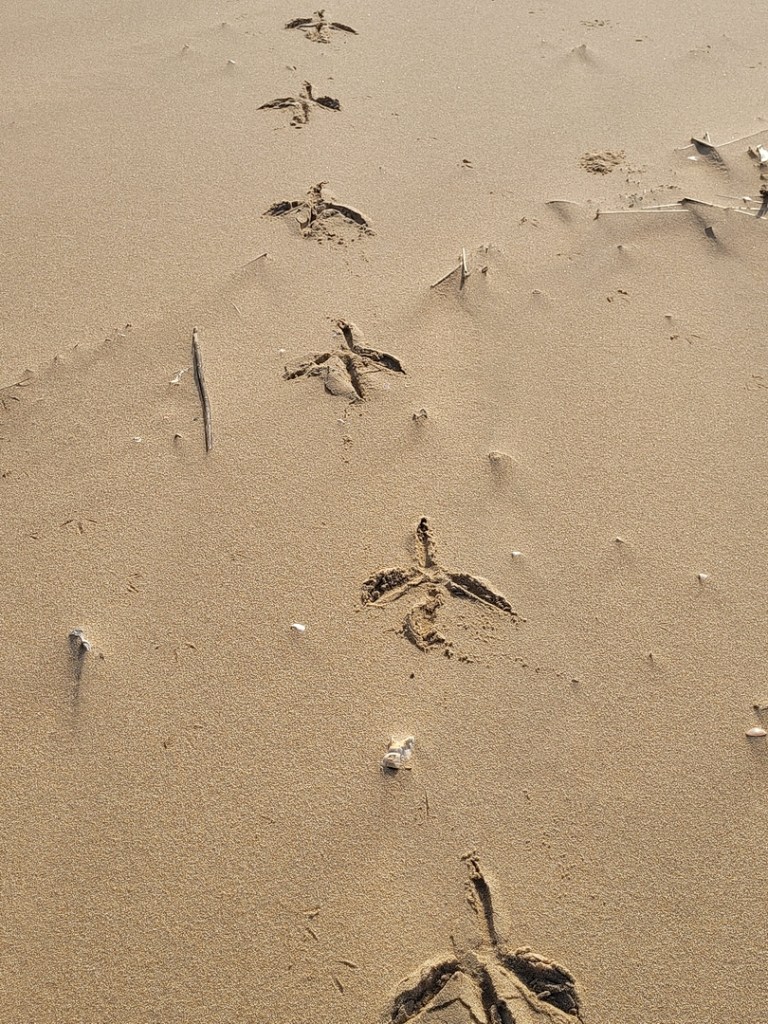
On the way back to the campsite we came across some unusually large bird tracks. Maybe you can ID the bird?
This gives you an idea of size.
The Isimangoliso Wetland was truly waterlogged. Free standing water was everywhere you went. For this time of the year – July – we had never seen Park like this. Indeed, even in the rainy season we have not seen it so. This made for some good close-by sightings in both the Western and Eastern Shores sections of the Isimangoliso Wetland Park.
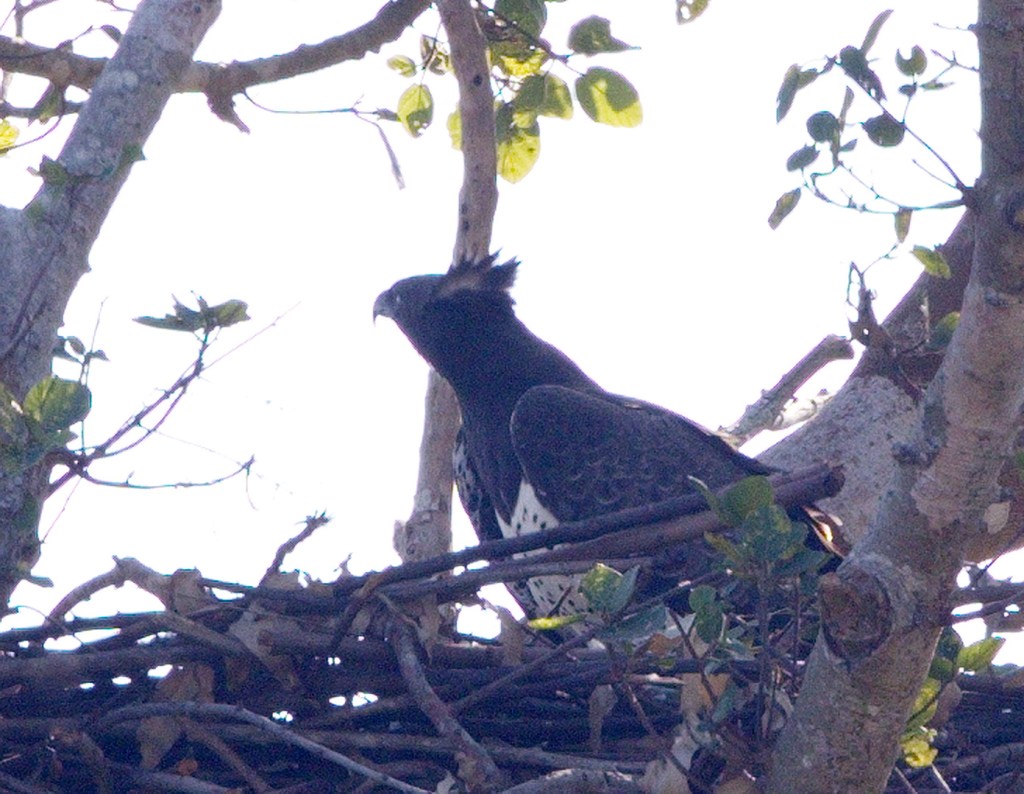
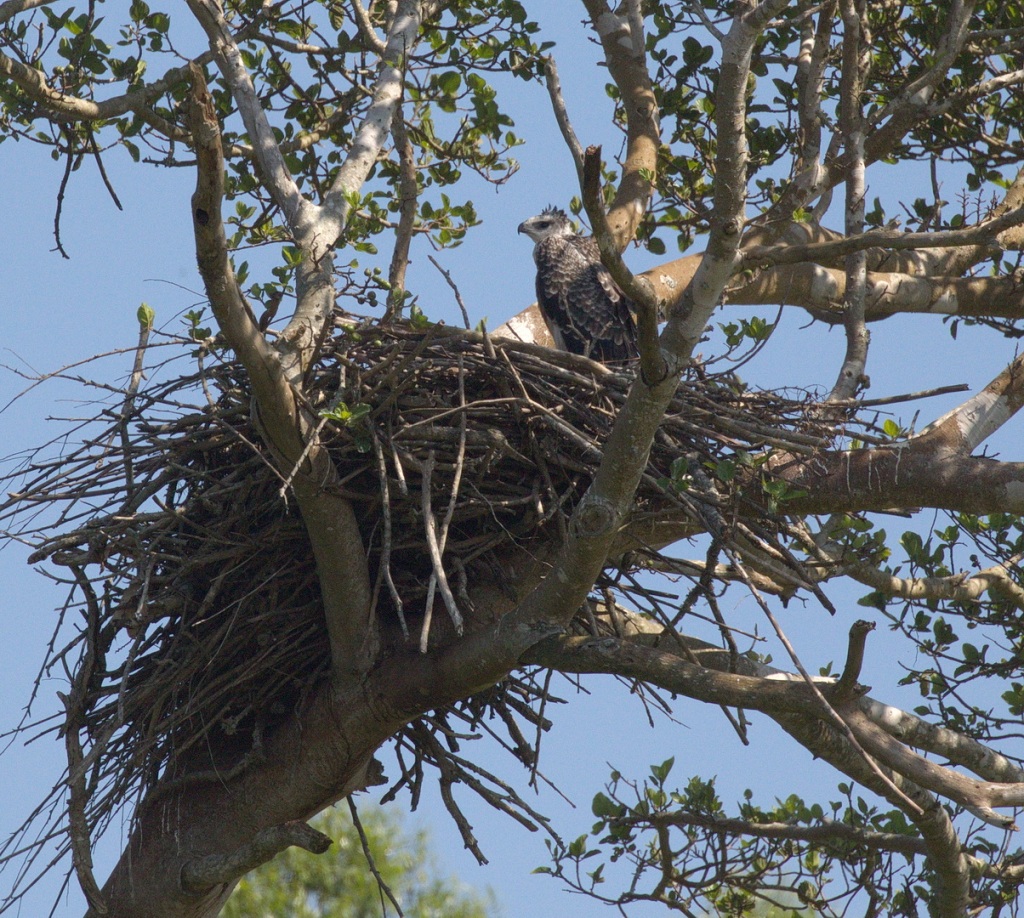
We happened to visit the Western Shores on a rainy overcast day. Birding as you might expect was quiet. However, we had some nice sightings: White-backed Ducks, a Martial Eagle on a nest and a curious Eastern Nicator that not only was a few metres away but was not inclined to fly off.
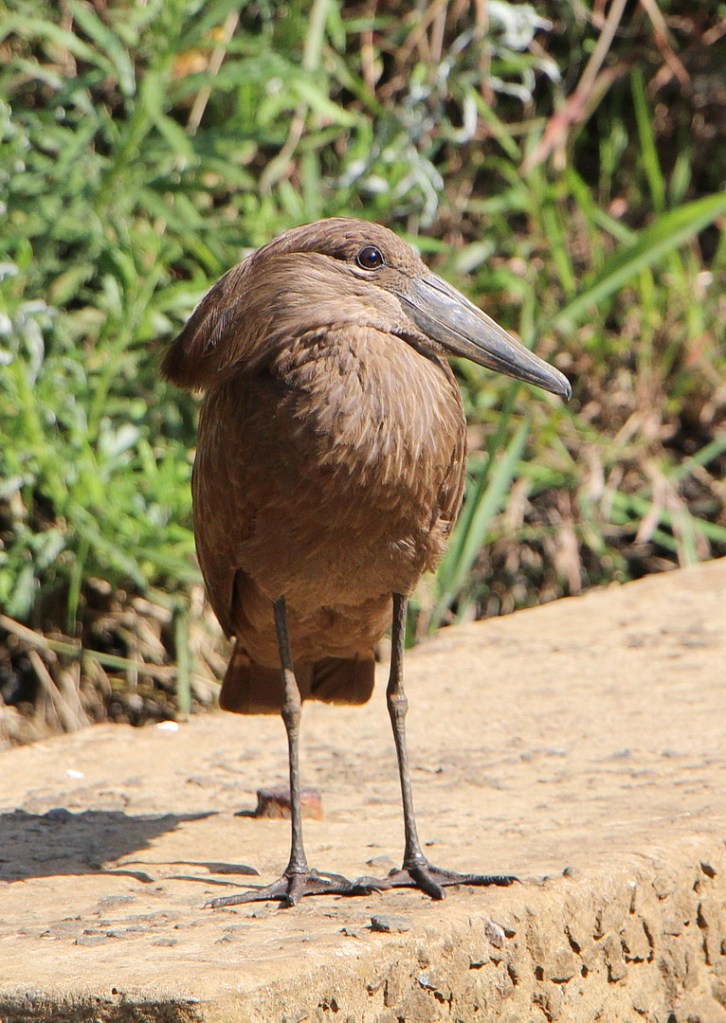
African StonechatA lump of HipposHamerkopHamerkopHamerkopMartial Eagle on nestMartial Eagle on nestMartial Eagle on nestMalachite KingfisherEastern NicatorEastern NicatorEastern NicatorEastern NicatorPipit ?White-backed DuckWhite-backed DuckWattled Lapwing
A very short clip of Buffaloes enjoying a swim. Click on the photo.
Buffaloes enjoying a swim
Lake Bengazi was full to the brim. We stopped at one of the pull over stops on the causeway and Sally took this video to show how full it was. Normally when we have visited, the water was a good 100 metres away from where Sally was standing.
Lake Bengazi
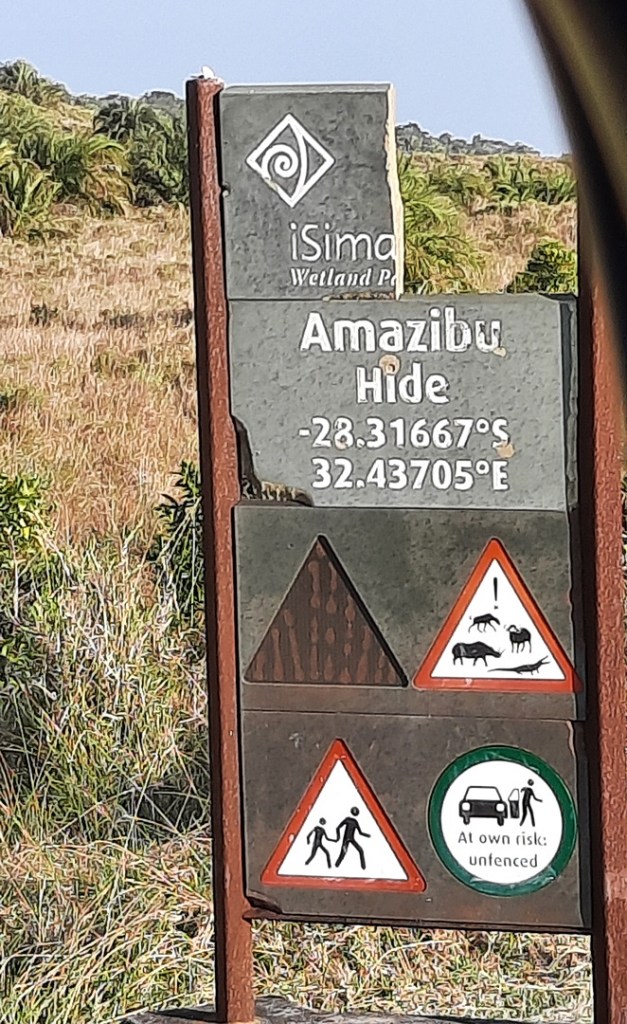
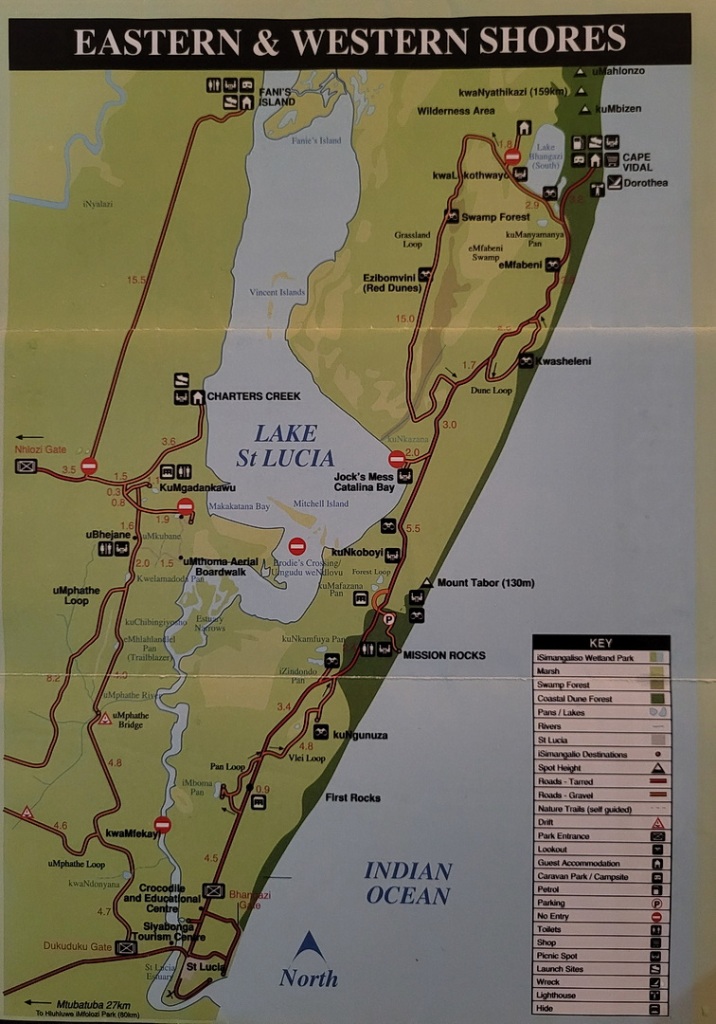
Then there was the Eastern Shores and the road close to the Amazibu hide. Again, water beside the road everywhere we went. Amazibu hide was our first destination. We went to see the Rufous-bellied Herons which have been showing well for a long time now.
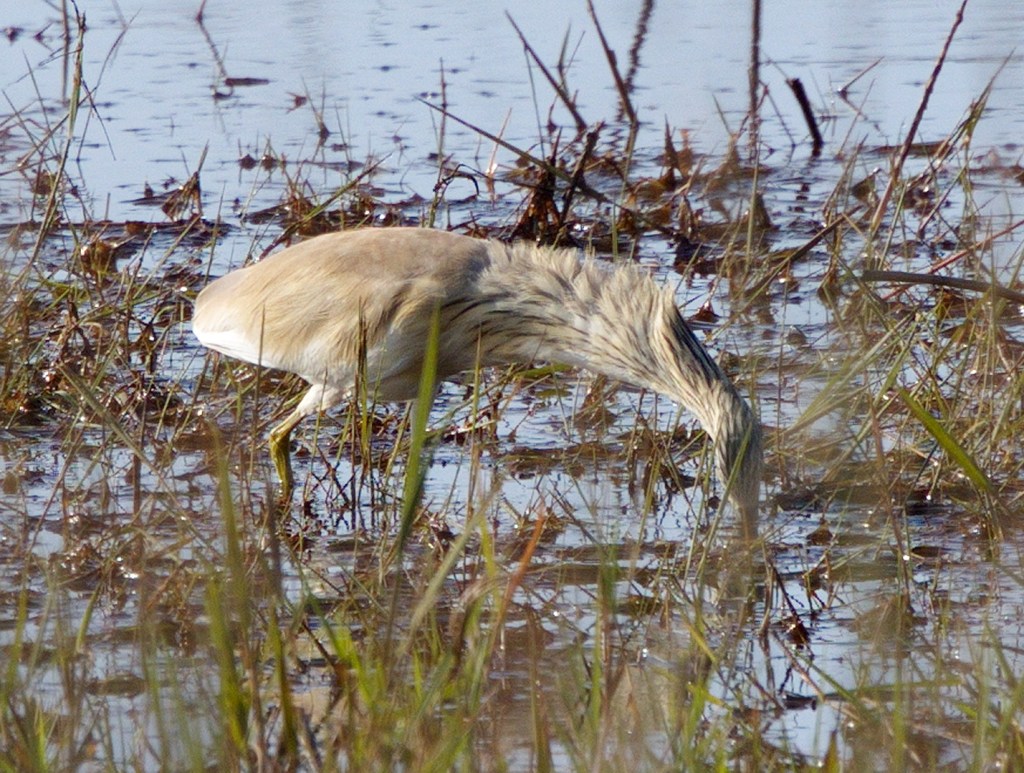
However, on the way there we stopped overlooking a wetland area beside the road – loads of Spoonbills together feeding with the typical sweeping action of their bill. There was also a Squacco Heron and a Great Egret present. A Reed Cormorant was watching carefully from its perch.
Wetland full of SpoonbillsSpoonbillsSpoonbillSpoonbill showing what its open clackers look likeGreat Egret and Squacco HeronSquacco HeronSquacco heron
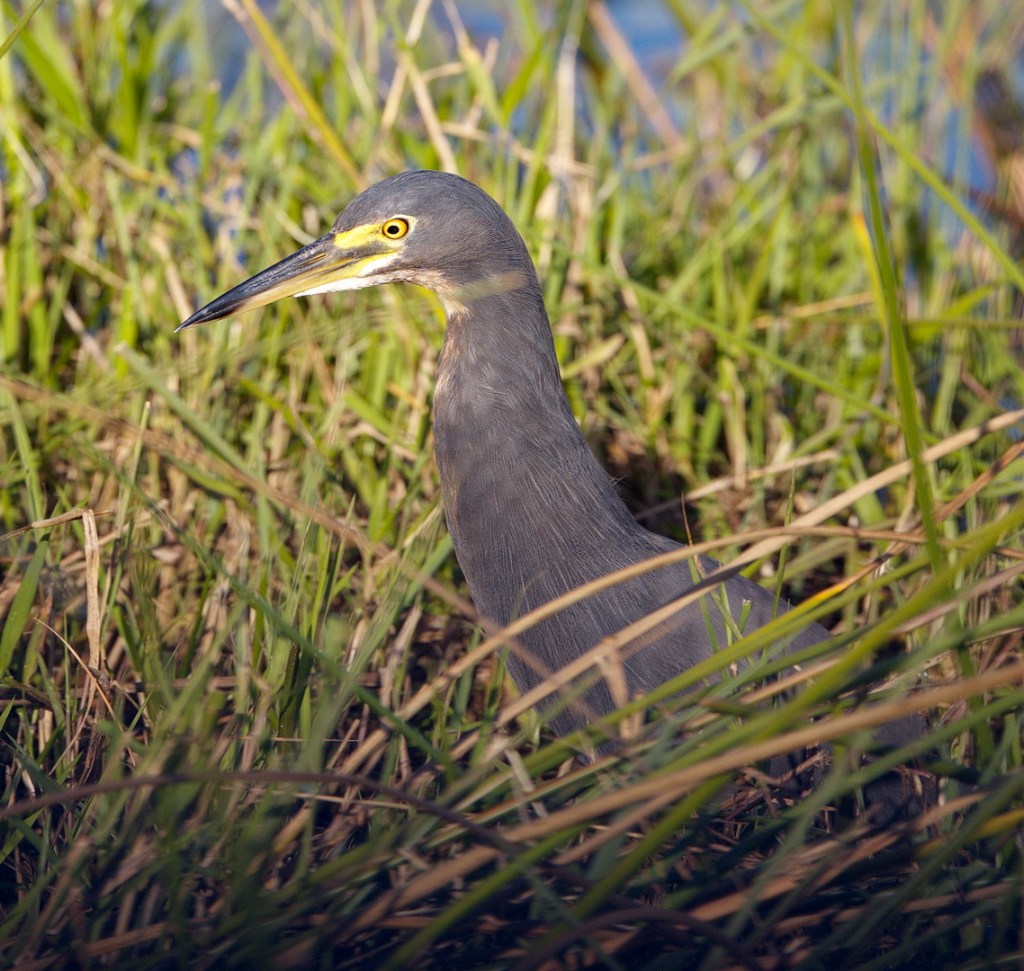
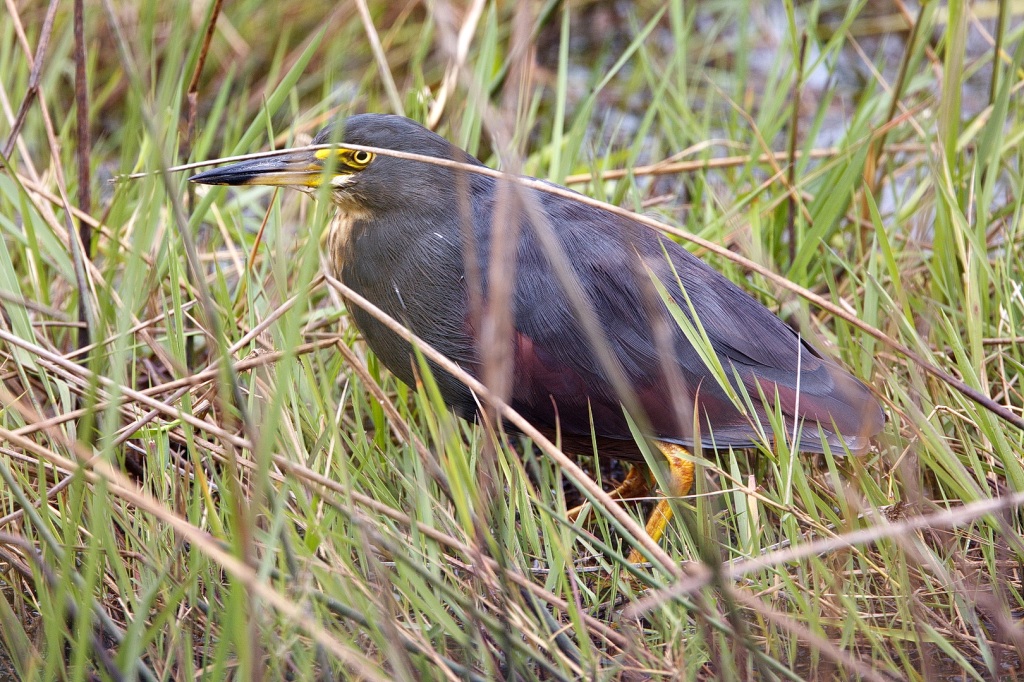
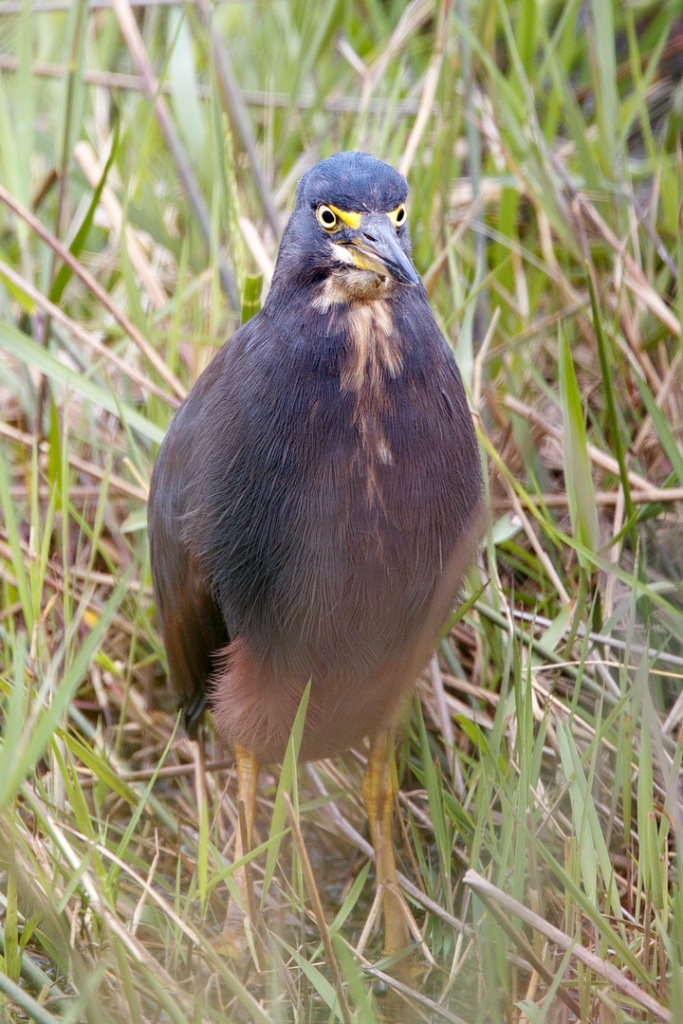
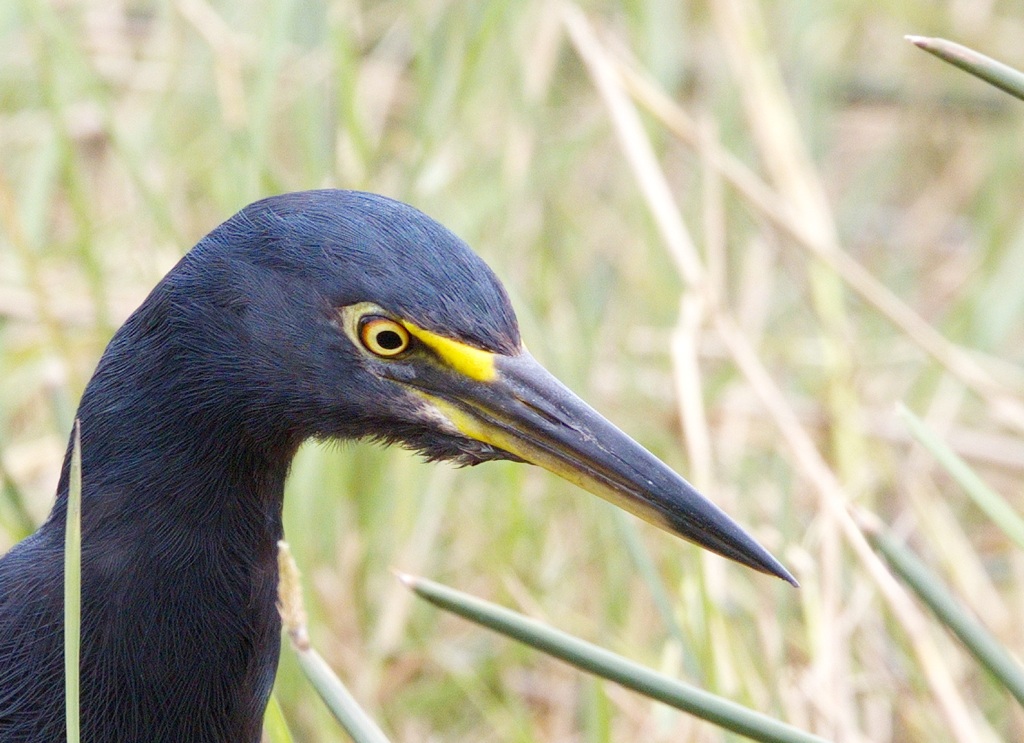
And then we got to the Amazibu Hide and a Rufous-bellied Heron appeared just as we were about to leave.
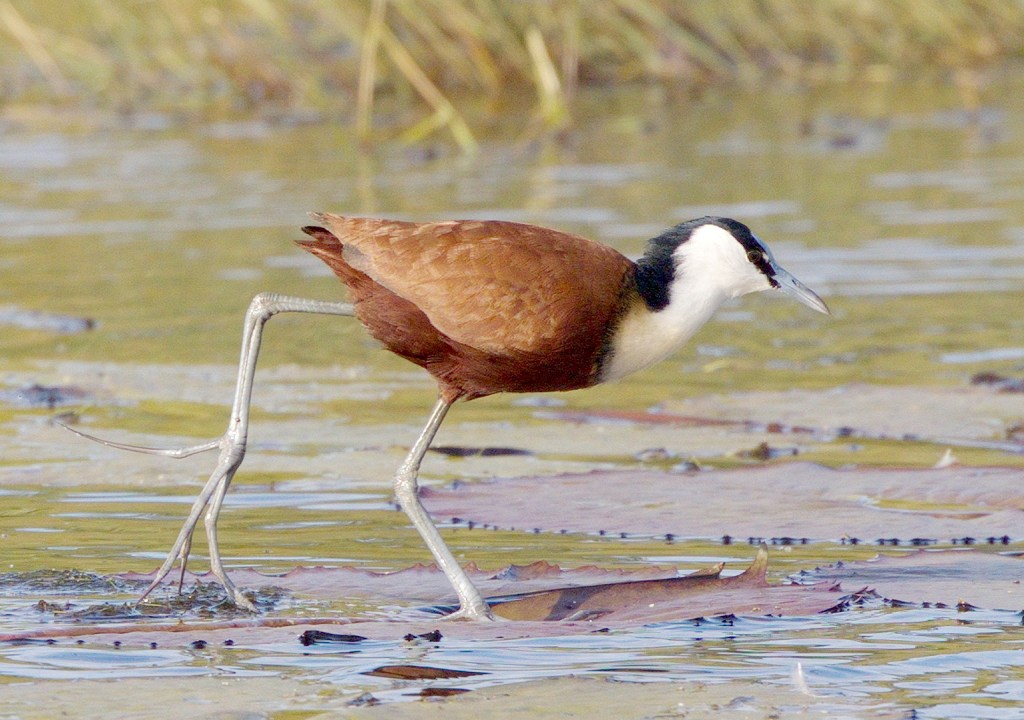
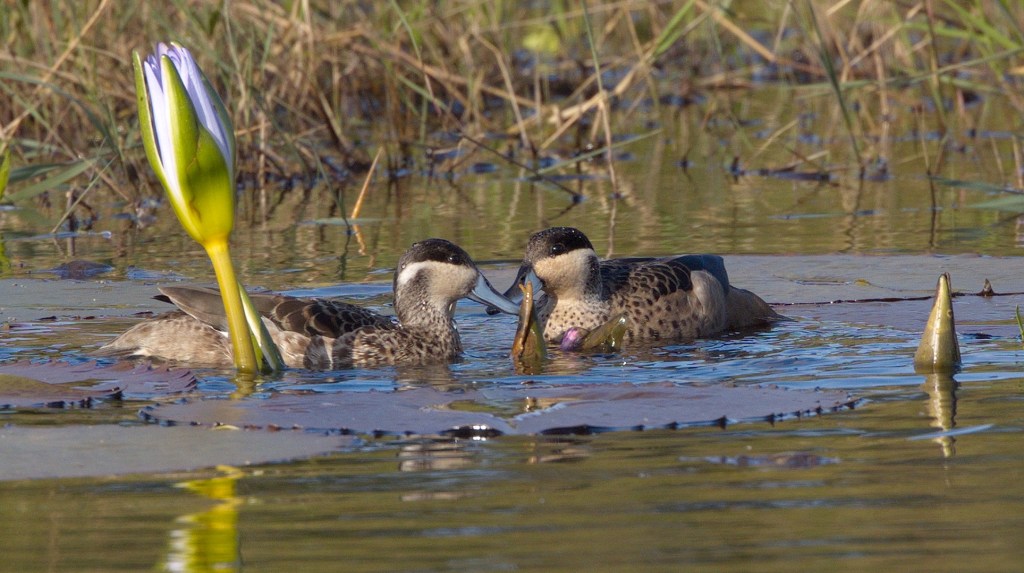
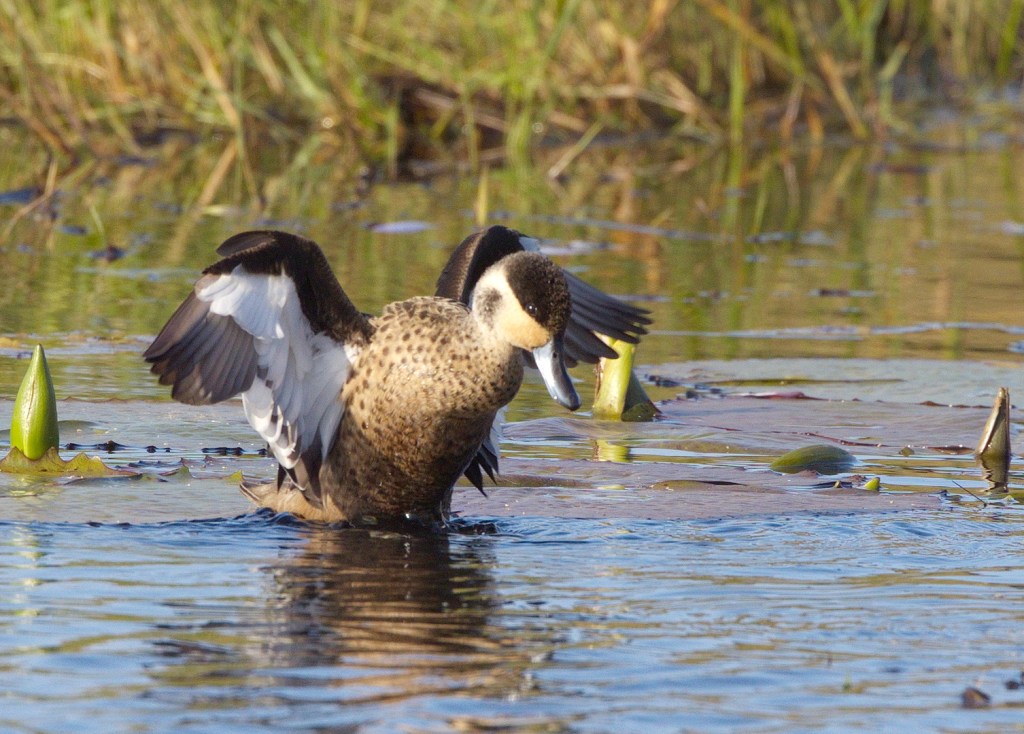
A short distance further along from the hide was another stretch of water beside the road. In fact on both sides of the road. However, it was the wetland on our right that blew us away with the number and variety of waterbirds present. There were Blue-billed and Red-billed Teals, African Jacanas, White-backed Ducks, many Pygmy Geese – never seen them in such numbers in Isimangoliso before.
And then another Rufous-bellied Heron popped up right next to us beside the road, followed by another a little further along.
Of course, there were other birds about, but these are the special ones we recorded on film.
Although we did not record a lot of different species of birds, this was not unexpected as the weather was poor and the time of year was not in our favour. What we did see were a number of special species.
In all we identified 85 different bird species. You can download our list below to see what we saw.
On Saturday 16th September, at 10h30, Sally and I decided to go and look for the Saunder,s Tern in St. Lucia, KZN. The Saunder’s Tern is a new rarity which pitched up unexpectedly amongst the Tern roost on the St. Lucia beach. We planned to stay just 2 nights at Sugarloaf caravan park.
We quickly prepared our Afrispoor Wildcat off-road caravan and were on our way by 11h30 arriving at 15h30. Four hours from Howick. Along the way we passed 8 kms of trucks in a single line queue waiting to enter the road to Richards Bay. On the way home the queue was 11 kms!!.
Off-loaded and hurriedly to the beach. Note the roof drops easily to monkey proof entry into the caravan.
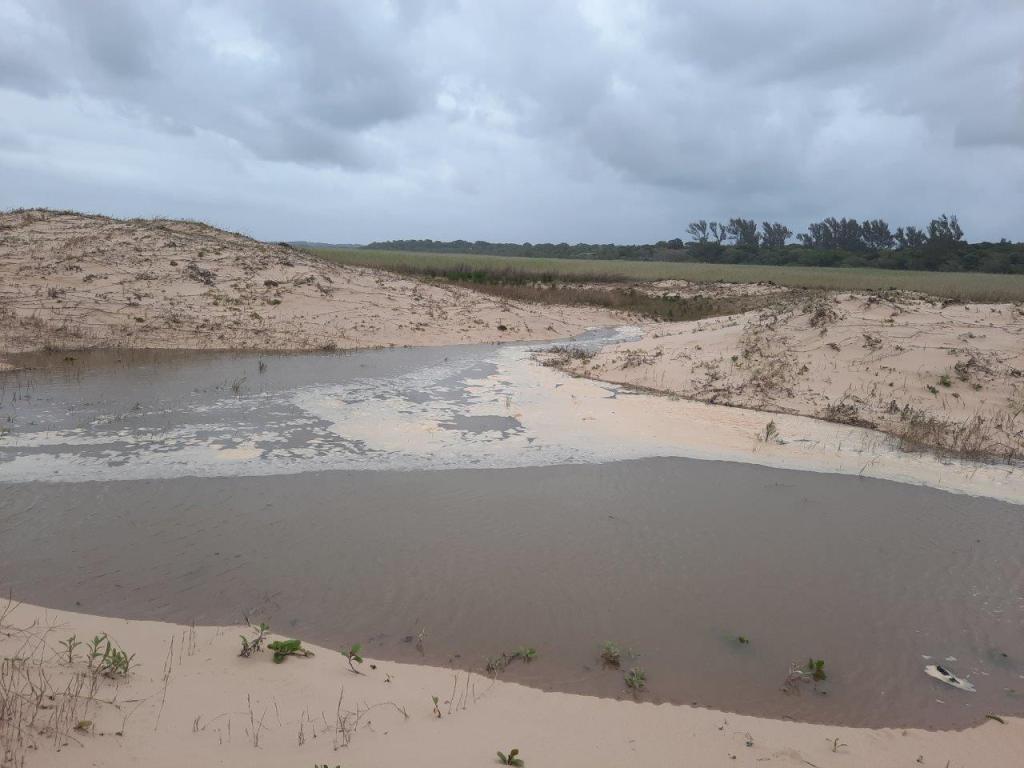
Once settled in at the campsite, we took a walk to the tern roost to see what was what. It was high tide and the incoming water breached the dunes and was entering the estuary making it impossible to get close to the river mouth.
The breach from the sea going inlandAnd emptying into the estuary
The Breach
We headed to the beach and looked south towards the river mouth still a long way away. The river mouth was also very wide. And of course, the Terns were on the opposite side of the river. Even with a scope it was impossible to identify anything positively.
The next morning, we were up early for a gander around the Sugarloaf aviary before heading to the Tern roost. (I call it an aviary because at times when we have stayed there, we have recorded around 90 different bird species in the camp alone). With what we had seen the night before we thought it best to head for the river mouth when the tide was out so that we could get around the breach.
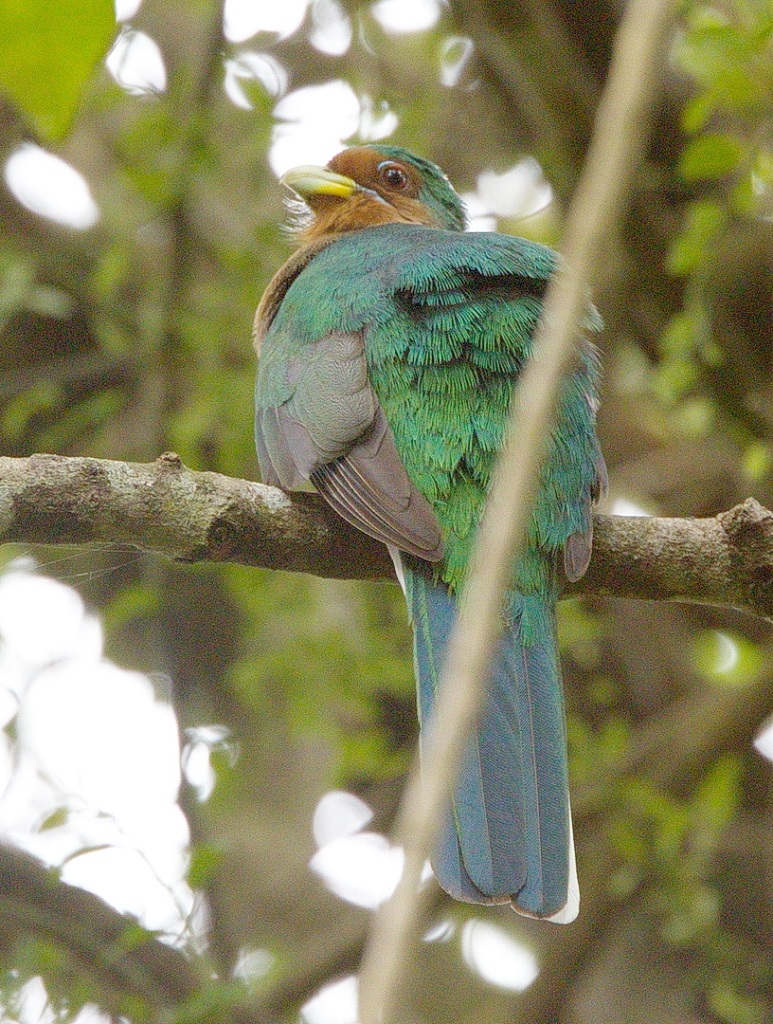
The campsite birding was great as usual. Birds had been calling since wake-up. Getting photos was not easy as it was overcast, and the bush is quite dense. We spend time looking for the Green Malkoha which was calling beside us – no luck. However, we did find the Narina Trogon and I got a shot much to my delight especially as it was in the darkest undergrowth. Special bird.
Narina Trogon.
The common bird in the camp is the Red-capped Robin-Chat. It has such a distinctive look. I love its steely back appearance.
Red-capped Robin-Chat
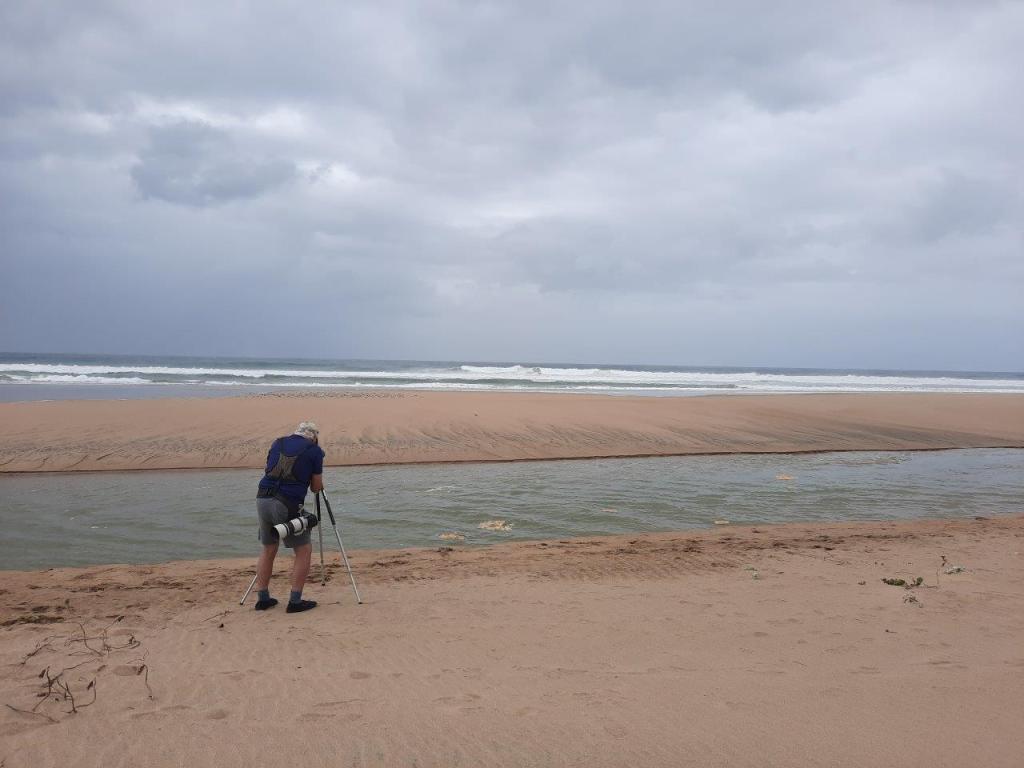
Next stop – the Tern Roost. And were we surprised how the beach and river mouth had changed since the previous afternoon. The breach to the estuary was dry and following its path made for hard sand on which to walk. When we got to the beach, the river had cut a channel along the beach with the other side of the river directly opposite us not 50 metres away. And there, the birds sat in the Tern roost.
The river now where the beach was the day beforeLooking down the beach to where the river mouth was the day before.
A look down the beach to where the river mouth was the day before.
We quickly got our minds sorted, binoculars out and the scope set up. By this time, we were told that the Saunder’s Tern was there and was easily identifiable. It was pointed out to us. It was the furthest bird from us. And being tiny, it was difficult for me to get a special shot of the Saunder’s Tern. Maybe a tripod would have helped.
The Saunder’s Tern – quite different from all the other Terms due to its white head and very small size.
Saunder’s TernSaunder’s Tern
On the way back among the sand dunes we saw a number of other bird species. The most unusual being a Common Sandpiper bobbing away pecking at whatever it was interested in in the dunes.
Brimstone CanaryCommon GreenshankCommon Sandpiperunusually locatedEurasian WhimbrelGrey PloverEastern Golden WeaverWhite-fronted Plover needing to scratchWhite-fronted Plover at the itch
After some time with the Saunder’s Tern, we went into Eastern Shores, Isimangaliso Wetland Park. There was water everywhere – not what we expected for the end of winter. There were ponds everywhere beside the road.
Just another roadside pond .
These ponds had some special birds if you looked carefully.
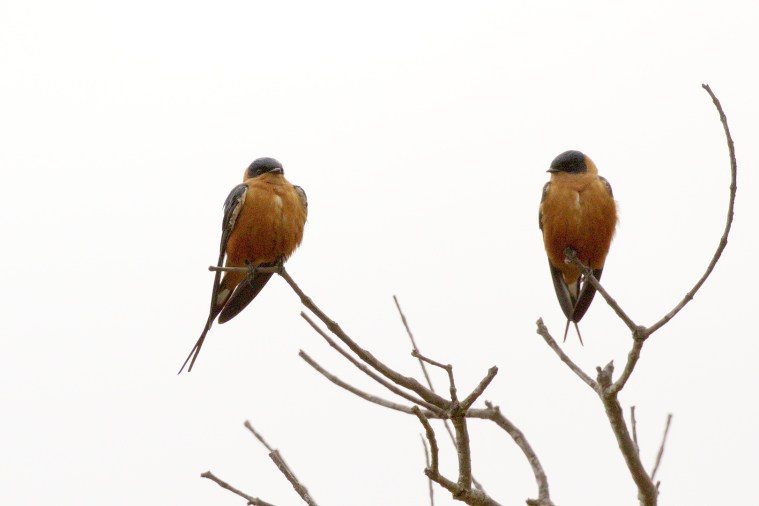
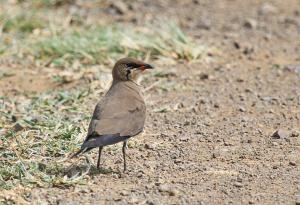
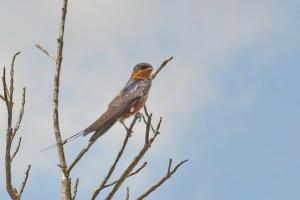
On the roads, Collared Pratincoles were seen as well as Red-breasted Swallows, Burchell’s Coucals to name a few.
Collared PratincoleRed-breasted Swallows
At another pond, Malachite Kingfisher, African Pygmy Geese and White-backed Ducks.
Malachite KingfisherAnother PondWhite-backed Duck and African Pygmy Goose
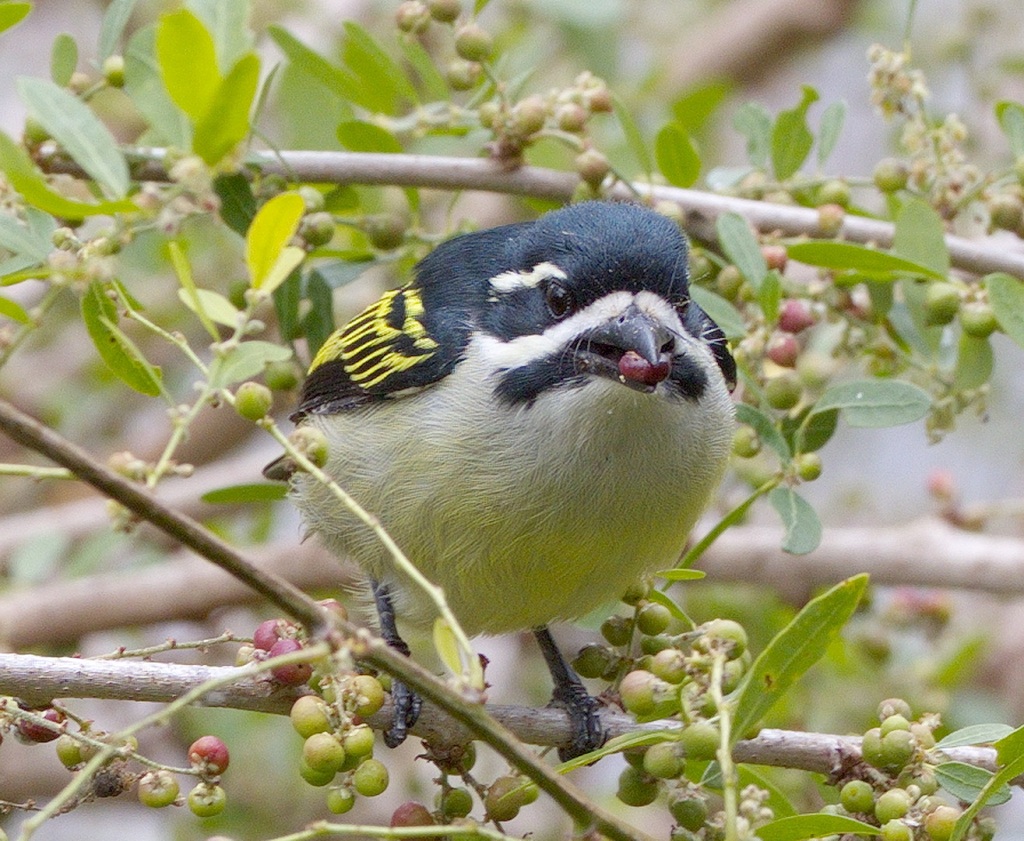
At the hide overlooking kuMfazana Pan, we had tea. The water level came right up to the hide. We had not seen it so full. Looking out, there were birds on the far side. However, we were entertained by a variety of small birds which feasted on the berries in the foliage just below our viewing point. Mainly Tawny-flanked Prinia and a beautiful Yellow-rumped Tinkerbird.
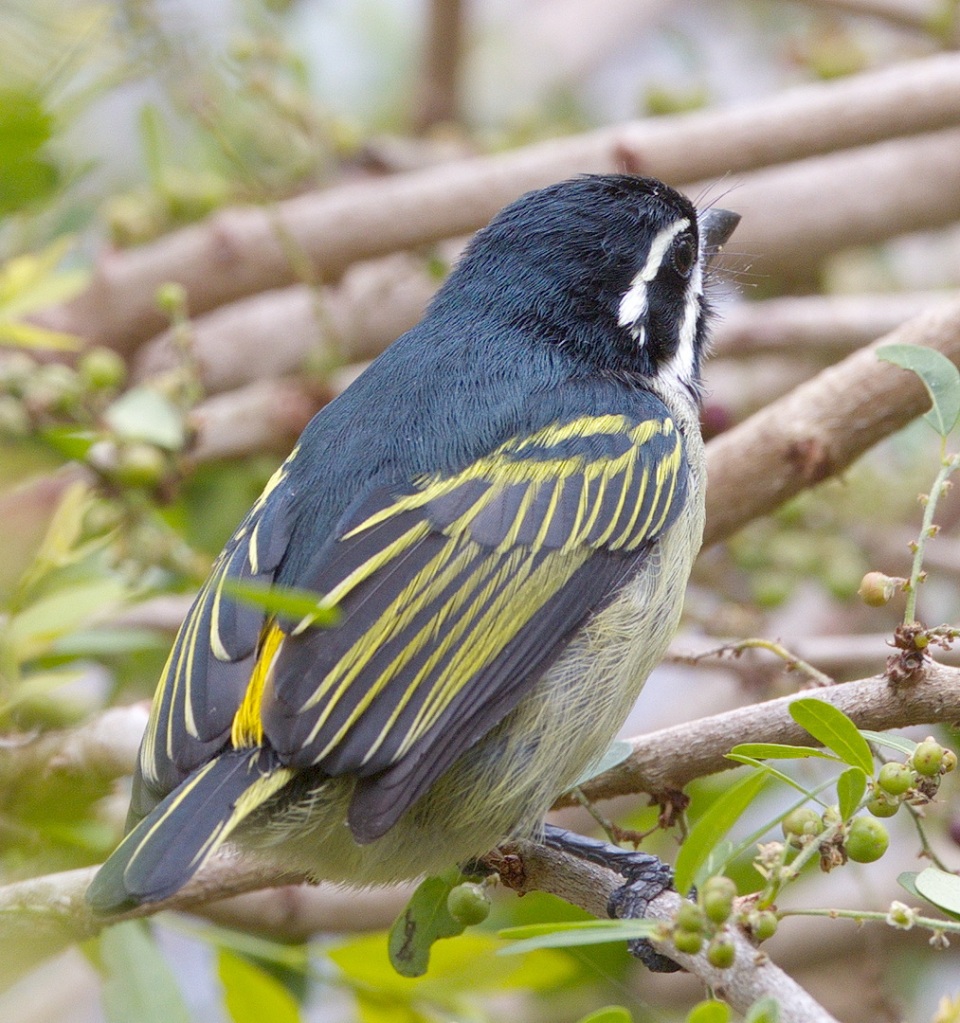
The Yellow-rumped Tinkerbird:
You can see here the yellow rump of this Tinkerbird.
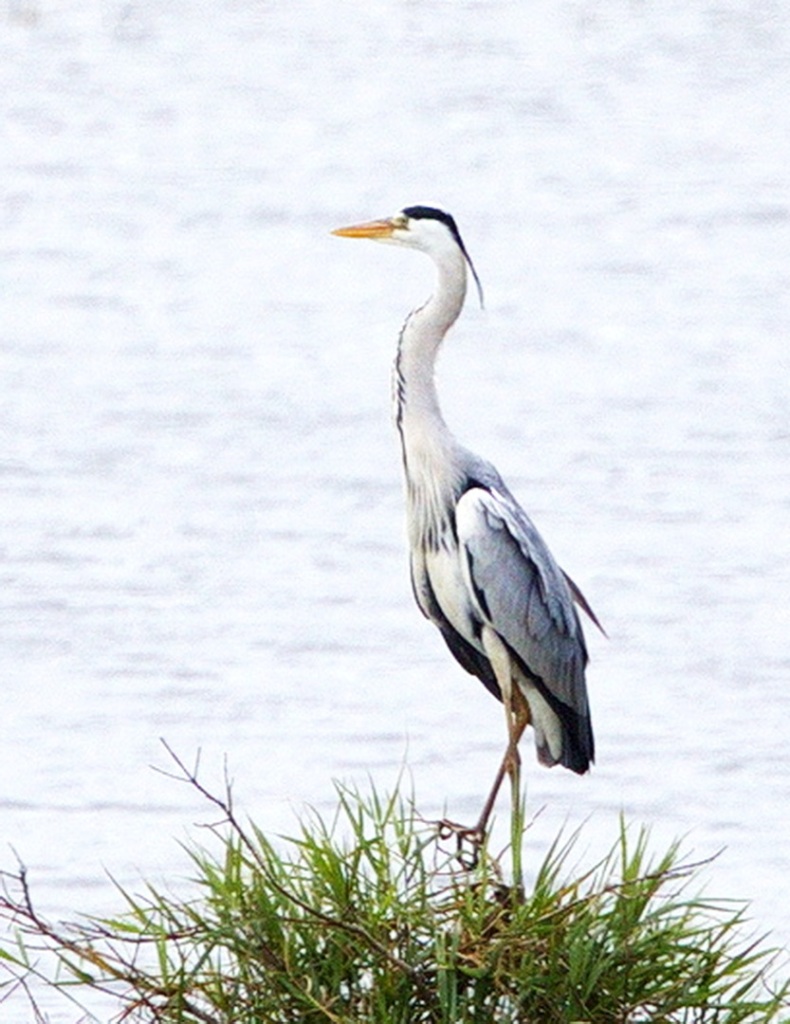
A Grey Heron had a commanding view over the Pan:
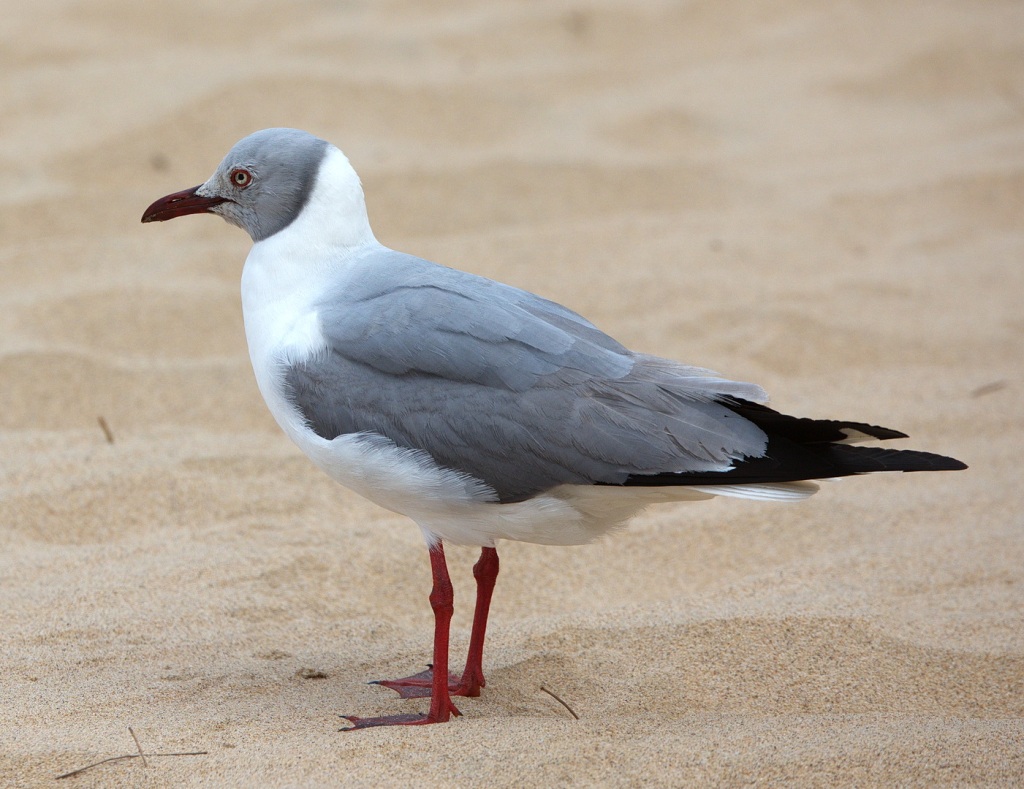
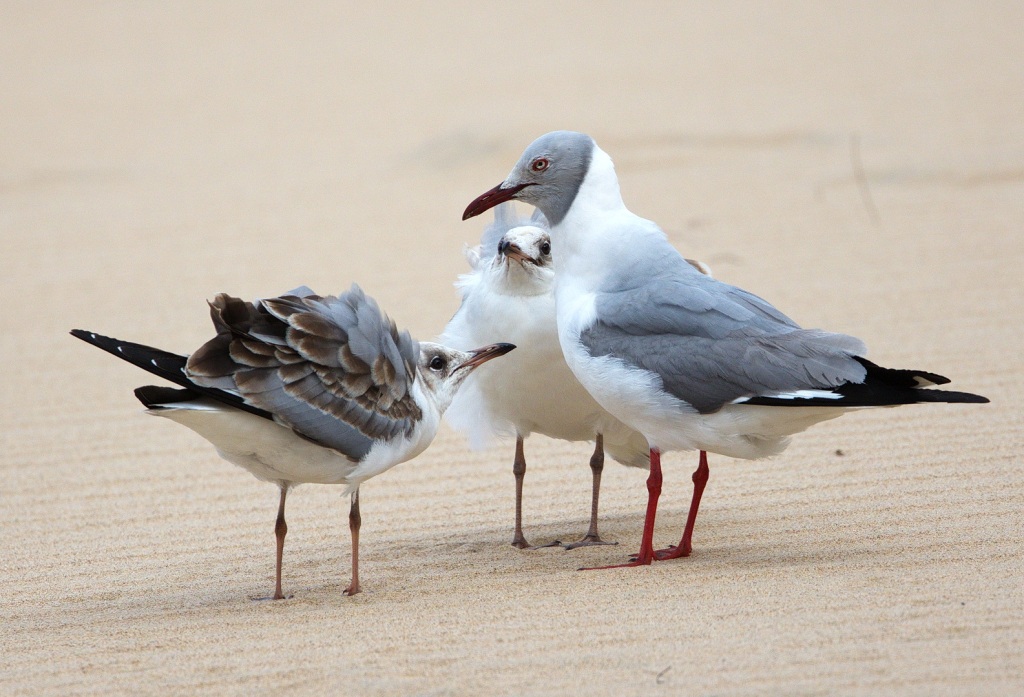
At Cape Vidal we had a quick visit to the beach. There were quite a number of Grey-headed Gulls about. But one in particular caught our eye as two of its siblings were demanding to be fed. We assume that the siblings were hatched inland and flew down here with their parents.
Grey-headed GullGrey-headed Gull and siblings
Then there were the Red-billed Oxpeckers on the back of a Buffalo on the Vlei Loop.
Red-billed Oxpeckers with one young one begging for food.On the back of what initially looked like a Rhino but was a Cape Buffalo.
On entering the Park, our first diversion off the main road was on the Pan Loop. As we travelled down the dirt road we spotted or rather heard a Croaking Cisticola.
Croaking Cisticola
As we glanced right, we could see that the pan below the Amazibu Hide was extremely full and there was a Buffalo making its way across the middle.
Buffalo Crossing. Water right up to the dirt road.
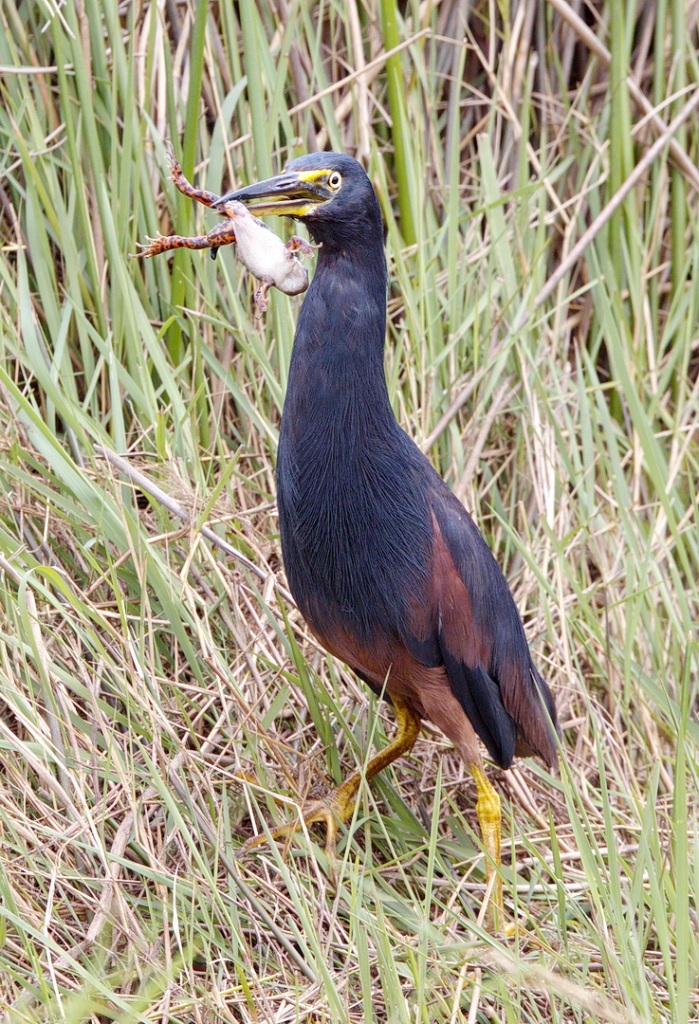
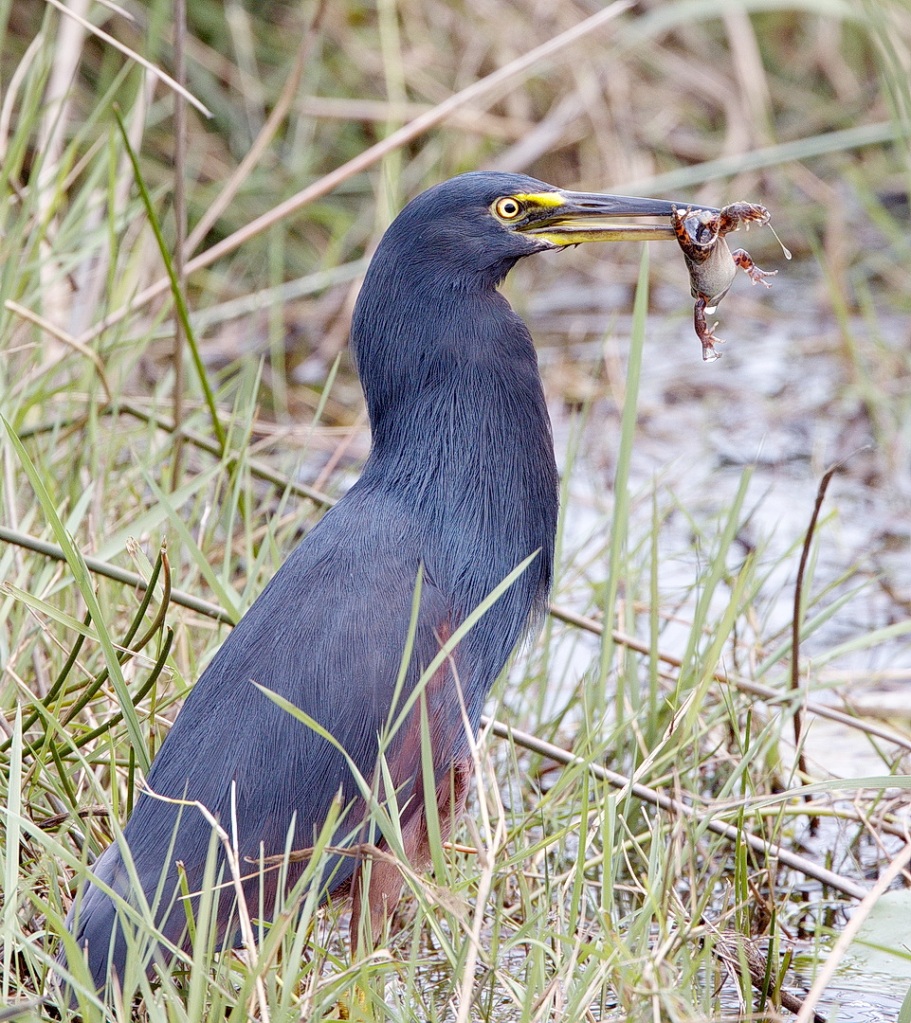
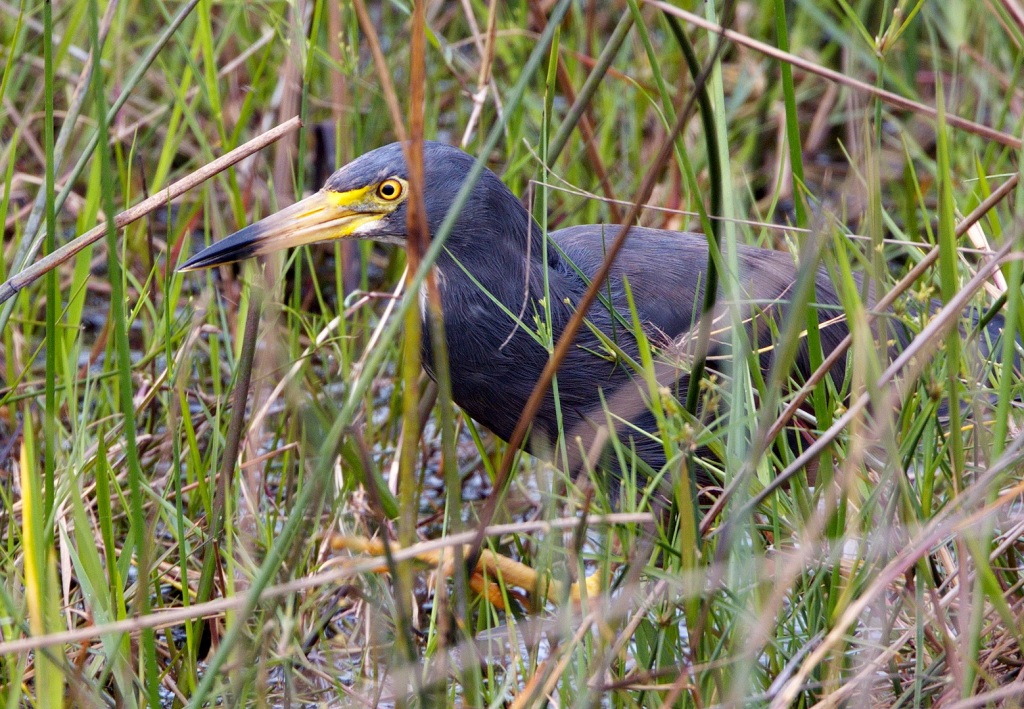
After the next right-hand corner, the grassland to the left has now become a rather full pan. It was here that we spotted the first of our three sightings of Rufous-bellied Herons. The third came later at the exact place where the above picture was taken. These were special sightings as they were all very close – within 5 metres of us. In the second incidence we watched as the Heron caught a frog and devoured it.
The first pretending not to be seenNo. 2 Showing its rufous belly. Manic look.Number 2 with its eyes on the targetNo. 2 – with its catchNo. 2No. 2The last of the three – on the prowl
An unlucky frog provides a meal for a hungry Rufous-bellied Heron.
In the short time we were there, we recorded 94 different bird species.
On impulse, Sally and I decided to go to Cape Vidal to see the visiting Lesser Noddy. It had been present there for quite some time so we thought that we would take a chance. The speculation was that the Lesser Noddy – presumably from around The Seychelles – had been blown off course by Freddie – our unfriendly cyclone.
We headed to Sugarloaf campsite in St. Lucia for 3 nights – our Afrispoor Cheetah in tow.
We arrived late-afternoon and set up camp. Considering we had only made the decision to go at 09h00 that morning, this was not bad going as we had not even collected our Cheetah nor considered packing.
The next morning, we were up and on our way to Cape Vidal as soon as the Isimangaliso gate (Eastern Shores) opened. We arrived there at Cape Vidal about 06h20. We purposefully planned to get there early to coincide with all the reported sightings of the Lesser Noddy being reported around 06h00.
It was odd driving through the Park pre-dawn. And there was water everywhere. At one point there was water across the road with two Red-billed Teals enjoying an early morning dip.
Water, Water everywhere right up to and across the road in places.
Typical watery landscapes:
On arrival at Cape Vidal, there was only one other person present looking for the Lesser Noddy – Anton Kruger of “Firefinch” App fame. The tide was in, so no part of the reef was above water. After patiently waiting and scanning the beach, we believed that we should return later when the tide was out and the reef exposed. Anton told us that he had arrived the afternoon before and seen the Noddy but that it had flown off south soon after he had seen it. Our hopes subsided.
So off we went for a drive round the rest of the Park. We headed for the Grassland Loop to the south of Lake Bhangazi. And Lake Bhangazi was so full that it came right up to the causeway – something we had never seen before. Usually it was 50 to 100 metres distant.
Lake BhangaziSally looking out over Lake Bhangazi
And looking to the south (the other side of the causeway) – more water right up to your feet too.
The south side of the causeway – yes water.
The wind had a negative effect on bird and animal sightings. However, we did see several buffalo in the distance as we travelled the Grassland Loop. Here are some of the photos taken:
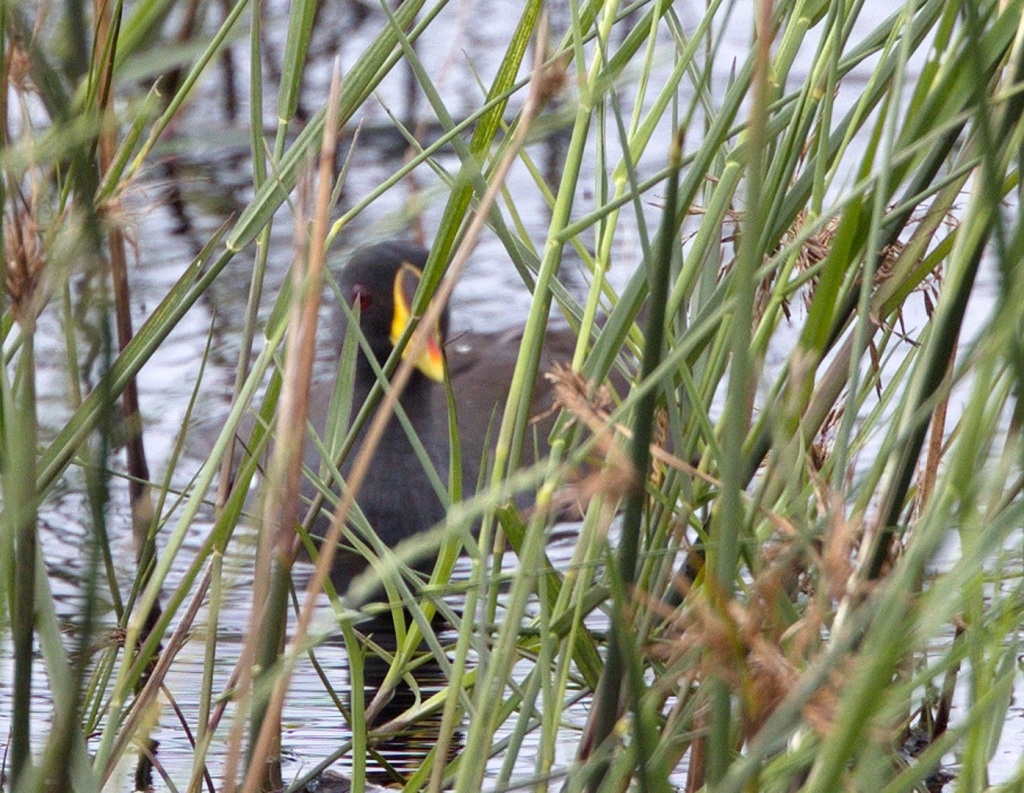
It turned out that we were following Anton around the Grassland Loop. At one point near the end of the Loop he pointed out a Lesser Moorhen swimming about in one of the many ponds.
Lesser MoorhenLesser Moorhen
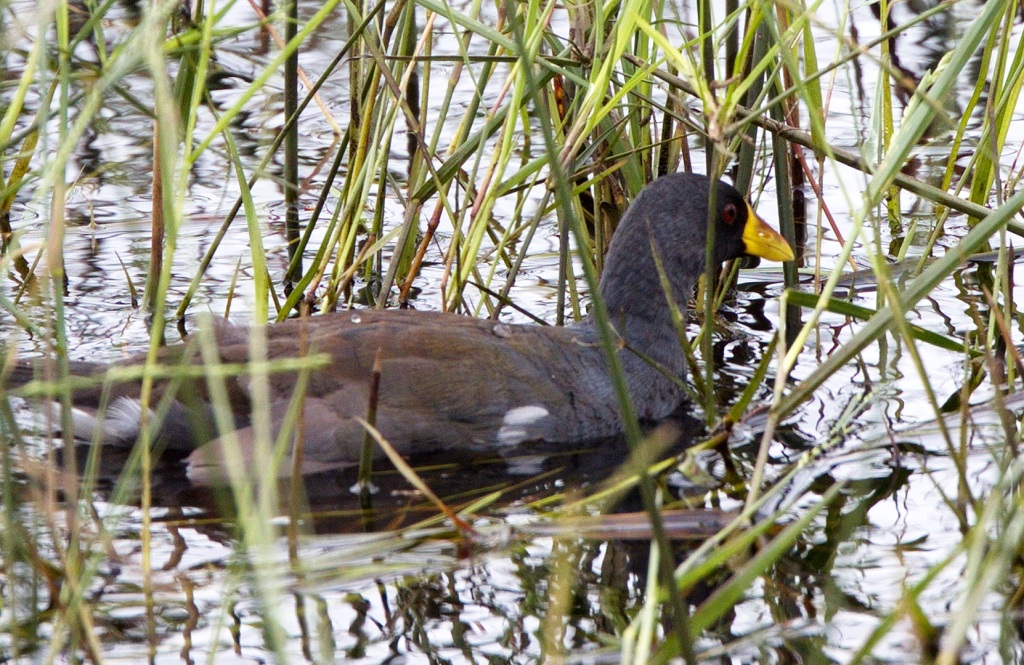
We did find another later in the day on our way back to camp. It was on the Pan Loop road. We had checked the pond from the Amazibou hide and seen nothing. So we thought we would go to the hippo pond at the end of the Pan Loop. As we descended, we noticed that the water on our right was right up to the road and the road ahead was flooded. We were not going any further. As we were turning around we noticed a waterbird swimming through the reeds – another Lesser Moorhen.
Lesser MoorhenLesser Moorhen
Once back on the tar, we had not gone far when we came across the Martial Eagle – pictured below.
It was at the end of the Grassland Loop on our way back to Cape Vidal that we saw the imperious Martial Eagle shown above. And as we were watching, a carload of friends from Durban drew up alongside us. They told us they had seen the Lesser Noddy.
That was it. We decided it was time to get back to Cape Vidal as quick as we were allowed. As we passed Anton’s car we called out to him that the bird was there. And we set out together at pace. After a while I noticed that Anton was no longer behind us and assumed that he had slowed down for some reason. We continued.
Once at Cape Vidal, Sally and I headed for the now protruding reef.
Lesser Noddy-land.
As we approached the reef, we saw the Noddy flying over the rocks. Well at least we had seen it even if we don’t get close. But close we did get. The Lesser Noddy kept its vigil over the rocks and flew around in circles over them, sometimes landing but at times flying over us really close. Eventually it decided to pose for us and landed on the rocks less than 10 metres from us. What a lovely sighting – probably to easiest lifer sighting in our experience.
The reef over which the Lesser Noddy patrolled:
Setting the scene:
Lesser Noddy just 5 paces away from me- sitting atop of a rock.
Anton appeared and we asked what had kept him. He told us that as we drove ahead of him, we disturbed a large male leopard which walked out in front of him. Stop they did for his wife and children to enjoy. If that had been us, I am sure we would have been in a serious quandary as to whether or not to stop!!
A number of Sanderlings and a White-fronted Plover were also feasting among the rocks.
SanderlingWhite-fronted Plover
That afternoon, back at St. Lucia, we took a walk along the beach to the estuary’s mouth to the sea. We went to see the Terns and the African Skimmers which had been hanging around amongst the Terns for some time. And they were there – unfortunately on the other side of the estuary.
Two African Skimmers among the TernsGrey PloverGrey PloverGrey PloverSkimmers and Terns.
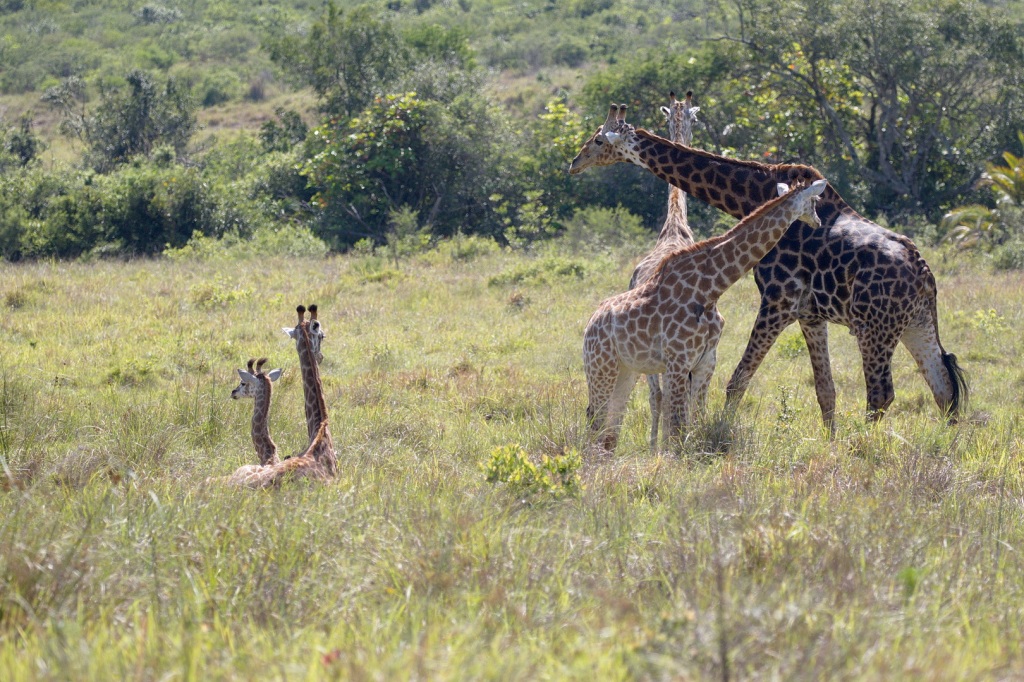
The next day we went to the Western Shores side of the Isimangaliso Wetland Park. A very cloudy, drizzly and windy day. Again, we saw little until much later in the morning on our way back to Sugarloaf campsite.
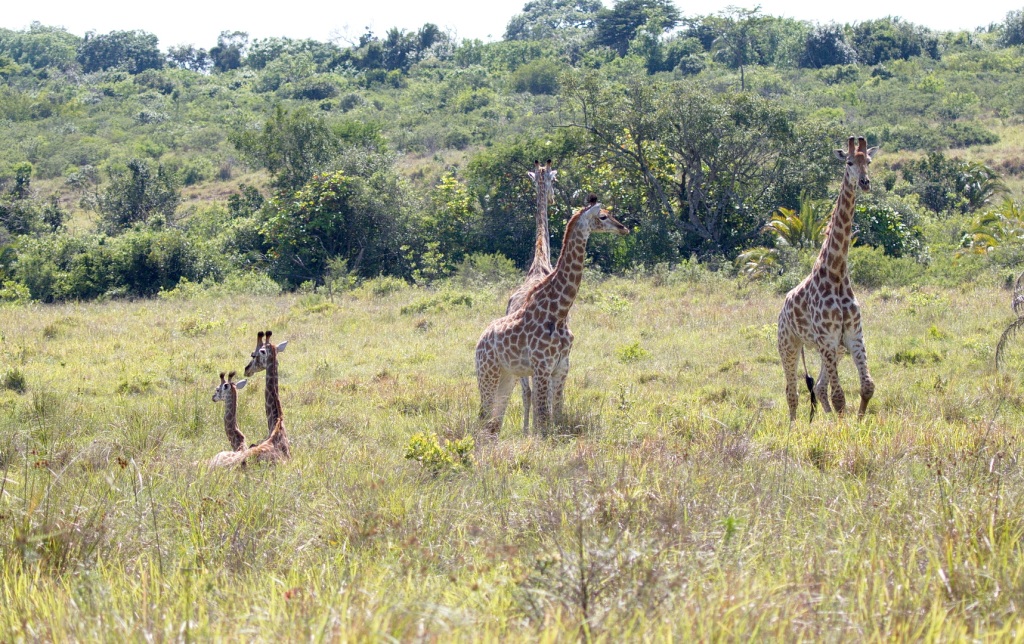
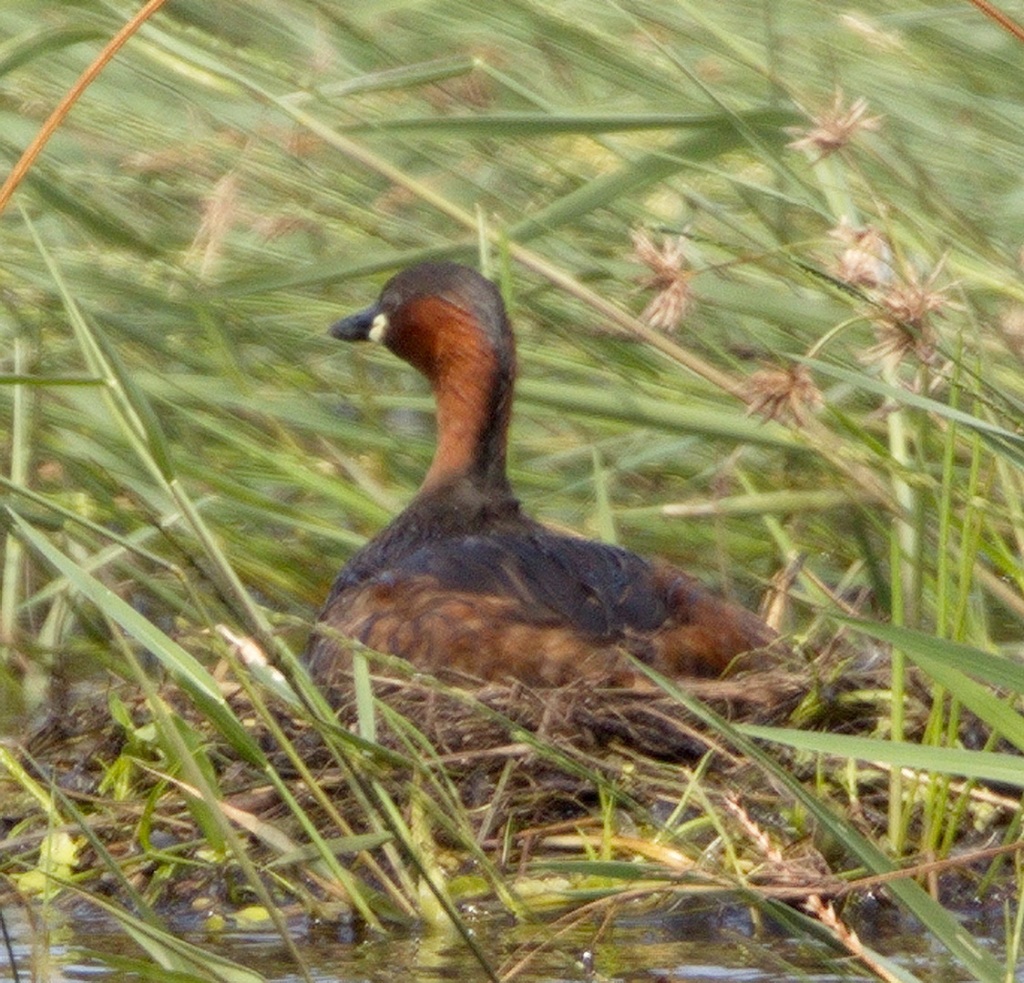
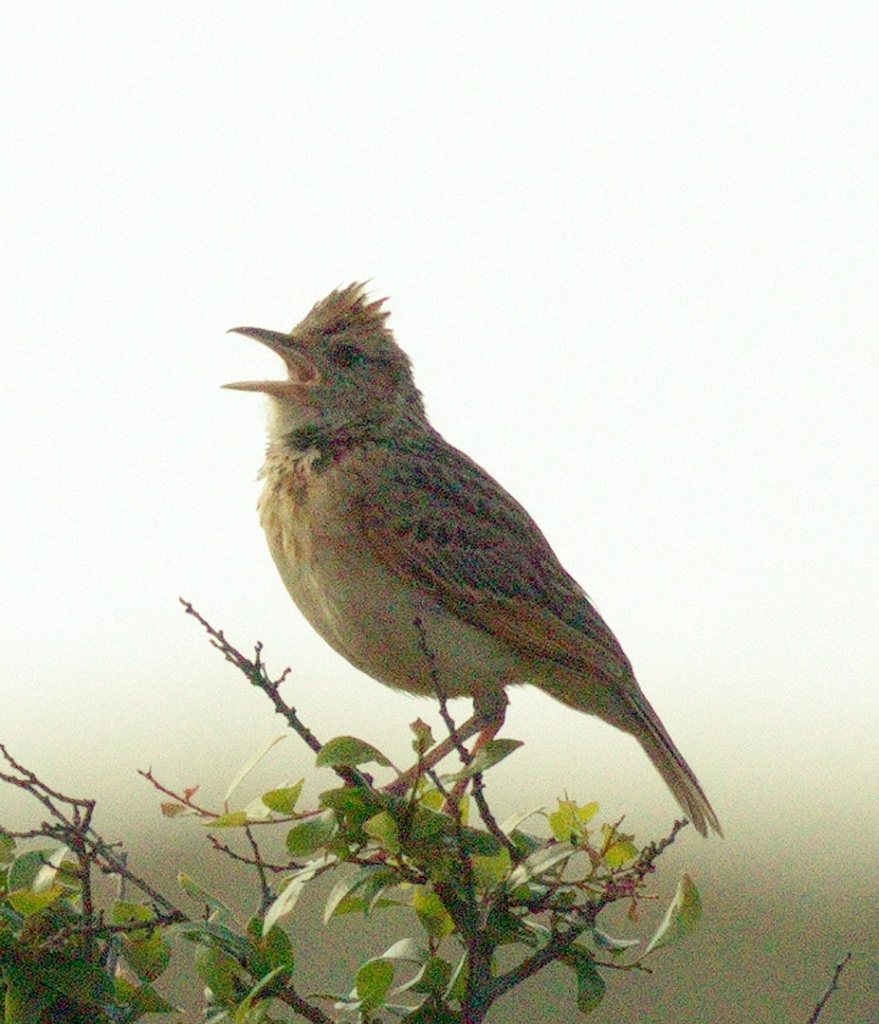
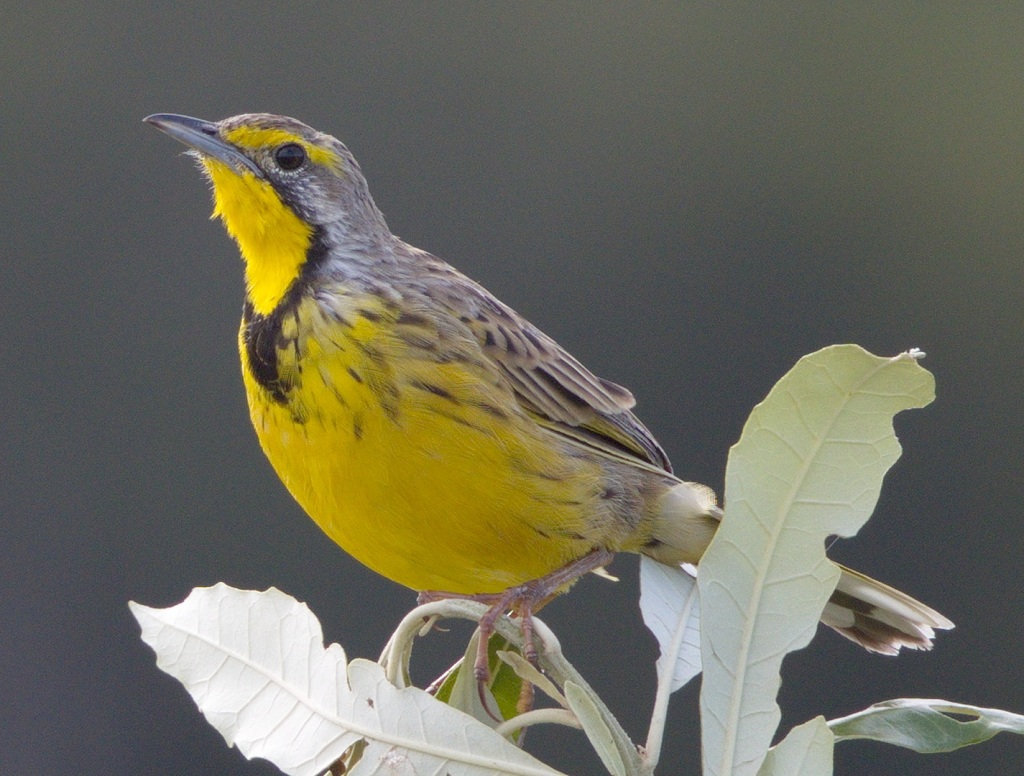
Hide at the top end of Western ShoresMartial Eagle chick on nestGiraffe tussling as babies look on.GiraffeLittle GrebeRufous-naped LarkHead onYellow-throated Longclaw
Despite the short visit and the adverse conditions, we managed to identify 92 different bird species – the list of which you can see by clicking on the download below.
Zululand was calling. We always enjoy our time in Zululand and the time of year is usually good for birding especially as the migrants are returning.
Our plan: to spend four nights in each of three campsites: Nyalazi, Bonamanzi and St. Lucia (Sugarloaf).
We had heard that the Nyalazi campsite was close to the Umfolozi gate. Little did we realise it was literally only about 300 metres from the cattle grid which demarks the entrance to the Hluhluwe/Umfolozi Park and less than 3 kms to the Nyalazi entrance gate into the Umfolozi side of the Park.
We had two choices to get to Nyalazi. Travel from Mtubatuba via the R618 and face the two lengthy Stop and Go hazards on the way.
Or alternatively travel 60 Km further north on the N2 to the Centenary Gate entrance to Hluhluwe and then through the Park back south to the Nyalazi Gate. The latter alternative would takes us two or more hours of extra driving – admittedly partly through the Game Reserve. We mulled over the choices and decided to go on the shorter route.
Taking the road from Mtubatuba, we prepared ourselves for the two “Stop and Go s”. A South African experience to be avoided in future. No problems till we got to the first of the Stop and Go signs. It then became apparent that the sign was meaningless for many vehicles. Taxis and other local vehicles overtook the queues and went round the Stop and Go despite it being the right of way for oncoming traffic. This happened at both Stop and Go s.
Painfully slow going but we eventually arrived at the campsite.
The camp has 8 campsites. All well laid out for privacy. Each had water and power. They had been levelled and then coarse sand applied. There was also a communal ablution – clean and with hot water. The campsite owners Nunu and … (http://www.nyalazicamp.com/) met us and were extremely friendly. We chose a site at the lowest point in the camp with a view into Umfolozi some few hundred metres distant.
Our CampsiteOur Campsite at the bottomAblutionsView from our siteElephants in Umfolozi?Hluhluwe Park from our campsiteCampsite
After setting up camp we took a drive into Umfolozi. The first three animals we saw were Elephant, White Rhino and Buffalo – good start animalwise. Birds however were scarce due to the weather. Cold, cold cloudy with a threat of rain which duly arrived and stayed for most of the time we were there. Mainly as a cold drizzle.
Our days were spent enjoying both Umfolozi – partly overcast with no rain on one day and drizzly on the other. And Hluhluwe – quite rainy and muddy off the tar roads.
Photos of the habitat.
Ubhejane HideUbhejane HideWhite Umfolozi River
Here are some photos of the birds and animals that we saw in our campsite and in Umfolozi.
Black Cuckooshrike – femaleCape StarlingGreen Wood-HoopoeKlass’s CuckooMartial EagleMartial EagleMocking Cliff-ChatPurple-banded SunbirdRhinoRhino and youngStriped KingfisherTawny EagleTerrapinDung BeetleDung Beetle and dungWhite-faced Whistling-Duck with not so white face. Breeding PlumageAfrican Wattled LapwingsWhite-browed Scrub-RobinWhite-browed Scrub-RobinBaboonsWhite-faced Whistling-Duck with not so white face.
As I said earlier we had a very wet and misty day in Hluhluwe. Both animals and birds were scarce. Having said that the sightings we did have were interesting.
Hluhluwe habitats
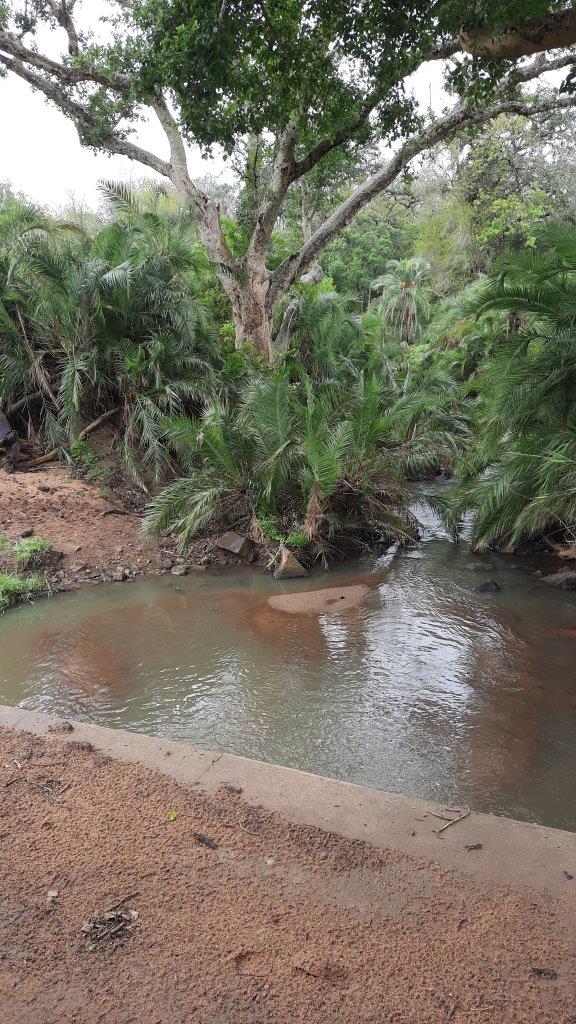
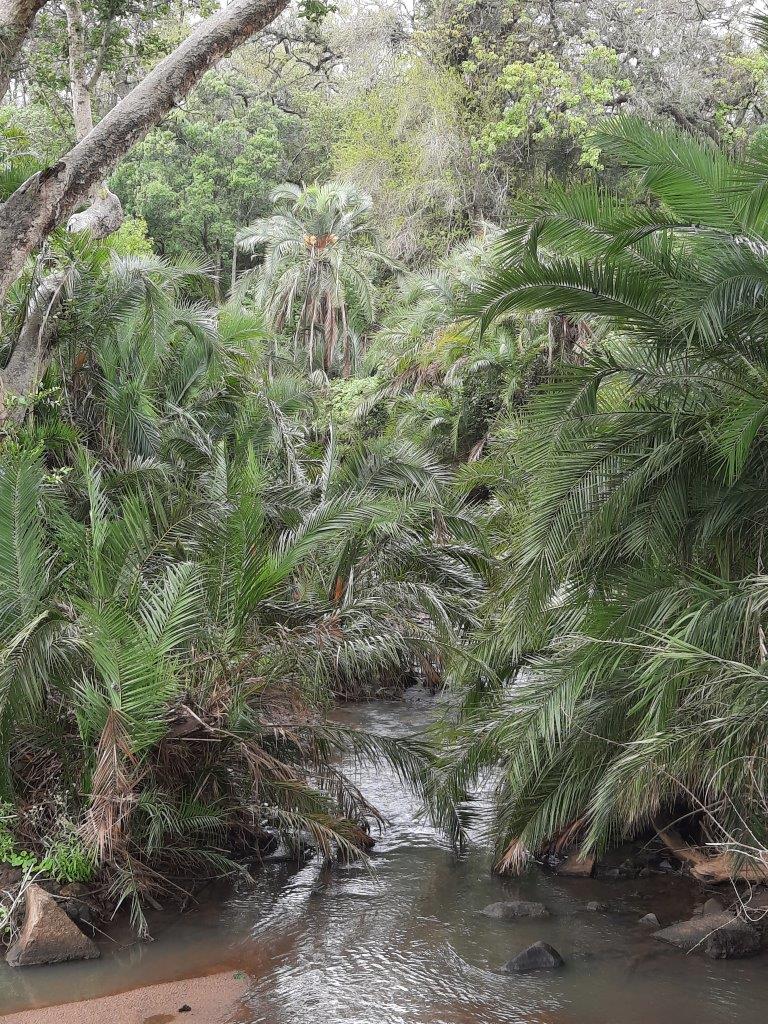
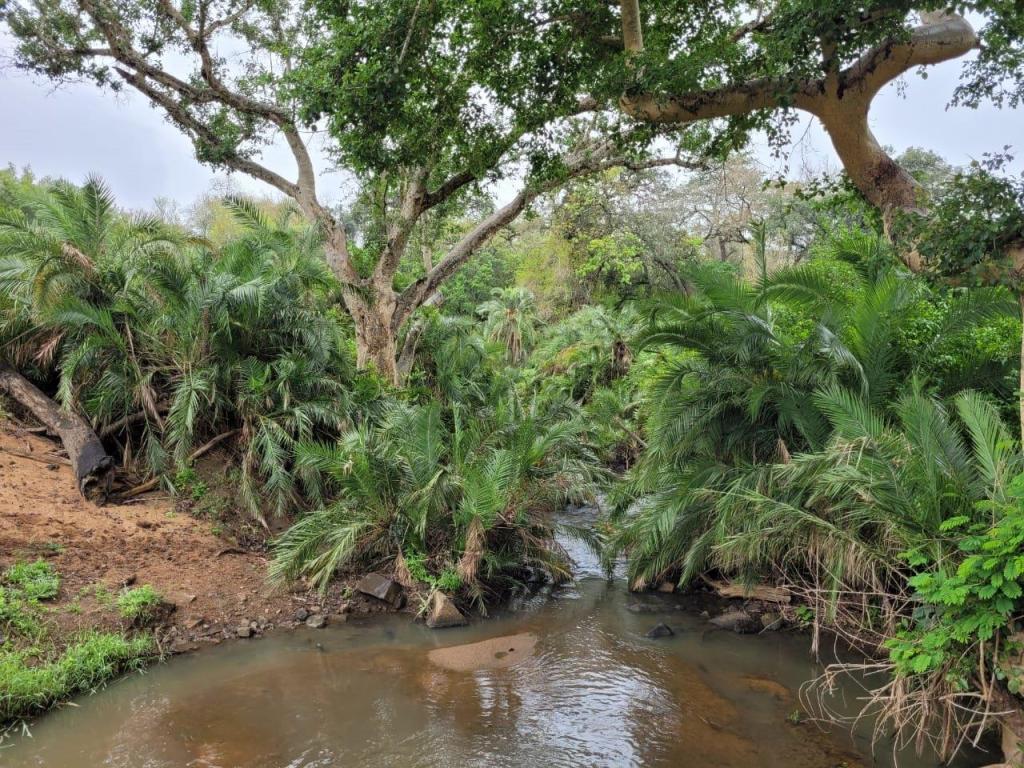
Quite a tropical landscape in places.
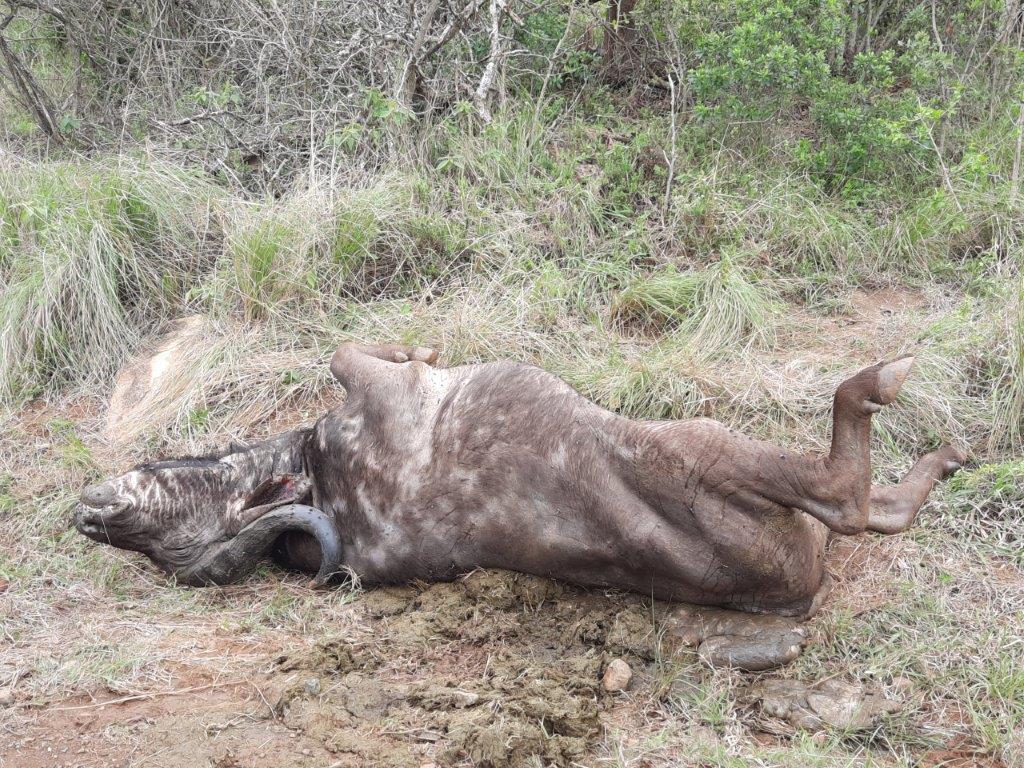
Why was this Buffalo lying on the road with an empty stomach?
Perhaps the answer lay nearby.
His Majesty
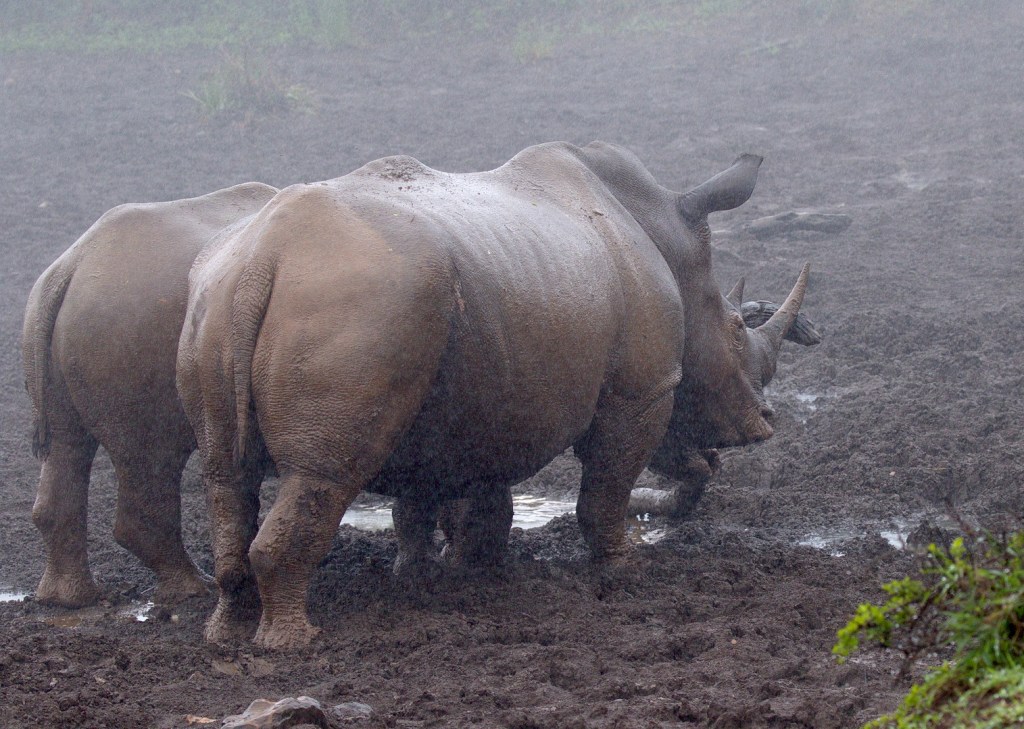
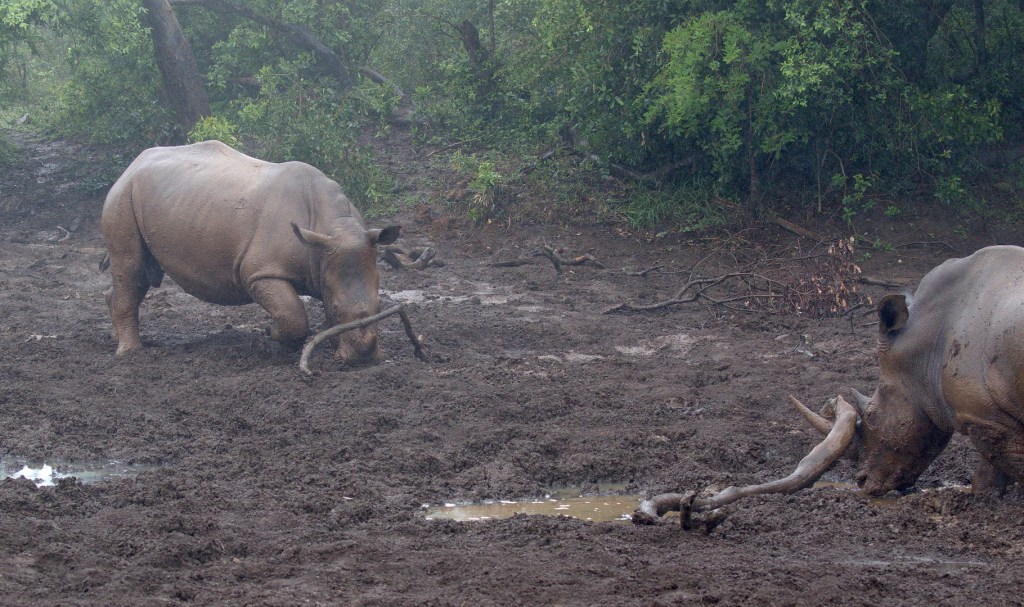
Then there were two Rhinos playing “Pick up Sticks” (Do you remember the game we played all those years ago?).
A few other photos taken in Hluhluwe.
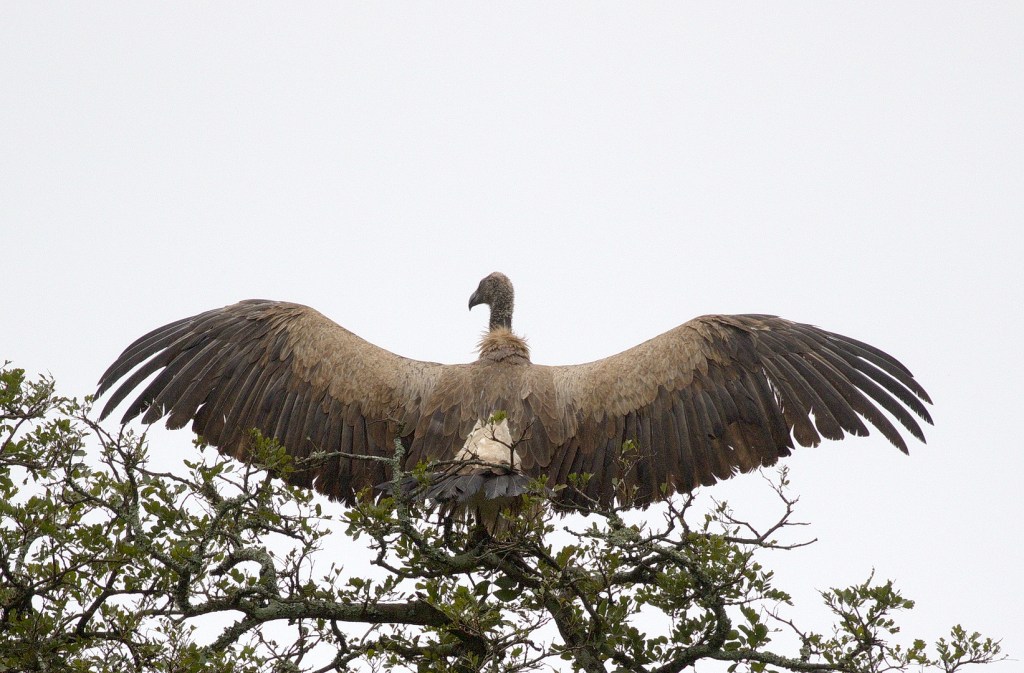
Common SandpiperVegetable WeaverTete a tete.What are the Yellow-billed Oxpeckers up to.White-backed Vulture
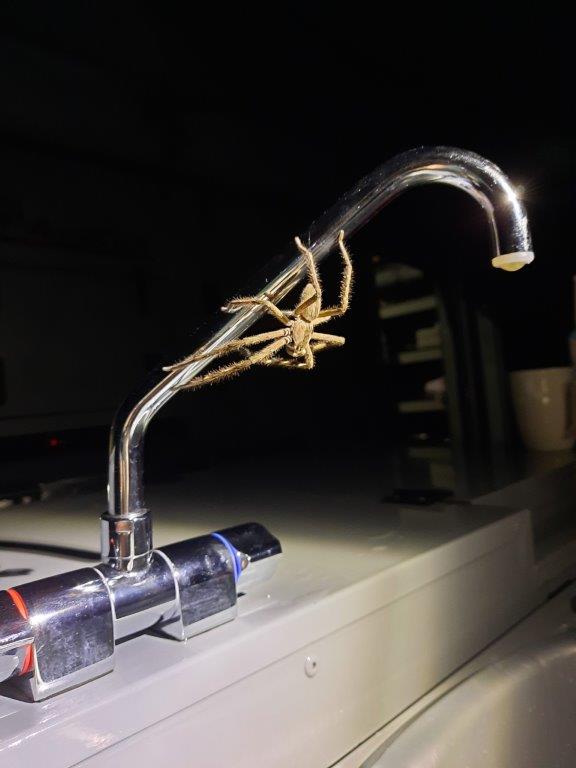
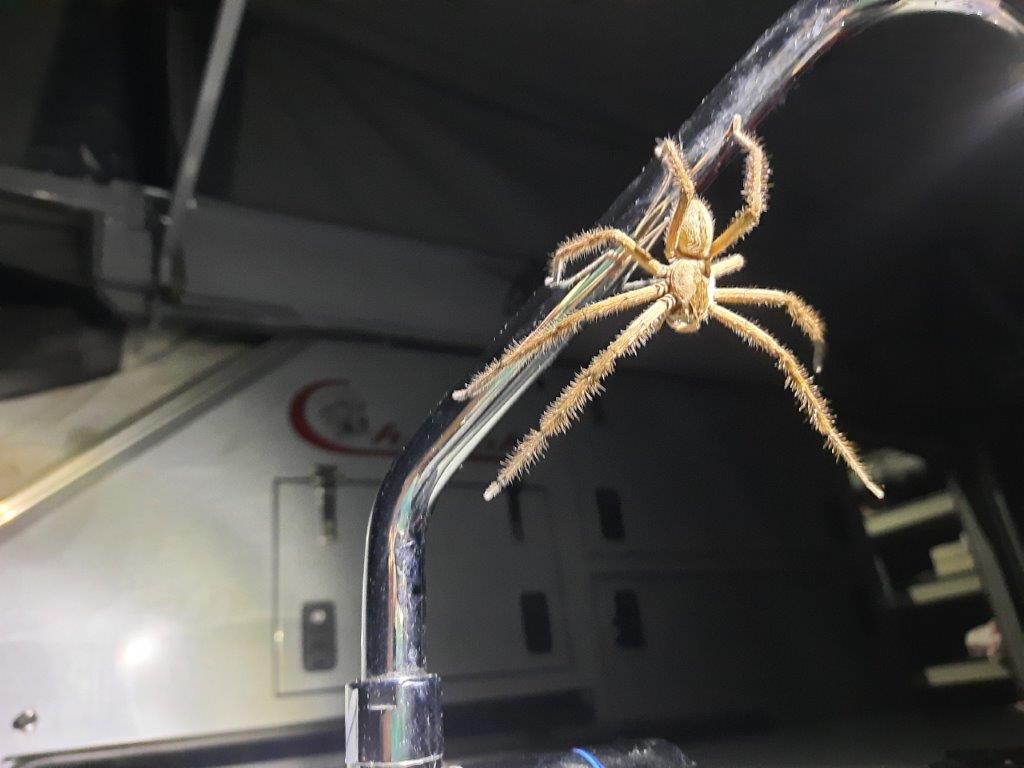
On our last evening we had a not so cute visitor.
A Rain Spider
Altogether we identified ….different bird species. Not bad considering the conditions.
On our last morning we drove through Hluhluwe to the Centenary Gate on our way to Bonamanzi.
Bonamanzi
8th to 12th October 2021
On the way to Bonamanzi we hoped to stop at the Checkers in Hluhluwe town to re-provision. We were hoping it had not been burnt down in the riots. Our hopes were granted.
Not everything went smoothly though due to a huge crowd of people inside and outside, power cuts with tellers and customers who dawdled at the checkout tills. A train of blaring political vehicles drove through the garage next to the store causing chaos there and blocking traffic in the sore parking lot. Over an hour later we were on our way again.
At last we arrived at Bonamanzi reception. Through the grapevine we had heard that the Bonamanzi wilderness area was now open for individuals to drive around in their own vehicles. So at the desk I asked them to confirm. To our surprise the receptionist said it was true. To enter the areas we were told to ignore the No Entry signs. We took full advantage of this and covered about perhaps half of the roads/paths.
Our campsite was located at Bundu. Our tracks and coloured Blue.
As you can see from the map of our tracks we covered an extensive area during the 3 full days we were there. On the east we went into the wetland area and followed the canal for about 3 kms. And the north and west tracks are in the Game area.
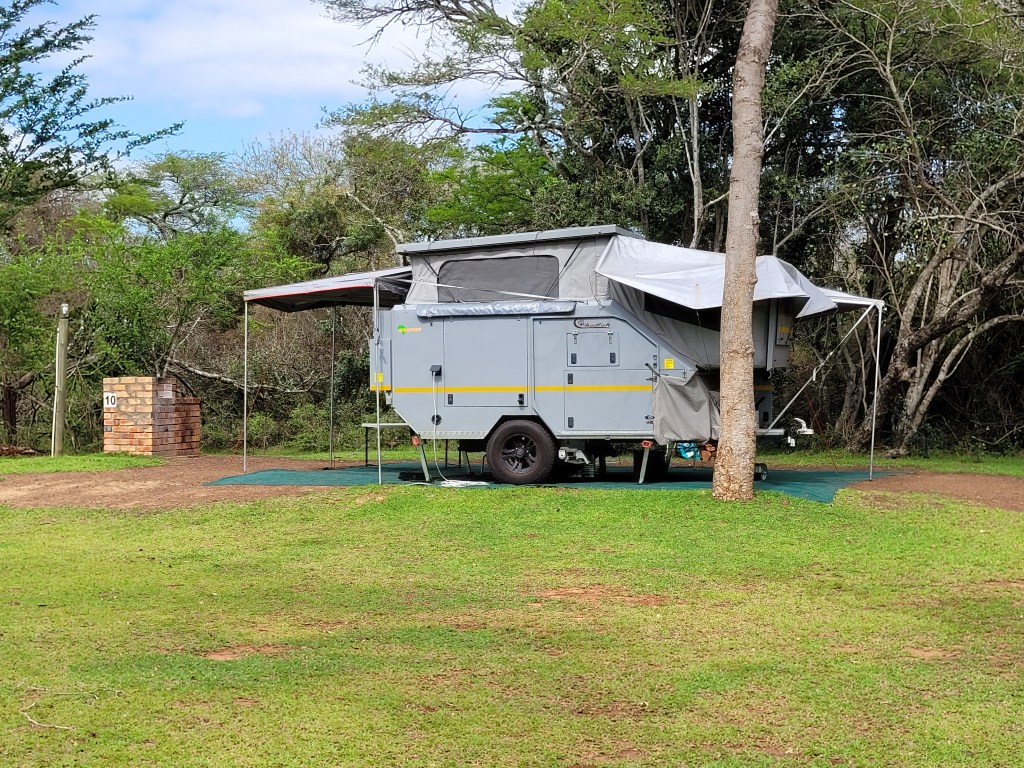
We had chosen a campsite with our own ablution and kitchen. The site had water and electricity. We were allocated campsite 10. The campsite consisted of only four sites – each with masses of space. On arrival there was only one other camper and we were left alone after 2 nights.
On the second day there the one of the people in the other campsite came across and told us they had seen a huge bull elephant and logged its co-ords. It was until he got back that he realised that it was very close to our campsite. In all the years we have been visiting Bonamanzi we have never seen one there despite the occasional sightings of very old droppings. In our minds it had become a myth.
2 Campsite areas2 Campsite areasAblution Block.
In Bonamanzi there are six camping areas, A Forest Camp with six sites (own ablutions) The old main camp now split into 2 sections of 6 sites in each. One sharing ablutions and the other with individual toilet and kitchen facilities. Then there was our site with four campsites (own ablutions). The previous campsites numbered 5 and 6 are still the same but now numbered 17 and 18. Finally the Dinizulu picnic area has been converted into 6 non-powered campsites with shared ablutions.
Dinizulu outlookOutlook at Dinizulu from the campsite.
I doubt there were more than 6 campsites occupied in total while we were there.
Of interest, there was a film crew building old African village sets in the Bonamanzi bush. Did not find out what the film was called.
Our time was spent mainly driving around the game area. The weather was also unpredictable here with most days overcast, drizzly from time to time and very windy.
The game and wetland areas were interesting to drive around and a 4×4 was necessary in some places where the roads were muddy and at other times waterlogged.
Here are photos of the lovely birds and animals we saw while there:
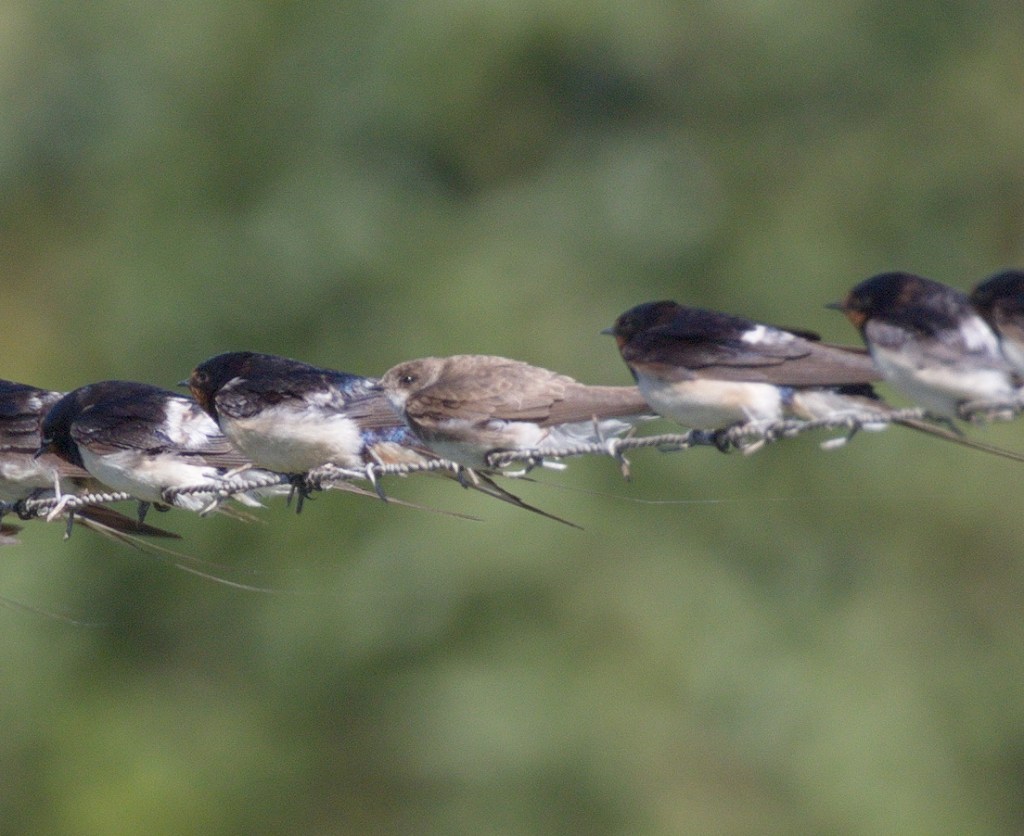
At the edge of one of our drives in the game area we came across a flock of Barn Swallows sitting on a fence line. We had seen the odd Barn Swallow but no where near in these numbers. They are back in a big way.
Barn Swallow juvenileBarn Swallow juvenileJuvenile among the adultsBarn Swallow.A partial view of the fence lines.
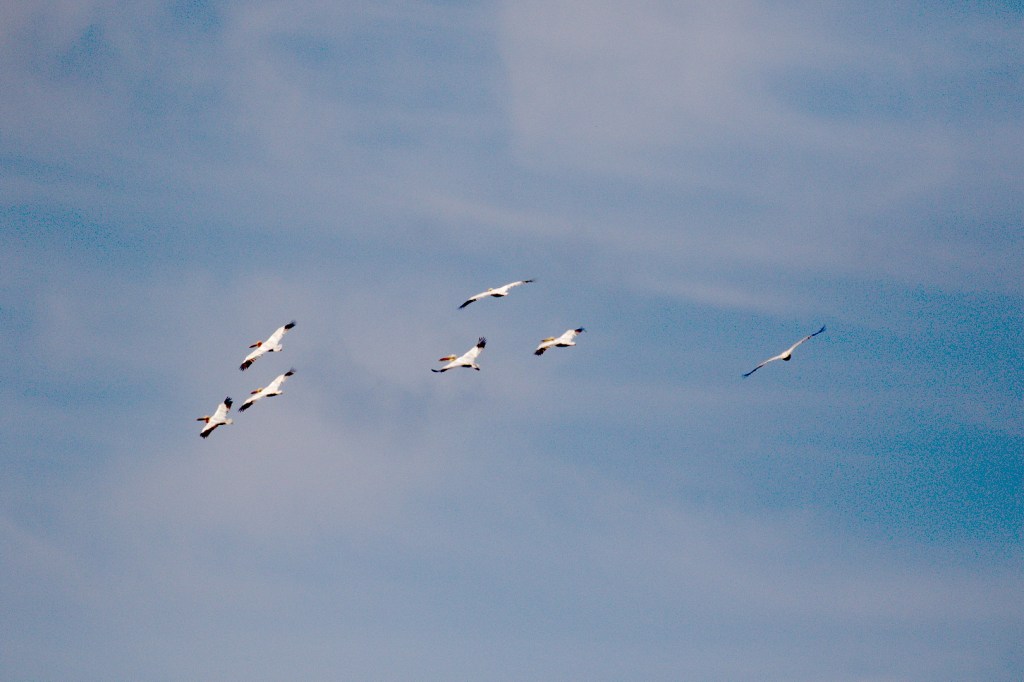
In the wetland area Sally noticed Pelicans flying away from us. They were White-backed Pelicans and above the lower ones there must have been a good 100 flying.
And more behind themWhite-backed Pelicans
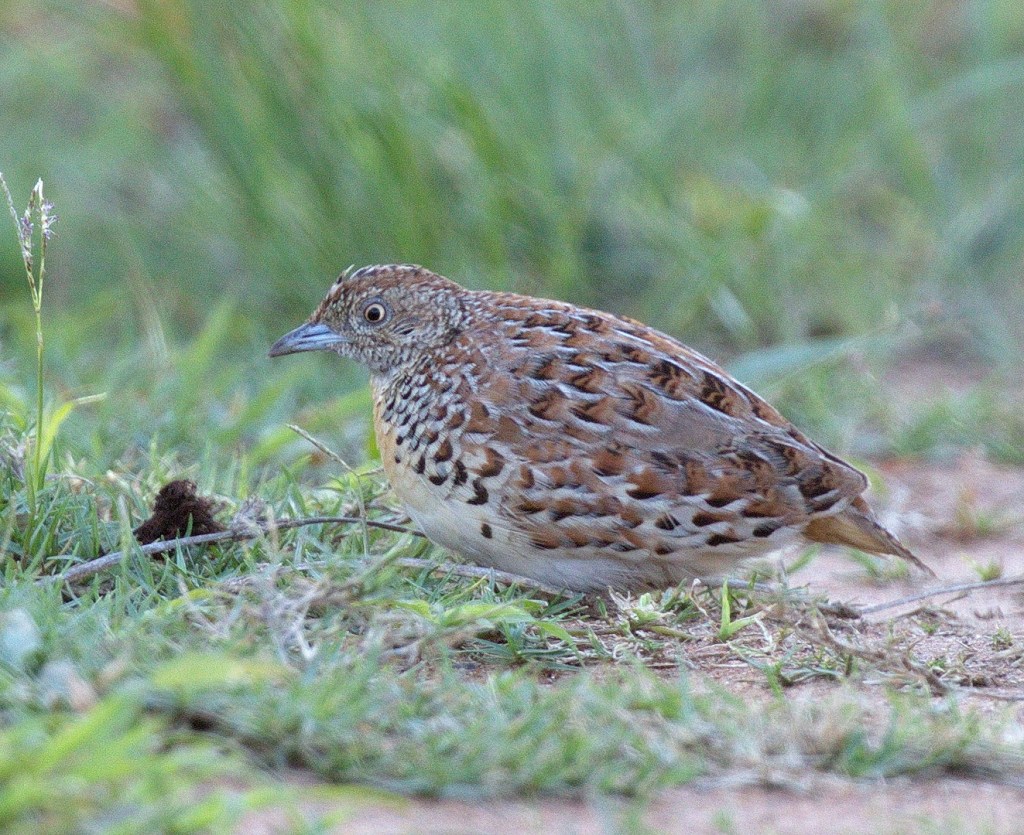
We had seen a bird in Mapungubwe and watched its interesting behaviour of crossing the road like a chameleon. We were so fortunate at the time to watch its behaviour and never expected to see it again – let alone so soon. But there one was before our eyes in the game area doing just that – a Common Buttonquail.
Common Buttonquail
In the grounds around the reception area we found this cycad among several others all with fruit. The fruit had a plastic look to it .
Cycad with fruit
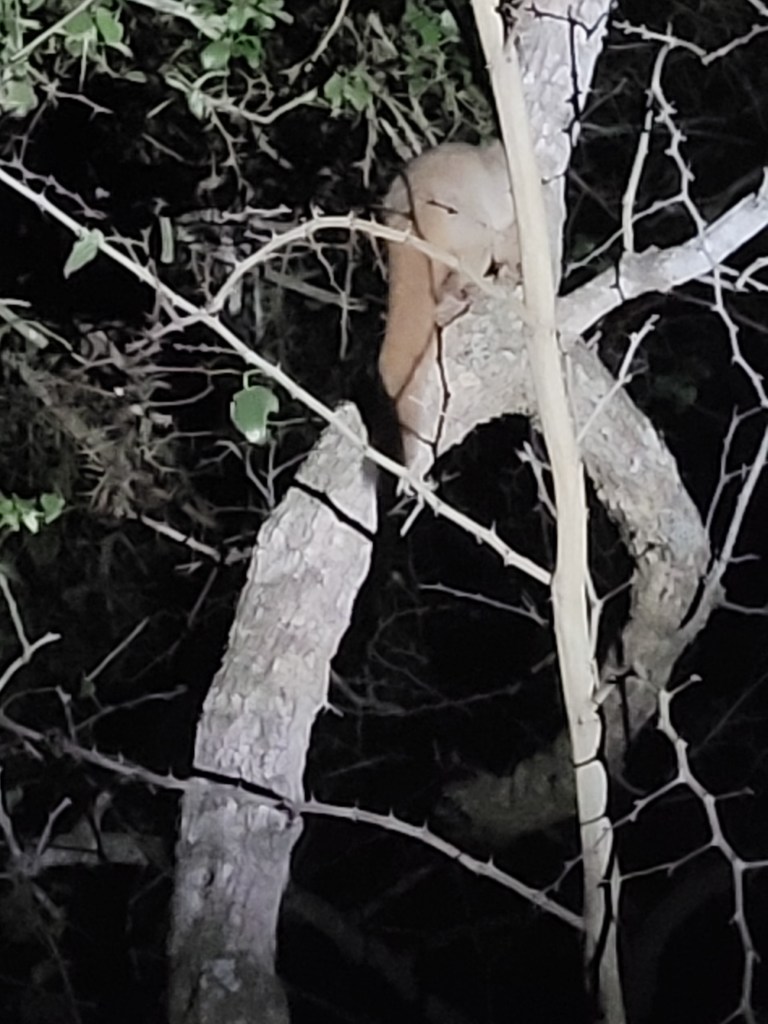
Then there were our night visitors – three of them scampering around our feet as we cooked – quite brazen.
Bushbabies
But they were not the only animals visiting our camp. As we sat inside having dinner – cold and windy outside – we heard noises in the campsite. The sound of trampling and bushes and trees being knocked about. Then it became louder and closer. A tree pushed over, then another and another. Quite obviously an unhappy elephant.
It was not to the next morning that we observed the damage. Apart from campsite trees being uprooted, the elephant had up rooted one of the water points and water was everywhere. It was not that he was thirsty as he knows the pool right next door. He was just being his grumpy self. We were later told that he does this regularly at all the campsites and would probably stay away from this site for a month before returning.
Burst water pipeUprooted Tree in the campsite
During our time there we identified … different bird species.
St. Lucia
12th to 16th October
And then we went to St. Lucia to the Sugarloaf campsite for four nights.
During our time at Sugarloaf we explored both Western and Eastern Shores in Izimangolizo Wetland Park, False Bay and went for a long walk on the beach towards Maphelane.
We have stayed at Sugarloaf often. It has about 100 campsites, each with power. The place is like a garden of Eden – well treed, shady and mostly flat sites. There are 4 ablution blocks spread throughout the camp. It was empty – maximum 6 other campsites occupied during the 4 nights we were there sadly. I remember on one visit we logged about 95 different bird species in the camp.
Here is one of the special birds we saw in the campsite.
After our 5 days at Mapila Camp in iMfolozi we headed to St Lucia for a further 4 nights. We stayed at Sunset Lodge at the suggestion of Sally’s son and wife who used to live there. The owners Rich and Shelly are friends of theirs – a really friendly couple.
The accommodation was excellent. It was a log cabin done very tastefully. Everything kept in “as new” condition. We had a one bed flatlet with lounge/kitchen, bathroom and a stoep.
During the time there, we visited Eastern Shores a few times, Western Shores and a walk through the Gwala Gwala trail with Ian Gordon and of course the beach for waders and seabirds.
The weather was a bit unfriendly – cool, windy and misty at times with the occasional splatter of drizzle.
Sally made contact with Ian Gordon and we met early one morning to visit the Gwala Gwala trail and then to visit Western Shores. Another cool day.
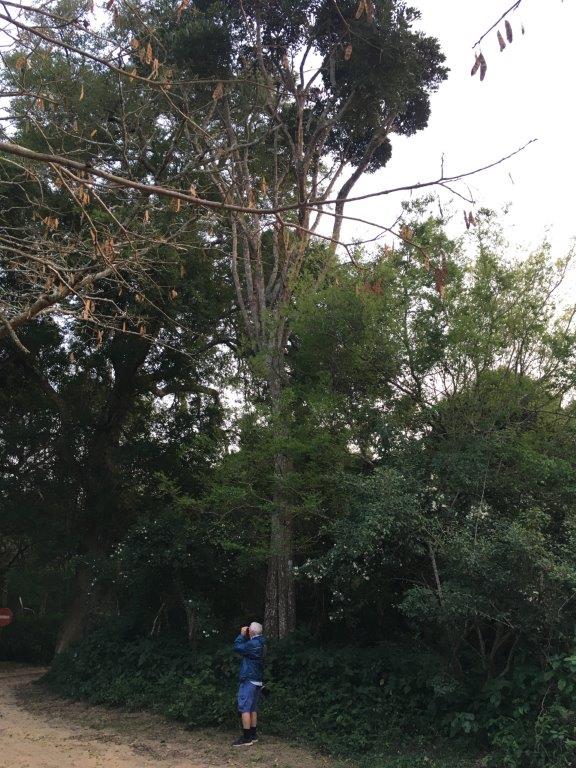
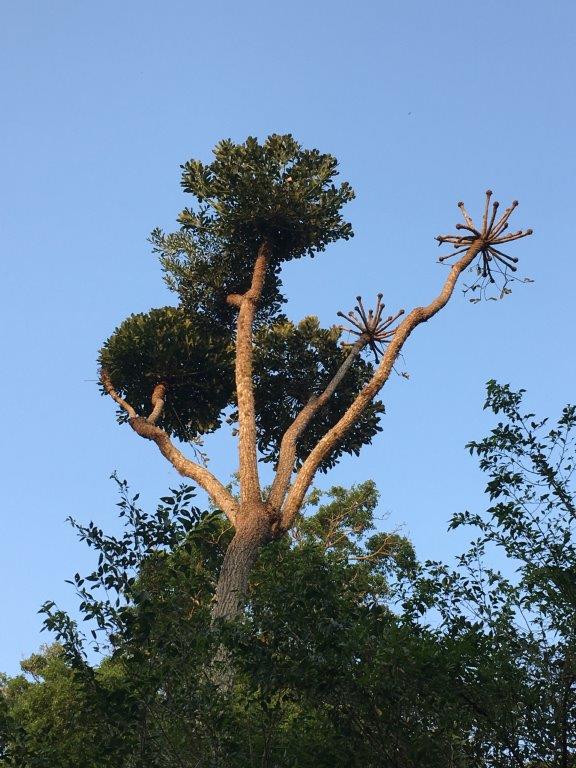
We parked at the entrance and were greeted by several friendly Crested Guineafowl. In the clearing there is probably one of the largest and tallest “Cabbage” trees that I have seen. We then entered the trail.
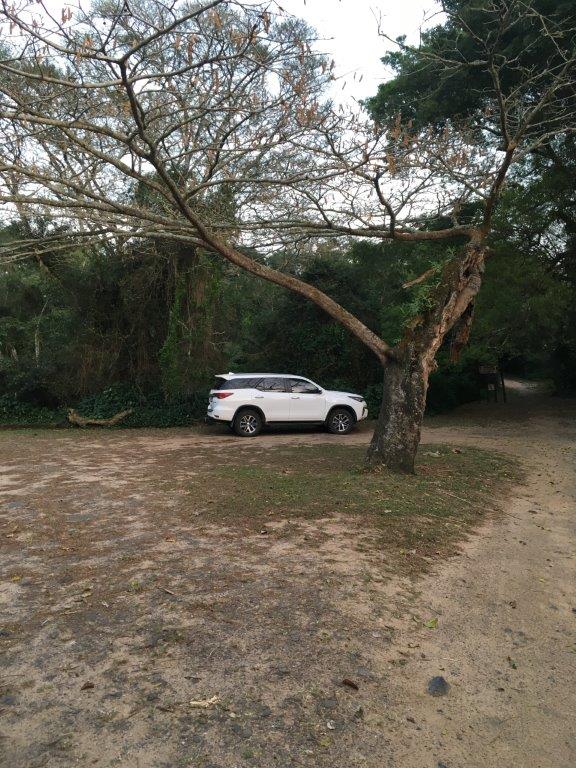
Entrance parking
Crested Guineafowl
Crested Guineafowl
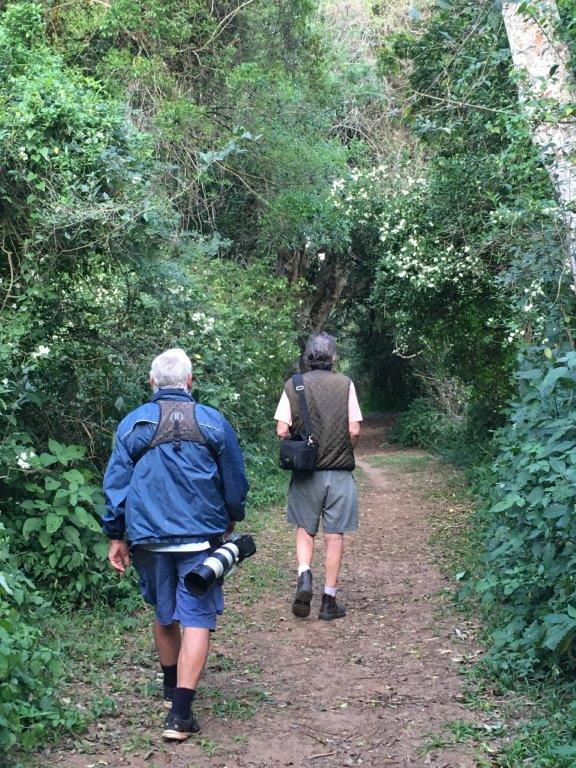
Along the trail
Next to the “Cabbage” tree
Another huge “Cabbage” tree
Ian and Paul
Sally
There was a fair bit of calling along the Gwala Gwala trail but few birds actually seen. Forest birding. September Bells were everywhere in bloom.
Western Shores was a bit quiet too as we arrived quite late in the morning. However we did have some puzzling excitement along the way. On entry we took the uMphathe loop road to the picnic site. Then went to the eMgadankawu Hide at the north end of the park followed by a climb up to the uMthoma Aerial Boardwalk on the way out of the park. Slides of the eMgadankawu Hide.
Some animals and birds seen along the way.
Bateleur
Bushbuck
Long-crested Eagle at the picnic site
UI Pipit.
Lone elephant seen as we exited the park
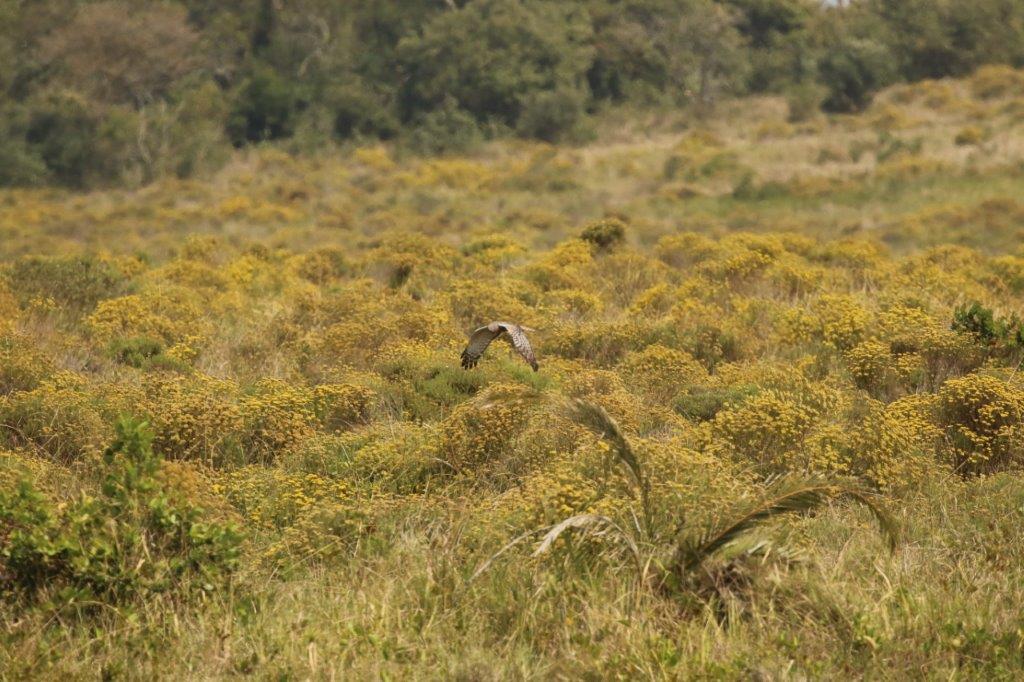
The puzzling excitement came as we passed the picnic site. Looking back we noticed a raptor flying towards the picnic site. It appeared to have a ring tail and that excited us. We turned around and set about trying to find it which we did. It was in the reeds at the waterhole just before the picnic site.
Sadly in the end we identified it as an African Marsh Harrier after all. Still it had us pondering for a while.
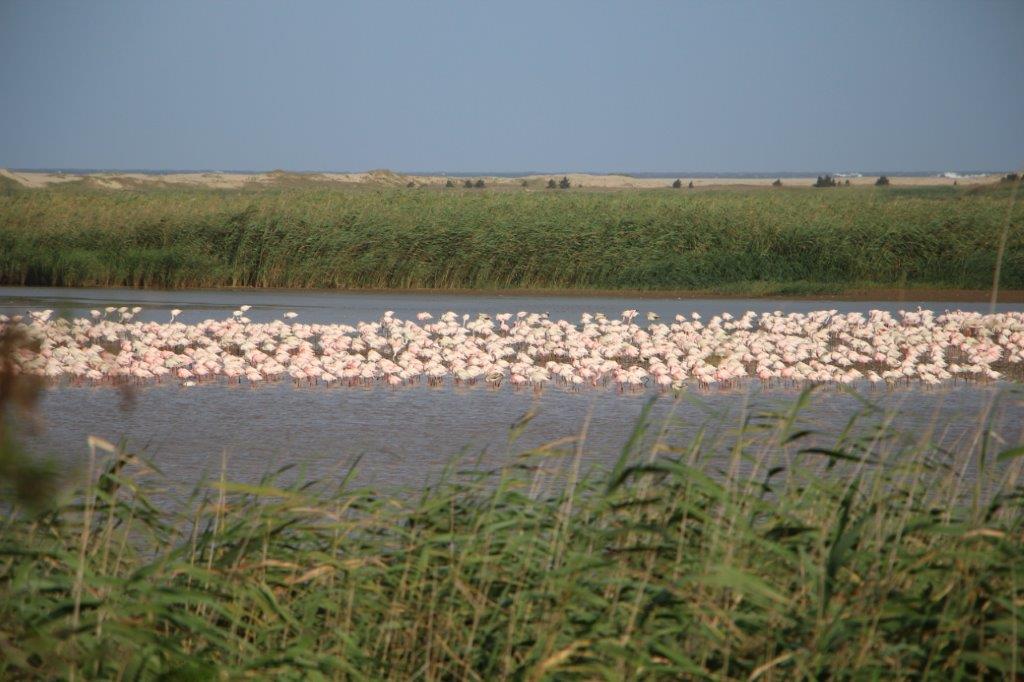
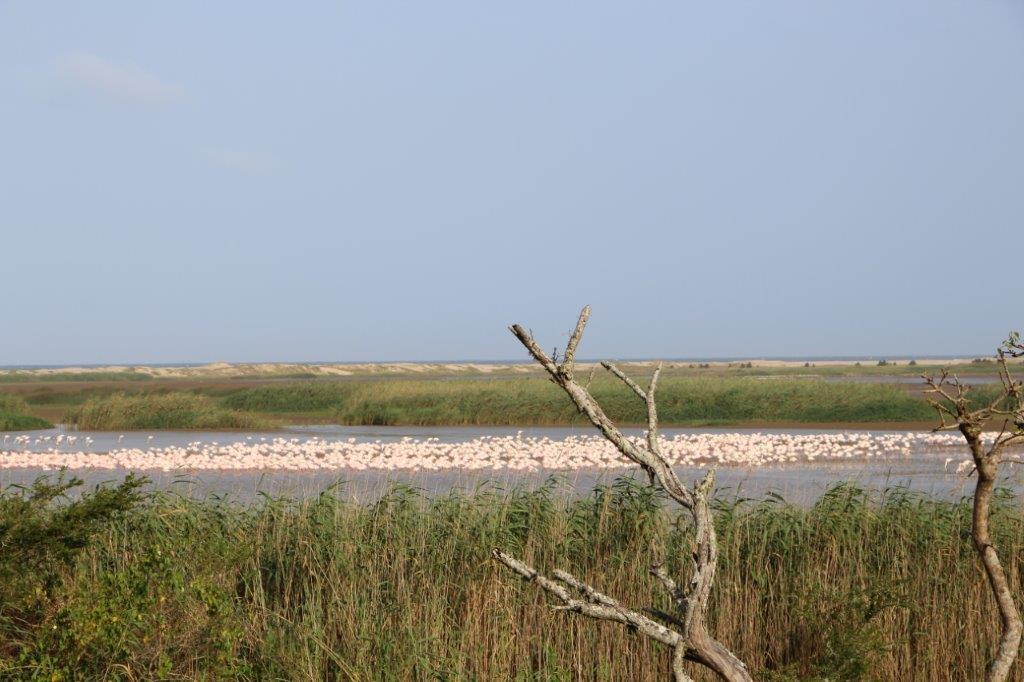
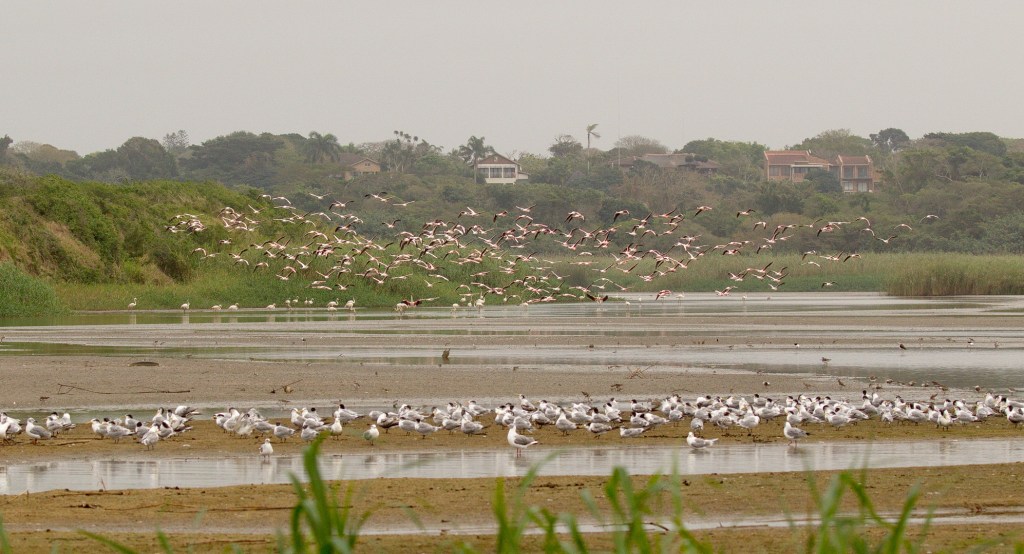
We spent a morning on the beach looking for waders and seabirds. Very noticeable were the hundreds of Lesser Flamingos on the mud flats. The first day we arrived in St Lucia they were right beside the entrance to Sugarloaf camp site. While there we saw them rise into the air like a swarm of Quelea before settling back down.
Lesser Flamingos and a few Greater.
It was hard to recognize the changes to the estuary. Tall reeds intruded onto what were mud flats making it impossible to see the far end close to Maphelane.
Showing the reeds blocking the view of the end of the mud flats from the car park.
A few other water birds were spotted in this area.
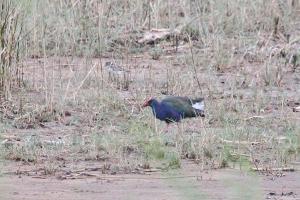
African (Purple) Swamphen
Water Thick-knee.
We started early to get to where the birds were. Our goal was to head to the Tern roost. So off we set down the boardwalk to the sea to walk around the reeds and hopefully find them on the mud flats. There they were at the extreme end of the mud flats – a very long walk carrying scope, camera and binoculars.
Looking for the Terns. They were in the distance
Vegetated Dunes
Looking back across the mud flats to Sugarloaf camp in the trees.
Getting closer to the Terns
Almost there
Need to cross the mud without being sucked down.
Still further to walk
Now to find a way to get closer
On to the mud flats we head
On the mud flats with the Terns behind us looking to the dunes from whence we came.
A look back to the trees where we had come from – about 3 kms.
Almost back to the boardwalk.
To get to the Tern roost we had to walk right to the far end of the mud flats and then negotiate our way to a spot where we would get a closer view of the birds. A tricky scenario as with each step you did not know how far you might sink. However we managed, eventually finding a firm place to stand and get the scope on the birds.
There were many terns but all were (Swift) Greater Crested Terns except for a lone Caspian Tern. A few Grey-headed Gulls were present and quite a lot of different waders including Ruddy Turnstones, White-fronted, Ringed and Three-banded Plovers, Curlew Sandpipers, Common Whimbrels, Little Stints.
Caspian Tern
Ruddy Turnstone
White-fronted Plover
Grey-headed Gull
Common Whimbrel
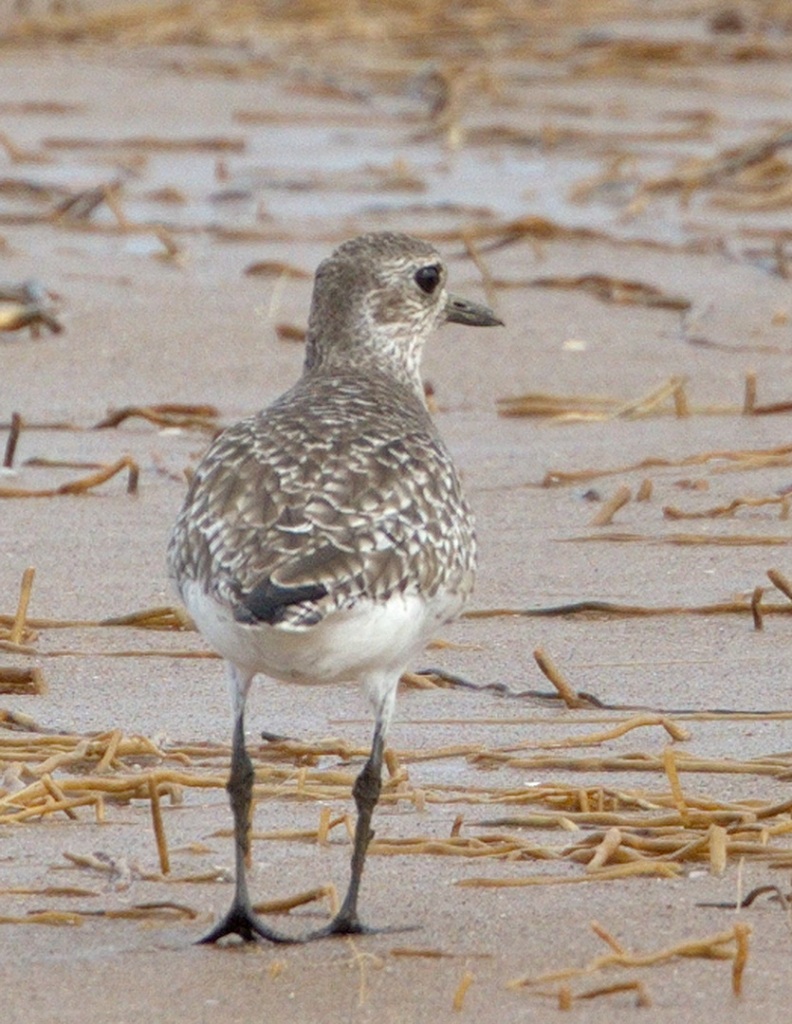
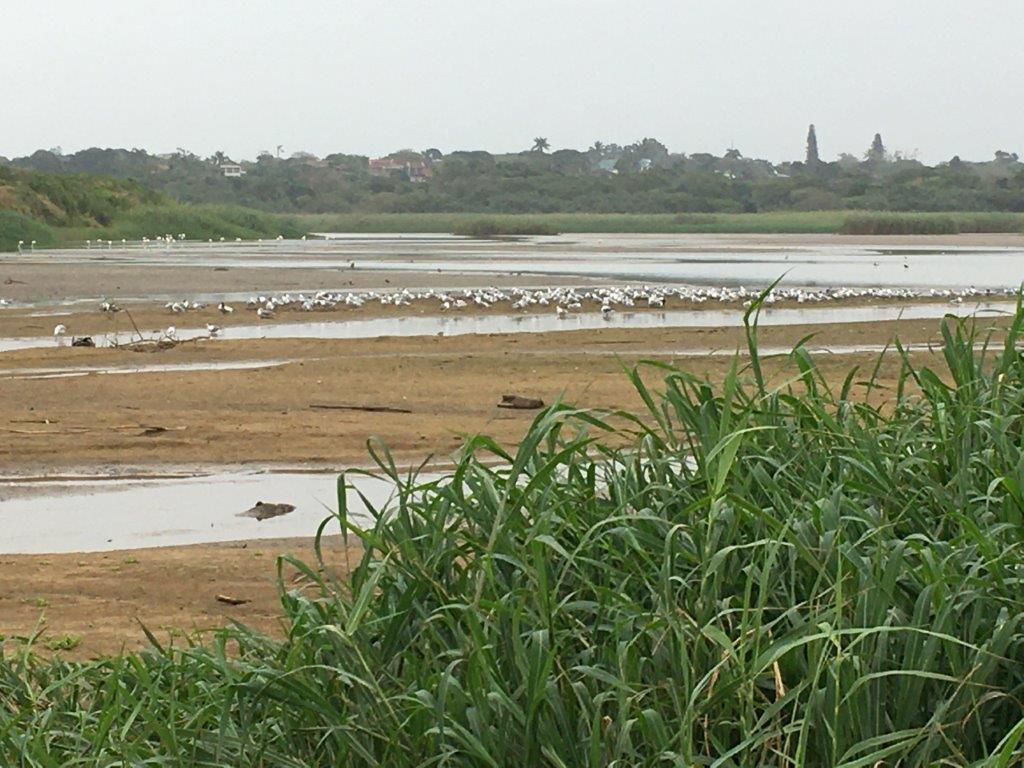
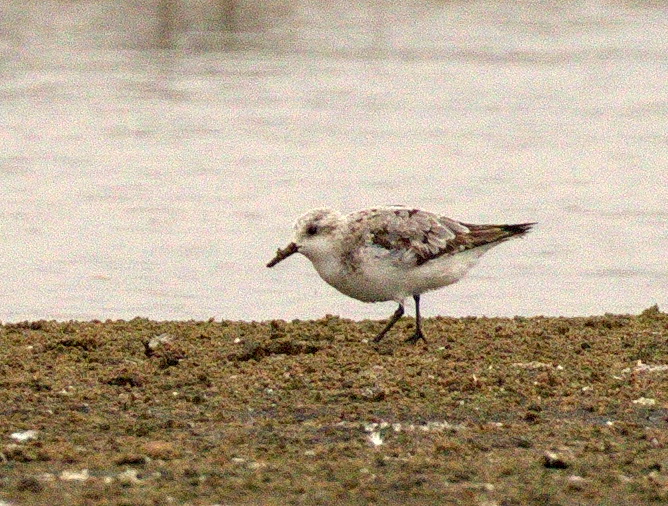
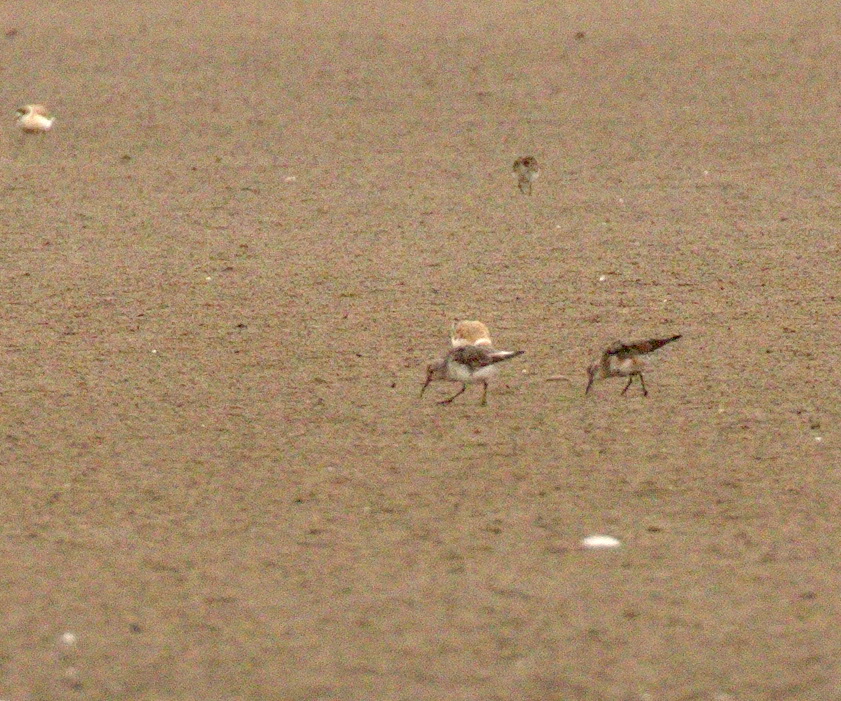
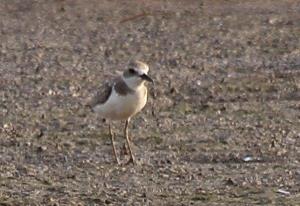
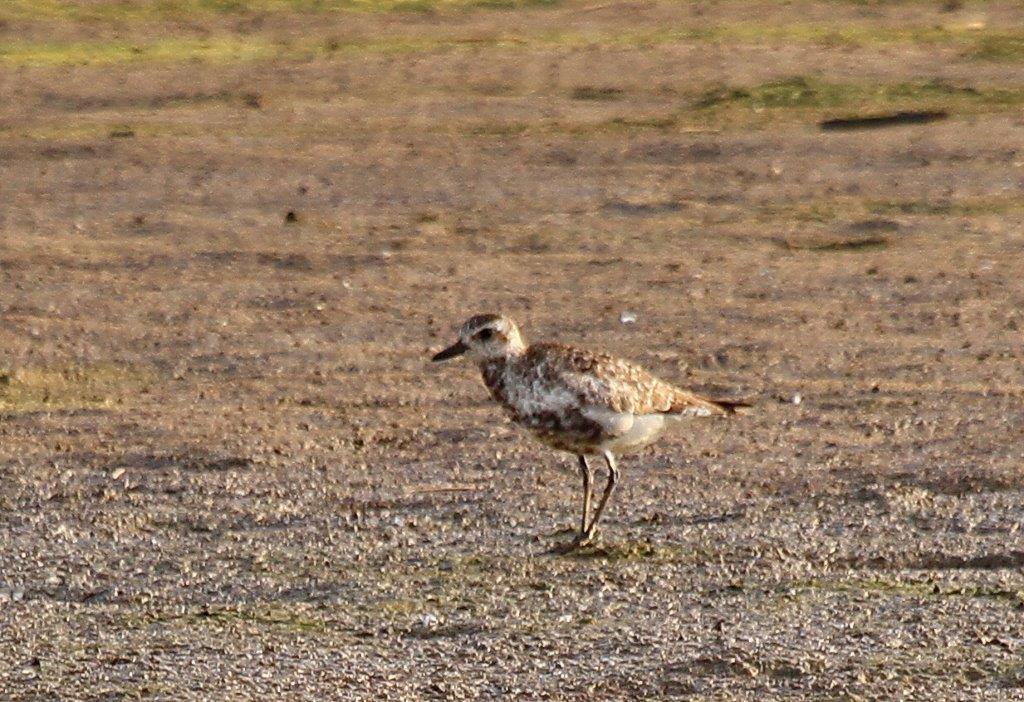
There were a few mystery birds – too far away even with the scope to positively ID. One that looked like a Plover or Sandpiper seemed to have a white rump – see poor photos. Even some of the Stints looked unusual.
Interesting Stint
Interesting Stint
Interesting Stint
Plover/Sandpiper with a white rump.
Plover/Sandpiper with a white rump.
Plover/Sandpiper with a white rump.
Behind the Terns and much further away were all the Flamingos which we had seen on our first day. An African Fish-Eagle flew over and they took to the air.
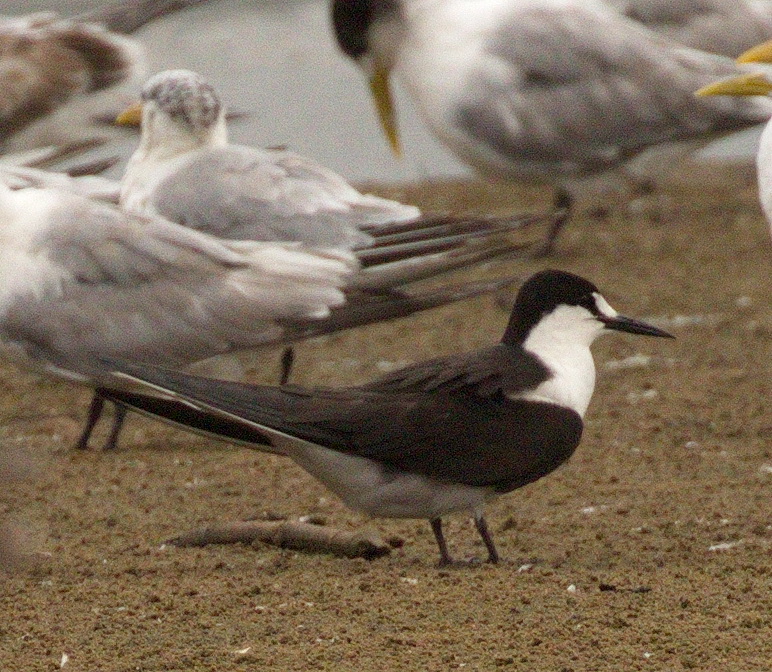
After about an hour or more there we decided to leave. We did not get far. Literally as we turned to go we heard this raucous “wide-a-wake” call from above. It was the Sooty Tern arriving. It sure made its arrival known and quickly took its place among the Greater Crested Terns.
On our first afternoon we went into Eastern Shores. First to look for the Rufous-bellied Heron. No luck. In fact we went three times before realizing that we had gone to the wrong place. We had gone to iMboma Pan.
But still no luck when we found the Amazibu hide overlooking the wetland where the Rufous-bellied had been seen – and was seen again several times after we left..
Just African Jacanas.
On the Vlei Loop we had several interesting sightings – a large herd of buffalos in the wetland area as well as two White Rhinos fighting for dominance. And they were serious. We were pleased to see that their horns had been removed leaving a bulbous stub. If not, then one of those Rhinos would have been badly injured. One Rhino had its head and horn beneath the other’s back left leg and raised him clear off the ground.
Fighting Rhinos
That first afternoon had another exciting sighting. Driving at the end of the Vlei Loop just before we hit the tar, suddenly popping out of the scrub came a Leopard walking straight towards us. Time maybe for a few shots before he disappeared so I turned off the engine, lent out of the window and got a quick blast. Then I realized I ought to close the window – but cannot do that with the engine off. The leopard was due to pass by my window in hands reach. But for some reason the Leopard crossed the road virtually touching our car and then disappeared into the bush.
Lucky LeopardLucky Lucky
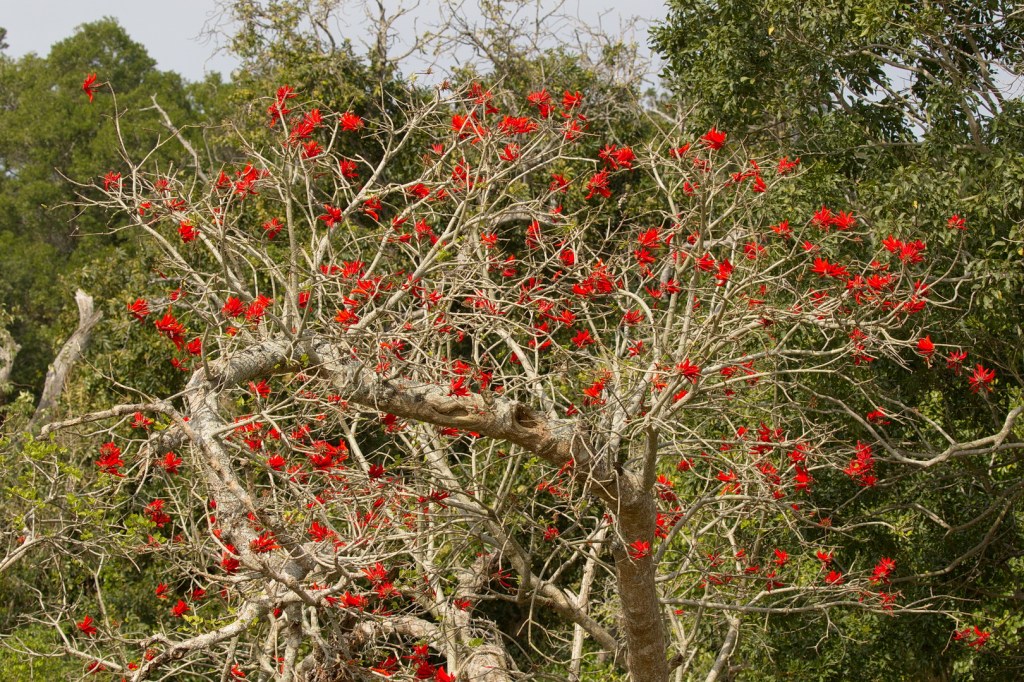
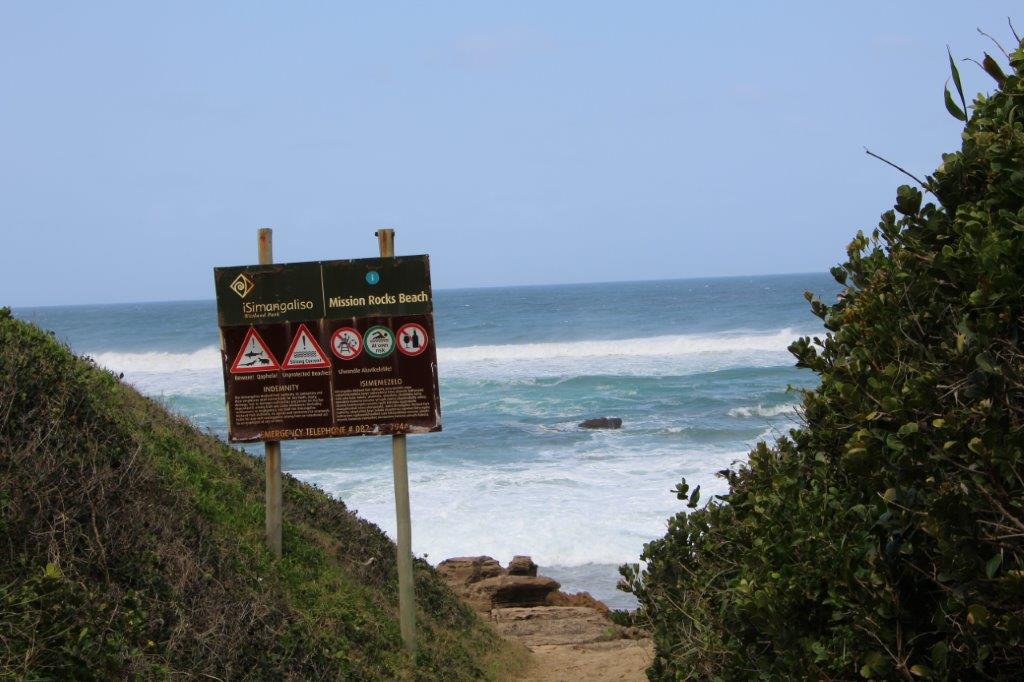
We visited Mission Rocks. Stopping at the picnic site before heading to the end of the road and the beach. The picnic site had some lovely flowering Erythrina [Coral] trees.
Erythrina flowers
Erythrina tree
Erythrina
At the end of the road at Mission Rocks we took the passageway to the rocks and looked out along the coastline.
On the way out we stopped at a convenient place to look out over the ocean where we noticed Hump-backed or Southern Right Whales passing by, blowing away and splashing their tails.
The pan at the kuMfazana Hide was dry and at Catalina Bay (Jock’s Mess) the vegetation below was fully overgrown and extremely difficult to spot any waterbirds therein. There was nothing to see out in Lake St Lucia either as it was very windy.
The Kwasheleni Lookout post is set atop the Dunes and gives a 360 degree view. Overlooks the sea, Lake St Lucia and the grasslands and dune forests below.
At Cape Vidal we wandered along the beach and saw a few birds – mainly White-fronted Plovers and Grey-headed Gulls. A Yellow-billed Kite made a close appearance – possible to see if we had anything it could snatch.
Grey-headed Gulls
White-fronted Plover
Yellow-billed Kite.
As we drove alongside Lake Bhangazi there were very few birds to see.
However on the opposite side there were Kudu.
Kudu.
That led us to the grassland area of the Bhangazi Grassland Loop. Here we encountered Collared Pratincoles virtually one every 100 metres. Strangely they were not prepared to fly off until we were right on top of them. Our journey for many kilometres was a slow one.
Grassland
One of the many Collared Pratincoles along the Grassland Loop.
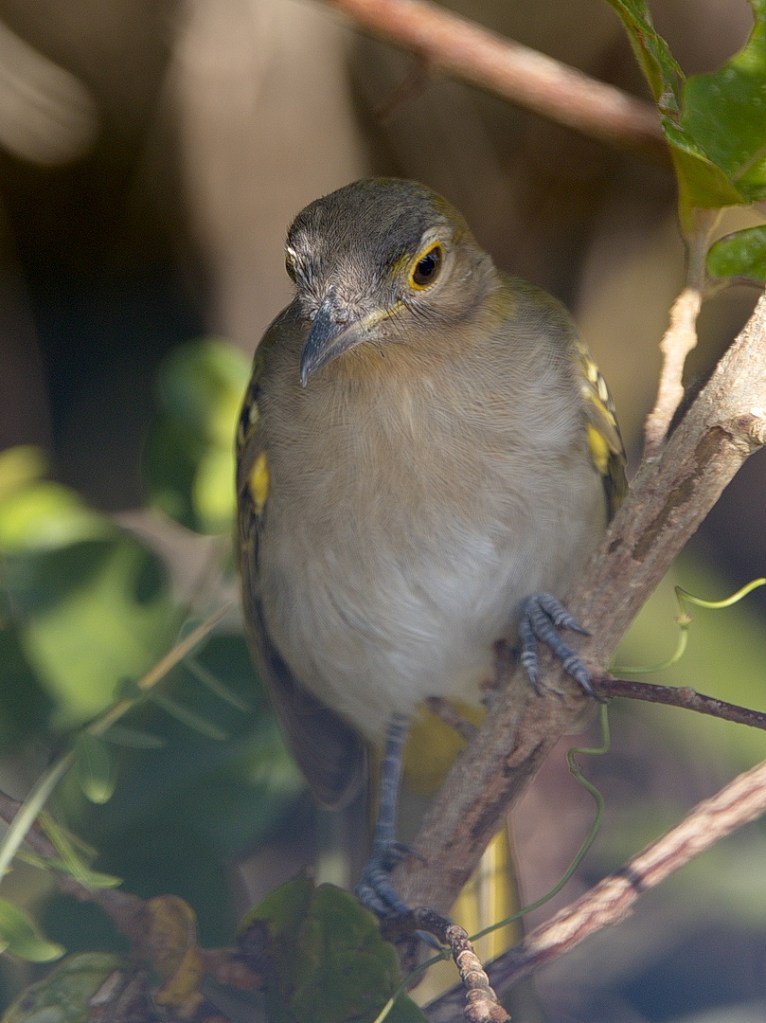
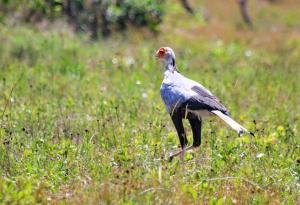
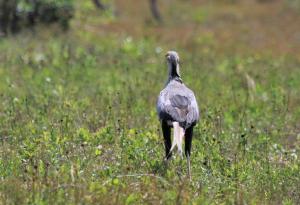
Driving through the park we had a number of pleasant bird sightings. There was a Juvenile Crowned Eagle seen from a distance – as were the two Secretarybirds on a nest. Red-breasted Swallows on the road side. A Brown Snake-Eagle and Vervet Monkeys as well as an obliging Yellow-bellied Greenbul.
Vervet Monkey
Two Secretarybirds – one up ended
Yellow-bellied Greenbul
Yellow-bellied Greenbul
Vervet Monkey
Red-breasted Swallows
Brown Snake-Eagle in an unusual stance
Juvenile Crowned Eagle
Despite the weather we thoroughly enjoyed ourselves in all the many places to bird. In total we identified 138 different bird species. Our list is downloadable, click below.
We left St Lucia with the rain. And on our way home What’s App messages kept being received saying that not only had the Rufous-bellied Heron been relocated but other special birds had turned up – Gull-billed Tern and Chestnut-banded Plovers. We considered doing a U-turn except that we were already half way home.
On impulse Sally and I decided to head up to St. Lucia for 4 nights and the same at Kube Yini (between Mkuze and Phinda). Then onwards, wherever, for a further week.
As it happened we ended up staying only 3 nights at Kube Yini then coming home. Everywhere was exceptionally dry. But the deciding factor to return home was yet another side wall puncture.
At St. Lucia we camped in the Sugarloaf campsite. Water was restricted due to the drought but the campsite did not appear to be affected – other than they only opened two of their four ablution blocks.
During our time at St. Lucia we went birding in Eastern and Western Shores of Isimangaliso Wetland Park as well as around the estuary mouth and the campsite. As you can see from our bird list (click here to see it), our time in St. Lucia around the estuary and campsite was the most rewarding.
On the first morning we headed for Eastern Shores. However as we left the camp gate we checked the sand bank in front of the Boat Club and restaurant. There were quite a number of Pied Avocets among numerous waders and terns. Most striking, however, were eight Black Herons together.
Pied Avocets
Pied Avocets
Black Herons
Caspian Tern feeding young
In the Eastern Shores we had two interesting experiences – firstly on three occasions we came across Southern Banded Snake-Eagles. One with a full crop after devouring a green snake.
Southern Banded Snake-Eagle
The second experience was at Lake Bengazi. (An aside – the causeway is still not passable due to the road collapse some years ago). Looking out across the Lake to the western side there were hundreds and hundreds of Pelicans on the shore line – mainly Great White but also Pink-backed.
Altogether in the 6 hours we were there we identified 72 different species.
Fan-tailed Widowbird
Red-breasted Swallow
Large Striped Swordtail
White Rhino at the Mafazana HIde.
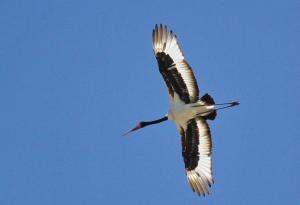
Saddle-billed Stork
Crowned Hornbil
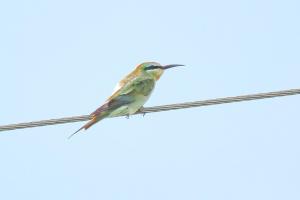
Little Bee-eater
Saddle-billed Stork
White-breasted Cormorants (note the full white underside of the young bird)
Burchell’s Coucal
The second full day at St. Lucia we headed for Western Shores – windy and overcast. Virtually all the dams were empty of water. From the boardwalk overlooking Lake St. Lucia we could see how much the drought had affected the water levels in the Lake.
One of the highlights was stopping next to a male and female African Cuckoo-Hawk on the ground not 20 metres from us.
African Cuckoo-Hawk- female
African Cuckoo-Hawk- female
African Cuckoo-Hawk – male
African Cuckoo-Hawk- male
African Cuckoo-Hawk- male
And then at the main picnic site, we noticed a small dam with some water – probably being pumped in. At the dam there were a number of Collared Pratincoles and a Wood Sandpiper – soon to be scattered when three noisy Spur-winged Geese arrived.
Collared Pratincole
Collared Pratincole
The picnic site is a lovely location however it could do with some tables and benches under the trees. Here we had a good sighting of a Scarlet-chested Sunbird. Altogether only 48 different species were identified in the 5 hours we were there.
Secretarybird
Secretarybird
Violet-backed Starling
Dark-backed Weaver
Variable Diadem
Most afternoons we spent time birding around the campsite and on the beach. Because of the wind the beach was fruitless and the banks of the estuary had few birds.
The exception to this was the sand bank in front of the boat club restaurant. Among the numerous waders and shore birds we did manage to find an unusual Plover.
The guide with a group of American tourists said it was a Lesser Sand Plover. However as the photos below show – it was in fact a Greater Sand Plover (unless of course both were present). The greenish legs lead me to question what I photographed.
If we had read the text in the Roberts App more closely we would have known to watch its behaviour. When foraging the Lesser takes about 3 paces then pauses for about 2.5 to 3 seconds. The Greater takes about 9 to 10 paces then pauses for 5 to 8.5 seconds!
Greater Sand Plover
Greater Sand Plover
Greater Sand Plover
Greater Sand Plover
Greater Sand Plover
Greater Sand Plover
Also present on the sand bank was a Grey Plover in semi-breeding plumage.
The campsite itself as usual had an abundance of different birds – some of the more notable for us were the Livingston’s Turacos, Purple-banded Sunbirds and an obliging Bearded Scrub-Robin.
Purple-banded Sunbird
Purple-banded Sunbird
White-eared barbet
Brown Scrub-Robin
Yellow Weaver
Yellow Weaver – male and female
Livingston’s Turaco
Southern Boubou
Crested Guineafowl
Red-capped Robin-Chat
Orange Cat
But perhaps the most unexpected appearance was that of an African Wood-Owl. We were having dinner when it flew to our table knocking over a handbag on the ground beside the table. It then sat in a nearby tree and kept foraging at the base of a tree not three metres away from us.
Altogether in the camp and nearby estuary a count of 94 different species – not too shabby.
And then it was time to move on to Kube Yini where we stayed in a rather large cottage belonging to a friend of ours. The cottages are all on the top of a number of steep hills. Everywhere was very dry and waterholes empty – except for the two where water was pumped in – both rather small.
It was a decided challenge to back the camper into the driveway!
Here we settled in to the luxury of large space. Checking the map of the area we thought that we should head for the river in the canyon below. So the first afternoon after settling in we headed down to do a short loop. In parts it was steep any very rocky – progress was slow and the birds likewise.
The next day we headed for a longer drive alongside the river. Again steep and rocky everywhere so the drive lasted probably 2 hours longer than we thought. Birds there were, close to the river but nothing that stood out.
Our best birding was around the cottage – Burnt-necked Eremomela, Bearded Scrub-Robin and African Yellow White-eye. In the evening the call of the Fiery-necked Nightjar. And on the plains below next to the clubhouse a Flappet Lark called for our attention. 61 different bird species were identified while we were there.
Bearded Scrub-Robin
Brown-hooded Kingfisher
Steppe Buzzard
Steppe Buzzard
Yellow White-eye
That evening we went to the clubhouse to watch the RSA semi-final along a number of other residents. In one conversation we mentioned that the roads are very rocky especially on the way up and down to the river. They were aghast and surprised that we had ventured there as none of them did.
After the rugby on the way back to the cottage we heard the very unpleasant sound of a tyre giving off puffs of air on each revolution and the piping alarm of the tyre pressure monitor sounding. Somehow we managed to get back to the cottage before it went completely flat.
The tyre took ages to change simply because we have a Fortuner and they have this ridiculous system to lower the tyre beneath the car. The problem being to insert a long bar unsighted into a slot designed for perfect alignment. Much cursing and swearing until by chance it unexpectedly went in.
The next day we only ventured to the clubhouse to watch the final on our own. The next day – home.
Enough adventure for this trip. But altogether 152 different birds identified.
Sugarloaf campsite in St Lucia was not too busy. School holidays had ended. There was water rationing in St Lucia which meant that one day we had no tapped water but the rest all day. Water bottles were laid out at each of the ablutions blocks. Power cuts were from 5 to 6 pm several nights – yes only one hour.
We spent a morning in each of the two parts of the Isimangaliso Wetland Park – Eastern and Western Shores. And one morning in the Gwalagwala trail. Time was spent on the beach too, though the gulls and terns were mostly down the coast chasing the sardines. No Franklin’s Gull!
The weather was mostly kind to us and we did have rain on several nights which helped to bring out the birds the following mornings.
In all we identified 63 birds in Eastern Shores, 64 birds in Western Shores and 82 birds in and around the campsite, Gwalagwala trail and on the beach. In total 125 different bird species were identified. Click here to see the lists.
Here are some photos of the birds seen.
Blue-mantled Crested-Flycatcher
Black-winged Lapwing
Senegal Lapwing
Black-bellied Bustard
Ashy Flycatcher
African Fish-Eagle
Spotted Ground-Thrush
Spotted Ground-Thrush
Spotted Ground-Thrush
Terrestial Brownbul
Trumpeter Hornbill
African Cuckoo Hawk
Southern Boubou
Red-capped Robin-Chat
Olive Bushshrike
Common and Swift Terns
One footed Grey-headed Gull
Whiskered Tern
Pied Avocets
Osprey
Osprey
Saddle-billed Stork
Gorgeous Bushshrike
Croaking Cisticola
Collared Pratincole
Collared Pratincole
Brown Snake-Eagle swallowing breakfast whole.
Brown Snake-Eagle swallowing breakfast whole.
Chorister Robin-Chat
Chorister Robin-Chat
And a few butterflies and mystery Cisticolas for ID.
St. Lucia as well as Eastern and Western Shores of Isimangaliso Wetland Park – 23 to 27 November 2014
Paul and Sally Bartho
After a short drive from Ndumo we reached St. Lucia and chose to stay in the large Sugarloaf campsite which was relatively empty. Eden Park is very nice and well treed but Sugarloaf is situated right next to the boardwalk which follows the estuary to the beach. Peak season and the campsites are full to bursting – not pleasant. We tend to avoid weekends at Sugarloaf due to boisterous fishermen. Eden Park – if it is open – is quieter at those times.
Sugarloaf campsite
Sugarloaf
During our time here we visited both Eastern and Western Shores of the Isimangaliso Wetland Park as well as spending time around the estuary and on the beach. The campsite too is usually full of interesting birds – Green Twinspots, Woodward’s Batis, African Goshawk, Livingstone’s Turacos amongst many more common bush birds.
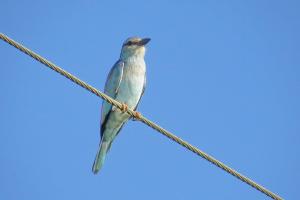
Eastern Shores was the first place we visited. We went in early and spent till midday there. On entry we had our first and only trip sighting of an European Roller.
European Roller
European Roller
We took the Pan Loop to visit Amazibu Pan – it was quiet. However there were several Collared Pratincole on the opposite bank. One obligingly appear on our side for a photo.
Collared Pratincole
Then we took the Vlei Loop around a large wetland area. Also very quiet but we did manage to see a southern-banded Snake-Eagle in the distance. Apologies for the quality of the photos.
Southern Banded Snake-Eagle
Southern Banded Snake-Eagle
Southern Banded Snake-Eagle
Just after the Mission Rocks turn-off there is a road to the left taking you to the relatively new Mafazana Bird Hide. Again all was quiet here too. It is a 200 metre walk through the forest to the hide. The hide is massive with 3 viewing levels. Be alert to potential predators. Once, on arrival, I exited the car only to be shouted at by Sally to get back in. There was a large male leopard not 30 metres away.
View along the walkway to the hide.
View from Mafazana Hide
View from Mafazana Hide
Splat was sat in the driver’s seat to look after our vehicle.
On the way back we had our first sighting of Blue-cheeked Bee-eaters and a lone Crowned Hornbill.
Crowned Hornbill
Blue-cheeked Bee-eater
Blue-cheeked Bee-eater
Blue-cheeked Bee-eater
In total we only identified 56 different bird species during the few hours we were in Eastern Shores.
Western Shores was a lot more productive and yielded 108 different bird species. We were there for a few hours longer.
It is very different from Eastern Shores – large expanses of open grassland, wetland areas, several open ponds, intermittent patches of forest, a very clean and open picnic site, a boardwalk up through the forest to a tree top platform overlooking Lake St. Lucia below as well as a bird hide at the northern end of the Park where the elephant prefer to hang out.
Picnic Site
Large open pond right by the road
Barn Swallows a plenty and showing the open nature of the grasslands
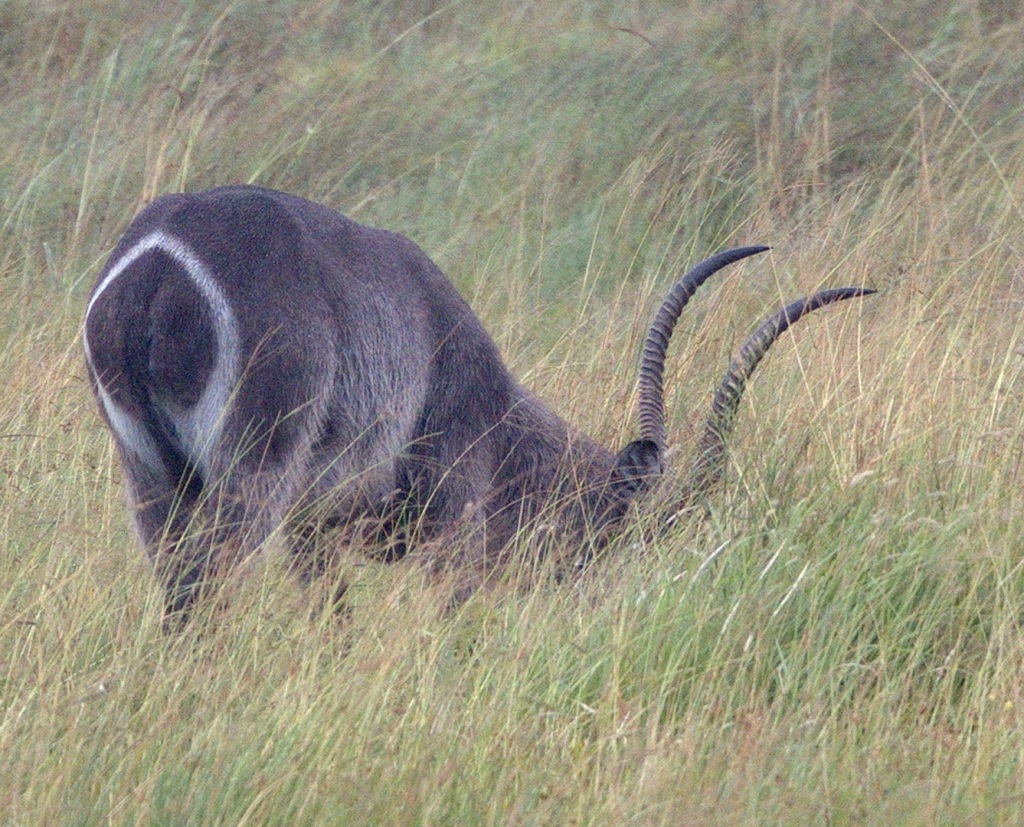
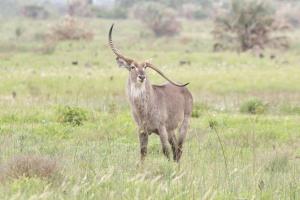
Waterbuck with crooked horn – rather suave and foppish
During the drive on the one way loop we came across a number of interesting species – Long-crested eagle, a juvenile fish-Eagle, numerous Black-bellied Bustards, Red-breasted Swallows, Yellow-throated Longclaws and Petronias to name a few. However the highlight for me was the Lemon-breasted Canaries. We had great views of 2 or 3 right in front of us beside the road.
Some photos of birds on this loop:
Red-breasted Swallow
Burchell’s Coucal
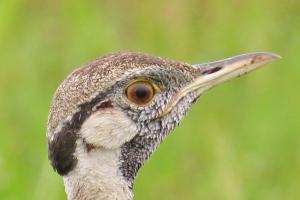
Black-bellied Bustard
Black-bellied Bustard
Black-bellied Bustard in flight
Black-bellied Bustard in flight
Black-bellied Bustard in flight
Black-bellied Bustard in flight
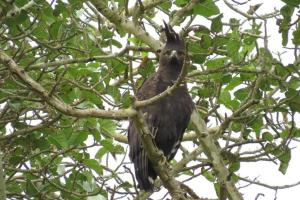
Long-crested Eagle
Long-crested Eagle
Long-crested Eagle
African Fish-Eagle – juvenile
Black-chested Snake-Eagle
Black-headed Heron
Trumpeter Hornbill
Yellow Weaver
Yellow-billed Egret
Yellow-throated Petronia
We came across what we believe to be a Booted Eagle going from one grassy area to another.
Booted Eagle
Booted Eagle
Booted Eagle
Booted Eagle
And a mystery Cisticola – possibly a Black-backed?
Mystery Cisticola
At the hide there was little or no water unfortunately but we did see this juvenile African Cuckoo-Hawk on the branch of a distant tree.
African Cuckoo Hawk – juvenile
When we visit St. Lucia, Western Shores is a must visit for us.
Back at the campsite we spent some time listening to the birds and walking around the 100 campsites. The Woodward’s Batis serenaded us each morning as well as the Livingstone’s Turacos, Red-capped Robin-Chats (Natal Robin) or RCRC birds, Greenbuls; Eastern Nicator and others.
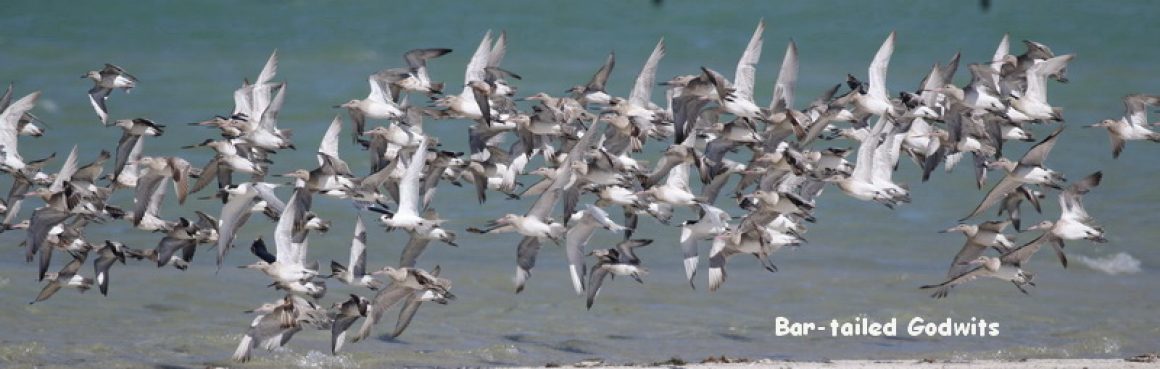
If it was not windy we went to the estuary and the beach – looking for the Sooty Tern which seems to have habituated the estuary for a number of years now as well as for the Bar-tailed Godwit which we had heard about on Trevor Hardaker’s Rare Birds Report.
Looking towards the boardwalk with the sea to the right.
Beach Flora
Beach Flora
Yellow-bellied Greenbul in the campsite.
Purple Swamphen on the way to the beach
On the beach we were fortunate to find a flock of 13 African Black Oystercatchers:
African Black Oystercatchers
African Black Oystercatchers
And further down the beach towards the river mouth we spotted numerous terns – mainly Swift Terns but also Little and Common – all distantly on the opposite bank on the river mouth. Amongst them were many waders including Sanderlings; Little Stints; Common Ringed, White-fronted and Three-banded Plovers; Curlew and Common Sandpipers; Common Whimbrel. However the birds that stood out most were the Terek Sandpiper and the Lesser Sand Plover.
Lesser Sand Plover
Lesser Sand Plover
Lesser Sand Plover
Common Ringed Plover
White-fronted Plover
Sanderlings
Sanderlings
Curlew Sandpiper
We walked the mudflats at the mouth of the estuary – watching out for both Hippos and Crocs when we remembered and weren’t too carried away by the birds. On the way to one area we came across a feeding area full of common Waxbills. They were there on previous occasions when we had visited.
Common Waxbill
Common Waxbill
Many small waders were present; Sanderlings; Little Stints; Common Ringed, White-fronted and Three-banded Plovers; Curlew and Common Sandpipers. But there were a number of specials too: Pink-backed Pelican, Grey Plover, Pied Avocet, Ruddy Turnstone:
Pied Avocet
Pied Avocet
Pied Avocet
Ruddy Turnstone
Grey Plover
Grey Plover in flight
Pink-backed Pelican
And then to cap it off we found a pair of Bar-tailed Godwits.
Bar-tailed Godwits – a pair
Bar-tailed Godwits – a pair
Bar-tailed Godwit
Bar-tailed Godwit
Bar-tailed Godwit
Bar-tailed Godwit
The campsite, the beach and the estuary gave us 71 different bird species.
In total we had observed 142 different bird species whilst in St. Lucia.
And then it was time to go home after 7 weeks away.
Look out for a summary follow up including:
a bird list of what we saw where, highlighting what we thought were specials
our worst sighting
pictures of birds for ID
photos of some of our specials
Hope you have enjoyed the series. It has brought back fond memories for us and the desire to venture anew.
Sally and I decided to spend the New Year camping away from home. Northern Zululand was our destination. Our program:
3 nights in Bonamanzi
4 nights in Mkuze
4 nights in Ndumo
3 nights in St. Lucia
Bonamanzi.
At Bonamanzi we stayed in Campsite 5 and joined friends who were already there. Campsite 5 is huge and can accommodate 4 camp groups easily – however there is only one toilet/shower and one wash-up area. As pensioners it cost us R90 pppn.
In Bonamanzi as you may know you are able to walk anywhere on the property except in their Game viewing area. This is great for birding. However elephants do use the area as well. One morning when driving to the office we found a huge branch across the road and elephant tracks confirming who was the culprit for this roadblock. Beware.
The first night we had a lot of rain. So the next morning we (our friends and ourselves) decided to visit Hluhluwe rather than bird in the rain around the campsite. It continued raining.
Taking the shortcut to the freeway we went through numerous muddy pools past the Hakuna Mutata accommodation until we got to the bridge. The approach to the bridge was up a short steep bank which looked muddy and badly cambered – so down I went into Low range 4×4 and up we went – well actually did not make it. About a third of the way up the Fortuner slowly drifted off the road onto the trees on the left. Fortunately I was able to reverse out of trouble without damaging the car. Now the long way round to Hluhluwe.
The rain persisted. However we decided to look for the Finfoots (Finfeet?) which our friends had seen the previous day. Taking the immediate right turn as you enter the park we drove round to where they had seen them basking next to the river crossing – no luck! About the only excitement we had were 7 White Rhino crossing the road in front of us. They were the first aminals we saw since entering! Aminals were scarce and the birding was not much better. Eventually we decided to return to Bonamanzi for lunch. Altogether we had seen 35 species of birds in the 3 hours we were in Hluhluwe.
Croaking Cisticola
European Bee-eater
Dusky Indigobird
Fan-tailed Widowbird
Red-backed Shrike
The following day we walked around the camp area and went on a drive to explore other parts of Bonamanzi. In one section we had heard an African Broadbill on a couple of occasions (Pathway E to F). Later we went back with our friends and another couple who had arrived to see if we would have any better luck.
Sally mentioned to Irene that you needed to look on cross branches about head height in the bush. We had not gone more than 20 metres when Irene spotted a Broadbill – unbelievable. I managed to get a few poor shots which you can see in the gallery below. On the way back I popped into the bush to see if I could get a few better shots – no luck finding the Broadbill but I did surprise a Narina Trogon – see pics in Gallery.
After that we visited the office area and drove back in the dark spotting a Shikra on the road munching on its prey – unconcerned with the car’s headlights on him. Poor pictures in the gallery.
Painted Reed Frog, Bonamanzi (Tree Frog)
Emperor Moth, Bonamanzi – lovely leaf feelers
Luna Moth, Bonamanzi (Not an Emperor Moth)
UI Buzzard
Same UI Buzzard
Twisted Grey Heron
Spear fishing – great catch
Almost got it all in!
Pied Kingfisher waiting patiently
Pied Kingfisher about to go for it.
One exponent in the Nyala dance.
What a mouthful for a Malachite Kingfisher
Little Egret and Common Greenshank
White-faced Ducks
Water Thick-knee
Water Thick-knee in ambush
Sunbird Nest – but which one – reach for your books
Thick-billed Weaver. All pics of weavers in same pond.
Lesser Masked Weaver
Village Weavers
Yellow Weaver
Yellow Weaver- I need food! Now!
African Jacana
African Pied Wagtail
Common Scimitarbill
Diedrick’s Cuckoo
Black-bellied Starling
White-browed Scrub-Robin
White-browed Scrub-Robin
Black Cuckooshrike showing all his colours, Bonamanzi (Not a Cuckoo!!)
Shikra
Shikra
Shikra
Narina Trogon
Red-fronted Tinkerbird – peek-a-boo
Red-fronted Tinkerbird
African Broadbill
Bonamanzi yielded 89 species plus one UI (Unidentified) Raptor – have a go there is a pic in the gallery. Most of the Cuckoos were heard as well as the Green Malkoa. A Black Cuckooshrike in magnificent breeding plumage gave a great display round the campsite – yellow gape and epaulets very strident. A Red-fronted Tinkerbird and a Bearded Scrub-Robin also gave us great displays in the campsite.
Mkuze.
Surprisingly the tent was dry as we packed to leave Bonamanzi. We headed for the new gate to enter Mkuze. On the way we passed Muzi Pan. The water level was so high that it was a raging torrent beneath both bridges along the Muzi Pan dam wall. Not surprisingly there were few bird species about – we saw only 9 in the 10 minutes we stopped there. The Knob-billed Duck being the most interesting.
Mkuze Campsite. Still has water problems – the boreholes run dry regularly and the water is unfiltered so not only is it inadvisable to drink but the silt that comes with it is damaging all their taps – water leaks all the time.
Trying to book a campsite at Mkuze is often difficult because of this. Also they try to restrict the number of bookings to 10 campsites as that is all their one staff member can handle. They have over 30 potential sites. When we arrived on 31st December one man was still trying to cut the knee high grass in 50% of the sites!
On top of this the Ezemvelo Parks Board have fixed the campsite rate at R230 for 3 people – an increase from R180 last year (almost 30%) with no improvement in facilities and no way to get a rate for 2 people. Like Sodwana who charge for 4 people irrespectively, this is a total rip off.
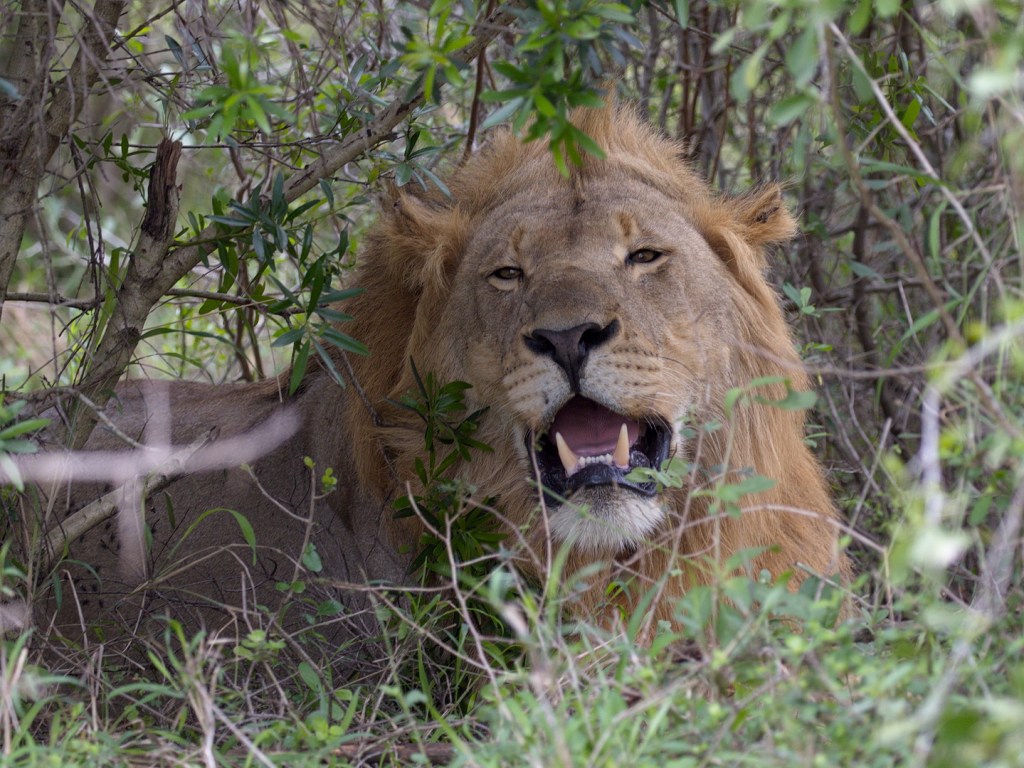
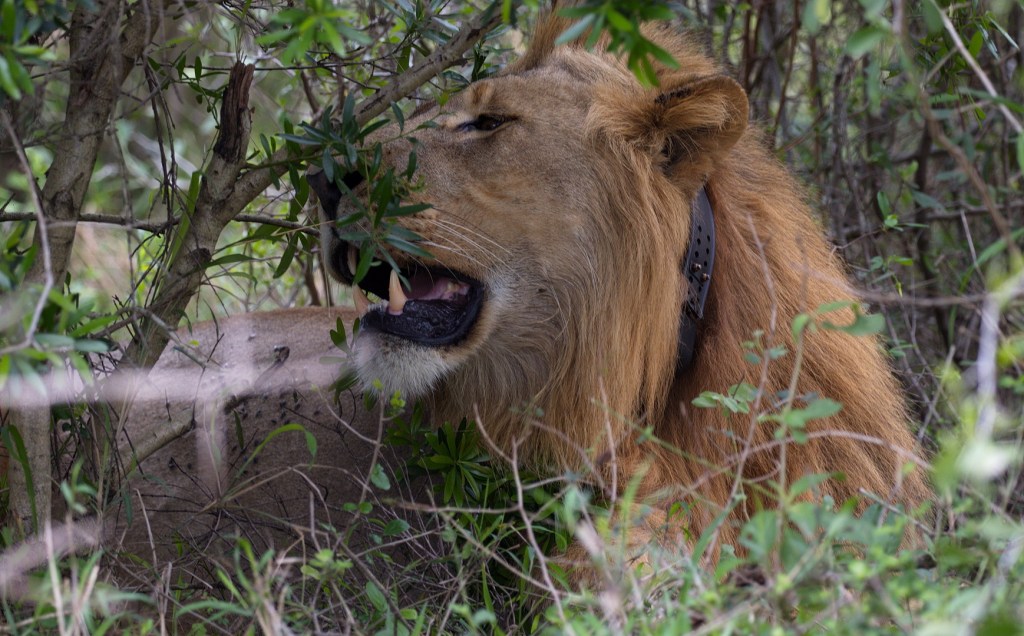
During the 3 full days in Mkuze we never managed to find the newly released Lions perhaps because they are still happy to return to their boma where they were kept originally and also because all the rain the grass was high everywhere.
Some of our more interesting bird sightings include:
Black bellied Bustard
Lemon-breasted Canaries
Cuckoos vociferously calling – Black, African Emerald, Diedrik’s, Klass’s, Jacobin, Levaillant’s and Red-chested. A pair of the latter chasing each other round the main office.
Namaqua Doves
Lesser Spotted Eagle.
Burn-necked Eremomelas
Grey Go-away-bird
a juvenile Greater Honeyguide around our camp being fed by Black-bellied Starlings.
Woodland Kingfishers
Common Quail obligingly walking ahead of us on the road to KwaMalibali Hide
Red-backed Shrikes – everywhere
Neergaard’s Sunbird – always a pleasure
Grey Penduline-Tits in the trees above our campsite
Red-throated Wrynecks
European Bee-eater
European Roller
Grey Go-away-bird
Golden-breasted Bunting
Greater Honeyguide – immature
Greater Honeyguide – immature
Green-winged Pytilia
Green-winged Pytilia
Grey Penduline-Tit
Grey Penduline-Tit
Helmeted Guineafowl
Klaas’s Cuckoo – female, Mkuze (Not a Klass’s!!)
Klaas’s Cuckoo, Mkuze (Not a Klass’s!!)
Klaas’s Cuckoo, Mkuze (Not a Klass’s!!)
Klaas’s Cuckoo, Mkuze (Not a Klass’s!!)
Lappet-faced Vulture,
Lesser Striped Swallow,
Lesser Striped Swallow,
Lesser Striped Swallow,
Lizard Buzzard
Lizard Buzzard
Lizard Buzzard
Long-tailed Widowbird
Long-tailed Widowbird
Mkuze campsite
Namaqua Dove
Nsumo Picnic site – beware Lions!
Pale Flycatcher,
Pied Kingfishers,
Marico Sunbird, Mkuze (Not a Purple-banded)
Purple-crested Turaco,
Rattling Cisticola
Red-backed Shrike – female,
Red-backed Shrike – female,
Yellow-billed Hornbill,Mkuze (NOT a Red-billed!!!)
Red-billed Oxpecker
Red-billed Queleas
Red-chested Cuckoo
Red-chested Cuckoo
Red-chested Cuckoo
Red-throated Wryneck
Red-throated Wryneck
Red-throated Wryneck
White Rhino minus one horn
Rufous-naped Lark
Sabota Lark
Sabota Lark
Spotted Flycatcher,
Striped Kingfisher
Three-banded Plover
Common Fiscal – juvenile, Mkuze (UI Bird)
Long-tailed Paradise-Whydah, Mkuze in transitional plumage (UI Bird)
Long-tailed Paradise-Whydah, Mkuze in transitional plumage (UI Bird)
Dusky Indigobird
Violet-Backed Starling – female
Violet-Backed Starling – male
Wahlberg’s Eagle infant on nest
Wahlberg’s Eagle
Water Thick-knee
Western Osprey,
White-browed Scrub-Robin
White-faced Duck
Willow Warbler
Yellow-fronted Canary
Yellow-throated Longclaw
African Firefinch
African Hoopoe
African Pied Wagtail
Barn Swallow,
Black-bellied Bustard
Black-bellied Bustard with ticks!
Black-shouldered Kite,
Blue-cheeked Bee-eater
Broad-billed Roller
Cardinal Woodpecker
Common Quail
Common Quail
Common Quail
Common Quail
At the end of our visit we had identified 140 bird species – the pans were very full discouraging many water birds otherwise we would have expected many more.
Ndumo.
Ndumo is always a special place to visit and the local guides have a reputation of excellence. It is always a pleasure to take advantage of the early morning walks which at R110 pp is really good value.
Again we had 3 full days in the Reserve. On one of these days we spent the morning in Tembe Elephant Park.
Tembe was full of elephants – fortunately in the open swamp area so we could easily see them and not be chased by them as happened twice the last time we visited.
Although it felt like birding was quiet, we managed to identify 66 species in the 4 hours we were there. We were rewarded with sightings of an African Cuckoo-Hawk juvenile and an African Harrier-Hawk – the only place where we saw each of them. The other special sighting was of a pair of Woodward’s Batis. No Plain-backed Sunbird.
African Cuckoo-Hawk – immature
African Cuckoo-Hawk – immature
Upside Down or downside up.
African Cuckoo-Hawk – immature
African Cuckoo-Hawk – immature
Croaking Cisticola
European Bee-eater
Big Boy
We like the sign
Swamp elephants
Little Bee-eater
Rufous-naped Lark,
Serendipidy
Steppe Buzzard
UI Warbler – what am I?
Woolly-necked Storks
Yellow-throated Longclaw
The rest of our time spent in Ndumo. We went on a morning drive and 2 early morning walks and of course explored the Reserve on our own. In all we identified 142 species including an Eurasian Hobby.
On the last morning I went on the Southern Pongola walk. There were 3 of us and our guide, Sontu. His skills are superb. On the walk we heard the Narina Trogon and an African Golden Oriole – however the highlight was spotting a Black Coucal in the wetland area.
Trumpeter Hornbill,
White-eared Barbet
White-winged Widowbird
Wildebeest – juvenile,
Woodland Kingfisher
Woodland Kingfisher
Yellow Weaver being given a hand
Yellow Weaver building his nest
African Fish-Eagle
Yellow-billed Stork (not a Spoonbill – quite doff!)
Sugarloaf Campsite in St Lucia was our base for 3 nights. It is a huge camp with 100 sites ideally located right by the sea. It was only about 20% full and the fishermen were well behaved. Watch it on weekends as they can be quite raucous. The three nights was R432 for both of us – very reasonable.
We birded in 3 areas: Eastern and Western Shores and around the campsite.
Western Shores is the newly opened area of the iSimangaliso WetlandPark. It has been very well developed. The habitat is predominantly flat open grassland with outcrops of woodland and forest. There is currently a lot of freestanding water with many wetland areas. There is one hide and a boardwalk to a lookout point overlooking LakeSt Lucia. The picnic site is large, shady and well situated. We spent almost 6 hours there covering the whole road network.
As we approached the hide a herd of elephants – about 15 – saw us and calmly walked away allowing us access. Then at the hide, just as we were about to leave, Sally saw a raptor flying over the pan in front of the hide. Small head and quite barred underside. We got excited. Sally immediately pronounced what she thought it was. The bird then landed in one of the large broad-leafed trees opposite us about 100 metres away. Out came the scope and luckily the bird was not secretly hidden within. On further inspection we had a clear sighting of its head and tail and it was clear that Sally was correct. A lifer for me – a European Honey-Buzzard.
I include some pictures of the habitat and a few of the birds we were lucky enough to photograph. In all we saw 72 species in the 5.5 hours we were there.
Steppe Buzzard
Crested Guineafowl
Crested Guineafowl
European Honey-Buzzard
European Roller
Hamerkops
Hamerkops
Malachite Kingfisher
Red Bishop
Purple-banded Sunbird
Boardwalk
View from the boardwalk deck
View from the boardwalk deck
Western Shores Habitat
Western Shores Habitat – early morning, eerie light
Western Shores Habitat
Western Shores Habitat
Western Shores Habitat
White-backed Ducks
White-eared Barbet
Ashy Flycatcher and young
Black-breasted Snake-Eagle
Black-headed Heron,
Blue-cheeked Bee-eater
Blue-cheeked Bee-eater
Burchell’s Coucal – juvenile begging
Burchell’s Coucal – juvenile
Burchell’s Coucal
Burchell’s Coucal
Eastern Shores. Similar in habitat to the WesternShores but more hilly with coastal forest and the sea and shore. There are 2 bird hides and several lookout points and picnic sites as well as a number of side loops off the main road to CapeVidal. In the past we have seen both White and Black Rhino and Leopards (one right next to the car park for the large new Mafazana hide).
On the Vlei Loop we saw our first raptor – a Southern-banded Snake-Eagle. It was sitting prominently in a bare tree with the sun directly behind it. We had to work hard to get the right angle to see it clearly enough to identify it.
At the Mafazana hide Sally spotted 2 Saddle-billed Storks on top of a distant tree. We wondered if they were starting to breed early!
The other sighting worth mentioning was surprisingly that of a Lilac-breasted Roller. It was the first and only sighting of one on our whole 2 week trip – most unusual.
In all we identified 73 species in the 6 hours we were there.
Southern Banded Snake-Eagle
UI Raptor – have a go at its ID
View from Mafazana Hide
Cape Wagtail
Lilac-breasted Roller
Saddle-billed Storks – could they be nesting so early?
St. Lucia, Sugarloaf Camp and the immediate shore.
On setting up camp the monkeys arrived. There were also a couple of Grey Duiker close by. It was hilarious to watch them interact. One approached the other and the next minute they were all chasing each other around the site. Other aminals seen in the camp included Bushbuck, Red Duiker and interestingly Reedbuck – often paying little attention to us Humans.
Right next to the camp is the boardwalk to the sea and the mouth of LakeSt Lucia. Hippos and Crocs were very evident – just waiting for one of the fishermen to get too close.
On the first afternoon after setting up our camp we headed for a walk on the beach. We were surprised by a Palmnut Vulture which flew over our heads and landed on the inland side of the beach at the mouth of LakeSt. Lucia. We approached slowly watching it nibbling on the base of some of the spindly grass protruding from the muddy edges of the lake – managing to get with 15 metres of it. An unexpected waterbird!
Campsite birding was very good. One R-C R-C (Natal Robin or as Sally says Cossypha Natalensis) joined us for a sundowner doing good imitations of an African Emerald Cuckoo. An African Goshawk landed in the tall pine trees above us to sing his good-bye as we prepared to leave. But probably the highlight was a wonderful view of a male Green Twinspot in vivid plumage.
In all we recorded 57 species in and around the campsite including the walk along the waterfront.
Palmnut Vulture
Palmnut Vulture
Palmnut Vulture
Palmnut Vulture
Palmnut Vulture
Palmnut Vulture
African Goshawk
Common Ringed Plover
Livingston’s Turaco
Livingston’s Turaco
Sadly we returned home to a chilly welcome in a not so sunny Hillcrest.
In total we identified 235 species on our two week odyssey.
If anyone would like a copy of our excel spreadsheet showing which birds we identified in each of the 9 different reserves we visited, then click here to contact me.
























































































































































































































































































































































 Birds are our Story