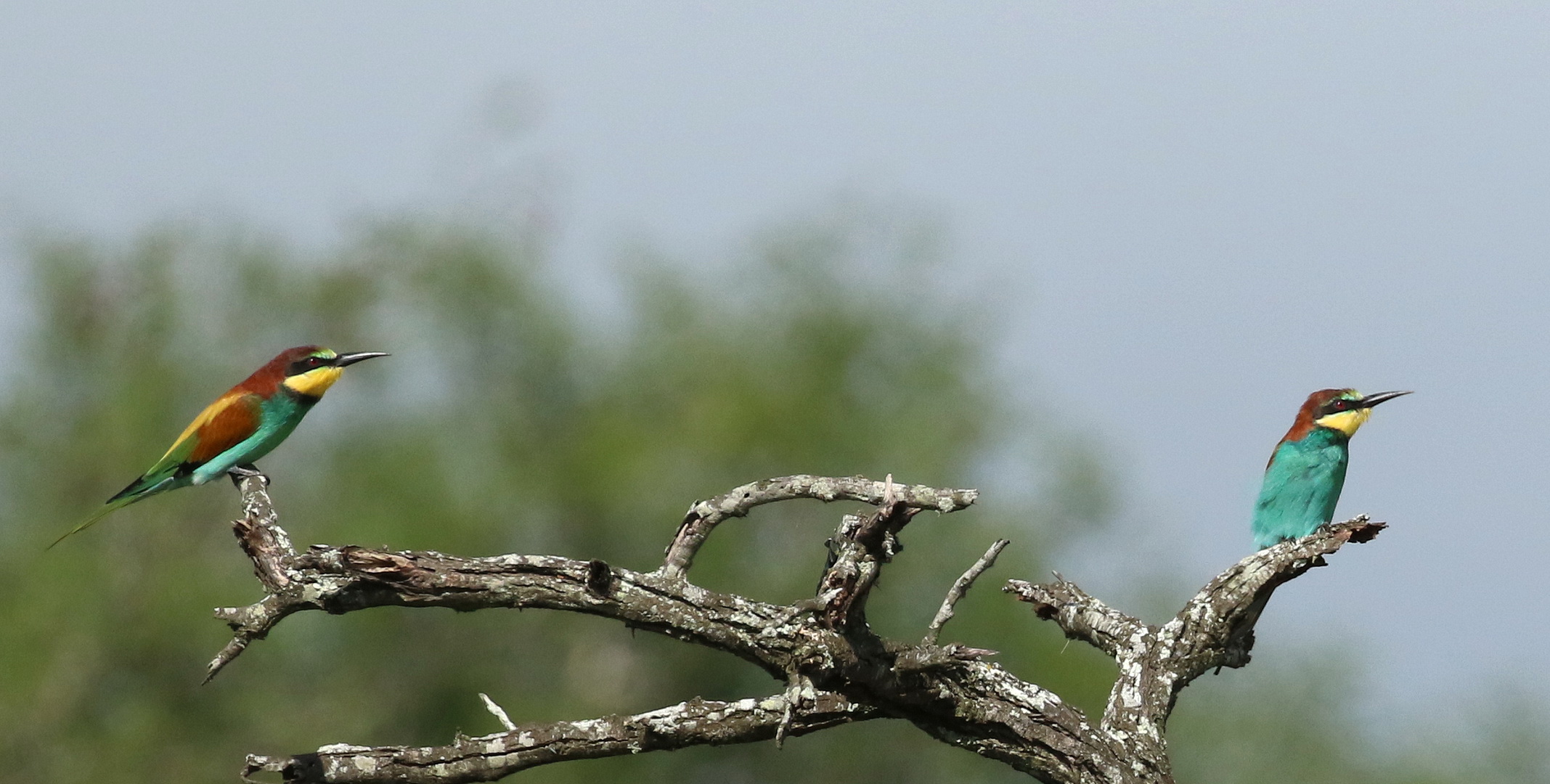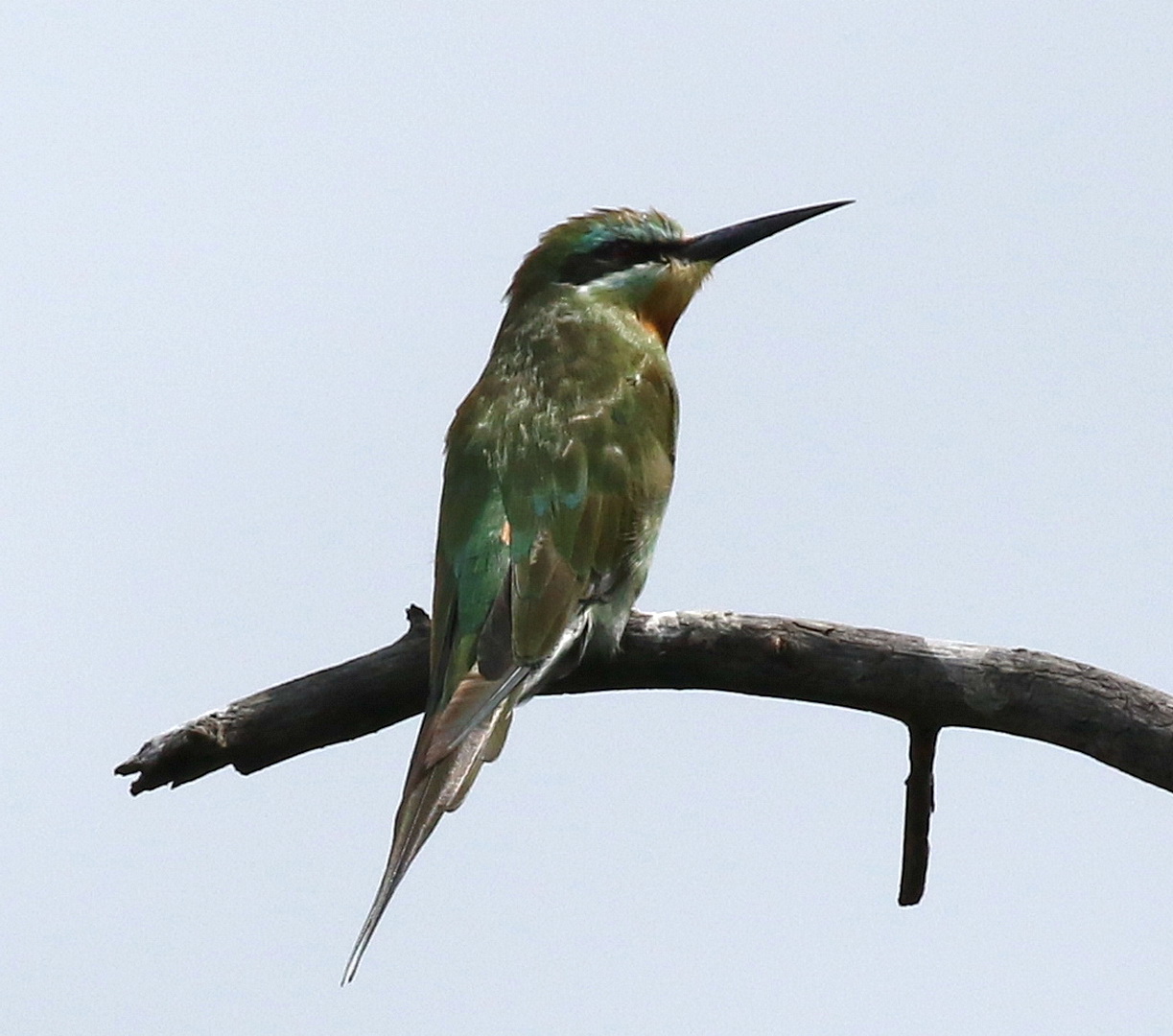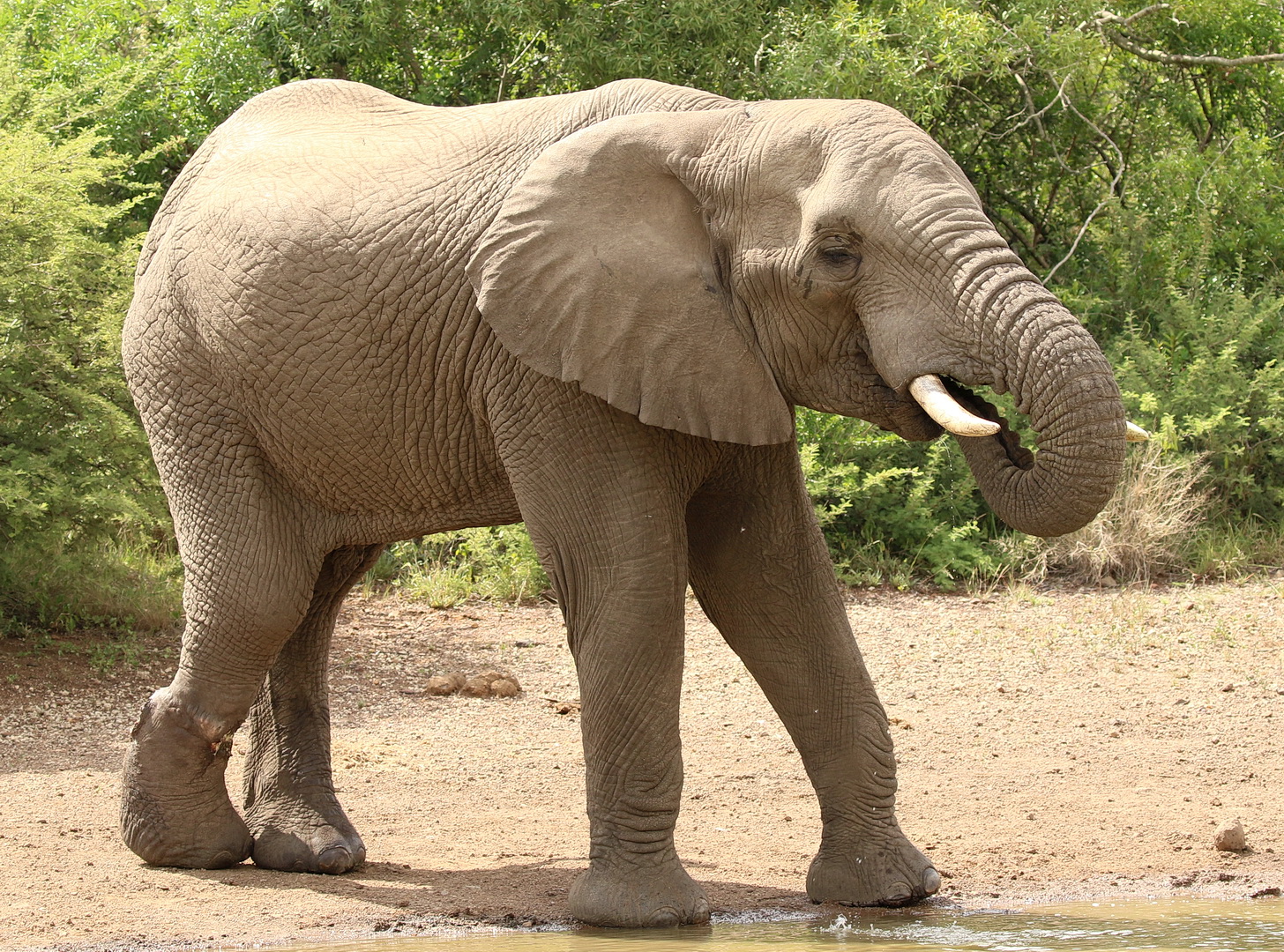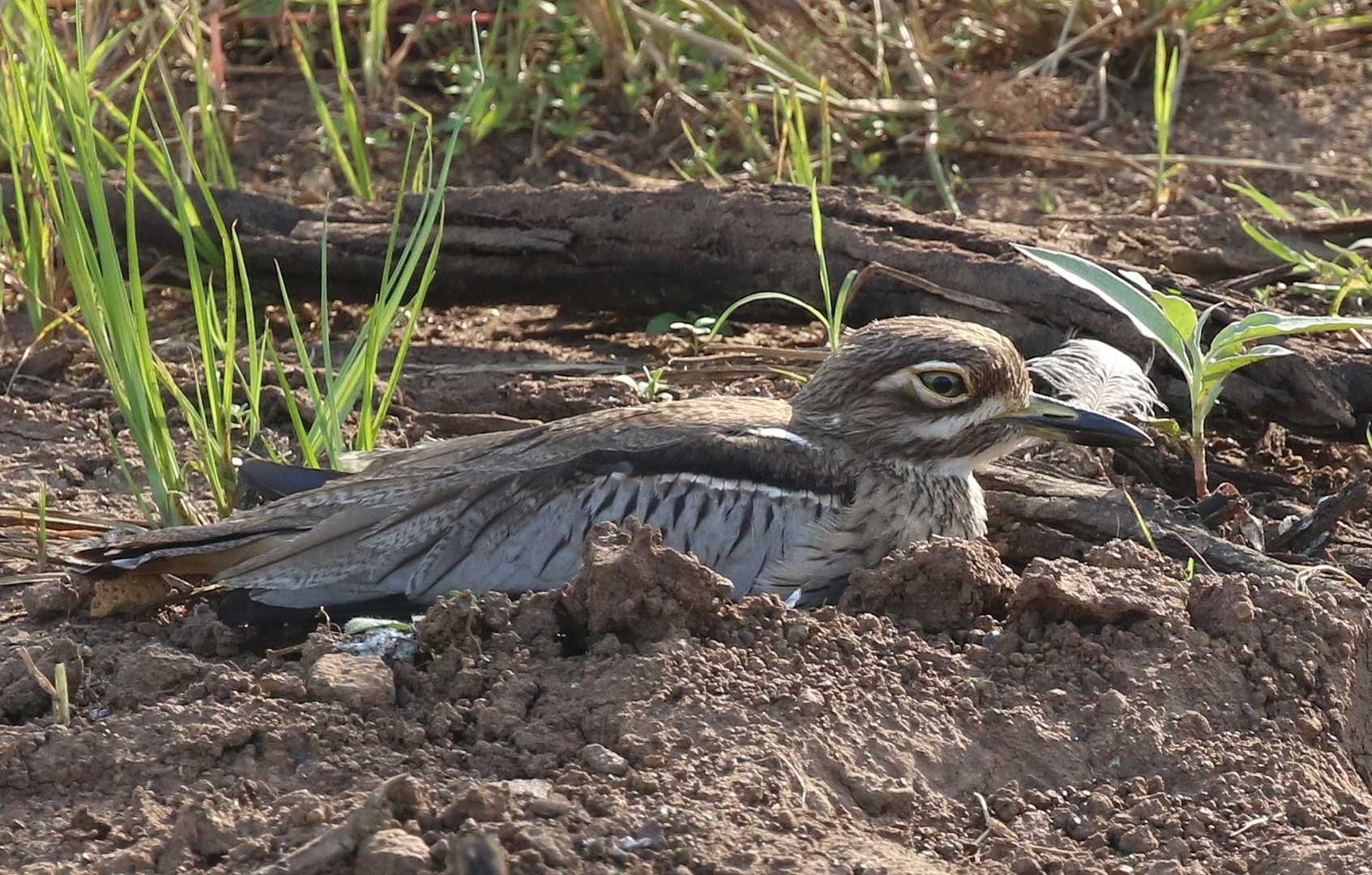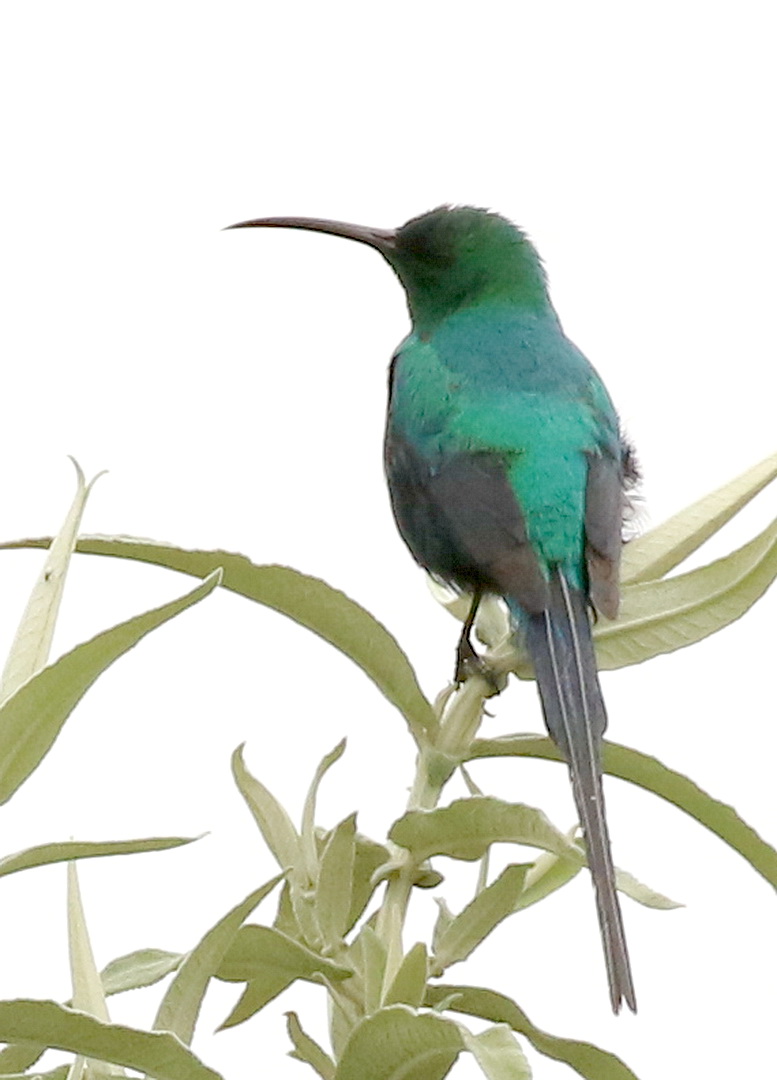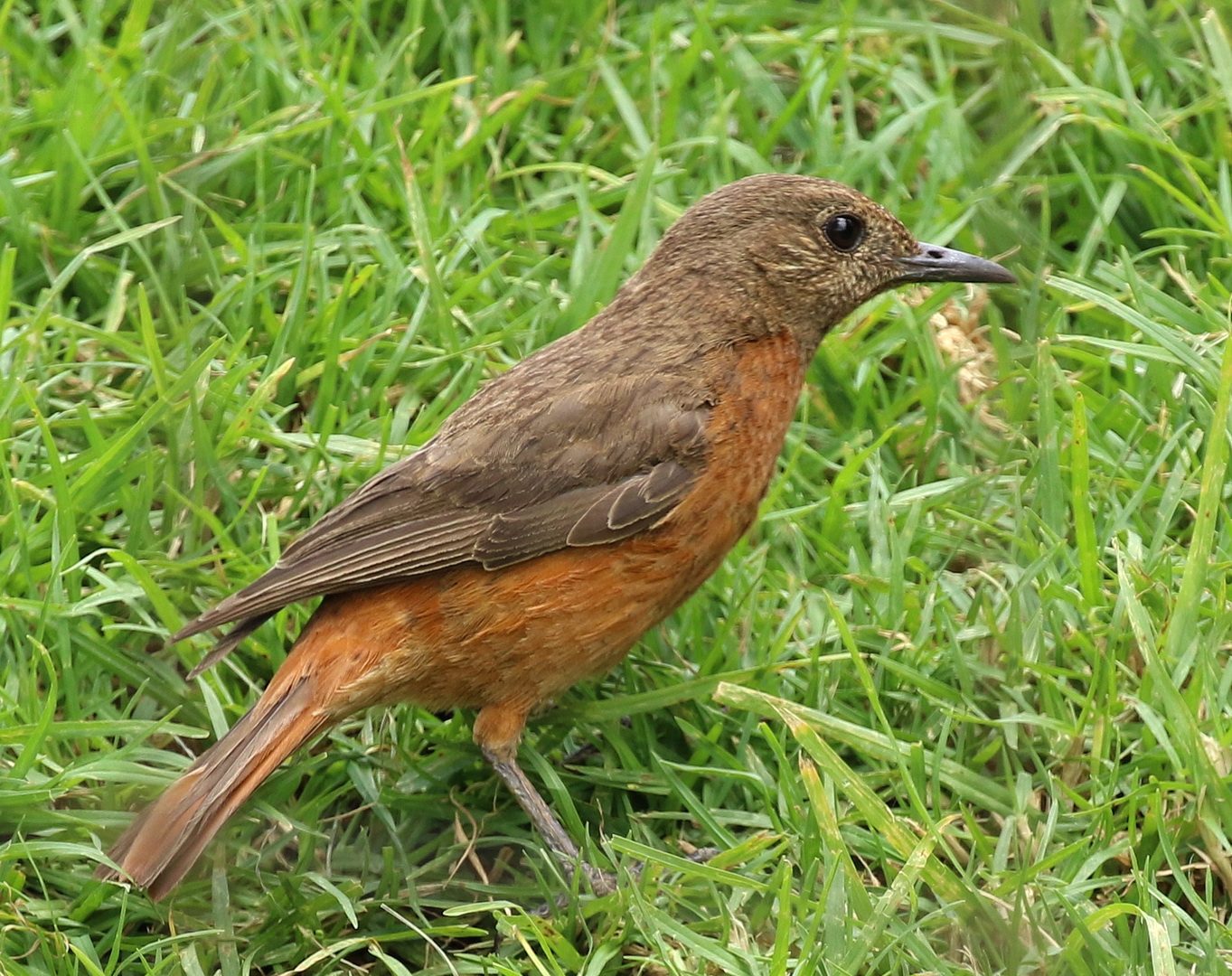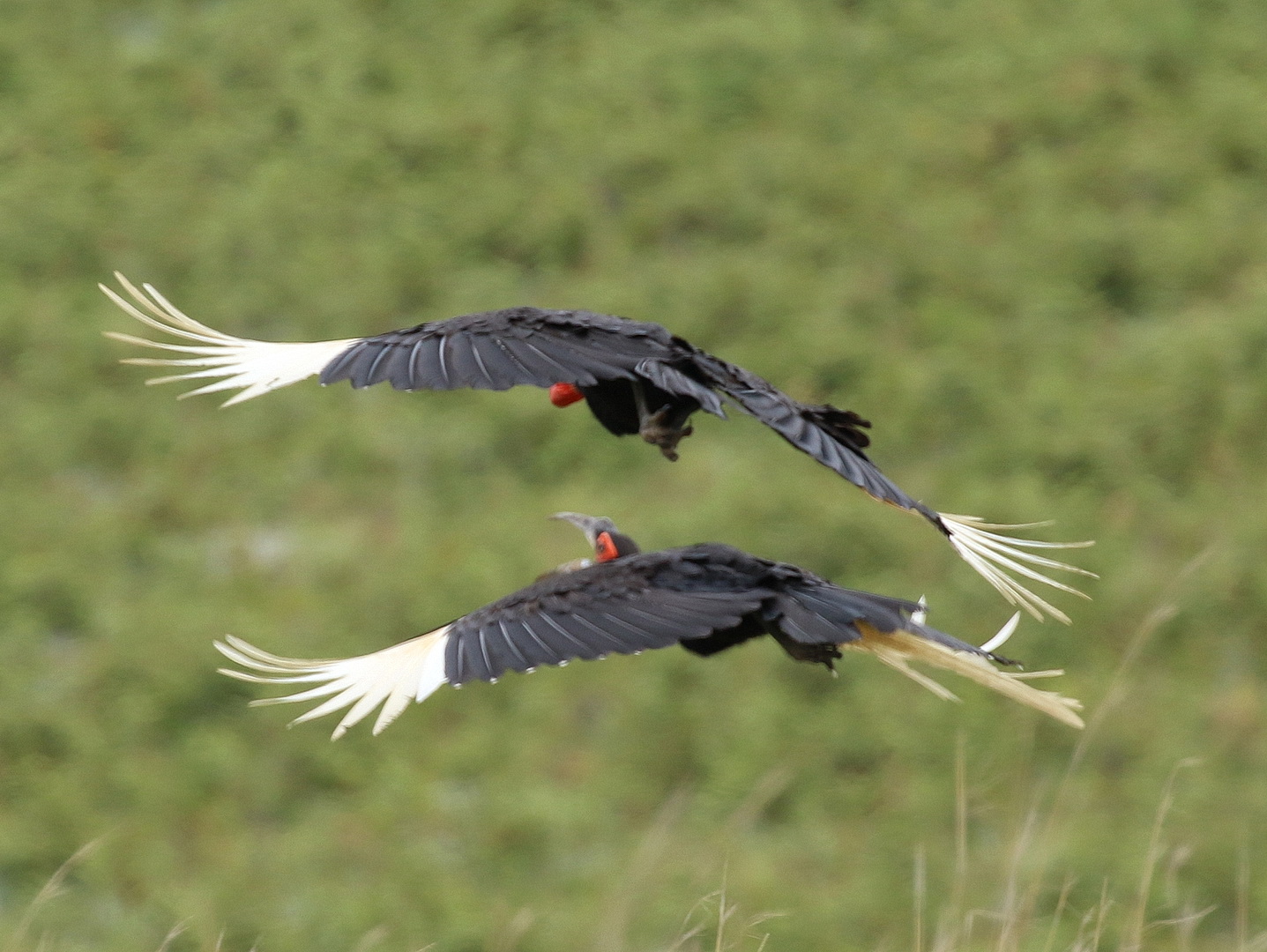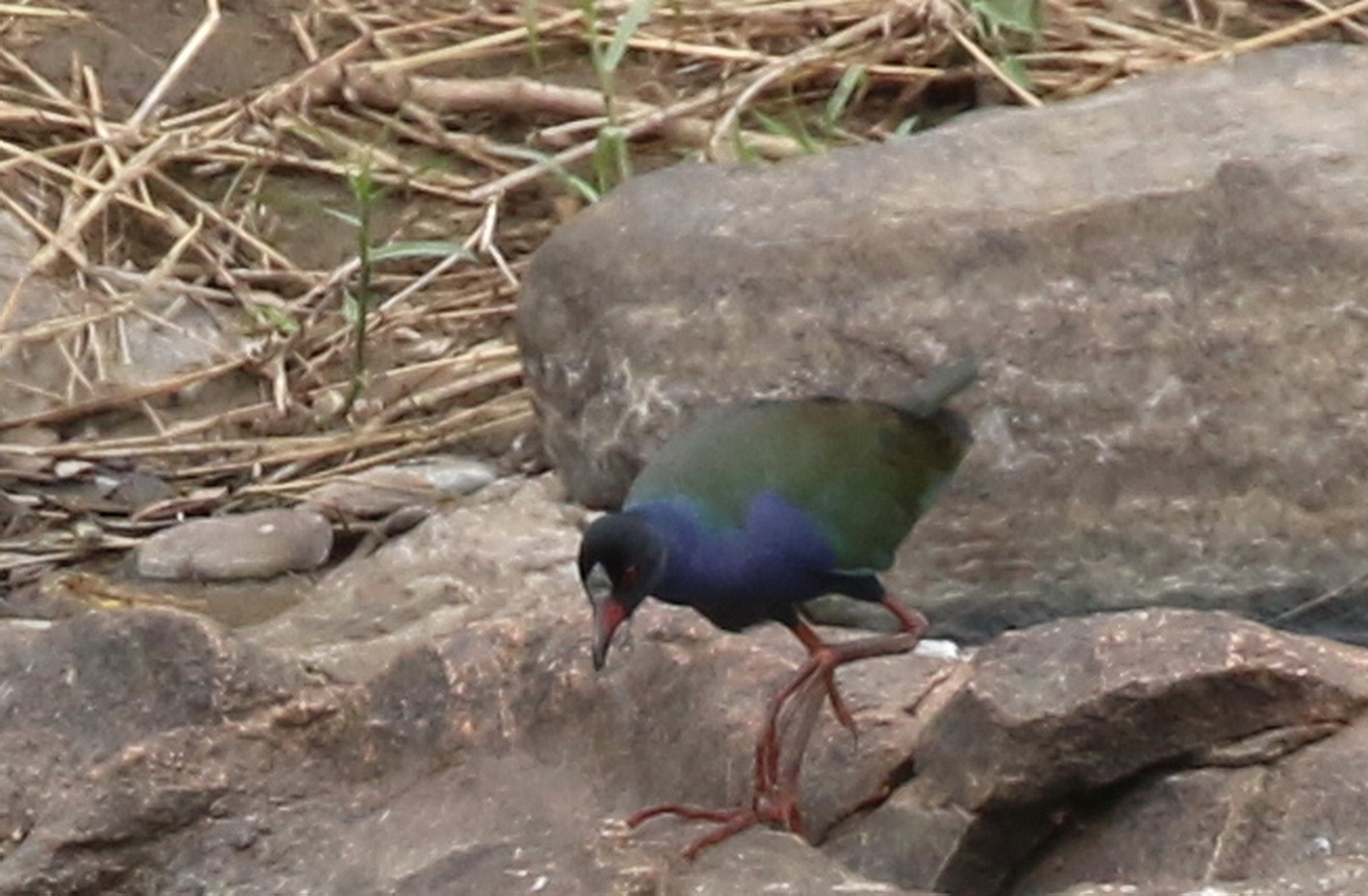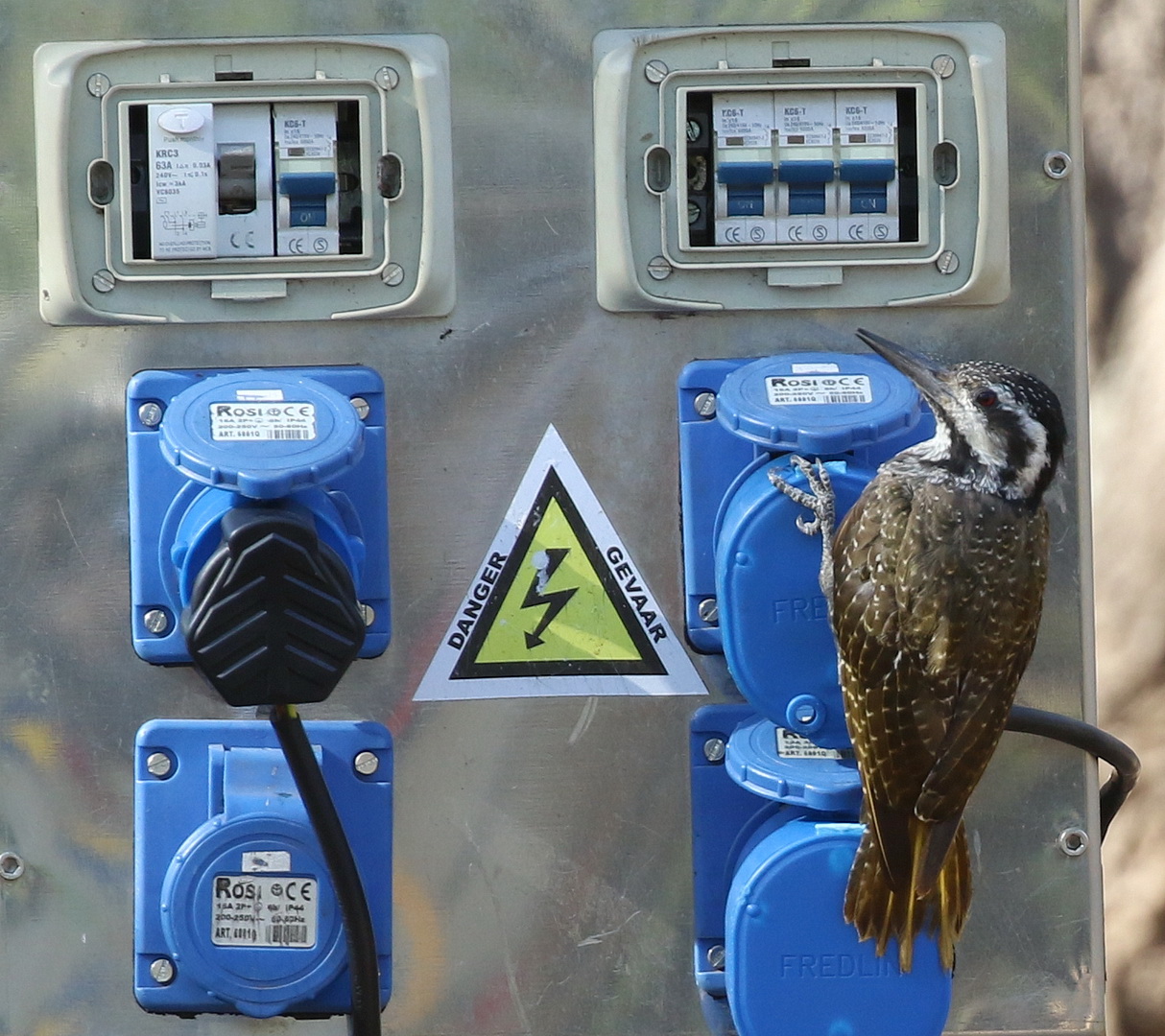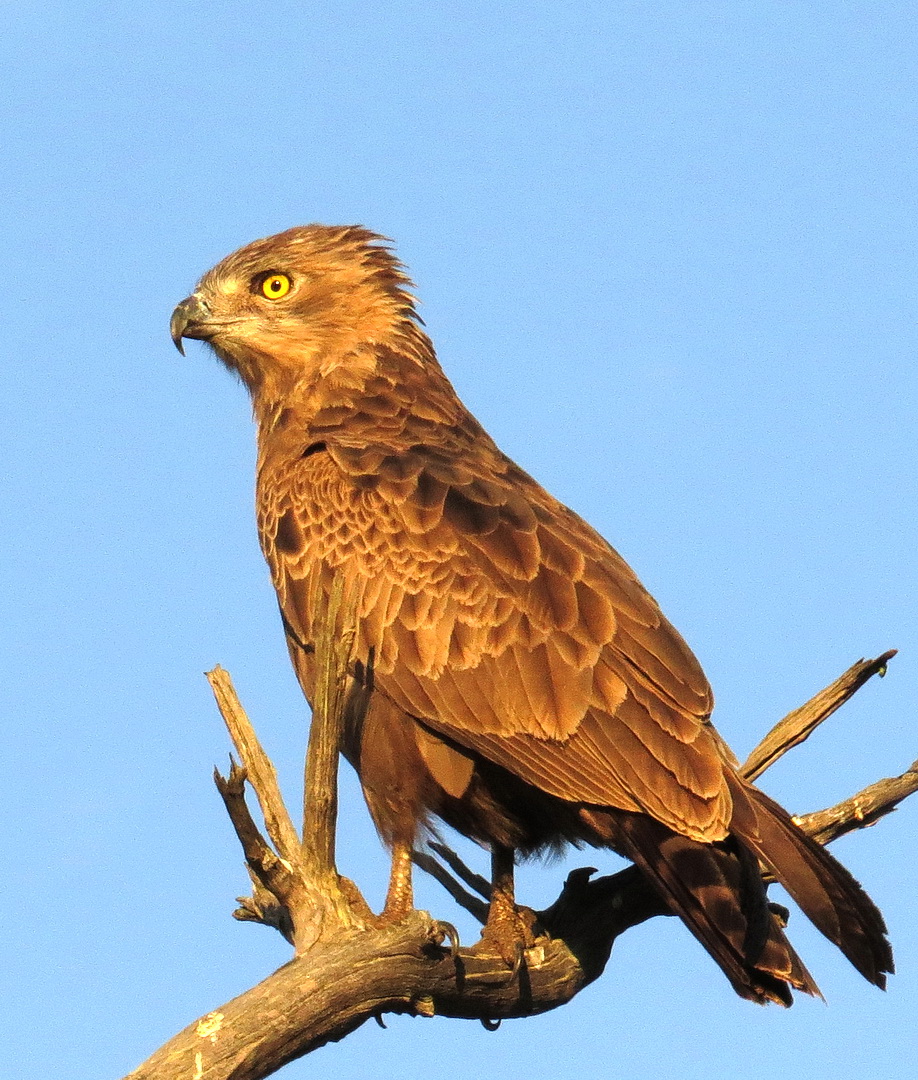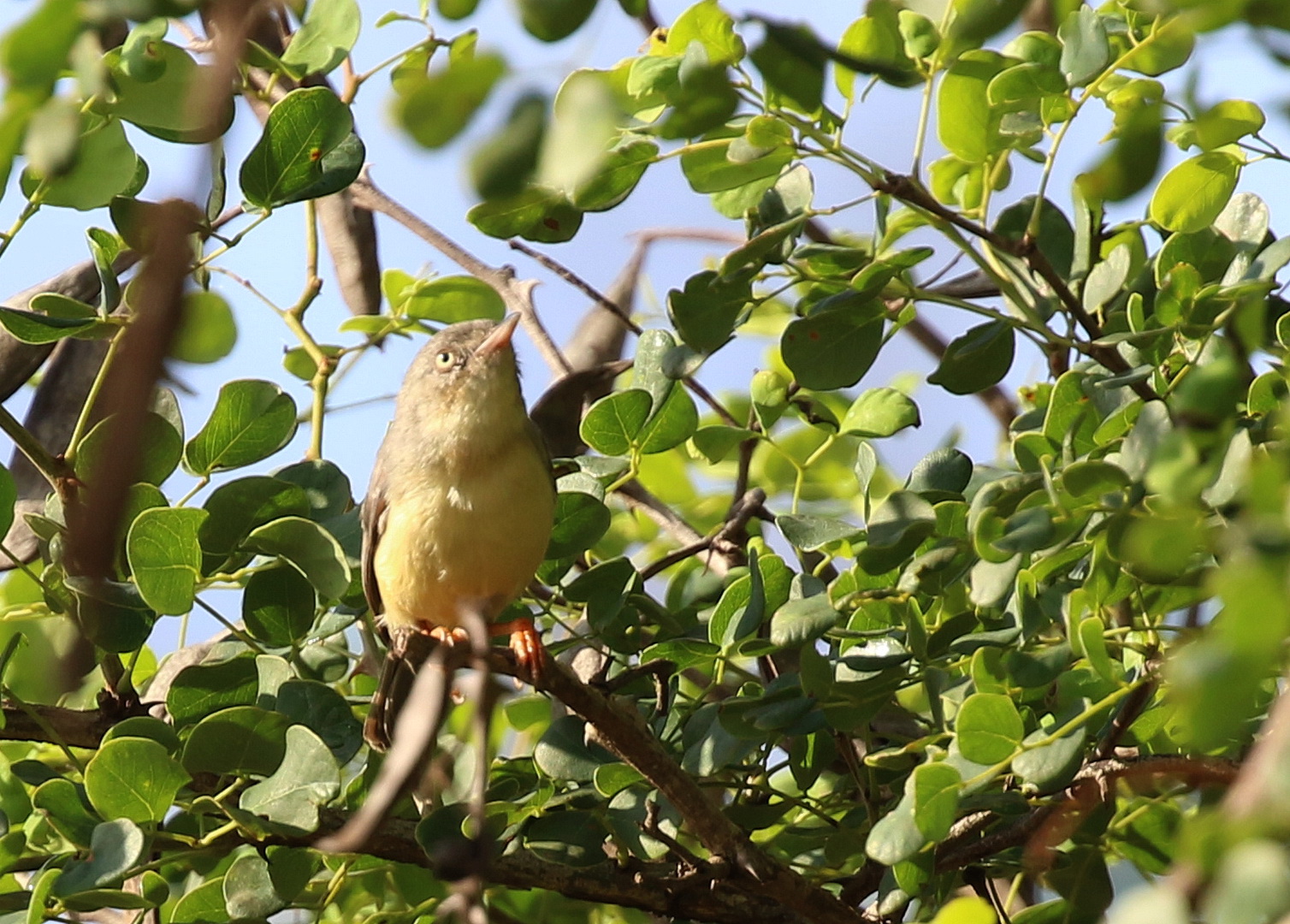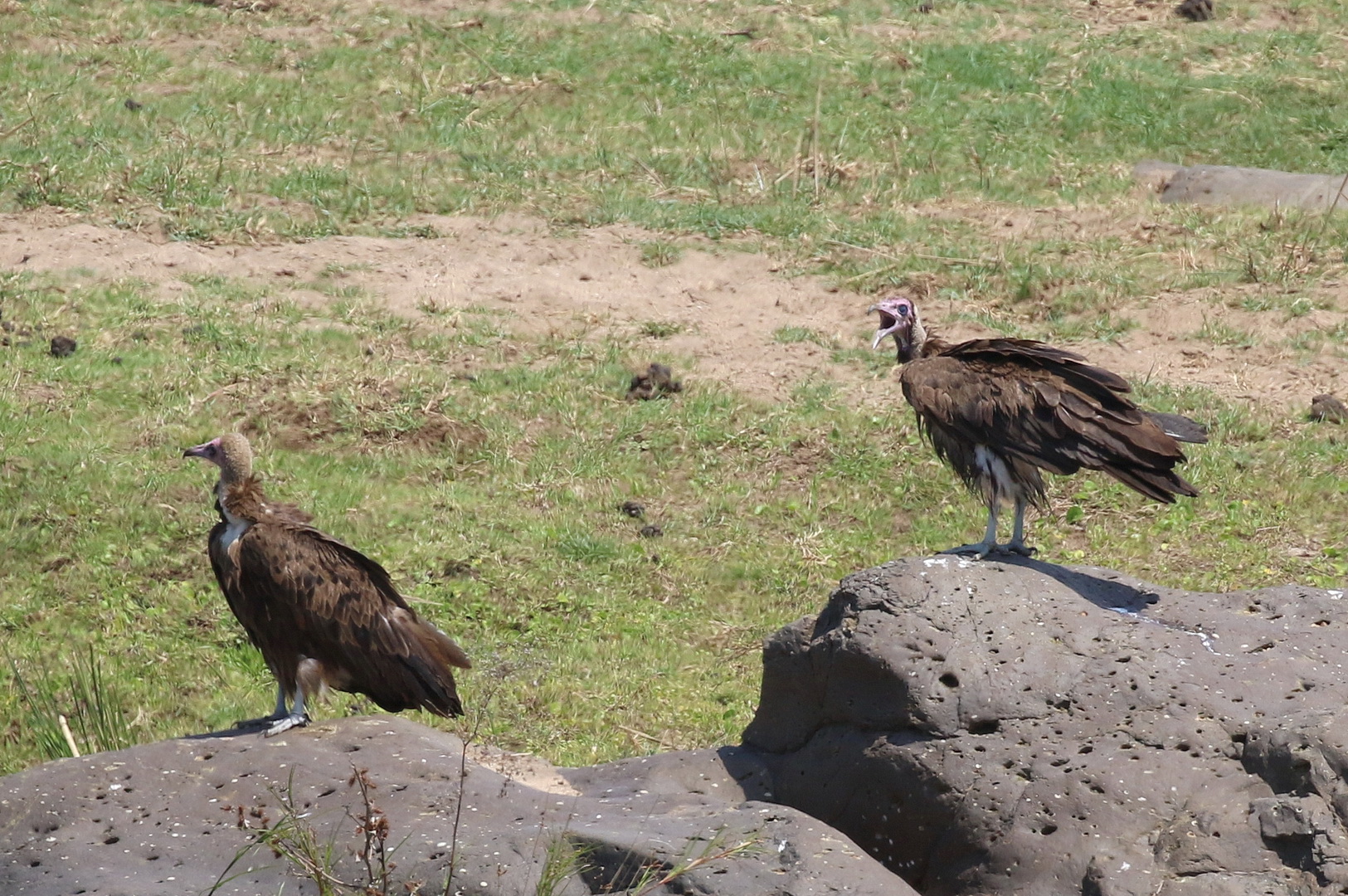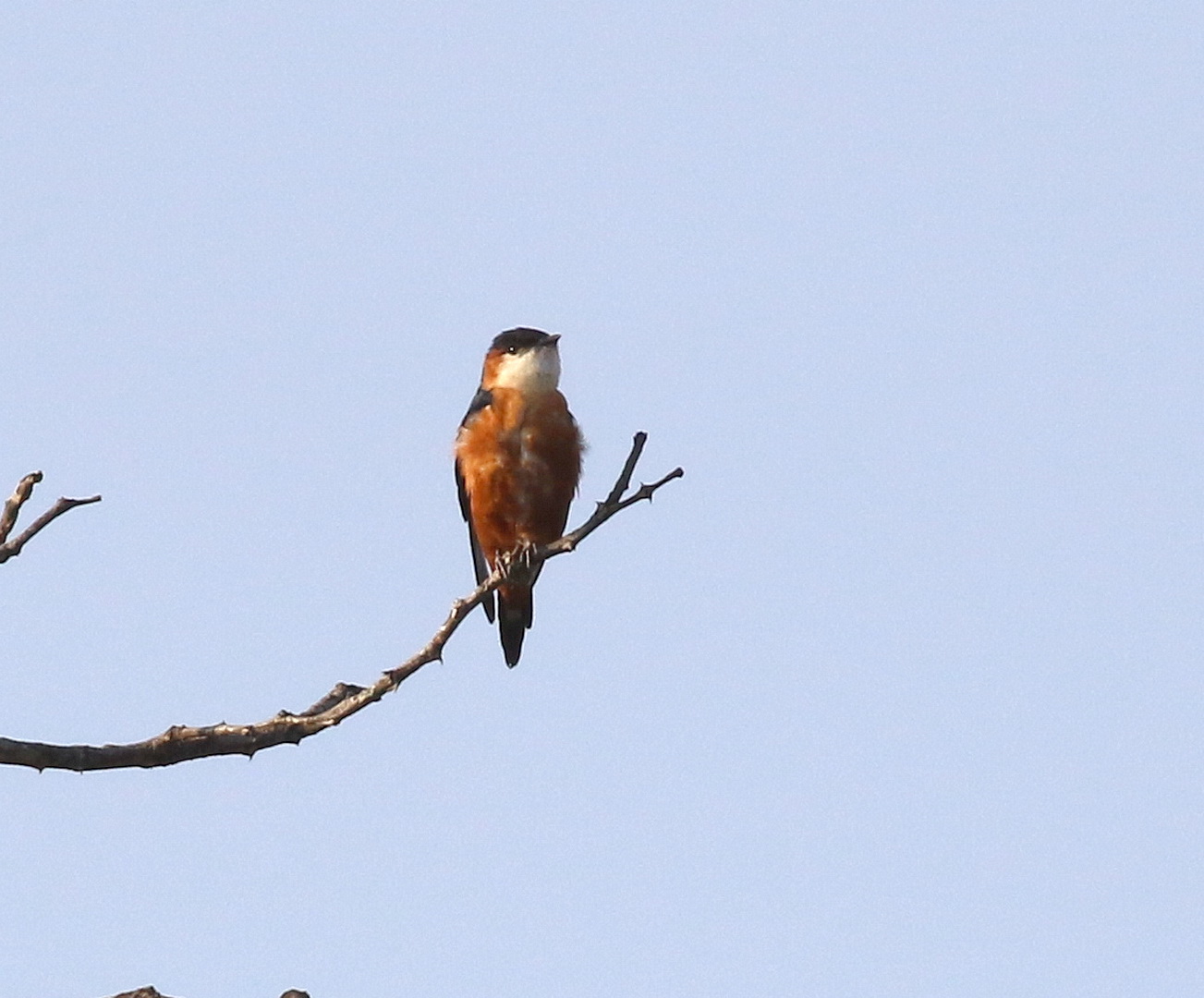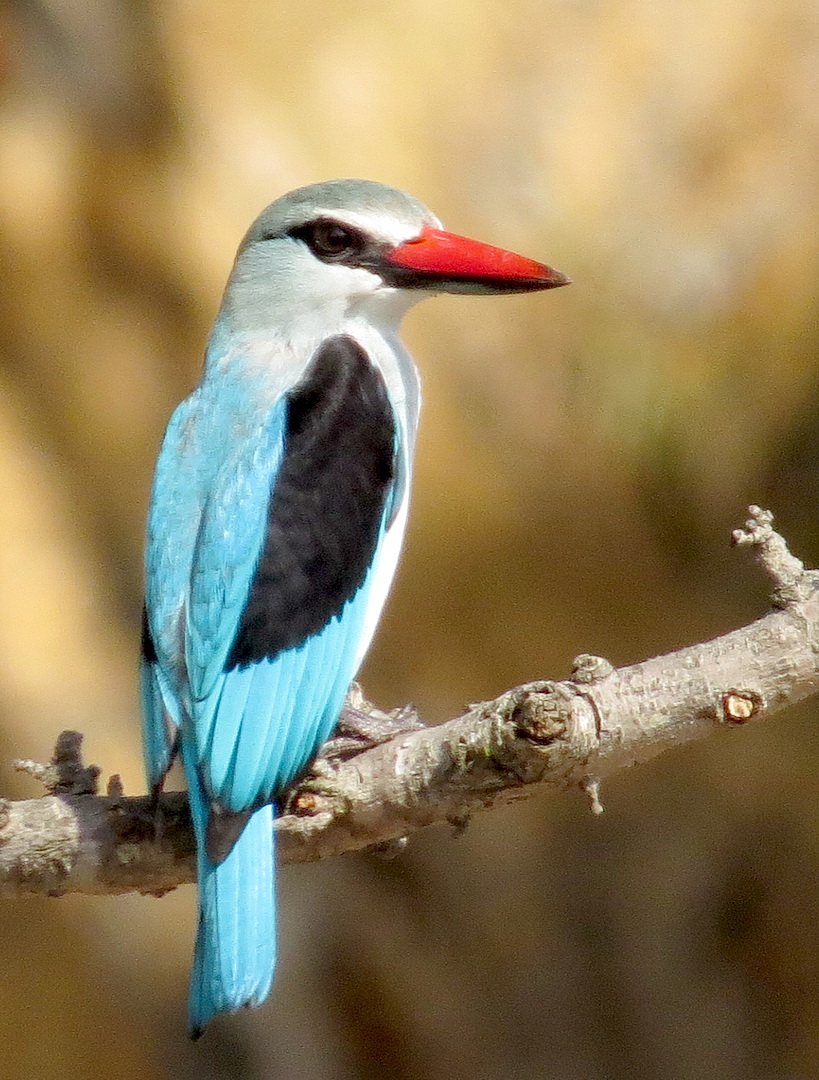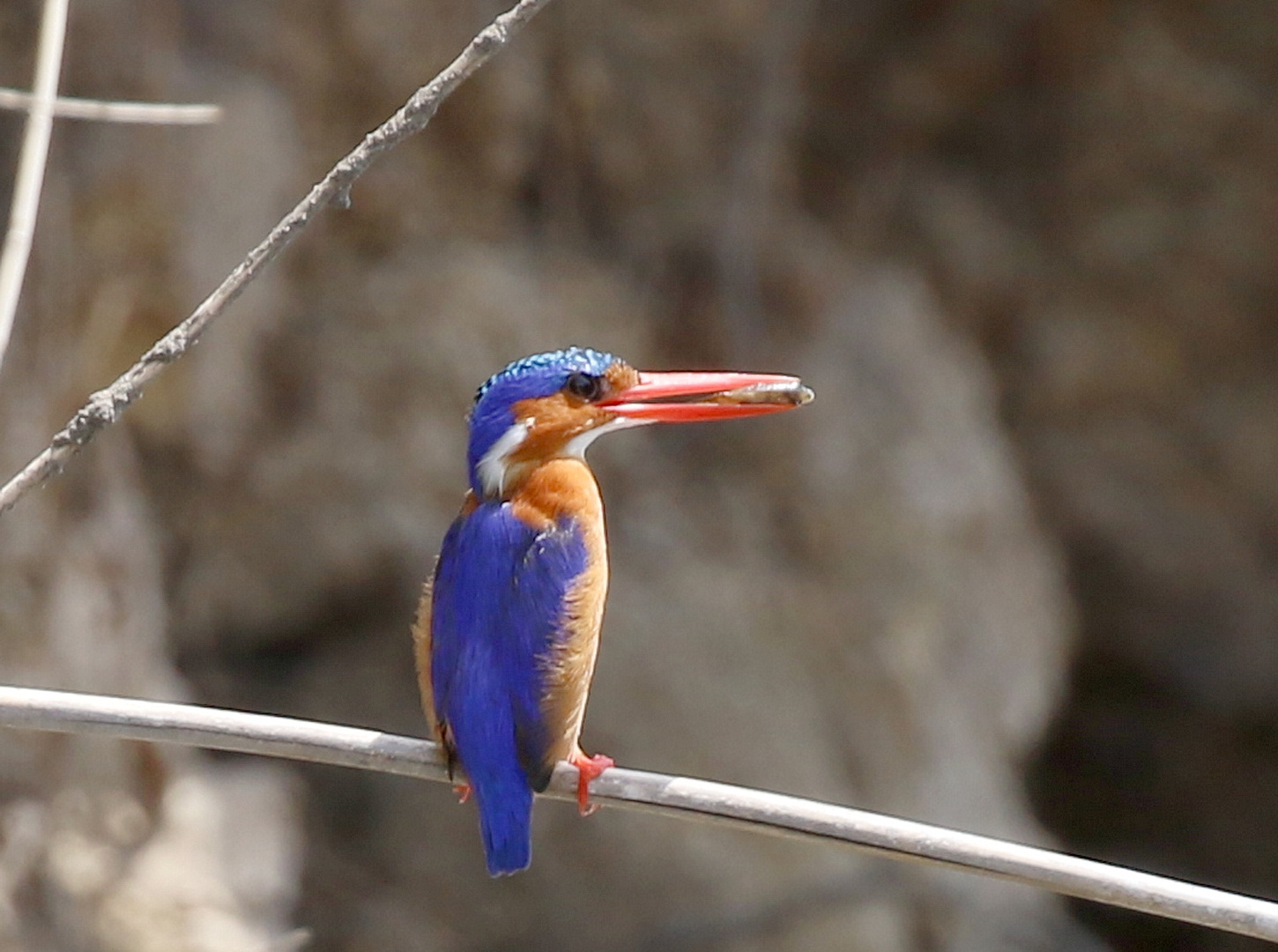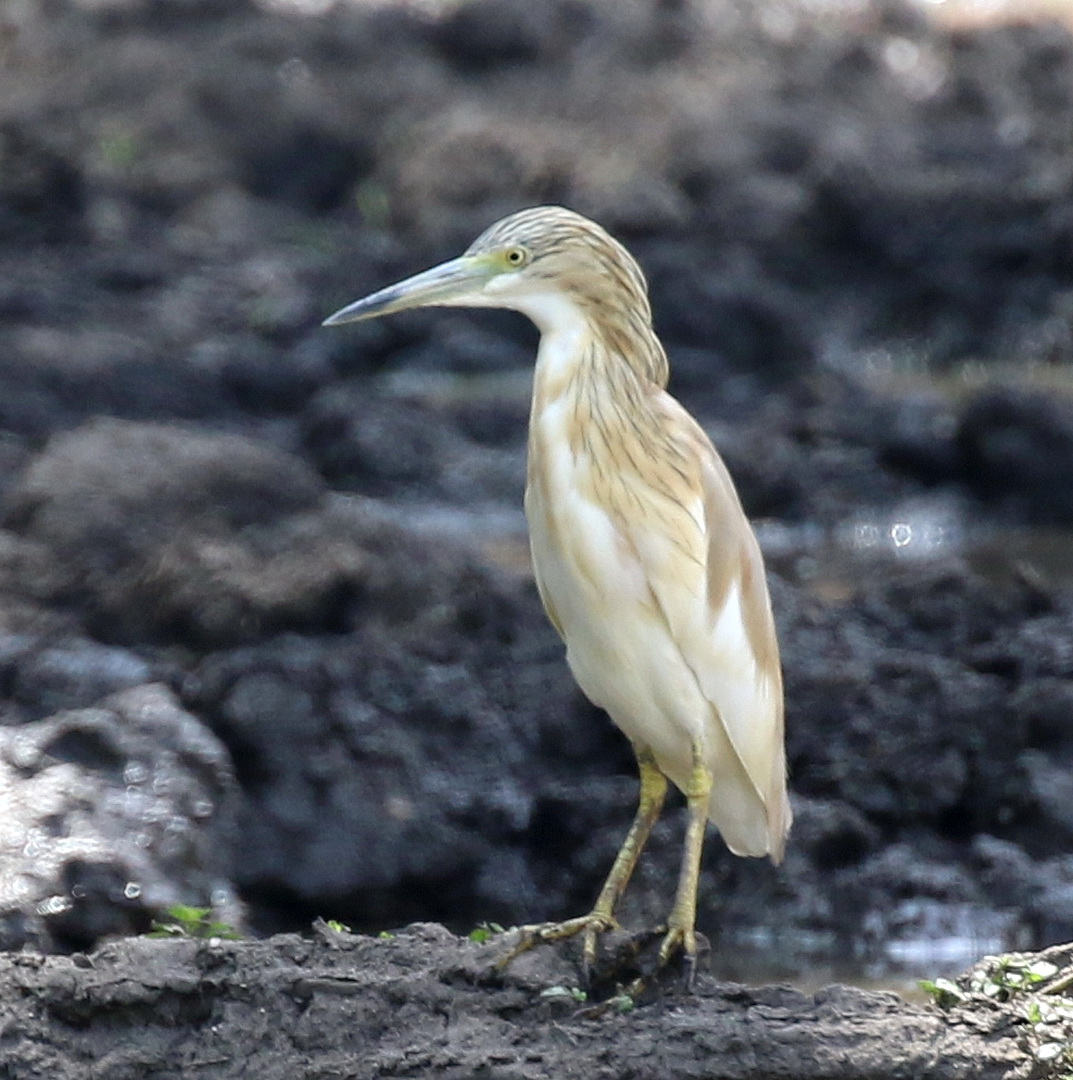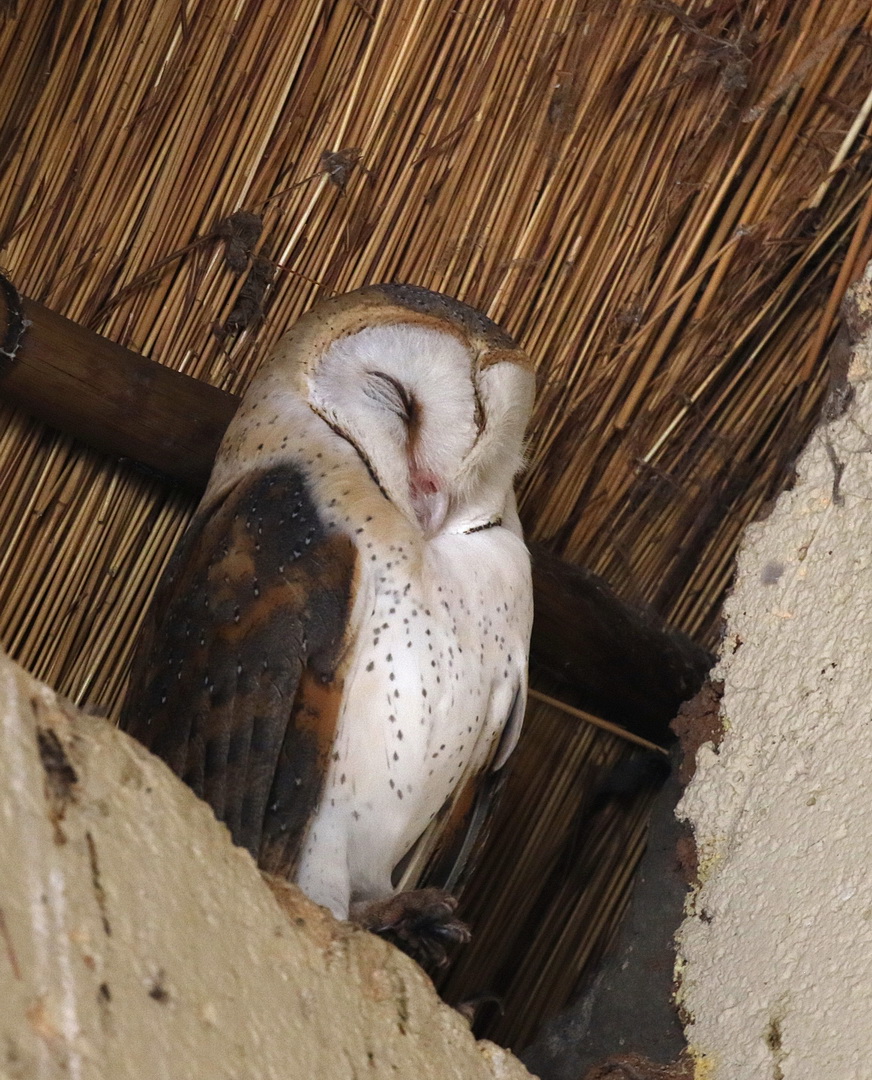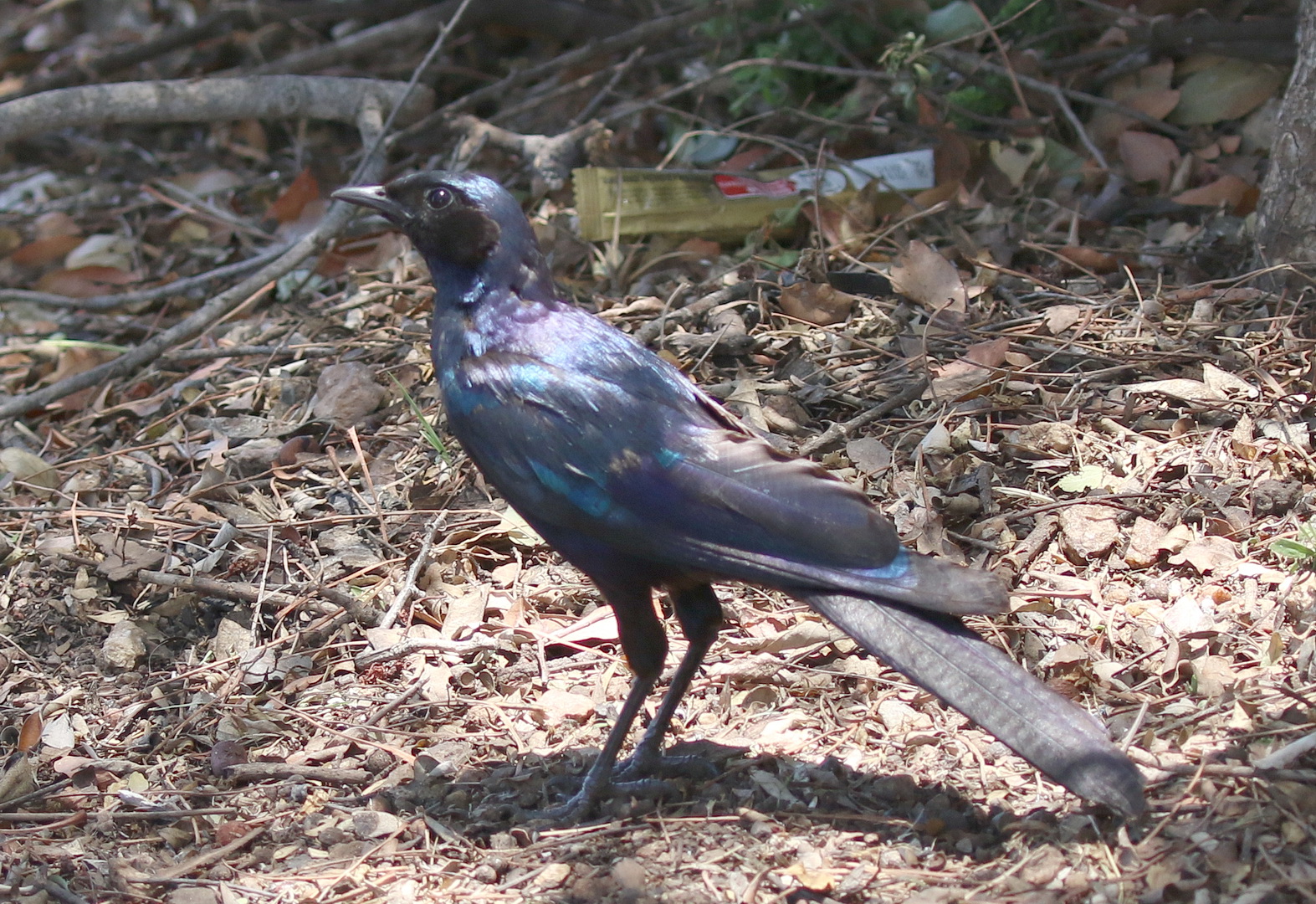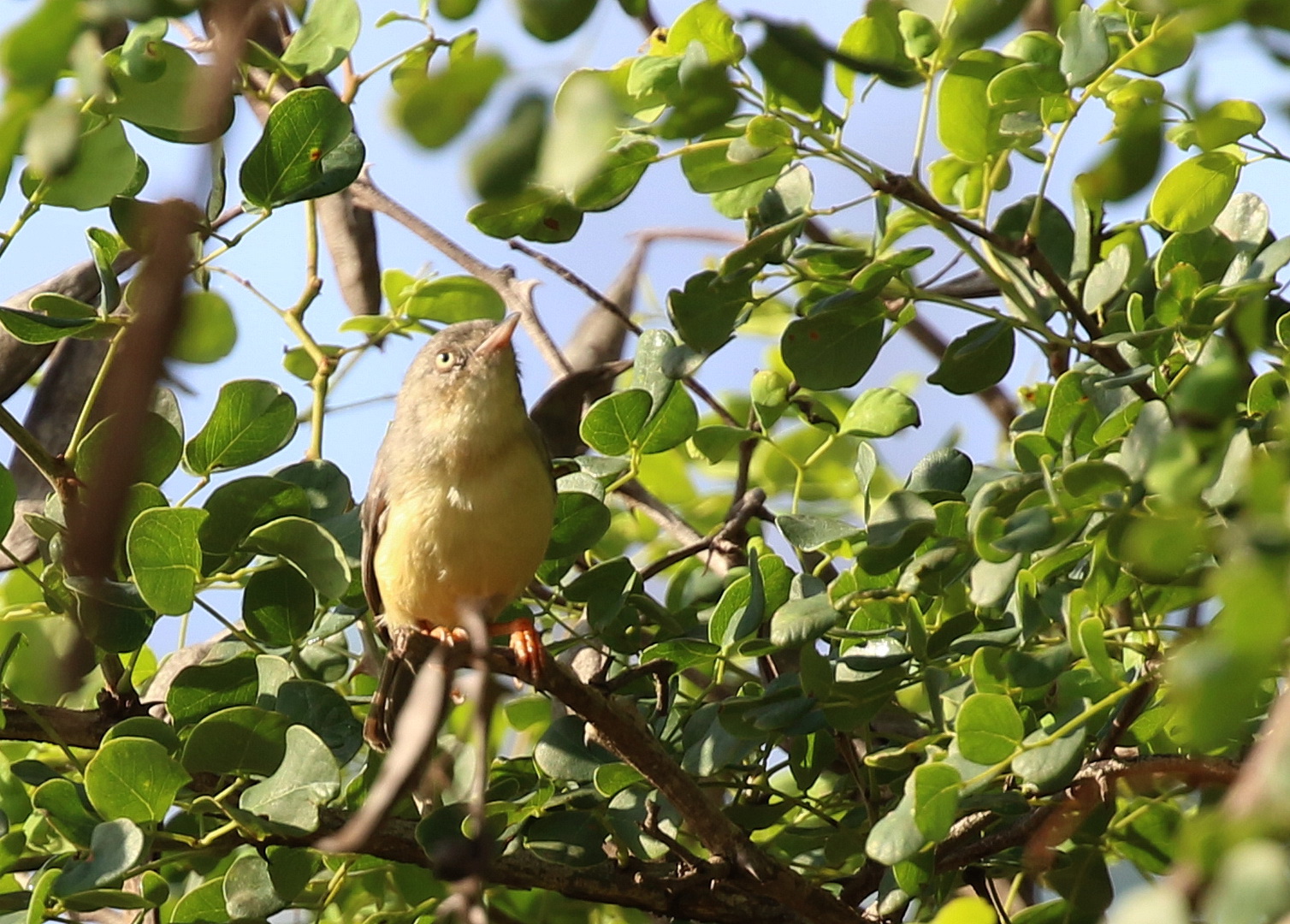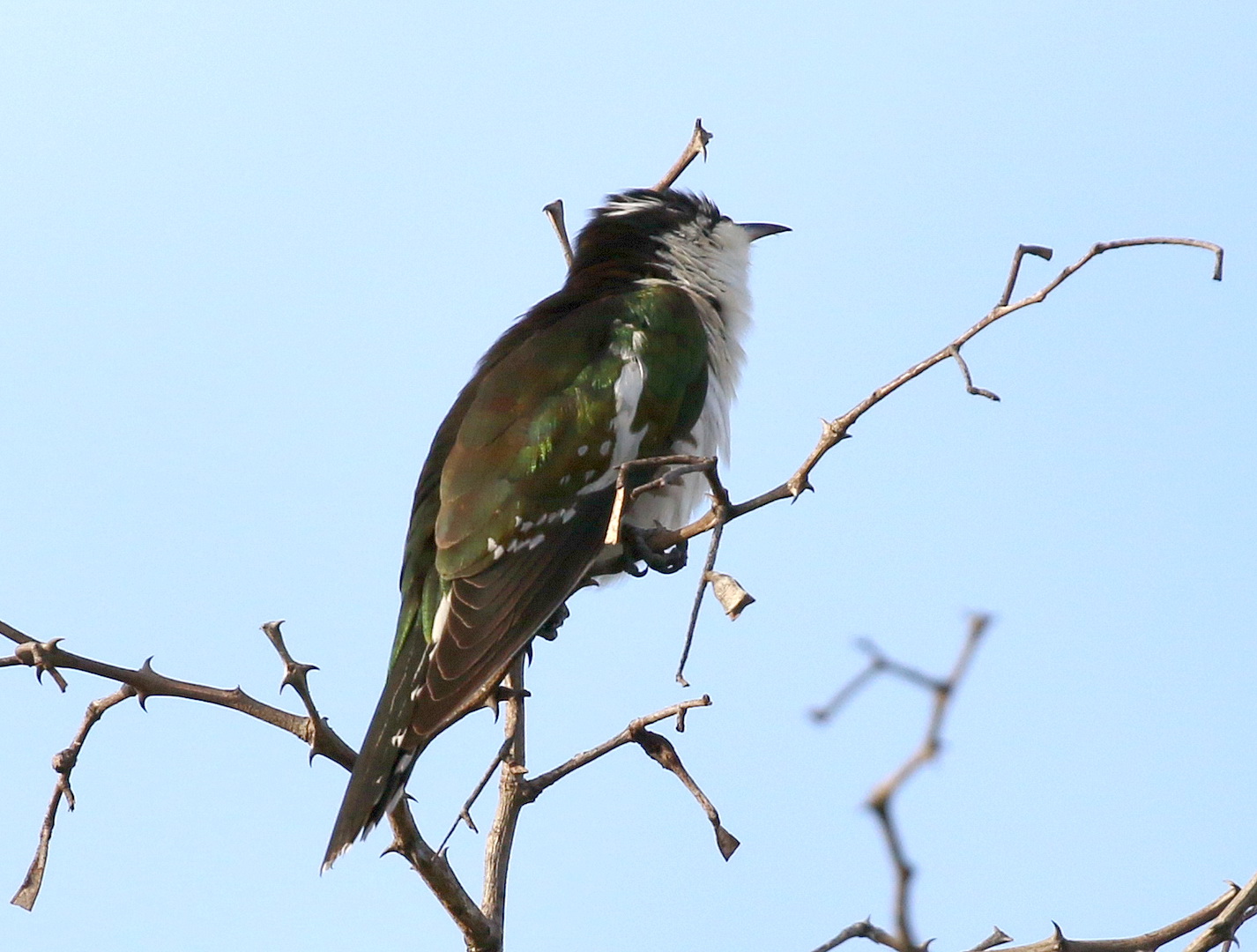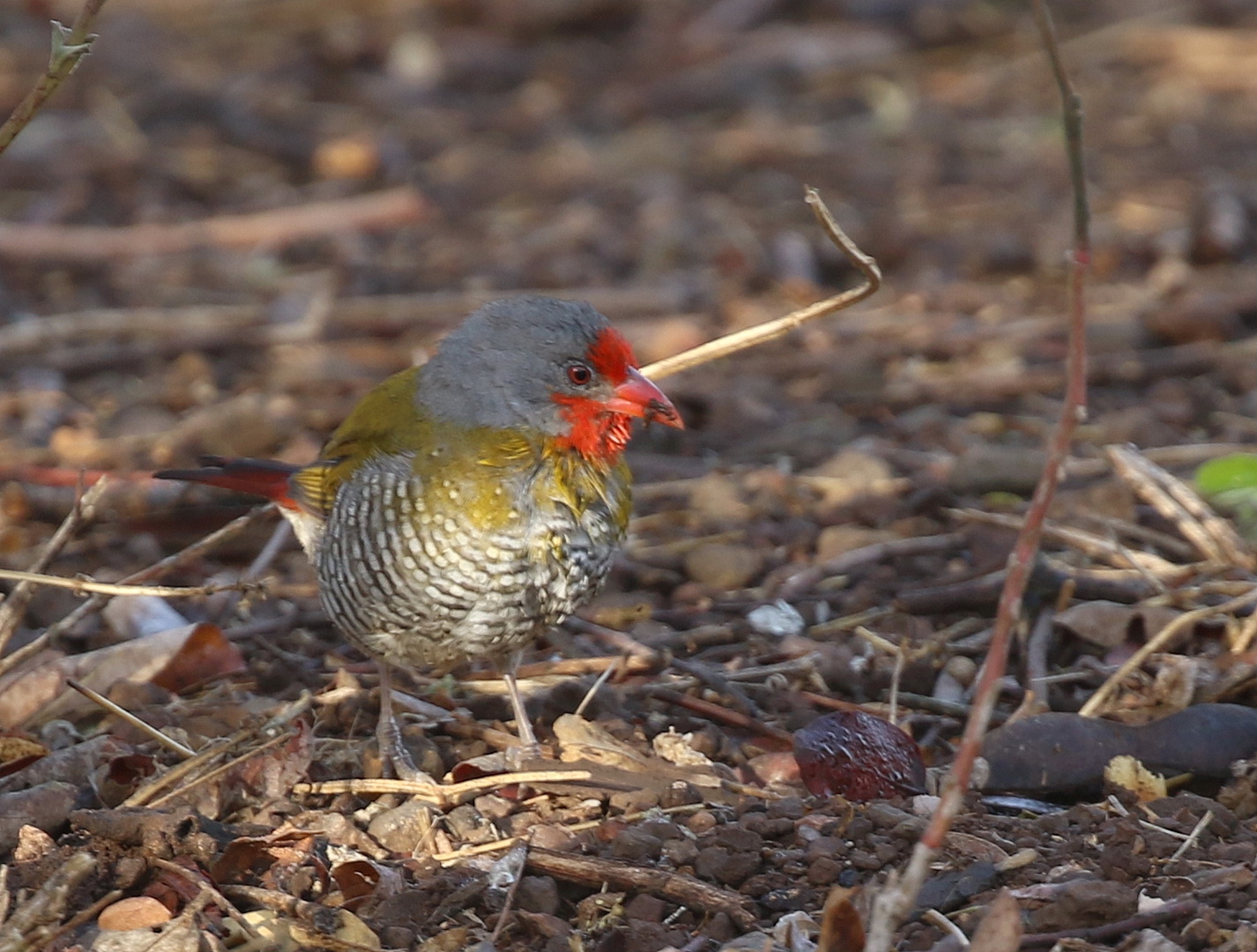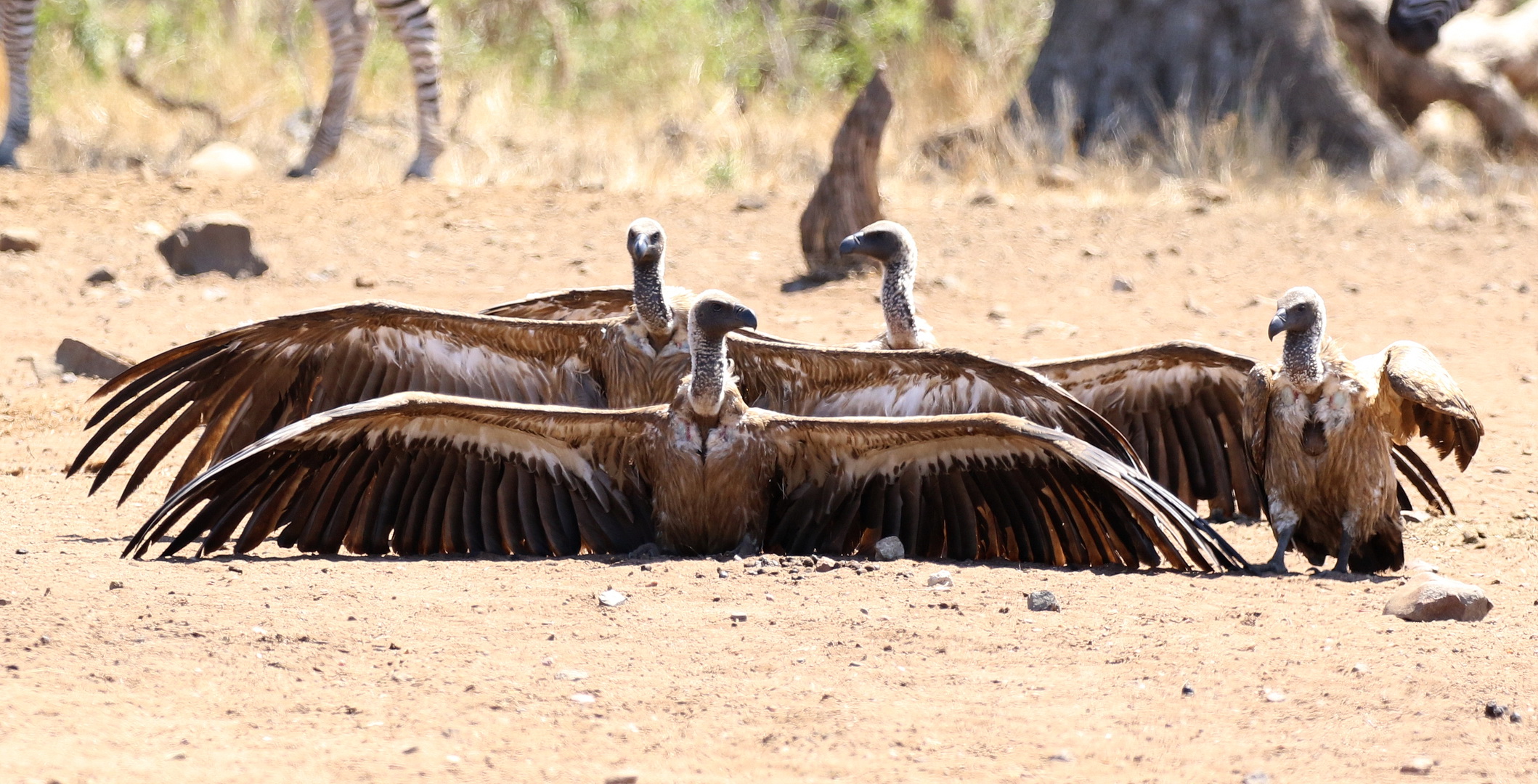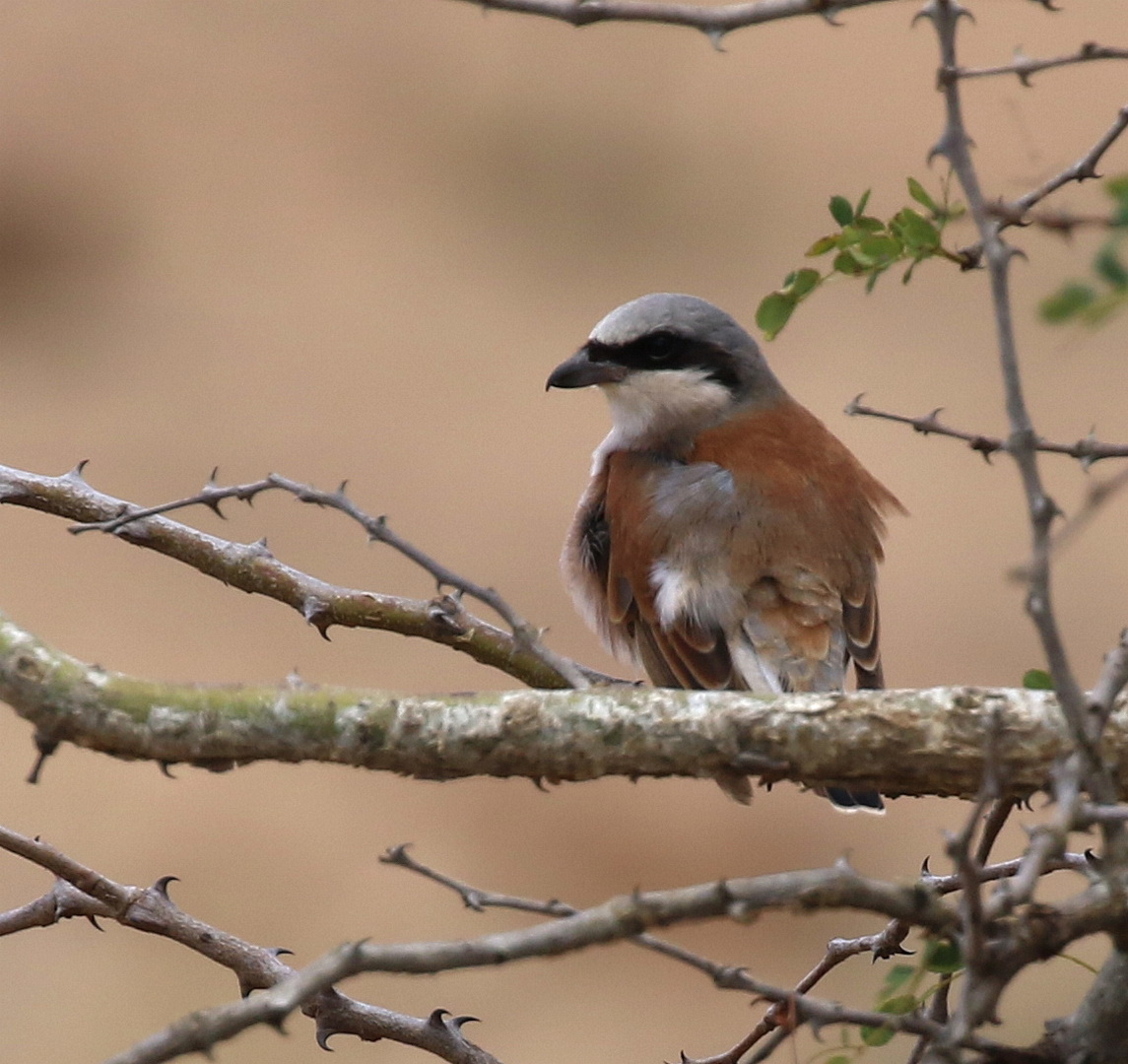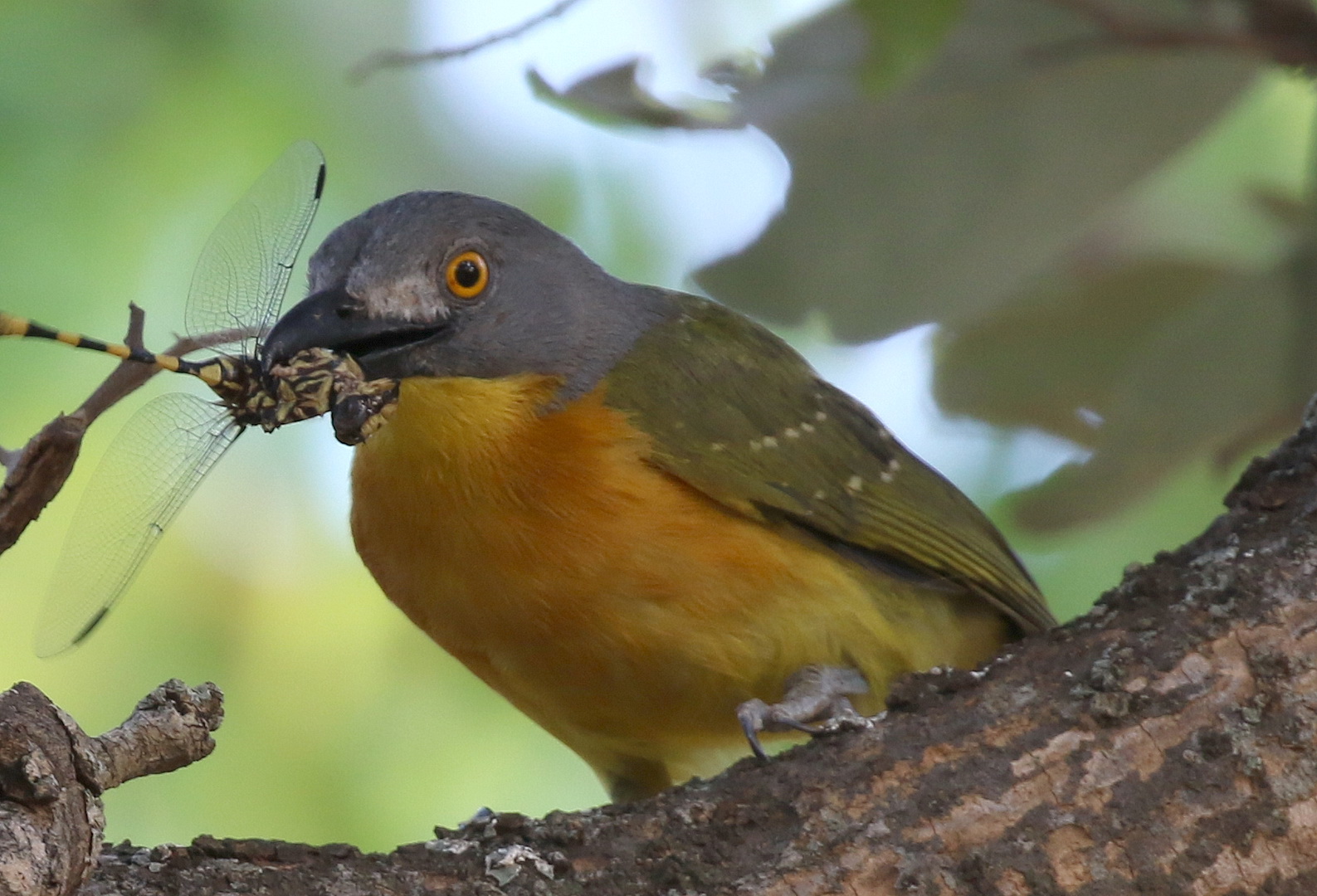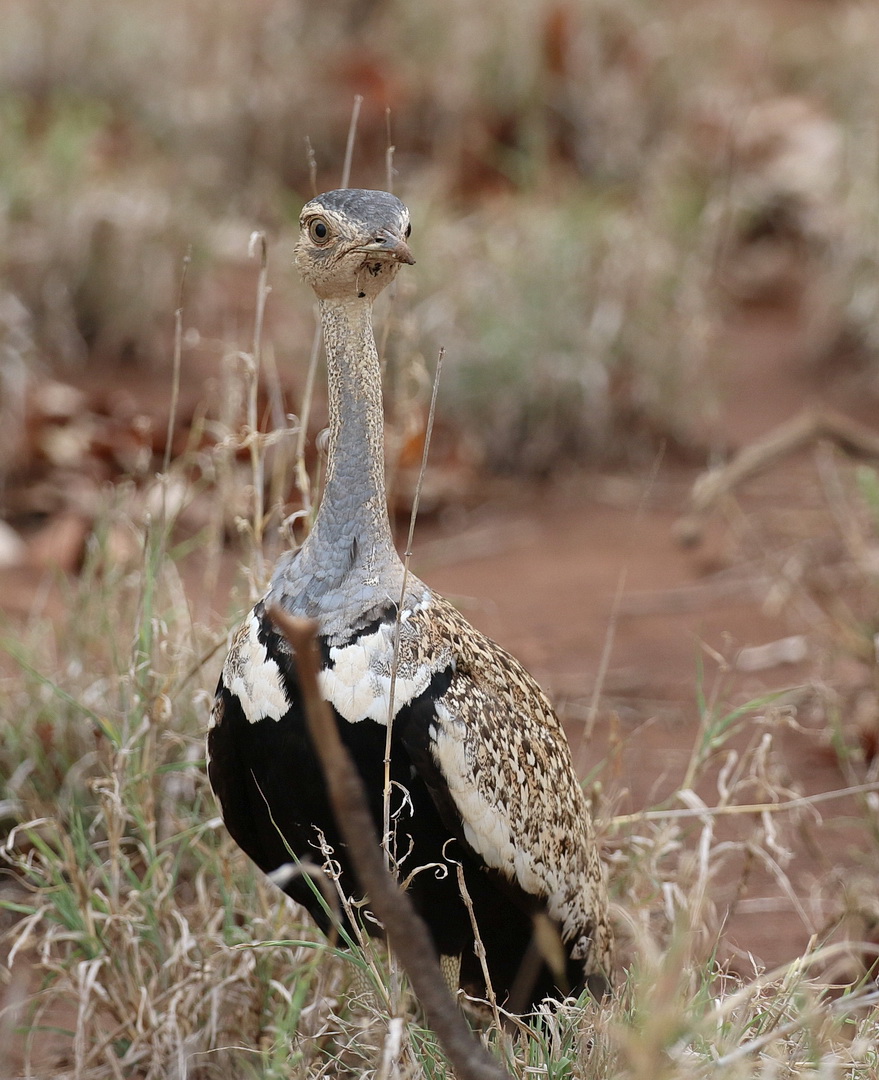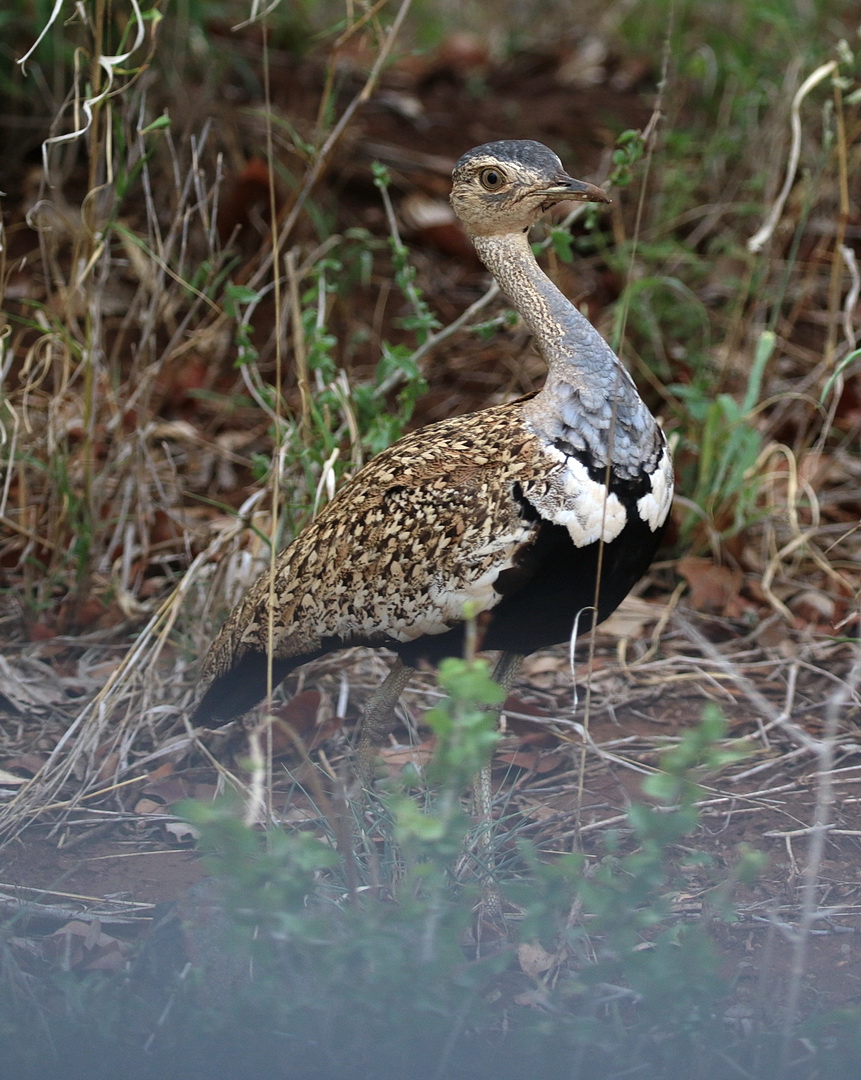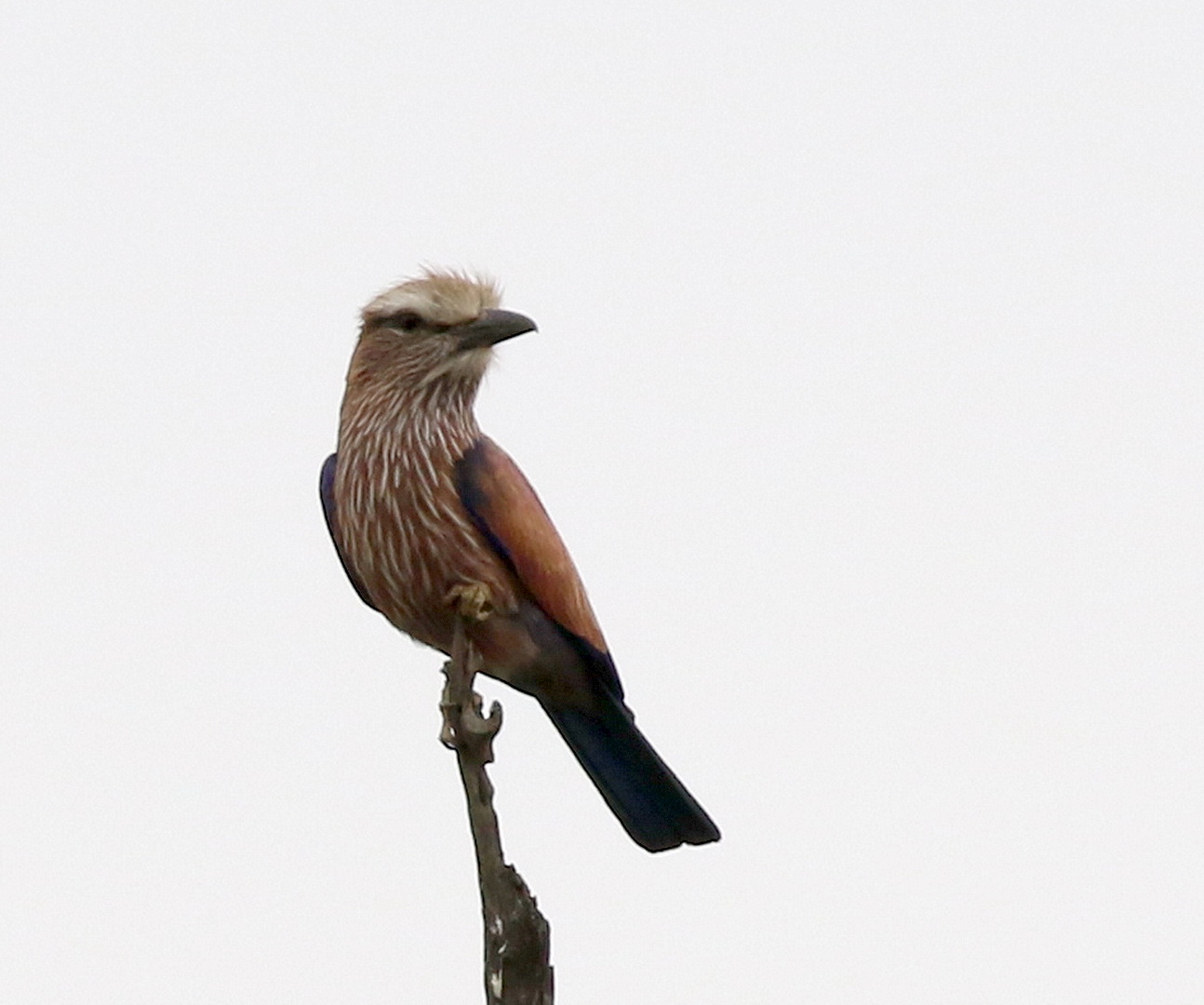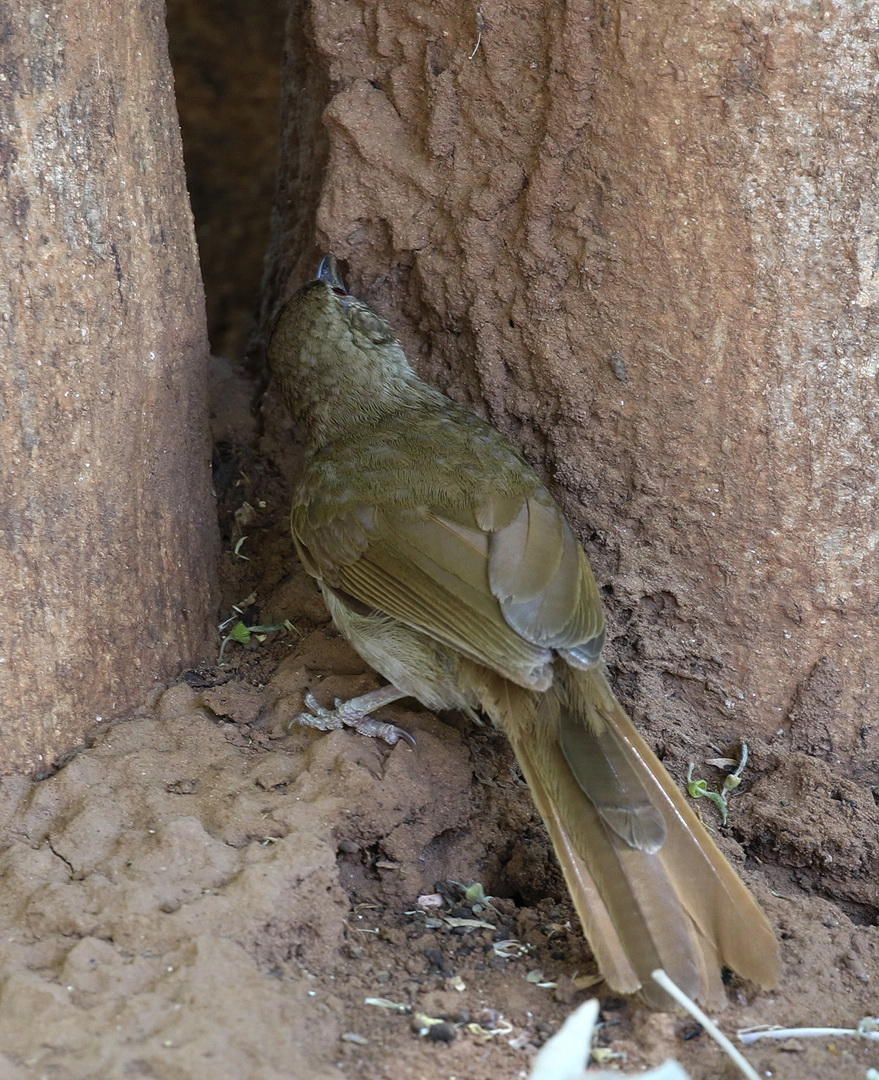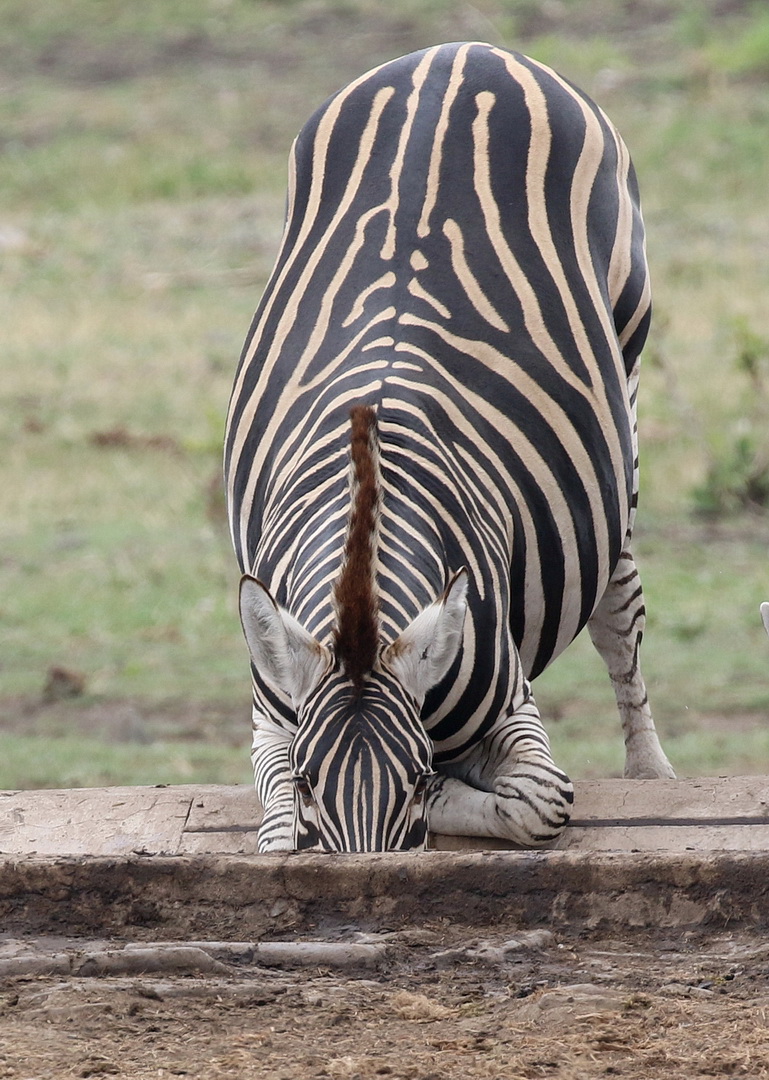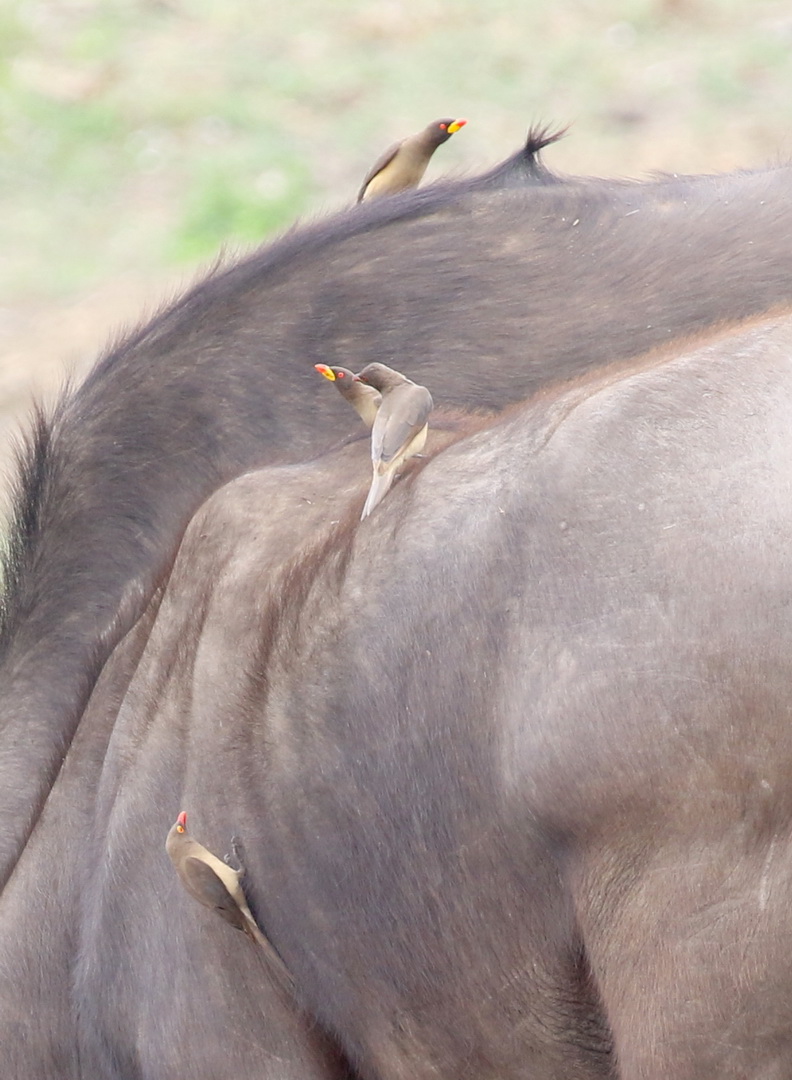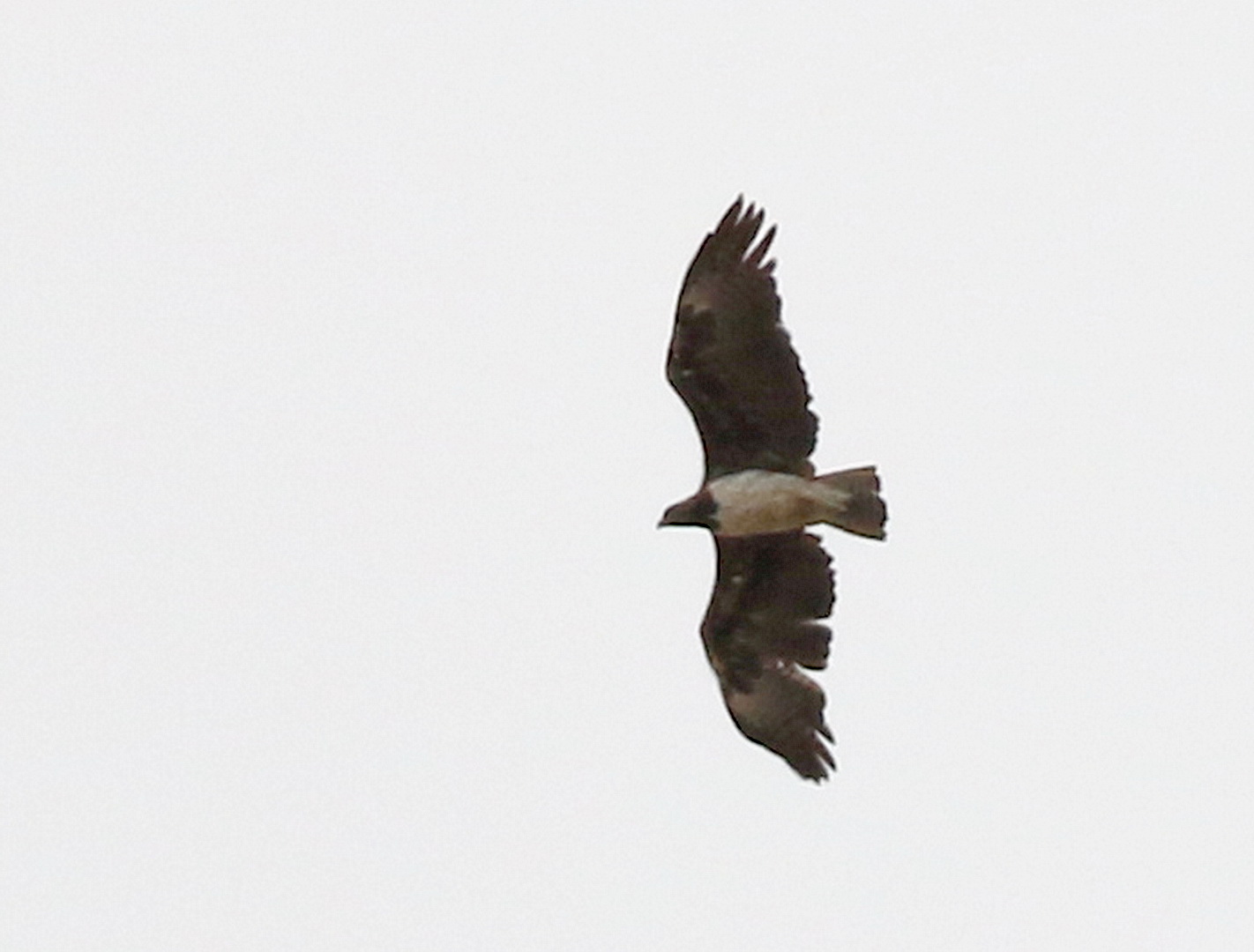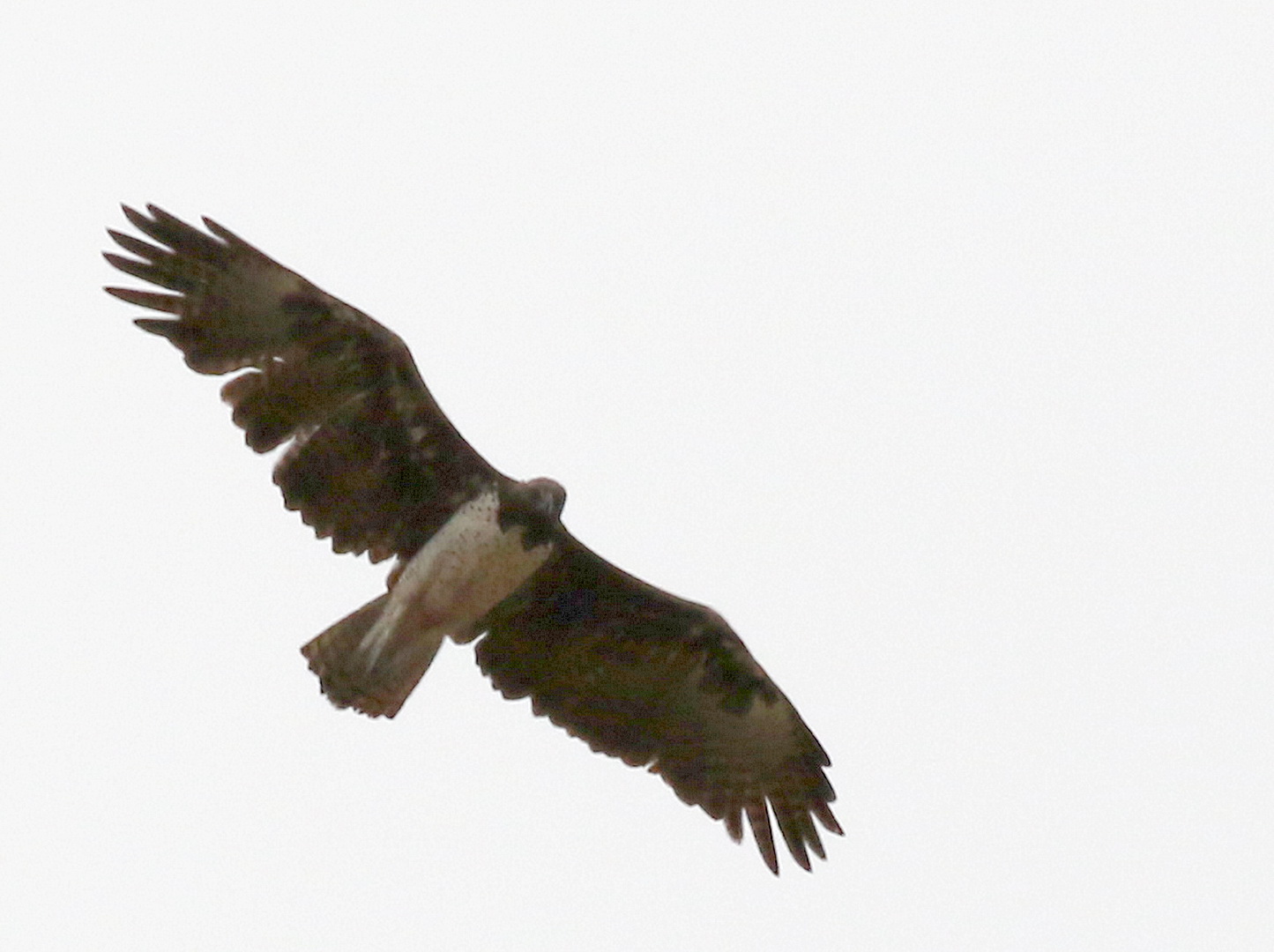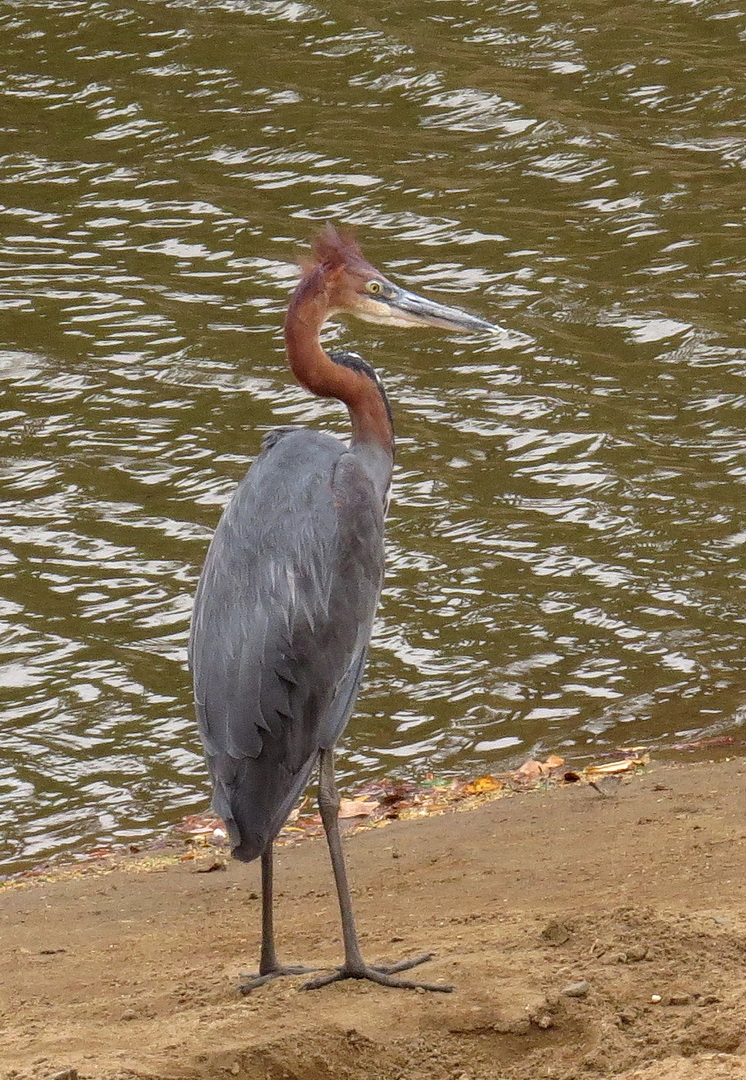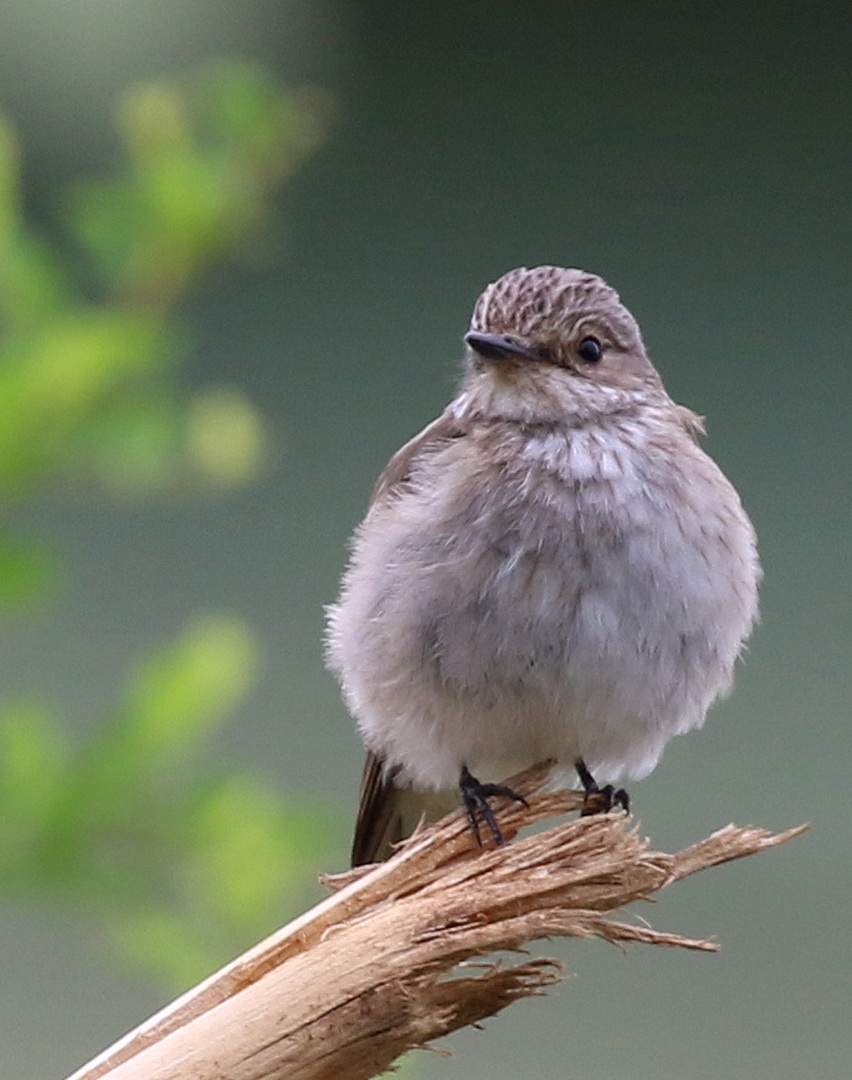
Kosi Bay and Mkuze

9 to 16 May 2019

Report by Paul and Sally Bartho

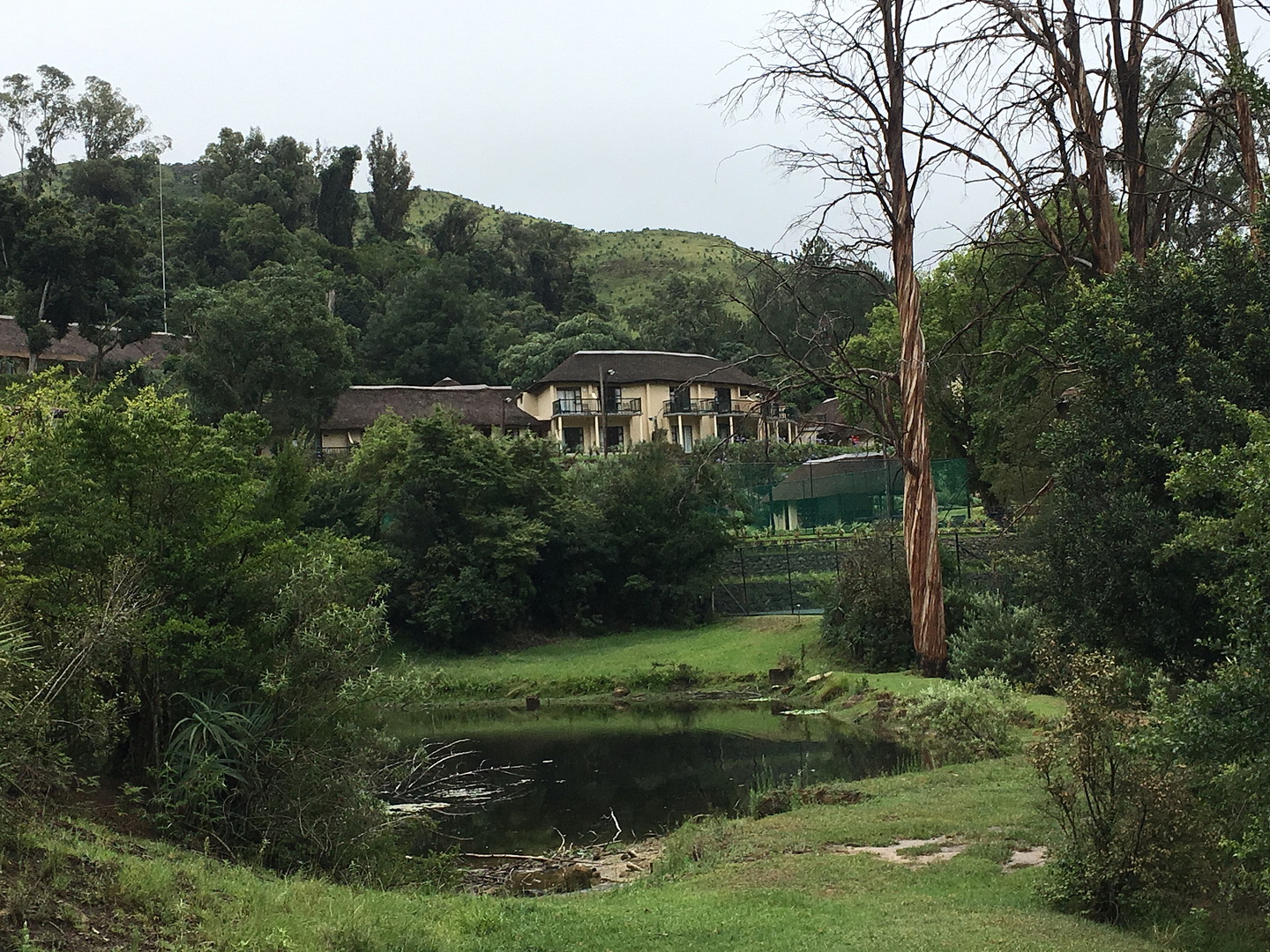
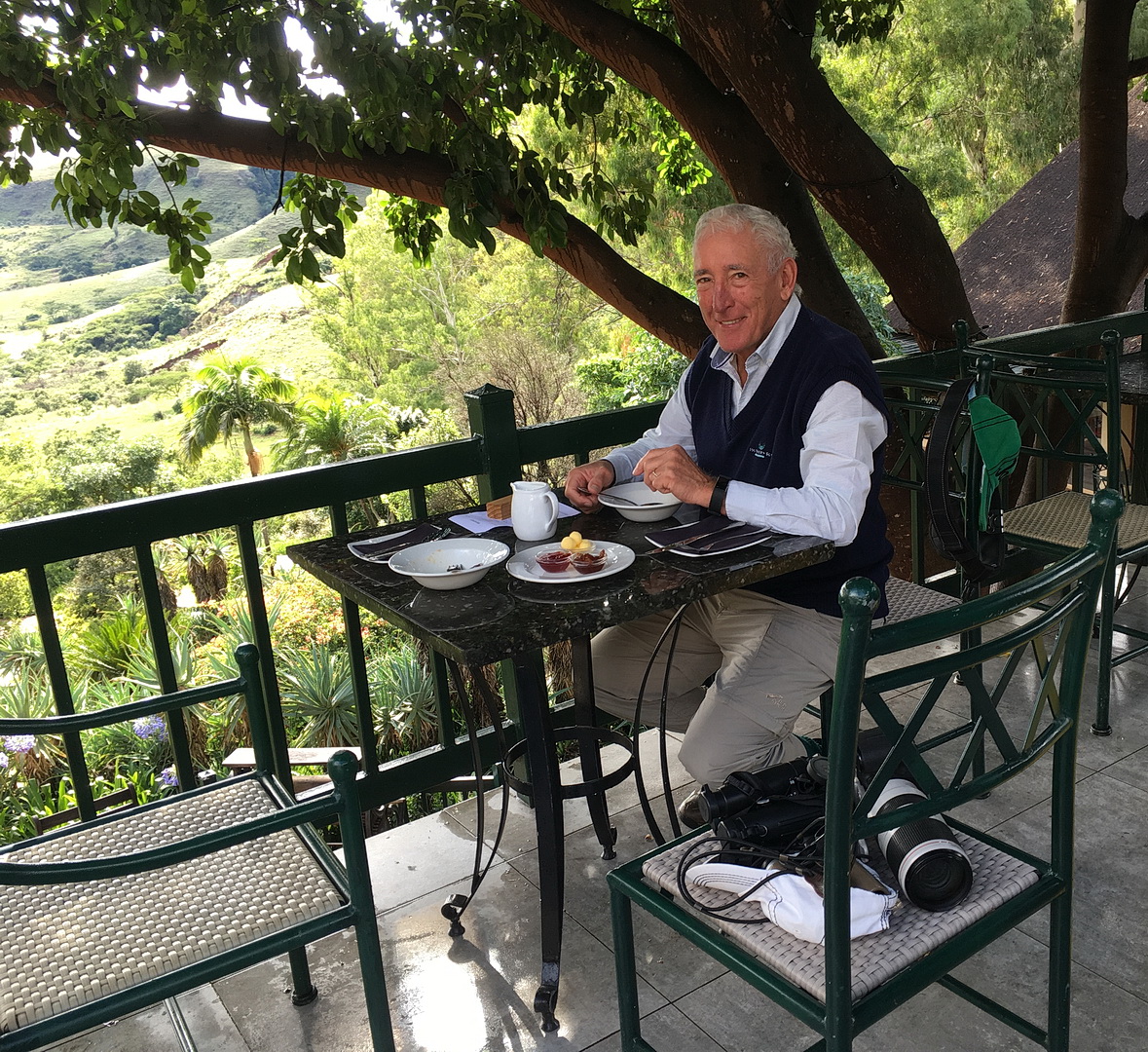
A chance remark to my sister resulted in Sally and I being invited to join her in the TEBA Cottage at the very mouth of Kosi Bay Estuary for four nights. We had a couple of days to prepare for our trip.

A long way to go for four nights so Sally organised for us to have three nights in Mkuze on the way back – staying in the hutted camp accommodation.

We prolonged the forecast six hour journey by taking a longcut through Phinda on the district road. Instead of turning off the N3 at Hluhluwe we went on a further 20 kms and took the Phinda off ramp to the Phinda reserve entrance and because we were passing through there was no charge.

The 30 km dirt rode through the reserve enabled us to see aminals and birds. Towards the end of the road we encountered a pair of Cheetahs lying in the shade with their legs protruding onto the road. We stopped (although strictly speaking they suggest as we were passing through not to do so in case of trouble). The Cheetahs took little notice of us and stayed put. An pleasant and unexpected start to our trip.

My sister had organised our entry permits for us so we were able to pass quickly through the gate and proceed down to the TEBA Cottage at the river mouth.

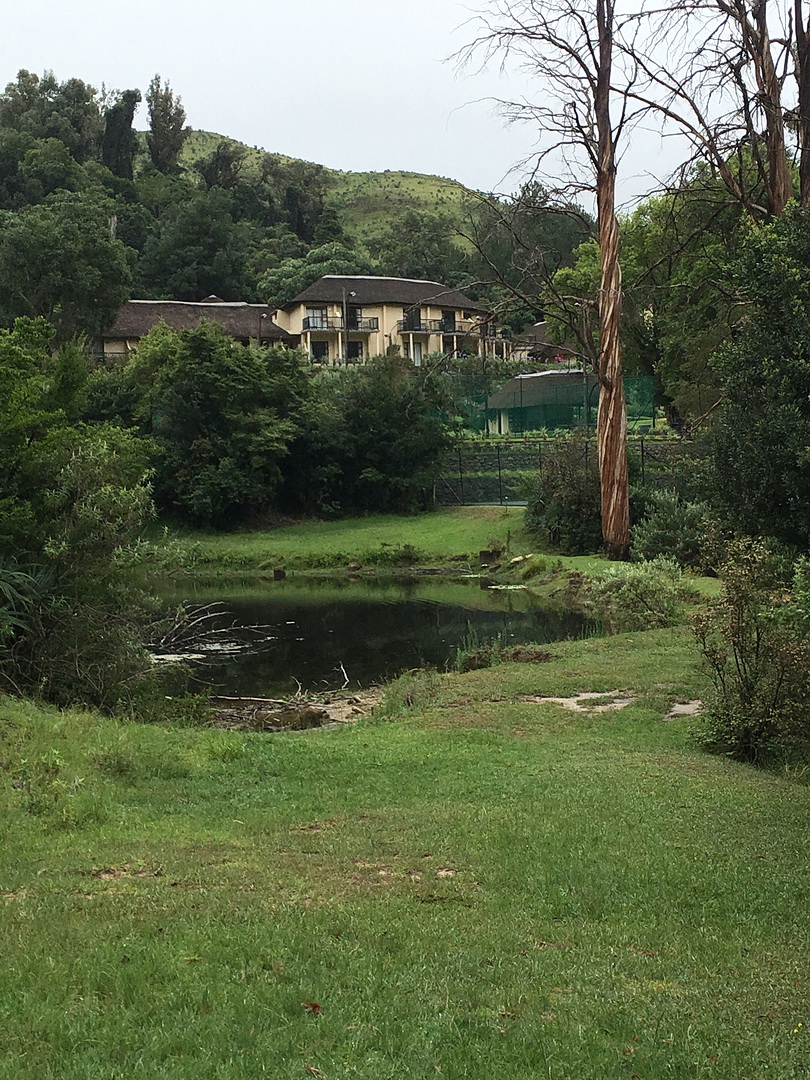
The cottage is rustic. Three bedrooms, two bathrooms (one with shower the other with a bath), large kitchen, dining room and a deck with panoramic views across the bay. Yes hot water in the kitchen and for the bath as well as the basins in the bedrooms. No electricity, just a generator powering batteries for lights and the fridges and freezers. That said, it was a privilege to stay there. No neighbours and the bay in front of us.

TEBA Cottage

Each morning, up early and into the coastal forest – following the sandy road to the cottage- listening and trying to spot the many birds present. Getting good sightings was very tricky and many of the birds we identified were by ear – Sally’s mostly.

Thick Coastal Forest

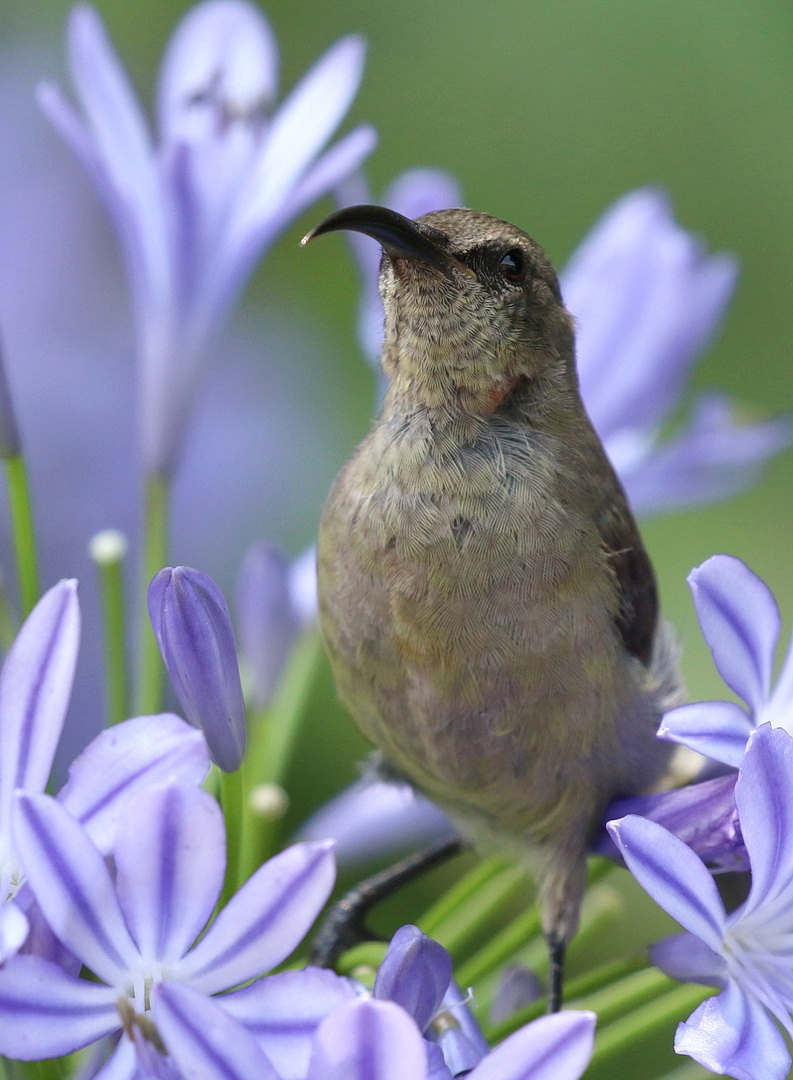
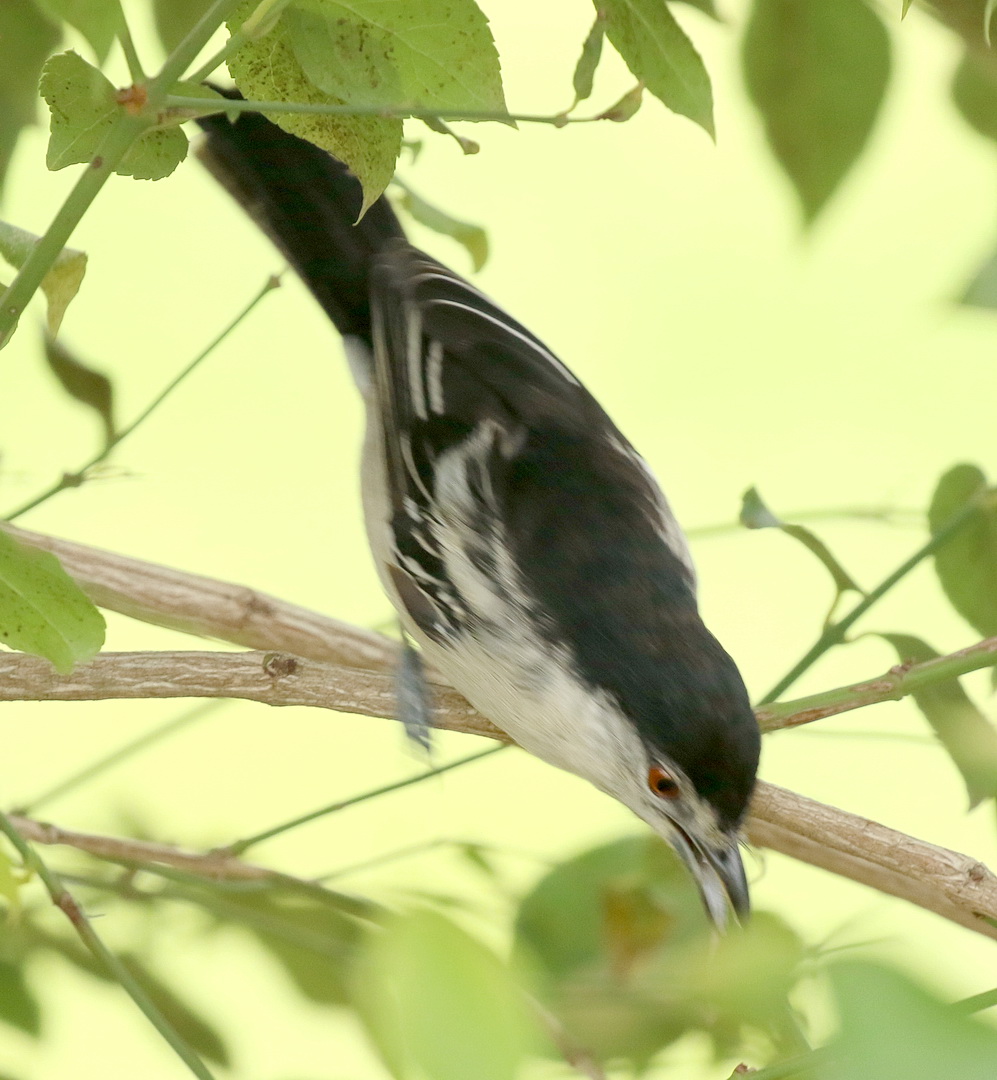
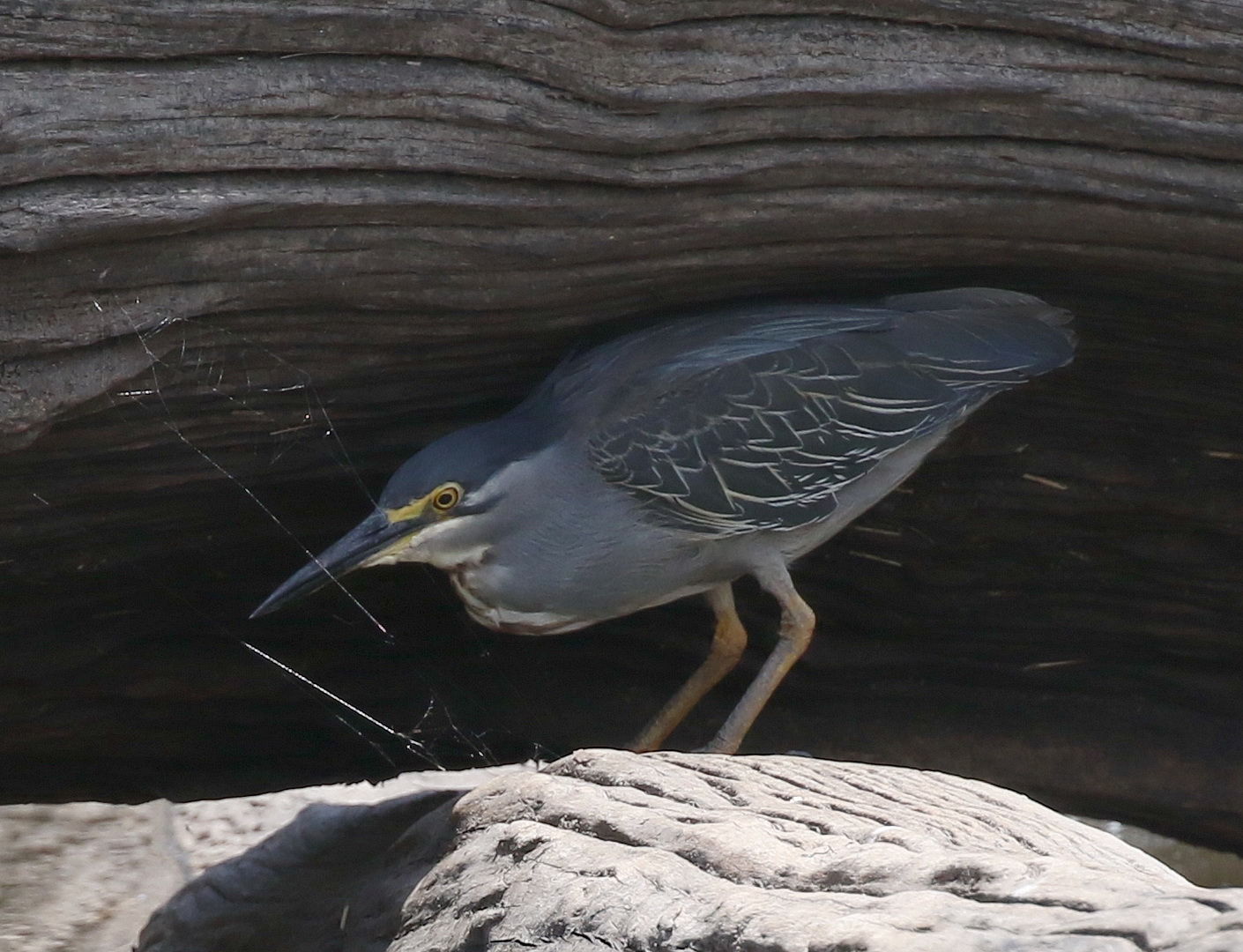
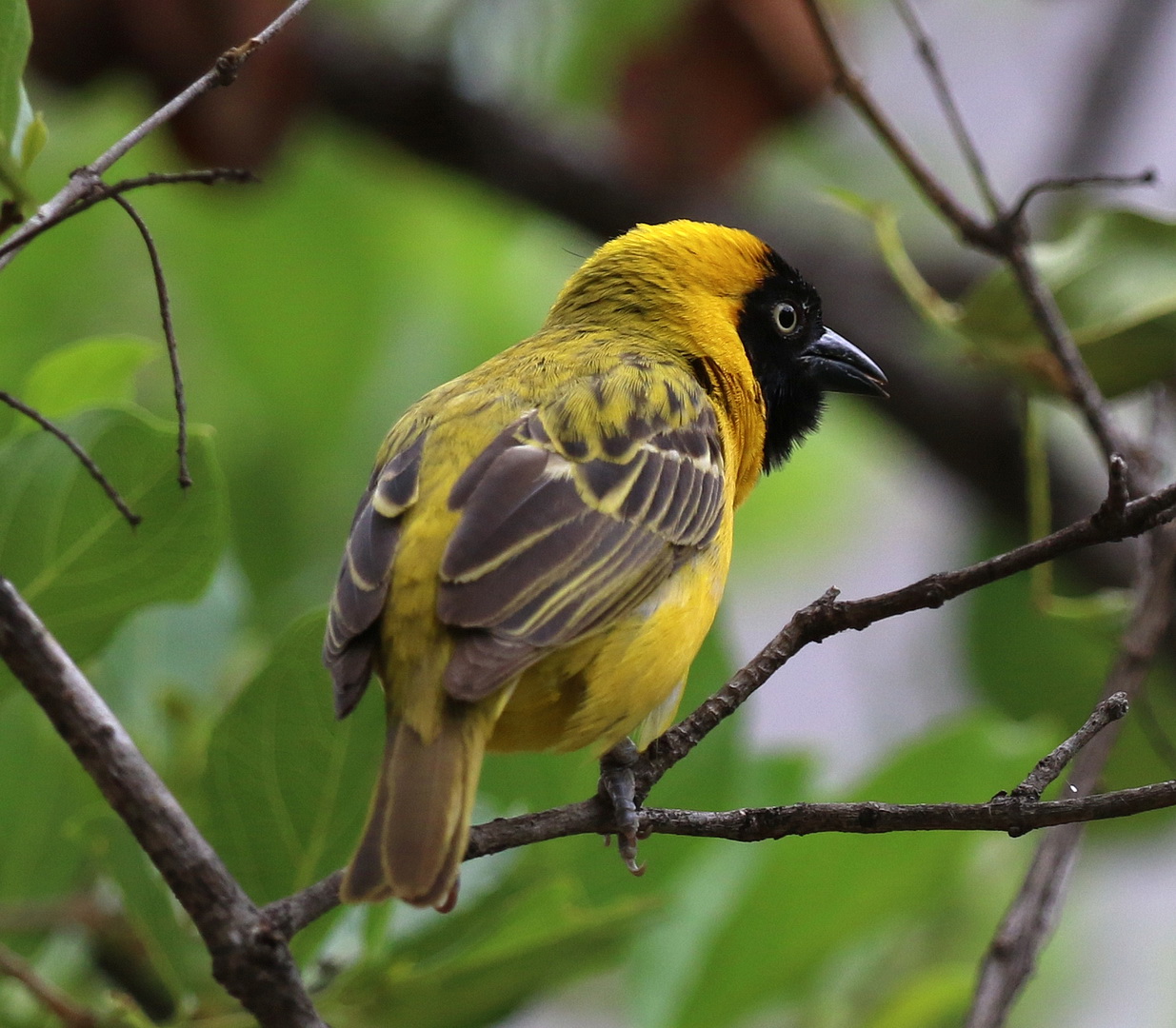
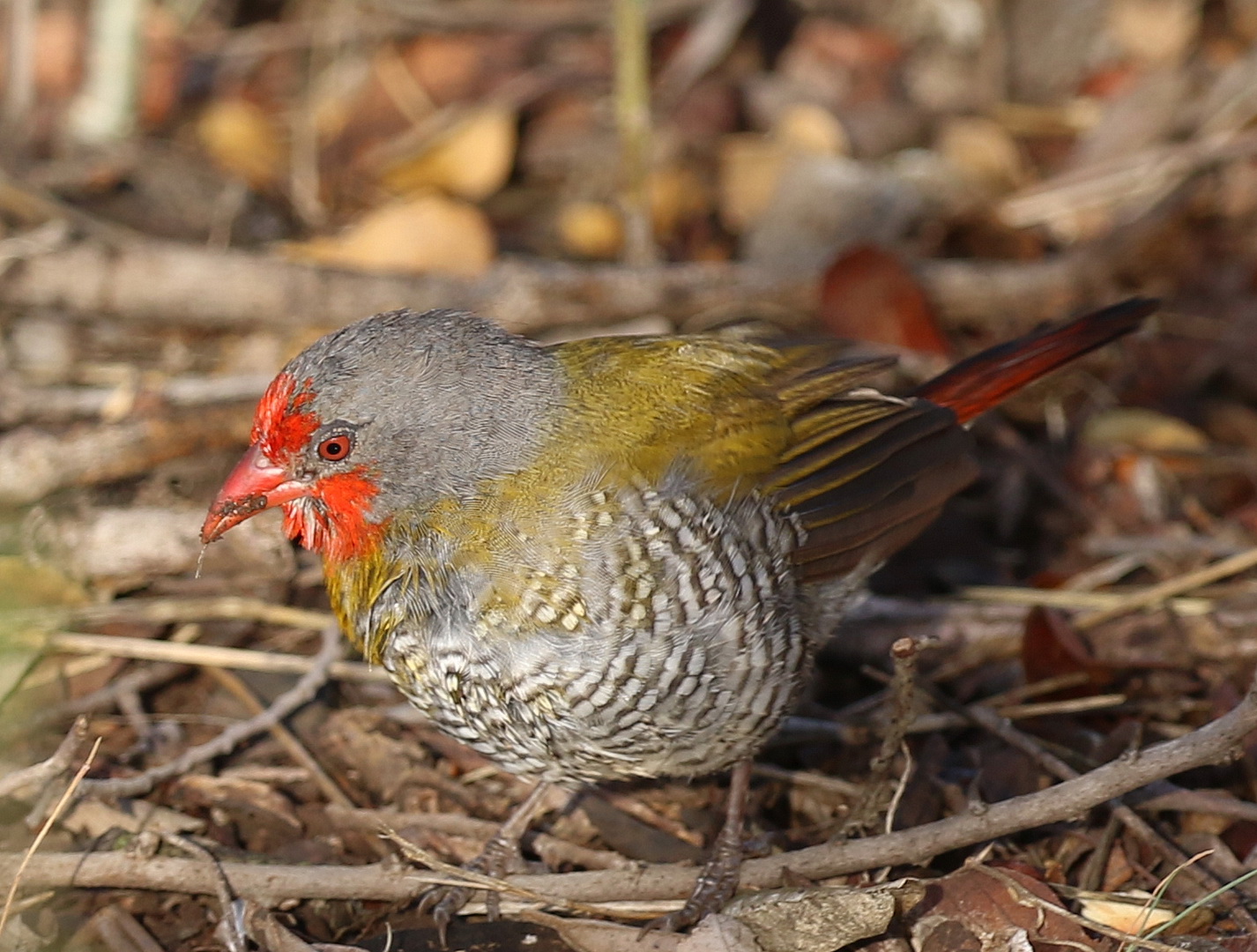
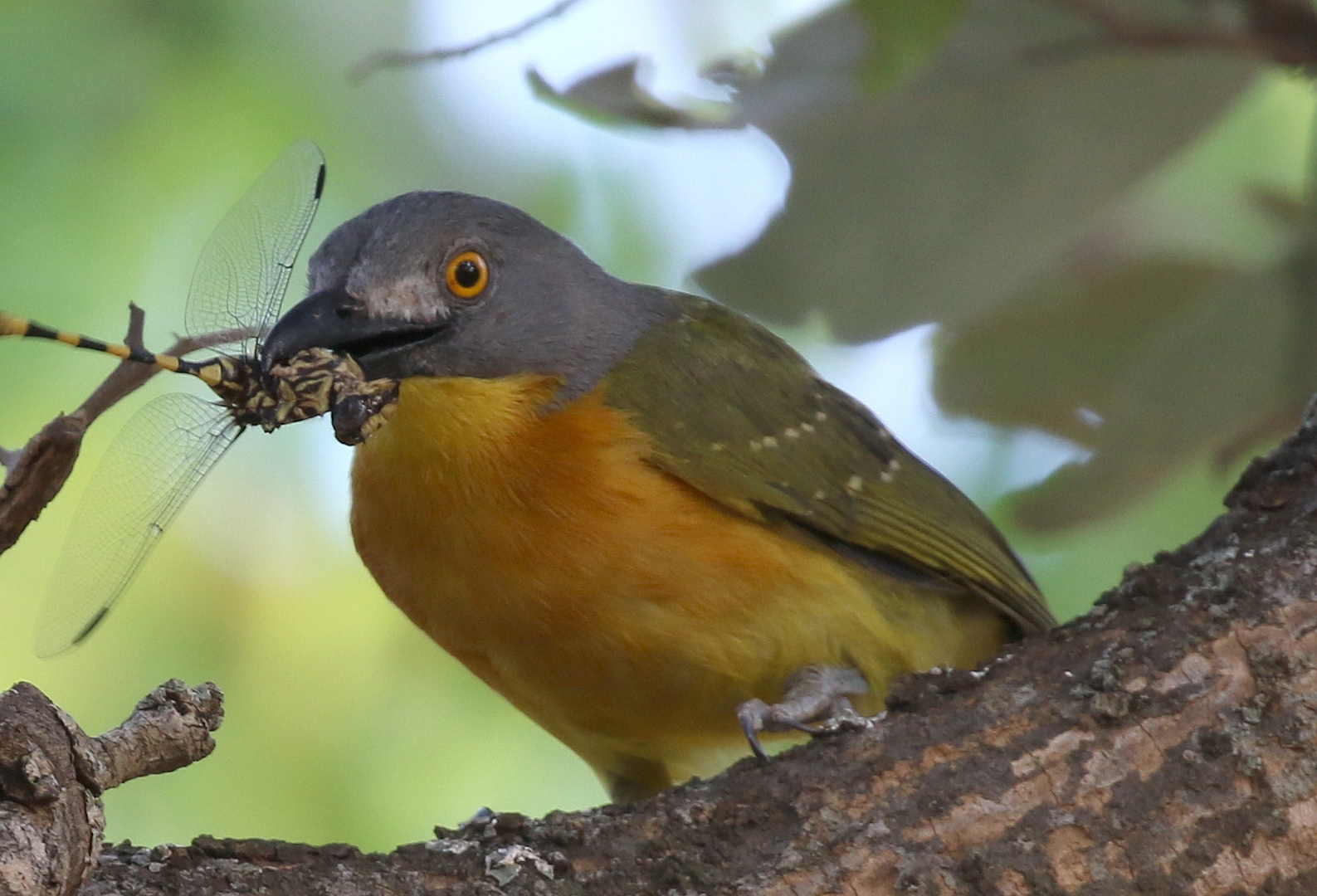
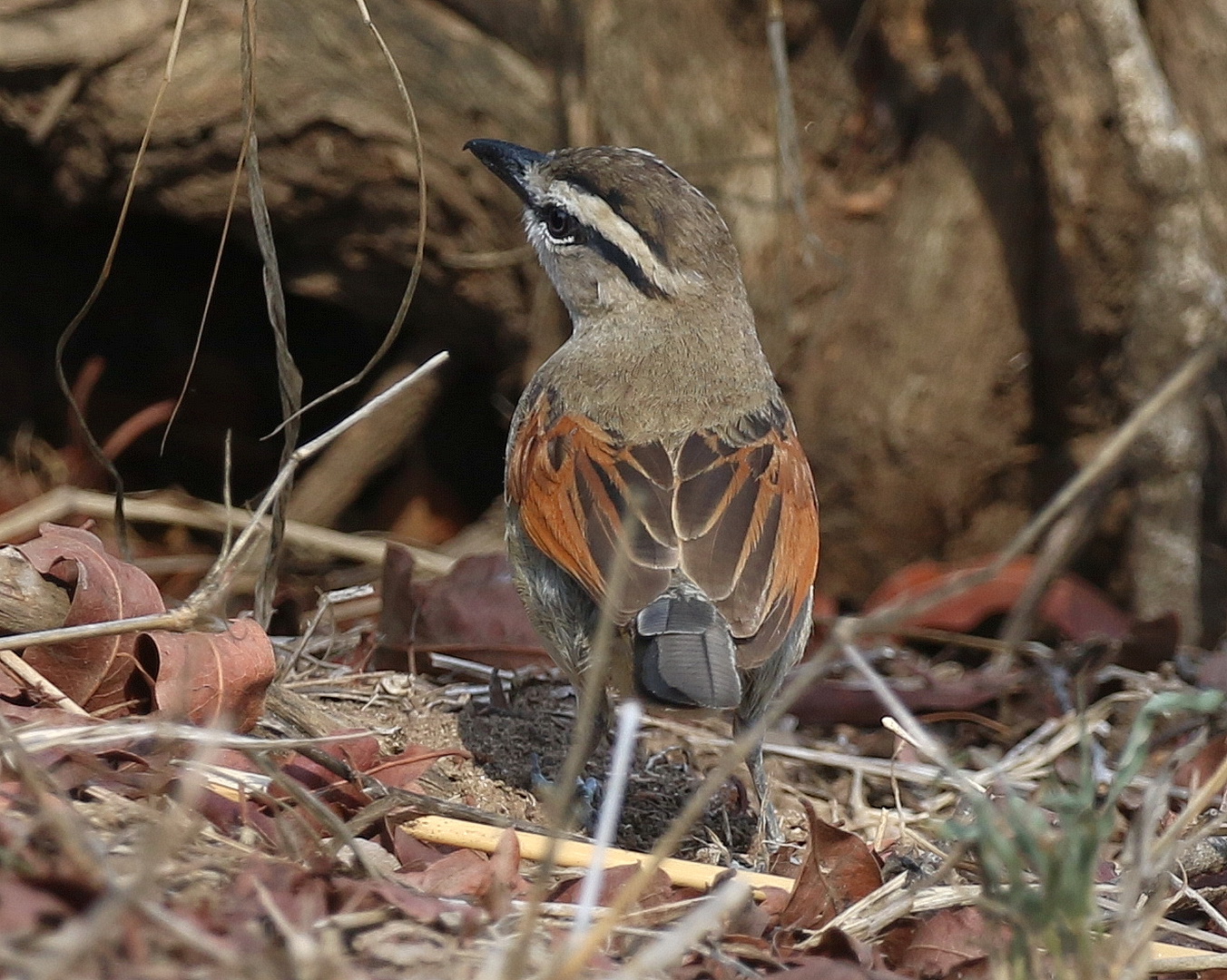
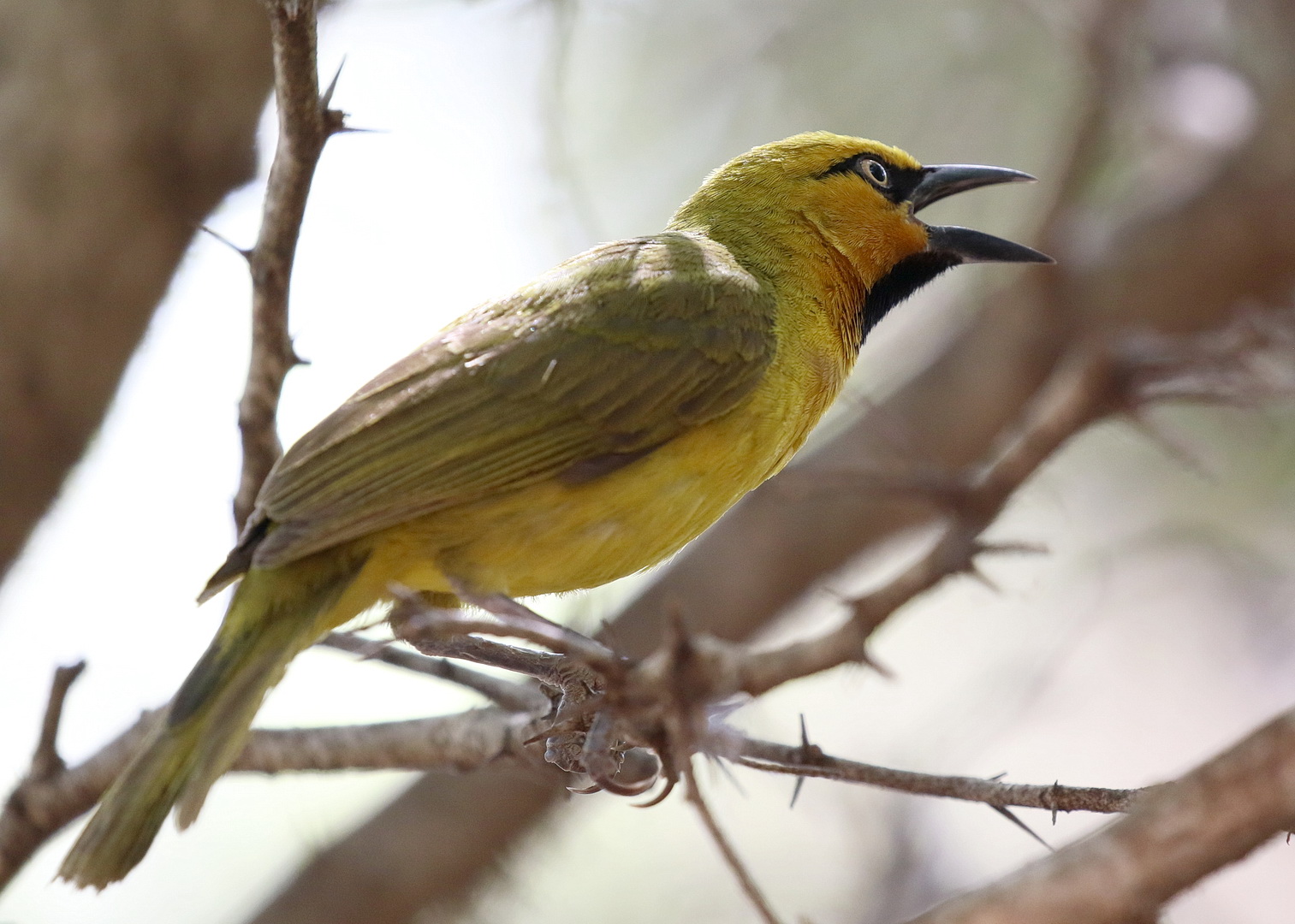
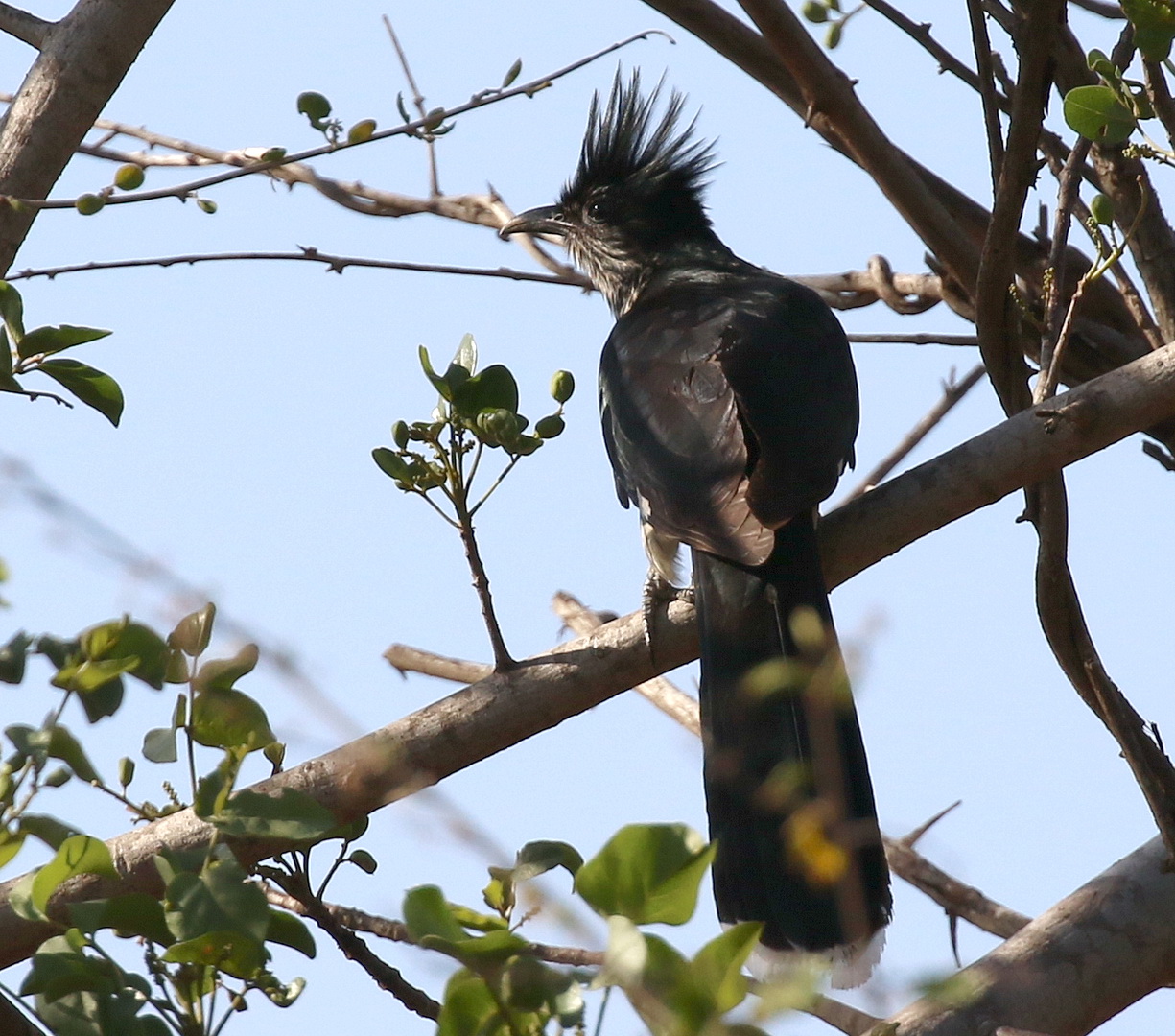
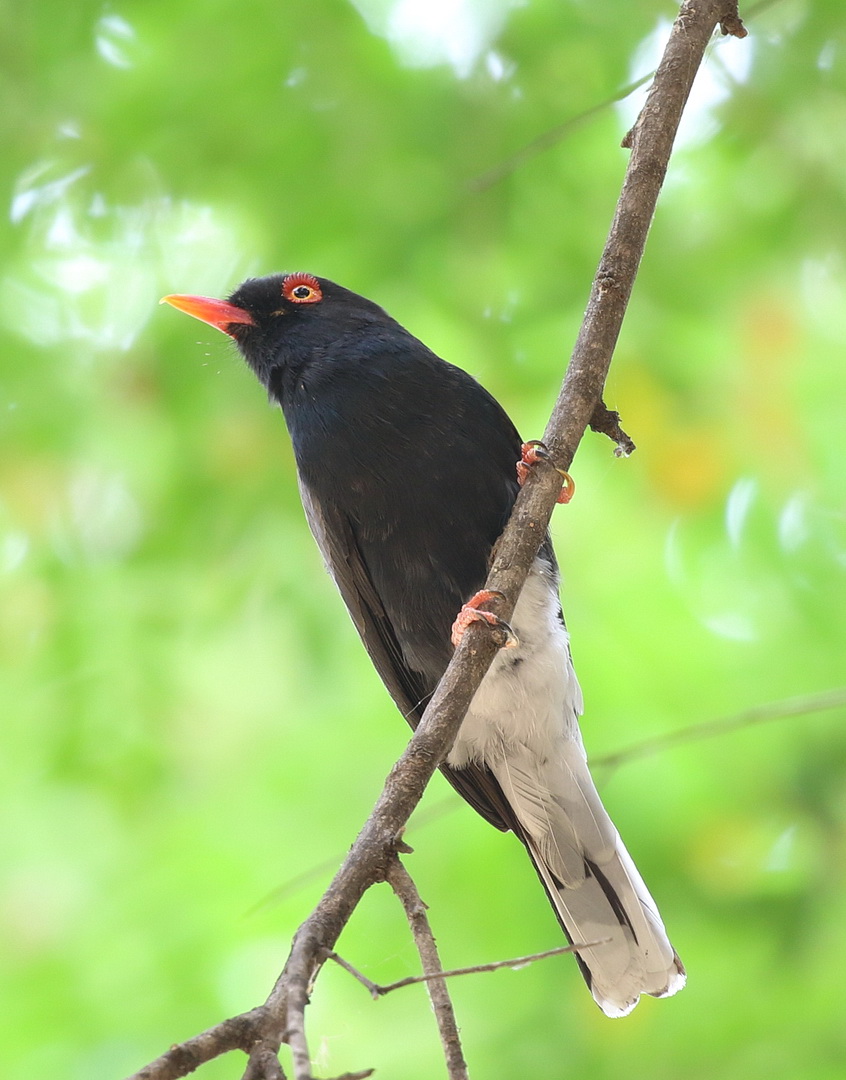
There were Green Malkoha, Black-throated Wattle-eyes, White-starred Robins, Blue-mantled Crested-Flycatchers, Grey and Olive Sunbirds, Dark-backed Weavers, Black-backed Puffbacks, Southern Boubou, Natal Robins, Crowned and Trumpeter Hornbills, Rudd’s Apalis, Sombre and Yellow-bellied Greenbuls, Terrestial Brownbuls, Brown Scrub-Robins all adding their sounds to the bush.

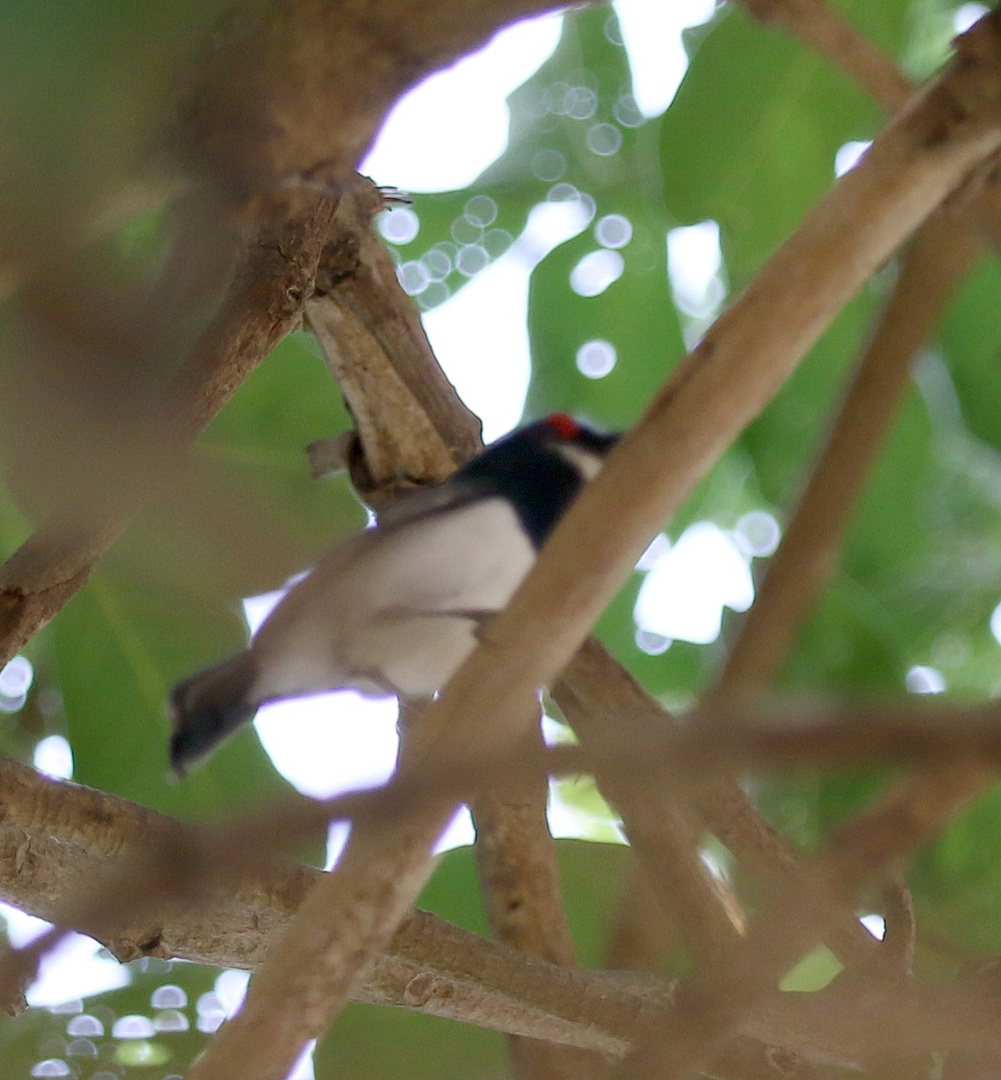
Black-throated Wattle-eye
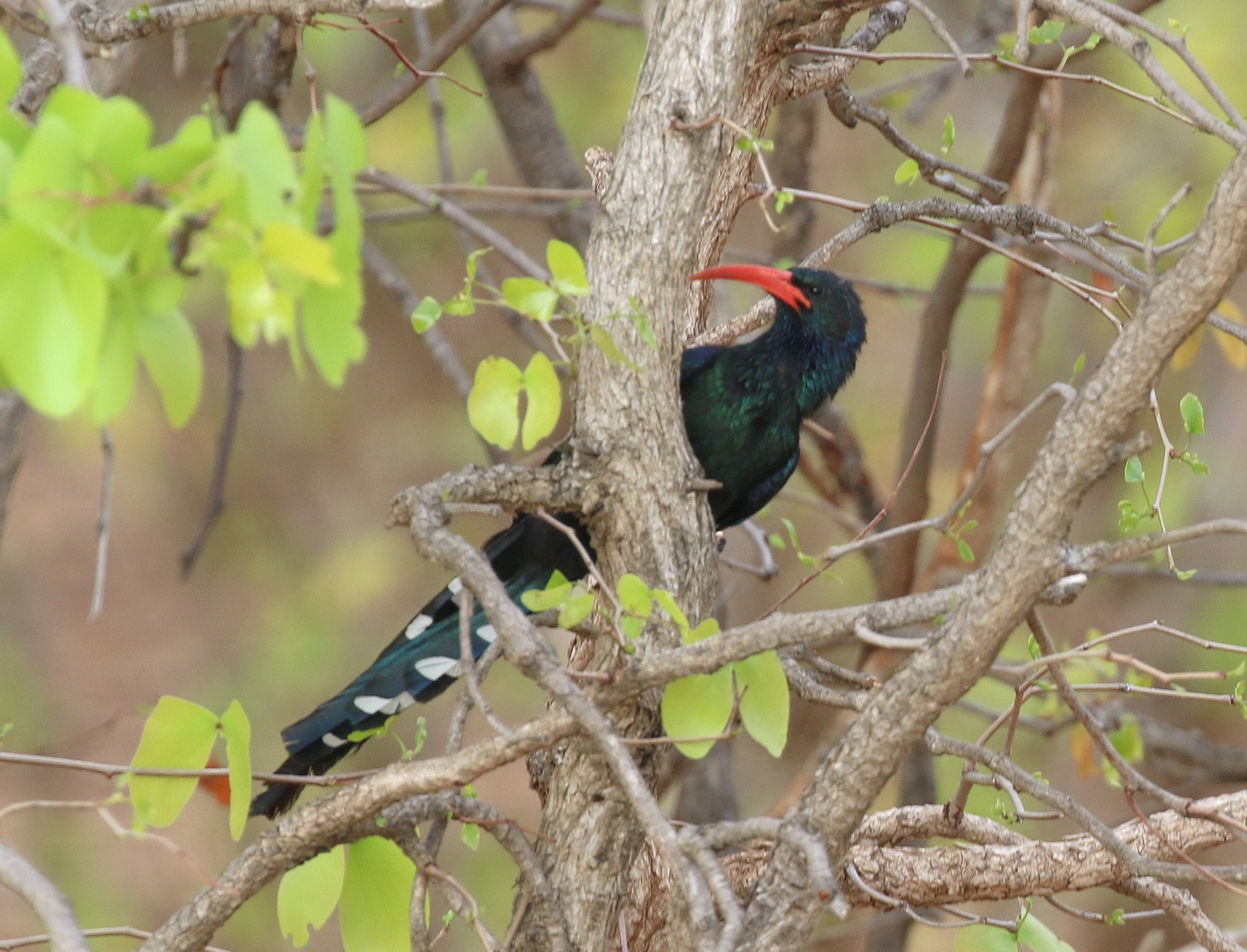
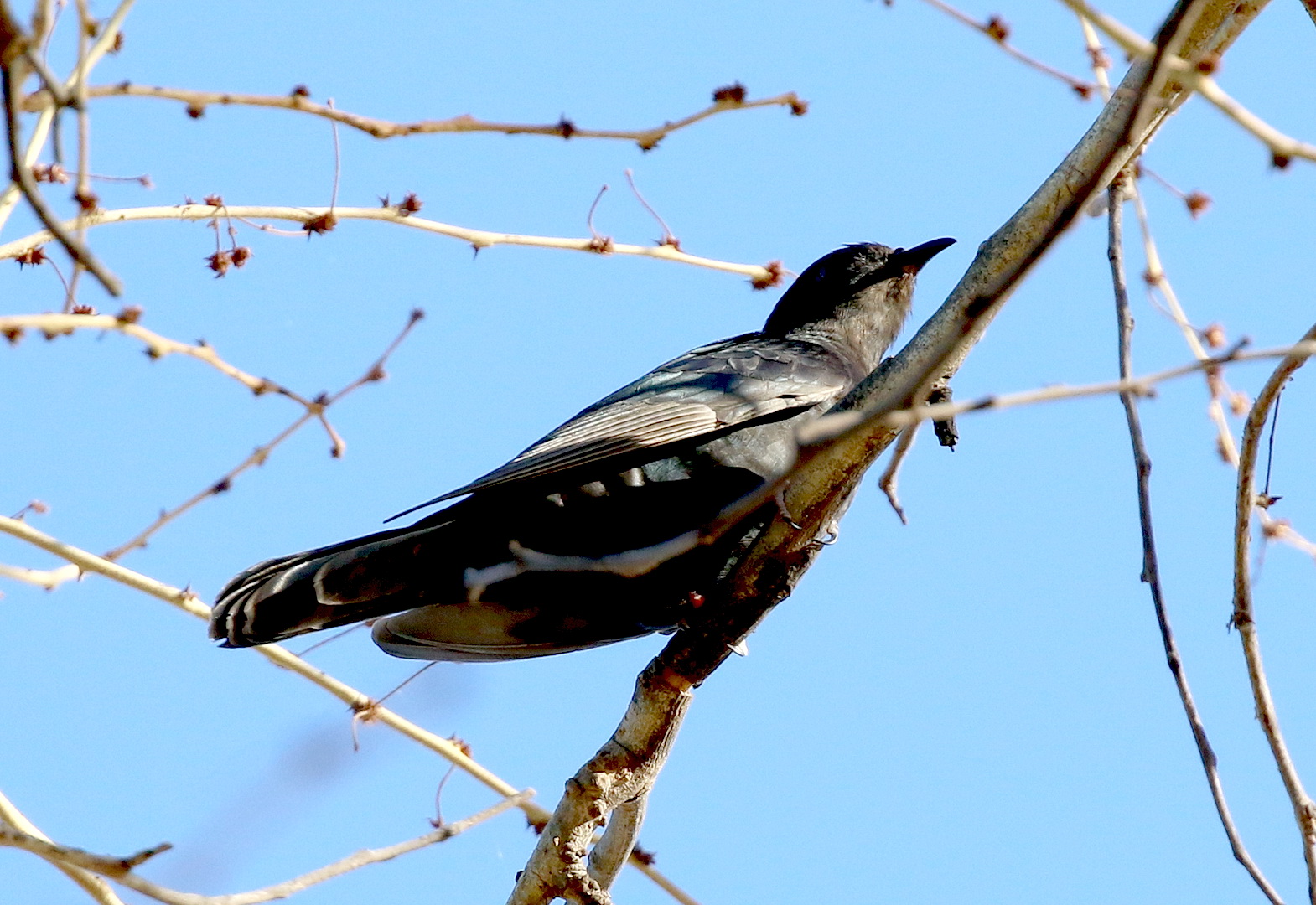
Green Malkoha (Banana Bill)

Of course there were many butterflies too – which we have been unable to identify.

The weather was kind to us – not too hot and cool at night. Mossies were few and far between. A lot of time was spent on the beach and wading up the estuary looking for birds.

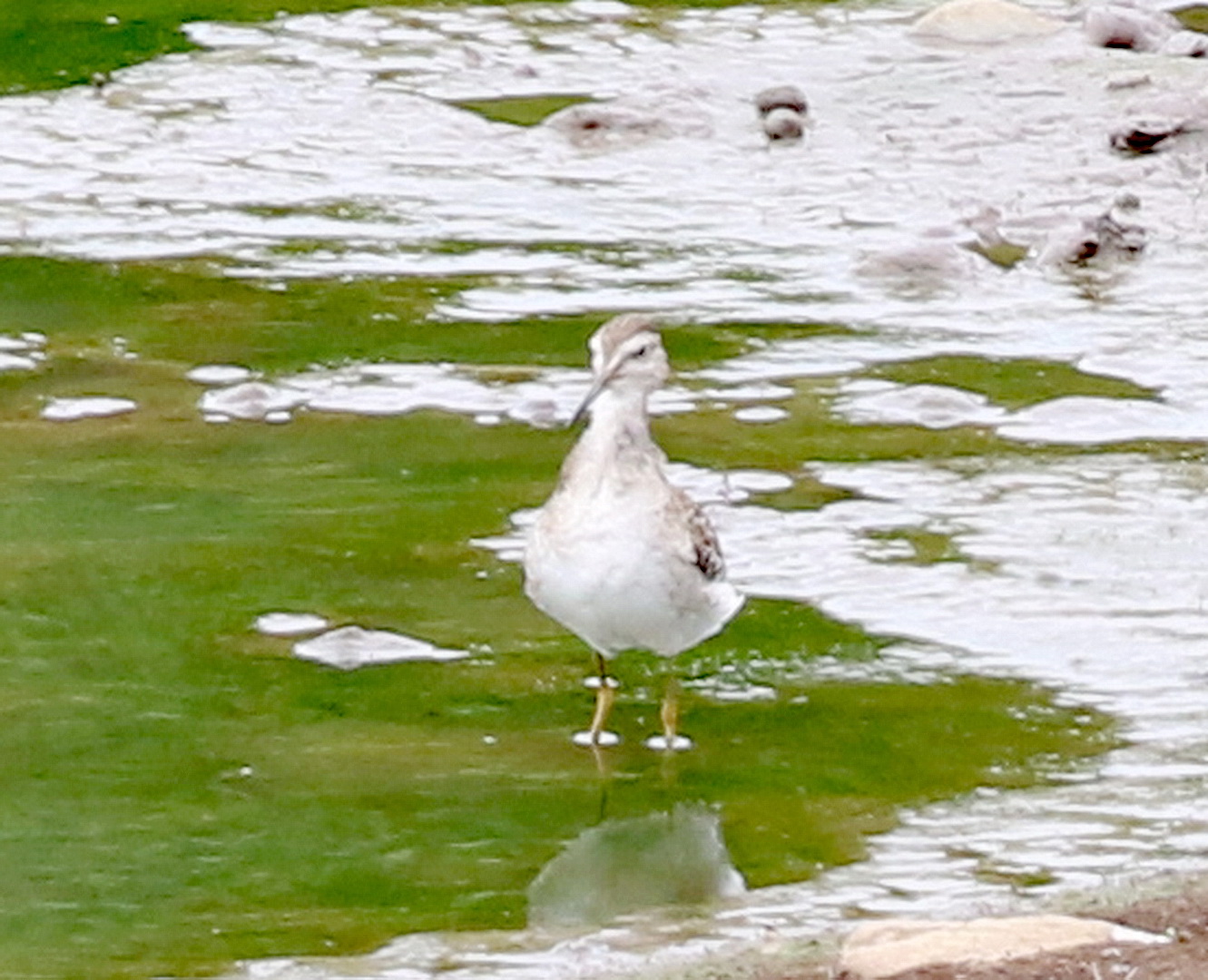
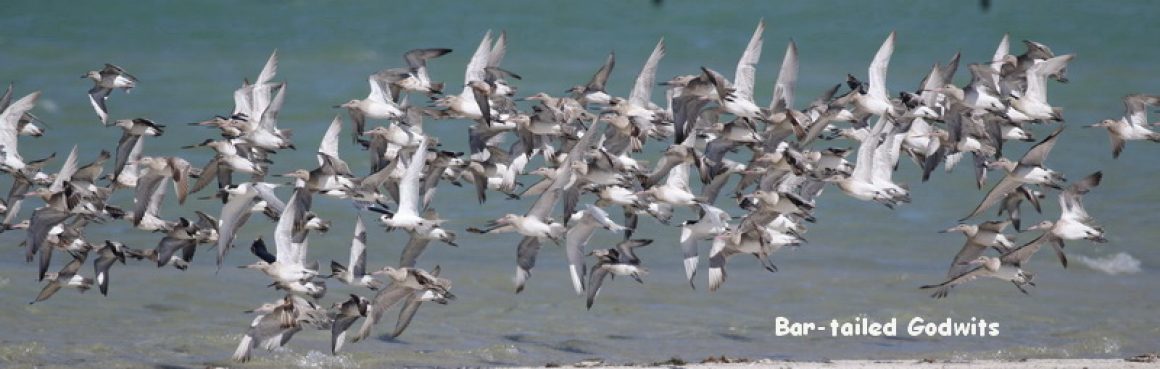
A group of waders on one of the sand strips – the tide was out – caught our attention.

About 20 Waders

Through the scope we decided that we needed to get closer to confirm our ID. A long distance photo confirmed our ID. Then I decided to wade out to get closer. As it happened a group of people got too close to the group and they flew landing on the same sand strip that I was on. I took my photos and then they flew up the coast towards Mozambique.

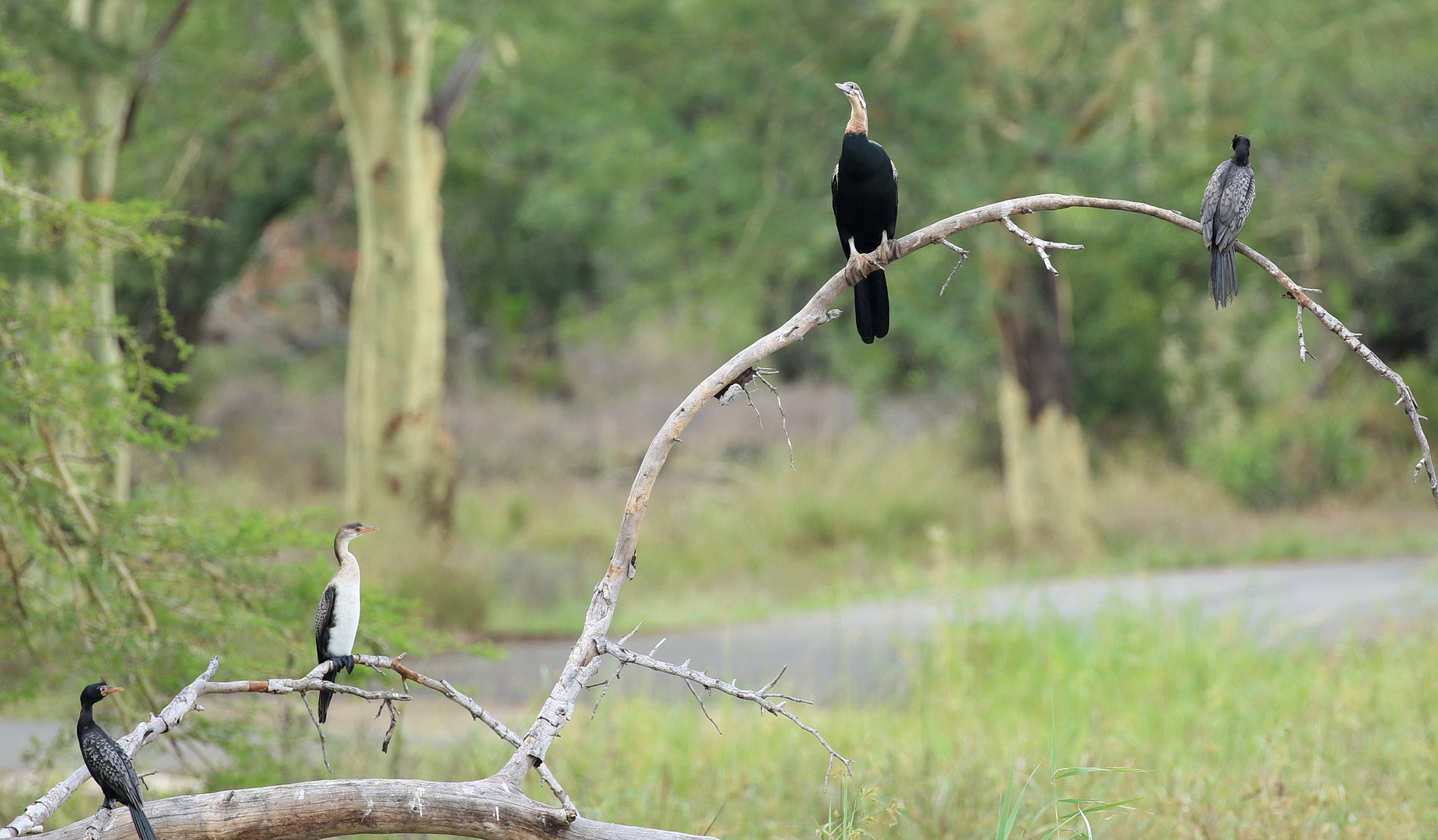
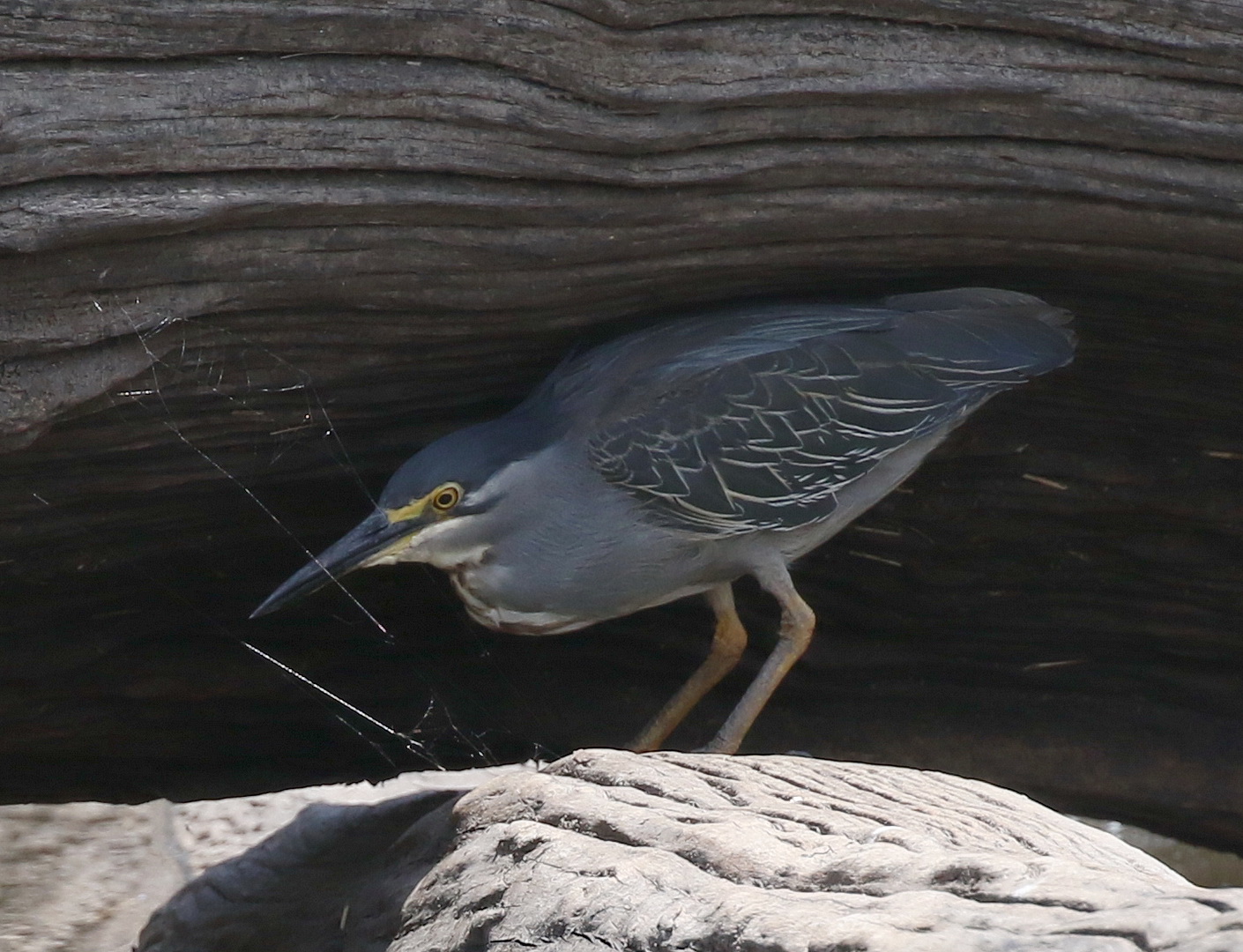
Here are some photos of other water birds we sighted in and around the estuary.

Fish seemed to be plentiful for the locals – perhaps their methodology was unusual.

Spear Fisherman with a plentiful catch of rather small fish.

A walk the other side of the estuary southwards along the coast with my sister, Natasha and Sally also gave us an unexpected surprise. My sister spotted shoals of fish riding in the waves and then she spotted a Loggerhead Turtle doing the same. In the end we had three more sightings of others doing the same.

Right at the bottom of the stairs leading down to the beach from the cottage there were several large trees which had collapsed into the sea due to corrosion. A the base of one of these lived an eel. Very colourful – bright yellow with dark markings – seen several times.

And in the water at the base of a tree there was a Lion Fish. On one morning it swam around in the sunlight enabling me to get a few nice photos of it.

Our bird list was not prolific and many of the bush birds were identified by sound. In the end we identified a total of 48 different species. Click here to see the list.

Mkhuze

After four relaxing days at Kosi, Sally and I headed for three nights at Mkhuze staying in the hutted accommodation. We had two full days to explore the Reserve and visit the hides.

As an aside, if you plan to visit, be careful at night as the hutted camp is not secure. We were told that the previous week a lion was seen around the nearby cottages

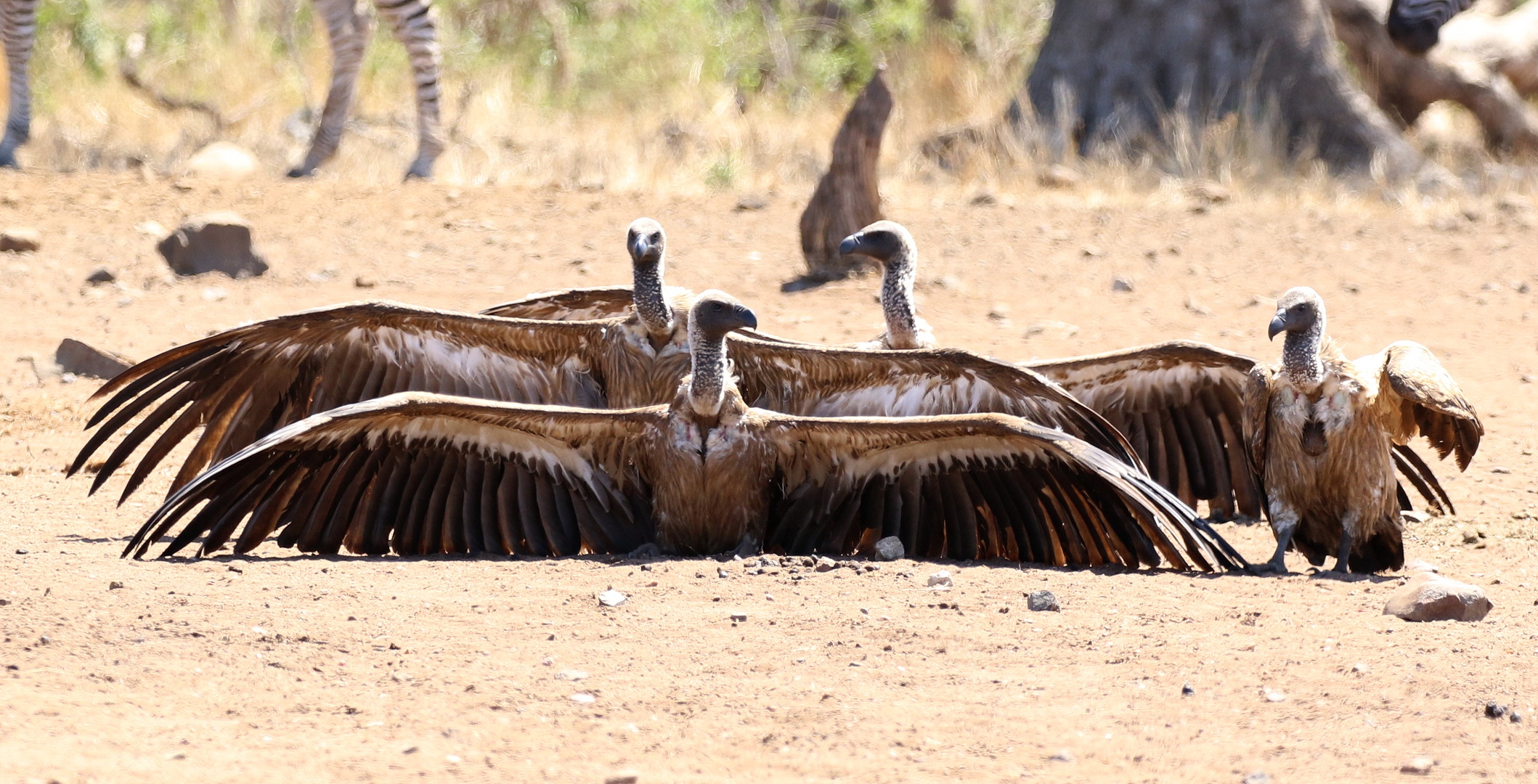
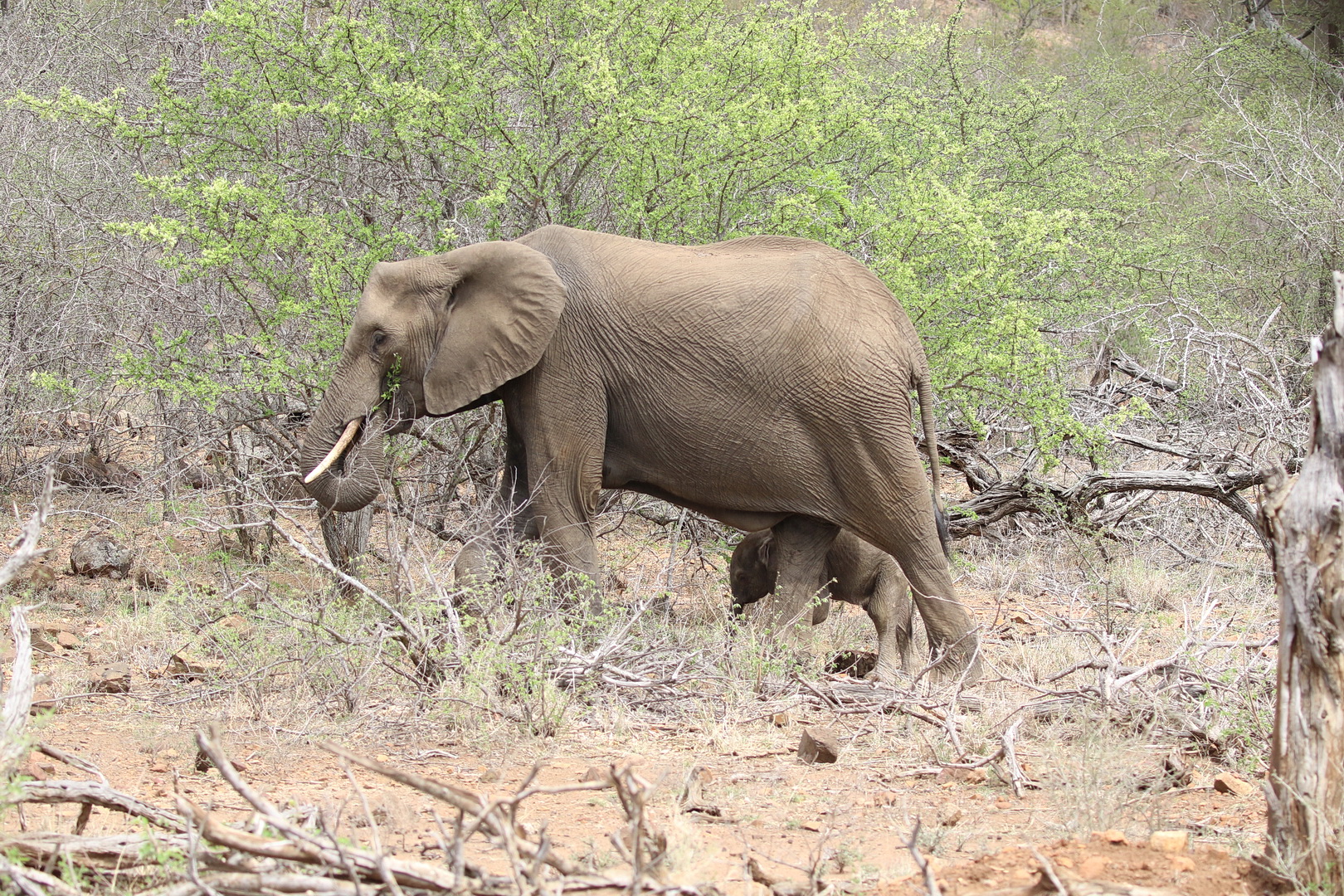
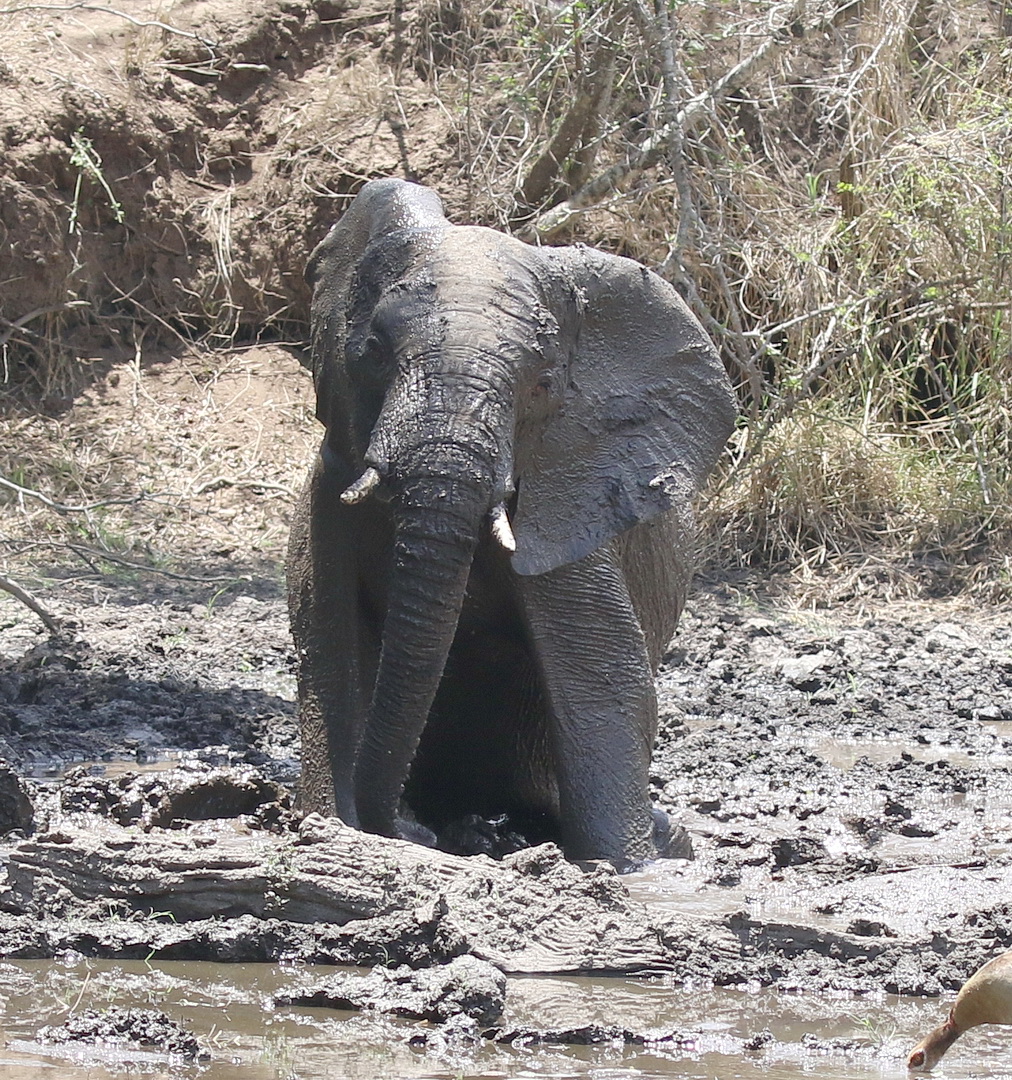
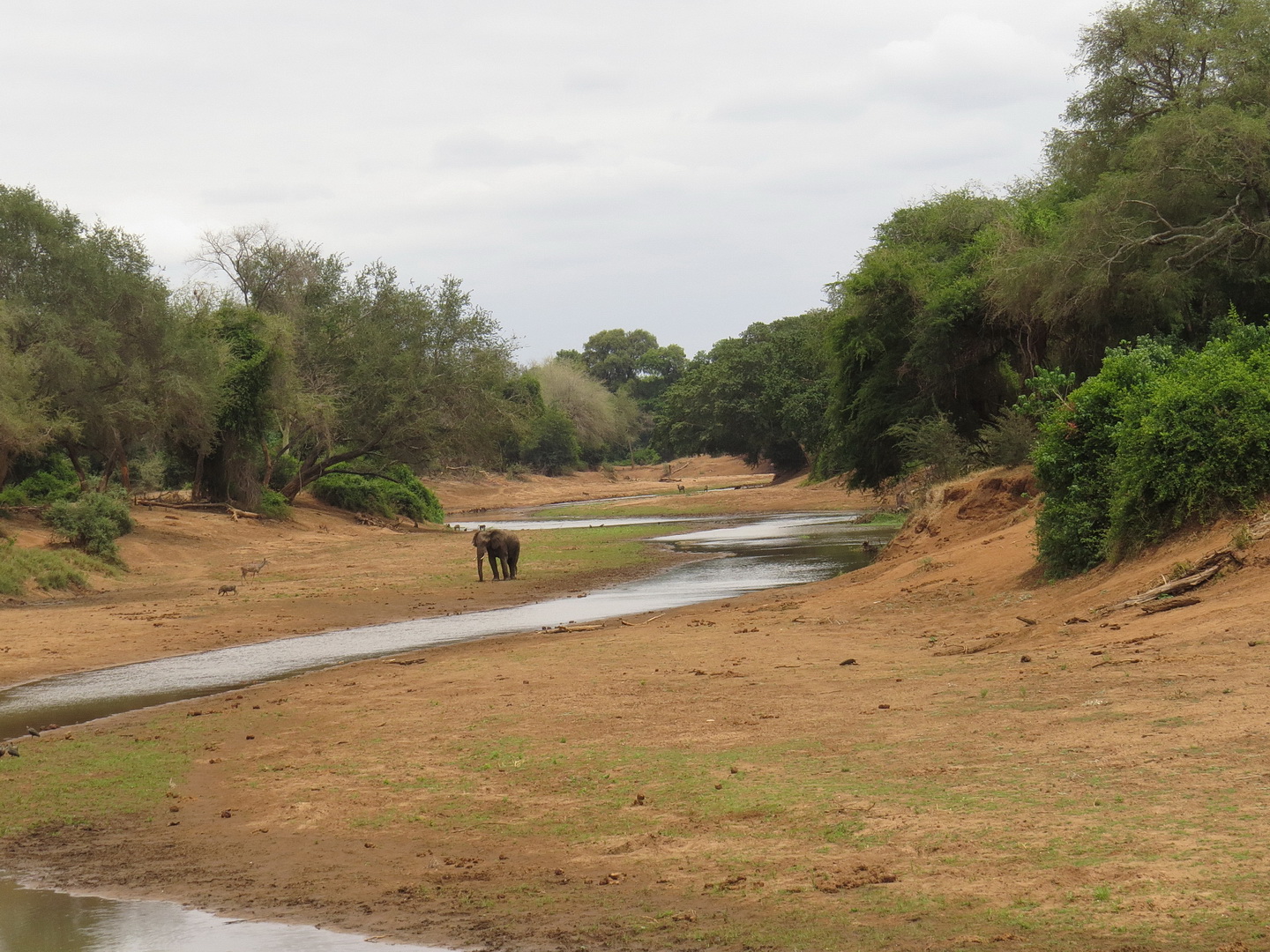
We did see an elephant as it walked past the Masinga Hide without popping in to disturb the other aminals there. Other than that we encountered only the usual zebra, giraffe, nyala, impala, warthogs, gnus, baboons and monkeys.

Lone elephant at KuMasinga Hide

Of course Masinga Hide is always worthwhile to see aminals and birds.

Baboons enjoying the early morning sun
Could you do this?

And some of the birds seen there.

The campsite is a good place to see birds and we were not let down when we went there. Here a few of the specials we saw there.

Malibali Hide – near the campsite – was full and we enjoyed the new hide. This time however it was relatively quiet but again we had a few specials to see.

Driving around the bird life was patchy in places yet we did manage to see a wide variety of different species which we had not see at any of the hides.

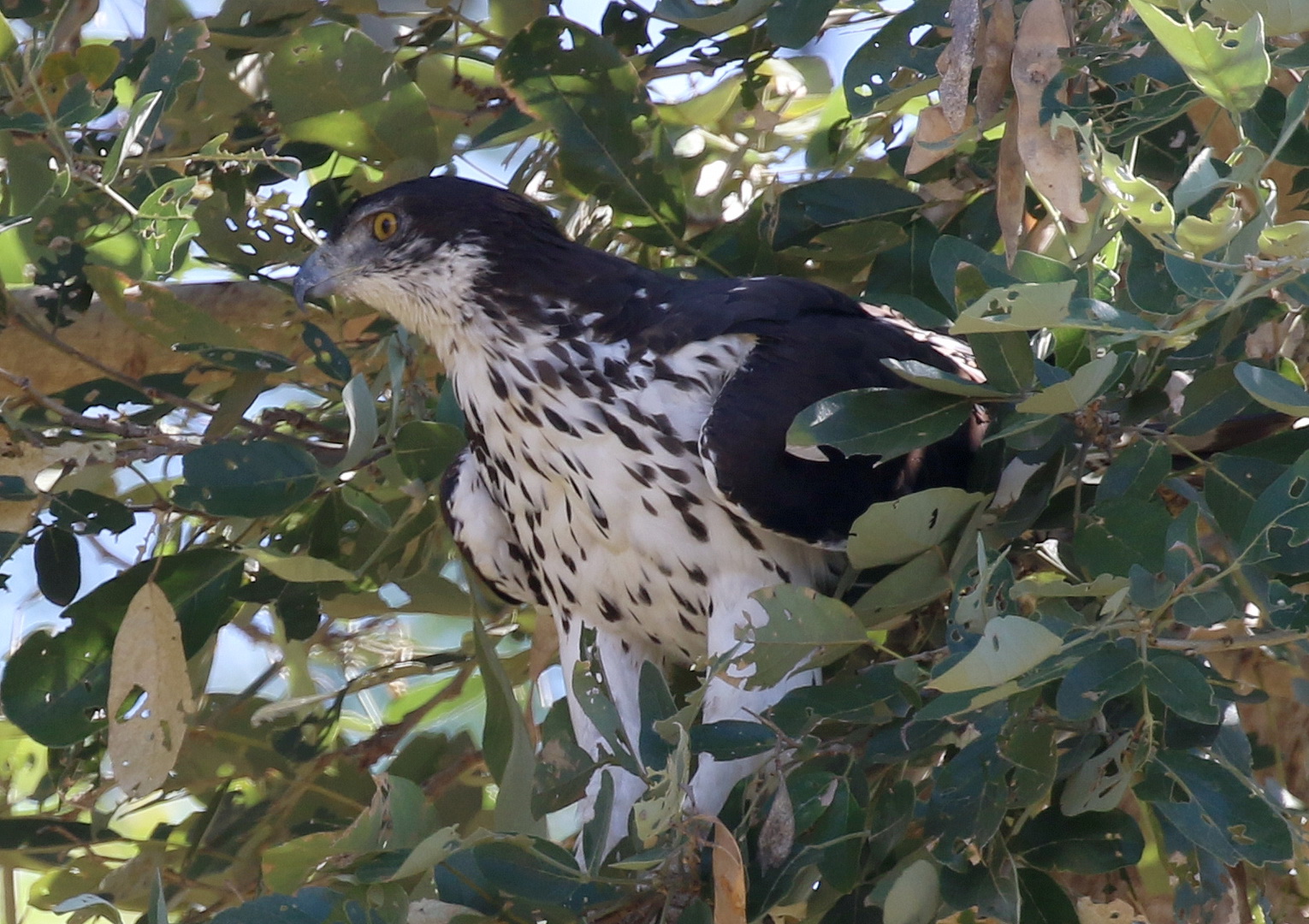
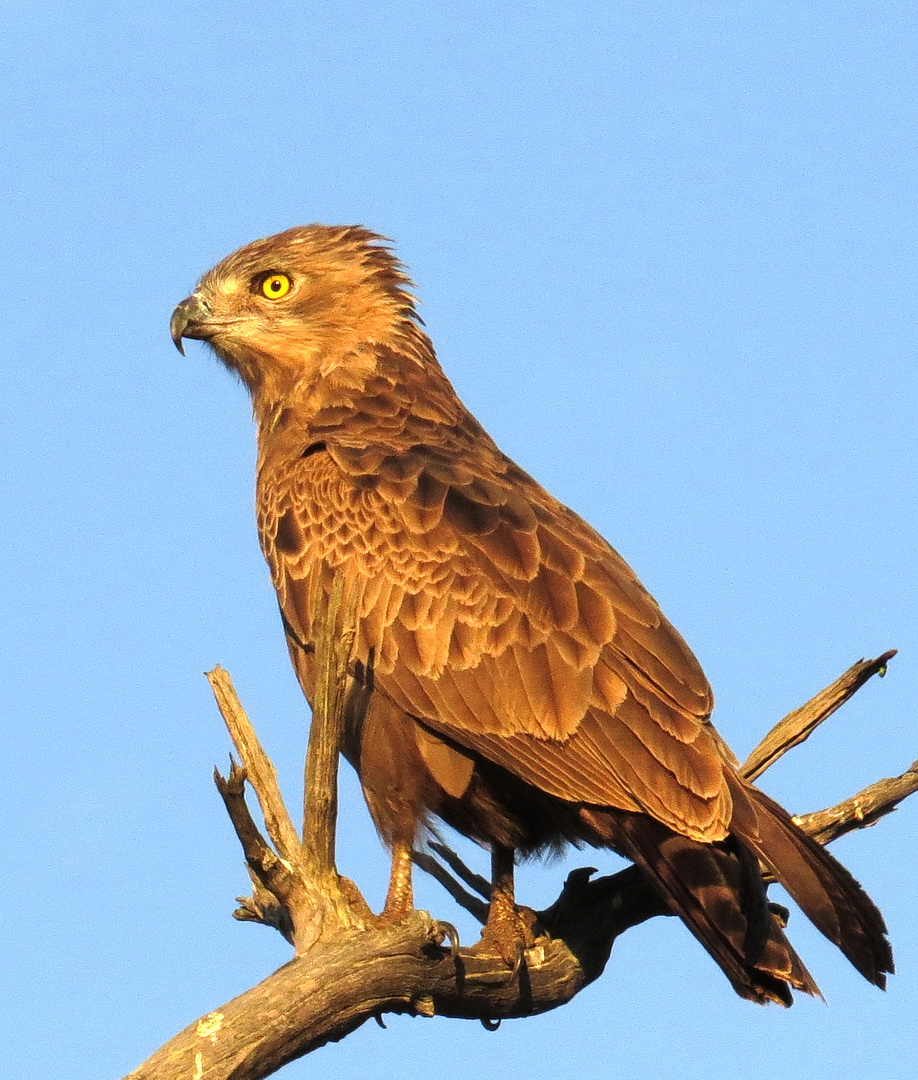
African Cuckoo-Hawk

The second hide to the right of the picnic site at Nsumo Pan is another of our favourite hides except when the wind is blowing. Fortunately the weather was kind to us when we visited. Here are some views from the hide.

On arrival we were treated to a sight we had not expected. Looking out to the left there were pairs of Little Grebes, African Pygmy Geese and White-backed Ducks. And as we scanned the pan there were at least another 20 African Pygmy Geese and about 8 White-backed Ducks. In the past we would have been lucky to see just one pair of African Pygmy Geese.

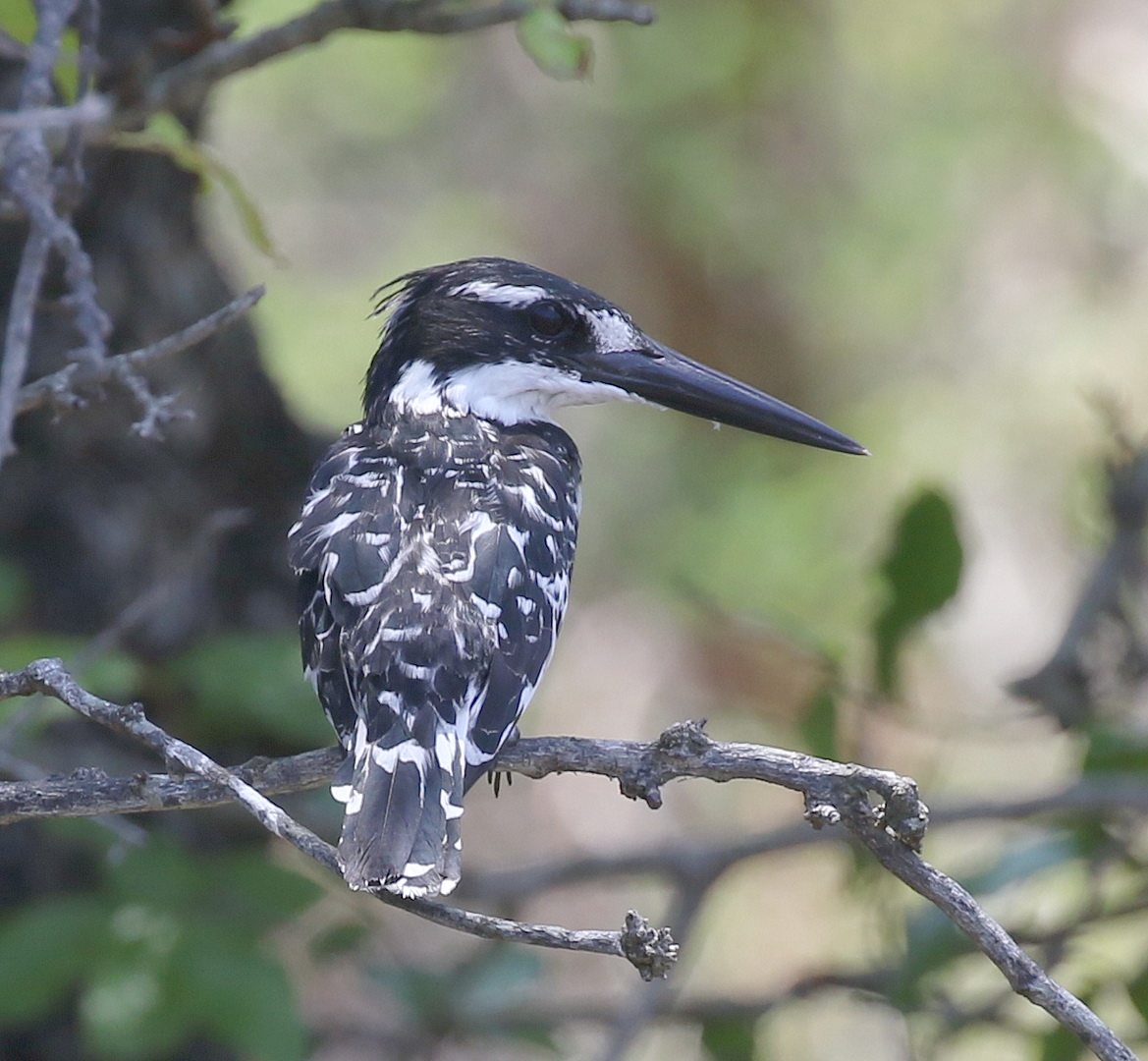
African Jacana were on the lily pads, a Malachite Kingfisher put on a show, Whiskered Terns were seen all across the pan. And on the far side many other water birds could be seen.

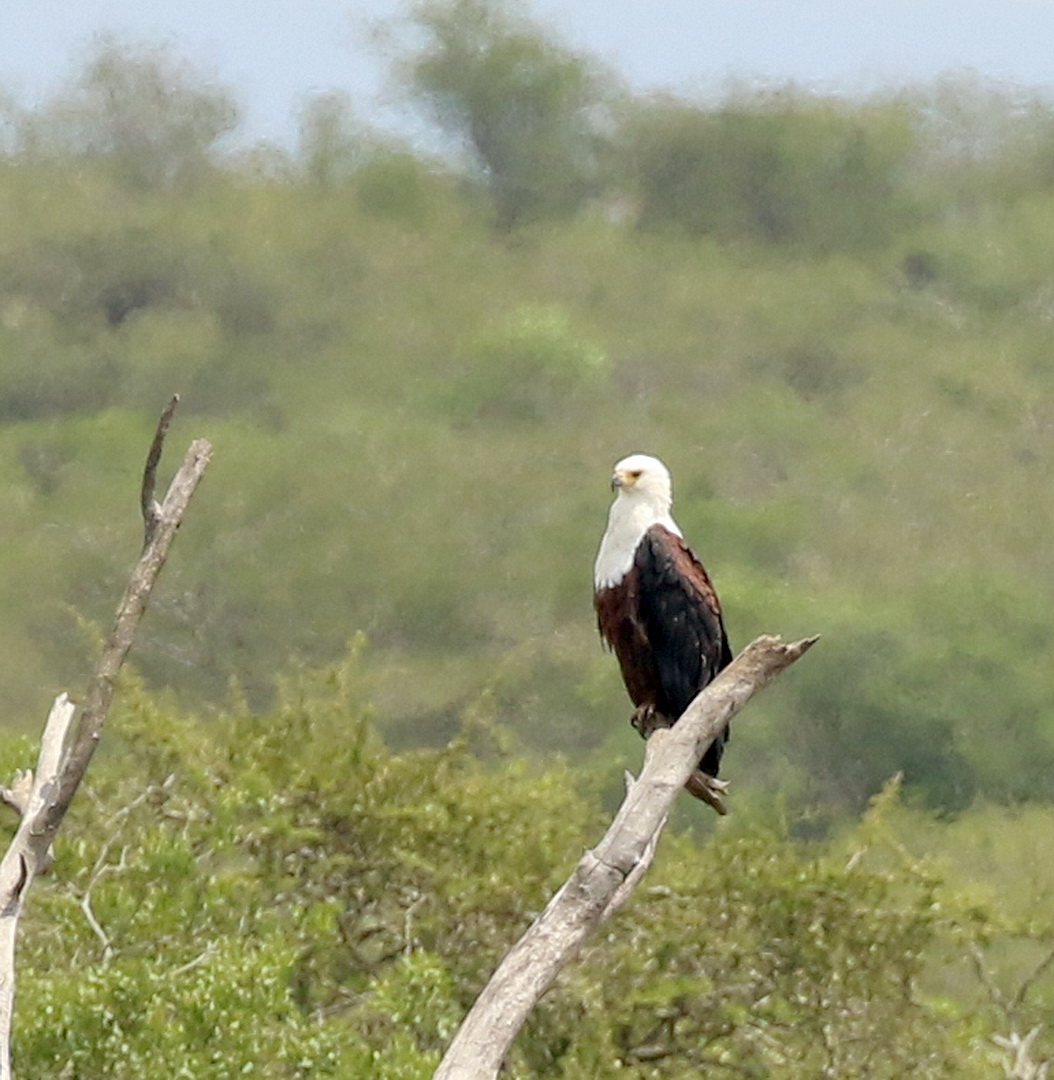
On the shore line heading towards the Picnic site we spotted several Water Thick-knees and what appeared to be a three legged Black-winged Stilt – 2 red legs and one straw coloured!! All close to the African Fish-Eagle which was occupied on a meal.

The picnic site at Nsumo Pan is also one of our favourite places to visit especially for a tea and pee break. Birding is also good normally. And the day we visited was our lucky day – very special.

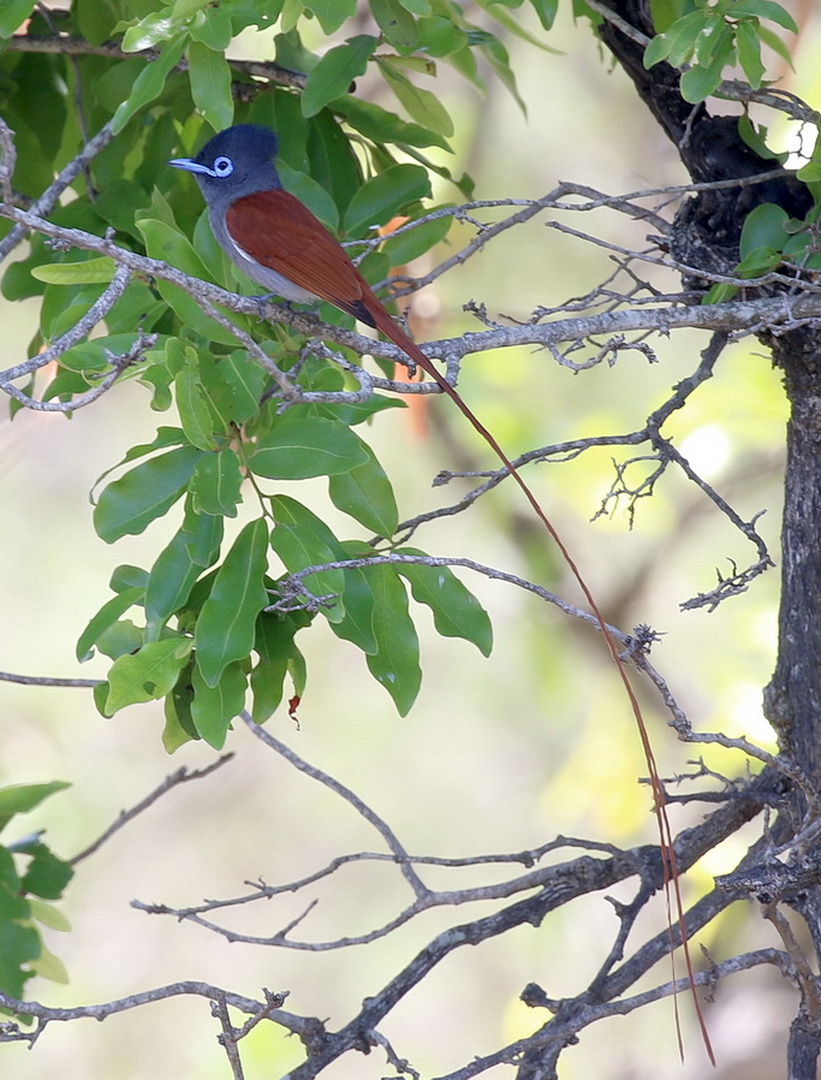
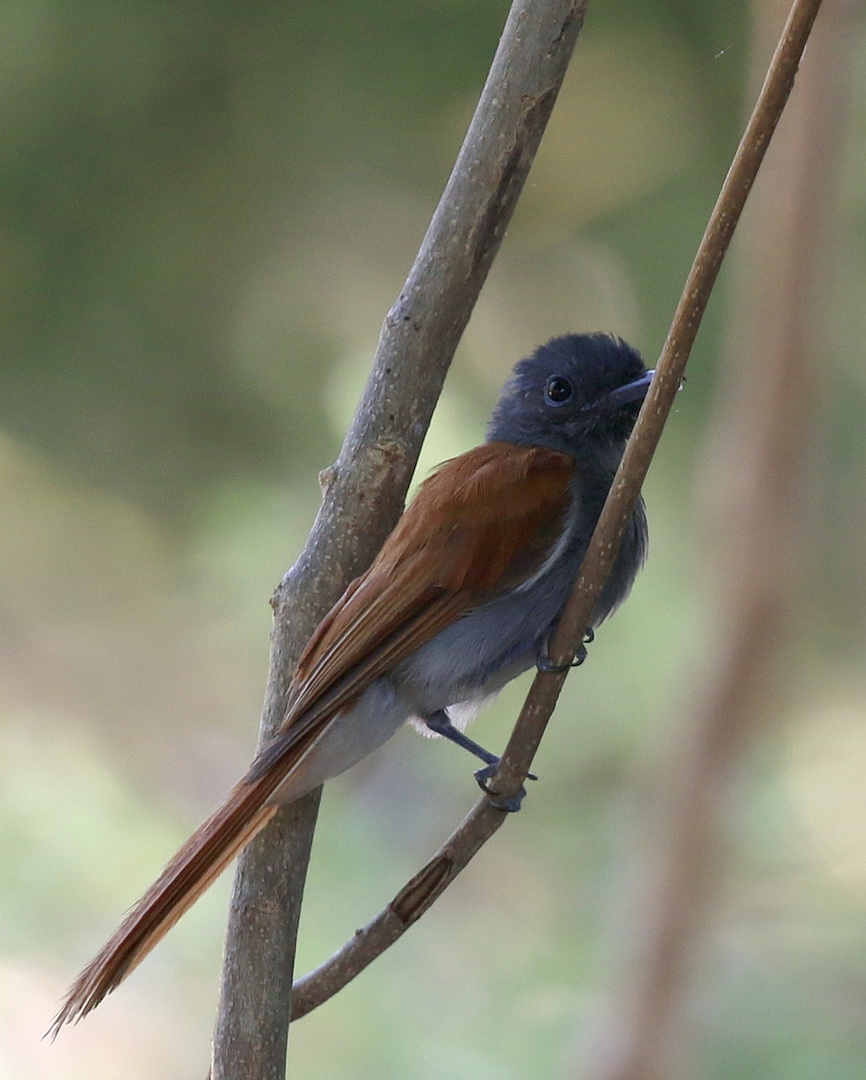
On the way in an African Paradise Flycatcher welcomed us.

African Paradise Flycatcher

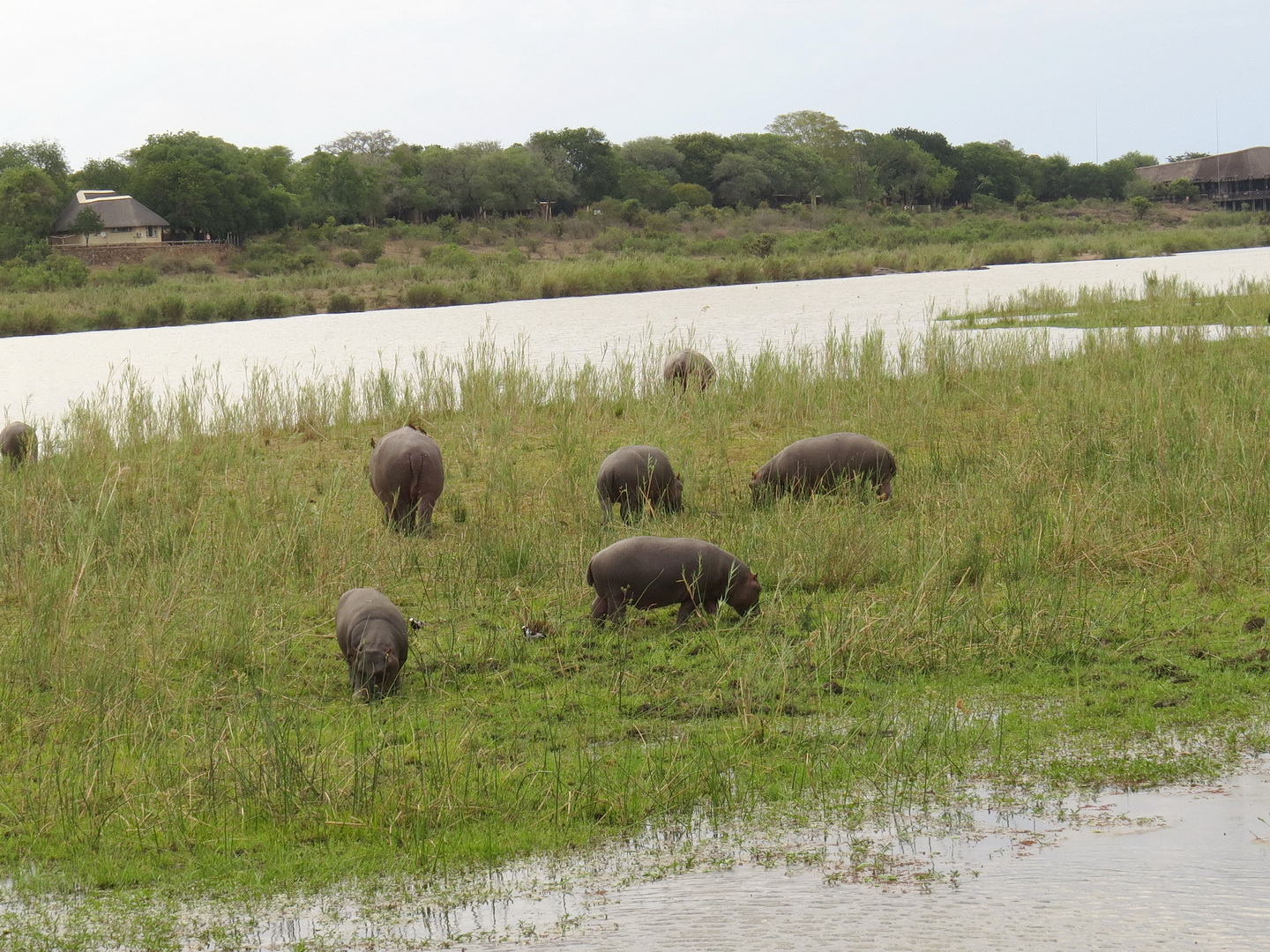
Hippos greeted us bobbing up and down among the lily pads close to shore.

Pink-backed Pelicans and Yellow-billed Storks flew overhead.

Western Cattle Egrets were fishing from Hippo perches. And even a Grey Heron took its chances.

Even the bush around the picnic site had some interesting birds.

It was only as we were leaving that Sally heard a Sunbird calling. When we found it we both were thrilled by what we saw.

Neergaard’s Sunbird
Neergaard’s Sunbird

On one afternoon drive we returned quite late and driving up from the kuMahlahla hide, we encountered several Spotted Thick-knees as well as Fiery-necked Nightjars.

The Thick-knees I managed to get a few reasonable photos. But I lost out big time with the Fiery-necked Nightjar. There was one sitting on a bare branch right beside the driver’s side of the car. Quickly I put my camera onto Auto and took a shot. Flash goes off bouncing off the inside of the car. Rats. The bird is still there so I try again. This time the flash works perfectly but the bird flew off as the camera took focus. Later I checked the photo and it was a perfect shot of the branch – if only the bird had stayed.

Spotted Thick-knee

Zululand birding is always full of pleasant surprises. The variety is plentiful. We love going to visit the many different habitats.

In all we recorded 122 birds – identified for Bird Lasser. Click here to see the list.

Hope you enjoyed the read.

Paul and Sally Bartho

Pink-backed Pelican – Have Wings Will Fly

Kgalagadi Trip Report

Report by Paul and Sally Bartho

9th to 26th April 2019

River of Joy and Mokala

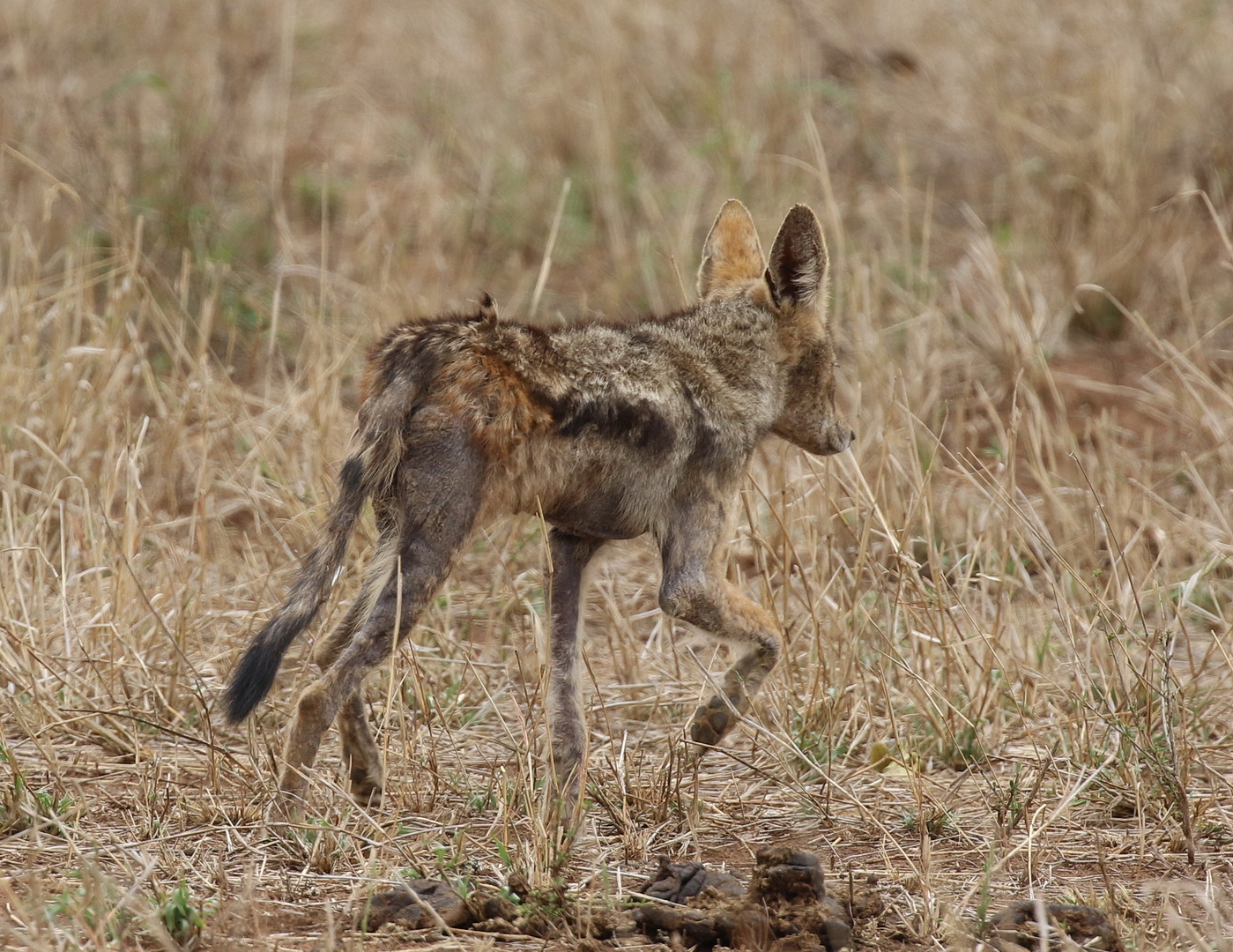
Black-backed Jackal – looks so cute

Friends of ours (Arthur and Rose Douglas) suggested we join them and their two friends (Rodney and Myra) for eight nights in the Kgalagadi. They had space in Polentswa for six nights and two nights in Rooiputs (both unfenced campsites on the Botswana side of the Park).

We decided to go and then return through the Northern Cape and Karoo to find both the Red and Sclater’s Larks which neither of us had seen.

Our program: a stopover at the River of Joy campsite and then spend two nights at Mokala on the way to Twee Rivieren before joining our friends at Polentswa. Afterwards to drive to Brandvlei for three nights and finally three nights at Gariep Dam before returning home.

On the first part of our journey we avoided the Van Reenen’s Pass and took the more scenic route via Oliviershoek Pass. We arrived early at River of Joy near Bloemfontein and set up our off-road caravan in time for a short stroll around the camp before the rains set in. And they set in for the whole night. The ground was fortunately grassy but very soggy in the morning but the rain had stopped. The sole bird of note was the back view of a Gabar Goshawk near the river.

Gabar Goshawk

The next day we arrived at Mokala very early so that we could have time to explore the Park. Weather was variable – some sun, cool and mainly cloudy with threats of possible rain.

The sunlight through the clouds had amazing lighting effects on the scenery.

Bright sunlight on the hillside amid the stormy background.

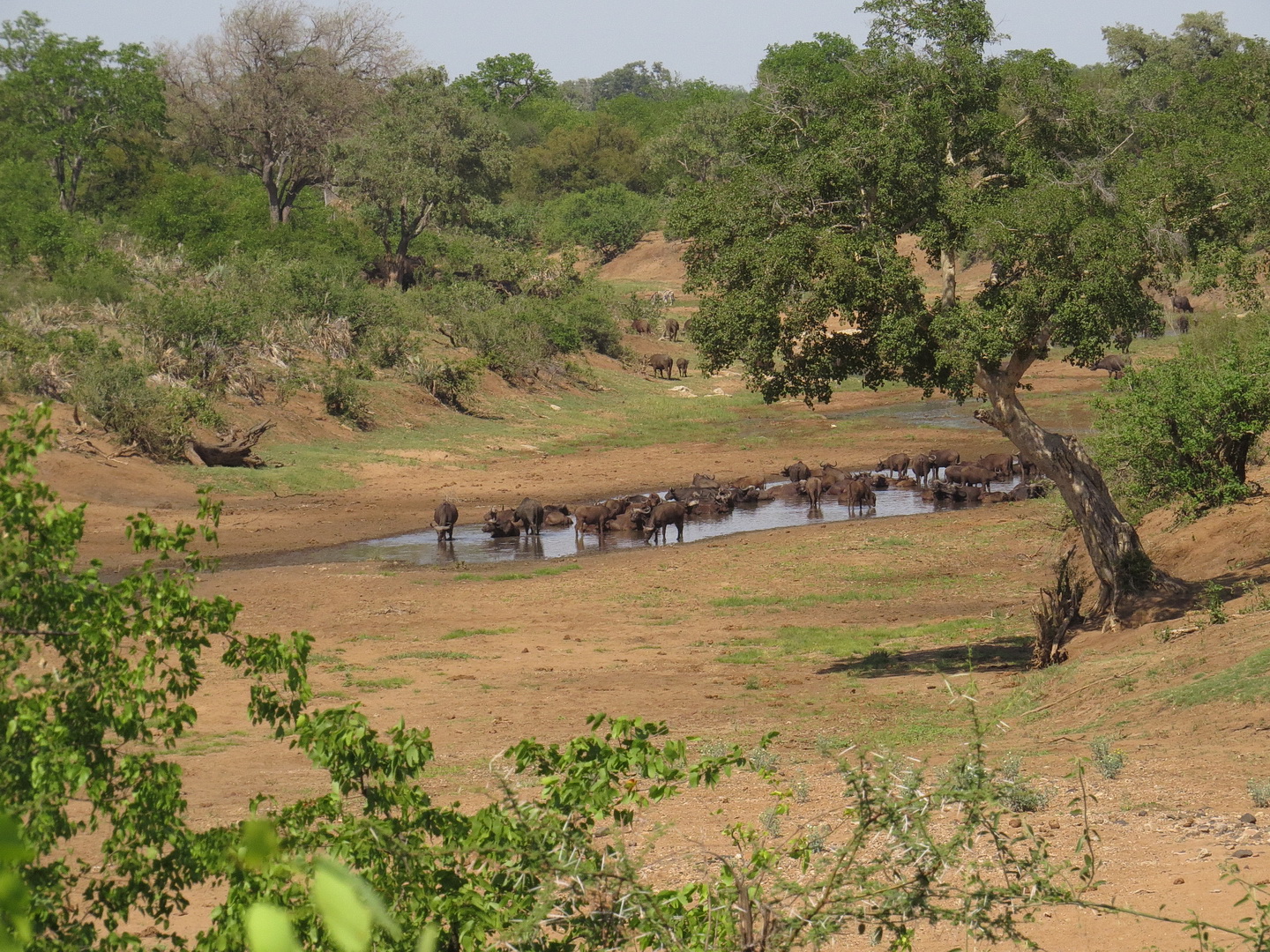
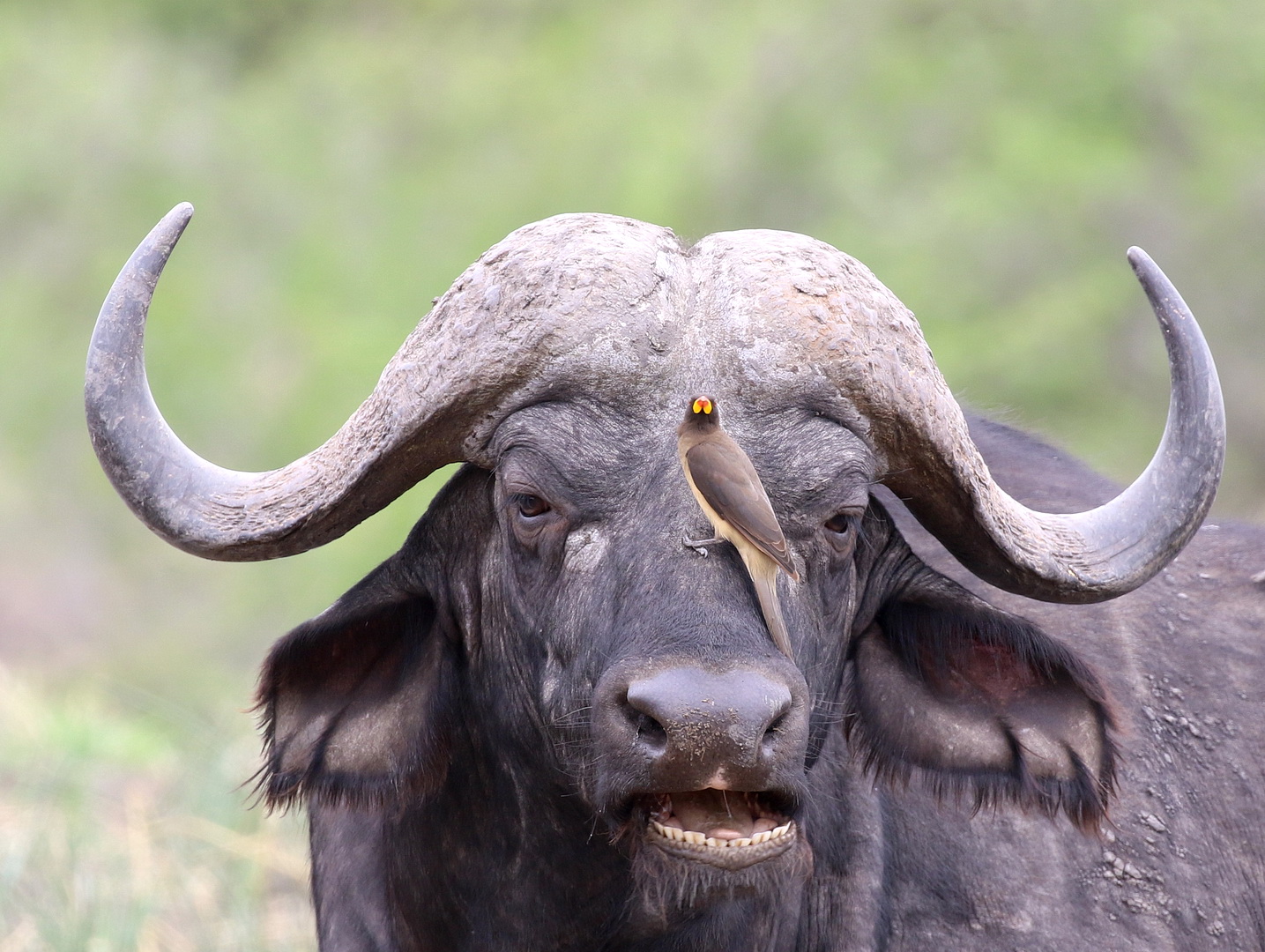
We did see two of the big five animals – a large herd of Buffaloes and a few White Rhinos. Again with strange sunlight casting this Buffalo with a red hue.

Old boy right next to us and checking us out.

Mokala has a very wide range of antelope – abundant and visible. Here are some of the variety that we saw.

There were also a multitude of birds despite the windy, cool and wet weather.

Kgalagadi Polentswa and Rooiputs

Dry weather prevailed during our long journey to Twee Rivieren where we spent the night before heading up to Polentswa the following day

The distance from Twee Rivieren to Polentswa is close to 200 kms – so another long day of driving through the Park.

The main observation was the extreme dryness compared to the same time last year and as a result a paucity of animals and birds. No sign of cats the whole way. Very unusual.

Same time last year the Park was much greener and sometimes waterlogged.

Stopping at Nossob for fuel, provisions and to fill up the trailer with water, Sally went to the Bird Hide to check if there was anything of interest to see. All was desert and deserted.

We did photo a few interesting birds along the way;

Eventually we arrive at Polentswa and set up camp alongside our friends.

There is a waterhole nearby and it was one of the few with water – piped in. This is where we were treated to our daily show of Wildebeest and Springbok;

Rocky at the Polentswa waterhole.

Some of the animals using the waterhole.

Cape Turtle Doves in their hundreds first thing in the morning and late afternoon;

Cape Turtle- Doves

Black-backed Jackal hopeful of snatching a bird or two;

Black-backed Jackal – so cute

And at 09h30 the Sandgrouse arrive (Namaqua mainly and Burchell’s) – circling for ages before settling with their beady eyes open for a Lanner attack.

Every day the Lanner Falcons were there – seemingly just hanging about but on occasion an abortive attempt was made to catch a Sandgrouse or Turtle-Dove.

The Lanners did not have everything their own way.

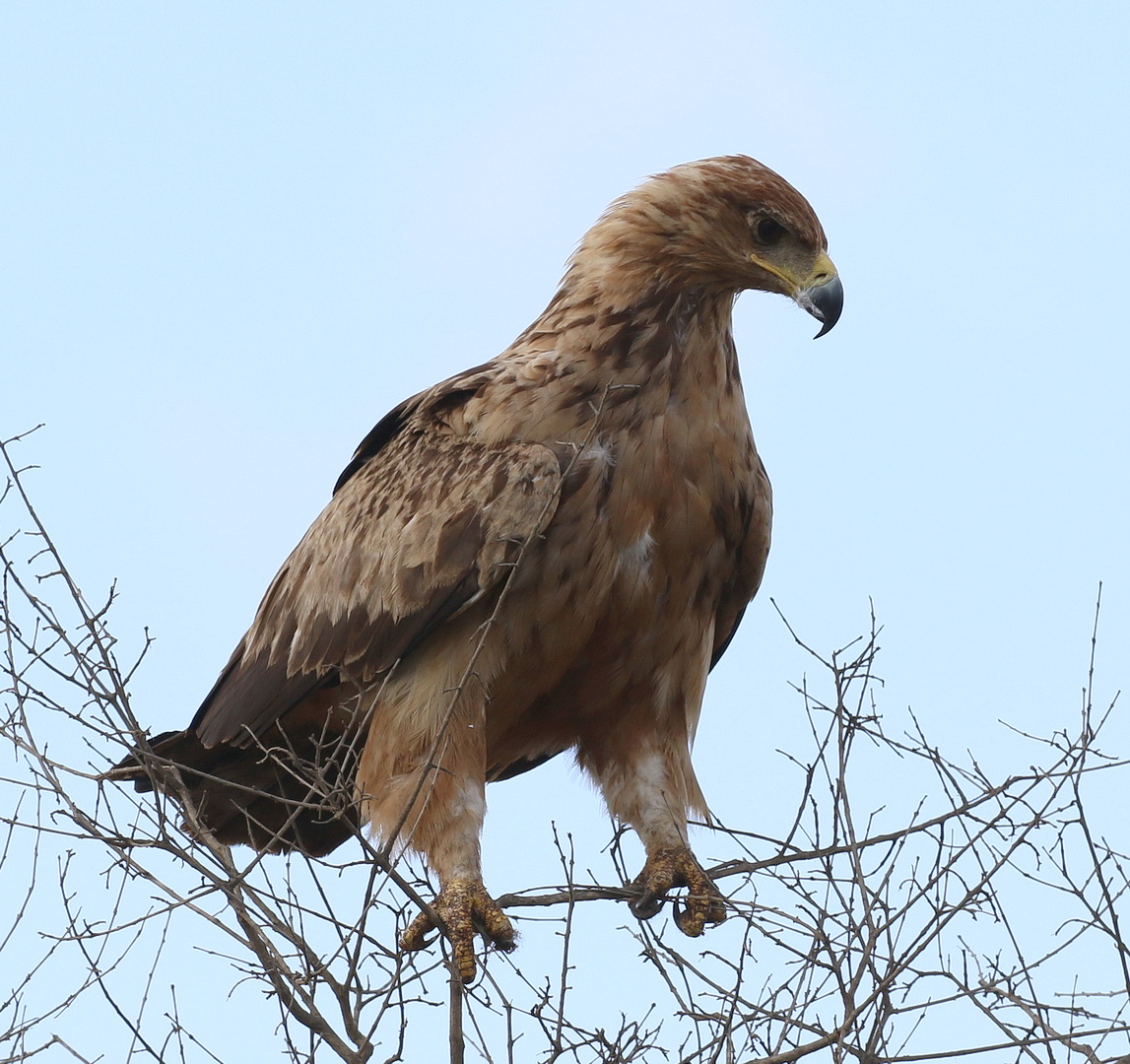
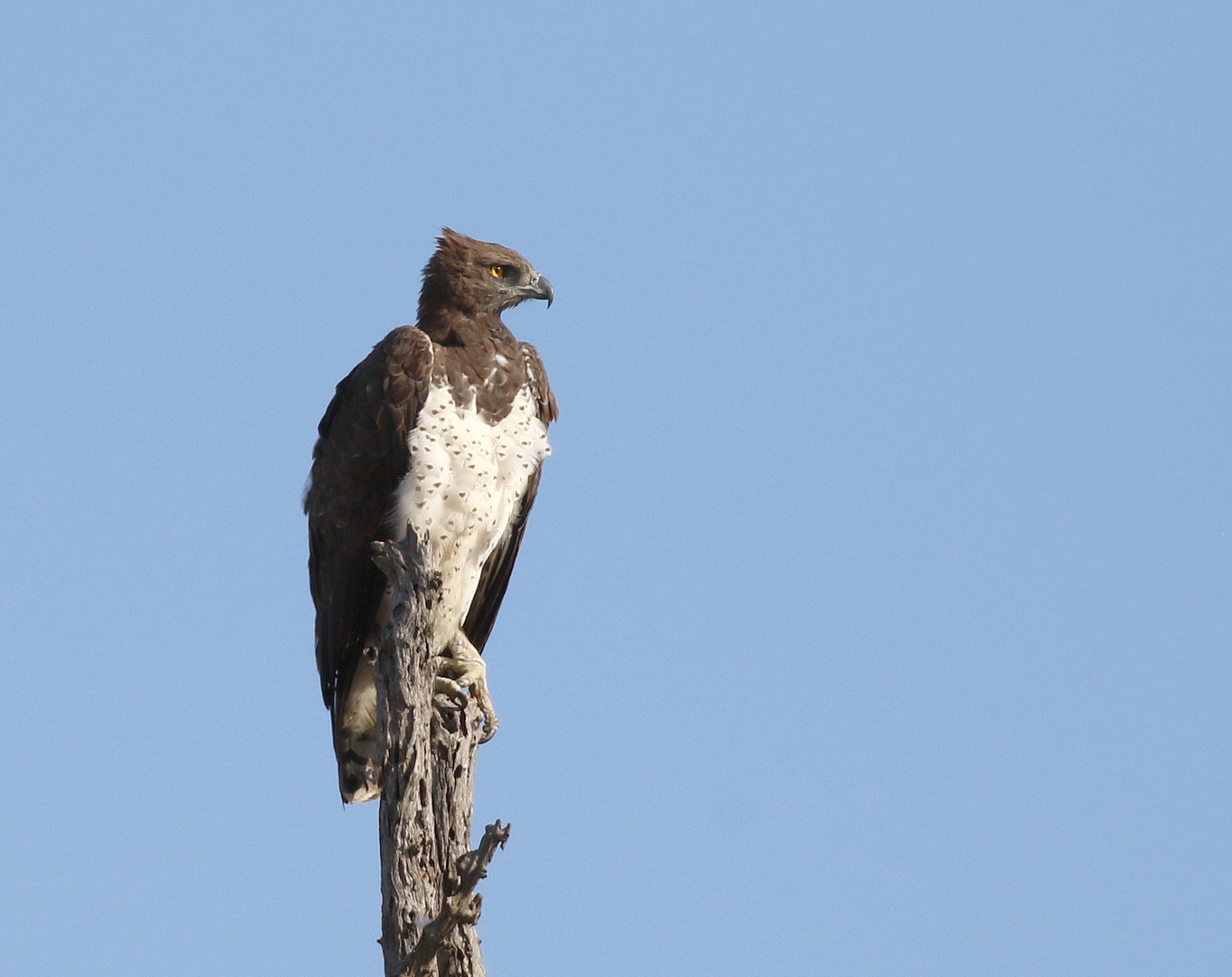
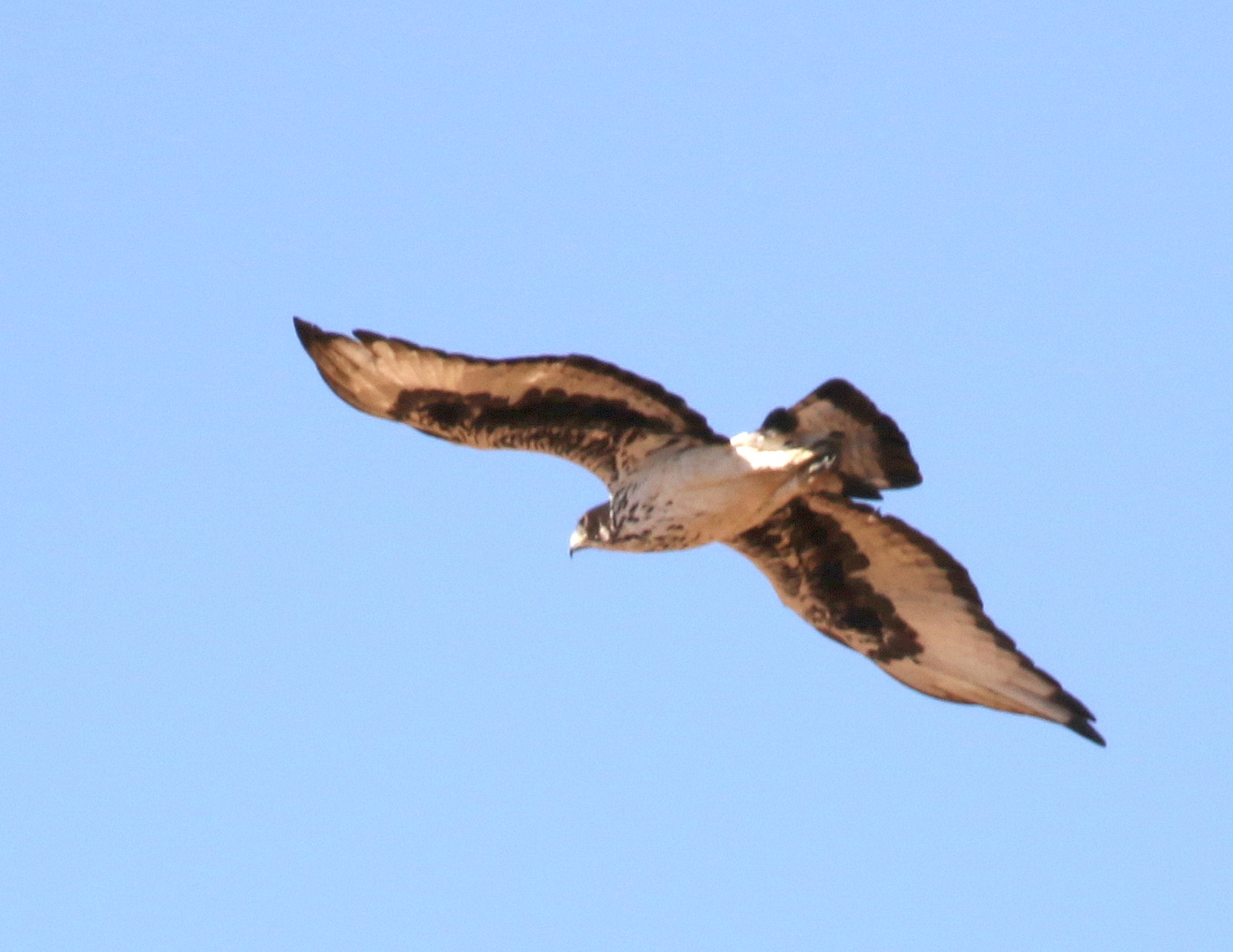
Lanners were plentiful as were the Bateleurs with Greater Kestrels in the air above and the occasional Gabar Goshawk lurking about. Even Tawny Eagles made an appearance.

Gabar Goshawk note the white trailing edge to the wings

This Gabar flew and sat in a tree beside a Tawny Eagle. The comparison in size difference was astounding. In the above picture the Gabar looks huge but beside the Lanner it appeared less than half its size.

And sometimes a Lanner was spot-lit in the sun.

Lanner Falcon sunbathing

The campsite was also a good source of birds as you might expect – especially as we put out water for them. It was also full of incidents. Late night animals, birds close up, snakes, fire and lions.

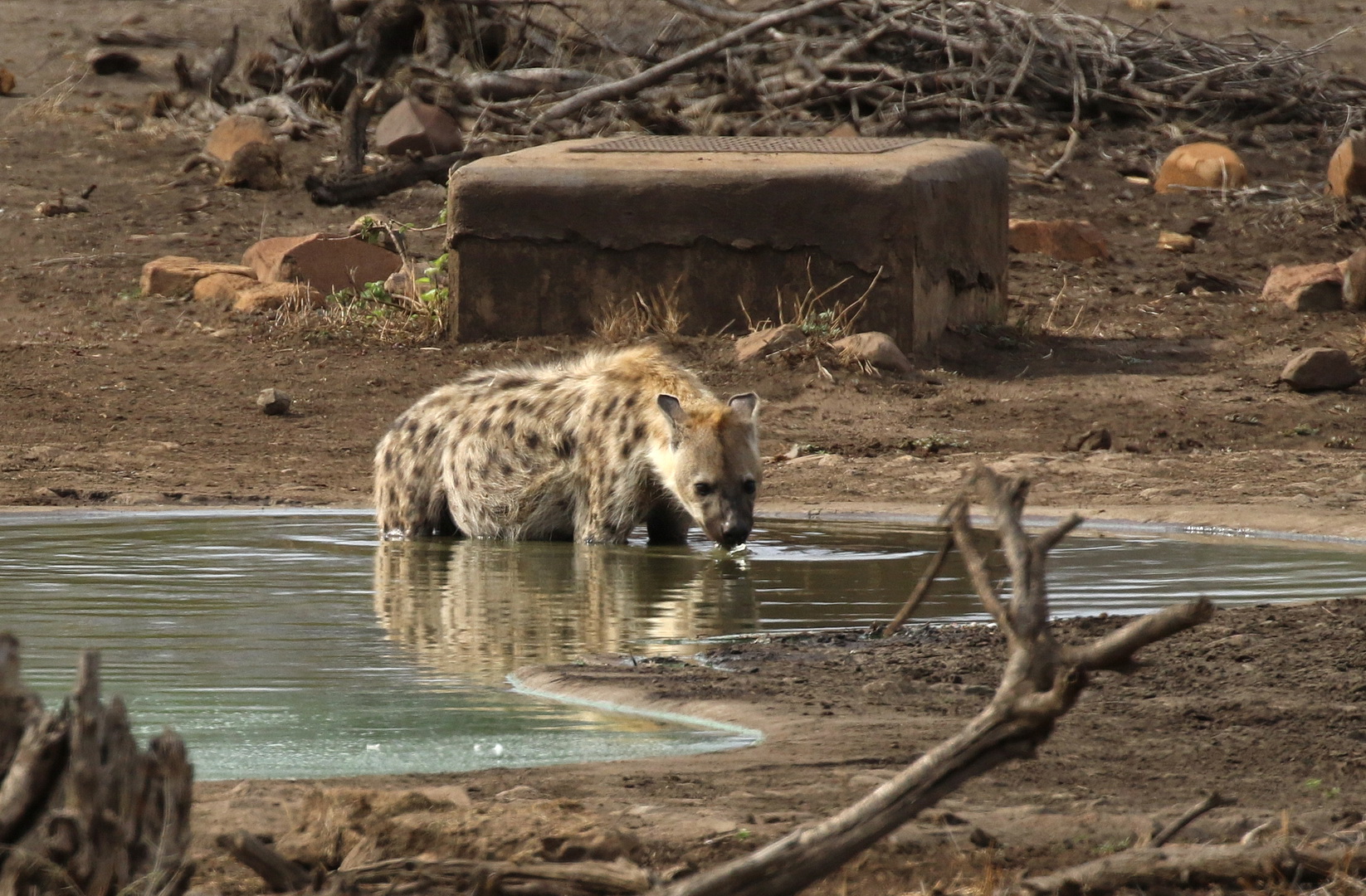
Every night we had a large fire which we sat around and had dinner together. It was a time when out of nowhere there would suddenly appear – less that 10 metres from us – a Black-backed Jackal, a Spotted Hyena or a Cape Fox. Many nights we heard the Lions calling – we assumed from a distance although they were getting closer.

At midday, we usually gathered together to enjoy the shade of the A Fame and shoot the breeze. Water was put out on the far side of the A Frame giving us a close-up view as the birds flocked in for desperately needed water. And from our vantage point we were able to get photos of them.

Even some non-feathered friends came for a drink.

Two quite similar birds were our constant companions at the A Frame, under our chairs and pecking at the ants. In the end we believe we have identified them correctly.

Others seen around the campsite:

Snakes. An almost 2 metre Cape Cobra slithered across the A Frame in front of us – not stopping for a drink – and headed for my car. Fortunately it took a turn up a tree beside the car. We have no idea when it left but I moved my car away smartly.

The other incident could have had serious consequences. Sally was preparing some food at our campervan kitchen. I then washed up in the same area. As I was putting the pots back in the cupboard I happened to look down at the stool I was standing on. Through the holes I saw something odd.

So I lifted up the stool to find a rather large – fortunately dopey- Puff Adder all curled up against the tyre. Sally and my feet were literally inches from it from time to time.

Puff Adder

With help from some other campers we were able to get a spade under it and flick it outside the campsite. This took some effort because the snake kept trying to scamper its way back to what was obviously the coolest place to cool down.

Lion close-up

Then there were the Lions. Three playful youngsters. They were heard calling early one morning and everyone in the three different campsites set out (by car) to find them. We were tail-end Charlie. Following the paw prints on the road past our camp, the others soon came across the three youngsters.

When we caught up the entourage of cars were coming back towards us following
the youngsters along the road back towards the camps. A couple of them were quite boisterous, stretching themselves on trees and chasing each other.

Eventually they entered one of the camps and found a rubber mat to play with. This was our only sighting of Lions except for an old collared male on our way out of the Park. One even left a landmine on the road.

Sally and I had never been up to Union’s End in the number of times we had visited the Park so we decided to have a drive – some 70 kms north of Polentswa. It was marginally greener but really not by much.

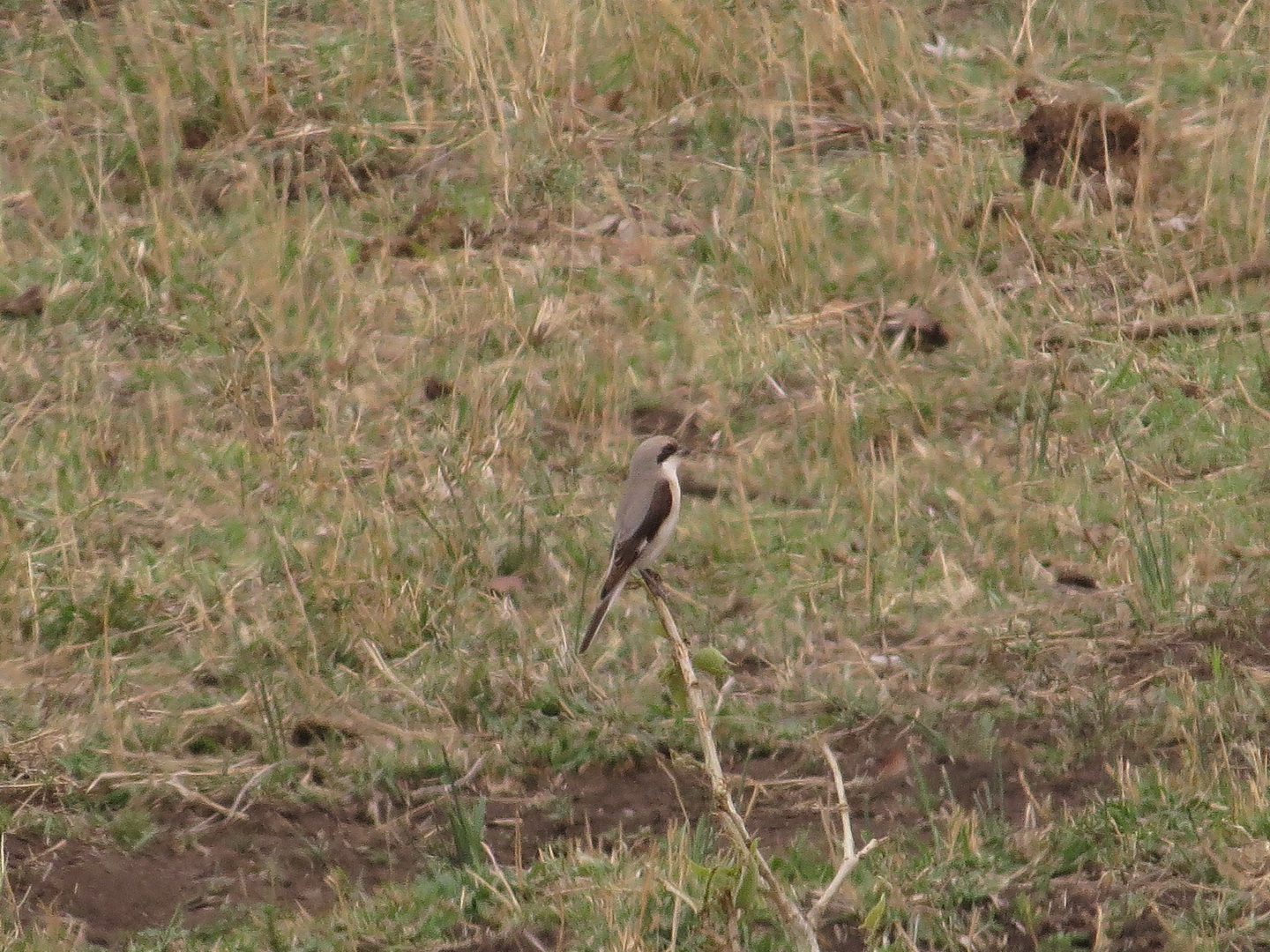
On the way we were fortunate to see a female Pygmy Falcon atop a tree over the road. And unexpectedly a Lilac-breasted Roller. A large family of Ostriches were seen along with Capped Wheatears and a Lesser Grey Shrike.

Otherwise the drive was uneventful until we were arriving at the Lijersdraai picnic site. I ran over a stick missing either end. Except it was a Puff Adder unhurt.

The Kousant waterhole just south of Polentswa had a leaking water tank – perhaps intentionally so. The birds loved it as the tank had encroaching scrubby trees around it.

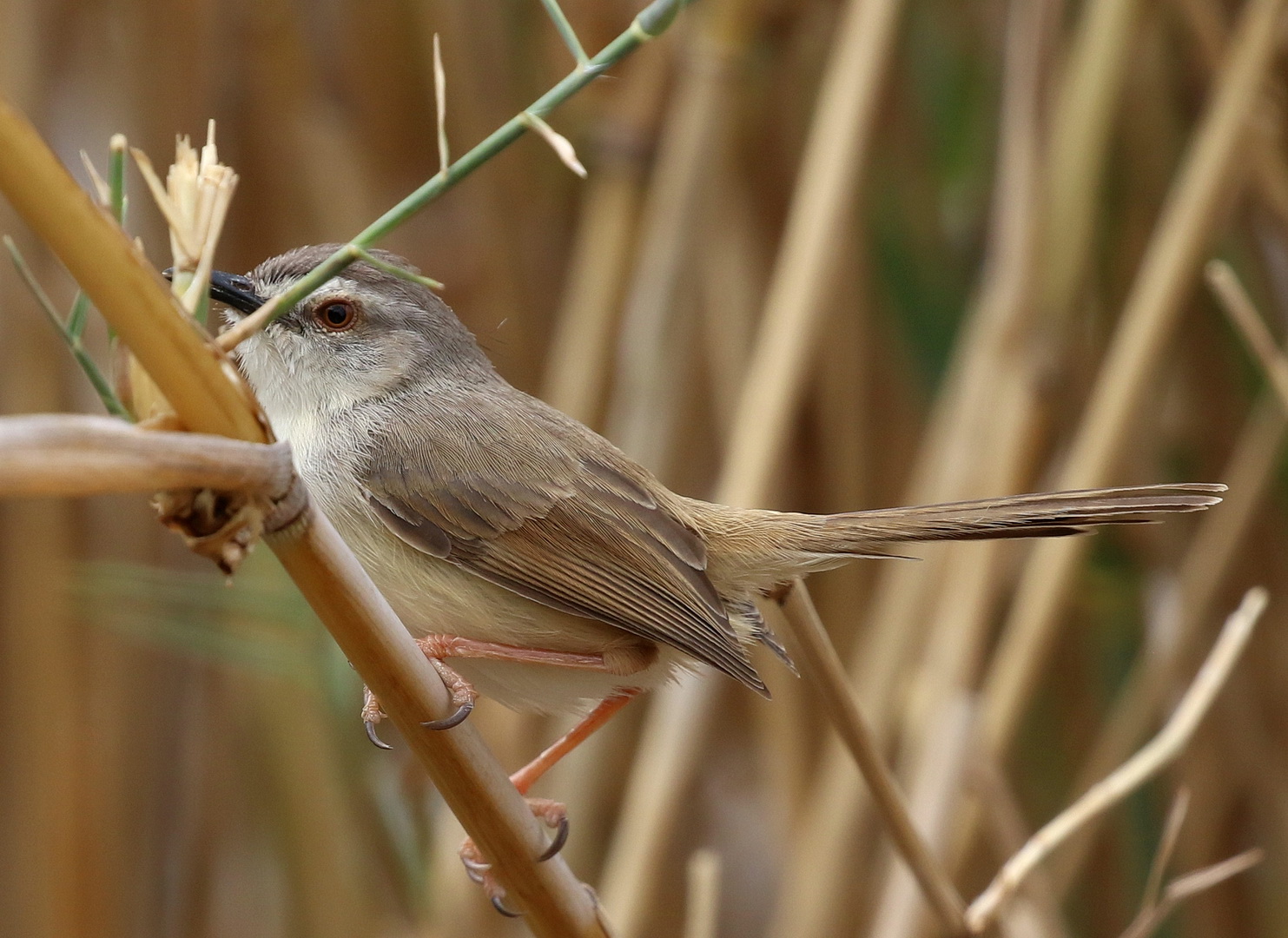
Black-chested Prinia, Cape Glossy Starling, a Chat-Flycatcher and a Marico Flycatcher all made an appearance. But there was one bird – a Warbler that had us mulling over for ages until we finally identified it.

Icterine Warbler

There was one other incident at the Polentswa campsite which was finally resolved at Rooiputs. It had our other two male friends Arthur and Rodney speculating as to what could be causing this phenomenon over each campfire dinner. And it revolved around the fire itself. Strange colourful flames. Not every night though.

First it must have been the wood itself – or a chemical inside. Same wood next night – no colourful flames. Perhaps it was the paint on the cans burning. Other hypotheses were expressed but it remained a mystery until our last night at Rooiputs.

Finally our six nights at Polentswa were over and we were on our way south to Rooiputs. Along the way there was not much out of the ordinary except that the herd numbers were less than normal and were few and far between. We did however have a reasonable sighting of a Brown Hyena running across the Nossob River; White-backed Vultures and a Secretarybird.

Rooiputs only has six campsites – each distantly apart. Unfenced so risky to use the outside Loo and Shower after dusk.

L to R: Arthur, Rose, Rodney and Myra

Every night we heard the roar of the King of the Jungle. His spoor was found around the camp shower each morning.

And of course during our final fire the flames took on their extraordinary colours again. Arthur and Rodney continued their speculation until I put them out of their misery. I handed them a packet each of Mystical Fire which I had sneaked into the fires on several occasions on the pretext of adding rubbish to be burnt.

Left the loo, right the shower area.

Eventually we saw the Lion on our way out – an old boy with a collar.

Collared Lion

Campsite birds were not as friendly as those in Polentswa but we still managed a pic or two.

Groundscraper Thrush

During our short time at Rooiputs our birding was limited not only by time but also the dryness of the Park. Despite that we did have one interesting sighting.

Our unusual incident were strange sightings in a Scaly-feathered Weaver’s nest.

The skeleton of an animal head with horns and a backbone.
Up close of the animal’s head and horns.

And round the side of the nest, this – whatever it is?

About 30 to 40 cms long. Any ideas?

And here are a few birds which had us pondering over their ID. We think our IDs are right but are not 100% positive. The first: a Chat Flycatcher (undersides not white enough for a Marico but the white wing bar is confusing).

The Second. Also Chat Flycatcher. Same concerns as above.

Click here to see our bird list for the Park. In all …………….birds were identified.

Brandvlei

Brandvlei is a very small town in the middle of Northern Cape Province about 250 kms south of Uppington.

According to Birdfinder is is highly rated and both Red and Sclater’s Larks can be seen there – our goal as neither of us had seen either before.

Early afternoon we arrived at our campsite – Casablanca on the outskirts of town. Rui welcomed us and knew we were birders. It seems many people from around the world stay with him to bird the area. He gave us directions to find the Red Lark close to town.

Casablanca
Entering Brandvlei

Fortunately we misunderstood his directions and instead of going about a kilometre we travelled six kilometres down the road looking for the first gate which was open on our left. As it happens we hit paydirt as we entered. A Red Lark flew across our bows and perched closeby. We scrambled out and followed it deeper into the property getting glimpses of it. Eventually it called – very unique call – then flew and perched on a scrub that enabled me to take a photo.

Red Lark

The weather was overcast and windy for the next two days while searching for the Sclater’s Lark. This time we followed Birdfinder’s route along the R357.

We had hardly left town when Sally spotted one right next to us as we drove past. Unfortunately it did not hang around for me to get a good look at it.

We enjoyed the birding along the route – dry open land with an occasional clump of trees usually beside a water trough.

About 16 kms along the R357 we came to a trough about 100 metres off the road. We pulled onto the side and watched from the fence – with binoculars and scope.

Distant waterhole

We waited and waited watching the the trough and the variety of Canaries and Sparrows which came to drink.

Then two Sclater’s Larks came and drank together. Through the scope it was clear what they were. Photographically the shots were very poor but looking carefully one can make out the face markings.

The next day we went back to the same trough and saw another clearly through the scope. Sorry about the pictures.

Of course there were other species which we enjoyed – Spike-heeled and Karoo Long-billed Larks, Karoo Korhaan, Double-banded Courser, Pririt Batis, White-throated Canaries, Namaqua Sandgrouse, white-backed Mousebirds, Yellow Canaries and Cape Sparrows to name a few.

On the way back to camp five Bat-eared Foxes raced along beside us. Lovely to see.

Bat-eared Fox

Another special sighting were the Rufous-eared Warblers – scurrying like mice from one clump of bush to the next.

Severe thunderstorms were all round us on the last afternoon. Rui told us that the last rain that they had was last December – 4 mm only. He offered us a room for the night in the house as he believed that we could be in for a battering – rain, wind and hail. We considered this for 30 minutes until we saw thunder and lightning

Hiding from the storm

Then we raced to get the campervan packed up. As we entered the house 30 minutes later the rain started – and it rained heavily all night. Power went off but we had the comfort of a very unusual home. Very old worldly. Old tims in the kitchen above the Aga, old-fashioned clothing hanging on the walls including corsets and dresses, piles of magazines from the 50s and 60s. Real character. Wonderful place to stay.

The next day we left early for Gariep Dam. The GPS wanted us to use the main gravel roads. After all the rains I think we wisely decided to take the long way round heading south for Calvinia and then across to Gariep Dam – probably 150 to 200 kms further but all on tar.

Gariep Dam

First it was south towards Calvinia in very overcast and threatening weather. Unusual double rainbows were seen.

The first two hours we experience a little rain now and then. The next five hours it rained constantly and sometimes severely.

The fields were sodden and full of standing water.

On arrival at the Forever Resort in Gariep we decided not to camp but to enjoy the luxury of a Chalet (views above) for the next three nights.

The area was picturesque and birding varied in the different habitats.

We visited the camp’s game park. Small, but it had a busy wetland pond – with many water birds as well as others enjoying the standing water.

Wetland Pond

There we had views of a sub-adult African Fish-Eagle, Cape Shovelers, Cape and Red-billed Teals, Goliath Heron, Layard’s Tit-Babbler, Mountain Wheatear, Yellow-billed Egret, Yellow-crowned Bishops, Common Waxbills, Common Moorhen, Little Grebe, Red-knobbed Coots to name a few.

During our time there we visited the Dam itself and drove along the rocky shoreline back to the resort. And we visited the Gariep Dam Game Park as well as walking around the resort.

Several views of the Dam.

On the way back to the resort we stopped at a look-out point and had good views of a Black-chested Prinia and a Short-toed Rock-Thrush.

In the Game Park we managed to see three Game – a Wildebeest, three Reedbuck and a Yellow Mongoose.

Yellow Mongoose

However the birdlife on the dam’s edge was prolific in several areas. Hundreds of Egyptian Geese dominated. Waders were present – Three-banded, Kittlitz’s and White-fronted Plovers as well as Capped Wheatears, Blacksmith Lapwings and the water birds we had seen at the wetland pond.

Other birds were also seen in the Game Park including:

In total 151 different bird species were identified. Click here to see our combined bird lists and where each was identified

Cheers

Paul and Sally Bartho

Hope you enjoyed the read.

Mkuze and St. Lucia

Report by Paul and Sally Bartho

7 to 13 February 2019

It was time to get away – you could say the lure of the bush was calling. This time a short trip – 4 nights in Mkuze and a couple in St. Lucia.

Rain and overcast conditions followed us and remained intermittently at both venues.

Mkuze was lush- the vegetation was green and grown up. There were no bare patches to be seen unlike the last time we visited in July 2018. The Fig Forest was flooded from rains upstream and consequently Nsumo Pan was as full as we had ever seen. Despite that only two inland hides had water (KuMasinga and Malibali) and all of the other scattered pans and wallows were dry.

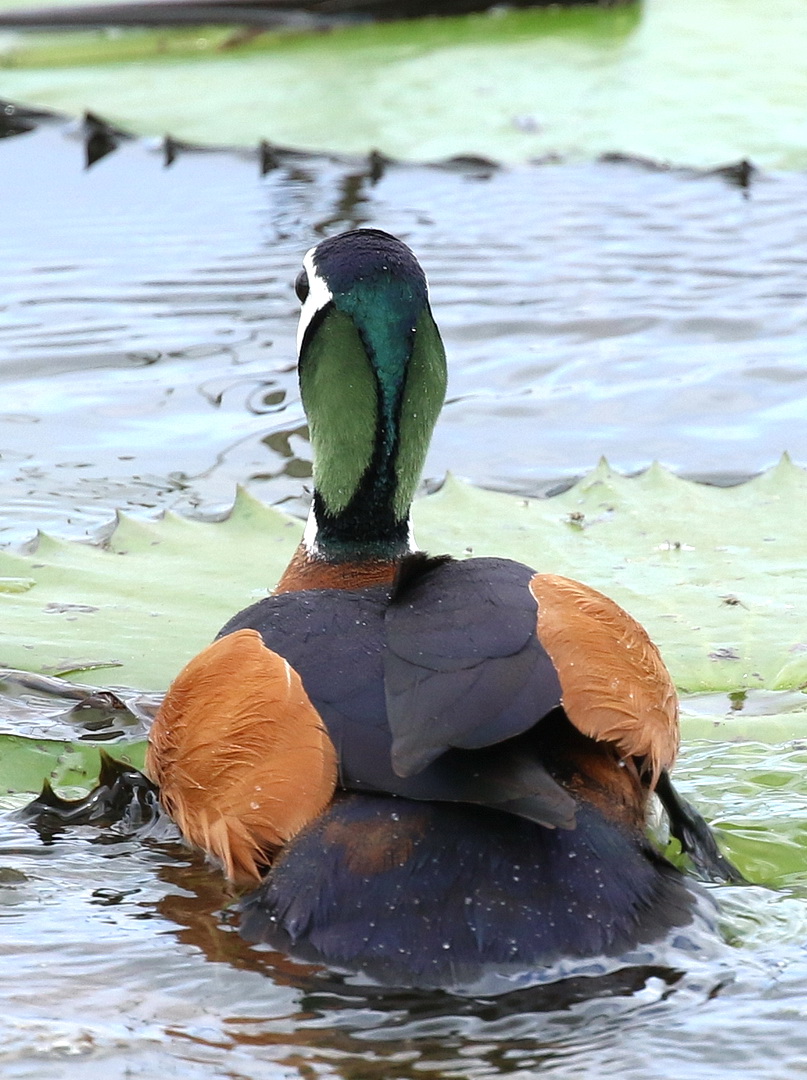
Nsumo Pan was one of the first places we visited. We stopped at the first hide heading towards the Nsumo Pan Picnic site. As we approached we noticed what looked like two ducks in the shadows under the hide. However they were something entirely different and most unexpected.

With the water level so high there were no waders about at Nsumo Pan.

However there were a number of waterbirds about at Nsumo hides and at the Picnic site.

As expected, Kumasinga hide was busy. Many animals as well as birds close-by – making for reasonable photographic opportunities considering the sunless skies. A number of birds appeared with confusing ID issues which made it all the more interesting trying to get to their correct ID. One bird in particular – a Sunbird – was an interesting example of this.

Perplexing Sunbird

What we saw immediately was a Sunbird with a distinct bib and yellow Mylar stripes either side of the bib. A quick look at the Roberts App suggested a Plain-backed Sunbird – and its plain back also seemed to confirm that.

Sunbird with a plain back

It was feeding what we considered to be a fledgling so we considered it to be an adult bird despite its yellow gape.

However a Plain-backed Sunbird would be a rare sighting in Mkuze so it did not feel quite right. We checked the Roberts App for pictures of Sunbirds and nothing had the bib except for the Plain-backed Sunbird. The new Roberts Field Guide eventually gave us the correct ID by showing a picture of a juvenile male Marico Sunbird. It shows that sometimes initial impressions can be so wrong.

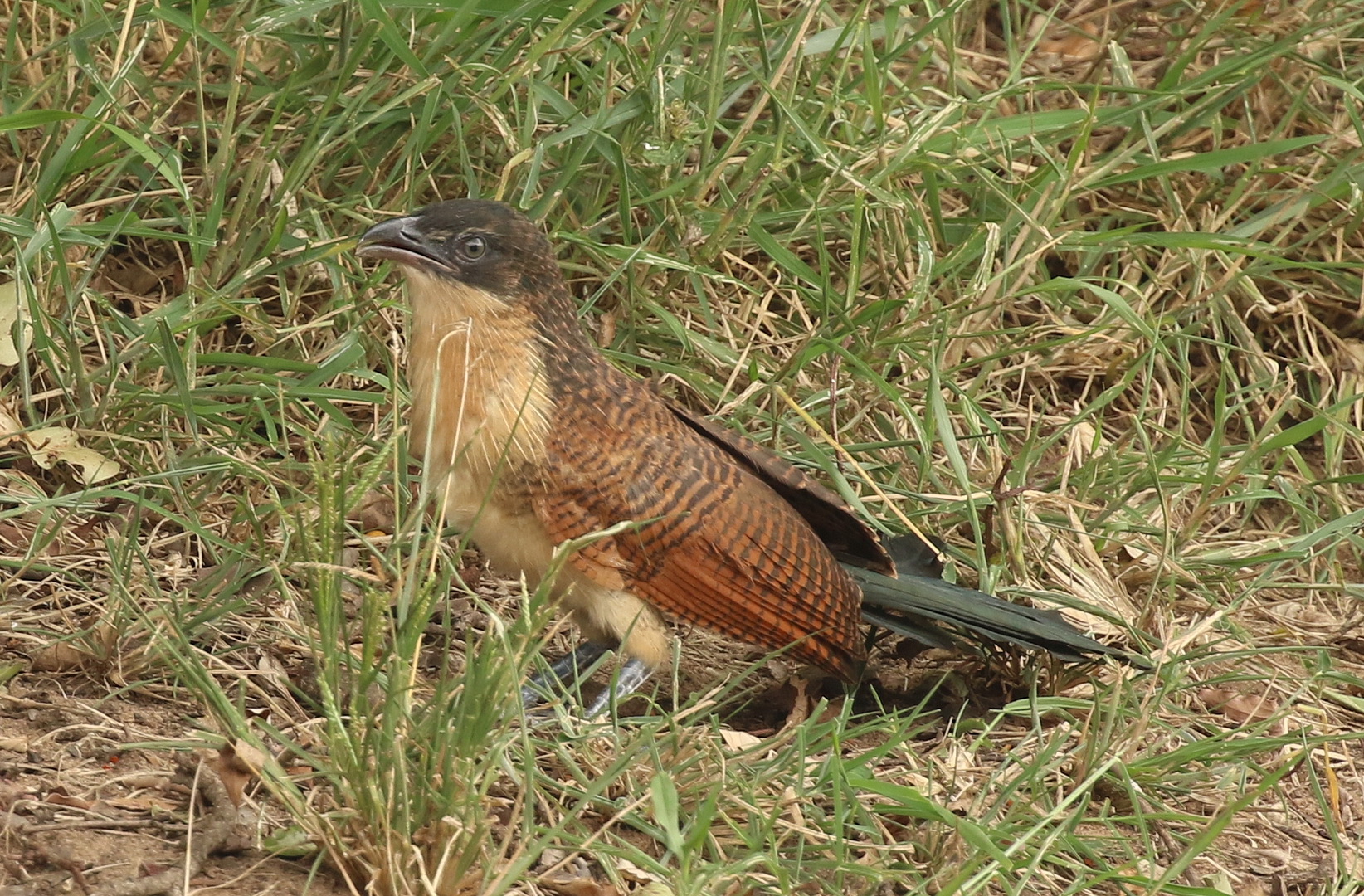
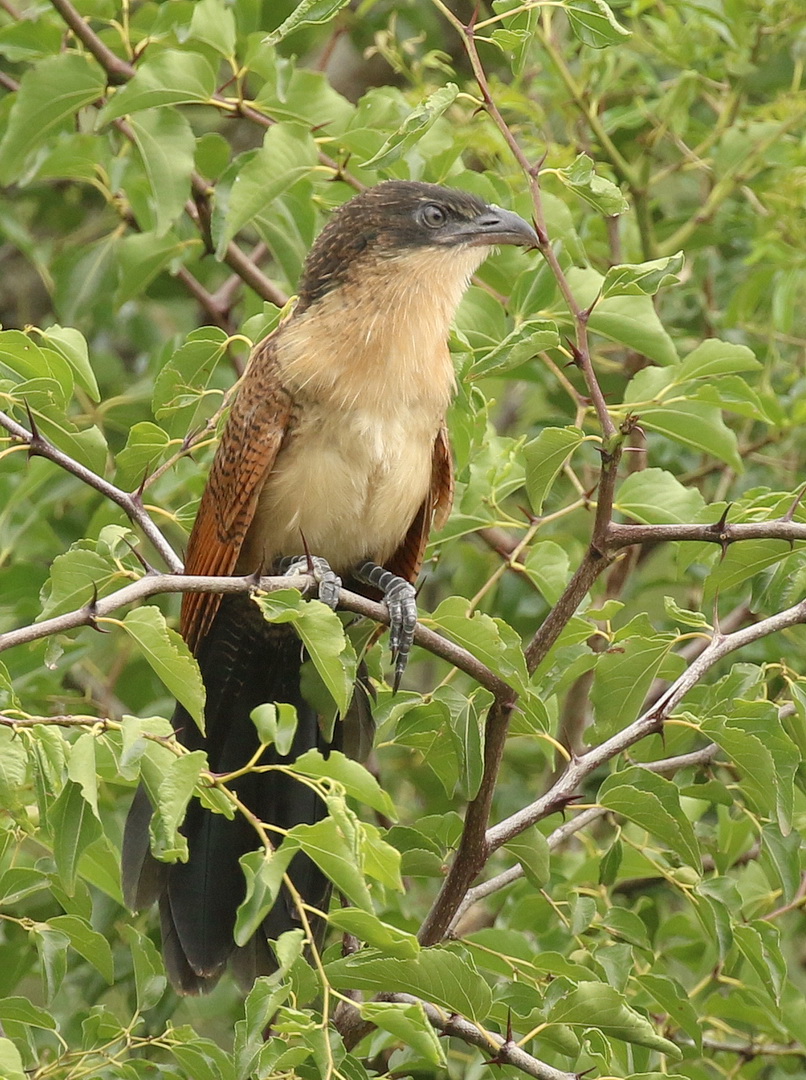
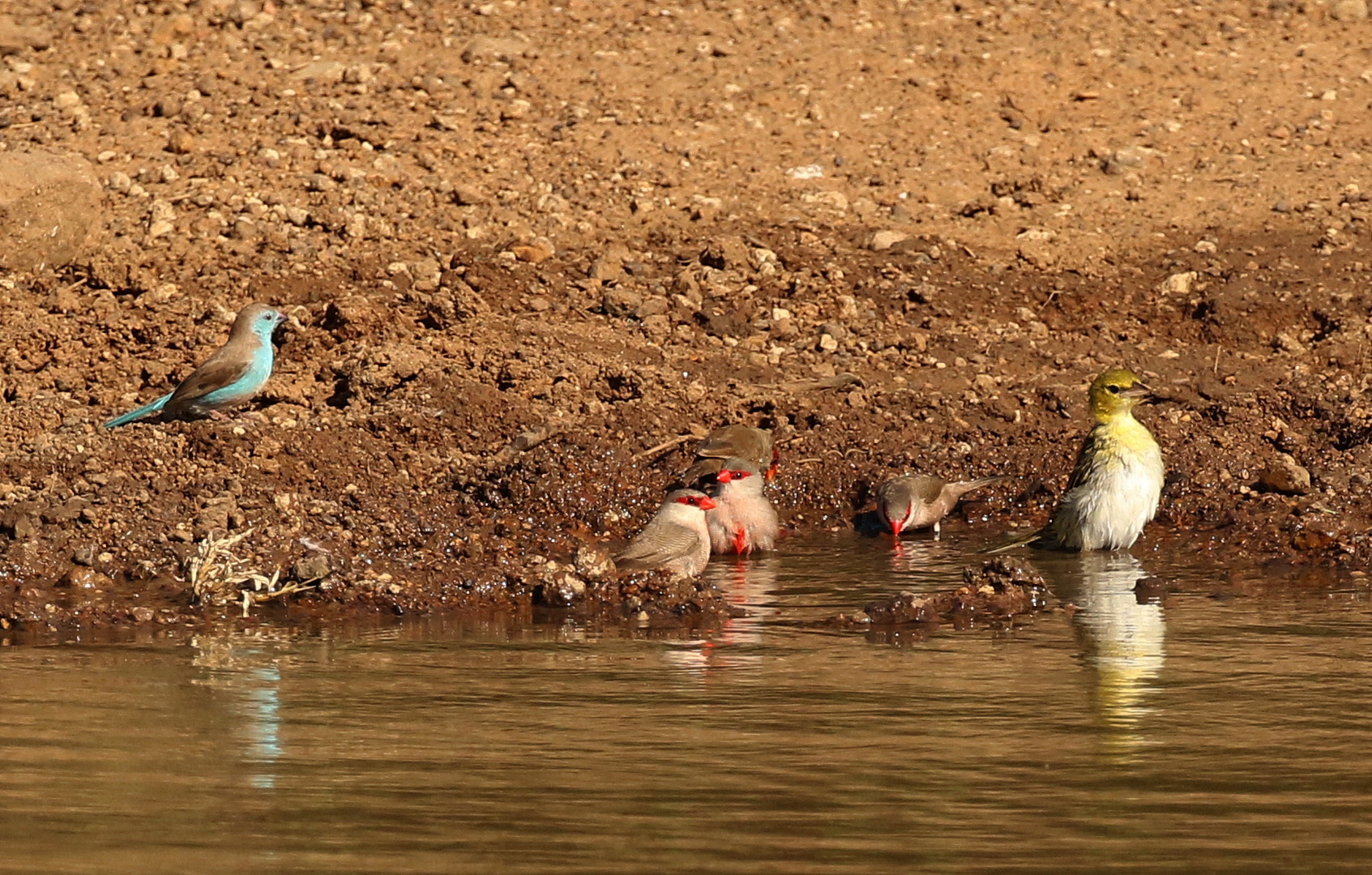
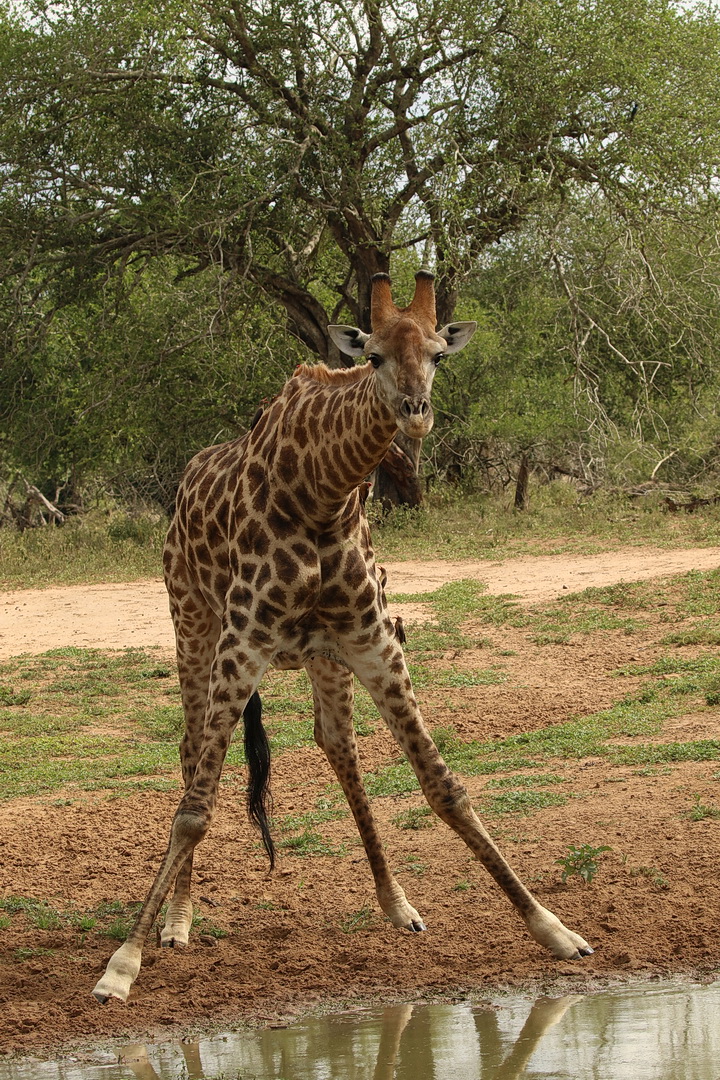
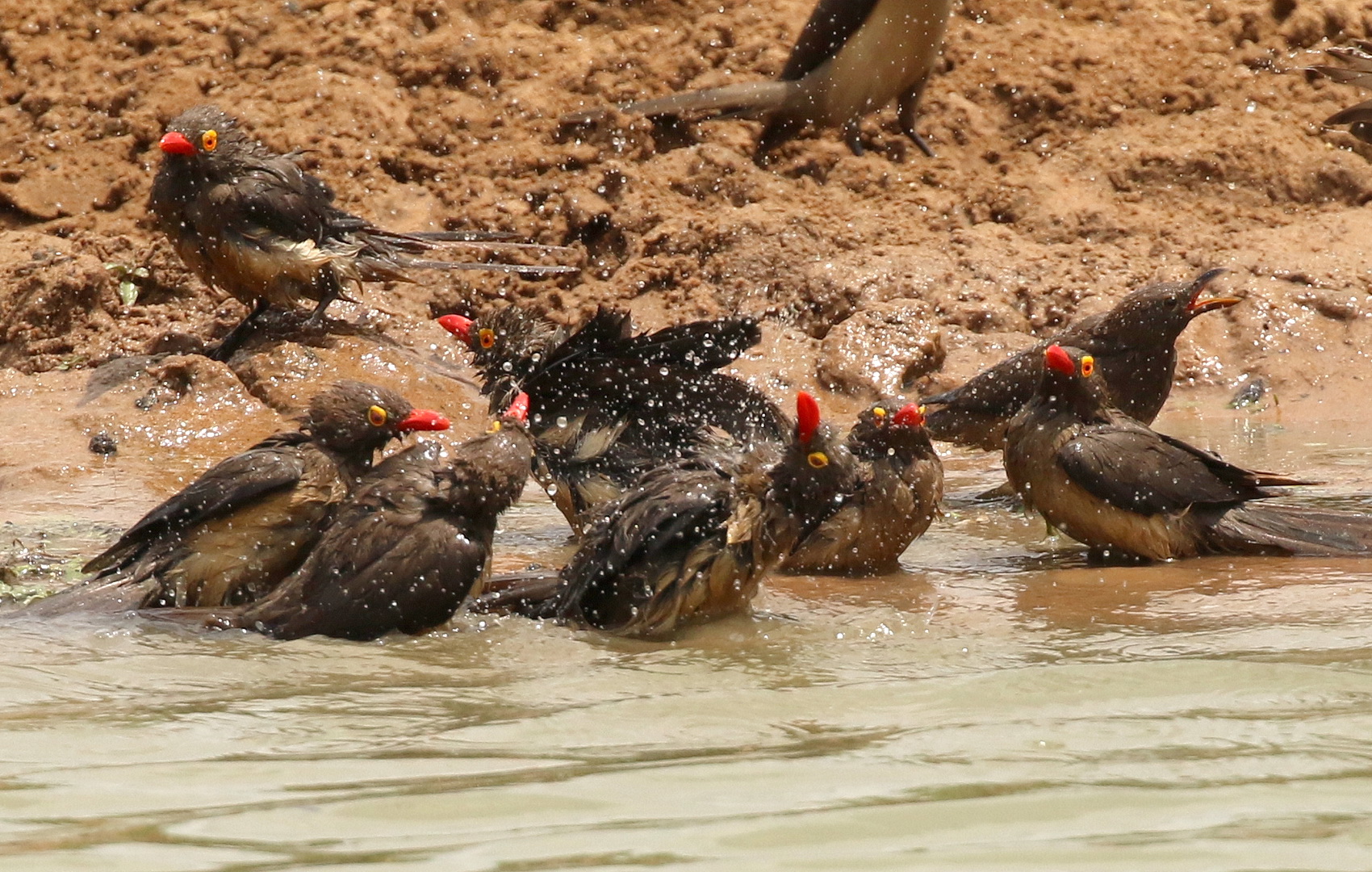
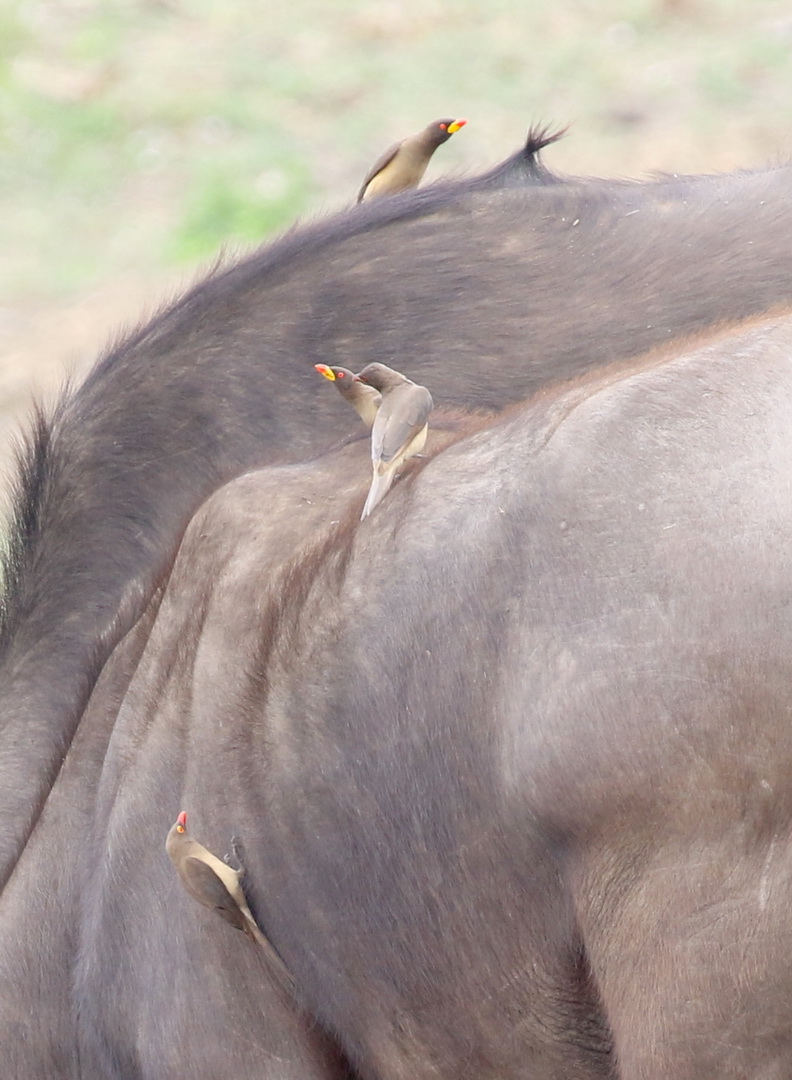
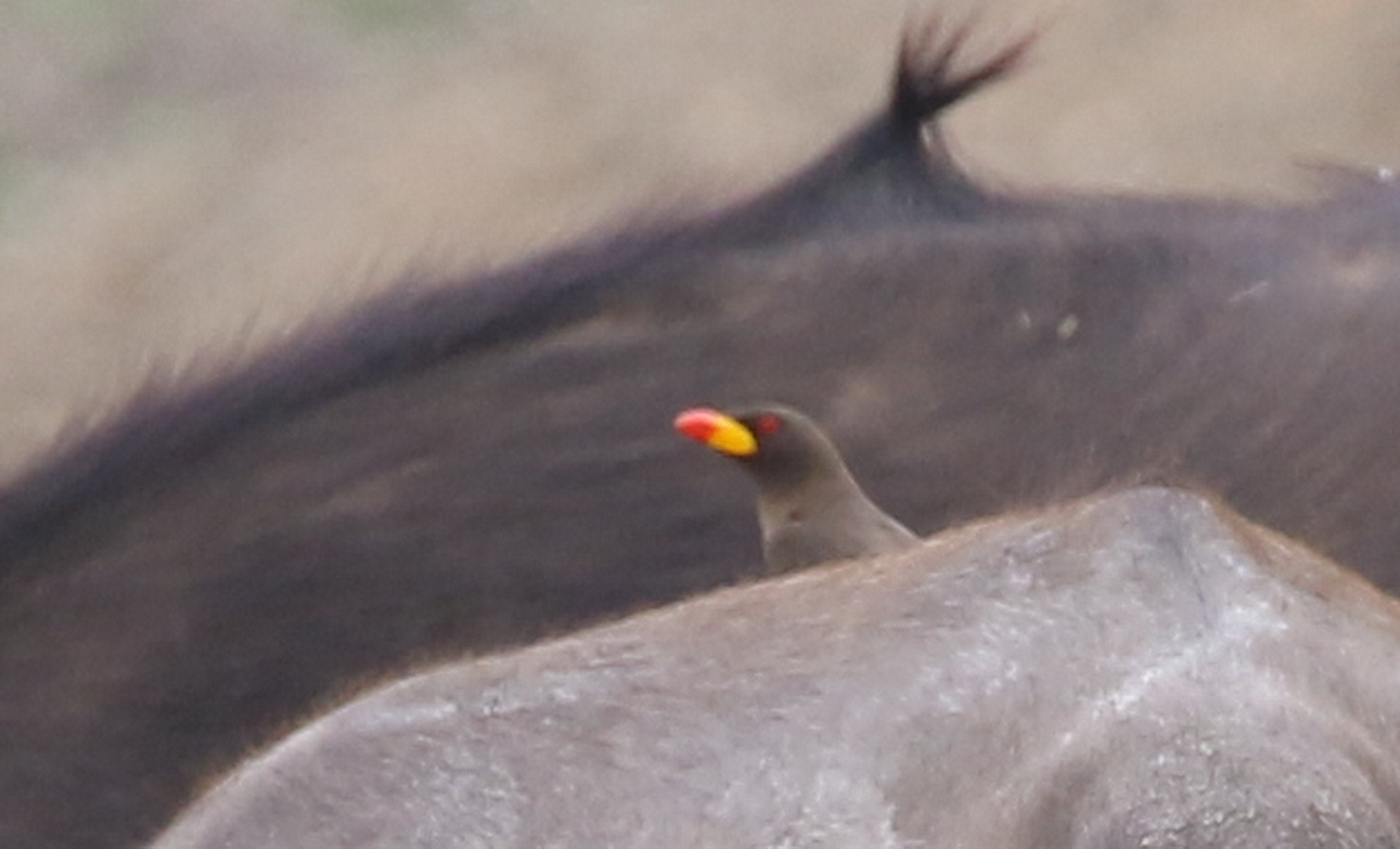
The antics of birds and animals were a pleasure to watch. Burchell’s Coucals chasing each other, Little Bee-eaters and Swallows coming in for a drink or a bath, Red-billed Oxpeckers having a communal bath spraying drops of water over each other, Giraffes drinking, a Slender Mongoose casing the joint and many birds just coming to the water’s edge for a drink. One oddity were the Red-billed Oxpeckers. There were at least 20 present all the time. They never left with the animals but hung around for their next feed. We tried to work out if the animals not only came for a drink but also for a clean up. Or was it that the Oxpeckers hung around because they knew they were on to a good thing. Perhaps both options.

But there was one bird which appeared unexpectedly.

Dwarf Bittern

Yes, a Dwarf Bittern up high in a tree. Wonderful sighting.

Of course there were camp birds. We were greeted by a pair of singing Striped Kingfishers. As the sun set, the Little Swifts serenaded us. However because of the weather the camp was quiet.

It was on the Loop road where we saw the most raptors and an unexpected one at that as well as bushveld species.

Our last morning was spent at Malibali hide. And surprisingly the activity was as interesting as that at the Kumasinga hide. Now that there is water all sorts of creatures appear out of the woodwork.

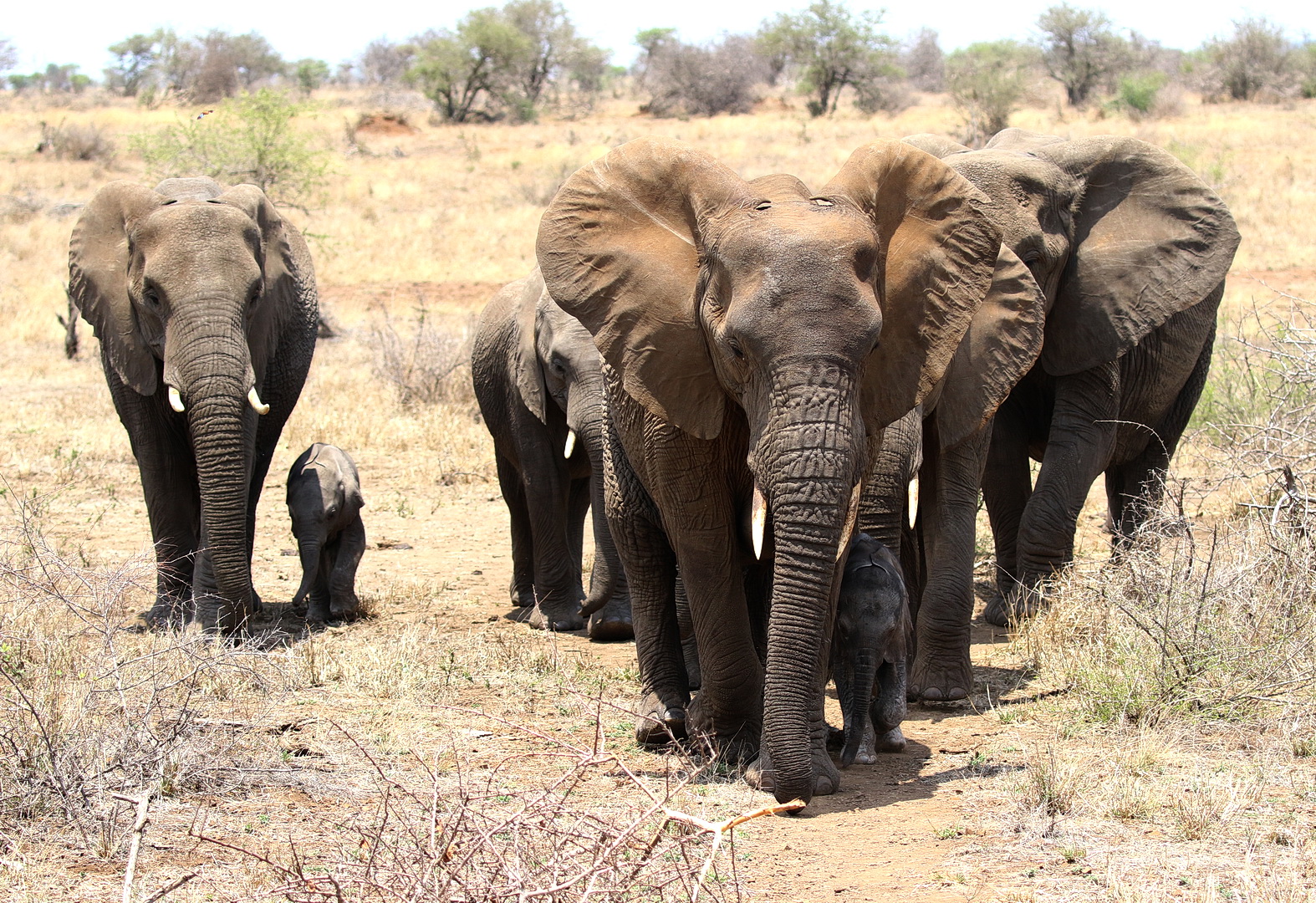
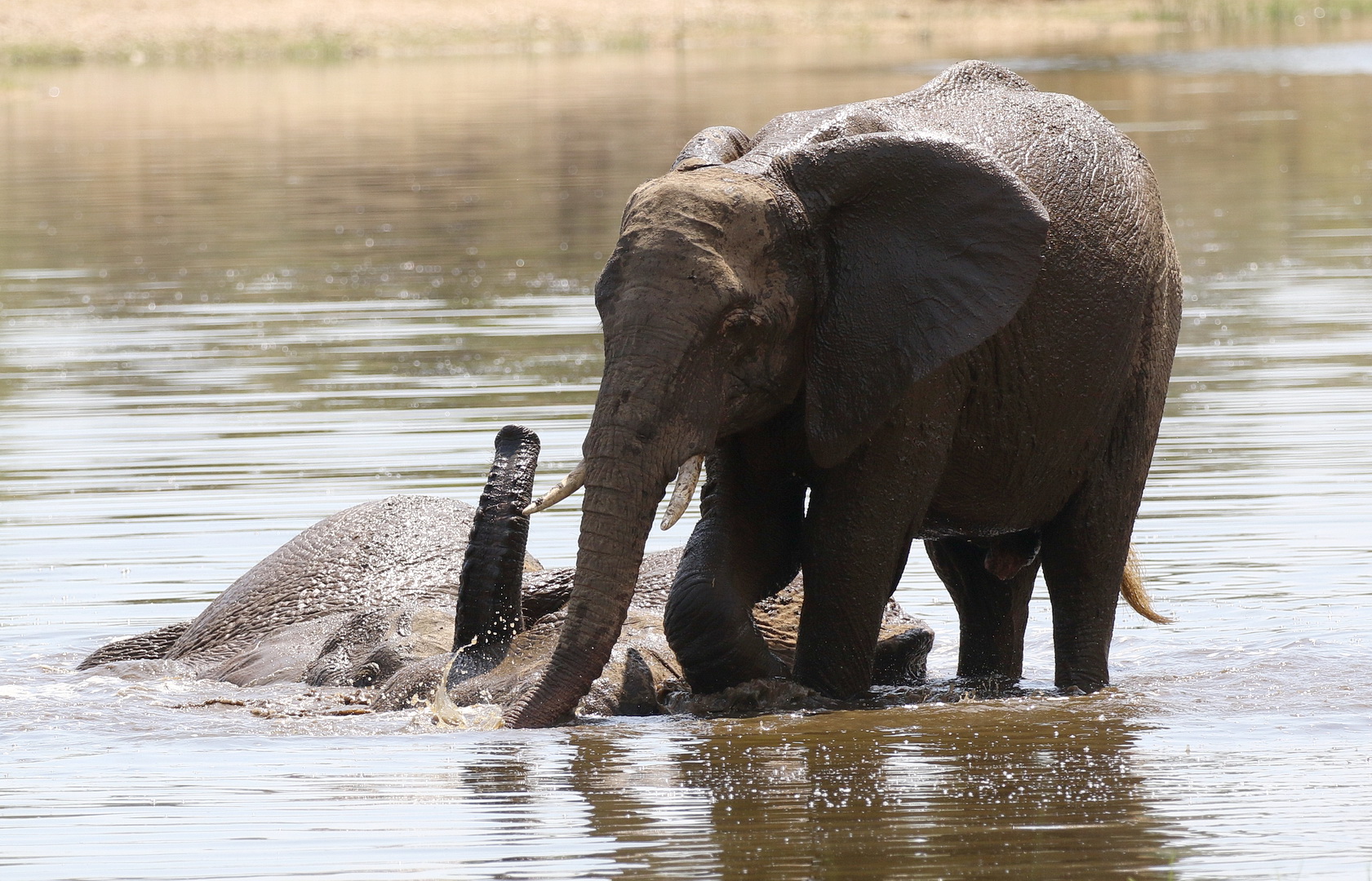
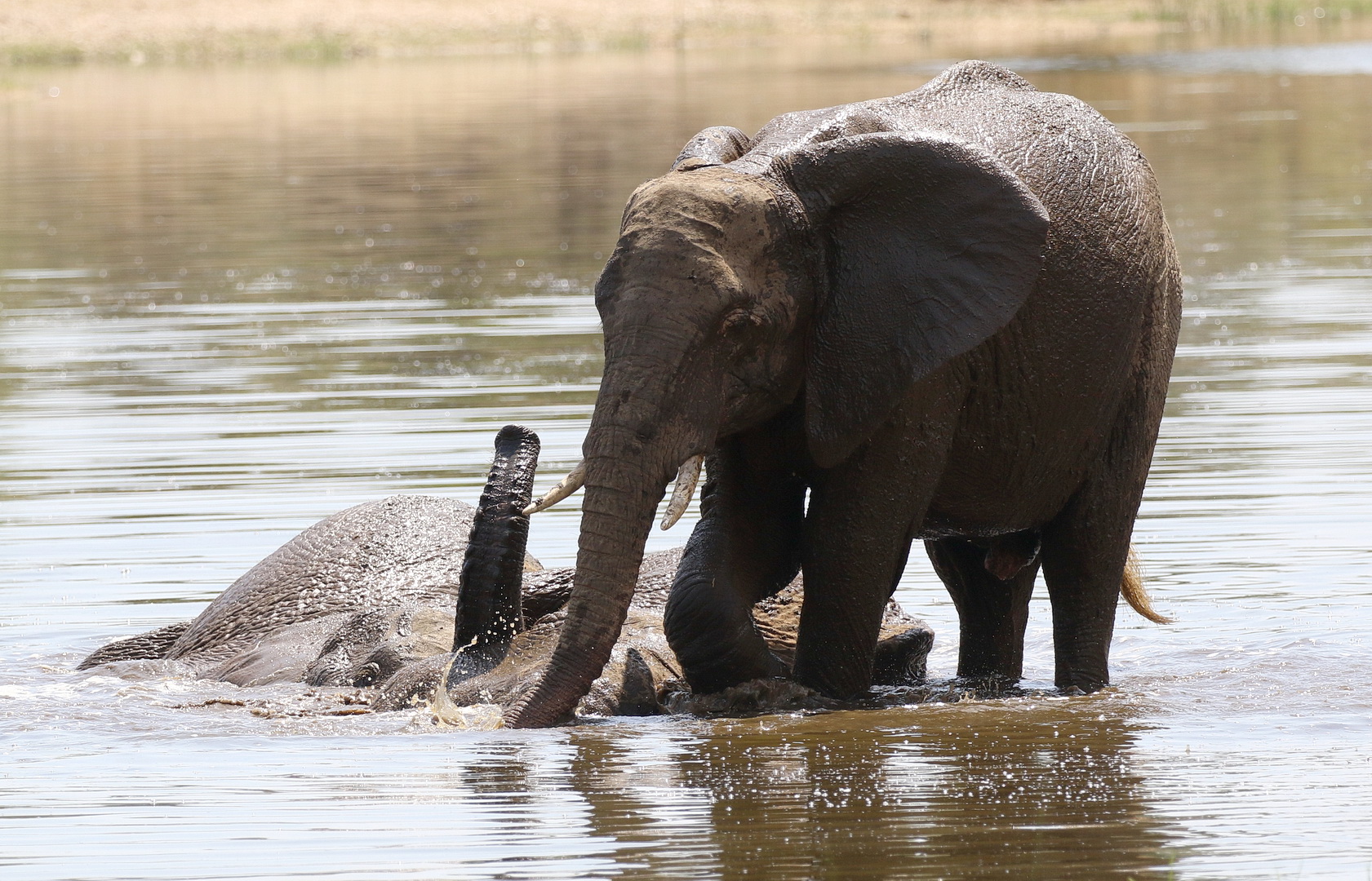
Over a three hour period we saw three different elephants coming in for a drink and a splashing.

Elephant – drink’s time

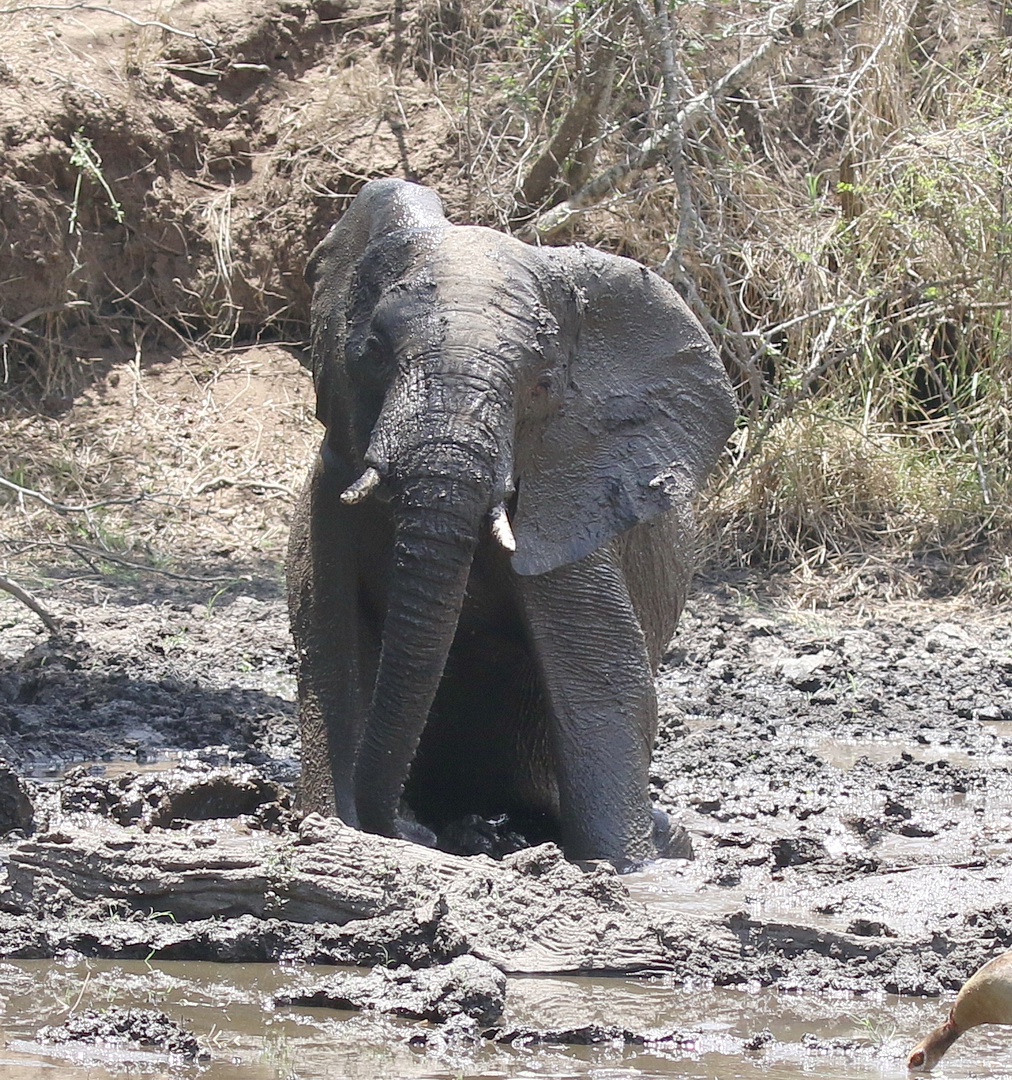
The last sadly with a vicious snare wound (which the camp conservation team were aware of). The elephant had to be darted to remove the snare and to be given treatment. You can see from the photos how bad it looked. Fortunately it appears that the medicine is doing its work. It can walk normally and put weight on that leg. What was interesting was the elephant, having arrived with the would very visible, left with it fully coated in mud by the elephant to act as protection for the wound.

Snared Elephant swollen foot

Here are some of the other species photographed at the waterhole.

Then there was a full breakfast to be seen.

Western Cattle Egret enjoying a big breakfast

Our bird list for Mkuze can be seen later as it has been combined with our viewings at St. Lucia.

Our next destination was St. Lucia. The main purpose at St. Lucia was to enjoy the waterbirds seen at the mouth of the estuary and to try and find one or two of the special birds seen there earlier this year – Gull-billed Tern, Eurasian Oystercatcher, Lesser Frigatebird or the vagrant Noddy on the off chance.

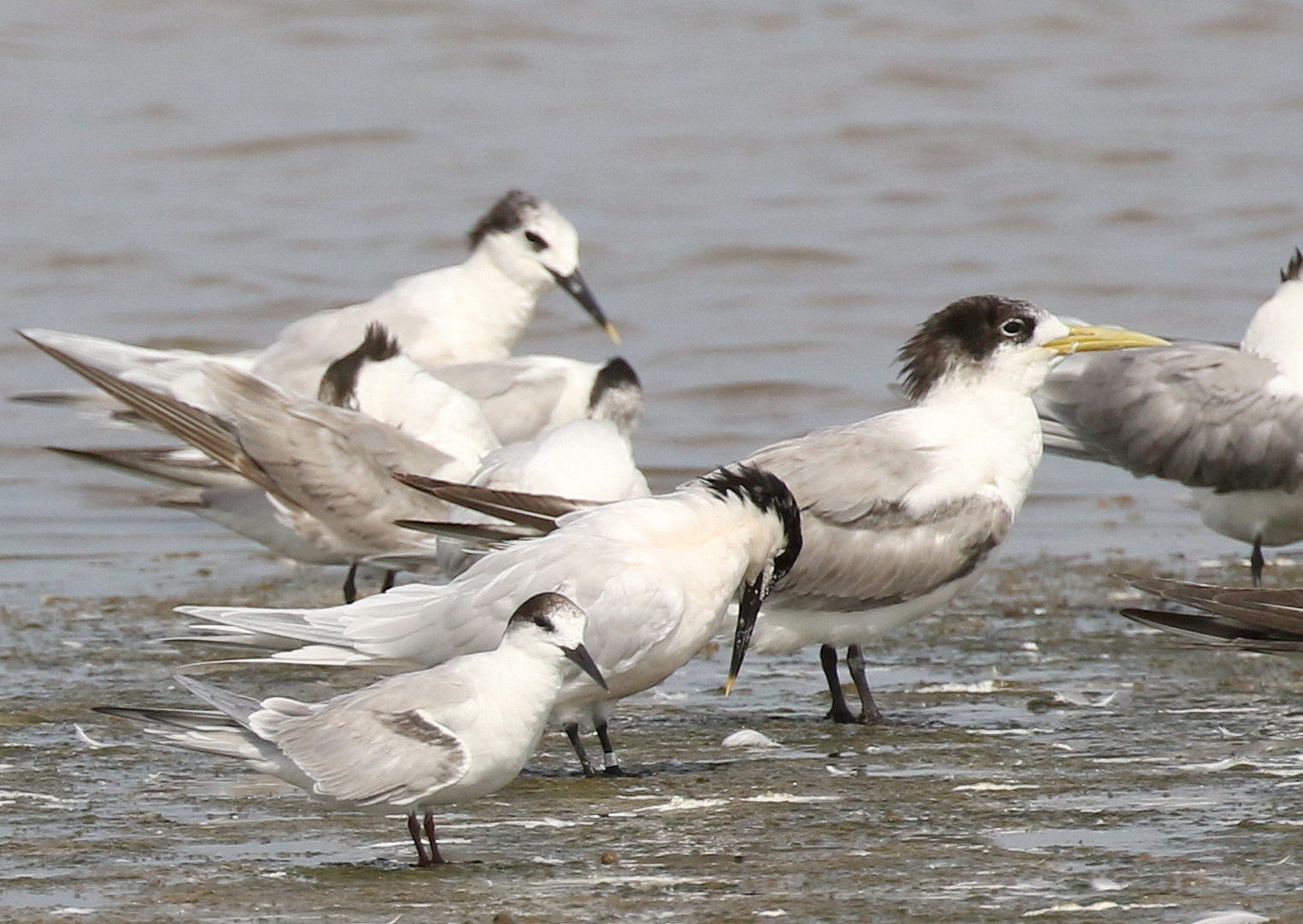
St. Lucia weather was even more overcast and rainy than Mkuze. We took our chances when the heavens were not crying to walk the beach and explore the estuary. We managed to get out twice. On both visits we came across a small Tern roost in the estuary. Despite  the numbers it was good to see the variety there – Little and Swift in numbers with Common, Lesser-Crested and Sandwich Terns among them. Even a Caspian appeared. However amongst the Terns and Gulls there was no sign of the Gull-billed Tern.

Blue-cheeked Bee-eaters were feeding over the sand dunes. Not a sight we expected to see.

Blue-cheeked Bee-eater

No sign of the Noddy – not a surprise as we know how fleetingly it was seen in the first place. And the Lesser Frigatebird did not make an appearance either. Fortunately we had seen it there on a previous visit.

Black Oystercatchers were seen on the beach water’s edge in the distance. Whenever we got close they moved on. Grey Plovers and Whimbrels were also present. On one occasion we saw a distant Black Oystercatcher with another smaller wader – we assumed either a Grey Plover or Whimbrel. Because it was so distant we did not pursue it and visited the Tern roost instead. After some time we left the roost and headed back to the beach to see if by chance we would have any luck spotting the Eurasian Oystercatcher.

The beach came into view and there was the Black Oystercatcher we had seen earlier. And with it the other smaller bird. Once we had our binoculars on it we realised it was the Eurasian Oystercatcher. As close as we came so they moved away. I managed to get a photo or two but it was a nightmare photographing into the sun.

Black and European Oystercatchers showing their size difference

Hooray – a lifer for me.

Sanderling

On our last – yes, rainy afternoon – we ventured into Eastern Shores – more for something to do than sitting around the camp in the intermittent rain. As expected both animals and birds were scarce but we persevered. Eventually we got to the Lake Bhangazi turnoff having explored most of the other loops on the way.

European Bee-eater

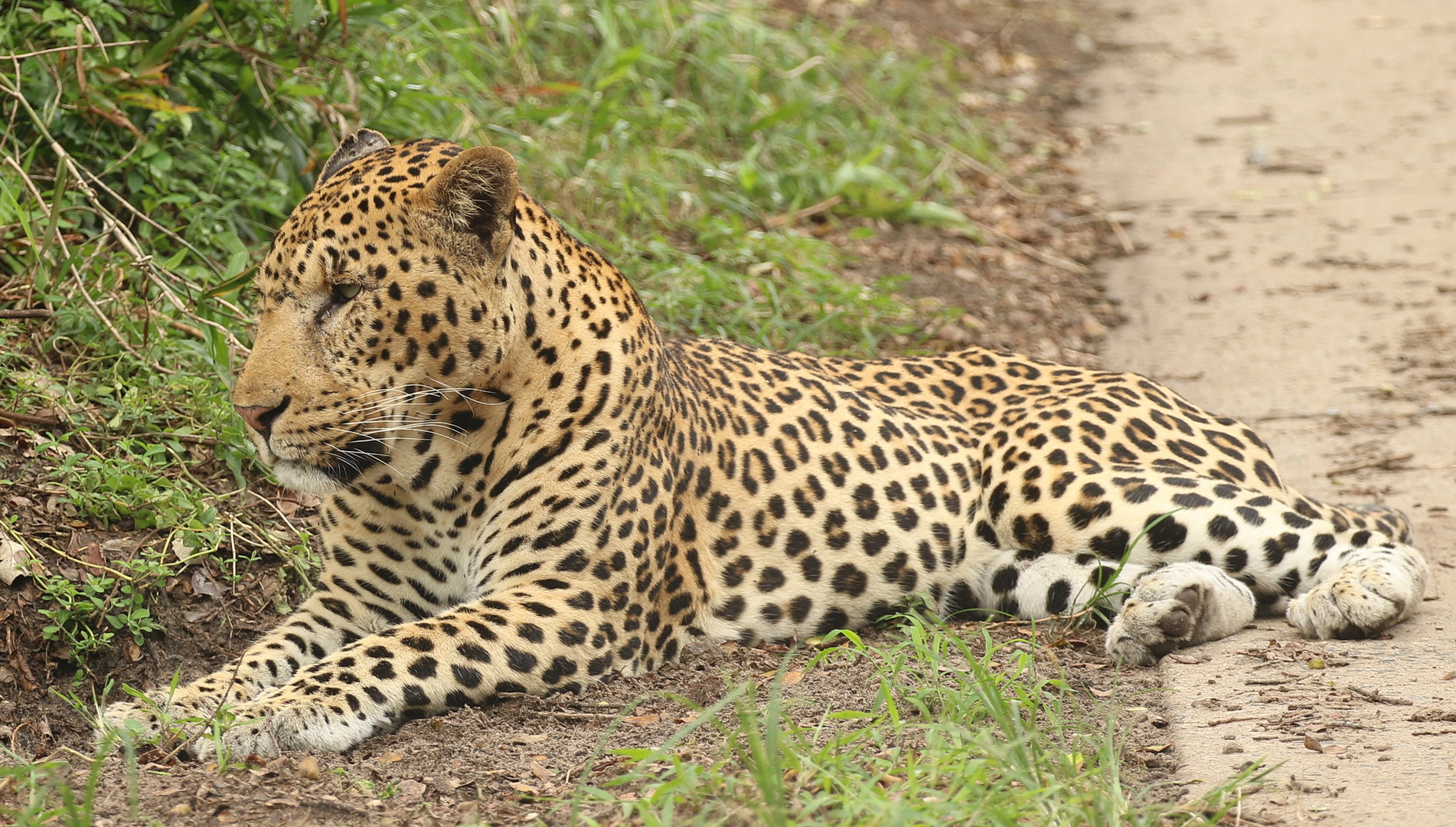
This drive is a 17 km drive back to the main road. Initially it passes through dune forest and onto a raised road between Lake Bhangazi and a wetland. This part of the road is also well forested and narrow. Coming round a corner I said to Sally “Look ahead”. She was scouring for the bird she thought I had seen. Only it wasn’t a bird but a magnificent creature lying alongside the road.

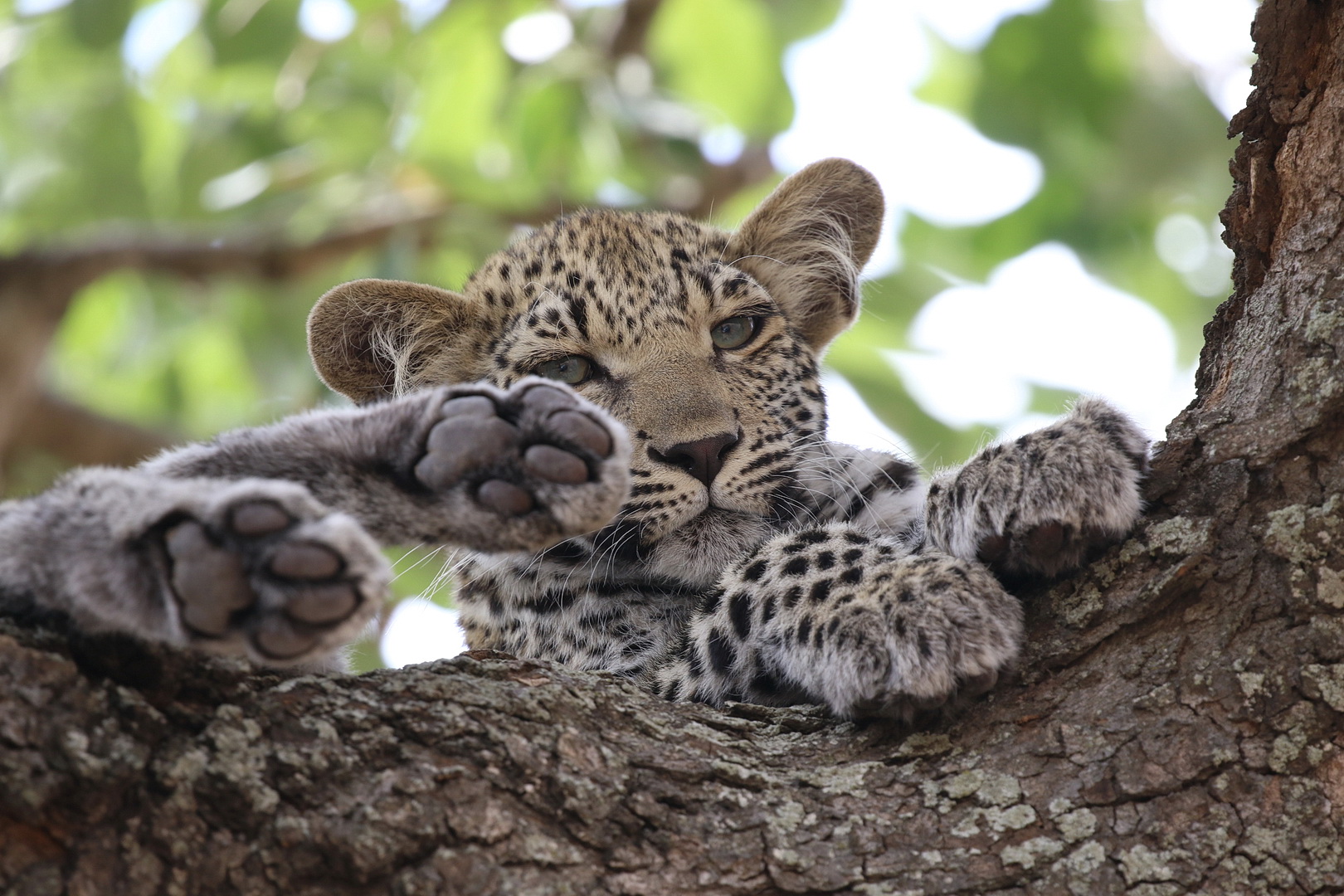
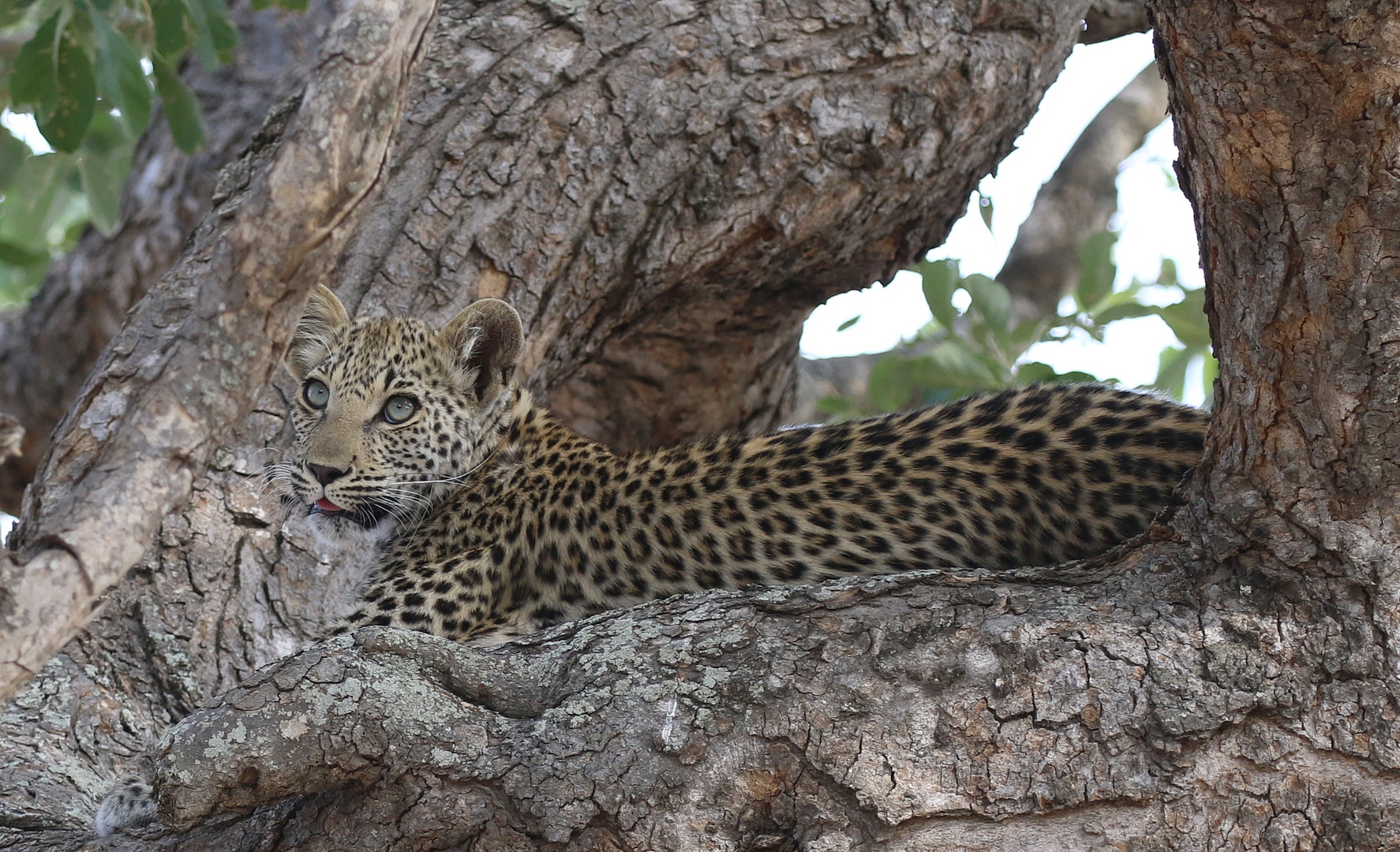
Leopard

Well worth the drive and a good way to end our trip. Our bird list for both Mkuze and St. lucia can be seen by clicking here. 135 species identified in Mkuze and 77 in St. Lucia.

Hope you have enjoyed the read.

Paul and Sally Bartho


The Cavern

Report by Sally and Paul Bartho

25 to 27 January 2019

The Cavern

As an engagement anniversary present to ourselves we went on a birding weekend at The Cavern with David and Sally Johnson.

The Cavern nestles against a forest habitat. It is located off the road to the Royal National Park, taking the first road right after passing the “Pizza Tower” and following it right to the end.

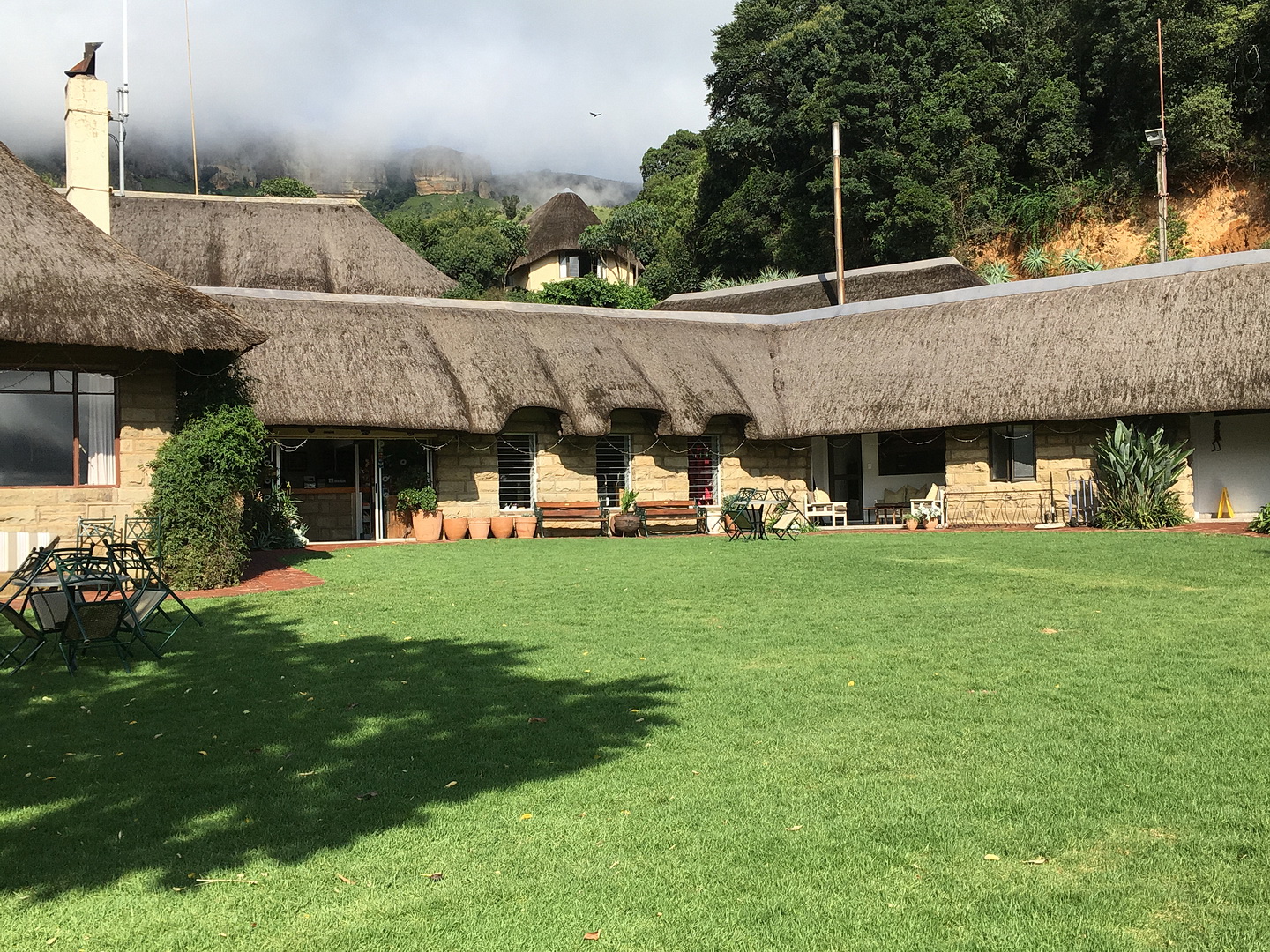
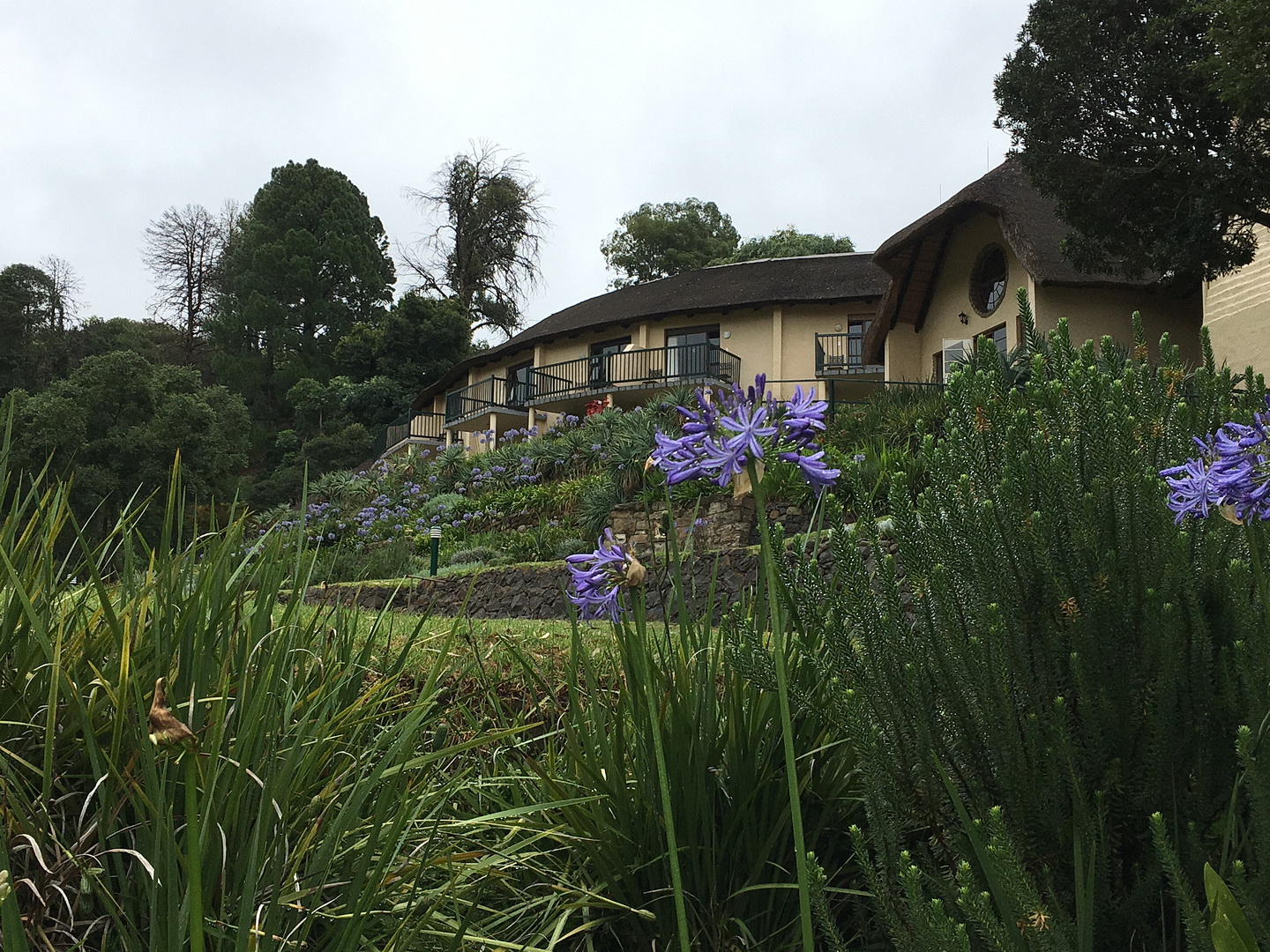
Accommodation was good with views over the grounds. Meals were sumptuous and food aplenty. The inner layout is a morass of TV rooms, lounges, dining areas, play rooms and bars scattered on three levels. Very charming.

The weather was not always in our favour, however we did manage to get in a reasonable amount of walks in and around the property and identified 88 different bird species. Click here to see our list. Note some of these birds were seen in the area but outside The Cavern property.

We left Howick on a chilly misty rainy morning expecting it to be the same on arrival. As fortune had it, we arrived in sunshine and spent an hour or so birding close to the main building. Most notably seeing several different Sunbirds feeding on the agapanthus flowers.

Lunch was a huge spread and you can be as indulgent as you like. We did try to be restrained – not easy.

After lunch we took a walk around the property on our own. The weather had changed and the clouds were becoming ominous. However we managed to get back before the rain/drizzle set in.

Later that afternoon David gave us a talk on “The Birds of the Cavern”. A very informative talk not only showing us what we might expect to see but also about their prefered habitats and behaviour.

A walk was planned for 06h30 the following morning but the rain and drizzle put a stop to that. After breakfast David gave us another exceptional talk. This time on the “Galapagos Islands”. Absolutely fascinating and had us all wanting to visit. The way the islands were formed; the effects on the islands of the two currents meeting – depending on which was dominant; the flora and fauna and how it developed. Did you know that the common Daisy flower transformed itself into a very tall tree on one of the islands!

After the talk there was a sort of respite in the rain and Sally and I took a chance to wander around the grounds set in layers down the hillside passed the pool and paddocks to the stream and ponds at the bottom.

We did come across a butterfly which was interesting because of its “glass-like” wings.

Interesting Butterfly with a pair of see through wings.

Interesting Butterfly with a pair of see through wings.

After lunch David and Sally led us on a walk beyond the entrance. Another opportunity to see what we could find of interest.

One of the highlights on this walk was the Southern Double-collared Sunbird.

Southern Double-collared Sunbird also in the Agapanthus

In the late afternoon David gave us another interesting talk – this time on the”Sex life of Birds”. Fascinating to understand the different behaviours towards mating.

The last morning we had an early morning walk round the property with David and Sally. Before we even started a Chorister Robin-Chat came into the tree above us.

Chorister Robin-Chat

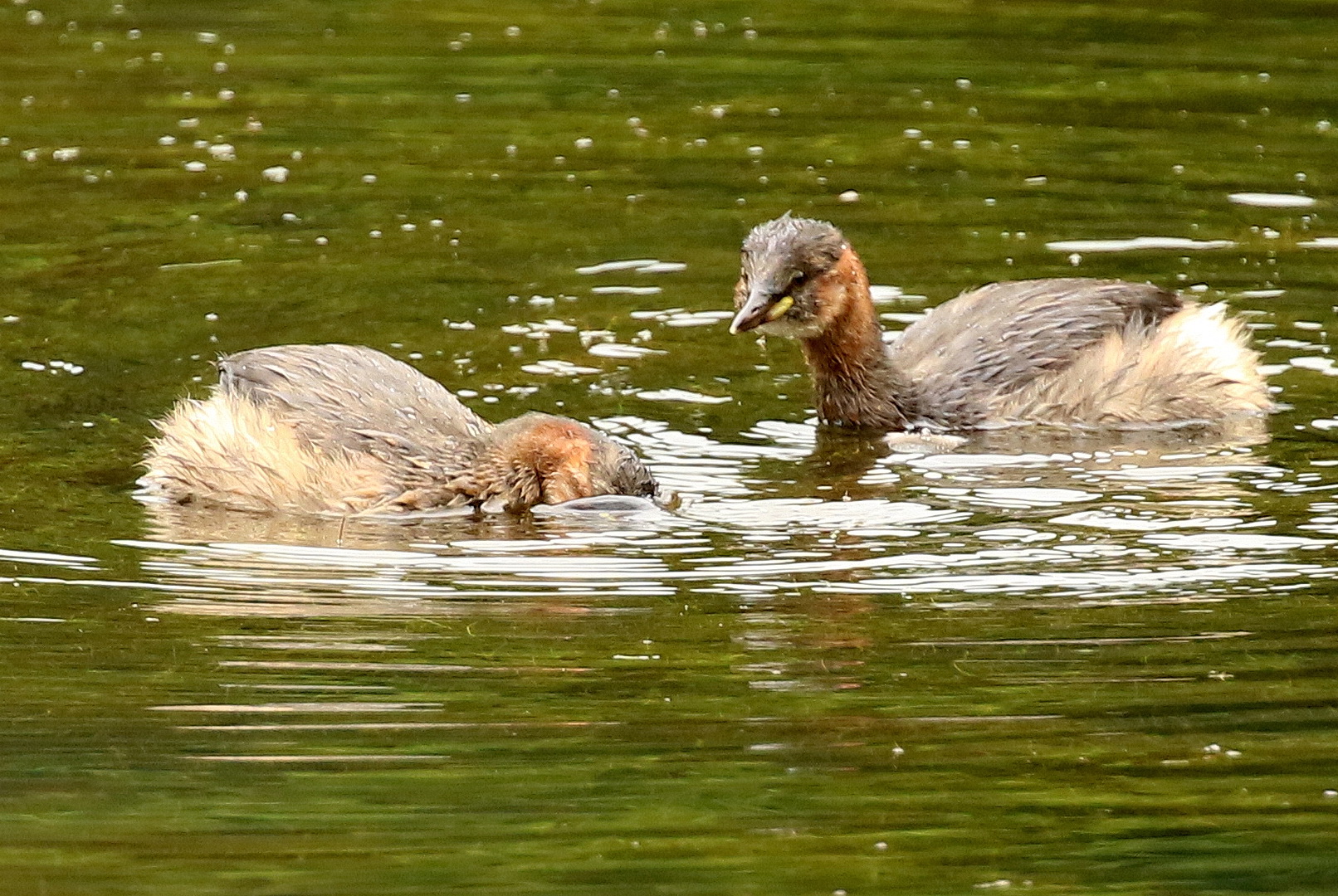
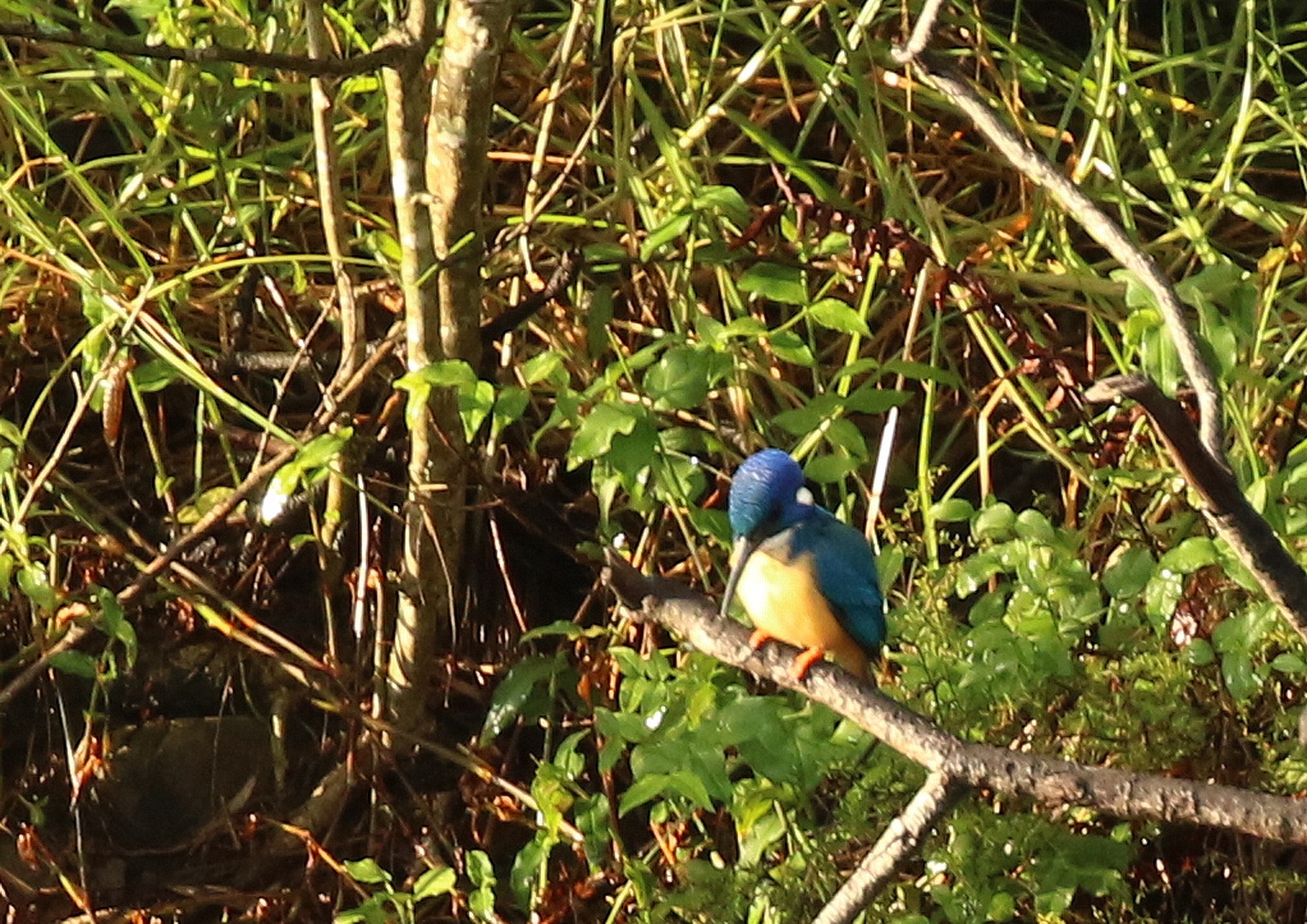
At one pond we came across a Half-collared Kingfisher and three Malachite Kingfishers including a juvenile. Also present were two pairs of Little Grebes (one pair with 5 chicks) sometimes fighting for territory. A Yellow-billed Duck with her brood kept appearing and disappearing behind a fallen tree on the opposite side. And a pair of Mountain Wagtails made a brief appearance.

Further on we saw a Brown-hooded Kingfisher and at another pond a pair of Giant Kingfishers flew past. A day for Kingfishers. Then on the way back we saw a Diderick Cuckoo being fed by a female Southern Masked Weaver.

Simply sitting in the shade of one of the trees in front of the hotel, many birds appeared.

After breakfast Sally and I went for a walk – intending to go into the forest but ending up in the grasslands close to Jackal Hill. In the end a very long walk following the track upwards from just after the school on the left as you head away from the Cavern.

At the start we had good views of Cape White-eyes, Groundscraper Thrushes and a male Cape Rock-Thrush posing on an overhead wire.

On the long walk up we saw a number of species we had not seen over the weekend. There were African Firefinch, a Common Buzzard and a male and female Malachite Sunbird.

On the way down we encountered a pair of Mountain Reedbucks on the opposite slope playfully running up and down. A nice sight to see.

We also encountered Drakensberg Prinia, Wailing and Lazy Cisticolas.

At the bottom the Cape Rock-Thrush family put on a show for us. Unfortunately the juvenile only made a fleeting appearance and I was unable to take its photo. A couple of other birds were also present.

Eventually it was time to leave and despite the very overcast weather we had a most enjoyable time.

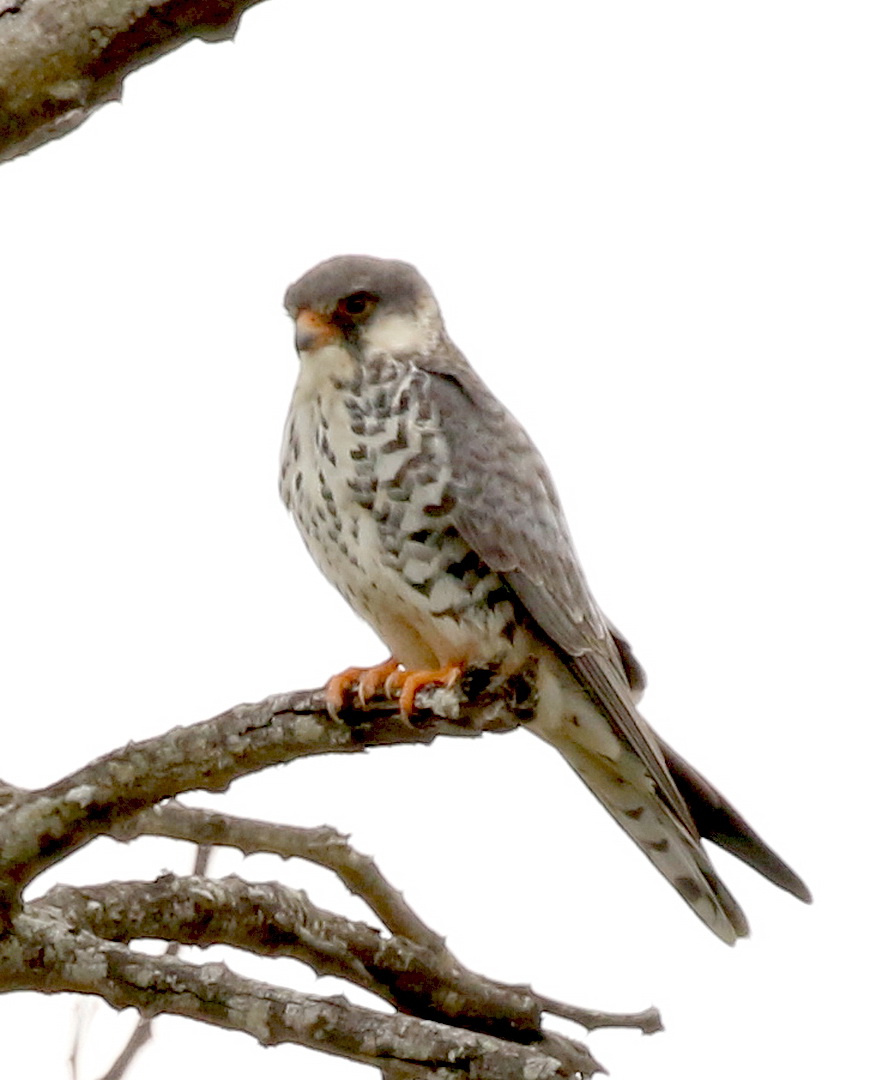
On the way out we did come across a number of additional species – some of which I was able to photograph. Most prominent were the Amur Falcons and occasional Lesser Kestrels.

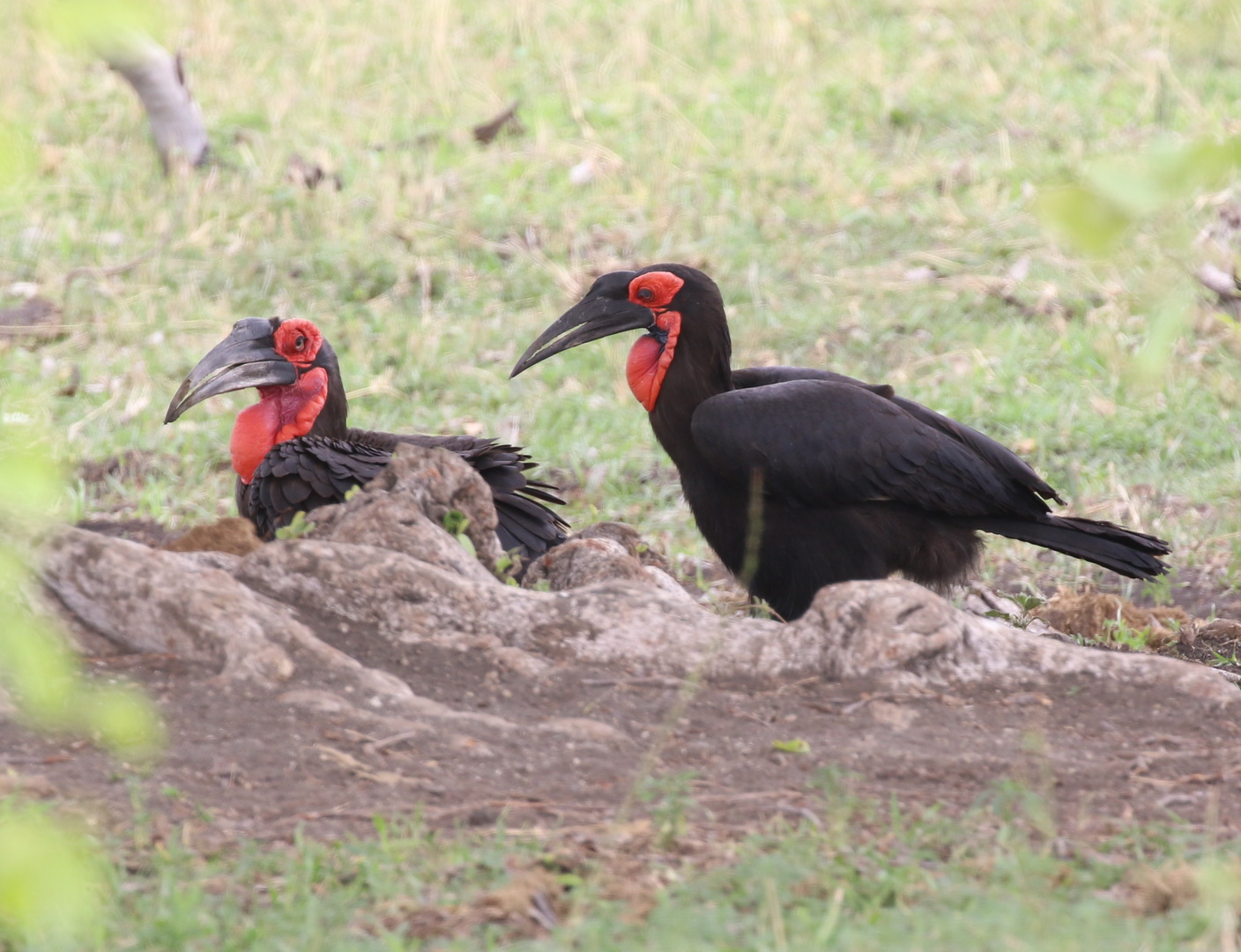
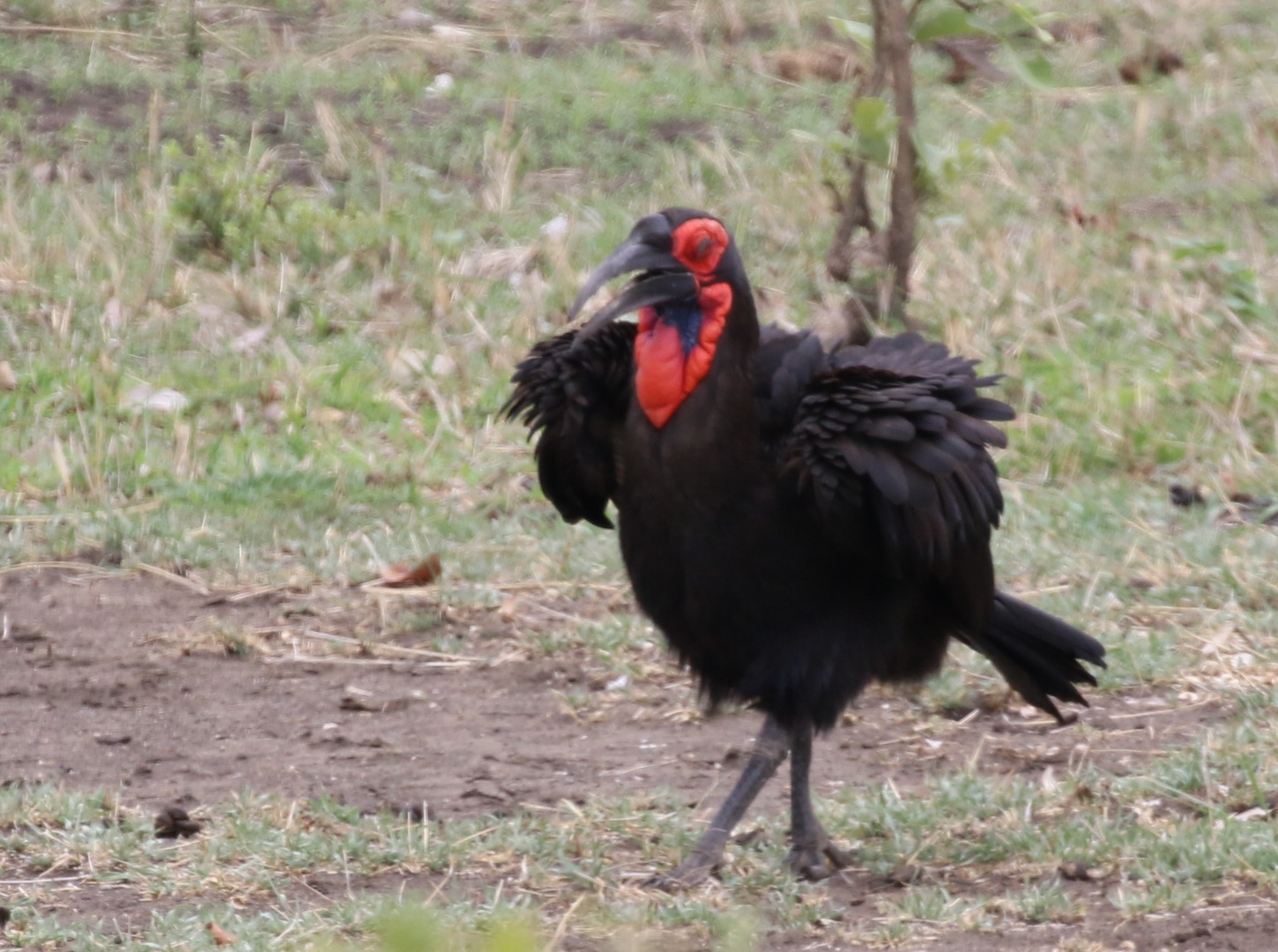
The highlight, however, were three Southern Ground-Hornbills.

We are so pleased we also took the opportunity to explore a little of the area outside The Cavern.

Water or Sky?

Cheers

Paul and Sally Bartho

Kruger Part 10 – Summary

Kruger Part 10 – Summary

11 November to 7 December 2018

Report by Sally and Paul Bartho


African Paradise-Flycatcher with a rather long tail

Yellow-billed Kite

African Jacana off balance

The intention of this summary is to:

  • show you in one chart our birdlist for the entire Kruger and which birds we identified when based in each camp area.
  • comment on the birds we thought we might see but didn’t.
  • make comments on our time in the Park.
  • show you photos of the birds we could not identify.
  • show you photos of what we considered “Special” birds.
  • show you photos of animals we took.
  • show you photos which we considered to be of reasonable quality.

Despite the dryness of the Park we still identified a wide variety of birds in all 230 different species. Click here to see the total list of birds we identified in our stay in the Kruger also showing a summary of the birds we saw in the area of each camp.

Having said that, we were surprised not to identify any of the following:

  • Bishops*
  • Buzzards
  • Coots*
  • Falcons
  • Grebes Little*
  • Kestrels
  • Longclaws
  • Mannikins
  • Martins
  • Moorhens*
  • Pigeons Speckled
  • Saw-wings Black
  • Teals*
  • Terns*
  • Tinkerbirds
  • Weavers Village
  • White-eyes

* We attributed these particular missing birds due to the dryness of the Park.

Some Comments and Observations:

  • Our favourite camps were Lower Sabie in the South, Balule in the middle, Tsendze and Punda Maria in the north. And Malelane in the south as a gateway for both entering and leaving the Park.
  • Yellow-billed Oxpeckers have thrived in the north and now it is unusual to see a Red-billed Oxpecker on Giraffe or Buffalo.
  • Yellow-billed Oxpeckers have extended their range and it is not unusual to find them lower down at Tsendze.
  • It is about time that Punda Maria management bought a washing machine for their laundry.
  • The Deck at Lower Sabie gave us many interesting sightings not only of birds but interacting animals too.
  • The swimming pool at Shingwedzi was a real life saver.
  • Crocodile Bridge area looked like a desert – trees all knocked down, barren and dusty sadly

Unidentified Birds:

Of the birds we photographed there were two which we could not identify. Perhaps you can?? And there is one snake for ID please.

Mystery Dove with gills on its neck. Probable Nourning Collared Dove juvenile.

Special Birds:

The following photos are of birds that we considered to be special – either because they are hard to find or they are not birds we regularly see where we live or they show something about the bird..

Some Animals

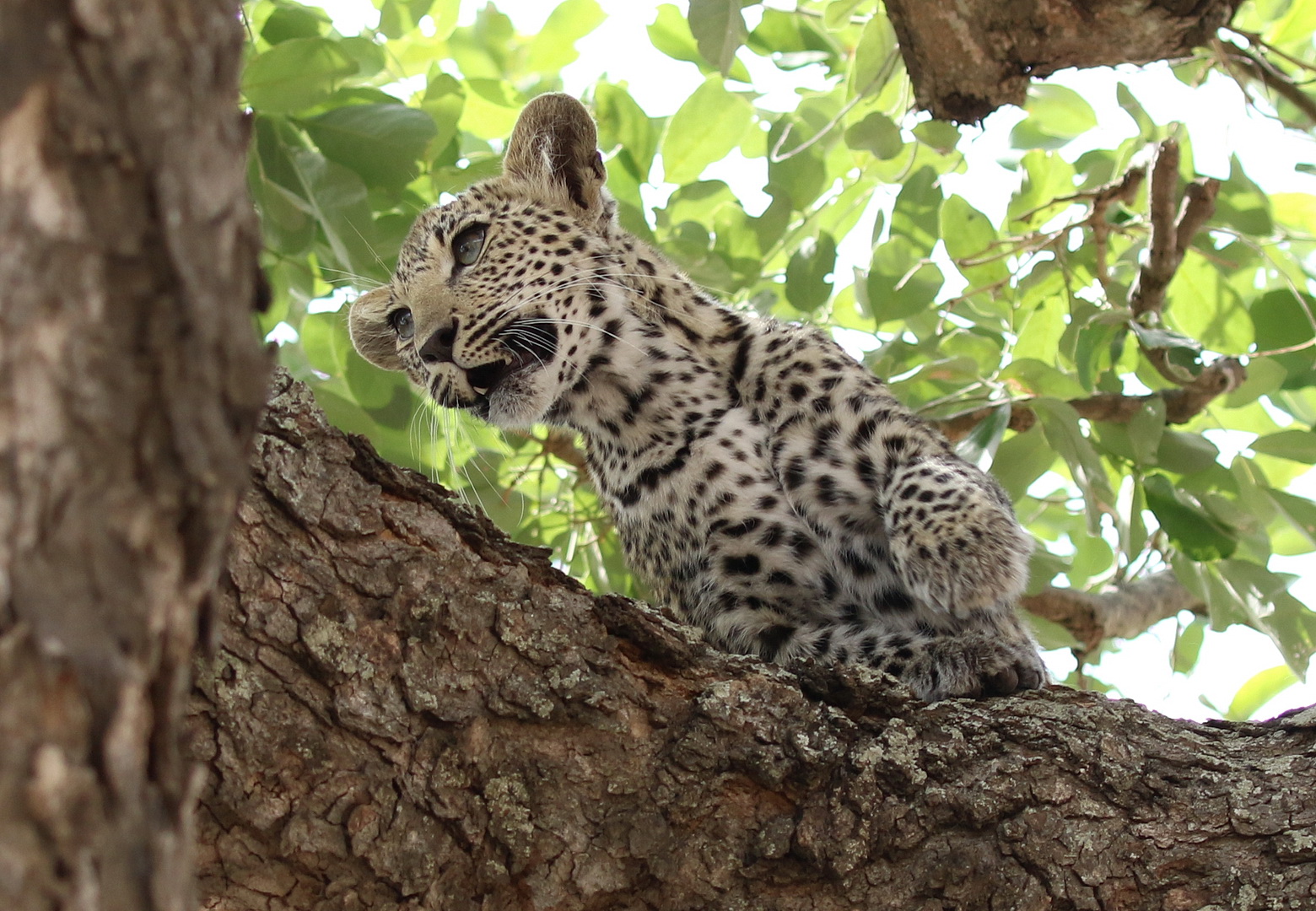
Leopard cub face off

Other birds we can’t forget:

And that’s it Folks. We hope you have enjoyed the series.

Paul and Sally Bartho

Baobab Flower

Waterhole Punda Maria

Sunset over Balule

Kruger Part 9 – Lower Sabie

Kruger Part 9

Lower Sabie and Malelane

Report by Paul and Sally Bartho

4 to 7 December 2018

Our journey from Satara to Lower Sabie produced some exciting sightings.

Leaving early we headed to Tshokwane for breakfast. As we neared the picnic site we encountered quite a few cars watching lions sleeping. A quick squizz and we went through.

Within minutes, another bunch of cars watching a Leopard asleep in a tree. A little more time here to try and get a photo and then we were off leaving the mêlée behind.

Leopard trying to snooze off his dinner

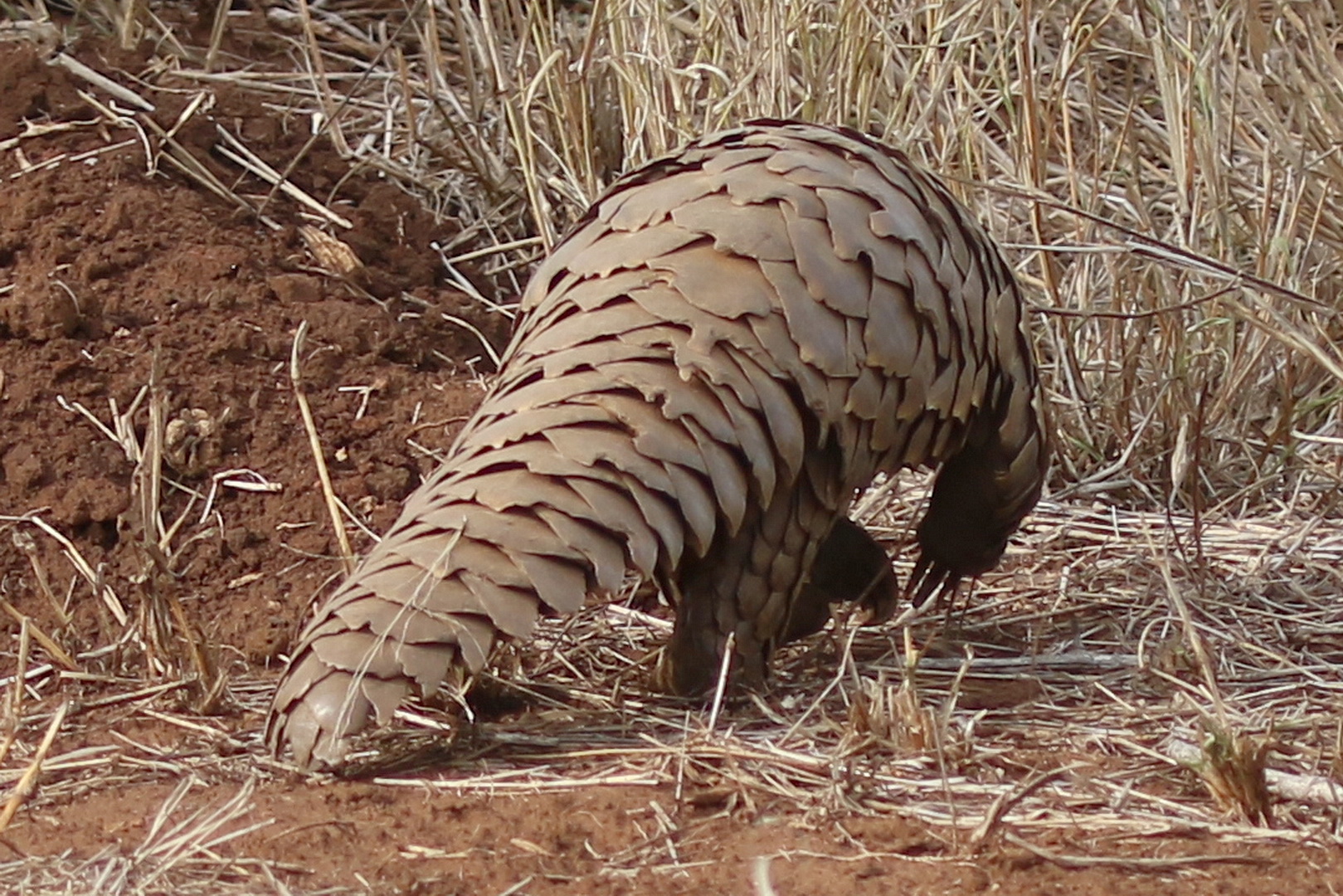
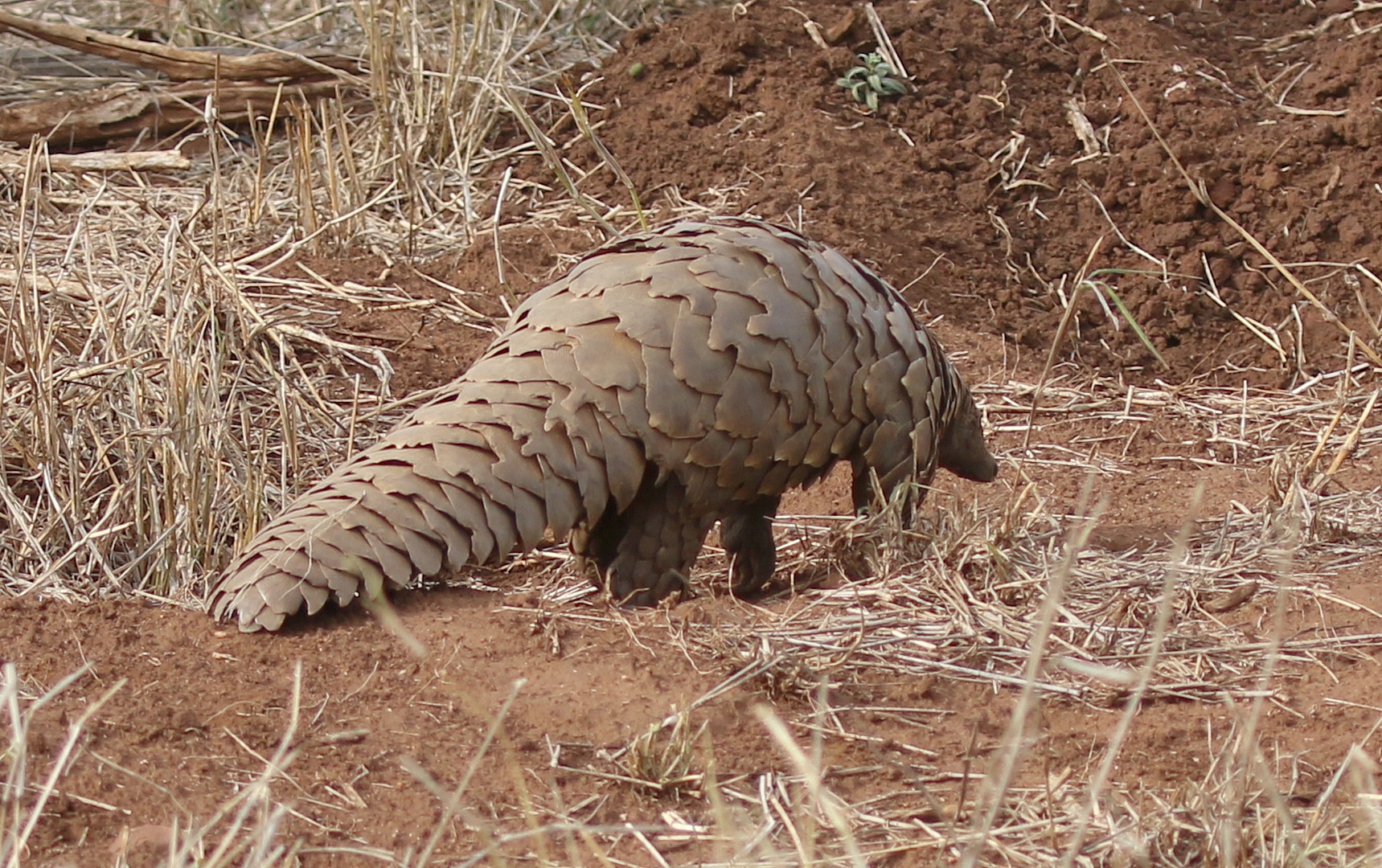
Not much further along we noticed an animal slowly crossing the road. Our first impression was that it could be a mongoose of some sort. But it had a humped back. A quick look with our binoculars told us to get up there quickly. We arrived just as it was entering the scrub by the road.

Pangolin

At Tshokwane there was no monkey business with our breakfast this time!! Still a paucity of birds around – a few Starlings and one African Mourning Dove. However in the river bed we heard a Red-faced Cisticola. It was so loud it was unmissable. Eventually it came close and I got a snap.

Red-faced Cisticola

From Tshokwane we decided to head down towards Skukuza instead of taking the direct route to Lower Sabie. All of the dams were dry and the journey passed quietly except for a Sable sighting. About five in the bush beside us about 30 metres away.

Sable Antelope

Once we had crossed the Sabie River we drove towards Lower Sabie with the river alongside us all the way. As expected there was much going on in the river. Elephants and Buffalo all the way along – sometimes in their hundreds. Hippo out of the water and many birds to be seen.

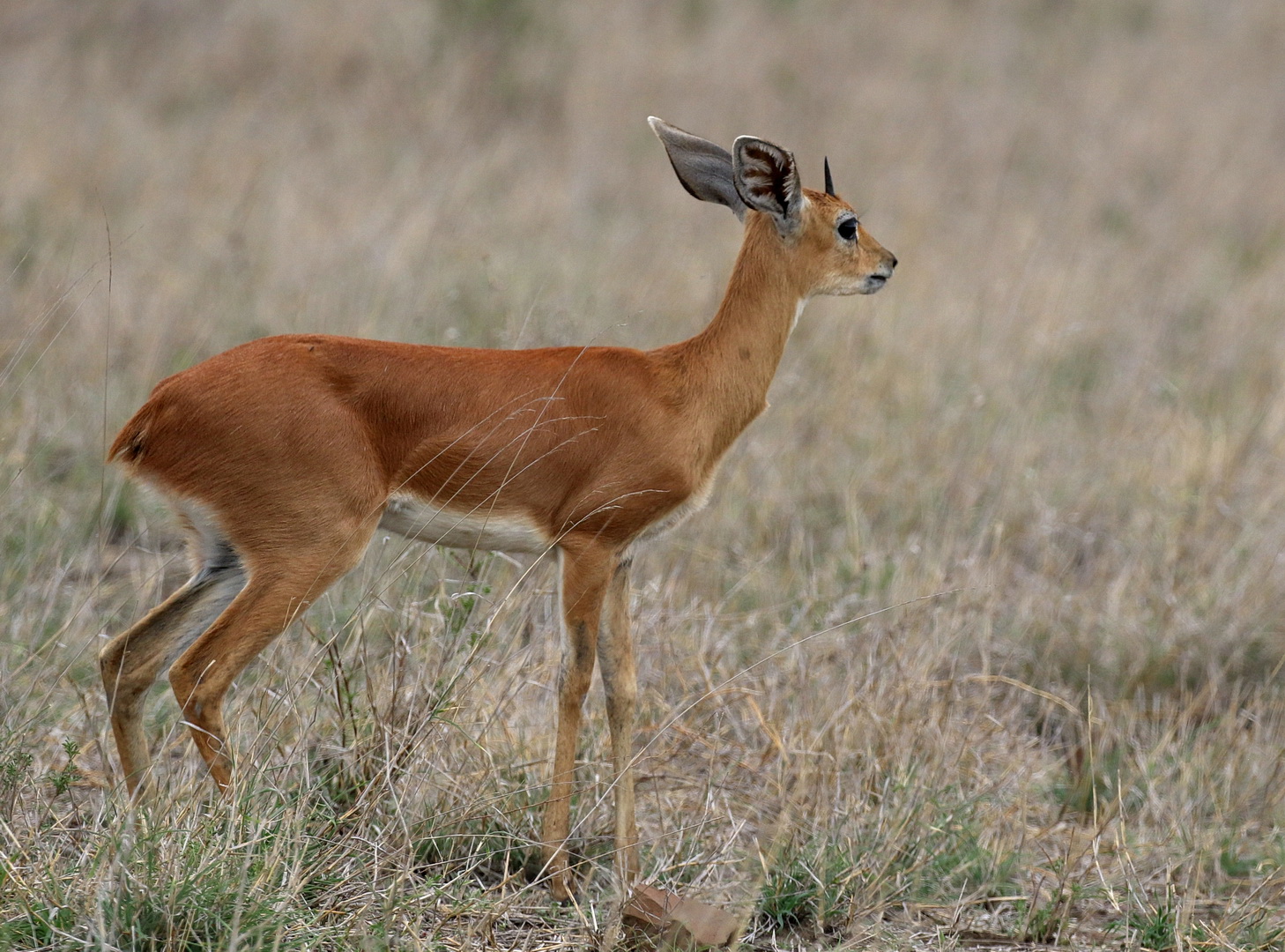
Even a Grysbok made an appearance – something we have found hard to spot.

Grey Duiker

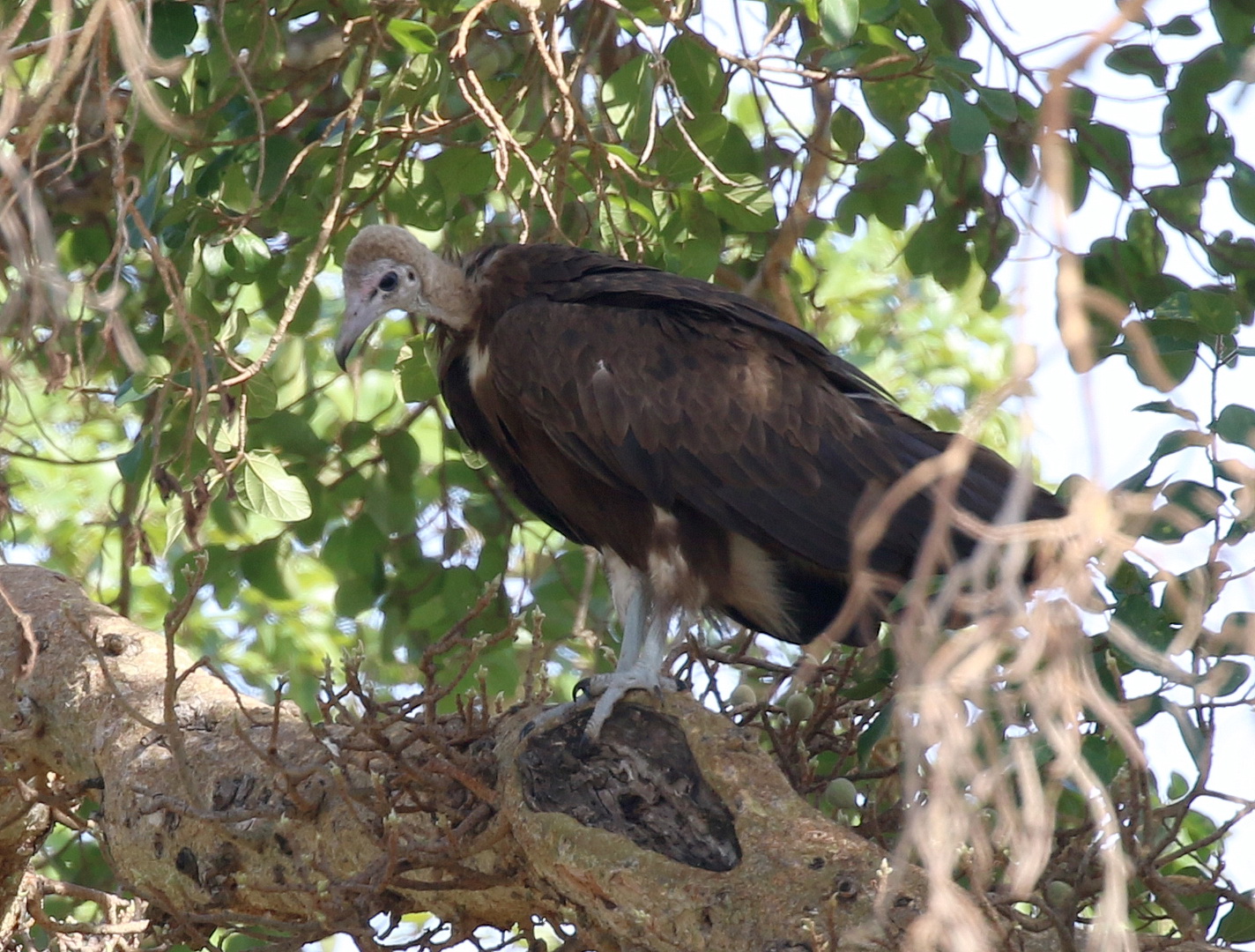
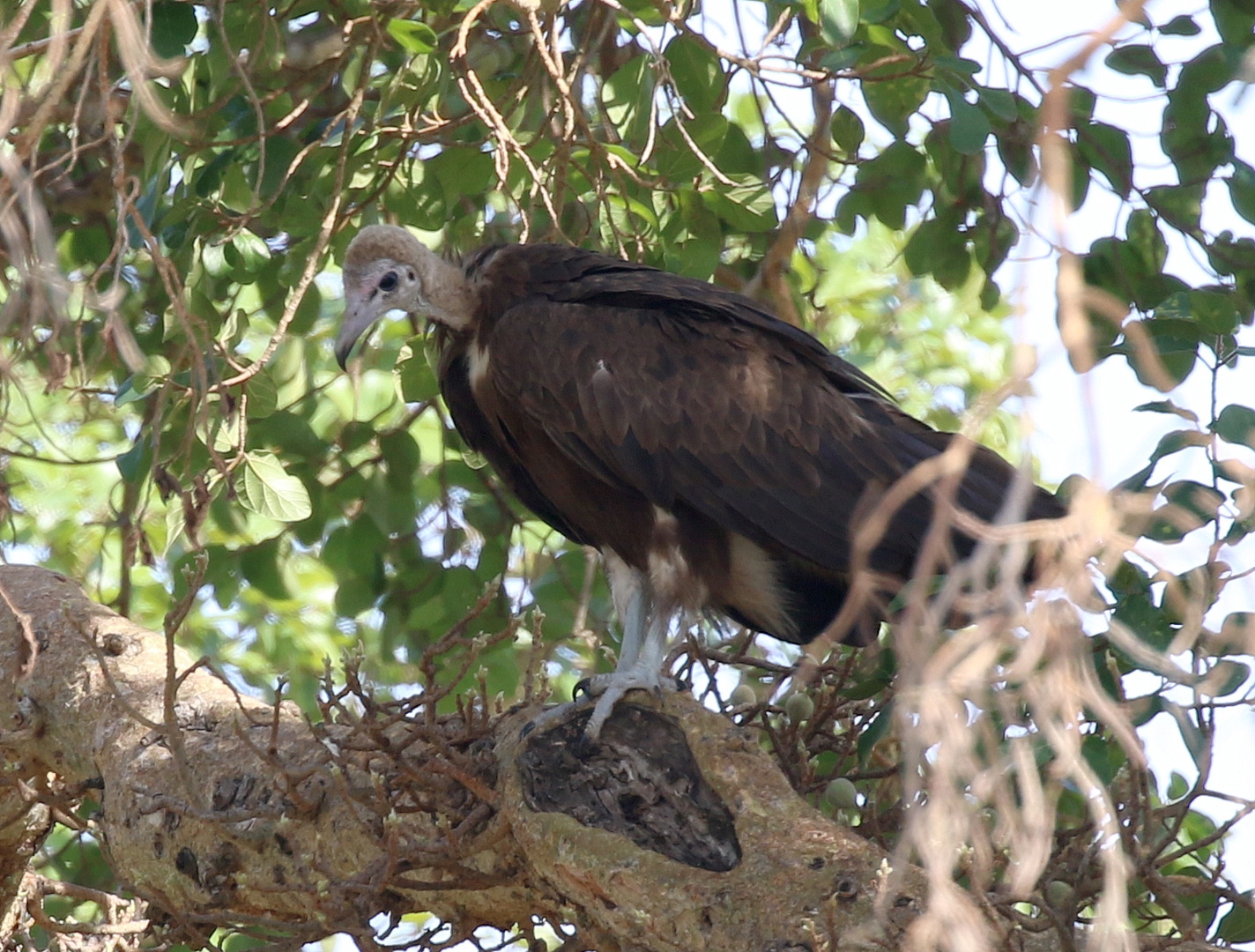
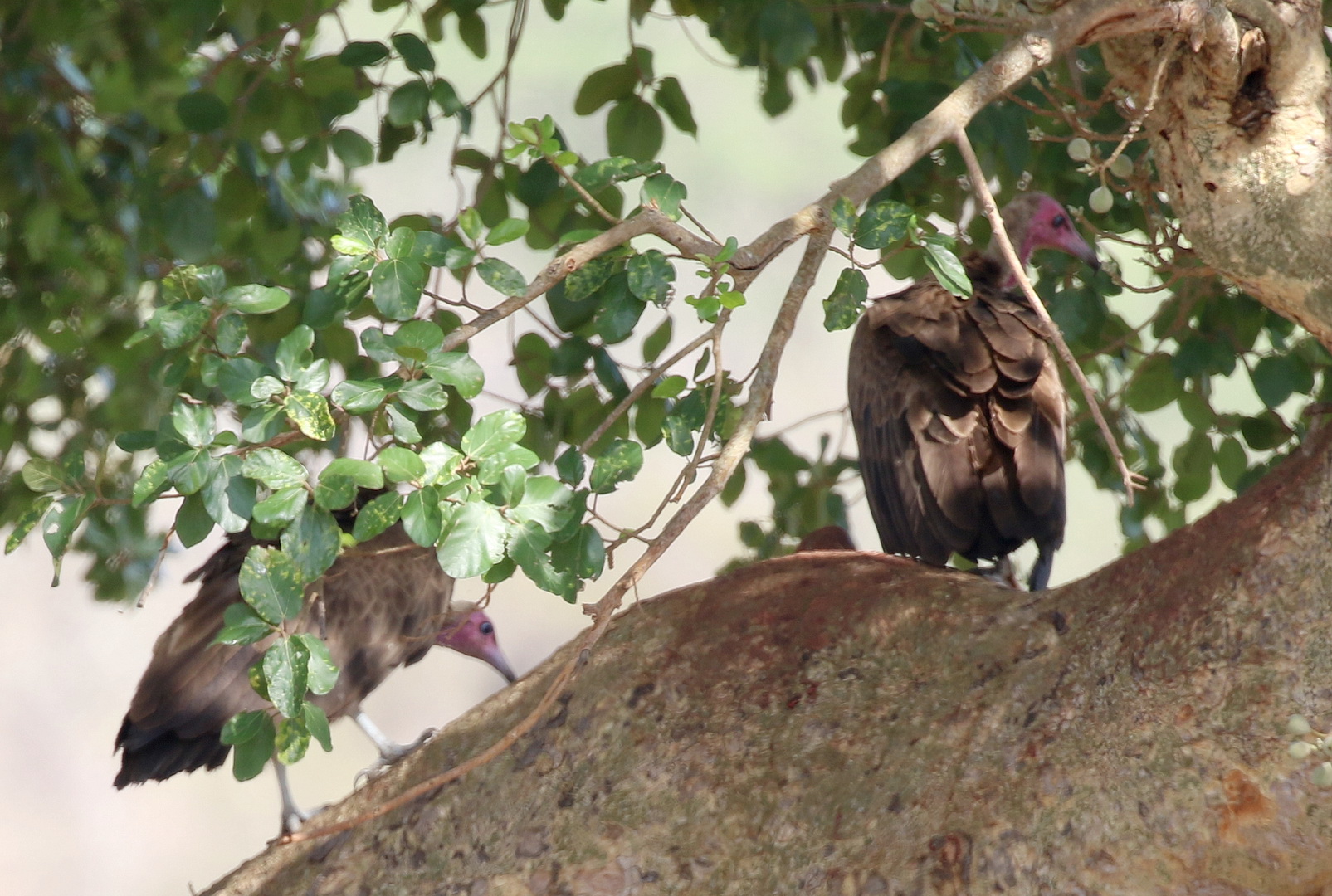
Birds too were in the air and in the trees. There were dozens of Vultures and Tawny Eagles were seen in a couple of trees from the main Skukuza bridge over the Sabie River. In another tree we saw three Hooded Vultures, one of which was a youngster.

As the river “roared” down the rapids we also had a few sightings of other birds in the bushes.

Sabie River rapids

Eventually we arrived and set up camp. By the time we were through the temperature had soared up into the 40s C. So after a lunch at Mugg and Bean we took the rest of the day off to enjoy a rest and the swimming pool.

At our site we found a couple of Grey Go-away-birds anting in the dust.

Grey Go-away-birds anting

The heat was draining our energy and having had such good experiences over the past month we decided to only stay 2 nights at Lower Sabie and then head to Malelane for one night and return home directly from there. In other words we cut our stay short by three days.

The following day we took a drive along the river to Skukuza and Lake Panic hide. A stop at Sunset Dam first to watch the Hippos and Crocodiles and see what birds were around. On the round concrete tank close to the road there were Giant and Malachite Kingfishers as well as Green-backed Herons.

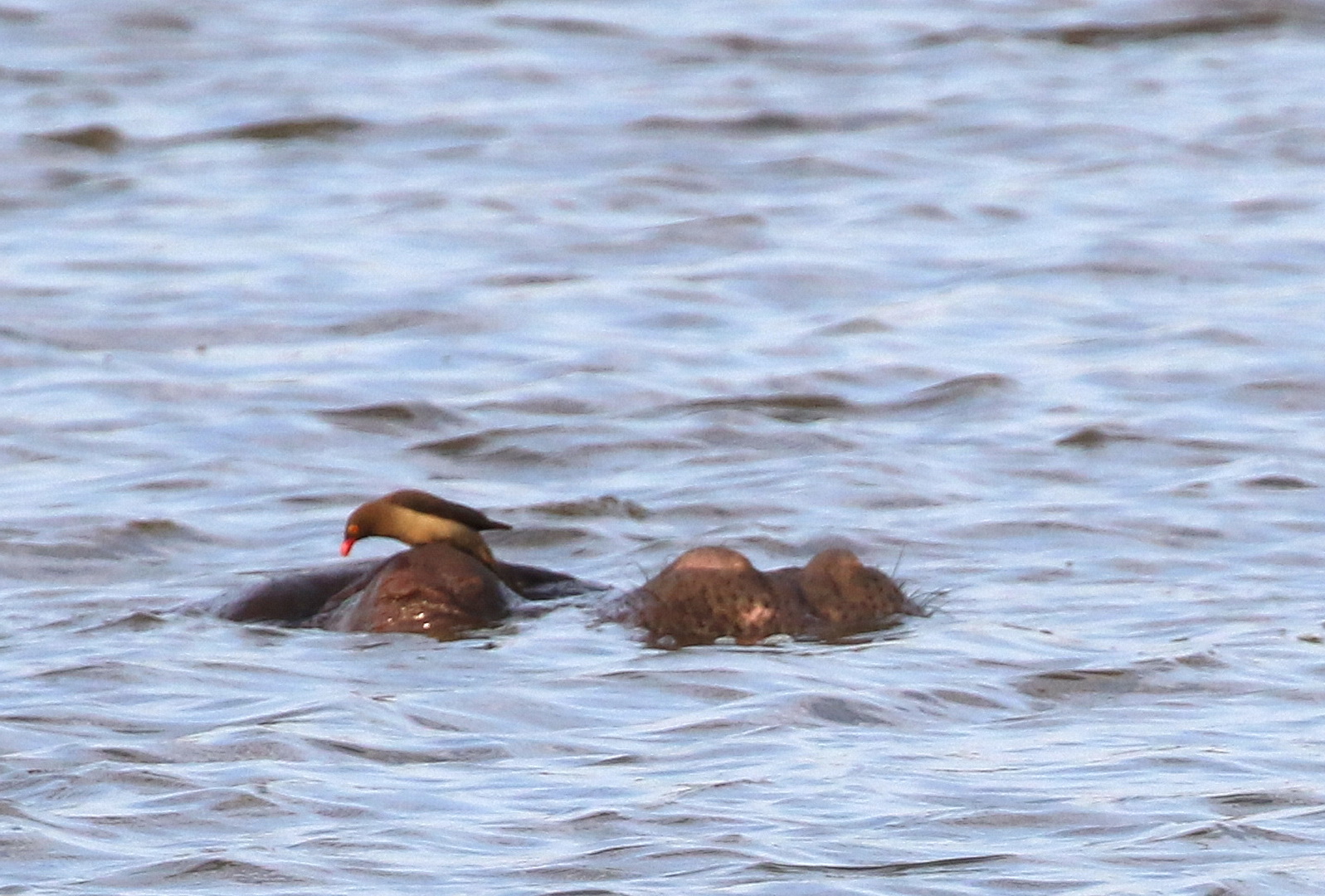
Then there was a Red-billed Oxpecker using a Hippo’s eye to perch on while it had a drink.

A Yellow-billed Stork was showing off its finery.

Yellow-billed Stork

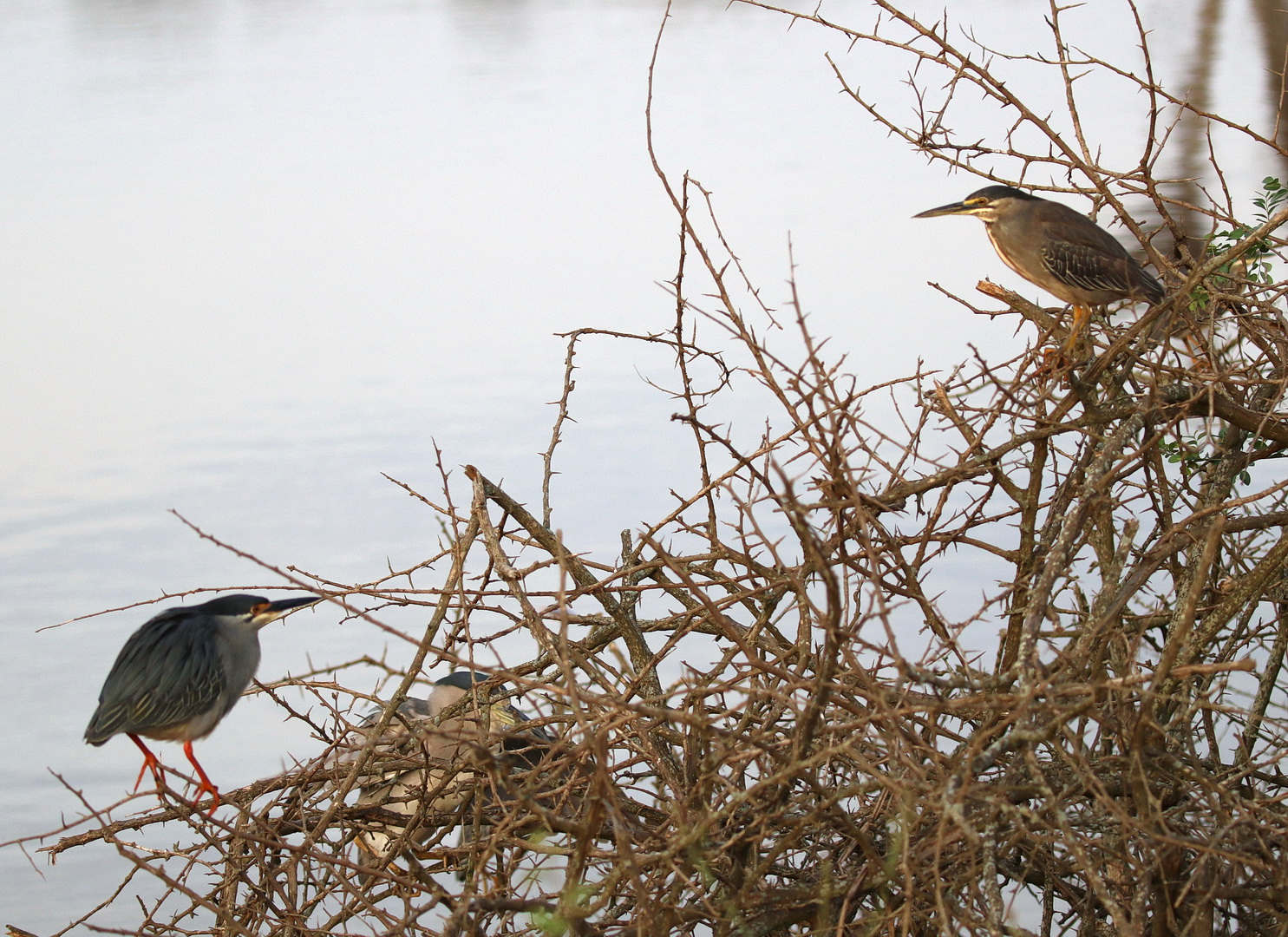
And not to be outdone a Black-crowned Night-Heron was seen in the territory of the Green-backed Herons.

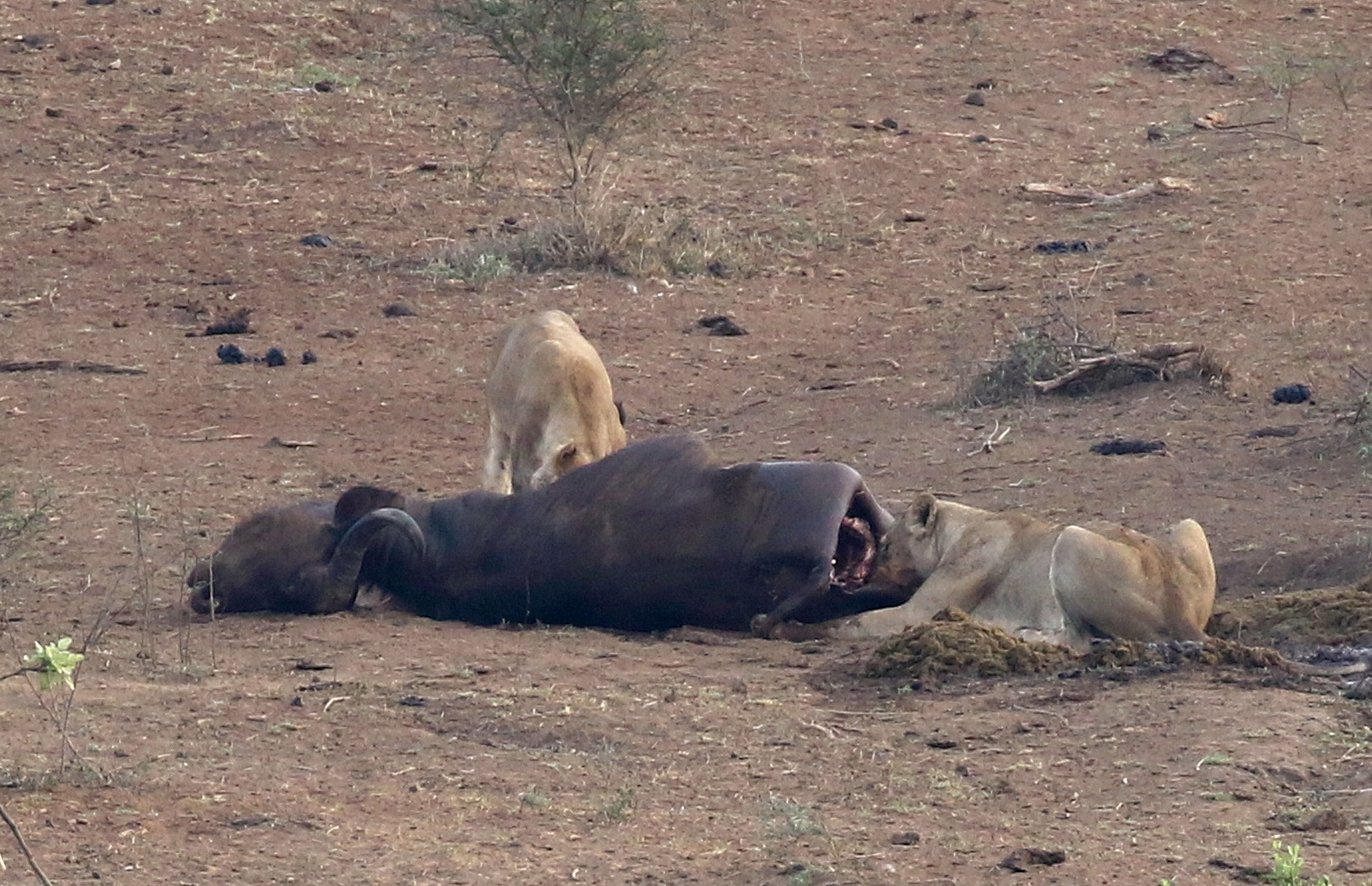
Immediately after Sunset Dam the lions were seen feasting on a Buffalo. Some exhausted from eating were seen taking a rest nearby.

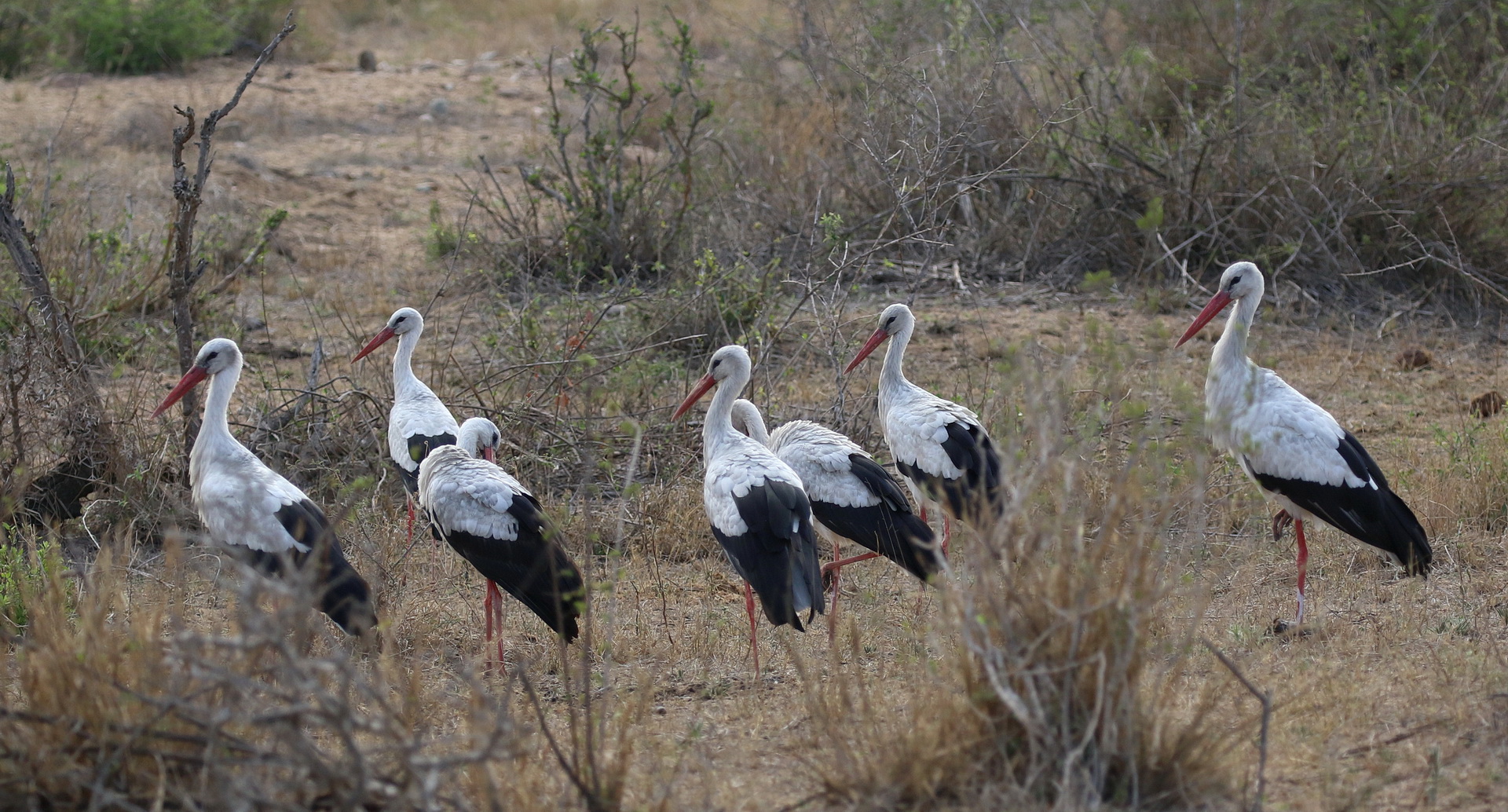
On one of the many loops we came across a gathering of White Storks much to our surprise.

White Storks

At the Skukuza camp we had a quick look at the river – seeing very little of interest – and hurried to get out of the bedlam.

Lake Panic Hide had had some rain and there was a lot more water in it compared to when we visited a month earlier. There were even elephant cavorting and getting stuck in the mud. Trying to get out of the mud involved kneeling down to push itself out. Eventually it succeeded and actually pushed too hard resulting in it falling over onto its back.

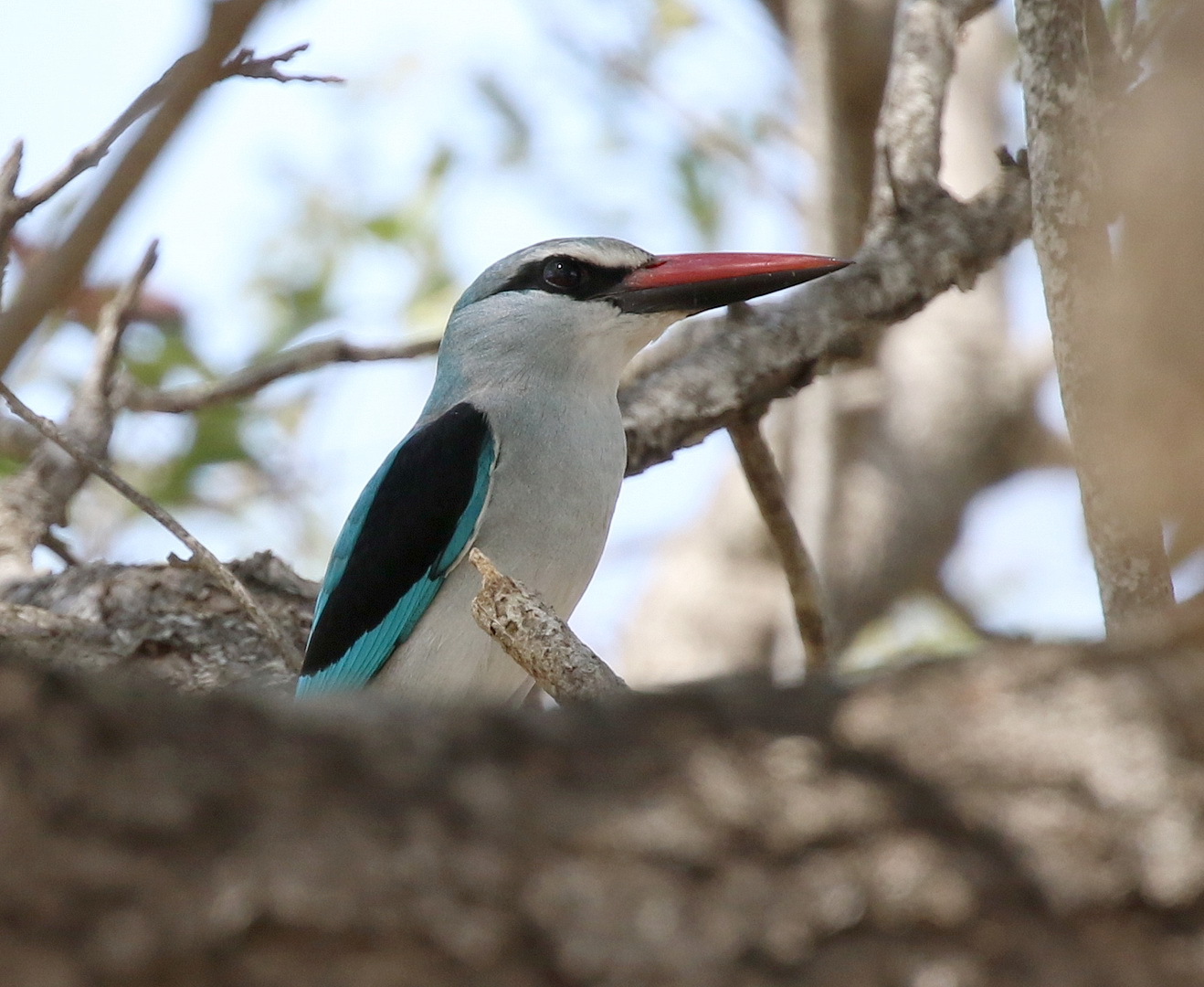
A number of birds arrived and some were photographed. The star of the show in our minds was the Woodland Kingfisher.

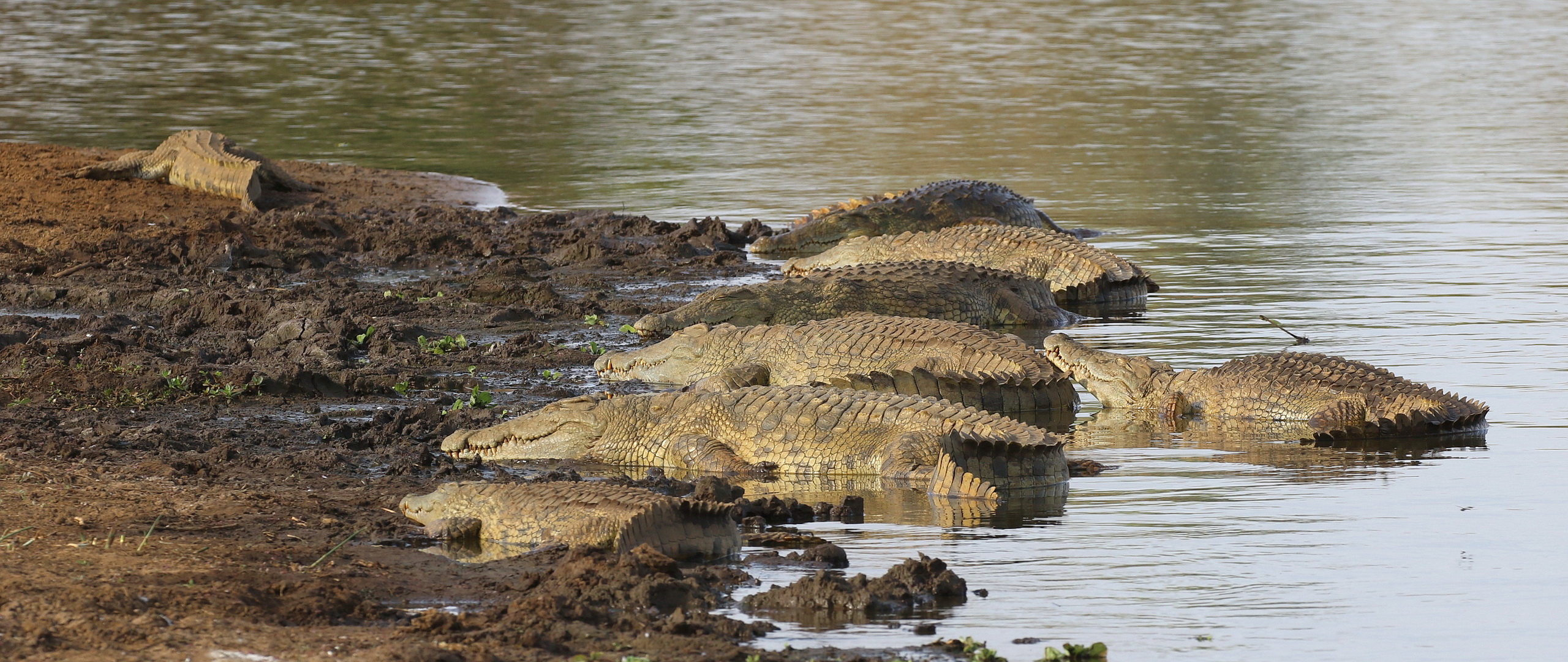
At the deck of Mugg and Bean we had a sundowner and watched the activity in the river below us. There were some excessively large Crocodiles making a meal of a Hippo. And Lions on the opposite bank in full flow chasing Wildebeest without much joy – giving up and resting under the shade of the large trees.

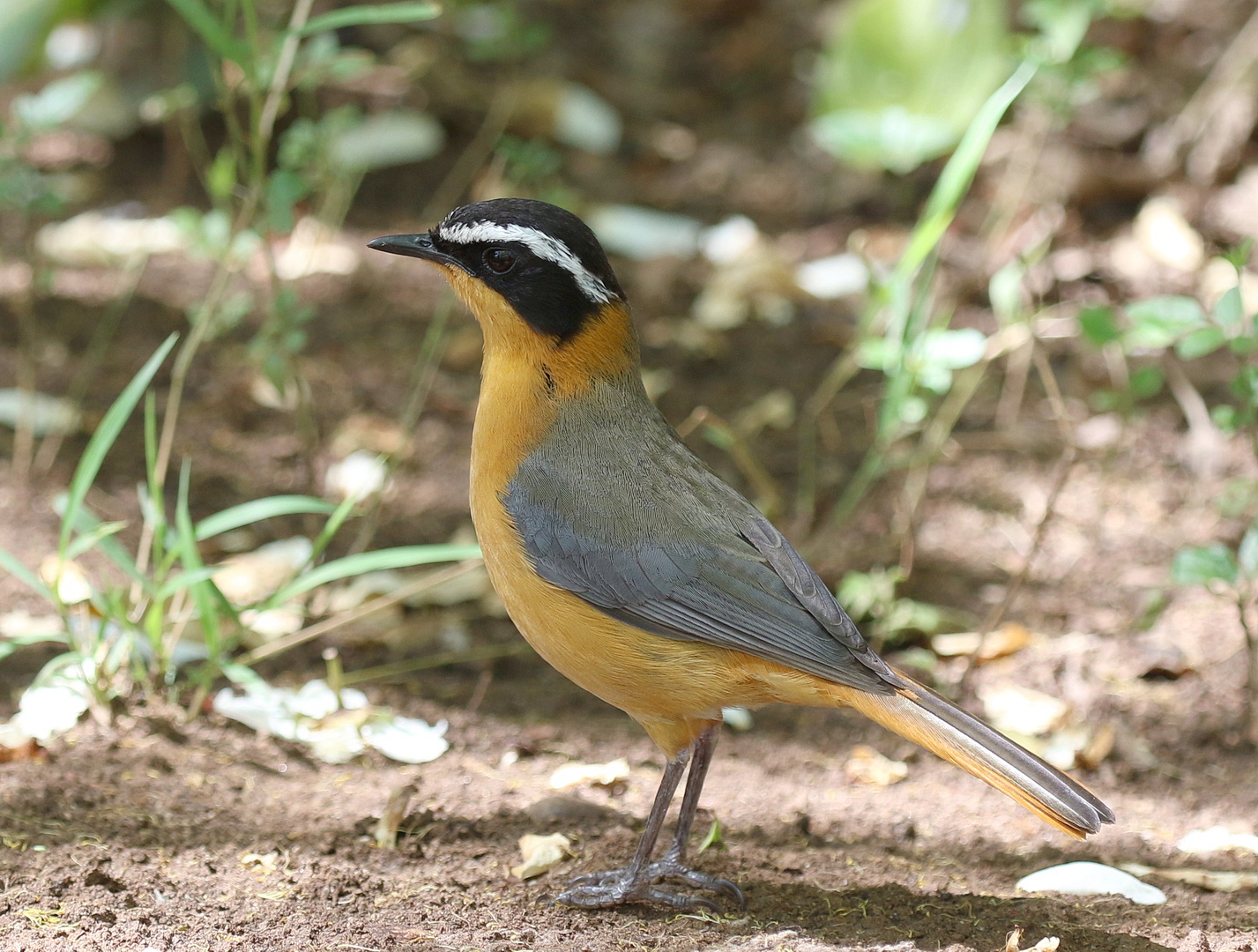
Of course the pair of Western Barn Owls were still to be seen in the rafters. We spent some time at the reception entrance bird bath hoping to see the Olive-tree Warbler which Jane had told us about. No luck. However it was good to watch all the activity and inter-action between the different birds. Also it was a pleasure to listen to the call of the White-browed Robin Chat.

From the M&B deck we noticed a Black Heron doing its thing in fishing mode.

Black Heron in fishing mode

Then there was this beauty. which really confused me the first time I had ever seen one.

In the Lower Sabie area we identified 131 different bird species. Click here to see the list.

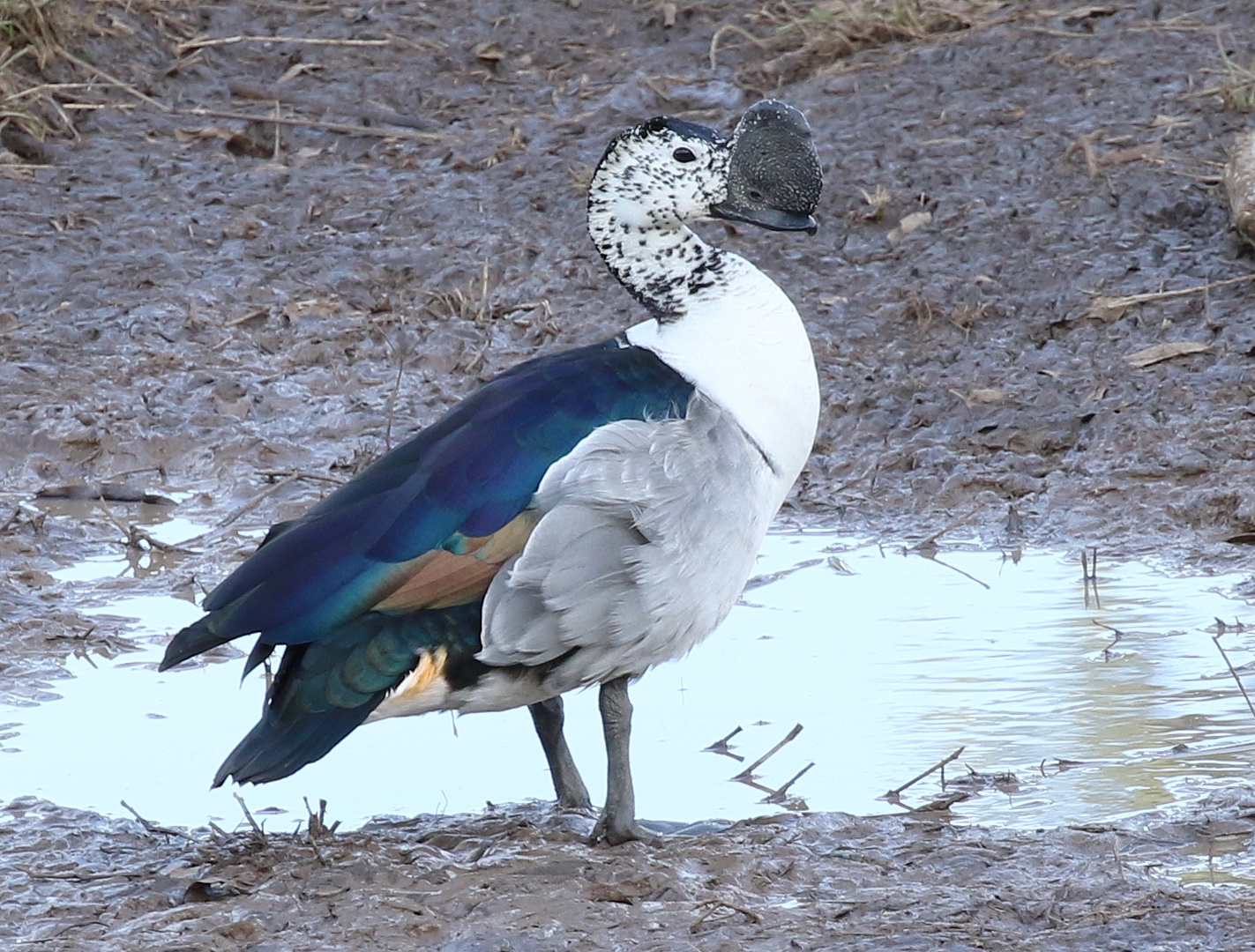
We spent most of our last morning getting to Malelane. Once there our goal was to try and find the Egyptian Vulture which Jane and Mike had seen along the S25 a few days earlier. No luck. So we returned via Berg-en-dal. The dam had water in it unlike our first visit four weeks earlier. Sally noticed some Ducks flying around and we went to investigate. They had landed beside the water. I think we counted thirteen Knob-billed Ducks. Several males were showing off their colourful finery. Notice the yellow feathers near their vent.

And in the short time we were in Malelane there were 46 birds identified. Click here to see the Malelane list.

Despite the heat and dryness we thoroughly enjoyed our time in the Kruger. Hopefully the next time we go the Park will have had pleanty of rain to fill up all the dams.

We hope you have enjoyed these reports.

By request we shall make one final report summarising our highlights. Kruger Part 10 – Summary.

Sally and Paul Bartho

Kruger Part 8 – Satara

Kruger Part 8

Satara

Report by Paul and Sally Bartho

1 to 4 December 2018

Campsite Satara by the fence

Satara and the surrounds were very dry. None of the dams had any water. Only the N’wanetsi Dam had a little water in it. In which the Buffalo lay side by side with the Crocodiles.

The camp was empty. We had a choice of sites so elected to try one by the fence for a change. Choice spot under a shady tree we thought. Unfortunately it was also the choice spot for the birds to roost resulting in a lot of cleaning of the canvas when we decamped.

Definitely the best birding was in the camp and we did spend one of our mornings doing just that.

There was the Woodland Kingfisher in glorious vibrant colour.

Woodland Kingfisher

Squabbling Red-billed Buffalo-Weavers.

And many others.

Knobbly roots of a fever tree in the grounds by the reception.

Crocodile Roots

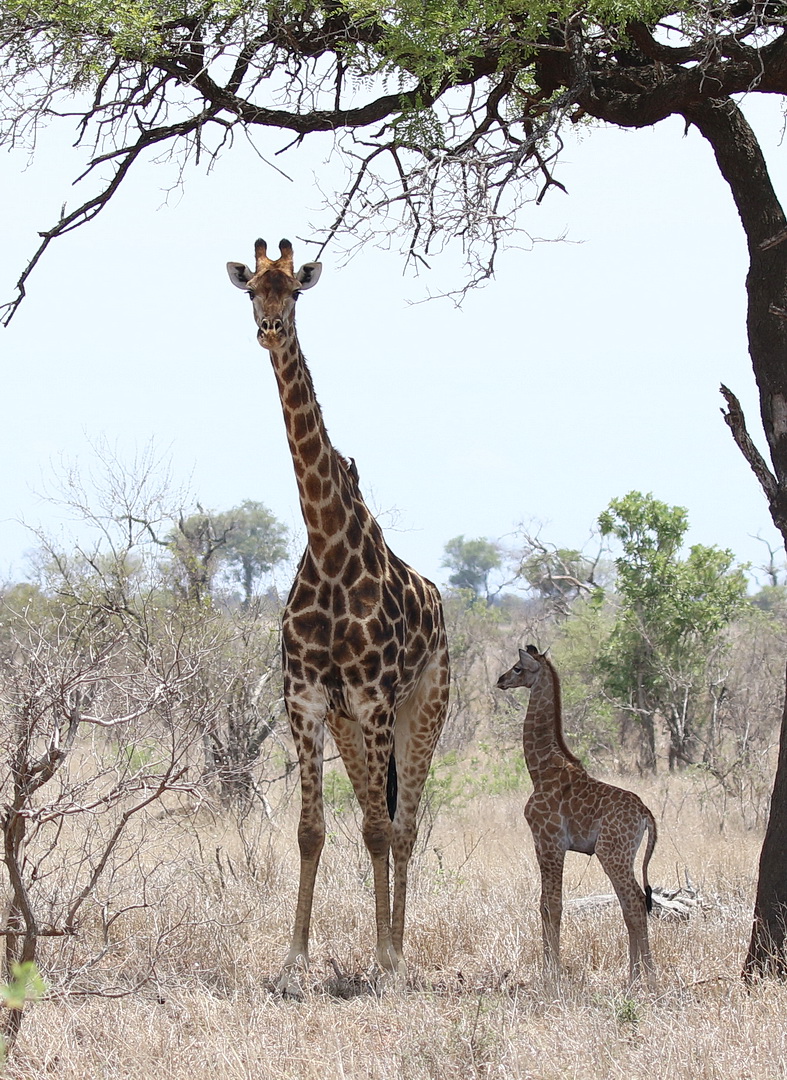
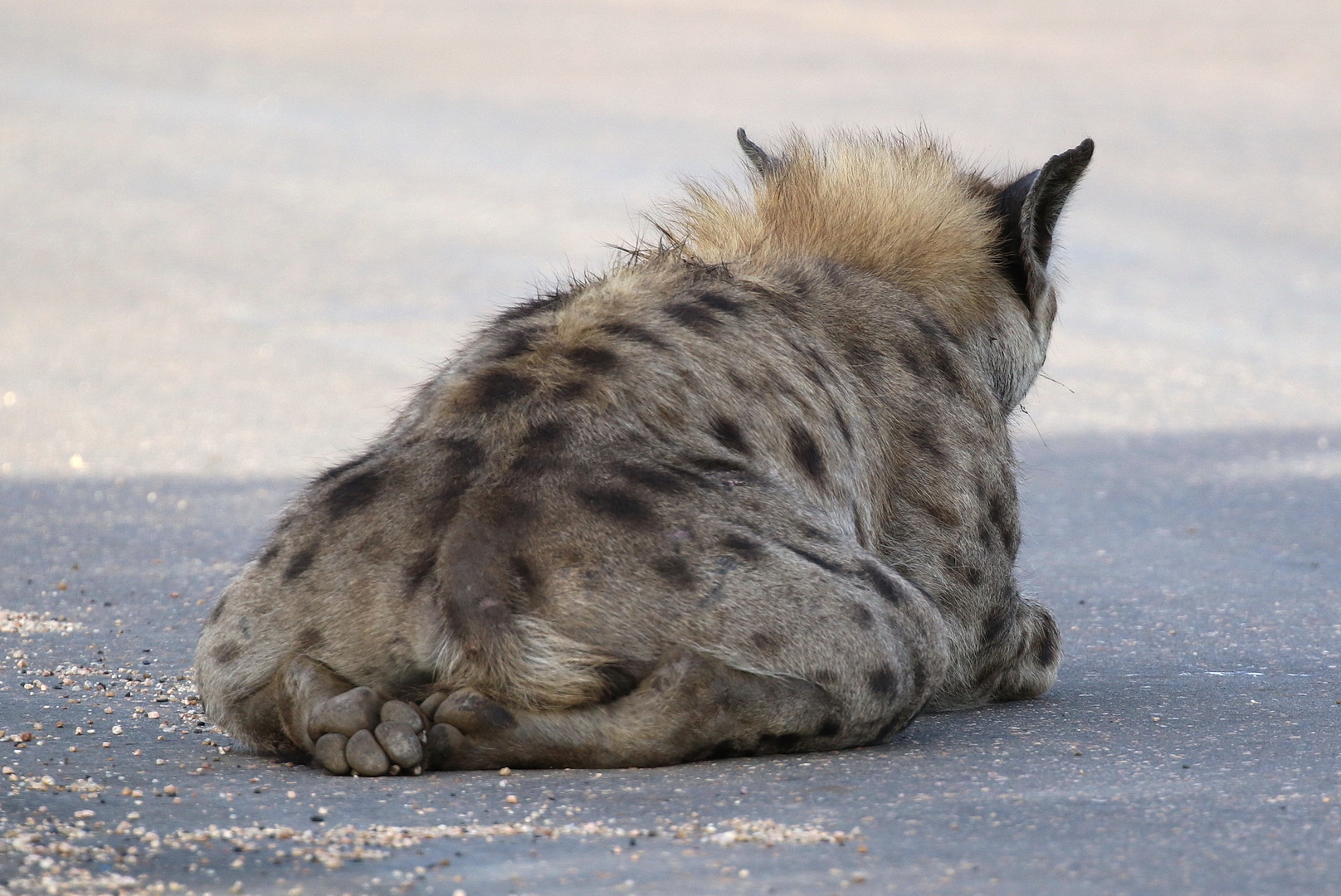
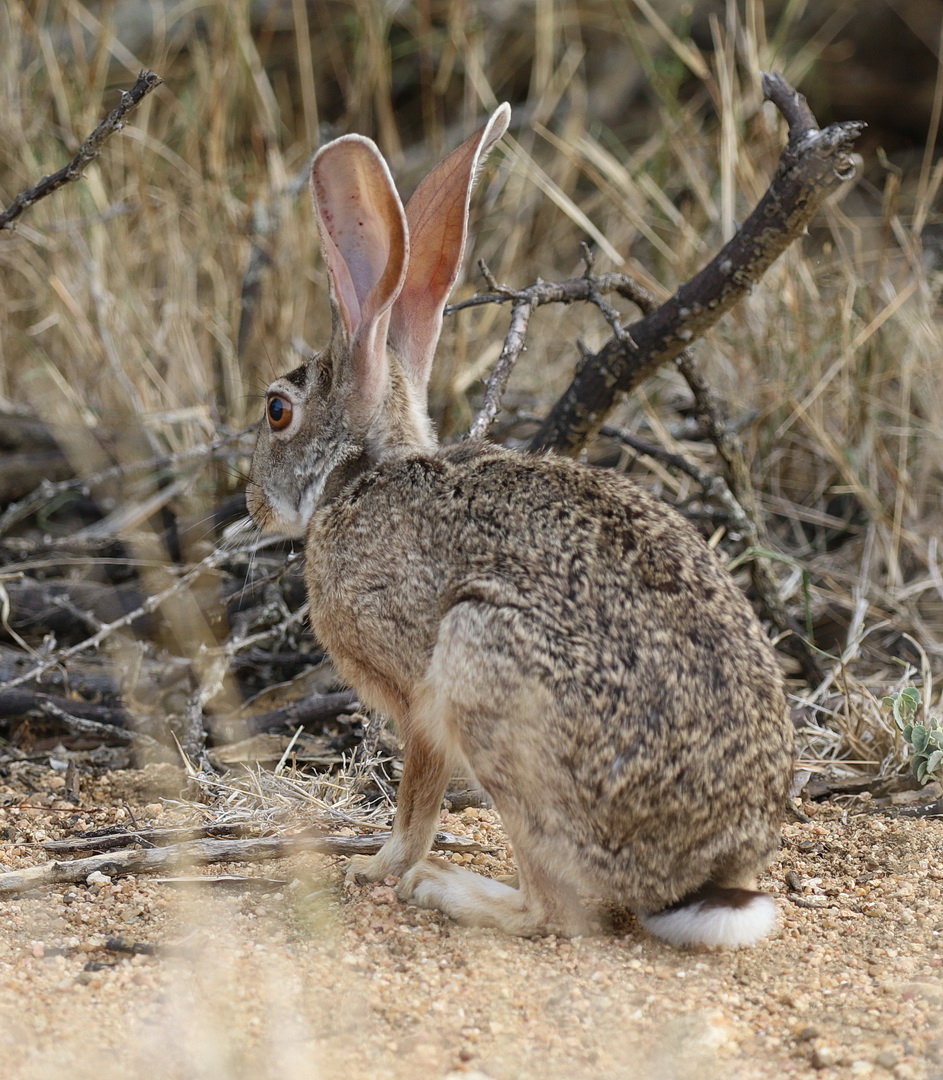
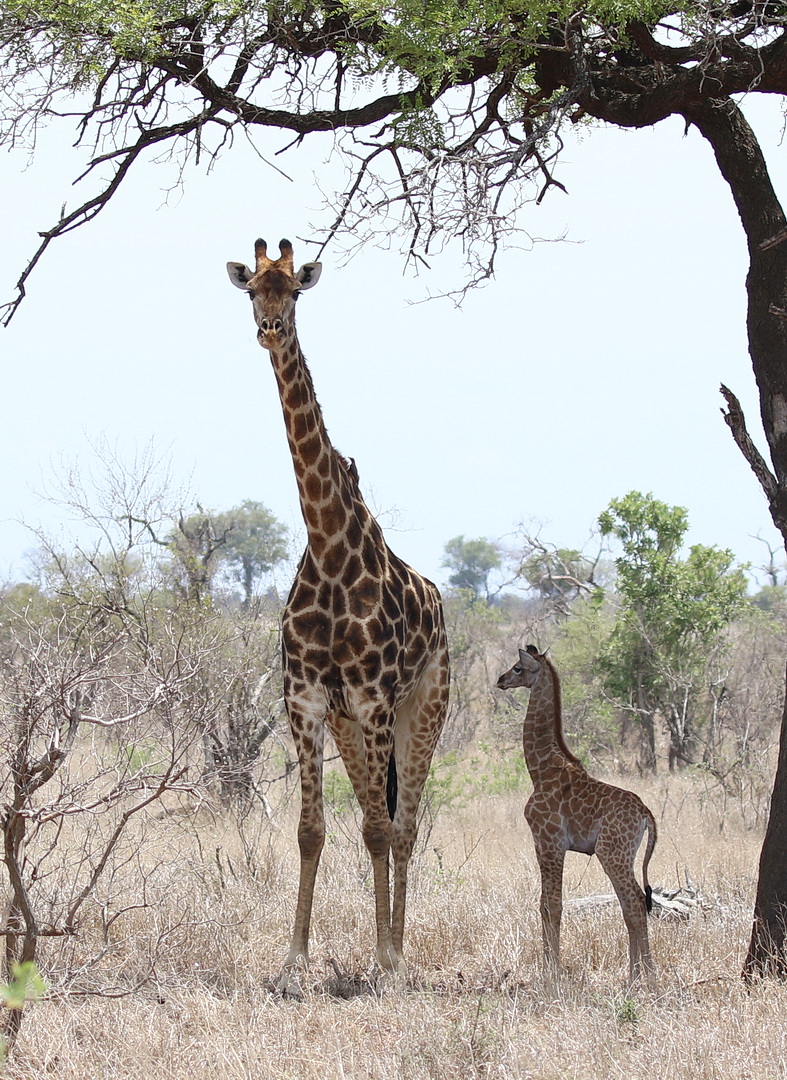
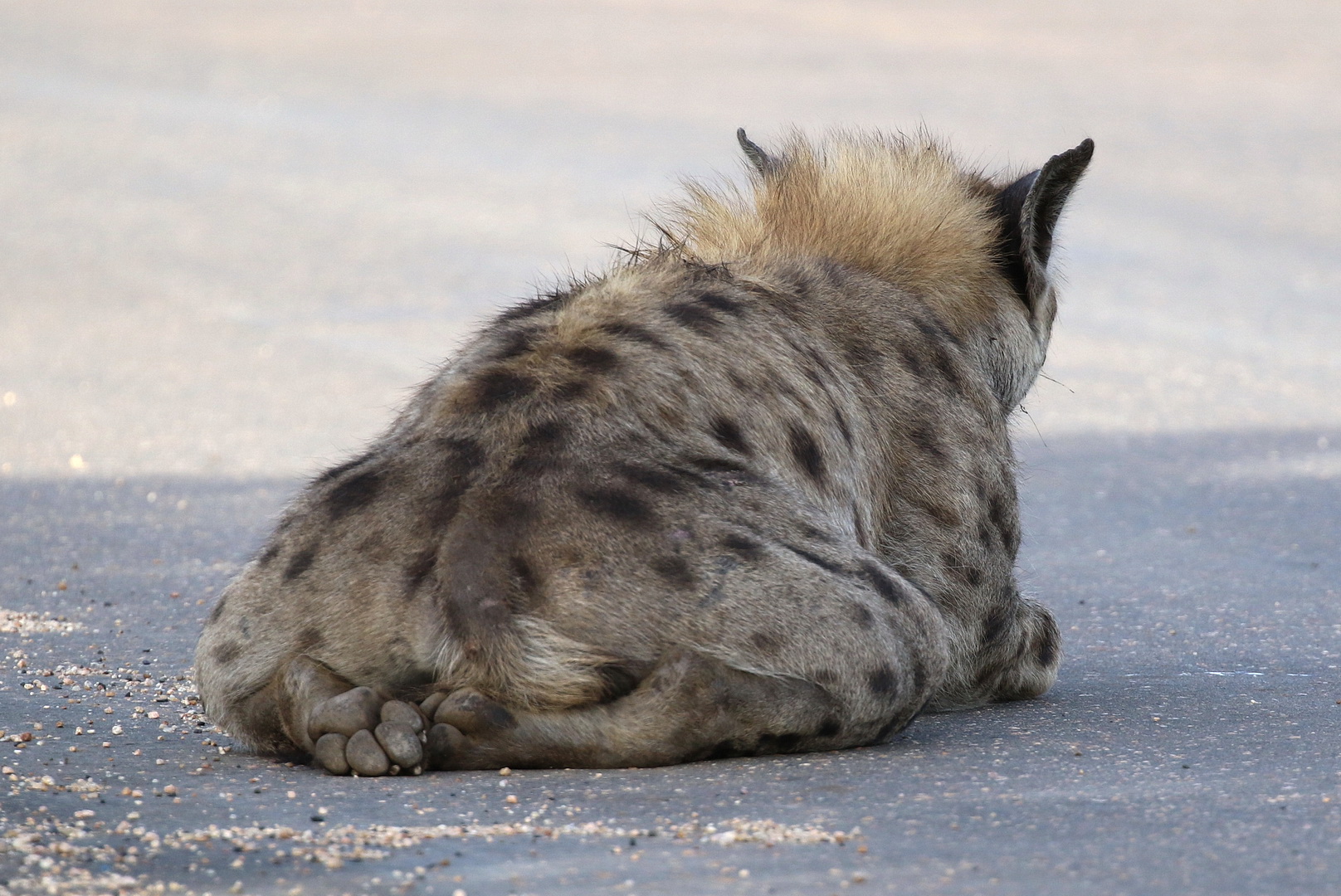
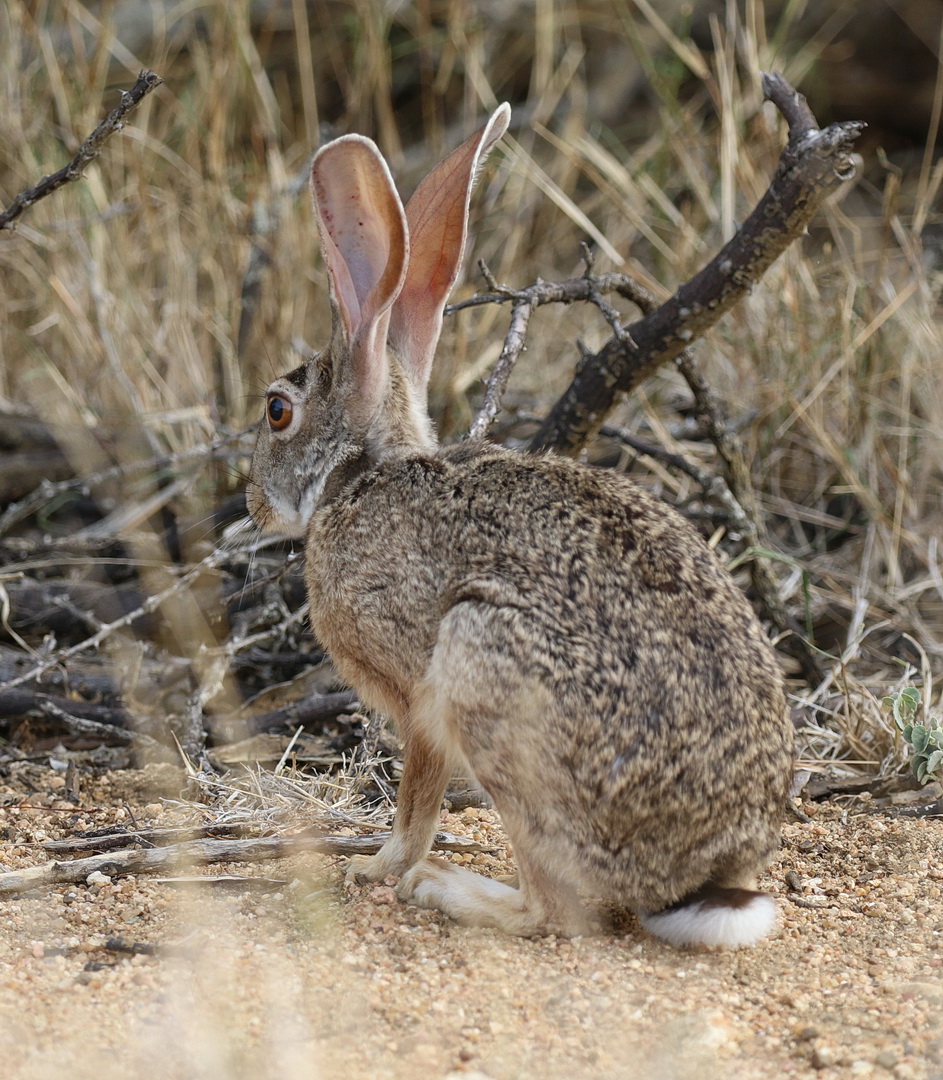
Driving around the area we came across some a giraffe with its new born, the odd Kudu, a Scrub Hare and a spotted Hyena relaxing on the road with its back feet neatly tucked in.

Some other birds seen:

Common Scmitarbill

At one of the pumped waterholes just north of the camp there were dozens of Vultures – perhaps waiting for bath time. Mostly White-backed.

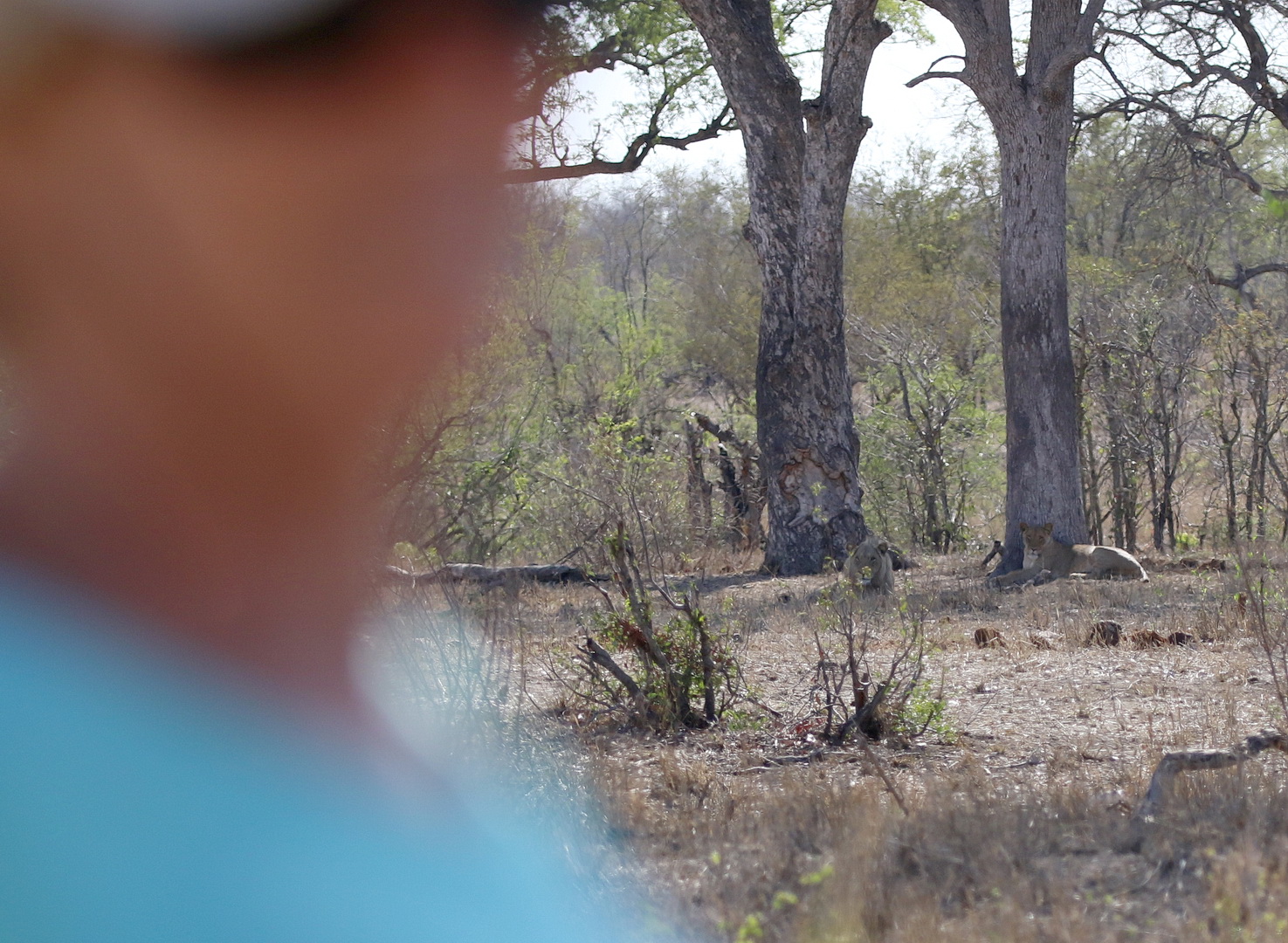
A drive down to the Muzandzeni picnic site for breakfast one morning proved to be a potentially scary experience. On arrival two cars drove out as we drove in to the empty picnic site. We chose a shady table and enjoyed our breakfast. Then as we were about to leave an army truck with soldiers drove in. Quite casually they asked Sally if she was aware of the lions under a tree not 100 metres away!! Hmmm no!

The lions

As we watched so the Impala approached the lions cautiously to keep a beady eye on them and their potential movements. As I said, we had enjoyed our breakfast but we could easily have been theirs.

We had planned to be here for five nights. The heat and dryness of the area led to our change of mind. Three nights was enough. We changed our itinerary to go to Lower Sabie for two nights, two nights at Skukuza and finally 2 nights at Malelane before heading home.

On our last day there we over-lapped with some other friends from Durban – Mike and Jane Roseblade. We had an evening braai together and a good chinwag. As we returned to our campsite the heavens started to brighten – lightening everywhere around us yet no thunder. Eventually the much wanted rain came. Enough to cool things down but not nearly enough to quench the parched soil.

In the morning we left early and headed for Lower Sabie.

Next Installment – Kruger Part Part 9 – Lower Sabie to follow.

Paul and Sally Bartho

Kruger Part 7 Tsendze Rustic Camp

Kruger Part 7

Tsendze Rustic Camp

Report by Paul and Sally Bartho

28 November to 1 December 2018

Campsite No 23

We arrived at Tsendze after checking in at Mopani. A bit of a shlep especially if you are coming from the south as it is about eight kms north of the camp. The camp is well treed and great for birding. It is right next to the Mooiplaas picnic site and you can walk through if you ask permission (saves driving the three kms all the way round). The picnic site is also well treed and right next to the Tsendze river so birding is excellent there too.

Campsite showing the position and level ground

The one thing we loved was the early morning dawn chorus. We (mainly Sally) identified numerous different birds calling before getting out of bed.

Tsendze is also known for its owls – the African Scops-Owl, the Barred and Pearl-spotted Owlets in particular. In the past we also saw and heard the Verreaux’s Eagle-Owl there. This time only the Owlets were heard calling.

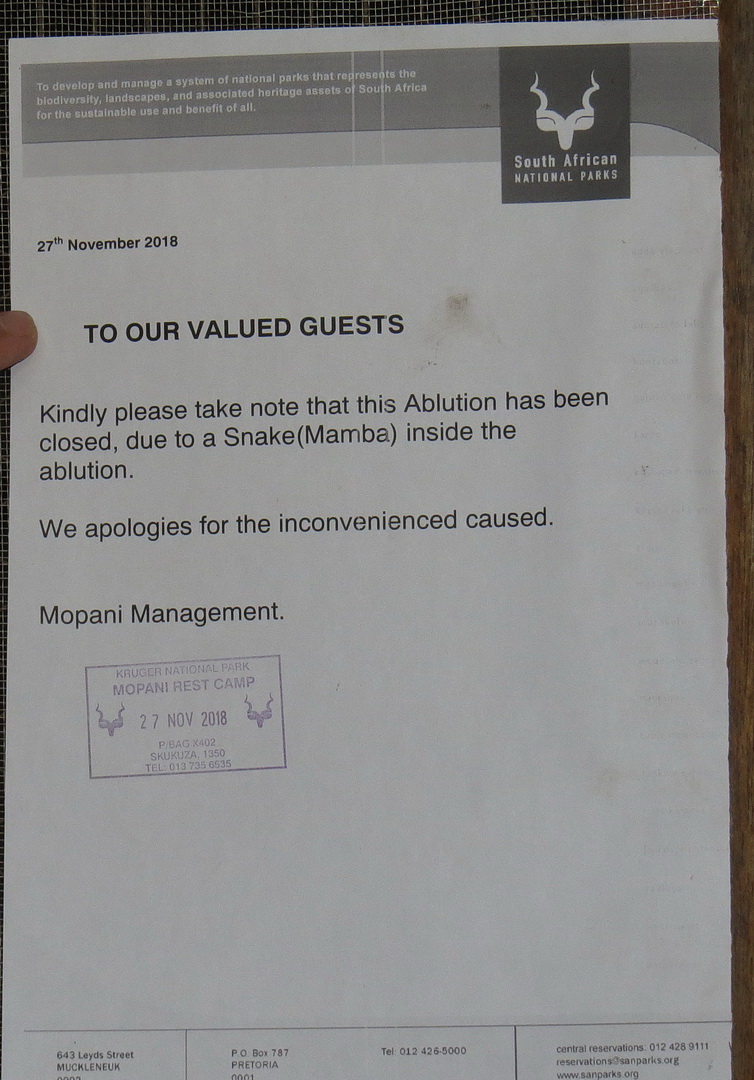
Story time. On arrival Sally went off to check the plumbing. She returned rather quickly with news that the ladies loo had been closed because a suspected Black Mamba had been seen inside the day before. Fortunately there was another set of loos further into the campsite.

Our first morning was full of surprises.

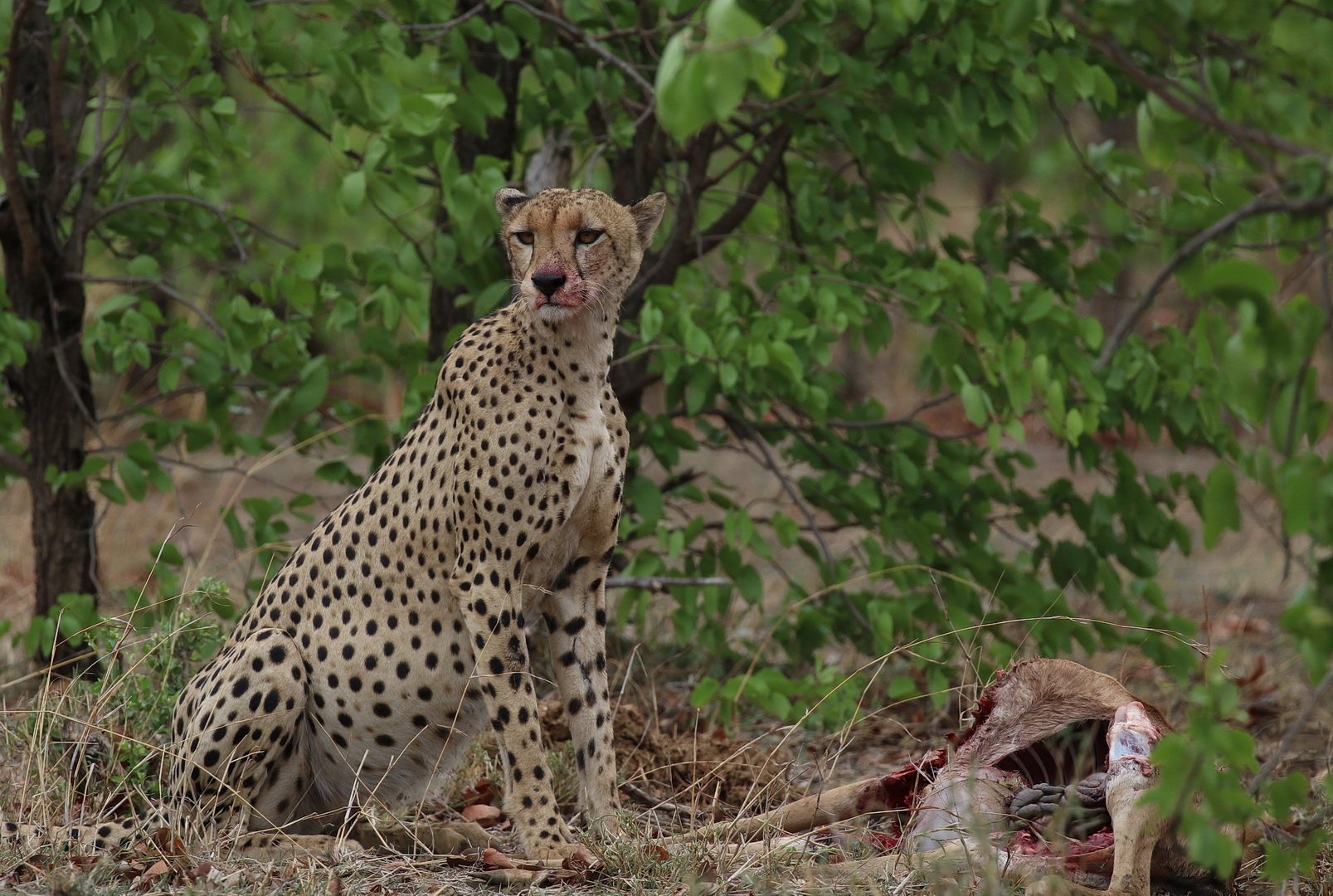
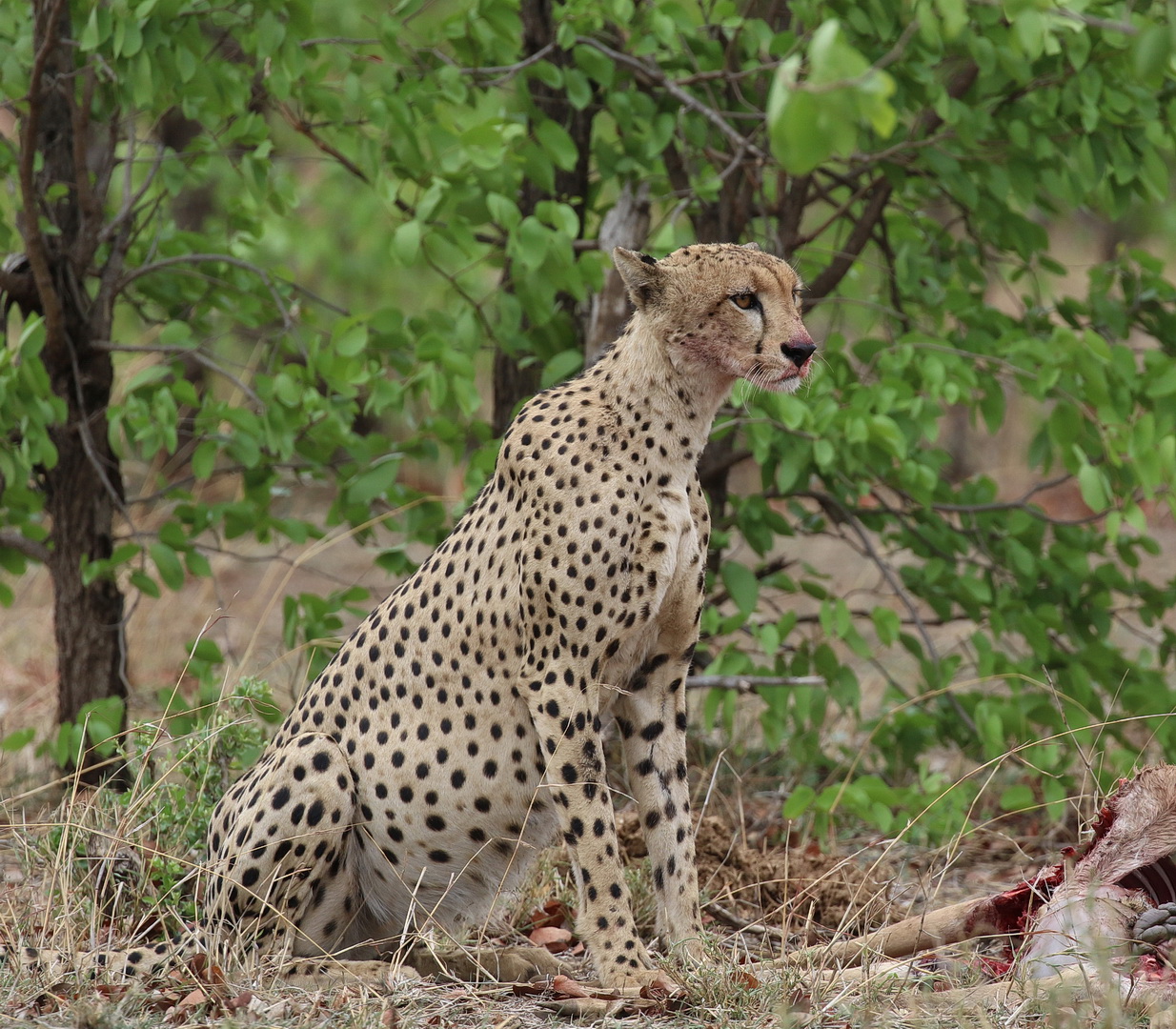
It started with a Cheetah kill right beside the road. We watched for a while as it got fatter and fatter. After a while we left it in peace but determined to return to watch the Vultures flock to finish it off.

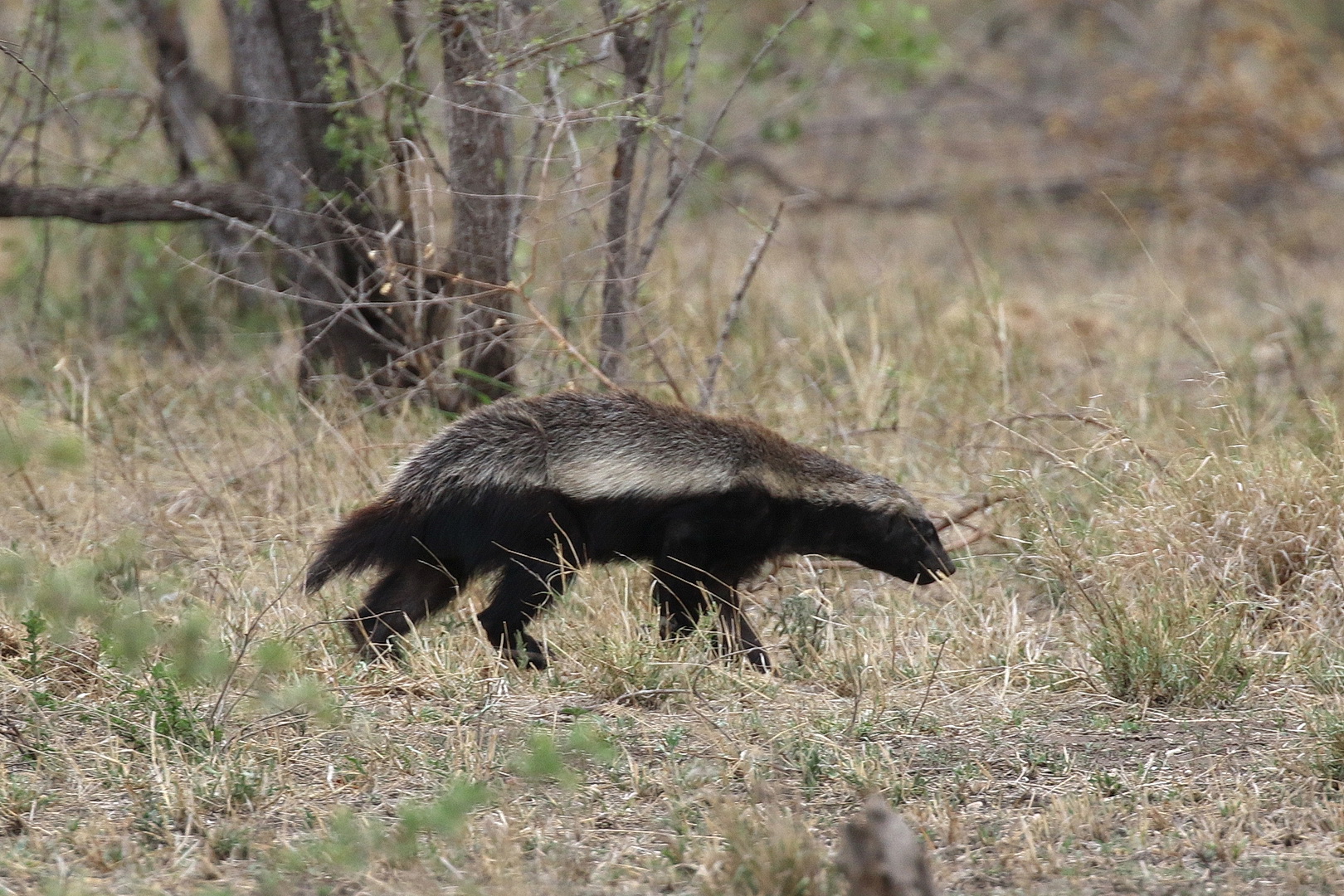
Further on next to the marshes we came across a Honey Badger doing its thing with a number of avian followers hoping to catch the tidbits.

Yet further we stopped as we heard a Red-crested Korhaan calling. It was right in front of us in the road. It called three times and immediately after it had finished the third call it took off heading vertically for between 5 and 10 metres before flipping onto its back and falling out of the sky – much like those acrobatic planes do. Just before it hit the ground it opened its wings and pulled out of the dive. A truly amazing sight to see.

On return along the same road we had another Red-crested Korhaan do the same thing. Our cameras however were not ready to catch either event.

Returning now to see the vultures at the kill, we came across some Chestnut-backed Sparrow-Larks at the Mooiplaas waterhole.

Chestnut-backed Sparrow-Lark

As we were looking at them another vehicle approached and asked us what we were looking at. Their response was not the usual “Oh” and drive off. They told us to proceed a little further and look to our left in the open area by the waterhole.

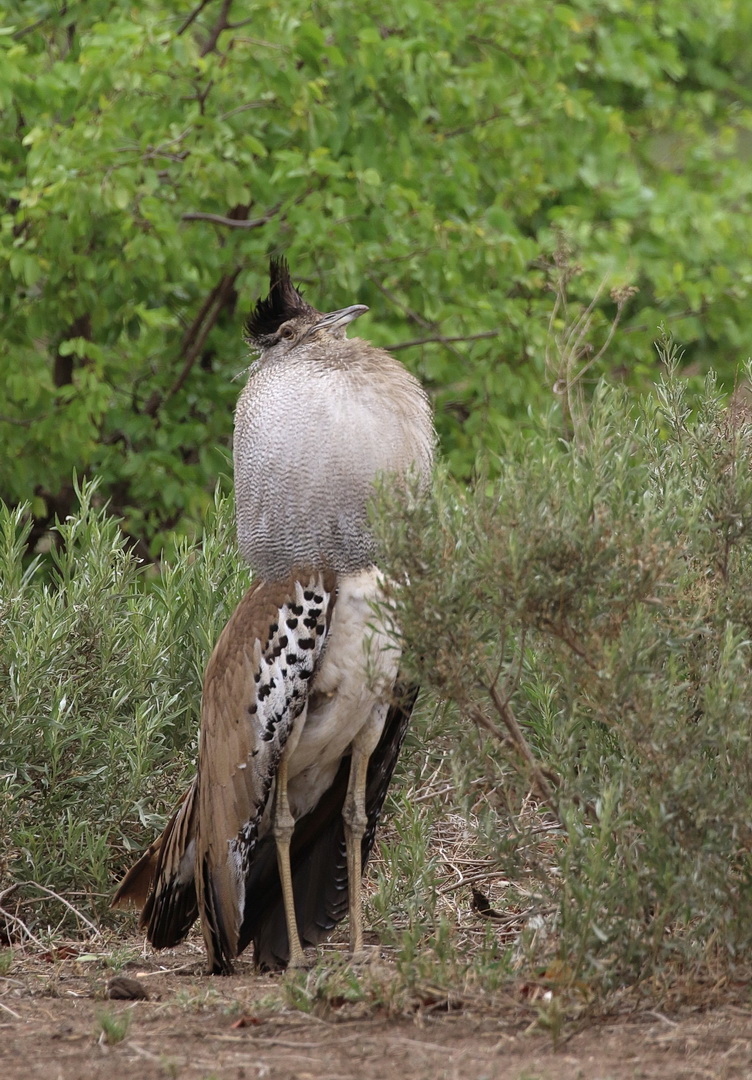
We were more than pleased that they had suggested this as we came across a bird in full display. It was something neither of us had ever seen before and remains as one of the highlights of our trip.

At first it was hard to recognise although we immediately knew what it was. Listening to its call was something else too. We did a short video which unfortunately I cannot post on this website. However here are some of the photos we took.

Kori Bustard in all his majesty

After it moved off into the bush, we moved off to check the vultures at the Cheetah kill a short way away.

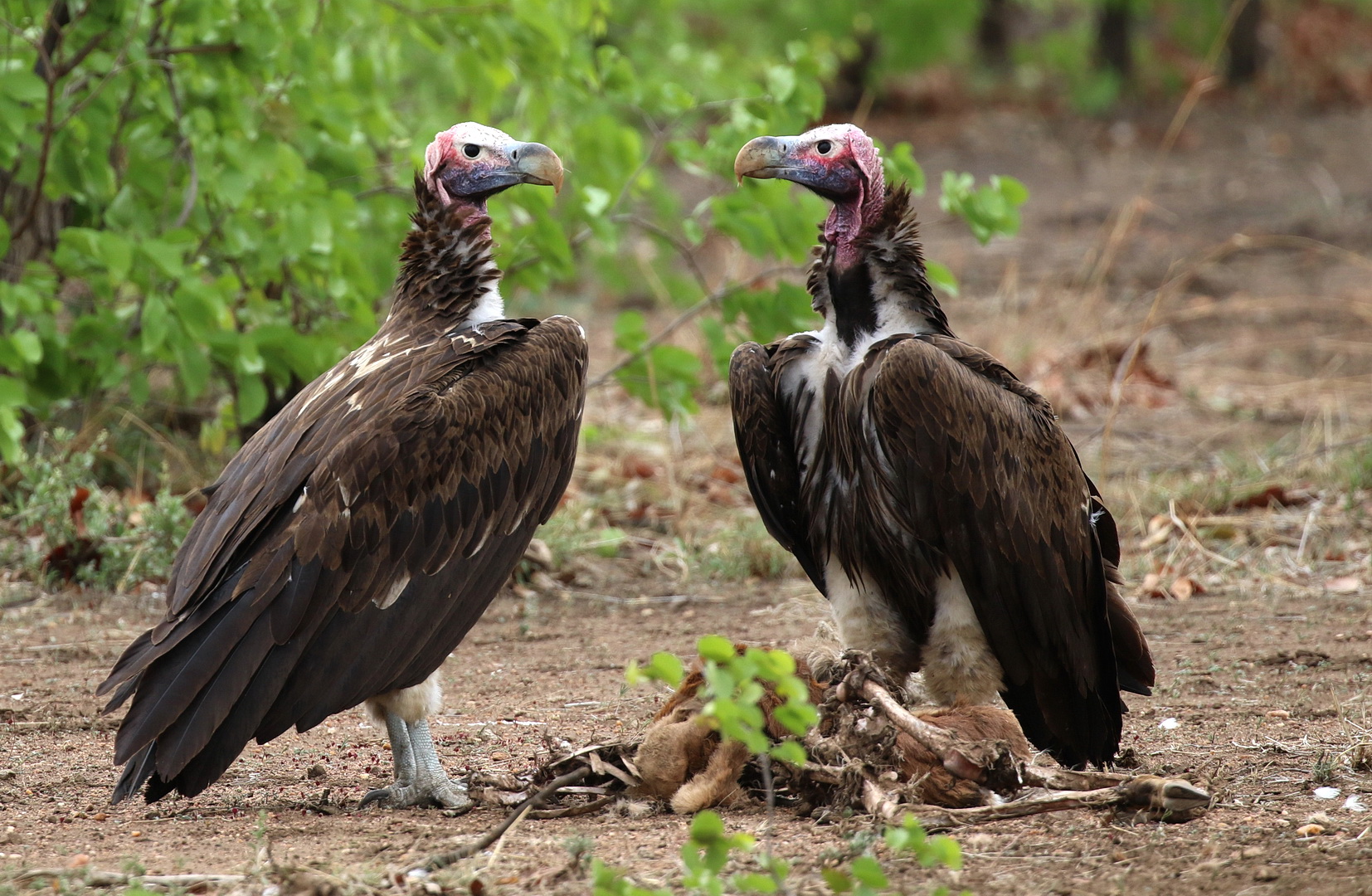
On arrival we were very surprised to see that the whole carcass had been eaten. In the 4 hours after we had seen the Cheetah kill there was very little left and all the vultures had gone. Except for these two.

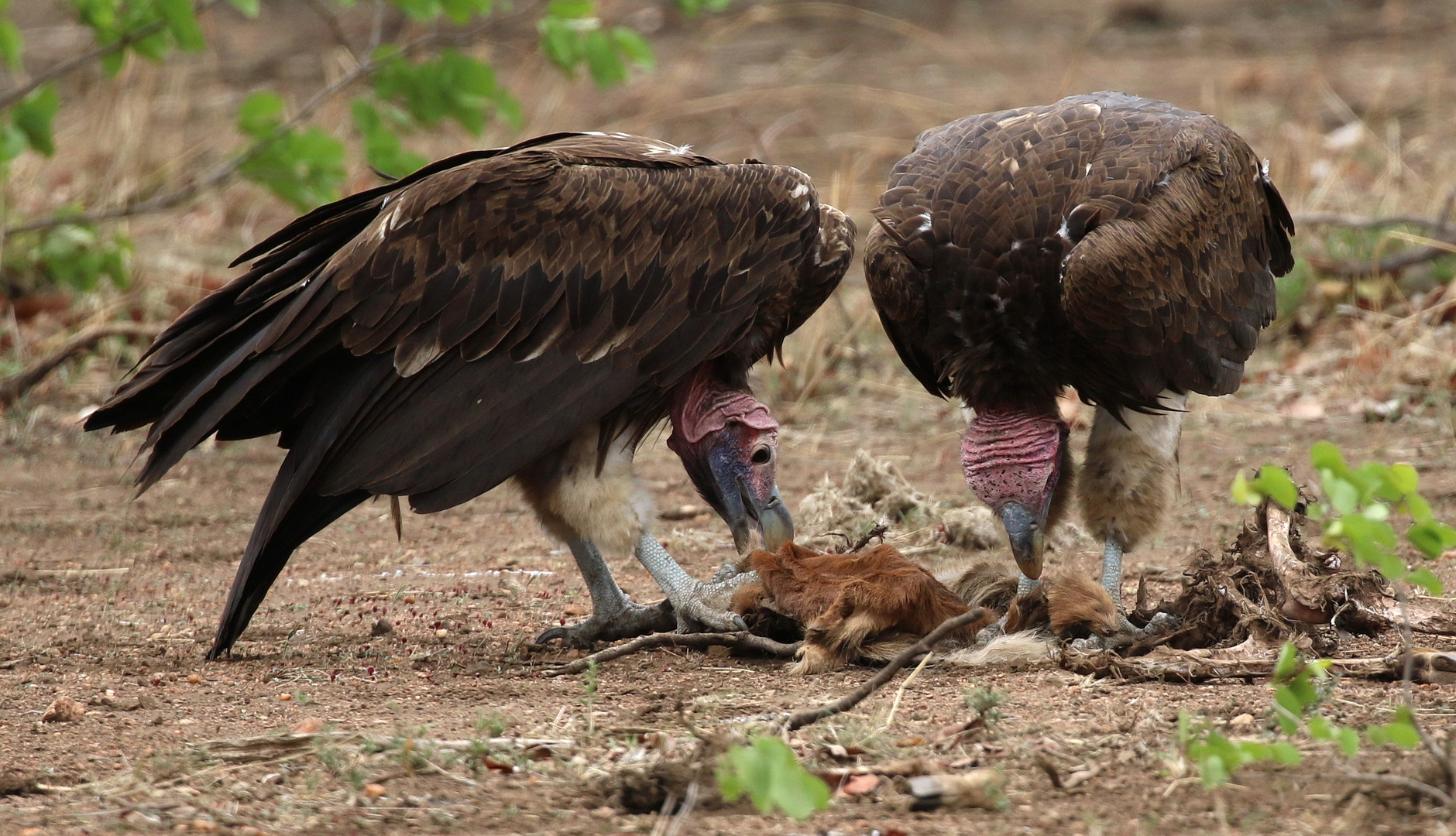
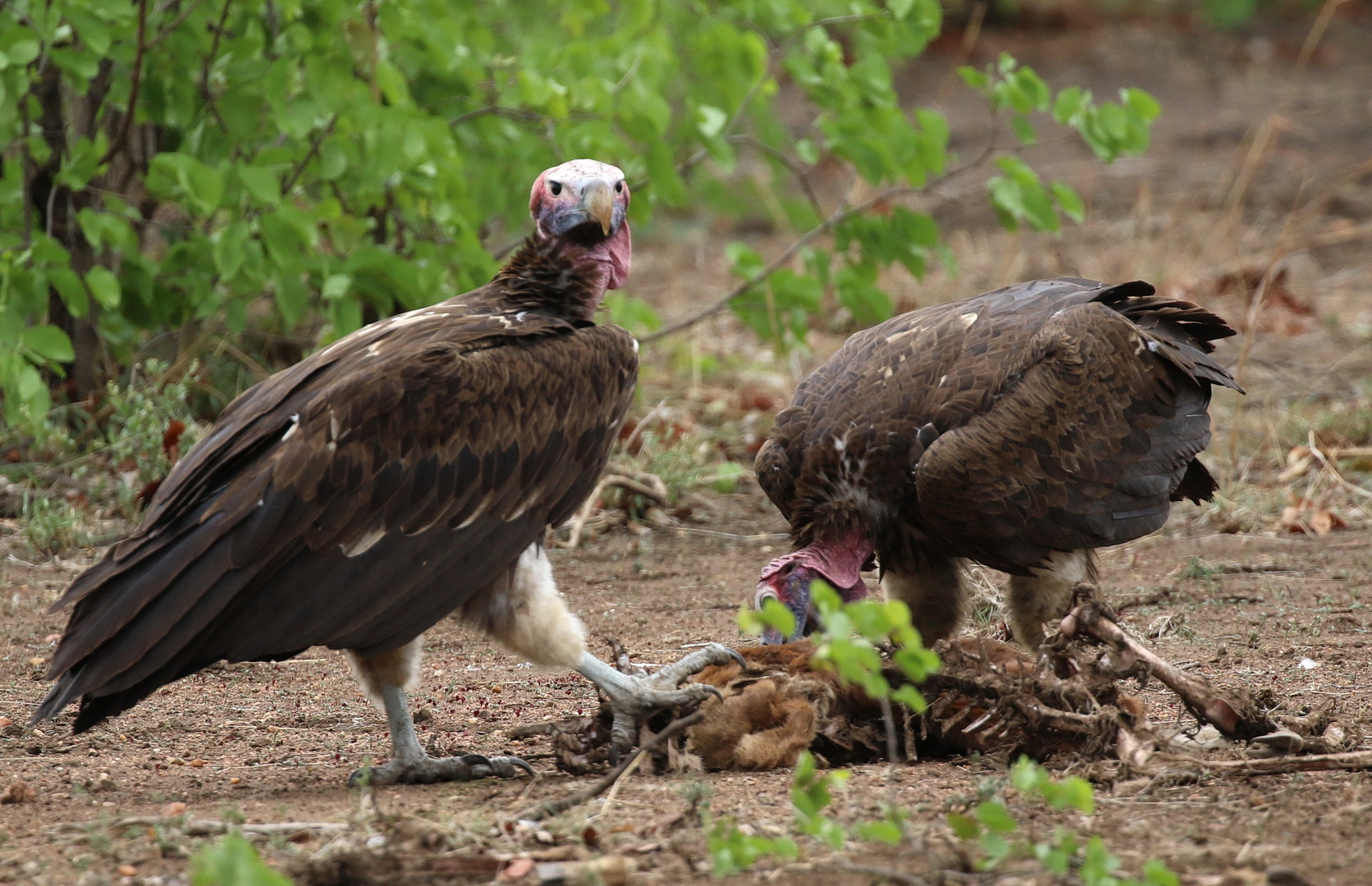
Lappet-faced Vultures – aren’t we cute

What a morning.

The weather became cloudy and rain was forecast. So after a long lunch and rest we took a ride around and ended up at the Mooiplaas Picnic Site. The wind was blowing and the birds scarse. Something was up and they knew about it.

Looking across the river we realised we better get back to camp quickly. There was a massive dust cloud coming our way and rather fast. Perhaps the rain was behind it, we thought. Although the camp was right next door we had to drive about three kms to enter through the gate. By the time we reached the gate so had the dust cloud. Opening the gate we quickly got back to our campsite and battoned down the hatches as best we could. Thunder and lightening all around but very little rain unfortunately.

Some day.

The next day we explored Mopani, its dam (the Pioneer Dam) and we took a drive down the way to Joubert’s Grave.

As we turned off the main road to the Mopani camp, there below us were Tsessebe and young. In the past Tsessebe were unusual to see, this trip we had numerous sightings of them predominantly in the area around Mopani.

There is a walk around the fence line below the Mopani restaurant and next to the Pioneer dam. Definitely worth a walk round as you can see the waterbirds up close and in the bush below the restaurant birds are seen and heard. Probably the sweetest of those was the call of the White-throated Robin-Chat.

We did encounter a Dove which had us perplexed for a while.

Mystery Dove with gills on its neck. Possible Mourning Collared Dove – juvenile?

Here are some of the birds we saw along our walk.

On the opposite side of the dam from the camp there is a hide. And another hide is on the way there overlooking the dammed Tsendze river. Driving round to the first of the hides we came to a road block.

Road Block

We waited patiently for them to clear off – and they did – up the bank to the right towards us in the photo. Just to the right across the bridge is the hide overlooking the river. However there was not much about while we were there. Every time that we have crossed that bridge we have seen Black Crake to the left. It was no different this time.

Opposite the entrance to the hide is a rocky koppie on which elephants were grazing and Sally noticed this ground Euphorbia.

A bit further along there is a turn off to the right to the Hide overlooking the Pioneer Dam. The view from the hide shows the size and extent of the dam.

The birds were on the other side and required the scope to identify them. On this side there was one camouflaged to the shoreline.

Green-backed Heron

Next we headed down the S146 to Jopubert’s Grave. At first this seemed a lost cause at that time of day. Half way there we came across a tall koppie of rock with a rather interesting and large Baobab half way down it – facing us as we came along.

From a distance it looked evil as though it wanted to capture us in its arms.

I am going to get you.

It was a very unusual looking tree. Some photos from different angles. Not so creepy.

When we eventually got to the end of the road – having battled with a few elephant to get through we came to a river but no sign of a Grave. Now wondering if we weren’t a bit stupid trying to get passed the elephants which were on both sides of the road.

So to kill some time to give the elephants time to move on we took a side road to see where it went. Straight to Stapelkop Dam as it turns out. Very unexpected and a great surprise as it had a load of water in it and there was game and many waterbirds about. Also Vultures by the dozen on the dam wall – presumably coming for a dip. We stayed for over an hour with nobody else around.

Elephants at Stapelkop Dam

Mopani was always a camp we used to avoid as driving though mopani trees never seemed to be productive for wildlife. However after the first time we stayed at Tsendze our impression changed drastically and this has become a must whenever we come to the Kruger.

Here are some photos of other birds we saw in the area.

European Roller

In total we identified 140 different bird species. To see the list click here.

One of the least expected sightings was that of a Zebra with a Yellow-billed Oxpecker on its  back. The furthest south that we have seen a Yellow-billed Oxpecker in the Park.

Zebra and friend the Yellow-billed Oxpecker

Coming soon. Kruger Part 8 – Satara

Paul and Sally Bartho

Kruger Part 6 – Punda Maria

Kruger Part 6

Punda Maria

Report by Paul and Sally Bartho

23 to 28 November 2018

Campsite away from it all

We arrived at Punda Maria quite early. Two signs greeted us at the entrance. One read “Go to reception to check in before choosing your camping site” and the other “no caravans to be taken to reception”. We ignored the former and chose our site before checking in.

There is a large waterhole just the other side of the fence next to the Hide. Also there is an ablution block with only one loo for men right there. Now this is the choice for everybody it seems – one on top of the other. Well not for us – we found a hardly known spot well away from the others – peace and quiet and a decent sized ablution block unused by most people. A level site in the shade to boot. Rocky helped with the set up.

Rocky having fun with the Serval

Our normal routine was up at 04h00 and out of the camp before 05h00. We spent two long days in the Pafuri area and one early morning on the Mahonie loop round the camp. Another day was spent celebrated Sally’s birthday with a lie in till 06h00!! and then a relaxing time round the camp in the pool and with a short drive later in the afternoon.

Entertainment was never far away. And the elephants made sure of that. Every afternoon they arrived at the waterhole and what followed was much hooha. Elephants barging each other to get to the freshest water, male dominance displays especially when the hundreds of Buffalo came for a drink. Tussles between two males frequently and much bellowing – sometimes all night long. When we arrived the water level seemed reasonably high, on leaving it was almost bare.

Buffalo and Yellow-billed Oxpecker

Then there were the Cicadas. On previous visits they were most noisy along the road to the Klopperfontein Dam – sometimes deafeningly so. And it was unusual in the camp. This time they did a Mexican wave of sound in the camp. You could hear it coming and going from one end to the other. Fortunately it was not deafeningly loud but it did interupt conversations.

The Pafuri area next to the Livuvhu River is the place to visit for all birders. Unfortunately it is a one and a half hour drive to get there – very necessary therefore to get going as the gates open. Most birding is done between the bridge and Crooks Corner and sometimes a drive on the Nyala road. Probably the most productive place is the Pafuri Picnic Site.

Here we saw many of the species that we were hoping to see again along with some unexpected birds like the Black-throated Wattle-eye, Black Cuckoo and a close up view of an African Hawk-Eagle.

African Hawk-Eagle

Crooks Corner

Most notable was the abundance of Yellow-billed Oxpeckers. They were once a dream to see, now the tables have turned and you hardly see any Red-billed Oxpeckers on Buffalo and Giraffe. The Red-billed are now on the smaller game – Impala and Warthogs.

Warthog and Red-billed Oxpecker

We toyed with the idea of going on a sunset drive to see the Pennant-winged Nightjar but in the end we did not go. It is still being seen on those sunset drives. Fortunately for us we had seen them the last time we visited. I guess our decision was based on the fact that we had seen them before and we did not fancy spending three hours on a game vehicle. Here is a shot of one from the past:

Mystical Pennant-winged Nightjar – Punda Maria

The camp was relatively quiet except for those surrounding the hide on the fenceline. It still has the old-fashioned feel. We intended to catch up on our laundry as we were there for five nights. Not to be – the washing machine broke down in 2011 and now has disappeared as they could not fix it. About time they replaced it.

The restaurant still operates but the fancy food is highly priced and of questionable taste. I did let their management know in polite terms of course.

Everywhere was dry and dusty yet we had good sightings of many species – the most productive of the camps at 151 different bird species. Our bird list for Punda Maria can be seen by clicking here.

These pictures show the extent of the dryness and some of the scenery.

Baobab Flower despite the dryness

Animals too entertained us. Numerous elephants and Buffalos everywhere. No Rhino nor cats to be seen. A collared Kudu female was spotted on the Nyala Road in Pafuri – not seen one collared before.

The odd Leguaan also made an appearance;

Leguaan

Of the 10 South African Kingfishers, we saw seven and heard one other – the Striped Kingfisher. We had heard the Woodland Kingfisher from time to time on the way up to Punda and around Punda but it was only on our last day there (28 November) that we had our first viewing. Subsequent to that they were everywhere on our trip back down through the park.

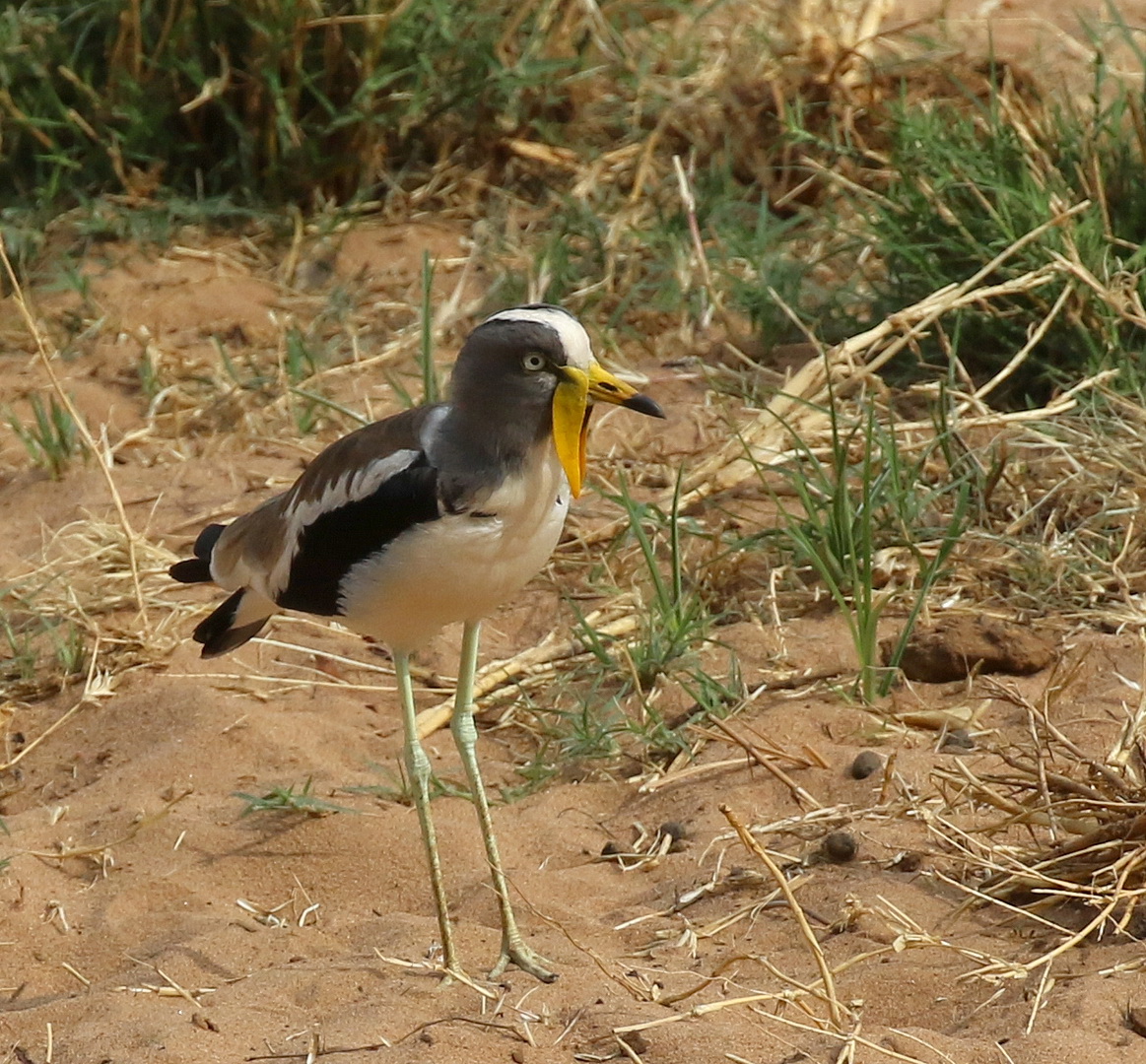
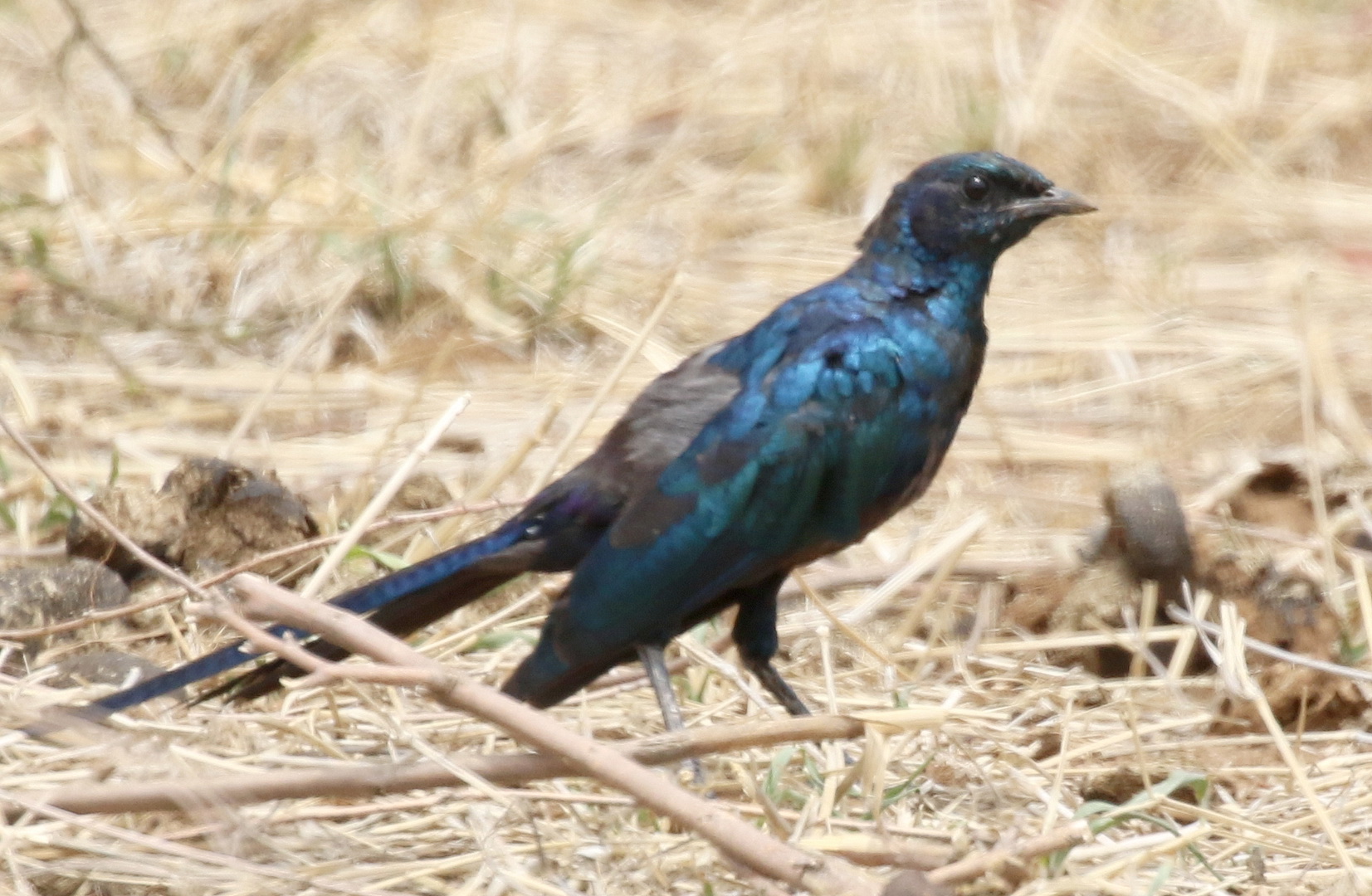
We saw some of the specials seen mainly in that area, White-crowned Lapwing, Meve’s Starling and Tropical Boubou. No sign of any Spinetails and the more unlikely Senegal Coucal or Racket-tailed Roller.

Some of the other species photographed include:

Despite the heat and the dryness we enjoyed being back in Punda Maria.

Our next camp – Taendze for three nights. See Kruger Part 7 – Tsendze comming soon.

Paul and Sally Bartho

Grey-headed Kingfisher


Kruger Part 5 Shingwedzi

Kruger Part 5

Shingwedzi

Report by Paul and Sally Bartho

21 to 23 November 2018

Shingwedzi Campsite – empty

We only planned to have one full day here – and it was enough. Temperatures had climbed reaching over 420 C at times. Thankfully there was a swimming pool to cool us down each afternoon.

On the way to Shingwedzi from Balule we stopped at Letaba for breakfast – hoping to see the mad woodpecker again – not this time.

Bearded Woodpecker sorry wrong tree

We had tea and some birding at Mooiplaas picnic site. A must as it is an interesting birding site with tall trees by the river and next to the wild rustic Tsendze campsite.

At the Tropic of Capricorn both Splat and Rocky took a starring role.

Splat and Rocky enjoying being in the Tropics

Tsessebe appeared out of nowhere and Zebra and Buffalo gave us a crossed legged display of how to get down to the water at one of the waterholes.

Tsessebe

We eventually arrived at midday at the camp.

The tree beside our chosen site was visited by three different types of Woodpecker as we set up in the deserted camp.

Our time at Shingwedzi was spent dawdling down to the hide and Kanniedood Dam as well as taking the loop road to Bateleur Bushcamp and back along the Redrocks Road.

It is a good time of the year to visit this far north because few people venture even as far north as Letaba.

The hide was not worth the visit as there was no water in sight. However on the last loop road before the hide Sally spotted movement – a skulking Leopard below us alongside the river bed.

Leopard

Everything was quiet further down towards the Kanniedood dam. Lack of water and damn hot.

That first evening we noticed three Little Swifts flying madly around inside the nearest kitchenette building to us. They were flying up and down, round and round and bashing into the wall. Eventually one fell to ground. I picked it up and released it outside but it went straight back in and it was soon on the floor again. This time we took it to our campsite and put it in a cool bag to settle down – planning to release it in daylight. Back at the kitchinette another Little Swift collapsed. Again I took it back to our site and Sally suggested releasing it away from the light. We did and it flew off into the night so we released the other as well. Peace and calm in the kitchenette and two happy birds we hope.

What was interesting was not only the very soft feel of the birds but also it gave us an opportunity to see their real size with wings extended.

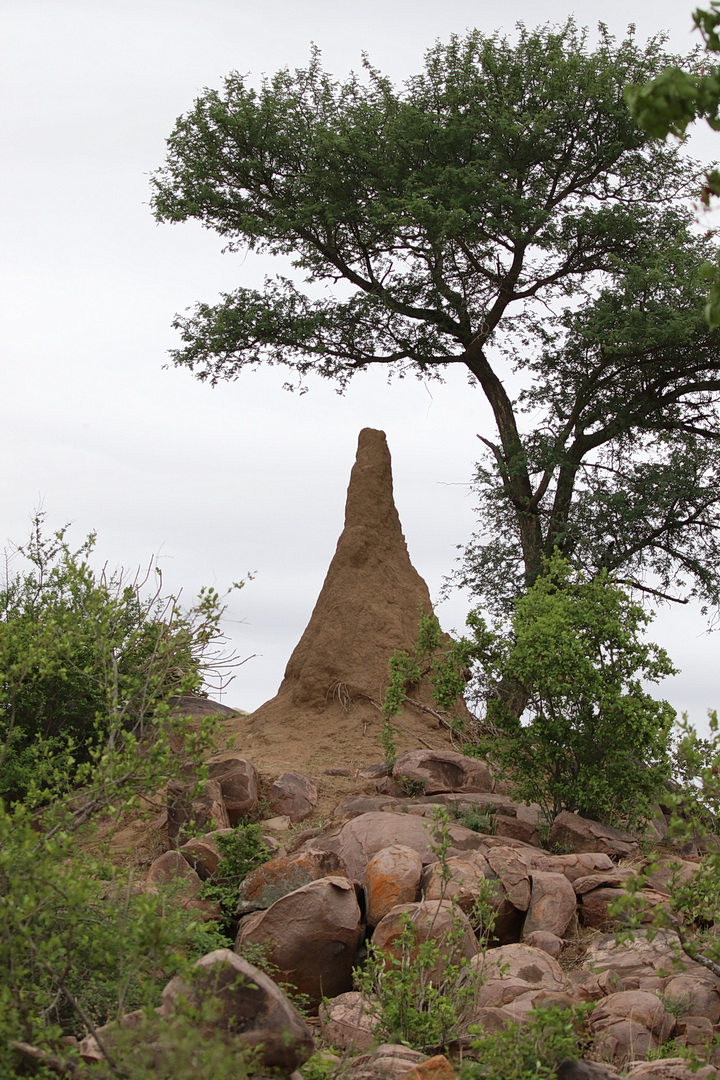
On our one full day there, we headed down the road to the Bateleur Bushcamp. Very quiet most of the way. Anthills had silly expressions – as this one pointing us skyward.

Pointed Anthill

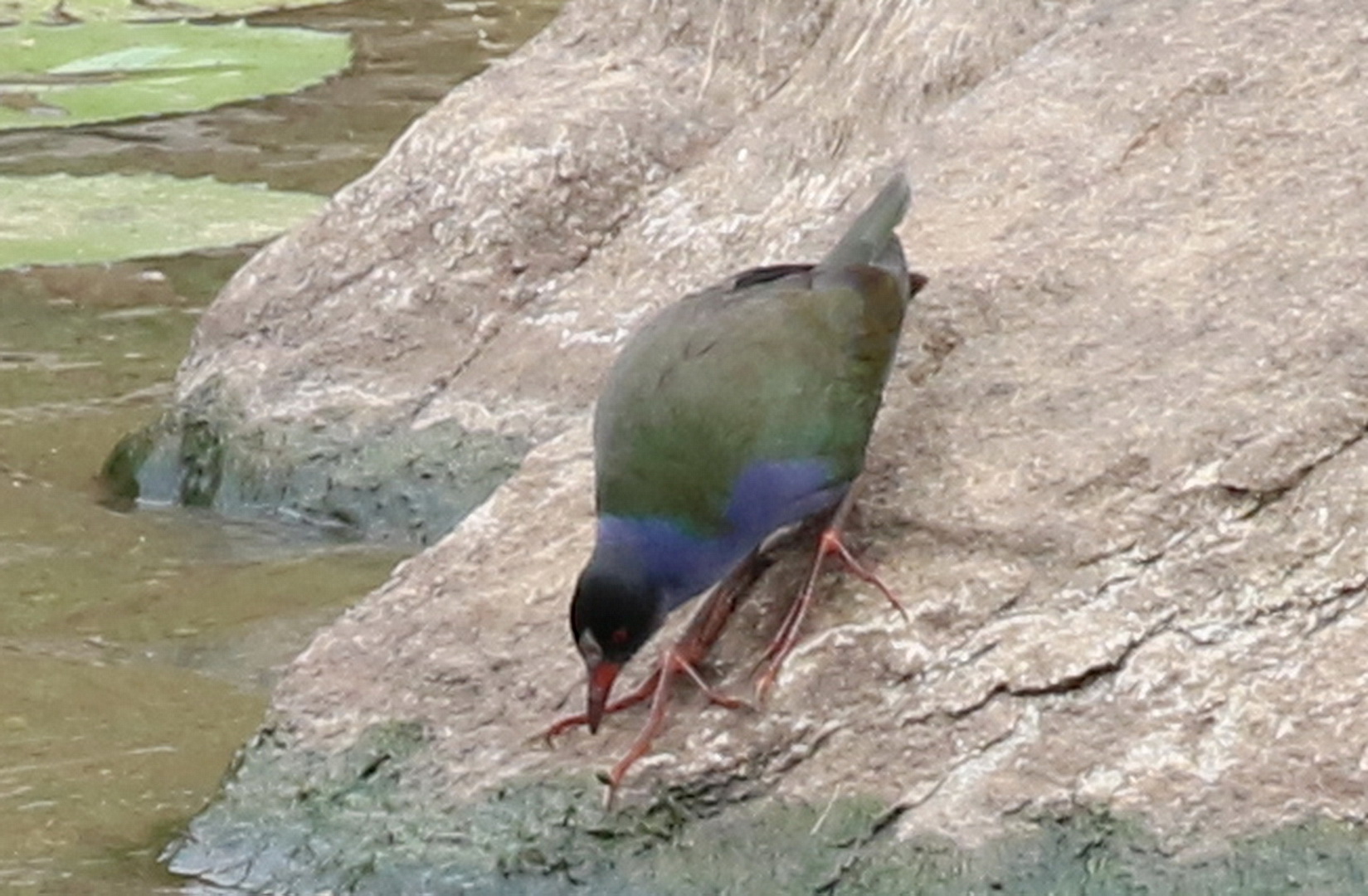
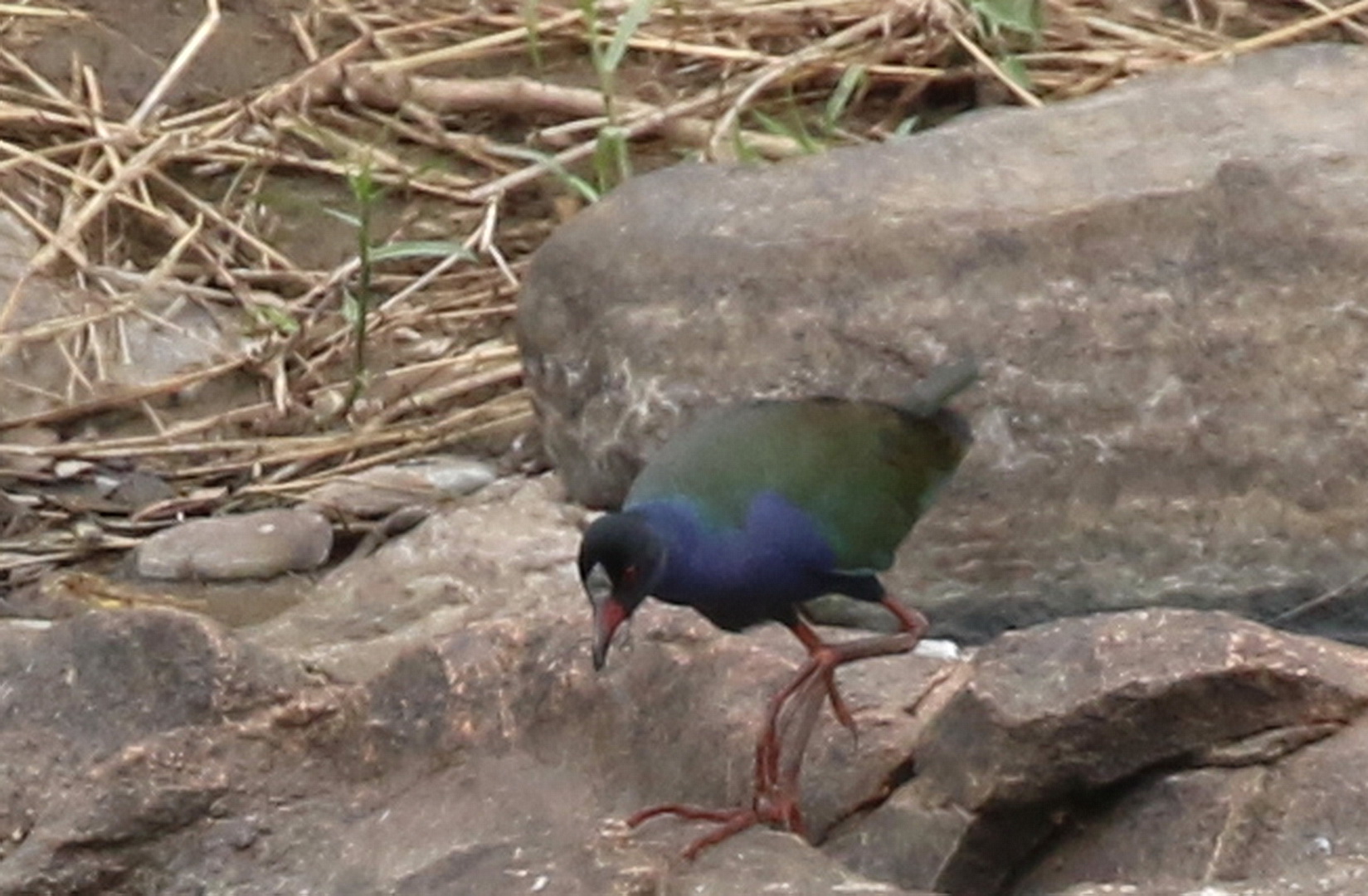
But we did have a couple of great sightings. The most exciting and least expected was that of a Allen’s Gallinule. It was on its own in a small stretch of water in the river.

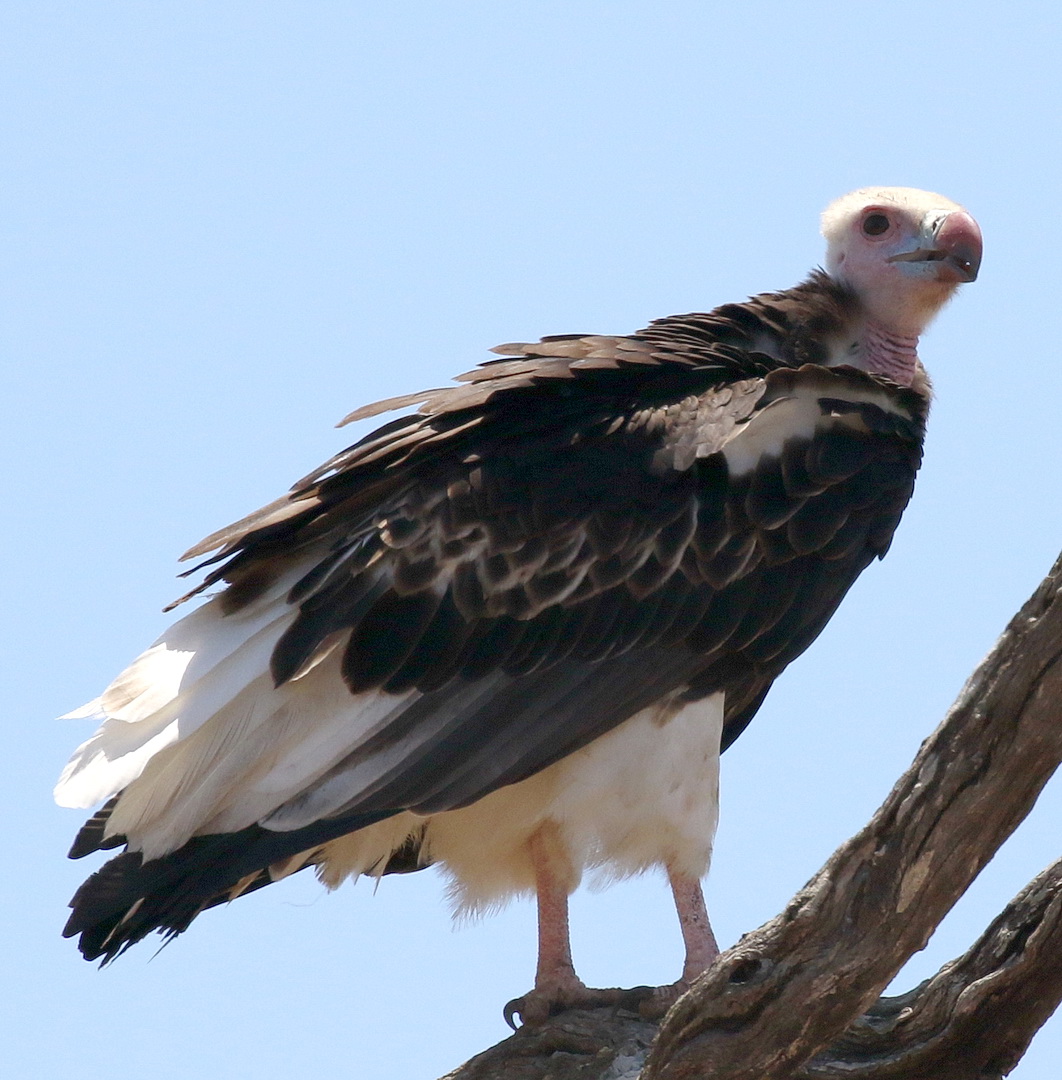
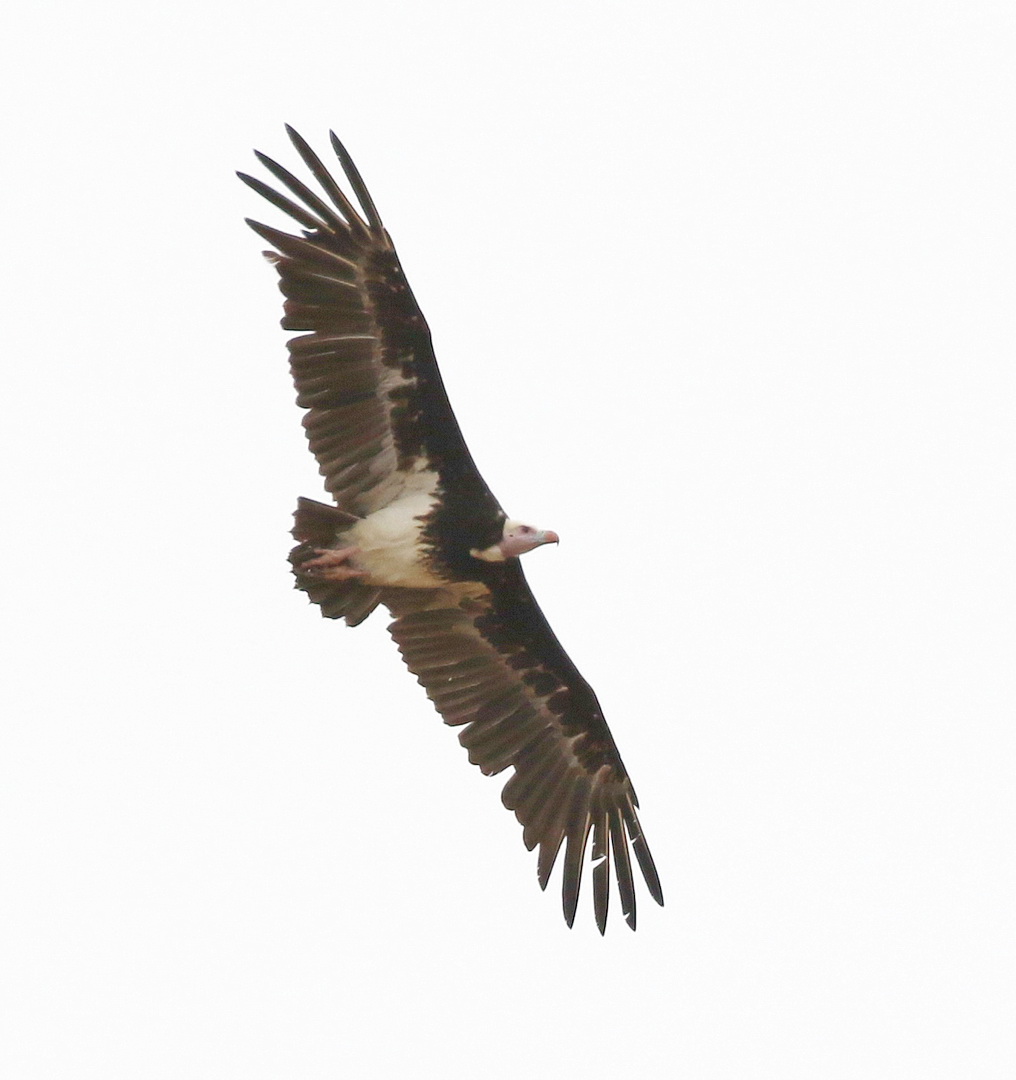
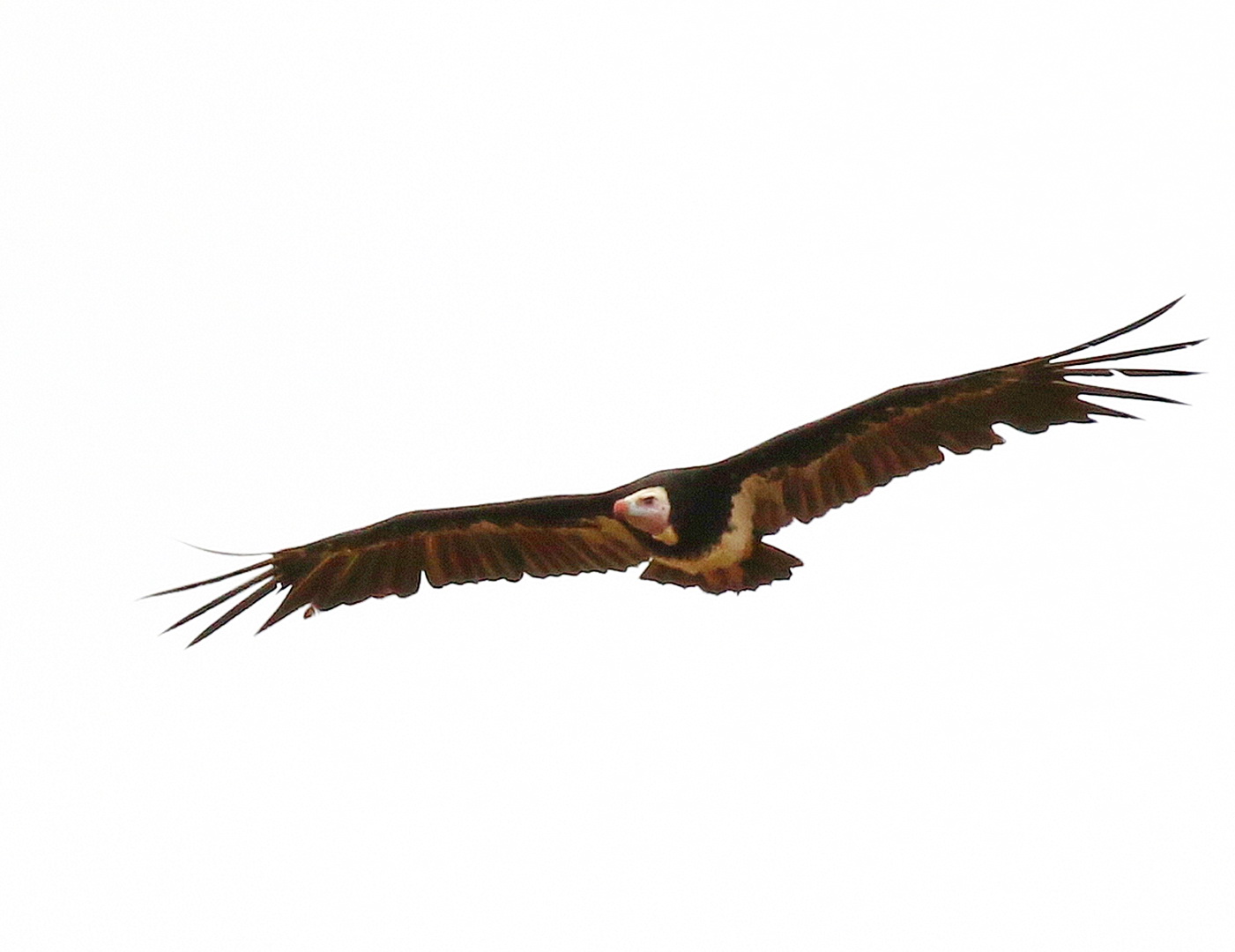
The other sighting was that of two White-headed Vultures doing a fly-over for us.

The road from the camp to the bridge is always interesting as it overlooks the river and has numerous large trees to investigate for Owls and other birds. At the bridge our first Broad-billed Roller was spotted.

Broad-billed Roller

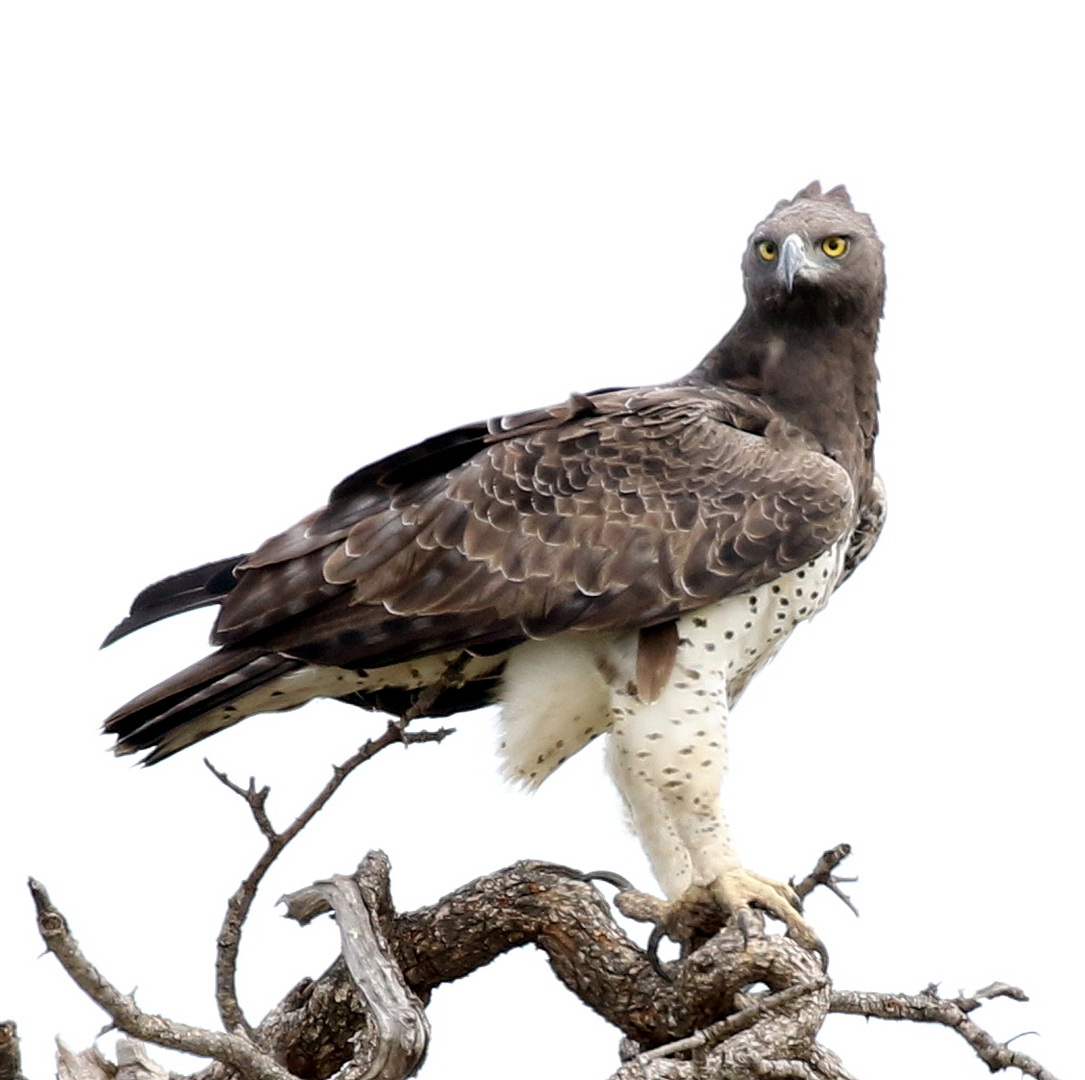
A Martial Eagle flew over and another sat close for a photo.

A Goliath Heron had a Mad Hair Day in the river among other sightings.

Southern Ground Hornbills appeared on our travels round the camp – none had been ringed – much like those we had seen previously.

Despite our short visit we did manage to identify 97 different bird species. See list by clicking here.

From Shingwedzi we headed north to Punda Maria stopping at Babalala Picnic site for breakfast.

Breakfast at Babalala on way to Punda Maria

Our time at Punda Maria forms the next instalment. Kruger Part 6 – Punda Maria

Paul and Sally Bartho