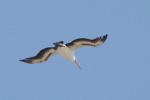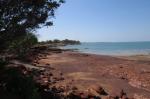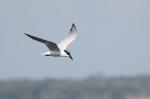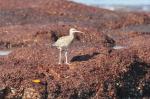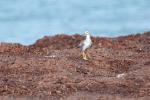
Darwin first leg of Top End birding in Australia.

Good Day,

Sally and I have been in Darwin now for 5 days. We have been chasing birds locally before heading off tomorrow for Kakadu, Pine Creek, Katherine and Timber Creek (Konunurra if we have time).

We have a campervan so are very flexible as everything goes with us wherever we go. Having said that on our second attempt we found a decent campsite just out of town – Hidden Valley. a whopping Prices are double RSA and all foodstuffs approximately 50% more expensive. Petrol about R17 a litre and alcohol a whopping 300% more expensive – cheapest wine R90 a bottle and R500 for a case of beer (330ml cans).

It has been hectically hot – usually from 8 am onwards. So up early and push on until exhaustion and bad tempers prevail. By 11:30 we are back in the campsite pool cooling off. It is a struggle to get the energy to go out again late afternoon.

On top of that unless you are around water – sea or lagoons – the birding is slow. 30 to 40 species in a very good morning. Not helped as quite a number of places only open at 08h00!! Hardly birder friendly (on occasion they do forget to close the gates).

We have ventured to the following birding spots:

  • Charles Darwin NP (opens at 08h00)
  • Knuckley Lagoons
  • Lee Point
  • Buffalo Creek
  • Holmes Jungle (opens at 08h00)
  • East Point
  • Howard Springs (opens at 08h00)
  • McMinns Lagoon

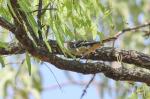
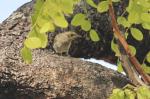
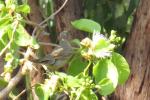
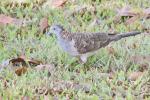
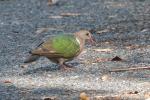
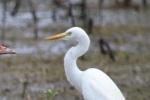
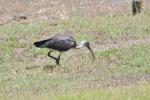
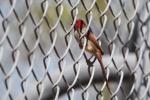
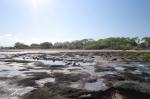
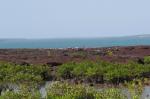
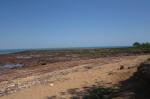
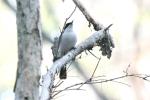
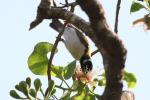
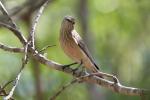
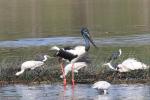
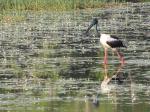
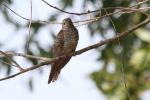
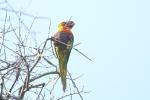
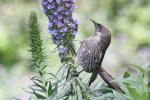
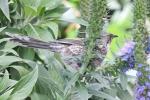
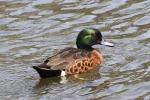
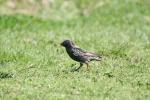
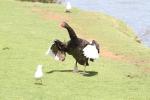
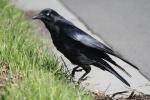
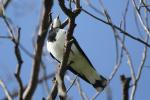
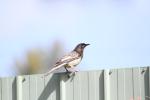
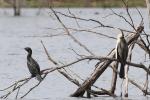
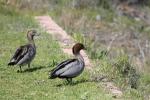
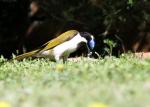
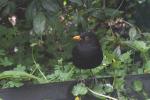
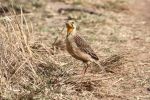
What follows is a series of pictures from each of these places – we hope you enjoy them. We have been bold enough to put names to most of the birds but if you know better then please let us know.

Charles Darwin NP:

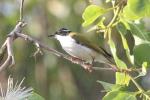
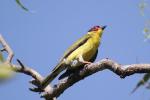
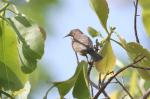
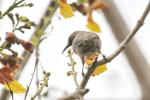
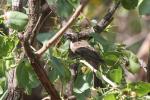
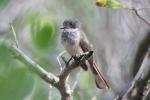
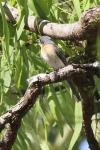
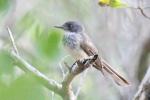
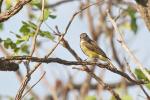
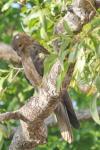
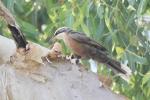
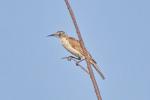
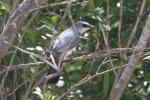
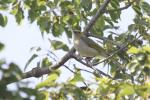
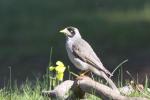
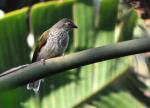
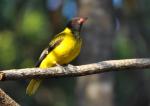
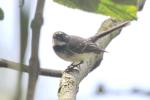
Good place to start birding in Darwin – we saw some very nice species – Little Shrike-Thrush took a lot of chasing to get a picture (bird is darker than shown in the photo).
Knuckley Lagoons

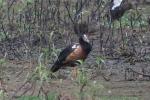
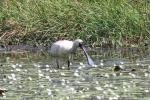
Good place to take a chair in the evening. Not much shade during the day. A good variety of waterbirds.

Lee Point:

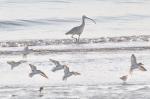
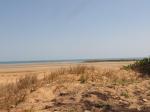
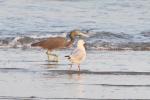
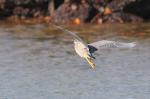
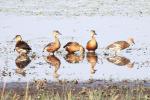
We were fortunate to bird the shore at Lee Point at high tide so the birds were relatively close. They were not too friendly though and always moved on as we got close. After chasing them for an hour we eventually had to give up as the temperature was becoming unbearable.

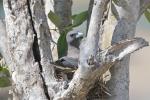
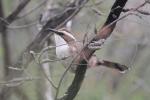
In the car park area we did find some nesting Grey-crowned Babblers.

Buffalo Creek:

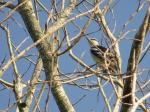
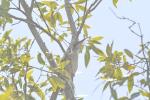
Got there too late in the day to be productive but were fortunate to see a pair of nesting White-bellied Woodswallows.
Holmes Jungle:

Interesting woodland paths (Jungle?) however saw very little – too hot – mid day.

East Point:

The walk through the forest yielded 2 birds – Large-billed Gerygone and Rainbow Pitta. Followed the call till we located the Pitta – much to our joy and not seriously expected.

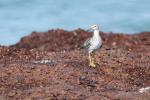
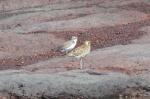
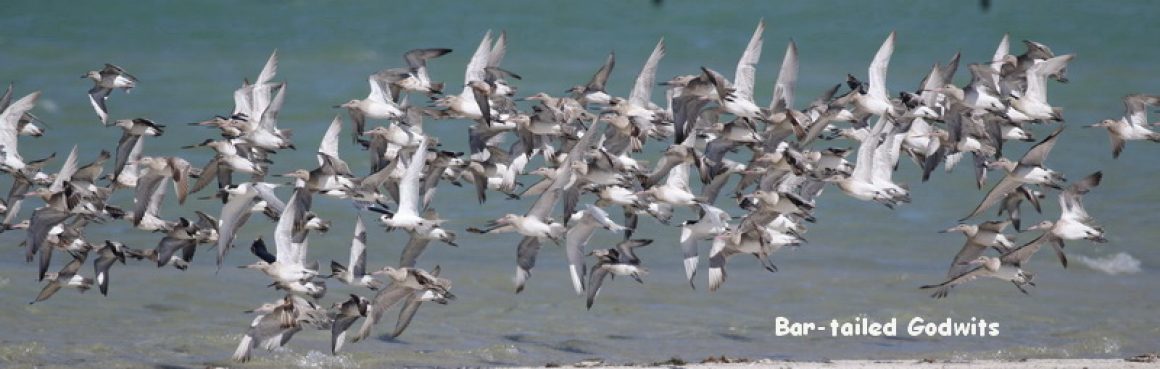
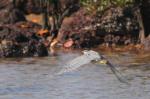
The rocks on the waterfront had an abundance of interesting species – Eastern Reef Egret including white morph, Little Curlew, Collared Kingfisher and Striated Heron amongst numerous terns, Pacific Golden Plover etc..

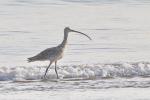
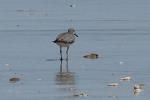
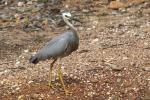
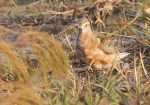
There is one wader which really through us – see mystery bird in photos. Its body was no bigger than a Sanderling but it stood on 2 long fragile yellow legs giving it an appearance of a very delicate bird.

Howard Springs:

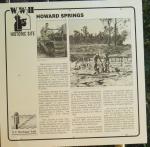
First place to be really attacked by mossies and our SAS Avon Skin so Soft anti mossy and sunscreen failed. Now trying a 50:50 mix of dettol and baby oil.

But we did find another Rainbow Pitta!
McMinns Lagoon:

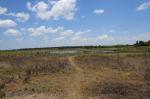
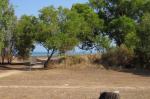
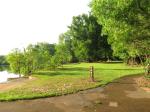
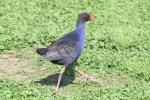
Definitely the most comfortable place we have visited so far. Walk through woodlands to the Lagoon, Picnic Tables and glorious shade on a mound with a commanding view of the Lagoon. Waterbirds were excellent and had us nose to books on numerous occasions.
Victoria, Australia – more photos. Part 3
Victoria, Australia – more photos. Part 3

Birding in the Bendigo area is hard work – many hours and few species in each different habitat. We also found the same in the Melbourne Parks. Travel afield to select Nature Reserves usually yields a few more species. To see 40 species in a morning’s birding is pretty good.

Of course there are some hot spots like Werribee (where you need a permit to enter or find someone with access). This is the main water treatment area for Melbourne some 4o kms south west of the city and on the coast. Here it is possible to see a hundred species in a day.

Some more photos from both Bendigo and Melbourne follow. Only 5 more days and we will be in Darwin where birding will be full on with no family commitments.

Bendigo:

Melbourne – Botanical Gardens:

Paul & Sally Bartho

More Photos from Australia

More Photos from Australia

Birds from the Bendigo area – a provincial city some 140 kms north of Melbourne.

Sally and I spent hours finding a handful of birds in the Greater Bendigo NP. Perhaps the cold and windy weather did not help. Of course they were all interesting as we had not seen them for some time.

Paul Bartho

Common birds of Bendigo, Victoria – Australia

Common birds of Bendigo, Victoria – Australia

Thought you might like to see pictures of some common birds from this area of the world for a change.

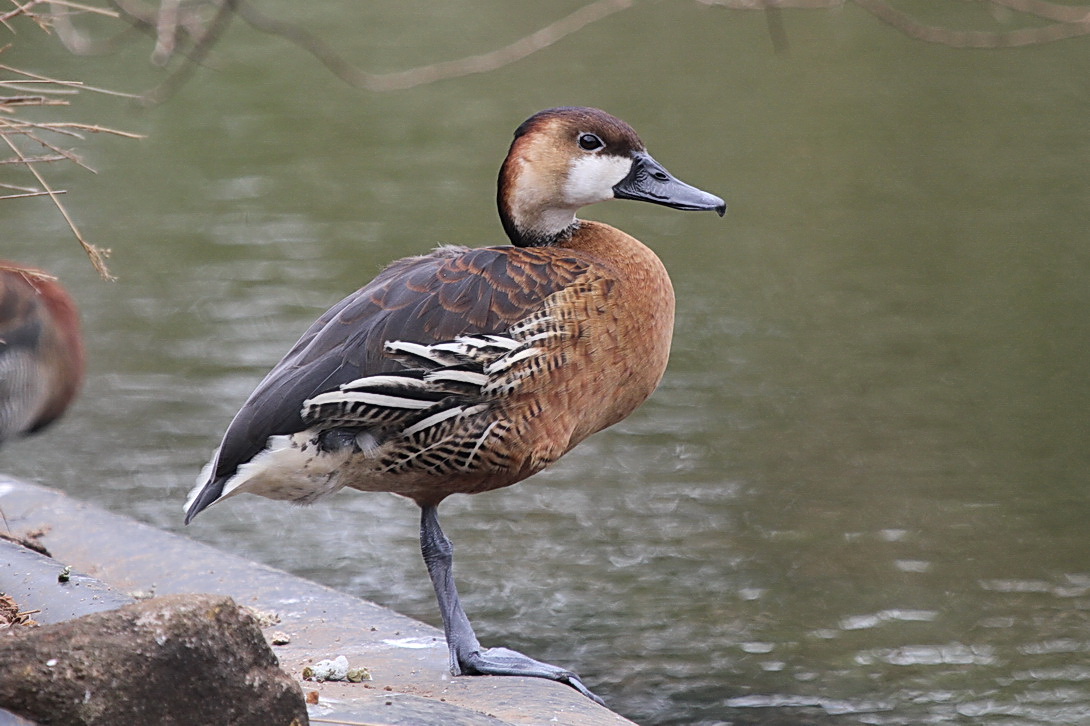
White-backed Duck

White-backed Duck

On another note and aside from the above outing, I happened upon a White-backed Duck whilst golfing on Friday with my sons at the Cato Ridge Golf Club. It looked very happy and could well still be there if anyone wants to give it a twitch. It was seen at the small dam in front of the 12th tee at the bottom end of the course. Apparently it has been there for about a week. 

White-backed Duck
White-backed Duck

Dave Rimmer


Kenneth Stainbank report back.

Kenneth Stainbank Sat. 7th September.

Despite the smorgasbord of events scheduled for Saturday, a group of 17 keen birders turned out for the outing – many of the regular Saturday outing birders as well as three visitors. The day started off with a number of birds entertaining us in the car park, notably an obliging Black-headed Oriole that gave everyone good views and photo opportunities, followed by a Yellow-billed Kite that decided to perch quite close by, and a pair of African Goshawks flying overhead. The grassland path was the route taken leading towards the small dam. Birds seen along this section among others included a female Black Cuckooshrike, Yellow-rumped Tinkerbird, Rattling Cisticola, African Harrier-Hawk, numerous Olive Sunbirds and a Lesser Honeyguide close to the dam. As usual, the weaver colony in the middle of the dam was alive with Village Weavers and Yellow Weavers busy nest building.

From the dam we proceeded towards the office complex as John and others had recently seen the Spotted Ground Thrush – one was seen but only briefly flitting across the road to a few at the front. Good birding was had along the road between the offices and the picnic site with the highlight being excellent views of a Scaly-throated Honeyguide. This was a lifer for at least 8 members of the group, myself included. Other good sightings in this section of the reserve included Yellow-bellied Greenbul, Terrestrial Brownbul, Ashy Flycatcher, Red-capped Robin-Chat and Black-backed Puffback. We returned to the car park via the vehicle track on the southern side seeing White-bellied Sunbird, African paradise Flycatcher, Purple Crested Turaco and Golden-tailed Woodpecker along the way.

A total of 51 birds were either seen or heard including:
White-eared Barbets, Dark-capped Bulbul, Southern Black Tit, Dusky Flycatcher, Fork-tailed Drongo, Hadeda Ibis, Southern Black Flycatcher, Green-backed Cameroptera, Amethyst Sunbird, Southern Boubou, Yellow-fronted canary, Tambourine Dove, Square-tailed Drongo, Common Fiscal, Black-bellied Starling, Amethyst Sunbird, Collared Sunbird, Lesser-striped Swallow, African palm Swift, Cardinal Woodpecker, Neddicky  – and not forgetting the Zebra and Impala.

Dave Rimmer.

Photos care of: Dave Rimmer & Penny de Vries

Cape Vidal and St. Lucia. 25th to 30th August 2013.

Cape Vidal and St. Lucia. 25th to 30th August 2013.

Sally and I went to Cape Vidal campsite for 2 nights followed by 3 at Sugarloaf campsite in St. Lucia. We endured strong wind for all 5 days. Our tent extension was defrocked one night in Cape Vidal and on the last day when we were in Umfolozi.

Despite the wind the weather was pleasantly sunny and not too hot.

The campsite in Cape Vidal was infested with Vervet and Samango monkeys. Turn your back on them at your peril as they will take any food within your arm’s reach if you are not looking – and sometimes even when you are! It is well shaded and mostly flat and sandy. Beware – it is expensive as they charge for 4 people even if there are only 2 of you. It cost the 2 of us R252 a night and that was with a 40% discount! Sugarloaf cost us R324 for the 2 of us for 3 nights (also with a 40% discount).

The Loop road past Lake Bengazi is closed as part of the road has been washed away – apparently sometime ago and there is no sign that it is being repaired.

Sugarloaf Campsite in St. Lucia is located right at the end of the road  to the boardwalk beside the estuary leading to the beach. Unfortunately it is a preferred fisherman’s campsite and so to be avoided at the weekends despite it having 100 campsites.

iSimangaliso Wetland Park (Eastern Shores) is one of our preferred parks close to Durban. It has a good variety of game and is known for its leopard sightings. We go for the birds and we were not disappointed this time with excellent sightings of Southern-banded, Black-chested and Brown Snake-Eagles; adult and juvenile Cuckoo Hawks; Collared Pratincoles; etc…

(If you click on an image it will enlarge and you will be able to scroll through the rest of the pictures in that gallery. To return to the text move the mouse cursor to the top left of the screen and click on the “X” when it appears).

St. Lucia also did not disappoint with a good variety of waterbirds including African Black Oystercatcher, a sea paddling Pied Avocet, Kittlitz’s, White-fronted, Three-banded and Curlew (in partial breeding plumage) Sandpipers, Ruff, Wood and Marsh Sandpipers, Caspian and Swift Terns, Grey-headed Gulls.

However “la piece de la resistance” was a Sooty Tern amongst a group of other Terns, Gulls and Avocets. It was sheltering on the leeward side of the wind in the estuary.

If you visit St. Lucia do take a walk along the Gwalagwala Trail early morning. Park in the Office car park. Listen for Woodward’s Batis and Green Malkoha.

The campsite too has a good variety of birds.

We spent one day in Umfolozi and were not disappointed despite the extensive burnt areas in the park.

The Bhejane Hide is still under construction so our only alternative was the Mfafa Hide. Recently it has been the source of a number of leopard and lion sightings – however for us it was a number of interesting small birds and a rather large Rock Monitor.

Some photos taken around the Park:

Probably our best viewing area was at the bend of the Umfolozi river at the end past the Cengeni Gate. Here we saw quite a number of raptors: a Lanner Falcon on the river bed, a couple of Lanner Falcons dive bombing a Tawny Eagle with a little help from a pair of African Harrier Hawks and a Yellow-billed Kite not to be left out of the action, Bateleur, Brown Snake-Eagle. There was also a good view of a Southern Ground-Hornbill across the river.

Finally to cap the day we had the following sighting on the way back past the Cengeni Gate. It was no more than 20 metres from us but totally camouflaged. Look at the photos first without enlarging and you will see how easy it is to be missed 

Now click on the images and enjoy what we were able to see with the help of our binoculars.

Altogether we saw 88 Species in iSimangalizo (Eastern Shores); 71 species in and around the campsite in St Lucia and 61 species in Umfolozi.

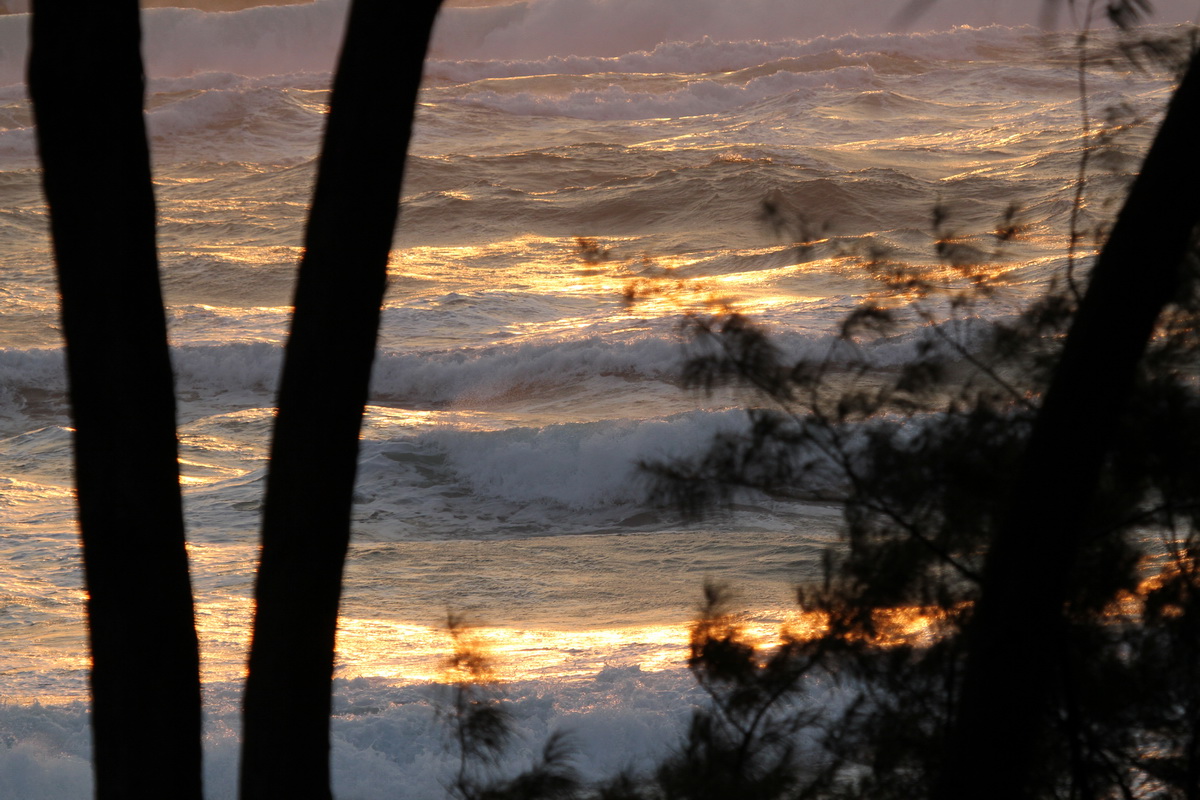
Sunrise in windy Cape Vidal

Photos care of Sally and Paul Partho.

Tala Revisited

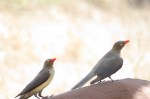
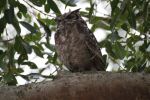
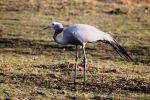
Five months later Jenny Norman and I were back at Tala – last Sunday of the month BLPN get a special discount, although it has increased over the past 5 months it is still not expensive.   We arrived around 06:45 and the day started off with a ‘bang’.  In the fig tree just past the gates were a pair of Spotted Eagle Owls. Next an  African Marsh Harrier quartering the hillside, then down to the dam for all the usual suspects and again we were pleasantly surprised.   Lots of Southern Pochards, Cape Shovellers, Black Crake, Purple Heron, African Rail and all sorts of warblers in the reeds.  On to the picnic site for coffee and muffins – the Erythrinas and Clivias in full flower.   Amazingly we saw no sunbirds all day and only heard the White-bellied late in the afternoon.  Red-throated Wrynecks all along the causeway, and then we spotted the Fiscal Flycatcher, the first of hundreds of Fiscal Flycatchers!!   One lone stunning Scimitarbill – calling to the others but to no avail.  We had some good raptors, African Fish Eagle, Long crested Eagle, Lanner Falcon, YBK, Black-shouldered Kite as well as the owls and harrier.   Around 16:30 Jenny suggested a last drive up to Paperbark Lodge and around the back road which passes a number of small dams.   What a great idea!  As we came up to Paperbark, past the dam which is almost dry, there on the side of the road were a pair of Blue Cranes – absolute perfection.   Then round to the small dams. Yellow-billed Egret, Spoonbills, South African Shelduck, herons and jacanas and just as we were making tracks for the gate 3 Red-billed Oxpeckers on the Zebra – what a great way to end the day.   Our total bird count was 95!

Photos courtesy of Jenny Norman.

Elena Russell

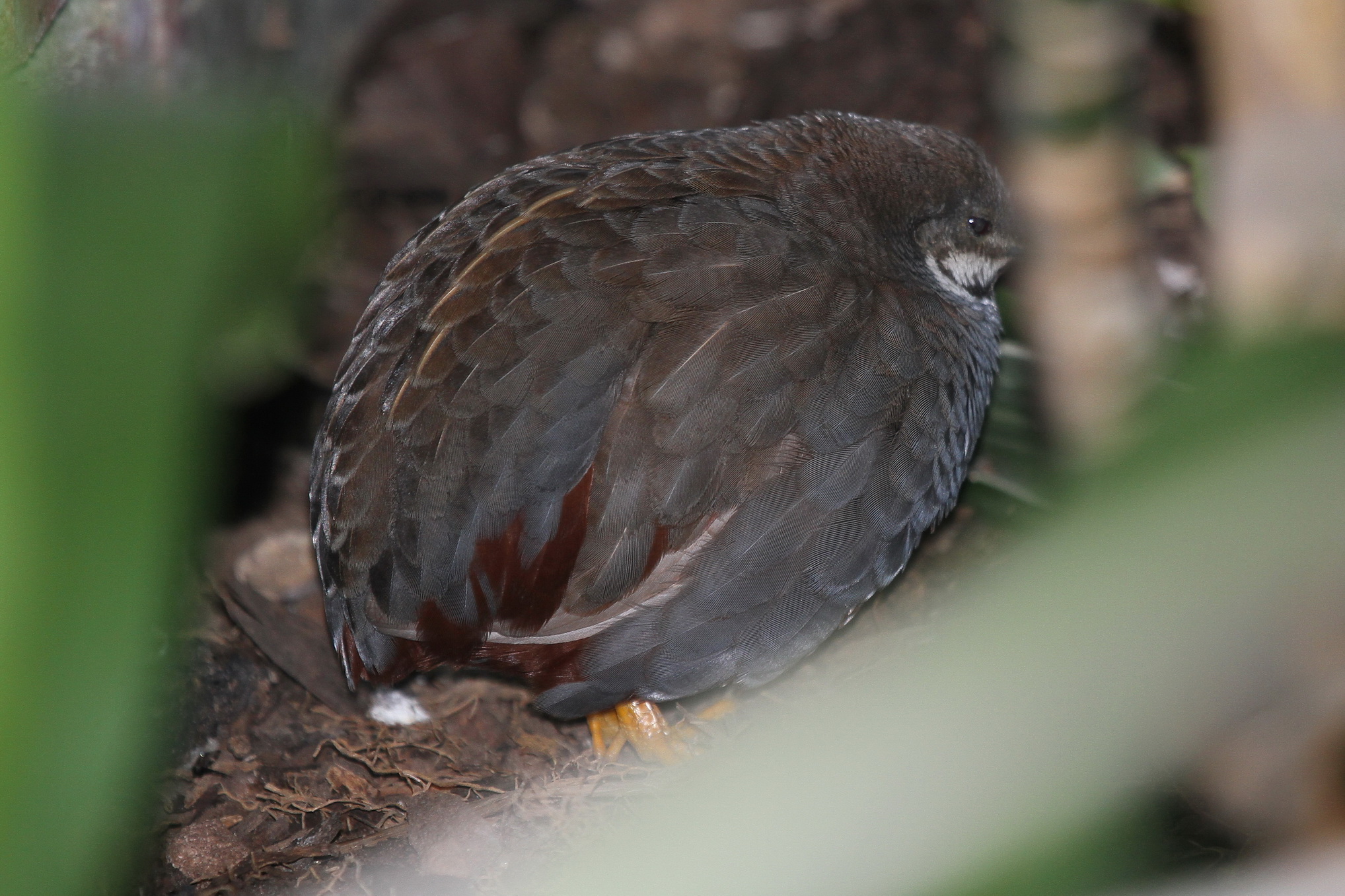
Blue or Chinese Painted Quail resolved.

Sally and I took Guy Gibbon with us today to check out the Quail.

We went to see whether it has a blue belly and chestnut ‘shoulders’ and flanks (Blue Quail) or a chestnut belly, blue flanks and brown shoulders (Chinese Painted Quail) – as per advice from Derek Spencer and Dave Allan.

Guy’s verdict:  The bird is very definitely a Chinese Painted Quail with chestnut belly and blue flanks. It is quite comfortable in garden shrubbery and not at all concerned with human presence.

Here are a couple of poor pictures which validate the identification.

Notice the
Chestnut rump visible – and no chestnut flanks
IMG_6611
Poor photo but chestnut belly very visible.

Paul & Sally Bartho