And so we left Satara on an overcast and slightly dribbly day. We headed for Tshokwane and then directly to Lower Sabie.
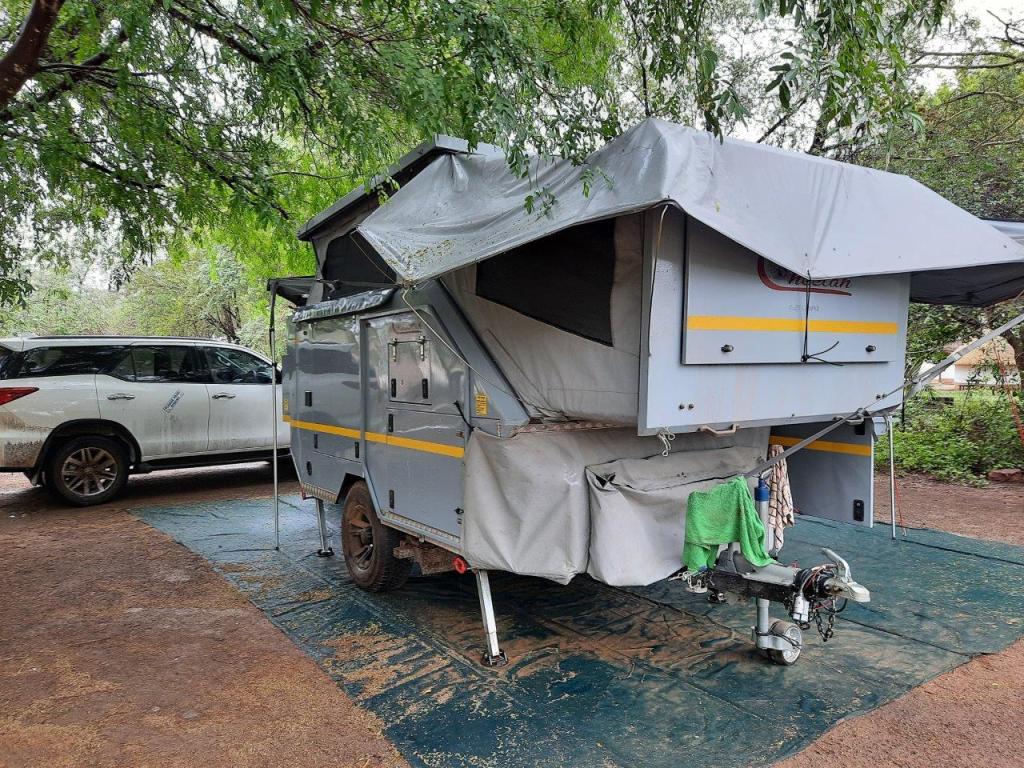
We love seeing herds of elephants but are nervous when they appear in the middle of the road while we are towing our Wildcat. As is usually the case they then appear behind as well – coming towards you. Reversing is not an option.
Really, we were not that close!!
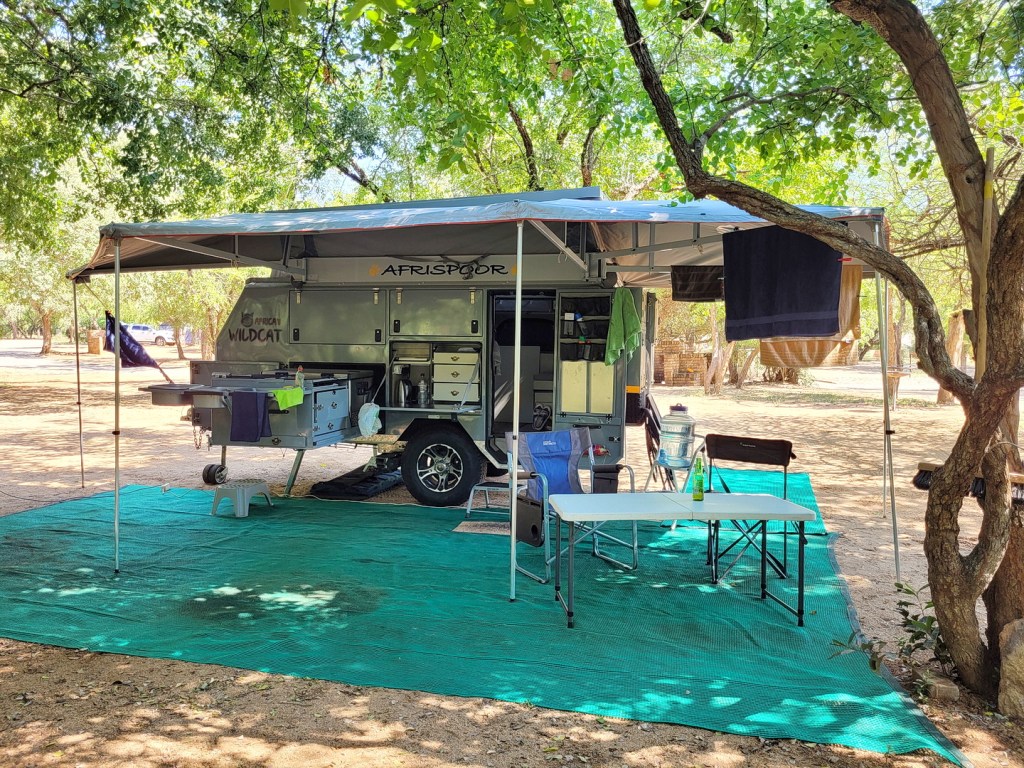
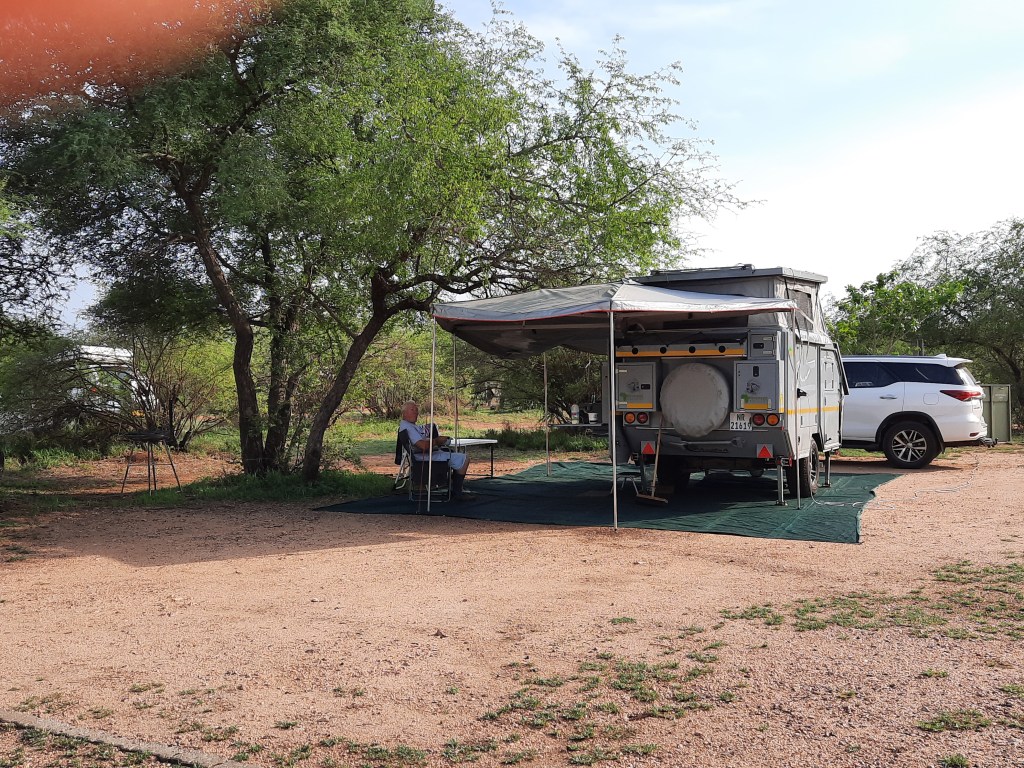
Camp was set up in a convenient spot.
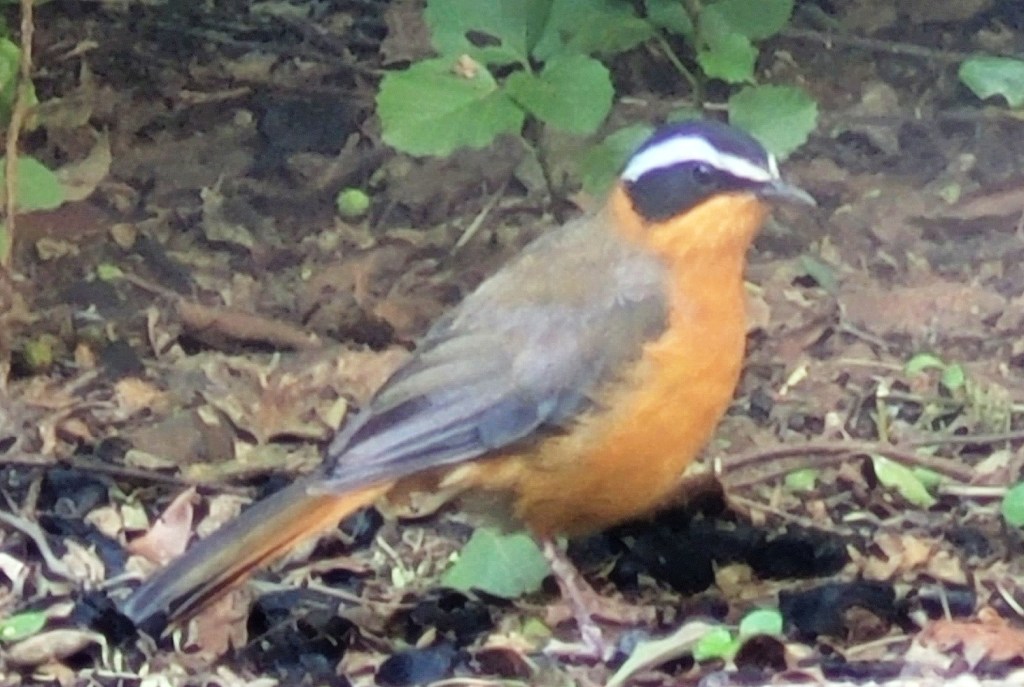
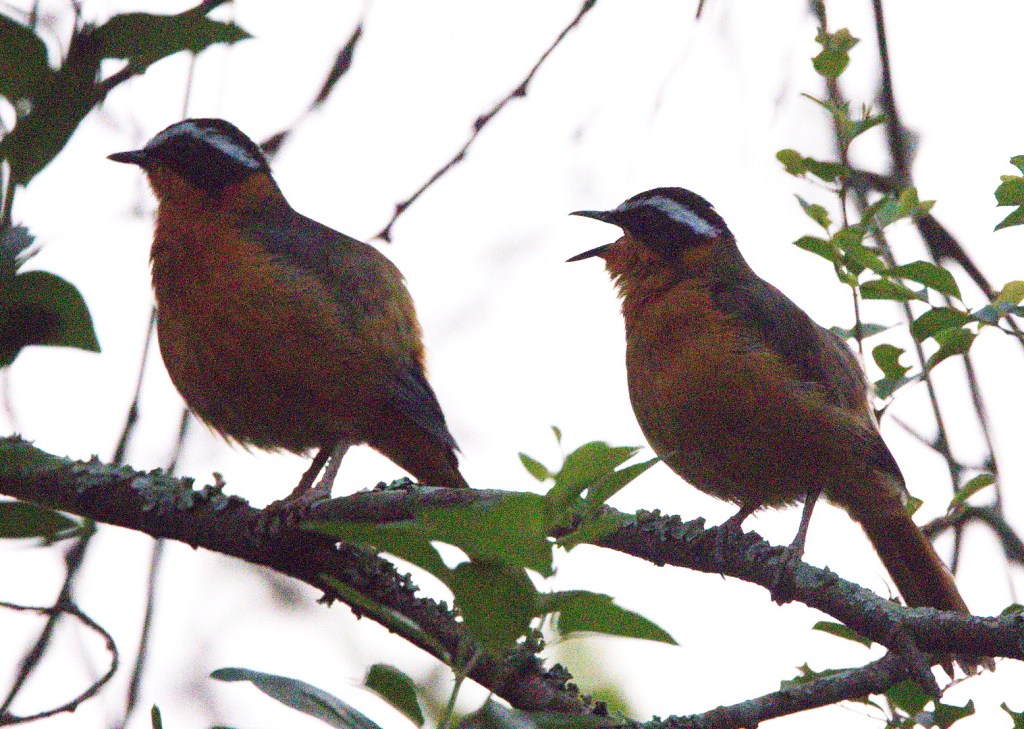
We had a pair of White-browed Robin-Chats (Heuglin’s) chorus us each morning always from the same spot in the bush.
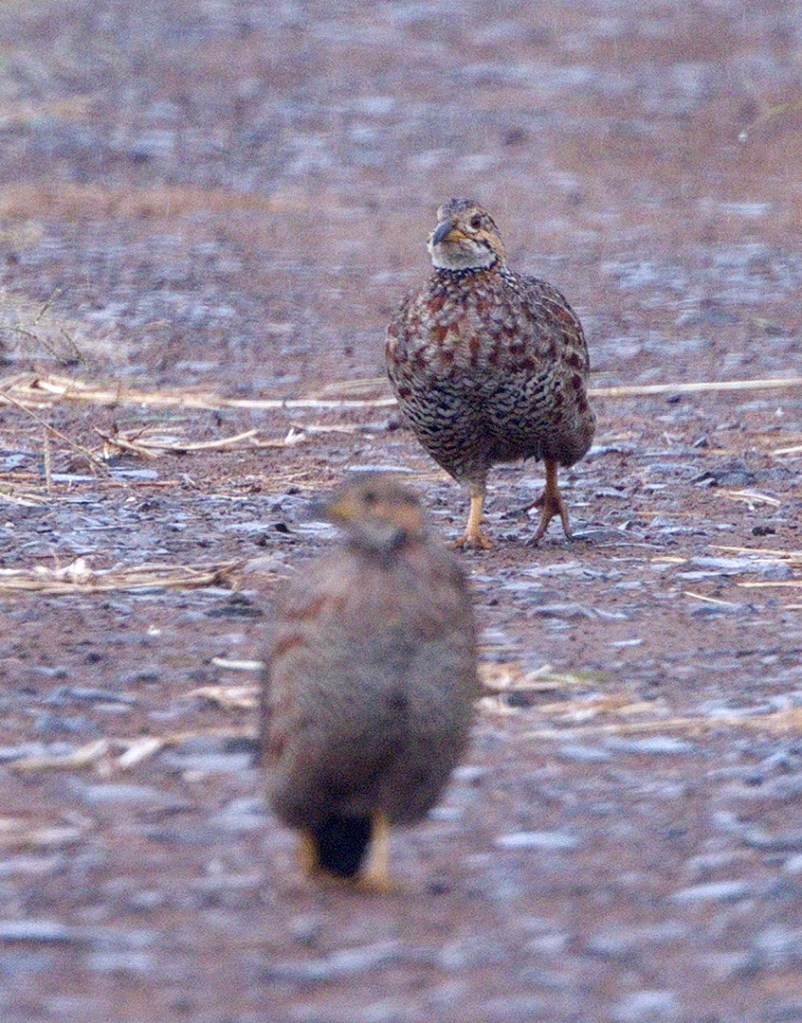
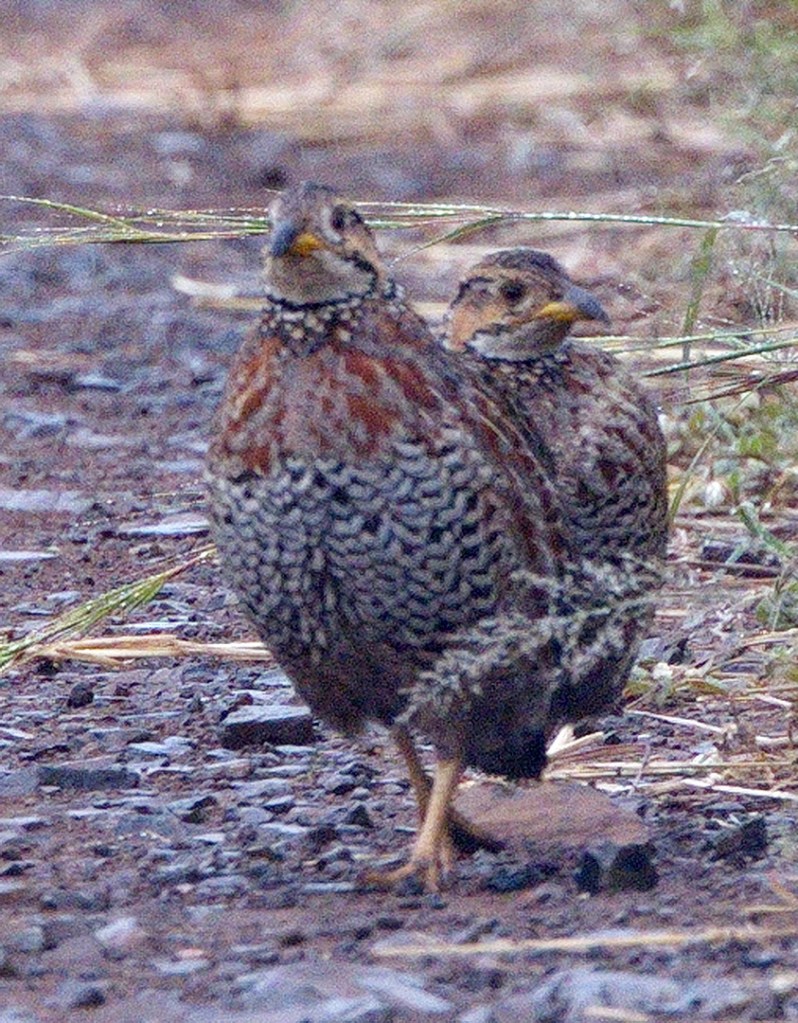
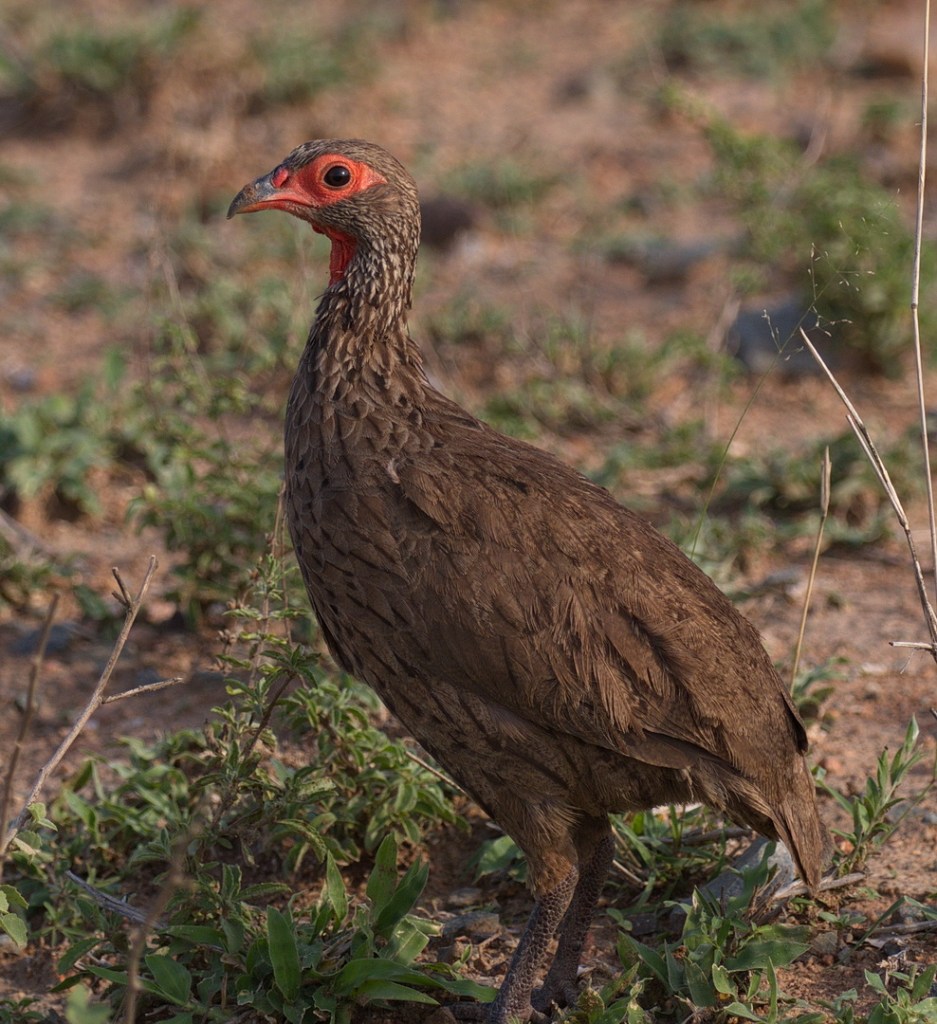
One day we took a drive on the back roads around the Mlondozi Picnic site, all the way to Tshokwane and down to Skukuza. The weather continued to be wet and overcast. Days like that sometimes bring out the unusual – like a family of Shelley’s Francolins.
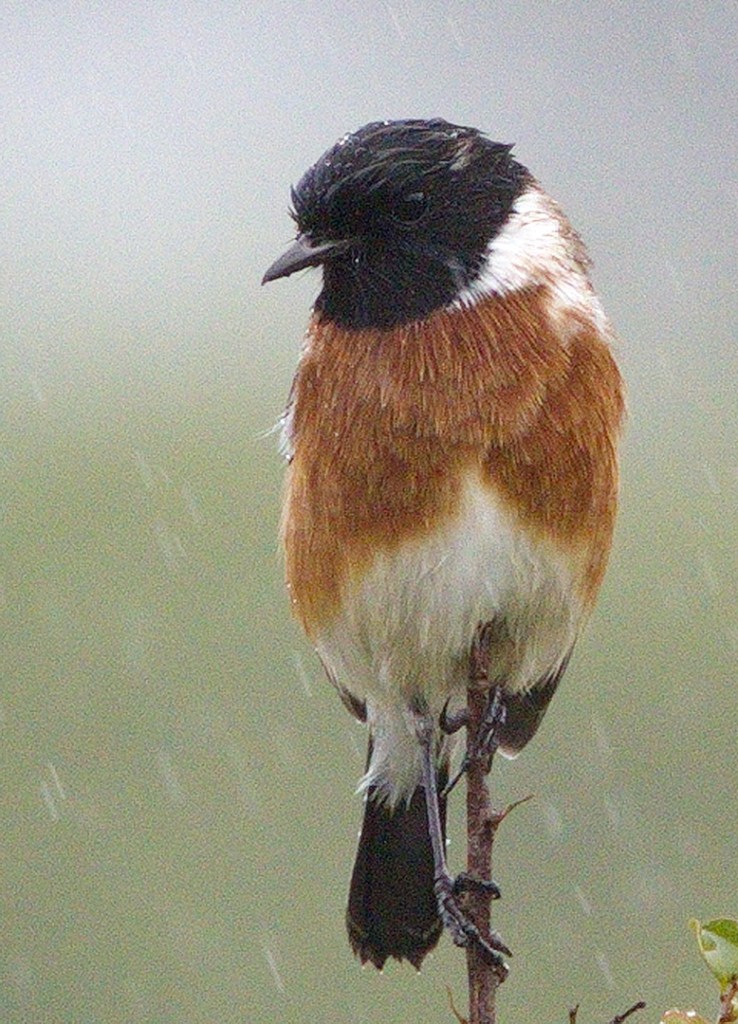
Shelley’s FrancolinShelley’s FrancolinA rather wet African StonechatShelley’s Francolin
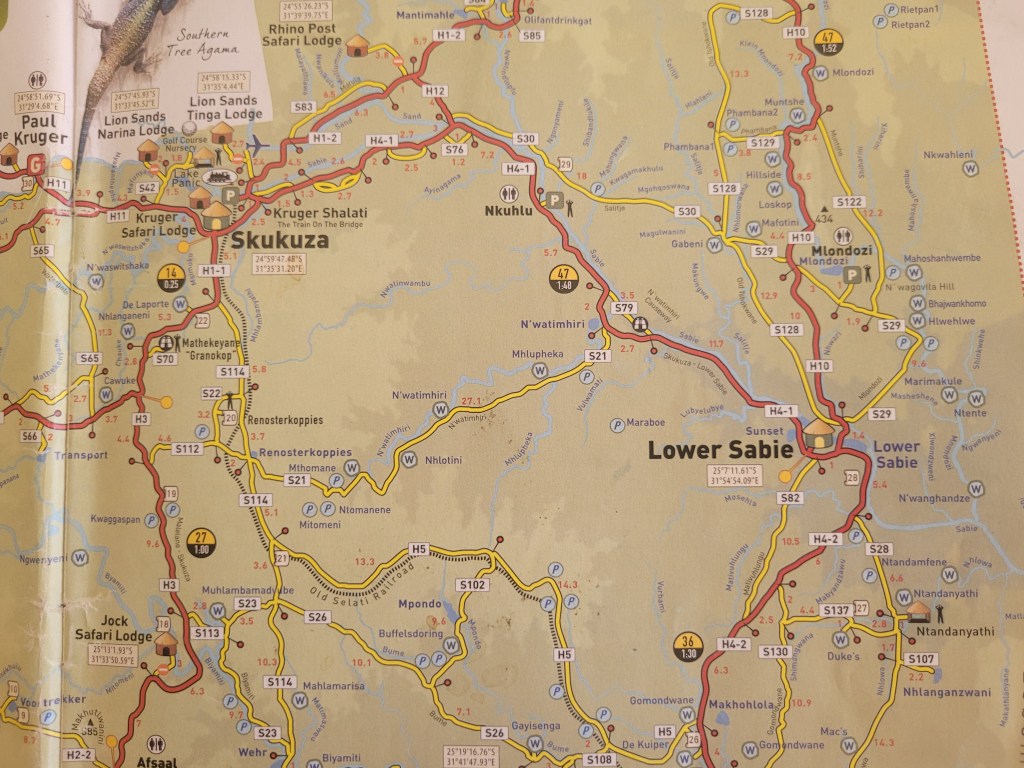
On another day we headed for Skukuza and the hide at Lake Panic. We took the two detours along the H1-4 Lower Sabie to Skukuza .
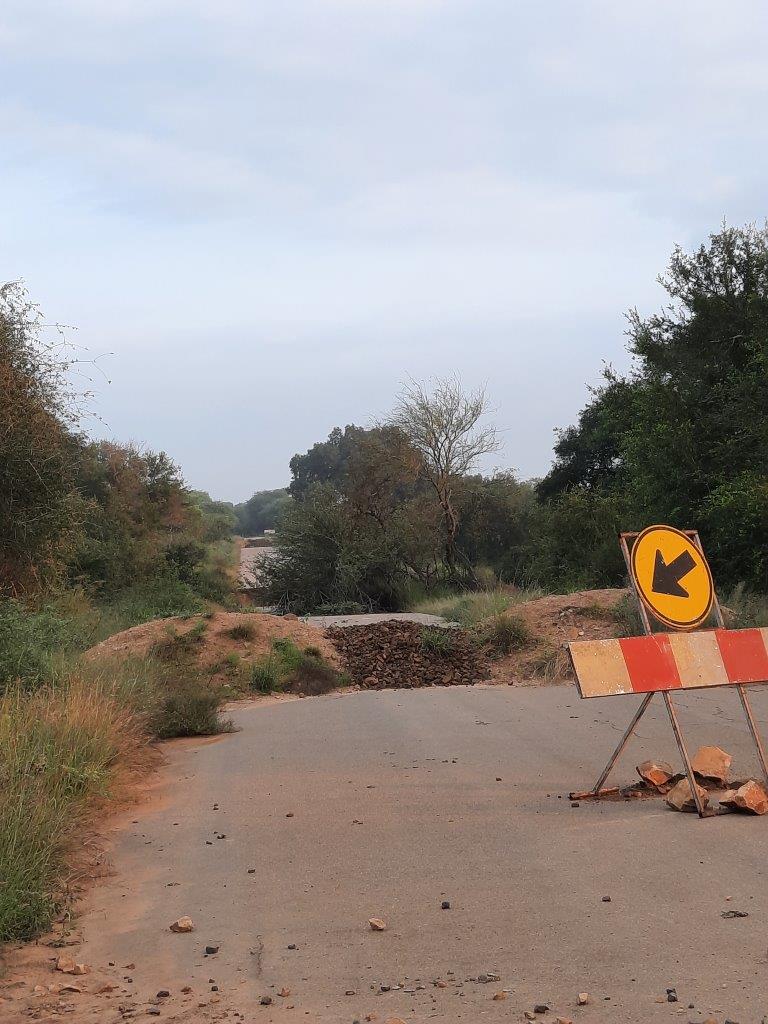
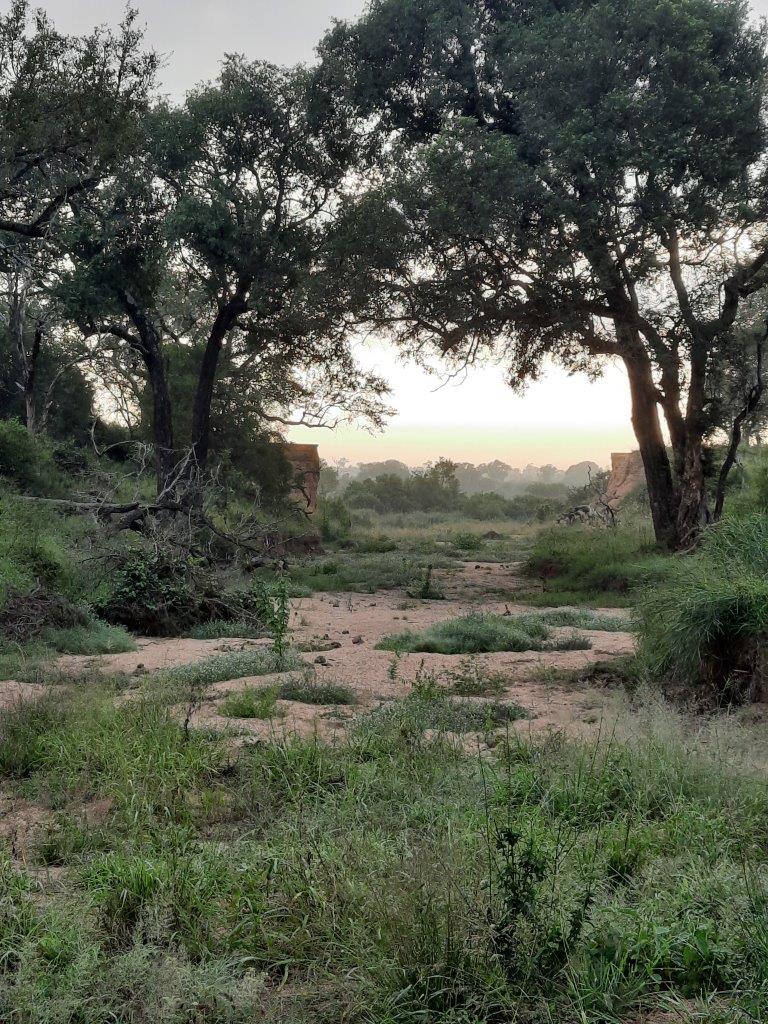
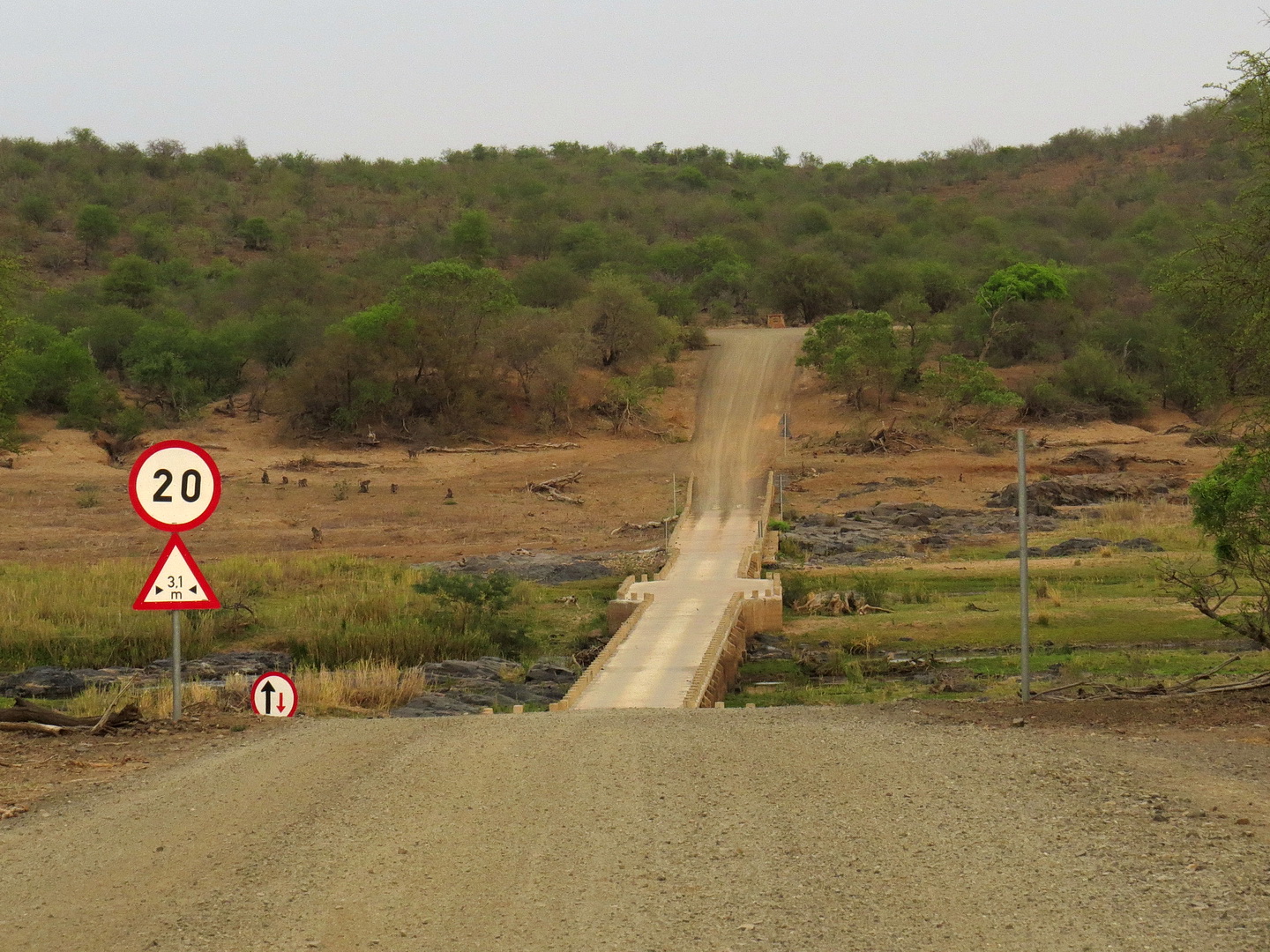
You can see where there used to be a river crossing in the background.
A Baboon sat on the road using his guile and jaw strength to rip into a sausage pod from a Sausage tree. Persistence pays off obviously. Watch.
The birdlife was very quiet at the Lake Panic hide.
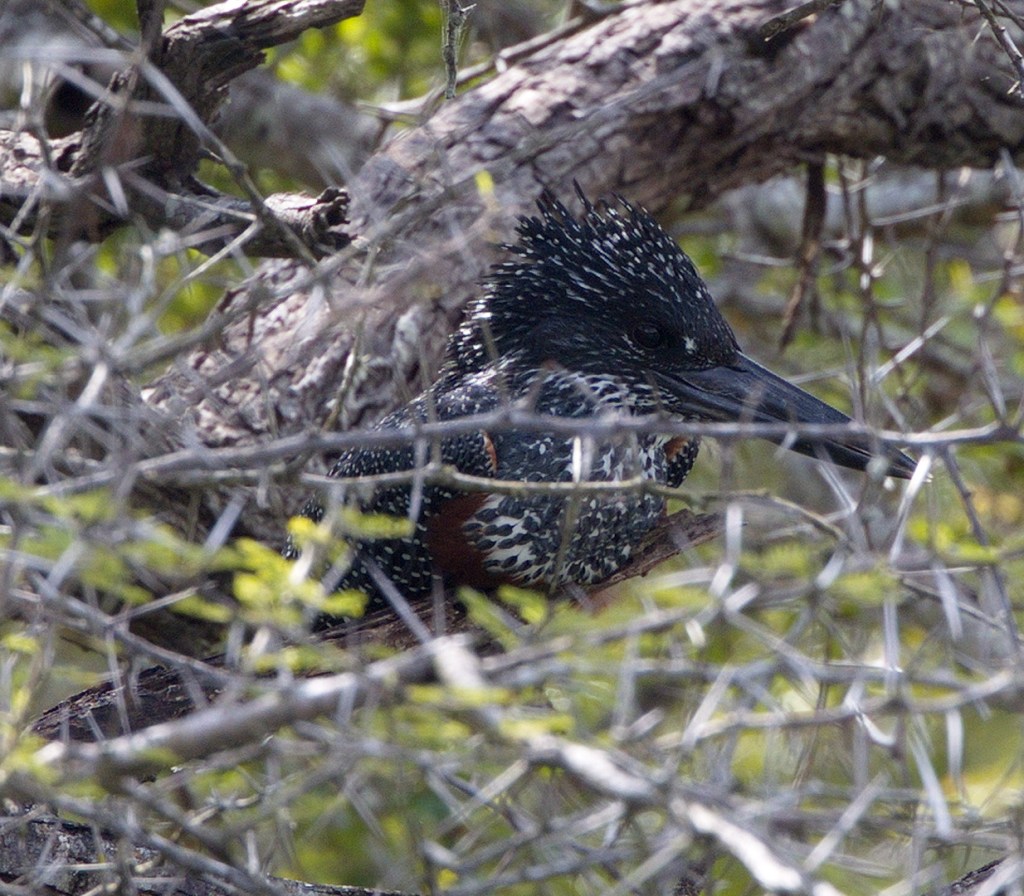
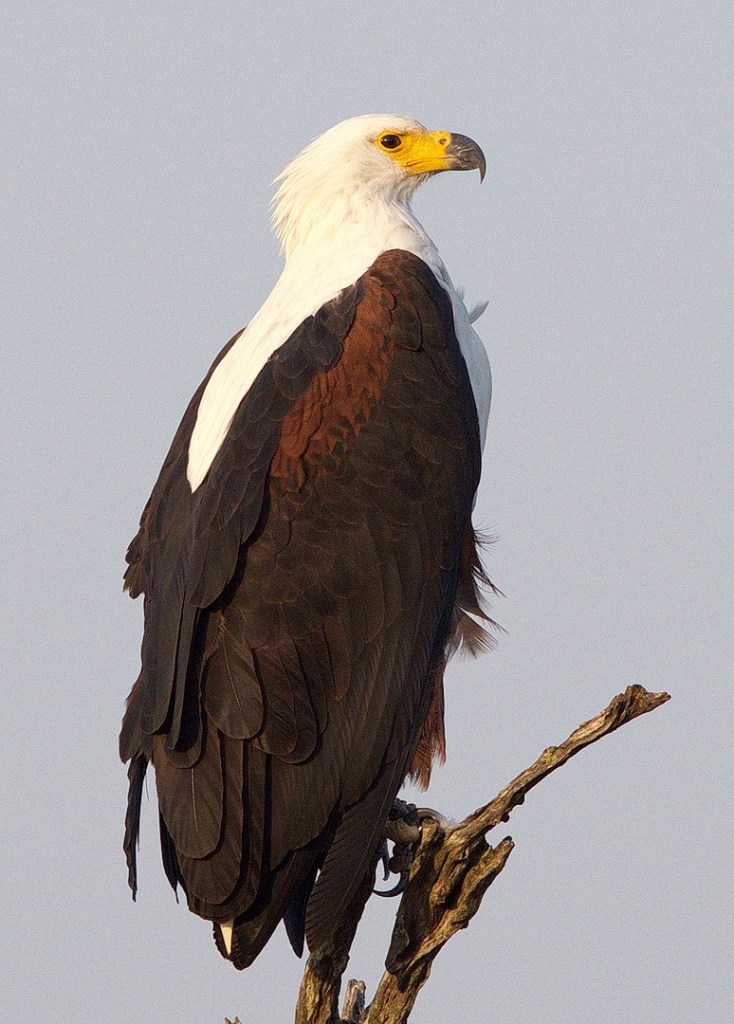
View from the hideA skulking Giant Kingfisher An amazing African Fish-Eagle
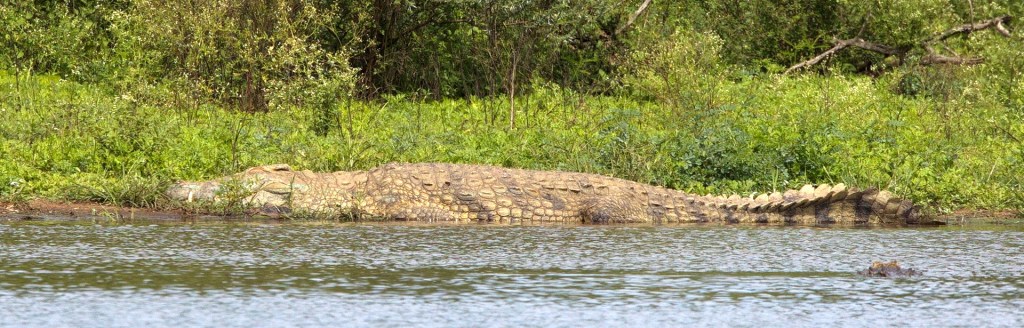
However, Sunset Dam did not disappoint. Apart from the antics of the hippos and the length of the crocodiles, birdlife was abundant.
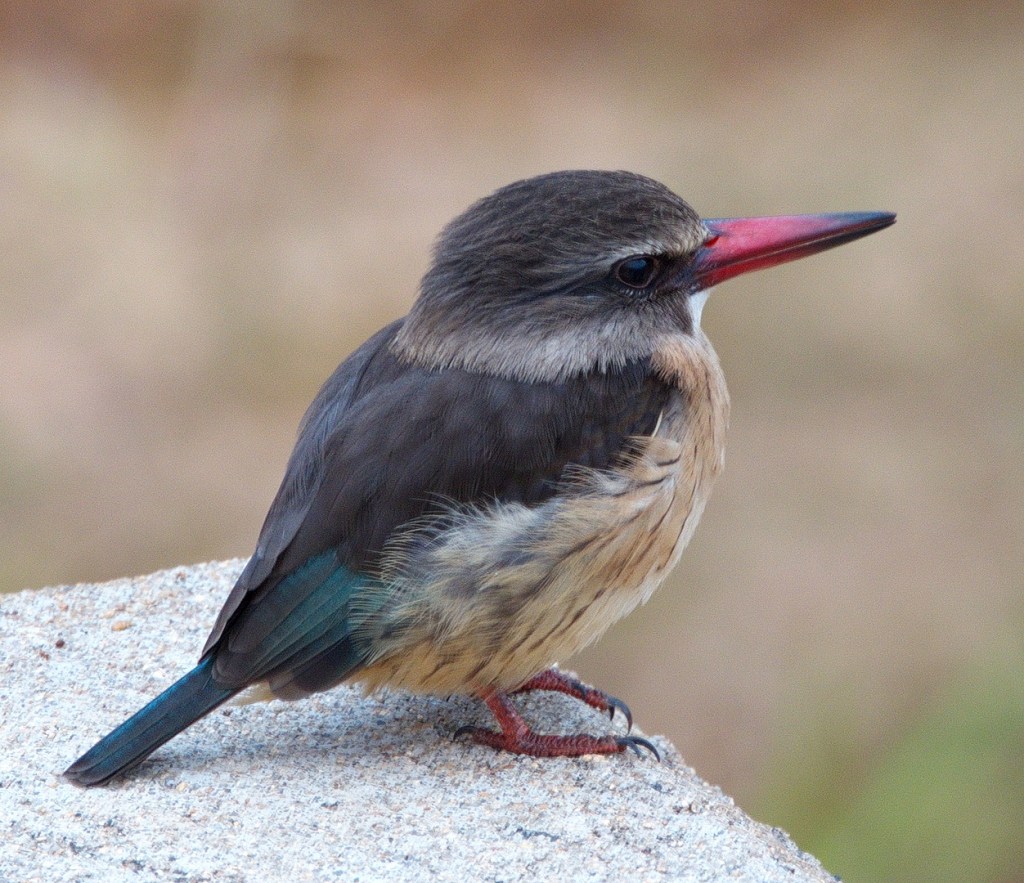
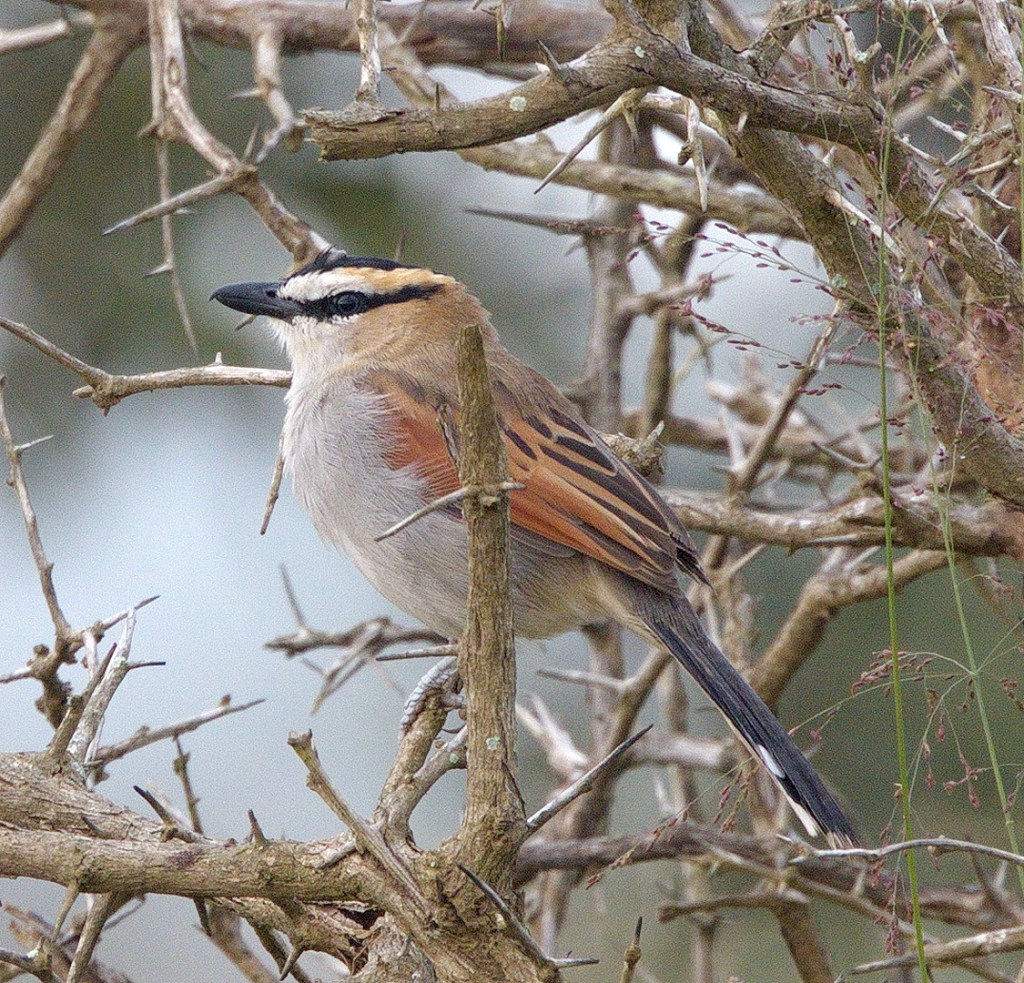
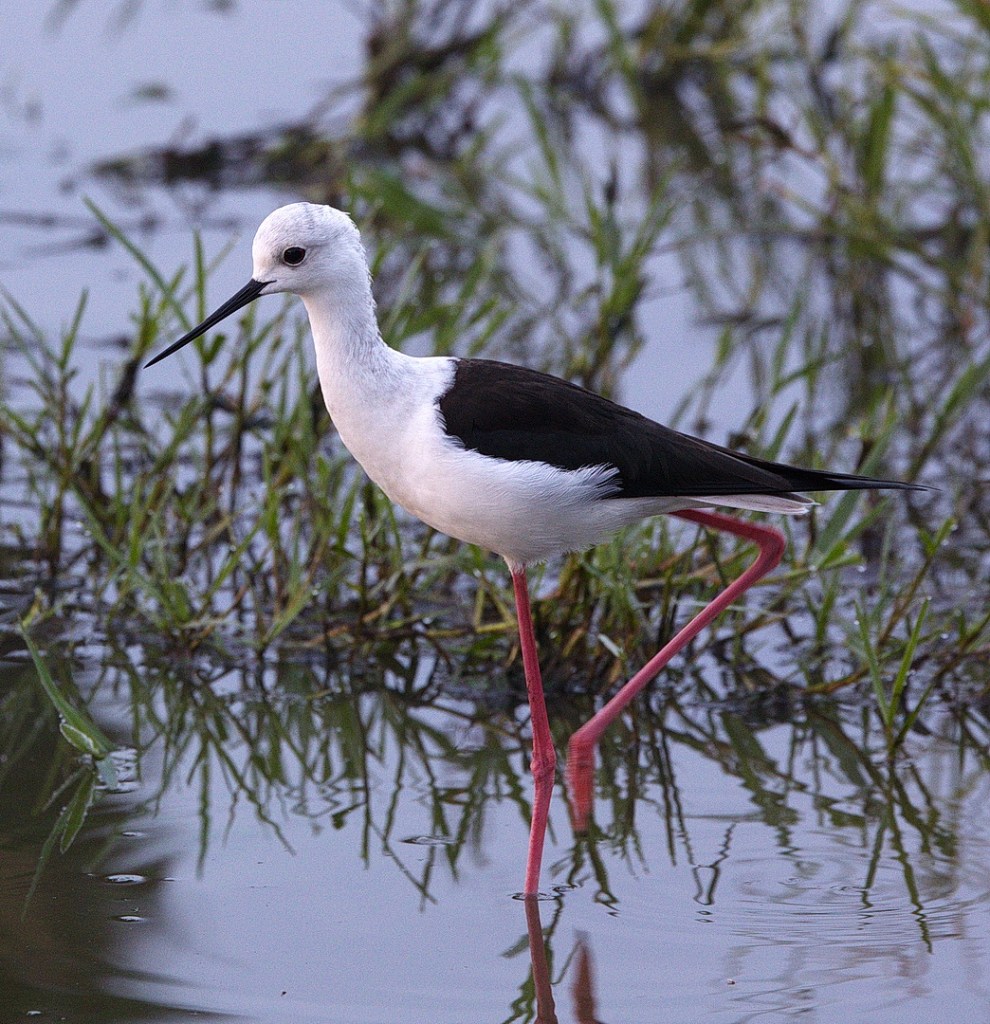
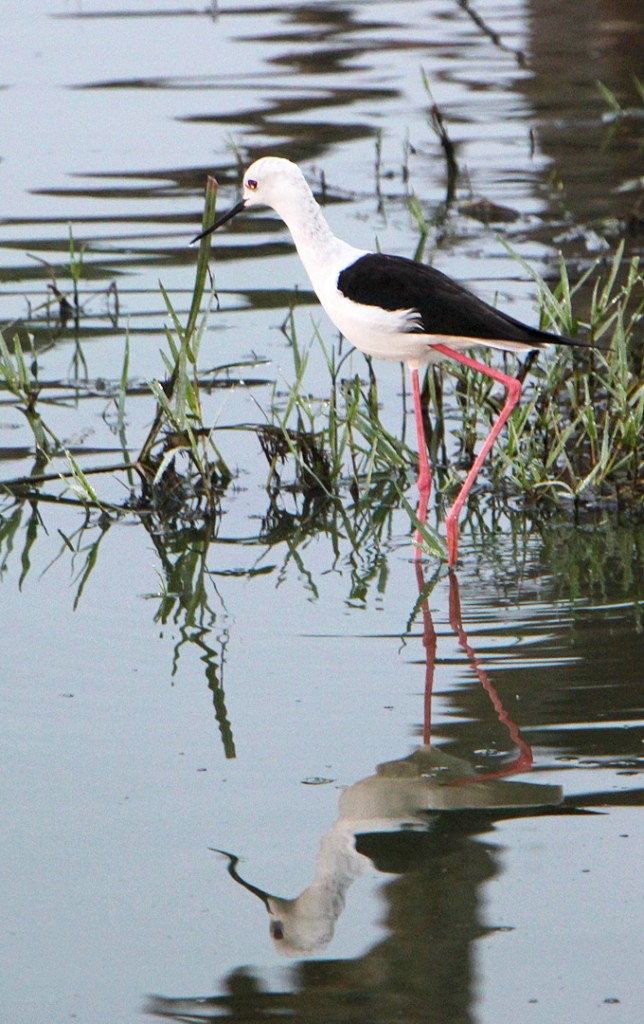
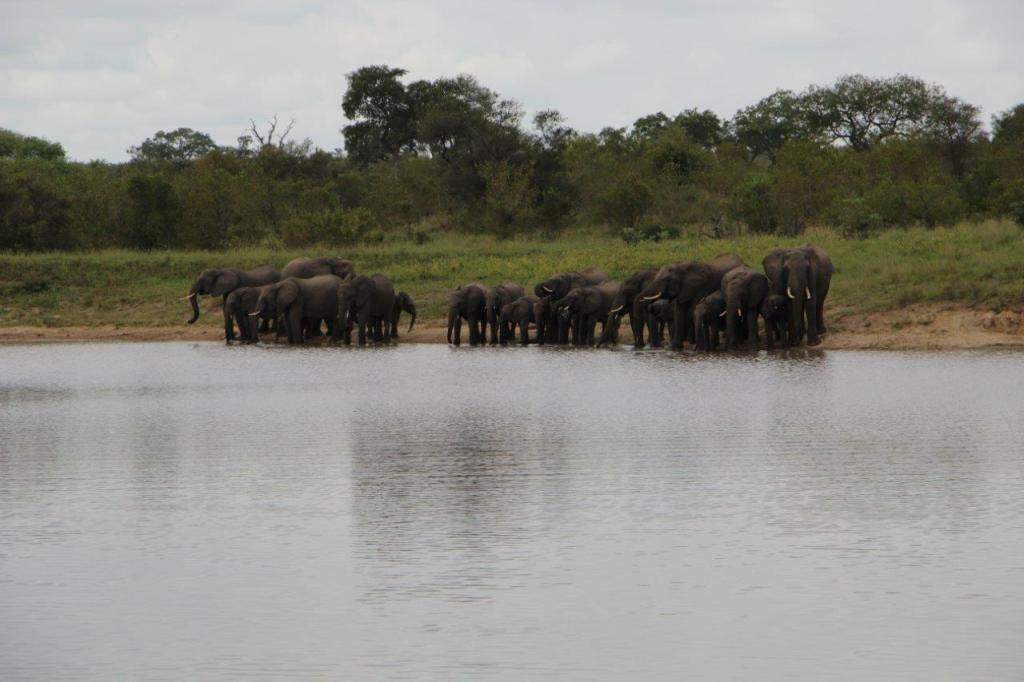
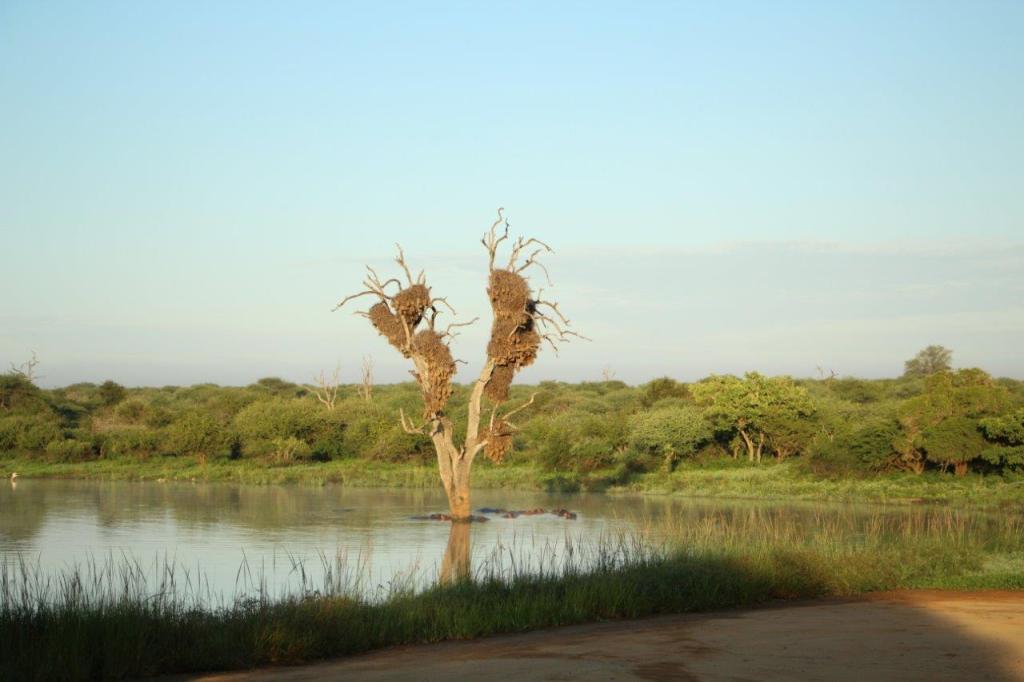
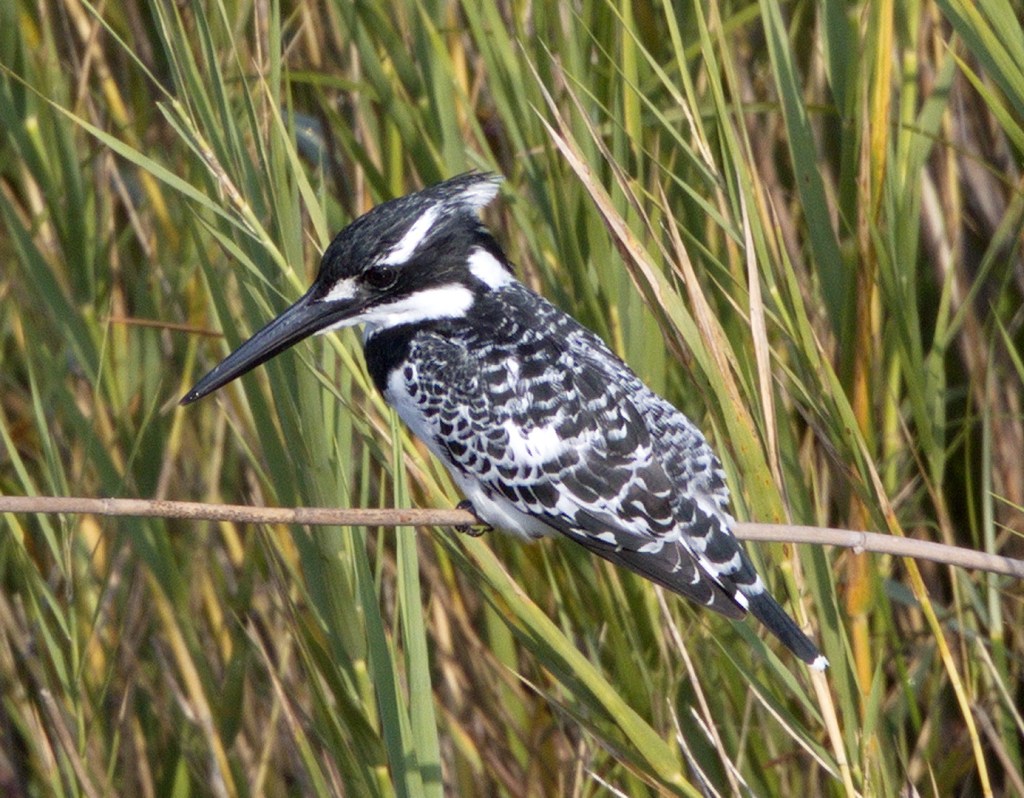
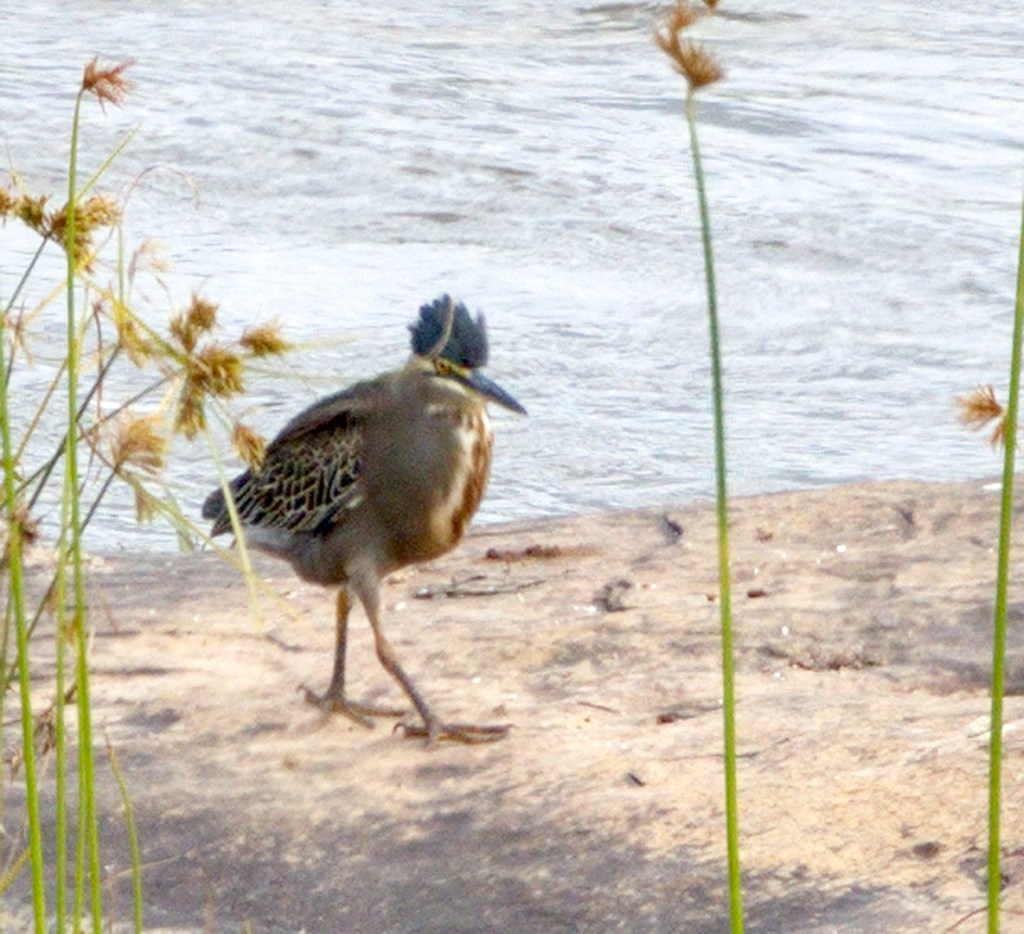
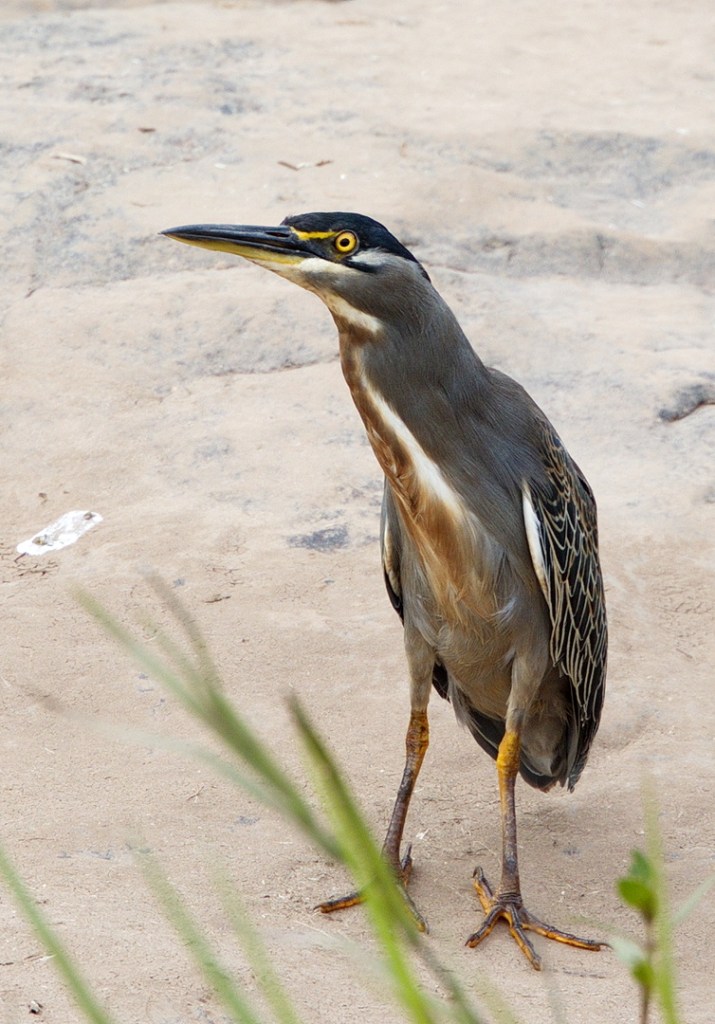
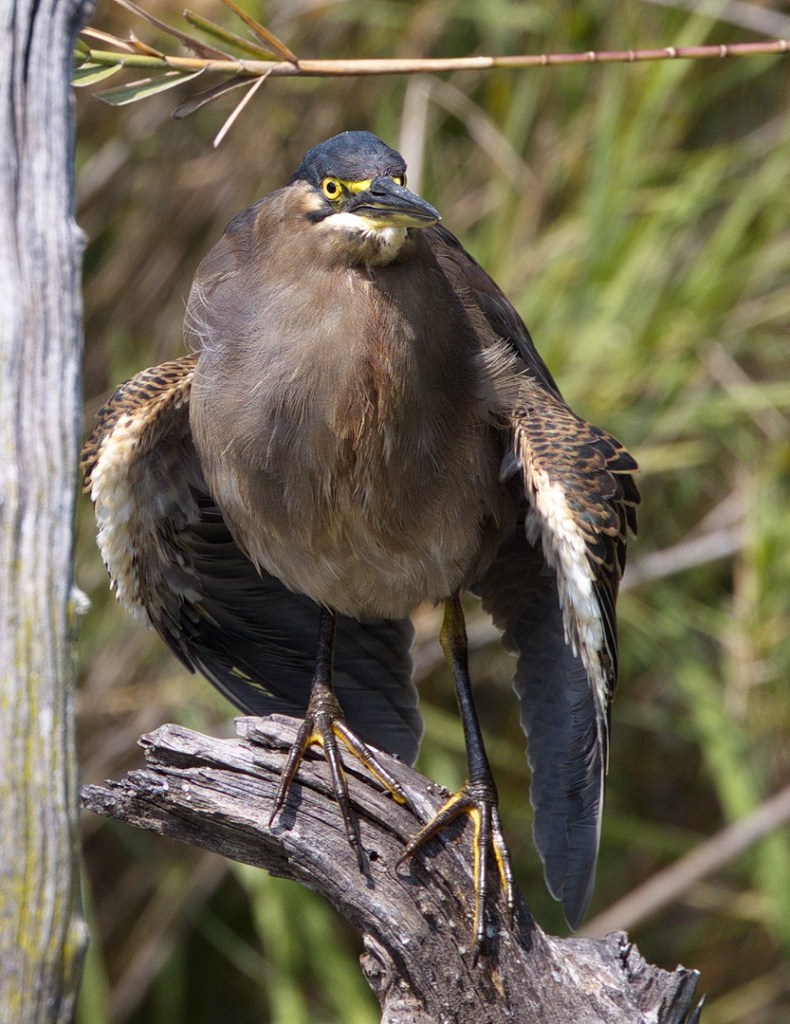
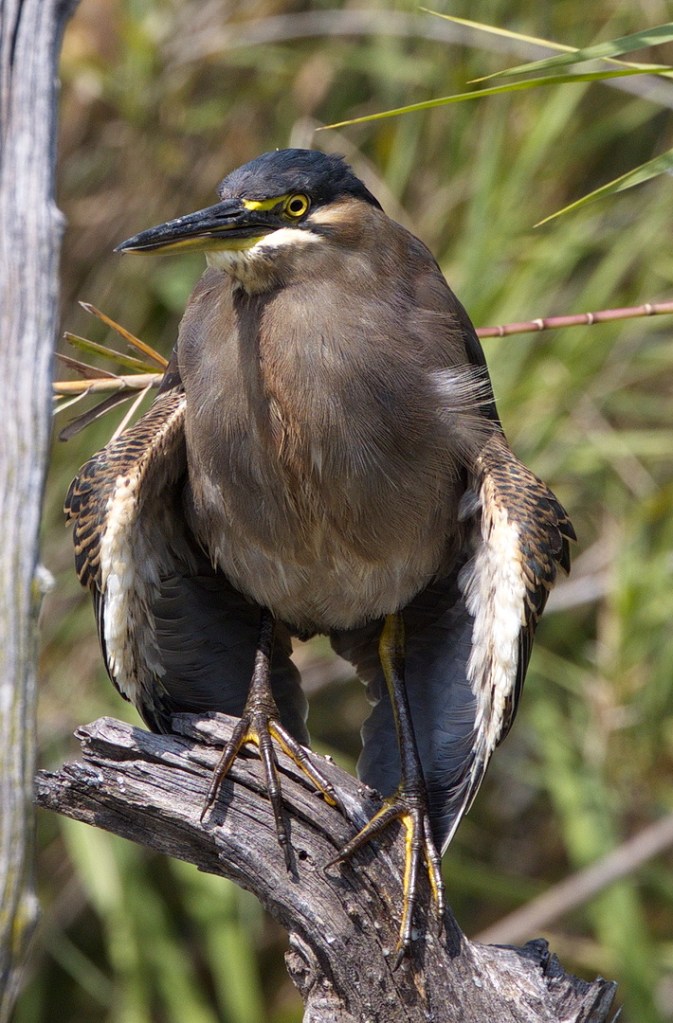
Brown-hooded KingfisherBlack-crowned TchagraBlack-winged StiltBlack-winged StiltA rather long crocodileElephantsRed-billed Buffalo-Weaver nestsPied KingfisherStriated HeronWood SandpiperStriated HeronStriated Heron branching outStriated Heron branching outStriated Heron branching out
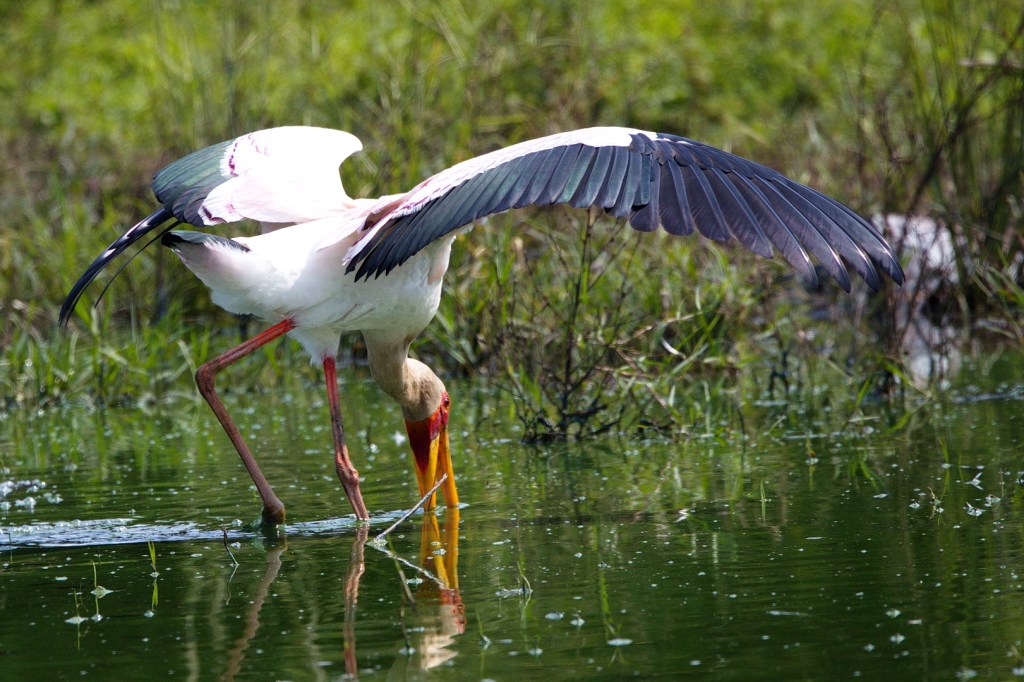
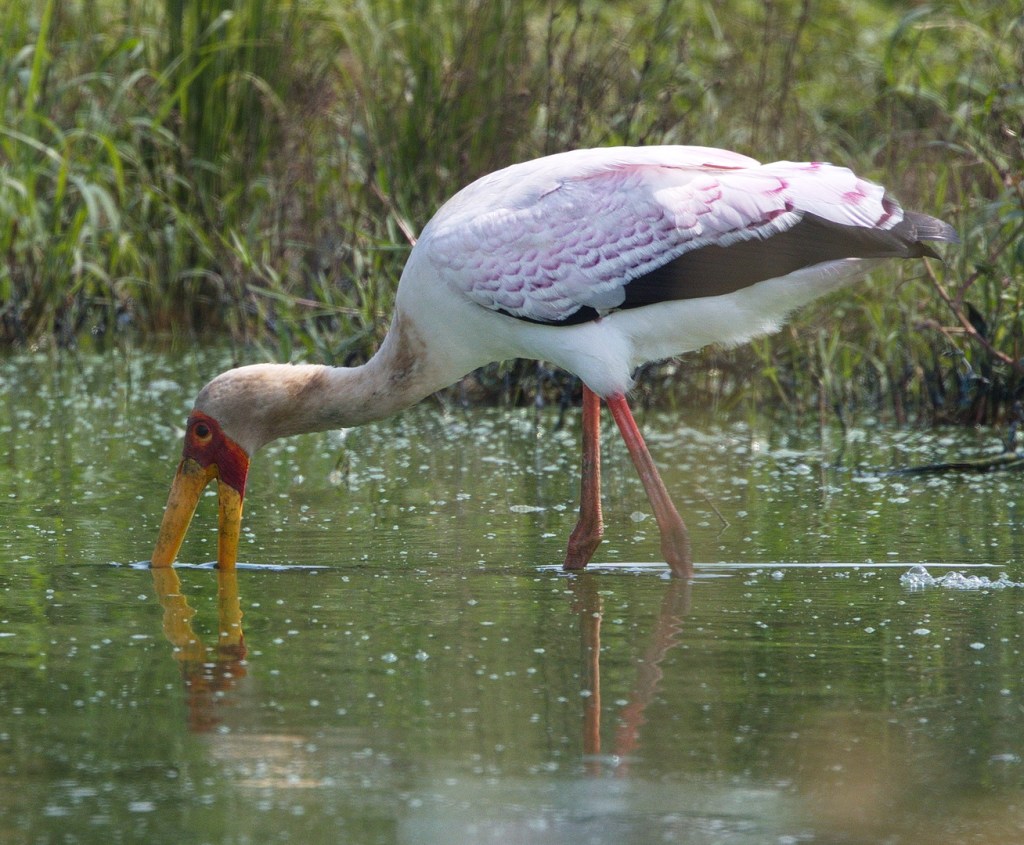
A Yellow-billed Stork showed how it uses its wings to move around quickly chasing dinner in the water.
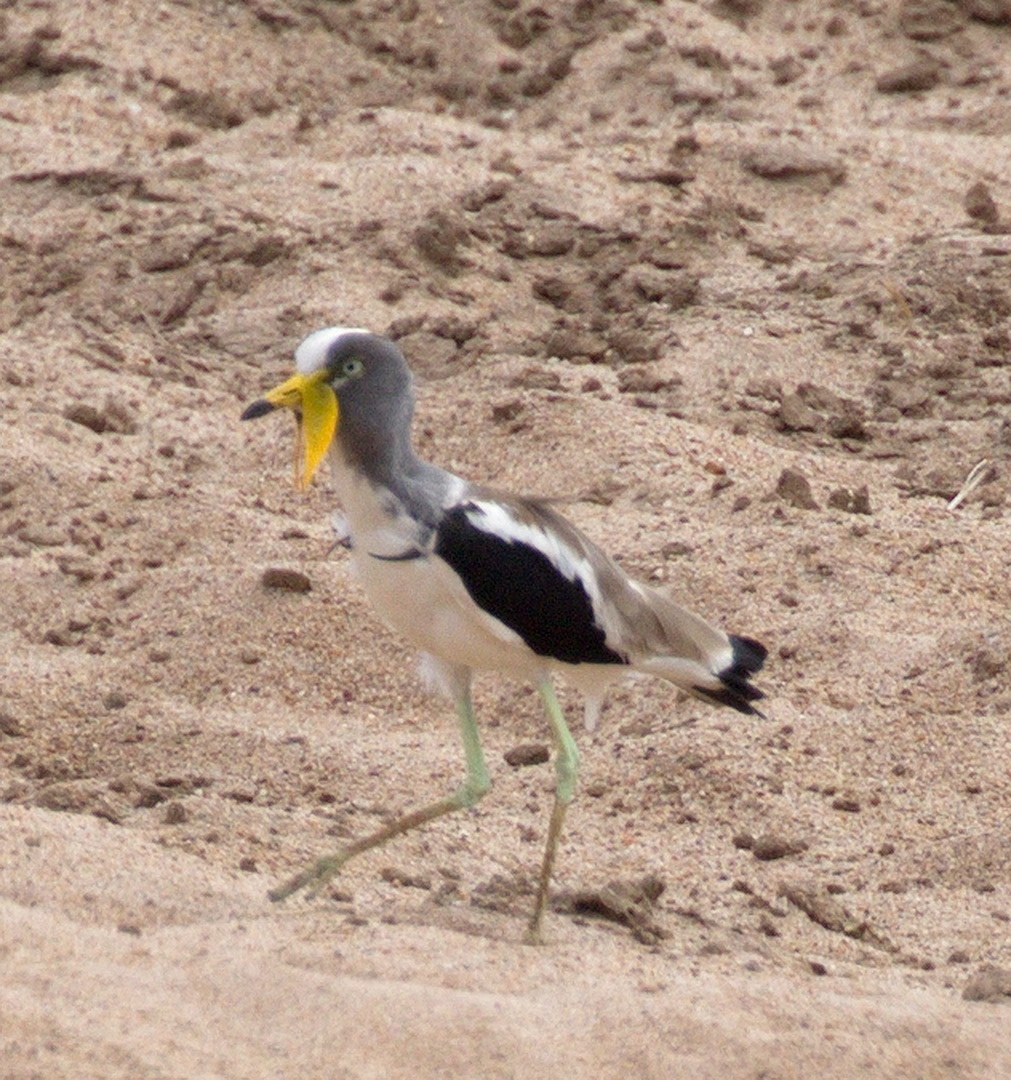
Surprisingly, we saw several pairs of White-crowned Lapwings in Sunset Dam as well as near the main bridge crossing lower Sabie. In the past we had only ever seen them in the north of the Park around Pafuri.
White-crowned Lapwing.
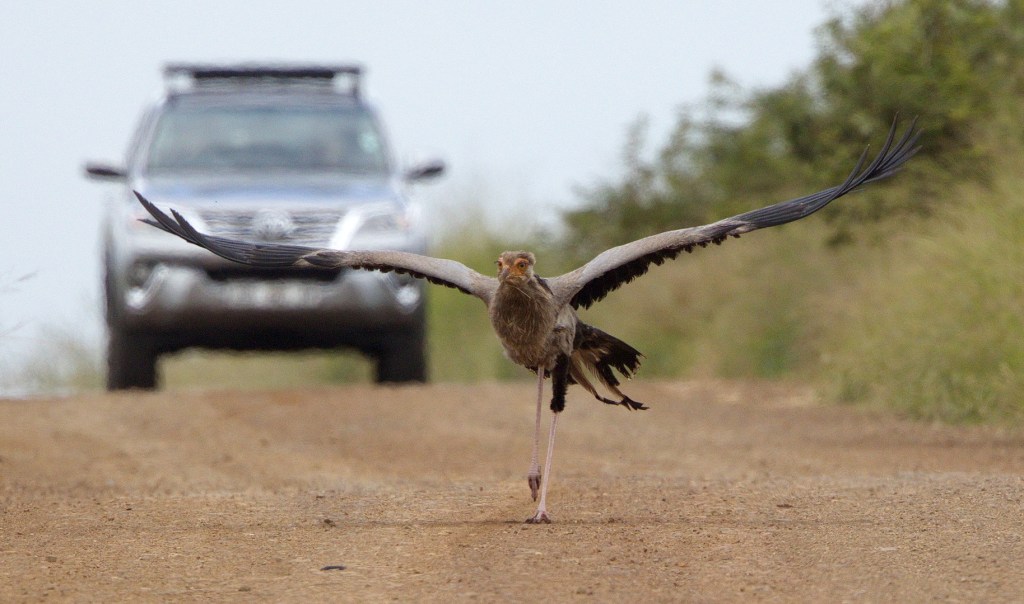
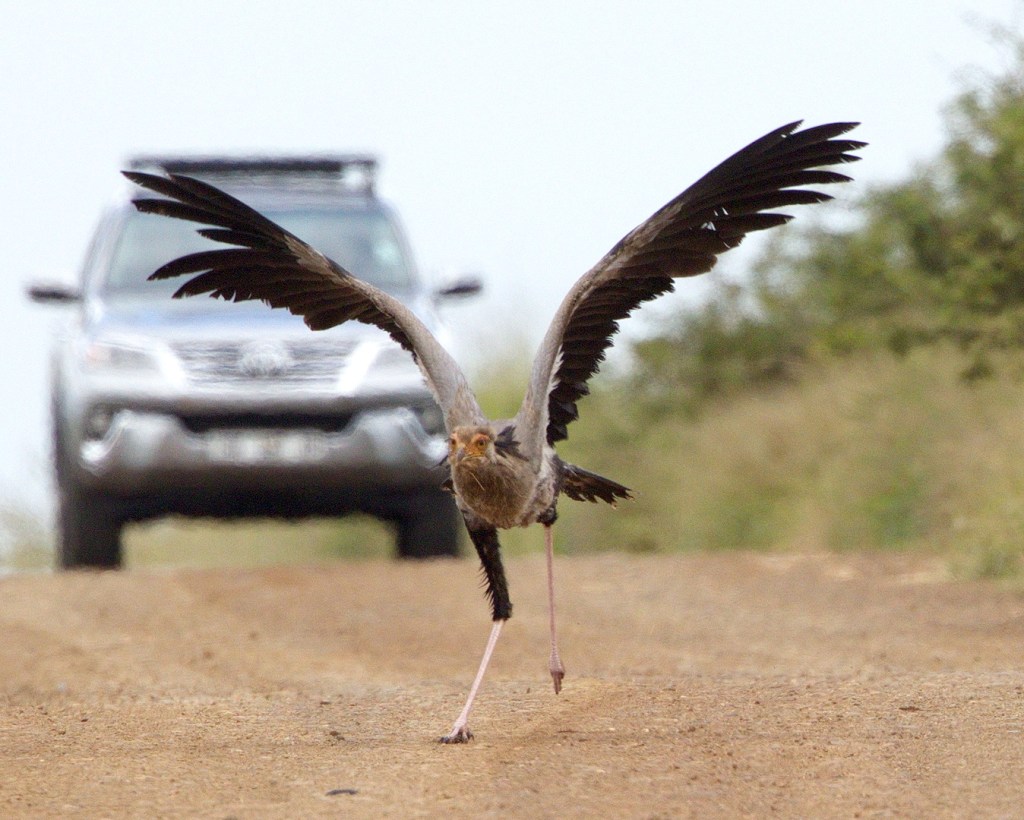
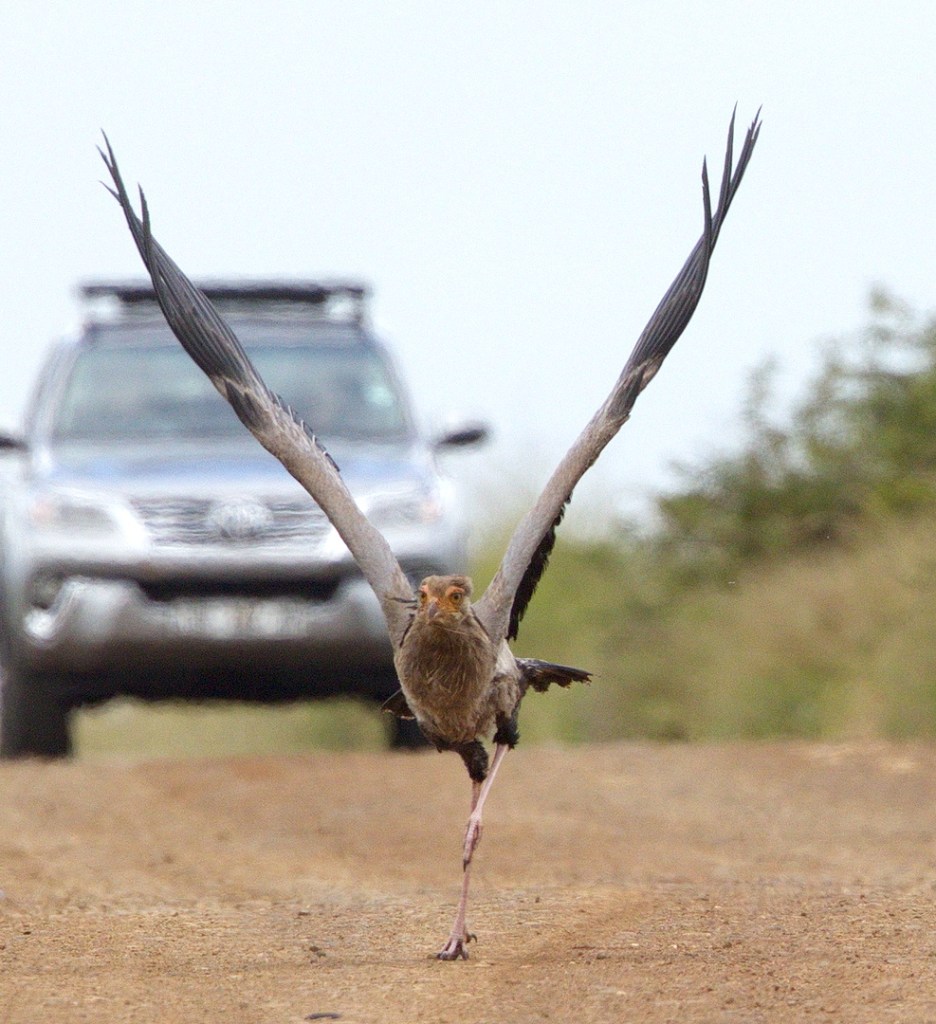
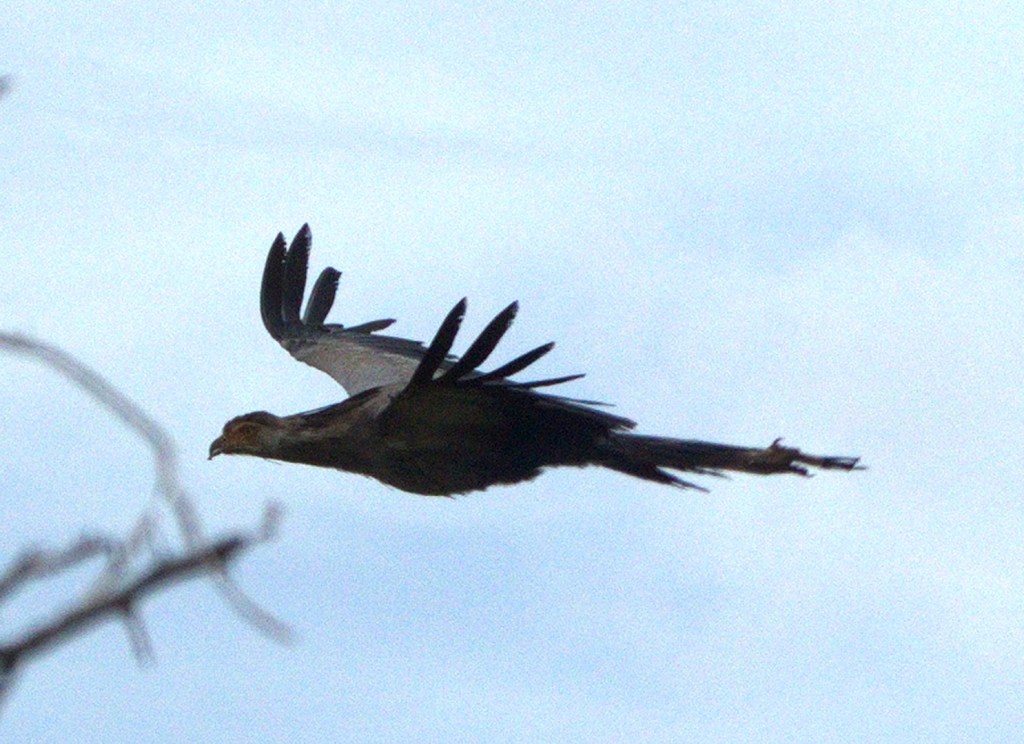
On one of the back roads, we noticed a Secretarybird way ahead of us. As I was about to take a photo, a car came over the hill and it took off towards us fortunately.
Secretarybird attempting to get into the air.
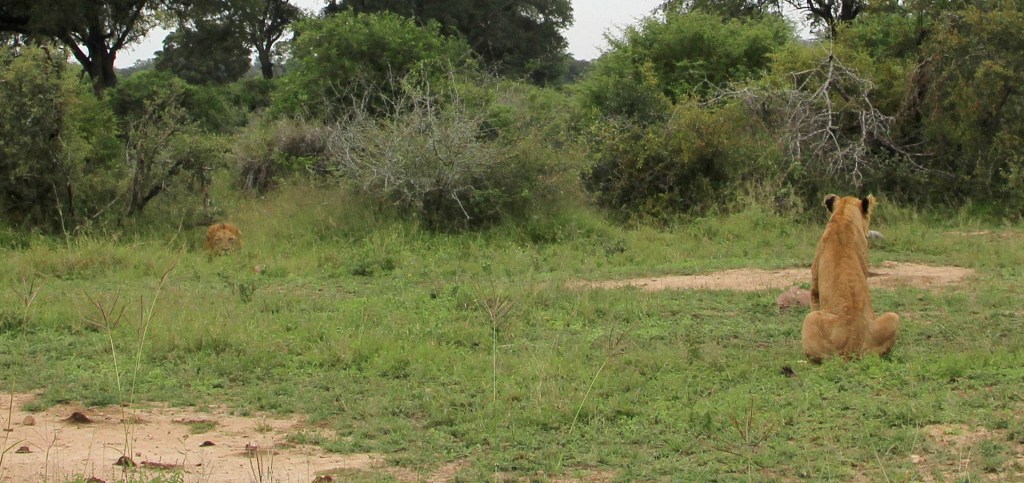
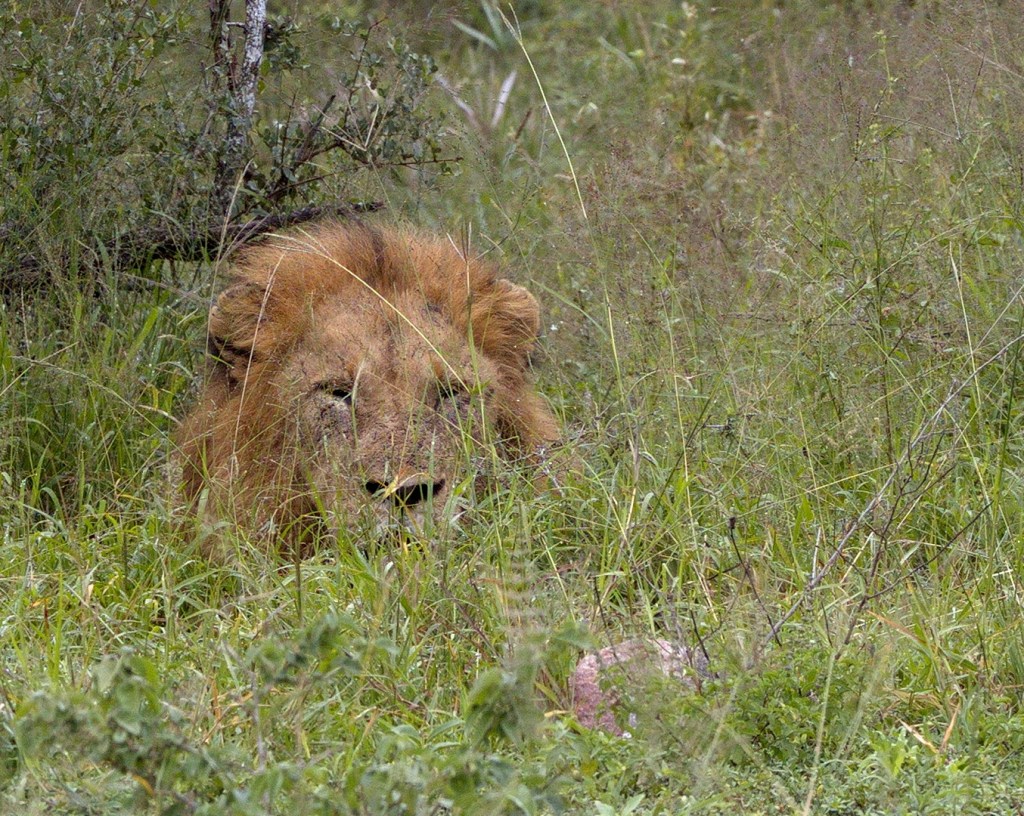
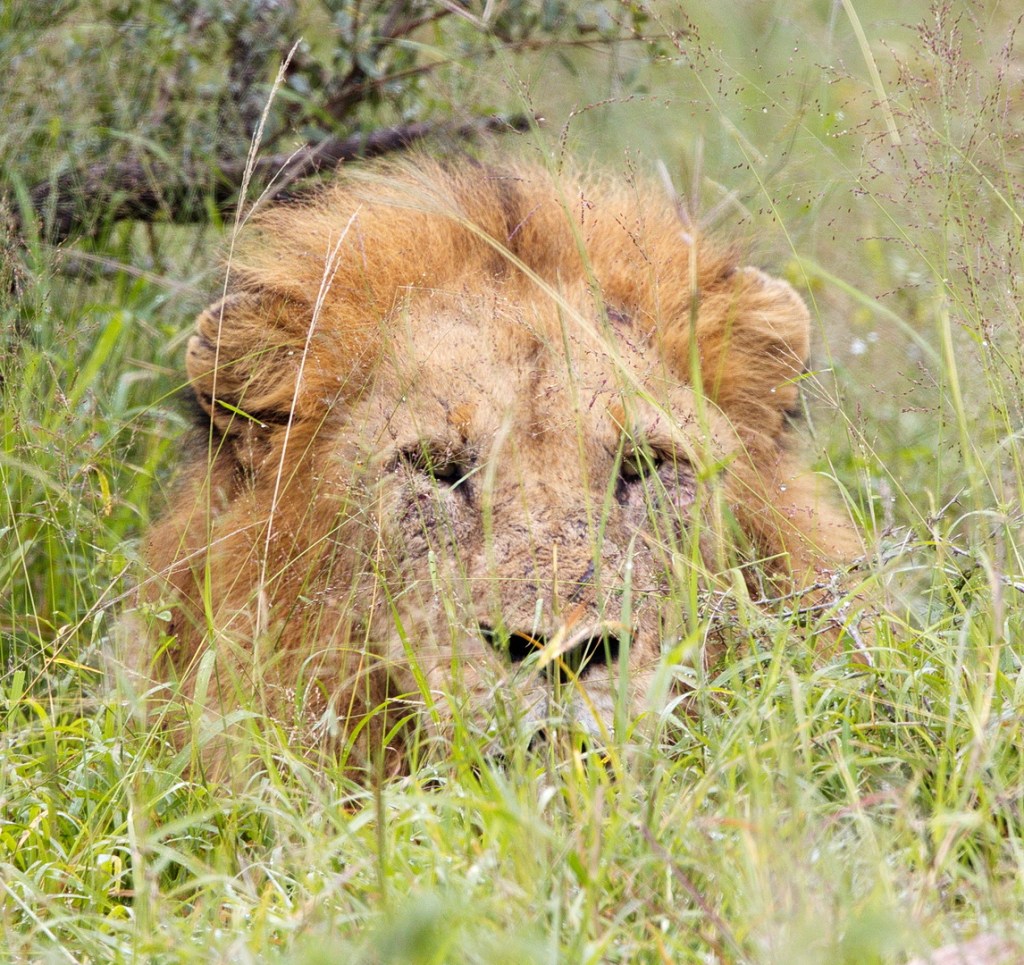
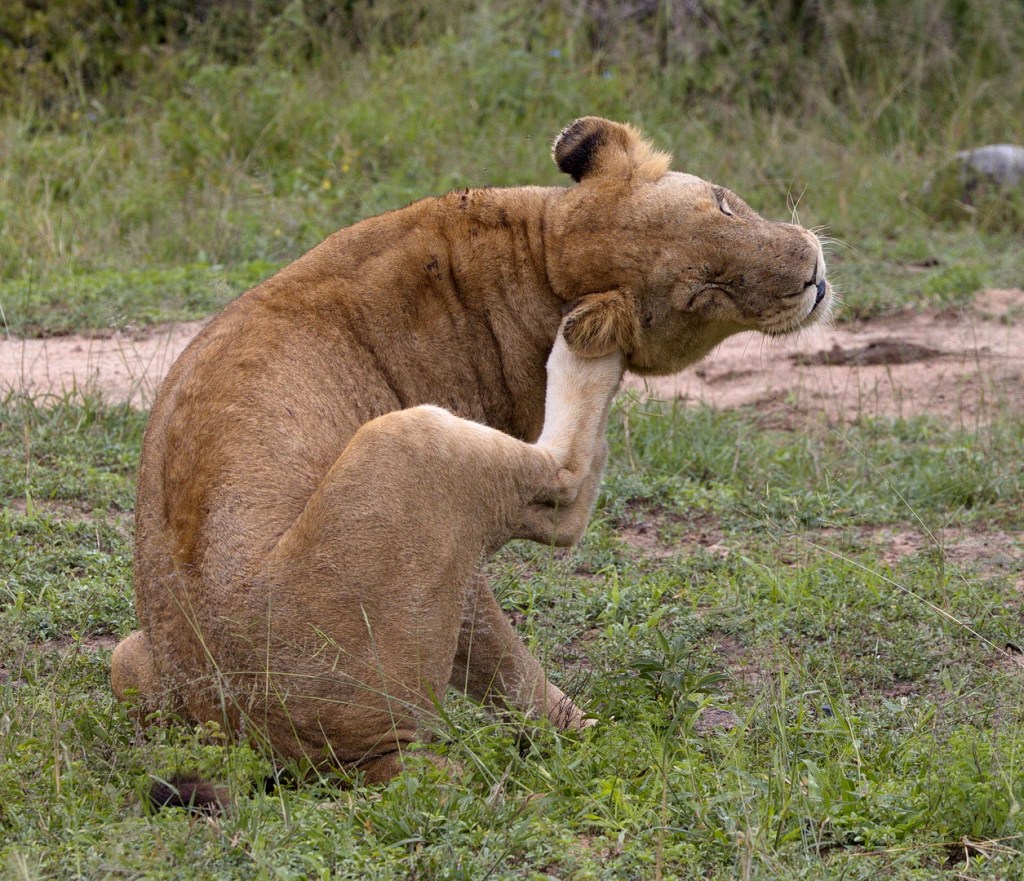
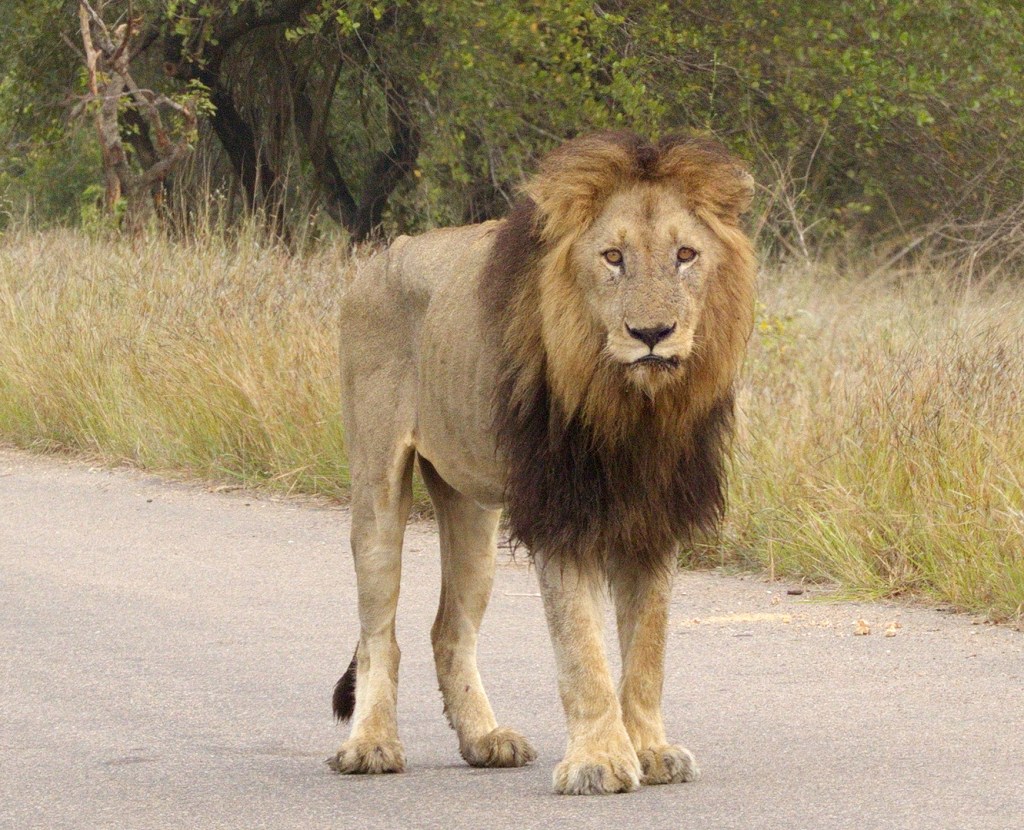
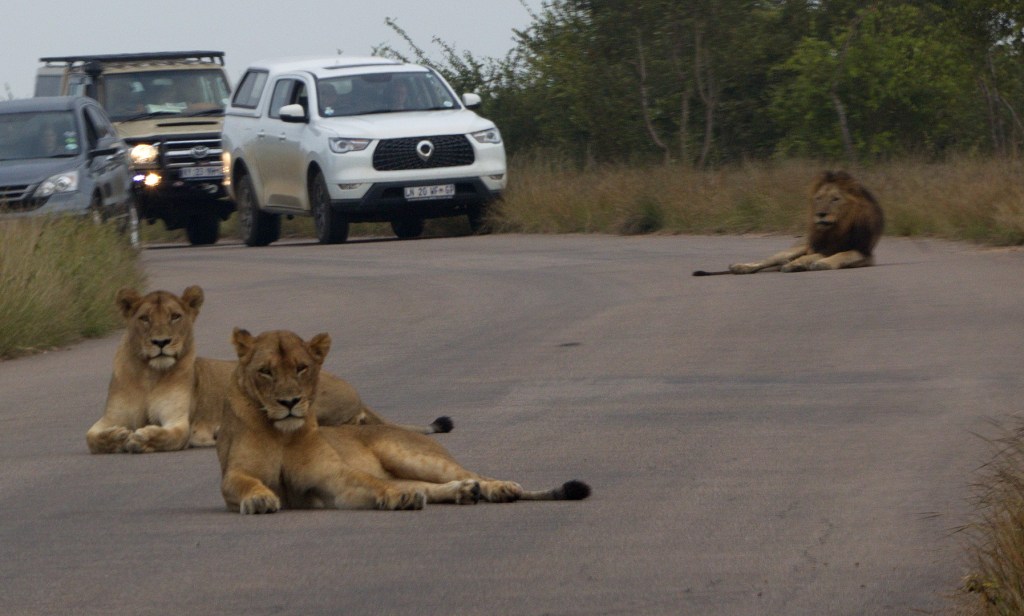
We did come across several Lion sightings – a mating pair in one instance and a pride lying across the road with the usual traffic jam. We also saw briefly our only Cheetah and took a video of a Hyena walking by.
CheetahWaiting for her man.Male Lion recuperatingMale Lion recuperatingLioness keeping him at bay for the momentLioness resting between sessionsLioness tarting upScrawny male with mates on the roadA gemorse of traffic.
Hyena
Hyena with wounded back.
Raptors
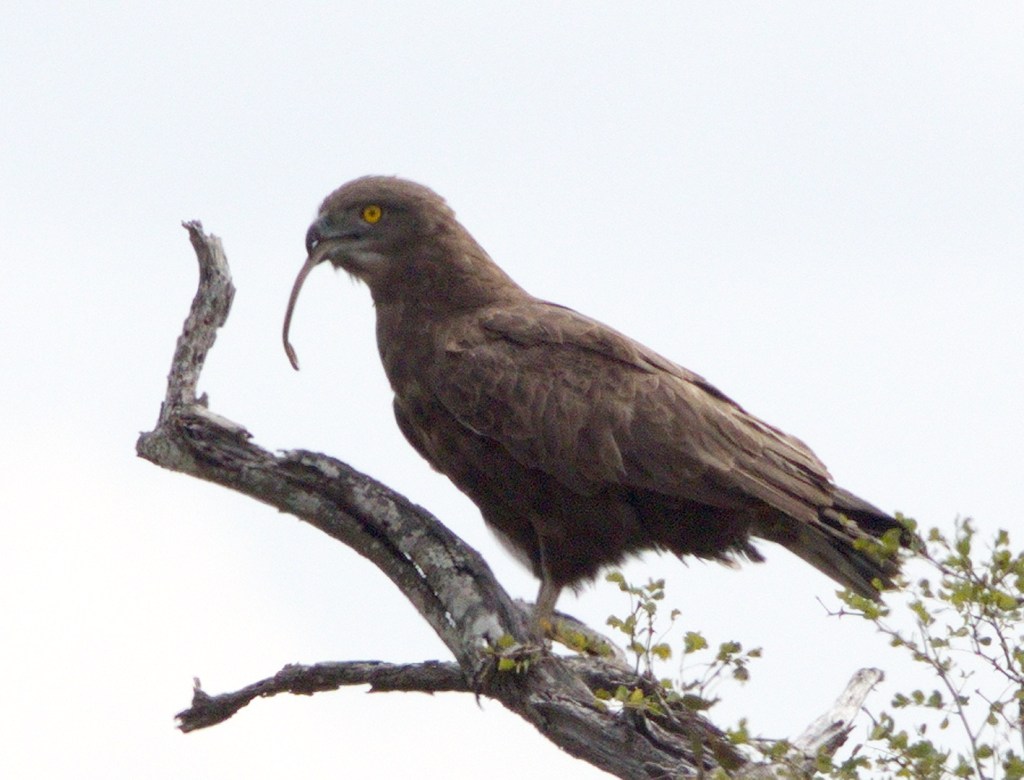
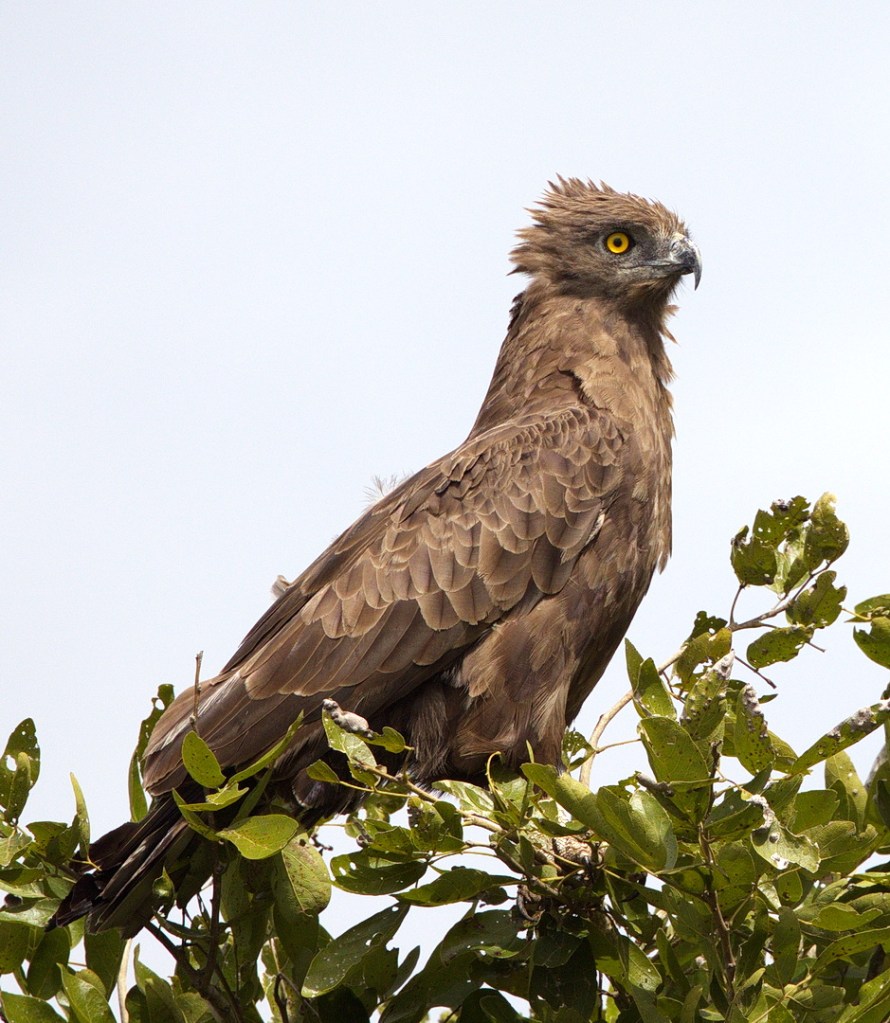
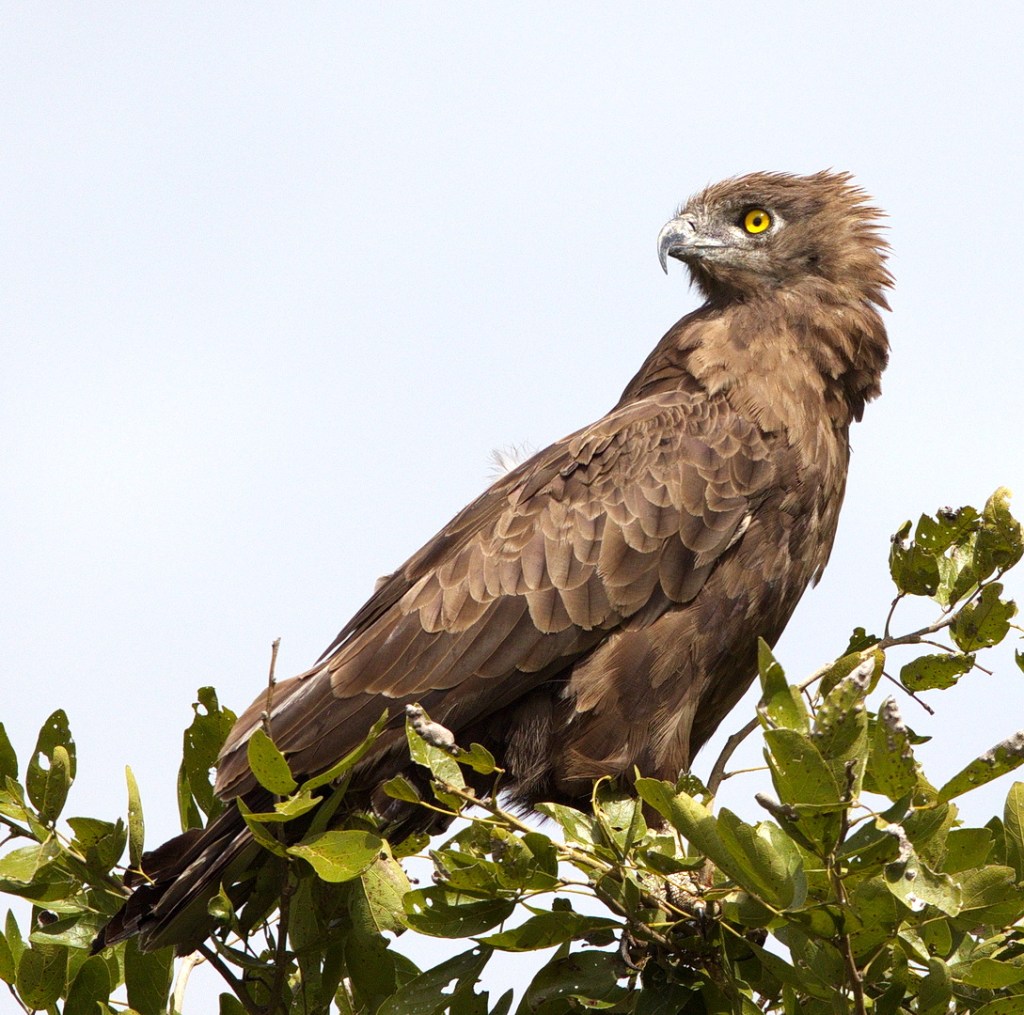
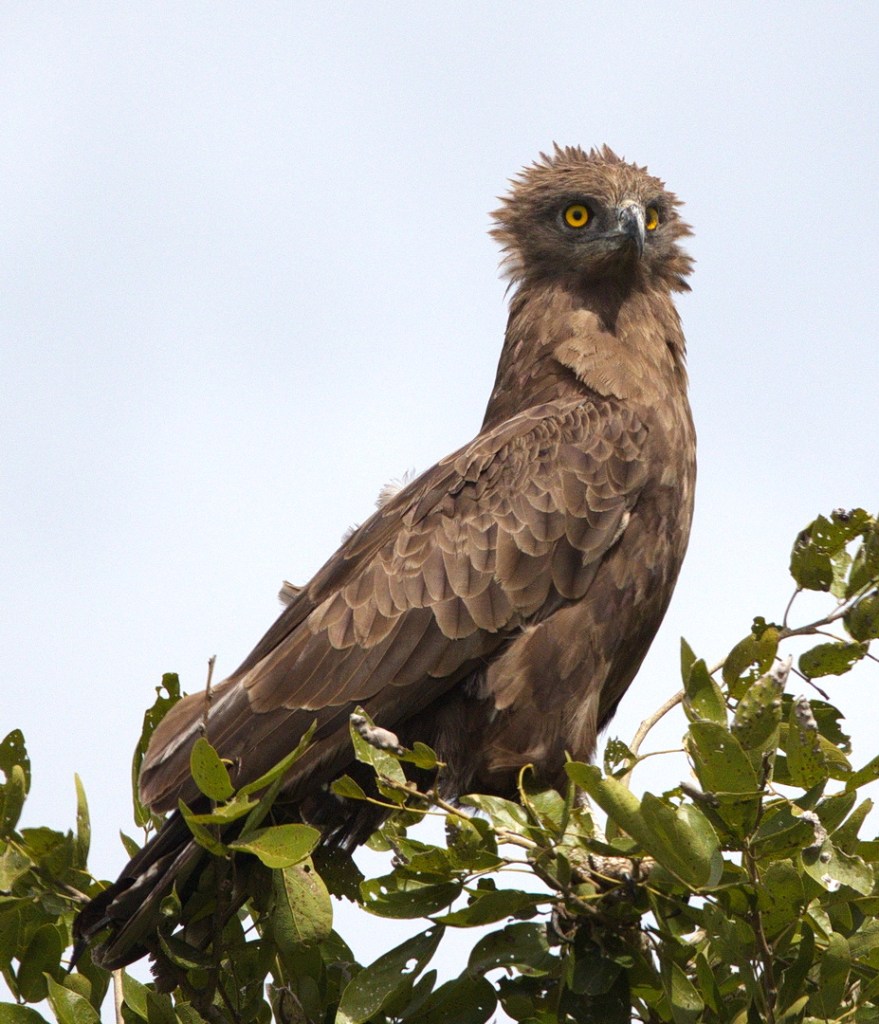
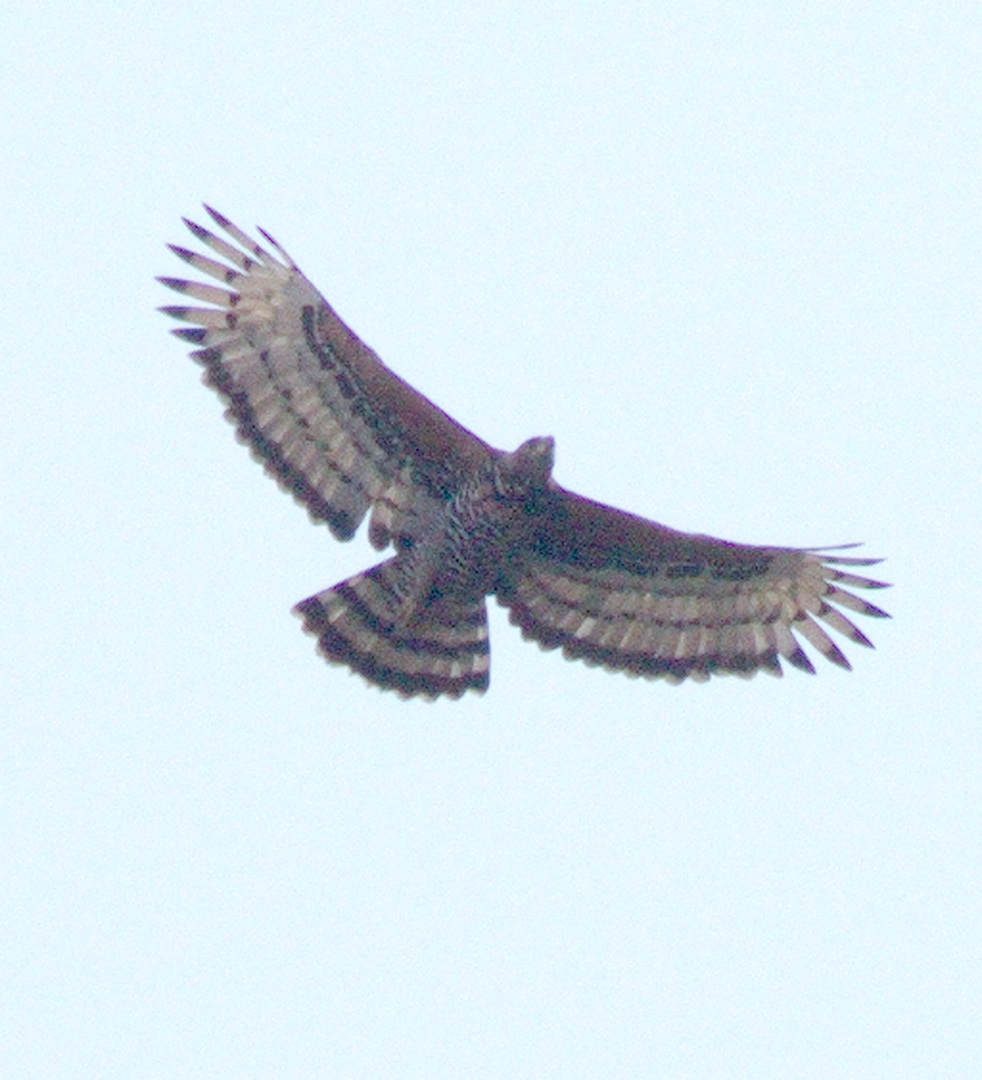
Several Brown Snake-Eagles, Martial Eagle
Brown Snake-Eagle with snakeBrown Snake-Eagle coming at usBrown Snake-Eagle coming at us – getting closerBrown Snake-Eagle almost upon us.Brown Snake-EagleStaring us down yMartial EagleMartial Eagle
And here are some of the other species we managed to capture.
Sally and Paul enjoying a sundowner at the Berg-e-dal bar.
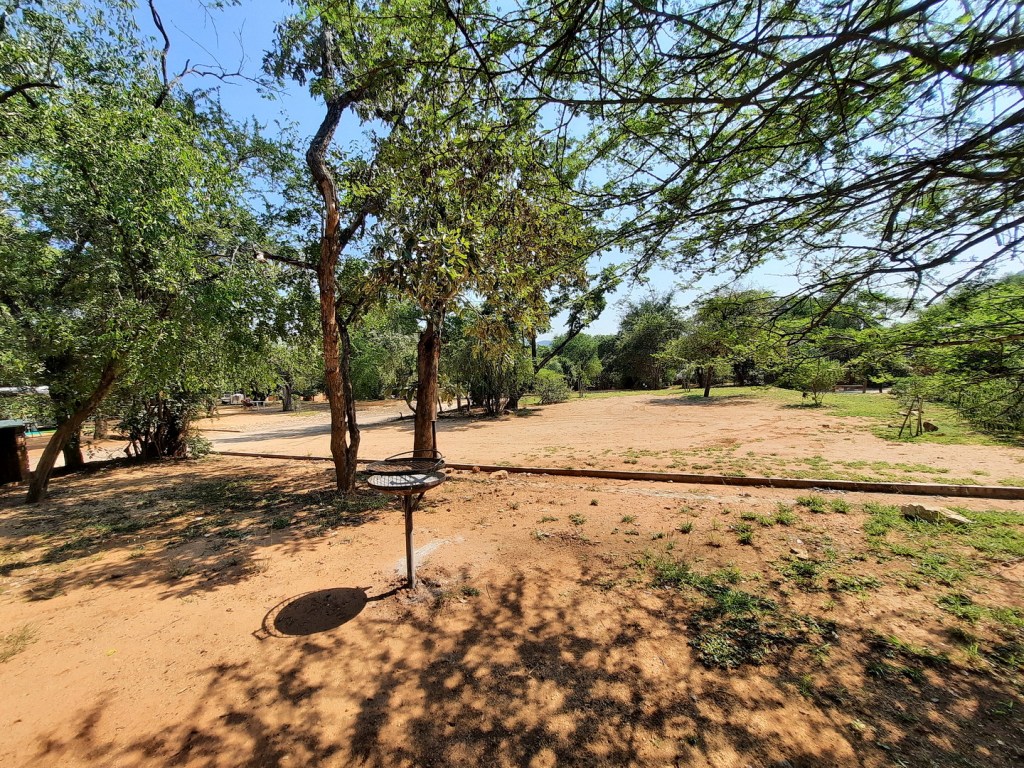
After driving around the camp for ages looking for a spot, we eventually settled on a site we had first seen. And we enjoyed the privacy and outlook.
Our outlookLaid back into the bushAblutions far enough away.
We ventured around the area but also took a long day out to Pretoriuskop – taking the H2-2 from Afsaal to Pretoriuskop. Then back along the S1-1 and H3, visiting dams and other features along the way.
Typical scenery.
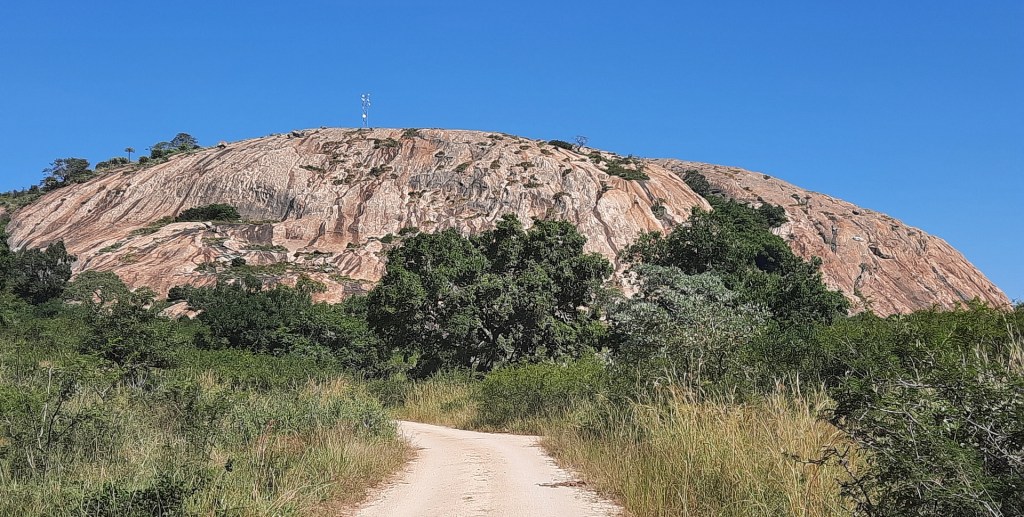
The Dome near Pretoriuskop on the S10Impala LilyTransport DamShitlhave Dam – H1-1Shitlhave Dam – H1-1More rain down south of the Park so the grasses were tallerMathekeyane GranokopMathekeyane Granokop tea break.
A natural rubbing post for Warthogs and Rhinos usually.
Very Finger-looking good.
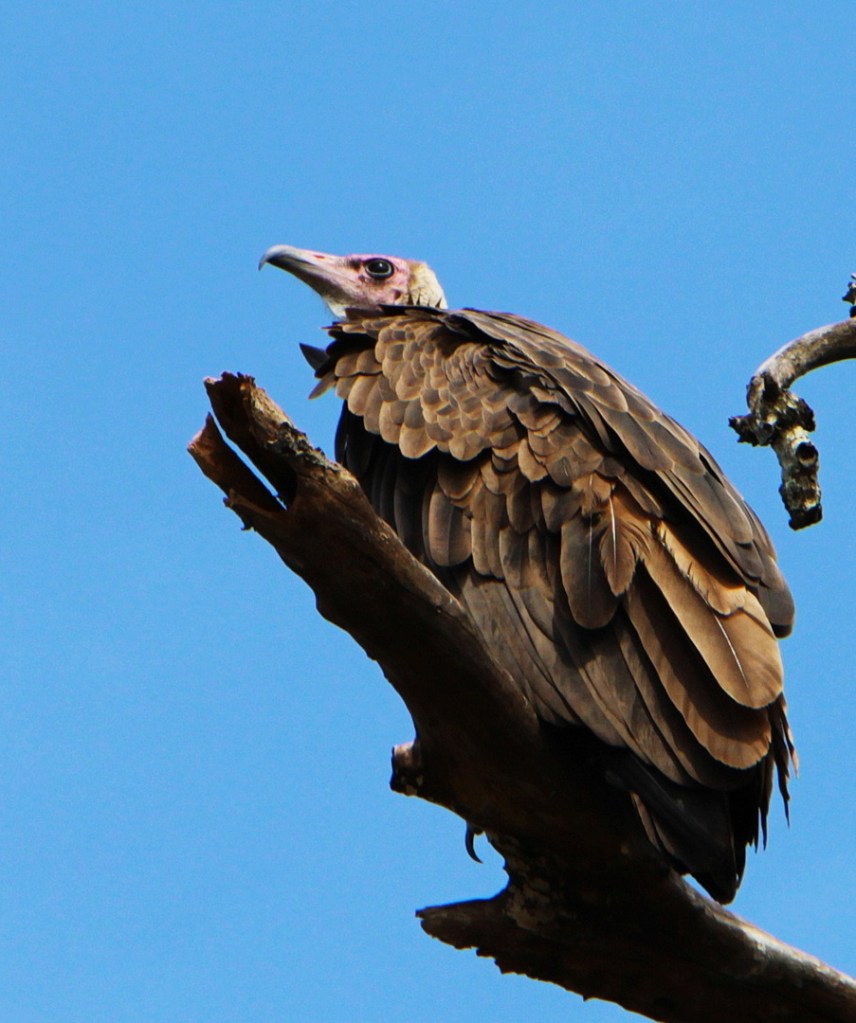
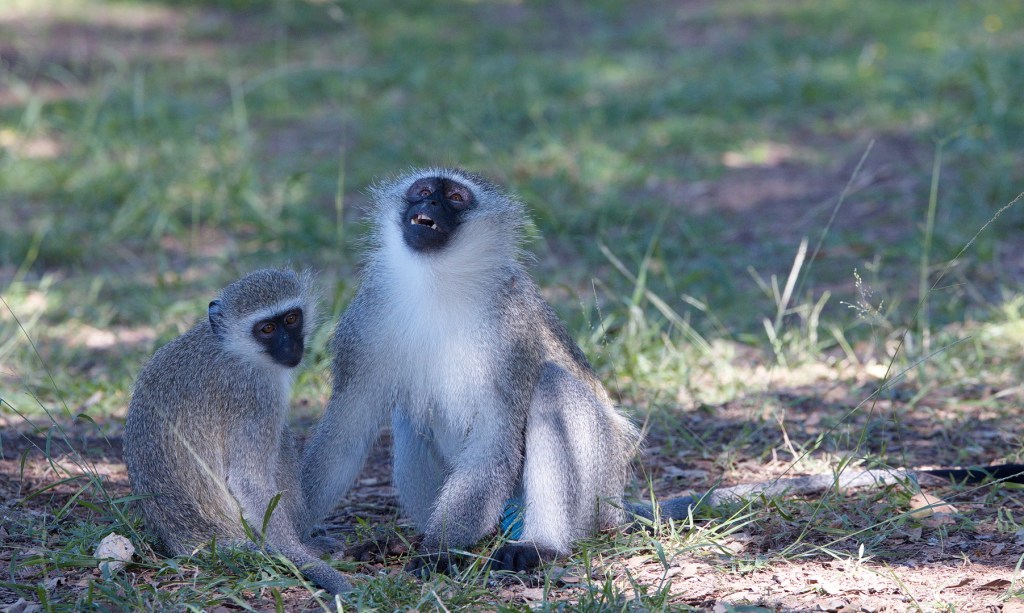
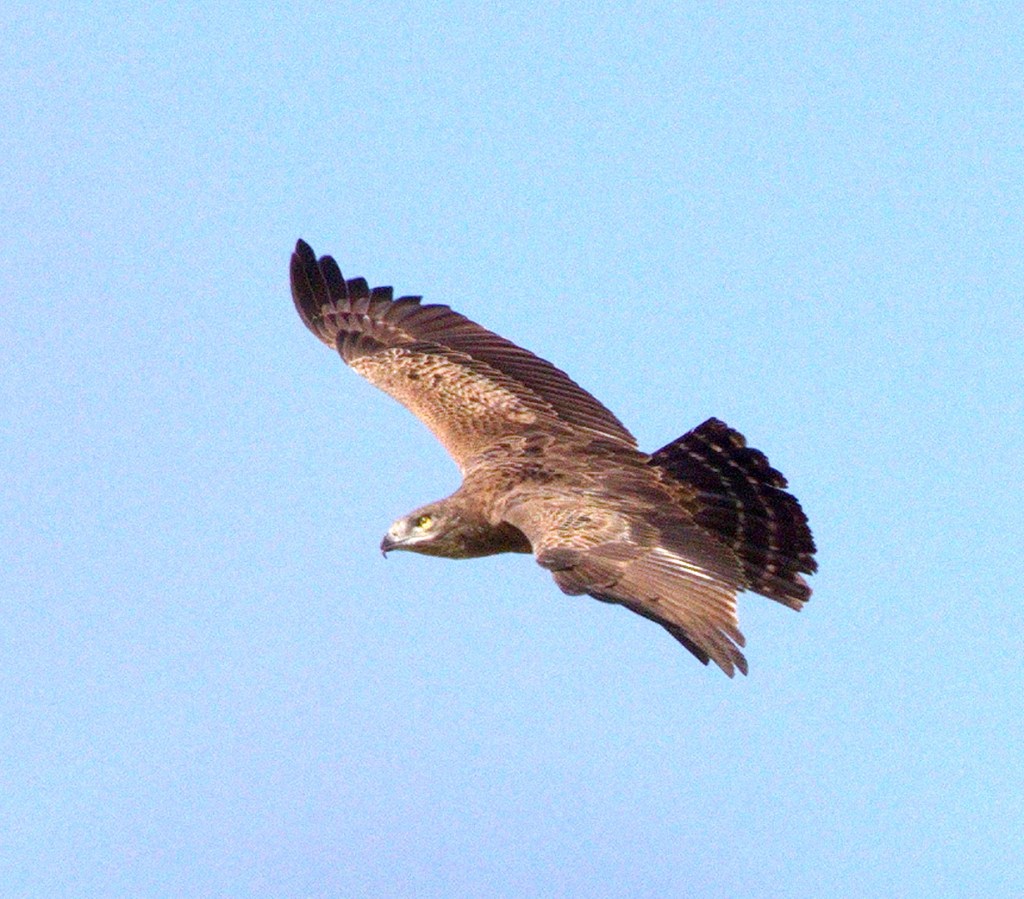
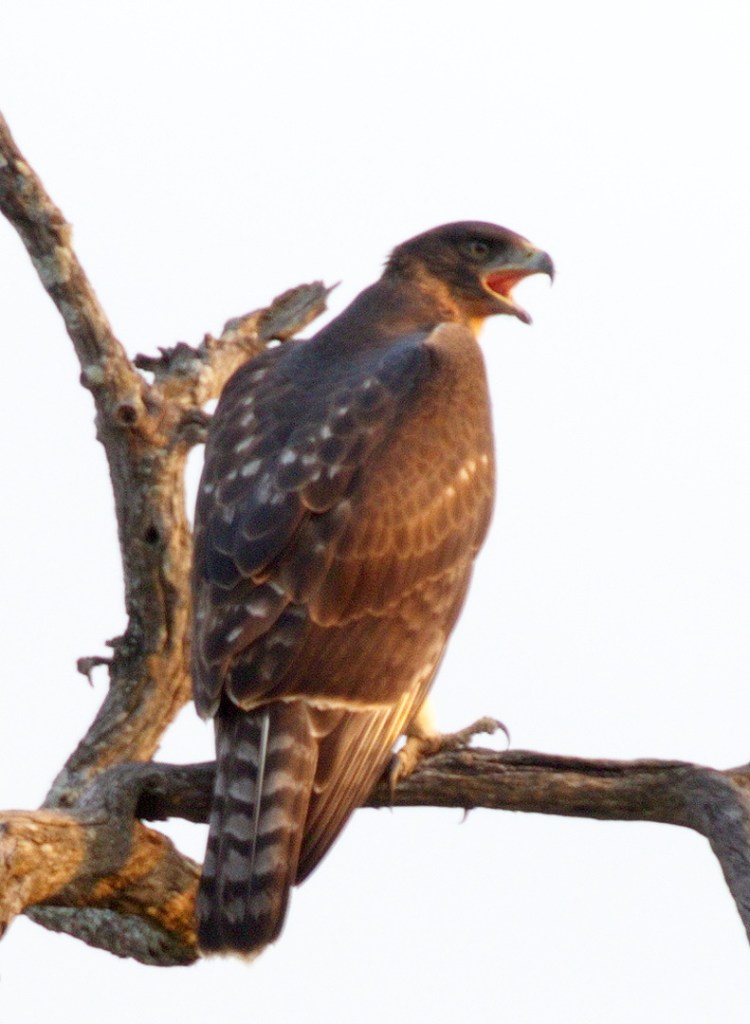
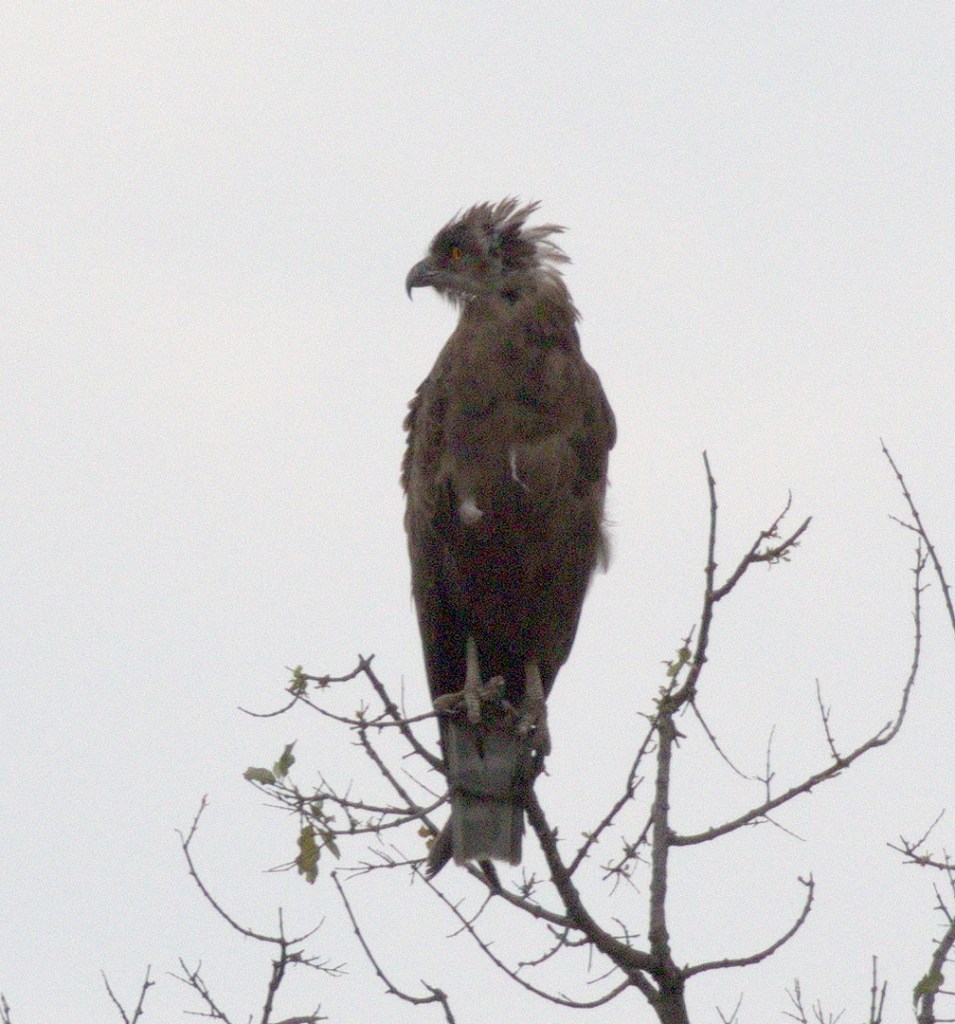
Along the way we had some lovely birds too. A pair of African Hawk-Eagles, a Gabar Goshawk, a Black-winged Kite high above and a Martial Eagle were the raptors which stood out. Of course there was an unidentified raptor photographed as well. An ear-torn Hyena walked up to us and a pair of Vervet Monkeys were nervous of life above in Pretoriuskop. Even a Hooded Vulture made an appearance.
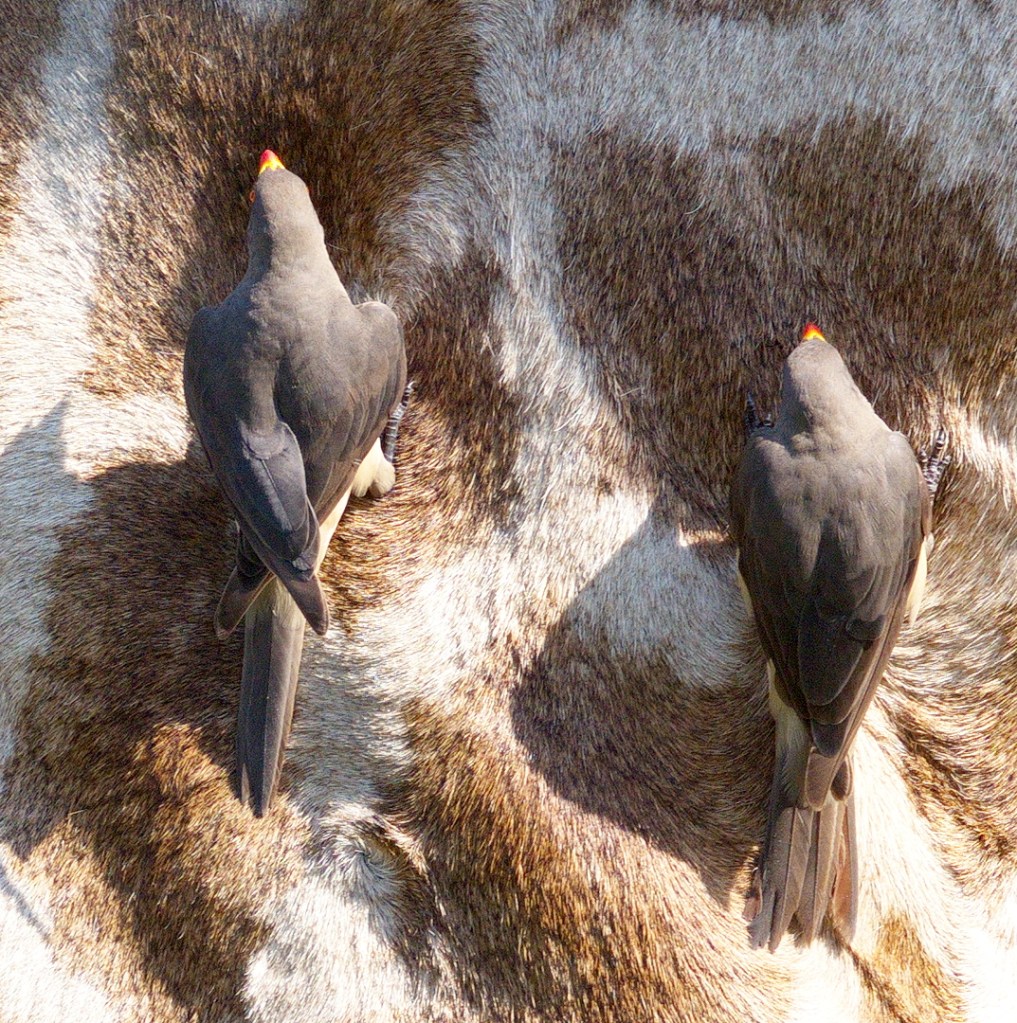
Then there was a sighting of Yellow-billed Oxpeckers on a Giraffe. There range has extended well.
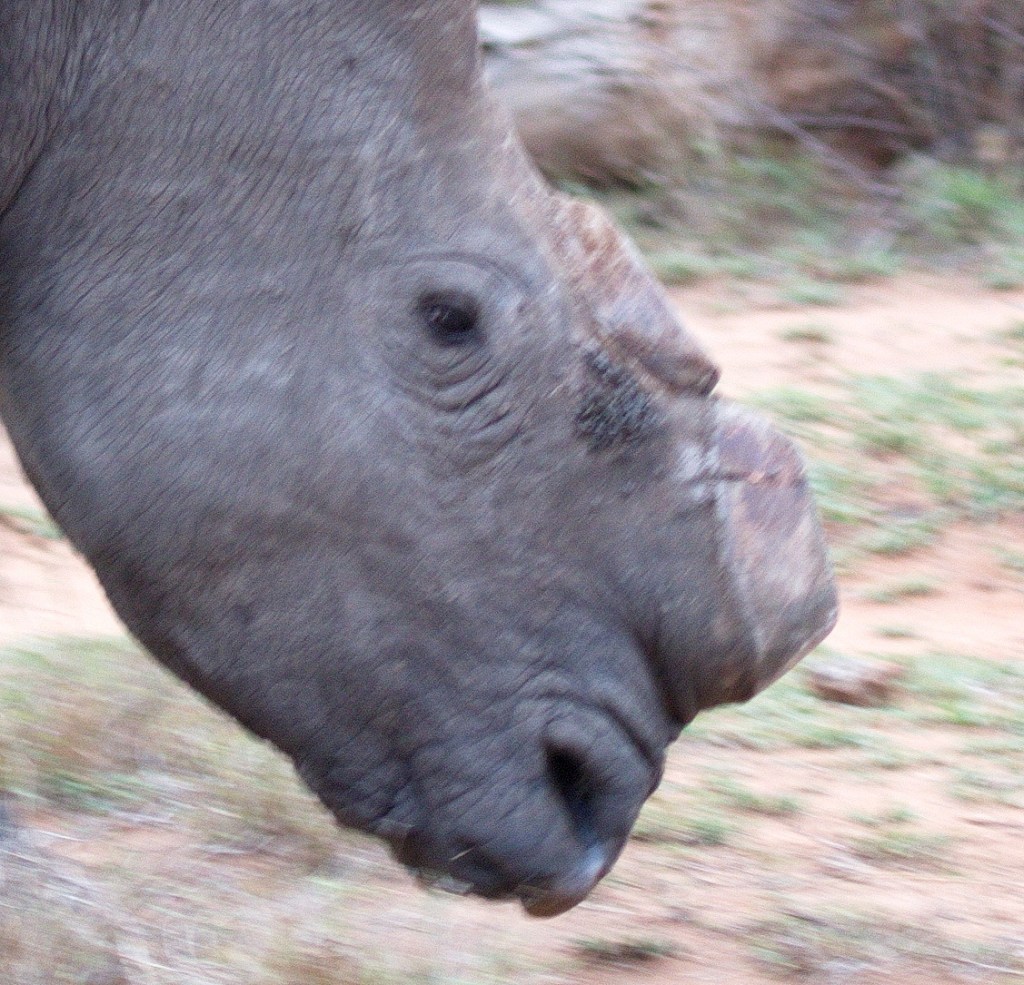
We even found some Rhinos – our first for the trip!
Around the camp we were also treated to some fine species.
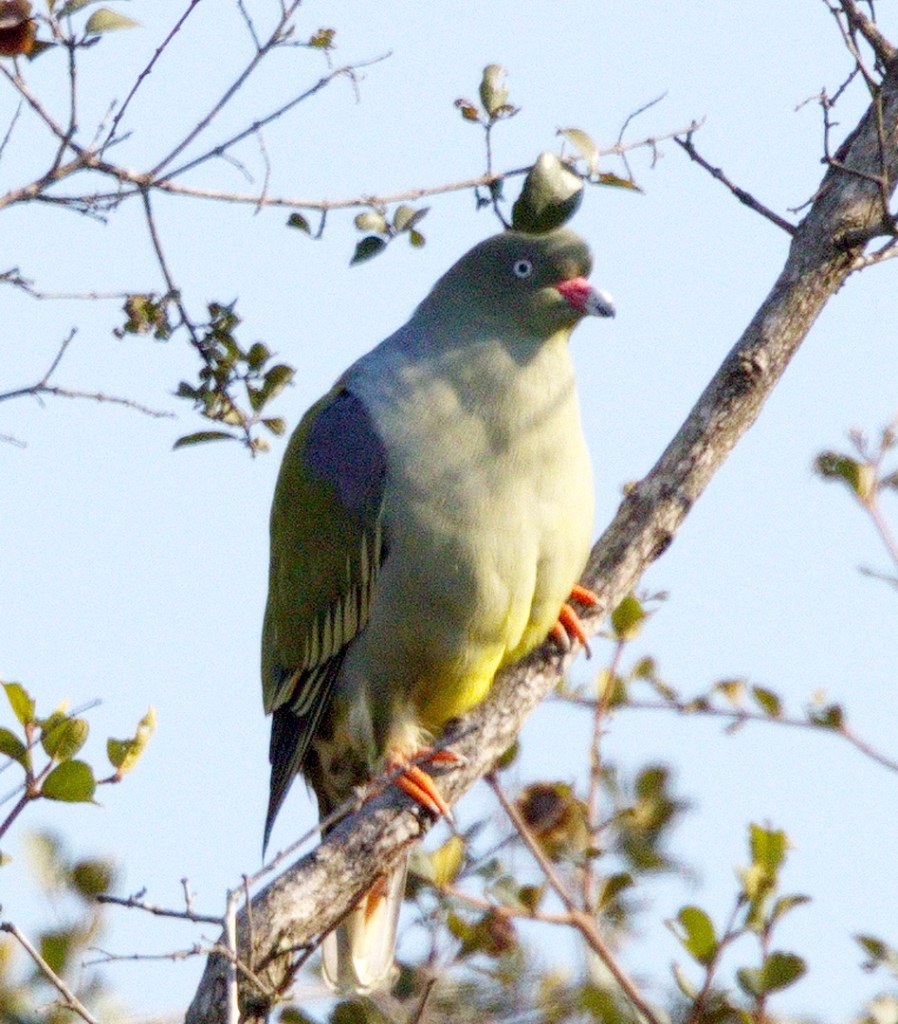
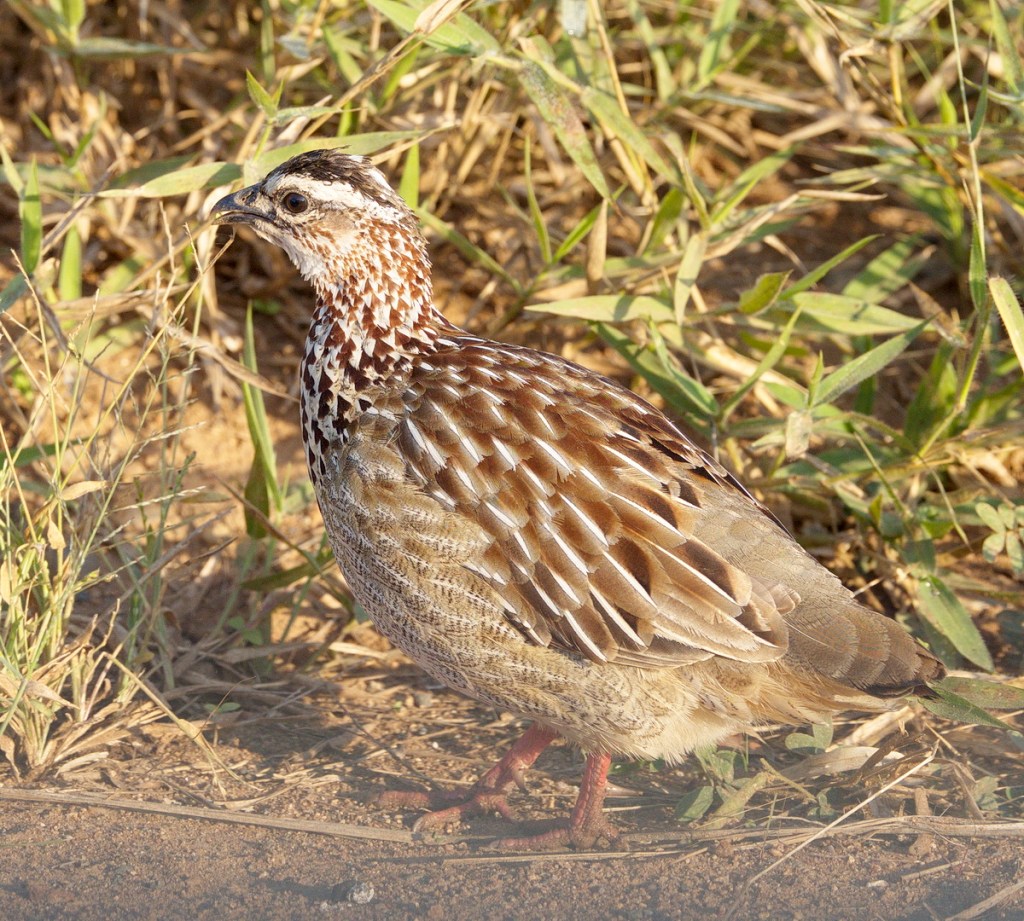
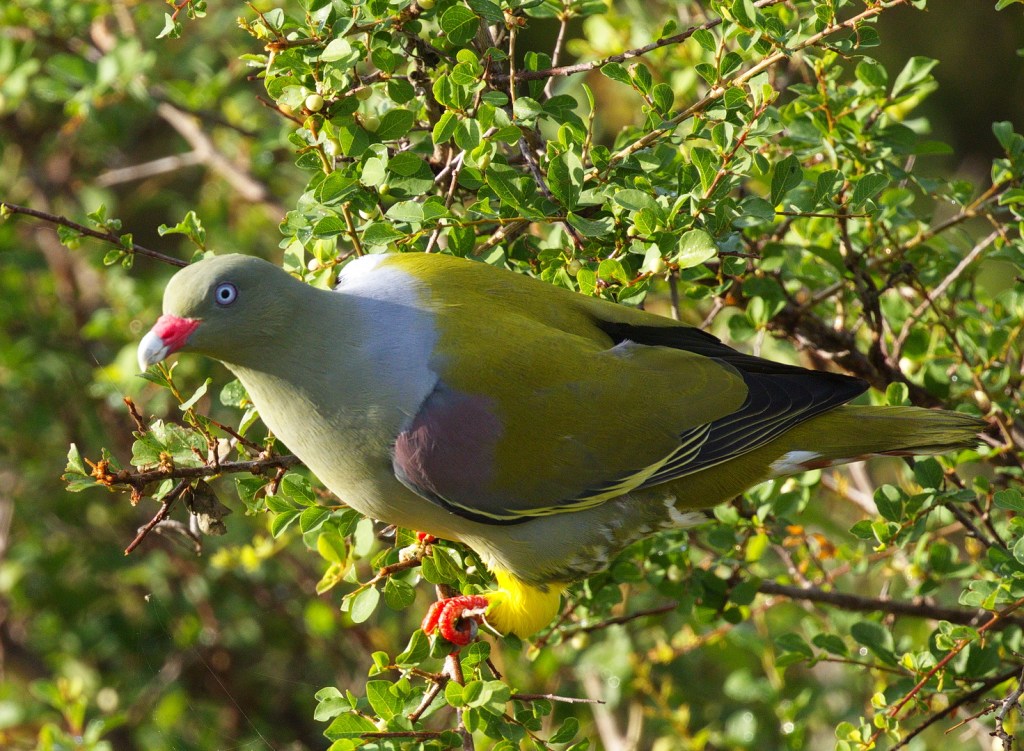
African Green PigeonAfrican Green PigeonView to the dam below the barBuffaloBrown AccreaCrested FrancolinGrey HornbillGroundscraper ThrushPale FlycatcherPearl-spotted OwletThree-banded SandpiperViolet-backed Starling – femaleA camp visitor – now you see him —.
And eventually it was time to return home.
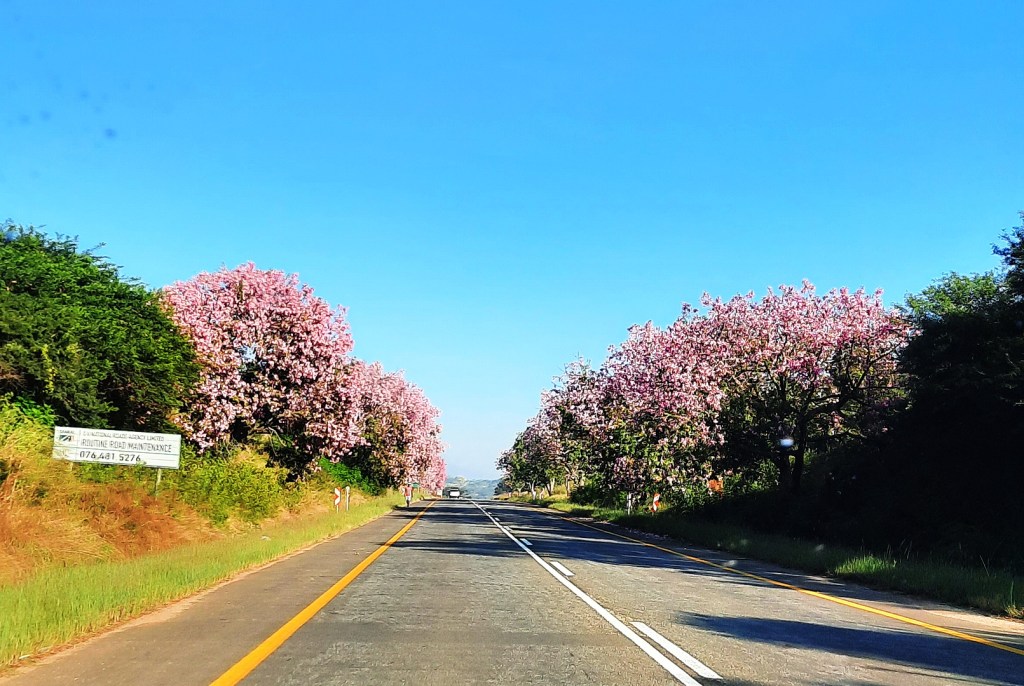
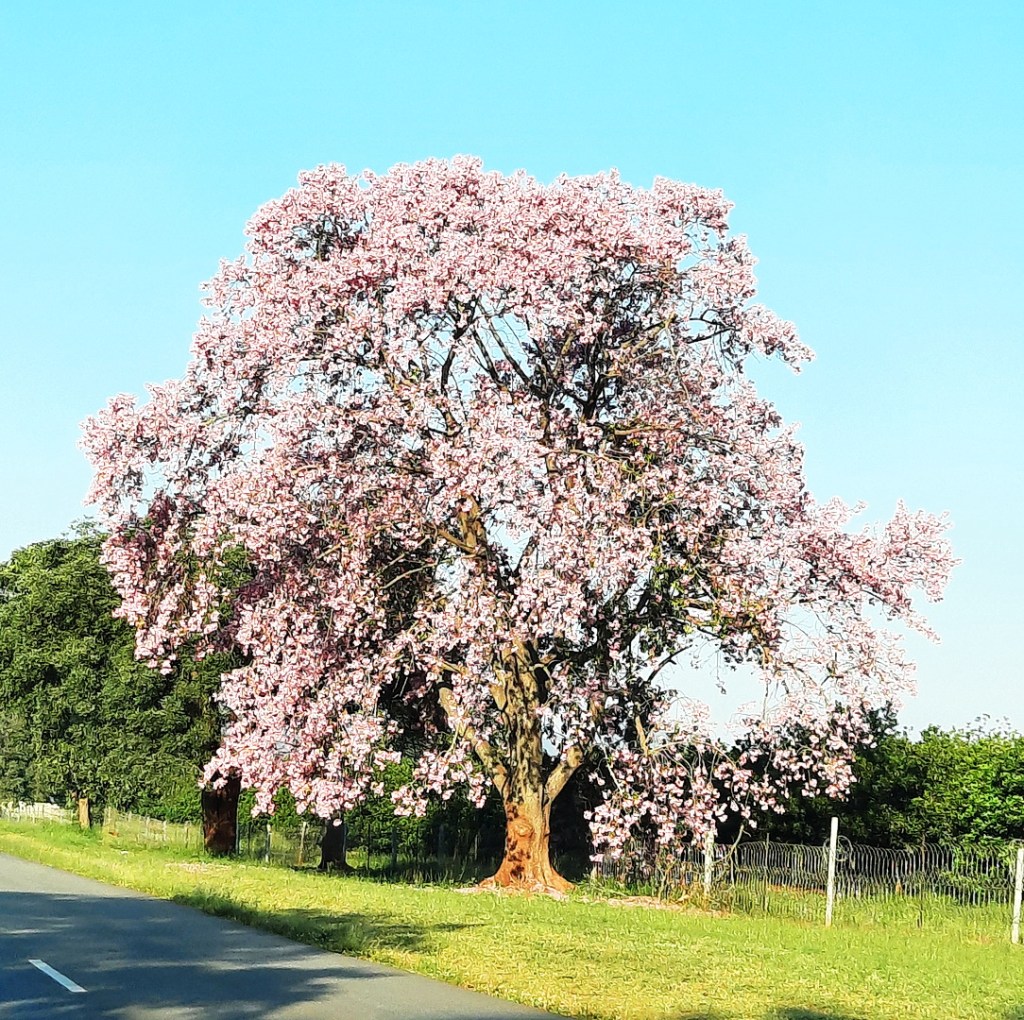
And this was the scene as we passed Barberton. The Tebushina were flowering.
Click on the following link to see a list of the birds we identified on our trip. In all different bird species.
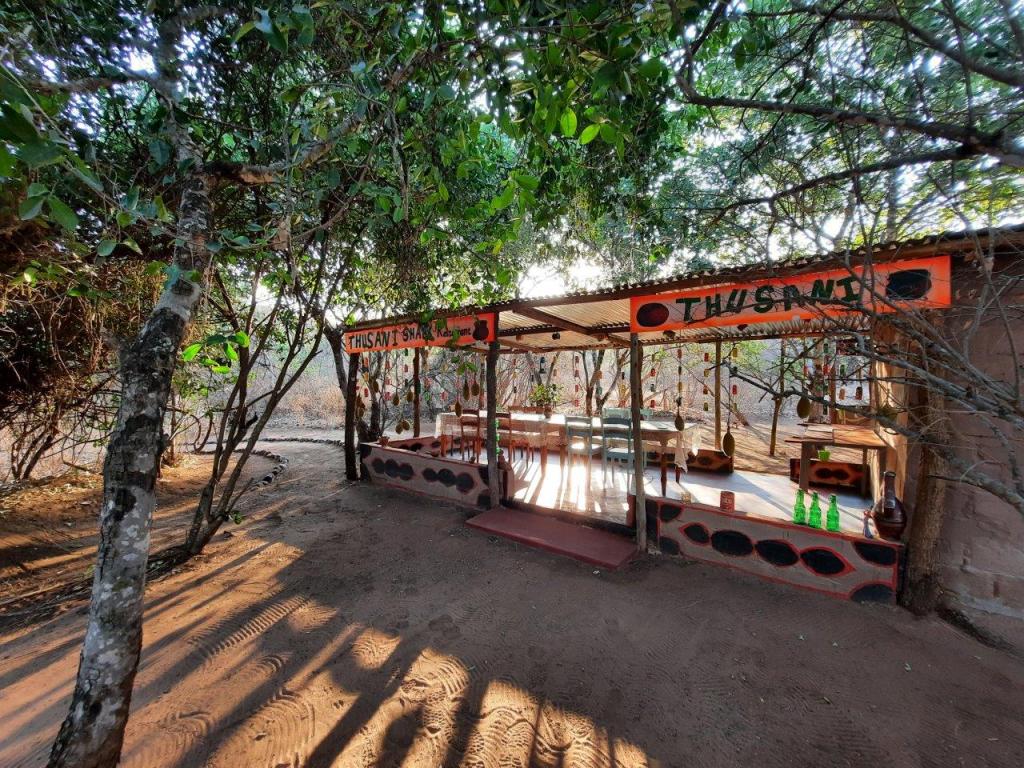
Our campsite overlooks the river and is much like the Pafuri picnic site. Special place.Our campsite view of the Mutale riverOur campsite view of the Mutale river
We arrived at Nthakeni around midday and settled in.
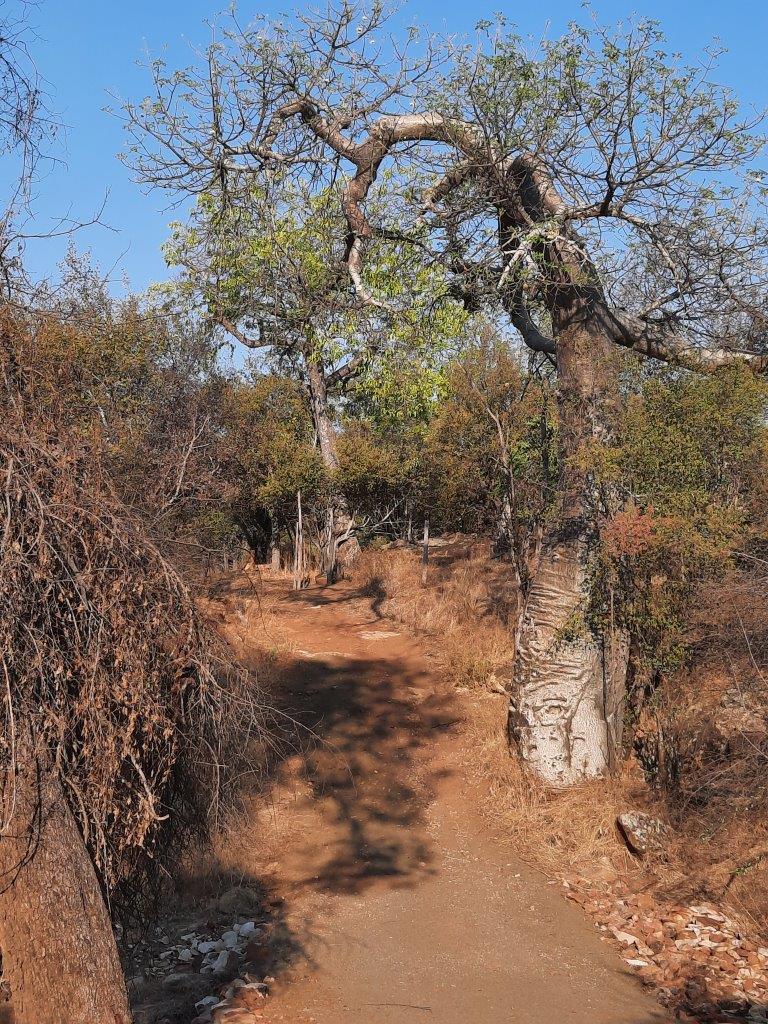
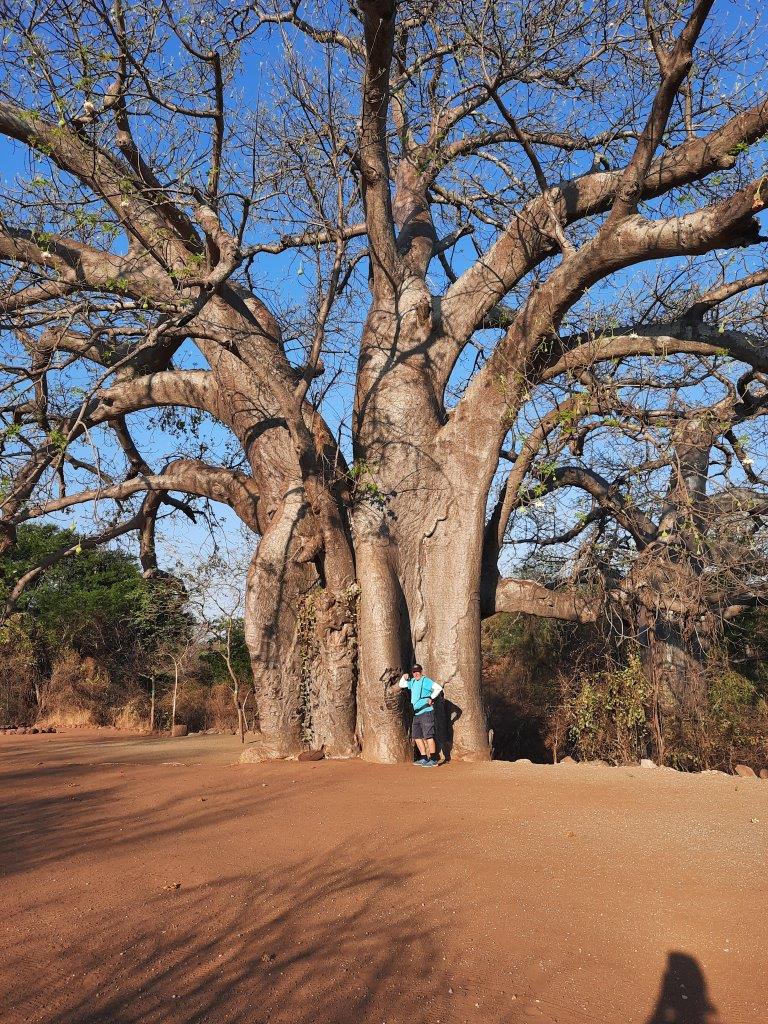
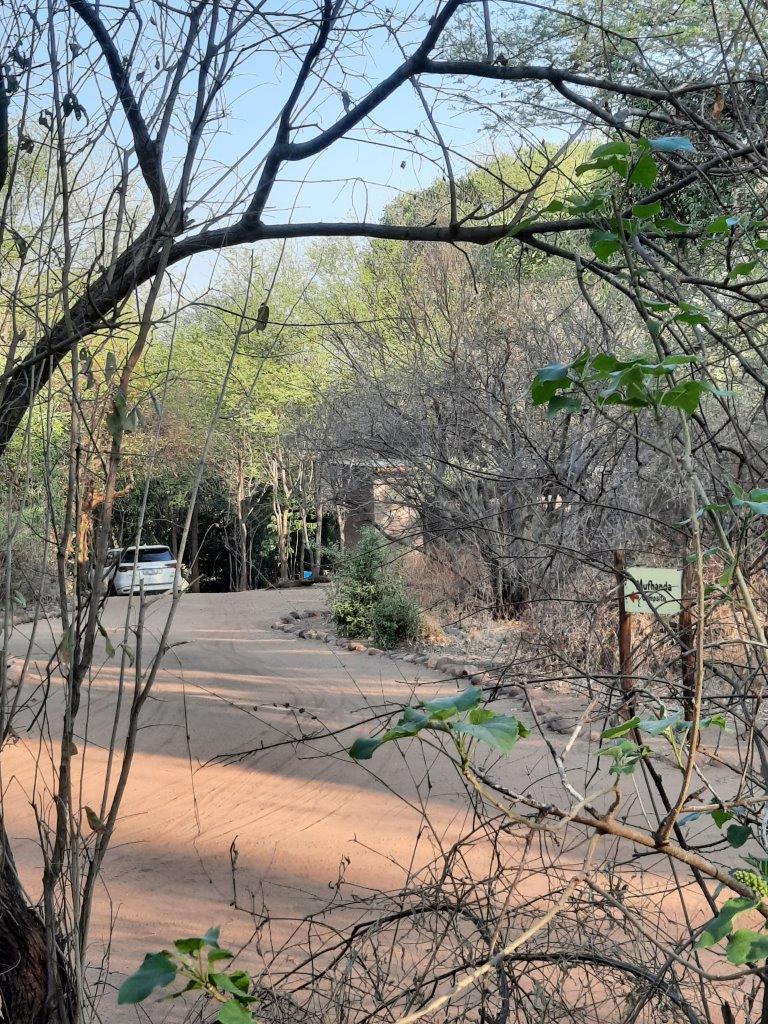
Camp trailAnother CampsiteBig Baobab CampsiteRoad down to our campsite by the riverLocal restaurant in the campRiver in front of our campsiteSwimming PoolImpala Lilies
That afternoon we spent time in and around Pafuri and for most of the next morning.
Each night we heard three different Nightjars, the Fiery-necked, the Square-tailed and the Freckled as well as the Wood Owl. This is a special place for us.
Midday and early afternoon was usually spent in the pool to cool down and in late afternoon a bird walk around the camp.
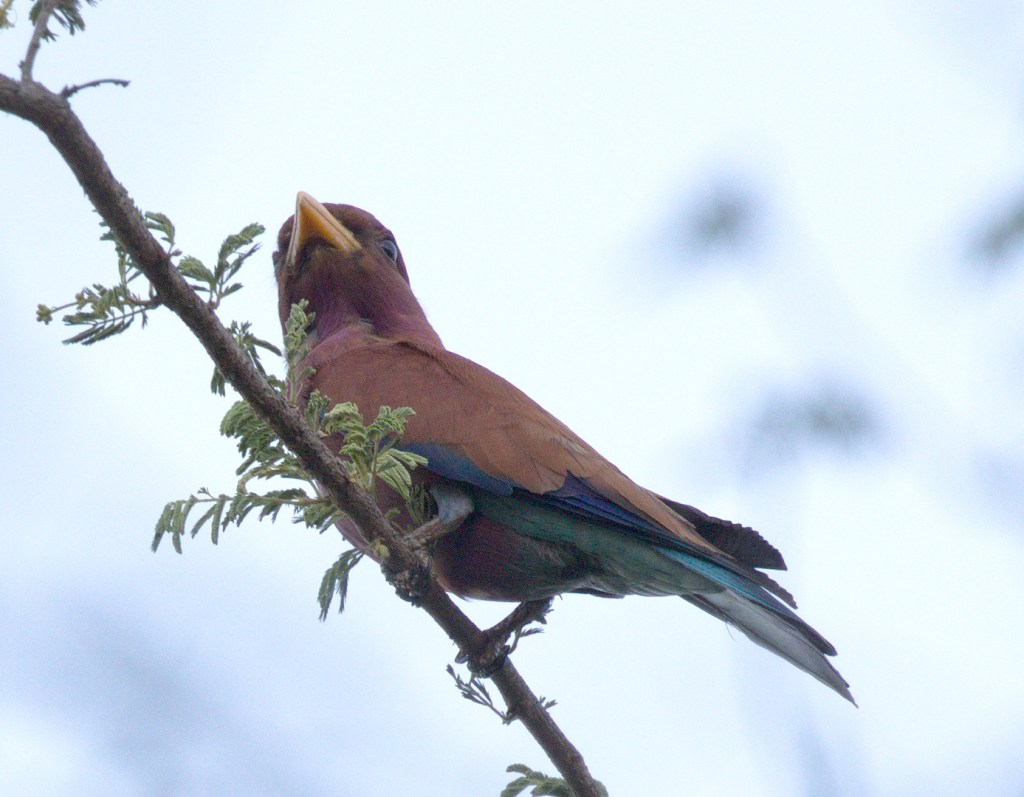
Broad-billed RollerRoller Moon
Here are some of the species we managed to get photos of in the Pafuri area mainly.
As we drove towards the Pafuri picnic site on one occasion we spotted what we thought was a shiny flapping something wrapped round a tree trunk. A better look revealed that it was a very long shedded snake skin right round the trunk and back.
Snake Skin
Two birds stood out for us. In the Pafuri picnic site there was a nesting pair of Black-throated Wattle-eyes and three kilometers from the Pafuri Bridge heading north we saw a Racket-tailed Roller – definitely our bird for the trip.
Black-throated Wattle-eye on nestRacket-tailed Roller
From Nthakeni we went to Punda Maria for a few days with my sister and her husband.
Punda Maria
16th and 17th November2021
Sally and I had booked to stay at Punda Maria for one day only so that we could go to Shingwedzi at the same time as my sister. However we ended up for 2 nights and persuaded my sister to stay an extra night – sacrificing a night at Shingwedzi. We had all booked Shingwedzi for 4 nights so it meant only 3 nights in Shingwedzi.
We were camped on the fence line for a change within close proximity to the Hide and good views of the waterhole from our camp spot as well.
We were camped to the right next to T&D here.View from the hide
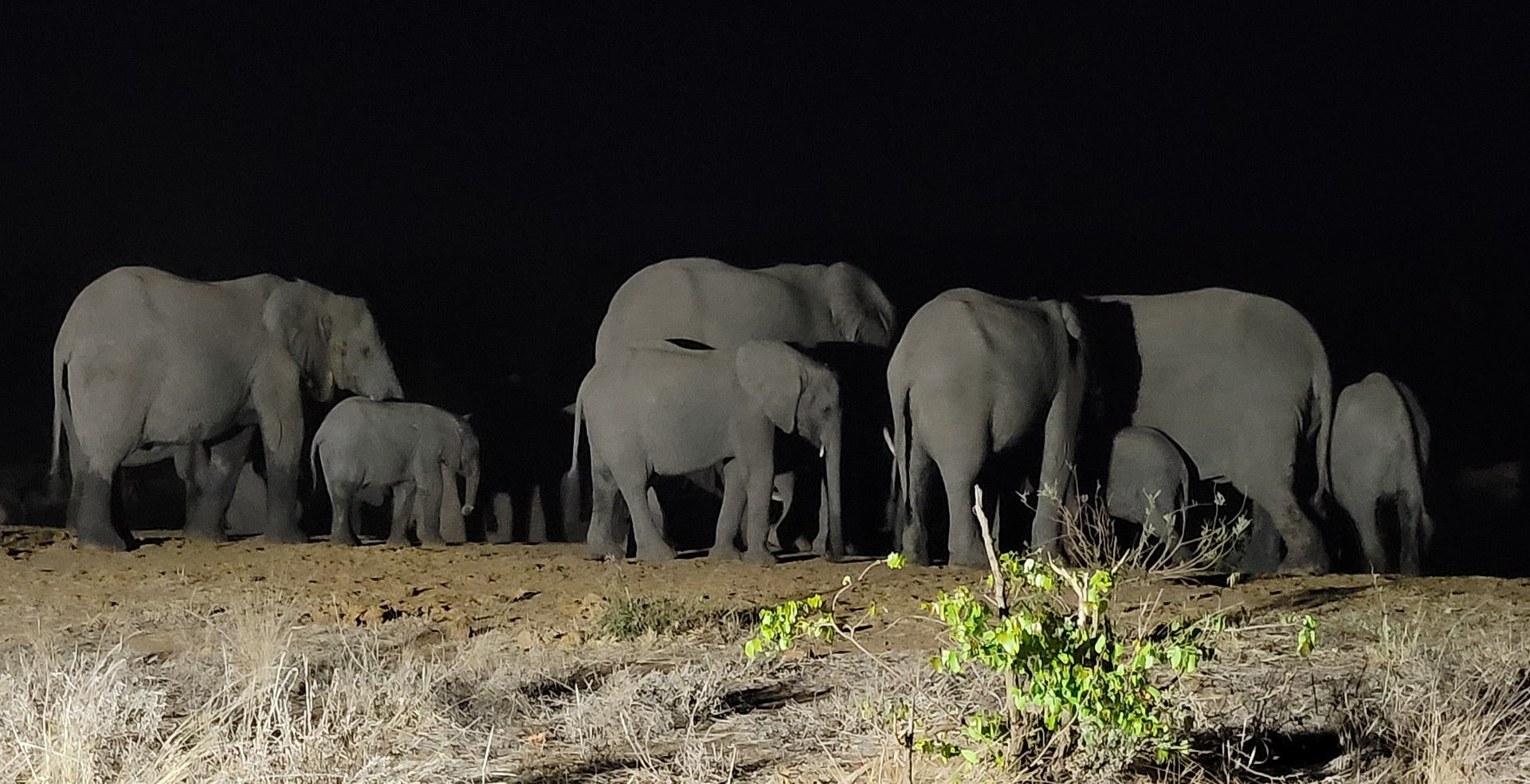
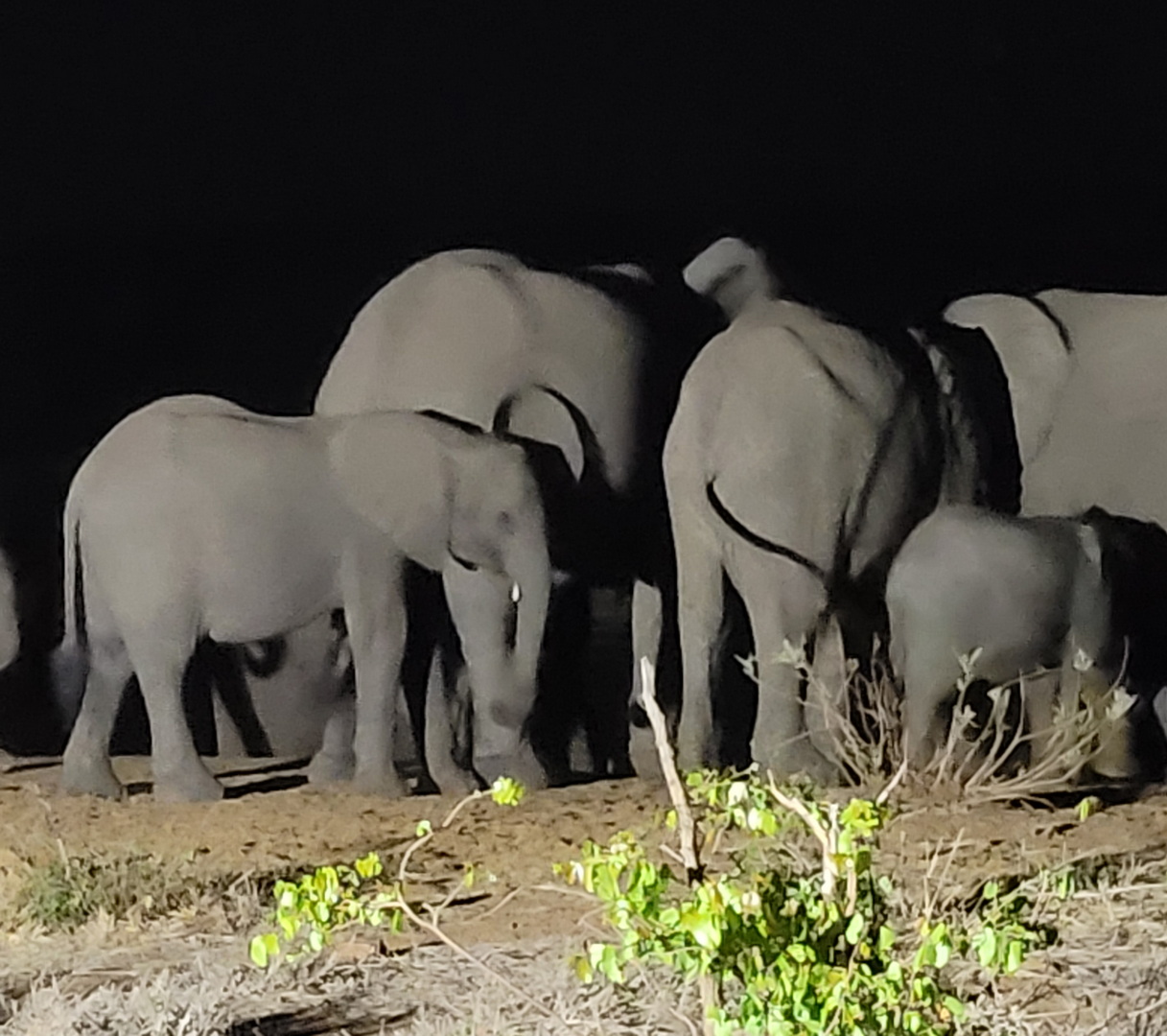
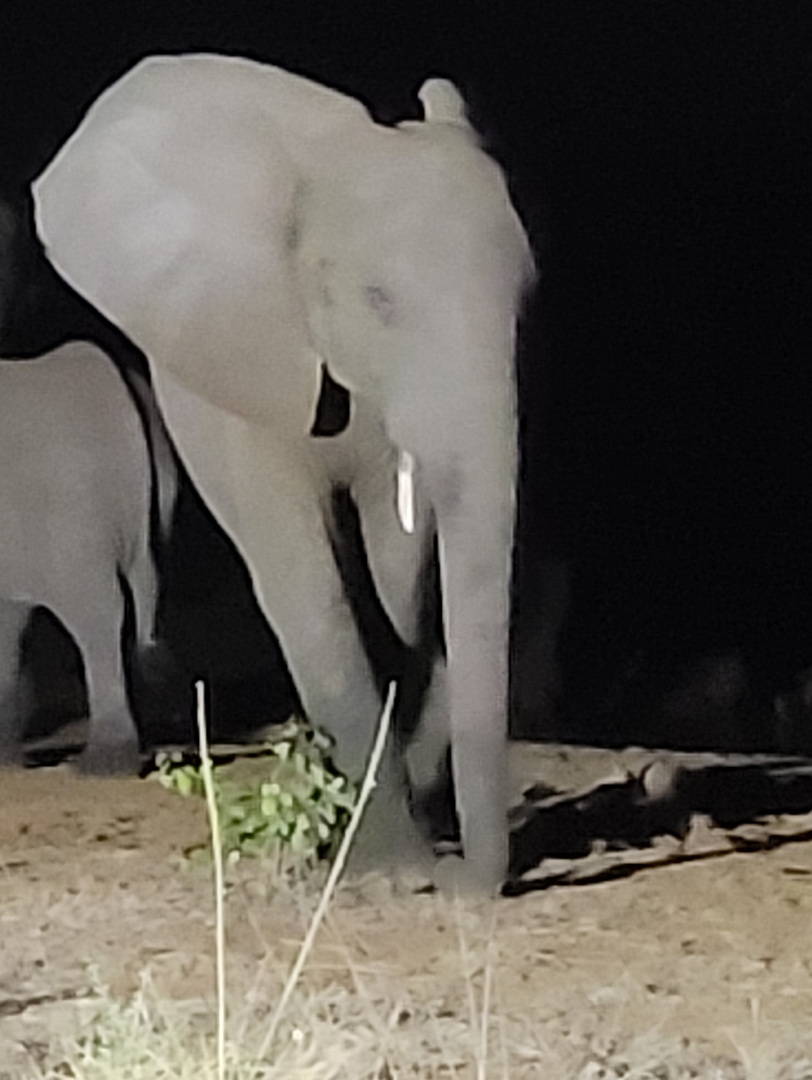
At night the waterhole always had herds of Elephants – a ghostly bunch creeping silently in and out. Their massive size emphasized by the moonless night.
Too close for comfortSally’s heady elephant at the waterholeWheere is my body?Move on – my turn to have some fresh water.
At night we heard the calls of Nightjars, Square-tailed and Freckled as well as the trumpeting of the elephants around the waterhole.
In the afternoons it was very hot so we ended up in the green waters of the swimming pool to cool off.
On one evening in the hide we watched as Buffalo arrived to drink (later they retreated when the Ellies arrived). Anyway as we sat there in the hide we watched an unusual sight of a Buffalo lying with its back in the water. It was straining to give birth. Eventually the calf popped out in its sack into the water and the Buffalo walked away. We assume the Buffalo knew it was a still birth.
We circled the Mahoney loop and went out to Klopperfontein. After the first couple of early hours in the mornings the birds became quiet and scarce because of the heat.
It was unusual to see two impalas at the top of a well bushy and tall ant hill.
Impalas atop a tall ant hill.
And then we headed to Shingwedzi.
Shingwedzi.
18th, 19th and 20th November2021
Shingwedzi campsite was far from full so we had a lot of choice as to where we camped and because we had booked a fence line campsite that is where we headed. The heat had followed us! But where was the shade? Eventually we made a decision which we regretted later.
Our Campsites on the fence.
Empty campsite and empty river.
Empty CampEmpty River
During our time in the area we explored the Red Rocks Loops, drove up to Babalala picnic site on the S56 and went down river along the S50 as far as Nyawutsi Hide. Each of these routes have had their attractions in the past – weather dependent. November 2021 the heat was almost exhausting so whenever possible we resuscitated in the swimming pool.
On our way down to the Nyawutsi hide following the river there were patches of water in the river. The hide is situated in a tropical setting.
Gnarly TreePatches of water like thisView from the hideView from the hide
Here are some of the birds we photoed along these routes.
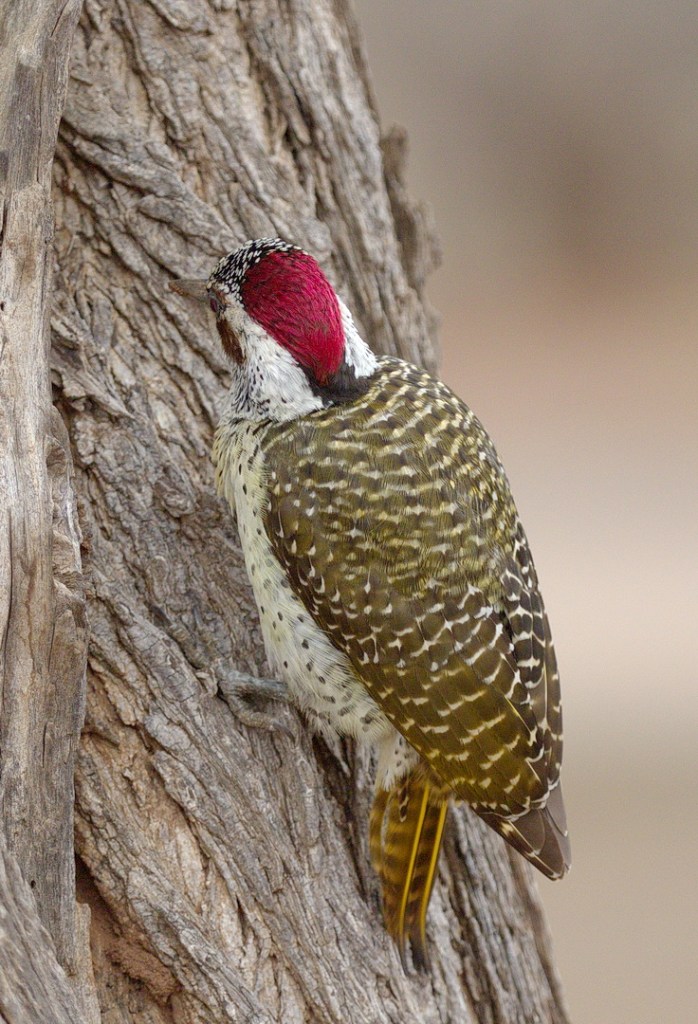
A very colourful female Bennett’s Woodpecker gave us a show of her beauty
Female Bennett’s Woodpecker
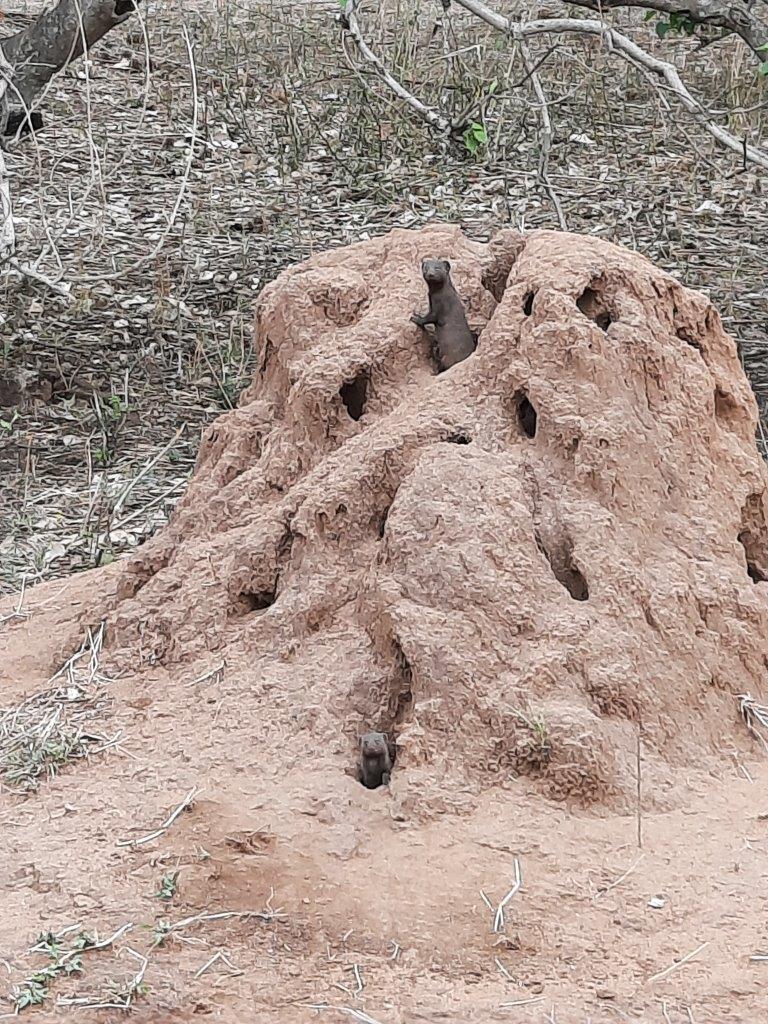
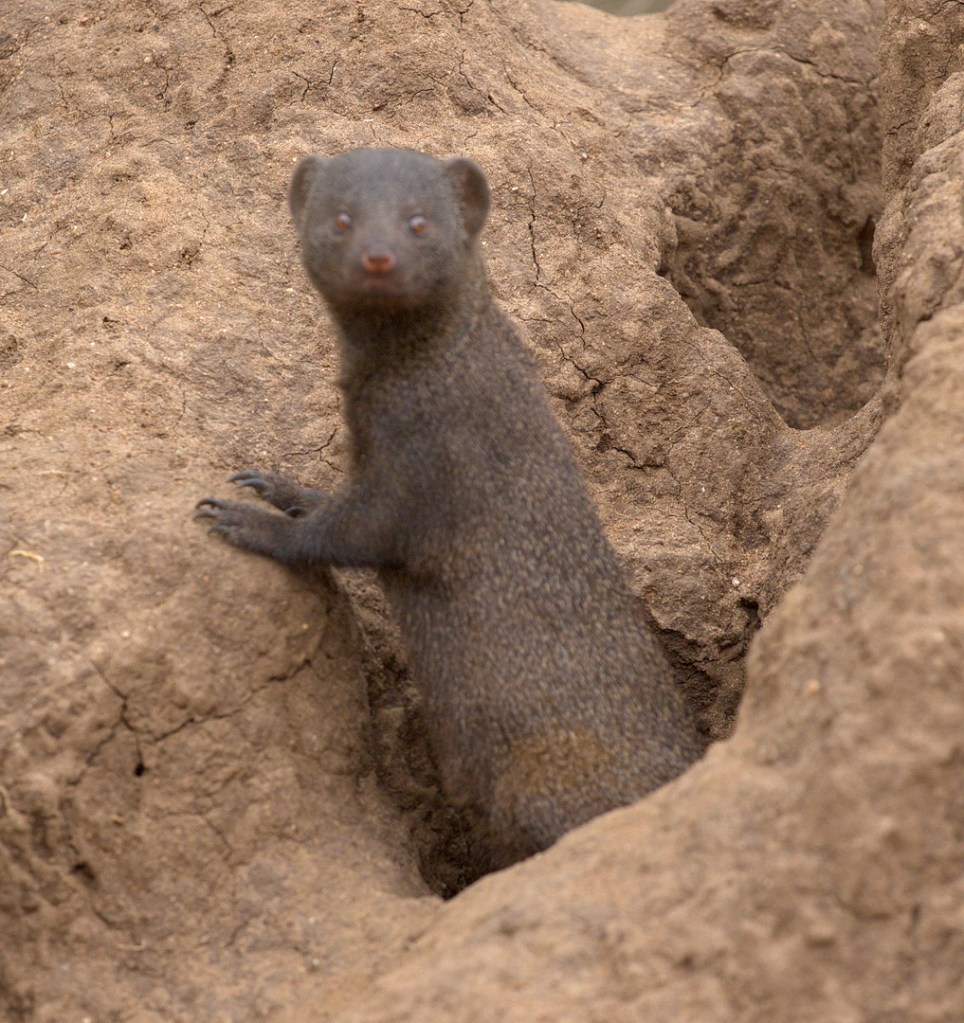
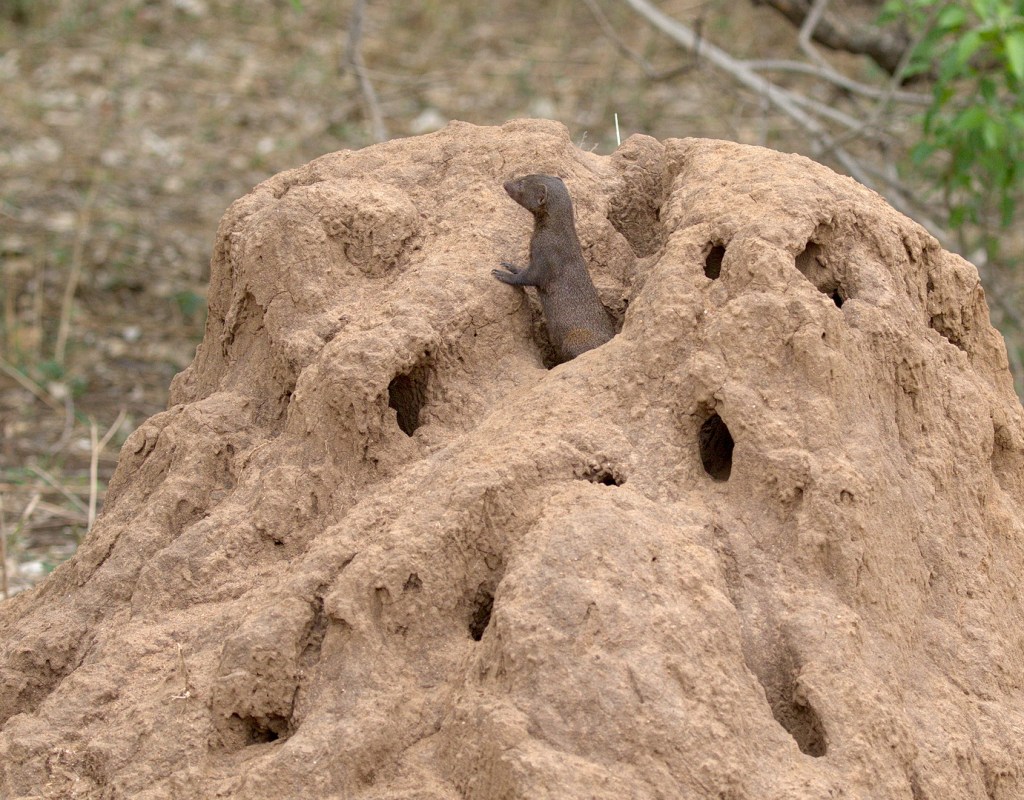
A Dwarf Mongoose popped out of an ant hill and gave us the stare.
Dwarf Mongoose
Then there were the Lions resting in the long grass as they do most of the day.
Lazy Lions
A few animals too.
Impala and youngGiraffe preparing to fightGiraffe fightingSpotted Hyena which had just scared away the sighting of the day
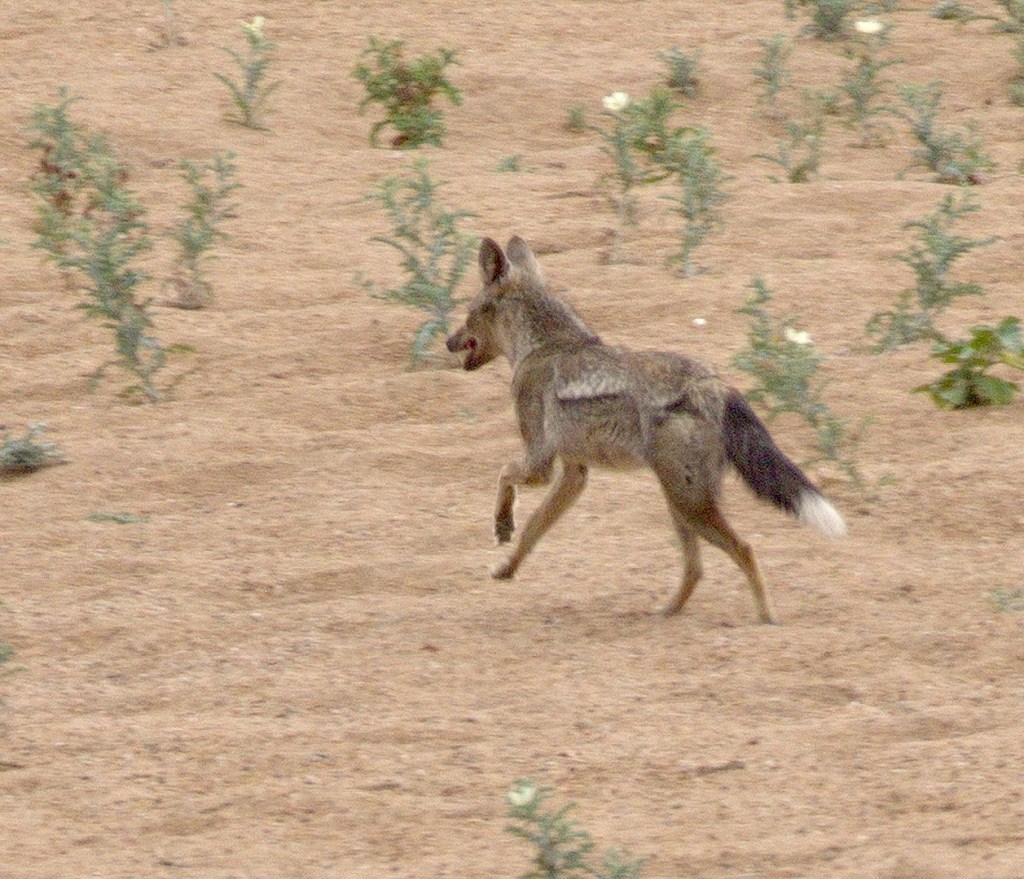
The Spotted Hyena had chased away a Jackal in the river. Fortunately I was able to get a few photos as it ran away from us down the river. The photos confirmed our suspicions that this was no ordinary Jackal.
Side-striped Jackal
Eventually the heat broke and we had a storm. Not any storm but a drenching. Not just a drenching but a nightmare driving into it on slippery road surfaces. Sally and I took a mid afternoon drive along the S50 and on the way we noticed dark clouds off to the side of us and we thought moving away. We were wrong. It came straight for us as we decided to return to camp. Heavy rain. Full on straight towards us.
Water logged ground in no time.
Pelting Rain
By the time we got back to camp the rain had stopped. Alas our campsite was under water – well a couple of inches – and it was not draining away. Trench digging was the order of the moment up hill to the fence. The further I went the deeper it got. It needed a lot of help to drain away. So out came the broom, pushing the water into the trench. As quickly as the water reached the trench so half of it returned. Good exercise and a few necessary kilos lost.
Bye bye Shingwedzi
That was our time in Shingwedzi. Now to Balule as T&D went to Letaba, 4 nights in each.
Balule
21st, 22nd, 23rd November 2021
All four of us left together. Tasha and Dick in the car ahead heading for Letaba and we to Balule. We had not gone too far when we saw Lions charge Tasha’s car – her side. Later Tasha told us she had a huge fright as it felt that they would come in the window. We all screeched to a halt. Four lionesses ran across the road followed closely in their footsteps by four cubs. Quite a sight for us and relief for my sister.
Then 10 minutes later we came across an elephant way ahead of us drinking water from the side of the road. He was thirsty. We wanted to keep going. However when you are towing it is nigh impossible to reverse at any speed if the ellie wants to be obstreperous- we waited for about 15 minutes before he went off into the bush.
After a quick cup of tea we left Tasha and Dick in Letaba. On we went. One annoying thing with checking in to the Balule camp is that you do so at Olifants camp. In this instance we became pleased that we had to. We had turned off the main road heading on the tar to Olifants. We had not gone far when a Leopard popped out of the undergrowth ahead of us, walked down the road before re-entering the bush. Excitement number one.
We checked in. And took the opportunity to have a look at the view of the surrounding panorama from the deck – with the river some way down and directly below us.
Olifants DeckOlifants View
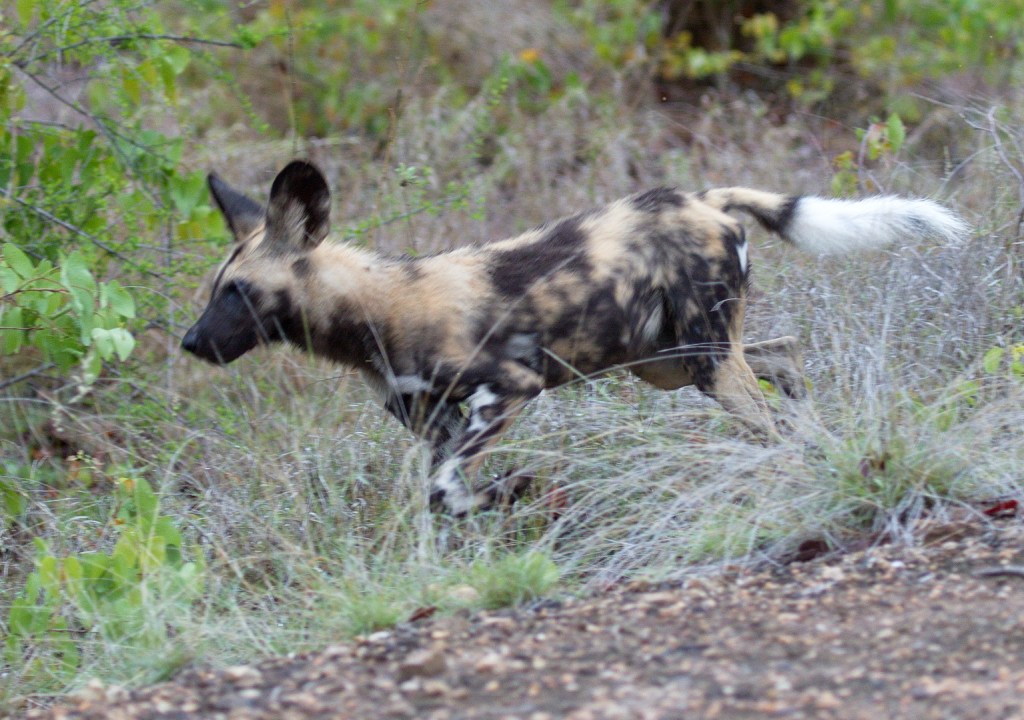
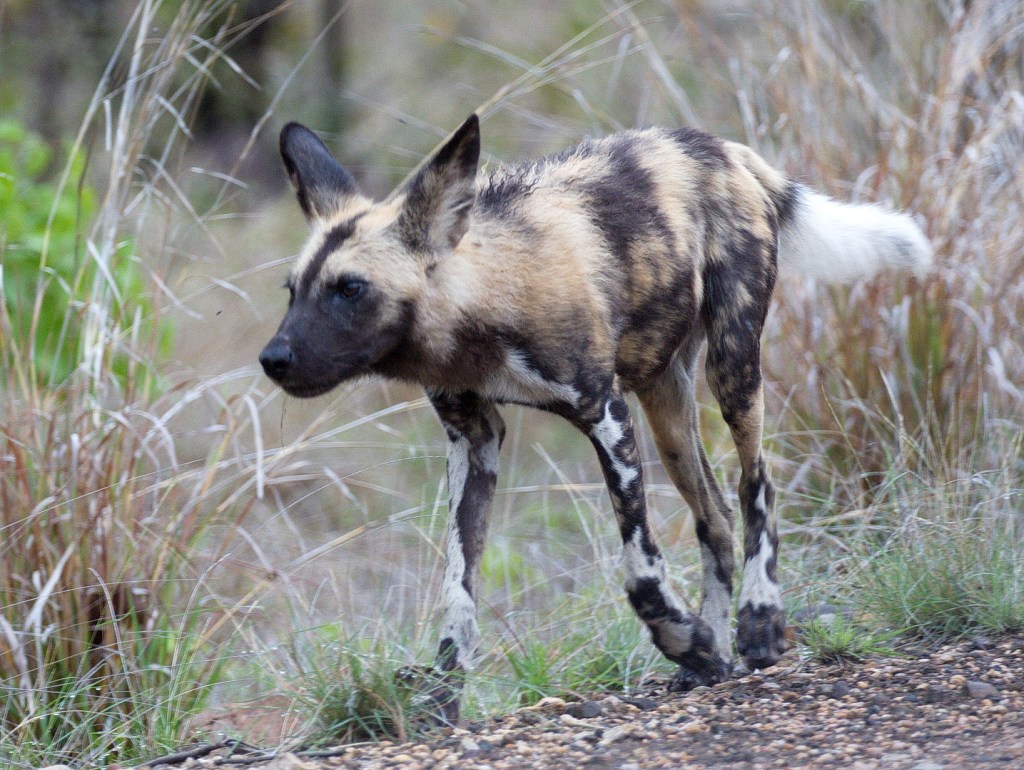
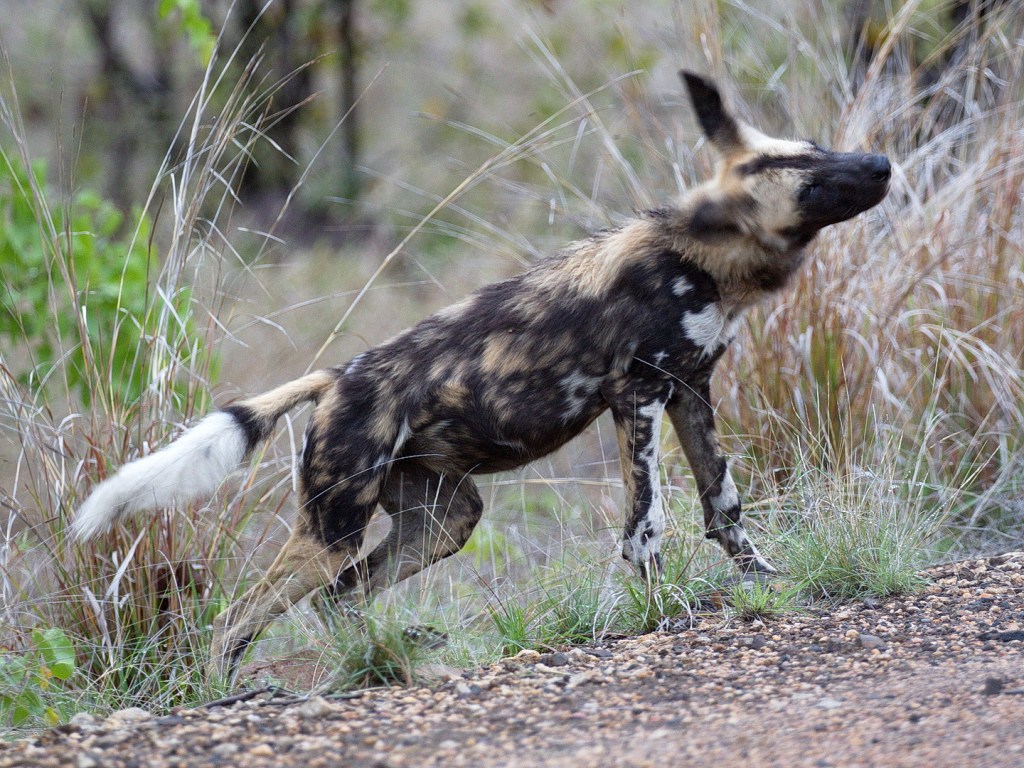
Now we trundled our way to Balule. After about a couple of kms our second excitement – a pair of white-tailed Wild Dogs climbed up onto the road and strolled towards us.
Wild Dogs.
With rain threatening we hurriedly set up camp.
Finding shade. Looking towards the fence line.Among the trees a cooking and washup lapa. To the ablutions and the entrance
Most days it rained. Sometimes quite hard for short periods with wind that made it uncomfortable for cooking – up came the awning sides.
Sides up windy sideSoaking wet ground. Water collecting on the roof.Sodden ground
Despite the weather we rose early and out we went. On one occasion a very long trip to Satara via the Timbavati loop road as far as Ratel Pan and Timbavati Picnic site then across to the H1-4 on the S147. Down to Satara and along the S100 before returning. A long day out but not without its incidents.
Taking the S99 and S97 to the Timbavati Loop and despite the drizzle and promising looking rain clouds we passed several good looking birds of which the African Green Pigeon was outstandingly colourful.
African Green Pigeon
At one point along the S99 there is an unusual fever tree growing sideways across a stream with branches shooting up vertically.
Sideways growing fever treeSideways growing fever tree
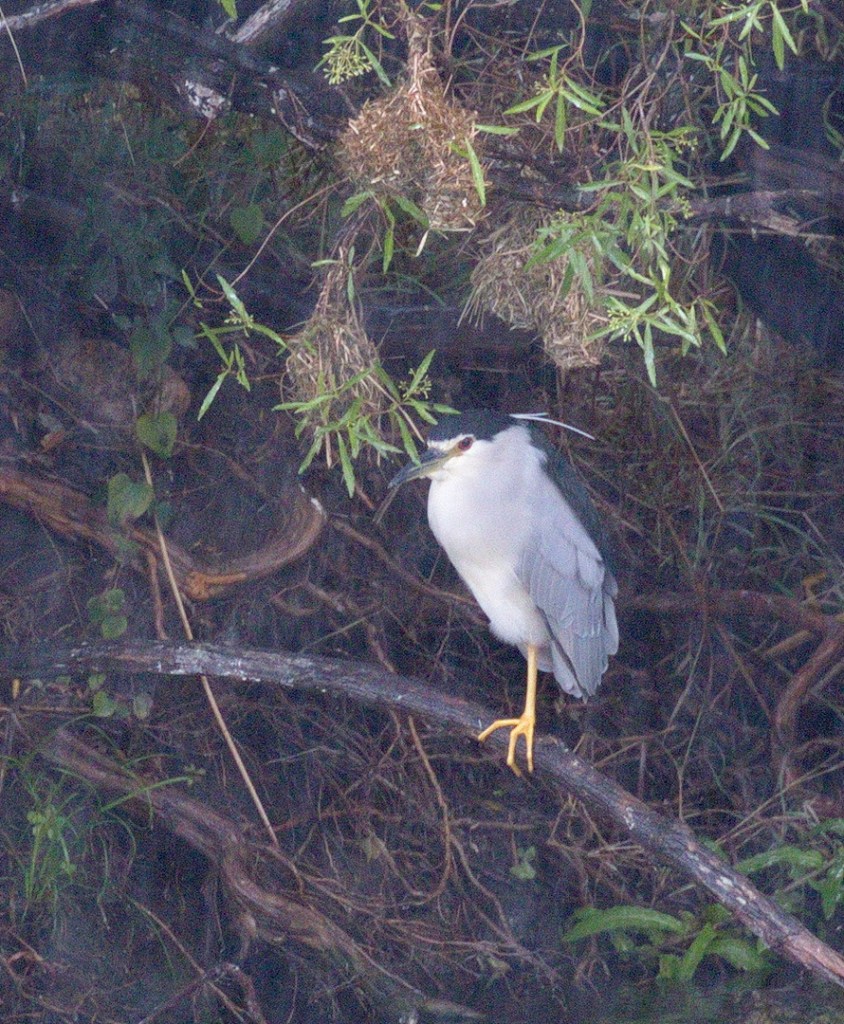
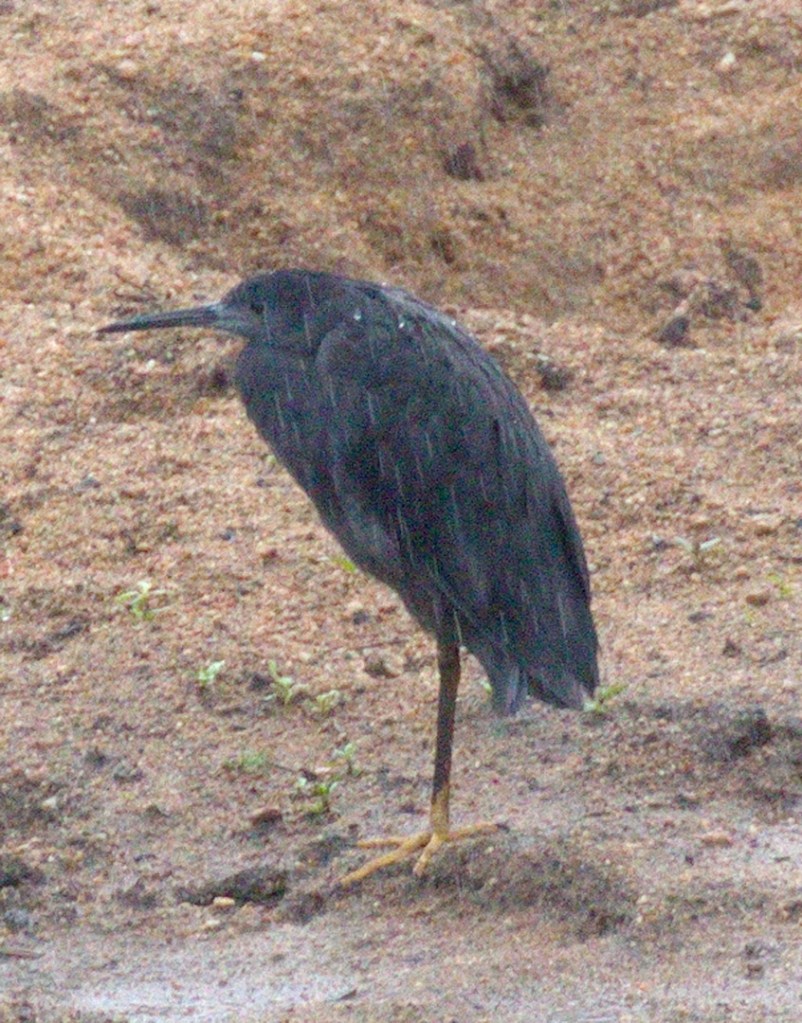
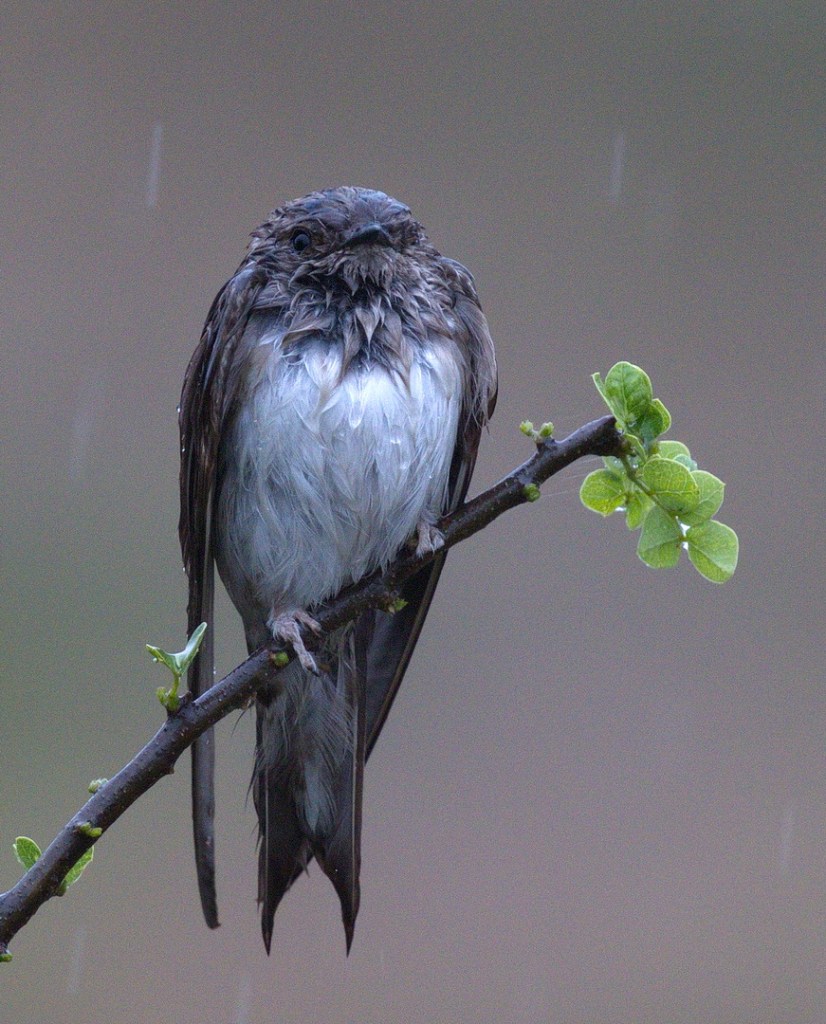
Most of the drive to Ratel Pan was in constant drizzle. But that did not put off the birds – we had lovely sightings of many wet species and some totally drenched – the Brown-throated Martin in particular and a Barn Swallow not quite so. Others seen include: a Black Heron fishing, Greater Painted Snipes, Black-crowned Night-Heron and even a Steppe Eagle.
Steppe Eagle
Barn SwallowBarn SwallowGreater Painted Snipe femaleBlack-crowned Night-HeronSoaking wet Rock KestrelBlack Heron hunched up in the rainBlack Heron fishing
The Brown-throated Martin deserves a collage of its own.
As the day progressed the weather improved. By the time we got to Ratel Pan it had stopped drizzling but it remained cloudy. The Pan had water for a change. There were a number of waterbirds present, the odd crocodile and leguaan.
Openbill and African SpoonbillAfrican SpoonbillYellow-billed StorkThree-banded PloverCrocodile with Yellow-billed Ducks and an African SpoonbillLeguaanKnob-billed Ducks flew over us and landed way way away.A cautious African Spoonbill passing a crocodileThree Bills: Yellow-billed Stork, African Spoonbill and an Openbill
There were a some slippery waterlogged spots on the S125 gravel road to the H1-4. However when we reached the main road it was chained off. We were in a pickled if the other exits to main roads had been chained off too. What to do? In the end, with time constraints, we followed the car in front and drove round the barrier.
Here are some of the other photos taken in the area.
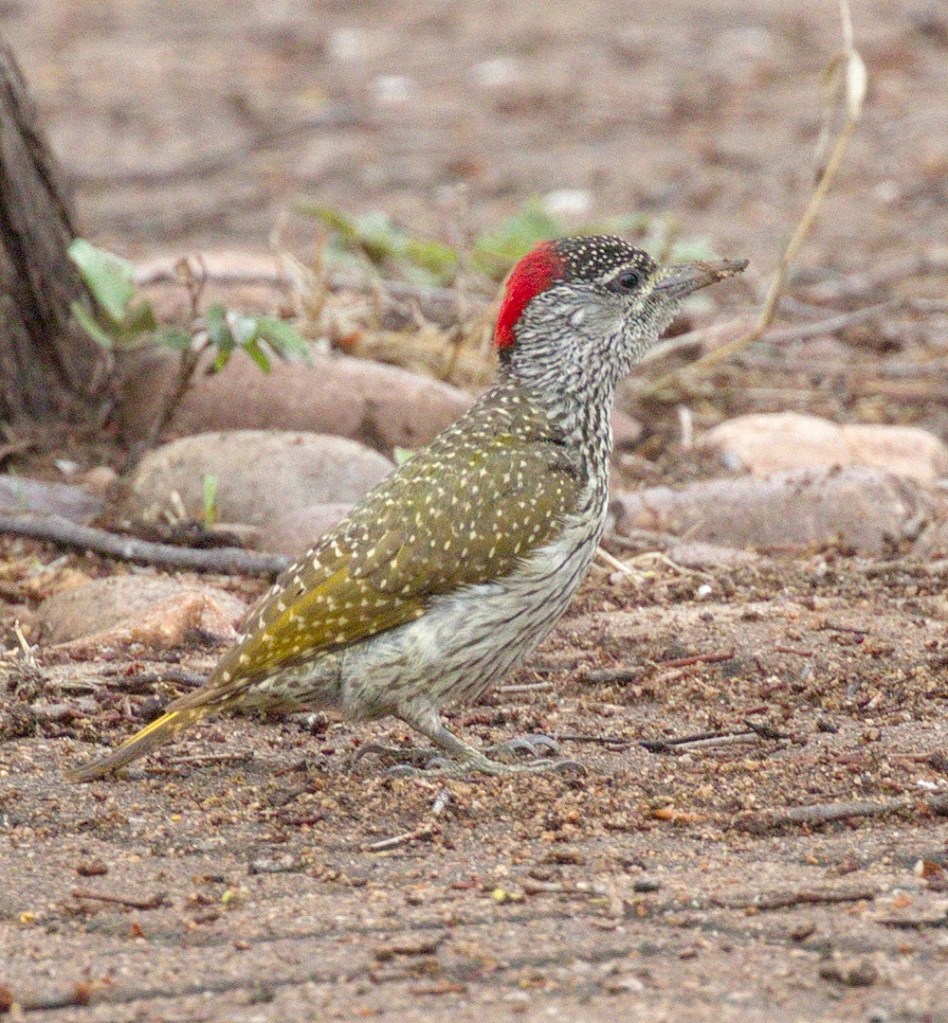
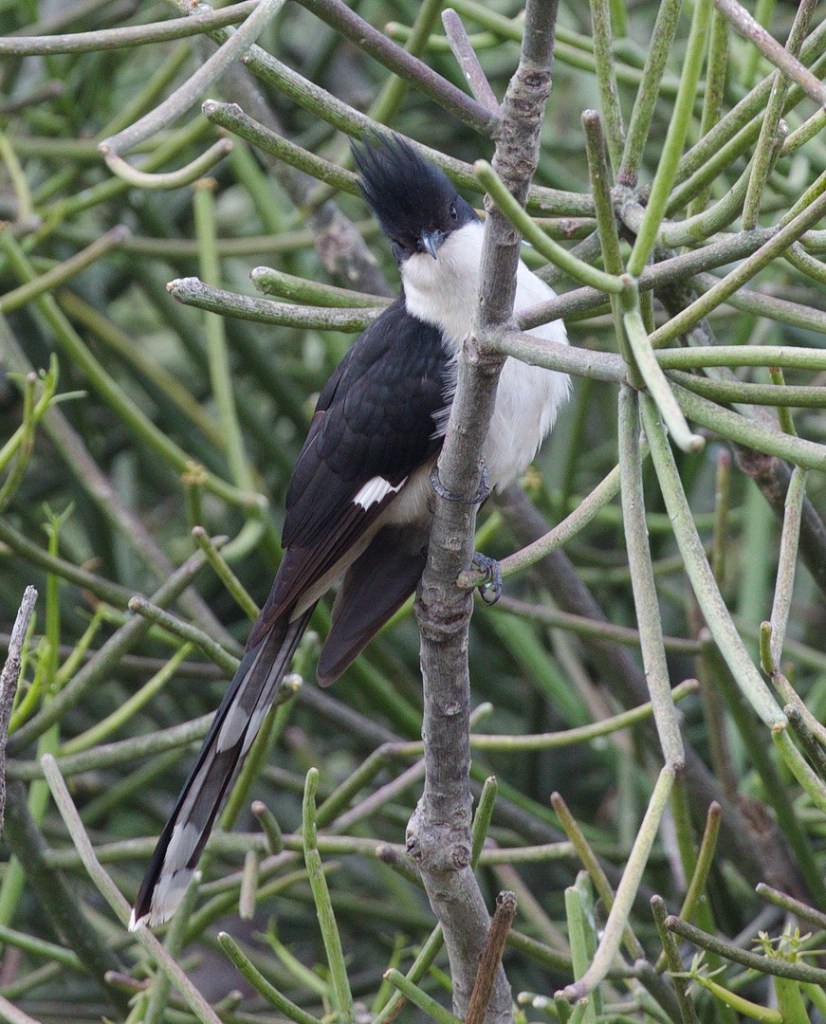
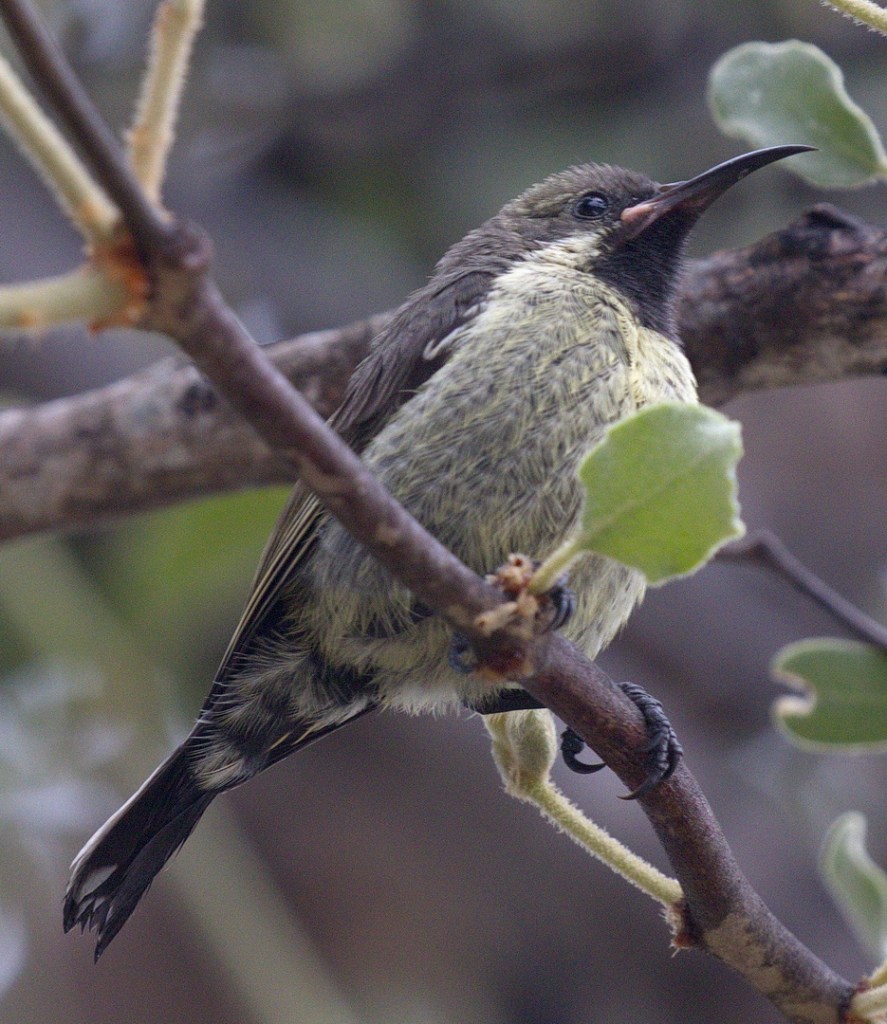
African Hawk-EagleAfrican Hawk-EagleGolden-tailed WoodpeckerJacobin CuckooJacobin CuckooMarico Sunbird juvenilePale phase Wahlberg’s EaglePale phase Wahlberg’s EagleRed-billed QueleaSteenbokStierling’s Wren-WarblerSteppe EagleRather damp Steppe EagleTawny Eagle with an unhappy Fork-tailed Drongo going for its head
We saw a number of Lilac-breasted Rollers courting. Here is one offering its sweetheart a delicious morsel.
WaitingHere I amThis is for youTeasingNow she is happy.
As you will see the water level at the low level bridge beside Balule was quite full. Baboons use it while the ellies prefer walking through the river.
Baboons crossingLittle oneMum and infant
Then we moved on to Skukuza to meet up with my sister.
Number 1 Bird of the trip. A South African rarity.
Sally and I were planning a trip to the Caprivi in November when my sister, Natasha and her husband Dick took advantage of the half price offer for the full November month in the Kruger. As a result we changed our minds and decided to join them from November 7th onwards.
Malelane 7thNovember 2021
We began with an overnight stop at Malelane – a good resting spot after a nine hour drive from Howick.
Afrispoor Cheetah and a cold beer.Enjoying Malelane entrance scenery.
We enjoyed a short drive around the area later in the day. Even managed to see a fully maned Lion.
Sleeping with his friend nearby.
A young Hyena entertained us and a Rhino had lost its horn. There were birds too posing for a shoot out.
Crowned LapwingEuropean Bee-eaterPlayful Hyena Saddle-billed StorkSwainson’s SpurfowlShort-nosed White RhinoBroad-billed RollerBrown Snake-EagleWahlberg’s EagleWood SandpiperAfrican Mourning Collared Dove
As you may have noticed from the picture above, we had not put up our awning. We were only there for one night. So of course it rained that night. Half expecting this we put everything outside that we did not want to get wet into the boot of the car.
As I lay in bed the dribbles of rain started and my mind wandered to what else I had forgotten to do. Ah yes, I need to put the rain cover over the canvas roof over our bed. Up I got and managed to do that without getting too wet. Back to bed.
Almost asleep when it occurred to me that I should push the fridge and stove inside. Up I got again and went outside with the rain a lot stronger and did what I had to do. Back to bed fell asleep the rain now pouring down.
What was that poking me on the shoulder? Now alert and Sally asked me if I had put the rain cover on the power cable where the 2 cables met. Of course I had forgotten that too. Now it was pouring down. Not bothering to get properly clad (no neighbours) I hurriedly went outside once again and simply pulled the plug out from the Cheetah. Now fully drenched and a bit shivery, had a good rub-down and dried off and went to bed. Listening to the rain, thunder and lightening beating down and wondering what else I needed to do, I eventually fell asleep.
But not before I realised I had been bitten on the back of my neck by a bug which caused an intense burning pain. (Took over a week for it to abate). I nudged Sally to say I had been bitten. “Oh”, she said and went back to sleep. The next morning she realised how bad it was.
Satara8th to 10thNovember 2021
The following morning we went to Satara to meet up with Natasha and Dick.
Natasha and Dick
We spent 2 nights in Satara as that was all we were able to book at the time.
Our Satara Camp site with some shade.
Natasha and Dick had a camp site along the fence line so we dined with them each night, watching the Hyena patrolling just outside the fence and an African Wildcat patrolling passed us inside the fence as we enjoyed dinner and a bottle of wine.
During the day we went our separate ways to explore what was out there.
The Sweni bird hide is one of our favourite places to visit around Satara. Again it did not disappoint us. There were a number of interesting birds to see. The hide outlook:
Sweni Hide outlookSweni hide looking down to the road bridge
At the far end of the first photo above, a herd of elephants came down for a drink. Some young ones among them. As usual they were boisterous and enjoying quenching their thirst. Trouble was afoot. We noticed that a number of the pools hippos were unhappy with their presence and surprisingly advanced to within less than 2 metres with intent. To start with the ellies ignored them then feeling a bit nervous they moved off.
And the birds seen at the hide:
Black CrakeRed-billed OxpeckersRed-billed Oxpeckers having breakfastStriated Heron fishingStriated Heron fishingYellow-billed Stork
A Yellow-billed Stork was idly wandering about in front of the hide while an African Openbill had found a cosy spot to rest:
African Openbill posing as if it was nesting
African Openbill posing as if it was nesting and then along came trouble and usurped him of the resting place:
UsurperUsurper and Usurped.
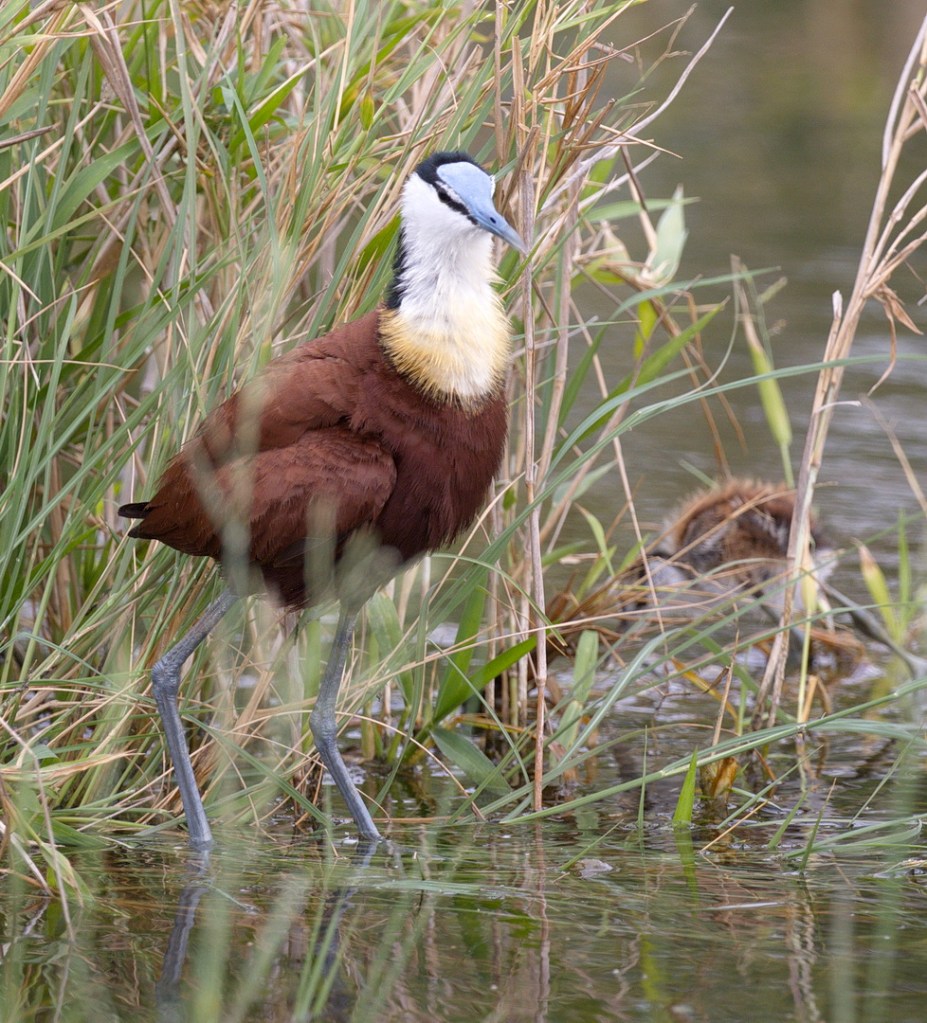
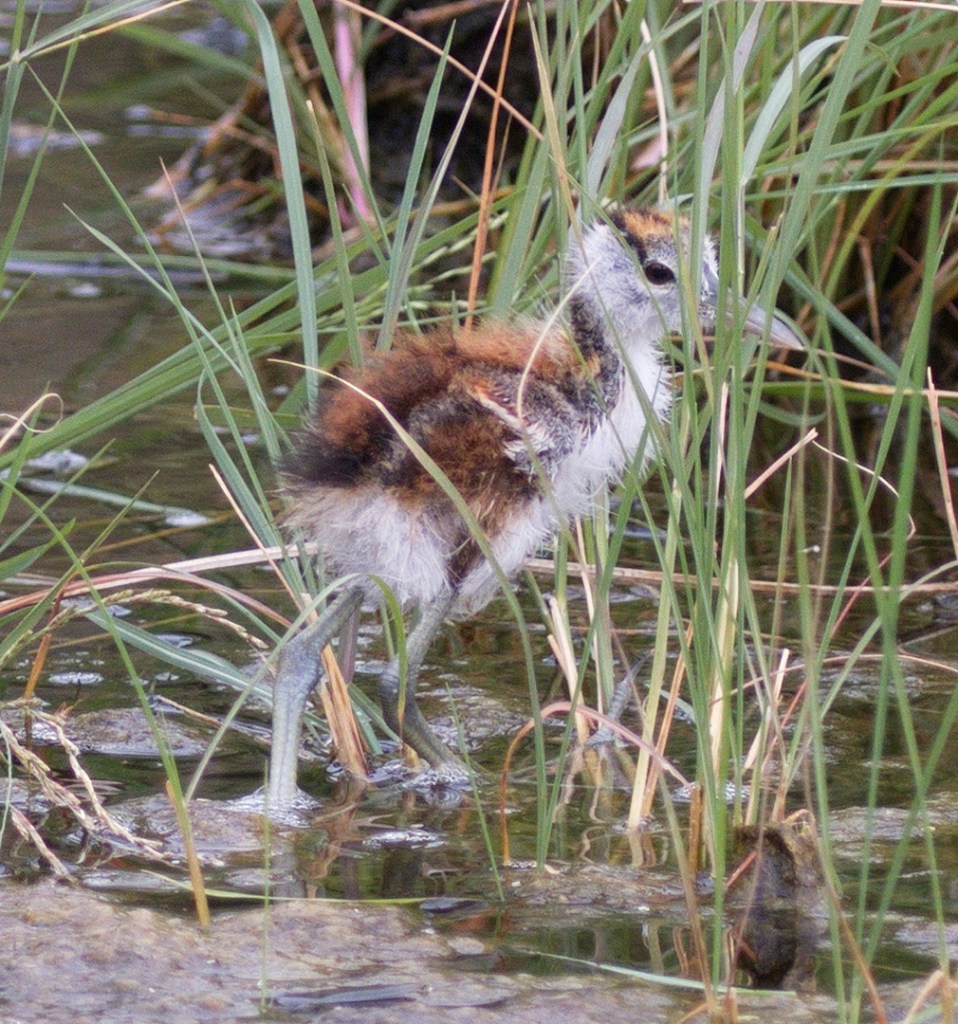
In another location we came across a male African Jacana attending its chicks.
From Satara, Sally and I left a day earlier than Dick and Tasha and headed to Tsendze for 4 nights. Dick and Tasha joined us a day later for 3 nights.
Tsendze10th to 14thNovember 2021
Tsendze is one of our favourite camps in the Kruger. It is well treed so owls are present and can be heard calling every night – Verreaux’s Eagle-Owl with its pretty pink eyelids, African Wood-Owl, African Scops Owl, African Barred Owlet and Pearl-spotted Owlet. In the morning you often wake to the sound of Southern Ground Hornbills. Magic place.
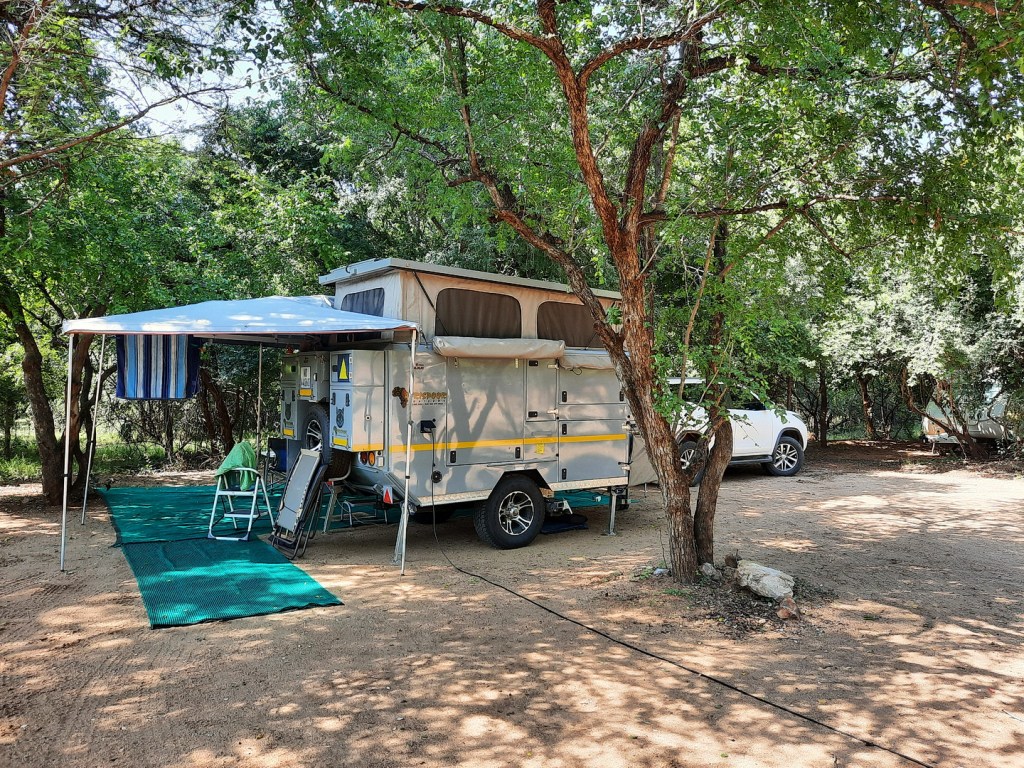
Campsite 10 next to 9 T&D’s (behind car)Path to ablutions and washup areaCampsite 10
There was an interesting campervan in one of the closest sites to the gate – even had its own vehicle attached to it.
Way to Go
Mooiplaas Picnic site is right next to Tsendze and overlooks the Tsendze river. It has a big boma for shelter from both the sun and rain as well as a picnic spot overlooking the river. Like Tsendze it is also known for its owls. Unlike Tsendze camp it is not fenced.
Looking upriverLooking downriverMooiplaas Picnic site
On your way from the camp to Mopani there are a number of short loops to explore. In the past I have experienced a herd of elephant running across one of the tracks right in front of us. Sally and I have also seen a rather large and lame Civet.
Civet seen in the past.
Anyway at the end of the last loop you can turn towards a couple of hides. One overlooking Pioneer Dam and the other an overnight hide overlooking the Tsendze river. To get there, you cross a low level bridge. There always seems to be bird activity either side of the bridge. Black Crakes have always been seen there by us. Striated Herons, Hamerkop, Blacksmith Lapwings, Water Thick-knees and other waterbirds are often there too. This time I took several photos of Blacksmith Lapwing juveniles scurrying close by.
Blacksmith Lapwing chick
One of the loops we enjoy doing is to access the S49 from the H1-6 just before reaching Mopani, drive to Mooiplaas waterhole and cut across to the S50, head north following the wetlands then turn onto the S143 – Tropic of Capricorn – past the Tihongonyeni waterhole and back to the H1-6 to return back to camp.
At the Mooiplaas we always see Chestnut-backed Sparrow-Larks. This time was no execption.
Chestnut-backed Sparrow-Lark
Along the S50 it is worth popping into the viewing points overlooking the wetlands. There, Lions tend to hang around the waterholes.
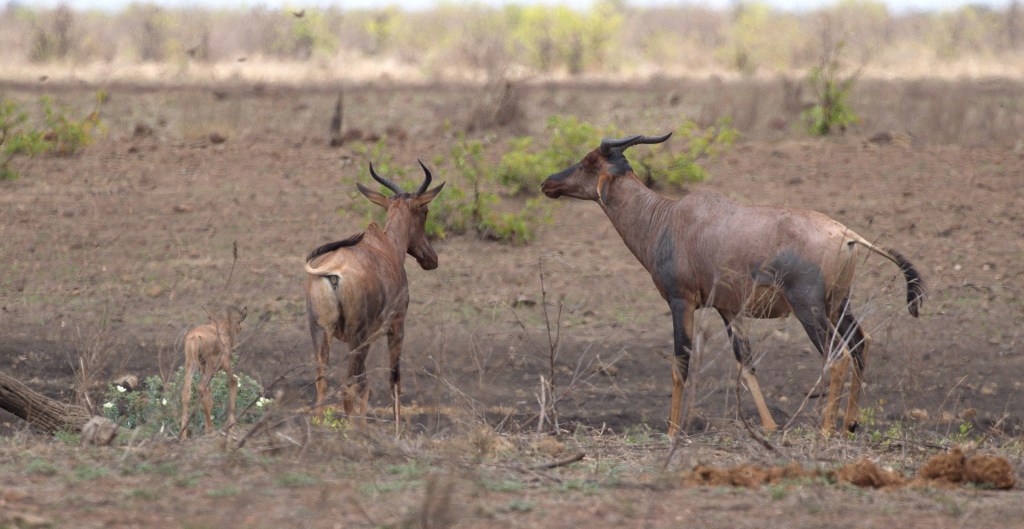
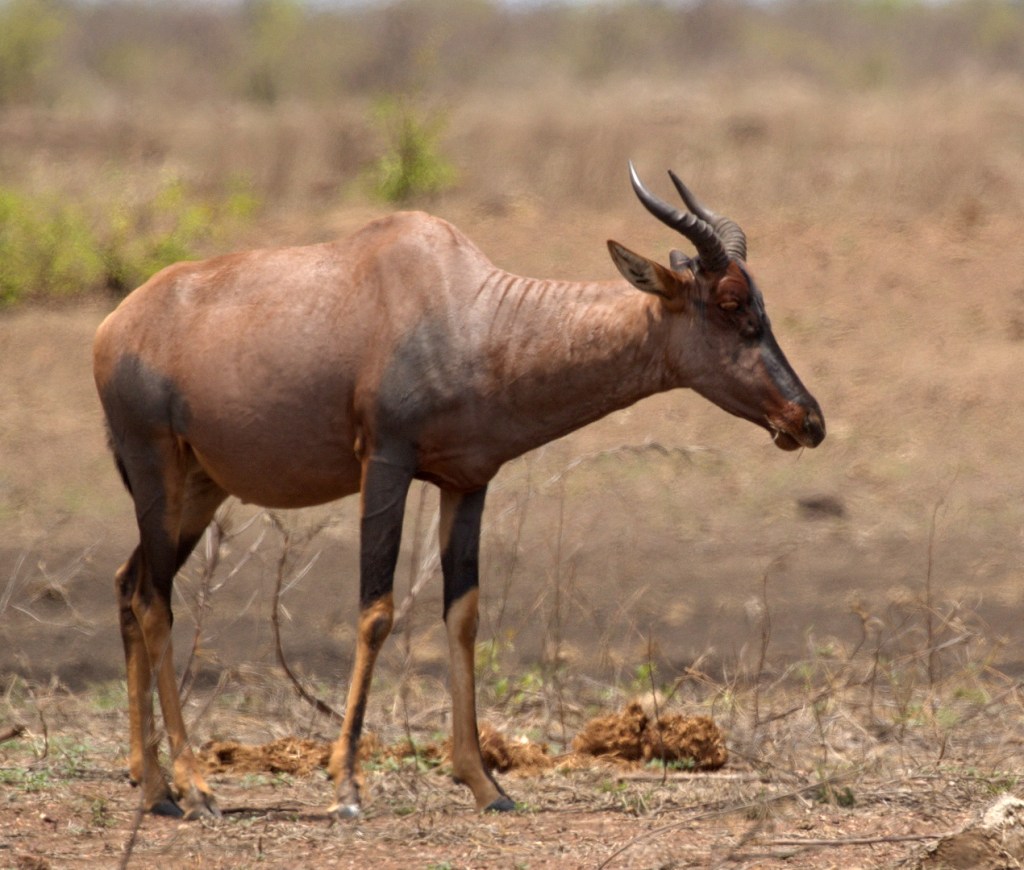
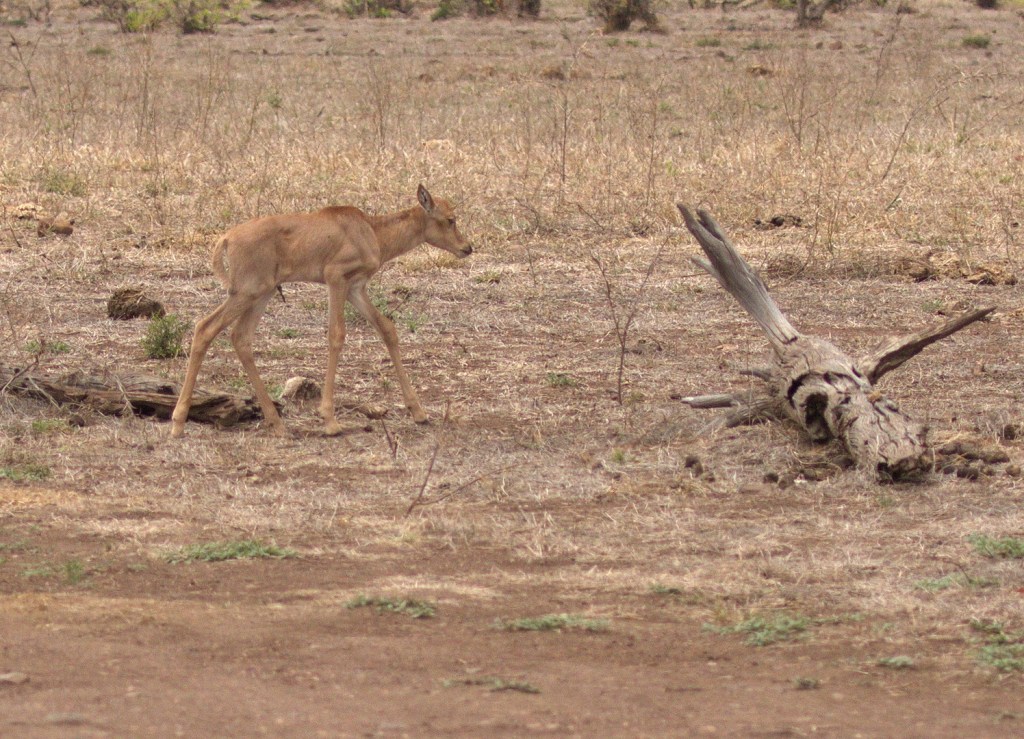
There was a surprise for us at the Tihongonyeni waterhole along the Tropic of Capricorn S143. There were several Tsessebees including a new born at the waterhole. An animal we don’t often seen in the park and usually as a loner among Red Hartebeest.
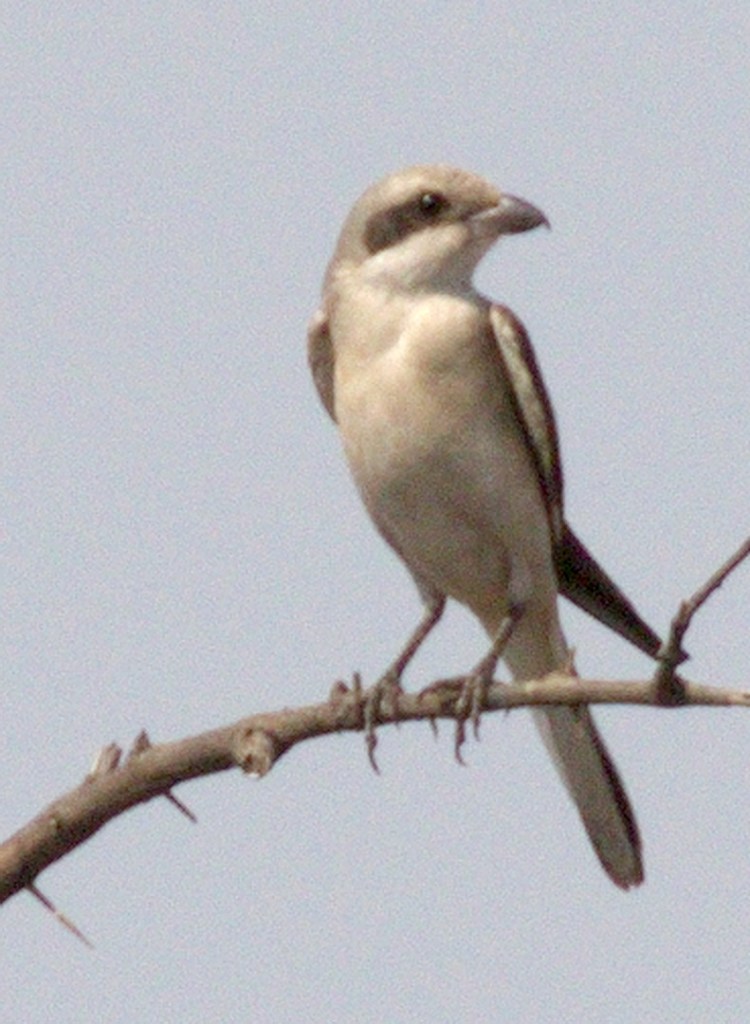
Along the way we came across Red-crested Korhaans calling beside the road and we were lucky to spot a Lesser Grey Shrike.
The weather was hot hot so we spent several afternoons in the pool at Mopani.
Views of Pioneer Dam from Mopani Camp
And then there was this large scaly-backed lizard wandering between the bungalows.
Scaly-backed Lizard about 50cm long.
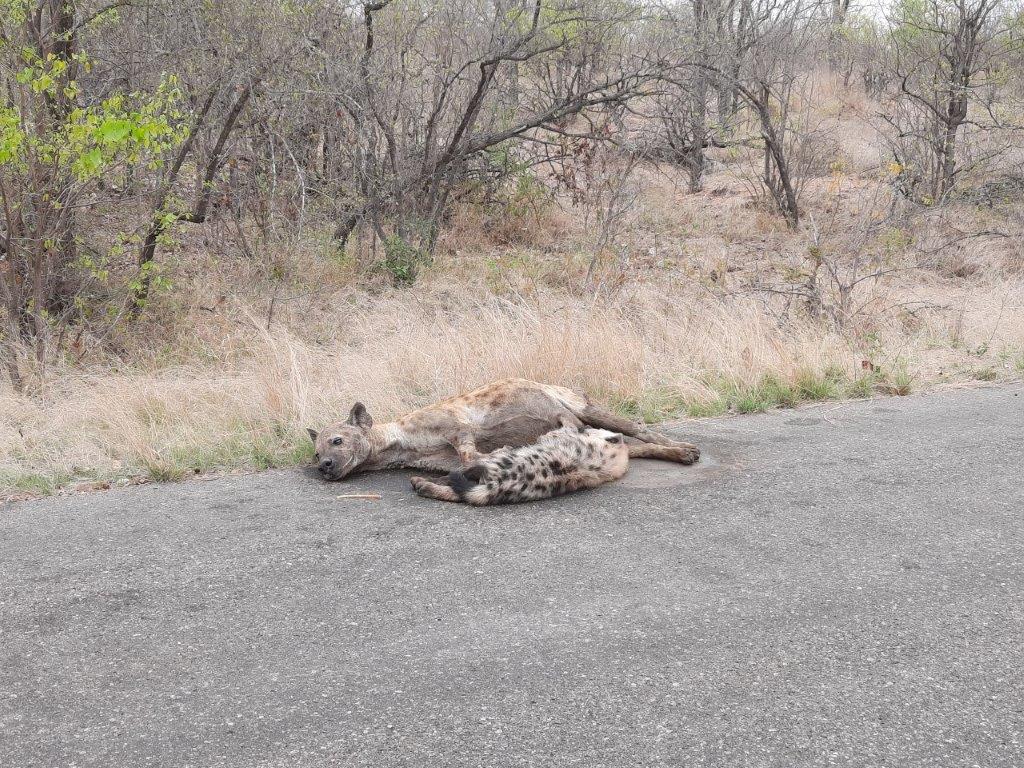
The H1-4 to Phalaborwa gate is a scenic drive and one where we have seen hyena with cubs regularly especially along the first 20 kms from the H1-6. This time was no exception.
Hyena and suckling pup
Further down there is a low level bridge crossing the Letaba River. It crosses a wide stretch of the river and has a “stop and view” parking area half way across. The last two times we visited we have seen two male Greater Painted Snipes and this time was no different.
Greater Painted Snipes – males.
A bit further along there are a couple of short loop roads going down to the river. On one of these loops we sighted a Groundscraper Thrush singing away.
Groundscraper Thrush
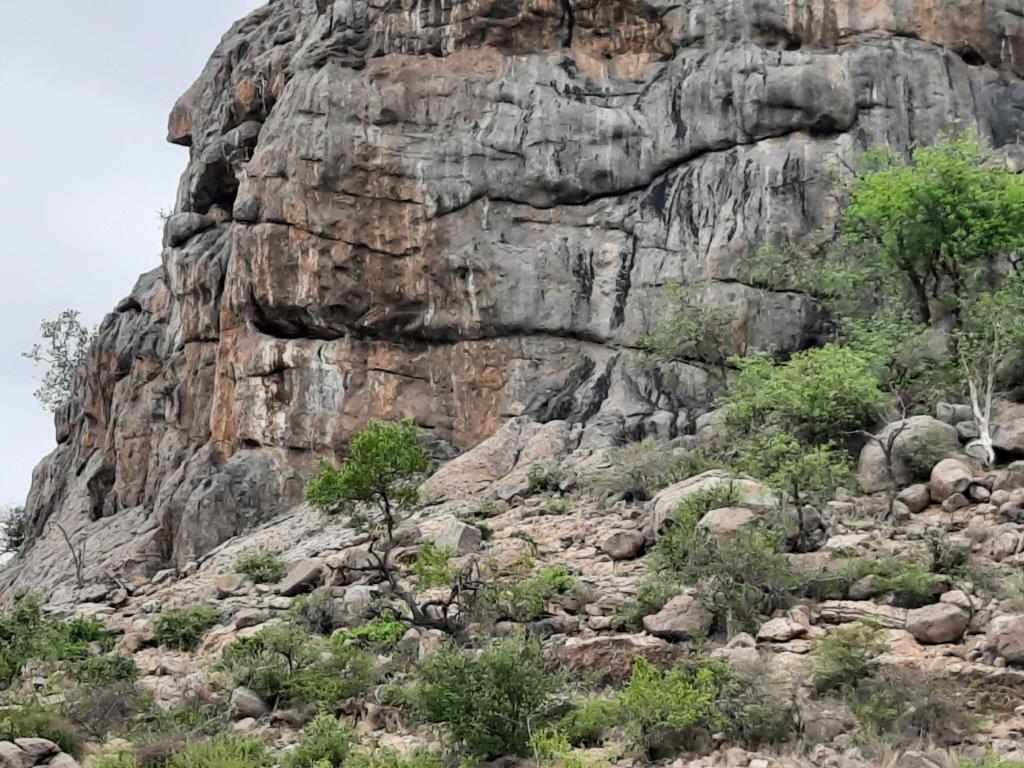
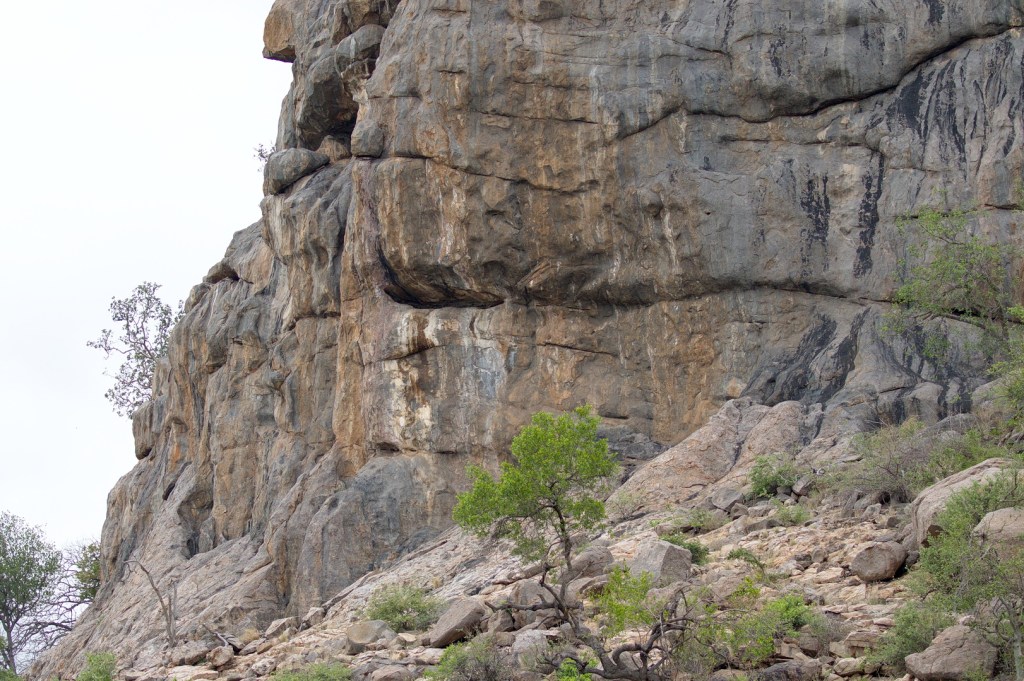
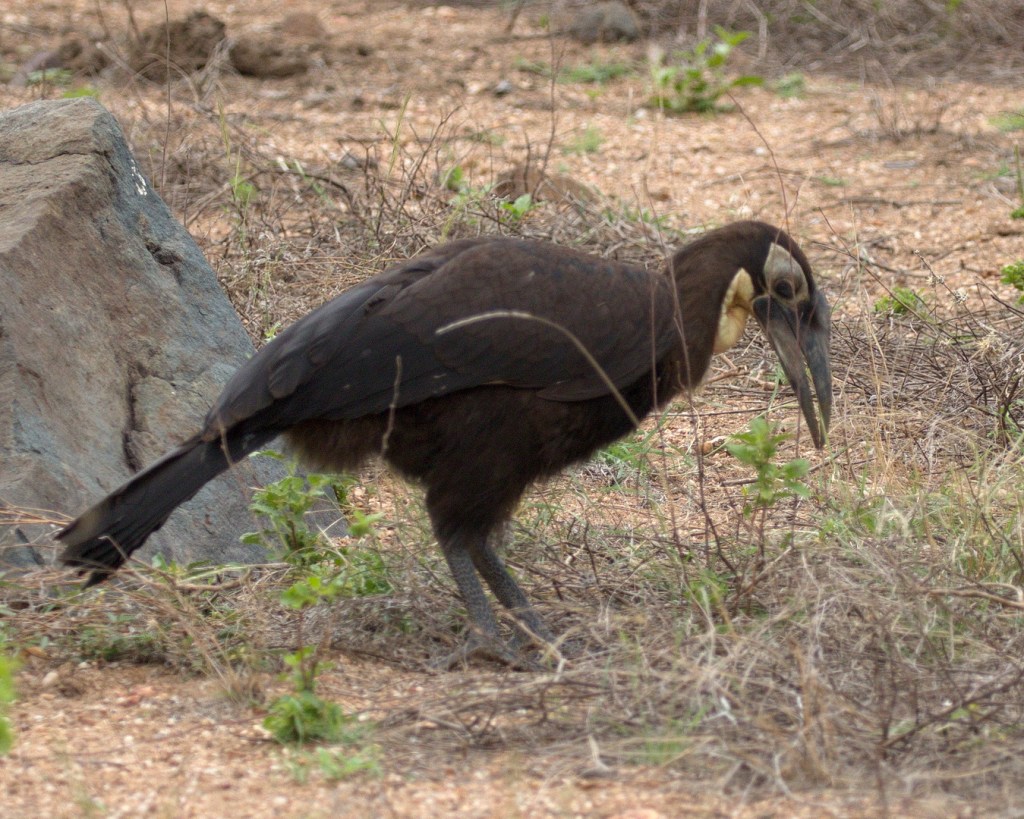
We headed on towards the H9. About 6kms before the H9 we came across a large Kopje on our left. It was here that we observed a Southern Ground Hornbill nesting site. There were several on the ground and a couple few out of the nest.
Nest half way up in the photo.Juvenile
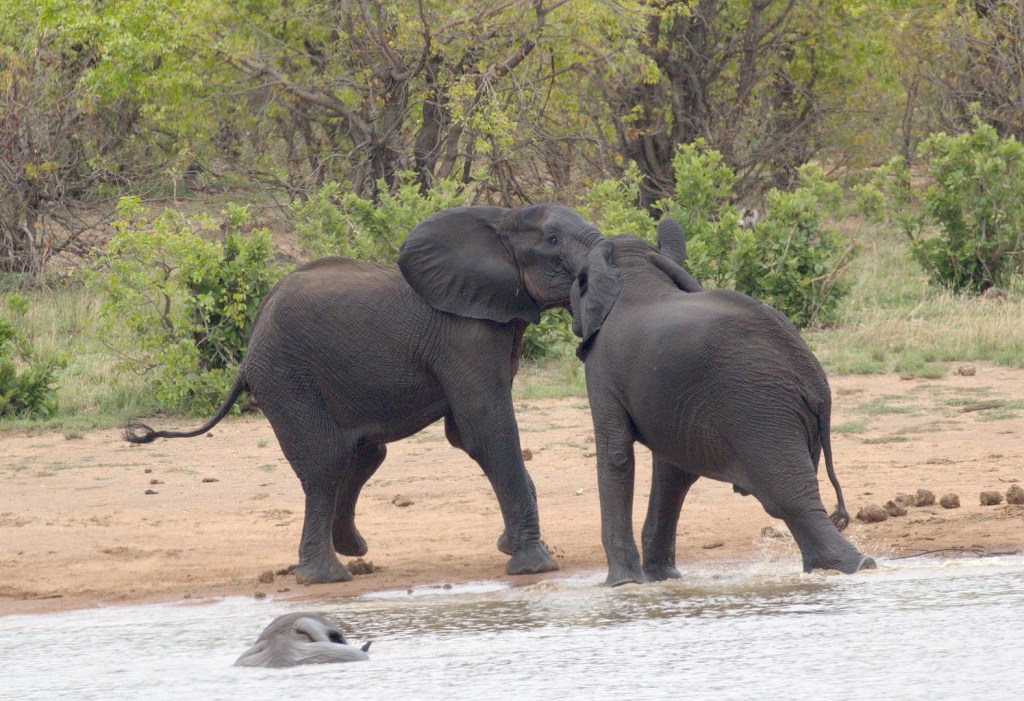
And then we were on our way to visit Sable Dam just the other side of the H9. Relatively quiet except for a herd of what looks like sock-wearing elephants.
A couple of these elephants had a bit of a tussle.
Also seen there was a blue-tongued leguaan, a blue-headed lizard, a crocodile and a Three-banded Plover chick.
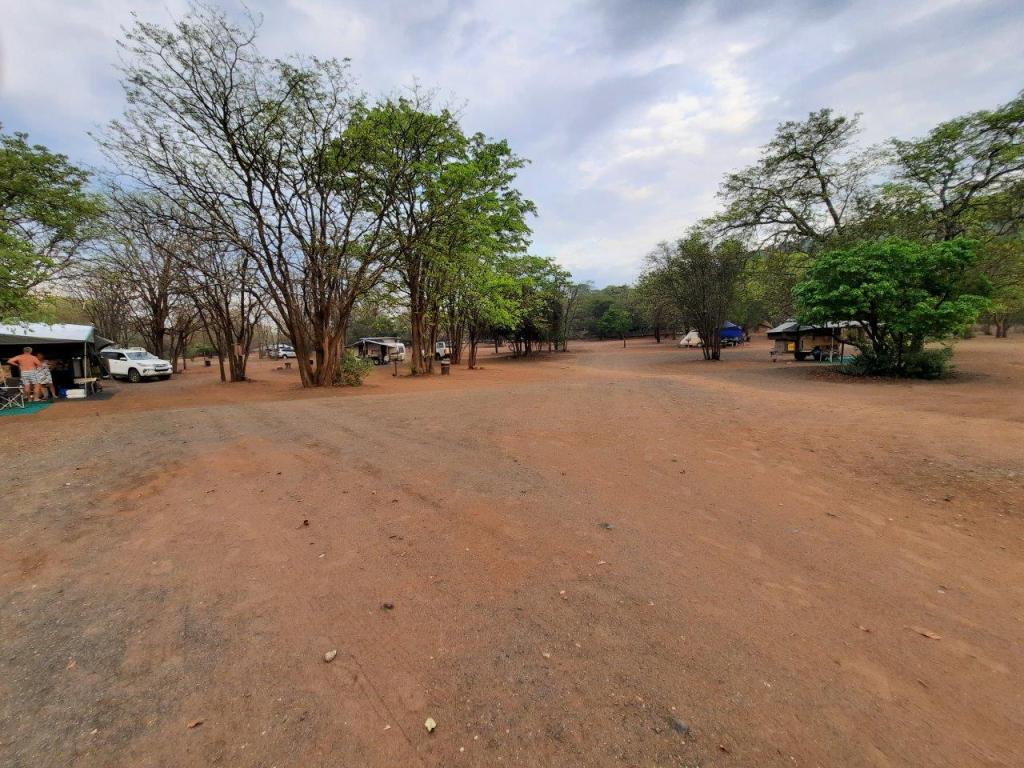
On arrival we found a site by the fence close to where we had camped previously. We goofed on our estimation of the direction of the setting sun and ended up enjoying our afternoons in its full glory at 36 degrees and beyond unfortunately.
In the evenings the Hyenas made their patrol around the camp and one lay facing us with beseeching eyes every night – the same as happened when we last stayed at the camp.
Hyena with sad pleading eyes
Balule Campsite view
We spent time on both nearby bridges checking out whatever appeared. That is the bridge on the main road and the fjording bridge by the camp.
Balule bridge crossing
Balule bridge crossing
One day crossing over we noticed numerous African Openbills landing up stream. Quite a sight through the scope.
African Openbills
African Openbills
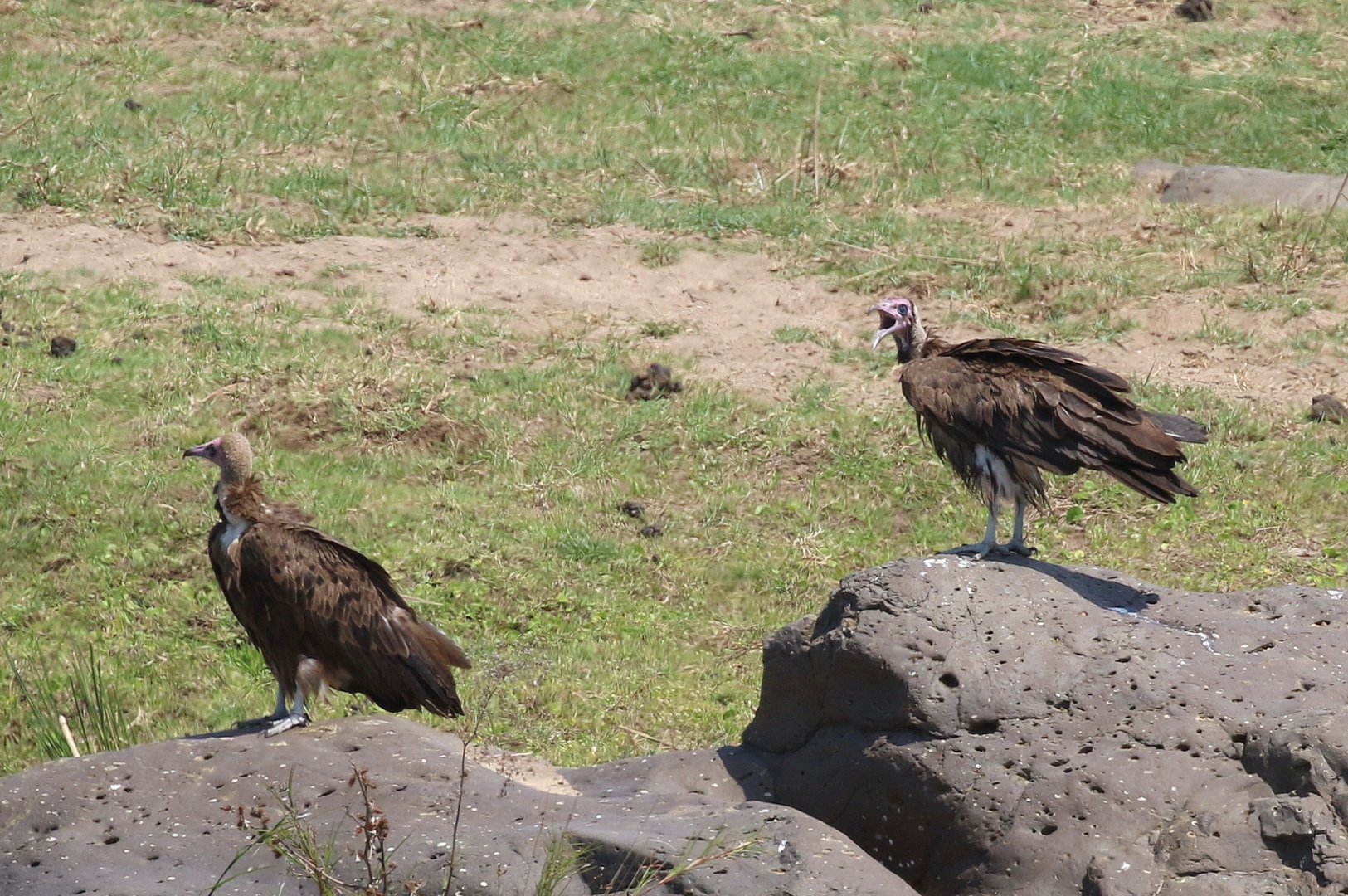
Last year we came to try our luck at finding the Egyptian Vulture often reported as seen from the main bridge among the many White-backed Vultures. This year the White-backed Vultures were also present but like last year no sign of the Egyptian Vulture. However we did see Hooded Vultures below the bridge.
Hooded Vulture
Hooded Vultures
Hooded Vultures
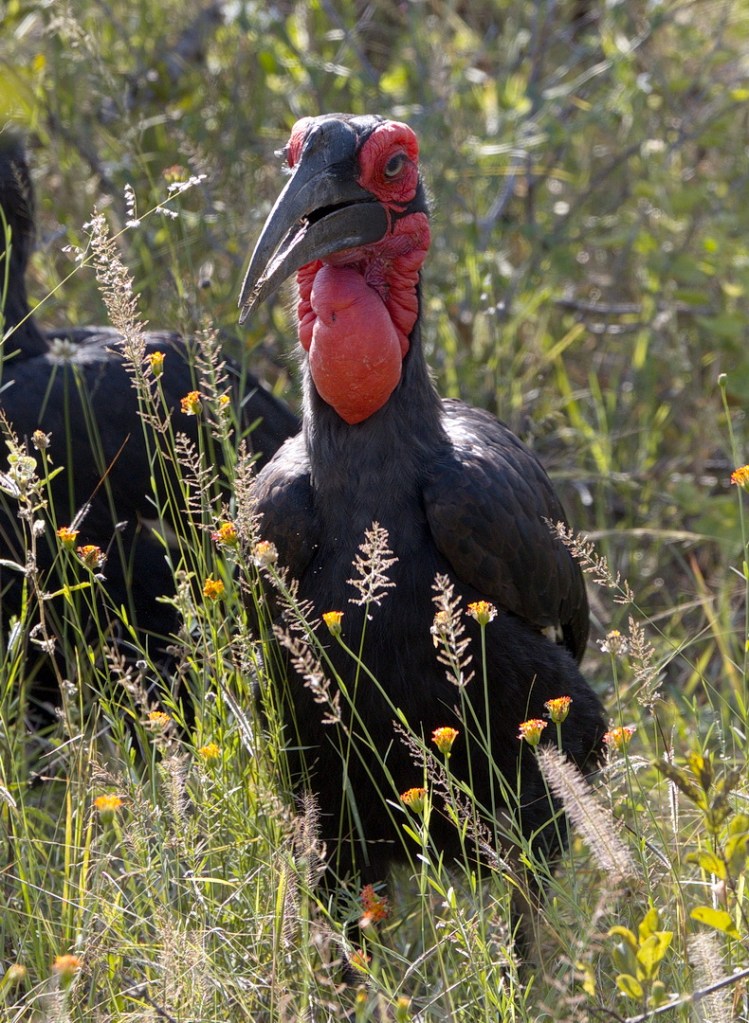
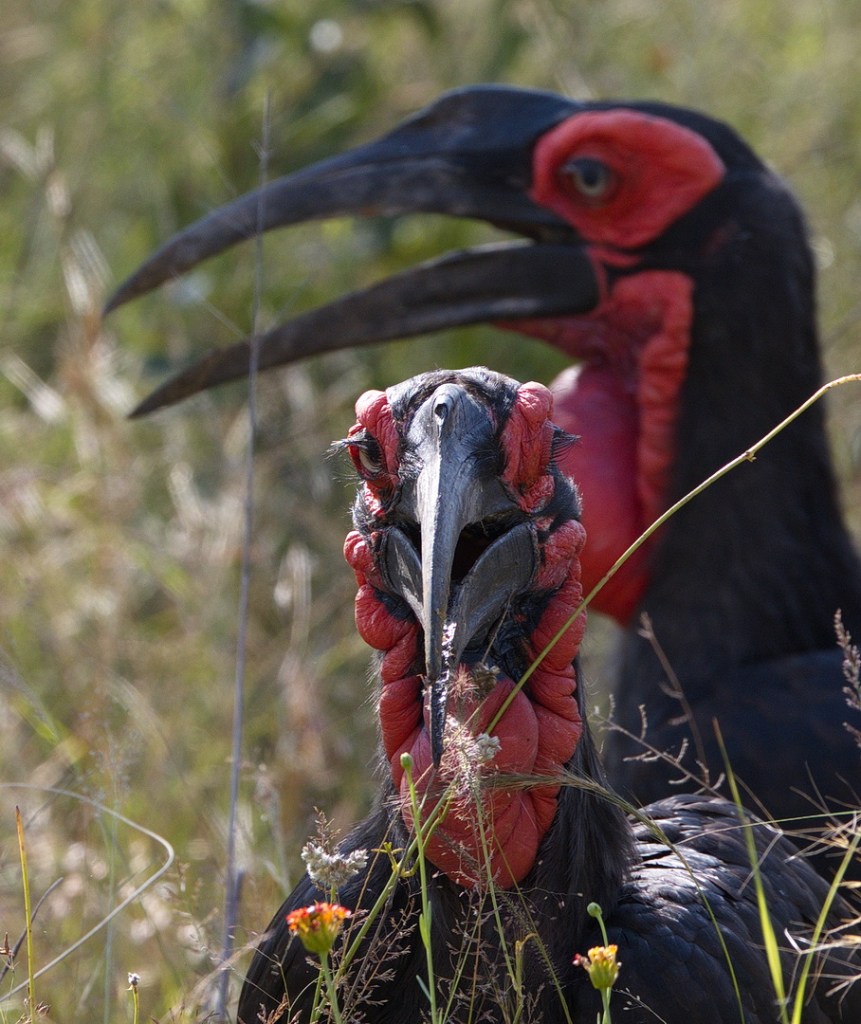
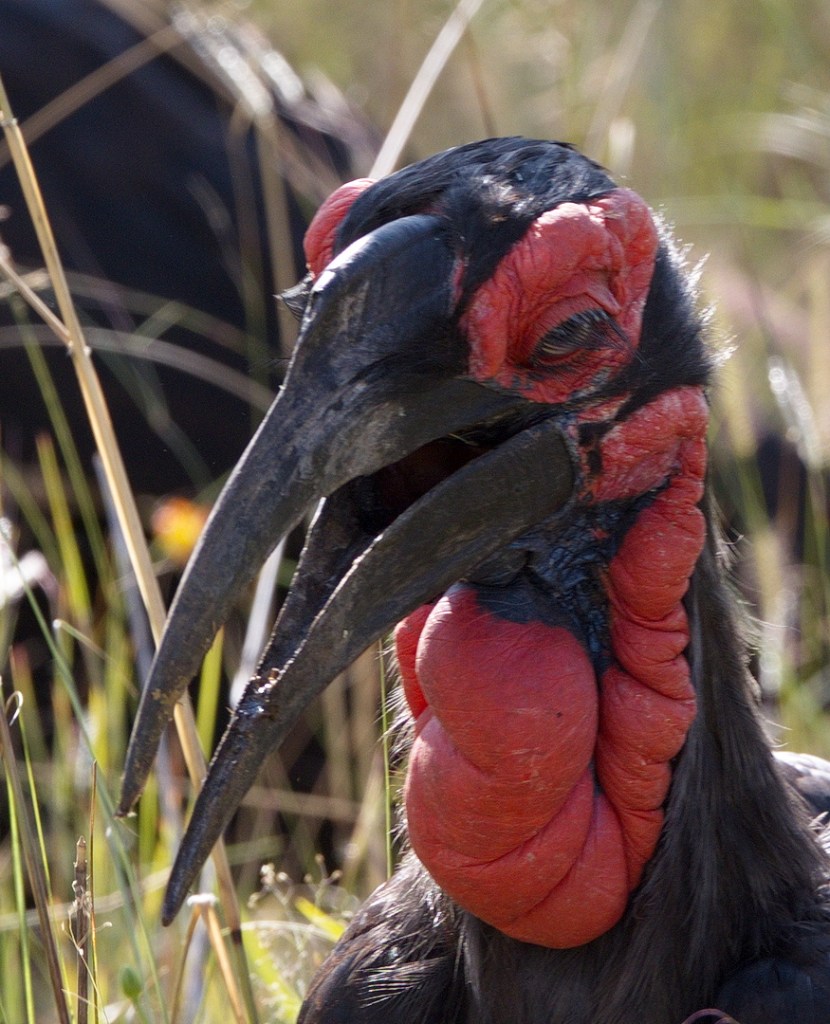
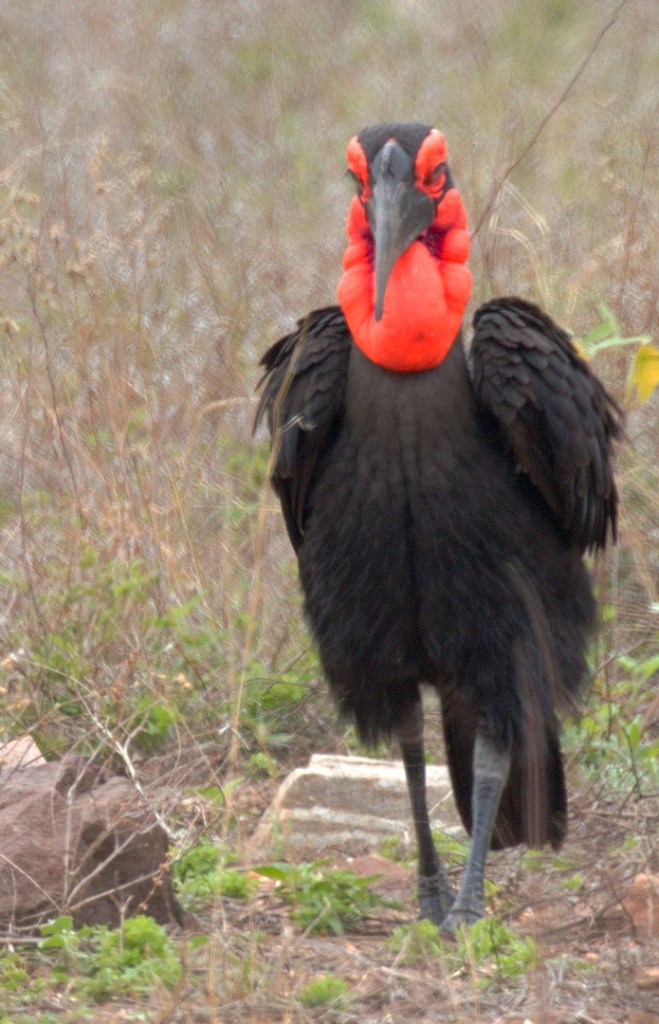
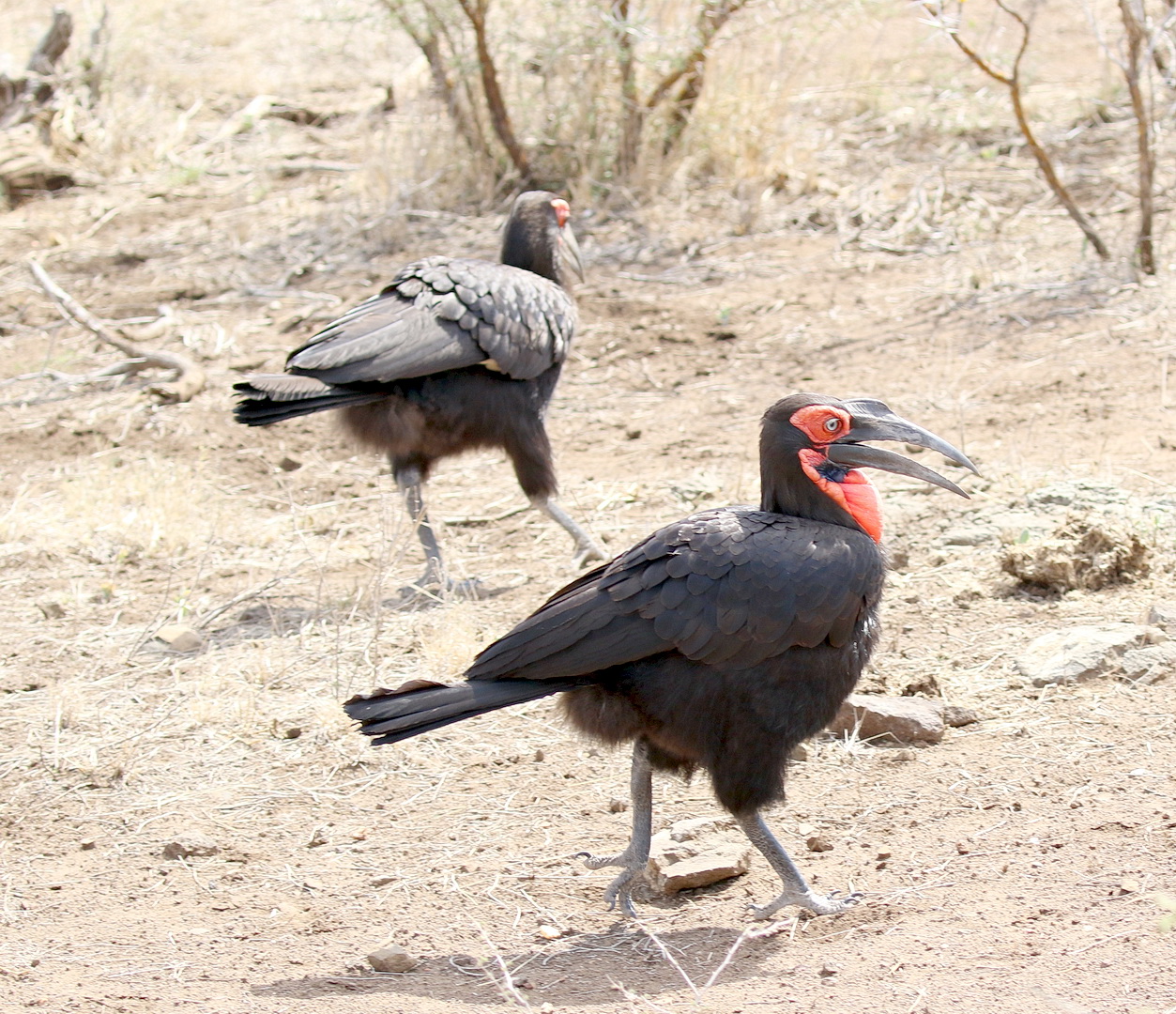
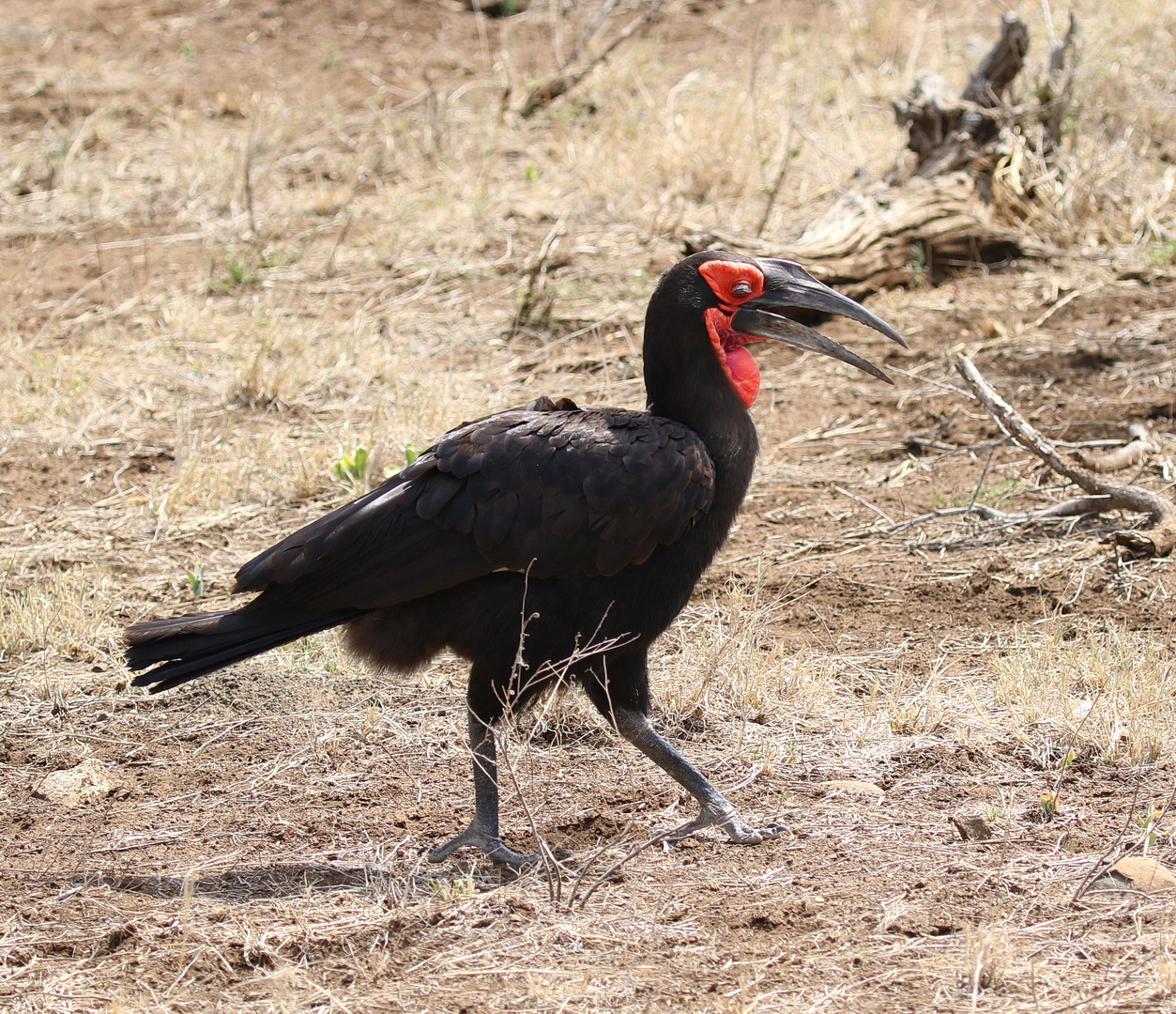
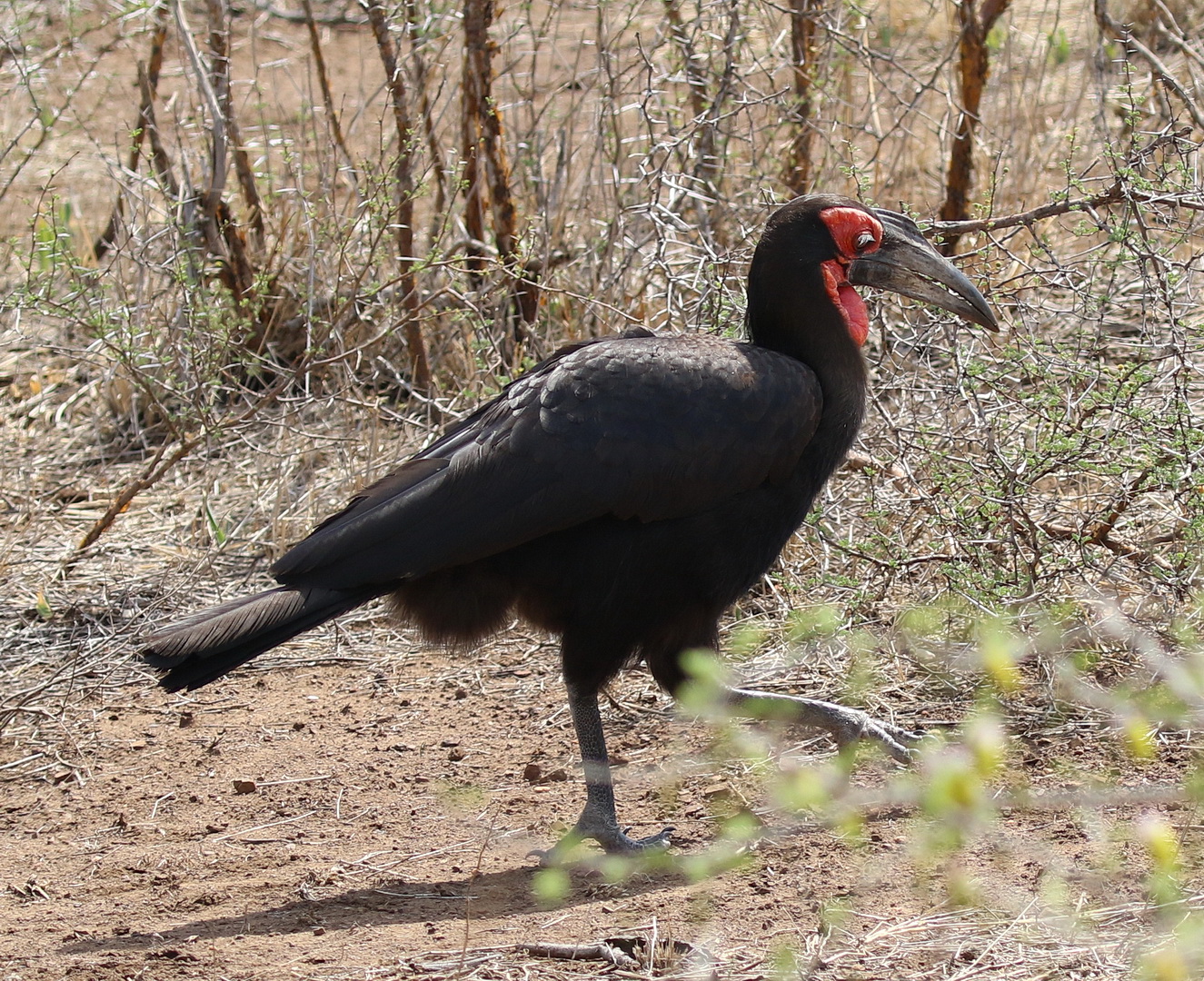
On two occasions we saw Southern Ground Hornbills.
Southern Ground-Hornbill, one of the 2nd lot
Ground-Hornbill female and sub-adult
Ground-Hornbill male
Ground-Hornbill
On one drive we ended up on a new road following the Ngotso North river – not shown on our old map nor on the GPS. Coming from Satara heading north, it is the first road on the right after the Timbavati turnoff (Ntomeni Road S127). There is a sign saying no caravans and that it is a one way road.
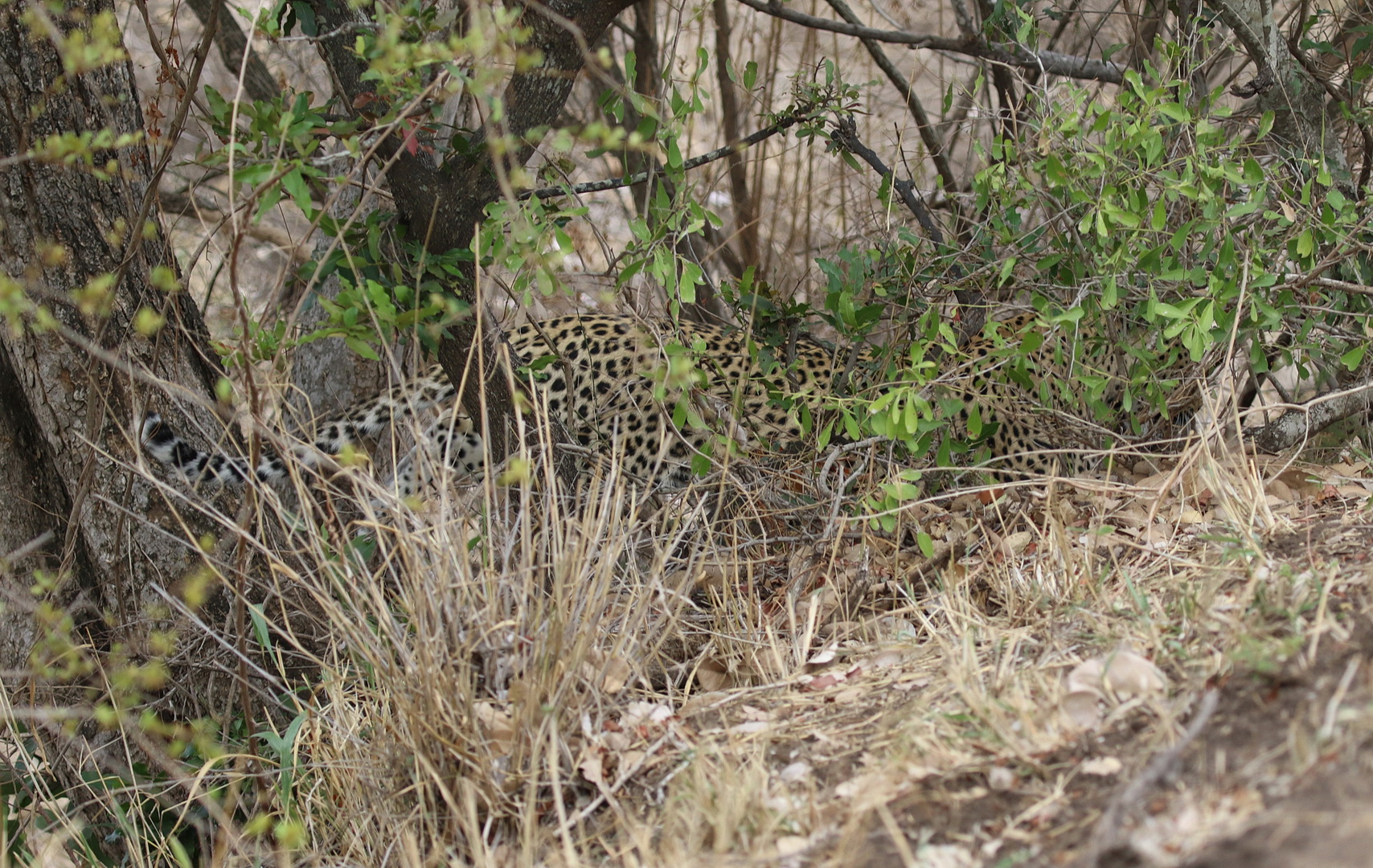
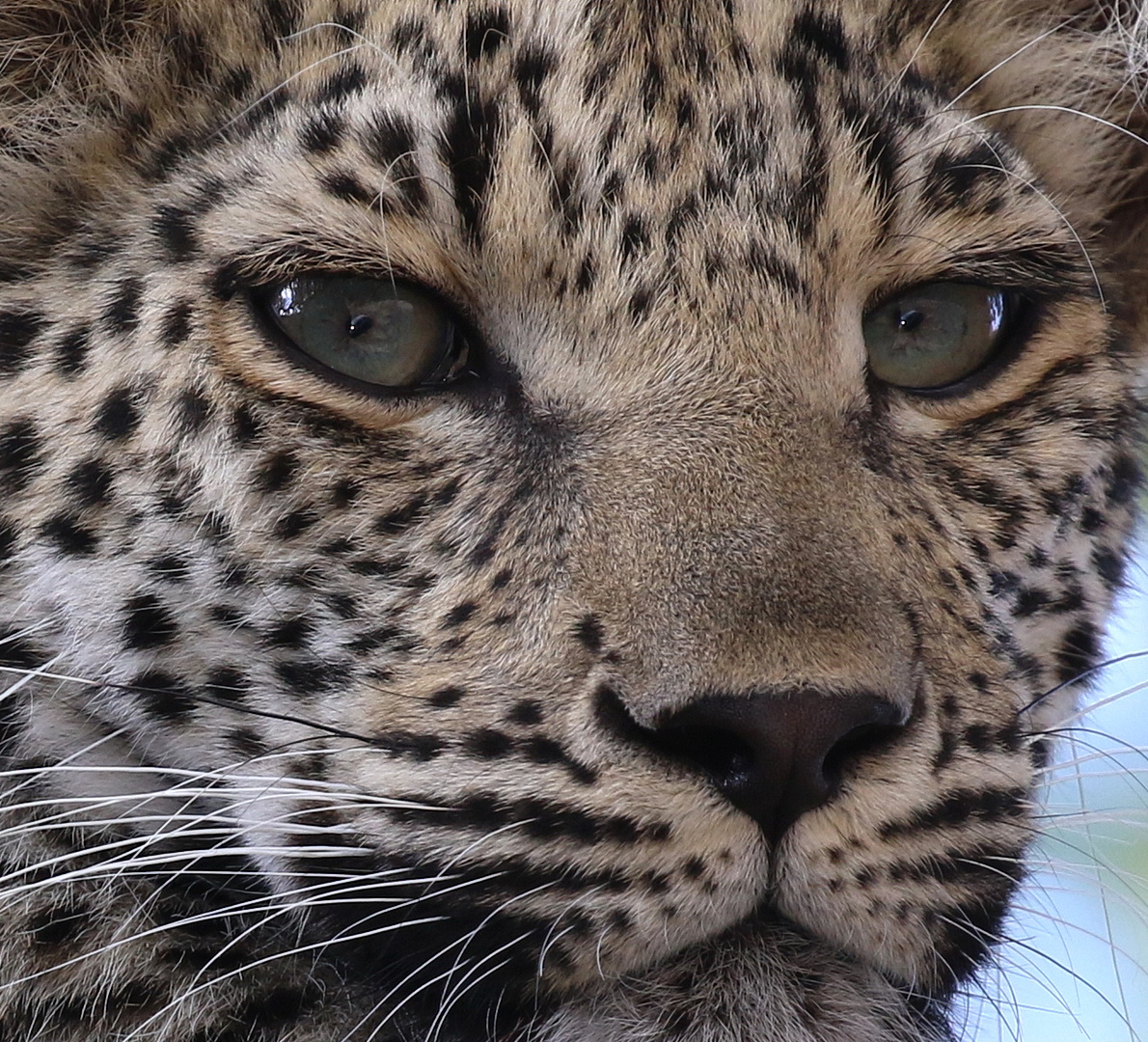
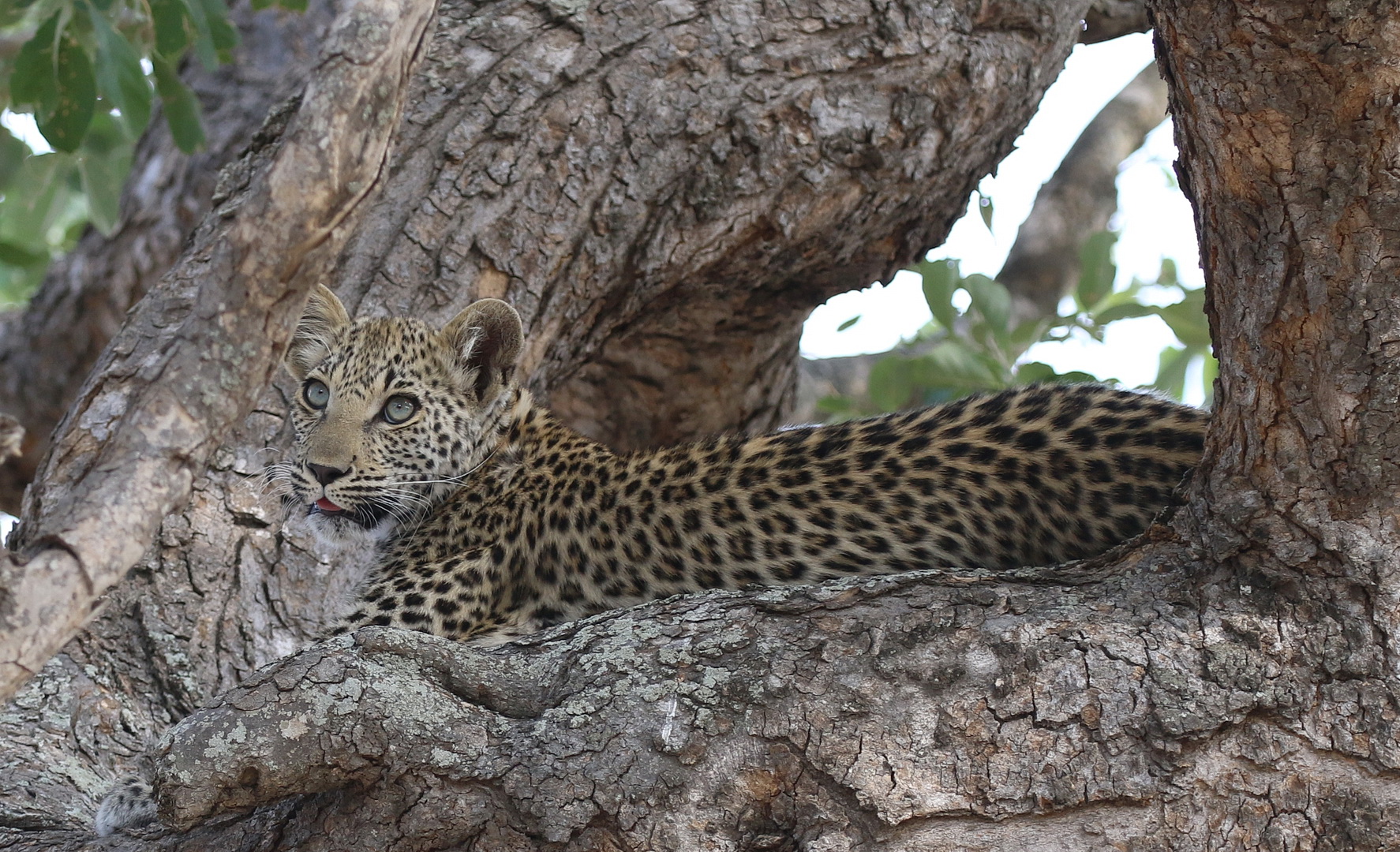
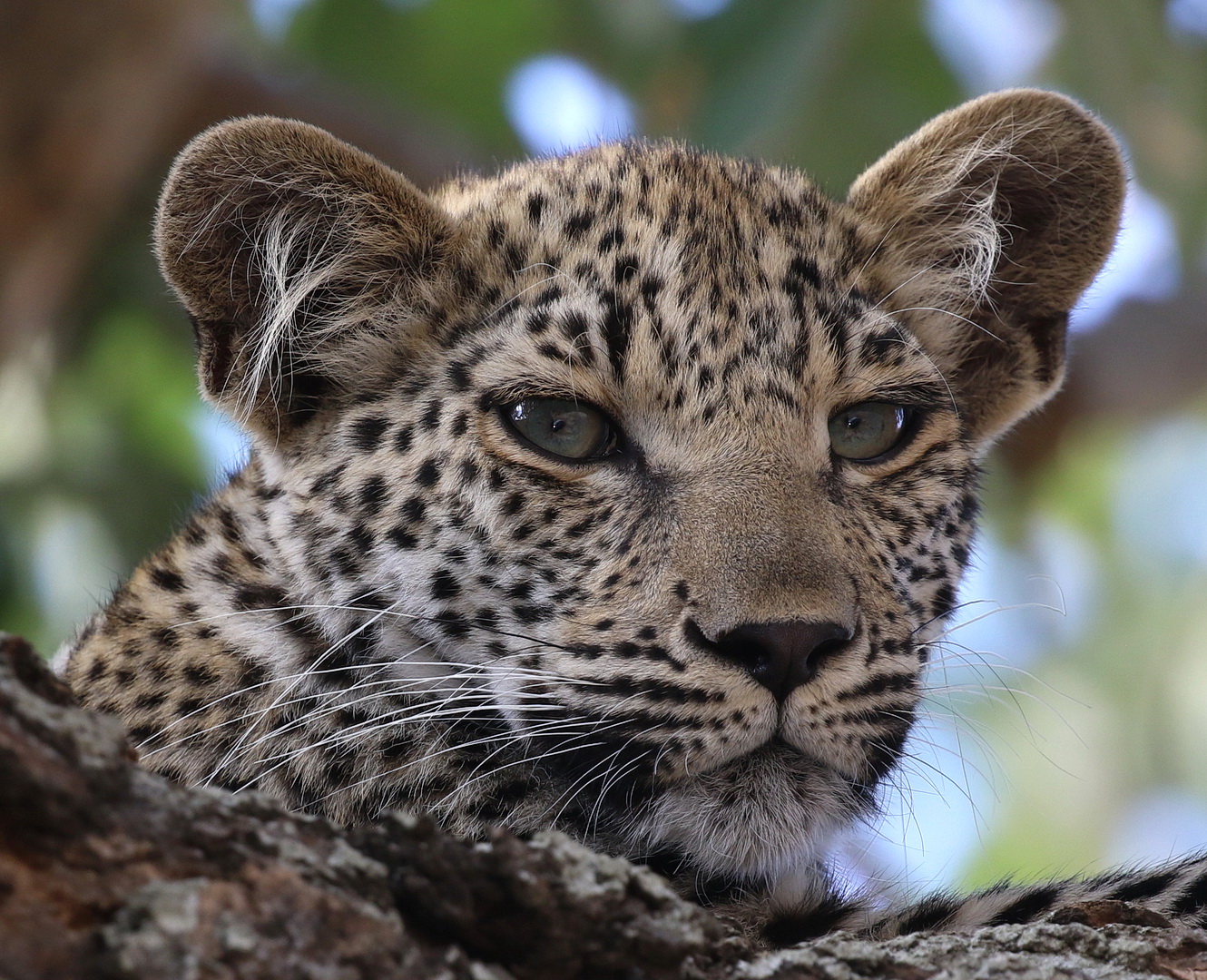
It is on this road that we encountered a female Leopard and her sub-adult on a number of occasions. Not to be outdone, there was another female Leopard and sub-adult seen in a tree beside the main road after crossing the main bridge heading north – with a huge carcass of an Impala hanging in the tree.
Leopard Mum
Leopard Mum
Leopard cub and 4 feet
Leopard cub feet up time
Leopard cub face off
Leopard cub I,m cool and almost unnoticeable
Leopard cub I’m off
Leopard cub I’m watching you
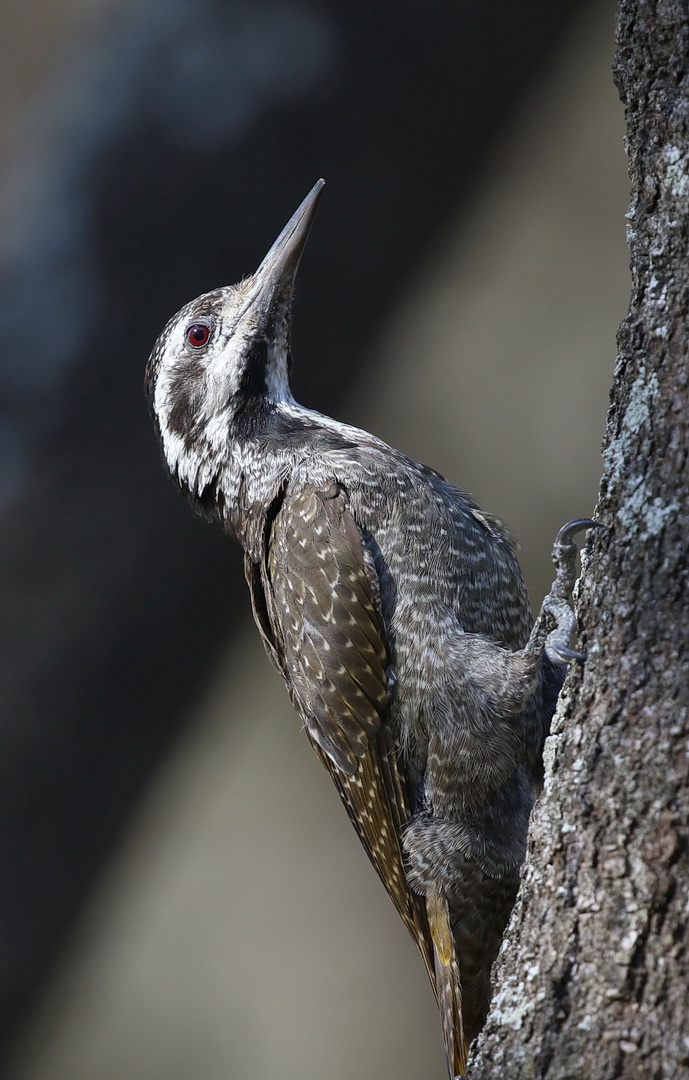
On a visit to Letaba we had a strange sight of a Bearded Woodpecker trying to get into a electric power box in the campsite.
Bearded Woodpecker
Bearded Woodpecker
Birding was excellent and we identified 116 different bird species – see list by clicking here.
African Fish-Eagle juvenile
African Fish-Eagles. Adult and juvenile
Yellow-billed Kite
Yellow-billed Kite and Little Swift
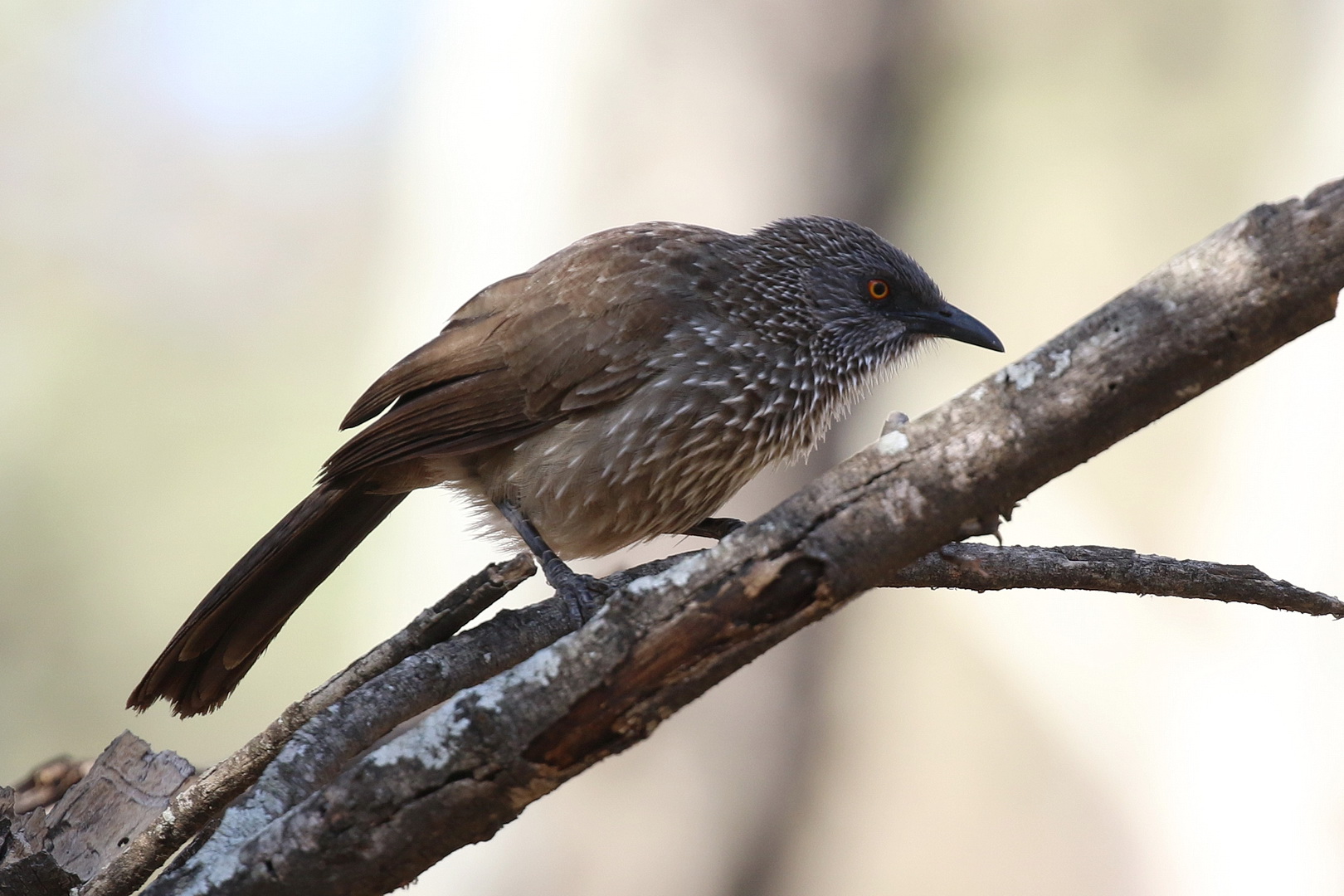
Arrow-marked Babbler
Black-backed Puffback
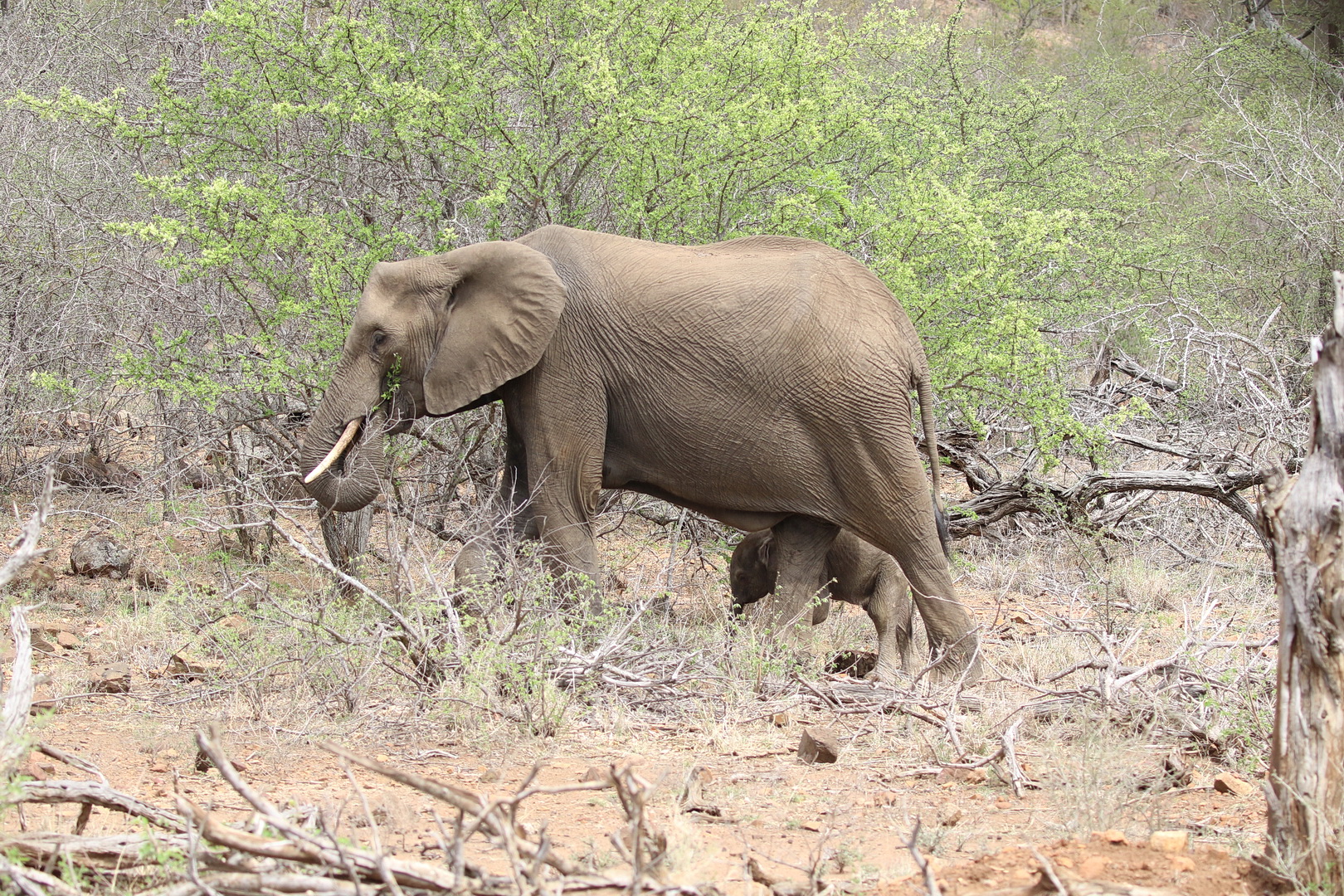
Elephant and baby – so small
Elephant wader
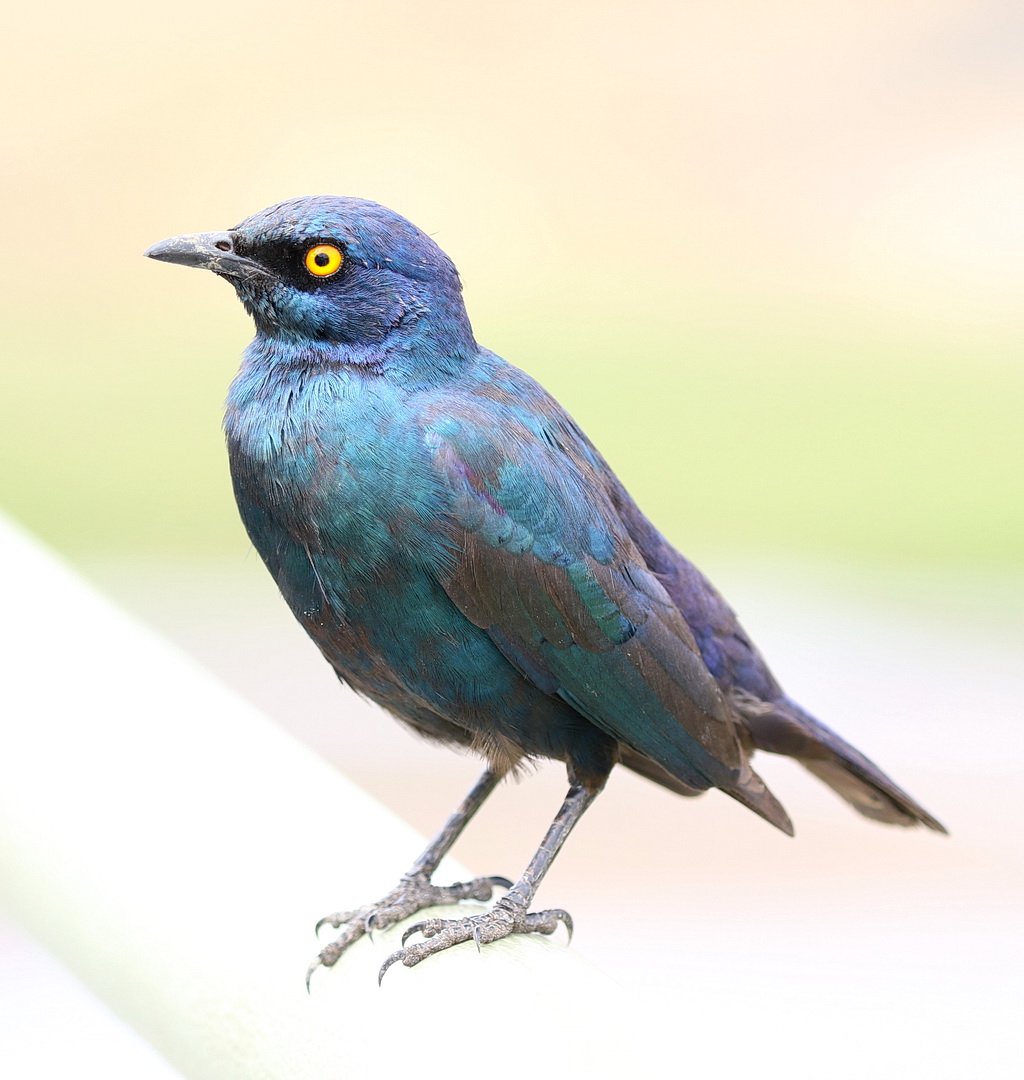
Cape Glossy Starling
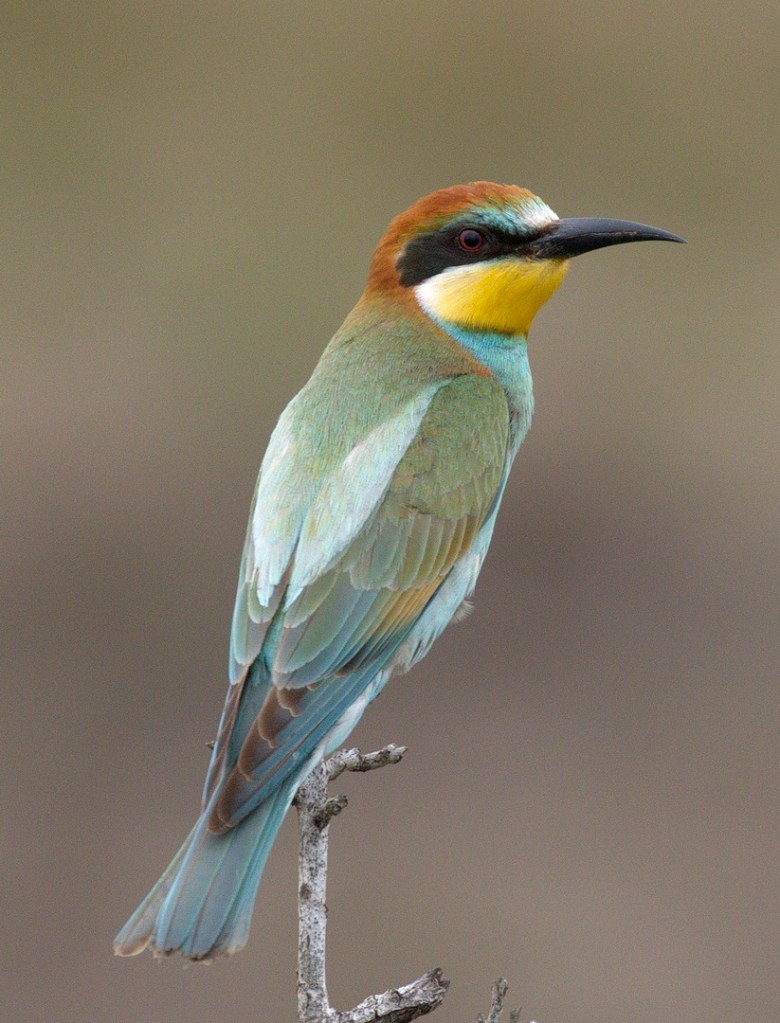
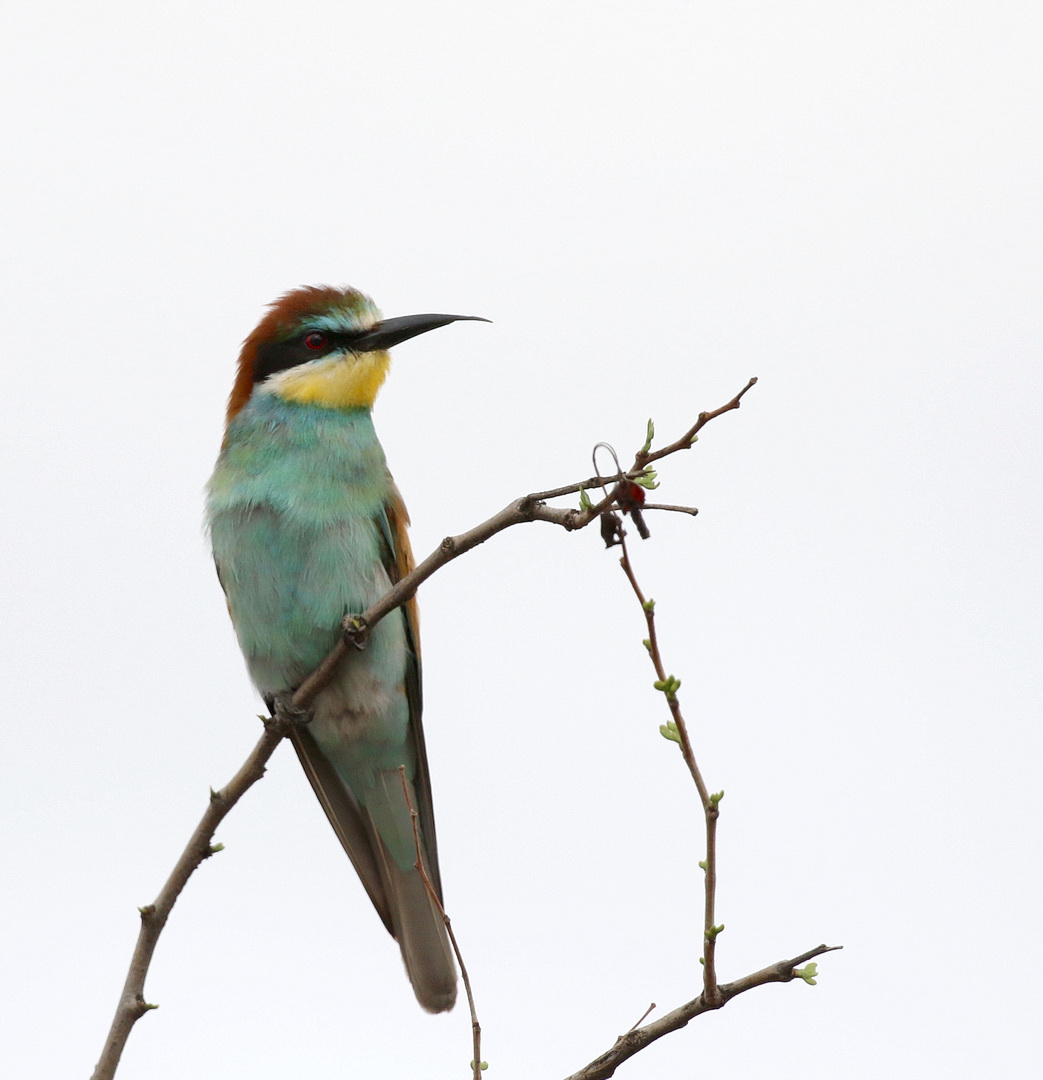
European Bee-eater
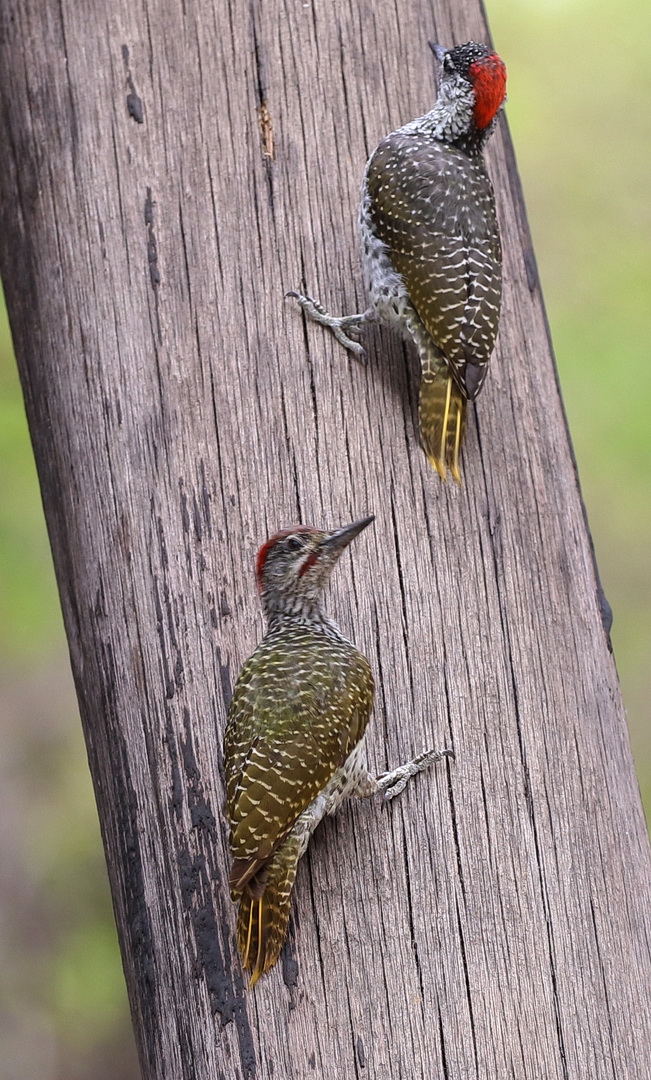
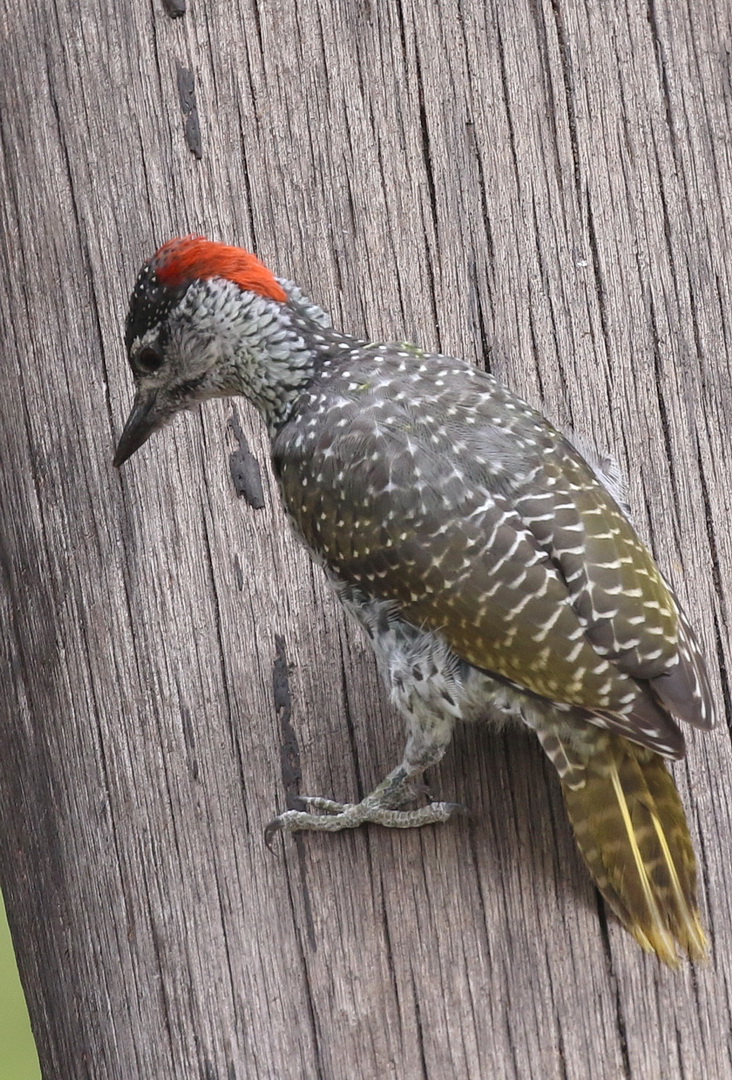
Golden-tailed Woodpecker female and male
Golden-tailed Woodpecker male
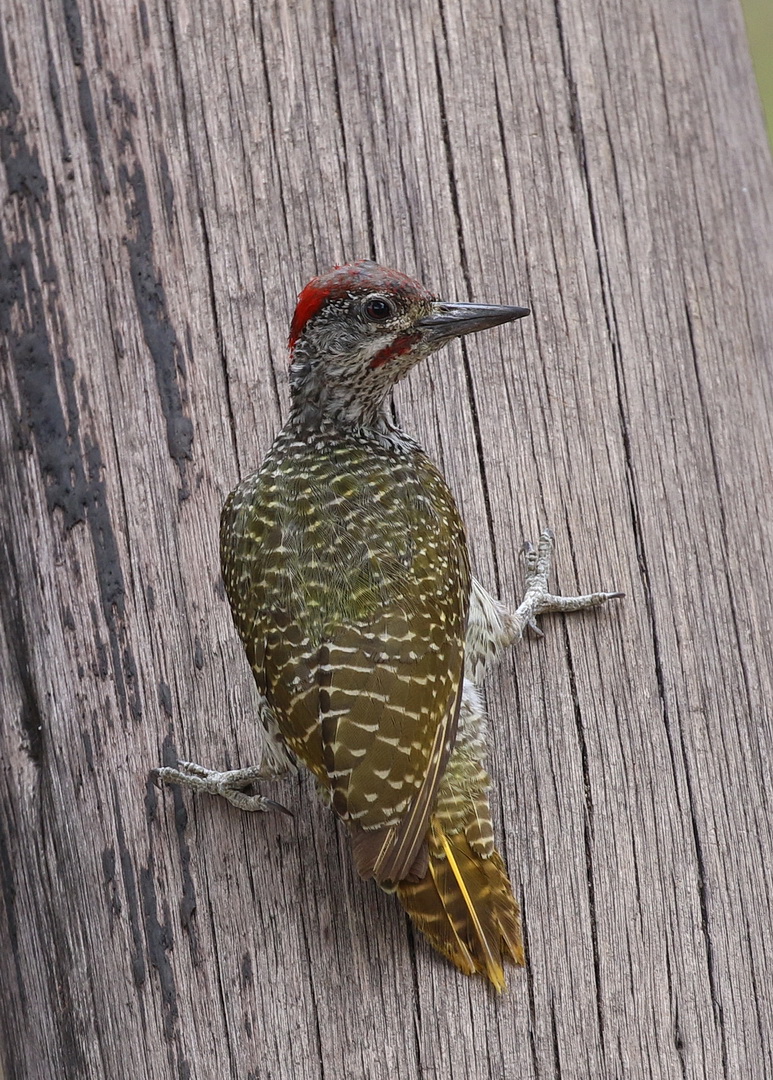
Golden-tailed Woodpecker female
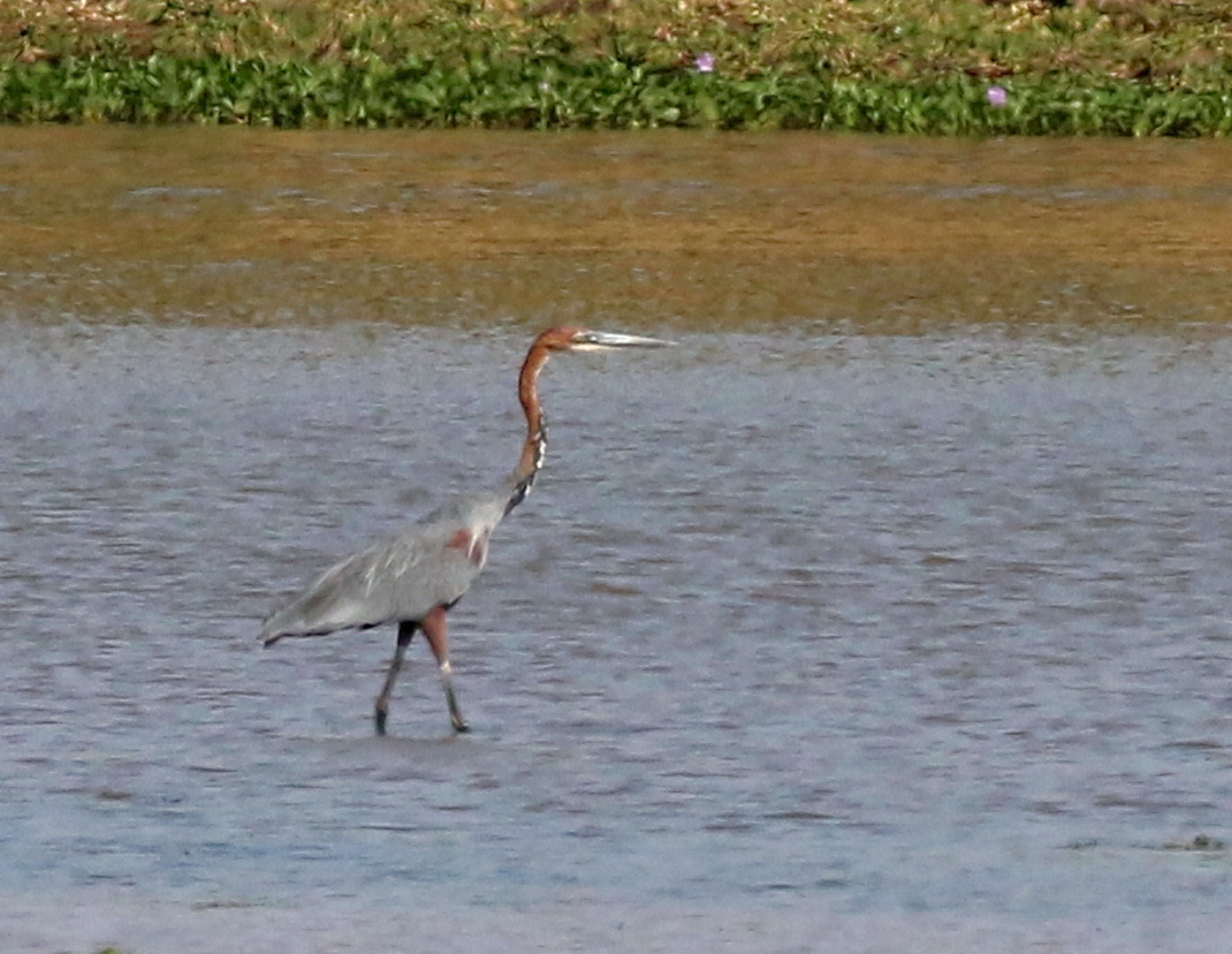
Goliath Heron
Green Wood-hoopoe
Hooded Vulture
Hooded Vultures
Hooded Vultures
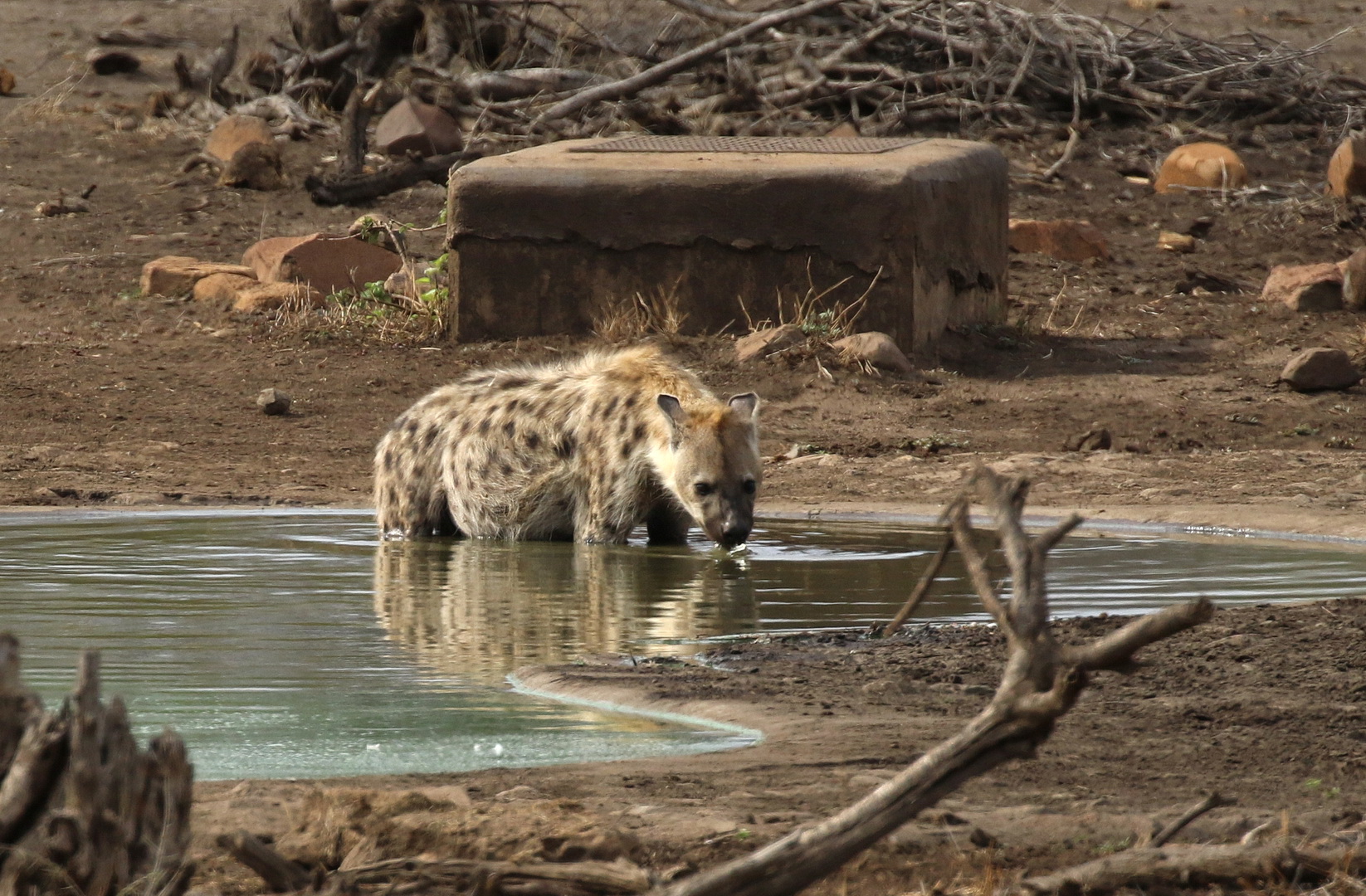
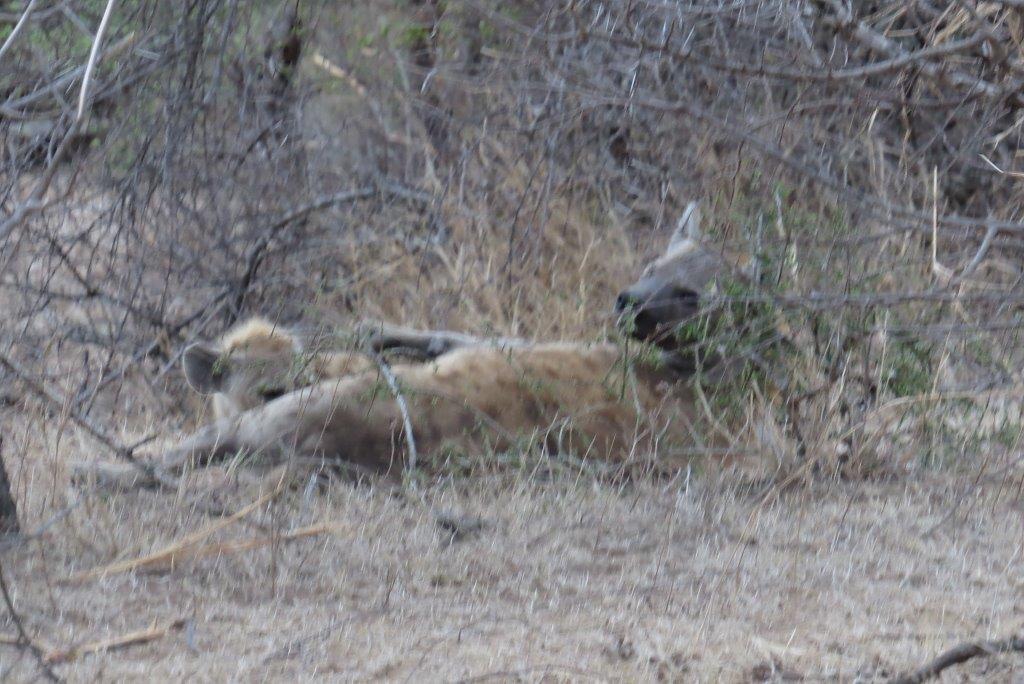
Hyena bathtime
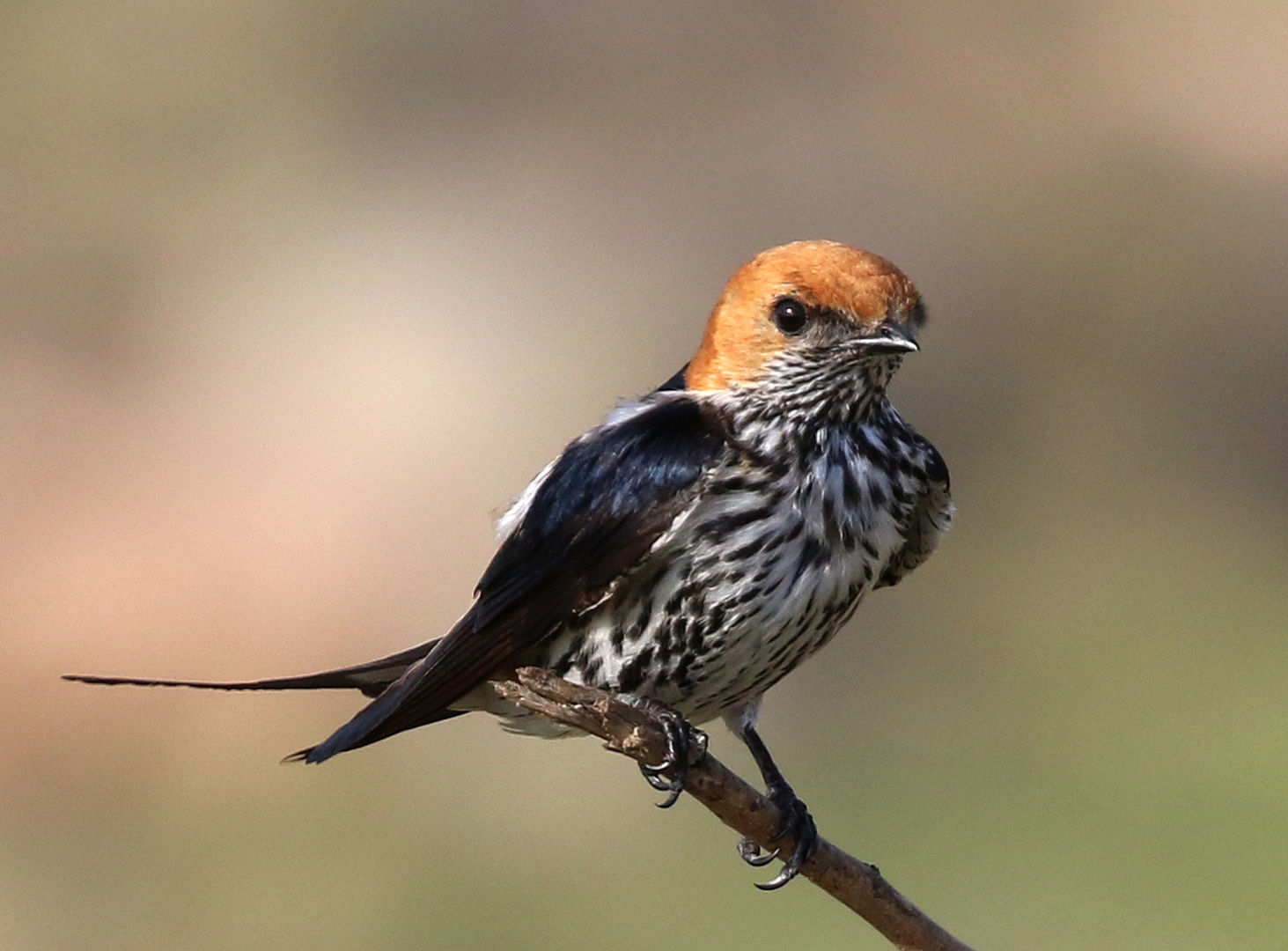
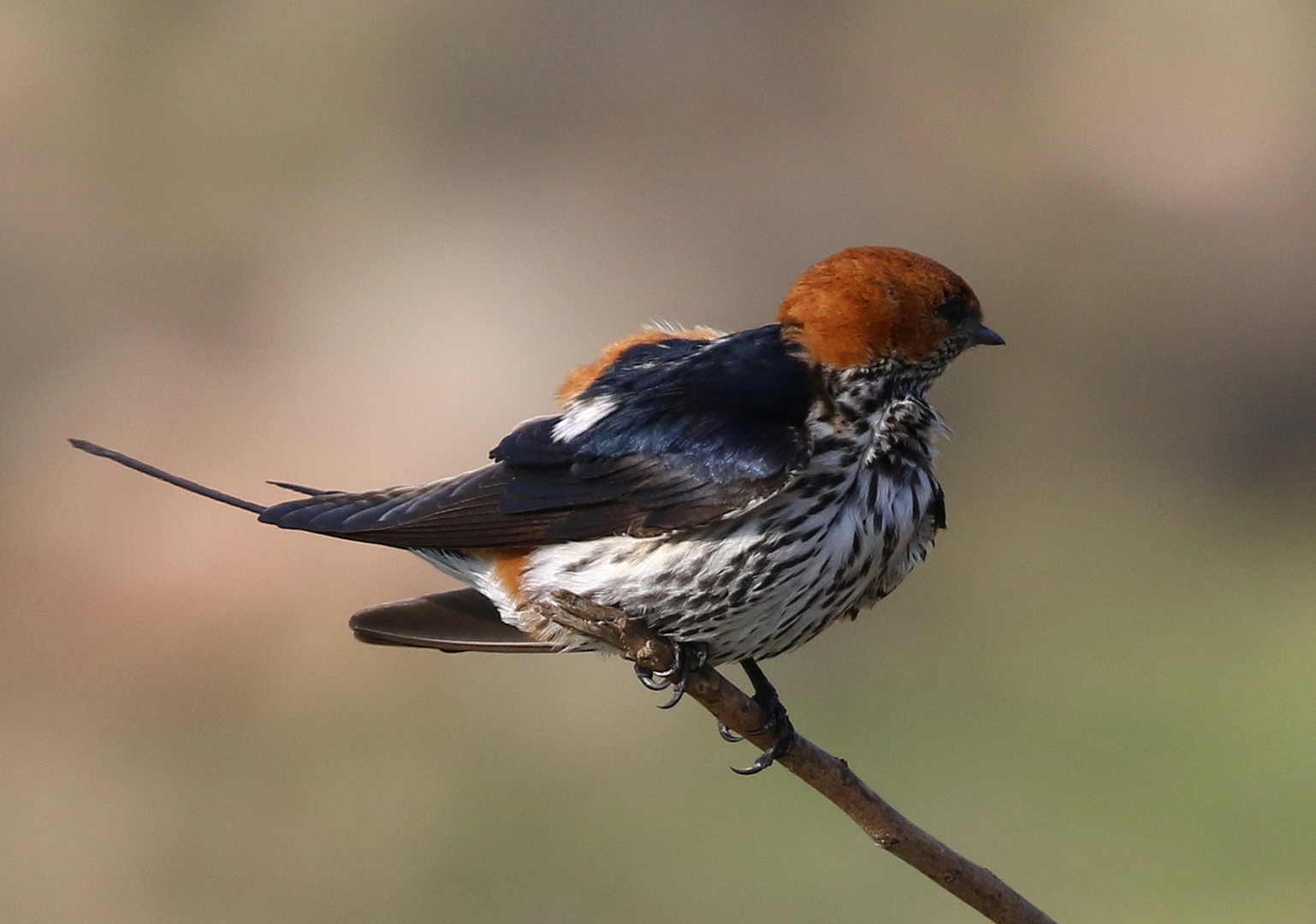
Lesser Striped Swallow
Lesser Striped Swallow
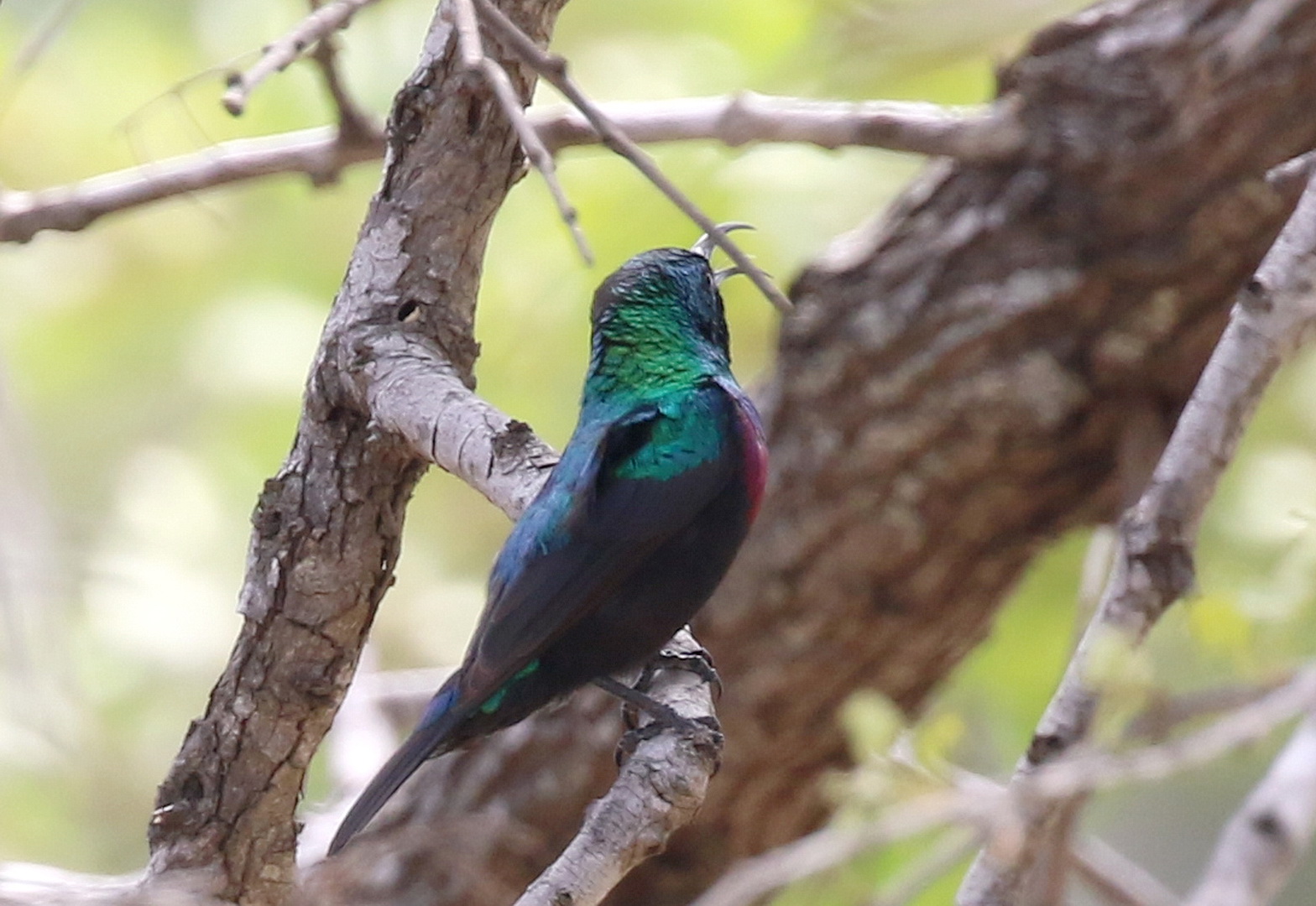
Marico Sunbird female
Marico Sunbird male
Mocking Cliff-Chat
Rattling Cisticola
Yellow-billed Kite
Yellow-billed Kite
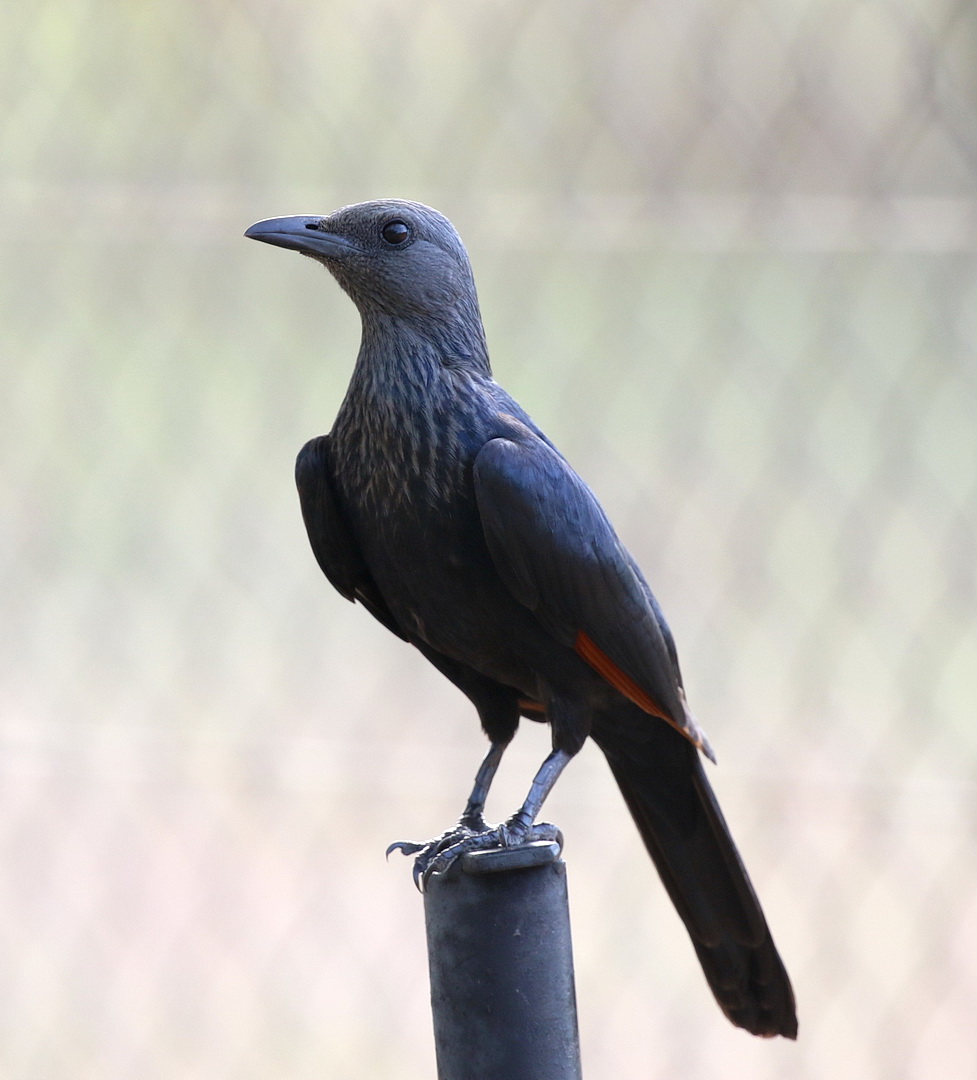
Red-winged Starling female
Stierling’s Wren-Warbler
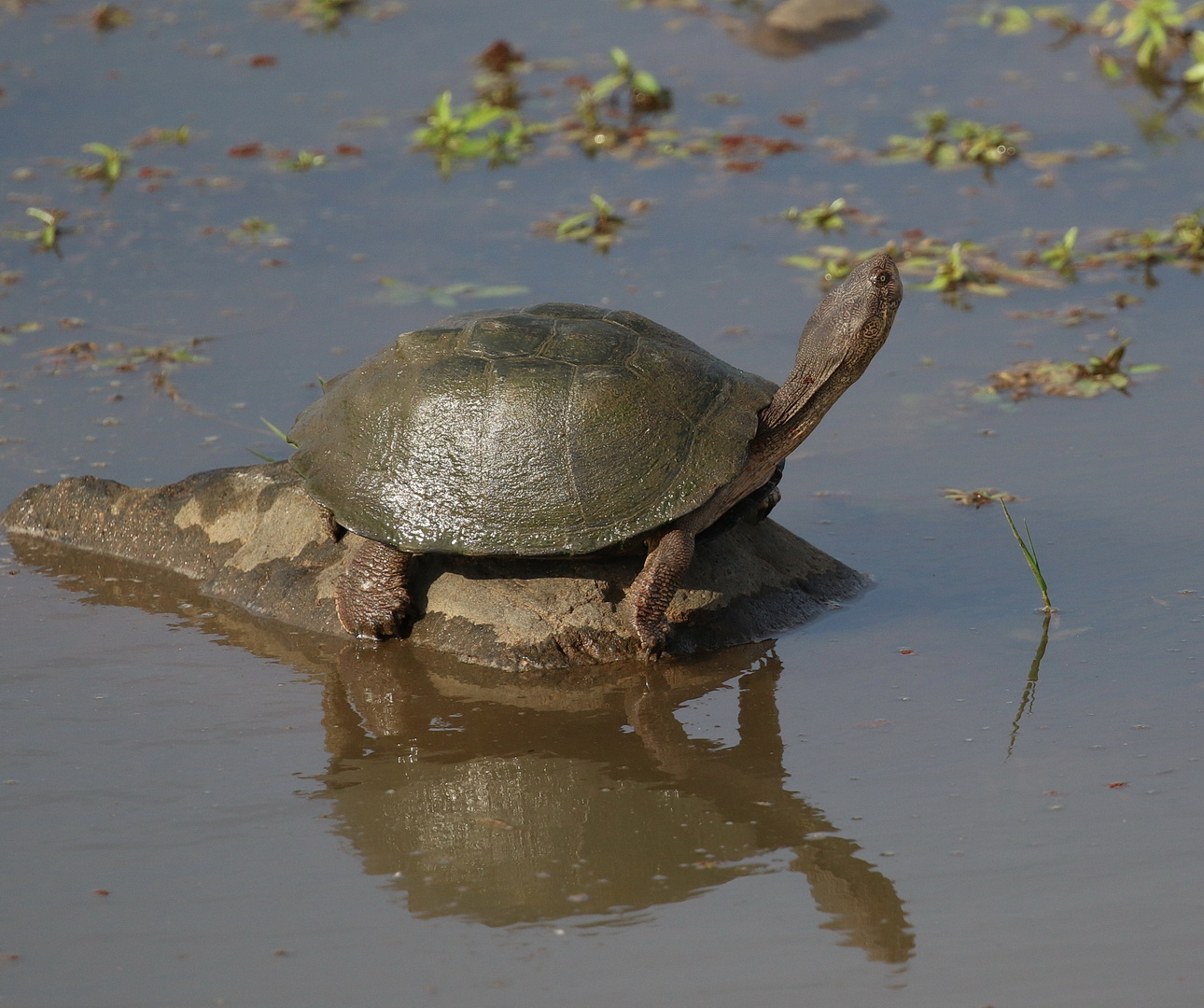
Terrapin and reflection
Probably our best bird sighting was that of the Jacobin Cuckoo – not having seen one for quite a while, although the mad Bearded Woodpecker came a close second.
Jacobin Cuckoo
Our three nights passed quickly and we were soon on our way to Shingwedzi.
From Shingwedzi we headed south for Balule – a small rustic campsite without power – paraffin lamps for lights at night, kitchen area with a gas freezer. Gas for hot water. The camp has reasonable shade.
To check in we had to go to Olifants (we believe you can also check in at Satara). From Olifants to the camp site is normally only about 11 kms. However the causeway crossing the Olifants river is being refurbished after the floods earlier in the year (expected to be complete next April).
Olifants River
New Bridge
This meant going the long way round – 30 kms. It also meant no choice of direction when leaving the camp.
Quiet pond along the dirt road to the camp with different birds and animals each time we passed.
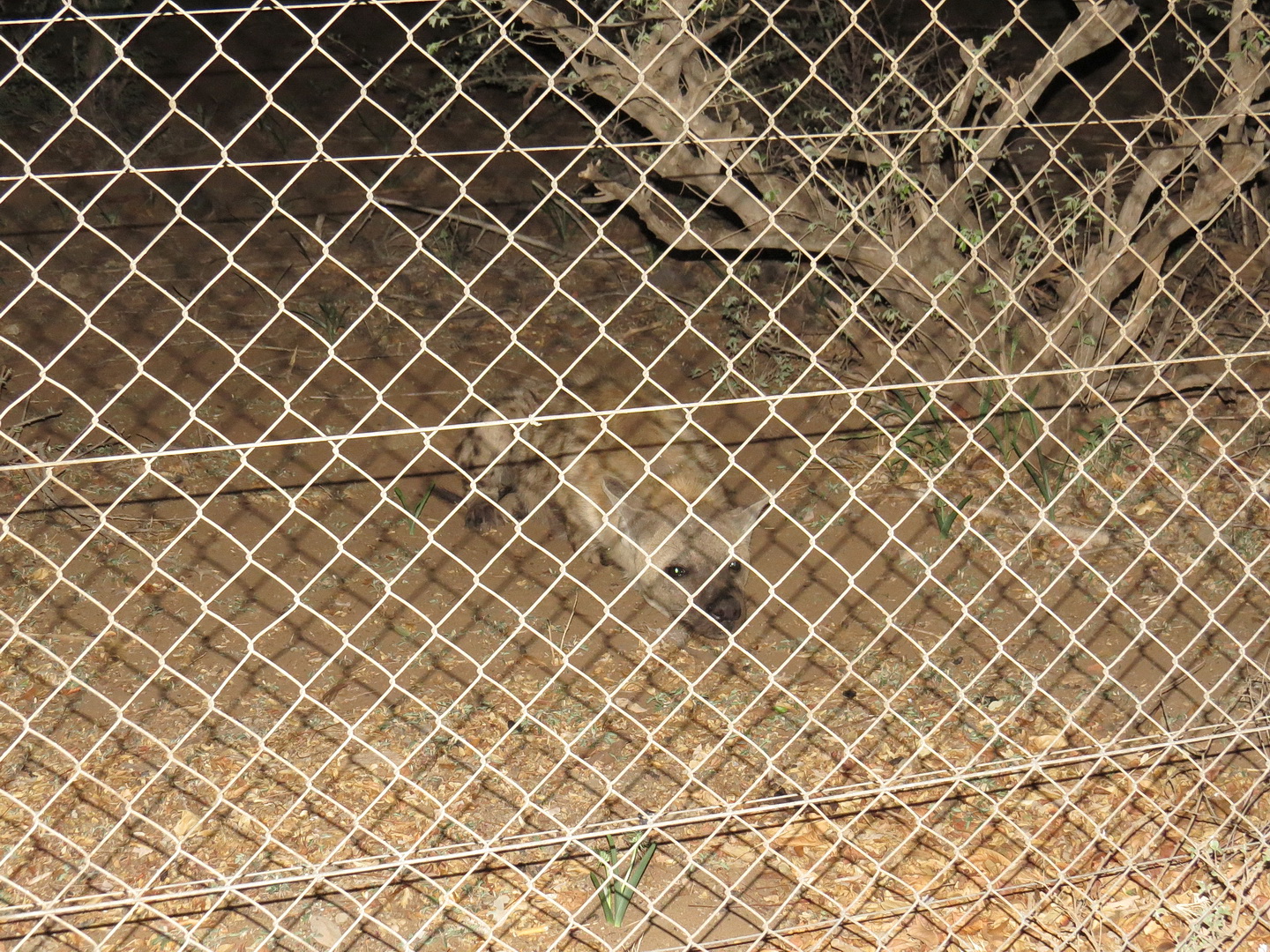
The campsites are along the camp fenceline with a well treed and grassy area in the centre – where the kitchen is located. Hyenas patrol the fenceline every night – forever hopeful. Often lying just a few metres from you staring at you with pleading eyes.
Hyena and suckling cub
Despite the nuisance of the bridge being closed the alternate route to the camp gave us some pleasant surprises.
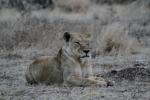
Lioness
Lionesses
Lioness
A trench for cables extended the first 4 kms- along the S91- from the main road towards the camp. On several occasions we came across elephants trying to get across without success – fortunately for us they were on the other side of it.
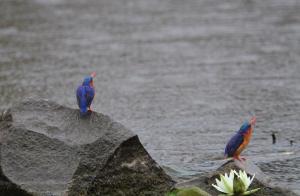
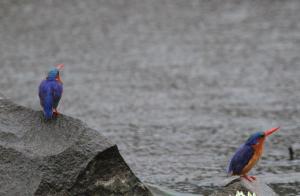
Birds as well as animals. A pair of Malachite kingfishers misidentified by a tour guide as African Pygmy Kingfishers.
Malachite Kingfishers
Malachite Kingfishers
Malachite Kingfishers
Malachite Kingfishers
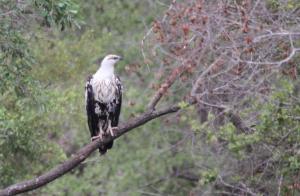
African Fish and Martial Eagles with rather full crops:
African Fish-Eagle with full crop
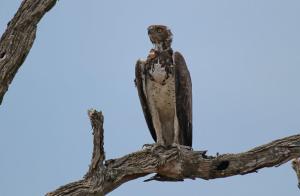
Martial Eagle with rather a full crop
A back view of a Martial Eagle
Martial Eagle – juvenile
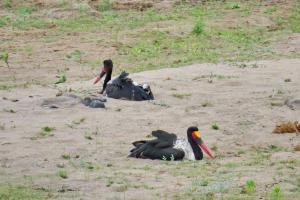
The main bridge across the Olifants River was surprisingly quiet birdwise on each occasion that we crossed it. We did have an unusual sighting of a pair of Saddle-billed Storks lying down in the riverbed below. Surprisingly Saddle-billed Storks were seen on numerous occasions – despite their depleting status.
Saddle-billed Storks
Saddle-billed Storks
We took a drive north of Olifants along the S44 one misty damp morning – following the Letaba river. It is a very scenic drive with good views over the river.
North of Olifants camp along the S44
Further along just after it joined the S93 we had our fourth sighting of Greater Painted Snipes. This time there were three and one was a female.
Greater Painted-Snipes – nr. Olifants
Greater Painted-Snipes – nr. Olifants
Greater Painted Snipe area – nr. Olifants with mystical tree.
Did you notice the tree in the last photo. It appears to be upside down and coming towards you.
Mystical Tree – where is it going.
Here are some of the other birds we saw in the area.
African Fish-Eagle
African Fish-Eagles
African Harrier-Hawk – juvenile
African Harrier-Hawk – juvenile
African Harrier-Hawk – juvenile
African Harrier-Hawk – juvenile
African Harrier-Hawk – juvenile
African Harrier-Hawk – juvenile
African Harrier-Hawk – juvenile
African Harrier-Hawk – juvenile
Burchell’s Coucal
Diderick’s Cuckoo
European Bee-eater
Grey Go-away-bird having a dust bath
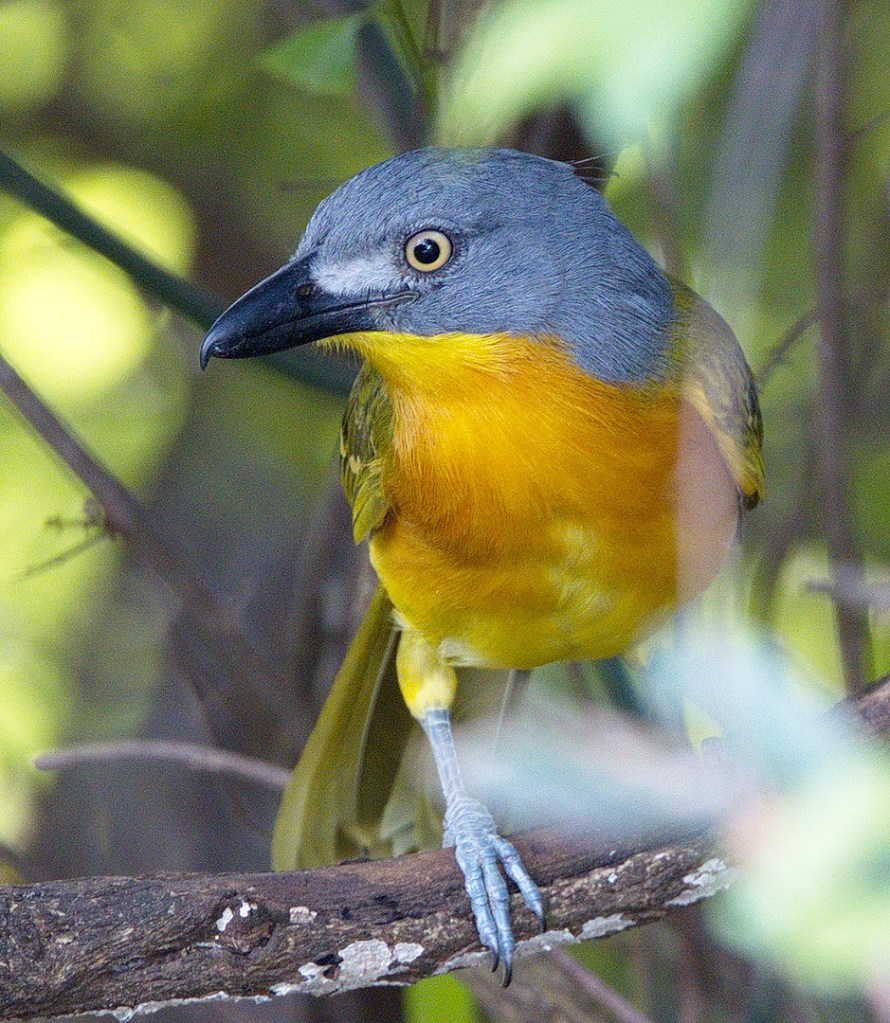
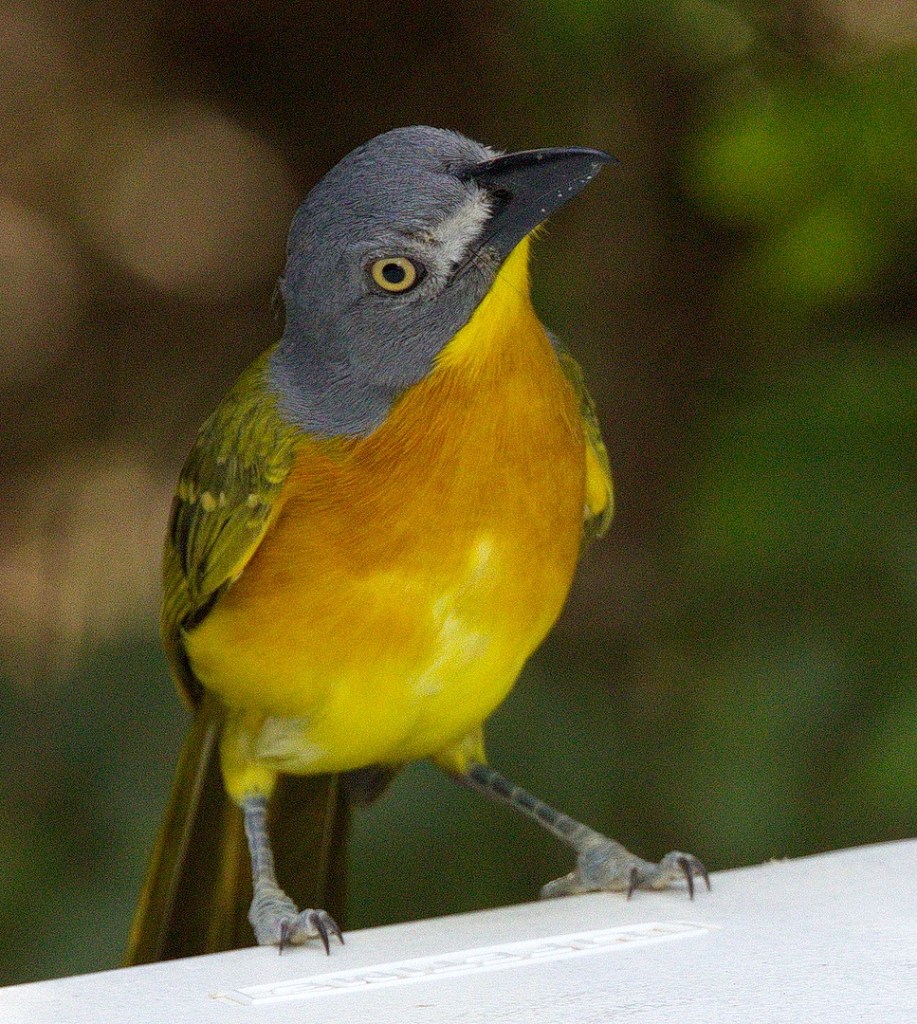
Grey-headed Bushshrike
Grey-headed Bushshrike
Lapsmith juvenile
Lilac-breasted Roller
Marico Sunbird
Marico Sunbird
Red-crested Korhaan
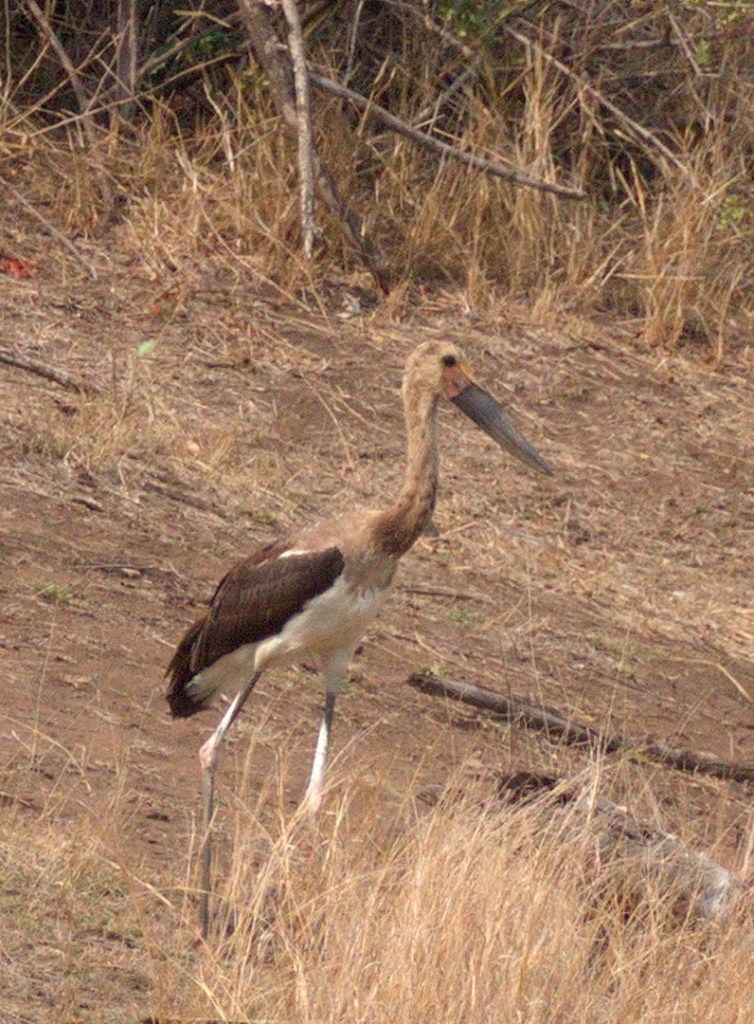
Saddle-billed Stork
Sabota Lark
Spectacled Weaver
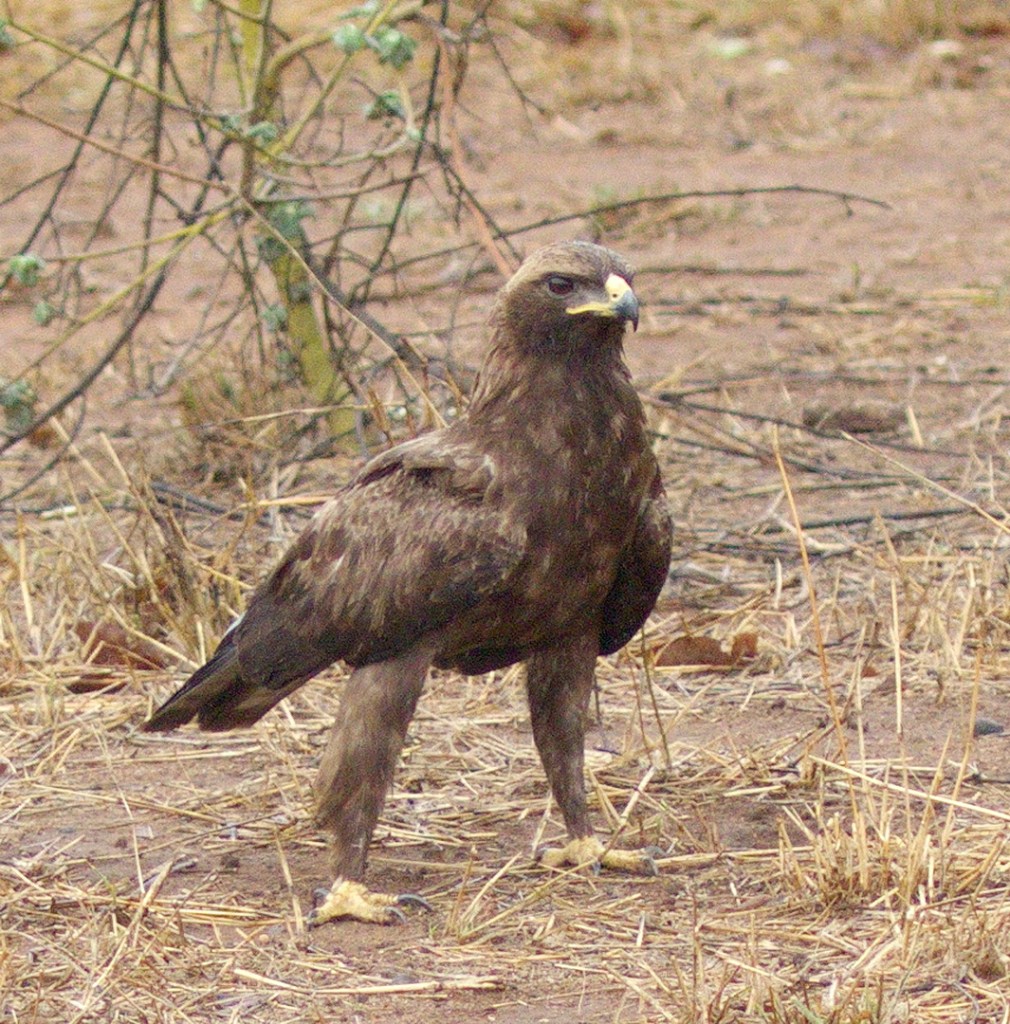
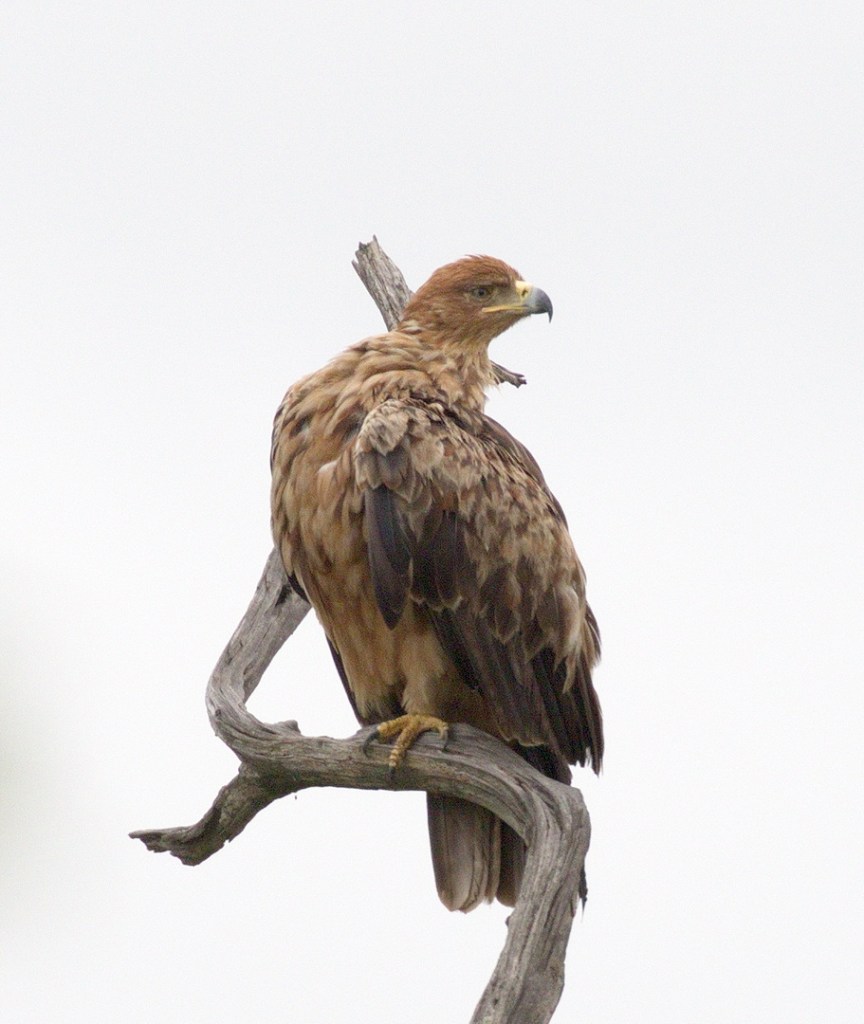
Tawny Eagle – striped
Terrestrial Brownbul
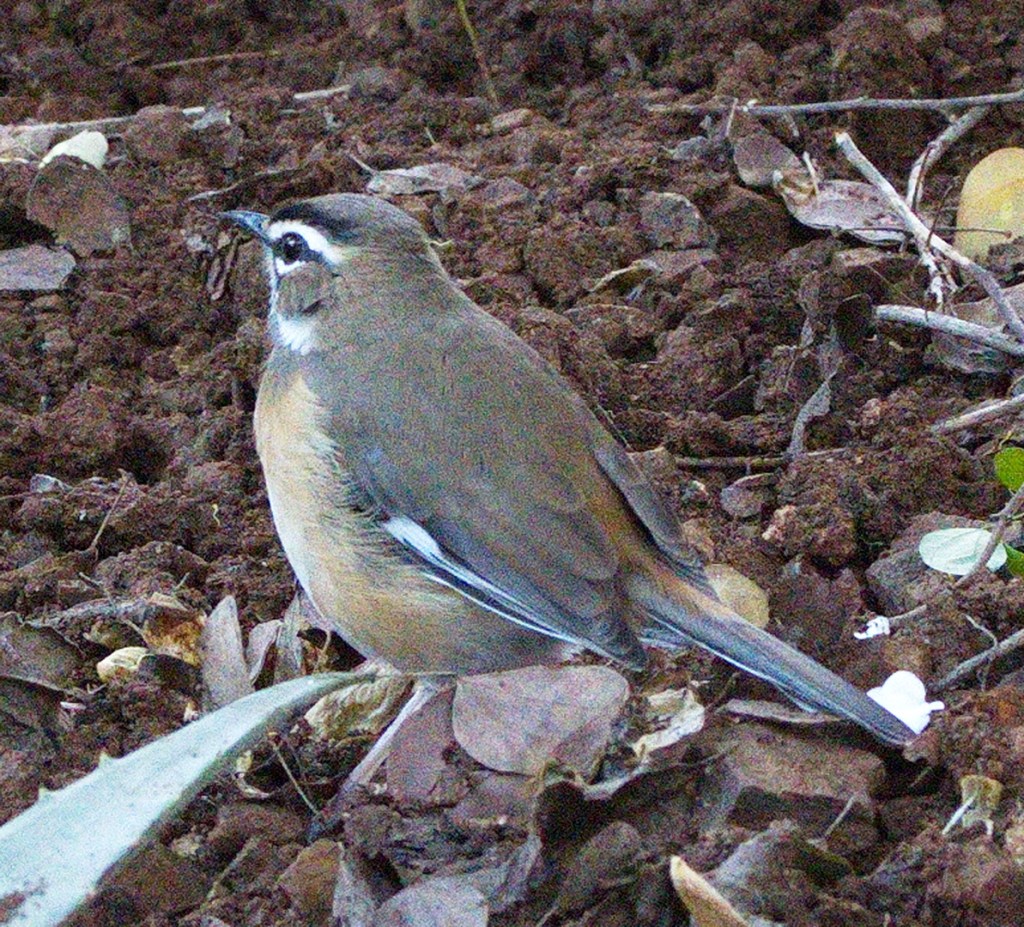
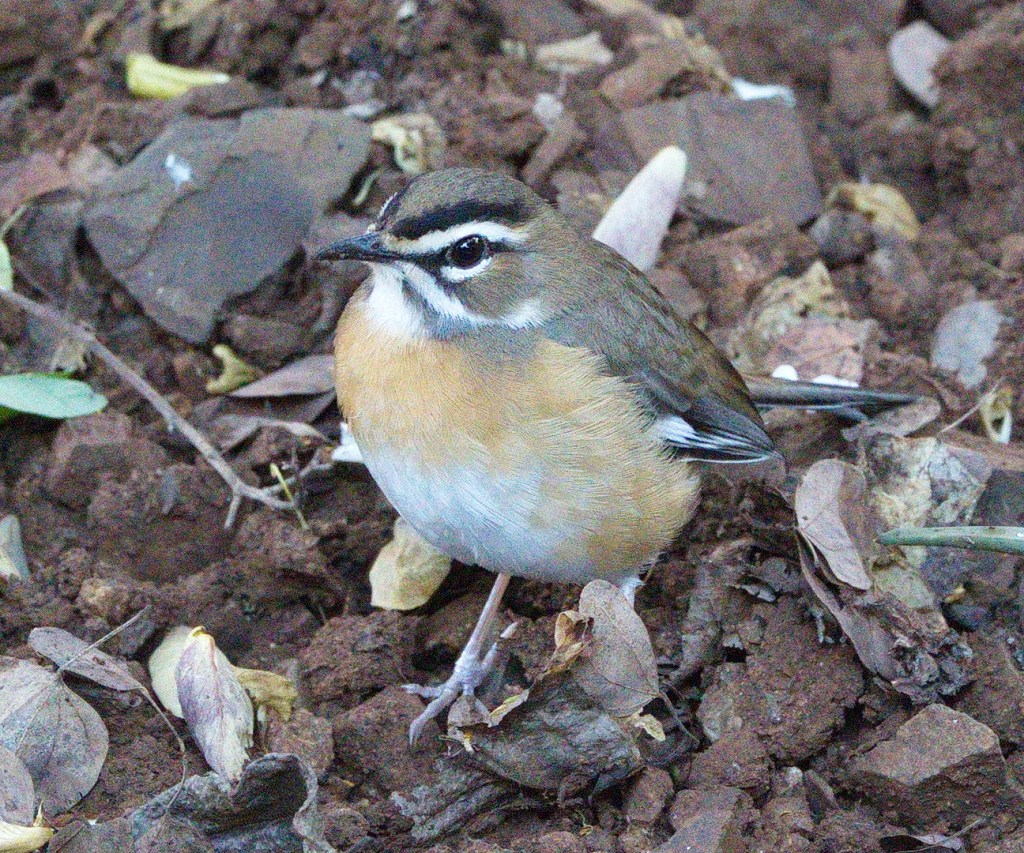
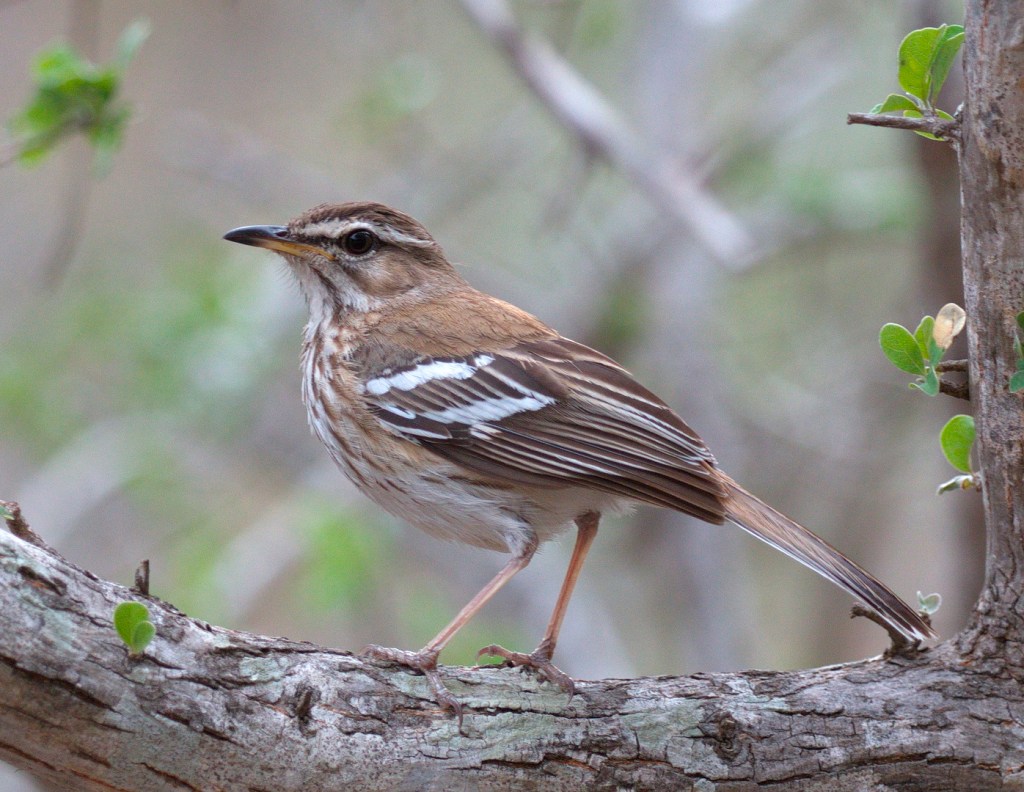
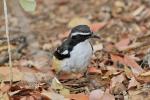
White-browed Robin-Chat
White-browed Robin-Chat
White-browed Robin-Chat
White-throated Robin-Chat
White-throated Robin-Chat
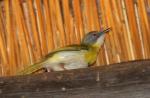
Yellow-breasted Apalis in the rafters
Yellow-breasted Apalis in the rafters
Yellow-breasted Apalis in the rafters
Altogether we observed 120 different bird species in the 2 full days we were there.
Then it was down to Skukuza. See Part 8 to follow.

















































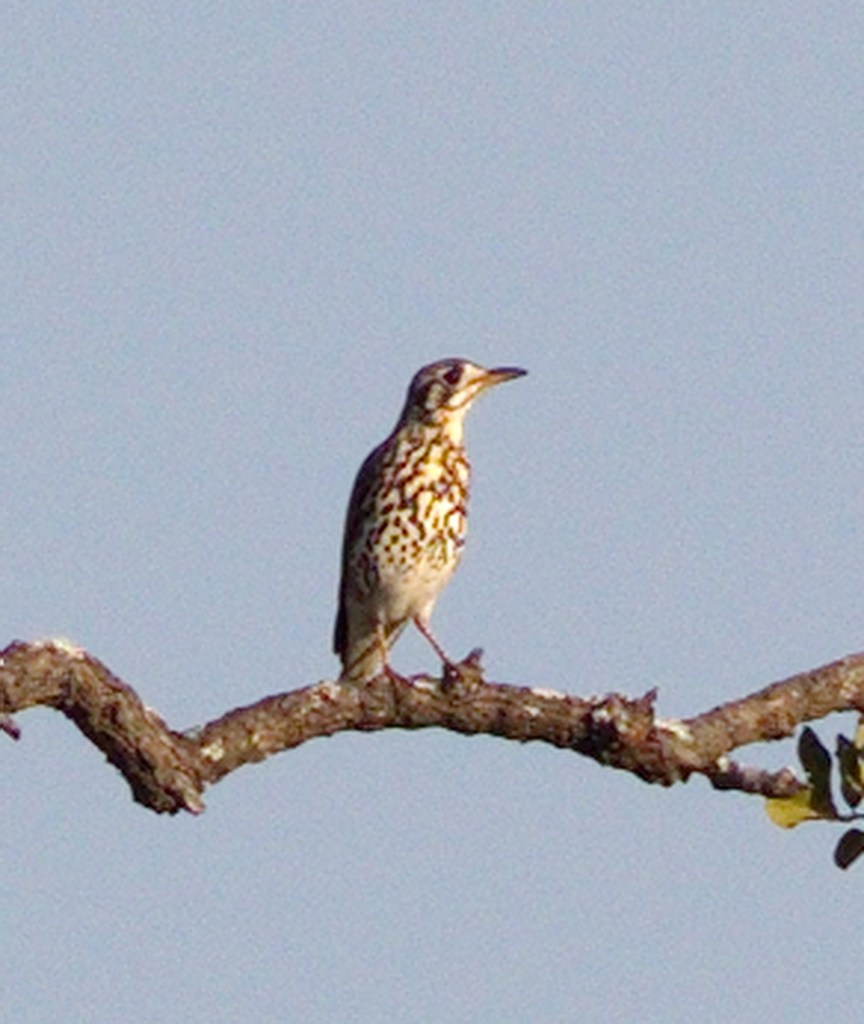
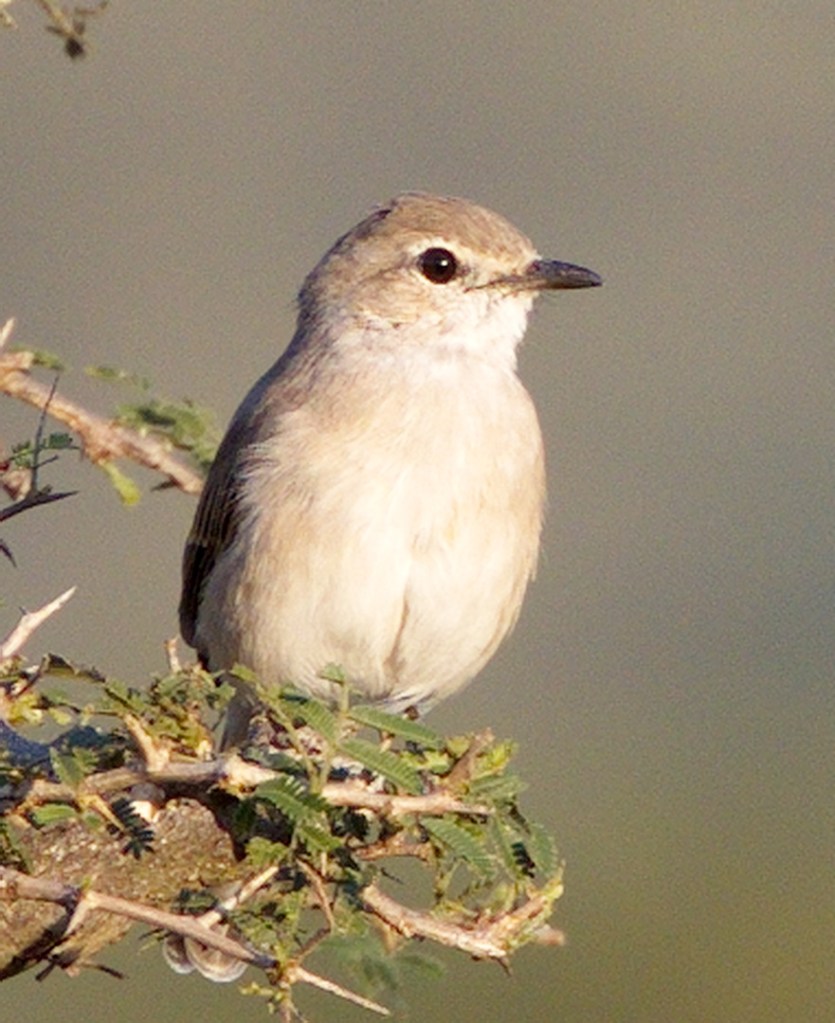

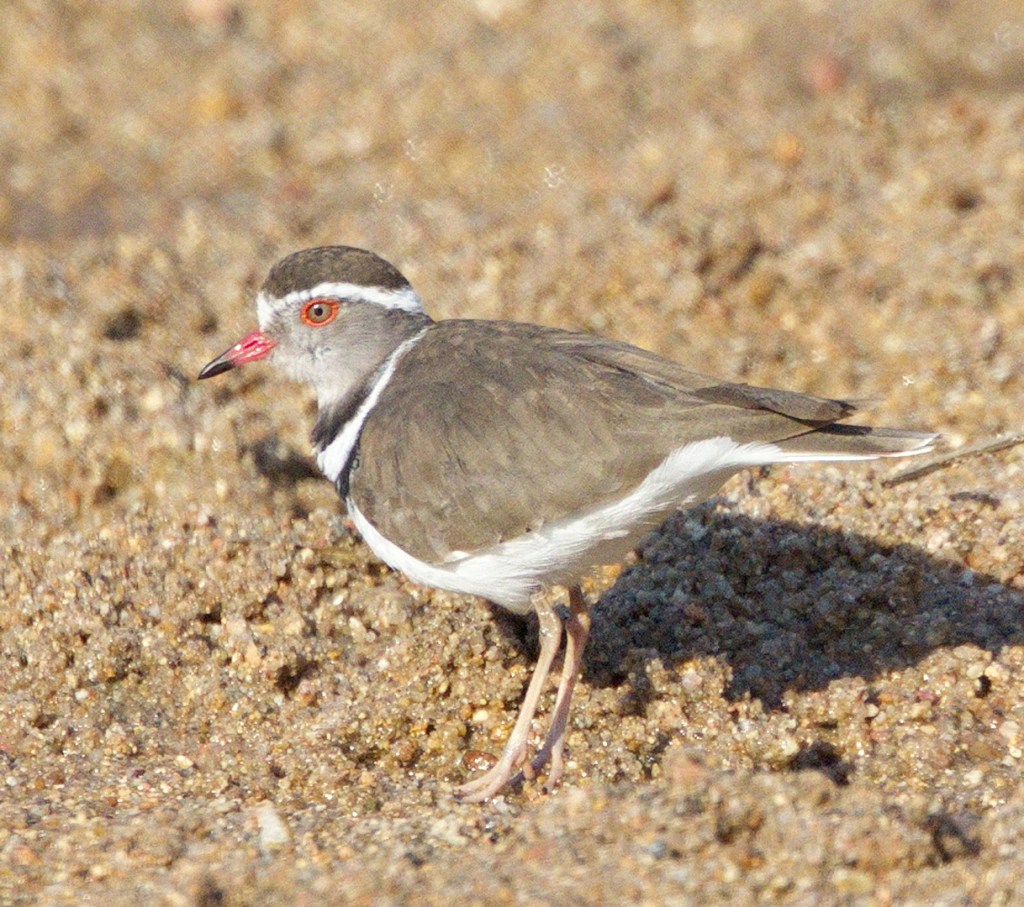













































































































































 Birds are our Story