After five days camping at Kunene River Lodge we headed for Etosha. We left on Saturday 22nd June. Our plan for Etosha was 2 nights at Namutomi followed by 3 nights at Halali.
Etosha as expected was very expensive. Not just the campsites but also the daily charge for 2 people and the car. Namutomi was R440 and Halali R290 per night plus the daily charge of R130!! Our mistake, we should have camped just outside the Park.
Namutomi was run down. The only saving grace was the flat grassy campsite.
The Park was exceptionally dry and very dusty. The man-made waterholes were the main source of interesting birding. And of course this is where the animals congregated. The natural springs and fountains near the Pan’s edge were all dry.
We circled the Dikdik Drive 3 times looking for the Black-faced Babblers without success – we did see lots of Dikdik though.
The highlights were the waterbirds and the raptors.
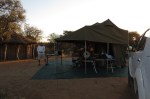
Namutomi
Namutomi
Twin Palms – Red-necked Falcon hideout
White Rhino
Giraffe dwarfing a White Rhino. Etosha
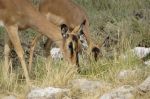
Dikdik. Etosha
Sabota Lark – thick billed Western version. Etosha
Chestnut-banded Plover. Etosha
Swamp Boubou. Etosha
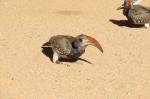
Red-billed Hornbill. Etosha
Tawny Eagle. Etosha
Black-throated Canary
Yellow Canary. Etosha
Scaly-feathered Finch. Etosha
Spike-heeled Lark. Etosha
Kittlitz’s Plover. Etosha
Cape Teal. Etosha
Grey-headed Gull. Etosha
White-browed Scrub-Robin
Burchell’s Starling. Etosha
Marico Sunbird. Etosha
Gabar Goshawk – juvenile. Etosha
Lark-like Bunting. Etosha
Helmeted Guineafowls. Etosha
Halali campsite is flat and reasonably shady – not that the shade was so important in winter time. It has a very good waterhole and viewing platform. In the evenings after a day out in the Park, it was rewarding sitting there and watching the interaction of the various animals which came – many Elephant and surprisingly at the same time, Black Rhinos (see photos). While we were there one Elephant cheekily intentionally sprayed water over a Black Rhino.
Elephant & Black Rhino faceoff. Etosha
Elephant giving the Black Rhino a soaking. Etosha
We spent one day in the area around Halali – mainly going from one waterhole to another. At the Goas Waterhole we had an interesting time watching the elephants and many different birds coming in to drink. It was here that we fleetingly saw an interesting bird which we could not identify at the time – see if you can – check the few photos I did manage to get.
For You to ID, Goas Waterhole, Halali, Etosha
For You to ID, Goas Waterhole, Halali, Etosha
For You to ID, Goas Waterhole, Halali, Etosha
More Photos taken around Halali:
Halali
Halali Camp
Halali Waterhole – Elephant & Black Rhino being dwarfed. Etosha
Black Rhino
Black-faced Impala. Etosha
Elephants
Slender Mongoose. Etosha
Red-headed Finches. Etosha
Red-necked Falcon. Etosha
Short-toed Rock-Thrush
Violet-eared Waxbill. Etosha
Great Sparrows
African Grey Hornbill. Etosha
Gabar Goshawk. Etosha
Dusky Sunbird. Etosha
African Harrier-Hawk. Etosha
Little Sparrowhawk. Etosha
The second full day that we had at Halali was spent Larking About just north of Okaukuejo. This was our challenge in Etosha – to test our skills at identifying as many Larks as we could and this was the best area to find them.
To make life simpler, we listed all the possible Larks we could find in the area (excluding summer visitors) and wrote down the key features for identifying each one. There were 9 possibles in all and only one of these with a long decurved bill. This certainly helped and we were reasonably confident with our ID in most instances.
It was on this road out to Okondeka that we saw a number of other interesting birds – Double-banded Courser, Northern Black and Red-crested Korhaans and Ludwig’s Bustards.
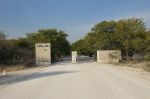
Okaukuejo entrance
Lion and disinterested partner. Etosha
A Pride of Lions
Ground Squirrels. Etosha
Yellow Canary. Etosha
Sociable Weaver. Etosha
Great Sparrow. Etosha
Lappet-faced Vulture. Etosha
White-backed Vulture. Etosha
Ostrich. Etosha
Northern Black Korhaan. Etosha
Northern Black Korhaan – female?. Etosha
Pale Chanting-Goshawk. Etosha
Rufous-eared Warbler. Etosha
Rufous-eared Warbler. Etosha
Red-capped Lark. Etosha
Spike-heeled Lark. Etosha
Ant-eating Chat
Spike-heeled Lark
Spike-heeled Lark. Etosha
Capped Wheatear. Etosha
Spike-heeled Lark
Chat Flycatcher. Etosha
Chat Flycatcher. Etosha
Kori Bustard. Etosha
Double-banded Courser. Etosha
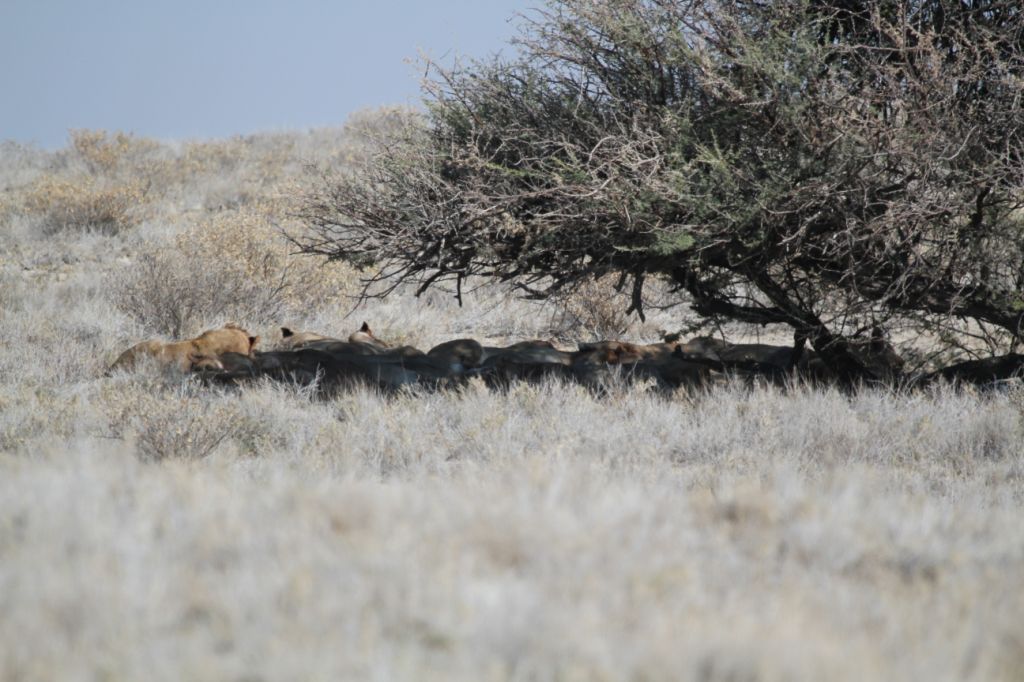
Another highlight towards the end of this road near Okondeka was a pride of about 20 lionesses all lying down tightly together. They were being followed by a film crew who were waiting patiently for them to do something! They were set in for a long wait.
A mound of Lionesses – about 20 all cuddled together
Five dusty days in the cold of Etosha were enough. We set off for Erongo and Brandberg on the way down to Swakopmund.
Over the next week there will be a serial report-back on our birding expedition to Namibia.
The series will include pictures of places we stayed and birds we were lucky enough to photograph in each place.
Please email me if you interested in receiving detailed reports including our route and tracks, accommodation contact details, accommodation assessment. Also available is our Bird List in Excel format. You are able to see what birds we saw or heard in each place as well as where specific birds were seen.
The journal begins:………..
At very short notice we decided to go to Namibia. Our preparation was frantic over a 2 week period. Bird Lists to prepare, accommodation and route decisions and bookings, banks and credit cards, car & health insurance, knowledge of border crossing requirements, etc.
Our main goal was to get to Kunene River Lodge to see the Angola Cave-Chat with Peter Morgan – and to be there before the start of the school holidays. Of course we also intended to find as many of the Namibian specials as possible – in particular those we had not seen before.
We departed on Tuesday 11th June spending the first night in a Hunting Lodge in Botswana, Phuduhudu south of Lobatse. We entered Botswana through the quiet border post Ramatlabama. As we were staying only one night and needed an early start the next day, we stayed in one of their fancy chalets – which at R200 per person was very reasonable. Our birding began around the camp.
Phuduhudu Chalet
Phuduhudu Chalet
What is it?, Phuduhudu, Botswana
The next day we were up early. It was freezing outside. From there we took the Trans Kalahari highway to the Mamuno border post into Namibia. Again a pleasant crossing. Zelda was the campsite we were headed for. Once there we put up our 3 Second tent on grass with power to run our electric blanket. The cost to camp was exceptionally reasonable considering the facilities available. To cap it all their buffet dinner was tasty & value for money. On site were a number of interesting orphaned animals to see including Leopard, Cheetah and a huge porcupine.
The following morning we spent a bit of time enjoying Zelda before our short hop to our next campsite near Windhoek airport – Odekaremba at 1800 metres.
Zelda
Zelda
Zelda
Zelda
Crimson-breasted Shrike. Zelda.
Red-eyed Bulbul. Zelda
Zelda
Zelda
Leopard at dinner. Zelda
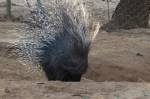
Porcupine – a Grand-daddy! Zelda
Ondekaremba has a small campsite with 4 spots. We had a site at the top of a hill on the only bit of level ground. It was open to the biting wind and the ground so hard it was exceedingly difficult to get the pegs into. Our ablution was very rustic and hot water only available when the staff got the donkey working – tepid water at best first thing. On top of that it was very expensive. We would be loathe to stay there again – except the birding round the camp was very good.
Ondekaremba
Ondekaremba
Ondekaremba
Green-winged Pytilia
Great Sparrow
Damara Hornbill
Crimson-breasted Shrike
Chestnut-vented Tit-babbler. Ondakaremba.
Black-faced Waxbill. Ondakaremba.
Black-faced Waxbill. Ondakaremba.
Ant-eating Chat. Ondakaremba.
Acacia Pied Barbet
White-backed Mousebird. Ondakaremba.
White-backed Mousebird. Ondakaremba.
White-backed Mousebird
White-backed Mousebird. Ondakaremba.
Violet-eared Waxbills. Male and Female. Ondakaremba.
Violet-eared Waxbill
Violet-eared Waxbill
Scaly-feathered Finch. Ondekaremba
Violet-eared Waxbill – female.. Ondekaremba
We had booked for 3 nights to give us a break from the long journeys and to have a base to bird around Windhoek while we were in the area.
We visited both Avis Dam and Daan Viljoen. Avis Dam was the more interesting but Daan Viljoen produced the first lifer for me – Rockrunner – Sally had seen it previously.
Avis Dam
Greater Flamingos, Avis Dam (1)
Greater Flamingos, Avis Dam (2)
Greater Flamingos, Avis Dam (4)
Greater Flamingos, Avis Dam (5)
Greater Flamingos, Avis Dam (6)
Monteiro’s Hornbill, Avis Dam
Mountain Wheatear – male, Avis Dam
Marico Flycatcher, Avis Dam
Rock Kestrel, Avis Dam
Short-toed Rock-Thrush, Avis Dam (1)
Short-toed Rock-Thrush, Avis Dam (2)
Long-billed Crombec, Avis Dam
Pririt Batis – male, Avis Dam
Verreaux’s Eagle, Avis Dam
Black-chested Prinia, Avis Dam
Black-chested Prinia, Avis Dam
Black-chested Prinia, Avis Dam
Brown-crowned Tchagra, Avis Dam (1)
Brown-crowned Tchagra, Avis Dam (2)
Daan Viljoen
Green-winged Pytilia, Daan Viljoen
Long-billed Pipit, Daan Viljoen
Long-billed Pipit, Daan Viljoen
Rockrunner, Daan Viljoen
South African Shelduck, Daan Viljoen
South African Shelduck, Daan Viljoen
Ashy Tit, Daan Viljoen
Ashy Tit, Daan Viljoen
Chestnut-vented Tit-Babbler, Daan Viljoen
Sunday 16th we headed north stopping over in Kamanjab Rest Camp in our 3 Second tent again. For one night it is not worth the effort after a long days driving, to put up the trailer only to take it down again early the next day.
We were the only people in the camp. The facilities were good and clean. We managed a walk round the camp grounds late afternoon. As usual most of the birds were to be seen around the camp area – including Bare-cheeked Babblers and White-tailed Shrikes – in numbers.
Kamanjab Rest Camp
Grey Go-away-bird, Kamanjab
Monteiro’s Hornbill, Kamanjab
Monteiro’s Hornbill, Kamanjab
Red-eyed Bulbuls, Kamanjab
Carp’s Tit, Kamanjab
White-tailed Shrike – Kamanjab
White-tailed Shrike – Kamanjab
Bare-cheeked Babbler, Kamanjab
Bare-cheeked Babbler, Kamanjab
The next day we arrived at Kunene River Lodge – staying for 5 nights. We had been before and it remains an oasis along the stretch of the river. Birds in camp were plentiful and special. Cinderella Waxbills, Rufous-tailed Palm-Thrush, Swamp Boubou, White-tailed Shrikes to name a few.
Kunene River Lodge
Kunene River Lodge
Kunene River Lodge
Campsite 13, Kunene River Lodge
Campsite 13, Kunene River Lodge
Kunene River Lodge
Meve’s Starling, Kunene River Lodge
Pririt Batis – female, Kunene River Lodge
Mourning & Laughing Doves, Kunene River Lodge
Mystery Birds, Otjimuhaka – Kunene
Pririt Batis – male, Kunene River Lodge
Red-billed Firefinch, Kunene River Lodge
Red-necked Spurfowl – Cunensis, Kunene River Lodge
Rufous-tailed Palm-Thrush, Kunene River Lodge
Rufous-tailed Palm-Thrush, Kunene River Lodge
Rufous-tailed Palm-Thrush, Kunene River Lodge
Southern Masked-Weaver, Kunene River Lodge
Swamp Boubou, Kunene River Lodge
UI Bird, Kunene River Lodge
Violet Wood-hoopoe, Kunene River Lodge
Violet Wood-hoopoe, Kunene River Lodge
African Barred-Owlet, Kunene River Lodge
African Green-Pigeon, Kunene River Lodge
Black-faced Waxbill, Kunene River Lodge
Black-faced Waxbills, Kunene River Lodge
Burchell’s Sandgrouse – female, Kunene River Lodge
Burchell’s Sandgrouse – male, Kunene River Lodge
Cinderella Waxbill, Kunene River Lodge
Cinderella Waxbill, Kunene River Lodge
Cinderella Waxbill, Kunene River Lodge
Cinderella Waxbill, Kunene River Lodge
Dusky Sunbird, Kunene River Lodge
Dusky Sunbird, Otjimuhaka – Kunene
Dusky Sunbird, Otjimuhaka – Kunene
Fork-tailed Drongo, Kunene River Lodge
Golden Weaver, Kunene River Lodge
Golden Weaver, Kunene River Lodge
Golden-tailed Woodpecker, Kunene River Lodge
Grey-backed Cameroptera, Kunene River Lodge
Groundscraper Thrush, Kunene River Lodge
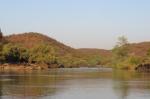
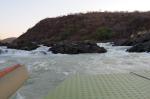
No sooner had we set up camp than we were on an sunset cruise heading for the rapids up river. On the way back we stopped on the banks for sundowners. A Pearl-spotted Owlet greeted us.
Sunset Cruise – Kunene River Lodge
Sunset Cruise – Kunene River Lodge
Little Bee-eater, Kunene River Lodge Sunset Cruise
Pearl-spotted Owlet, Kunene River Lodge Sunset Cruise
Rosy-faced Lovebirds, Kunene River Lodge Sunset Cruise
Rosy-faced Lovebirds, Kunene River Lodge Sunset Cruise
Sunset Cruise – Kunene River Lodge
During our stay Peter Morgan took 4 of us to find the Angola Cave-Chat in the Zebra Mountains. We left early to get there at dawn. Not a drive for sissies – pre-dawn.
Once there we set ourselves up for a wait hoping they would appear close by. Peter had not been there for a month so he did not know what to expect. After some time once the sun had finally generated some warmth we heard one call. A lovely melodic call slightly different from its cousins in Angola apparently. Sean from Batis Birding was with us and his recordings made in Angola were decidedly different to what we heard.
Anyway, having heard the call we soon spotted the culprit for a fleeting few seconds. Then within minutes a pair were seen slowly making their way up the steep rocky slopes. The scope was soon on them so we all had very good views despite them being some way up the slope. The Cave-Chat looks kinda like a Swamp Boubou with a white eyebrow. As an after thought I managed to get a few very poor photos. The light was poor and the birds were moving.
Zebra Mountains. (L to R) Peter, Paul, Sean & Peter Morgan
Zebra Mountains area
Sally – Zebra Mountains
Sally – Zebra Mountains
African Hawk-Eagle, Zebra Mountains
Angola Cave-Chats, Zebra Mountains
Angola Cave-Chats, Zebra Mountains
Augur Buzzard, Zebra Mountains
The Grey Kestrel was our next target bird. The area around the Lodge had not had any decent rain for 2 years so there was no food for the Kestrel – and we had no expectations of seeing it. However Sean said he was heading for the power lines in Ruacana to find the Kestrel – leaving very early one morning intending to be there at the crack of dawn. Sally and I followed but could not keep up the pace. We dipped on the bird but Sean had a fly past on arrival.
On the way back we popped in to Hippo Pools and as it happened we unexpectedly bumped into Mark Boorman who was bird ringing. Before leaving home we had been in contact with Mark about birding in Swakopmund and Walvis Bay, so this was a pleasant way to make his acquaintance. Mark was ringing his way down river to Kunene River Lodge where he and Peter intended to have another go at ringing an Angola Cave-Chat. We learnt later that he was successful.























































 Birds are our Story