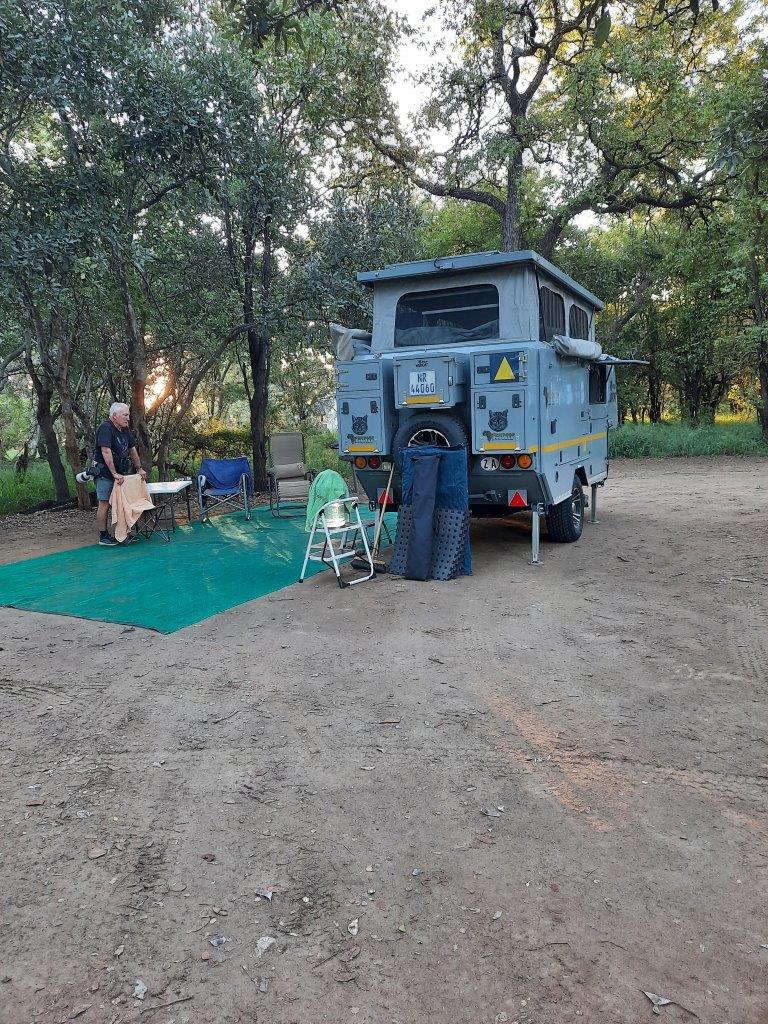
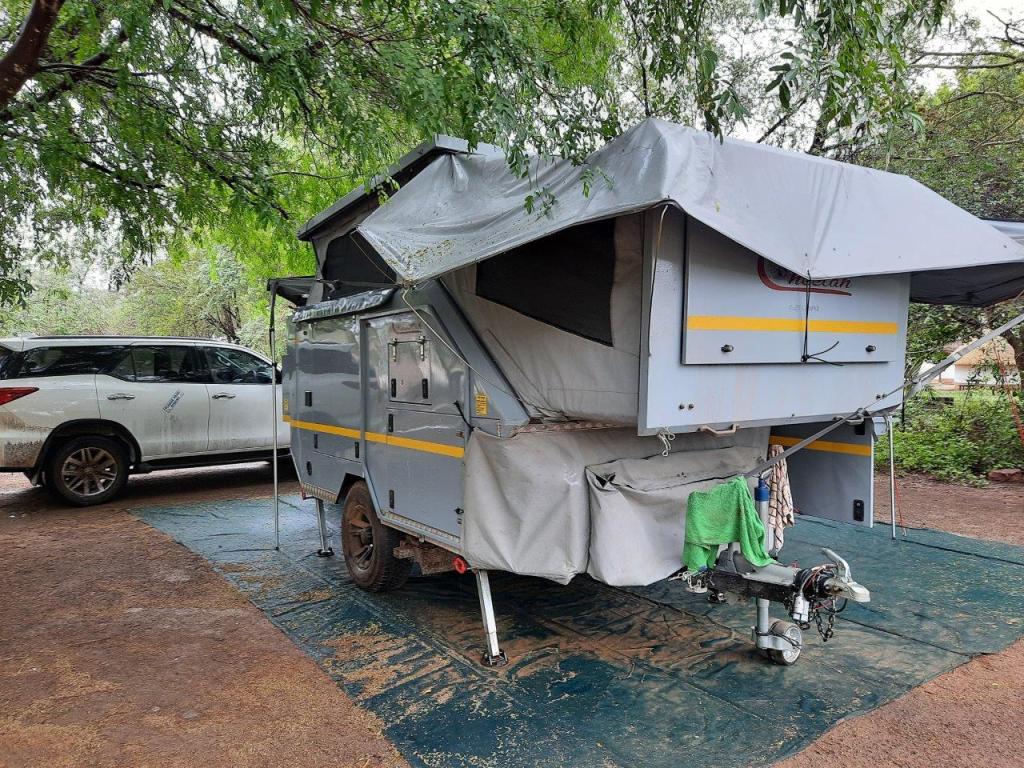
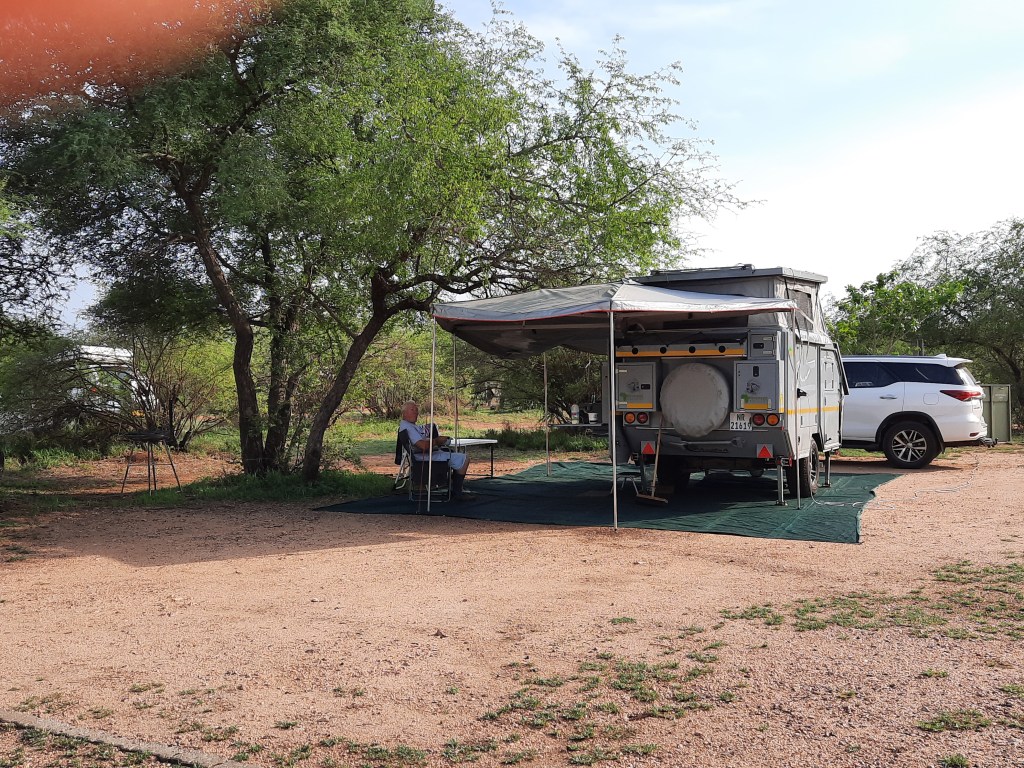
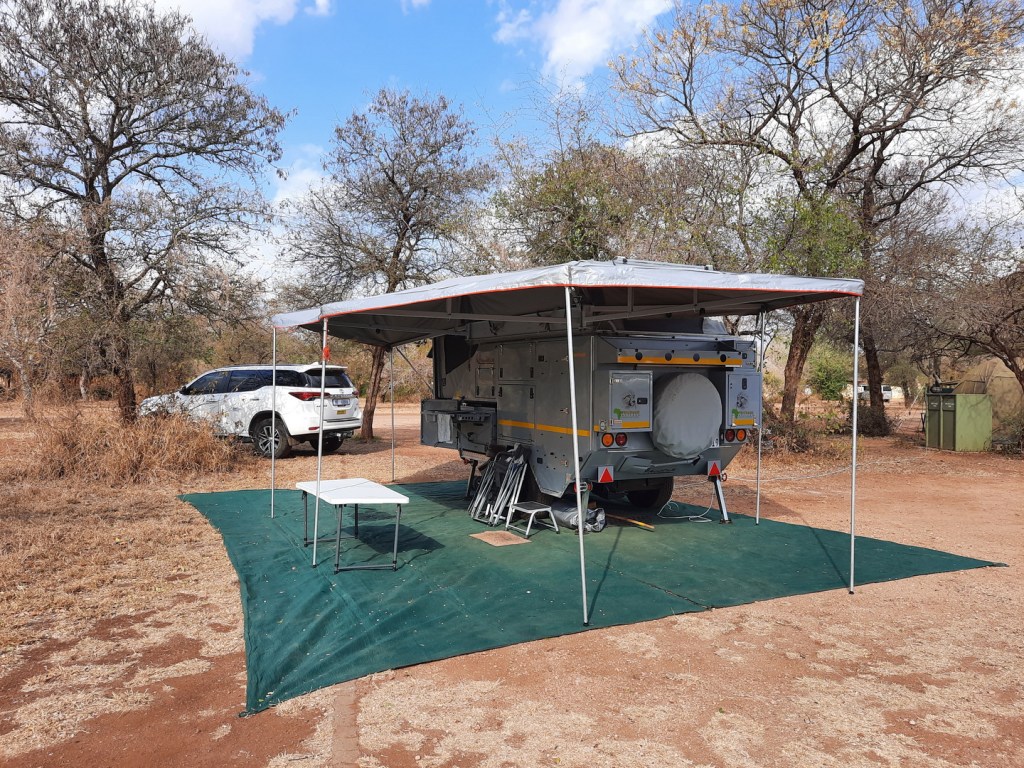
We only had one night here – all booked out. So, we got here early from Shingwedzi to give us time in the afternoon to have a look around. We set up quickly without putting up our awning.
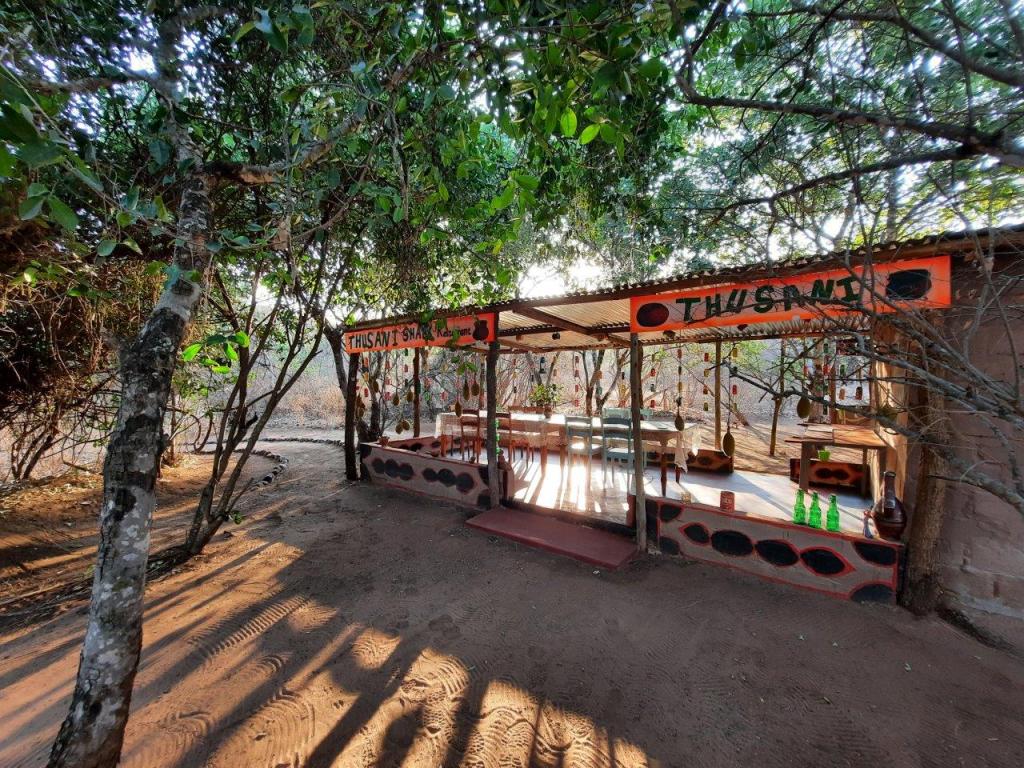
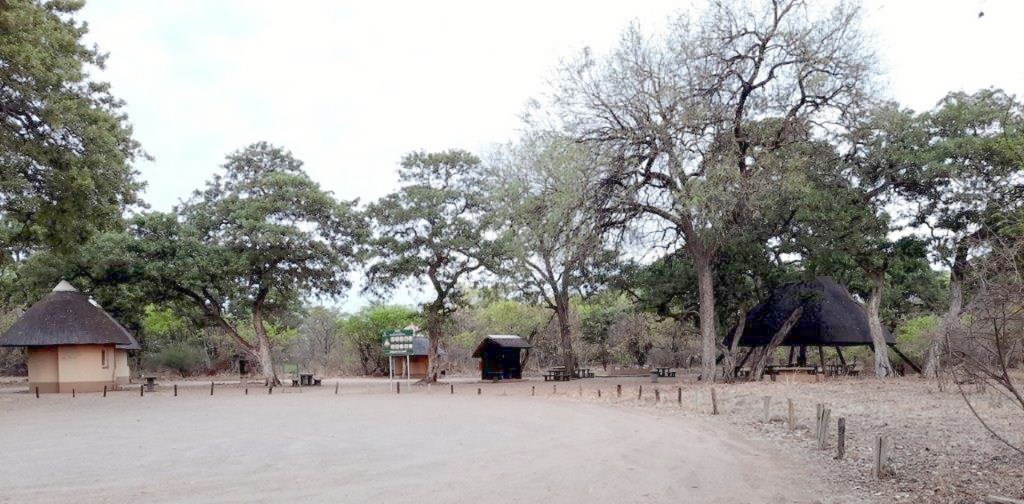
AblutionsWash-up areaCooking areaEntrance
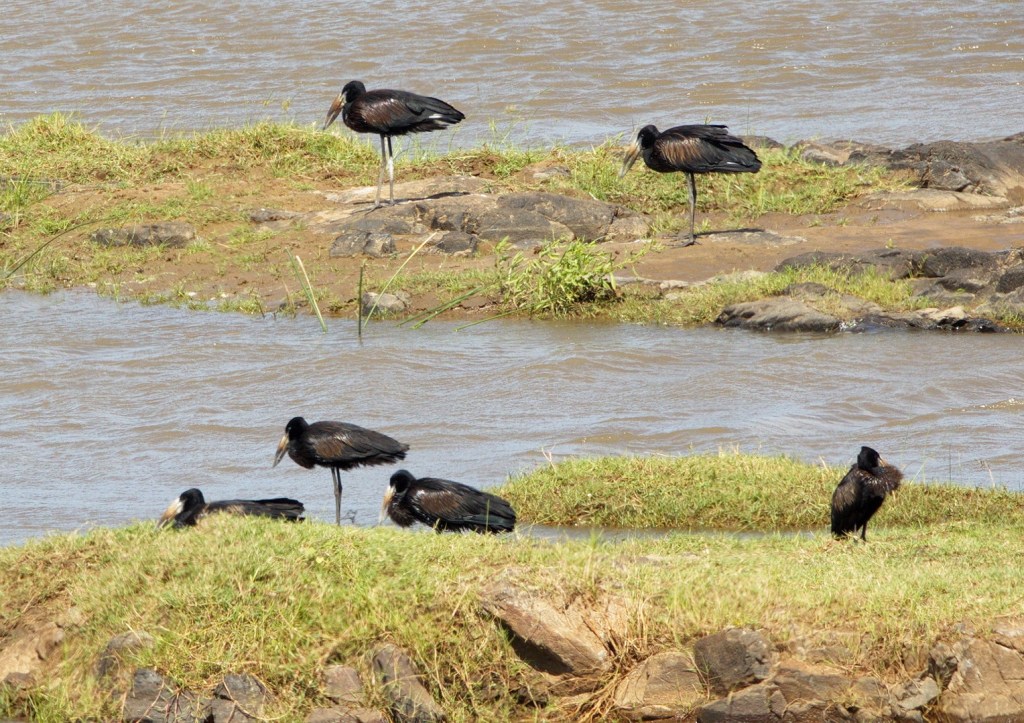
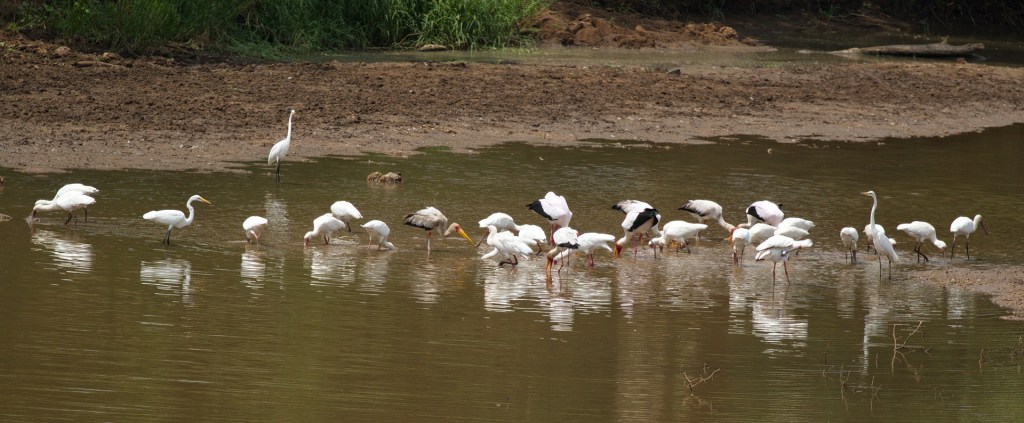
On the way down to Tsendze, we notice many Openbills together in the river.
Openbills
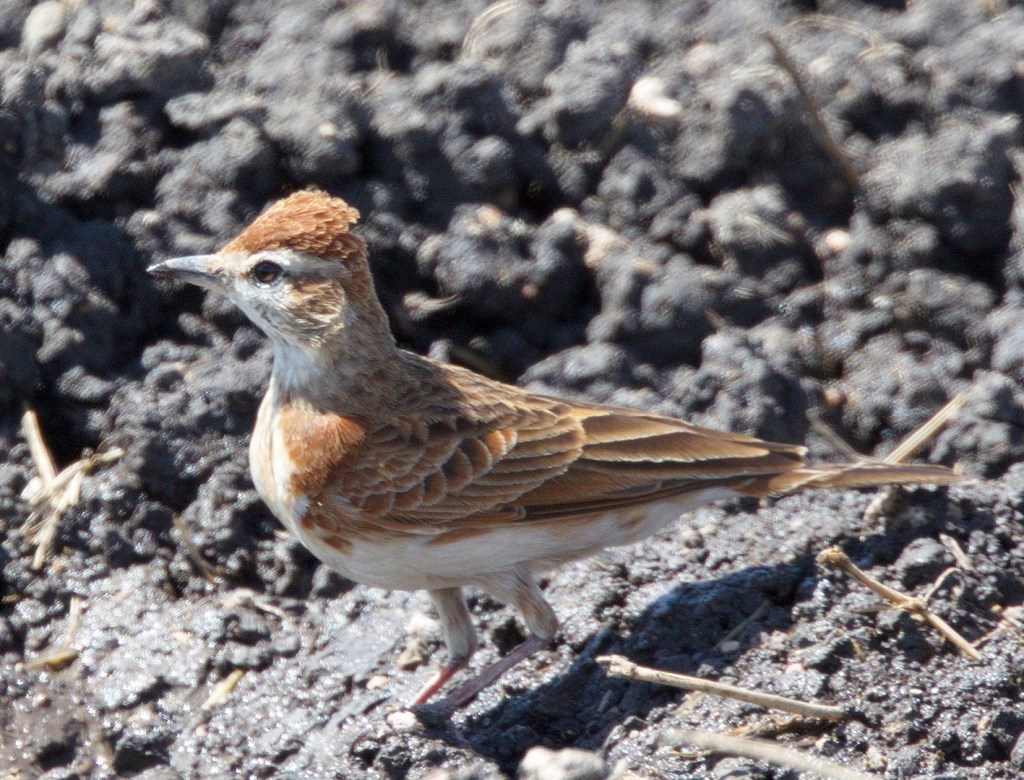
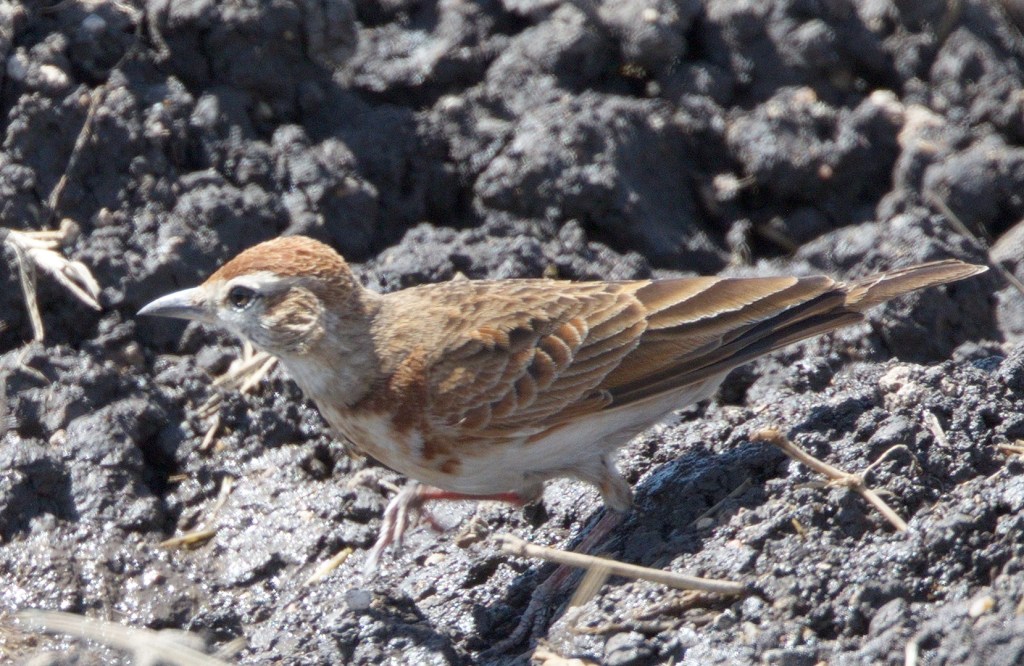
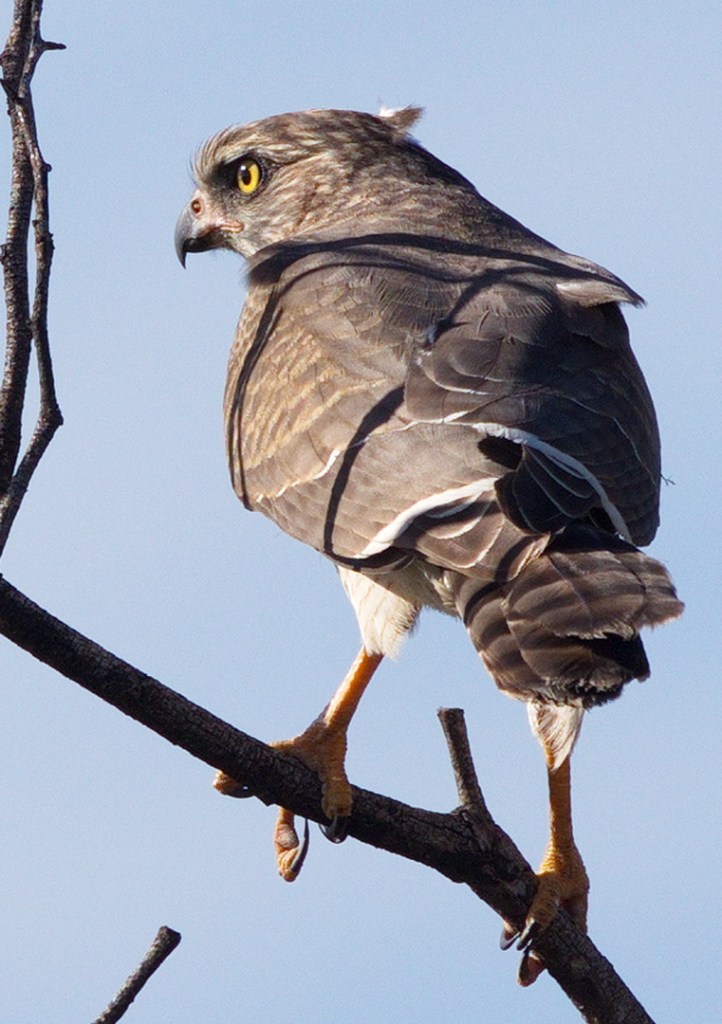
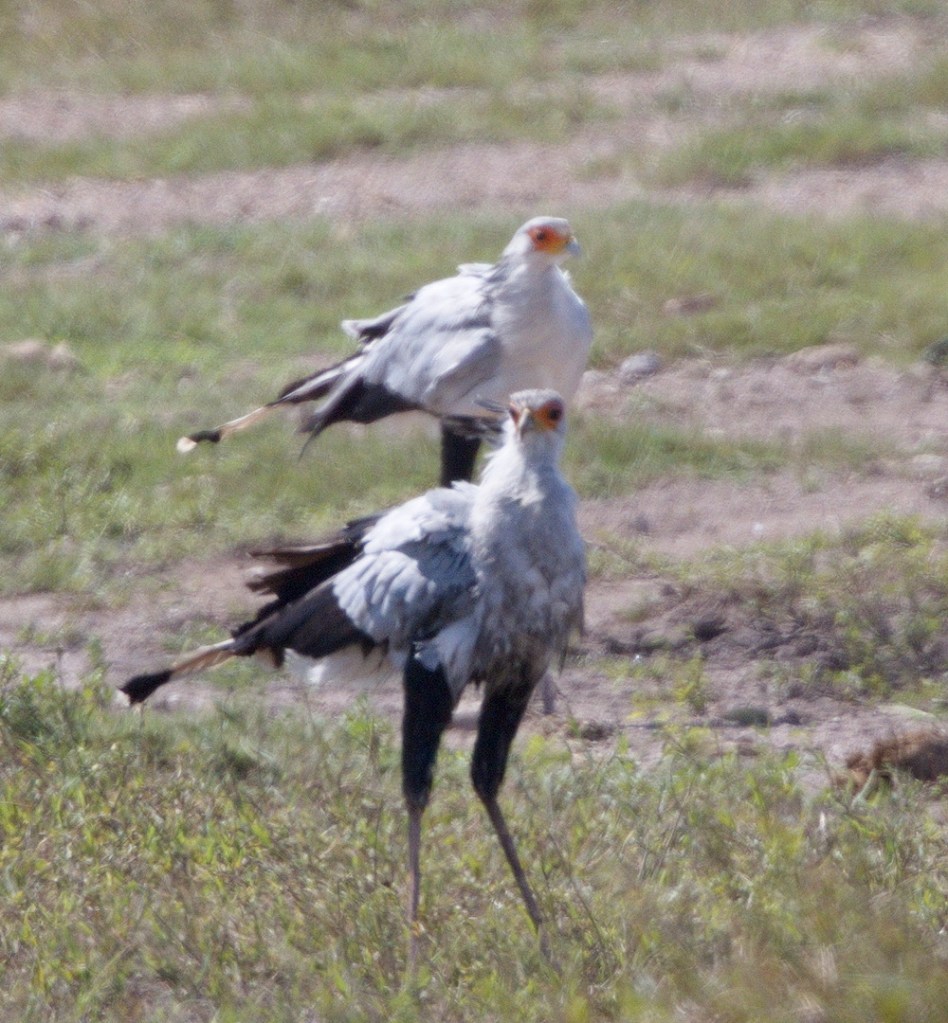
On our first sortie into the area, we headed to the Mooiplaas Waterhole and saw a few interesting bird species on the open ground nearby.
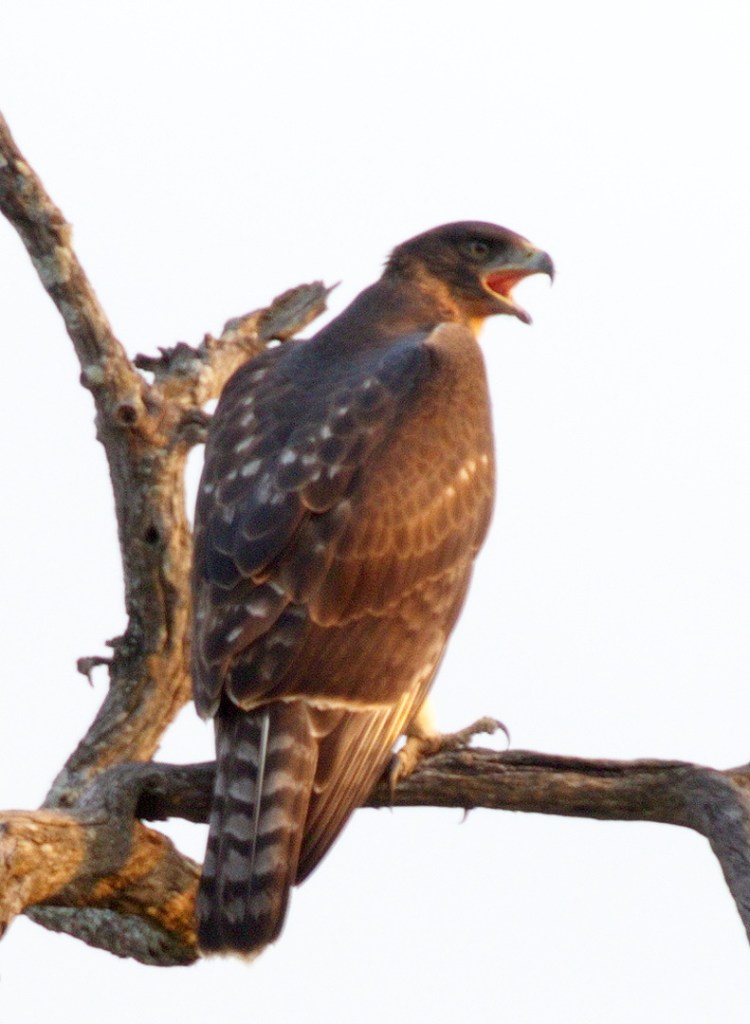
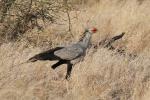
Red-capped LarkRed-capped LarkLarkGabar GoshawkGabar GoshawkGabar GoshawkA pair of Secretarybirds
However, as we continued towards the wetland area, the road was taped off. Why? No rain so it must be passable. Perhaps they were grading the road, we thought. Annoyed, we returned to camp.
Back at camp we heard talk of an elephant seen just after the Mooiplaas Waterhole on the S49. The story intrigued us and as a result and our time in Tsendze focused there. Time well spent.
We went back and the taped off road was now open. We continued. Our first indication that we were getting close:
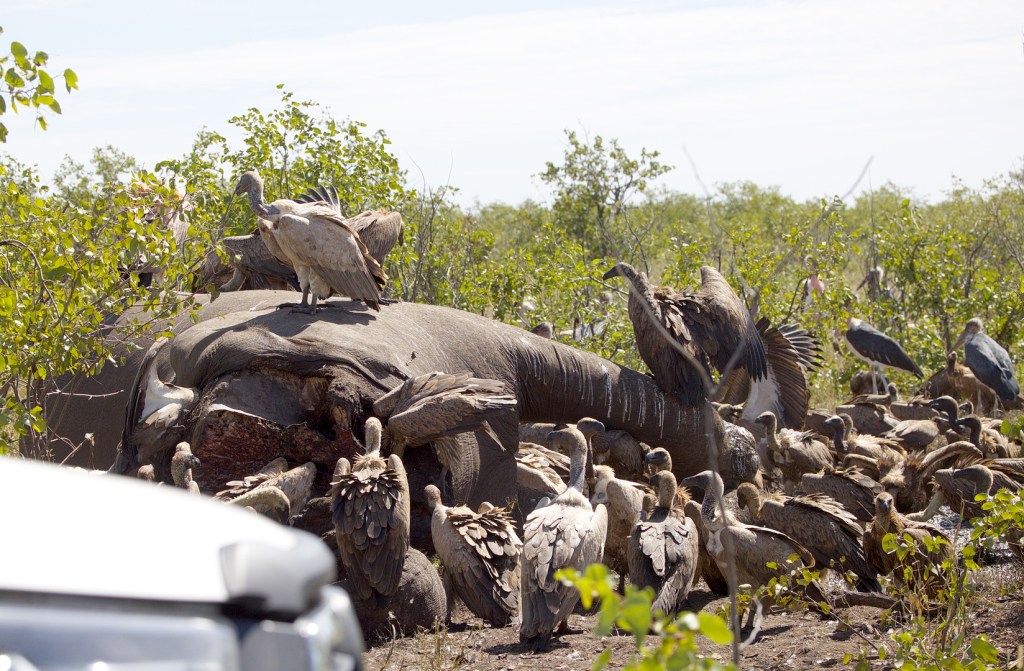
Hundreds of Vultures
Then there were the animals and Marabu Storks blocking the road.:
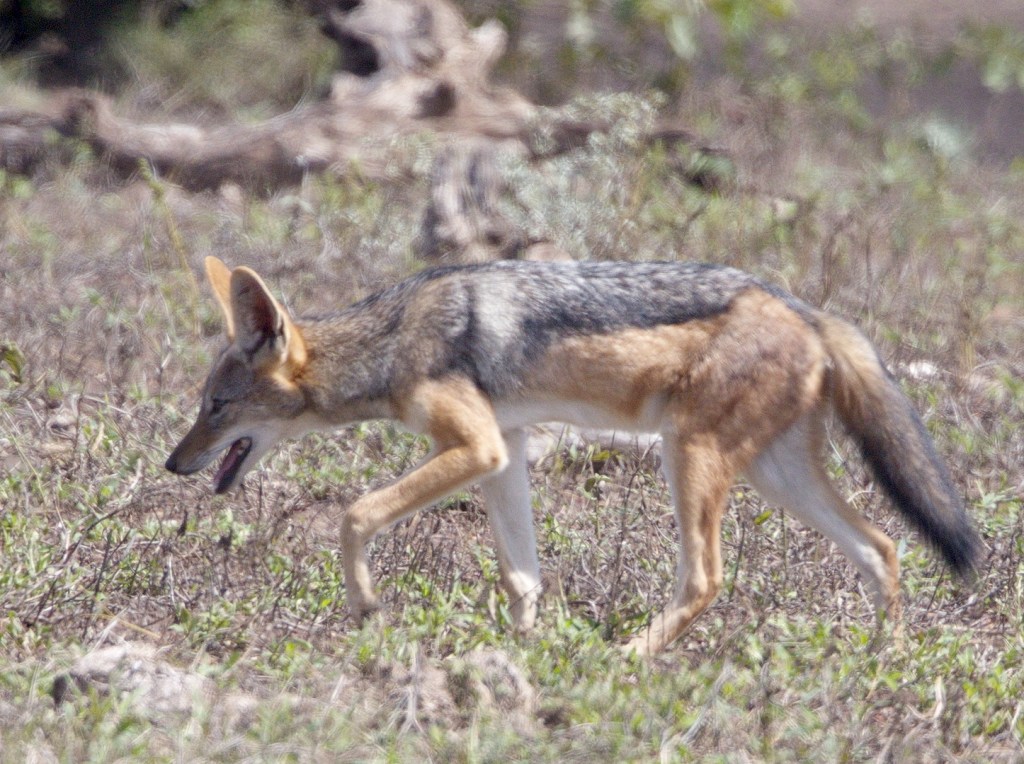
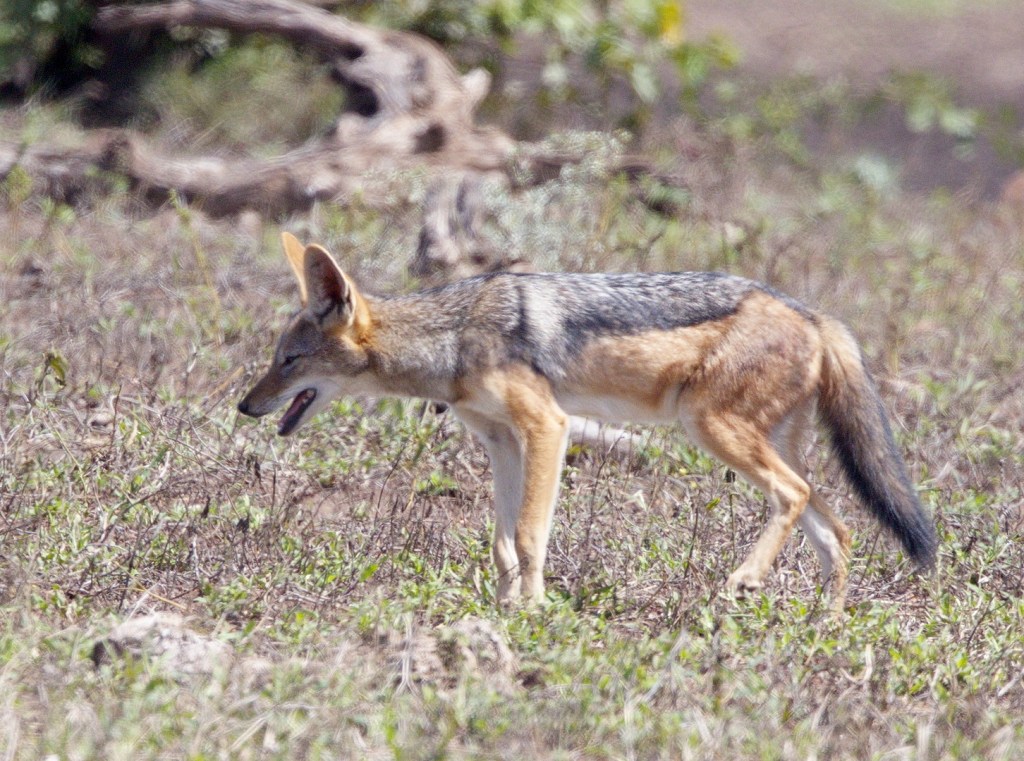
Black-backed JackalBlack-backed JackalStuffed HyenaMore stuffed HyenasA few of the hundreds of Marabu Storks
Eventually we arrived and realised what all the fuss was about and the stories were sadly confirmed.
The reason why the road was closed was obvious.
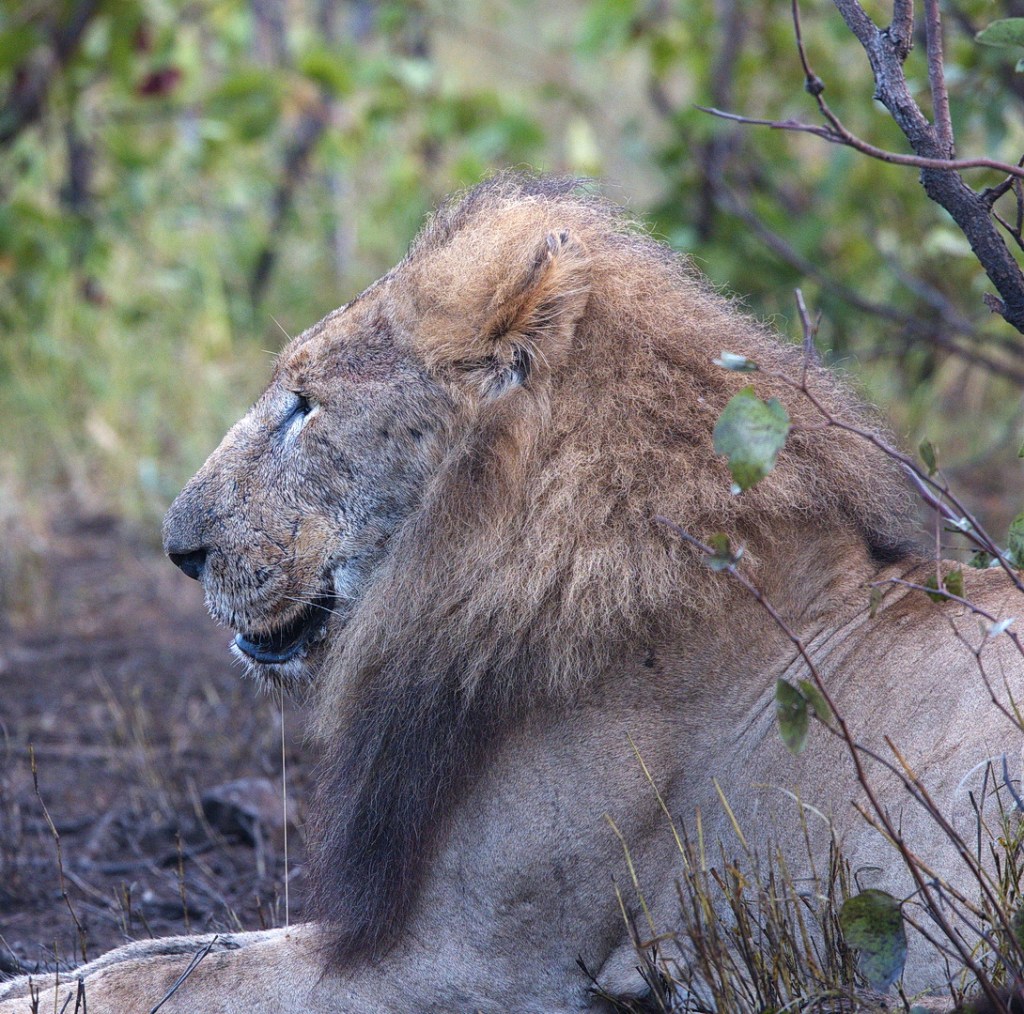
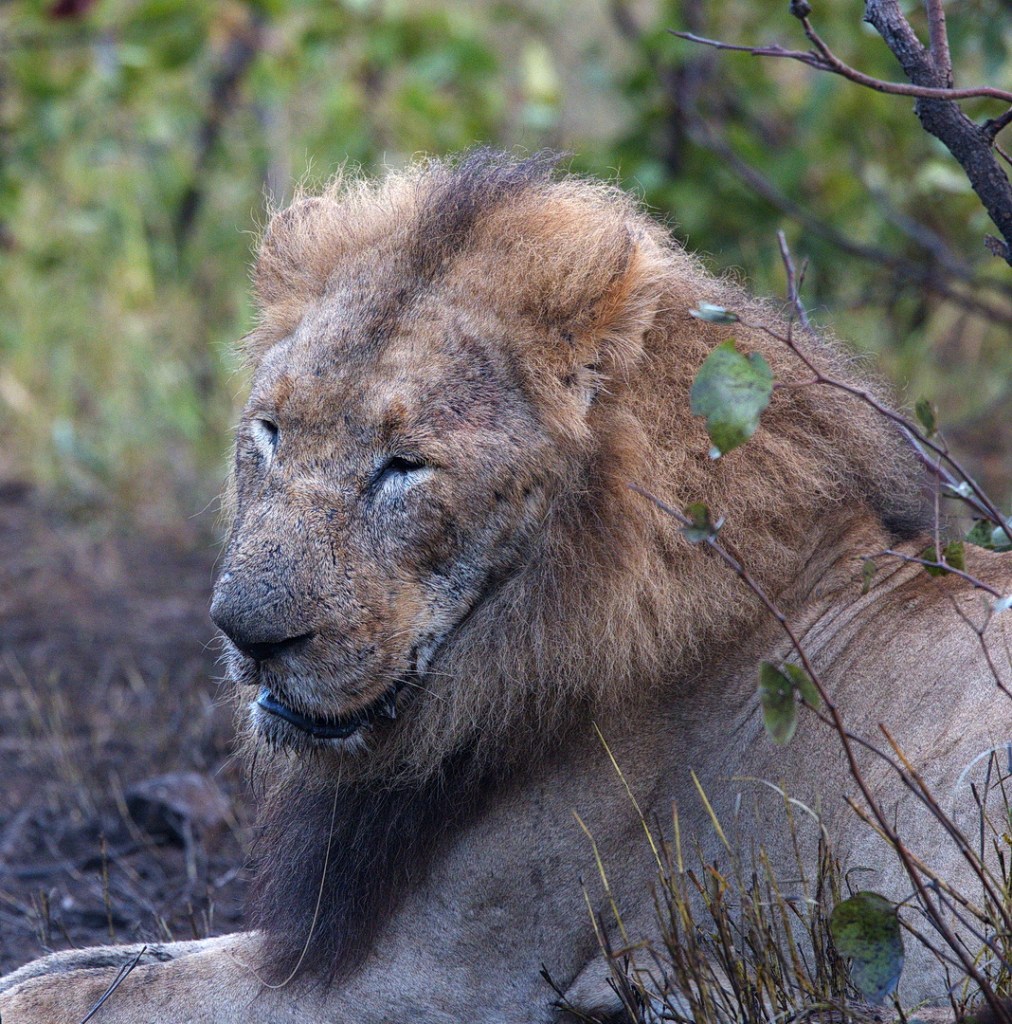
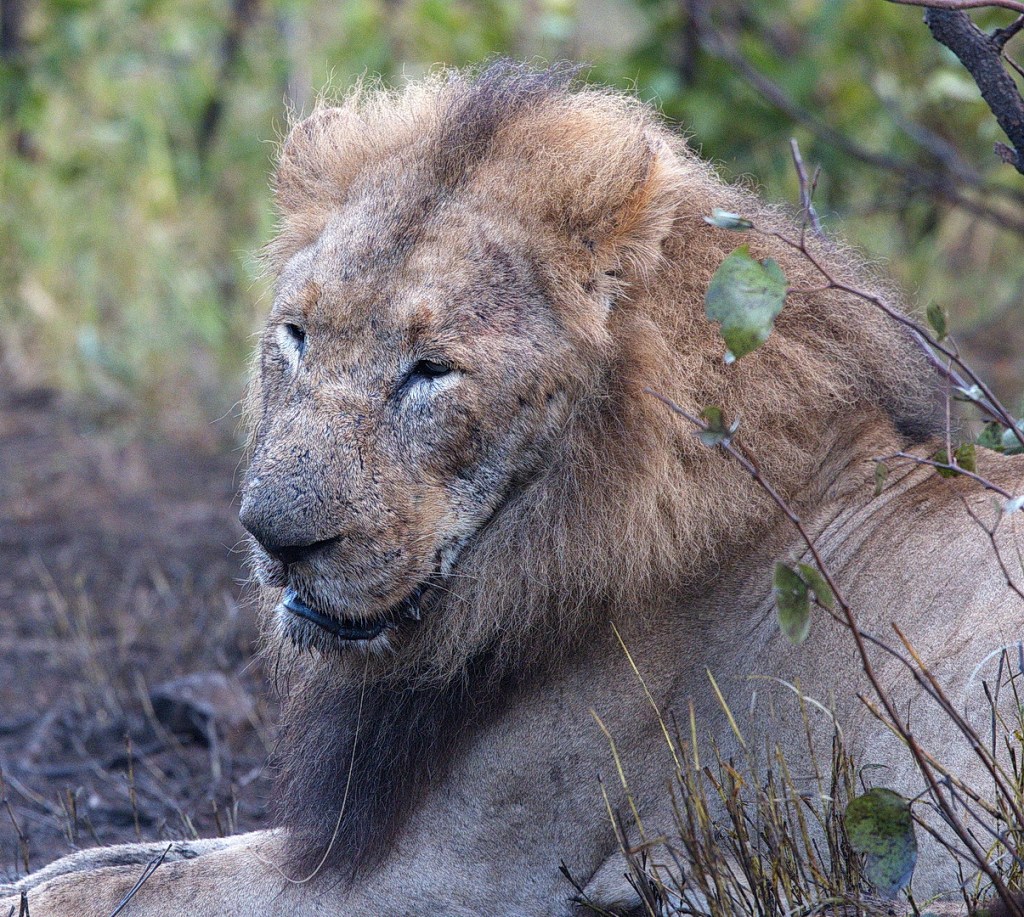
The next morning we returned and all the vultures and storks were in the bushes and none around the carcass. We understood why as we got close. His majesty was waiting to fill his fill further.
And that amounted to our time spent in Tsendze.
Next Satara and our explosive time there for 3 nights.
Satara
11th to 14th April 2024
Satara
Having set up camp, we took a run along the S100 to Gudzani Dam. This was the third time we were disappointed with little to see – both game and birds.
We did visit the Sweni Hide briefly. It was not very active until the elephants showed up and entertained us with their water antics – especially the young ones trying to show who was boss among each other.
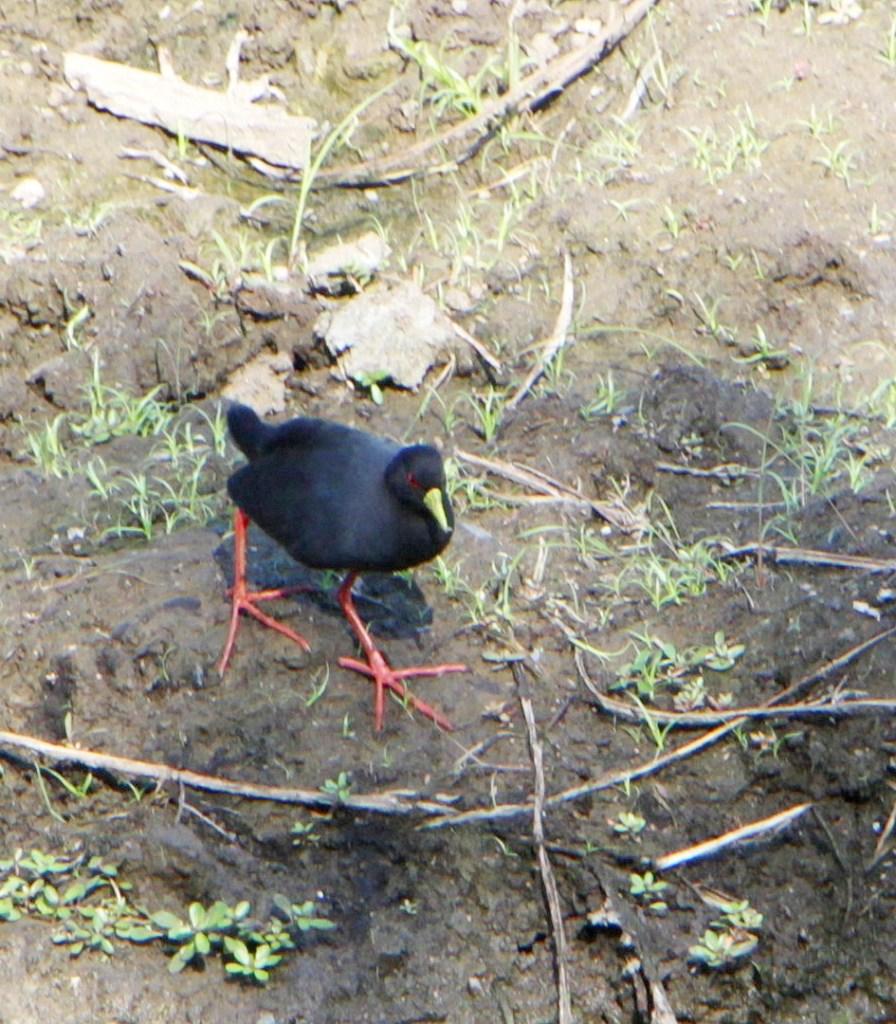
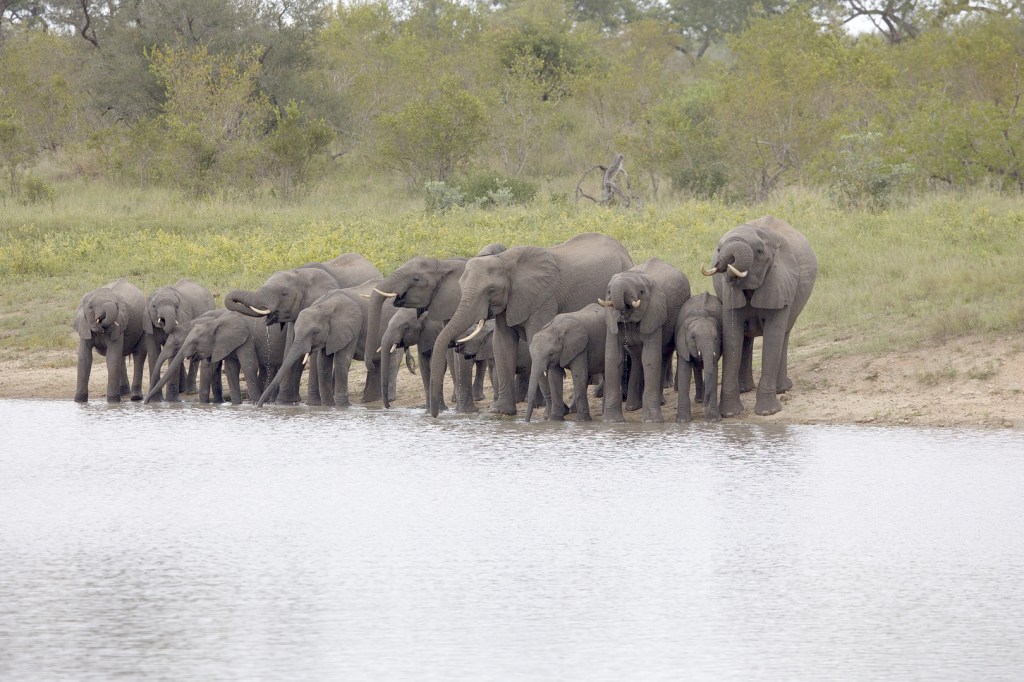
Black CrakeBlack CrakePipit .African or Plain-backed?OpenbillTroop of ElephantsView from Sweni HideView from Sweni Hide
The next day we headed north along the H1-4 to the turnoff towards Balule camp on the S147. One of our newly favourite roads.
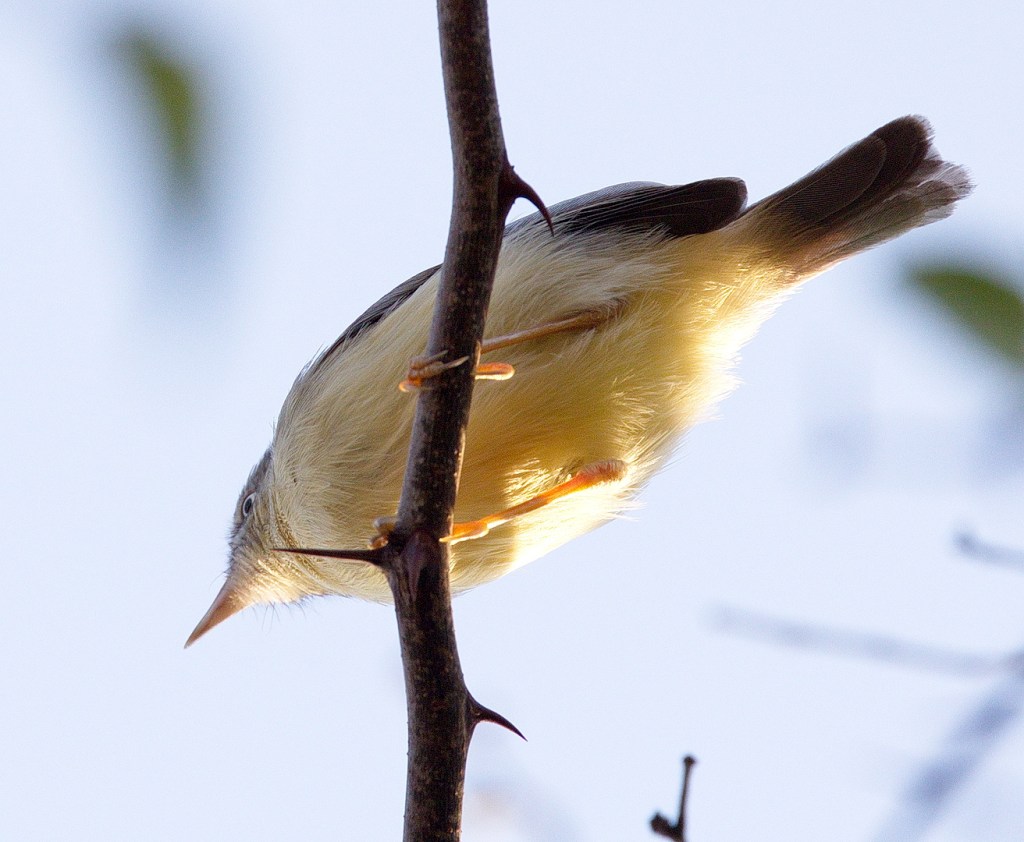
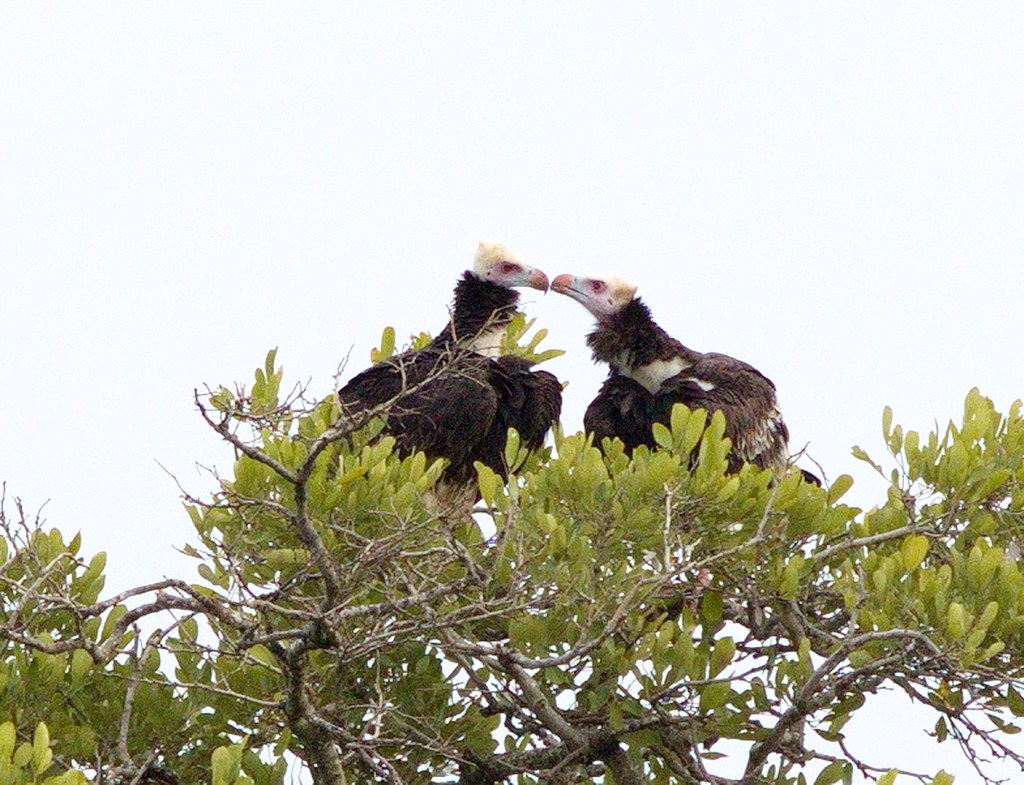
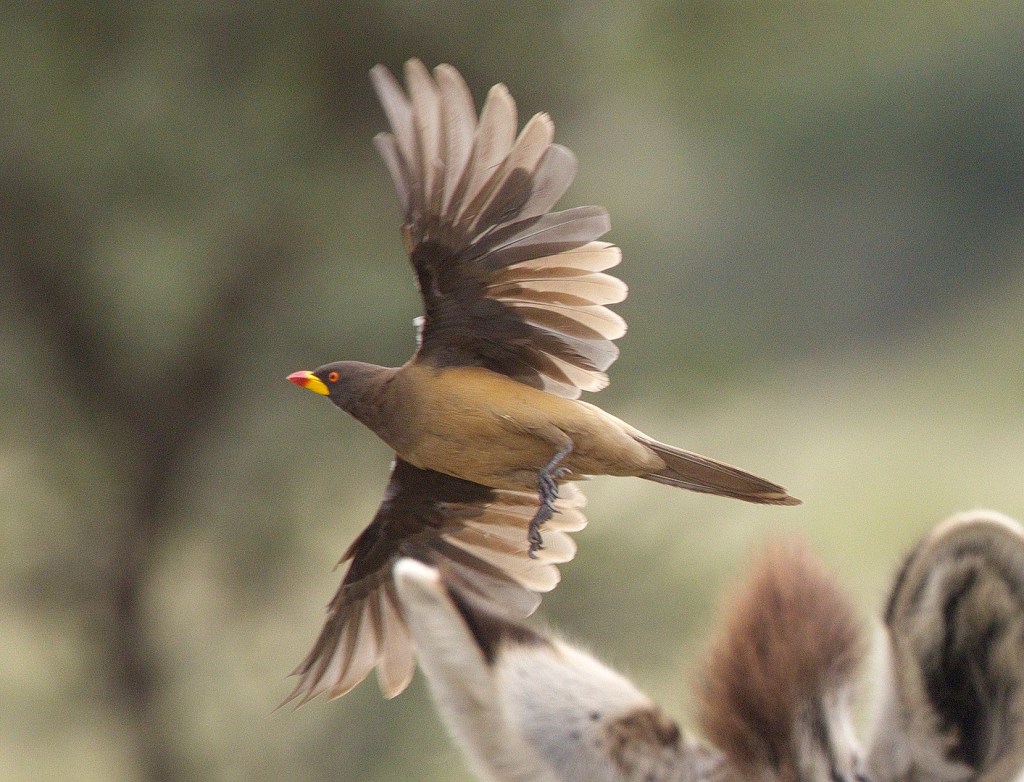
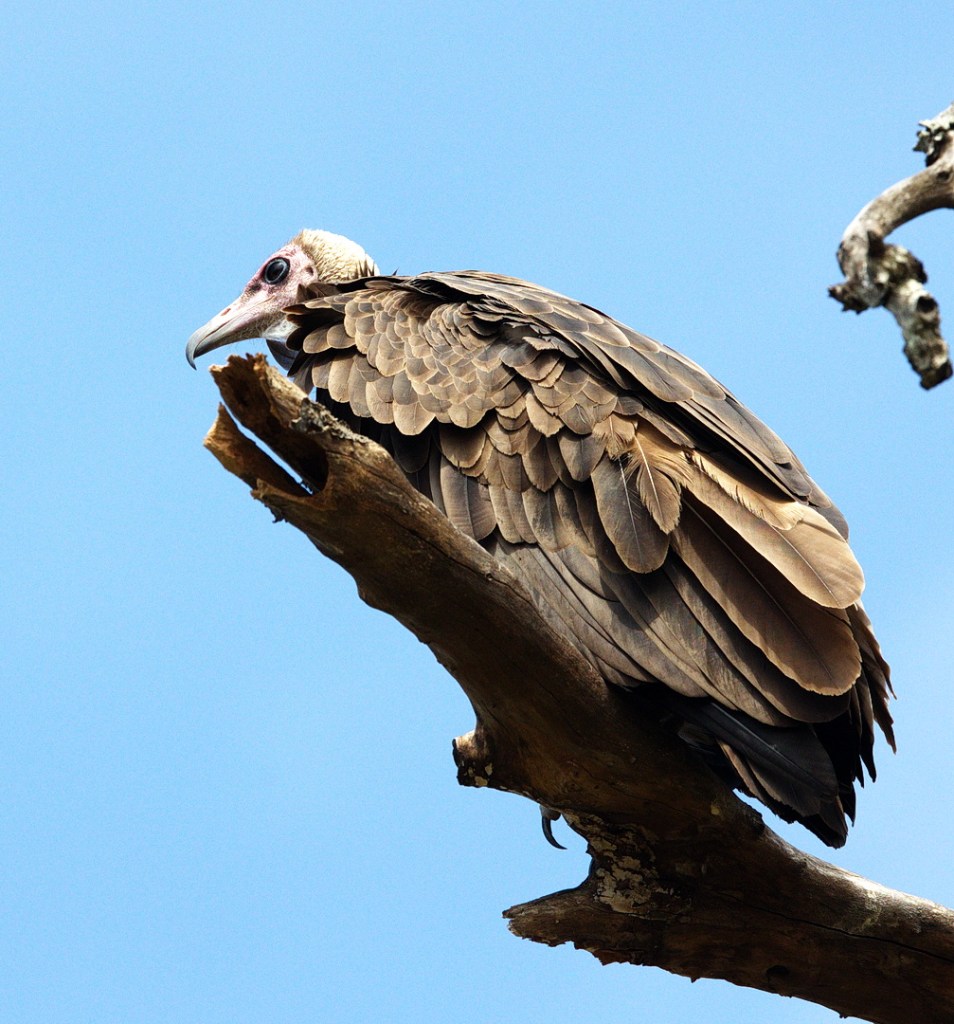
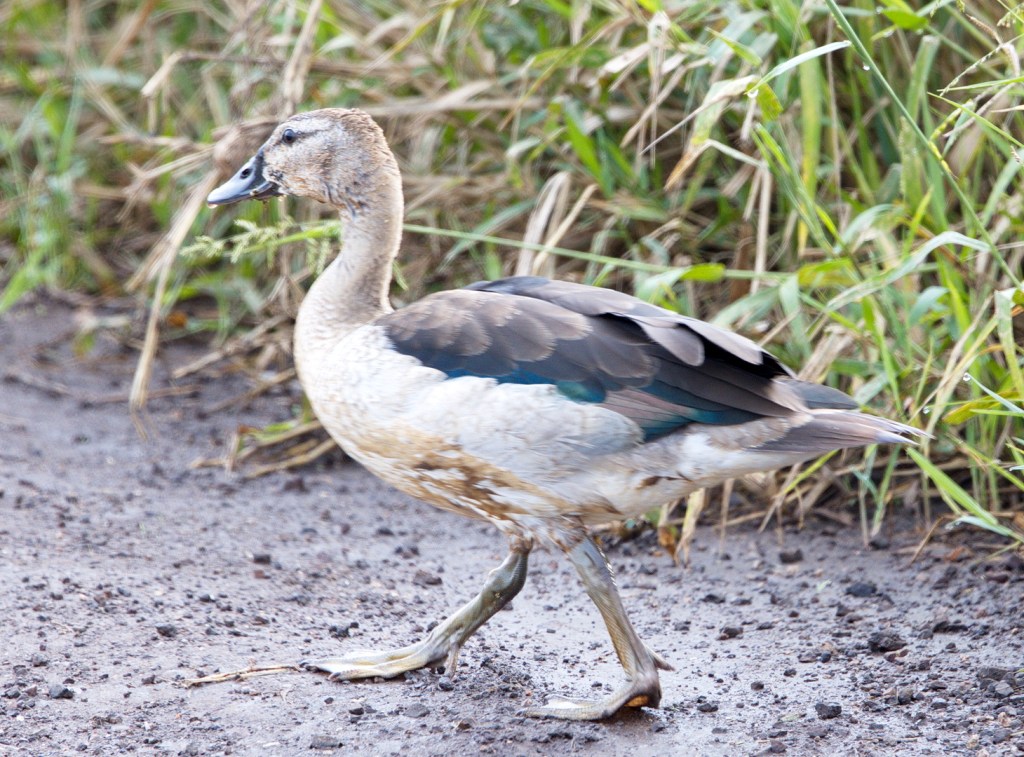
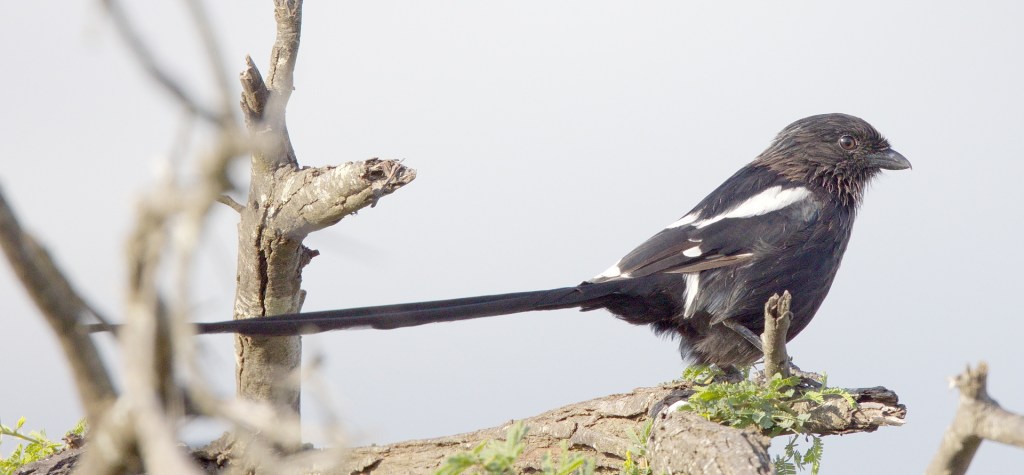
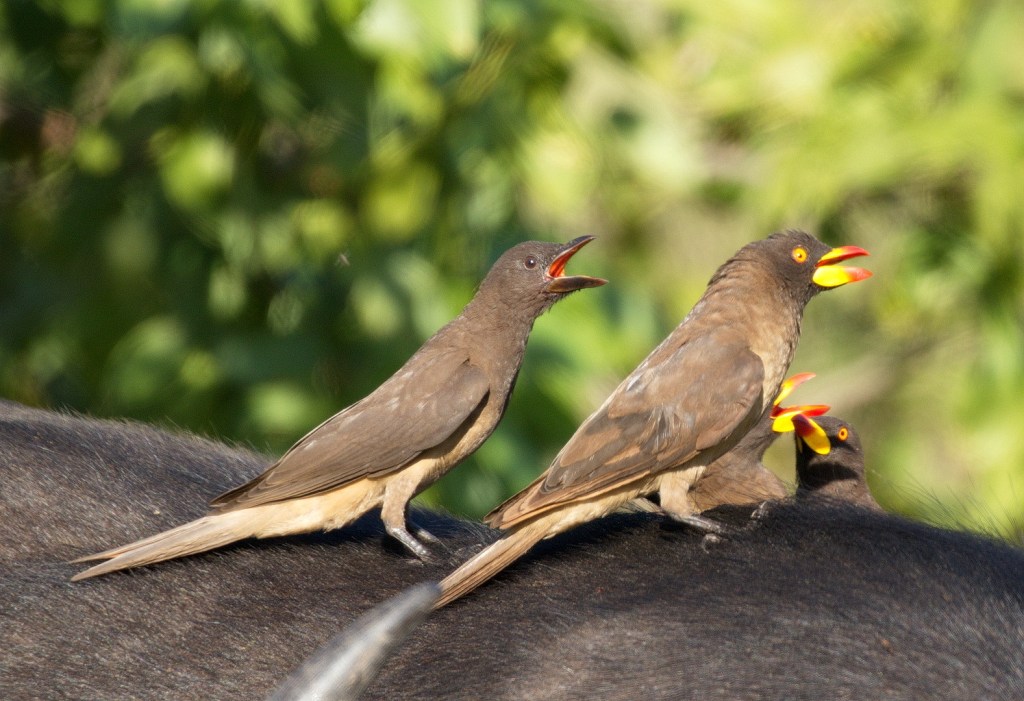
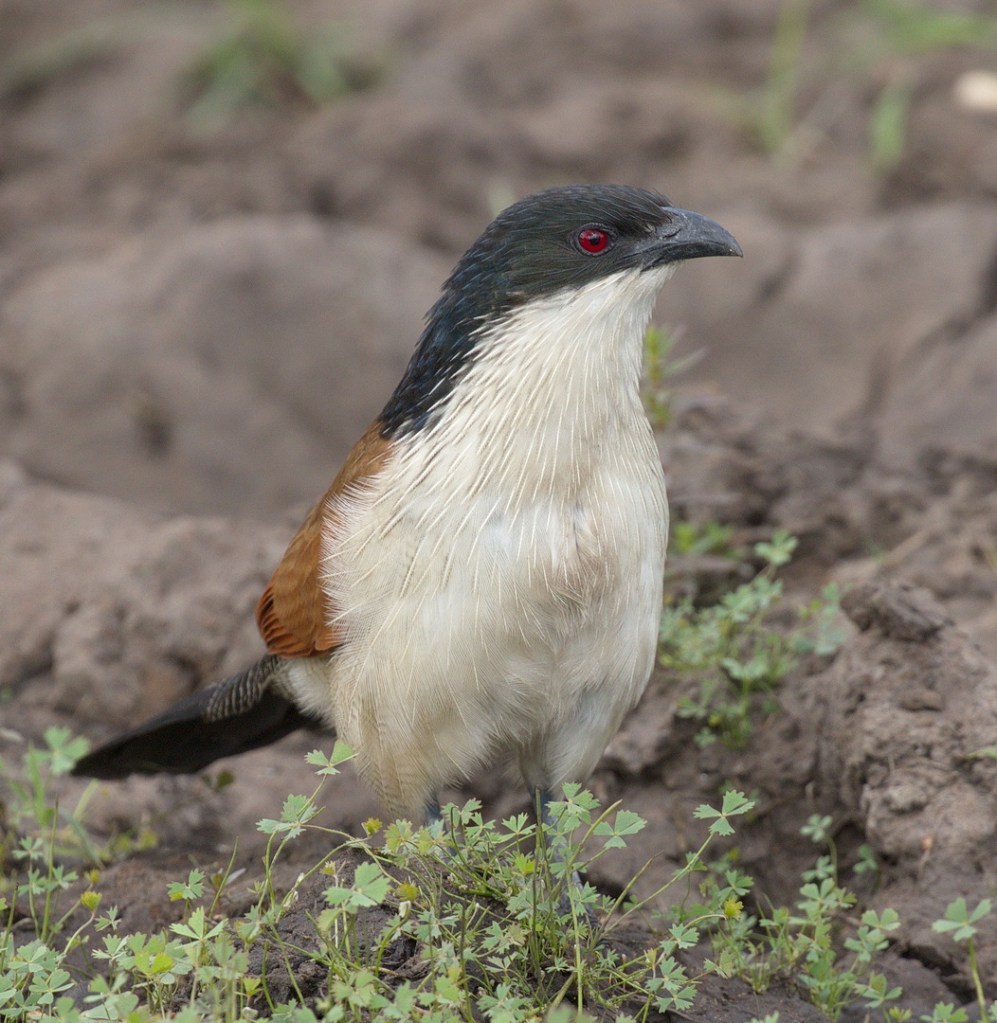
Burchell’s CoucalBlack-winged KiteGrey Penduline-TitGrey Penduline-TitWhite-headed VulturesWhite-headed VulturesWhite-headed Vultures3 White-headed VulturesYellow-billed OxpeckerHooded VultureKnob-billed Duck on a puddle of water on the roadMagpie ShrikeMagpie Shrike
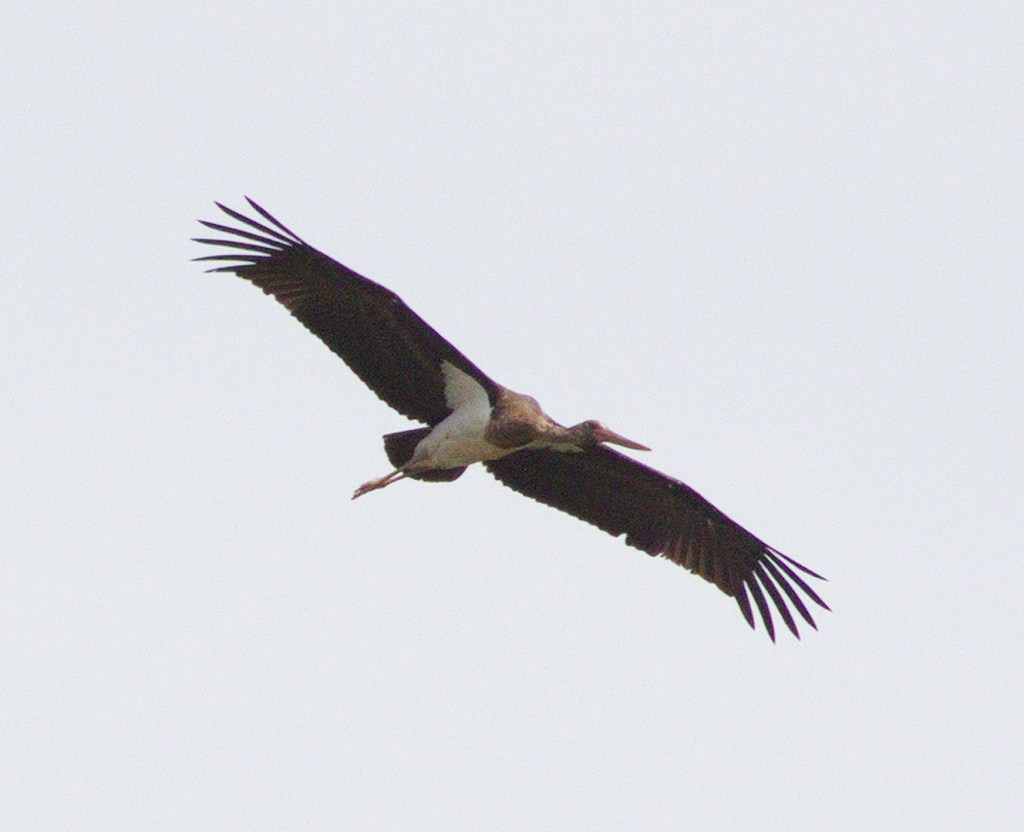
And then turned west and backtracked along the Timbavati loop – S39. We stopped at Ratel Dam Hide. The area in front of the hide had very little water. We had a few sightings with the standout being a juvenile Black Stork.
There was also a large black crocodile present on the sandbank.
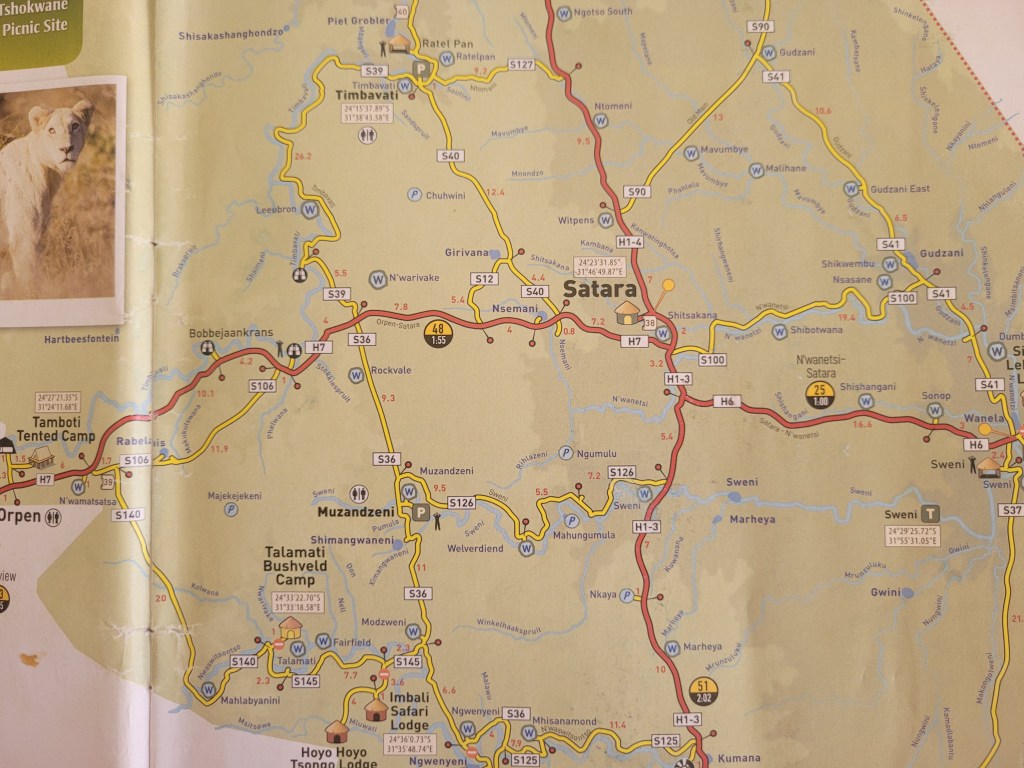
On another day we chose to take the H7 to Orpen Gate and then back along the Talamati Bush Camp road (S140) turning onto the S36 to the Muzandzeni Picnic site. From there taking the S126 to the H1-3 tar road back to camp.
Breakfast at Orpen Gate.
SallySally and I
We stopped at the Muzandzeni Picnic ground for a T&P but in order to enter we had to skirt round an inquisitive elephant – which we were told had also entered to do its business. The picnic ground had some active birds – a sleepy African Scops Owl, a radiant Burchell’s Starling, a pair of Bennett’s Woodpeckers – tantalising us with their knocking in the branches above us.
African Scops OwlRadiant Burchell’s StarlingBennett’s WoodpeckerBennett’s WoodpeckerMuzandzeni Picnic site
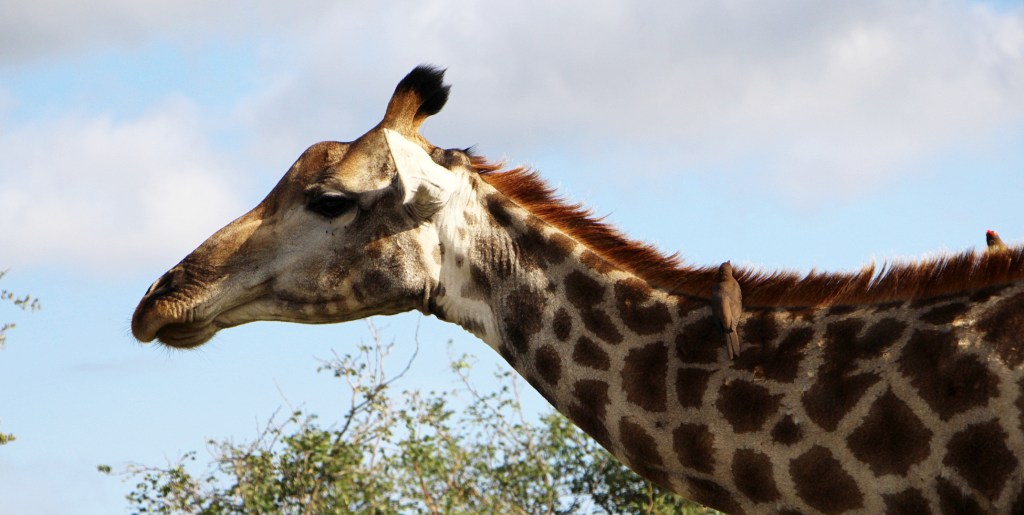
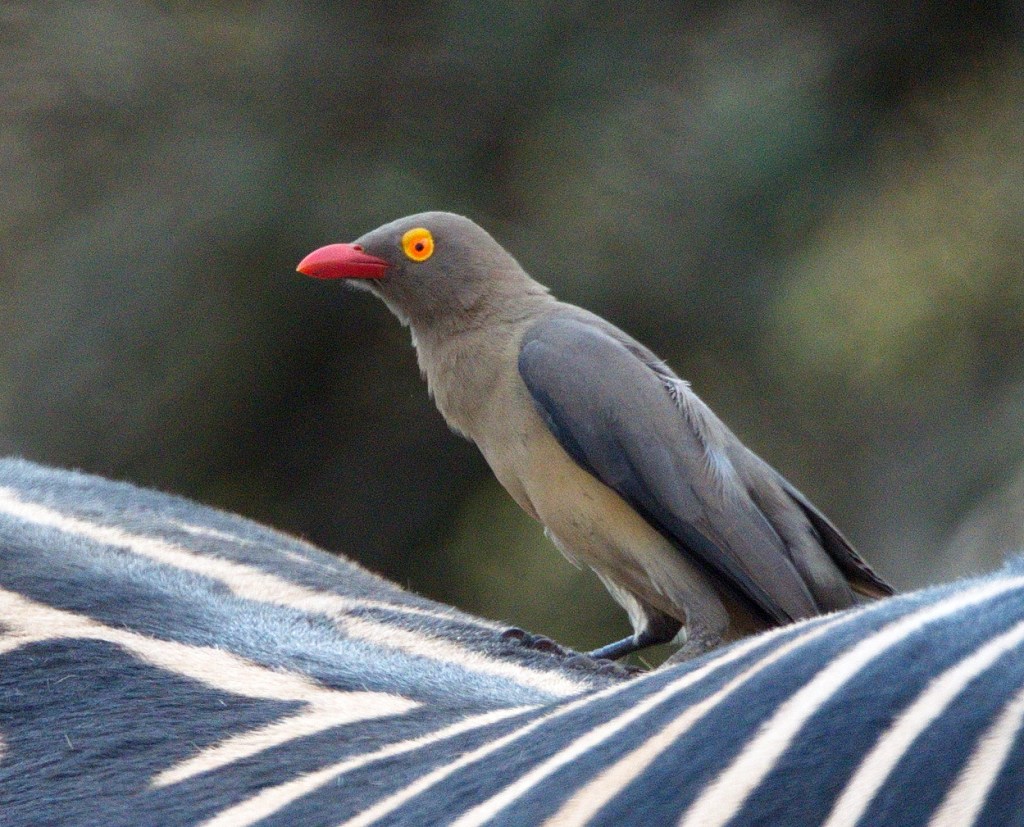
The S126 from Muzandzeni to the main road proved to be rewarding for us. We not only saw a Leopard – admittedly quite fleetingly – but also many Sandgrouse and Red and Yellow-billed Oxpeckers – primarily on Zebras and some on Giraffe. Red-crested Korhaans called close to the road, and we had sightings of a Marico Flycatcher, a Lappet-faced Vulture, Tawny Eagle to name a few.
Every morning the Southern Ground Hornbills were calling close by. It was only on our last day at Satara that we saw them – close to the camp entrance. They were right beside the road.
And to hear them call:
Southern Ground Hornbills calling to each other. Very memorable call.
Almost forgot. Our Explosive experience.
In camp Sally was making tea. I was elsewhere. Walking back to our Wildcat, I could see many people chatting to Sally. Unusual I thought.
Sally told me that she had heard what sounded like a gun shot and suddenly everyone nearby came to her rescue. She was perplexed. And then realised that she had actually caused the commotion when she turned on the hot water tap. The explosion had occurred because there was gas build up in the closed compartment where the gas water heater was stored. And by opening the hot water tap a spark was created – boom. The closed compartment door was blown open with a loud bang. Fortunately the damage was not excessive. But it taught us a lesson to always turn off the gas supply when the compartment door is closed and preferably remove the batteries from the igniter switch as well !
Almost forgot. Jackals in camp. People reported that the Jackals were eating guy ropes. Well we had a slightly different experience. My clogs had gone for a walkabout. Later to be found, the clogs intact but both straps had been removed and chewed into almost precisely one inch pieces and left around the each clog.
Then we moved on to Lower Sabie for 4 nights. See Part 3.
The next part of our trip took us to Tsendze Bush Camp.
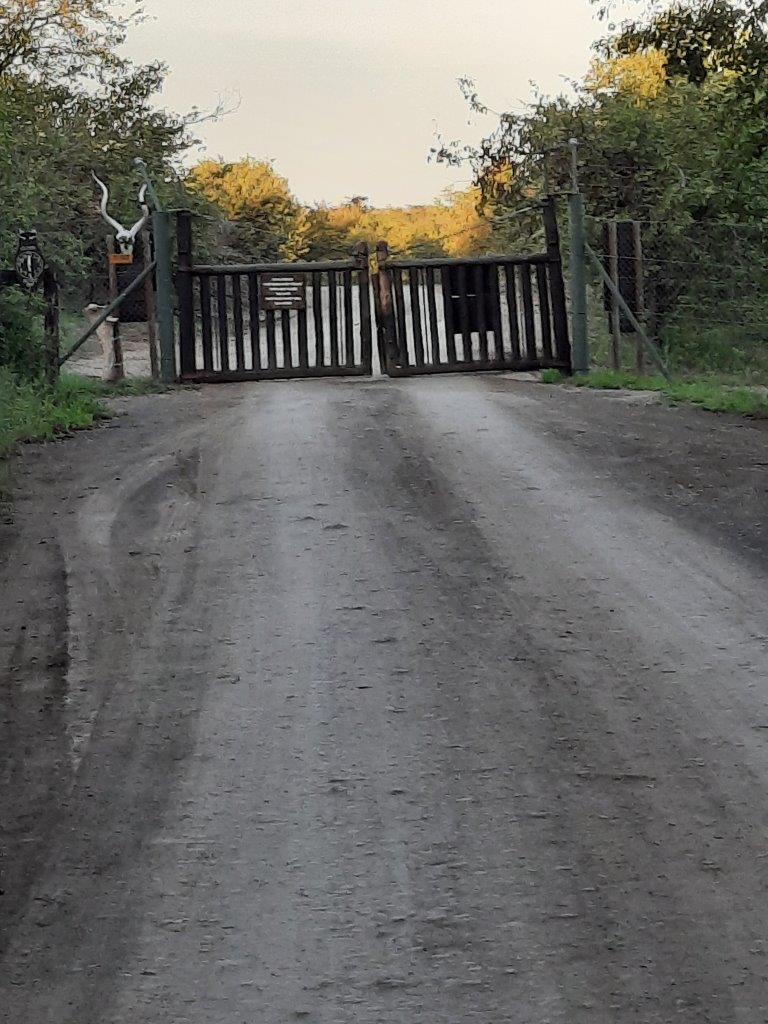
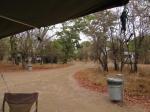
Campsite 26Our campsite No: 26AblutionsExit Gate
One thing we noticed as we progressed further north in the Kruger was how quiet the birdlife was. And our quest to see loads of raptors swarming among millions of Red-billed Queleas was unlikely to happen. It was for this reason we cut short our stay here to 3 nights.
Despite this we had several interesting experiences while at Tsendze. Most along the Tropic of Capricorn Loop (S143) and the adjoining S50 heading south bordering the extensive wetlands.
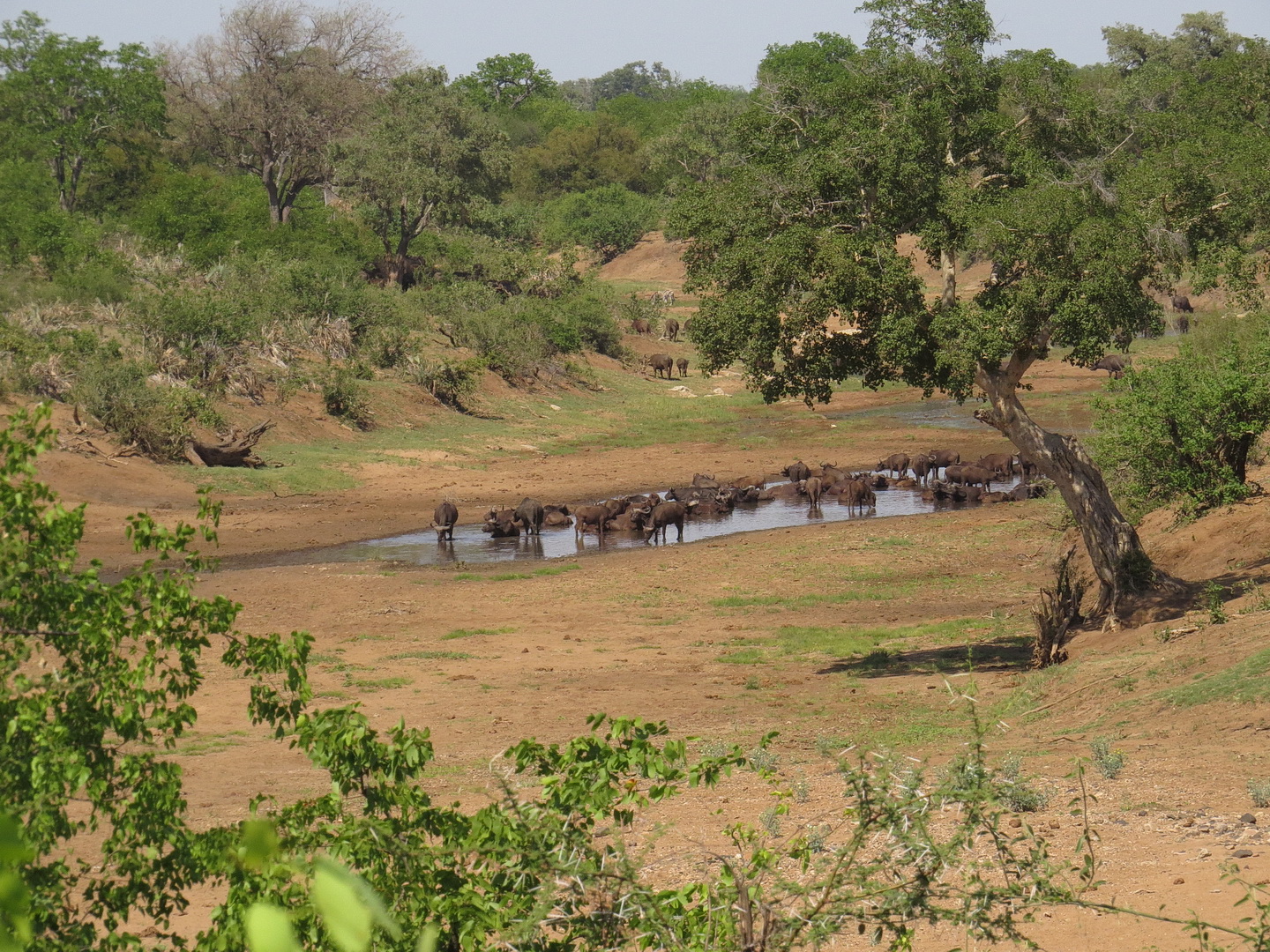
Wetlands with herds of Buffalos.
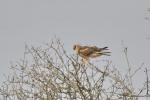
It was along the S143 that we had the best sightings of raptors, Amur Falcons, Lesser Kestrel and Eurasian Hobby.
Same Amur FalconA Blue looking Amur FalconEurasian HobbyLesser KestrelLesser Kestrel
Here are some photos of other birds seen around Tsendze.
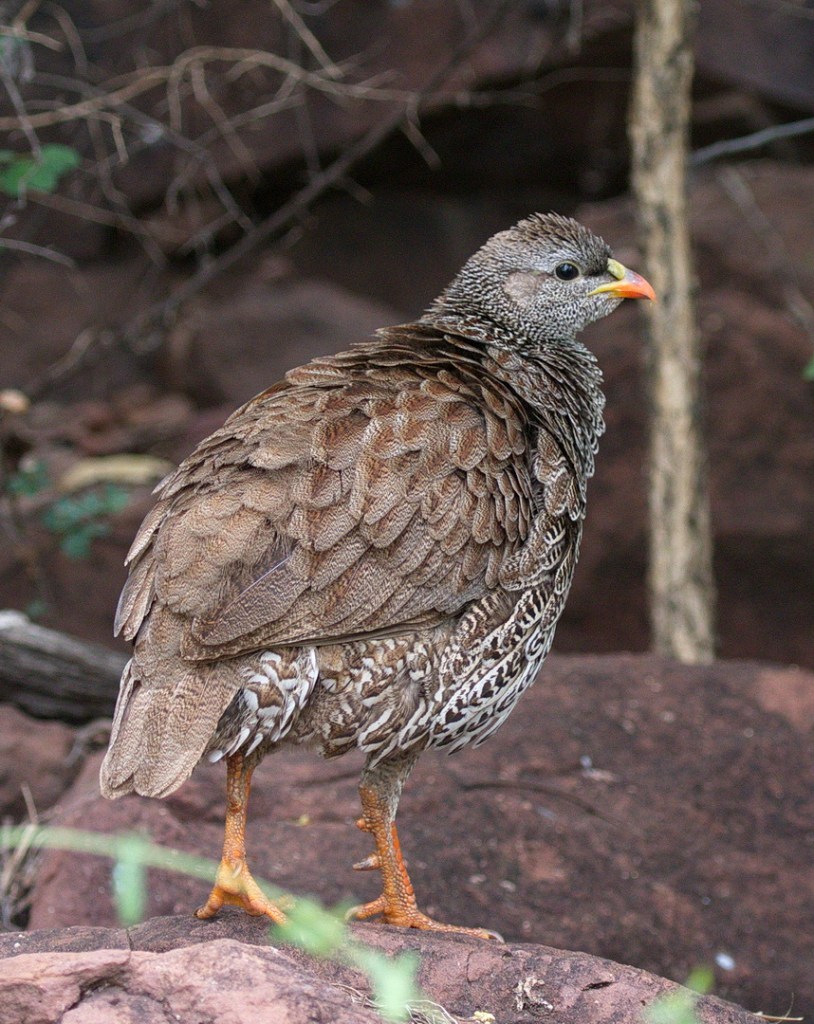
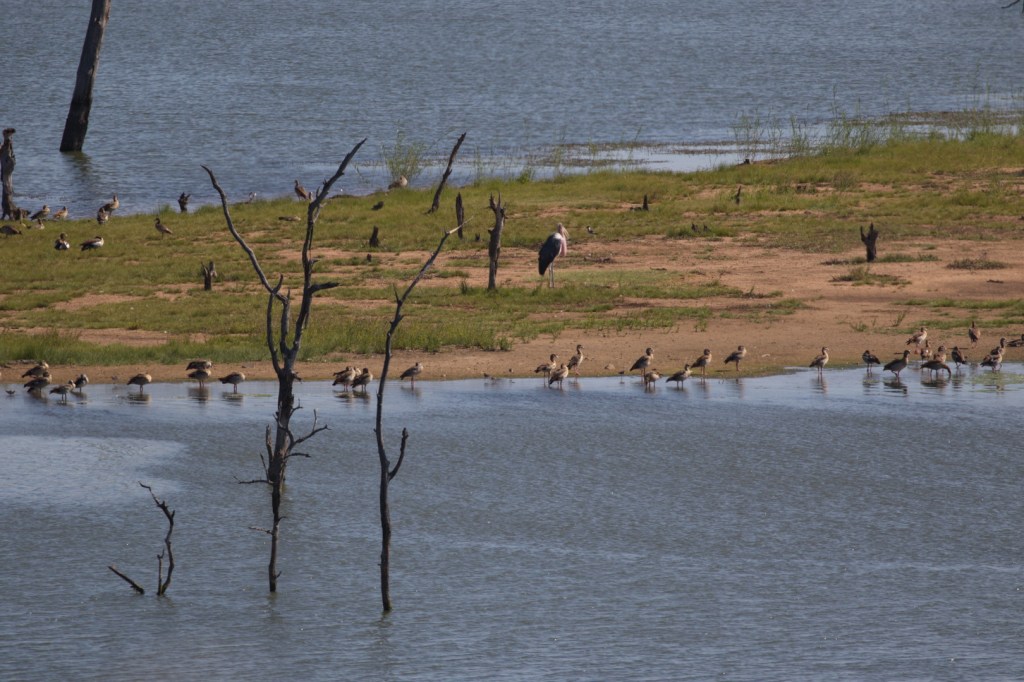
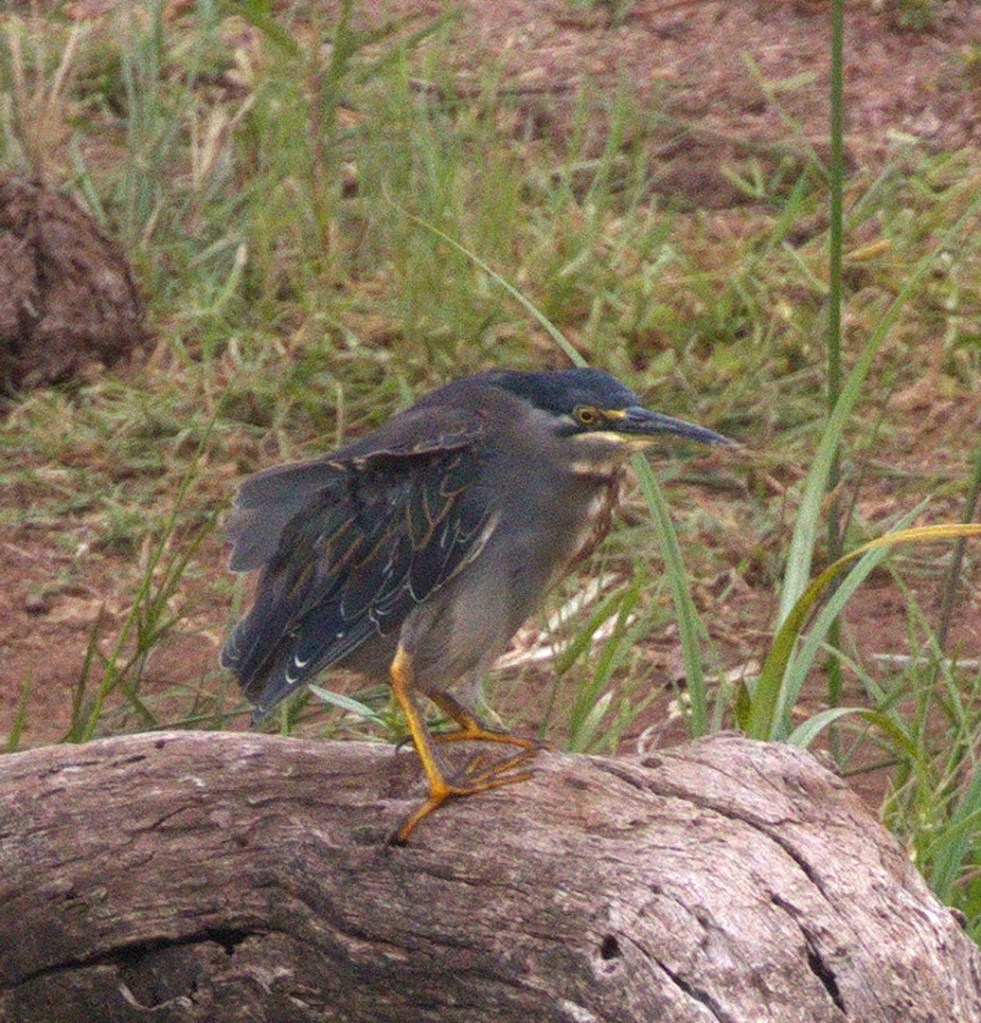
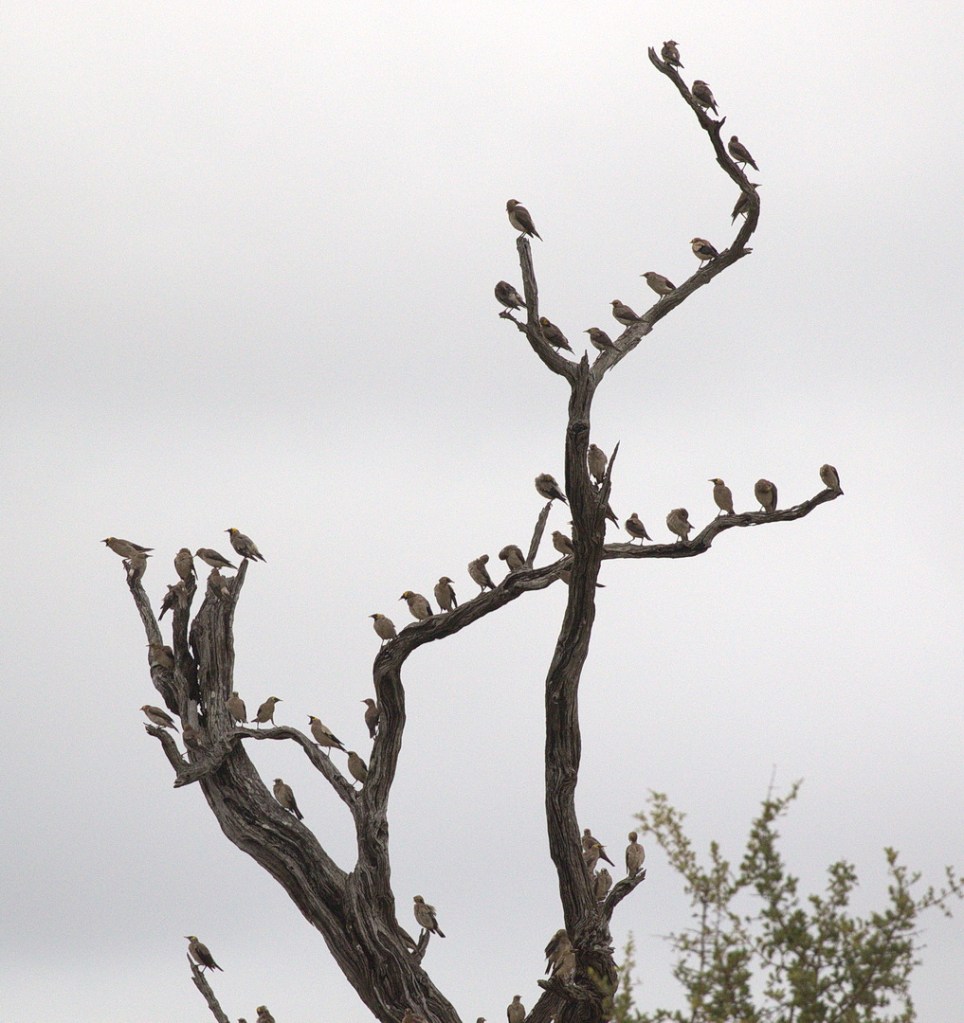
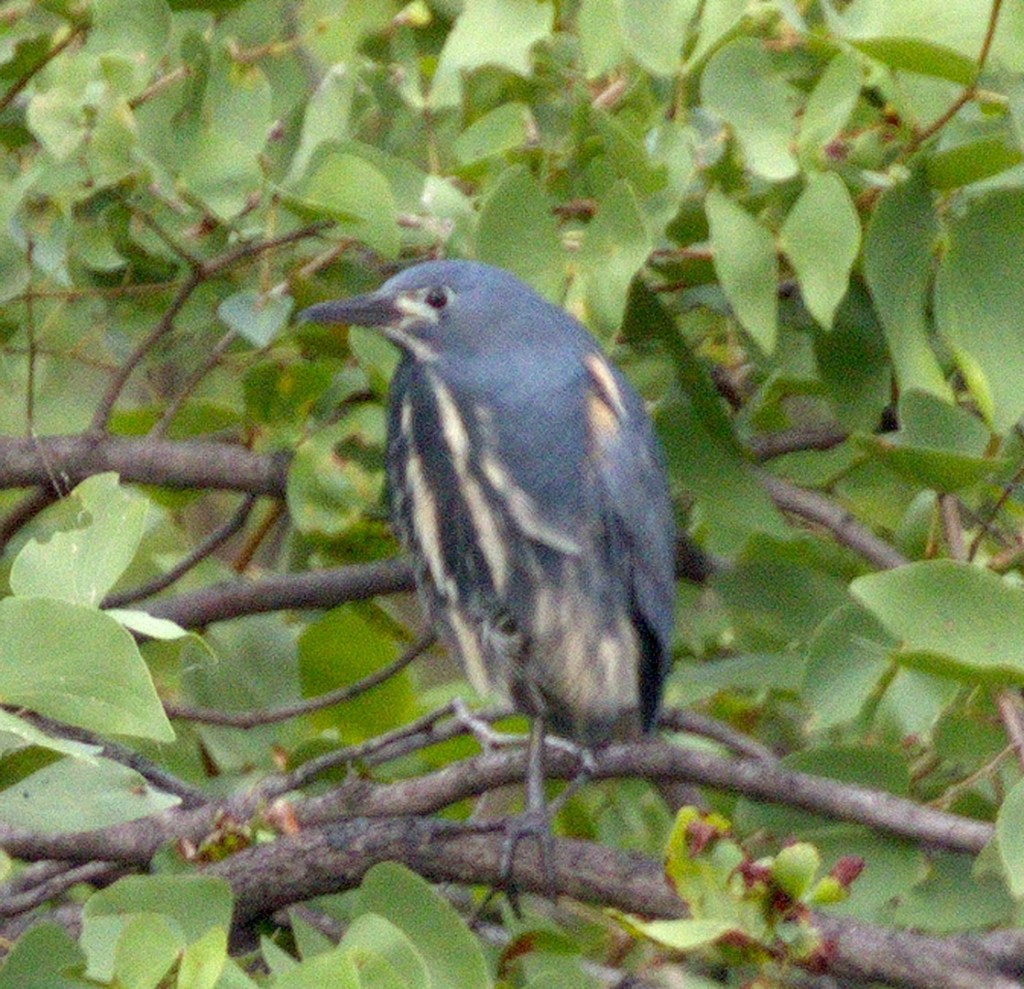
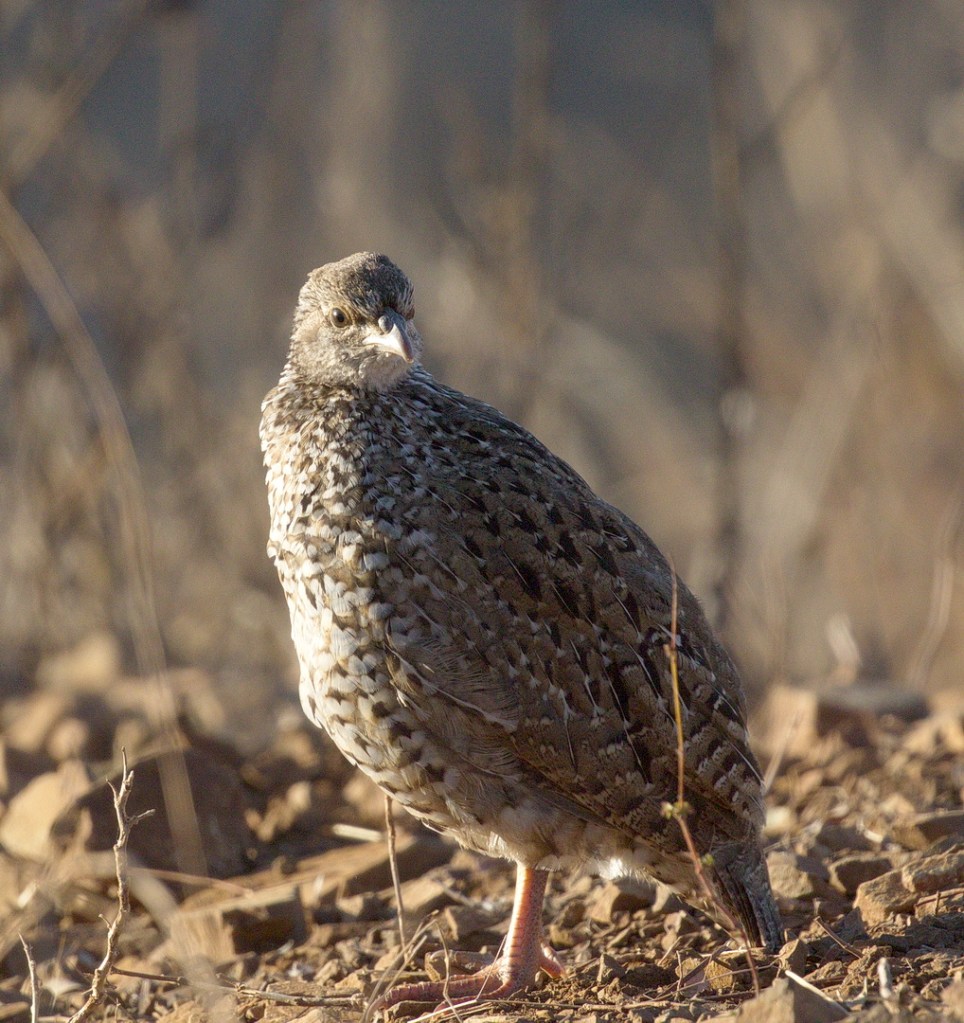
Burchell’s CoucalNatal SpurfowlChestnut-backed Sparrow-Lark femaleKitltitz’s PloverMarabou Stork among masses of Egyptian Ducks as seen from the deck of the Mopani restaurantStriated HeronA tree full of Wattled StarlingsWattled StarlingYellow-billed Oxpeckers
Some photos of non-bird creatures seen based at Tsendze.
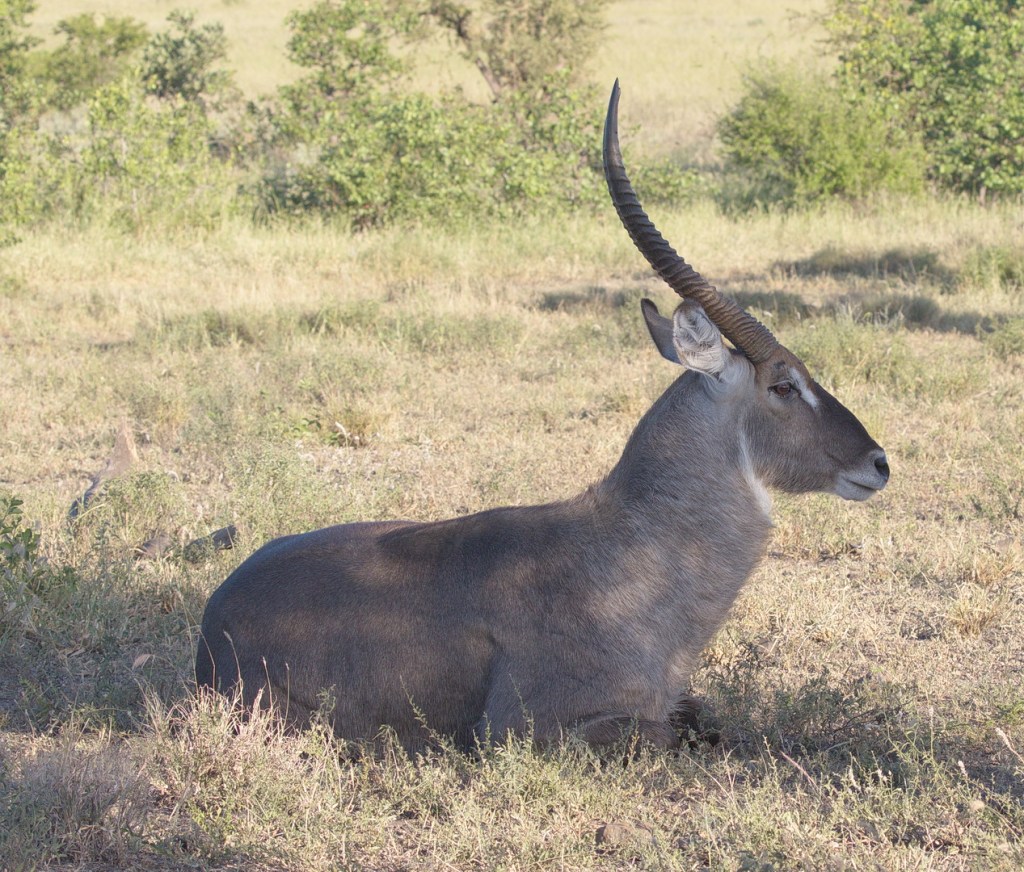
A Rock HippoElephants seen from Mopani RestaurantBlack-backed JackalMuddy BuffaloGood Looking Waterbuck
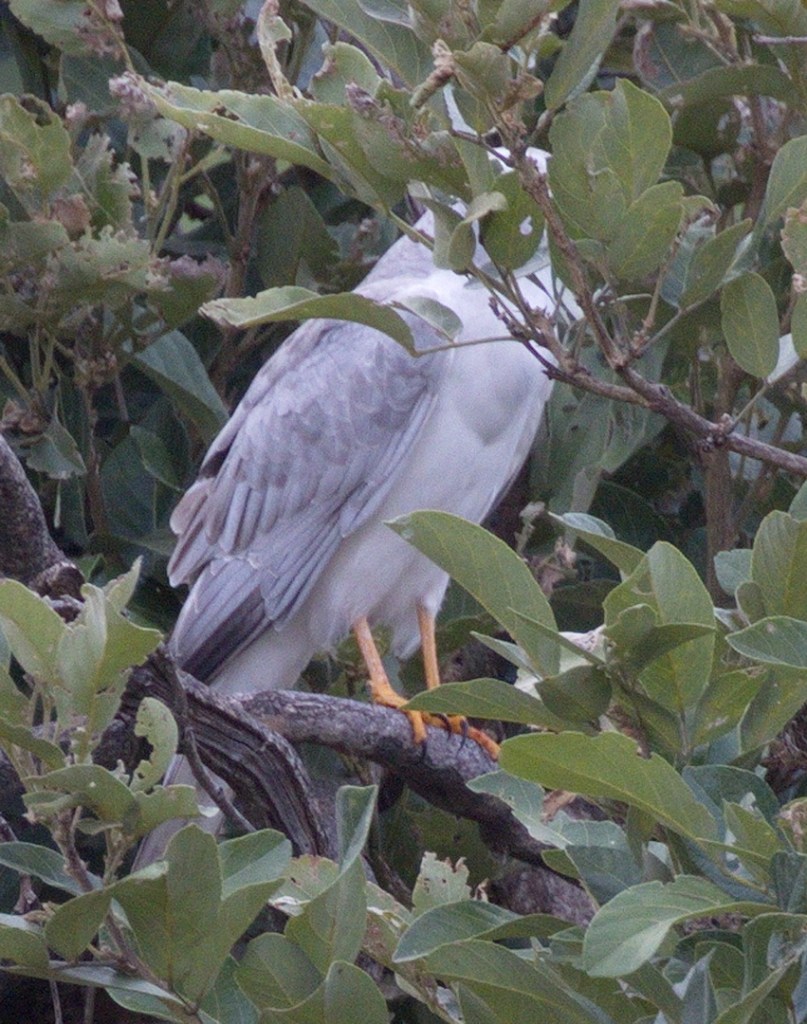
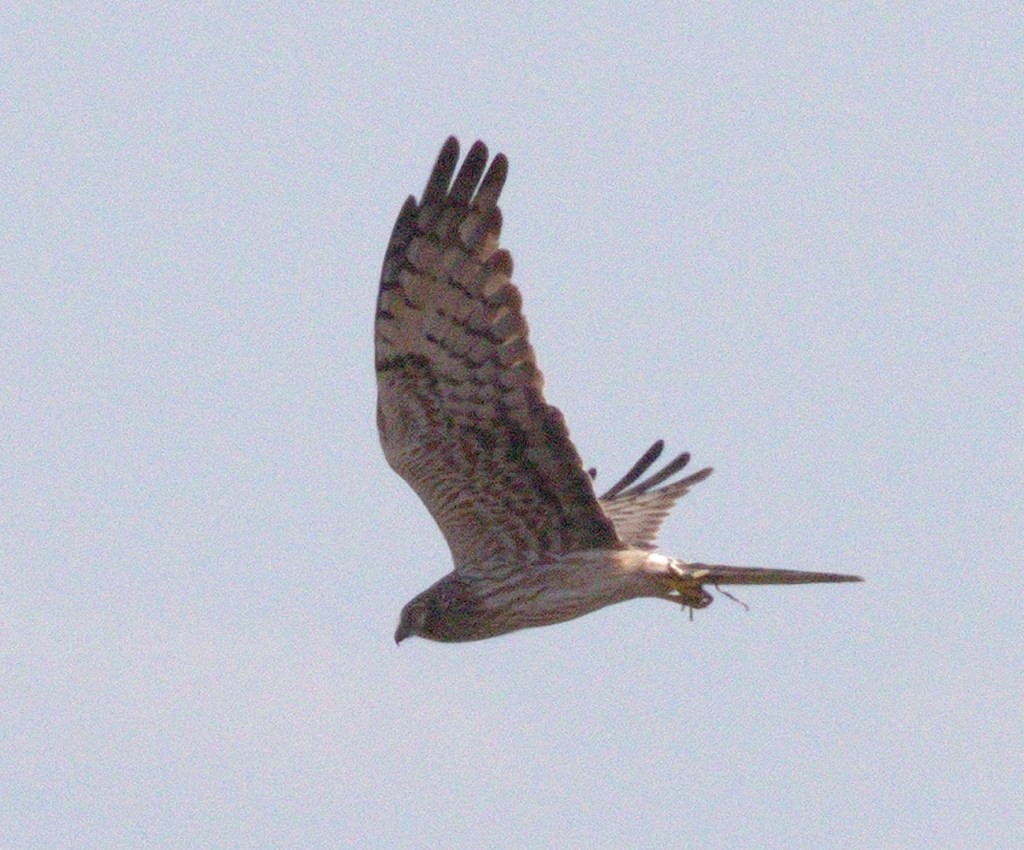
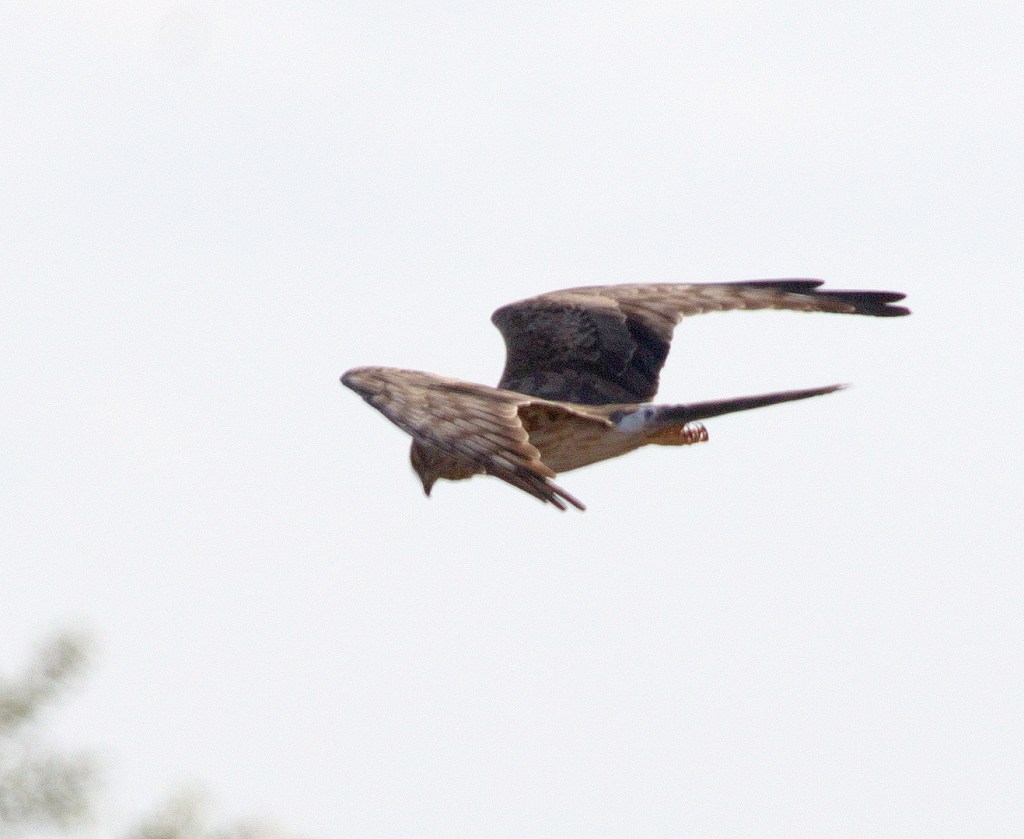
Along the Tropic of Capricorn loop around the Tihongonyeni waterhole we had brilliant sightings of Harriers – Pallid and what we believe to be Montagu’s.
Pallid HarrierPallid HarrierPallid Harrier
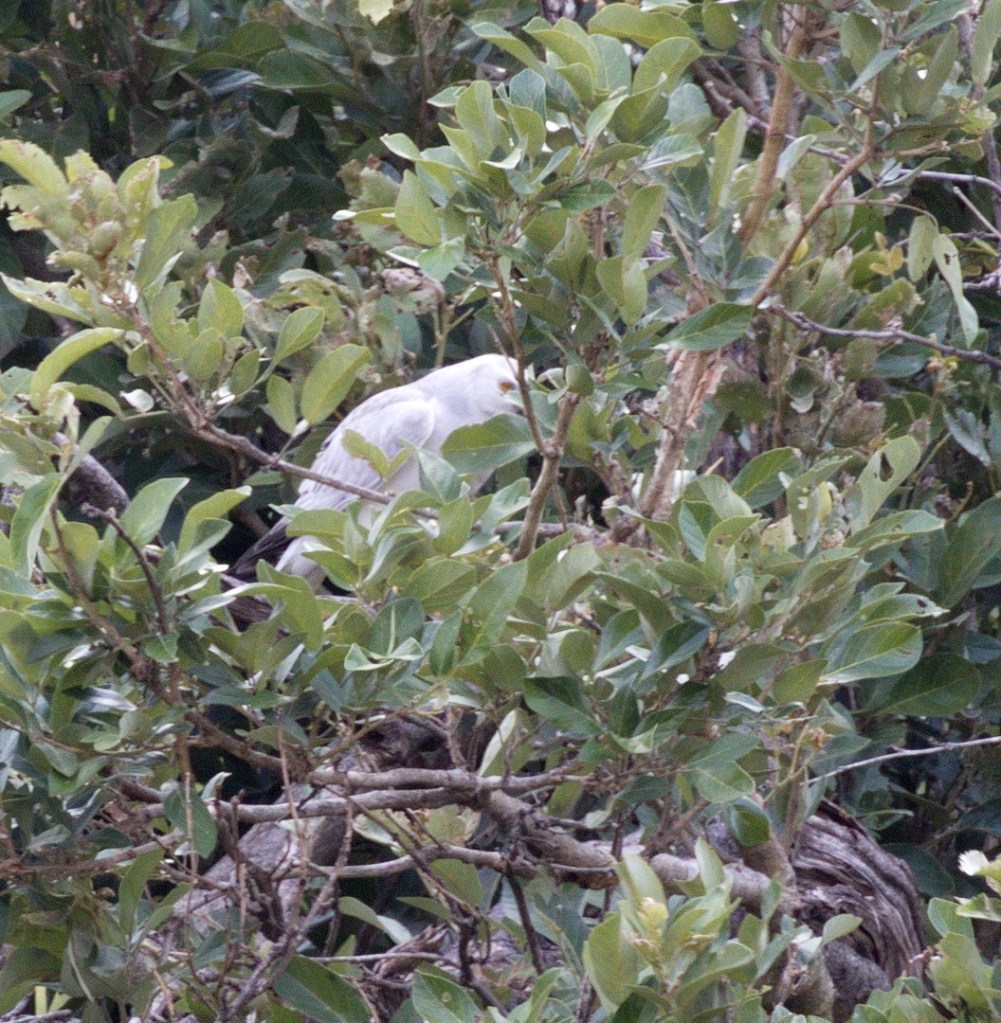
And what we believe to be a Montagu’s Harrier:
Montagu’s Harrier
And not to be outdone, we encountered several Temminck’s Coursers. Here is one:
That was all on our last evening there. And we commented how we had not seen any cats while at Tsendze when lo and behold a pride was enjoying a rest against the tank at Tihongonyeni waterhole. The Gnus were waiting their turn and in the process got closer and closer until one Lioness stood up and walked closer to the water trough. Then we came across several more as we headed back to camp.
A few of the 7 lions LionessLioness watching the Gnu. 2 MalesOne of the 2 malesAnother joining the four already taking to the shade.
And that was our short stay at Tsendze – one of our favourite campsites where the Owls are heard calling every night along with the occasional Fiery-necked Nightjars.
During our stay we added another 16 different bird species to our list taking our tally to 206 at that stage.
And then we were on to Shingwedzi for 3 nights.
Shingwedzi
26th to 28th February 2022.
The campsite was pretty empty except for the sites by the fence. We found a spot on the fence – fully shaded – to the right of the swimming pool. Its only drawback was the late afternoon sun.
Shingwedzi pool. Photo taken from the best shady area.
Among the few campsite birds was a pair of Bennett’s Woodpeckers. Forever on the ground and totally unperturbed by us – often getting quite close.
Bennett’s Woodpecker
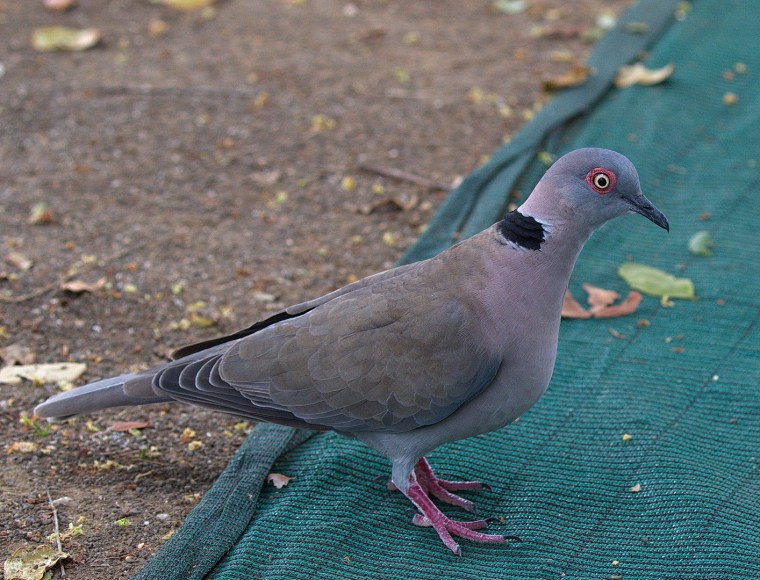
Another lovely campsite bird was this one – an African Mourning Dove.
African Mourning Dove
Very friendly to us but had a real prolonged humdinger of a fight with another.
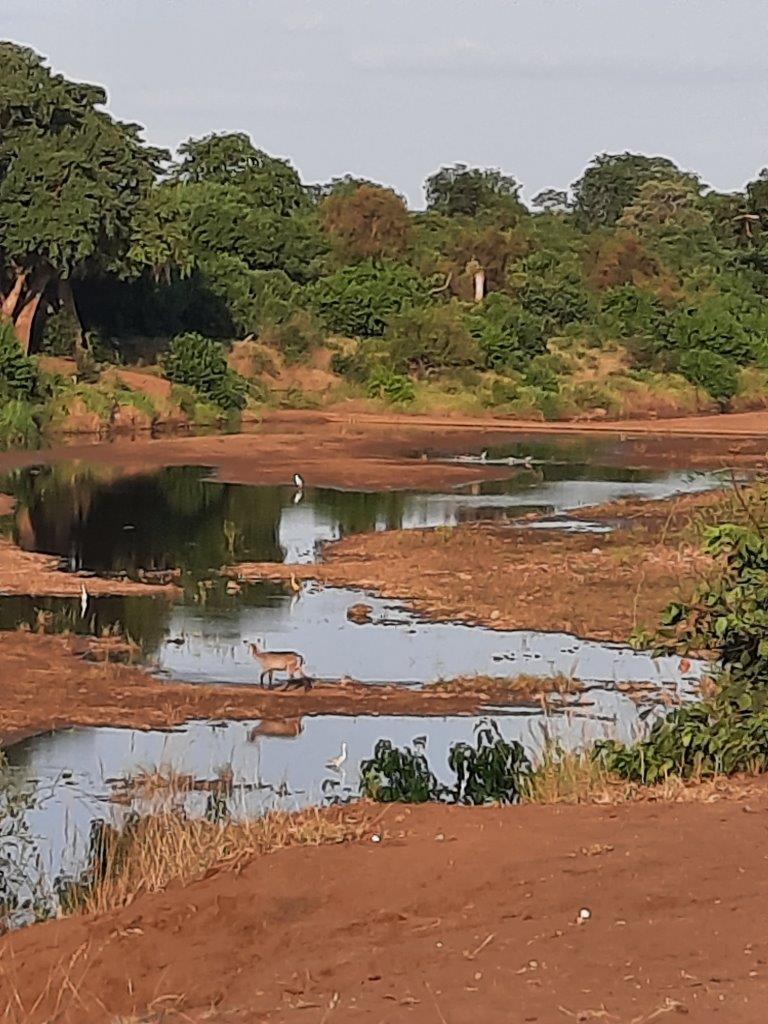
As you approach the camp gate, following the river on your left, you have a view of ponds in the river below and alongside the camp. There is always birdlife in these ponds.
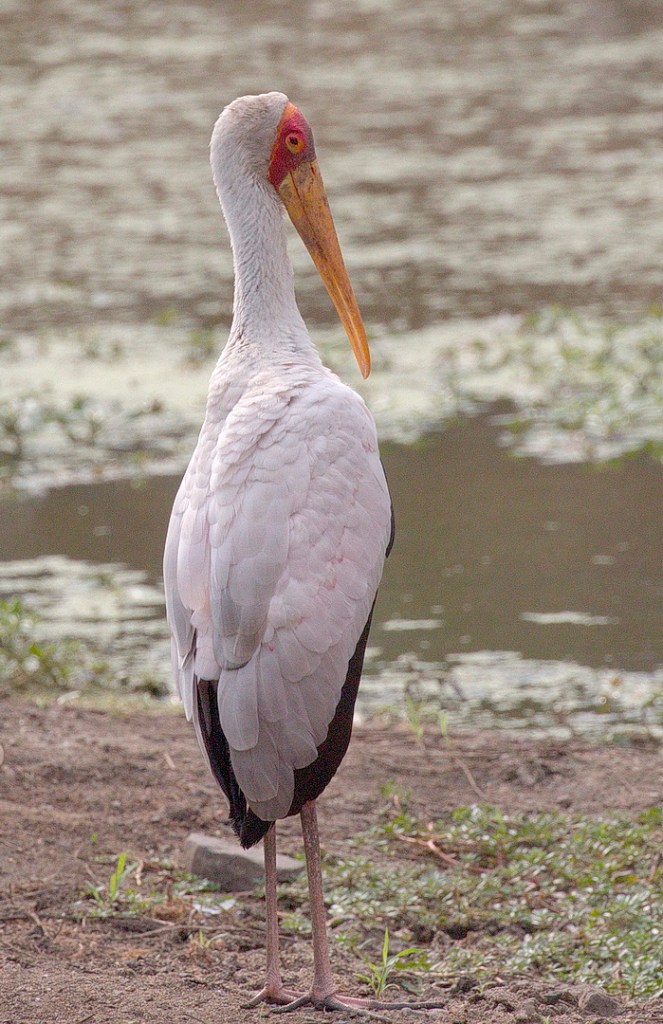
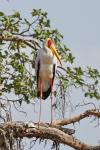
Yellow-billed Storks mainlyYellow-billed Storks
We drove extensively around the area. Going down river, visiting the Red Rocks Loop as well as going further afield further north to Babalala Picnic site following the scenic route by the river.
Scenic route
No abundance of Quelea to be seen. However we did enjoy several raptors.
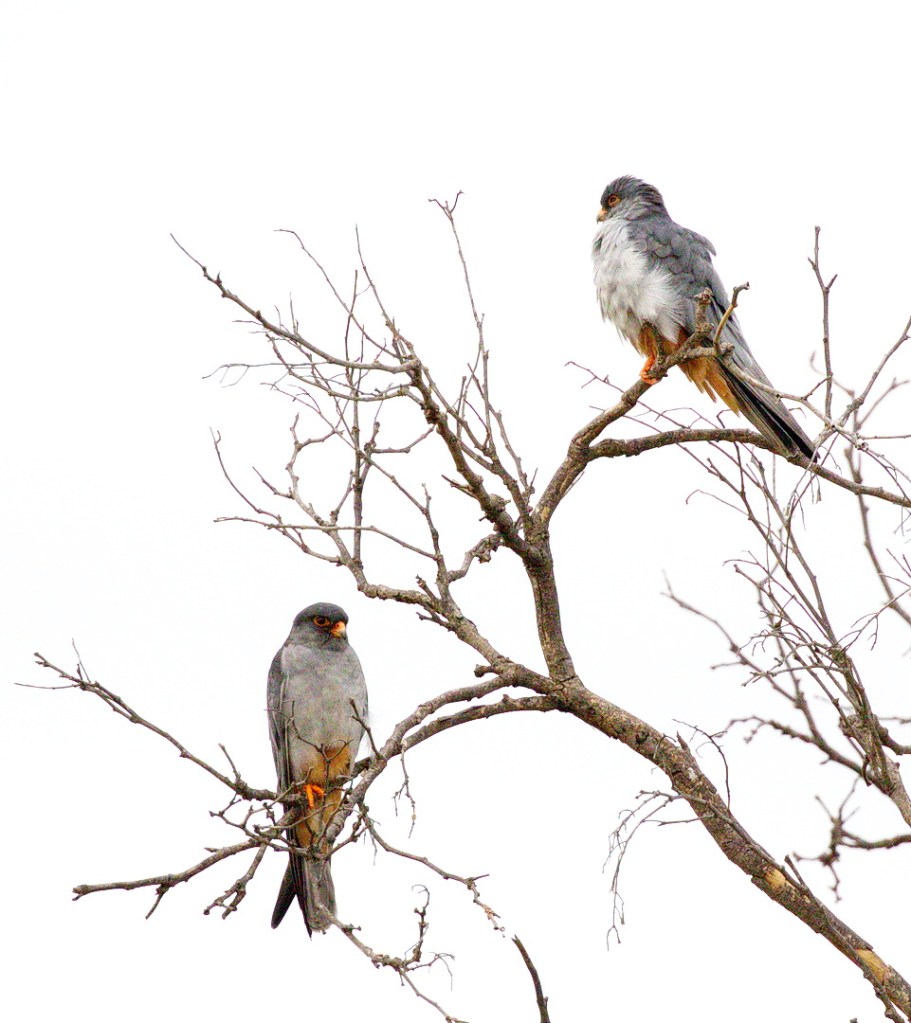
A pair of African Fish-EaglesAfrican Hawk-EagleAmur FalconAmur FalconsBlack-winged Kite
Then there were the other birds and animals we found in the area.
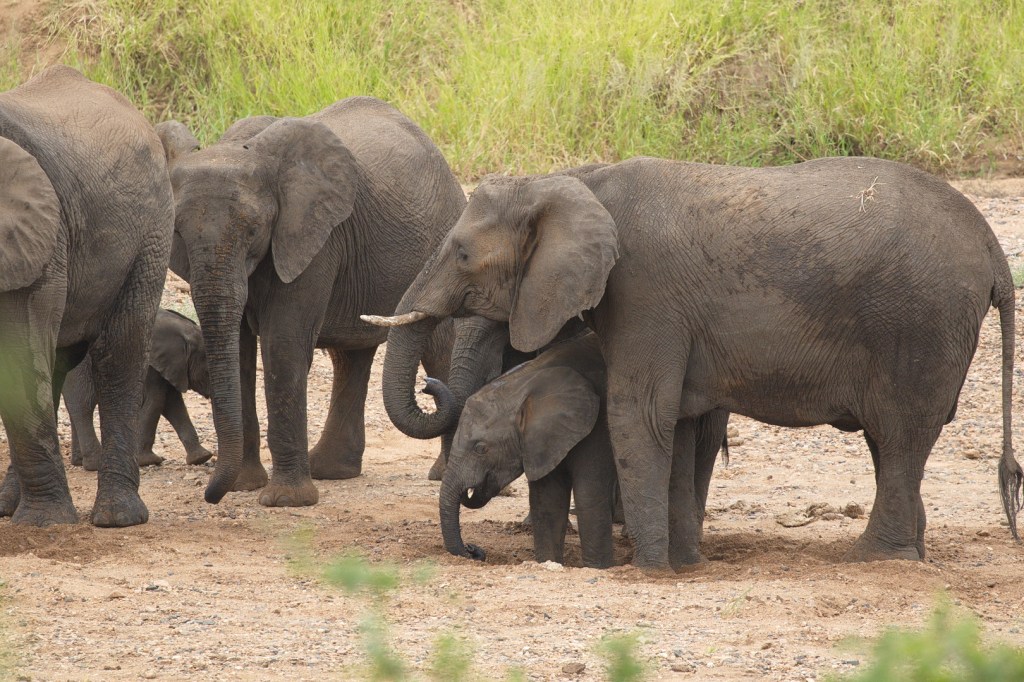
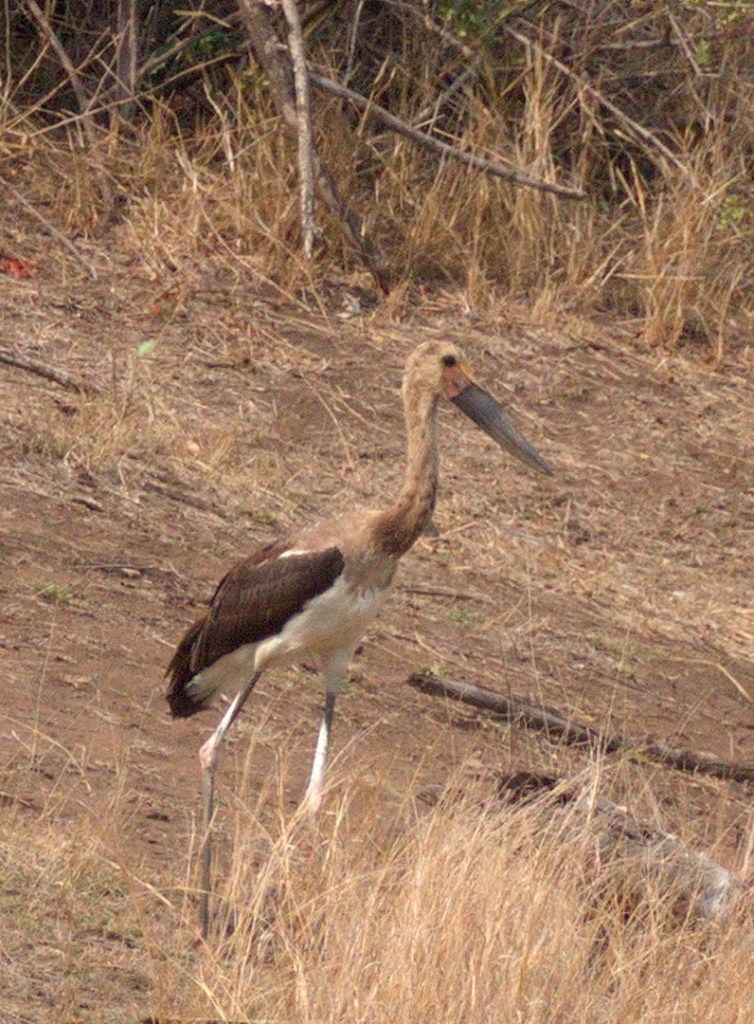
Elephants digging for waterFrisky ElephantsWetland with 2 Saddle-billed StorksCrocodileProtected BabySmothering MotherWaterbuck and young – so cute.
And birds;
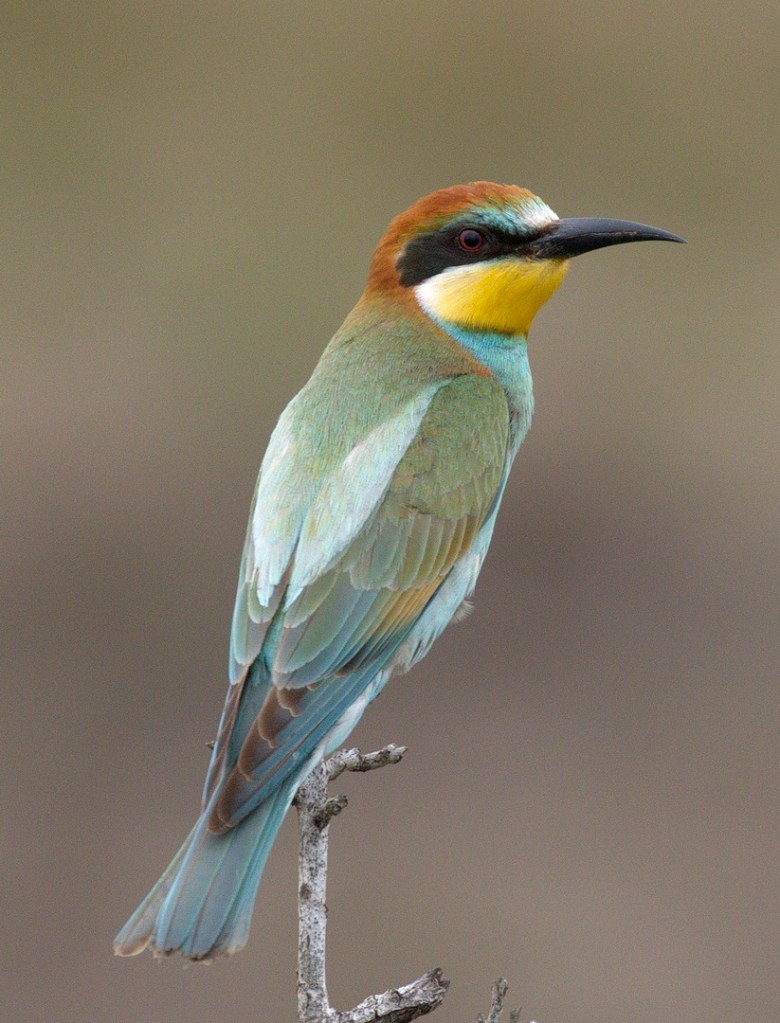
Carmine Bee-eaterCinnamon-Breasted BuntingDwarf BitternDwarf BitternGrey Tit-FlycatcherPurple IndigobirdMosque SwallowMosque SwallowMosque Swallow(T to B) Mosque Swallow, Wire-tailed and BarnLittle Bee-eaterVillage IndigobirdSaddle-billed Stork femaleSaddle-billed Stork maleGet togetherVillage IndigobirdWoodland KingfisherYellow-billed StorkYellow-billed StorkYellow-billed OxpeckersYellow-billed Oxpeckers
The highlight of out time at Shingwedzi was undoubtedly when we came across a pair of Dusky larks in the middle of the road. Most unexpected and most enjoyable.
Dusky Larks.
And that was our excitement at Shingwedzi.
We added another 10 species to our total Kruger list bring the total to 216 species for the Kruger up to that point.
Our next camp was Punda Maria for 2 nights followed by 2 nights in Nthakeni to complete our Kruger trip from Bottom to Top.
Our campsite overlooks the river and is much like the Pafuri picnic site. Special place.Our campsite view of the Mutale riverOur campsite view of the Mutale river
We arrived at Nthakeni around midday and settled in.
Camp trailAnother CampsiteBig Baobab CampsiteRoad down to our campsite by the riverLocal restaurant in the campRiver in front of our campsiteSwimming PoolImpala Lilies
That afternoon we spent time in and around Pafuri and for most of the next morning.
Each night we heard three different Nightjars, the Fiery-necked, the Square-tailed and the Freckled as well as the Wood Owl. This is a special place for us.
Midday and early afternoon was usually spent in the pool to cool down and in late afternoon a bird walk around the camp.
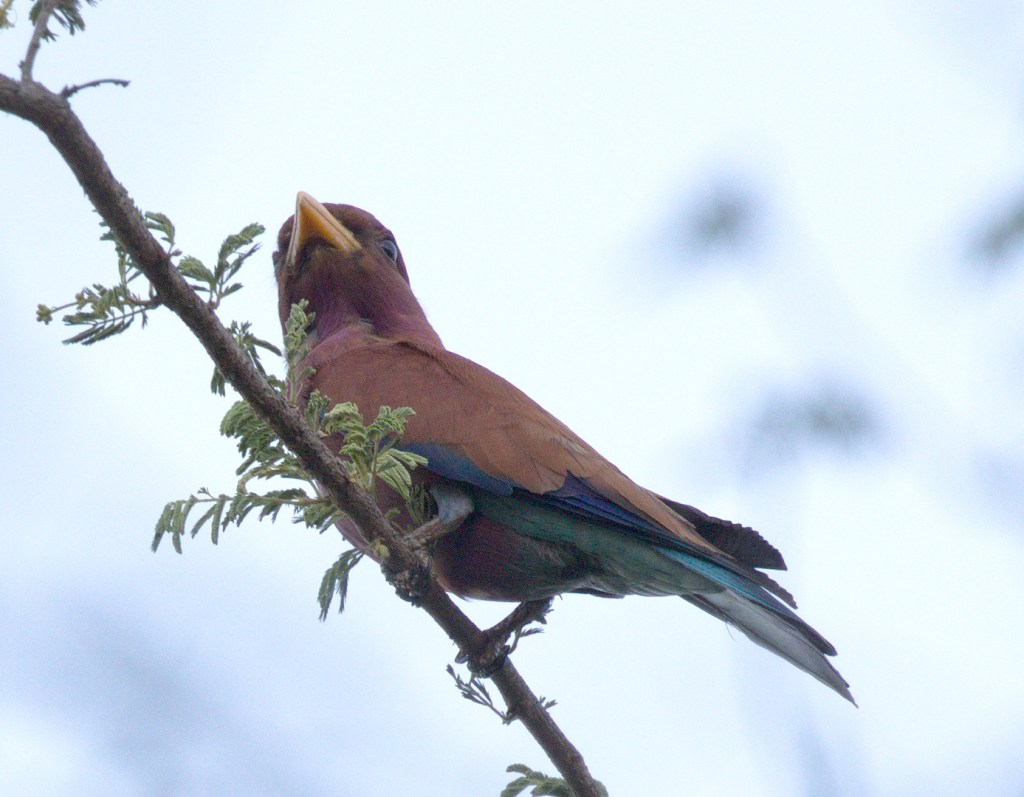
Broad-billed RollerRoller Moon
Here are some of the species we managed to get photos of in the Pafuri area mainly.
As we drove towards the Pafuri picnic site on one occasion we spotted what we thought was a shiny flapping something wrapped round a tree trunk. A better look revealed that it was a very long shedded snake skin right round the trunk and back.
Snake Skin
Two birds stood out for us. In the Pafuri picnic site there was a nesting pair of Black-throated Wattle-eyes and three kilometers from the Pafuri Bridge heading north we saw a Racket-tailed Roller – definitely our bird for the trip.
Black-throated Wattle-eye on nestRacket-tailed Roller
From Nthakeni we went to Punda Maria for a few days with my sister and her husband.
Punda Maria
16th and 17th November2021
Sally and I had booked to stay at Punda Maria for one day only so that we could go to Shingwedzi at the same time as my sister. However we ended up for 2 nights and persuaded my sister to stay an extra night – sacrificing a night at Shingwedzi. We had all booked Shingwedzi for 4 nights so it meant only 3 nights in Shingwedzi.
We were camped on the fence line for a change within close proximity to the Hide and good views of the waterhole from our camp spot as well.
We were camped to the right next to T&D here.View from the hide
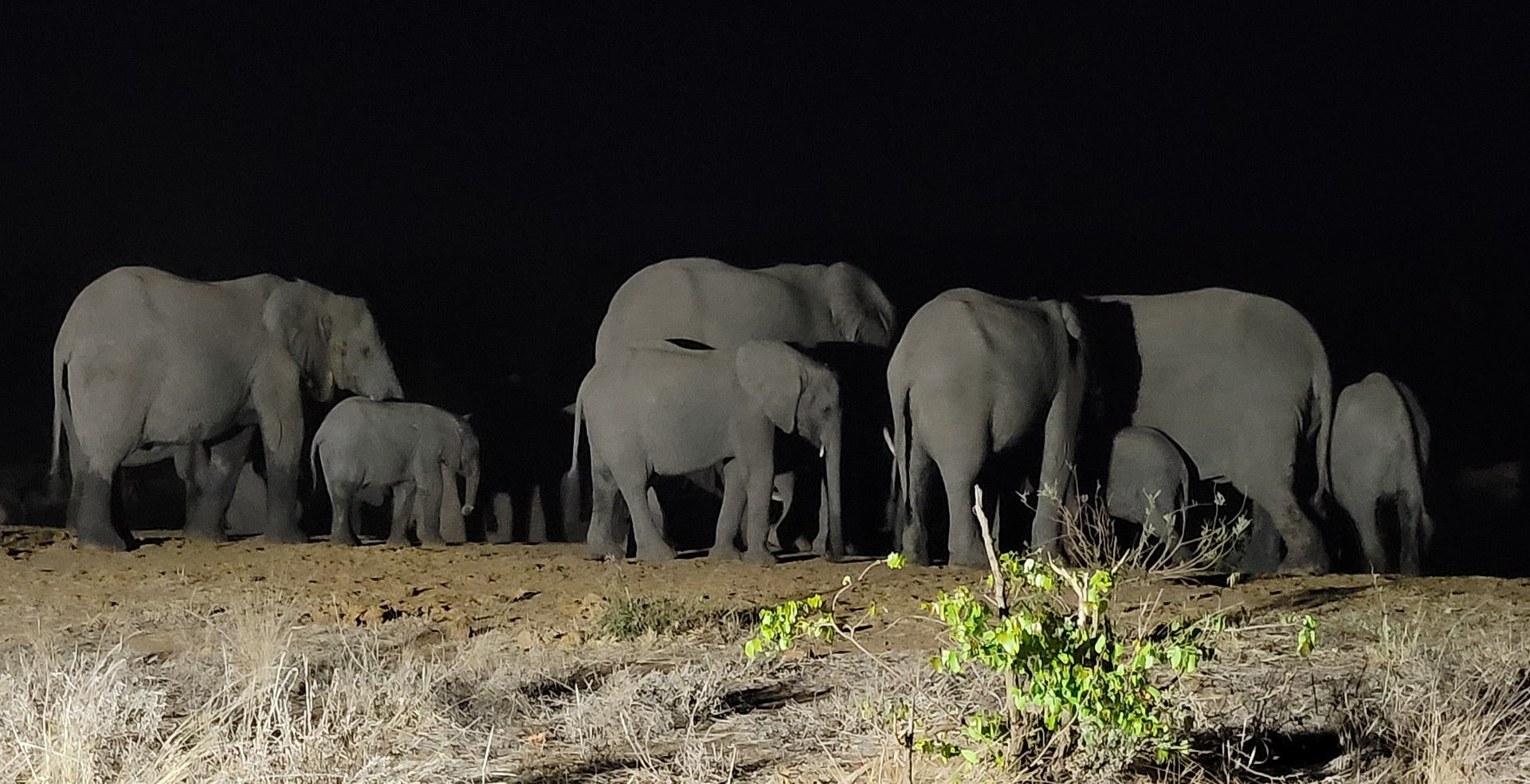
At night the waterhole always had herds of Elephants – a ghostly bunch creeping silently in and out. Their massive size emphasized by the moonless night.
Too close for comfortSally’s heady elephant at the waterholeWheere is my body?Move on – my turn to have some fresh water.
At night we heard the calls of Nightjars, Square-tailed and Freckled as well as the trumpeting of the elephants around the waterhole.
In the afternoons it was very hot so we ended up in the green waters of the swimming pool to cool off.
On one evening in the hide we watched as Buffalo arrived to drink (later they retreated when the Ellies arrived). Anyway as we sat there in the hide we watched an unusual sight of a Buffalo lying with its back in the water. It was straining to give birth. Eventually the calf popped out in its sack into the water and the Buffalo walked away. We assume the Buffalo knew it was a still birth.
We circled the Mahoney loop and went out to Klopperfontein. After the first couple of early hours in the mornings the birds became quiet and scarce because of the heat.
It was unusual to see two impalas at the top of a well bushy and tall ant hill.
Impalas atop a tall ant hill.
And then we headed to Shingwedzi.
Shingwedzi.
18th, 19th and 20th November2021
Shingwedzi campsite was far from full so we had a lot of choice as to where we camped and because we had booked a fence line campsite that is where we headed. The heat had followed us! But where was the shade? Eventually we made a decision which we regretted later.
Our Campsites on the fence.
Empty campsite and empty river.
Empty CampEmpty River
During our time in the area we explored the Red Rocks Loops, drove up to Babalala picnic site on the S56 and went down river along the S50 as far as Nyawutsi Hide. Each of these routes have had their attractions in the past – weather dependent. November 2021 the heat was almost exhausting so whenever possible we resuscitated in the swimming pool.
On our way down to the Nyawutsi hide following the river there were patches of water in the river. The hide is situated in a tropical setting.
Gnarly TreePatches of water like thisView from the hideView from the hide
Here are some of the birds we photoed along these routes.
A very colourful female Bennett’s Woodpecker gave us a show of her beauty
Female Bennett’s Woodpecker
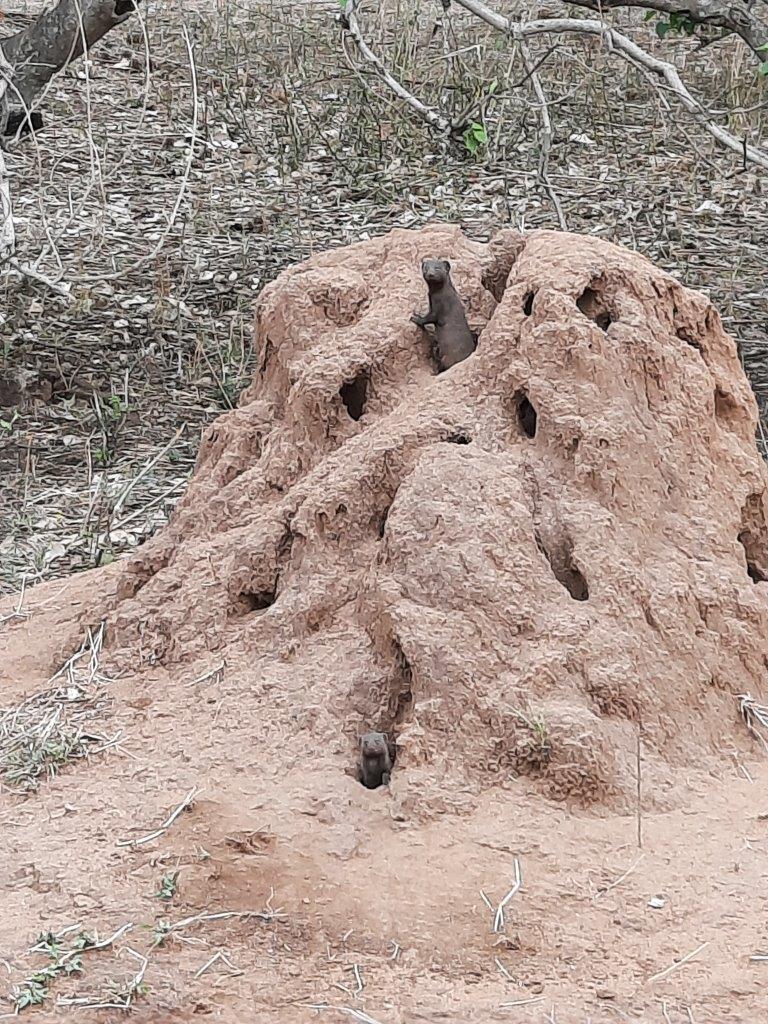
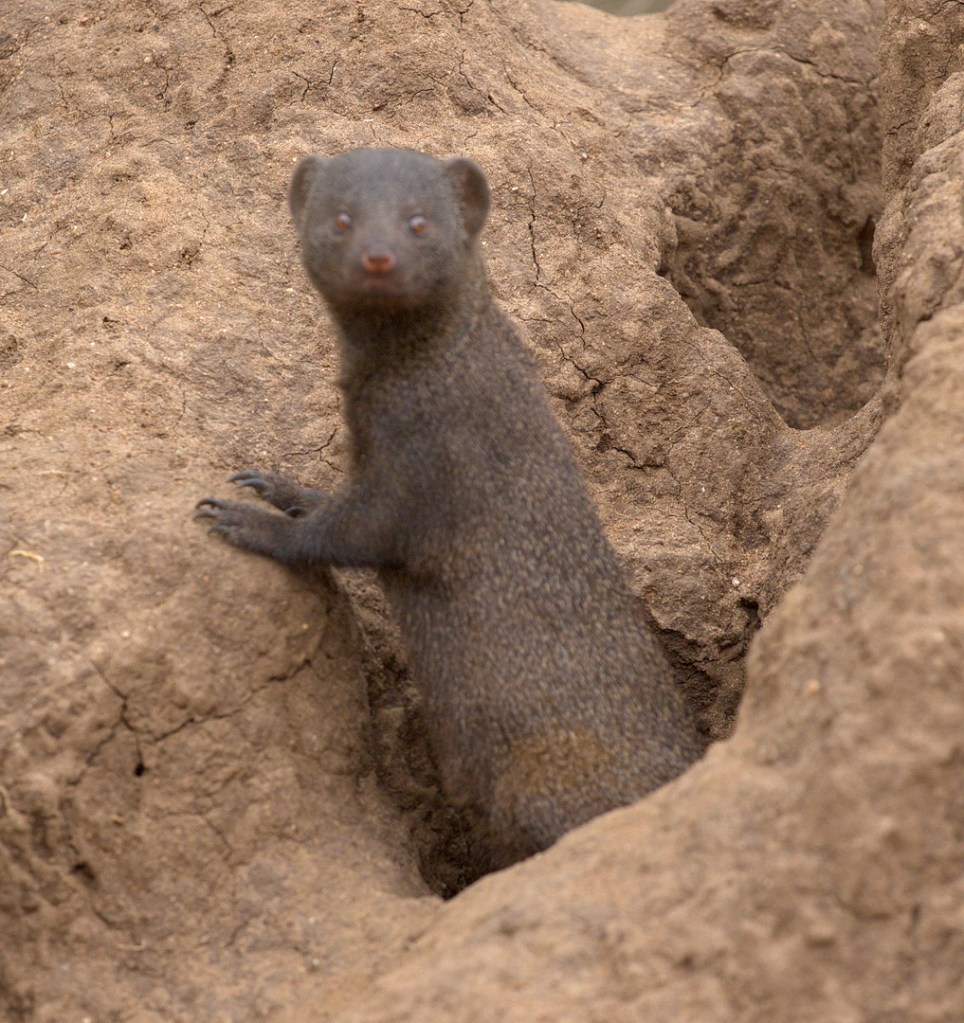
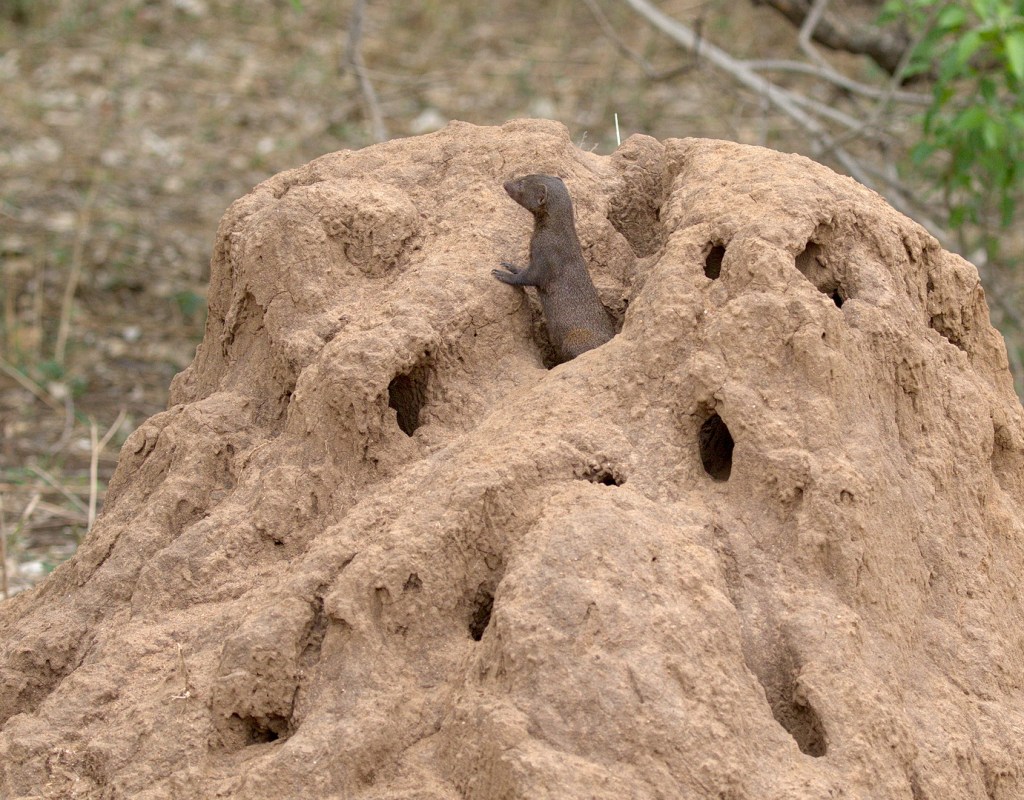
A Dwarf Mongoose popped out of an ant hill and gave us the stare.
Dwarf Mongoose
Then there were the Lions resting in the long grass as they do most of the day.
Lazy Lions
A few animals too.
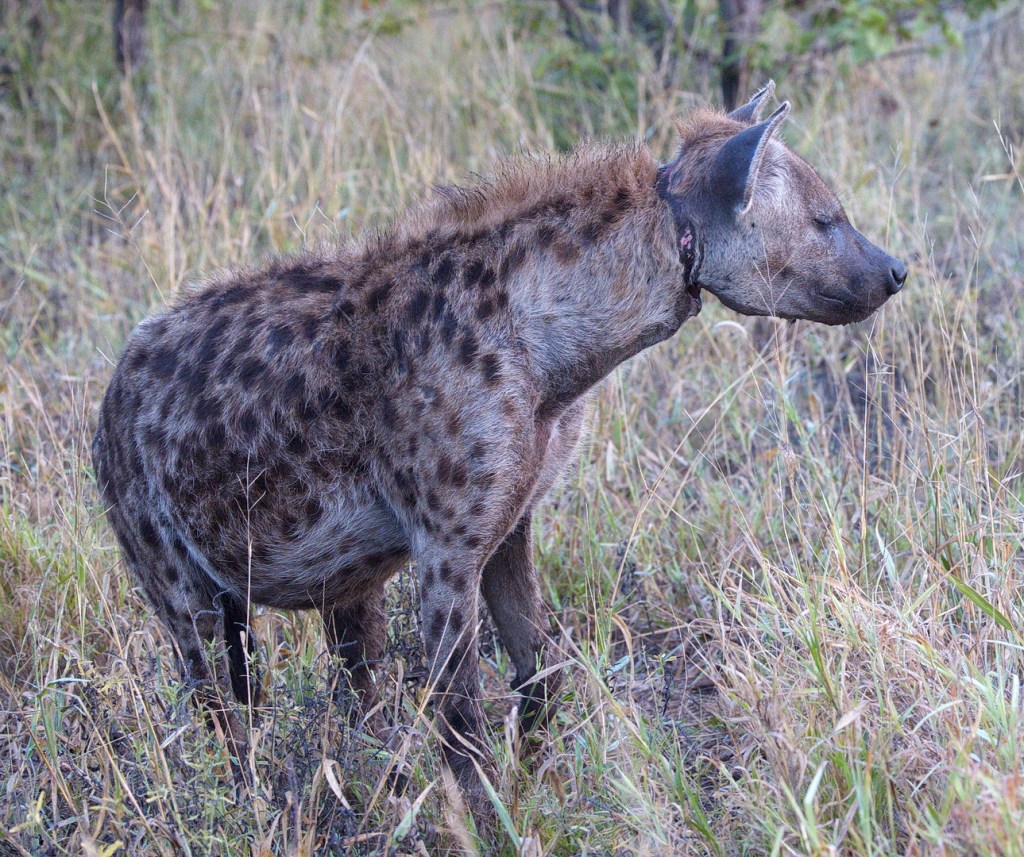
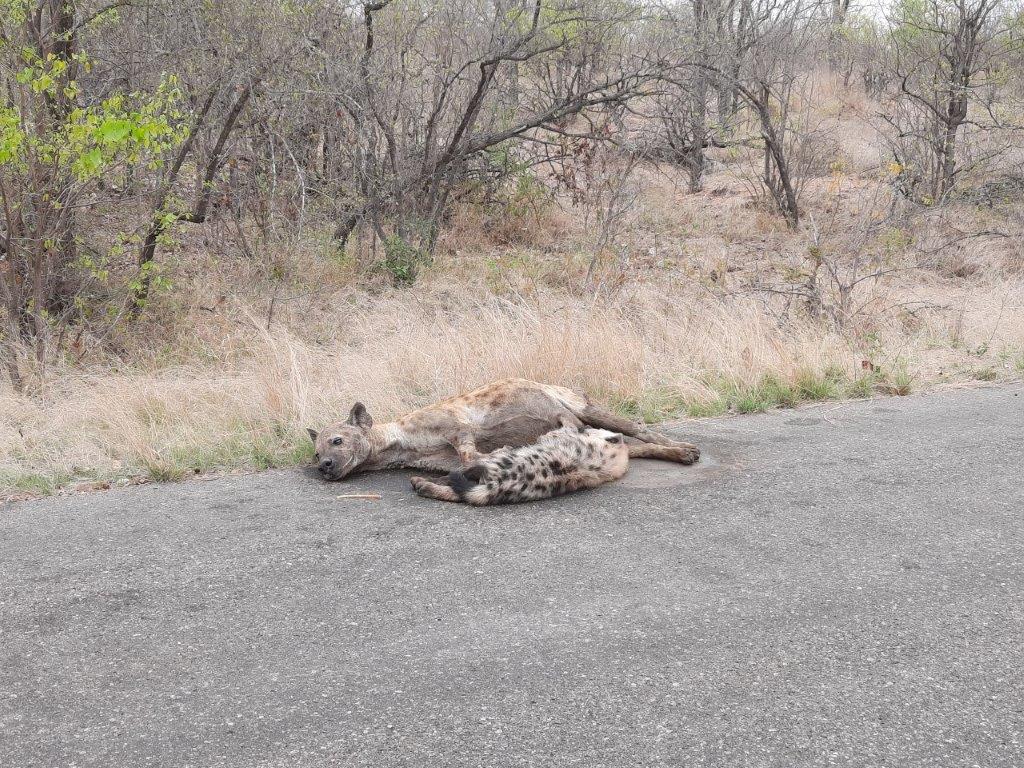
Impala and youngGiraffe preparing to fightGiraffe fightingSpotted Hyena which had just scared away the sighting of the day
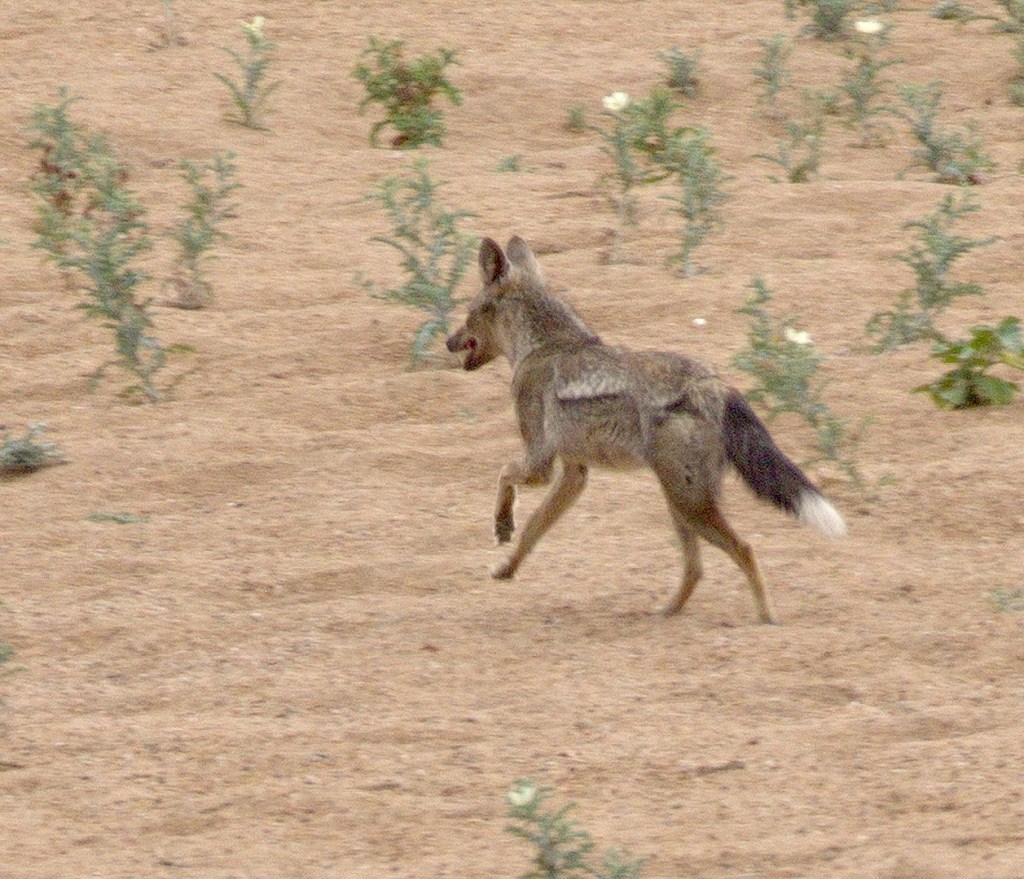
The Spotted Hyena had chased away a Jackal in the river. Fortunately I was able to get a few photos as it ran away from us down the river. The photos confirmed our suspicions that this was no ordinary Jackal.
Side-striped Jackal
Eventually the heat broke and we had a storm. Not any storm but a drenching. Not just a drenching but a nightmare driving into it on slippery road surfaces. Sally and I took a mid afternoon drive along the S50 and on the way we noticed dark clouds off to the side of us and we thought moving away. We were wrong. It came straight for us as we decided to return to camp. Heavy rain. Full on straight towards us.
Water logged ground in no time.
Pelting Rain
By the time we got back to camp the rain had stopped. Alas our campsite was under water – well a couple of inches – and it was not draining away. Trench digging was the order of the moment up hill to the fence. The further I went the deeper it got. It needed a lot of help to drain away. So out came the broom, pushing the water into the trench. As quickly as the water reached the trench so half of it returned. Good exercise and a few necessary kilos lost.
Bye bye Shingwedzi
That was our time in Shingwedzi. Now to Balule as T&D went to Letaba, 4 nights in each.
Balule
21st, 22nd, 23rd November 2021
All four of us left together. Tasha and Dick in the car ahead heading for Letaba and we to Balule. We had not gone too far when we saw Lions charge Tasha’s car – her side. Later Tasha told us she had a huge fright as it felt that they would come in the window. We all screeched to a halt. Four lionesses ran across the road followed closely in their footsteps by four cubs. Quite a sight for us and relief for my sister.
Then 10 minutes later we came across an elephant way ahead of us drinking water from the side of the road. He was thirsty. We wanted to keep going. However when you are towing it is nigh impossible to reverse at any speed if the ellie wants to be obstreperous- we waited for about 15 minutes before he went off into the bush.
After a quick cup of tea we left Tasha and Dick in Letaba. On we went. One annoying thing with checking in to the Balule camp is that you do so at Olifants camp. In this instance we became pleased that we had to. We had turned off the main road heading on the tar to Olifants. We had not gone far when a Leopard popped out of the undergrowth ahead of us, walked down the road before re-entering the bush. Excitement number one.
We checked in. And took the opportunity to have a look at the view of the surrounding panorama from the deck – with the river some way down and directly below us.
Olifants DeckOlifants View
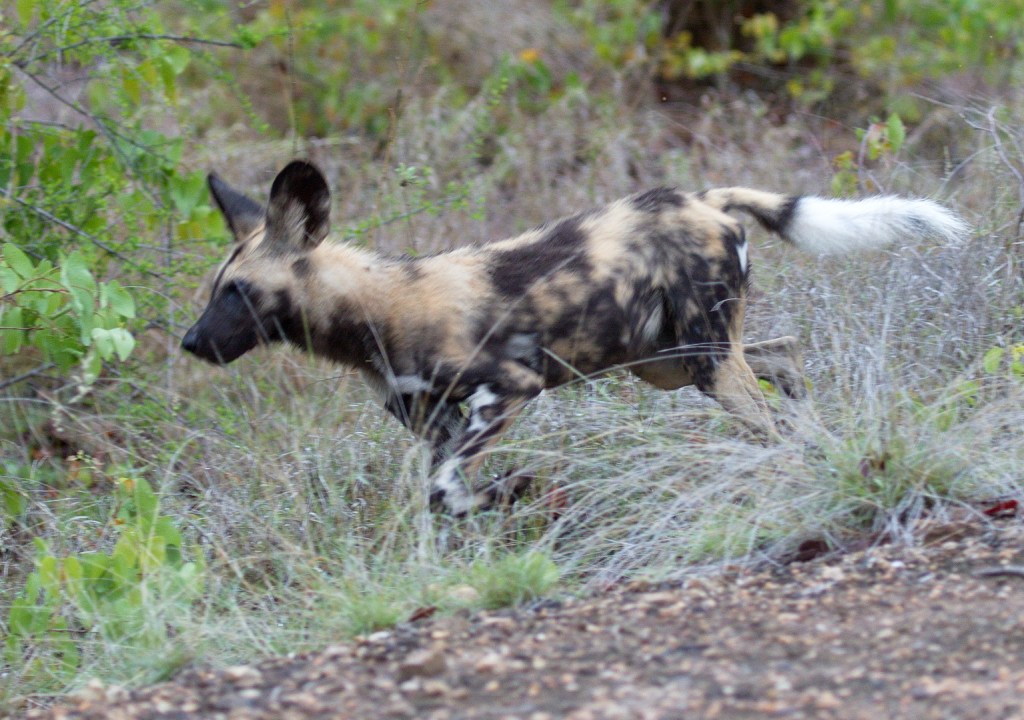
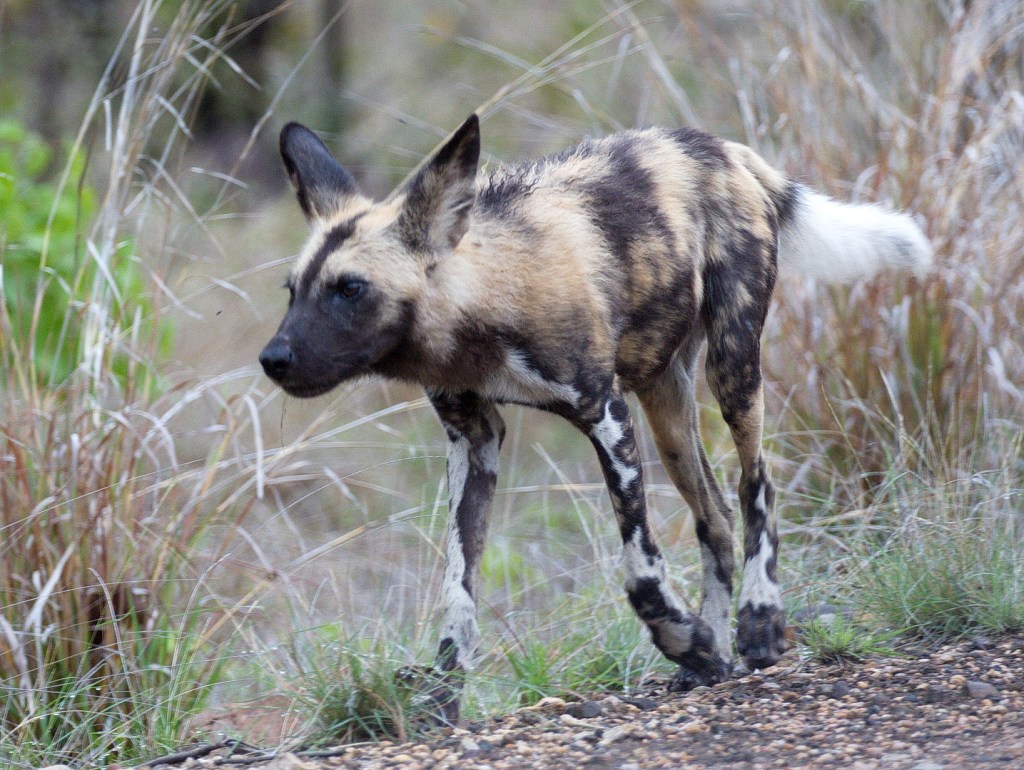
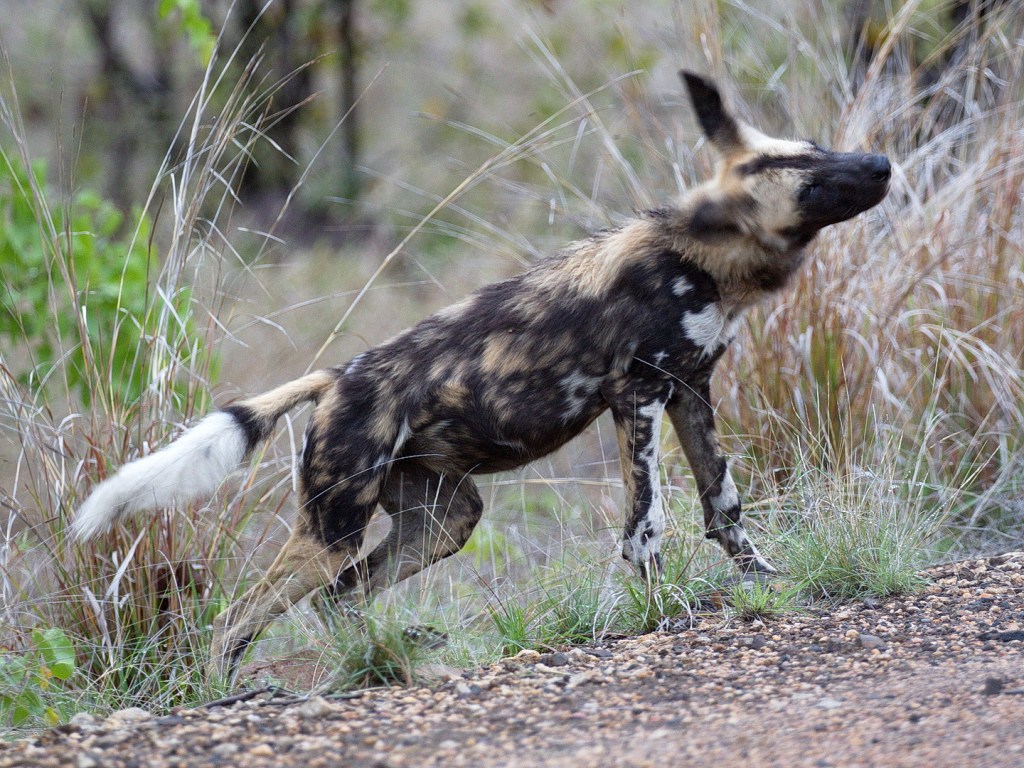
Now we trundled our way to Balule. After about a couple of kms our second excitement – a pair of white-tailed Wild Dogs climbed up onto the road and strolled towards us.
Wild Dogs.
With rain threatening we hurriedly set up camp.
Finding shade. Looking towards the fence line.Among the trees a cooking and washup lapa. To the ablutions and the entrance
Most days it rained. Sometimes quite hard for short periods with wind that made it uncomfortable for cooking – up came the awning sides.
Sides up windy sideSoaking wet ground. Water collecting on the roof.Sodden ground
Despite the weather we rose early and out we went. On one occasion a very long trip to Satara via the Timbavati loop road as far as Ratel Pan and Timbavati Picnic site then across to the H1-4 on the S147. Down to Satara and along the S100 before returning. A long day out but not without its incidents.
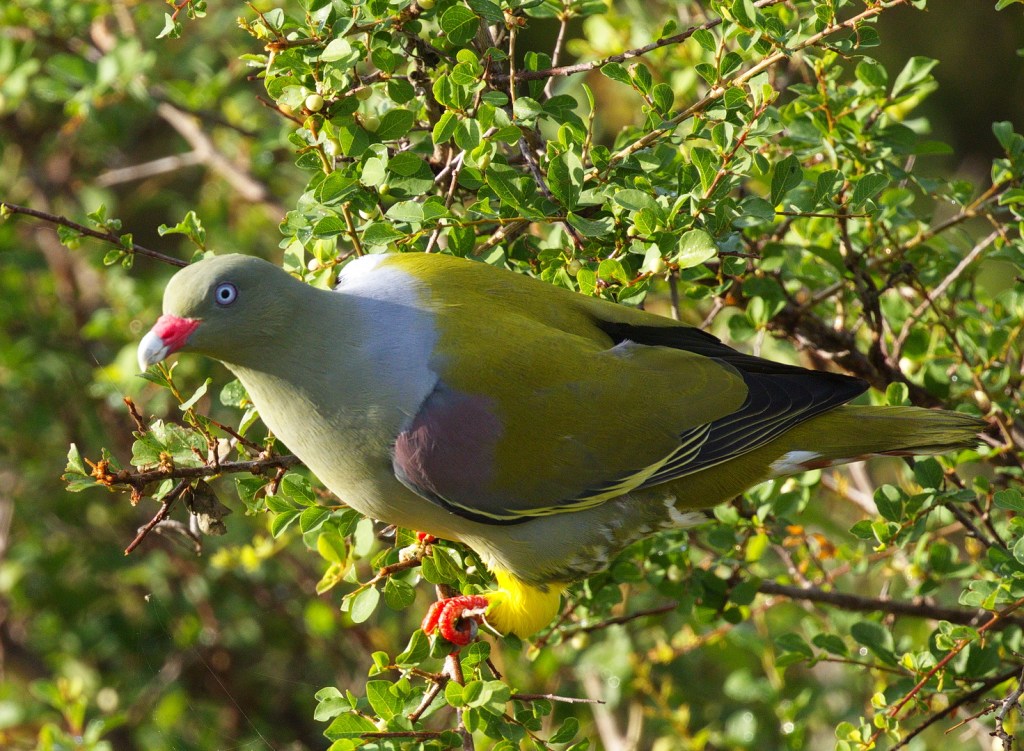
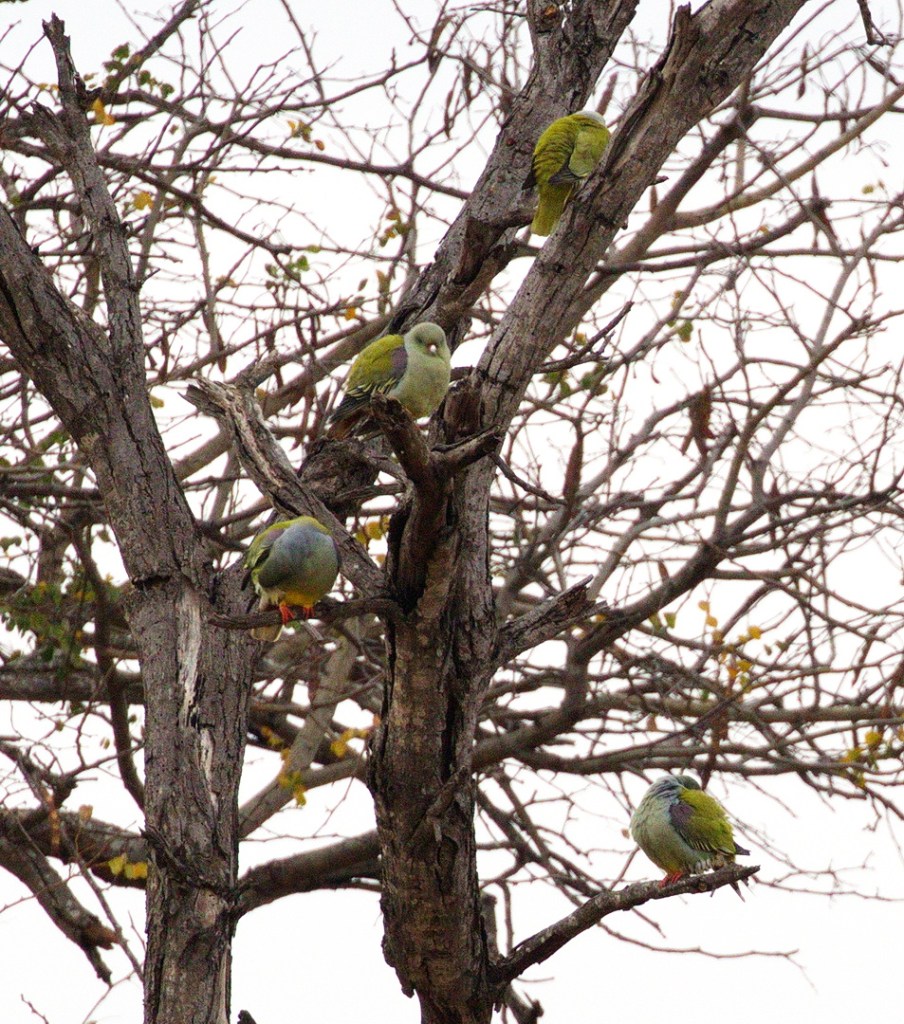
Taking the S99 and S97 to the Timbavati Loop and despite the drizzle and promising looking rain clouds we passed several good looking birds of which the African Green Pigeon was outstandingly colourful.
African Green Pigeon
At one point along the S99 there is an unusual fever tree growing sideways across a stream with branches shooting up vertically.
Sideways growing fever treeSideways growing fever tree
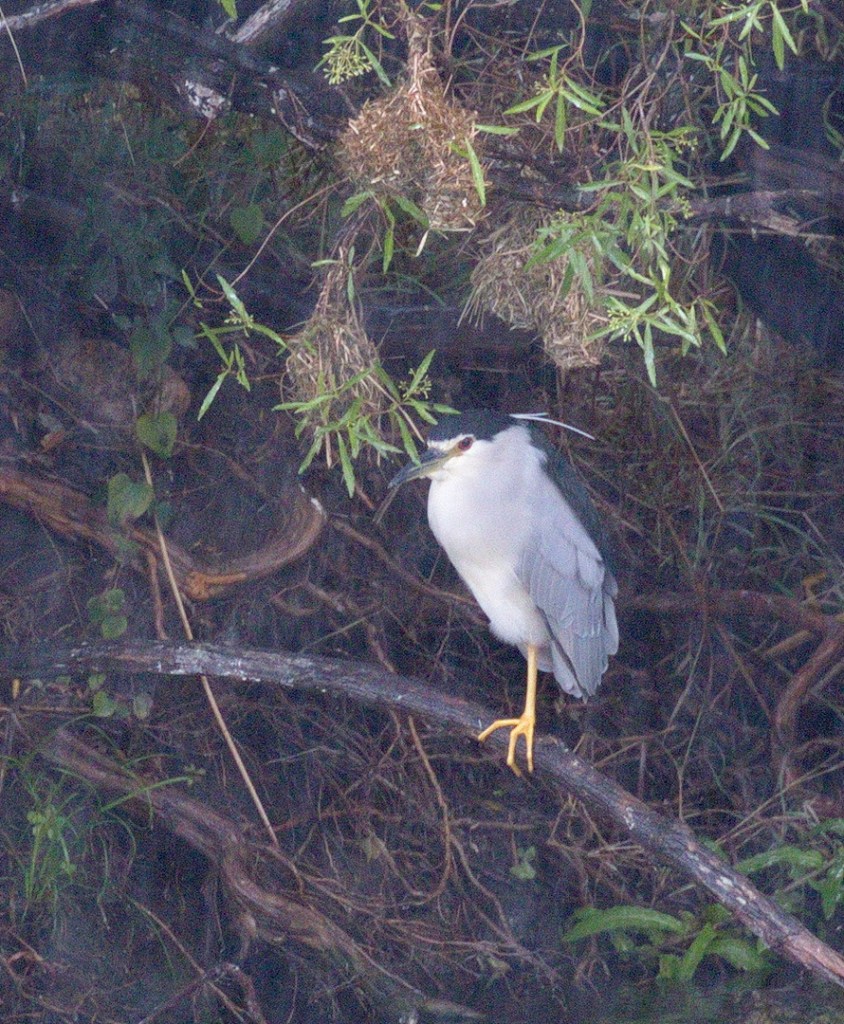
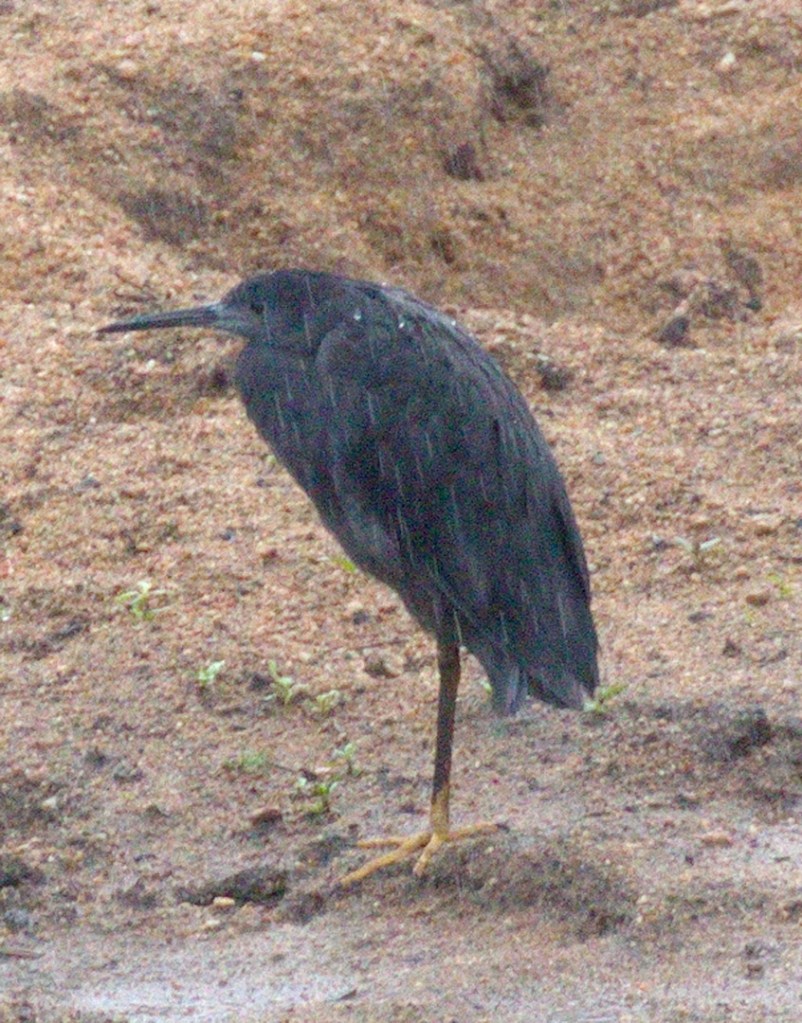
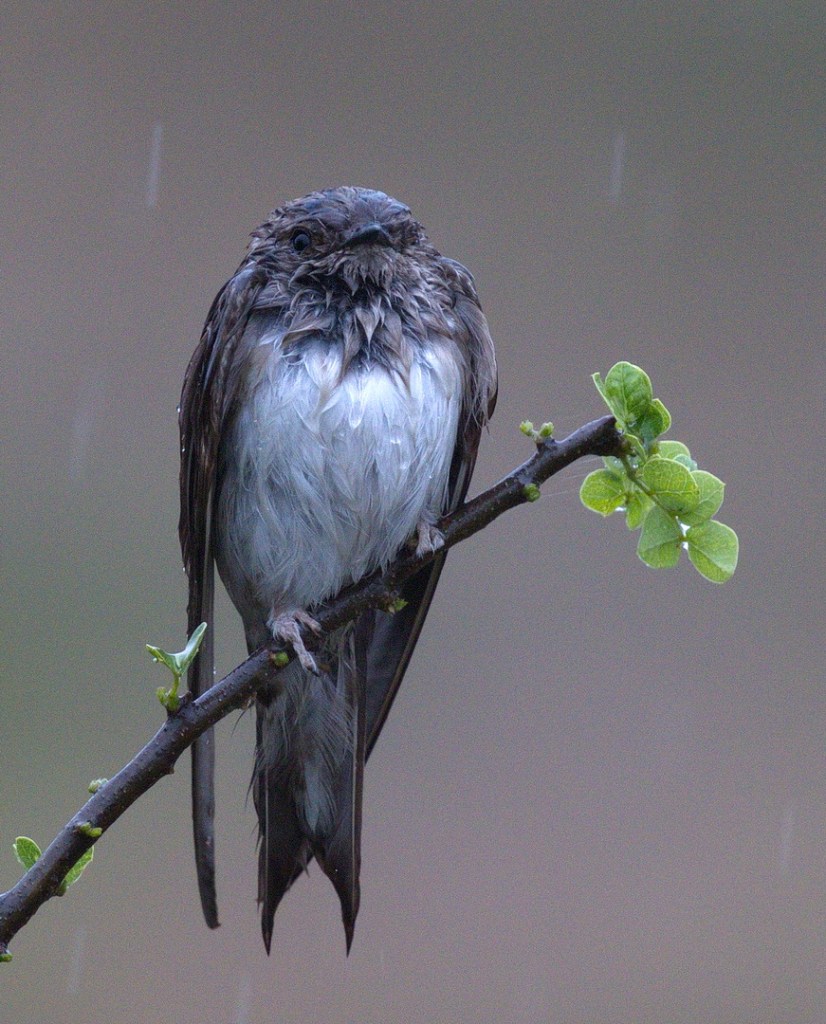
Most of the drive to Ratel Pan was in constant drizzle. But that did not put off the birds – we had lovely sightings of many wet species and some totally drenched – the Brown-throated Martin in particular and a Barn Swallow not quite so. Others seen include: a Black Heron fishing, Greater Painted Snipes, Black-crowned Night-Heron and even a Steppe Eagle.
Steppe Eagle
Barn SwallowBarn SwallowGreater Painted Snipe femaleBlack-crowned Night-HeronSoaking wet Rock KestrelBlack Heron hunched up in the rainBlack Heron fishing
The Brown-throated Martin deserves a collage of its own.
As the day progressed the weather improved. By the time we got to Ratel Pan it had stopped drizzling but it remained cloudy. The Pan had water for a change. There were a number of waterbirds present, the odd crocodile and leguaan.
Openbill and African SpoonbillAfrican SpoonbillYellow-billed StorkThree-banded PloverCrocodile with Yellow-billed Ducks and an African SpoonbillLeguaanKnob-billed Ducks flew over us and landed way way away.A cautious African Spoonbill passing a crocodileThree Bills: Yellow-billed Stork, African Spoonbill and an Openbill
There were a some slippery waterlogged spots on the S125 gravel road to the H1-4. However when we reached the main road it was chained off. We were in a pickled if the other exits to main roads had been chained off too. What to do? In the end, with time constraints, we followed the car in front and drove round the barrier.
Here are some of the other photos taken in the area.
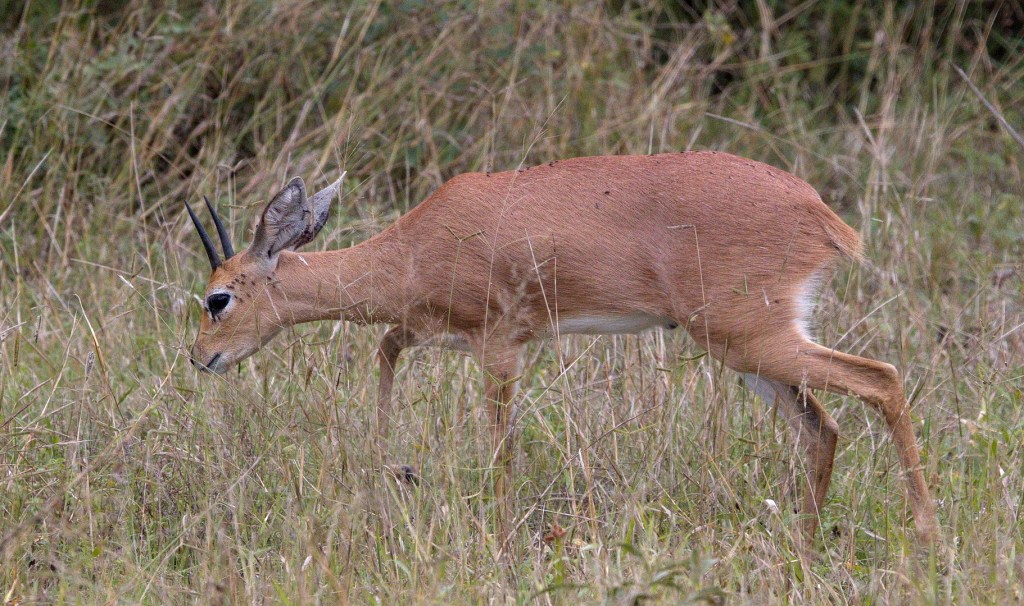
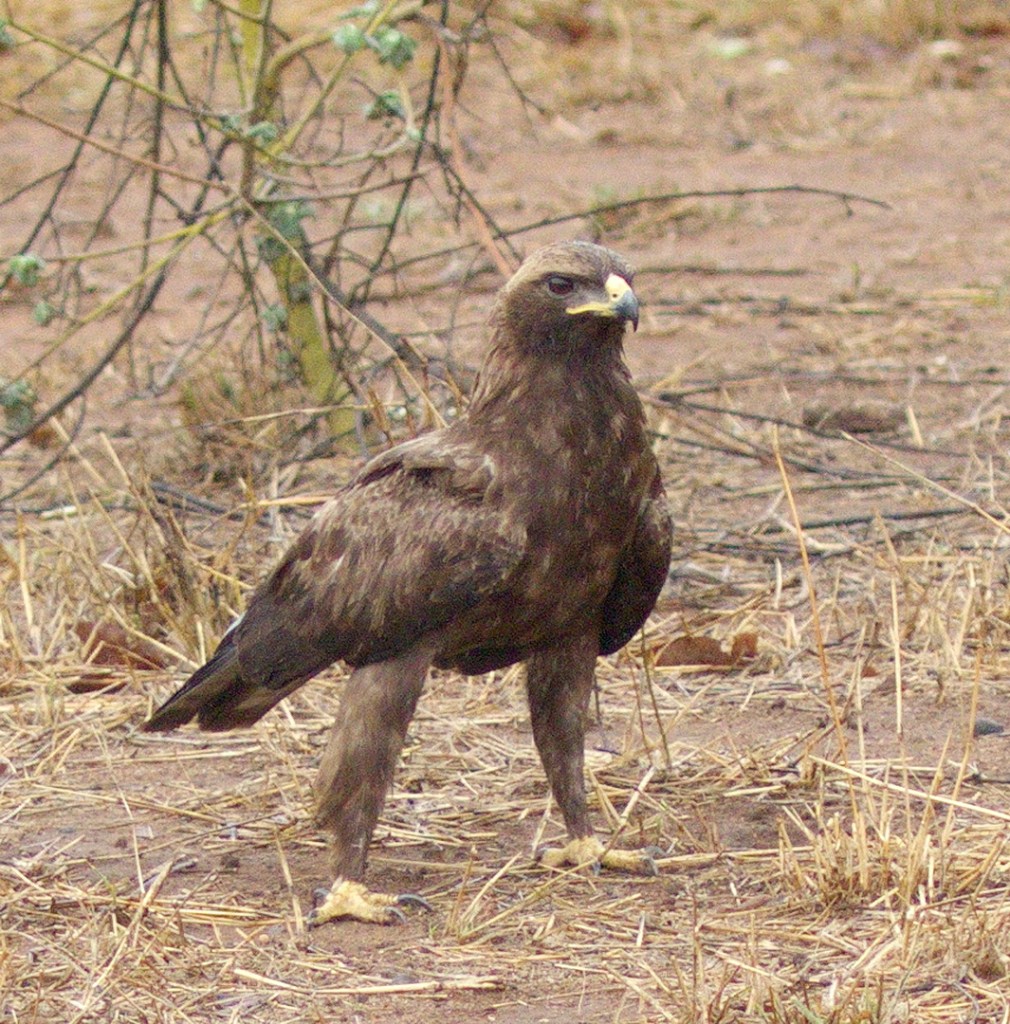
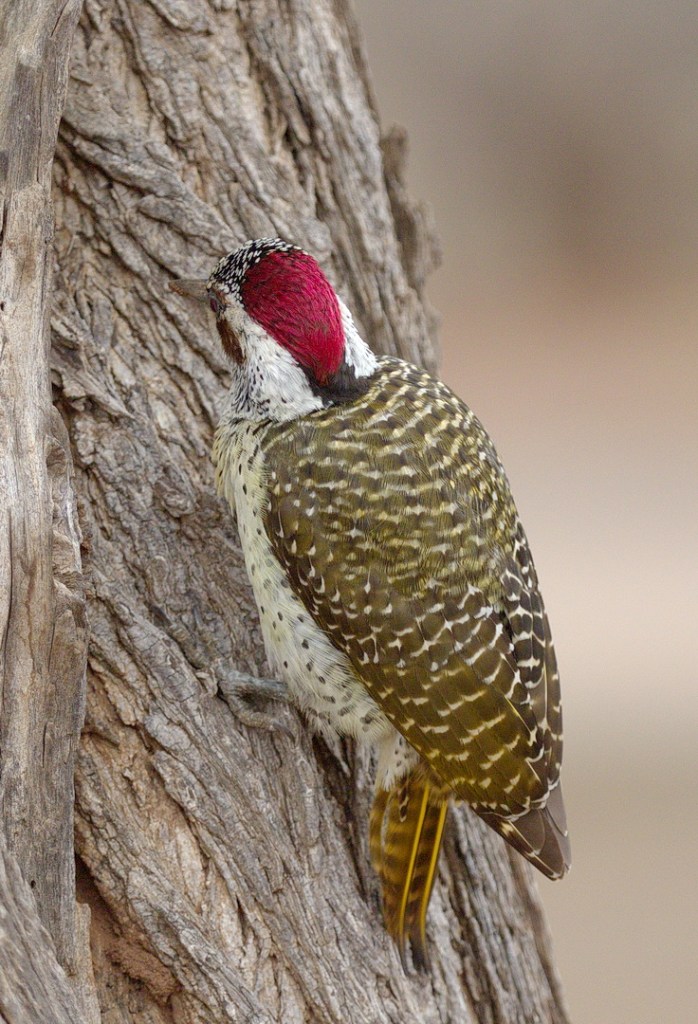
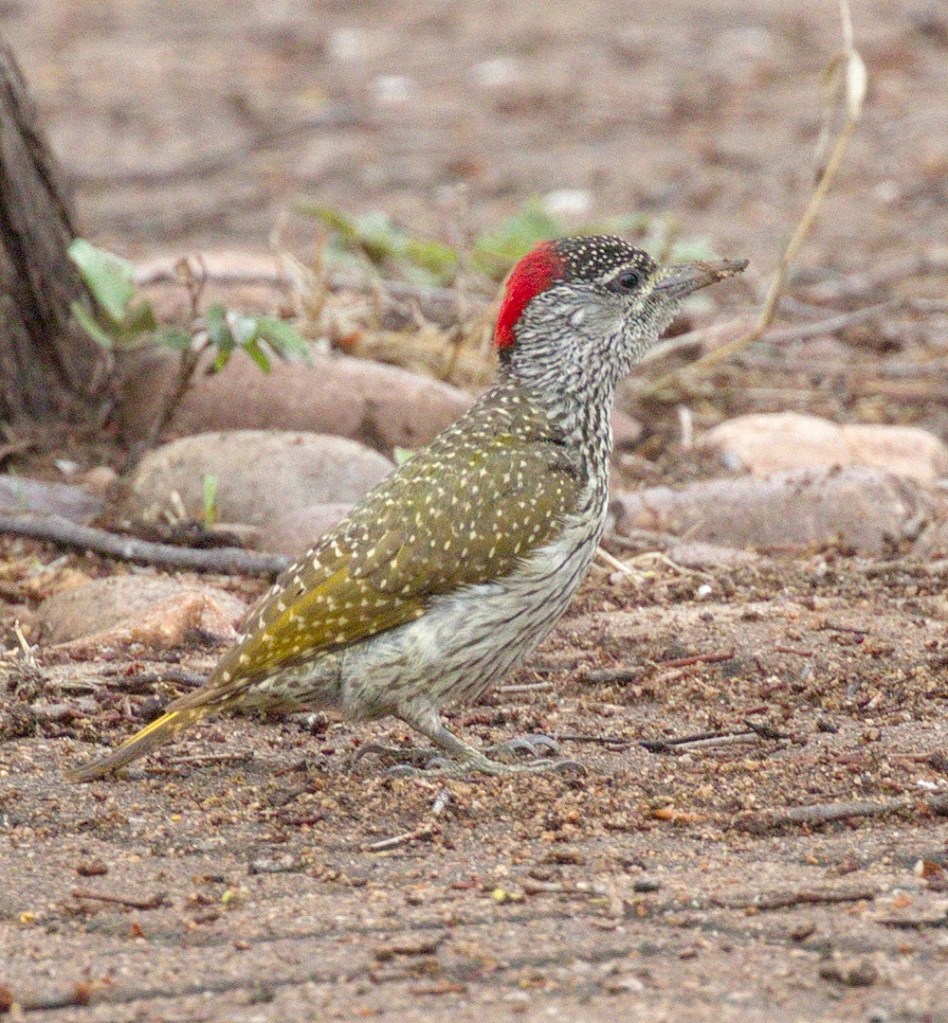
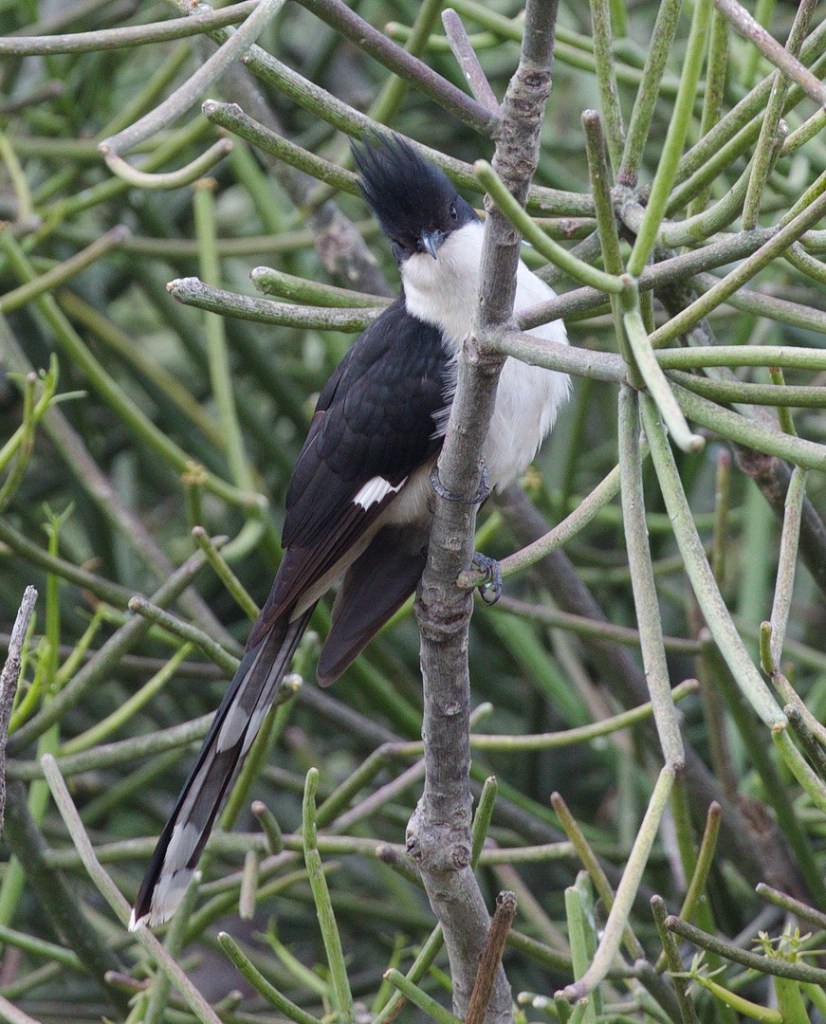
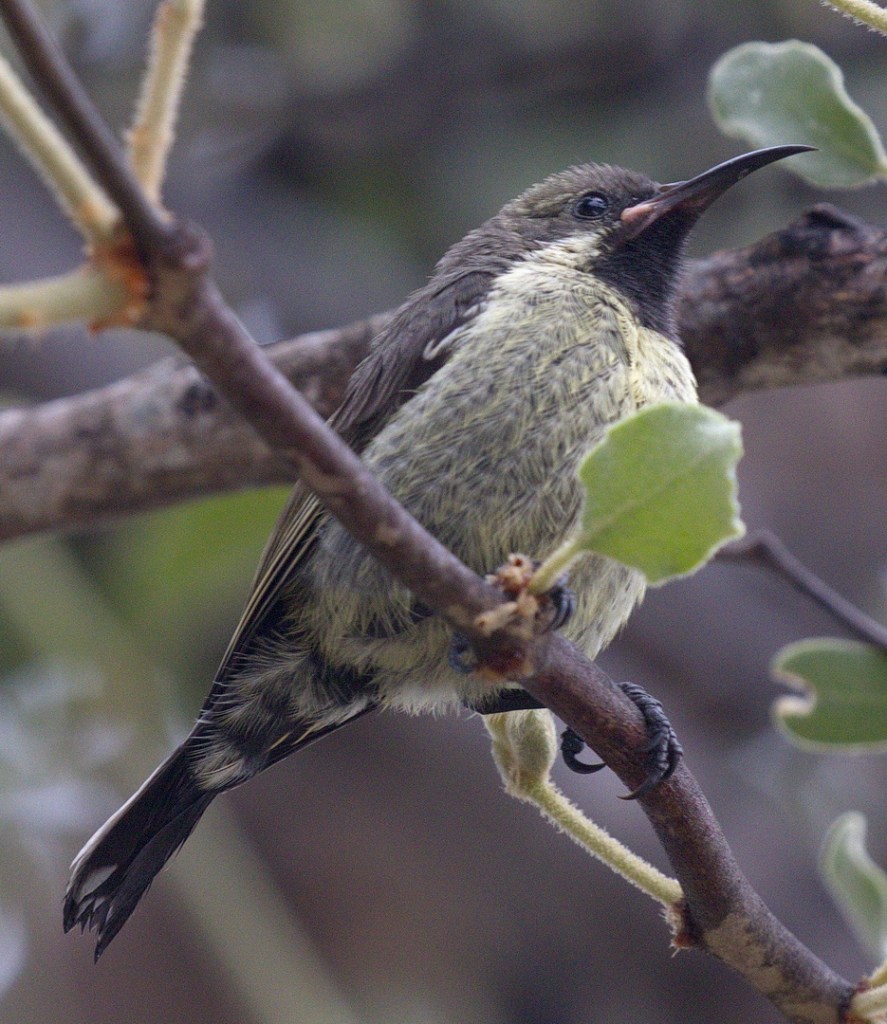
African Hawk-EagleAfrican Hawk-EagleGolden-tailed WoodpeckerJacobin CuckooJacobin CuckooMarico Sunbird juvenilePale phase Wahlberg’s EaglePale phase Wahlberg’s EagleRed-billed QueleaSteenbokStierling’s Wren-WarblerSteppe EagleRather damp Steppe EagleTawny Eagle with an unhappy Fork-tailed Drongo going for its head
We saw a number of Lilac-breasted Rollers courting. Here is one offering its sweetheart a delicious morsel.
WaitingHere I amThis is for youTeasingNow she is happy.
As you will see the water level at the low level bridge beside Balule was quite full. Baboons use it while the ellies prefer walking through the river.
Baboons crossingLittle oneMum and infant
Then we moved on to Skukuza to meet up with my sister.
Number 1 Bird of the trip. A South African rarity.
Sally and I were planning a trip to the Caprivi in November when my sister, Natasha and her husband Dick took advantage of the half price offer for the full November month in the Kruger. As a result we changed our minds and decided to join them from November 7th onwards.
Malelane 7thNovember 2021
We began with an overnight stop at Malelane – a good resting spot after a nine hour drive from Howick.
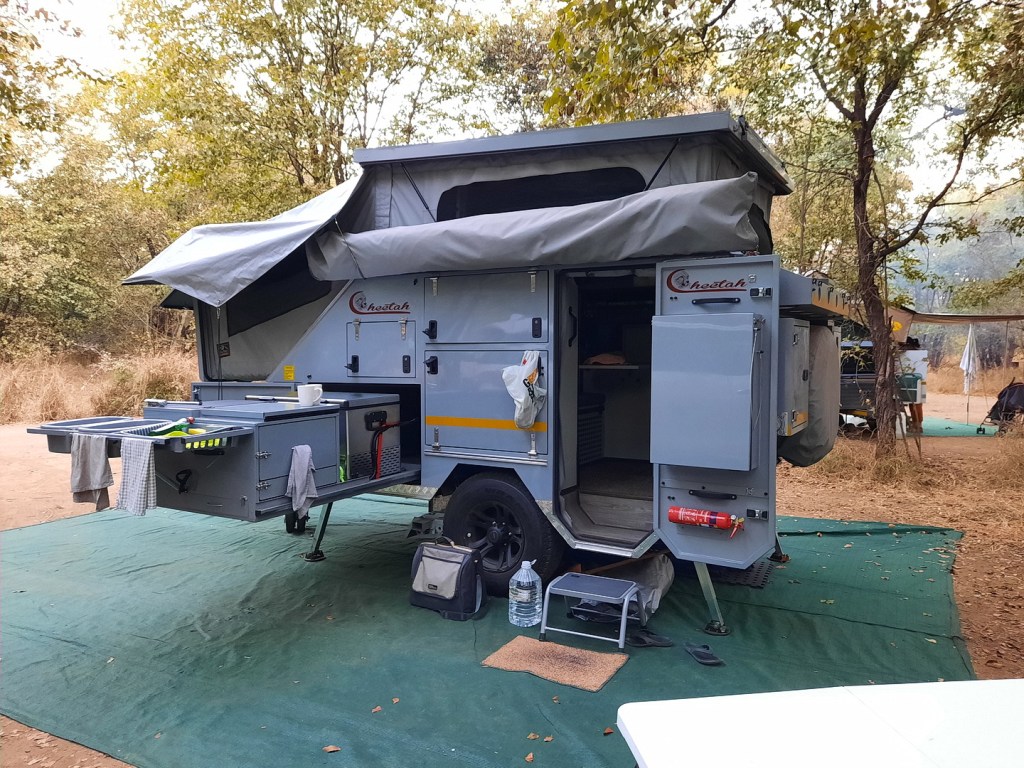
Afrispoor Cheetah and a cold beer.Enjoying Malelane entrance scenery.
We enjoyed a short drive around the area later in the day. Even managed to see a fully maned Lion.
Sleeping with his friend nearby.
A young Hyena entertained us and a Rhino had lost its horn. There were birds too posing for a shoot out.
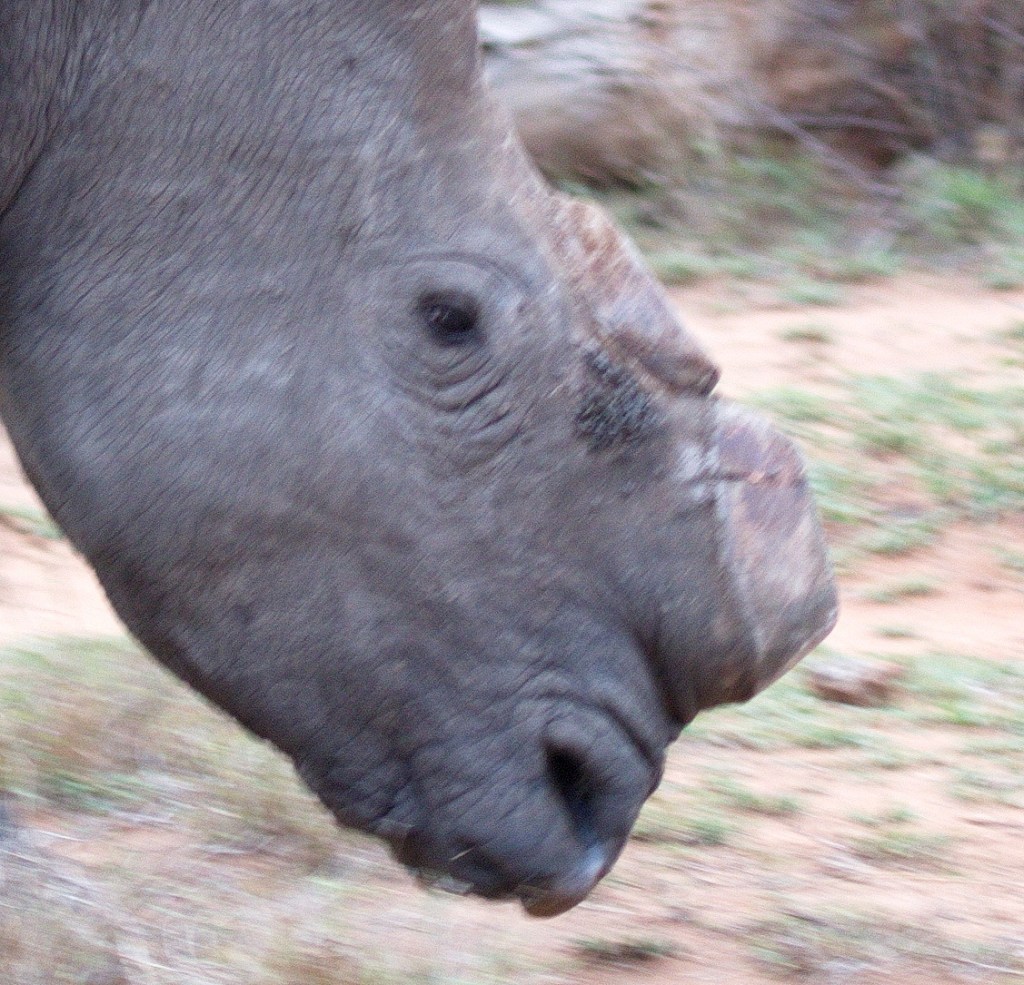
Crowned LapwingEuropean Bee-eaterPlayful Hyena Saddle-billed StorkSwainson’s SpurfowlShort-nosed White RhinoBroad-billed RollerBrown Snake-EagleWahlberg’s EagleWood SandpiperAfrican Mourning Collared Dove
As you may have noticed from the picture above, we had not put up our awning. We were only there for one night. So of course it rained that night. Half expecting this we put everything outside that we did not want to get wet into the boot of the car.
As I lay in bed the dribbles of rain started and my mind wandered to what else I had forgotten to do. Ah yes, I need to put the rain cover over the canvas roof over our bed. Up I got and managed to do that without getting too wet. Back to bed.
Almost asleep when it occurred to me that I should push the fridge and stove inside. Up I got again and went outside with the rain a lot stronger and did what I had to do. Back to bed fell asleep the rain now pouring down.
What was that poking me on the shoulder? Now alert and Sally asked me if I had put the rain cover on the power cable where the 2 cables met. Of course I had forgotten that too. Now it was pouring down. Not bothering to get properly clad (no neighbours) I hurriedly went outside once again and simply pulled the plug out from the Cheetah. Now fully drenched and a bit shivery, had a good rub-down and dried off and went to bed. Listening to the rain, thunder and lightening beating down and wondering what else I needed to do, I eventually fell asleep.
But not before I realised I had been bitten on the back of my neck by a bug which caused an intense burning pain. (Took over a week for it to abate). I nudged Sally to say I had been bitten. “Oh”, she said and went back to sleep. The next morning she realised how bad it was.
Satara8th to 10thNovember 2021
The following morning we went to Satara to meet up with Natasha and Dick.
Natasha and Dick
We spent 2 nights in Satara as that was all we were able to book at the time.
Our Satara Camp site with some shade.
Natasha and Dick had a camp site along the fence line so we dined with them each night, watching the Hyena patrolling just outside the fence and an African Wildcat patrolling passed us inside the fence as we enjoyed dinner and a bottle of wine.
During the day we went our separate ways to explore what was out there.
The Sweni bird hide is one of our favourite places to visit around Satara. Again it did not disappoint us. There were a number of interesting birds to see. The hide outlook:
Sweni Hide outlookSweni hide looking down to the road bridge
At the far end of the first photo above, a herd of elephants came down for a drink. Some young ones among them. As usual they were boisterous and enjoying quenching their thirst. Trouble was afoot. We noticed that a number of the pools hippos were unhappy with their presence and surprisingly advanced to within less than 2 metres with intent. To start with the ellies ignored them then feeling a bit nervous they moved off.
And the birds seen at the hide:
Black CrakeRed-billed OxpeckersRed-billed Oxpeckers having breakfastStriated Heron fishingStriated Heron fishingYellow-billed Stork
A Yellow-billed Stork was idly wandering about in front of the hide while an African Openbill had found a cosy spot to rest:
African Openbill posing as if it was nesting
African Openbill posing as if it was nesting and then along came trouble and usurped him of the resting place:
UsurperUsurper and Usurped.
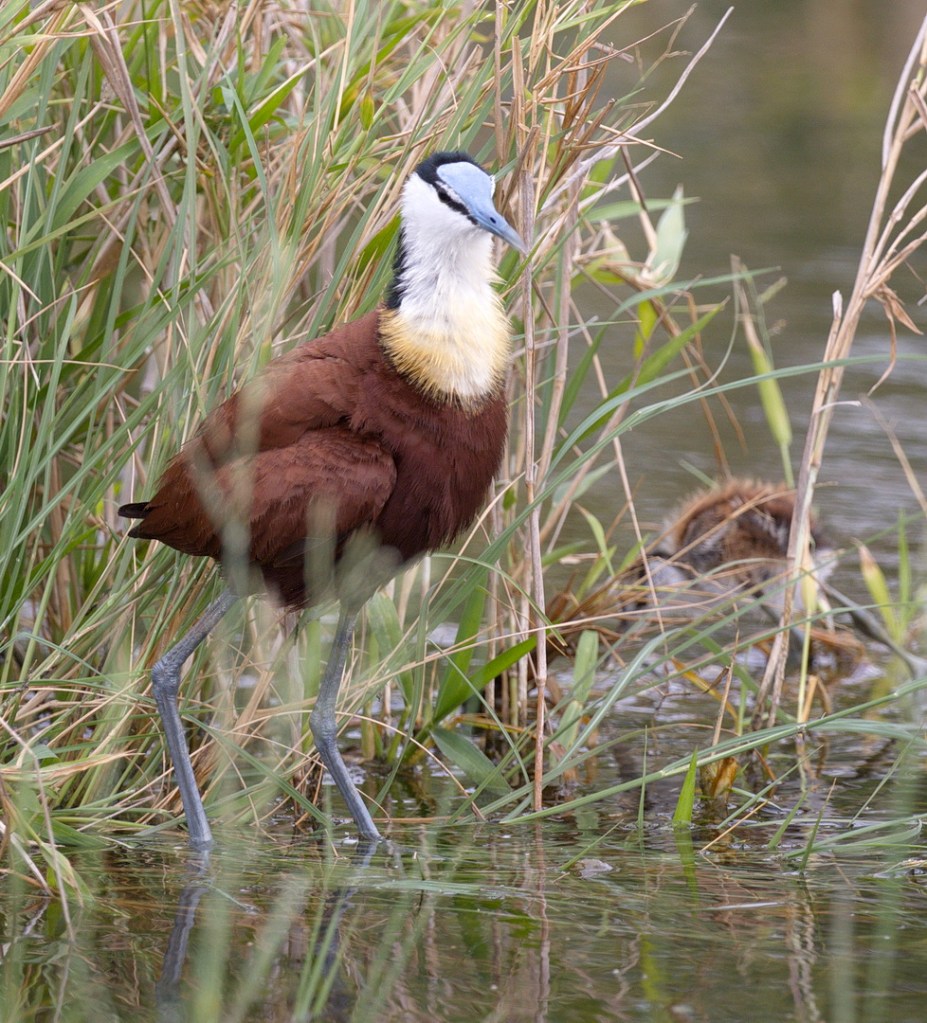
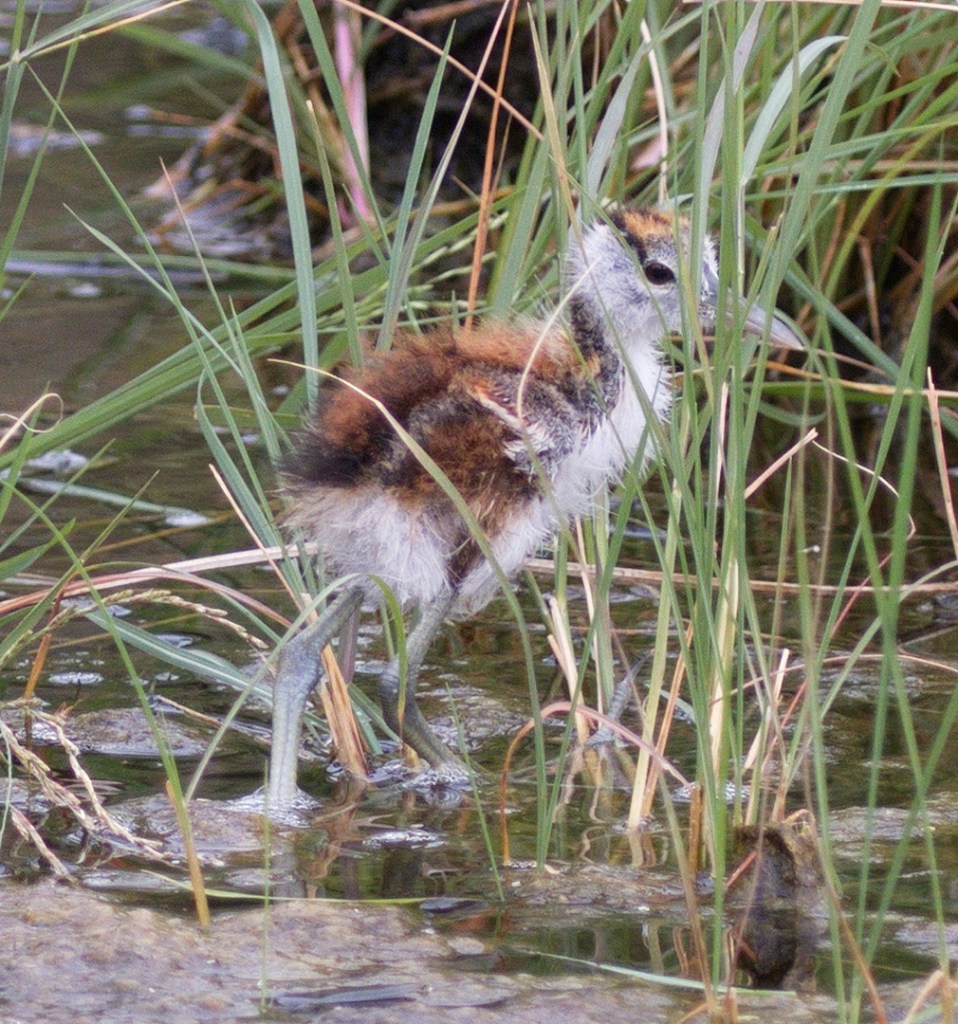
In another location we came across a male African Jacana attending its chicks.
From Satara, Sally and I left a day earlier than Dick and Tasha and headed to Tsendze for 4 nights. Dick and Tasha joined us a day later for 3 nights.
Tsendze10th to 14thNovember 2021
Tsendze is one of our favourite camps in the Kruger. It is well treed so owls are present and can be heard calling every night – Verreaux’s Eagle-Owl with its pretty pink eyelids, African Wood-Owl, African Scops Owl, African Barred Owlet and Pearl-spotted Owlet. In the morning you often wake to the sound of Southern Ground Hornbills. Magic place.
Campsite 10 next to 9 T&D’s (behind car)Path to ablutions and washup areaCampsite 10
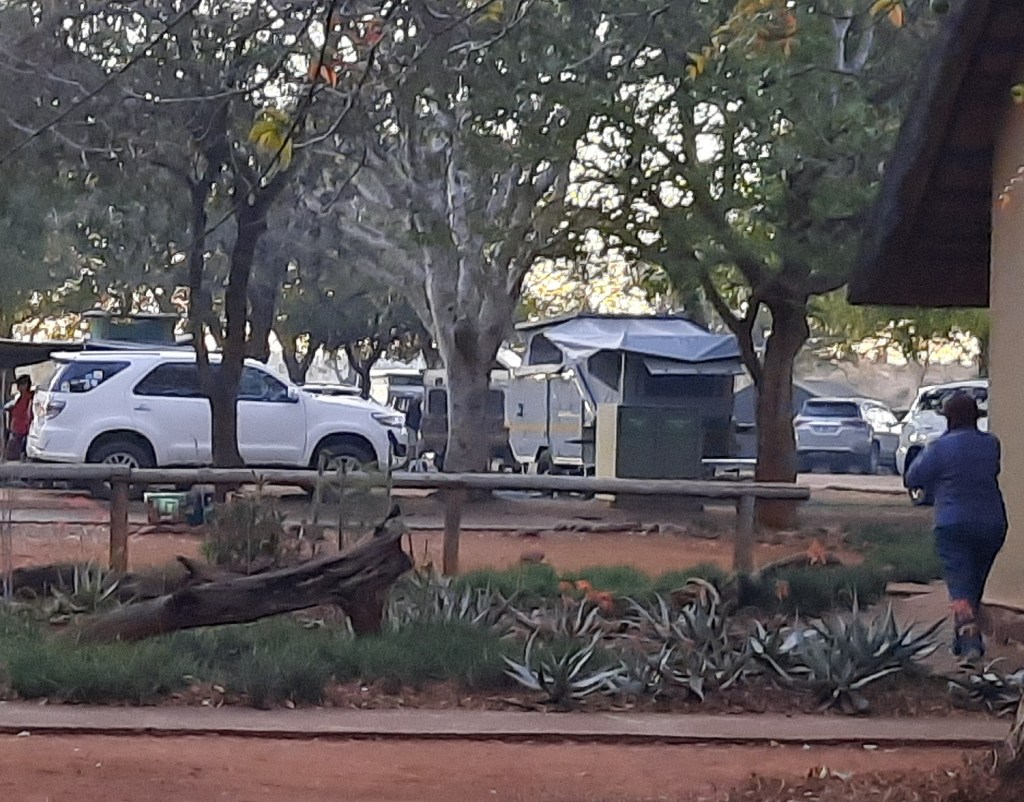
There was an interesting campervan in one of the closest sites to the gate – even had its own vehicle attached to it.
Way to Go
Mooiplaas Picnic site is right next to Tsendze and overlooks the Tsendze river. It has a big boma for shelter from both the sun and rain as well as a picnic spot overlooking the river. Like Tsendze it is also known for its owls. Unlike Tsendze camp it is not fenced.
Looking upriverLooking downriverMooiplaas Picnic site
On your way from the camp to Mopani there are a number of short loops to explore. In the past I have experienced a herd of elephant running across one of the tracks right in front of us. Sally and I have also seen a rather large and lame Civet.
Civet seen in the past.
Anyway at the end of the last loop you can turn towards a couple of hides. One overlooking Pioneer Dam and the other an overnight hide overlooking the Tsendze river. To get there, you cross a low level bridge. There always seems to be bird activity either side of the bridge. Black Crakes have always been seen there by us. Striated Herons, Hamerkop, Blacksmith Lapwings, Water Thick-knees and other waterbirds are often there too. This time I took several photos of Blacksmith Lapwing juveniles scurrying close by.
Blacksmith Lapwing chick
One of the loops we enjoy doing is to access the S49 from the H1-6 just before reaching Mopani, drive to Mooiplaas waterhole and cut across to the S50, head north following the wetlands then turn onto the S143 – Tropic of Capricorn – past the Tihongonyeni waterhole and back to the H1-6 to return back to camp.
At the Mooiplaas we always see Chestnut-backed Sparrow-Larks. This time was no execption.
Chestnut-backed Sparrow-Lark
Along the S50 it is worth popping into the viewing points overlooking the wetlands. There, Lions tend to hang around the waterholes.
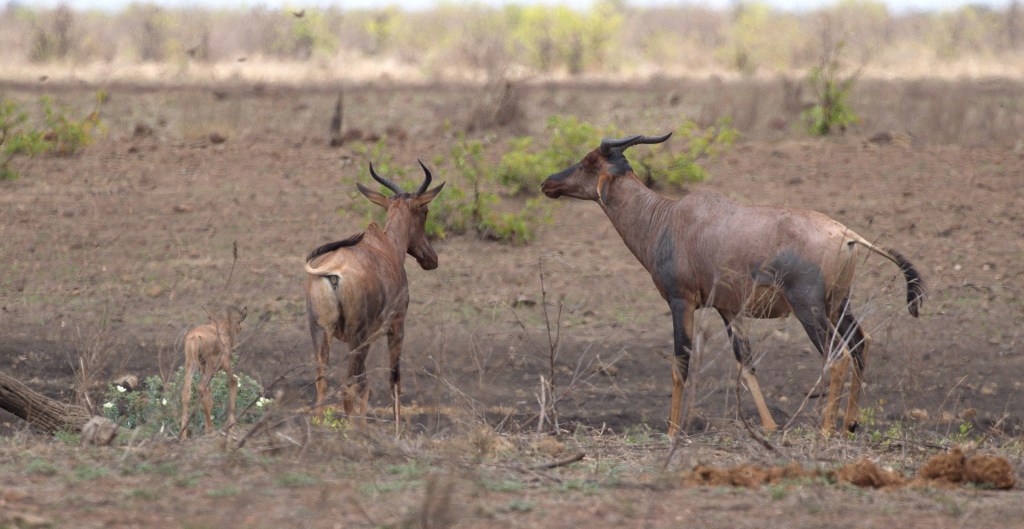
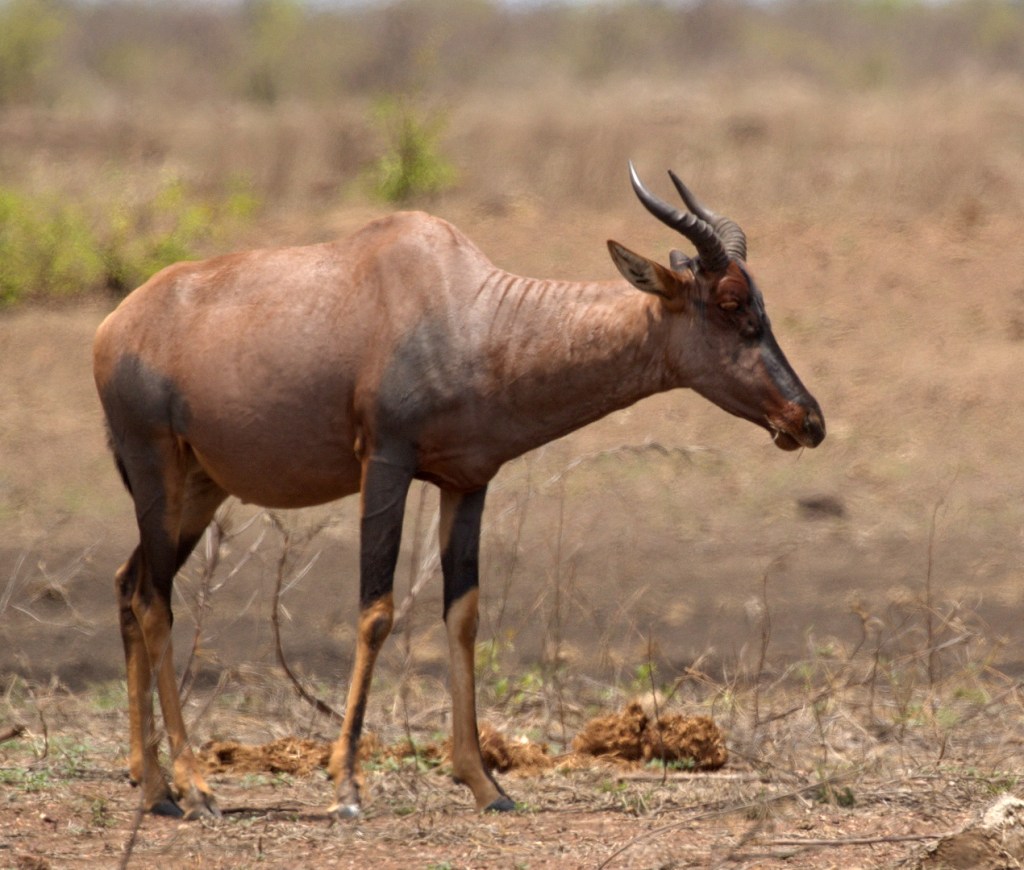
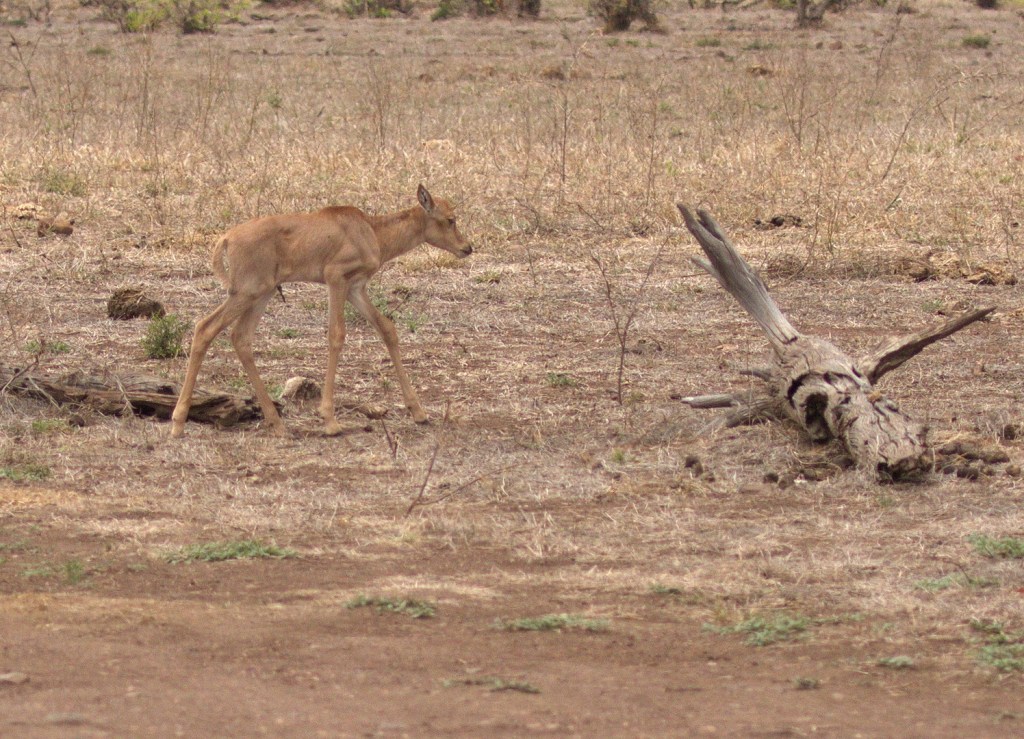
There was a surprise for us at the Tihongonyeni waterhole along the Tropic of Capricorn S143. There were several Tsessebees including a new born at the waterhole. An animal we don’t often seen in the park and usually as a loner among Red Hartebeest.
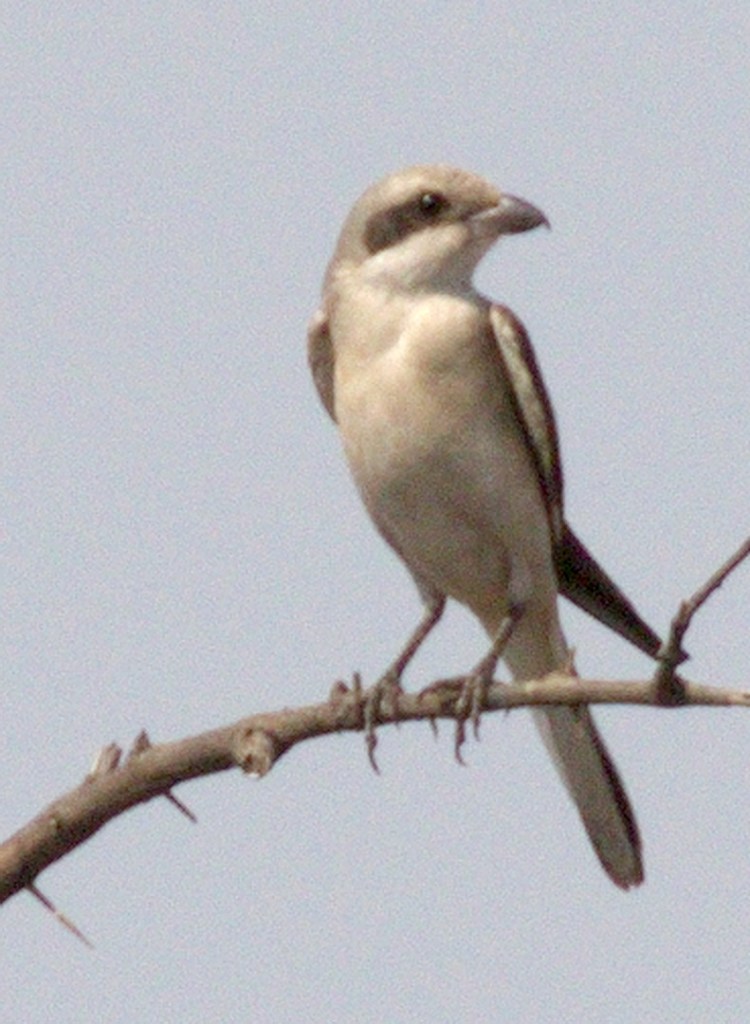
Along the way we came across Red-crested Korhaans calling beside the road and we were lucky to spot a Lesser Grey Shrike.
The weather was hot hot so we spent several afternoons in the pool at Mopani.
Views of Pioneer Dam from Mopani Camp
And then there was this large scaly-backed lizard wandering between the bungalows.
Scaly-backed Lizard about 50cm long.
The H1-4 to Phalaborwa gate is a scenic drive and one where we have seen hyena with cubs regularly especially along the first 20 kms from the H1-6. This time was no exception.
Hyena and suckling pup
Further down there is a low level bridge crossing the Letaba River. It crosses a wide stretch of the river and has a “stop and view” parking area half way across. The last two times we visited we have seen two male Greater Painted Snipes and this time was no different.
Greater Painted Snipes – males.
A bit further along there are a couple of short loop roads going down to the river. On one of these loops we sighted a Groundscraper Thrush singing away.
Groundscraper Thrush
We headed on towards the H9. About 6kms before the H9 we came across a large Kopje on our left. It was here that we observed a Southern Ground Hornbill nesting site. There were several on the ground and a couple few out of the nest.
Nest half way up in the photo.Juvenile
And then we were on our way to visit Sable Dam just the other side of the H9. Relatively quiet except for a herd of what looks like sock-wearing elephants.
A couple of these elephants had a bit of a tussle.
Also seen there was a blue-tongued leguaan, a blue-headed lizard, a crocodile and a Three-banded Plover chick.
August and September are not the best months to go birding but we needed to get away and test our new caravan. The weather was variable – and mostly cool to cold with a few days of T-shirt weather – also not good for birding. However we made the best of it and enjoyed our time up north especially in the Limpopo region outside of the Kruger NP.
After struggling to find places to camp in the Kruger, we eventually found 3 nights in Crocodile Bridge, 2 nights in Satara, 4 nights in Shingwedzi followed by 2 nights in Tsendze. It had to be in that order for only those nights at each of those camps as the park was full. It was the only sequence available. We had hoped to stay longer but unusually even Punda Maria was full.
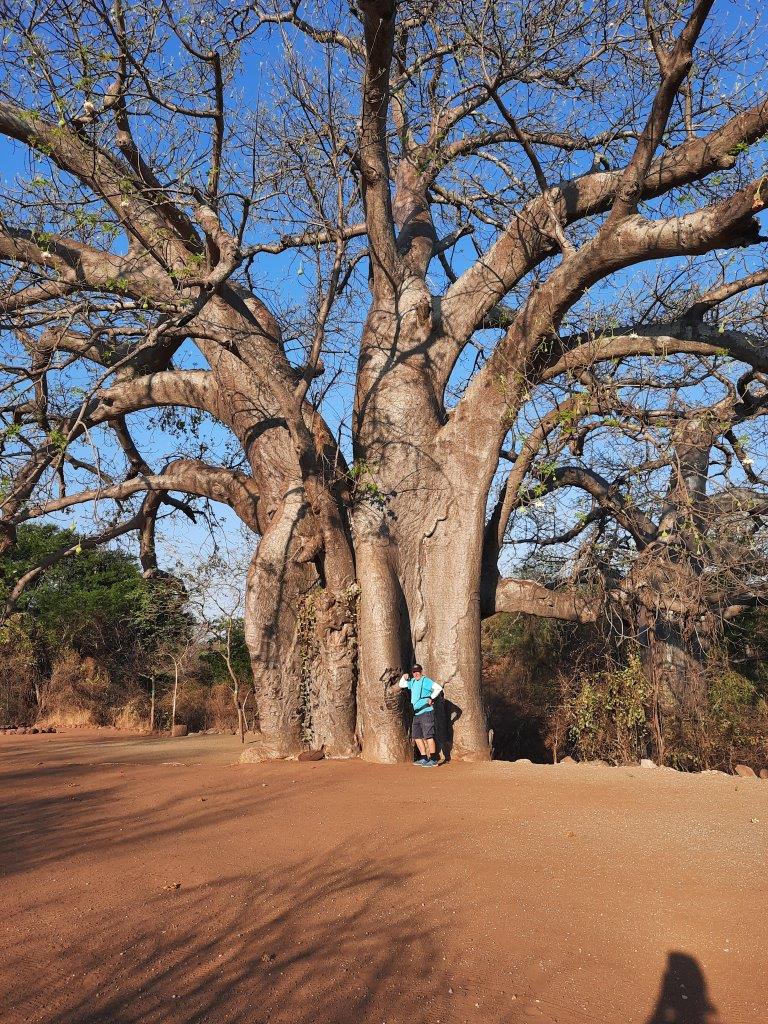
With that booked we then made a plan to see other places in Limpopo. Leaving Tsendze we headed north for Nthakeni Bush and River Camp (just outside the Pafuri gate) spending 3 nights there, followed by 3 nights at Tshipise (to the west) to replenish food stocks and to see “The Big Tree” – Sagole Baobab (second largest tree by girth in the world) – absolutely impressive. A must see if you are in the area.
From Tshipise we headed west for a little known place on the Limpopo River past Alldays – Boelamien River Camp. 3 nights there then 3 nights at Blouberg Nature Reserve, followed by 4 nights at Mapungubwe National Park, and 2 nights at a campsite in Dinokeng – Thorn Tree Bushcamp – just north of Pretoria before heading home.
Part 1. The Kruger
27th July to 10th August 2021
Crossing the Crocodile River
A long drive to Crocodile Bridge in the Kruger NP – just over 9 hours, we arrived in time to set up camp and go for a short late afternoon drive. Three nights there meant we had only two full days to explore the vicinity round the camp and explore further afield – the S25 following the Crocodile River towards Malelane, north to Skukuza, Lower Sabie and as far north as Tshokwane.
Welcomed by a friendly female Bushbuck
We had sightings of Cheetah and Leopards before we eventually saw a Lion. Elephants abound and Buffalo present. No Rhinos seen however.
Our campsite and typical scenery.
Our Campsite
Sunset Dam nearby Lower Sabie Camp is a “must” visit. There is always activity there of some sort. Crocodiles and Hippos in the water or lying on the banks. Birds on the banks and in the dead trees in the Dam.
Elephants on the far side
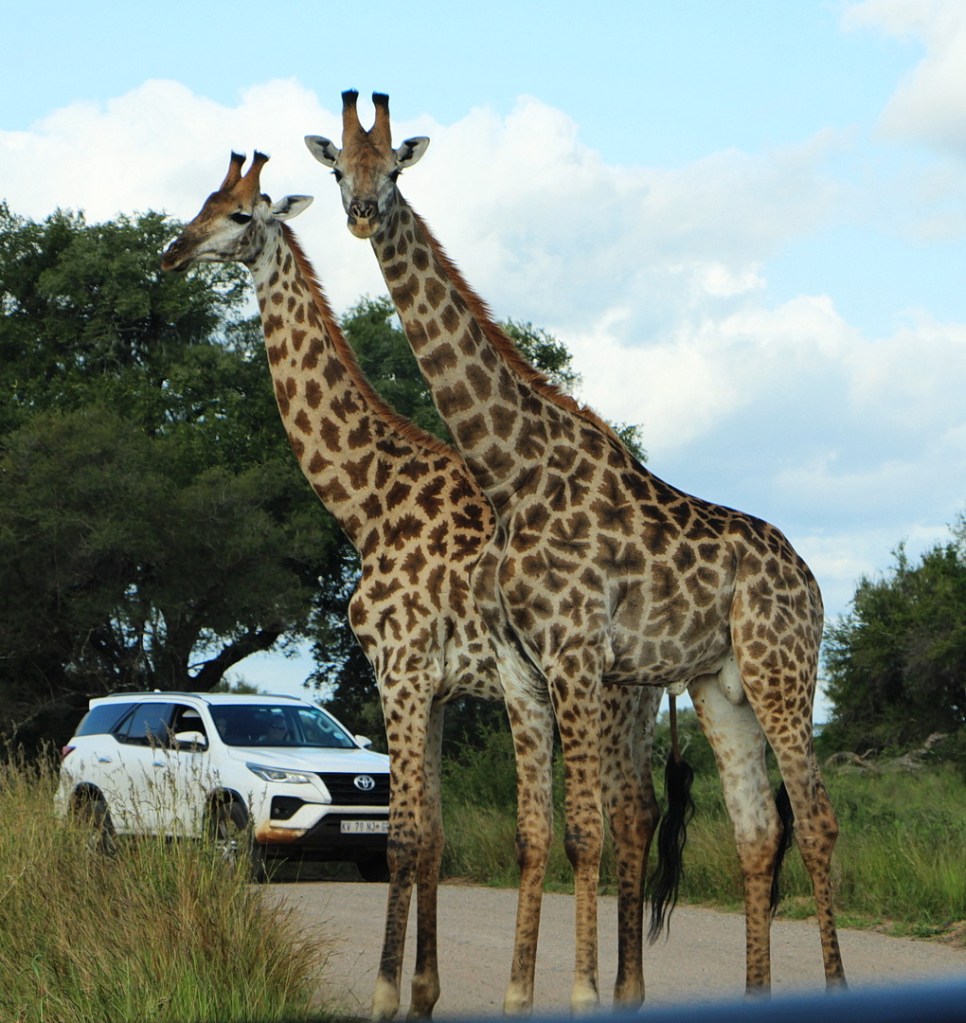
Giraffe ambling in very slowly for a drink
Dust-bathing Zebras and an onlooking Giraffe
Loads of Yellow-billed Storks.
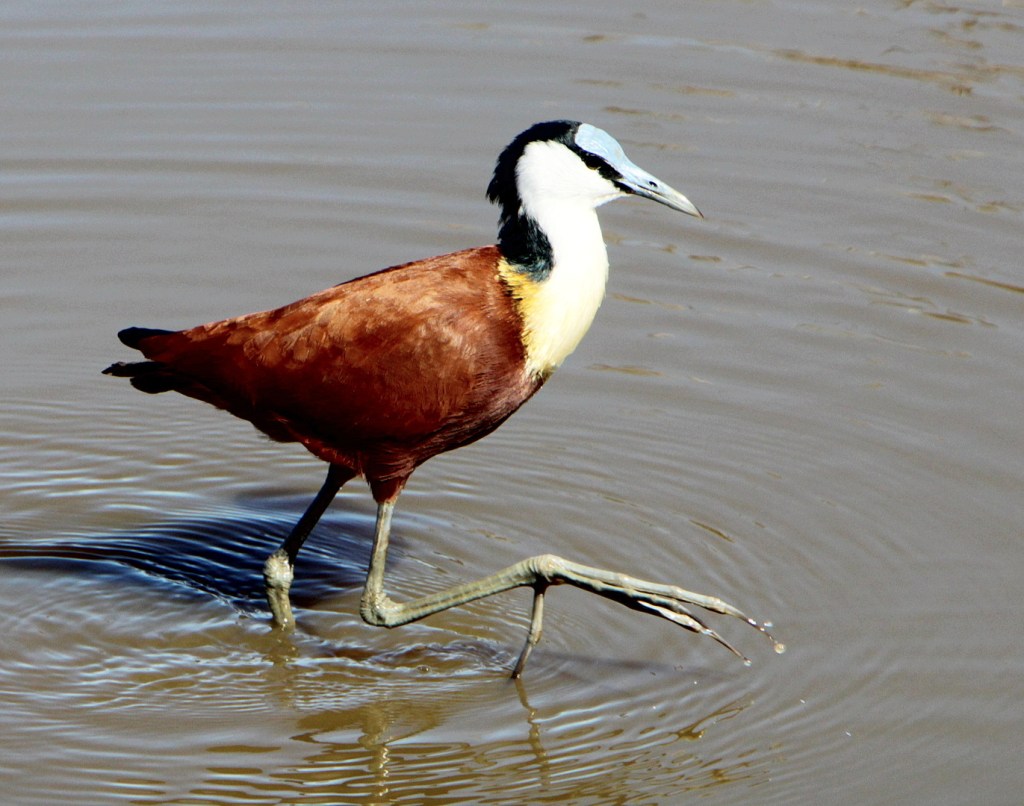
African Jacana walking casually past
Our interest was more focused on birds and keeping away from other people. In all we identified 121 different bird species . Here are some of the animals and birds that we photographed.
African Fish-Eagle
African Hawk-Eagle
African Hawk-Eagle
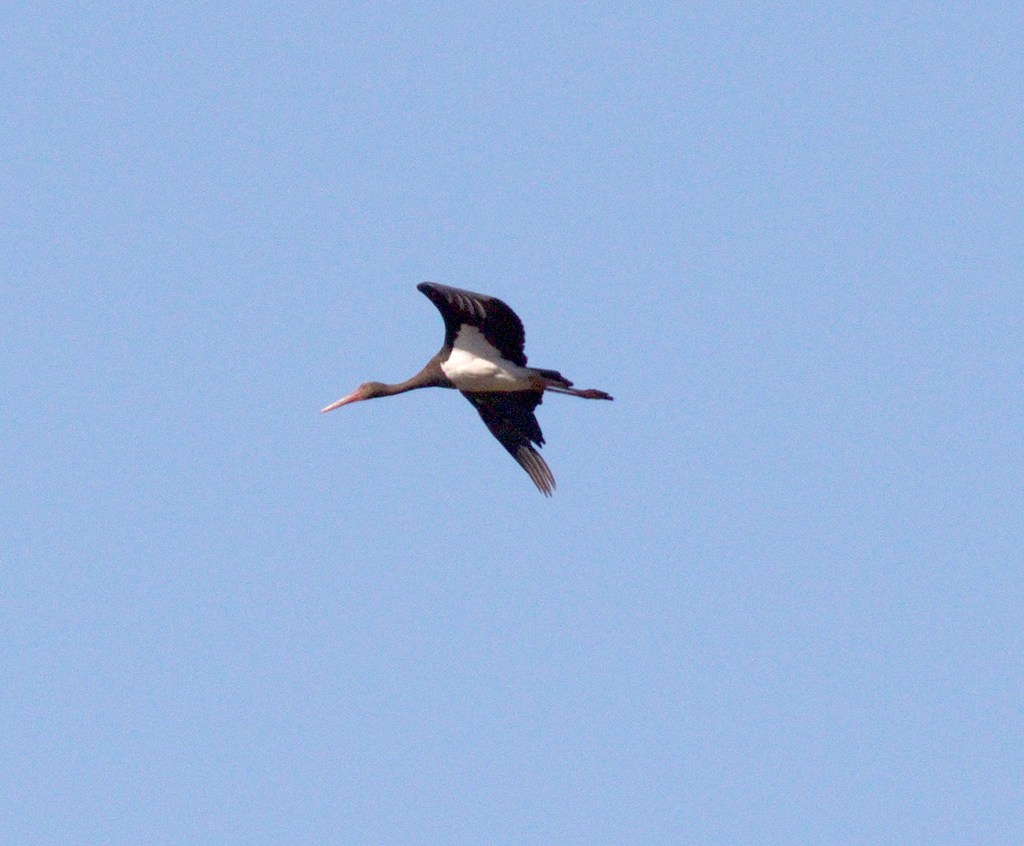
Black Stork
Black Stork
Black Storks
Brown Snake-Eagle
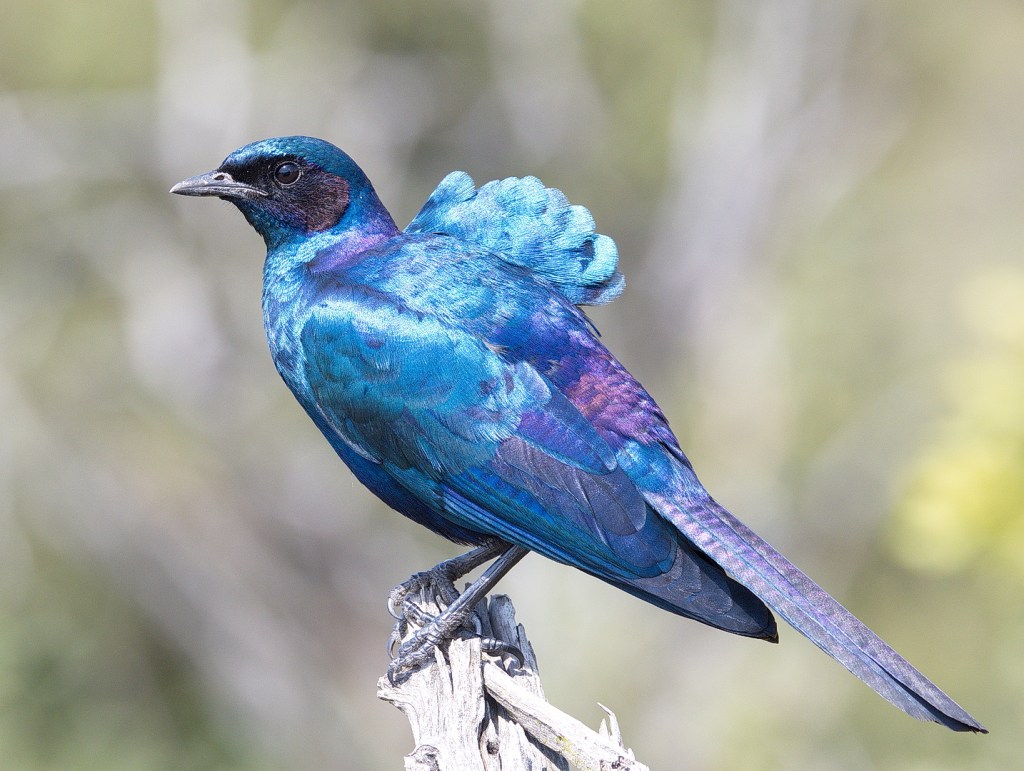
Burchell’s Starling
Cheetah
Cheetah
Cheetah
Leopard
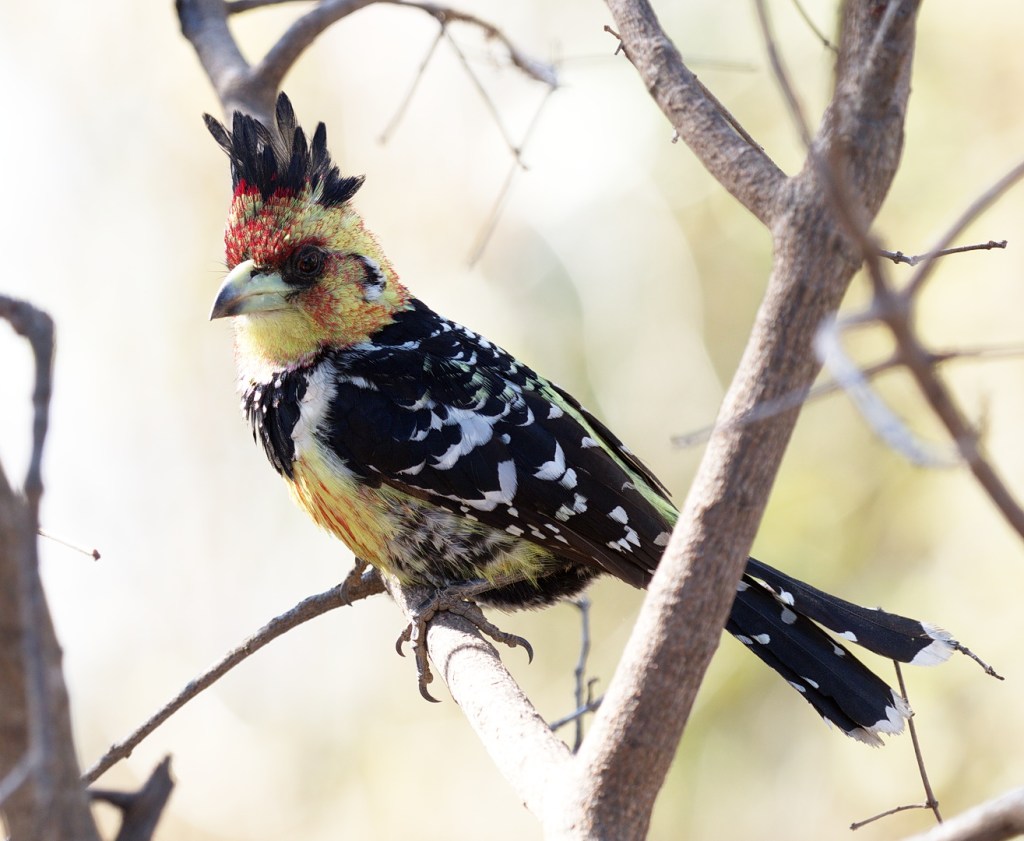
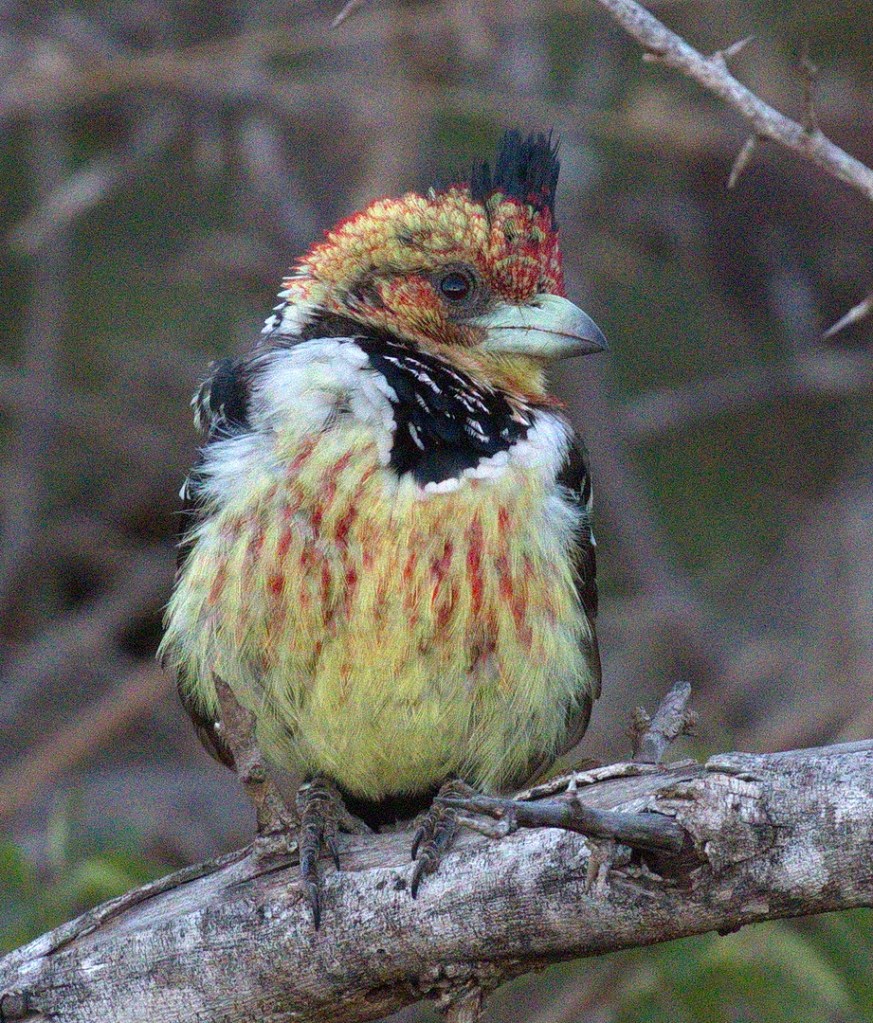
Crested Barbet
Crested Barbet
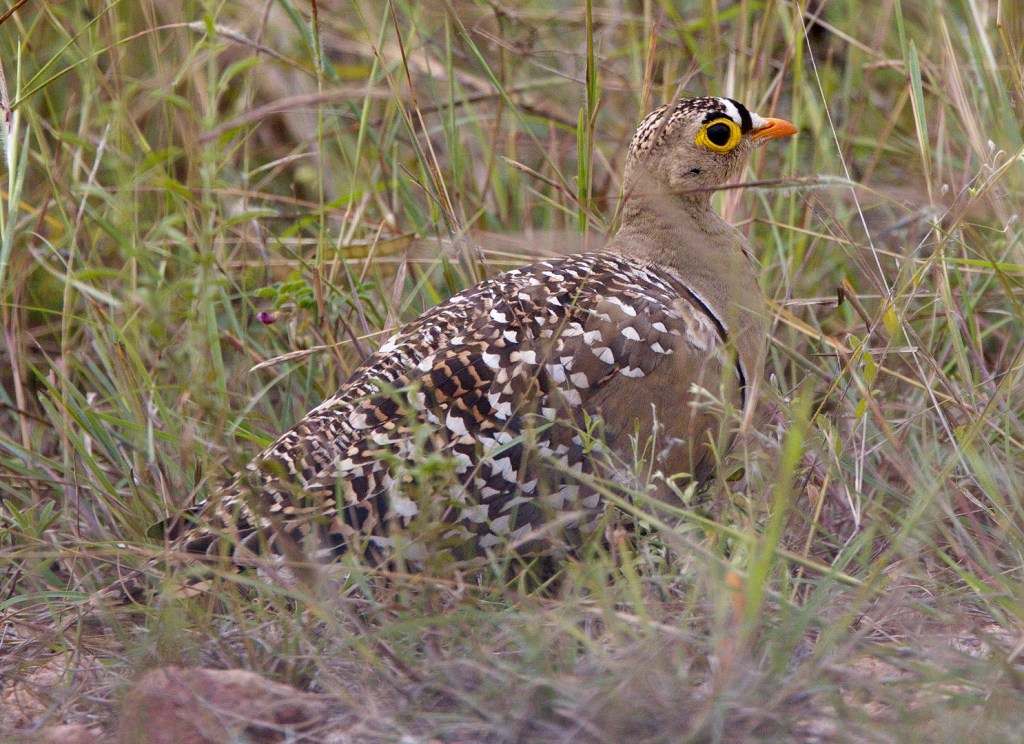
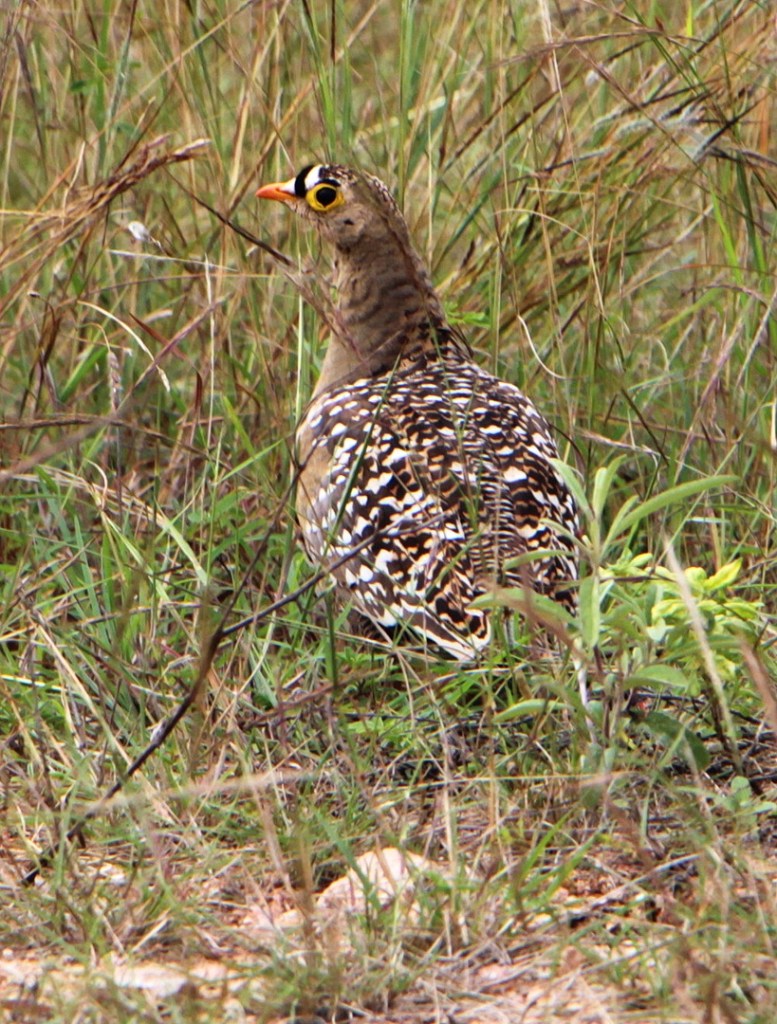
Double-banded Sandgrouse – male
Double-banded Sandgrouse – female
Dwarf Mongoose
Emerald-spotted Wood-Dove – juvenile
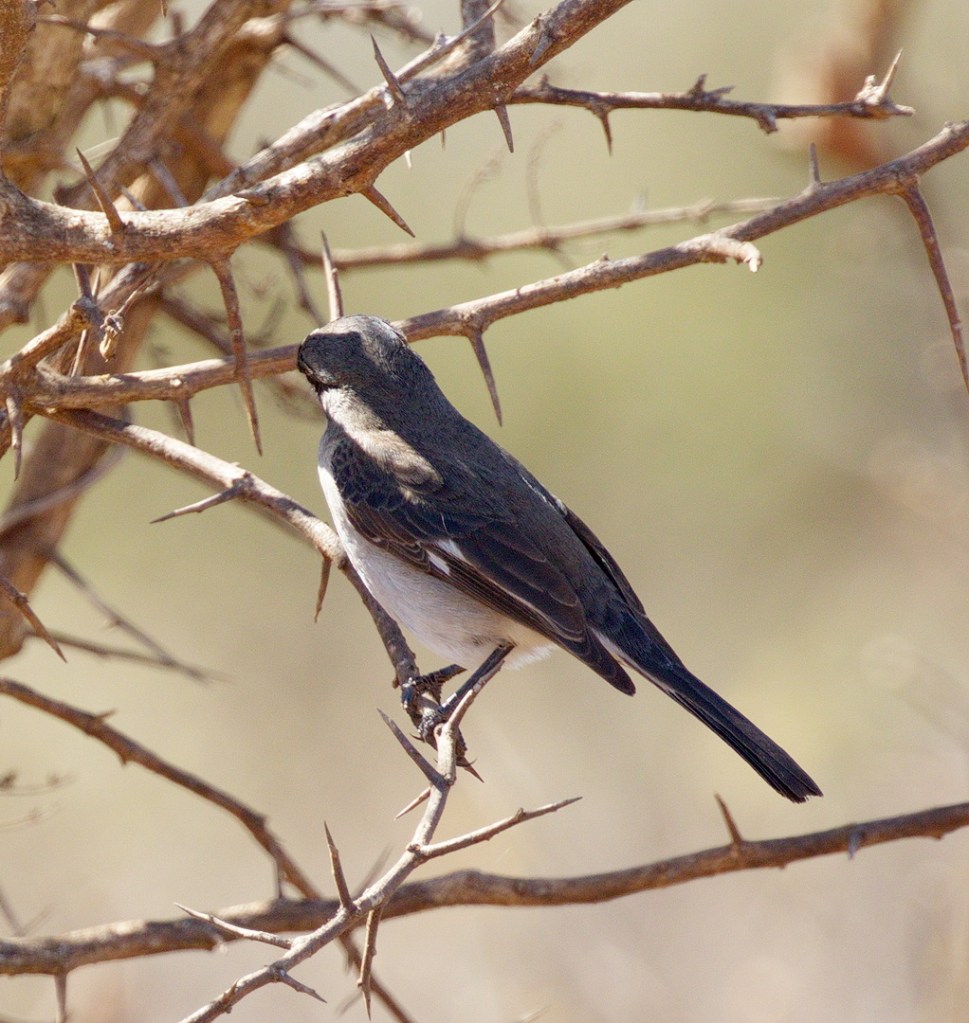
Fiscal Flycatcher
Goliath Heron ignoring the Crocodile
One tuskered Elephant
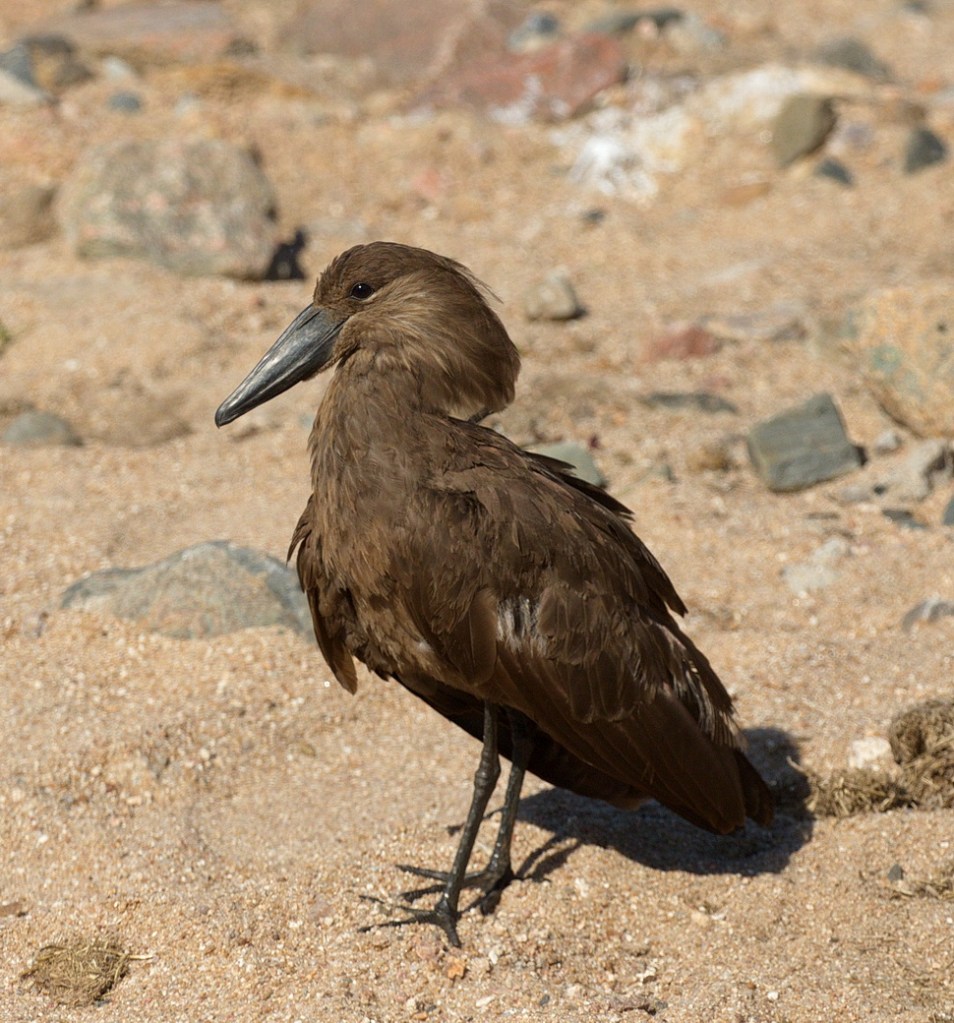
Hammerkop
Hooded Vulture
Kori Bustards
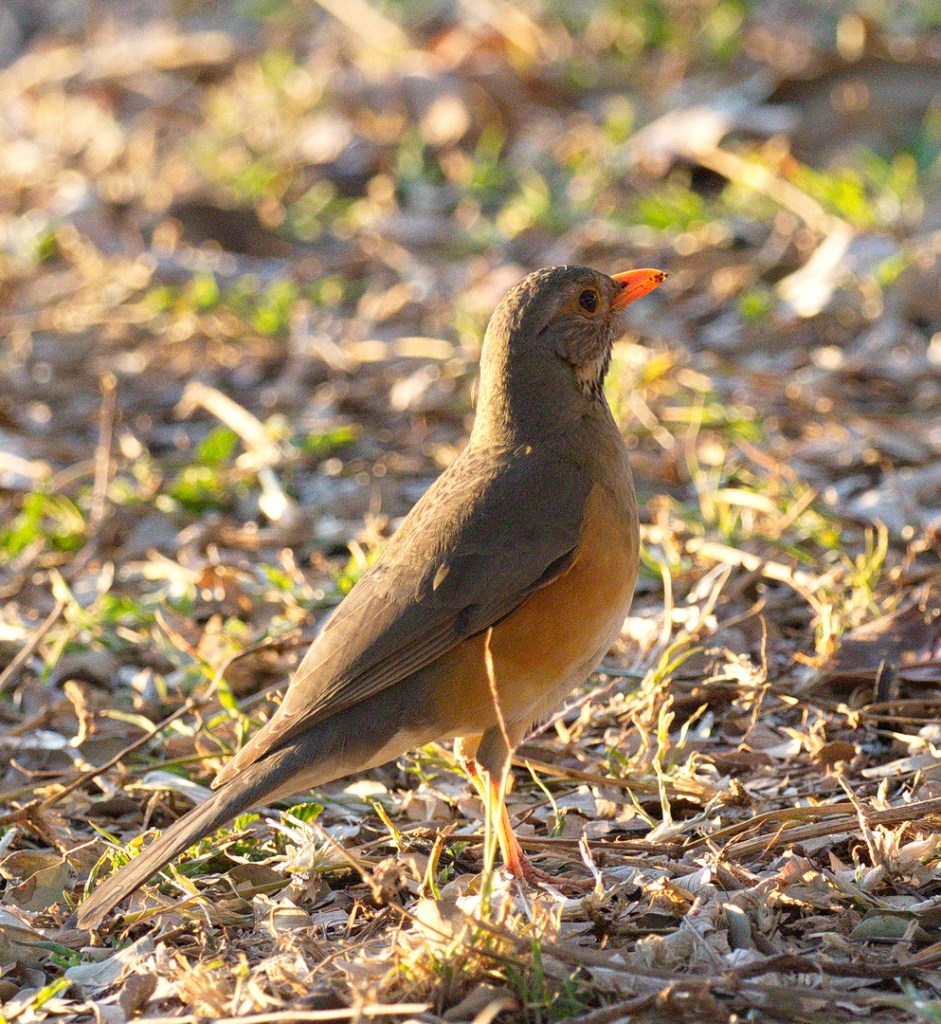
Kurrichane Thrush
Lanner Falcon
Leopard
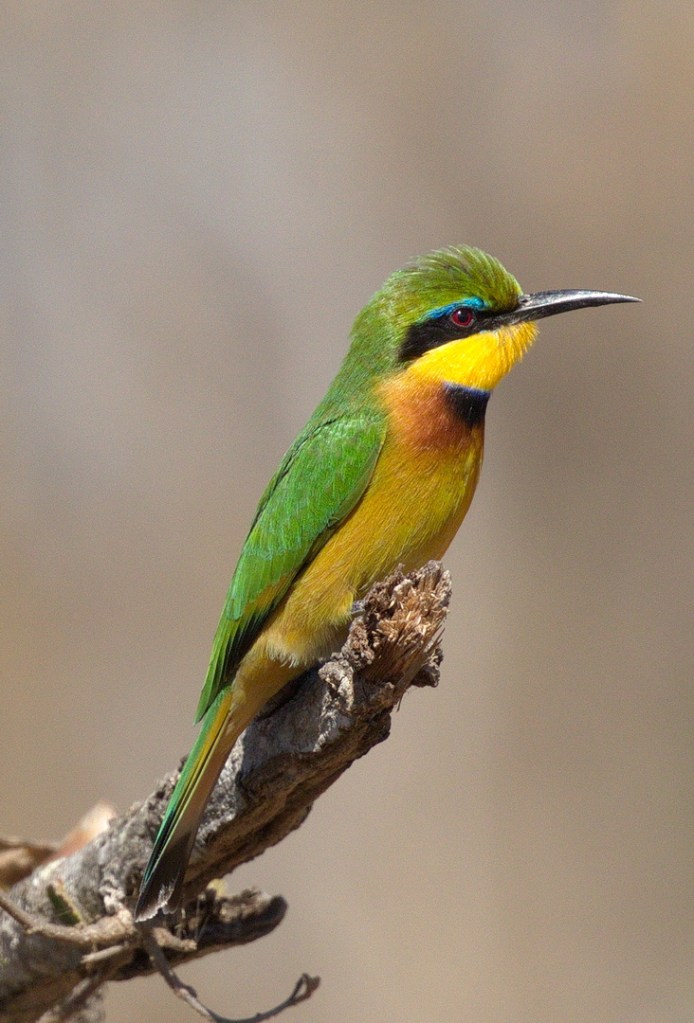
Little Bee-eater
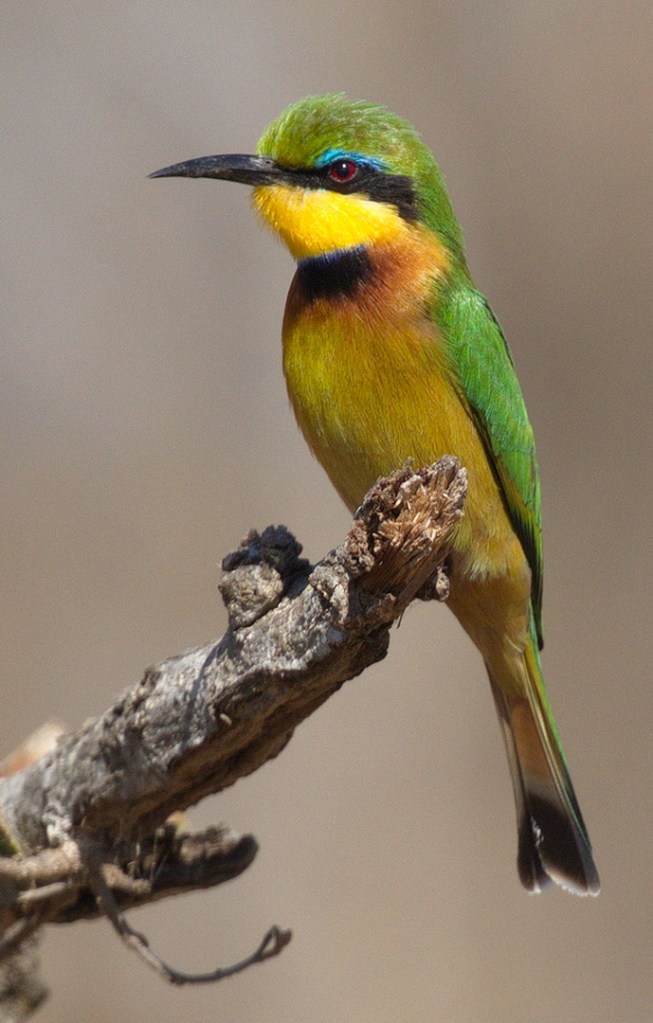
Little Bee-eater
Little Bee-eater
Martial Eagle
Mosque Swallow
Juvenile Natal Spurfowl
Pearl-spotted Owlet showing its 2 eyes on the back of its head
Pearl-spotted Owlet
Pearl-spotted Owlet
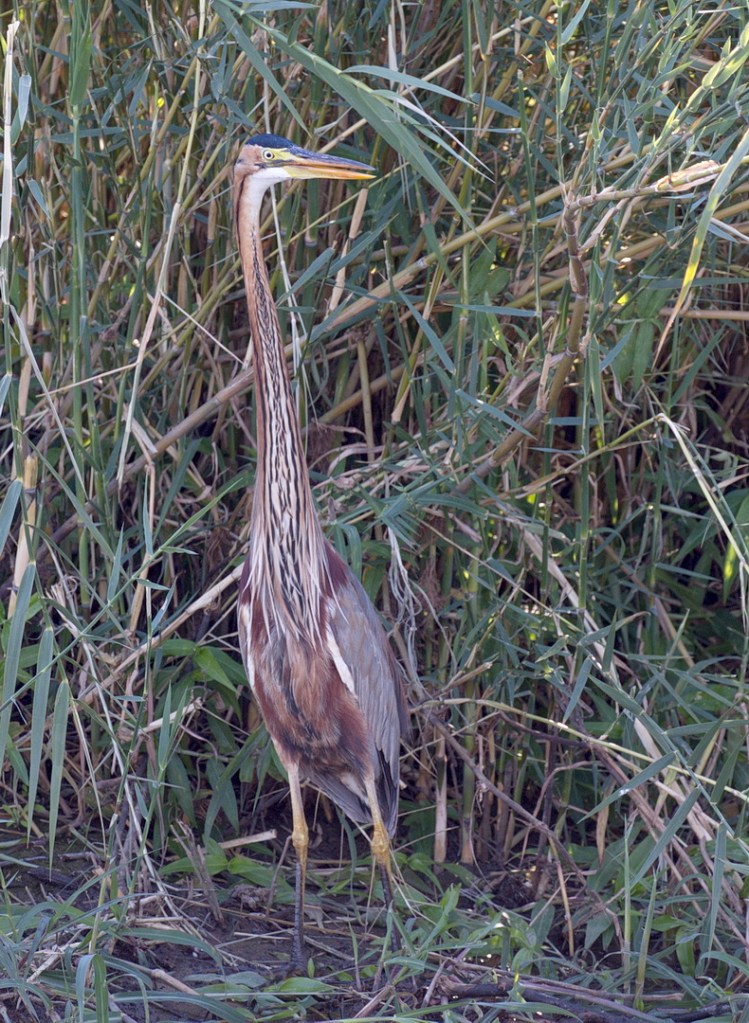
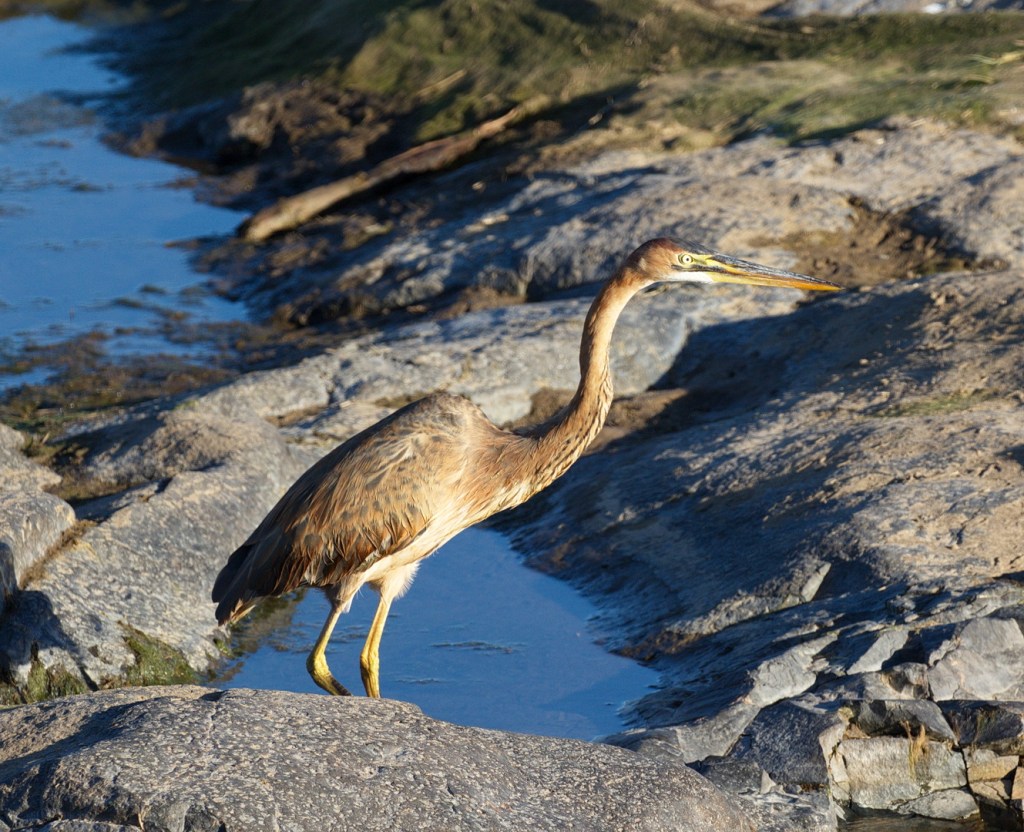
Purple Heron
Purple heron
Purple Roller
Sabota Lark
Saddle-billed Stork
Saddle-billed Storks – female and 2 immatures
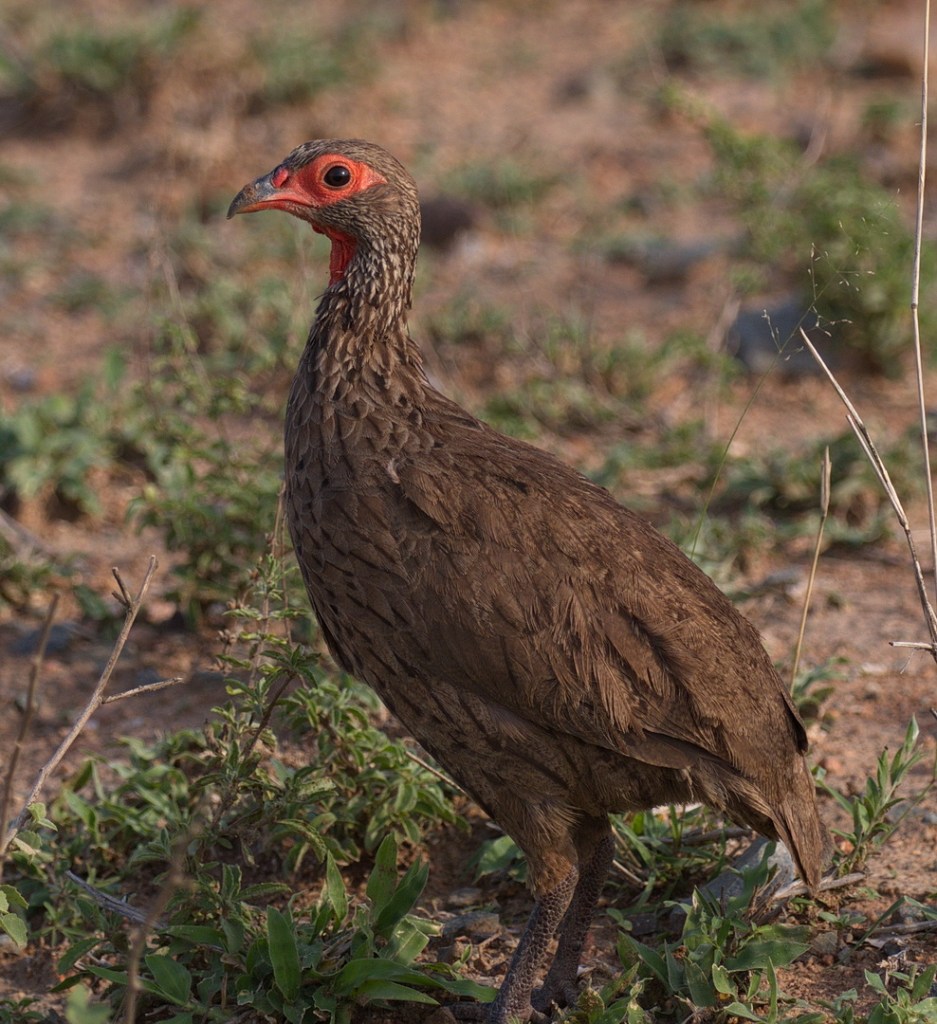
Swainson’s Spurfowl and chicks
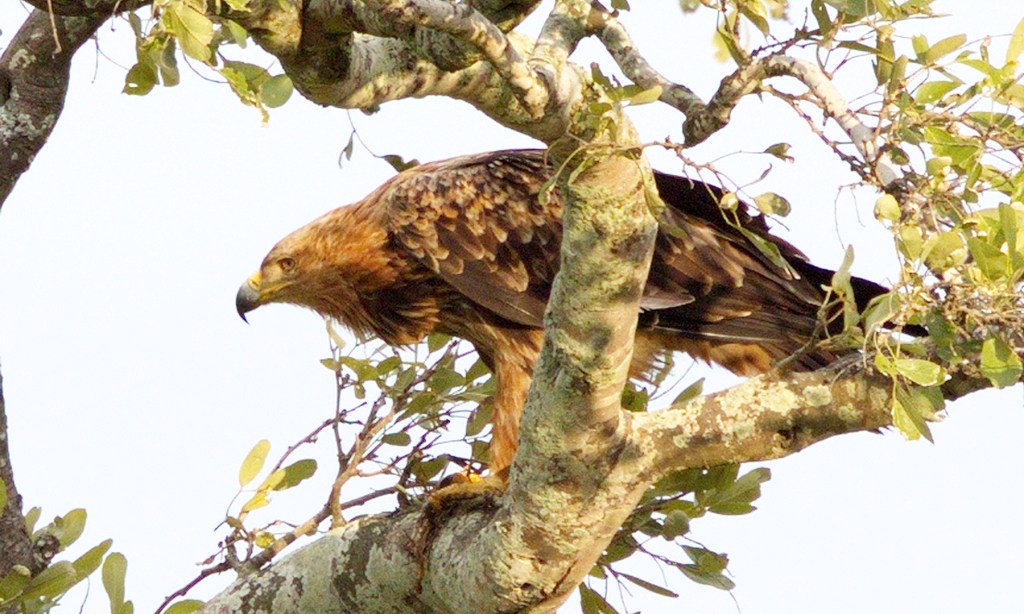
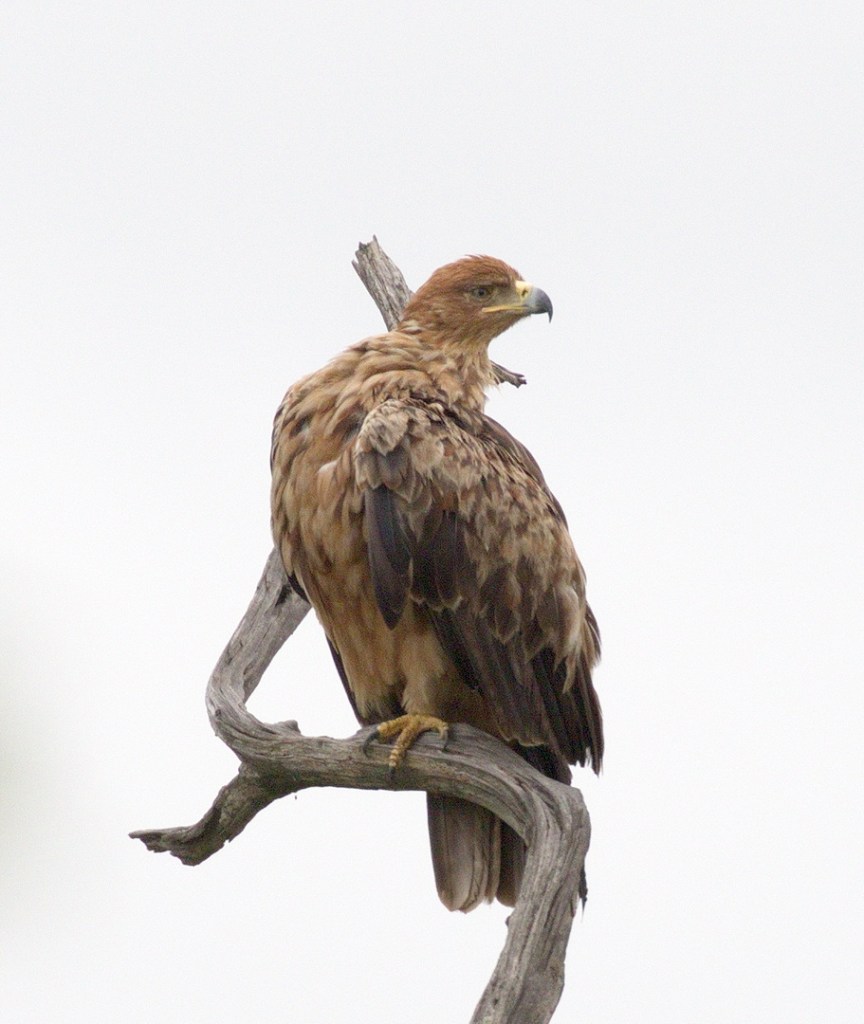
Tawny Eagle
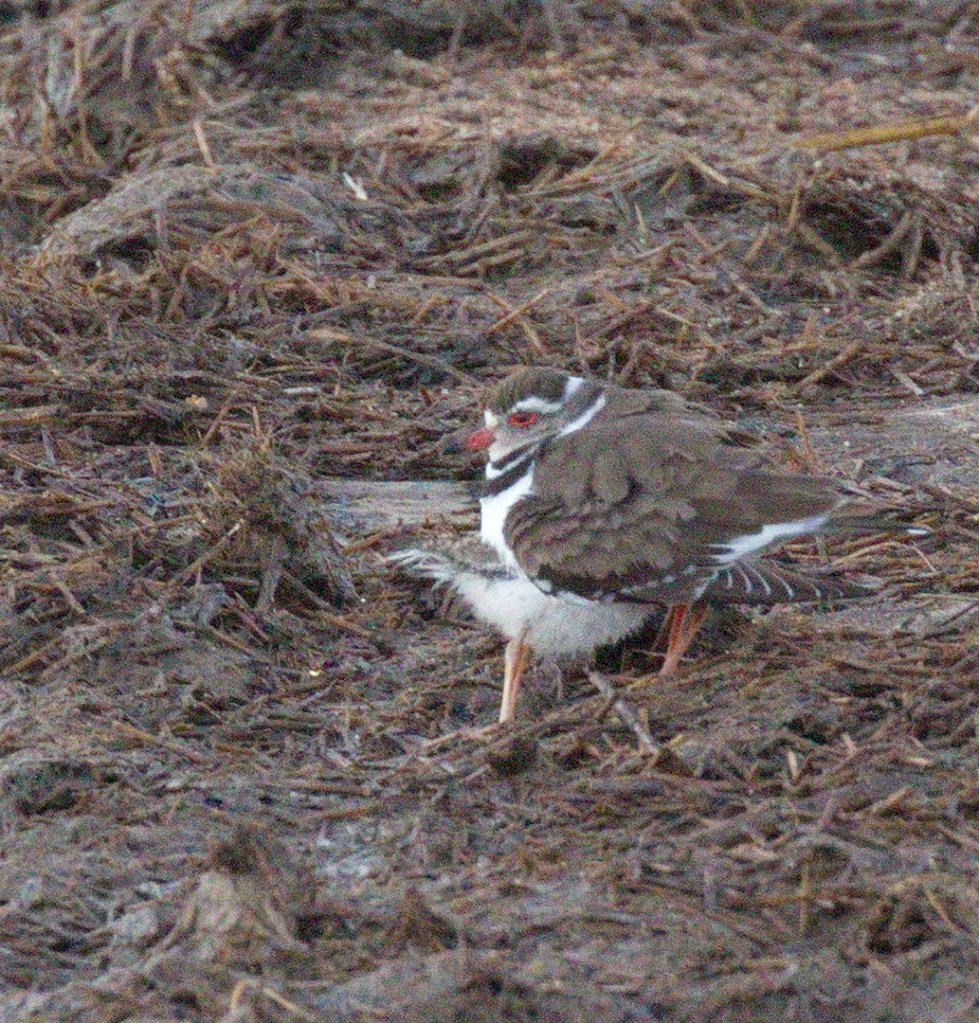
Three-banded Plover sheltering its chick
White-crested Helmetshrike
White-crested Helmetshrike
Yellow-billed Storks
Dwarf Mongooses
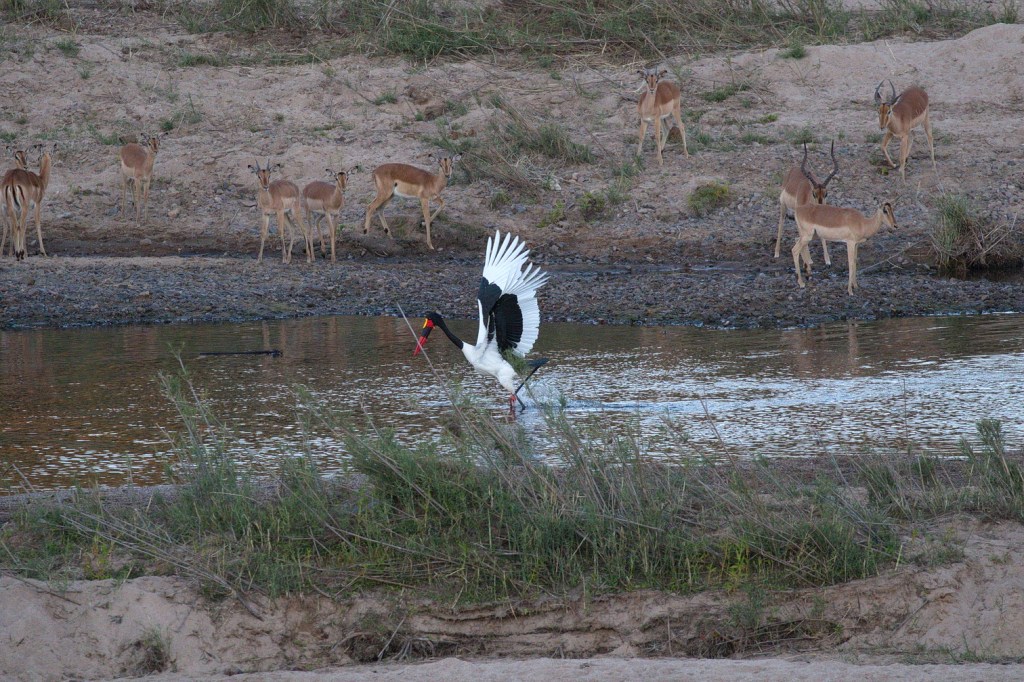
Wandering around the camp looking over the fence towards the Crocodile River we noticed a Saddle-billed Stork behaving like a Black Heron – casting its wings forward creating a shadowed area over the water ahead. It walked back and forth repeating this manoeuvre.
Saddle-billed Stork behaving like a Black Heron.
Saddle-billed Stork behaving like a Black Heron.
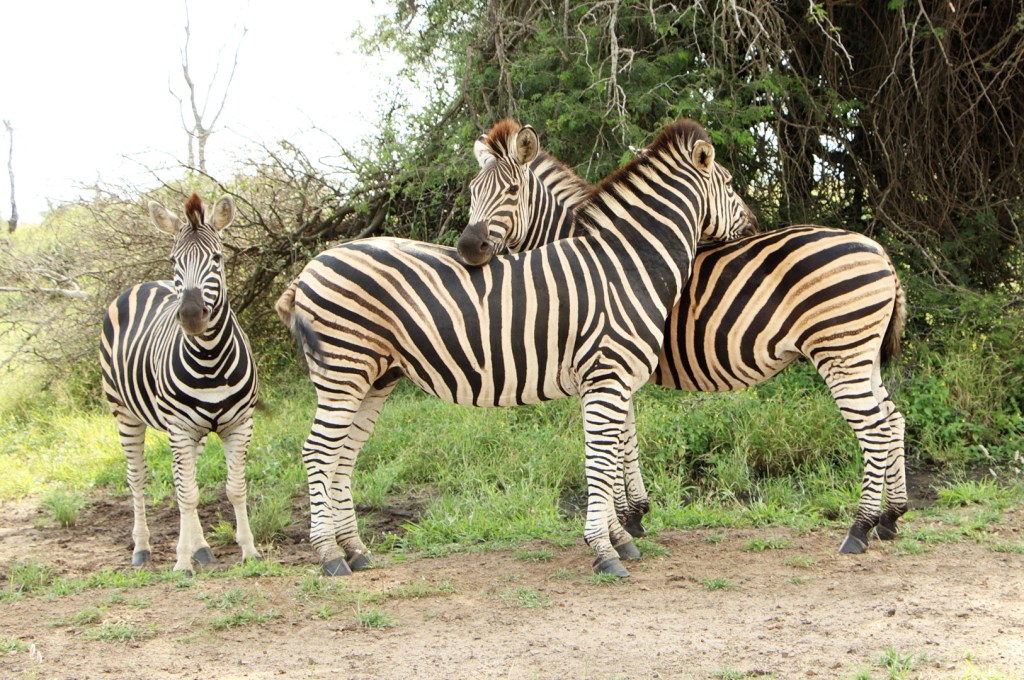
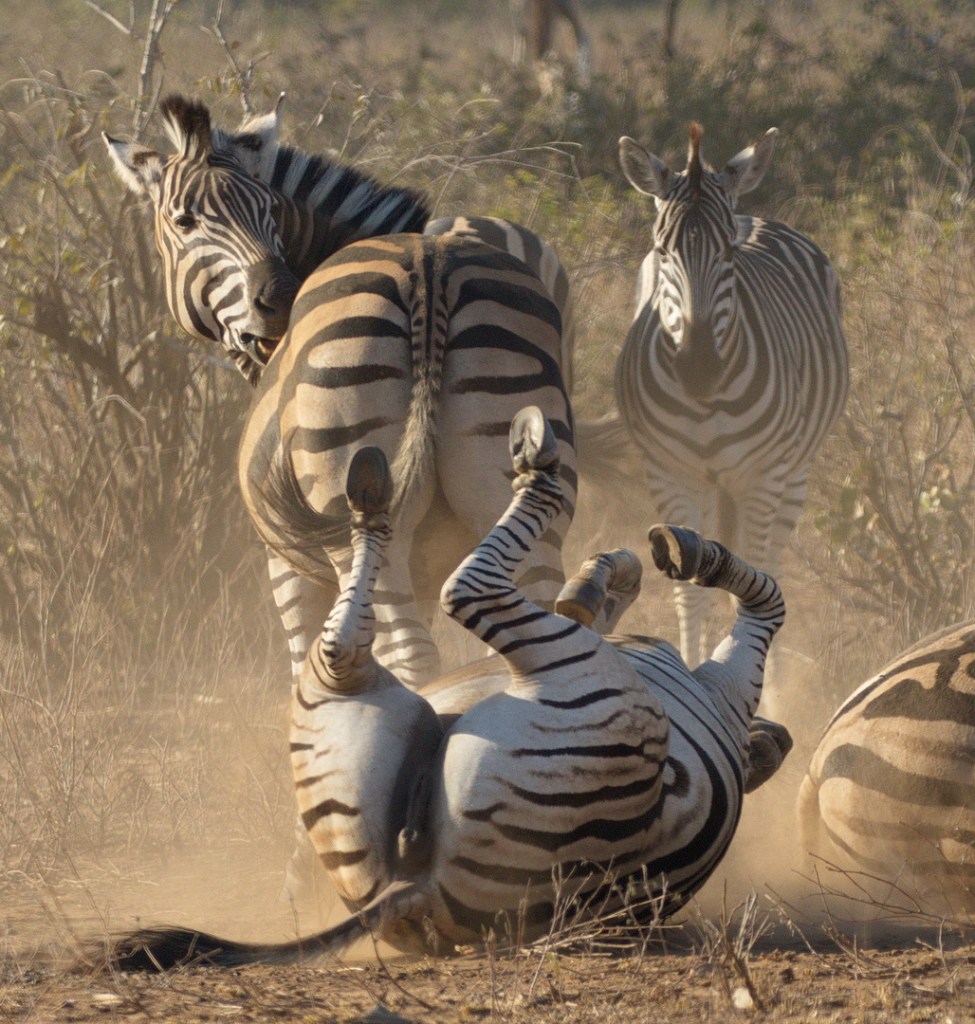
Another sighting was good to see. It involved a Burchell’s Zebra behaving quite wildly – as they do – kicking madly at other Zebras while rolling on its back. Dust flying everywhere. Perhaps that is what they do to dust their backs?
Upside down Zebra
Downside up Zebra.
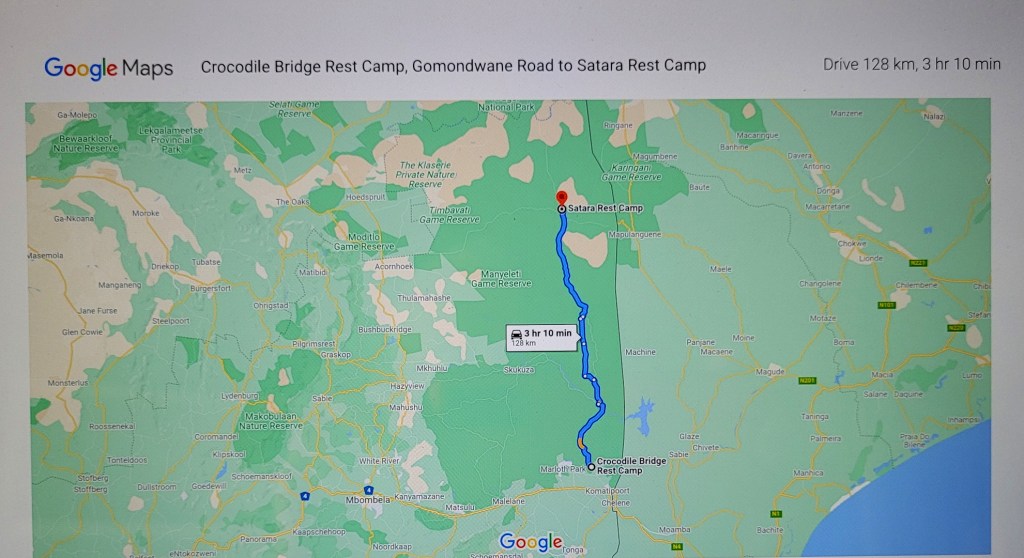
From Crocodile Bridge we headed to Satara for 2 nights. Only one full day there.
An unshaded Campsite.
A wasted trip to the Sweni Hide:
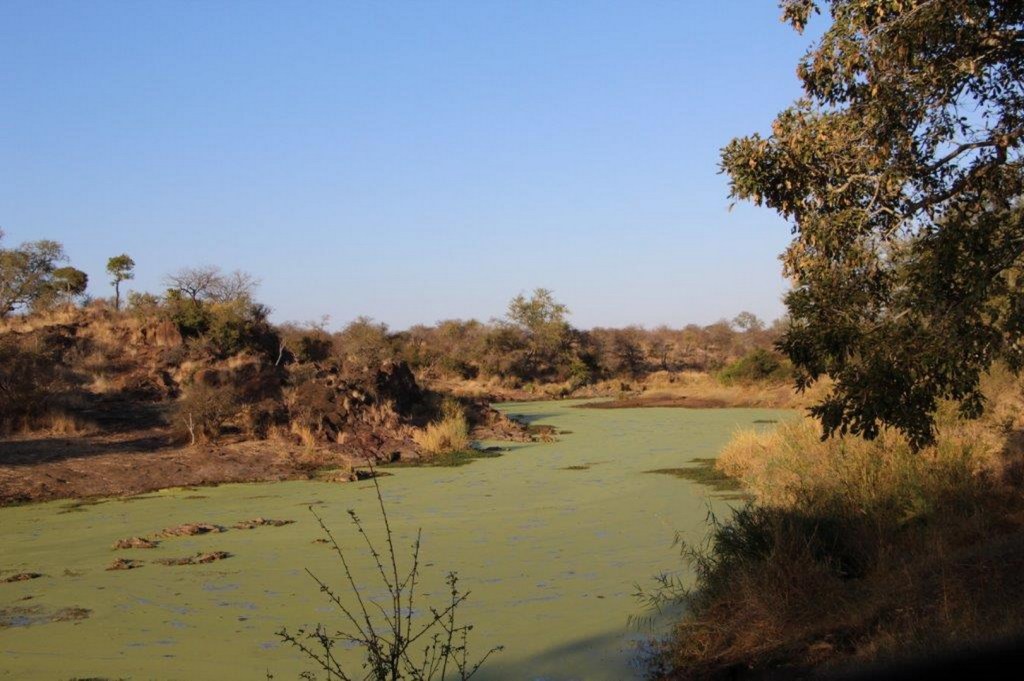
Only green Crocodiles seen here – downstream
Only green Crocodiles seen here – upstream
Sweni Hide entrance
Sightings were quiet – both animals and birds. I think we only managed to see about 70 different species of birds. Here are some of them:
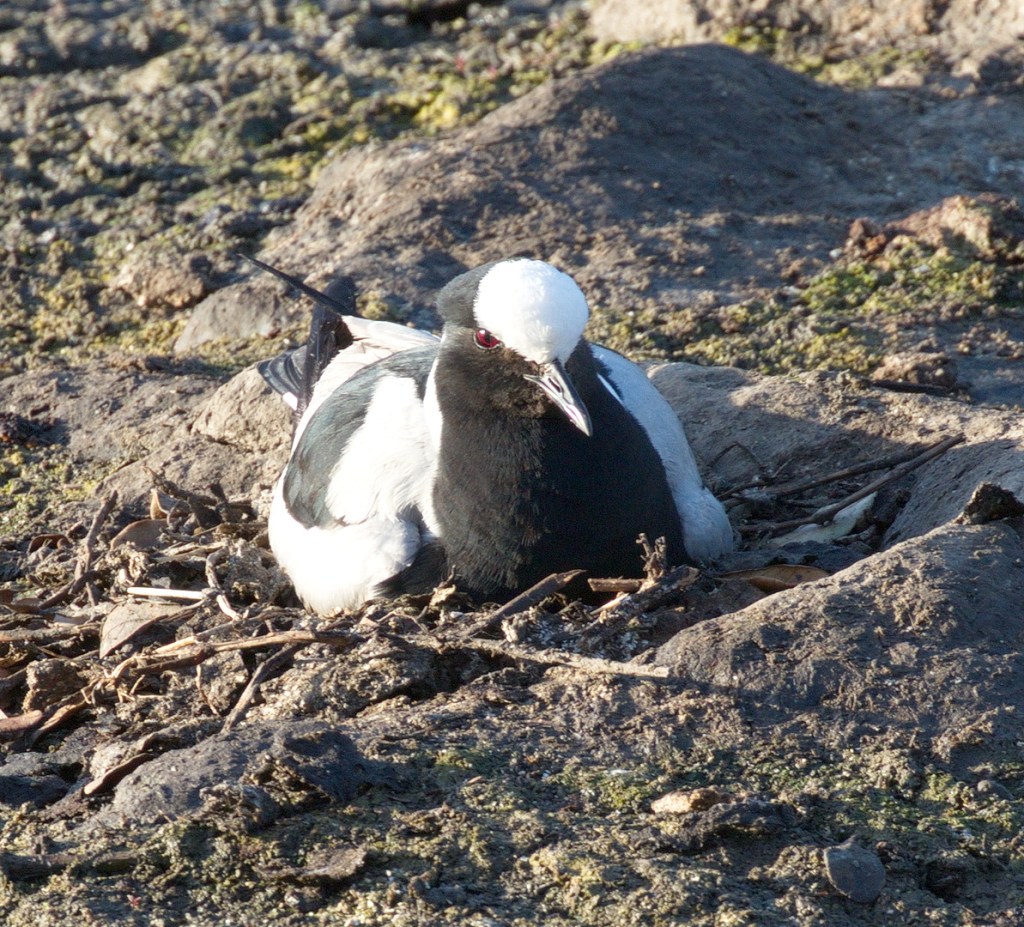
Blacksmith Lapwing sitting on eggs.
Fork-tailed Drongo
Greater Blue-eared Starling
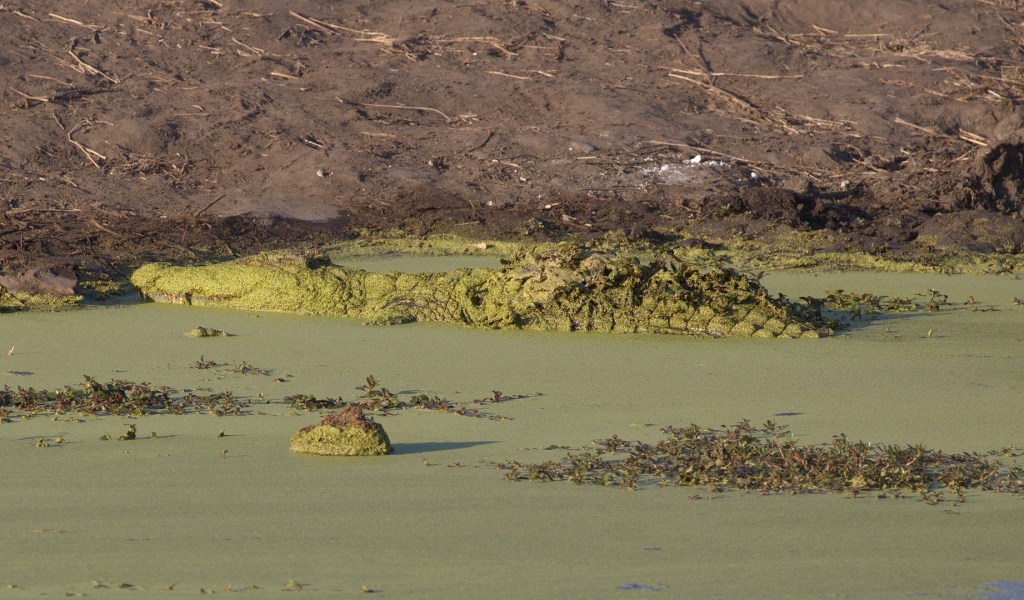
Green Crocodile
Green Crocodiles
Grey Heron
Immature Grey Heron
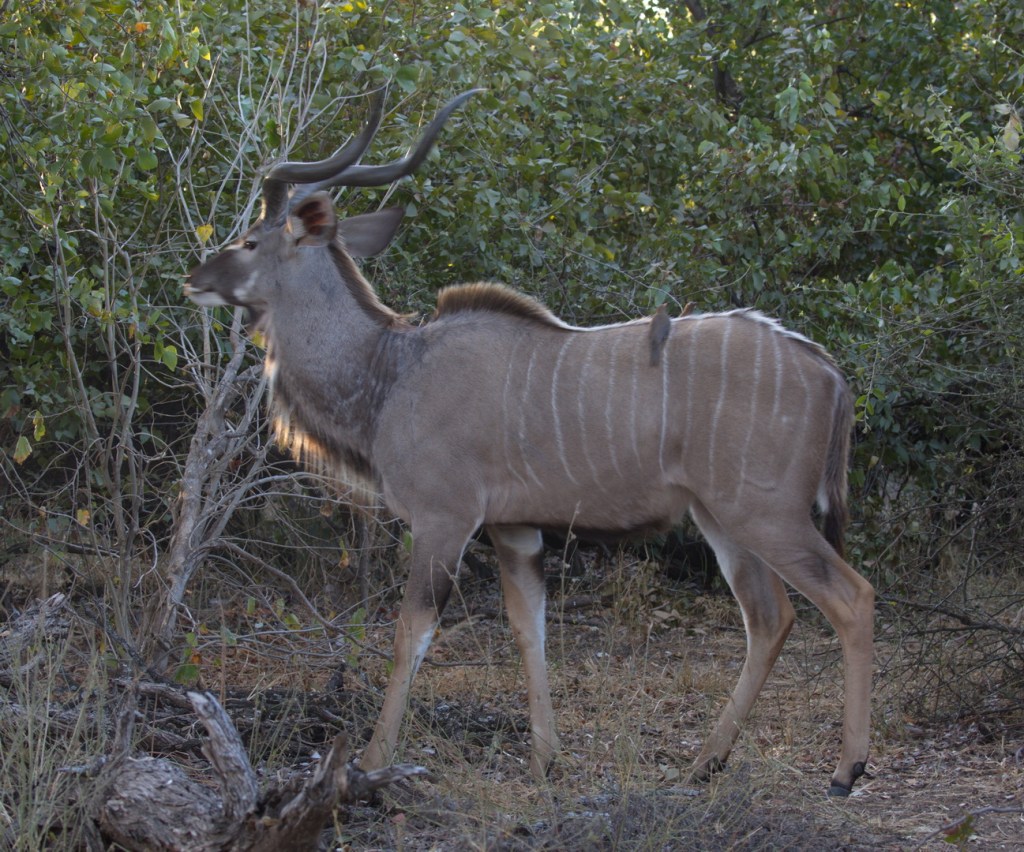
Majestic Kudu
Marico Sunbird
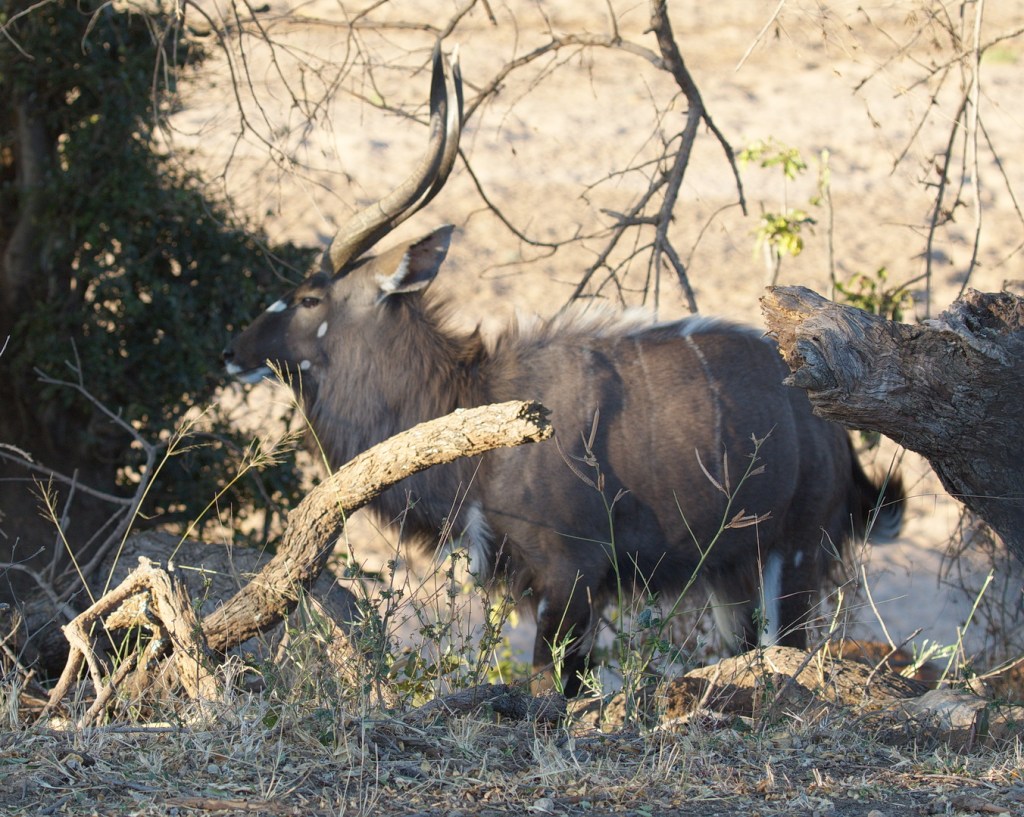
Male Nyala
Orange-breasted Bushshrike
Flaming flowers
Red-crested Korhaan female
Immature Saddle-billed Stork
Squacco Heron juvenile
Young male Waterbuck
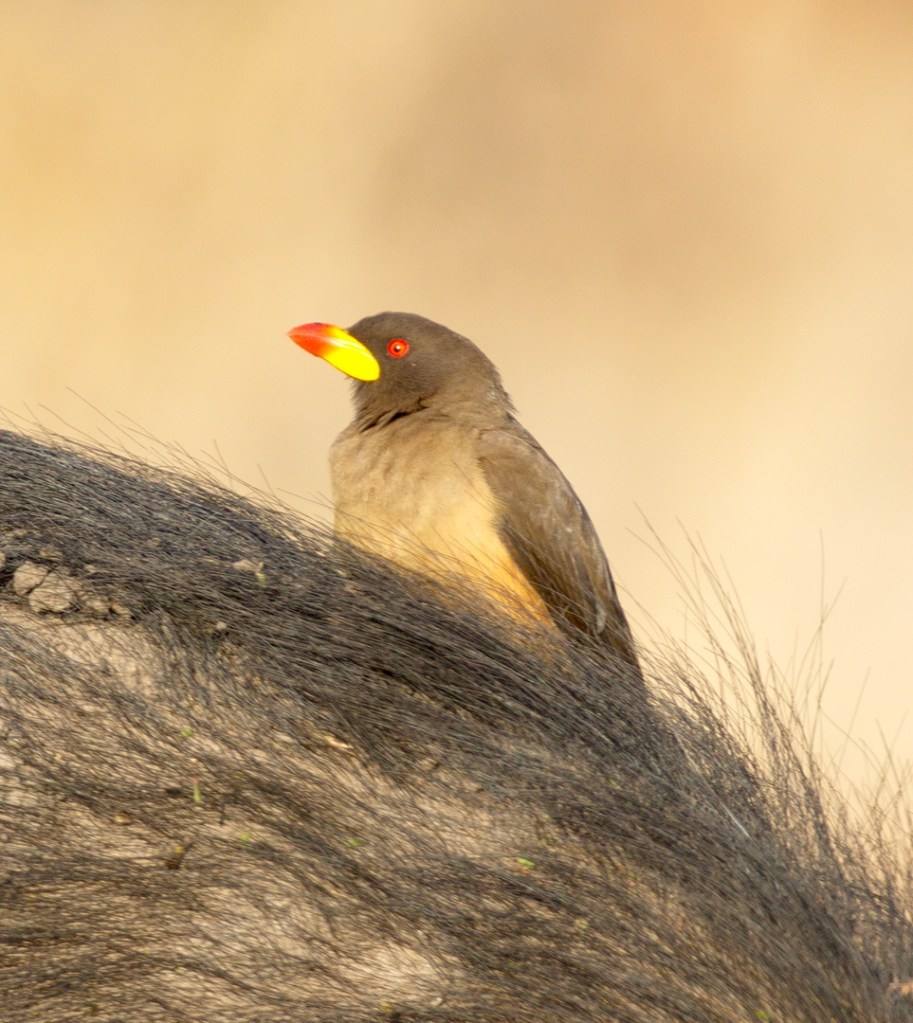
Yellow-billed Oxpecker piggy-backing on a Warthog.
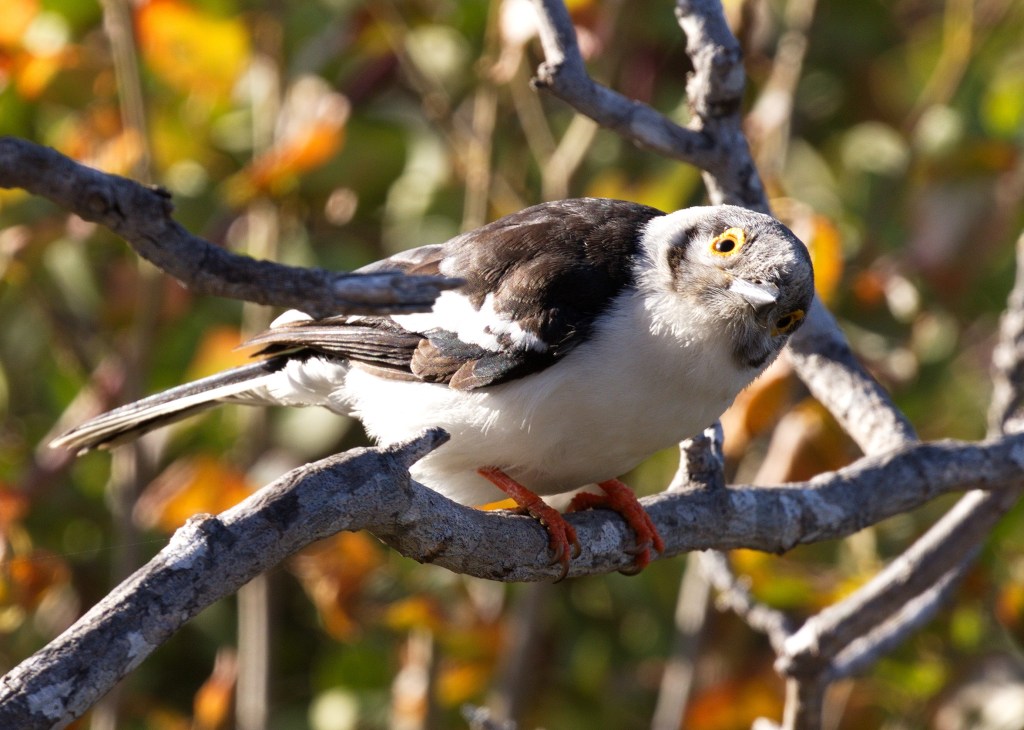
White-crested Helmetshrike.
Buffalo
Leguaan
Shaded Leopard
Female Waterbuck with male youngster
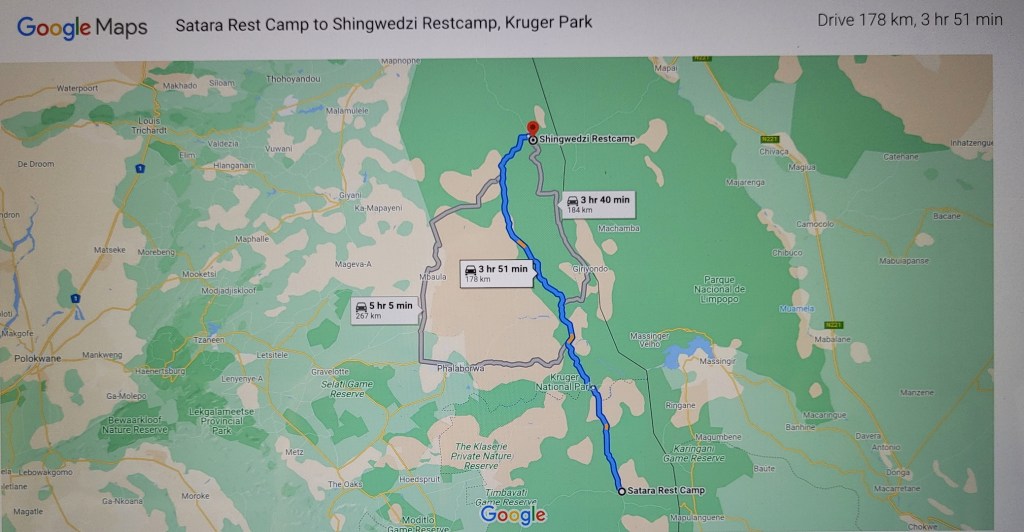
From Satara we headed north to Shingwedzi for 4 nights – three full days.
Blue Route.A well-shaded campsite
Despite being at Shingwedzi for three full days, our bird list was only about 90 species.
Once we left Satara, Buffalo and Elephant were plentiful and they were the only two of the “Big Five” that we saw during the rest of our time in the Kruger. I lie – we did see one majestic Lion. We spent a little more time taking photos of animals that we saw. Here are those that we photographed:
A rather large Anthill
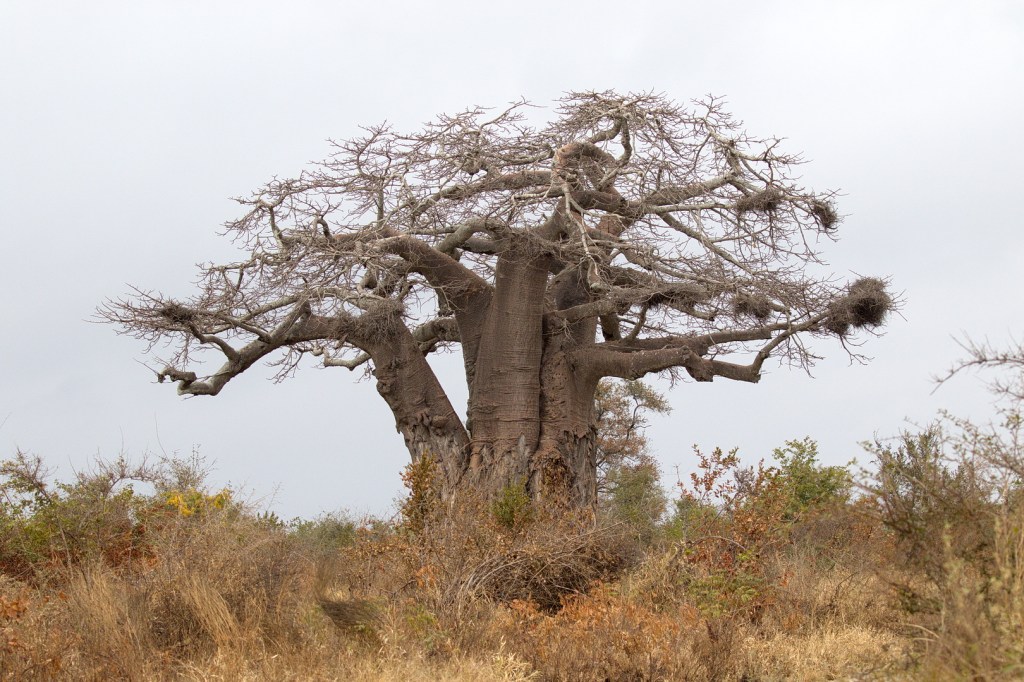
Impressive Baobab
Cape Buffalo
Elephants out of step
Hippo
Hippos
Playful Hippos
Male Impala with Red-billed Oxpecker removing the ticks.
Male Impala with Red-billed Oxpecker removing the ticks.
Male Kudu
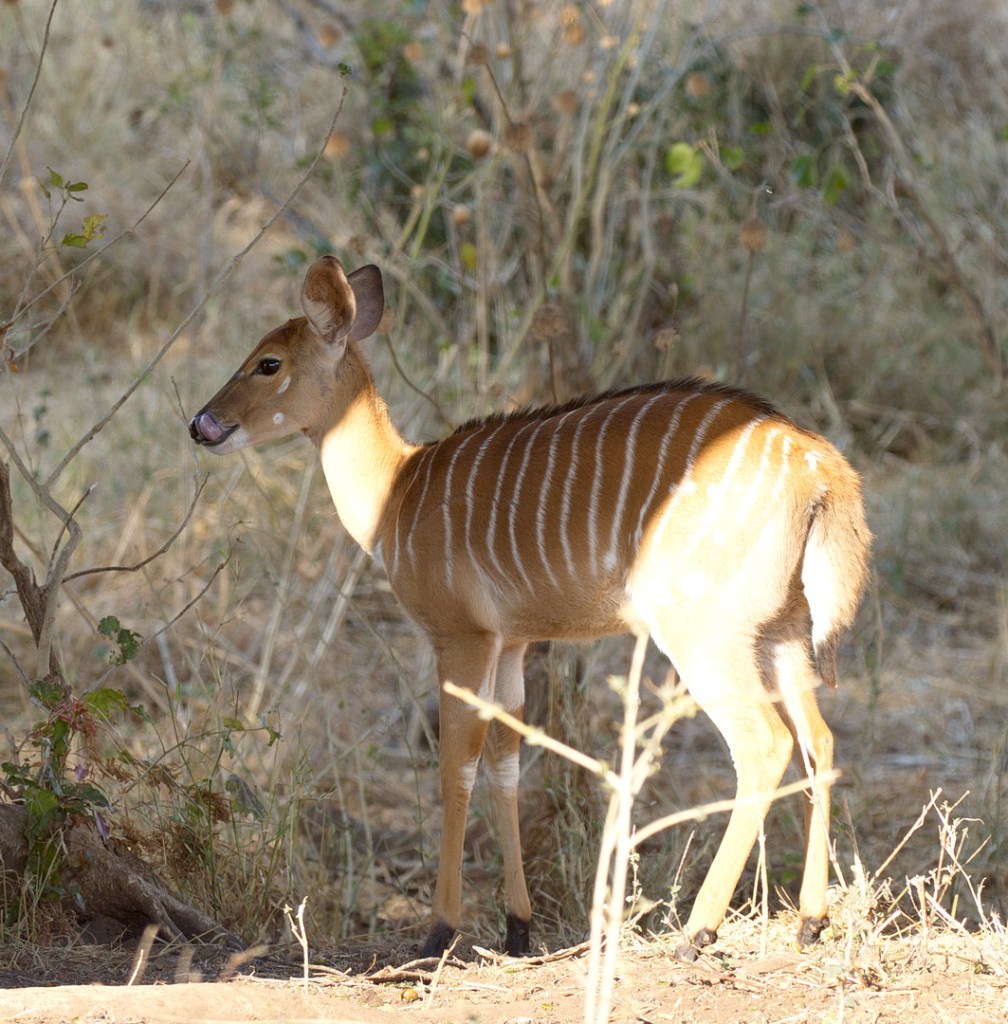
Female Nyala
Female Nyalas
Male Nyala
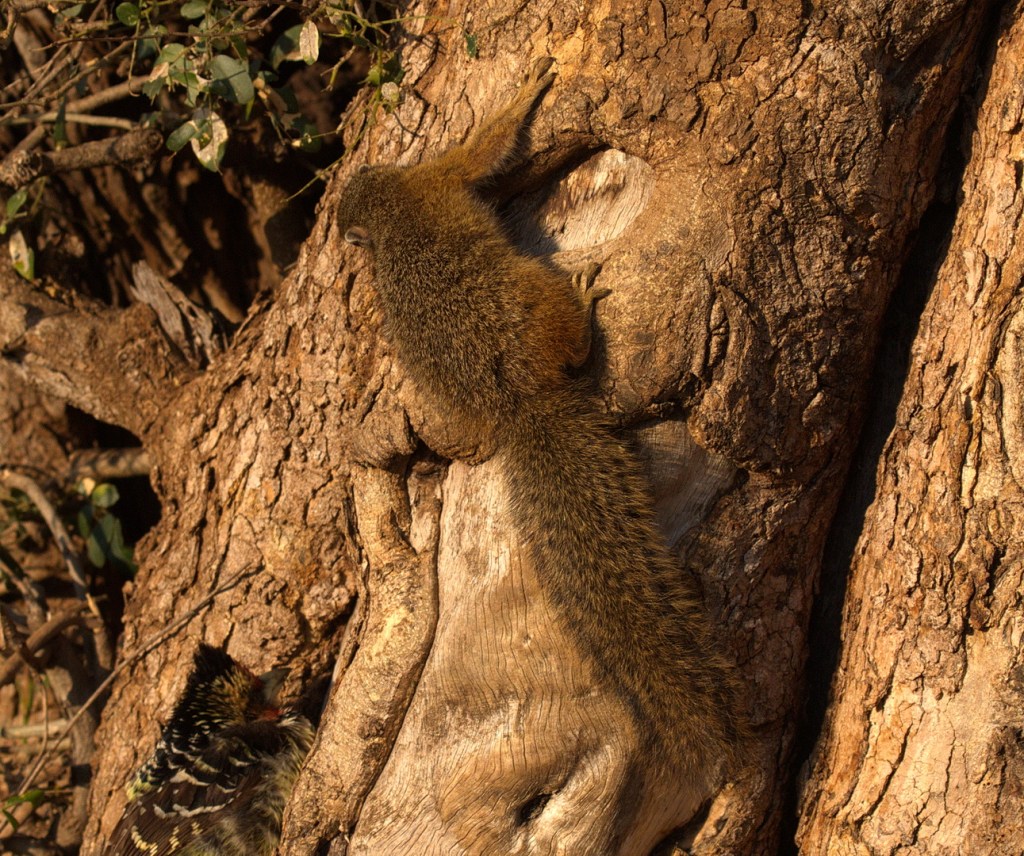
Squirrel
Squirrel
On one drive we saw movement in the bush beside us – about 10 metres in. What was that we thought. Initial impression was a Grey Duiker. Back we went to get a decent look. Fortunately the animal did not immediately run away – as they normally do. There it was – I think I can safely say that this was the first time either of us had ever seen one.
Sharp’s Grysbok
Birds in the area:
Greater Blue-eared Starling
African Fish-Eagle
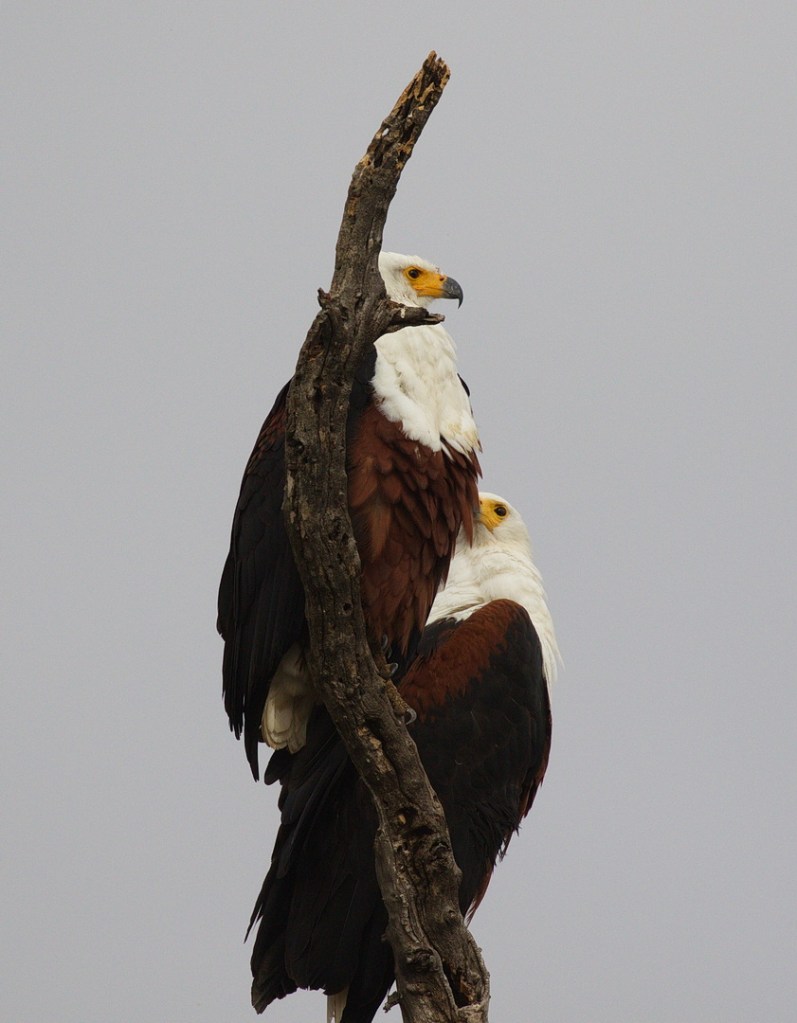
A pair of African Fish-Eagles
African Green Pigeons
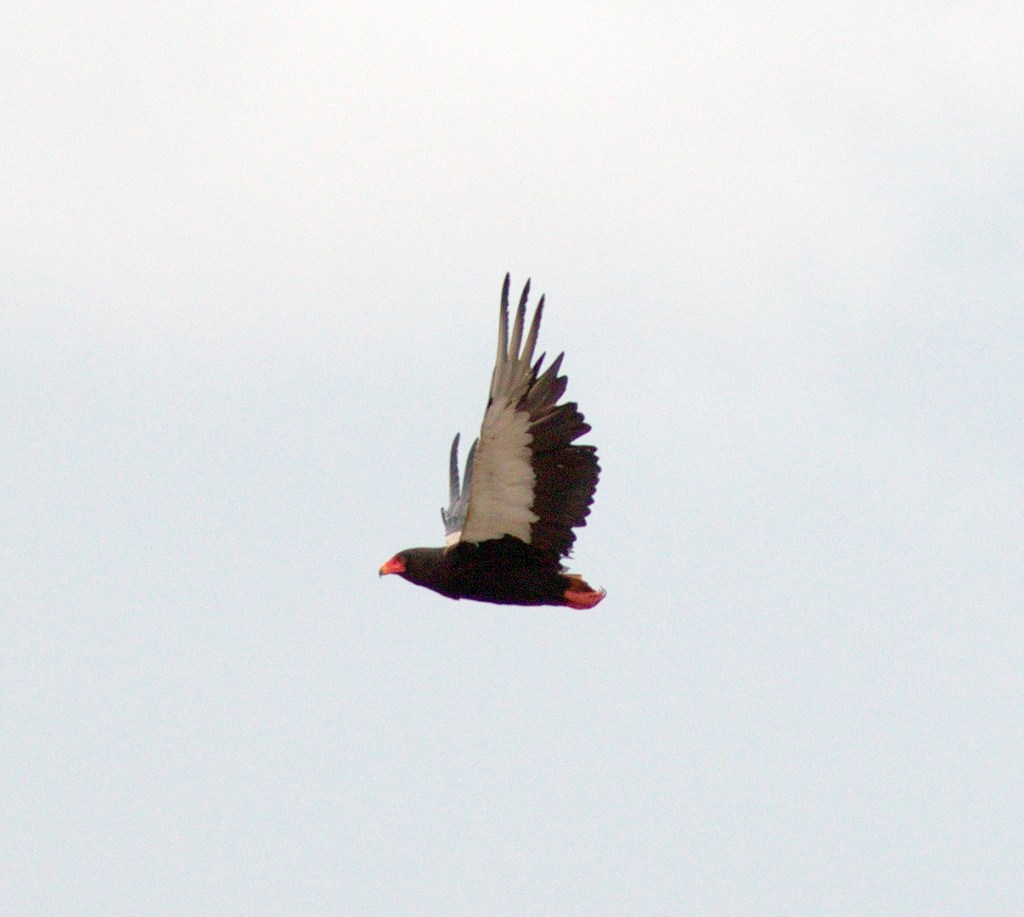
Batteleur
Bennett’s Woodpecker
Bennett’s Woodpecker
Black-winged Kite
Black-winged Kite
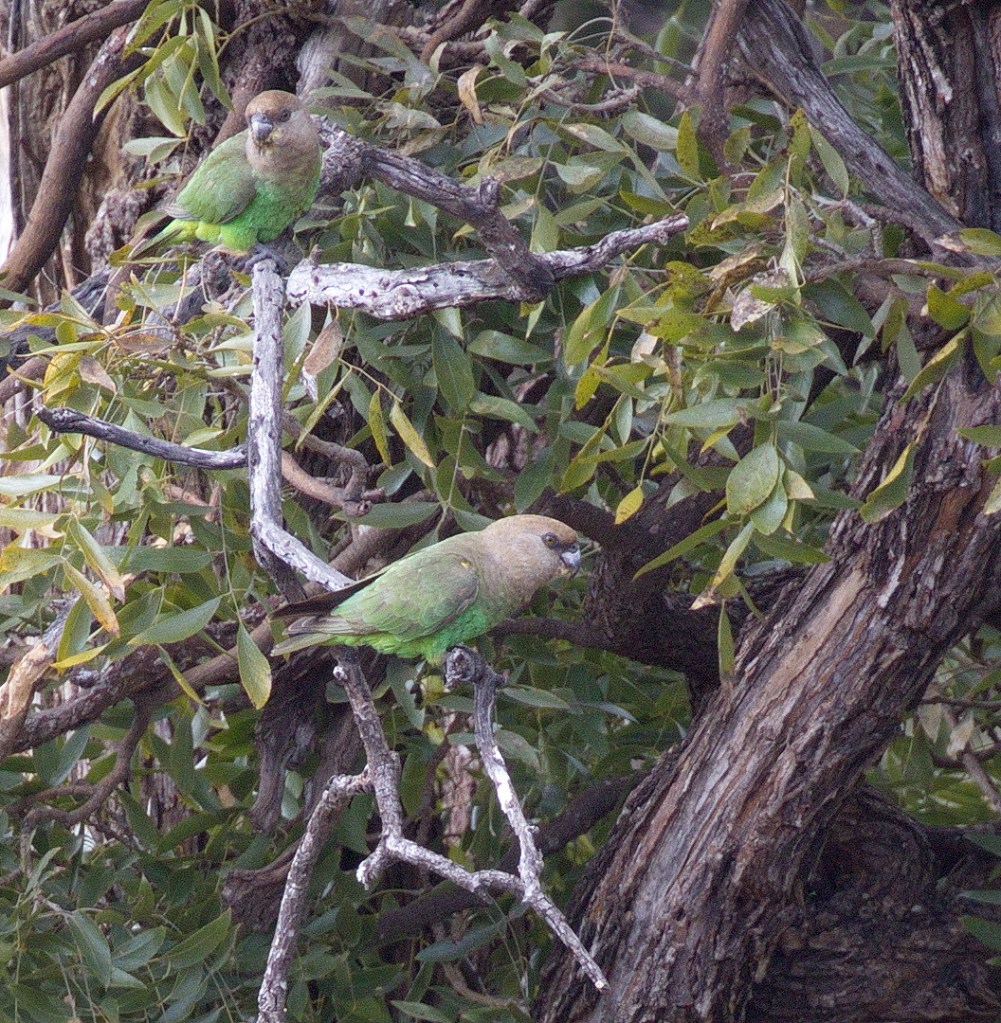
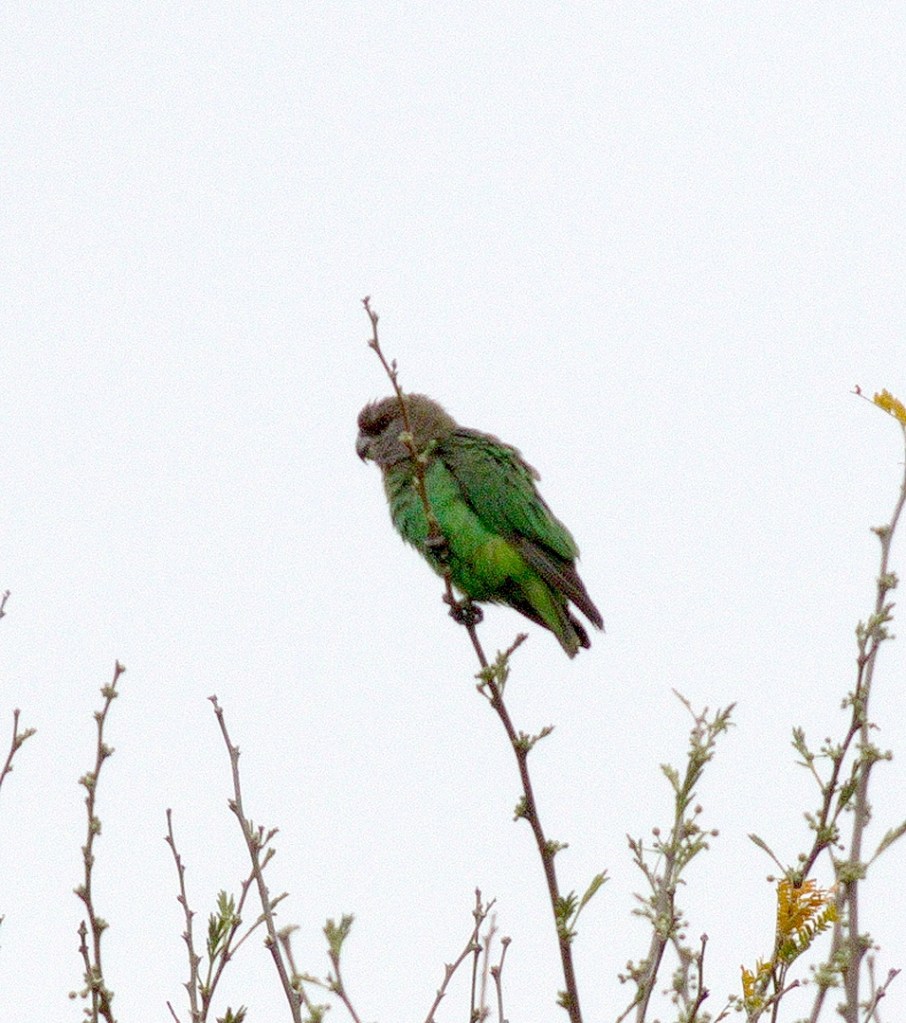
Brown-headed Parrot
Brown-headed Parrot
Burchell’s Coucal
Burchell’s Coucal
Goliath Heron
Goliath Heron drying off – looks like a begging bowl.
Green-winged Pytilia
Green-winged Pytilia
Grey Go-away-bird
African Grey Hornbill
African Grey Hornbill
Hpuse Sparrow
Red-billed Oxpecker
Malachite Kingfisher
Marabou Stork
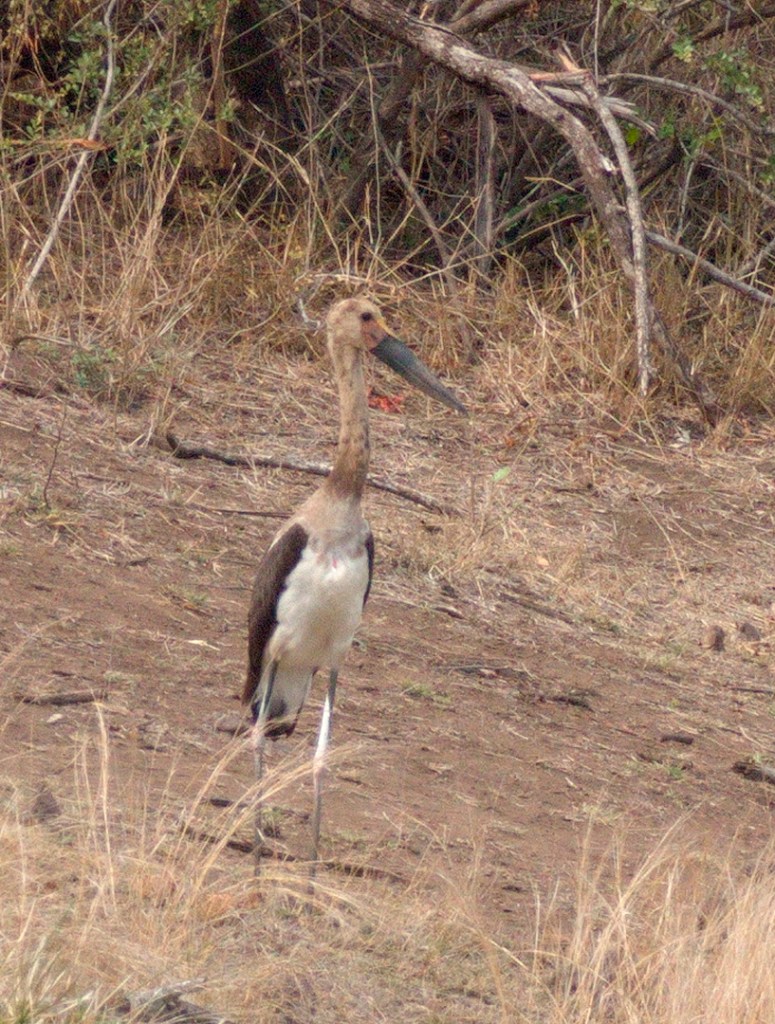
Marabou Stork – pretty ugly – which is it?
Marabou Storks
Rattling Cisticola
Red-billed Buffalo-Weaver
Red-billed Buffalo-Weaver
Immature Saddle-billed Stork
Southern Ground Hornbill
Wahlberg’s Eagle – pale phase
Wahlberg’s Eagle – pale phase
Water Thick-knee
Giant Kingfisher – male
Interesting geology in the area. Go to Red Rocks to see what I mean.
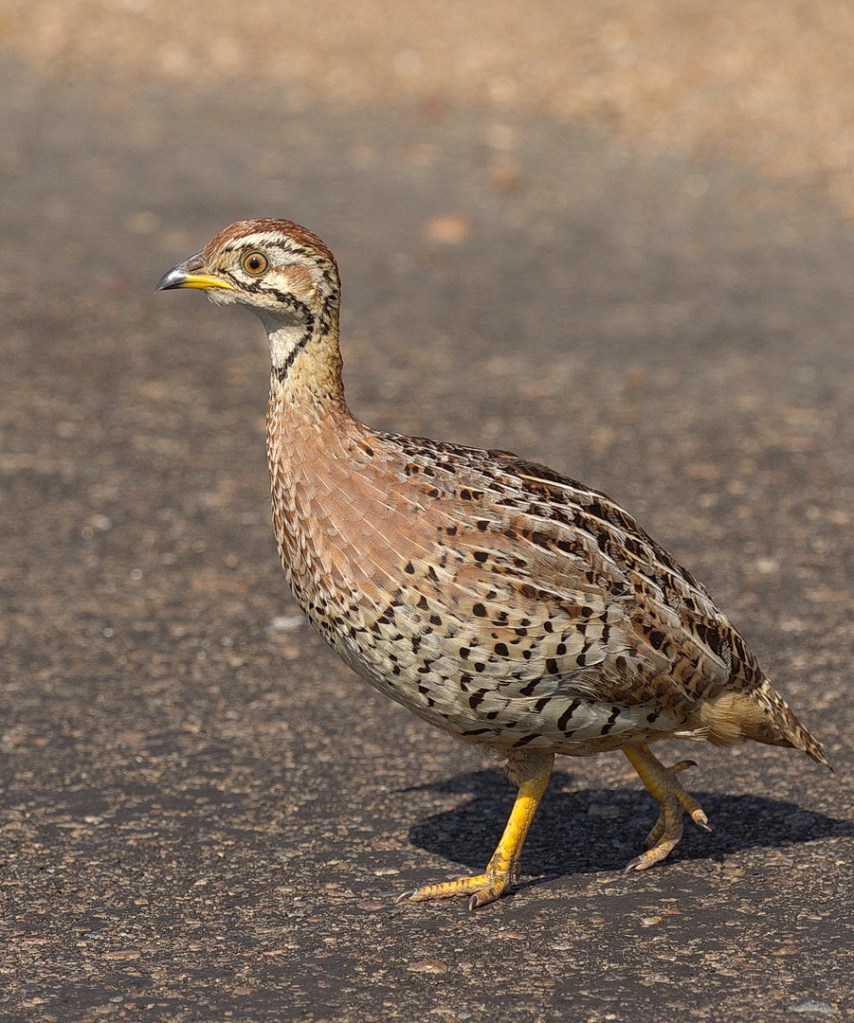
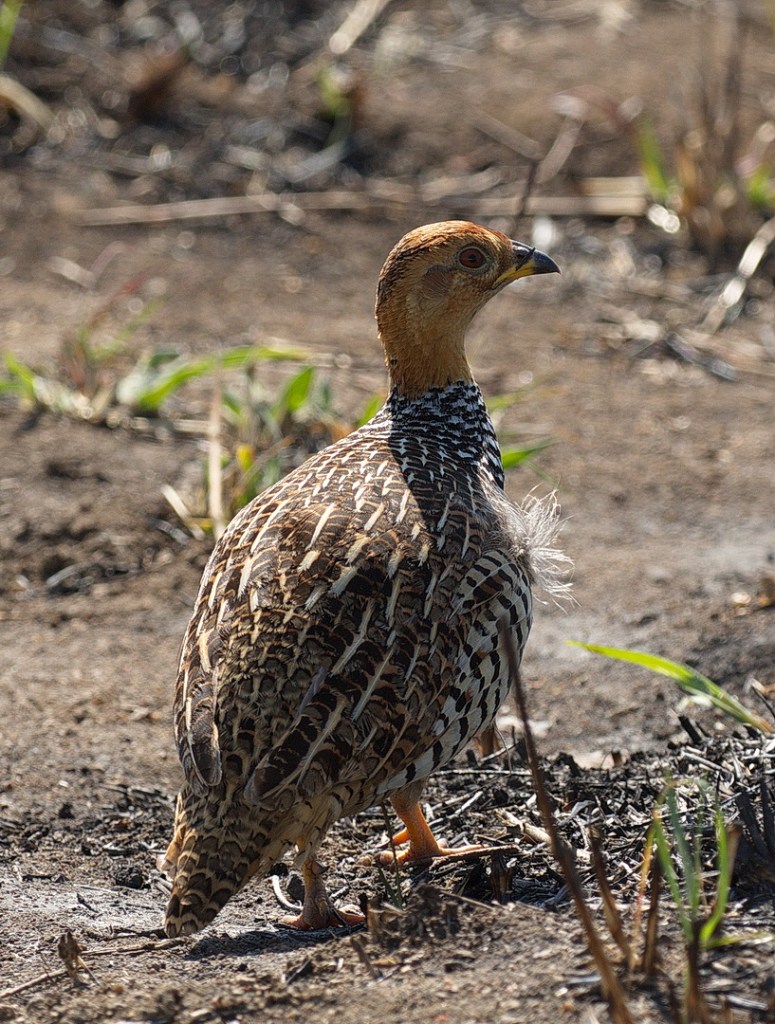
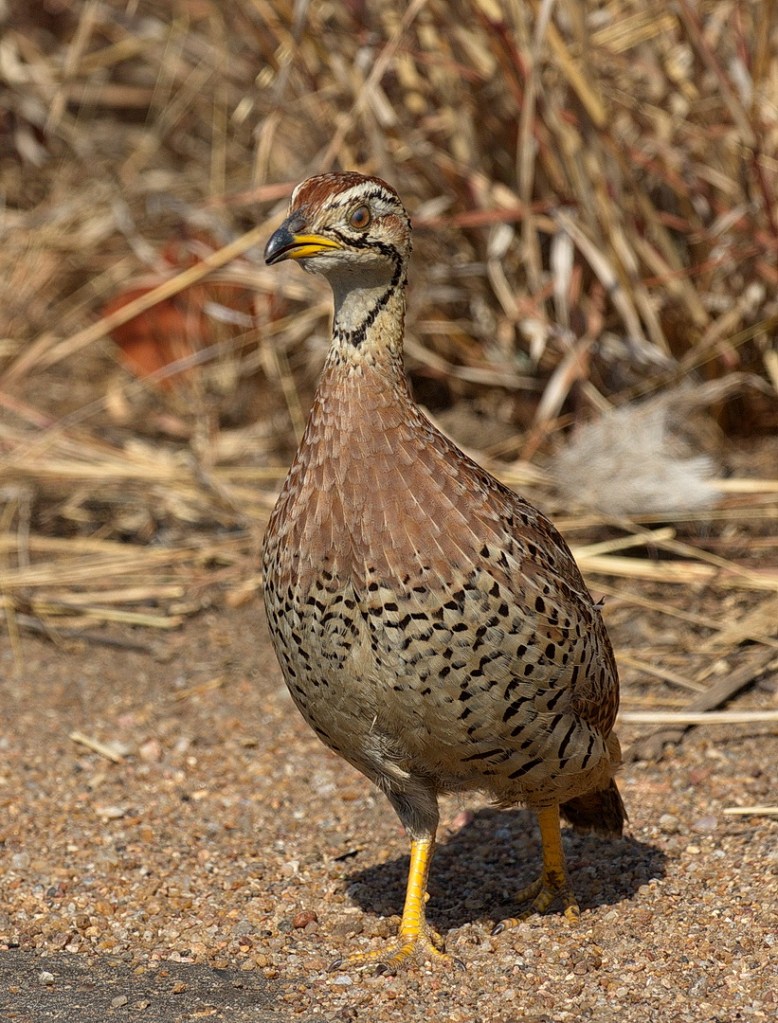
For a long time until quite recently our bogie bird was the Coqui Francolin. This visit to the Kruger was different as we saw it in several places. One instance was right in the road in front of us. A male on the left side and a female crossing over to join him.
Female
Male
Female
Male
Female
Male and Female
From Shingwedzi we back-tracked to probably our favourite camps in the Kruger – Tsendze Rustic Camp. Right next to the Mooi Plaas picnic site. The camp has no other accommodation other than camp sites with no power. It is a well shaded campsite with many fully grown trees. It is managed by Elena and Rodgers – superb hosts.
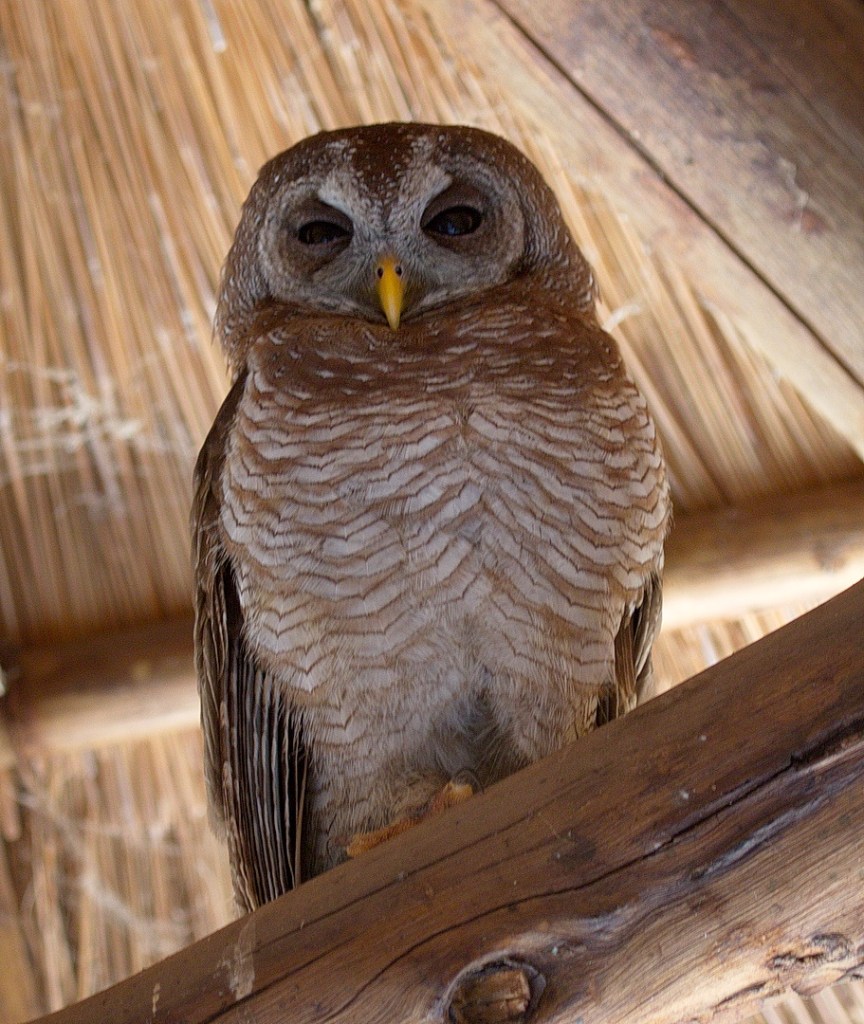
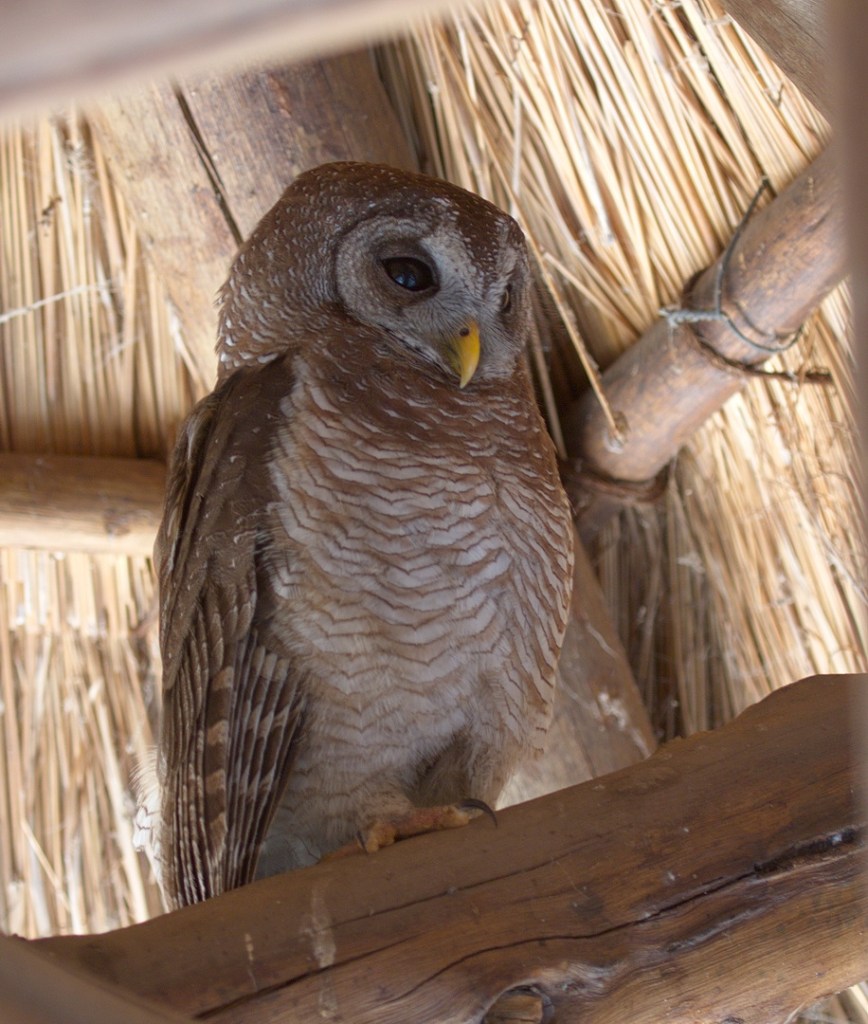
It is also known for its Owls and Owlets. We have seen African Scops Owl, Pearl-spotted Owlet, African Barred Owlet, Verreaux’s Eagle-Owl either in the camp or next door in the Mooiplaas picnic site. This time we added one more – the African Wood-Owl. Sitting above our heads as we washed our dishes in the wash-up area – pointed out to us by Elena who had remembered our interest for birds from previous visits.
We listened to the African Scops Owl all night each night, we heard the Verreaux’s Eagle Owl as well as the African Barred Owlet. The African Wood-Owl was silent but present.
African Scops Owl
African Wood-Owl
African Scops Owl
African Wood Owl
There are several areas around Tsendze which we always enjoy visiting. The low level bridge on the way to the Shipandani Hide and the Pioneer Dam at Mopani. Several spots on the H14 to Phalaborwa. And the Mooiplaas waterhole on the S49.
Amazingly we managed to visit all of these areas in the short time we were there. We did make a point of getting there early and setting up camp by lunchtime.
The low level bridge on the way to Pioneers dam was bird busy as usual. Black Crakes (frequently seen there) a Hamerkop and a Striated Heron were the main entertainers. A juvenile Blacksmith Lapwing chased the Striated Heron to the Hamerkop which faced off against each other in a friendly sort of way.
Black Crakes
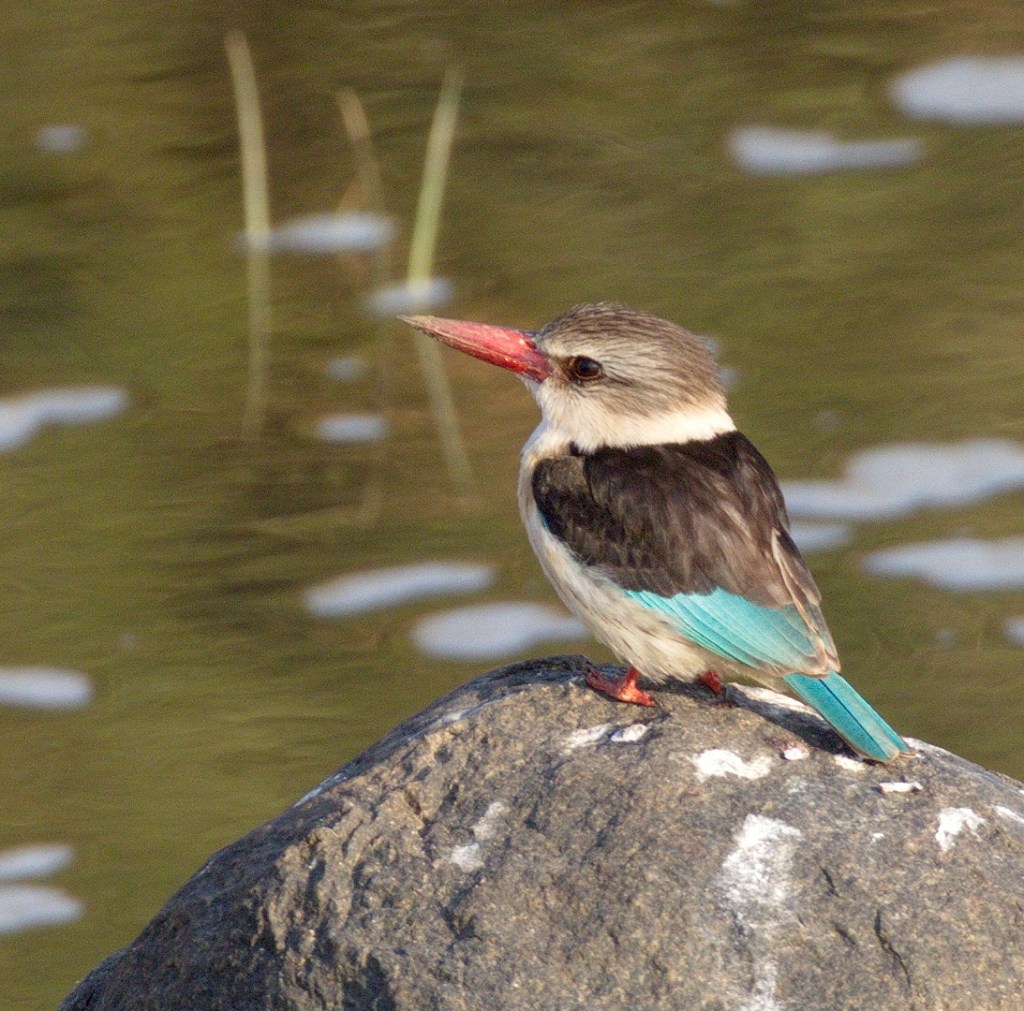
Brown-hooded Kingfisher made an appearance
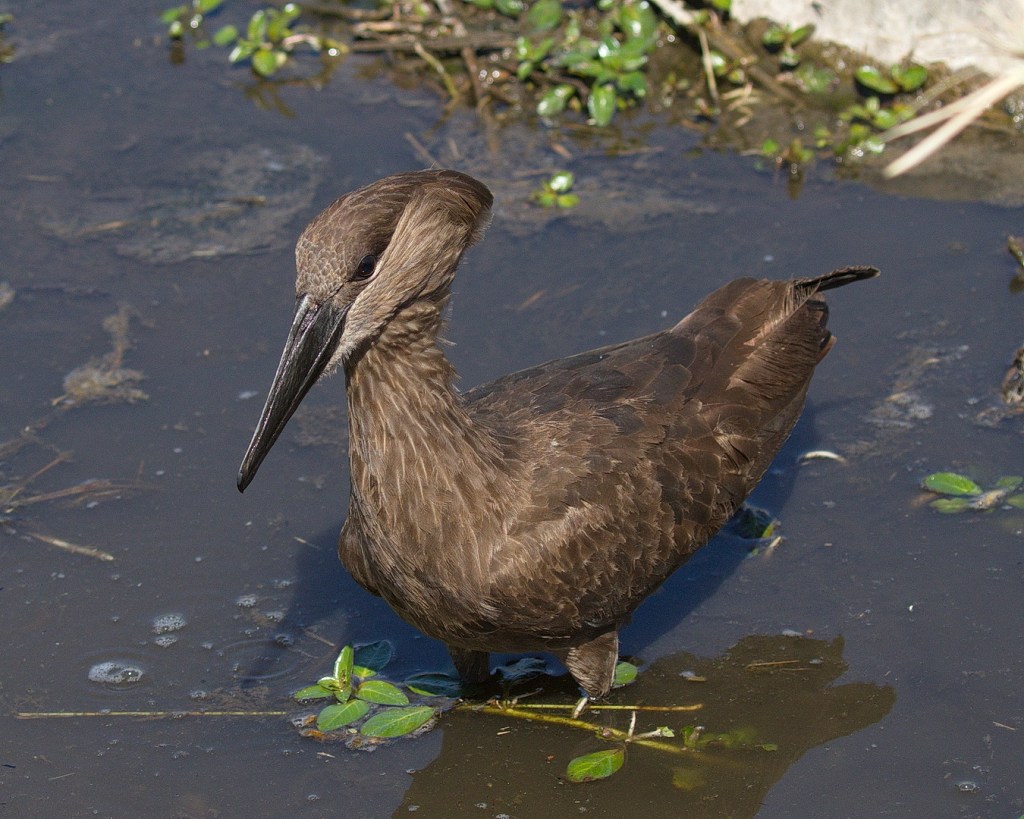
Hamerkop
Striated Heron
Hamerkop
Striated Heron
African Jacana
Lesser Striped Swallows collecting mud for their nest
A dribbling Hamerkop
An angry looking Striated Heron.
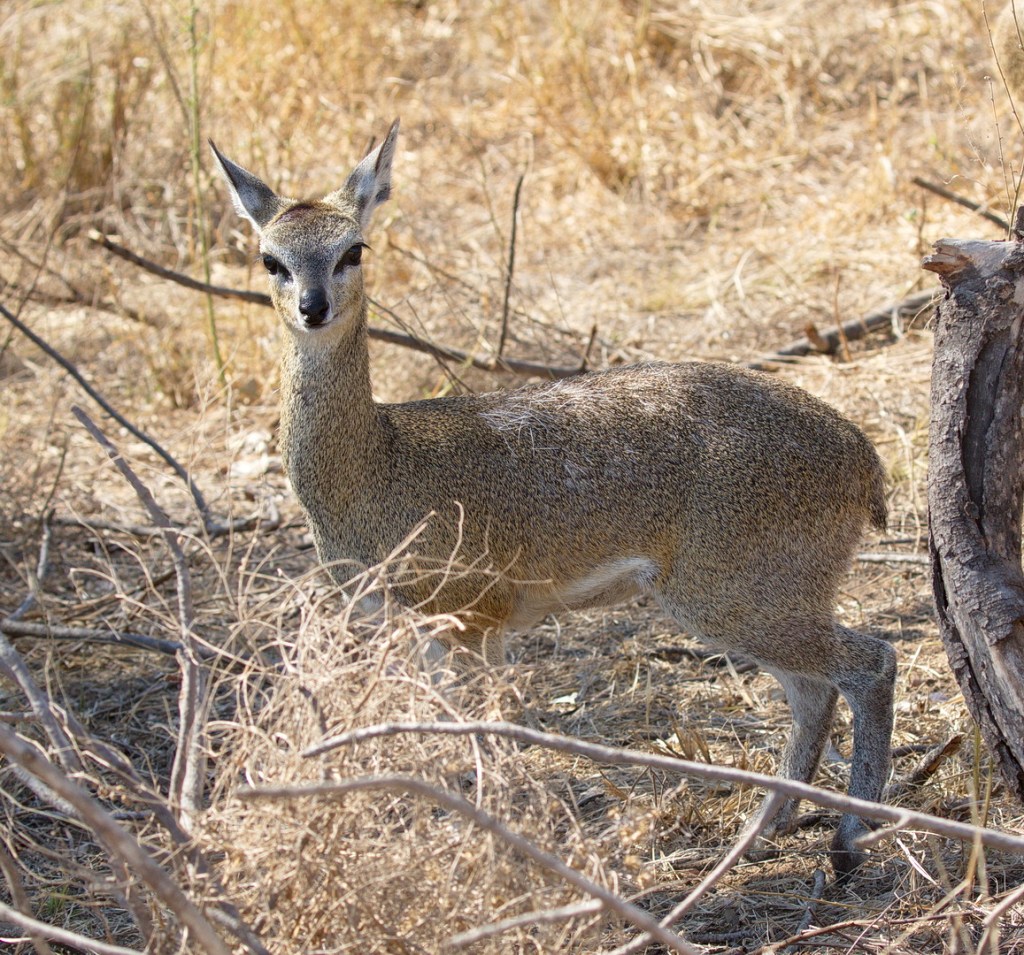
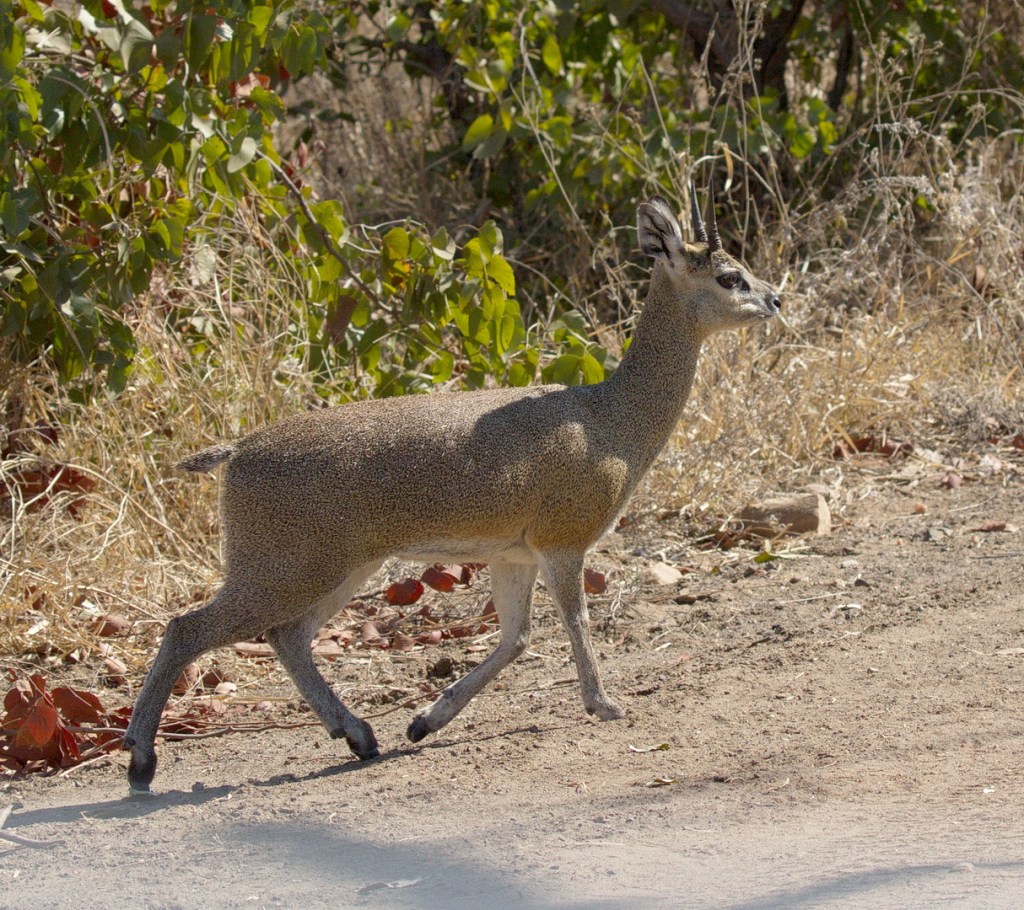
Immediately after the bridge is the Shipandani Overnight Hide overlooking this portion of the Tsendse River. As we approached the hide three Klipspringers blocked our path. Not what we expected to see so low down from their normal habitt on top of cliffs. s
Female
Dainty-footed Male
Male on the move
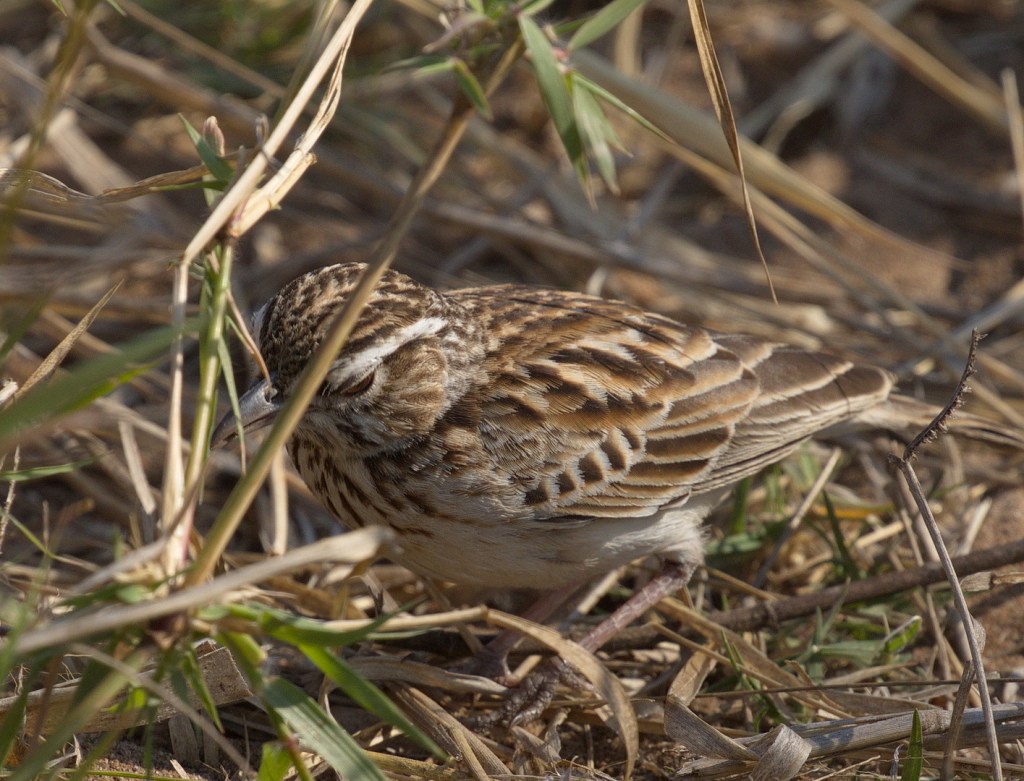
The Mooiplaas Waterhole is often busy with Elephant drinking and others like the Blue Wildebeest slating their thirst or hanging around. However one of the birds we look for there is the Chestnut-backed Sparrow-Lark.
Chestnut-backed Sparrow-Lark
Adult Blue Wildebeest
Blue Wildebeest juvenile
Chestnut-backed Sparrow-Lark
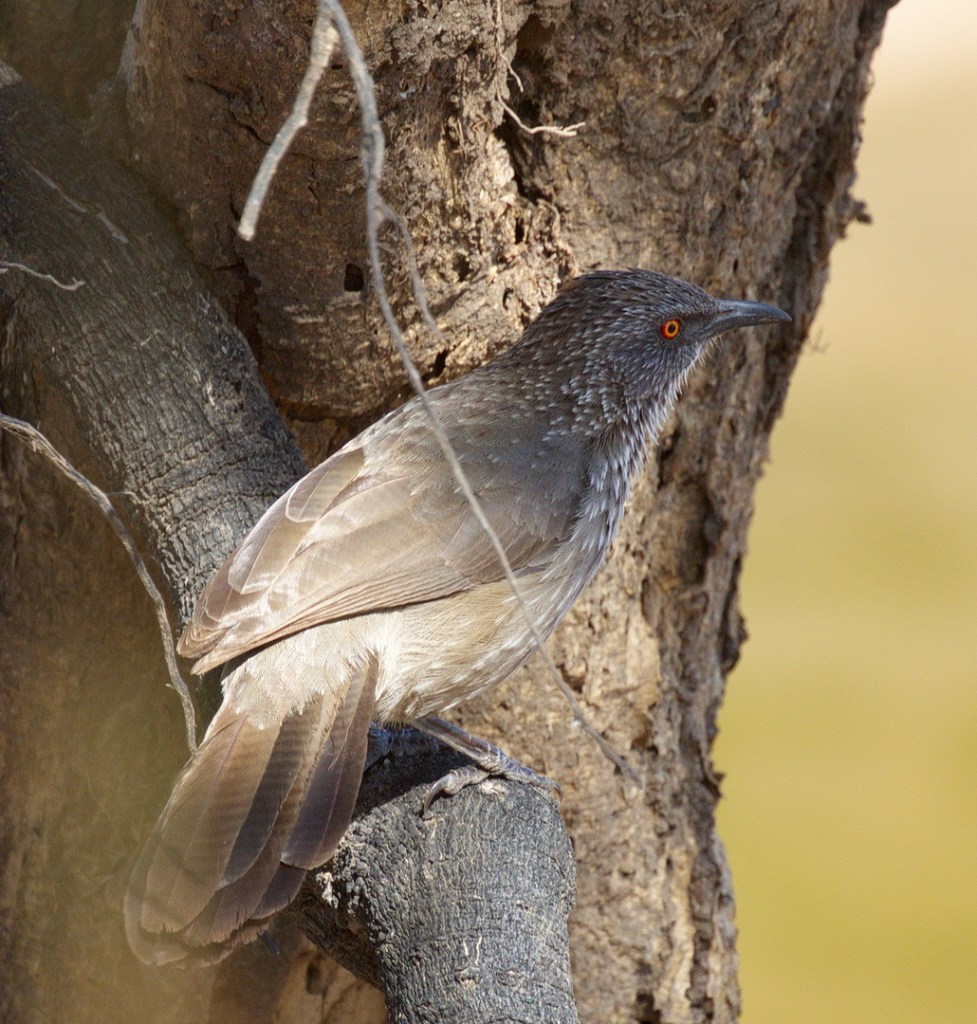
Arrow-marked Babbler
Sabota Lark
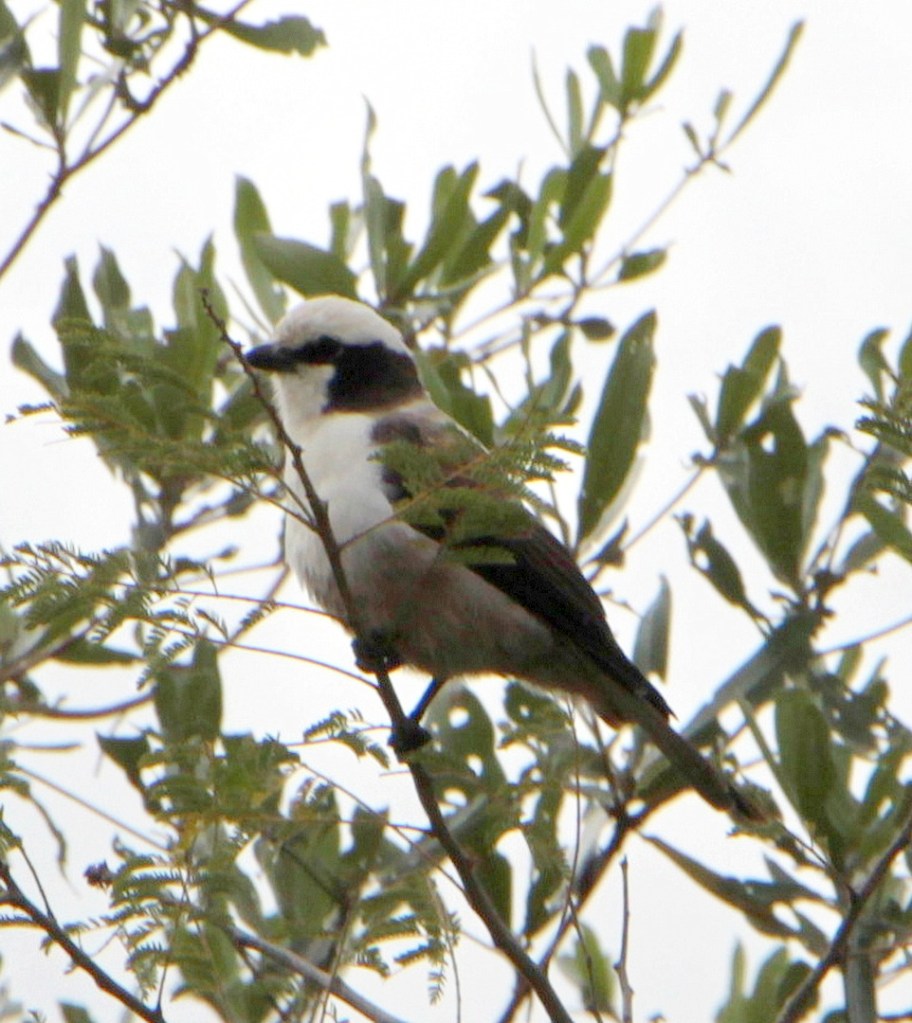
A pair of White-crowned Shrikes.
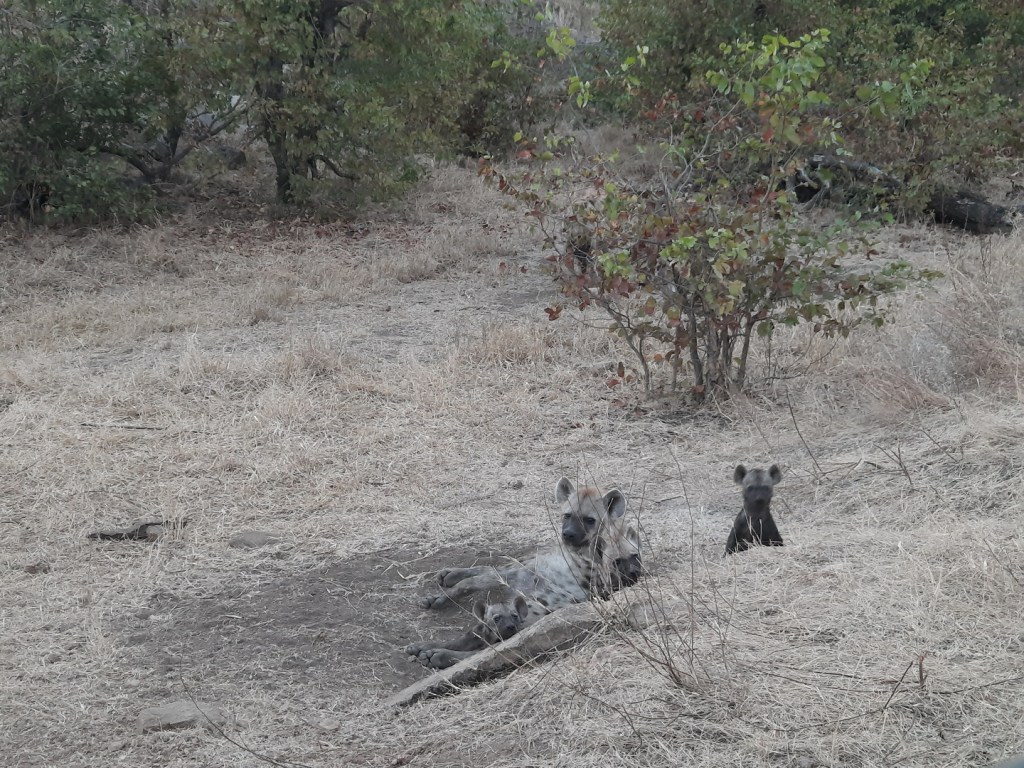
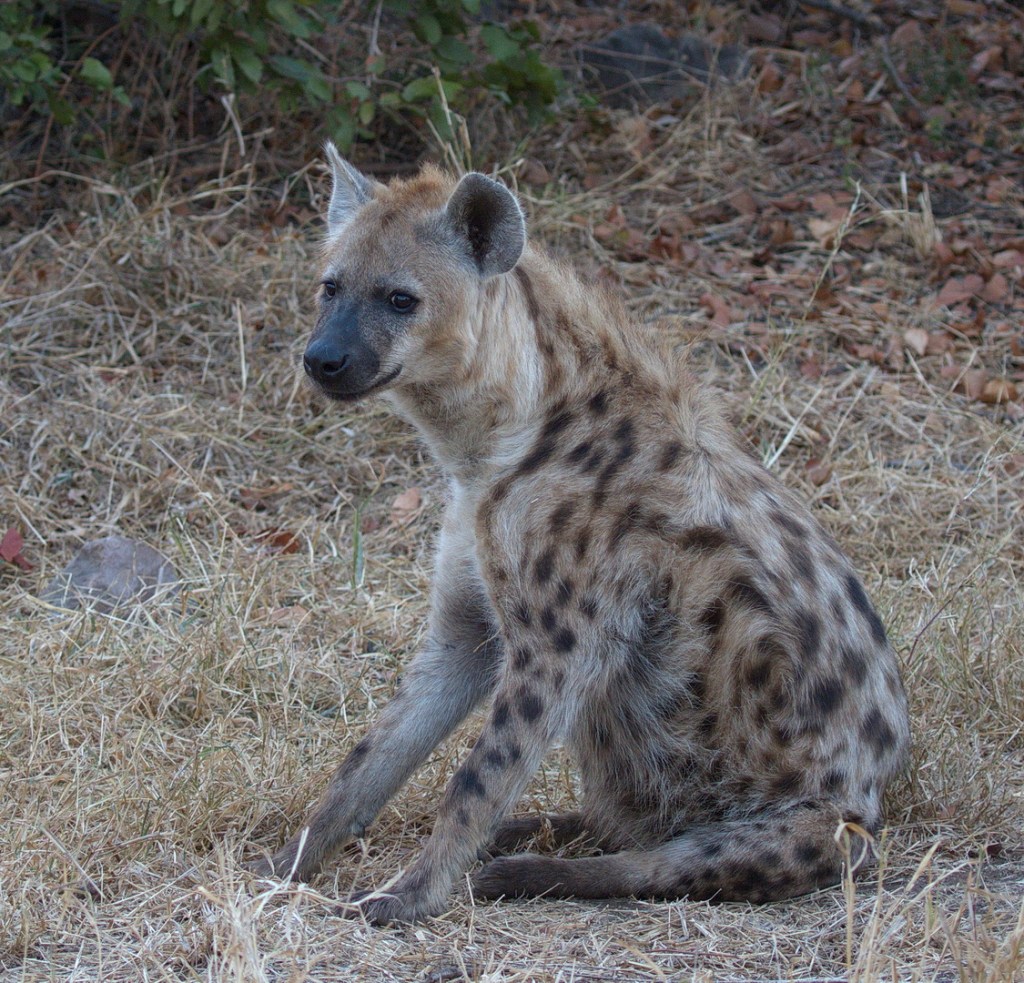
At the start of the H14 tar road heading south-west to Phalaborwa we have usually encountered an abundance of Hyenas and their pups every time we have driven it. Again we saw several groups of Hyenas hanging around the culverts.
Hyena
Hyena with pups
Cute black Hyena pup
Hyena
The Magpie Shrikes serenaded us as we drove. We then came across an obliging male Double-banded Sandgrouse which stayed by the road as its partner disappeared into the bush.
Magpie Shrike
Male Double-banded Sandgrouse
After a little while we came to the low level bridge across the Letaba River. Fortunately there are lay byes halfway across the bridge where one can park and look around. We must have spent at least an hour here and not only saw a goodly number of birds but we also listened to a Lion roaring from time to time in the veldt on the other side of the bridge. We looked for him along the river bank but he was moving about in the bush.
River Bed
River Bed – the water was running further to the left bank.
One of the special birds we saw by chance:
Greater Painted Snipe – male
Greater Painted Snipe – male
After an hour or more there, we headed for the 2 short loops on the left after the Shivulani Lookout point. The loops took us down beside the river with some slow moving shallow water.
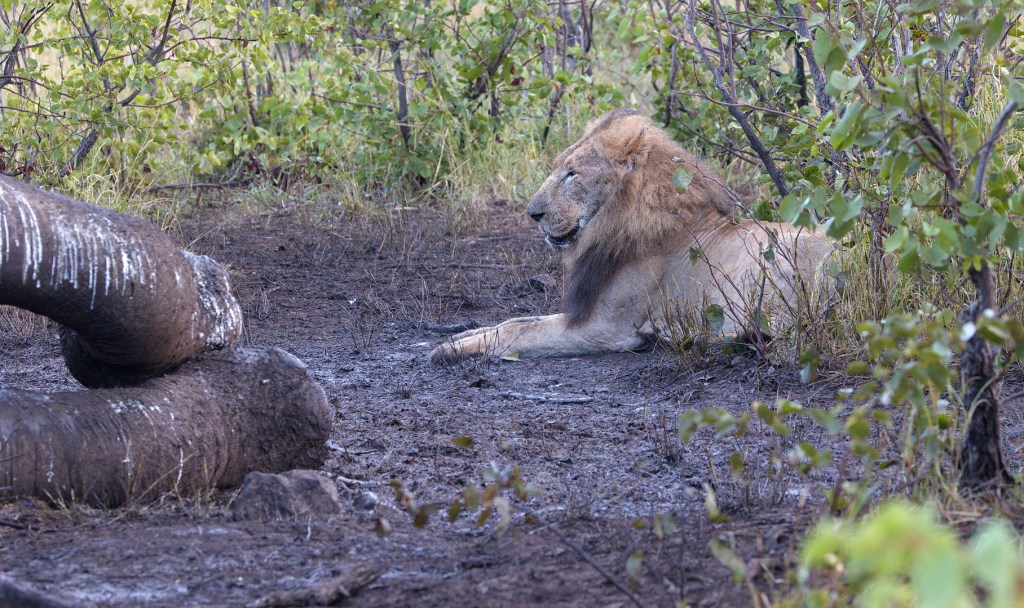
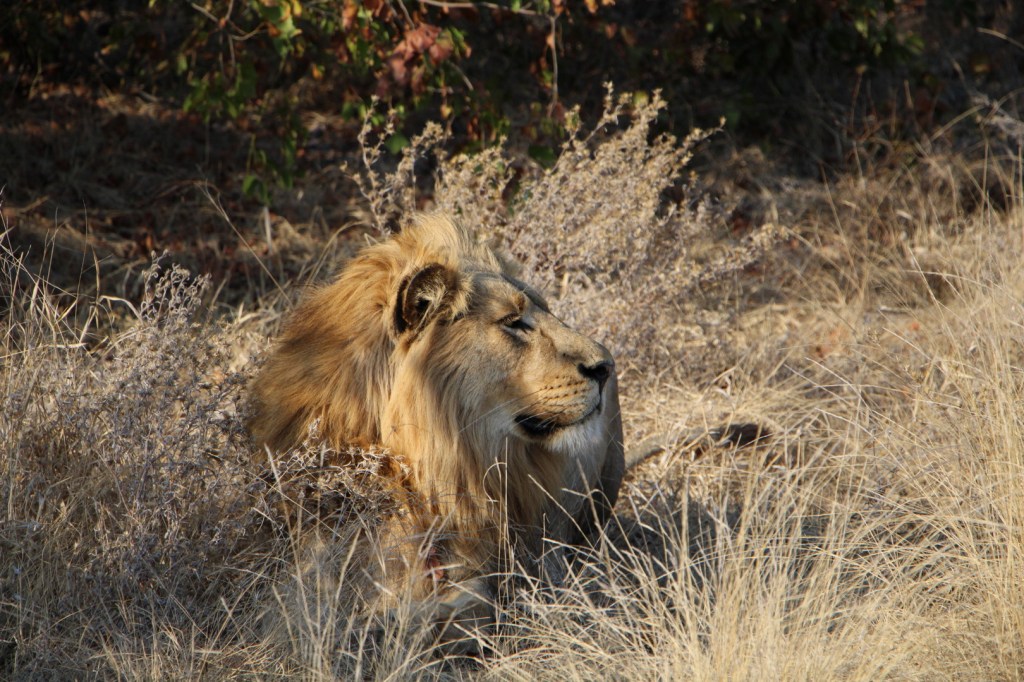
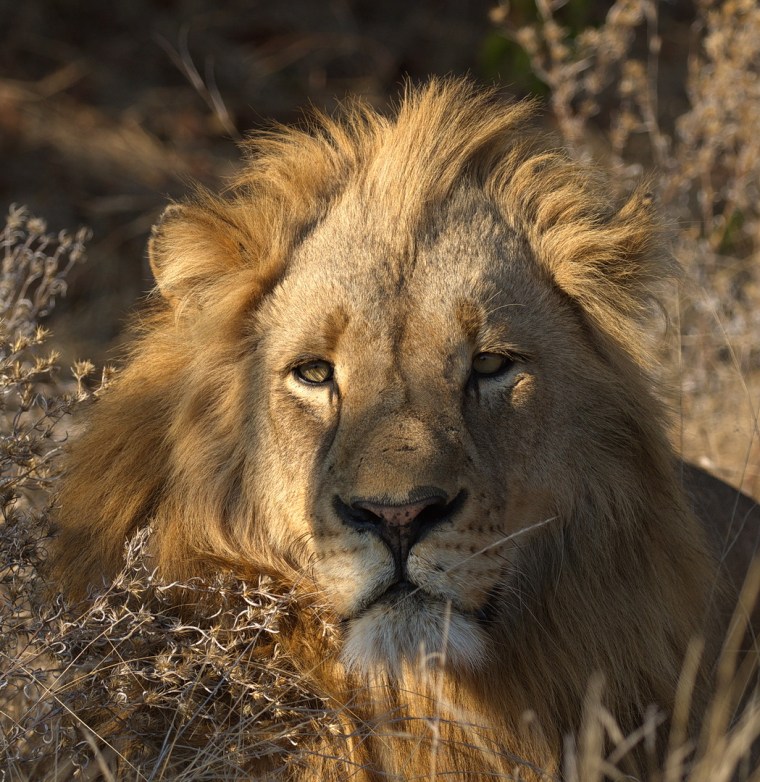
However just after leaving the bridge we noticed an animal as it just entered the scrub on the left as we approached. Not thinking much of it we cruised up alongside it – only to discover it was a male Lion lying on the verge. What a male! All on our own, we stopped beside it and enjoyed its company and its shaggy hairstyle.
King of the Beasts
Eventually we arrived at the loop roads. A little spur off to one side provided an ideal place for a cup of tea and biscuits. The previous time we had seen several hyenas lolling about in the water. Not so fortunate this time. But we did see a pair of African Pied Wagtails trolling the shallow river.
On the second loop there is a lookout point high over the river. From here we admired the antics of a Honey Badger looking presumably for ants around the base of several trees. At one a Groundscraper Thrush joined him for a snack.
Groundscraper Thrush
Honey Badger
Honey Badger in full stride.
Sadly we had to leave Tsendze after 2 nights. Nthakeni Bush and River Camp beckoned us. Another one of our favourite camps in the area.
We followed the blue line north
Nthakeni Bush and River Camp is only 5 kms outside the Pafuri Gate situated on the Mutale River with vegetation similar to the Pafuri Picnic site. It is run by Annelize and Kobus who cannot do enough for you.
Large road sign
2 and a bit kms to the site.
On the way to the Camp you cross a low lying bridge over the Mutale River. The locals can be seen doing their laundry.
The water is so clear and clean
Nthakeni Camp has cottages and campsites, a pool and a clubhouse with an honesty bar. The campsites each have their own ablution and kitchen facilities.
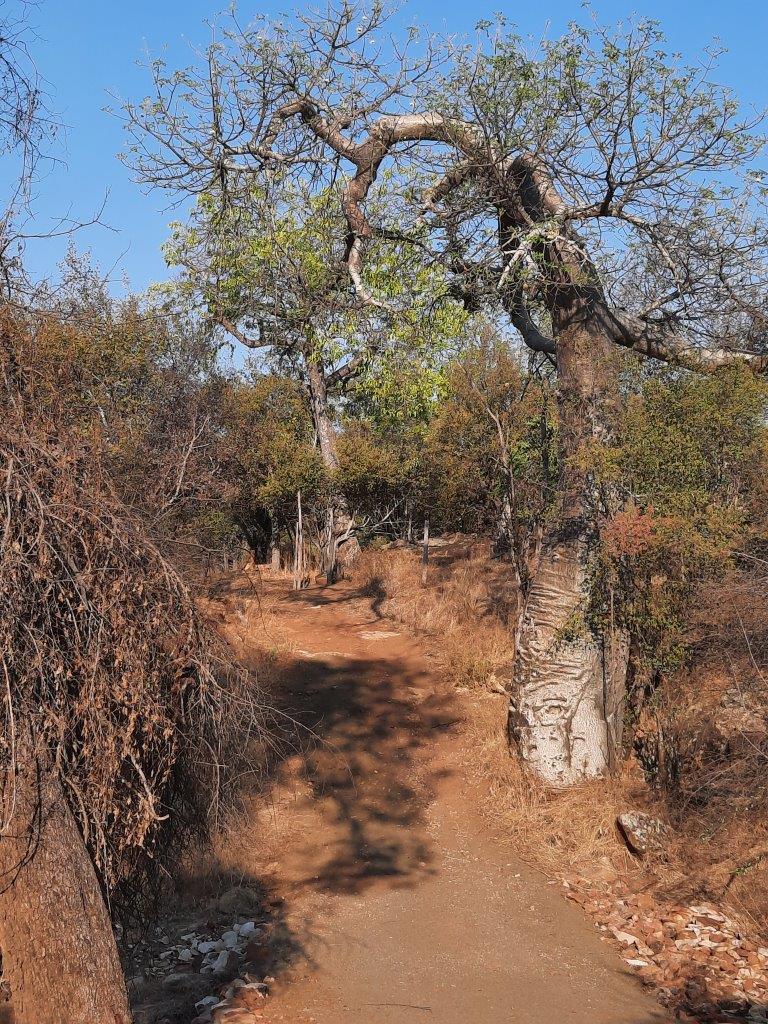
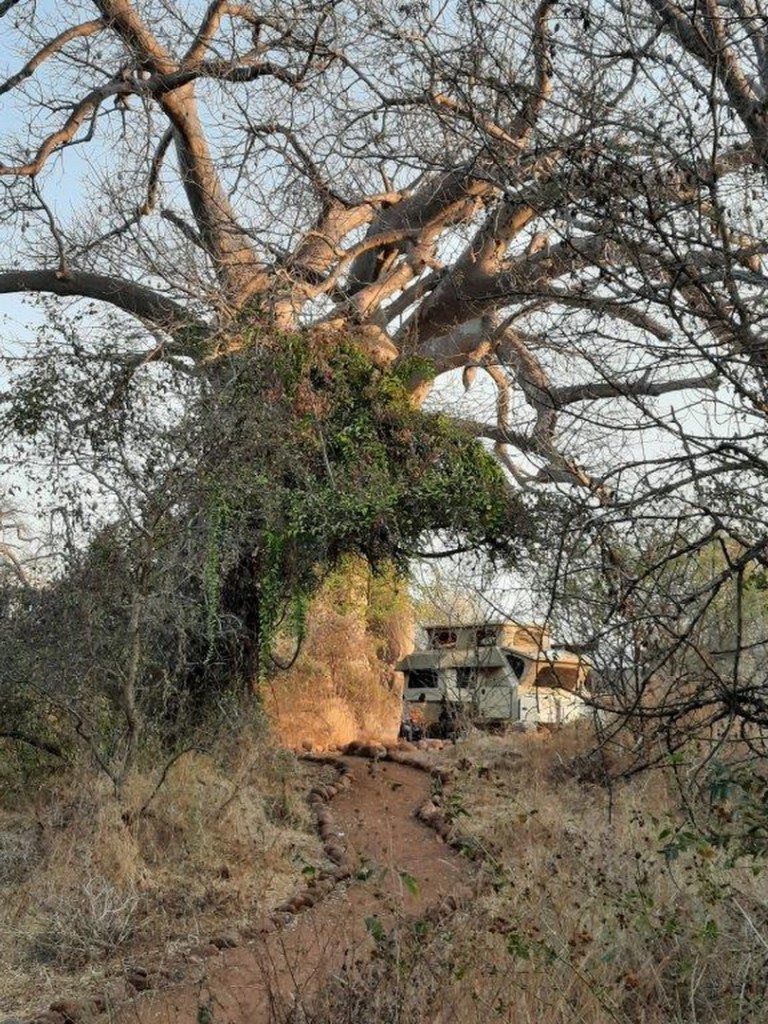
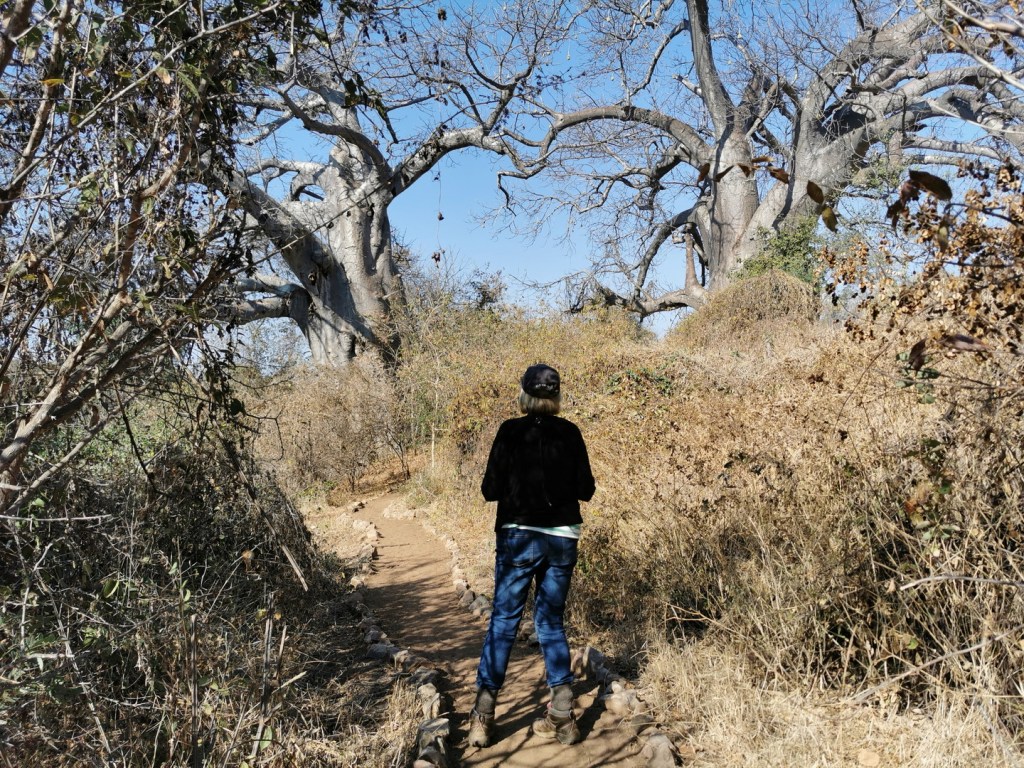
There are also a couple of trails well laid out and kept in good condition. They meander through the bush, close to the massive Baobabs, past the Baobab campsites, alongside the river and up the hills for a scenic view.
One of the Baobab Campsites
Path up to a Baobab campsite
Trail
On the trail
Pleasant cattle bells rang all day on the opposite bank.
When we tried to book for our first night (of 3) nights they had no campsites available. However they offered us a cottage for that night and asked us to pay what we could afford. The cottage was close to and facing the Mutale river.
Cottage for the first night
Our Campsite for the next 2 nights and its view.
Our Campsite
Our View
Our View
Our View
It takes less than half an hour to get into the Kruger through the Pafuri entrance gate and down to the birding area of the Pafuri bridge, picnic site and Crooks’ Corner. Excellent for the birding we wished to do there.
Two mornings were spent visiting the Pafuri area. Back midday to enjoy the campsite. Our last morning we walked one of the Nthakeni trails and had good sightings of the abundant bird species. Here are some of the photos we took of birds around the camp.
Common Scimitarbill
Golden-breasted Bunting
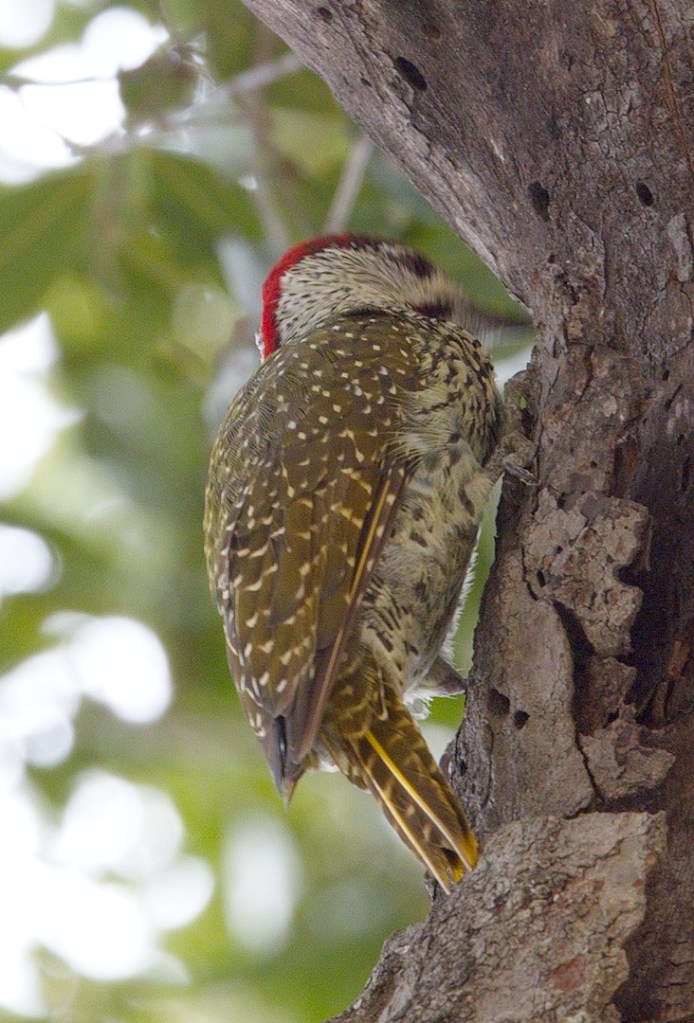
Golden-tailed Woodpecker
Golden-tailed Woodpecker
Golden-tailed Woodpecker
Green-winged Pytilia
Grey-backed Cameroptera
Kurrichane Thrush
Meve’s Starling
Red-headed Weaver
Village Indigobird
Village Indigobird
White-browed Robin-Chat
White-throated Robin-Chat
As with the rest of the Kruger our birding was also quiet in the Pafuri region but we did have a couple of special sightings.
Grey-necked Bushbuck
Grey-necked Bushbuck
Nyalas
Warthog
White-browed Sparrow-Weaver
White-crowned Lapwing
White-crowned lapwing in reflection
As we neared the bridge from the picnic site we noticed a falcon-like bird at the top of a distant bare tree. Resting the scope on a bag over car window ledge we were thrilled to see a Dickinson’s Kestrel. No apologies for the quality of the photos. Rather distant!
Dickinson’s Kestrel
Dickinson’s Kestrel
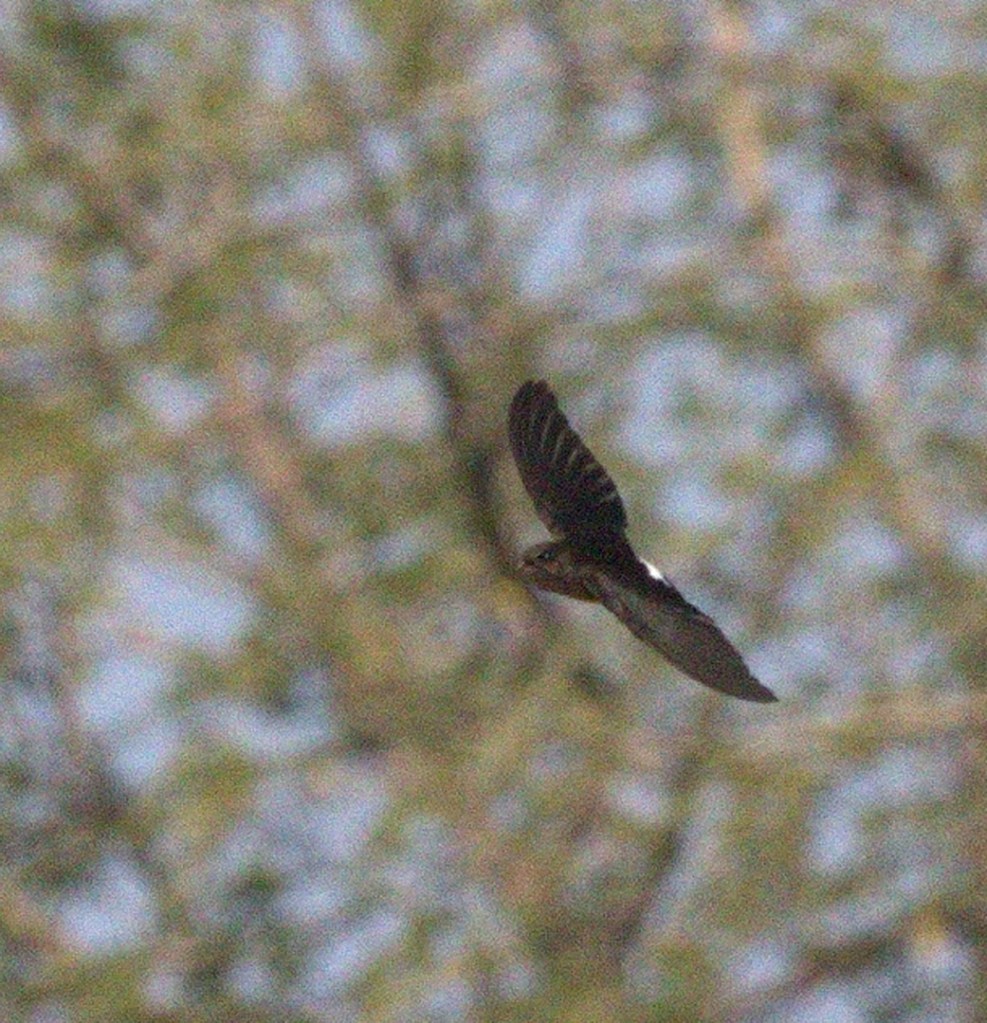
And then at the bridge we were treated several times to a Bohm’s Spinetail flying overhead. Eight images to scroll through – not all of any quality but there to give an impression of the way they are shaped.
And that is it for our time visiting the Kruger. Part 2 will include the camps we visited after Nthakeni until we got home. Tshipise (and The Big Tree), Boelamien River Camp, Blouberg Nature Reserve, Mapungubwe National Park and Thorn Tree Bushcamp in Dinokeng.
We arrived at Tsendze after checking in at Mopani. A bit of a shlep especially if you are coming from the south as it is about eight kms north of the camp. The camp is well treed and great for birding. It is right next to the Mooiplaas picnic site and you can walk through if you ask permission (saves driving the three kms all the way round). The picnic site is also well treed and right next to the Tsendze river so birding is excellent there too.
Campsite showing the position and level ground
The one thing we loved was the early morning dawn chorus. We (mainly Sally) identified numerous different birds calling before getting out of bed.
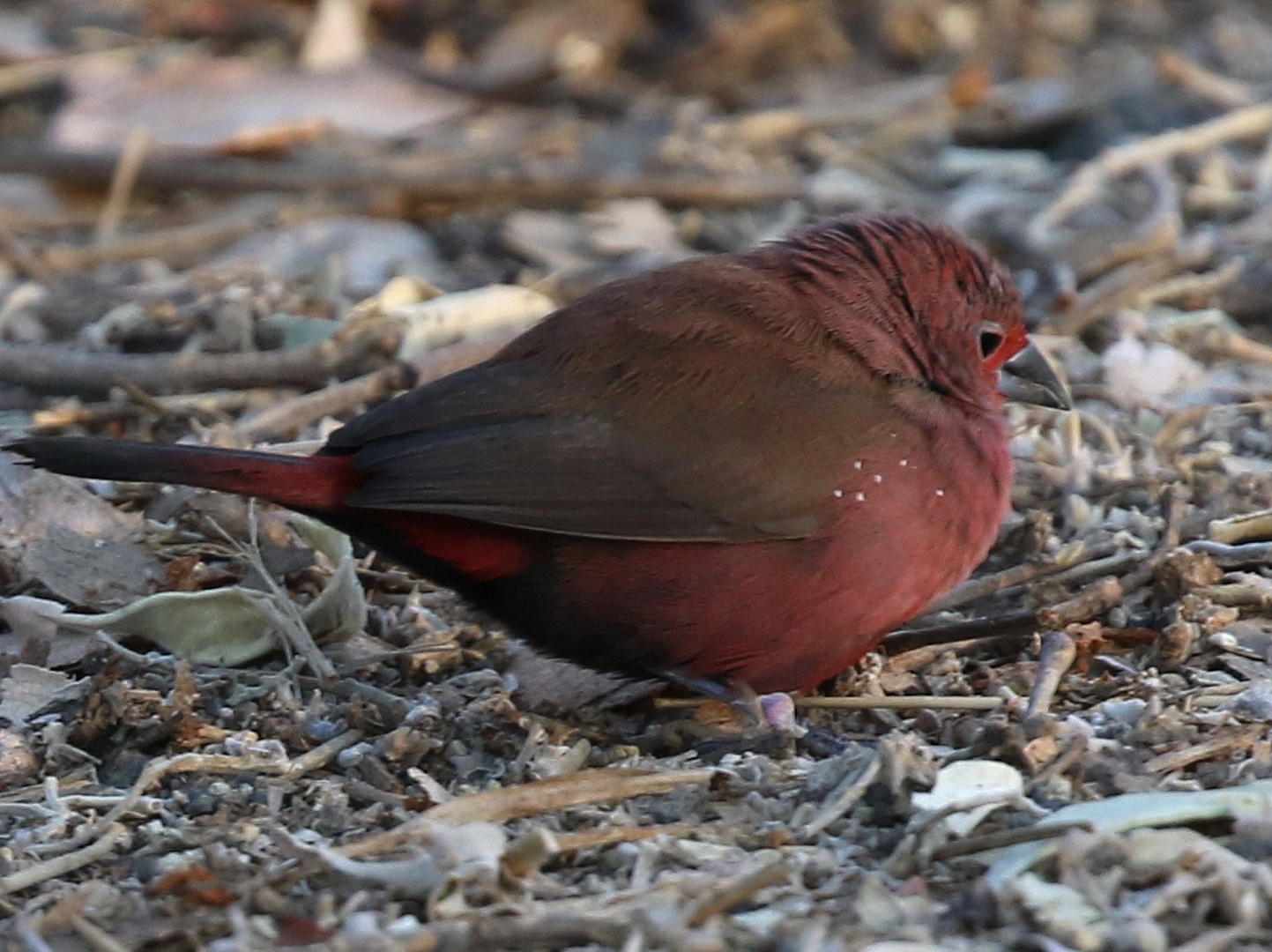
Jameson’s Firefinch
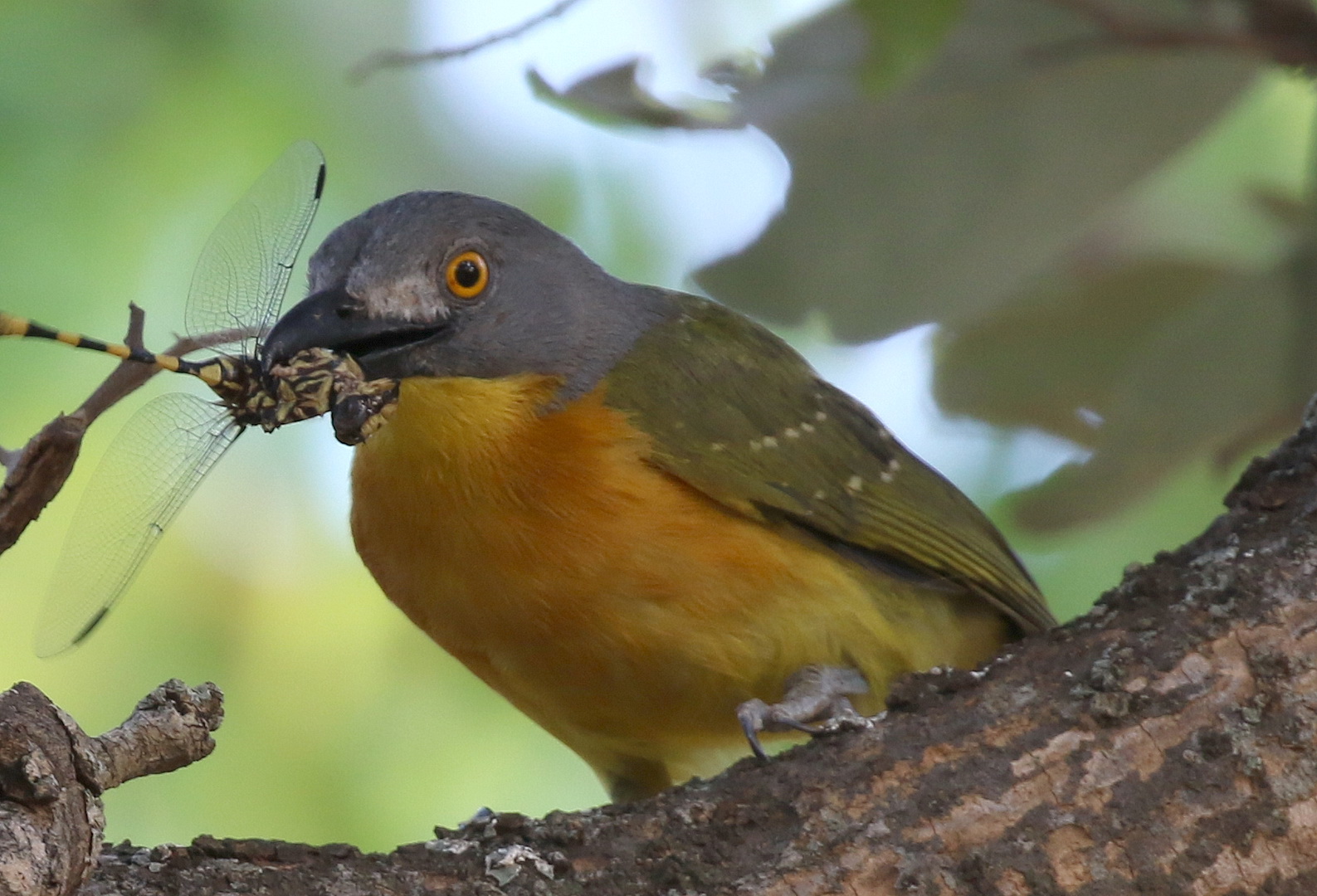
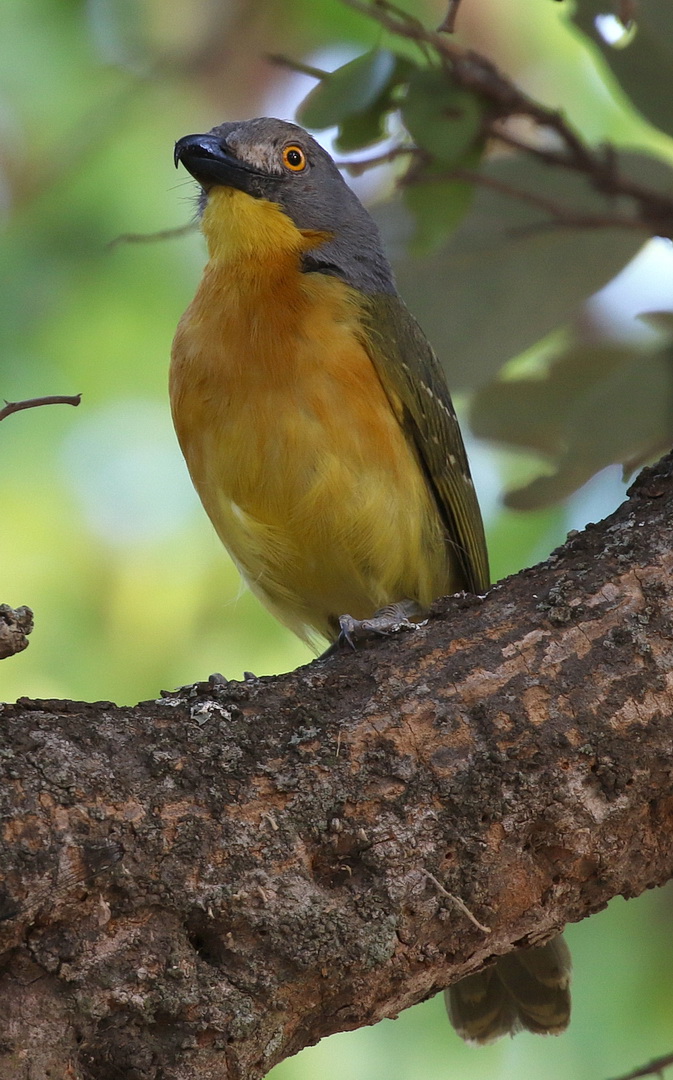
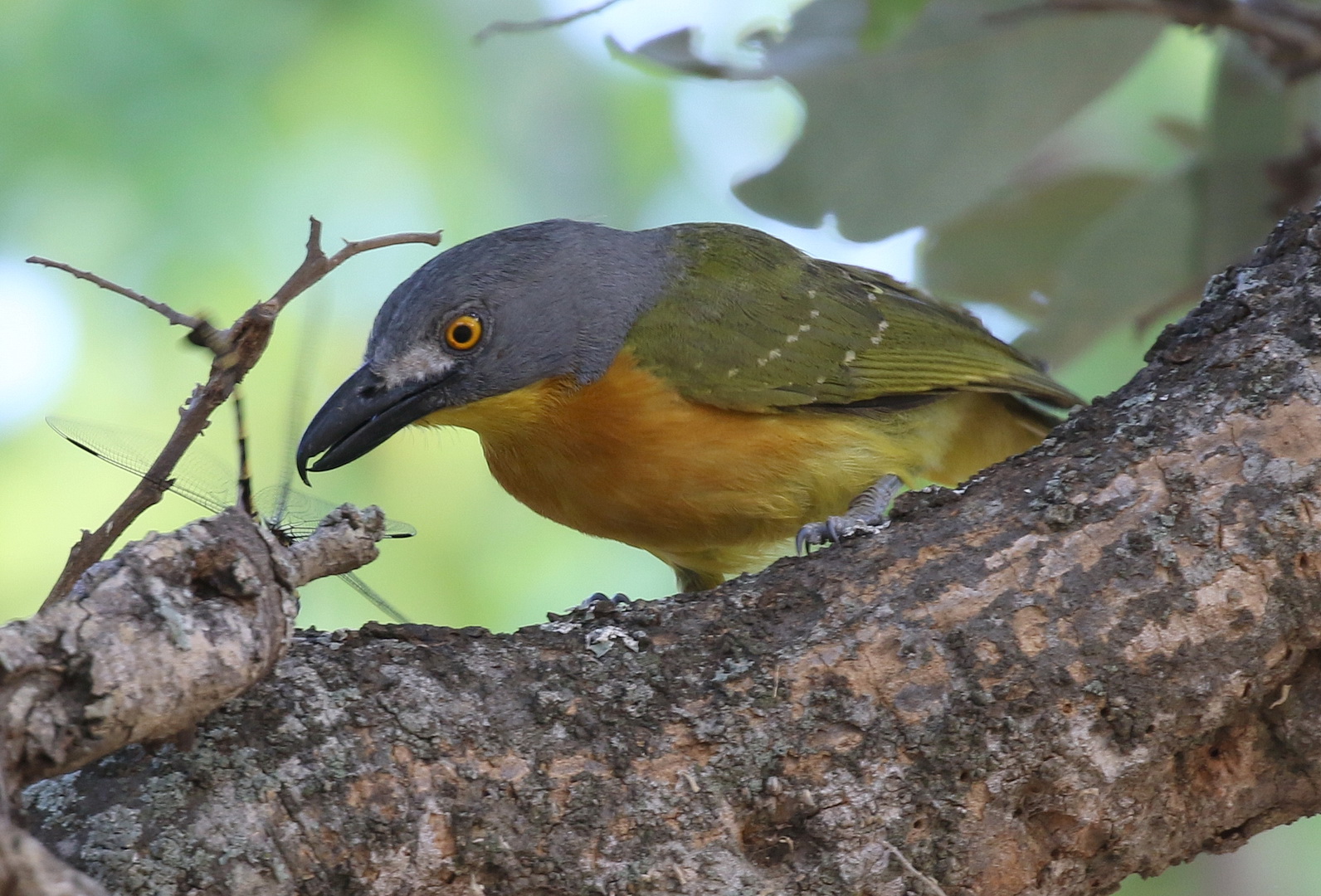
Grey-headed Bushshrike
Jameson’s Firefinch
Grey-headed Bushshrike
Grey-headed Bushshrike
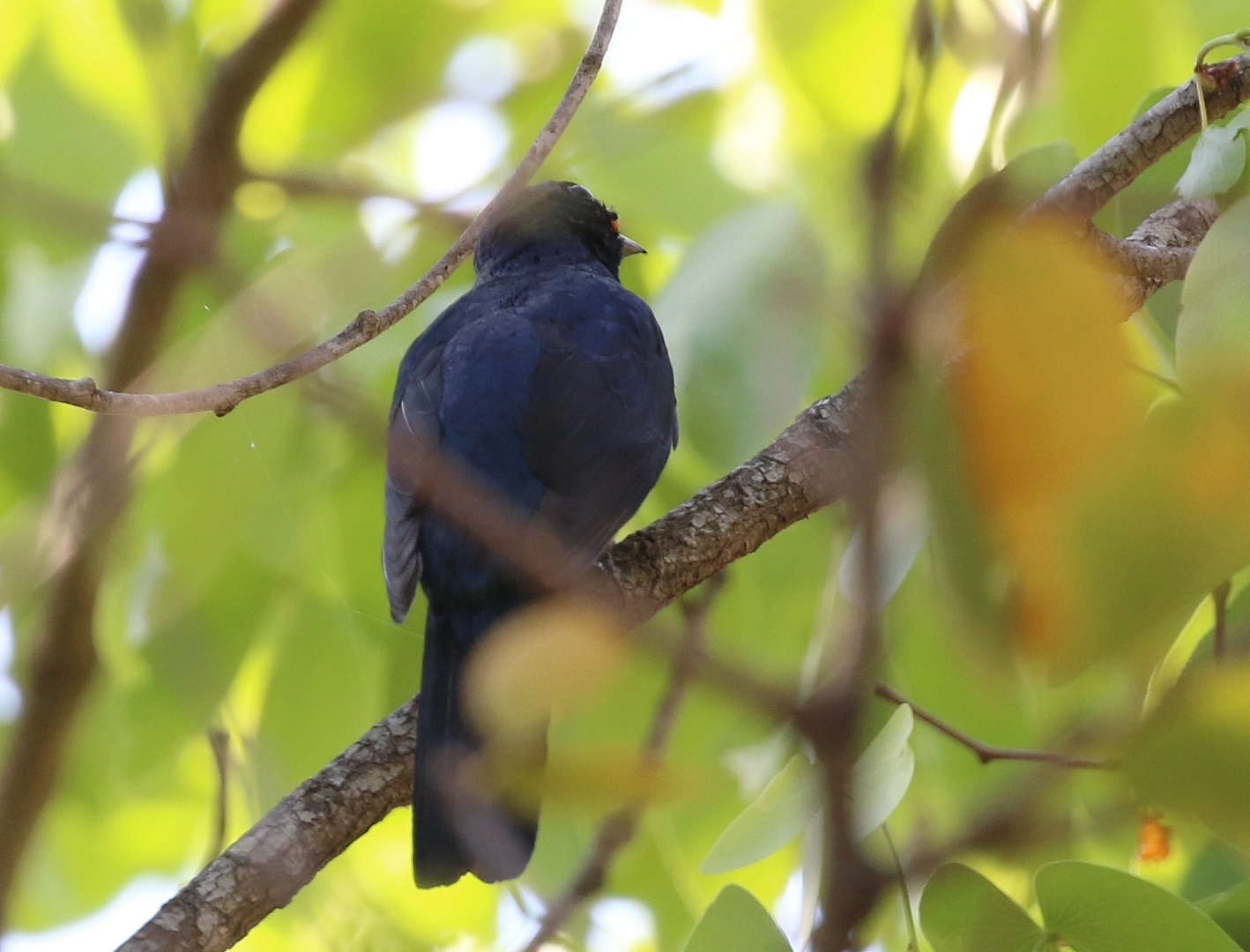
Black Cuckooshrike male
Tsendze is also known for its owls – the African Scops-Owl, the Barred and Pearl-spotted Owlets in particular. In the past we also saw and heard the Verreaux’s Eagle-Owl there. This time only the Owlets were heard calling.
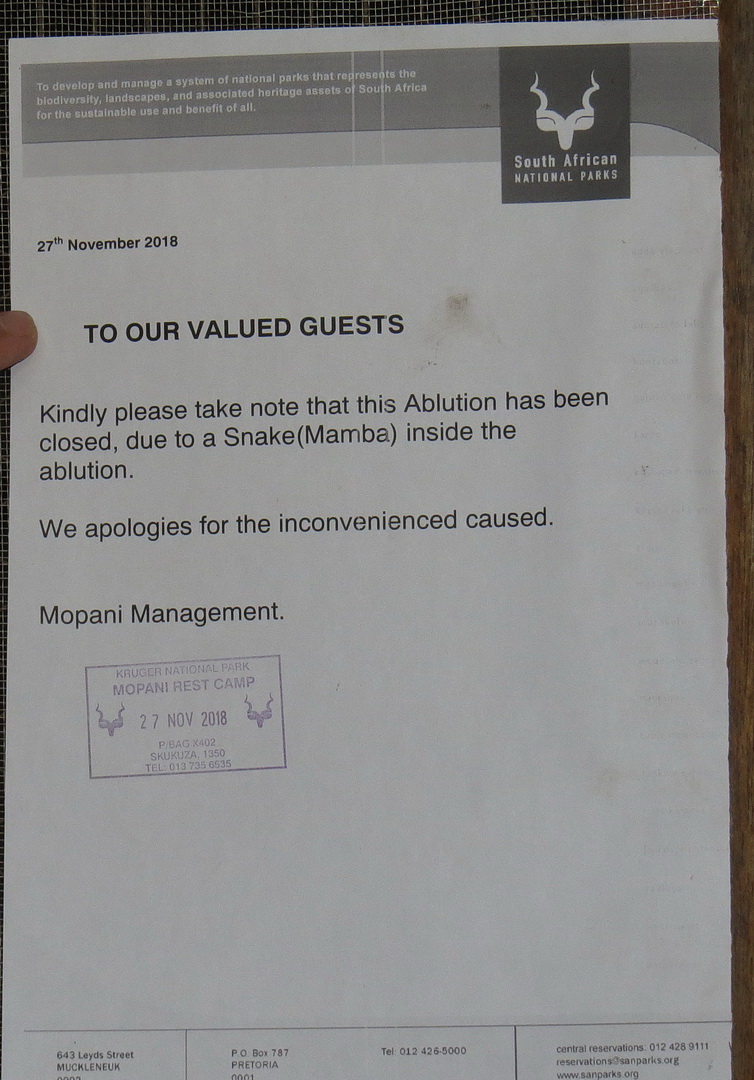
Story time. On arrival Sally went off to check the plumbing. She returned rather quickly with news that the ladies loo had been closed because a suspected Black Mamba had been seen inside the day before. Fortunately there was another set of loos further into the campsite.
Mamba Notice
Entrance to Ladies Loo
Our first morning was full of surprises.
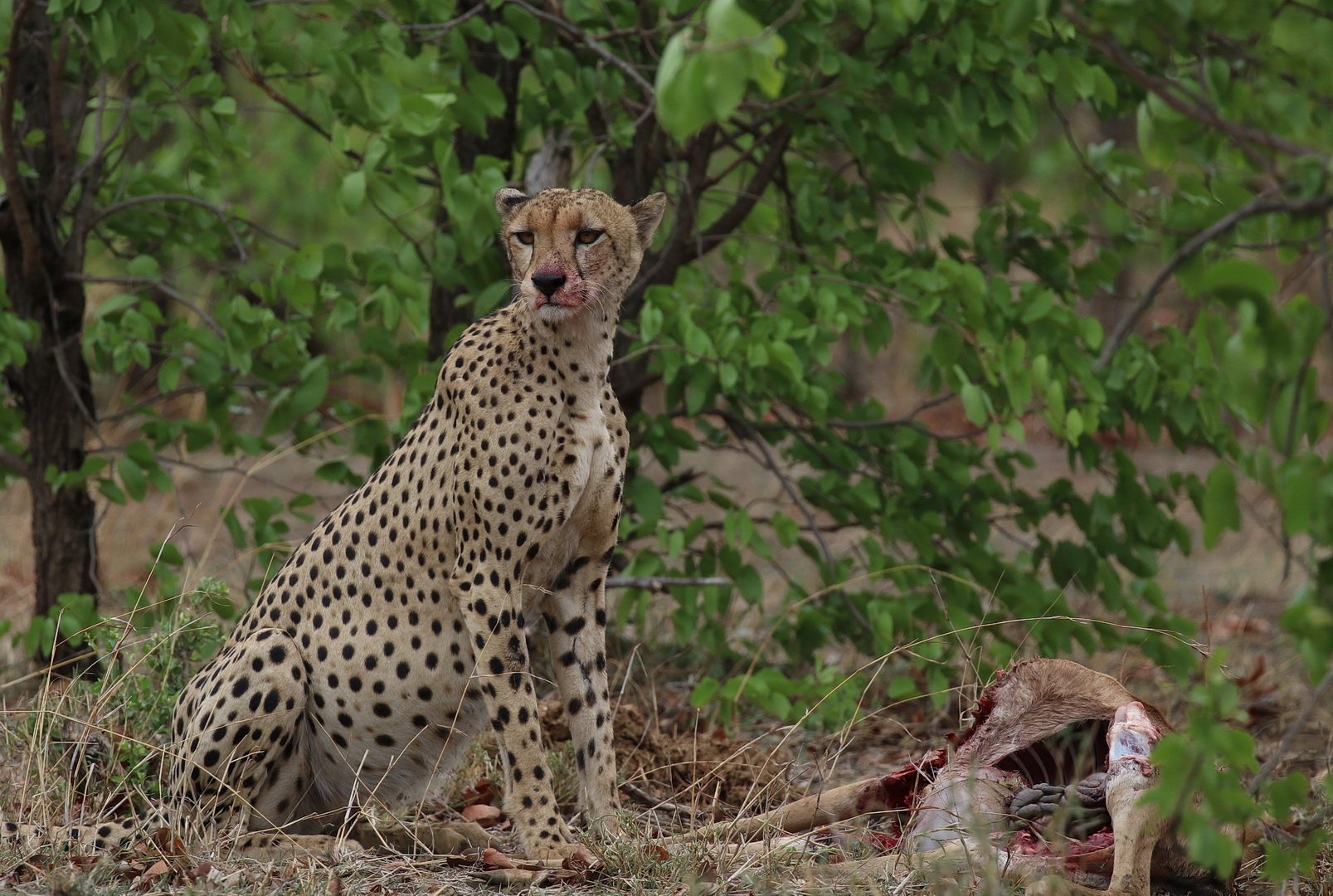
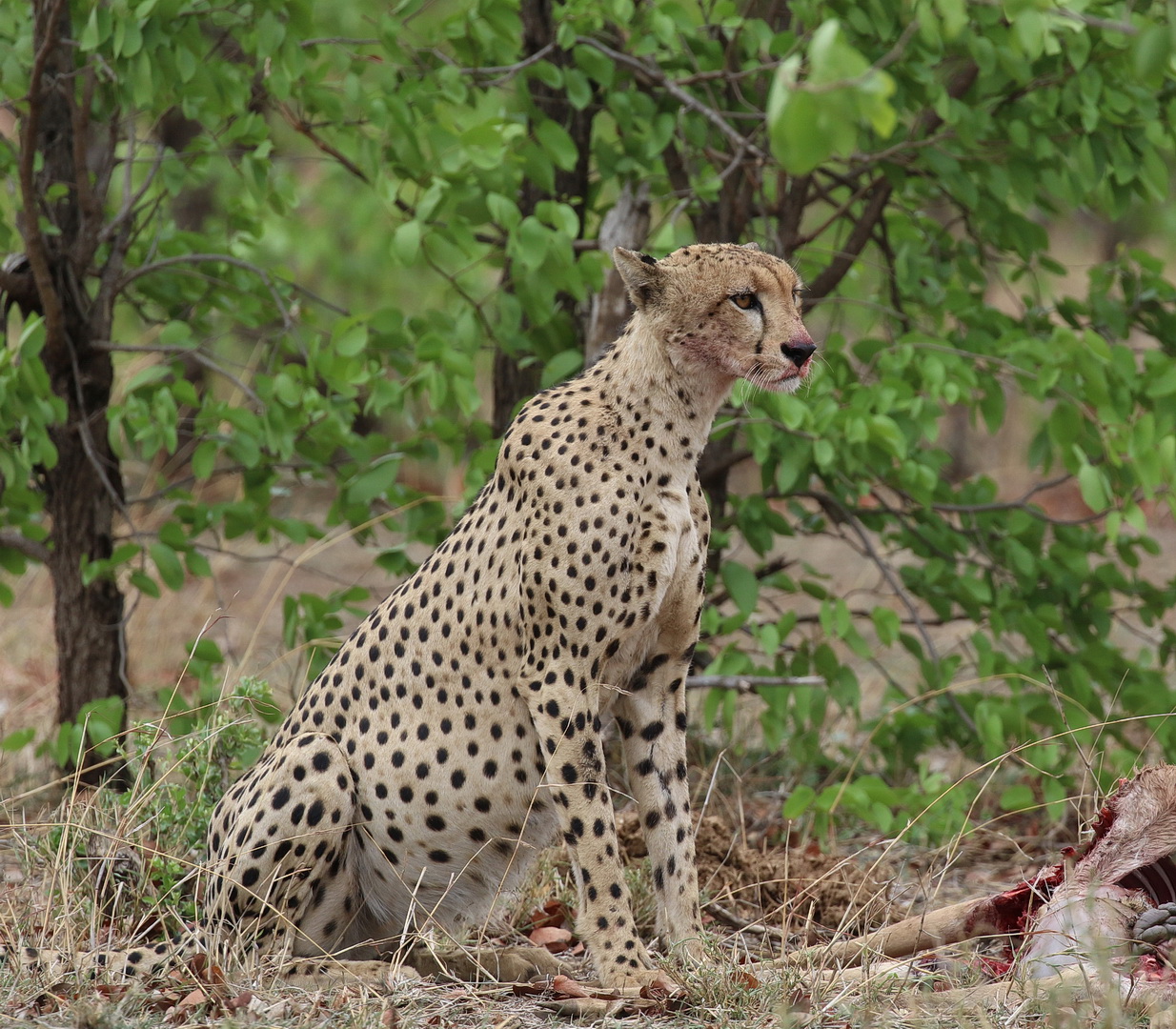
It started with a Cheetah kill right beside the road. We watched for a while as it got fatter and fatter. After a while we left it in peace but determined to return to watch the Vultures flock to finish it off.
Cheetah and carcass
Cheetah just one more bite
Cheetah rather full on Impala
Cheetah with rather extended stomach
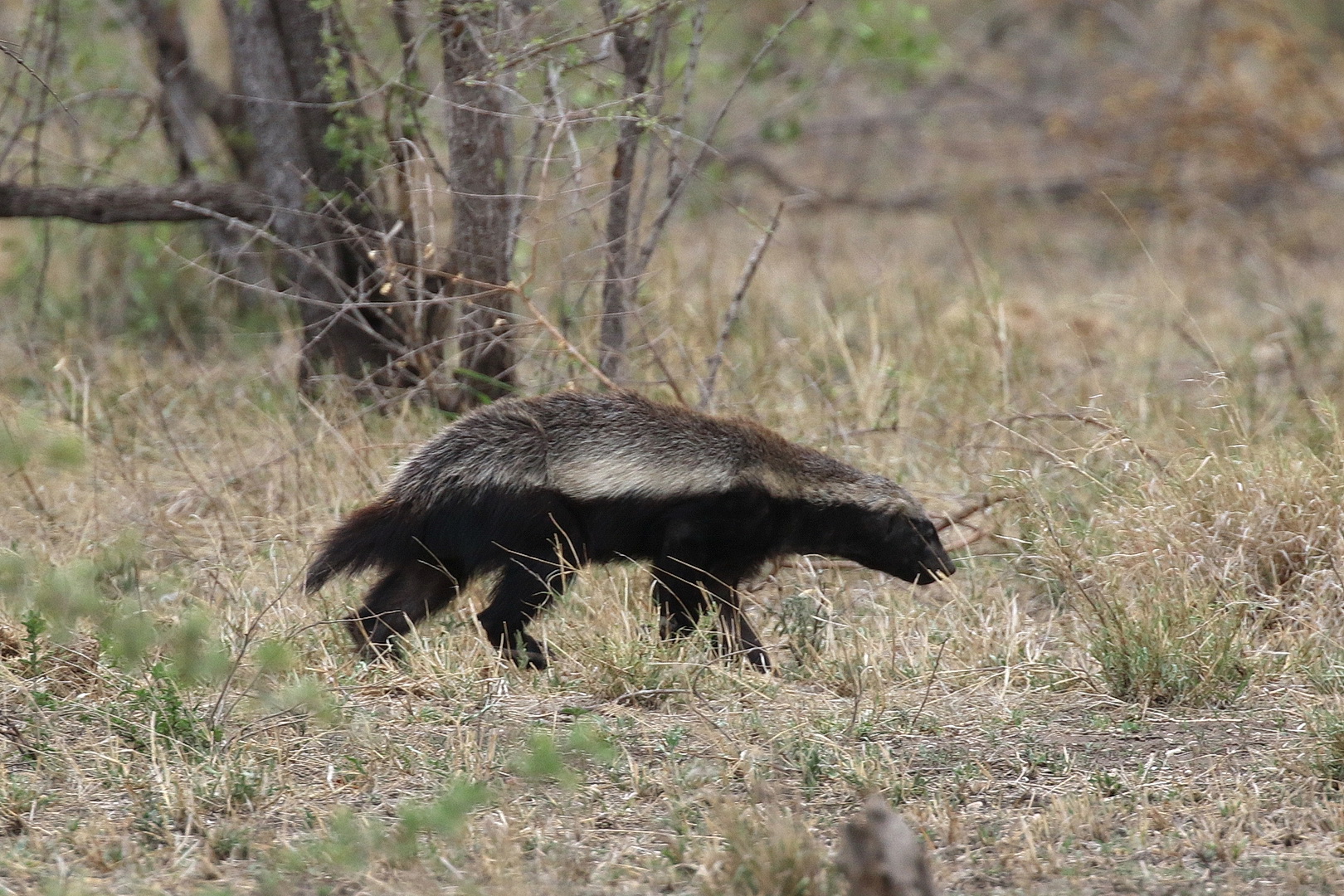
Further on next to the marshes we came across a Honey Badger doing its thing with a number of avian followers hoping to catch the tidbits.
Honey Badger
Honey Badger
Yet further we stopped as we heard a Red-crested Korhaan calling. It was right in front of us in the road. It called three times and immediately after it had finished the third call it took off heading vertically for between 5 and 10 metres before flipping onto its back and falling out of the sky – much like those acrobatic planes do. Just before it hit the ground it opened its wings and pulled out of the dive. A truly amazing sight to see.
Red-crested Korhaan before he took flight
Red-crested Korhaan before he took flight
On return along the same road we had another Red-crested Korhaan do the same thing. Our cameras however were not ready to catch either event.
Returning now to see the vultures at the kill, we came across some Chestnut-backed Sparrow-Larks at the Mooiplaas waterhole.
Chestnut-backed Sparrow-Lark
As we were looking at them another vehicle approached and asked us what we were looking at. Their response was not the usual “Oh” and drive off. They told us to proceed a little further and look to our left in the open area by the waterhole.
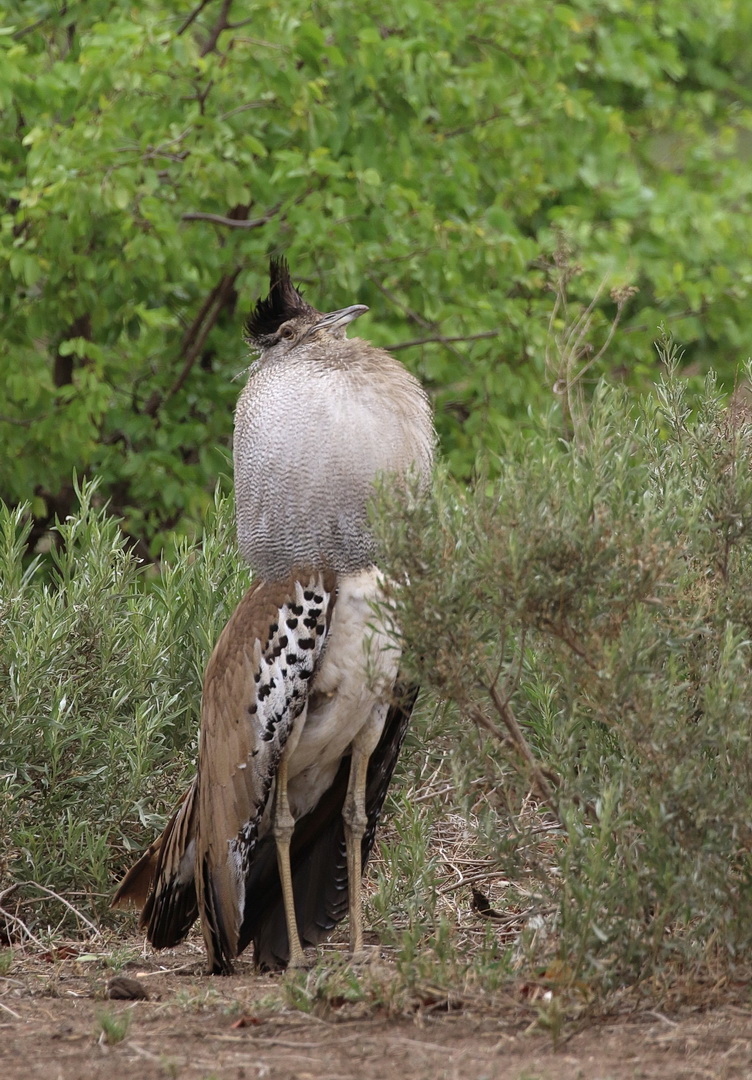
We were more than pleased that they had suggested this as we came across a bird in full display. It was something neither of us had ever seen before and remains as one of the highlights of our trip.
At first it was hard to recognise although we immediately knew what it was. Listening to its call was something else too. We did a short video which unfortunately I cannot post on this website. However here are some of the photos we took.
Kori Bustard in all his majesty
Kori Bustard in all his finery
Kori Bustard in all his finery
Kori Bustard all puffed up
Kori Bustard all puffed up
Kori Bustard all puffed up
Kori Bustard all puffed up
Kori Bustard all puffed up
Kori Bustard in confusion
Kori Bustard in all his majesty
Kori Bustard in reverse
After it moved off into the bush, we moved off to check the vultures at the Cheetah kill a short way away.
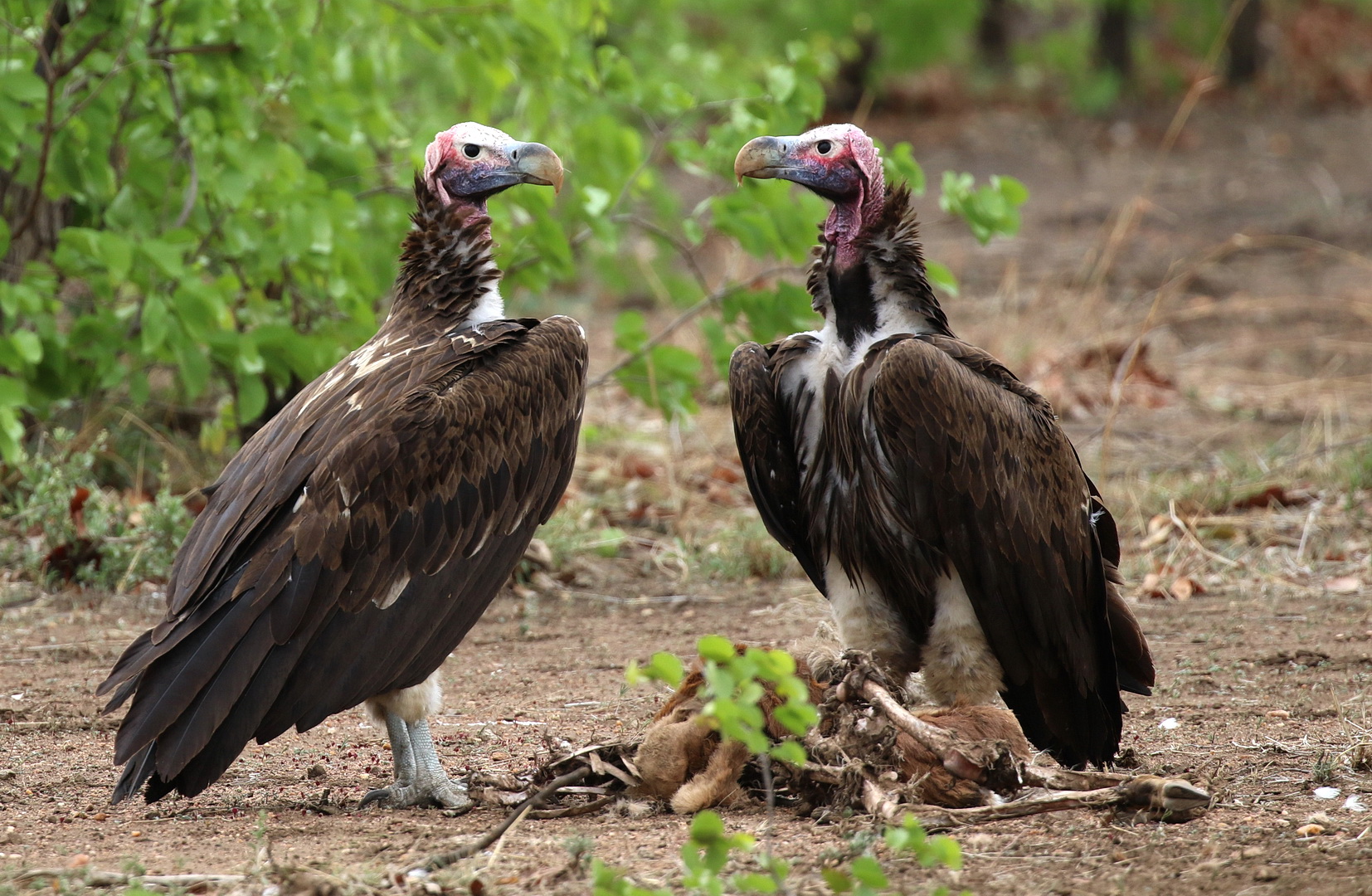
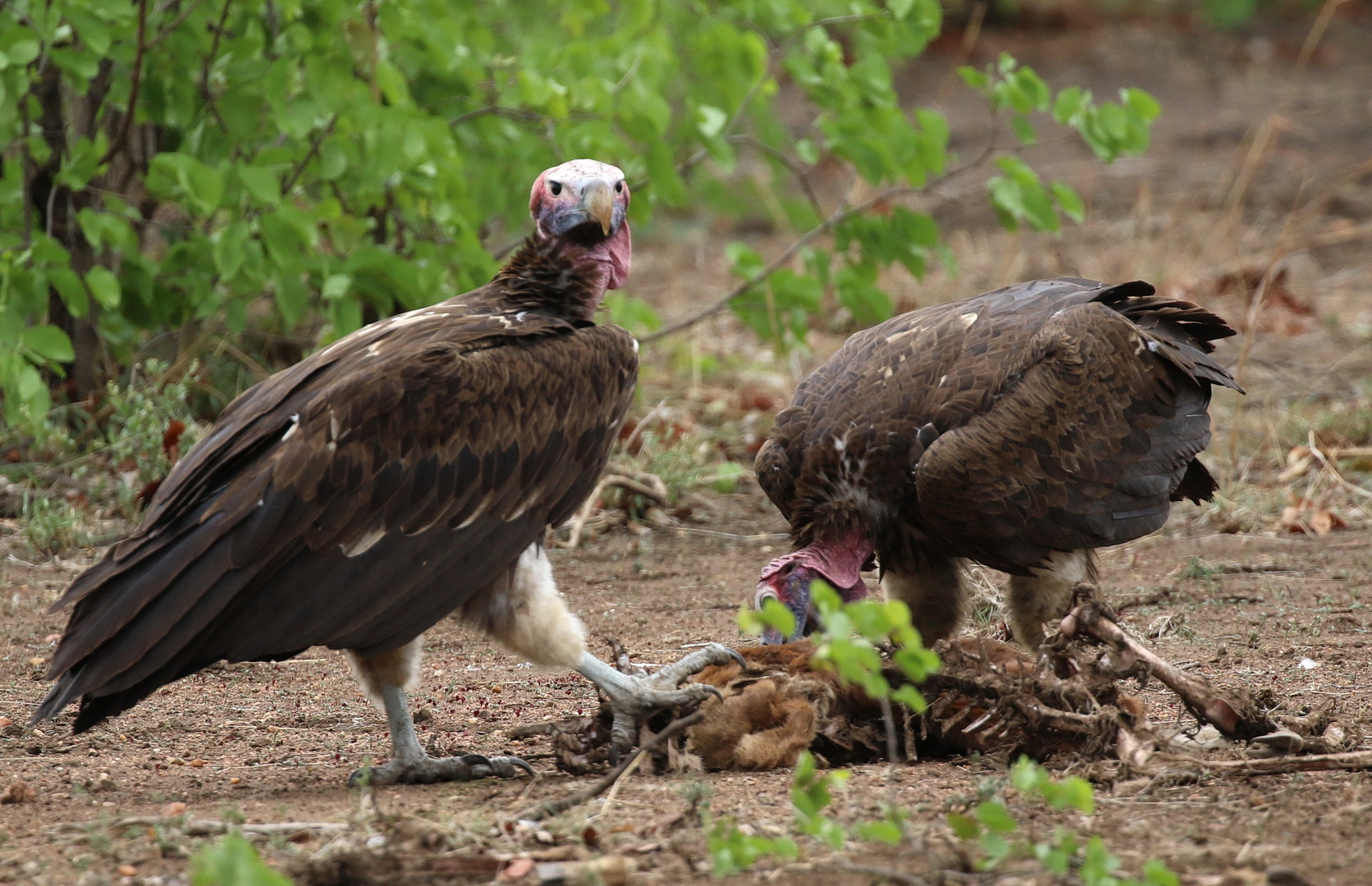
On arrival we were very surprised to see that the whole carcass had been eaten. In the 4 hours after we had seen the Cheetah kill there was very little left and all the vultures had gone. Except for these two.
Lappet-faced Vultures – aren’t we cute
Lappet-faced Vultures- nothing’s coming
Lappet-faced Vultures – we are made for each other
Lappet-faced Vultures – check those claws
Lappet-faced Vultures – yum yum
What a morning.
The weather became cloudy and rain was forecast. So after a long lunch and rest we took a ride around and ended up at the Mooiplaas Picnic Site. The wind was blowing and the birds scarse. Something was up and they knew about it.
Looking across the river we realised we better get back to camp quickly. There was a massive dust cloud coming our way and rather fast. Perhaps the rain was behind it, we thought. Although the camp was right next door we had to drive about three kms to enter through the gate. By the time we reached the gate so had the dust cloud. Opening the gate we quickly got back to our campsite and battoned down the hatches as best we could. Thunder and lightening all around but very little rain unfortunately.
Some day.
The next day we explored Mopani, its dam (the Pioneer Dam) and we took a drive down the way to Joubert’s Grave.
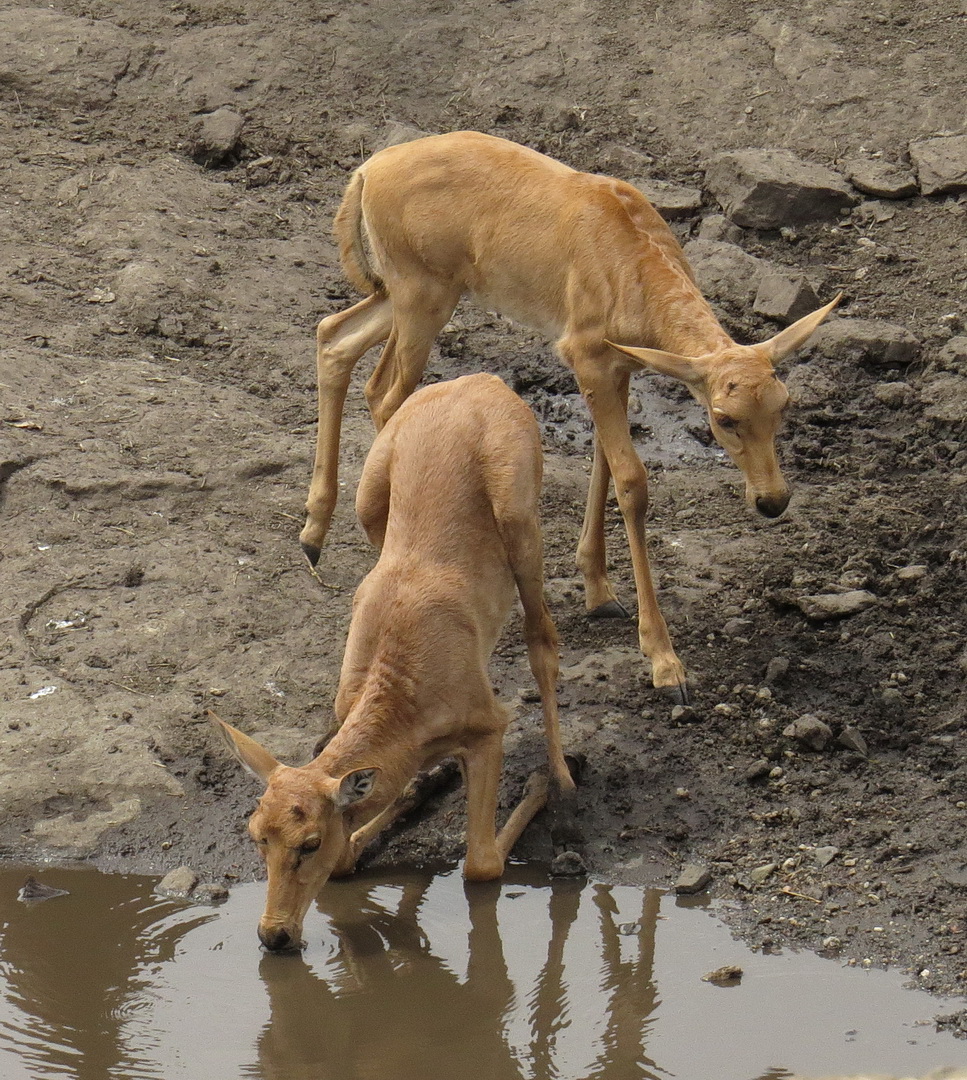
As we turned off the main road to the Mopani camp, there below us were Tsessebe and young. In the past Tsessebe were unusual to see, this trip we had numerous sightings of them predominantly in the area around Mopani.
Tsessebe young
Tsessebe and young
There is a walk around the fence line below the Mopani restaurant and next to the Pioneer dam. Definitely worth a walk round as you can see the waterbirds up close and in the bush below the restaurant birds are seen and heard. Probably the sweetest of those was the call of the White-throated Robin-Chat.
We did encounter a Dove which had us perplexed for a while.
Mystery Dove with gills on its neck. Possible Mourning Collared Dove – juvenile?
Here are some of the birds we saw along our walk.
Western Osprey
African Spoonbill
Blue-tailed Lizard
Yellow-tailed Lizard
Knob-billed Duck
Wire-tailed Swallows
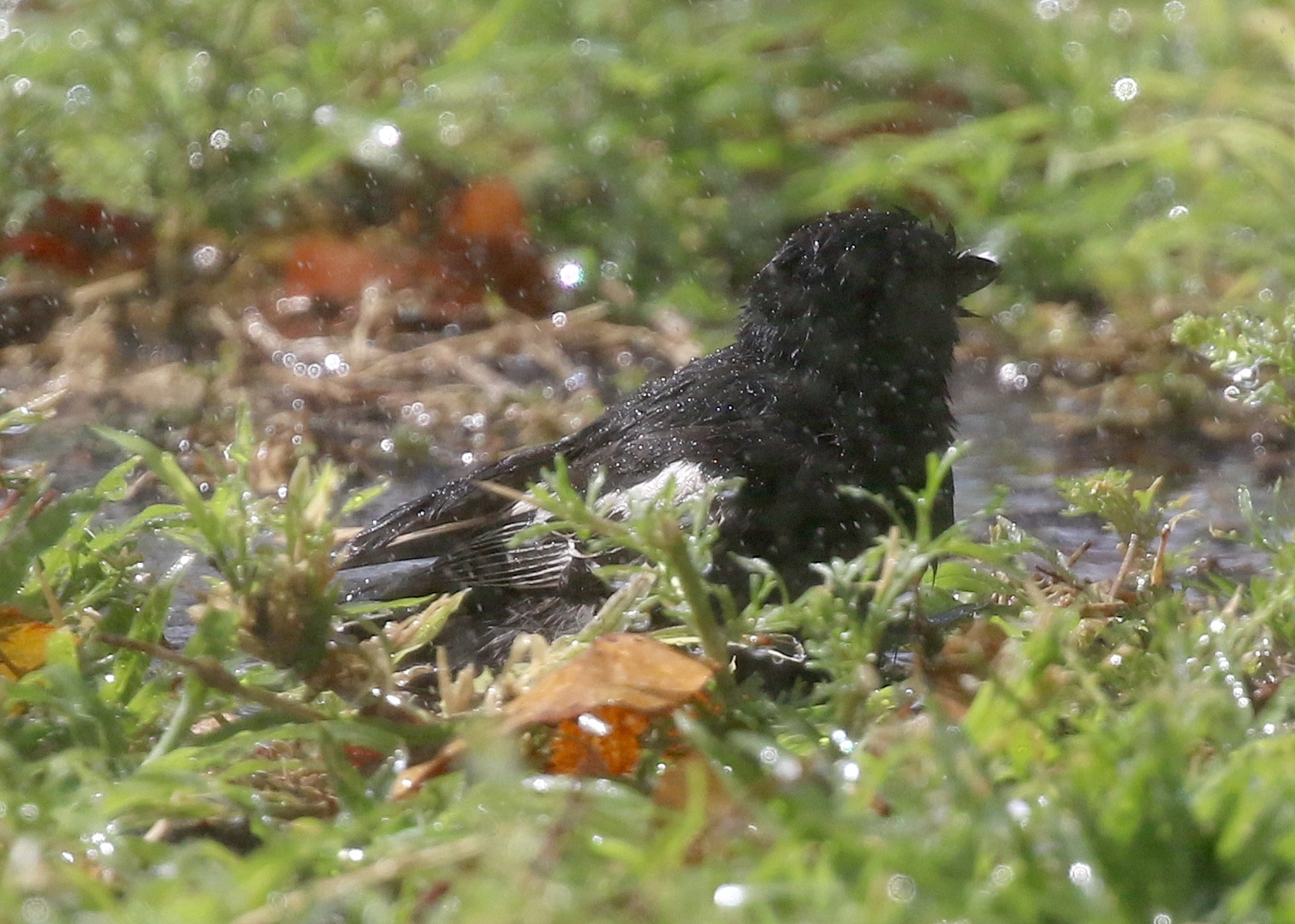
Southern Black Tit bathtime
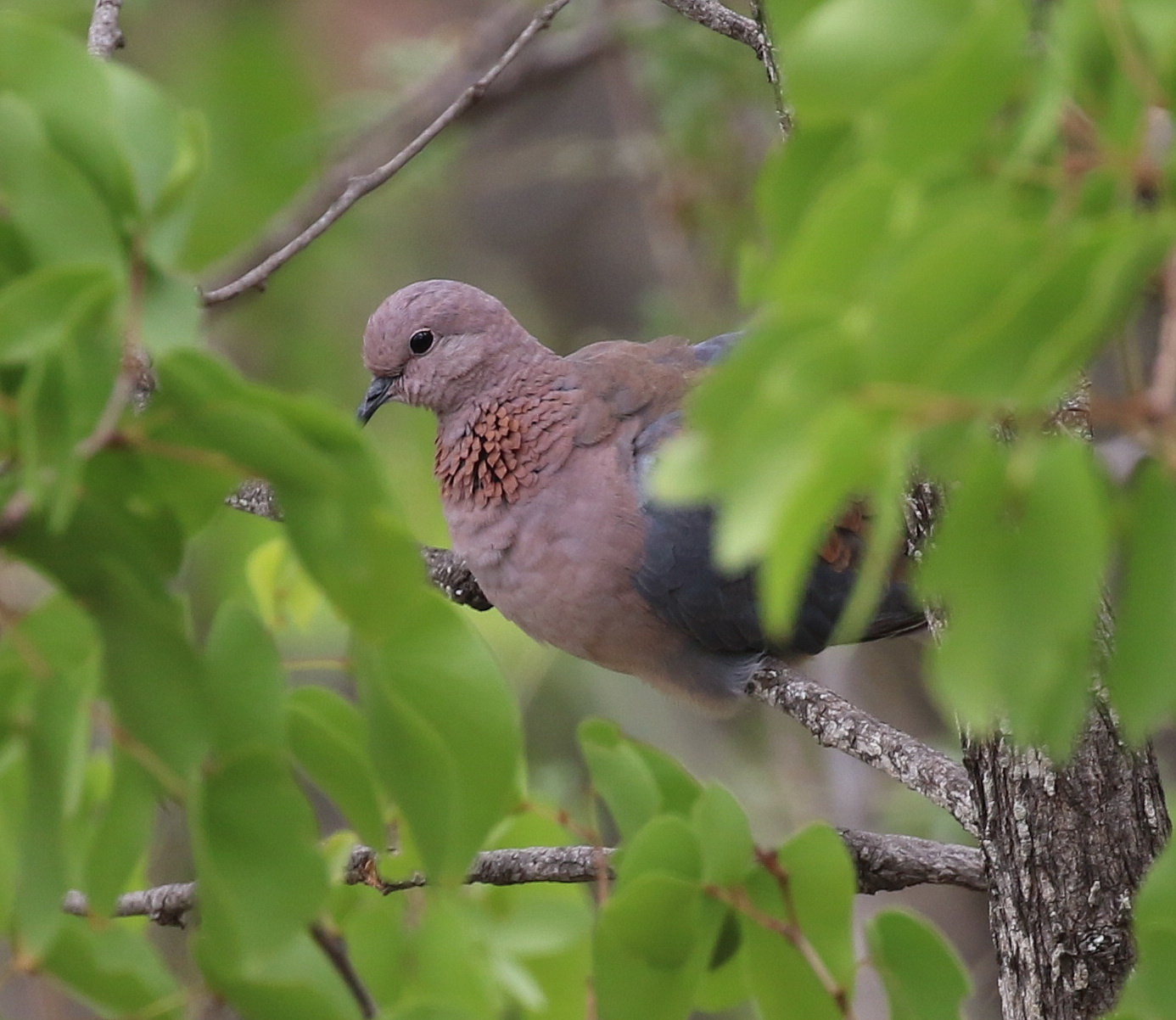
Laughing Dove
On the opposite side of the dam from the camp there is a hide. And another hide is on the way there overlooking the dammed Tsendze river. Driving round to the first of the hides we came to a road block.
Road Block
We waited patiently for them to clear off – and they did – up the bank to the right towards us in the photo. Just to the right across the bridge is the hide overlooking the river. However there was not much about while we were there. Every time that we have crossed that bridge we have seen Black Crake to the left. It was no different this time.
Opposite the entrance to the hide is a rocky koppie on which elephants were grazing and Sally noticed this ground Euphorbia.
Euphorbia
Euphorbia
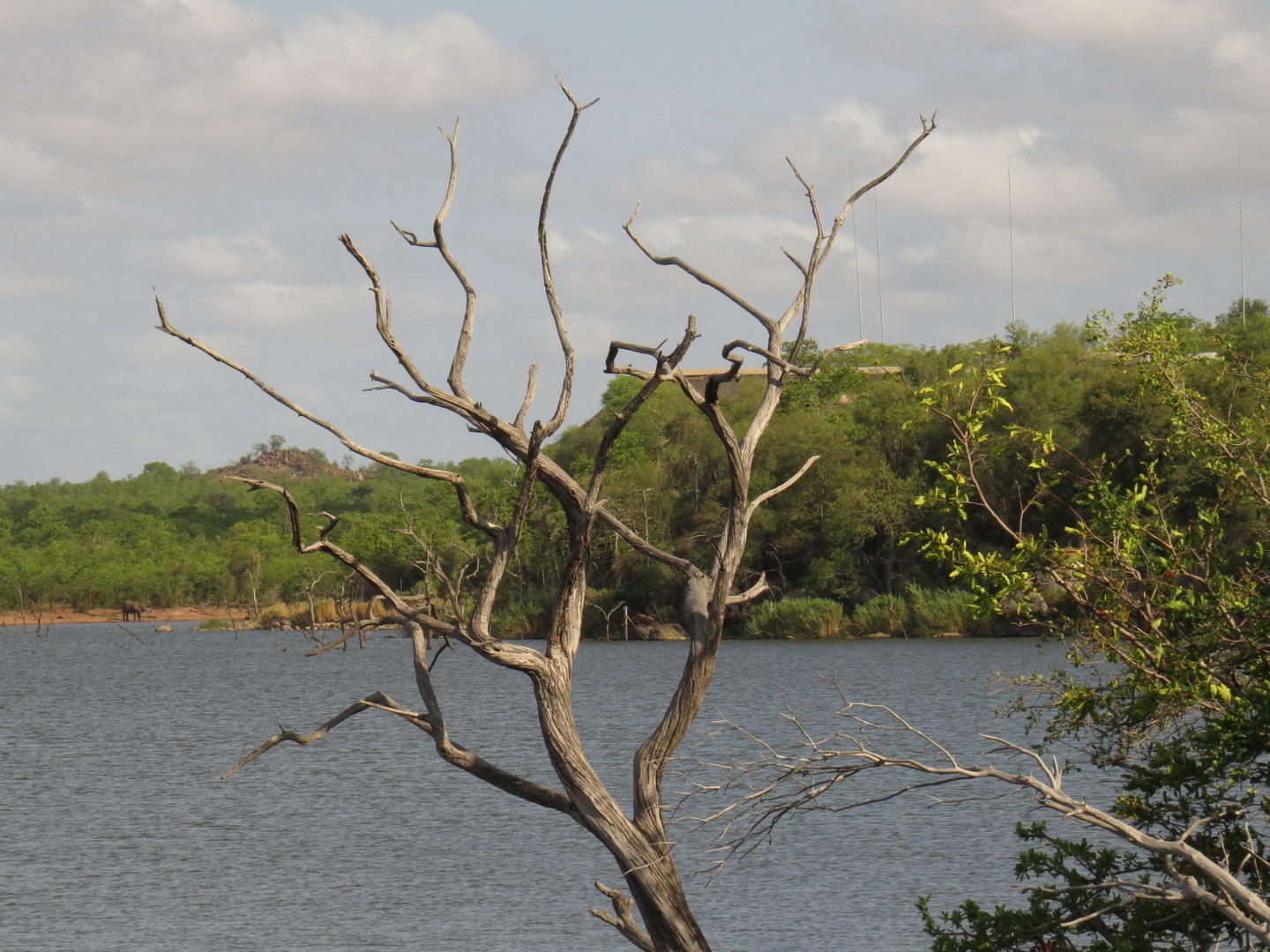
A bit further along there is a turn off to the right to the Hide overlooking the Pioneer Dam. The view from the hide shows the size and extent of the dam.
Pioneer Dam from the hide
Pioneer Dam from the hide
The birds were on the other side and required the scope to identify them. On this side there was one camouflaged to the shoreline.
Green-backed Heron
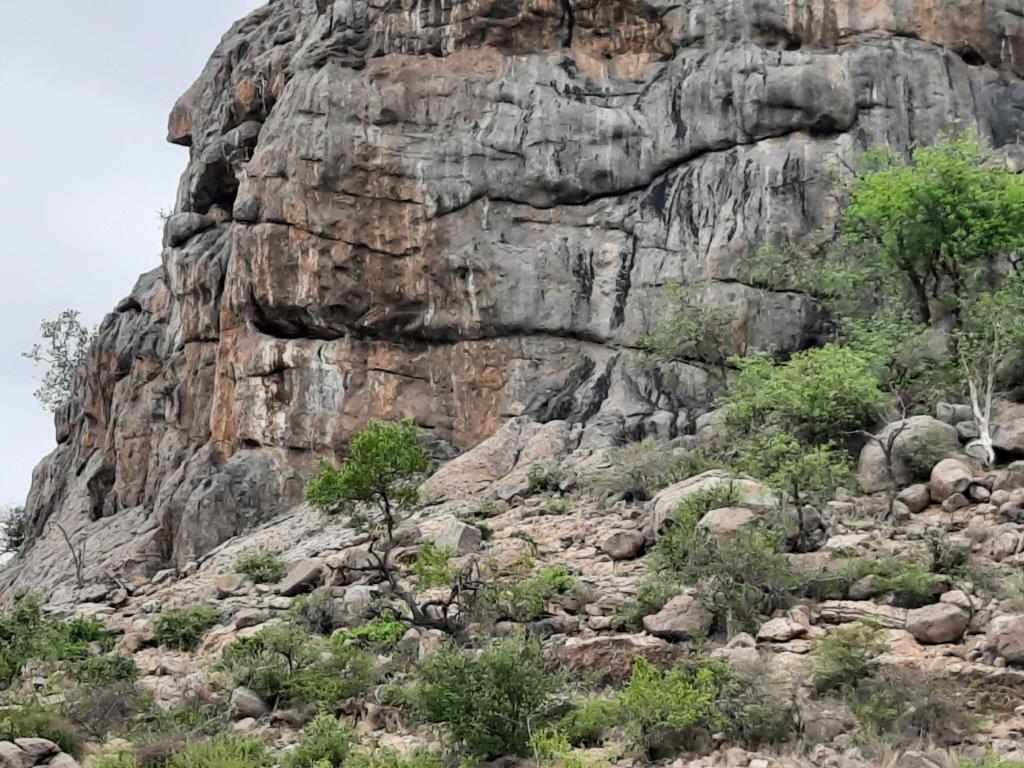
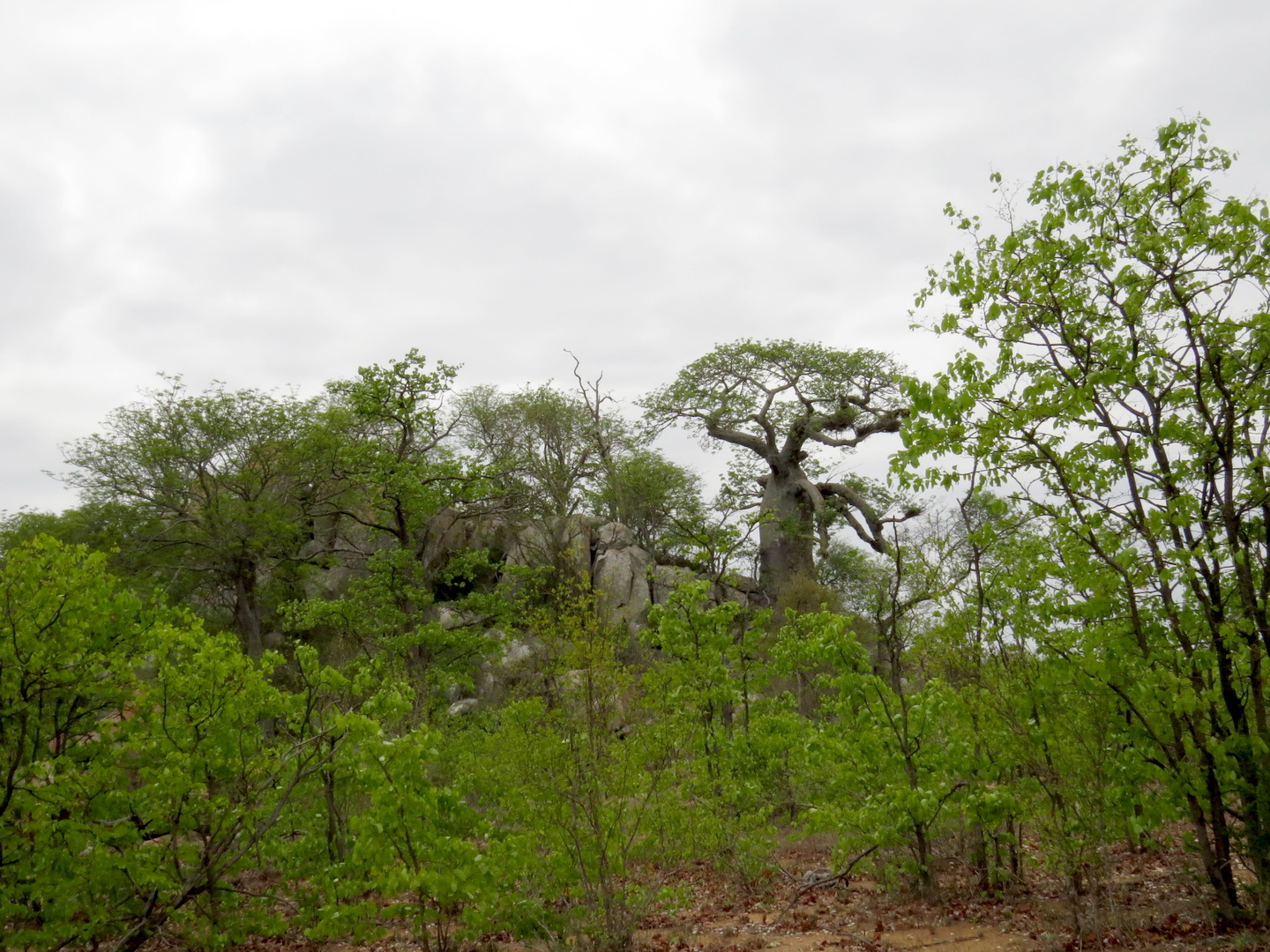
Next we headed down the S146 to Jopubert’s Grave. At first this seemed a lost cause at that time of day. Half way there we came across a tall koppie of rock with a rather interesting and large Baobab half way down it – facing us as we came along.
From a distance it looked evil as though it wanted to capture us in its arms.
I am going to get you.
It was a very unusual looking tree. Some photos from different angles. Not so creepy.
The Baobab
What a Baobab – like a Preying Mantis
Tawny Eagle overlooking the Baobab
Baobab – I am going to get you.
Here I come.
Red-headed Weaver on one of the Baobab’s arms.
When we eventually got to the end of the road – having battled with a few elephant to get through we came to a river but no sign of a Grave. Now wondering if we weren’t a bit stupid trying to get passed the elephants which were on both sides of the road.
So to kill some time to give the elephants time to move on we took a side road to see where it went. Straight to Stapelkop Dam as it turns out. Very unexpected and a great surprise as it had a load of water in it and there was game and many waterbirds about. Also Vultures by the dozen on the dam wall – presumably coming for a dip. We stayed for over an hour with nobody else around.
Elephants at Stapelkop Dam
Stapelkop Dam
Stapelkop Dam
Mopani was always a camp we used to avoid as driving though mopani trees never seemed to be productive for wildlife. However after the first time we stayed at Tsendze our impression changed drastically and this has become a must whenever we come to the Kruger.
Here are some photos of other birds we saw in the area.
European Roller
African Hawk-Eagle juvenile
Woodland Kingfisher
Buffalo pond
Chinspot Batis male
Cinnamon-breasted Bunting
Giant Kingfisher
Lesser Grey Shrike
Lesser Masked-Weaver
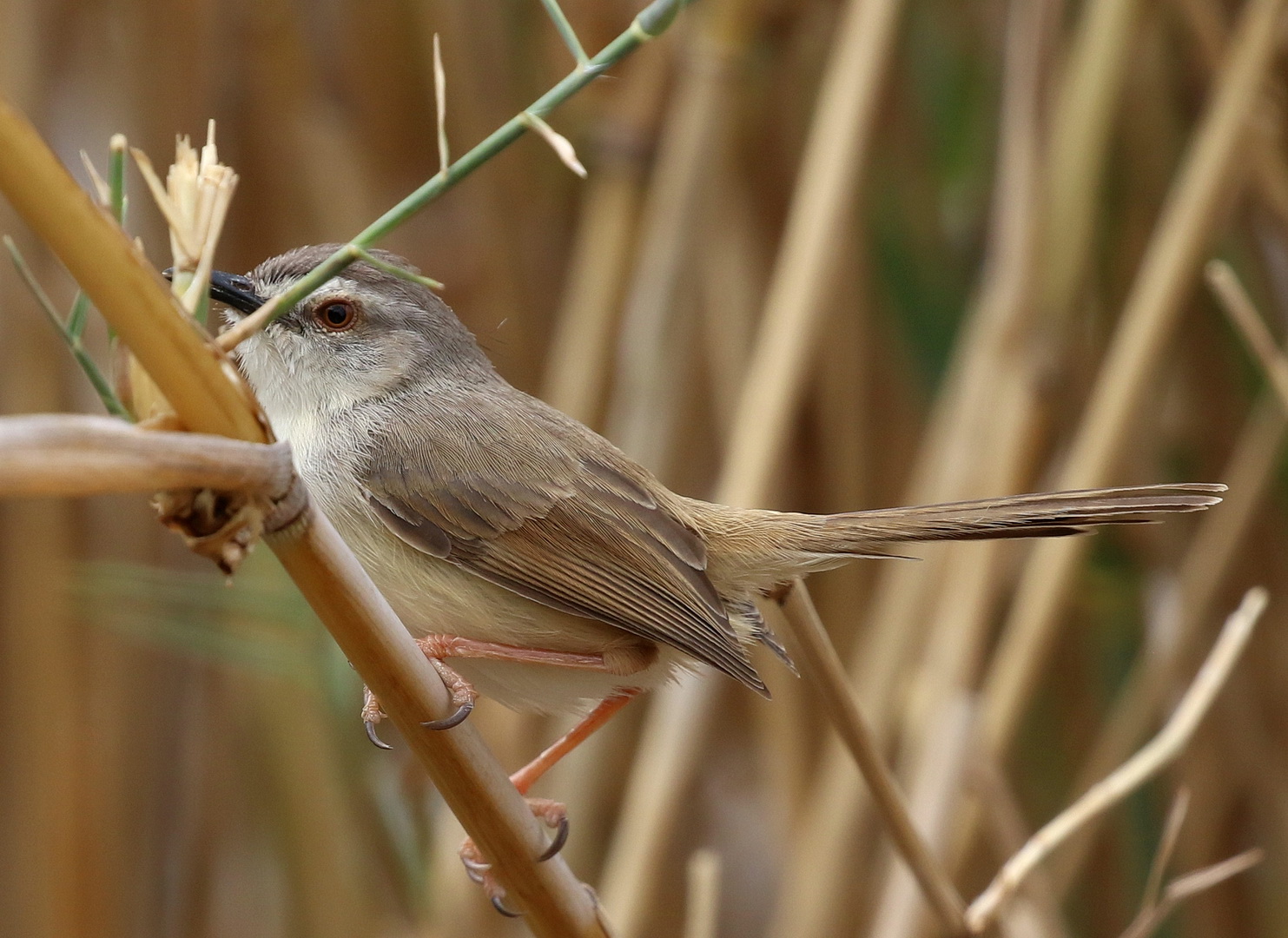
Tawny-flanked Prinia
White-browed Scrub-Robin
In total we identified 140 different bird species. To see the list click here.
One of the least expected sightings was that of a Zebra with a Yellow-billed Oxpecker on its back. The furthest south that we have seen a Yellow-billed Oxpecker in the Park.
Tsendze is the satellite camp to Mopani. It is situated right next to the Mooiplaas picnic area. It is a rustic camp for campers only and has no power available. There is however, a kitchen and washup area, solar energy for lights and gas heating for hot water. As a new addition there are gas freezers available for those who need them. The camp is well treed so there is ample shade. This was our favourite camp in the Kruger and it has the friendliest and most helpful staff. The birding in the area was also pretty good.
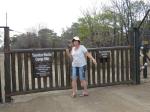
Tsendze Entrance
Well treed Campsites
Tsendze Exit
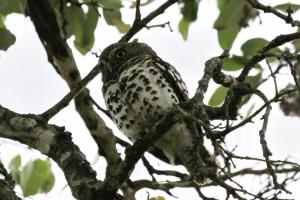
To start with, Roger – the camp attendant – noticed that we were birders. “Come with me”, he said. Right next to our campsite he showed us one of the resident African Scops Owl. Then he took us to see the resident breeding pair of African Barred Owlets. What a start to our stay.
African Scops-Owl
African Scops-Owl
African Barred Owlet
African Barred Owlet
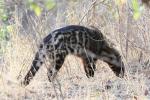
Late one afternoon on our way back to the camp we took one of the River Loop roads. As we approached the river, Sally yelled “Stop”. Brakes on and stop. “What is it?” “Look behind the tree on the right”. And there it was, an animal with a head like a bull mastiff and the size of a large hyena – black and white with a long bushy tail. Neither of us had seen one before so stared at it uncomprehendingly for a long time. Eventually we got out the wildlife book and discovered it was a Civet. Unfortunately this Civet had an injured right back leg and was limping badly. It took no notice of us and continued foraging within 10 metres of us. We were so engrossed with watching this lifer for both of us that we paid little attention to anything else around us. For some unknown reason Sally happened to look round and yelled “Elephant”. It was less than 5 metres from us and approaching straight at us with determination. Somehow the car managed to reverse at an unnatural speed without hitting anything. The elephant calmly strode up to where we had been parked, reached up into the tree and snapped off a small branch. Scary or what!
African Civet
African Civet
African Civet
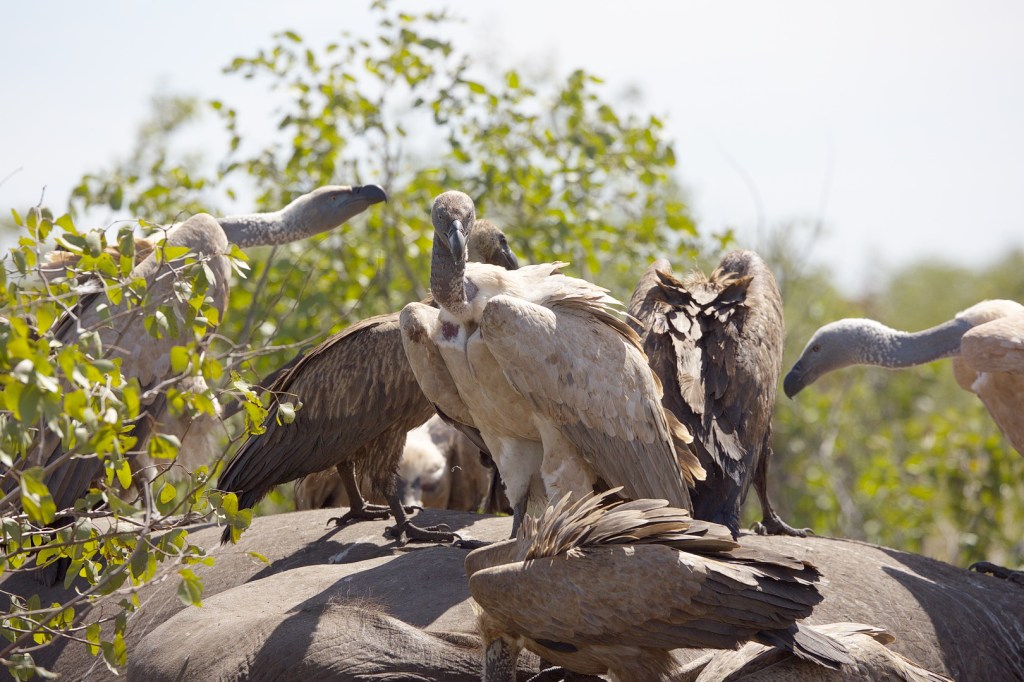
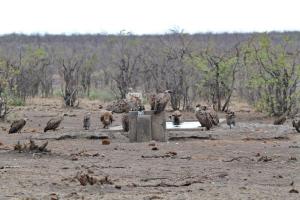
There is a waterhole south of the camp – Klein Nshawu. A lion had feasted on a buffalo right next to the waterhole and left its carcass there. So we went to take a look. Hyena and jackal were present as well as quite a few Vultures including White-backed and Cape.
White-backed and Cape Vultures
Vultures and Jackals
On one of our drives we stopped at the Tihongonyeni waterhole on the S143 Tropic of Capricorn Loop. The place was abuzz with Chestnut-backed Sparrow-Larks, Kittlitz’s Plovers, Magpie Shrikes unusually congregating, around six or more in one small shrub. Elephant were drinking. We hung around for a while fortunately. Suddenly the birds all took to the air. A small raptor with a ringtail appeared and landed in a tree at least 100 metres away. Out came the scope and we realised it was a Harrier – not a mature male. On closer inspection we understood that it was not a female but a juvenile – luckily, as we would never have been able to conclusively identify it. The bold black markings round the eye indicated that it was a Pallid Harrier juvenile – much as we suspected because of the flat open dry habitat.
Chestnut-backed Sparrow-Lark
Chestnut-backed Sparrow-Lark
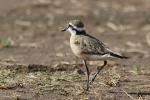
Kittlitz’s Plover
Pallid Harrier – juvenile
Pallid Harrier – juvenile
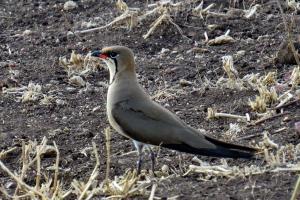
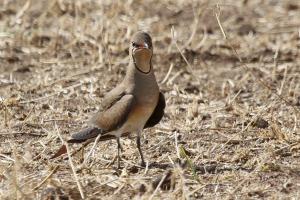
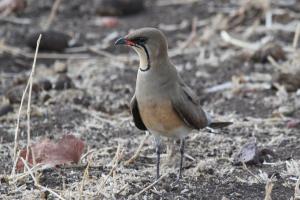
At another waterhole – Mooiplaas on the S50 we had another what we thought was an unusual sighting of 5 friendly Collared Pratincoles foraging in the desolate landscape.
Collared Pratincole
Collared Pratincole
Collared Pratincole
Collared Pratincole
We encountered numerous elephants in the area but one stood out. It had only one very long tusk.
Elephant – one tusker
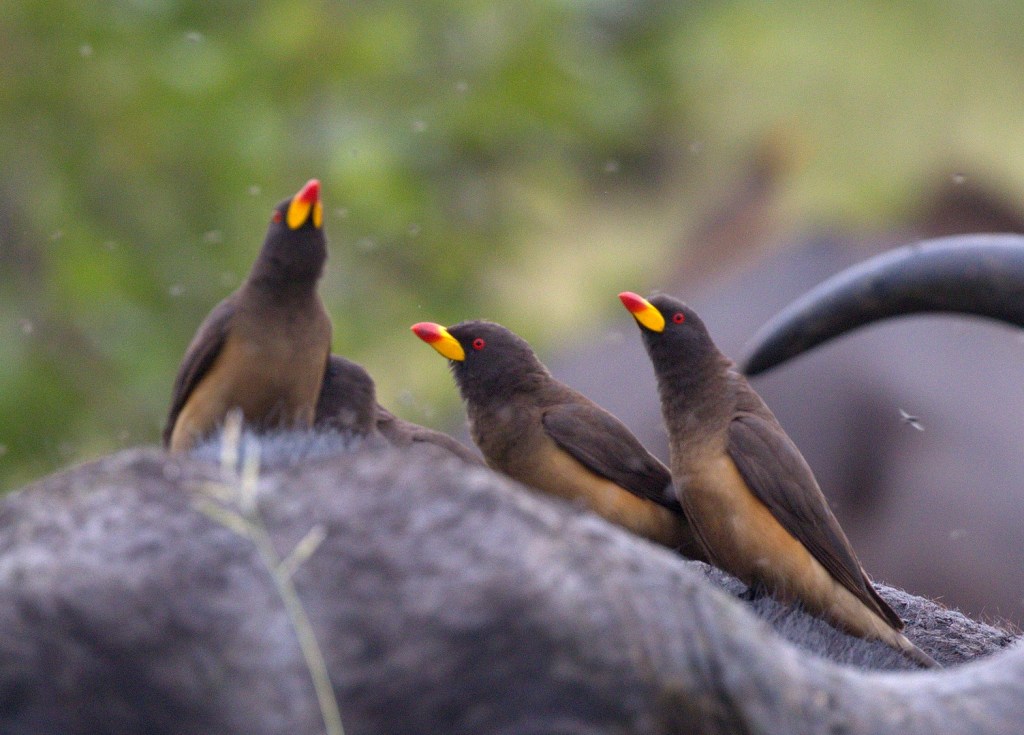
Yellow-billed Oxpeckers appeared on many of the Buffalo that we saw. Not so long ago you had to go right up to the Pafuri area to try and see one.
Yellow-billed Oxpecker
Yellow-billed Oxpecker
Yellow-billed Oxpecker
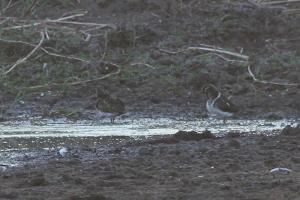
One day we took a drive on the Tsendze loop to the south of the camp. A pleasant drive following the river. At one of the many small loops to the river we noticed a pair of unusual birds skulking near the reeds but coming out into the open now and then. Out with the scope to confirm what we thought. Our second sighting of 2 Greater Painted Snipes.
Greater Painted-Snipes – Tsendze Loop
Greater Painted-Snipes – Tsendze Loop
Greater Painted-Snipes – Tsendze Loop
The next day we took a walk around the Mopani camp trail in front of their restaurant – a short but pleasant trail along the banks of Mopani’s Pioneer Dam. At the end of the inlet of water we came across another 2 Greater Painted Snipes – our third sighting of them. So far all males.
Greater Painted-Snipes – Mopani
Greater Painted-Snipes – Mopani
Next to the camp is Mooiplaas Picnic site. It has a lovely thatched picnic spot overlooking the river. It was here that we heard then found an African Cuckoo and a Black Cuckooshrike.
African Cuckoo
African Cuckoo
African Cuckoo
African Cuckoo
Black Cuckooshrike – male
Black Cuckooshrike – male
Both the Pioneer Hide and the Shipandani Hides are worth a visit and the river crossing before the latter always seemed to yield an interesting variety of birds in the reeds, on the water’s edge and on the causeway itself. There is also the wetland area along the S50.
And the main road, the H14 to Phalaborwa had a number of interesting minor loop roads along the river’s edge – a pretty drive.
Scenery on one of the loop roads along the H14
Scenery on one of the loop roads along the H14
Scenery on one of the loop roads along the H14
In all this is one of our favourite areas in the park as it has a wide variety of habitats.
Here are pictures of some of the other species we saw in and around the area.
African Hawk-Eagle
African Hawk-Eagle
African Hawk-Eagle
African Hoopoe
Brubru
Brubru
Cape Sparrow
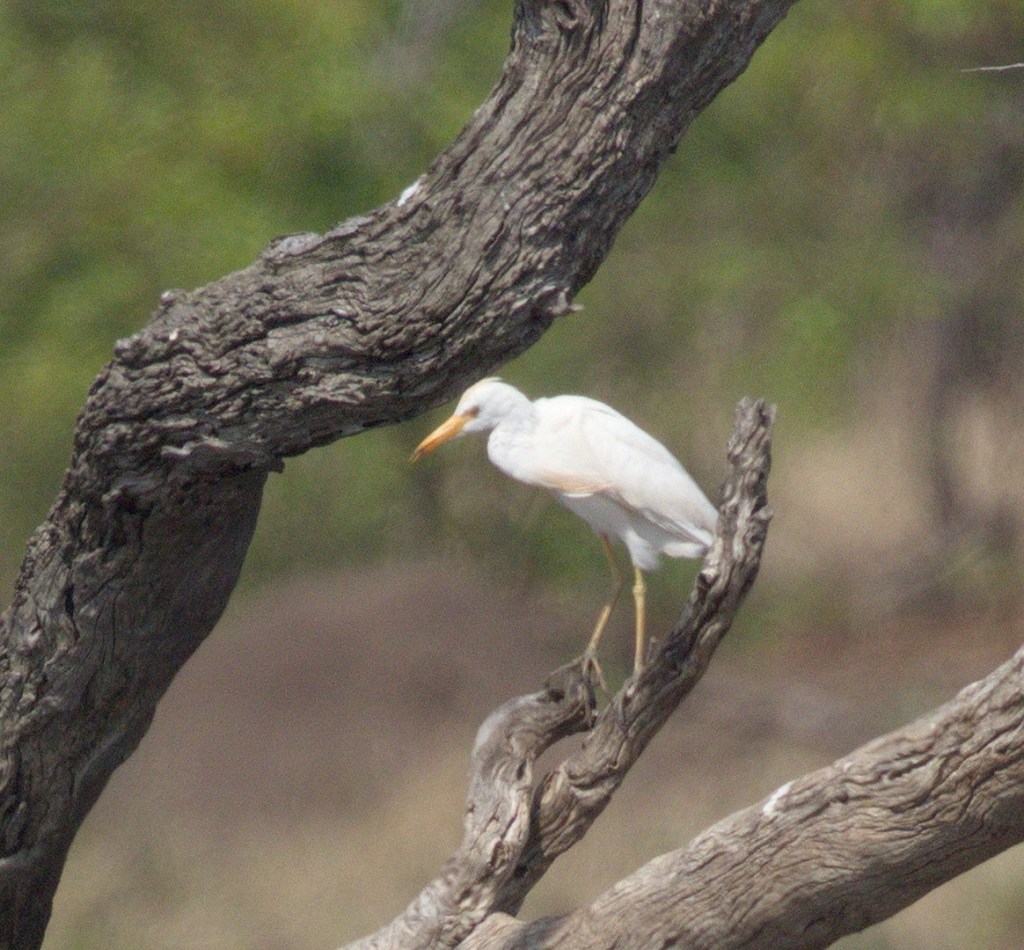
Cattle Egret
Black-headed Oriole
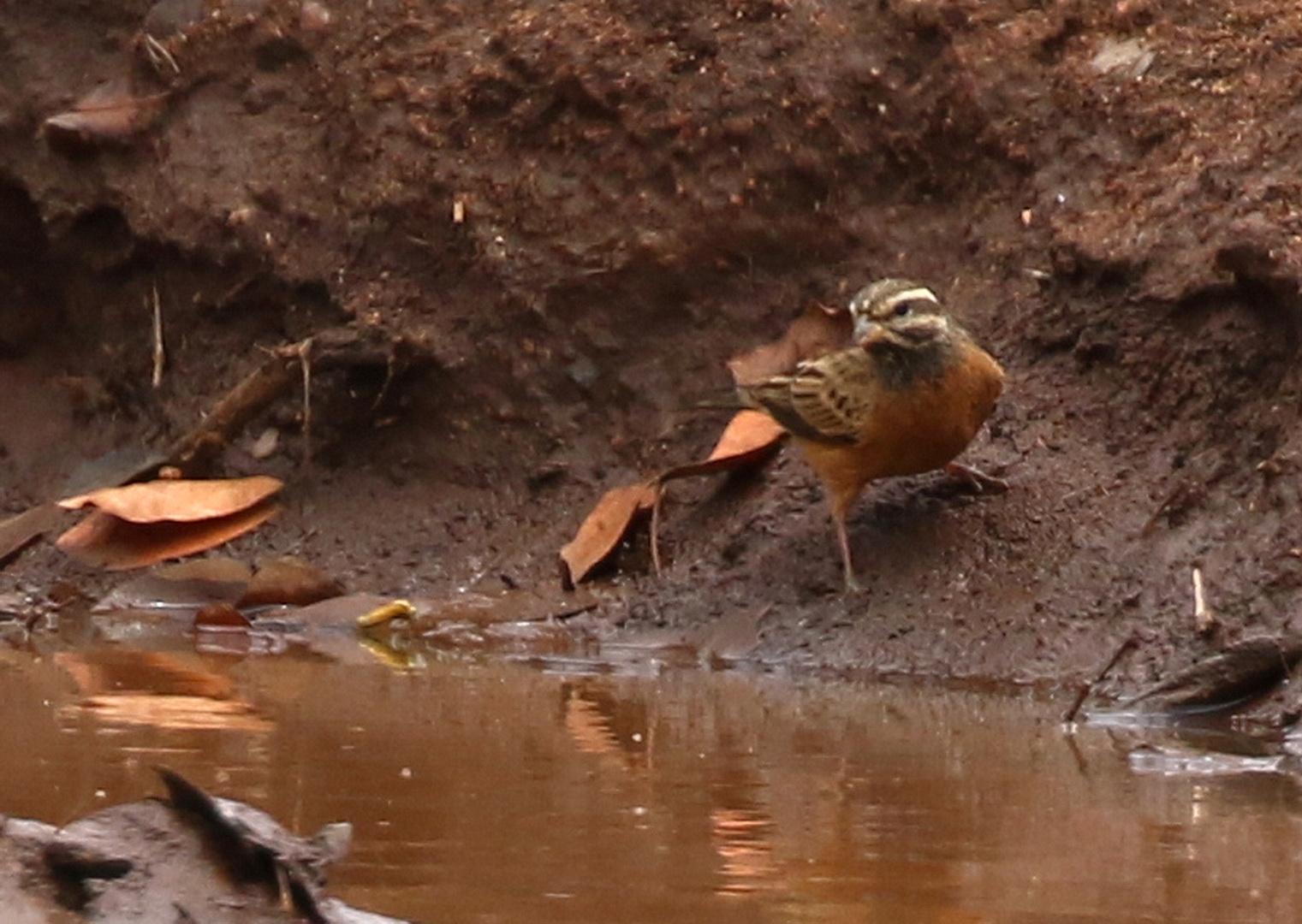
Cinnamon-breasted Bunting
Cinnamon-breasted Bunting
Dark Chanting-Goshawk
Dark Chanting-Goshawk
Dark Chanting-Goshawk
Double-banded Sandgrouse
Common Greenshank
Common Ostrich
European Bee-eater
European Bee-eater
For ID
For ID
Golden-breasted Bunting
Hippo
Grey Heron
Groundscraper Thrush
Groundscraper Thrush
Lappet-faced Vultures – loved the colour of the head gear
Long-tailed Paradise-Whydahs in transition
Long-tailed Paradise-Whydahs in transition
Long-tailed Paradise-Whydahs in transition
Martial Eagle
Martial Eagle
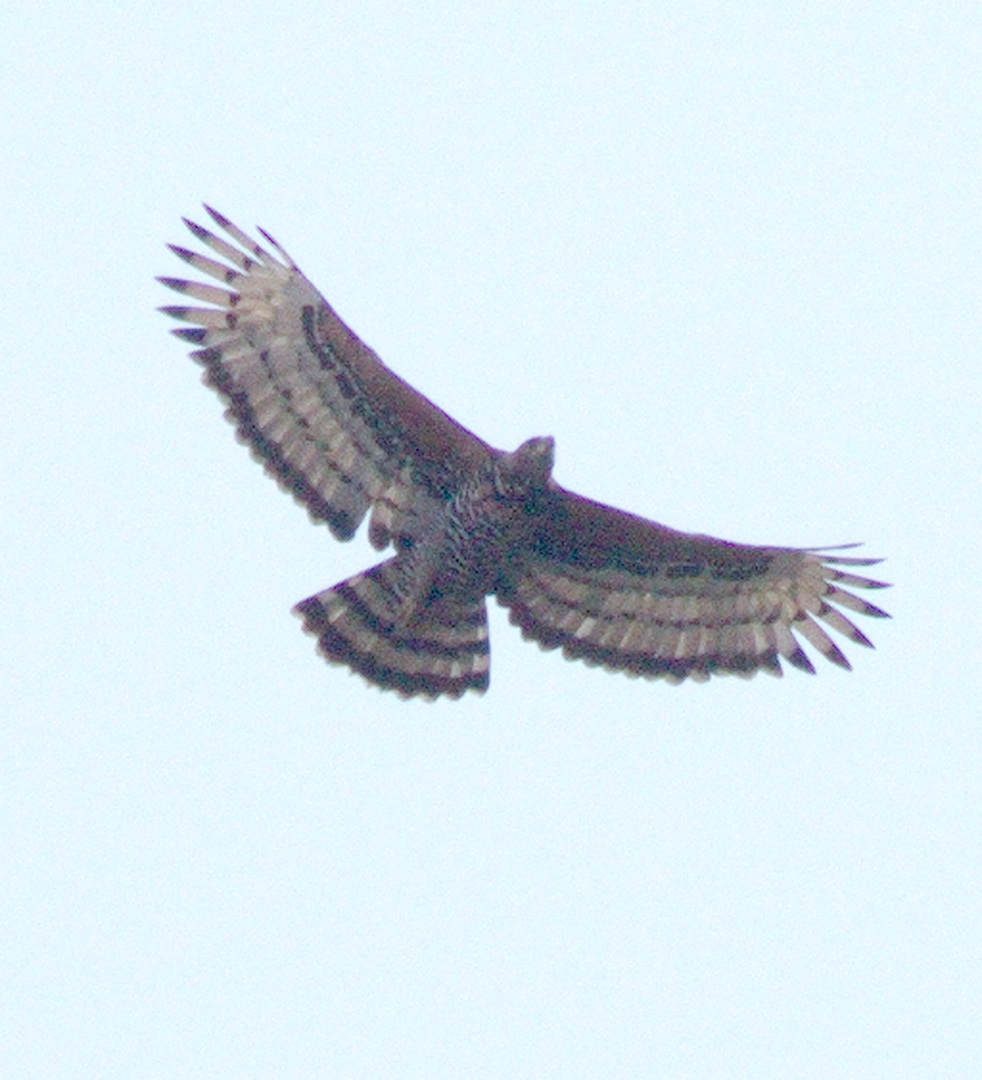
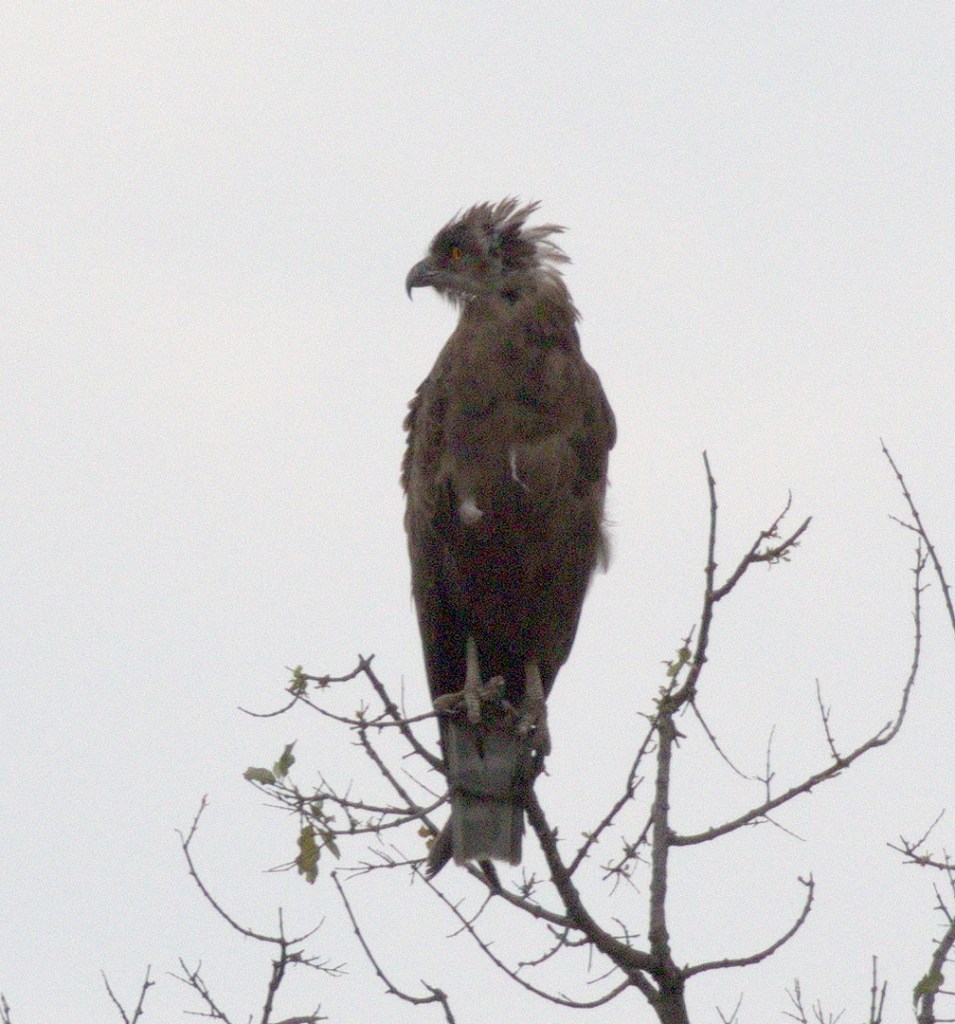
Mystery Raptor
Tawny Eagle – is it one
Tawny Eagle – is it one
Tawny Eagle – is it one
Tsessebe
Perplexes
Perplexes
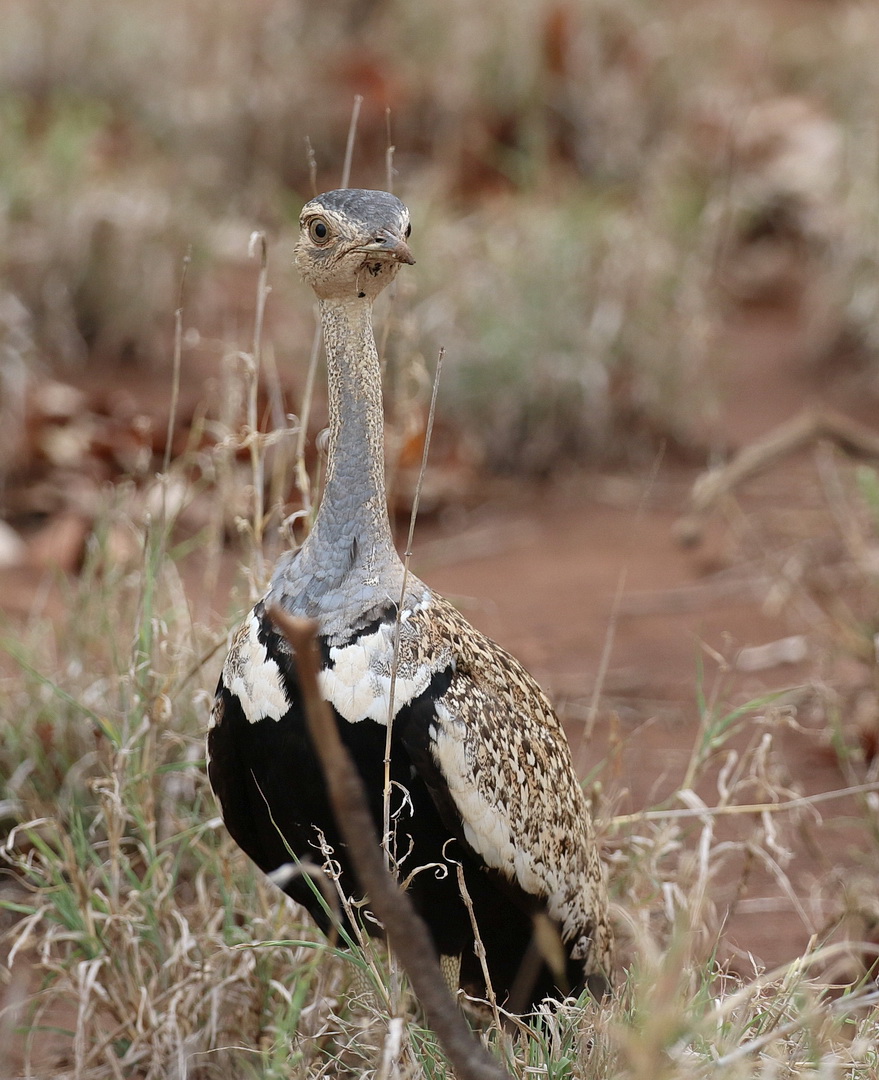
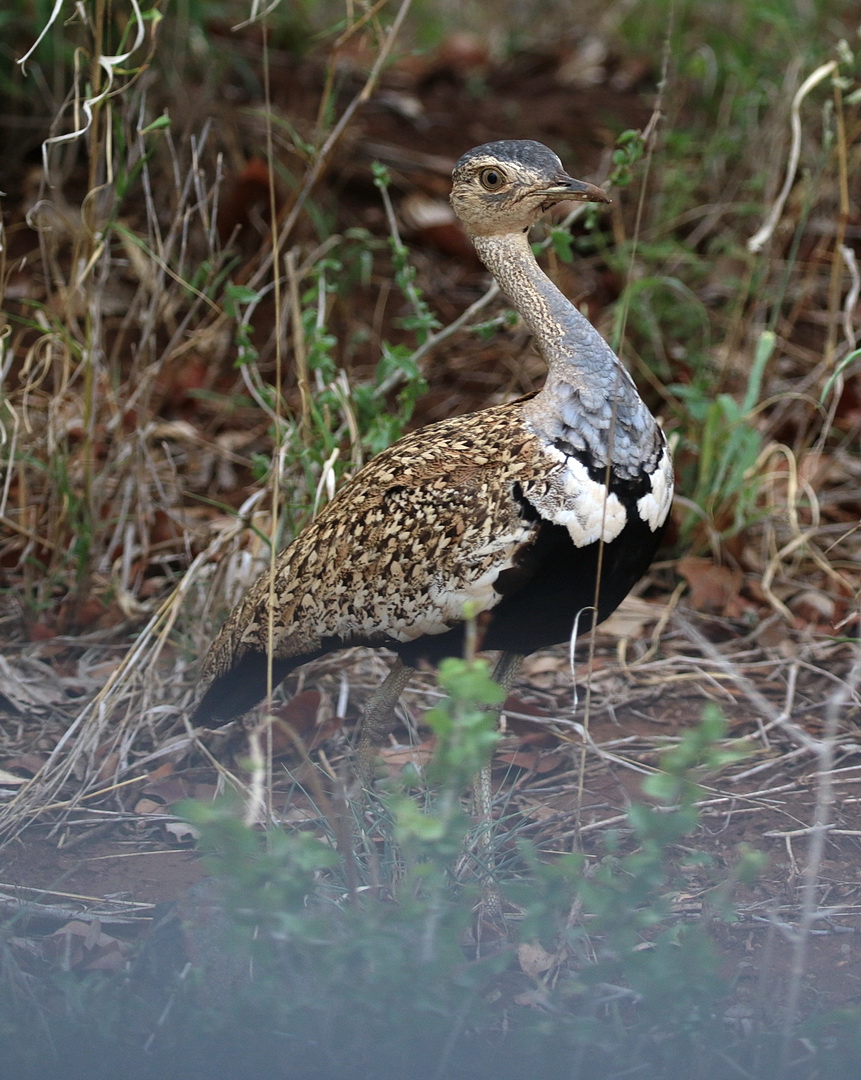
Red-crested Korhaan
Secretarybird
Yellow-billed Stork
In total we observed 143 different bird species in and around Tsendze.
Our next camp for five nights was Punda Maria from which we spent a couple of mornings in Pafuri. See Part 5.


















































































































































































































































































































 Birds are our Story