There were 12 present and us locals were delighted that the Durbanites supported the outing.
The Mpanbonyoni river that came down in flood two years ago all but destroyed TC but as time went by it turned out a blessing, we now have wide river banks and a lagoon that ends on Scottburgh beach. This has improved the variety of birdlife.
TC Robertson
TC Robertson
TC Robertson
TC Robertson
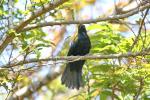
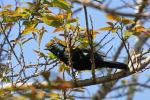
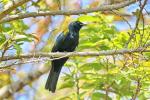
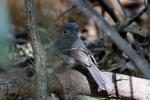
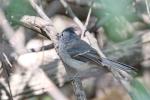
Birding began at the entrance to the reserve overlooking the Mpambanyoni river as we waited for everyone to arrive. The day started with an African Fish Eagle sighting and finished with excellent sightings of Black Cuckooshrikes (male and female) foraging on the ground in the area close to the bird hide (overlooking a dried out pan at present).
An Olive sunbird entertained us repeatedly hovering in mid air flapping its wings like mad – an unusual sight.
During the morning there were sightings of four of the kingfisher species – the African Pied had a couple of successful fishing expeditions. All in all, 67 different species were sighted and or the calls heard.
Brown-hooded Kingfisher
Brown-hooded Kingfisher
Dusky Flycatcher
Hamerkop
Lapsmith
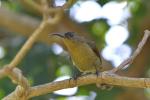
Olive Sunbird
Olive Sunbird
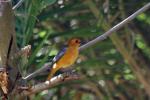
Red-capped Robin-Chat
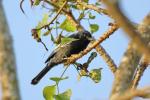
Southern Black Tit
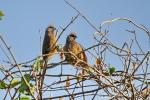
Speckled Mousebirds
African Pied Wagtail singing to its heart’s content.
Sally and I went to SAPPI (the saw mill close to Stanger, KZN) on Sunday to watch the bird ringing efforts of Garth Aiston and James Rawdon. The variety of the birds which were ringed included Cape White-eyes; African Paradise-Flycatcher; Sunbirds – Scarlet-chested and Olive; Dark-capped Yellow Warbler and numerous other warblers; Black-throated Wattleye; Weavers – including Southern Masked-Weaver; Malachite, Pygmy and Brown-hooded Kingfishers to name a few.
It is impressive to watch the way the birds are delicately handled and the records that are kept. It is a chance to see the birds up close and personal and to be shown how each bird is correctly identified by Garth and James. Their knowledge is immense.
The lasting impression you get when you see the birds so close is how small they actually are compared to when you see them in their natural habitat (especially through binoculars).
Whilest there we visited the bird hide and wandered around the ponds. This is an excellent place to see a wide variety of waterbirds including some of the more difficult species – like Snipes, Crakes and Rails. Only African Snipes made an appearance for us.
The hide overlooks a stretch of land protruding into the pond and provides an ideal place to practice bird photography. To show you what I mean by variety of birds to be seen I have attached the following photos. Amongst them is a photo of a mystery warbler – have a go at IDing it. Click on the bird to enlarge it then add your comment below it.
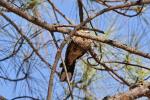
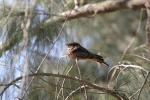
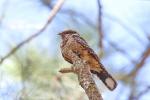
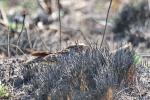
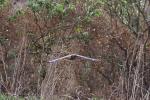
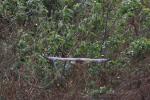
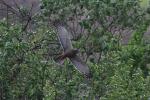
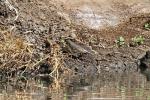
Peter Steyn has asked me to share photos of a raptor taken on the Kafue River at Mayukuyuku Safari Camp on 13 August 2014 because he is not certain about it. The co-ordinates to the safari camp are: S 14 deg 57.2′ E 26 deg 02.4′.
Some points are:
It was buzzard-size, like a JB. I thought it was a buzzard but according to some maps there are no buzzards there. Peter has excluded buzzard.
It seemed to stick to the riverine area, as though that was its natural habitat.
The “feathering” on the legs is very fine and almost absent.
Some feathers on the nape and towards the crown have distinctive marks on.
I think there was barring on top of the tail. I did not detect a white rump.
The whitish feathers on the sides of the head and neck seem notable.
Please click on the photos below to enlarge them. Leave your comments beneath the photos at the end of the post.
Ten birders attended the outing. This bushveld reserve is very dry at the moment, which is to be expected at this time of the year, and it was rather cold to begin with.
Mention must be made of 10-year old Decklan, our “chief” photographer, who handled the camera with a very large lens like a pro and his birding skills weren’t bad either! Well done Decklan. We need youngsters like you in the Bird Club!
The birds were slow to show themselves at first but as we got close to the bottom dam, we had good views of Golden-breasted Bunting, Blue and Common Waxbills, African Firefinch, Common Scimitarbill and Black-crowned Tchagra as well as 2 “teenage” Red-knbobbed Coots with their parents.
Little Grebe – Paul Bartho
Red-knobbed Coot – Paul Bartho
Red-knobbed Coot juvenile – on Golden Pond – Paul Bartho
Then we had a real slog up to the top bird hide. We were anticipating some good birding over the vlei from the hide, but unfortunately the entrance to the hide was overgrown so we decided to go and have our coffee and picnic back at the cars.
The bird count was 55. We need to go back to Bisley in summer to experience the excellent bushveld birding that it is known for!
Paul suggested that we move on to Darvill Sewerage Works and this proved to be a very good decision although it was very, very windy.
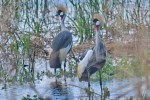
We were treated to two dancing Grey-crowned Cranes! Of special interest was a group of Ruff, one of which still had a partial ruff which none of us had ever seen before! We also had lovely views of an African Marsh-Harrier quartering over the reeds.All three species of teal were present (Cape, Red-billed and Hottentot). The bird count was about 37.
Mid-day today Sally and I went to Cumberland NR to see if we could find the Allen’s Gallinules which Norman Freeman had reported seeing yesterday.
On the water we saw Egyptian Geese, two pairs of Little Grebes and a juvenile, several pairs of Red-knobbed Coots, a number of Common Moorhens and a pair of Purple Swamphens but unfortunately no Allen’s Gallinules – nor were we lucky enough to even hear them.
Purple Swamphens, Common Moorhen and Little Grebe
There were 13 Bald Ibis resting on the roof of the “hide” (more a launching jetty for canoes). Norman also reported seeing them there yesterday.
Bald Ibis
Bald Ibis
Bald Ibis
Bald Ibis
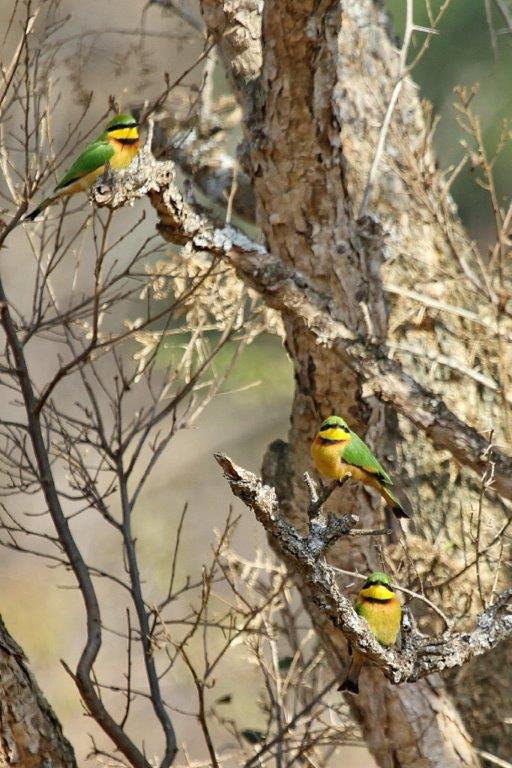
A couple of African Fish-Eagles flew overhead at one point along with another raptor which might have been a Black Sparrowhawk. A lovely group of 3 Little Bee-eaters were in the trees nearby along with a number of other species.
Little Bee-eaters
Sadly, we found a Red-chested Flufftail right beside the start of the jetty – floating in the water. We have brought it home to give to David Allen for the Durban Natural Science Museum.
Two degrees Centigrade at 07h00 at the Hilton College gate did not augur well for a good day’s birding. However the sky was clear and the sun would come out. At the end, the birding was much better than expected.
Four of us descended to the river in one vehicle – Penny de Vries, Cheryl King, Sally and Paul Bartho. Heater full on but with windows open. The four kilometre descent was taken slowly – birding all the way.
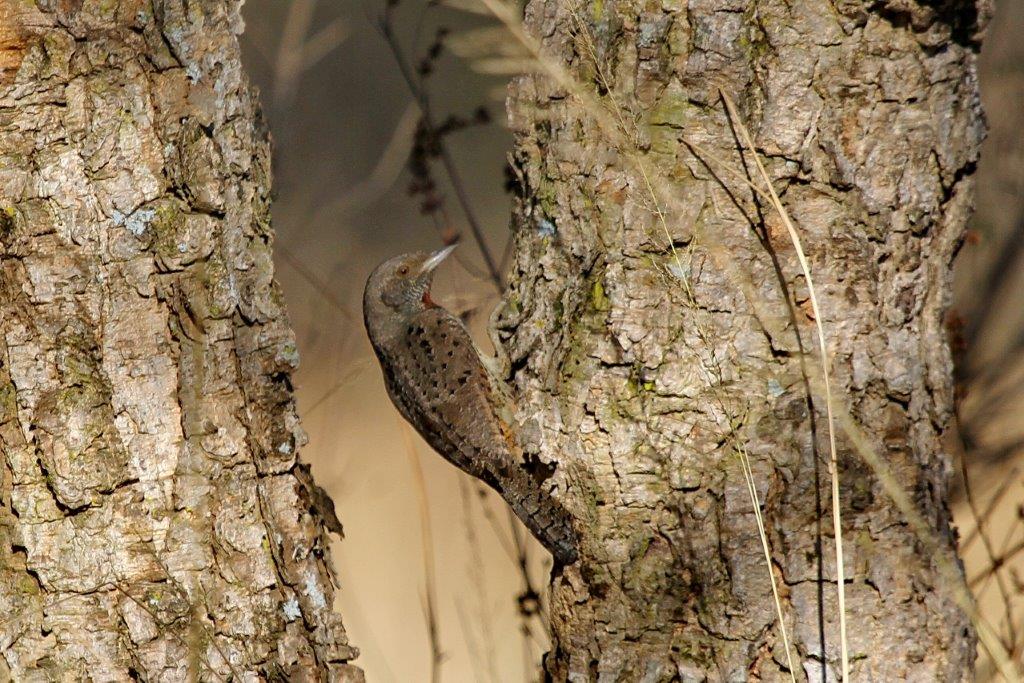
Probably one of the better sightings all day was the Red-throated Wryneck at the entrance to the picnic area where numerous birds held our attention before we eventually arrived there.
Red-throated Wryneck
At the picnic site a cup of tea/coffee was in order. By this time the sun was warming us up and Sri Lanka were 130 something for 5. The picnic site is right by the river with a number of different species flying up and down as we supped our hot beverages.
The following photos give you an idea of the scenery, the river trail, Finfoot Hide and the picnic site:
View up river with the Umgeni Valley NR as background.
River view from the trail.
Geni’s Junction at the end of the river trail going up river.
View through the grassland to the escarpment.
Euphorbia in bloom
Interesting trees.
Trail along the river
View from the picnic site across the river to Umgeni Valley NR.
Picnic Site.
View of the river from the Finfoot Hide.
Then we set off following the river upstream along a well-maintained trail. African Firefinch were heard then seen followed by Common Waxbills, Golden-breasted Bunting with Trumpeter Hornbills flying overhead. Of course we kept an eye on the river in hope of seeing an African Finfoot and/or African Black Duck.
Trumpeter Hornbill
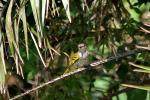
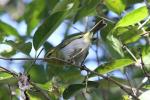
Just before we reached the Finfoot Hide we were held up for about half an hour by a bird party consisting of Yellow-throated Woodland-Warblers, Bar-throated Apalis, Cape Batis and this unidentified species which eluded all our attempts to get a great sighting. Full grey head to just below the eye, white throat, greeny-yellow stomach and green back. Anyone got any ideas? If so please let us know. The closest we came to identifying the bird was that it could be a Bar-throated Apalis without the bar or an Eremomela way out of range.
Unknown Species. The beak points down just to the left of the green leaf. It’s eye can be seen just behind the twig running across its face.
Yellow-throated Woodland-Warbler
Tawny-flanked Prinia
Cardinal Woodpecker
The Finfoot hide overlooks a small patch of the river but nothing special was observed there at that time.
On we clambered along the path by the river keeping our eyes out for a Bushveld Pipit which had been seen previously – no luck. More African Firefinches were seen and Lazy Cisticola heard and seen. Then we came across a pair of Swee Waxbills which, caught in the sunshine, radiantly showed off their colours.
Eventually we came to the end of the trail at Geni’s Junction – another large open area well treed. Here a number of Robins got our attention but only the Cossypha natalensis was positively identified.
The return journey was made in quick time – it was late in the morning and there was not much to grab our attention.
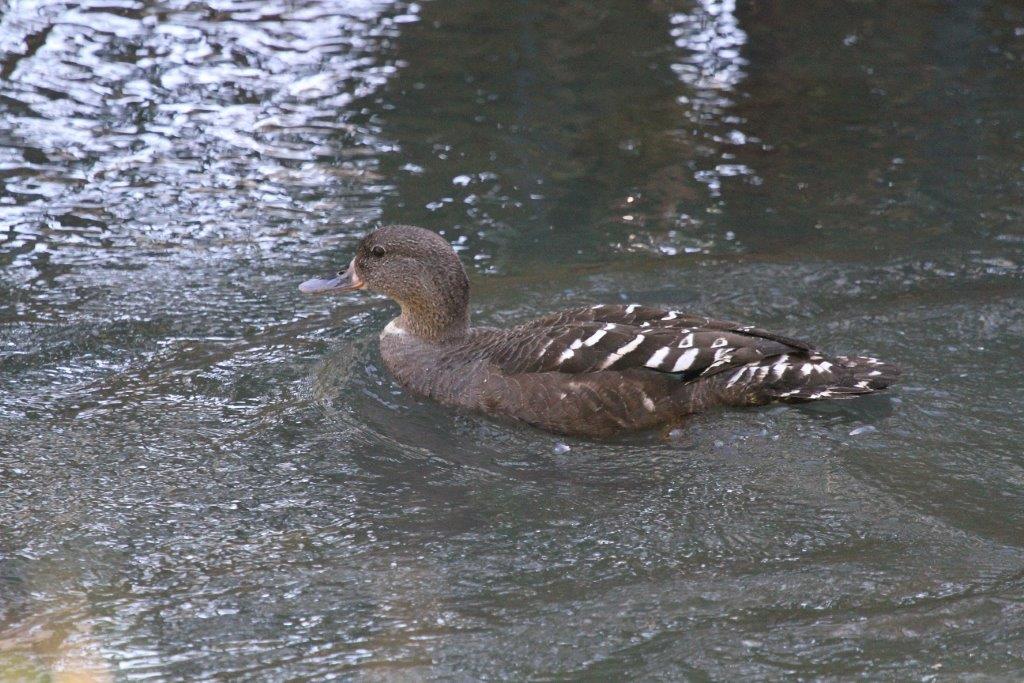
We made a quick detour to visit to the hide as we passed – very fortunate timing as there were two African Black Ducks swiftly swimming up-river. And further along another three were seen flying down-river.
African Black Duck
While having a bite to eat by the river at the picnic site a Burchell’s Coucal made a brief appearance.
Then on the drive back up the hill a Black-crowned Tchagra sat quietly in a tree close-by giving us excellent views. And an African Fish-Eagle gave us an overpass as we reached the top – the only raptor we had seen all morning.
By the time we reached the top we had a bird list of 60 seen and/or heard. Click here to see the bird list.
This is a great venue and worth visiting in the summer when the migrants return.
We are sparkling here currently in Pigeon Valley NR. People are coming to see the Buff-spotted Flufftails, which are very obliging while conditions are so dry. While at the spot most likely to see them, I have also had great views of a confiding Narina Trogon, persistent attention from the Blue-mantled Crested-Flycatcher female, African Firefinches, very friendly Yellow-rumped Tinkerbirds, and a bird yesterday that I and another watcher did not see well enough to be sure – she think it could be a Greater Honeyguide juvenile.
Buff-spotted Flufftail
Buff-spotted Flufftail
Buff-spotted Flufftail
Buff-spotted Flufftail
Buff-spotted Flufftail
Buff-spotted Flufftail – female
Bar-throated Apalis
Collared Sunbird
Southern Boubou
Southern Boubou
Spotted Ground-Thrush
Spotted Ground-Thrush
Blue-mantled Crested-Flycatcher
Blue-mantled Crested-Flycatcher
Blue-mantled Crested-Flycatcher
We have also had a rare visit from a Grey-headed Bush-Shrike.
But perhaps the most spectacular was when 25 of us on the BirdLife Port Natal outing to Pigeon Valley started the walk and then watched as a Scaly-throated Honeyguide tried to take over a Cardinal Woodpecker nesting hole in a branch over the main path just after the map. It was unflustered by the onlookers, as it tried persistently, at one point locking bills with the female Cardinal Woodpecker in the nest.
Scaly-throated Honeyguide
Scaly-throated Honeyguide
Cardinal Woodpecker
Later in the morning, most of the BirdLife members stood and watched the male and female Buff-spotted, as a way of ending the morning.
One of the Red Duikers has died; I had a look at the body this morning; it is a bit decayed, but potentially it was taken by a Crowned Eagle; maybe I will be able to see the right eye socket a bit later to see if there are the marks of a talon.
I am getting emails that I am often not good at responding to, asking for co-ordinates of Pigeon Valley, and whether it is safe. There are no guarantees of course, but I am not aware of any recent problem incidents, at all.
Co-ordinates are 29° 51′ 52″ S, 30° 59′ 19″ E

























































 Birds are our Story