After our time at Tembe we had planned to visit St. Lucia for a couple of days on the way home. However we had a call from my sister to say they were in Kosi Bay and why don’t we visit instead.
We took the opportunity and as there was no room in the Kosi Mouth TEBA cottage we camped instead at the Kosi Bay and Coastal Forest Reserve. Our campsite was in a very shady spot right at the lake’s edge.
Campsite No. 1
Campsite No. 1
Giant and Pied Kingfishers were constantly going back and forth over the water from one clump of bush to another. Three African Pied Wagtails also entertained us flying about chasing each other at speed over the water and through the camp. But probably the highlight was seeing a couple of Green-backed Herons flying around us.
At night we were serenaded by an African Wood-Owl as well as the hippos.
Most of the Saturday was spent at the cottage right at the mouth of Kosi Bay catching up with family. Here, we were fortunate to see a Palmnut Vulture flying across the bay and a Lionfish in a pool nearby.
Lionfish
Sunday we spend the early morning birding on the trails at the camp then my sister and husband came round to visit us. They were very impressed with the large well sheltered campsites and proximity to the lake.
In the short time we spent birding we identified 32 different bird species. Click here to view the list.
Celebrating our anniversary we decided to splash out and stay three nights at Tembe Lodge.
The lodge is run by the local community and more friendly and helpful staff would be very hard to find elsewhere in Africa.
Dining area and barReceptionSeating area round fire
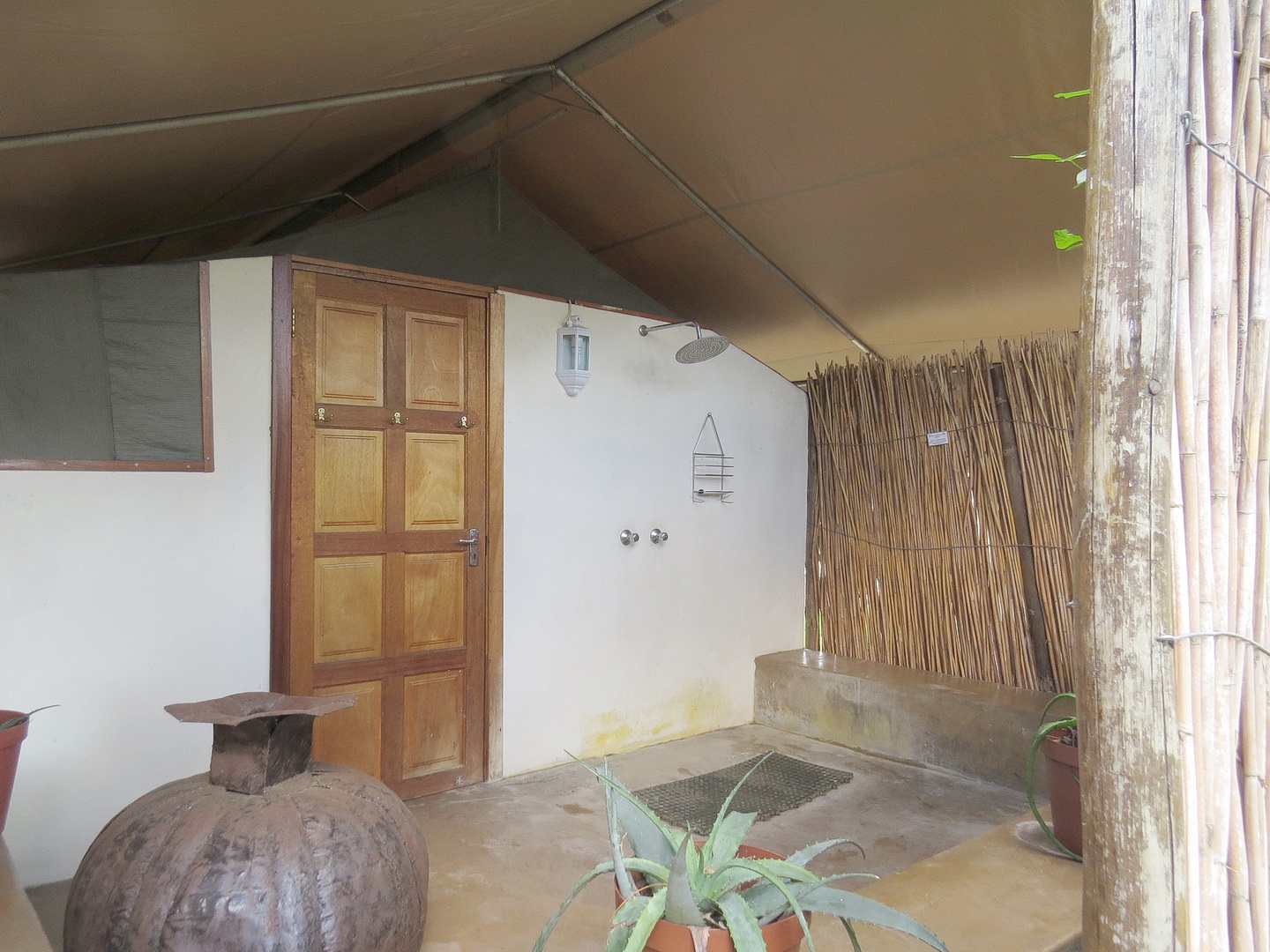
The stay includes 2 game drives a day, early breakfast, big breakfast, lunch and dinner. The accommodation was a spotless safari tent well furnished with its own ablutions including an outdoor shower. It is well private from other residents and surrounded by African bush.
Our tented camp No. 2
Outdoor shower
The day we arrived we went on a game drive and had a number of close encounters with “friendly” elephants. The evening was exceptionally cold and we were happy to get back to camp.
After that experience we decided to give the game drives a miss until the weather warmed up a bit. And that was not such a bad idea as there was little the others on our vehicle actually saw on their other drives. However they did have one encounter with a not so “friendly” elephant. Loads of posturing, blowing its trumpet and shaking up the dust. Back off, forward again and eventually the elephant had had enough. It ripped the tracker seat right off the vehicle as if it were swatting a fly. Our birding was a lot more tranquil!!
Our time was spend travelling round the park in our own vehicle – stopping where we wanted to and spending time with bird parties – the game drives were more focused on the big 5.
During the time we were there we identified 82 species – which was a lot more than we expected. Among them were: Rudd’s Apalis, Woodward’s Batis, African Broadbill, Gorgeous, Grey-headed and Orange-breasted Bushshrikes, Brown Snake Eagle, Crowned Eagle, Southern Banded Snake-Eagle, African Harrier-Hawk, Fiery-necked Nightjar, Spotted and Verreaux’s Eagle-Owl to name a few. Many were identified by their call. Click here to view our list.
Leaving Umlalazi we headed for Mkuze to camp for 4 nights. Having booked ahead we arrived at the campsite to find a very agreeable chap looking after the campsite. However the first thing he told us was that there was no water except in the Jojo tanks. The pump had broken down and so had their water tanker and the one they borrowed from Sodwana!!
Not feeling very happy about this we went to the office to get them to provide us with alternate accommodation. Everything was full and the best they could offer us was a 50% refund – I wonder if we will ever get it!!
Anyway we made the most of it and stayed in the campsite. Jojo water to washup and flush the loo. Showers in the rest hut communal ablutions.
Game viewing was hindered by the long grass from the rains they had had. We saw none of the big game in the four days we were there – just the usual GWIZ brigade – Giraffe, Wildebeest, Impala and Zebra – plus Warthog and Nyala. All the roads were in good condition and the new hides were a pleasure despite the cold and biting wind.
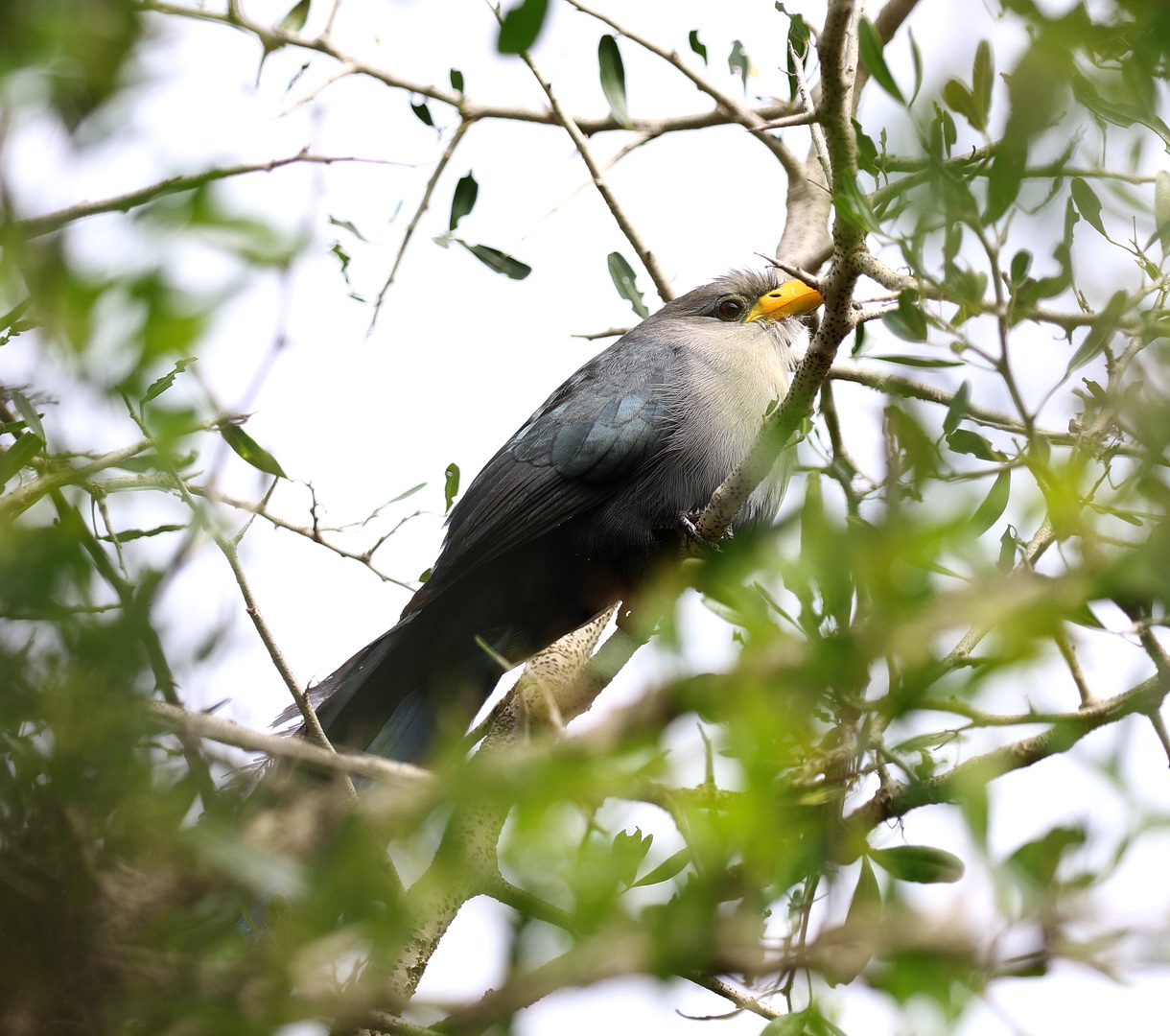
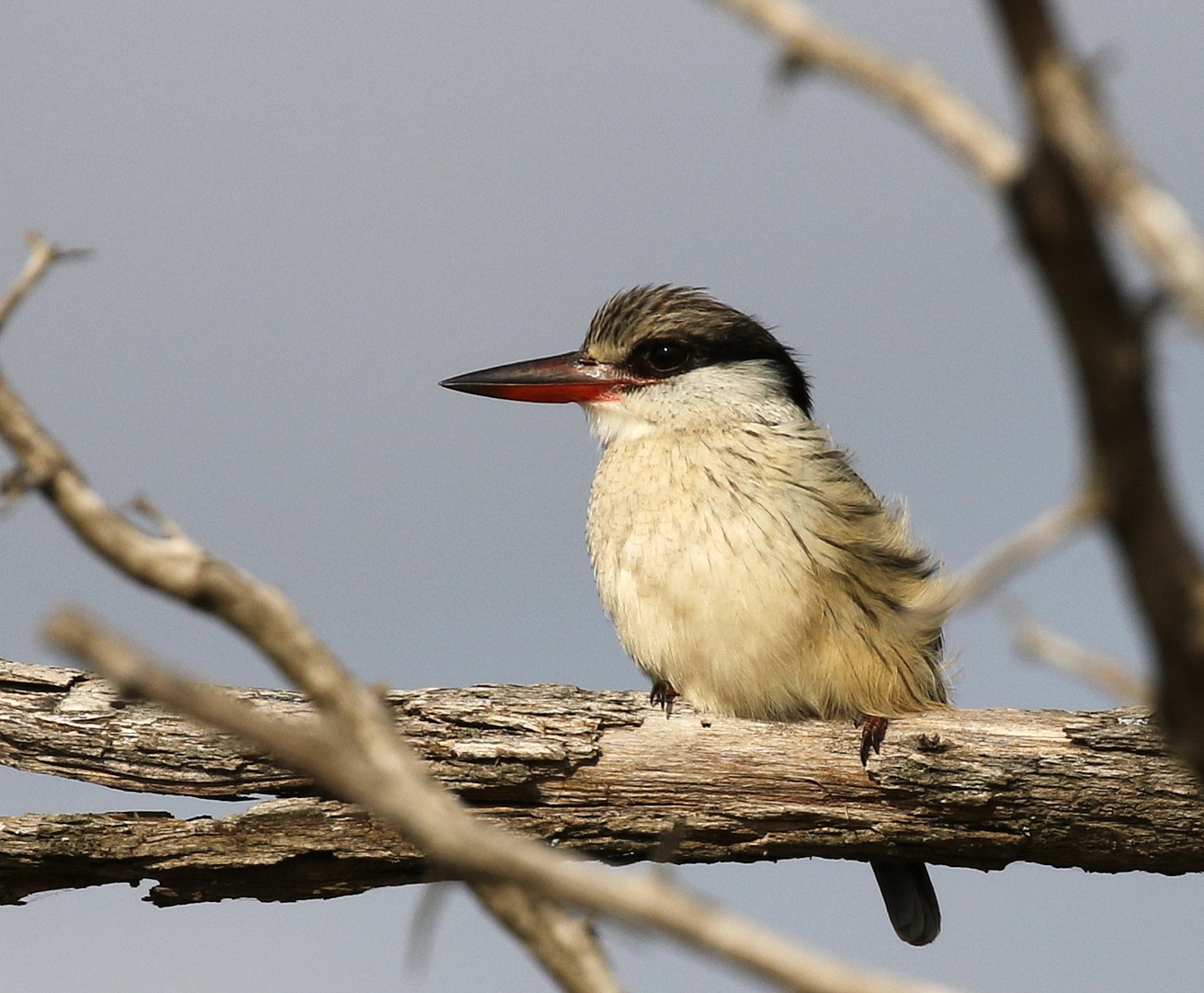
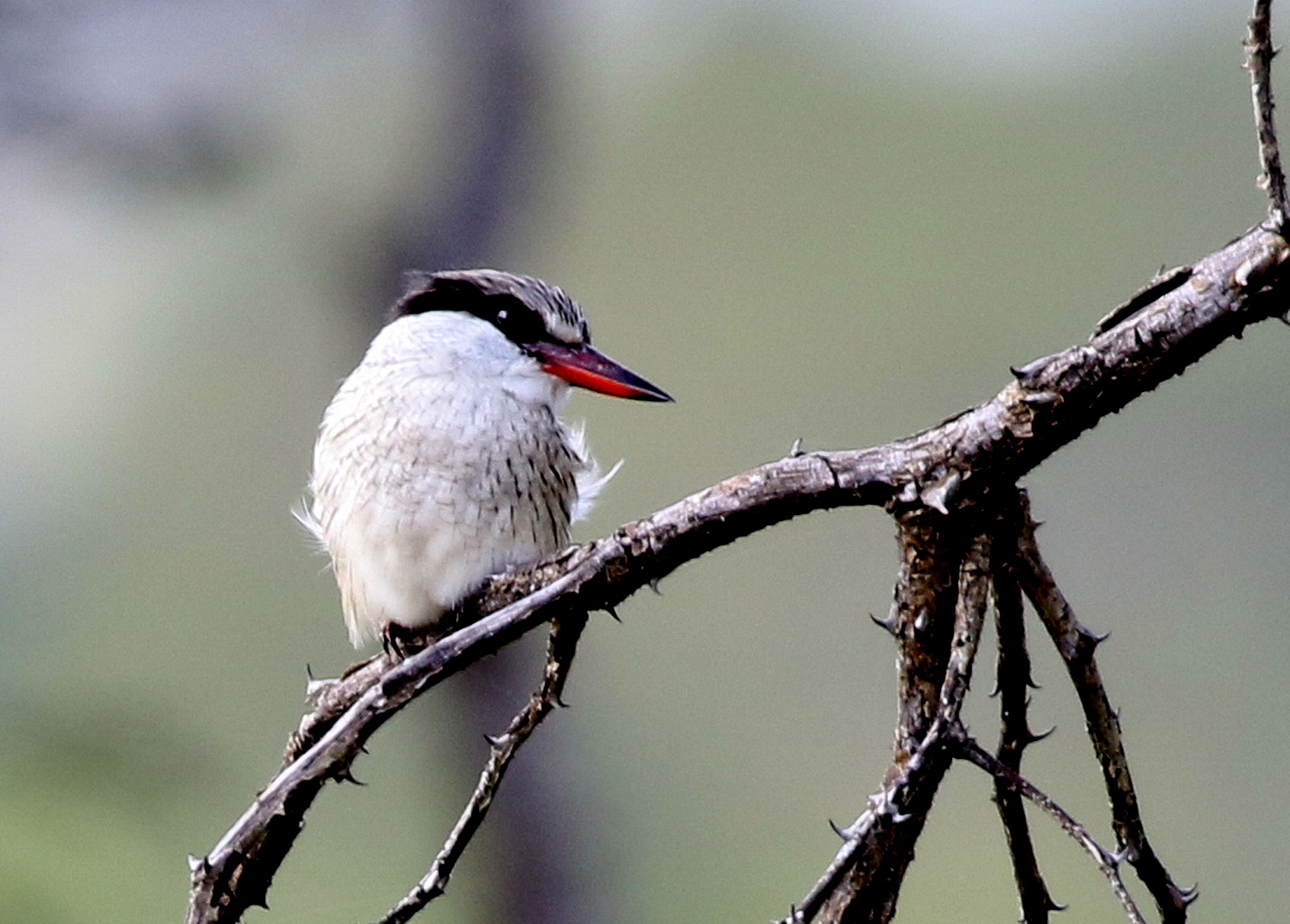
Birding was good for the time of year and we managed to identify 132 different species – click here to see the list. Some of the specials seen included: African Pygmy Geese, White-backed Ducks, Green Malkoha, Striped Kingfishers, African Cuckoo Hawks, Pink-throated Twinspots.
Sally and I were on our way up the Zululand coast to do some birding when we decided to stop at Umlalazi for a night with friends who were already there.
The campsite was not crowded. The ablutions clean and working. The sites nice and level with power and water. And it was cheap R144 for the site for the two of us.
Nothing much was done in the way of birding but we had a few nice birds to photograph. We did try to find the Mangrove Kingfisher in the mangroves but only saw a Half-collared Kingfisher instead. No African Finfoots either.
For years I have been wanting to return to Jamaica where I was brought up. Last year we committed to go, choosing this time of the year for best birding. Also the coolest time to go. The last time I visited was 32 years ago and that was only for 4 days – no where near enough.
Click Map of Jamaica to see places we visited – marked using red pins – hover your mouse over the red pins to see details. It is possible to zoom in and out. Map care of Google Maps.
Jamaica is a small island about 140kms south of Cuba. It is about 225 kms east to west and 80 kms north the south at its widest point. It is extremely hilly away from the coast and has the Blue Mountain as its highest point towards the east of the island near Kingston – its capital city. Population 2.5 million with 40% in Kingston and Montego Bay.
The purpose of our trip was not only nostalgia but also included a week’s intense birding. Jamaica does have 26 endemic species so we hoped to see as many as we could among all their other birds. Click here to see a list of the Jamaican endemics.
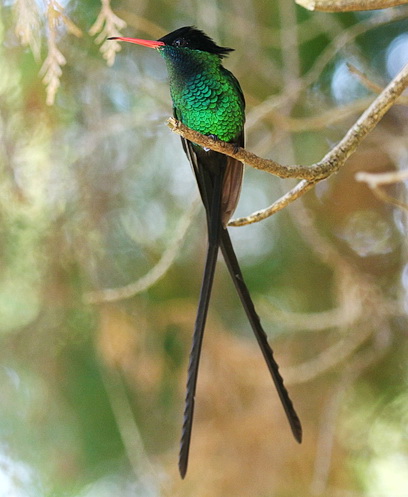
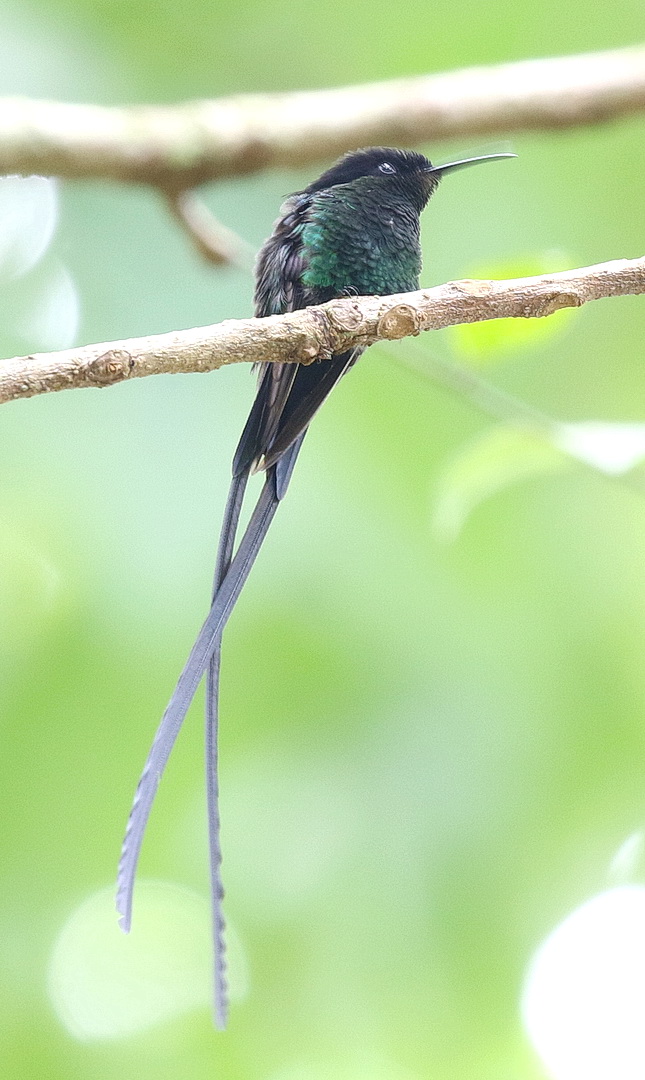
We arrived in Montego Bay and spent a day there recovering from the long journey prior to the start of the week’s serious birding. The hotel grounds got us into the birding mode with many new species for us to identify. Among those was the Red-billed Streamertail. He was very obliging and we could approach within a metre before he got nervous and flew. He had his perches so we were able to study him closely.
Red-billed Streamertail – Jamaica’s National bird
Red-billed Streamertail – Jamaica’s National bird
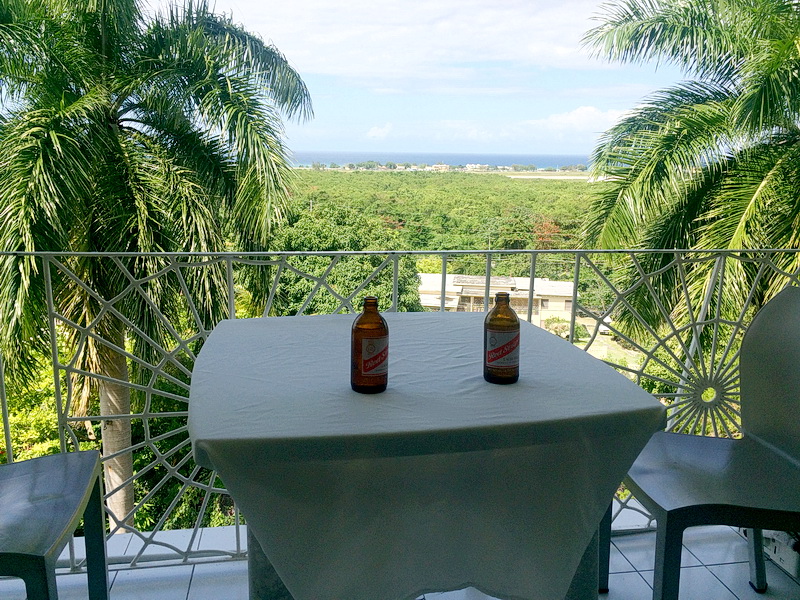
View from our balcony
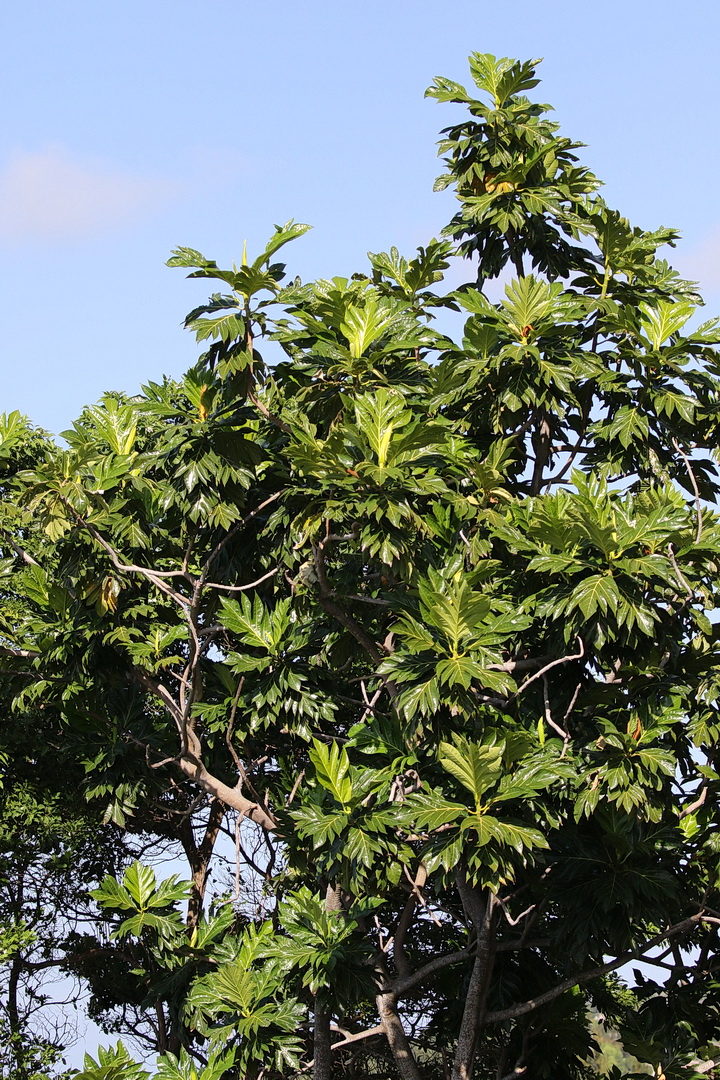
Breadfruit Tree
Our first fish restaurant in MoBay
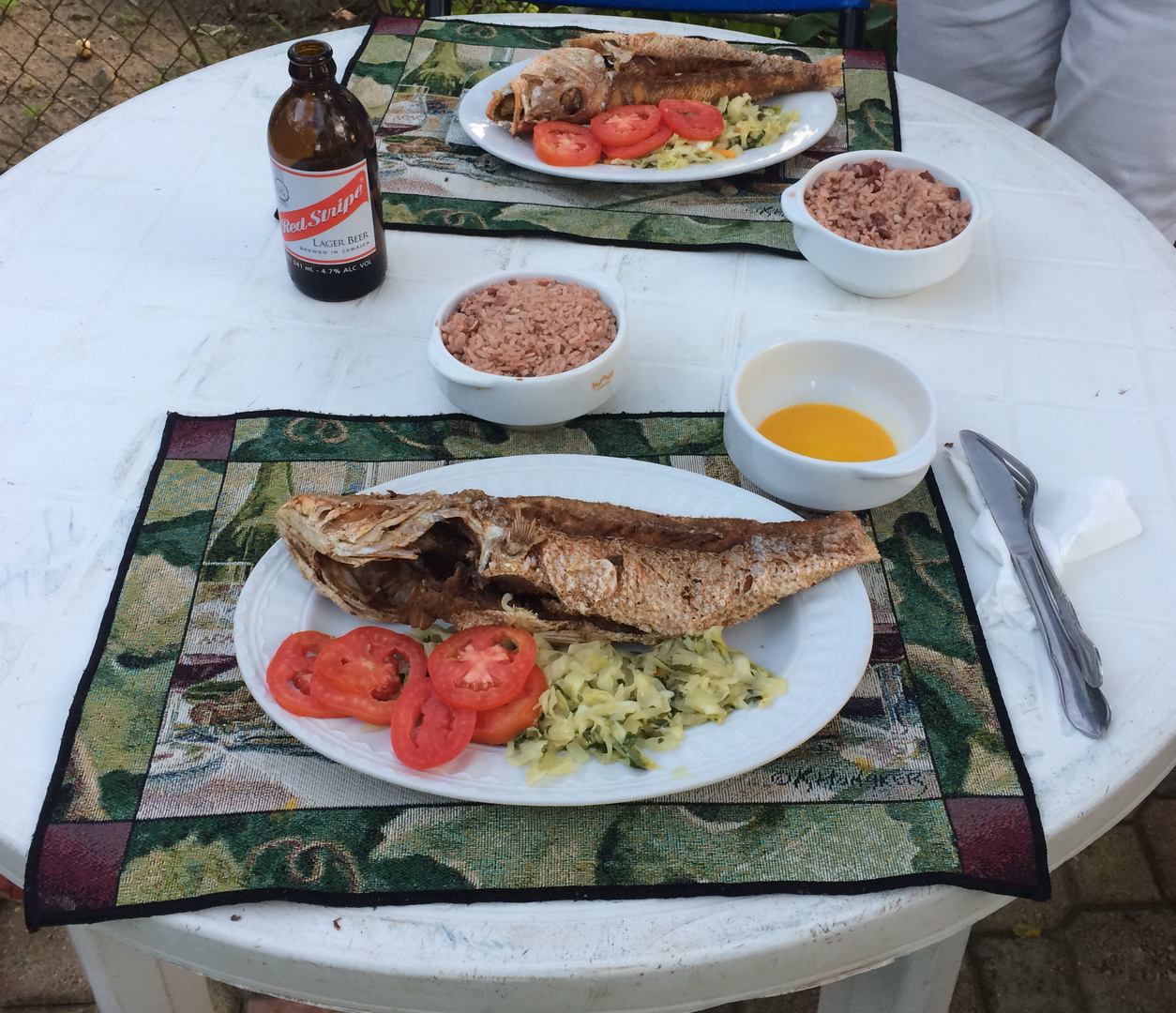
First dinner – snapper and rice & peas
Cheers
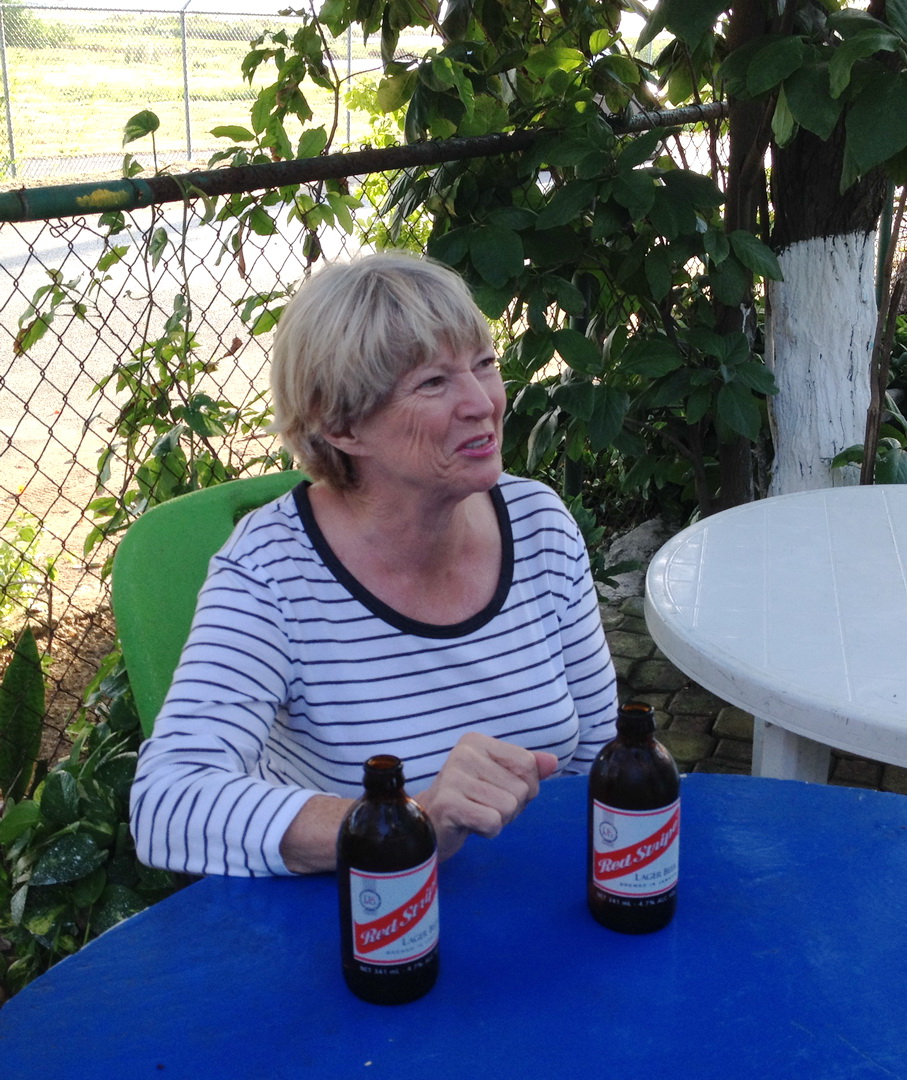
Happy with her Red Stripes
Northern Mockingbird
Northern Mockingbird
European Starling – male
White-crowned Pigeon – aka Bald Plate
Mourning Dove- Zenadia
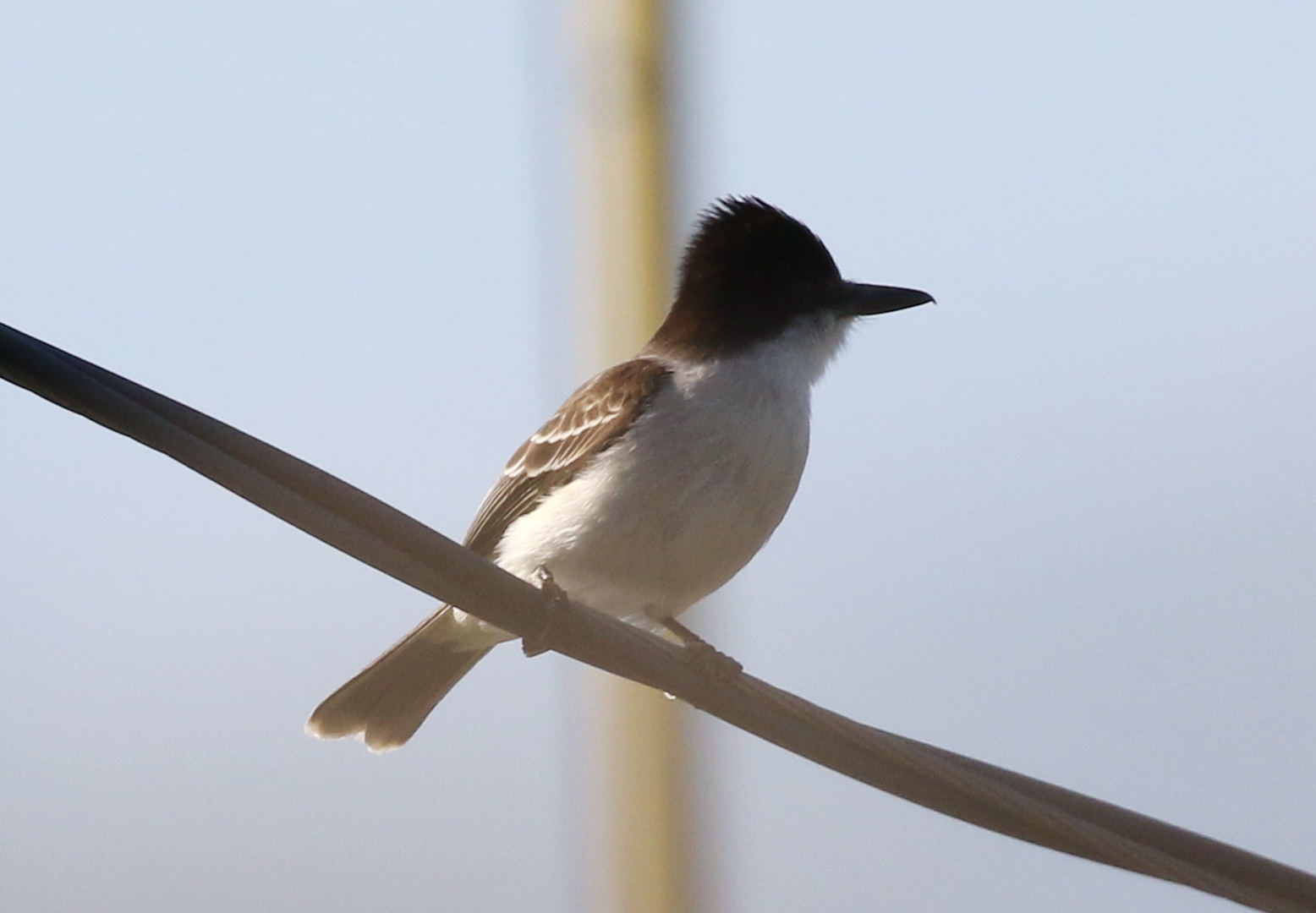
Loggerhead Kingbird
Cape May Warbler
European Starling – female
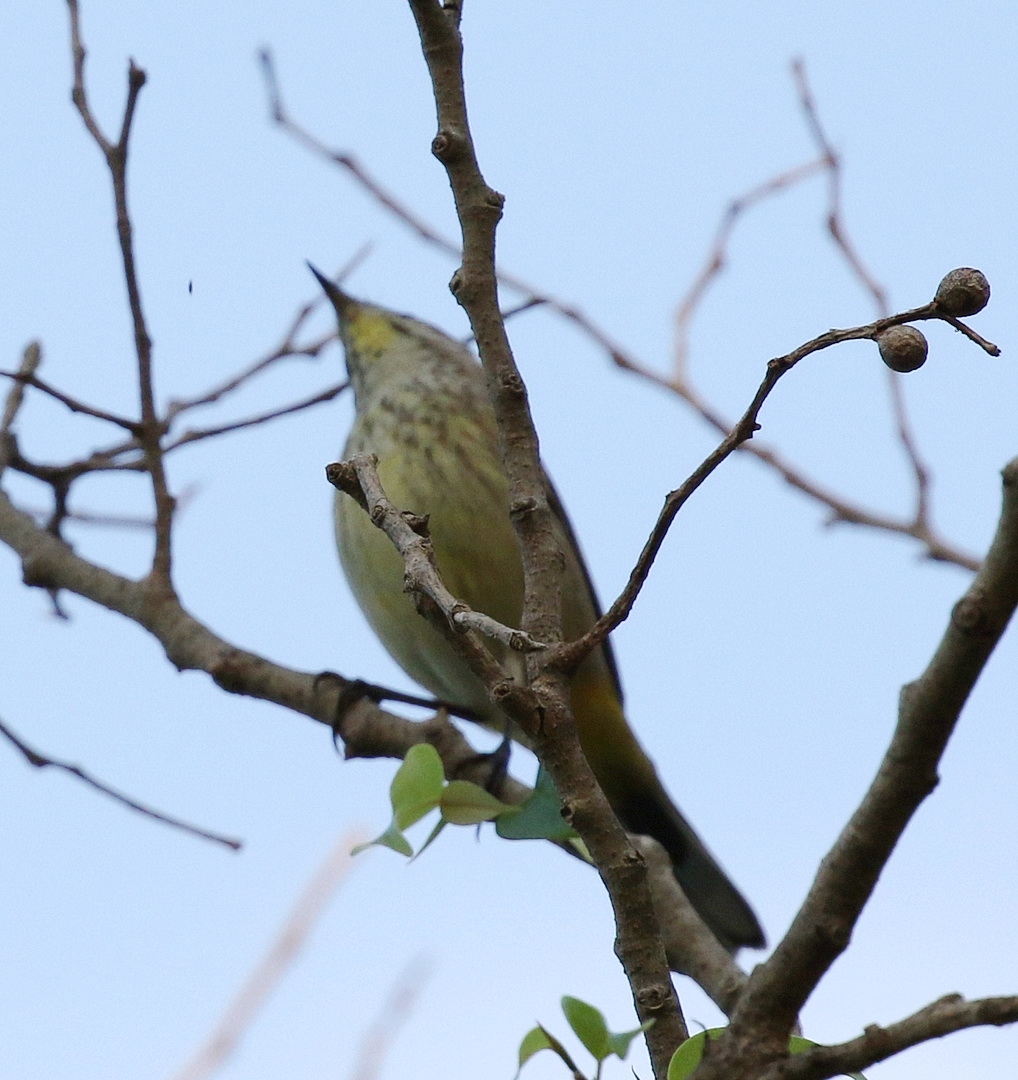
Mystery Warbler?
What am I? An Arrowhead Warbler maybe?
The next day we were collected mid-day joining with two other couples who had just arrived. Our driver took us to Green Castle Estate in Robin’s Bay some two and a half hours away. Here we were based for the next seven nights.
We drove most of the way along the coast. Nostalgia set in. I was expecting to see change but was really disappointed to find that the entire beach side of the road to the sea was now houses, hotels or holiday resorts. Access to all the lovely beaches now belonged to someone and it was clear that local Jamaicans no longer had the easy access they used to have to enjoy their own beaches. Sad but that is what tourism does to lovely places.
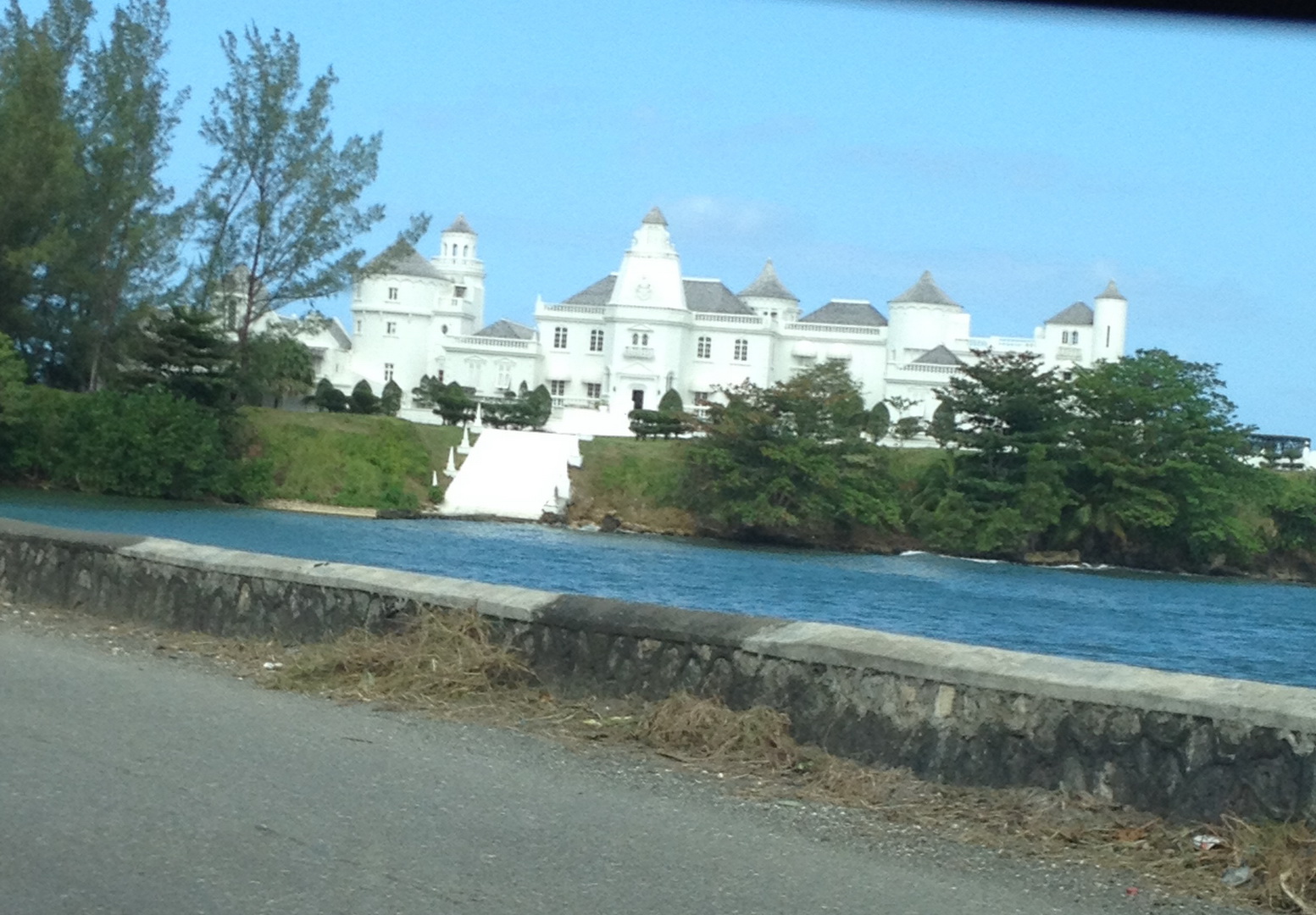
Yet another monstrosity
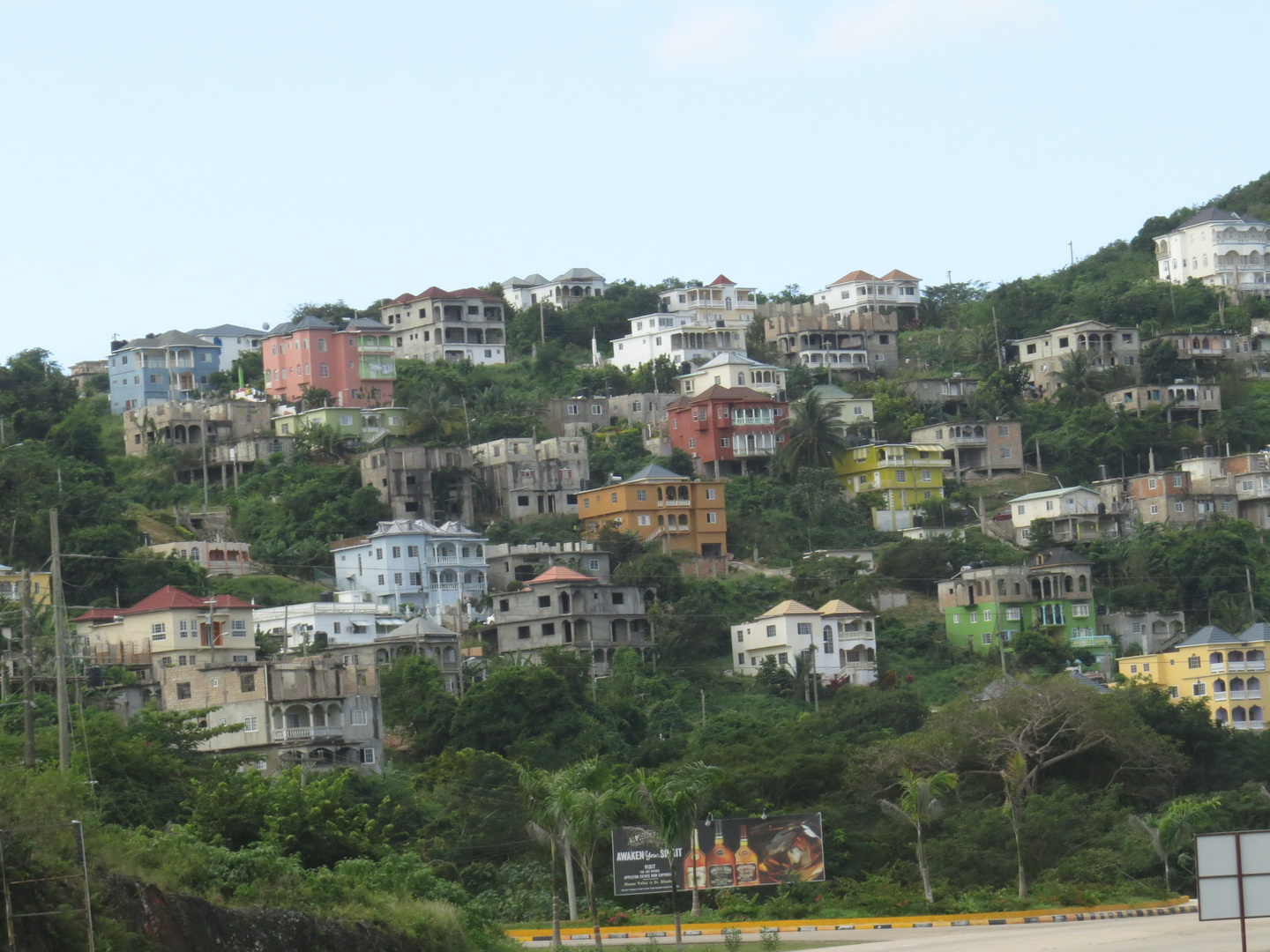
Hillside Development along the north coast
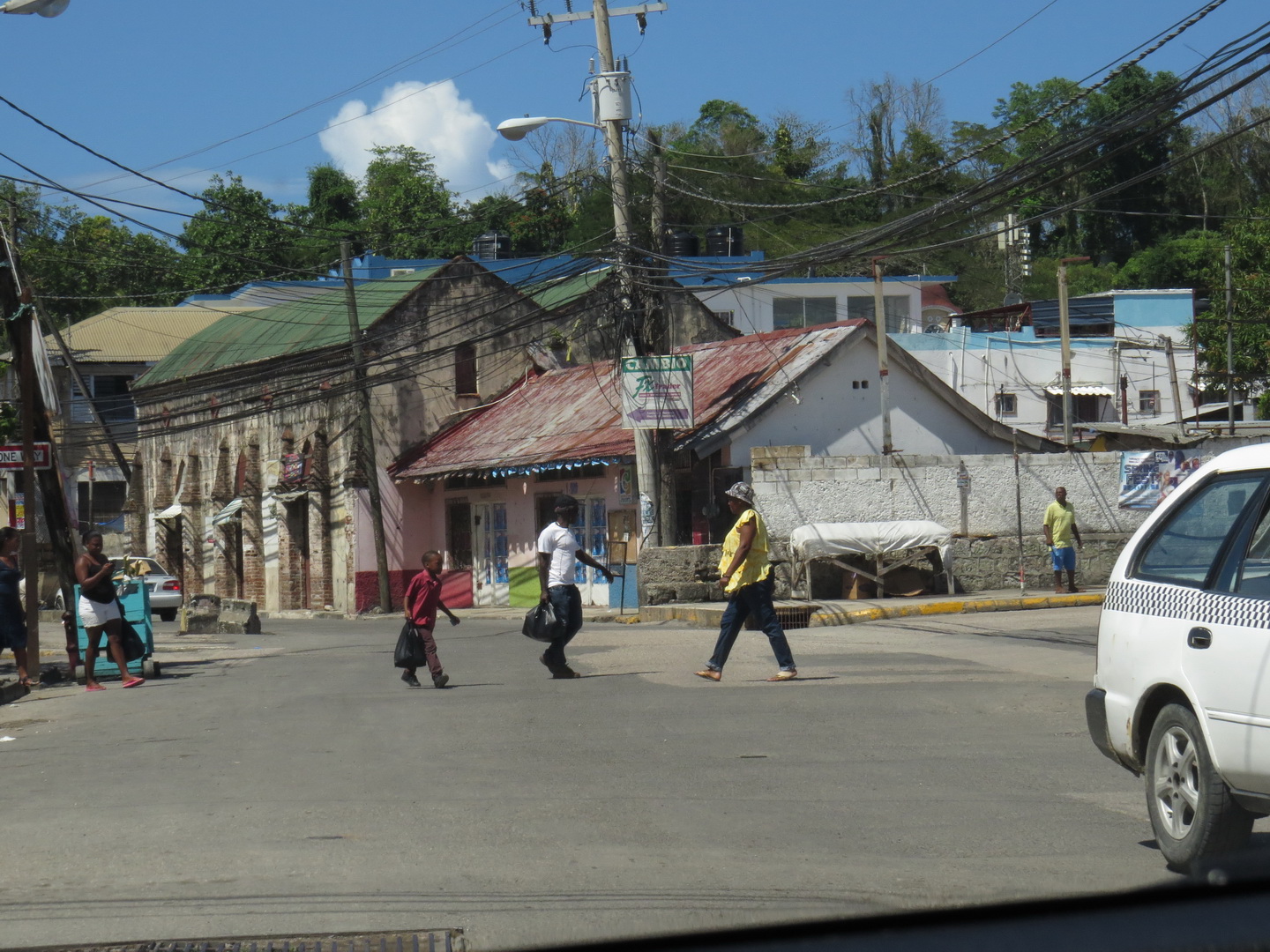
Now which way
Baptist Church
Nudist Island – wedding in progress
Countryside
Bay Scene
Coastal View
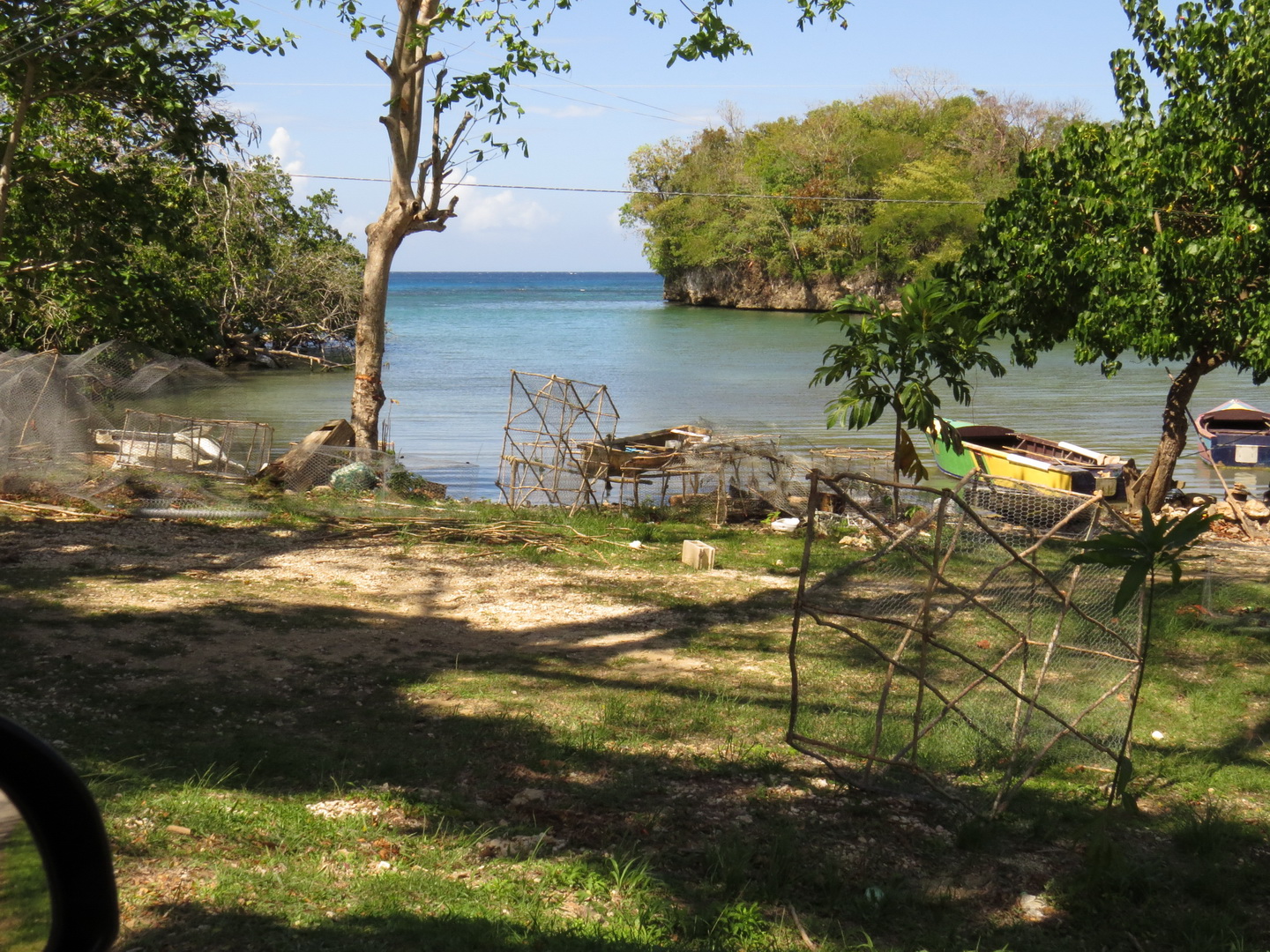
Fisherman’s cove unspoilt
Cart
On the Road
About half way we had a pit stop next to a very popular “Pattie” shop. I encouraged all in our party to try a pattie or two. In the store they have a much larger choice than I remembered – the lovely flaky pastry could now be filled with a choice of fillings other than the mildly spiced mince of yore. All agreed they were delicious.
As we got closer the weather changed and the rain started. The north east side of the island – being closest to the Blue Mountains (7200 ft) – is the wettest part of the island and as a consequence the most lush. This rain continue on and off for the week we were there.
And the storm hit us
Eventually we reached Green Castle Estate. Here we met the two other couples in our group – 10 of us in all.
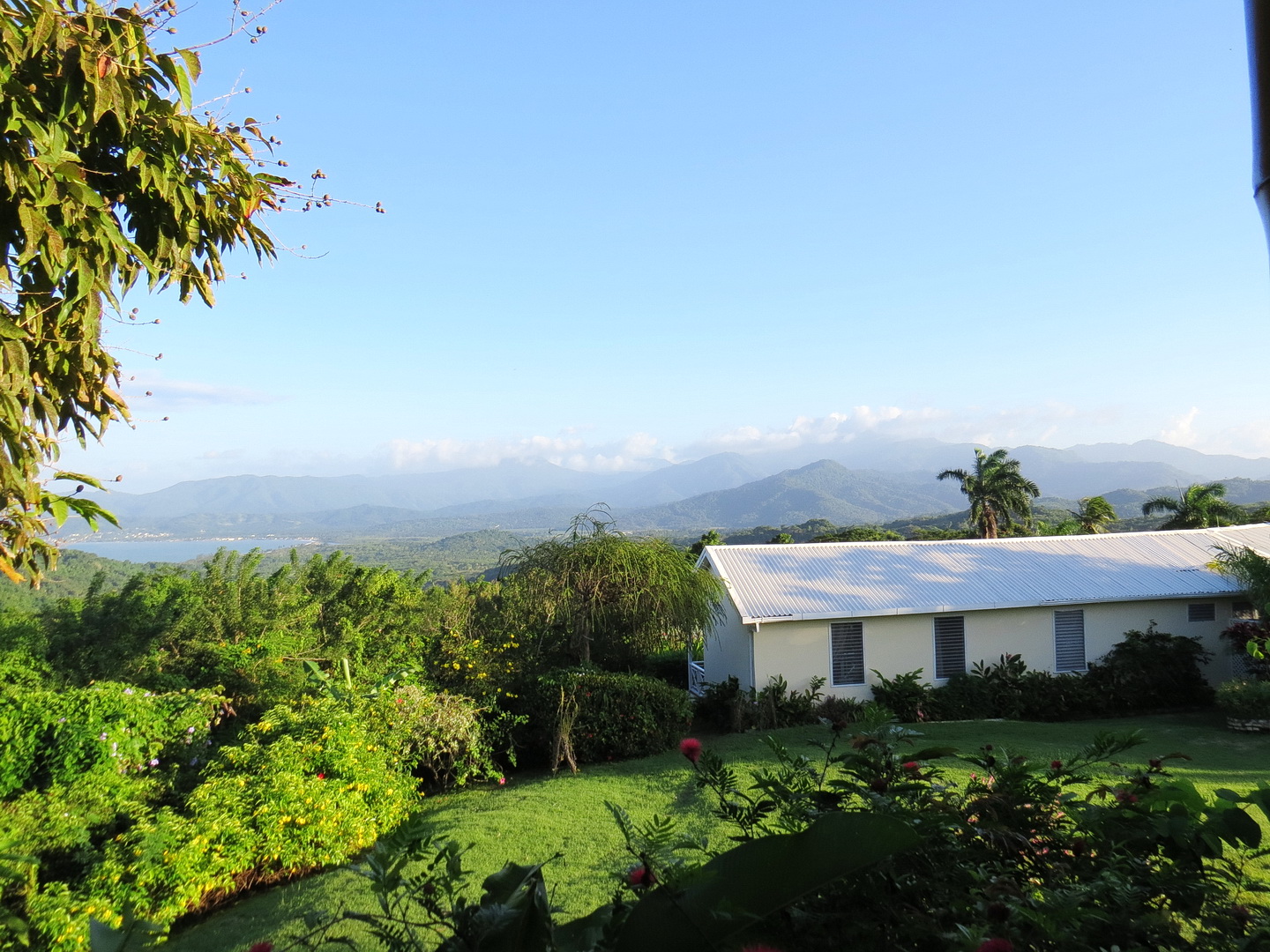
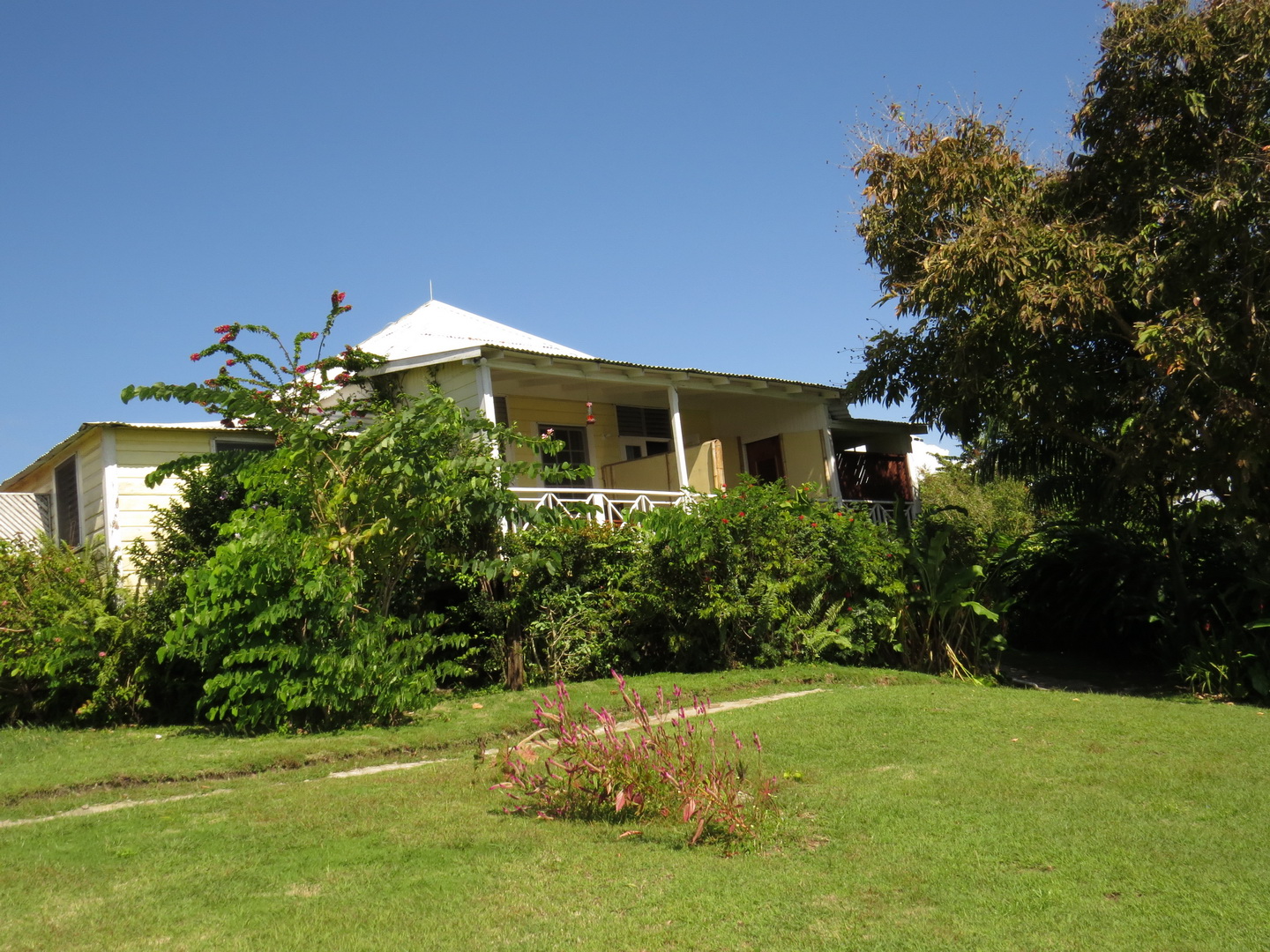
The accommodation was basic for some (us) and a bit more luxurious for others. From our room we had to go out onto our sloping balcony to enter our sloping bathroom – quite unique. However the views were spectacular and from our vantage point we could see the sea and the mountains beyond.
Entrance gate
Pool
Our Balcony view
GC and our room at right – with sloped wooden bathroom
Green Castle Estate has 1600 acres of mainly forest with numerous walking trails – good for birding (if a bit muddy). Many of the endemic species have been seen on the property. Much of our time was spent on the estate with a guide to take us around.
Robin’s Bay Beach with strong currents
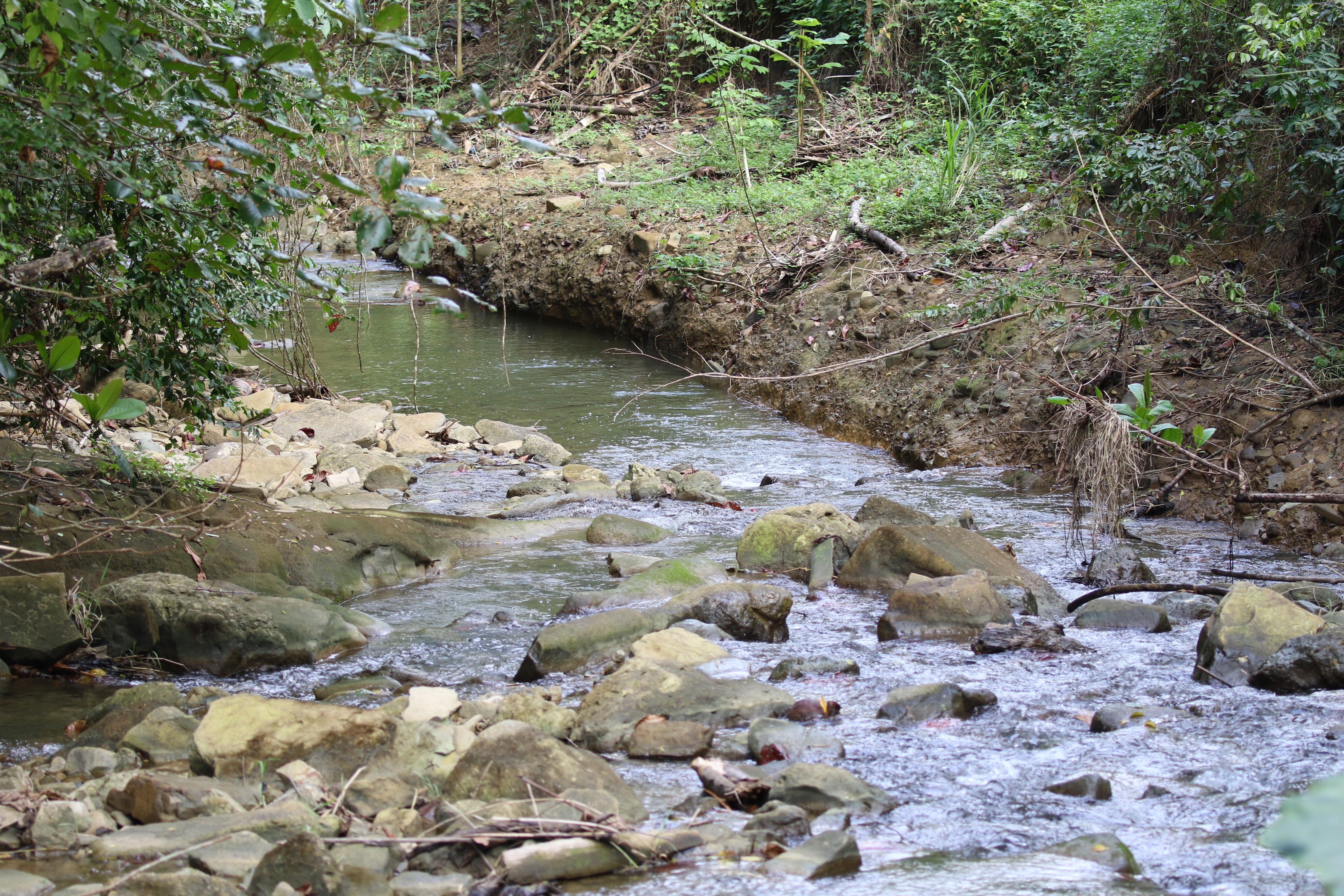
River
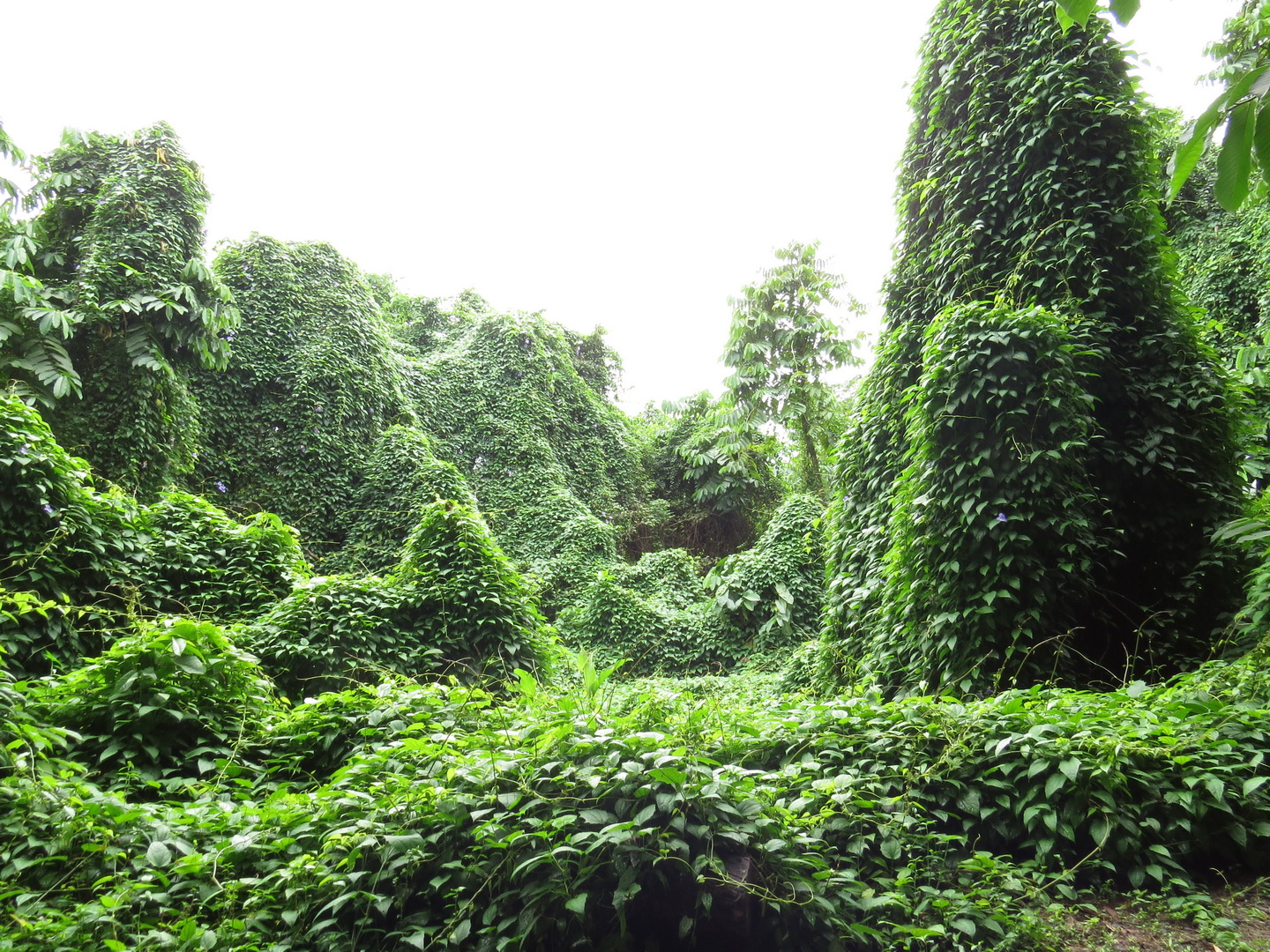
Another GC habitat covered with an invasive creeper
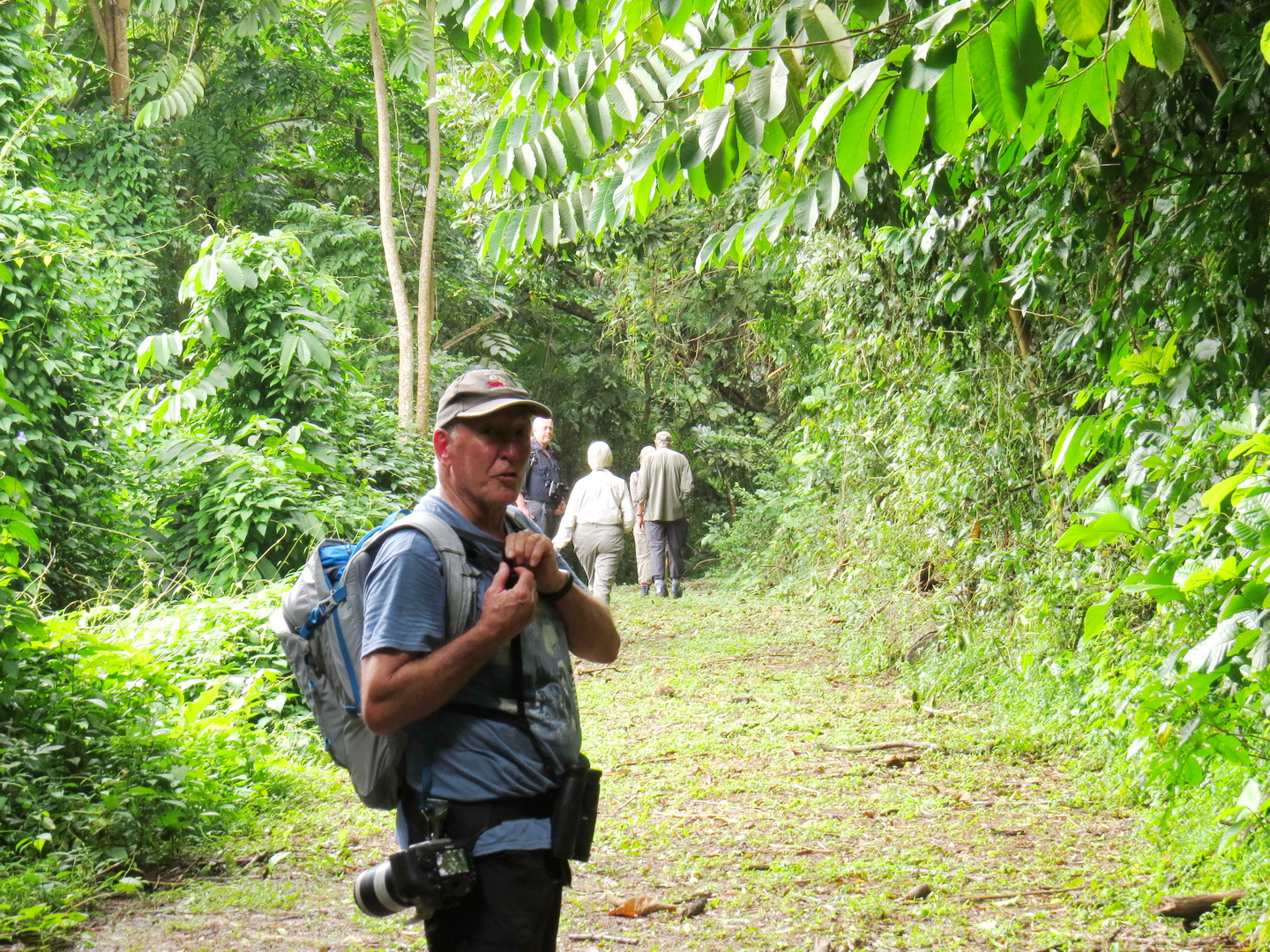
GC alternate trails
Bush Birding around GC
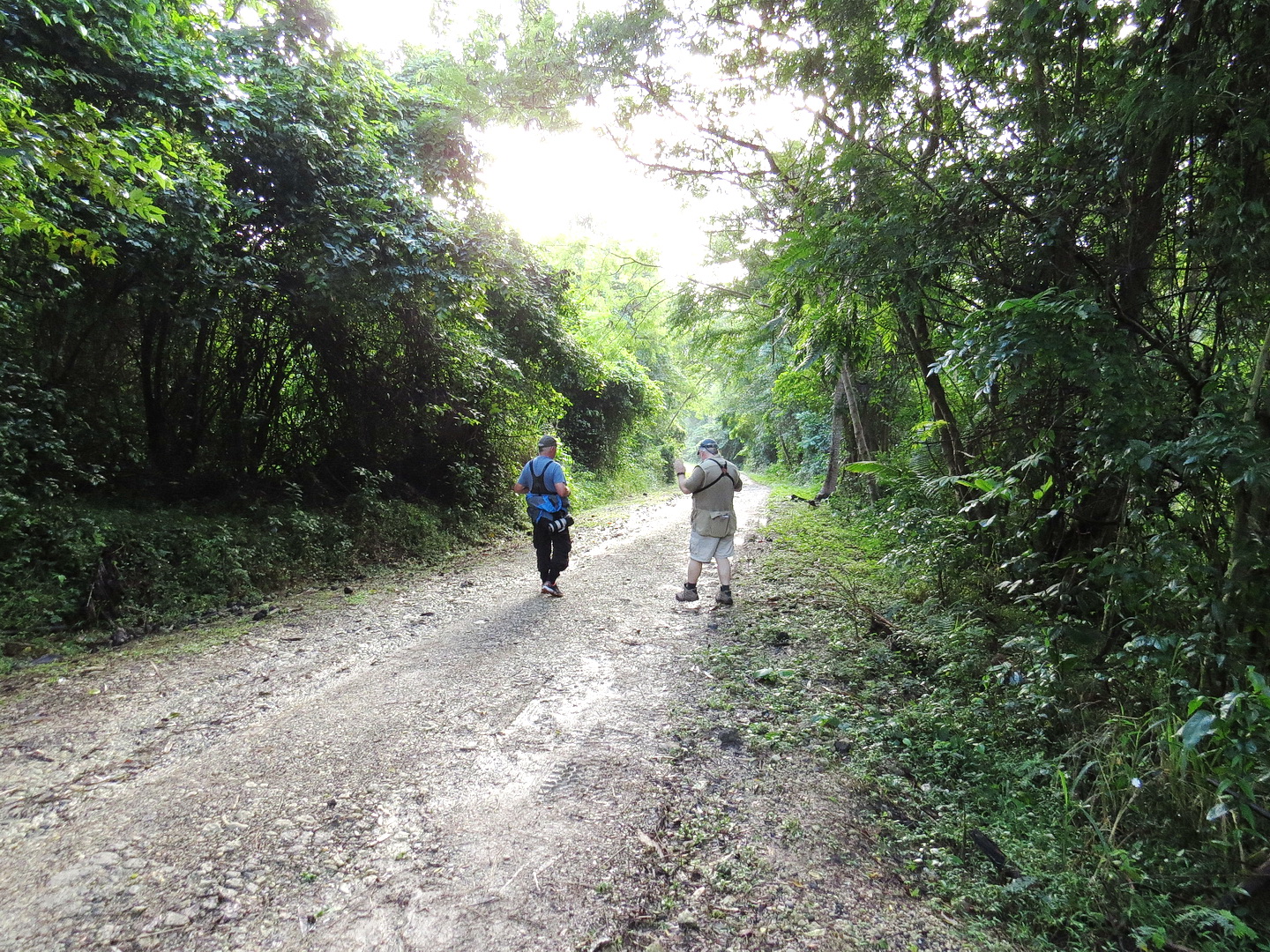
Paul and Doug birding in the mud
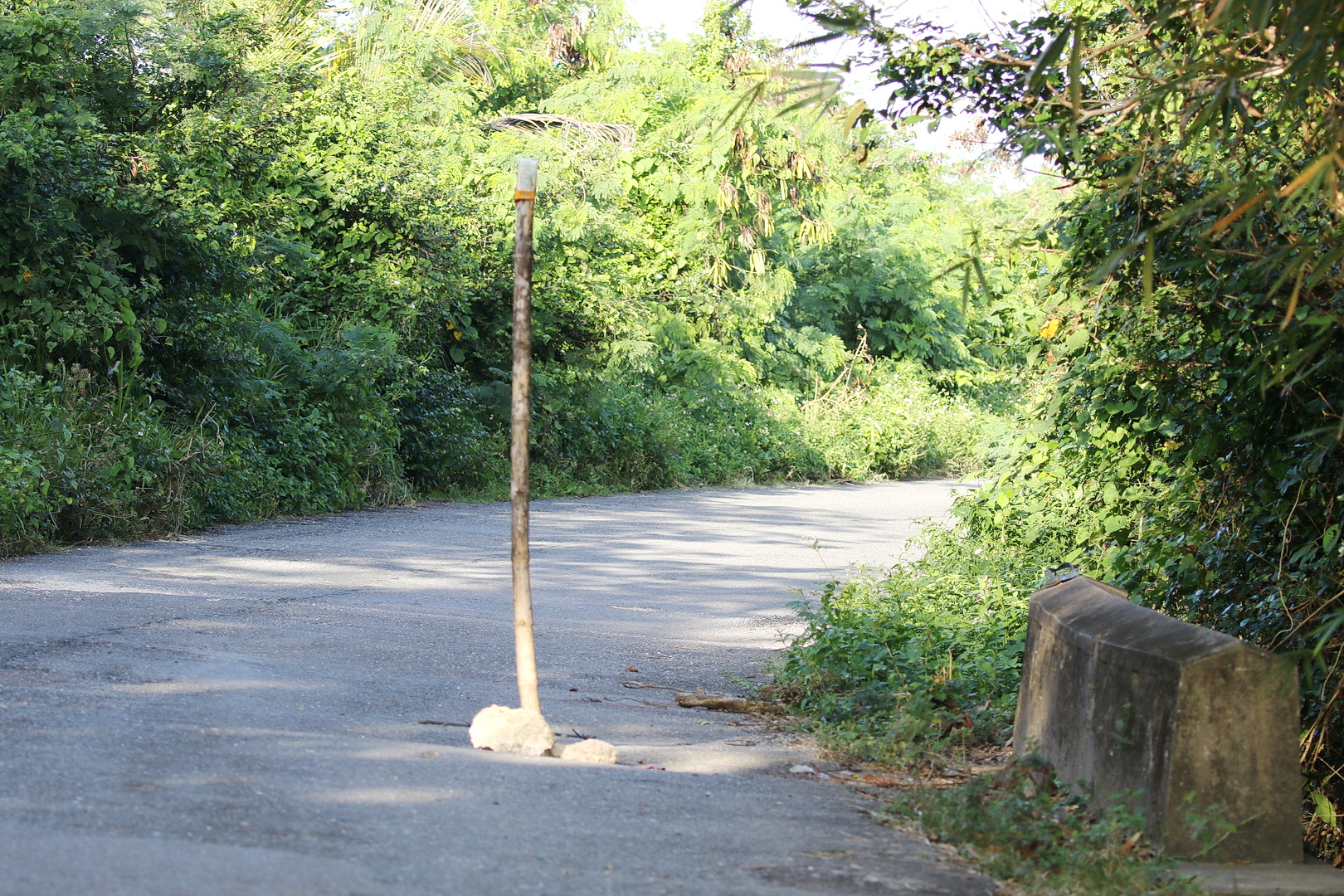
Through the road hole marker. Yes a hole through the road into the stream beneath.
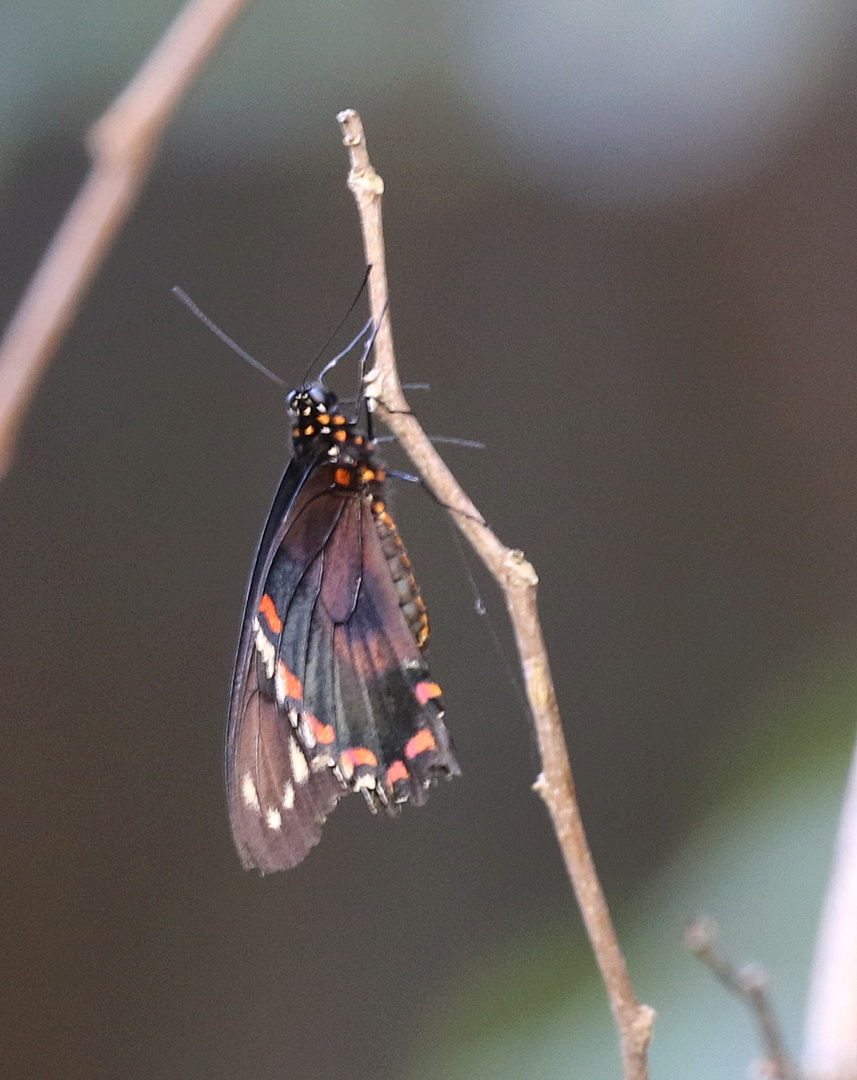
Butterfly
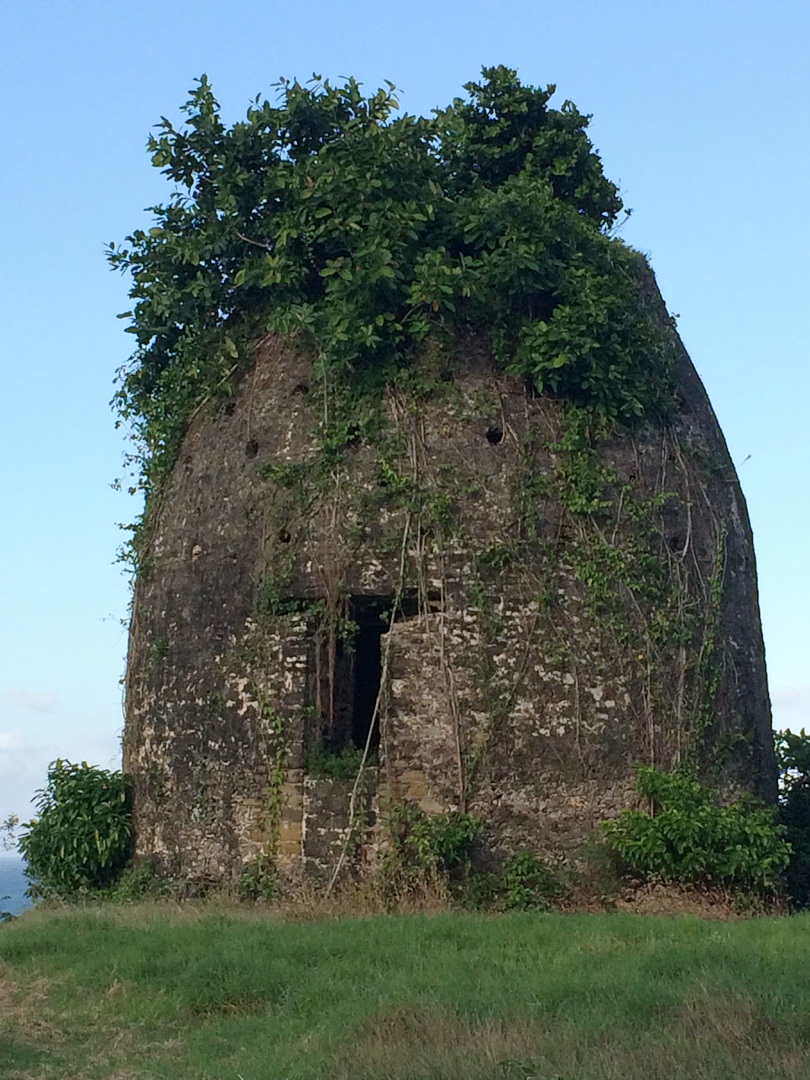
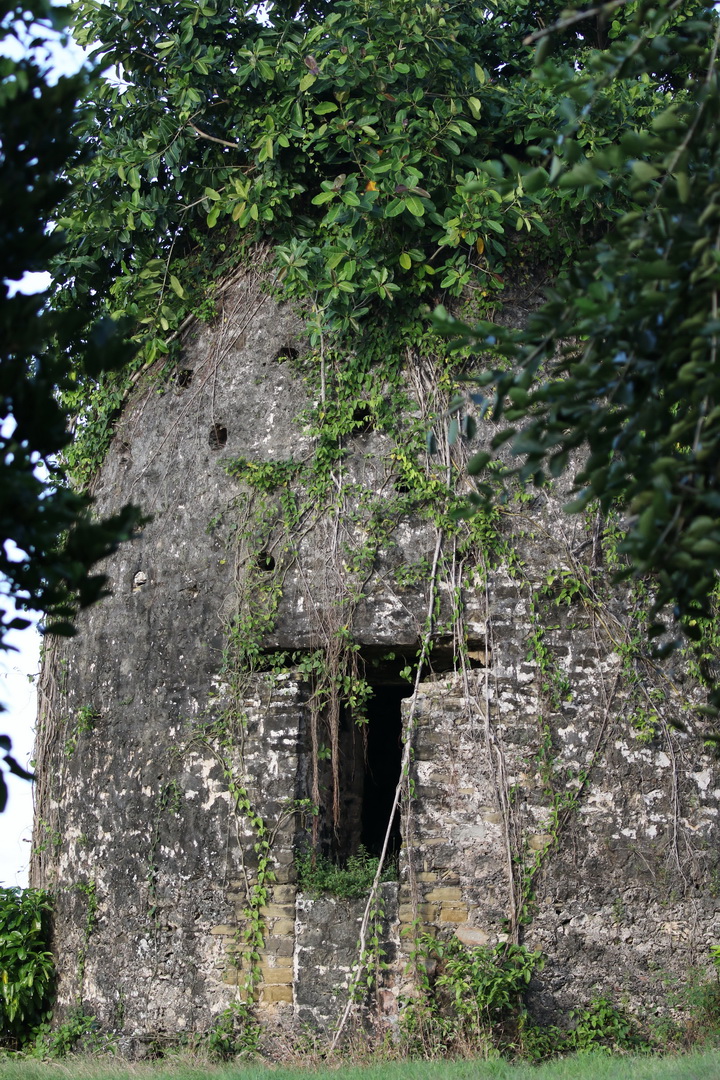
The Lookout Tower on the GC Estate.
The Lookout Tower on the GC Estate from pirate days.
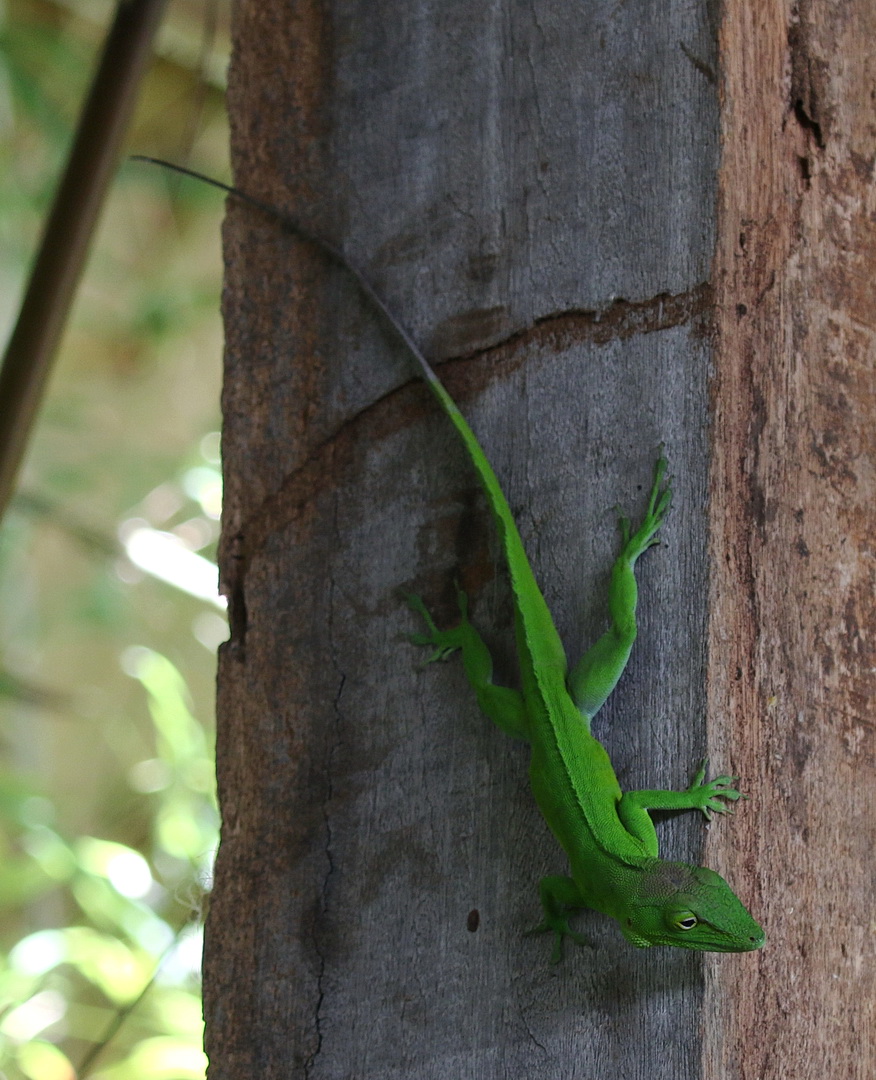
Green Lizard – as in Death in Paradise
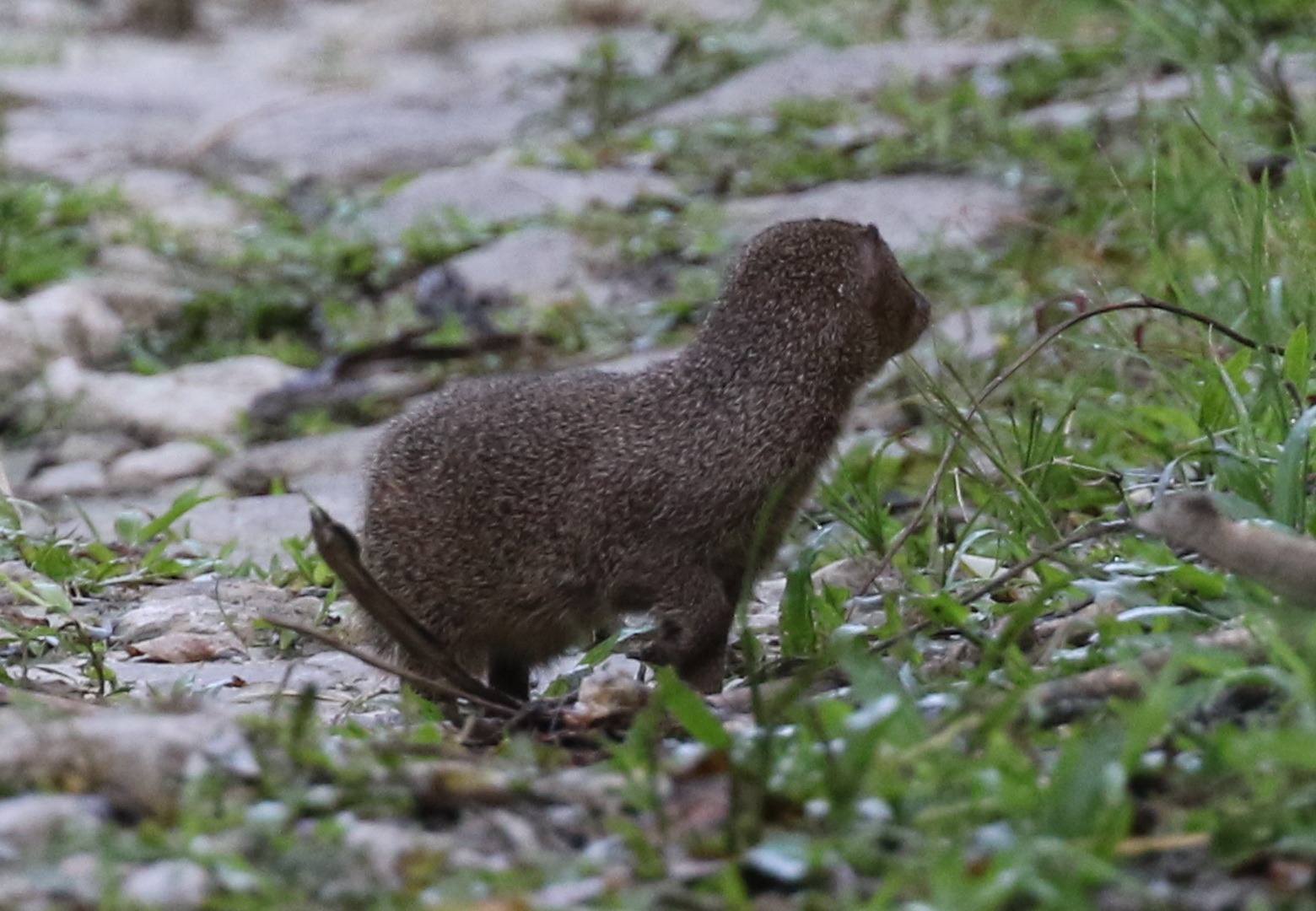
Mongoose – one of many seen on the property
Snails
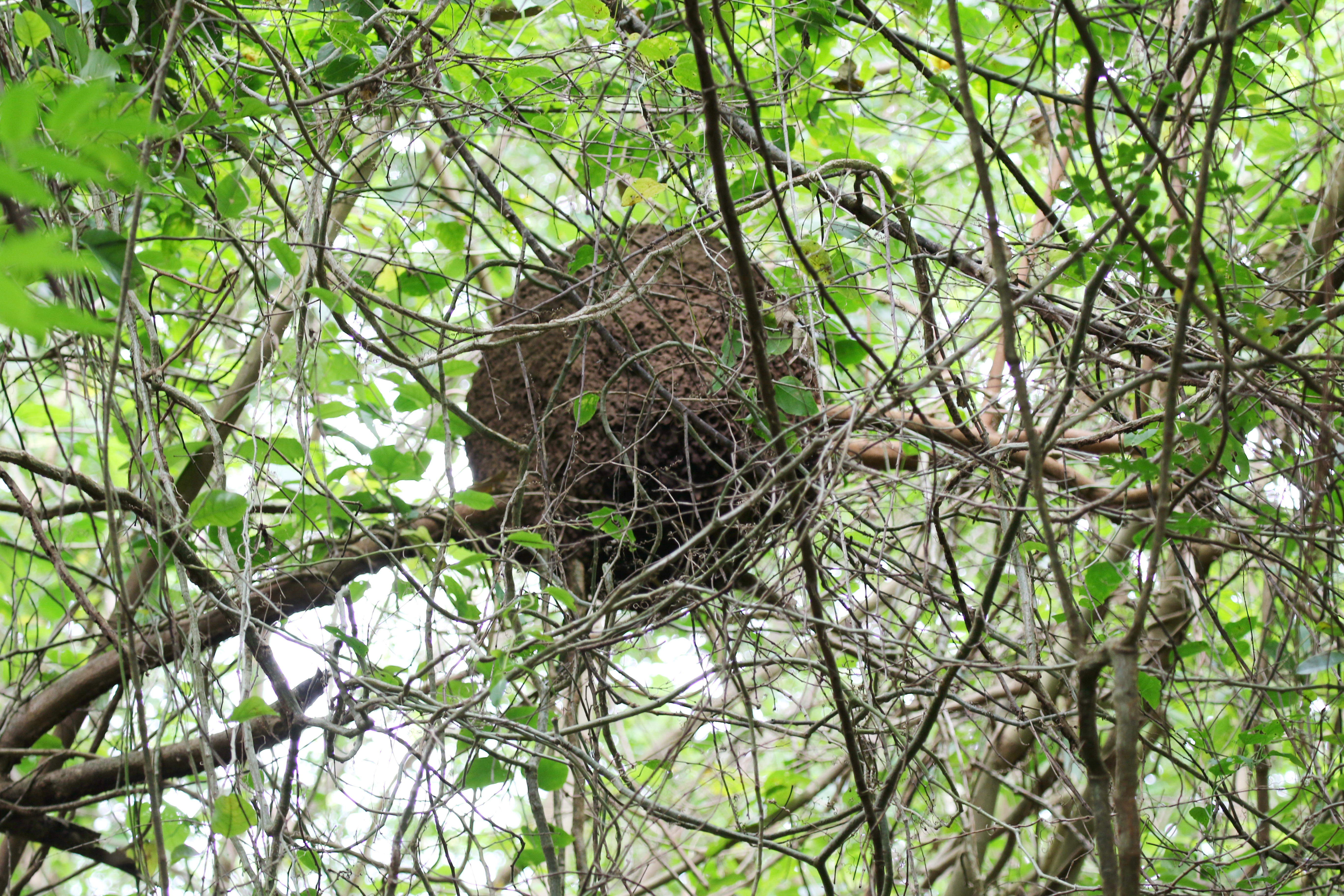
Large Black Ants Nest
However two days were set aside to explore the Blue Mountains and the John Crow Mountains near Ecclesdown. These trips were scheduled to find any of the missing endemic species we had not seen on the property. Both these trips required an early start – 04h30 – as the drive up the mountains – though short in distance – took a good couple of hours.
Blue and John Crow Mountains National Park
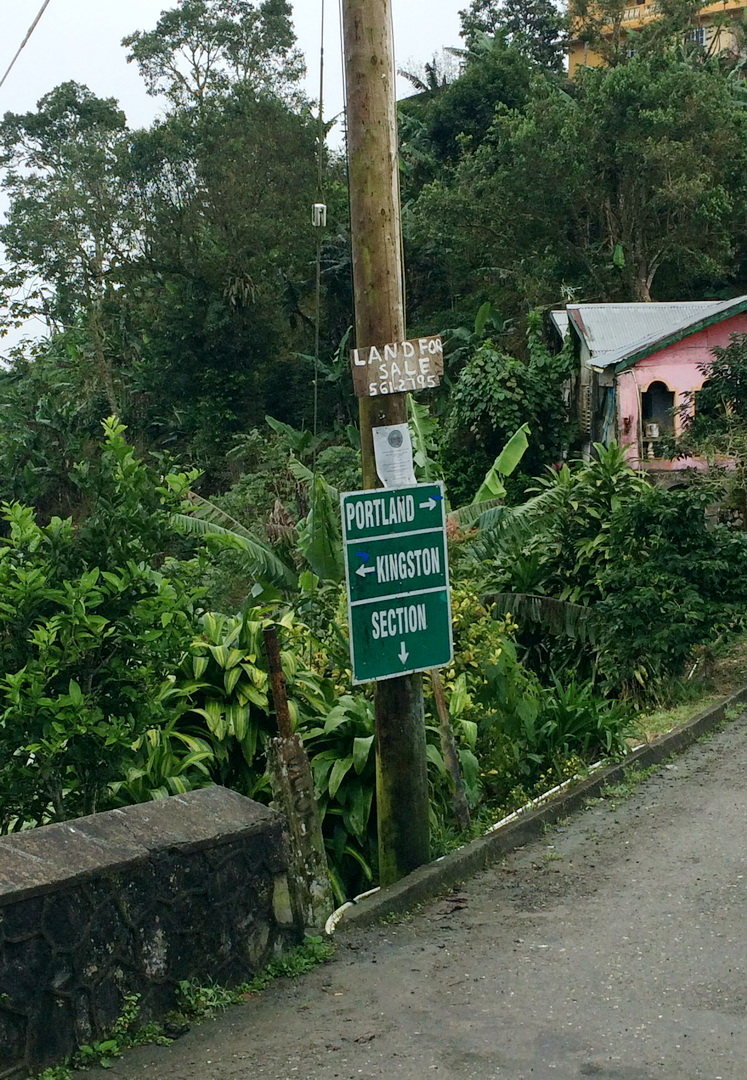
Look like Section in de Blue Mountains gone to hell
Blue Mountain hillside village
Hardwar Gap home on stilts
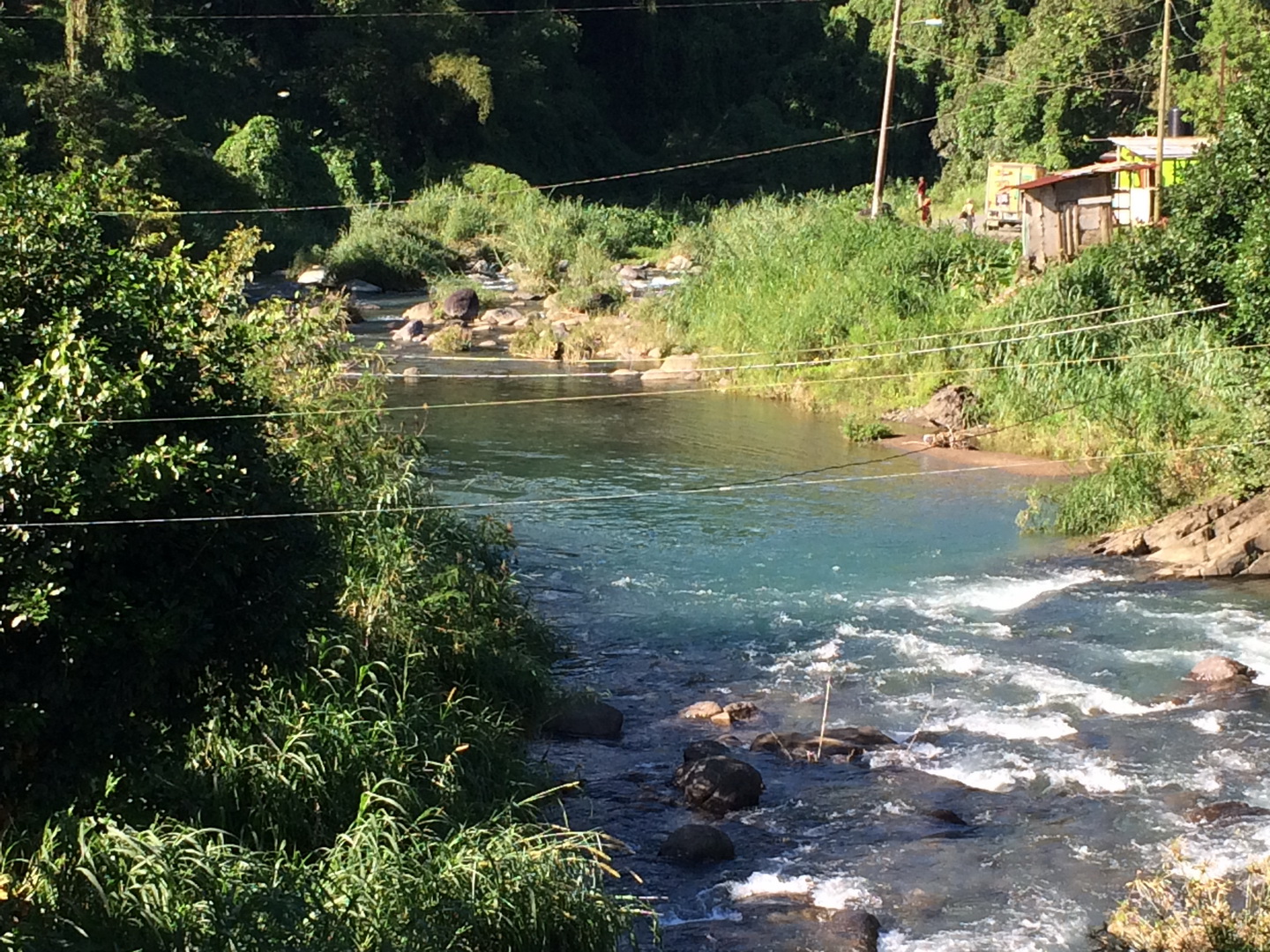
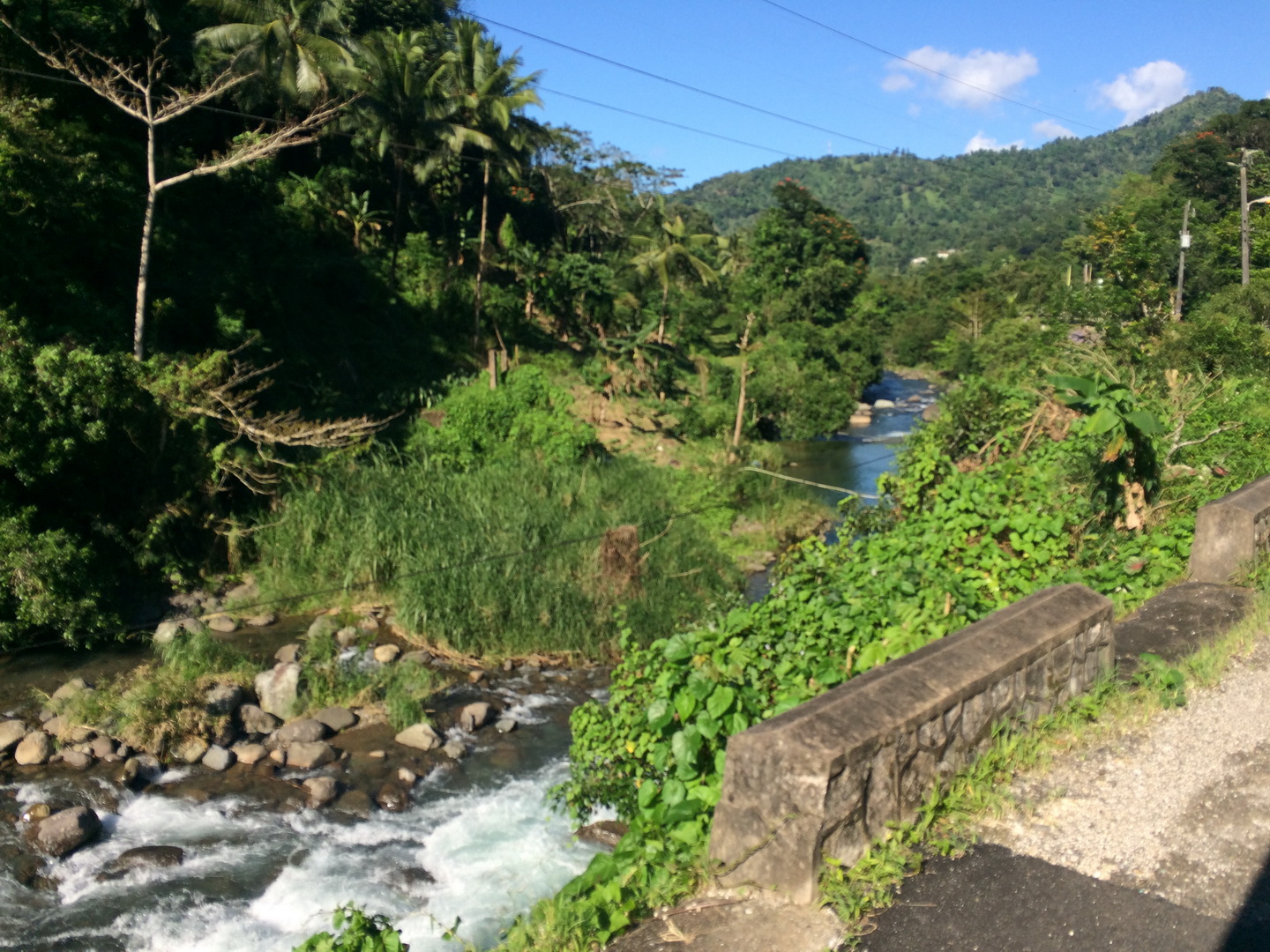
Blue Mountain river
Blue Mountain river
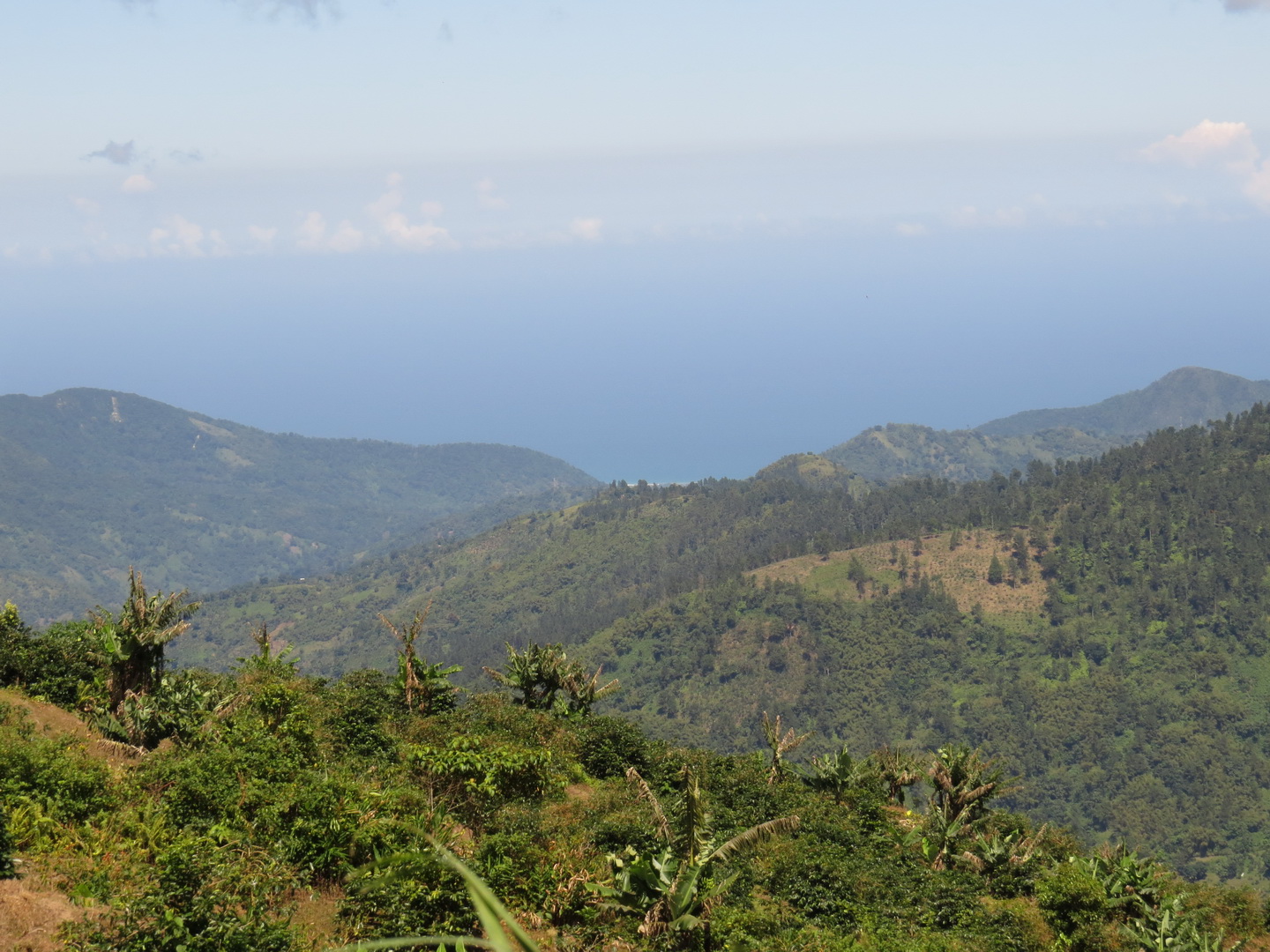
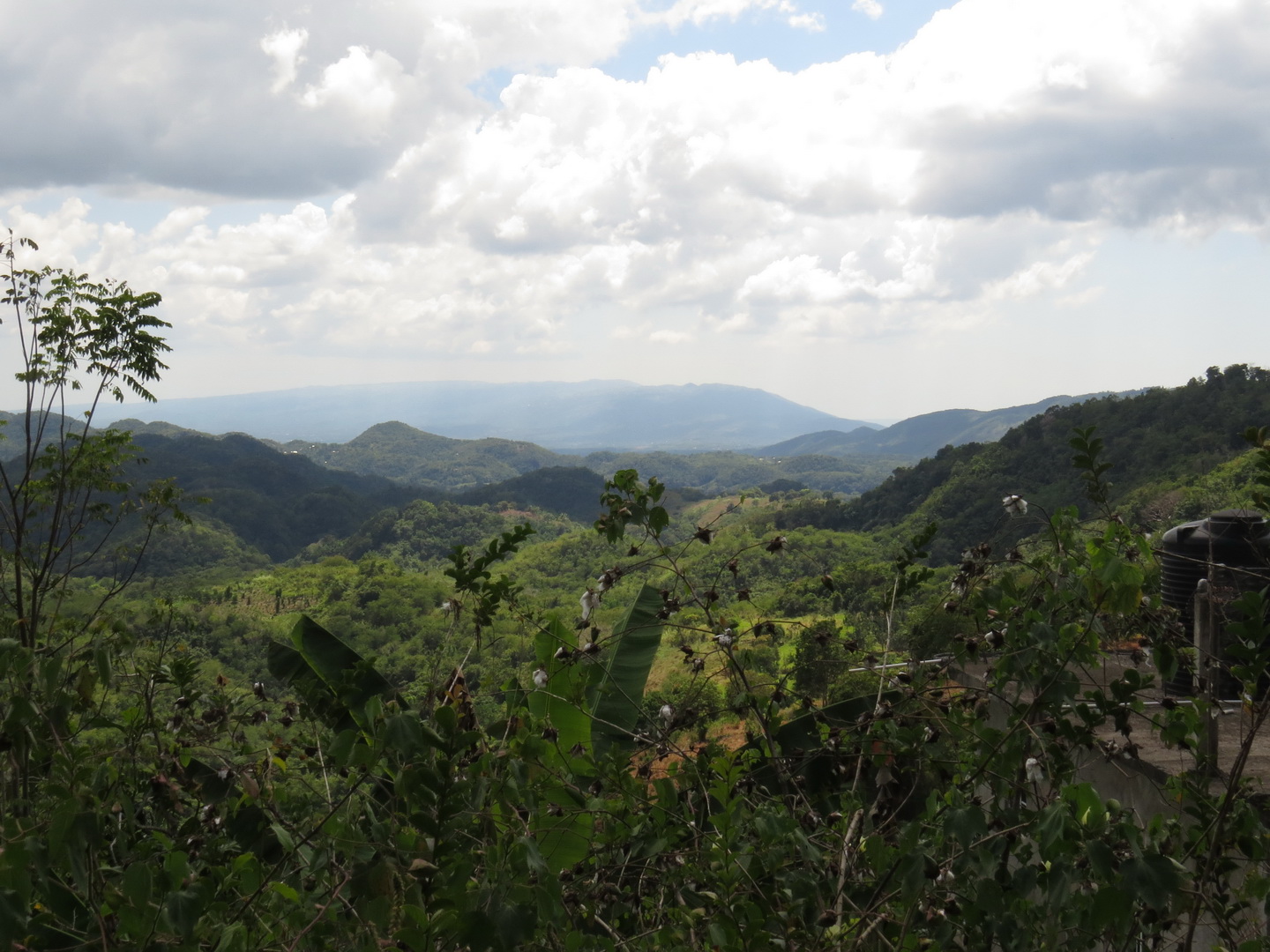
Blue Mountain scenery from Hardwar Gap
Blue Mountain scenery from Hardwar Gap
Here are some of the birds seen on the property.
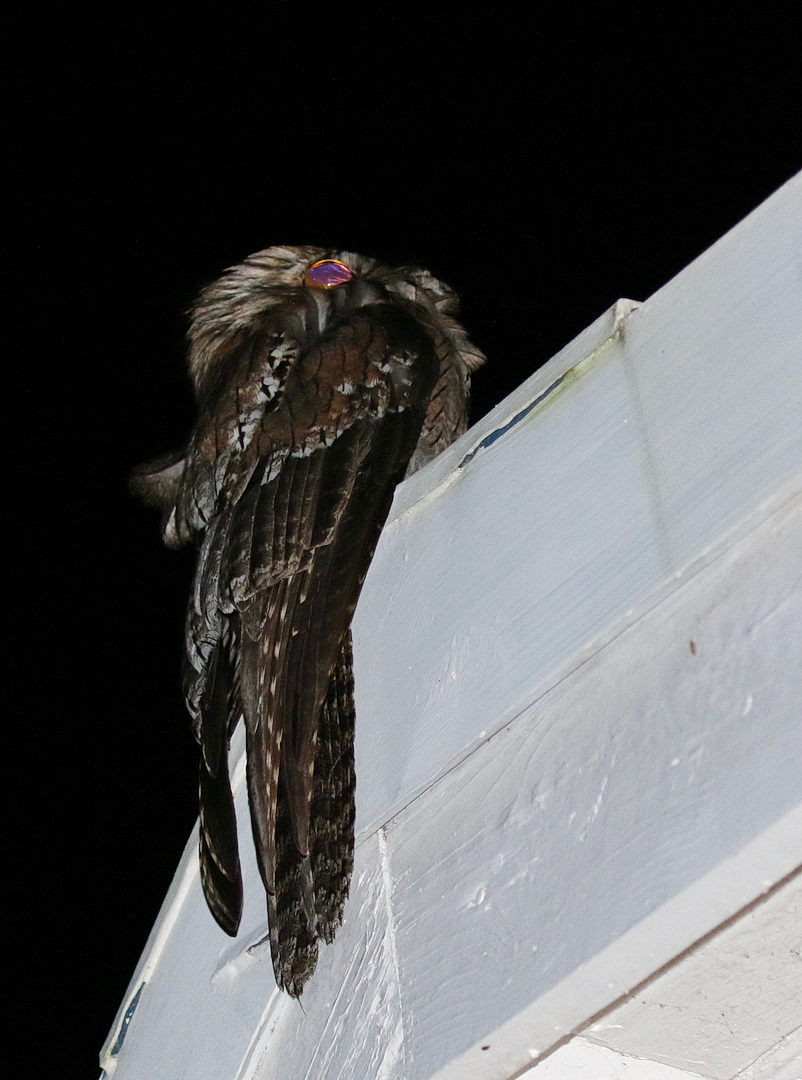
Northern Potoo by night
Northern Potoo by day
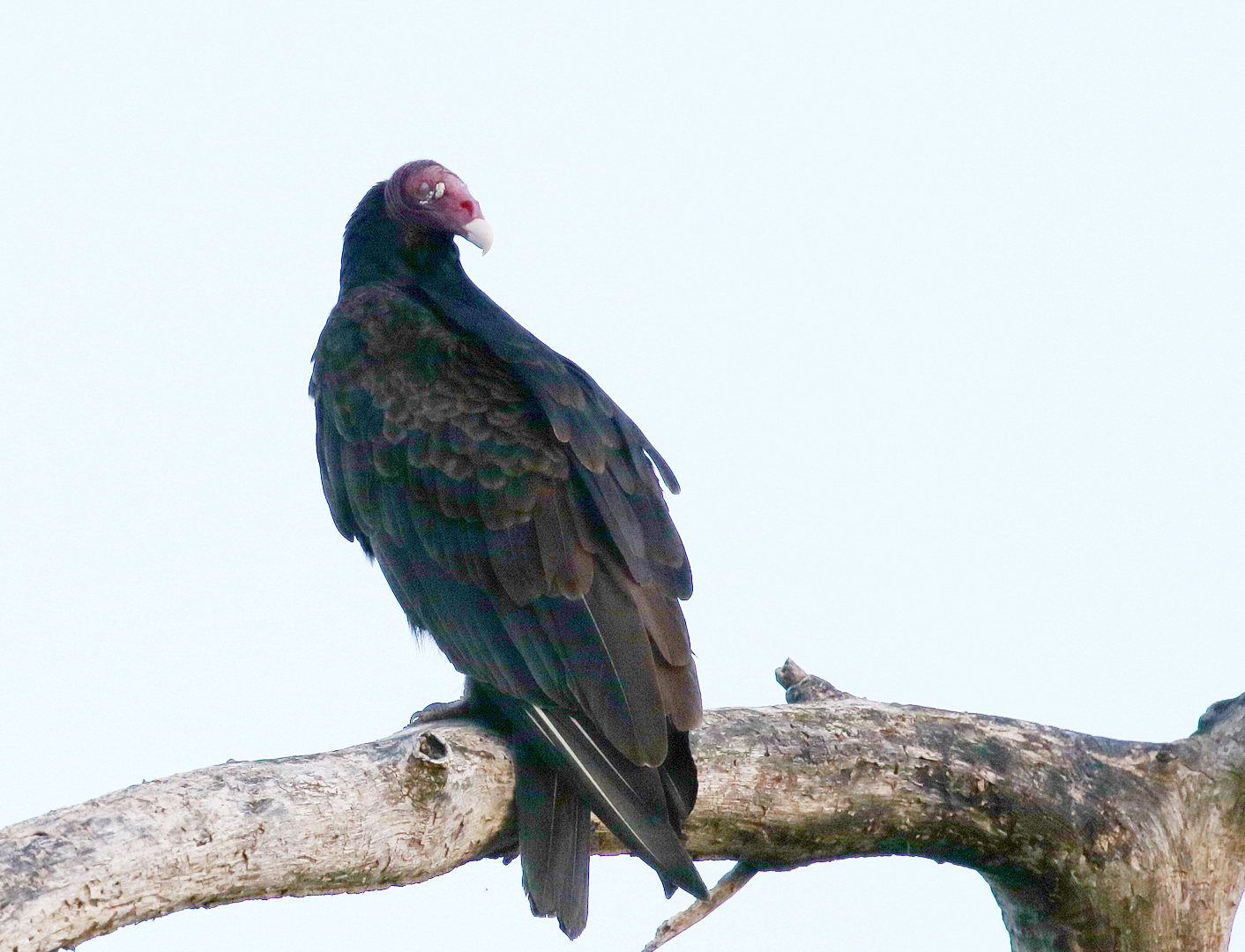
Turkey Vulture – aka John Crow
Turkey Vulture – aka John Crow
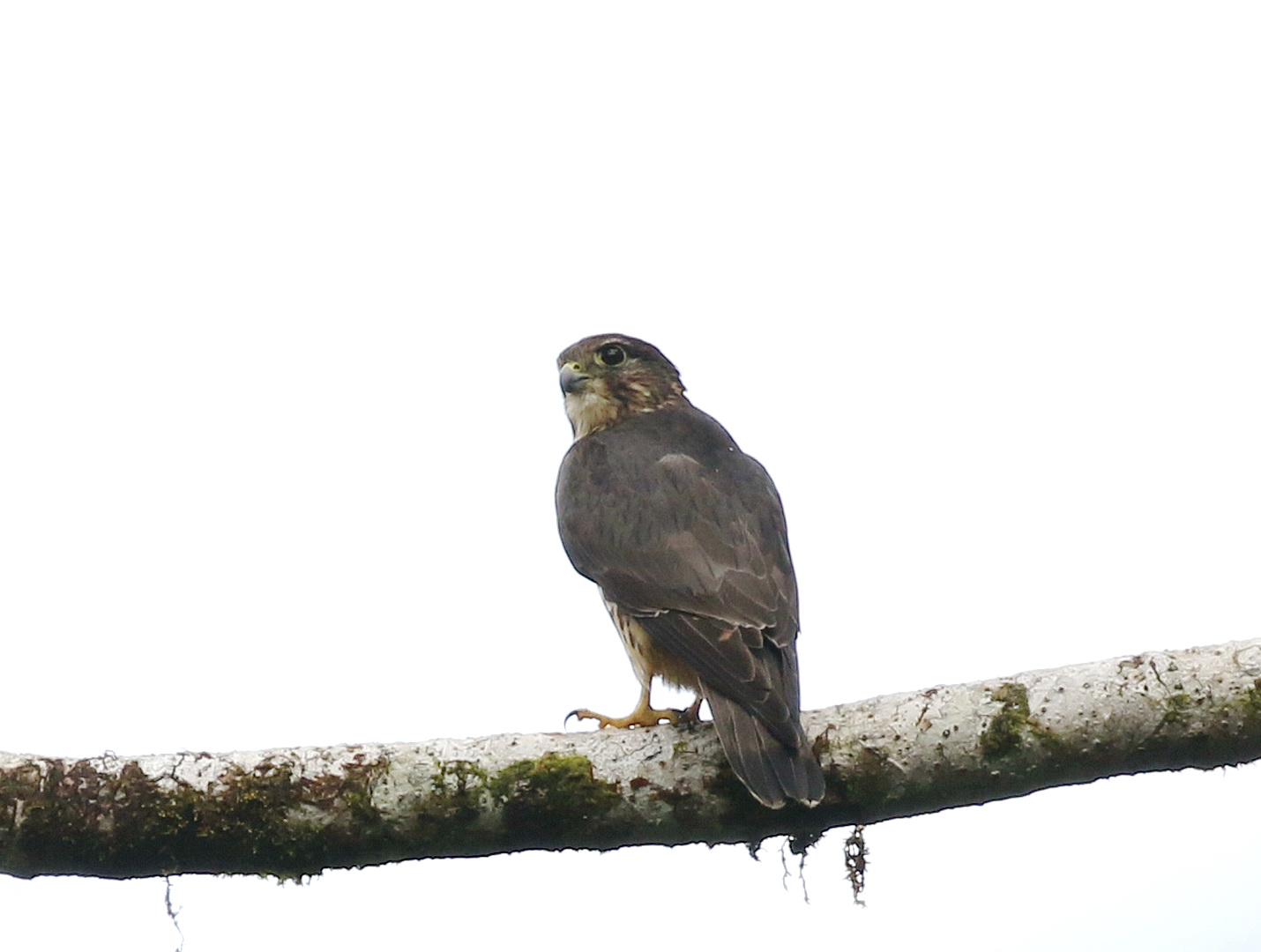
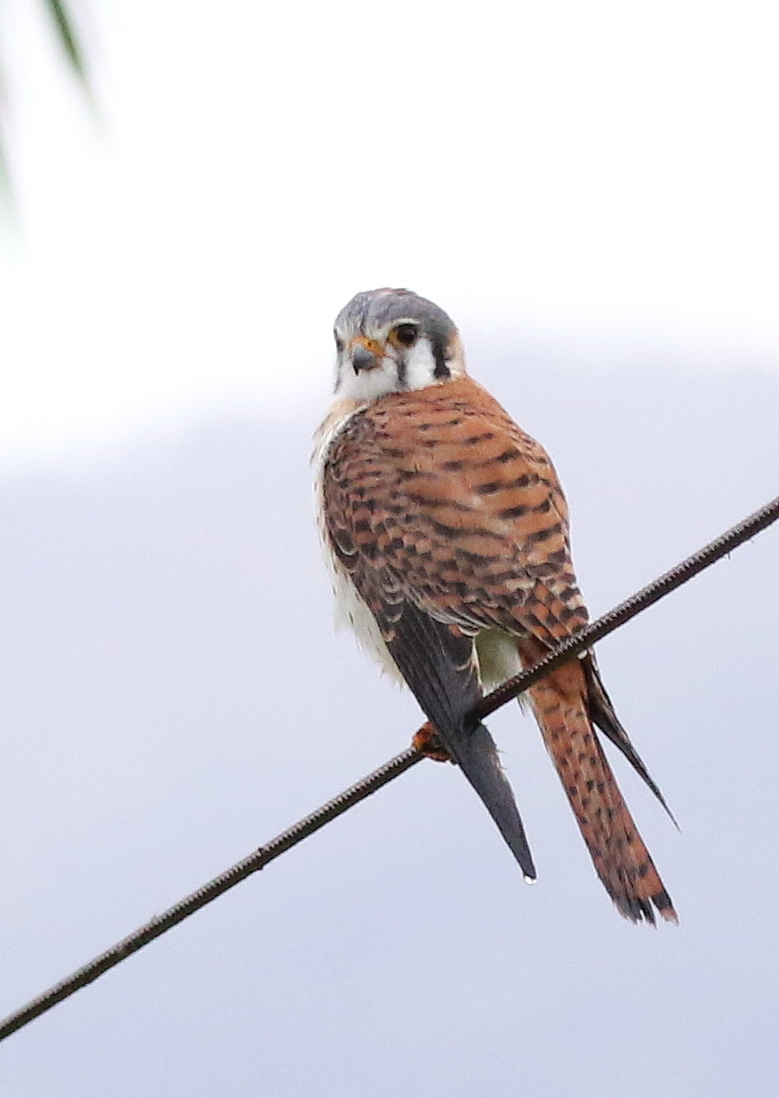
American Kestrel
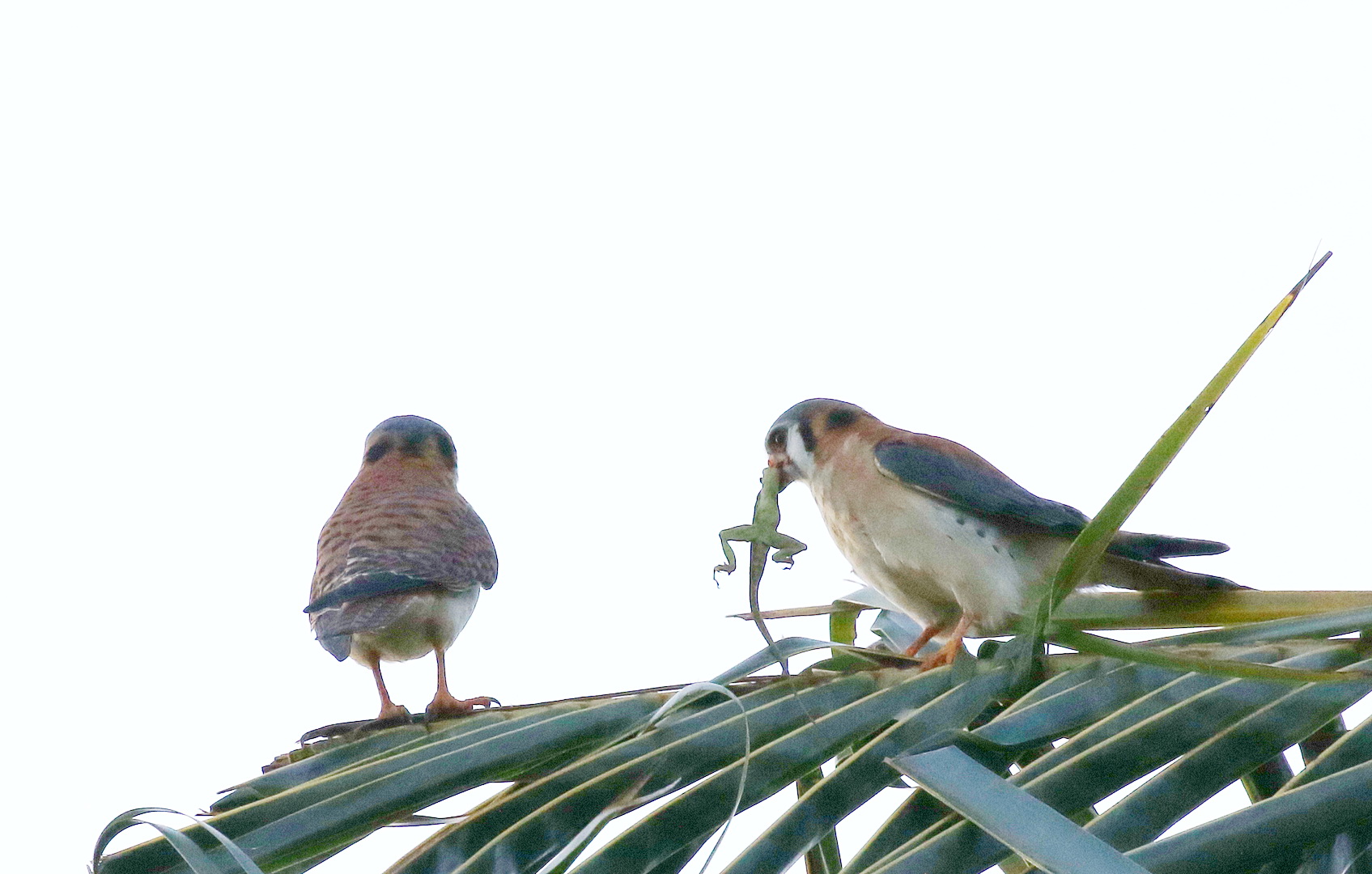
American Kestrels – male and female and lizard
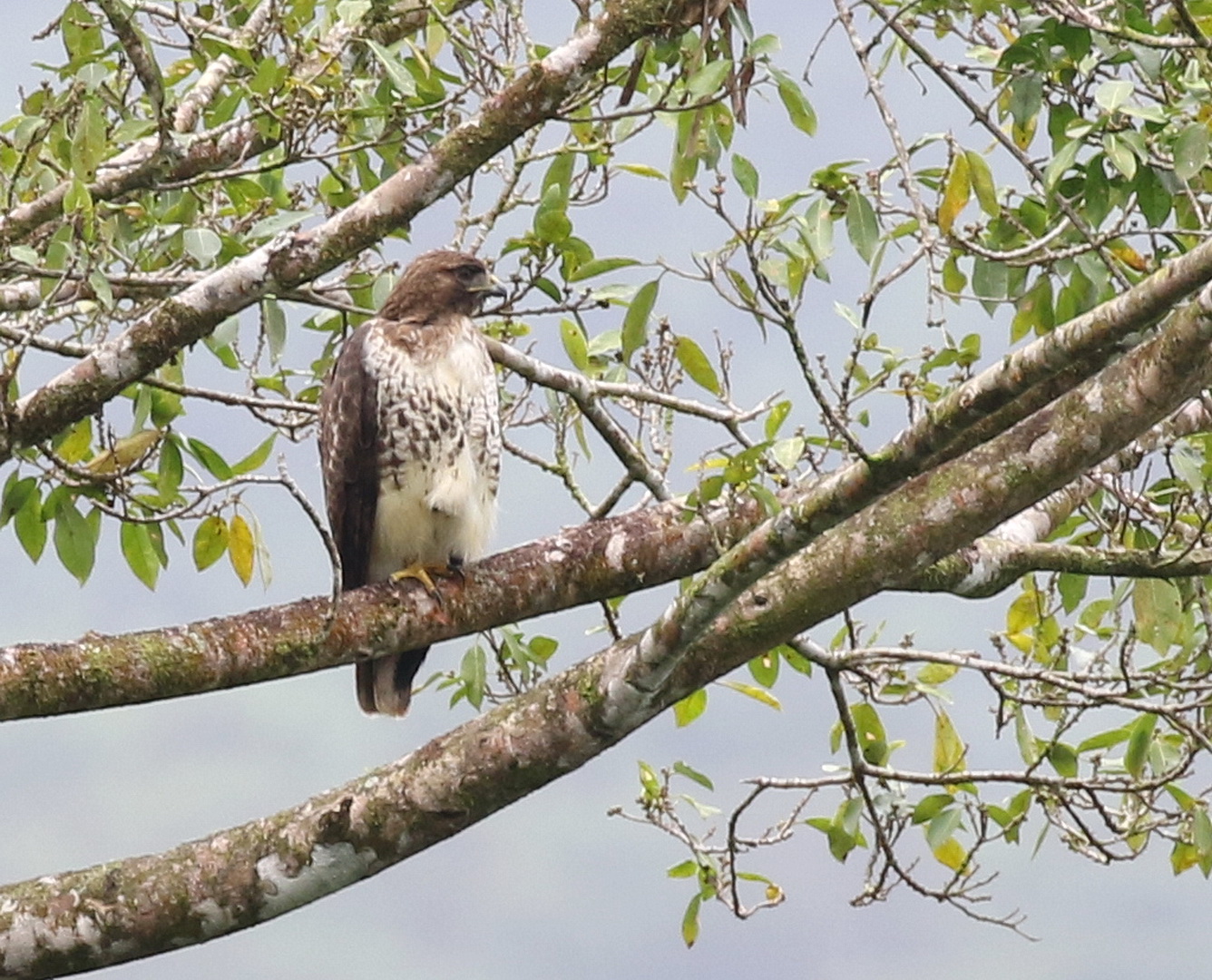
Red-tailed Hawk
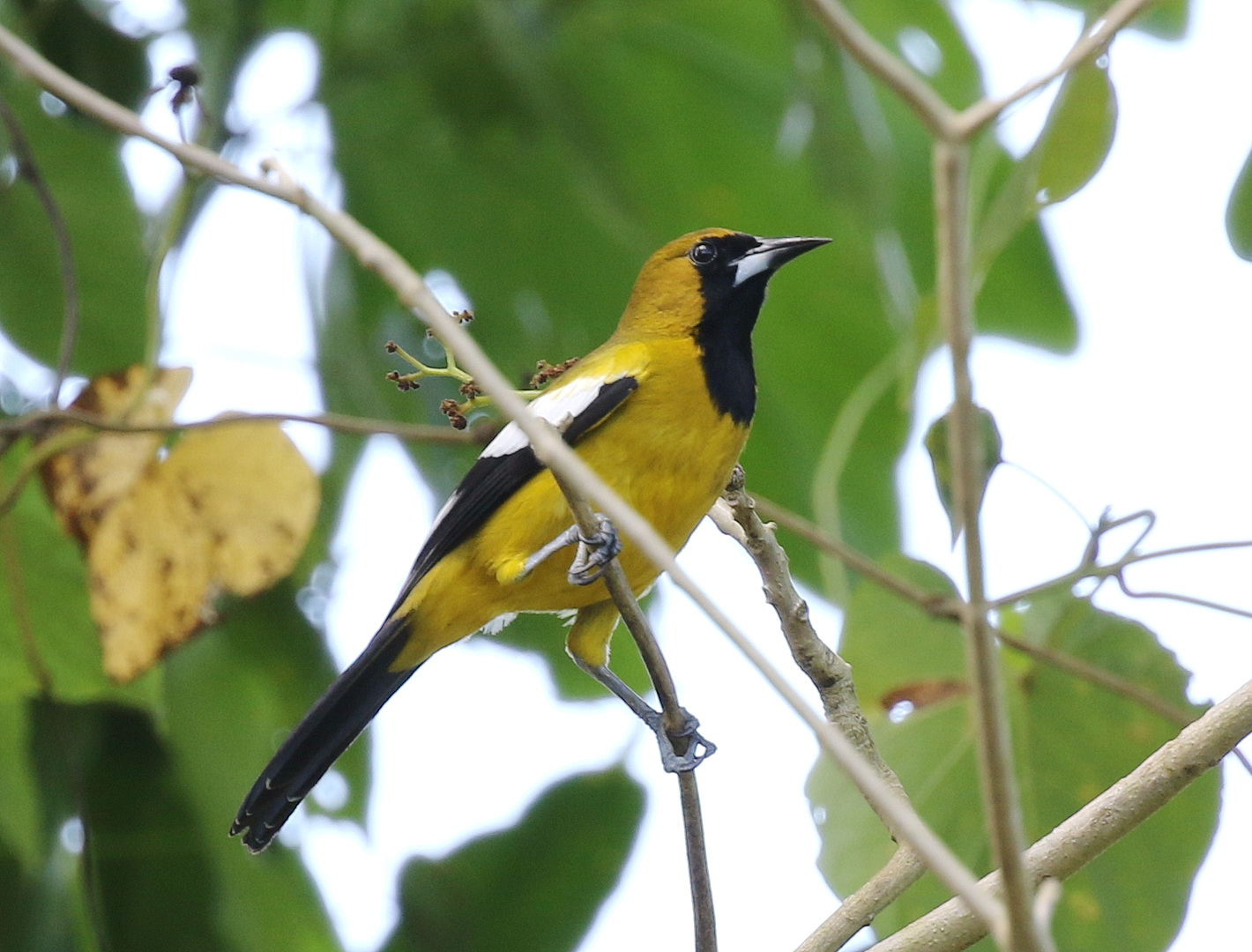
Jamaican Oriole
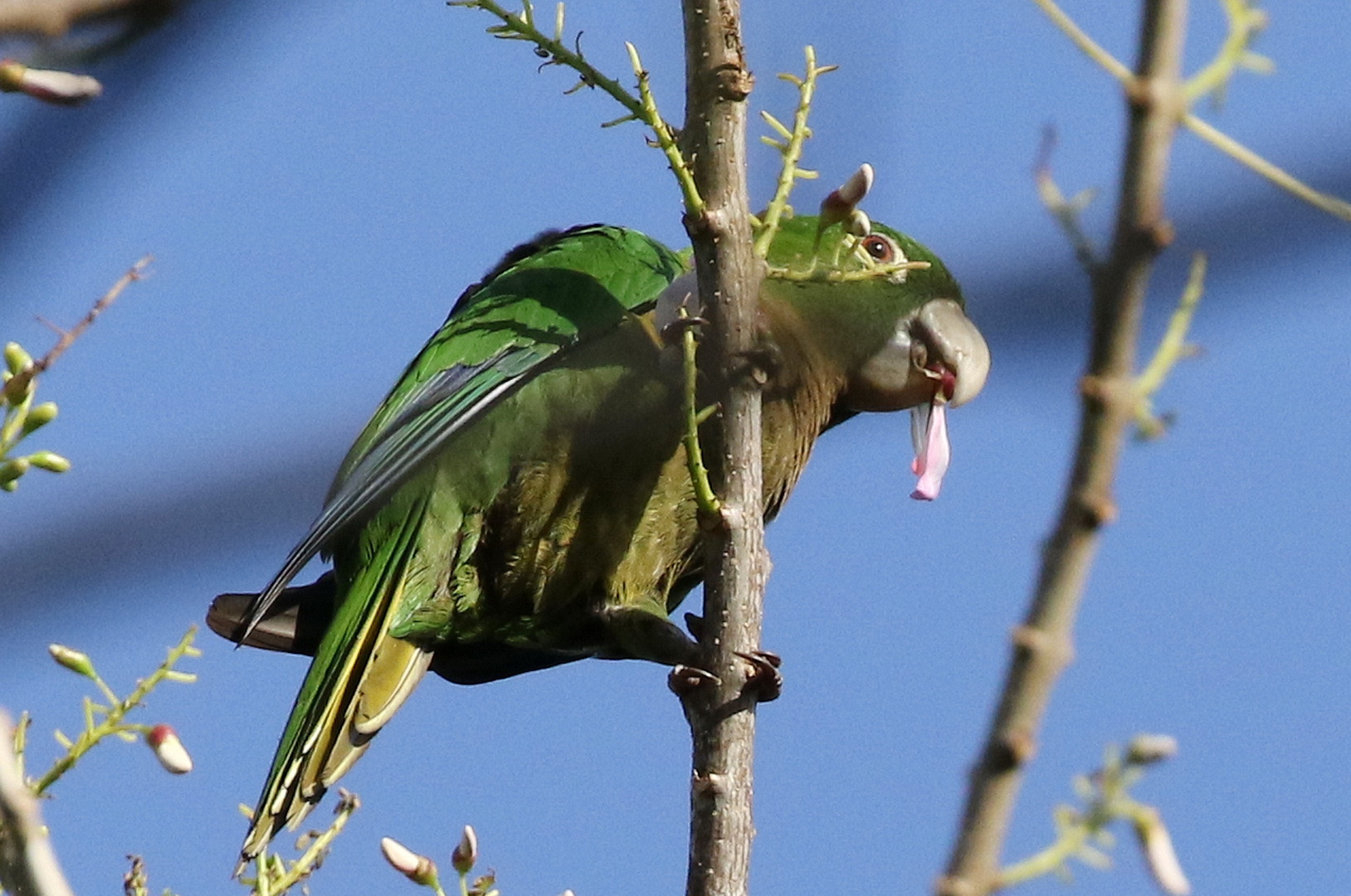
Olive-throated Parakeet
Red-billed Streamertail
Jamaican Mango
Jamaican Mango
Jamaican Mango
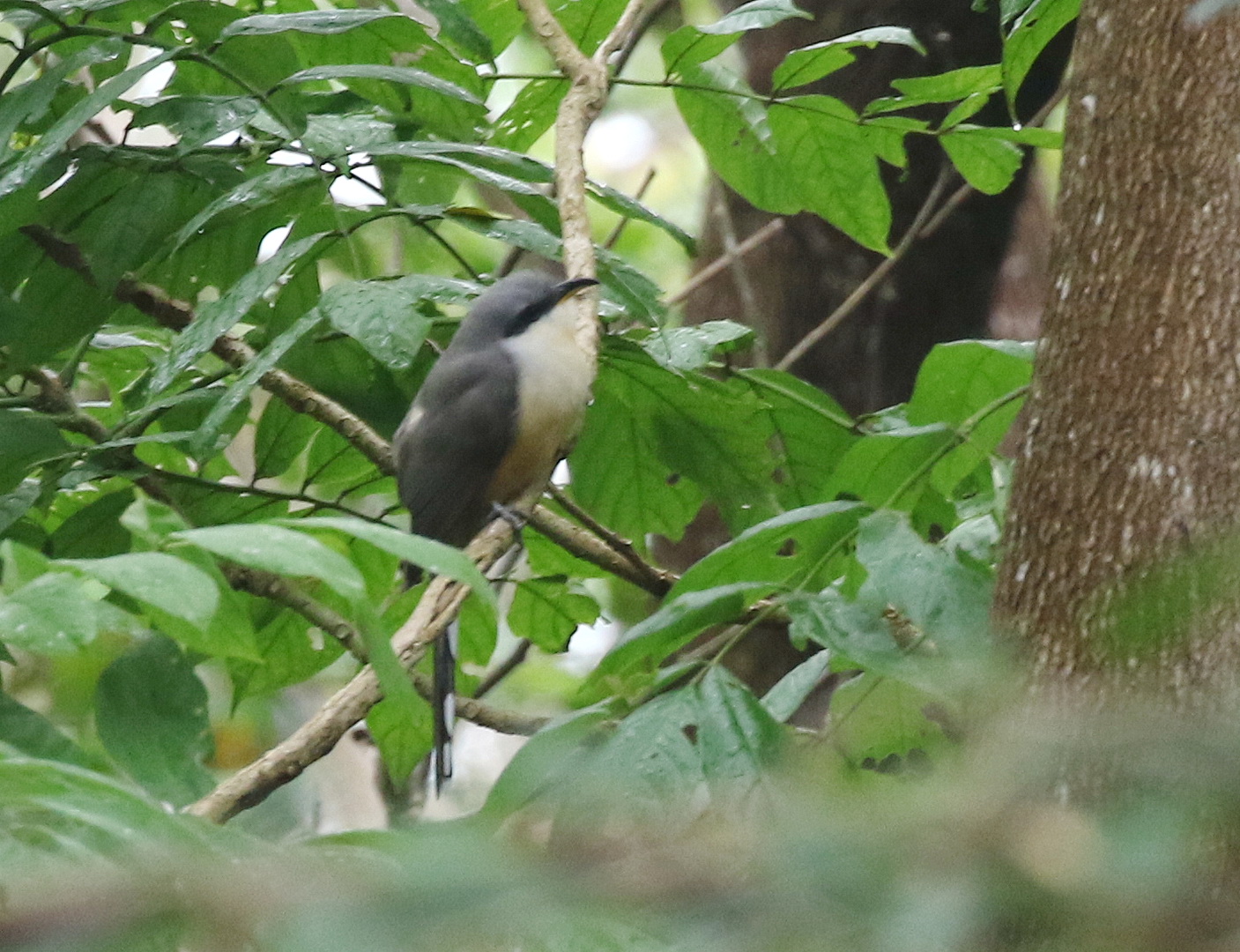
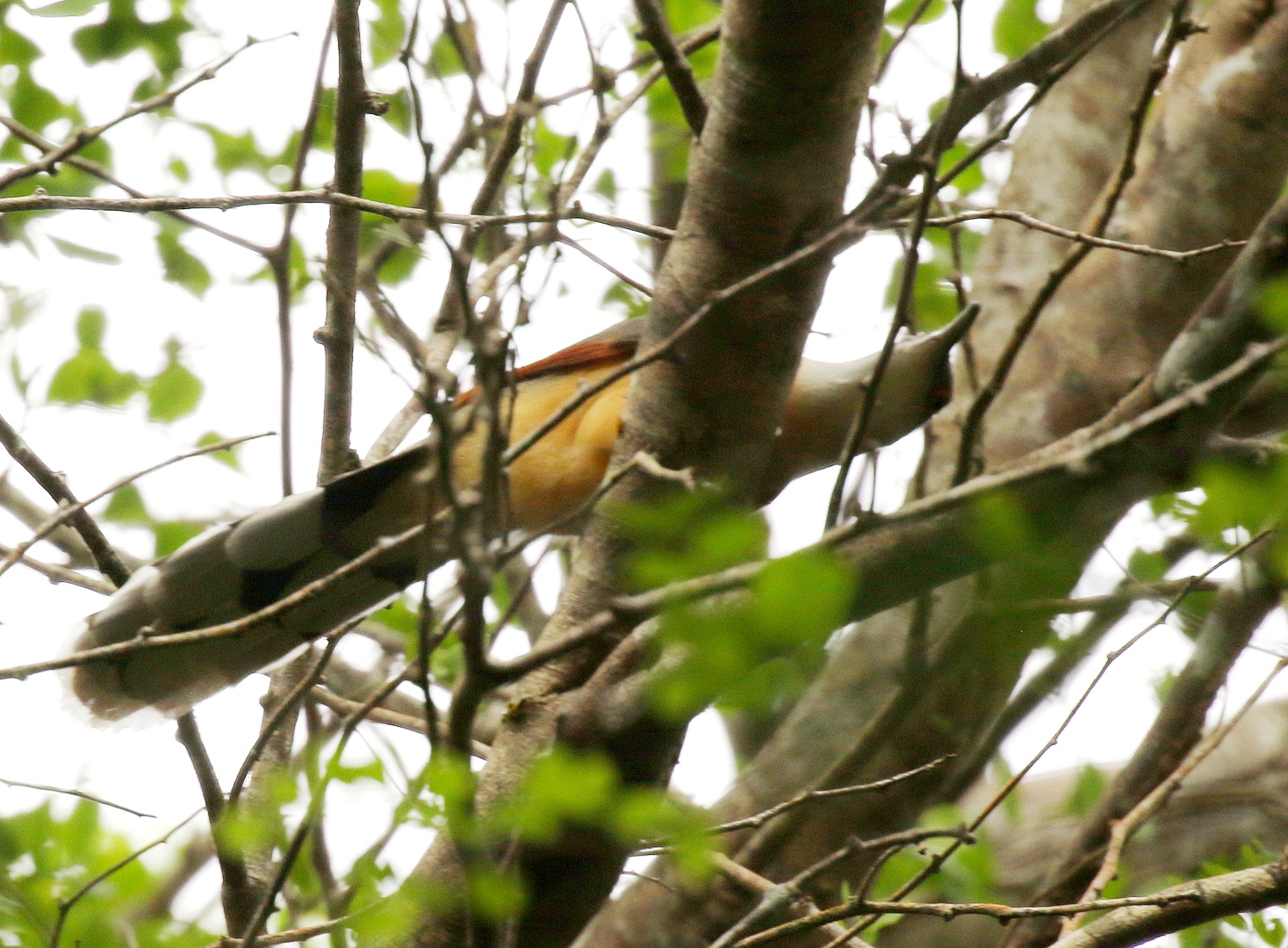
Mangrove Cuckoo
Jamaican Lizard-Cuckoo
Bananaquit
Bananaquit
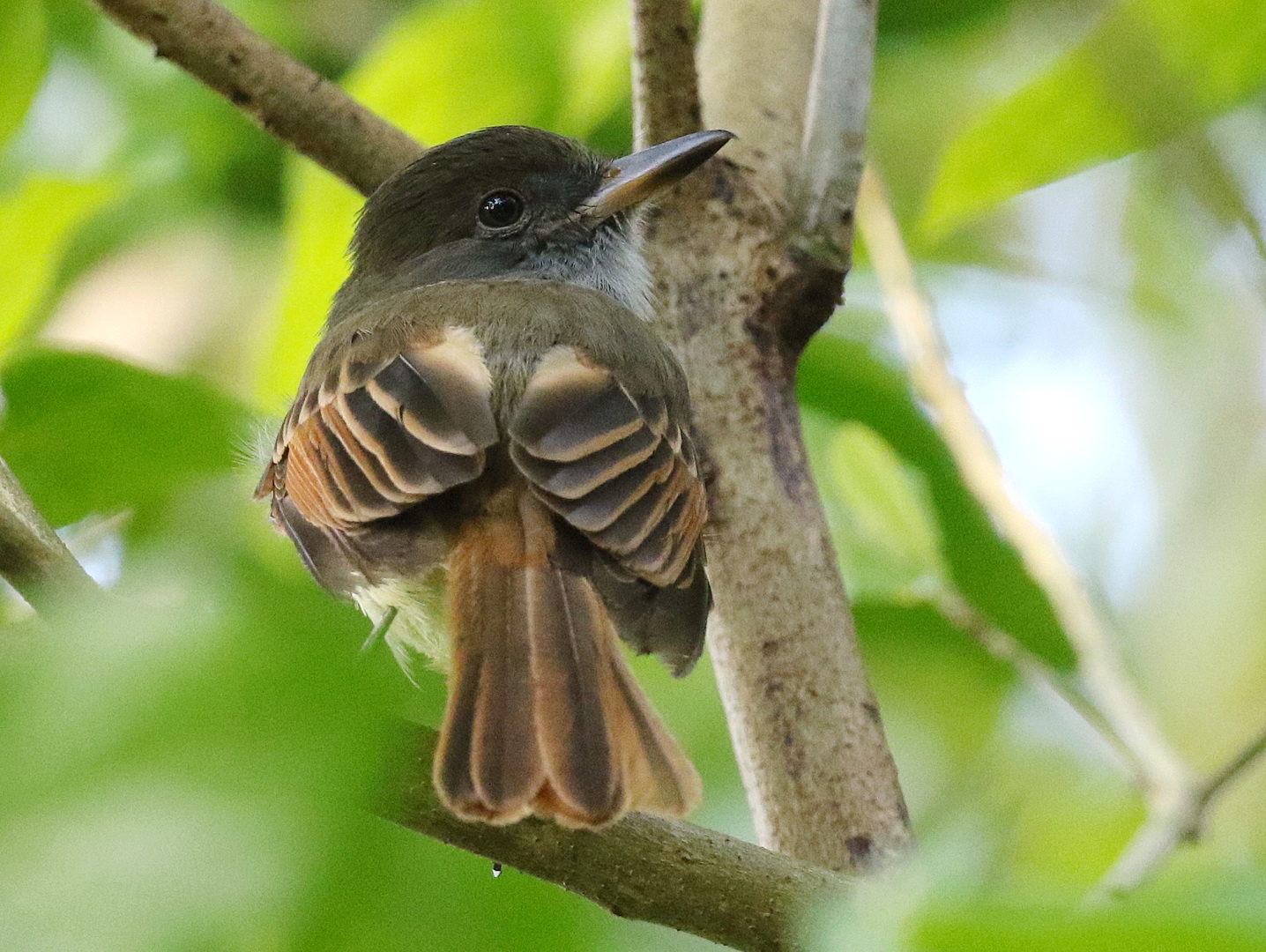
Rufous-tailed Flycatcher
Rufous-tailed Flycatcher
Sad Flycatcher
Sad Flycatcher
Loggerhead Kingbird
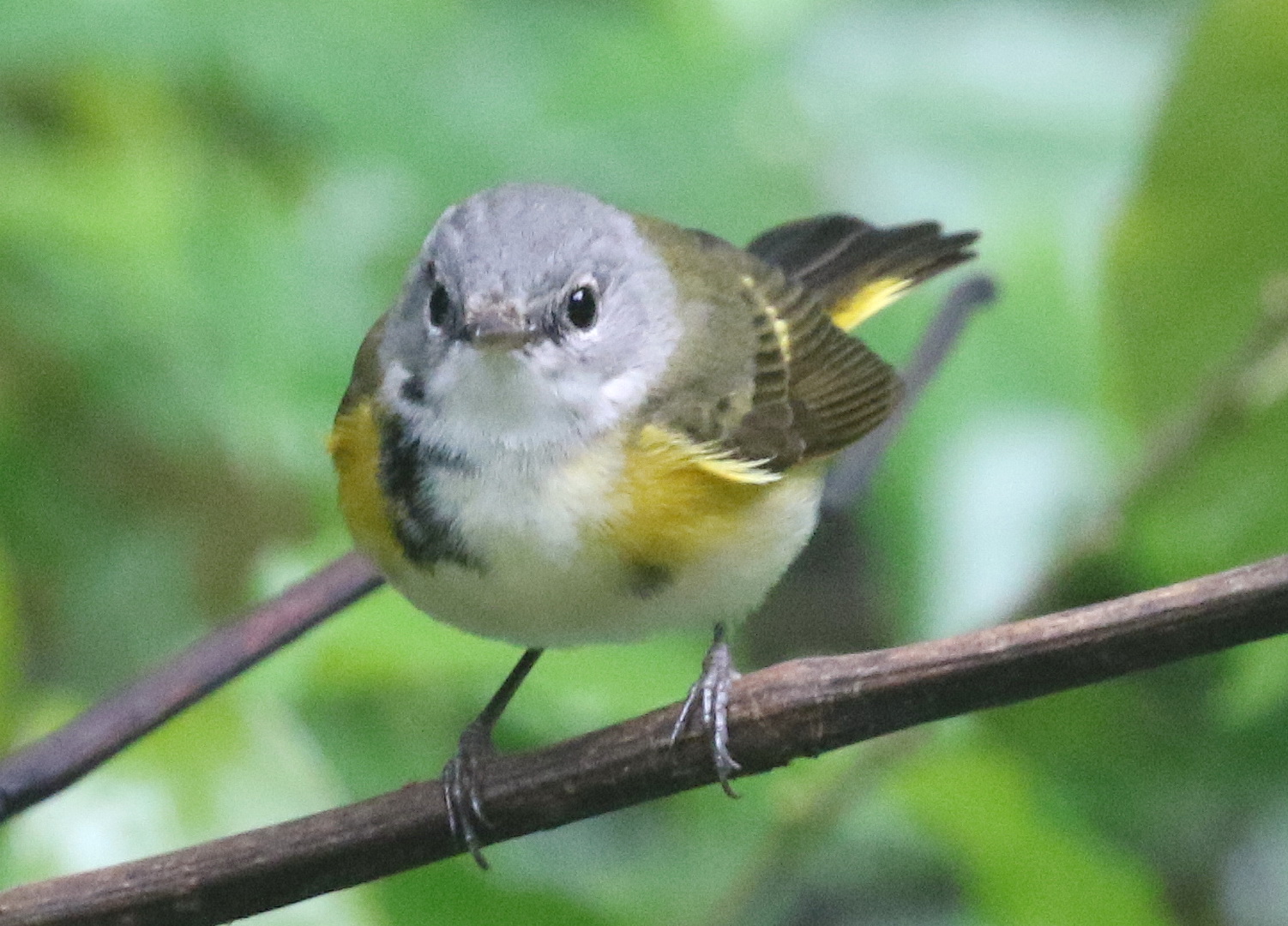
American Redstart – female
American Redstart – female
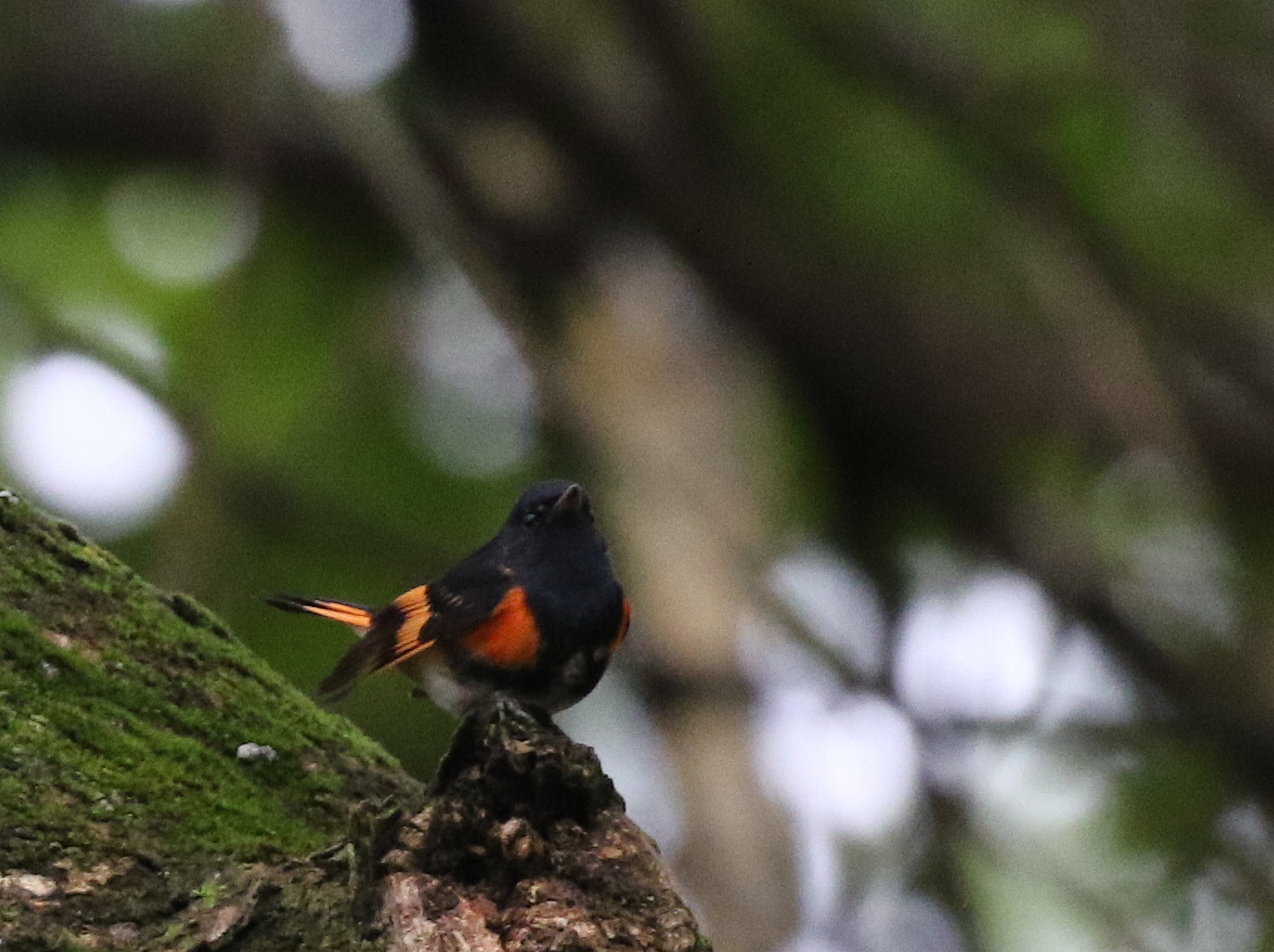
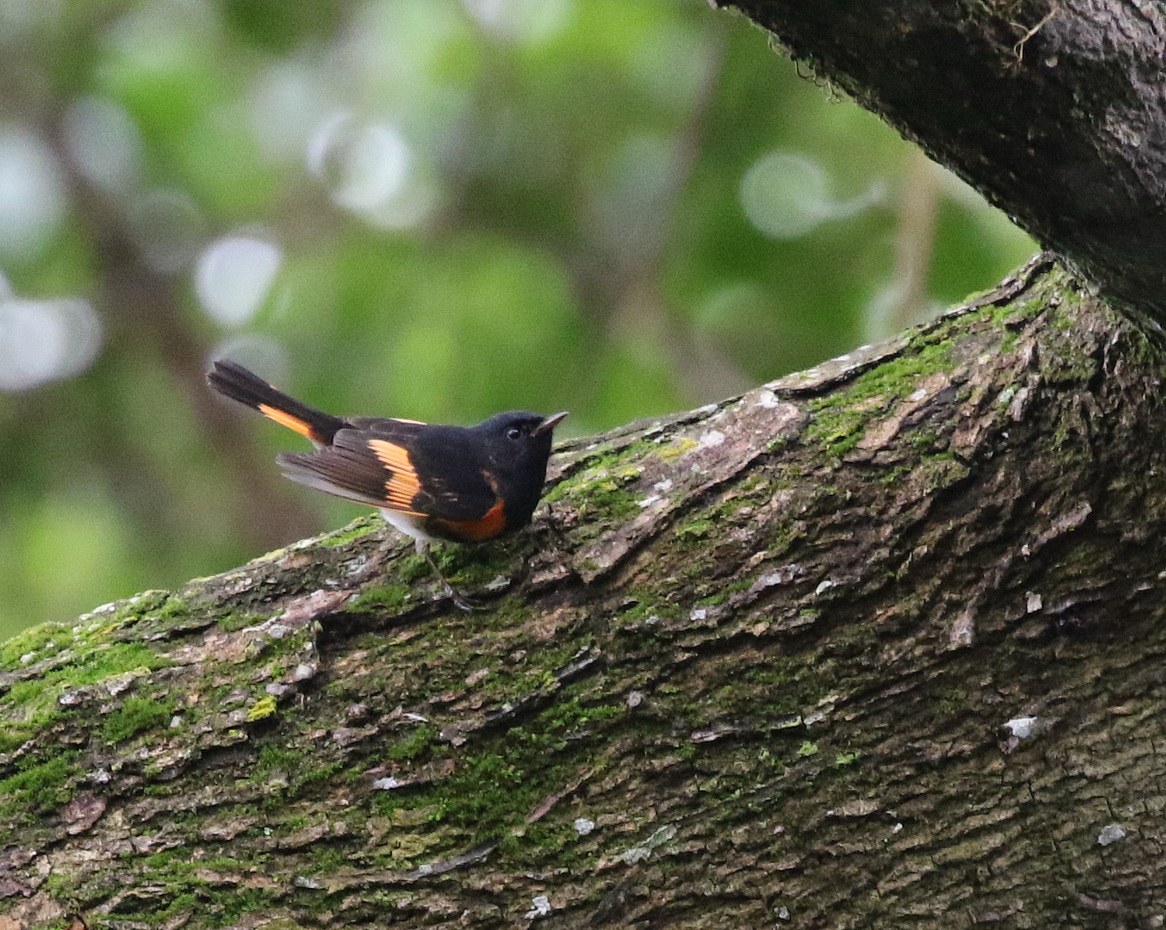
American Redstart – male
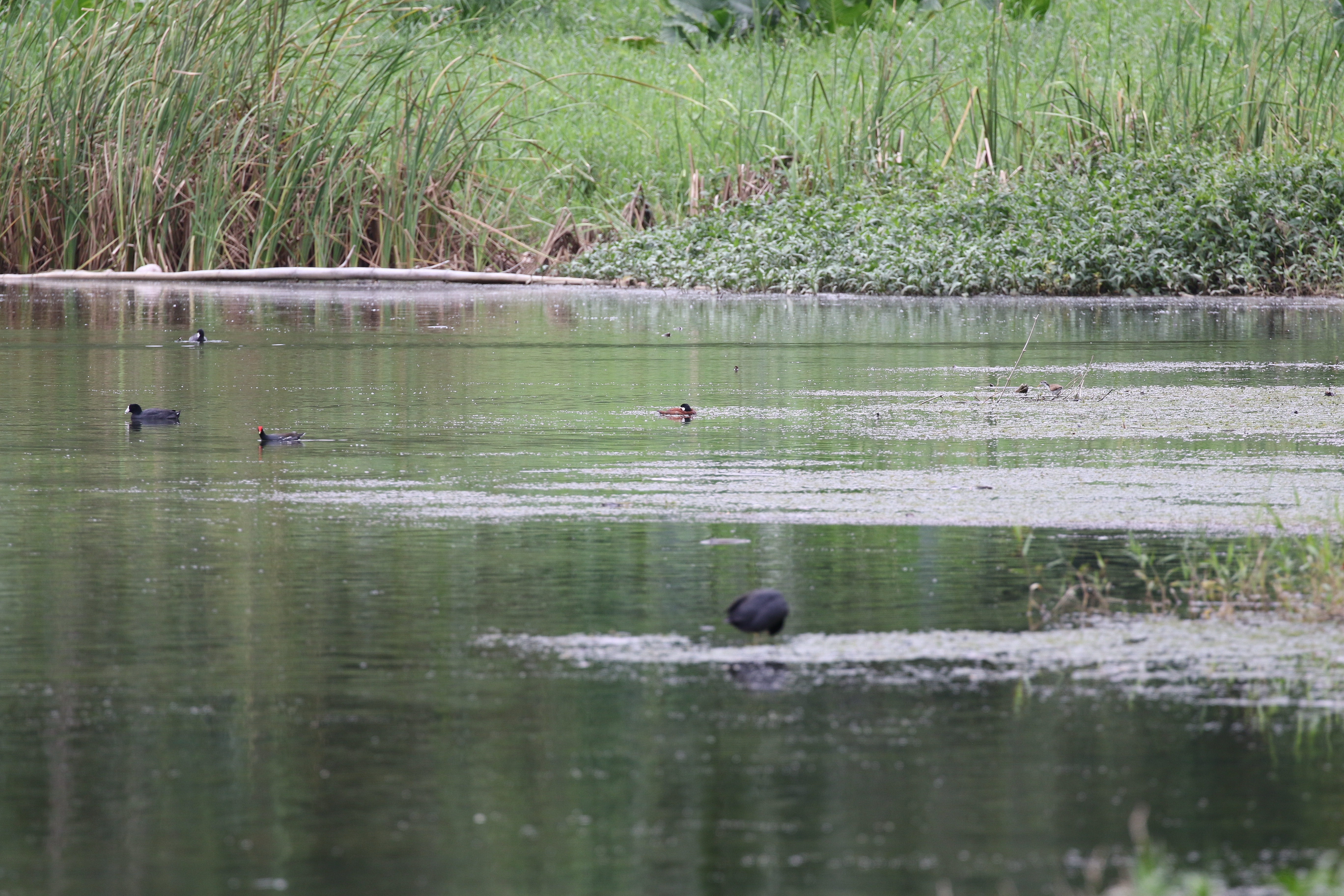
Resevoir Birds
Pied-billed Grebe
Blue-winged Teal
Ring-necked Duck
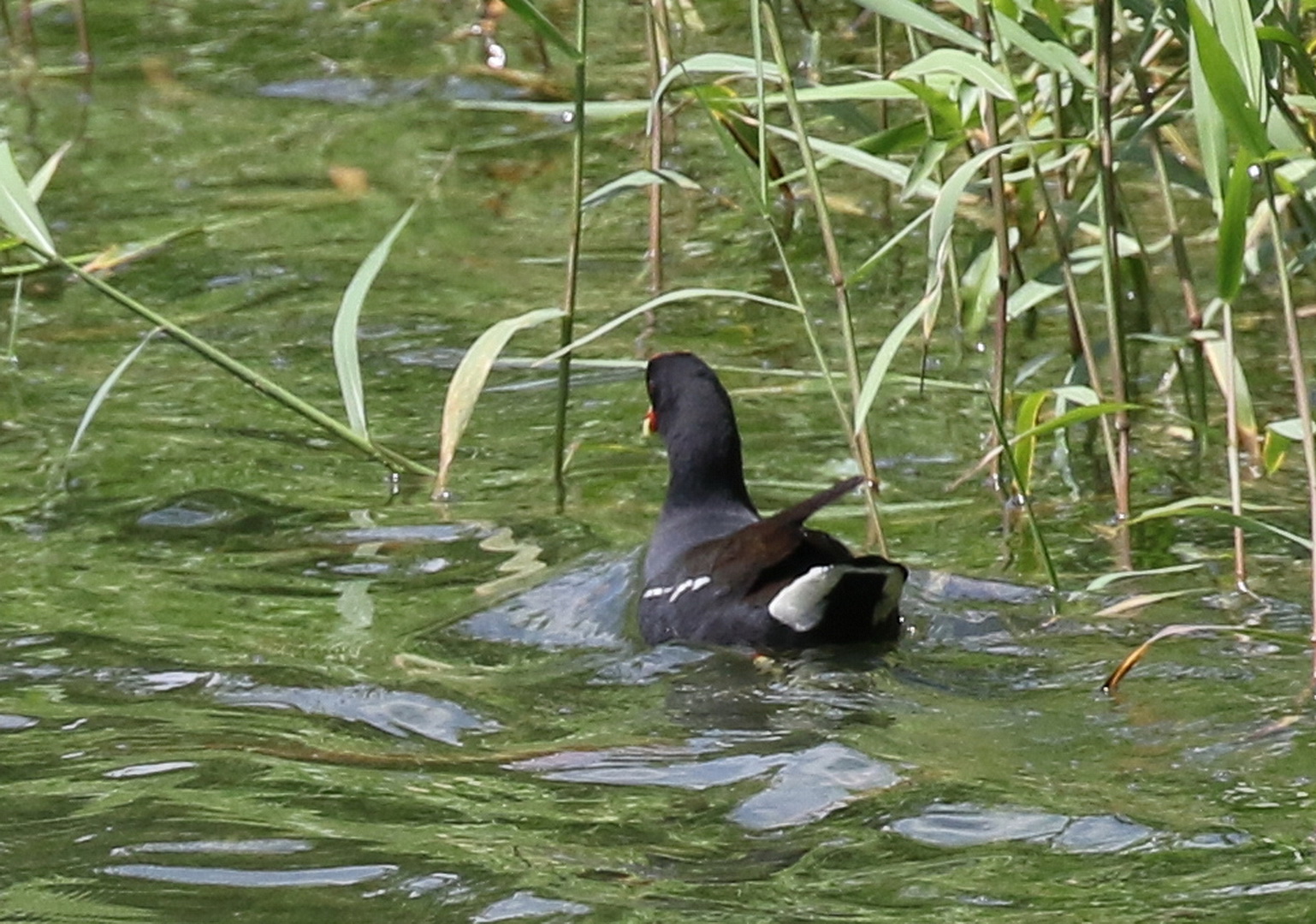
Common Moorhen
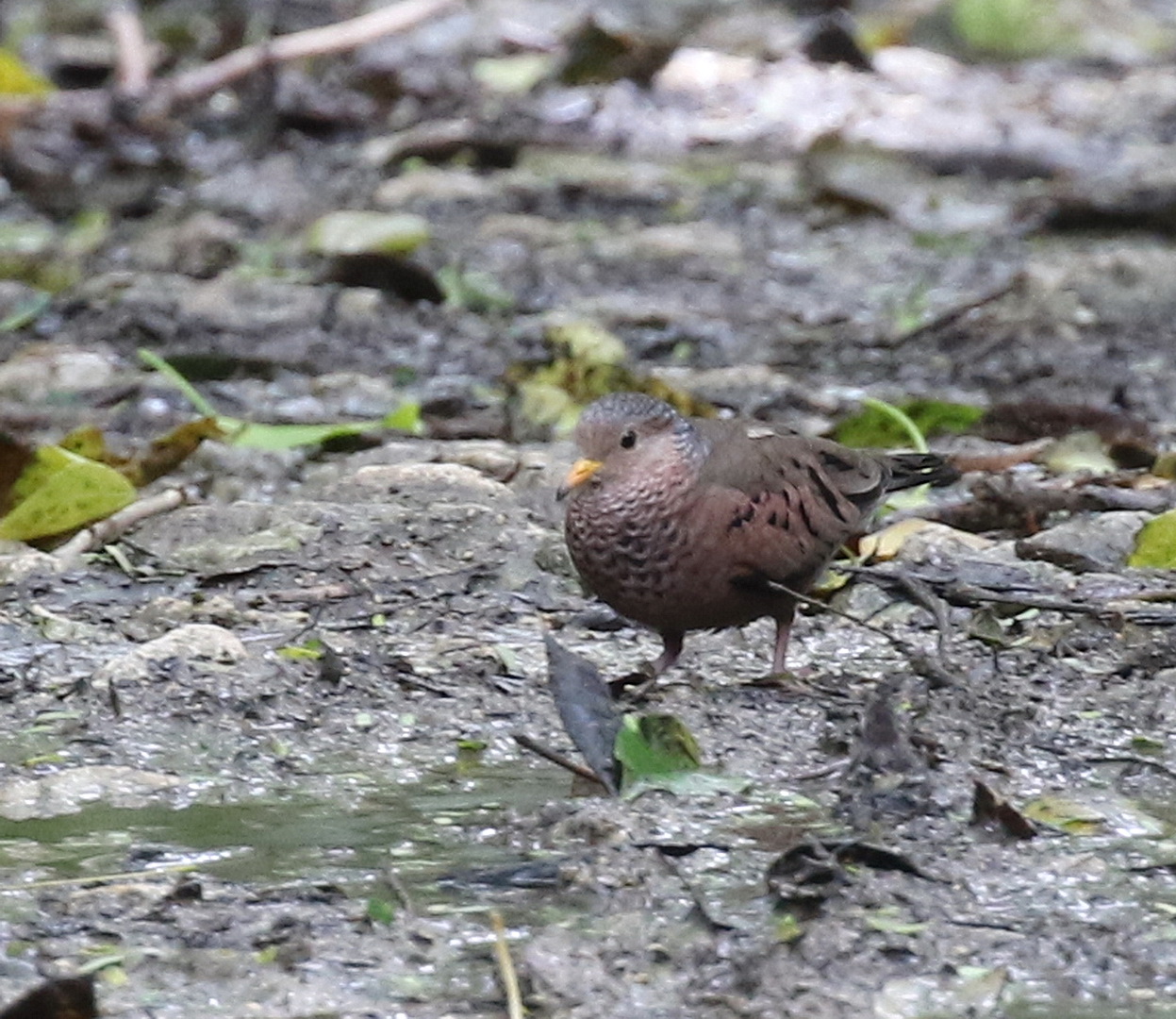
Common Ground-Dove
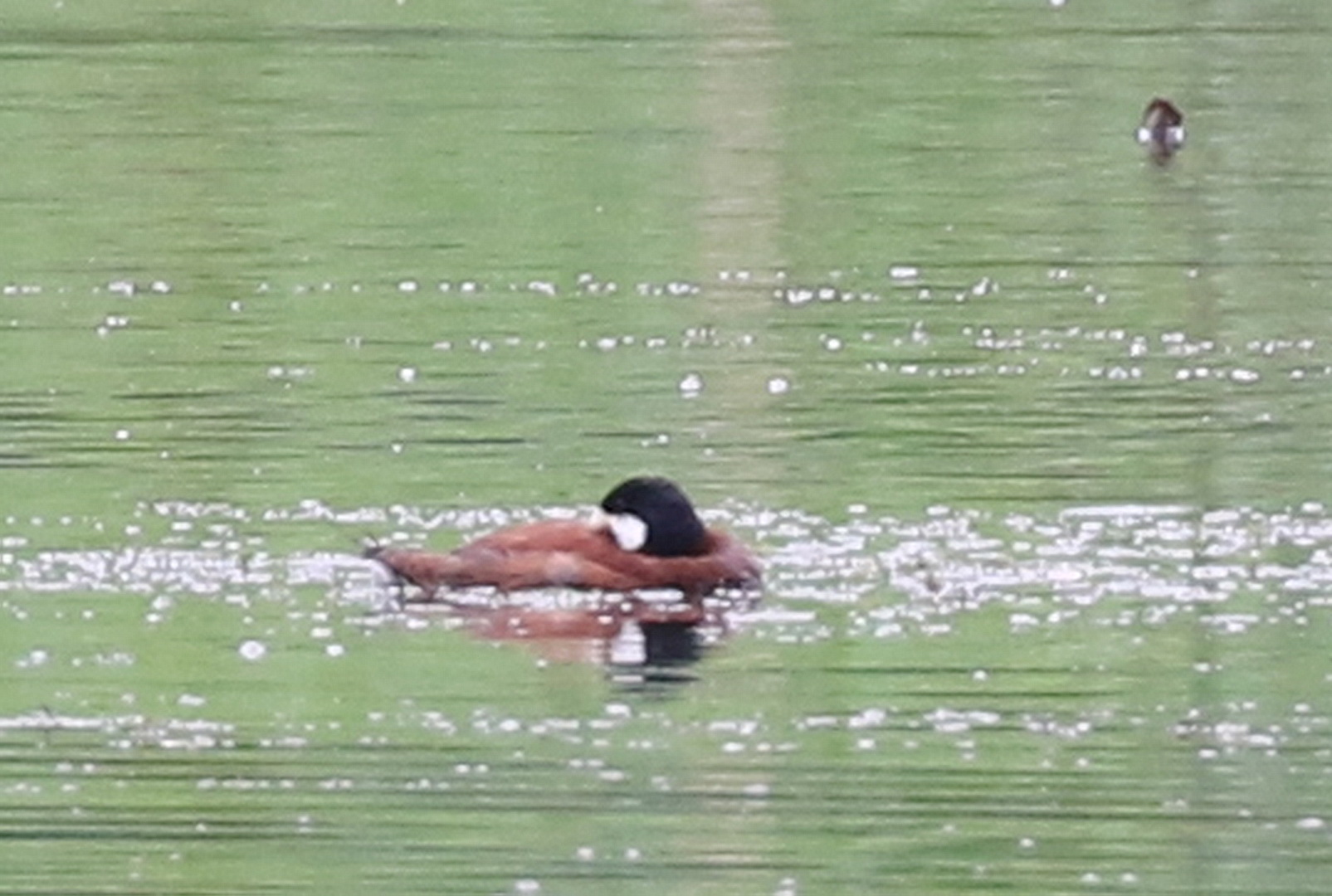
Ruddy Duck
American Kestrel
American Kestrel
White-chinned Thrush
American Redstart – male
Greater Antillian Grackle
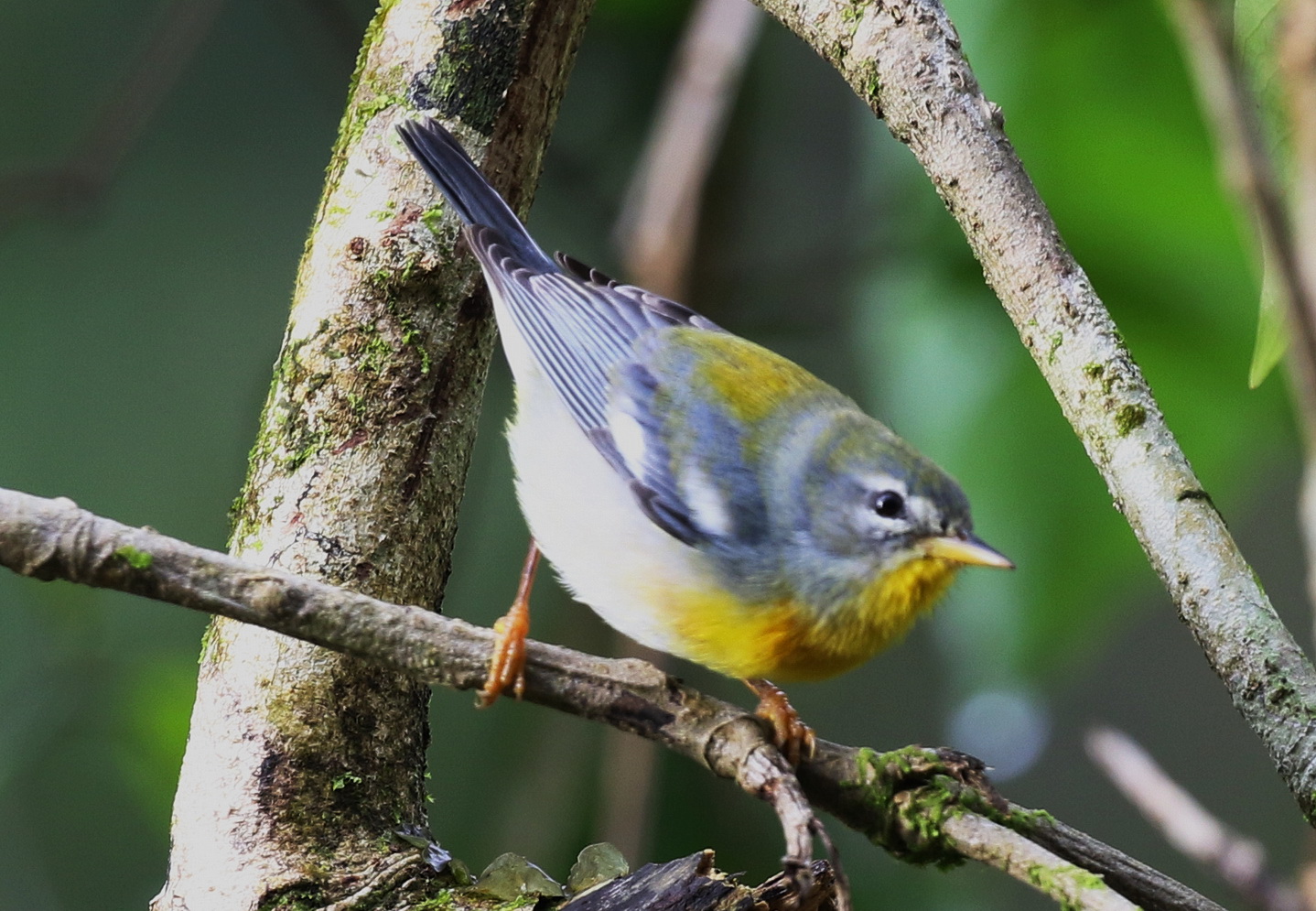
Northern Parula
And here are photos of birds seen in the mountains.
At the hotel we experienced some of the local Jamaican dishes which at times were quite spicy but tasty.
One evening Richard – the GC owner- took us around the property to find the Jamaican Owl. We heard it close to the accommodation and followed it from one area to the next but never actually saw it despite being close.
During our stay Jonathan Rossouw and his friend Malcolm arrived – staying for a few days to find endemics to get Jonathan over the 9000 mark – which he did with ease as he only needed about three more to do so.
On the day set aside to go to Ecclesdown with the guide I was not feeling well so Sally and I did not go. The rest of the group had great sightings of many of the endemic species we had not seen so far.
Friday – our last day – was a relax and sightseeing day. But Sally and I re-arranged our car hire to come on Thursday instead of on our last day – Saturday – so that we could explore the Ecclesdown Road area by ourselves on Friday.
The evening before heading for Ecclesdown we bumped into Jonathan Rossouw and his friend Malcolm and they very generously gave us precise details of where to go and what to expect to see in the various sections of the road. And very precise they were. Many thanks to them both for being so generous with their time and advice.
Black-billed Parrot
Black-billed Streamertail
Black-billed Streamertail
We also saw the Chestnut-bellied Cuckoo (a massive bird in flight and perched); a fleeting view of the Crested Quail-Dove; Yellow-billed Parrots in flight as well as a number of other species already seen.
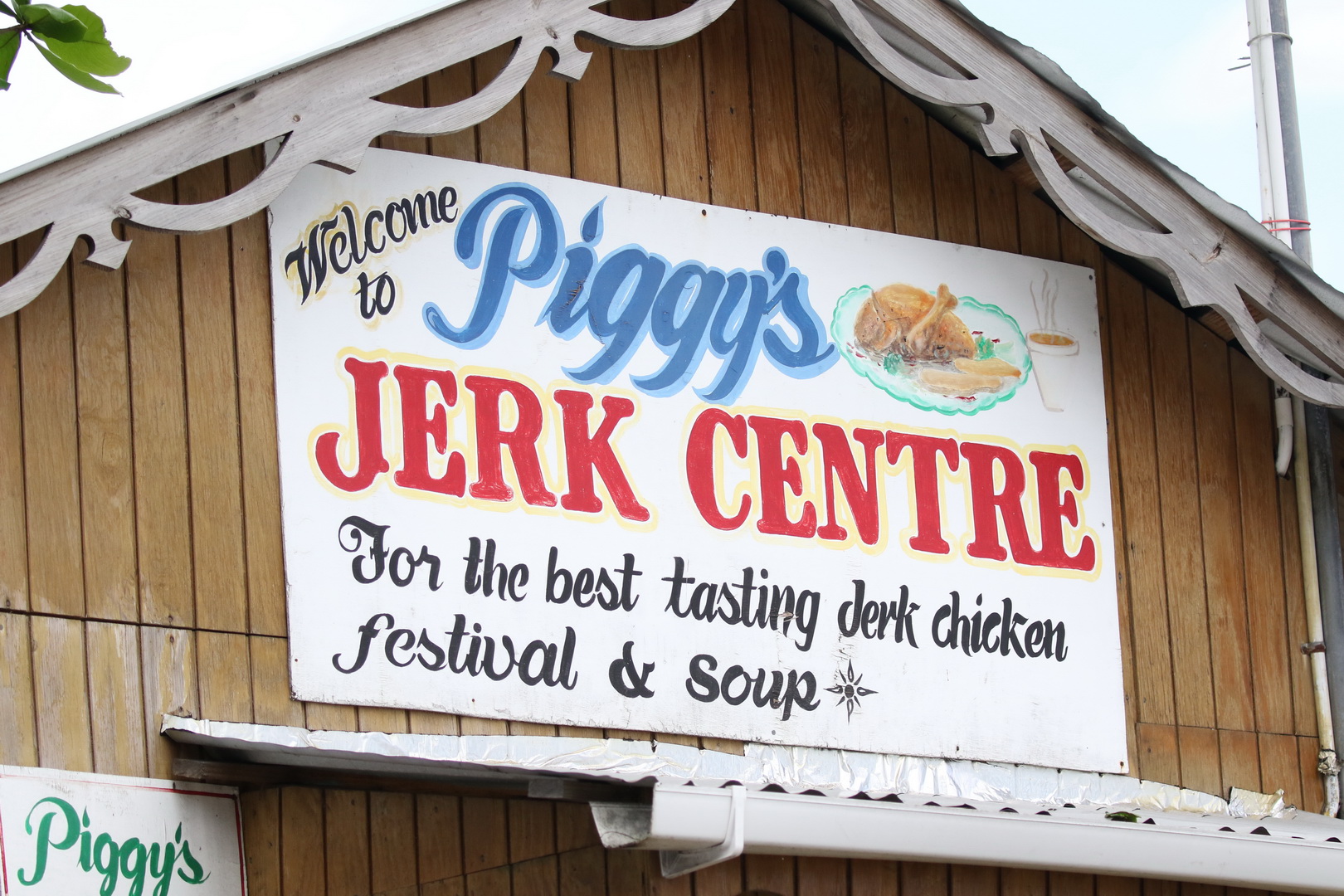
Lunch at the jerk pork restaurant in Boston town on the way back.
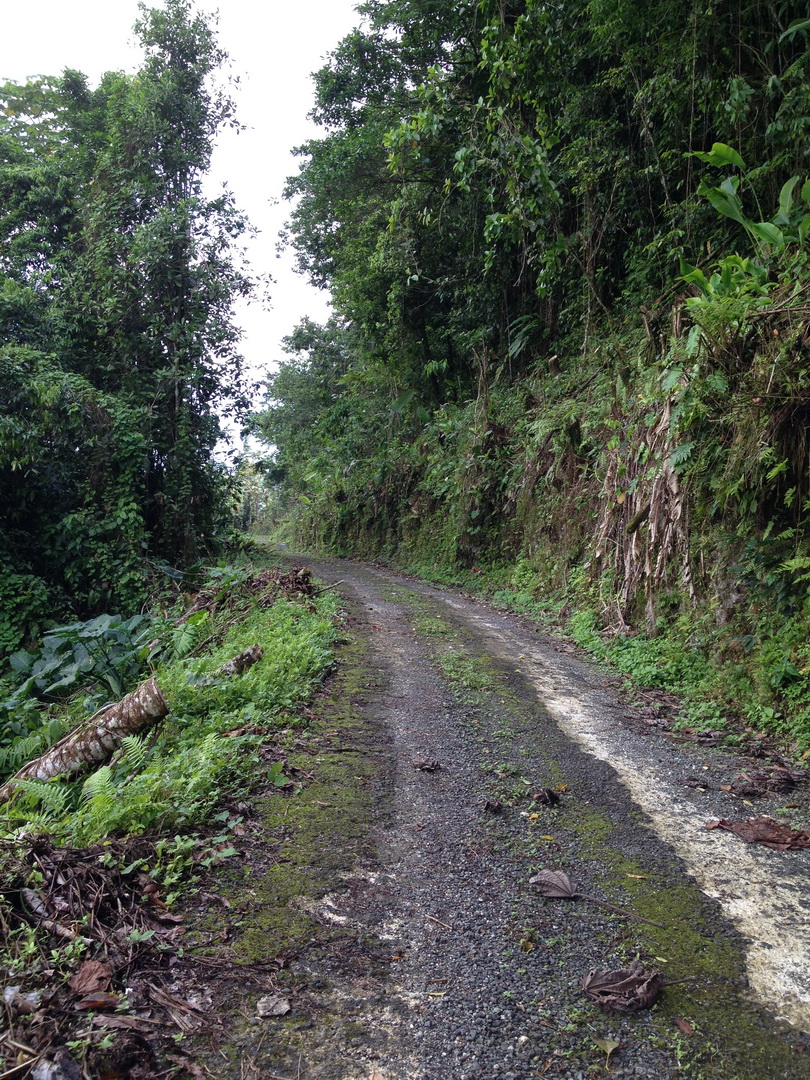
Ecclesdown road in the John Crow Mountains
Lunch View from Jerk Restaurant in Boston
Piggy’s Jerk Centre
On the way back we stopped at a river crossing and saw a few new species of waterbirds.
Green Heron
Green Heron
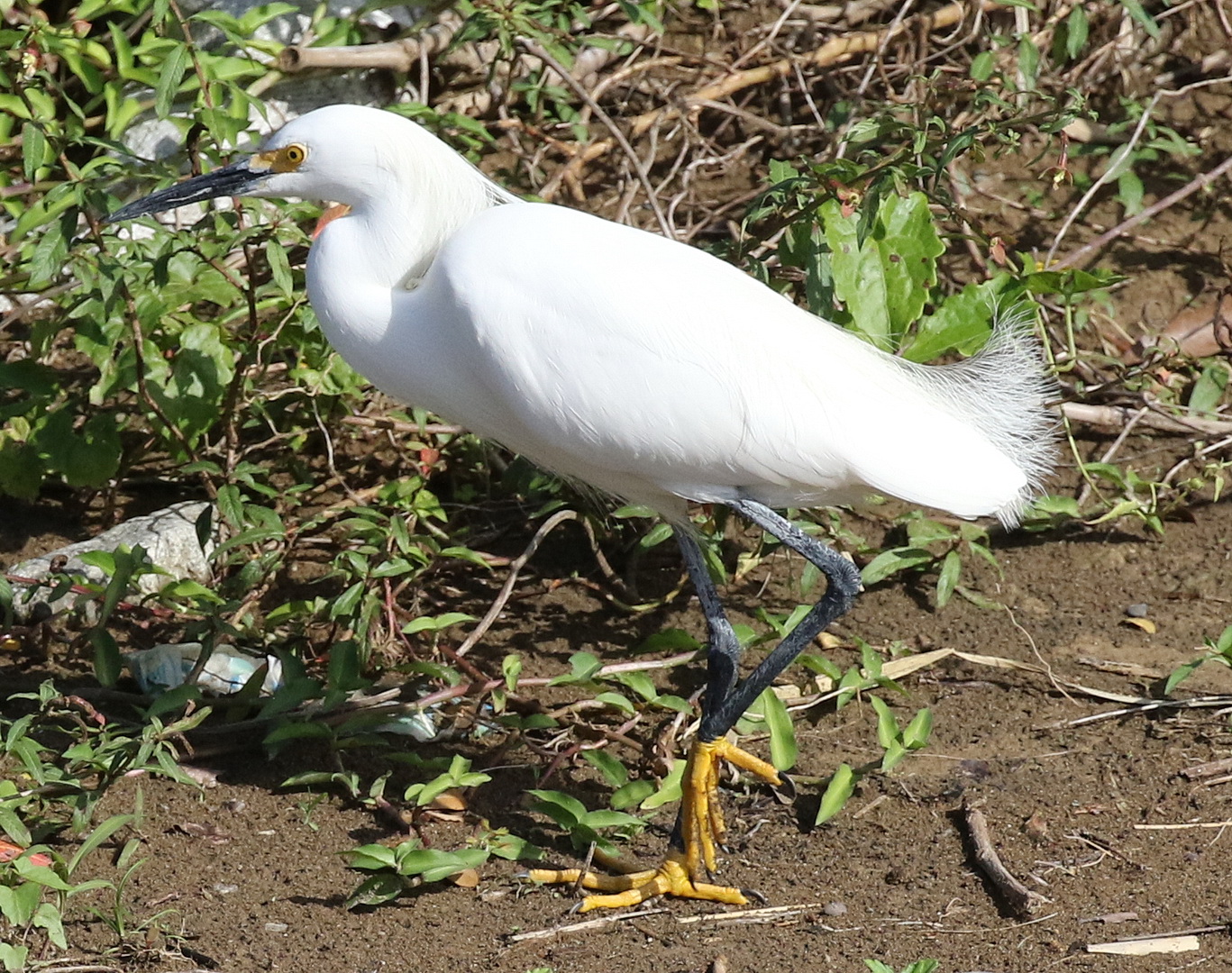
Snowy Egret
Snowy Egret
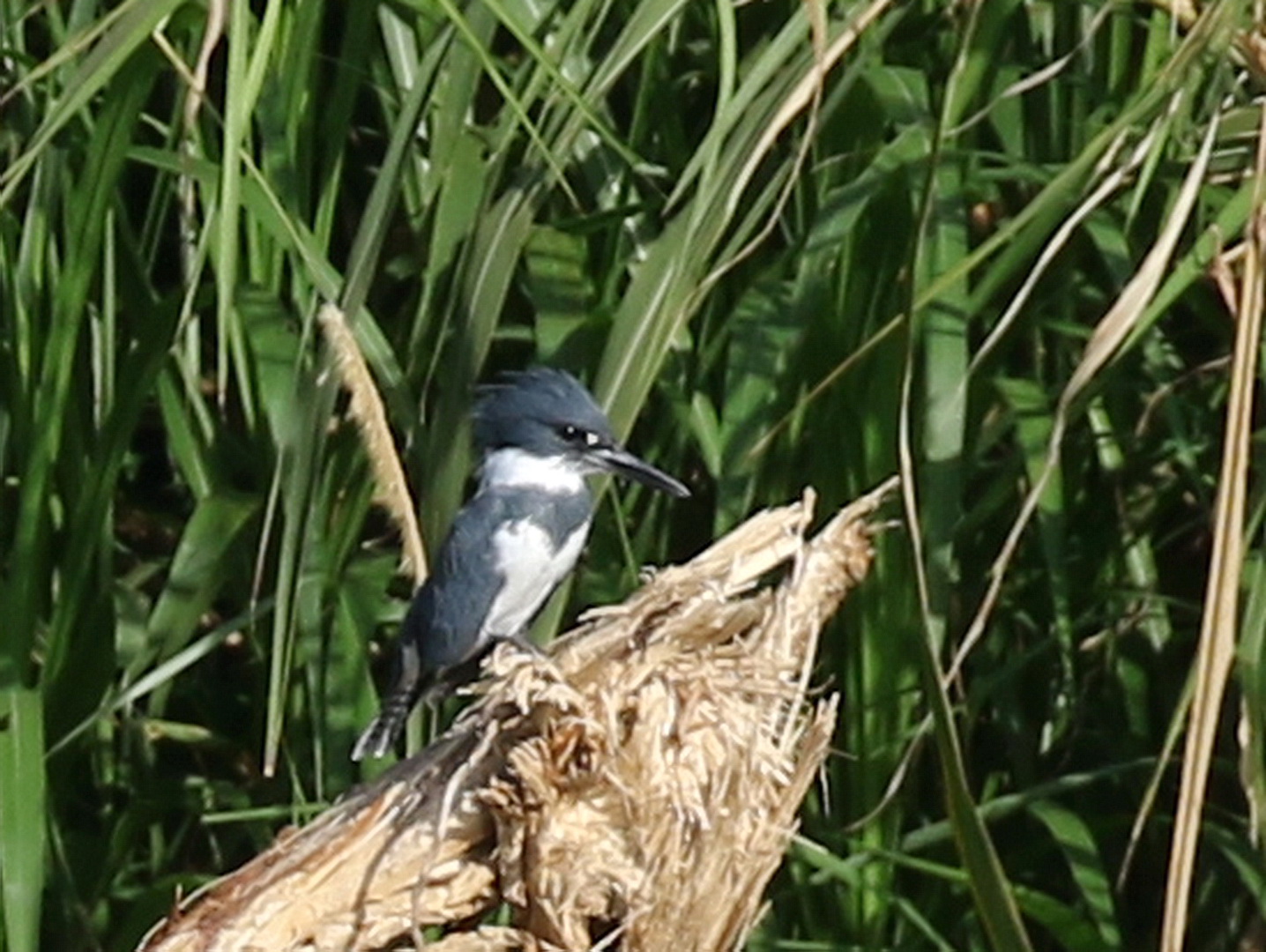
Belted Kingfisher
Little Blue Heron
Yellow-crowned Night-Heron
Yellow-crowned Night-Heron
Royal Terns and Snowy Egret
Little Blue Heron
There was one species which we enjoyed seeing – unlike back in South Africa where they are all so similar – and that was the Warblers – mainly winter migrants from America. They were colourful and for the most part quite distinct.
After a hectic week it was time to relax, birding nowhere near as intense. We headed for the area around Ocho Rios to see Fern Gully and the famous Dunns River Falls.
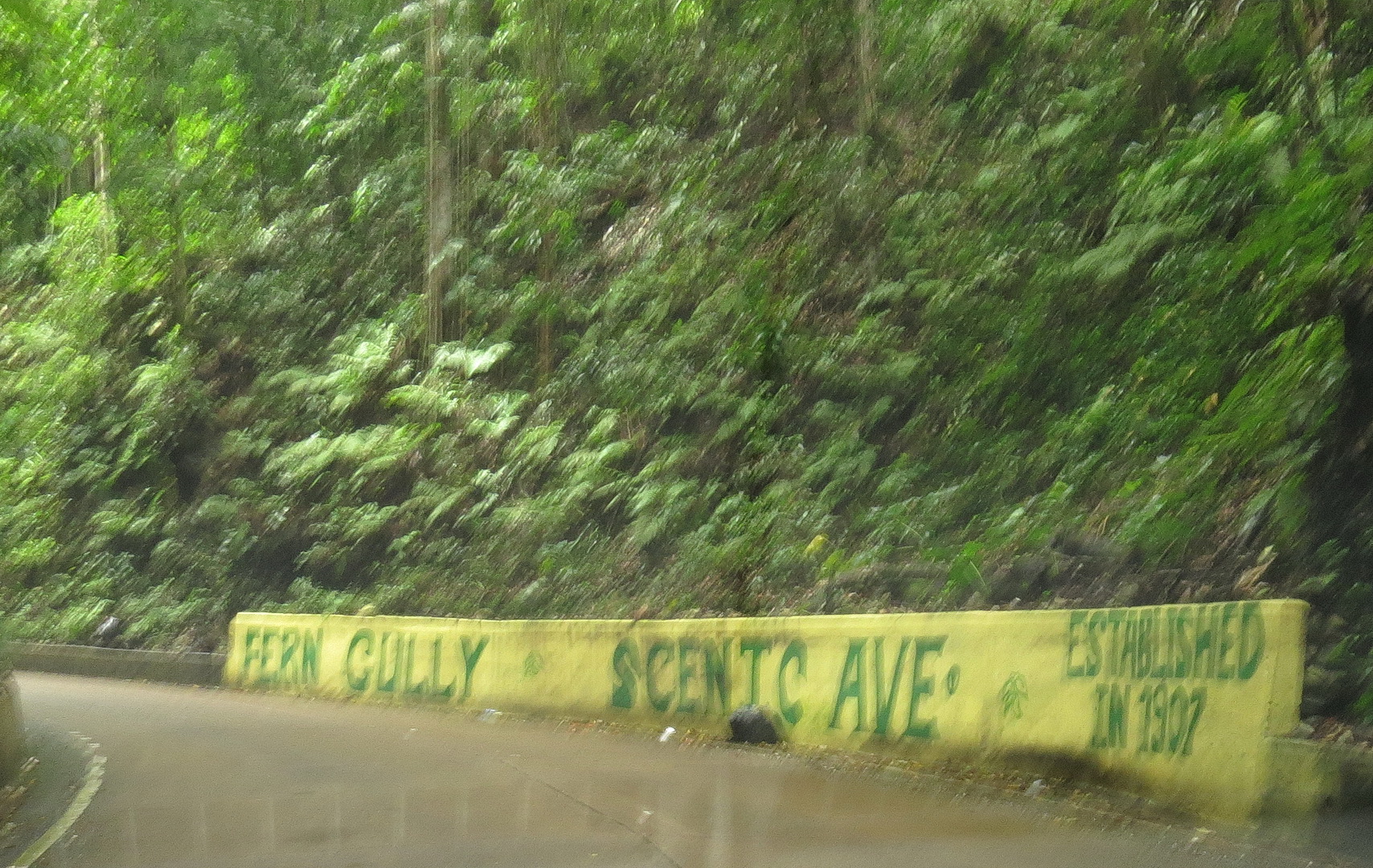
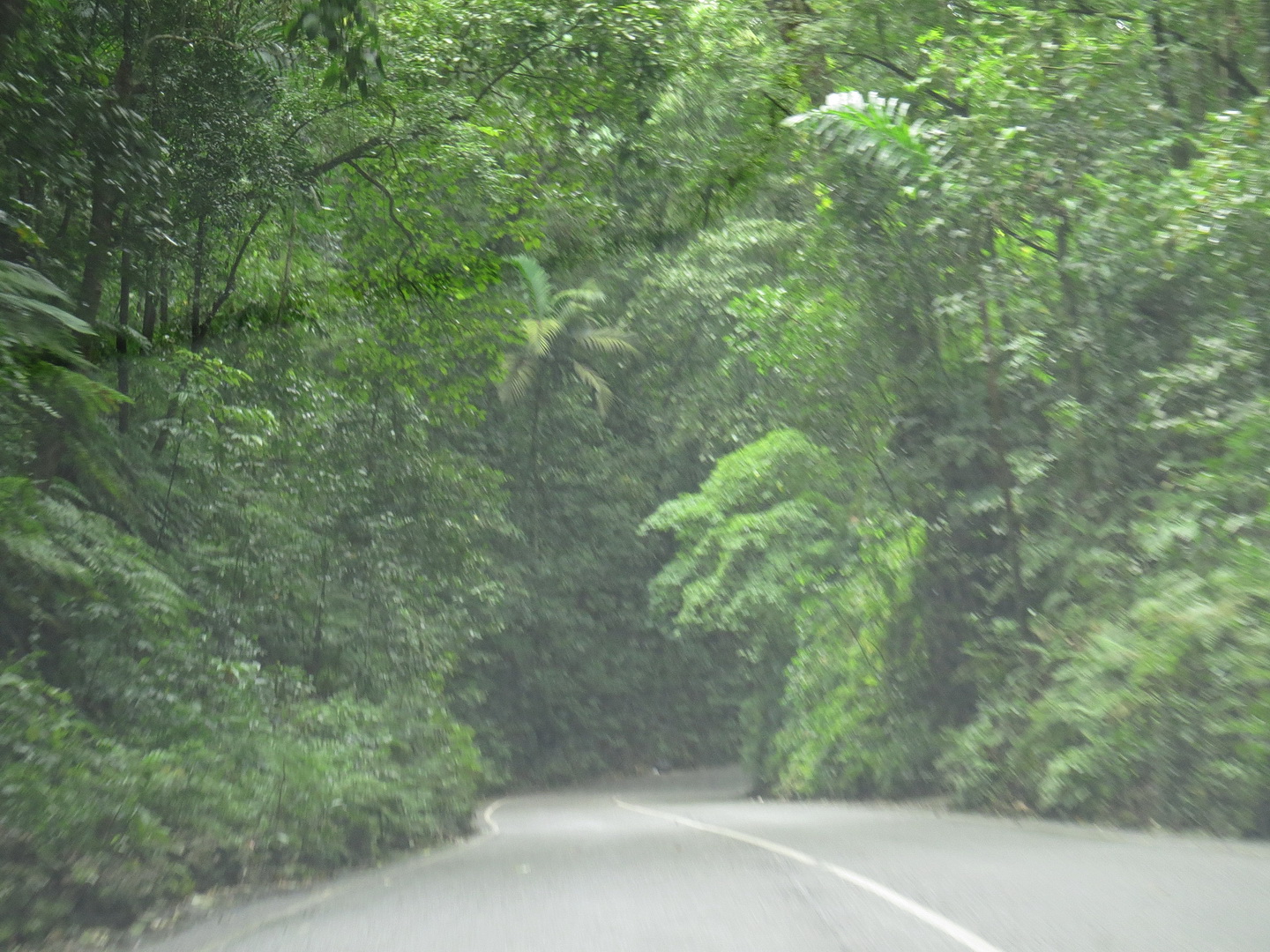
Fern Gully was very impressive – a seven km drive climbing up a twisting narrow road through a forest of ferns on either side.
Fern Gully
Fern Gully
Fern Gully
Then to Dunns River Falls.
Entrance to Dunn’s River Falls
One look at the hoards of tourists and we turned around and left. We had been told there was another Falls at YS on the south coast which compared favourably so we planned to go there instead.
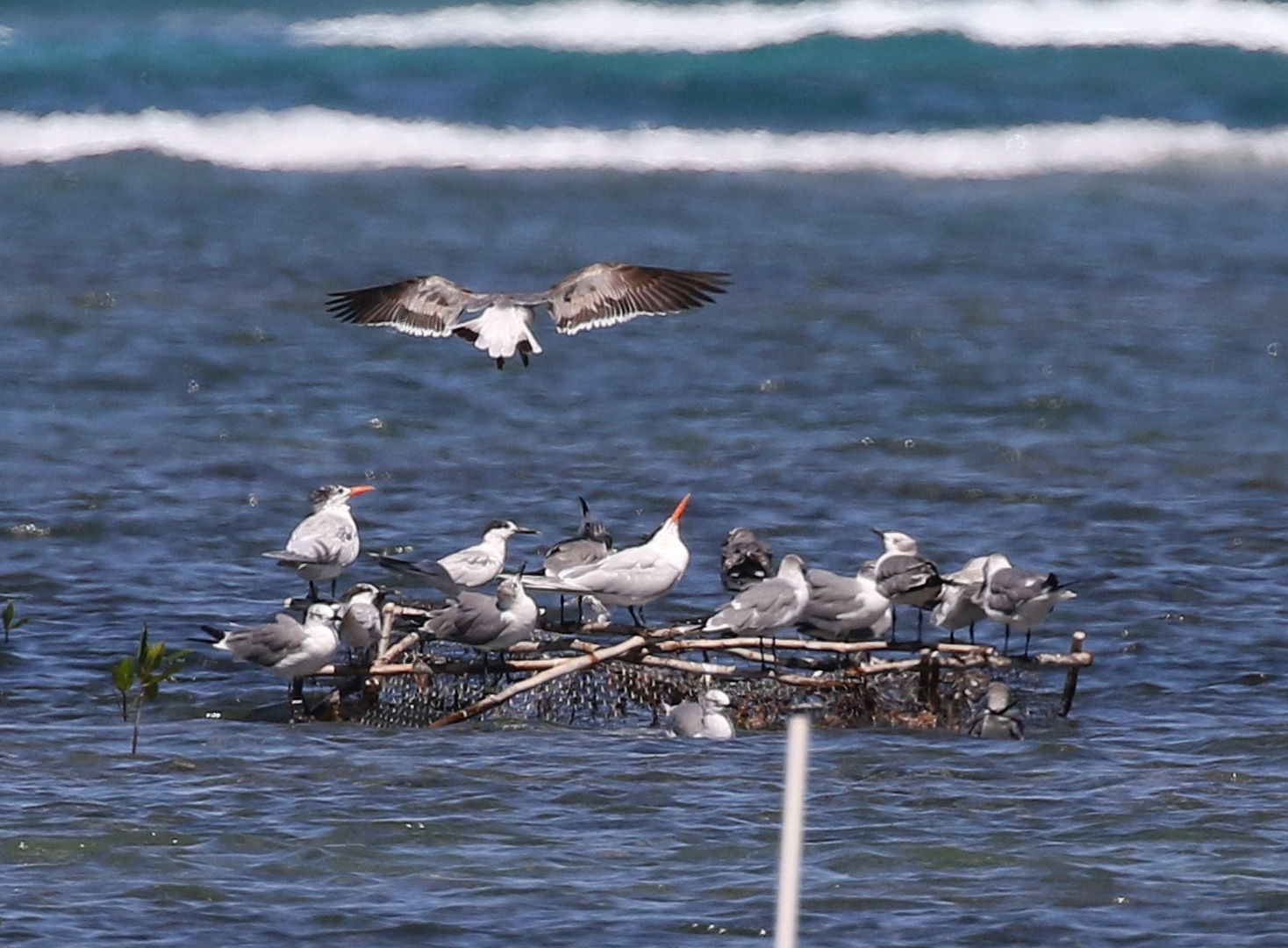
Lunch and dinner were had at Mammee Bay beach – we were able to enter as we stayed at a house in that complex. A bay I used to visit with fond memories and it did not disappoint. There were a variety of seabirds to challenge us and some obligingly sat on a distant fish pot to test our skills.
This overnight stay was on a Saturday and we were entertained with a number of weddings taking place on Mammee Bay and adjacent beaches.
Mammee Bay Bar
Lunch at Mammee Bay
Lunch at Mammee Bay
Breadfruit crisp
Lifejackets
Mammee Bay activity
Rough Seas
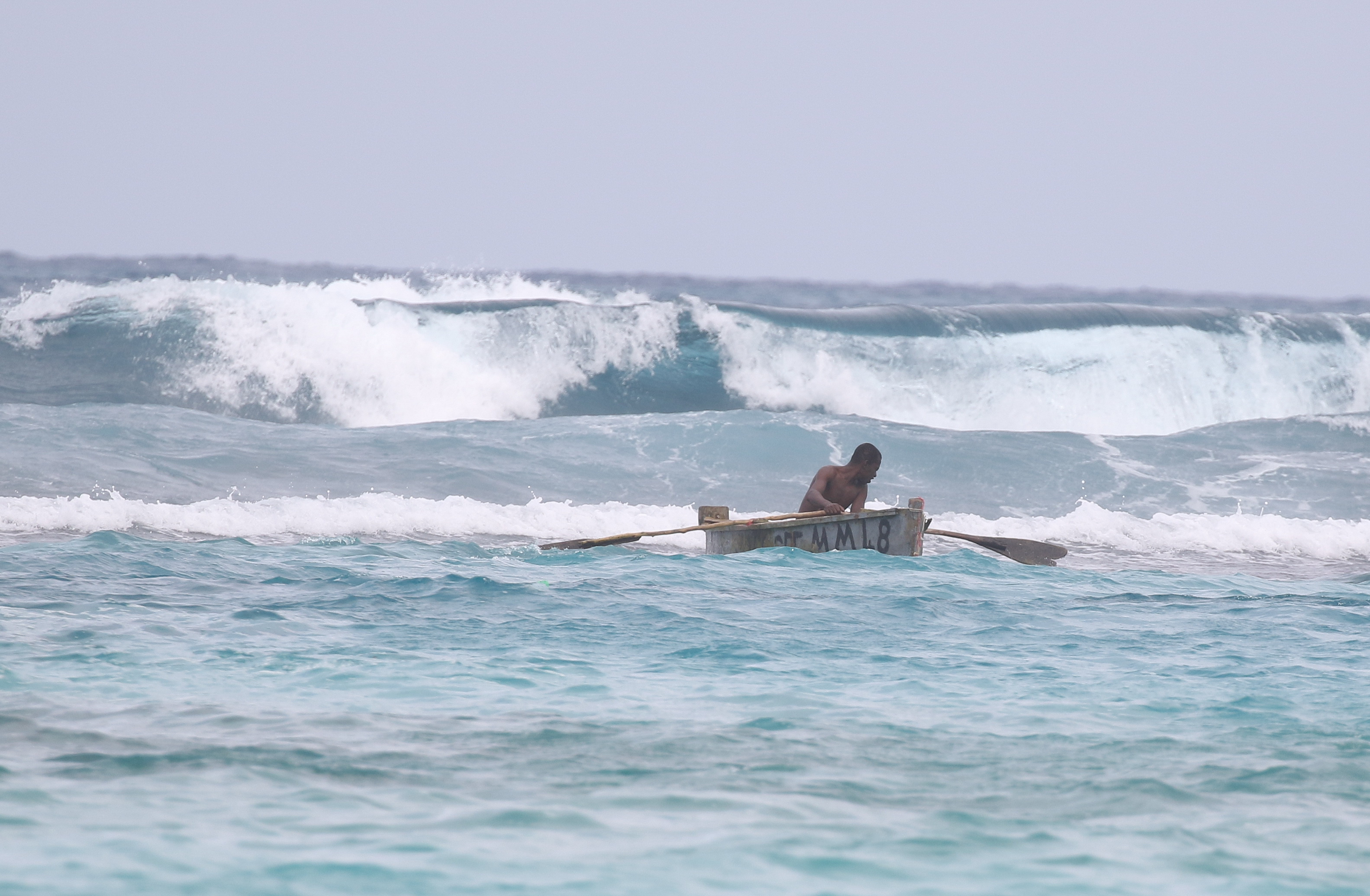
Ruff See the boat’s name
Royal Terns Laughing Gulls and Sandwich Tern
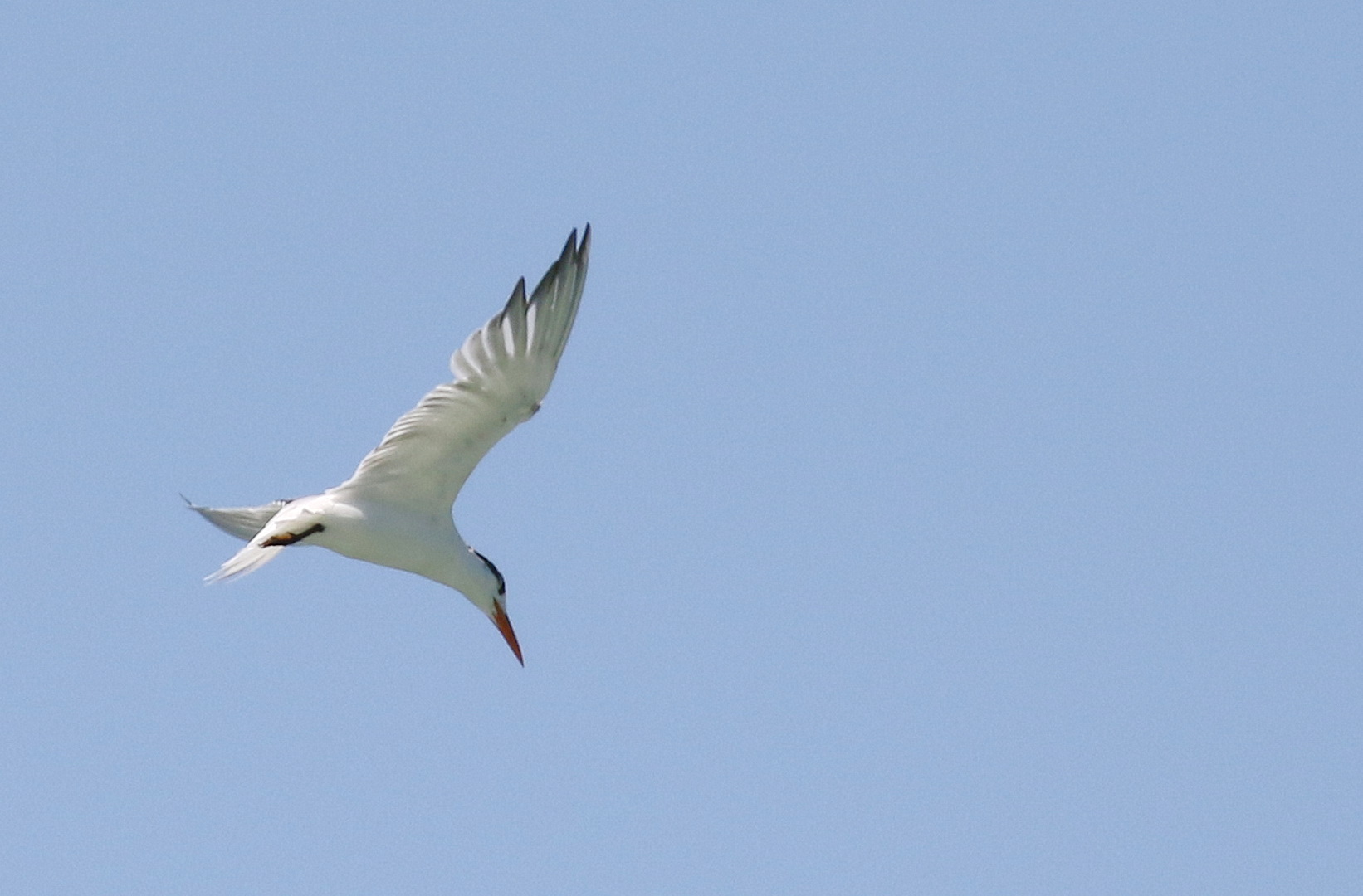
Royal Tern
Negril was our next destination after one night in Mammee Bay.
Along the way we came upon my family’s favourite swimming beach at Discovery Bay. Now all cordoned off and inaccessible sadly.
Browns Town road looking at Discovery Bay
Discovery Bay no entry
We drove past some swamps along the way, stopped to view the birds:
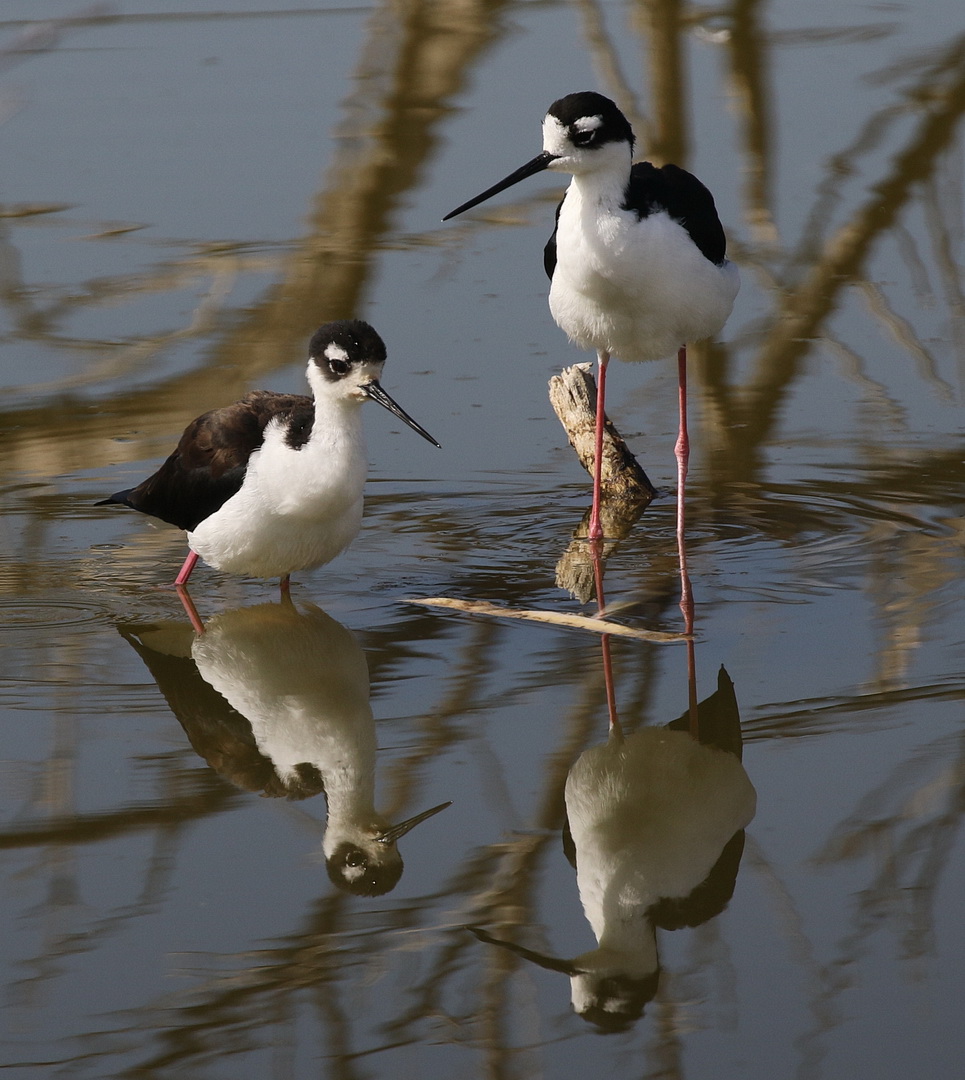
Black-necked Stilts
Black-necked Stilt
Great Blue Heron
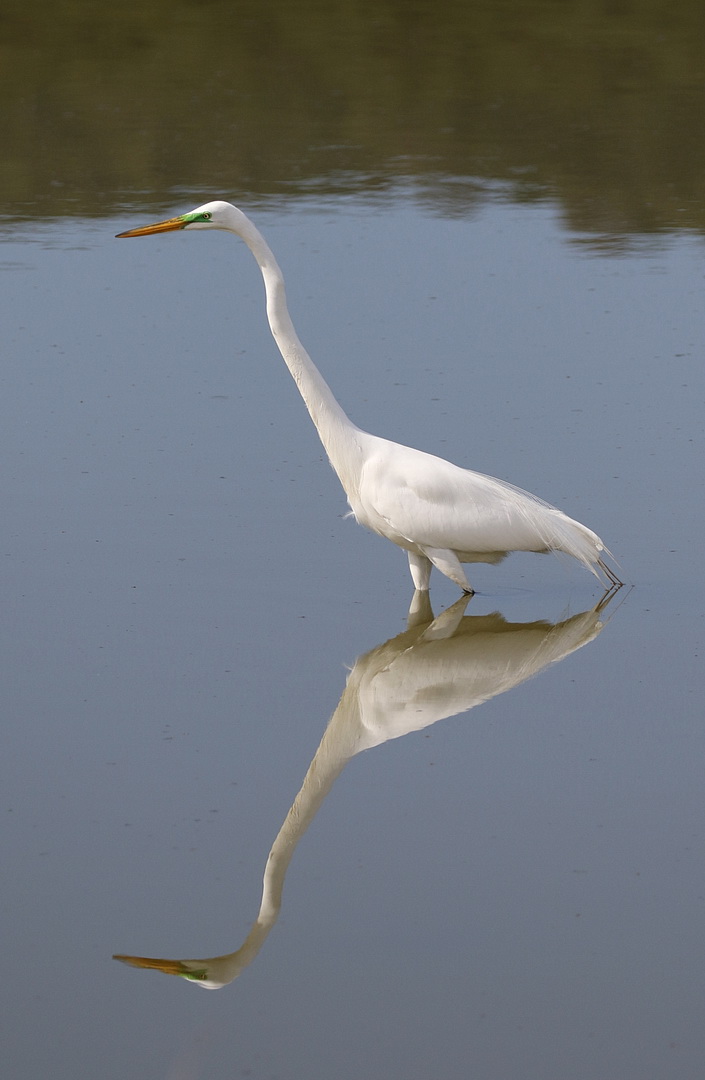
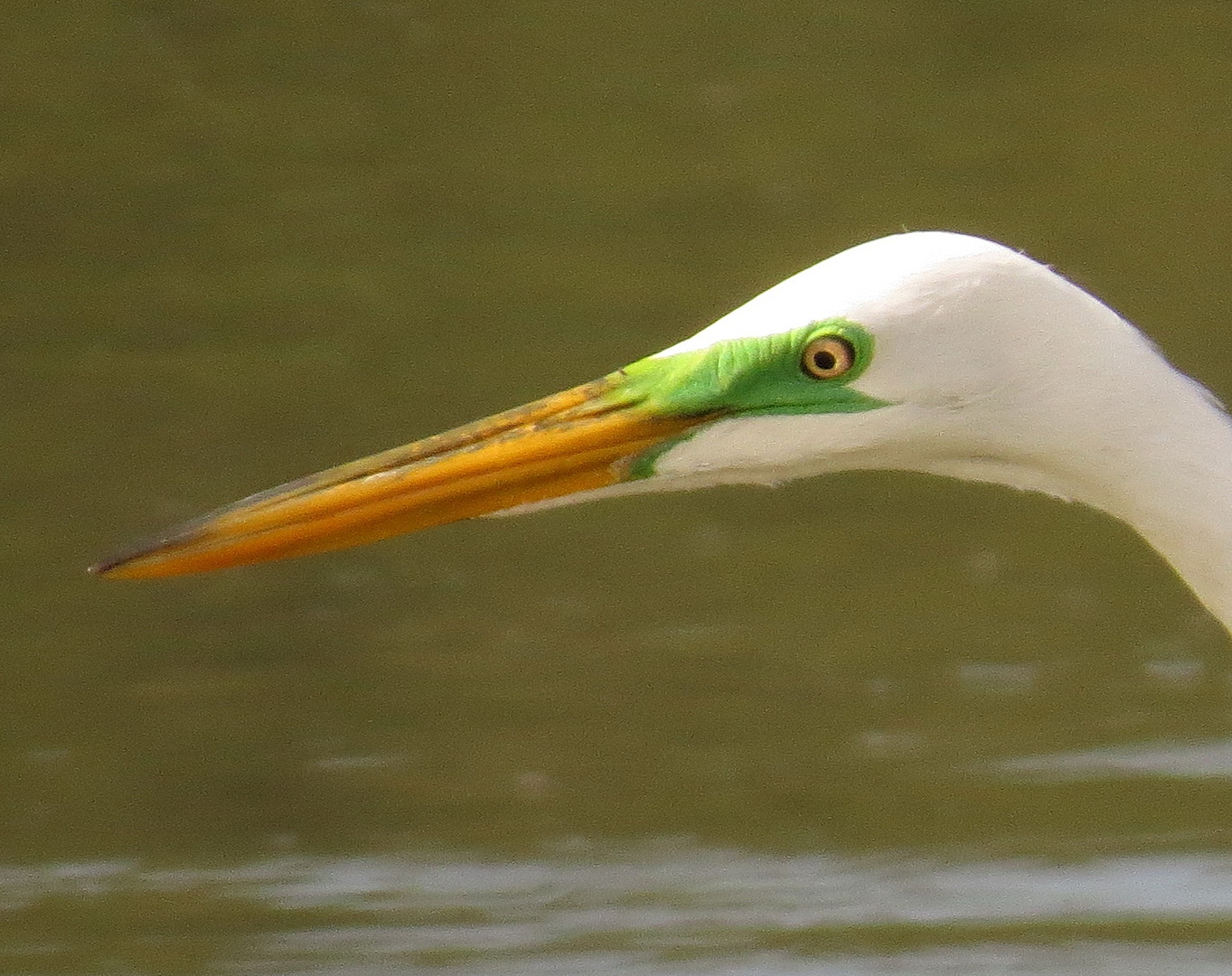
Great Egret
Great Egret
Great Blue Heron
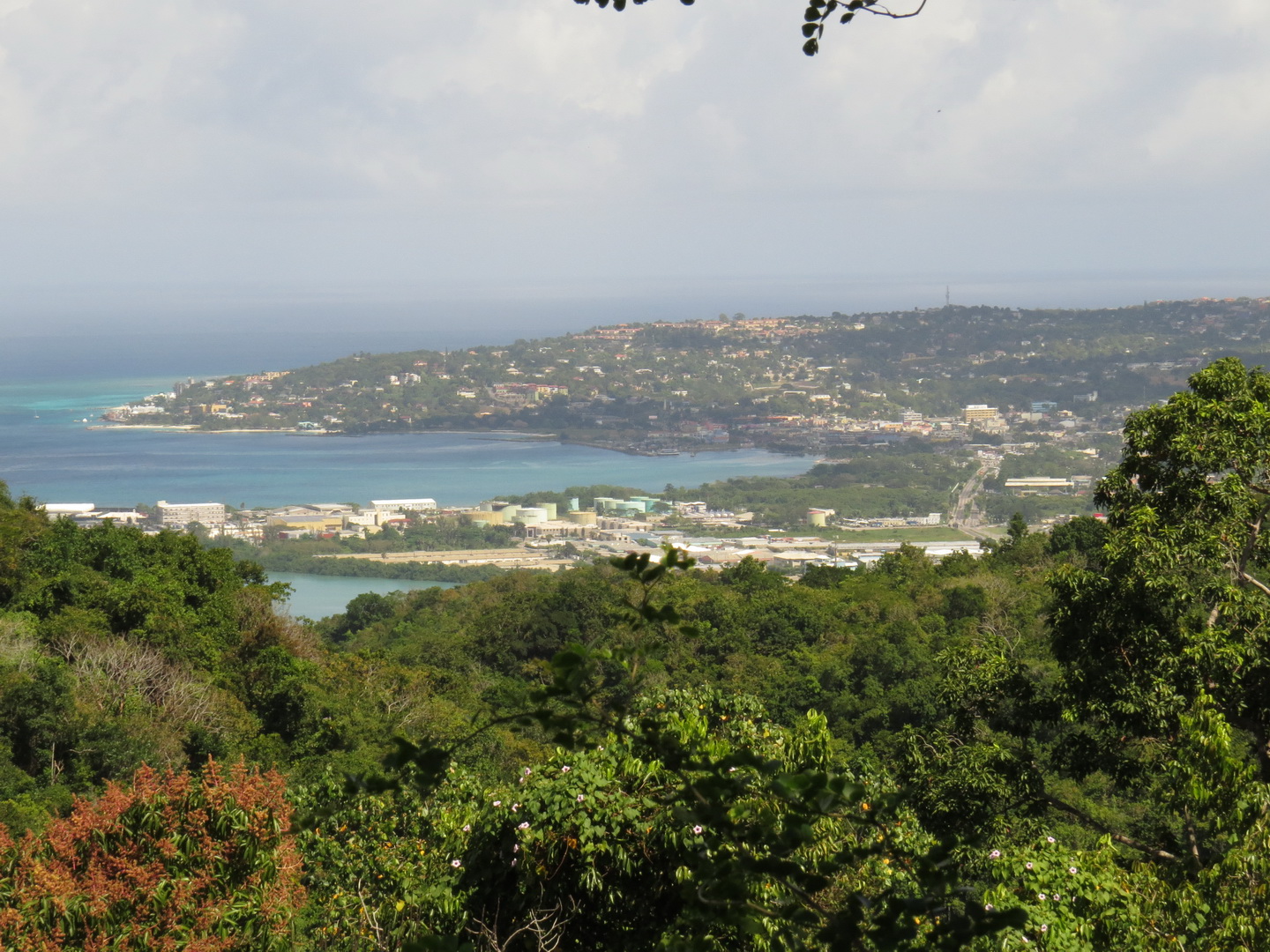
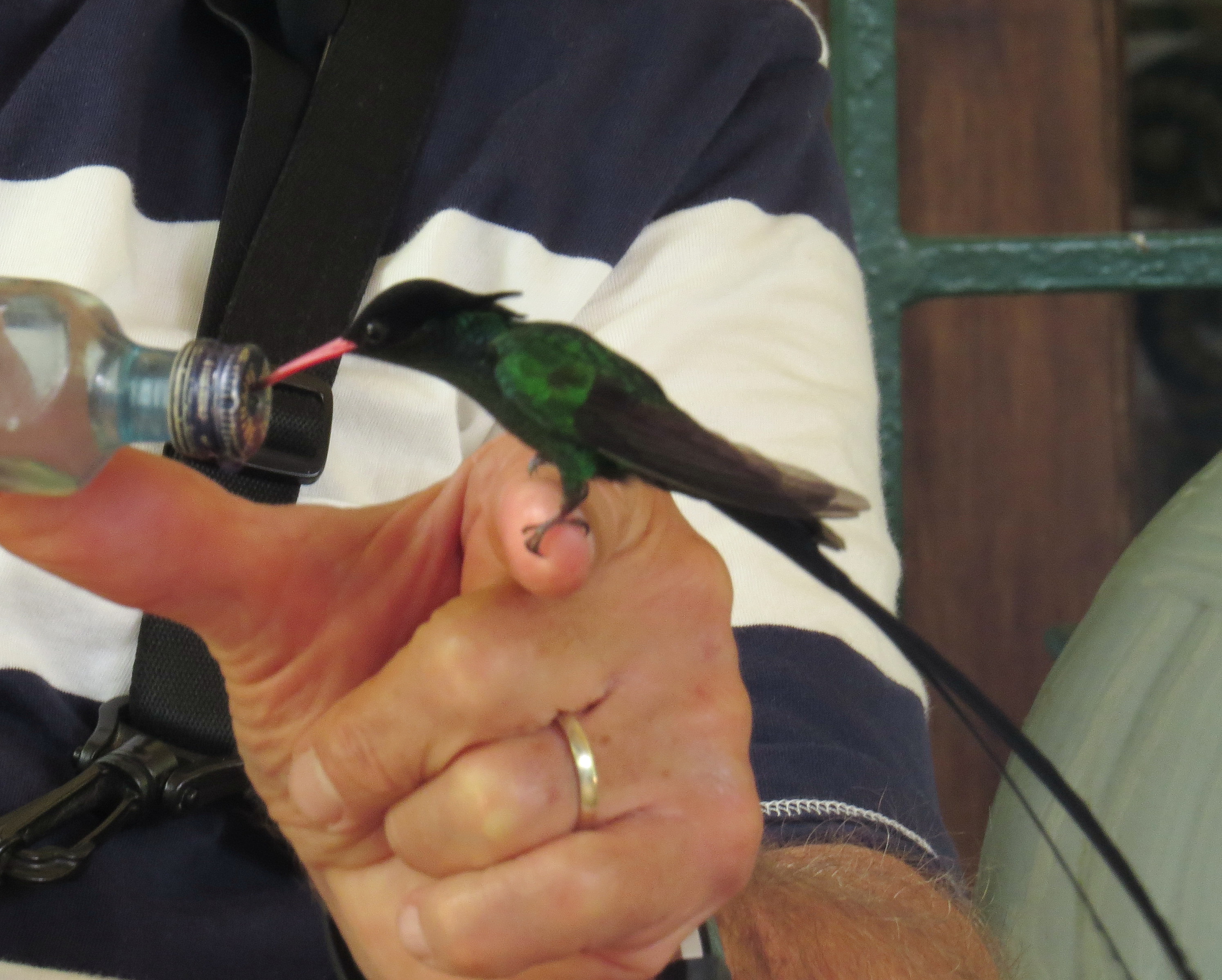
On the way we popped in to Rocklands Bird Sanctuary near Montego Bay. We were told that the Red-billed Streamertails dined from your fingers. We had to go. The views were spectacular and the birdlife abundant. Even a Jamaican Woodpecker put its head out of its nest hole for us.
View of MoBay from Rocklands Bird Sanctuary
Sally feeding Red-billed Streamertail
Red-billed Streamertail
Common Ground Dove
Caribbean Dove
Caribbean Dove
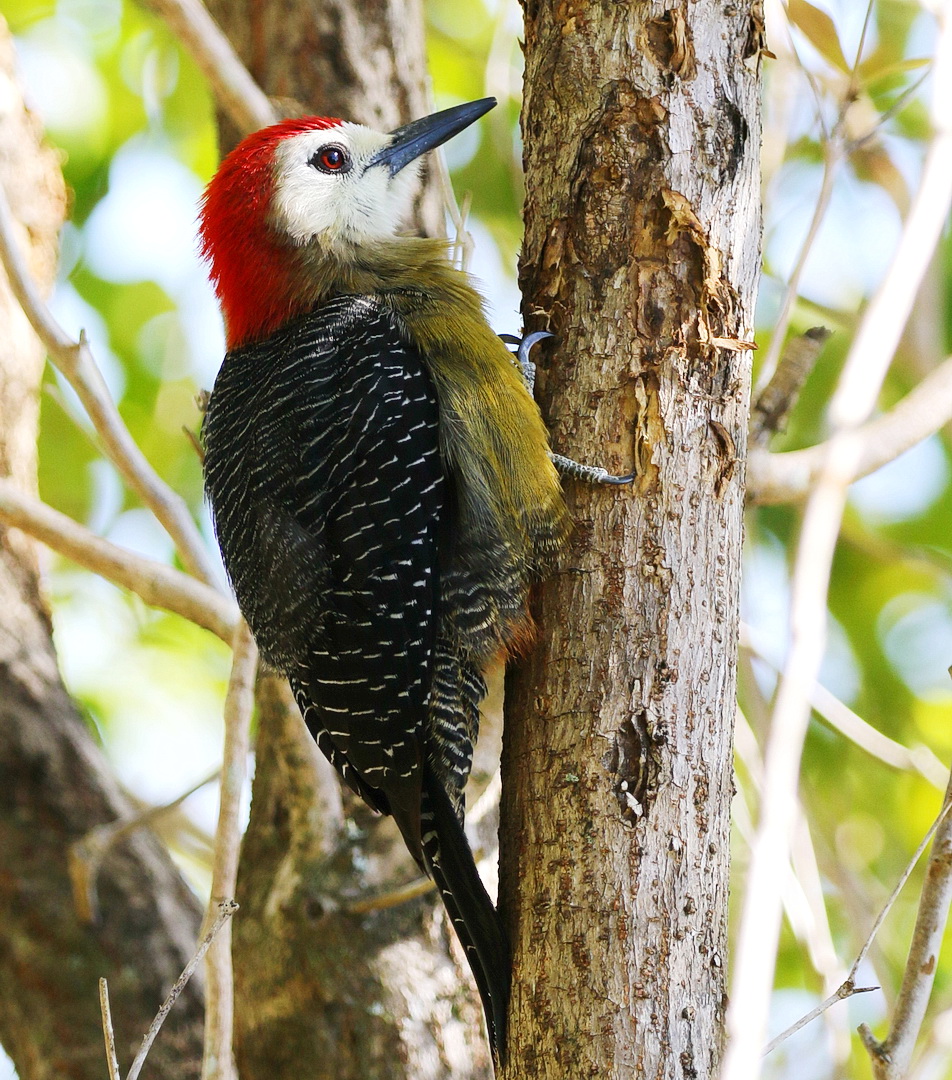
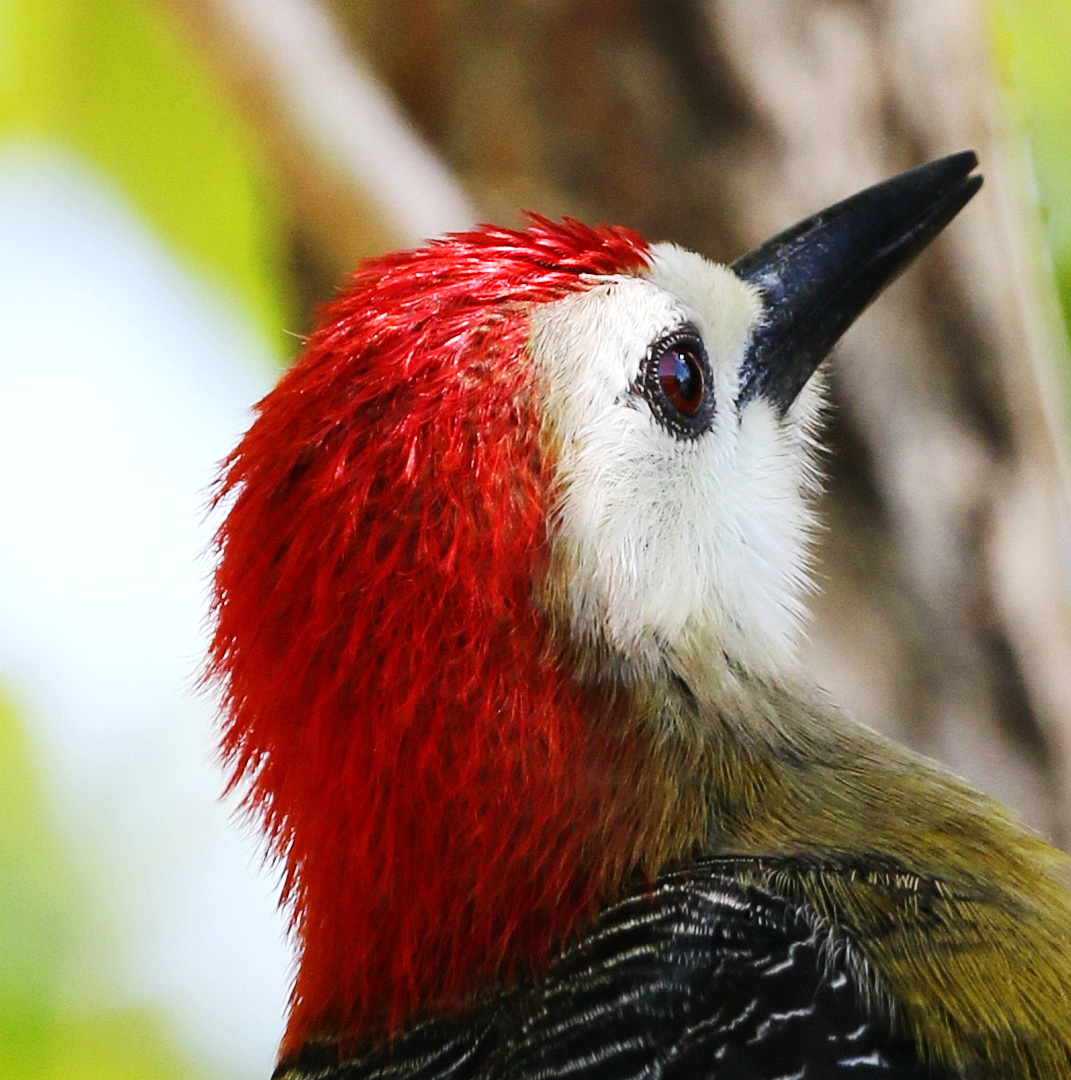
Jamaican Woodpecker
Yellow-faced Grassquit
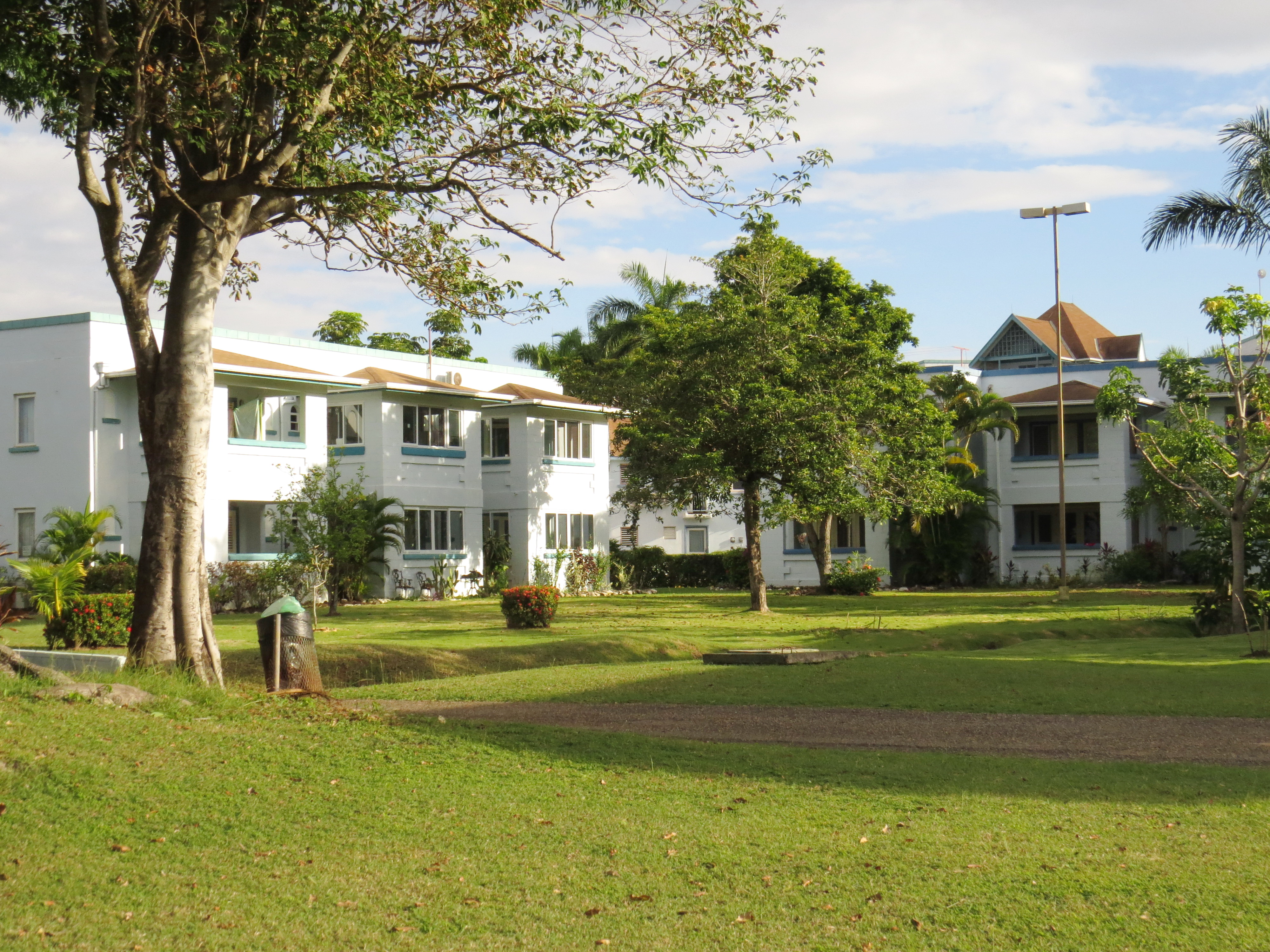
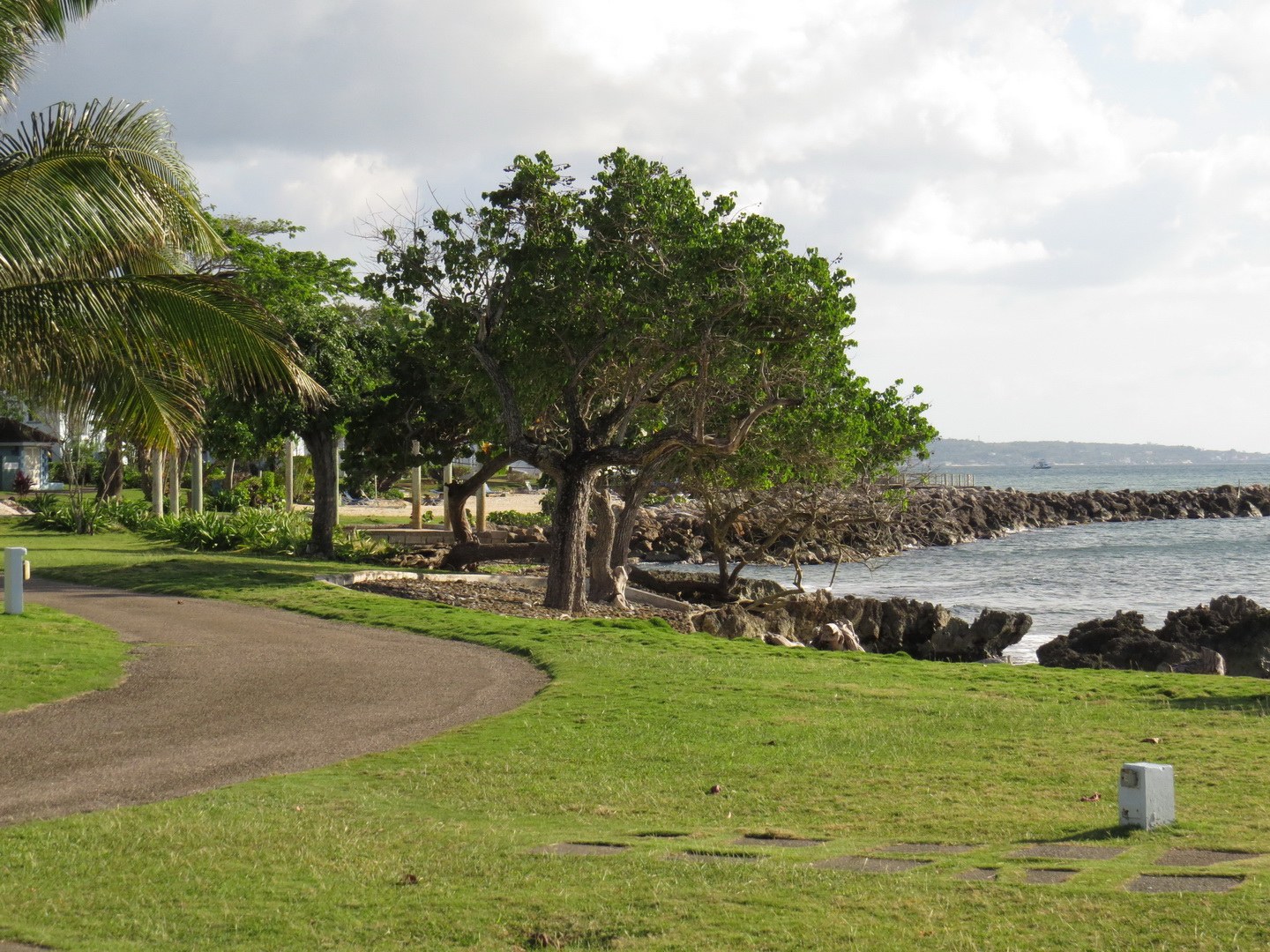
At Nigril we had 4 nights in an apartment in a complex between two nudist hotels – catering for the over 50s it appeared!! The Point (our complex) is situated at the north end of the seven mile beach of Negril – at the extreme west of Jamaica. Virtually all seven miles is now surrounded by establishments of one sort or another. Shame. It has lost a lot of its charm.
The Point
The Point
The Point
The Beach and Booby Cay beyond
The Point from one of the nudist beaches
Paul and Patti
Fishing
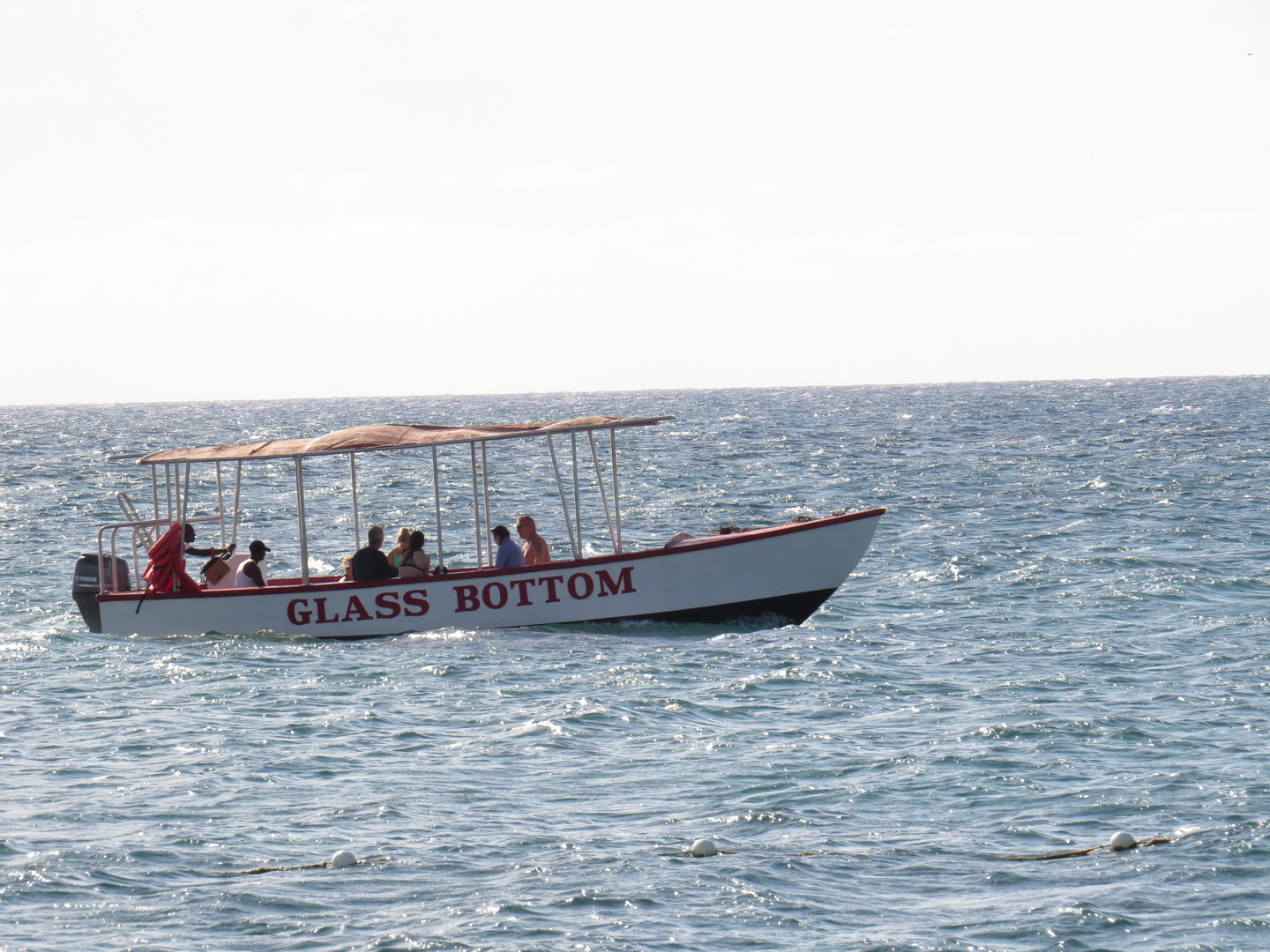
Glass Bottom
Distant Neighbours
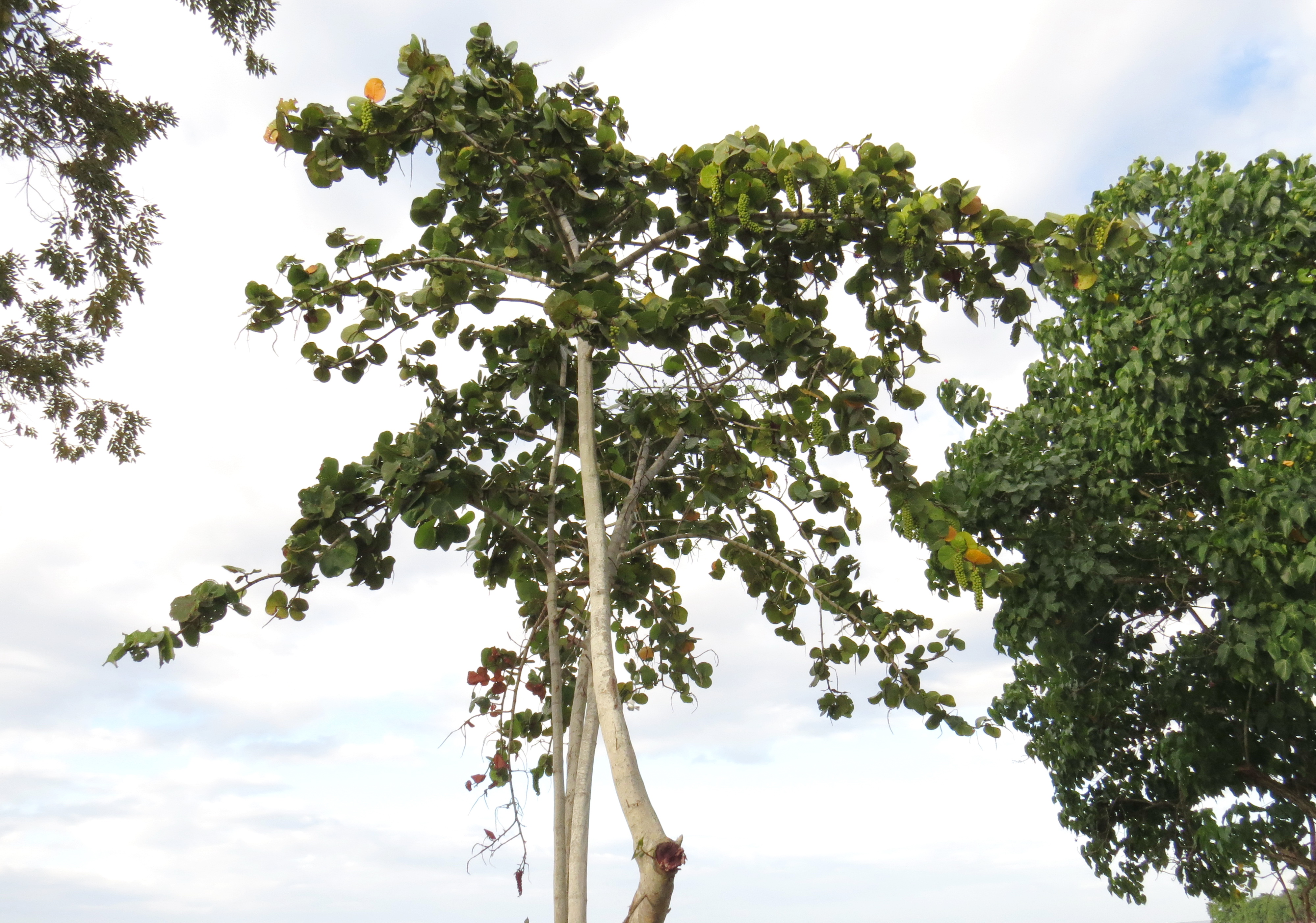
Sea Tree
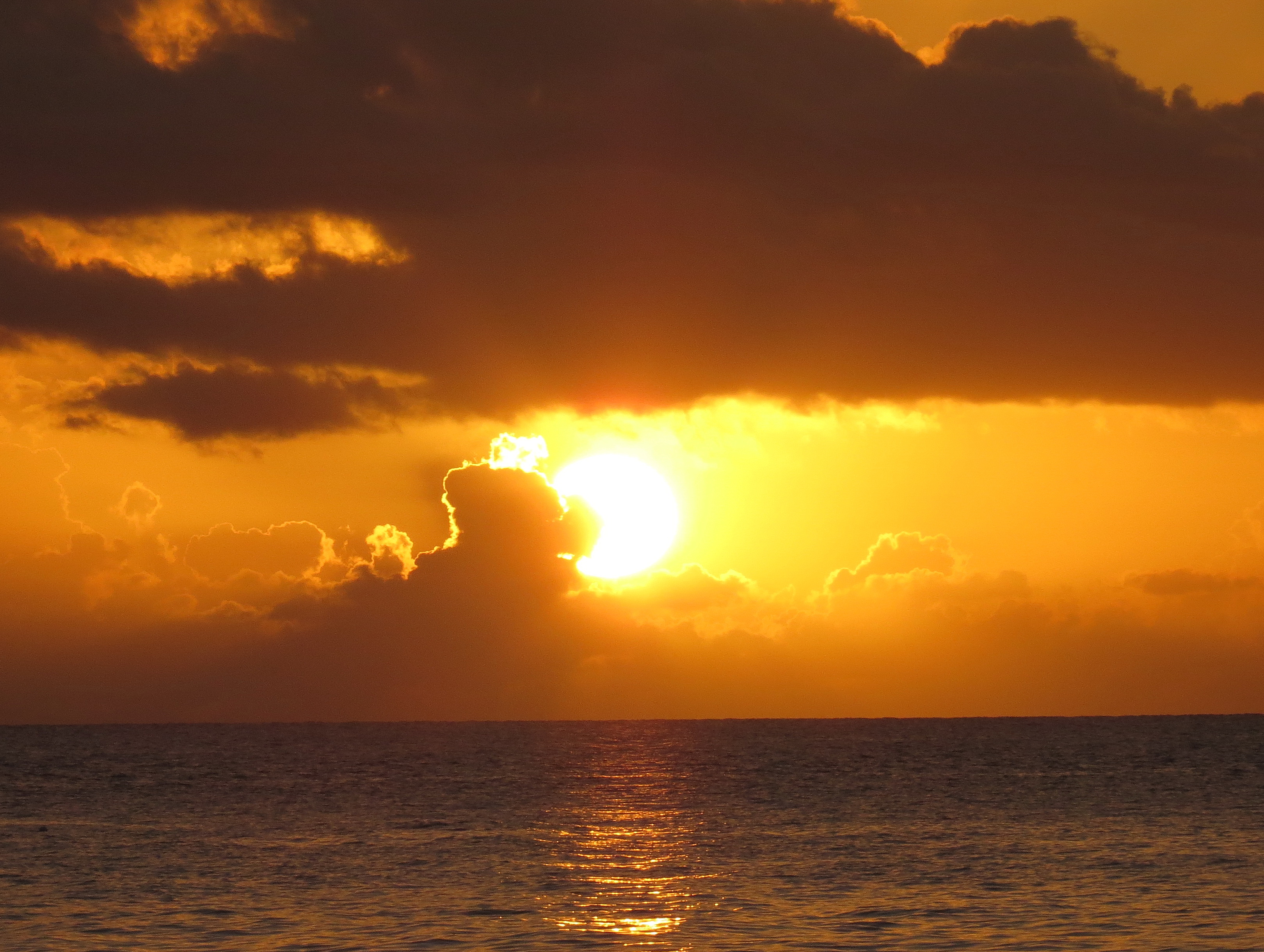
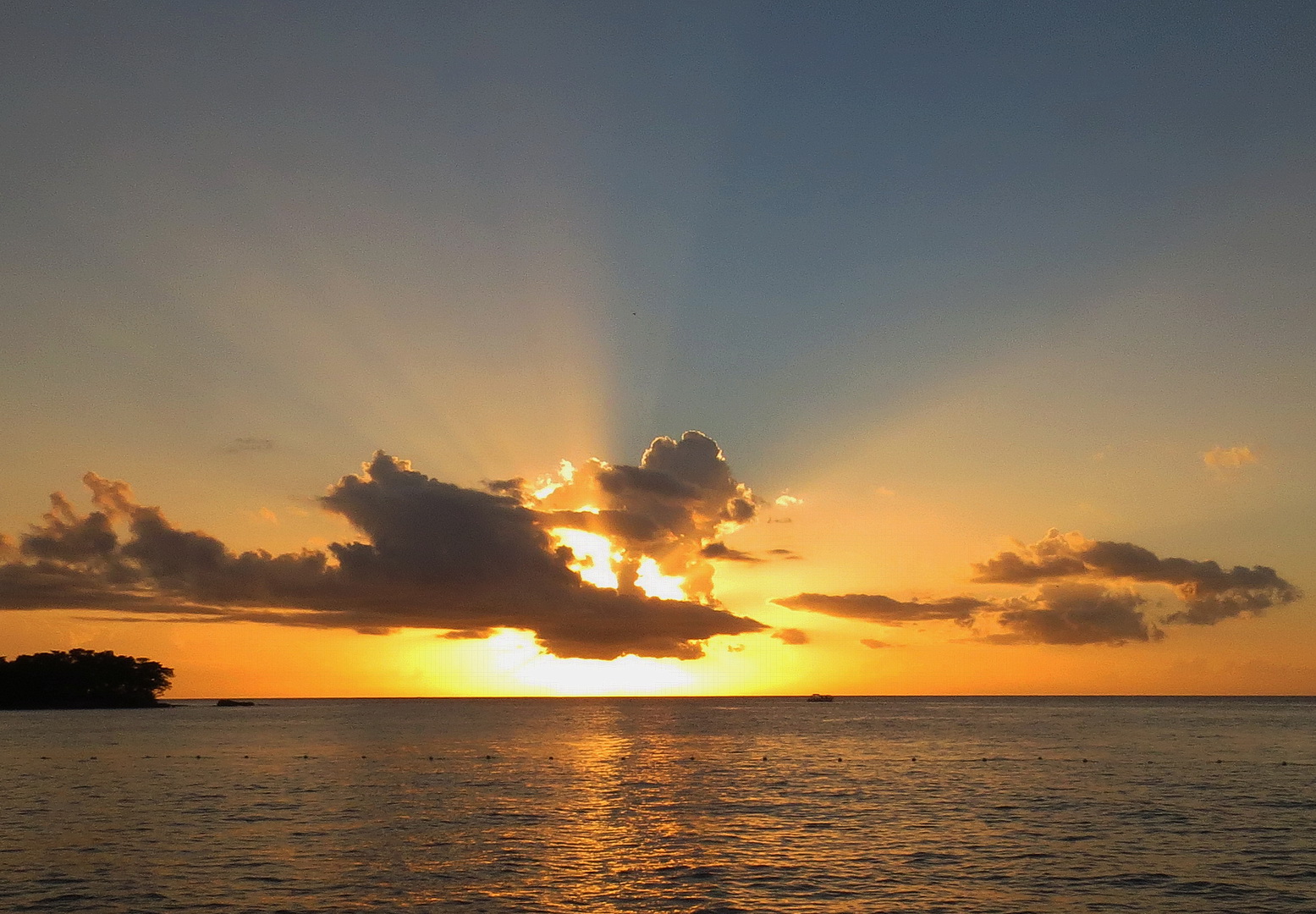
The Point Sunset
The Point Sunset
Bruce
Bruce and Patti
Salt fish and ackee breakfast with Bruce and Patti
Restaurant for breakfast
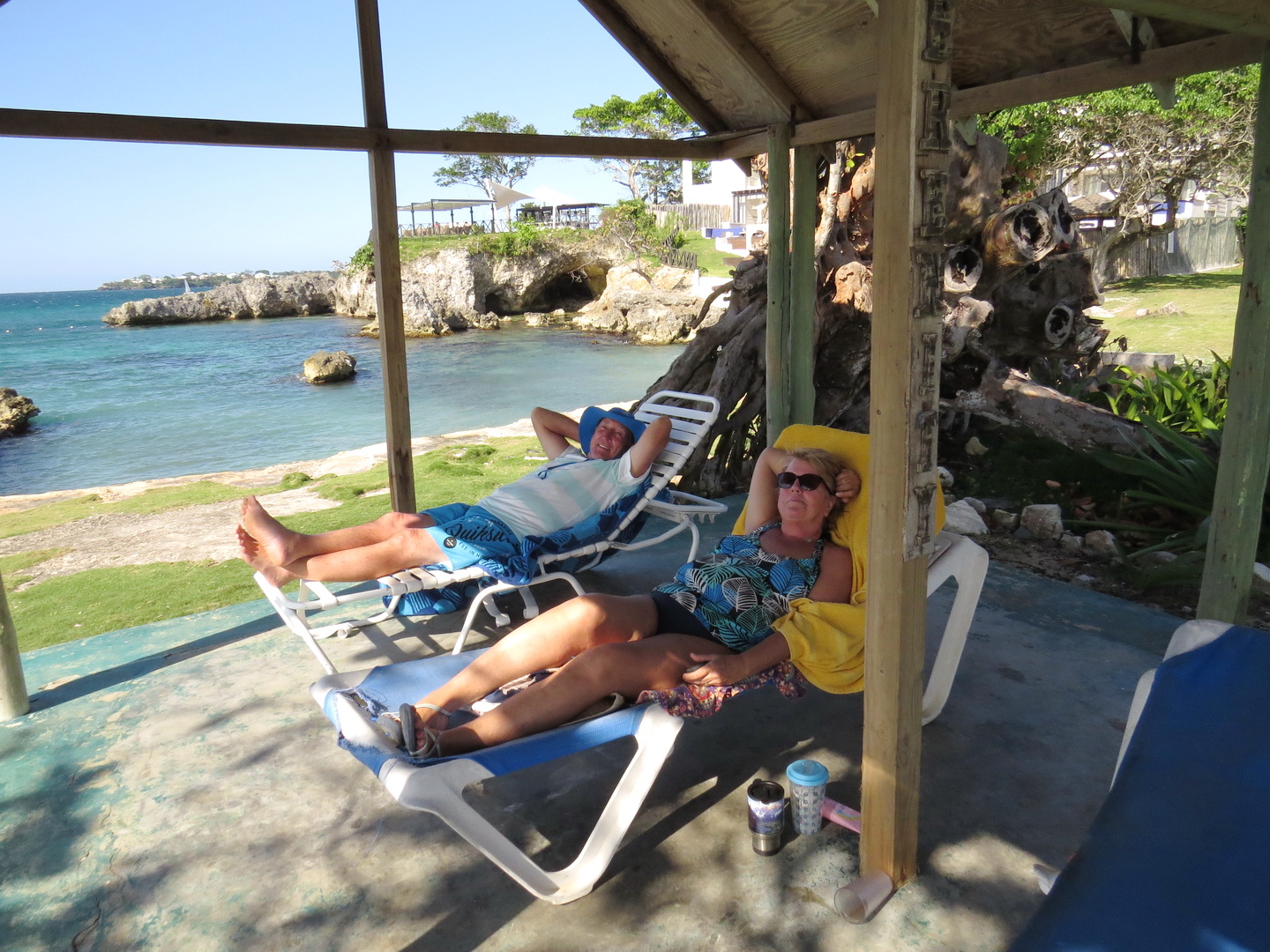
Here we lazed by the sea and met up with an old school friend of mine (from Jamaica days) and his wife – Bruce and Patti. They had lived and worked in Nigril years yonder and so knew their way around despite the enormous changes they experienced after 14 years of not re-visiting the island.
Some birds seen in the grounds.
Jamaican Woodpecker from our balcony
Jamaican Woodpecker from our balcony
Palm Warbler
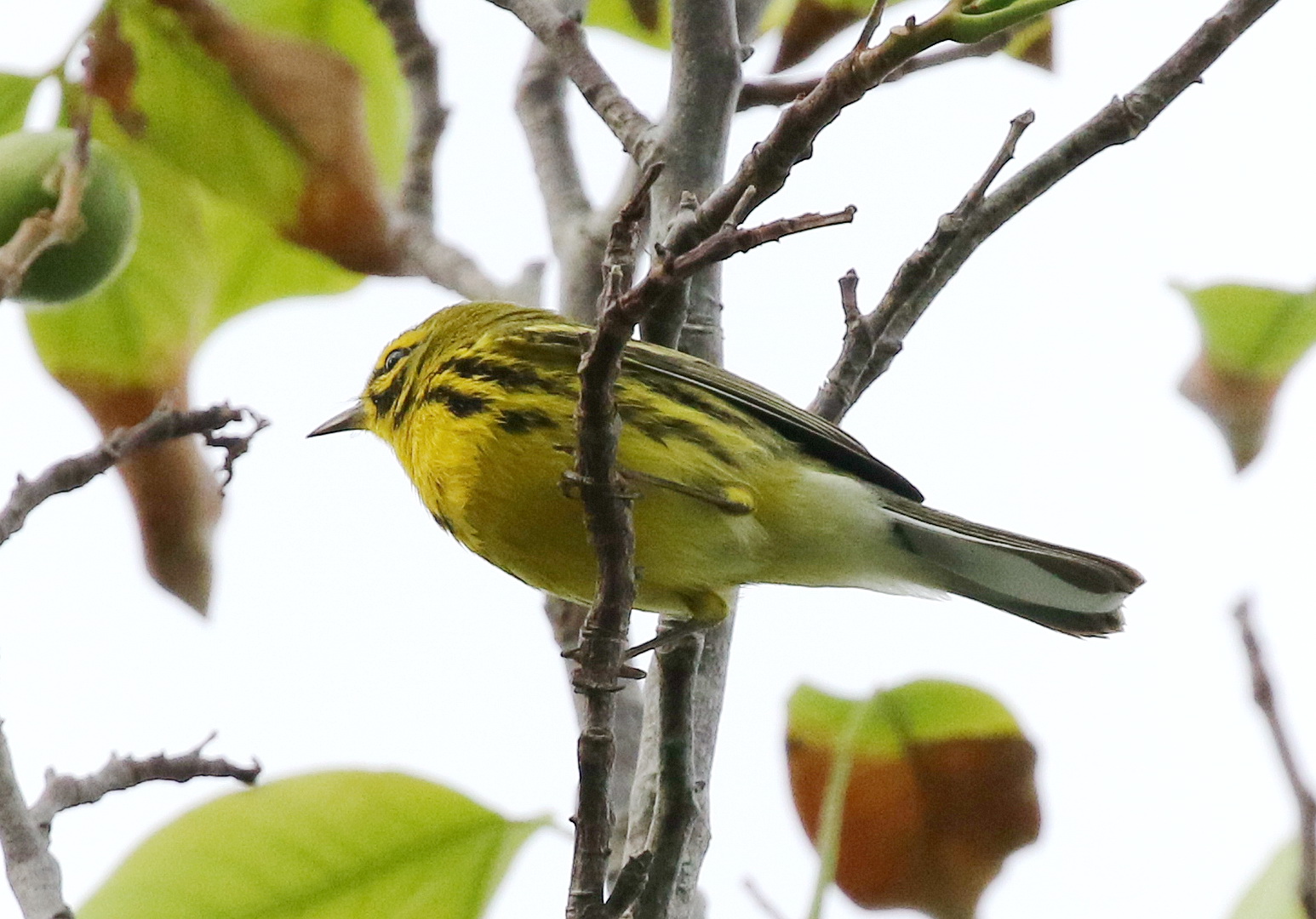
Prairie Warbler
Yellow Warbler
Yellow Warbler
Ruddy Turnstone
Brown Pelican
Belted Kingfisher
We spent time together, lazing on the beach, testing the local restaurants and exploring the south coast off the beaten track. On one of our excursions we visited the Blue Hole, Homer’s Cove and Little Bay. (See map)
Blue Hole is situated SE of Nigril inland from the coast. The Blue Hole is a fresh water spring about 6 metres wide and 6 metres below ground level. There are trees surrounding it. The local guides scamper up the trees and then throw themselves down into the Blue Hole doing somersaults in the process. For us it was a challenge climbing down the vertical ladder to the water.
Sally in the Blue Hole Mineral Spring
Blue Hole Mineral Spring
Homers Cove and Little Bay are quaint bays mostly unspoilt by tourism fortunately.
Homers Cove
Little Bay
Little Bay
Little Bay
Windows
Old home
Push cart
Country Road
Despite being told that the Royal Palm Reserve had been closed for years, Sally and I decide to see for ourselves and do some birding along the way.
Our first challenge was to get there. The road in is through the swamps and in one place it had flooded over. Not knowing how deep it was, I tentatively started driving through. Sally went silent and suggested not to proceed each time the car took a dip. Being a typical man I ignored her and much to my surprise we just got through with the water level up to the door at times.
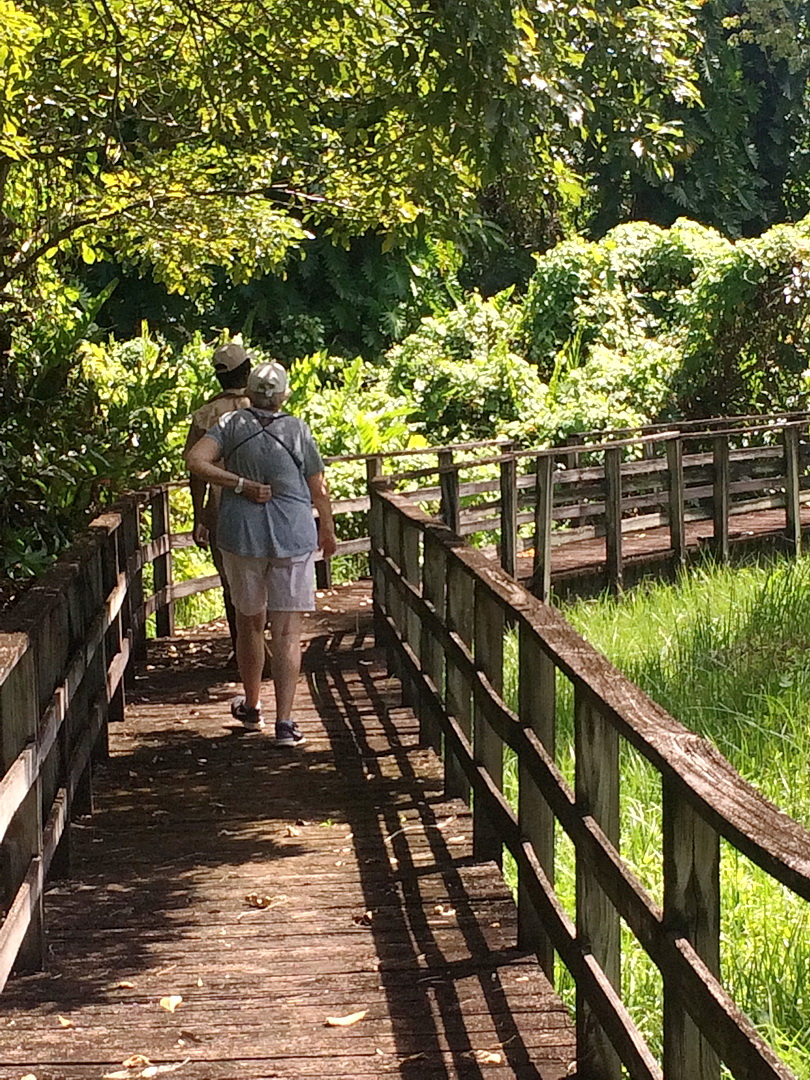
A little further along we came to the entrance gate – closed of course. However we could see the old reception some 200 metres or more straight ahead and there was someome on a bicycle coming our way. We were let in and managed to get permission to look around despite the boardwalk having the odd hole and wobbly railings – not nearly as bad as we were led to believe.
Boardwalk at Royal Palm Reserve
Royal Palm Reserve – view from the tower
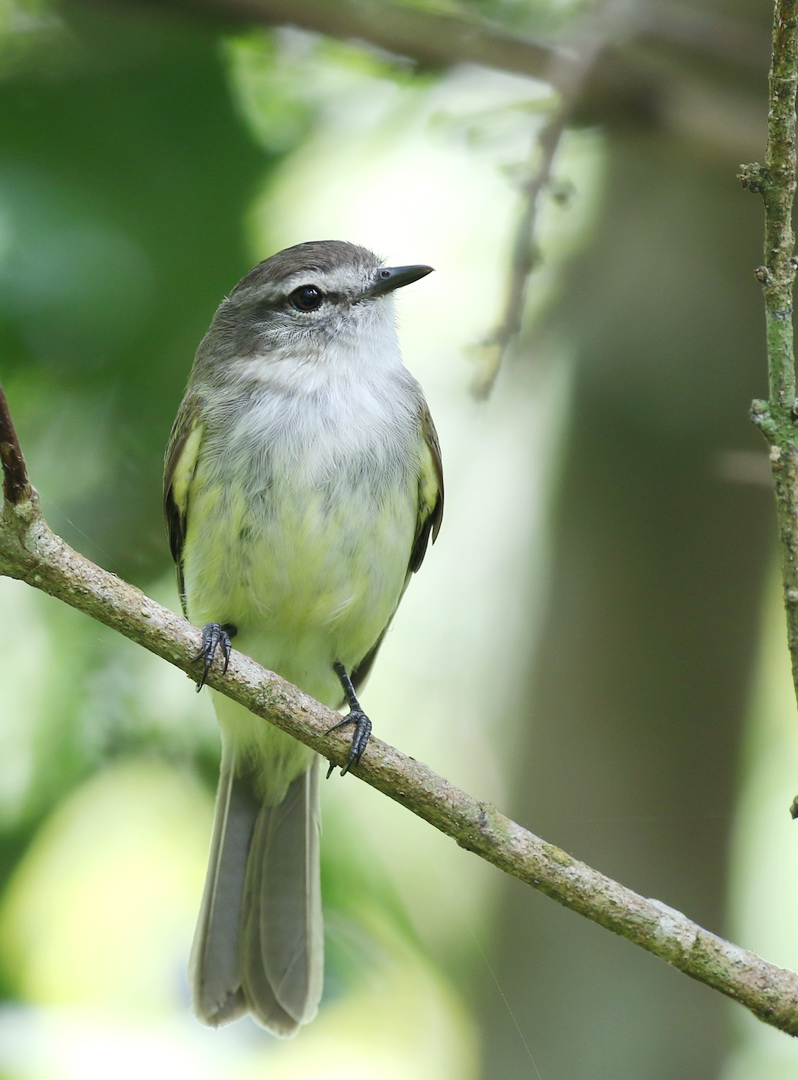
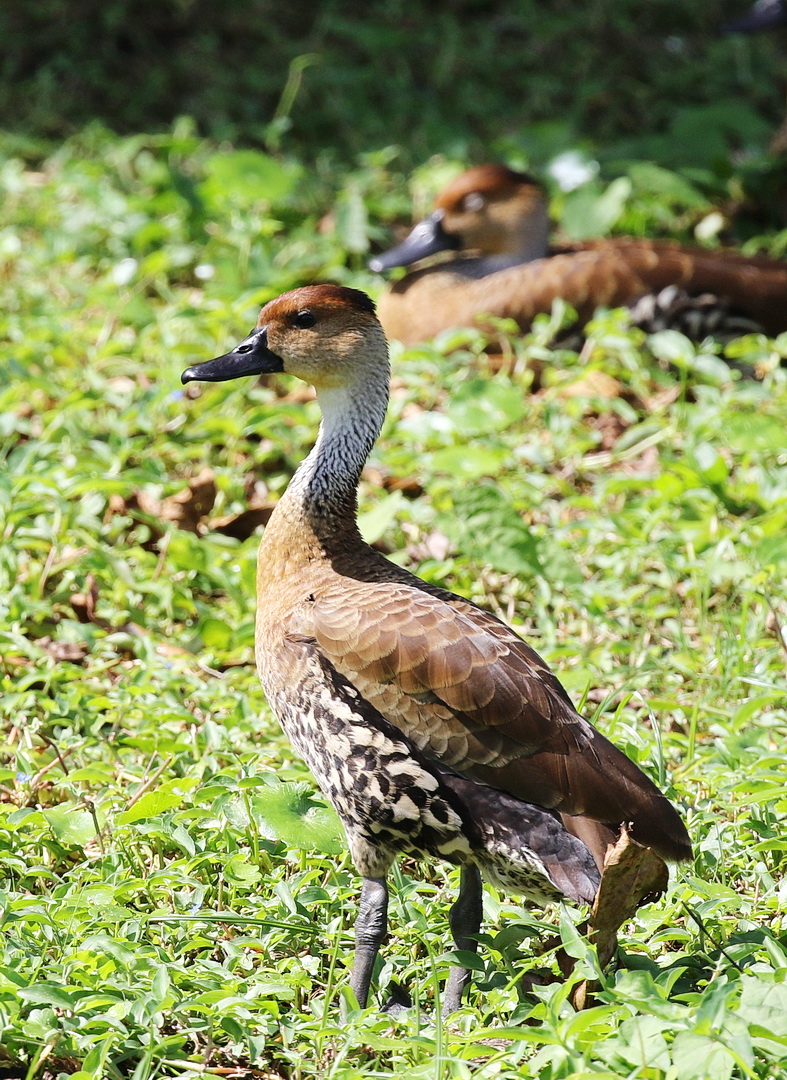
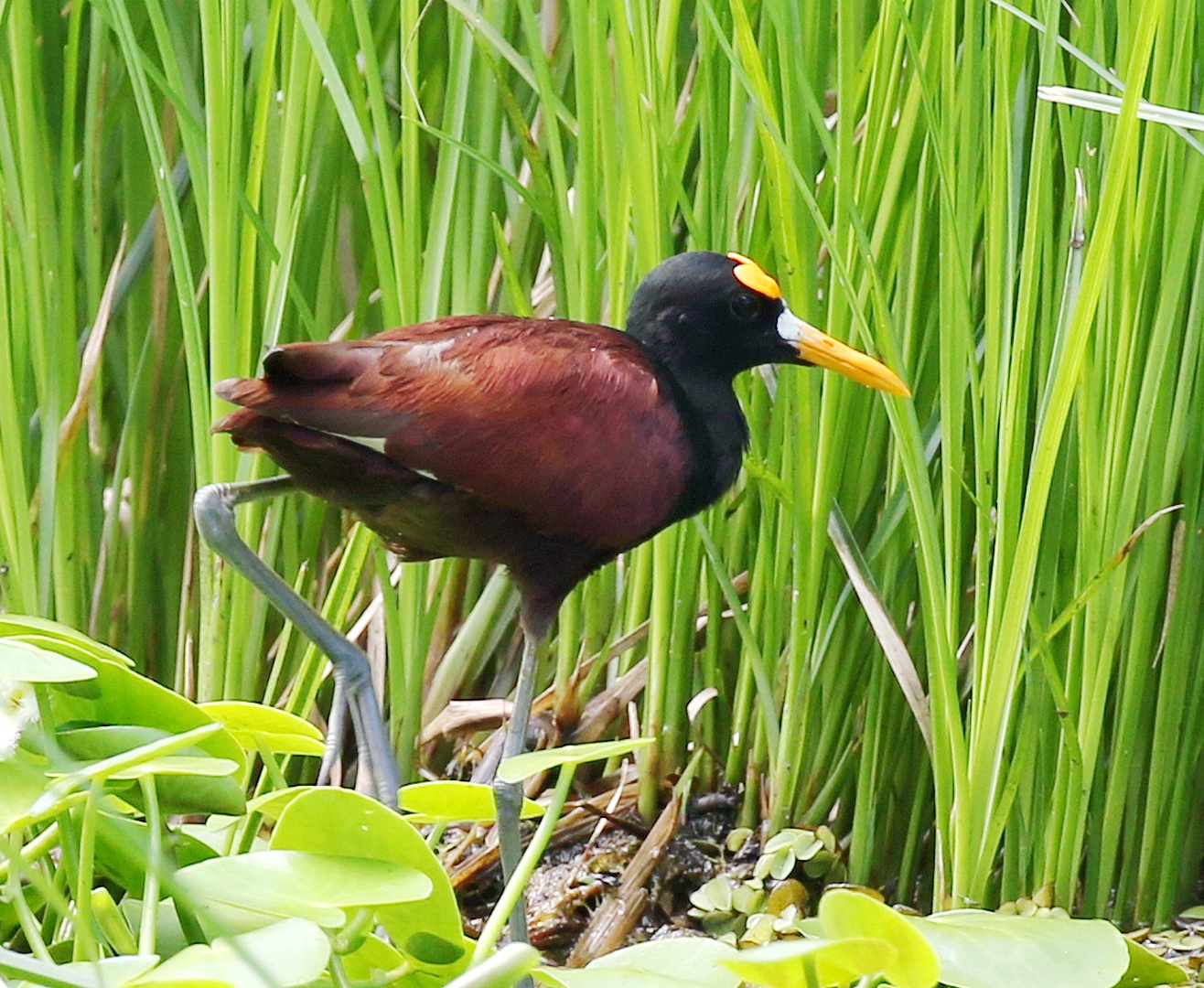
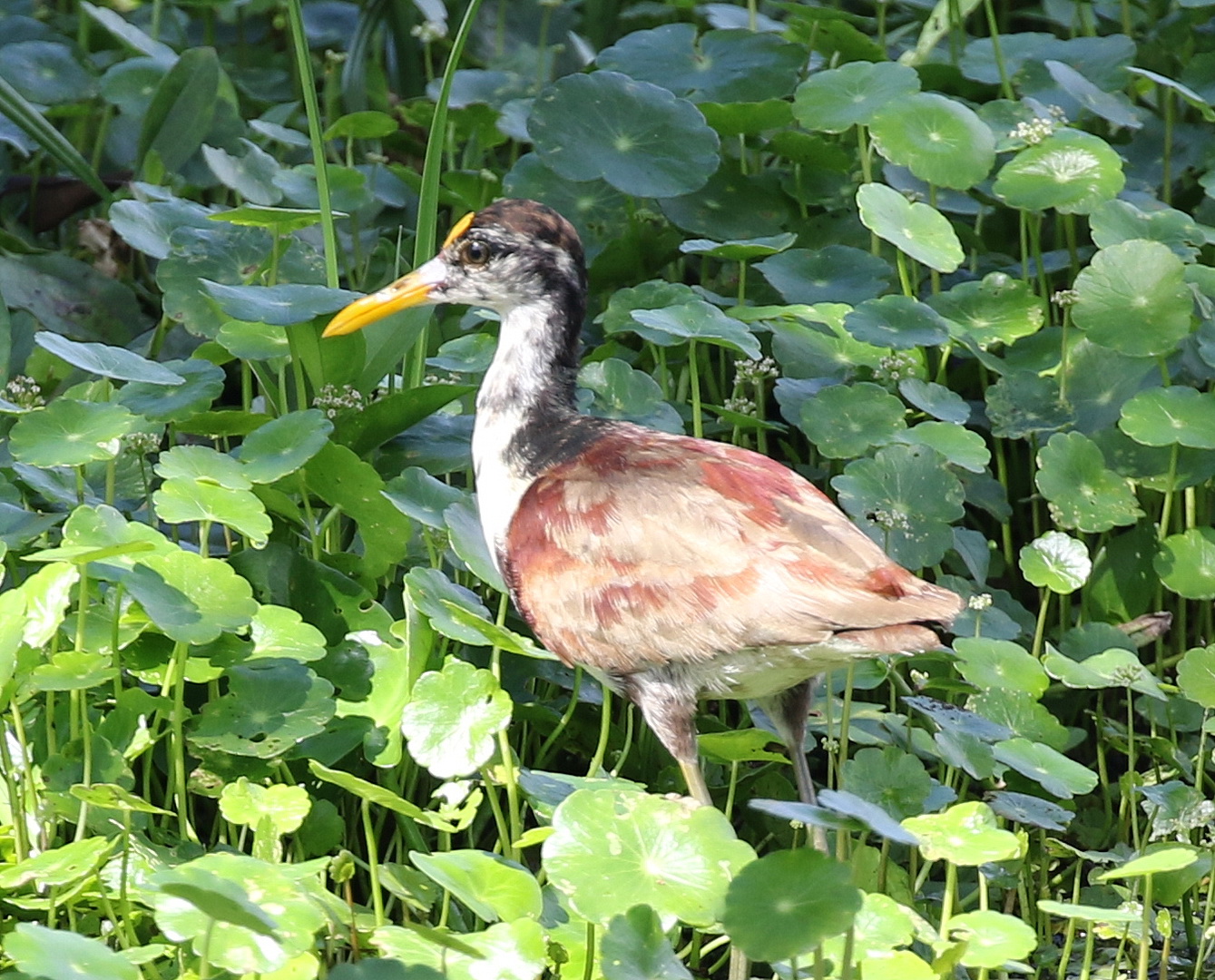
The groundsman took us round and his bird knowledge was exceptional. He knew all the sounds and his eyesight was sharp. It was a wonderful setting in the wetlands, interesting boarded walkways and even a tower above the lush canopy. Here we got good sightings of two of the endemics we had dipped on while at Green Castle Estate – the Jamaican Elaenia and the Jamaican Euphonia. We had good views of the Spotted Sandpiper, West Indian Whistling Duck and Northern Jacanas.
Jamaican Euphonium
Jamaican Elaenia
Spotted Sandpiper
West Indian Whistling-Duck
Northern Jacana – adult male
Northern Jacana – immature
After our stay at Nigril we headed for Treasure Beach further round the south coast. We drove through Savanna La-Mar, past Bluefields and Black River. Most of the places we passed have been built up – as expected I suppose, despite the south coast not being renowned for tourism.
South Coast road
Bay on South Coast
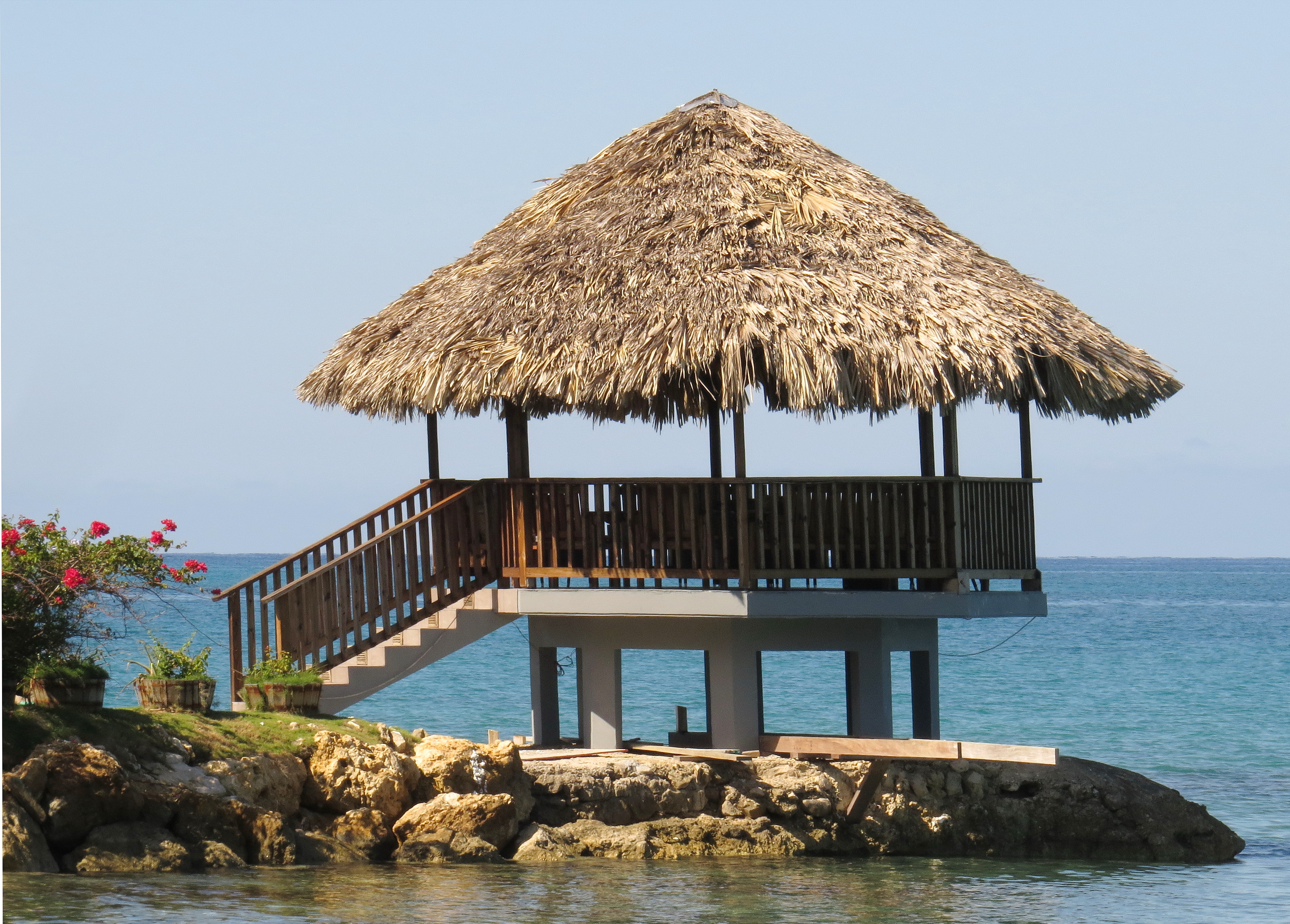
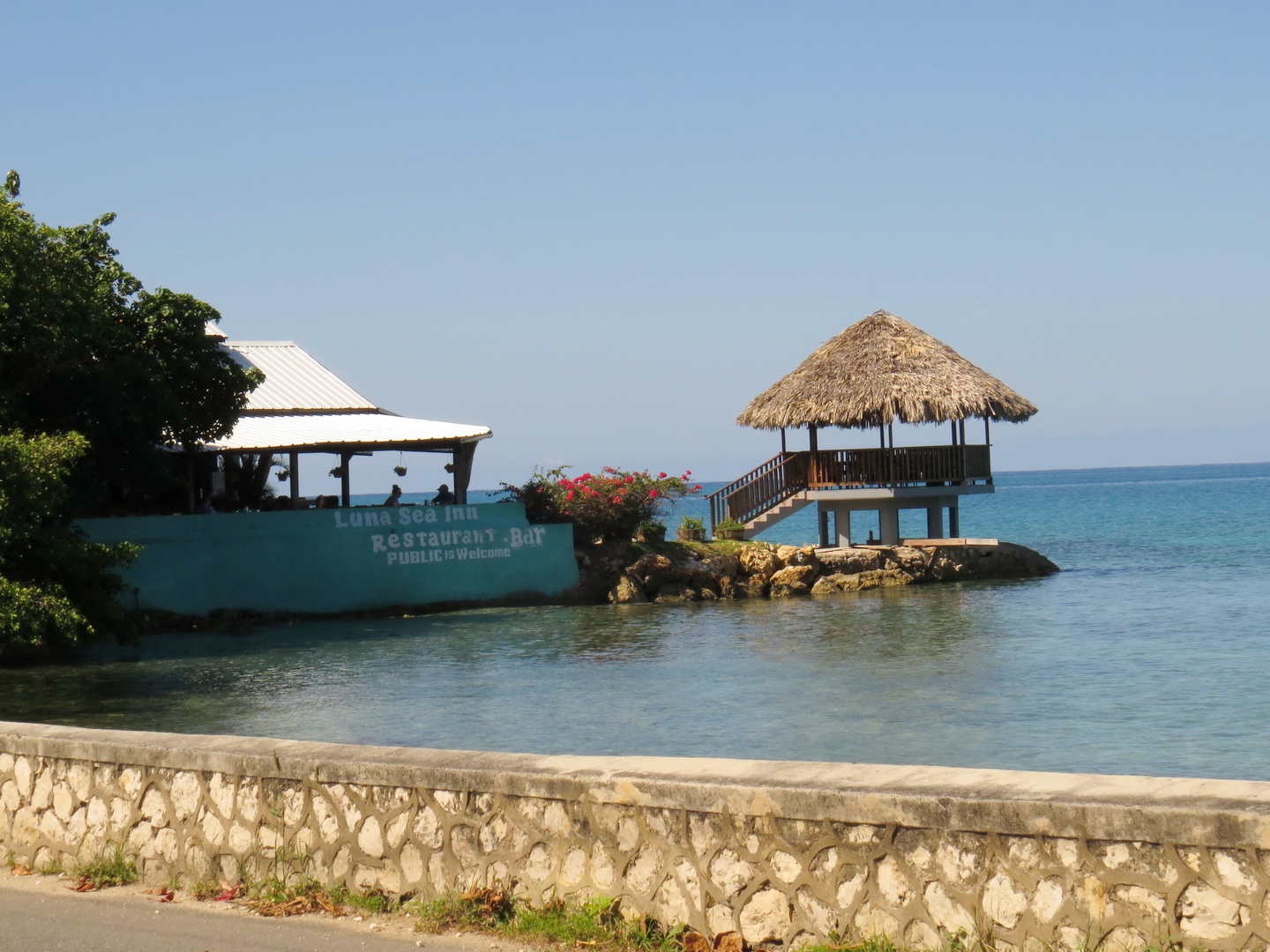
Luna Sea
Luna Sea
Our base for the next three nights was at The Two Seasons Guest House – inland from the coast. Our hostess, Christine, could not have been more obliging. Excellent local breakfasts to boot.
On arrival a Vervain Hummingbird greeted us – hovering in the flowers at the entrance.
Vervain Hummingbird
The plan here was to visit several local attractions: YS Falls, Bamboo Avenue (a road through over 4 kms of bamboo either side), Black River and a bird tour upstream as well as Alligator Pond.
The first day was a long day – a bit longer than we had planned. We headed for YS Falls. driving through Bamboo Avenue to get there. They only opened at 09h30. We arrived early and spent time enjoying the scenery, birds and race horses.
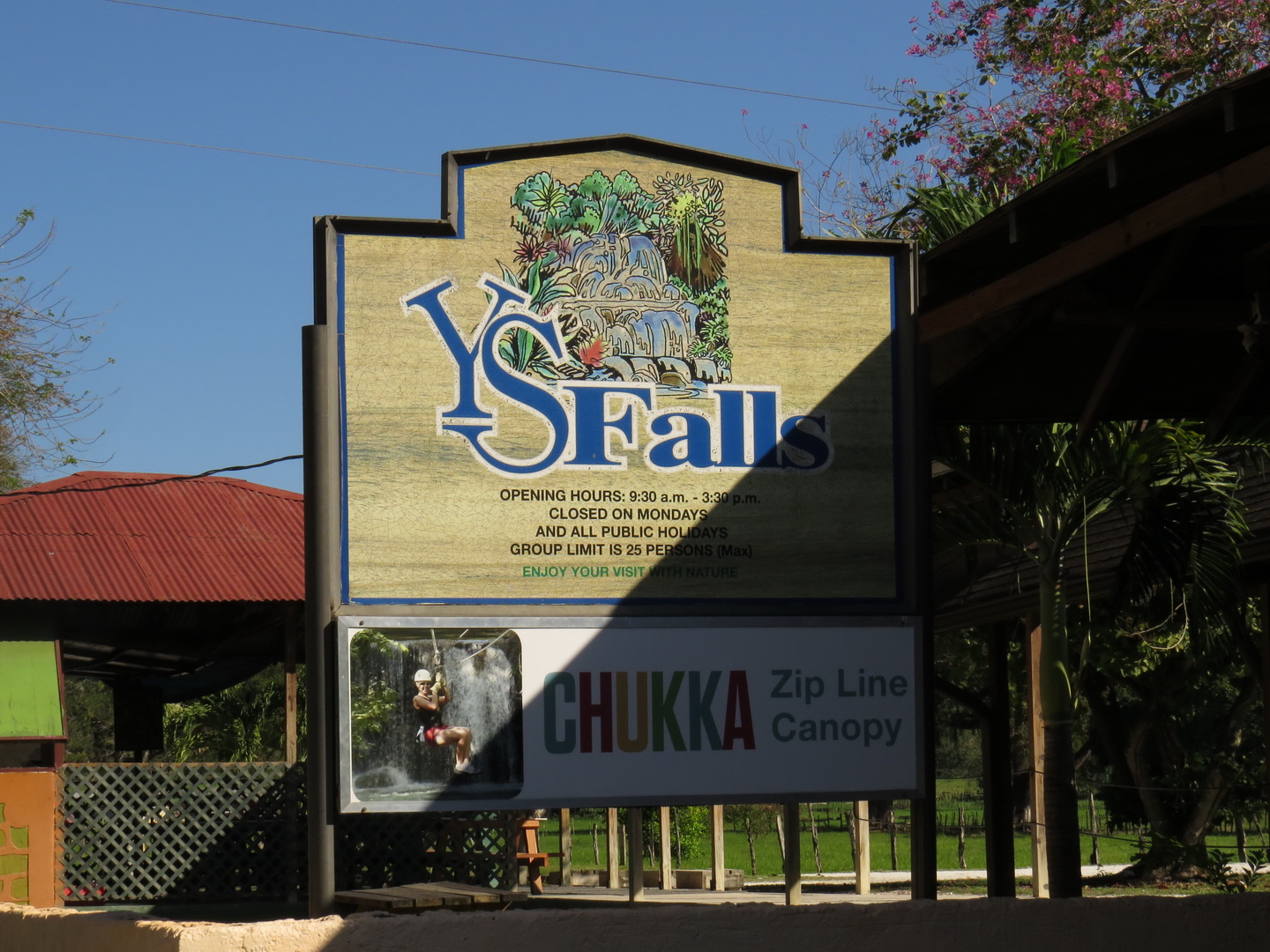
YS Falls name sign
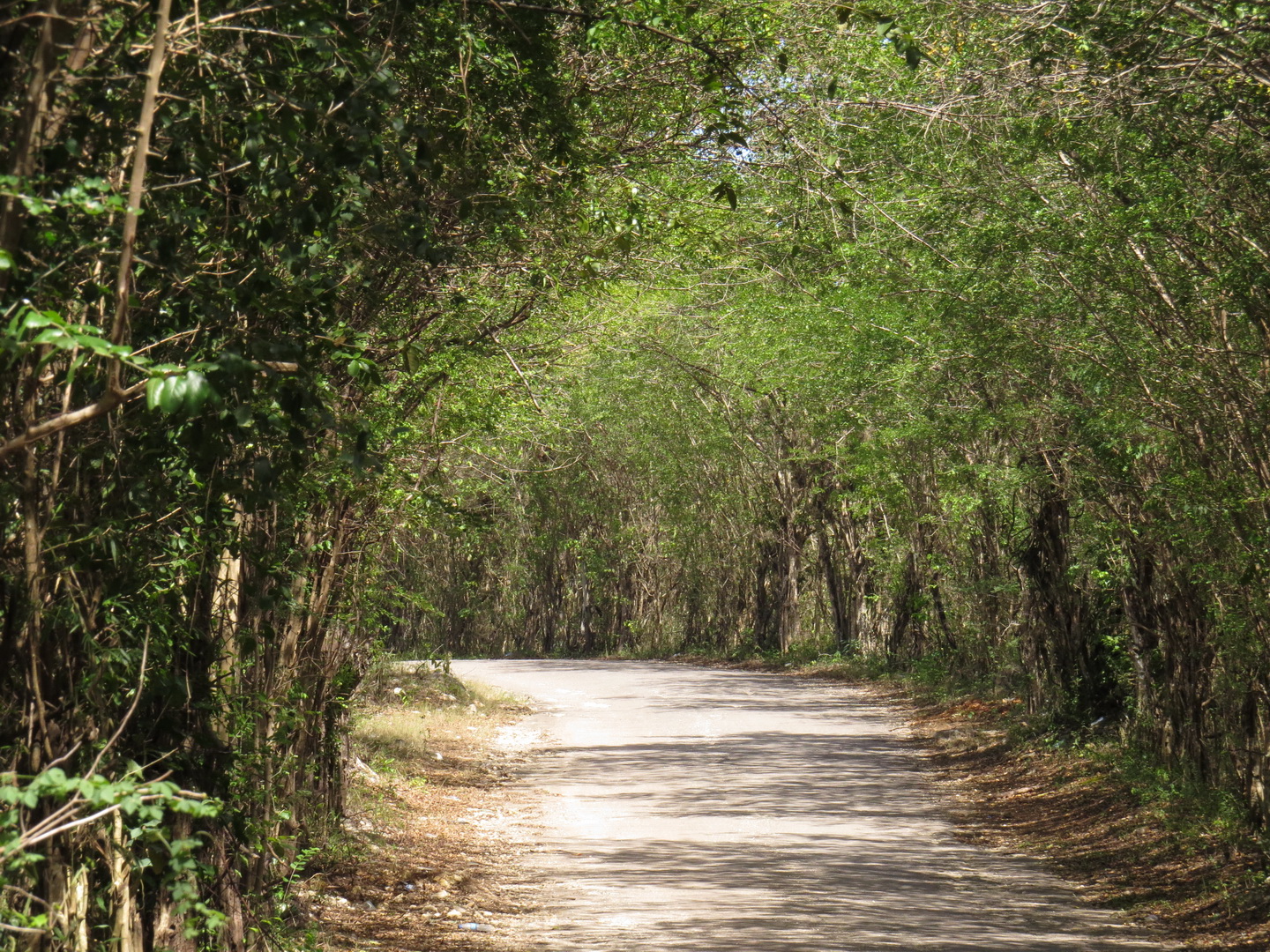
Bamboo Avenue
YS Falls sign
YS Falls road
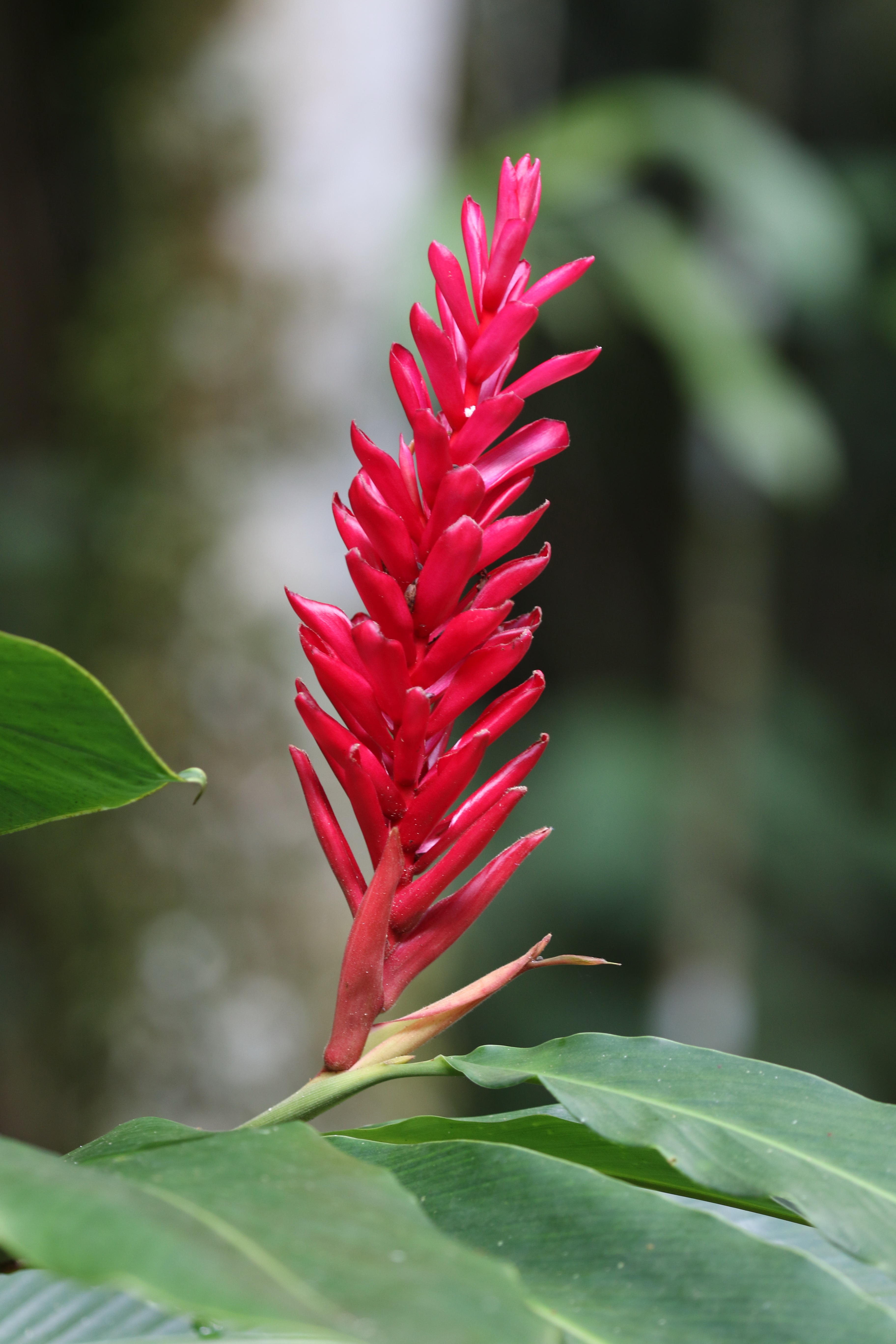
Ginger flower
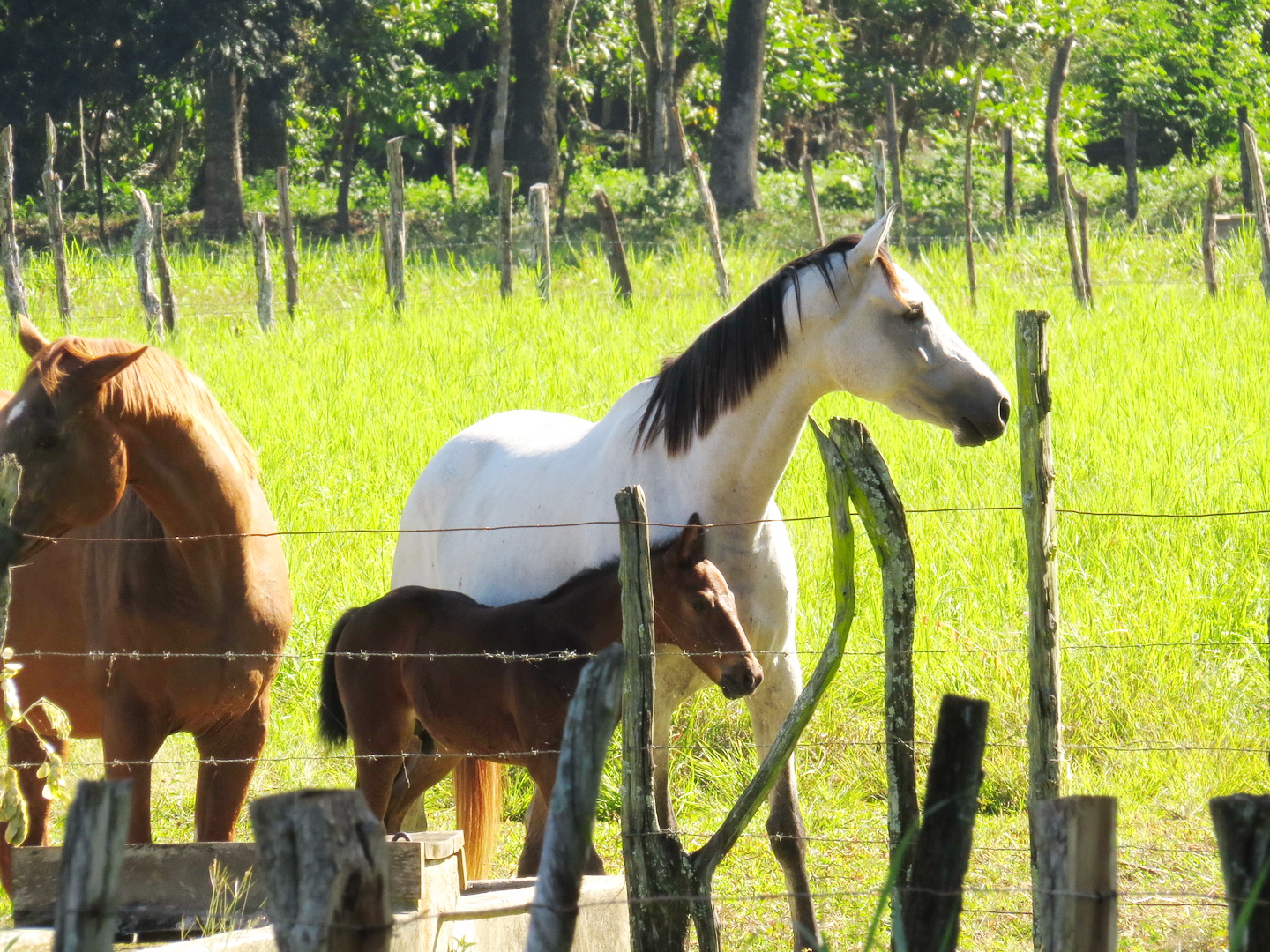
Race Horses
Race Horses
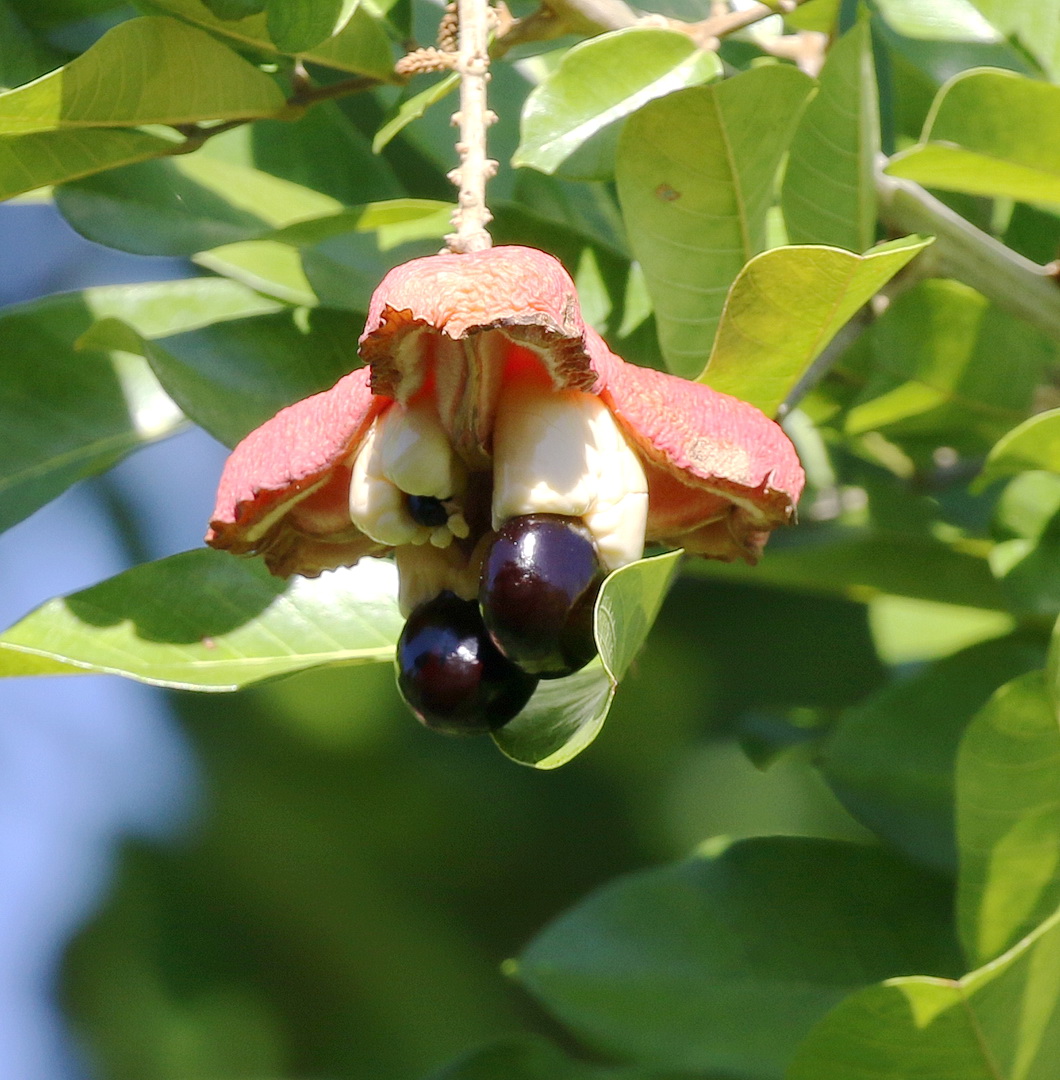
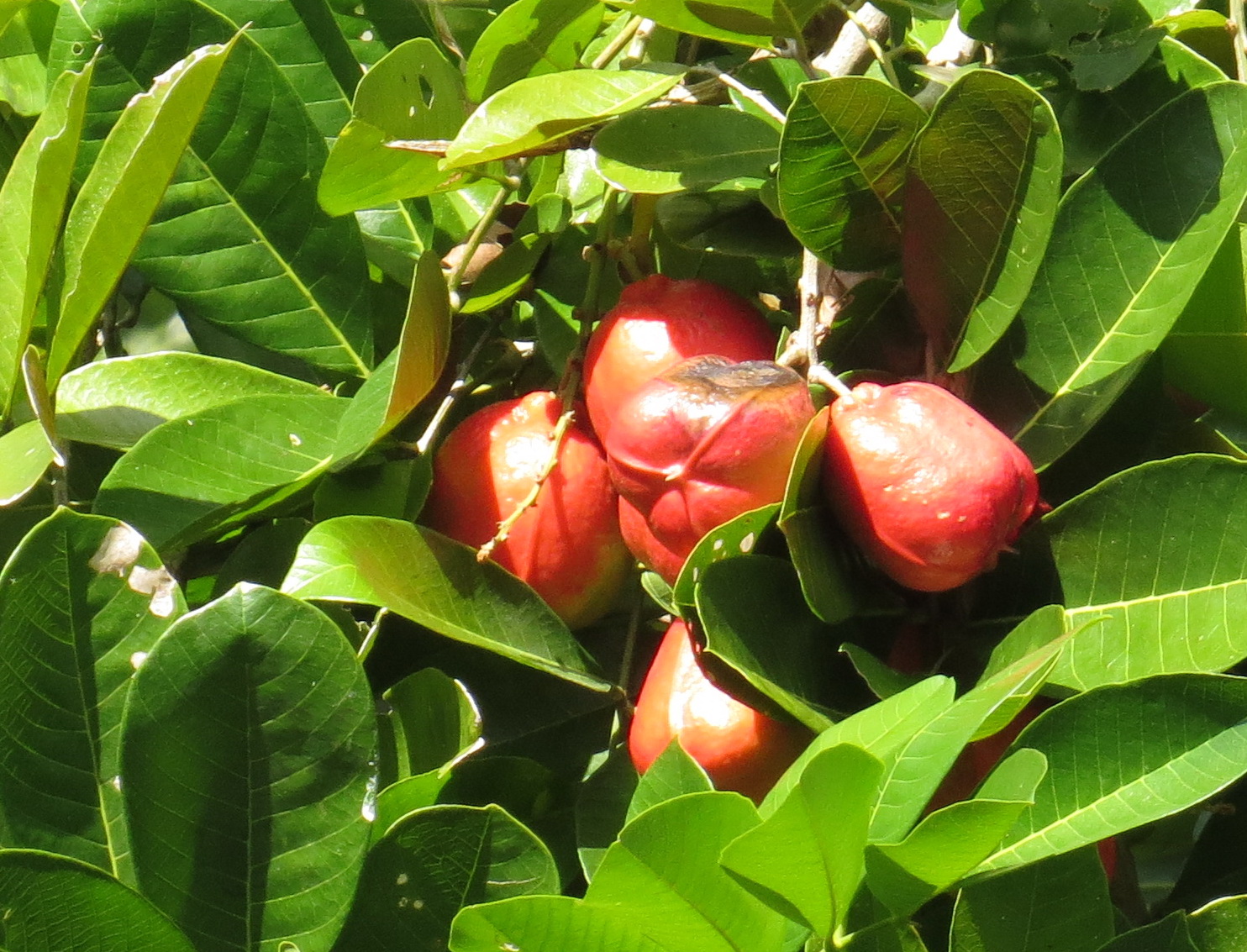
Ackee
Jamaican Ackee
One Foot Forward
Cotton Tree
Bull Hoof – Bauhinia dibaricata
Bull Hoof – Bauhinia dibaricata
Bombax
Bombax
Waiting for our ride to YS Falls
Some birds also stole our attention while we waited:
Red-billed Streamertail – female
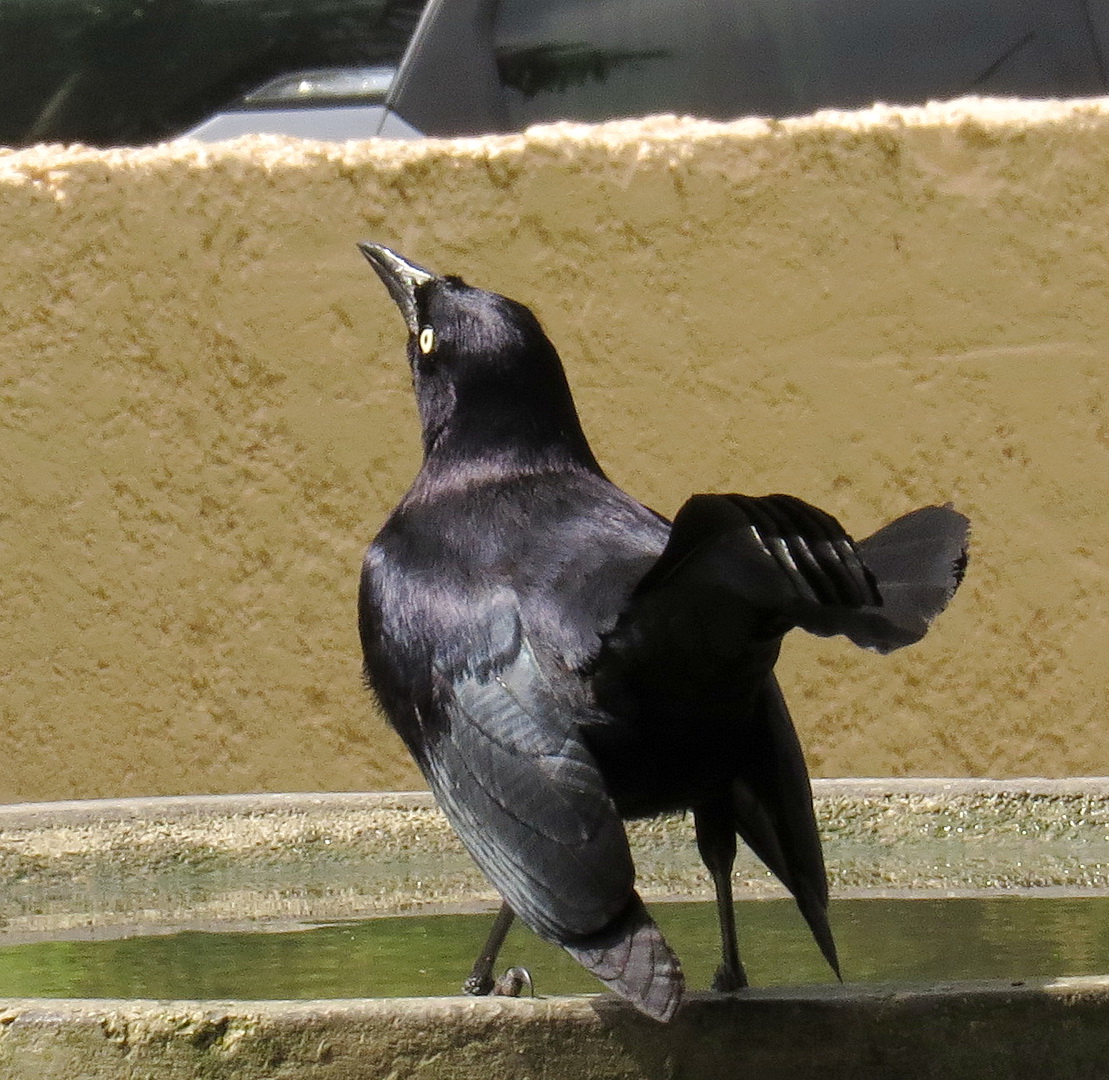
Greater Antillian Grackle
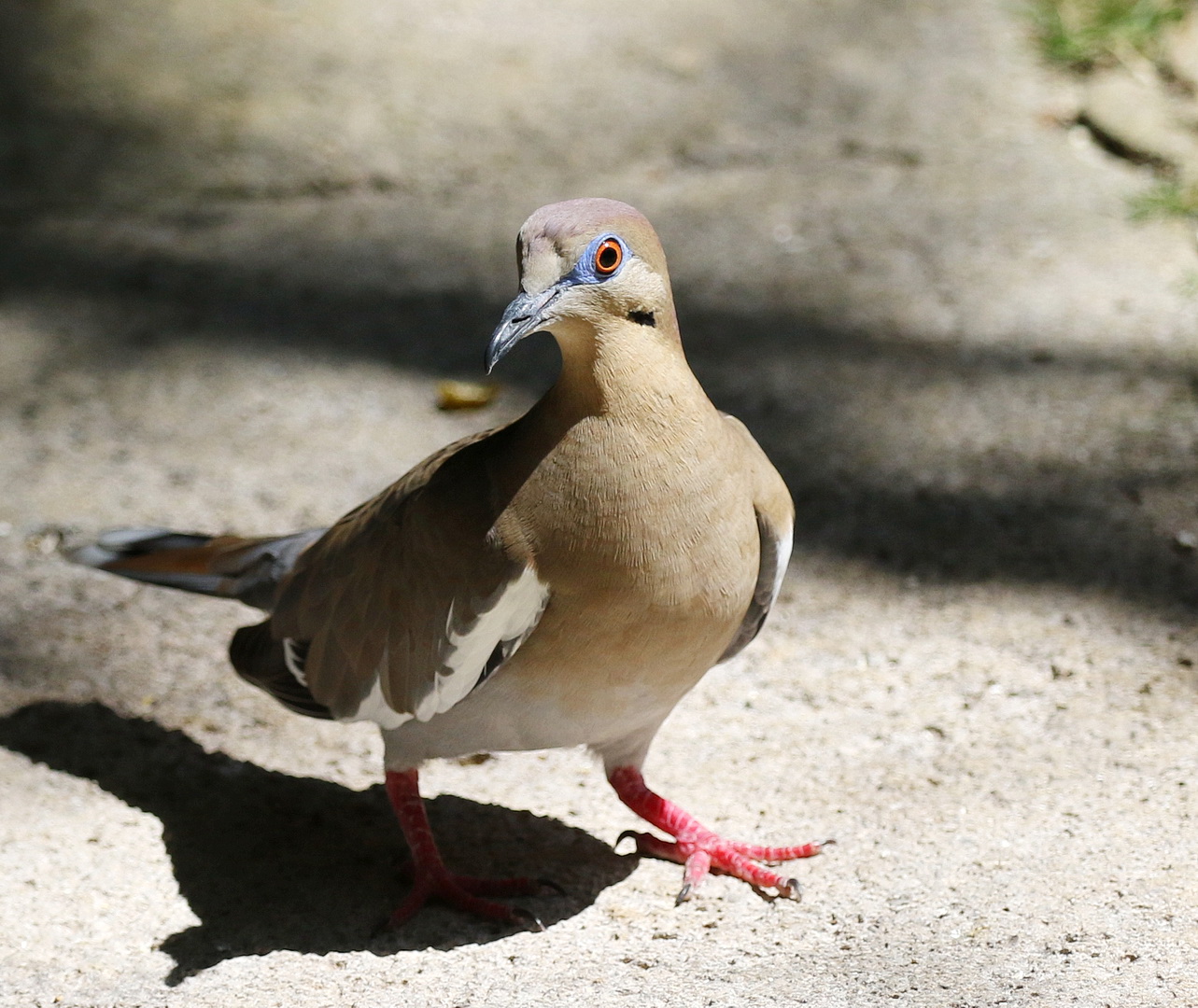
White-winged Dove
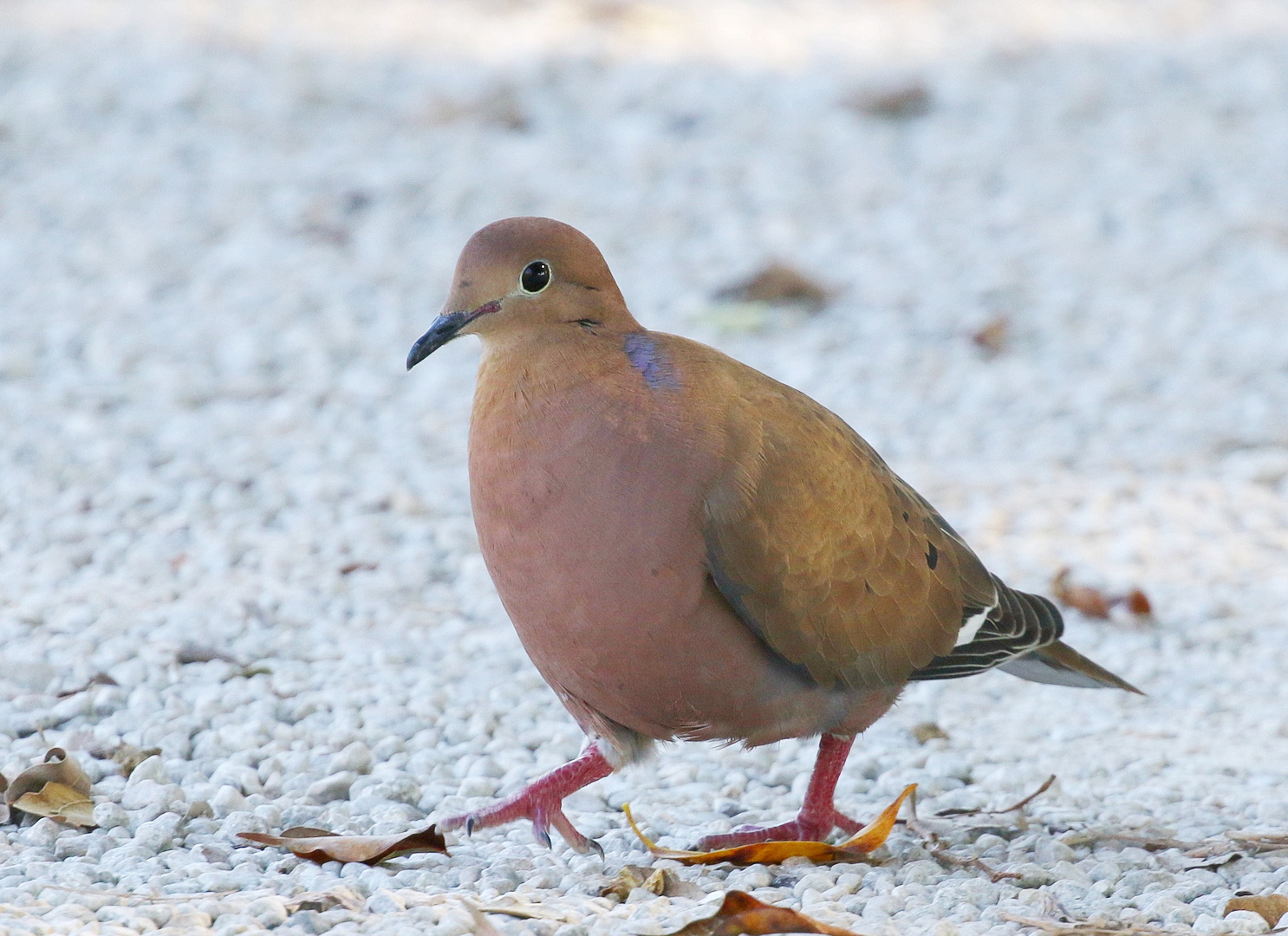
Zenaida Dove
Zenaida Dove
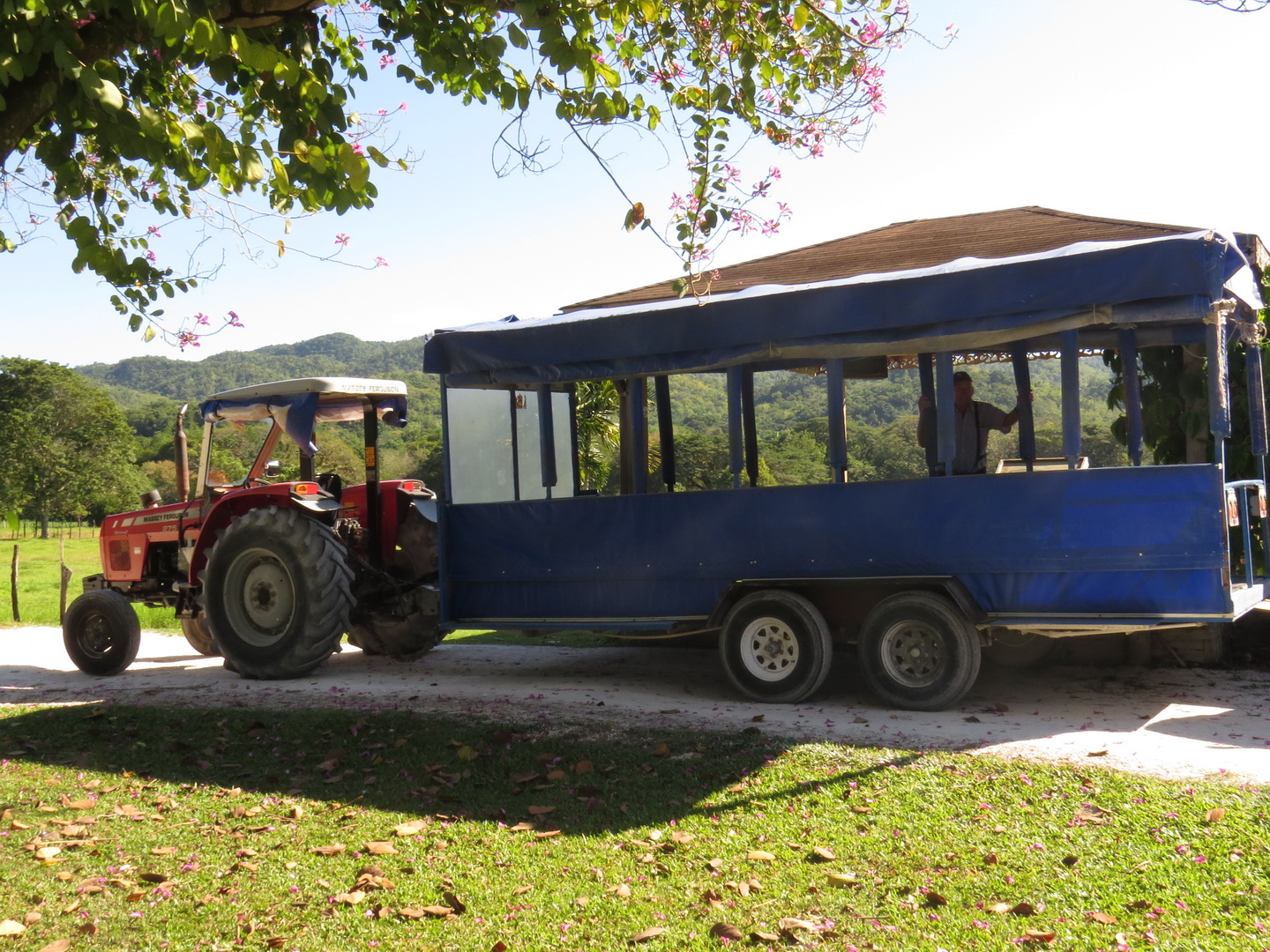
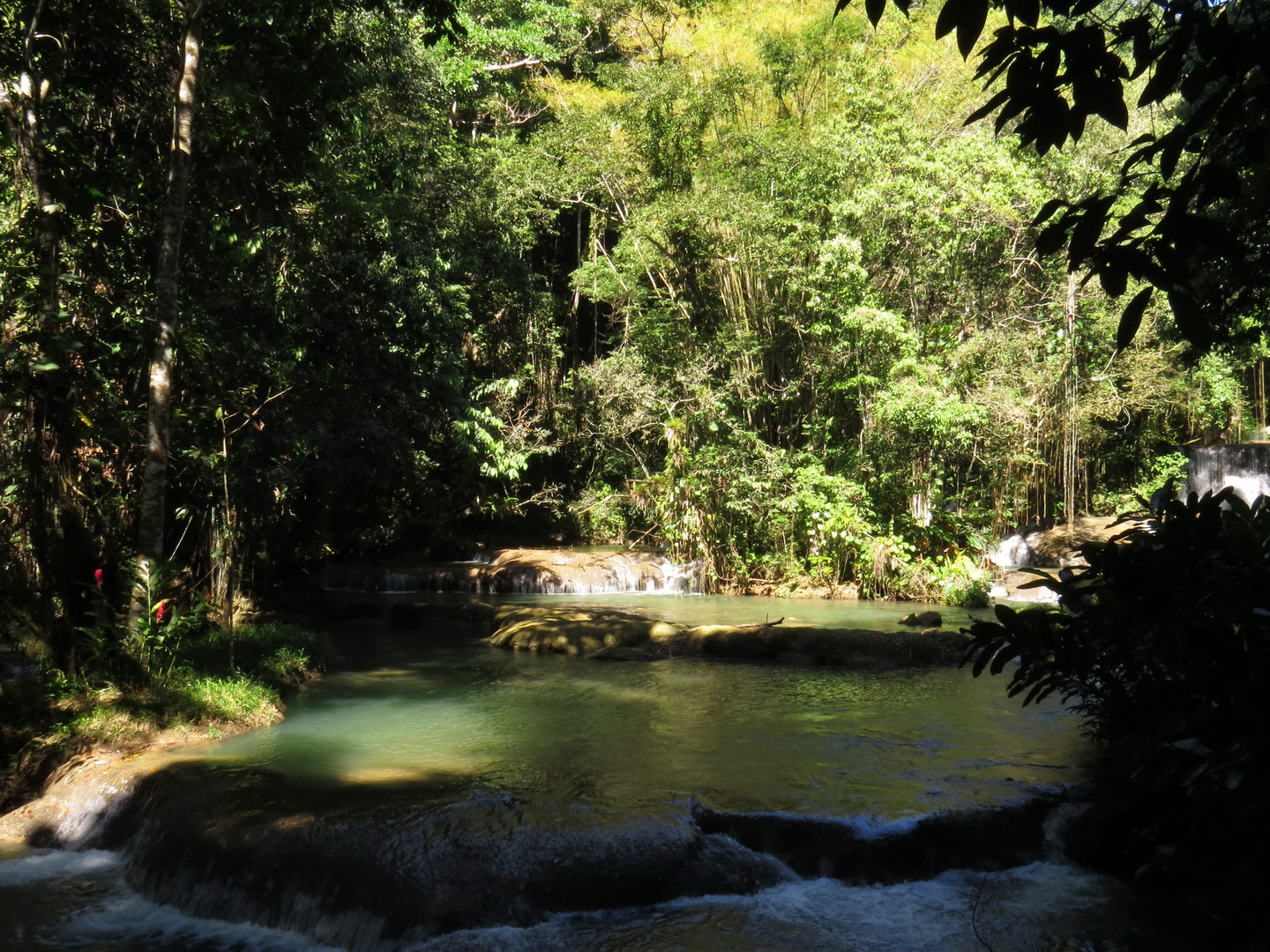
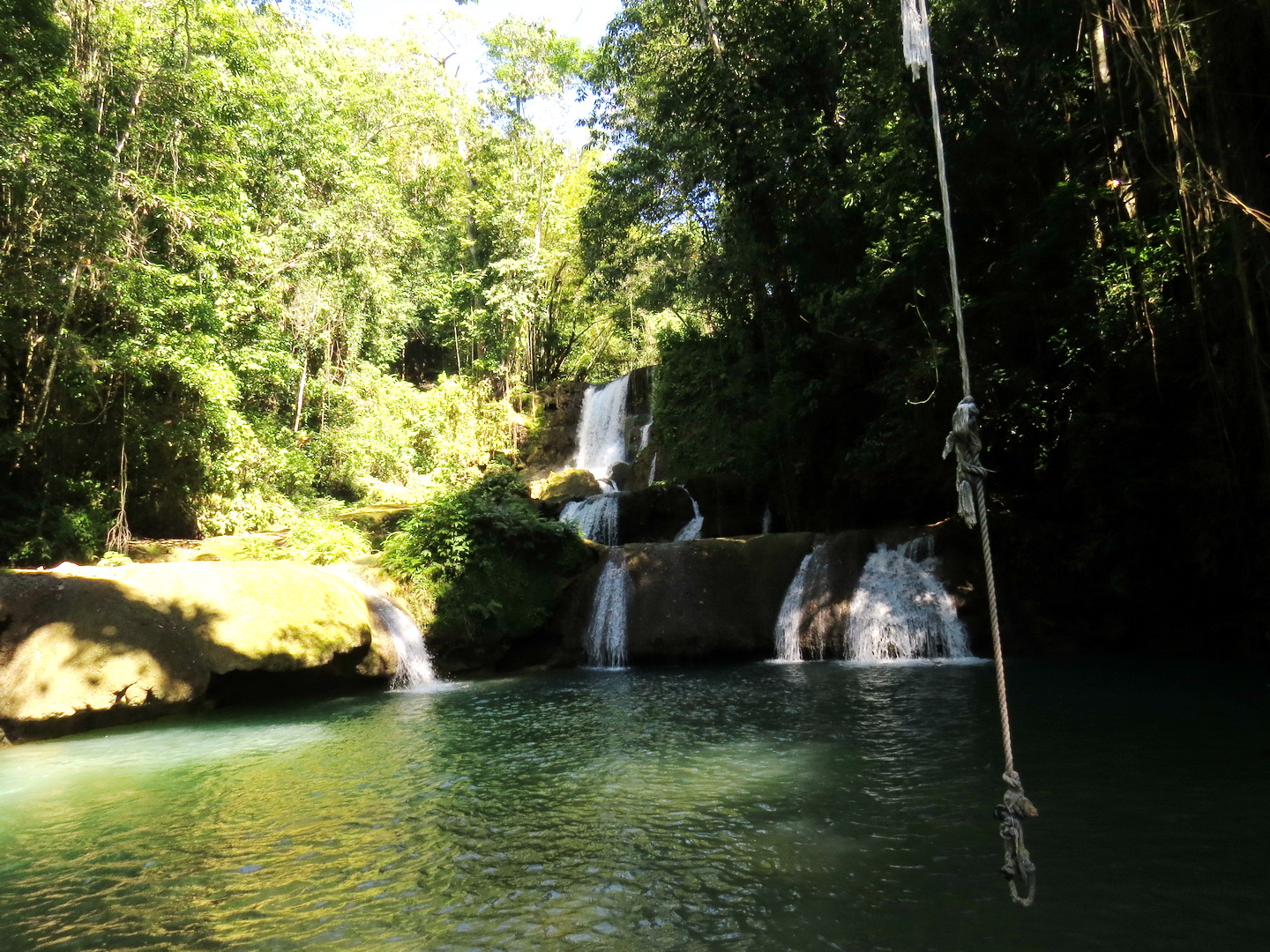
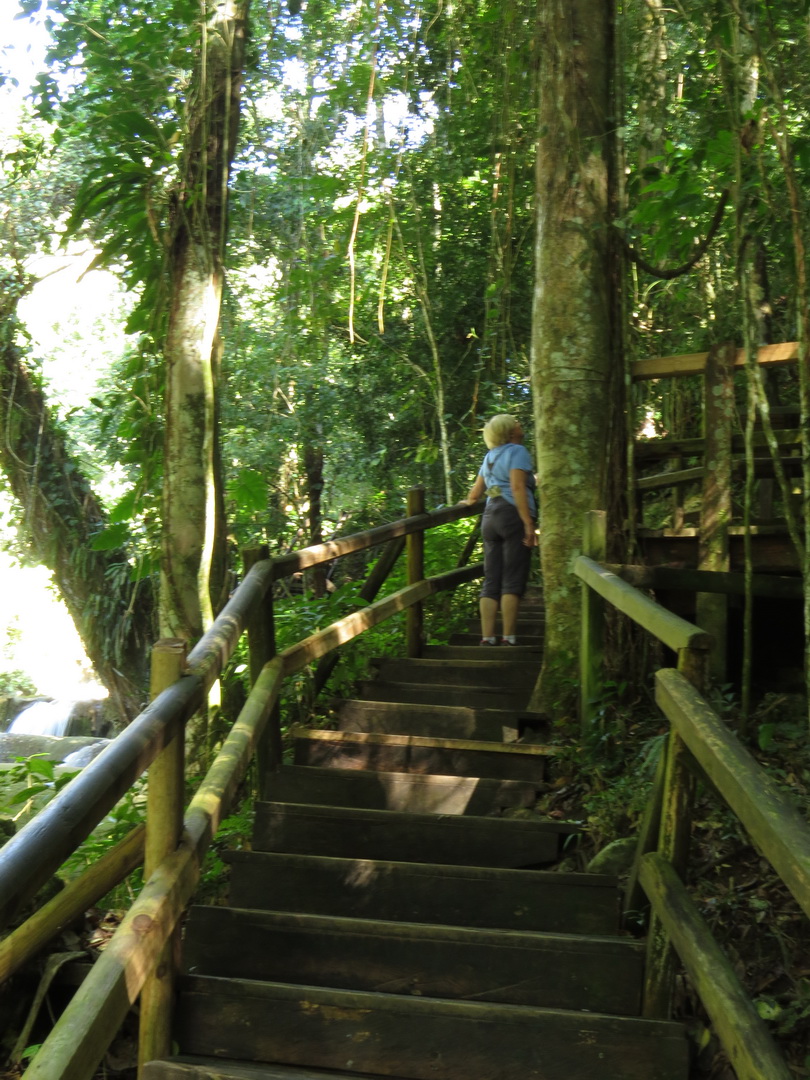
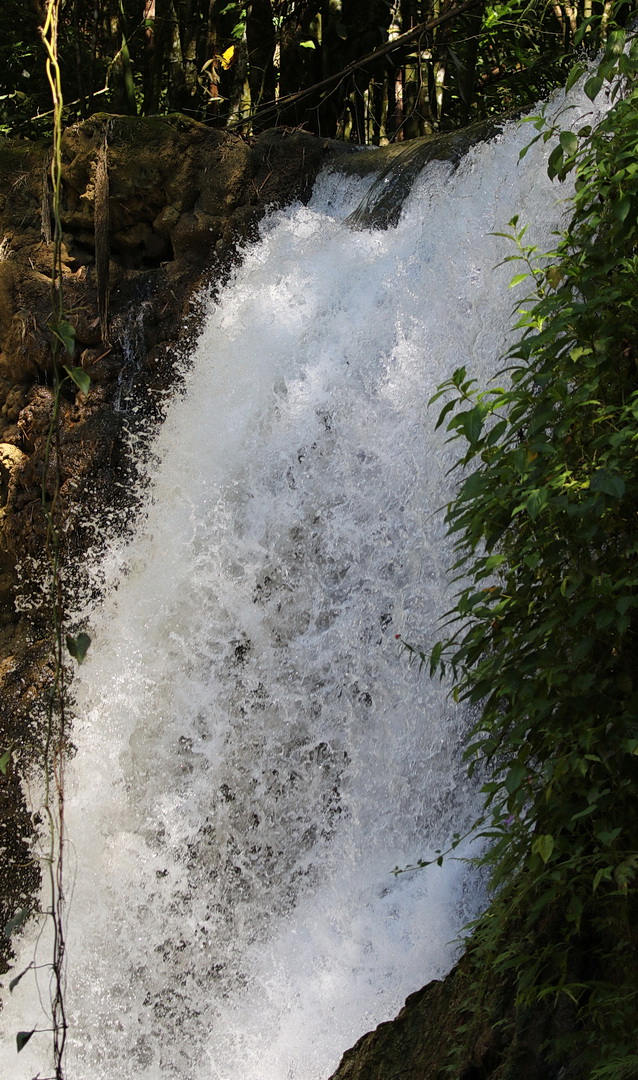
We were taken to the Falls by tractor and were very impressed when we got there. Very verdant and magnificent falls down the gorge. Sally even went for a swim even though the water was very nippy. On arrival we were greeted by interesting signage.
Ganja sign at YS Falls
Lower part of YS Falls
Lower Pools at YS Falls
Looking Down from lower level
YS Falls
Getting Higher
Start Climbing
Sally in YS Falls pool
Sally in YS Falls pool
YS Falls
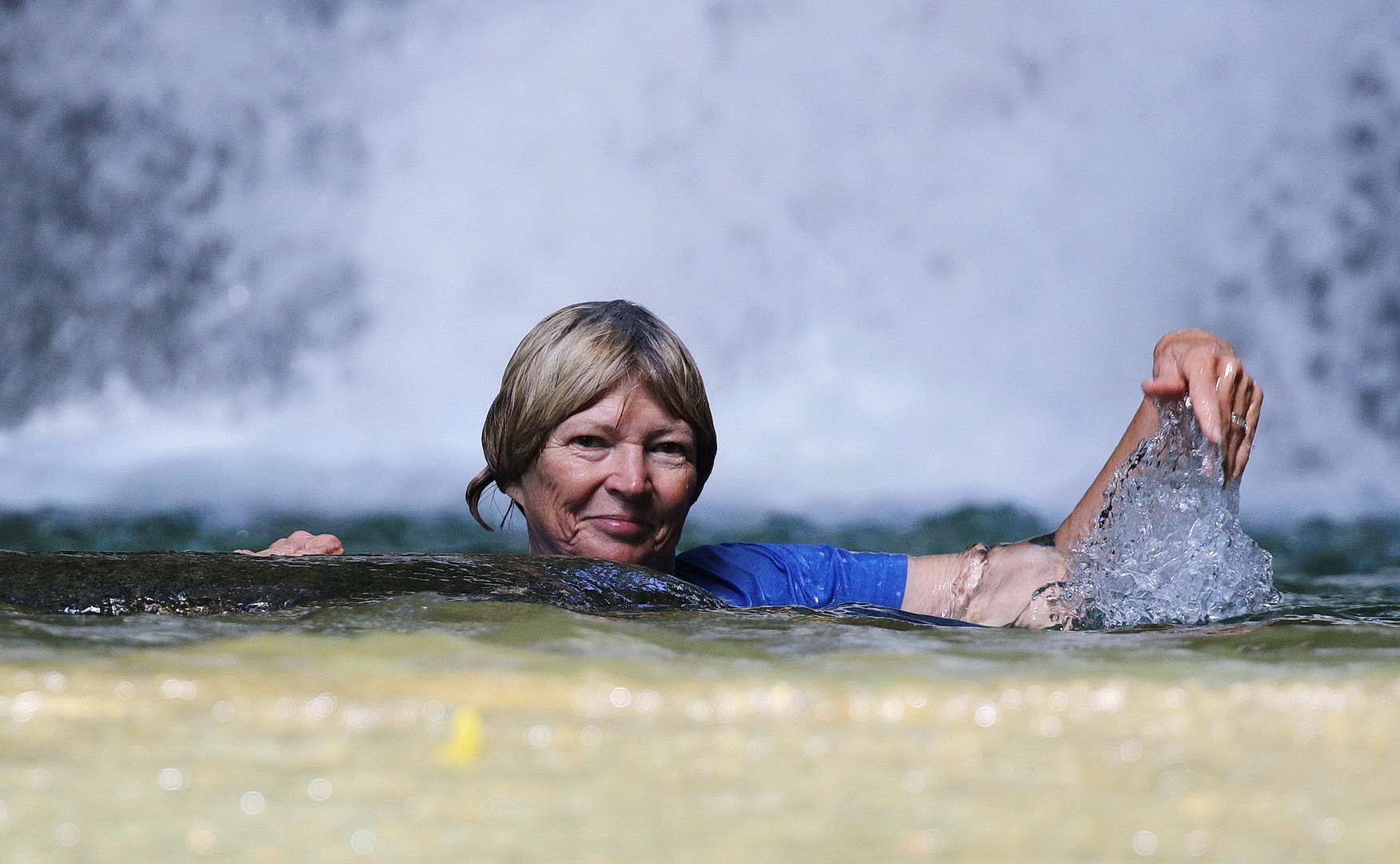
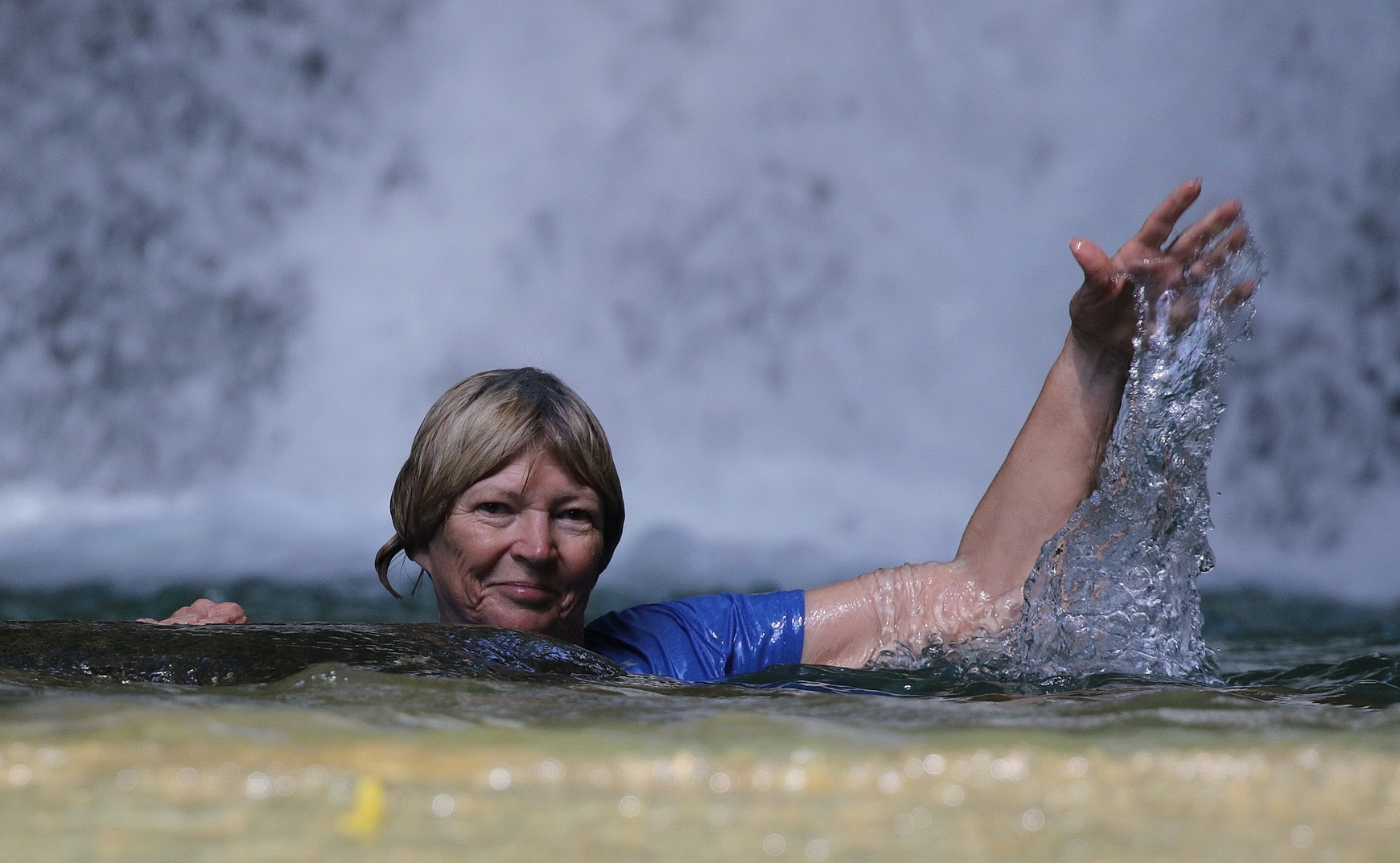
Sally got up to a bit of magic lifting water into the air with her open down-facing hand and then letting go. Watch this:
Sally Magic hand on the up
Sally Magic hand – step 2
All Gone
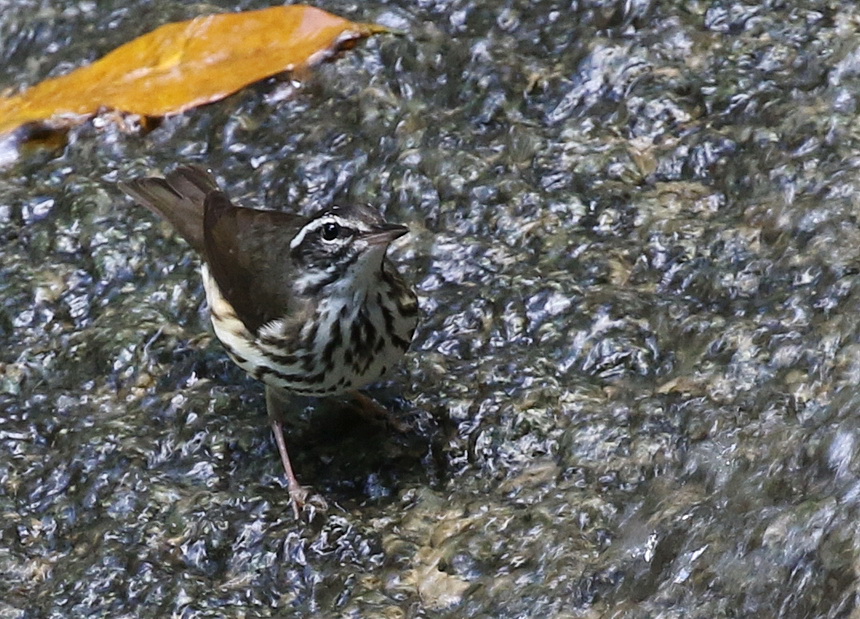
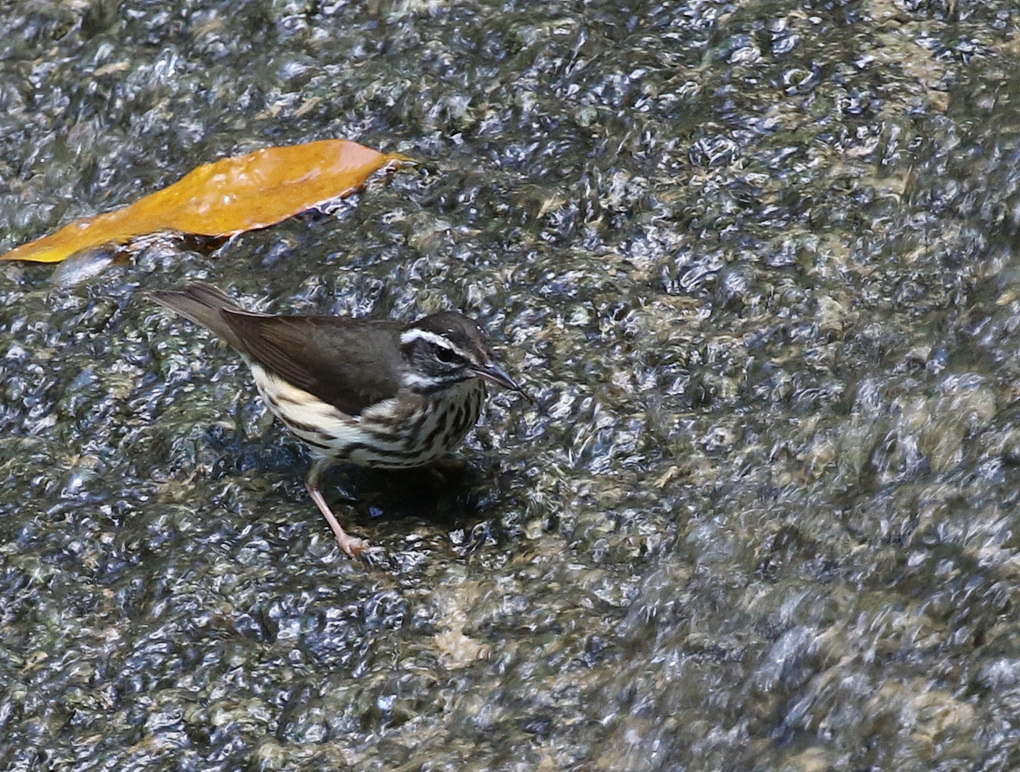
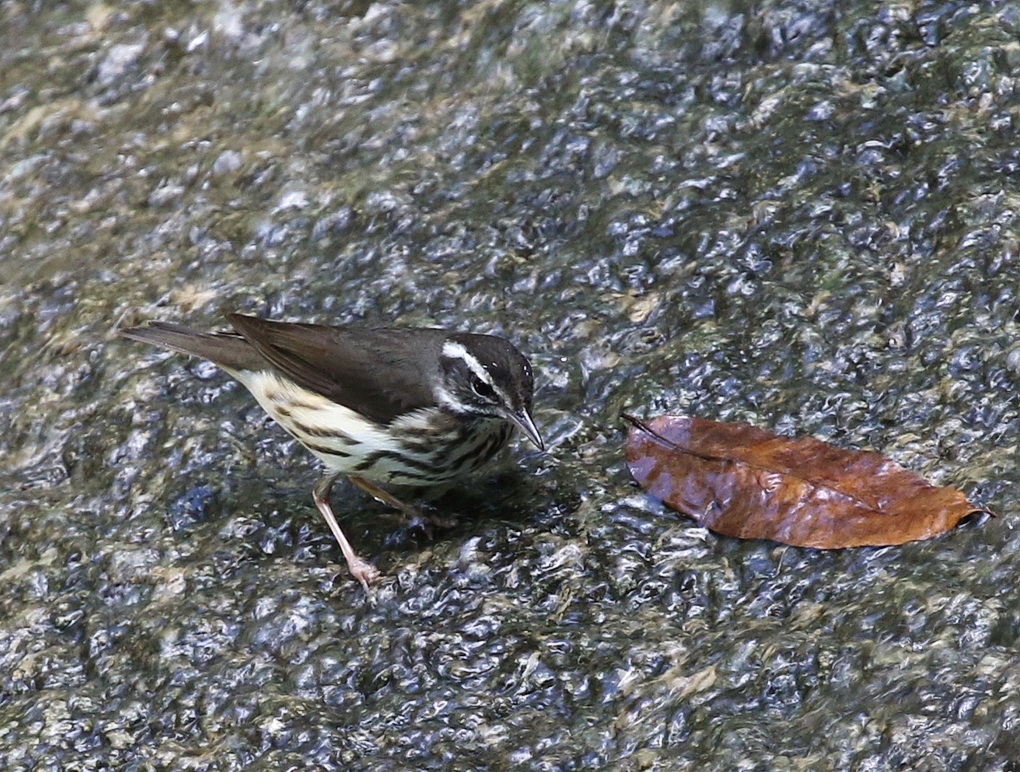
And then just as we were leaving a Louisiana Waterthrush appeared.
Loiusiana Waterthrush
Loiusiana Waterthrush
Loiusiana Waterthrush
Louisiana Waterthrush
On the spur of the moment we decided to drive up to the Cockpit Country. A very scenic uphill drive to Accompong. In some ways we regretted that we did not spend a night or two up there as we could probably have organised a bird guide to take us into the Cockpit Country to find more of the endemics we had missed earlier.
On the way to the Cockpit Country – Accompong
Maroon Treaty
Next we headed for Black River to take a touristic boat tour up river. On the way we passed through Middle Quarters where they sell spicy prawns by the packet – now in the many touristic style farm stalls. However we never stopped to try them. I remember them well and the lips burning after guzzling too many.
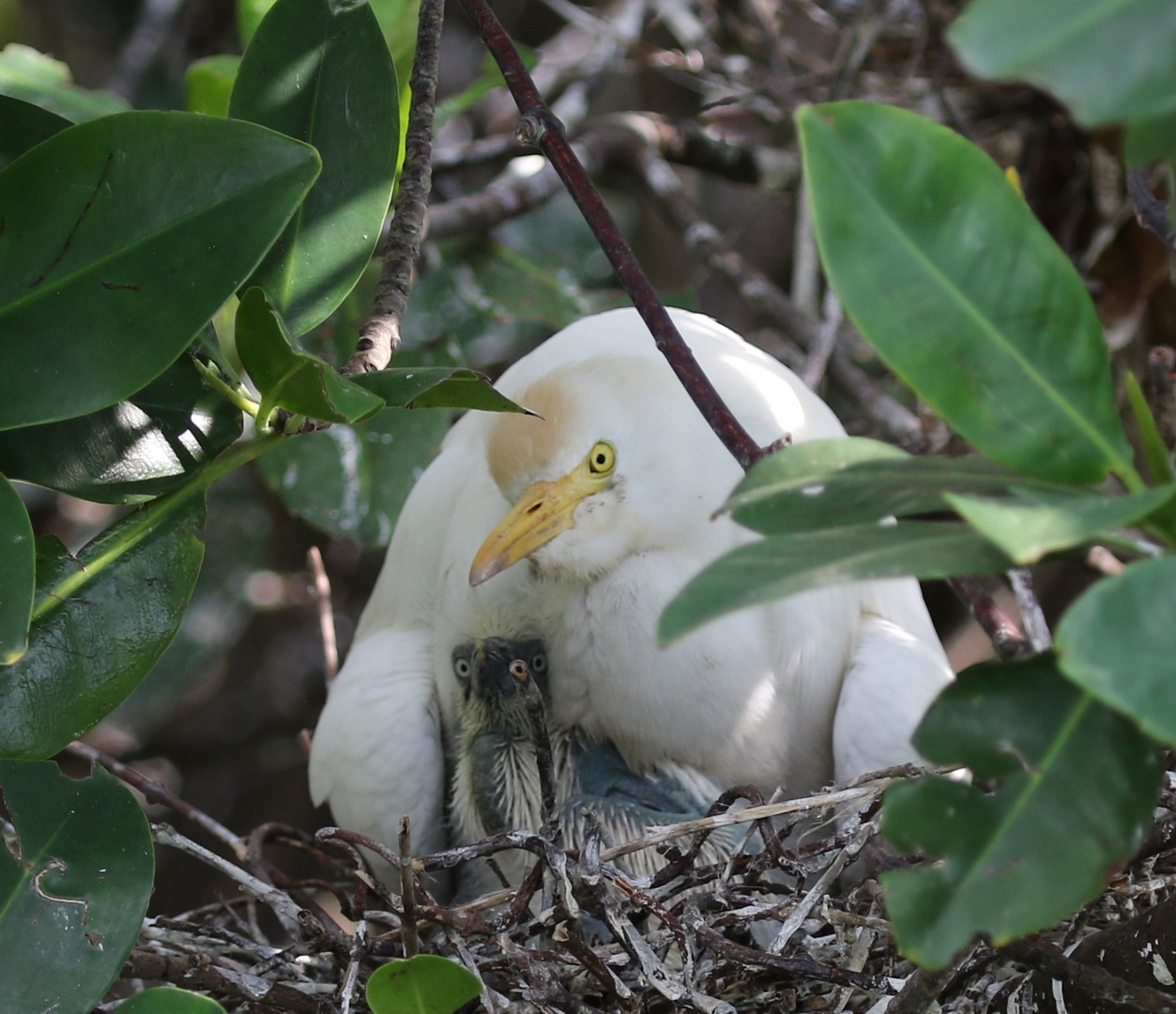
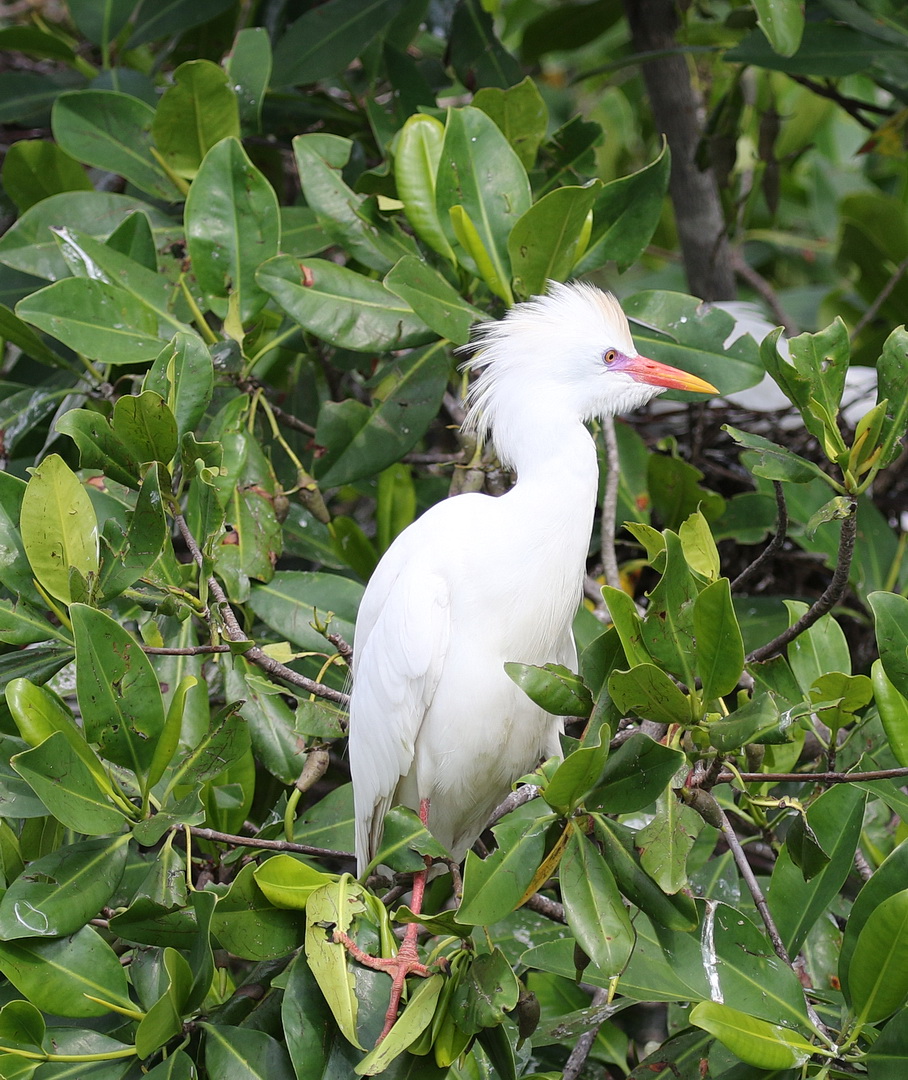
At Black River I managed to talk one of the boat drivers to give us a private bird tour up river. Here we saw a huge heronary occupied by various species of Egrets – Cattle and Snowy mainly with a few Great Egrets.
Cattle Egret and chicks – check the chick’s eyes.
Cattle Egret in breeding plumage
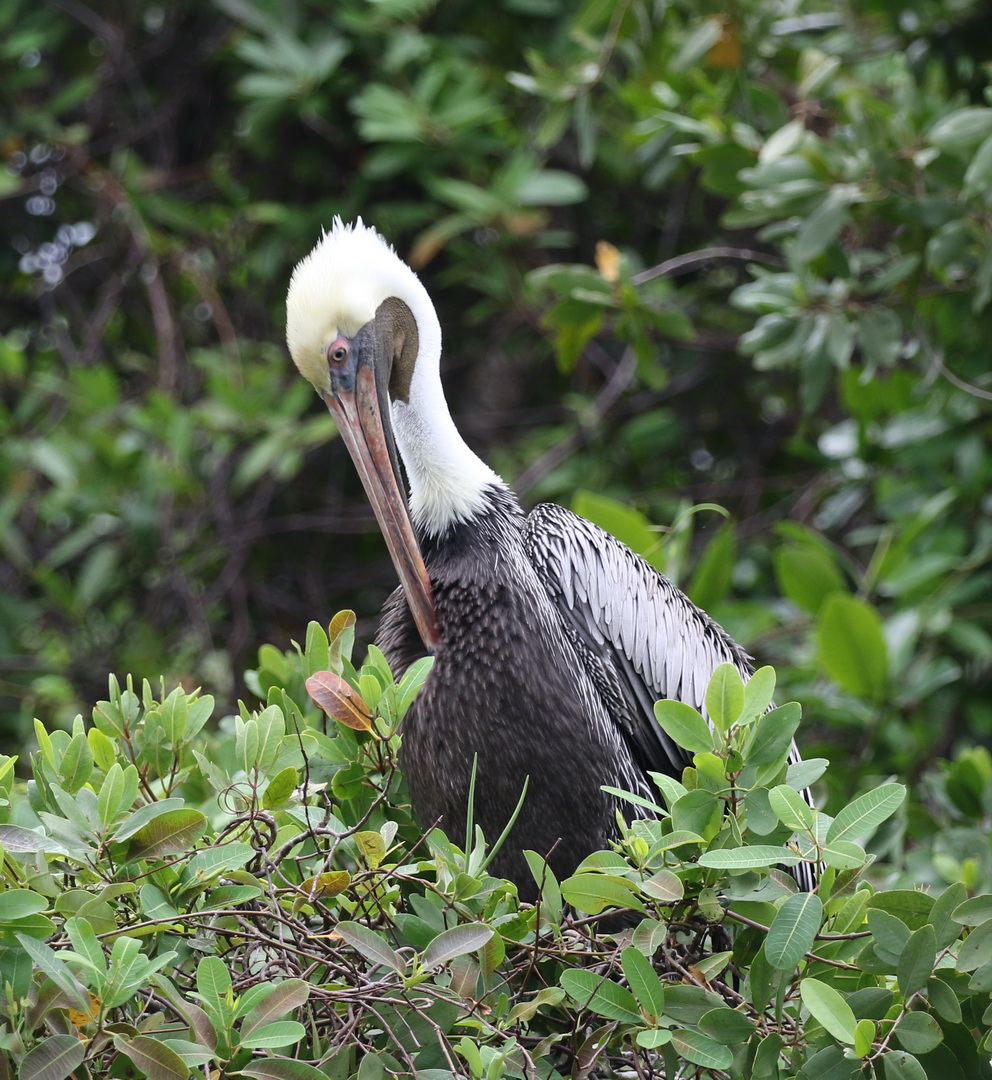
Brown Pelican
Also a crocodile.
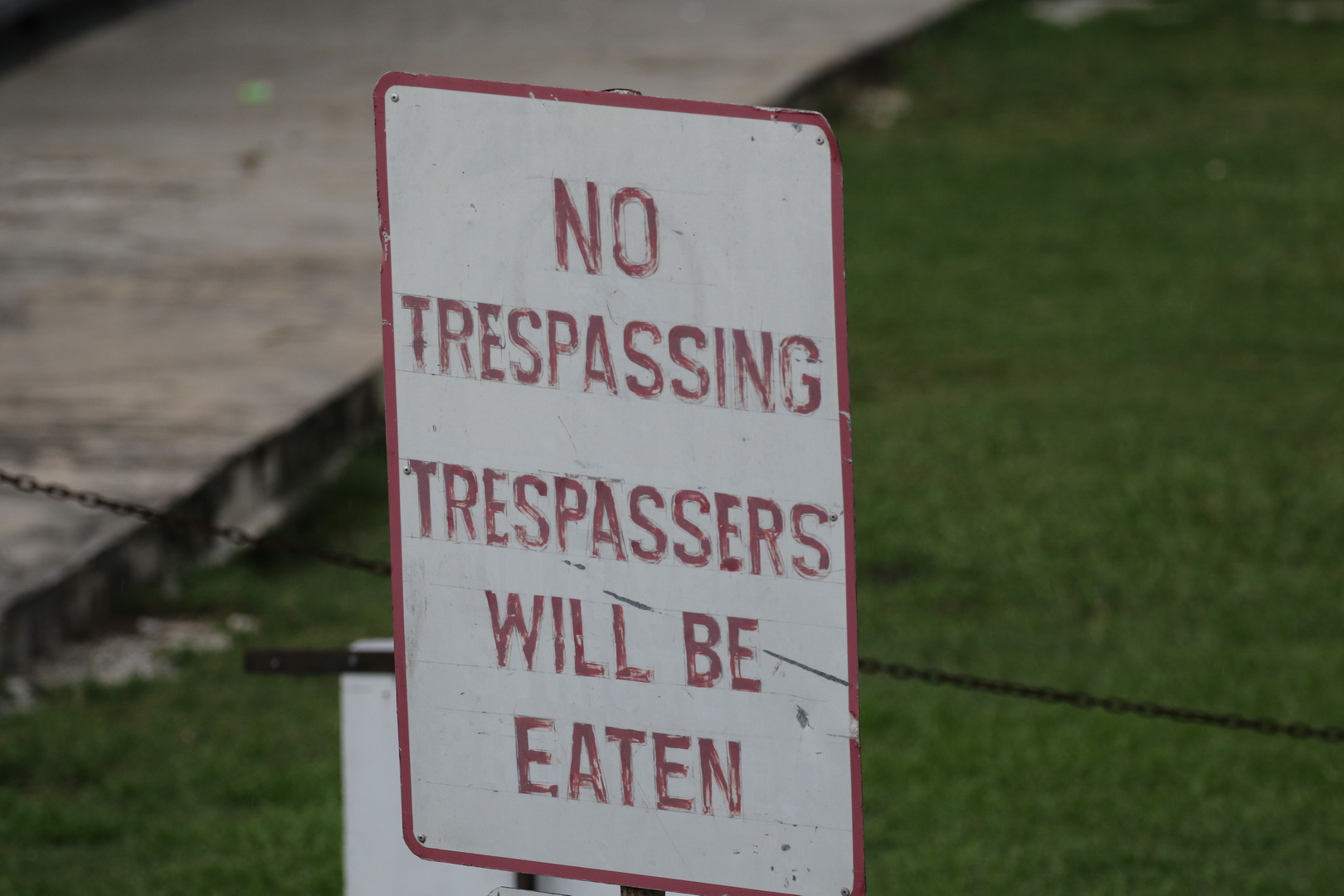
Sign says it all.
Crocodile
And on the mid stream lillies American Purple Gallinules, Common Moorhens, American Jacanas, Great and Little Blue Herons.
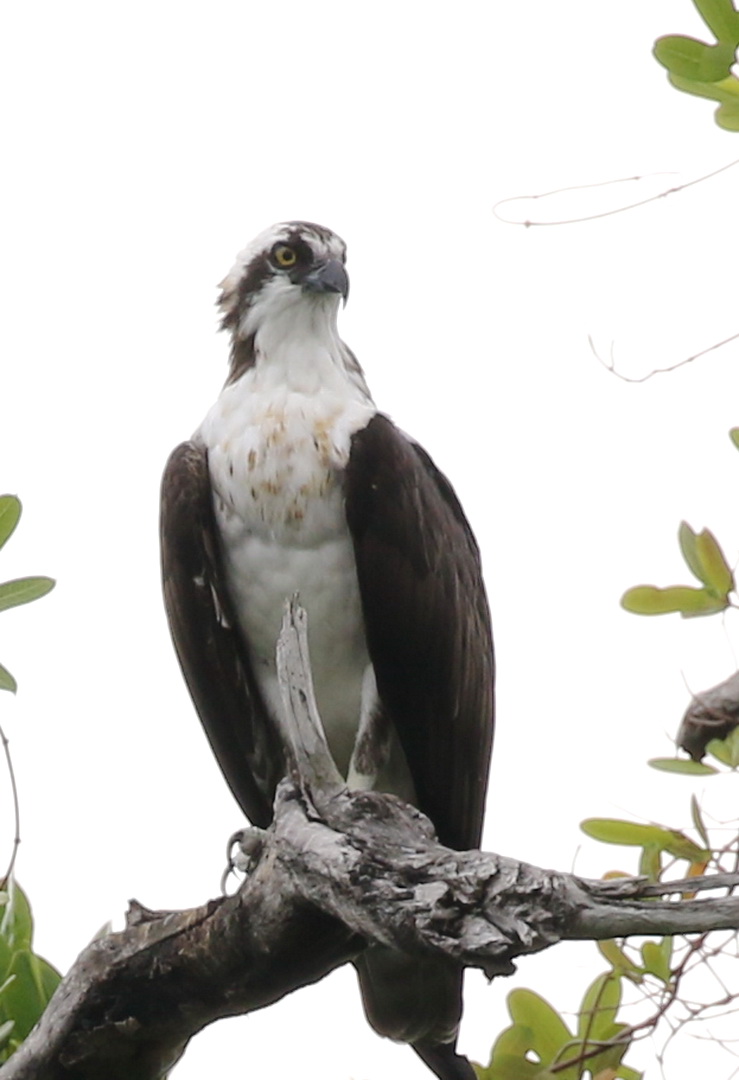
Osprey
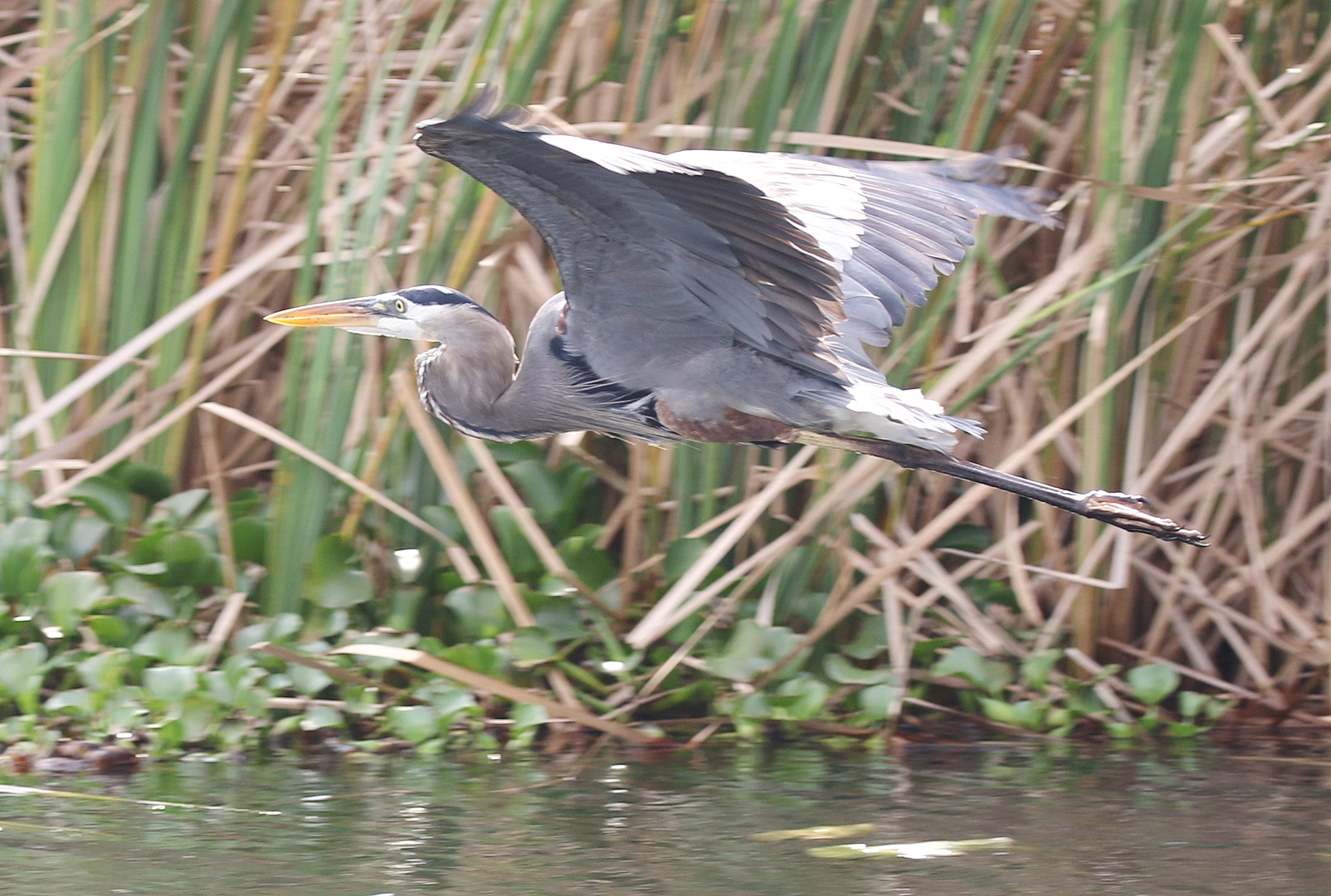
Great Blue Heron
Great Blue Heron
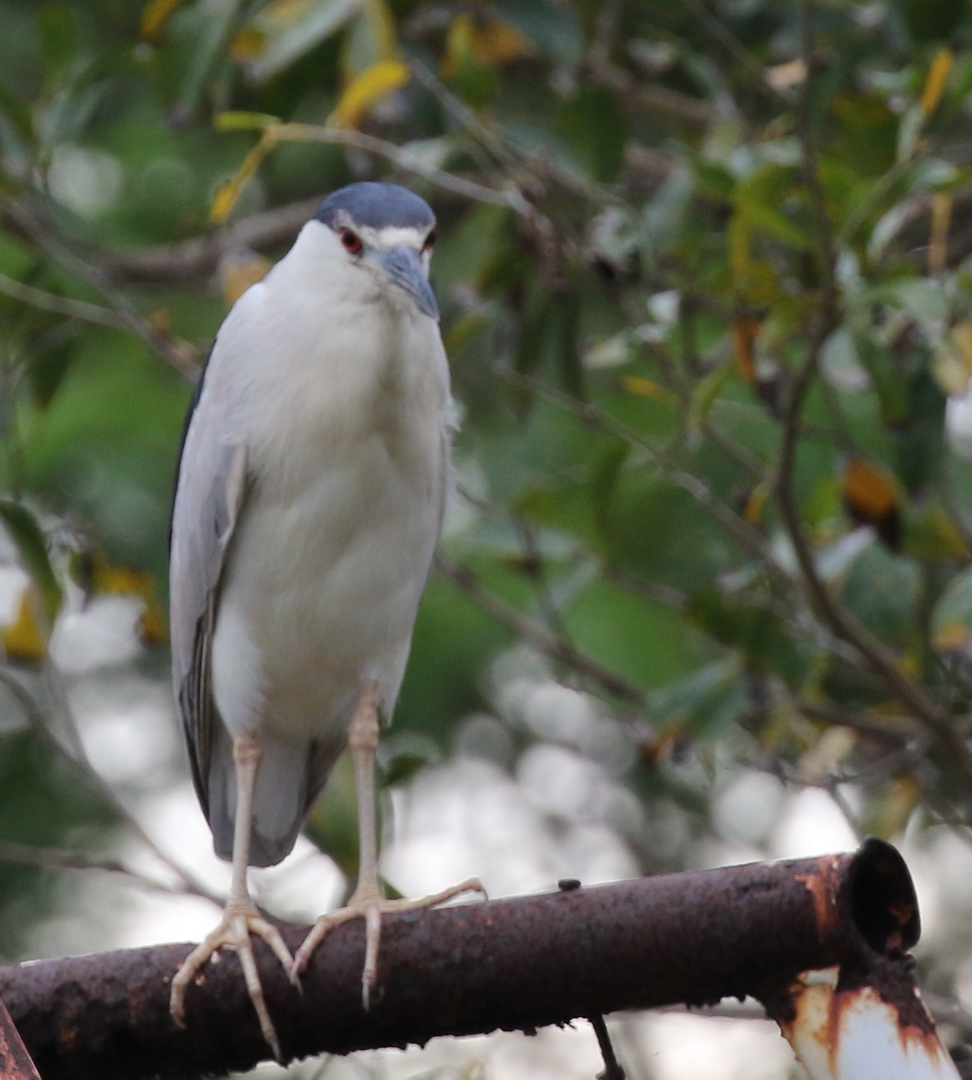
Black-crowned Night-Heron
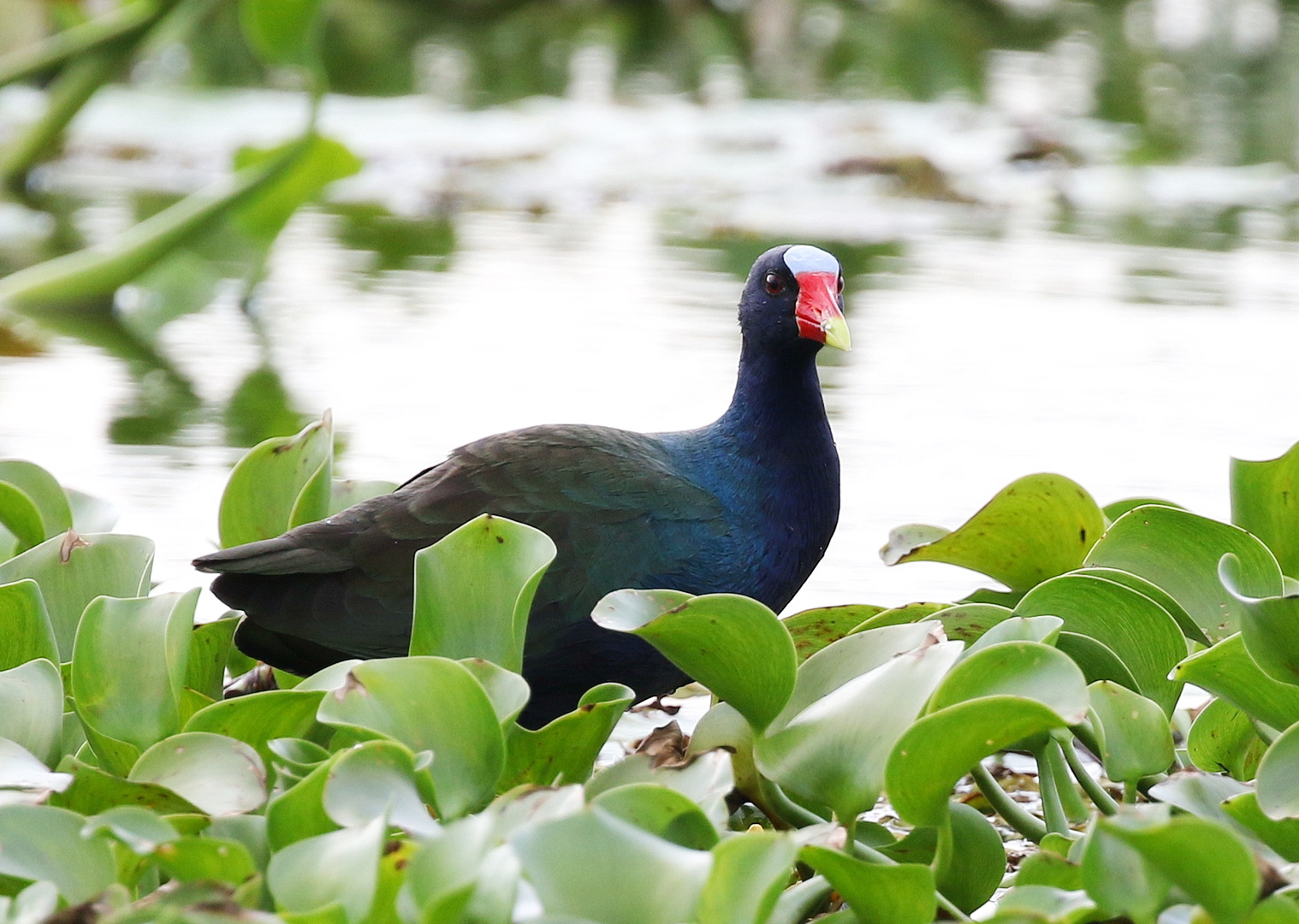
American Purple Gallinule
Great Egret, Black-crowned Night-Heron and Snowy Egrets
A number of Gulls and Terns kept us nosing in our books to try and ID them.
Laughing Gull
In Treasure Beach there are two popular places to go – to eat and swim – Jack Spratts and Jakes. We treated ourselves to meals at both as well as a local restaurant we had been told about. One thing notable was that eating out was expensive wherever you went and the quality of the food was often below standard – except of course if you found a local establishment.
Sally with G & T at Jake’s enjoying the sunset
Sunset at Jake’s
Sunset at Jake’s
Treasure Beach
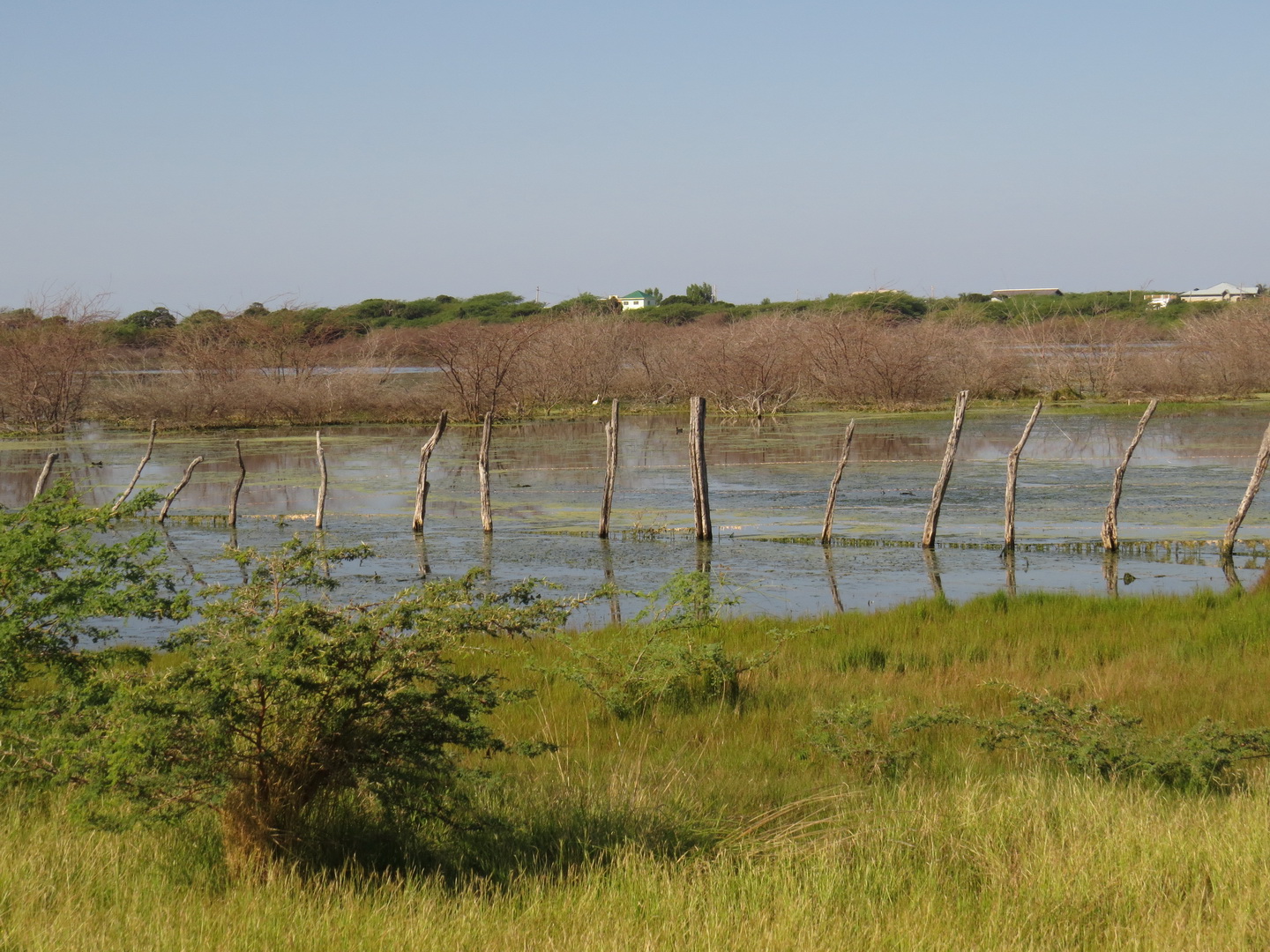
Early one morning on our way to Alligator Pond we went to investigate the Pedro Ponds. This required a tortuous drive down a farm track which ought to have been accessed in a 4×4. We managed very slowly in places eventually driving into a field by the ponds where we saw someone fishing.
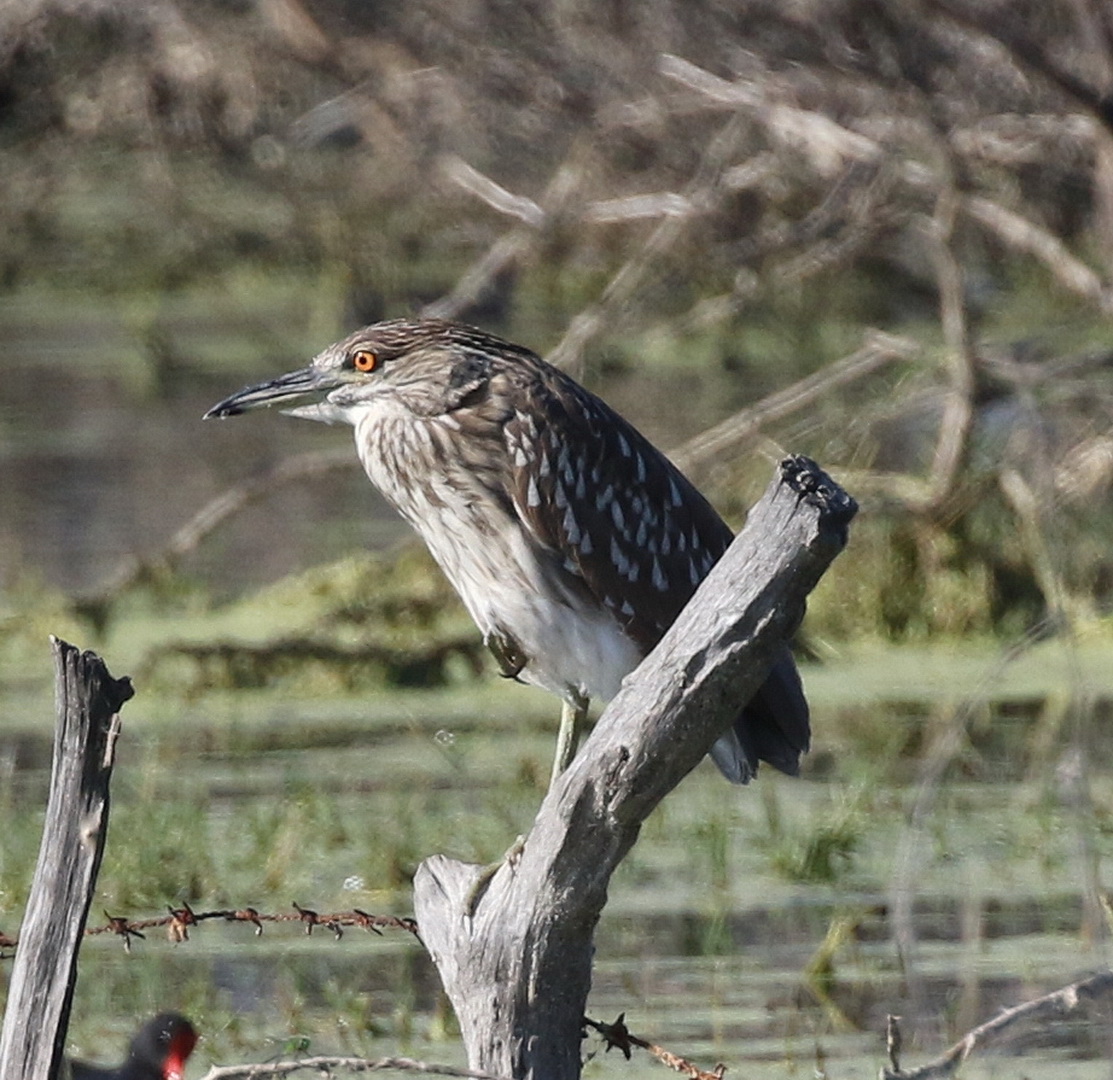
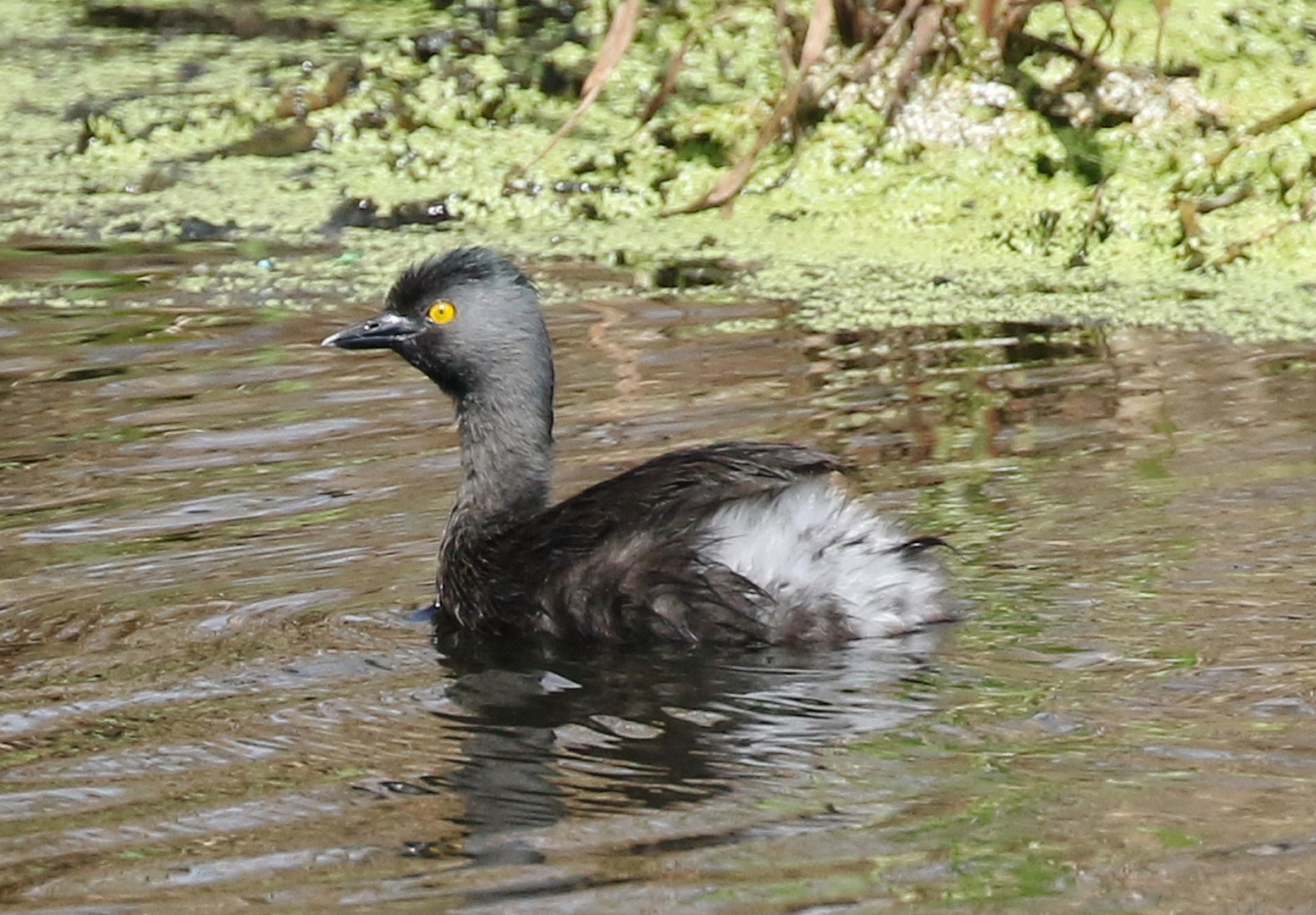
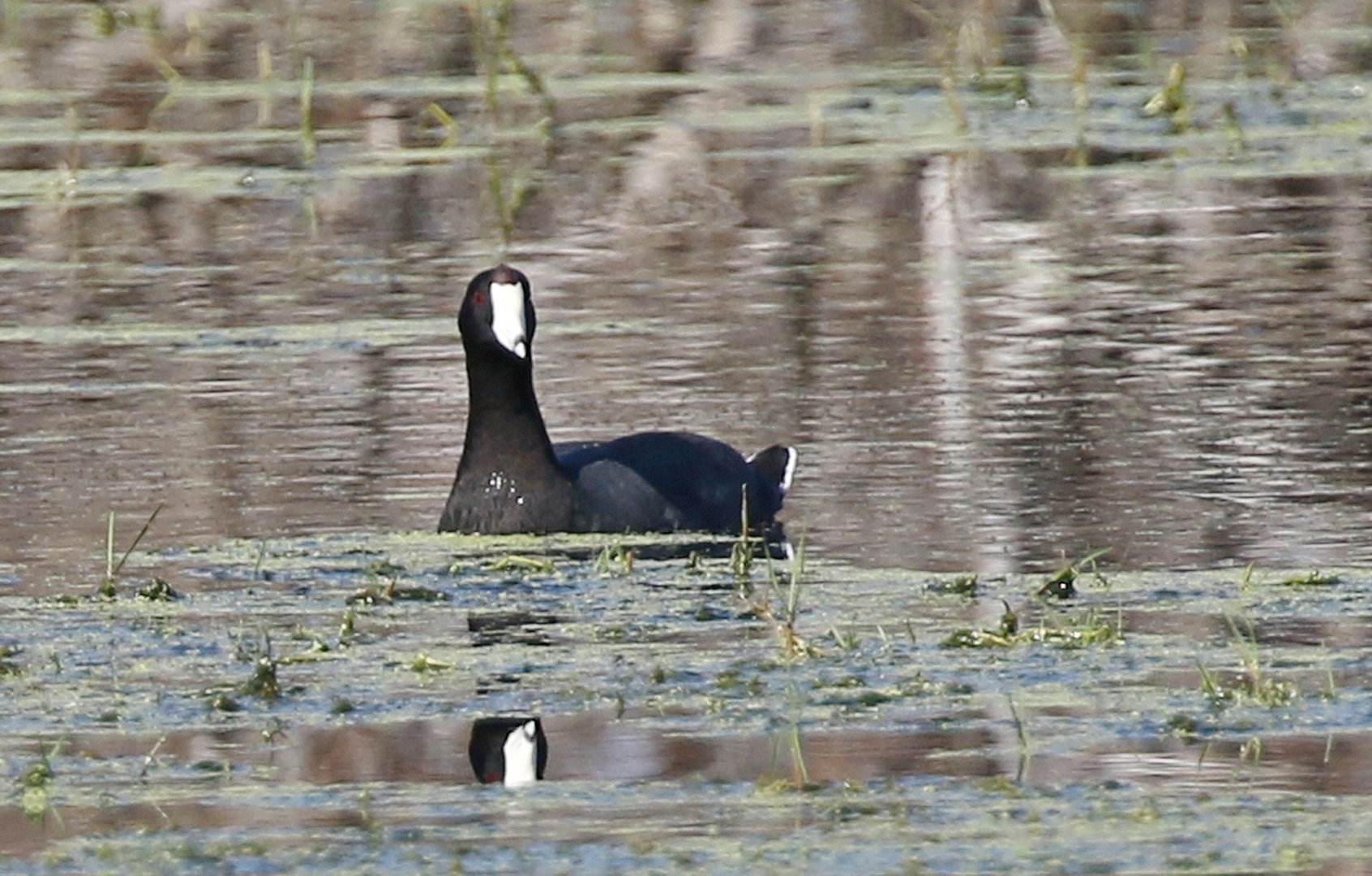
Here, we had good if not distant sightings of a number of water birds. Least and Pied-billed Grebes, American and Caribbean Coots, West Indian Whistling Ducks and a number of Herons including an immature Black-crowned Night-Heron.
Hell’s road to Pedro Ponds
Pedro Ponds Treasure Beach
Assorted Birds
Blue-winged Teals – male and female. Common Moorhen and American Coots
Black-crowned Night-Heron – immature
Least Grebe
Caribbean Coot
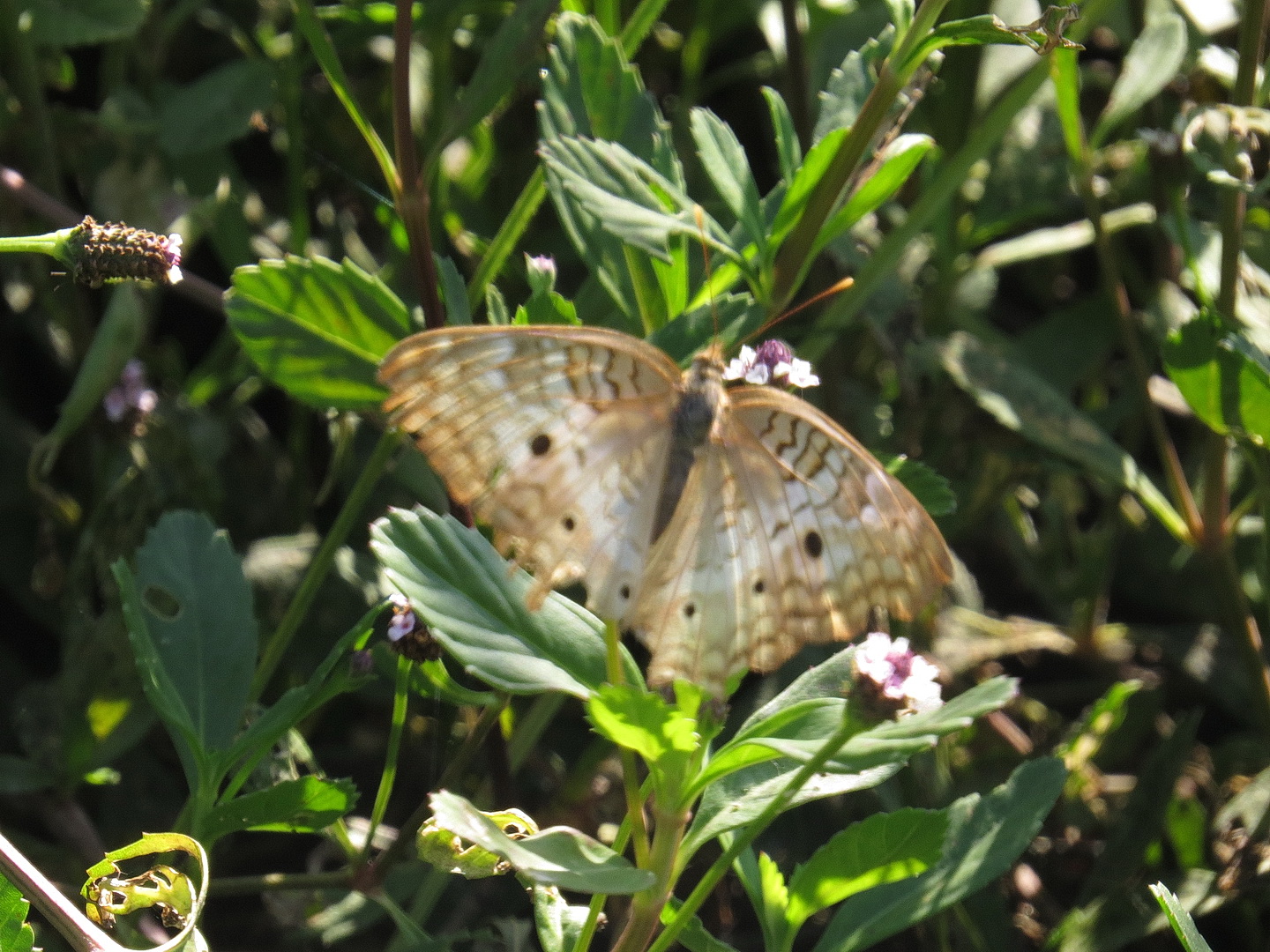
Butterfly
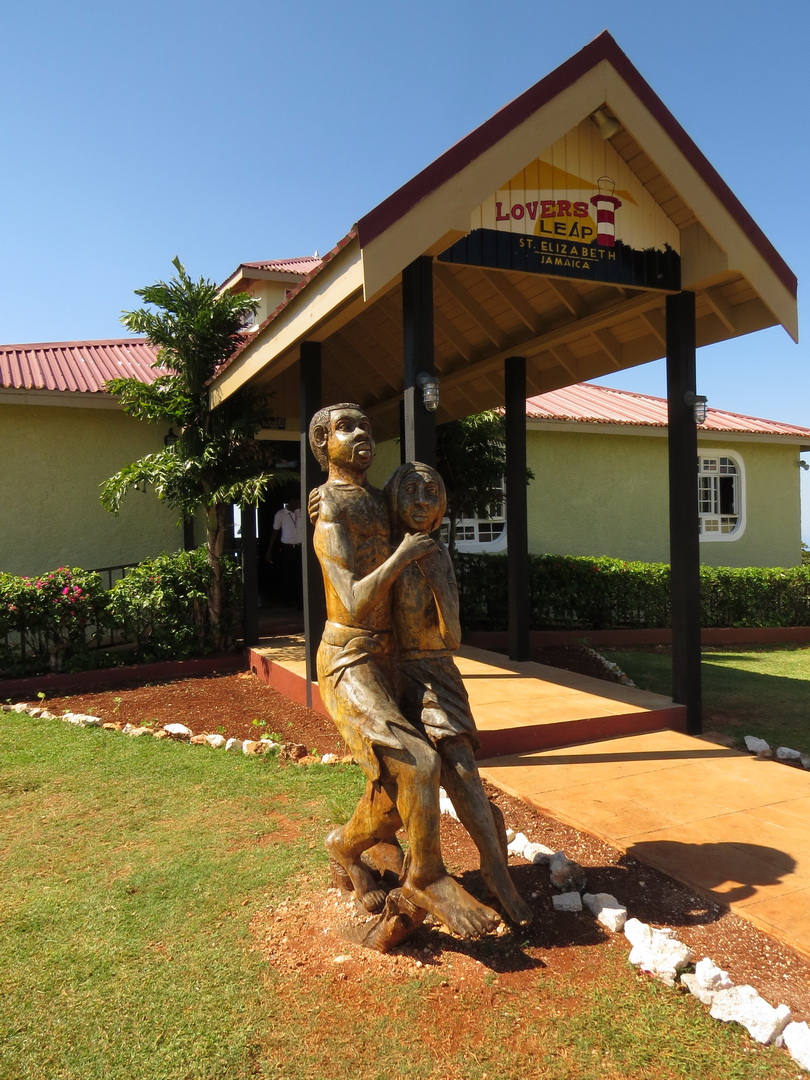
On the way to Alligator Pond we saw a sign to Lover’s Leap. Being in no hurry we went to investigate and find out its story. It turns out that it involved two slaves – a male and female. They were madly in love.
One day their “owner” decided he wanted to bed the female. Neither were enamored by the idea so they escaped only to be hunted down to this location. Rather than being taken by the “owner” they jumped off the steep cliff face into everlasting paradise.
The Lovers clasped together as they went
Lovers Leap – way to go
View from Lovers Leap
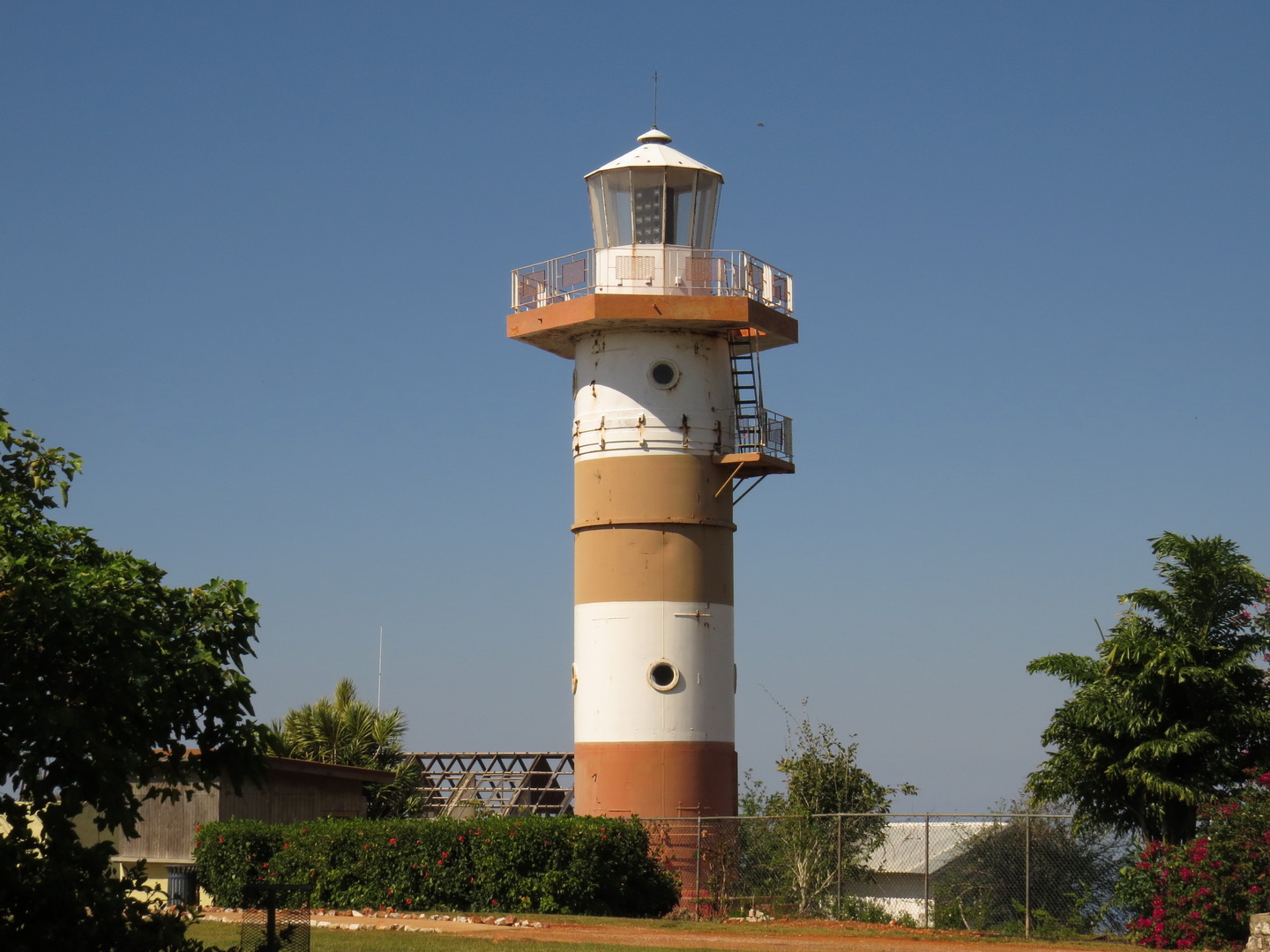
Lover’s leap lighthouse
Bombax
Smooth-billed Ani
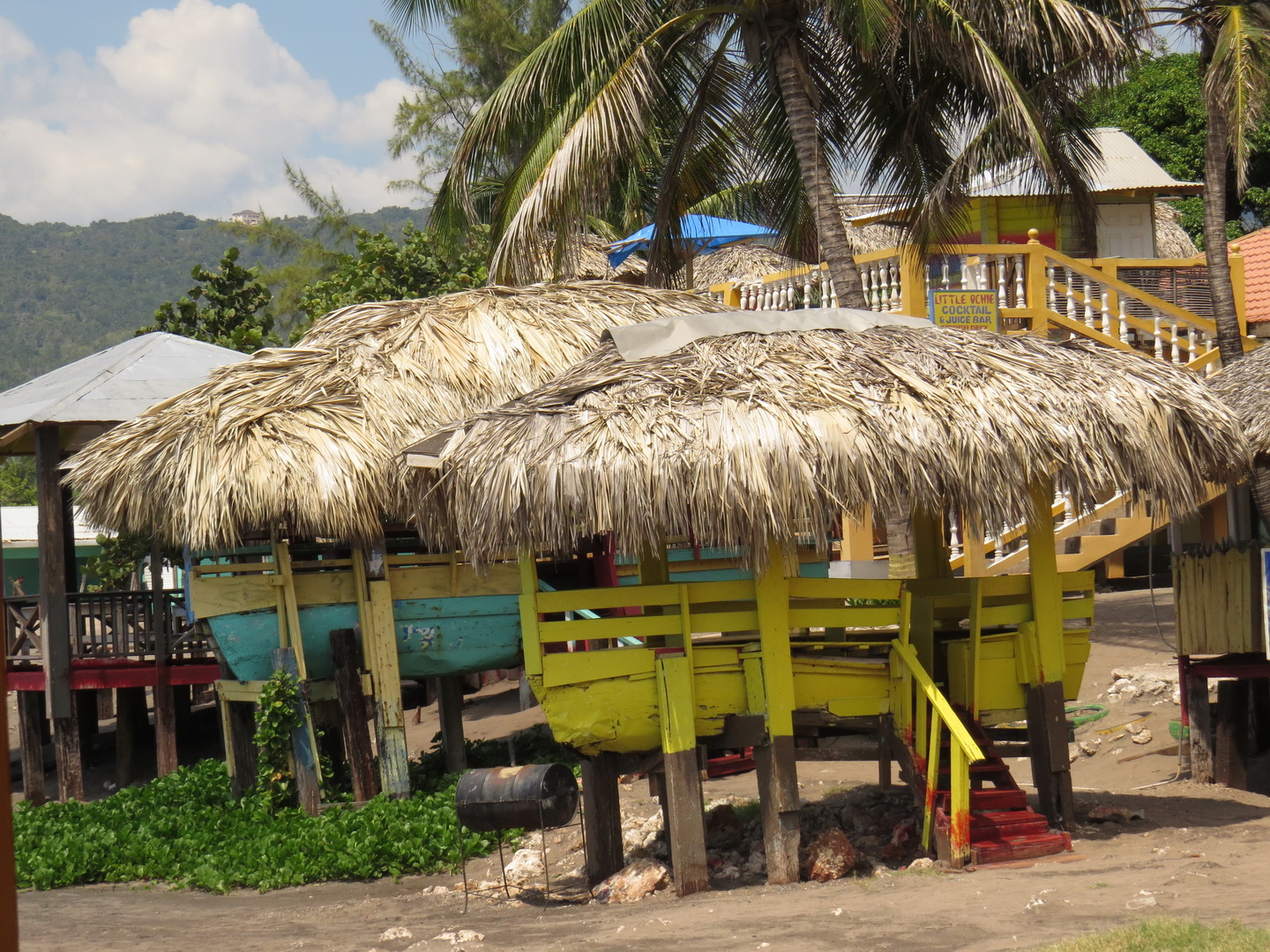
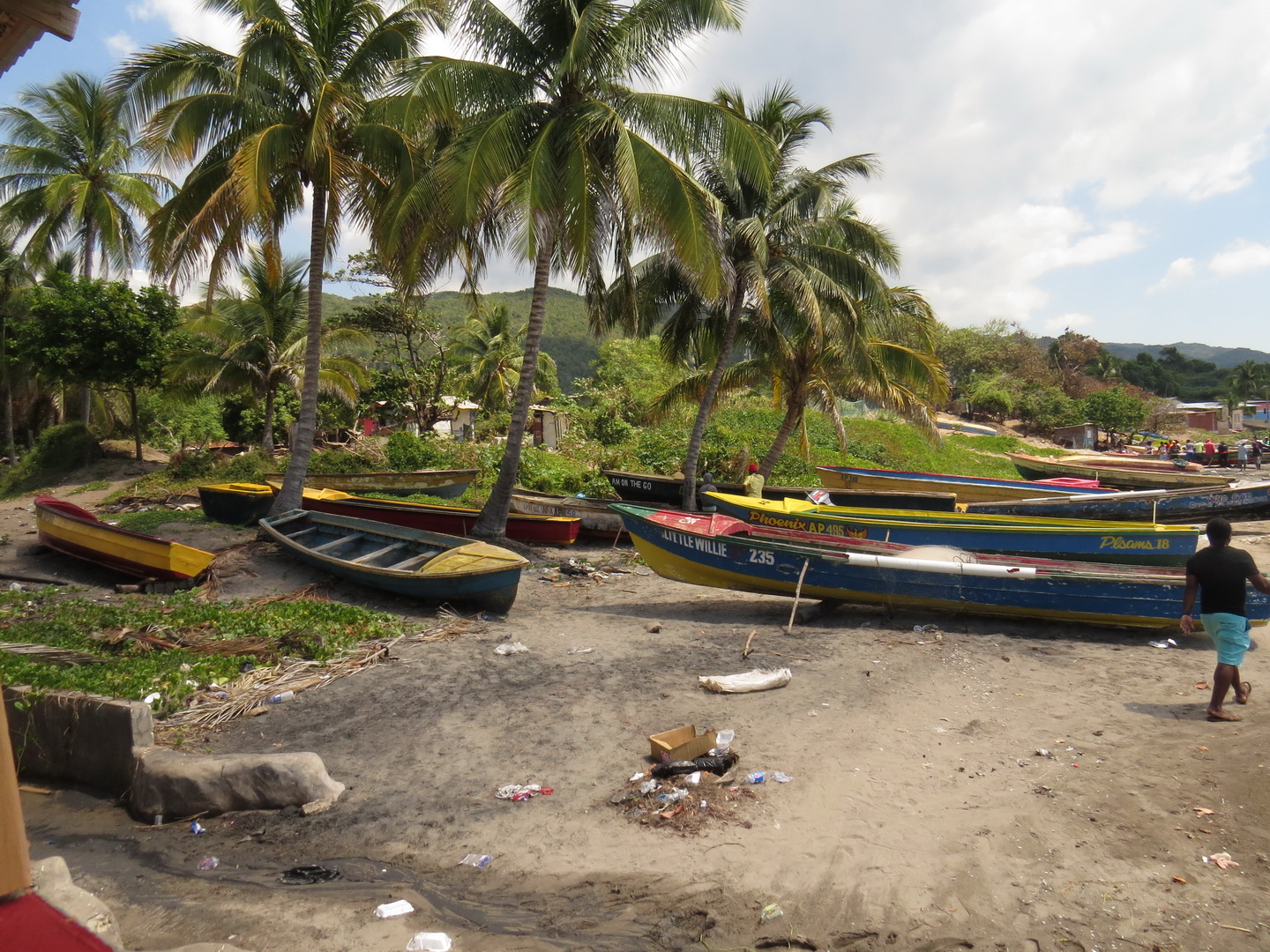
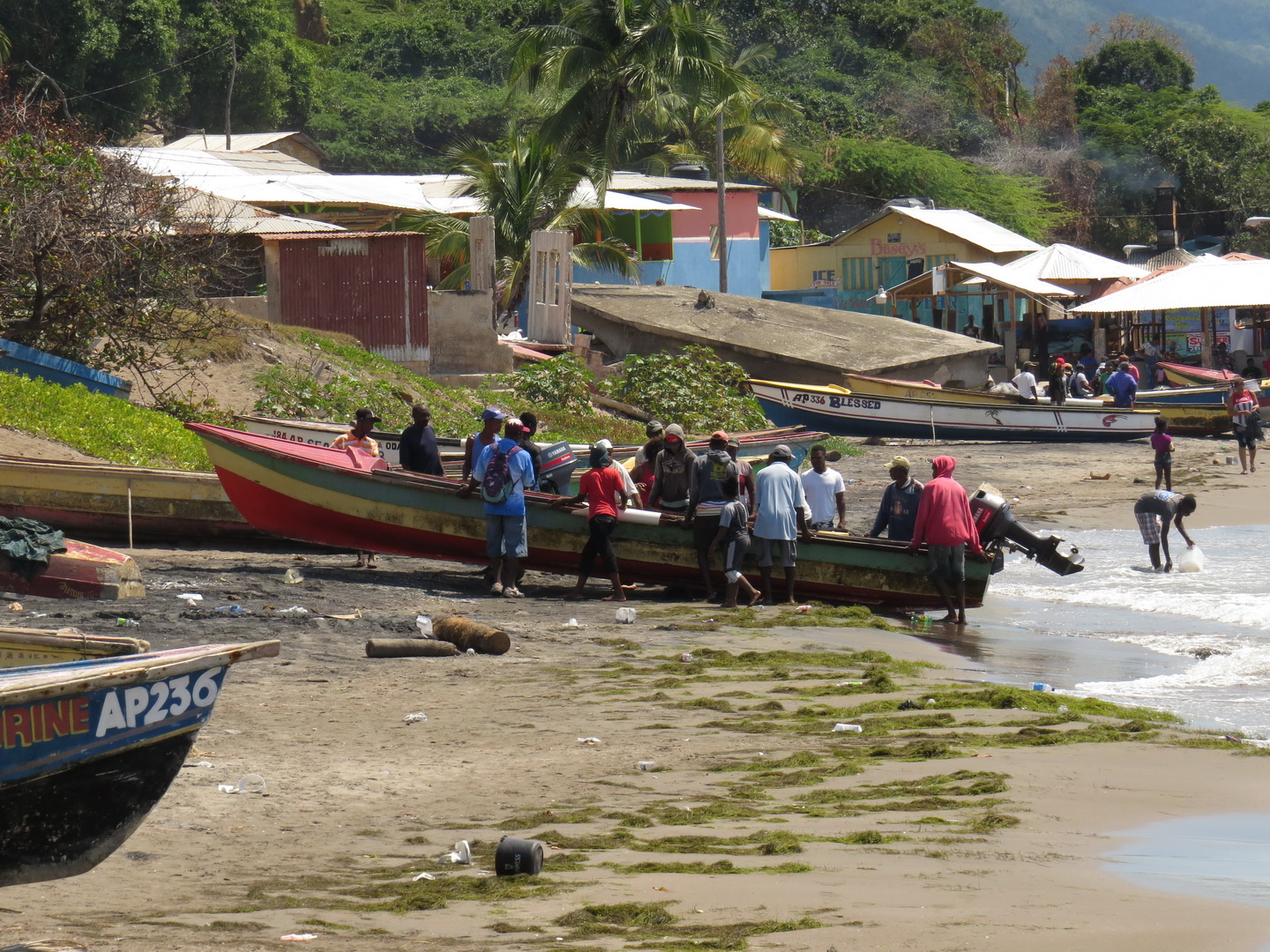
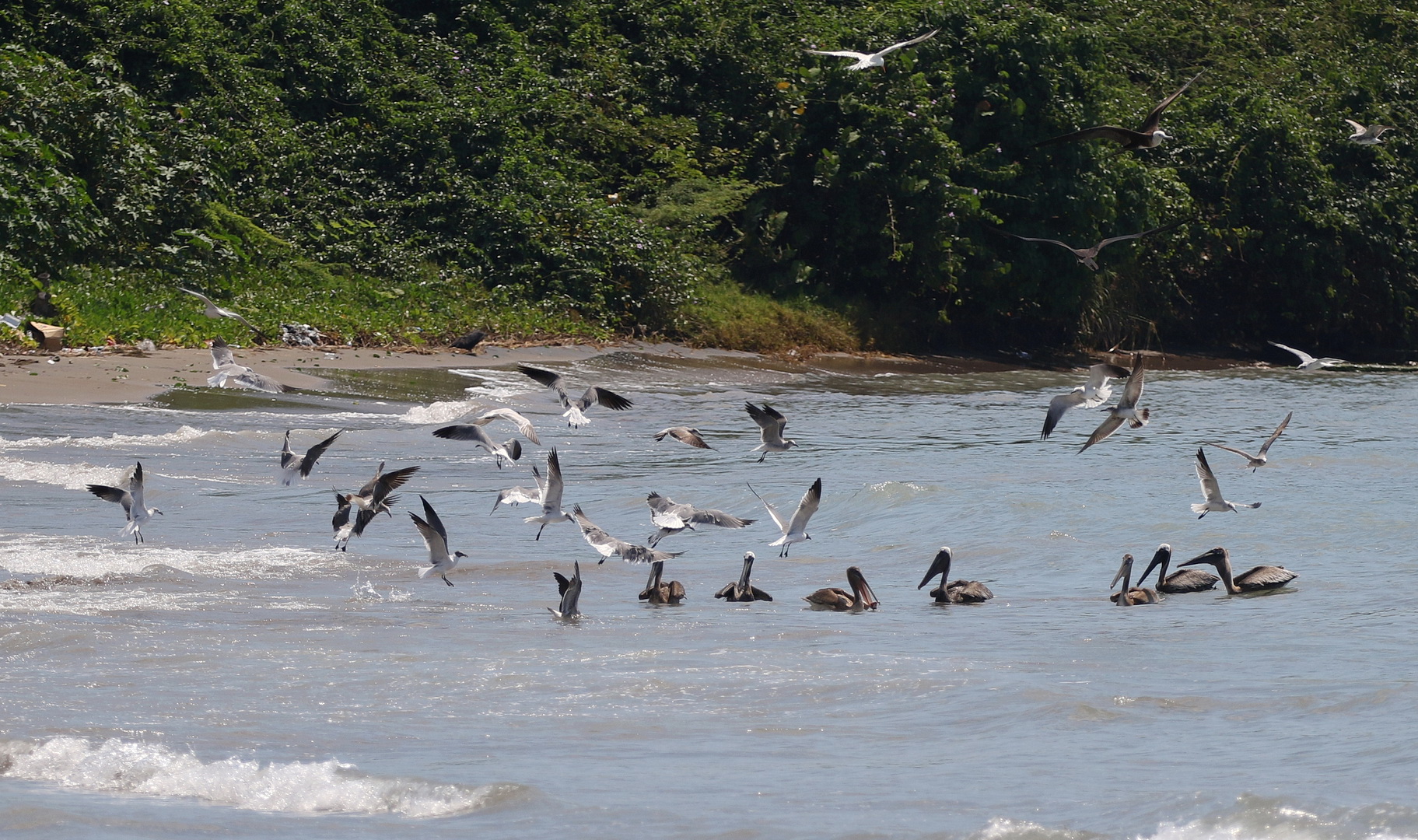
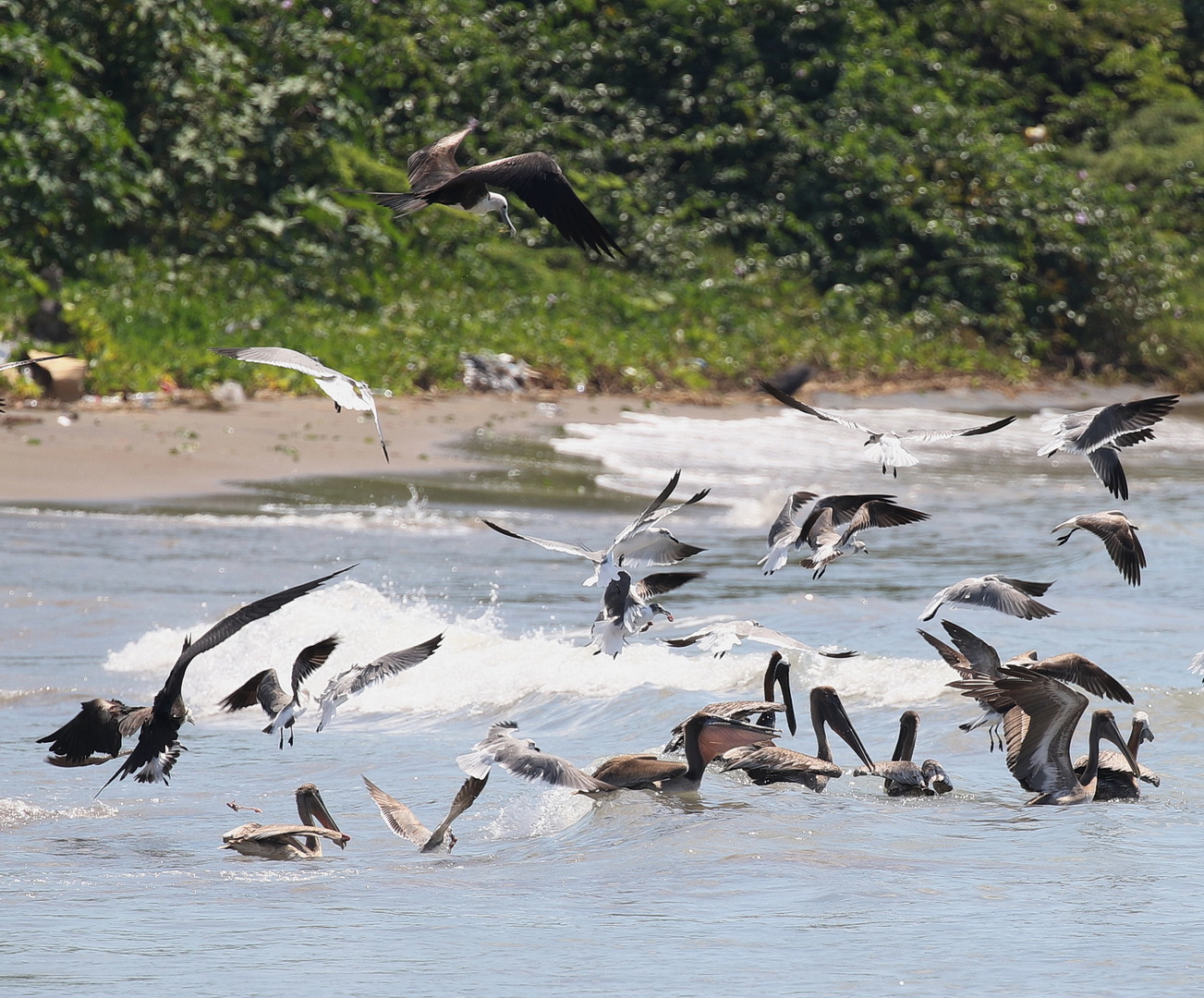
On to Alligator Pond. And to a highly rated restaurant – Little Ochie. Arriving early we had a drink on the beach and watched all the fishermen returning in their motorised fishing canoes. As each boat arrived many people descended on it and the haggling began. Not only was it interesting to watch but it brought a numerous sea birds with it – Magnificent Frigatebirds, Brown Pelicans, Terns and Gulls.
Little Ochie Restaurant – Alligator Pond
Little Ochie Restaurant deck – Alligator Pond
Little Ochie Restaurant – Alligator Pond
Fishermen boat yard
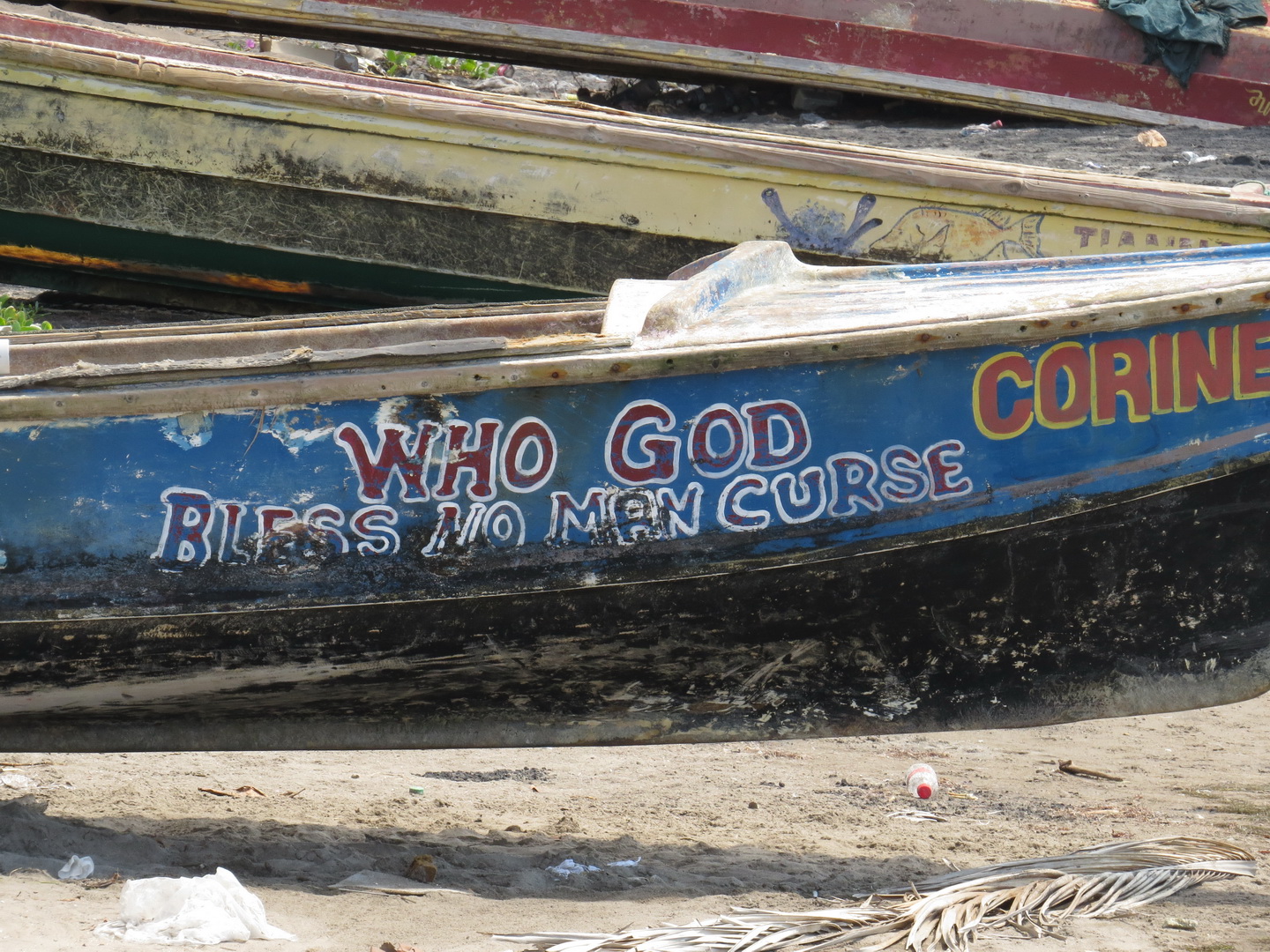
Fisherman’s boat name
Fisherman’s boat name
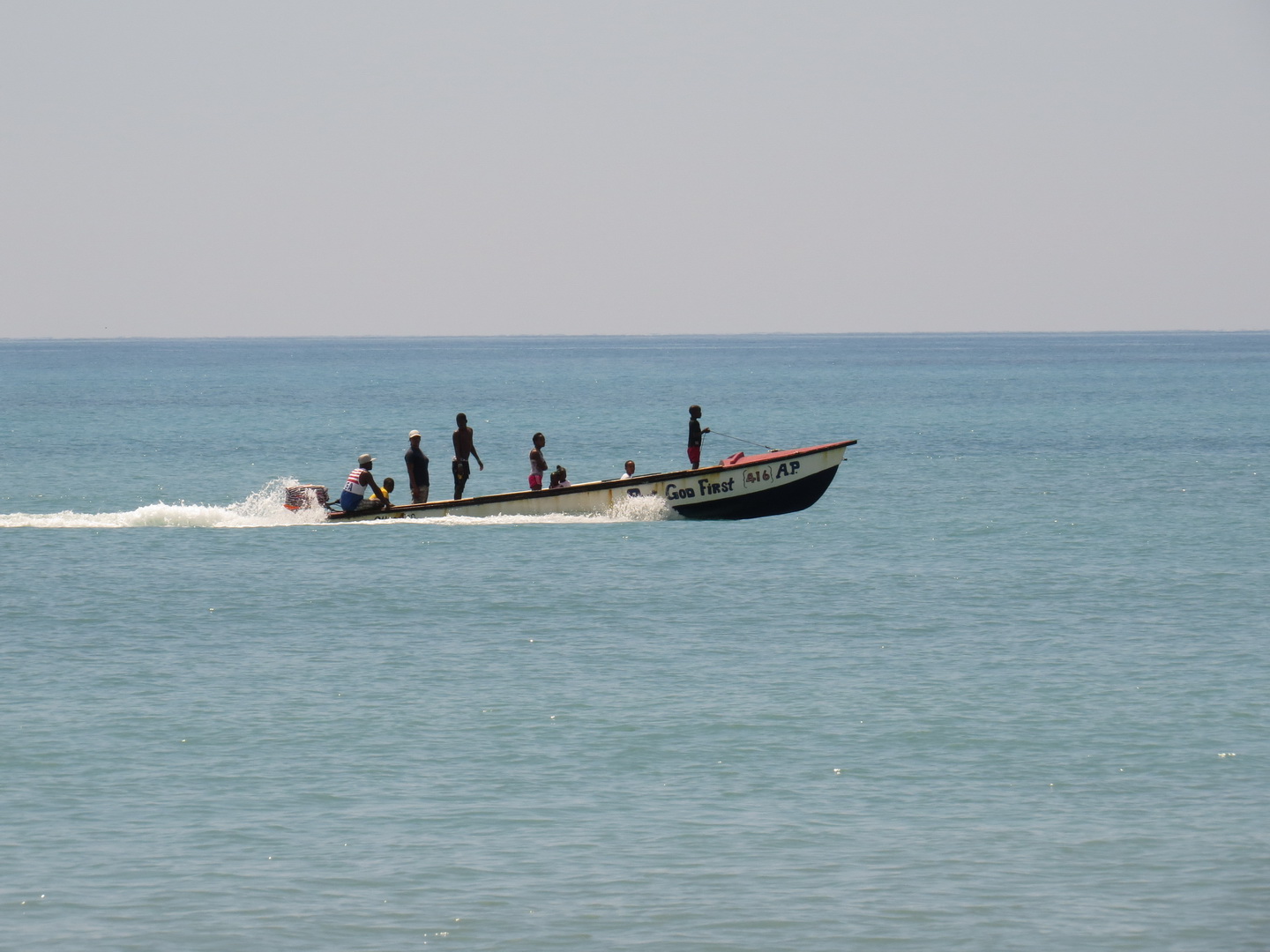
Fish boat returning
Bringing the boat in
Bringing the boat in
Fish being sold
Selling Fish
Laughing Gulls and Brown Pelicans
Magnificent Frigatebirds Brown pelicans and Laughing Gulls
Magnificent Frigatebirds Brown pelicans and Laughing Gulls
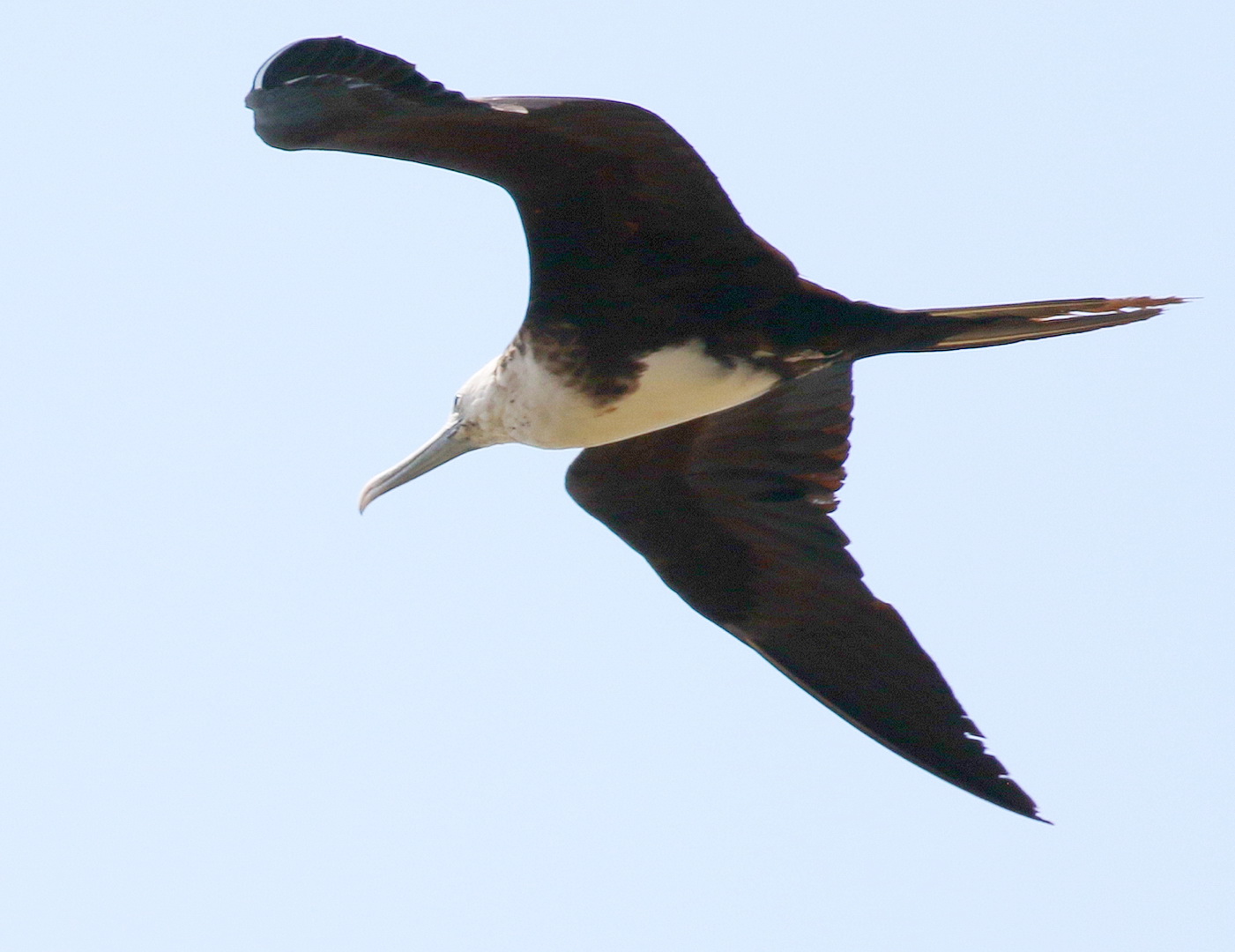
Magnificient Frigatebird
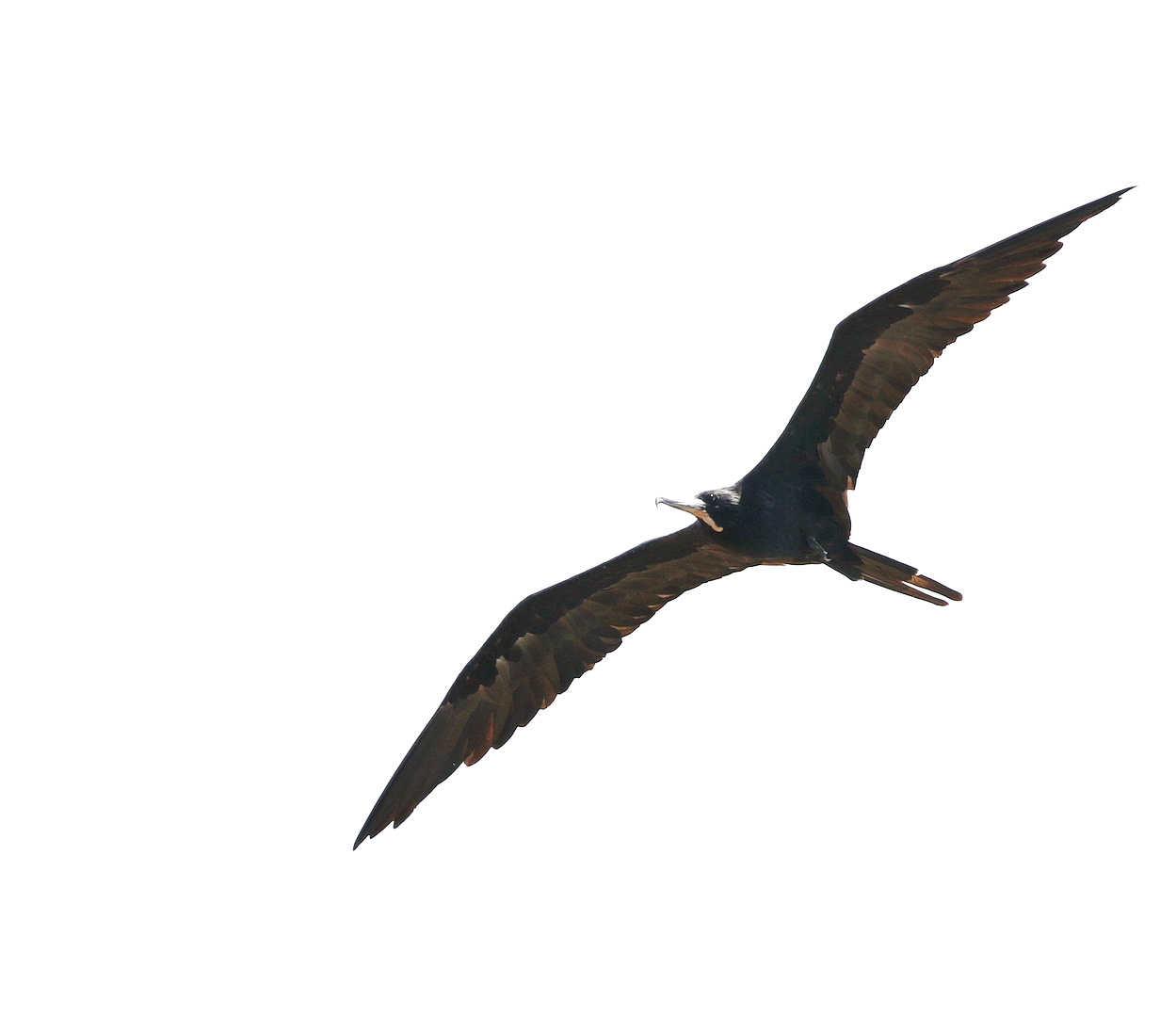
Magnificient Frigatebird – male
Magnificient Frigatebird -male
The restaurant was yet to open for lunch so we decided to take a drive further along the coast to return later for lunch. The car park was empty when we left but two hours later there were over 50 vehicles and there was no room in the restaurant. Apparently people drive the two hours from Kingston to have lunch here. We had taken a drive to see the Alligator Hole where both Alligators and Manatees are sometimes seen.
On the way to Lamorna- rough and narrow
On the way to Lamorna- rough and narrow
Alligator Hole
Alligator Hole
Alligator Hole
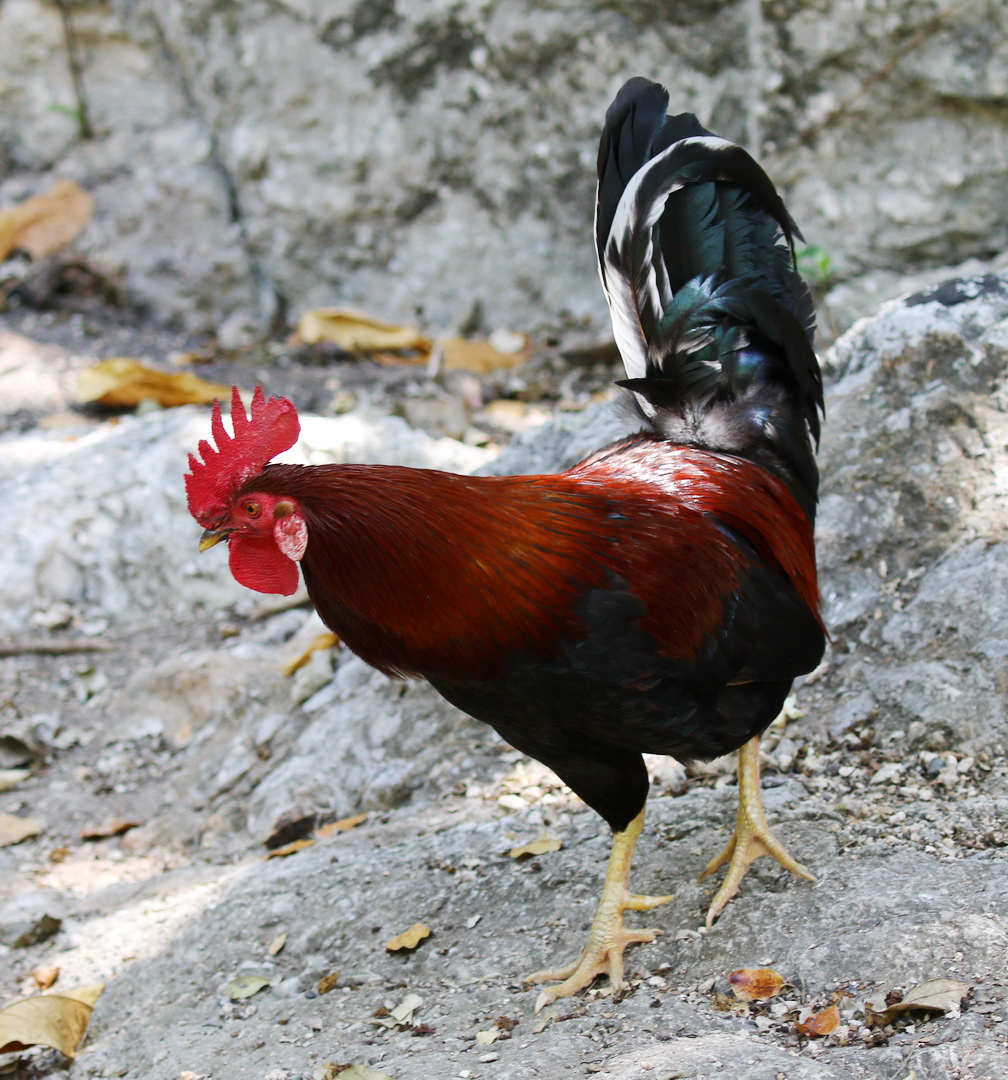
An impressive Jungle Fowl
Going round Round Hill
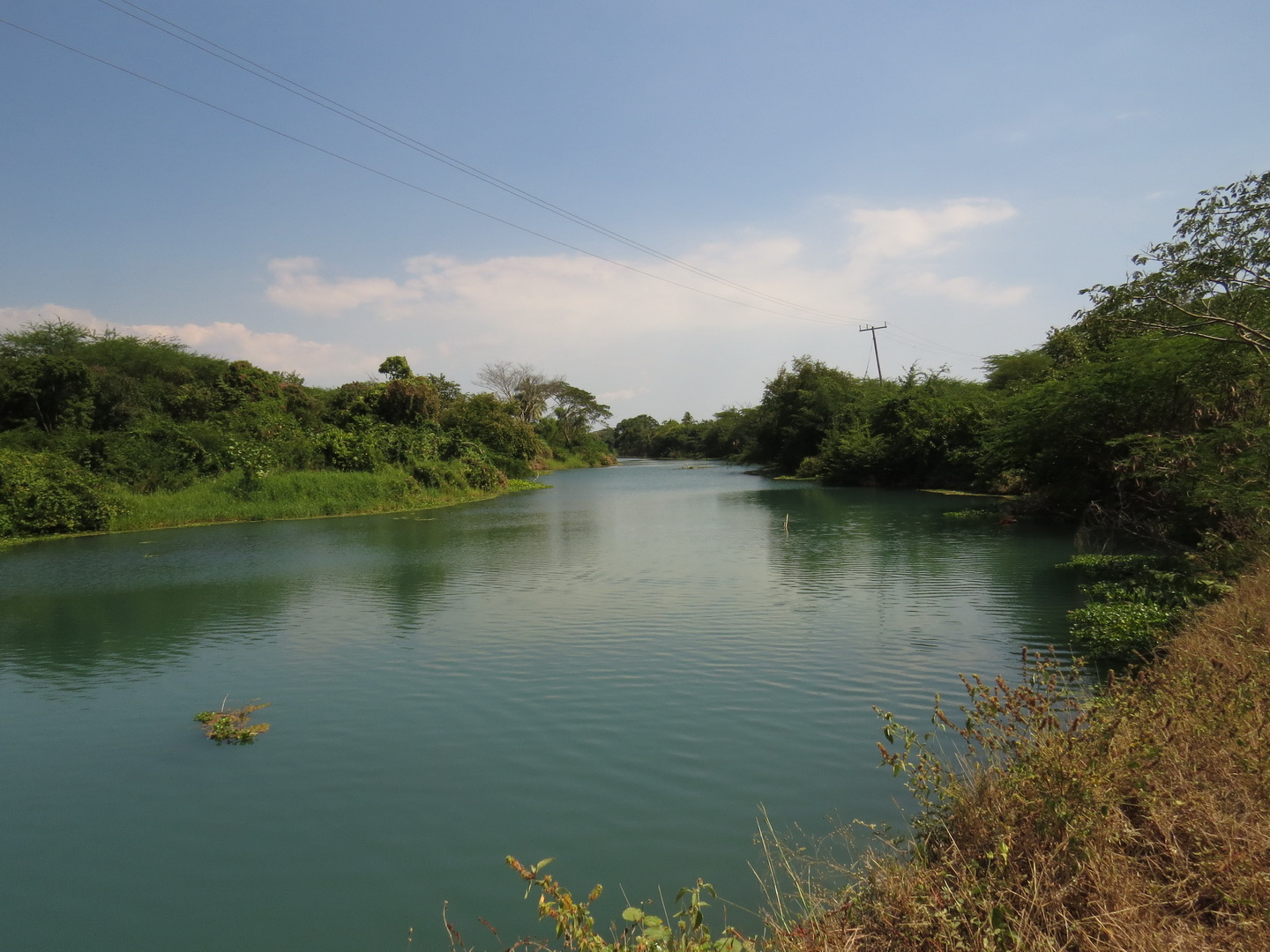
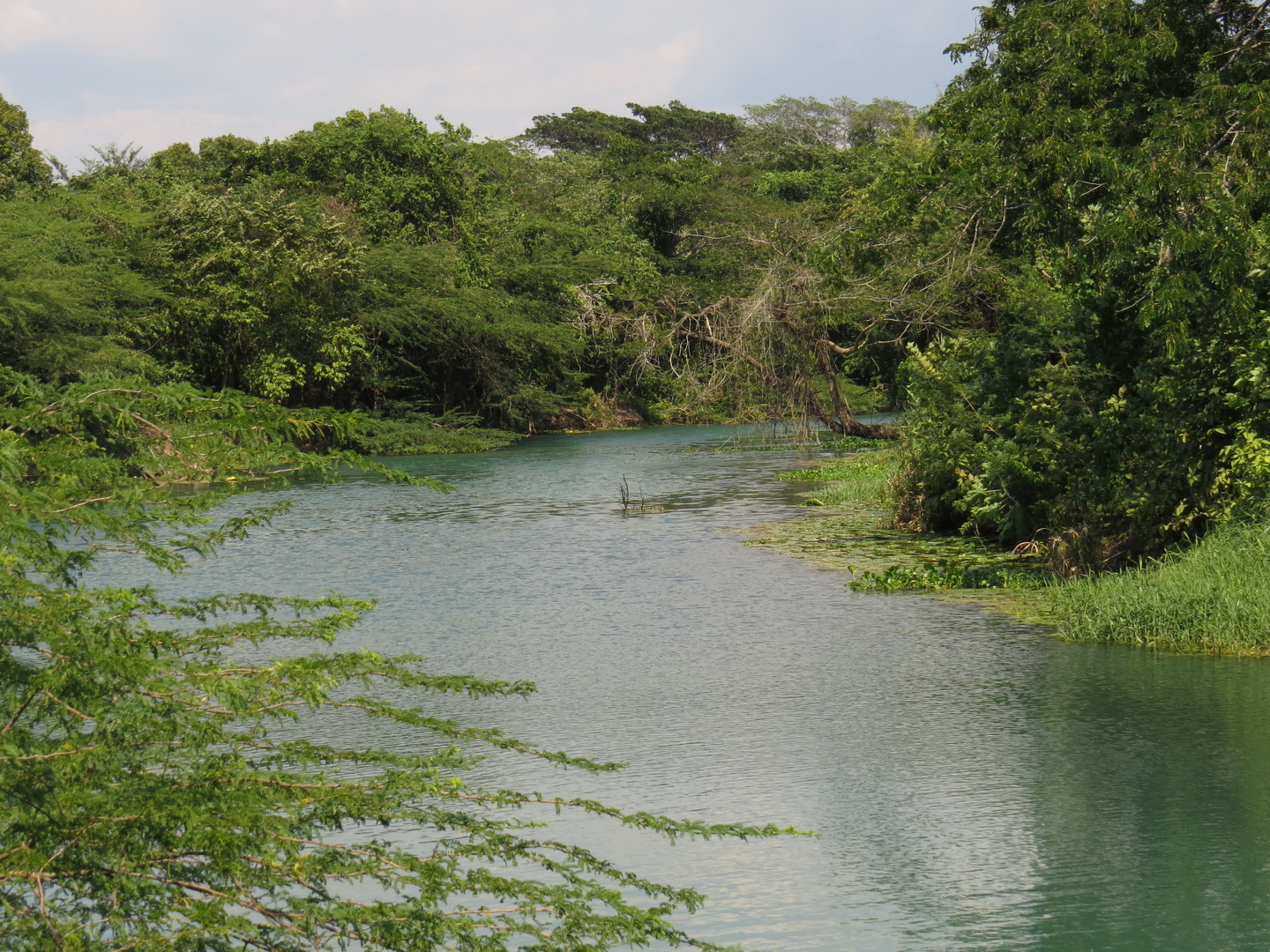
Yet another river
The next morning we left after a full breakfast and headed inland to Mandeville where I was brought up. This was nostalgia for me. Arriving early, I tried to find my way round the town which I once knew like the back of my hand.
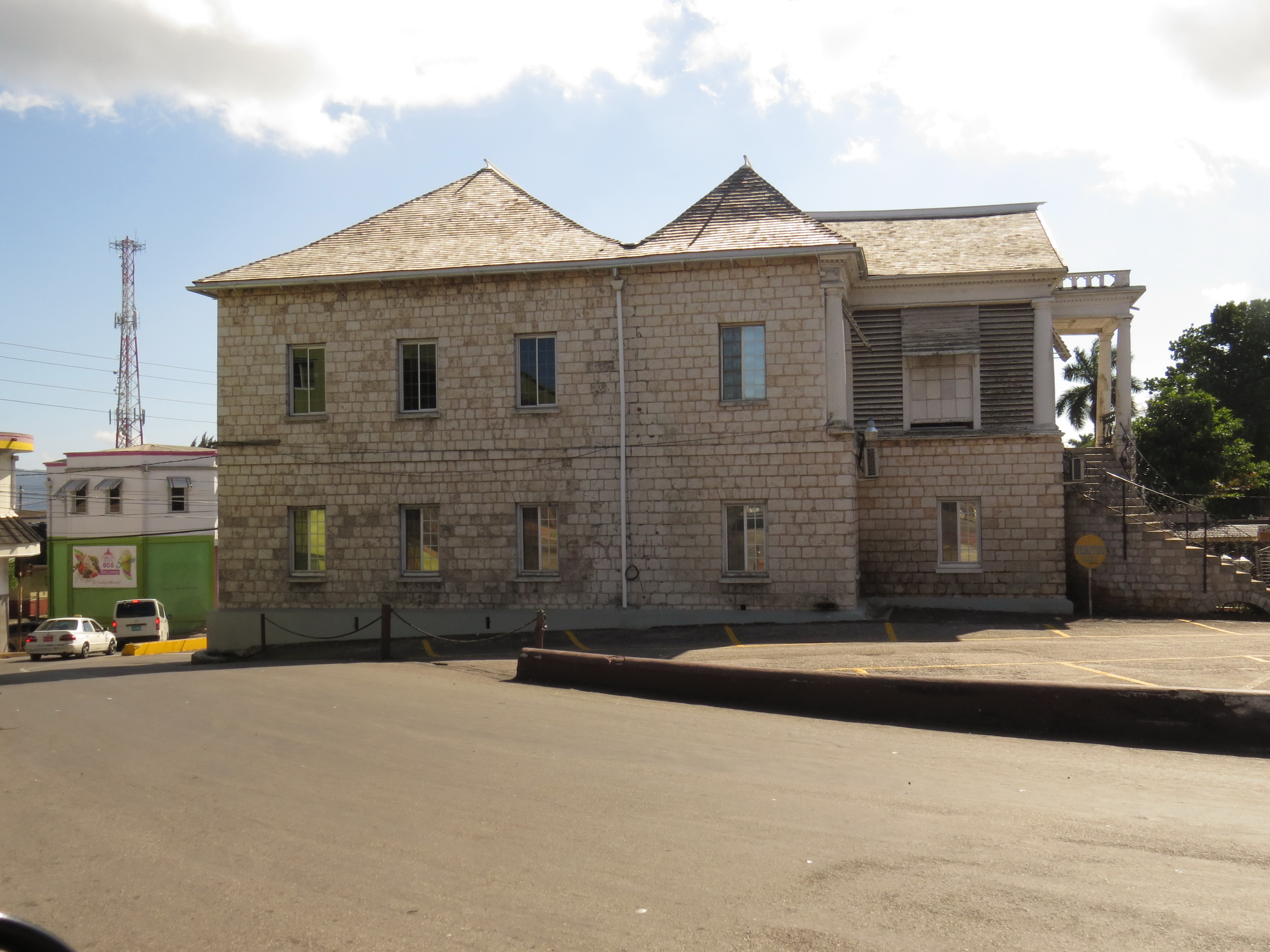
Once I got through all the new suburbs and we got into the centre, memories returned. The old market and Court House were still there but much had changed and it was hugely busy.
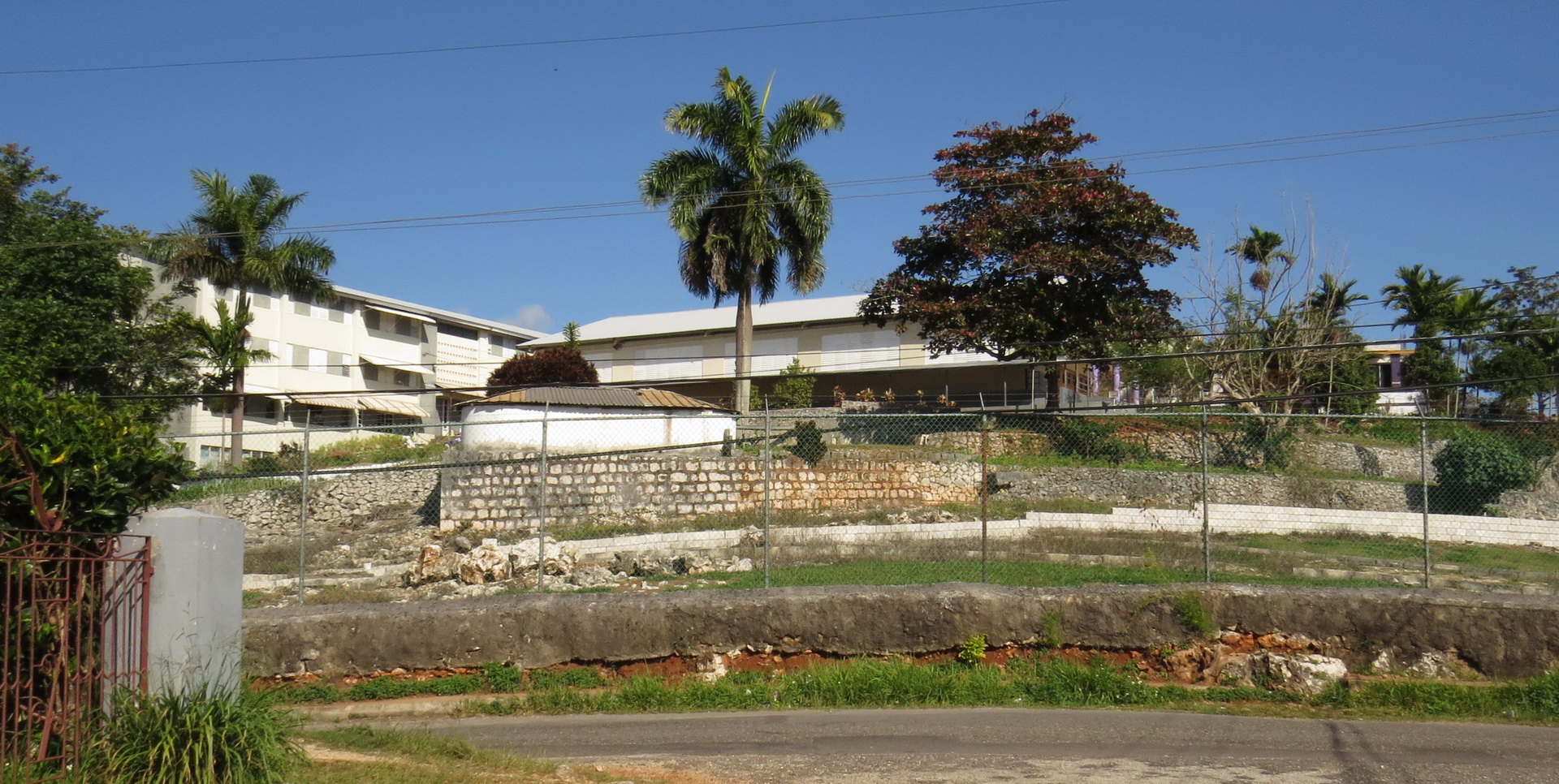
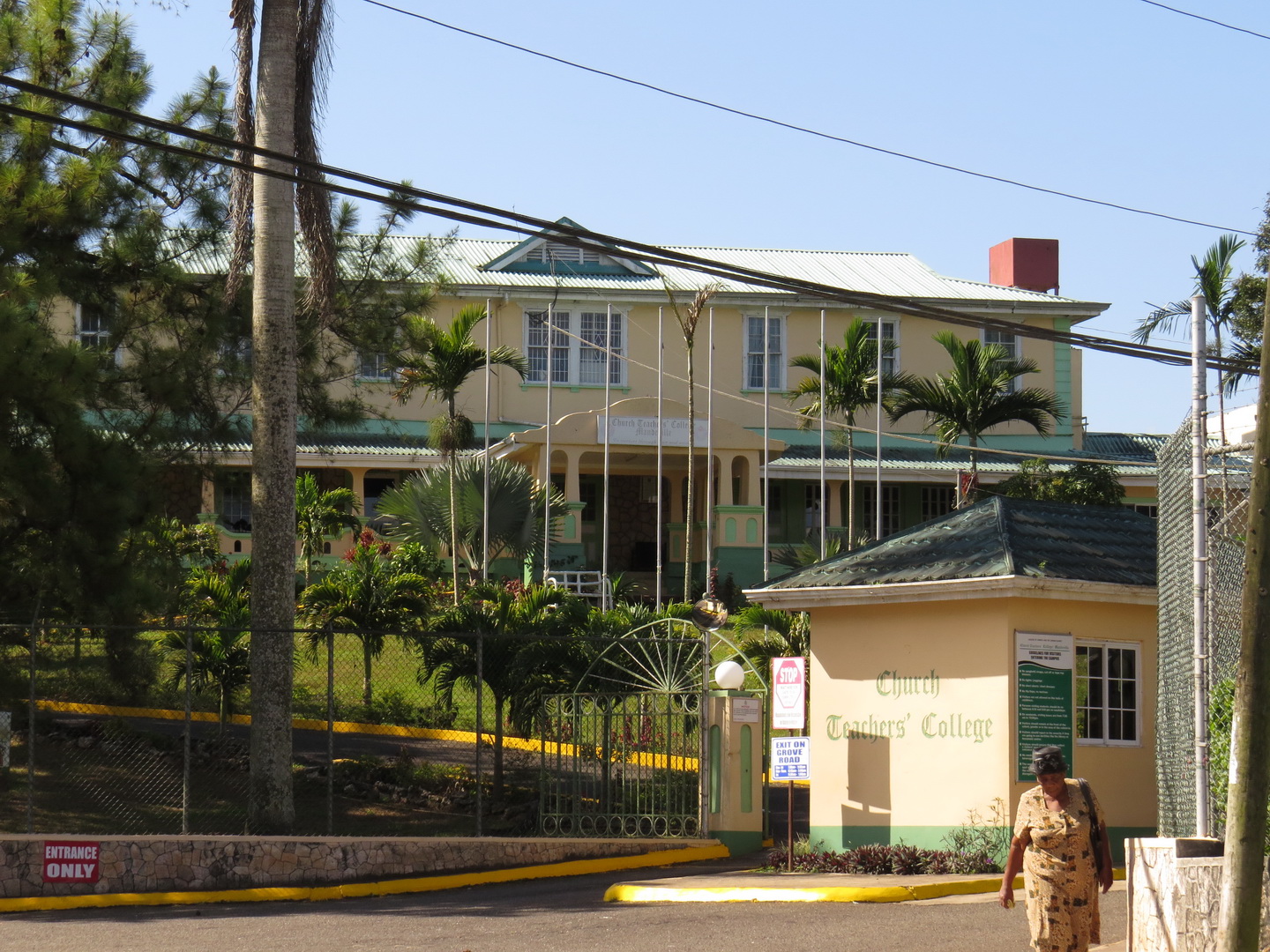
Both Cinemas had gone as well as the Manchester Clubhouse. The Mandeville Hotel was now something else – a Teacher’s Trainiing College. However my old school DeCarteret College – was still there though massively changed, as was my sisters’ old school – Bishops Girls.
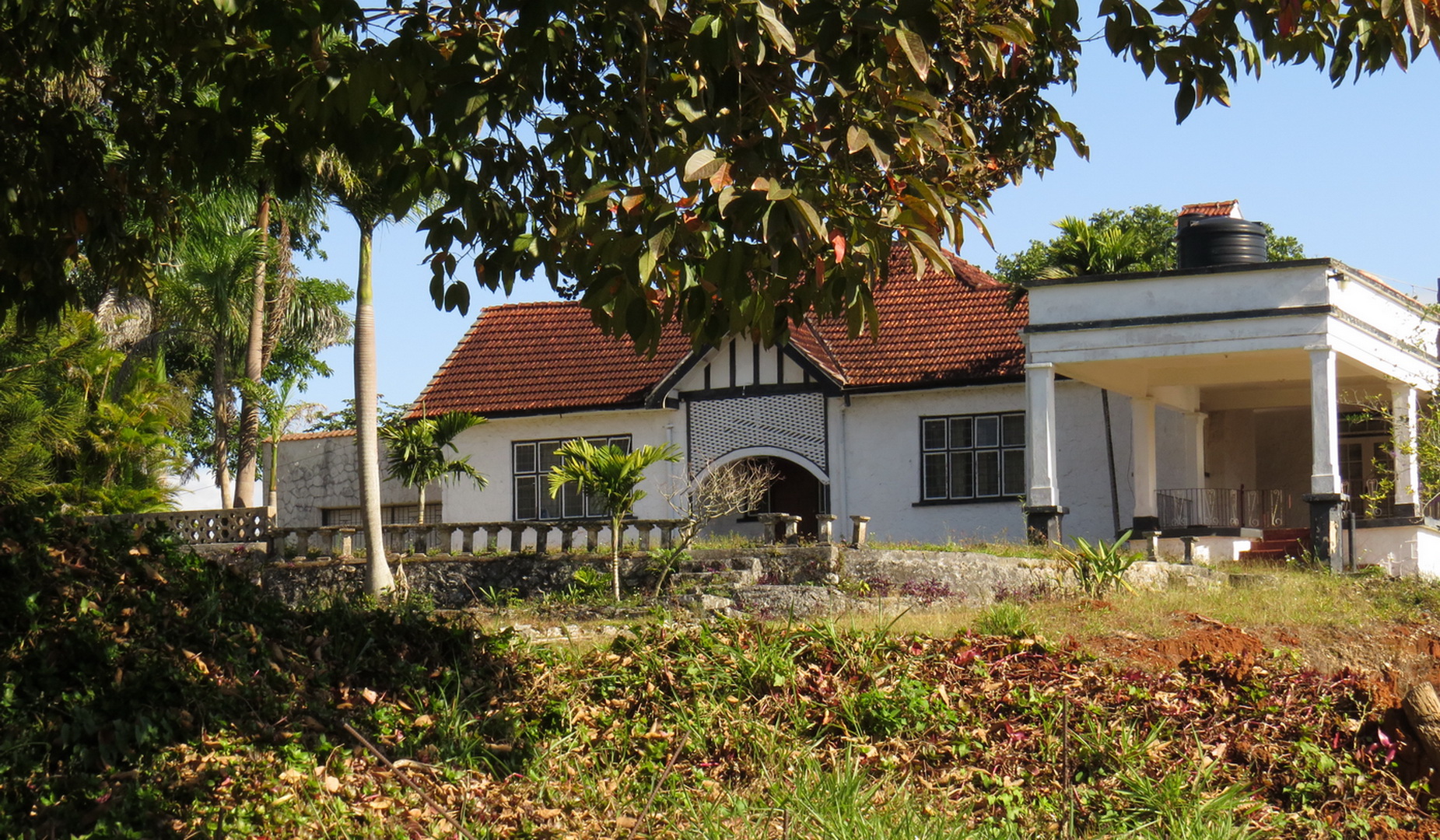
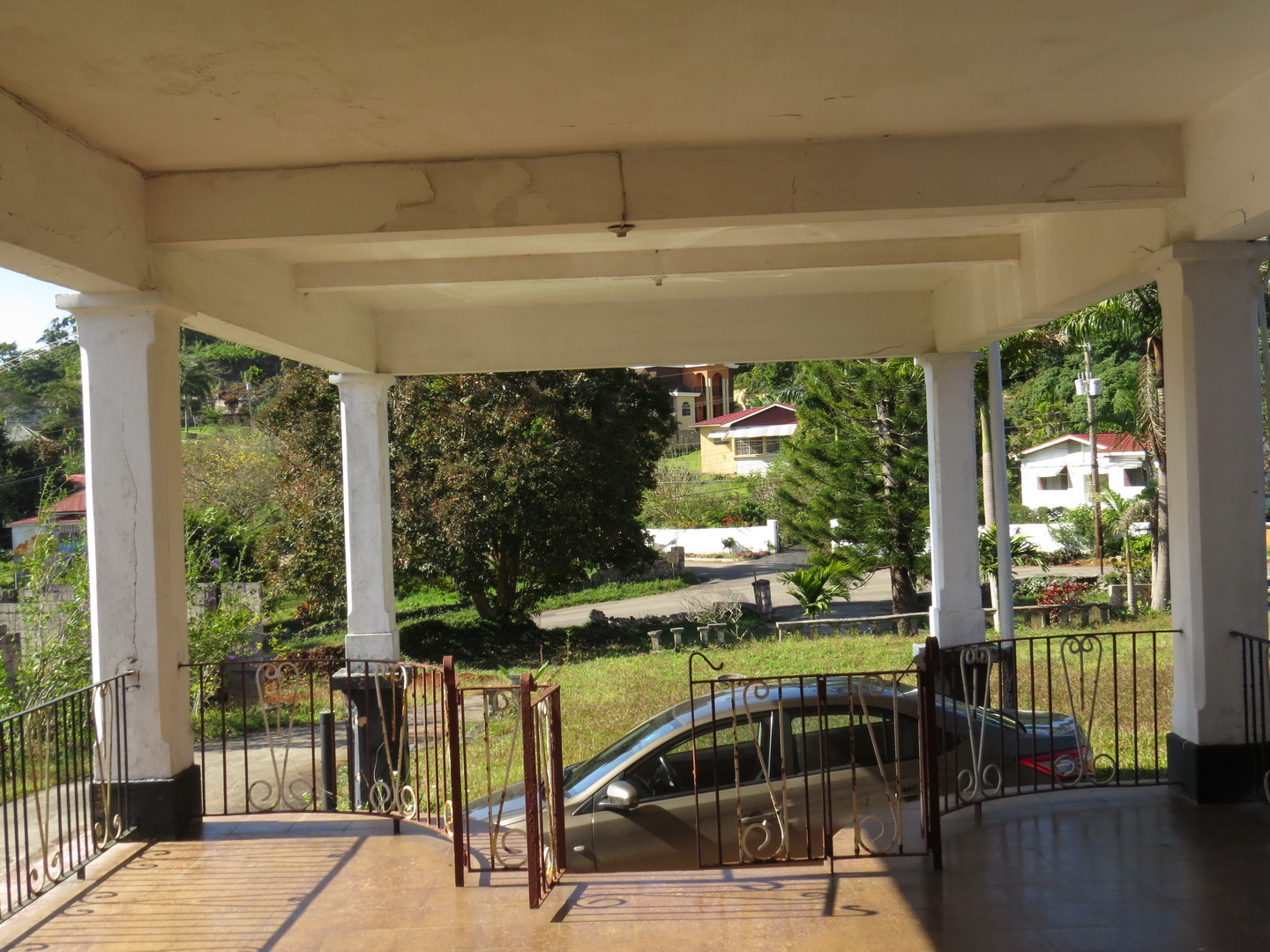
I managed to find 4 of the 6 homes we lived in. The haunted Headly House was for sale so we went in and had a look around and came back later to eat our patties on the verandah. Our first house in Villa Road was still there but refurbished, our New Green Road house was lost in a development and may have been demolished, our home in Ingleside still remained as majestic as ever, our Little Dolls house we found by chance despite being told it had been demolished and our Millais home on the way to Spur Tree was nowhere to be seen among all the new homes.
Church next to the Market
The Court House
De Carteret College rules
De Carteret College chapel
DC Playing Field
Moo Pen’s
Bishop’s Girls College
Revamped Hospital where Natasha was born
Headly House, Grove Road
Headly House, Grove Road
Headly House, Grove Road
Our Ingleside Home
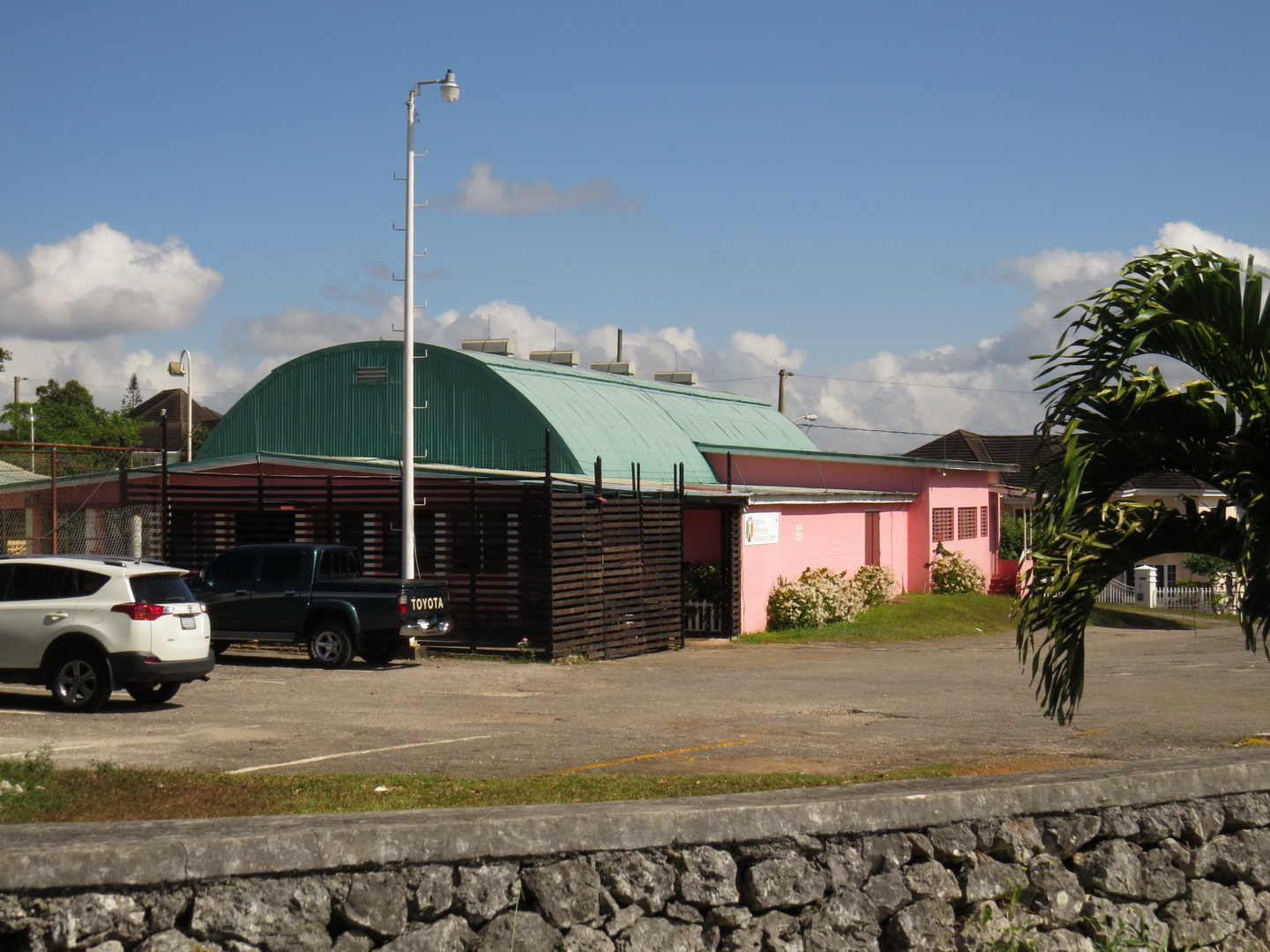
The Nissan Hut in Ingleside
The old Mandeville Hotel
Villa Road our first home in Mandeville
The Victoria, Mandeville- our guest house
Yet another Ganja house seen in the hills as we approached Mandeville
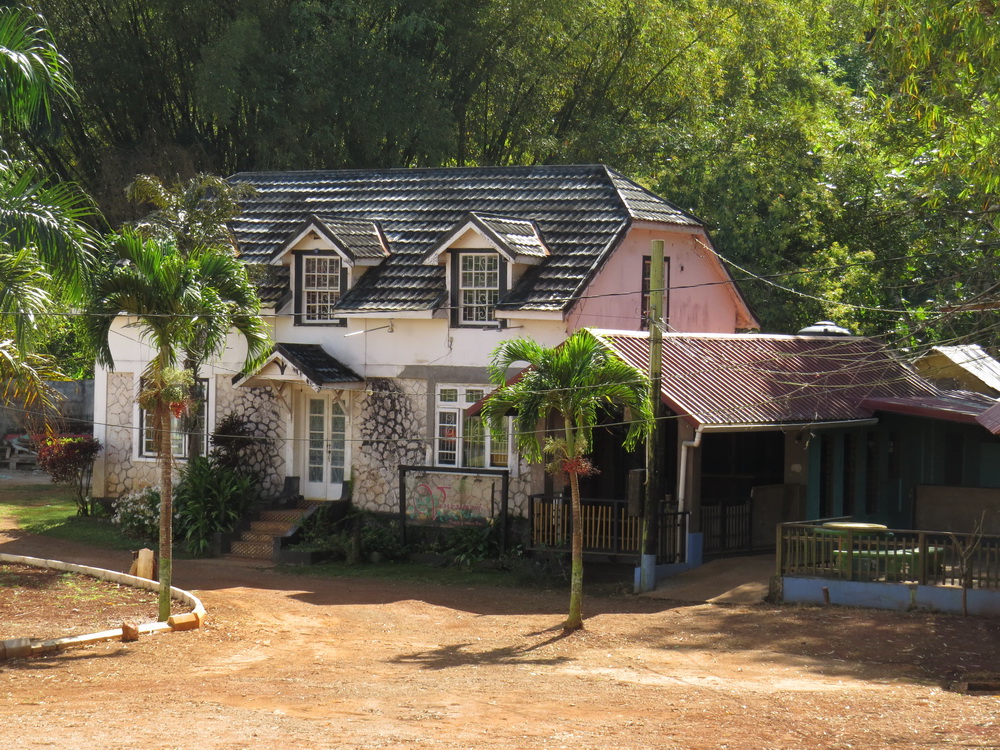
The Dolls House
Having done my trip into the past we checked into our guest house – a rather grand home that had been refurbished in modern fashion. Airbnb had given us the wrong street number and it was only by chance that I recognised it from their photos. Of course this is where we were meant to meet up with Bruce and Patti but they never found it for the same reason.
The Victoria, Mandeville- our guest house
Later we went back into Mandeville to see the “new” Manchester Golf Club. The golf course looked good, the tennis courts and pool unused. To cap it all the clubhouse was atrocious. The place was empty despite it being a weekend. We were told however that our friends had been waiting there for us and that we had just missed them. Fortunately we met up at MoBay airport as they were leaving at the same time as us.
The old third hole at Manchester Golf Club
Bamboo Hole, Manchester Golf Club
My friend Tony Goffe was difficult to find – much toing and froing down the same road and finally after a call which was answered we were able to make contact and spend some time with him.
Early the next day we headed for Marshall’s Pen – a homestead recommended by Fatbirder as a place for unusual birds. After a rocky driveway to the homestead we found no one there (no wonder there was no reply to my calls). The whole place seemed unmanaged. However we did see a few birds in the time we were there – a Jamaican Euphonia being the most impressive.
Our final journey was again cross country back to the north coast driving alongside the Cockpit Country. Probably 60 kms but taking us over 2 hours because of its hilly nature and climb. We did stop here and there to enjoy the birds, the shacks and scenery.
Least GrebeGlossy Ibis
Church in the middle of nowhere
Cockpit Country
House on its last legs
Cockpit Country
Eventually we reached our final guest house – managed by a very young attentive chap who works in the tourism business.
On our final night we found another beach front restaurant to have dinner, enjoy the sunset and the birds. Whenever we were close to the sea 2 birds always seemed to be present – the Magnificient Frigatebird and the Brown Pelican. The former aloof and the latter up to its fishing antics – much like a Gannet but on a 45% glide angle coming to a sudden stop as its beak went below water.
Last Supper
Last Supper
Salt Marsh
Sea
Fare thee well
From a birding perspective we had a great time identifying 94 species – of which 3 were only heard. Click here for our list.Of the 28 endemics we saw 25 and heard 1 – Click here to see the list.
Despite all the changes, Jamaica was all as I remembered – the friendly people
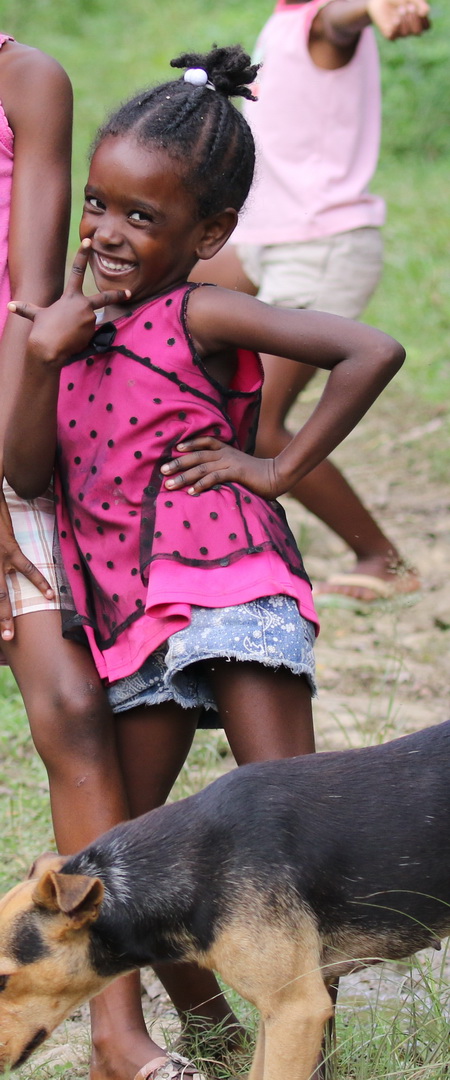
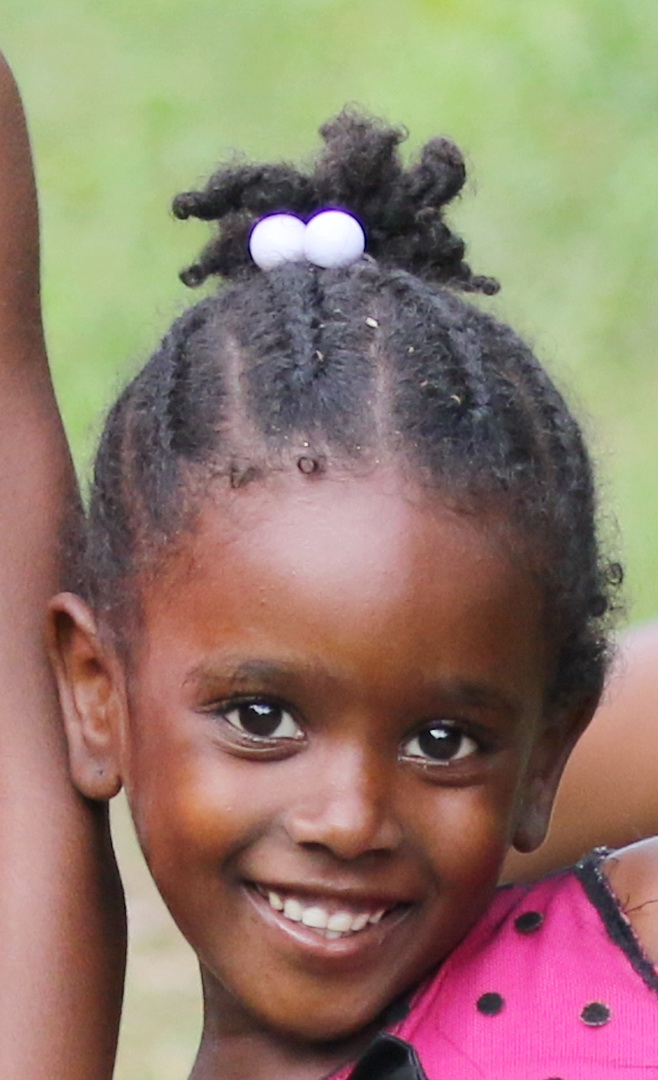
Cutie
Jamaican Cutie
Happy Girl
the excellent Red Stripe beer, the scenic and lush countryside, the sumptious patties and oatie eatie apples,
Oatie Eetie Apples
and breakfasts of salt fish and ackee with boiled green bananas, yams and breadfruit chips.
For our last weekend outing for the year we went to Sand Forest Lodge in Hluhluwe . We had a great turn out – eleven in total.
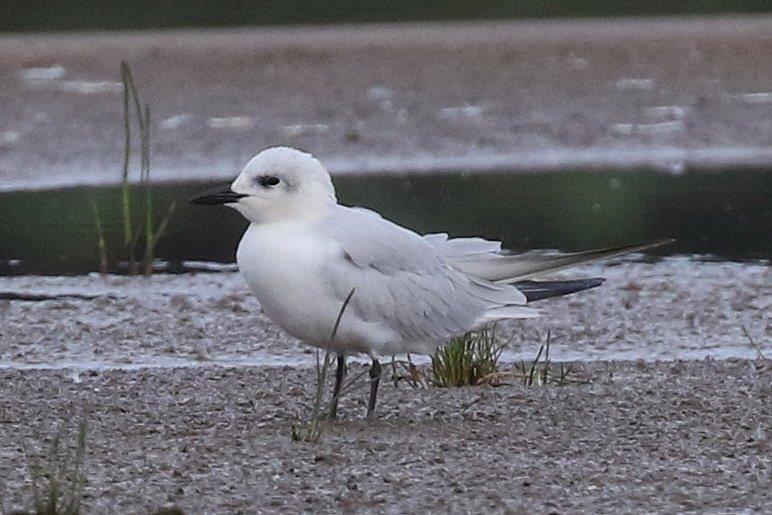
A few of us stopped at St Lucia on Thursday on our way to see if we could find the Gull-billed Tern, Sooty Tern and the Eurasian Oystercatcher who have been hanging around for a while and lucky for us we all saw the two Terns.
Sooty Tern – John Bevan
On Friday after we had all set up camp we gathered for a braai catching up and planning for Saturday.
Starting off at six in the morning in very rainy miserable weather we set off through the forest expecting to see nothing. After walking for about an hour we had only heard and seen a few birds. Narina Trogans were calling but although we got close we did not manage to get a view of them.
We perservered entering the open grassland area and it paid off. Seeing European Bee-eater, White-eared Barbet, Neergaard’s, Purple-banded and Scarlet-chested Sunbirds, Narina Trogon and more……………
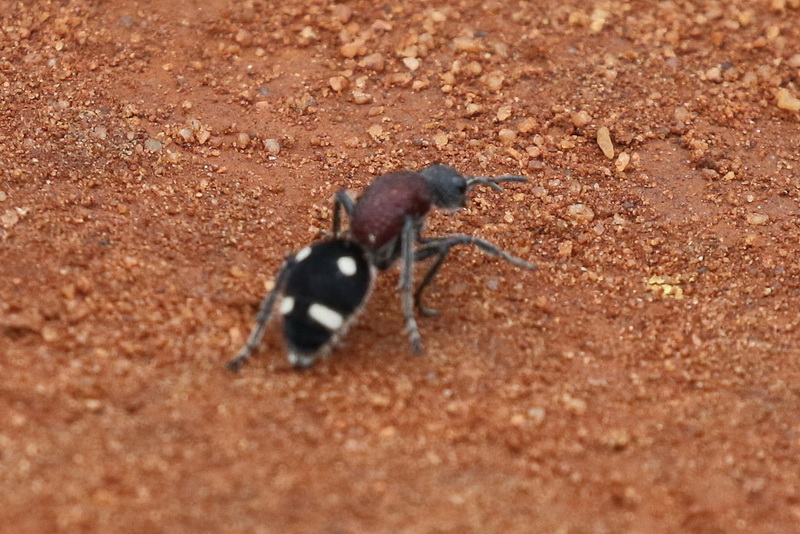
Some other sightings of interest. A Baobab in the garden was flowering. An unknown caterpillar and a sunbird nest which we would like identified. It was thought by some as a Neergaard’s Sunbird nest. And a spotted-tailed Ant.
Baobab Flower – Paul Bartho
Which Sunbird Nest – Paul Bartho
Caterpillar – Paul Bartho
Velvet Ant (wasp) – Paul Bartho
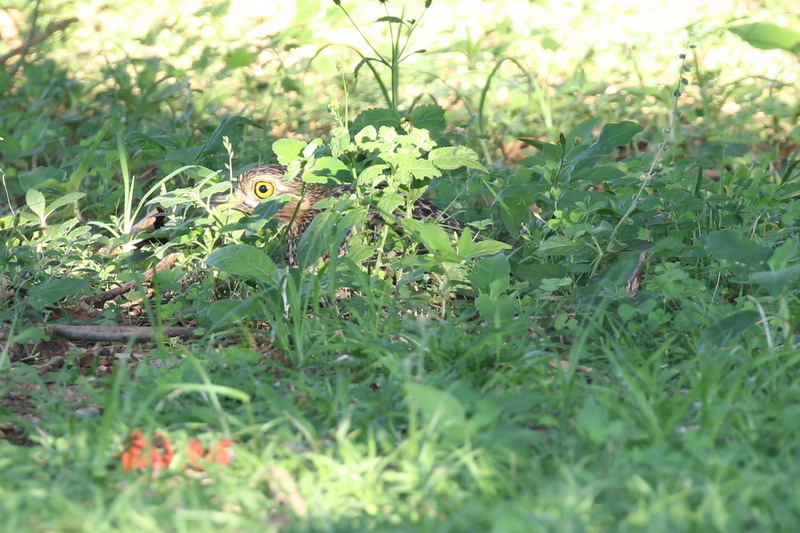
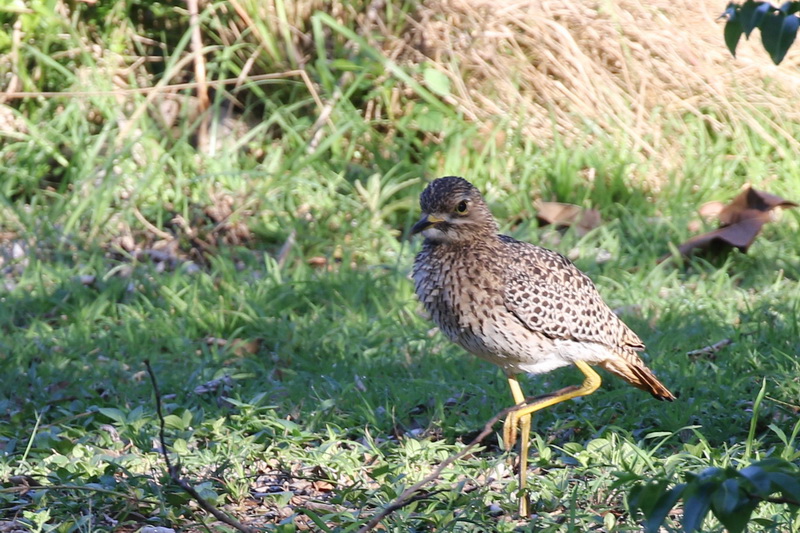
Spotted Thick-knees were nesting on the grass in front of the chalets.
Spotted Thick-knees – Paul Bartho
Spotted Thick-knee well camourflaged – Paul Bartho
Spotted Thick-knee – Paul Bartho
Here are some of the birds seen at Sand Forest Lodge.
Yellow-rumped Tinkerbird – Paul Bartho
Woolly-necked Stork – Paul Bartho
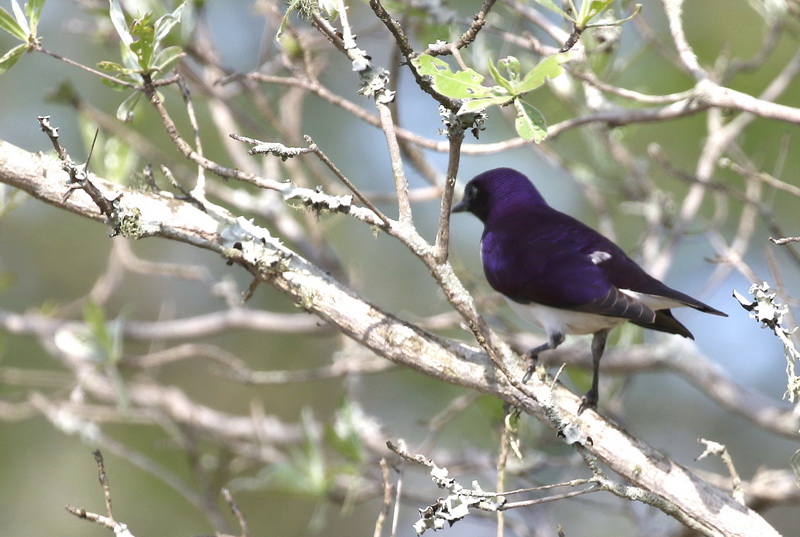
Violet-backed Starling – Paul Bartho
Scarlet-chested Sunbird – Paul Bartho
Spotted Thick-knee well camourflaged – Paul Bartho
Spotted Thick-knee – Paul Bartho
Spotted Thick-knees – Paul Bartho
Spotted Flycatcher – Paul Bartho
Spotted Flycatcher – Paul Bartho
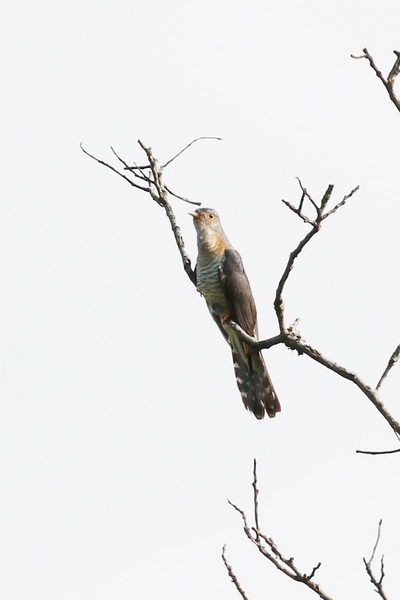
Red-chested Cuckoo – Paul Bartho
Red-billed Firefinch – Paul Bartho
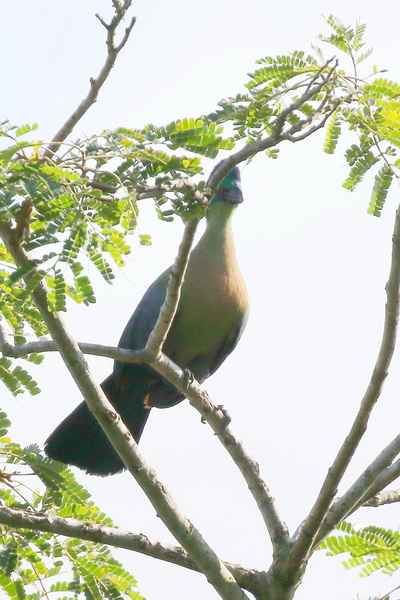
Purple-crested Turaco – Paul Bartho
Grey Waxbill – Paul Bartho
Grey Waxbill – Paul Bartho
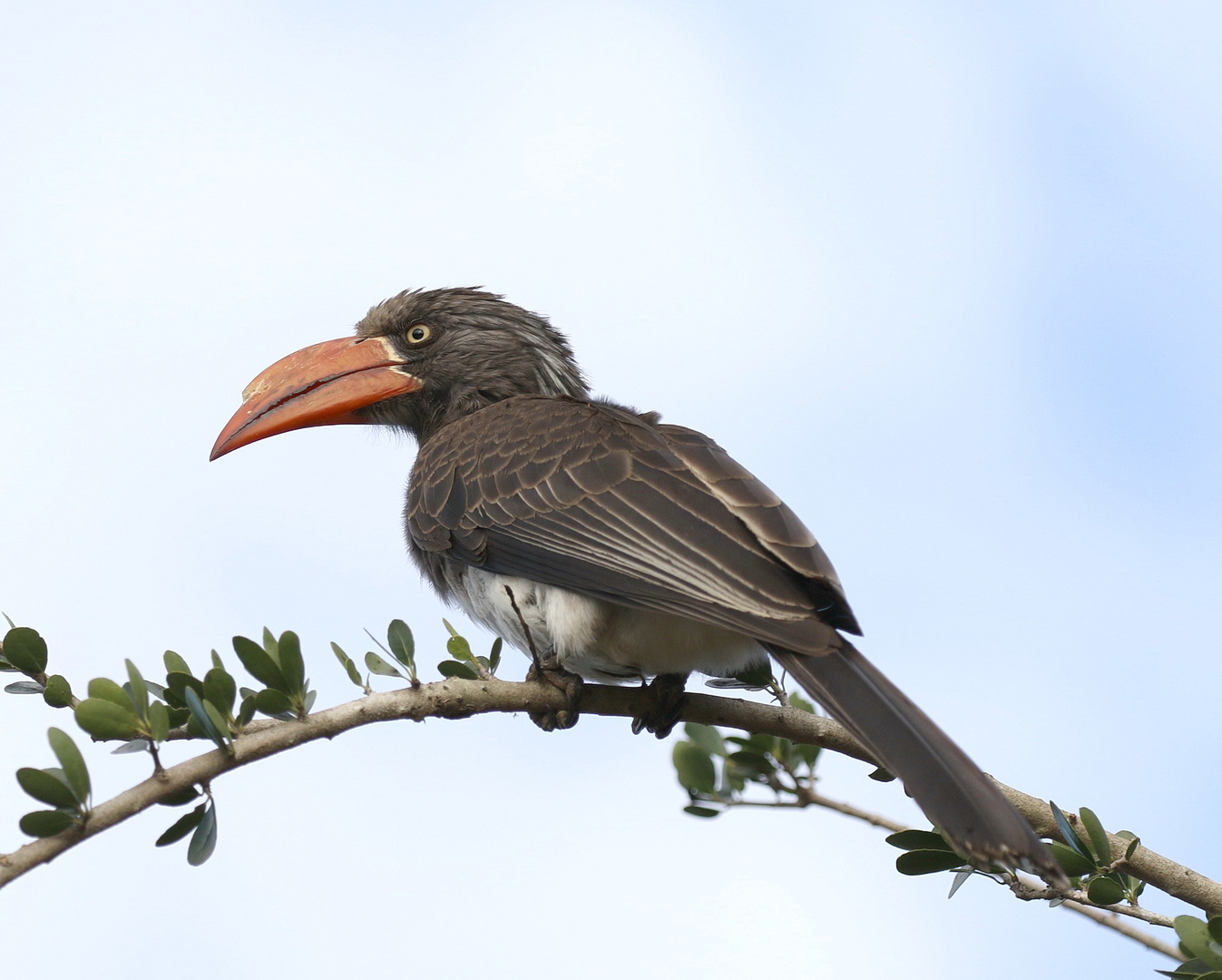
Crowned Hornbill – Paul Bartho
Crowned Hornbill- John Bevan
Brown-hooded Kingfisher – John Bevan
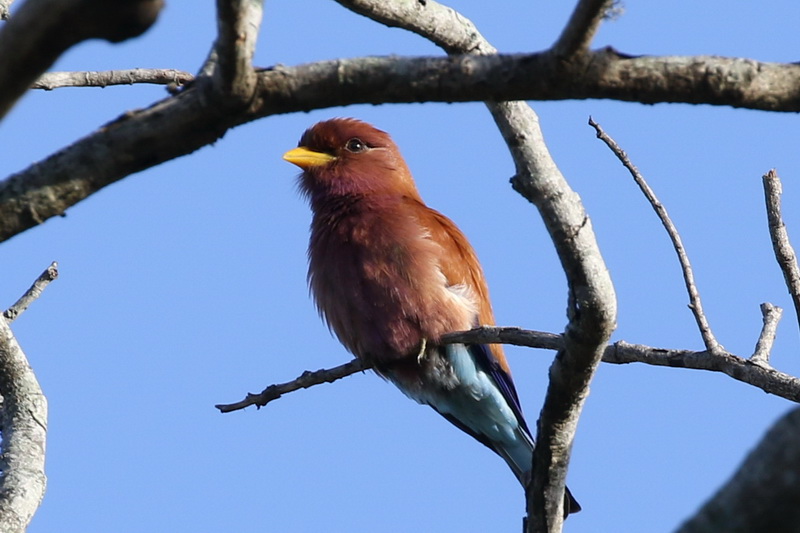
Broad-billed Roller – John Bevan
Broad-billed Roller – Paul Bartho
Broad-billed Roller – Paul Bartho
After breakfast and tea time we set off to False Bay where we had great sightings of hundreds of Greater Flamingos and White-breasted Comorants as well as Whimbrel and other waders.
Common Whimbrel – Paul Bartho
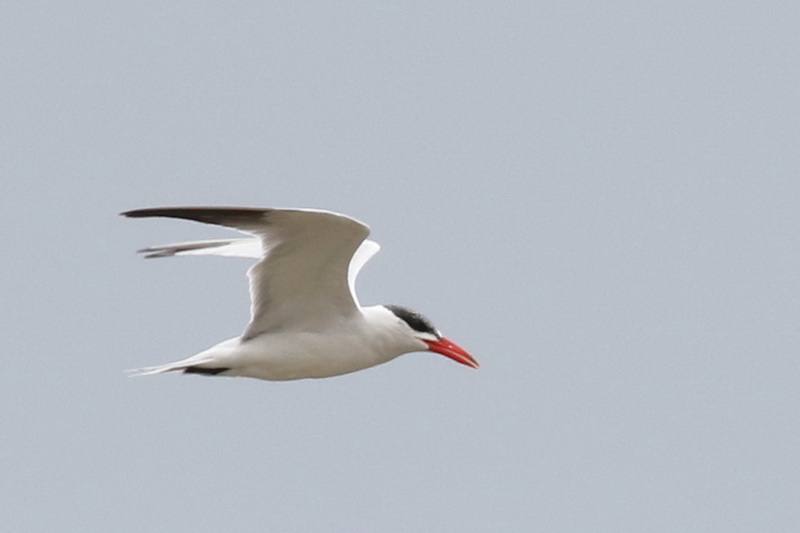
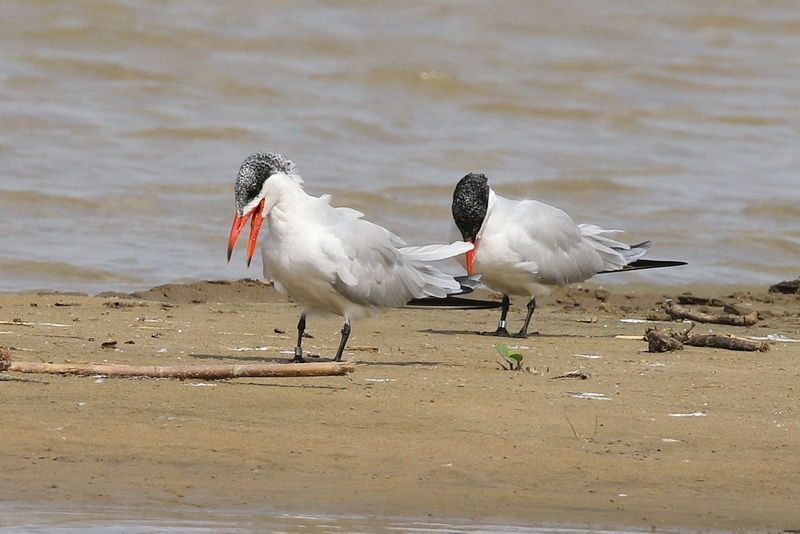
Caspian Tern- Paul Bartho
Caspian Tern – Paul Bartho
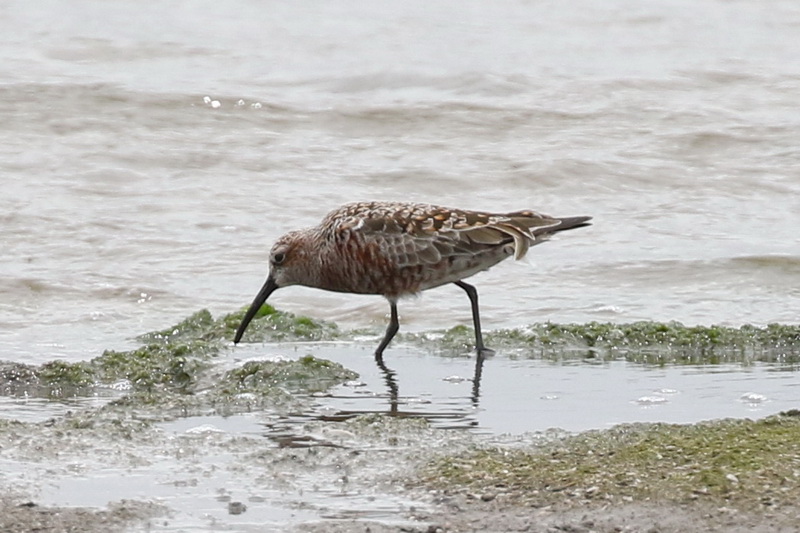
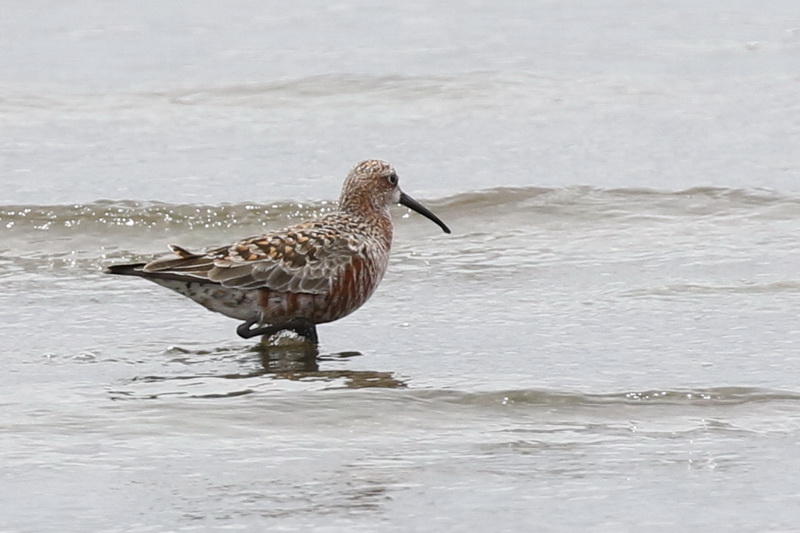
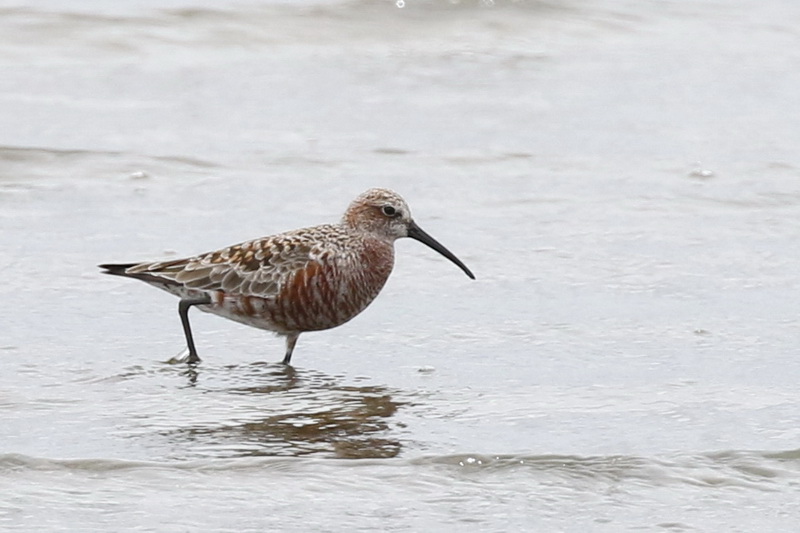
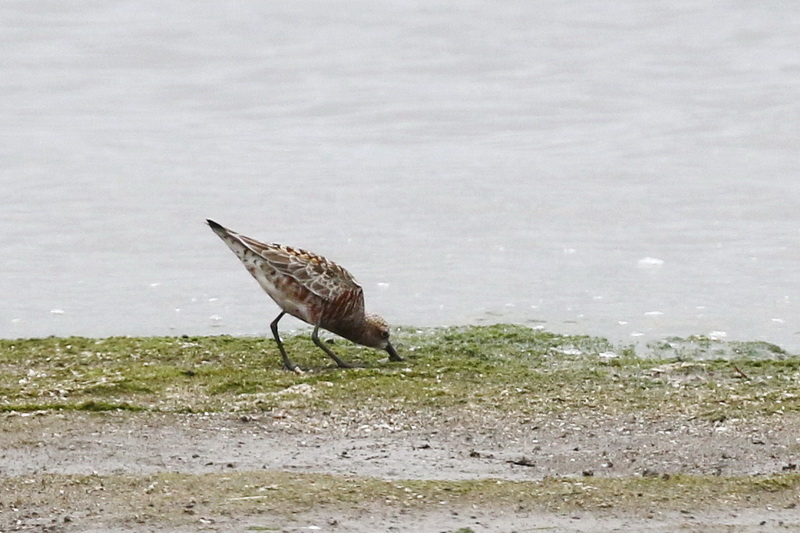
We were excited to find a smallish dark wader which had us confused for a while until we realised it was still in breeding plumage. A Curlew Sandpiper [we always hope to find something rare] but this one was still in breeding plumage.
2 Curlew Sandpipers – Paul Bartho
Curlew Sandpiper – Paul Bartho
Curlew Sandpiper – Paul Bartho
Curlew Sandpiper – Paul Bartho
Curlew Sandpiper – Paul Bartho
After Lunch and a short rest we hit Muzi Pan – an hour away.
Black Heron on the other side of the pan, Ruff, a flock of Glossy Ibis, Burchell’s Coucal, Squacco Heron and other waders- Common and Curlew Sandpipers, Little Stint, Black-winged Stilts among them.
Black Heron – fishing – Paul Bartho
Burchell’s Coucal – John Bevan
Sunday morning we birded on the property again picking up 102 birds for the weekend. This is Cheryl Bevan’s Bird List:
Prior to going on the BLPN Weekend Outing to Sand Forest Lodge, Sally and I decided to spend a couple of nights camping at Mkuze.
The campsite has a lovely layout with two ablution blocks. It’s main issue is lack of maintenance and site management. The other issue is that they charge for 3 people minimum, making the cost for two people prohibitive unless they are offering discounts.
Anyway we enjoyed our two night stay despite no water on the last morning.
Candy-striped Crinum Lilies
All the hides were open but there was little water at the hides except those at Nsumo Pan and kuMasinga.
Anyone wishing to identify this tree? It’s fruit is the size of a Gooseberry and yellow/orange in colour.
Mystery Tree
Mystery Tree
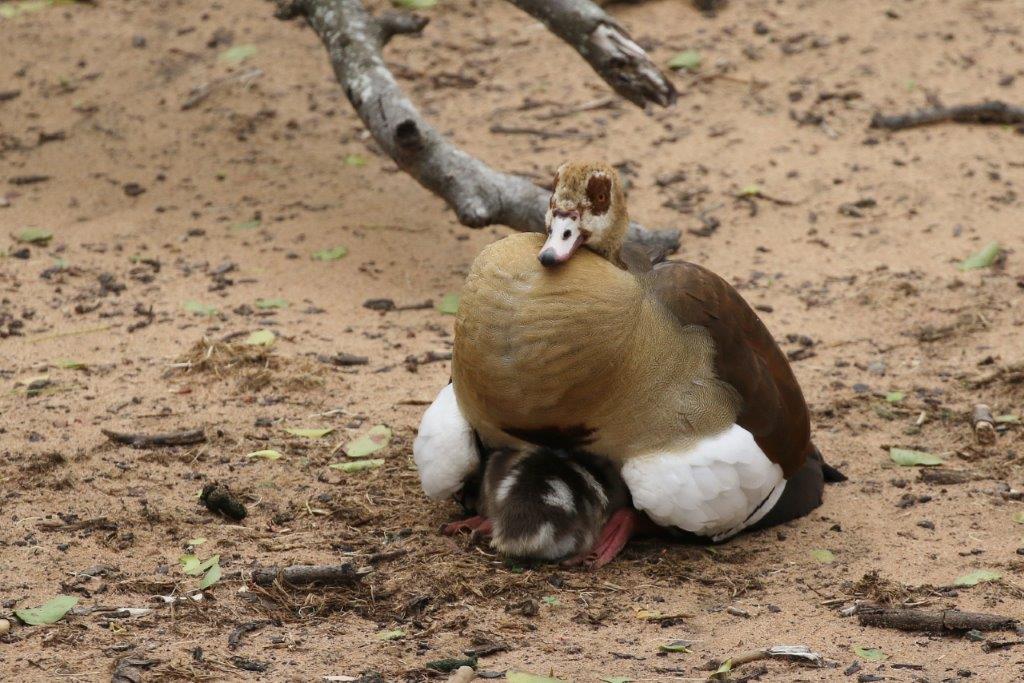
KuMasinga was quiet both times we visited. However there was a pair of Egyptian Geese with 8 goslings wandering about near the water. What was interesting was to see all 8 goslings (at this stage no longer small chicks) snuggling together completely under mother goose. Not sure how she managed it.
Egyptian Goslings
Egyptian Goose and 8 Goslings
Egyptian Goose and 8 Goslings
Also seen at kuMasinga hide were:
Terrapins sunbathing
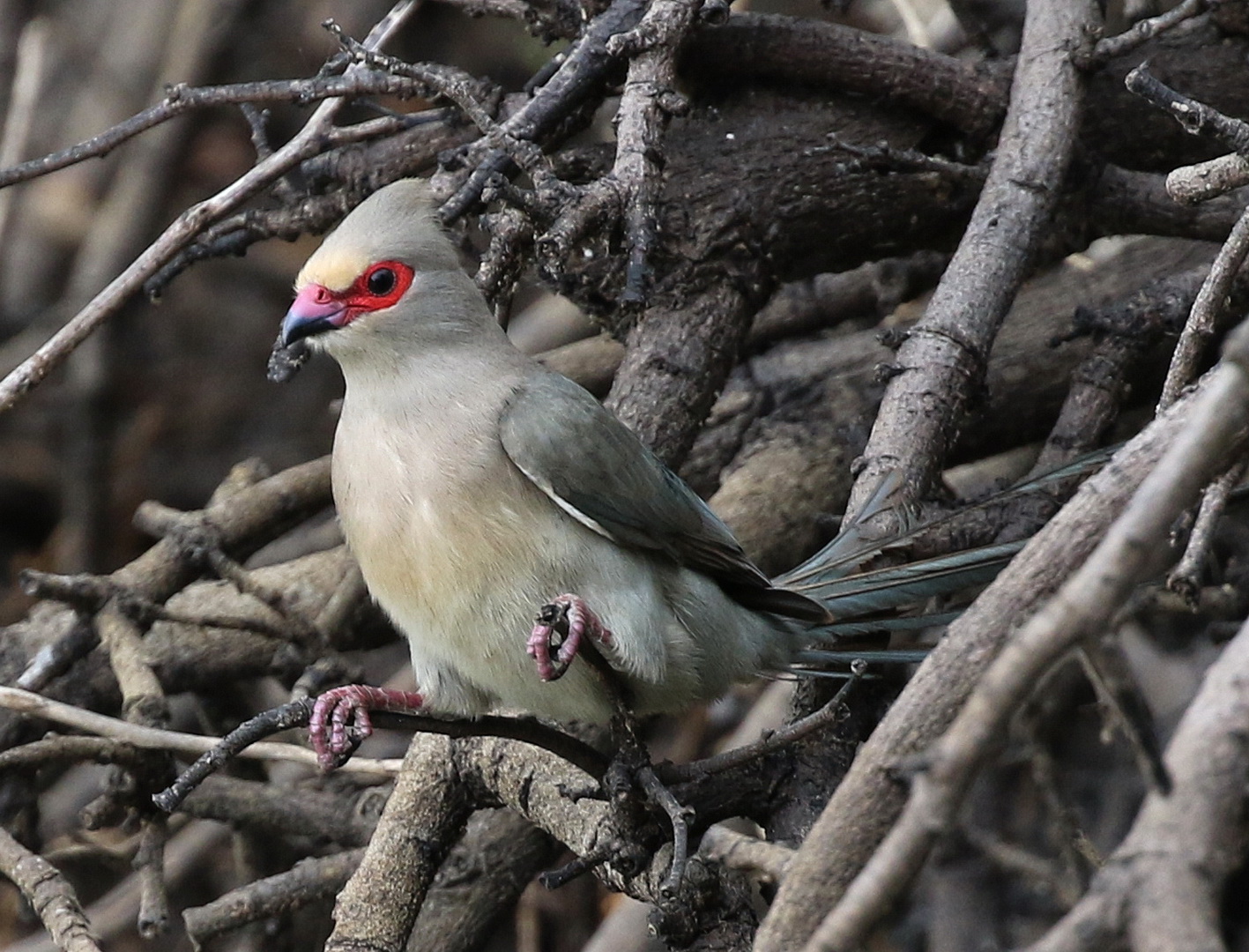
Red-faced Mousebird
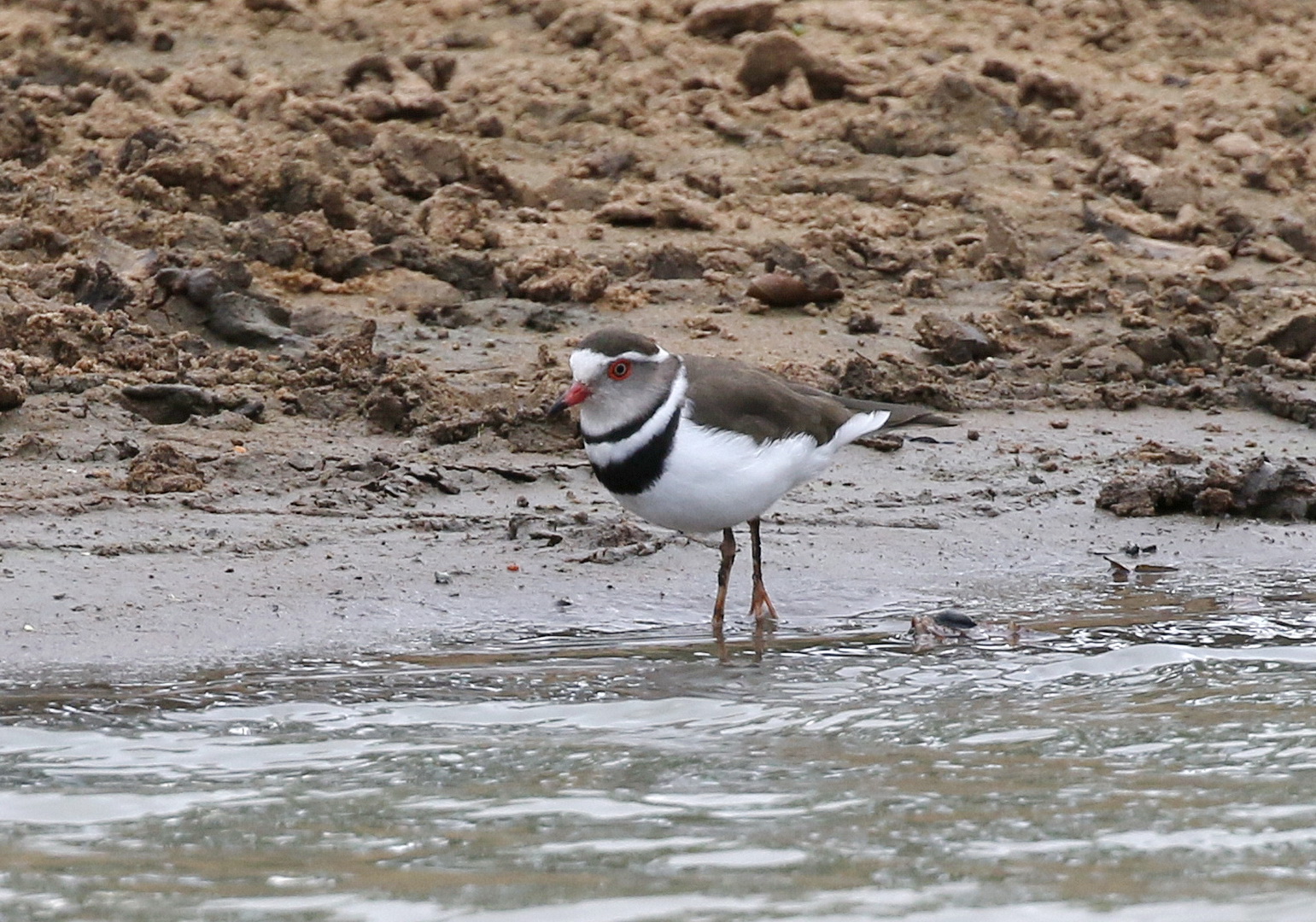
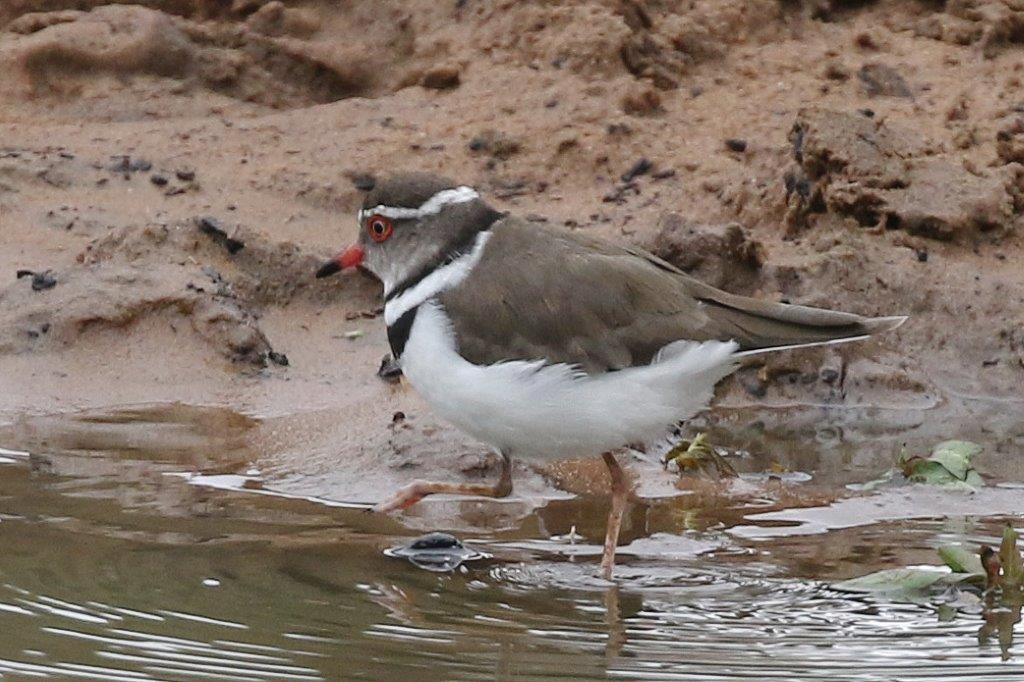
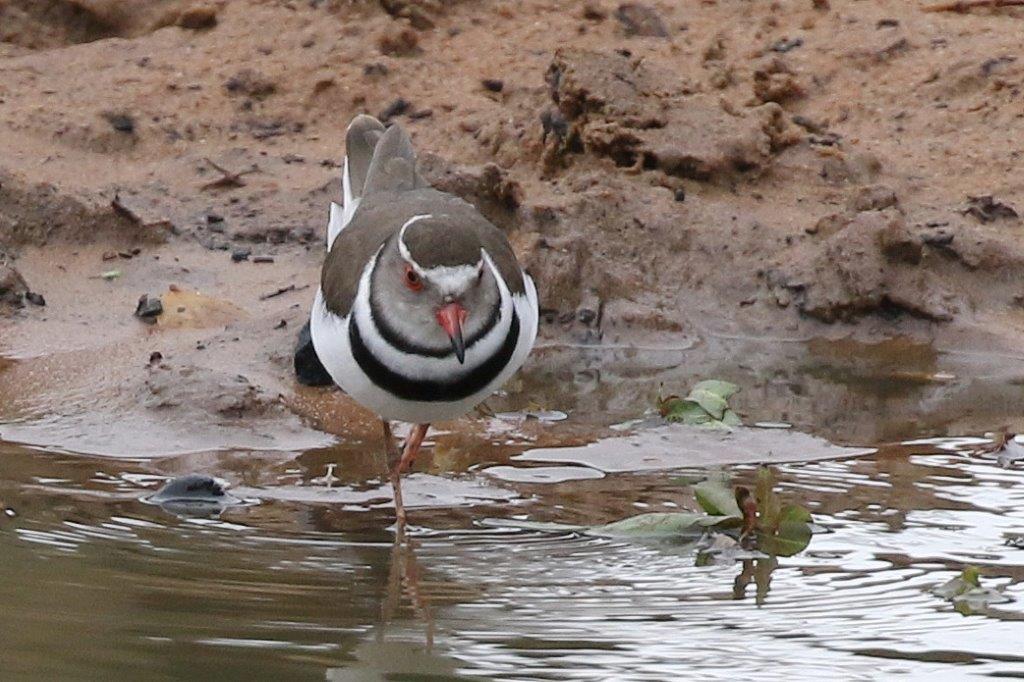
Three-banded Plover
Three-banded Plover
Three-banded Plover
Nsumo Pan was overcast and windy, rain threatening. Despite that we had what we thought was an unusual sighting of 6 Comb Ducks on the opposite bank from one of the hides.
Comb Ducks, African Spoonbills, Little Egret and White-breasted Cormorant
Also a Whiskered Tern was seen chasing a White-winged Tern for some reason.
White-winged Tern
Brown-hooded Kingfisher
Leguaan
As we left Nsumo Pan we heard a call – Woodland Kingfisher. We scoured for the source of the call without success then just as we started to turn away from the water we heard it again and I managed a photo from a distance.
Woodland Kingfisher
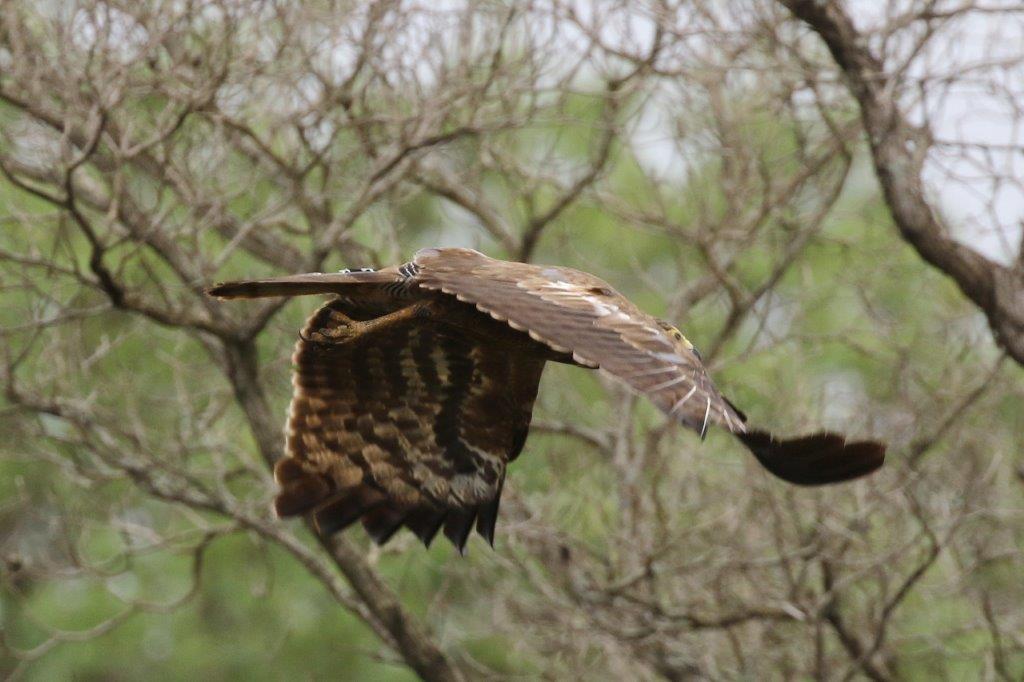
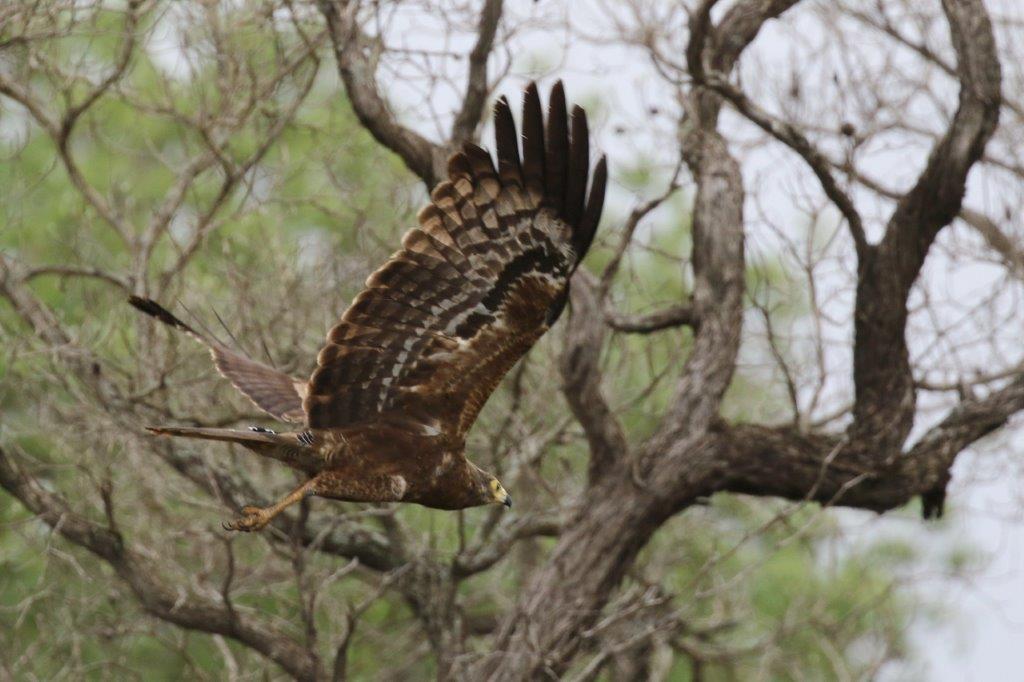
Driving around we came across a couple of juvenile raptors – an African Harrier Hawk and a Bateleur. Each was being bombed by angry birds. In the case of the Bateleur by a pair of Broad-billed Rollers.
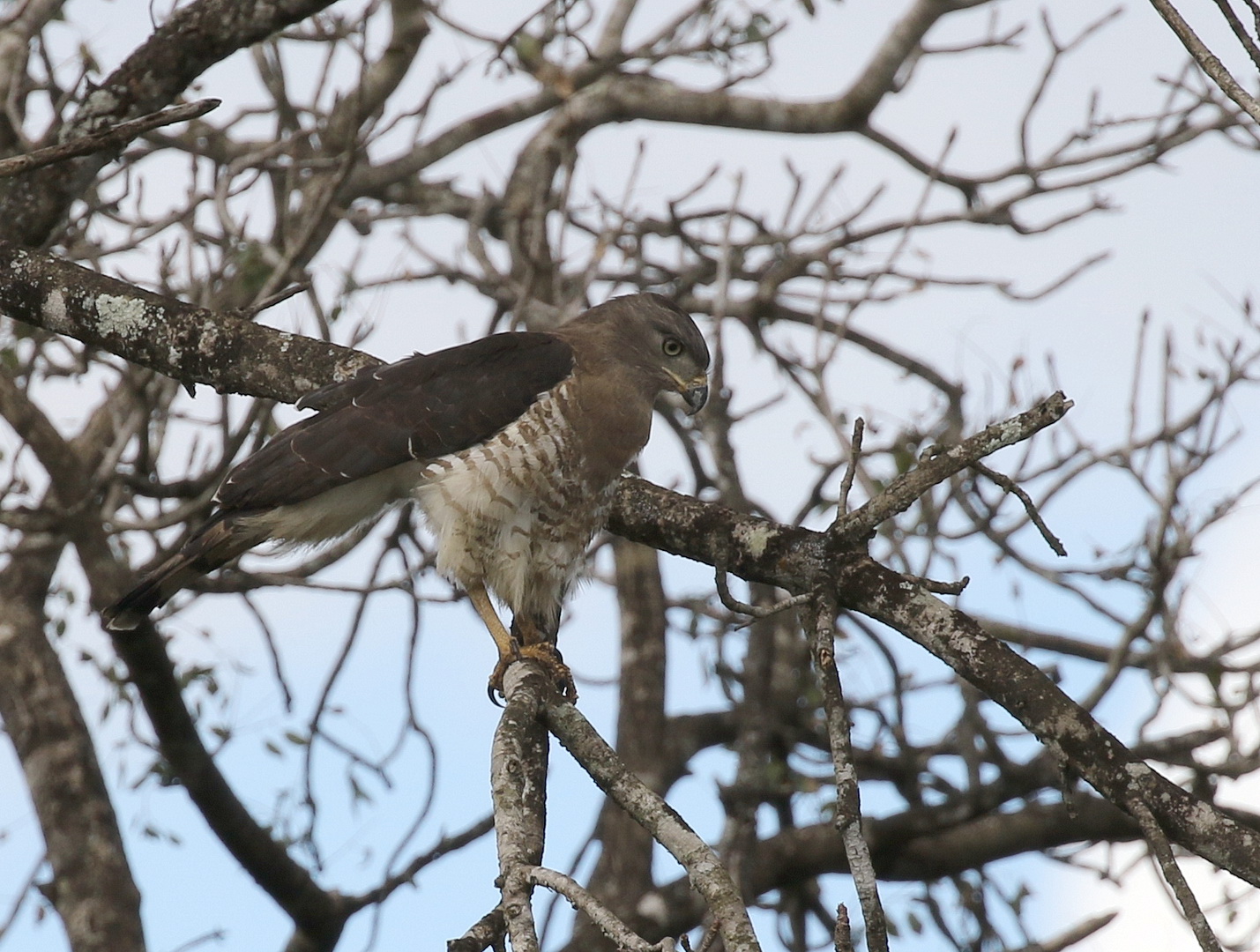
African Harrier-Hawk – juvenile
African Harrier-Hawk – juvenile
African Harrier-Hawk – juvenile
Bateleur – juvenile
Broad-billed Rollers harassing the Bateleur
Broad-billed Roller harassing the Bateleur
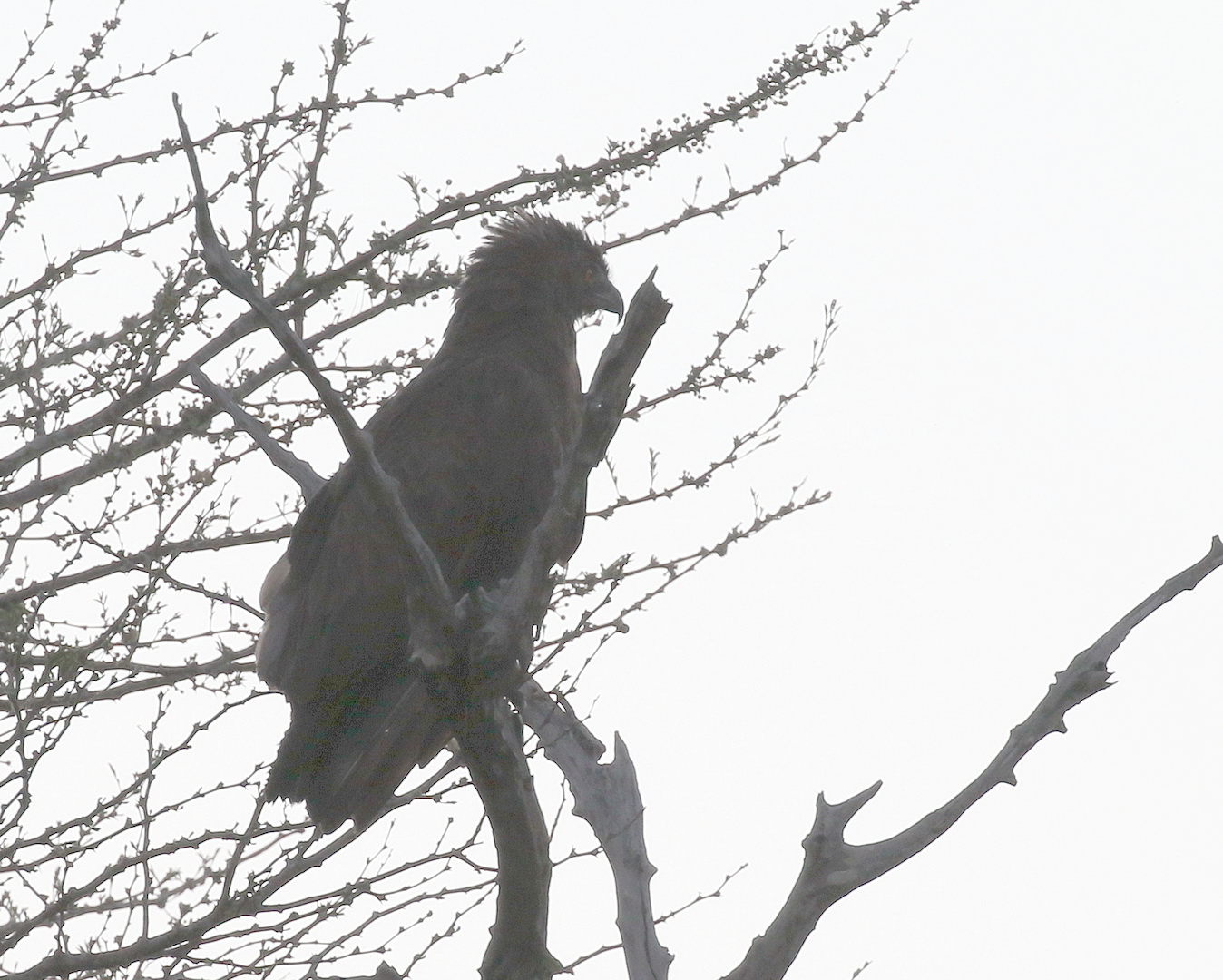
The Crowned Eagle we saw on the previous visit made an appearance too.
Crowned Eagle
Here are some of the other species photographed while traversing the Game Reserve.
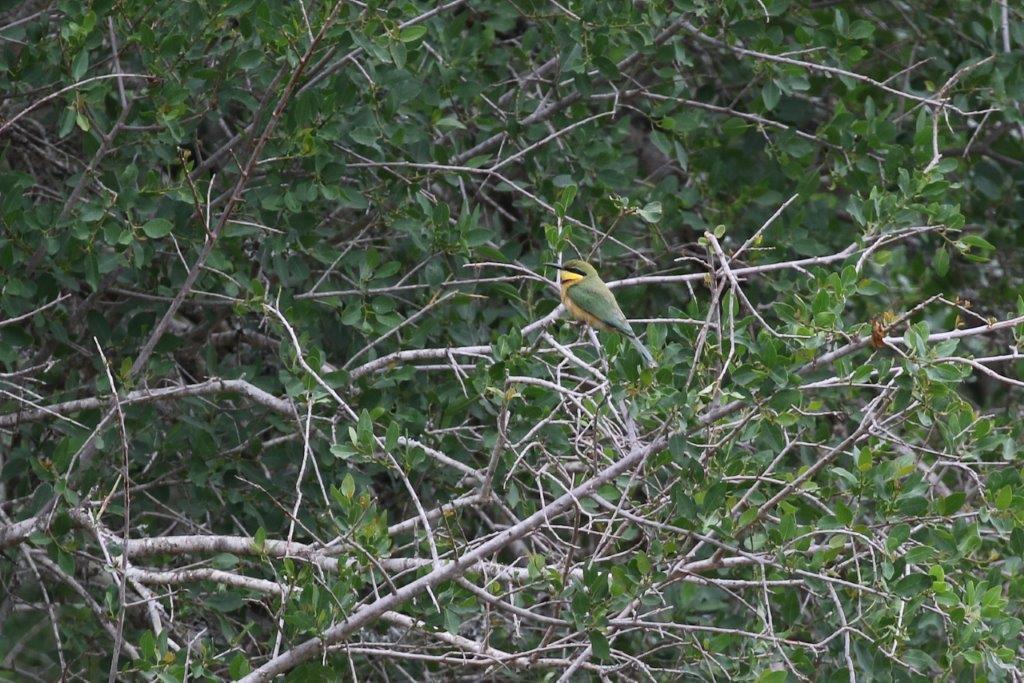
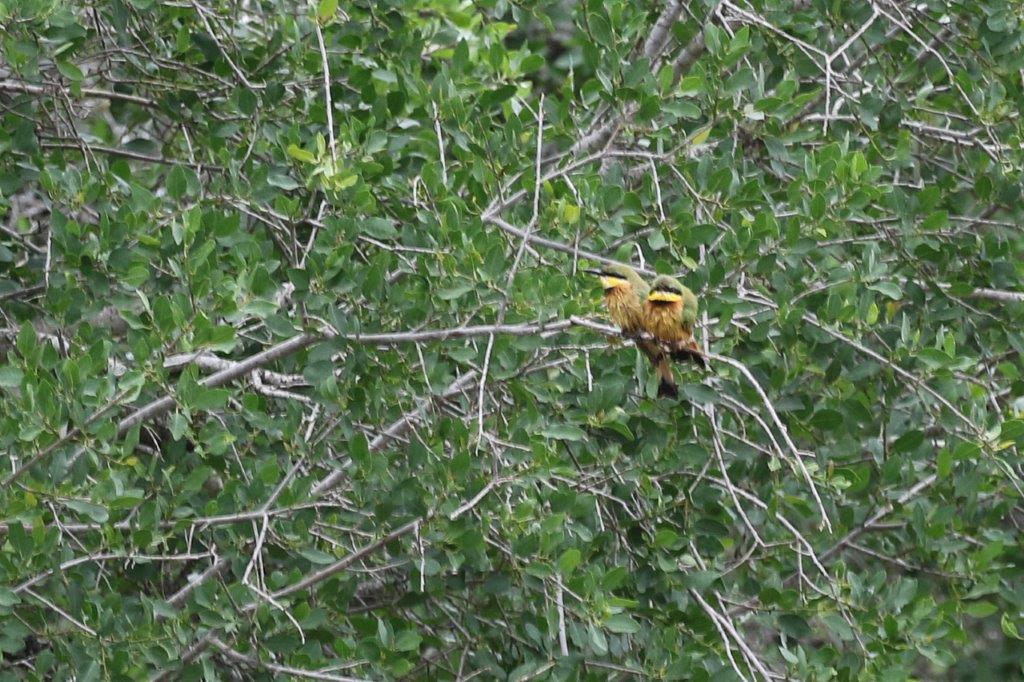
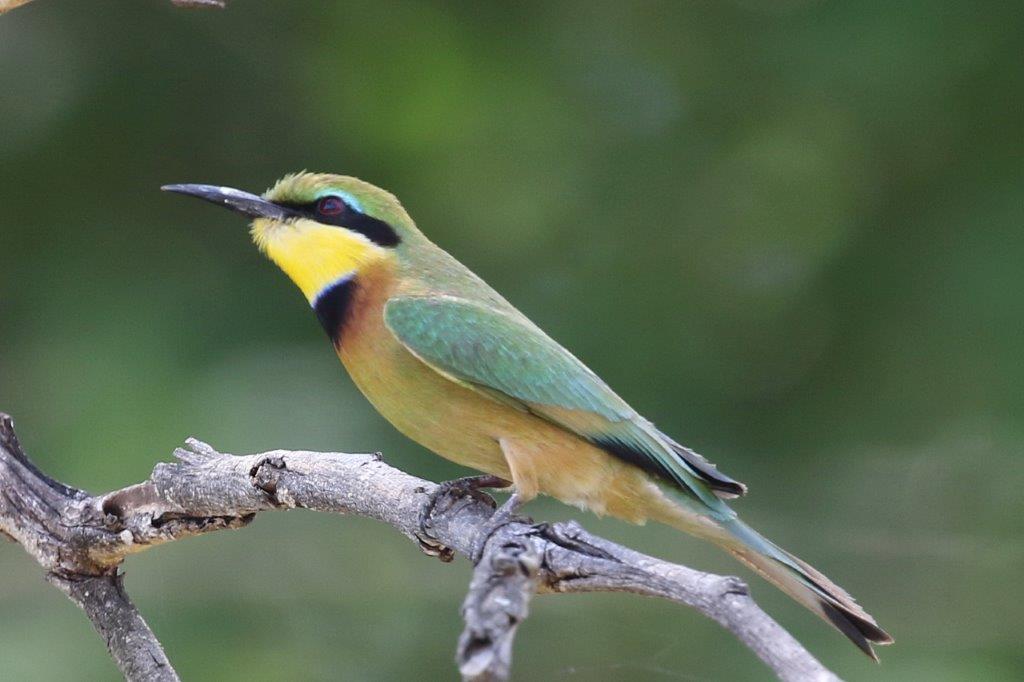
Little Bee-eaters
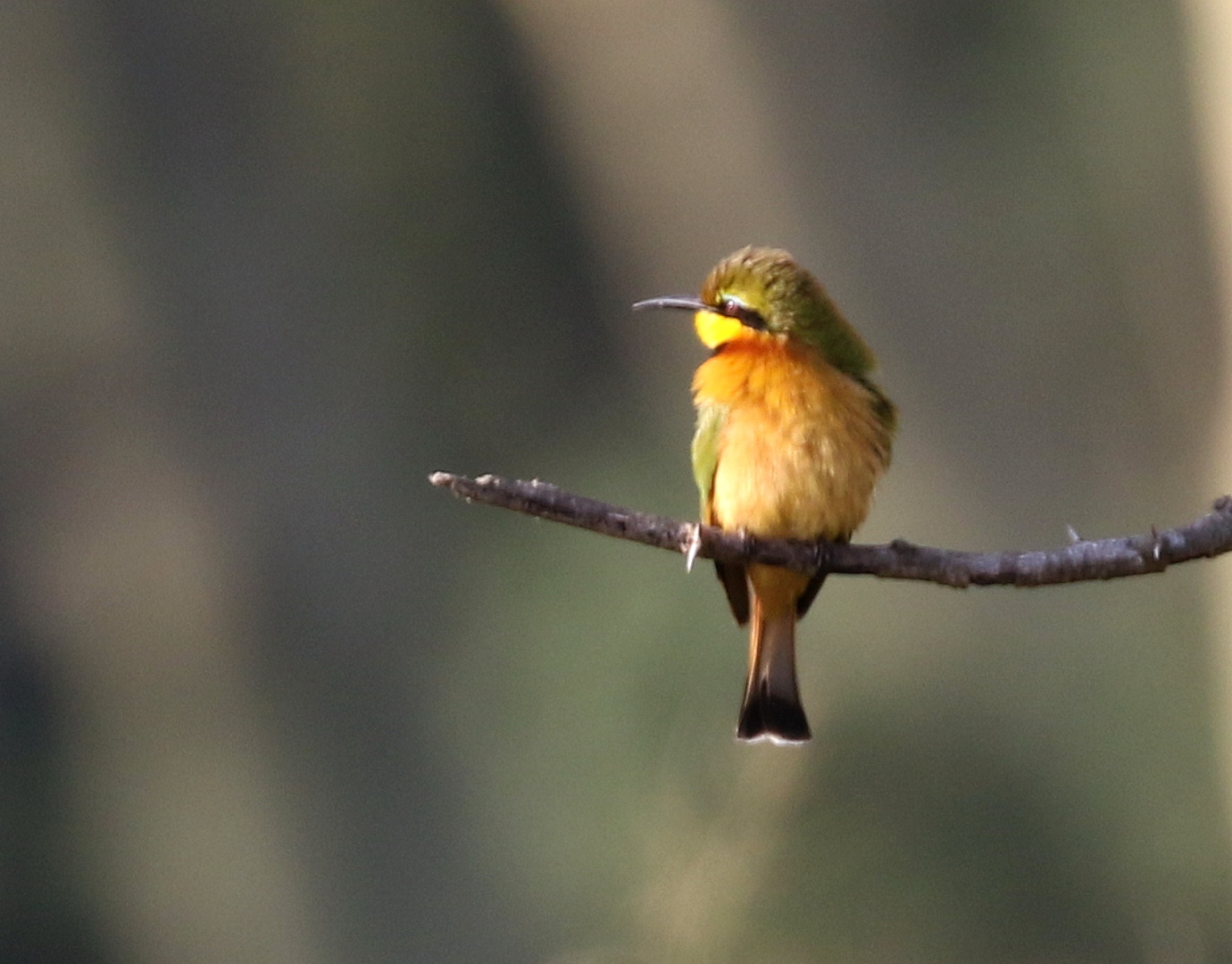
Little Bee-eater
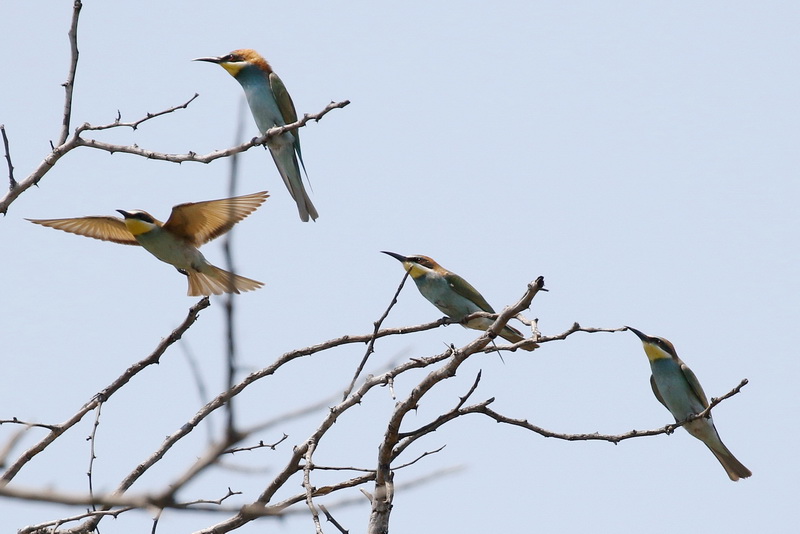
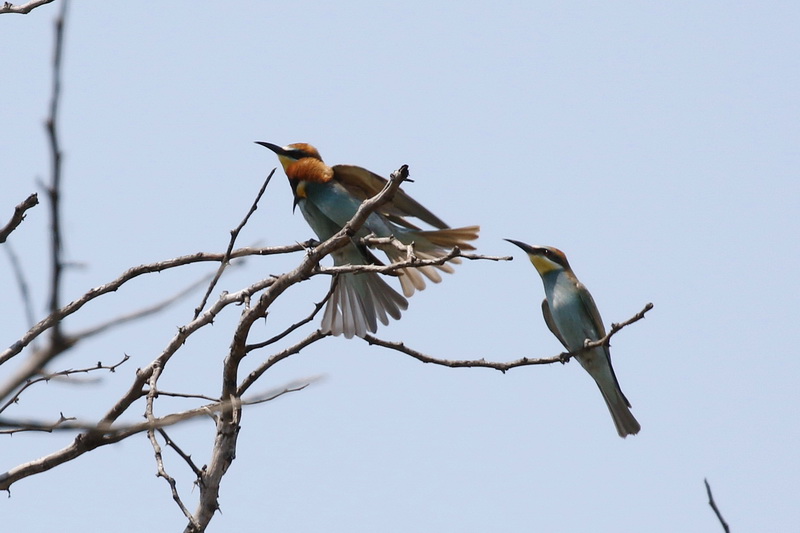
European Bee-eater
Orange-Breasted Bushshrike
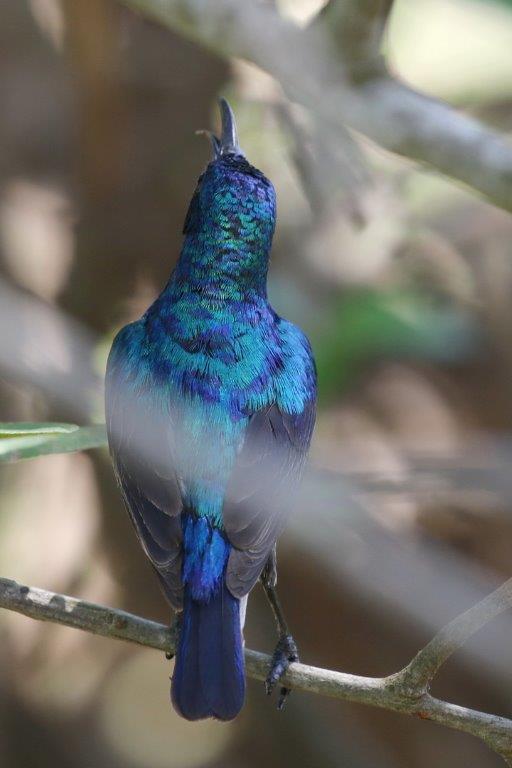
Purple-banded Sunbird
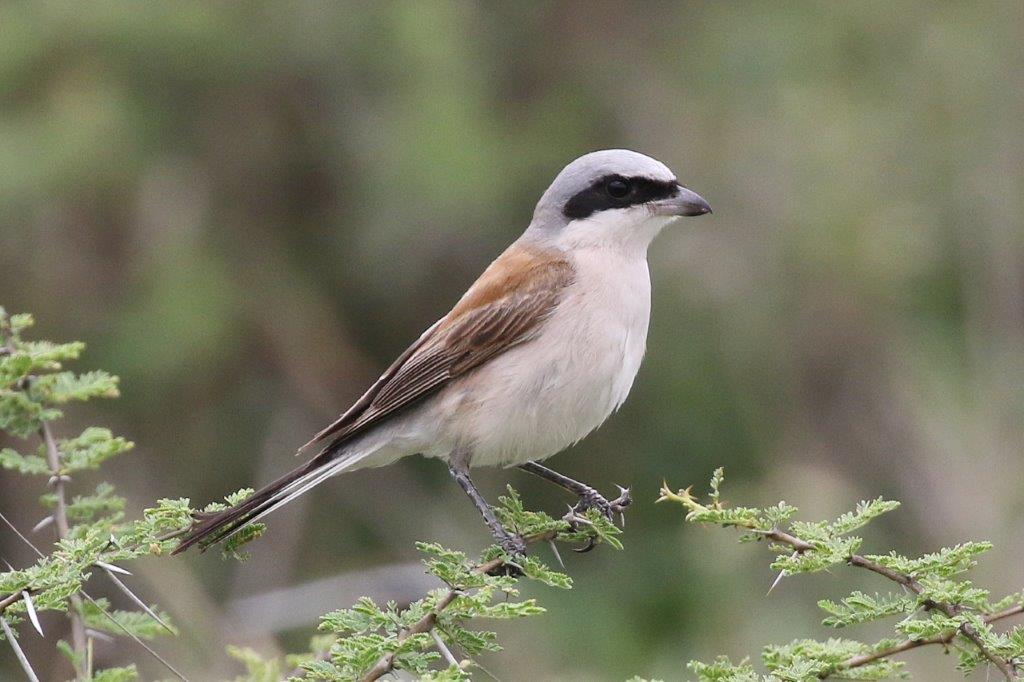
Red-backed Shrike
Brown-chowned Tchagra
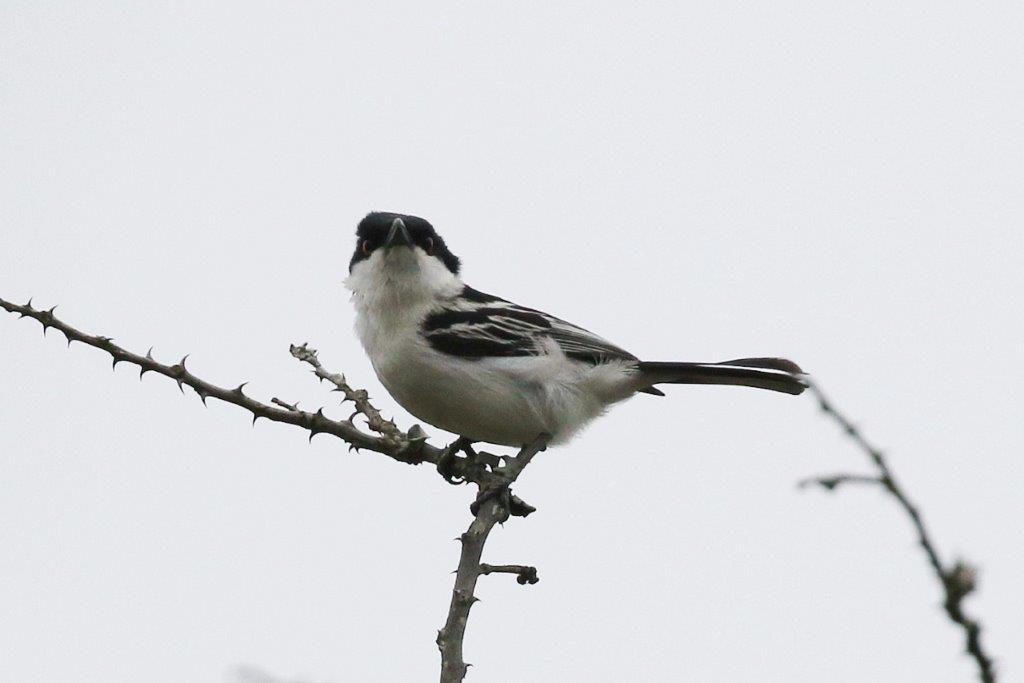
Black-backed Puffback
Red-chested Cuckoo
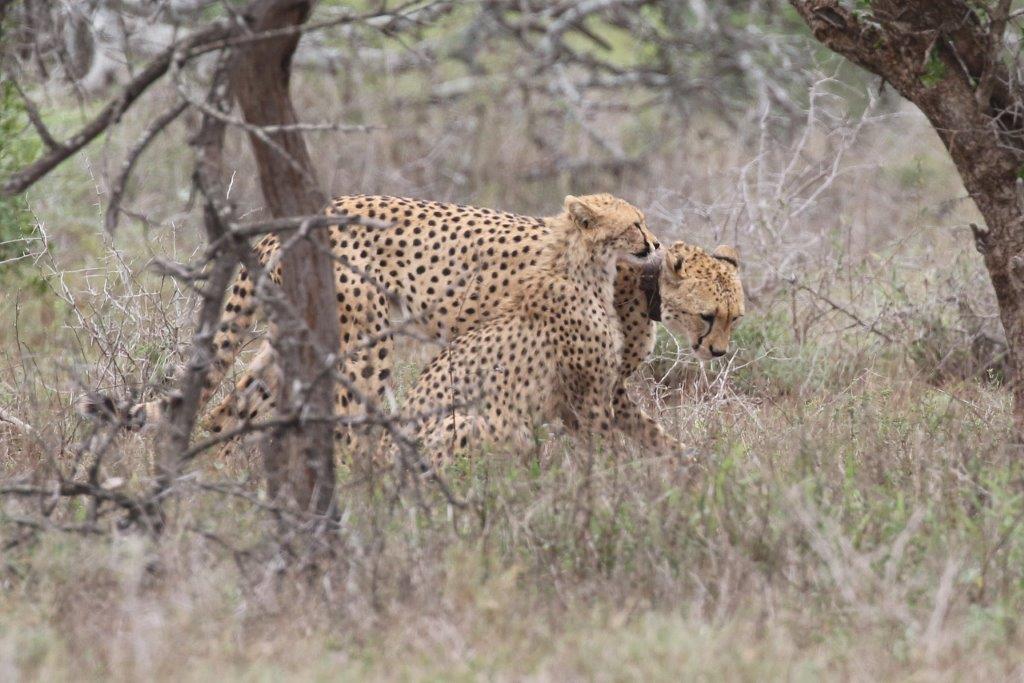
Over the past several visits to Mkuze we had not seen any of the big cats. My sister visited a few weeks earlier and said she had seen a Cheetah near a camera trap near the far end of the Beacon Road. So as we passed by the camera we made an effort to see whether this cat frequented the spot. No luck. Then – having started car and driven about 200 metres there she was with 2 juveniles. Lovely sighting.
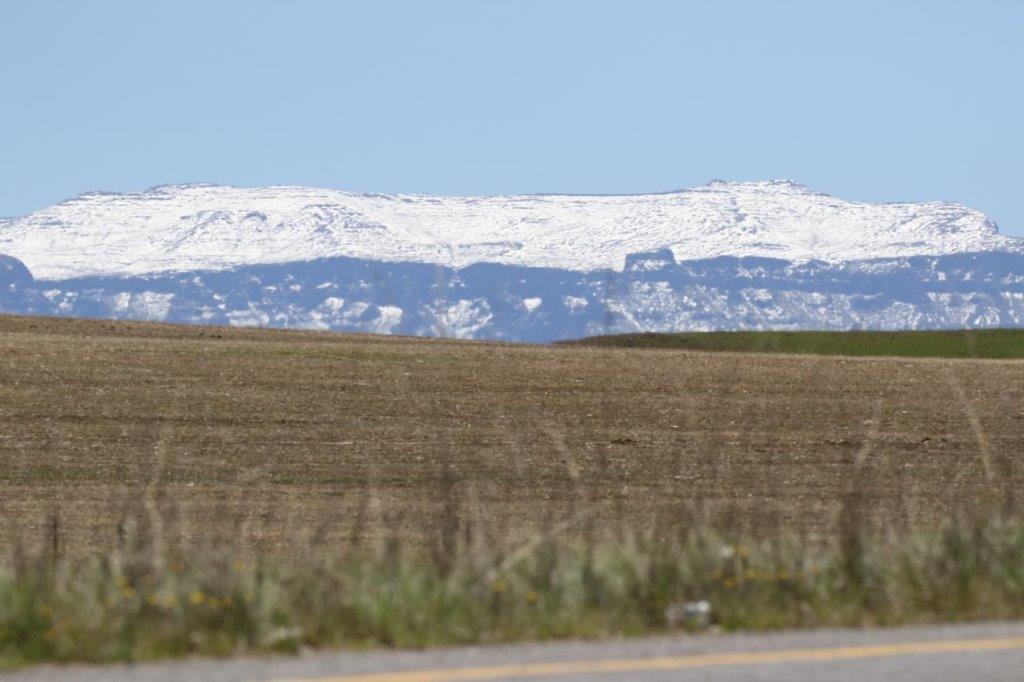
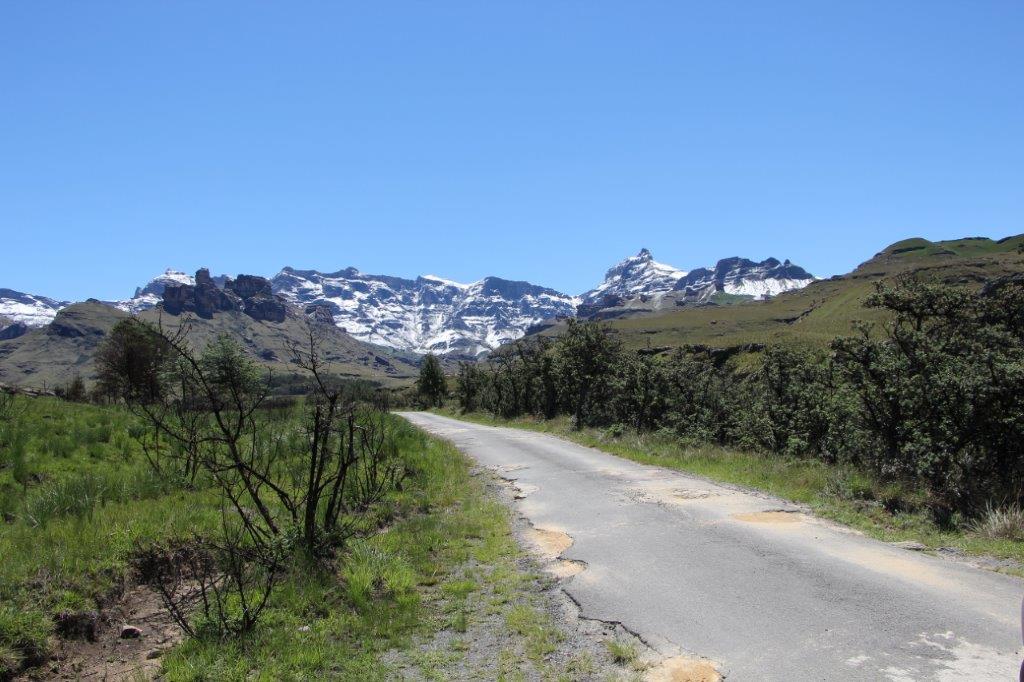
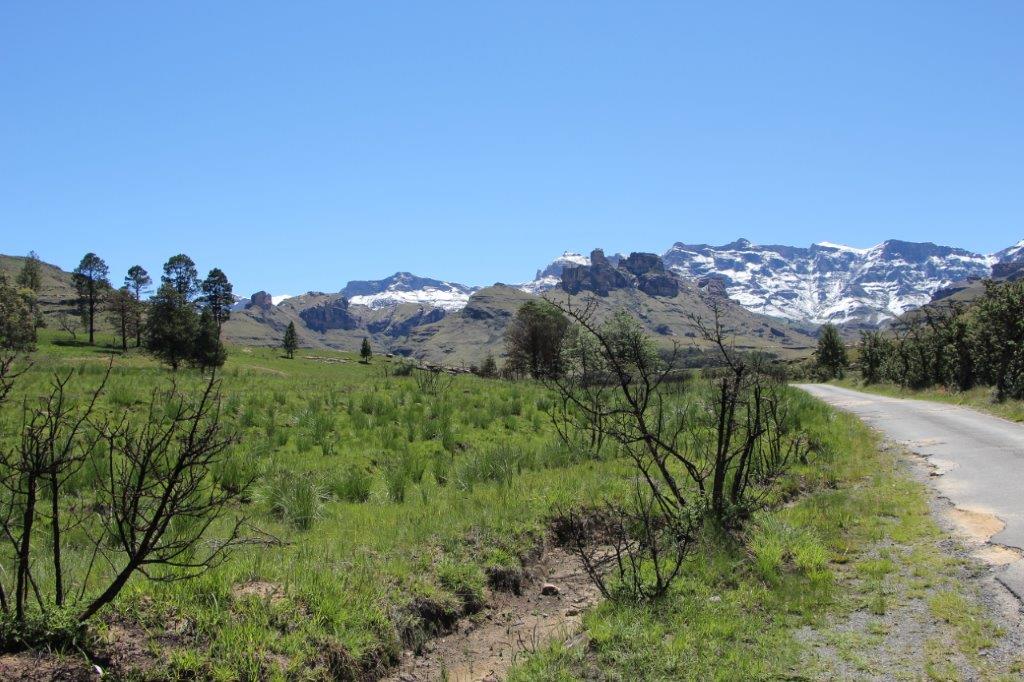
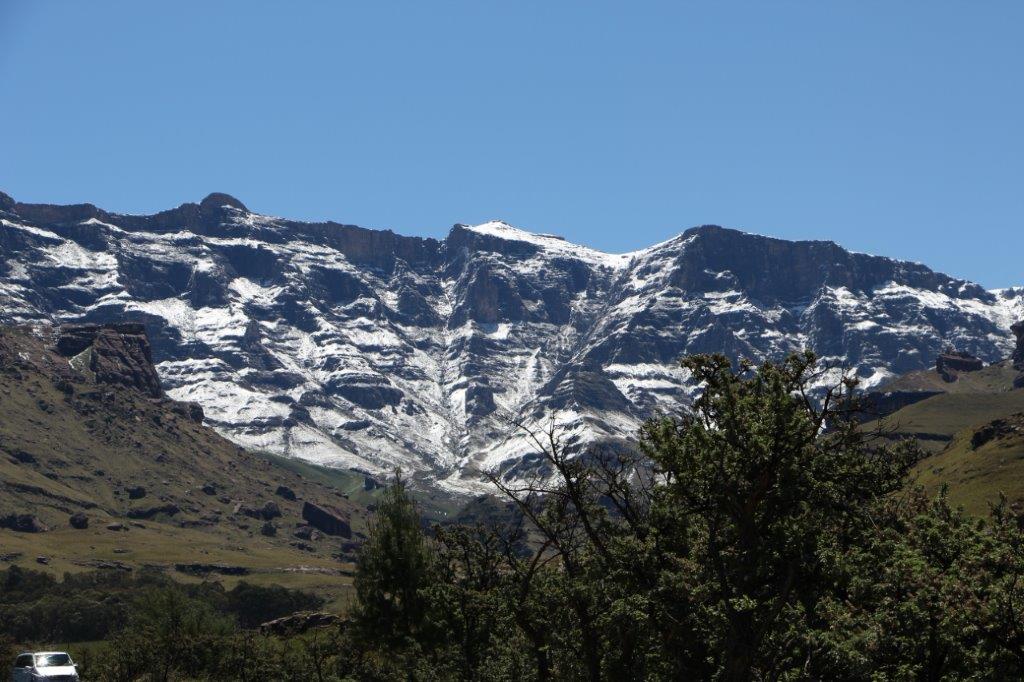
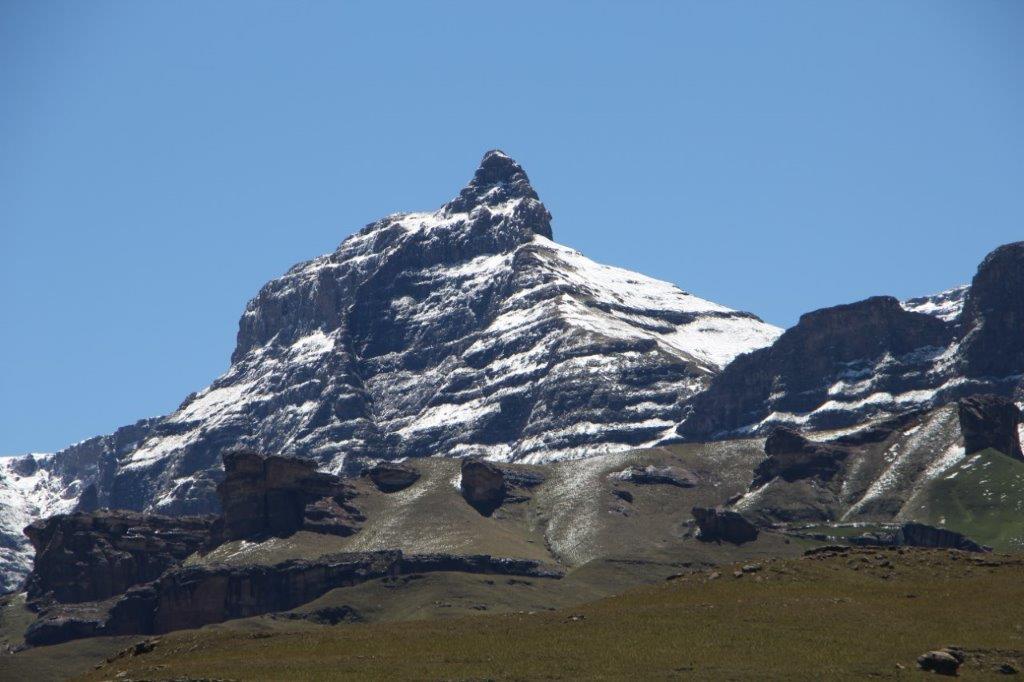
The decision to go to the Drak Gardens was made the day before we left. I had never been there and Sally always wanted to go back. We chose a great weekend to go. It had just snowed – and the mountains were well capped. The weather was beautiful, sunny and clear for our whole stay – icy cold when windy and at night but T-shirt weather during the day.
Snow on the Berg
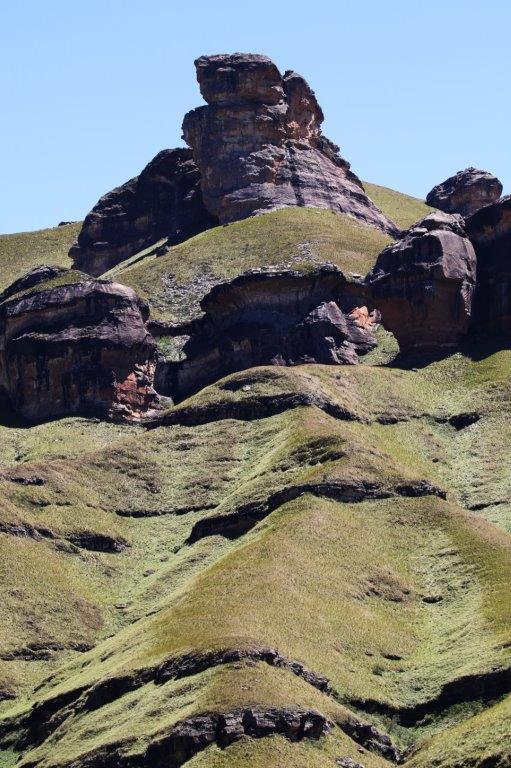
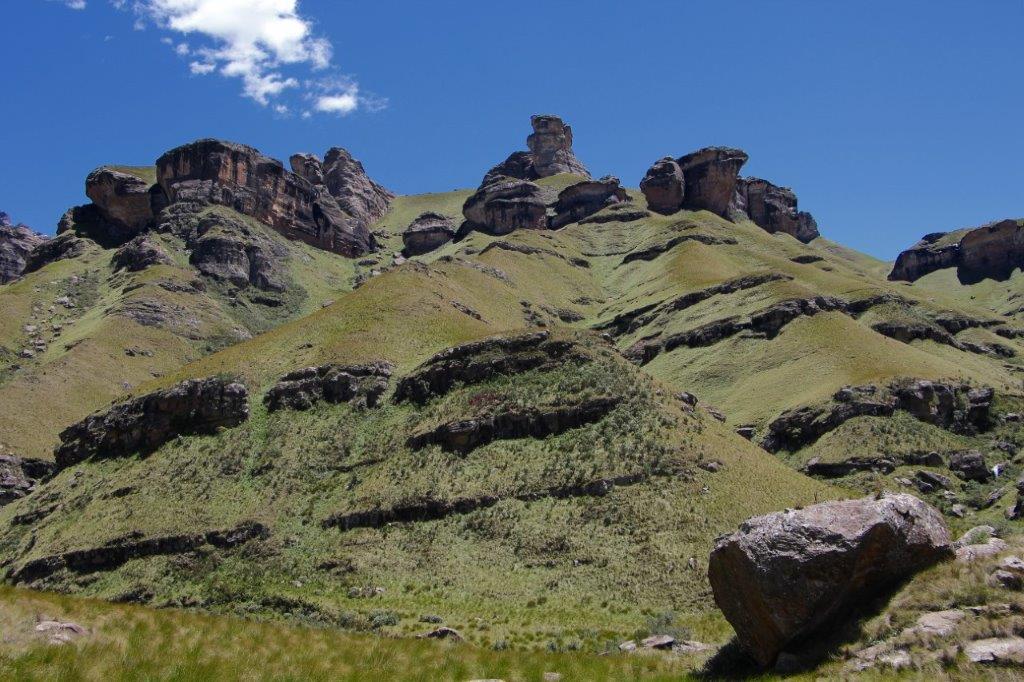
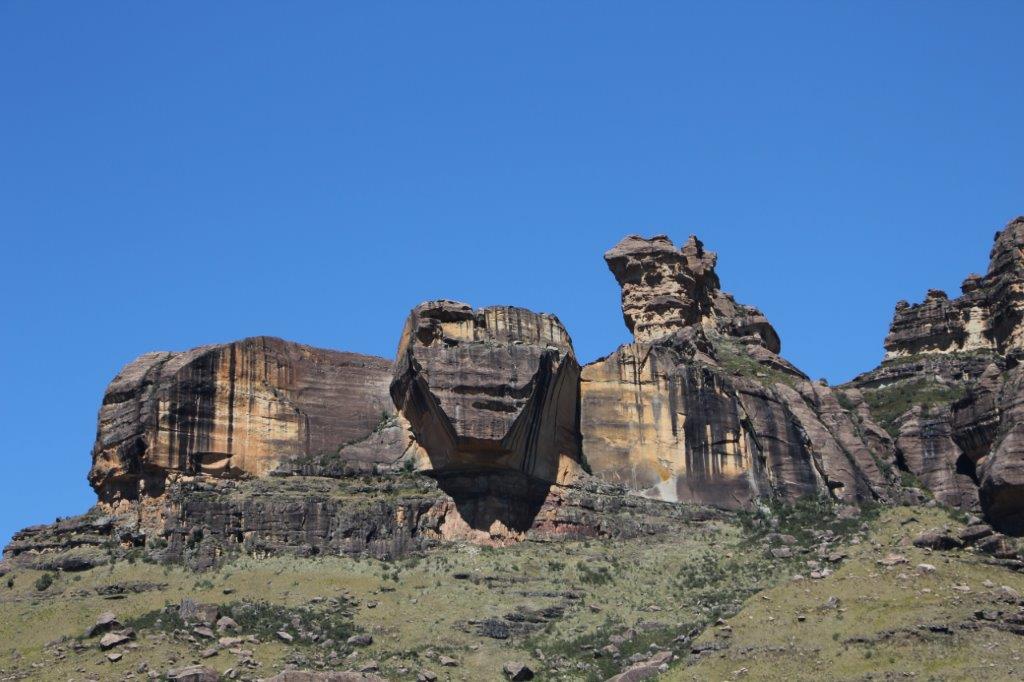
Drak Gardens Scenery
Drak Gardens Scenery
Drak Gardens Scenery
Drak Gardens Scenery
Drak Gardens Scenery
Scenery
Drak Gardens Scenery
Scenery
Scenery
Scenery
Snow Melt
Snow Melt
Scenery
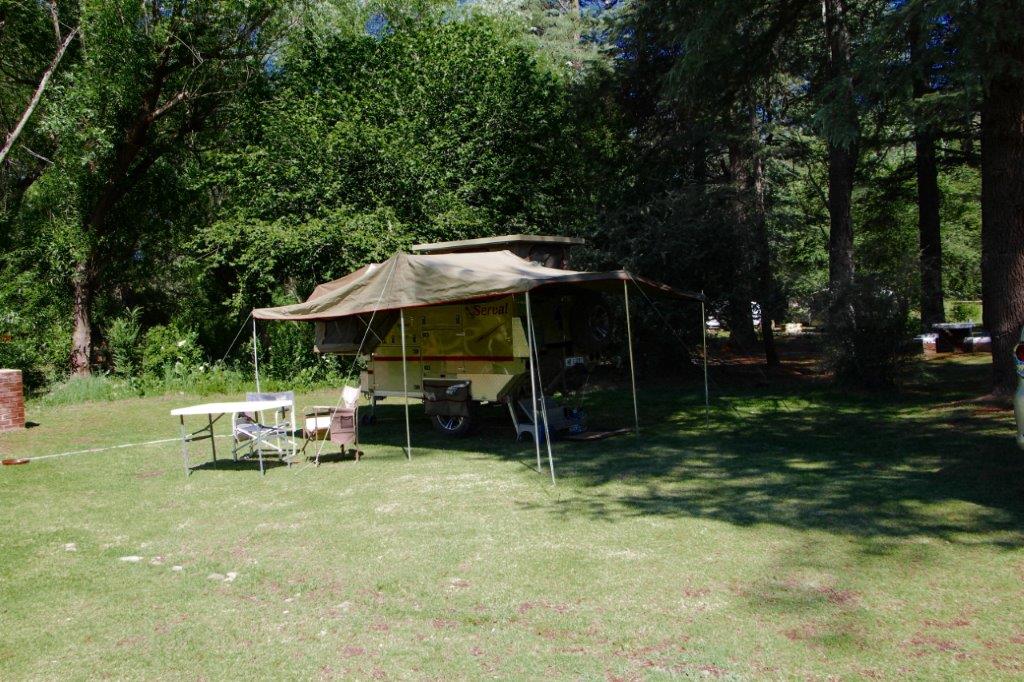
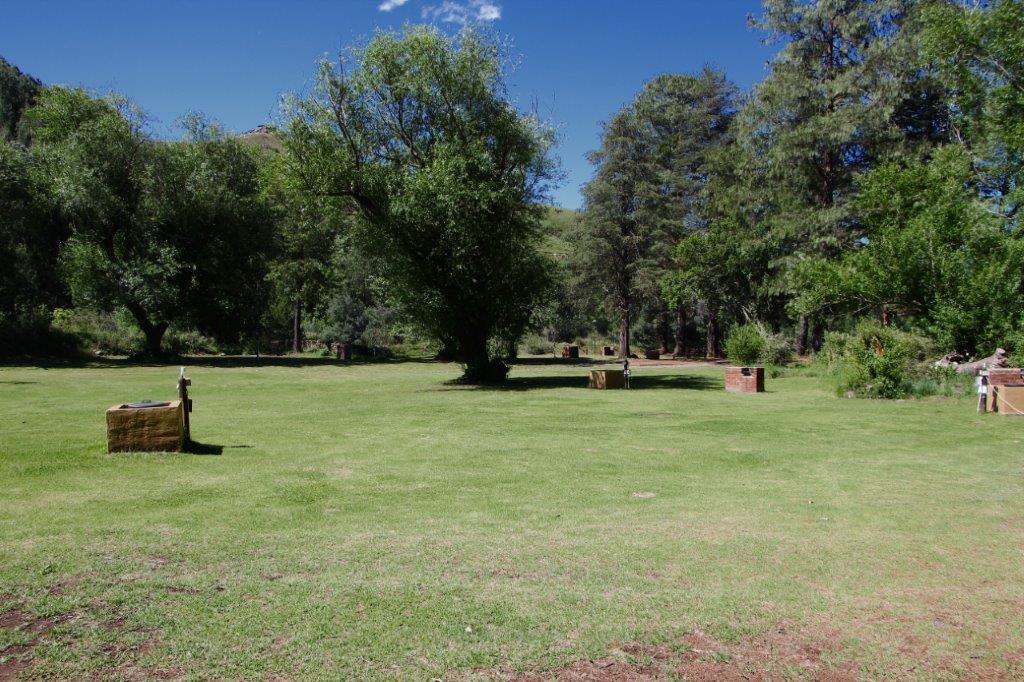
The campsite is just before entering the Drak Gardens boom gate. It was wonderfully grassy and green with loads of shade if you wanted it. The ablutions were very good with really hot water.
Campsite
Campsites
Ablutions behind the trees
Campsites
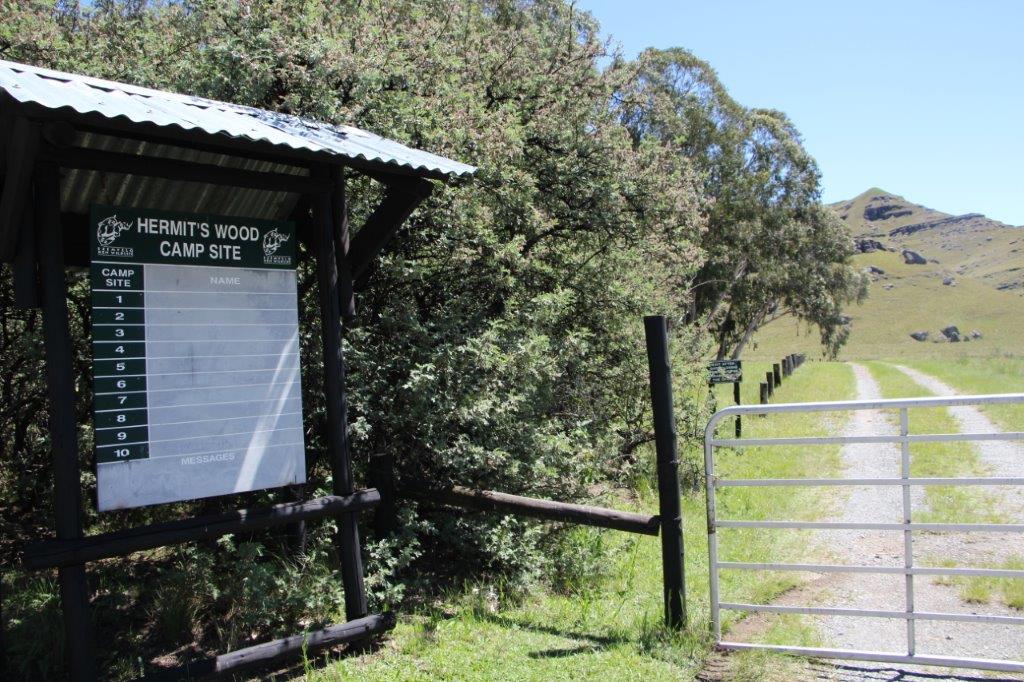
There is another campsite in the Park itself – Hermit’s Campsite – near the Garden Castle Ukhahlamba Drakensberg Park office – but it is not electrified. It’s advantage is that it is right at the start of all the walks in the park.
Garden Castle check in for hikes
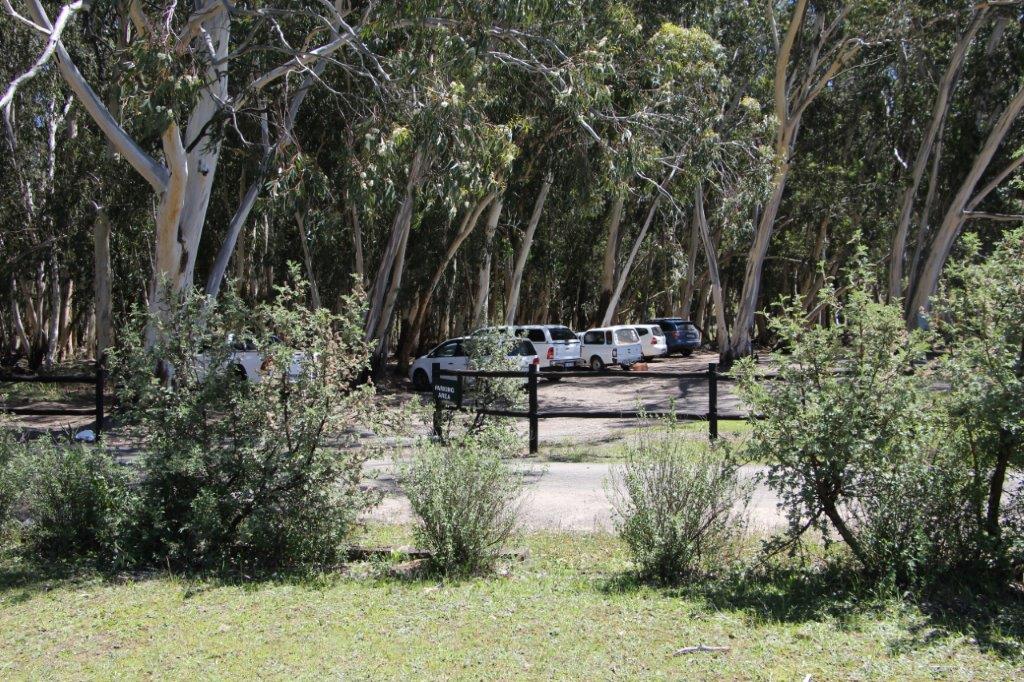
Garden Castle parking
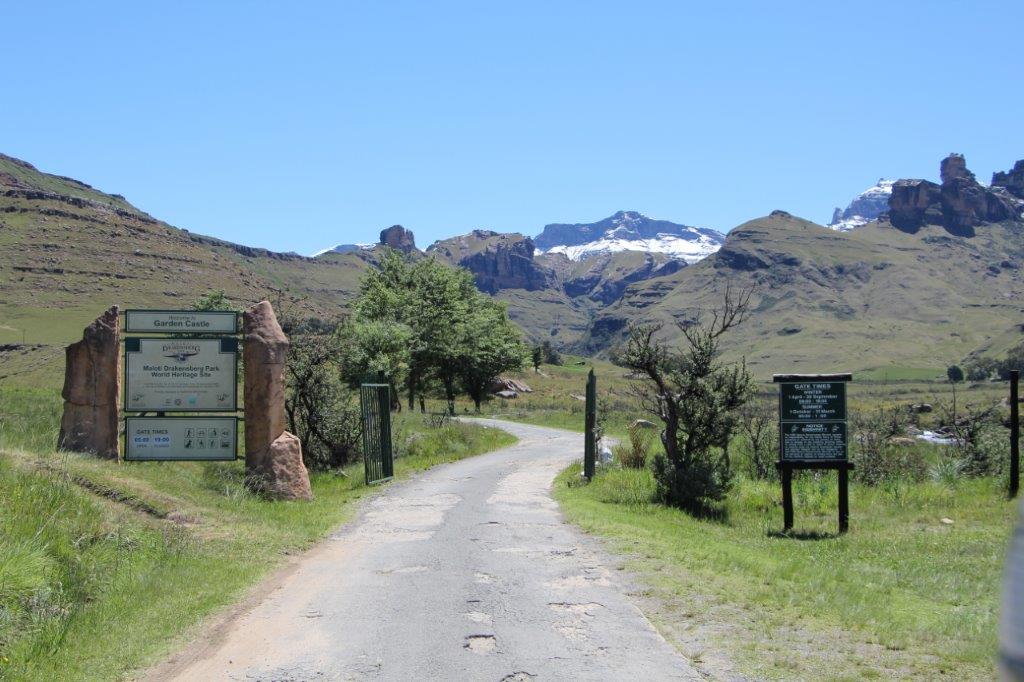
Entrance to Drak Park
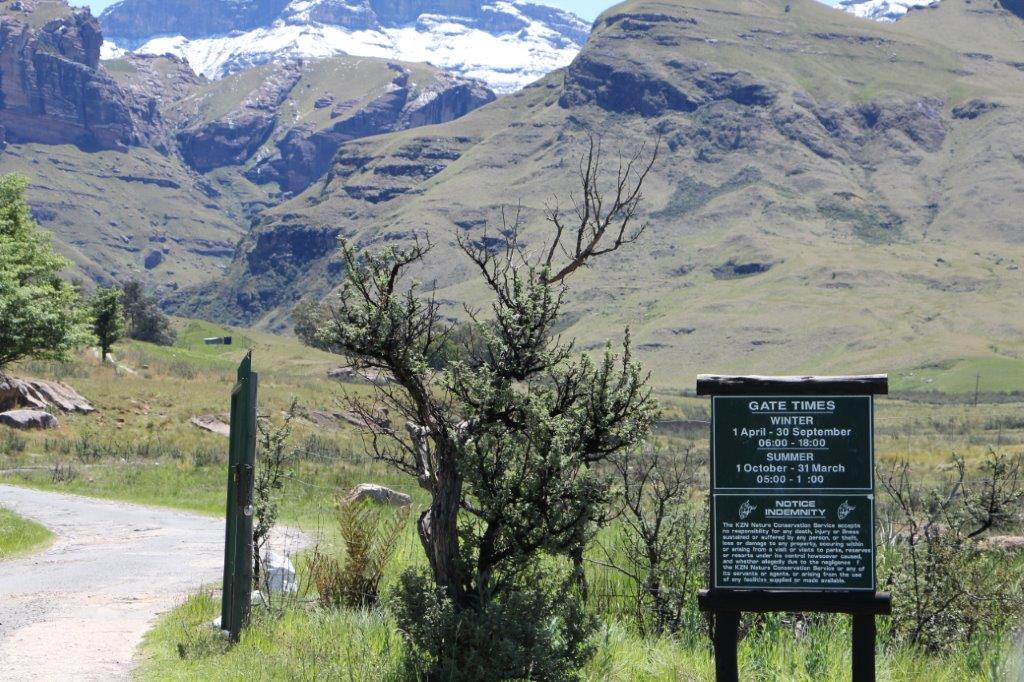
Drak Park sign
Drak Park sign
Hermit Wood Campsite entrance
Garden Castle
Garden Castle
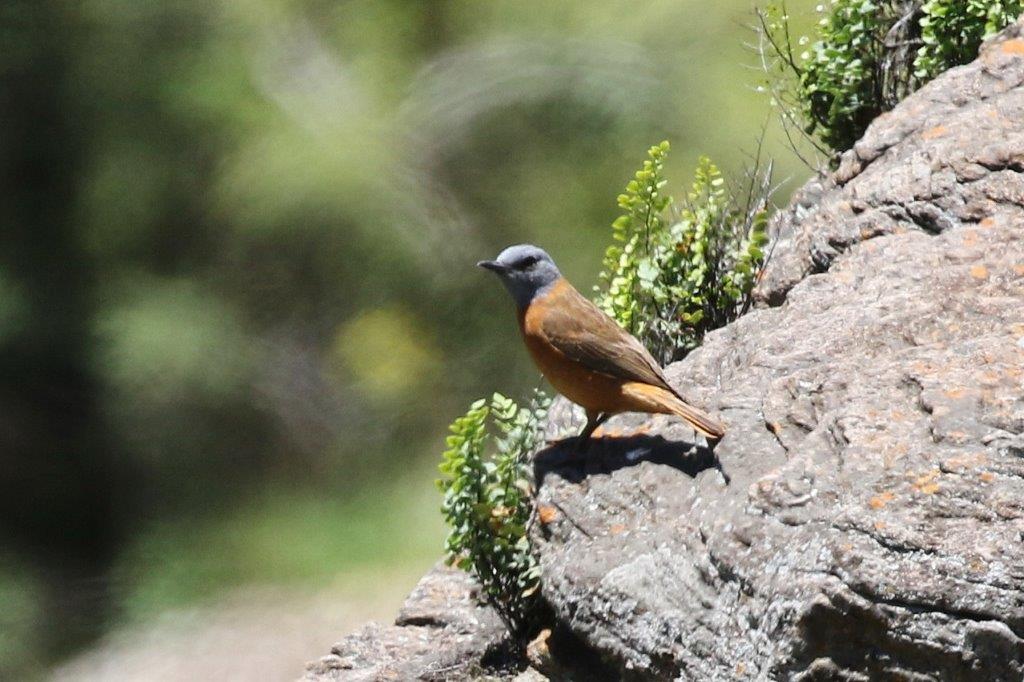
Our intention was to walk in the Berg and bird along the way. Birding was quiet but what we did see and hear was different from the usual birds we normally see. Some of the specials included Bokmakierie, Buff-streaked Chats, Cape Rock-Thrushes, Malachite Sunbirds, Yellow Bishops and Ground Woodpeckers. Sally kept her ears open for any chance of hearing Rockjumpers to no avail and we did not see nor hear any Gurney’s Sugarbirds. Our bird list can be seen by clicking here – some 50 species.
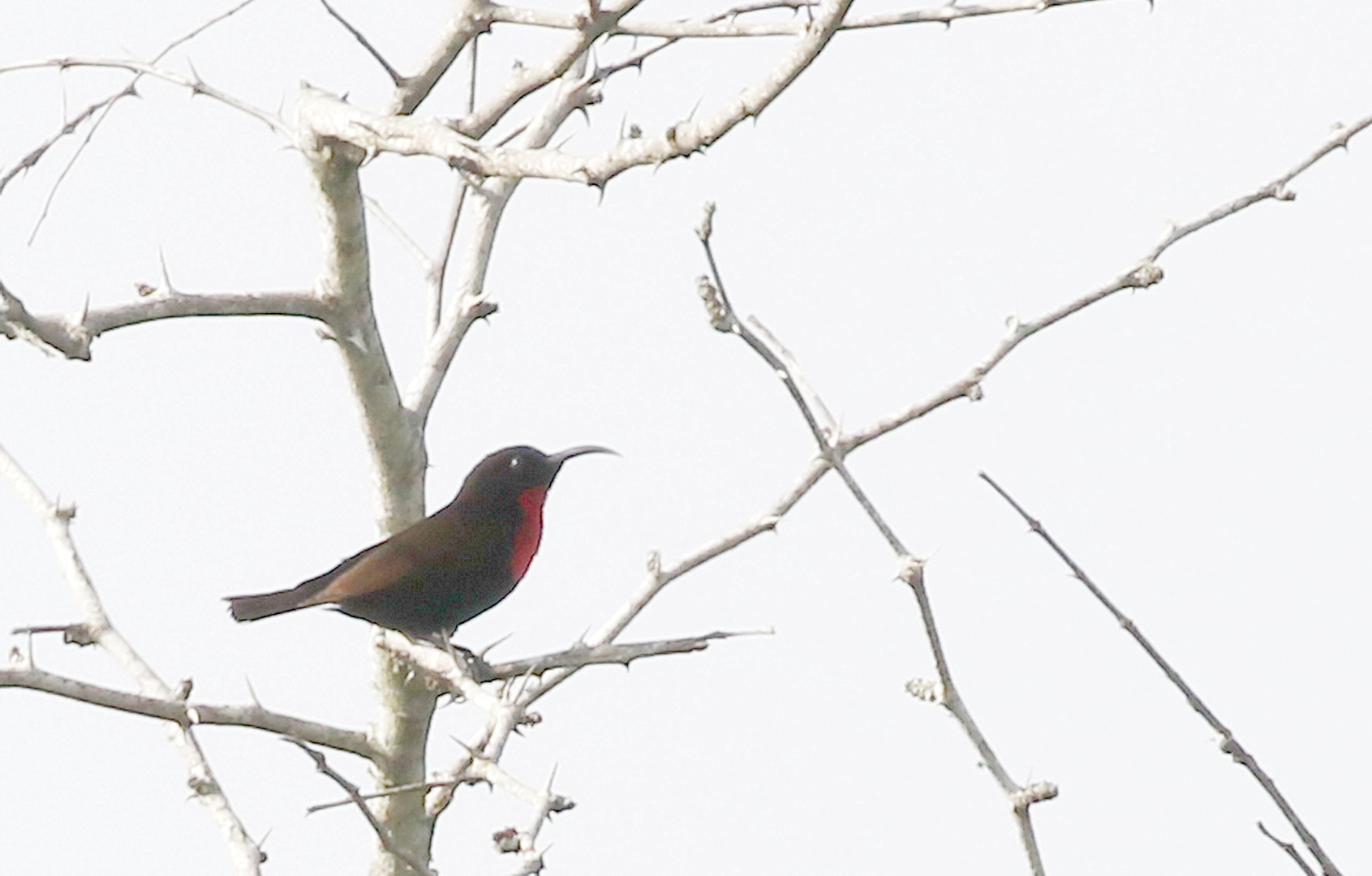
Malachite Sunbird
Malachite Sunbird
Yellow Bishop
Yellow Bishop
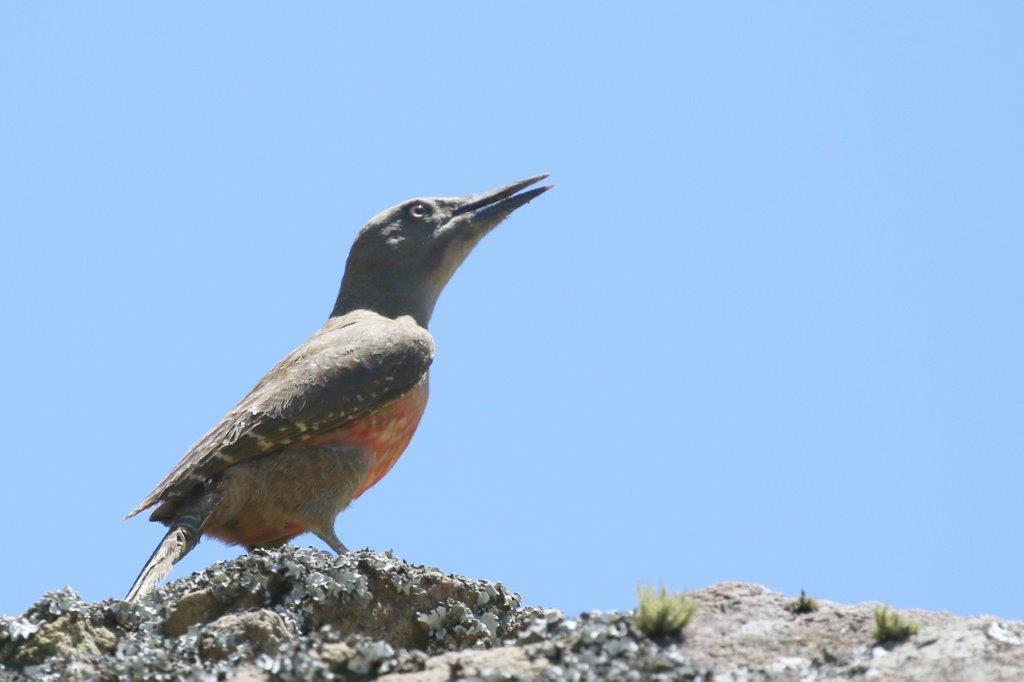
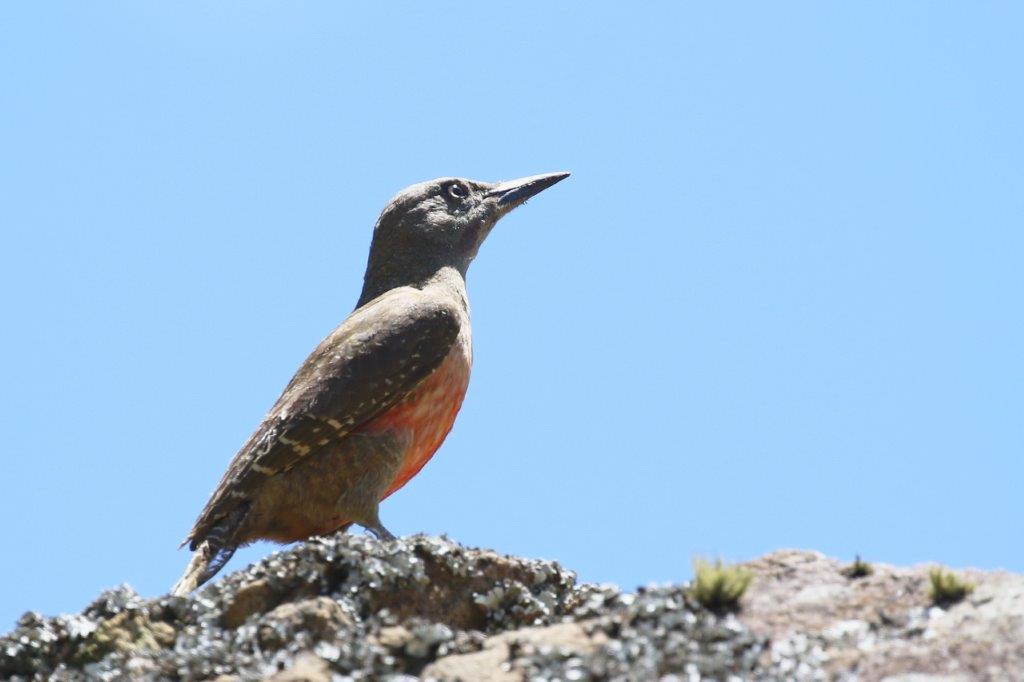
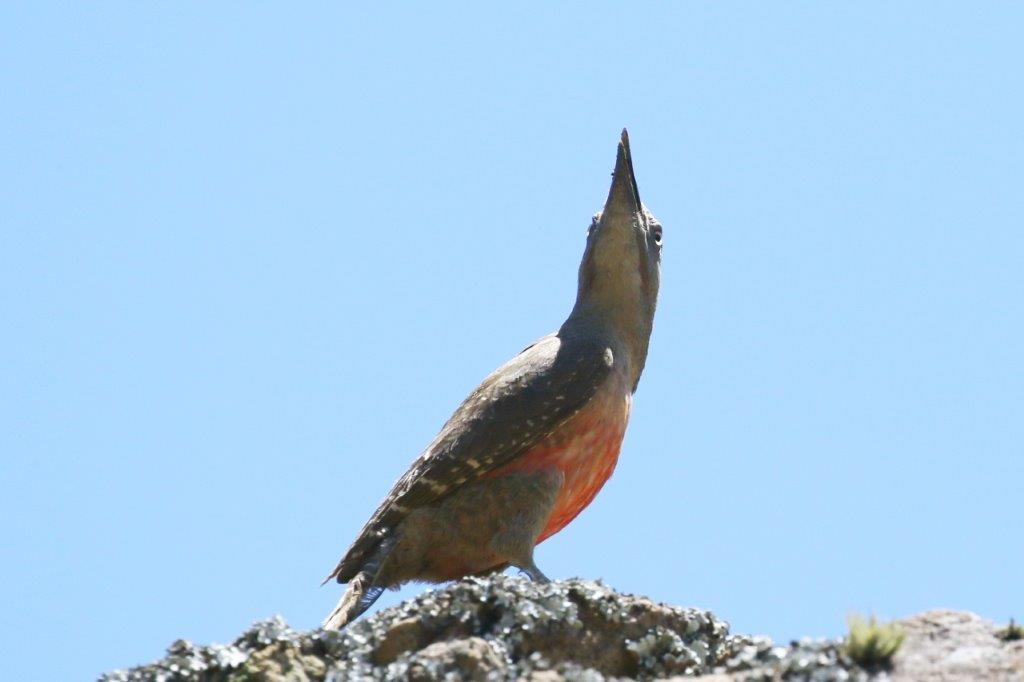
Ground Woodpecker
Ground Woodpecker
Bokmakerie
Bokmakerie
Buff-streaked Chat – male
Buff-streaked Chat – male
Cape Grassbird
Cape Grassbird
Cape Robin-Chat
Cape Rock-Thrush
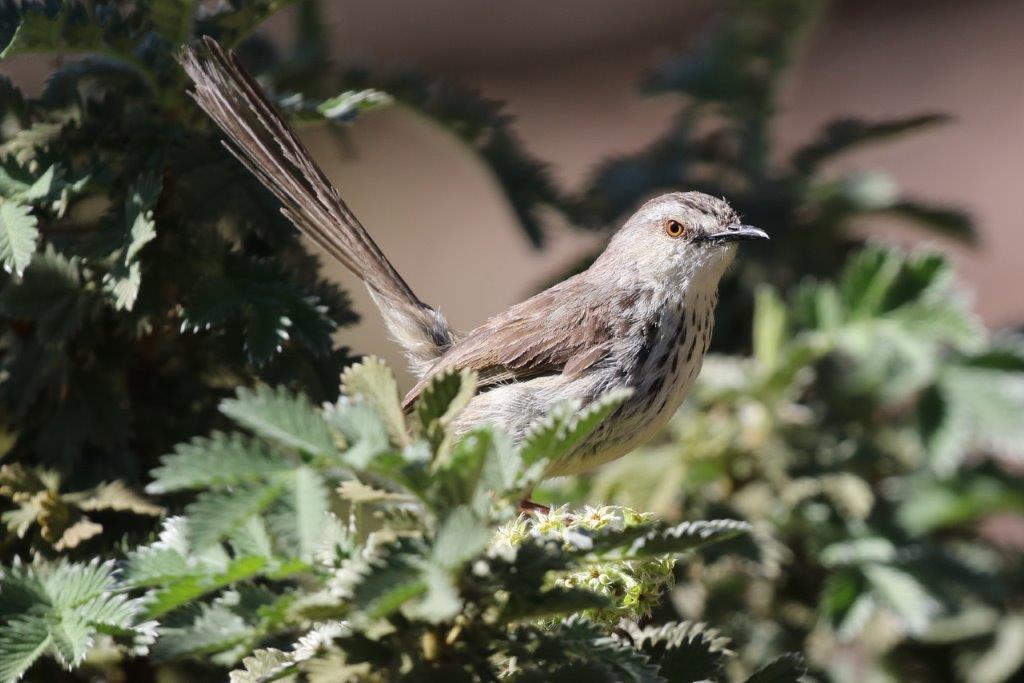
Drakensberg Prinia
Drakensberg Prinia
Ground Woodpecker
Long-crested Eagle
Map of walks: We wanted to head for Pillar Cave but started heading towards the Three Pools.
On our first morning we got lost trying to find where we wanted to go. A riverside walk. However we headed in the wrong direction towards the Three Pools – a steep climb. Very quickly we realised our mistake and trundled back down and followed the river until we found a path which we correctly assumed was the Mlambonia river walk.
On and on we climbed thinking that at some stage we would get near the river – but although that was the river walk it was some way higher than the river itself with steep slopes down towards it.
Crossing over the wrong way
Going in the wrong direction
On the way to the cave
A long way to go yet
Hard Going
Maybe half way
Rushing River
Rushing River
Passing Water
Camourflaged Lizzard
We got as far as the first river crossing after about 2 hours and decided not to go any further. The crossing looked quite interesting and mildly challenging but we had had enough and took a break there watching other parties of Germans trying to cross – ever hopeful of a photo of someone losing their footing.
River Crossing – almost in.
One group thought they new best and decided to take an alternative route but we did not stay to see their probable outcome – floating down the river.
We headed back.
View back to where we started
The Watsonias were out in full everywhere.
Watsonia
Watsonias
Before we left the next day we took a drive around the area and went back to the start of the walk we did the day before to explore an area by the river. Here we saw virtually all the specials we had seen the day before as well as about 6 Horus Swifts flying overhead and occasionally darting into one or other of the holes in the river bank.
Horus Swift
Horus Swift
Horus Swifts
Brown-throated Martin
Ground Woodpecker
Ground Woodpecker
Bokmakierie
Buff-streaked Chat – female
This was a most enjoyable few days with fantastic weather.
On the spur of the moment Sally and I decided to revisit St Lucia – ever hopefully of finding the specials we missed 2 weeks previously. The specials being the Eurasian Oystercatcher and the Gull-billed Tern.
We stayed at Sugarloaf campsite – taking advantage of the discount available. We do enjoy this campsite as the birdlife within is amazing. It is also very handy being right beside the boardwalk to the beach. Birds are always about the campsite – we had a pair of Brown-Scrub Robins and a Red-capped Robin-Chat entertain us this time.
Natal Robin
Arriving early we set up camp quickly and went for a stroll along the beach and also next to the estuary. It did not take us long to realise that there were no Oystercatchers about. Terns were present on the mud flats but mostly Swift Terns with the occasional Little and Caspian Terns among the Pied Avocets and Grey-headed Gulls.
Later on I went back without success. Bumped into several other birders on the search as I was heading back to the camp – suggested to them to sit and wait and perhaps get lucky – as Sally and I had done 2 weeks earlier with the Sooty Tern.
Later on Sally and I put up the scope at the start of the boardwalk – scouring the sides of the estuary. As we did so, one of the people I had chatted to earlier said he had taken my advice and waited with the Terns on the mud flats when out of nowhere the Gull-billed Tern appeared and he had a great photo of it too. Perhaps I should have taken my own advice!!! They had seen it at about 17h00.
The next morning we got up early – ever hopeful and headed for the same mud flat. On first inspection there were very few Terns there and a number more further away with someone watching with their camera handy.
Off we went and could not decide which set of Terns to check out first. So as we passed the first set we decided to check out the close ones first. It was 06h00.
Sally peruses with the scope and almost immediately spots the Gull-billed Tern – alone with about five or six Swift Terns.
Gull-billed and Swift Tern
Gull-billed Tern
Gull-billed Tern
Gull-billed Tern
Gull-billed Tern
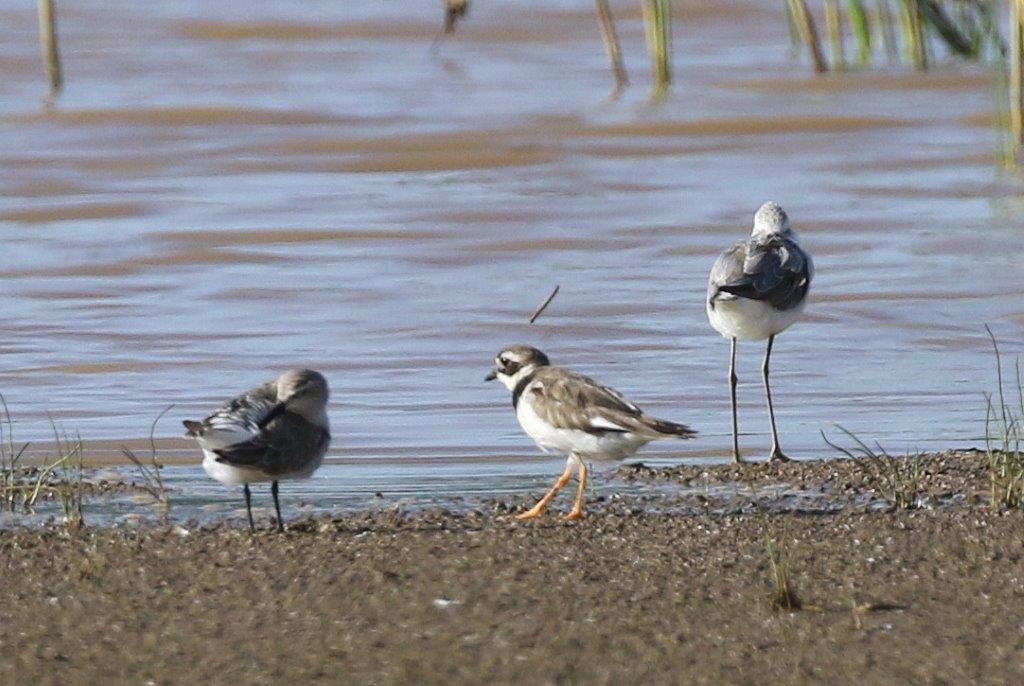
Masses of other small waders were feeding nearby – Curlew Sandpipers, White-fronted and Kittlitz’s Plovers, Common Ringed Plovers, Sanderlings, the occasional Ruddy Turnstone, Marsh Sandpiper, Pied Avocets etc.
Pied Avocets and Grey-headed Gulls
Cattle Egret with bad hair style among the Swift Terns
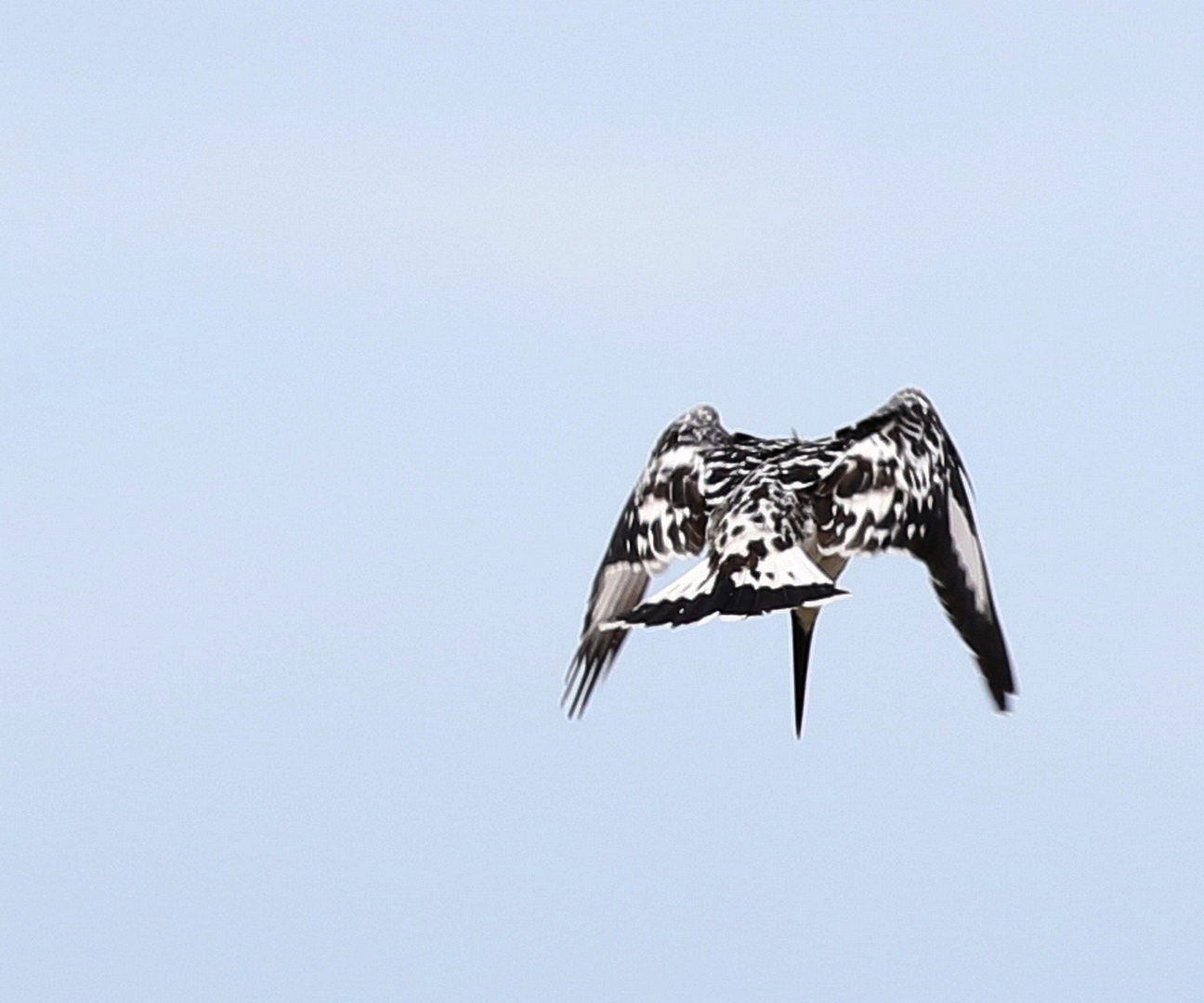
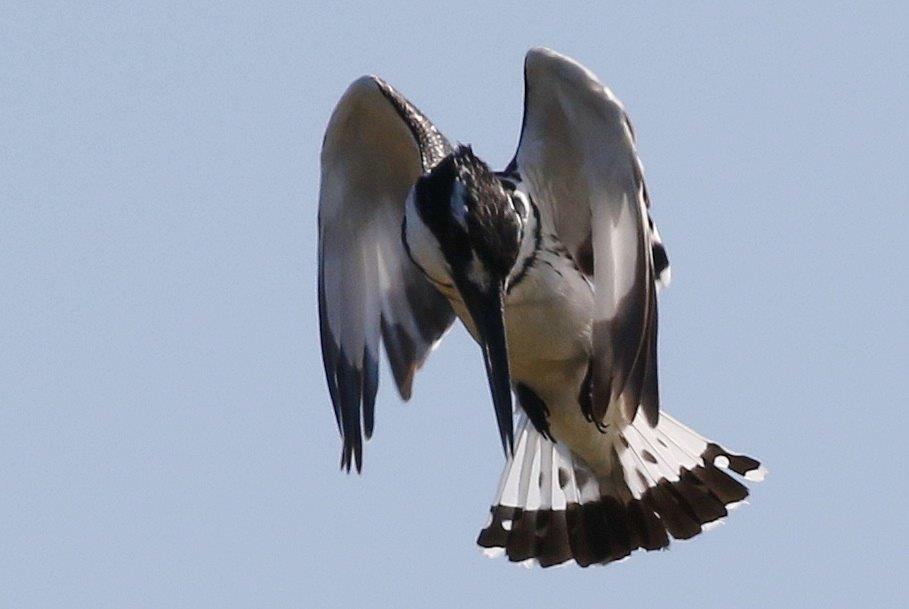
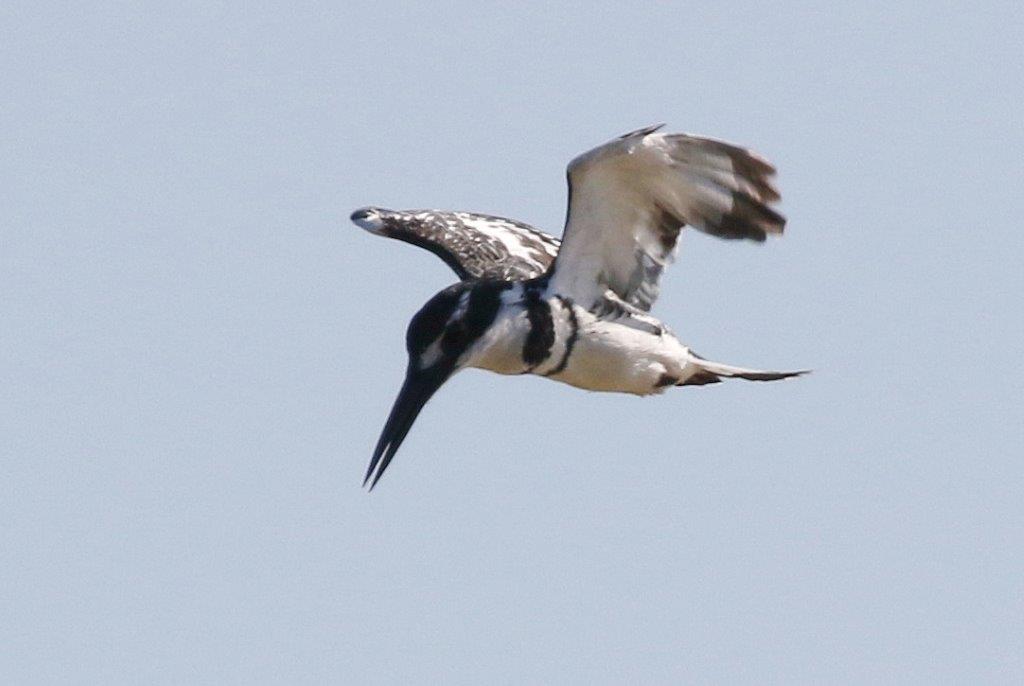
Pied kingfisher
Pied kingfisher
Pied kingfisher
Grey-headed Gull
Common Ringed and Kittlitz’s Plovers with Marsh Sandpiper
Kittlitz’s Plover
We crept down to get a closer look but far enough away to make sure we did not upset the birds and send them scattering. The mud flat was between two sets of reeds – those on our left were at least 2 metres tall – I say this because later we noticed a Hippo walking our path and into the reeds where it disappeared completely. As it was there was a not so small Crocodile basking on the shore close to where we were watching the Terns. Scary thoughts, more vigilance and alertness is required. Try not to be remembered as a Dead Birder.
Crocodile
While watching, all the birds took to the air for no apparent reason except that a Grey Heron had just landed amongst them. Of course all the Terns went too. We kept our eyes on the Gull-billed Tern and it looked as though it was on its way up the coast but it turned and came back – landing from where it left. We ended up spending 45 minutes with the bird until it flew off heading inland.
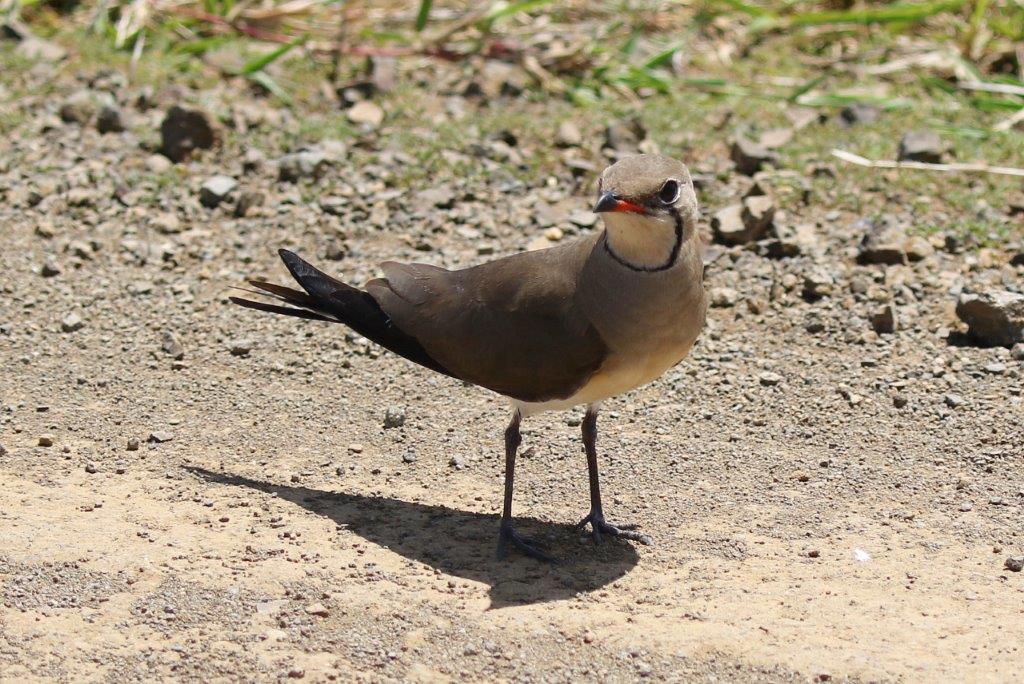
While we were there, we had kept a look out for other birders to call them over but no-one showed – shame. As we walked away about 6 Collared Pratincoles appeared on the mud flats – they must have been there all the time – shows how fixated we were.
Collared Pratincole
Collared Pratincole in flight
Now for the Eurasian Oystercatcher – such a good looking bird.
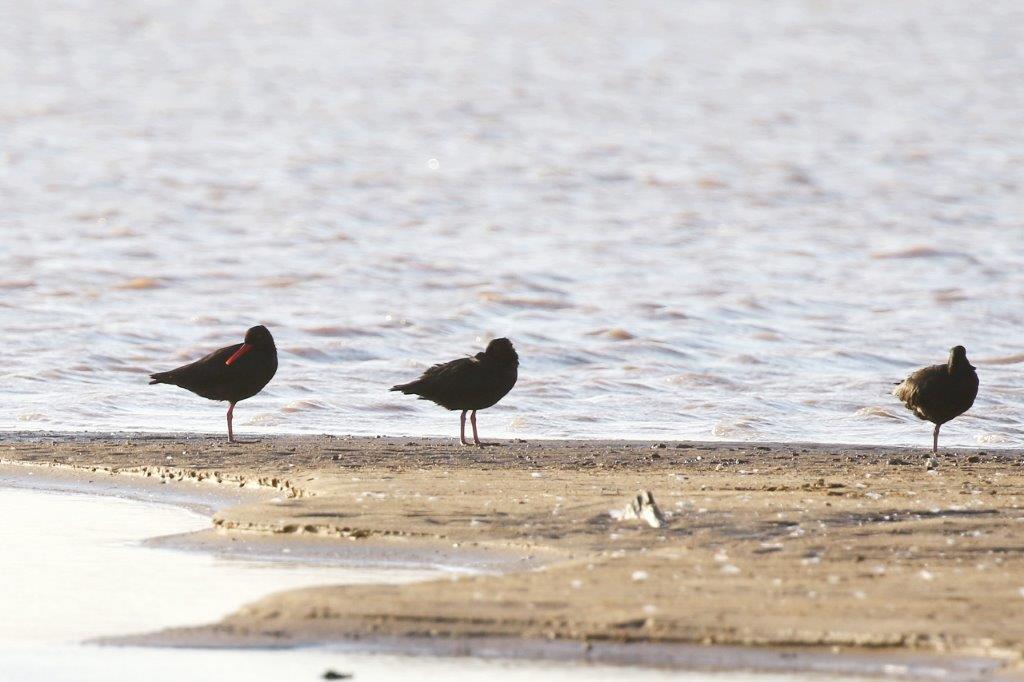
However it was not till our last afternoon that we spotted any – three, but all African Black Oystercatchers – no Eurasian.
African Black Oystercatchers
African Black Oystercatcher
On Saturday we walked almost 14 kms up and down the beach and over 16 kms on Sunday according to my FitBit!! Hard work on soft sand and sore leg muscles later.
Monday was overcast, wet and windy so we headed into Eastern Shores instead after a cursory look at the mudflats with the scope – virtually nothing around.
Changes have been taking place in the park and at long last the the broken bridge on the road beside Lake Bhangazi has been repaired. The bird hide at Mafazana Pan has a new entrance. There was water in the iMboma Pan and numerous hippos and a pair of visiting Rhinos. as well as birds.
Squacco Heron
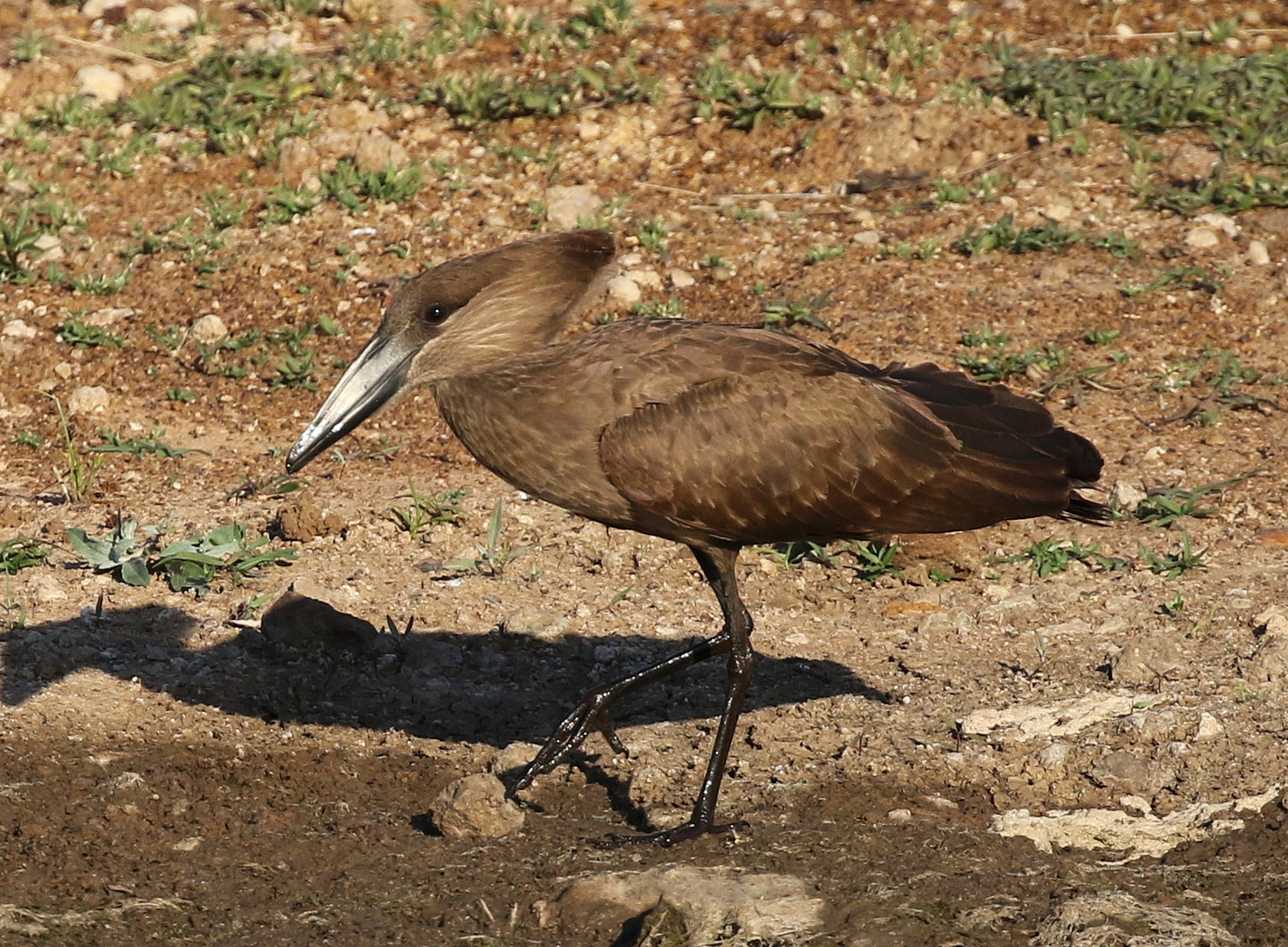
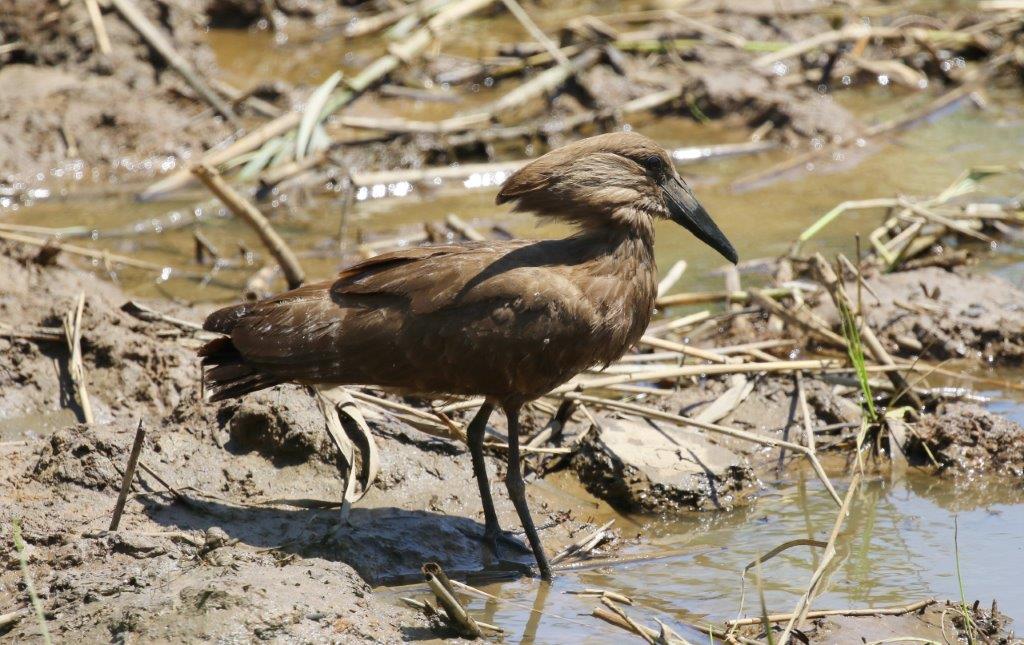
Hammerkop
Rufous-naped Lark
Collared Sunbird
A new entrance to Eastern Shores is being built where the old one was and it causes chaos when more than 6 cars are waiting to get in – up to a three quarters of an hour wait. We got lucky on our third day of attempting as we were not prepared to hang around. We chose a Monday morning at 07h00.
Birds were calling it seemed all day long – including Narina Trogons, Green Malkoha and Nicator.
Red Chested Cuckoo
Yellow-rumped Tinkerbird
Red petals
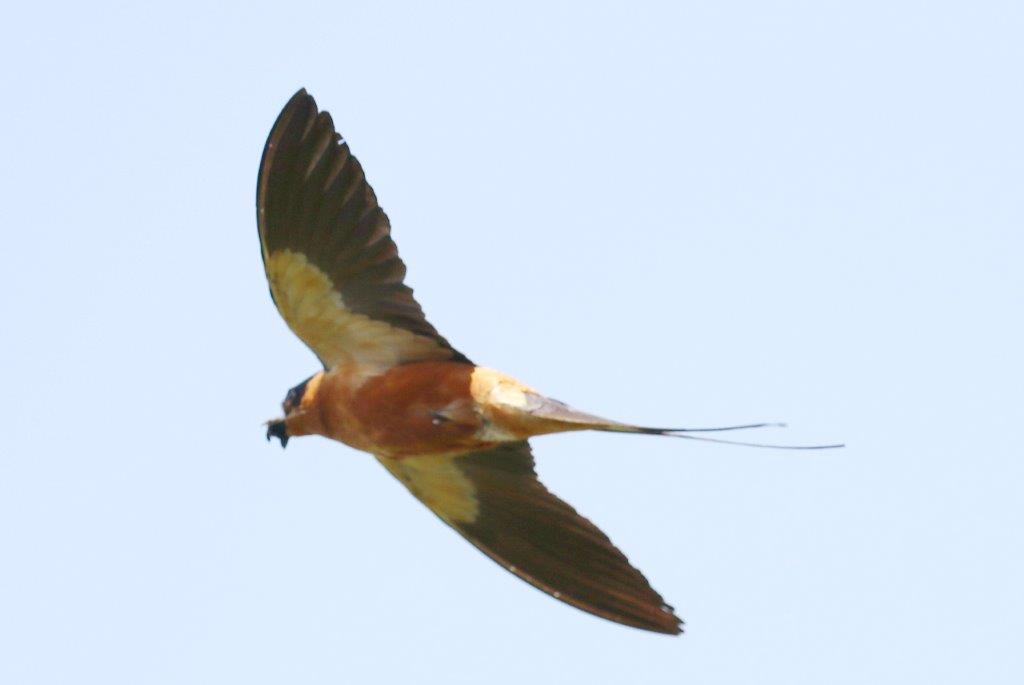
Red-breasted Swallow
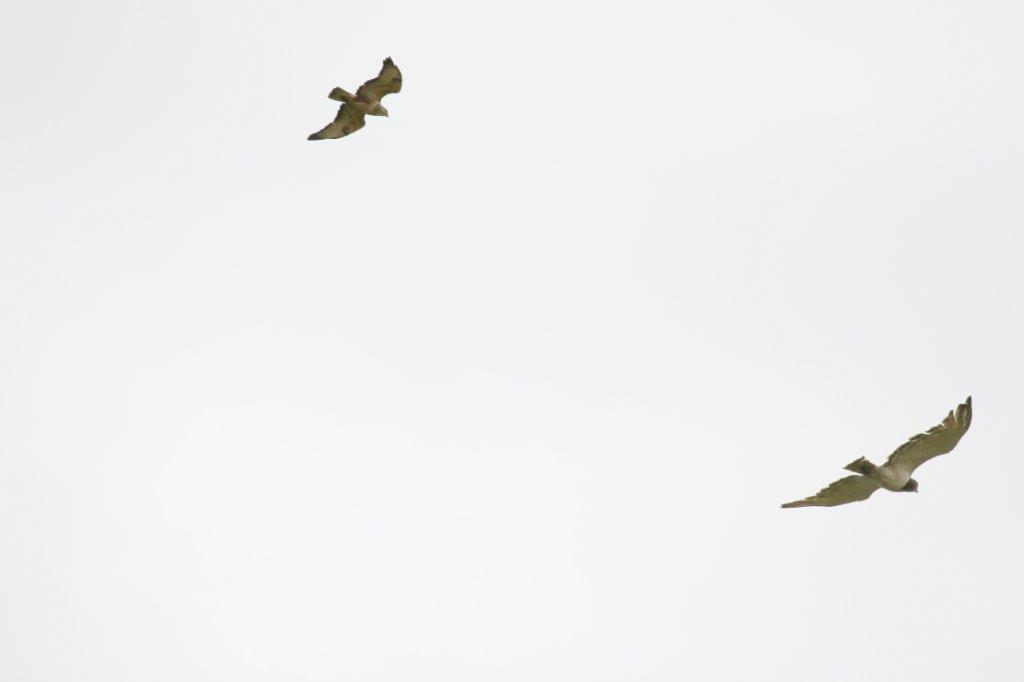
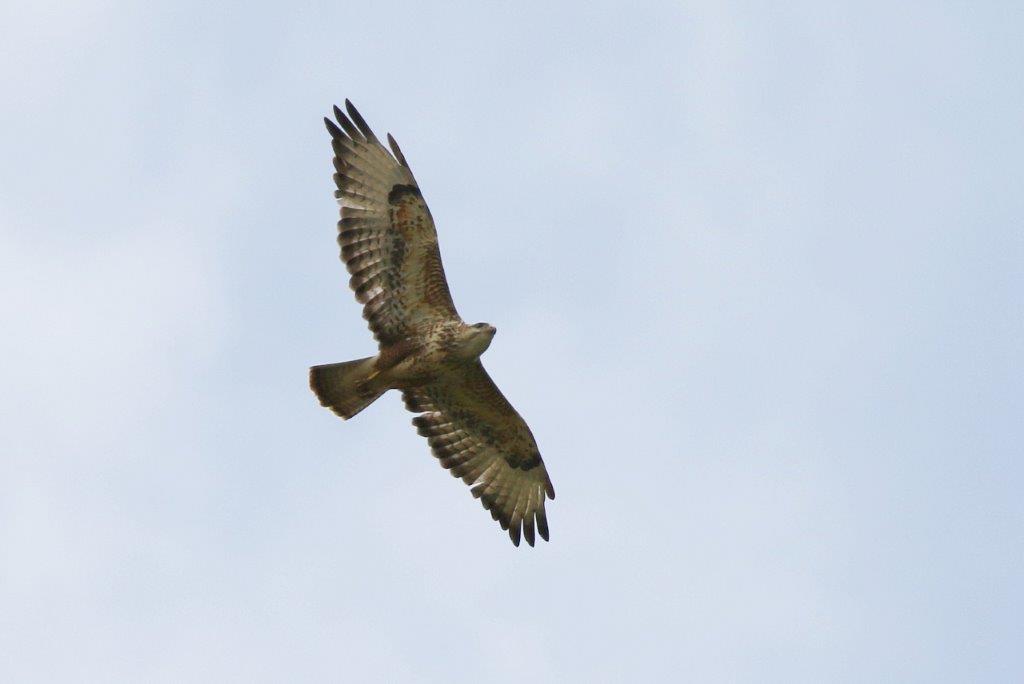
On the way back along the Red Dunes loop we stopped for a cuppa at the Lookout point. While enjoying our tea a Black-chested Snake-Eagle glided about us and was soon being bombed by a bird we could not identify. Initially we thought it to be a Buzzard but its tail is all wrong. What is it?
Black-chested Snake-Eagle
Black-chested Snake-Eagle being harassed
UI Bird
UI Bird
UI Bird
UI Bird
UI Bird
UI Bird
Animals were plentiful – Nyala, Zebra, Wildebeest, Giraffe, Eland, Buffalo, Reedbuck, the occasional Warthog and Duikers, few Impala and a lone Tsetsebe.
Zebra and newborn
Young male Red Duiker
Red Duiker
Reedbuck
The last night the drizzle arrived and we had a wet pack up in the morning – fortunately most of the pack up was done the previous evening.
Our highlight on this visit was the Gull-billed Tern.
On the spur of the moment Sally and I decided we needed a break and went to Mkuze for 5 nights.
Loving Giraffes
As we arrived we noticed puddles on the road – it had obviously been raining – tho the reserve needs much more.
Renovations are being done on all the hides. They look quite smart but won’t be entirely finished until the loos are built in kwaMalibala, kuMahlahla and kuMasinga hides. Each hide now has an entrance into a fenced off open area before entering the tunnel to the hide. The first is a fenced off area with a concrete walkway to the tunnel entrance to the hide. Nice to be in the first area and being able to walk round and see what may be about outside.
New walkway to the tunnel entrance – similar at other hides. Note path to right goes to where the new loo will be.
kuMahlahla Hide view
kuMahlahla Hide view
Entrance to kuMahlahla hide
kuMasinga and kwaMalibala hides were closed – however the office gave us permission to enter.
kuMasinga hide is as it always was – but now the area where the Pink-throated Twinspots usually are found is part of the fenced off area – which means one can explore in the bush without fear of bumping into an elephant or rhino.
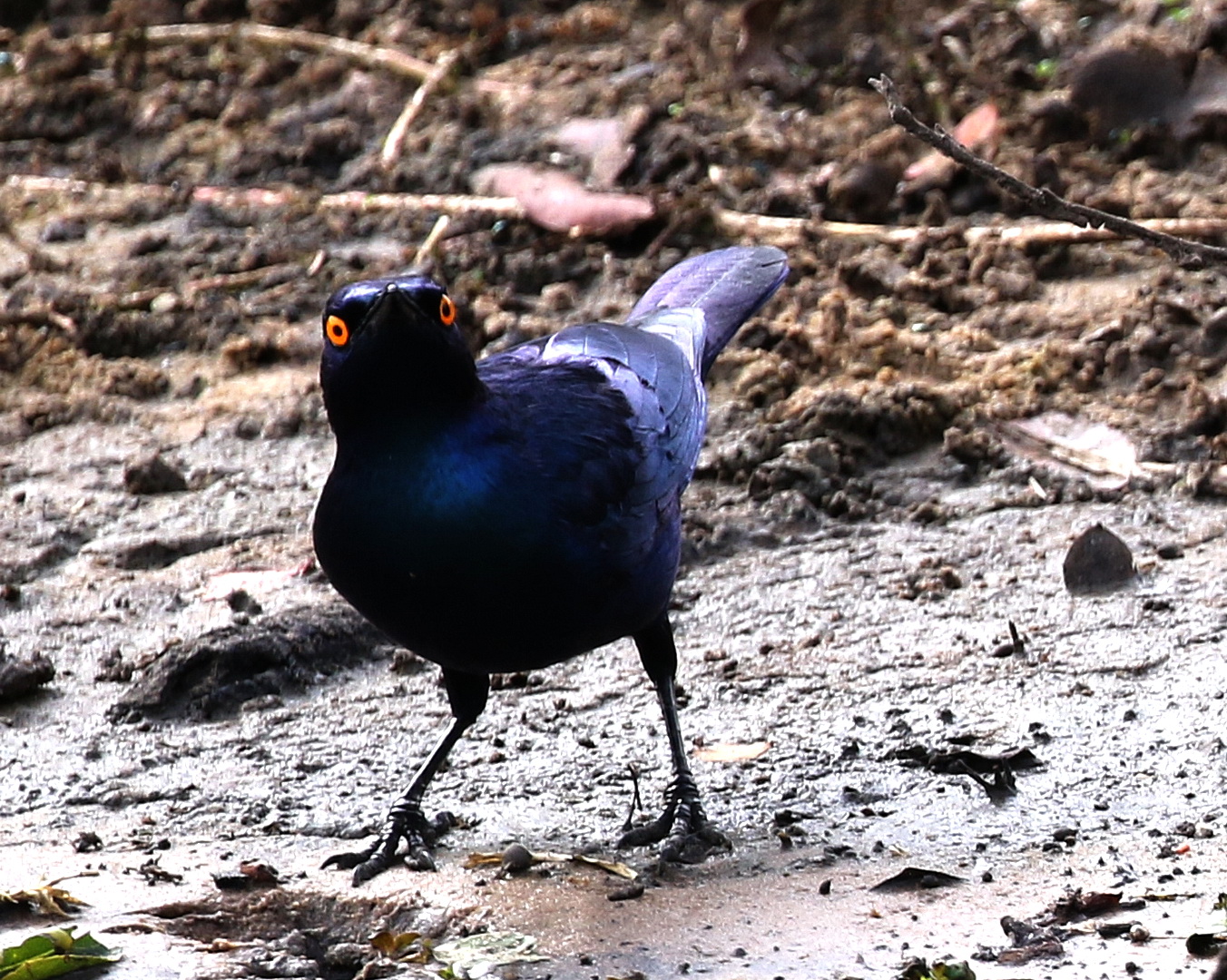
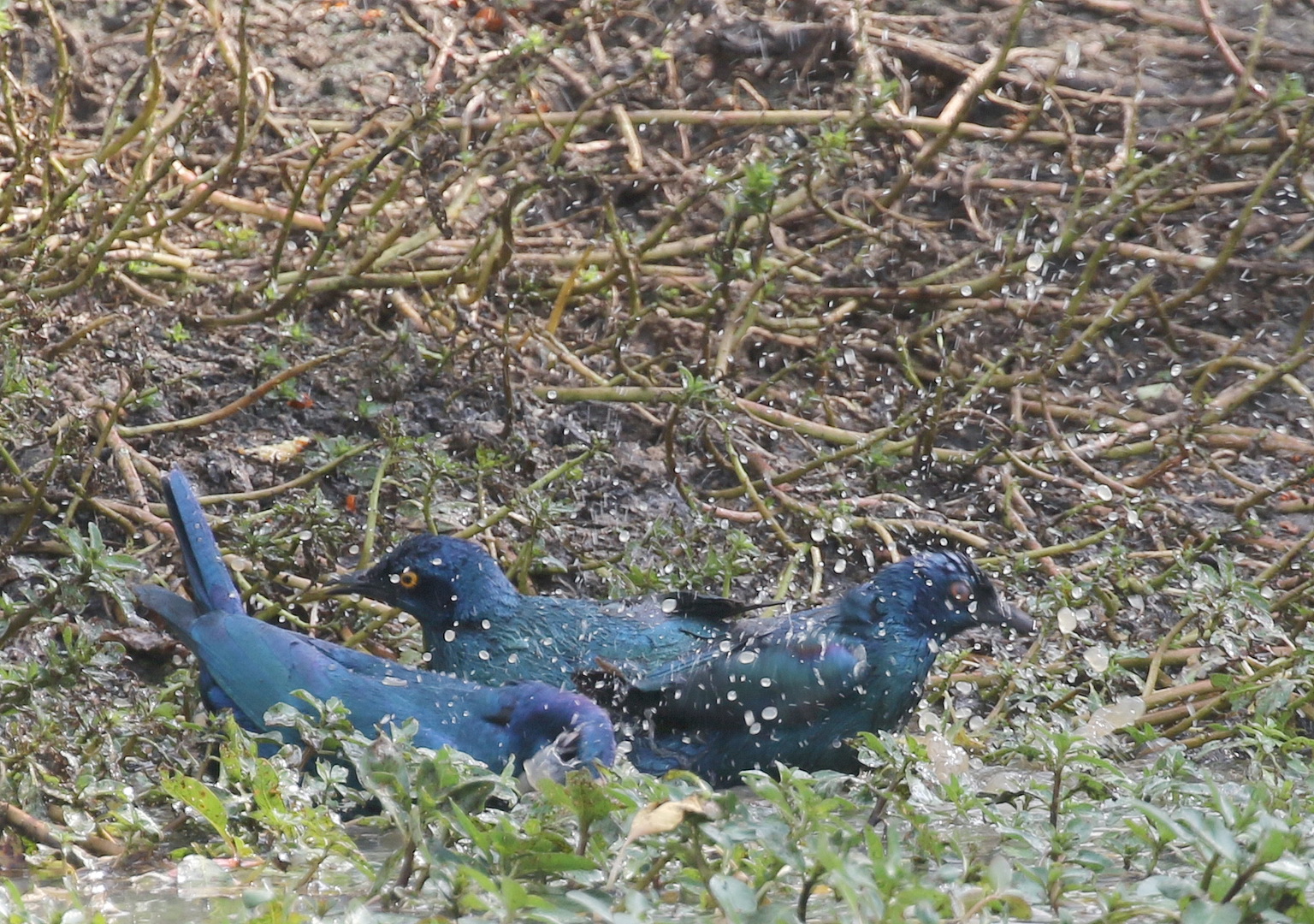
Cape Glossy Starling – bath time
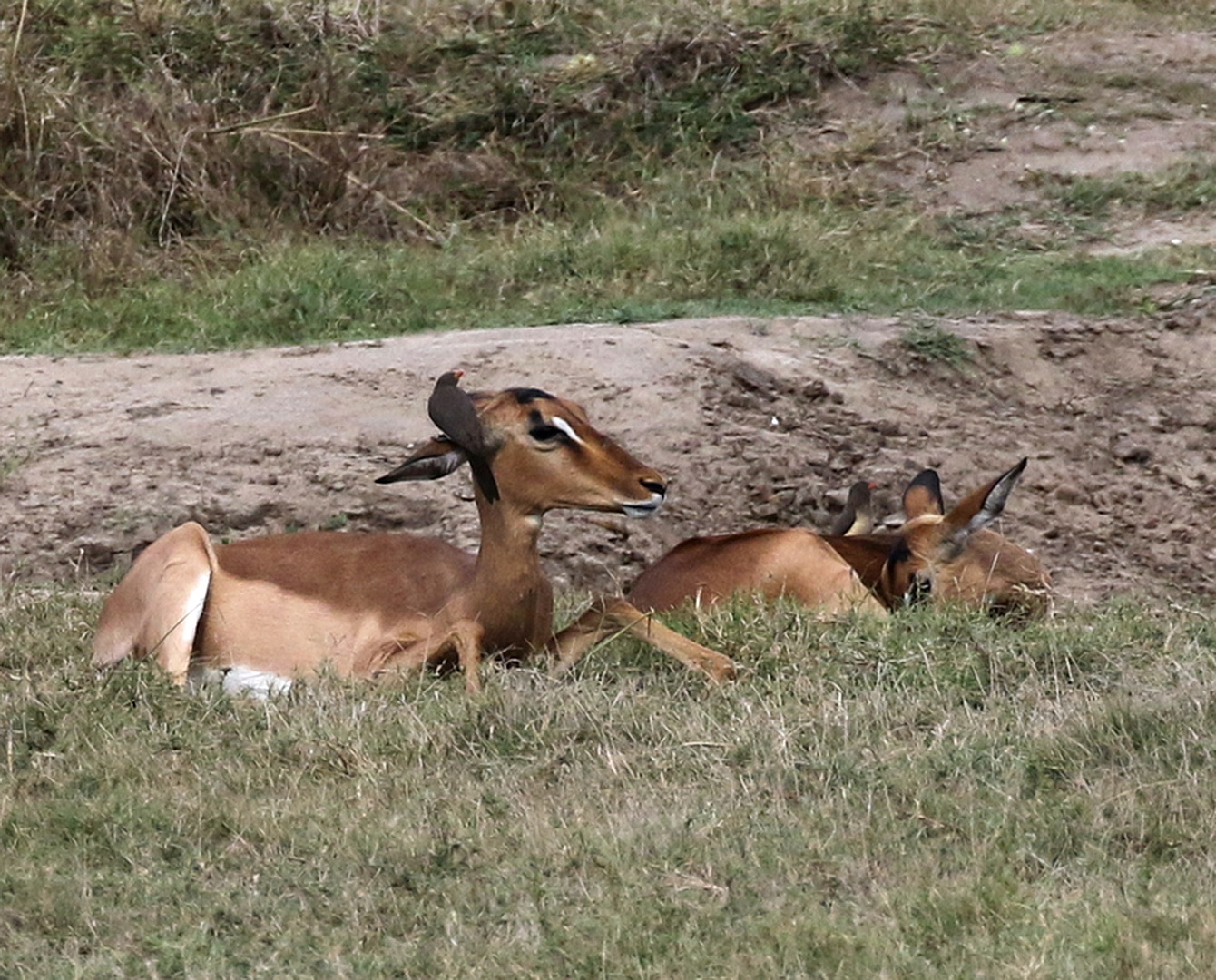
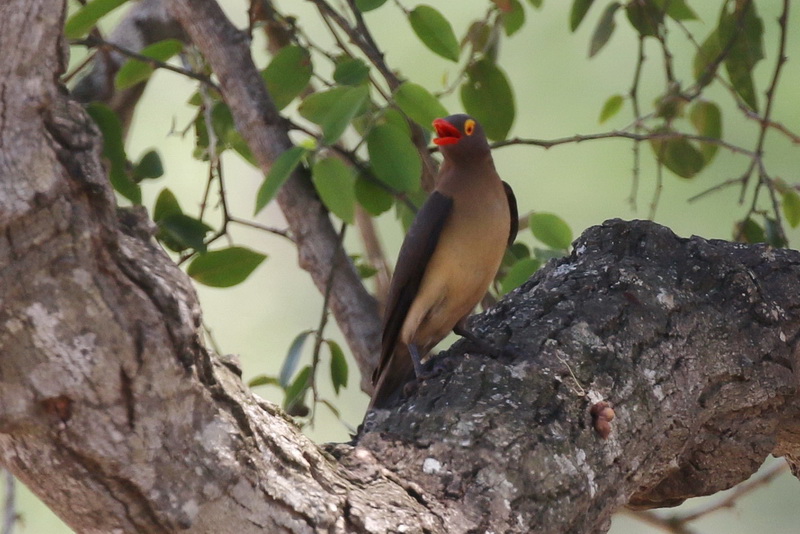
Red-billed Oxpecker
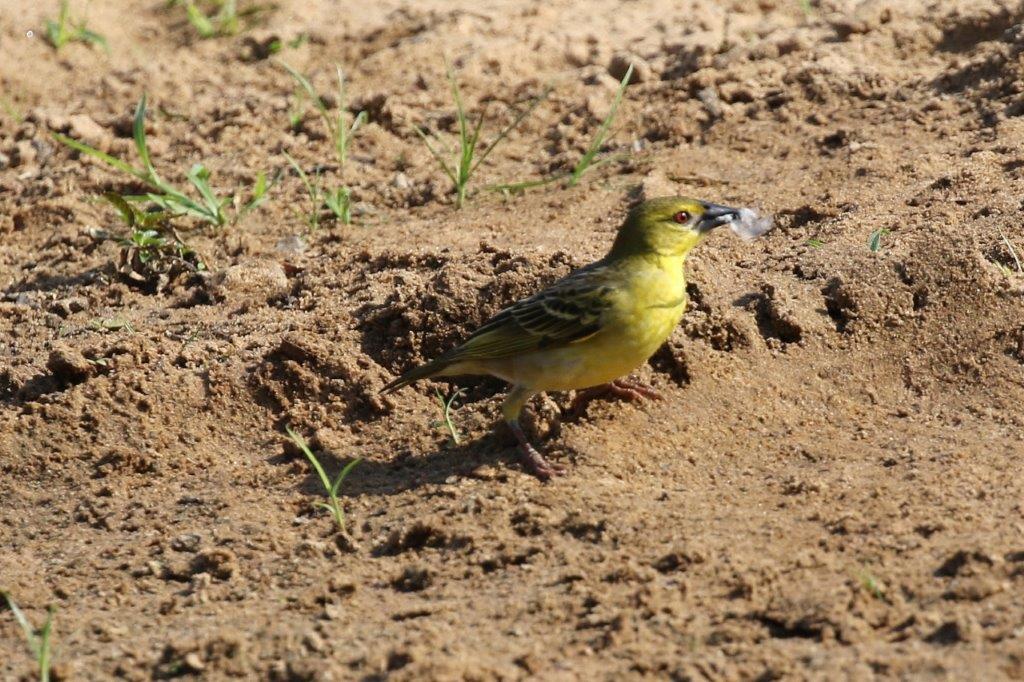
Southern Masked Weaver – female
Southern Masked Weaver – female
Southern Masked Weaver
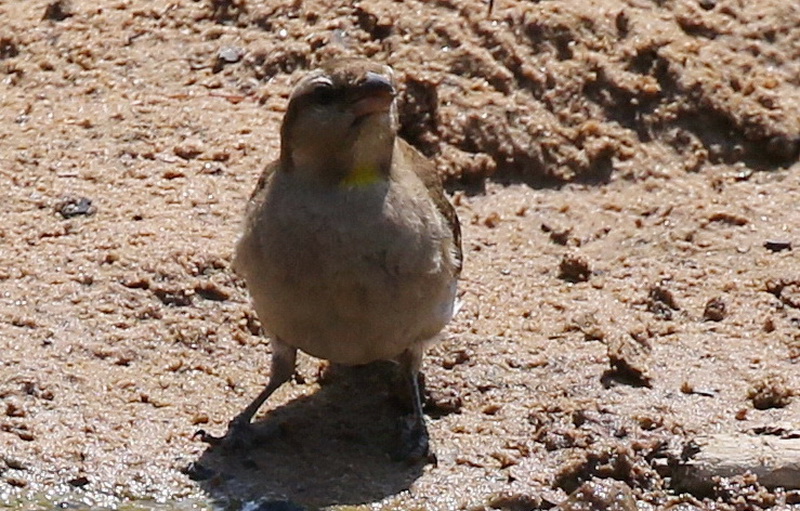
Yellow-throated Petronia
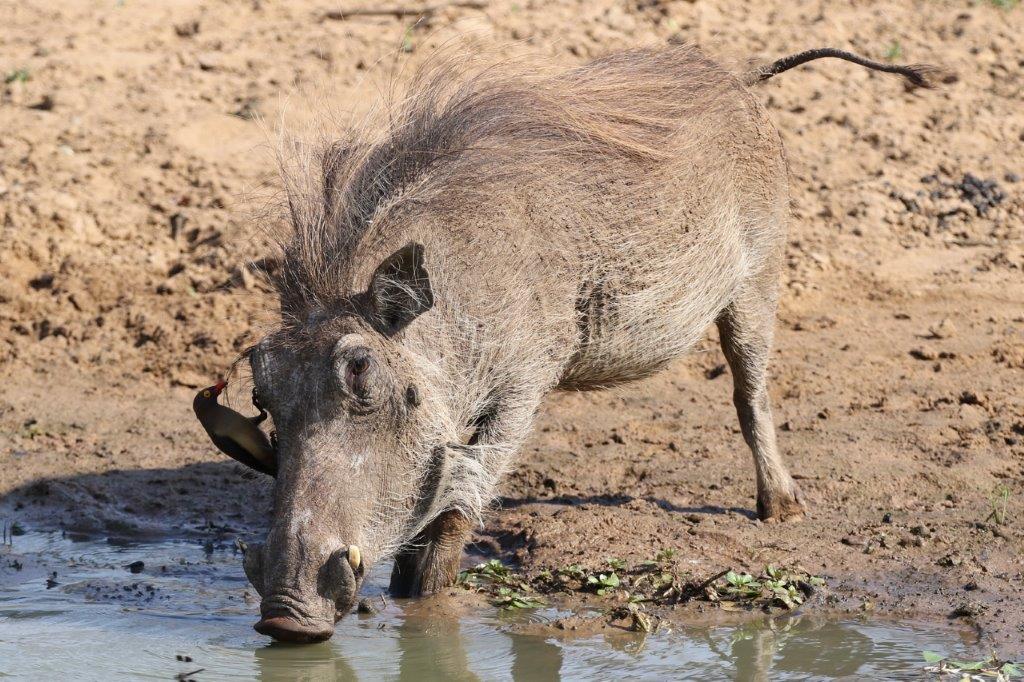
Warthog and Red-billed Oxpecker
Burchell’s Zebra caught by a snare
We only saw a few Red-billed Oxpeckers as we drove arount the Reserve – where had they all gone? We soon found out at kuMasinga Hide. There they all seemed to be waiting for lunch. As the different animals arrived for a drink they all appeared to descend on their backs, legs, ears, noses, underneath with as many as 20 on one animal.
kwaMalibala hide has very little water – waiting for the rains but it always seems to have different birds which frequent it – Namaqua Doves come particularly to mind.
Namaqua Dove
kuMahlahla Hide had a bit of water and proved to be the best hide on this visit. A Crowned Eagle (with a very full crop) came for water and kept the rest of the birds on their toes.
Crowned Eagle
Crowned Eagle in flight
Crowned Eagle
An African Pygmy Kingfisher sat quietly in the tree right beside the right side of the hide for ages.
African Pygmy Kingfisher
African Pygmy Kingfisher
African Pygmy Kingfisher
African Pygmy Kingfisher
African Pygmy Kingfisher
African Pygmy Kingfisher
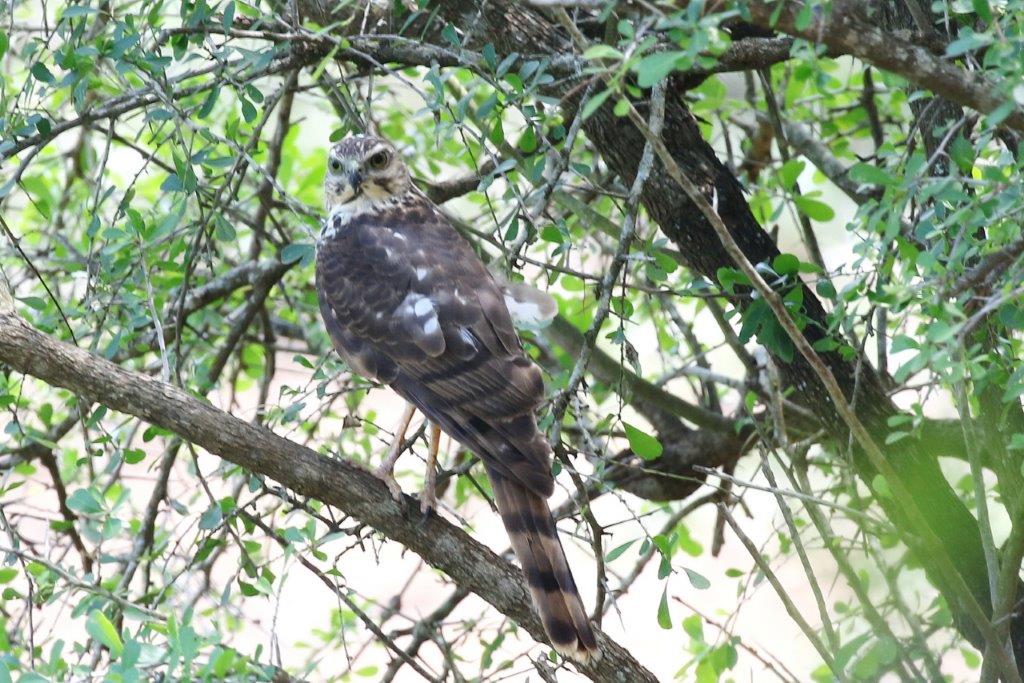
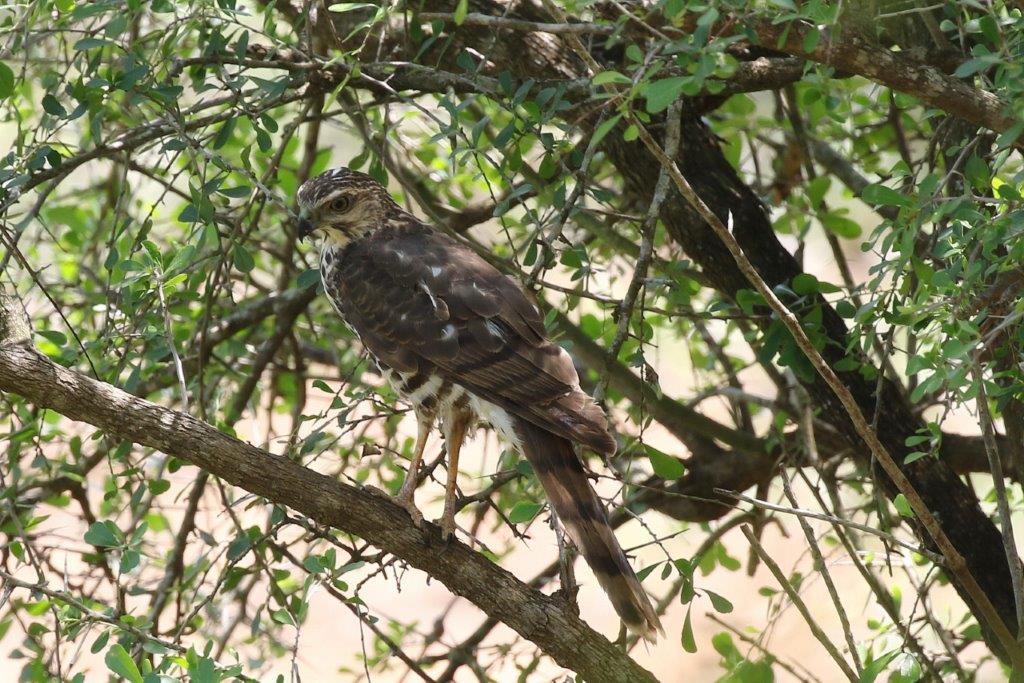
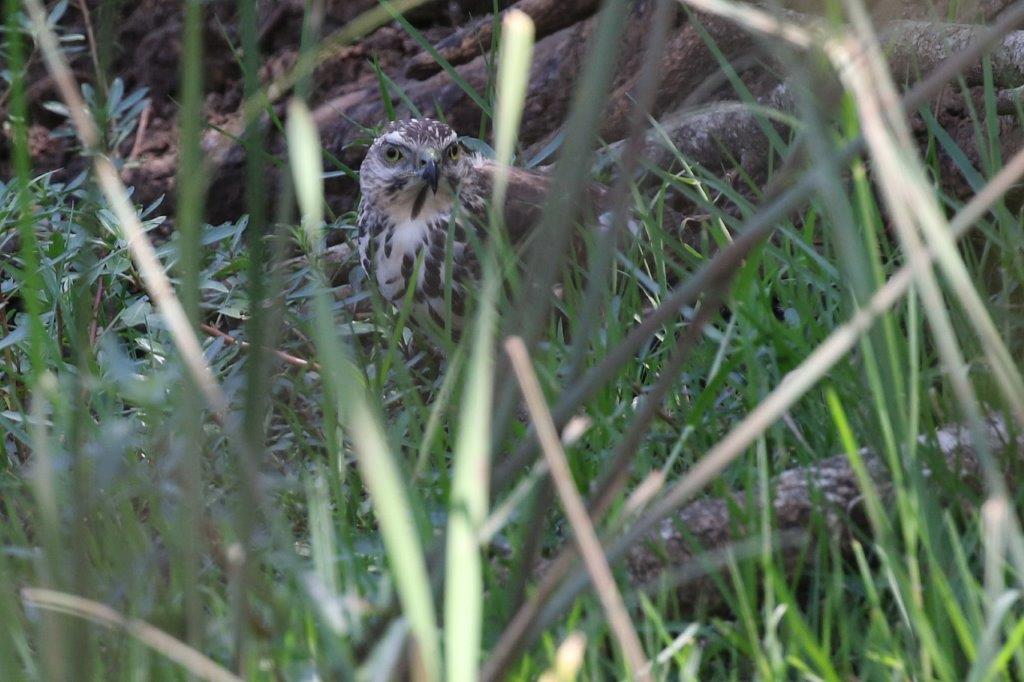
A young African Goshawk also came in for a bath and hung around for a while.
African Goshawk – juvenile
African Goshawk – juvenile
African Goshawk – juvenile
African Goshawk – juvenile
African Goshawk – juvenile
African Goshawk – juvenile
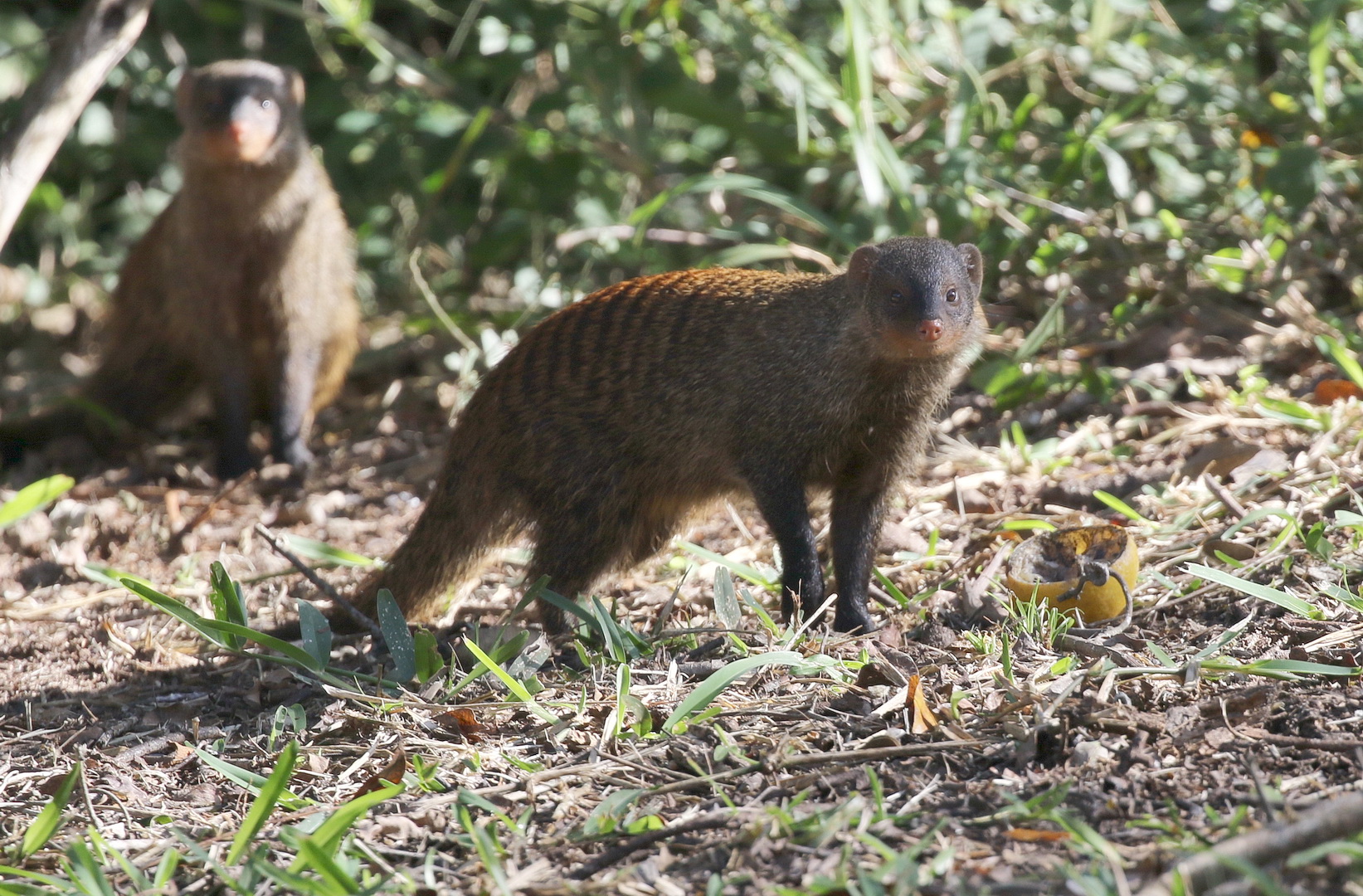
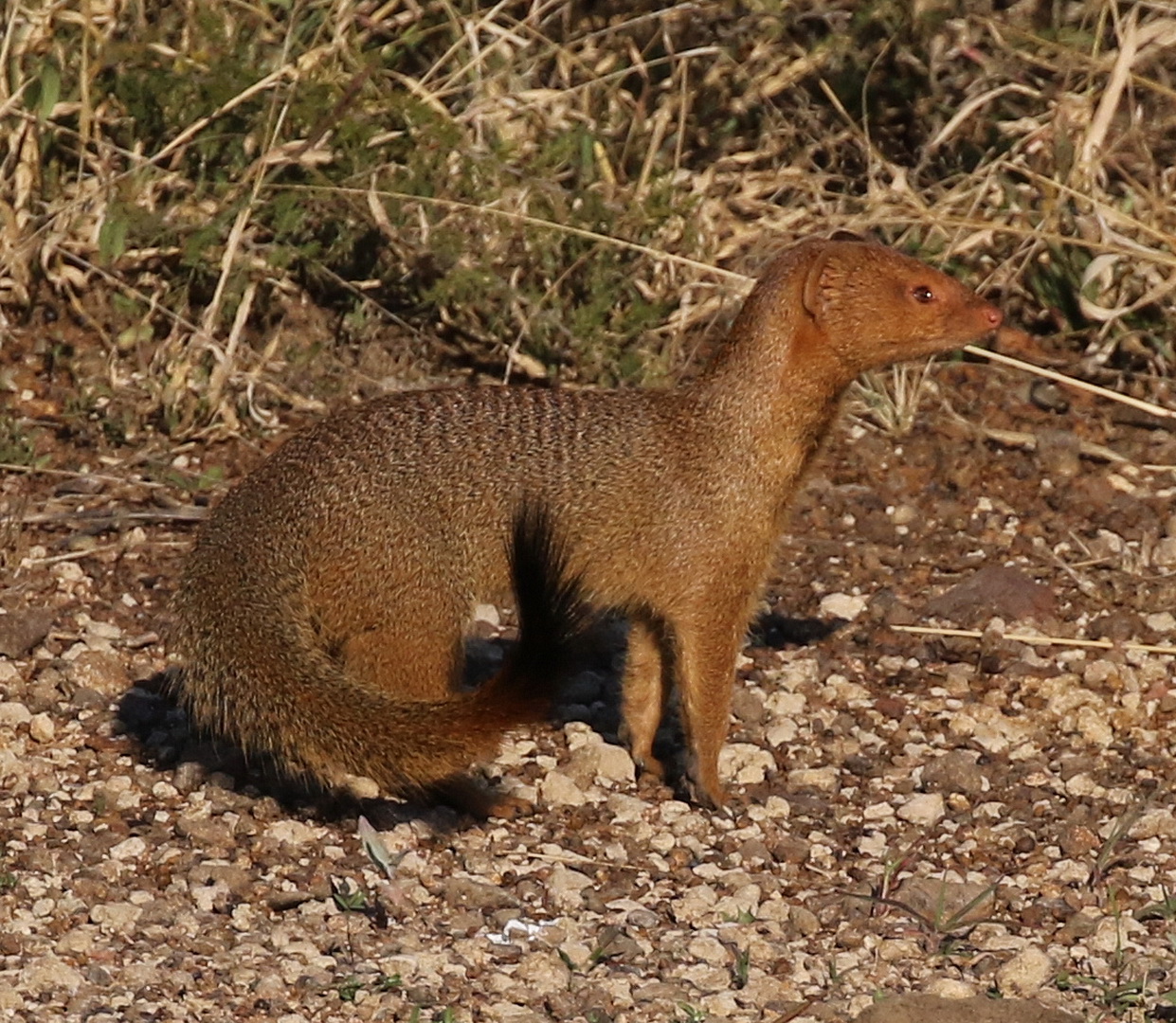
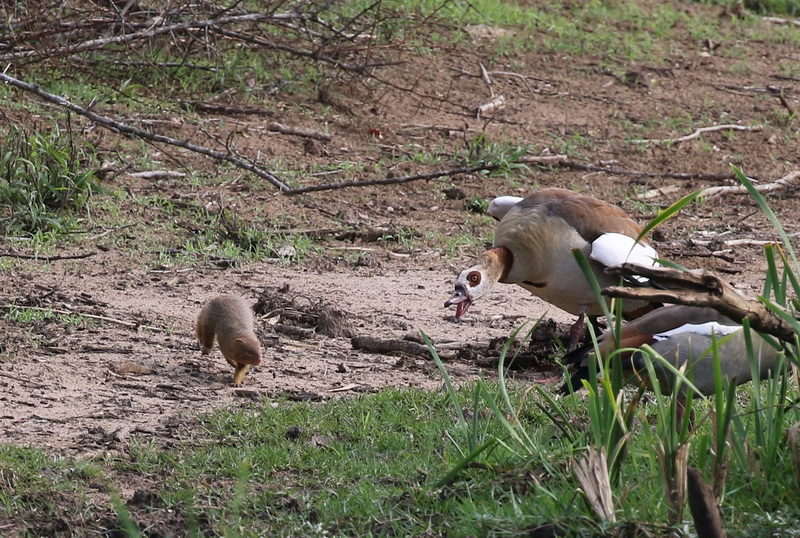
A Slender Mongoose had a playful time with a pair of Egyptian Geese – running up to the Geese and being chased back. It was hilarious to watch.
Slender Mongoose having a sniff
Egyptian Goose being chased by a slender mongoose
Egyptian Goose giving returning the favour
Mongoose back for more
Egyptian Goose letting him know who is boss
It looks like she means business this time
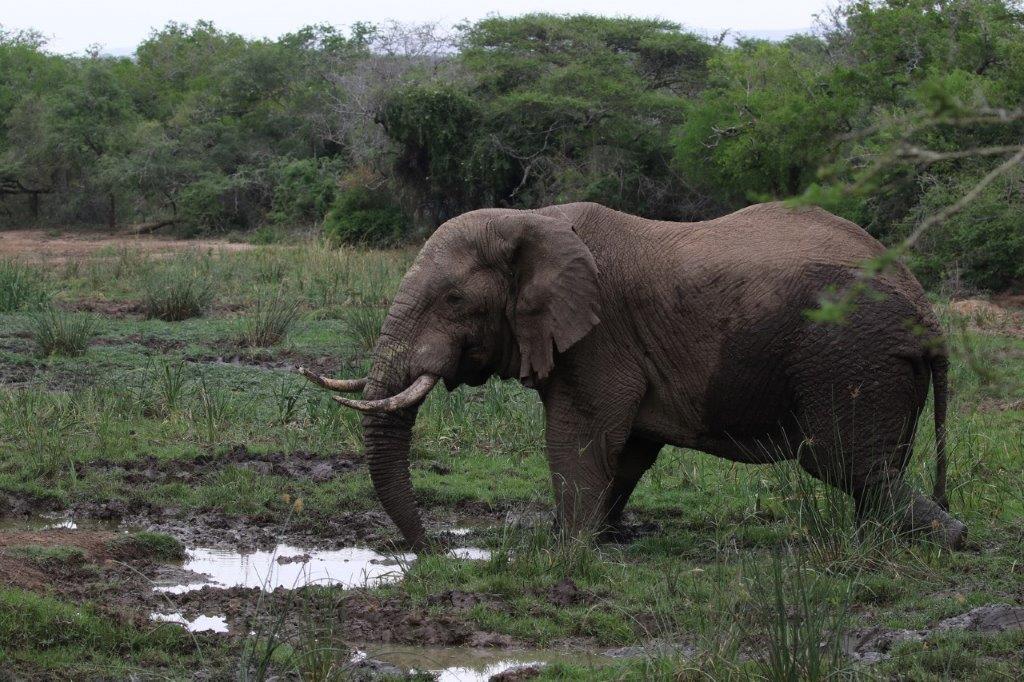
An old elephant with ragged ears, in musth, sauntered in and out for a drink disturbing the buck who were waiting to get a drink too. On his way out of the mud his back legs sank sharply and he was thrown off balance getting out somehow managing to stay upright.
Elephant in for a drink
Elephent resting his trunk
Some of the other species seen at kuMahlahla Hide:
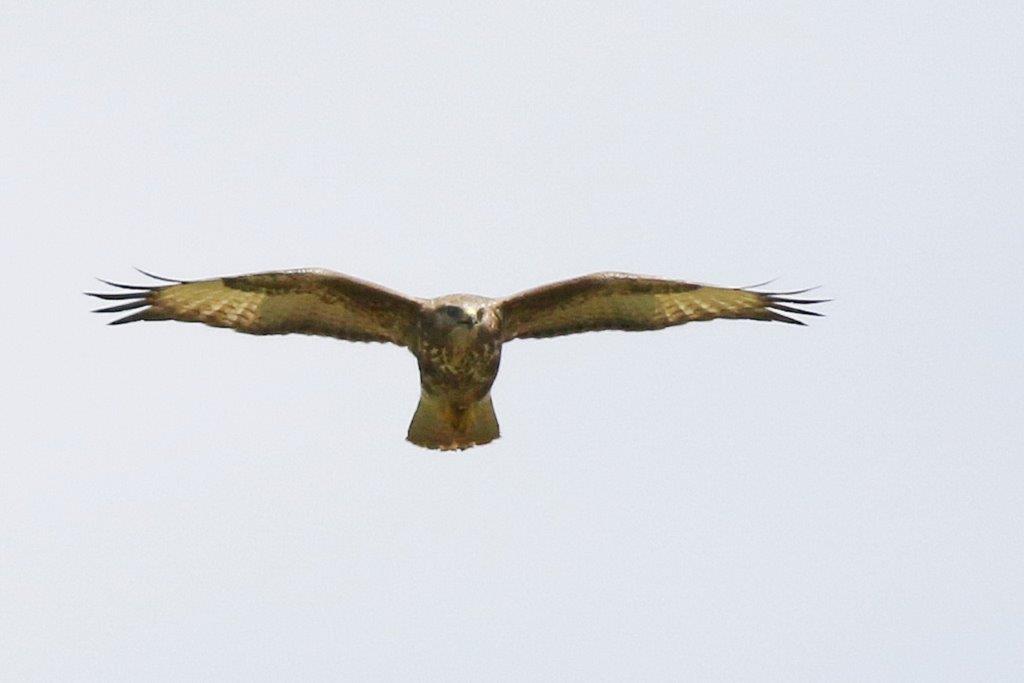
Common Buzzard
Common Buzzard
Little Bee-eater
Little Bee-eaters
Little Bee-eaters
White-bellied Sunbird
Cattle Egret
Southern Black Tit
White-bellied Sunbird
Purple-crested Turaco
White-fronted Bee-eater
Crowned Lapwing
Frog froth
Giraffe – drinks time
As my sister and her husband were using the trailer up in the Kruger, we stayed in one of the huts. At R240 each less 30% discount this was not much more than camping. We were in hut 4 – Mziki – and the Lesser Striped Swallows were in abundance tending their nests under the eaves.
Hut No 4 – Mziki
African Goshawk
Black-bellied Starling
Bearded Scrub-Robin
Bearded Scrub-Robin
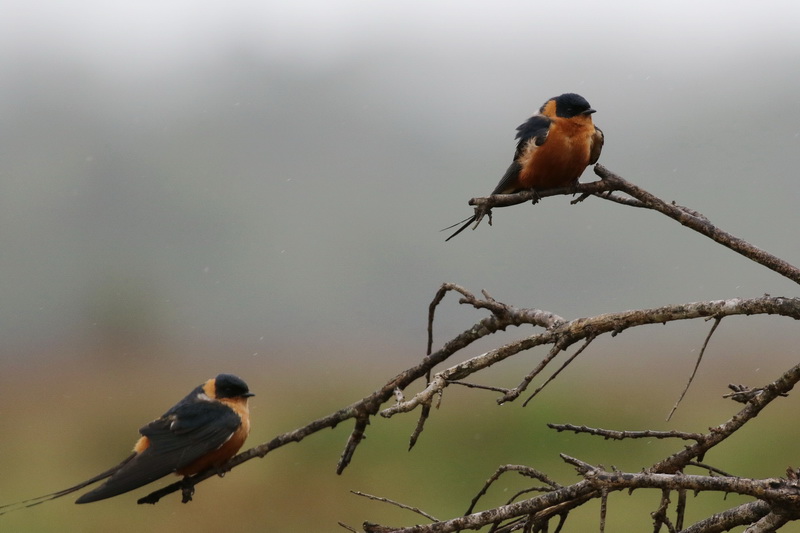
Lesser Striped Swallow
Lesser Striped Swallow
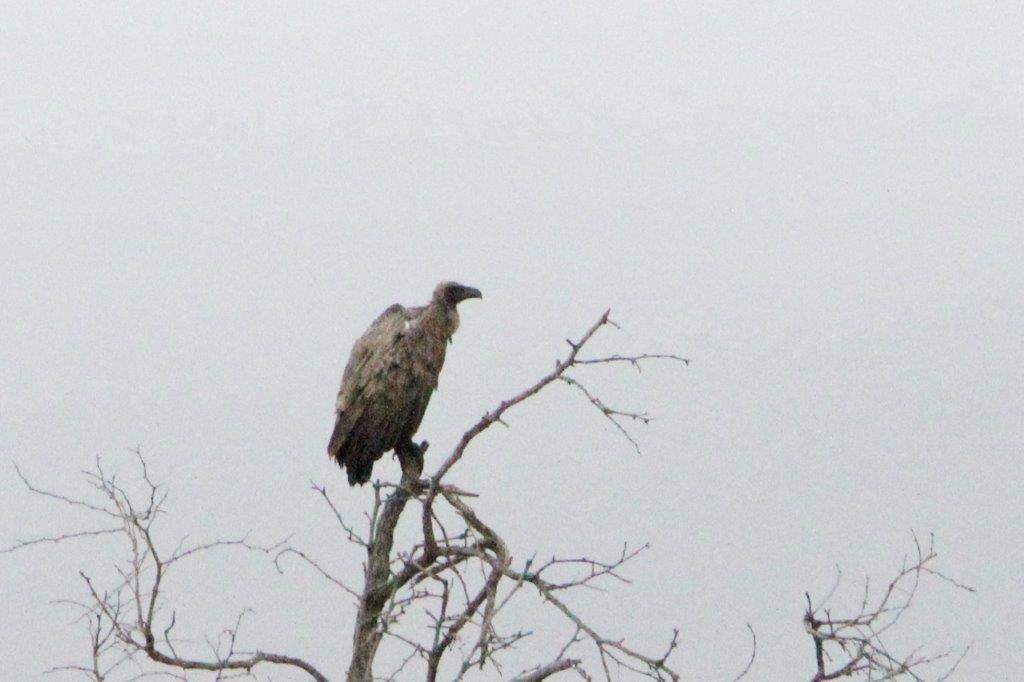
Our days were spent driving around the reserve atlassing as we went. We actually saw a pair of White-backed Vultures on a nest and another and another perched in a different location. Some were seen flying overhead but not many.
White-backed Vultures on their nest
White-backed Vultures on their nest
White-backed Vulture
Grey Go-away-bird in flight
Grey Go-away-bird
Little Bee-eater
Pale Flycatcher
Red-chested Cuckoo
Red-chested Cuckoo
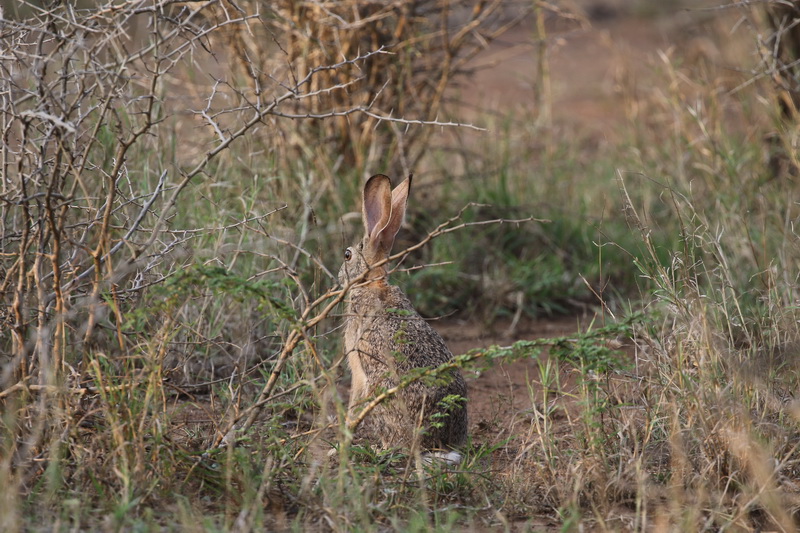
Scrub Hare
Senegal Lapwing – adult and juvenile
Senegal Lapwing – adult
Senegal Lapwing – juvenile
Trumpeter Hornbill at the water hole.
Violet-backed Starling
White-fronted Bee-eater
Brown-hooded Kingfisher
Cape Glossy Starling
Crested Barbet
Crested Barbet
European Bee-eaters
European Bee-eaters
European Bee-eaters
Giraffe at rest
Green-winged Pytilia
Nsumo Pan is full and although we saw quite a lot there including an African Openbill, we were hounded by strong winds and overcast weather which made it a little unpleasant in the hides.
At the picnic site on Nsumo Pan we bumped into Themba Mthembu. He used our scope and found African Pygmy Geese in the absolute distance. How he saw them we attributed to young eyes. It is the first time I have seen them in Mkuze.
African Openbill
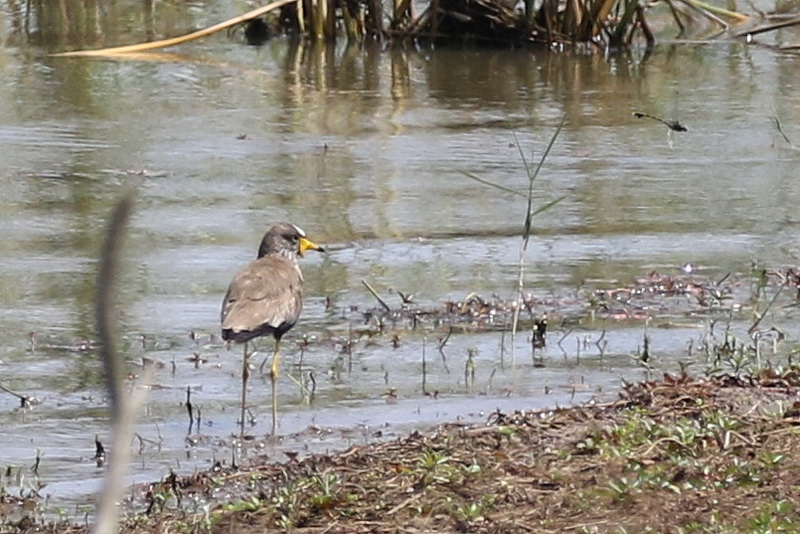
African Wattled Lapwing
Glossy Ibis
Glossy Ibis
Osprey on other side of Nsumo Pan
Ducks in a row
Great Egret – male in breeding plumage
Western Cattle Egret taking a perch on a Hippo’s nose
Three-banded Plover
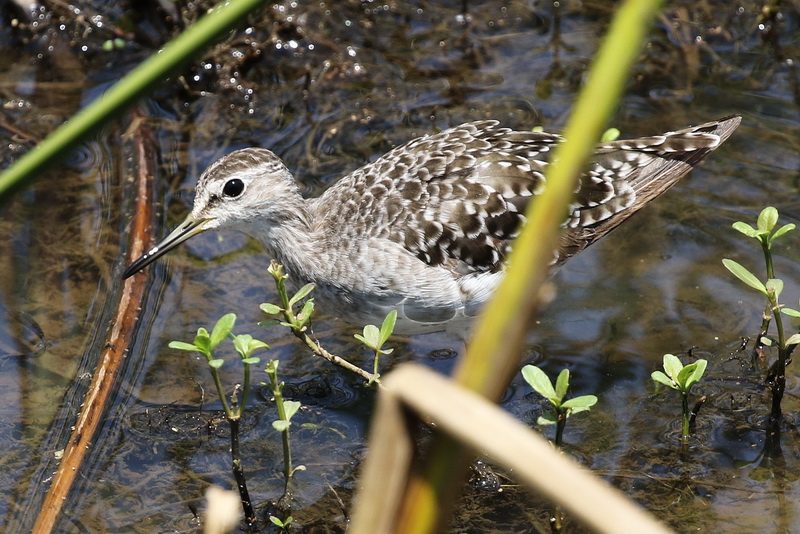
Wood Sandpiper
Black-winged Stilt
Whiskered Tern
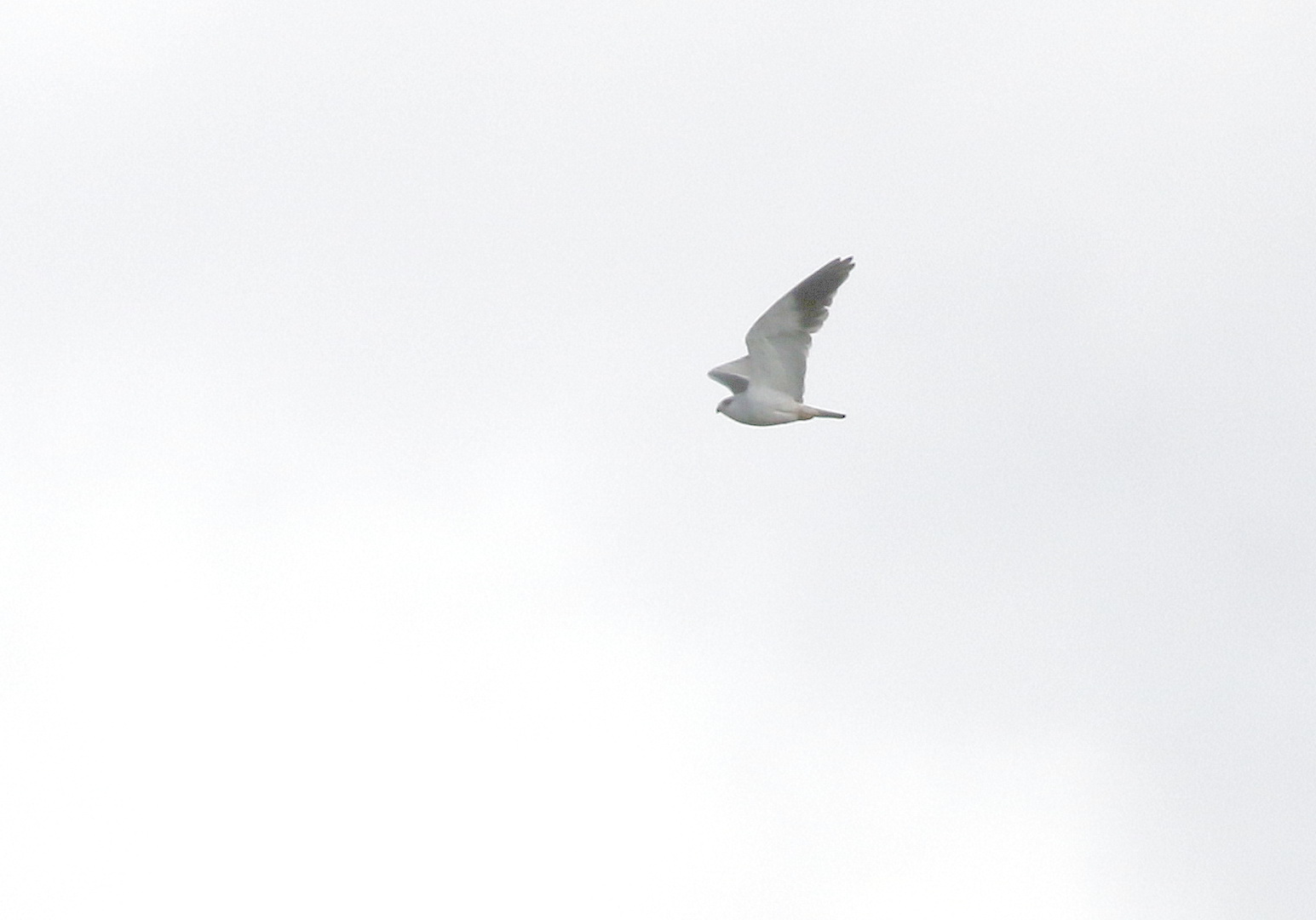
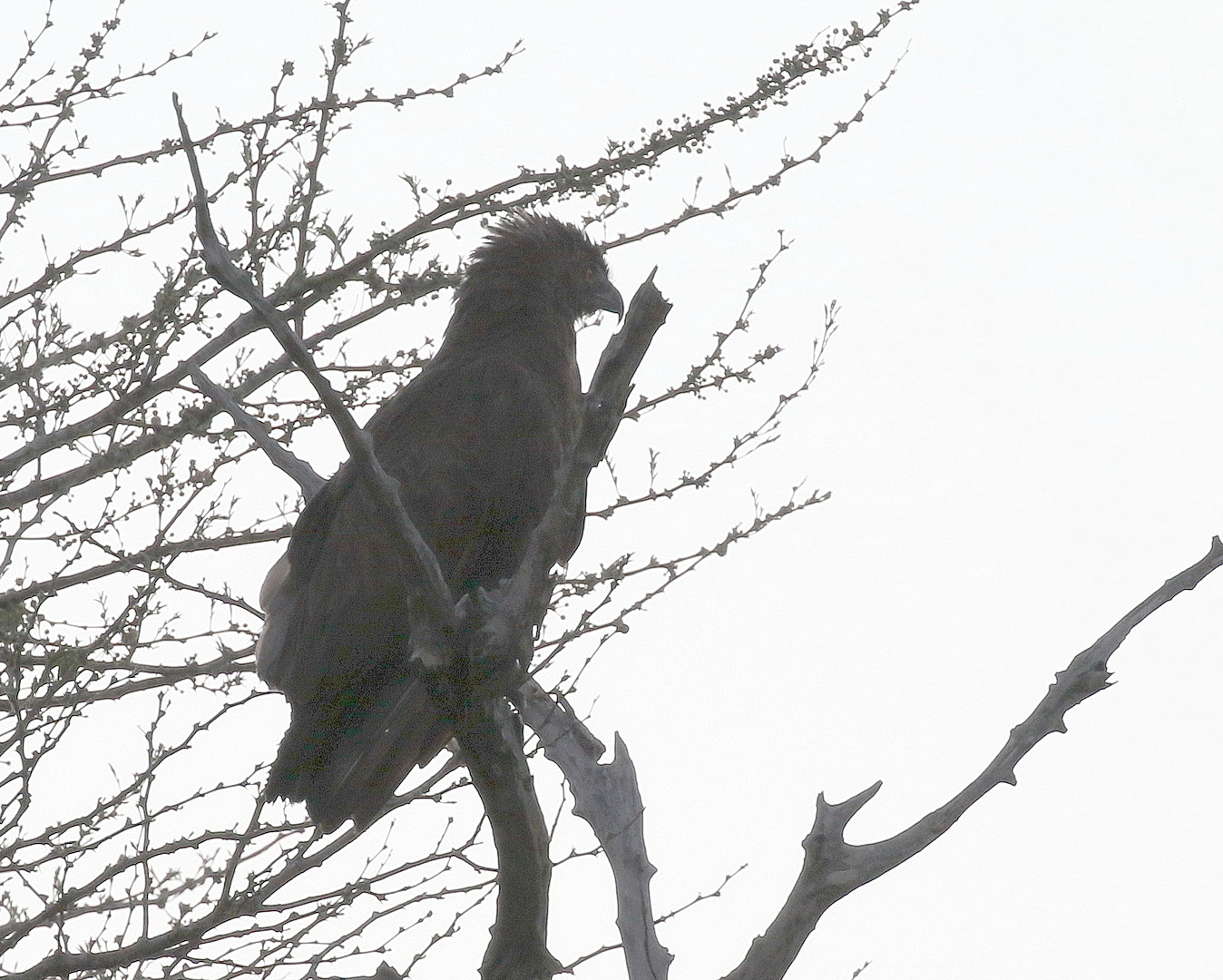
On our first afternoon drive we came across a raptor which we are unsure as to its ID. We saw it at the end of the tar to the Loop road where there is an old Wahlberg’s Eagles’ nest. The unusual part of the bird is its pale crest/crown. We believe it is a Wahlberg’s Eagle but await your comments.
? Wahlberg’s Eagle – white-headed
? Wahlberg’s Eagle – white-headed
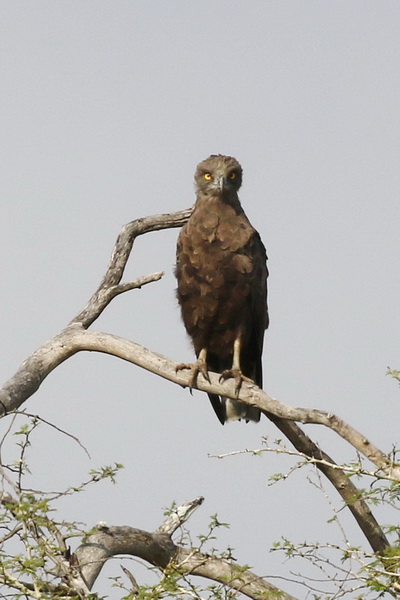
On the whole we saw a number of raptors – African Fish-Eagle, Brown Snake Eagle, Wahlberg’s Eagle, Bateleur, African Marsh Harrier, African Crowned Eagle, Martial Eagle and African Goshawk.
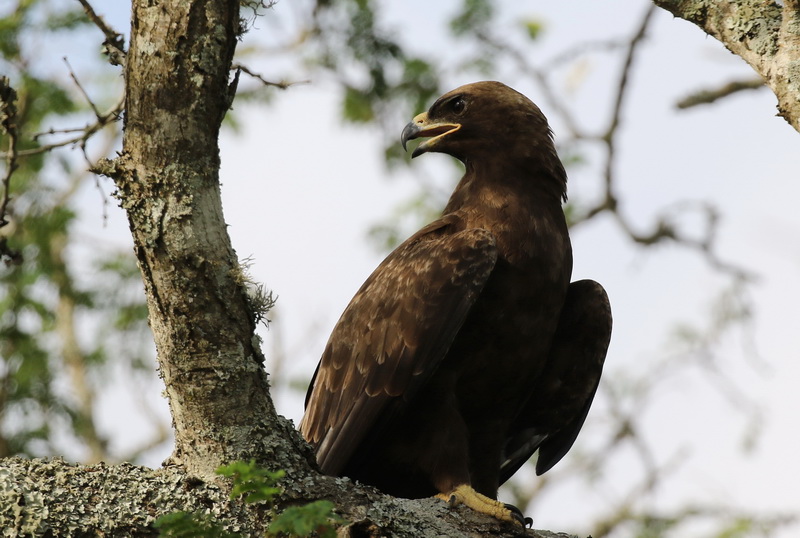
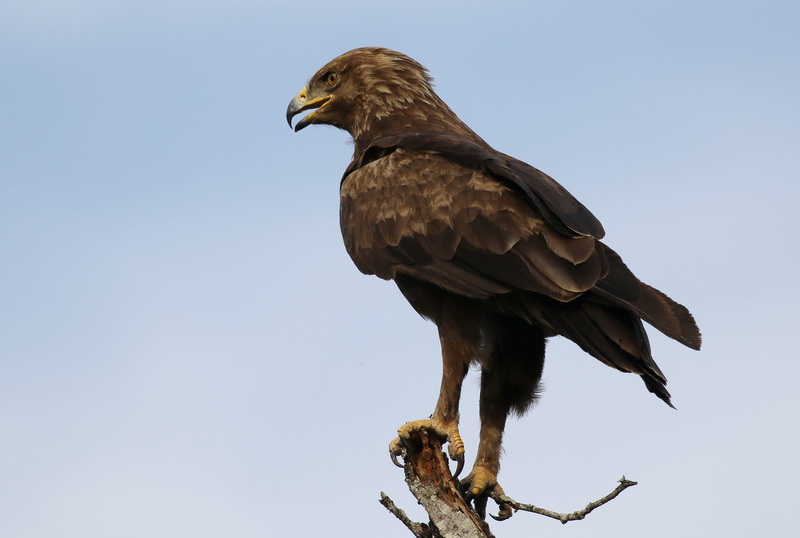
Wahlberg’s Eagle
Brown Snake Eagle
Brown Snake Eagle
Wahlberg’s Eagle, turning a blind eye
Wahlberg’s Eagle, now what
Wahlberg’s Eagle, ready for the off
Wahlberg’s Eagle, I’m off
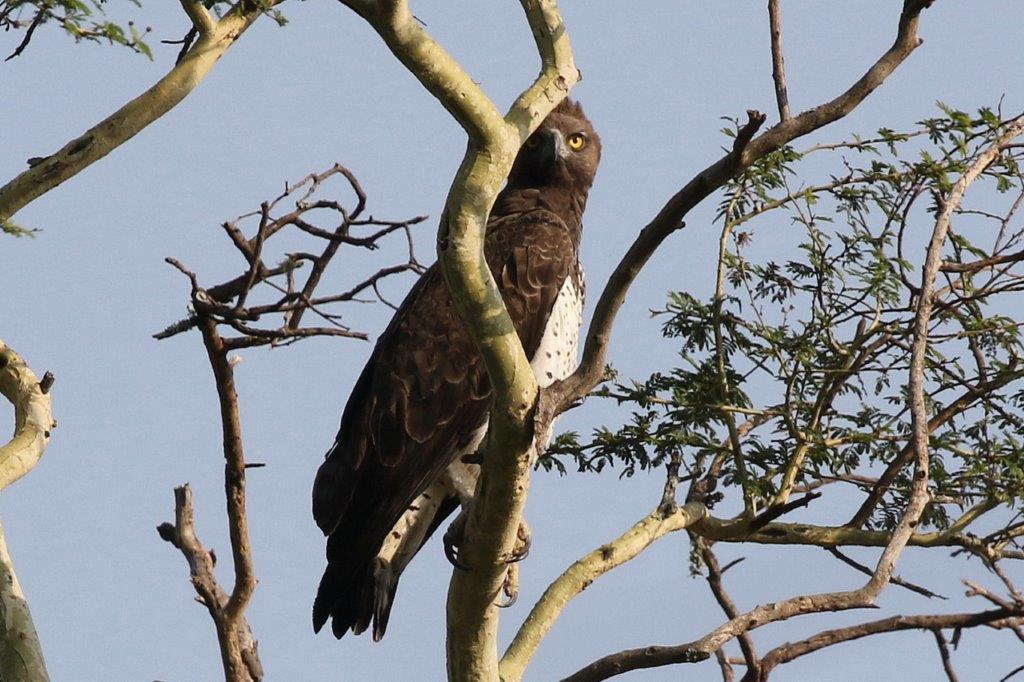
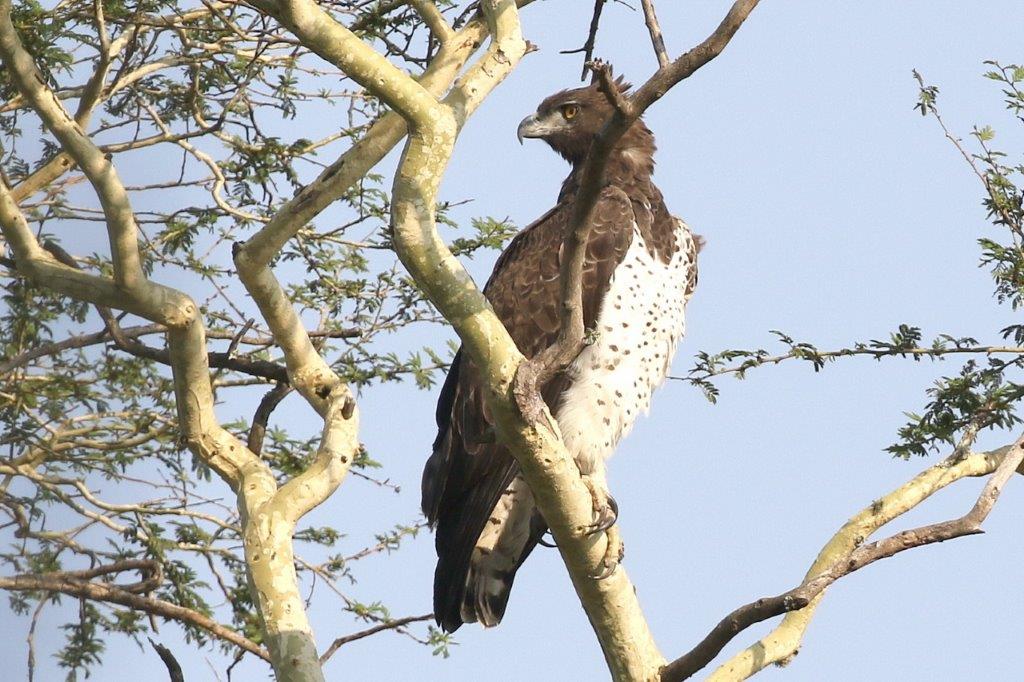
Martial Eagle
Martial Eagle
Osprey
Osprey
Common Buzzard
Common Buzzard
African Goshawk – juvenile
African Goshawk – juvenile
Crowned Eagle
? Wahlberg’s Eagle – white-headed
One of the things we noticed was that much of the big game was not to be seen. Of the Big 5 we only saw elephants – a heard of 20 on the opposite side of Nsumo Pan and a male in musth at kuMahlahla Hide. Not one Rhino perhaps because most were taken to St Lucia/Isimangaliso for safe keeping and because of the draught.
Herd of ElephantsHerd of Elephants
On one of the days we decided to head down to St Lucia to try our luck to see the Gull-billed and Sooty Terns as well as the Eurasian Oystercatcher. The Mkhuze gate only opened at 06h00 so we were unable to get to St Lucia before 07h45.
Perhaps that is why we lucked out except for the Sooty Tern. We spent over four hours on the beach and estuary. Unfortunately we had to get back to Mkuze before the gate closed at 18h00 so were were unable to check the birds coming in for the evening roost.
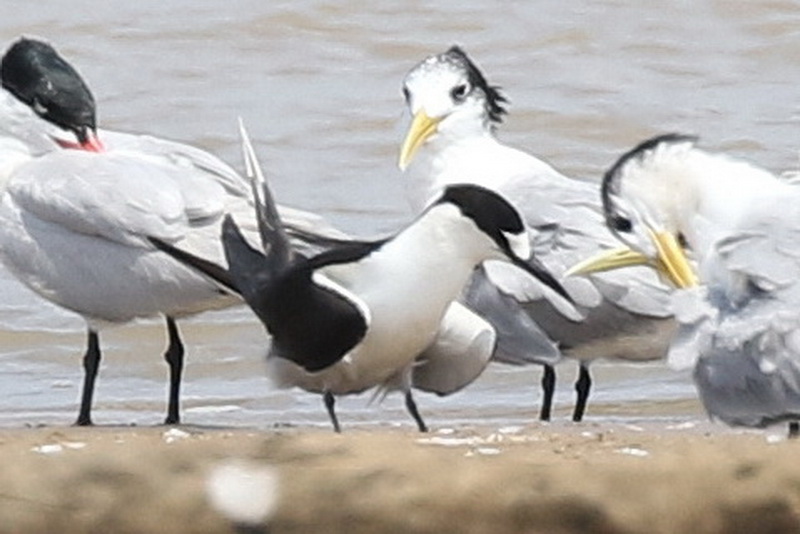
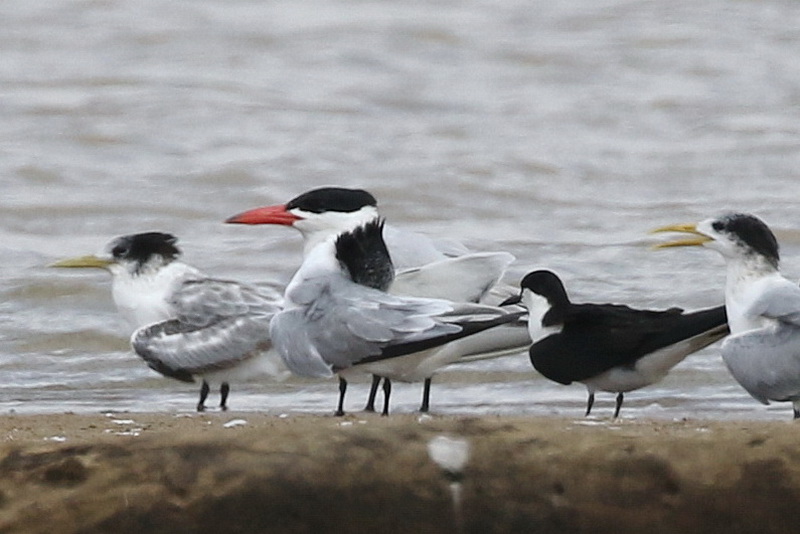
Caspian, Sooty and Swift Terns
Caspian, Sooty and Swift Terns
Caspian, Sooty and Swift Terns
Sooty and Swift Terns
Swift, Caspian and Sooty Terns
Caspian, Sooty and Swift Terns
The mouth of the estuary has changed drastically. It now encompasses a huge lagoon. The hillside opposite the Ski Boat Club has gone – some 60 million tons of sand have been moved and the Umfolozi River is flowing into the lake at a pace – especially with all the rains further up-river. Here are some photos of what the estuary looks like now after the sand removal – in particular the hill opposite the ski boat club that has been removed.
From the car park looking to the entrance of the river into the estuary showing the remains of the hillock.Looking up the estuary with the remains of the hillock on the left oposite
And the beach beyond the boardwalk has also seen some changes – all the Casuarina trees have gone as well as the beach loo and shower building.
End of the boardwalk to the sea – no more Casuarinas
Looking from Mapelane to the St Lucia boardwalk and where the Casuarinas and beach ablutions used to be
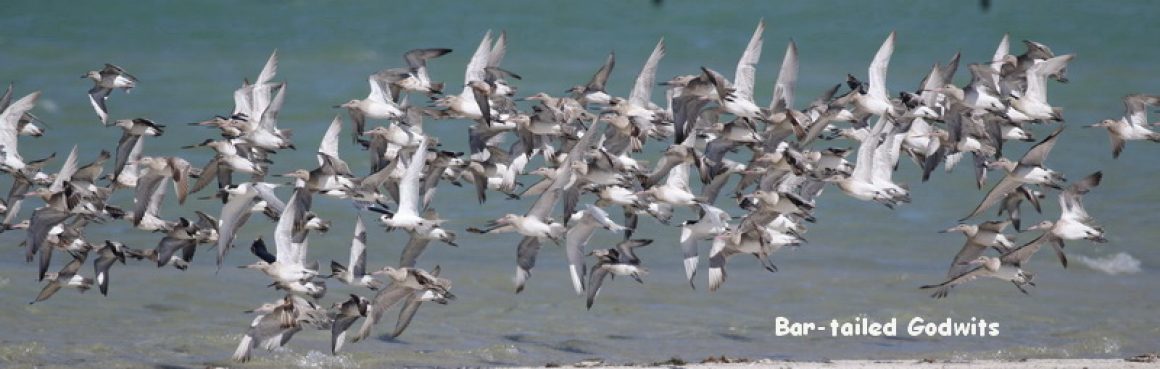
As usual the estuary was full of interesting birds: a pair of Saddle-billed Storks at the mouth of the Umfolozi coming into the lagoon/estuary. Goliath Herons, Pink-backed Pelicans, Yellow-billed Storks, Western Osprey, Avocets, Bar-tailed Godwits, African Spoonbills to name a few. All easily seen.
Caspian Terns
Caspian Terns
Bar-tailed Godwit
Bar-tailed Godwits
Sanderling
Juvenile Fiscal Flycatcher
Red-breasted Swallow
Trumpeter Hornbill_
Seen in the estuary – a rather upside down dead Basking Shark.
Demise of a Basking Shark in the St Lucia estuary
On Friday when we left Mkuze we headed back to St Lucia to try our luck again – ever hopeful of finding the Eurasian Oystercatcher as we had received a report to tell us it had been seen that morning. We arrived in the rain – more like heavy gusty squalls. Very unpleasant to wander around in.
Time was spent at the start of the boardwalk with the scope on the estuary – close enough to the car to retreat into, as each squall arrived. In the end we drove round to the St Lucia beaches and manage to get a quick look up and down the shore line – nothing.
As the rain got harder and the winds stronger, we returned to the chalet we were booked into in the hope that the weather in the morning would be kind to us. It was.
First we search the estuary mouth and coast line. Then we walked down the beach almost to Mapelane. Back again to the estuary to check the Terns again, getting mud stuck to our shoes so that we felt a few inches taller. No Oystercatchers, Gull-billed or Sooty Terns. Mid day we gave up and headed home as the rains persisted.
That is birding. Anyway we did have a bird count of 152 species in Mkuze – click here to see our list. St Lucia birds were plentiful but we did not make a list as we were focused on finding the specials – however this is one of our favourite birding areas.
We usually stay in Sugarloaf campsite close to the boardwalk. Birding in the camp is excellent, then you have the waterbirds in the estuary, sea birds, the Gwalagwala trail, Eastern and Western Shores of Isimangaliso are next door and if you have time and the energy then the Umfolozi/Hluhluwe NR is an hour away.
Perhaps we shall venture there again soon to try our luck.





































































































































































































































































































 Birds are our Story