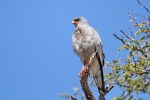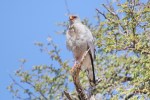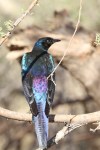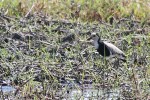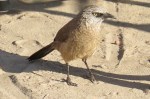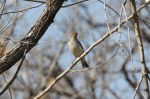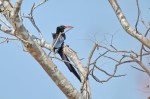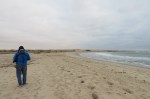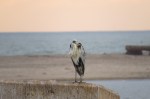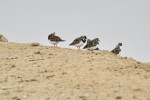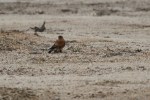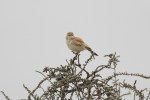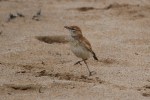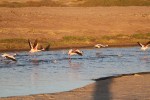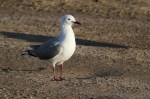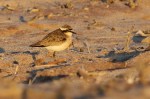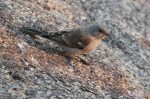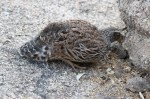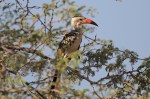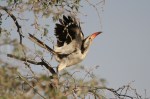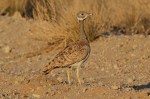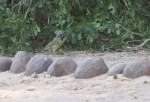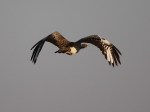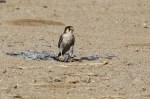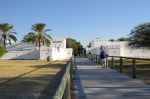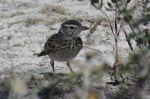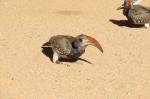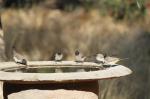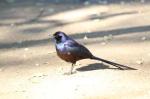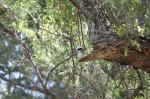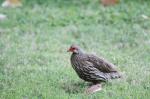
Larking About in Namibia. Part 7.

Part 7. Larking About in Namibia – Nambwa and Katima Mulilo.

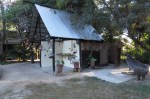
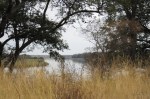
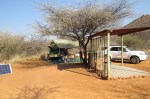
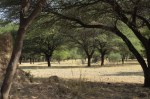
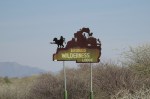
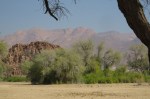
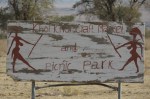
Our next stop was Nambwa. A 4×4 only community camp about 15 kms off the main road just this side of the Kwando bridge on the way to Katima Mulilo.

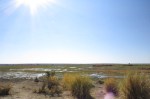
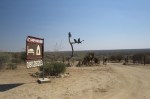
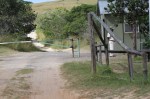
Before you enter you need a permit and they are currently only available at Bum Hill. Bum Hill of course is on the opposite side of the road and about 10 kms drive past some interesting wetland areas. Don’t follow the T4 maps to Bum Hill or you will get lost as I did! Turn into the gravel road opposite the entrance to Nambwa. Stay on the gravel road until you see a sign to Bum Hill on your right.

The permit office is about to change. They are building a reception on the main road – probably ready during the summer. It looked almost complete.

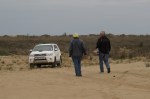
So ever onward we start the 15 kms to the camp. The road is very narrow, quite hilly and in places quite sandy. Anyway I beetle along and manage for a long way without having to use low range. Meanwhile Sally is whispering in my ear every so often “Are you going to let the tyres down?” Me, not wanting the hassle of having to blow them back up again with a rather slow pump and having gone so far already – only 4 kms to go, ignore her advice to our cost. Sure enough down a rise we go and as we hit the bottom, despite being in low range, we hit a very sandy patch and the momentum stops.

I try a quick reverse but nothing doing especially with the trailer behind. Out comes the shovel and I dig the sand away from all 6 wheels. Air out of the tyres to 1.3 bar. Try and fail. More digging. Look for rocks , anything to go under the tyres but there is nothing about. Once more Sally comes up with good advice and this time I listen to her. “Why not put the car’s rubber mats under the wheels”. “Sounds a good idea”, I say. “If I get out, I’ll stop at the top about 100 metres away. Will you please bring the mats”. Sally agrees and sure enough it works and I stop at the top of the hill.

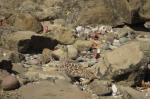
Sally is slowly coming up the hill carrying the mats and the thick sand slows her progress. So I get out and start to walk down the hill to help her. I look down and there in front of me are the paw marks of a rather large cat! Not wanting to scare her I shout, “Quickly”. No change in pace, “I’m going as fast as I can”. Again I implore but still no change in pace. “Fresh Lion tracks here – hurry”. Immediate change of pace and I hurry to help her. Saga over. On to the camp.

Lesson. Listen to your wife! I was stupid as we needed to have the tyres let down to enjoy the trails around the camp anyway. Eventually we arrive at the camp.
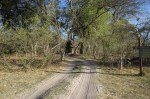
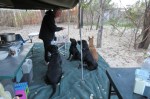
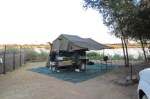
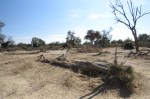
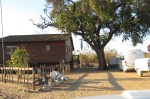
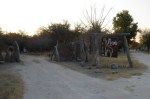
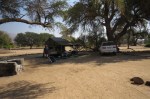
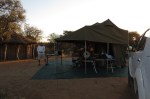
Now Nambwa is a very wild campsite with no fences. At this time of the year the water levels are high and there is plenty of game about. We choose our campsite – No. 1 close to the entrance. On arrival we are told by guests not to use the path between campsites 2 and 3 – as there is a hippo enjoying the shade there. And, oh yes, last night the elephants and the lions came and caused chaos in the camp.

We chat to the staff and they confirm this and say they come every night and oh, by the way we are off to a party nearby tonight! And, take care at night as we have an old leopard which likes to roam about around and in the ablutions.

It all sounds very exciting – well for those of you who enjoy an adrenaline rush!

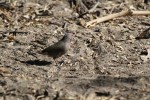
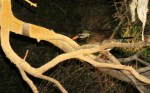
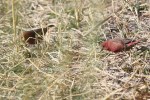
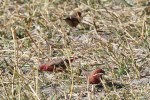
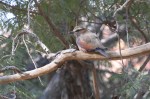
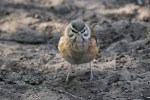
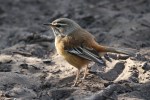
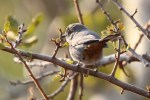
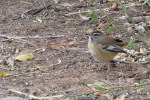
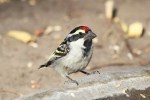
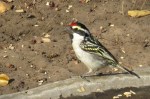
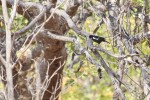
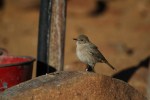
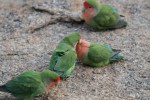
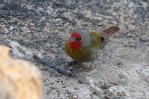
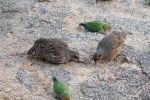
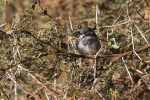
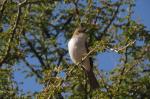
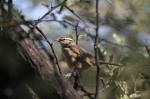
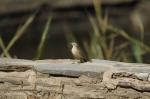
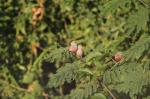
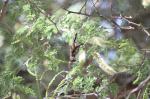
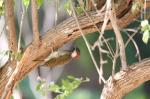
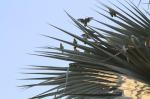
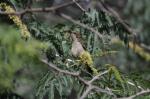
We settle in and very soon a party of Brown Firefinches come and inspect our camp.
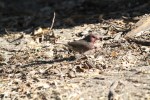
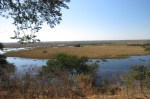
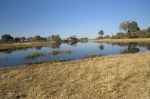
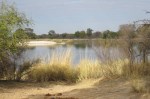
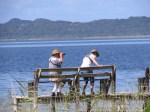
The rest of the day was spent wandering around the camp and going to the lookout they have built beside a wetland area just outside the camp.
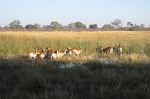
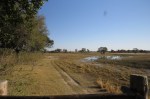
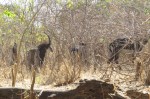
Here we enjoy the rest of the evening sun. As we decide to climb down we notice a herd of elephants with young in the distance circling the camp. We are both thinking the same, hope they are passing and don’t circle back.

Our wishes are not heard. As we start preparing dinner we hear them in the other end of the camp. Dinner is prepared and quickly eaten outside. The sound of the elephants seems to get ever closer. We light a fire to hopefully keep the animals at bay.

Smart decision. Go inside and have a game or 2 of scrabble. You cannot go to bed at 7pm!

As we are playing we hear something. We go instantly silent and this animal whatever it was, brushes past our tent breathing with a wheeze – cat we both think and freeze. In the morning we find that whatever it was had tripped over one of our guy ropes and loosened it.

Once the adrenaline had settled we finished our game and had an early night.

The next day we were up early. I nip down to the loo with my torch scouring every part of the 50 metres I had to go. No problem but when it is Sally’s turn I go with her. I look through the open ablutions from one side and there only 10 metres away is a herd of elephants with young! We back track quickly and decide to go for a drive immediately otherwise we feared the elephants would soon entrap us in our tent.

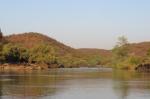
We leave and have a good morning birding down and around the Horseshoe  Bend. On the way back we almost reach the camp when we meet traffic coming the other way. The elephants had only just left enabling them to get out – some 3 hours after us!

The birdlife in the camp was exciting enough for us so we relaxed there for the rest of the day getting prepared for the elephants return.

Fire well prepared and loaded with a huge log which we hoped would last all night. Dinner at lunchtime.

However as luck would have it, we had a silent and peaceful night.

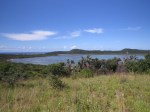
The final morning we packed up early and drove back following one of the other tracks alongside the wetland area but joining up much further along with the road we came in on. This way we managed to by-pass the thick sandy area where we got stuck. It was the way we should have come in as it was very scenic and interesting birdwise.

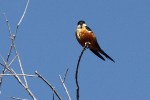
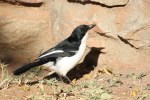
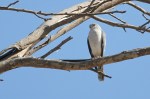
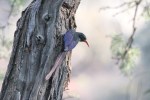
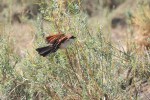
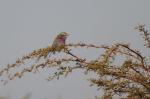
Almost out of the Park in the hilly section (no elephants to confront us thankfully) and Sally yells “Stop”. She has seen a Roller – maybe an early returning migrant European Roller. Slowly we get out of the car as I cannot reverse with the trailer. Binoculars focused and there before us a great sighting of a Racket-tailed Roller – some 20 metres away. However each time I get my camera on him he moves off. After following him for 100 metres, reason returns and I retreat back to the car.

Our next destination was Katimo Mulilo to find the Schalow’s Turaco. But first we buy diesel and have our tyres re-inflated at the garage in Kavango on the other side of the Kwando bridge. Apparently they sometimes run out of diesel. And we saw why. All the local game parks send their vehicles loaded with empty drums to be filled.

At Katima Mulilo we investigated the local campsites just outside of town where we had heard the Schalow’s Turaco is often seen. Kalizo Lodge some 40 kms from Katima (with its reputation for Shelley’s Sunbird) was our fall back.

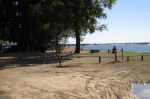
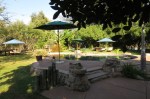
We knew of Hippo Lodge so headed there first – however it has been closed for a number of years. We continued down to the end of the gravel road to Namwi Island Lodge. This is a very grassy, flat and well manicured campsite on the river. If you have a tent you can camp on the grass but not caravans nor trailers. They however can park on the interlocking paving stones which are laid down. All lovely but when we tried to hammer our pegs between the paving stones it proved impossible. So after bending 3 pegs we abandoned the camp.

The management told us that they only knew of one other campsite – Caprivi Houseboat Safari Lodge – back up the gravel road. We had passed it on the way but thought it did not have camping.

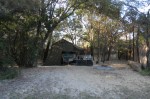
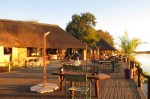
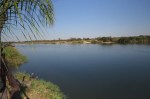
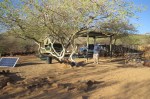
Back we went. Caprivi Houseboat Safari Lodge is a small place with several chalets and 4 campsites – all sandy. We chose the most sandy as it was shady. The lodge has a nice deck overlooking the river.

Over sundowners we chatted to one of the owners and was told they have the Schalow’s Turaco visiting most days. Good news. They also were able to do a private sunset boat ride the following day to find African Finfoot and White-backed Night-Herons. We booked.

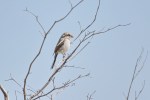
The next morning was spent in the gardens birding and waiting for the Schalow’s to arrive. We waited without luck. However we did hear a Tinkling Cisticola calling in the nearby dry scrub. This would have been a lifer for both of us – however it was to remain only half a tick as we were never able to see it.

We visited the Protea Hotel and Caprivi River Lodge in search for the Schalow’s. Both said they saw it there regularly. The owner of the Caprivi River Lodge suggested we come back later. He did also suggest we explore the area beyond the end of our gravel road – there are lots of tracks all accessible by car. So we did although the area was sparsely populated. (South African security concerns notwithstanding).

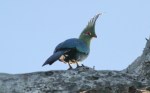
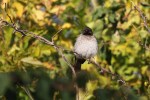
As we turned off one track we almost reached the river. We stopped and Sally heard a Schalow’s calling and another replying. I think we got too close to the first and being concerned he called his mate so they could get together. A sudden movement from where the sound of the first was heard and we were on to them – following them to try and get better views. In the end we managed but my photos were poor – they kept moving (my excuse). Another lifer for both of us.

After that we relaxed – but first had to get one of the new tyres repaired (it had done less than 1000 kms). It had a small thorn in the top – my bad luck with tyres continues.

We also visited Kalizo Lodge as we had been there before and enjoyed the birding. There were good sightings of African Skimmers on the sandbanks. However the Shelley’s Sunbird had not been seen since last November- we were told.

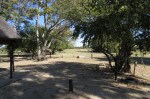
It is important to note that the clocks in the Caprivi (east of Divundu) keep South African time unlike the rest of Namibia. It was only because Sally double checked the time of our boat trip that we learnt this!

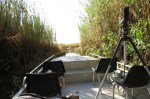
That evening we set out on our sunset cruise out with the owner Curt with Steven as his help. Nightjars greeted us as the sun went down. Then out came the spot lights. Within a short while we started to find the African Finfoots (Finfeet?) and White-backed Night-Herons. We saw many of each and were able to get quite close. Photography in the dark is not my forte so the quality of our pictures is poor – sorry.

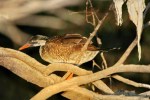
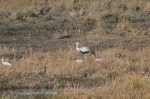
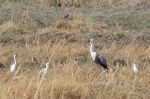
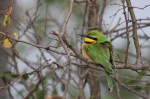
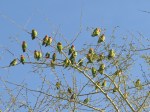
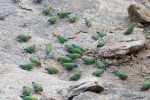
Another highlight on the sunset cruise was the sight of Little Bee-eaters sitting on reeds all cuddled closely together – 6 to 10 together.

Little Bee-eaters cuddling together

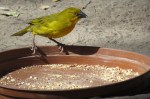
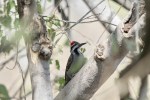
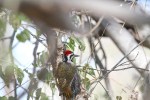
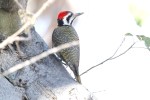
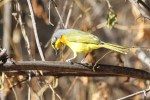
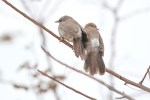
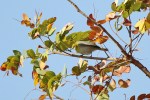
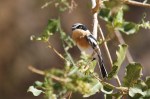
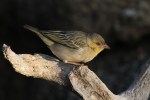
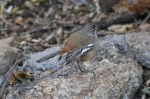
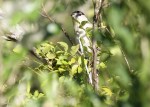
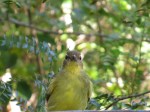
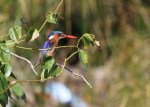
The next morning we were up early to bird round the camp and to slowly start packing . Some of the birds found in and around are shown in the next gallery.
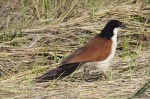
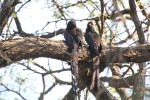
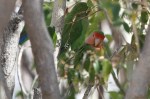
It was while we were packing that one of the garden staff called us to come quickly. He had noticed we were keen birders so when he saw the Schalow’s he thought of us. And there in the early mist of the morning were another pair of Schalow’s Turacos – with the sunlight sparkling on their long crests.

Then it was time to say good-bye to Namibia and start our long journey home via Botswana. At Kasane we planned to stop for 2 nights then make the long stretch down to Francistown before entering RSA at Stockport. A further 2 nights in Marakele NP before the final leg Home. More on this in Part 8.
Larking About in Namibia. Divundu, Nunda Camp, Mahango and Buffalo Game Parks. Part 6.

Part 6. Divundu, Nunda Camp, Mahango and Buffalo Game Parks.

We left Shamvura after a leisurely breakfast. We were in no hurry as we only had a short hop to the next area we wanted to explore – the area around Divundu (the most westerly town in the Caprivi strip). We had a number of choices at which to stay – the Goabaca community camp, Ngepi, Popa Falls, Mahango and Nunda. In the end we went to Nunda first and decided that we would be happy there. We later realised that we had made a very good choice.

We knew Mahango from before – open and grassy but none of the facilities of Nunda.

Popa Falls was closed for renovation (there went our chances of seeing the Rock Pratincole).

Ngepi has a lovely setting by the river but down 4 kms of very rough road. Also it now has a reputation of being a main Overlander destination.

The Community campsite Goabaca has a nice setting and is directly opposite Popa Falls supposedly with a view of the rapids. However the reeds were so tall you could barely see the river.

Nunda was well located on the river. We had a campsite right on the river’s edge with power, a drinking fountain and hot water from their donkey every morning and throughout the day. The lodge has a deck over the river – good for sundowners. We stayed 3 nights.

Birding in the camp was not bad but we really just used it as a base.

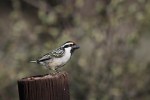
We spent one day in Buffalo Park and the other in Mahango Game Park. In both camps it was sharp eyes out for Sharp-tailed Starlings. It was like that in all the camps along the Caprivi strip. In the end we were tired of looking at yet another Cape Glossy Starling. Sharp-tailed Starlings are so difficult to differentiate that we suspect that they are simply a figment of someone’s imagination!

Buffalo Park. The entrance is 30 kms from Nunda, back to the main road at Divundu, turn right and go over the bridge. Buffalo Park is a ways along on the right. It’s name is appropriate as there were hundreds of buffalo about. Once in the park we headed for the wetland area by the river’s edge. Once at the wetland the drive alongside seems to go on forever – kms and kms.

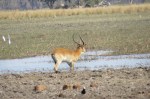
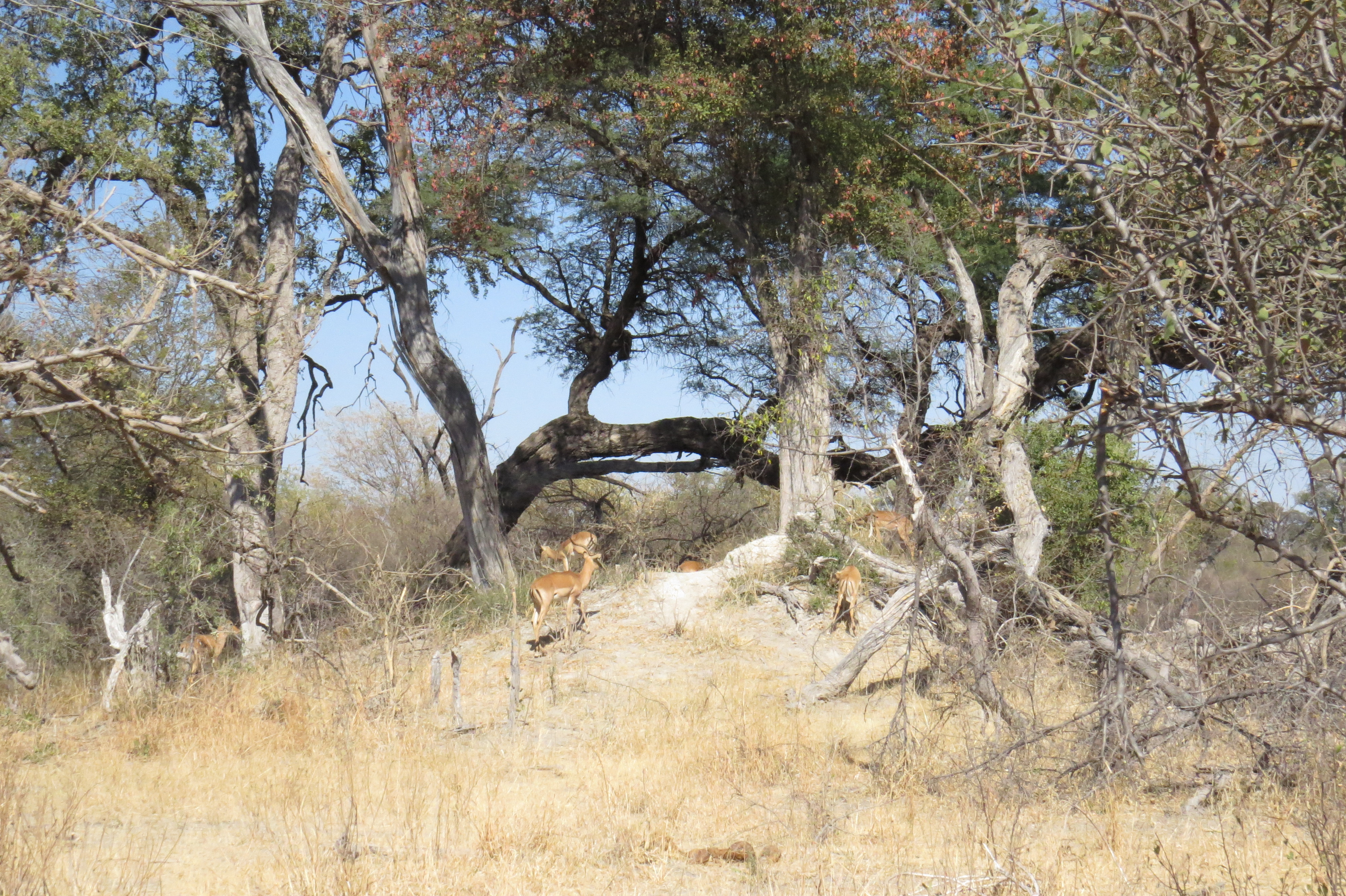
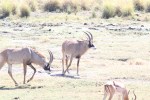
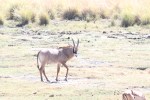
There are numerous animal species to be seen, Sable, Roan, Red Lechwe were among the more usual buffalo and elephants.

Talking of elephants we had an amusing incident with one well hidden. Loo stop beside the wetland area. Very open view from the car over the wetlands with a slight bank and shade trees on the other side. Off goes Sally heading up the bank for the nearest tree. As she approaches an elephant lets off his trumpet- it must have been just over the rise. At first Sally thought I was trying to scare her but she soon realised we best move on and hot foots it back into the car.

Sally's Trees! Beware Elephants approaching fan-faring their arrival.
Sally’s Trees! Beware Elephants approaching fan-faring their arrival.

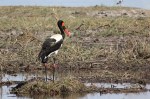
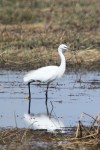
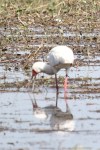
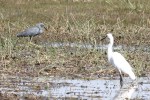
Among the many waterbirds, we saw Wattled Crane, Rufous-bellied and Black Herons, Slaty Egrets, Knob-billed Duck, Collared Pratincoles, Spoonbill, Saddle-billed Storks, Goliath Heron, Red-billed Teal.

In total we saw 83 species in the Park – the highlight being the Wattled Cranes and the Slaty Egret.

The following day we went to Mahango Game Park. The main road to Botswana runs through the Park. The last time we were there it was very wet and difficult to get around. Since then they have improved the main road through the park to Botswana but more importantly they have renovated the  main game viewing road to the east of the park – many stretches have been raised and there are bridges over the rivers.  The road to the west remains the same and will be tricky in the wet season.

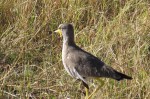
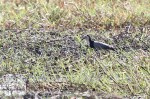
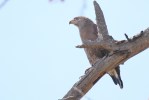
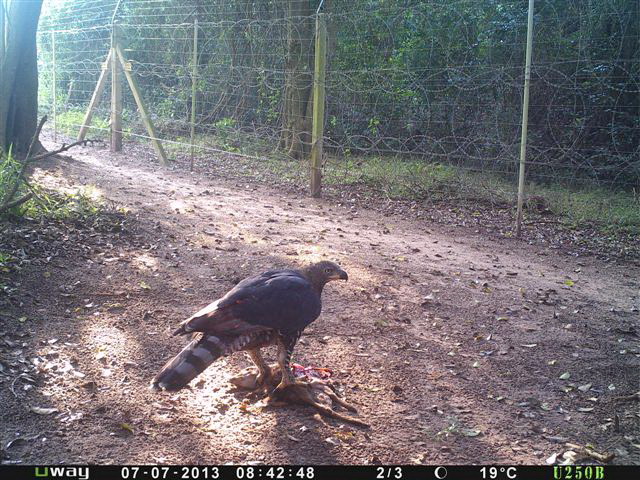
We followed the east side viewing road along the wetland areas to start with and had good sightings along the way, including Roan antelope, Long-toed Lapwings and an African Harrier-Hawk (Gymnogene) ferociously determined to extract his meal from the innards of a tree.

However the main highlight was a Western-banded Snake-Eagle. At first we did not realise what it was as it had its back to us and flew away. Then we found it a bit further along – unfortunately much further away but with the scope we were able to identify it.

We also went down the road on the west of the Park – to the waterhole and hide (very run down). There, we watched flocks of birds drinking including a variety of Waxbills and Black-throated Canaries amongst other seedeaters.

Altogether we saw 84 different species of birds in Mahango.

Our next stop was Nambwa. A 4×4 only community camp about 15 kms off the main road on the west side of the Kavango bridge on the way to Katima Malilo. More on this in Part 7.

Larking About in Namibia. Part 5.

Part 5. The Waterberg, Roy’s Camp and Shamvura.

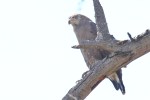
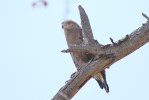
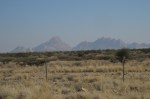
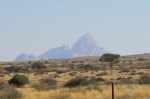
Leaving Swakopmund it was off and on to the Waterberg for 3 nights. Sally had booked us in to the Waterberg Plateau Campsite 8 kms from the Waterberg National Park. Along the way we by-passed Spitzkoppe as you can see in the photos.

The campsite was well managed and we even had hot water early in the mornings – despite the donkey. The sites are set reasonably far apart – are level and not rocky. We even had our own ablutions.

At a number of places it was a real effort to try and get the pegs in, the ground was so hard and stony. Anyone got any secrets on how to get your pegs into very hard ground?

There were 2 lodges on the property – the old and the new. The new was situated on the top of a hill with a wide view of the area below – chalets nestled in the rocky cliff. The old lodge was approached through well wooded established grounds. And it was from here that we started our early morning walks – along the side of a cliff and up to the head of the valley where there was a spring or fountain. Water flowed/seeped down the valley all the way back to the lodge. Certainly the purest and best tasting water we had.

The birding was excellent. We heard the Harlaub’s Spurfowl calling at the old Lodge but never bumped into it.  Some of the other specials we saw there included the Damara Hornbill, Rosy-faced Lovebirds,  Ruppel’s Parrot, Rockrunner, Short-toed Rock Thrush, Carp’s & Ashy Tits and Violet Wood-Hoopoe.

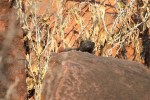
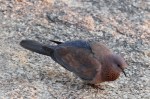
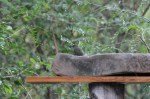
We did see an unusual mongoose – very black with red eyes – see pictures and please id it for us.

From here it was on to the Caprivi.  Shamvura with Mark and Charlie Paxton to begin with. We decided to break the journey with one night at Roy’s camp. We were hoping that we might have a chance to see the Black-faced Babblers which we had dipped on in Namutomi, Etosha.

We took the direct route – 100 kms of gravel to Grootfontein – rather than go all the way back and round which would have added at least 100 kms to the journey – albeit on tar.

And it is on this journey that my bad luck with tyres continued. We were cruising along quite nicely enjoying the scenery. Stopped for a break and I noticed we had a flat tyre. It took us an hour to change it – mainly because the wheel had stuck to the hub and I tried everything to loosen it. In frustration I gave it a kick and to my surprise it broke loose. During that hour not another car passed us. It was as we were about to get into the car to continue that a car raced past covering us in dust – talk about adding salt to the wound.

We stopped in Grootfontein to get the tyre fixed. On arrival at the new Kwik Fit centre, we checked the other tyres to discover that the other back tyre also had a puncture! The sidewall of the first had buckled and the other had a sidewall puncture!  Two new tyres later and R7600 poorer we set off for Roy’s camp 50 kms further along. So instead of arriving there at 10:30 we got there after 1 pm.

Nevertheless we set up our 3 Second tent in a flash, got organised and relaxed going for a walk later on to see if we could find the Babblers. Not to be.

We planned to leave the next day after a leisurely early morning walk and breakfast. So up with the sparrows dressed for the cold we wandered around the camp birding. We had hardly started than we heard them – rather Sally heard them. About 7 Black-faced Babblers appeared heading for the restaurant.  They stayed and wandered around each campsite and were still there 2 hours later when we left.

On to Shamvura, stopping in Rundu to do some shopping for Mark and Charlie’s latest addition to their family.

On arrival we set up our camp in the Ushivi campsite – slightly more expensive but level sandy ground with your own ablution and kitchen.

We met the baby – so cute, soft and furry. Their latest Cape Clawless Otter.

At Shamvura we went for a walk with Mark to look for the Rufous-bellied Tit, Tinkling Cisticola and Sharp-tailed Starlings. We dipped on all three, however in passing we saw several Souza’s Shrikes, Green-capped Eremomelas, Dark-Chanting Goshawk and Arnot’s Chat amongst others.

The birding was excellent in the area and was enhanced by a boat trip (a must do) down the river where we saw Little Bittern, Skimmers, Rufous-bellied Heron, Long-toed Lapwing, African Rail, Slaty Egret and Luapula Cisticola amongst many others.

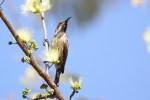
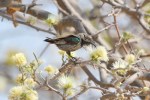
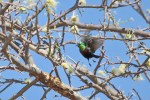
During the time there we came across a flowering (pale yellow) Albizia full of many different Sunbirds. Amongst the White-bellied, Marico and Scarlet-chested Sunbirds we spotted one which stood out and was being chased away especially by an out-of-plumage Marico Sunbird. It was a Copper Sunbird.

We spent time driving about the area and went down to the wetland area near the river’s edge close to the camp. Coppery-tailed Coucal, African Marsh Harrier and Lizard Buzzard were present amongst the variety you would normally expect.

Around the camp, some of the specials we saw included Bradfield’s Hornbill, Meyer’s Parrots, Swamp Boubou, Mosque and Grey-rumped Swallows. However there were 2 birds that stood out  for us. Both seen around our tent and in the gardens – Red-faced Crombec and Shelley’s Sunbird. The Shelleys’ Sunbird was singing its heart out all round the camp.

Too soon it was time to leave Shamvura. In 2 days we had seen 117 species – the most we had seen anywhere.

Good-bye Shamvura
Good-bye Shamvura

Part 4. Larking About in Namibia.

Part 4. Swakopmund, Walvis Bay and the Welwitschia.

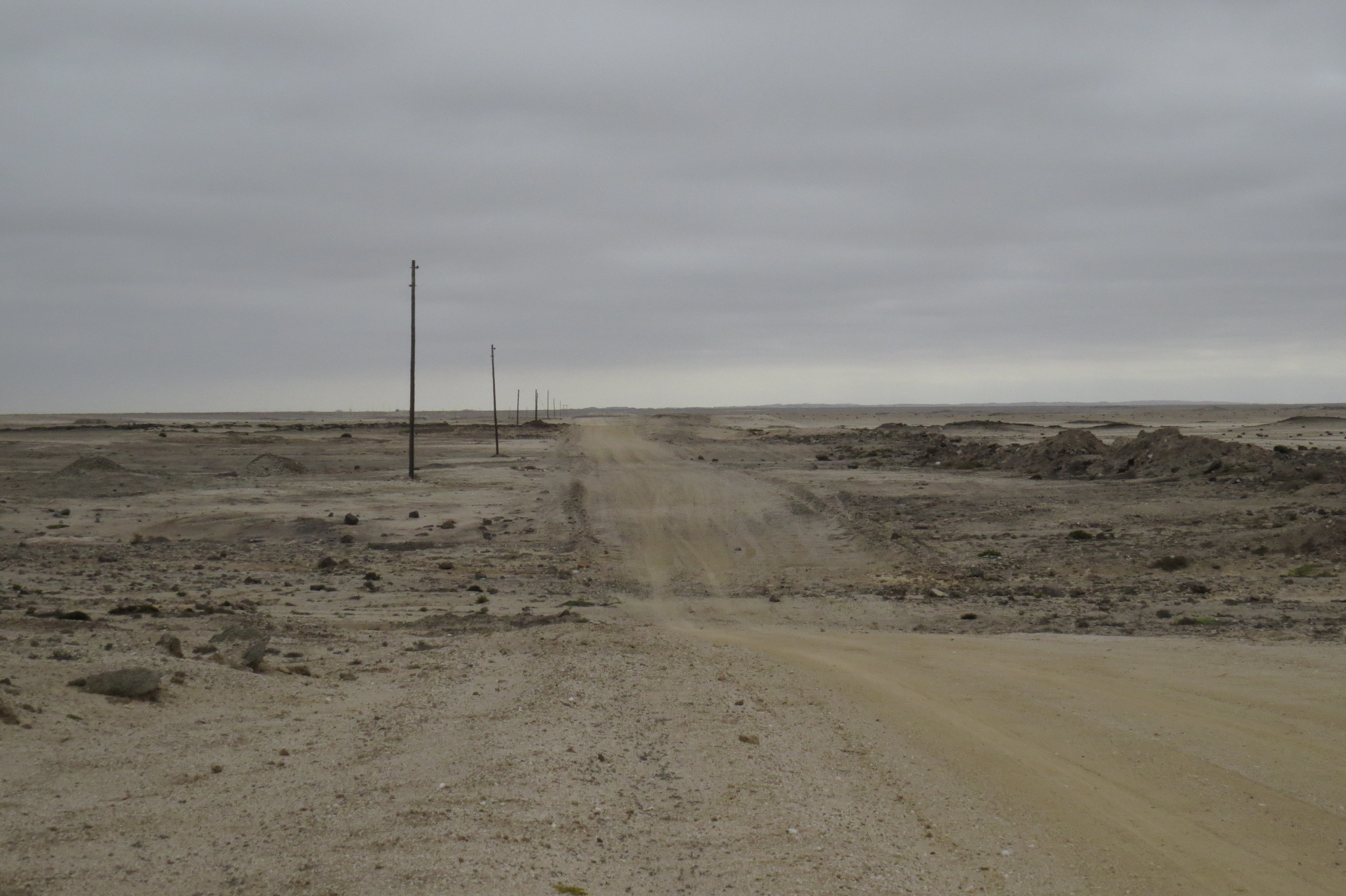
The next step of our journey led us to Swakopmund and Walvis Bay. We drove along the gravel road from Uis to Henties Bay – 100 kms. of gravel and desert – virtually treeless and bleak.

Bleak road from Uis to Henties Bay

We based ourselves at Alte Bruke in Swakopmund camping for 4 days. Cloudy and misty for the first 3 days. Cold of course. The nice thing about camping here is that you get your own smart ablutions right next to your camp.

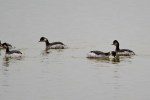
We made contact with Mark Boorman on arrival and the next day he kindly collected us in search of the Gray’s Lark. We headed north out of Swakopmund to the plains around Mile 4 Salt Works. It did not take us too long to find the Gray’s Larks. Once happy with our sightings we headed for the Salt Works and helped Mark atlassing. Since Mark rings in the area we were able to drive around where most people are not welcome. Thanks Mark – the numerous Black-necked Grebes were great to see.

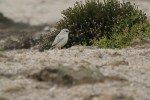
The following day we met up with Mark again and took our vehicle to Walvis Bay to find the Dune Lark. Off into the desert we headed to the Nursery. A chilly morning. Once in the area we fanned out looking for the Lark. After some time Mark spotted one. We managed to get quite close and watched his antics for some time. We even saw him do a display flight.

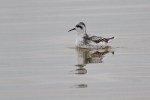
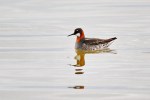
Again we atlassed with Mark around the Salt Pans in Walvis Bay – getting into areas around the pans because Mark had special permission and a key for the gate. This was very special as we managed to get up close to many water birds. Probably the highlight of the day being several Red-necked Phalaropes in breeding plumage – very difficult to photograph due to the mist and poor light. Another interesting observation – pointed out by Mark – was the way the Chestnut-banded and 3-banded Plovers foraged for food. Standing on one leg they vibrate the other at speed in the mud.

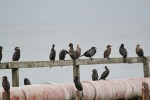
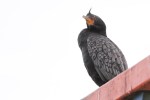
Sally and I also spent time birding along the beachfront in Swakopmund as well as the local parks and the lagoon/estuary next to the campsite. We found a Crowned Cormorant posing with several Cape Cormorants.

We also searched everywhere for the Orange River White-eye – checking the parks around the lighthouse without luck. However the bird turned up in our campsite to bid us farewell.  – just as we were packing up to head for the Waterberg. Here are some pictures of birds we saw in and around Swakopmund.

The last day was a sunny one so we headed inland to find the Welwitschia and bird along the way. The scenery was spectacular.

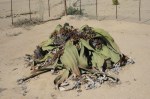
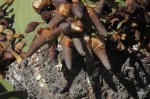
Sally had been to Swakopmund and Walvis Bay several times without going to see this fascinating plant – I knew nothing about it. It is amazing to think that it only has 2 leaves. Yet when you see it, it looks as though someone got this wrong – see pictures.

While there we saw a few birds – a friendly Tractrac Chat came to investigate and the odd raptor was seen along the way. However in one of the few trees around we saw several Yellow-bellied Eremomelas – they seemed quite out of place!

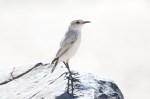
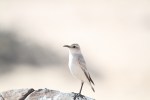
On the way back we had a fascinating experience with another Tractrac Chat. We came over a rise and I noticed a Tractrac quite close to the road. I stopped alongside to get a few pictures. The Tractrac was calling so I whistled tunelessly doing my best to imitate him- as one does. In response the Tractrac came closer until he was standing in the middle of the road beside me. I opened my door so Sally could see him and he did not fly. We kept up our conversation for a while until we realised that we were in a slightly dangerous position if someone came flying over the rise. The Tractrac seemed reluctant for us to go as he hung in there until we were out of sight.

Sadly the time came to say Good-bye to Swakopmund. And then we were back-tracking to the Waterberg and heading for the Caprivi. Part 5 to follow.

Good-bye Swakopmund
Good-bye Swakopmund

Larking Around Namibia. Part 3. Erongo and Brandberg.

With dusty Etosha behind us (see Part 2) we headed for the Erongo Mountains to try and find the Hartlaub’s Spurfowl.

We had booked to stay at the Erongo Plateau Camp in the Erongo Mountain Rhino Sanctuary for 4 nights. The camp is situated quite high up and takes a while to get to from the road. The view was good and the ablutions respectable. We felt 4 nights here was excessive so we changed our stay to 2 nights.

Our target bird here was the Hartlaub’s Spurfowl. The birding on the whole was limited around the camp. On the first morning we did hear the Hartlaub’s Spurfowl calling and so set off along one of their steep and rocky paths. The undergrowth was quite thick so our view was restricted. As expected we were not successful.

Later that morning we took a drive along the road back towards the Rhino’s Gate entrance to try and find our target bird. We were not successful. There was another campsite – Mara Camp – which we had noticed on the way. We called in to check it out. The campsite next to a dry riverbed was amongst tall shady trees on flat ground with well done up ablutions – unfortunately with a donkey boiler.  But what sold the place to us was the agreement between Mara and the up-market Erongo Wilderness Lodge enabling Mara guests to visit the Lodge which is virtually opposite Mara camp.

We immediately switched camps and stayed 2 nights at Mara Camp. The birding in and around the grounds was excellent with Rosy-cheeked Lovebirds screeching everywhere, sunbirds and many other seedeaters. However the highlight was the presence of Ruppel’s Parrots.  Many other species were present as the following photos will attest.

Of course we visited the Erongo Wilderness Lodge – we had heard how fantastic the birding was from Sean of Batis Birding. We were welcomed on arrival and as we waited to seek permission from the manager a Rockrunner ambled past us. That was the start!

The manager was very happy to see us and suggested we return in the morning to enjoy their breakfast and observe the birds from the restaurant which overlooked a close by bird feeding area. Needless to say we accepted and returned the next morning very early to find a pair of Hartlaub’s Spurfowls ambling around next to the restaurant deck. We enjoyed a full morning in the camp and returned for sundowners on both days we had available. The following pictures give you an idea of the Lodge setting as well as some of the birds we were lucky enough to photograph.

In future we would stay at least 3 nights at the Mara Camp. However we had a deadline in Swakopmund which if we left after 2 nights at Mara allowed us to visit Brandberg for 2 nights – the minimum we stay in an area we want to bird.

So on to White Lady Lodge through the Erongo Mountain Sanctuary – a fairly scenic drive on a reasonable (if dusty) gravel road.

As we approached Uis we prepared ourselves for our next target bird – the Benguela Long-billed Lark. This is the southernmost part of its range and fortunately it is the only long-billed Lark in the area. This was a lifer for both of us – if we could find it.

Within a few kilometers of turning north from Uis we saw a potential bird on the left. Bins quickly to the eyes, the bird sees our aim and off he took flying over a nearby ridge in to the next gully. Ever hopeful we follow as it looked as though it would be less than 50 metres from the road. A careful scan found the bird and we watched as it got ever closer to us. Bingo – Benguela Long-billed Lark.

As we enjoyed the sighting we noticed a group of birds further back – a Common Fiscal was chasing off the others. Amongst them were Mountain Wheatears and another pair – one of which eventually perched in a bare tree. The scope was already out and on to him in a shot –  white eyebrow, russet rump – Herero Chat!! We had good viewings but it scarpered as I tried to get closer for a decent photo.

We had visited Brandberg previously and not much had changed – fortunately. The campsite is huge and well spread out. It is sandy, shady and flat. The ablutions a bit basic and hot water in the morning dependant on the boiler being kept fed through the night – the perennial problem with donkey boilers.

No Desert Elephants visited the camp this time fortunately.

The lodge has a welcoming pool and gardens and we had several drinks there during the heat of the day.

Our time was spent early morning birding around the area to the White Lady Rock paintings entrance as well as on some of the local tracks at the base of the mountains.

The first evening we took a short drive out of the camp were treated to great sightings of Ludwig’s Bustards and Ruppel’s Korhaan (the only place we saw this species). What surprised us was the sight of a Bokmakerie in the camp although looking back at our records we also saw on the last time we visited.

On to Swakopmund. Part 4 to follow. Look out for the next instalment in the coming days.

Larking About in Namibia. Part 2.

Larking About in Namibia. Part 2. 

After five days camping at Kunene River Lodge we headed for Etosha.  We left on Saturday 22nd June. Our plan for Etosha was 2 nights at Namutomi followed by 3 nights at Halali.

Etosha as expected was very expensive. Not just the campsites but also the daily charge for 2 people and the car. Namutomi was R440 and Halali R290 per night plus the  daily charge of R130!! Our mistake, we should have camped just outside the Park.

Namutomi  was run down. The only saving grace was the flat grassy campsite.

The Park was exceptionally dry and very dusty. The man-made waterholes were the main source of interesting birding. And of course this is where the animals congregated.  The natural springs and fountains near the Pan’s edge were all dry.

We circled the Dikdik Drive 3 times looking for the Black-faced Babblers without success – we did see lots of Dikdik though.

The highlights were the waterbirds and the raptors.

Halali campsite is flat and reasonably shady – not that the shade was so important in winter time. It has a very good waterhole and viewing platform. In the evenings after a day out in the Park, it was rewarding sitting there and watching the interaction of the various animals which came – many Elephant and surprisingly at the same time, Black Rhinos (see photos). While we were there one Elephant cheekily intentionally sprayed water over a Black Rhino.

We spent one day in the area around Halali – mainly going from one waterhole to another. At the Goas Waterhole we had an interesting time watching the elephants and many different birds coming in to drink. It was here that we fleetingly saw an interesting bird which we could not identify at the time – see if you can – check the few photos I did manage to get.

More Photos taken around Halali:

The second full day that we had at Halali was spent Larking About just north of Okaukuejo. This was our challenge in Etosha – to test our skills at identifying as many Larks as we could and this was the best area to find them.

To make life simpler, we listed all the possible Larks we could find in the area (excluding summer visitors) and wrote down the key features for identifying each one. There were 9 possibles in all and only one of these with a long decurved bill. This certainly helped and we were reasonably confident with our ID in most instances.

It was on this road out to Okondeka that we saw a number of other interesting birds – Double-banded Courser, Northern Black and Red-crested Korhaans and Ludwig’s Bustards.

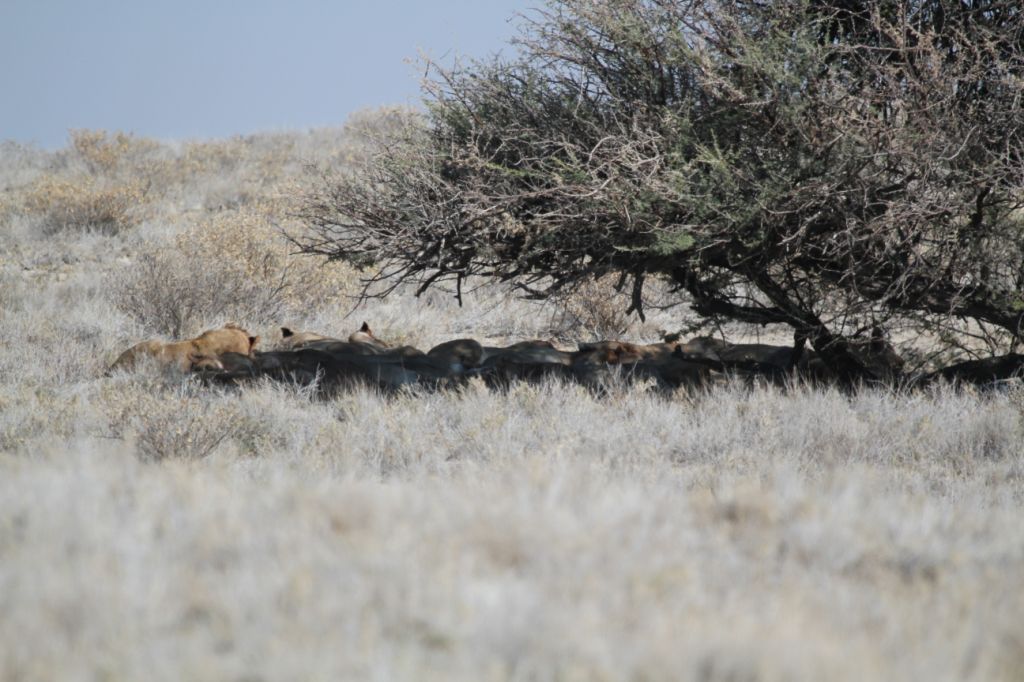
Another highlight towards the end of this road near Okondeka was a pride of about 20 lionesses all lying down tightly together. They were being followed by a film crew who were waiting patiently for them to do something! They were set in for a long wait.

A mound of Lionesses - about 20 all cuddled together
A mound of Lionesses – about 20 all cuddled together

Five dusty days in the cold of Etosha were enough. We set off for Erongo and Brandberg on the way down to Swakopmund.

Part 3 to follow. Erongo Mountains and Brandberg.

Larking About in Namibia

Larking About in Namibia

June & July 2013

Sally and Paul Bartho

Over the next week there will be a serial report-back on our birding expedition to Namibia.

The series will include pictures of places we stayed and birds we were lucky enough to photograph in each place.

Please email me if you interested in receiving detailed reports including our route and tracks, accommodation contact details, accommodation assessment. Also available is our Bird List in Excel format. You are able to see what birds we saw or heard in each place as well as where specific birds were seen.

The journal begins:………..

At very short notice we decided to go to Namibia. Our preparation was frantic over a 2 week period. Bird Lists to prepare, accommodation and route decisions and bookings, banks and credit cards, car & health insurance, knowledge of border crossing requirements, etc.

Our main goal was to get to Kunene River Lodge to see the Angola Cave-Chat with Peter Morgan – and to be there before the start of the school holidays. Of course we also intended to find as many of the Namibian specials as possible – in particular those we had not seen before.

We departed on Tuesday 11th June spending the first night in a Hunting Lodge in Botswana, Phuduhudu south of Lobatse. We entered Botswana through the quiet border post Ramatlabama. As we were staying only one night and needed an early start the next day, we stayed in one of their fancy chalets – which at R200 per person was very reasonable. Our birding began around the camp.

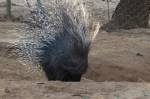
The next day we were up early. It was freezing outside. From there we took the Trans Kalahari highway to the Mamuno border post into Namibia. Again a pleasant crossing. Zelda was the campsite we were headed for. Once there we put up our 3 Second tent on grass with power to run our electric blanket. The cost to camp was exceptionally reasonable considering the facilities available. To cap it all their buffet dinner was tasty & value for money. On site were a number of interesting orphaned animals to see including Leopard, Cheetah and a huge porcupine.

The following morning we spent a bit of time enjoying Zelda before our short hop to our next campsite near Windhoek airport – Odekaremba at 1800 metres.

Ondekaremba has a small campsite with 4 spots. We had a site at the top of a hill on the only bit of level ground. It was open to the biting wind and the ground so hard it was exceedingly difficult to get the pegs into. Our ablution was very rustic and hot water only available when the staff got the donkey working – tepid water at best first thing. On top of that it was very expensive. We would be loathe to stay there again – except the birding round the camp was very good.

We had booked for 3 nights to give us a break from the long journeys and to have a base to bird around Windhoek while we were in the area.

We visited both Avis Dam and Daan Viljoen. Avis Dam was the more interesting but Daan Viljoen produced the first lifer for me – Rockrunner – Sally had seen it previously.

Sunday 16th we headed north stopping over in Kamanjab Rest Camp in our 3 Second tent again. For one night it is not worth the effort after a long days driving, to put up the trailer only to take it down again early the next day.

We were the only people in the camp. The facilities were good and clean. We managed a walk round the camp grounds late afternoon. As usual most of the birds were to be seen around the camp area – including Bare-cheeked Babblers and White-tailed Shrikes – in numbers.

The next day we arrived at Kunene River Lodge – staying for 5 nights. We had been before and it remains an oasis along the stretch of the river. Birds in camp were plentiful and special.  Cinderella Waxbills, Rufous-tailed Palm-Thrush, Swamp Boubou, White-tailed Shrikes to name a few.

No sooner had we set up camp than we were on an sunset cruise heading for the rapids up river. On the way back we stopped on the banks for sundowners. A Pearl-spotted Owlet greeted us.

During our stay Peter Morgan took 4 of us to find the Angola Cave-Chat in the Zebra Mountains. We left early to get there at dawn. Not a drive for sissies – pre-dawn.

Once there we set ourselves up for a wait hoping they would appear close by. Peter had not been there for a month so he did not know what to expect. After some time once the sun had finally generated some warmth we heard one call. A lovely melodic call slightly different from its cousins in Angola apparently. Sean from Batis Birding was with us and his recordings made in Angola were decidedly different to what we heard.

Anyway, having heard the call we soon spotted the culprit for a fleeting few seconds. Then within minutes a pair were seen slowly making their way up the steep rocky slopes. The scope was soon on them so we all had very good views despite them being some way up the slope. The Cave-Chat looks kinda like a Swamp Boubou with a white eyebrow. As an after thought I managed to get a few very poor photos. The light was poor and the birds were moving.

The Grey Kestrel was our next target bird. The area around the Lodge had not had any decent rain for 2 years so there was no food for the Kestrel – and we had no expectations of seeing it. However Sean said he was heading for the power lines in Ruacana to find the Kestrel – leaving very early one morning intending to be there at the crack of dawn. Sally and I followed but could not keep up the pace. We dipped on the bird but Sean had a fly past on arrival.

On the way back we popped in to Hippo Pools and as it happened we unexpectedly bumped into Mark Boorman who was bird ringing. Before leaving home we had been in contact with Mark about birding in Swakopmund and Walvis Bay, so this was a pleasant way to make his acquaintance. Mark was ringing his way down river to Kunene River Lodge where he and Peter intended to have another go at ringing an Angola Cave-Chat. We learnt later that he was successful.

Our next instalment will include our time in Etosha which followed on from Kunene. Second instalment to follow soon.

Paul Bartho

Dargle Outing Sunday 19th May – Report back.

Dargle Outing Sunday 19th May – Report back.

Although Dargle is a little further for us to travel than we’re used to, 10 of us came from Durban and surrounds including Martin Taylor our guide for the day.  After all of us meeting at Piggly Wiggly (in 6 degrees I might add) we made our way to Kilgobbin Farm to meet Barend Booysen who owns the farm and also does guided walks through the Forest on the 1st Thursday of each month.  (Contact tel: 082 3372025).

Upon arrival we were welcomed by Barend outside a romantic chapel and on cue, much to our absolute delight 12 very vocal Cape Parrots flew over our heads.  Some of us were so stunned our reactions were pretty slow.  Happily we had another opportunity to see them when another flock of 6 came over while admiring an African Crown Eagle’s nest.

The entrance to Kilgobbin Forest is Barend’s very bird friendly garden.  In a matter of minutes we identified a number of different sunbirds giving the birder’s in our group a spectacular display and the photographers some excellent opportunities to record them. See photo gallery below.

Kilgobbin Forest is beautiful and well maintained by the Dargle Conservancy.  As we entered this magical canopy of trees, including stately Yellowwoods, we were greeted by a chorus of bird calls from Olive and Cardinal Woodpeckers, Chorister Robin-Chats, Cape Batis, Bar-throated Apalis and Knysna Turacos.  For me personally, forest birding is very difficult but this time there were a number of open clearings making it easier to see the birds and where they seemed to make themselves surprisingly more conspicuous. The forest walk leads up onto open grasslands above. Unfortunately there was not an abundance of grassland birds although a highlight was a Malachite Sunbird was seen amongst the Leonotis.

All in all, we recorded 46 birds and 3 waterbirds on the dam on the way out.  Sandi du Preez claimed the Chorister Robin as the Bird of the Day, but for me it was the Cape Parrot.  Our thanks goes to Martin our guide, Barend for his hospitality and all the wonderful birds, making it another perfect birding day.

Cheryl King

Photos courtesy of Dave Rimmer, Sally and Paul Bartho.

This slideshow requires JavaScript.

Ilala Palm Park – A Jewel in Zululand

Ilala Palm Park – A Jewel in Zululand

Outing April 25th to May 2nd 2013

Led by Jane Morris and Mike Roseblade

Attending: Jane Morris and Mike Roseblade, Jenny and Cecil Fenwick, Sally and Paul Bartho, Jenny and Dave Rix, Jackie and Roland Suhr, Rob Jamieson, Lynette Bingham, Sabrina Porritt, Keith Booysens and Kathy Cleggett.

Ilala Palm Park is a 35 hectare site  situated about 6 kms west of Mbazwana on the road to Jozini from the centre of town. It has six campsites – each with their own ablutions and scullery with hot water and power point.  The grassy campsites vary in size and most have sufficient shade. And there is a swimming pool.

The owners are a delight.  We were welcomed with an information pack on each area we were intending to visit and a bird list, they constantly checked that all was well and that we were comfortable and provided all night security – what more could anyone want!!

The habitat consists of sand forest, Ilala Palm savannah and grassland areas.

Contact Details:

Jorrie:            083 960 1192
Adri:               082 855 5643
Email:            ilalapalmpark@live.com.

The beauty of the Park is plentiful. The campsite alone is a birders’ paradise with bird baths dotted about which attract a huge variety of bushveld birds.  Pink-throated Twinspots are regularly seen. Yellow White-eyes, Mannikins, Lesser Honeyguide, Flycatchers, Bulbuls, Greenbuls, Robin-Chats, Scrub-Robins, Starlings, Sunbirds, Doves are all seen around the bird baths. Many other special species were seen in and around the camp including Woodward’s Batis, Rudd’s and Yellow-breasted Apalis, Green Malkoha, all the Bush-Shrikes, Spotted Eagle-Owls, Fiscal and other Flycatchers, Cuckoos. The occasional raptor was seen overhead and the Fiery-necked Nightjars were heard at night along with the Owls.

Ilala Palm is ideally situated for access to: Muzi Pan, Mkuze, Hluhluwe, Ndumo and Tembe Game Reserves also Lake Sibaya,  Nine Mile Reef & Mabibi, Sodwana and Kosi Bay to name but a few.

Summer time birding ought to be spectacular if you are based at Ilala Palm and visit the variety of habitats all within easy reach.

And to cap it all the cost to stay is better than reasonable!

The Outing.

Mike and Jane set an active program for the time there. And the 15 of us found that although parts of each day might have been spent away from the camp, there was always the camp to return to for rest and resuscitation.

The weather throughout the stay was very pleasant – sunny yet not too hot and a dribble of rain one night. There were no signs of mosquitoes perhaps because it was nippy after the sun went to rest.

Each evening Mike provided a braai around the swimming pool and many a tall tale was told.

Friday 25th:  Arrival day

Two couples arrived a day early and spent Friday morning visiting Kosi Bay Camp and the mouth of Kosi Bay. Birding was slow in both areas with few water birds as you might expect at this time of the year. However there were Greater Flamingos at the mouth, an obliging Malachite Kingfisher and a Black-chested Snake-Eagle circling above.

Saturday 26th:  Camp Birding and Sodwana.

Saturday morning started early with a walk around the farm in the sand forest – perfect weather for birding and the highlight was to watch some Pink-throated Twinspots on the road justoutside the campsite whilst they fed in the sandy tracks. Fiscal Flycatchers were numerous and there was a constant parade of birds to see.

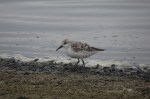
In the afternoon a group went to visit Sodwana – only 20 km down the road – to check out the beach and bird round the campsite.  A Caspian Tern greeted the group at the river mouth, a group of White-fronted Plovers hid in the dune vegetation and 6 Sanderlings posed an ID challenge for us.  Rob and Cecil behaved like city slickers and refusing to take off their shoes hitching a ride across a 30cm deep, 1.2 meter wide stream on a tractor, what the carbon footprint was we can only imagine!!

Sunday 27th: Lake Sibaya and Mabibi.

Fifteen of us packed into four 4×4 vehicles set off on a clear sunny day from camp and picked up our Wakkerstroom trained birdguide, Jabulani Mbonambi, from Mbazwana petrol station – organised through Adri.

Once we had entered Sibaya we drove along a beautiful coastal forest road to the east of the Lake. It was interesting habitat yet relatively quiet – perhaps because we had few stops along the way to our breakfast area beside the Lake. However birding at the breakfast stop was interesting.

In some dead trees beside the lake about 50 White-fronted Cormorants were nesting. A Fish Eagle was roosting comfortable among them. It was interesting to see that the Cormorants took nesting material from the shore and doused it in the lake, apparently to sort out the strands of the material to facilitate nest building.

There were not a lot of birds on the lake it being too deep. However there were Three Banded Plovers, Little Egret, Egyptian Geese, one Greenshank and a Water Thick-knee.  Jabulani heard the Woodward’s Batis calling in the dune forest so we went to investigate. Most of the group had lovely sightings of it. A bird wave came through among which were Forest Weavers, Yellow – breasted Apalis and Blue-mantled Flycatcher.

After tea we carried on through the forest and then through rolling grasslands to Mabibi, quite a long bumpy sandy trek. Jabulani organized a car guard for us and we proceeded down the 139 steps to the beach to do some snorkelling in the protected waters of a reef.  The snorkelling was great and a good variety of fish were seen, a moray eel and some parrot fish among many others.  For those not snorkelling a walk along the beach was lovely, the rock formations were interesting and White-fronted Plovers hid among them.

There was a lovely spot in the camp site for lunch and it wasn’t long before the birds began to call and there were good sightings of Kurrichane Thrush, Woodward’s Batis among others.

After a walk about the campsite we started the long trek back to camp across typical Maputaland vegetation with lots of Ilala Palms to the main road. A thoroughly enjoyable day.

Monday 28th:  Muzi Pan, Ophansi Pan & Mkuze.

By 08h30, our group of 15 arrived at Muzi Pan and spread out along the causeway. The water level had receded almost to its usual position compared to a month earlier.

Muzi Pan, as usual, did not disappoint despite the windy conditions. There was abundant bird life – water birds predominantly as you might expect.  Specials seen included African Pygmy Geese, Pink-backed Pelicans, African Spoonbill, Black-winged Stilts, Yellow-billed Storks also Lemon-breasted Canaries, Long-billed Crombec and Yellow-breasted Apalis.  Apparently the following day Lesser Jacana, Black Coucal and Kittlitz Plover were also seen round the Pan from the Adventure Centre.  In all about 40 species were seen. The following pictures show the difference in water level from one month earlier.

After an hour or so the convoy moved to another Pan, nine kilometres beyond the Ophansi Village (instead of turning left to the Mkuze entrance, travel straight on). The Pan is right beside the dirt road on the left. A number of different water birds were seen including African Purple Swamphen, Red-knobbed Coots and Whiskered Terns.

The group then headed for Mkuze. At the gate, the vehicles separated to do their own thing. The rest of the day was spent here, lunch was attempted at Nsumo Pan but the wind was fierce making it most unpleasant.  Some chose to picnic in the parking lot which was protected while others took their lunch to the picnic site at the entrance to the kuMasinga Hide.

Animal viewings were few and far between – perhaps because of the time of day the Park was entered. However a White Rhino did make a lengthy appearance at the kuMasinga Hide.

 In fact the hide attracted a good many different birds over the midday period. It was a good vantage point for photography. There were excellent viewings of Green-winged Pytilia, Crested Barbet, Kurrichane Thrush amongst many others.

Raptors were few – no vultures. Those that were seen included Shikra, Little Sparrowhawk and a Brown Snake-Eagle on the way out. Only about 70 species of birds were seen in Mkuze.

Tuesday 29th. Tembe.

The usual early start led to another productive birding day in Tembe Elephant Park. Only 4×4 vehicles are permitted entry and they ensured an uneventful trip along the many single sandy tracks.

The reserve is known for the potential to find the Plain-backed Sunbird. It was on everyone’s agenda. However only Cecil was able to find it – at the Mahlasela Pan Hide. The Mahlasela Pan Hide is a raised hide at canopy level overlooking the Pan. It is a well designed hide. A webcam from this hide shows activity at the Pan on the internet. Go to http://www.tembe.co.za. The Africam is on the Home page.

The reserve is also known for its large elephants which fortunately showed themselves calmly.

There is a viewing tower near the entrance and another hide at the north end of the Swamp roads – the Poweni Hide. It too is a raised hide at canopy level  and it looks down at a flood plain below.

Most agreed that the swamp area, the east Swamp Road (Umjamgazi Road) in particular, offered most sightings including Grey Waxbills, Yellow Fronted Longclaws, Stonechats, Rudd’s Apalis, Southern Banded Snake-Eagle, Eastern Nicator, Lilac-breasted Roller and Pink-throated Twinspots.  Raptors included Bateleur and Brown Snake-Eagle but no Vultures. The waterhole antics of  small families of elephants provided treasured moments for many of the group, as did the occasional roadside encounter.  In all around 60 species were seen.

Wednesday 30th: Departure Day for some.

Most of the group departed around midday leaving only a few lucky behind.

Birding during the day was spent around the camp and at the several bird baths. Pink-throated Twinspots made their regular appearances along with a number of other specials.

Thursday May 1st: Final departure.

Part of the morning was spent birding around the camp where several Olive Bushshrikes made appearances as well as a very obliging Green Malkoha.

Anecdote:

One amusing incident related to a certain loo which when flushed would not respond. After several attempts to flush, the pot began to boil and the head of a snake appeared!

The next morning in another loo the occupant was chased out by a Bushbaby!

Summary:

Although only about 180 different birds were seen over the period at Illala Palm, there were many specials as you will have noted above. The number of bird species seen around the camp alone was about 88.
The bird list for the weekend can be seen by clicking Total Bird list for Ilala Palm Week.
This will be an excellent place to return to in the summer.
Note:

Credit for pictures has been made where due – other than those taken by Sally and Paul Bartho.