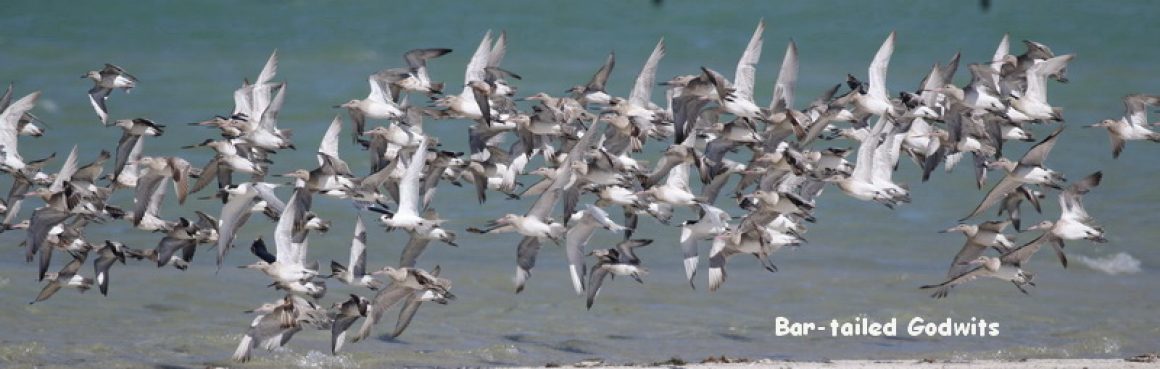
Sally and I decided to visit the Caprivi (Zambezi) region of Namibia again. We hoped to find some of the region’s special birds that we had missed on previous trips, as well as reminding ourselves of the specials we had seen before.
We were planning on going in January but for various medical reasons that was not possible. Mid March became the earliest we could get away and we needed to get away.
After much planning we decided on the following trip:
Zaagkuilsdrift
March 17th to 19th 2026

Zaagkuilsdrift Bird Sanctuary has probably one of the best reputations in South Africa for seeing Warblers in particular. It is also a good half-way point to the border with Botswana at Martin’s Drift. Zaagkuilsdrift is a place we had not visited before. The plan was to spend 2 nights there both on the way as well as on the way back.
Our journey started nice and sunny from Howick. However, as we rounded Gauteng on the M1, the heavens opened and I mean torrential rain, thunder and lightning and a bit of hail. No fun with all the traffic and us towing our Afrispoor Wildcat as well. From that point on we had rain and overcast weather all the way to Kasane (northeast Botswana).
The last 20 kms to the camp was on gravel. It took us one and a half hours.

To start with the road was relatively dry but very corrugated. Then we came to the final few kilometres. At first, looking up the straight section of road, we could see quite a number of troughs of water that we had to navigate – about 15 or so. They appeared to get smaller towards the end of that section. However, it was the opposite. The further we ventured so they got longer and deeper. There was no option to drive to the side. The sensible thing was to drive through the middle of each.
Once through all the water, the final 2 kilometres was very muddy and had to be driven very carefully to avoid sliding off the road. Eventually we made it.


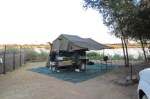
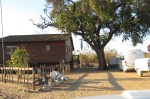
Our campsite was under a shade cloth and we shared the ablutions with another empty site. We had electricity and water.


We dined at the restaurant both nights . Set menu but not the finest of meals.


Remember that this is a Sanctuary, so not all the species we saw there were truly wild – like the Blue Cranes for example. They do have a number of good birding spots and one hide which we found really impressive – Sanctuary Hide.
– and from which we saw the majority of the birds we recorded.
In total we recorded 64 different species.


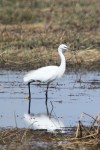
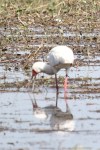
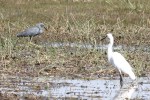
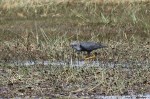
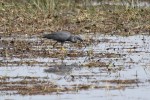
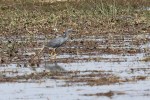
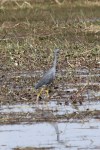
Next is a gallery of birds we were able to photograph in and around Zaagkuilsdrift. Not that we travelled very far from the camp.


The night before we left it rains all night. The muddy section as we left the gate was baie slippery. Even in low range 4×4 we got stuck twice. Both times I luckily managed to maneuver our way out. Then came the troughs. They were even more unpleasant – they seemed fuller and longer.
On one occasion we hit a severe drop which our poor Wildcat was not expecting. It was not till 100 kilometres later that we realised we had a problem with the Wildcat. We had stopped at a robot in Modimolle waiting for the green light. Then we noticed a bakkie drive onto the pedestrian pavement alongside us. The driver pointed to the Wildcat indicating that it had a problem. One of the suspension arms had disconnected and had been dragging along the road behind us since we left Zaagkuilsdrift. We had heard nothing, suspected nothing as the Wildcat had towed effortlessly behind us.

More than 2 hours was spent at Supa Quick in Modimolle as they found two new matching suspension arms to replace those on the Wildcat. Nearly R3000 later we were on our way. Fortunately, we had planned to camp at Kwa Nokeng just the other side of the border in Botswana and we did not have a huge distance to travel.
Would we go back to Zaagkuilsdrift? Yes, but only in the dry season – early summer late spring. We were planning to go back at the end of our trip but decided against it because we did not want to face that gravel road in.
Kwa Nokeng, Botswana
March 19th 2026

The border crossing at Martin’s Drift was a breeze. I say that as it did not appear so as we approached the gate. We were met by a huge queue of trucks, but someone told us to move ahead to the front – in the oncoming lane. We did and crossed the entrance after just waiting for 2 trucks. On exiting the South African side we gave away all the items of food that we had heard would be confiscated on entry to Botswana. So, our fridge and freezer were virtually empty.
Going through immigration and customs on the Botswana was quick as there were so few of us in the queue.
In the past, Sally would have made quite a number of pre-cooked meals and we would have the vegetables all in the fridge – not allowed we were informed by all the official authorities. As it was nobody wanted to check anything. Maybe it was the time of day.
The campsite was a large area of just thick grass and nobody else there. Because of all the rain the grass was wet underfoot but not soakingly so. We had power and water. There were loos right beside us and a shared shower block about 100 metres away.


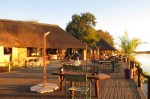
We had a pleasant meal at their restaurant which has a lovely setting with the river in the background.
Nata, Botswana
March 20th to 22nd

The road from Martin’s Drift to Palapye was reasonable and quick going.
In Palapye we stocked up with food as our fridge and larder were empty.
Then road conditions started to deteriorate, especially after Francistown to Nata. A new highway is being created both sides of the current A1 all the way to Kasane. Potholes are manholes. Both sides of the road are badly crumbling away. The road is just wide enough for two trucks to pass – usually at speed. And, we South Africans think our N3 is truck laden. In Botswana, on their A1, truck traffic from the north is horrendous. We averaged 70 kilometres per hour at best for the whole journey.


Our plan was to spend two nights at Nata with the intention to visit the Nata Bird Sanctuary. This did not happen despite a last minute booking to go on an afternoon drive to the sanctuary. We got no further than about 100 metres from Nata gate when the rain came. Instead, we birded around the camp the next day.
Our campsite:

Our first lifer came unexpectedly.

There was a bird party close to the lodge. We watched the activity in the drizzle, then Sally saw an unusual looking bird. Nothing like anything else we could identify easily. The key feature was a black crown down to its eyes and a grey bill – a Eurasian Blackcap we concluded. The memory remains but we were unable to get a photo.
Because of the adverse weather conditions, we were only able to use our cell phones for photos. Here are a few.


In total we did record 25 different bird species.
Senyati, near Kasane, Botswana
March 22nd to 25th 2026

The 303 kilometres from Nata to Senyati took us 6 hours. One section of road was off-road mud for 20 kilometres. Trucks doing at best 20 kph in front of us.
As we approach Senyati Camp – 15 kms short of Kasane – we were advised by management not to drive the short 2 Km 4×4 route to Senyati camp since we were towing.

We should have ignored this. We followed the advice and took the detour – about 10 km of rough road. Our brains were addled and we should have taken the direct route – 2 kms. Although it is thick sand, we stupidly did not consider the rain effect and how compact it had become.
The entrance gate:


Our well-treed campsite and own ablution:


Reception, Bar, Restaurant and viewing decks overlooking the pan and hide.


View from the upper deck:


Note no fencing. Elephants do walk through the camp as I found out late one afternoon went I went underground to the hide.


The first afternoon we went into Kasane to Chobe Safari Lodge to wander around their waterfront from the hotel to the campsite. The rain that we had every day dissipated.
Generally speaking the birding was quiet – until we reached the bridge into the campsite area. More secluded and treed over. White-browed Robin-Chats (juveniles and adults) seemed to be everywhere – calling and dancing about. The juveniles had us confused for a while with their mottled appearance and almost lack of a white eyebrow. A Common Sandpiper appeared at the water’s edge under the overhanging vegetation. Parts of the walkway path were closed off as the water levels were very high. Arrow-marked Babblers and Hartlaub’s Babblers seemed to be competing for territory. We eventually had sightings of a juvenile Black Coucal which we had heard calling. Even a Swamp Boubou and a Brown Firefinch made an appearance.


It was on the way back that we had a fabulous sighting of another lifer a Thrush Nightingale. It was not interested in us – some 5 or 6 metres away. It was on the move in an overhanging tangle next to the water’s edge. We watched for a long time.


Both the picture above and below are slideshows. Click the arrows, left and right, to see the next photo.
Then I moved around to see if I could get a decent photo – thwarted by it being constantly on the move and with a spindly tree half-way between us. Suddenly this bird appeared in the spindly tree – so close I needed to back off to get a photo. It stayed there preening for us for at least 10 minutes. A Schalow’s Turaco. we must have spent at least 15 minutes there watching both birds.


We recorded 19 different bird species in the short time that we were there.
The next day we went to Chobe National Park. We took the shortcut from the Senyati 4×4 road directly across the main road. The road goes directly to the Chobe NP via a route around the airport. Beats going around Kasane along the main road. Truck traffic can be horrendous as you approach Kasane.
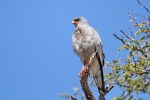
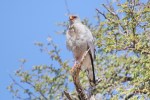
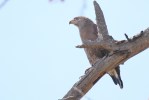
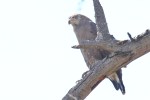
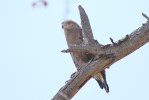
On the airport boundary fence we had a great viewing of a Lanner Falcon posing.

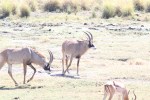
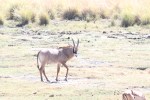
Chobe NP was a big disappointment as far as animals were concerned. I think we counted seeing only 8 or 9 different species and none in large or even medium sized groups. The species we did see did not include any of the “Big 5”.
The low road, as expected, was flooded although we were able to drive down to the water’s edge then back up again to the middle road.
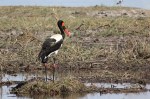
We did record 30 different bird species in the Park. Here are a few photos we took.


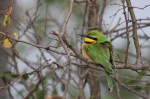
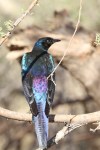
The birding in Senyati camp was excellent. In and around the campsite we had unexpected sightings of Collared Palm-Thrushes as well as Bradfield’s Hornbills. Levaillant’s Cuckoos flew into the tree tops above us, Swamp Boubou and Tropical Boubou visited and called, Greater Blue-eared and Long-tailed Starlings made appearances and Swallow-tailed Bee-eaters were to be seen.


Then there were the Collared Palm-Thrushes:


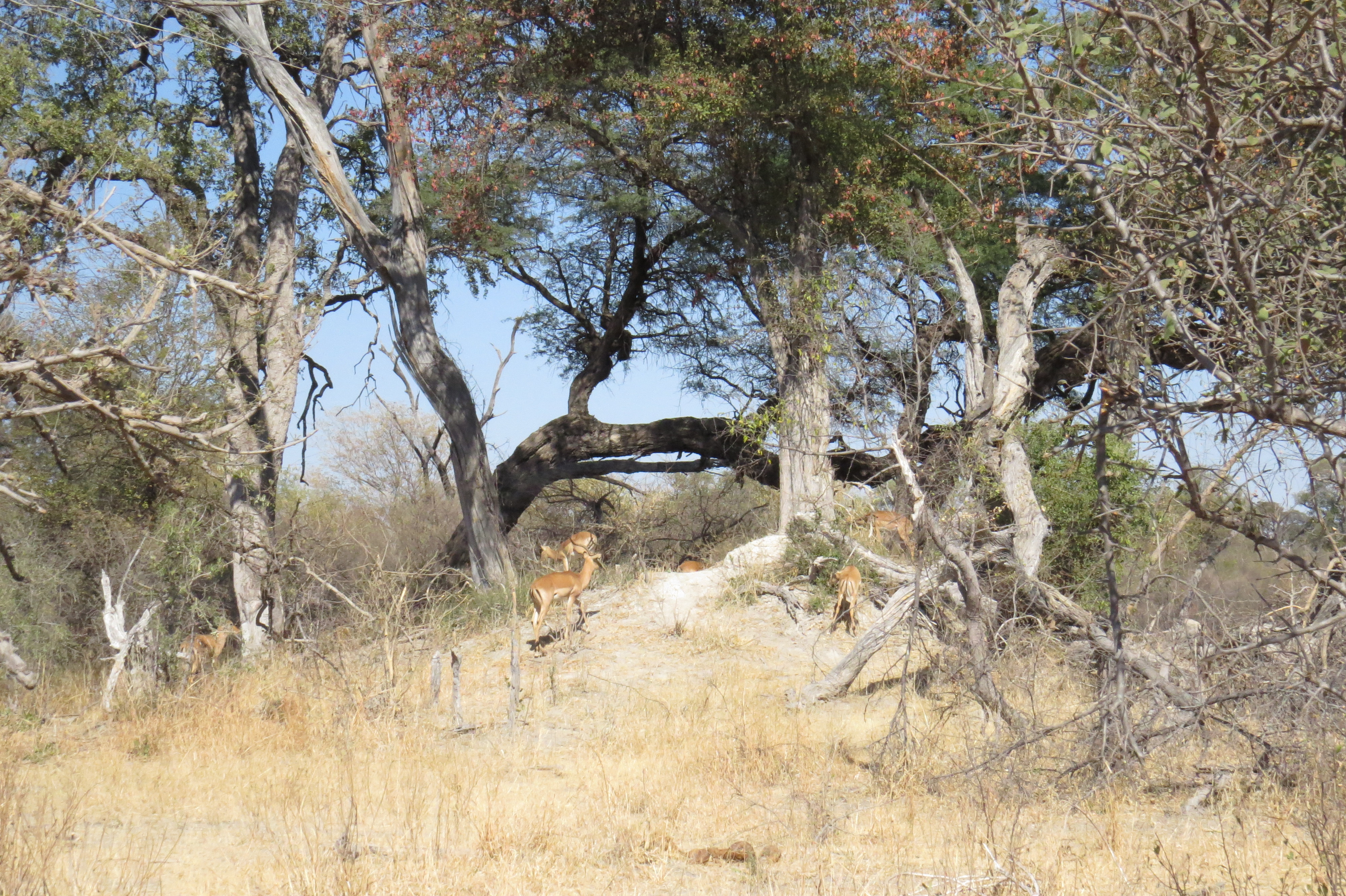
Then there were the sightings from the viewing deck overlooking the wetland pond. Most were bird sightings but a few animals also visited. A gang of Banded Mongooses appeared below our view point and a stubby-horned Impala with it’s comical look.


We recorded 43 different bird species in the Senyati Camp.
And that concludes the first leg of our trip through Botswana on our way to the Zambezi (Caprivi) region of Namibia.
Paul Bartho and Sally King.









 Birds are our Story