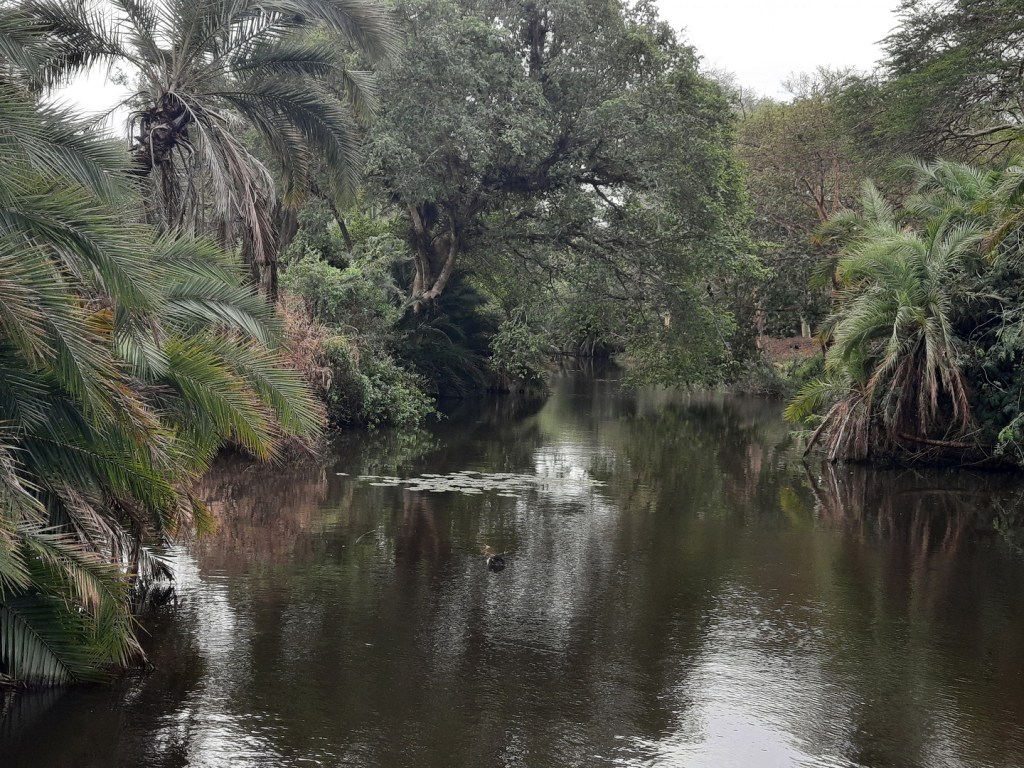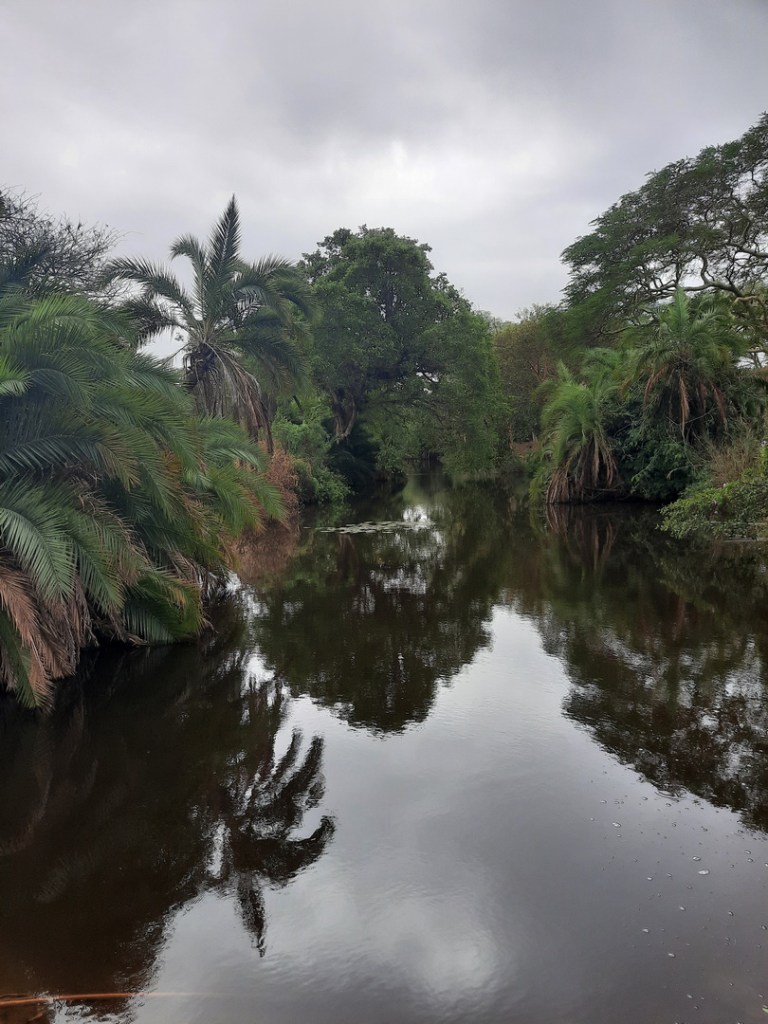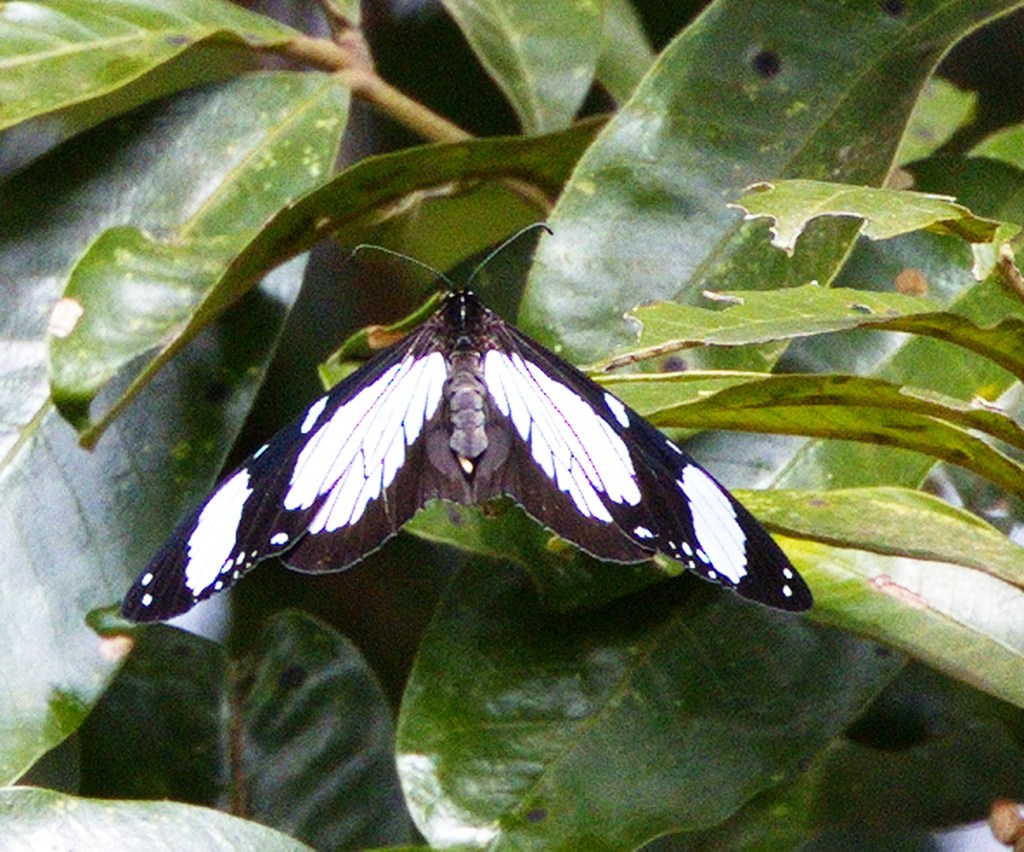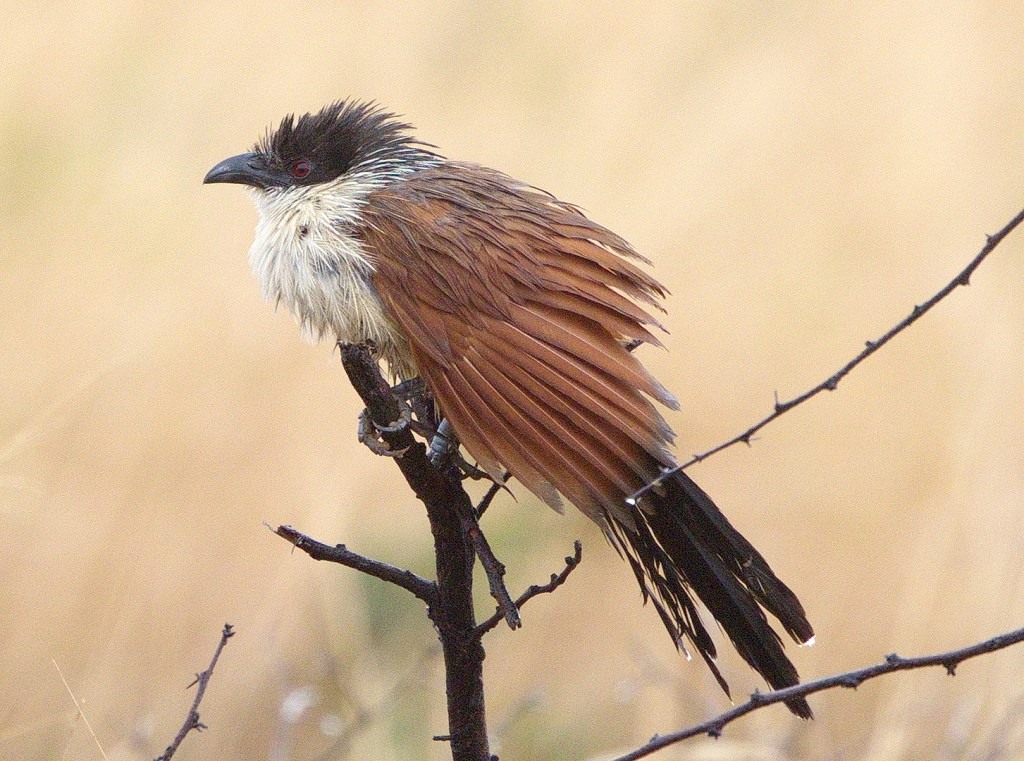
Maputo National Park

14th to 24th August 2024

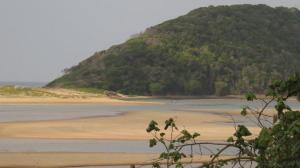
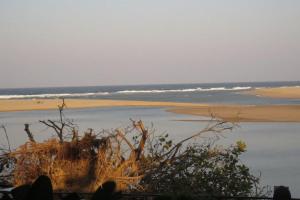
Kosi Bay

Sally and I decided that we needed to get away. On impulse we thought that it would be interesting to see what was once known as the Elephant Park in Mozambique – now Maputo National Park, south of Maputo and bordering on South Africa at Tembe Nature Reserve.

We had heard so much about the new road from Kosi Bay all the way up to Maputo that we decided to see it for ourselves and to visit Macaneta north of Maputo as well.

On the way back we stopped at Bonamanzi and visited Hluhluwe.

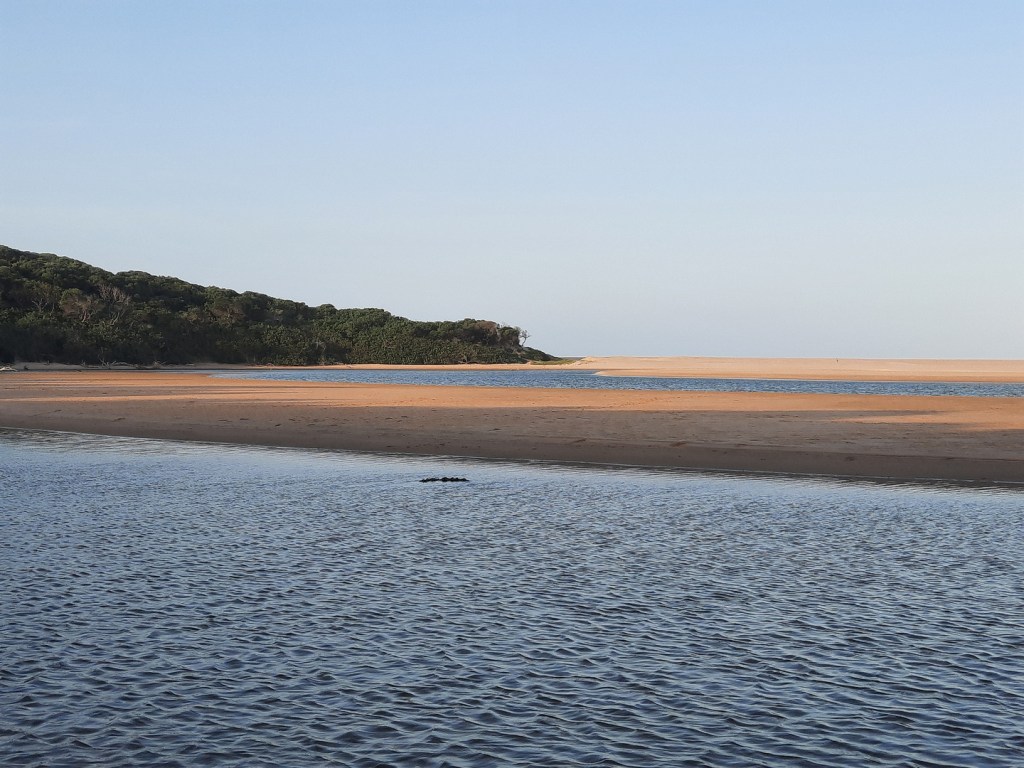
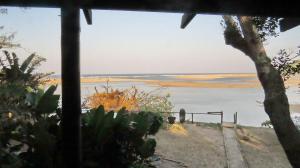
Our first night was spent camping at Utshwayelo Kosi Mouth Lodge. A very hospitable camp right at the entrance into Kosi Bay. We had a very large sandy campsite with power and our own ablution. They were able to get us entry permits to the Kosi Bay mouth.

We spent part of the afternoon going down to the Kosi Bay Mouth, returning at dusk.

The next day we were up early to cross the border and drive to the Maputo National Park. We were booked to camp in Ponta Membene for 4 nights.
Crossing the border was simple and confusing. The RSA and Mozambique immigration and Customs were all together and no-one to tell you where to go first nor when to take your car through.

Go through the fence to RSA immigration – leaving car and Afrispoor Wildcat on the RSA side of the fence. An RSA immigration official filled in the form for us but forgot to write in our Wildcat details. Then there was customs on the RSA side of the fence. Then proceed through for customs inspection.

Eventually through, we were on our way. And how the countryside seemed to change. Open flat areas with wetlands beside the road here and there.

The Futi Gate – entrance to the park – is about 40 kms from the border. After 30 kms the cattle grid tells you that you are in the reserve and every 200 metres there are serious speed bumps. And there are numerous different signs warning you of angry elephants.

Eventually we got to the Futi gate.

Park entrance fees are paid at the gate. They managed to use my credit card.

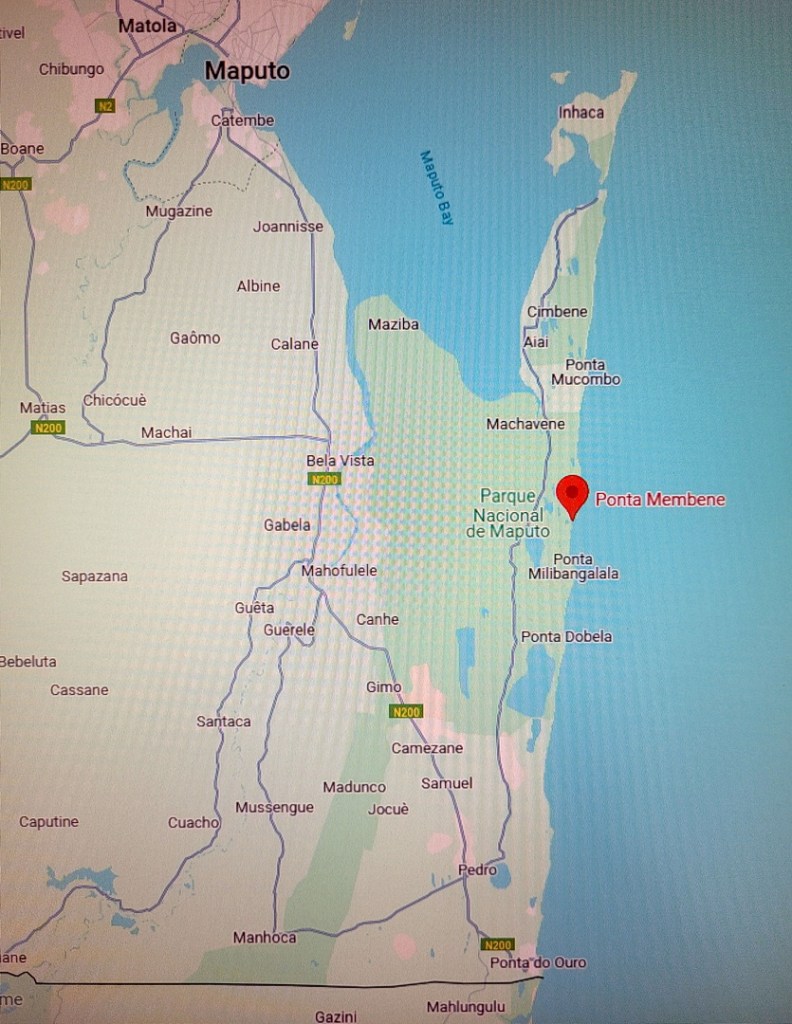
Ponta Membene highlighted in Yellow (on coast)

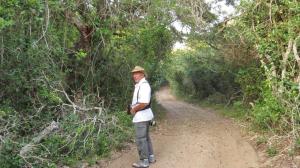
Then off we set after reducing tyre pressure to 1.5 bar. Only 40 kms to Ponta Membene on sandy roads. Towing the Wildcat went well for more than half the distance. Many a time not using hi or lo range – very occasionally lo range. Followed the numbered trail to Point 13.

We enjoyed the scenery.
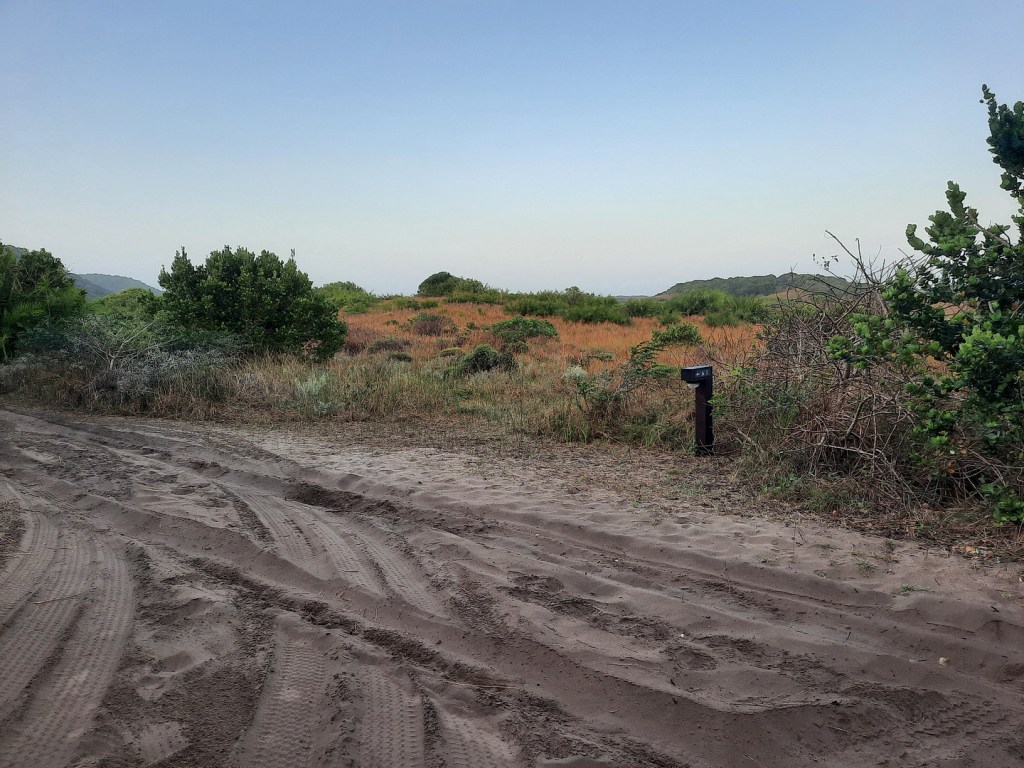
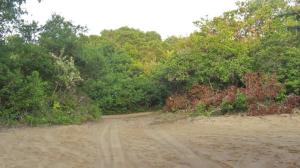
Then the inevitable happened. We came upon an intersection with 3 alternatives (as all the intersections seemed to have – all leading to the same place). We chose what looked best (you should always stick to the high ground if given a choice). Down we went, then looking ahead a steep rise in thick sand, into Lo range and almost made it.

Dig, dig, dig. Sand tracks down but getting nowhere. Decided to reverse to the bottom. More digging and sand tracks to get going back and downward. The bottom was gravellier and I was able to drive off road and make a U-turn going back the way we came. At the intersection we were unable to turn onto one of the other tracks – too tight. Ended up driving back several kms to find a place to make a U-turn.

More careful as we got closer to camp as the sand was thick and there were many steep hills to climb. Often had to choose our own way up.

Camp at last, four and a half hours from gate!!

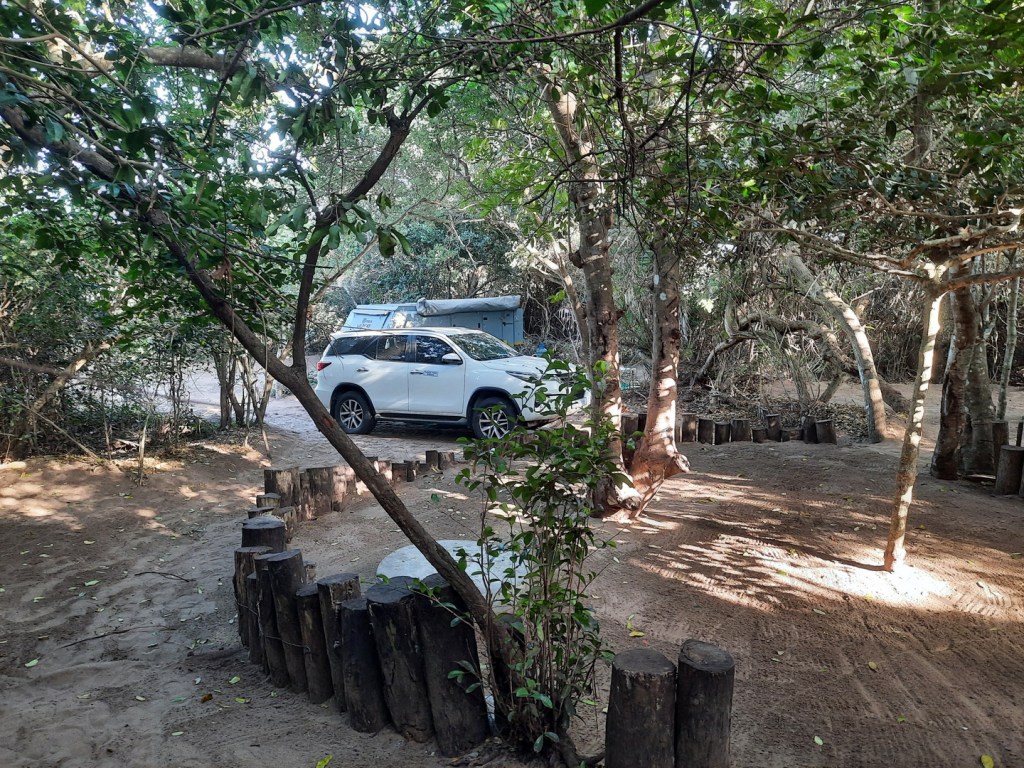
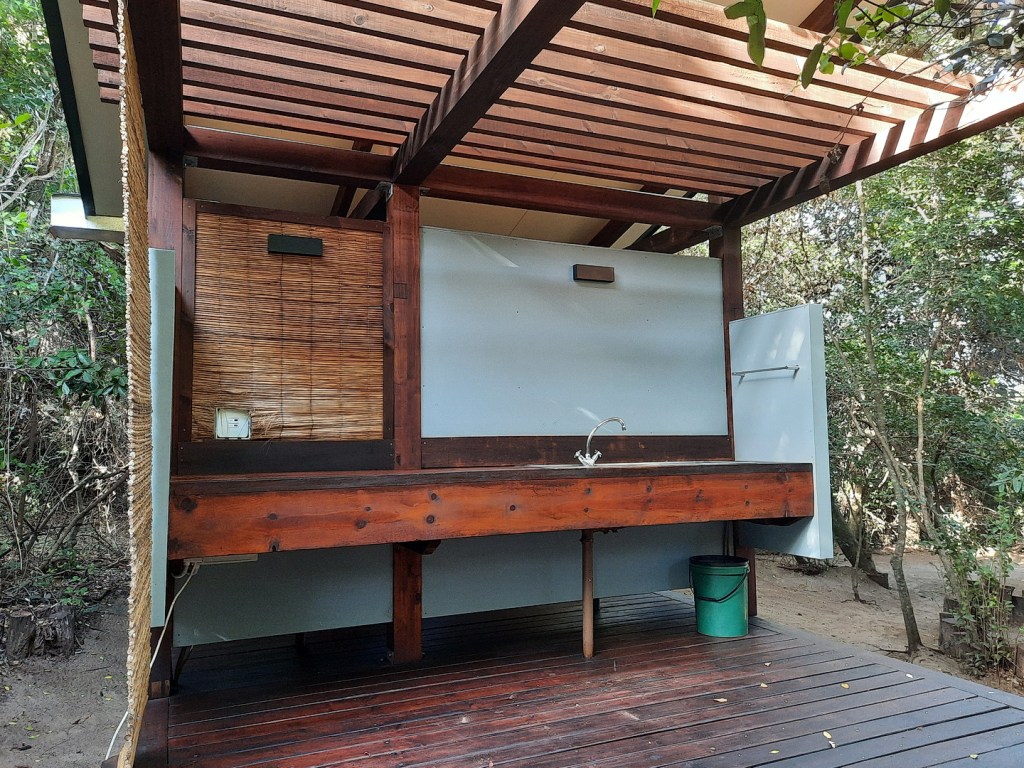
We were allocated to campsite 2. The site was huge and buried into the canopy of the Dune Forest. Two areas to park vehicles, 2 places for tents and one just big enough for our Wildcat. Plus a modern ablution and washup area attached. Hot water, shower and power.

Video of campsite


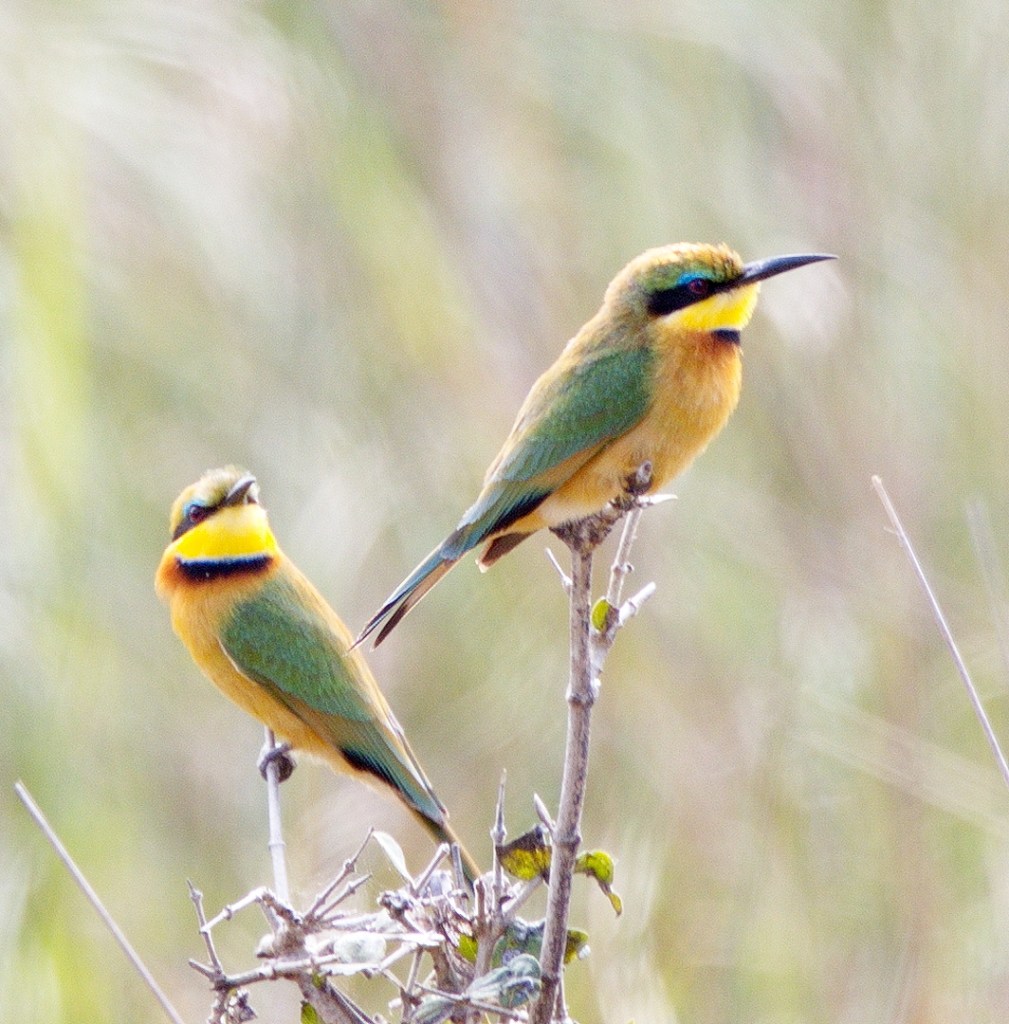
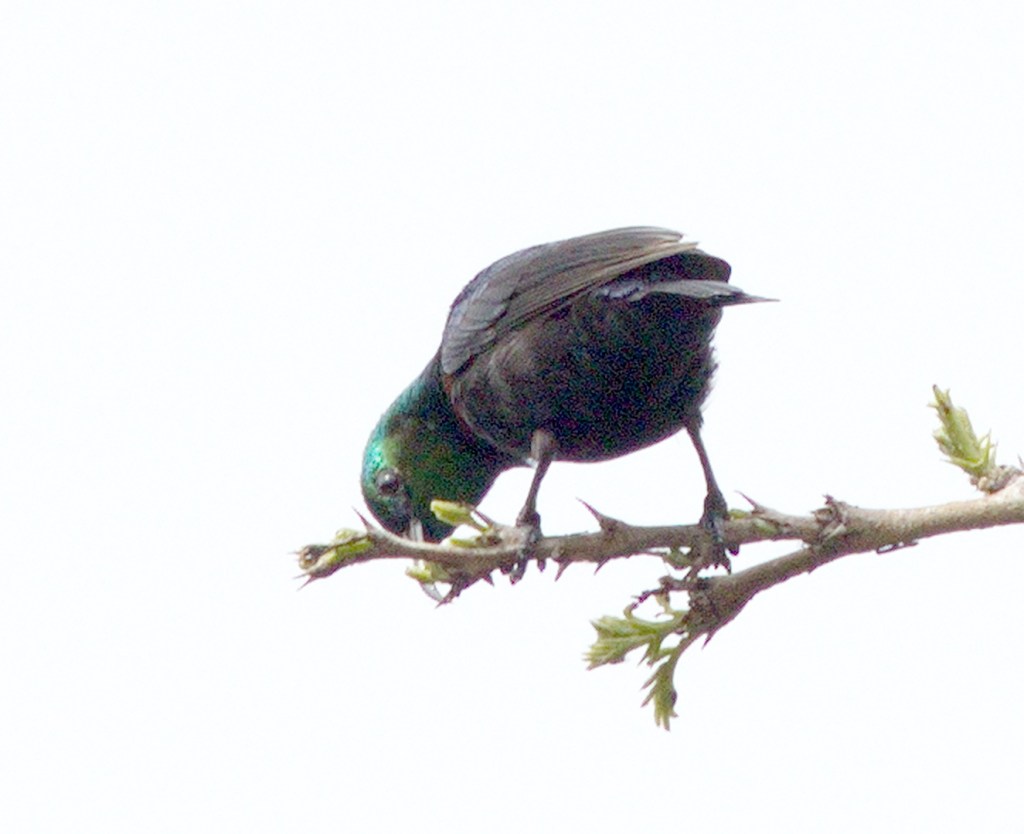
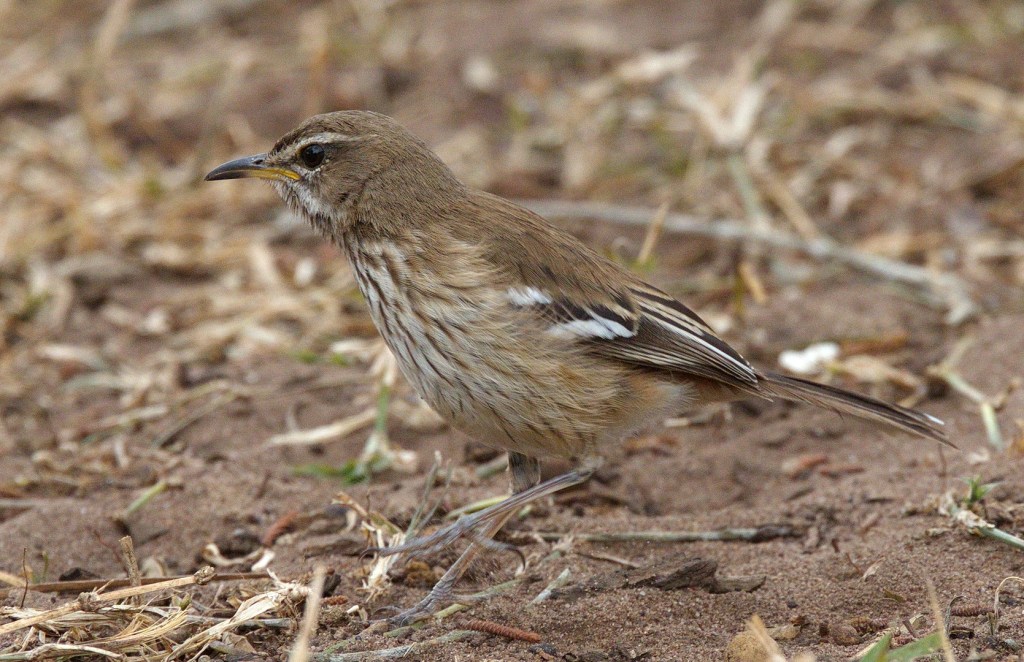
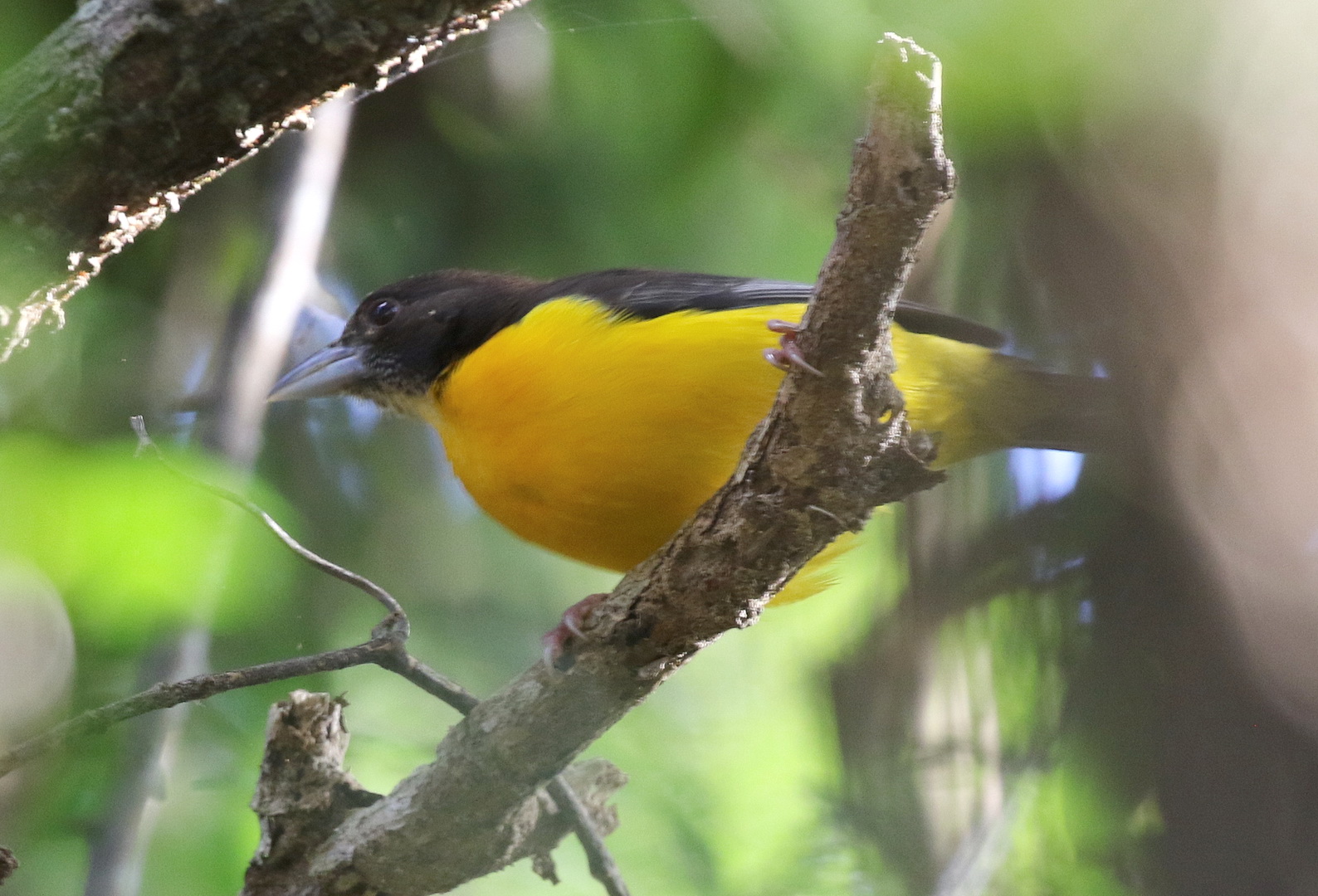
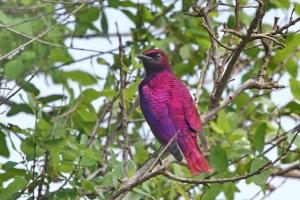
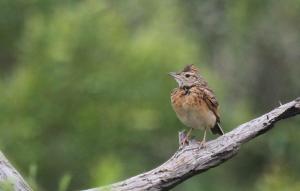
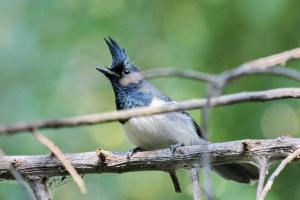
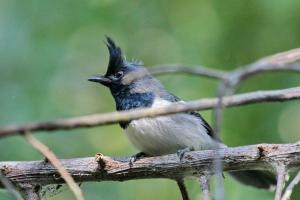
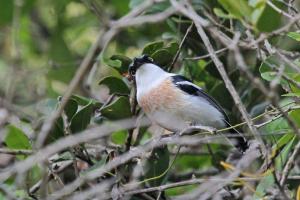
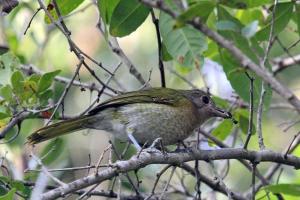
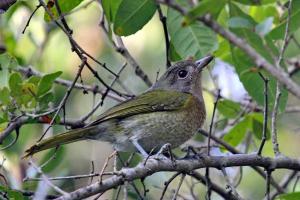
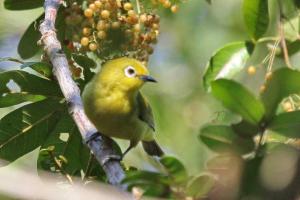
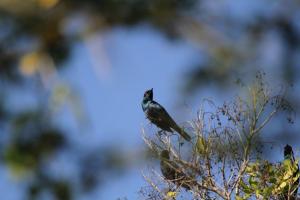
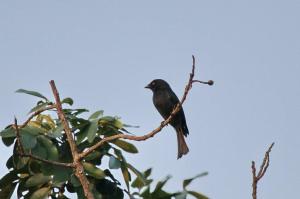
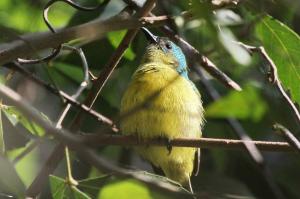
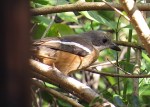
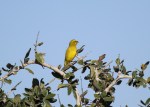
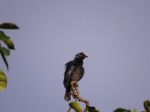
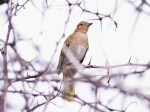
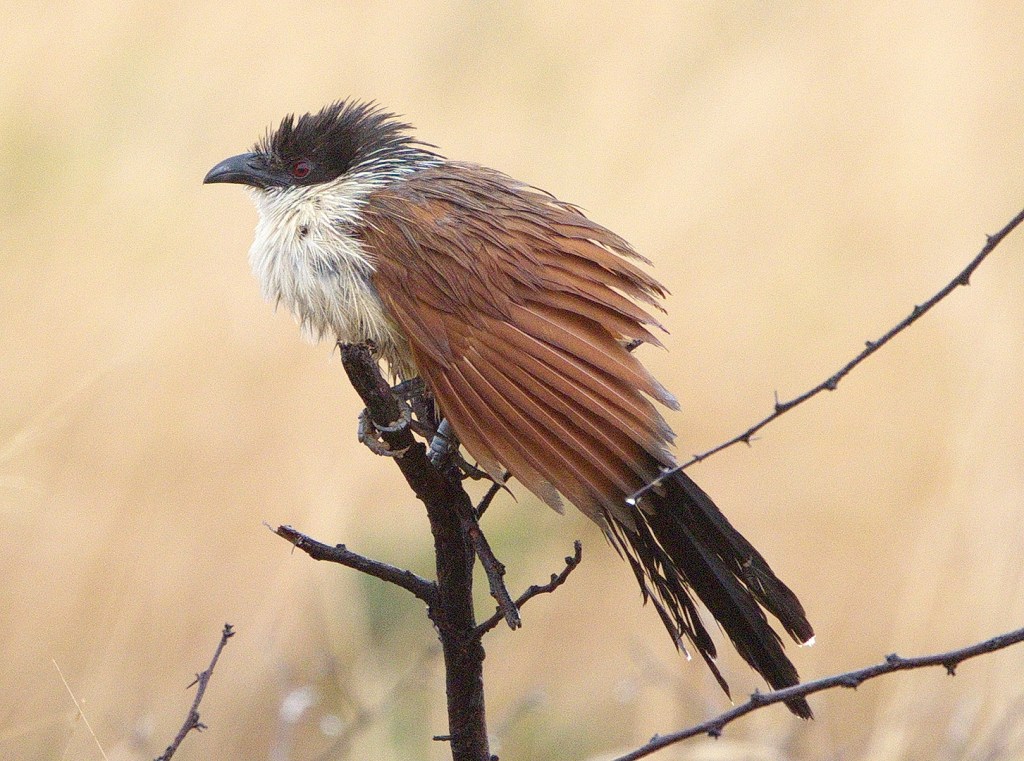
One particular campsite bird stood out from the excessive numbers of Dark-capped Bulbuls.

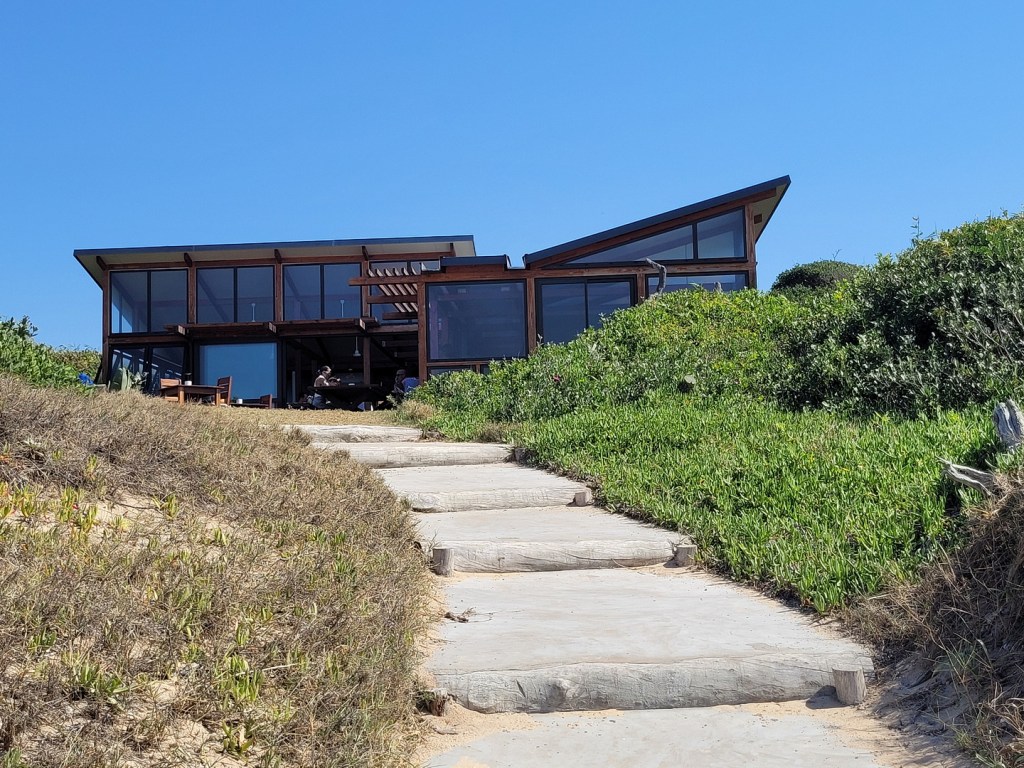
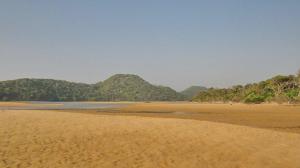
On our first morning we explored the camp. A short steep climb up to the top of the dune through the forest brought us to a board walk which ran along the top of the ridge. At the top we looked out to sea and the beach below. Following the boardwalk to its end took us to the restaurant and swimming pool.

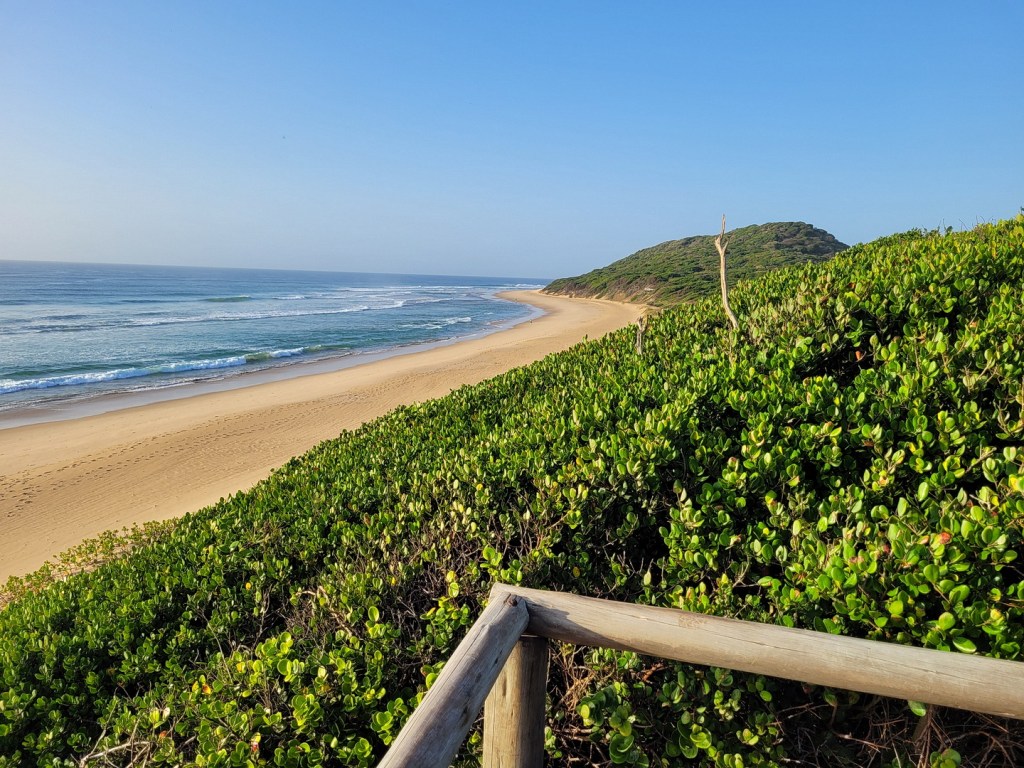
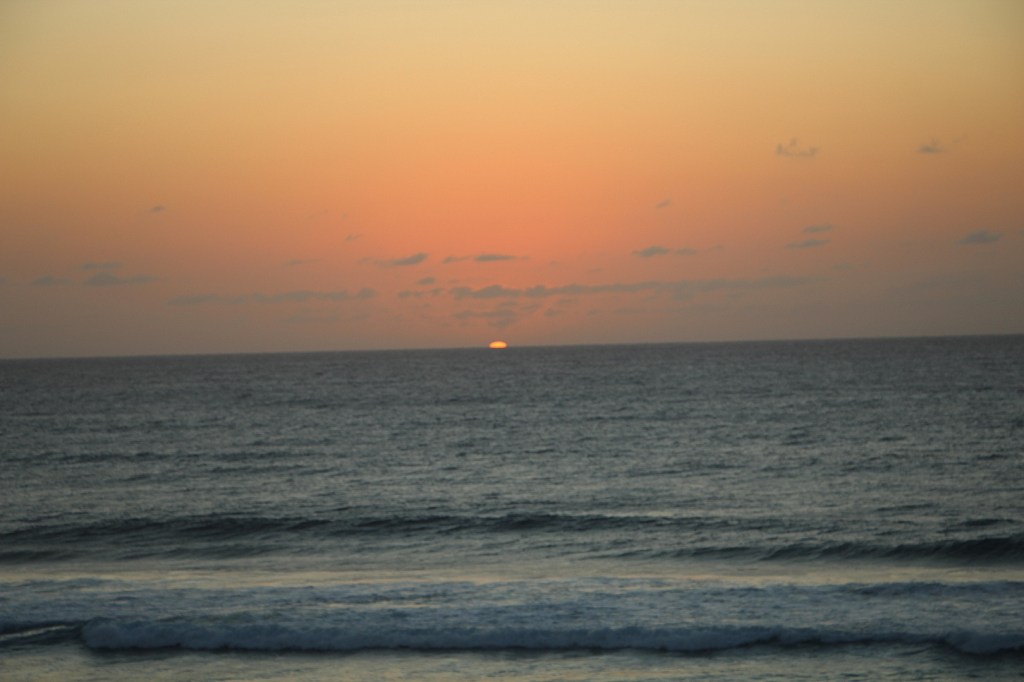
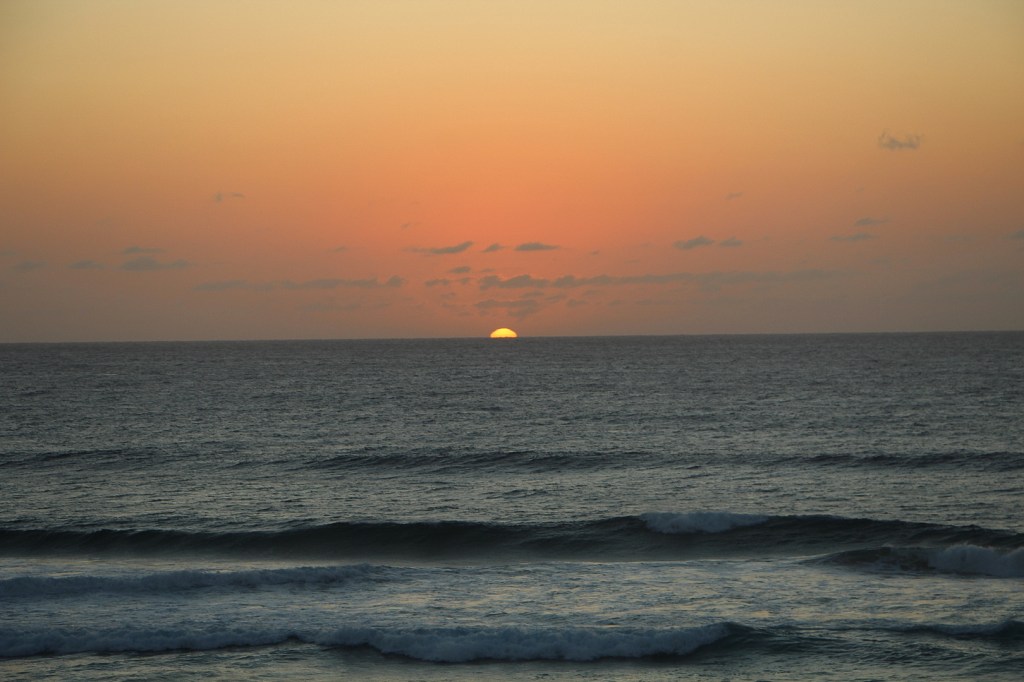
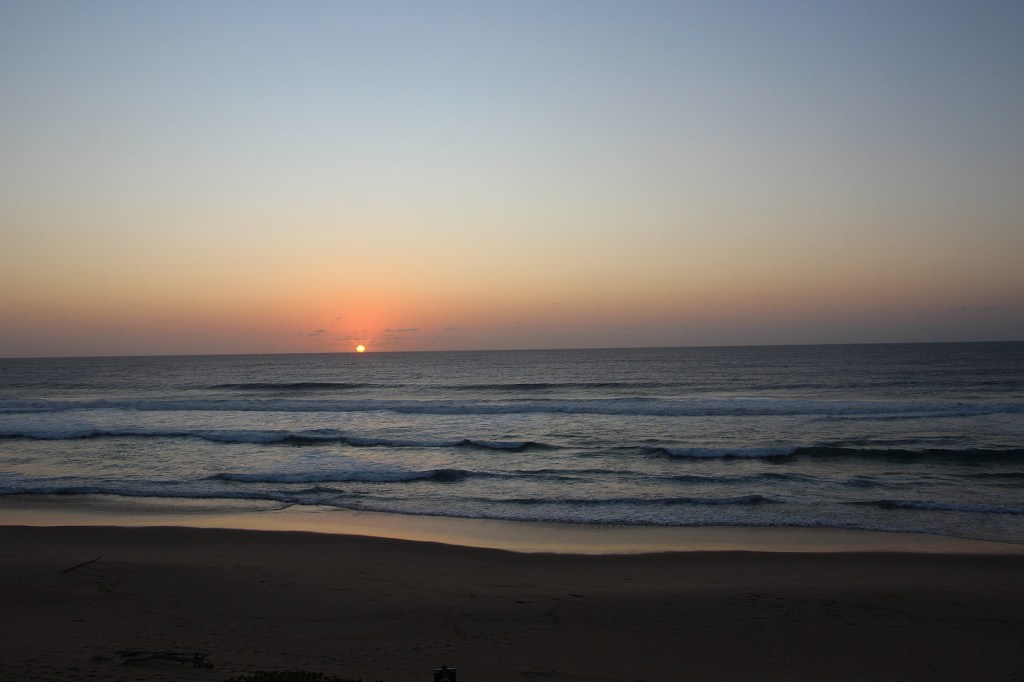
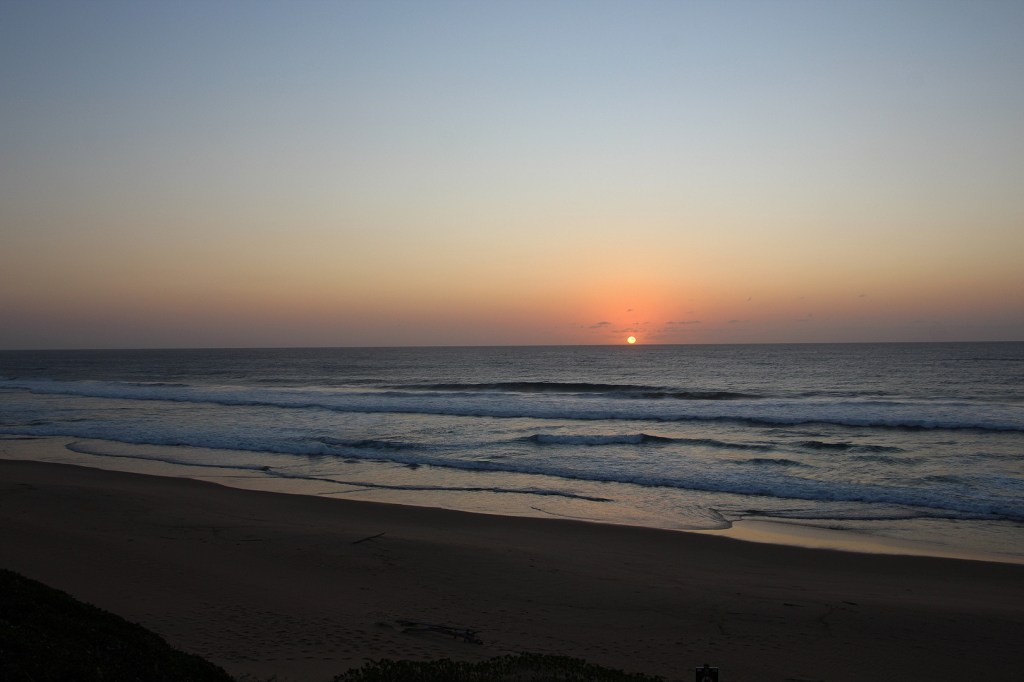
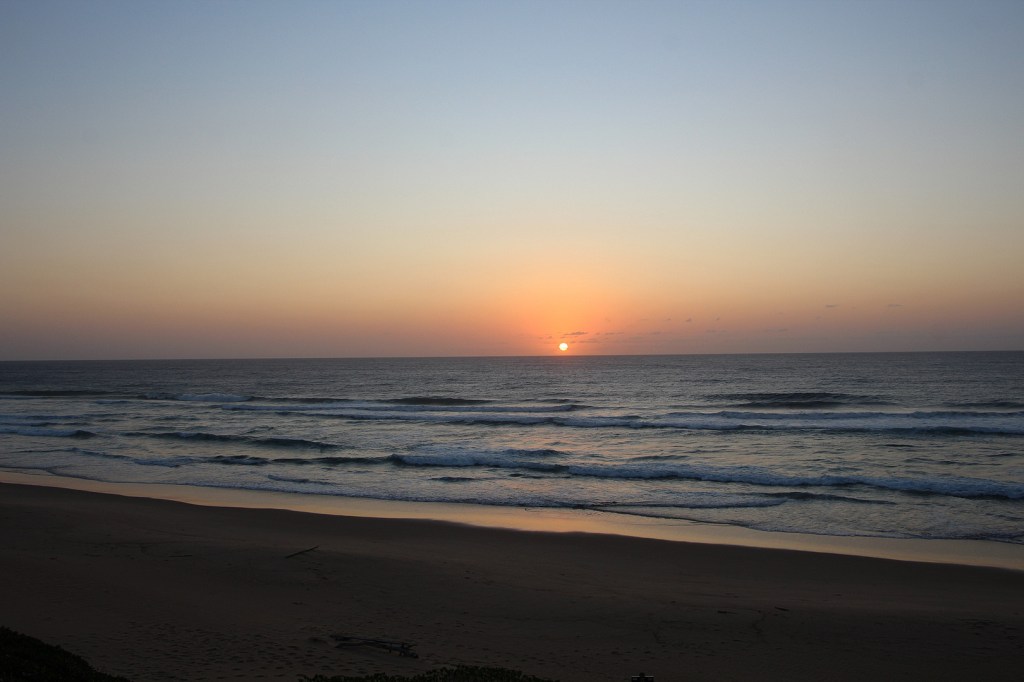
On that first morning we got to the top before sunrise – quite a view.

Sunrise:

From the top, not only did we watch the sunrise, but we also observed whales close by. Perhaps you can identify the one closest to us.

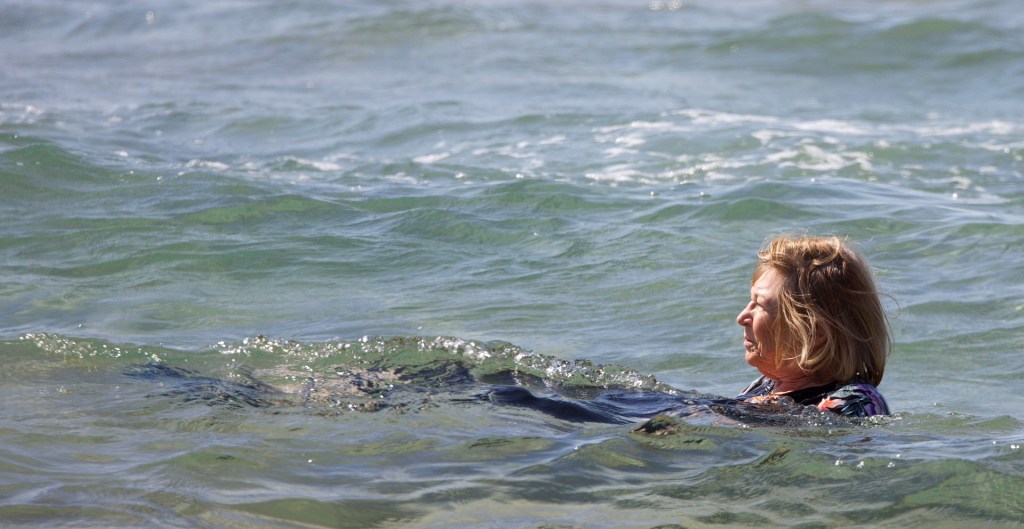
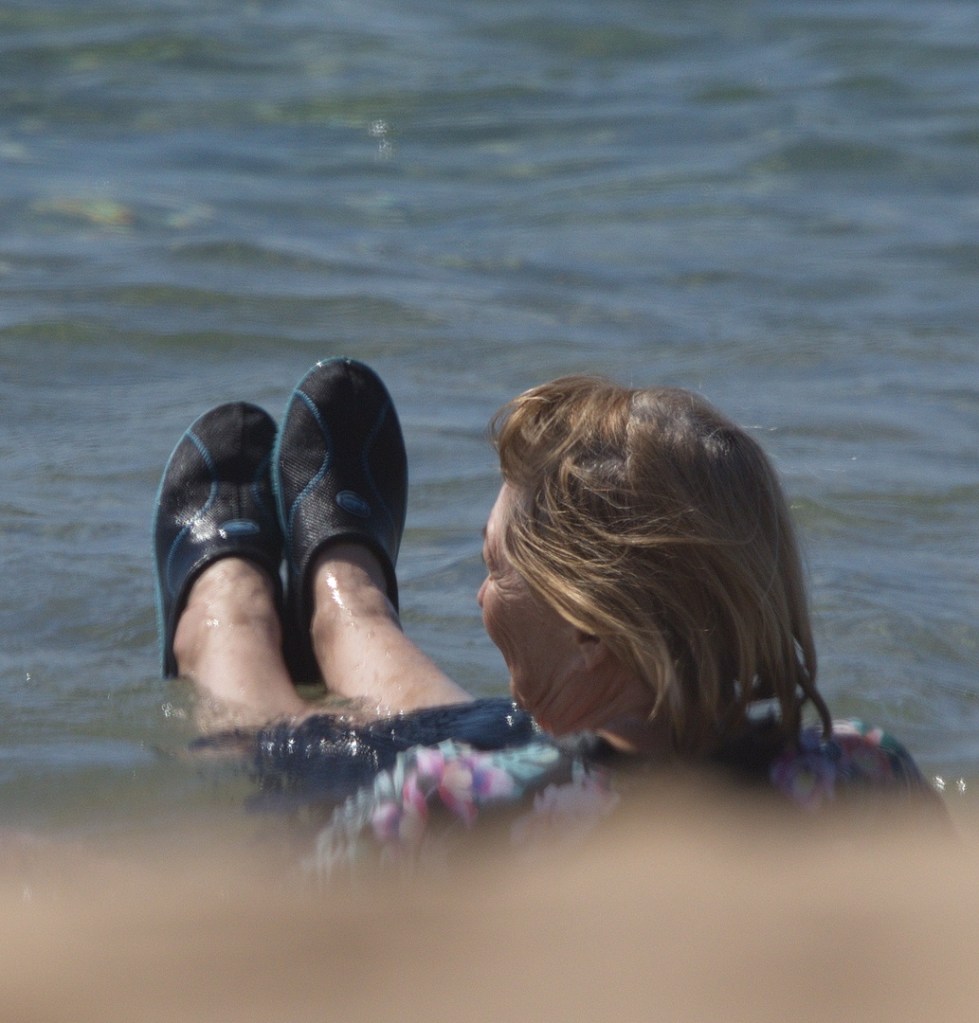
To celebrate seeing the whales, we took a long walk along the beach and Sally even managed a dip.
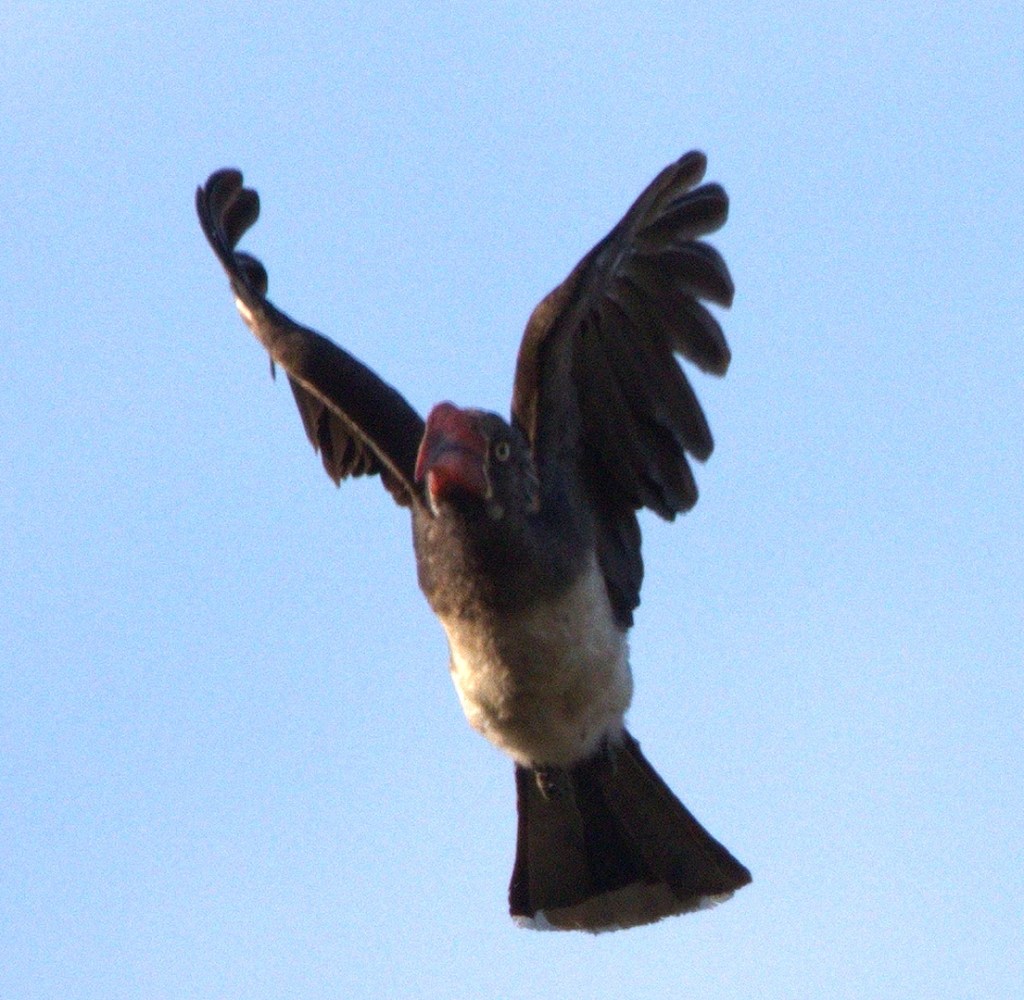
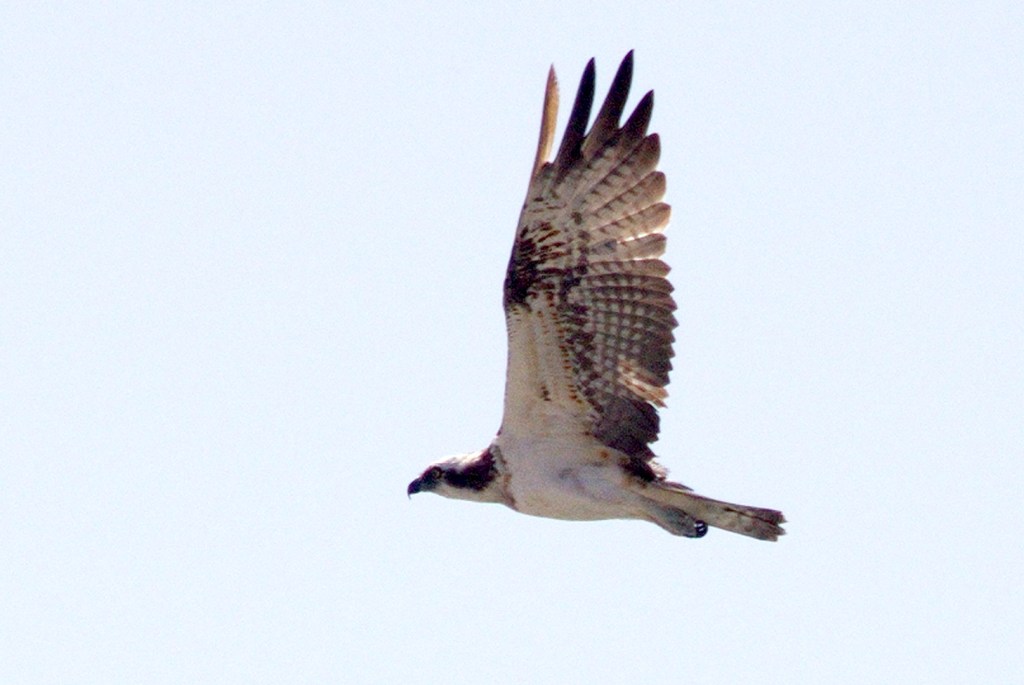
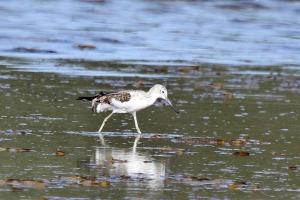
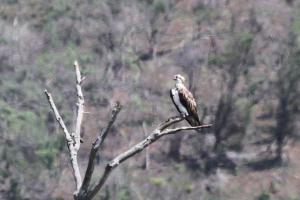
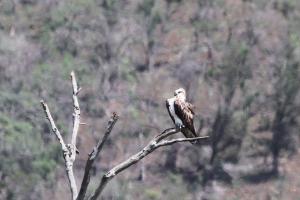
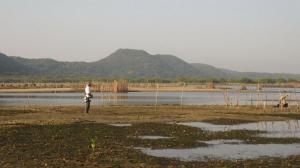
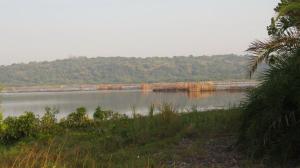
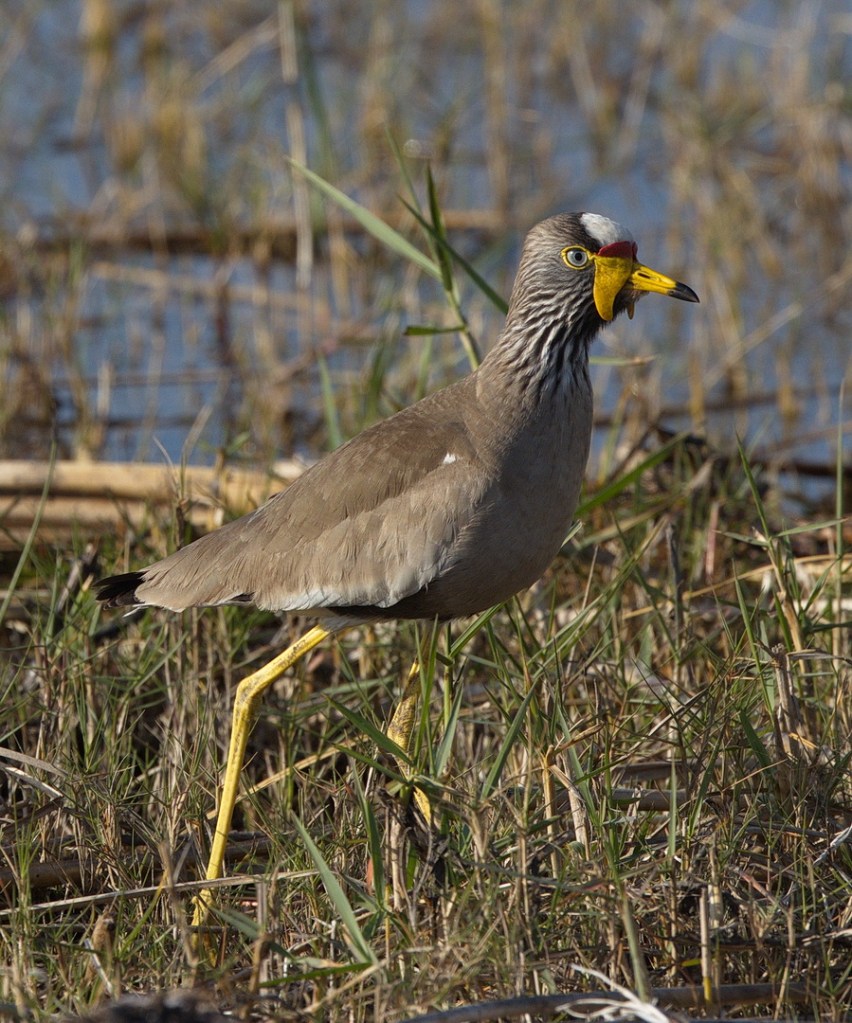
Our time was spent exploring the places we passed on the way to the camp. One spot Lagoa Xinguti was right next to the road – more like a muddy track. There was not a large variety of birds present. However, we did see Great and Little Egrets, Crowned Hornbills overhead, African Wattled Lapwings, a Squacco Heron, a White-fronted Plover, Yellow-billed Storks, a Western Osprey fishing, hippos and crocodiles.
This area also has picnic sites – attractively laid out partly in the bush..

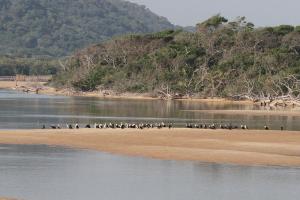
From the shoreline, we watched literally hundreds (and I mean hundreds) of White-breasted Cormorants fishing together. Herding the fish towards the shore. Quite an amazing sight to watch so many fishing together in a leap-frog action.

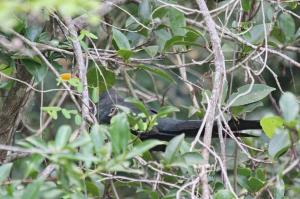
At another Picnic site, we saw a Black Coucal dash into the bush beside us – never to be seen again.

And yet another Lake, Lagoa Finixli.

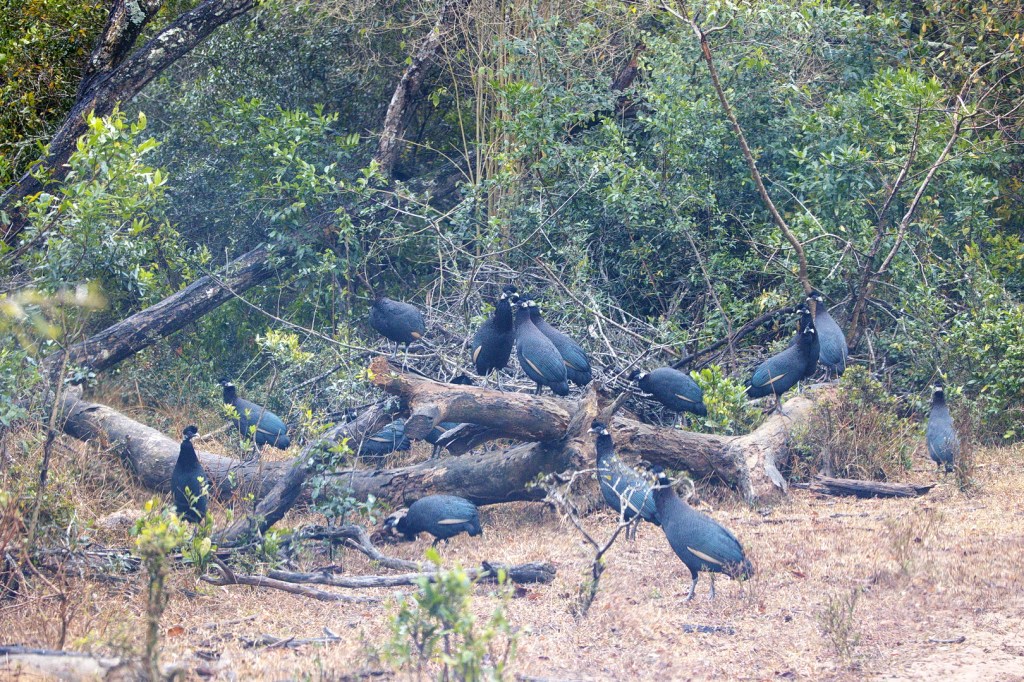
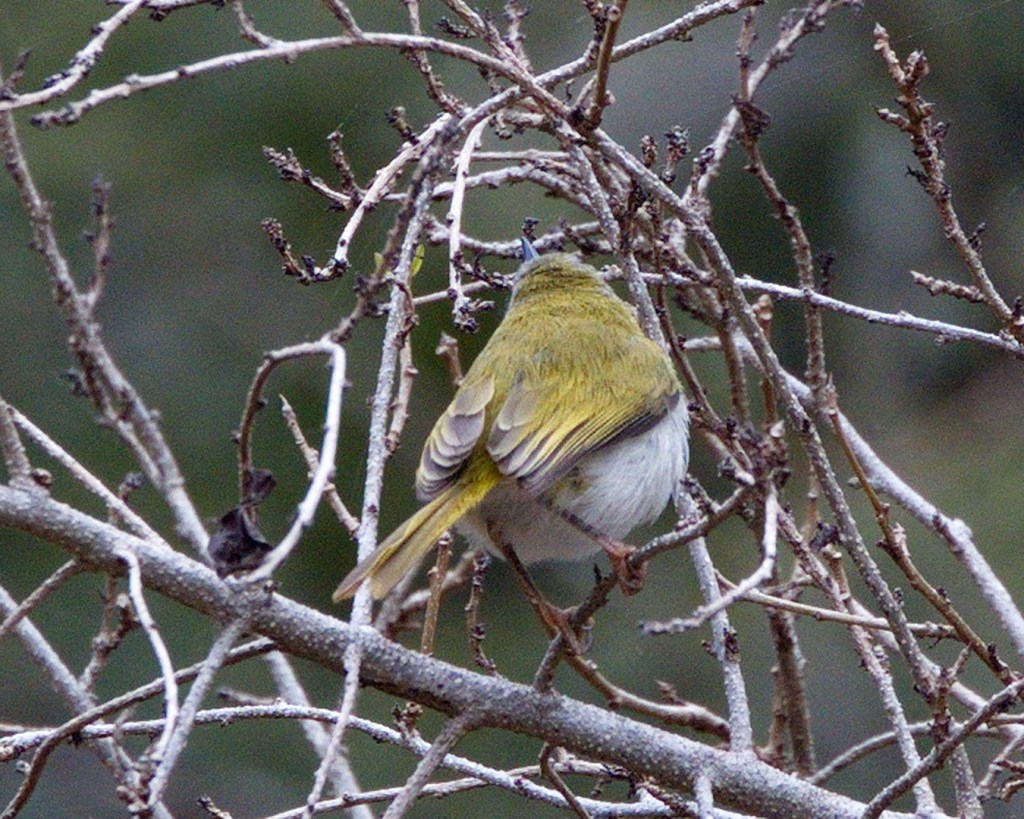
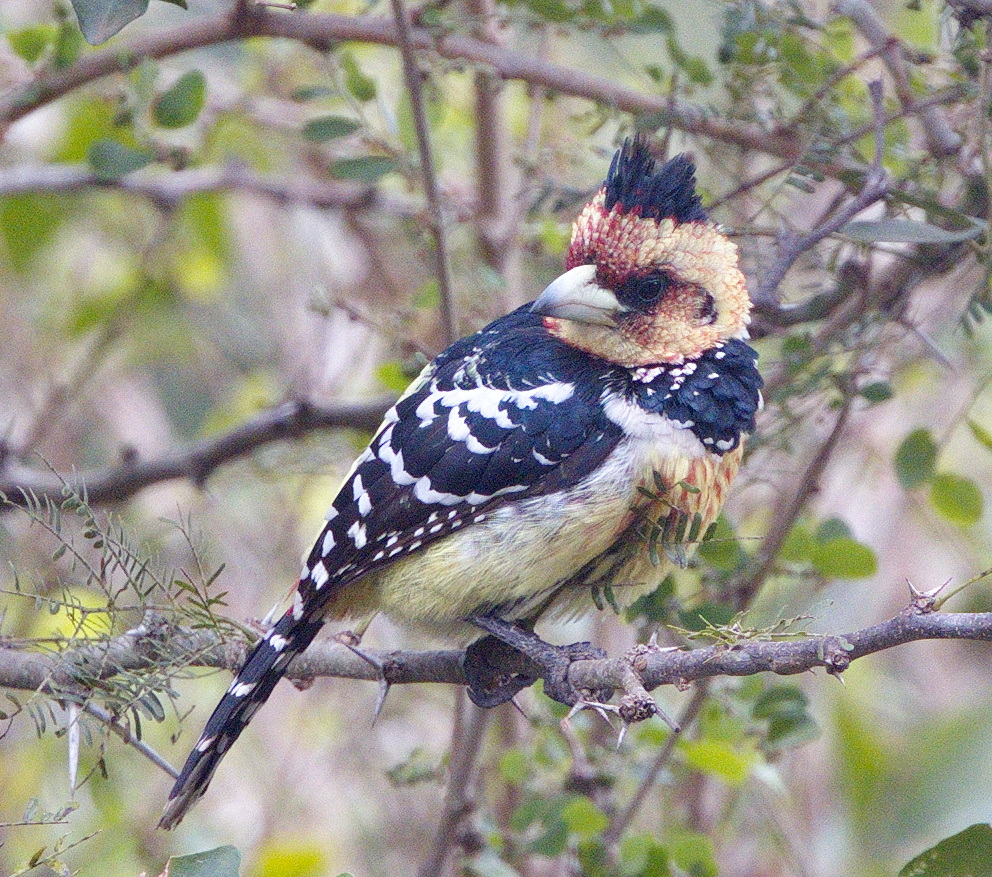
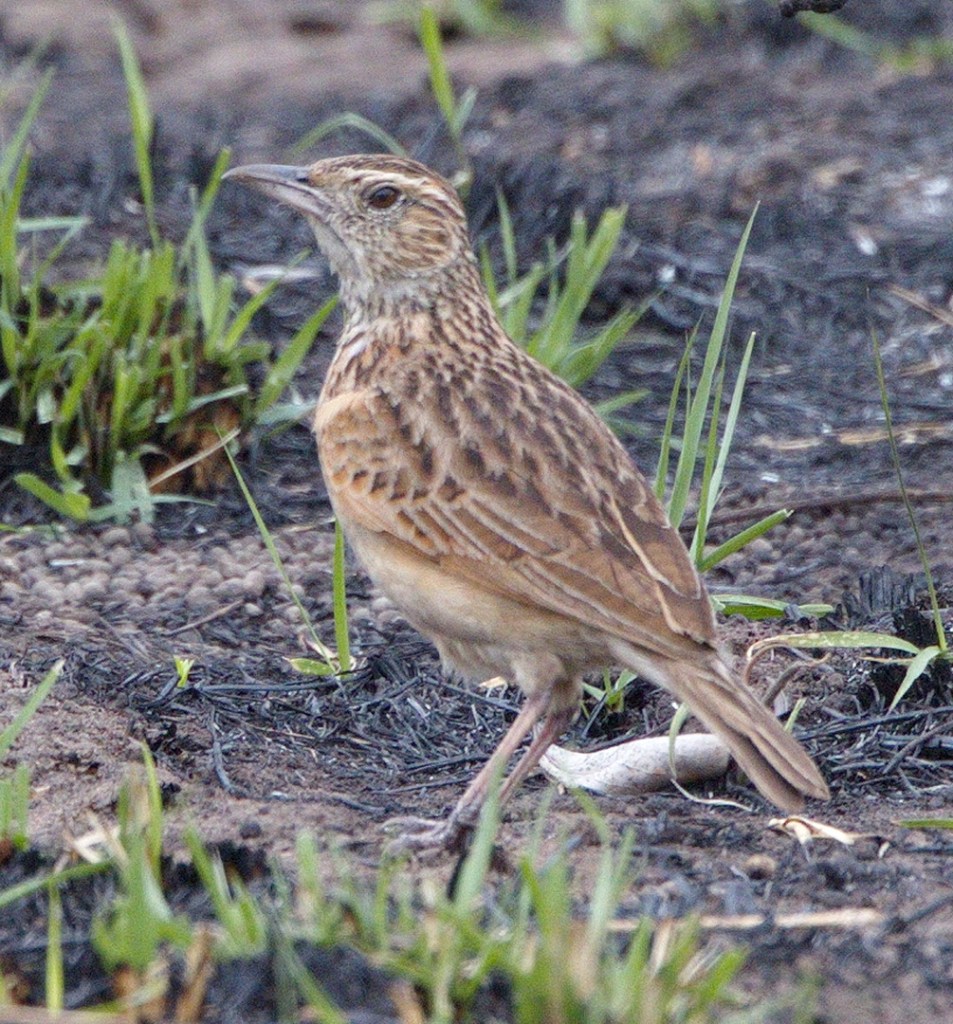
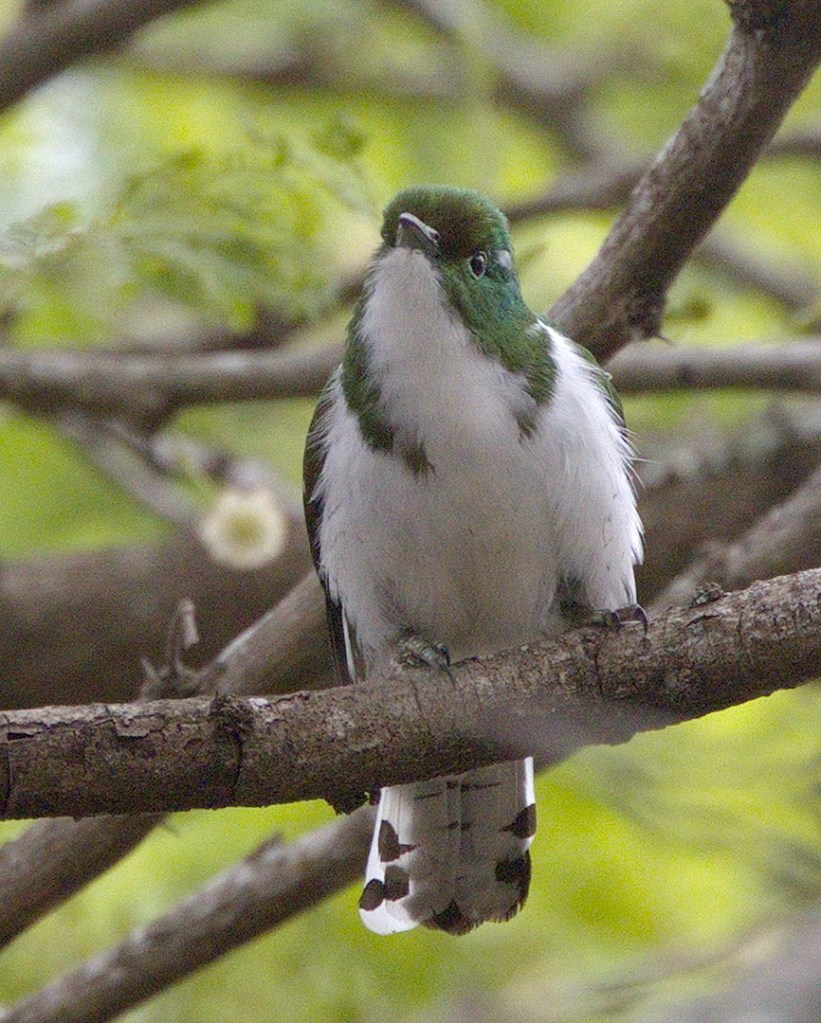
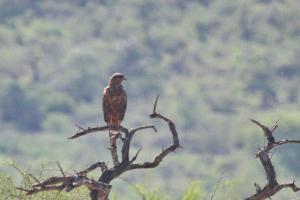
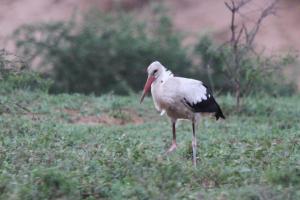
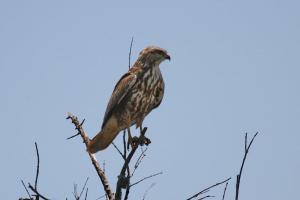
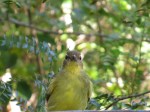
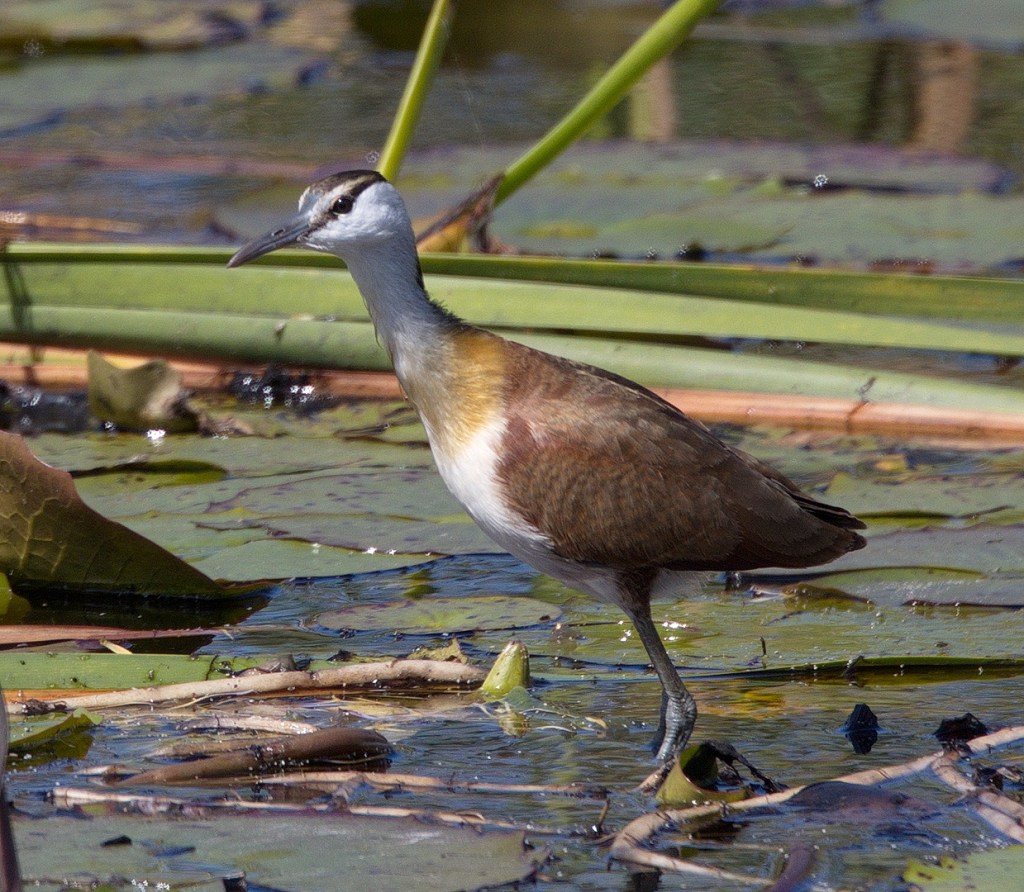
Driving around we came across different habitats and we saw wetland birds, forest birds, animals and raptors. Here are some of those birds captured on camera.
Elephants were few and far between. Having said that, we had an encounter with an angry elephant. Hey look, an elephant at the top of the slope ahead. It is on its way down. Wow, it looks like it is strolling. Hang on, that is deceptive it is actually moving quite quickly and it is actually heading straight for us. Best move fast. Foot down and, whew, we were away. As it passed behind us, it firmly blew its trumpet, and we relaxed. Close call.

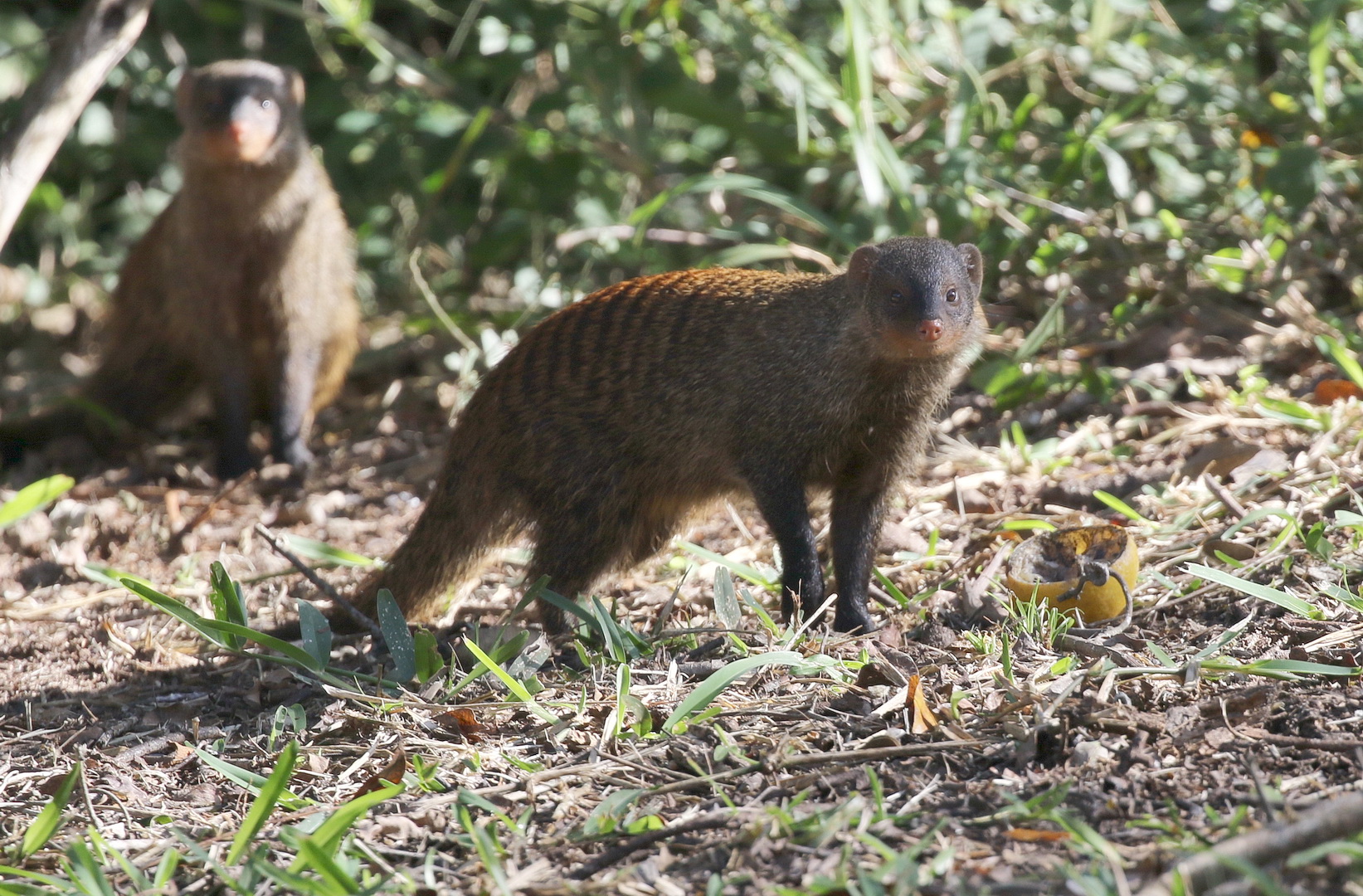
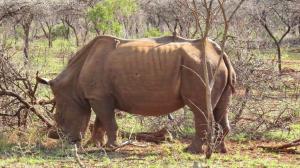
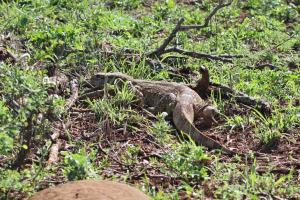
We were also fortunate to see another aminal twice in different locations. Not one we ever expected to see.

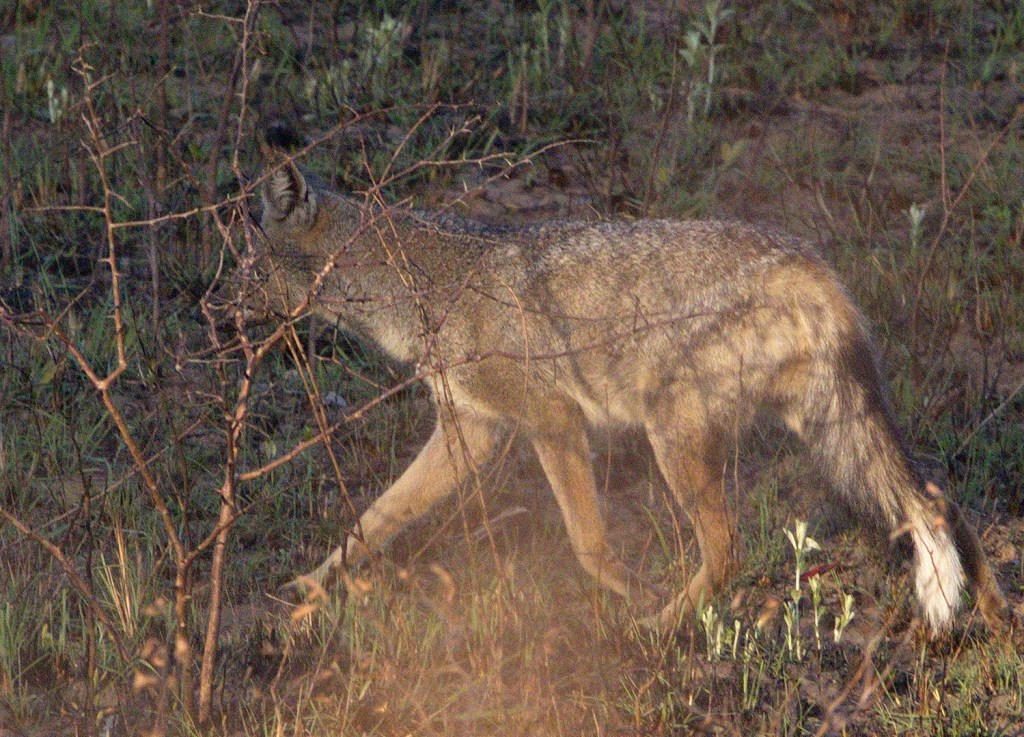
Then there was one route we took which had unexpectedly brilliant scenery and was excellent for game viewing in particular. At the end of this route is another Lake – Lagoa Maxanfi. On the way in, we noticed that one of the numbered signs that we were following gave no notice as to where this road led – Sign 11.

We decided to explore it. (apparently you need a permit to do so which we were not aware of at the time).

The first thing we noticed was the road was not sandy and that we were into open countryside, driving along a ridge with great views both left and right stretching for miles each way with hillocks of animals everywhere and a great expanse of a flood plain in the distance on our left. And I mean it appeared to be kms across and stretched the full length of the 11km ridge road that we were on.

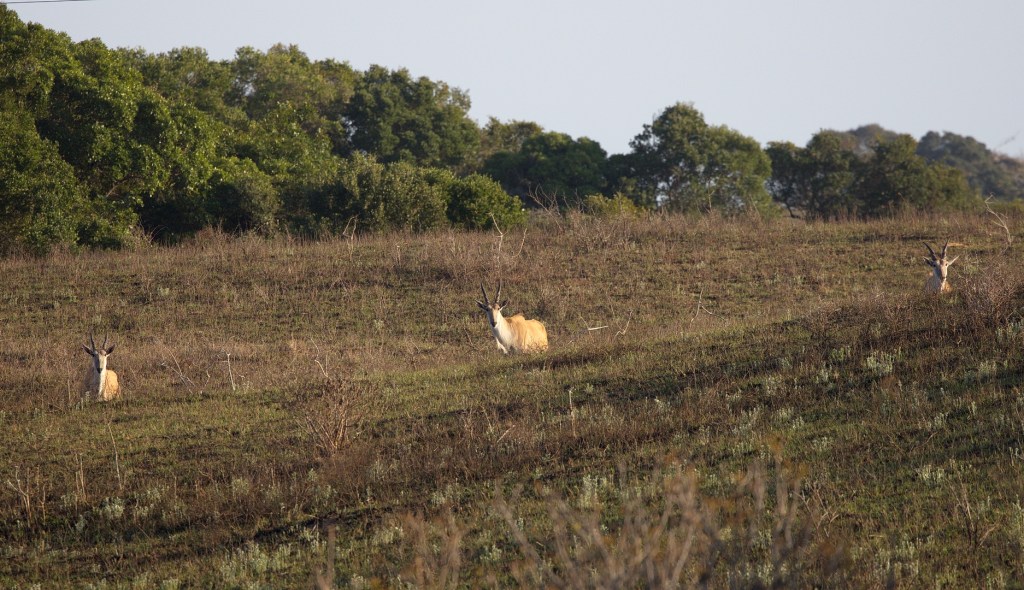
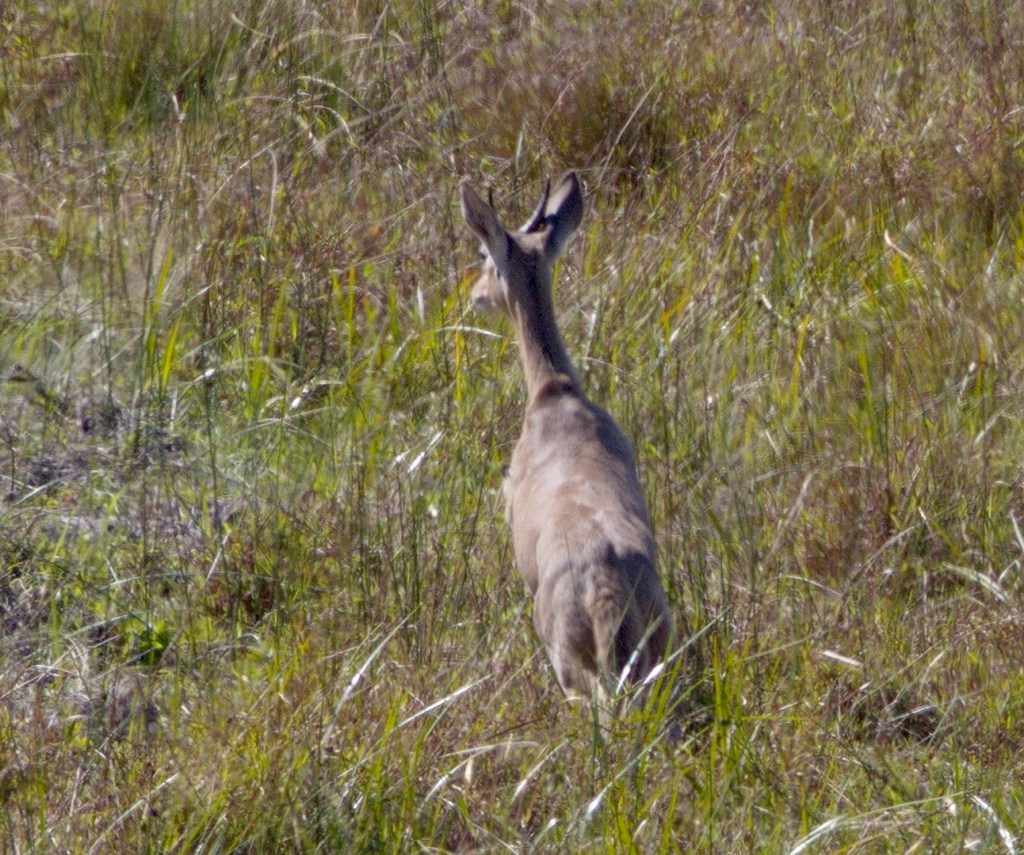
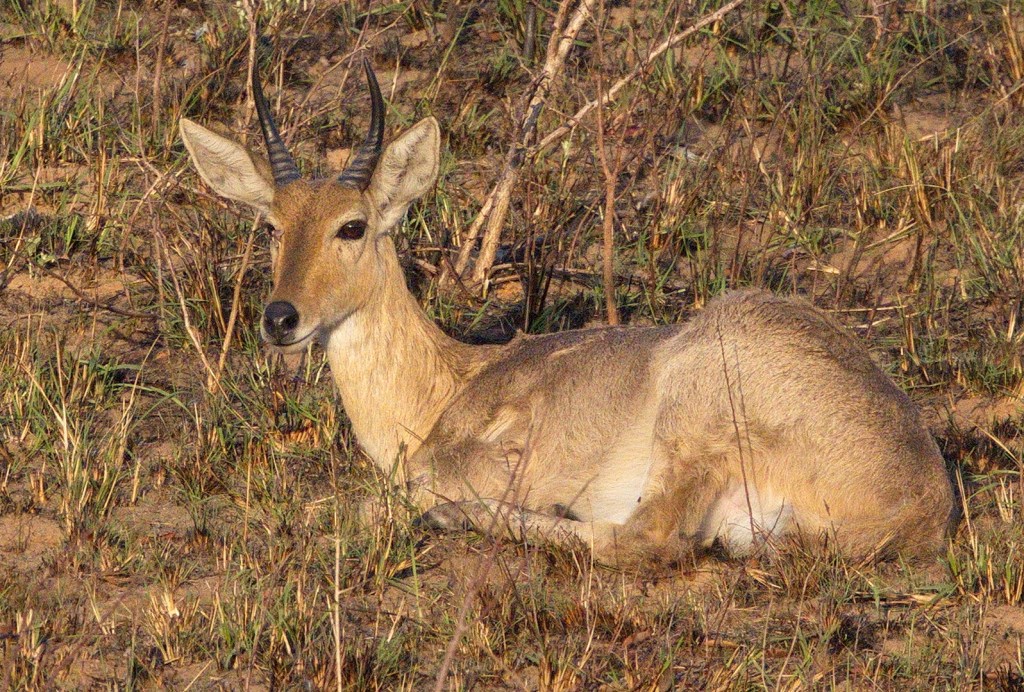
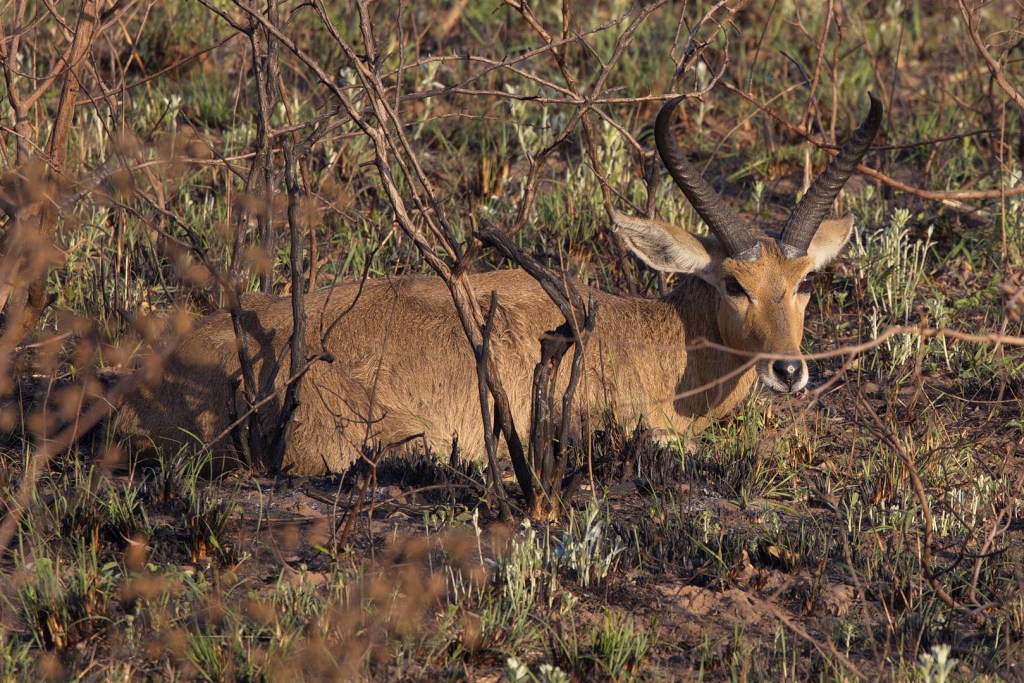
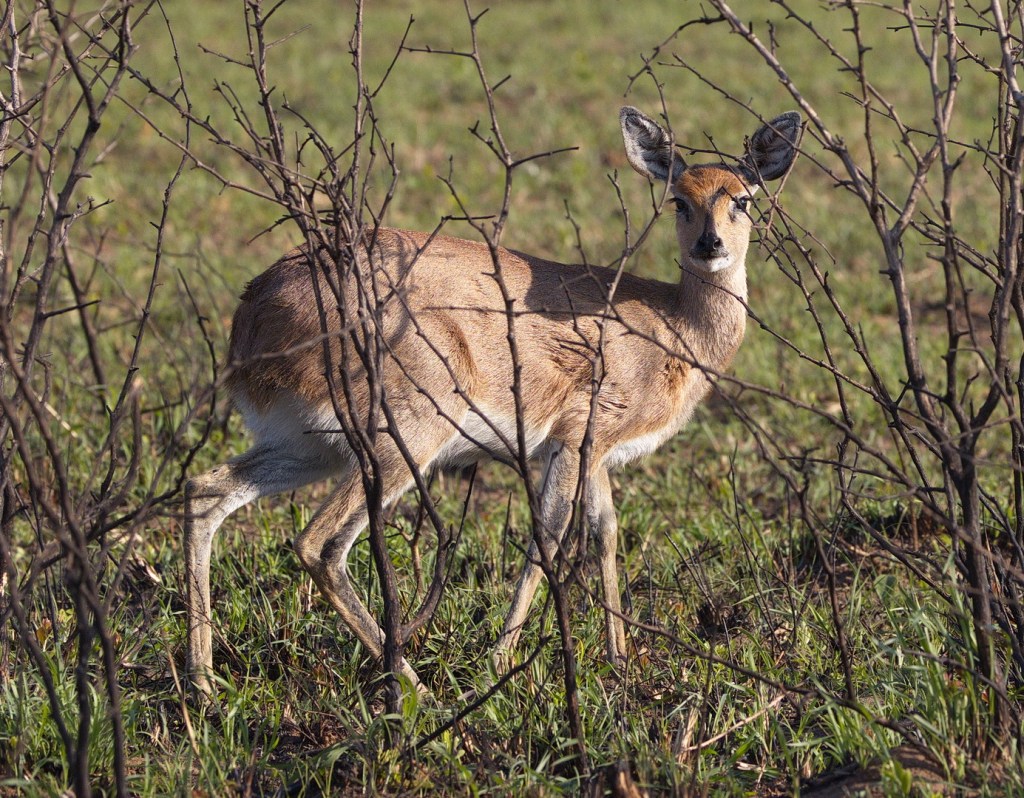
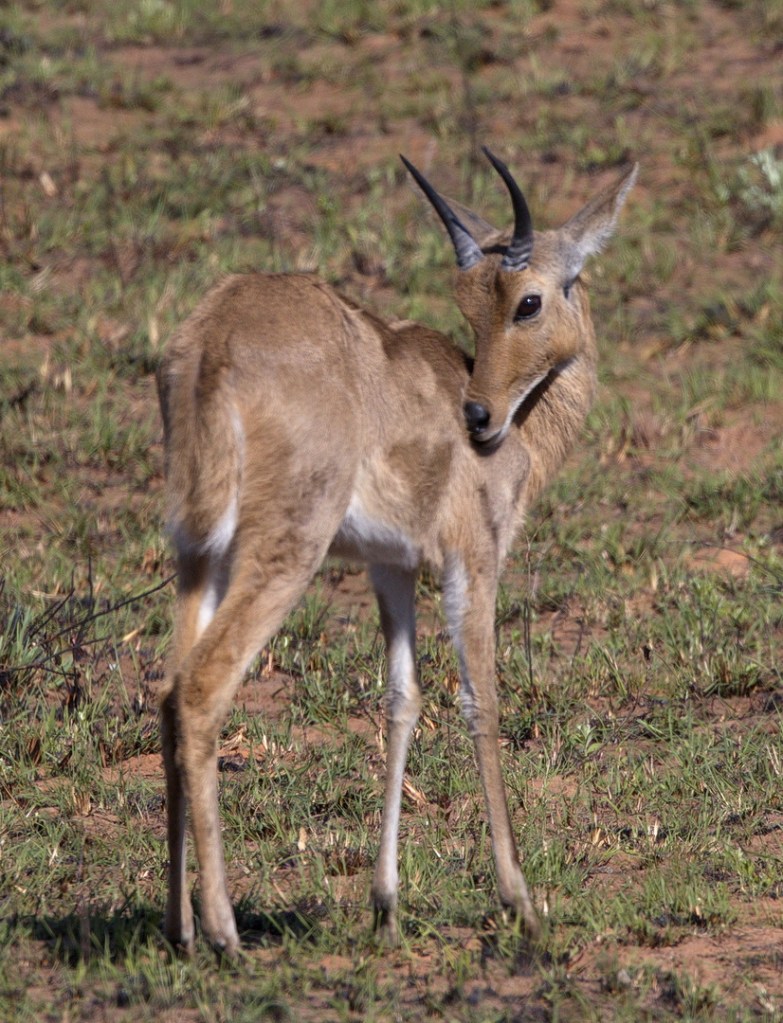
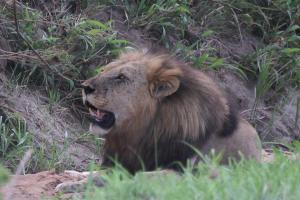
Maybe there was not a huge variety of animals but what was there was made up in numbers. There were Blue Wildebeest, Burchell Zebras, Grey Duikers, Red Duikers, Eland and hundreds of Reedbuck. Even elephant were seen in the distant flood plain. The animals tended to stick to their own species on sides of slopes and on the whole were not concerned about us.

And bird species seen include:

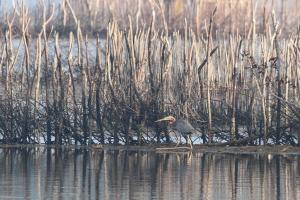
At the end of the road we went down to Lagoa Maxanfi. Loads of reeds at first opening up to open water. Water birds popped in and out of the reeds – Common Moorhen, Black Crake and African Swamphen. Reed Cormorants, Darters, Egrets and Spoonbills were present. There were numerous White-faced Ducks and a Yellow-billed Stork amongst them. Purple Heron was seen on one bank and several raptors made a fleeting appearance as well as a Woolly-necked Stork.

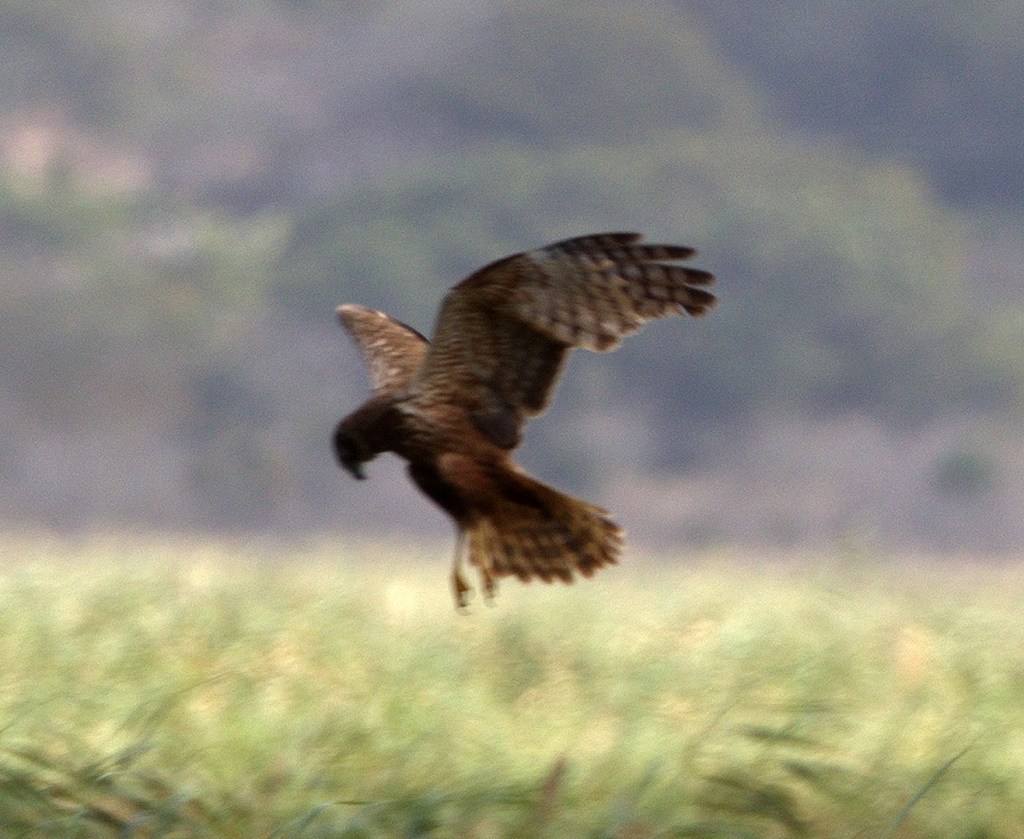
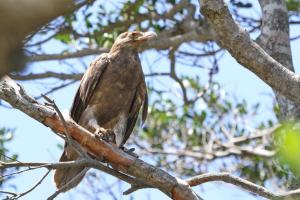
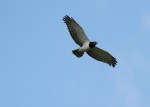
And this raptor flew over in the distance.

This road was our favourite and we took several drives along it.

Our drive out of the park to the Futi Gate took us a third of the time that we took on the way in – only one and a half hours. At the gate we spent quite some time at their pump to get our tyres back up to the correct pressure. And then we were on our way to Macaneta north of Maputo.

In all we recorded 79 different bird species. You can download the list here:

Next stop Macaneta.

Macaneta

19th to 21st August 2024

Then we were on our way, continuing up the highway to Maputo and across the new bridge into bedlam.

Oops, should not have taken that shot.

An hour and a half later, fighting through traffic with our Wildcat in tow, we reached the north side of Maputo and eventually to Macaneta and our campsite at Tan-N’-Biki.

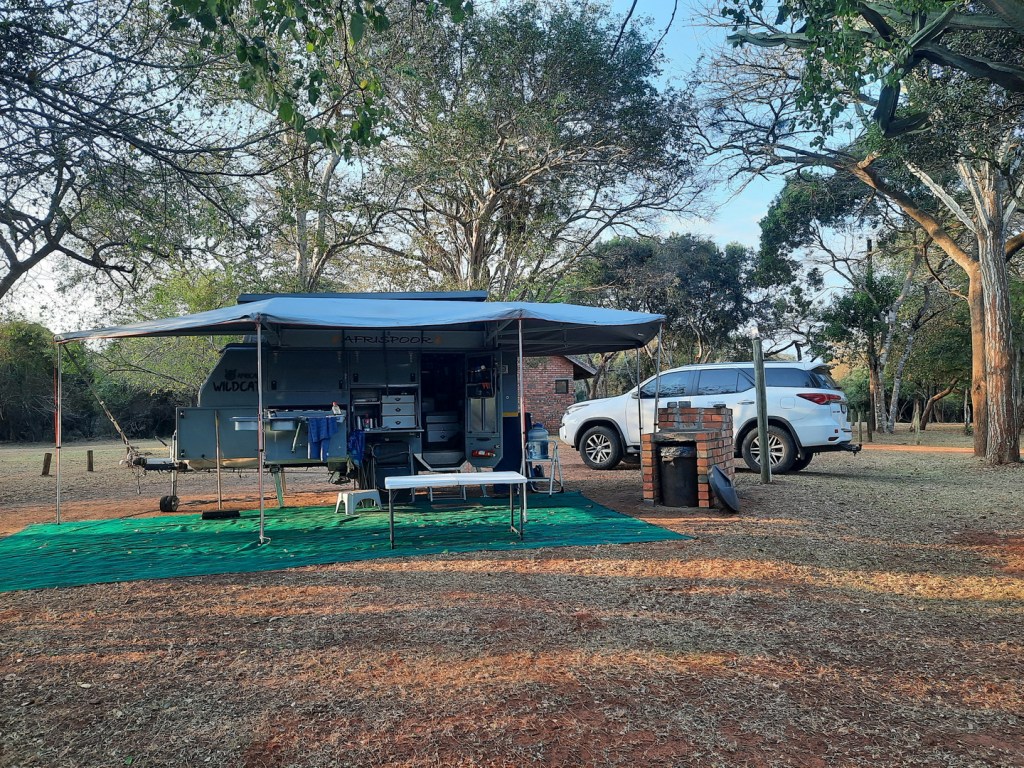
The campsite is not very impressive – more interested in being a conference hotel. There were three campsites. We chose the one more hidden but beside a sandy road leading to the beach. There was power and a choice of ablutions with hot water round the corner. Wifi was available in the office area.

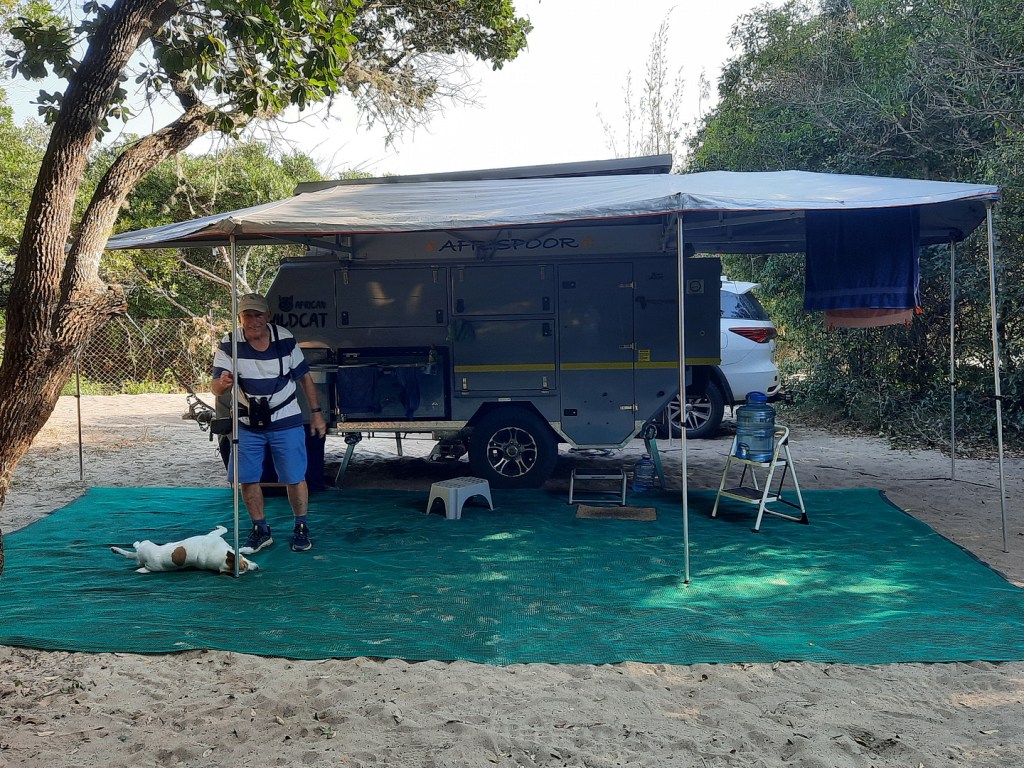
We had several hosts at the campsite.

It was a short walk to the beach. Another long stretch of white sand.

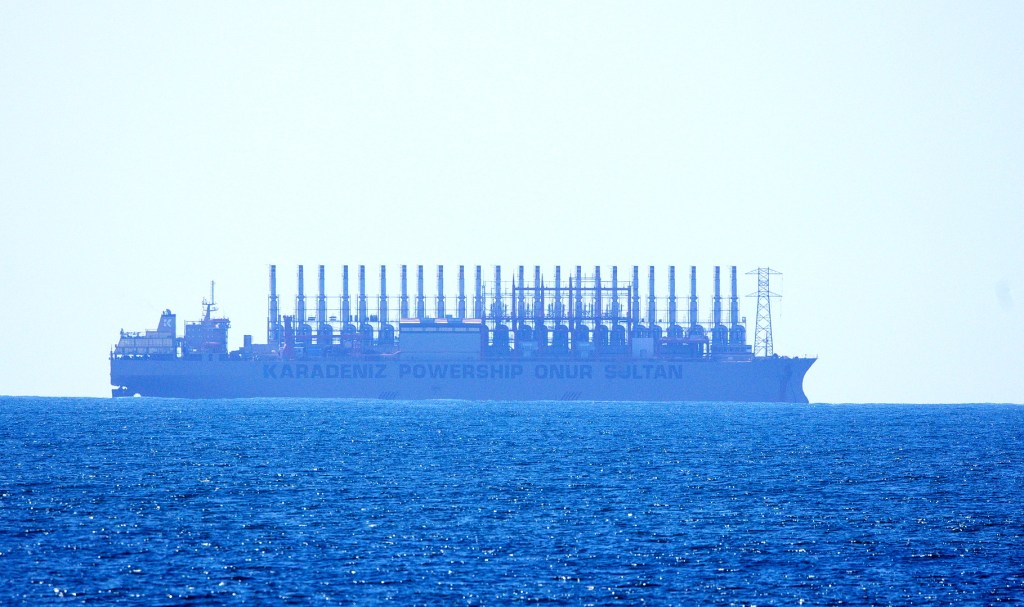
Looking out to see, many ships were passing by. But one very controversial in South Africa stood out – anchored.
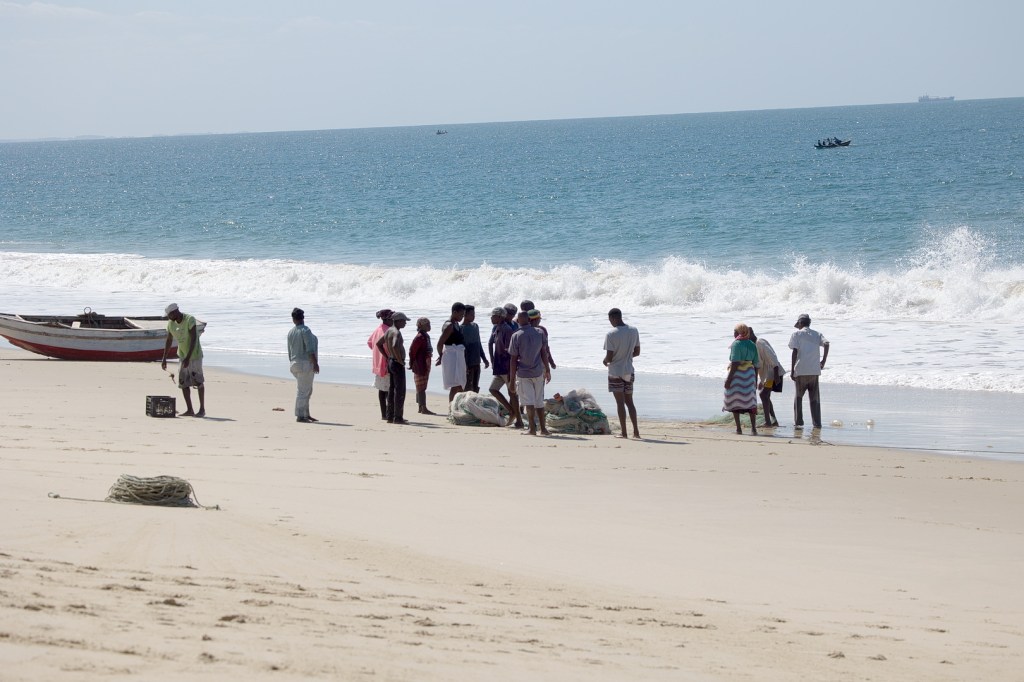
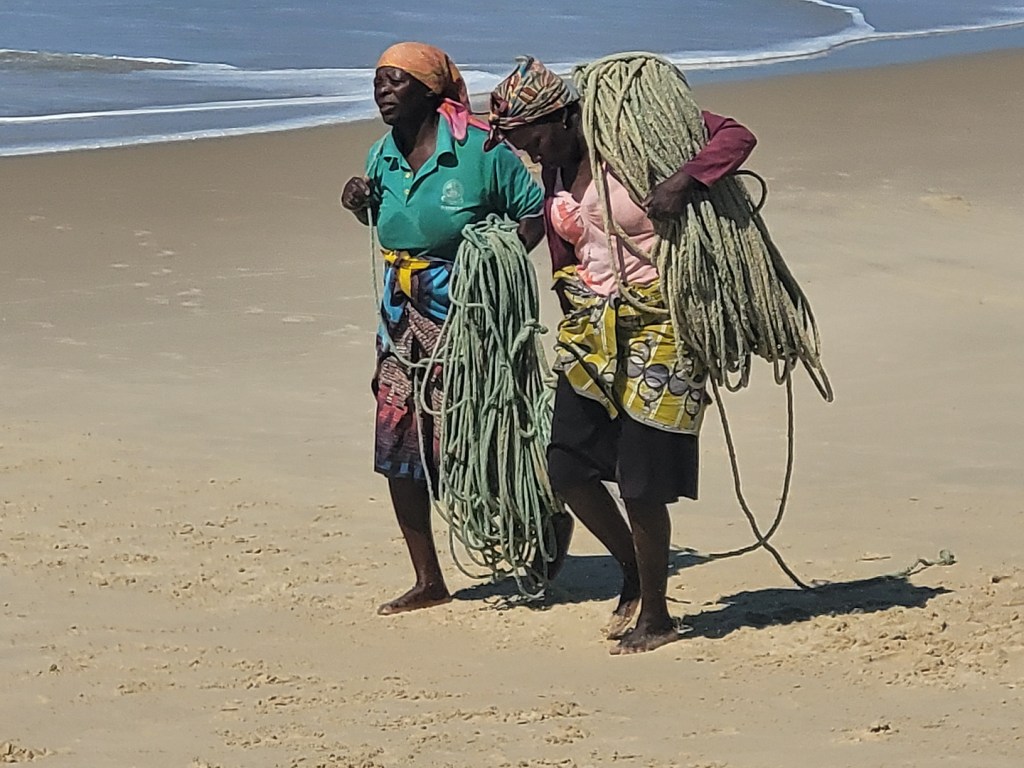
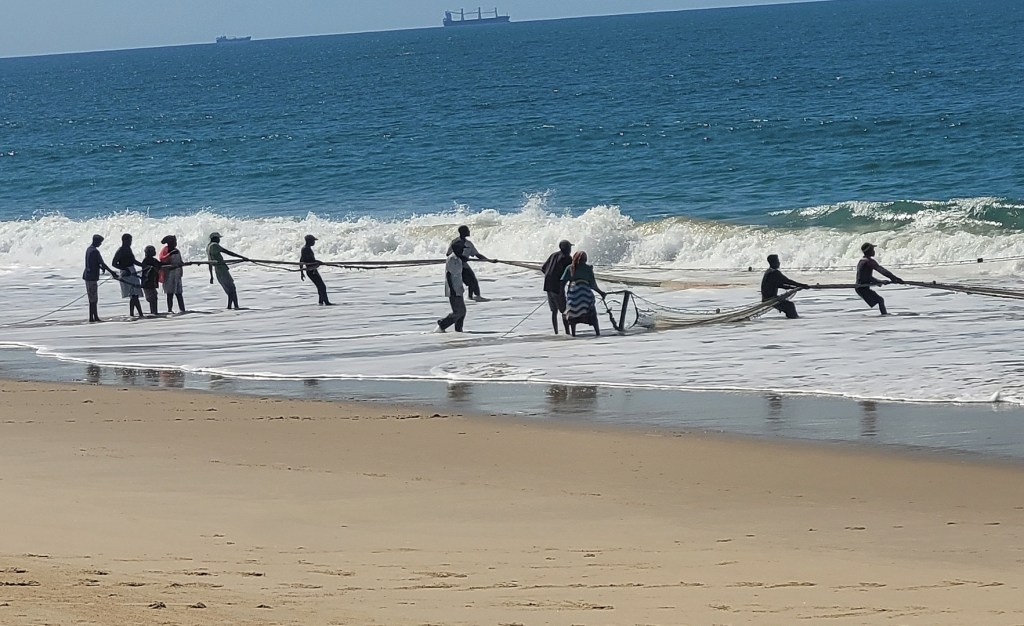
On another visit to the beach, we watched as dozens of people were pulling in their fishing net.

Birding was not great, mostly because we stuck to driving and not parading ourselves on the open flood plains. To get to the camp we had to cross a toll bridge over the river. Once crossed, the habitat changed to open flood plain on either side. And this is where we did our birding – apart from in camp.
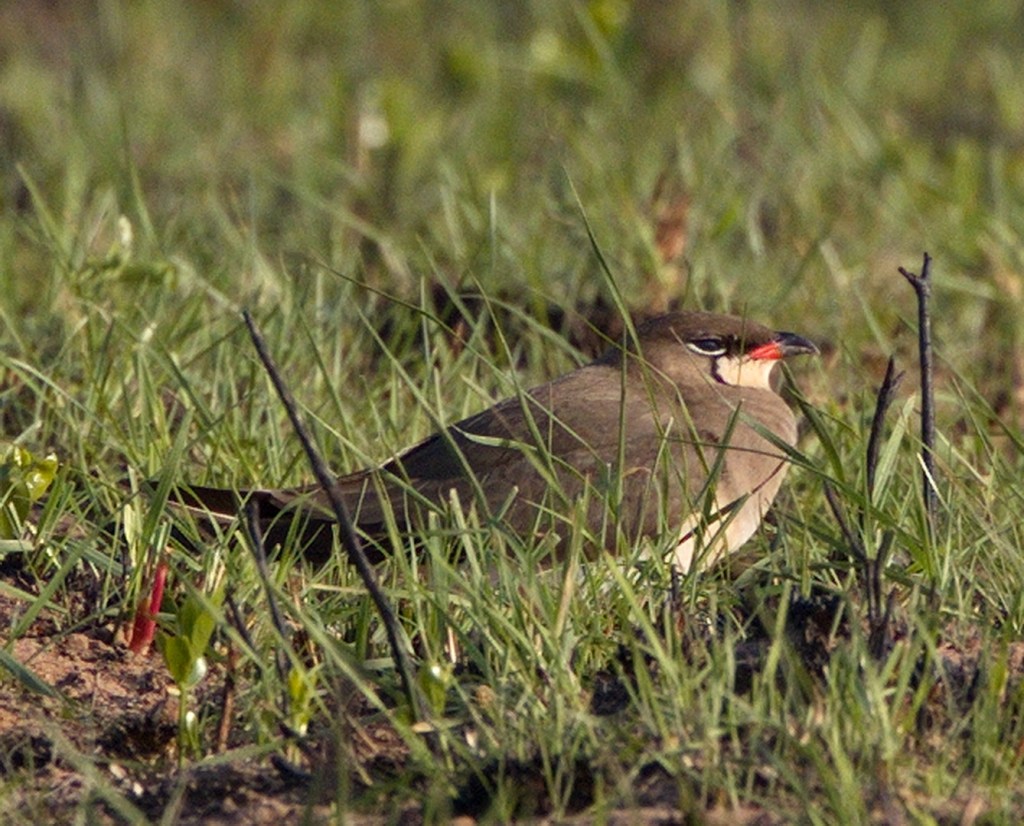
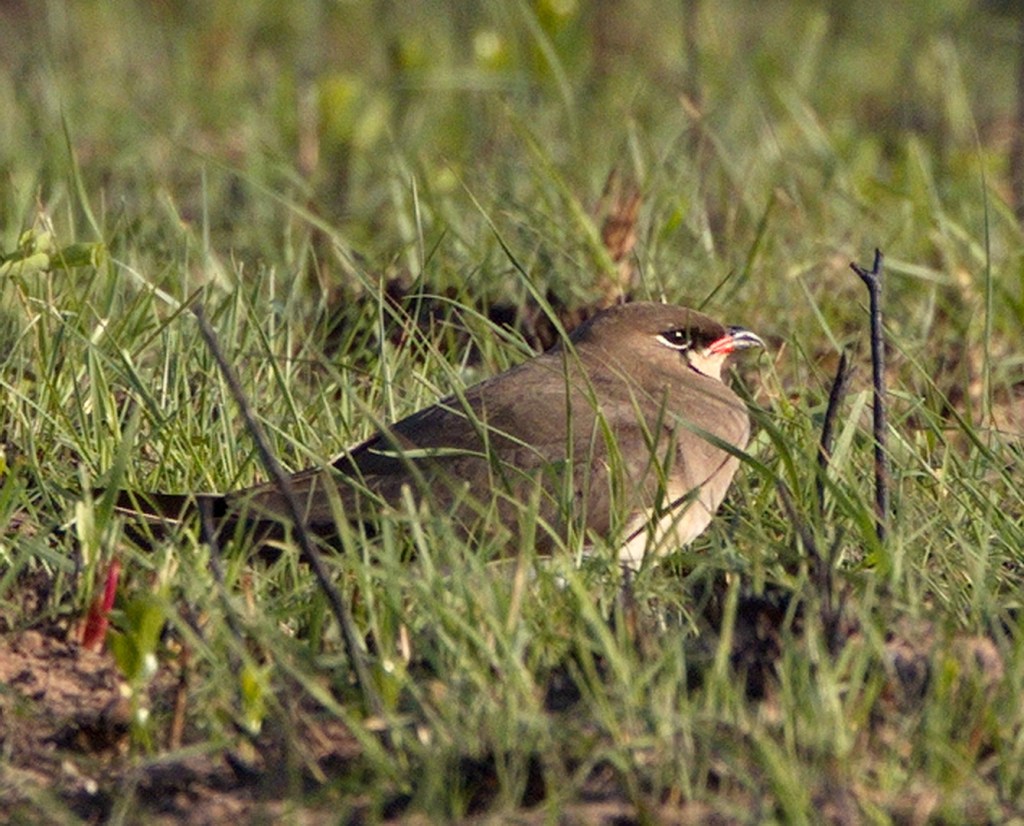
We had planned to stay 4 nights but after two we decided to leave and head home via a stopover at Bonamanzi for 3 nights.

In all we recorded 34 different bird species in the area. You can download our list following:

So back to the border at Kosi Bay, we headed. But instead of going round Maputo the way we came, we took the coastal road. A good 4 lane highway with numerous cheap toll stations, speed bumps and under-used to our benefit. We diligently stuck to the 60Km/hour speed limit. We were sorry were unaware of this alternative.

It was only as we approached to go over the new bridge that we joined the turmoil of traffic. Fortunately, this was a very short distance to endure.

Once over the bridge it was a very pleasant drive to the border.

At the border, one of the customs people asked for our papers and noticed that the official who prepared it had forgotten to put our Wildcat on the document – a fine was coming. Fortunately, Sally had the original official to add our Wildcat to the gate pass which we should have handed in.

We did all the paperwork for both sides, came back for the car and drove off quickly.

Bonamanzi

21st to 224th August 2025

We arrived at Bonamanzi in good time and setup camp quickly before going for a drive around the camp.
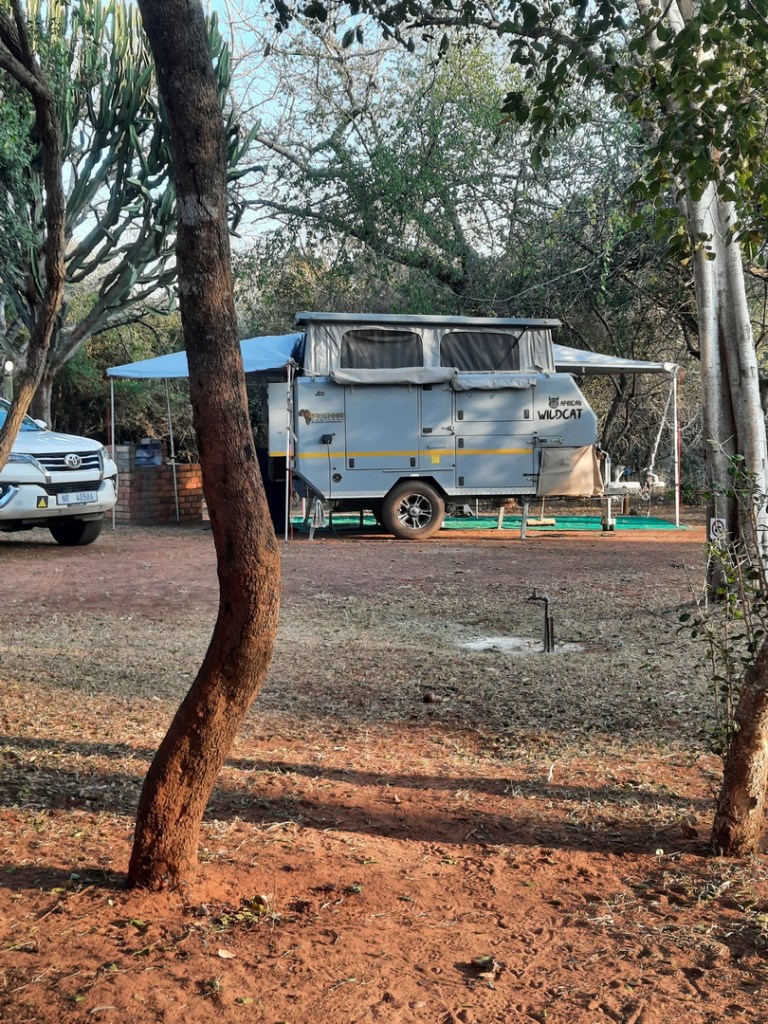
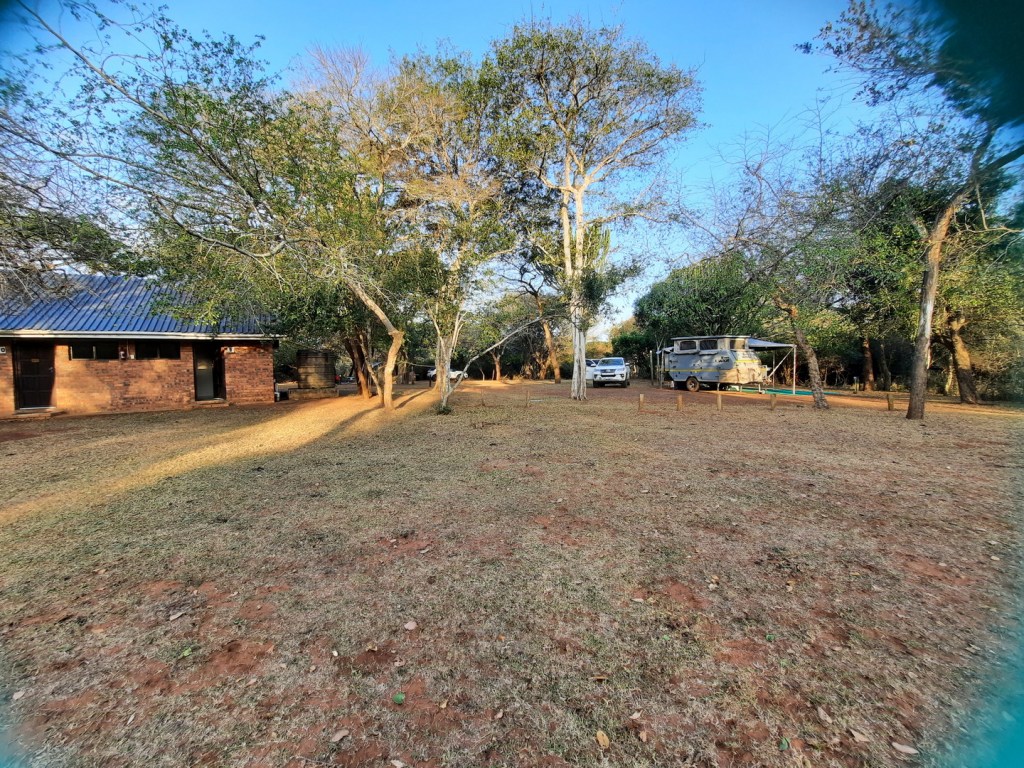
One of the habitats on our drive around in rainy conditions.

The rainy conditions limited our bird photography, but here are a few of the species photographed – a number rather wet.
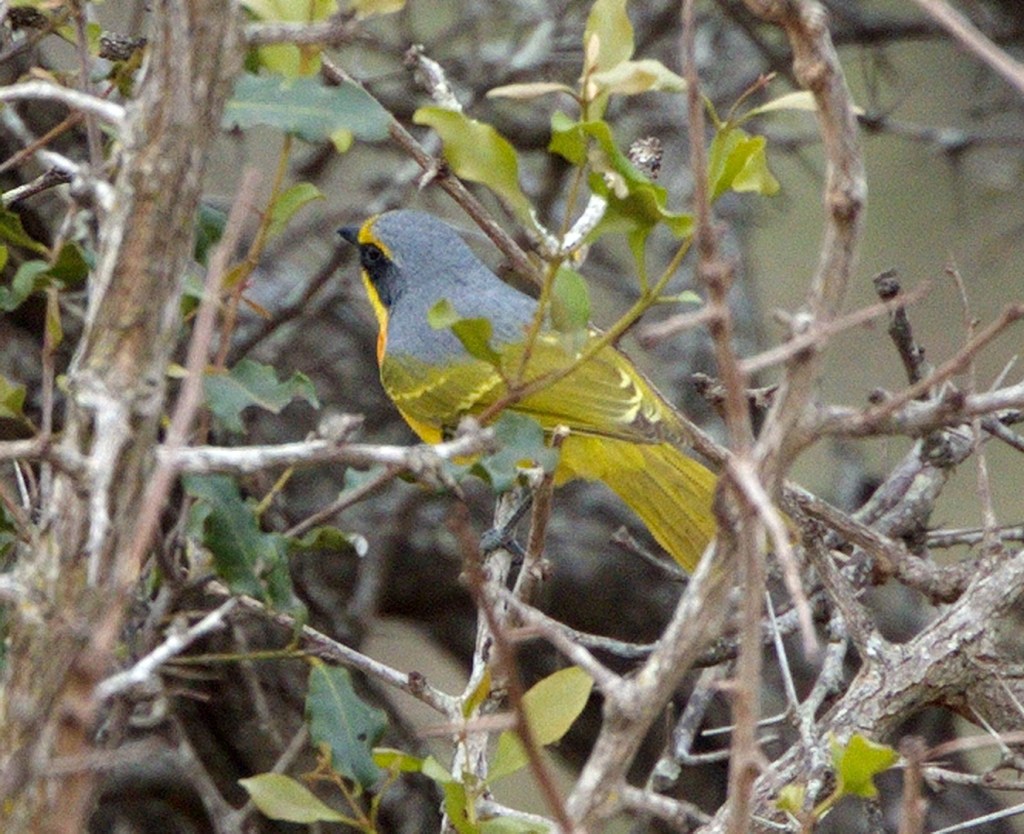
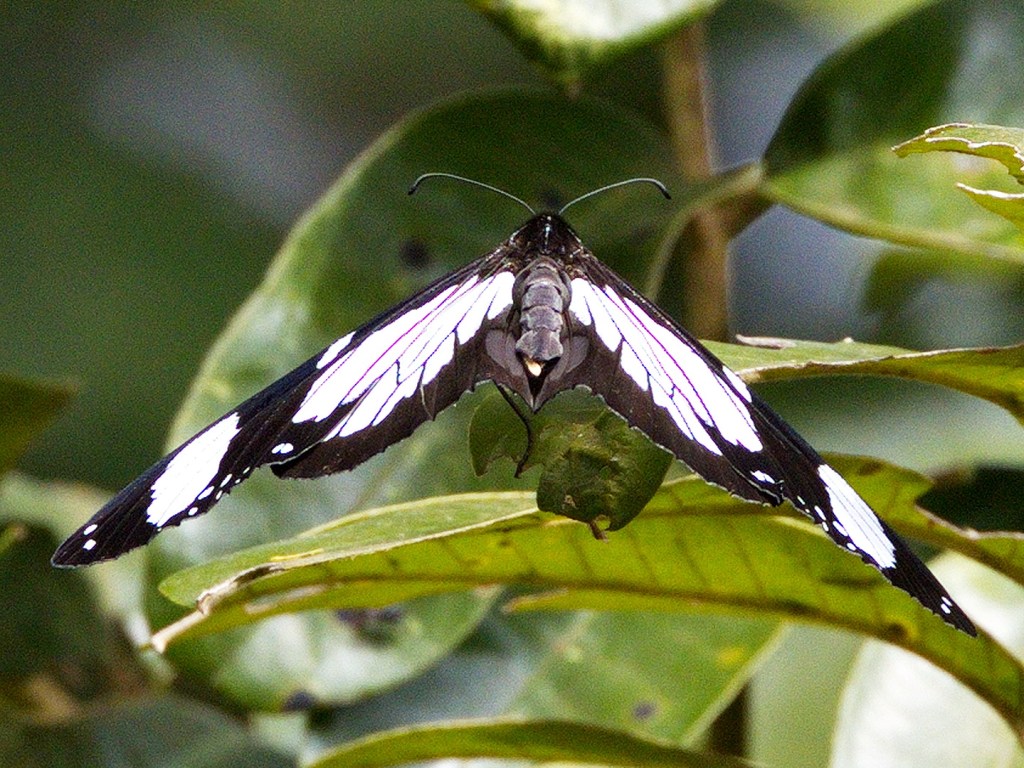
When the weather got unpleasant, we headed for the lookout over the dam at the main camp. From there we watched the few waterbirds that were present.
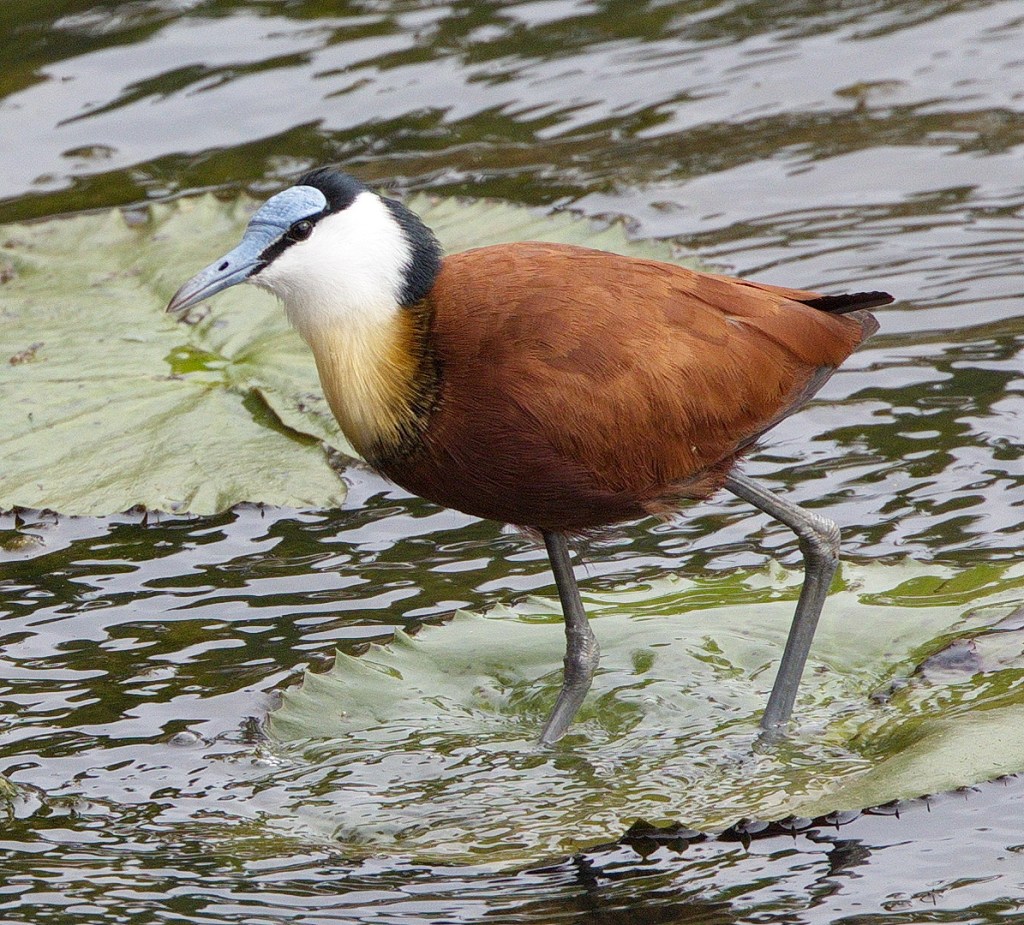
In total we recorded 69 different bird species in Bonamanzi. You can download the list here:

Hluhluwe

23rd August 2025

One morning at Bonamanzi we went to Hluhluwe.

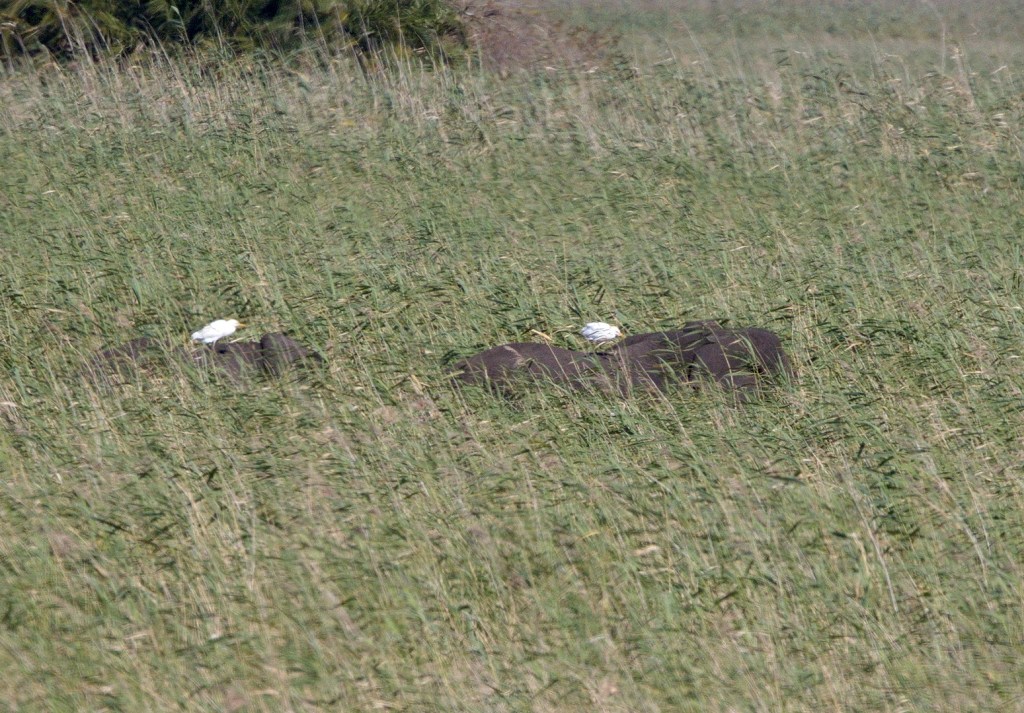
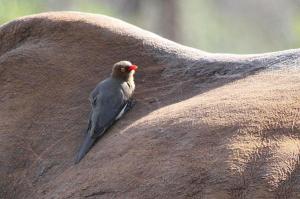
As we entered the park we immediately turned right and into the mountainous open area. It was quiet at first until we got over the first of the hills. At the bottom we found Buffalo and Rhino with Red-billed Oxpeckers having breakfast atop them. We travelled along the lower road heading back to the tar. As we approached the tar a heard of Elephant blocked our way.

Fortunately, they moved out of the way and we were able to get to the tar. However, we could not turn back towards the gate as they blocked that road also. Wanting to head for the off-tar picnic site, we were obliged to head towards Hilltop and then turn off. Elephants were all along beside us until the turn off.

Picnic site for breakfast. A good spot overlooking the river. Birding is always interesting there.

The other picnic site on the way to Umfolozi had a few birds but as the day was dull we did not stay long.

Instead, we headed back towards Hilltop and decided to take the Magangeni Loop. This loop road had been closed the last several times we had visited – due to flooding. It too was quiet except for a lovely king Kudu.

Well, the loop road was not as we expected – a loop. We almost got back to where we started the loop when we came to a river crossing totally flooded. So, we had to turn round and go back the way we came. Grrr…. no warning.

A quick stop at Hilltop Camp and then we started to head back to Bonamanzi. As we drove out and around to the back of the camp, we noticed numerous White-backed Vultures flying ahead. Then as we became able to look down to our left we noticed a number of trees loaded with vultures.

White-backed Vulture

So, what brought them to this place – must be a big meal waiting somewhere near-by. We did not have much further to go to find out.
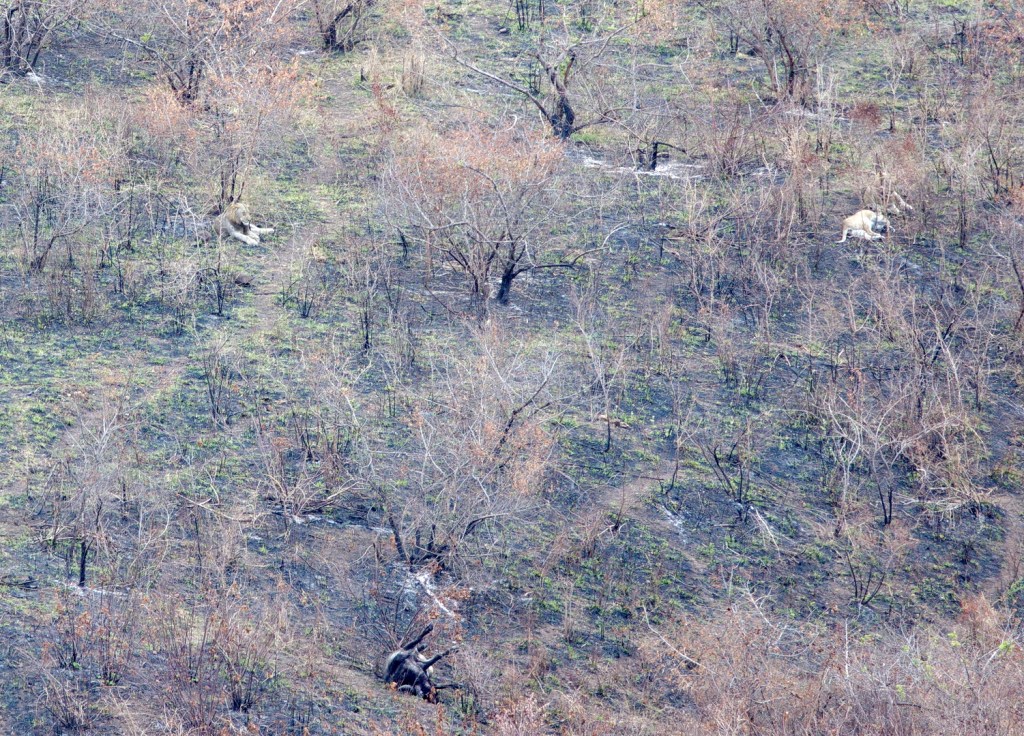
Well, that was a good way to end our day there. Back to Bonamanzi for dinner and getting ready to leave the next day.

A pride of Impala decided to visit us in camp – perhaps inviting us back sometime soon.

Dinner finished and relaxing, listening for Nightjars. Then suddenly, a maddening crash of bushes and trees just out of sight – elephants – several making quite a racket and blowing their trumpets. In all the times we have visited Bonamanzi we have never seen one. This was the second time we have come close. The previous time was late at night when one came into the camp breaking down trees, digging up the road leading out of camp and breaking one of the water taps flooding a part of the camp. We stayed inside not to rattle its temper.

If you download the following, you will be able to see the list of birds we identified in both Bonamanzi and Hluhluwe.

That was the end of the trip, and we headed home uneventfully the next day.

Hope you enjoyed the read.

Sally King and Paul Bartho
Kosi Bay and Mkuze

9 to 16 May 2019

Report by Paul and Sally Bartho

A chance remark to my sister resulted in Sally and I being invited to join her in the TEBA Cottage at the very mouth of Kosi Bay Estuary for four nights. We had a couple of days to prepare for our trip.

A long way to go for four nights so Sally organised for us to have three nights in Mkuze on the way back – staying in the hutted camp accommodation.

We prolonged the forecast six hour journey by taking a longcut through Phinda on the district road. Instead of turning off the N3 at Hluhluwe we went on a further 20 kms and took the Phinda off ramp to the Phinda reserve entrance and because we were passing through there was no charge.

The 30 km dirt rode through the reserve enabled us to see aminals and birds. Towards the end of the road we encountered a pair of Cheetahs lying in the shade with their legs protruding onto the road. We stopped (although strictly speaking they suggest as we were passing through not to do so in case of trouble). The Cheetahs took little notice of us and stayed put. An pleasant and unexpected start to our trip.

My sister had organised our entry permits for us so we were able to pass quickly through the gate and proceed down to the TEBA Cottage at the river mouth.

The cottage is rustic. Three bedrooms, two bathrooms (one with shower the other with a bath), large kitchen, dining room and a deck with panoramic views across the bay. Yes hot water in the kitchen and for the bath as well as the basins in the bedrooms. No electricity, just a generator powering batteries for lights and the fridges and freezers. That said, it was a privilege to stay there. No neighbours and the bay in front of us.

TEBA Cottage

Each morning, up early and into the coastal forest – following the sandy road to the cottage- listening and trying to spot the many birds present. Getting good sightings was very tricky and many of the birds we identified were by ear – Sally’s mostly.

Thick Coastal Forest

There were Green Malkoha, Black-throated Wattle-eyes, White-starred Robins, Blue-mantled Crested-Flycatchers, Grey and Olive Sunbirds, Dark-backed Weavers, Black-backed Puffbacks, Southern Boubou, Natal Robins, Crowned and Trumpeter Hornbills, Rudd’s Apalis, Sombre and Yellow-bellied Greenbuls, Terrestial Brownbuls, Brown Scrub-Robins all adding their sounds to the bush.

Black-throated Wattle-eye
Green Malkoha (Banana Bill)

Of course there were many butterflies too – which we have been unable to identify.

The weather was kind to us – not too hot and cool at night. Mossies were few and far between. A lot of time was spent on the beach and wading up the estuary looking for birds.

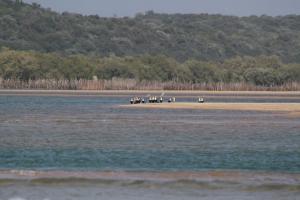
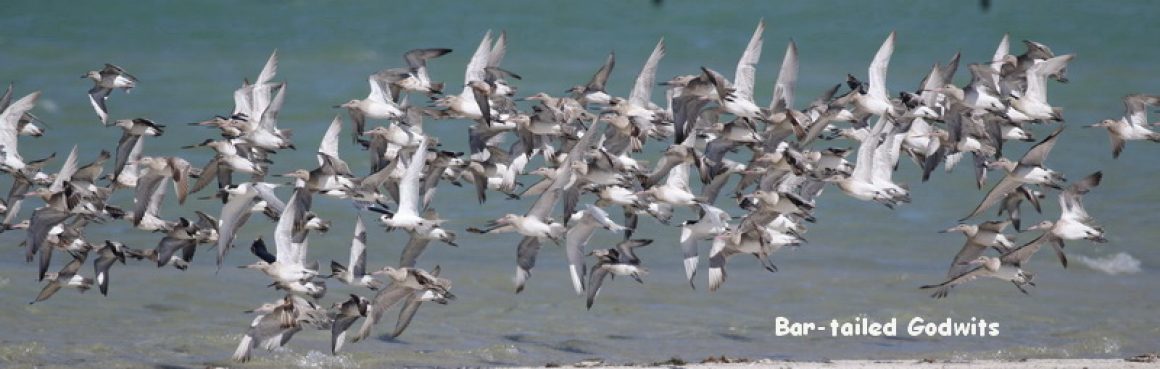
A group of waders on one of the sand strips – the tide was out – caught our attention.

About 20 Waders

Through the scope we decided that we needed to get closer to confirm our ID. A long distance photo confirmed our ID. Then I decided to wade out to get closer. As it happened a group of people got too close to the group and they flew landing on the same sand strip that I was on. I took my photos and then they flew up the coast towards Mozambique.

Here are some photos of other water birds we sighted in and around the estuary.

Fish seemed to be plentiful for the locals – perhaps their methodology was unusual.

Spear Fisherman with a plentiful catch of rather small fish.

A walk the other side of the estuary southwards along the coast with my sister, Natasha and Sally also gave us an unexpected surprise. My sister spotted shoals of fish riding in the waves and then she spotted a Loggerhead Turtle doing the same. In the end we had three more sightings of others doing the same.

Right at the bottom of the stairs leading down to the beach from the cottage there were several large trees which had collapsed into the sea due to corrosion. A the base of one of these lived an eel. Very colourful – bright yellow with dark markings – seen several times.

And in the water at the base of a tree there was a Lion Fish. On one morning it swam around in the sunlight enabling me to get a few nice photos of it.

Our bird list was not prolific and many of the bush birds were identified by sound. In the end we identified a total of 48 different species. Click here to see the list.

Mkhuze

After four relaxing days at Kosi, Sally and I headed for three nights at Mkhuze staying in the hutted accommodation. We had two full days to explore the Reserve and visit the hides.

As an aside, if you plan to visit, be careful at night as the hutted camp is not secure. We were told that the previous week a lion was seen around the nearby cottages

We did see an elephant as it walked past the Masinga Hide without popping in to disturb the other aminals there. Other than that we encountered only the usual zebra, giraffe, nyala, impala, warthogs, gnus, baboons and monkeys.

Lone elephant at KuMasinga Hide

Of course Masinga Hide is always worthwhile to see aminals and birds.

Baboons enjoying the early morning sun
Could you do this?

And some of the birds seen there.

The campsite is a good place to see birds and we were not let down when we went there. Here a few of the specials we saw there.

Malibali Hide – near the campsite – was full and we enjoyed the new hide. This time however it was relatively quiet but again we had a few specials to see.

Driving around the bird life was patchy in places yet we did manage to see a wide variety of different species which we had not see at any of the hides.

African Cuckoo-Hawk

The second hide to the right of the picnic site at Nsumo Pan is another of our favourite hides except when the wind is blowing. Fortunately the weather was kind to us when we visited. Here are some views from the hide.

On arrival we were treated to a sight we had not expected. Looking out to the left there were pairs of Little Grebes, African Pygmy Geese and White-backed Ducks. And as we scanned the pan there were at least another 20 African Pygmy Geese and about 8 White-backed Ducks. In the past we would have been lucky to see just one pair of African Pygmy Geese.

African Jacana were on the lily pads, a Malachite Kingfisher put on a show, Whiskered Terns were seen all across the pan. And on the far side many other water birds could be seen.

On the shore line heading towards the Picnic site we spotted several Water Thick-knees and what appeared to be a three legged Black-winged Stilt – 2 red legs and one straw coloured!! All close to the African Fish-Eagle which was occupied on a meal.

The picnic site at Nsumo Pan is also one of our favourite places to visit especially for a tea and pee break. Birding is also good normally. And the day we visited was our lucky day – very special.

On the way in an African Paradise Flycatcher welcomed us.

African Paradise Flycatcher

Hippos greeted us bobbing up and down among the lily pads close to shore.

Pink-backed Pelicans and Yellow-billed Storks flew overhead.

Western Cattle Egrets were fishing from Hippo perches. And even a Grey Heron took its chances.

Even the bush around the picnic site had some interesting birds.

It was only as we were leaving that Sally heard a Sunbird calling. When we found it we both were thrilled by what we saw.

Neergaard’s Sunbird
Neergaard’s Sunbird

On one afternoon drive we returned quite late and driving up from the kuMahlahla hide, we encountered several Spotted Thick-knees as well as Fiery-necked Nightjars.

The Thick-knees I managed to get a few reasonable photos. But I lost out big time with the Fiery-necked Nightjar. There was one sitting on a bare branch right beside the driver’s side of the car. Quickly I put my camera onto Auto and took a shot. Flash goes off bouncing off the inside of the car. Rats. The bird is still there so I try again. This time the flash works perfectly but the bird flew off as the camera took focus. Later I checked the photo and it was a perfect shot of the branch – if only the bird had stayed.

Spotted Thick-knee

Zululand birding is always full of pleasant surprises. The variety is plentiful. We love going to visit the many different habitats.

In all we recorded 122 birds – identified for Bird Lasser. Click here to see the list.

Hope you enjoyed the read.

Paul and Sally Bartho

Pink-backed Pelican – Have Wings Will Fly

Kosi Bay

Report by Sally and Paul Bartho

21 to 22 July 2018

After our time at Tembe we had planned to visit St. Lucia for a couple of days on the way home. However we had a call from my sister to say they were in Kosi Bay and why don’t we visit instead.

We took the opportunity and as there was no room in the Kosi Mouth TEBA cottage we camped instead at the Kosi Bay and Coastal Forest Reserve. Our campsite was in a very shady spot right at the lake’s edge.

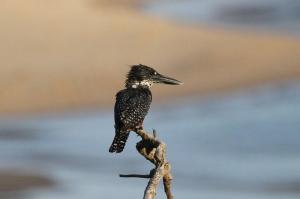
Giant and Pied Kingfishers were constantly going back and forth over the water from one clump of bush to another. Three African Pied Wagtails also entertained us flying about chasing each other at speed over the water and through the camp. But probably the highlight was seeing a couple of Green-backed Herons flying around us.

At night we were serenaded by an African Wood-Owl as well as the hippos.

Most of the Saturday was spent at the cottage right at the mouth of Kosi Bay catching up with family. Here, we were fortunate to see a Palmnut Vulture flying across the bay and a Lionfish in a pool nearby.

Lionfish

Sunday we spend the early morning birding on the trails at the camp then my sister and husband came round to visit us. They were very impressed with the large well sheltered campsites and proximity to the lake.

In the short time we spent birding we identified 32 different bird species. Click here to view the list.

Some photos:

Cheers

Paul and Sally Bartho

Kosi Bay and the African Skimmer

16th to 20th December 2015

This was meant to be a family holiday at Kosi Bay and Umfolozi showing special areas to my sister and her husband from Montana – not a birding adventure.

Doug and Tania went up early with by RSA sister and husband and another couple. Sally and I followed 3 days later. Sally and I decided to break the journey with an overnight stop in Mkuze. We spent part of the afternoon and early the next morning driving around Mkuze.

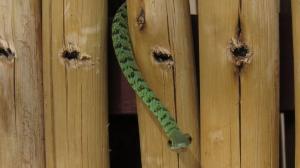
There is now a new enclosed area from the car park to the kuMasinga Hide (the picnic area remains for the more adventurous or foolhardy). Lions have frequently been seen in the area. This green snake was seen in the fencing next to the entrance gate.

The kuMahlahla hide also has a new entrance tunnel and surprisingly there was a lot of water in front of the hide.

The kwaMalibala hide near the campsite remains incomplete. Nsumo pan was not at its fullest.

The weather was quite windy and the birds evasive.

The next morning we continued to Kosi Bay.

We were staying at the TEBA lodge right at the river mouth past the day visitors parking area. We were fortunate to stay there as it is reserved for Chamber of Mines employees.

After a windy stormy first night

we got up and noticed many terns on the sandbank some 300 metres in front of the lodge. It was still quite windy and the tide was rising. That was the 17th December.

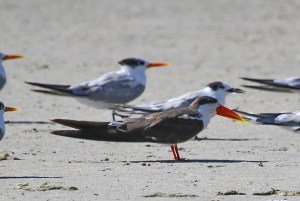
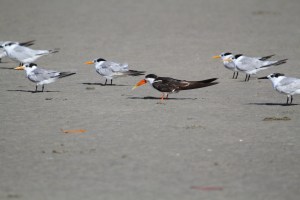
With the scope I noticed an unusual bird amongst them and my immediate thought was African Skimmer but I felt I must be wrong so I called to Sally to run and have a look – not a clever thing to say to her just a month after a double knee replacement. Anyway she hurried over took one look and confirmed my thoughts.

The initial photos were quite ropey in those conditions with the bird so far away but it was enough for an ID. Not expecting a second chance they had to do.

As the tide rose and the day visitors arrived so the terns flew into the centre of the mouth on a distant sandbank. Later as the tide receded I took a chance and waded out to the sandbank – camera and binocs held above my head in places. Eventually on the sandbank with the terns I searched for the Skimmer – and there it was.

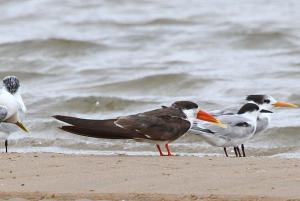
As I approached so I started taking shots. I managed to get up to 50 metres from the terns and the African Skimmer was still among them. Also on the sandbank were numerous waders – Sanderlings, Grey, Kittlitz’s and White-fronted Plovers and a lone Bar-tailed Godwit. The terns included Swift, Sandwich, Common, Little, Lesser Crested and Caspian – a nice variety.

The next day the weather was calm and hot and the terns did not return to the river mouth. We thought they had gone.

On a short walk in the pristine forest we managed to see and hear a number of forest birds and other critters.

As an aside my sister’s husband – Doug – from Montana went for an afternoon stroll along the beach towards Mozambique. Over an hour later he returned and mentioned in passing that he had seen a large Turtle going up the beach! We were taken aback by his casualness to such a great sighting. He had no idea how privileged he was to see such a creature in broad daylight. When we retraced his steps the Turtle had long gone. All we got was a photo of the tracks it left behind. Can anyone ID which Turtle it was from this photo?

Turtle tracks
Turtle tracks

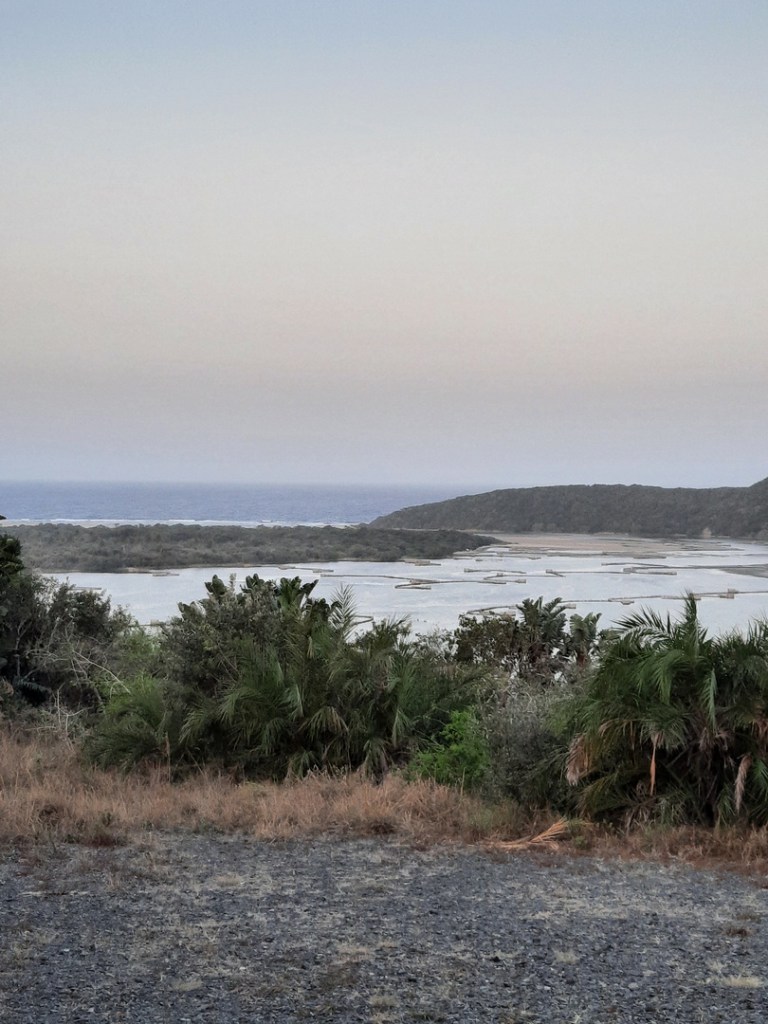
Then on the 19th Sally and I took a short drive round to a lookout point over the fish trap area and spotted a tern roost in the far distance but could hardly ID any of the birds even through the scope.

So later that day as the tide was receding I took a long walk from the lodge round the headland to the fish trap area, trundling more than half way to the entrance of the first lake – passing through a deep fast moving trench in the process.

As I was approaching so the terns were flying overhead and out to sea. I thought I was too late. However many remained and the African Skimmer was still amongst them. I managed to get reasonably close for several more photos.

I believe they roost at the mouth on southerly windy days and in the fish trap area when it is calm. The African Skimmer was content among the terns and not being chased away.

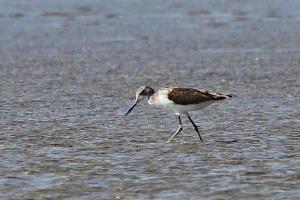
Many different waders were about including Bar-tailed Godwit; Greater Flamingos; Grey, Common Ringed, Kittlitz’s and White-fronted Plovers; Curlew and Common Sandpipers; Grey-headed Gulls; Ruddy Turnstones; Greenshanks; White-breasted and Reed Cormorants; Sanderlings apart from the 6 different terns – Caspian, Lesser Crested, Swift, Sandwich, Common and Little.

Apart from the seabirds we had two special sightings of Palm-Nut Vultures. An adult circled overhead and came down right next to a friend to retrieve a morsel nearby. Later a juvenile visited the lodge landing in a tree not 10 metres from where we were sitting. 

In all we recorded 52 different species without making any real effort to walk through the pristine forest. To see the list click here.

Quite a special place.

PS Access. A permit is required which can be obtained at the Kosi Bay Lakes Reception – see details at http://www.kznwildlife.com/accommodatin-rates-in-kosi-bay.html.

The road from the gate to the Day Visitors parking area is about 3 to 4 kms. It requires a 4×4 vehicle – or you can hike down (don’t fancy the walk back!). Alternatively the Lodge right before the entry gate may be an alternative to try for transport if you don’t have a 4×4.

African Skimmer - in flight
African Skimmer – in flight

From here our family went to Umfolozi tented camp for 2 nights. We entered at the Hluhluwe gate and drove through the park to Mpila camp on a comfortably cool day.

As we approached the gate and before entering the park we spotted an elephant strolling along a road inside. Then within the first kilometre we saw a pack of 4 lions sheltering in the deep shade of a bush right beside the road. A herd of Buffalo and 2 White Rhinos amongst them were on the hillside behind. A fantastic start for our family from Montana.

African Elephant
African Elephant

And beside us we had a view of this beautiful bird and a sweet young Zebra.

Further along at a viewsite overlooking the Hluhluwe river there was a large herd of elephants with Buffalo and White Rhinos amongst them.

Elephants, Buffalo and White rhinos.
Elephants, Buffalo and White rhinos (in the water at the far end). More elephants with their young were beneath us.

The focus on the time there was on mammals. However we did get a chance to take a few photos of some birds.

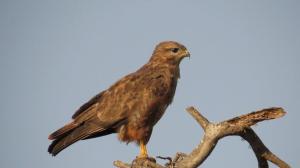
And then there is this bird. We debated its ID. The first impression was that it was a Kite sized bird with white undersides to its head and a black line passing through its eye – suggesting Osprey. However we thought it was an odd bird to see in the bush. We then considered juvenile Martial Eagle – but its shape and size seemed wrong. What do you think?

The second day there was quite uncomfortable except for the air conditioning in the car. It was registering 44 degrees on the car temperature gauge!

Mfafa hide has a new entrance tunnel from the car park – otherwise quiet except for the Mocking Cliff-Chats.

The Bejane hide was also quiet – perhaps we were too early. Its entrance had also been newly refurbished.

But the most pleasant surprise was that the tar road from Hluhluwe camp right through to Mpila had been repaved! No Potholes!

In the course of the second day we came across a Hyena which popped out as we neared the camp and a pair of mating Lions near the Umfolozi gate.

On the way home we decided to pop in to St. Lucia for a short visit. It was a cool overcast morning. Stopping to chat with one of the game viewing vehicles in Umfolozi we learn that Wild Dogs, a Leopard and the mating Lions had all been spotted along the way to the gate. Unfortunately we were unable to locate any – rats.

And on to St. Lucia to see the Hippos and Crocodiles. Readily visible both at the bridge in to St. Lucia and at the mouth.

Walking along the boardwalk to the sea a snake was spotted. Black end to its tail is all I managed to photograph.

IMG_0323a
Snake under the board walk.

A few birds were photographed in the car park area next to the board walk.

And to finish a repeat of the bird that we least expected to see – An African Skimmer.

African Skimmer – in flight

Paul and Sally Bartho

Kosi Bay

May 25th to 29th 2015

Paul and Sally Bartho

Having received an invitation to stay at the TEBA Lodge right at the mouth of Kosi Bay, we accepted with alacrity. We had four nights at the lodge and spent our time birding early morning and in the evenings as well as sunning on the beach during the day. Early to bed and early to rise.

The habitat is pristine coastal dune forest teeming with bird life. as well as inland lake fish traps.

The first morning bird walk got off to a fantastic start with birds flying back and forth around the entrance gate to the lodge. Black-throated Wattle-eyes, Ashy and Grey Tit-Flycatchers, Sombre Greenbuls, Square-tailed Drongos and a Green Malkoha amongst them. Further along we saw African Yellow White-eyes, Woodward’s Batis, Blue-mantled Crested-Flycatchers and an Olive Bushshrike which tested our skills to ID it – see photos. On the way back we encountered a shy White-starred Robin and several others were heard during the course of our stay.

On the beach we relaxed while the others were fishing. An African Fish-Eagle and an Osprey flew overhead. Three Grey-headed gulls passed over us hoping for some titbits no doubt. Other than that there were about 60 White-breasted Cormorants which came fishing each morning. A Giant Kingfisher was vociferous as it flew by each day and a sole White-fronted Plover was seen. Cattle took to the sand when the tide was out accompanied by Cattle Egrets.

Further inland from the mouth there is a large shallow area with numerous fish traps. In this area we found Pied, Malachite and Giant Kingfishers, Purple and Goliath Herons, African Fish-Eagle and White-breasted cormorants and a lone African Pied Wagtail. We also saw Sombre Greenbuls in numbers on several trees – probably the most numerous species that we encountered.

Altogether we identified 53 different bird species – many of which were special for us. Click here to see the bird list.

Paul and Sally Bartho


Longclaw Galore

Longclaw Galore

All three species were photographed within half and hour on Thursday AM,  and within 50 metres of each other. Locality: Maputaland – just south of  Kosi Bay lakes (Longclaw capital of the world!).


Photos by Hugh Chittenden.  Message from Peter Hughes.

Ilala Palm Park – A Jewel in Zululand

Ilala Palm Park – A Jewel in Zululand

Outing April 25th to May 2nd 2013

Led by Jane Morris and Mike Roseblade

Attending: Jane Morris and Mike Roseblade, Jenny and Cecil Fenwick, Sally and Paul Bartho, Jenny and Dave Rix, Jackie and Roland Suhr, Rob Jamieson, Lynette Bingham, Sabrina Porritt, Keith Booysens and Kathy Cleggett.

Ilala Palm Park is a 35 hectare site  situated about 6 kms west of Mbazwana on the road to Jozini from the centre of town. It has six campsites – each with their own ablutions and scullery with hot water and power point.  The grassy campsites vary in size and most have sufficient shade. And there is a swimming pool.

The owners are a delight.  We were welcomed with an information pack on each area we were intending to visit and a bird list, they constantly checked that all was well and that we were comfortable and provided all night security – what more could anyone want!!

The habitat consists of sand forest, Ilala Palm savannah and grassland areas.

Contact Details:

Jorrie:            083 960 1192
Adri:               082 855 5643
Email:            ilalapalmpark@live.com.

The beauty of the Park is plentiful. The campsite alone is a birders’ paradise with bird baths dotted about which attract a huge variety of bushveld birds.  Pink-throated Twinspots are regularly seen. Yellow White-eyes, Mannikins, Lesser Honeyguide, Flycatchers, Bulbuls, Greenbuls, Robin-Chats, Scrub-Robins, Starlings, Sunbirds, Doves are all seen around the bird baths. Many other special species were seen in and around the camp including Woodward’s Batis, Rudd’s and Yellow-breasted Apalis, Green Malkoha, all the Bush-Shrikes, Spotted Eagle-Owls, Fiscal and other Flycatchers, Cuckoos. The occasional raptor was seen overhead and the Fiery-necked Nightjars were heard at night along with the Owls.

Ilala Palm is ideally situated for access to: Muzi Pan, Mkuze, Hluhluwe, Ndumo and Tembe Game Reserves also Lake Sibaya,  Nine Mile Reef & Mabibi, Sodwana and Kosi Bay to name but a few.

Summer time birding ought to be spectacular if you are based at Ilala Palm and visit the variety of habitats all within easy reach.

And to cap it all the cost to stay is better than reasonable!

The Outing.

Mike and Jane set an active program for the time there. And the 15 of us found that although parts of each day might have been spent away from the camp, there was always the camp to return to for rest and resuscitation.

The weather throughout the stay was very pleasant – sunny yet not too hot and a dribble of rain one night. There were no signs of mosquitoes perhaps because it was nippy after the sun went to rest.

Each evening Mike provided a braai around the swimming pool and many a tall tale was told.

Friday 25th:  Arrival day

Two couples arrived a day early and spent Friday morning visiting Kosi Bay Camp and the mouth of Kosi Bay. Birding was slow in both areas with few water birds as you might expect at this time of the year. However there were Greater Flamingos at the mouth, an obliging Malachite Kingfisher and a Black-chested Snake-Eagle circling above.

Saturday 26th:  Camp Birding and Sodwana.

Saturday morning started early with a walk around the farm in the sand forest – perfect weather for birding and the highlight was to watch some Pink-throated Twinspots on the road justoutside the campsite whilst they fed in the sandy tracks. Fiscal Flycatchers were numerous and there was a constant parade of birds to see.

In the afternoon a group went to visit Sodwana – only 20 km down the road – to check out the beach and bird round the campsite.  A Caspian Tern greeted the group at the river mouth, a group of White-fronted Plovers hid in the dune vegetation and 6 Sanderlings posed an ID challenge for us.  Rob and Cecil behaved like city slickers and refusing to take off their shoes hitching a ride across a 30cm deep, 1.2 meter wide stream on a tractor, what the carbon footprint was we can only imagine!!

Sunday 27th: Lake Sibaya and Mabibi.

Fifteen of us packed into four 4×4 vehicles set off on a clear sunny day from camp and picked up our Wakkerstroom trained birdguide, Jabulani Mbonambi, from Mbazwana petrol station – organised through Adri.

Once we had entered Sibaya we drove along a beautiful coastal forest road to the east of the Lake. It was interesting habitat yet relatively quiet – perhaps because we had few stops along the way to our breakfast area beside the Lake. However birding at the breakfast stop was interesting.

In some dead trees beside the lake about 50 White-fronted Cormorants were nesting. A Fish Eagle was roosting comfortable among them. It was interesting to see that the Cormorants took nesting material from the shore and doused it in the lake, apparently to sort out the strands of the material to facilitate nest building.

There were not a lot of birds on the lake it being too deep. However there were Three Banded Plovers, Little Egret, Egyptian Geese, one Greenshank and a Water Thick-knee.  Jabulani heard the Woodward’s Batis calling in the dune forest so we went to investigate. Most of the group had lovely sightings of it. A bird wave came through among which were Forest Weavers, Yellow – breasted Apalis and Blue-mantled Flycatcher.

After tea we carried on through the forest and then through rolling grasslands to Mabibi, quite a long bumpy sandy trek. Jabulani organized a car guard for us and we proceeded down the 139 steps to the beach to do some snorkelling in the protected waters of a reef.  The snorkelling was great and a good variety of fish were seen, a moray eel and some parrot fish among many others.  For those not snorkelling a walk along the beach was lovely, the rock formations were interesting and White-fronted Plovers hid among them.

There was a lovely spot in the camp site for lunch and it wasn’t long before the birds began to call and there were good sightings of Kurrichane Thrush, Woodward’s Batis among others.

After a walk about the campsite we started the long trek back to camp across typical Maputaland vegetation with lots of Ilala Palms to the main road. A thoroughly enjoyable day.

Monday 28th:  Muzi Pan, Ophansi Pan & Mkuze.

By 08h30, our group of 15 arrived at Muzi Pan and spread out along the causeway. The water level had receded almost to its usual position compared to a month earlier.

Muzi Pan, as usual, did not disappoint despite the windy conditions. There was abundant bird life – water birds predominantly as you might expect.  Specials seen included African Pygmy Geese, Pink-backed Pelicans, African Spoonbill, Black-winged Stilts, Yellow-billed Storks also Lemon-breasted Canaries, Long-billed Crombec and Yellow-breasted Apalis.  Apparently the following day Lesser Jacana, Black Coucal and Kittlitz Plover were also seen round the Pan from the Adventure Centre.  In all about 40 species were seen. The following pictures show the difference in water level from one month earlier.

After an hour or so the convoy moved to another Pan, nine kilometres beyond the Ophansi Village (instead of turning left to the Mkuze entrance, travel straight on). The Pan is right beside the dirt road on the left. A number of different water birds were seen including African Purple Swamphen, Red-knobbed Coots and Whiskered Terns.

The group then headed for Mkuze. At the gate, the vehicles separated to do their own thing. The rest of the day was spent here, lunch was attempted at Nsumo Pan but the wind was fierce making it most unpleasant.  Some chose to picnic in the parking lot which was protected while others took their lunch to the picnic site at the entrance to the kuMasinga Hide.

Animal viewings were few and far between – perhaps because of the time of day the Park was entered. However a White Rhino did make a lengthy appearance at the kuMasinga Hide.

 In fact the hide attracted a good many different birds over the midday period. It was a good vantage point for photography. There were excellent viewings of Green-winged Pytilia, Crested Barbet, Kurrichane Thrush amongst many others.

Raptors were few – no vultures. Those that were seen included Shikra, Little Sparrowhawk and a Brown Snake-Eagle on the way out. Only about 70 species of birds were seen in Mkuze.

Tuesday 29th. Tembe.

The usual early start led to another productive birding day in Tembe Elephant Park. Only 4×4 vehicles are permitted entry and they ensured an uneventful trip along the many single sandy tracks.

The reserve is known for the potential to find the Plain-backed Sunbird. It was on everyone’s agenda. However only Cecil was able to find it – at the Mahlasela Pan Hide. The Mahlasela Pan Hide is a raised hide at canopy level overlooking the Pan. It is a well designed hide. A webcam from this hide shows activity at the Pan on the internet. Go to http://www.tembe.co.za. The Africam is on the Home page.

The reserve is also known for its large elephants which fortunately showed themselves calmly.

There is a viewing tower near the entrance and another hide at the north end of the Swamp roads – the Poweni Hide. It too is a raised hide at canopy level  and it looks down at a flood plain below.

Most agreed that the swamp area, the east Swamp Road (Umjamgazi Road) in particular, offered most sightings including Grey Waxbills, Yellow Fronted Longclaws, Stonechats, Rudd’s Apalis, Southern Banded Snake-Eagle, Eastern Nicator, Lilac-breasted Roller and Pink-throated Twinspots.  Raptors included Bateleur and Brown Snake-Eagle but no Vultures. The waterhole antics of  small families of elephants provided treasured moments for many of the group, as did the occasional roadside encounter.  In all around 60 species were seen.

Wednesday 30th: Departure Day for some.

Most of the group departed around midday leaving only a few lucky behind.

Birding during the day was spent around the camp and at the several bird baths. Pink-throated Twinspots made their regular appearances along with a number of other specials.

Thursday May 1st: Final departure.

Part of the morning was spent birding around the camp where several Olive Bushshrikes made appearances as well as a very obliging Green Malkoha.

Anecdote:

One amusing incident related to a certain loo which when flushed would not respond. After several attempts to flush, the pot began to boil and the head of a snake appeared!

The next morning in another loo the occupant was chased out by a Bushbaby!

Summary:

Although only about 180 different birds were seen over the period at Illala Palm, there were many specials as you will have noted above. The number of bird species seen around the camp alone was about 88.

The bird list for the weekend can be seen by clicking Total Bird list for Ilala Palm Week.

This will be an excellent place to return to in the summer.

Note:

Credit for pictures has been made where due – other than those taken by Sally and Paul Bartho.