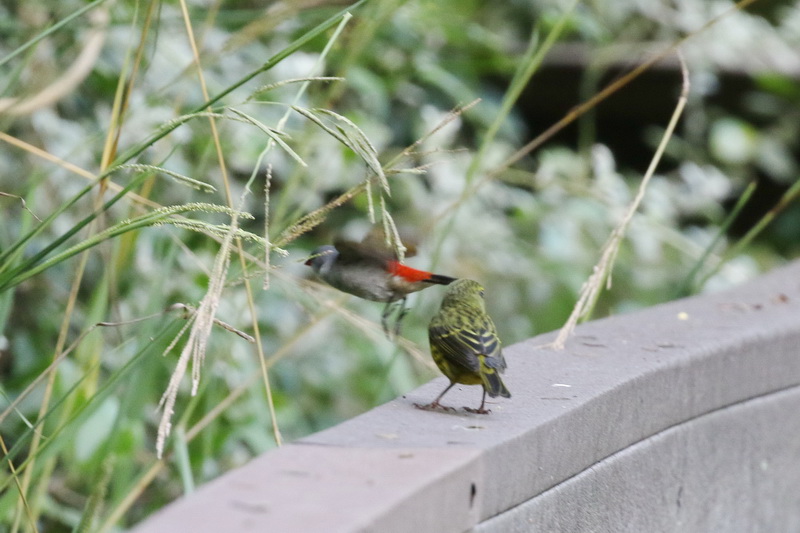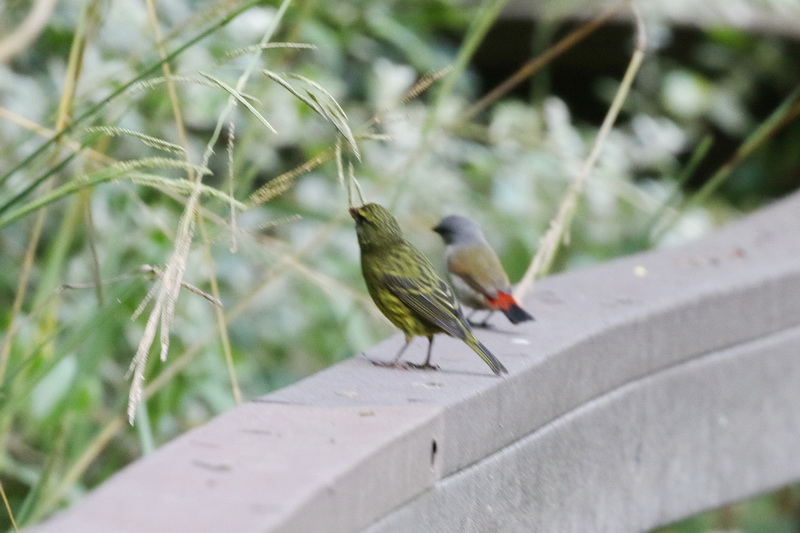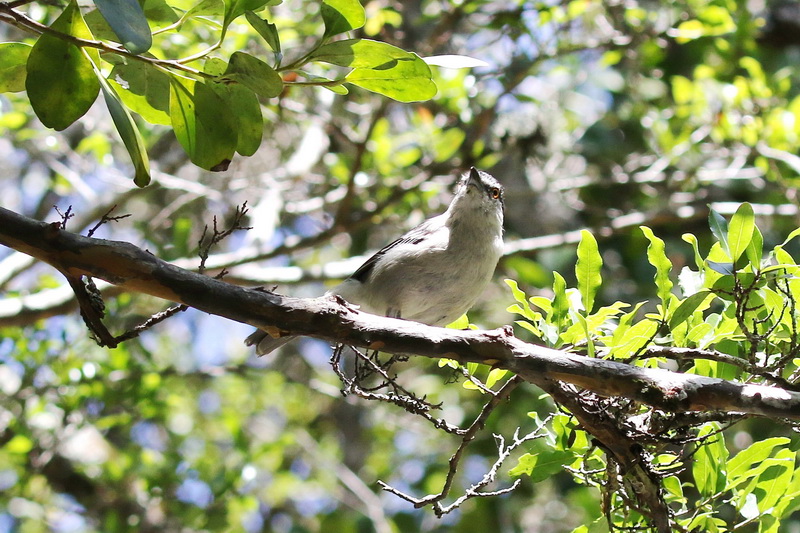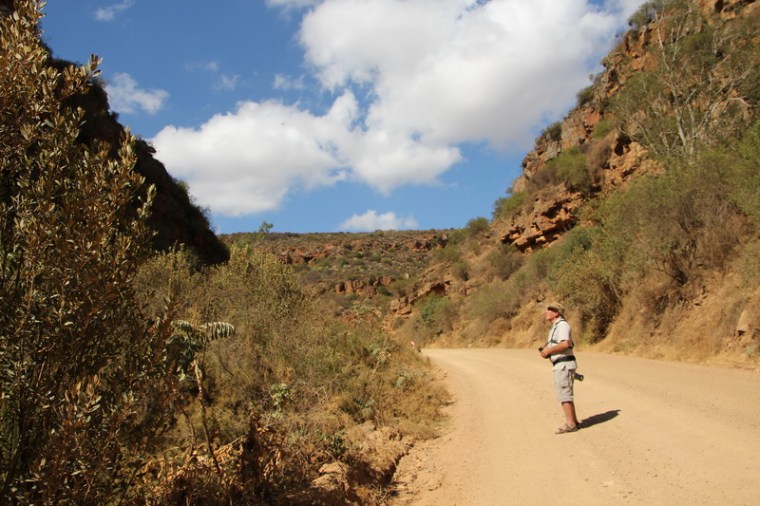
An attempt to see an Egyptian Vulture

Report by Sally and Paul Bartho

19th to 27th July

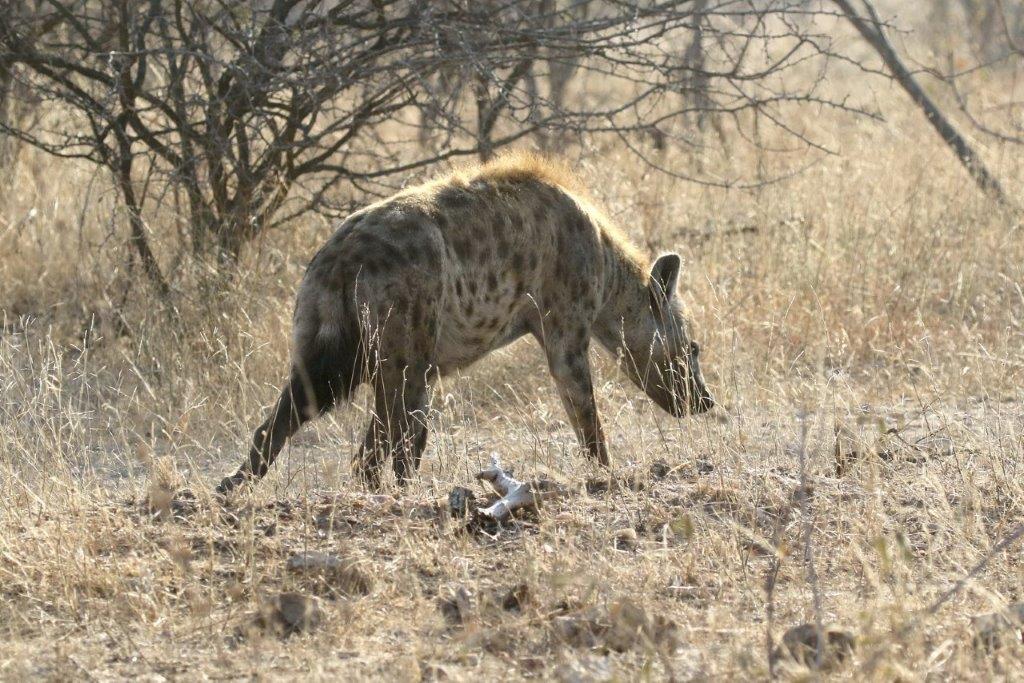
Hyena pups

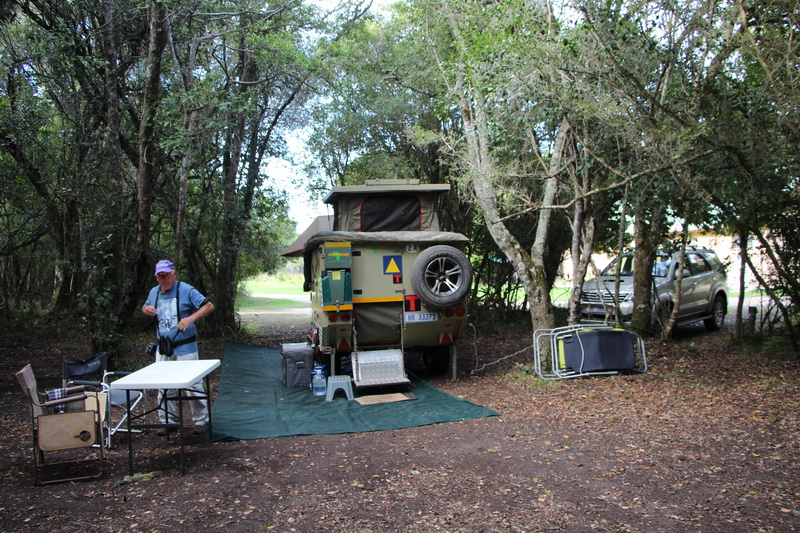
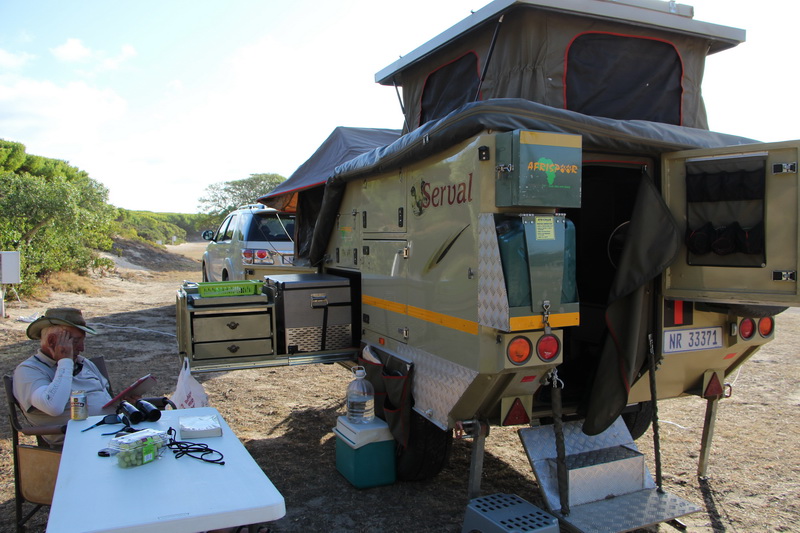
The Egyptian Vulture had hung around so long around the Oliphants Bridge that Sally and I took a decision to try our luck and spend some extra time in the Kruger taking our off-road campervan.

First we had to find nearby accommodation to the bridge. First attempt – no continuous availability for the duration planned. The next day we tried again and managed to find space in various camps for the period planned without any choice of length of stay at each.

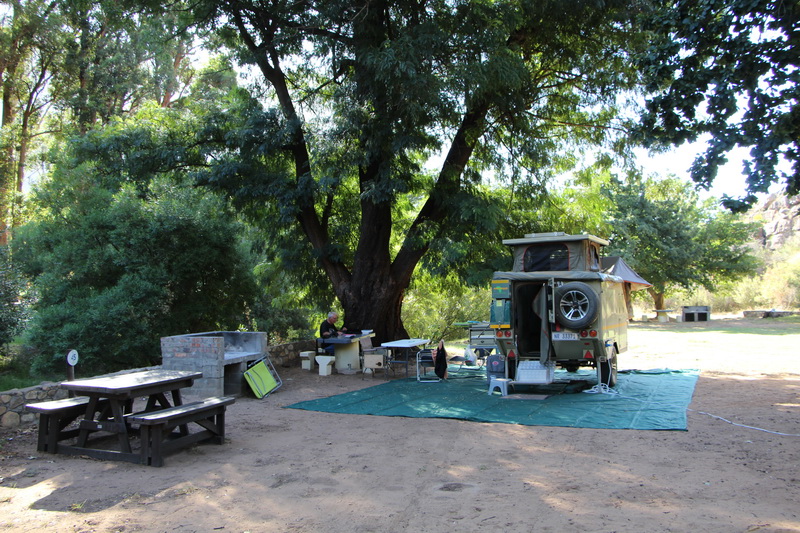
So it was in a hut the first night in Pretoriouskop then 3 nights camping in Letaba followed by one night in Maroela Caravan Park near Orpen Gate then 3 nights camping in Malelane Rest Camp.

Off we set on the 19th from Howick and arriving in Pretoriouskop at around 15h00. Very nice to have a hut for the night after the long journey. Also fortunate to have a place to park with the campervan still attached to the car.

We managed a bit of camp birding before dark and had an unexpectedly good meal at the camp’s Wimpy restaurant.

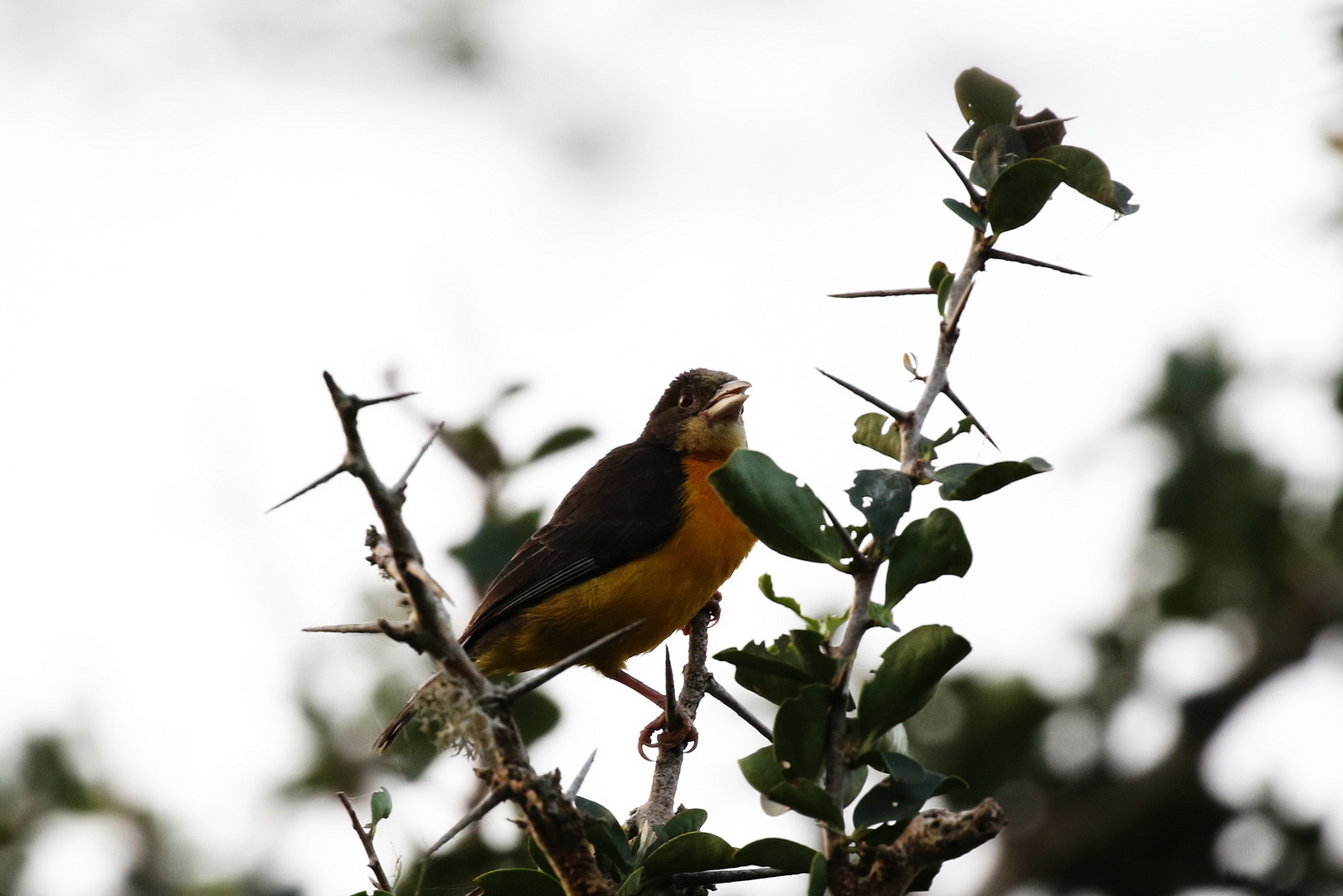
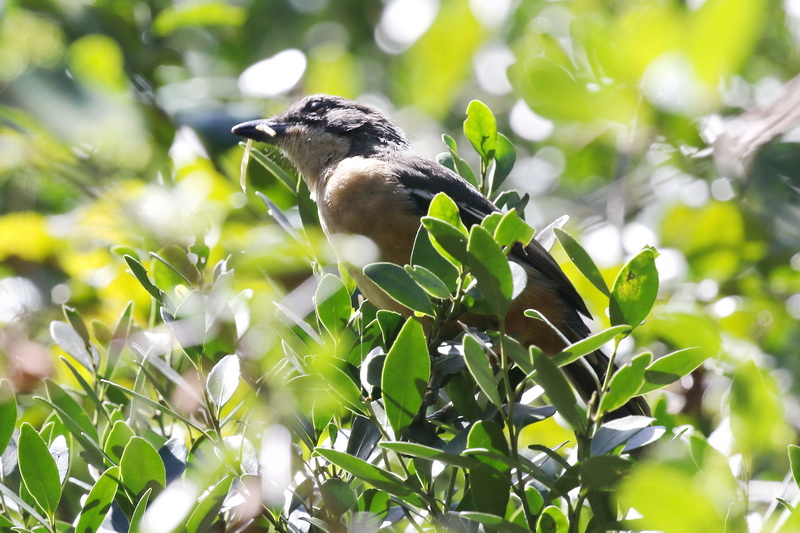
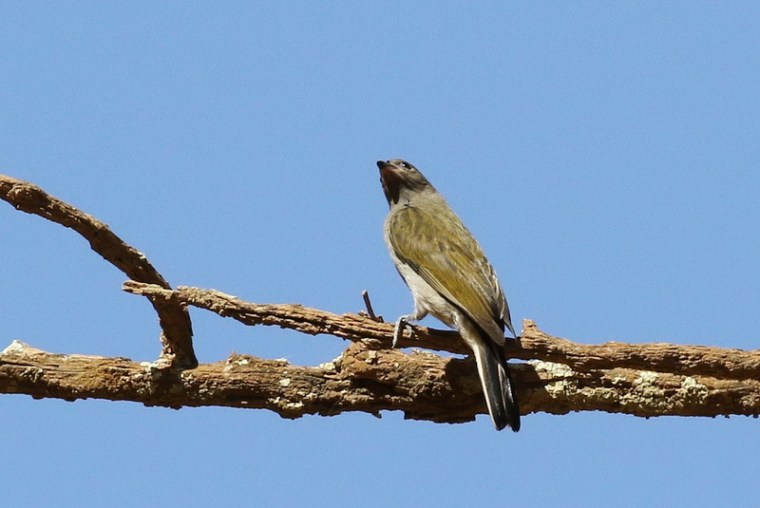
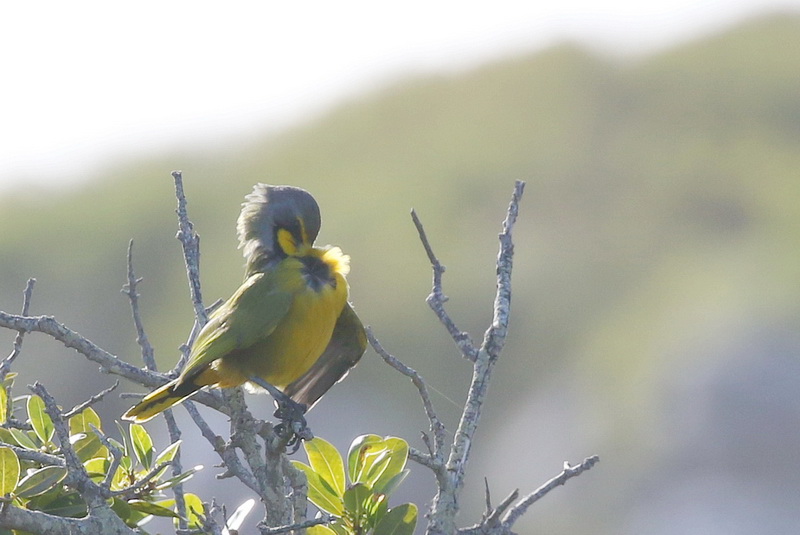
Black-headed Oriole

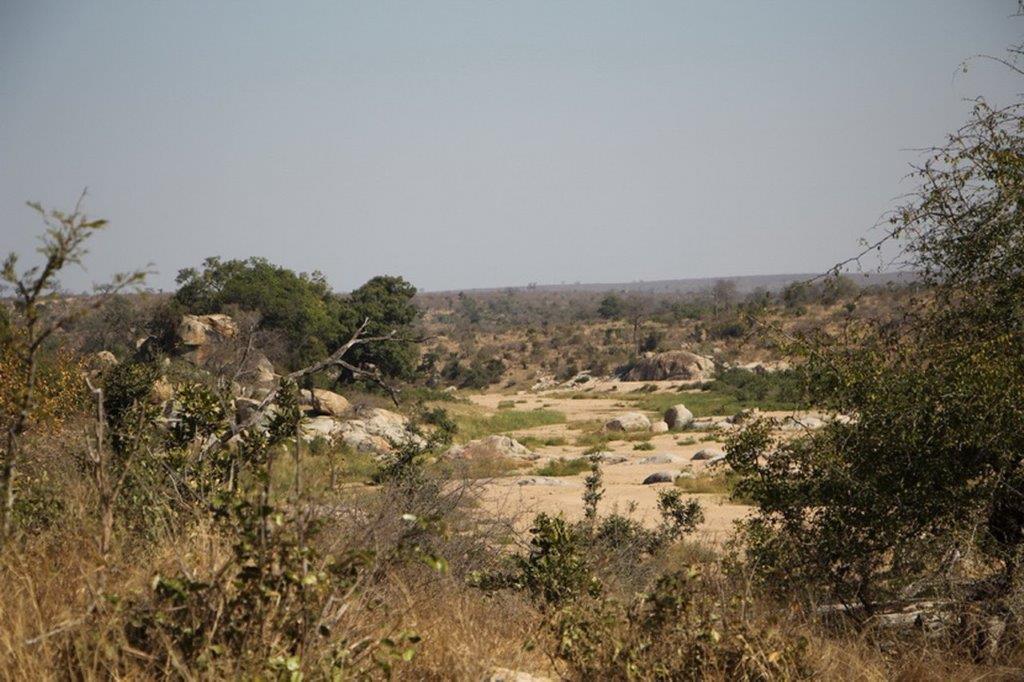
The next morning we were up with the sparrows and exited the camp when the gates opened at 06h00. The park was dry yet there was water in the pans.
Our first sighting of note was a Cheetah crossing the road just ahead of us – too dark for photos.

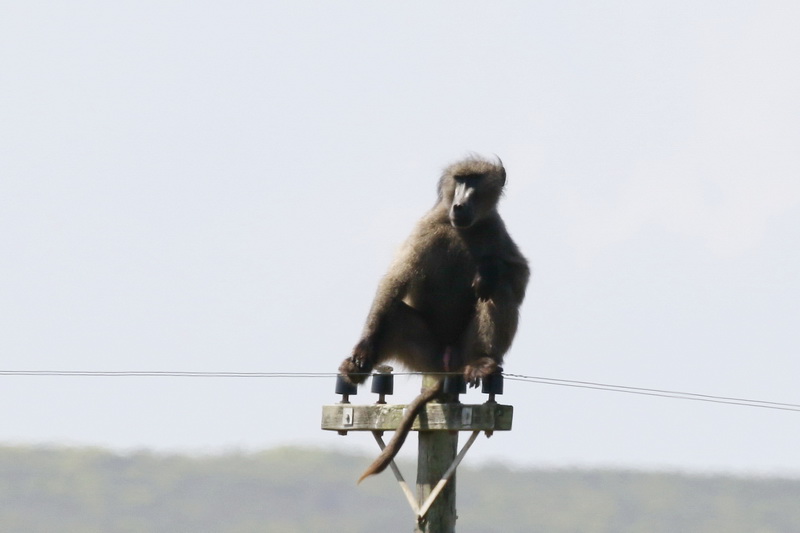
We bipassed Skukuza and headed to Tshokwane for a late breakfast – amongst the pleading birds and monkeys. We were careful enough to keep our food safe unlike several of the other visitors who had their own biscuits dropped on top of them as the monkeys tried to open the packet.

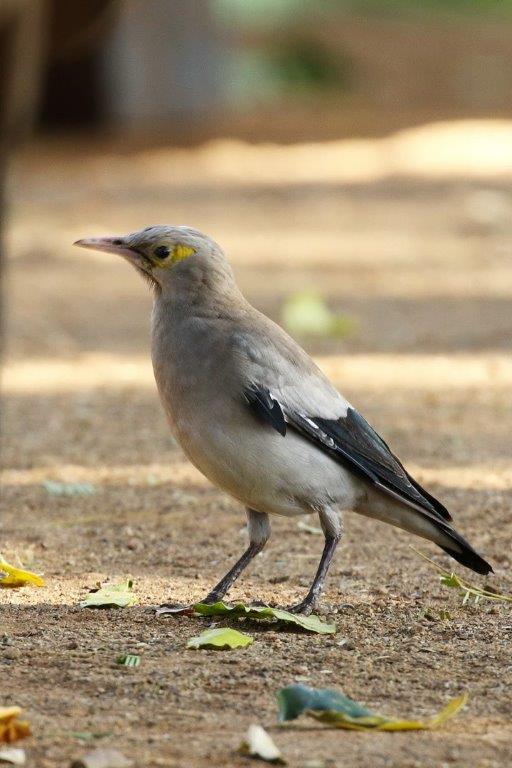
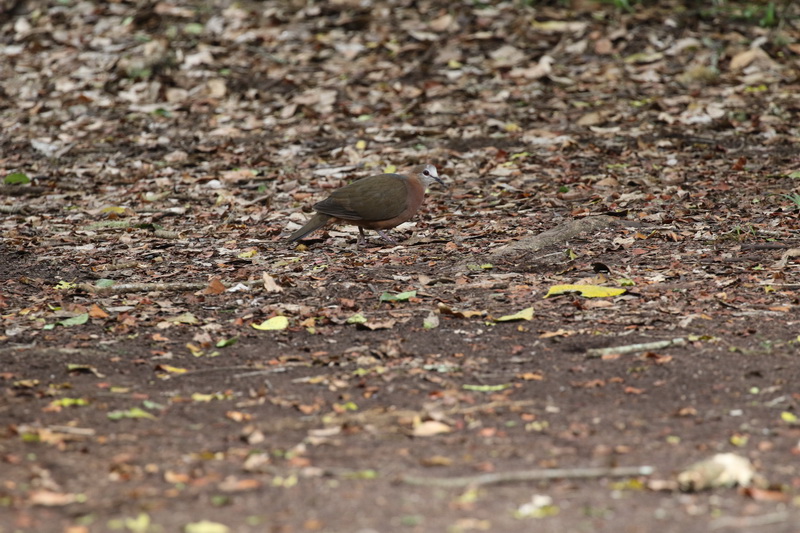
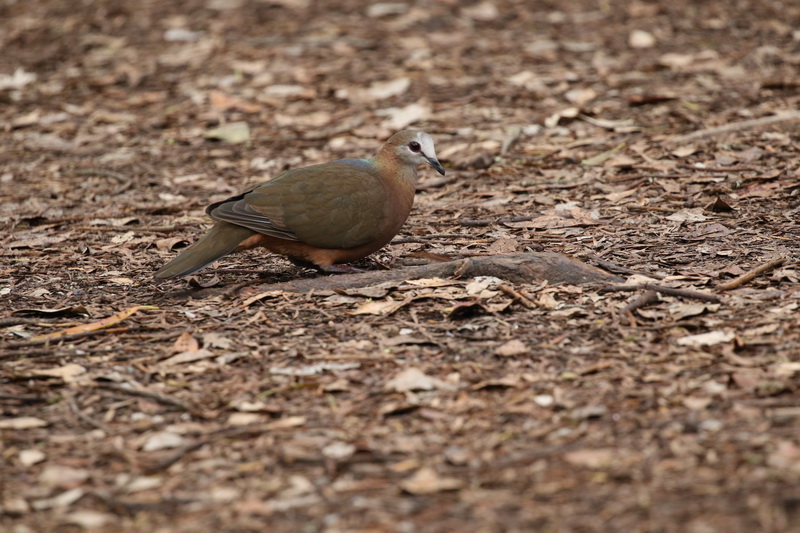
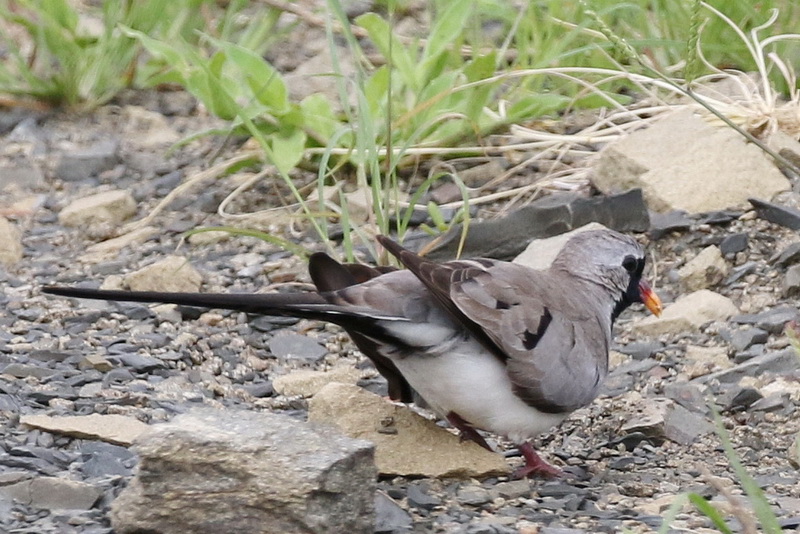
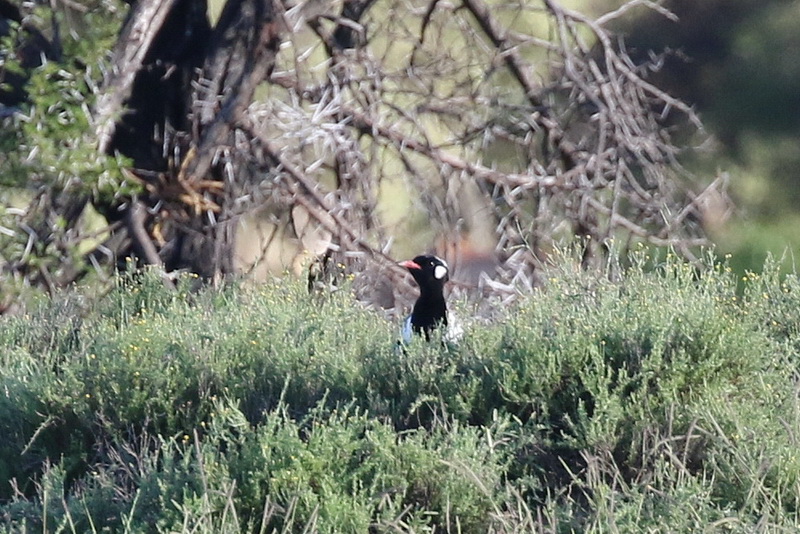
One of the interesting observations we had was the comparison in differences in colour of the African Mourning Doves we had seen so far in the Park.

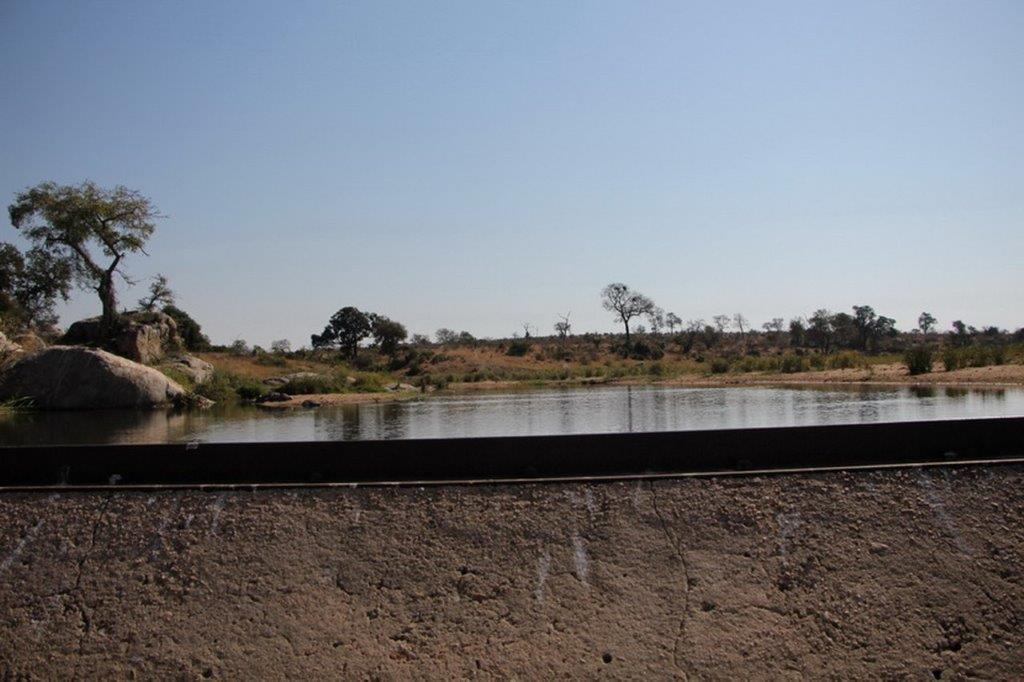
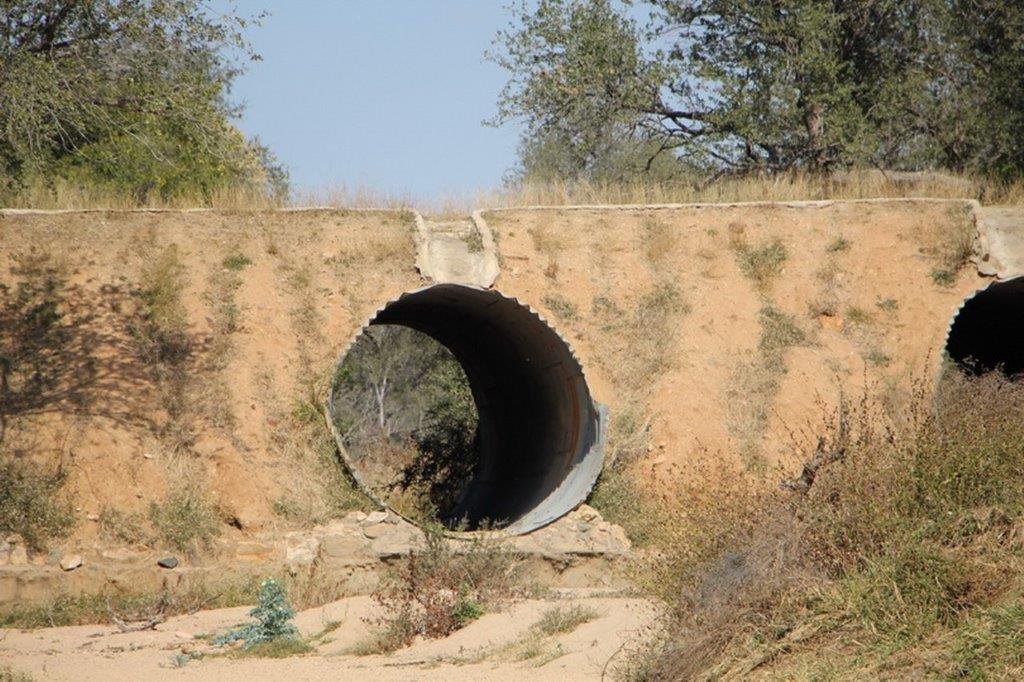
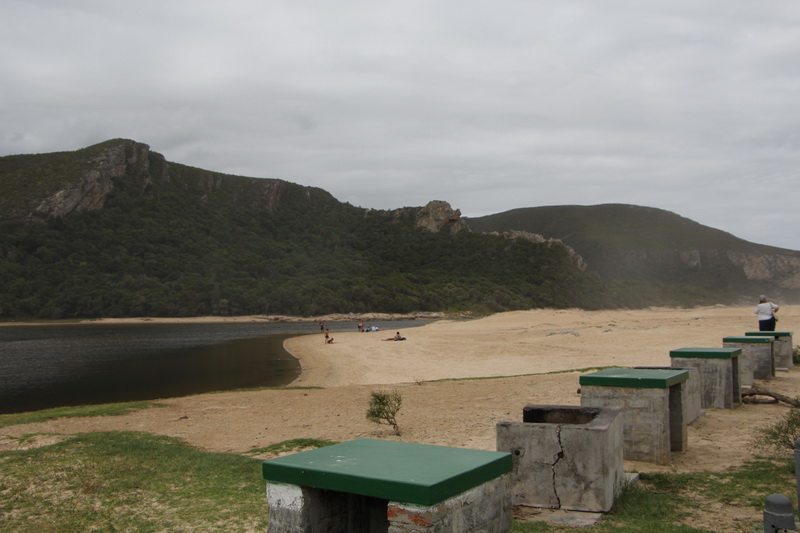
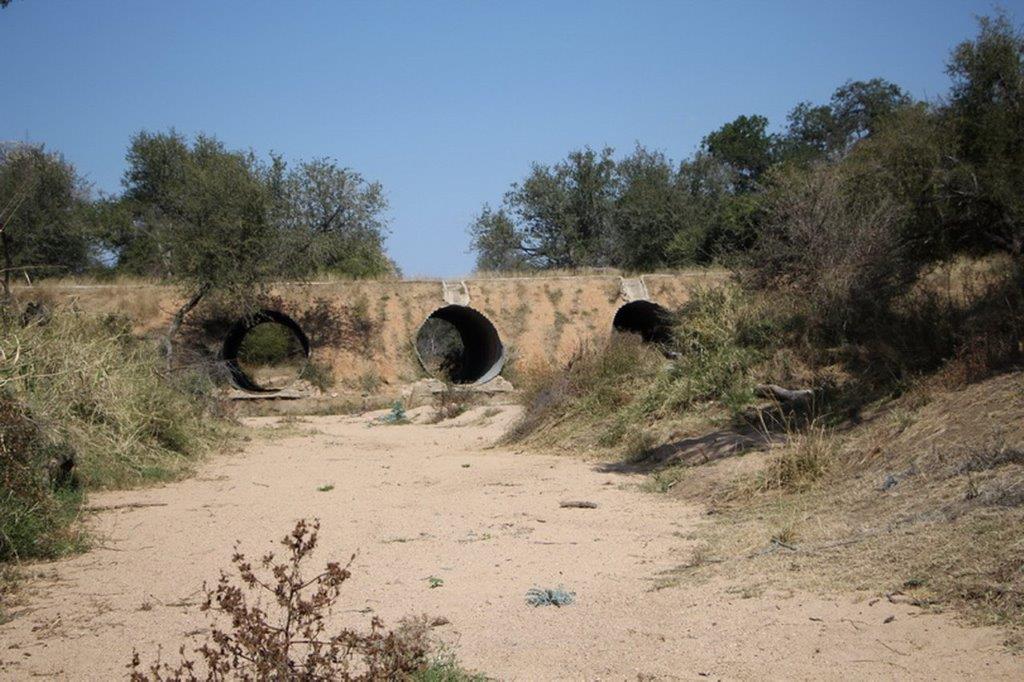
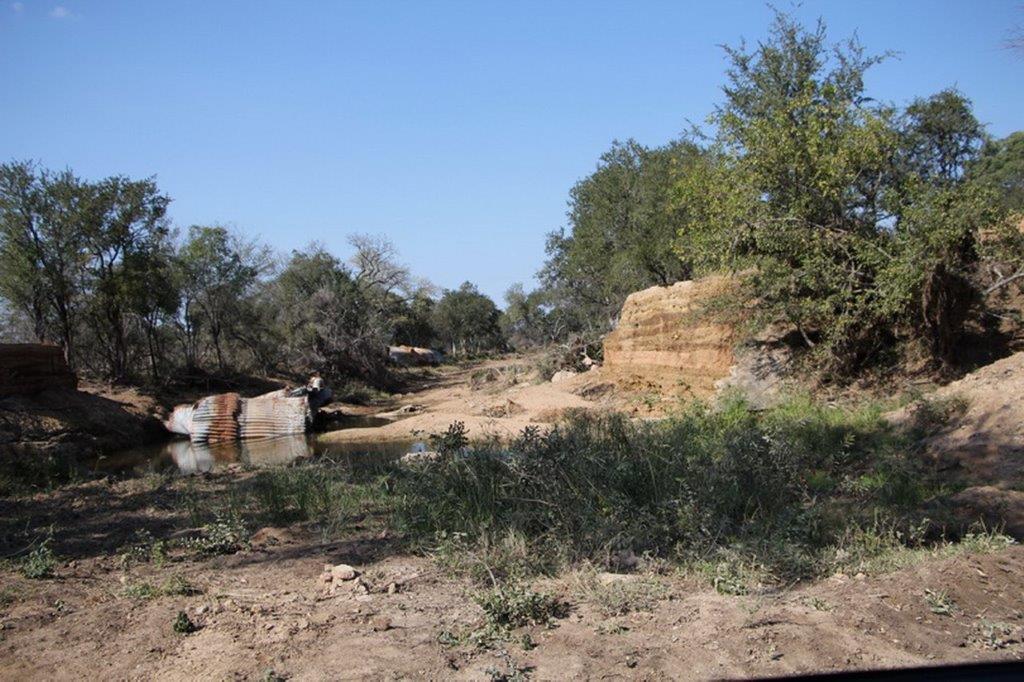
On the way to Tskokwane we were detoured around a bridge which had been swept away – literally – by the floods – see the pictures.

What it should look like.
And how it is now:
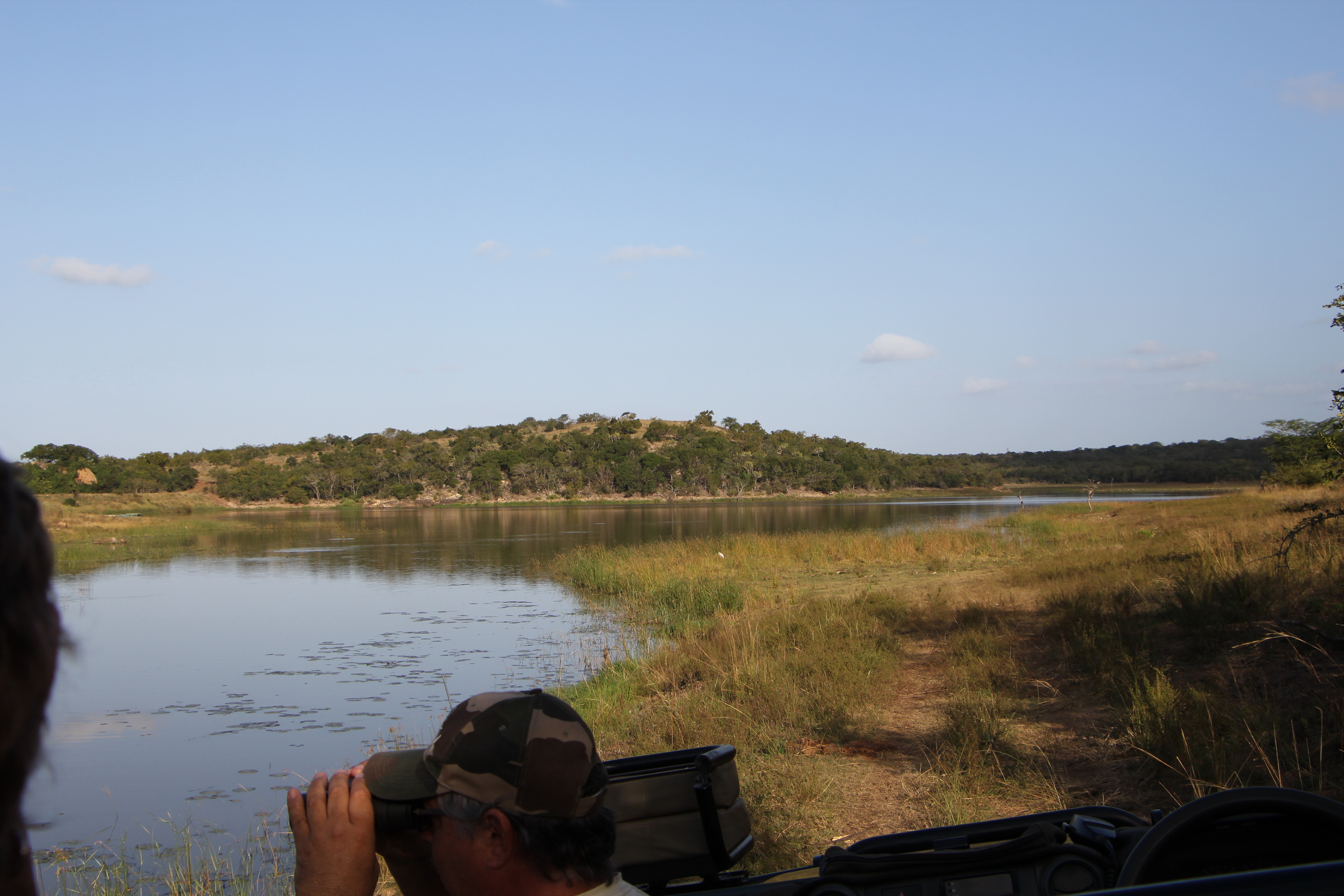
At about 13h30 we stopped on the Oliphants high water bridge – our prime destination. Fortunately you are allowed out of your vehicle between demarkated yellow lines. We stayed for 2 hours.

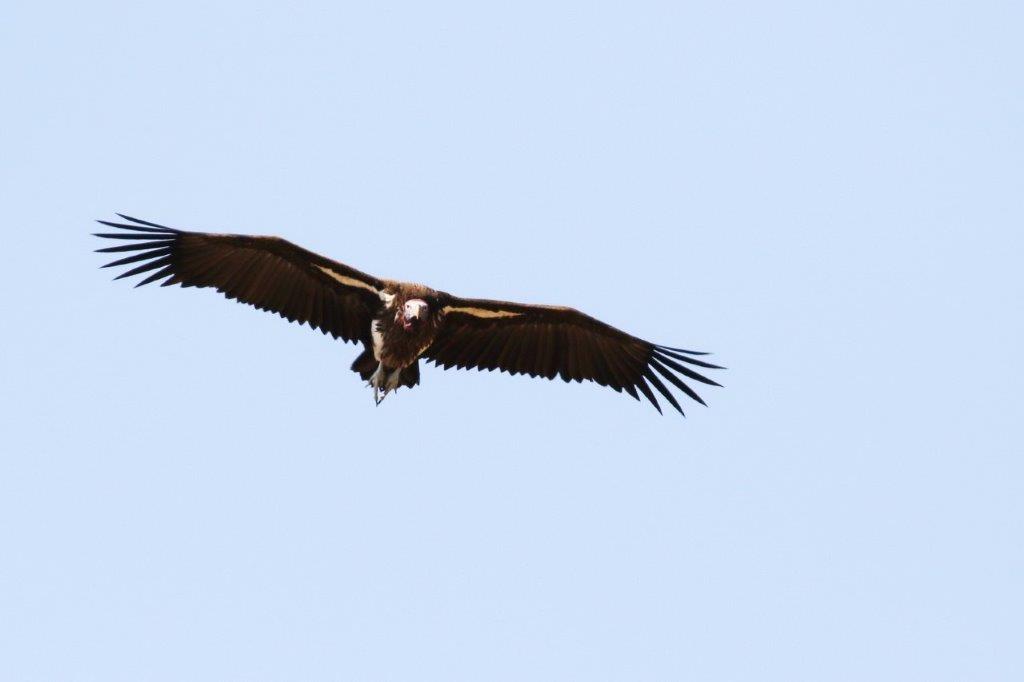
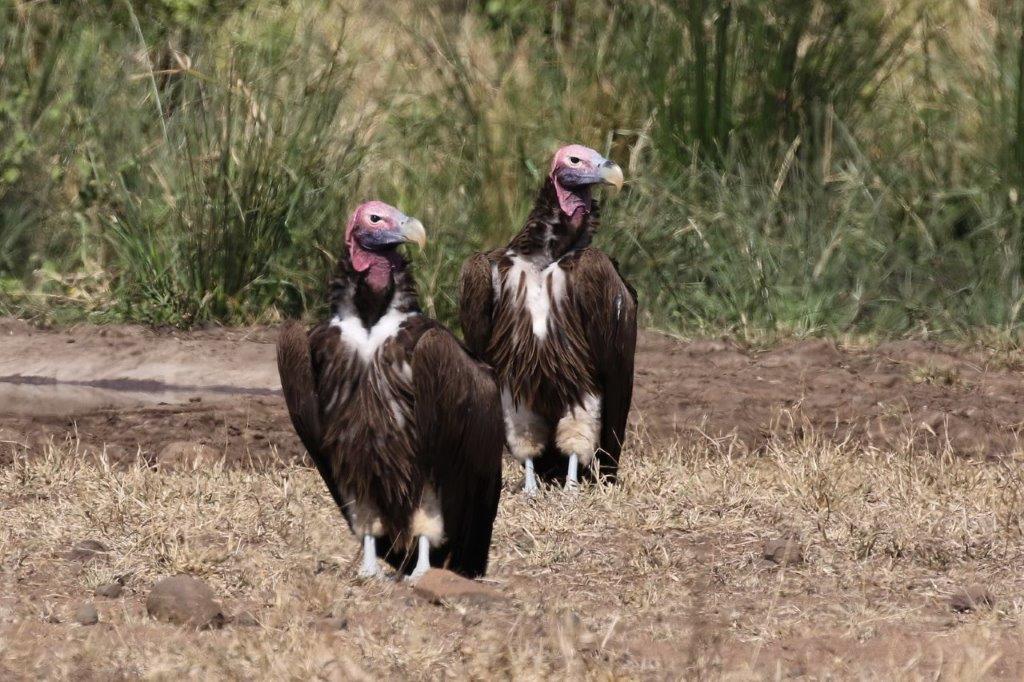
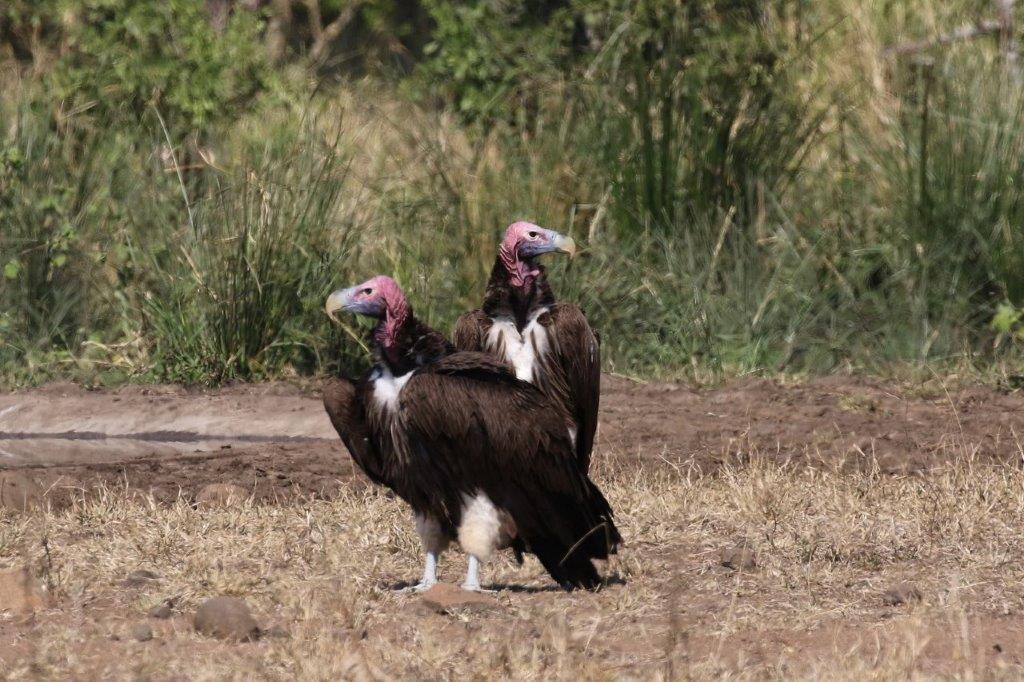
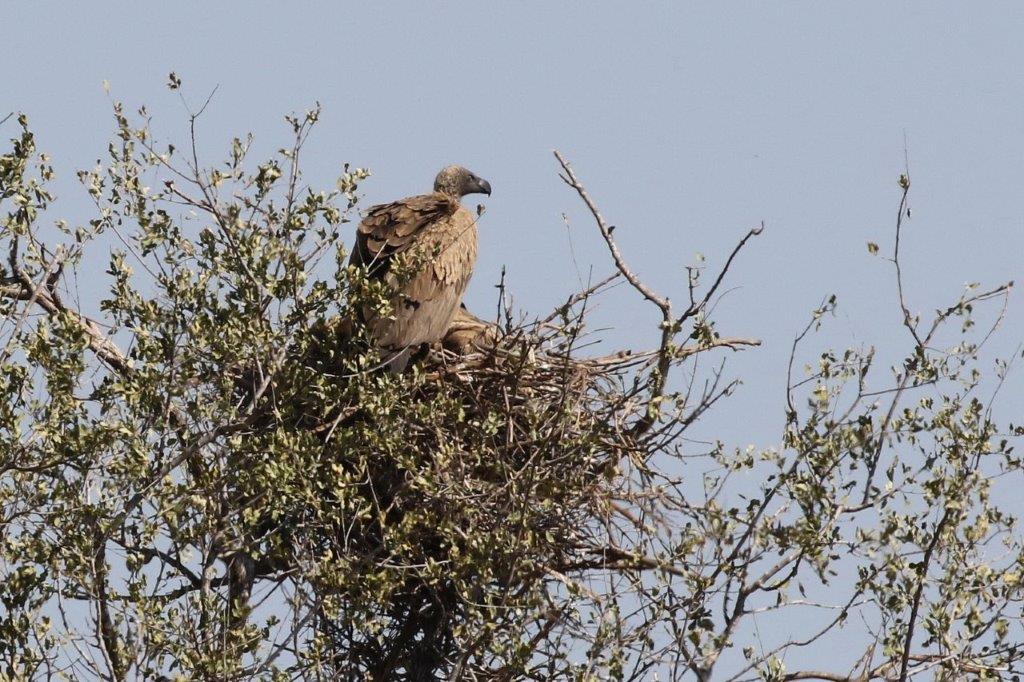
There were numerous vultures on the rocks and sand up stream- about 400 metres away. Most were easy to identify – White-backed mainly with several Hooded. However there was one group of vultures all close together which were more difficult to identify clearly as they blended one with the other. It was this group which we gave the most attention with our scope. But even with a 60x zoom it was difficult.

On occassion the group shuffled about helpfully. We identified the White-backed amongst the group and several Hooded.

But there was one – Hooded Vulture sized –  that appeared to have different facial markings. It did not have any red in its face so we assumed it was a juvenile Hooded however on closer inspection it seemed that there was no bare skin below its face.

Using the latest Roberts on page 136 we saw that there was a comparison of the faces of juvenile Hooded and Egyptian Vultures. Great excitement as we assumed we were seeing the head of the Egyptian but the bird rarely moved about and did not fly so we reluctantly agreed that we needed a better viewing for positive ID. The scope had more clarity than the photos shown below.

Several other people used our scope and they all thought they were seeing the same as us.
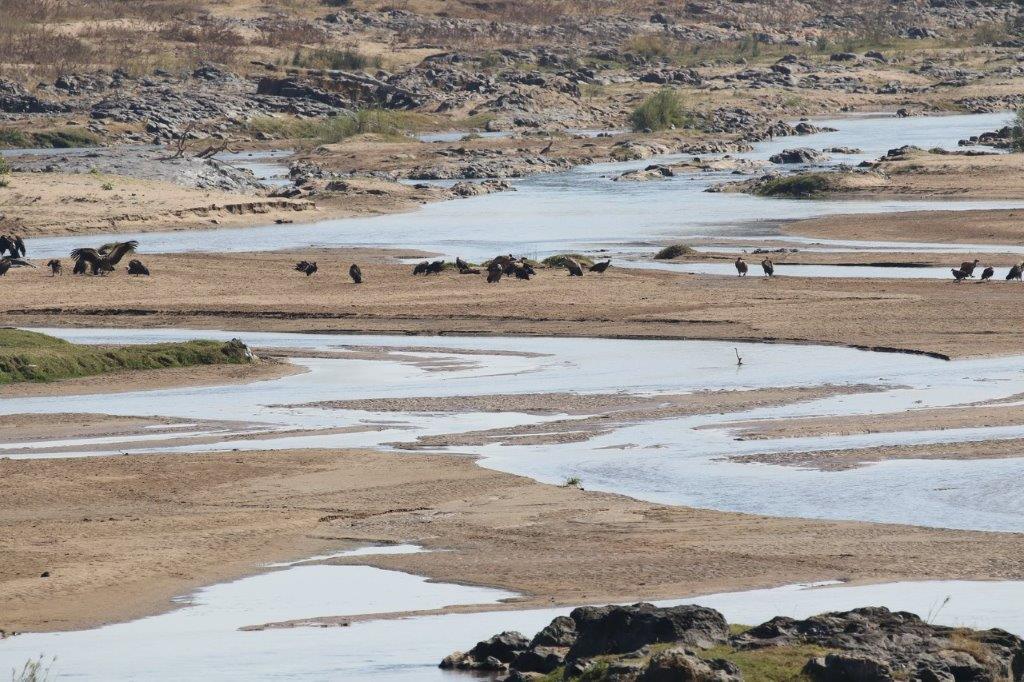
We eventually left to get settled in the campsite in Letaba – we still had a couple more days to come back and look.

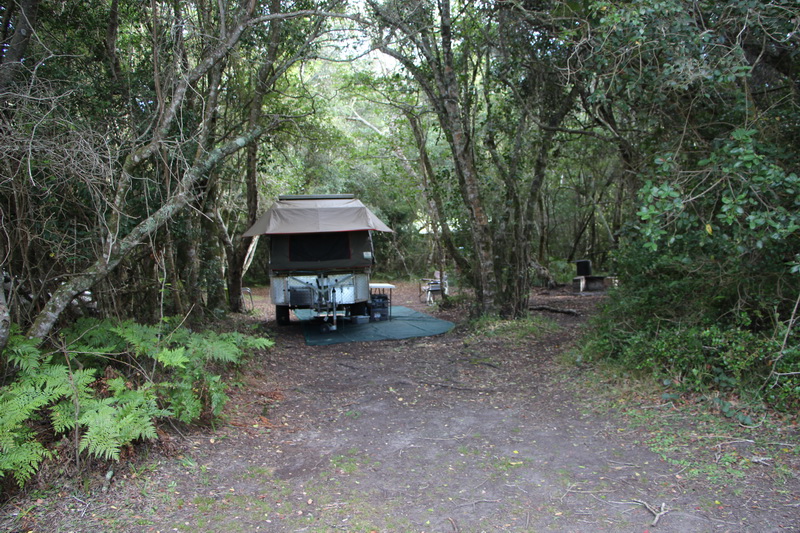
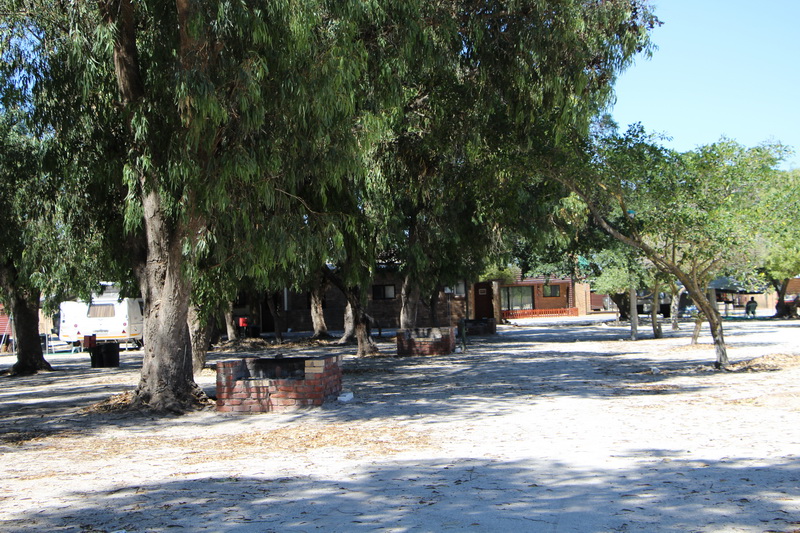
Despite the knowledge that we had the very last campsite available, we were surprised to find a nice private site away from the hoards on the fenceline. The Letaba campsite must be one of the best for shade in the Kruger – not so important in the winter.

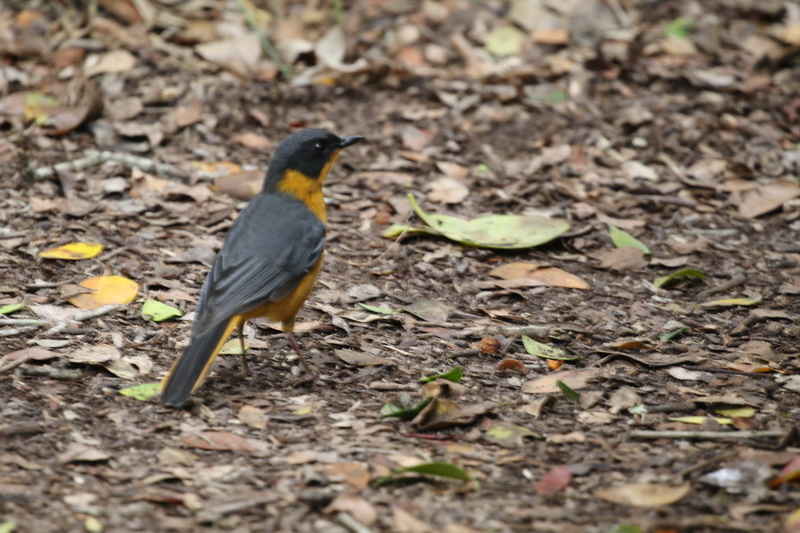
We were welcomed to our camp site by a seranade from a vocal and friendly White-browed Robin-Chat.

White-browed Robin-Chat

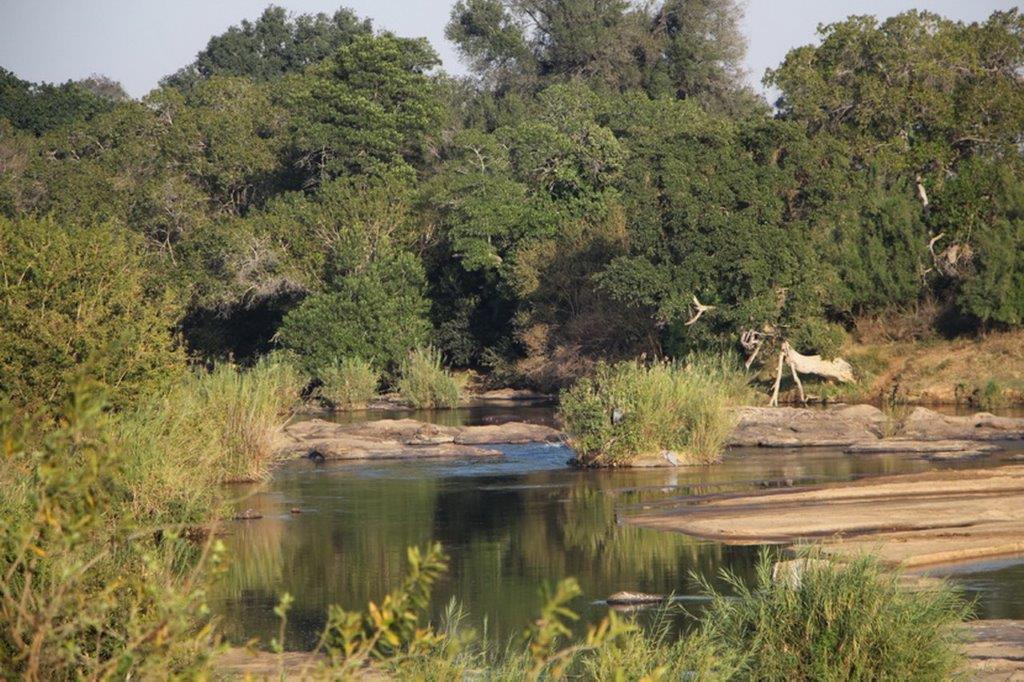
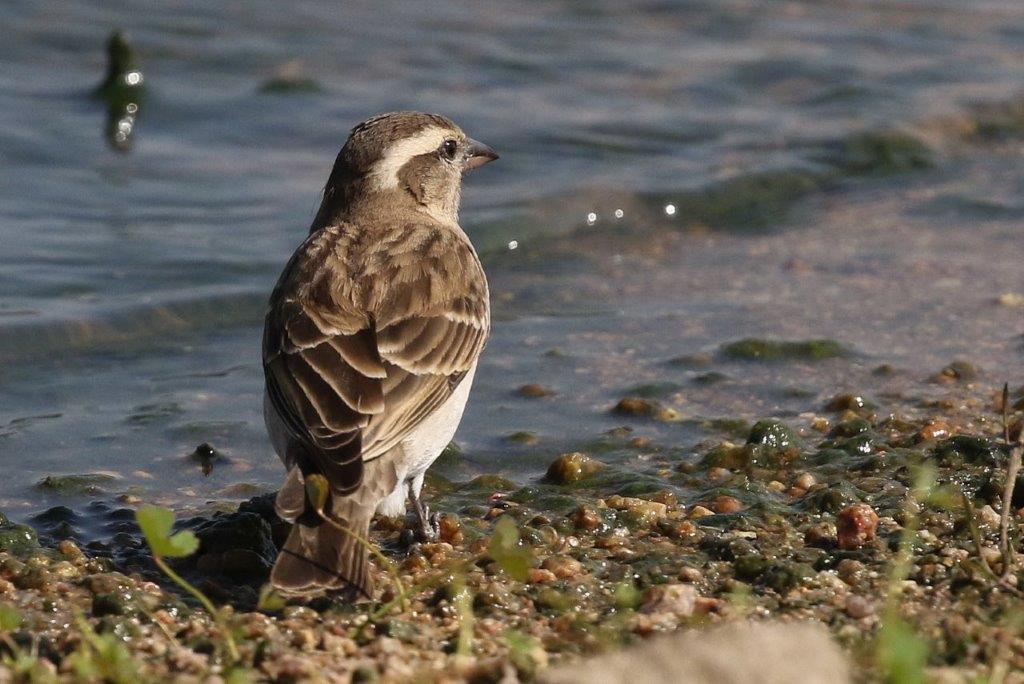
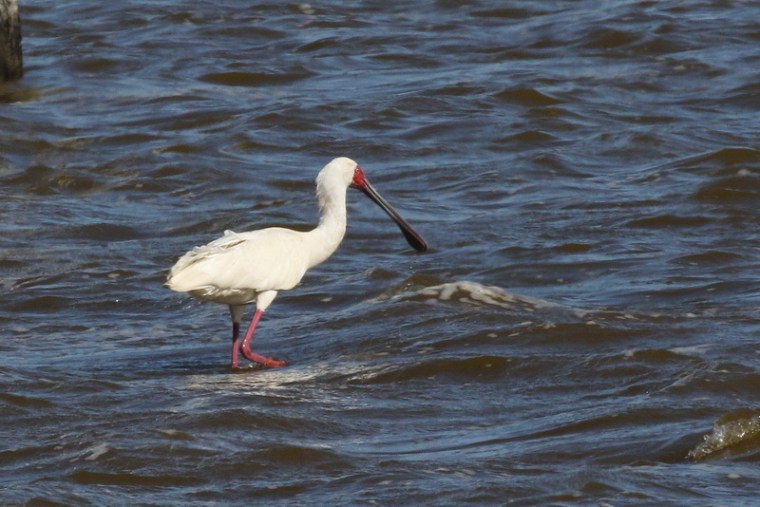
Over the next two days we paid seveal visits to the Oliphants high water bridge without success in seeing the Egyptian Vulture. However there were numerous birds to be seen there.

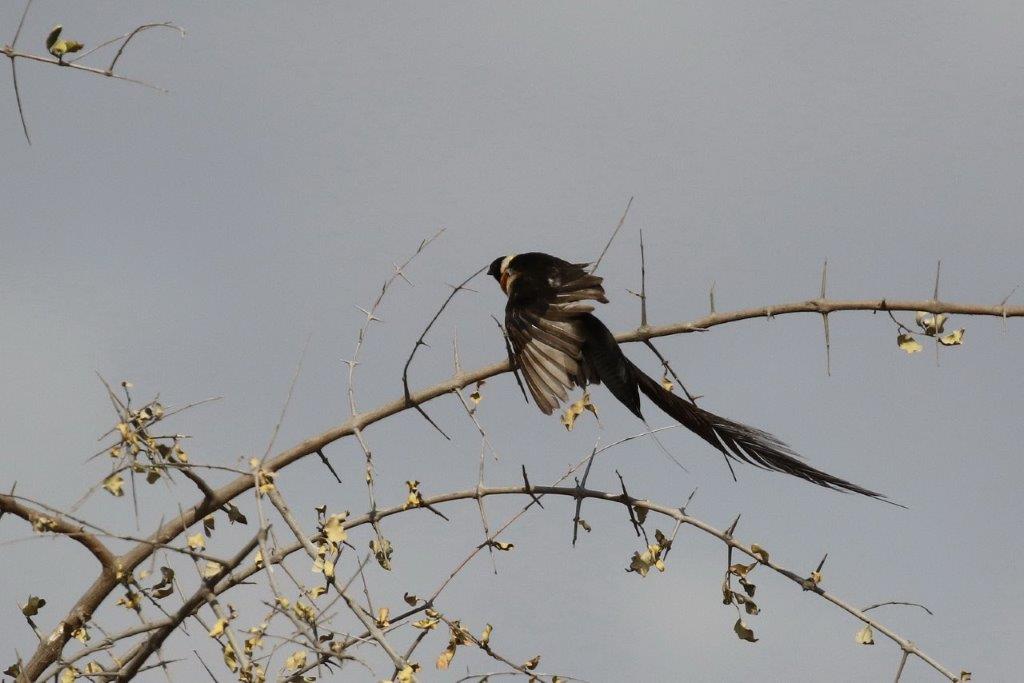
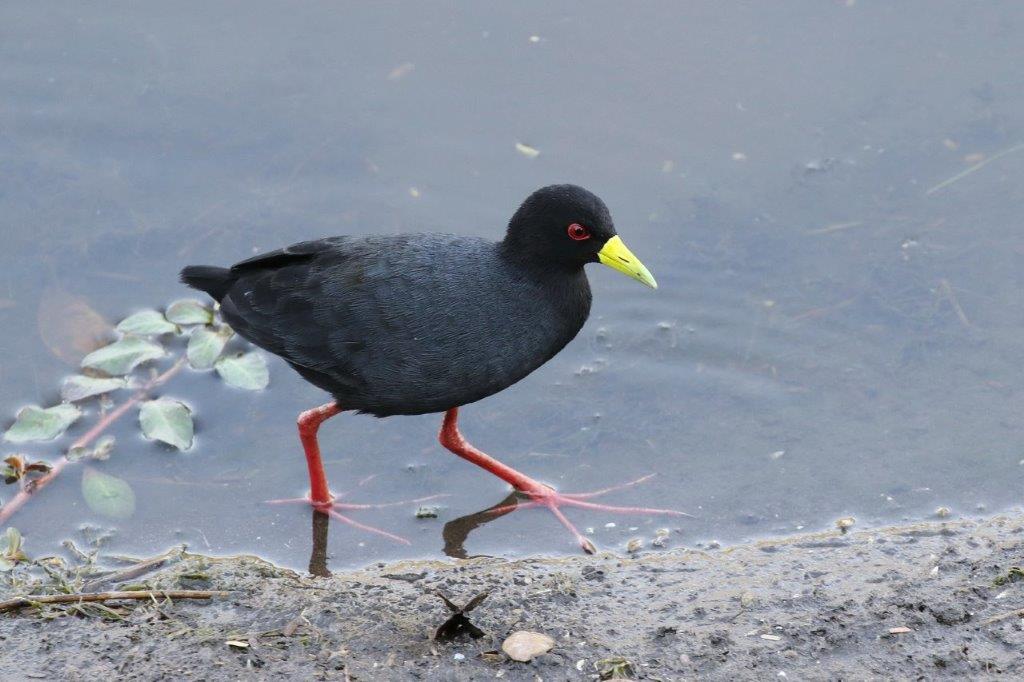
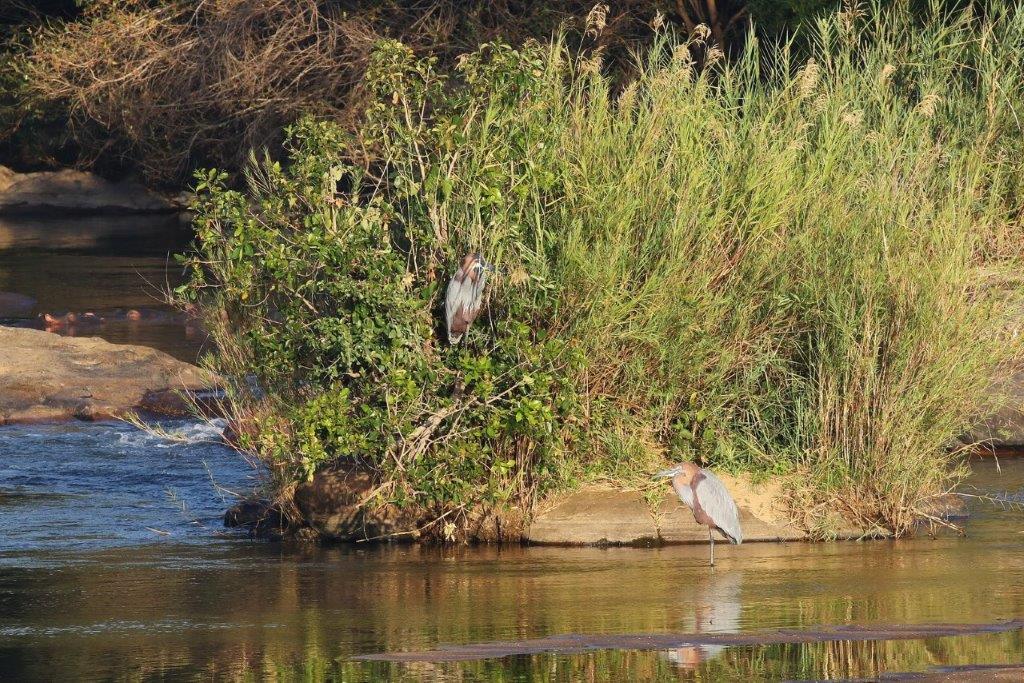
Migrants.

Others:

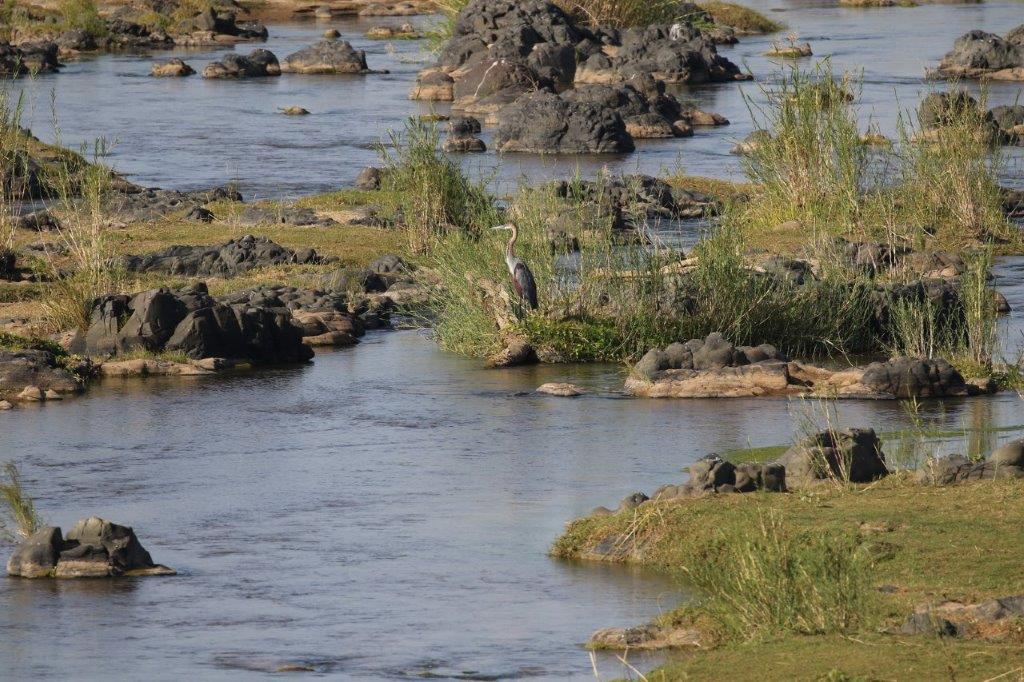
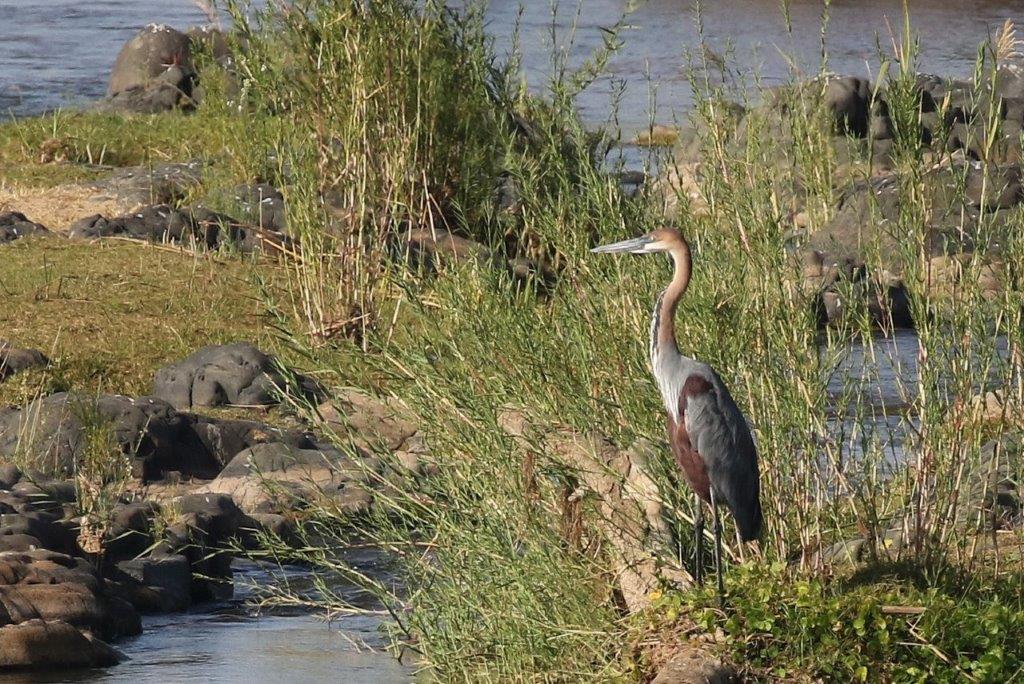
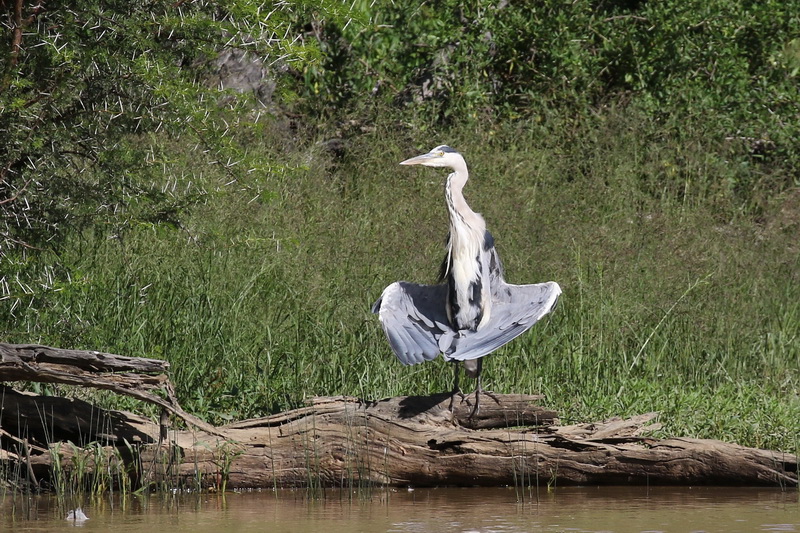
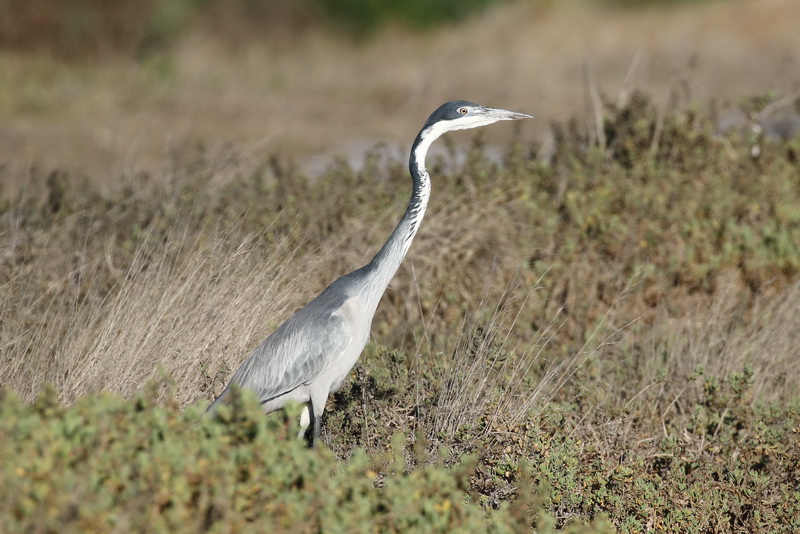
Grey Heron

Time was also spent visiting other places of interest in the area – Engelhardt Dam and Hide, Balule area and the Makhadzi picnic site.

At Engelhardt we went to the Matambeni Hide to see if we could spot the Skimmers. And we did manage to spot them at a great distance upstream from the hide. They tended to stay at the same sandy spot and whenever a potential predator flew overhead they chased it away – suggesting they may have a nest. Later on the same day we approached the area from the other side and spotted the pair again.

African Skimmers in the farthest sandbank seen from the Egelhard Hide

Other birds and nature of interest photographed at Matambeni Hide included:
Terrapins – rather large

We took a drive to the Makhadzi picnic site – near the border crossing into Mozambique. The birdlife to and around the picnic area was busy.

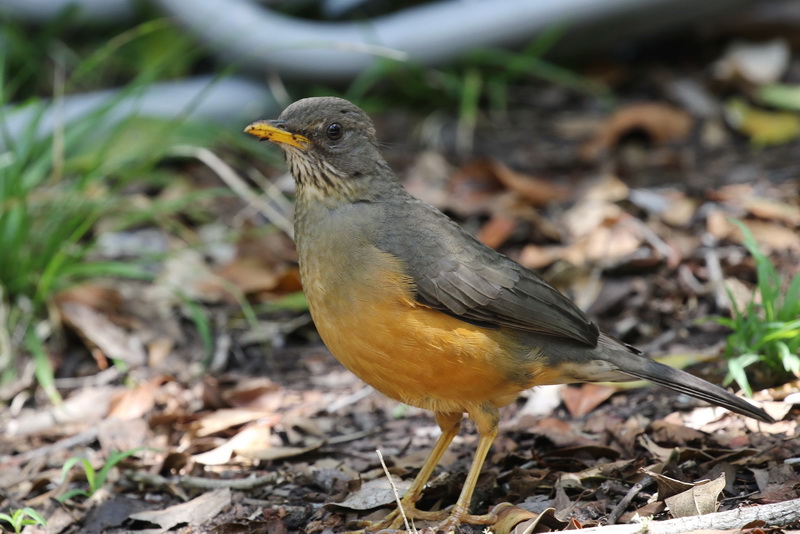
Kurrichane Thrush

From Letaba we headed south to Maroela Caravan Park near Orpen Gate.

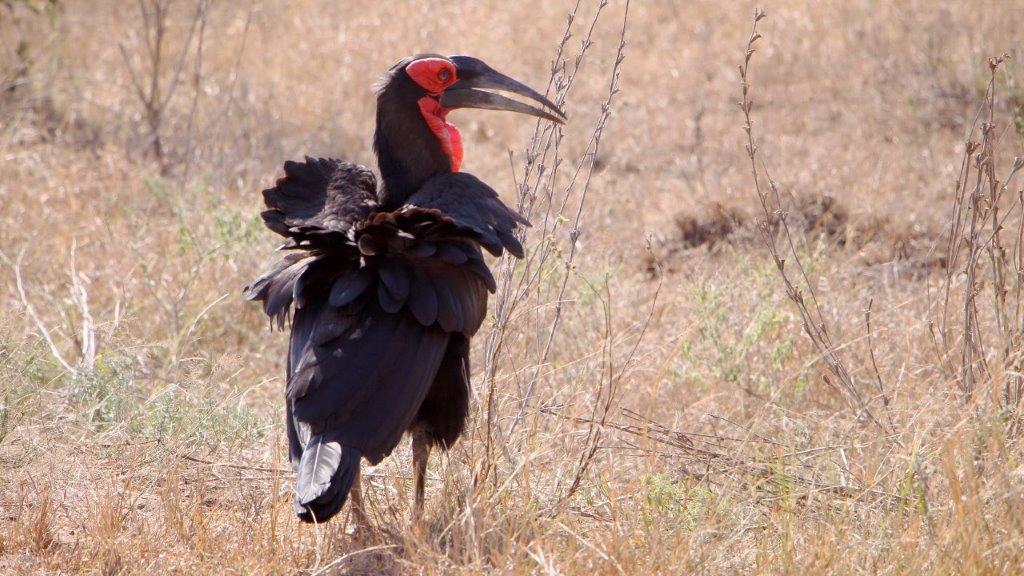
Along the way we stopped frequently for Southern Ground-Hornbills – 4 times. Among those we only found one with a tag. Here are some photos.

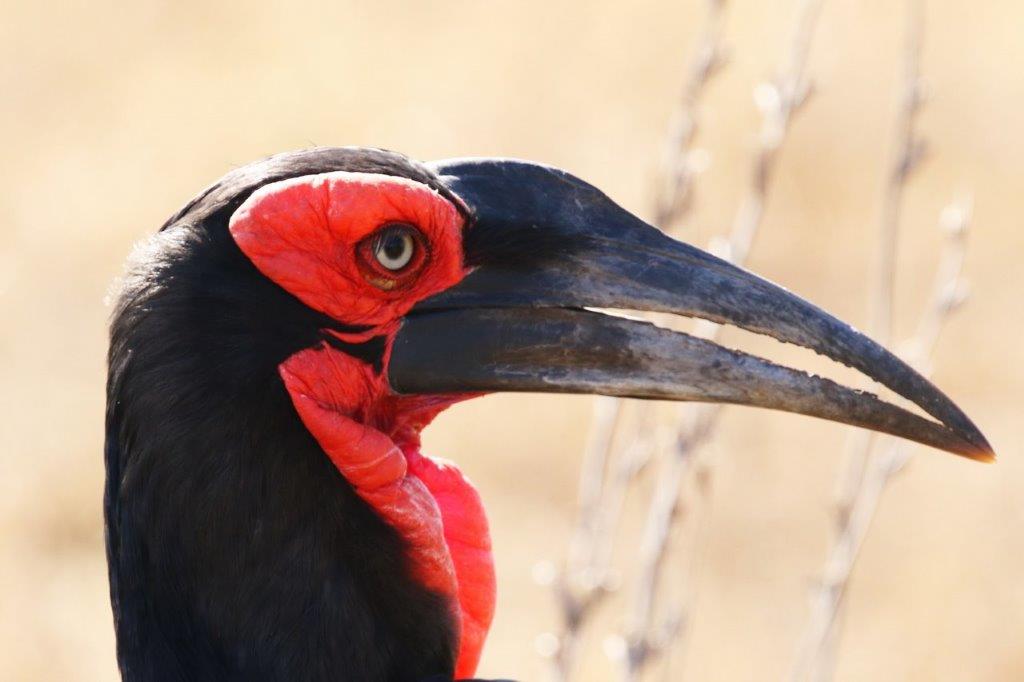
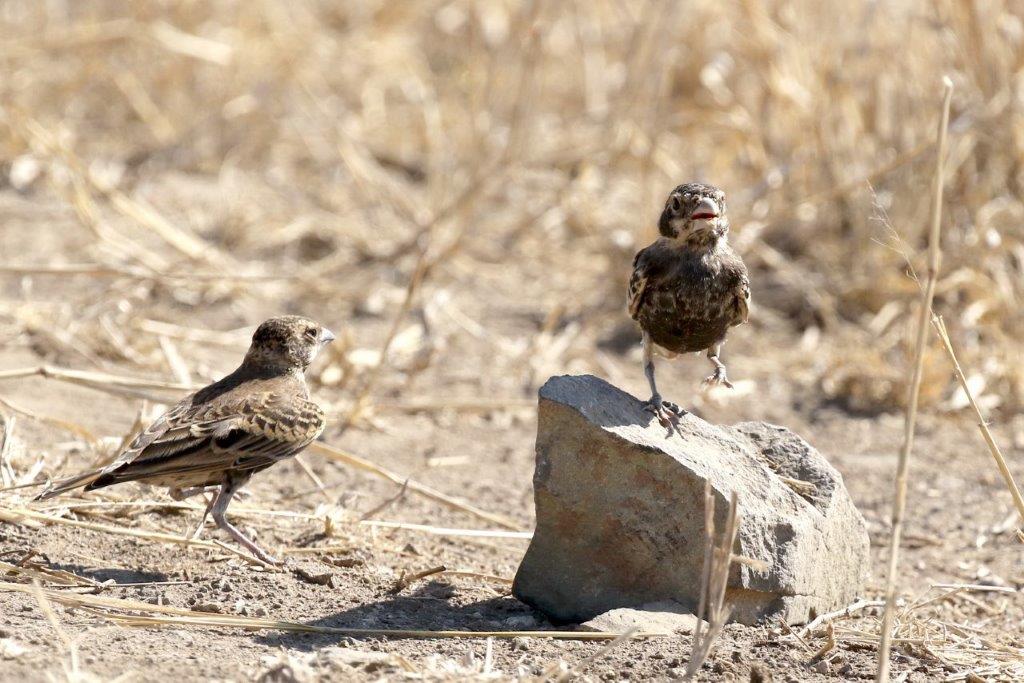
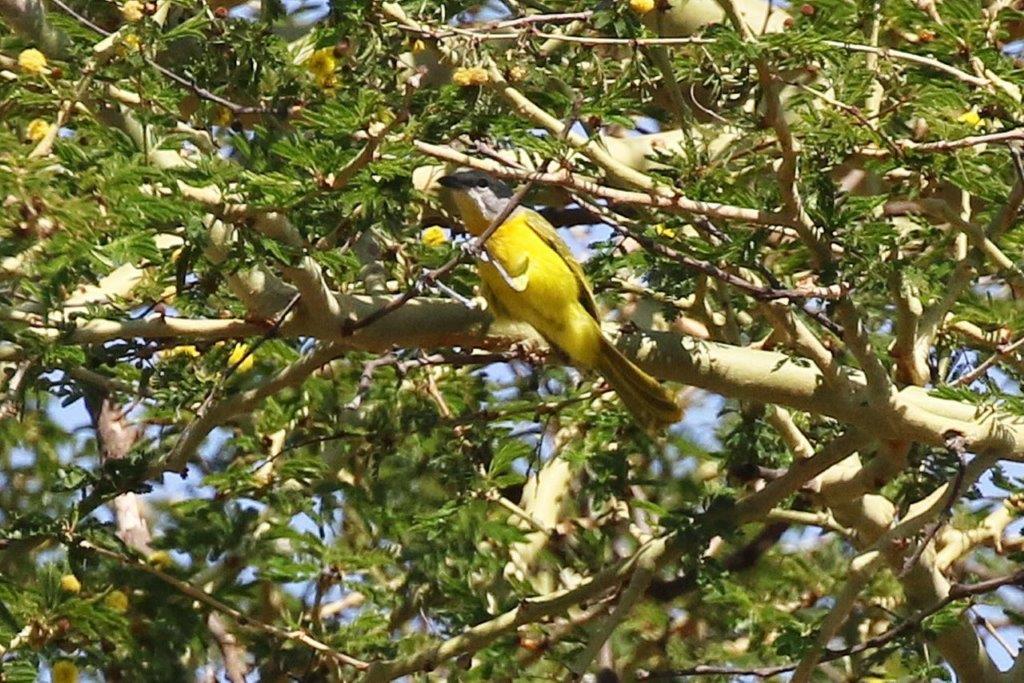
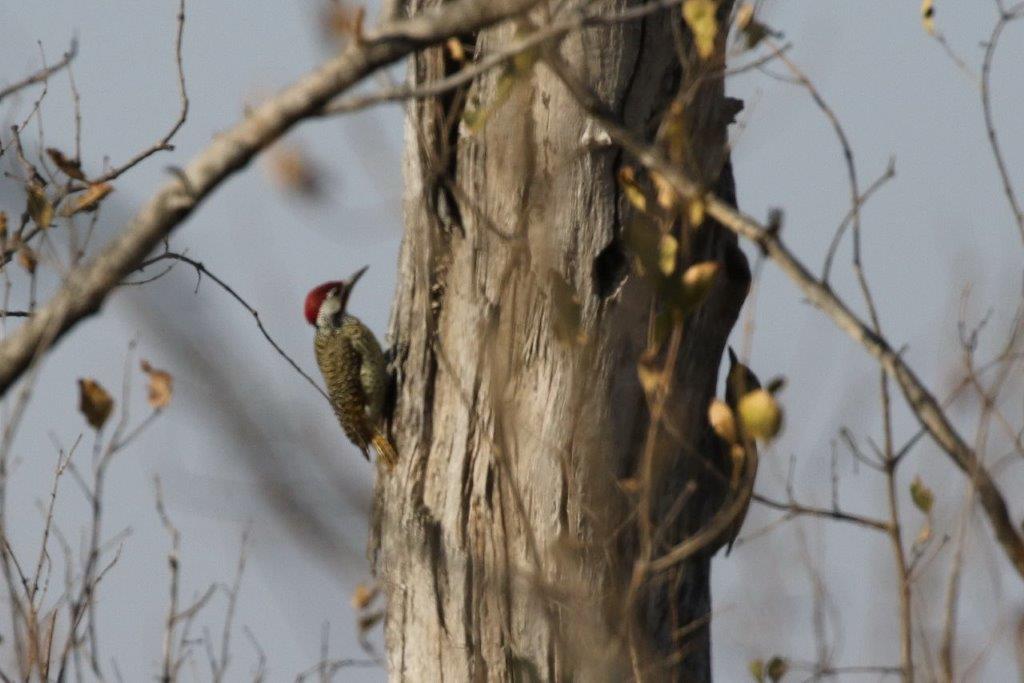
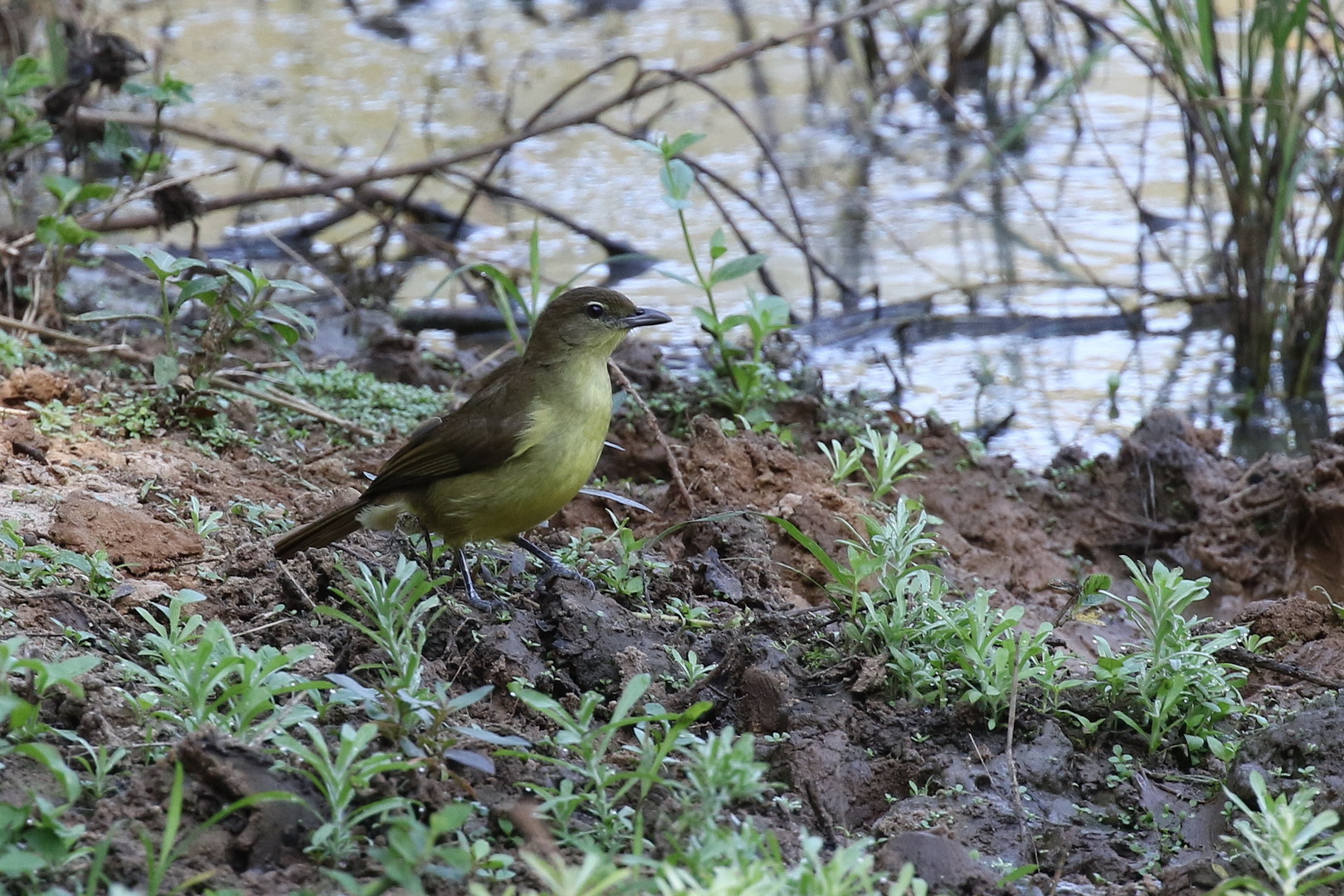
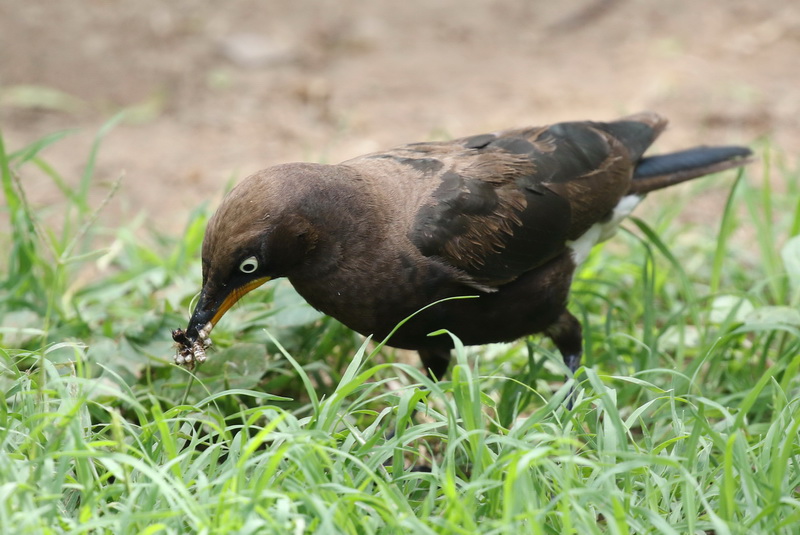
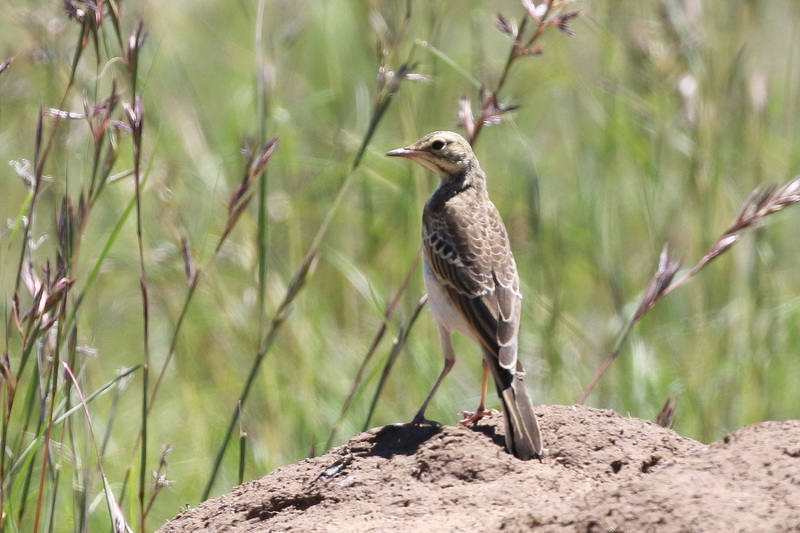
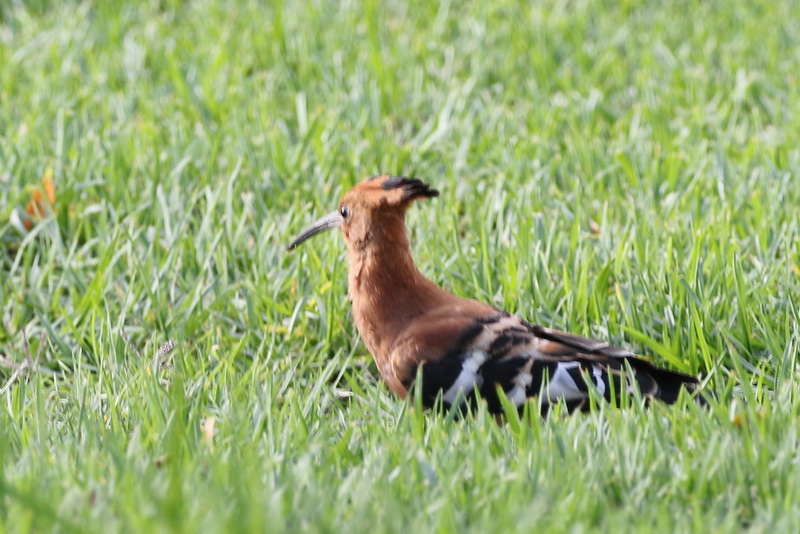
But there were many other occassions when we saw interesting birds along the way. These included.
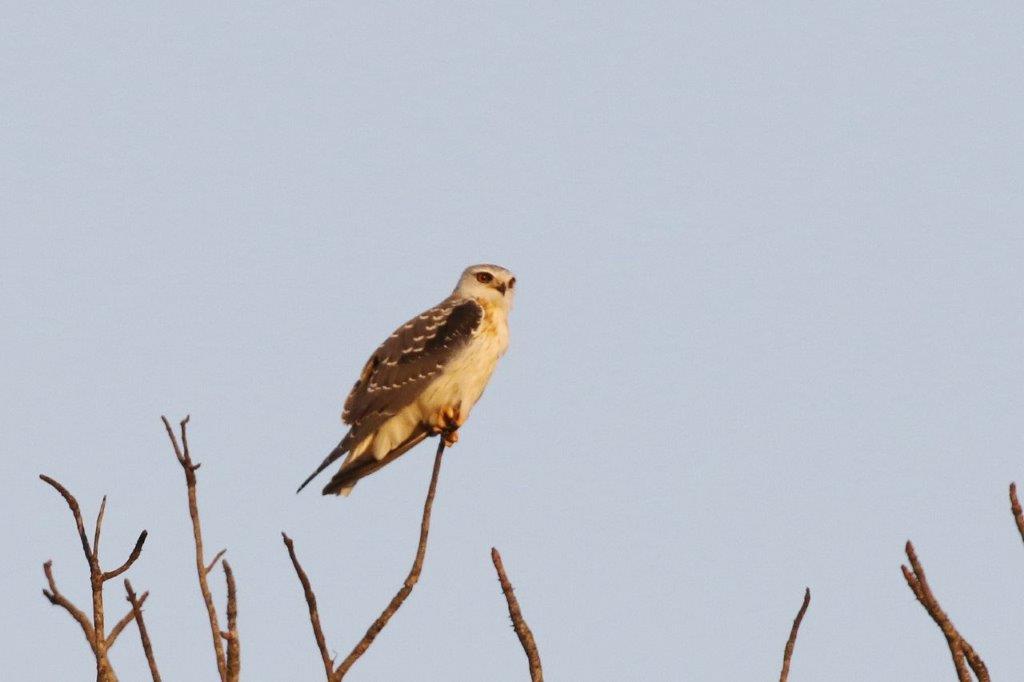
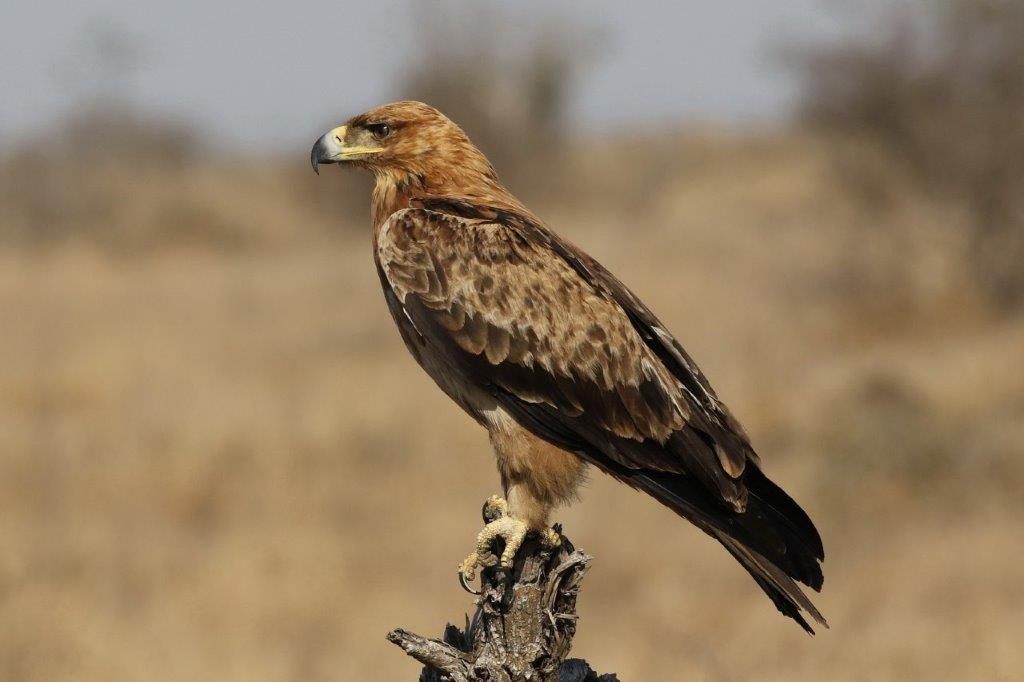
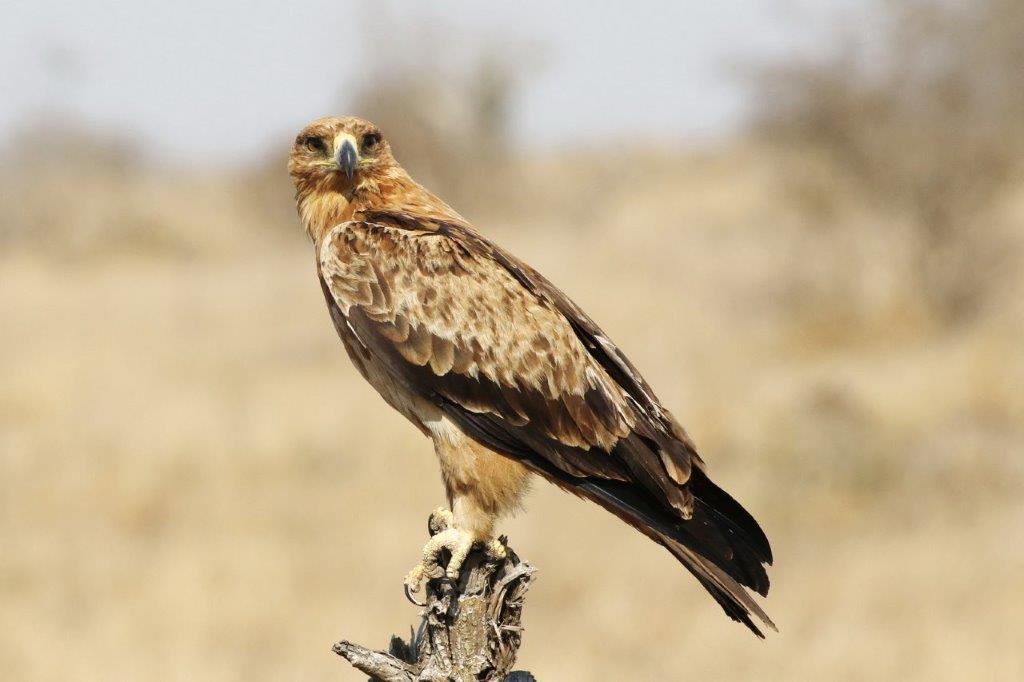
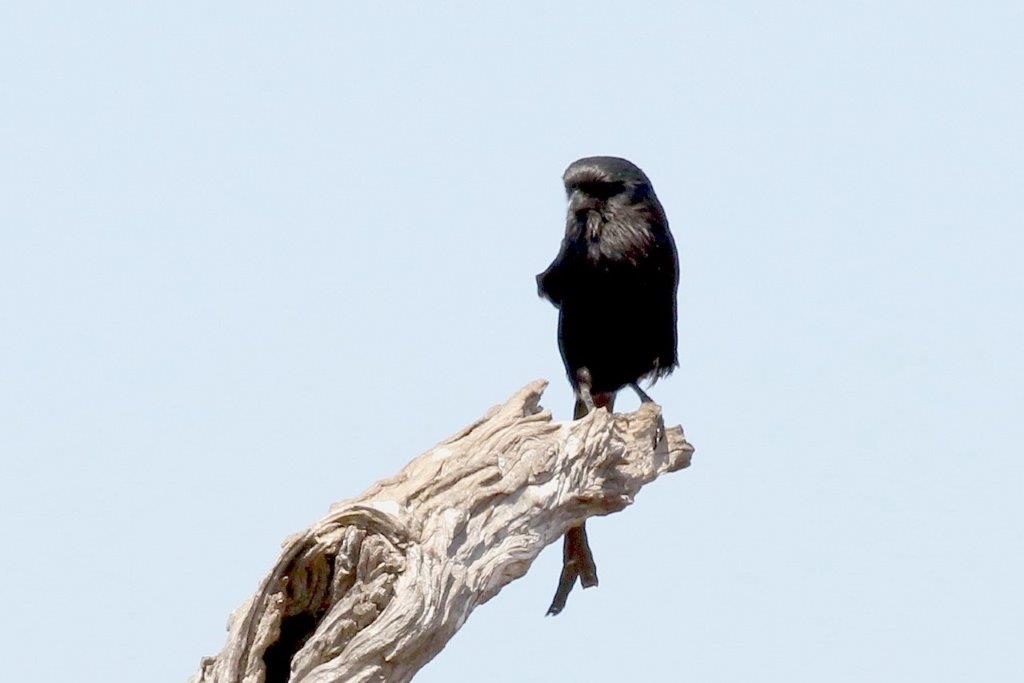
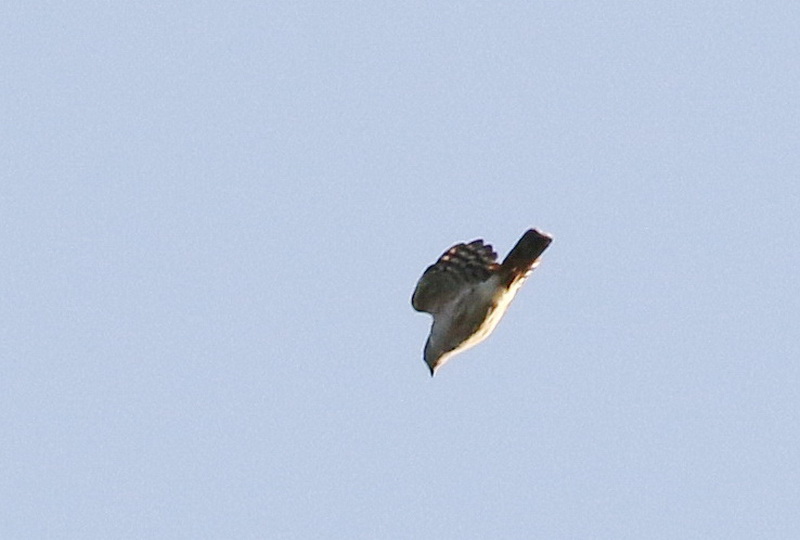
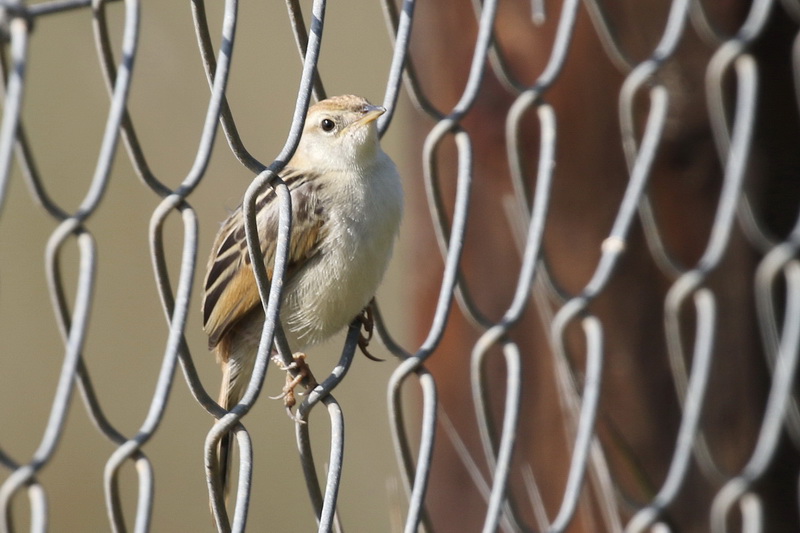
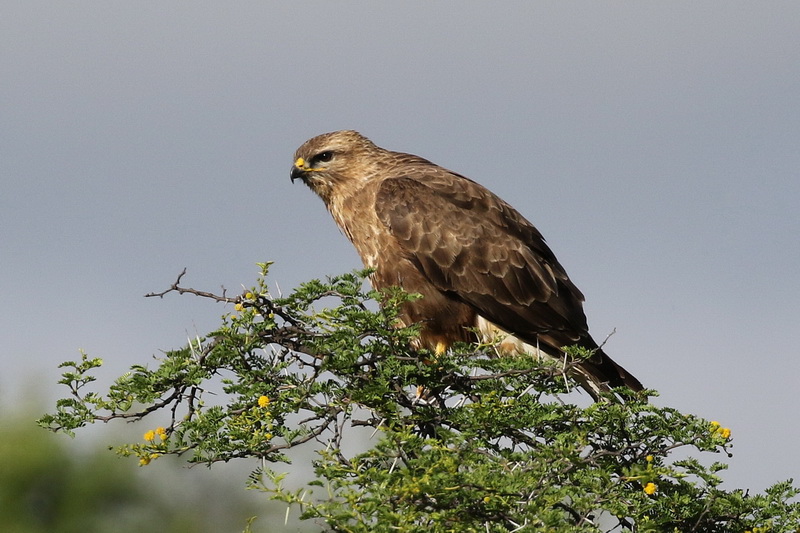
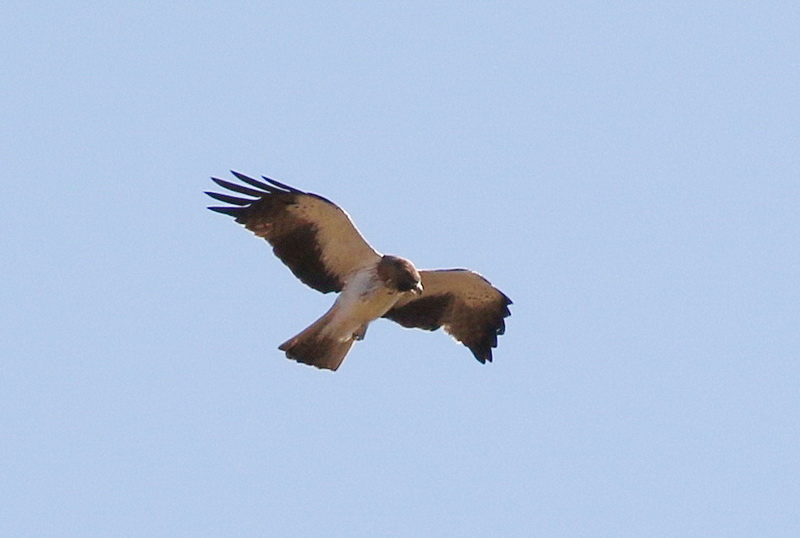
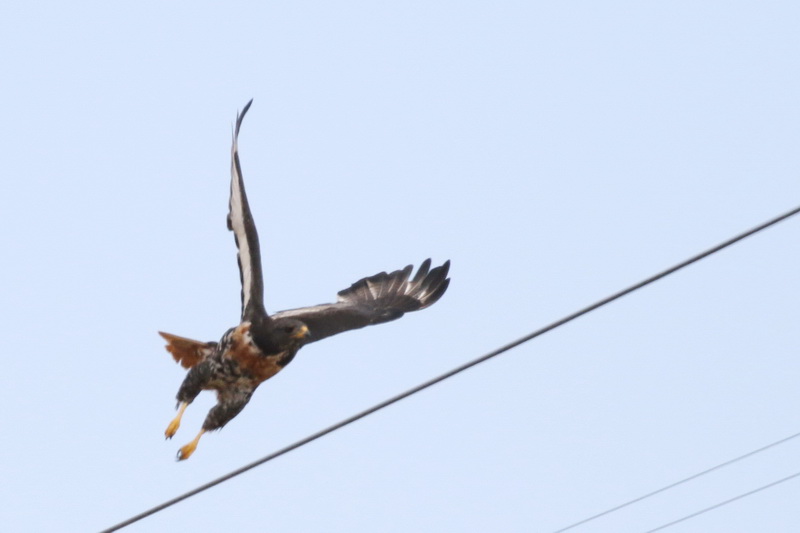
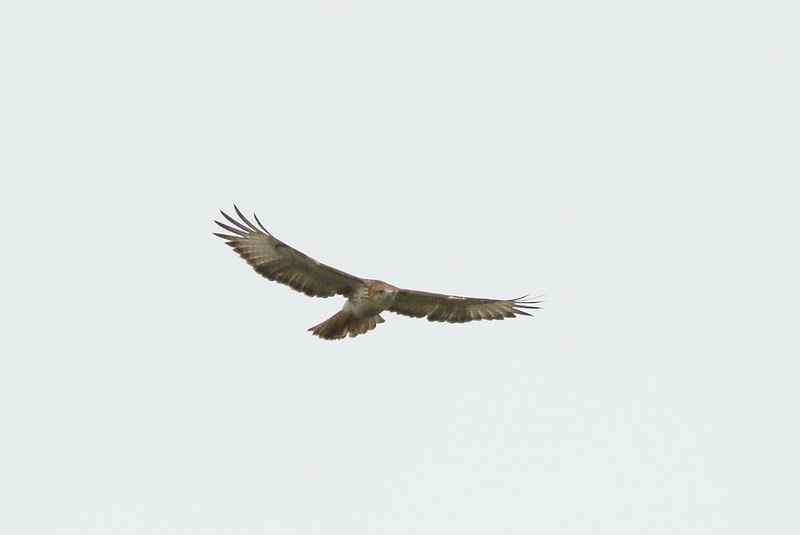
And a mystery raptor.

Mystery Raptor with long tail.


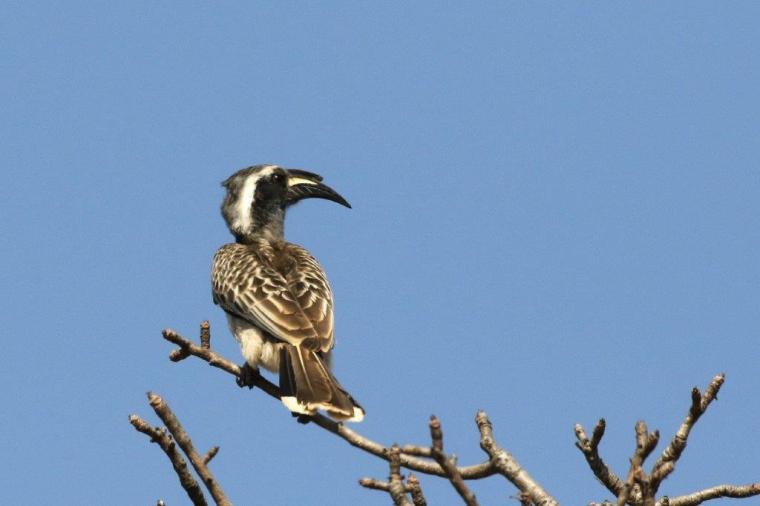
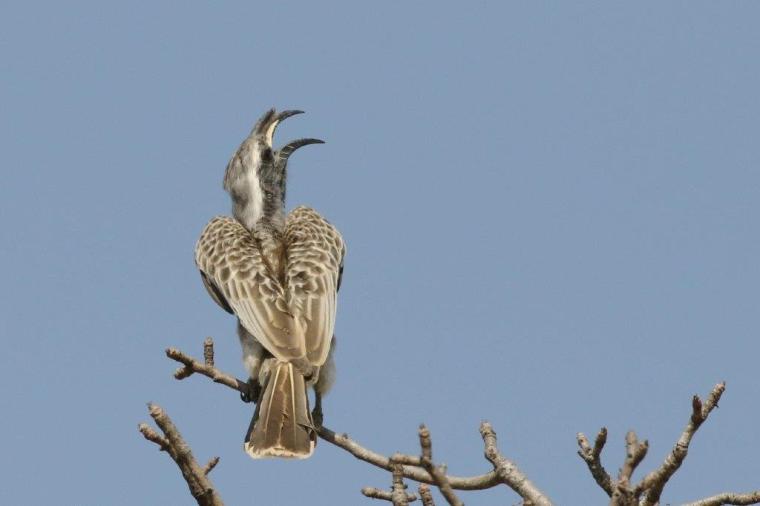
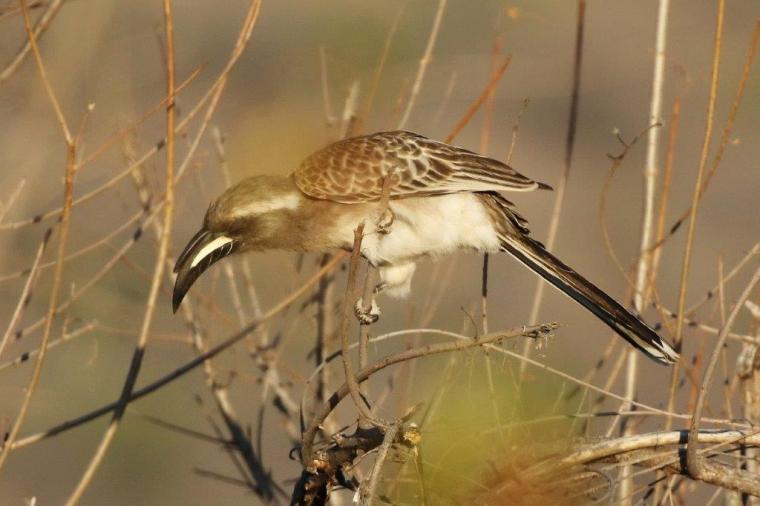
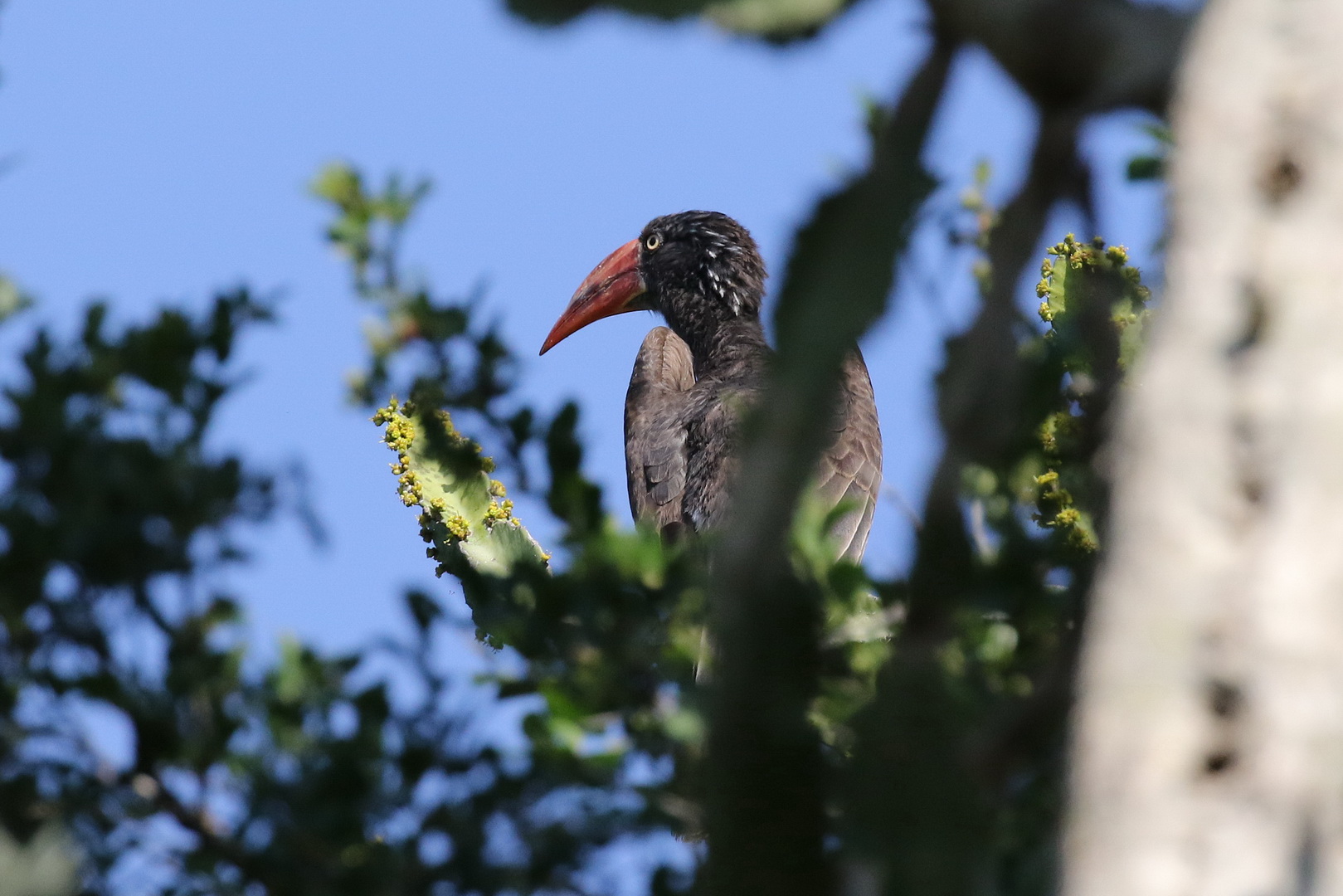
Also it is interesting to show together the variety of Hornbills seen on our trip:

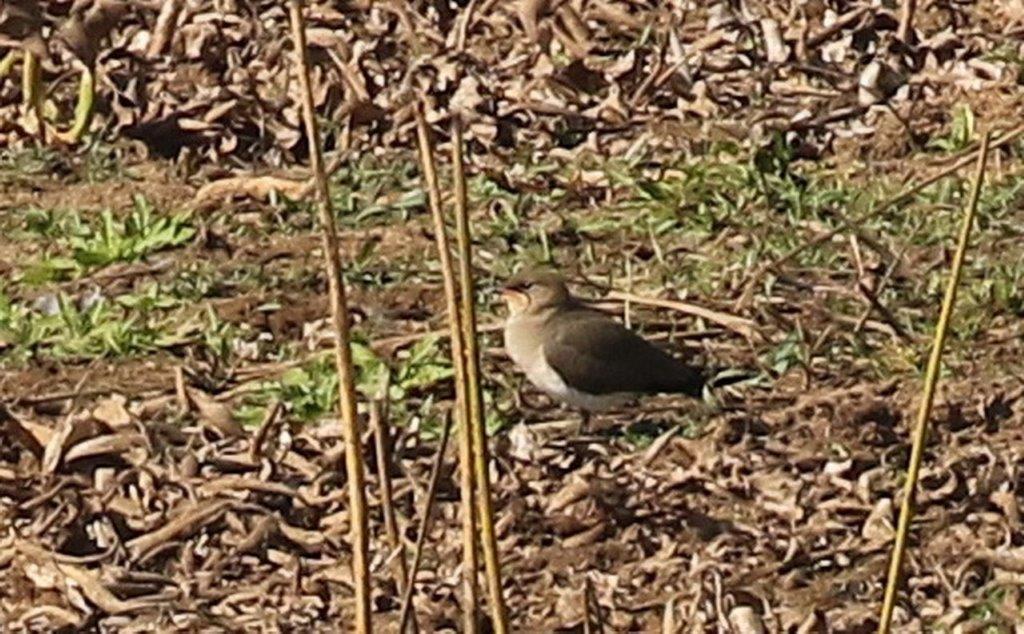
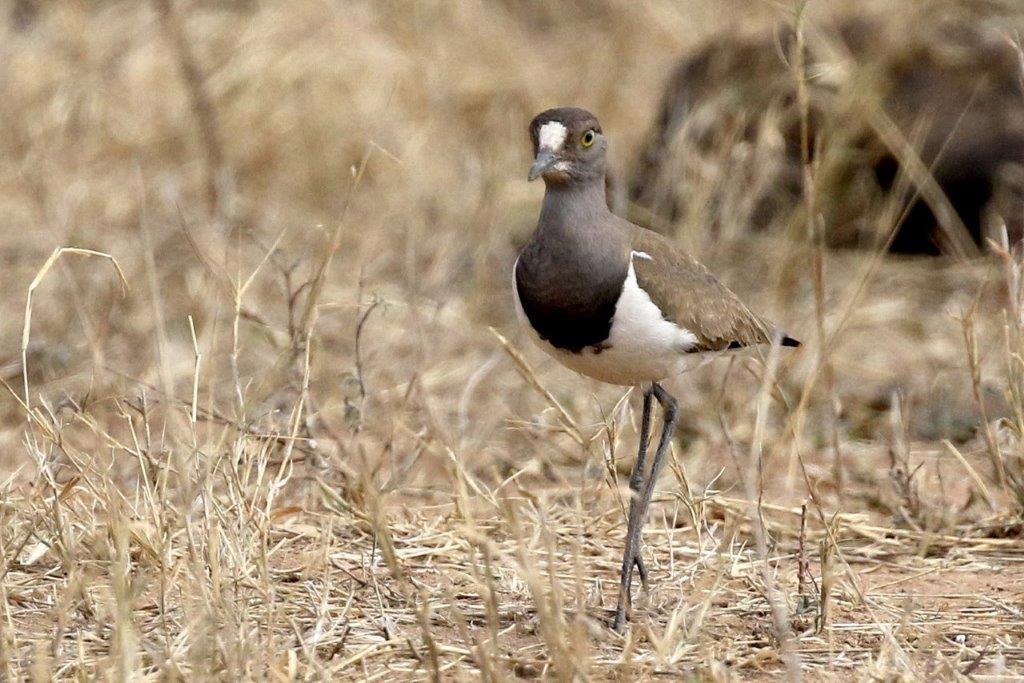
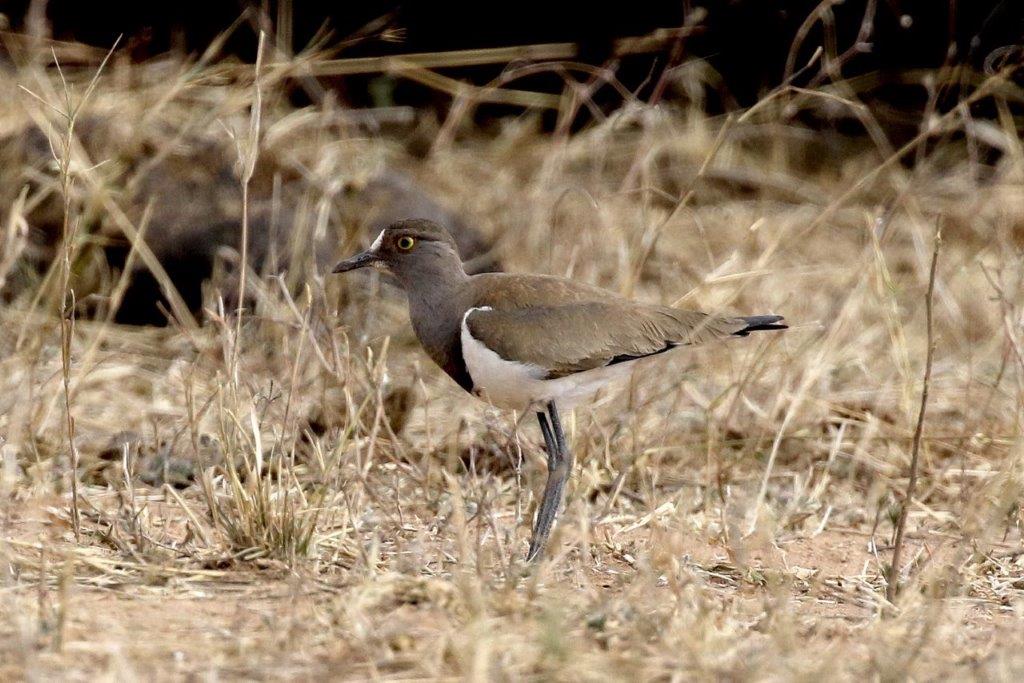
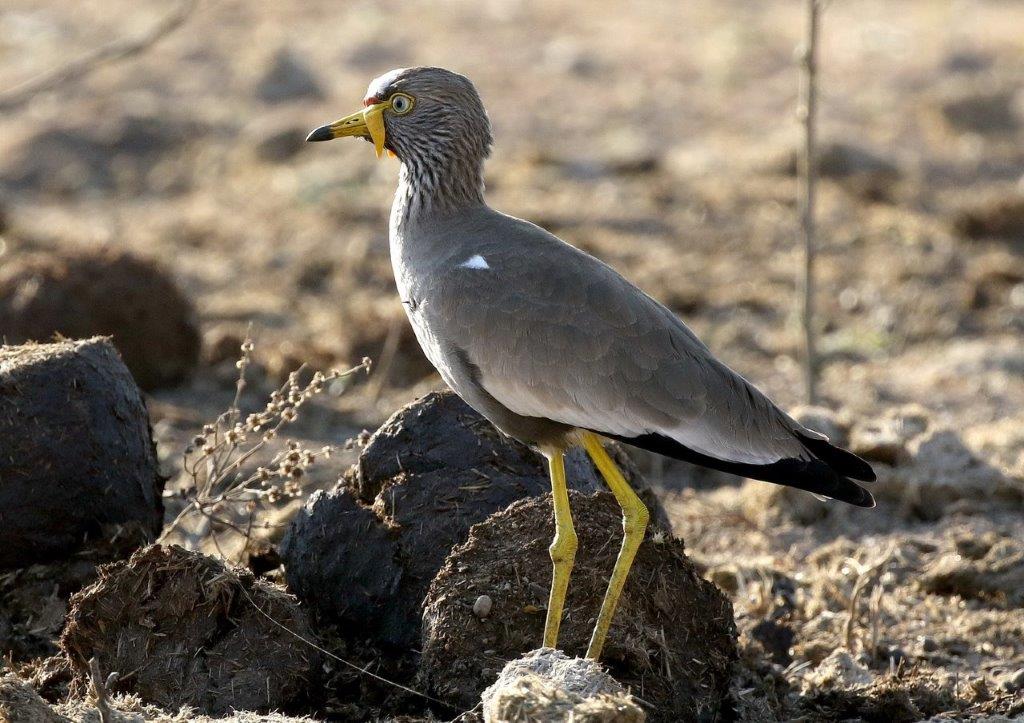
And Lapwings:

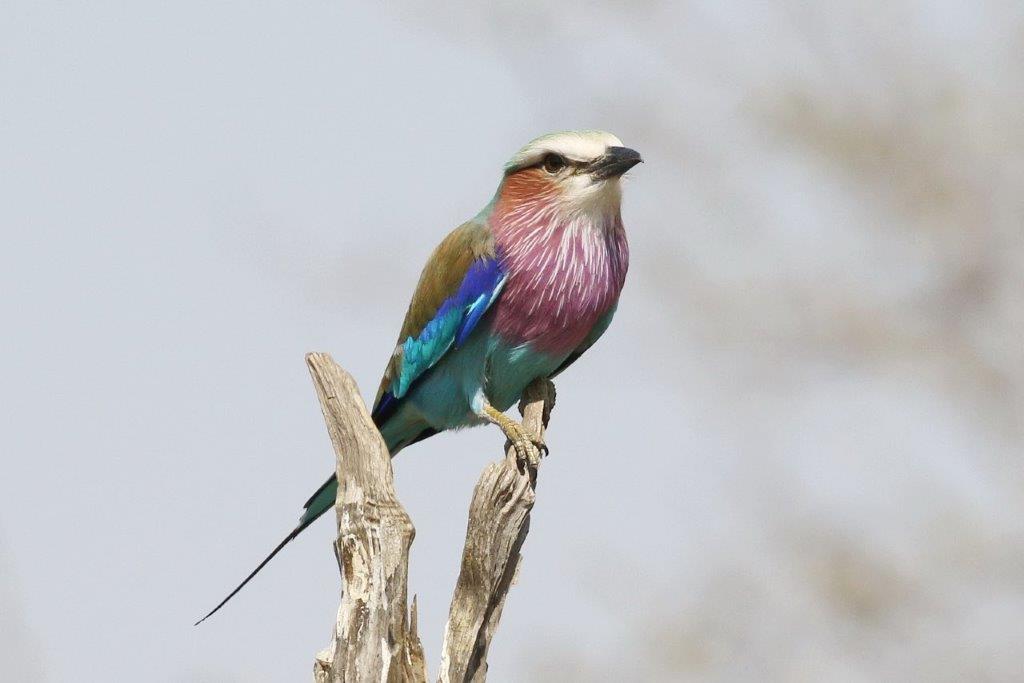
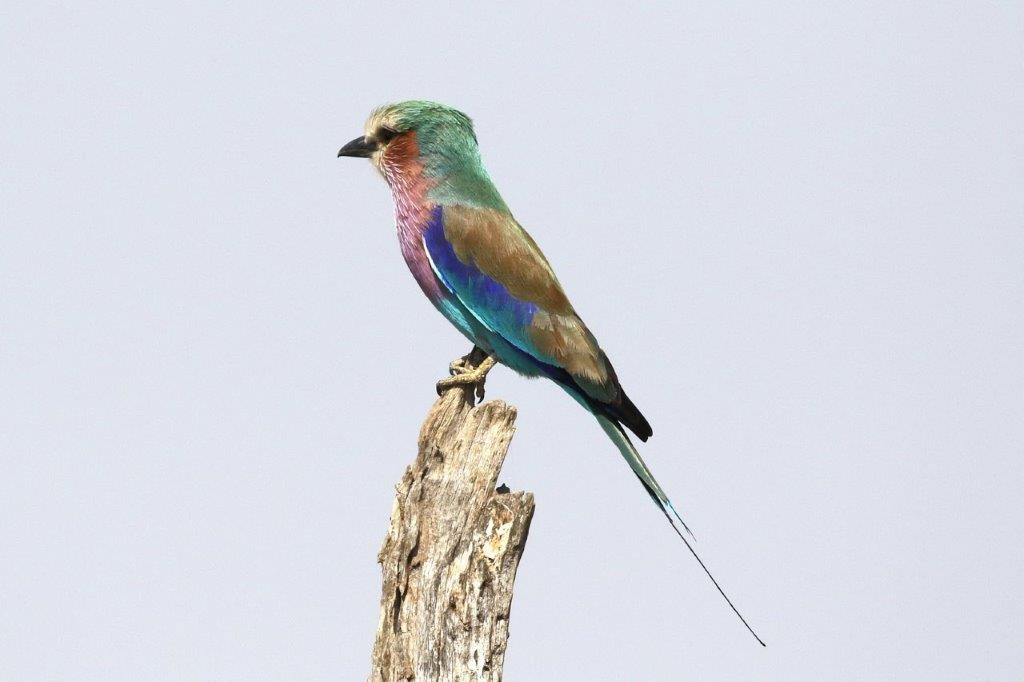
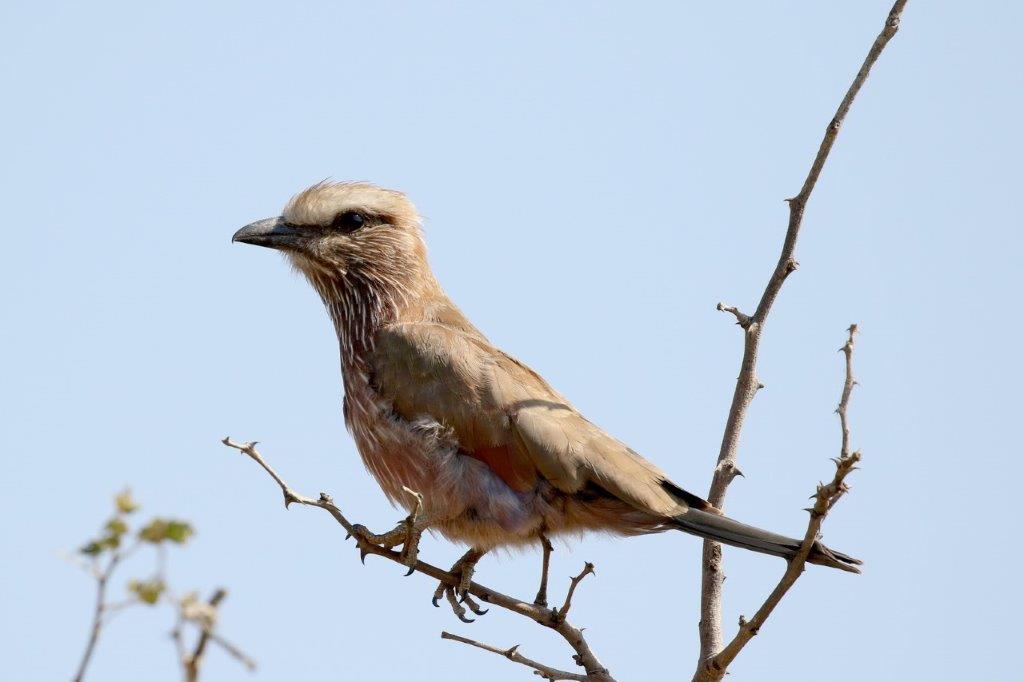
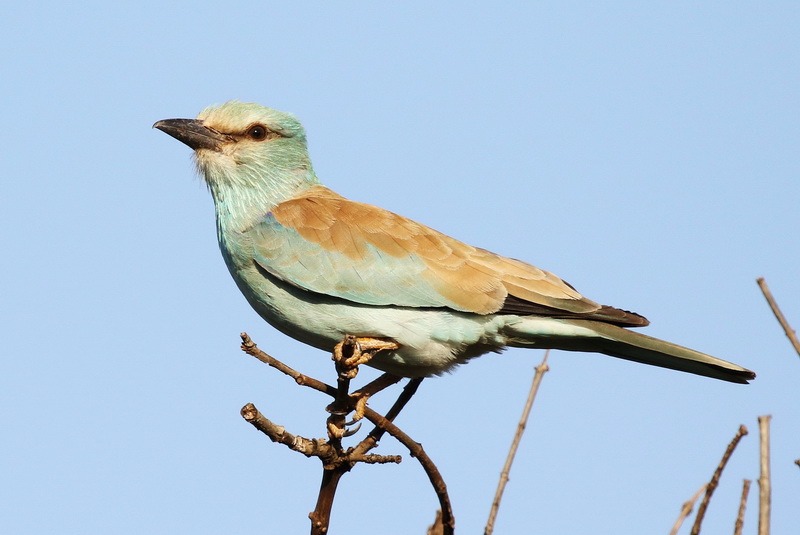
Of Course the Lilac-breasted Rollers were everywhere.
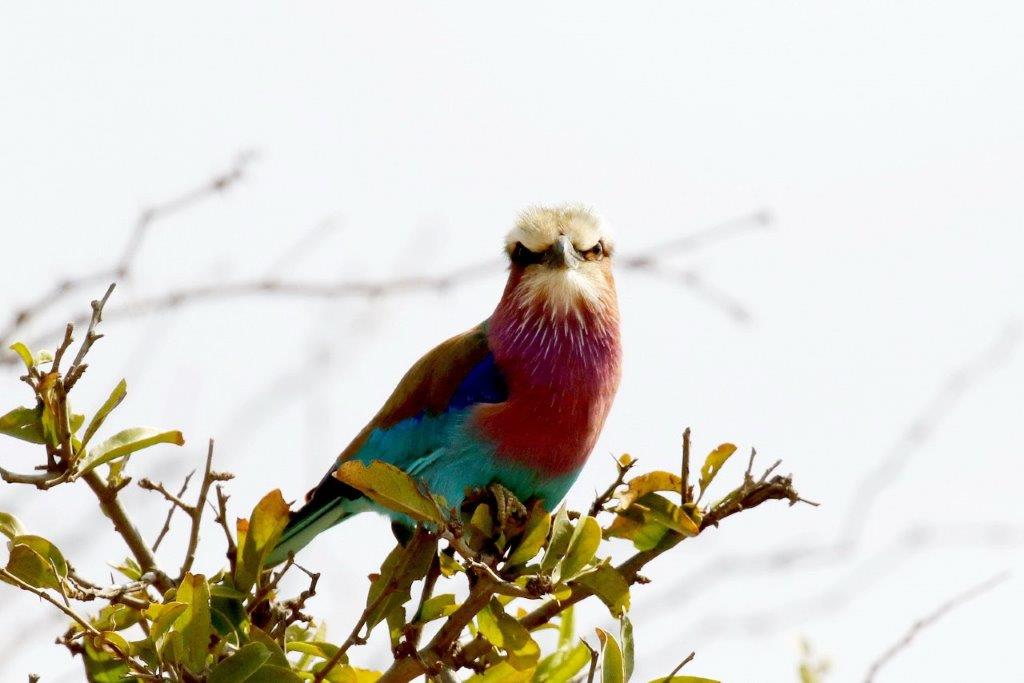
Lilac-breasted Roller

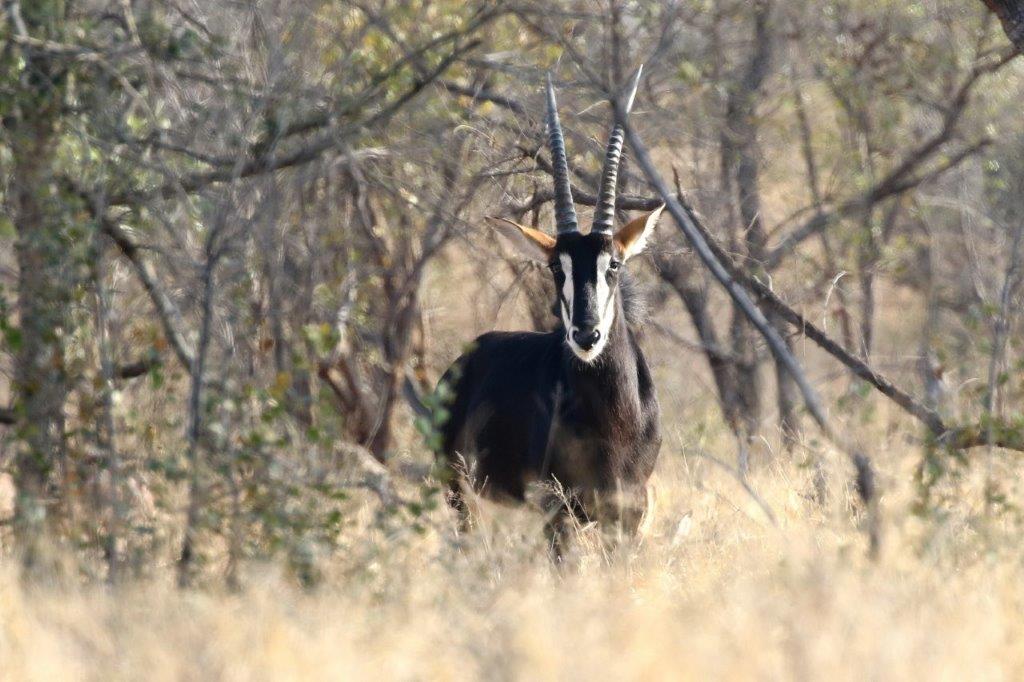
And some of the animals:

On reaching Satara we hoped to find a vacant campsite there – nothing available. So we left our campervan in the car park and spent several hours exploring the area around Satara. The S100 – the N’wanetsi River Road is one of our favourites.

Along the way there was a herd of Waterbuck by the road and one of them appeared to be giving birth. We decided to stop and watch. However the Waterbuk walk to a shady spot and chose to lie down in its shade. We fully expected the birth to be quick so we waited. After half an hour with nothing we thought about moving off however we decided to wait a further 5 minutes. Our thoughts were with the poor Waterbuck as it seemed she must be having difficulty.

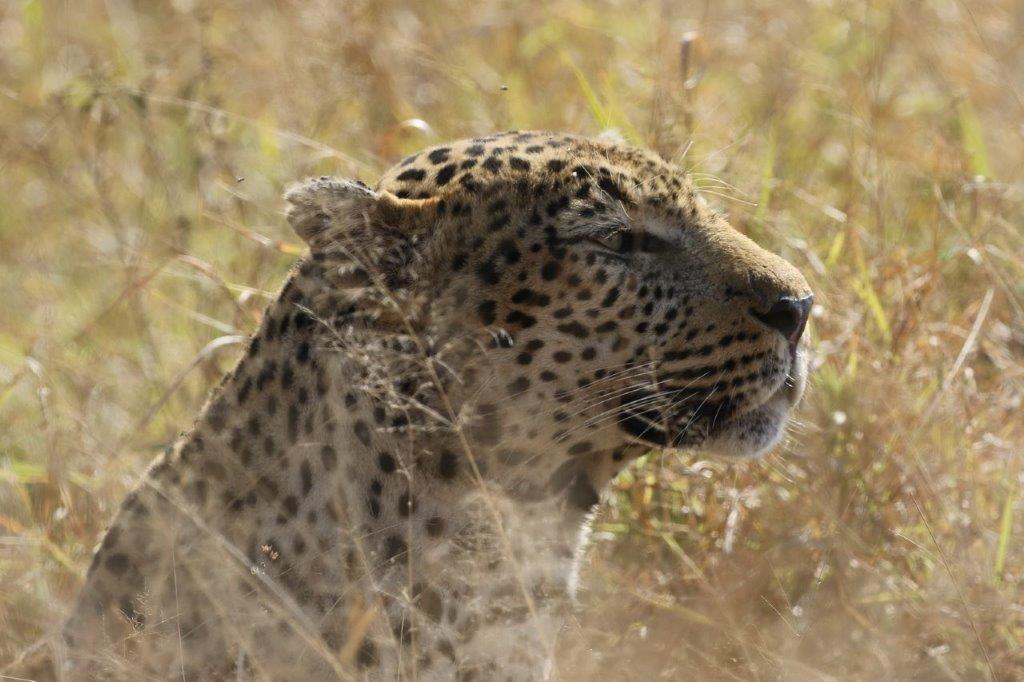
Then another 5 minutes with no change – so we decided to go and leave her in peace. All this time no cars had come along. Pulling out I checked my rear view mirror and thought I saw a dog in the road behind. But it was not a dog but a male Leopard. We reversed and found it hunkering down in the bush close to the road.

No doubt it was there because it was obviously aware that the Waterbuck was having difficulty with its labour. Perhaps we should have left it alone as it would have put the Waterbuck out of her misery. But we hung around until the Leopard slunk away.

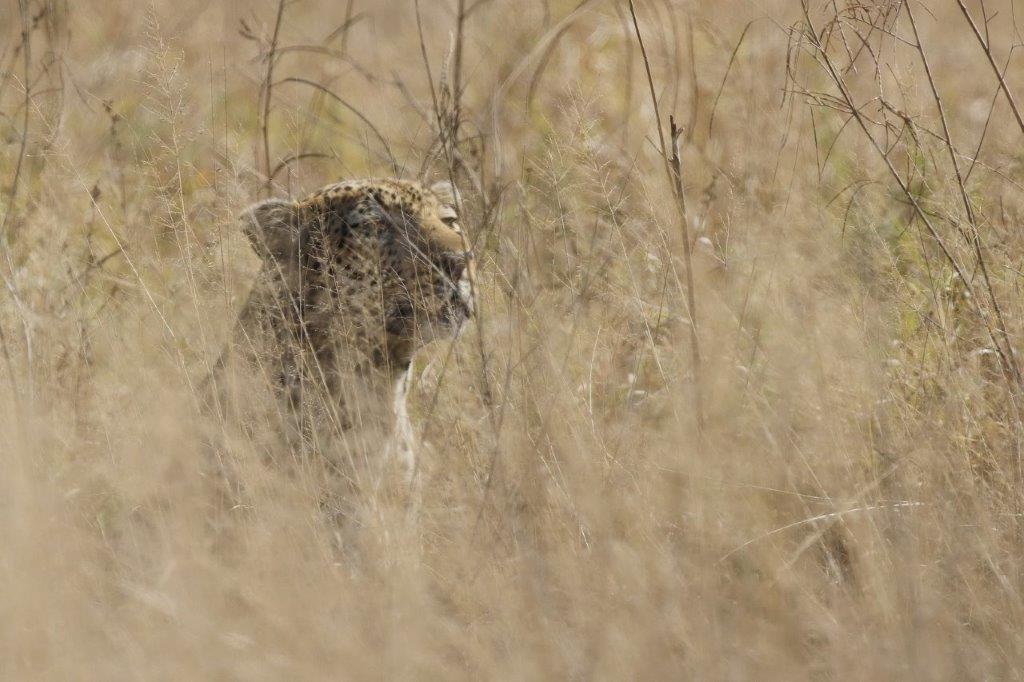
Leopard

Traveling round to the Sweni hide a variety of different birds were seen.
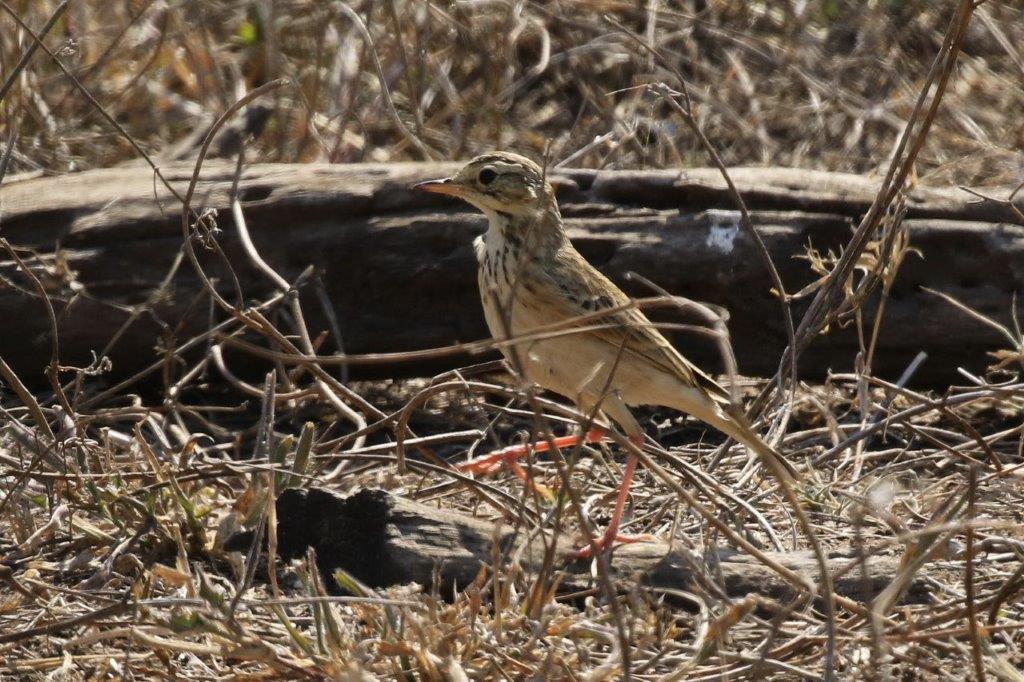
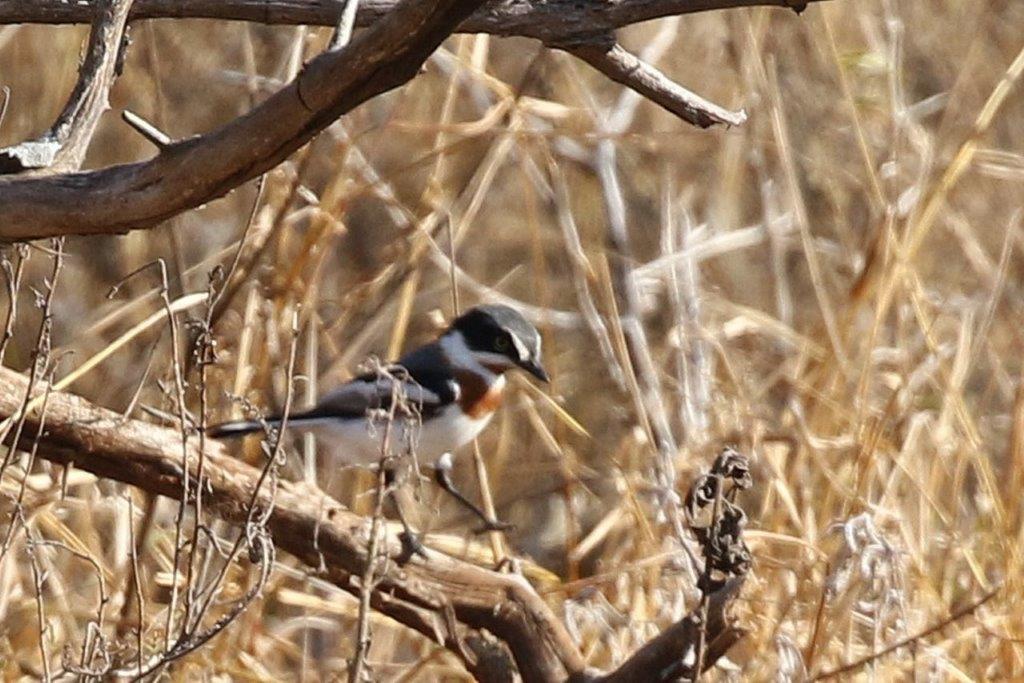
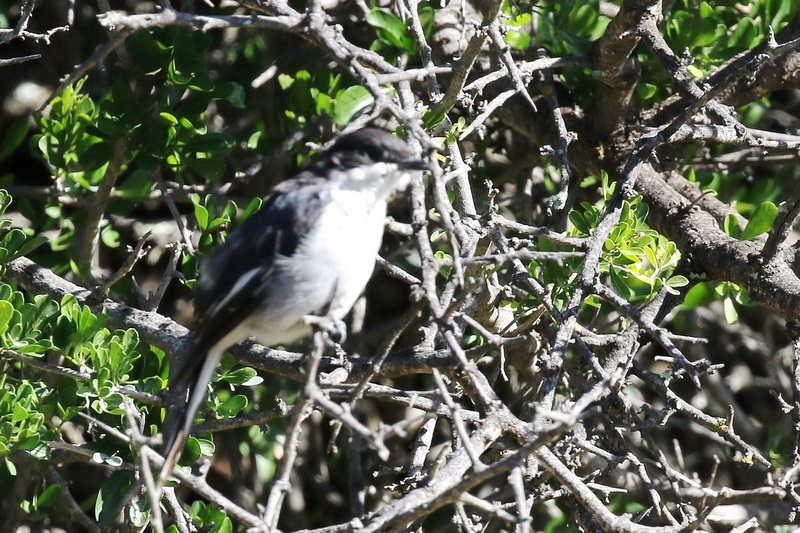
For a short time we got stumped identifying a bird. A bit like a Fiscal Flycatcher but it seemed to have a feint rufous collar around its neck.

Rufous necked

It was only when it turned round that we were able to ID it.

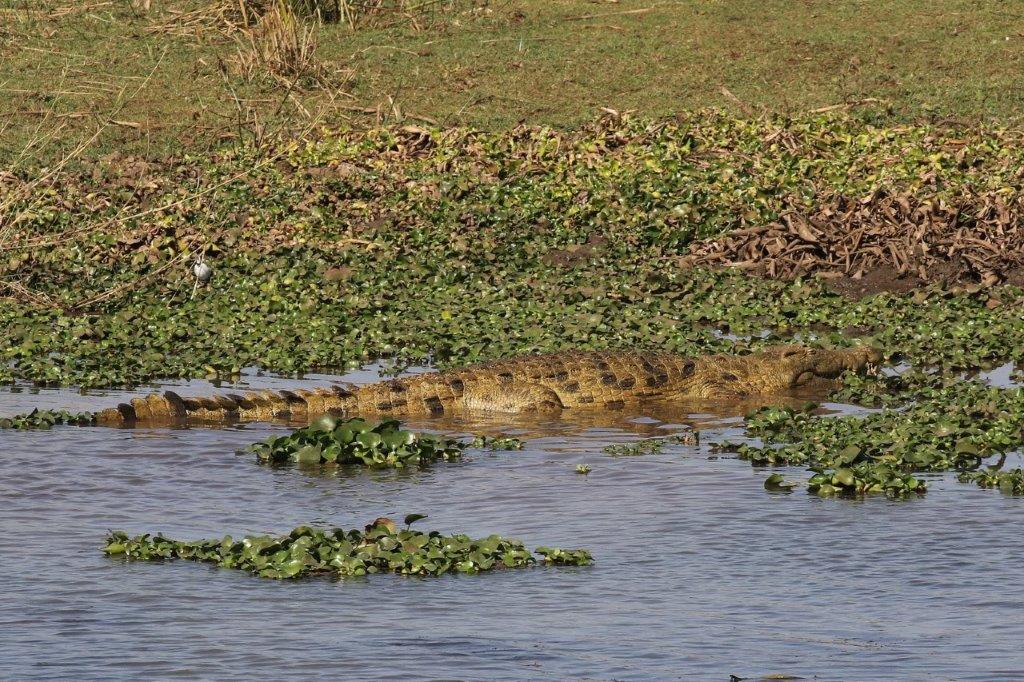
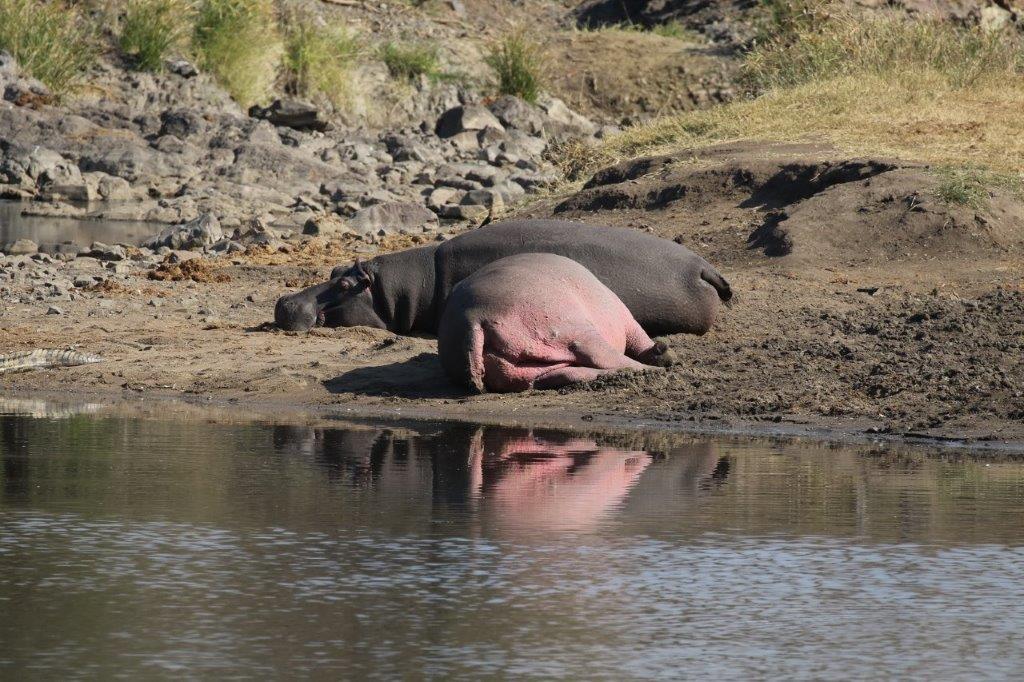
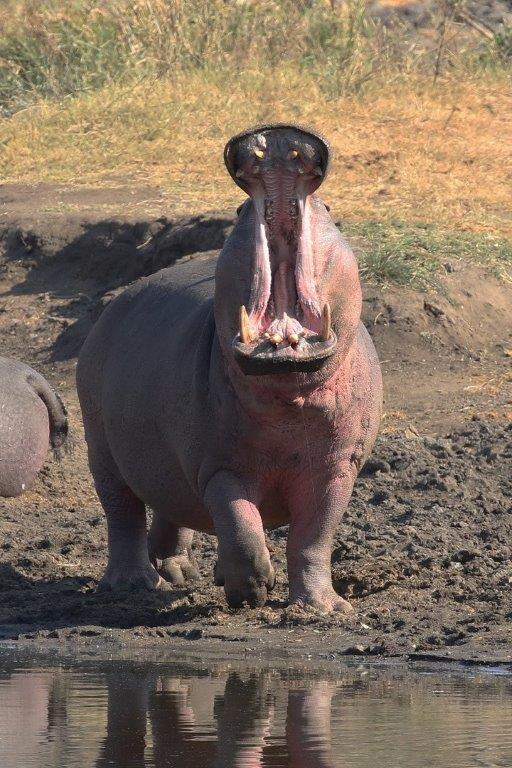
Then we spent some time at the Sweni Hide – always good for strange happenings. Here the Hippos were waking up and there were crocodiles about as well as a Black-crowned Night-Heron which we had seen in the exact same place the last time we visited.

Maroela Caravan Camp was an entertaing site with Hyena and Elephant traipsing round the outer fence line. The former hoping for tit bits without success. It is a small but pleasant site. However we were given advice to protect our food from Baboons and Badgers. We had no issues – arriving late and leaving early.

Unknowingly we took the back roads cutting across to the main H1-3 road which were well corregated all the way. I suppose this is expected due to the lack of rain. Skukuza was our next pit stop for a breather and loo break.

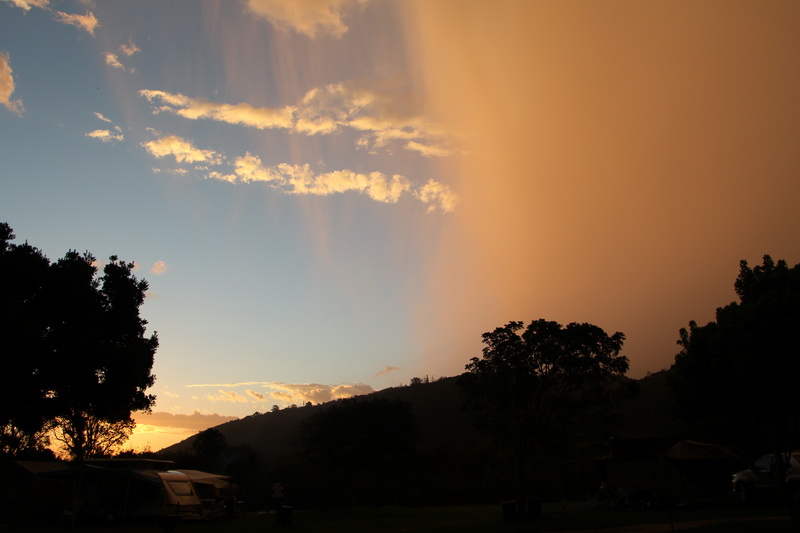
And then we got to the Malelane Camp just in time to set up and relax before sunset. So far the weather had been cool but here it got quite cold at night.

From Malelane camp we explored the area around Berg-en-dal as well as along the Crocodile River.

On our first day there we went out of the park to enter at Crocodile Bridge to drive with the sun behind us. It took a bit longer to get there than we expected as we hit major roadworks.

On entering the park at Crocodile bridge we came across a noisy bird party and on inspection the reason for the noise was obvious. There in the tree eating its prey was a Pearl-spotted Owlet.

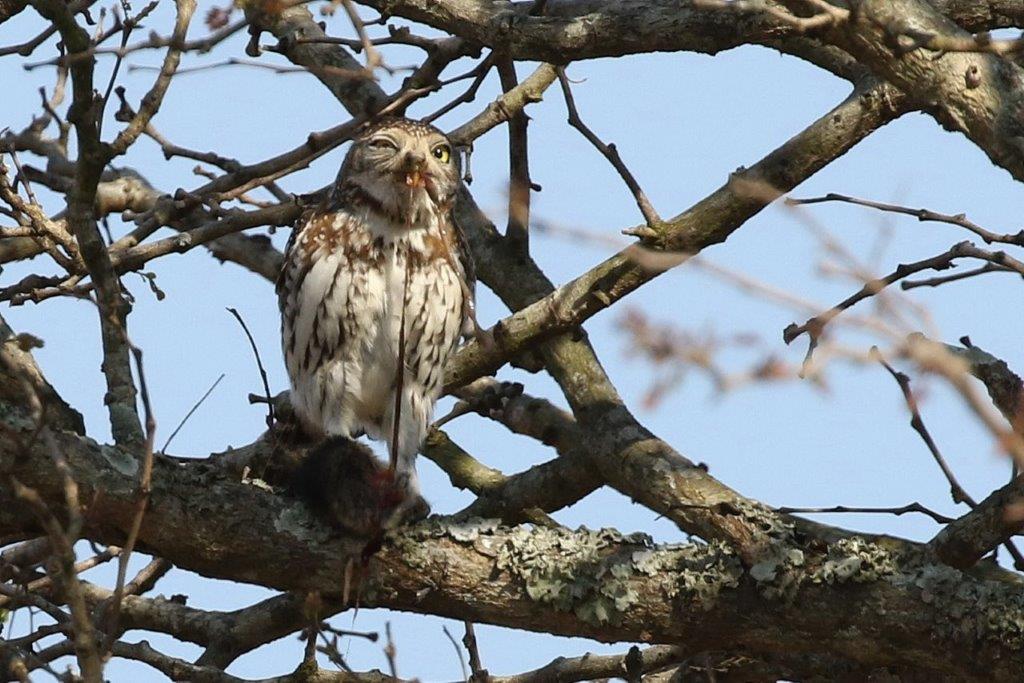
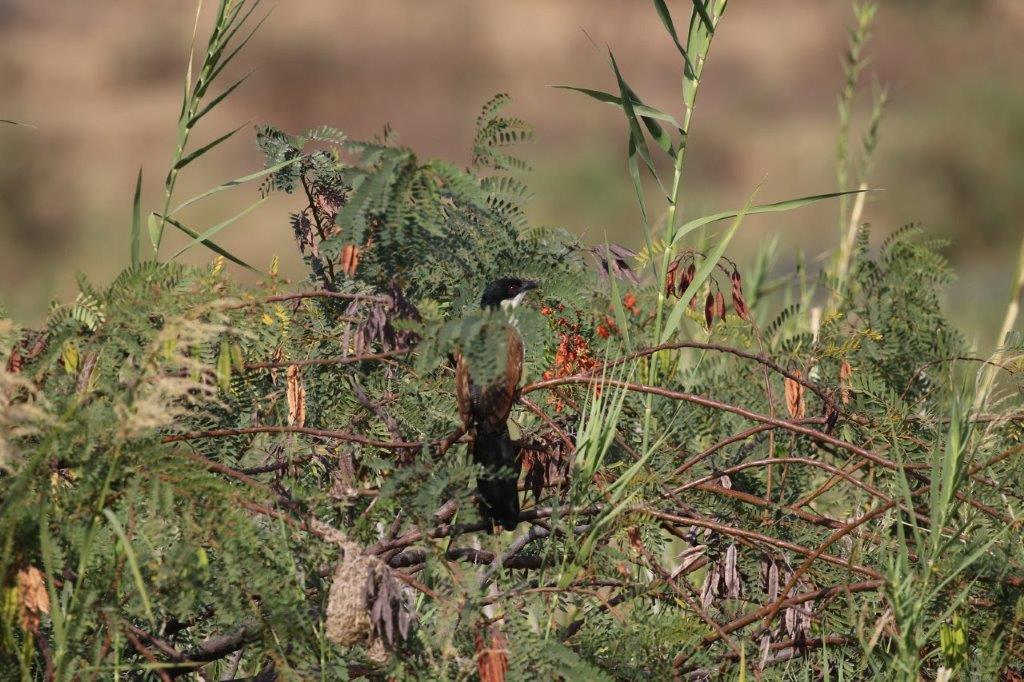
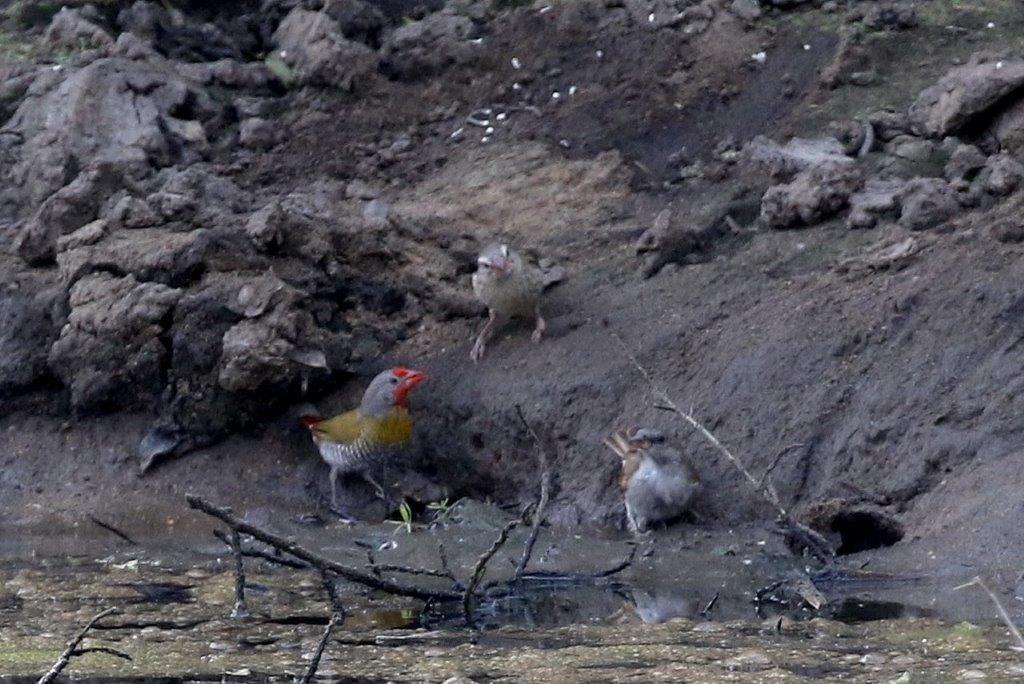
Mpondo Dam was our next place to visit. On the way here are some of the birds we saw and photographed.

Mpondo Dam was a bit crowded but we managed to find a quiet spot. Elephants appeared further down, otherwise the wildlife was quiet.

Gardenia Hide is always worth a visit if there is water. As we arrived there were a herd of elephants in and out of the water. Getting up to antics, the young males were pushing each other around as tests of strength. One walked right up to the lookout point in the hide. Needless to say he had me scampering for the exit – the viewing windows are a lot bigger than usual in other hides. Two of the males seemd to kiss and make up – check the photo.

Kissing and making up

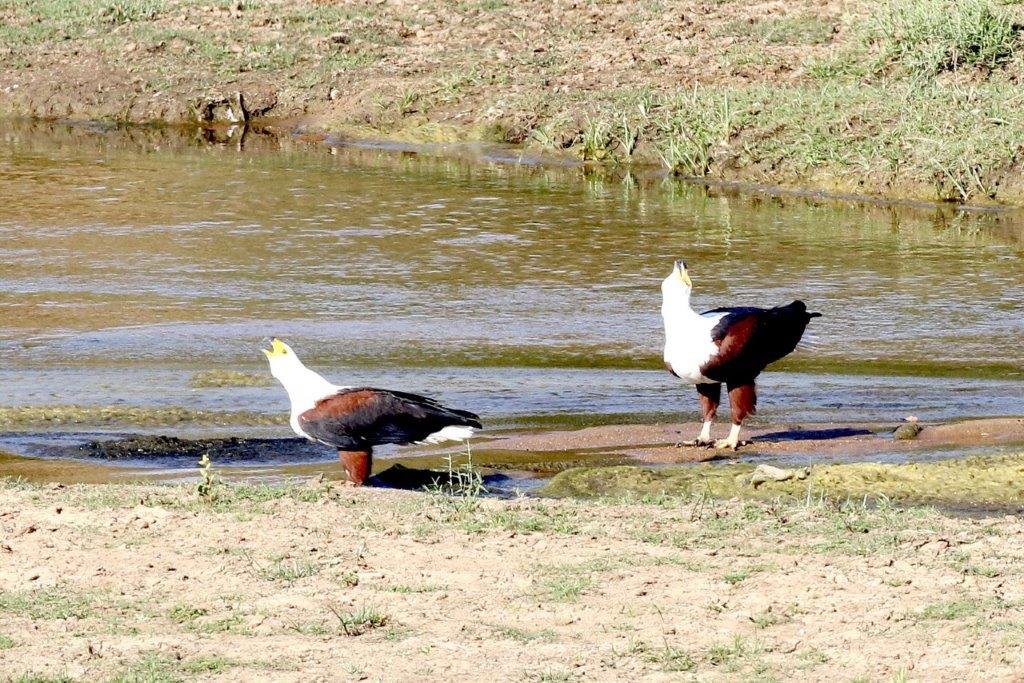
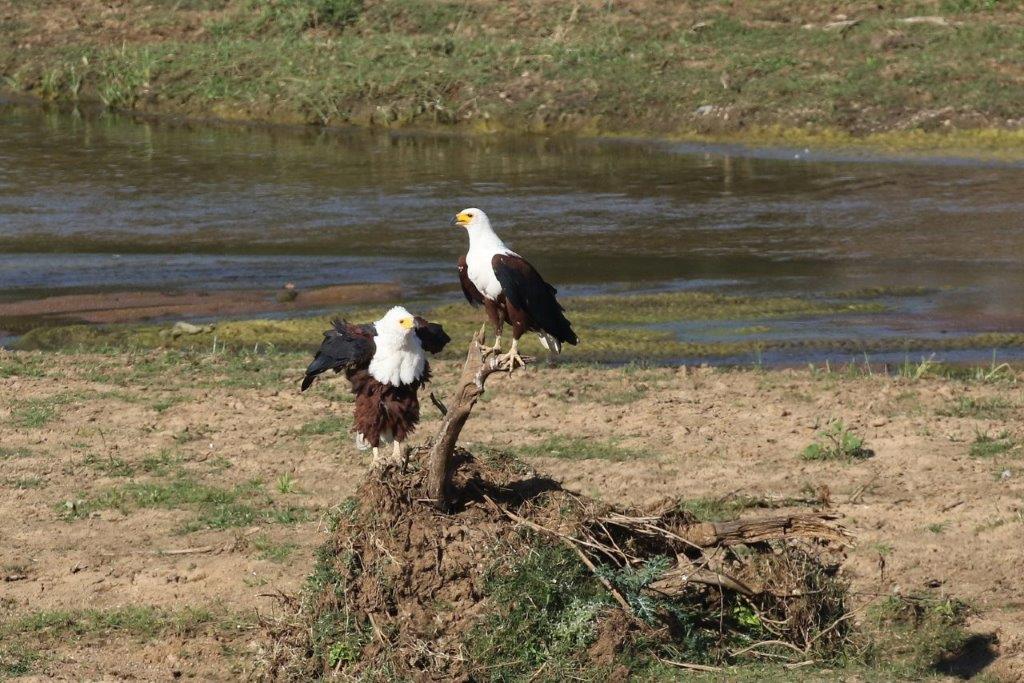
A pair of African Fish-Eagles were calling in a dry river bed and attracted our attention with their courtship. We were amused by their antics and their ruffling of feathers.

We came across a large herd of Buffaloes near a river bed – there must have been over 200 in one of the 3 groups nearest us all lying down.

The whole area was particularly dry and dusty especially around Berg-en-dal. Yet there were birds about and some good ones at that.

Cane fires were burning across the river from our campsite – thankfully the wind was blowing the ashes away from us – but they were seriously impressive.

Despite missing out on the Egyptian Vulture, the Kruger Park is a fantastic park to visit – one never knows what is round the next corner. In all we identified 143 different bird species. To see our list – click here.

Cane Fire


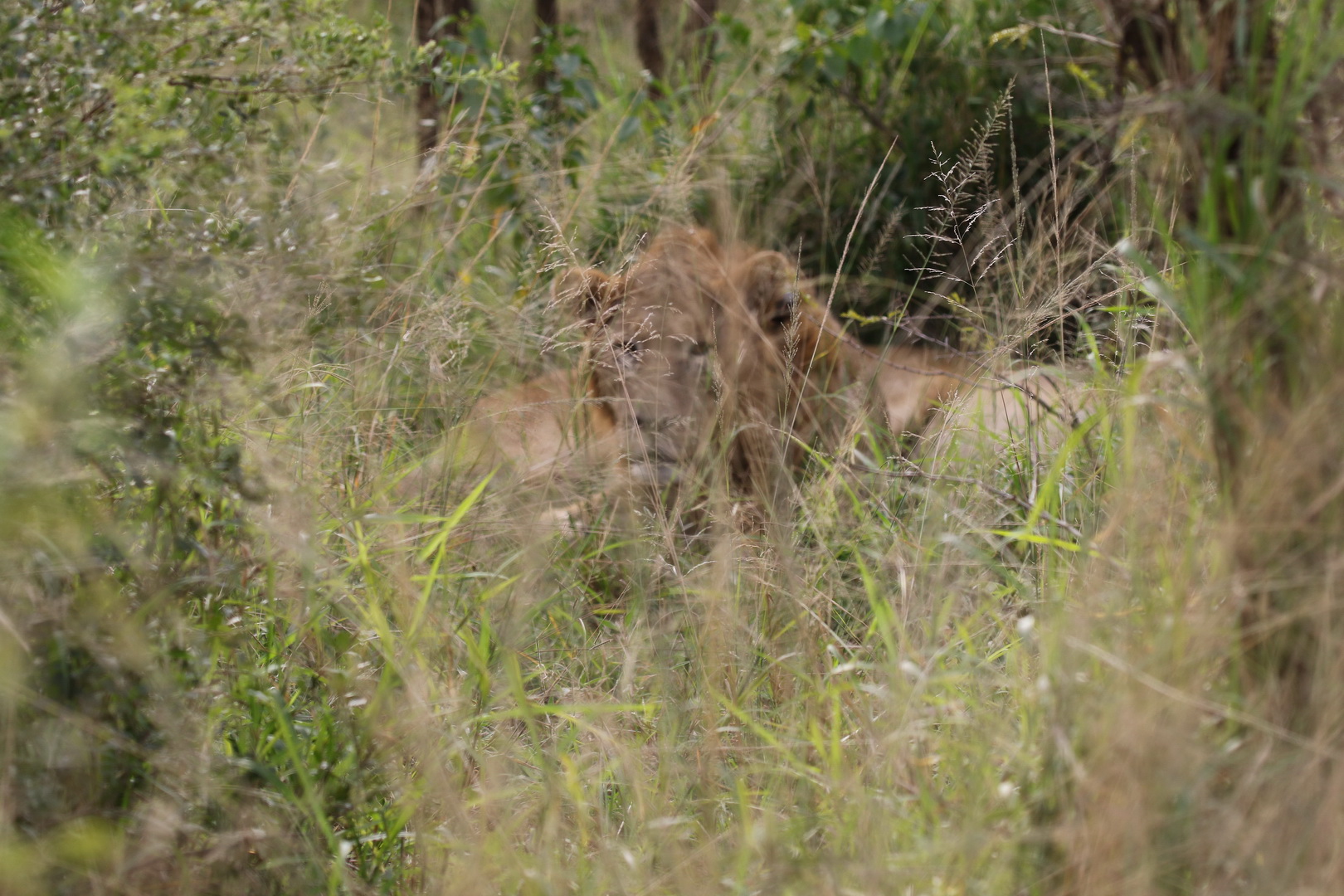
Hyena cuties

Paul and Sally Bartho

Sobhengu

Report by Paul and Sally Bartho

9 to 16 June 2017

Dave and Jenny Rix invited us to join them for a week at Sobhengu timeshare. Mike and Jane Roseblade and Cecil and Jenny Fenwick also came along.

Sobhengu is located at the tip of the Nibela peninsular in the Isimangaliso Wetland Park.

Map showing Sobhengu location

It is connected to the Nibela Lake Lodge by boardwalks and along a 4×4 track. Our Chalet had a commanding view over the lake and was set in pristine sand forest. It consisted of four en suite bedrooms, a huge lounge, kitchen, a large outdoor deck overlooking the lake and a boma braai area.

We were well looked after by the always smiling and helpful staff.

Nibela Lake Lodge and Sobhengu share a huge private area of pristine forest with numerous well signed walking trails in good condition.

Sobhengu Trail Map

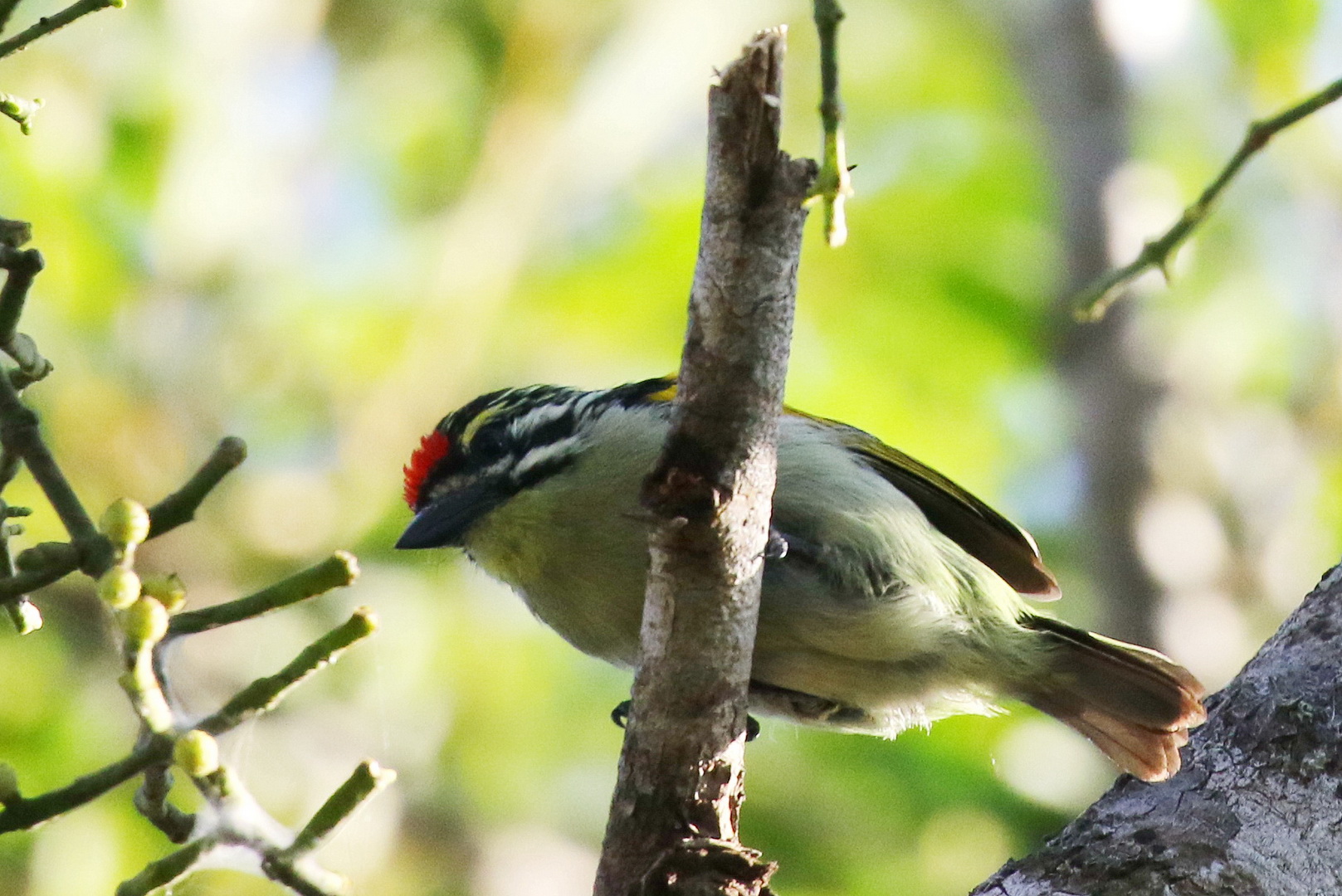
Much of our time was spent walking the trails in the forest looking for bird parties. Often we heard special species without being able to find them – though we did get lucky with some. Green Malkoha, Scaly-throated Honeyguide, Gorgeous, Grey-headed and Orange-breasted Bushshrikes, Green and Pink-throated Twinspots, Narina Trogon, African Broadbill, Eastern Nicator, Fiery-necked Nightjar, Bearded and Brown Scrub-Robins, White-throated Robin-Chats, Black Sparrowhawk, African Wood-Owl all made their presences known – most unsighted. The Twinspots, Trogon, Nicator, the Robins and Sparrowhawk were the exceptions.

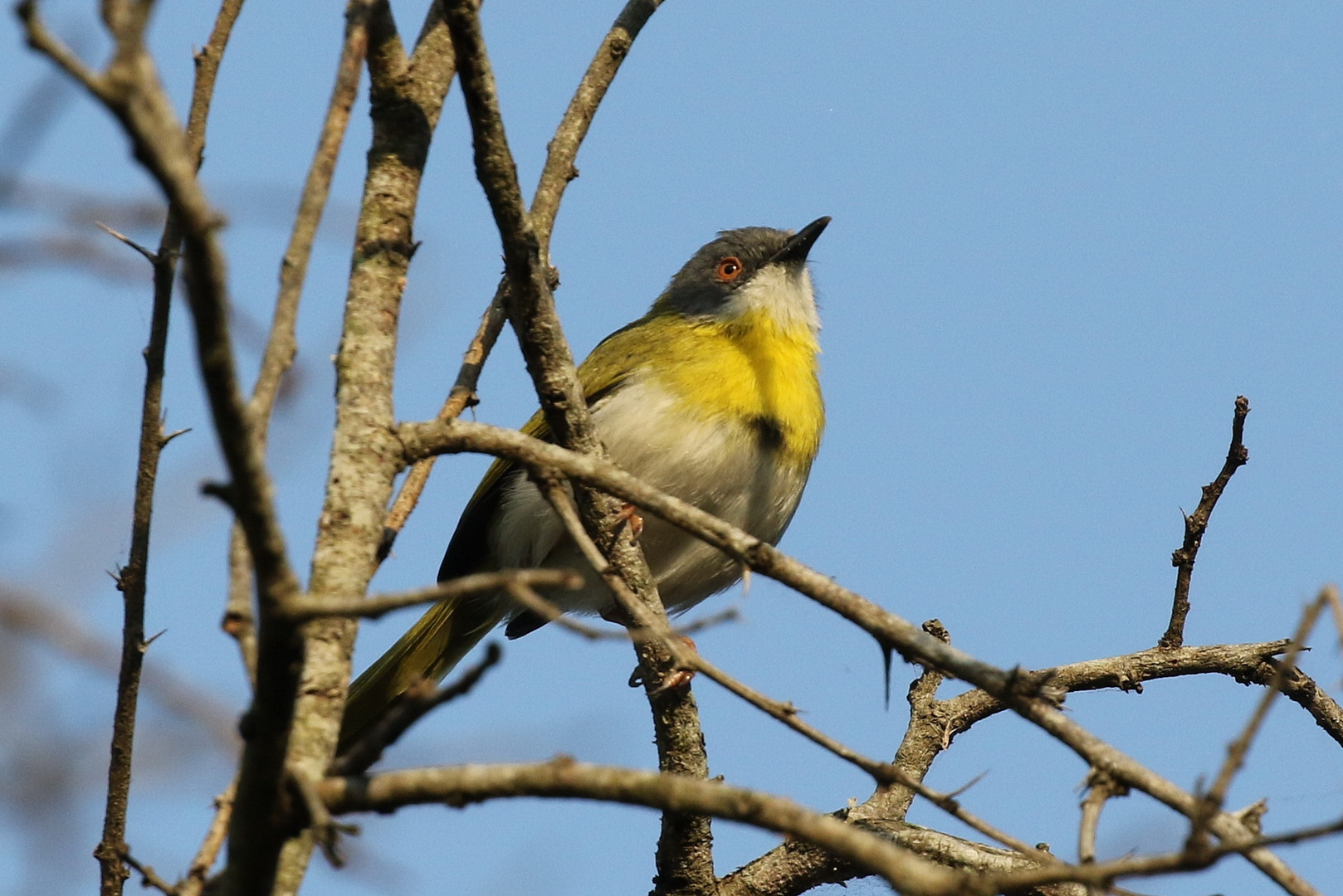
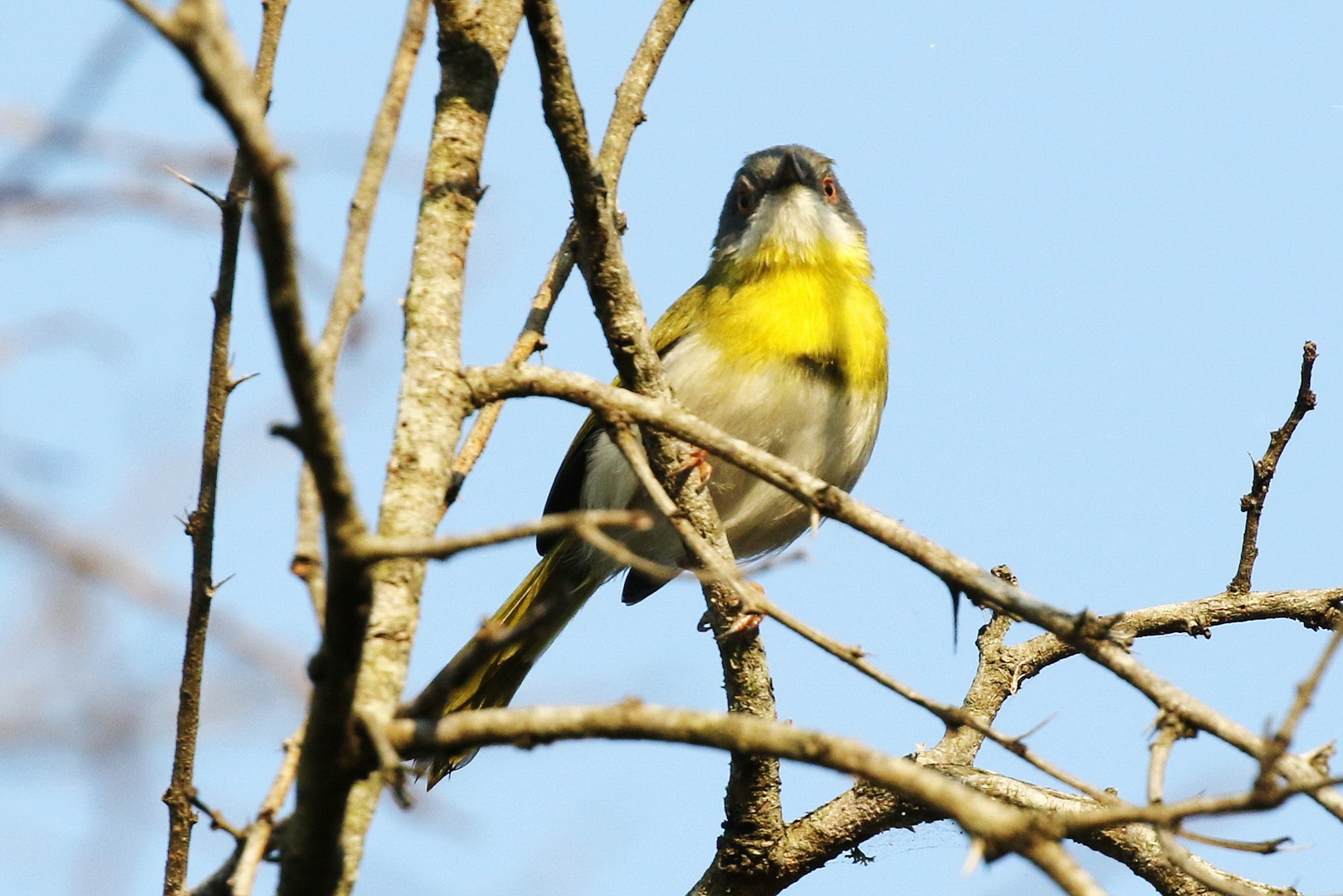
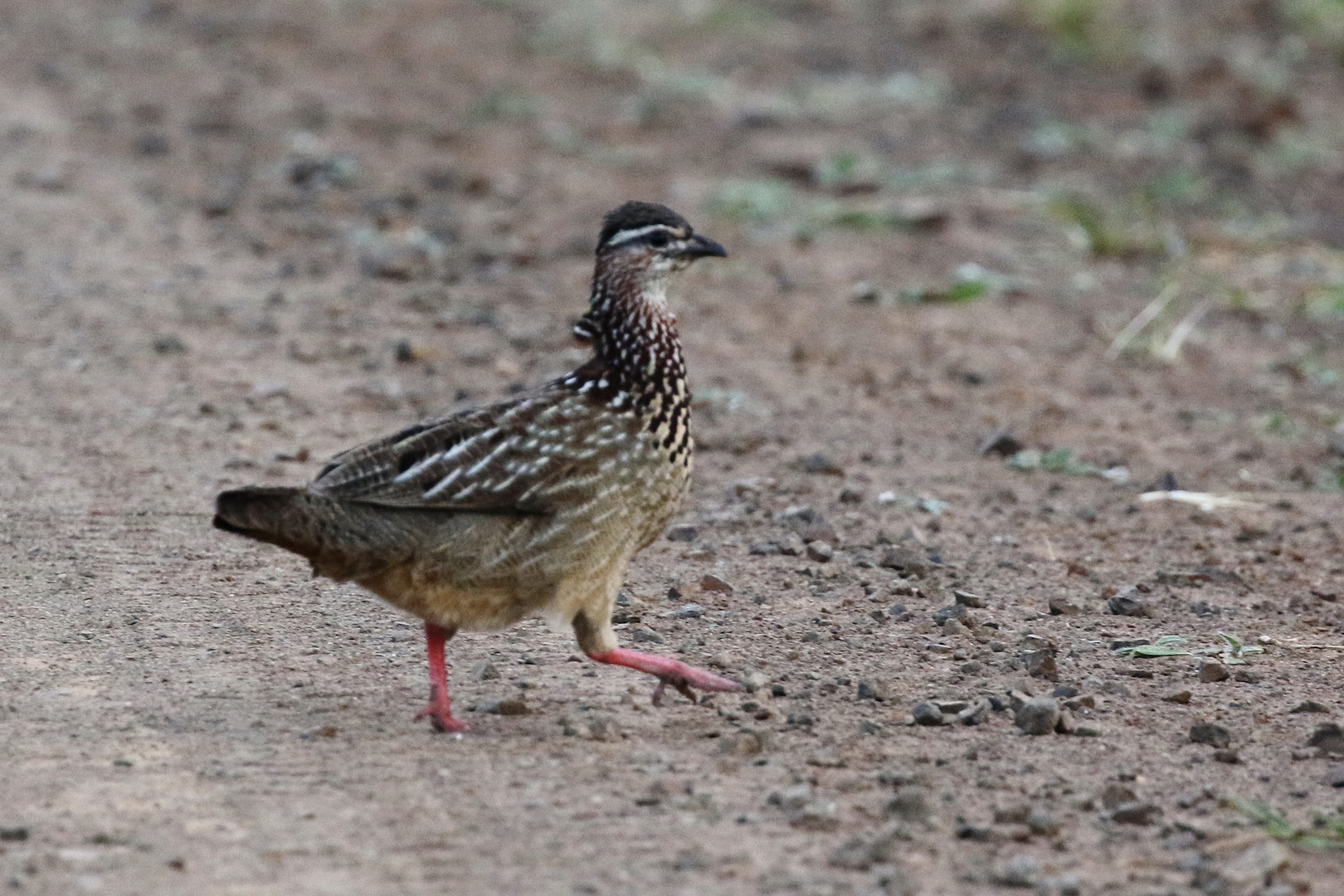
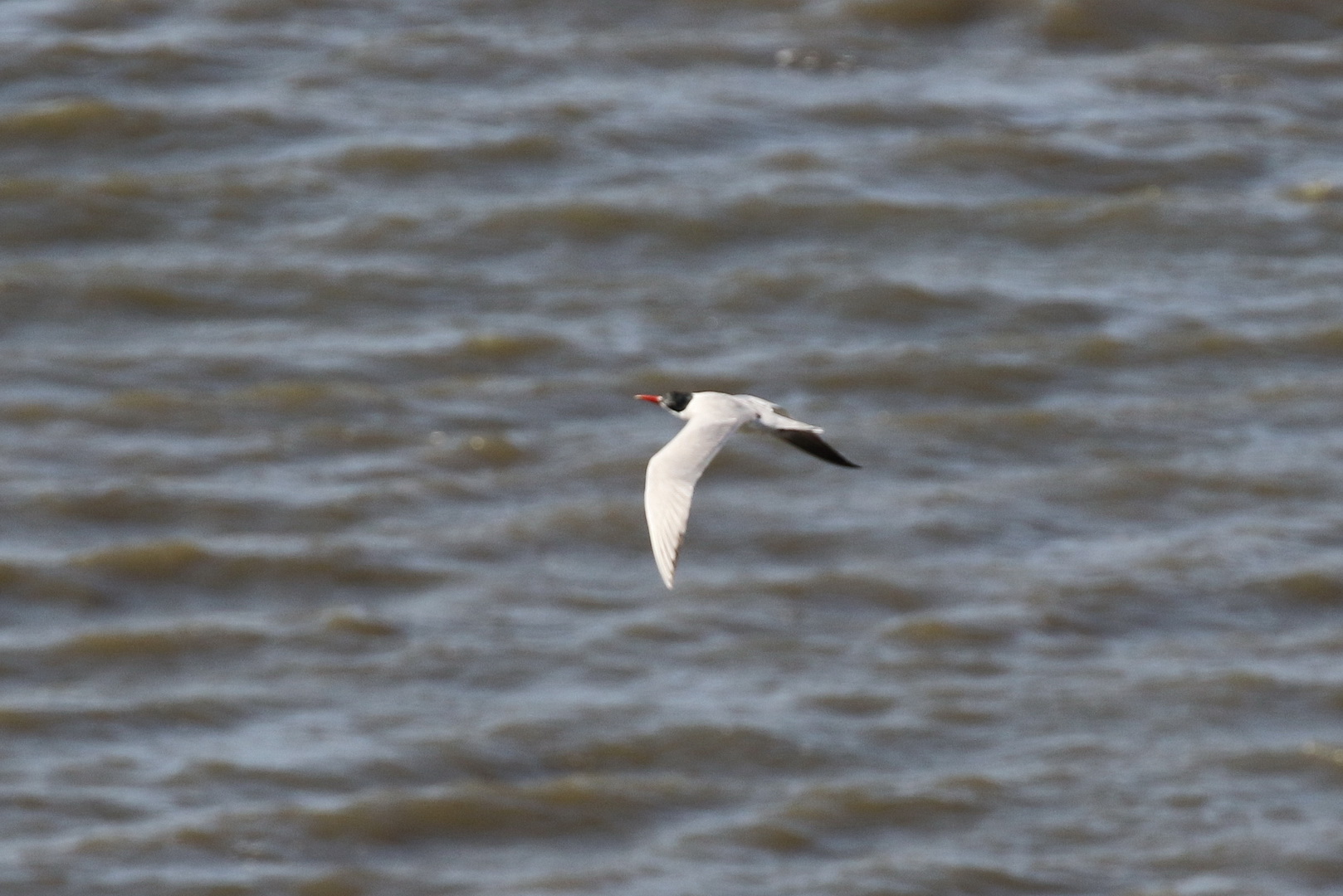
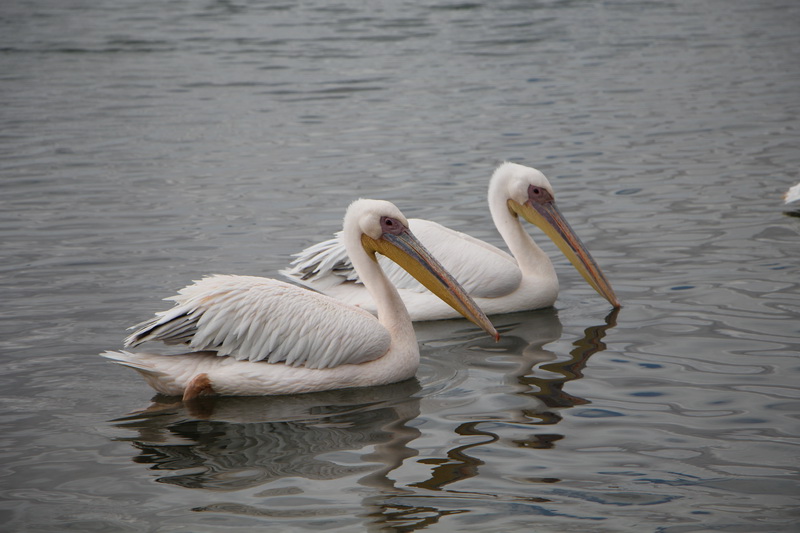
Commonly seen and heard were the Rudd’s and Yellow-breasted Apalis, Caspian and Swift Terns, Grey Sunbird (regularly heard), Black-backed Puffback, Great White Pelicans, Crowned and Trumpeter Hornbills, Grey-hooded Gull, White-fronted Plovers, Crested Guineafowl, Drongos and Flycatchers.

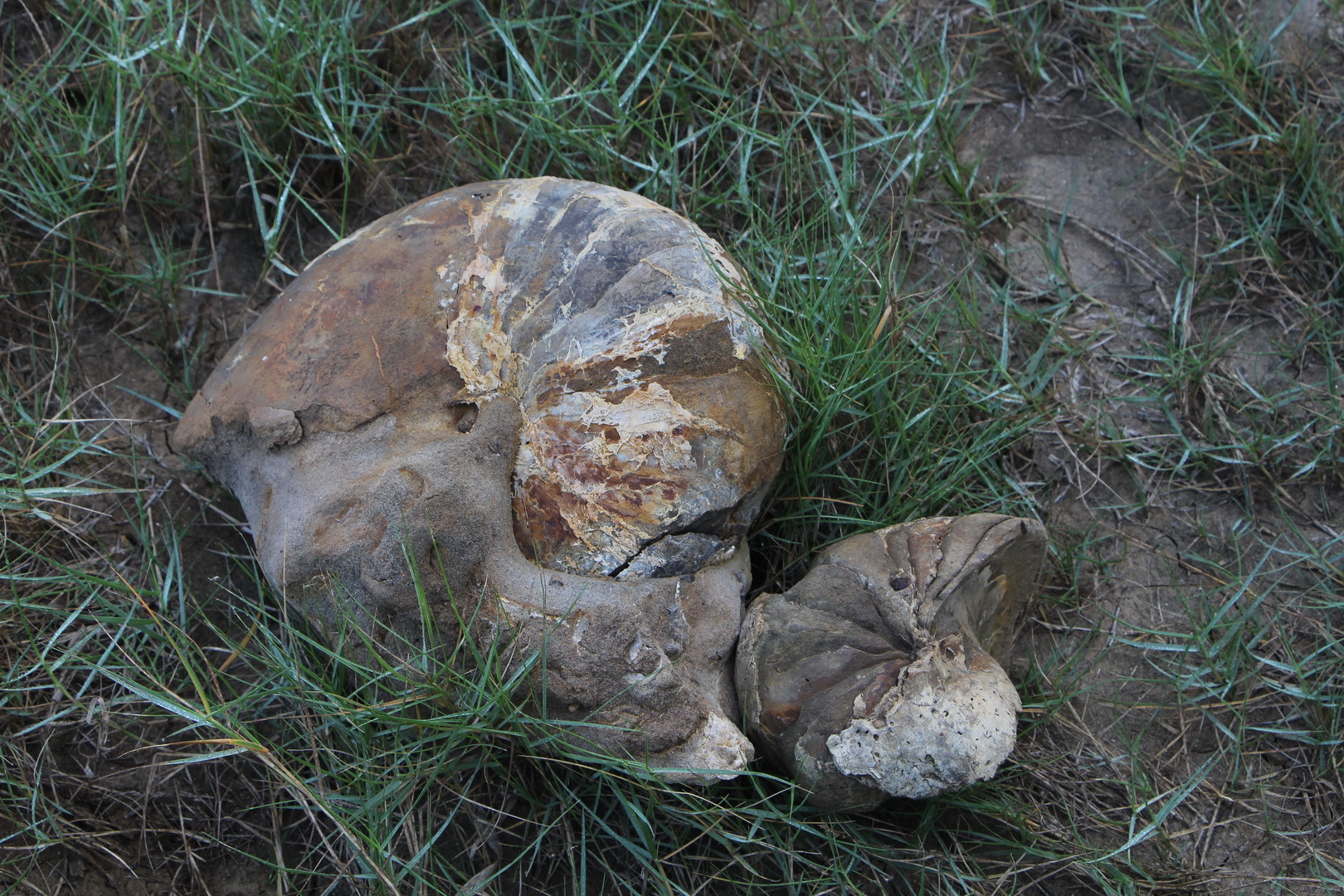
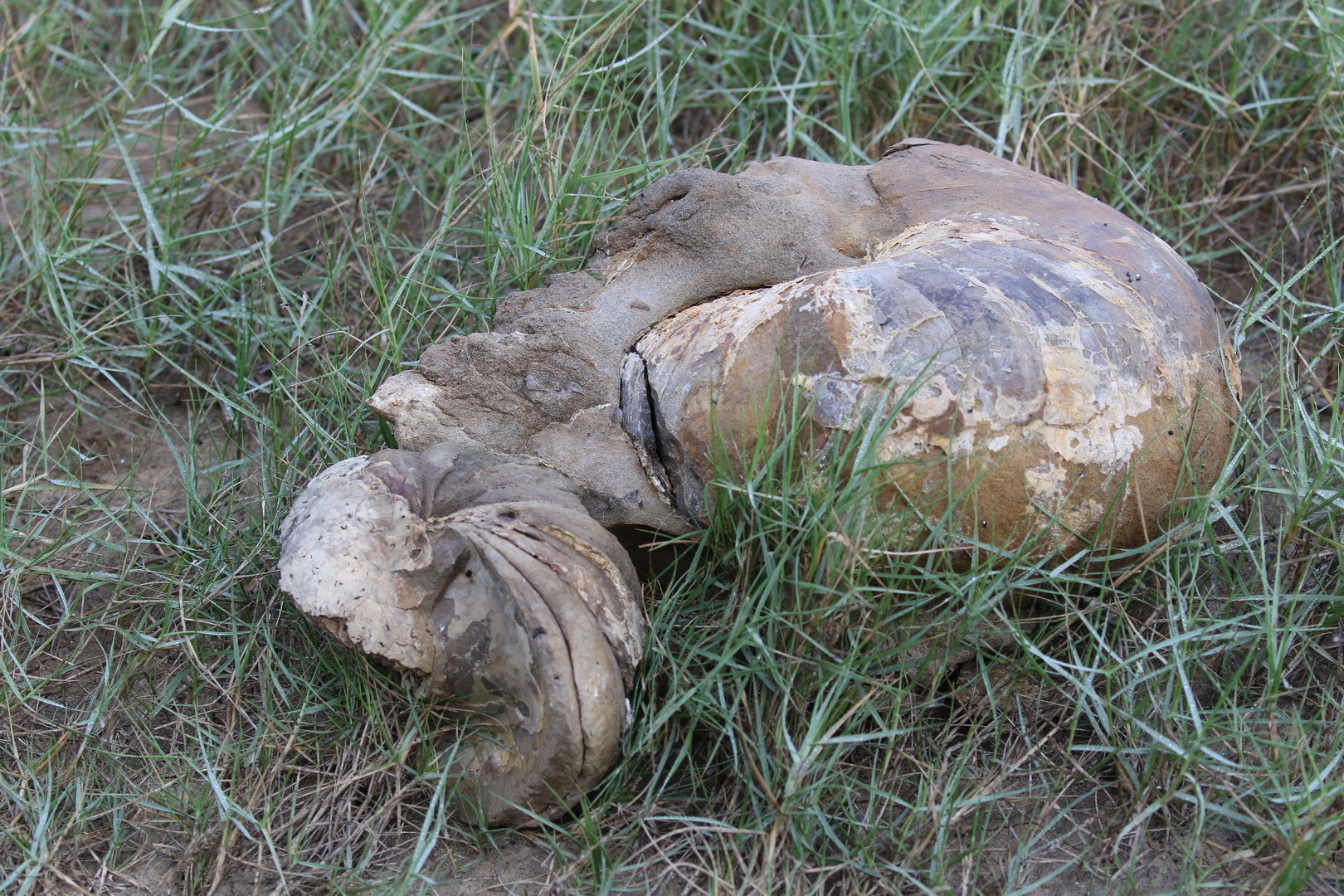
The trails were not only through the forest but also along the water’s edge and at the furthermost point from our cottage there were fossils to be found close to the beach.

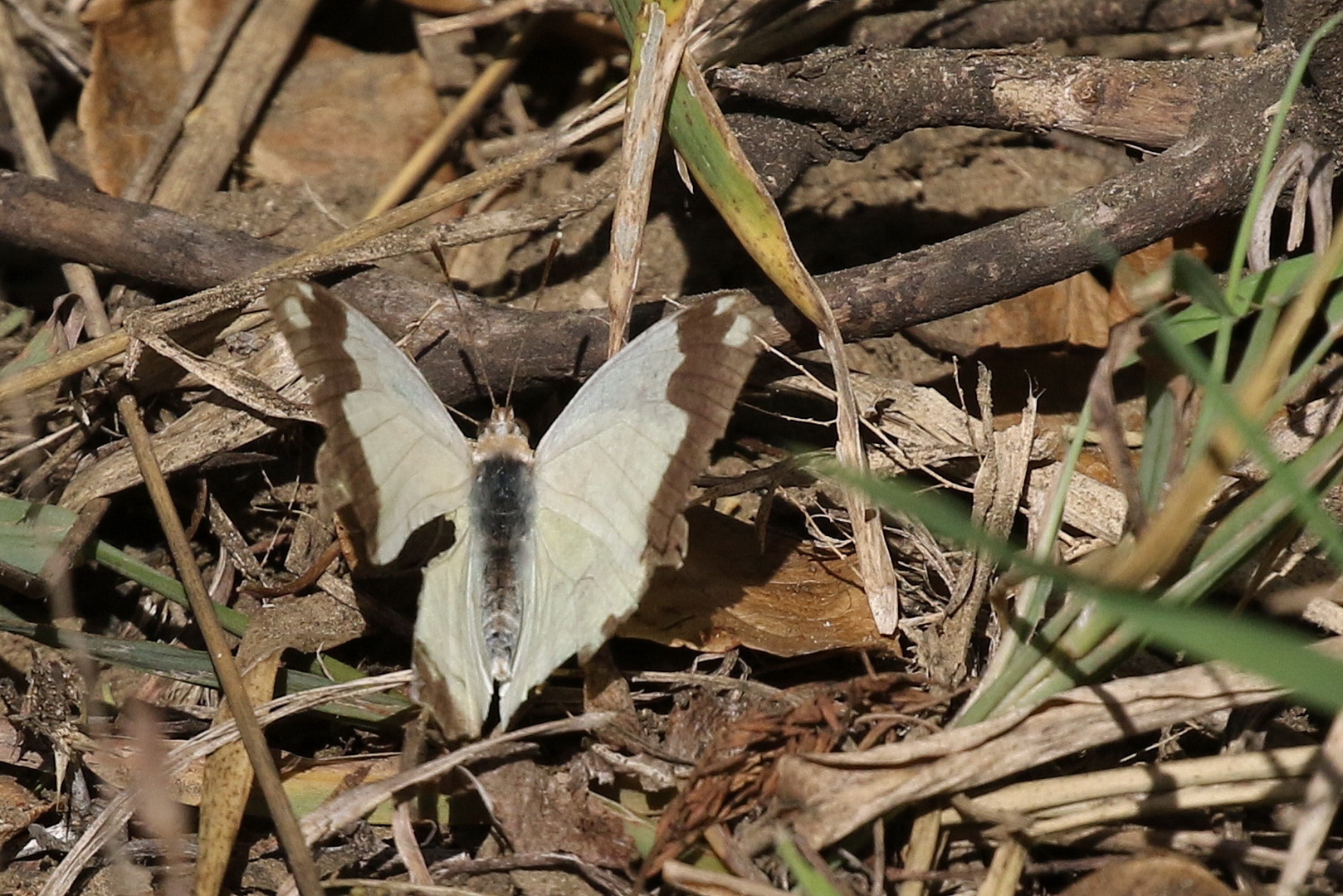
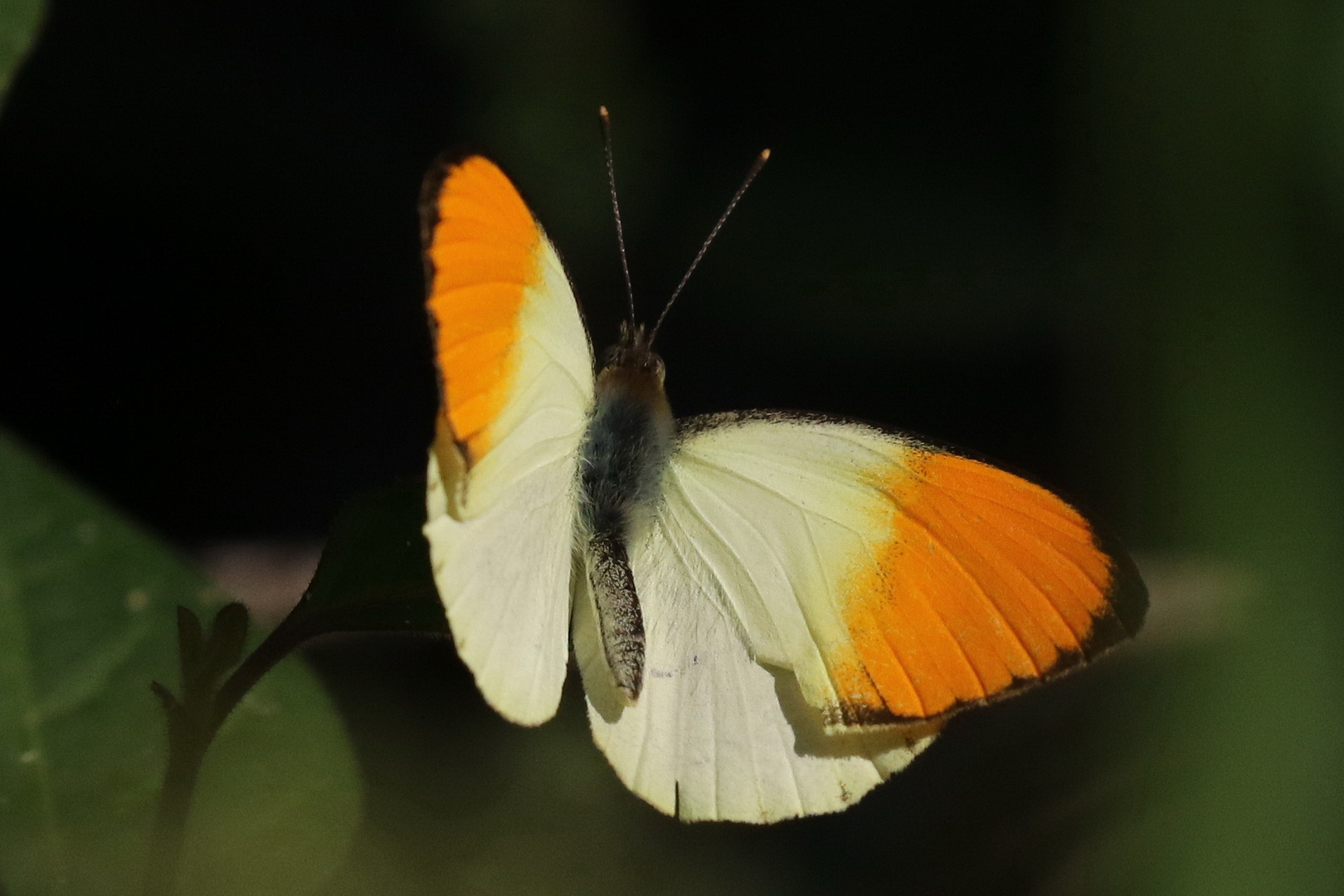
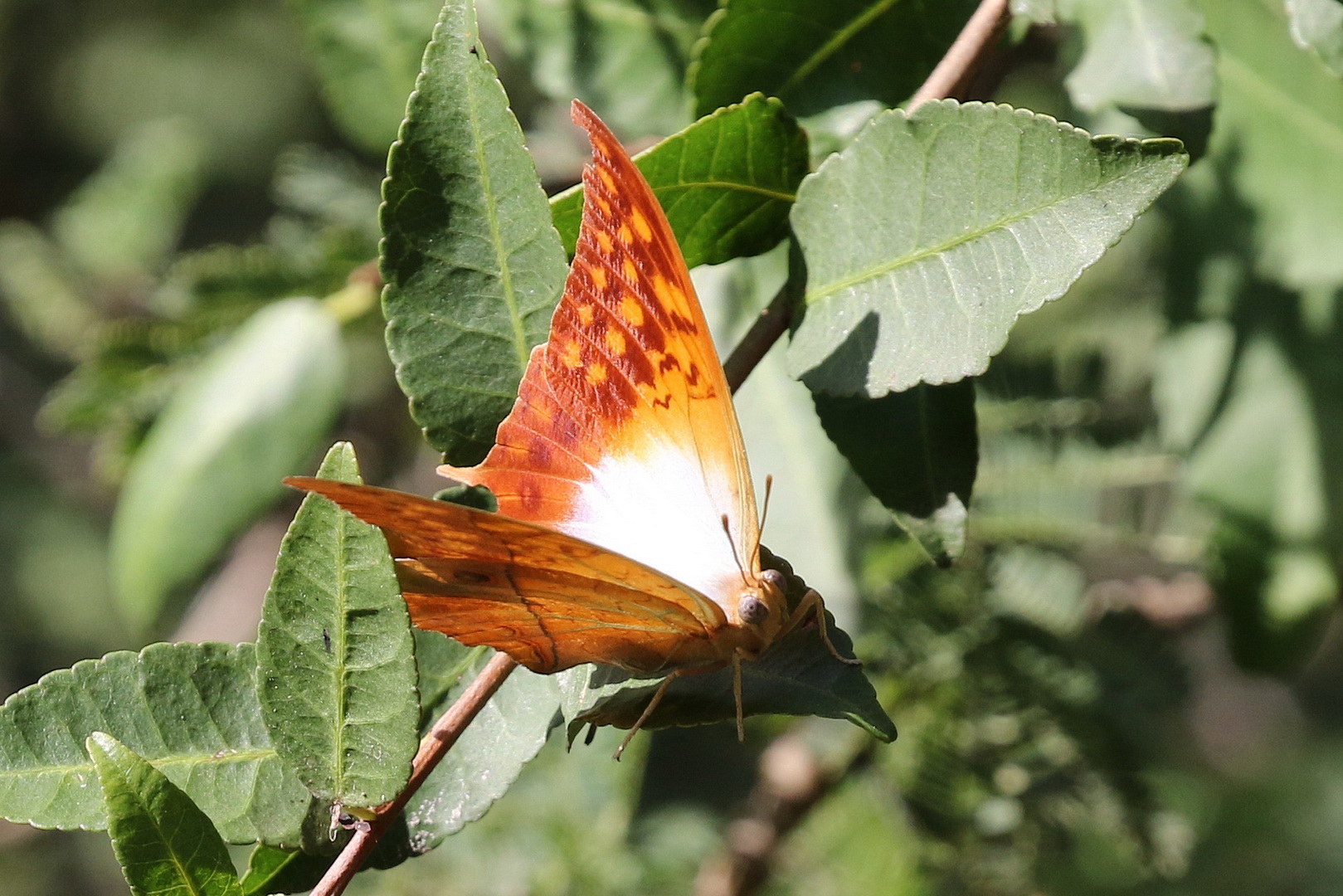
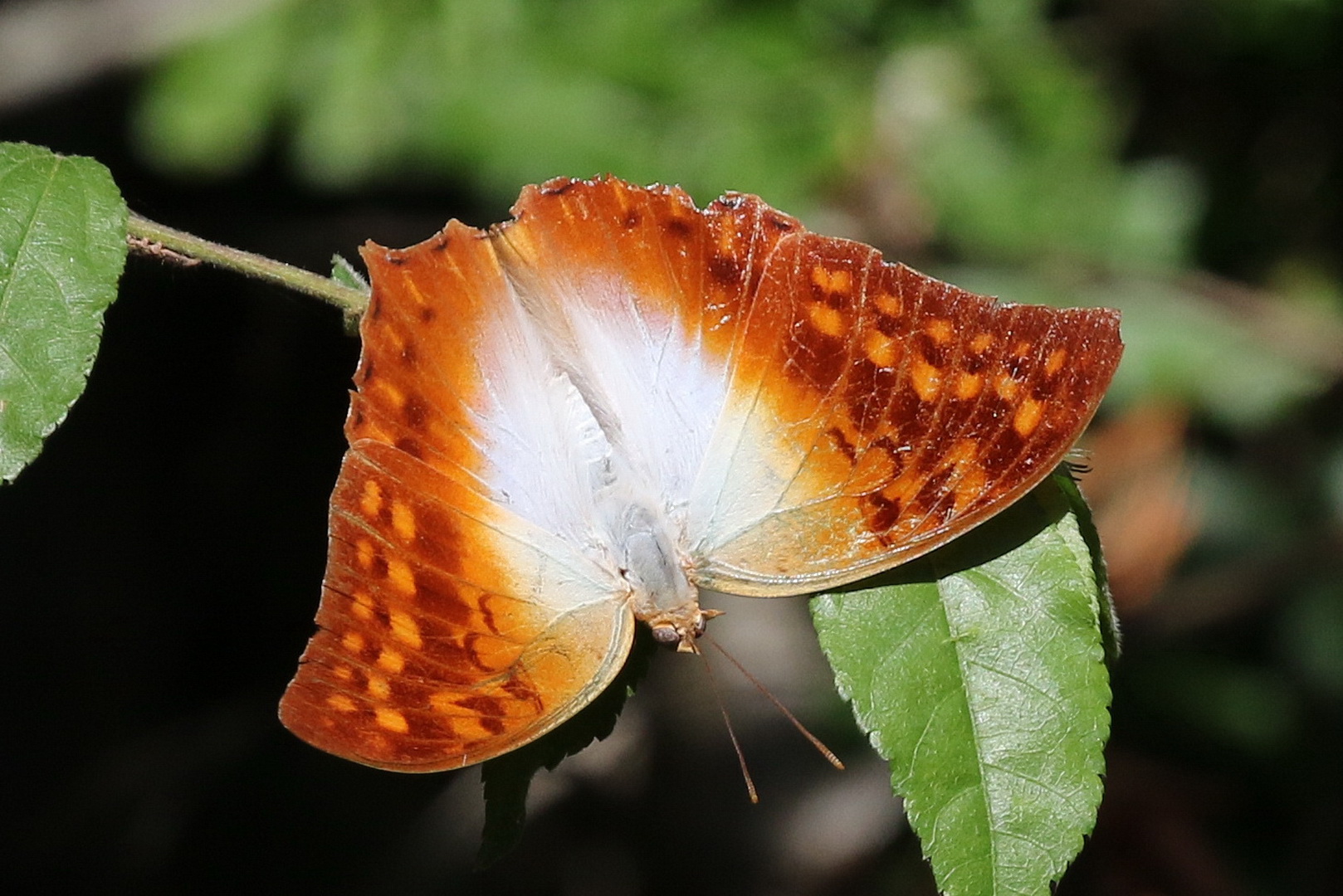
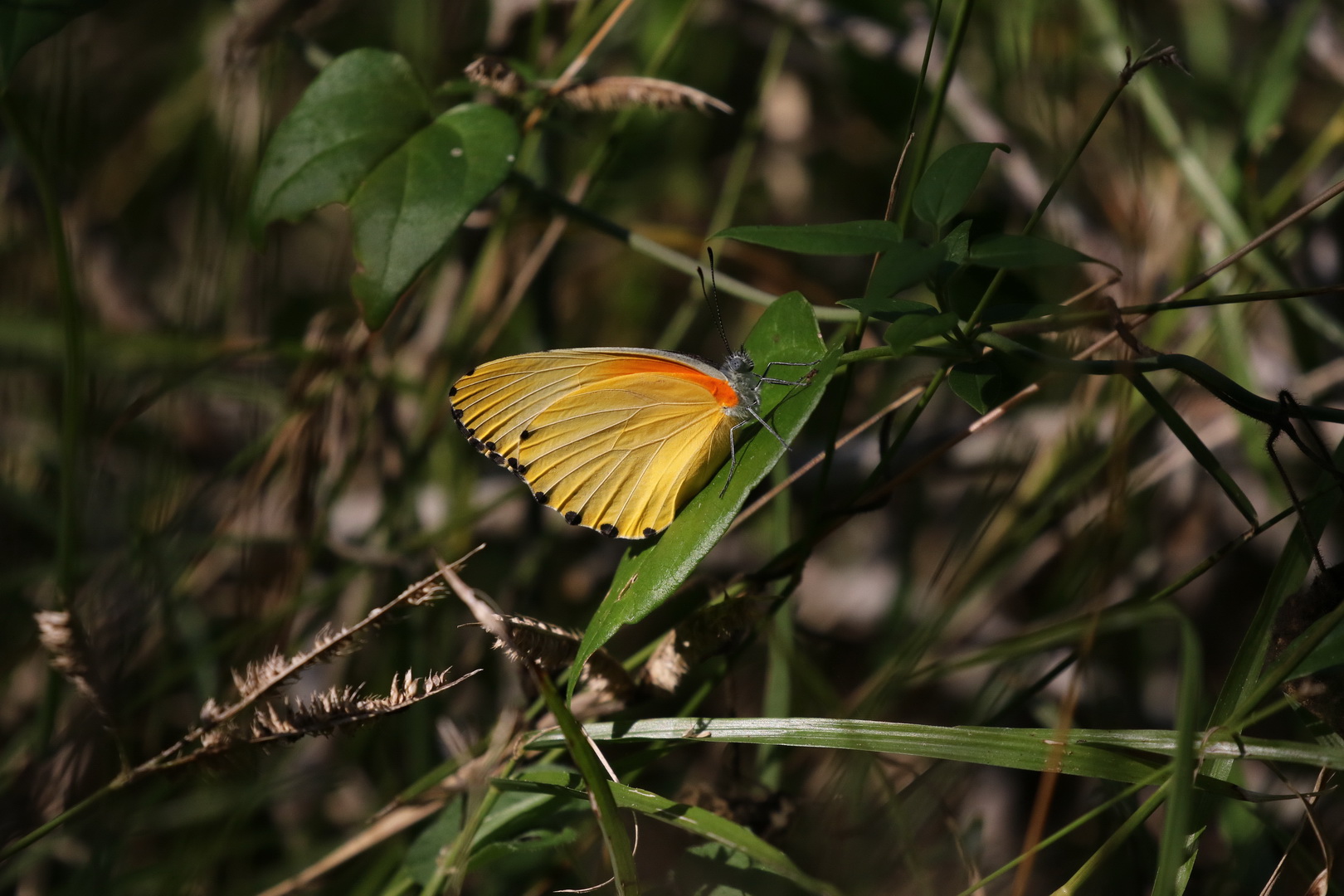
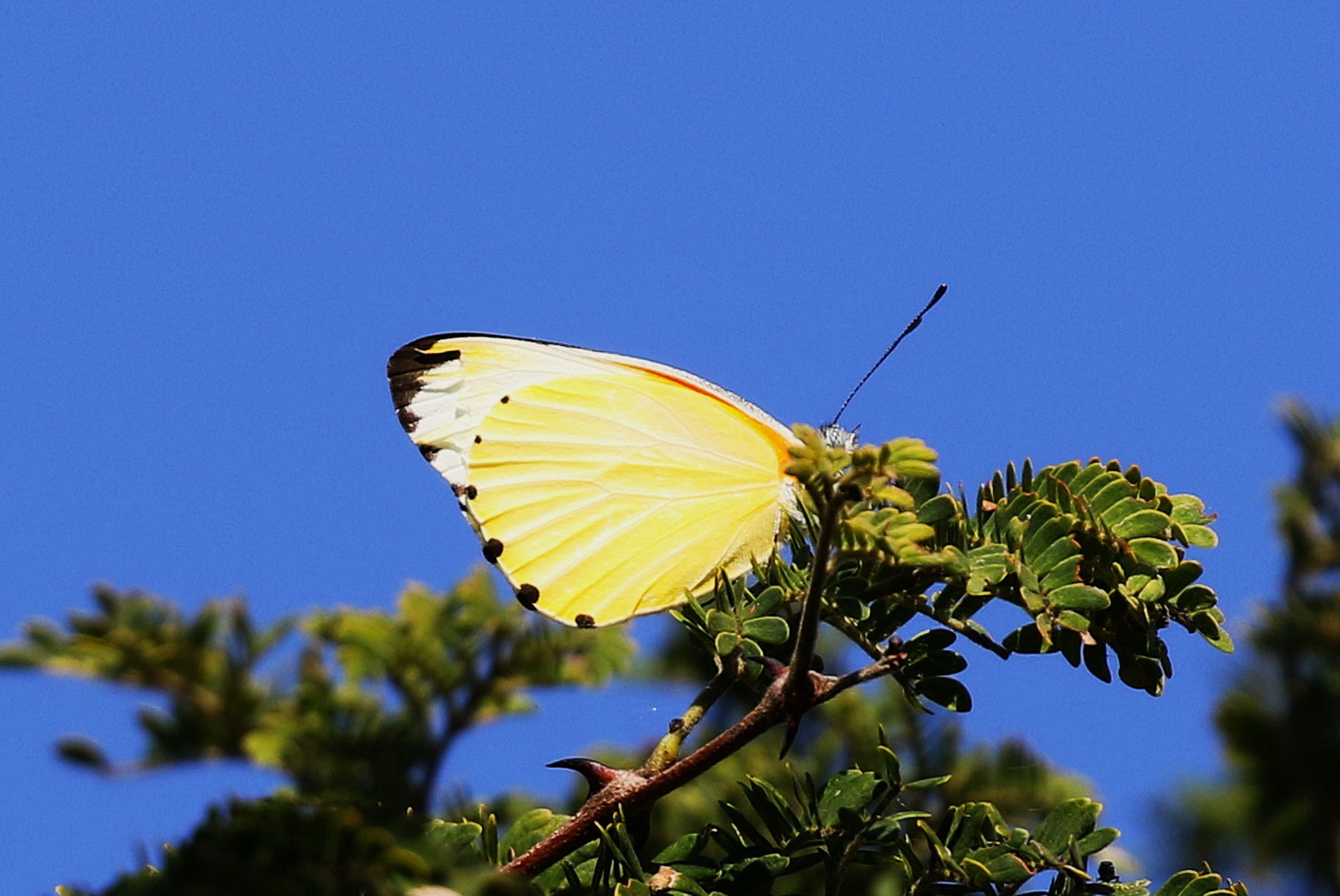
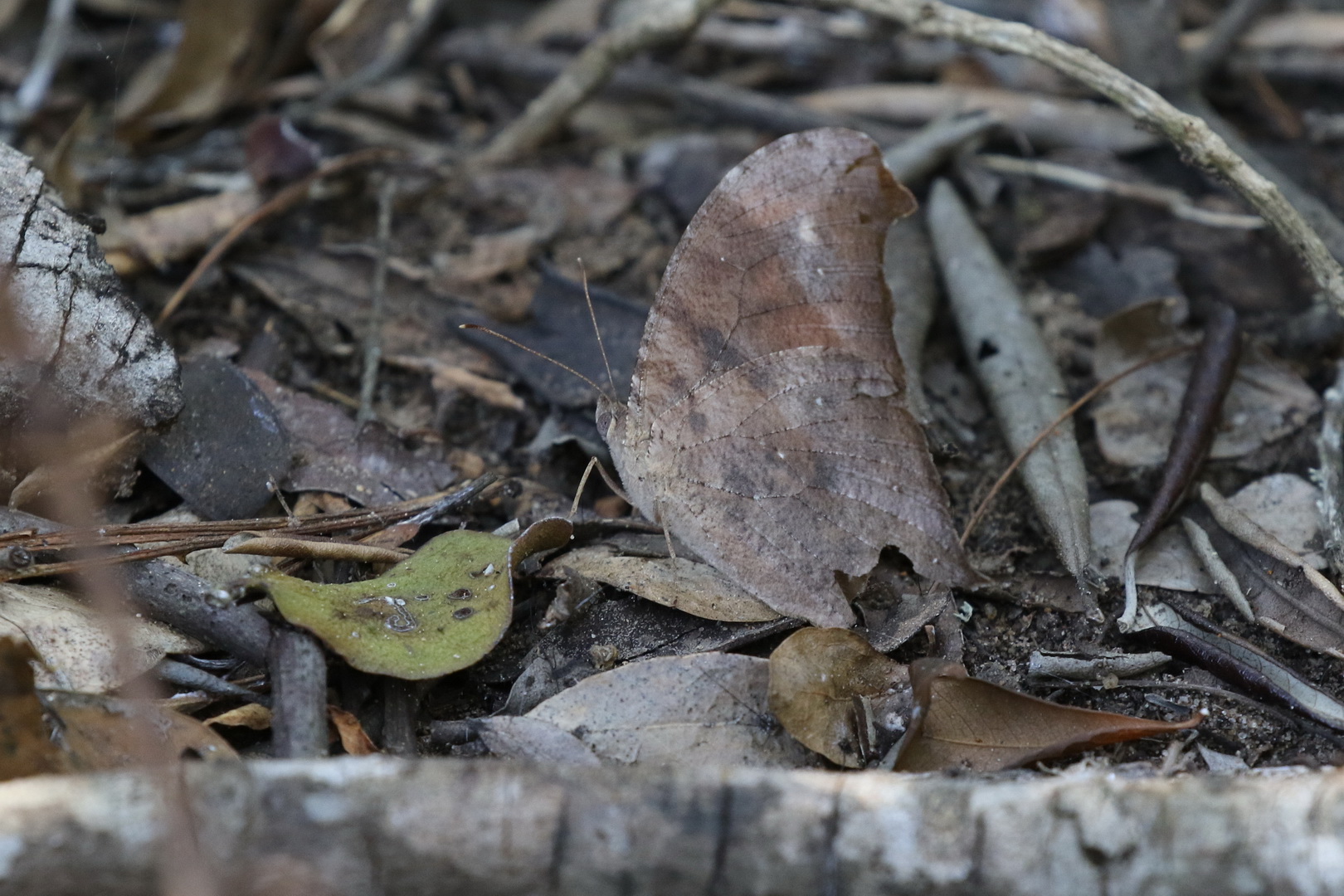
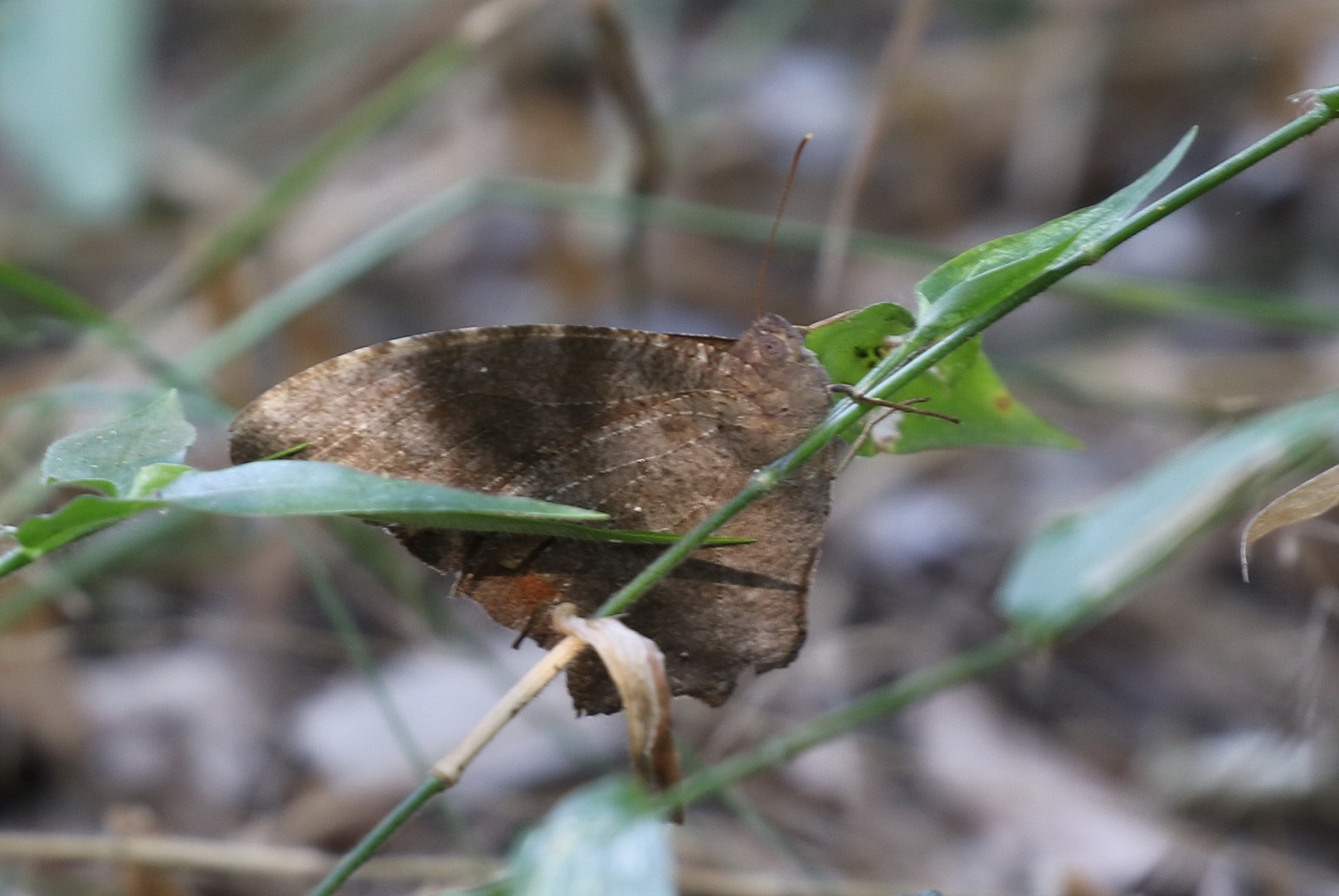
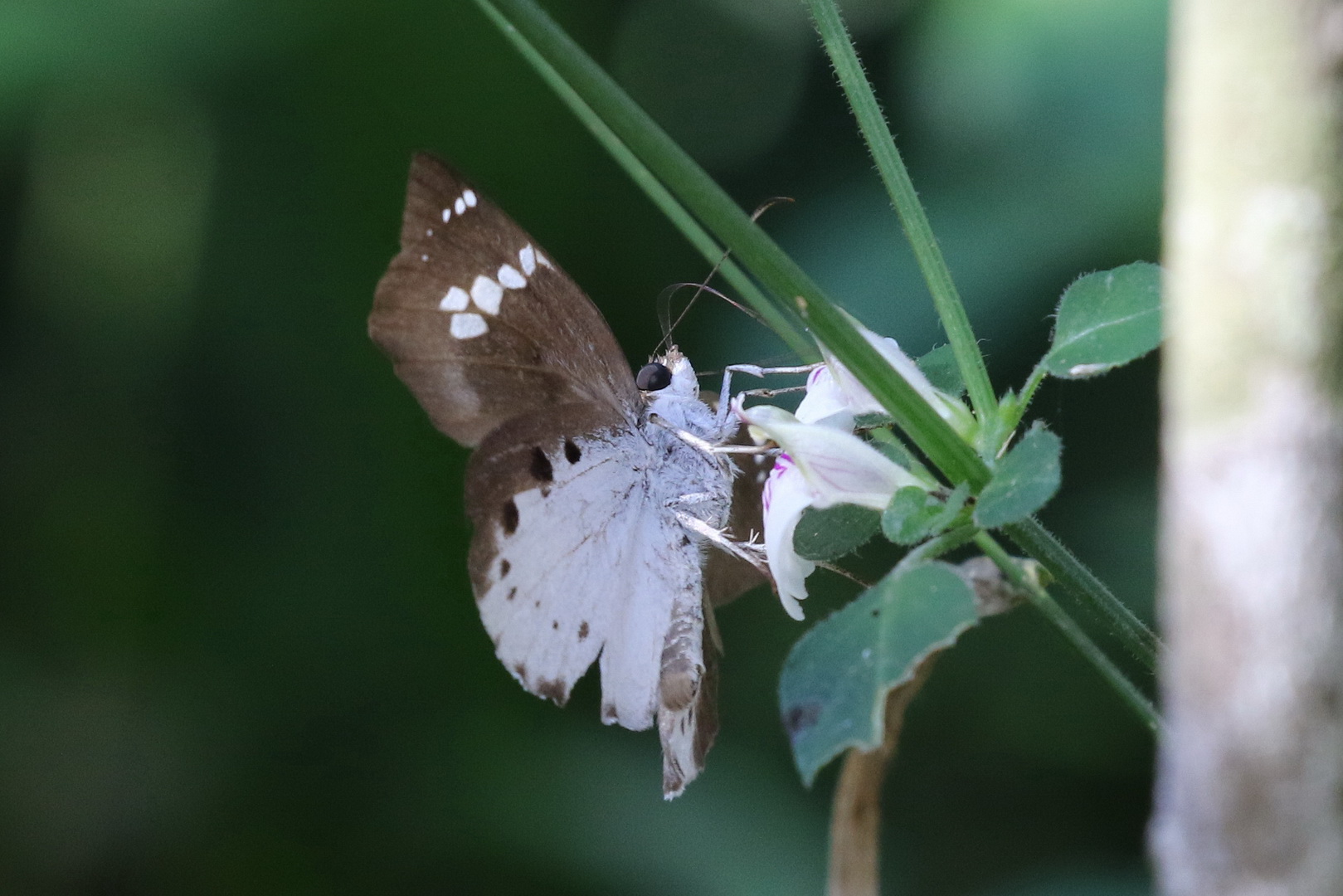
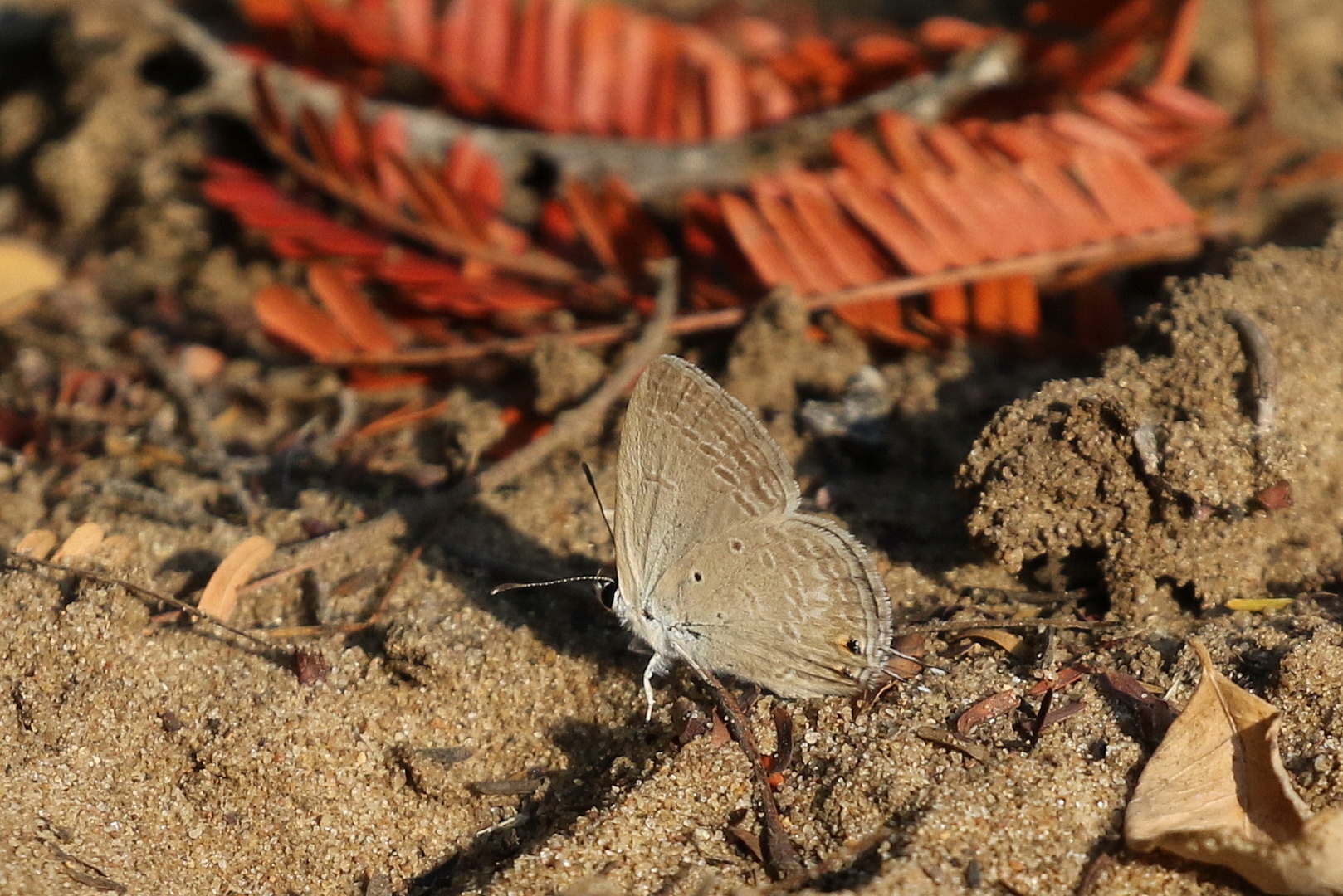
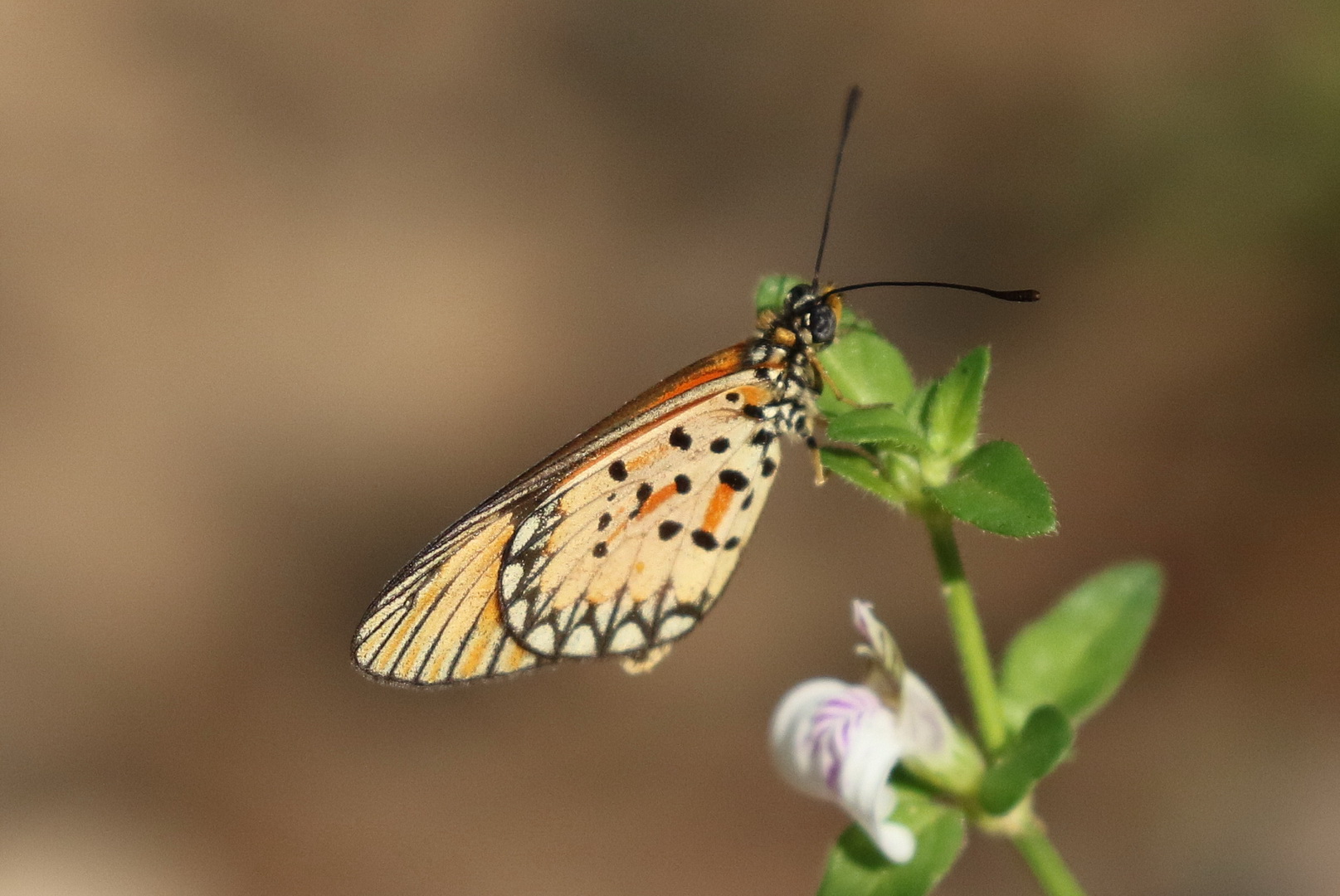
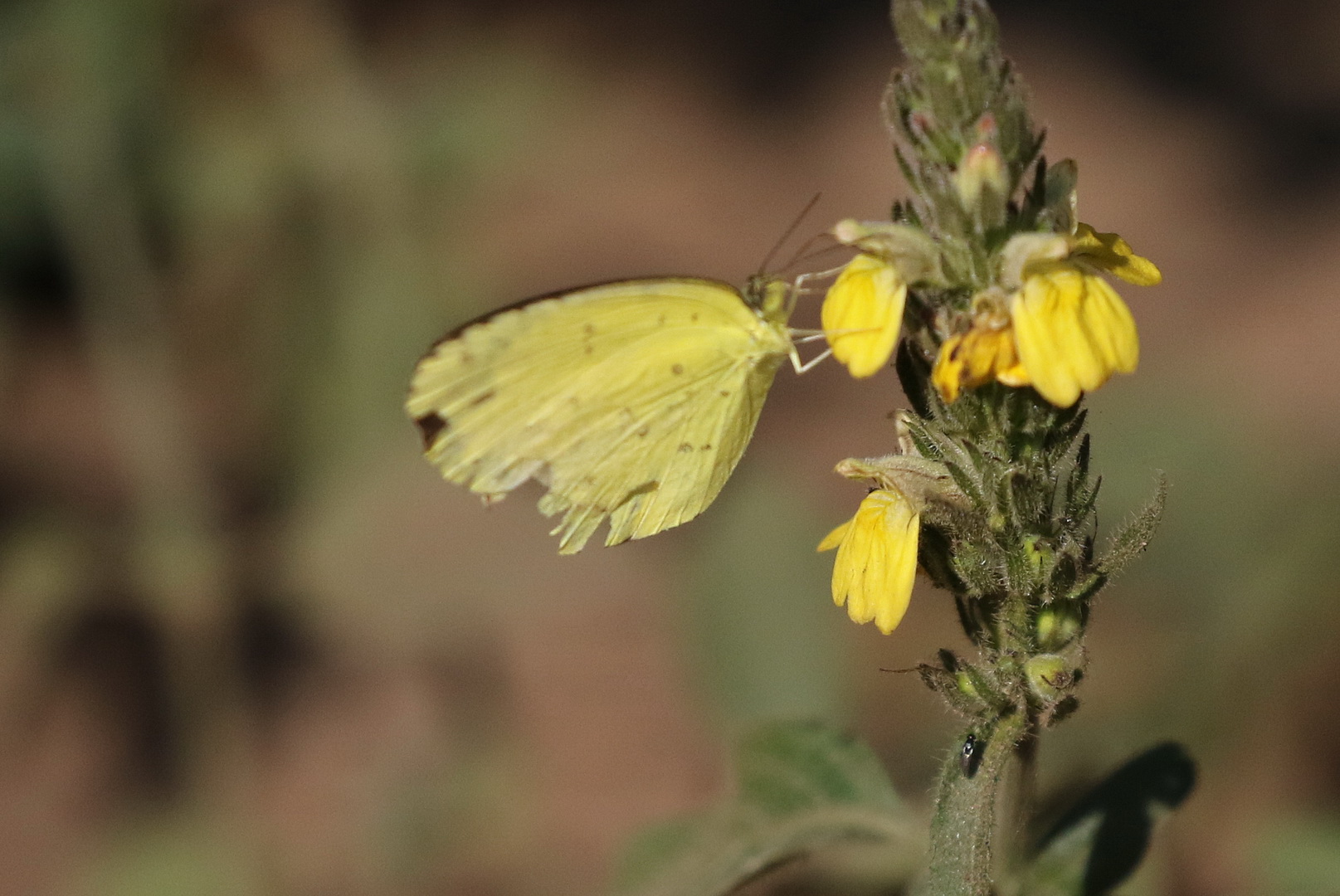
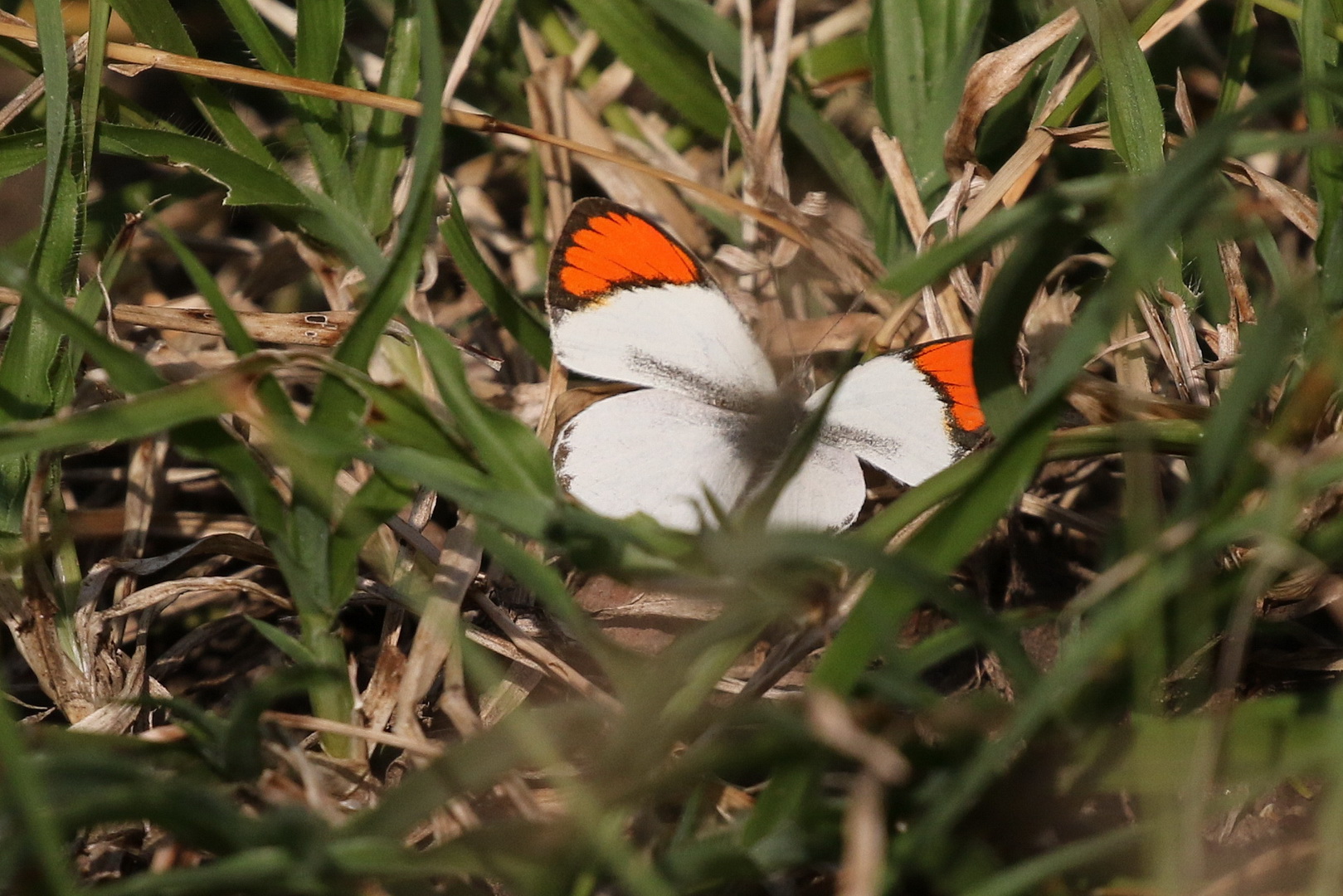
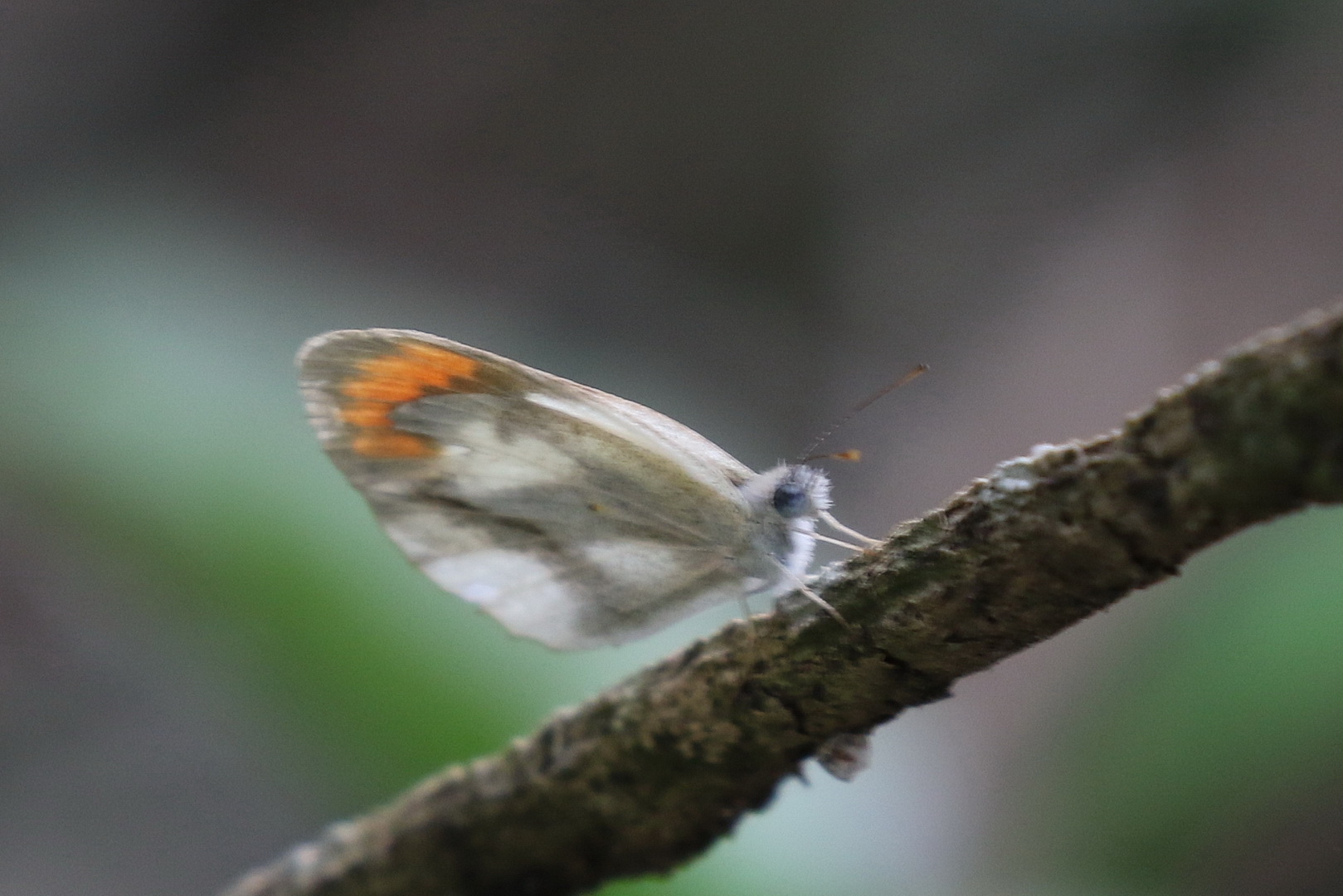
Later on, as the sun warmed things up, butterflies were everywhere. Perhaps someone will have a go at naming #2, #24 and #27 captured in photographs at the end?

And there were flowers to catch our attention too.

And the occasional forest magic.

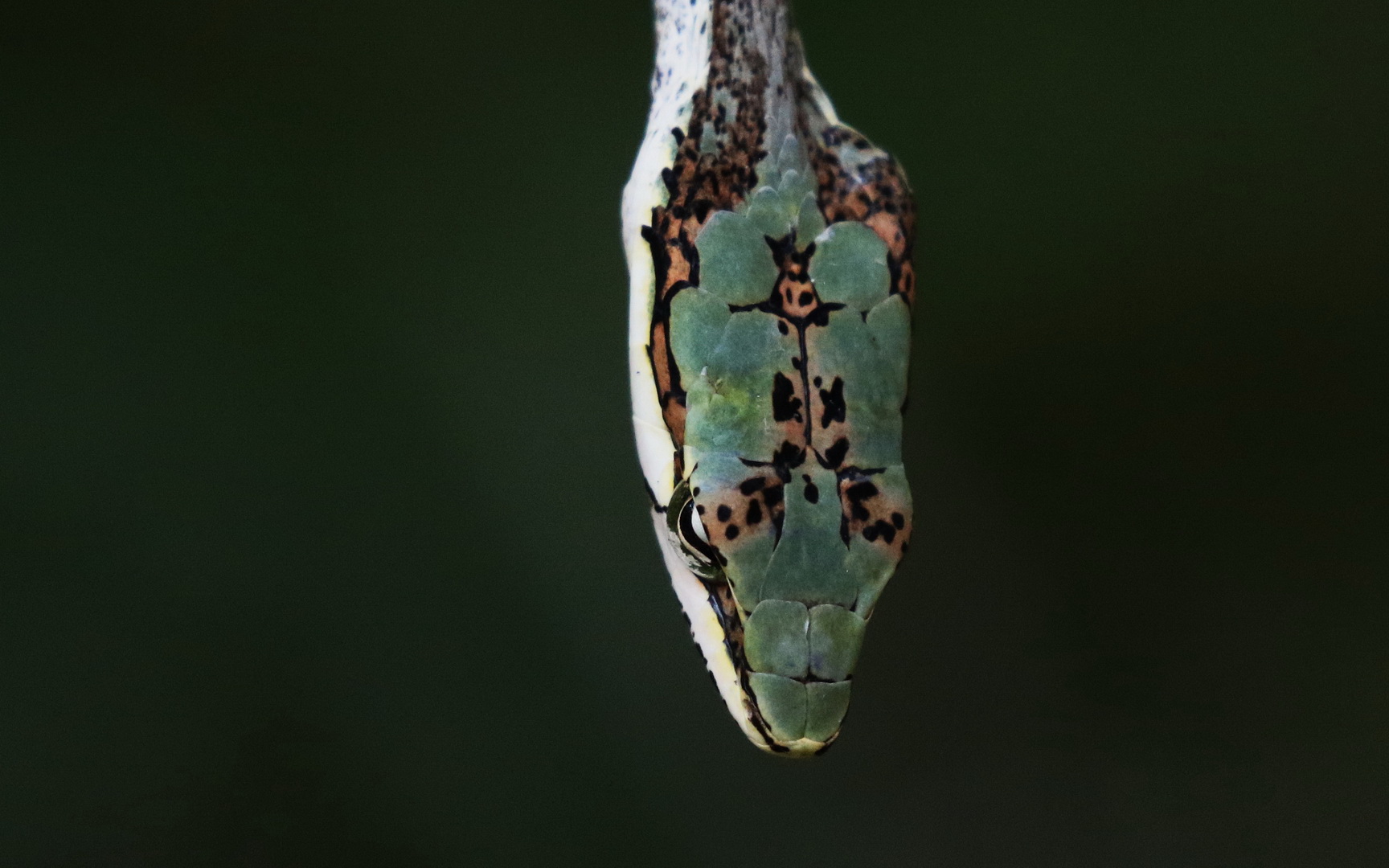
Of course there were other beasties too which Jane had a habit of walking into. Fortunately her keen eyes did not let her down.

Mike and Jane took a diversion to have a not-so-quick game of chess while some of us watched soaking up the sun on a coolish morning.

Serious Birding – Mike vs Jane

Then of course there is the local wetland area about 15 kms from the Nibela Gate. Lucky, our guide took us there. Great flat wetland area and a must for any birders.

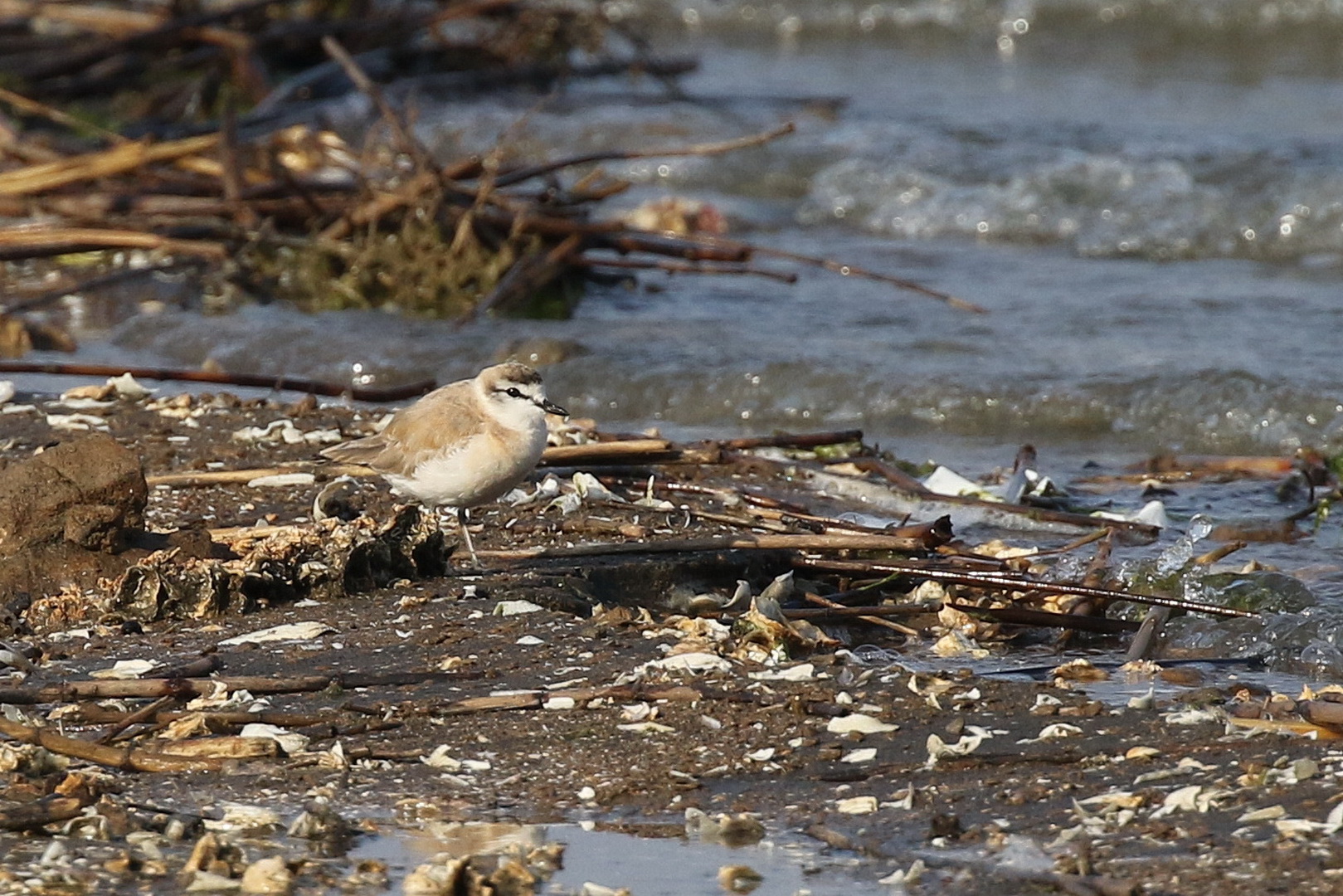
There were numerous waders to be seen in and around the water’s edge including Common and Curlew Sandpipers (unusual for the time of year) Pied Avocets, Kittlitz’s Plovers, Little Stints, Common Greenshank to name a few.

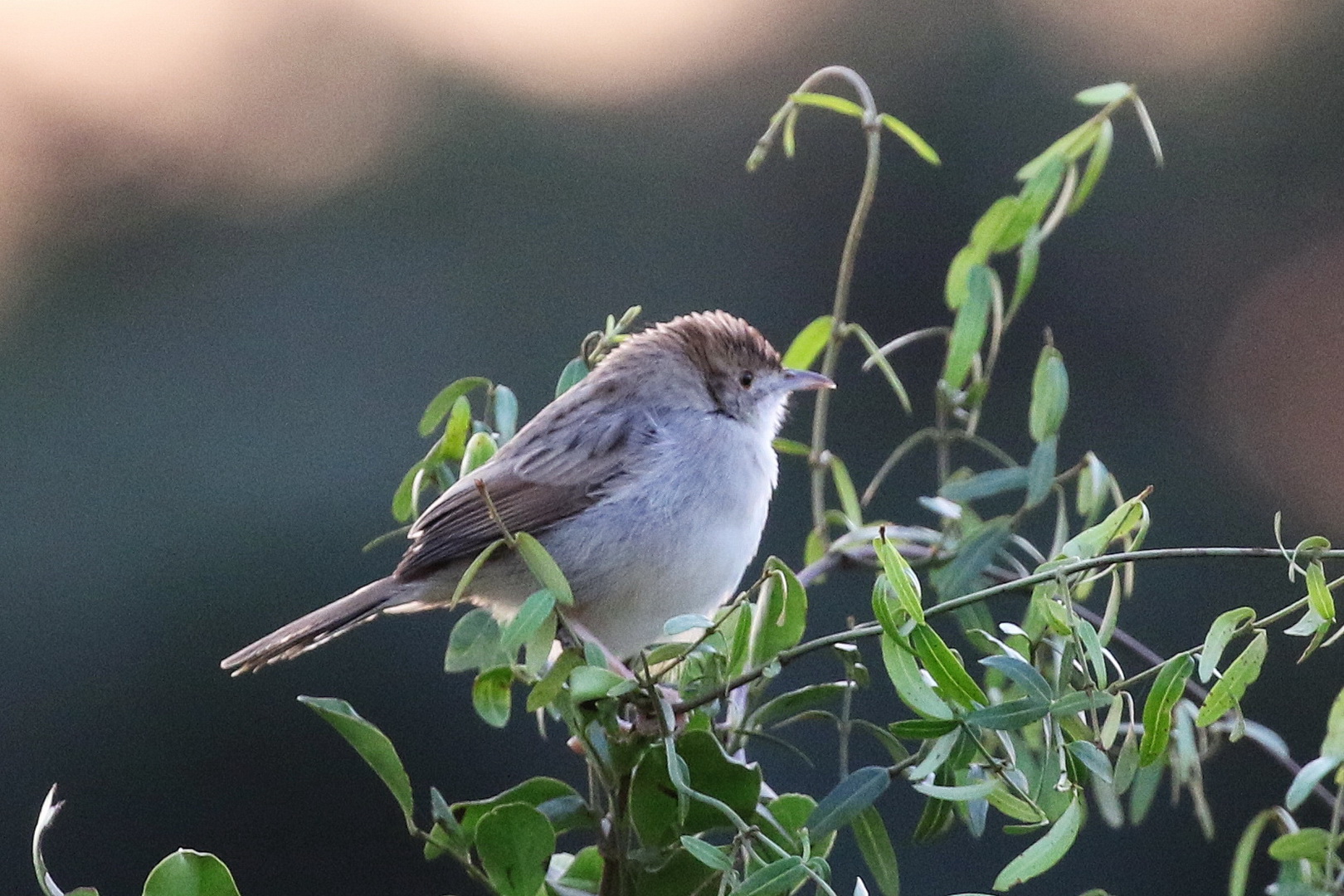
However our target was Longclaws – and we saw all three of them. The Rosy-throated being the most prominent and obliging. We had wonderful sightings of both males and females. And there were Pale-crowned Cisticolas calling and displaying too.

On the way to Sobhengu we took a short detour into Hluhluwe Game Reserve and had some good sightings of Rhinos, Buffaloes, Elephant and Lions as well as many birds. The most notable of which was the Black-crowned Tchagra – singing and on display.

This was not to be our only visit to Hluhluwe Game Park.

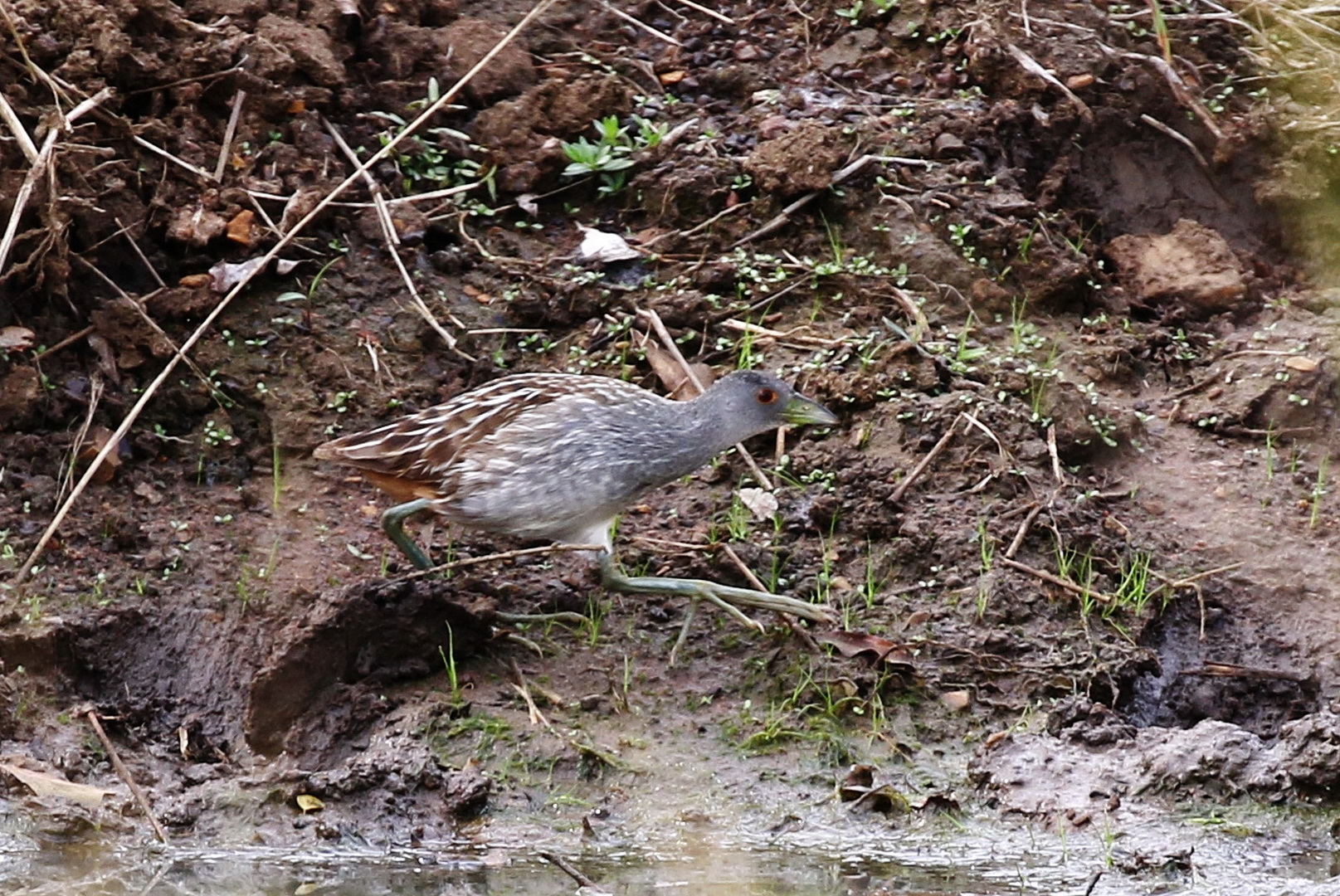
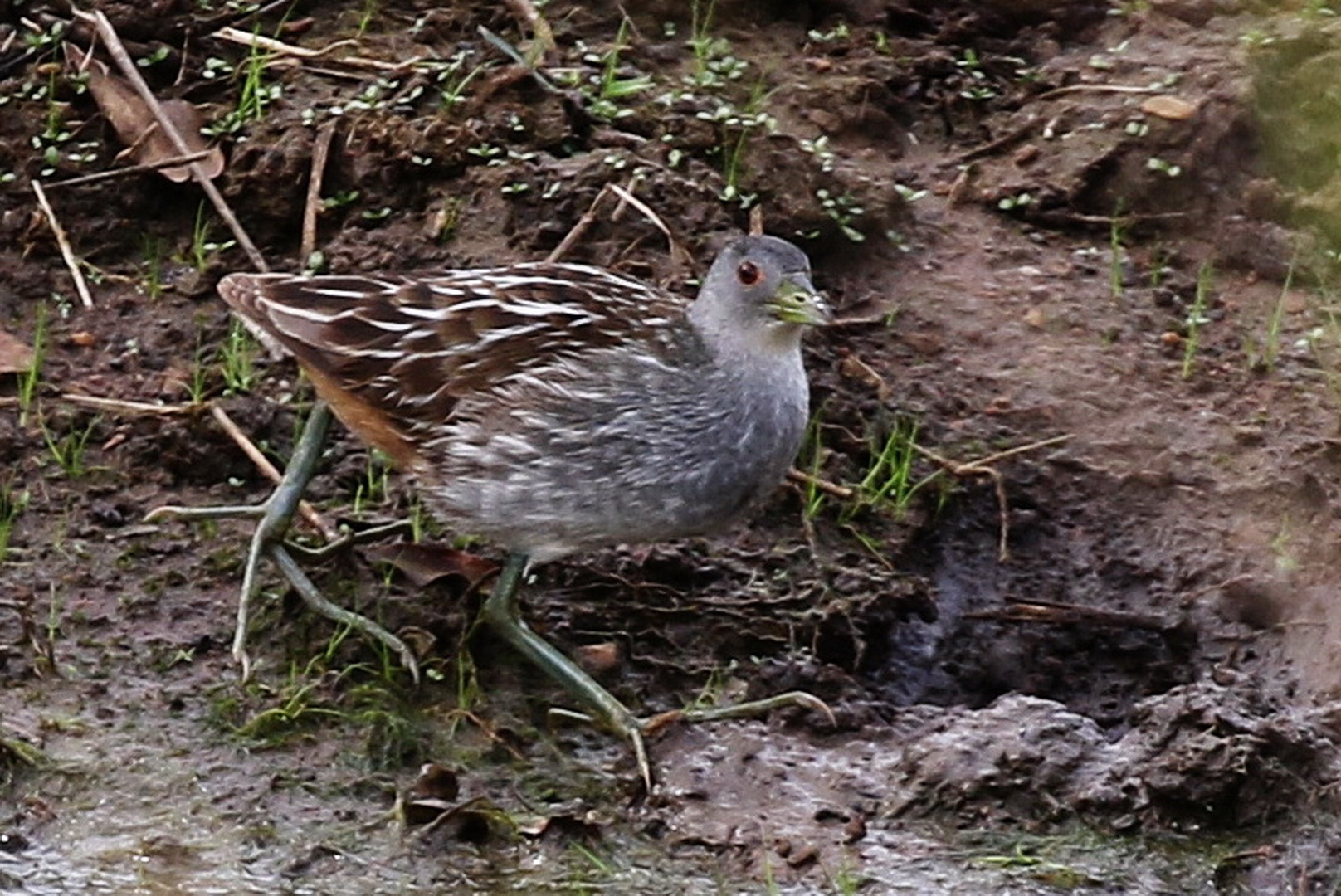
News came through on the Sunday from Trevor Hardaker that a Striped Crake had been seen at Thiyeni Hide. Sally and I decided to try our luck on the Monday and Cecil and Jenny Rix came with us.

Now I cannot remember when this hide was last open – probably a good 10 years ago or more so I was surprised to hear that it was open.

Anyway we head off nice and early. No traffic in the park until we turned off the tar onto the gravel. Disgruntlement in the car as the car in front was, it appeared to be dawdling and some in our party were getting anxious to get there. I was happy cruising along behind.

At the turnoff to the hide, the car in front makes the turn – aha they have come to see the bird too – as I suspected. The walkway to the hide is overgrown and part of the fencing looks as though an elephant has come through. Not only that but the entrance to the walkway is well hidden.

The other couple – (Adrian and Sue as we later learned) were well ahead of us by the time we got to the hide itself. The hide was in dismal shape with layer upon layer of bat pooh underfoot – thankfully less so on the benches.

We sit and wait. Then after five minutes the Striped Crake is seen by Adrian swimming across the water into the reeds on our left. We now know where to focus and eventually the Crake appears and gives us a good sighting before disappearing again. Several more times it appeared briefly and then remained in hiding for several hours until Nicky and Ticky Forbes arrived. We left and they later told us they had great close sightings after waiting patiently for some time.

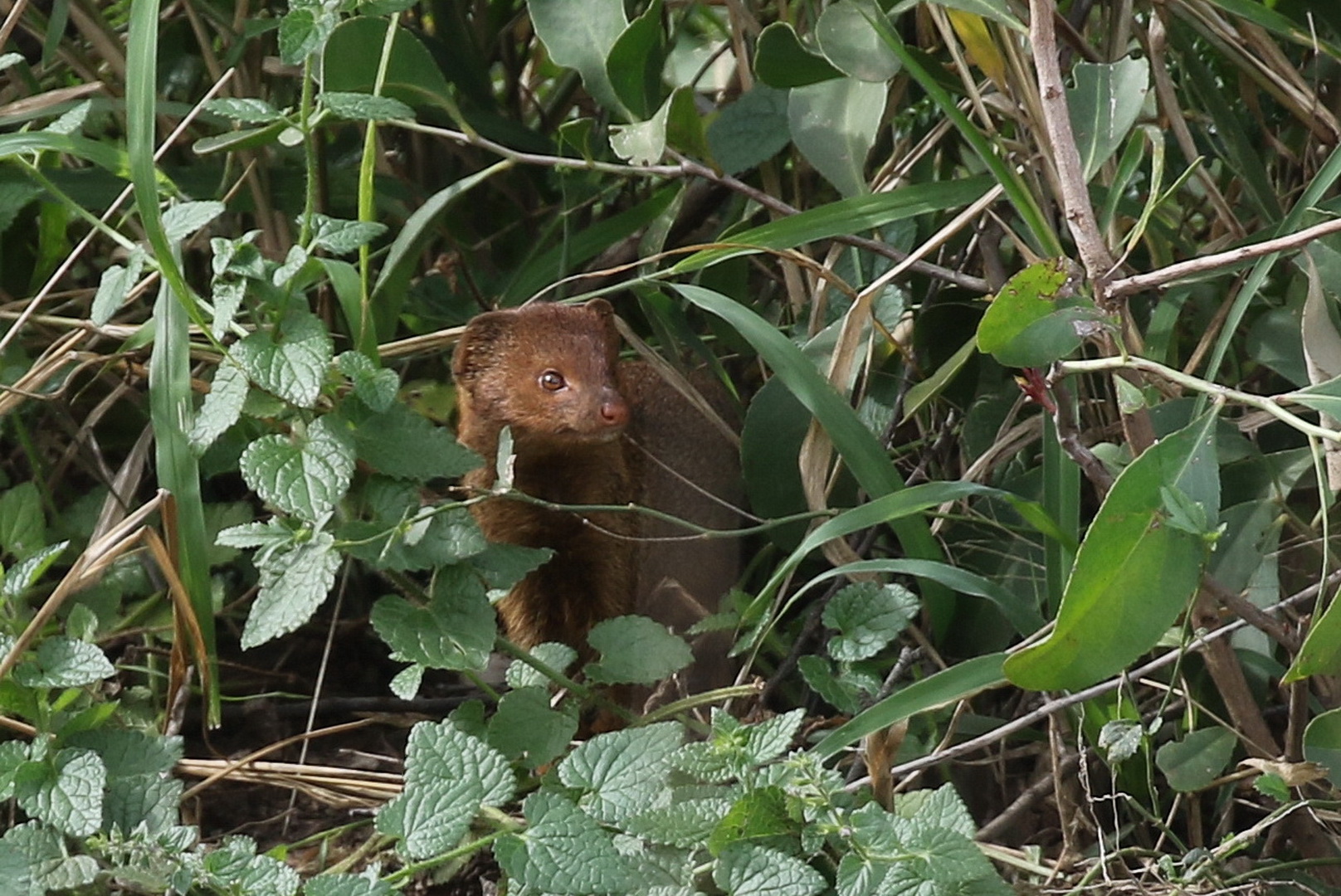
A Slender Mongoose popped out in the same area as the Striped Crake so we hope he did not have the Crake for supper.

We later heard that the hide was meant to have been closed. If so we were fortunate to have been able to have such a good sighting of the Striped Crake.

Some of the characters at large in the chalet party.

In all we recorded 117 bird species in Sobhengu and the wetland area. Click here to see the list.

Full Moon over Lake St. Lucia


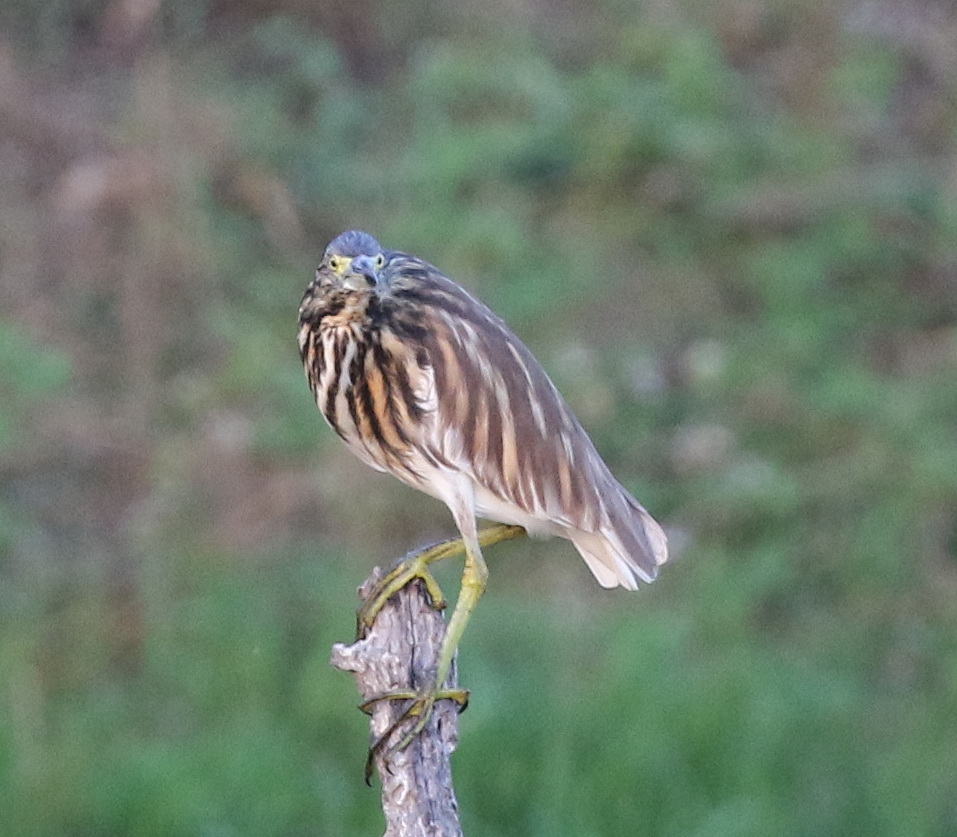
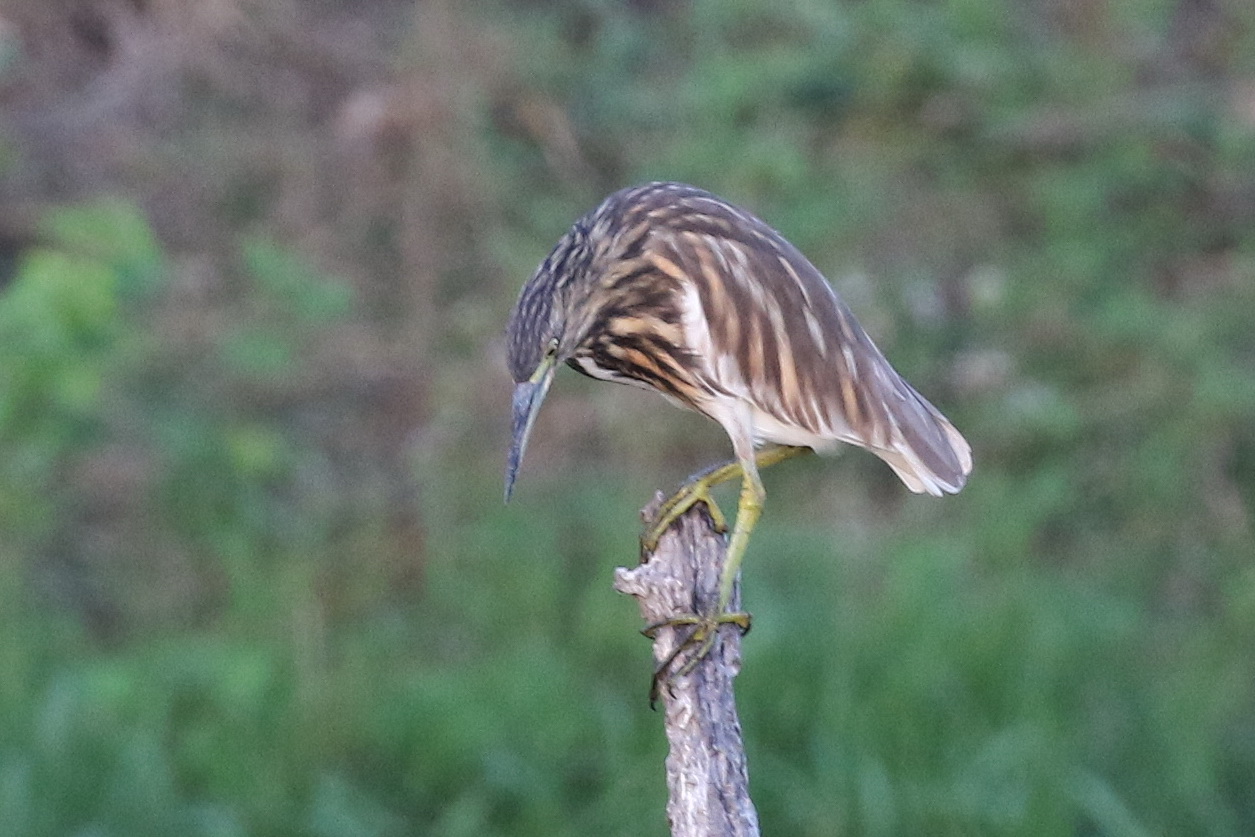
Mziki – Malagasy Pond Heron

Report by Paul and Sally Bartho

21 June 2017

Our adventure started while we were at the Sobhengu timeshare on the Nibela Peninsular, Isimangoliso Wetland Park, KZN – very close to Phinda.

We received Trevor Hardaker’s report that a Malagasy Pond Heron had been seen at Mziki in Phinda. We followed Trevor’s reports each day hoping that arrangements would be made with Mziki to see the bird before we headed home.

It was only when we got home to Howick that arrangements were made for keen birders to gain access to see the bird.

Sally and I decided to go. We made a booking for the Wednesday afternoon game drive. Then we called several friends to see if they wanted to join us to make up the numbers. We got one taker. So I put out a message on SABirdnet and on the BirdLife Port Natal Facebook page. The phone never stopped ringing and within minutes we had a full vehicle – 7 people in all. Janice and Mike Isom, Nicky and Tiki Forbes, Cecil Fenwick and ourselves.

Yesterday we drove all the way back to Hluhluwe, booked into the Fever Tree Lodge where we planned to spend the night. And then on to Phinda, reaching their gate well early. To get to Mziki was a further 12 kilometres driving through Phinda’s game reserve and slowly enjoying the nature sightings along the way including a White Rhino and baby.

In seems that our party all had the same idea and we all arrived at the Mziki gate at more or less the same time – and hour and a half before the game drive.

Our game drive vehicle was ready for us at 14h00 – Brendon and Johan our guides. We set off for the wetland area where the bird had been seen regularly. We were told that they had had a 100% hit rate so far. I think we were all worried by that statement.

First area – no luck. Round the other side – no luck. To the other end of the wetland – no luck. Process repeated and another area visited – still no luck.

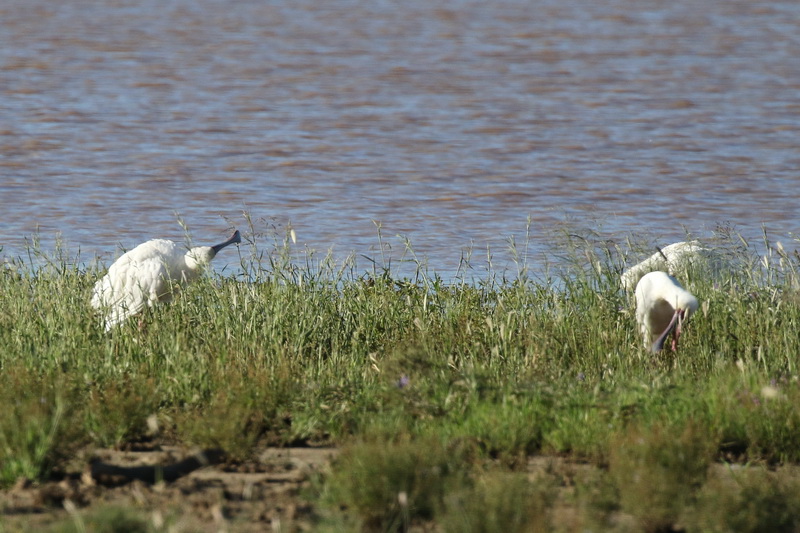
Thought we had a chance in one small pond where there were many African Spoonbills and a couple of Yellow-billed Storks fishing. – no luck.

African Spoonbills and Yellow-billed Storks


Green-backed Heron

Despair starting to set in as night drew closer. So one more complete cycle and back to the start – still nothing and now it was time to head back. One final look, and as we start to leave Sally spots the bird right next to us. We all get a brief glimpse. Unfortunately it spots us and flies across to the other side in some deep reeds.

What a lovely sighting of the bird in flight.

Anyway, we drive round to where it went into the reeds and we vaguely spot it at the edge – well camouflaged by reeds of course.

Again it spots us and flies across to the side where we had just come from, changes its mind and lands on a stump in the water.

Great views but poor light for photography, however we manage some shots. It flies to another dead tree kicking off, in no uncertain terms, a Cattle Egret which was roosting and settles there.

Malagasy Pond Heron

It is a bit further away and we suspect that is where it wants to roost so we left it alone and headed back to the cars in the now gloomy light.

At the cars we enjoyed a few drinks and snacks laid on by the Brendon and Johan.

Elated Mziki Team

We were all elated and the guides relieved.

Sally was the most popular person amongst us. Well done Sally.


Zululand

Report by Paul and Sally Bartho

1st to 5th April 2017

Following the report of a White-throated Bee-eater in Hluhluwe, Sally and I made an impulsive decision to see if we could find it.

We decided to camp in Bonamanzi as a base and were allocated a site in their new campsite. Each campsite with its own ablution. Unfortunately I incorrectly heard the price quoted to Sally, so when we arrived it was not the R220 for the site as I expected but for each of us per night. Had I known this I would have gone elsewhere – like Hakuma Matata.

Following our trip to the Cape for five weeks where the most we paid for a campsite was R240 for both of us, the prices for camping in Zululand have gone crazy. R440 per night camping in Bonamanzi which is nothing special is ridiculous. Perhaps that is why there was only one other camper there and we did not see anyone using the chalets either.

Moving on. On the way there we drove through Hluhluwe and spent an hour and a half in the area where the Bee-eater was reportedly seen. No luck. The next day was also spent in Hluhluwe searching the area for over three hours – again no luck.

Birding appeared quiet in general however we were surprised to find out that we did identify 91 different species over the day and a half. Here are some of the species photographed.

The following day we went to Isimangaliso, entering Western Shores through the north gate. The hide had water in it but was not busy, so we headed for the aerial boardwalk. At the top we could see that the water level had dramatically increased since the last time we were there.

Western Osprey flying over wetlands at Western Shores – view from the top of the aerial boardwalk

Some of the other species seen:

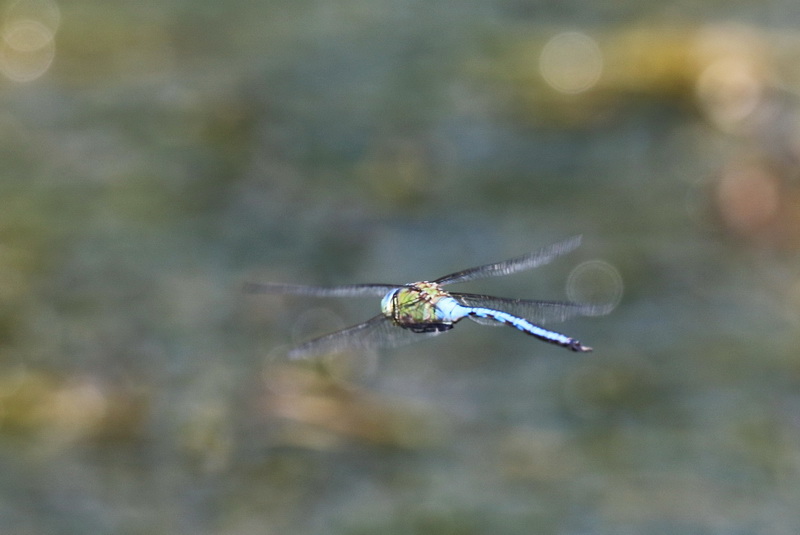
Red Dragonfly or Damselfly

Once through Western Shores we headed for Eastern Shores and had to wait more than half an hour to check in – such a slow process.

Eastern Shores was interesting. There was water around, so we checked out the pans but nothing much was about. Then we headed round the Vlei loop picking up birds here and there. At one section we came round the corner and the road ahead was blocked. A rather large Rock Python lay in the road.

Rock Python

The Mafazana hide was closed. It was unclear why but we suspect they are making a new entrance road to the hide.

Time for tea so we went to Catalina Bay. Fortunately the wind had died down. From on high we had good views overlooking the lake. Because the water was so high there were no waders about and very little else too. However an African Fish-Eagle made a pass looking for its next meal. From the photo it looks as though he has his eye on something rather large.

African Fish-Eagle
African Fish-Eagle with an eye on something rather large.

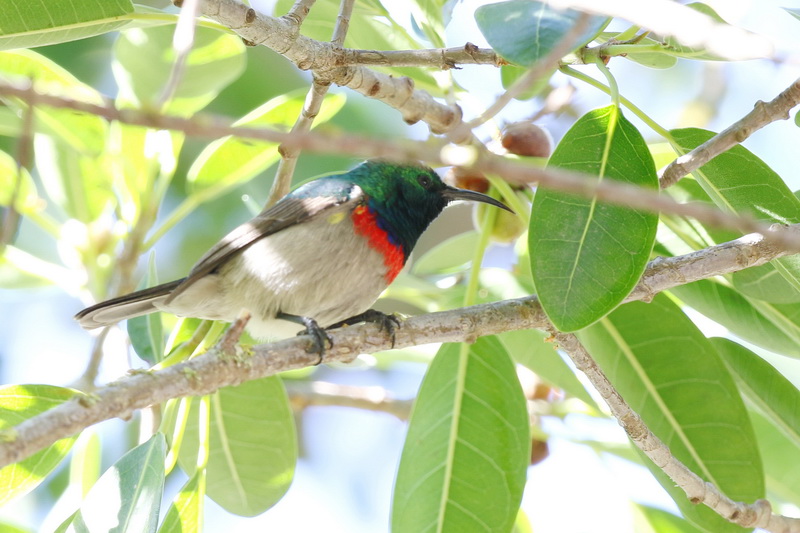
Then there was the Scarlet -chested Sunbird watching a White Rhino having a mud bath.

Lunch was fish and chips at the boat club overlooking the estuary. Across on the other side major reconstruction works were ongoing. The sand hillside is being removed. There were at least 5 diggers each with 3 dumper trucks – going back and forth to the beach dumping their loads.

In the estuary there were many Terns, a crowd of African Spoonbills, Saddle-billed Storks, Grey Herons, White-faced Ducks, Pink-backed Pelicans, other waterbirds and numerous waders. Unfortunately it was impossible to get close – too muddy.

African Spoonbills

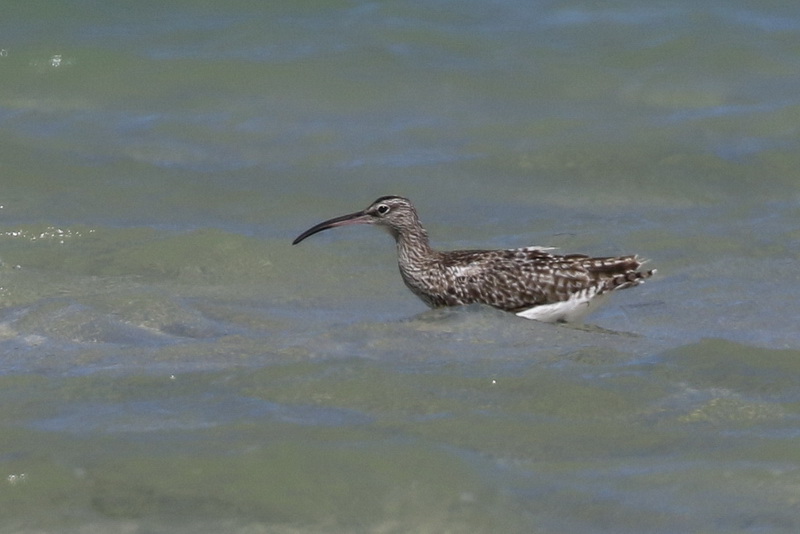
We did however manage to get to the sea shore to find a couple of Common Whimbrels.

Common Whimbrel

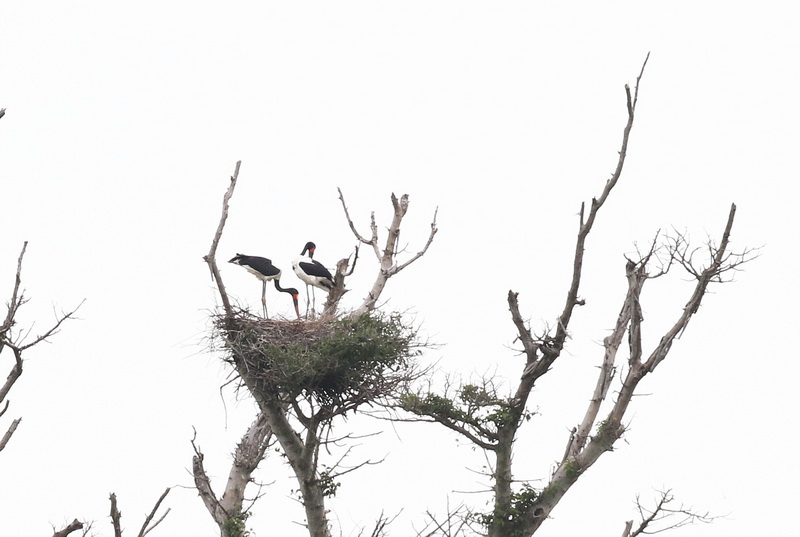
On the way back we drove through Western Shores taking the uMphathe loop road. A Saddle-billed Stork was seen close to the road. It appeared to be looking for something. After a while it flew off with a clump of bush in its beak. We wondered where it was headed. Then we saw it land on its nest at the top of a tree on the horizon. It’s mate was there to greet him.

Saddle-billed Stork looking for nesting material

At the Kweyezalukazi Lookout point there were about 11 Lemon-breasted Canaries – exactly where we had seen them before.

Lemon-breasted Canaries

Then around the corner in an open plain we noticed a rapter at the top of a dead tree. Out came the scope but it was too difficult to identify. You decide – we thought it was either an Amur Falco or an Eurasian Hobby. Most likely the former.

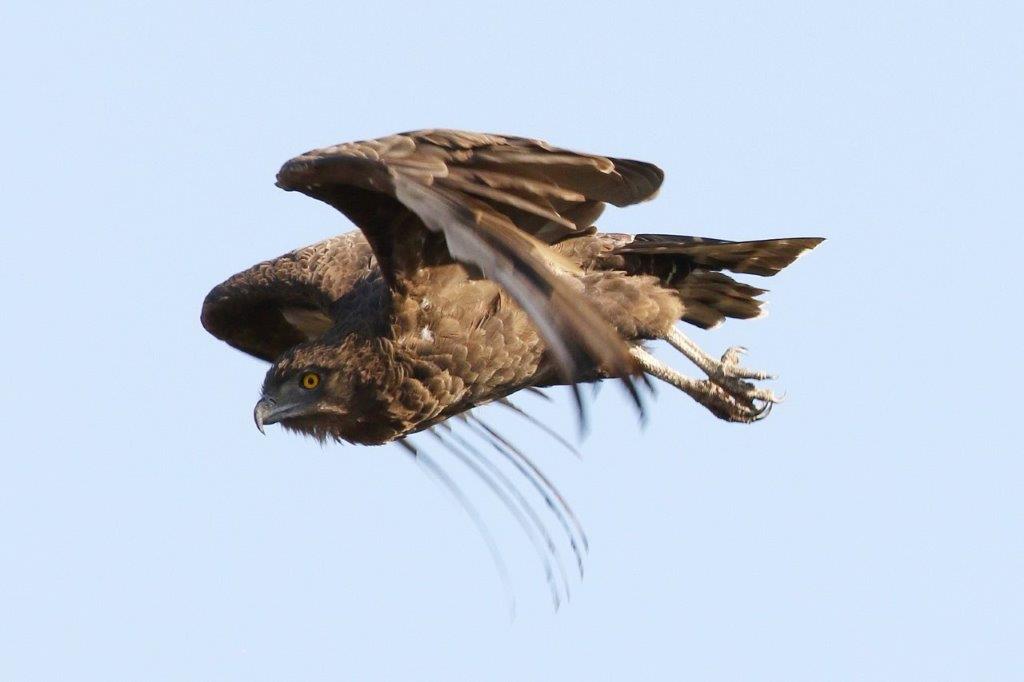
And finally as we were about to leave the park – a Brown Snake-Eagle looking remarkable like a Bat Hawk because of its posture.

Brown Snake-Eagle trying to impersonate a Bat Hawk.

And then we went to camp in Mkuze. Prices way over the mark for camping. R300 per night for the site – up to 3 people. This is just another cheap trick to generate extra income as most people either come as a couple or single. They refuse to make any concessions for groups of one or two people. The ablutions are basic and there is no power from 09h00 till 17h00 and from 22h00 to 05h00. And there is now a R10 community charge on entry plus R7 per person per night in the reserve. Camping in Zululand is becoming too expensive for most potential visitors. No wonder there are so few people in the camps.

We only stayed one night.

Impala, Nyala and Baboons were plentiful with the odd Zebra and Wilderbeest but no other animals were seen during our stay.

Nsumo Pan was very full and the hides in good condition with some having new concrete walkways.

As usual the best place to spend midday was at kuMasinga hide. We did have one mystery bird there though. What do you think it may be?

Elsewhere round the park.

Having dinner at Mkuze we noticed a person’s face on one of our hanging tea towels. Could it have been Donald?

Who do you think it looks like?

And then some bird droppings on the side of the car looking like an owl in flight.

Owl in flight

Overall we identified 144 different bird species. To see what we identified and where click here.

Paul and Sally Bartho


Cape Adventure Part 4 – final.

Report by Sally and Paul Bartho

Continuing from Part 3

From Wilderness we headed for Plettenberg Bay and the Keurbooms Lagoon Campsite. The place was very busy especially the waterfront sites. However we were in luck and found an almost private site with a view over the lagoon. The cost R240 per night – no pensioner discount despite being mid-week.

Initially they only had one ablution open but opened up another for the weekend. They were passable.

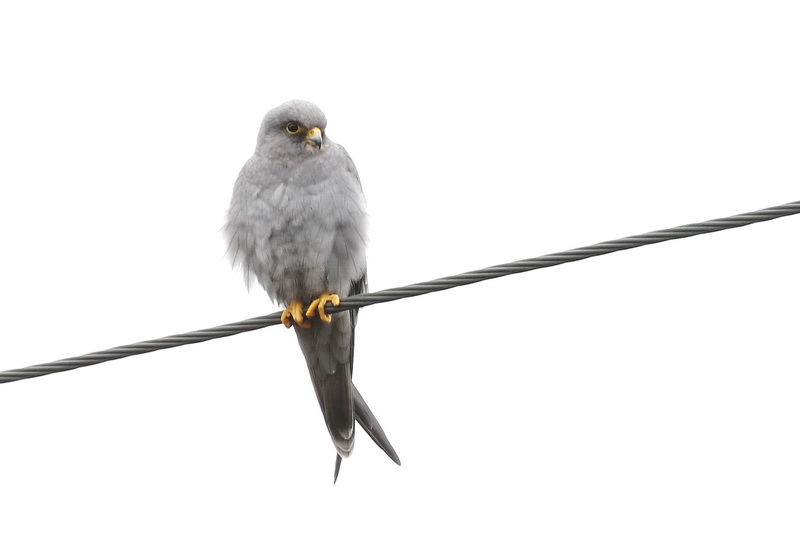
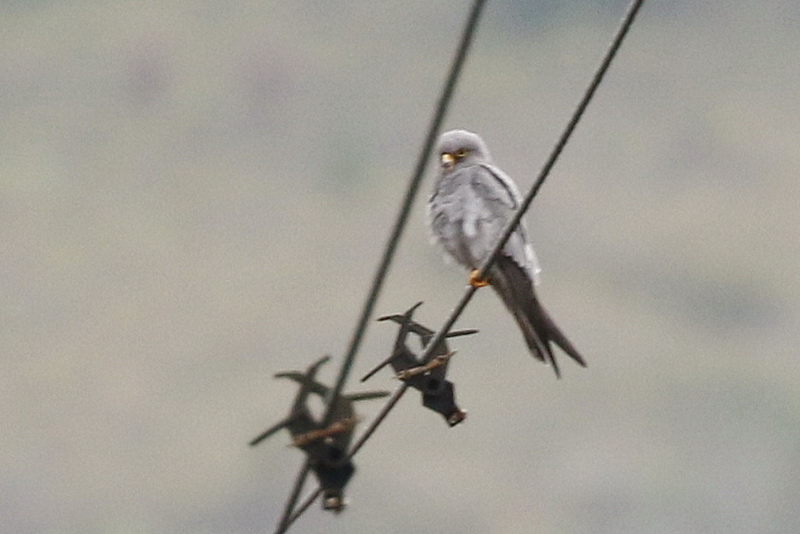
The Rare Birds Report noted that the Sooty Falcon was still present. So we went to look for it on our first morning there. We found it but the sky was too grey for photography. However the next day we were able to get quite close and managed a couple of shots enabling positive ID for ourselves.

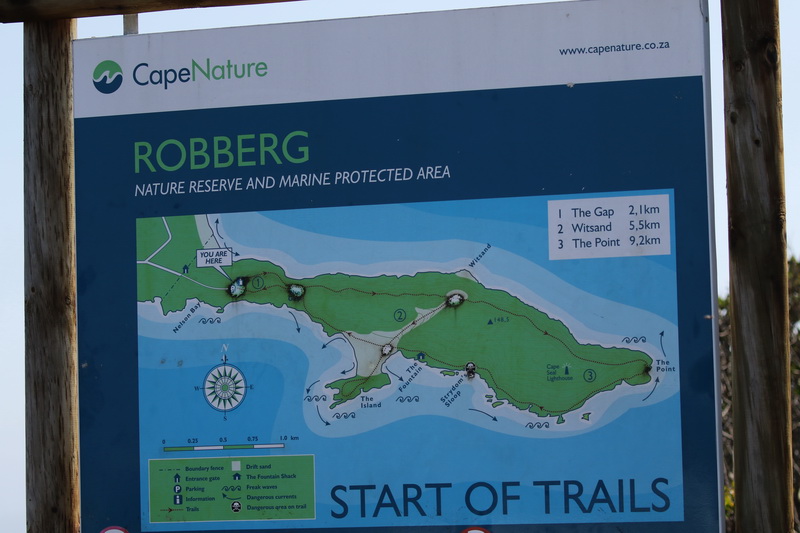
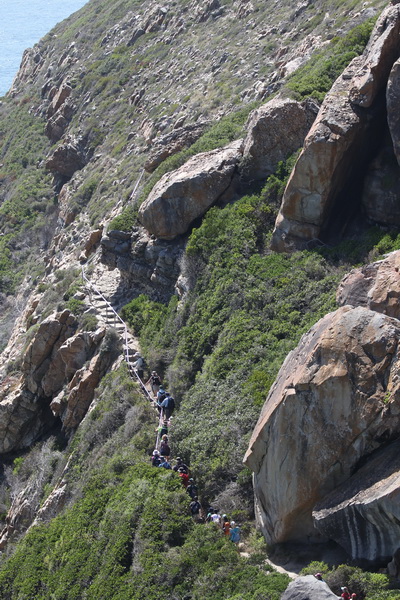
Part of our time there was spent enjoying the scenery with a visit to Roburg. Needless to say we did not walk all the way down to the beach. We got to one lookout point and stopped there – seeing a large seal swimming close to the shore and exhausted panting people passed us having climbed the steep steps up from the distant beach.

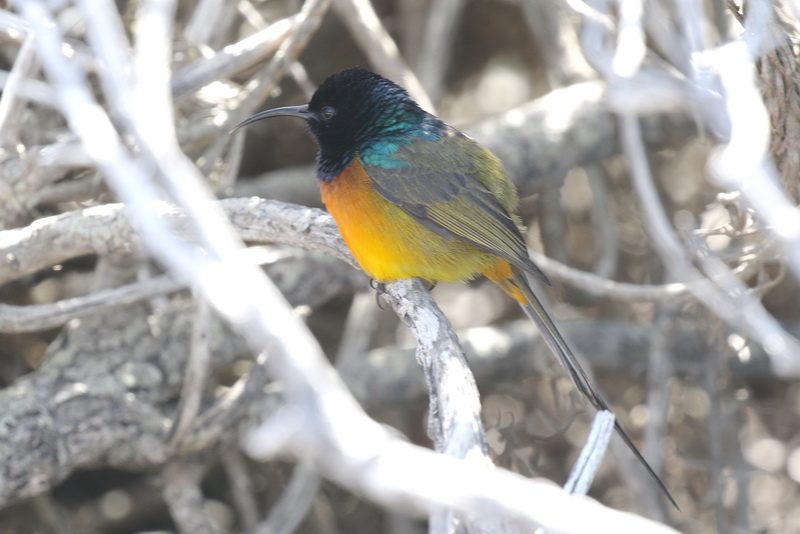
On the way back a pair of Orange-breasted Sunbirds succumbed to the heat and took shade in a bush right beside the path. Most of the time they had their eyes closed.

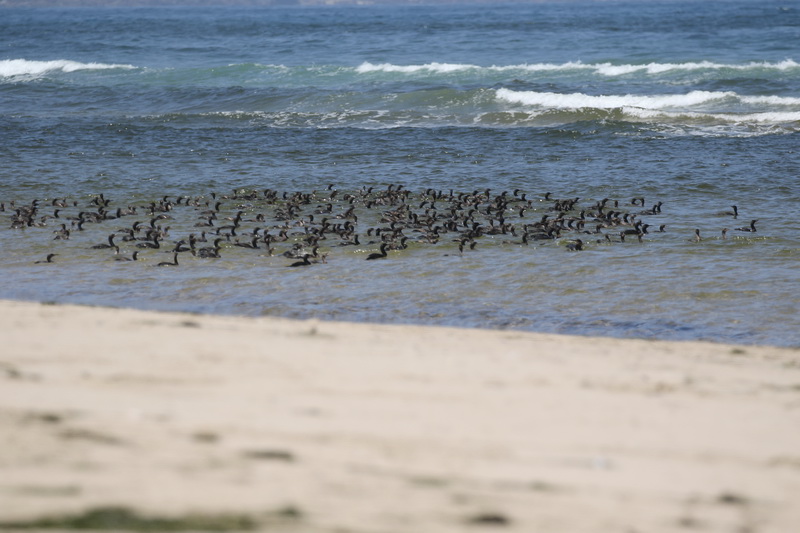
Back at the campsite we took a canoe to the opposite shore of the lagoon at low tide. There we saw almost one thousand Cape Cormorants on the spit’s edge. There was also plenty of Kelp Gulls as well as a dozen or so African Black Oystercatchers.

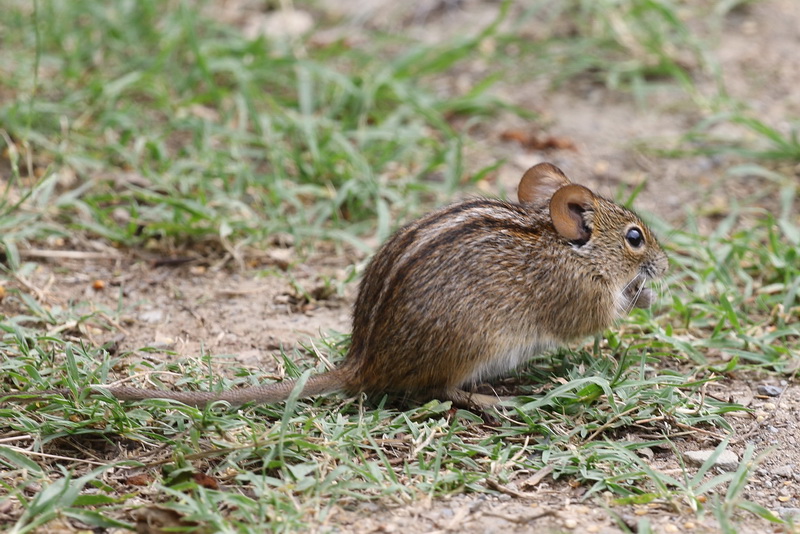
Campsite birds included Cape Turtle-Doves, Cape Robin-Chats as well as a friendly striped-backed mouse. Driving around the area we saw a few other birds which kept us interested.

Malachite Kingfisher

From Plettenberg Bay we went to Tsitsikamma – Nature’s Valley. R248.46 for two nights which includes the 40% pensioner discount.

De Vasselot – Nature’s Valley

Choosing a site proved difficult. There was no power except by connecting to one of the facility buildings. We decided that we wanted to be in the woods and chose a site near the ablutions. We expected there to be no power however I managed to get a cable across the road into the scullery.

Our neighbours were brilliant. Once set up they came calling. First a Chorister Robin-Chat then a Lemon Dove. Each within metres of us. What a welcome.

Lemon Dove
Chorister Robin-Chat

A visit to the river mouth was unproductive birdwise but a pleasant stroll to get some exercise. On return we went for a stroll around the forested campsite which was quite quiet. We arrived back at our campsite to find four Lemon Doves and a Chorister Robin-Chat under our car. What a start to our time there.

The next day we went for a walk on one of the trails to the north of the river. The forest of well established tall trees was magnificent.

At first the birding was good with Forest Canaries, Swee Waxbill and Grey Cuckooshrike all entertaining us at one spot. Further up the trail we joined the Otter Trail and birding was pretty quiet – except for what we thought might have been a Narina Trogon.

Back in camp we relaxed and had constant visits from several Lemon Doves and the odd Chorister Robin-Chat. They were not concerned about our presence and came right up to us. Some of the other campsite birds and other visitors:

Bushbuck

Later we went for a walk in the campsite and saw little except when we got back five Lemon doves and two Chorister Robin-Chats greeted us.

So special to see these birds up close and unconcerned about us.

This raptor waved us goodbye from way up high – anyone care to ID this for us would be welcome.

Mountain Zebra NP was our next destination for 3 nights. Midweek with pensioner discount of 40% amounted to almost R500. Unfortunately we were not aware that the campsite was undergoing renovation so we had to put up with bulldozers etc when we were in camp during working hours. It meant we spent all day in the park without a break.

Our Campsite

This turned out to be one of our favourite birding areas. The habitat was varied from grassland at the top of the mountains, acacia savannah lower down, dams and wetlands.

Sally was enamoured by the flowers in the upper grasslands.

Aloe Sally

In all we recorded about 90 different bird species. Many of the birds were new to our trip – Gabar Goshawk, Black-headed Canary, Denham’s Bustard, a range of Pipits and Larks, Red-headed Finches, Scaly-feathered Warblers to name a few.

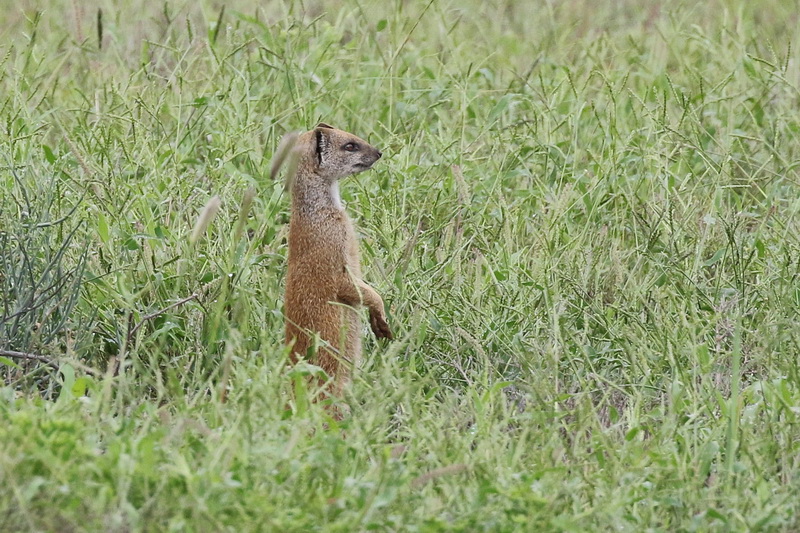
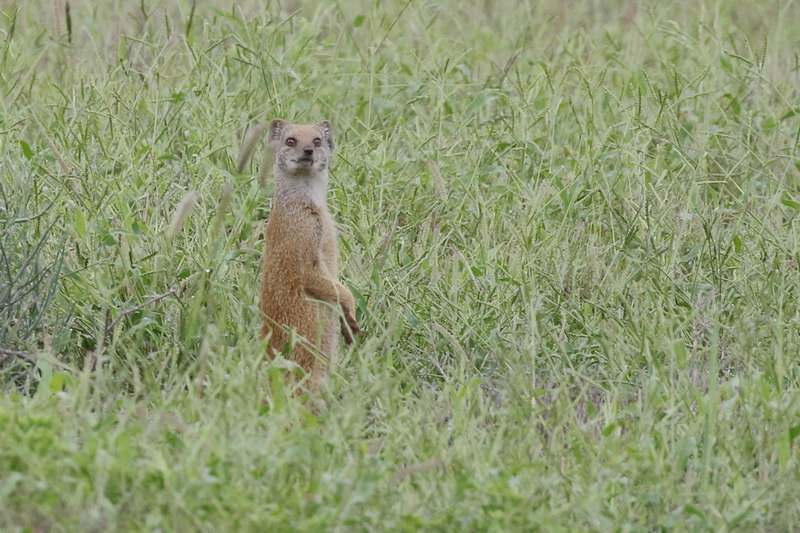
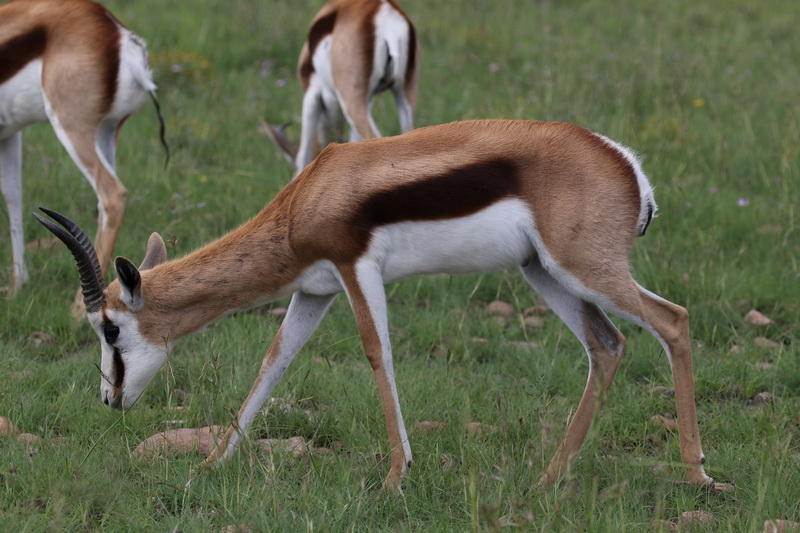
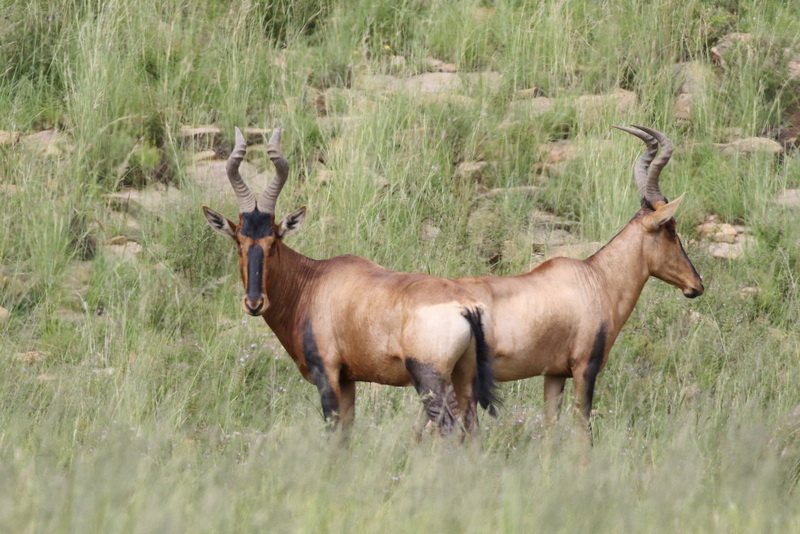
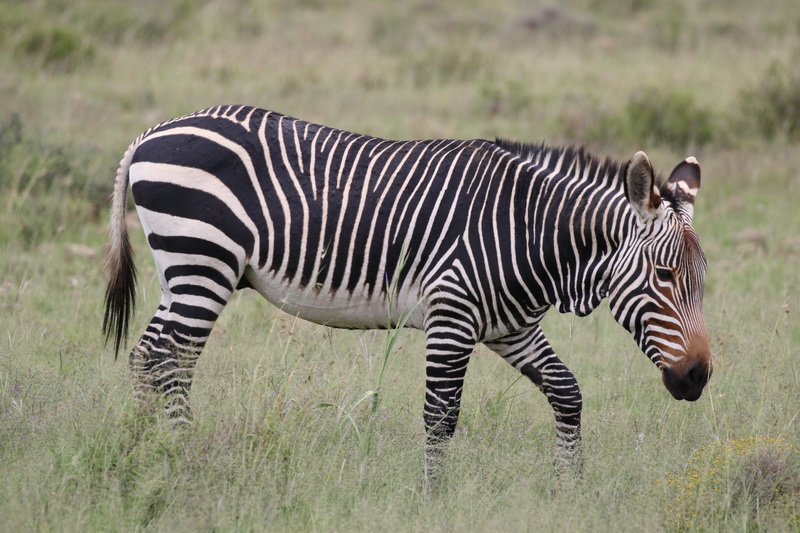
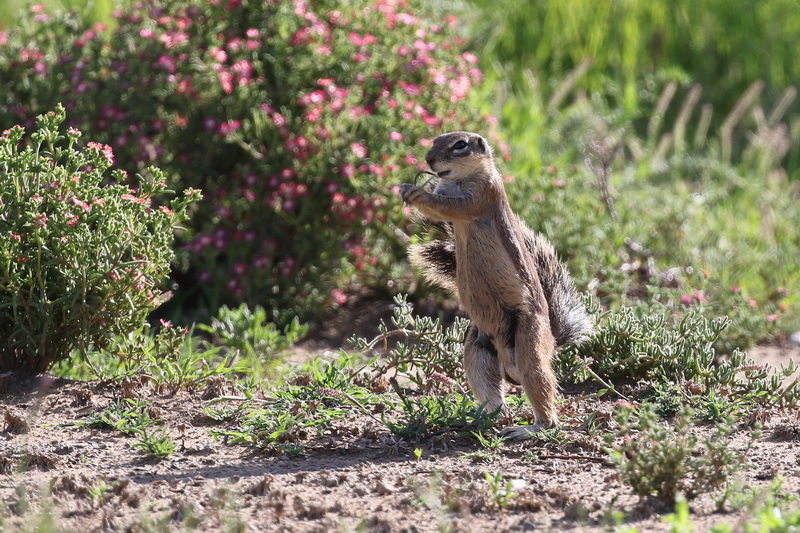
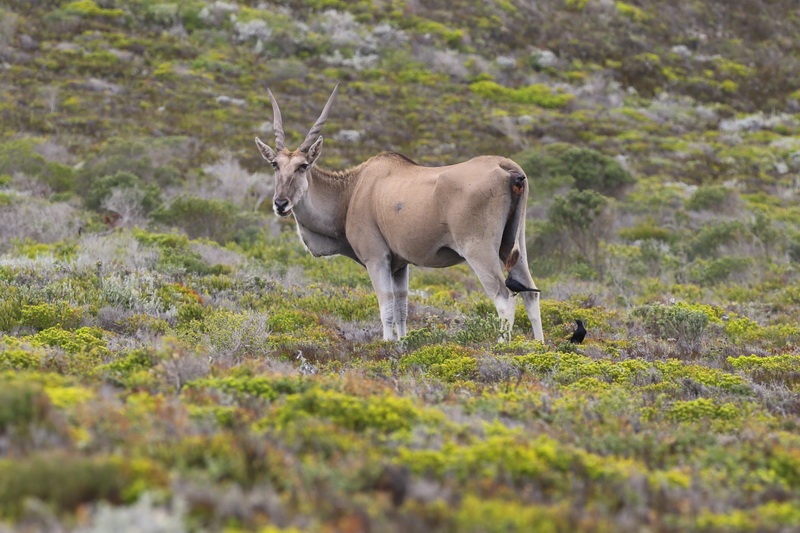
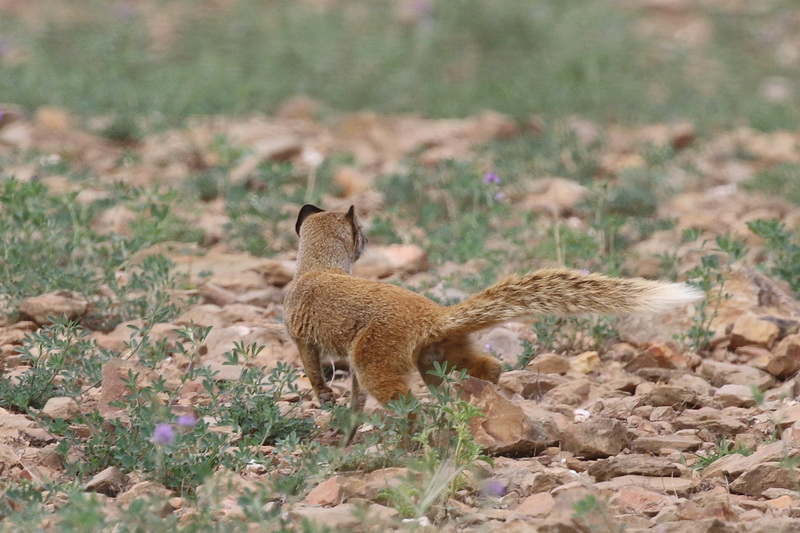
Lions were present but we managed not to encounter any. Game was plentiful – Cape Mountain Zebra, Black Wildebeest, Springbok, Eland, Hartebeest, Blesbok all readily seen. We also came across a Grey Rhebok, Yellow-tailed Mongooses, Ground Squirrels.

This is a place we would enjoy going back to – once the campsite renovation has been completed.

And then we headed home.

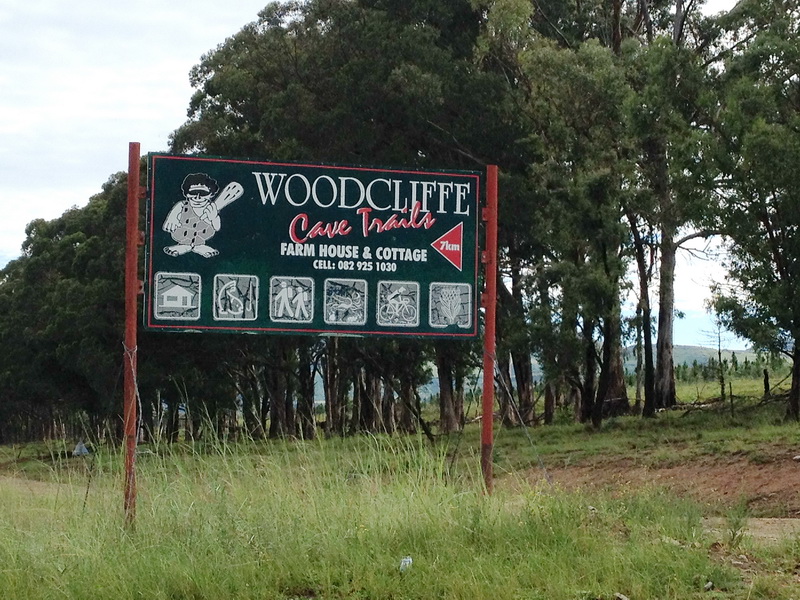
We decided to break the journey home with a stopover at Woodcliffe Country Lodge, 22 kms up the road to Naude’s Nek pass from Maclear. A self-catering cottage with a view and giving our poor trailer a rest. R600 for the night.

What a drive that turned out to be. Those 22kms should have taken us an hour. We were warned that we need 4×4 as the road was muddy after the rains. However we managed to take an extra hour missing our turn off and having to find someplace where we could safely turn round with the trailer!

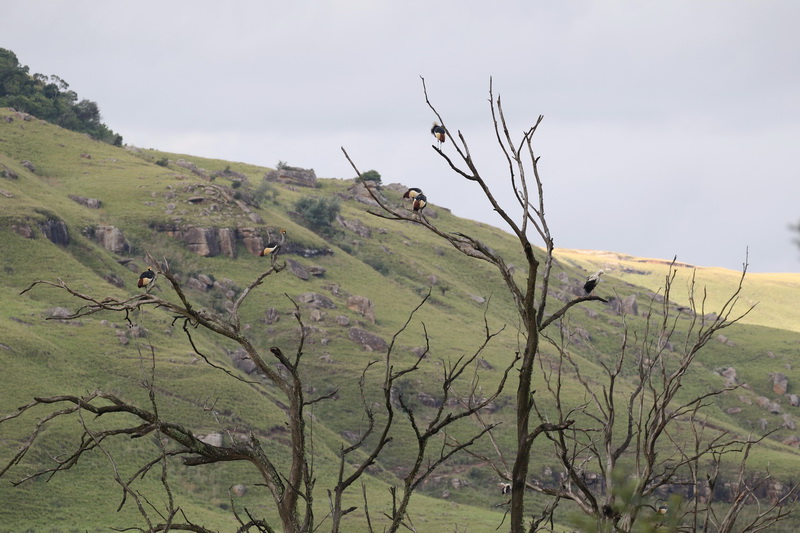
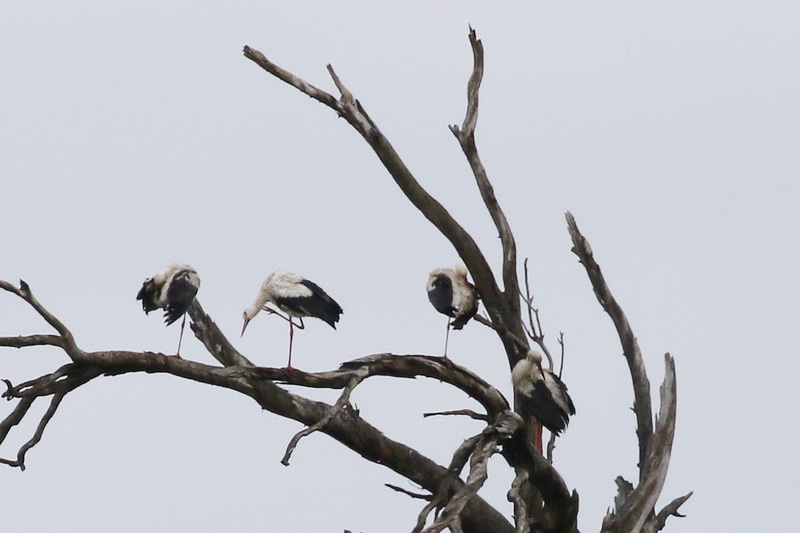
On the way in we saw a number Grey-crowned Cranes and many White Storks. In the evening they roosted in the trees near our cottage.

A bull decided to come through the fence to eat the mown grass round the cottage. Although he got chased out and the wire repaired he burst through again the next morning.

More rains came and went giving us cause for concern as to whether we would get out the next day!

We left early but not before seeing 13 Grey-crowned Cranes together in the field by our cottage. On the way back to the main road we saw at least 12 more.

Grey Crowned Cranes

The road was as soggy as expected and we had to use low range in numerous spots. Then the rest of the journey home was a slow ride through the Transkei.

In all, we had an unexpectedly pleasant trip with the bonus of missing all the rain back home. In all we saw 244 different bird species and 100 of these species were only seen in one location. If you are interested click here to see our complete bird list at each location we visited.

Hope you enjoyed the read and photos.

THE END

Cape Adventure Part 3

Report by Sally and Paul Bartho

Continuing from Part 2

After three nights in Dwarskersbos and exploring Velddrif and West Coast National Park we wondered where to go next. Eventually we decided to head inland to see the Cederberg mountains. Sally had previously camped in a pretty place called Algeria – in the Cederberg. She was keen to return so that is where we headed for two nights.

The site is run by Cape Nature. The campsite was relatively empty with about only 4 other camps taken. Most of the sites are well treed, some on grass but the more popular on sand or stone for the views and shade. Several nice sites overlook the stream and rock pool where you can take a dip.

Each night cost R240 – a bit of expensive for what it offered. The campsite ablutions also had no toilet paper. It is a drastic drive to get there up a stony pass for 18 kms. A long way back down to get toilet paper in Clanwilliam!

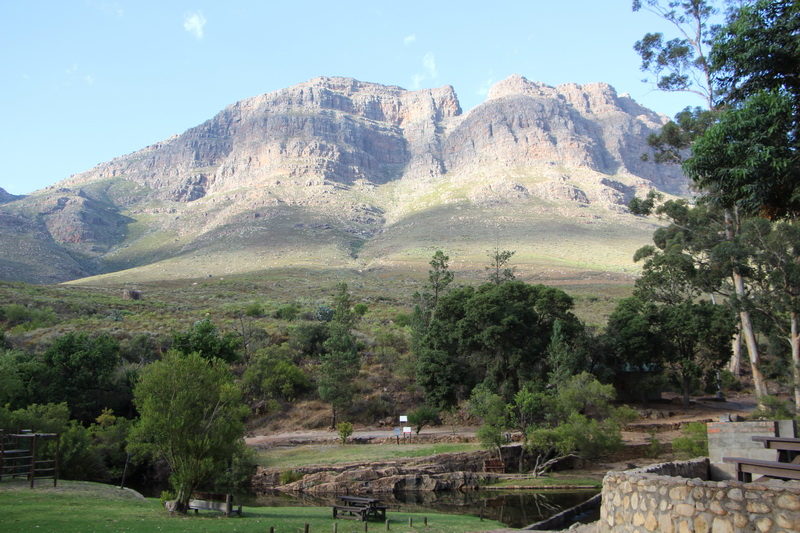
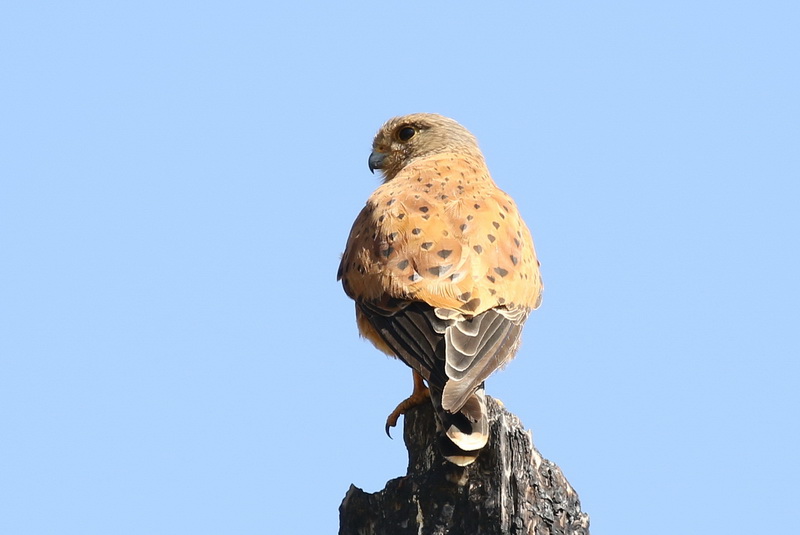
Birding here was limited to around the campsite, its trails and along the stony roads. Needless to say we did not record many species in the two days there. Our best sighting was a Greater Kestrel. The Southern Double-collared Sunbirds next to our campsite were special to hear but virtually impossible to spot as the tree foliage was well dense.

Another bird we wanted to see was the Cinnamon-breasted Warbler. Out came Birdfinder. Skitterykloof Pass it said was the best known place to see it. So that was where we had to go next.

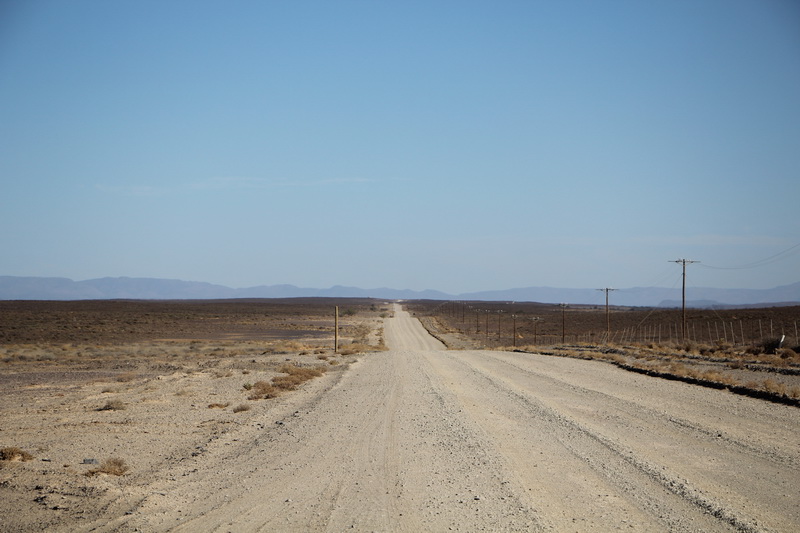
Skitterykloof Pass is about half way along the R355 from Ceres to Tanqua Karoo – about 80 kms from Ceres. Our choice was to stay in Ceres and drive out from there or alternatively stay in a small self-catering cottage within a 20 km drive.

We chose the latter and stayed at Gezellig Genot at R330 a night – bring your own bedding – also limited power available. We parked the trailer beside us and despite the heat (41 C) for two days the batteries were only half depleted keeping our fridge/freezer to temperature.

A quick exploration was called for on the afternoon of our arrival. Despite the heat we went to find Skitterykloof Pass. Driving south we passed the Tankwa Padstal and took the first right after it. A further three kms and we were there.

Steep hillside to the right and the picnic site on the left. We searched up and down the rocky slopes for several hours with not a sign of anything – nothing calling. Most unlikely to succeed – after all Birdfinder is over 10 years out of date. Disappointed – we headed back to the cottage.

The next morning we were up bright and early getting back at Skitteryskloof Pass at 06h30. Passing several Black-chested Snake-Eagles, a Booted Eagle – pale phase and a family of Karoo Korhaans on the way.

The hillsides were still in shadow as we traipsed up and down the road for more than an hour. The sun started to hit the sides of the cliffs and it was getting hot. Back down the road again to the bridge – nothing then back up again.

Suddenly we hear its call (having studied it before going). Well that is the first step – now to find it.

Out of the blue we saw it flitting from one Aloe to the next sucking nectar we assume. As we follow it, it gives us chances to positively identify it but never stops long enough for a decent photo. As we head back up to the picnic site we spot several more. In all we were lucky to see the bird 5 or 6 times. What a beautiful bird – our Aloe flitter.

Cinnamon-breasted Warbler

A few other species were heard and some seen in Skitterykloof.

Back at the cottage we luxuriate on the patio and spend the afternoon spotting from there. The nearby trees were constantly being visited by birds all day long – even in the middle of the day. There were Pririt Batis, Fairy Flycatchers, Namaqua Warbler, Karoo Scrub-Robin, White-backed Mousebird, Karoo Prinia, Cape Bulbul, Cape Spurfowl and most entertaining a gang of White-throated Canaries with their huge beaks almost the size of their heads.

Then to cap it all, with the close of the day, a pair of Rufous-cheeked Nightjars flew about us calling.

Rufous-cheeked Nightjar

As hot and dry as it was we much enjoyed our stay there.

On leaving we stopped at the Tankwa Padstal for some more of their explosive home-made Ginger Beer. The bottles took three minutes to open painfully watching as the gas escaped. Open it quickly and the contents explode all over you. Fortunately the sales lady informed us in time.

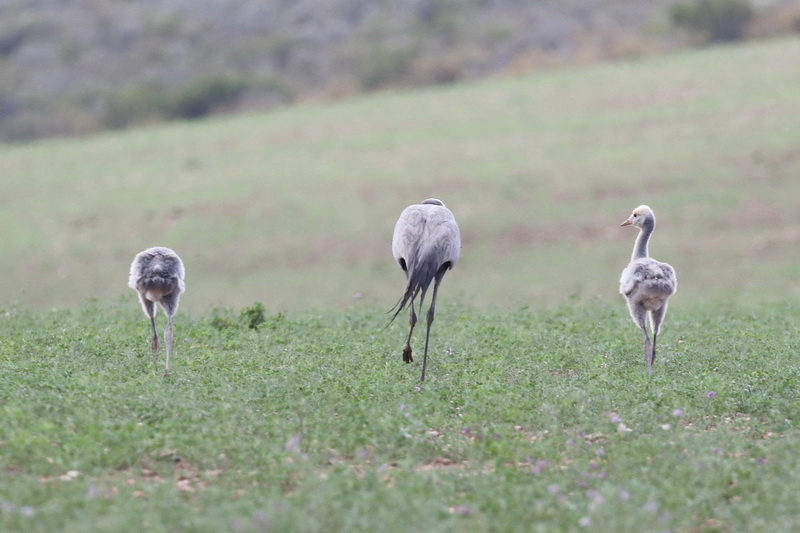
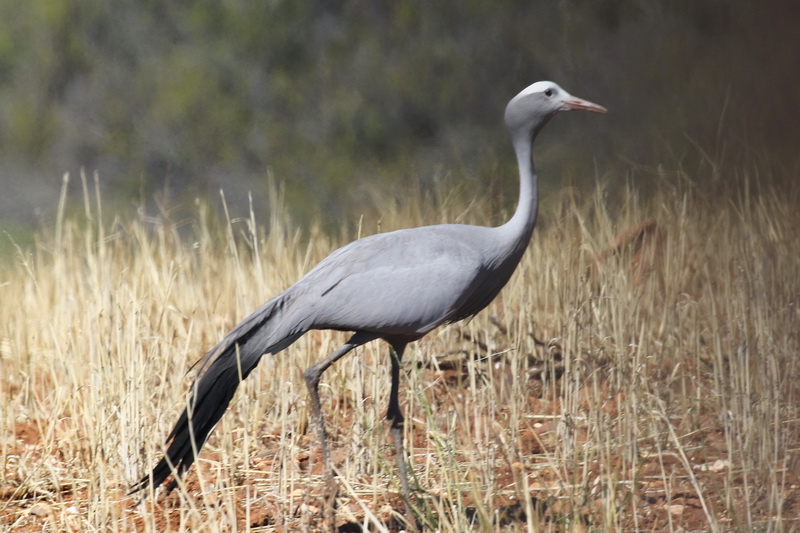
So where to next? Head back to Stilbaai we decided. But first to drive the dirt roads from Swellendam to De Hoop – loads of Blue Cranes seen the last time 9 years ago.

Best stay at Bontebok NP as the campsite in De Hoop, as we remembered it, was not only double the price but also in a very poor state. Apparently they have done up the ablutions but the campsite is now closed for restoration. They still take passing trade at a whopping R370 per site.

Bontebok was at R245 per night and R150 for the non-weekend third night.

We planned to pay a visit to De hoop to see what birding they would offer (being next to the river and sea).

The dirt roads did not disappoint – there were Blue Cranes in every large field, Buzzards a plenty – Common and Jackal and numerous Capped Wheatears. After a couple of hours and little distance driven we realised that if we want to see De Hoop before 15h00 we had to get a move on. Of course our GPS took us through farmers fields before we turned around and found our own way!

At De Hoop birding was limited. Most of the area to get to both the sea and the river was through low dense scrub.

Birds were heard but seldom seen. The Southern Double-collared Sunbird called everywhere and we were lucky enough to see it briefly. The Cape Grassbird however was not so shy and it was seen several times displaying nicely.

Baboons were on Sentry duty and other critters seen included Cape Zebra, Bontebok, a rather forlorn Eland, a Striped Mouse and White-tailed Mongoose.

Redwinged Starlings – male and female

African Black Oystercatchers were seen on the rocks and in the coves at the seaside but not much else.

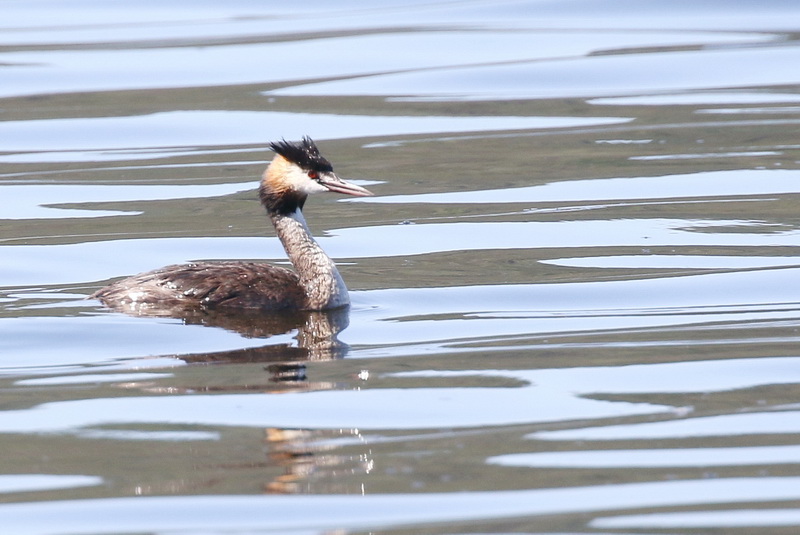
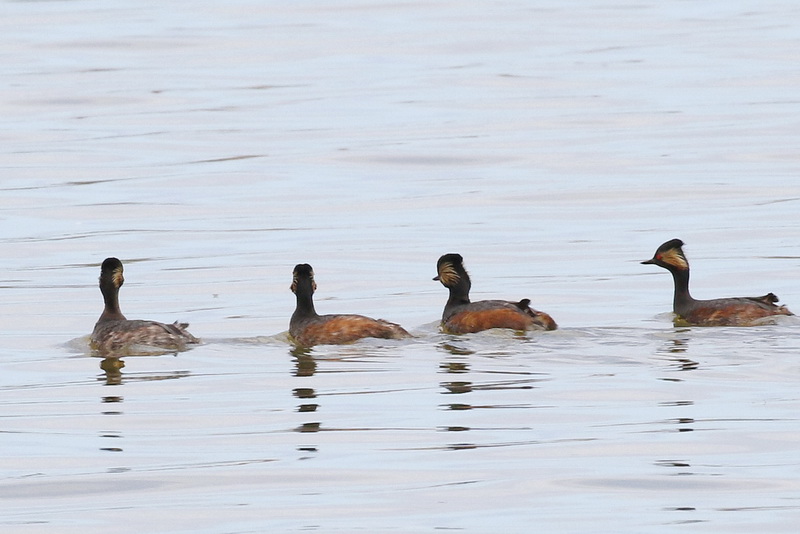
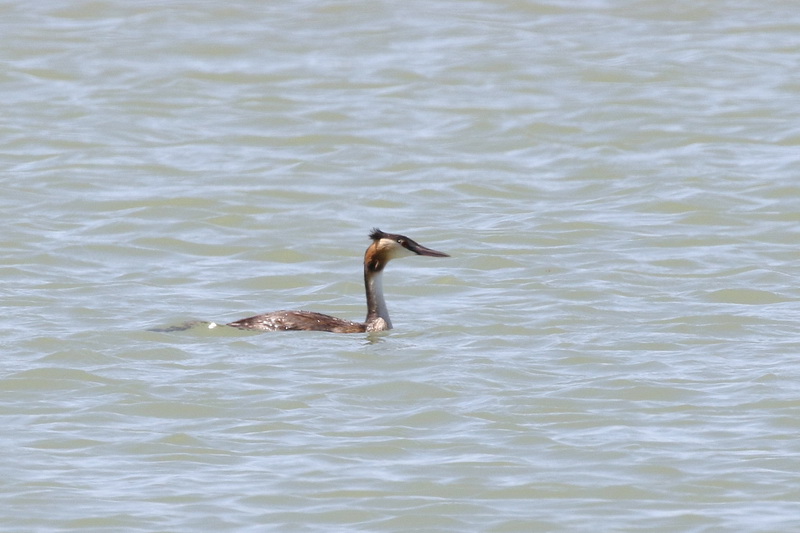
On the river frontage there were Great Crested Grebes and the occasional South African Shelduck.

Great Crested Grebe

And this unidentified Sunbird.

Our second day at Bontebok started reasonably brightly so we took the chance to catch up on the laundry – all by hand. However by the time we had finished washing up the sky was looking ominous. First a dribble then wind and rain. Luckily the sheets had more or less dried but the rest waited patiently for 2 days to get to a tumble drier..

The rest of the day was spent with shopping and catching up on housekeeping tasks. The rain kept up and we expected to leave the next day in the rain – not much fun decamping in the rain.

Yellow Moon

But we were fortunate. The rain had stopped during the night and we hung out the washing to get as much drying time as possible.

Then we packed up and headed for Stilbaai to get a second chance to see the Red-necked Buzzard. Weather predictions were not favourable and we expected to have to stay a couple of nights to get any chance of seeing the bird.

We knew they were renovating the road from the N2 to Stilbaai but it was a shock to see how much they had achieved and more sections of the road with Stop and Go – up to 20 minutes wait at each. And there were three – all of which we hit at the head of the line.

Half way along the third Stop and Go we turned off to Melkhoutfontein towing our trailer on the off chance we could find the Buzzard.

We get to the power station on the left and stop, blocking the bus station entrance. Out we get and scour the poles etc with no luck.

So we decide to head into Melkhoutfontein on the off chance of finding it there. After a short distance as we headed that way, Sally saw a faded blue sign on the left indicating the direction to both the old and new St. Augustine’s Churches. The old was on the right down a narrow track. We gave it a miss as we were towing. So into town. Nothing.

On the way back out, I see my GPS promises me that there is a way out from the narrow dirt track and I take it – with Sally in trepidation. After about 500 metres we get to an open area with a cemetery and the old church on our left.

The pine tree next to the old St Augustine’s Church – the perch for the Red-necked Buzzard.

And a Bokmakierie to greet us.

Bokmakierie

We stop and within a few minutes we see a Buzzard flying overhead – Common. Rats.

Then as I am thinking of turning the trailer round I see another Buzzard. Very pale undersides. Could be it. Out for a photo as it circles around and I get several shots then it flies and perches in the pine tree by the old church. That was the bird we wanted to see.

Red-necked Buzzard

As I tried to get closer to get some better photos it took off and disappeared out towards the sea. Well we had seen it but I was keen for a second chance to photograph it. We waited half an hour but I wanted another 15 minutes. As we waited another couple of birders arrived.

As we chatted one of them – the wife – said “What’s that bird on the pole?”  on the path to our right going in the direction of the blue-roofed school. Sure enough it was back and it allowed us to get several grey sky shots before it flew.

Well we had achieved our goal for Stilbaai. So we decided to head on to Wilderness and try to get ahead of the weather. During the first Stop and Go back out of Melkhoutfontein there is a dirt road to Albertina and a shortcut to the N2 – about 20 kms of dirt and gravel but better than hanging around in the Stop and Goes.

We settle for several nights in Wilderness NP.

Hurray they have a drier for our damp clothes. Our campsite is right by the river.

Three weekday nights here in camp with power on the river R525 (includes the 40% pensioners discount). The ablutions work well although a bit away from the site we chose.

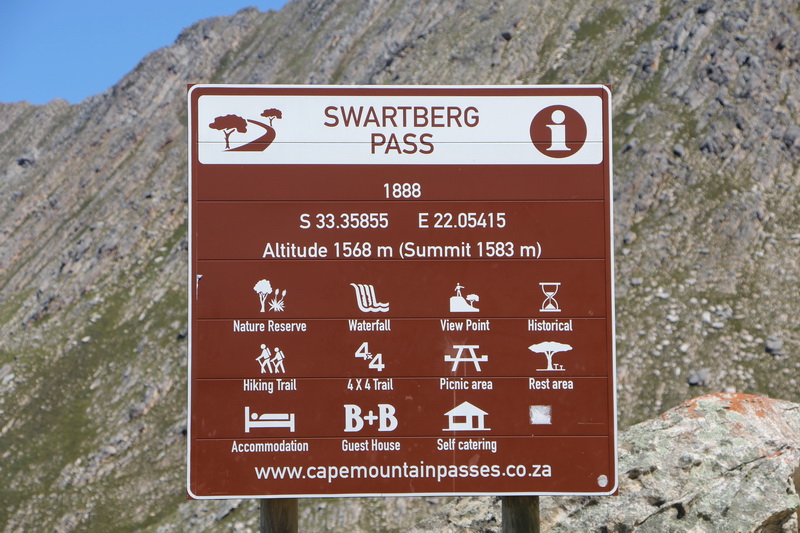
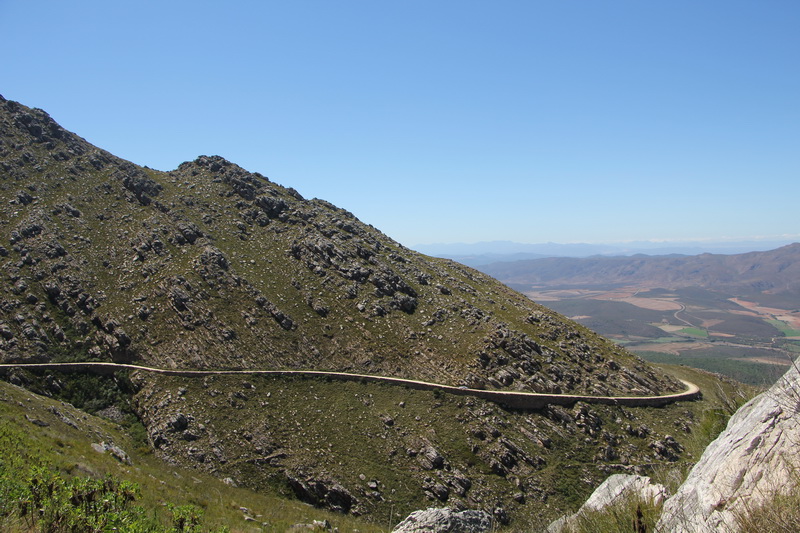
The next day to celebrate Valentine’s Day we decide to head for Prince Albert to have lunch – via Swartberg Pass! Quite a scenic drive but a bit nerve-wracking at times – especially going downhill – numerous tight hairpins and the stony road wide enough for one and a half cars.

Birds were few and far between but we did see a Dusky Sunbird near the top as well as a Blue Crane and chick on the way up.

Lunch at “O is for Olive” four kms  north of Prince Albert – Lamb chops – delicious. We take the longer (distance) route back and save ourselves a couple of hours on the Swartberg Pass alternative.

The following day was spent birding in the camp and going to the lakes and their two hides.

Campsite birding however was the most productive.

A point to note. After eventually finding the Half-collared Kingfisher Trail we were surprised to find we either needed a campsite permit, Wild Card or R40 per person. We had none of the these on us so ended up not doing the trail. We had heard it lived up to its name the day before with a Narina Trogon also making an appearance.

The campsite had a resident Black-headed Oriole and many Knysna Turacos. Seventeen were seen together in one tree on the opposite side of the river from us.

We enjoyed being next to the river despite the campsites around us being busy.

Nothing like a dip to cool you down!

Sally enjoying a dip in the river.

The evening before we left, the clouds above developed a red glow with a straight band of red moving towards the sea. Strange and interesting. Out came the camera to capture the picture. Then no sooner than the pictures were taken the sky opened with rain and hail. We had to move fast to get everything under cover.

To be continued in in the final Part 4

Cape Adventure – Part 2

Paul and Sally Bartho

Part 2.

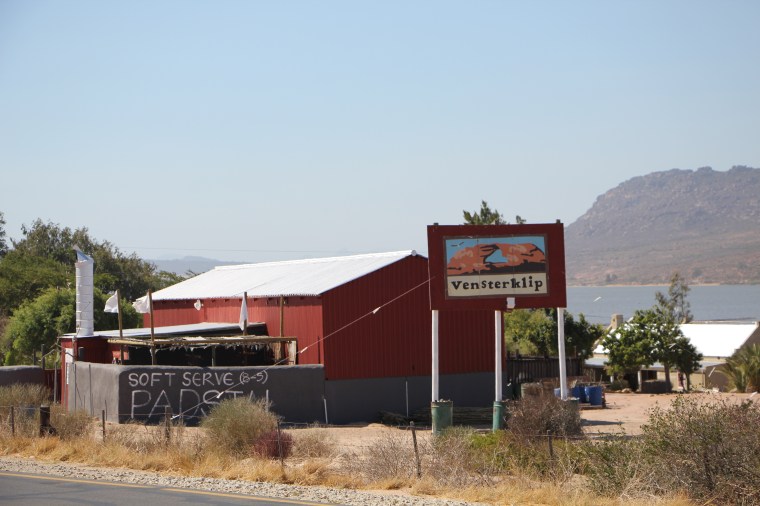
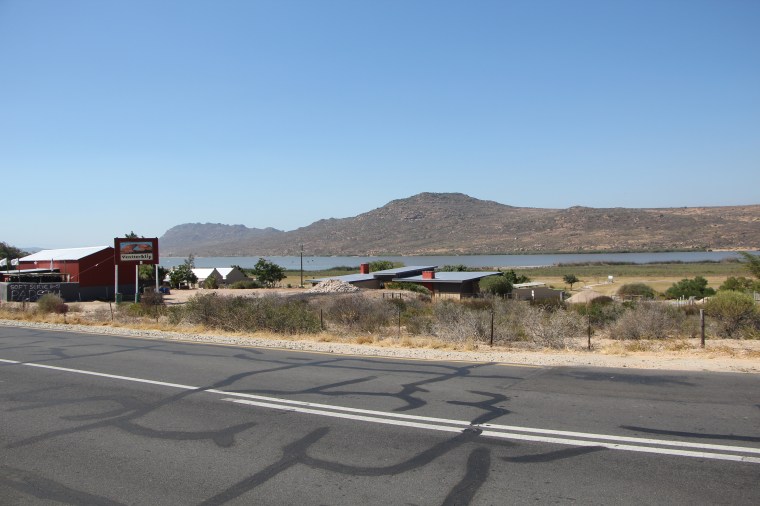
From Cape Town we headed for Eland’s Bay and a campsite Sally had read about in the Caravan and Outdoor Life Feb issue – Ventersklip overlooking Verlorenlei (the lost marsh) leading into the sea. Negotiated price from R480 to R300 for 2 nights.

Unfortunately the water level was low so water bird sightings were few at the campsite.

We decided to stay two nights and use it as a base to bird in the area in particular to try and find the Protea Canary along the Paleisheuwel Road (off the N2 eight kms south of Clanwilliam) and to visit Lambert’s Bay to see the Cape Gannet colony.

Protea Canary first – a lifer for me but not Sally. Sally had seen it when we visited Betty’s Bay some years ago. I was too slow carrying my binoculars, scope and camera at the time.

We drive along the Paleisheuwel Road to the craggy gorge, stopping and searching for some time. Then at one spot we stop. I let Sally out and park out of the way of the traffic. As I get out Sally calls me – she has it in her binocs. Sure enough by the time I get there it has gone!

Another hour traipsing up and down the road in the area getting dust blasted as the traffic seemed unnaturally heavy on this off-road dust bowl. It seemed there were White-throated Canaries everywhere and no Proteas. We saw Cape Buntings, a Verreaux’s Eagle overhead and a Lesser Honeyguide foraging. No Protea Canary.

And then as we were about to give up and after much persistence we spot a Protea Canary, get a good look at it. Unfortunately not able to get a photo as it was not stationary long enough. This is the tree it was seen in.

On the way back we head for Lambert’s Bay and the Cape Gannet colony.

View of entry into Lambert’s Bay

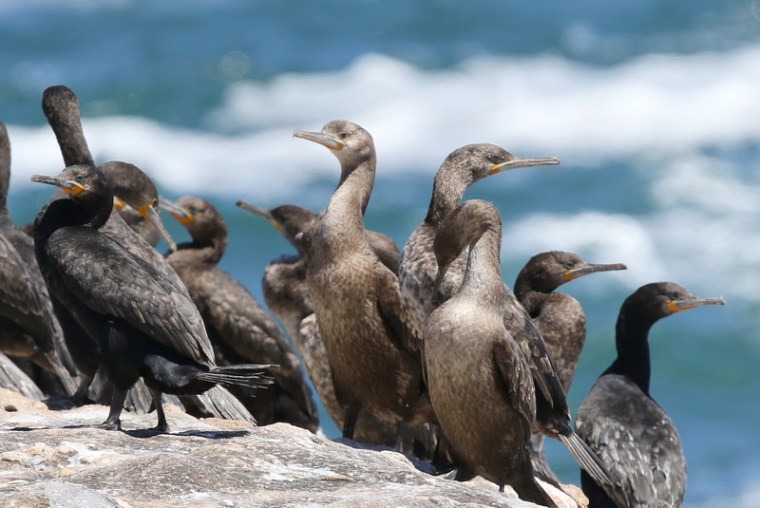
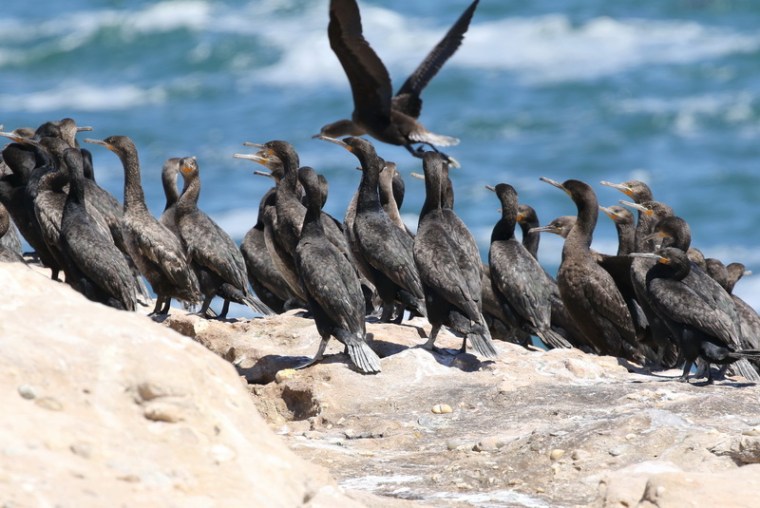
Once in Lamberts Bay we stop and look at the hundreds of Cormorants on one of the rocky outcrops. Virtually all were Cape but we did spot one Crowned Cormorant.

Crowned Cormorant
Cape Cormorants – Lamberts Bay

Then to the bedlam of the Cape Gannet colony. Now a R5 parking charge and R40 per person to visit unless you have a Wild Card.

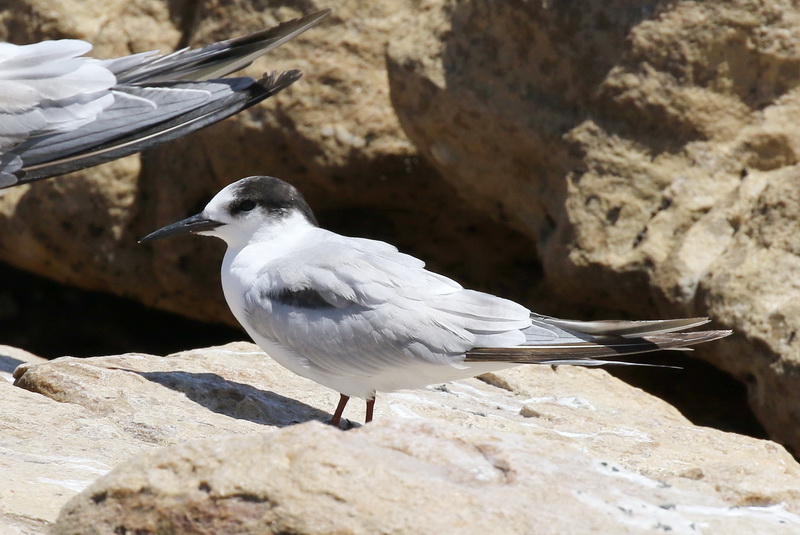
On the way in there were many Terns (Common, Sandwich and Swift) on the rocks leading to the Gannet colony. And some White-breasted Cormorant youngsters.

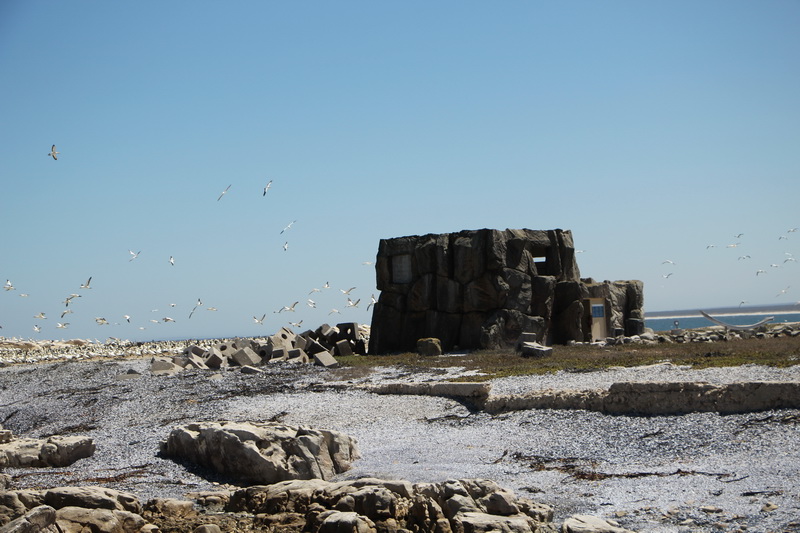
We headed for the Cape Gannet viewing hide. It looks like an out of place rock which gives it character.

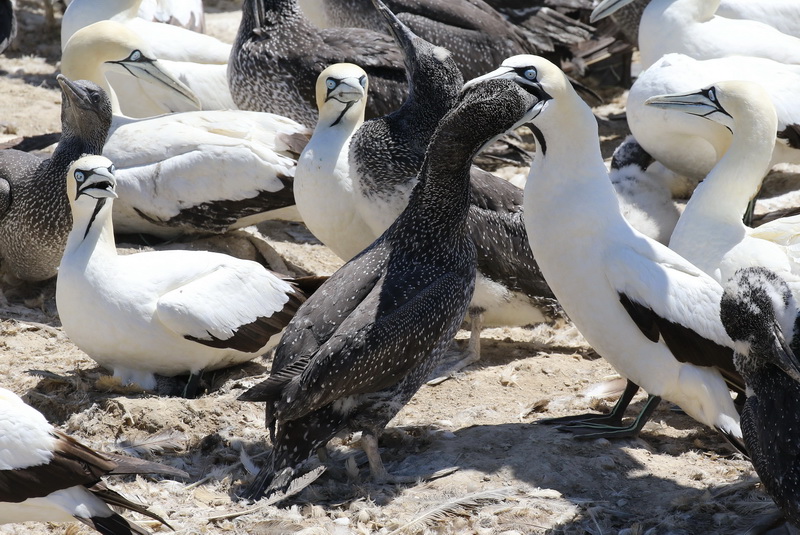
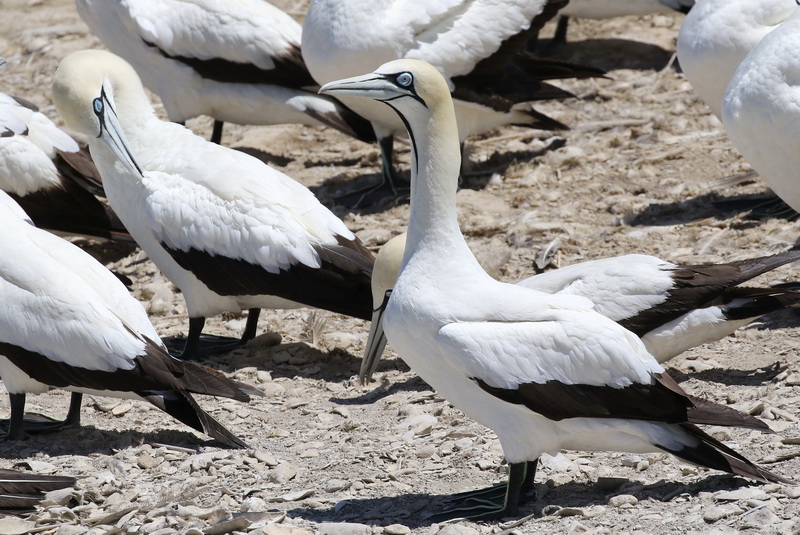
The rock was strewn with a heaving mass of adults and juveniles. The juveniles a very dark fluffy grey in contrast to their parents.

Birds were everywhere in the air circling around perhaps to get away from their demanding young. Interesting to watch their behaviour towards each other. But also interesting to see how they landed. They would come down to land, put on the brakes, carriage down, feet on the ground, still too fast forward so using their nose/beak to the ground to counterbalance their forward motion.

Even a seal put in an appearance sticking one flipper out of the water.

Seal with one flipper out of the water

On the way out we were amazed at the size of the dolosse- put there as an effective sea break.

Dolosse

And then we were sent on our way by the Man of the Sea – an eight foot giant,

Man of the sea – created from sea debris.

We might have stayed another night at Ventersklip but the wind coming off the vlei was excessively strong and cool especially at night. Our canvas took a right beating in the wind.

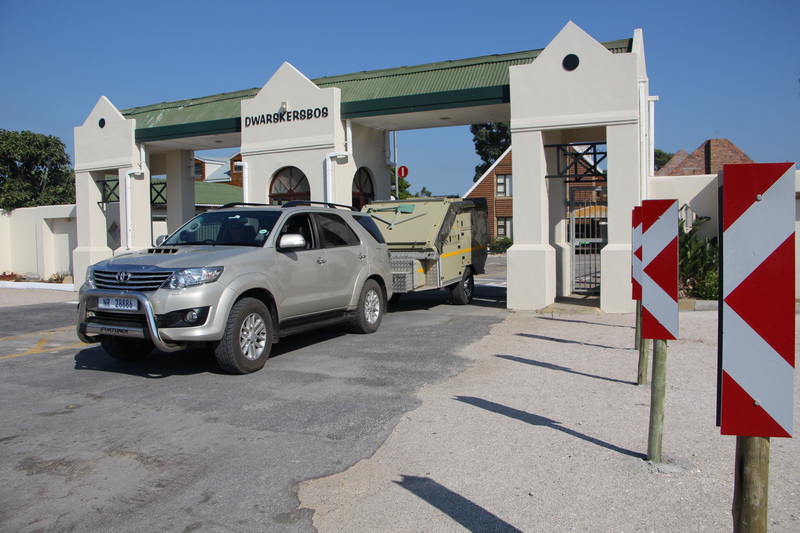
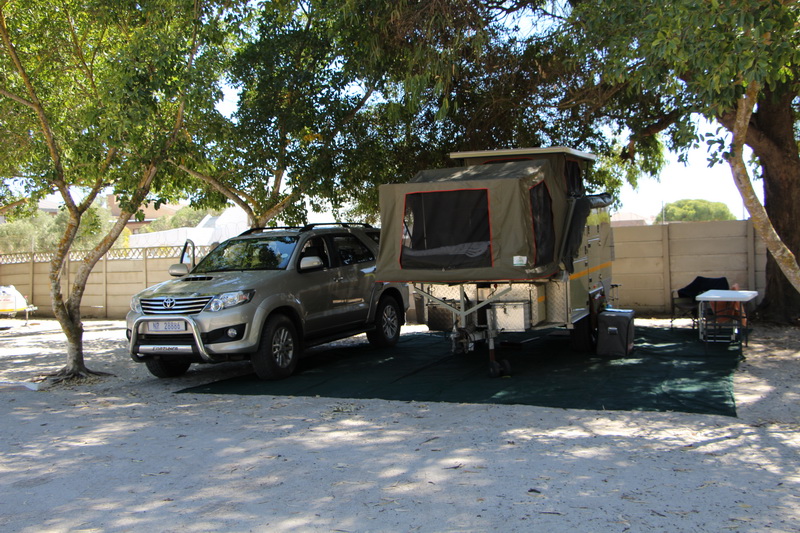
Not having a planned itinerary we headed south towards Velddrif and the municipal campsite in Dwarskersbos – just over 12 kms north of Velddrif. Weekend rates R201 per night and the third night R100. This is a well shady campsite right by the sea so sometimes a bit windy. Another quirk – bring your own loo roll.

Our plan using Birdfinder was to bird the area around Velddrif and to meet up with friends in the West Coast National Park. They were staying in Langebaan.

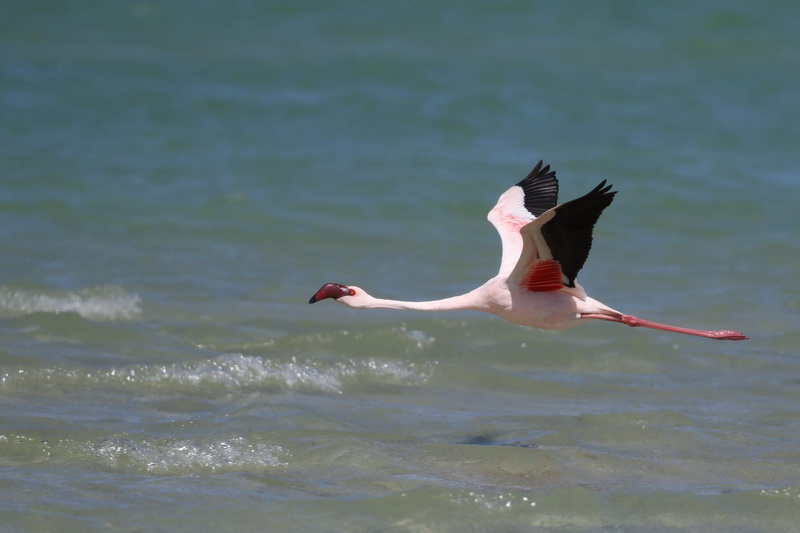
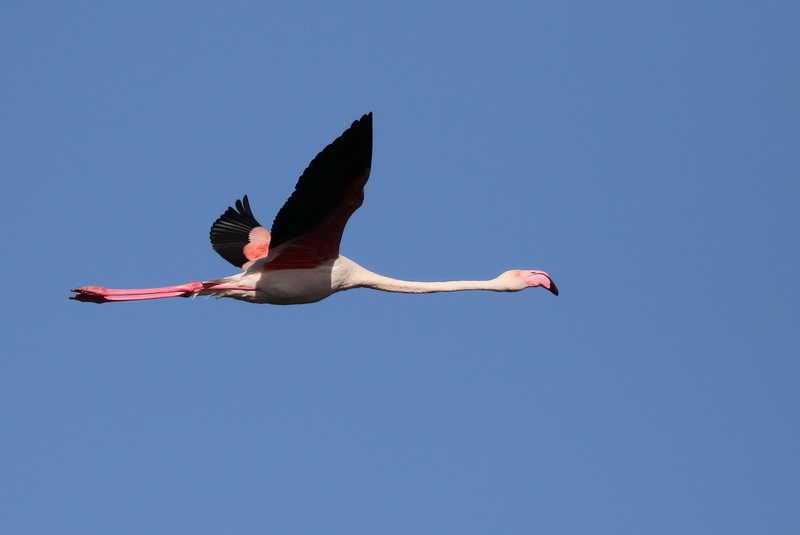
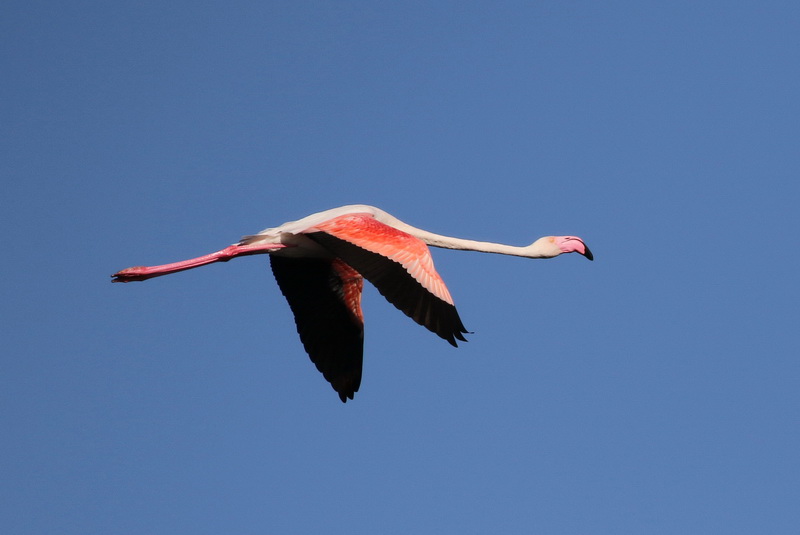
We gained access to the local Cerebos salt pans, however they were very disappointing – some Greater and Lesser Flamingos and not much else. No waders, a few Great Crested Grebes, the odd Cape Wagtail.

We visited the rundown hide on the north bank of the Berg River in town. It is important to visit when the tides are low as the mud flats become more visible.

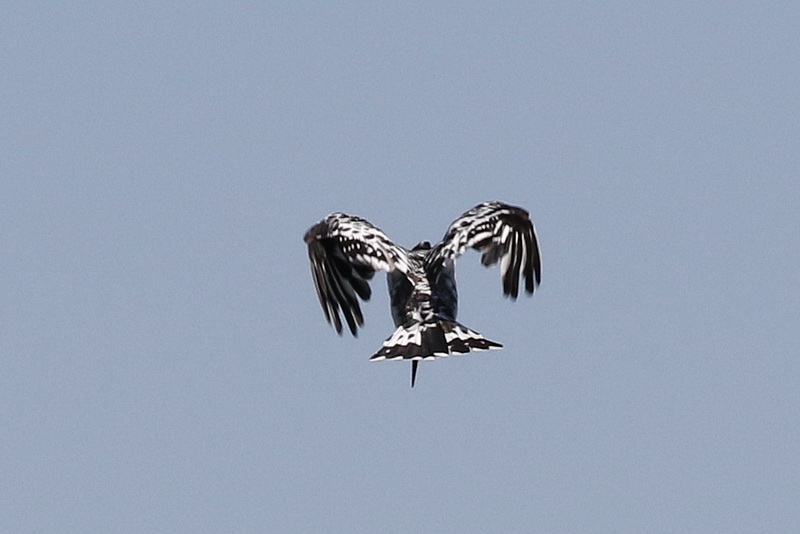
There was a greater variety of birds to be seen from the hide. Many Flamingos of both varieties, numerous Greenshank, the odd Marsh Sandpiper, Black-winged Stilts, Great Crested Grebe, Three-banded and Kittlitz’s Plovers, Gulls – Kelp and Grey-headed or Hartlaub’s, Grey Heron, Karoo Prinia, Cape Wagtail, Little Egret, Southern Double-collared Sunbirds, Sacred and Hadeda Ibis, Terns – Swift, Sandwich, Little and White-winged, Great White Pelican, Grey Plover, Avocet, Cormorants – White-breasted and Reed, Pied Kingfisher.

We also explored the area behind the salt pans. Heading south over the bridge we turned right and drove three kms to a dirt track leading up to the pans. At the first corner we started to see some waders – Common Greenshank, Kittlitz’s and White-fronted Plover, Grebes – Great Crested and Black-necked. Also on the inside of the corner there were Chestnut-vented Warblers and several Karoo Scrub-Robins. A worthwhile excursion close to town.

On our drive to Velddrif Buzzards were commonplace on the poles by the road – Common and Jackal Buzzards. We took the road along the north side of the river beyond the bird hide and on the way back explored some of the beachside tracks.

On one stretch there were several cosy and rustic fish restaurants (which we tried out the following day), some with decking over the water.

Die Vishuis

At one point along there we spotted the Yellow-billed Stork previously reported in Trevor Hardaker’s Rarities reports. We took a photo and sent it to Trevor as an update.

Yellow-billed Stork

Then we headed for Langebaan and the West Coast NP travelling via Paternoster. Along the way we had a great nearby sighting of Blue Cranes and their two juveniles. And at another stop Namaqua Sandgrouse and Namaqua Doves.

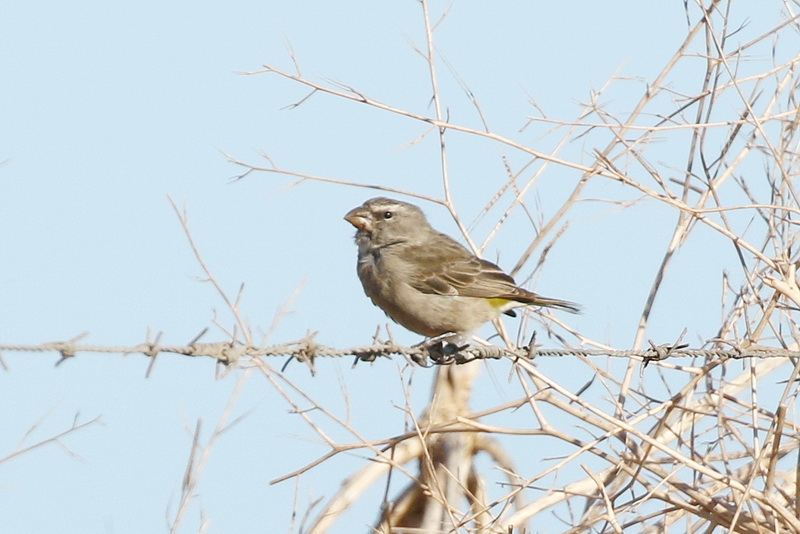
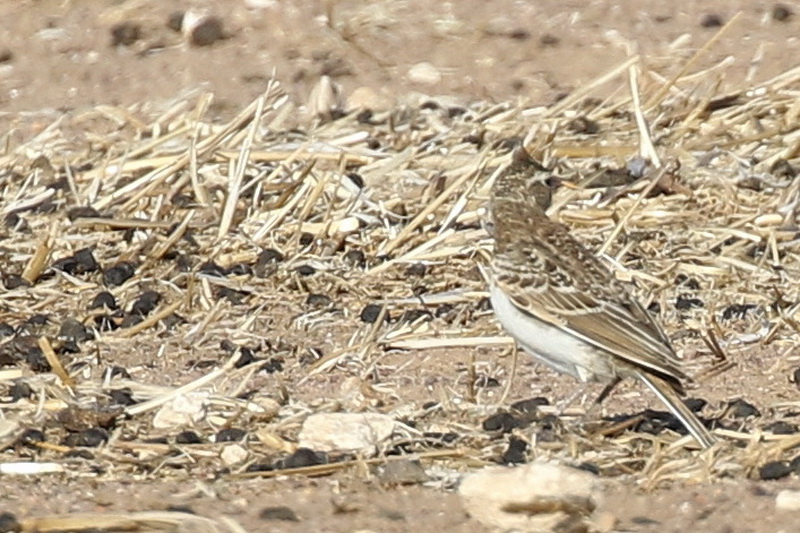
Then there was one mystery bird which we still find difficult to identify. If you do, then please let us  know – (p.bartho@gmail.com). Could it be a Large-billed Lark?

In West Coast NP, we met our friends from Durban at the Seeberg Hide.

Entrance to Seeberg Hide

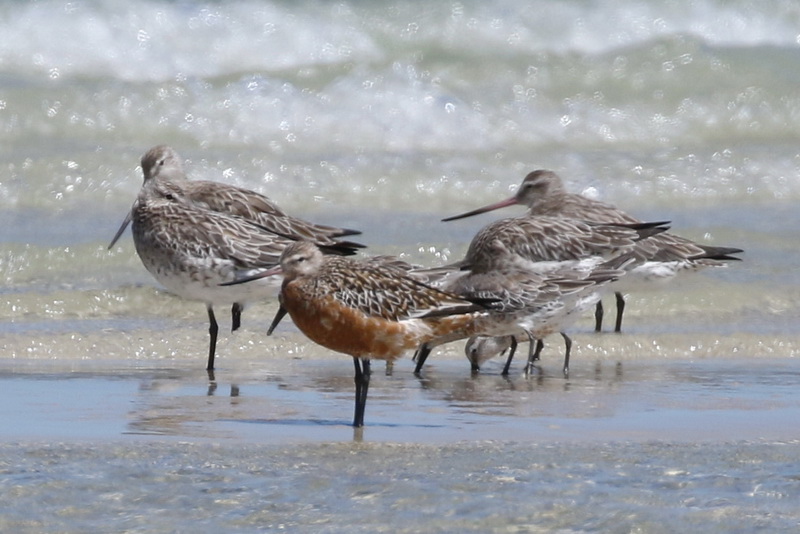
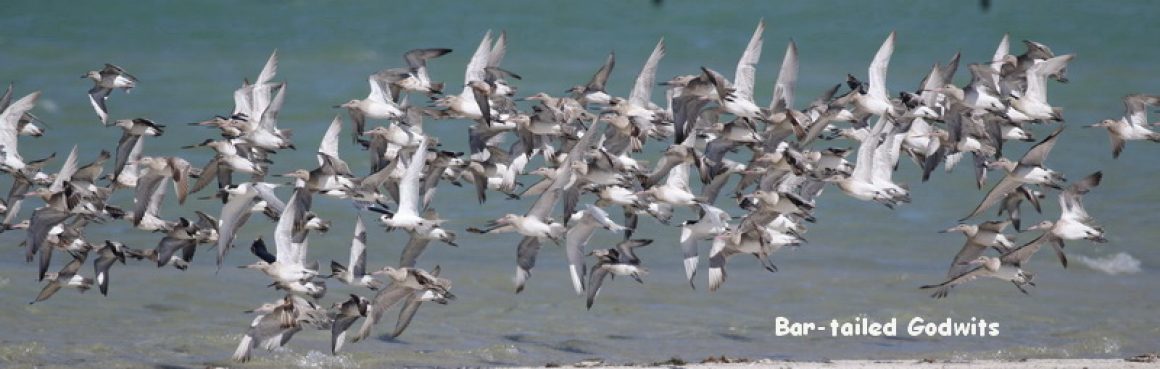
What a special place it turned out to be apart from the very long walk down to it. There were 4 huge groups of different birds – small waders in particular Little Stints all lined up in neat rows; A variety of Terns –Sandwich, Swift, Common and Little; large groupings of Greater and Lesser Flamingos and last but by no means least Bar-tailed Godwits (there must have been well over a hundred together).

Little Tern

Occasionally each group would take off for some reason. They swarmed together like schools of fish in the sea and then settled back down again. That was quite a sight to see.

Bar-tailed Godwits
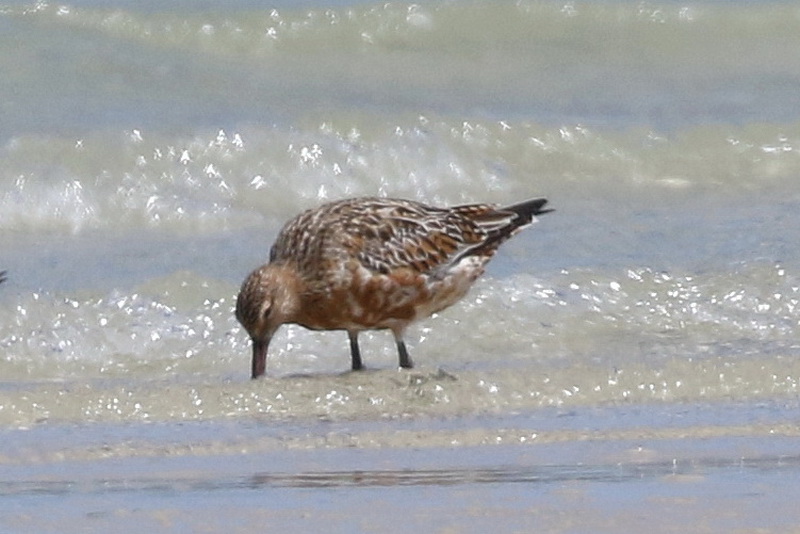
Bar-tailed Godwits
A small flock returning

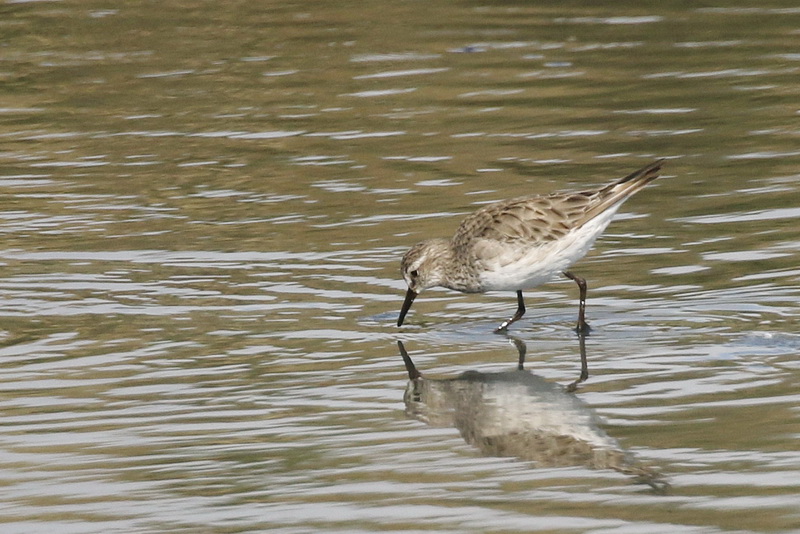
The Bar-tailed Godwits took turns to display themselves on the shoreline right in front of the hide. Amongst them were Little Stints, Curlew Sandpipers and other waders which we took ages to identify. You know what they say: If it is not this and not that etc then it must be a Knot – Red Knots in fact. Well done Sally in IDing them.

Red Knot and Bar-tailed Godwit

Then we had a Lesser Flamingo striding out in front of the hide trying to take off – which it eventually managed.

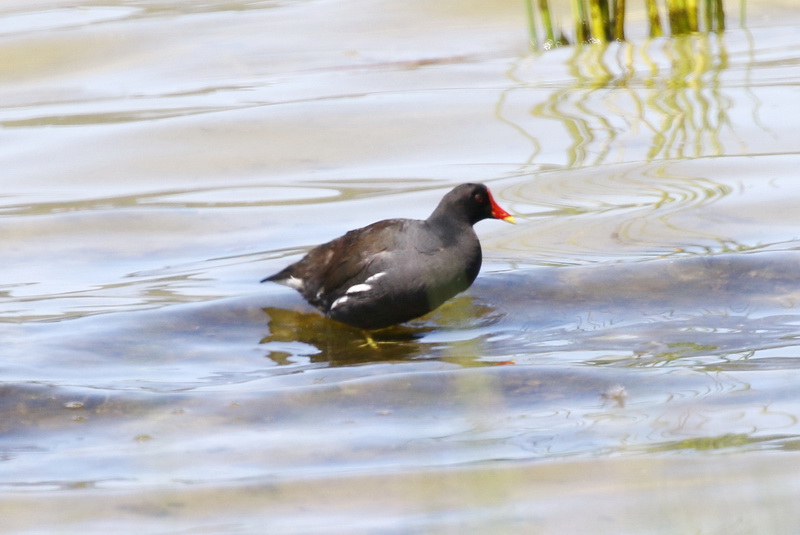
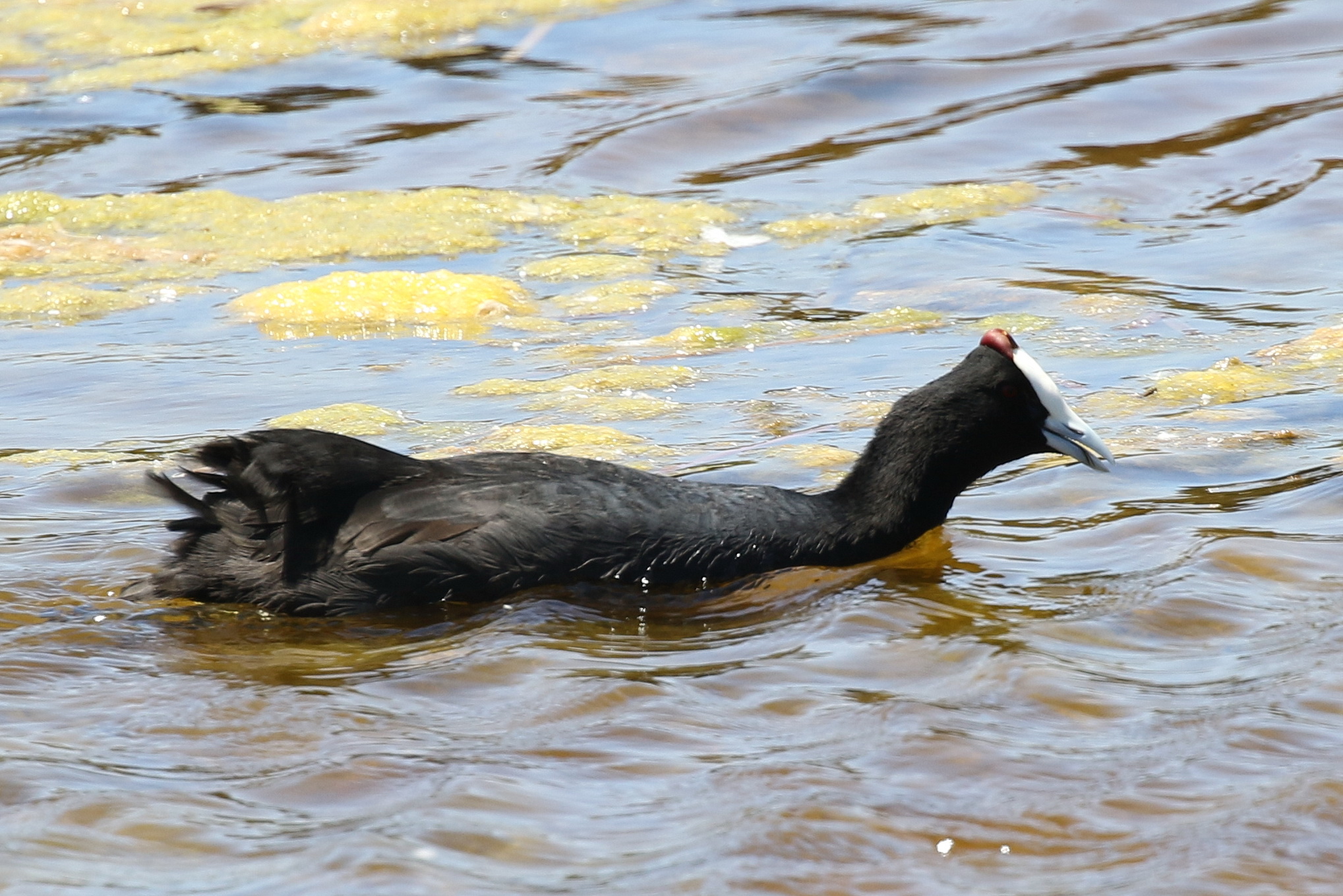
The fresh water hide – Abrahams Kraal, our next stop – was productive with sightings of some of the more common water bird species – Common Moorhen, Little Grebe, Red-knobbed Coots with chicks, Yellow Canaries and Cape Sparrow as well as a pair of Cape Shovelers.

Then we all went to Geelbeck for a snack among the trees next to the Restaurant. The wind was pressing but the sun warmed us up. As we sat eating, Cecil’s sharp eyes noticed a Rock Kestrel sheltering itself from the wind in an alcove immediately above the entrance to the restaurant. It was not at all perturbed by guests entering only feet below.

Rock Kestrel

Another long walkway to the Geelbeck Hide proved well worth it. Sally had got the tide right – 4.5 hours after Cape Town high tide according to Birdfinder. There were little or no birds to be seen in the marshes alongside the walkway. All were to be found on the mudflats in front of the hide. What a variety of waders and other water birds even an Eurasian Curlew was spotted, again by eagle-eyed Cecil.

Eurasian Curlew

Fortunately one side of the hide was protected from the wind and that also proved the more interesting side to see the birds.

Our campsite in Dwarskersbos was a birders delight. During the day we were serenaded by a variety of small birds all day long (at night the tree above our campsite was the local dove roost who left their calling cards all over our caravan and car).

During the night we had a pair of Spotted Eagle-Owls calling above us – Woo; WoWoo. During the day we noticed that there was one roosting above us and another in a nearby tree.

Then we had to think where to go next.

To be continued in Part 3.

Paul and Sally Bartho

Cape Adventure – Part 1

Cape Birding

 Sally and Paul Bartho
 Jan 25th to Feb 25th  2017


Our birding trip to the Western Cape was unexpected and unplanned. It happened like this.

So, while in Australia we had booked on a trip with Desert Magic to drive through the Skeleton Coast to the mouth of the Kunene River – hopeful of seeing the Royal Tern, Baird’s Sandpiper and Angolan Swallow amongst other specials.

We got back from Australia on January 12th and started preparing for the trip mid February. There was much to organise preparing the car for the trip – getting suitable roof rack and jerry can holders; extending the fuel tank, purchase of rugged tent etc etc – R30000 expected expenditure. We had made our decisions on what to purchase got home to get an email to say the trip was off as all permits to agents had been cancelled for travelling through the Skeleton Coast.

Disappointment. But we rallied, determined to go camping.

Five days later we were off to the Cape. We could not believe that all the specials at Strandfontein, Cape Town were still being seen. They all appeared at the beginning of December and we never expected that they would hang around till we got back. Then there was the Red-necked Buzzard in Stilbaai to see and as we set off another rarity – White-rumped Sandpiper at Coega in PE.

From Howick we headed north around Lesotho and on to PE. We had travelled over 200 kms before I realised we had forgotten our power lead – not only had we left it behind, we had left it behind attached to the trailer as we left! Thankfully we had left the house keys behind with friends and they were able to disconnect the lead from the garage plug and store it inside. Good start!

Thirteen hours later we pulled into Pearsons Caravan Park close to the PE White-rumped Sandpiper sighting. The campsite was well treed with lots of shade, close to the river and highway. The ablutions were passable. Cost R234 for the site, a 20% out of season discount for pensioners – a bit steep for what it offered.

The next morning we got out early and attempted to find our way to the sighting.  However, although we had the GPS co-ordinates we had to do a lot of driving up and down the N2 to figure a way to get there. Fortunately we could see where we wanted to be as it was visible as we crossed a bridge on the N2.

Once there, we had a long wait.

Most of the people like us were uncertain of what to look for. Then it made an appearance close by and we could clearly identify it from its ID features in the new Roberts (Sasol sketches were way off the mark).

Back to the campsite, pack up and off to Stilbaai to try and find the Red-necked Buzzard. The drive into Still Bay was quite picturesque.

We stayed at the municipal campsite (R130 a night for the site) which although rather open was very pleasant. We found a sheltered spot away from the wind, thankfully.

That afternoon we took a ride to Melkhoutfontein on the off chance we could find the bird. It was late and very windy and our trip turned out to be a scouting trip for the morrow. And the sky was looking ominous.

The next day we were up early and headed for Melkhoutfontein, however after scouring the areas where we had heard it had been seen, we could not find it. The wind was howling and the rain threatening so we headed back to the campsite, packed up and left just as the rain started. Heading for Cape Town and Chapman’s Peak Campsite.

What a horrendous drive in thrashing rain which caused us to stop several times to let the torrential rain settle. Windscreen wipers full blast and still unable to see clearly. The heavy rain lasted more than an hour while driving. What a relief when we eventually drove out of it.

As we approached Cape Town so we noticed that our Garmin GPS was not a reliable source of the speed limits. It often showed higher speed limits to those actually shown on the road. We learnt to watch out closely for the traffic speed signs. Unfortunately when we got home we found out that it had cost us R900.

Our GPS got us to Chapman’s Peak Campsite in Noordhoek without too much hassle. A smallish campsite in a rustic environment (R180 per site per night) with all sorts of creatures in and about – Peacocks, Chickens, Helmeted Guineafowl, numerous different Geese, Goats etc. – like a small farm holding.

The sites were shady but the ablutions had a strange quirk. Loads of hot water but little cold – made for interesting and hurried showers and occasional unflushed loos. We had chosen Chapman’s Peak as other possible campsites were either in undesirable areas or too far from Strandfontein Sewerage works – our goal. Despite that it was a 40 minute drive to Strandfontein Sewerage works.

The next morning we were off bright and early – probably one of the first to get to the Temminck’s Stint site on Pan 1. We hung around looking for over two hours. People came and went – virtually all saying they had seen it before and that it was always seen from one side or the other – no consensus.

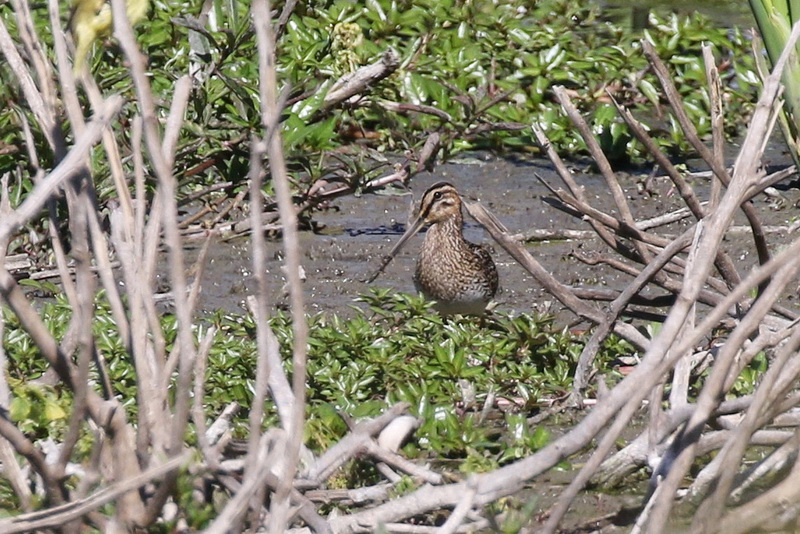
Other birds and creatures came and went – African Snipe and Water Mongoose.

That kept us on our toes and spread out. Eventually we gave up too and went off to find the Red-necked Phalarope. No sooner had we thought we found it, we got a call to say the Temminck’s had shown up.

Back we went and we too eventually had a sighting of the bird. But it was always on the move and too far away to get a decent shot.

Temminck’s Stint

We hung around for a while enjoying the snippets of a view of the bird. Apparently Baillon’s and Spotted Crakes as well as Pectoral Sandpiper had also been seen in the same spot during December. When we were there the reeds had grown substantially since December making viewing difficult and the Temminck’s had moved further away.

Next we headed for Pan 4 and the birding stand. Greater and Lesser Flamingos everywhere to be seen. Magnificent sight of numbers and colour. While on the stand we notice three Bar-tailed Godwits among the Flamingos.

The rest of the day was spent searching for the other specials we had missed, without success.

The next day we were back there again – first stop Temminck’s Stint. One thing we immediately noticed was that there were a lot of Little Stints present – none the day before. This as you would expect was bound to make it more difficult. However when Mr Temminck’s appeared the difference was obvious.

Then it was back to Pan 4 lookout stand. A bit of breakfast and the scope doing its business scouring the waders. What looks to be a Grey Plover was close by. However it appeared quite lean and then it unexpectedly flies and I see no black armpits. Rats I wish I had time to take a photo! Will we see it again?

Back to look for the Phalarope on Pan 2. We search high and low as Trevor Hardaker had told us he had seen it there. Scope out and we search the waders looking for something different.

Only problem was that we were looking for a bigger bird than the usual waders – Curlew Sandpipers and the like. Sally consults the new Roberts and as soon as she does she realises the mistake we were making and what to look for.

Once we learnt what to look for, the bird was very obvious among the other waders through the scope. Also the Phalarope was the only ‘wader’ swimming, all others standing or wading. Unfortunately too far away to get any reasonable photos. Great to see again. And a lesson learned – be prepared and read your field guide before setting out.

Then we headed back to Pan 4 lookout point. While waiting a bigger bird than the usual waders appears – a Plover. Immediately our hopes rise. Photos are taken. It is lean unlike the Grey Plover and its colouring quite pale with no black armpits – the American Golden Plover.

American Golden Plover

Back to the Temminck’s site for a final goodbye. Stay for a while but see no Temminck’s. However out of the woodwork appears the Pectoral Sandpiper! Not a lifer for either of us but also great to see again.

Here are some of the other birds photographed at the Sewerage Works:

The next day was spent in Table Mountain NR and then Kirstenbosch Botanical Gardens.

Fortunately we arrived early at Table Mountain NR. No Wild Card then R130 per person entry.

We entered and took the first road right, down to the sea.

Along the way we saw Rock Kestrel and groups of Cape Siskin as well as Lesser Double-collared Sunbirds and Bokmakierie. At the beach head we found Karoo Prinia, Familiar Chat, Cape and African Pied Wagtails, Yellow Bishop, White-fronted Plovers, Egyptian Geese, African Black Oystercatcher, Swift, Sandwich and Common Terns.

Otherwise the Park was quiet bird-wise and then became extremely busy with bus tours so we left for Kirstenbosch.

Always a lovely spot to spend some time walking about – even if most of it seems to be uphill! We were treated to several sightings of Orange-breasted Sunbirds and Swee Waxbills. The Spotted Eagle-Owl was seen and we learned that it had three offspring nearby – which we failed to find.

Our adventure continues in Part 2.


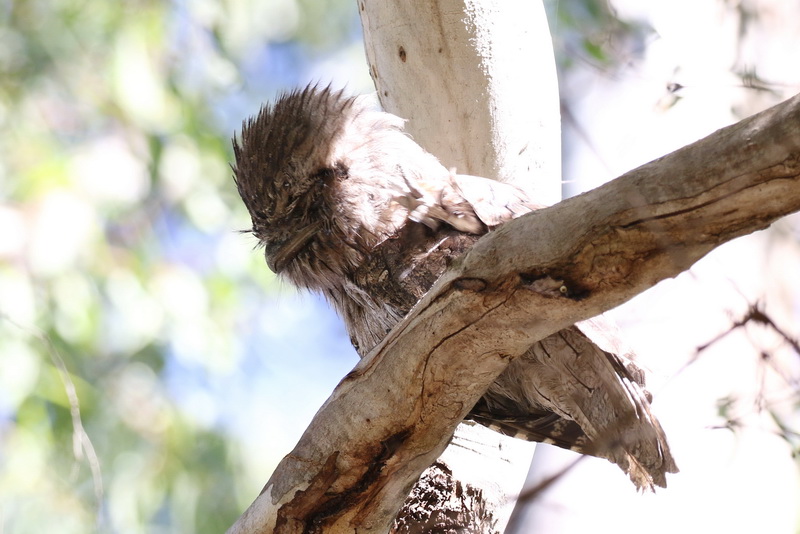
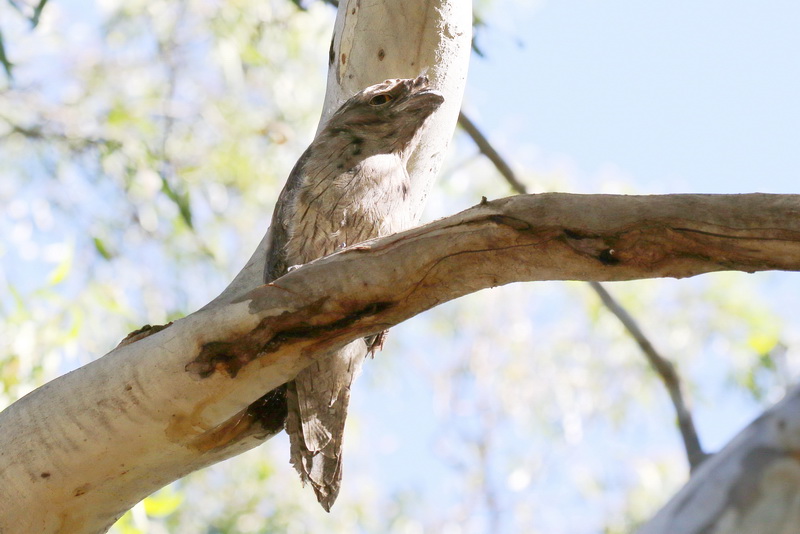
Tawny Frogmouths

A pair of Tawny Frogmouths caught our eyes as we walked down Spring Gully, Bendigo in Victoria Australia.

They stayed all day but were gone the next morning.

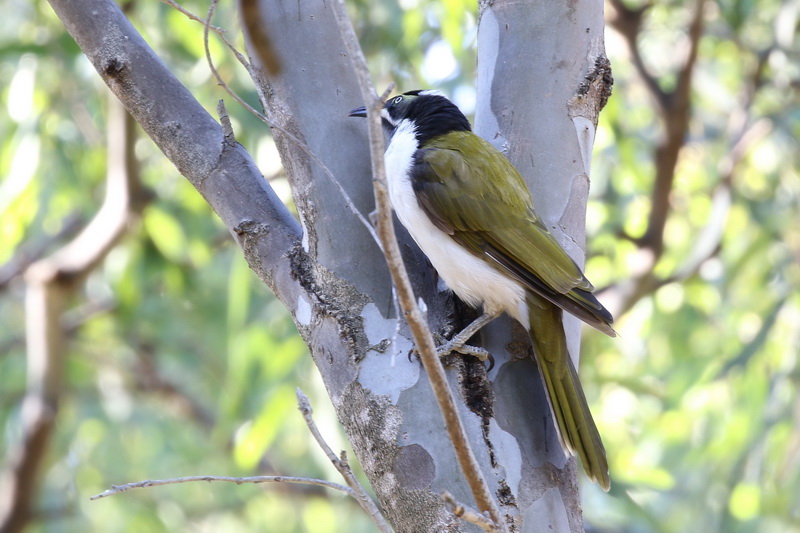
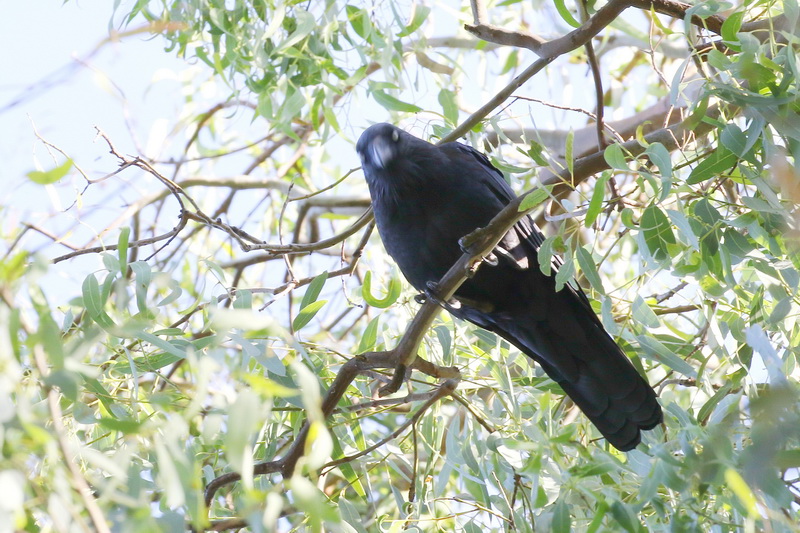
Other birds seen on this trail:

Paul Bartho and Sally King

Kerang Lakes, Victoria, Australia

Report by Sally and Paul Bartho

28 December 2016

Sally and I are based in Bendigo with family. We decided to have a day away and go birding in the surrounding area.

Tim Dolby’s book “Where to see birds in Victoria” suggested we take a look at the Kerang Lakes – just over an hour’s drive north of Bendigo.

Kerang Lakes in relation to Bendigo and Melbourne

The Kerang Lakes are in a flood prone region where many rivers and creeks converge to fill wetland areas. The drive was through farm lands – very flat and not exactly attractive countryside (in our opinion).

After an hour and a half we arrived in Kerang close to our first attempt at birding – almost 07h00.

Kerang Lakes
Kerang Lakes

Based on the information in Tim Dolby’s book and the time we had available we decided to visit:

  • Fosters Swamp
  • Middle Lake
  • Lake Tutchewop
  • Round Lake and
  • Lake Boga.

All shown on the map above.

Fosters Swamp – a saline wetland with salt marshes round the edges was unfortunately dry. So no sightings of any waders. Needless to say we quickly left and headed for Middle Lake.

Middle Lake was a surprise. There were many birds – Ibises, numerous Ibises – Straw-necked, Australian White and Glossy – we were not surprised by the sign we saw at the entrance.

Ibis Rookery
Ibis Rookery

This was definitely the highlight of our day. The facilities were good – pathways and an unusually designed bird hide overlooking the rookery. The rookery included the full extent of Middle Lake and Ibises were everywhere. It was difficult to identify other species among them. But we did see a Little Pied Cormorant sitting on a dead branch. Even a Yellow-throated Miner was seen.

Unfortunately the day was very windy with the odd shower and birds were scarce. Despite that some birds were still long enough for a photo.

Overhead the air was constantly occupied with mainly Ibises as well as some Black Kites and Royal Spoonbills.

Moving on, we headed for Lake Tutchewop. Another very open lake with sparse vegetation around it. We were able to drive reasonably close passing a pair of Nankeen Kestrels flying beside us. Near the water we saw a number of water birds on the water’s edge some distance away. These included many Silver Gulls, Caspian Terns, some Whiskered Terns, a group of Red-necked Avocets as wells as many Red-capped Plovers.

An overhead White-faced Heron caught our attention.

White-faced Heron
White-faced Heron

Driving alongside the lake heading north on a dirt track we encountered Australian Pipits every hundred metres – not necessarily in ones or twos but at times up to six together foraging on the road ahead of us.

Our next stop was Lake Round to the west of the town called Lake Boga. The Lake was full and there were some ducks on the opposite side but in all not much of interest.

And lastly to the lake with the same name as the town – Lake Boga. Again disappointing as it was very difficult to get close to the lake’s edge and there was not much to see on the expanse of water.

And then it was back to Bendigo via a different route. Passing one pond by the road there was a family of Grey Teal, a pair of Masked Lapwings, a Australian Swamphen and this Black-winged Stilt. A Black-shouldered Kite flew overhead.

black-winged-stilt_resize
Black-winged Stilt

Back home in Bendigo we were entertained by this Blue-tongued Lizard trying to get indoors.

In all we recorded seeing 38 different bird species. See our list by clicking here.

Cheers and Happy New Year to you all.

Paul and Sally

Red-rumped Parrot
Red-rumped Parrot