Shingwedzi was our next place to visit in the Kruger. Effectively we only had one full day there. On arrival, the day began to cook and the next day it was boiling – both days got up to 45 degrees C. Much of both afternoons were spent in the rather grand swimming pool under the shade of a densely leafed tree or in the water. Fortunately we had taken our loungers with us so we were quite comfortable in the shade.
The birds loved the tree as well. And many came down to the area where water gathered as it was being recirculated into the pool. Green-winged Pitylias, Firefinches, Waxbills and Weavers all came to bathe and it was possible to get close if you were in the water.
With the air-conditioning full blast it was more pleasant to be in the car than the camp. Both afternoons we drove down along the river to visit the hide. There was some water in the river and at one point we observed the carcass of a buffalo near the water’s edge – being guarded by a number of crocodiles whilst vultures hung around waiting for their chance.
Crocodiles with Buffalo carcass
White-headed Vulture
The first morning we were there was spent driving around the Red Rocks Loop – the R52.
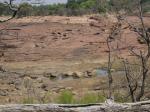
View over the river on the Red Rocks loop.
View over Red Rocks
View over Red Rocks
View over Red Rocks
View over Red Rocks
View over Red Rocks
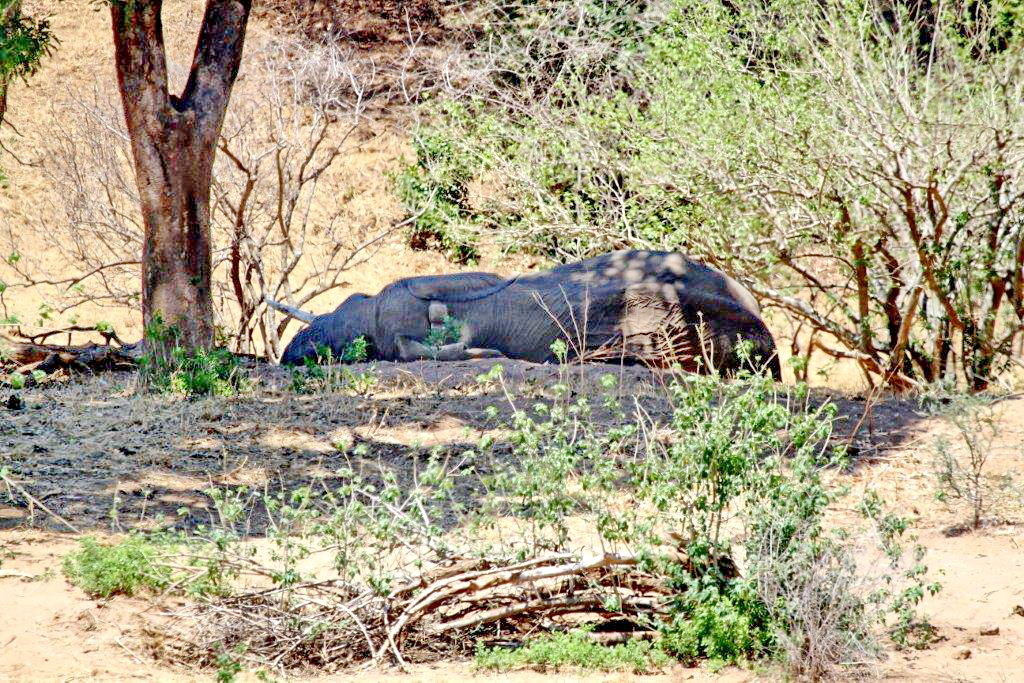
Along the way we observed an elephant resting lying down against the bank of a river.
Elephant resting on the side of the bank
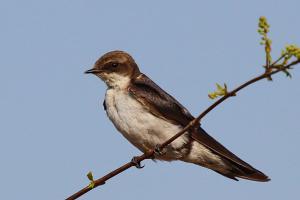
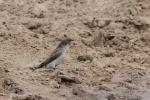
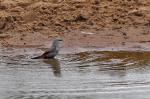
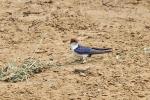
The bird we most enjoyed seeing was the Grey-rumped Swallow
Grey-rumped Swallow
Grey-rumped Swallow
In all we observed 119 different species in the short time we were there. Here are some other photos of what we saw.
Brown-hooded Kingfisher
Brown-hooded Kingfisher
Common Sandpiper
Common Sandpiper
Bateleur – juvenile
Cut-throat Finches
Double-banded Sandgrouse
Double-banded Sandgrouse
Bennett’s Woodpecker
Squacco Heron
Steenbok
Martial Eagle
Martial Eagle
Spotted Flycatcher
Bateleur – flashing
Bateleur juvenile
And then we were off to the rustic camp Balule near Olifants – continued in Part 7.
Sunday 30 November. Ellingham Estate with Barry Pullock.
Only five people pitched for the outing. The weather understandably had something to do with it. We had about an hour then down came the rain, that was it, best sighting in that time was a Brown Snake-Eagle.
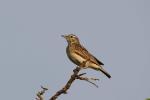
Message from Rex – one of the participants: The LBJ hopping down the road was correctly identified as African Pipit. Please send Tina the photograph of the horse that chased her.
After leaving Tsendze we headed north to Punda Maria via Shingwedzi. Here we had our first bit of excitement – though not the sort which I find enjoyable. We had just turned onto the road to Shingwedzi when we spotted a small herd of elephants with young well ahead of us. I stop immediately. You definitely don’t want to have to reverse quickly towing a trailer.
They keep crossing the road but one or two linger – the naughty young ones of course. After a while several cars passed us and we watched as they crawled passed the elephants. Getting a bit more courage I too amble forward slowly. As I start to go passed one of the youngsters decided that he would have a bit of fun at our expense and blew his little trumpet and came for us. My foot was ahead of him and well to the floor on the accelerator! We got through but not without an adrenalin rush.
On the way from Shingwedzi we bumped into an immature Bataleur on the road devouring his meal oblivious to us. Sad day for the Burchell’s Coucal.
Bataleur – juvenile. And the remains of a Burchell’s Coucal.
Then it was on to Punda Maria. Despite our five nights at Punda we were disappointed with the variety of species seen in the area – specifically at Pafuri. Klopperfontein Drift and the road to Pafuri was also quiet. However we enjoyed the Mahonie loop around the camp especially on the Sunset drive when we had one of those special moments.
We spent two mornings in the Pafuri area but found few of their specials. All of the following eluded us – not that we expected to see them all: both Spinetails; Dickinson’s Kestrel; Arnot’s Chat; Pel’s Fishing Owl; Senegal Lapwing; Grey-backed Cameroptera; Thick-billed Cuckoo; Racket-tailed Roller; Lemon-breasted Canary; Green-backed Eromomela. However we did hear a Tropical Boubou and a number of White-crowned Lapwings.
White-crowned Lapwing showing its spurs
Definitely our worst sighting there occurred on our first visit at the turn-off towards the picnic site. Three Common Mynahs.
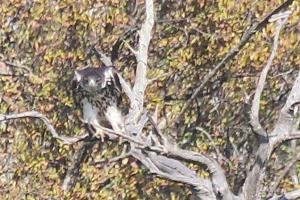
We did have a couple of better moments when we observed what appeared to be an acrobatic duel between two raptors. They eventually perched in the same tree. One was an adult African Hawk-Eagle – very black and white. The other was rufous. Checking our books we realised it was a juvenile of the same species.
African Hawk-Eagle – parent
African Hawk-Eagle – juvenile
African Hawk-Eagle – juvenile
The other bit of interest at Pafuri was in the campsite. We noticed two Red-chested Cuckoos flying around together. One was obviously a juvenile as its bib was only just starting to show. So what was this all about? Especially as juveniles are not looked after my their natural parents but by a host bird. One explanation was that the juvenile was a female and they were courting. Could there be another?
Red-chested Cuckoo – juvenile
Red-chested Cuckoos – male and female (juvenile) presumeably in courtship
Our first sighting of a Red-backed Shrike occurred here. One of only 3 we saw in the park. The other two in Balule and Skukuza.
Red-backed Shrike
Some of the other sightings we had in the Pafuri area included:
African Fish-Eagle – juvenile
African Fish-Eagle
Brown-hooded Kingfisher
Common Greenshank
Cut-throat Finch
Cut-throat Finch
Dusky Indigobird
One rather fat Crocodile
Giant Kingfisher – male or female or both
Green-winged Pytilia
Green-winged Pytilia in transformation
Green-winged Pytilia – with head on its pillow
Jameson’s Firefinch
Meve’s Starling
Mosque Swallow
Red-headed Weaver – juvenile
Secretarybird
Secretarybird
Secretarybird
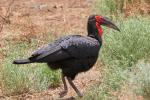
Southern Ground-Hornbill
Spectacled Weaver – juvenile
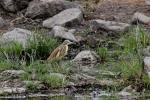
Squacco Heron
Tawny Eagle
Cinnamon-breasted Bunting
We trawled the road to Pafuri for Arnot’s Chat and Dickenson’s Kestrel without luck.
In total we saw 115 different species in the Pafuri area.
Most of our time birding in the Punda Maria area occurred on the Mahonie Loop.
On our first morning as we went clockwise around the Mahonie Loop, we had another of those unexpected unwanted moments. Being charged by an adult elephant in musth.
It appeared to be minding its own business munching away some 100 metres from the road. We crawled along and before we could pass he suddenly turned and raced towards us – with intent it seemed. Flat out we raced away. After less than a kilometre our road was totally blocked by a fallen tree. The signs of the elephant were there – his doing. There was no way I was going back. After sorting out the rather thorny vegetation and shifting some large rocks we were eventually able to get round the obstruction.
Further along we had a number of pleasant raptor sightings including African Hawk-Eagles camouflaged in the trees above us as well as a tagged Cape Vulture.
African Hawk-Eagle
African Hawk-Eagle
African Hawk-Eagle
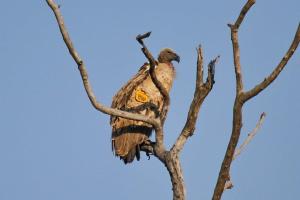
Cape Vulture -tagged
Hairstyles caught our attention on these two birds: An African Paradise-Flycatcher and a Brown Snake-Eagle:
Brown Snake-Eagle
African Paradise-Flycatcher
Along with a number of other birds seen on the different days on the loop and in the camp:
African Green-Pigeon
African Goshawk
Brown Snake-Eagle
Black-headed Oriole
Broad-billed Roller
Brown-headed Parrot
Brown-headed Parrots
Brown-headed Parrots in flight
Brown-headed Parrot
Klaas’s Cuckoo – female
Lesser Honeyguide
Levaillant’s Cuckoo
Marabou Stork
Mosque Swallows
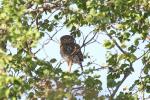
Pearl-spotted Owlet
Common Buzzard
Crested Guineafowl
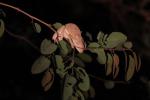
Dwarf Chameleon
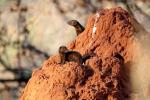
Dwarf Mongooses
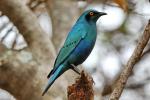
Greater Blue-eared Starling
Grysbok
Hooded Vulture
House Sparrow
Violet-backed Starling
Wahlberg’s Eagle – Pale Morph
Wahlberg’s Eagle – Pale Morph
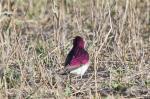
Scarlet-chested Sunbird
Southern Boubou
Striped Kingfisher
Yellow-bellied Greenbul
In the camp, near the office, we had good views of four different Robins – Bearded Scrub-Robin, White-browed Scrub-Robin, White-browed Robin-Chat and White-throated Robin-Chat
Bearded Scrub-Robin
White-throated Robin-Chat
White-throated Robin-Chat
White-browed Robin-Chat
White-browed Scrub-Robin
The highlight of our whole trip was the spectacle we had on the Sunset drive around the Mahonie Loop. This is something which all birders should see at least once in their lifetime. We were taken to a donga, alighted from the vehicle and told to sit quietly in the donga. Then as dusk arrived close to 18h30 four birds appeared – a female and three calling males. They flew all around us sometimes as close as three metres above our heads. On occasion they settled on the ground. What a fantastic way to see Pennant-winged Nightjars with their long streamers. I apologise to the photographic purists for the following photos but I did not have a flash. However these photos, to me, capture the mystical magic of the Pennant-winged Nightjar.
Pennant-winged Nightjar
Pennant-winged Nightjar
Pennant-winged Nightjar
Pennant-winged Nightjar
Pennant-winged Nightjar
Total sightings in and around Punda Maria was 136 different species.
And then it was the start of our journey south – first to Shingwedzi. See Part 6.
Tsendze is the satellite camp to Mopani. It is situated right next to the Mooiplaas picnic area. It is a rustic camp for campers only and has no power available. There is however, a kitchen and washup area, solar energy for lights and gas heating for hot water. As a new addition there are gas freezers available for those who need them. The camp is well treed so there is ample shade. This was our favourite camp in the Kruger and it has the friendliest and most helpful staff. The birding in the area was also pretty good.
Tsendze Entrance
Well treed Campsites
Tsendze Exit
To start with, Roger – the camp attendant – noticed that we were birders. “Come with me”, he said. Right next to our campsite he showed us one of the resident African Scops Owl. Then he took us to see the resident breeding pair of African Barred Owlets. What a start to our stay.
African Scops-Owl
African Scops-Owl
African Barred Owlet
African Barred Owlet
Late one afternoon on our way back to the camp we took one of the River Loop roads. As we approached the river, Sally yelled “Stop”. Brakes on and stop. “What is it?” “Look behind the tree on the right”. And there it was, an animal with a head like a bull mastiff and the size of a large hyena – black and white with a long bushy tail. Neither of us had seen one before so stared at it uncomprehendingly for a long time. Eventually we got out the wildlife book and discovered it was a Civet. Unfortunately this Civet had an injured right back leg and was limping badly. It took no notice of us and continued foraging within 10 metres of us. We were so engrossed with watching this lifer for both of us that we paid little attention to anything else around us. For some unknown reason Sally happened to look round and yelled “Elephant”. It was less than 5 metres from us and approaching straight at us with determination. Somehow the car managed to reverse at an unnatural speed without hitting anything. The elephant calmly strode up to where we had been parked, reached up into the tree and snapped off a small branch. Scary or what!
African Civet
African Civet
African Civet
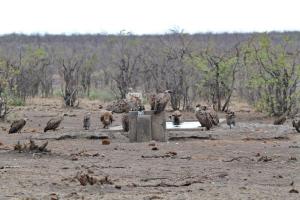
There is a waterhole south of the camp – Klein Nshawu. A lion had feasted on a buffalo right next to the waterhole and left its carcass there. So we went to take a look. Hyena and jackal were present as well as quite a few Vultures including White-backed and Cape.
White-backed and Cape Vultures
Vultures and Jackals
On one of our drives we stopped at the Tihongonyeni waterhole on the S143 Tropic of Capricorn Loop. The place was abuzz with Chestnut-backed Sparrow-Larks, Kittlitz’s Plovers, Magpie Shrikes unusually congregating, around six or more in one small shrub. Elephant were drinking. We hung around for a while fortunately. Suddenly the birds all took to the air. A small raptor with a ringtail appeared and landed in a tree at least 100 metres away. Out came the scope and we realised it was a Harrier – not a mature male. On closer inspection we understood that it was not a female but a juvenile – luckily, as we would never have been able to conclusively identify it. The bold black markings round the eye indicated that it was a Pallid Harrier juvenile – much as we suspected because of the flat open dry habitat.
Chestnut-backed Sparrow-Lark
Chestnut-backed Sparrow-Lark
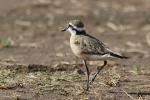
Kittlitz’s Plover
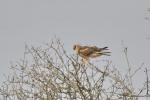
Pallid Harrier – juvenile
Pallid Harrier – juvenile
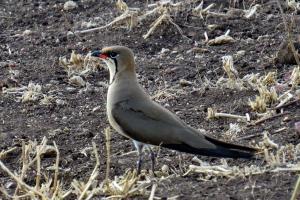
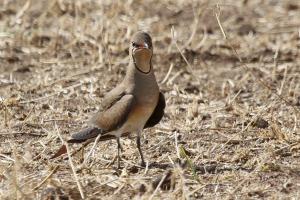
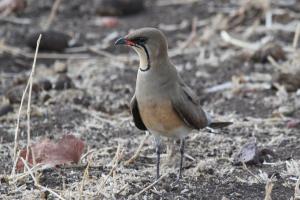
At another waterhole – Mooiplaas on the S50 we had another what we thought was an unusual sighting of 5 friendly Collared Pratincoles foraging in the desolate landscape.
Collared Pratincole
Collared Pratincole
Collared Pratincole
Collared Pratincole
We encountered numerous elephants in the area but one stood out. It had only one very long tusk.
Elephant – one tusker
Yellow-billed Oxpeckers appeared on many of the Buffalo that we saw. Not so long ago you had to go right up to the Pafuri area to try and see one.
Yellow-billed Oxpecker
Yellow-billed Oxpecker
Yellow-billed Oxpecker
One day we took a drive on the Tsendze loop to the south of the camp. A pleasant drive following the river. At one of the many small loops to the river we noticed a pair of unusual birds skulking near the reeds but coming out into the open now and then. Out with the scope to confirm what we thought. Our second sighting of 2 Greater Painted Snipes.
Greater Painted-Snipes – Tsendze Loop
Greater Painted-Snipes – Tsendze Loop
Greater Painted-Snipes – Tsendze Loop
The next day we took a walk around the Mopani camp trail in front of their restaurant – a short but pleasant trail along the banks of Mopani’s Pioneer Dam. At the end of the inlet of water we came across another 2 Greater Painted Snipes – our third sighting of them. So far all males.
Greater Painted-Snipes – Mopani
Greater Painted-Snipes – Mopani
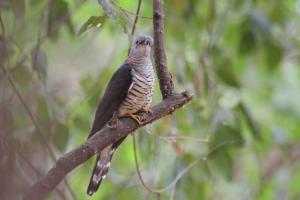
Next to the camp is Mooiplaas Picnic site. It has a lovely thatched picnic spot overlooking the river. It was here that we heard then found an African Cuckoo and a Black Cuckooshrike.
African Cuckoo
African Cuckoo
African Cuckoo
African Cuckoo
Black Cuckooshrike – male
Black Cuckooshrike – male
Both the Pioneer Hide and the Shipandani Hides are worth a visit and the river crossing before the latter always seemed to yield an interesting variety of birds in the reeds, on the water’s edge and on the causeway itself. There is also the wetland area along the S50.
And the main road, the H14 to Phalaborwa had a number of interesting minor loop roads along the river’s edge – a pretty drive.
Scenery on one of the loop roads along the H14
Scenery on one of the loop roads along the H14
Scenery on one of the loop roads along the H14
In all this is one of our favourite areas in the park as it has a wide variety of habitats.
Here are pictures of some of the other species we saw in and around the area.
African Hawk-Eagle
African Hawk-Eagle
African Hawk-Eagle
African Hoopoe
Brubru
Brubru
Cape Sparrow
Cattle Egret
Black-headed Oriole
Cinnamon-breasted Bunting
Cinnamon-breasted Bunting
Dark Chanting-Goshawk
Dark Chanting-Goshawk
Dark Chanting-Goshawk
Double-banded Sandgrouse
Common Greenshank
Common Ostrich
European Bee-eater
European Bee-eater
For ID
For ID
Golden-breasted Bunting
Hippo
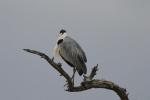
Grey Heron
Groundscraper Thrush
Groundscraper Thrush
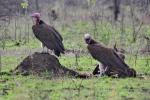
Lappet-faced Vultures – loved the colour of the head gear
Long-tailed Paradise-Whydahs in transition
Long-tailed Paradise-Whydahs in transition
Long-tailed Paradise-Whydahs in transition
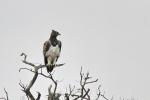
Martial Eagle
Martial Eagle
Mystery Raptor
Tawny Eagle – is it one
Tawny Eagle – is it one
Tawny Eagle – is it one
Tsessebe
Perplexes
Perplexes
Red-crested Korhaan
Secretarybird
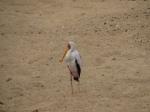
Yellow-billed Stork
In total we observed 143 different bird species in and around Tsendze.
Our next camp for five nights was Punda Maria from which we spent a couple of mornings in Pafuri. See Part 5.
Leaving Crocodile Bridge we drove to Lower Sabie, crossed the Sabie River and headed for Satara via Tshokwane arriving early afternoon.
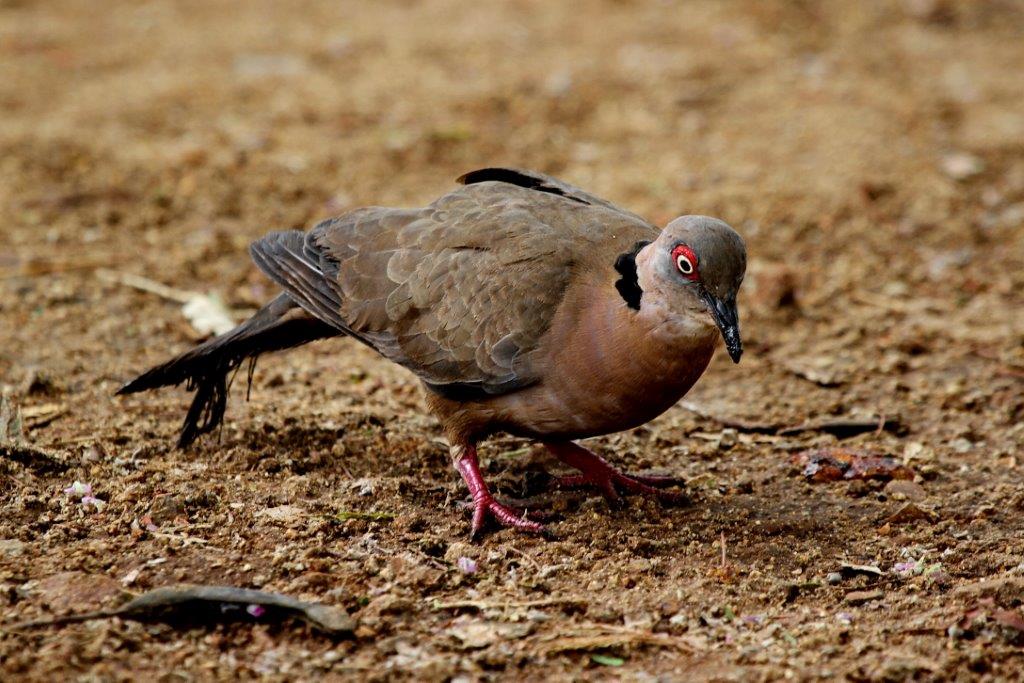
Stopping for tea at Tshokwane we noticed this unusually dark African Mourning Dove.
African Mourning Dove
After setting up camp we had a message on Trevor Hardaker’s Rare Birds report that a Green Sandpiper had been seen at the Sweni bridge just south of the camp. We went to have a look and it did not take us long to find it. This would have been a lifer for me had I not seen one a month earlier at Darvil sewerage works in Pietermaritzberg.
Green Sandpiper
Green Sandpiper
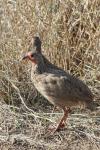
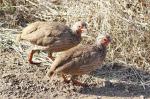
The following day we drove along the S100 to the Sweni Bird Hide near the N’wanetsi picnic site. Along the way we came across what we thought was a pair of Red-necked Spurfowls – however on advise from Trevor Hardaker they are in fact hybrids – Red-necked and Swainson’s. As there were two together, we hope that they are both of the same sex!
Red-necked Spurfowl -hybrid
Red-necked Spurfowls -hybrids
Red-necked Spurfowl -hybrid
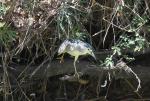
The Sweni Hide was one of the highlights of our trip. We were entertained there for hours not only by the crocodiles and hippos camouflaged by the weed but also by the variety of birds which visited the hide – including a pair of what we think might be Dwarf Bitterns (possible Green-backed Heron juvenile but for the heavy black streaking on the front – unfortunately not shown well in the photos) and several Black-crowned Night Herons.
Black-crowned Night-Heron
Black-crowned Night-Heron
Black-crowned Night-Heron
Black-crowned Night-Heron
Camouflaged Crocodile
Hippo Heaven
Juvenile Dwarf Bittern or Green-backed Heron
Juvenile Dwarf Bittern or Green-backed Heron
Juvenile Dwarf Bittern or Green-backed Heron
Hippos in repose
The following morning we set off really early to get to the Sweni Hide as we had enjoyed it so much the day before. On the way as we crossed a bridge and looked down we saw 2 elephants digging for water. There was a pool nearby but it was obviously not to their taste. What was interesting was that the hole they dug with their trunks was perfectly round and several feet deep. The elephants knew the water was there and that the sand would filter the water for them.
Elephants searching for water
As we reached the hide we first went to the river crossing and looked back up to the hide. What a good decision. In the closest part of the river Sally noticed an unusual bird – the first of four different sightings of this bird.
Greater Painted-Snipe – Sweni Hide
Greater Painted-Snipe – Sweni Hide
Greater Painted-Snipe – Sweni Hide
Some of the other birds and animals we managed to photograph in the area include:
Saddle-billed Stork
Saddle-billed Stork in flight
Saddle-billed Stork in flight
Saddle-billed Stork
Red-winged Starling
Yellow-billed Stork
White-headed Vulture
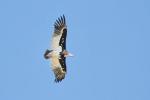
White-headed Vulture in flight
White-fronted Plover
White-fronted Plover
Water Thick-knees
Violet-backed Starling
Tawny Eagle at nest
Steenbok
Steenbok
Spectacled Weaver’s nest
Red-crested Korhaan
Hyena pup
Green-backed Heron
Green-backed Heron
Grey Penduline-Tit
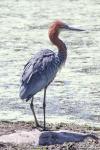
Goliath Heron
Goliath Heron
Giant Kingfisher
Giant Kingfisher
European Bee-eater
Crested Barbet
Crested Barbet
Common Sandpiper
Brown Snake-Eagle
Brown Snake-Eagle
Blue-headed Lizzard
Black-shouldered Kite
Bushbuck
Brown-hooded Kingfisher
Brown-hooded Kingfisher
Brown-headed Parrot
Bateleur
Bataleur in flight
Baby Crocodile
Arrow-marked Babbler
Black-chested Snake-Eagle
Black-backed Jackal – juvenile
Black Crake
African Fish-Eagle
Red-crested Korhaan
Red-breasted Swallow
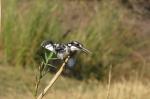
Pied Kingfisher
Mosque Swallow
Marico Sunbird
Malachite Kingfisher
Long-necked Terrapin or Goliath Heron
Little Stints
Lesser Masked Weaver – male
Lesser Masked Weaver – female
Altogether we found 140 different bird species in and around Satara.
Next we moved on to Tsendze – the satellite camp to Mopani. It is situated next to the Mooiplaas picnic area. See Part 4 of this series.
Three days were spent in the area around Crocodile Bridge. The weather was very overcast with rain in the evenings. The vegetation was dry so visibility into the park was good. Now all we had to do was find the birds.
The first day was spent on the S28 from Croc Bridge to Lower Sabie via the Ntandanyahti Hide. The hide was productive but few birds were seen on the S28. On exit from the hide a rather large elephant stood guard over our car. Appropriate action was taken and we returned to the hide until it was safe to leave. Not long as it happened.
African Elephant
African Elephant
A visit to Sunset Dam and then to Mlondozi Dam (looking for the reported Collared flycatcher – no luck) were also productive.
The second day we took the S25 and S26 to Mpondo Dam – again very quiet along the way. However on a detour off the S25 to Hippo Pool we were fortunate to see 3 Verreaux’s Eagle-Owls together. They flew over the road and stopped in nearby trees.
Verreaux’s Eagle-Owl
Verreaux’s Eagle-Owl
Mpondo Dam was disappointing. Onward we went back along the S26 to the S114 turned south to the then S119 and S25 returning to the camp. Along the S114 Sally called for me to stop. She had heard a Coqui Francolin – her bogie bird. It called several times but we never had a sighting.
Despite what appeared to be a paucity of birds we did manage to record 144 different species during our time there.
White-browed Robin-Chat
White-browed Robin-Chat
White-crowned Shrike
Bedraggled Brown-crowned Tchagra.
White-throated Robin-Chat
White-throated Robin-Chat
White-throated Robin-Chat
White-throated Robin-Chat
White-throated Robin-Chat
Wire-tailed Swallow
Wood Sandpiper
Yellow-billed Stork – juvenile
Yellow-throated Longclaw
Acacia Pied Barbet
African Green-Pigeon
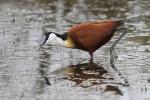
African Jacana
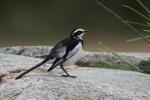
African Pied Wagtail
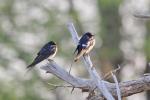
Barn Swallows
Barn Swallows
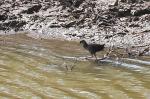
Black Crake – juvenile
Black-backed Puffback
Blue Waxbill with red beak
Booted Eagle
Booted Eagle
Booted Eagle
Booted Eagle
Chinspot Batis
Chinspot Batis
Common Buzzard
Common Sandpiper
Common Scimitarbill
Crested Barbet
Curlew Sandpiper
Diderick Cuckoo
Double-banded Sandgrouse and chick
Double-banded Sandgrouse
Green-backed Cameroptera
Green-backed Heron
Grey Go-away-bird. Head
Grey Go-away-bird.
Grey-headed Bushshrike
Grey-headed Bushshrike
Klipspringer
Kurrichane Thrush
Lappet-faced Vulture
Lappet-faced Vultures
Lappet-faced and White-backed Vultures
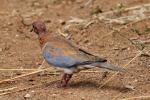
Laughing Dove – very dark looking
Laughing Dove
Lions
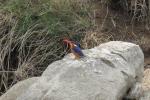
Malachite Kingfisher
Mocking Cliff-Chat
Mocking Cliff-Chat
Nest thought to be a Penduline-Tit nest.
Orange-breasted Bushshrike
Orange-breasted Bushshrike
Pearl-spotted Owlet
Pearl-spotted Owlet
Pearl-spotted Owlet
Purple Roller
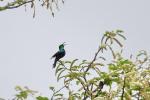
Purple-banded Sunbird
Purple-banded Sunbird
Purple-banded Sunbird
Purple-banded Sunbird
Red-billed Hornbill
Red-faced Cisticola
Reedbuck
Sabota Lark
Slender Mongoose with his snail
Southern Ground-Hornbill
Swainson’s Spurfowl
Violet-backed Starling
Violet-backed Starling
Wattled Starling
Which Roller is this?
White Rhino – resting his head on rock.
Satara was our next venue for 4 nights. See Part 3
Four days were spent in Mkuzi Nature Reserve. The weather was cool and overcast with some sun occasionally.
The Reserve was starting to look green due to the recent rains. Visibility into the bush was excellent. We were told another 3 lionesses were recently added bringing the lion population to 8 – they are very shy. The waterhole at the kwaMalibali hide was dry and the hide and walkway itself in desperate need of renovation. The campsite had sorted its water issues and was quite busy. Maintenance remains an issue with leaking taps everywhere.
The Fig Forest walk was the highlight simply because the Pel’s Fishing-Owl gave us great views. Narina Trogons and African Broadbills were also calling but not seen,
Pel’s Fishing-Owl
We came across a Crowned Lapwing nest with 2 eggs right beside a side road. The Lapwing parents were nearby. However a couple of days later the nest had gone.
Crowned Lapwing on nest
Crowned Lapwing eggs
Crowned Lapwing guarding nest
In the campsite we could hear the African Broadbill calling nearby. Eventually we found one in the camp out in the open. Then it dashed back into the bush and we could hear it wing-snapping for a long time but it did not call.
We witnessed the arrival of a pair of Wahlberg’s Eagles near their nesting site close to the start of the loop road. They settled into a nearby tree and went through their mating ritual.
Wahlberg’s Eagles on arrival.
Wahlberg’s Eagles in courtship
Wahlberg’s Eagles procreating
Wahlberg’s Eagles procreating
Birding was excellent as usual with a number of specials sighted including the Pels fishing-Owl; African Broadbill (in the campsite); numerous raptors including a mating pair of Wahlberg’s Eagles; a silent but obliging Diderick Cuckoo; Rudd’s Apalis; a number of Black-bellied Bustards; Village Indigobird in transition; Striped Kingfishers calling everywhere; Eastern Nicator; Western Osprey; vocal Bearded Scrub-Robins; Broad-billed and Lilac-breasted Rollers; Neergaard’s Sunbird; Pink-throated Twinspots to name a few.
As usual, the kuMasinga hide midday proved to be one of the best and most relaxing spots to see a wide variety of birds and animals as they come to drink.
Photo Gallery of some of the birds and other creatures we saw – including a couple of Mystery birds:
African Firefinch
African Goshawk
African Pygmy-Kingfisher
Bearded Scrub-Robin
Black-bellied Bustard
Black-bellied Bustard
Black-collared Barbet
Black-shouldered Kite
Broad-billed Roller
Broad-billed Roller in flight
Brown Snake-Eagle
Brown-crowned Tchagra
Cape Glossy Starling
Chinspot Batis
Common Buzzard
Common Fiscal – female
Common Sandpiper
African Firefinch
Crested Guineafowl
Crowned Eagle
Crowned Eagle
Crowned Hornbill
Dead Snake
Dead Snake
Diderick Cuckoo
Black Cuckooshrike – female
European Bee-eater
Golden-breasted Bunting
Golden-tailed Woodpecker
Greater Honeyguide
Green Woodhoopoe
Grey Duiker
Grey Waxbill
Grey Waxbills
Helmeted Guineafowl
Lesser Striped Swallow
Little Sparrowhawk
Long-tailed Paradise-Whydah
Martial Eagle
Martial Eagle
Mystery Bird
Mystery Raptor
Nsumo Pan – Picnic Site
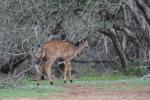
Nyala – young male
Pale Flycatcher
Pel’s Fishing-Owl
Pel’s Fishing-Owl
Pel’s Fishing-Owl
Pel’s Fishing-Owl
Pink-throated Twinspot
Purple-banded Sunbird
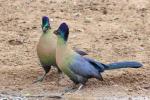
Purple-crested Turacos
Purple-crested Turacos
Purple-crested Turacos
Red-billed Oxpecker
Red-breasted Swallow
Red-eyed Dove
Ruff
Scarlet-chested Sunbird
Snake
Snake
Speckled Mousebird
Spectacled Weaver.
Striped Kingfisher
Striped Kingfisher
Sun Spider
Trumpeter Hornbill
Village Indigobird in transition
Water Thick-knee
Western Osprey
White-browed Scrub-Robin
White-fronted Bee-eater
White-throated Robin-Chat
Wire-tailed Swallow
Yellow-bellied Greenbul
Yellow-breasted Apalis
Yellow-rumped Tinkerbird
Zebra with full mouth of water
In all we saw 168 different bird species. Click here to see our list.
And then we were off to the Kruger National Park for four weeks, entering at Crocodile Bridge. Part 2 to follow.
A group of about 12 of us met for the Midlands Bird Club outing to Darvill, just outside Pietermaritzburg – led by Gordon Bennett.
The morning started with a stroll along the road beside the sewerage canals. A Grey Duiker took us all completely by surprise. Not something you see here with all the poaching.
Grey Duiker
We ambled along a-ways when I decided to have a closer look to see if anything was hiding in the canals. And that is when it all happened – the biggest excitement for the day.
The scope came out when I noticed a wader in one of the canals – sleeping on a log. At first I thought it was a Common Sandpiper but it lacked the white patch up the shoulder. Then I noticed barring on the tail and a prominent white eyering (no eyebrow supercillium nor speckled back so not a Wood Sandpiper either, I thought). Then I got excited and called the rest of the group to come have a look. Meanwhile I went to get closer which meant crossing the fast flowing nearer canal. Fortunately there was a crossing further down and I managed to get up to about 30 metres from the bird – all the while stopping and taking photos. When it eventually flew we were able to see its rump which was white but not extending up its back and the end of the tail was barred.
Green Sandpiper – initial view.
Green Sandpiper – getting closer
Green Sandpiper getting even closer
Green Sandpiper
Much discussion and book searching followed. There was mention of it possibly being a Solitary Sandpiper which a number of us had never heard of. The features are similar. (At home I looked it up and found that Solitary Sandpipers breed in woodlands across Alaska and Canada. It is a migratory bird, wintering in Central and South America, especially in the Amazon River basin, and the Caribbean).
That aside, it was felt at the time that this could be a Green Sandpiper – all the pointers seemed right but we were nervous about making a bad call and decided to wait and see the photos. Once home, the call for confirmation of ID went out on Facebook etc and Green Sandpiper it was.
The amble continued along the side of the canals to the river then up to the ponds. Along the way a swarm of Swifts and Swallows passed overhead. There were many different species of Swift seen amongst them – African Black, African Palm-, Alpine (special), Little, and White-rumped.
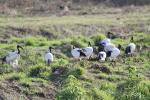
African Sacred Ibis – a small group
Red-eyed Dove
Mystery Bird -TFP
Mystery Bird – TFP.
Fan-tailed Widowbird
Tawny-flanked Prinia – Sally Bartho
Levaillant’s Cisticola – Sally Bartho
The paths are clear so the view of the ponds was good. Numerous water birds were on the ponds. Some of the highlights included a group of 6 African Snipes, a Squacco Heron, Little Stints, all 3 Teals etc.
African darter – Sally Bartho I like the hazy background.
One of the open ponds
Pond view
Hottentot Teals
Birders in action
Close to where the group of 6 African Snipes were seen – Sally Bartho
Both Klaas’s and Dideric Cuckoos were heard and the Klaas’s seen. African Marsh Harrier was seen quartering one area and Kites and a Jackal Buzzard flew above us. Altogether Sally and I recorded 81 different species. Click here to see our list. This excludes a number of other birds seen by other members of the group. To conclude we had the pleasure of seeing a pair of Grey-crowned Cranes in the fields above the ponds.
Grey-crowned Crane
Grey-crowned Crane – Sally Bartho
Excitedly we returned home to check our photos of the Sandpiper.
Need confirmation but we think that this is a Green sandpiper – seen this morning at the Darvill Sewerage Works outside Pietermaritzburg. Note the prominent eye-ring with no supercillium behind the eye (not a Wood Sandpiper); the barring on its tail; the lack of a white shoulder patch (thus not a Common Sandpiper); the dark back with white speckling faintly visible. When it took off the rump only was white (not up the back) and there was distinct barring on the end of its tail.
After the Palmiet BMCG (Bird Monitoring and Conservation Group) meeting 13h30 Saturday 13 September, we took a short stroll to the river’s edge.
We were delighted to have good sightings of Mountain Wagtails (see photos) at the lowest deck from the hide/lapa. One flew up into a crevice of the rock face (looking slightly upstream) which we think is its nesting site (see picture).
Mountain Wagtai
Mountain Wagtai
Mountain Wagtai
Mountain Wagtail nest site under top overhang below overhanging grass
Mountain Wagtail nest site under top overhang below overhanging grass
In the 20 minutes we were there we recorded:
Southern Black Tit
Olive Sunbird
White-eared Barbet
Mountain Wagtail (2) at nest
Purple-crested Turaco
Grey-headed Bushshrike (heard)
Southern Boubou (heard)
Cape White-eye
Yellow-billed Kite
Cape Batis
Dark-capped Bulbul
Green-backed Cameroptera
African Paradise-Flycatcher
African Dusky Flycatcher
This excludes the birds heard at the lapa during the BMCG meeting: Hadeda Ibis, Sombre Greenbul, Bar-throated Apalis, Purple-crested Turaco, and Yellow-billed Kite.














































































































































































 Birds are our Story